



A good bob should move when you turn your head. That’s the whole point of wavy bobs with bangs for older women: they use bend, lift, and a little fringe to make the cut look deliberate even when hair has started behaving differently at the crown, around the temples, or along the hairline.
That shift matters more than people admit. Gray hair can feel coarser in one spot and softer in another. Fine hair can lose lift at the roots but still hold a bend through the mids. Bangs can sit flat for an hour, then split the moment you step outside. A cut that ignores those changes ends up looking fussy. A cut that works with them looks like the hair belongs to you.
The best versions here are not trying to erase age. They’re giving hair structure where it needs it, softness where it’s gone a little hard, and enough movement that you don’t end up shellacking the whole head into place every morning. Some of these bobs are neat. Some are loose. A few are a little cheeky. All of them have one job: make the shape look alive on day one and still make sense on day four.
Why These Wavy Bobs Feel So Right
-
Wave first, volume second: These cuts let the bend do the work, which is kinder to hair that has thinned a bit at the crown or temples.
-
Bangs stay flexible: Most of the fringes here sit a touch longer or softer, so they can part, sweep, or settle instead of sticking out like a straight line.
-
Gray hair gets shape, not bulk: Silver and salt-and-pepper textures show off movement fast, and the right bob keeps that shine from turning into puff.
-
The grow-out is calmer: A clean bob line with a fringe that can move buys you more time between trims than a severe crop with a hard edge.
-
Glasses and face shape matter less: Because the bangs are soft, parted, or side-swept, these looks sit better with frames, strong brows, and changing face lines.
1. Chin-Length Wavy Bob with Curtain Bangs
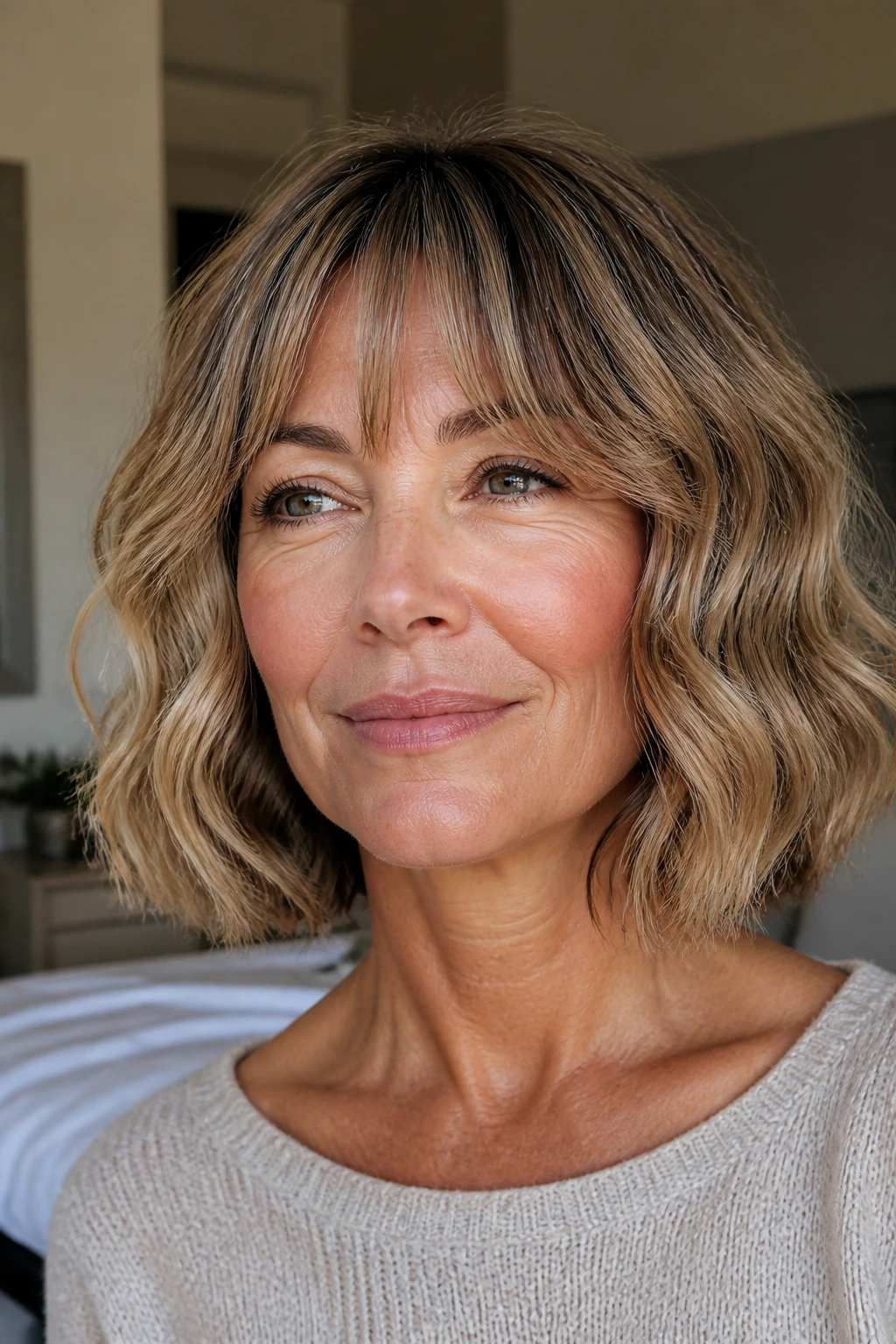
A chin-length bob with curtain bangs is the kind of cut that looks easy because it is balanced, not because it was accidental. The length lands right where the jaw starts to define the face, and the curtain fringe opens away from the center so it doesn’t swallow the forehead.
Why it works: This shape gives fine or medium hair enough length to bend, but not so much that the wave drops flat. The bangs should hit around the cheekbone, not the lashes, if you want that soft split in the middle instead of a heavy drape.
You’ll see this one work especially well on hair that has a little natural movement but no patience for constant styling. A quick blast with a round brush at the front and a rough dry through the mids is usually enough.
2. Soft Layered Bob with Feathered Fringe
Ever notice how some fringe makes the face look heavier? This is the antidote. The feathered fringe stays light at the ends, and the layers inside the bob keep the body from collapsing into one flat shelf.
The best version keeps the perimeter clean while the inside gets a little air. That’s useful if your hair is fine at the front or if the crown tends to go limp by lunchtime. A tiny bit of mousse at the roots does more here than a heavy cream ever will.
Best for: hair that needs lift without looking teased.
3. Collarbone Bob with Side-Swept Bangs
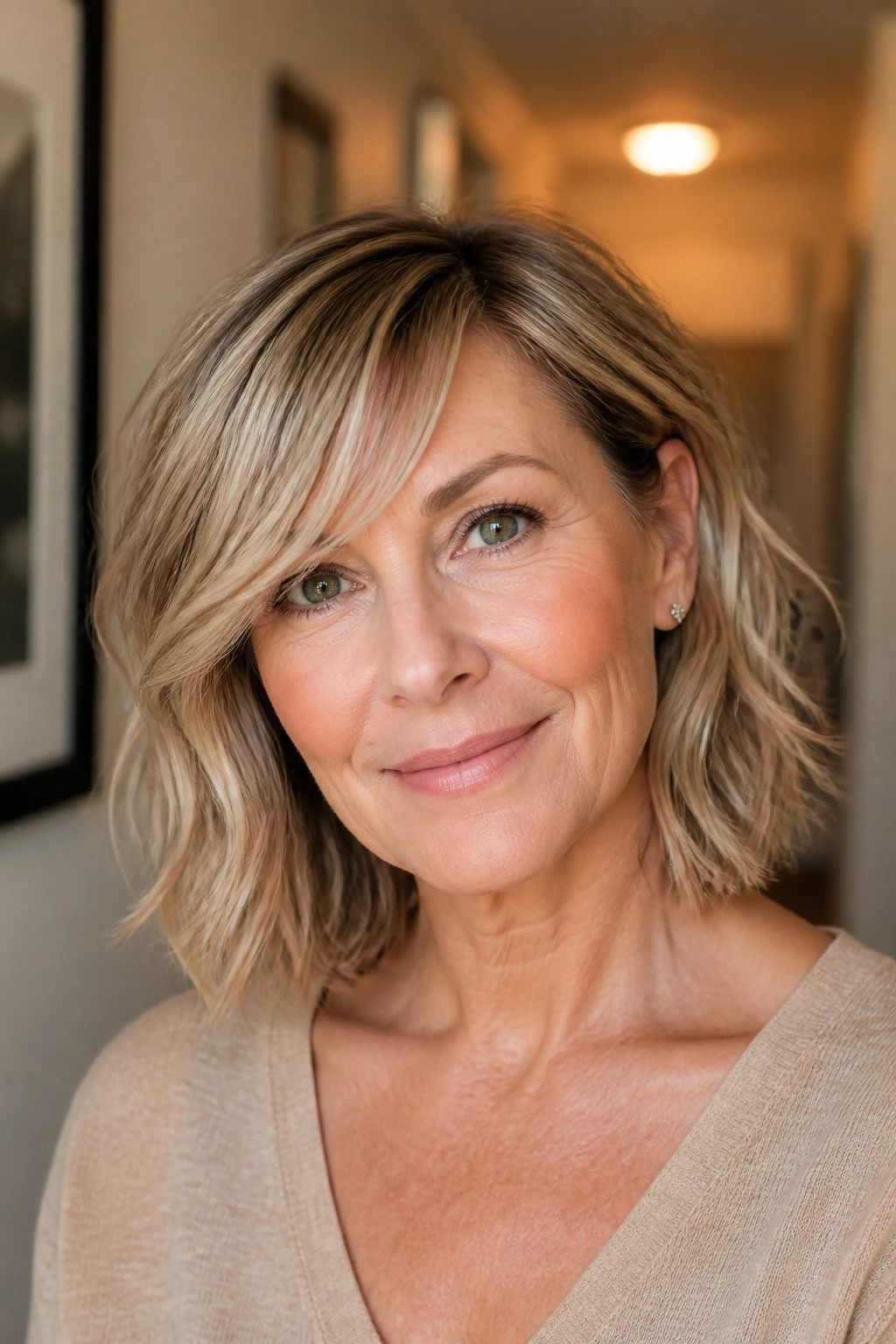
A collarbone bob gives you a little insurance. If you’re nervous about going shorter, this length still reads as a bob, but it leaves enough weight for the wave to form through the ends and enough length to tuck behind the ear.
Side-swept bangs are the practical part of the equation. They blend into the side and soften a forehead without demanding perfect symmetry, which is useful on days when the part shifts a little or one side of the hair behaves better than the other.
This shape is a smart pick if you wear glasses. The fringe can skim above the frame without fighting it.
4. Silver Wavy Bob with Piecey Bangs
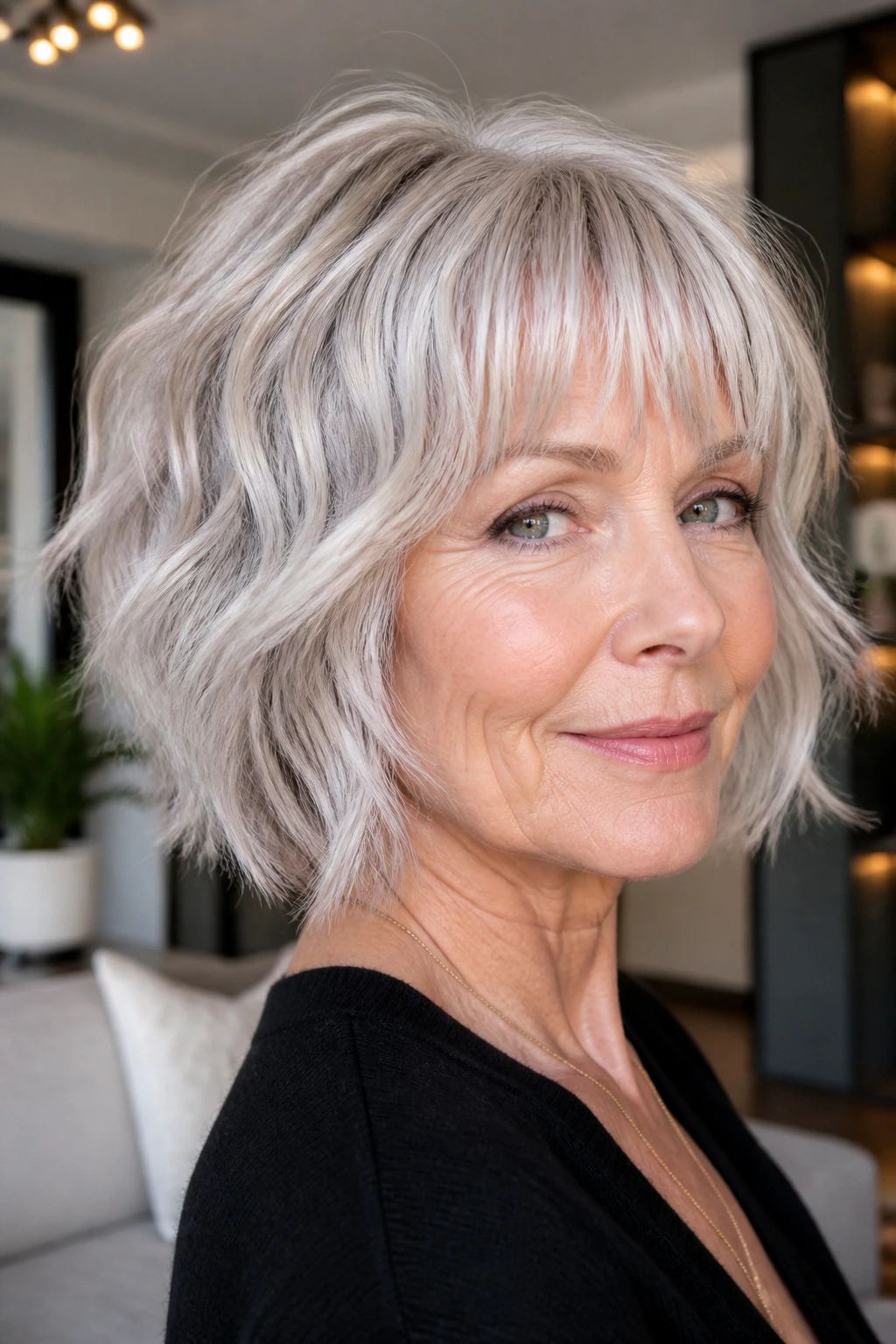
Silver hair changes the game. It reflects light faster, which means every bend shows up, and every blunt line shows up too. Piecey bangs keep the front from turning into one solid sheet.
The trick is separation. A light styling paste or a drop of cream rubbed between the fingers creates little ribbons at the fringe instead of a dense block. That keeps the style modern without making it look overdone.
This cut is especially sharp on hair that’s naturally wavy but a little wiry at the ends. The texture works with the silver instead of battling it.
5. Stacked Bob with Bend-and-Movement Bangs
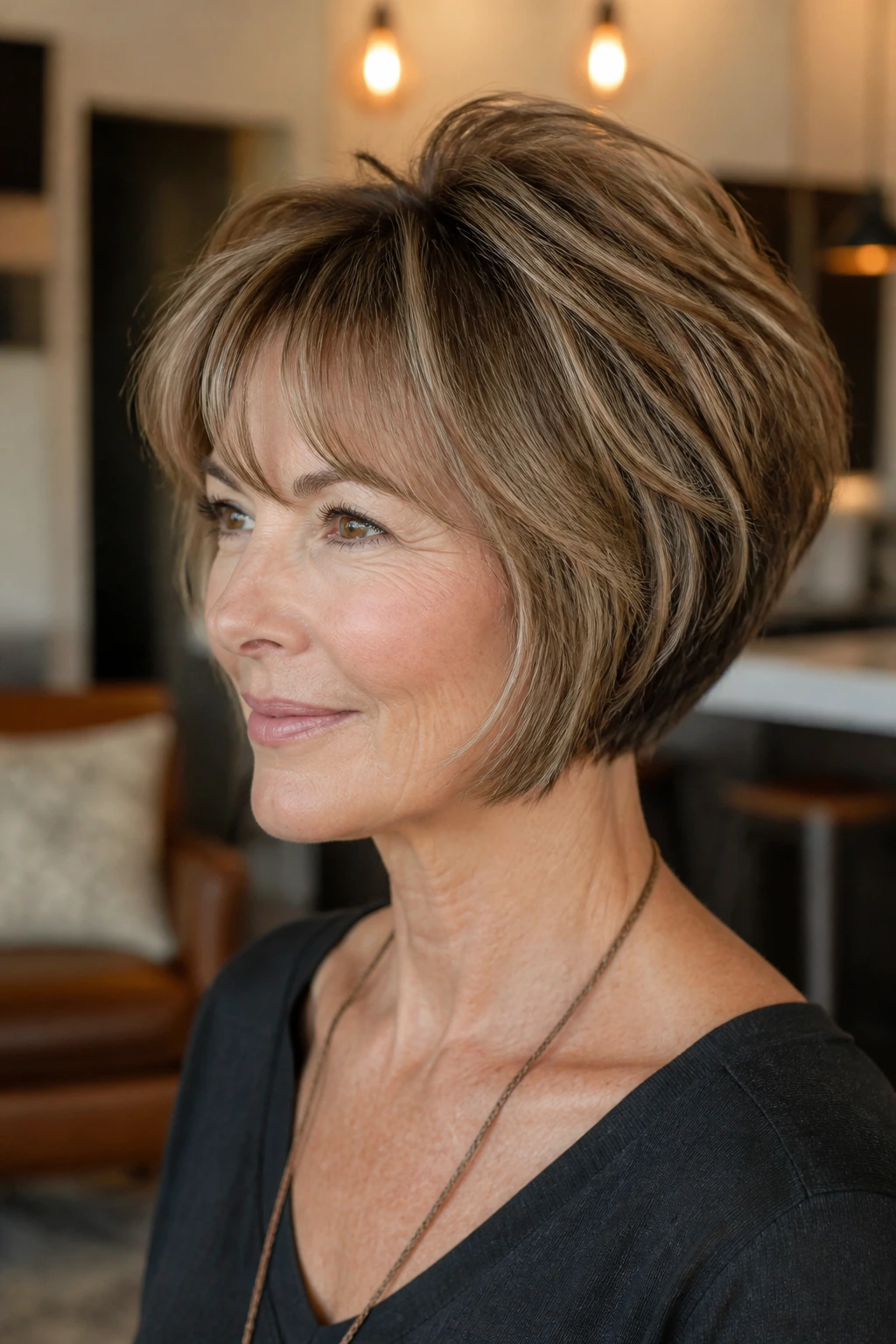
A stacked bob is not shy, and that’s why it works. The back is shorter, the shape rises slightly at the nape, and the front has enough bend to keep the profile from feeling helmet-like.
What to Ask the Stylist
Ask for a compact stack at the back, but keep the transition soft. Too much stacking can make the back puff out, which is a bad trade if your hair is dense or coarse. The bangs should curve, not sit blunt; think movement, not a shelf.
This cut gives the crown a lift that a lot of mature hair loses on its own. If your hair flattens at the back of the head, this one does the lifting for you.
6. French Bob with Brow-Skimming Fringe
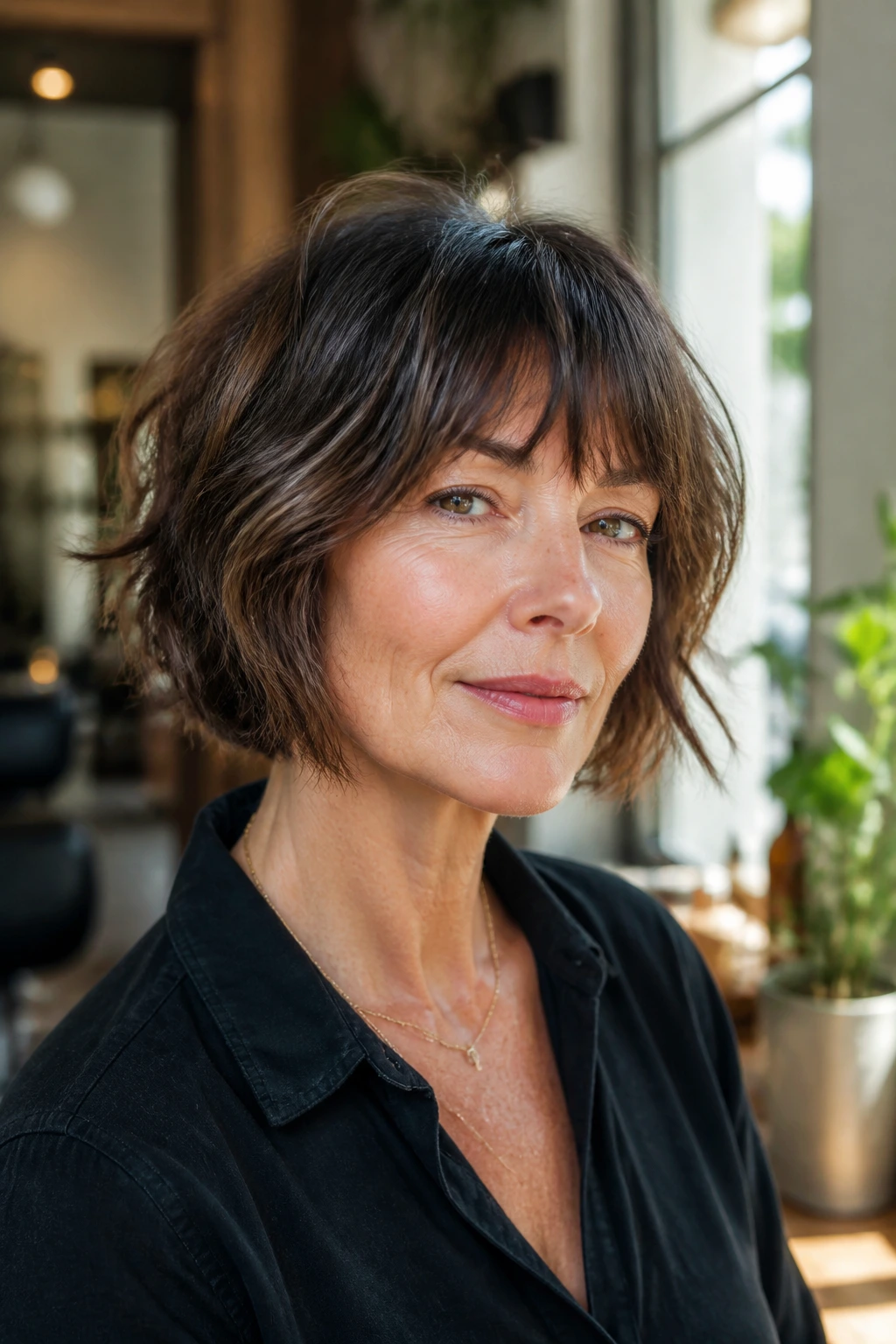
The French bob has attitude, but not the loud kind. It usually sits around cheekbone or jaw level, and the fringe skims the brows with just enough looseness that it doesn’t look severe.
That loose brow line matters. A fringe that lands a hair above the eyebrow opens the face, while one that sits too high can feel clipped and spare. Keep the wave soft, almost brushed-out, and the whole look reads as chic rather than hard.
If your hair has a natural bend and you don’t mind a little upkeep on the fringe, this is one of the cleanest shapes on the list.
7. Asymmetrical Wavy Bob with Long Bangs
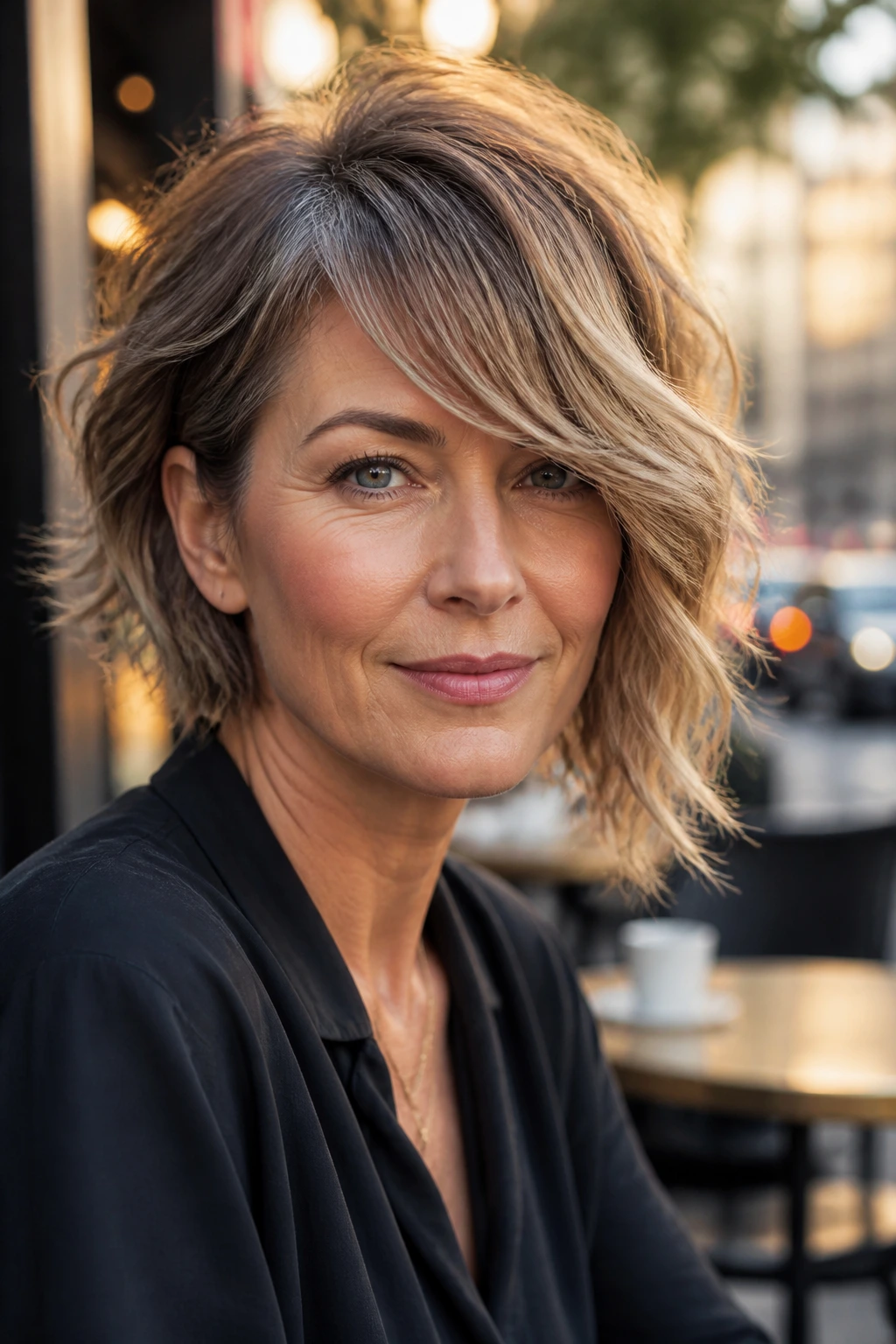
An asymmetrical bob gives the eye somewhere to go. One side sits a little longer, the other side tucks in tighter, and the long bangs sweep across the forehead instead of stopping dead in the middle.
That imbalance is useful. It pulls attention toward the cheekbones and keeps the cut from feeling too square around the jaw, which can happen with a blunt bob on stronger face shapes. Long bangs also buy you a forgiving grow-out.
This one works especially well if you like a side part but don’t want the part line to look stiff. The asymmetry softens the whole cut without making it messy.
8. Shaggy Bob with Bottleneck Bangs
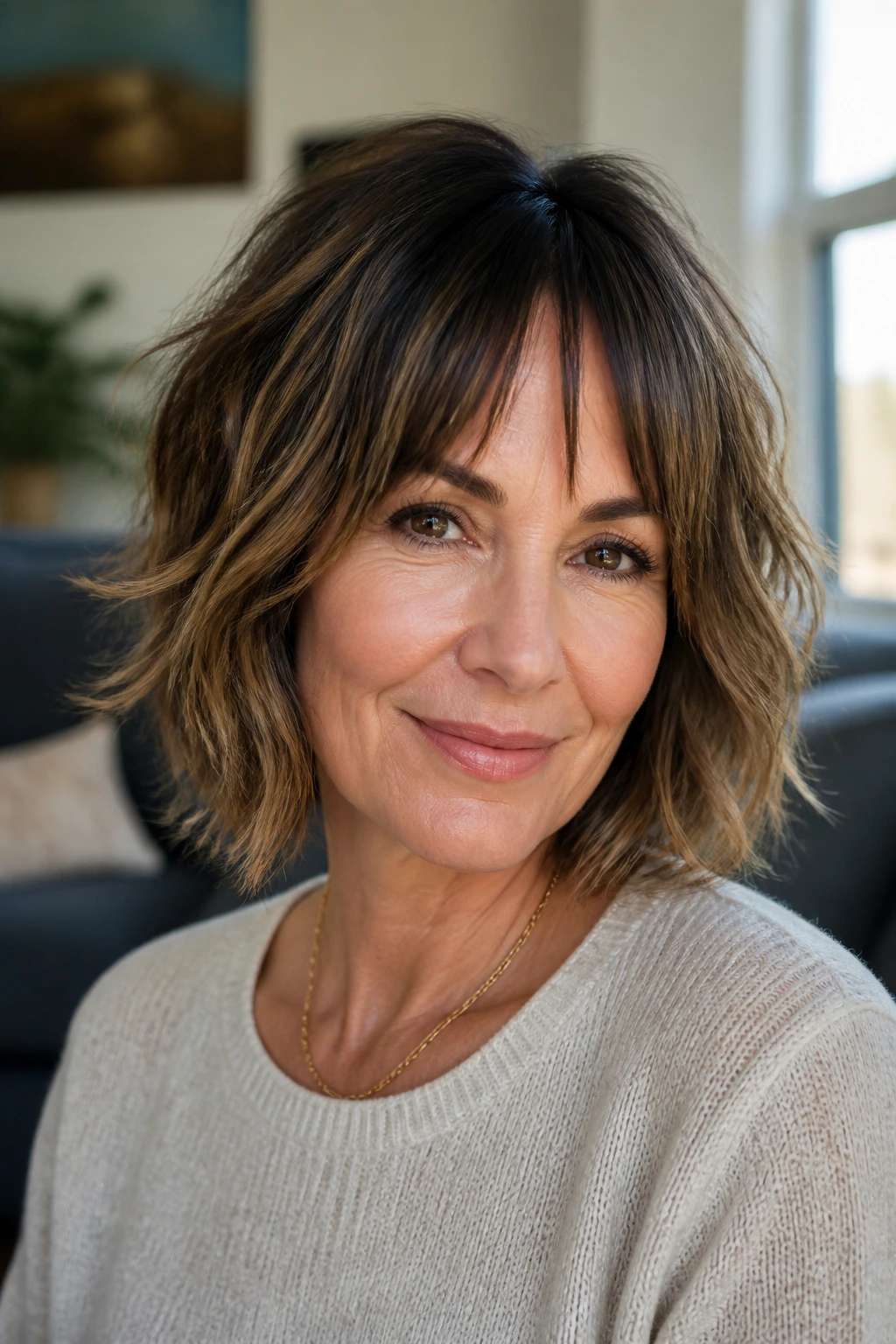
A shaggy bob sounds casual because it is casual, but there’s a fine line between texture and chaos. Bottleneck bangs help. They start a little narrower near the center, then open out toward the temples, which keeps the forehead from disappearing under too much fringe.
The layers inside the bob should be uneven in a controlled way. Not choppy for the sake of choppy. Just enough to let the wave break up the shape and keep the ends from looking heavy.
This is a strong choice for thicker hair that needs a little debulking. Air-dry cream, a diffuser, done.
9. Rounded Bob with Airy Curtain Fringe

A rounded bob gives the silhouette a gentle curve, which is useful if you want the cut to sit close to the head without looking flat. The airy curtain fringe mirrors that softness and keeps the front from looking boxed in.
What makes it work is the balance between the curve at the ends and the looseness around the forehead. The shape feels tidy, but not stiff. That matters a lot on days when you want your hair to look finished without looking sprayed into place.
If your face is narrower, this shape adds a little width through the sides in a flattering way. If your hair is fine, keep the layers soft so the curve doesn’t turn wispy.
10. Blunt Bob with Soft Wave and Full Bangs
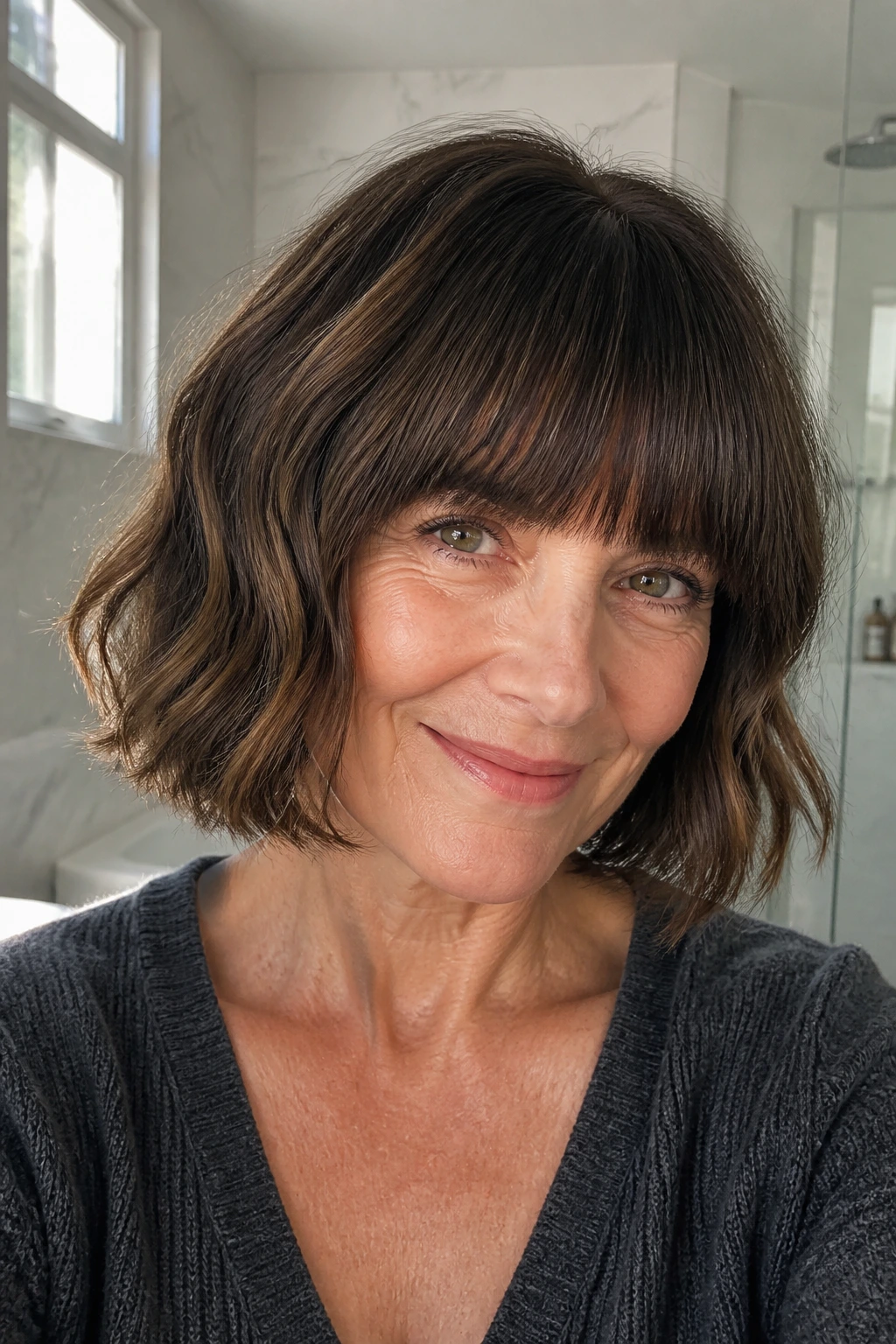
A blunt bob can be a little unforgiving when it’s pin-straight. Add a soft wave, though, and it gets life fast. Full bangs anchor the front, but they need to be sliced with some give so the line doesn’t sit like a hard bar across the forehead.
Where It Shines
This is the cut for someone who likes structure but doesn’t want a severe finish. The blunt perimeter makes the hair look thicker at the ends, while the wave keeps the surface from looking flat or boxy.
It’s especially good for denser hair that can support a cleaner edge. Just keep the bangs a bit longer than you think you need. They should move when you blink, not jab at the eyebrow.
11. Jaw-Length Bob with Sweeping Side Bangs
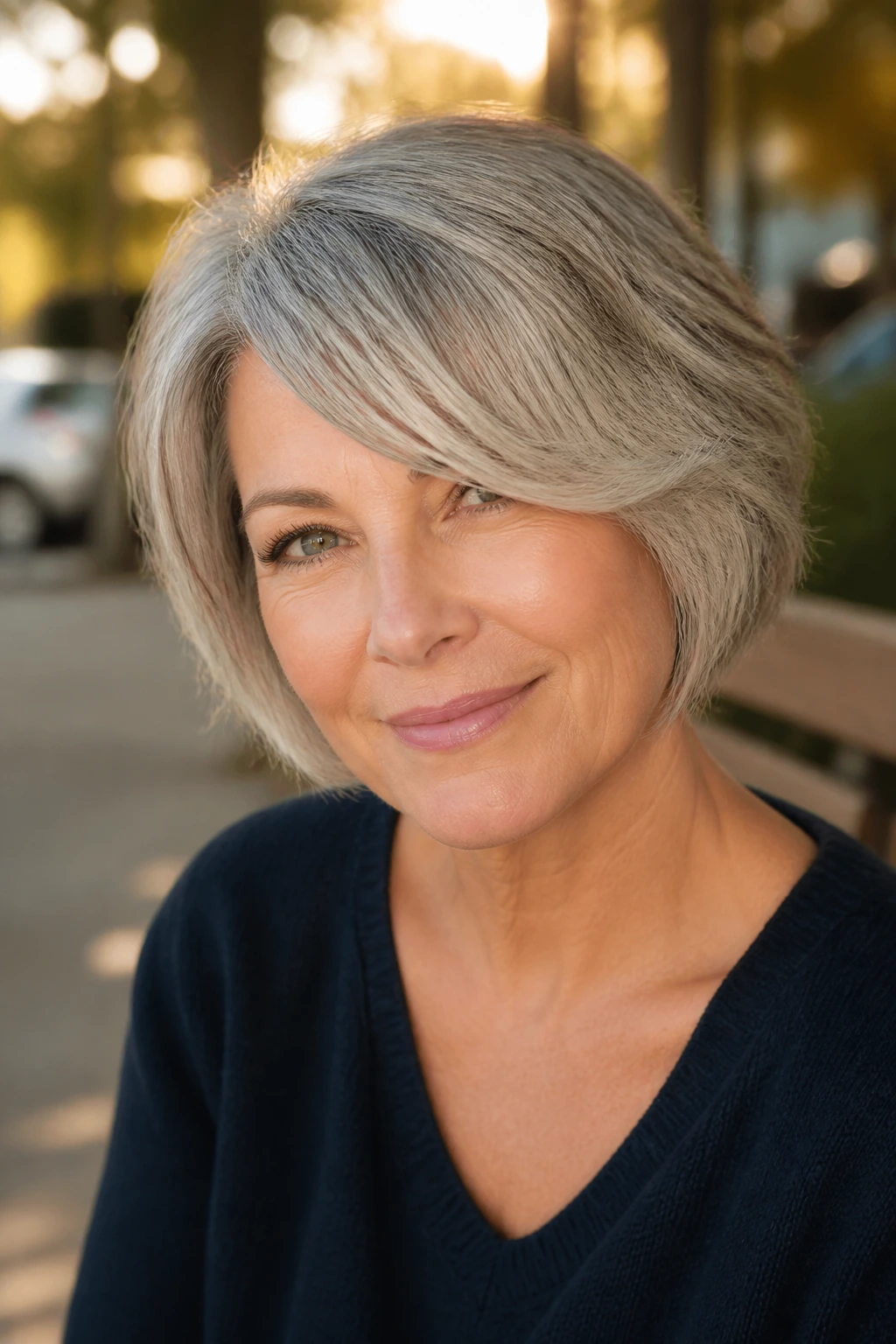
Shorter at the jaw, longer through the fringe, this bob pulls focus straight to the cheek and chin. That makes it useful when you want definition without going into pixie territory.
Sweeping side bangs are the quiet hero here. They soften the front, blend into the wave, and handle a cowlick better than a blunt fringe ever will. If one side of your hair tends to fall a little differently, this cut turns that into part of the style.
It’s a good choice for hair that needs a fast morning routine. A quick bend with a 1-inch iron on the front pieces is often enough.
12. Wavy Lob with Long Layered Bangs
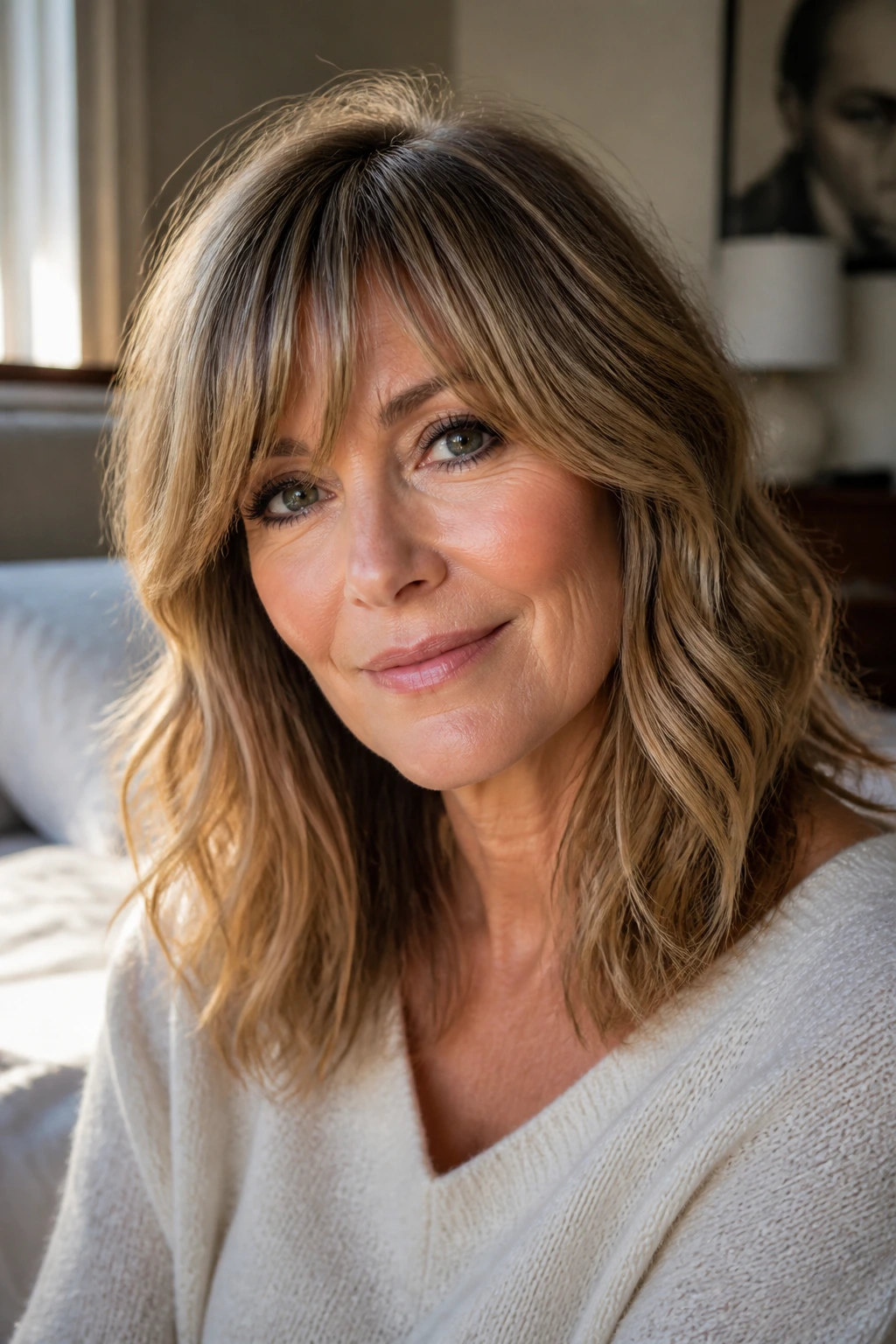
A lob is just a longer bob, but it changes the feel completely. The extra length lets waves stretch out instead of springing up, which is helpful if your texture gets frizzy when it’s cut too short.
Long layered bangs keep this shape from looking heavy around the face. They can split in the middle, tuck behind glasses, or drop to one side depending on how much you style them. That flexibility is the real draw.
If you like your hair touching the collarbone and you don’t want to fight it every morning, this is one of the safest bets in the bunch.
13. Inverted Bob with Face-Framing Bangs
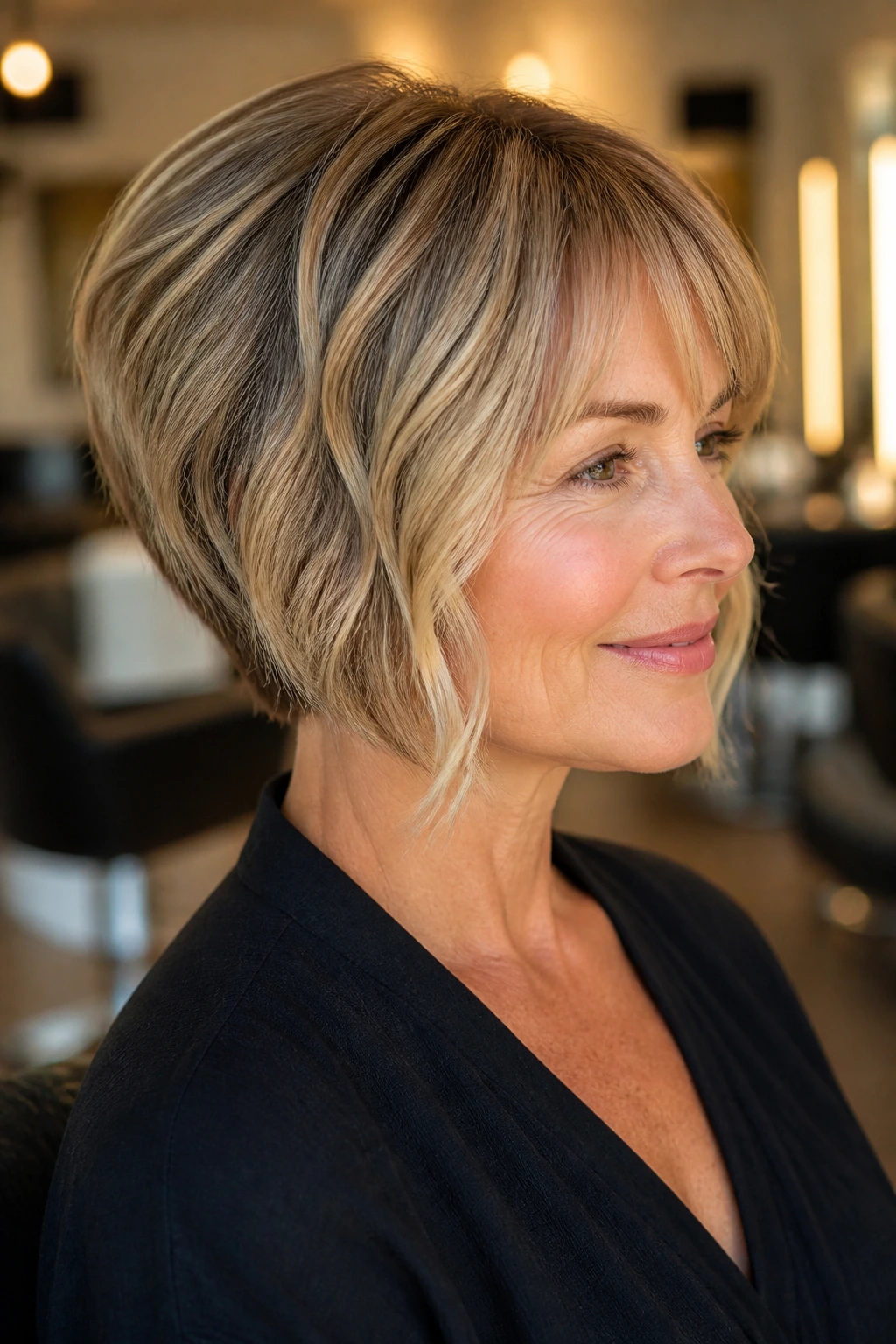
The inverted bob is built on contrast: shorter in the back, longer in the front. That diagonal line gives the cut a lifted profile and keeps the face-framing pieces from feeling blunt or stuck on.
Face-framing bangs work here because they echo that angle. They should start near the cheekbone and slide into the front lengths, not sit as a separate fringe. The result is a cut that looks polished without becoming rigid.
- Best on: medium to thick hair with a little wave.
- Ask for: a soft angle, not a dramatic wedge.
- Avoid: over-thinning the front, which can leave the ends stringy.
14. Textured Bob with Feathered Micro-Bangs

Micro-bangs are not for everyone. Good. Not every cut should be polite. On the right face, with the right wave and a little confidence, feathered micro-bangs can make a wavy bob feel fresh and sharp instead of dated.
The key is feathering. If the fringe is cut too blunt, it turns severe fast. Soft ends and a textured bob underneath keep the look from hardening up. This one works best on fine to medium hair that can hold a bit of bend without puffing out.
It’s a bolder choice, but the payoff is real if you want something that looks intentional from across the room.
15. Soft A-Line Bob with Choppy Fringe

An A-line bob runs longer in the front and shorter in the back, but the soft version keeps the angle gentle. That matters. A steep A-line can feel too sharp; a softer one lets the wave do some of the shaping.
Choppy fringe keeps the front from reading too neat. It breaks up the forehead line and gives the cut a slightly modern edge without drifting into messy territory. The best thing about this shape is how well it handles movement on day two.
This is a smart cut if your hair has lost a little density near the ends. The angled perimeter creates the illusion of thickness where it counts.
16. Tousled Bob with Arched Bangs

A tousled bob depends on movement, so the finish should look like fingers ran through it, not like a curling iron went in every two inches. Arched bangs follow the curve of the forehead and leave the center a touch shorter than the sides.
Why the Arch Matters
That curved fringe softens a strong brow line and keeps the eyes open. It also gives you a little lift in the front, which is useful if hair tends to fall flat over the face by noon.
The shape reads relaxed, but not sloppy. That’s a fine line, and the arch is what keeps it on the right side of that line.
17. Layered Bob with Grown-Out Bangs
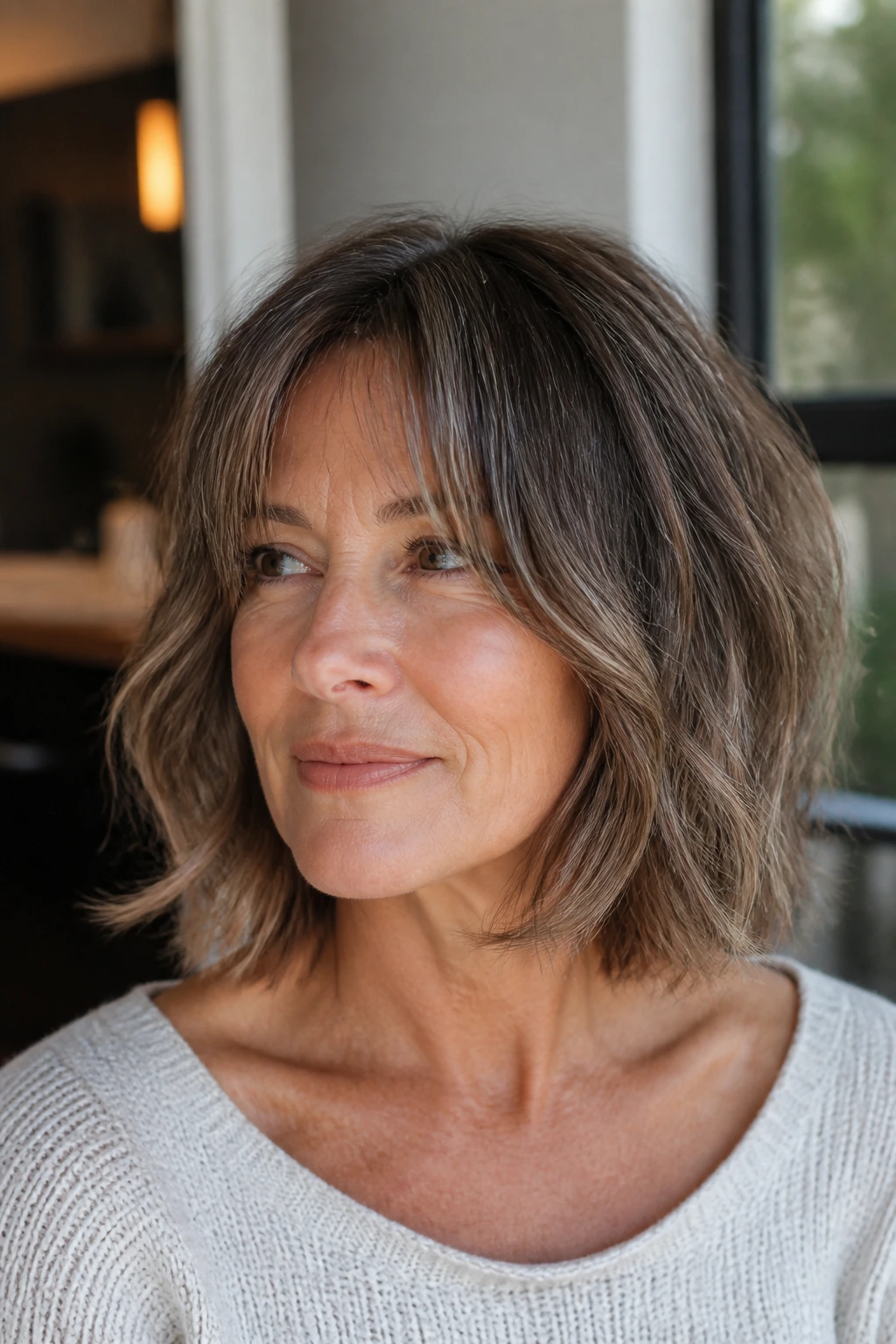
This is the cut for women who don’t want to fight their fringe every four weeks. Grown-out bangs blend into the side layers and look intentional because the rest of the bob carries enough movement to support them.
The layering should be soft through the mids and a little longer around the face. You want the bangs to disappear into the cut, not announce themselves. That makes this one forgiving when hair grows faster on one side or when you’re stretching time between salon visits.
If you’ve had bangs before and liked them until they became annoying, this is the gentlest way back in.
18. Neck-Grazing Bob with Tapered Bangs
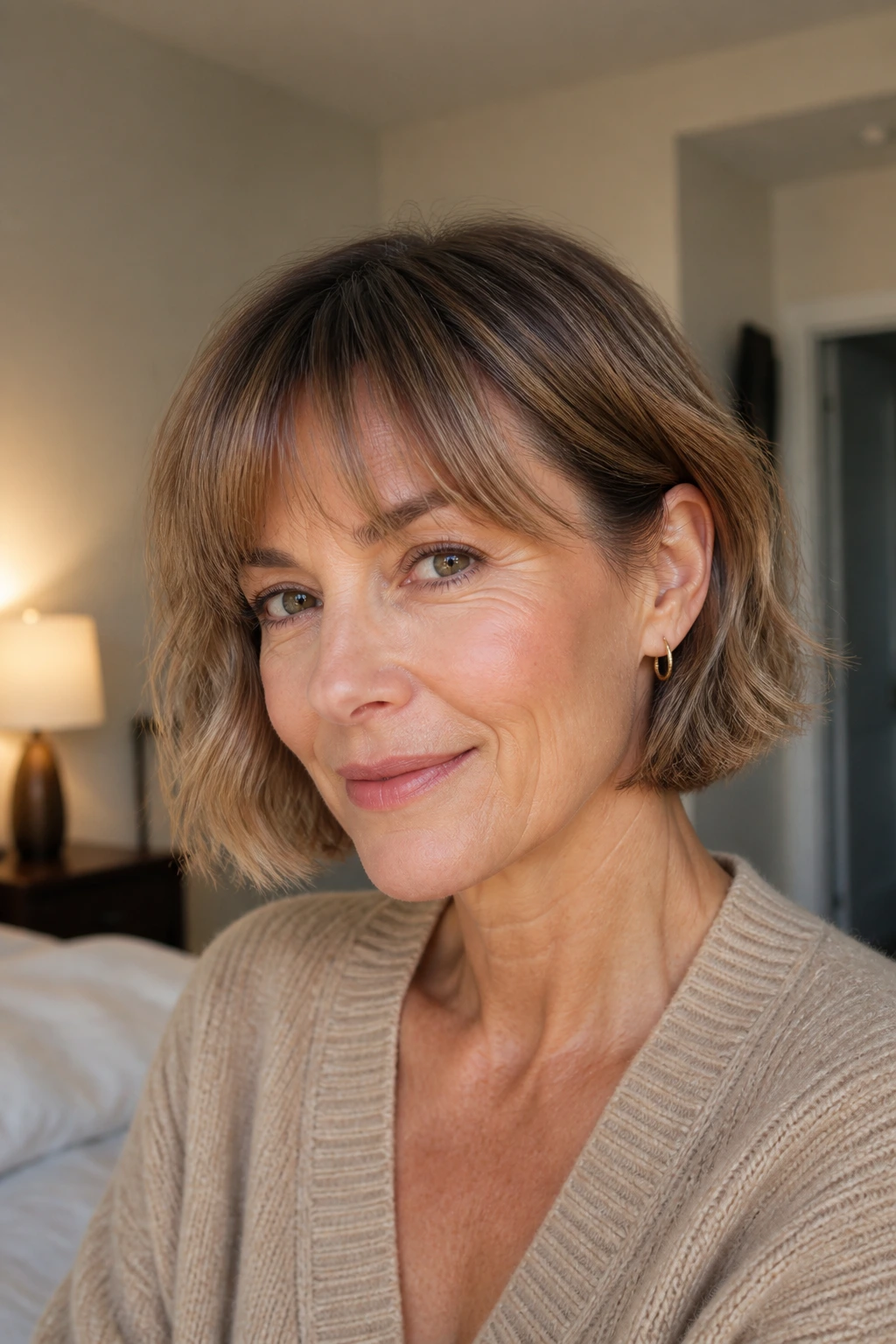
A neck-grazing bob sits just low enough to tuck behind the ears or brush the collar. The shape feels easy, and the tapered bangs keep the front from becoming boxy.
Tapered bangs narrow slightly toward the center and widen toward the sides, which gives the forehead a softer frame. They also deal better with hairlines that aren’t perfectly even. That kind of small problem matters more than people think.
This cut is especially nice if you like to wear earrings. The length and fringe frame the face without hiding the jaw or neck.
19. Salt-and-Pepper Bob with Wispy Fringe
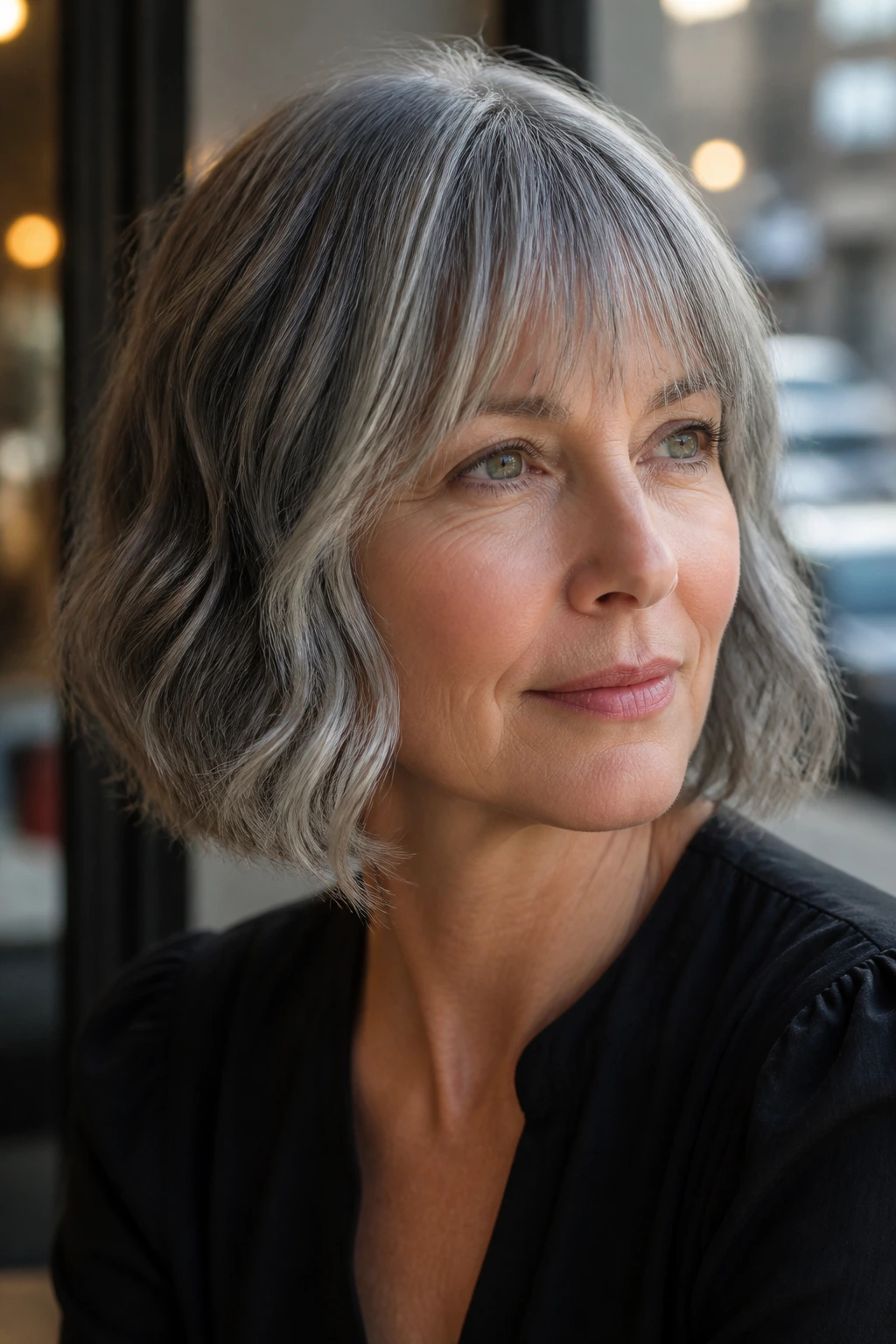
Salt-and-pepper hair has contrast baked in, and a wispy fringe lets that contrast show instead of fighting it. The lighter pieces catch the eye, the darker strands keep the shape grounded, and the fringe stays soft enough to move.
The wispy part matters. A dense bang on salt-and-pepper hair can look chunky in a hurry, especially if the texture is coarse. A lighter fringe lets the color variation do the visual work.
This one is elegant in the plainest, best sense of the word. No tricks. Just a clean shape and texture that already has character.
20. Shaped Bob with Deep Side Part and Bangs

A deep side part changes the whole haircut. It lifts one side, drops a little drama into the front, and makes bangs feel less like a helmet and more like part of the silhouette.
When to Pick This One
Choose it if your face wants asymmetry or if the crown needs help. A deep part creates instant height where the hair has gone flat, and the bangs can travel across the forehead instead of sitting straight on it.
The shaped bob underneath should stay tidy, not puffed out. You want structure. Not bulk.
21. Boxy Wavy Bob with Parted Bangs

A boxy bob sounds rigid, but with waves and parted bangs it becomes modern and stable. The perimeter is a little stronger, which can be useful if your hair is fine and you need the shape to read from across the room.
Parted bangs stop the front from looking too hard. They split around the face, blend into the sides, and give the bob a clean center of gravity. If you like a neat finish without a lot of fuss, this one earns its keep.
It’s also a good cut for women who wear glasses every day. The split fringe leaves space around the frames.
22. Soft Mushroom Bob with Airy Fringe

A mushroom bob can go wrong fast if it gets too round and too fixed. The soft version keeps the curve but loosens the edges, and the airy fringe keeps the top from feeling heavy.
This is one of those styles that looks better when there’s a little movement at the ends. The wave should break up the perimeter slightly so it doesn’t read like a bowl. Airy fringe helps the cut stay soft around the forehead.
If you have straight hair that only bends a little, this shape can still work. You just need enough texture at the ends to stop the curve from looking stiff.
23. Modern Pageboy Bob with Curved Bangs

The pageboy comes back when it’s cut with restraint. A modern version keeps the ends curved under lightly and lets the bangs follow that same arc instead of sitting straight across the forehead.
That curve is flattering because it wraps the shape around the face. It also works nicely with hair that likes to tuck under on its own. If your ends already do half the job, this cut makes that behavior look planned.
This is a clean, low-drama option for someone who likes order but not stiffness.
24. Beachy Bob with Long Curtain Fringe
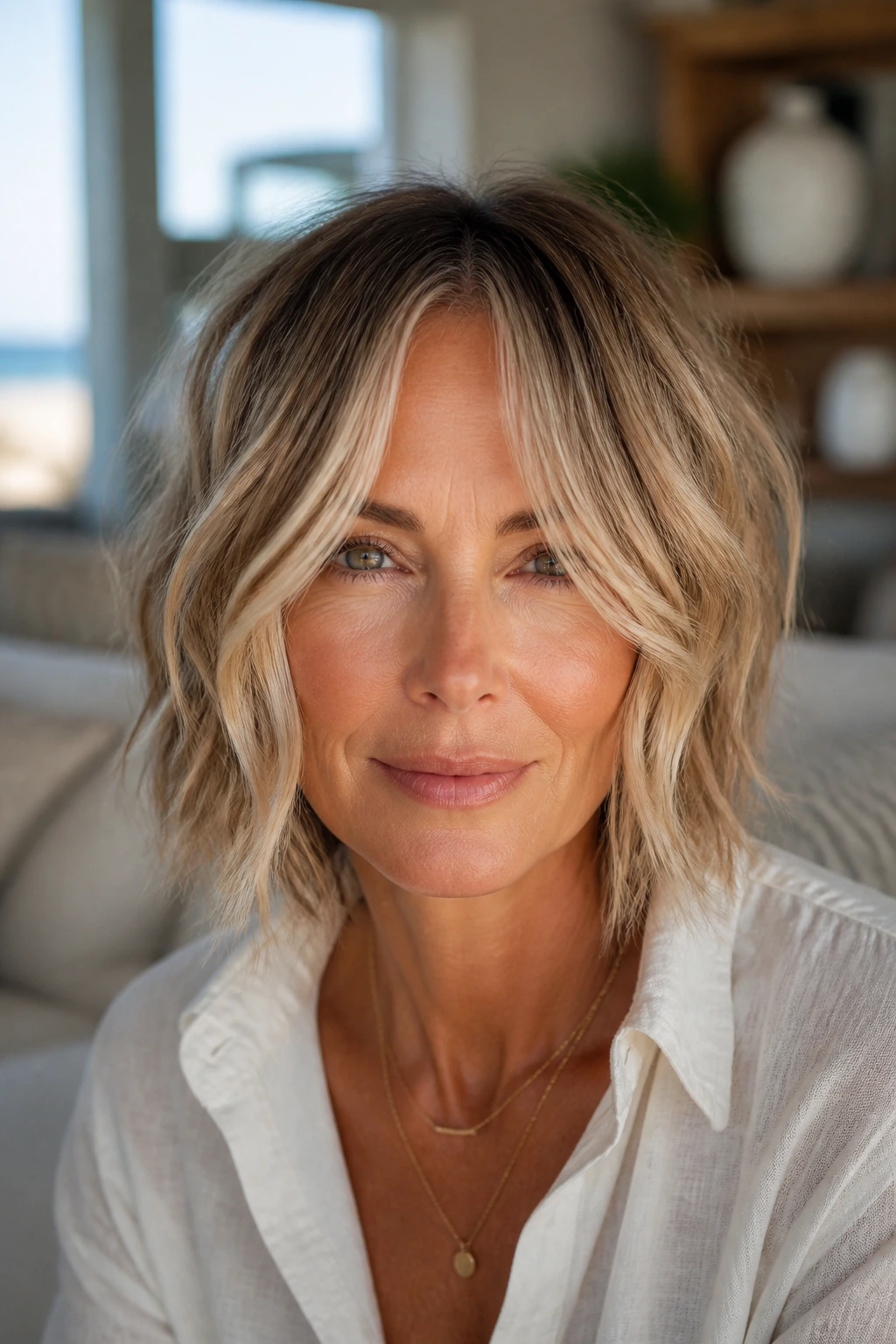
Beachy doesn’t have to mean messy. On a bob, it usually means a softer wave pattern, a little separation at the ends, and a fringe that falls in long curtains rather than a blunt sheet.
Long curtain fringe is the part that keeps this style grounded. It can be pushed back, split down the middle, or left to skim the cheeks. That flexibility is useful on humid days, when bangs decide to behave like they have their own agenda.
This cut has a relaxed feel, but it still needs shape at the edges. Without that, it turns shaggy in the wrong way.
25. Polished Wavy Bob with Blended Bangs
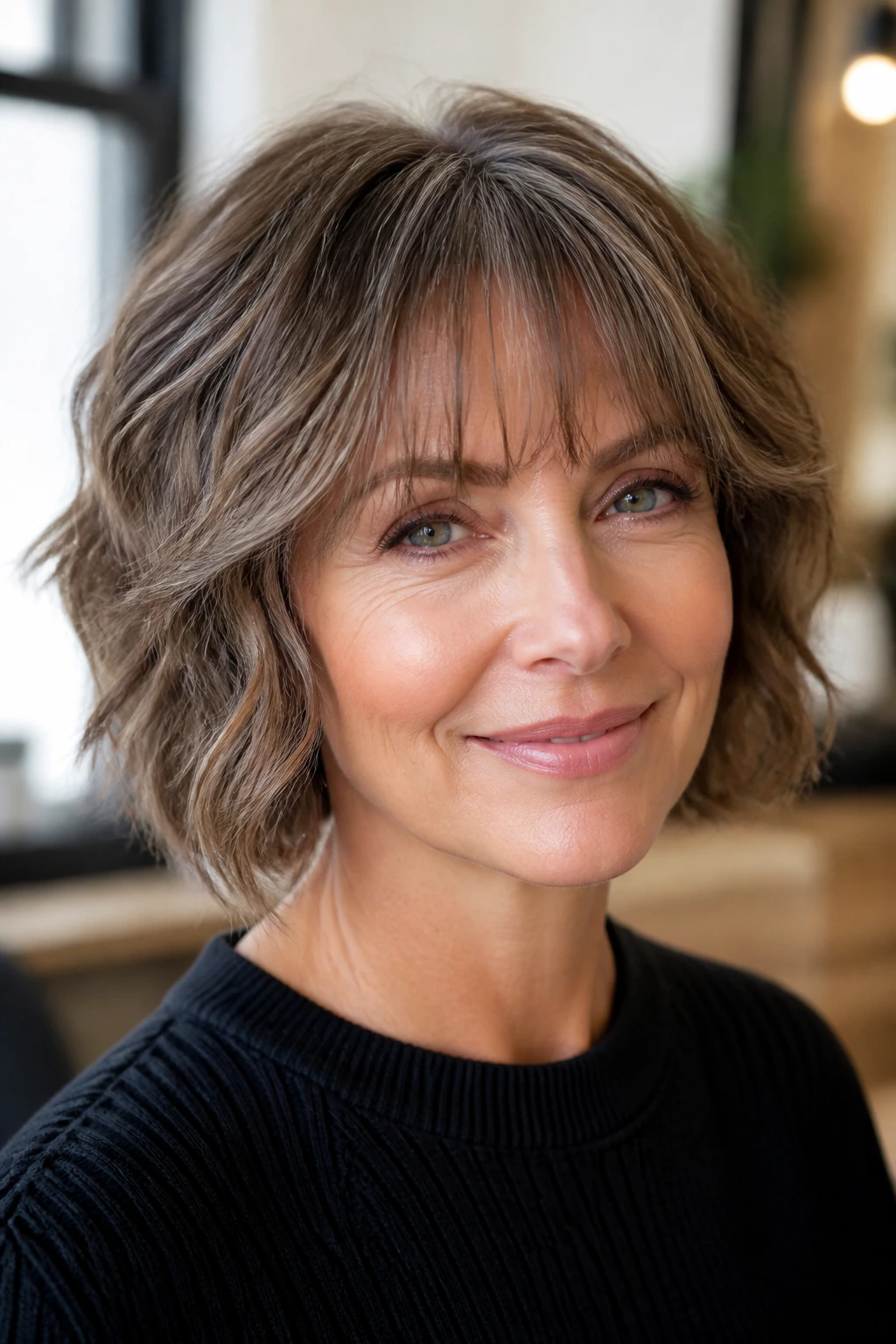
A polished bob doesn’t have to look lacquered. The best version keeps the wave soft, the ends tidy, and the bangs blended so they melt into the sides instead of sitting on top of the haircut like a separate piece.
Why It Stays Useful
This is the most office-friendly version on the list, but it still has enough bend to keep it from feeling stiff. The blend at the fringe matters because it makes the grow-out kinder and keeps the front from looking chopped up.
If you want one bob that can move from neat to undone with a quick finger-comb, this is the one.
Why a Wavy Bob Works So Well on Mature Hair
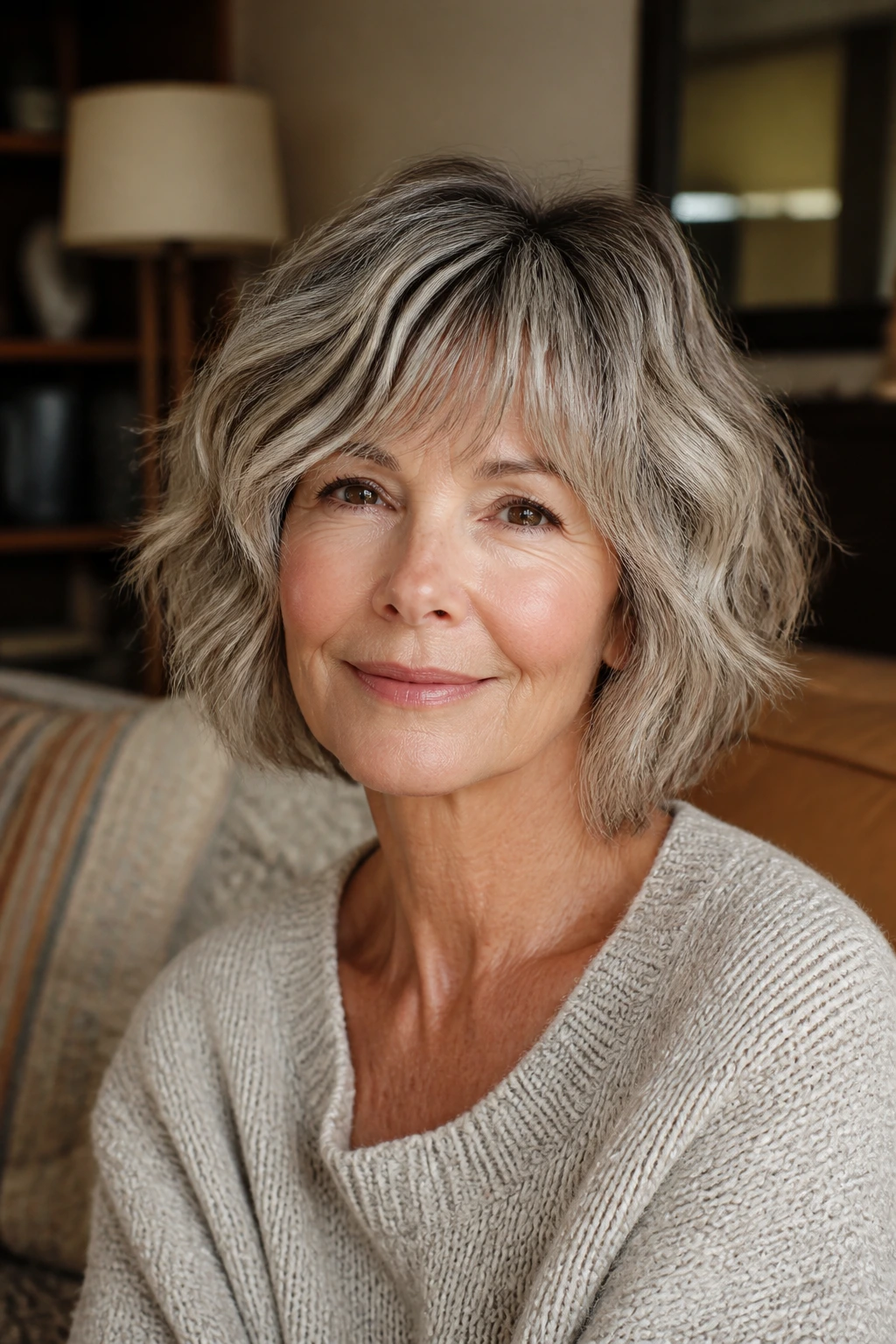
Hair changes shape with time. Some strands get finer, some get wirier, and some areas hold curl while other areas refuse to cooperate. A wavy bob handles that mix better than long hair because the shape is short enough to control and long enough to show movement.
The fringe matters as much as the bob line. A blunt, short bang can exaggerate cowlicks, while a softer bang gives the forehead room to breathe and lets the eyes stay open. That’s one reason so many good stylists cut bangs a touch longer when the hair is dry. Wet hair lies.
A bob also gives you a clean perimeter without needing tons of layering. That’s useful when the ends have thinned a little and you want the style to read as full, not frayed.
Essential Styling Tools for These Looks
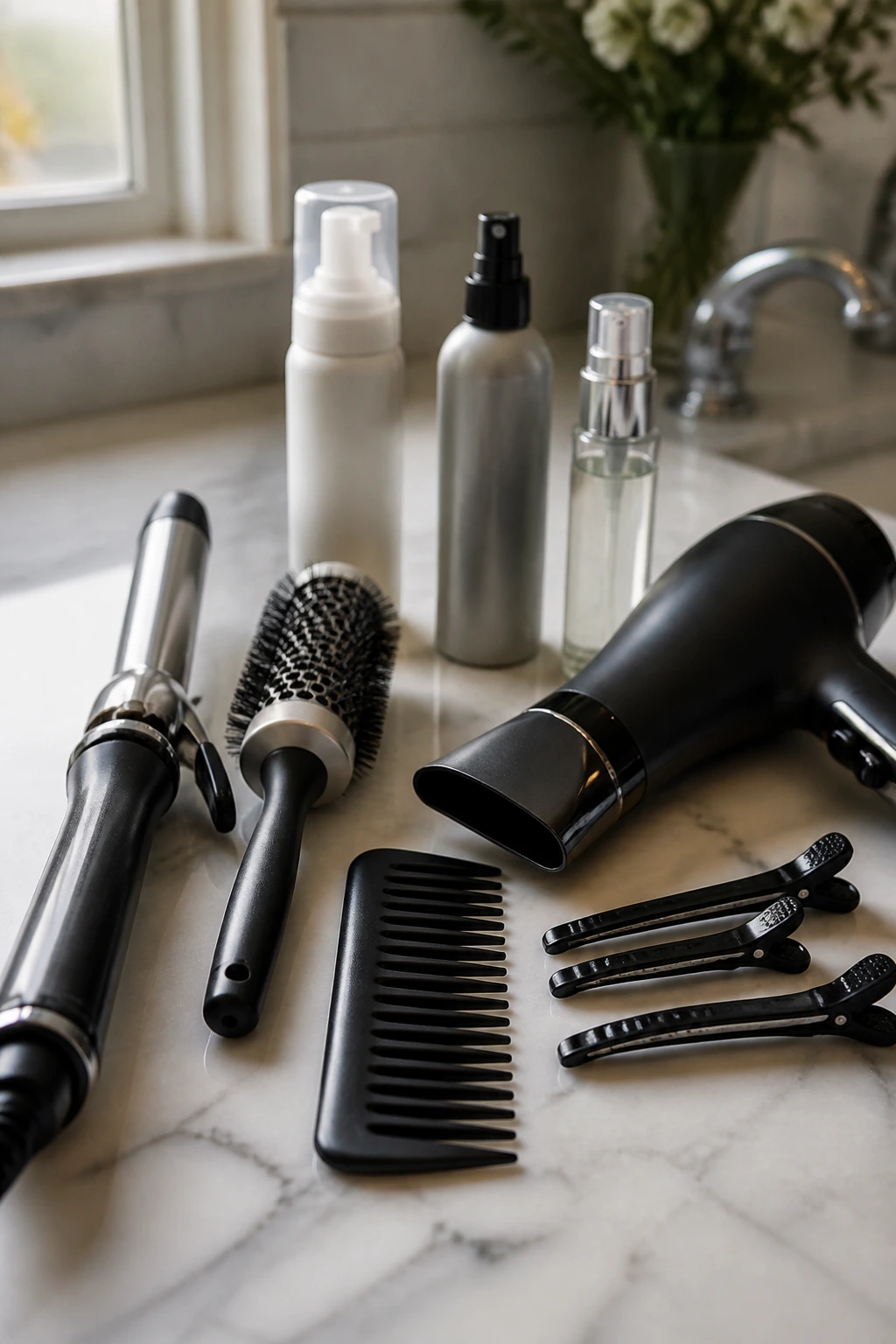
- 1-inch curling iron or wand: Best for bending the front pieces and refreshing the wave on day two.
- Small round brush: Use this at the bangs and crown when you want lift without frizz.
- Blow dryer with nozzle: The nozzle keeps the airflow directed, which helps the fringe sit where you put it.
- Light mousse: A golf-ball amount on damp roots gives body without making the hair crunchy.
- Texturizing spray: Good for piecey ends and for keeping silver or fine hair from looking too smooth and flat.
- Wide-tooth comb: Better than a brush for damp waves that need to keep their shape.
- Duckbill clips: Handy for setting the fringe while it cools.
- Light serum or cream: Use only on the ends. A drop too much near the bangs and the whole front goes limp.
How to Ask for the Right Bob at the Salon
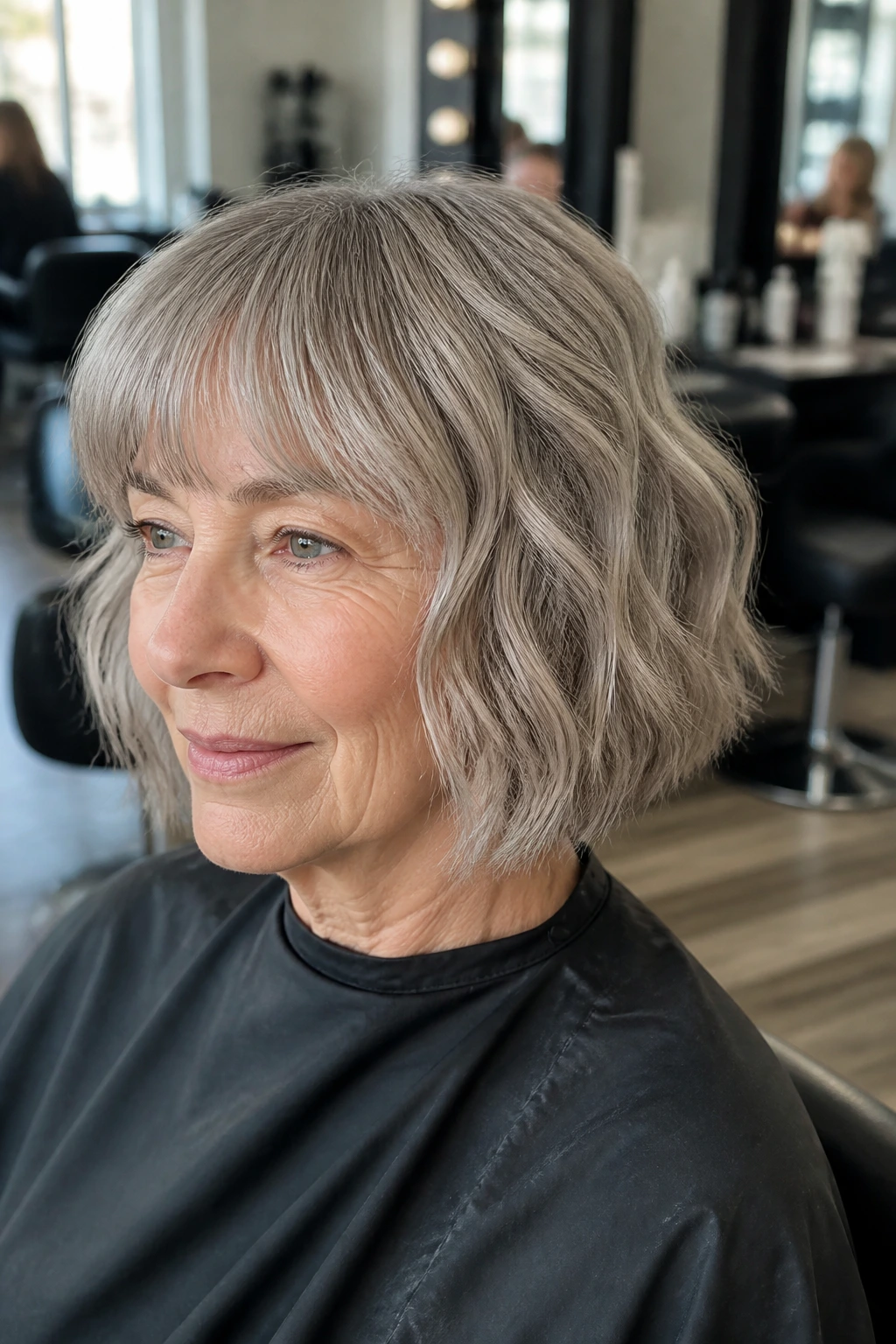
Bring photos, sure, but bring a few. One shot usually hides the awkward part of a cut. Three angles tell the truth. Show the front, the side, and the back, because a wavy bob lives or dies on how the perimeter sits against the neck and jaw.
Say where you want the length to fall when the hair is dry, not just when it’s wet. That part matters more than people think. Wavy hair usually springs up. If you want chin length, ask for a tiny bit longer than chin length while it’s wet so it lands in the right spot after it dries.
Be careful with thinning shears. On dense hair, they can help. On fine hair, they can chew through the ends and leave the bob looking see-through. A clean, blunt outline with soft internal texture is often smarter than heavy thinning.
How to Style These Bobs Day to Day
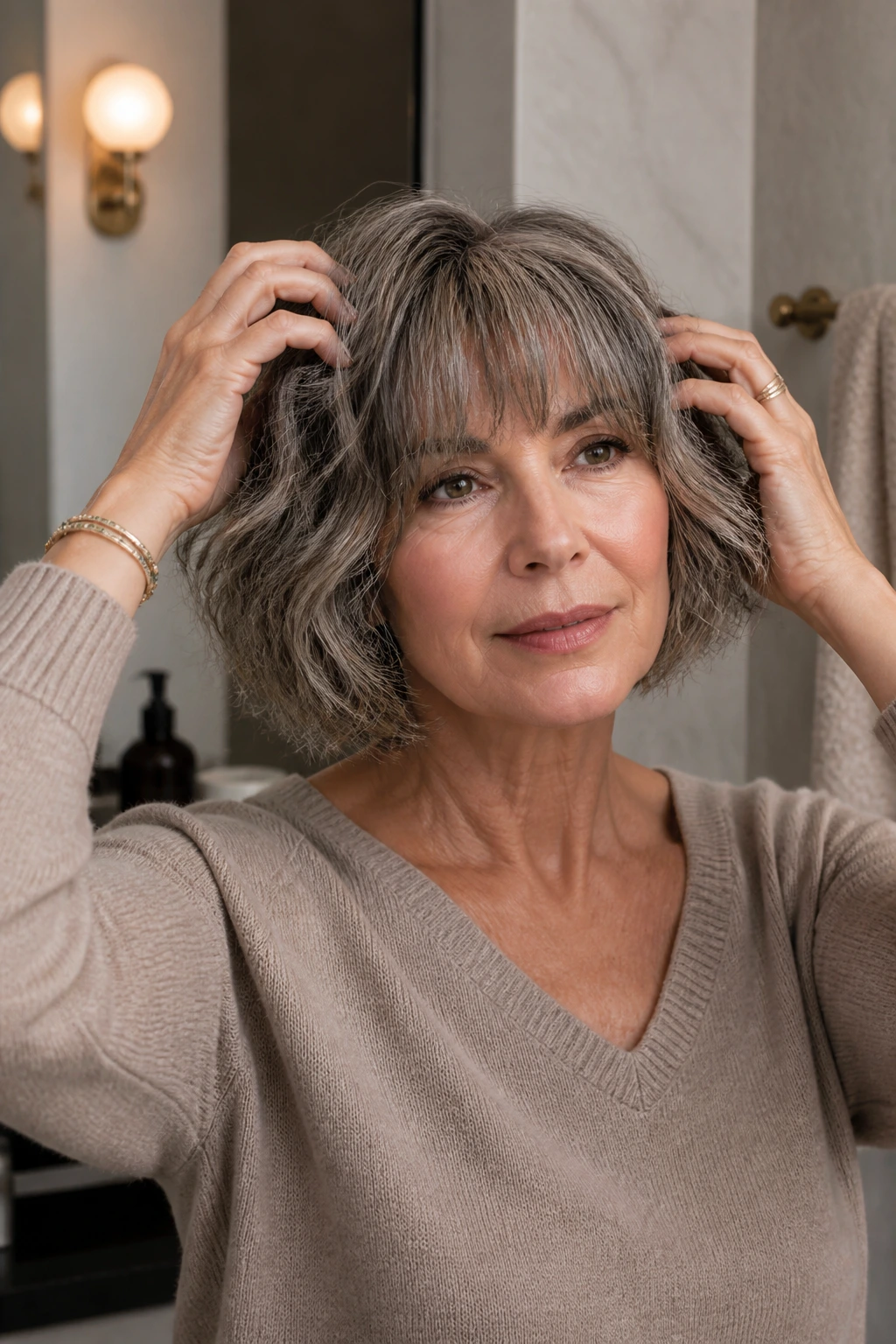
Parting: Move the part a half-inch off center if the crown feels flat. That tiny shift creates lift faster than trying to tease the roots into standing up.
Wave: Work a light mousse through damp hair, then scrunch or bend sections with your fingers. If you use a iron, touch only the middle and end of each section so the root area still looks soft.
Bangs: Clip the fringe in the direction you want it to sit while it cools. That one habit saves a lot of blow-drying later.
Finish: Use a pea-sized amount of cream on the very ends. The ends should look controlled, not slick.
Glasses: If you wear frames, let the fringe hover above the top edge or split around it. Bangs that fight your glasses usually lose.
Additional Tips and Texture Boosters
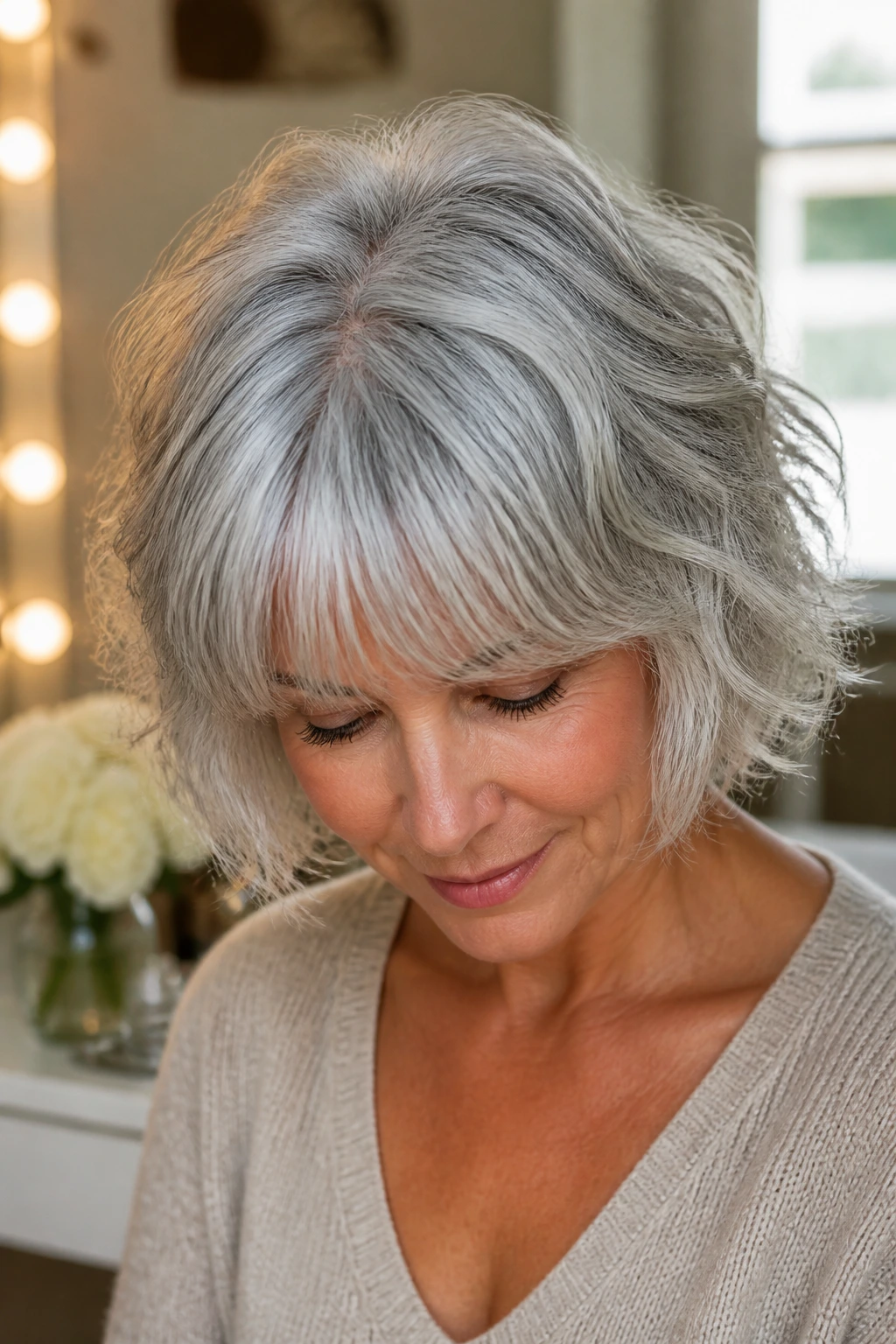
Lift at the crown: If your hair goes flat at the top, dry the roots first with the head tilted forward for 20 to 30 seconds, then clip the crown while it cools. That little bit of set gives the bob more shape without teasing.
Softness around the face: Keep the shortest bang pieces a little longer than your first instinct. That helps the fringe bend instead of sticking straight out, especially on coarse or gray hair.
More shine on silver hair: A lightweight shine spray or a tiny drop of serum on the ends can keep the color looking crisp. Use less than you think; too much makes silver look greasy in daylight.
Make it yours: If you want more edge, ask for a slightly deeper side part. If you want less maintenance, choose curtain bangs over a blunt fringe. If you want more body, keep the perimeter at jaw level rather than collarbone length.
Maintenance, Refreshing, and Grow-Out Guidance
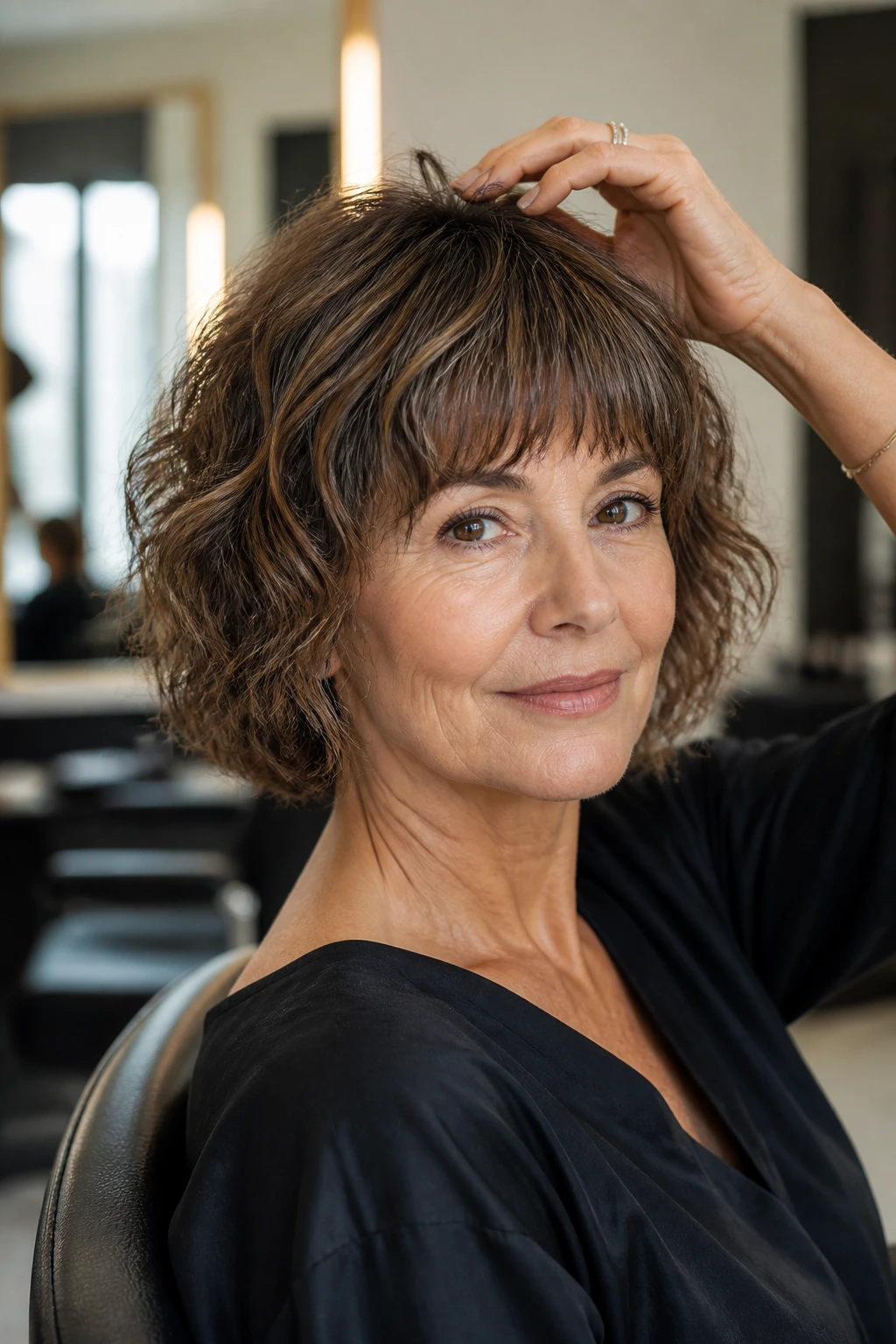
Most wavy bobs stay sharp for about 6 to 8 weeks before the outline starts to blur. Bangs usually need a small trim sooner, often around 3 to 4 weeks, especially if they sit on the brow line. If you like a cleaner fringe, book those bang trims separately.
On the daily side, don’t over-wash unless your scalp needs it. A bob with waves usually behaves better on day two or three, once the roots have lost a little slip. A mist of water, a touch of mousse, and a quick re-bend around the face are usually enough to wake it back up.
Sleep matters too. A silk pillowcase helps, but a loose clip at the crown can stop the fringe from getting bent into weird corners. If you’re growing the cut out, keep the neckline tidy and let the bangs lengthen first. That makes the in-between stage look planned instead of accidental.
Common Mistakes to Avoid
-
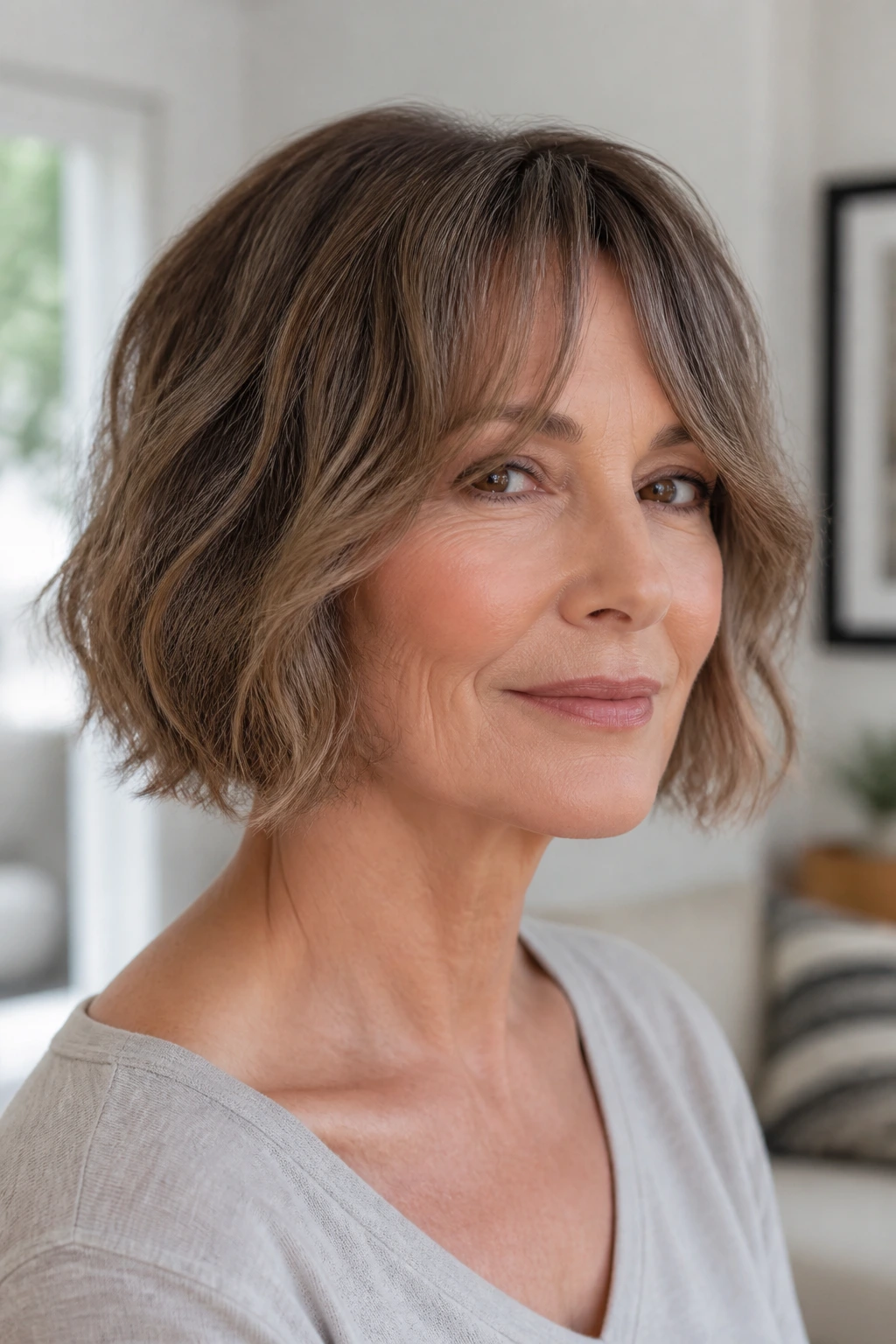
Cutting bangs too short on wet hair: Wavy hair springs up as it dries, so a fringe that looks fine at the sink can land high on the forehead an hour later. Ask for a dry check before anything gets taken shorter.
-
Over-layering fine hair: Too many choppy layers can make the bob lose its outline and show sparse ends. Keep the inside texture light and protect the perimeter.
-
Using heavy cream near the fringe: Bangs need a little structure, not a slick coating. Put product only on the tips, or the front will separate in oily-looking strands.
-
Ignoring cowlicks at the front hairline: A strong cowlick can split bangs down the middle whether you asked it to or not. Work with it by choosing curtain or side-swept bangs instead of fighting for a straight fringe.
-
Letting the neckline grow too long: Once the back loses its shape, the whole cut starts to droop. A quick nape trim keeps the bob from turning into a shapeless triangle.
Questions People Ask Before They Cut Their Hair
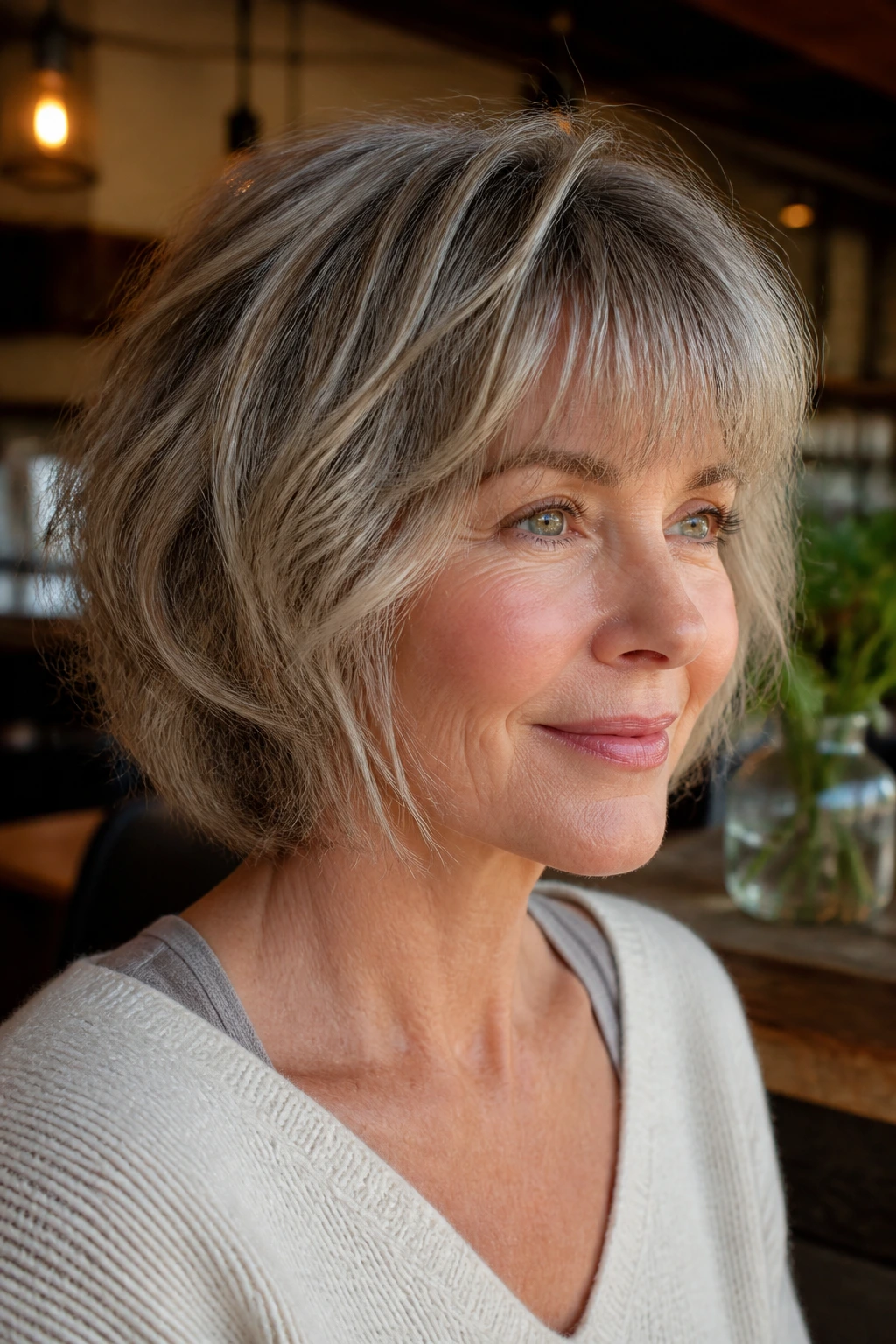
Will a wavy bob make fine hair look thinner?
Not if it’s cut well. A blunt or softly layered perimeter usually makes fine hair look fuller than long lengths that hang flat at the ends. The fringe should stay light, not chopped to bits.
Are bangs a bad idea if I wear glasses?
No, but the shape matters. Curtain bangs, side-swept bangs, and soft parted fringe usually sit better with frames than a blunt line that lands right on the lenses.
What if my hair is more straight than wavy?
You can still wear these cuts. Ask for a bob with internal texture and use a 1-inch iron to put bend into the front and mids. Even two or three bent sections can change the whole shape.
How often should I trim the bangs?
Every 3 to 4 weeks is a safe rhythm for most fringes. If you like a longer, blended bang, you can stretch that a little, but once the fringe starts closing your eyes, it stops looking deliberate.
Which bob is best if my hair is coarse and gray?
A soft layered bob, a shaggy bob, or a collarbone-length version usually behaves best. Coarser gray hair often needs space to move, not a hard blunt line that flares at the edges.
Can I air-dry a wavy bob and still make it look neat?
Yes, if you prep it right. Use a small amount of mousse, part the hair while it’s damp, and twist the front pieces once or twice so the bangs dry in the direction you want.
What if my bangs keep splitting in the middle?
That’s usually a cowlick or a hairline pattern, not a failure. Lean into it with curtain bangs or a deep side part. Fighting a natural split usually takes more effort than it’s worth.
Do I need a round brush every morning?
No. You only need enough brushwork to reset the bangs and smooth the top layer. The rest can be finger-shaped with a little cream or spray.
A Cut That Moves With You
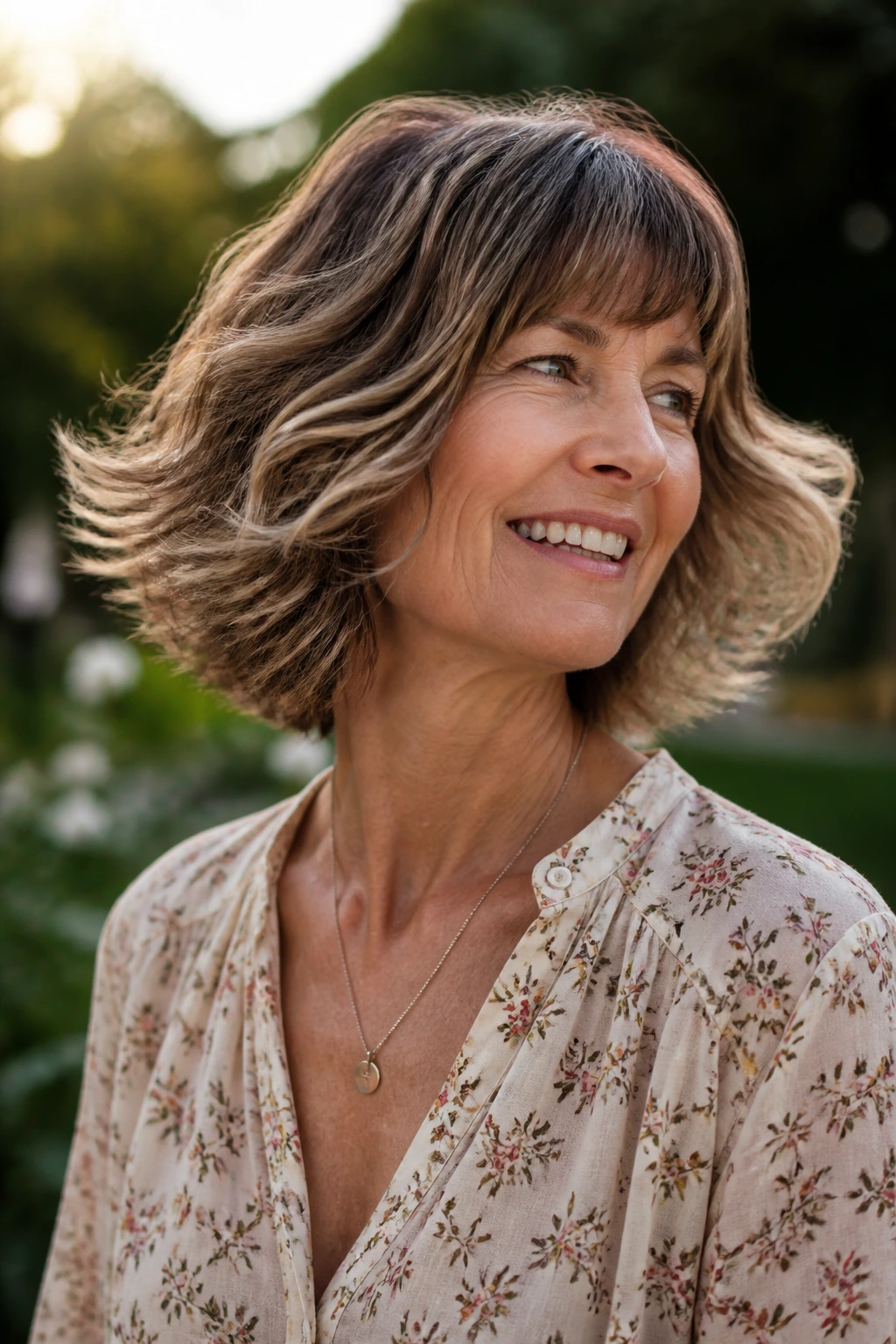
The smartest thing about a wavy bob with bangs is that it doesn’t ask hair to pretend it’s younger. It just gives the hair a clearer job. The wave makes the cut feel alive, the fringe softens the front, and the length keeps the shape from turning fussy the minute you step outside.
If you want a style that can look neat for dinner, loose the next morning, and still hold its outline when life gets busy, this is the lane to stay in. Pick the bob that matches how your hair actually behaves, not how you wish it behaved, and the whole cut starts doing half the work for you.