



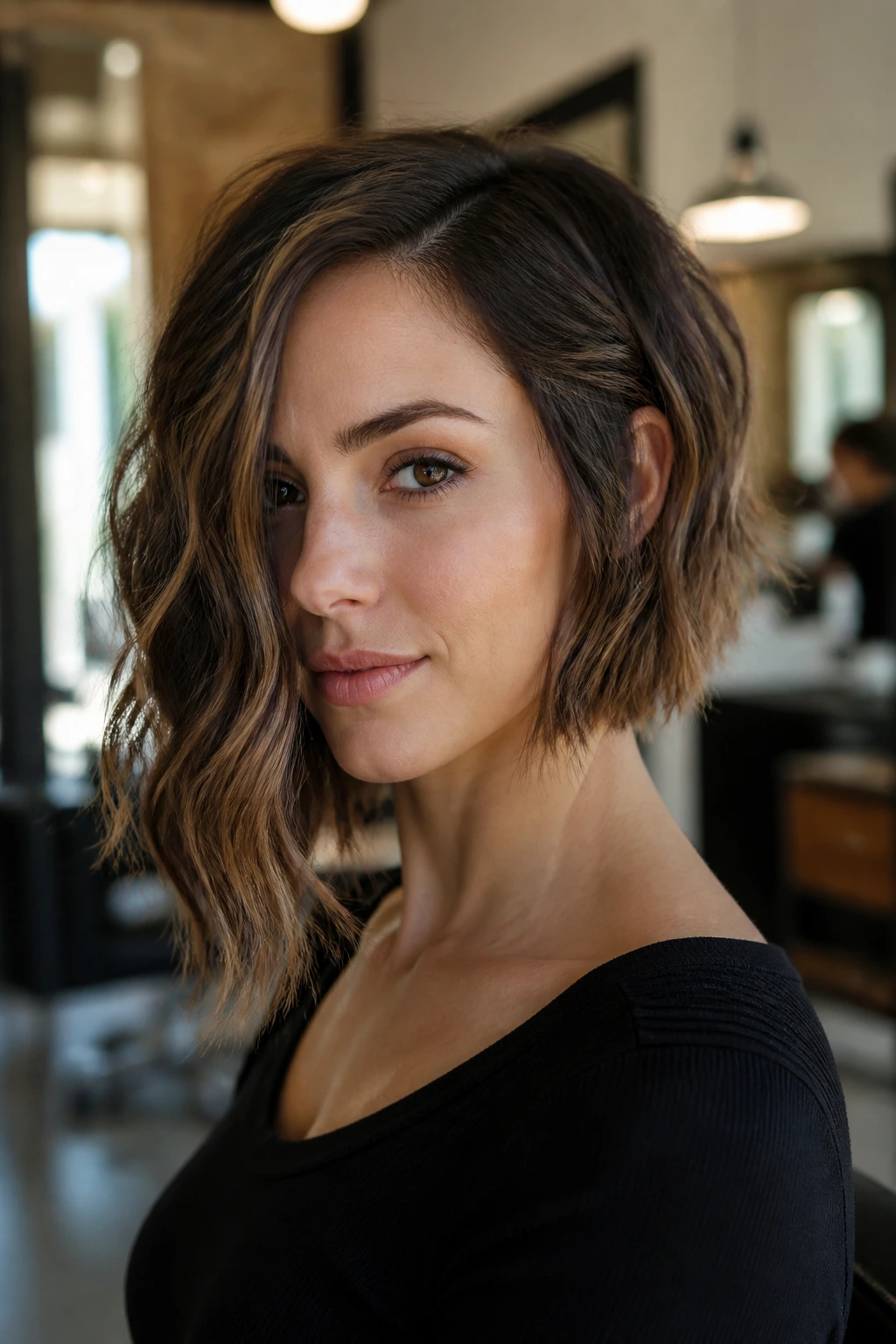
An asymmetrical bob does something a straight bob often can’t: it gives oval faces a little more edge and lets wavy hair move instead of puffing into a boxy shape. One side can skim the jaw while the other drifts toward the collarbone, and that tiny imbalance changes the whole read of the haircut. It looks deliberate. That matters.
Oval faces can wear a lot of cuts, but wavy texture changes the rules. Put the wrong asymmetrical bob on waves and the ends kick out, the crown goes flat, or the whole thing reads like an accidental grow-out. Put the right one on, though, and the hair starts working with the face instead of against it. The line gets cleaner. The movement gets softer.
That tension—sharp line, soft bend—is where these haircuts live. Some are subtle enough for everyday wear. Others lean bolder, with a deeper side part or a longer front panel that makes the asymmetry obvious from across the room. The details matter more than the label, and that’s where the fun starts.
Why These Asymmetrical Bobs Stand Out on Oval Faces and Wavy Hair
-
Oval-face balance: The diagonal line of an asymmetrical bob keeps an oval face from reading too symmetrical, especially when the longer side lands near the jaw or cheekbone.
-
Wave-friendly movement: Wavy hair softens the angle automatically, so the cut looks polished without turning stiff or helmet-like.
-
Styling range: These cuts can be air-dried, diffused, beveled with a flat iron, or tucked behind one ear and still hold their shape.
-
Shape control: A good asymmetrical bob gives you a perimeter that stays visible even on day three, which is where a lot of short cuts fall apart.
-
Salon clarity: A photo matters here, because “asymmetrical” can mean a one-inch difference or a three-inch swing, and those are not the same haircut.
-
Grow-out grace: The better versions keep enough weight at the ends that the cut still looks intentional when it grows out a half-inch.
What to Tell Your Stylist Before the First Snip
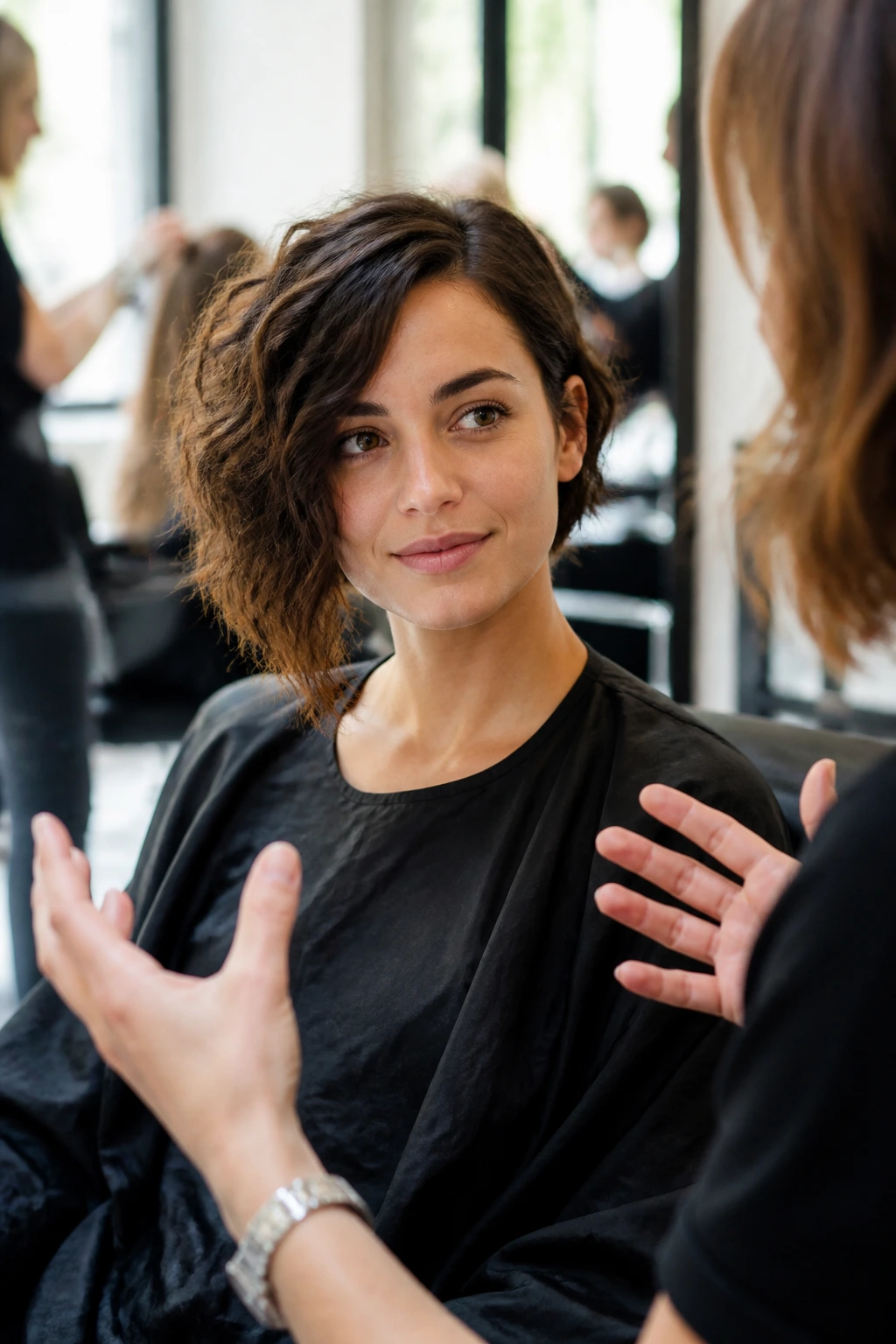
Do not walk in and ask for “an asymmetrical bob” and leave it at that. That phrase is too vague. It can mean a gentle slope, a sharp diagonal, a bob that’s barely off-center, or one side that drops several inches lower than the other.
Bring two or three photos, not one. One should show the front, one should show the side, and if you can find it, one should show the back or the nape. Then say where you want the longest front piece to land: jaw, mouth corner, or collarbone. That one detail changes the whole haircut.
The amount of difference matters too. A subtle version usually means about 1 to 1.5 inches between sides. A medium version sits closer to 2 inches, and a bold version can stretch past that, especially if the part is deep and the front pieces are left long enough to swing.
If your waves are thick, ask for the perimeter to stay a little heavier. If your waves are fine, ask for light internal shaping instead of aggressive thinning. The difference shows up the minute you air-dry. One version falls. The other frizzes into dust.
1. Soft A-Line Bob with a Longer Front Edge
This is the bob for someone who wants the asymmetry to show up only when the hair moves. The back sits snug at the nape, the front glides down toward the jaw, and the overall shape stays calm instead of shouting for attention. On an oval face, that gentle diagonal adds just enough angle to sharpen the cheeks without stealing the softness that wavy hair naturally gives you.
Why it works
The A-line shape gives the waves a lane to follow. Instead of puffing out at the sides, the hair bends forward in a slow curve. That matters if your waves tend to grow wider at the ends.
Keep the length difference modest. Around an inch to an inch and a half is usually enough. Any more and the cut starts to look more dramatic than soft.
A quick bend with a 1-inch curling iron on the front pieces is usually enough. Leave the rest alone.
2. Deep Side-Part Asymmetrical Bob
A deep side part does half the work for you. The shorter side lifts at the temple, the longer side drapes across the cheek, and the whole cut gets a clean diagonal that oval faces wear well. If your crown tends to lie flat, this shape gives it a job to do.
The trick is keeping the shorter side tidy without making it spiky. You want enough length to tuck it behind the ear if needed, but not so much that the asymmetry disappears. On wavy hair, that longer side should still have some weight in it, or it’ll fray when it dries.
A little root lift spray at the part helps. So does drying the crown first, then letting the longer side fall into place last.
3. Wavy French Bob with a Longer Side
Want the cut to feel airy instead of engineered? This is the one. A French bob usually sits near the cheekbones or just under the chin, and the asymmetrical version keeps one side a touch longer so the shape has a little swing. On an oval face, that longer line keeps the haircut from reading too neat.
What makes it work
The shorter side exposes the jaw. The longer side brushes past it. That contrast makes the face look a little more sculpted without turning the cut severe.
This version is happiest with loose waves and a bit of bend in the fringe, if you wear one. Heavy curls can be too much here. The shape wants lightness.
A salt spray misted through damp hair can help, but keep it off the roots if your hair is fine. Too much product at the crown flattens the whole thing.
4. Collarbone Asymmetrical Lob
When you are not ready to lose much length, the collarbone lob is the easy answer. It still reads as a bob, but the longer side can graze the collarbone while the shorter side sits closer to the jaw. That difference creates a slanted line that feels clean and grown-up without getting severe.
This version is especially good if your waves are medium to thick. The extra length gives the hair enough weight to settle instead of ballooning outward. On an oval face, the collarbone length can elongate the neck a little and make the whole silhouette feel lighter.
Wear it with a soft off-center part. A deep side part can make it feel heavier than it needs to be.
5. Stacked-Back Bob with Soft Waves
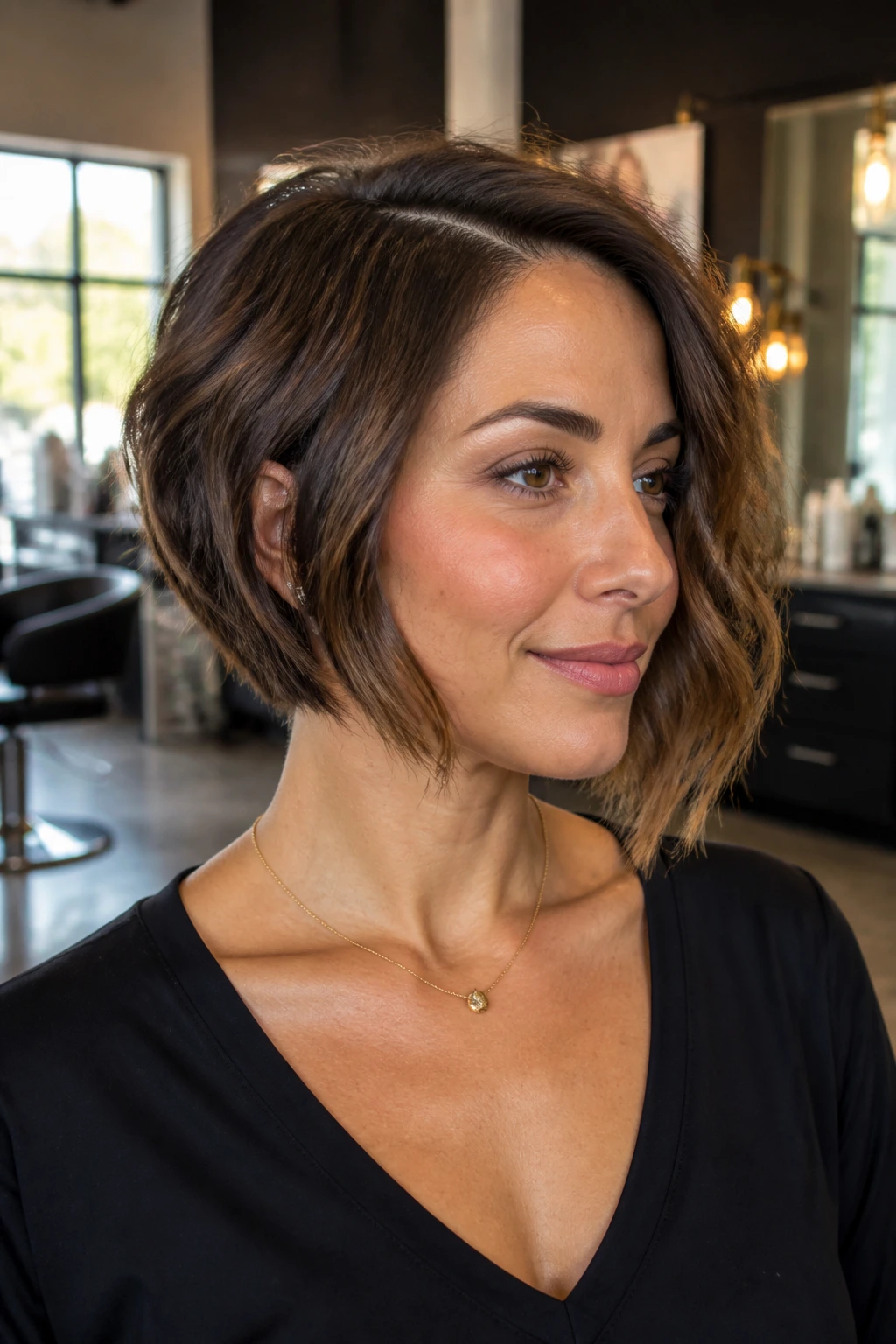
This is the cut that fixes a flat crown without turning the ends into a triangle. The back is stacked just enough to create lift at the nape, while the front stays longer and softer. If your waves collapse at the top and swell at the bottom, this shape brings the whole thing back into balance.
For thick hair, a stacked back removes some of the bulk that usually sits around the neck. For fine hair, keep the stack subtle or you’ll lose too much weight. The asymmetry comes from the front angle, not from over-layering the back.
Dry it with a round brush at the crown, then let the lengths air-dry for a more relaxed finish. The contrast between the lifted back and the longer front is the point.
6. Shaggy Asymmetrical Bob with Curtain Bangs

Curtain bangs do a lot of quiet work here. They bridge the shorter and longer sides so the haircut doesn’t look like two separate ideas glued together. On wavy hair, that little piece of fringe helps the whole cut feel lived-in instead of overplanned.
The shaggy texture softens the line even more. The ends are broken up, the waves move freely, and the asymmetry stays visible without feeling harsh. Oval faces can handle the extra movement at the cheekbones because the face shape already has balance.
If you wear this cut, keep the bangs light. Heavy curtain bangs can swamp the eyes and make the bob feel bigger than it is.
7. Blunt Asymmetrical Bob with Airy Texture

Blunt does not have to mean stiff. In this version, the perimeter stays fairly crisp, but the interior has enough texture to let the waves breathe. That combination is especially useful on oval faces, because the clean edge gives the haircut a shape that reads instantly.
Wavy hair can make a blunt bob look too full if the ends are cut blunt but the inside is left heavy. That’s why the texture needs to be airy, not shredded. Point-cutting the ends a little helps the line stay sharp while keeping the wave pattern from turning bulky.
A small amount of smoothing cream on the ends is enough. Skip the heavy oil unless your hair is very dry.
8. Inverted Bob with Loose Wave Ends
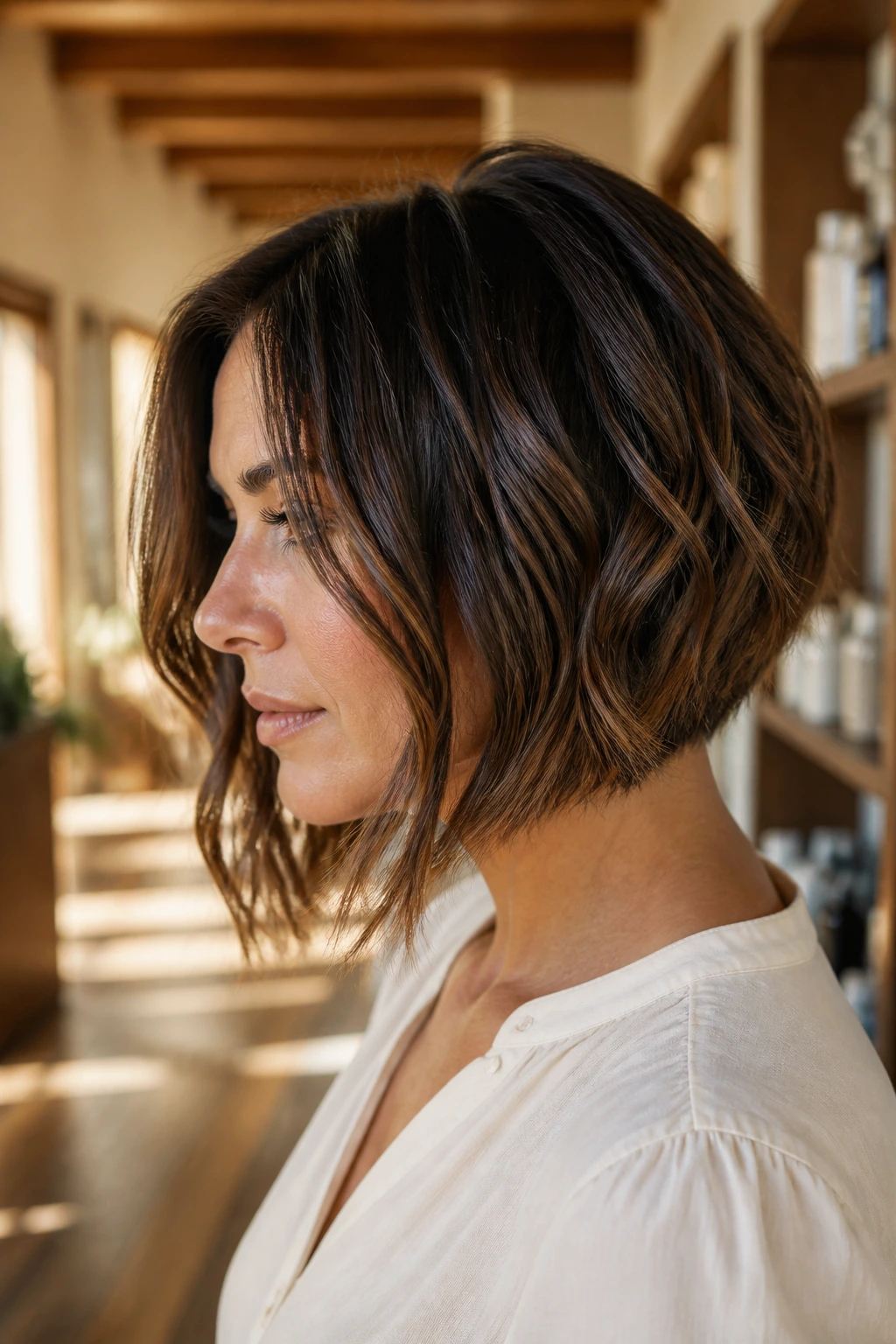
A true inverted bob gives the front some authority. The back sits shorter and tighter, the front swings forward, and the slope between the two sides creates a very readable asymmetry. On an oval face, that forward motion pulls the eye toward the jaw and cheekbones.
The catch is overgraduating the back. If the nape gets too stacked, the shape turns into a wedge, which is a different mood entirely. Keep the graduation soft, especially if your waves expand as they dry.
Loose wave ends make this cut better, not messier. They soften the hard line at the front and keep the haircut from feeling too engineered.
9. Side-Swept Bob with Face-Framing Layers
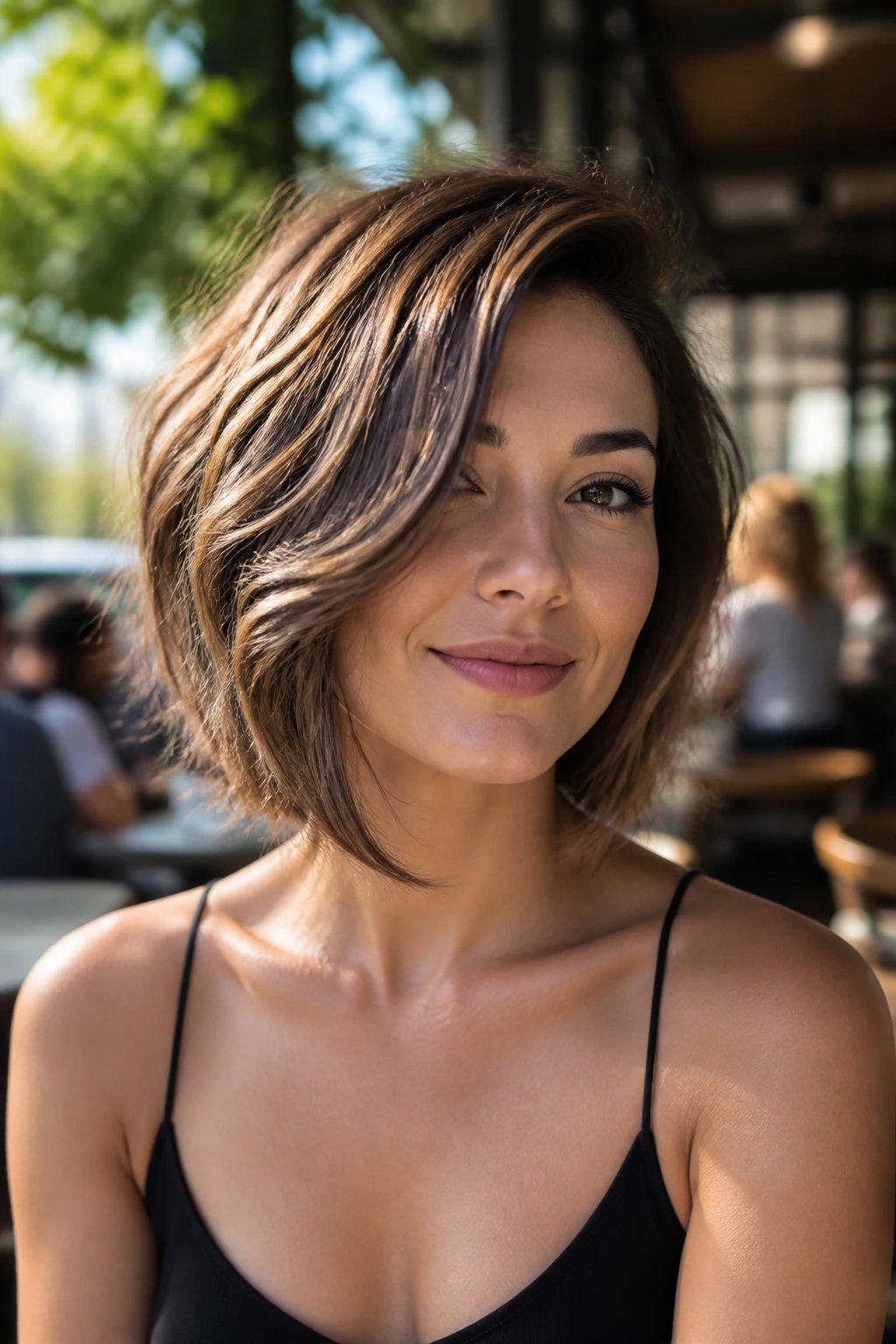
This one leans on the part and the front pieces rather than on a dramatic length difference. The side sweep creates an easy diagonal across the face, and the face-framing layers keep the longer side from dropping like a curtain. Oval faces wear this shape well because the layers sit where the cheekbones already do some of the work.
If you wear glasses, this can be a smart pick. The layers stop the hair from crowding the frames, and the longer front piece can tuck away cleanly. Wavy hair gives the layers a little lift, which helps the asymmetry show without much styling.
A quick round-brush bend at the front and a soft spray at the roots is usually enough. Don’t overdo it.
10. Razor-Cut Asymmetrical Bob

Razor cutting can make wavy hair look feather-light, but only if the hair density can handle it. The ends get softened, the line becomes a little smokier, and the asymmetry reads as movement rather than geometry. On an oval face, that can be a very flattering tradeoff.
The downside is frizz. If your hair already has a rough surface, a razor-cut bob can swell at the ends and lose its shape by midday. Medium-density waves tend to do best here.
Use a light serum only on the last inch or two. The rest should keep its texture. That’s what makes this cut look expensive rather than depleted.
11. Chin-Length Bob with a Longer Front Piece
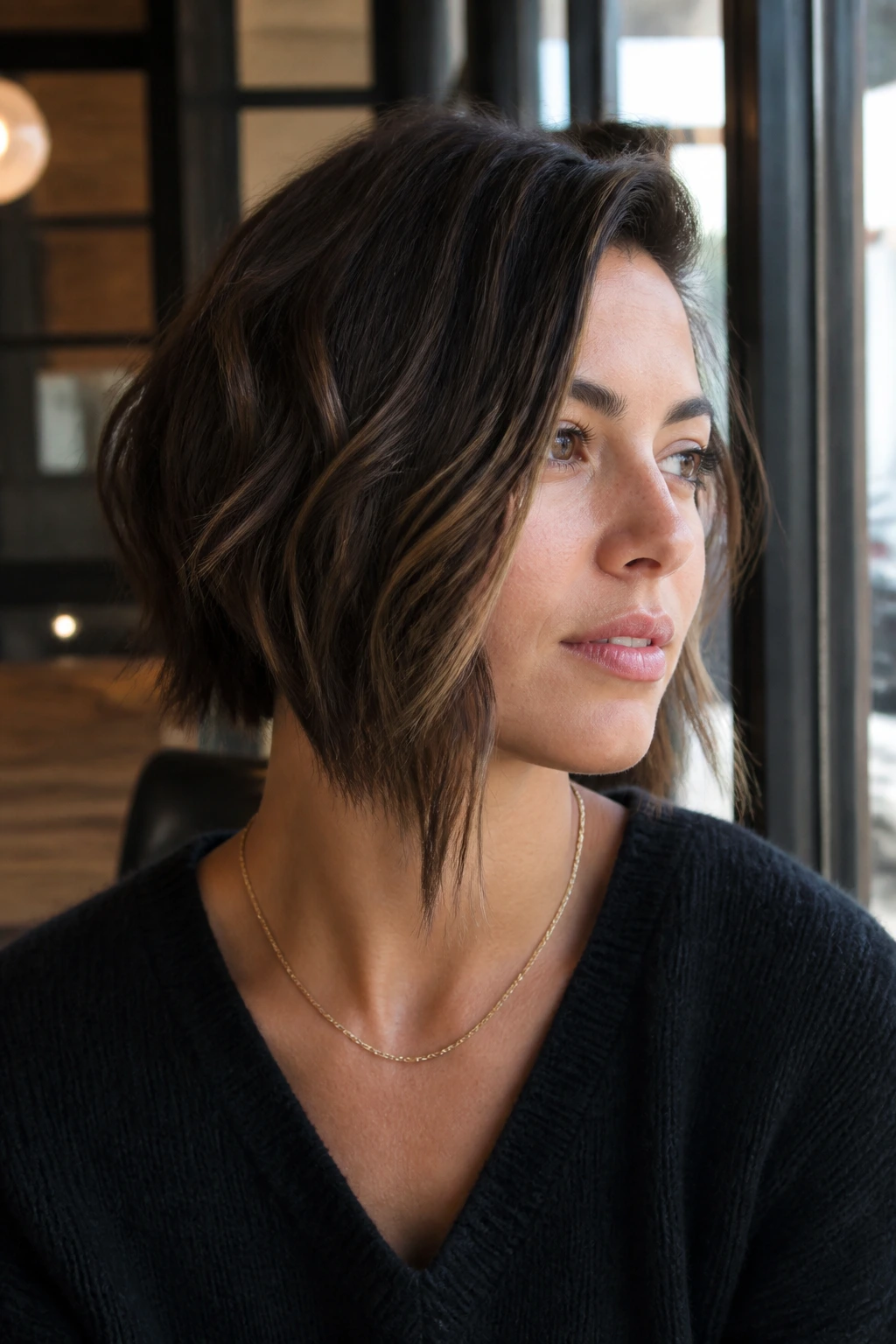
Chin-length is where oval faces start to show off. Add one longer front piece and the whole cut becomes more directional. The shorter side makes the jaw look cleaner, while the longer side keeps the eye moving so the face doesn’t feel boxed in.
On wavy hair, this version lives or dies by the exact length. Too short and the waves spring up and sit away from the cheeks. Too long and the asymmetry disappears. The sweet spot is usually just at or slightly below the chin on the shorter side, with the longer side falling past it by a visible inch or two.
This is a strong choice if you like a sharp outline but still want softness at the ends.
12. Textured Lob with a Subtle Undercut
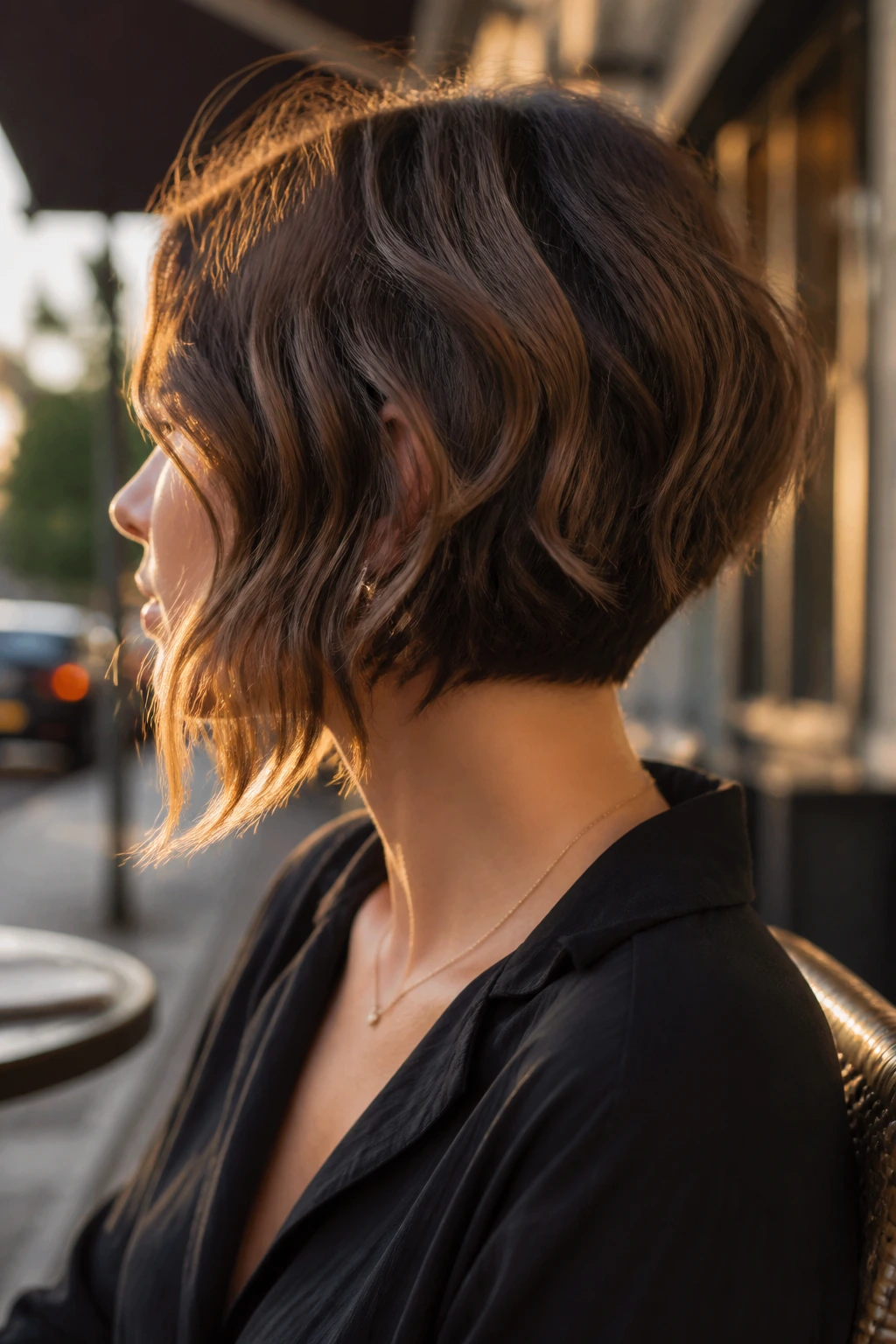
Thick wavy hair can turn into a triangle fast. A subtle undercut at the nape solves that without making the haircut look edgy in a loud way. The longer side still drapes, the front still angles forward, but the bulk underneath is removed so the shape can actually fall.
That hidden undercut is the useful part. You do not need to announce it. You just need the haircut to stop fighting your density.
This version works especially well if your hair puffs at the neck or flips out under the collar. It buys you movement without making the perimeter flimsy. Ask for the undercut to stay low and narrow so the cut grows out cleanly.
13. Tousled Bob with Balayage Dimension

Color can do some of the work that cutting does. With balayage, the longer side gets a little extra visual weight because the lighter ribbons catch the bend in the wave. That makes the asymmetry read faster, even when the cut difference is subtle.
The hairstyle itself should stay loose. Think bent ends, soft separation, and a crown that has lift but not too much height. Oval faces get a nice side effect from all that movement: the face looks framed without getting buried.
If your colorist places the lighter pieces a bit more heavily on the longer side, the angle becomes even more obvious. That’s a tiny trick, but it works.
14. Sleek Wavy Asymmetrical Bob
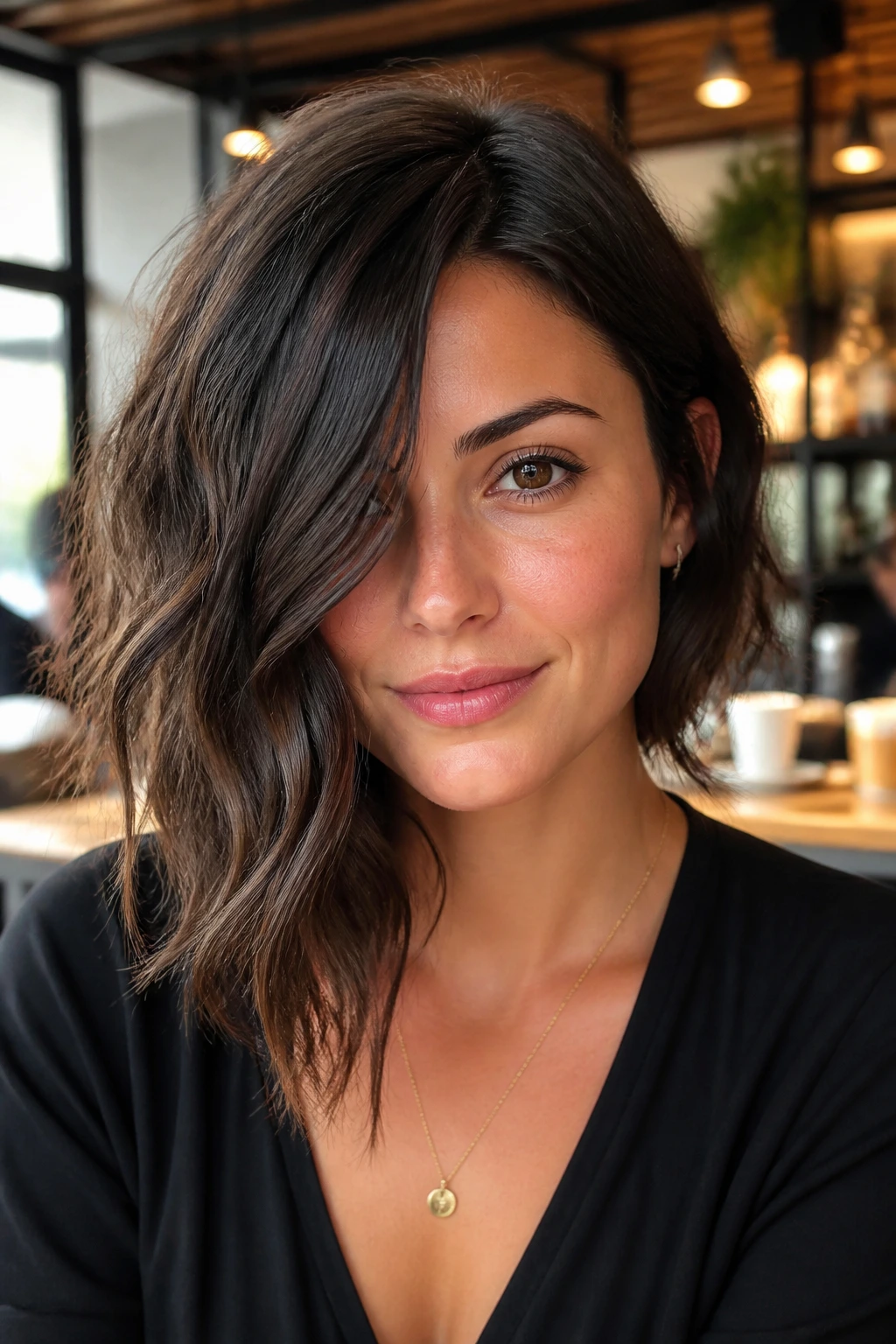
Sleek and wavy sound like opposites until you dry the roots smooth and leave the mid-lengths bent. That’s the trick here. The silhouette stays clean, the wave pattern stays visible, and the haircut reads polished instead of fussy.
This version suits oval faces because it keeps the line tidy around the jaw. The asymmetry is in the shape, not in a lot of broken-up texture. If you like a more refined finish, this is one of the better options on the list.
Use a blow-dryer with a nozzle and a brush to smooth the top, then touch the front pieces with a flat iron only if needed. A quick bevel at the ends is enough.
15. Micro-Fringe Asymmetrical Bob

Short fringe, longer side, clean neckline — this one has attitude. A micro-fringe can make an oval face feel a touch shorter through the forehead, which is usually fine because the rest of the cut restores the length visually through the angled side.
The fringe should stay airy. If it gets too heavy, the whole haircut can look boxy and a little severe. On wavy hair, a piecey fringe works better than a solid one because it moves with the rest of the cut instead of sitting on top of it.
This is not the low-maintenance option. It needs a little daily rearranging. But when it’s right, it has a crisp, fashion-forward shape that still feels wearable.
16. Copper Wavy Bob with a Long Front Piece

Copper does not just add color; it makes every wave read more clearly. Warm tones catch the bend in the hair and throw a little light onto the longer front piece, which makes the asymmetry pop without any extra styling.
This version works best when the cut itself stays simple. Too many layers and the color gets busy. Keep the silhouette clean, let the wave pattern do the texture, and use the longer front piece as the focal point.
If your hair is porous from color, a weekly mask helps the ends stay smooth. Copper shows dryness fast. That is the tradeoff.
17. Platinum Asymmetrical Bob with a Soft Bend
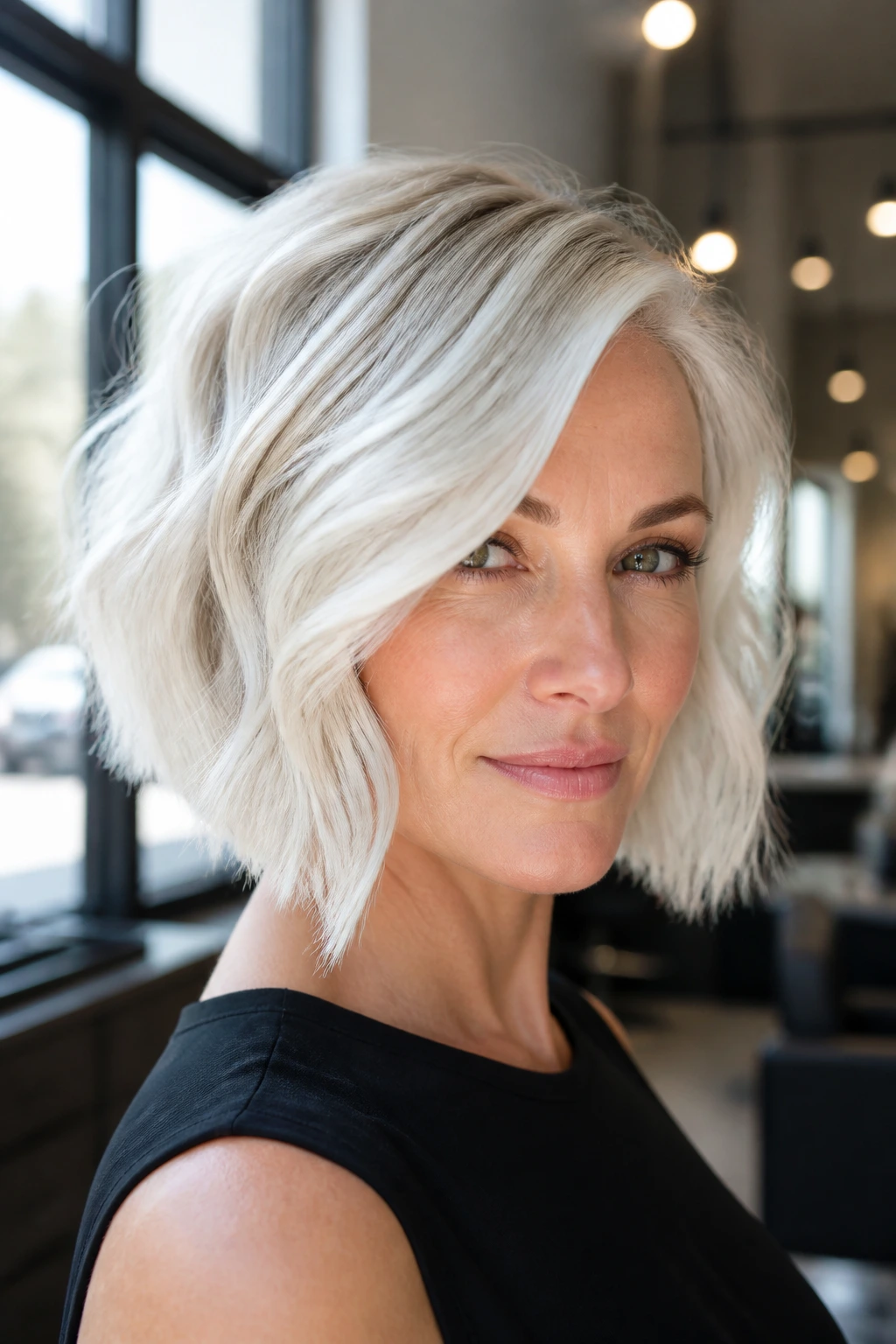
Platinum makes the haircut visible from across the room. Every edge matters. Every line matters. If the cut is uneven by accident, you will see it. If it is cut well, though, the asymmetry looks crisp and expensive.
The soft bend keeps the style from feeling severe. On wavy hair, the movement softens all that light color and stops the shape from looking too hard. Oval faces can wear this well because the color draws attention to the jawline and the cheekbones without crowding the face.
Conditioning matters here. Bleached hair bends differently, and dry ends can make the longer side kick outward in a bad way. Keep the ends smooth or the whole cut loses its clean line.
18. Curly-Wavy Bob with an Offset Part

If your waves are closer to curls, an offset part helps the shape stay from ballooning on both sides. One side can sit higher and shorter, the other side can fall longer and heavier, and the overall result feels controlled without getting flat.
This cut should not be over-layered. Dense curly-wavy hair already has lift. Give it too much internal shaping and the ends start to fray, which makes the asymmetry hard to read.
Diffuse on low heat, then let the longer side settle before you touch it again. The less you disturb it, the cleaner the angle looks.
19. Chin-Hugging Bob with Hidden Layers
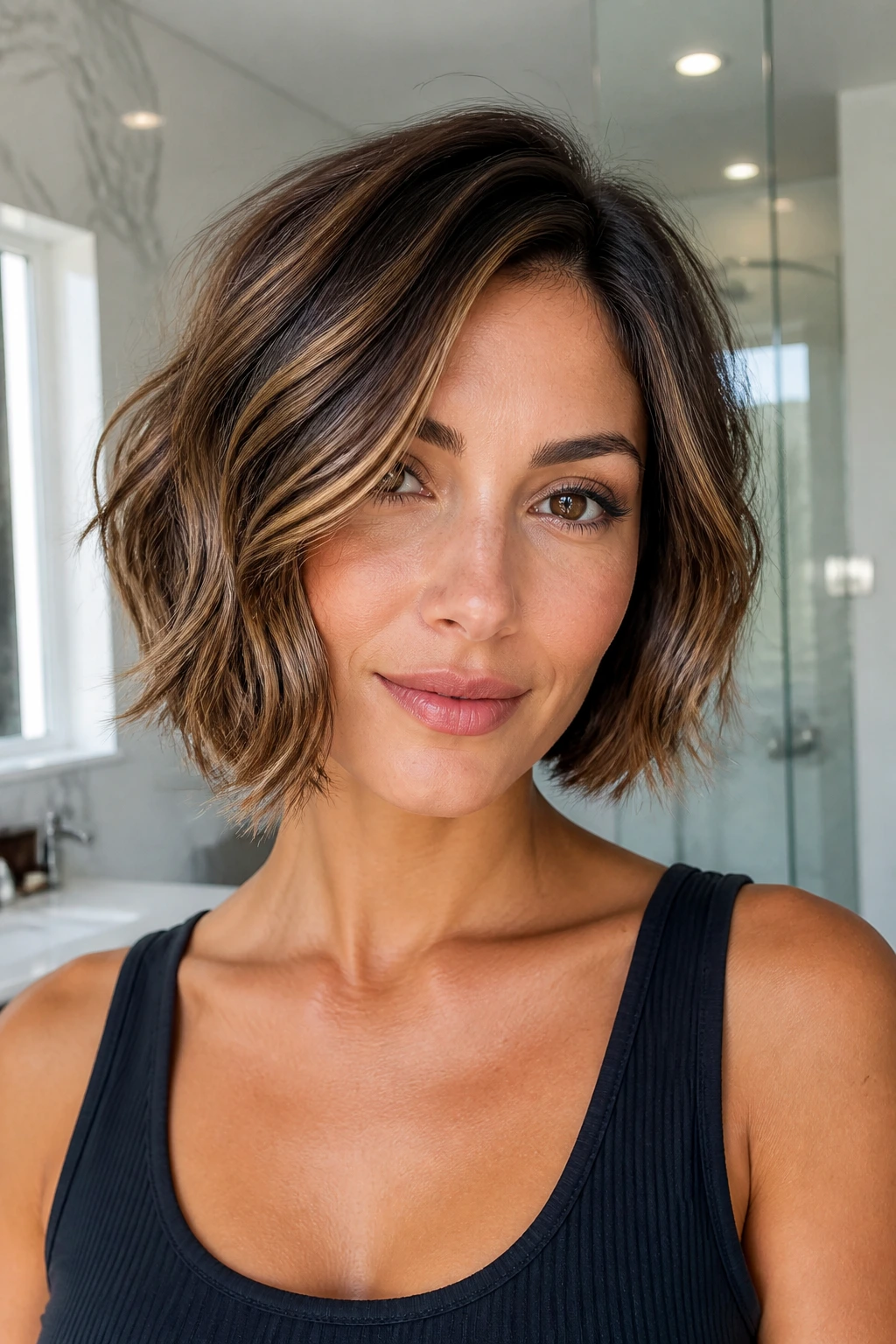
This is the quiet version of the asymmetrical bob. The length stays close to the chin, the longer side drops just enough to register, and the hidden layers keep the whole thing from puffing out around the face.
It is a strong pick if you want the haircut to feel neat in the morning and not require a full styling session every time. Oval faces like this shape because it keeps the face open without going short in a way that feels harsh.
The hidden layers are the secret. They remove internal bulk without making the ends wispy. That’s a better trade than visible shagging if you want something more controlled.
20. Shoulder-Grazing Bob with a Heavy Side Sweep
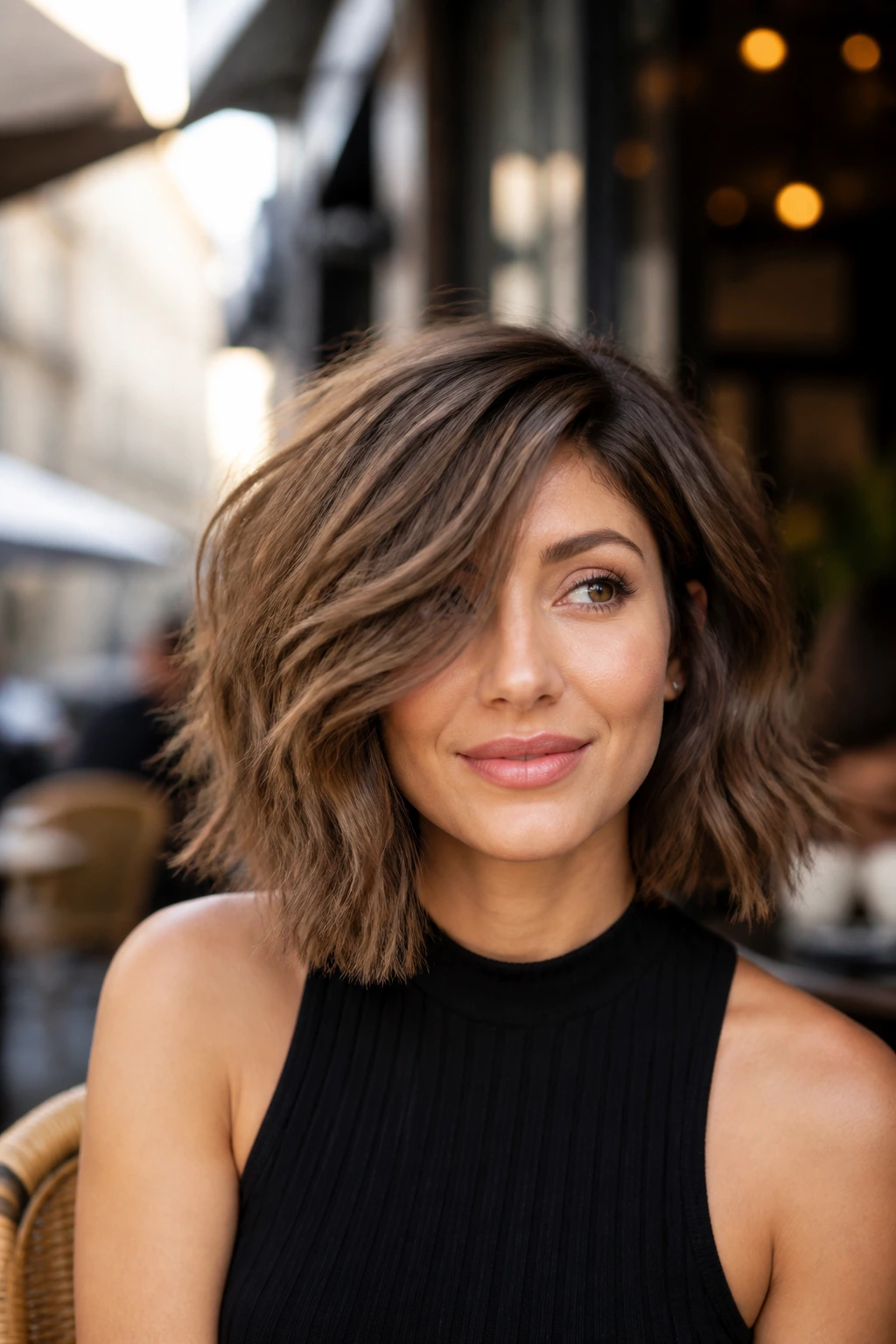
A longer bob can still read asymmetrical if the front panel is doing the talking. In this version, the side sweep pushes the eye toward one shoulder, and the longer front pieces make the slope obvious even though the total length is more forgiving.
This is a smart choice if you want to keep hair off the neck but still have some length to tuck behind the ear. Wavy hair gives the sweep some movement, and oval faces can handle the longer shape without losing definition.
If your waves tend to collapse at the roots, a little volume spray at the part helps. Keep the ends loose. That’s where the shape lives.
21. Piecey Bob with Point-Cut Ends
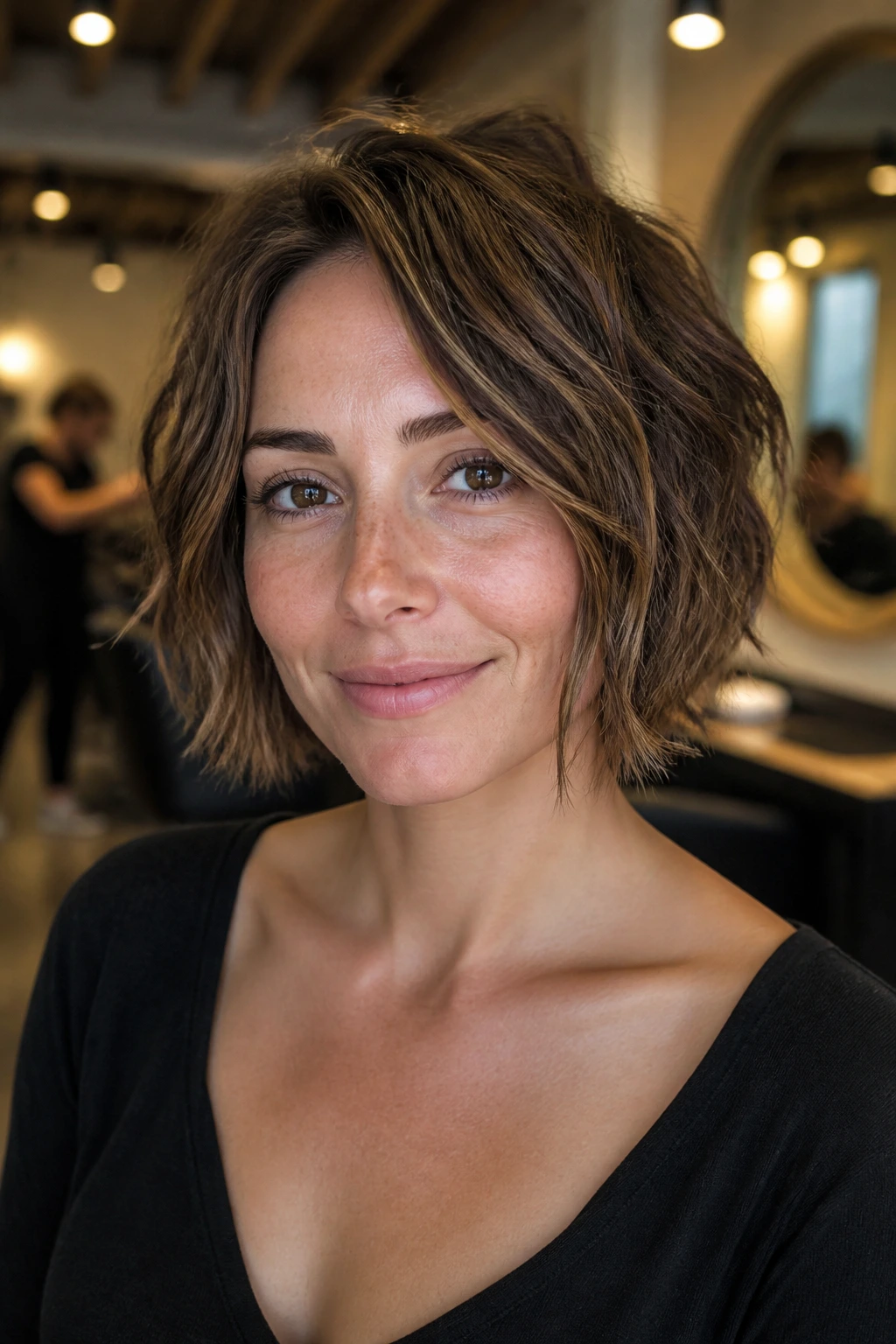
Point-cut ends are the reason some bobs look airy and some look chopped. The tiny notches break up the line just enough to let the waves separate, and the asymmetry feels modern instead of blunt.
This cut is best if you like a bit of mess in the finish. It is not a lacquered bob. It wants texture, movement, and maybe a little second-day grit from dry shampoo. Oval faces get an easy lift from the piecey front because it keeps the cheek line from looking flat.
Use product sparingly. Too much cream and the pieces cling together, which kills the effect.
22. Low-Maintenance Air-Dry Bob

This cut is built for mornings when the dryer stays in the drawer. The length keeps enough weight to settle, the asymmetry is clear enough to show even without blowout work, and the waves help the haircut look deliberate after a rough dry.
Air-dry versions need a slightly heavier perimeter than polished versions do. That keeps the ends from exploding into frizz while the hair dries. A little mousse at the roots, a dab of leave-in through the mids, and a gentle scrunch are usually enough.
Clip the longer side away from the face while it sets if that side has a habit of flipping out. That small step saves a lot of annoyance.
23. Angular Bob with a Tucked-Behind-Ear Finish
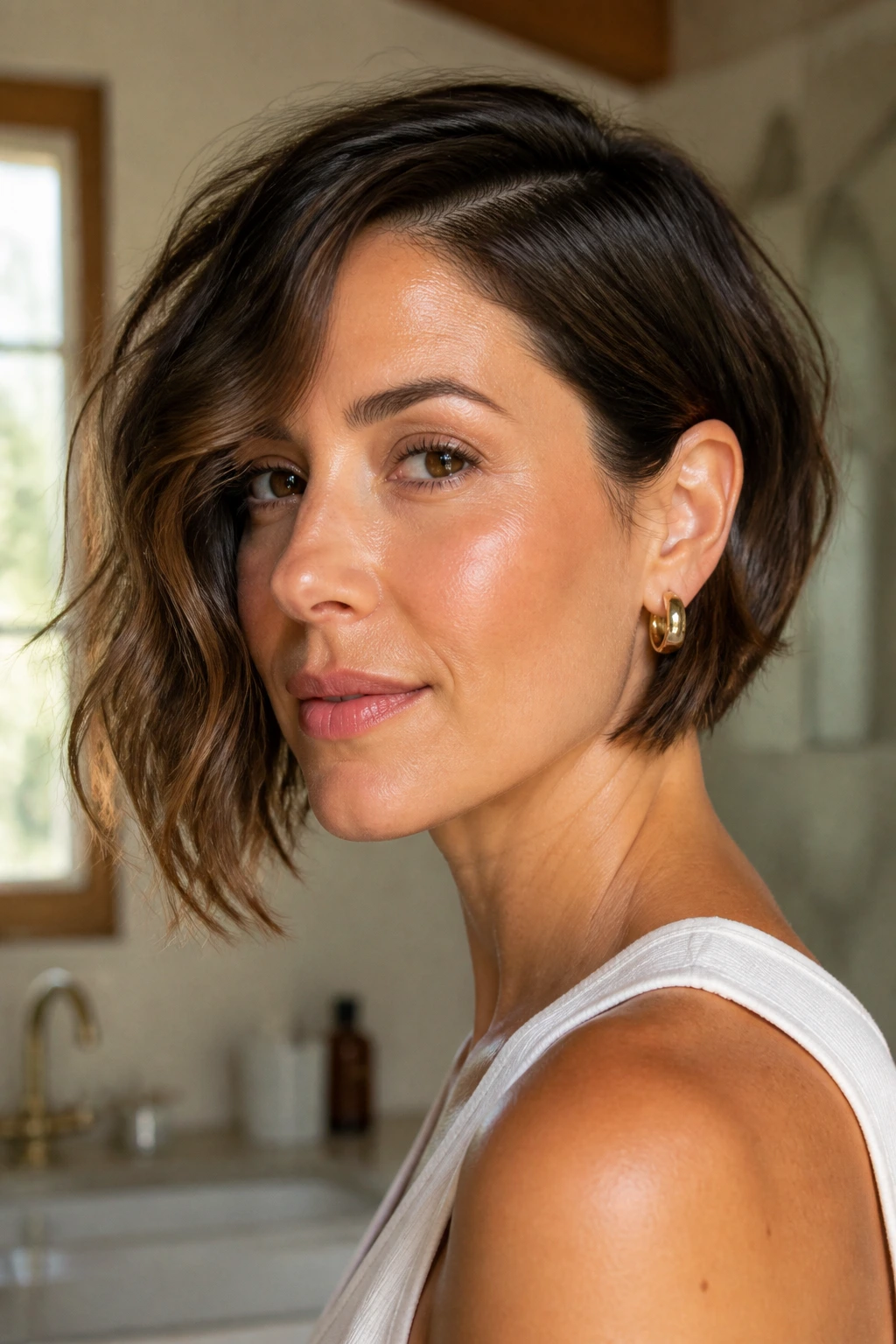
A tucked side changes the whole silhouette. The shorter side is cut to reveal the ear, the longer side hangs forward, and the asymmetry becomes visible the minute you tuck one section back. Oval faces wear this well because the exposed cheek and jaw line give the haircut some clean structure.
This is also one of the easiest ways to make earrings matter. A small hoop or a simple stud looks more intentional when the hair is tucked back on one side. Wavy hair on the other side keeps the style from looking too severe.
Keep a little smoothing cream near the shorter side if it tends to puff. You want it tucked, not flattened into the scalp.
24. Soft Disconnected Bob with Volume at the Crown
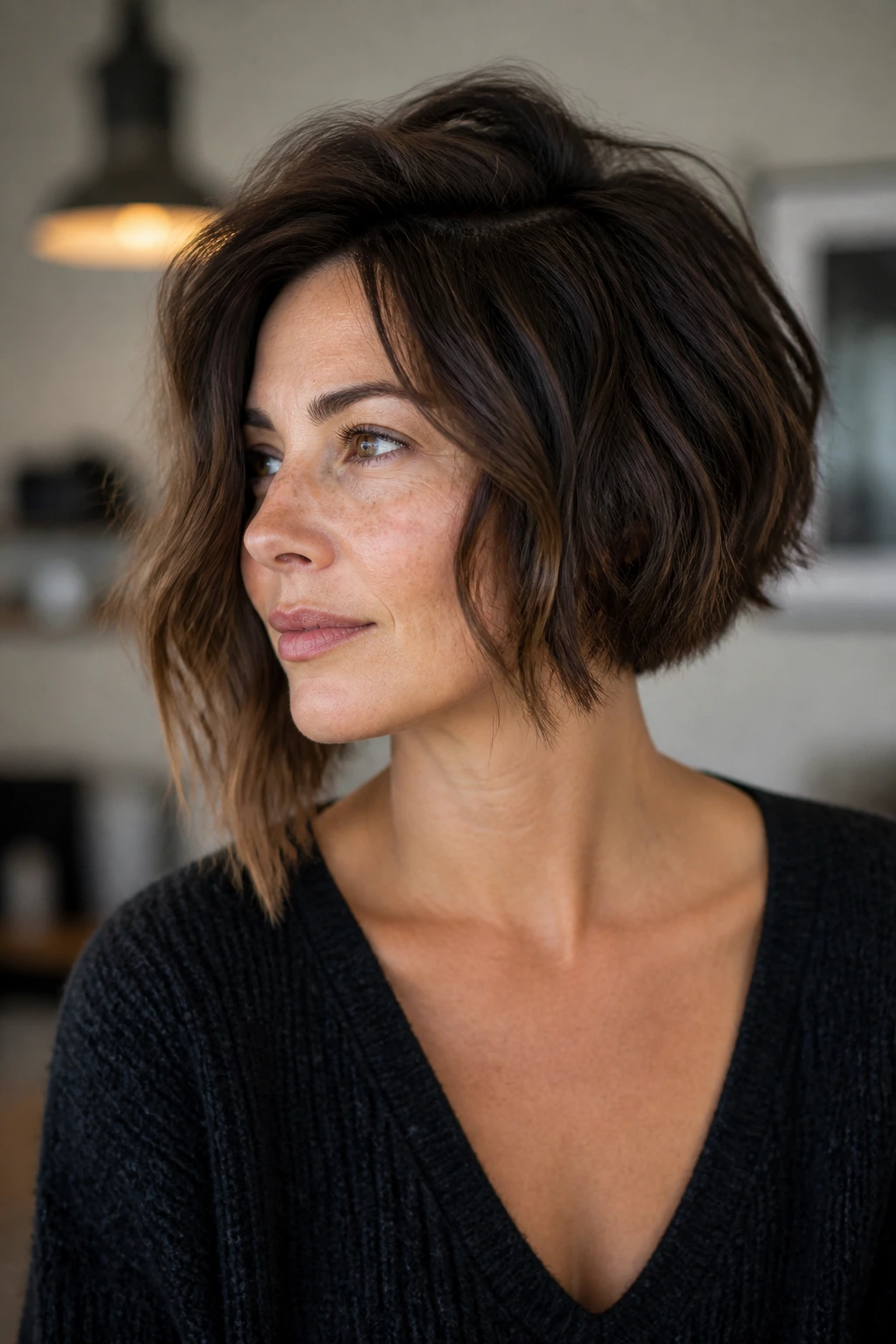
Disconnected layers keep the top from sinking while the ends stay grounded. That sounds technical, but the result is simple: lift at the crown, movement through the sides, and a long side that still feels anchored. On an oval face, that bit of crown height can make the whole face look a little longer and cleaner.
This is not an undercut bob. The separation is softer, and the point is to avoid the heavy shelf effect that thick wavy hair can create. Ask for the top to stay light without losing the perimeter.
A root-lift spray and a round brush at the crown are enough. Let the rest keep its bend.
25. Lived-In Asymmetrical Bob for Thick Wavy Hair
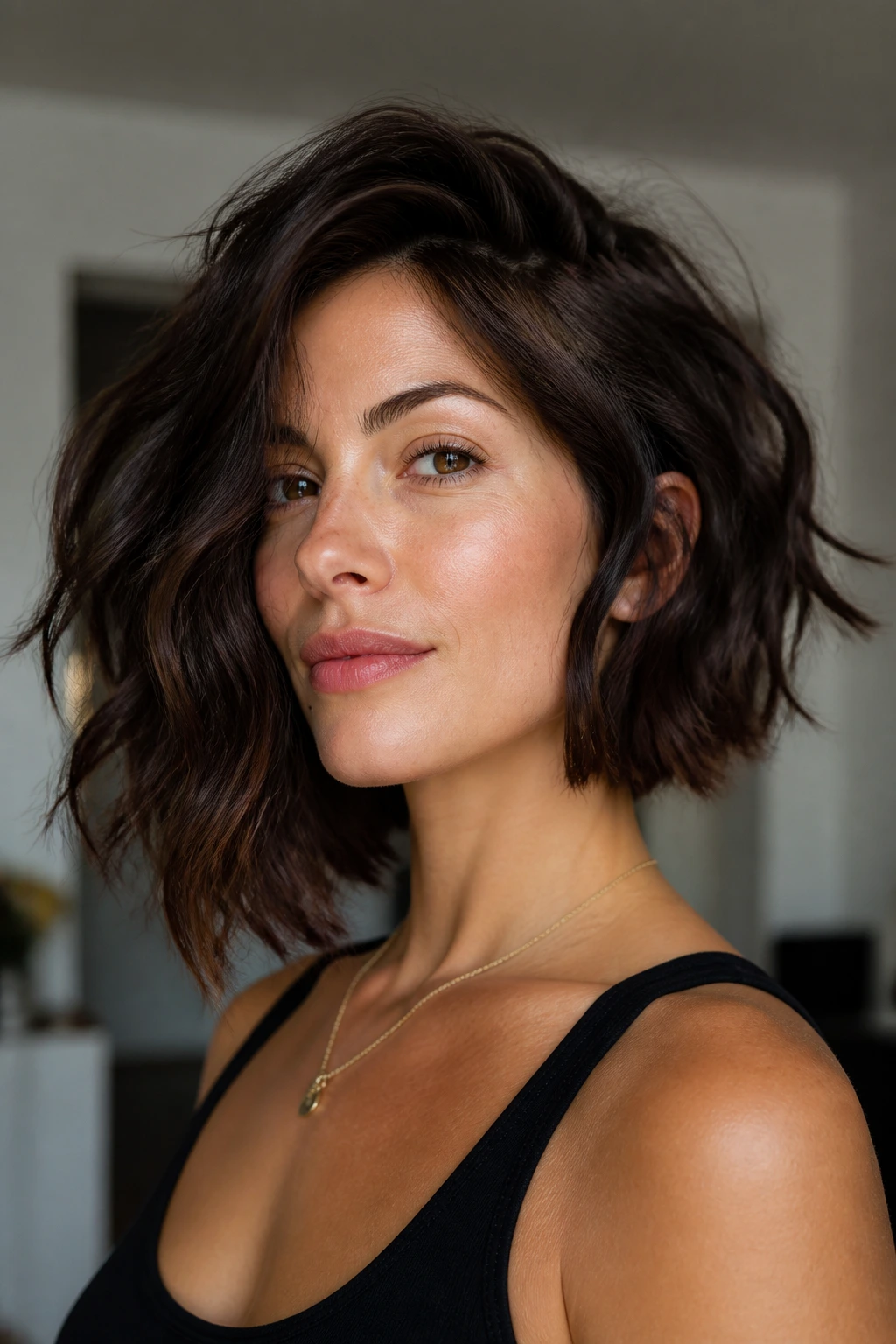
The best thick-hair version is usually the one that leaves the perimeter slightly heavy. That keeps the line visible, stops the ends from fraying, and lets the asymmetry hold even when the hair expands a little in humidity. If your waves are dense, this is the cut that keeps them from taking over the whole room.
The longer side should be long enough to show a swing, but not so long that it turns into a lob by accident. The shorter side can sit near the jaw or just above it. The important part is balance through the weight, not a giant length gap.
This cut tends to age well between trims because the line stays full. That alone makes it worth a serious look.
How the Angle Changes the Shape of the Hair
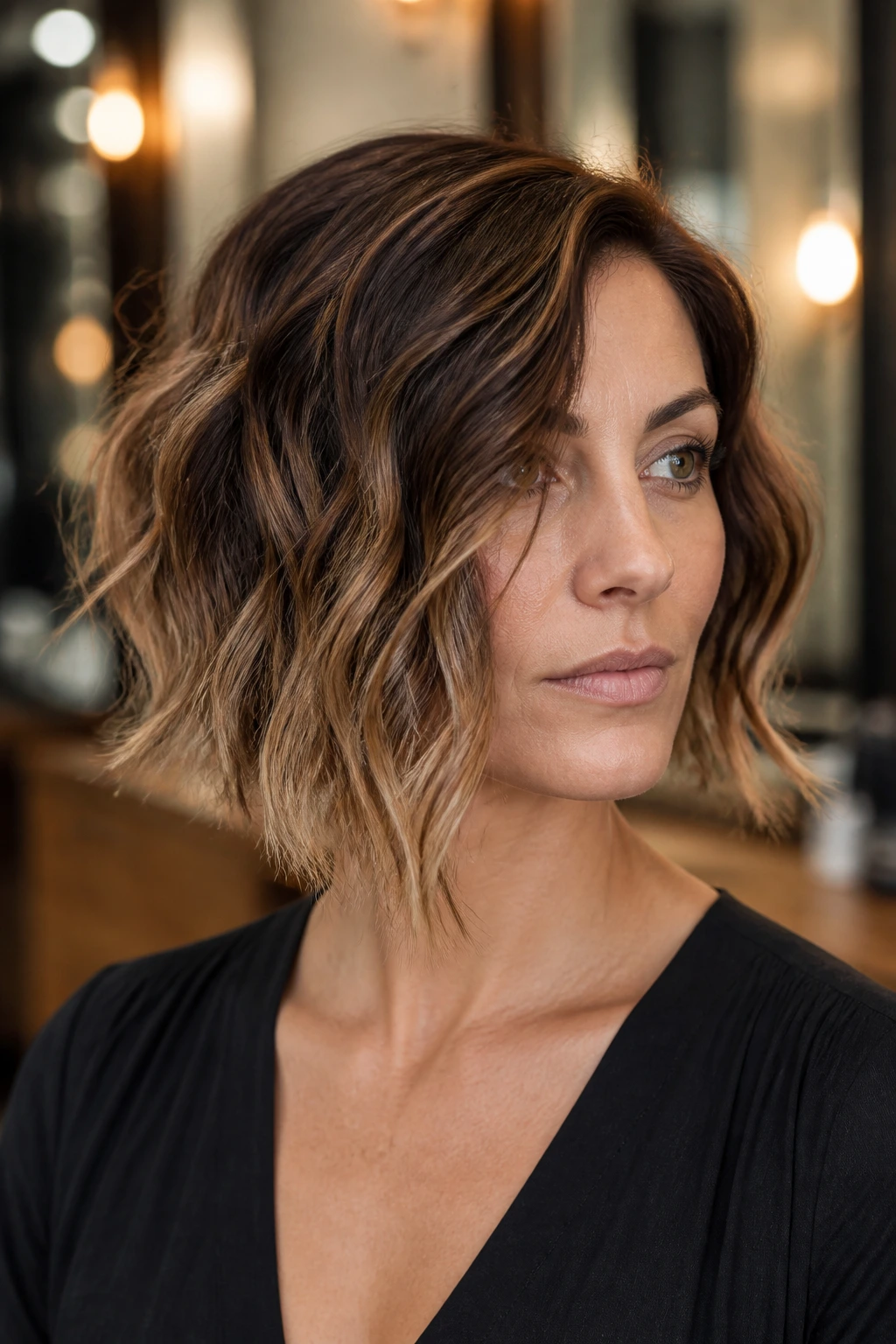
The thing about asymmetry is that it is not just length. It is weight placement, part placement, and how the front edge meets the face. A half-inch difference can look tiny on paper and obvious once waves dry and spring upward. That is why many stylists cut a touch longer than the final target, especially around the front panel.
Oval faces can handle a steeper line than a round face can. The face already has balance, so the haircut does not need to create it from scratch. What it does need is movement that lands in the right place — cheekbone, jaw, or collarbone — instead of just swelling sideways.
Wavy hair complicates the picture in a good way. The bend softens hard edges, but it also steals a bit of length when the hair dries. A bob that looks perfect wet can land a full inch shorter dry. That is not a problem if you plan for it. It is a problem if you don’t.
What to Tell Your Stylist Before the First Snip
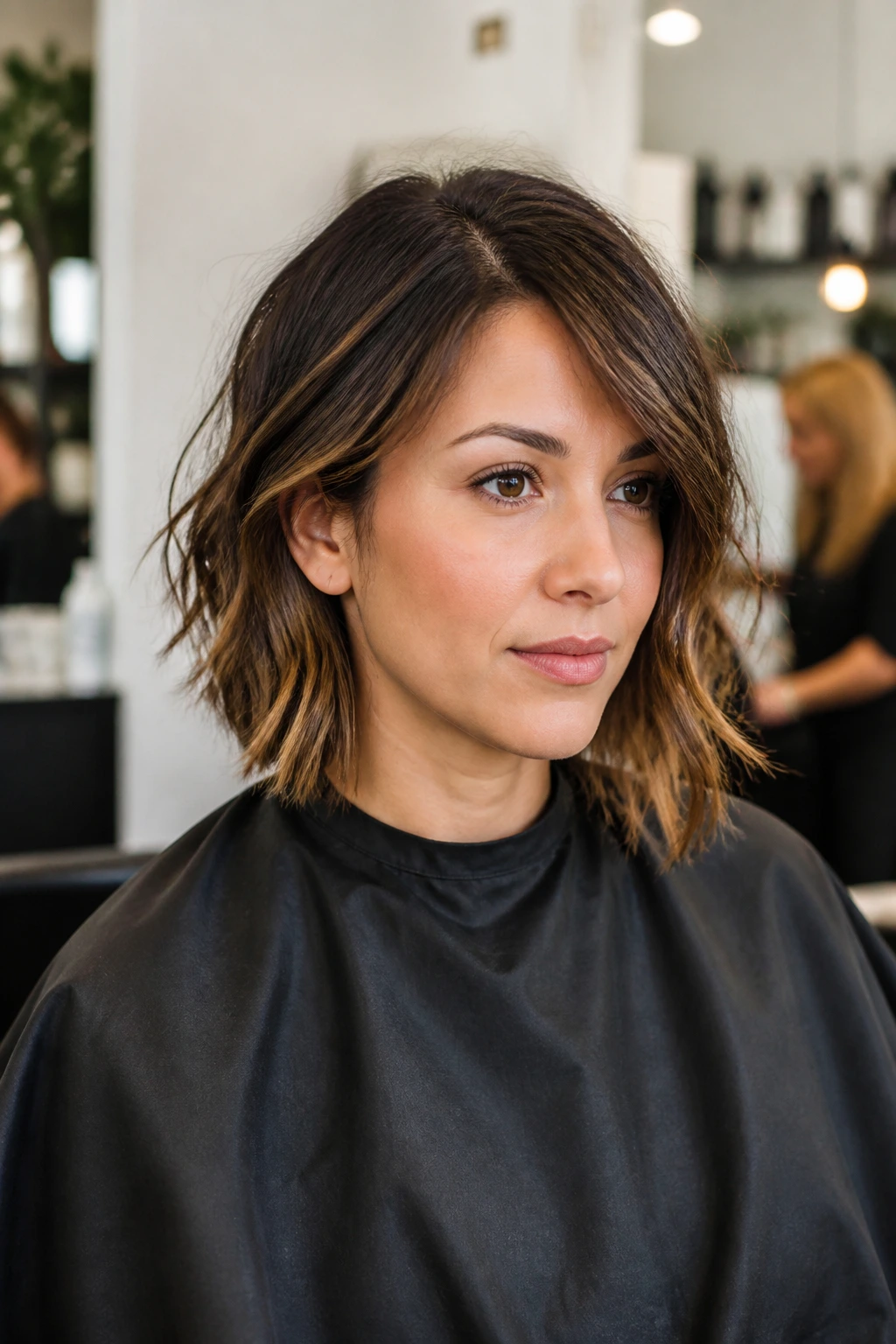
Bring a photo that shows the front and a photo that shows the side. If possible, bring a third that shows the back. Stylists work much faster when they can see where the line should land, because “shorter on one side” is not enough information for a cut this shape-sensitive.
Say how you wear your part on regular days. If you always part on the left, the haircut should be built for that. If you flip sides depending on the mood, ask for a version that still works when the part shifts an inch or two. That one question prevents a lot of awkward grow-out.
Use measurements if you can. A subtle difference is about an inch. A bolder one starts closer to two and a half inches. If you want the longest piece to hit below the chin, say so out loud; otherwise the stylist may stop shorter than you expected.
Essential Tools and Products for Styling These Cuts
-
Tail comb: Helps you place a clean off-center or deep side part without roughing up the wave pattern.
-
Sectioning clips: Useful for drying the shorter side separately so it doesn’t puff while the longer side sets.
-
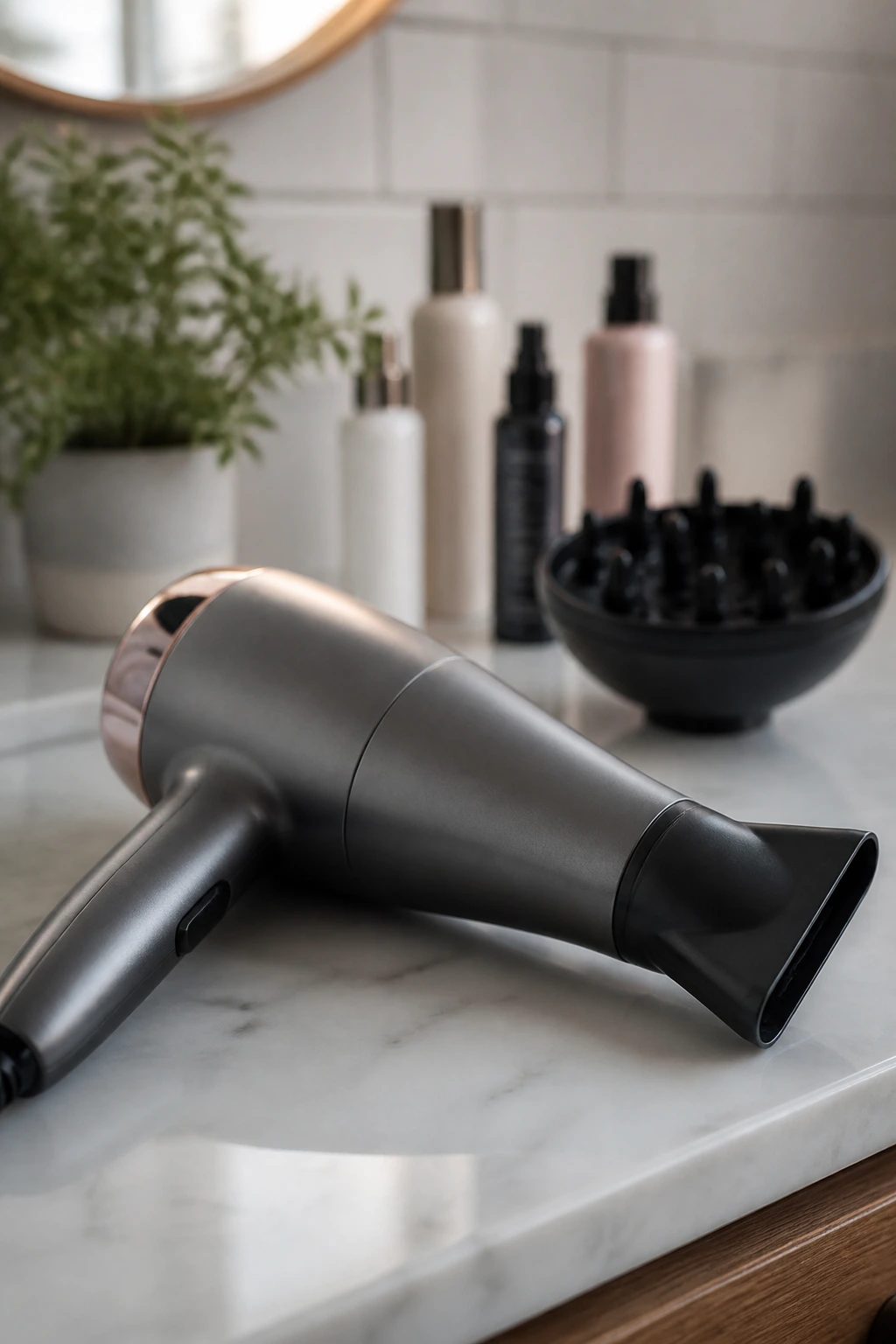
Blow dryer with a nozzle: Directs airflow down the hair shaft and keeps the perimeter smoother.
-
Diffuser: Best for preserving wave shape and reducing frizz when you air-dry isn’t enough.
-
1-inch curling iron or wand: Good for bending the front pieces away from the face or under the jaw.
-
Flat iron: Use it for beveling the ends, not ironing the whole head flat.
-
Lightweight mousse: Gives the waves memory without turning them crunchy.
-
Heat protectant: Needed any time hot tools touch the front pieces or the ends.
-
Texturizing spray: Adds separation to the longer side and helps the cut look piecey rather than puffy.
-
Flexible-hold hairspray: Keeps the line in place without freezing the waves.
-
Microfiber towel or soft T-shirt: Reduces frizz when you scrunch out moisture.
-
Reference photos on your phone: Bring a front photo, a side photo, and one that shows the length you actually want.
How to Style the Cut for Loose Waves, Medium Waves, and Dense Waves
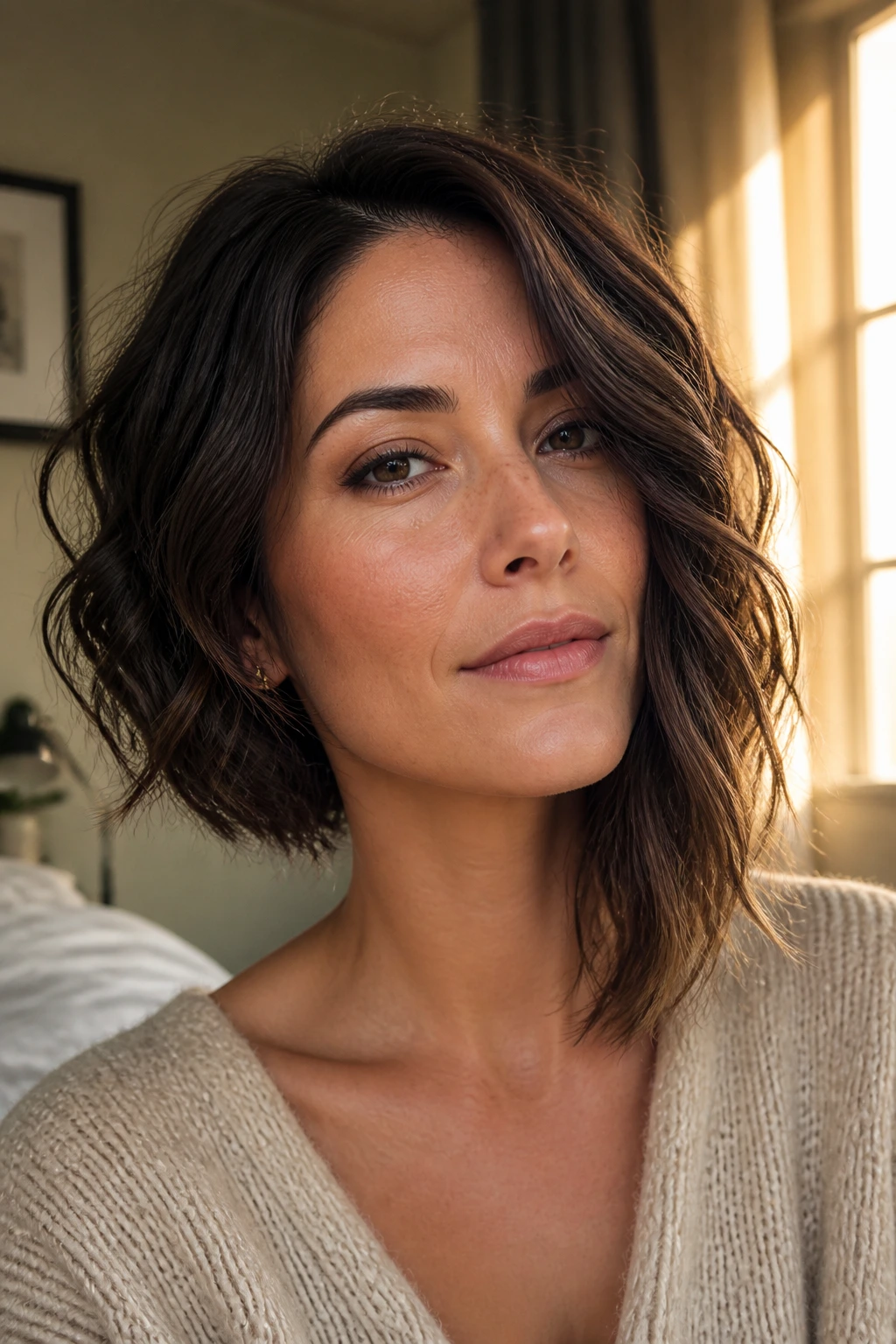
Loose waves, medium waves, and dense waves do not behave the same way in an asymmetrical bob. They expand differently, they dry differently, and they need different amounts of weight left in the cut. A lot of bad bob advice ignores that. It shouldn’t.
Loose 2A Waves
Loose waves usually need more shape from the cut itself and less from product. Too much mousse or cream and the hair goes limp fast. A light root spray, a quick bend in the front, and a soft tuck behind one ear is often enough to show the asymmetry.
Medium 2B Waves
Medium waves are the easiest to style, but they can still flop if the crown is ignored. Diffuse until the hair is about 80 percent dry, then finger-shape the longer side so it falls forward instead of out. A little texturizing spray at the ends helps the line stay readable.
Dense 2C Waves
Dense waves need more weight at the perimeter than people expect. If the cut is too thinned out, the ends spread and the asymmetry gets lost in volume. Dry the roots first, keep the longer side clipped back while it cools, and use a larger section when you bevel the front pieces so the wave doesn’t kink.
Practical Tips for Getting the Most Out of It

Part placement matters more than people think. Move your part only an inch or so off center if you want a subtle asymmetry. Push it too far and the haircut starts doing something louder than you asked for.
Dry the heavier side last. Wavy hair tends to expand as it cools. If the long side is the most important part of the shape, let it settle at the end so it lands where you want it.
Keep the ends intentional. A bob with wavy hair can go fluffy fast if the ends are thinned too much. Ask for soft point-cutting instead of aggressive slicing unless your hair is very thick.
Use less product than you think. Mousse at the roots, a tiny amount of cream on the mids and ends, and a mist of flexible spray is usually enough. Heavy oils flatten the very movement you want.
Trim the neckline before it gets fuzzy. The back of an asymmetrical bob loses its crispness first. If you keep the nape tidy, the whole cut looks fresher longer.
Common Mistakes That Throw the Shape Off
-
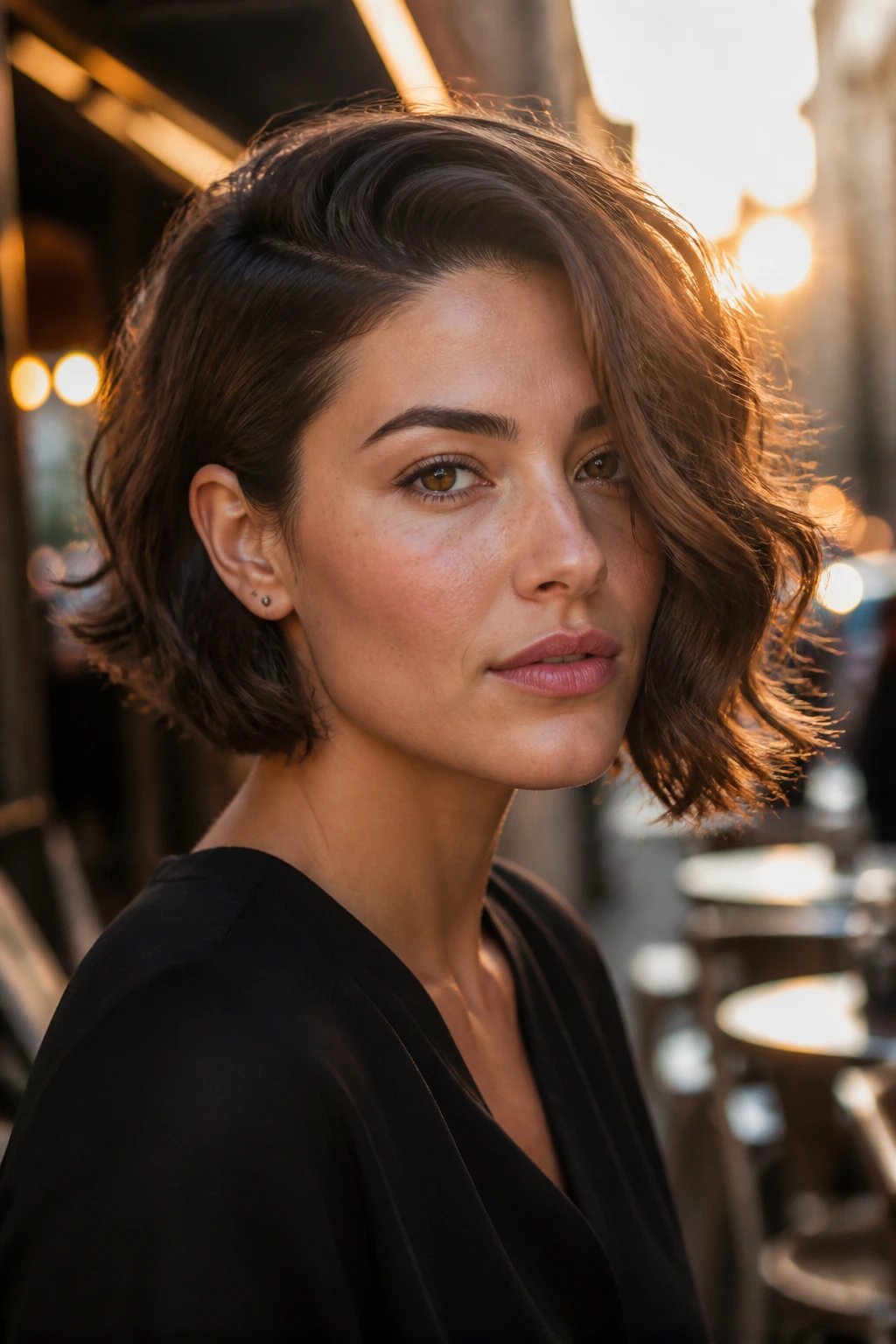
Making the two sides nearly even: The haircut starts looking like an awkward grow-out instead of an asymmetrical design. Ask for a visible difference, even if it is subtle.
-
Over-thinning wavy ends: The hair loses weight, spreads outward, and the line disappears. Use soft point-cutting or light internal shaping instead.
-
Choosing the wrong part: If the part sits where the hair naturally resists it, one side will keep collapsing over the face. Shift it slightly and let the wave pattern settle before judging the shape.
-
Using heavy cream everywhere: The roots go flat, the waves clump, and the longer side loses swing. Keep creams on the ends and save mousse or spray for the root area.
-
Skipping trims too long: The nape grows fuzzy first, then the asymmetry becomes hard to read. A regular cleanup keeps the shape crisp.
Five Variations and Alternatives Worth Considering

The Soft Swing Version
Keep the difference between the sides to about an inch and a half, and let the front pieces sit around the jaw instead of the collarbone. This is the easiest version to wear daily because it grows out cleanly and doesn’t demand much styling.
The Drama Sweep Version
Push the part deeper, leave the longer side heavier, and let it skim lower on the cheek or neck. This works best if you want the asymmetry to show immediately, even when the hair is tucked or pinned back.
The Air-Dry Version
Reduce the layering, keep the perimeter fuller, and let the wave pattern build the texture on its own. This is the version to choose if you do not want to spend much time with hot tools.
The Sharp Line Version
Keep the perimeter blunt, the back clean, and the texture controlled. It works when you want a bob that looks deliberate from every angle, not just when it’s fresh out of the salon.
The Thick-Hair Release Version
Leave the length a little heavier and use hidden internal removal where the bulk sits. The shape stays visible, but the hair stops acting like a helmet.
Keeping the Cut Fresh Between Salon Visits

A good asymmetrical bob is not a set-it-and-forget-it cut. The line starts softening as soon as the nape grows out or the longer side begins to brush the shoulder. That is normal. It just means the haircut needs a little maintenance.
For chin-length versions, a trim every 6 to 8 weeks usually keeps the angle clean. Longer lob versions can stretch to 8 to 10 weeks, but the back still needs cleanup if you want the asymmetry to stay visible. If the longer side starts flipping outward or the shorter side loses its tuck, the shape has already begun to drift.
At home, dry shampoo helps on the roots, not the ends. A silk pillowcase or a loose clip at night keeps the front pieces from folding into odd dents. And if one side consistently falls flatter than the other, that is usually a parting issue, not a styling failure.
Frequently Asked Questions

How asymmetrical should a bob be on an oval face?
A subtle version with about 1 to 1.5 inches of difference is usually enough for an oval face if you want softness. If you want the angle to read clearly, 2 inches or more gives the haircut a stronger diagonal.
Can wavy hair handle a blunt asymmetrical bob?
Yes, but the ends need enough weight to stay together. If the hair is too thinned out, the blunt line disappears and the shape frizzes into a halo.
Is this cut better air-dried or styled with heat?
Both work. Air-drying gives a softer, more relaxed finish, while a blow-dryer or flat iron helps keep the line cleaner, especially around the front pieces.
Will this work if my waves are fine?
It can, but the cut should stay a little fuller at the perimeter. Fine wavy hair tends to lose shape if the interior is over-textured, so ask for a cleaner edge and lighter shaping.
What if one side keeps flipping out?
That usually means the length is hitting the shoulder at an awkward spot or the hair is too light at the ends. A tiny trim or a bevel at the longest front piece usually fixes it.
Do I need bangs with an asymmetrical bob?
No. Curtain bangs, micro-fringe, or no fringe at all can all work. Bangs change the mood, but they are not required for the asymmetry to make sense.
How often should I trim the nape?
If you want the shape to stay crisp, every 6 to 8 weeks is a safe rhythm. Thick hair or a sharper angle may need a touch-up sooner.
Can I grow this cut out without an awkward phase?
Yes, if the original cut keeps enough weight in the perimeter. The longer side can grow into a lob, and the shorter side can catch up without creating a weird shelf.
The Shape That Stays Interesting on Day Three
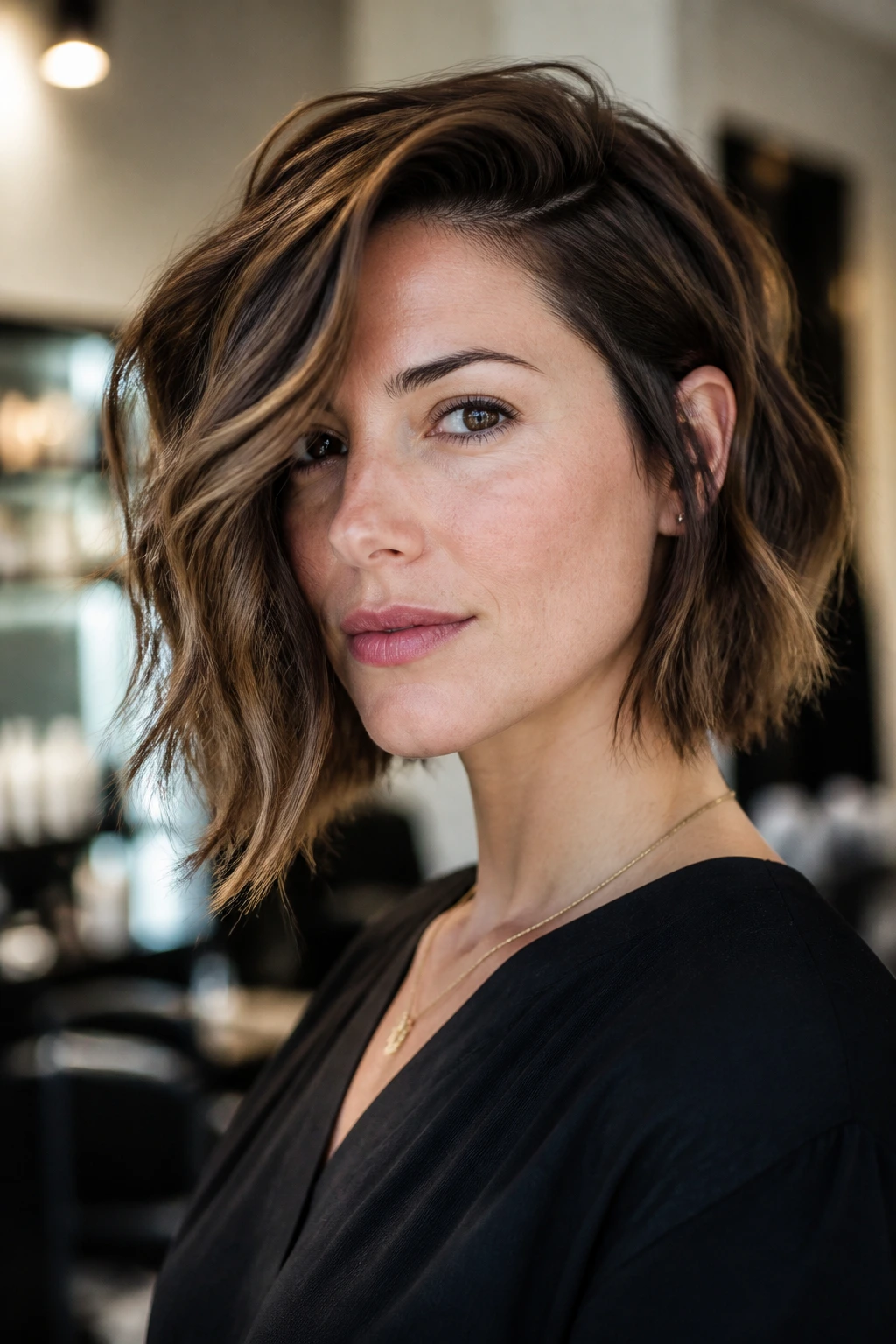
An asymmetrical bob does its best work when the line is clear enough to read but soft enough to move. That is the sweet spot for oval faces and wavy hair. Too sharp, and the waves start fighting the cut. Too loose, and the whole thing loses its point.
The styles above all come back to the same idea: leave the hair enough structure to fall where it should, then let the wave pattern do the rest. That is what keeps the haircut from looking accidental. It also explains why a tiny change in part, length, or weight placement can make a huge difference.
If you take one thing to your stylist, make it a photo that shows the length you actually want rather than a vague idea of “asymmetry.” The haircut gets much easier from there.