



Long fine hair has a funny reputation. People act as if it has one job — stay out of the way — when the right cut and color can make it look airy, expensive, and far denser than it actually is. Babylights help because they don’t fight the hair’s natural softness. They work with it, adding tiny ribbons of light that catch movement instead of carving the hair into obvious stripes.
That matters more after 40 than glossy magazine advice likes to admit. Hair often changes texture, the part can look wider, and the ends can start to feel a little see-through even when the length is still there. Chunky highlights usually make that worse. Babylights, especially when they’re paired with long layers, a clean perimeter, and a little root shadow, give fine hair a better shape without turning it into a color project that needs constant rescue.
The sweet spot is subtle, not flat. You want enough contrast to create dimension, but not so much that every light piece announces itself from across the room. That balance is where long hair starts to look like it has body instead of just length, and the styles below lean into that idea from every angle — sleek, waved, braided, pinned, and a little undone when that looks better.
Why These 22 Babylighted Styles Work So Well on Fine Hair
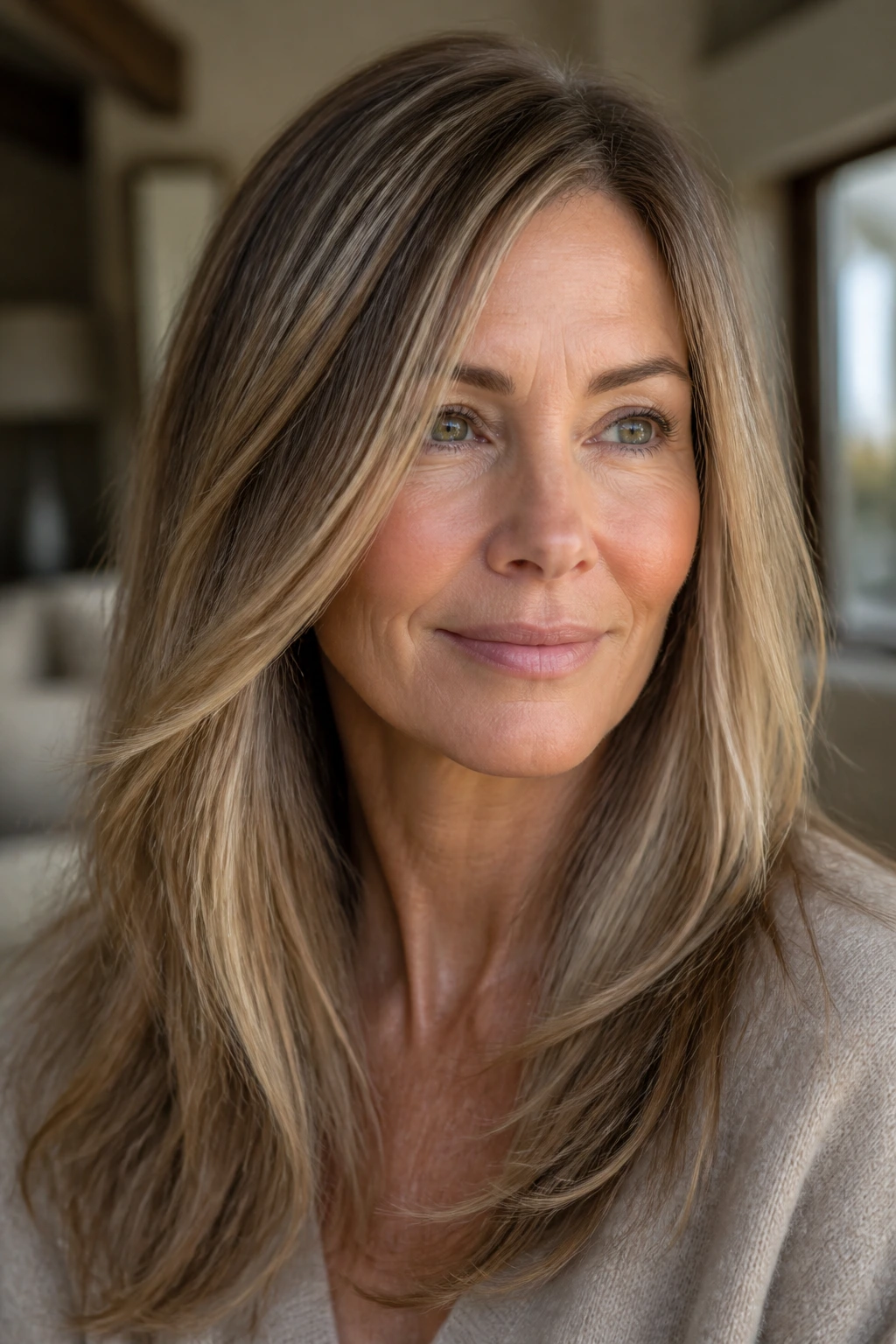
- Tiny color, bigger shape: Babylights are woven in very narrow sections, so the hair keeps its bulk while the color adds movement through the mids and ends.
- Long length stays believable: These cuts avoid stripping too much weight from the perimeter, which is the fastest way to make fine hair look wispy.
- Soft grow-out: The lighter pieces blur into the base instead of leaving a hard line at the root, which is a gift if you do not want a strict salon schedule.
- Face-framing matters: A few brighter strands around the cheekbones and temples can open the face without lighting up the whole head.
- Styling stays realistic: Most of these looks work with a round brush, a 1-inch iron, or a decent air-dry cream — no giant hot-tool collection required.
- Color can do the heavy lifting: On fine hair, the right highlight placement can create the illusion of density in a way product alone never will.
1. Sleek Center-Part Layers with Soft Babylights
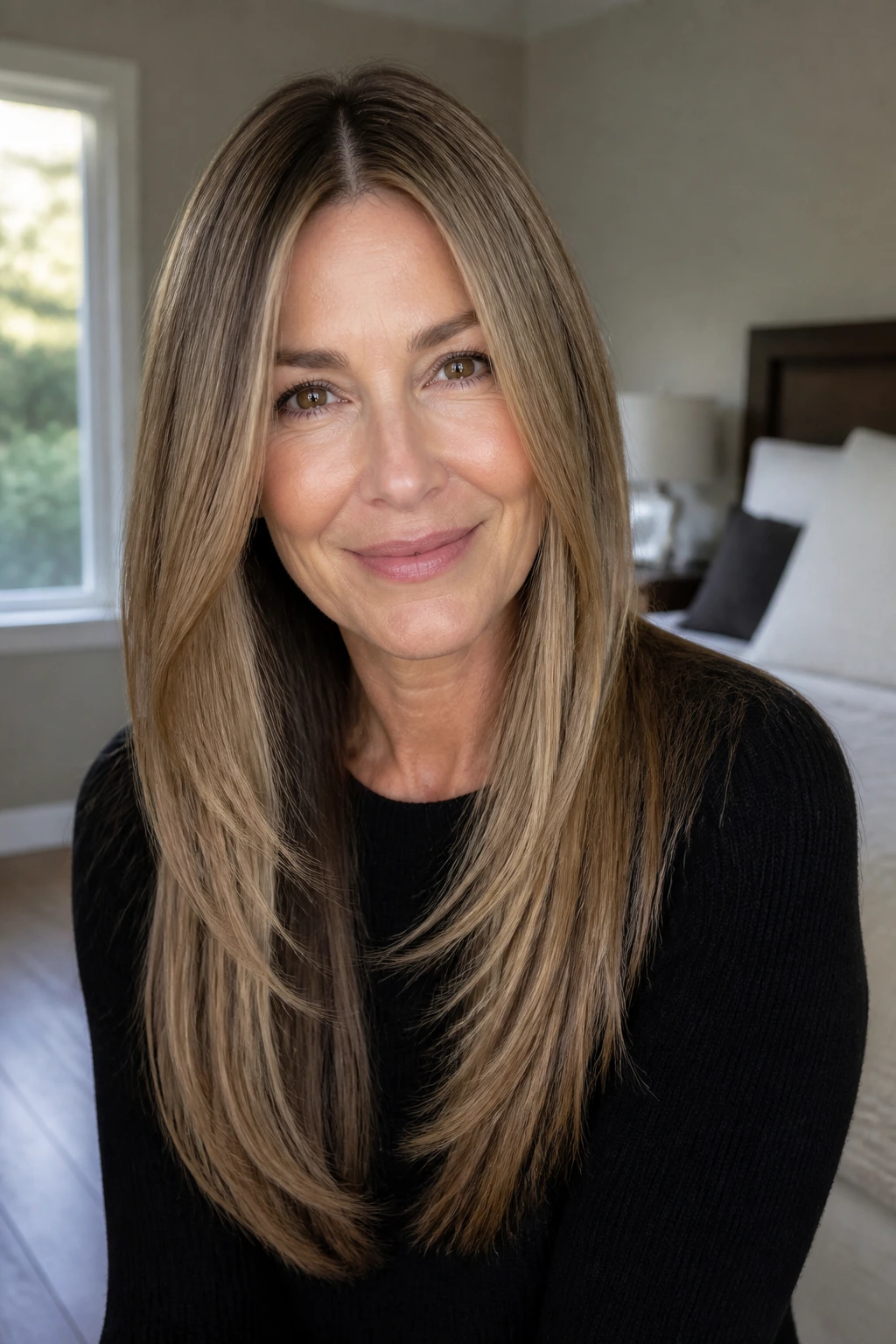
A clean center part is one of the cheapest tricks in the book, and I mean that as a compliment. On long fine hair, it gives the eye a straight line to follow, while soft babylights break up the surface just enough to keep the style from looking flat. The result is polished, but not stiff.
The cut should stay long through the bottom, with layers beginning below the chin so the ends do not fray out. Ask for babylights that skim the top veil and the pieces around the face. If the highlights reach every corner of the head, the style can start to look busy; the real win is restraint.
A flat iron pass from mid-length to ends can sharpen the silhouette, but keep the heat low and finish with a drop of serum only on the last inch. The shine is what sells this one. Not volume sprayed into oblivion.
2. Long U-Shaped Cut with Face-Framing Brights
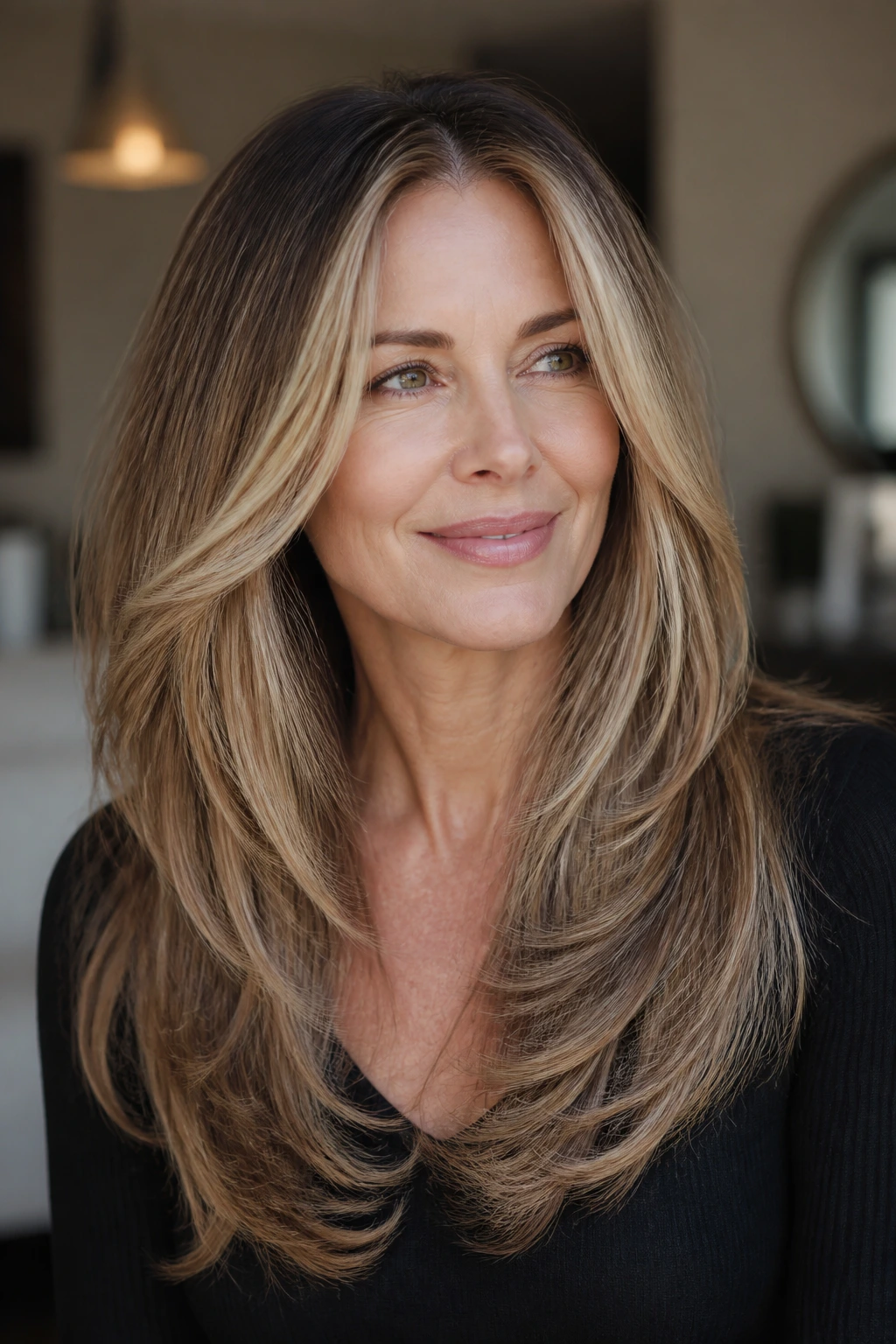
Why does a U-shape work so well here? Because it keeps the ends looking fuller than a blunt line that was over-thinned by a nervous stylist with a razor. The softer curve leaves the longest pieces in the center back, which makes the whole head look denser from behind.
Babylights belong right where the cut bends toward the face. A few lighter strands starting around the cheekbone and sweeping down the front sections give the length a little glow without scattering brightness everywhere. On long fine hair, that front-loaded dimension does more than a full head of highlights ever could.
Wear this style smooth or with a loose bend at the ends. Either way, the U-shape gives the hair a more deliberate outline, and that outline is half the battle when the strands themselves are delicate.
3. Butterfly Layers with a Lighter Money Piece
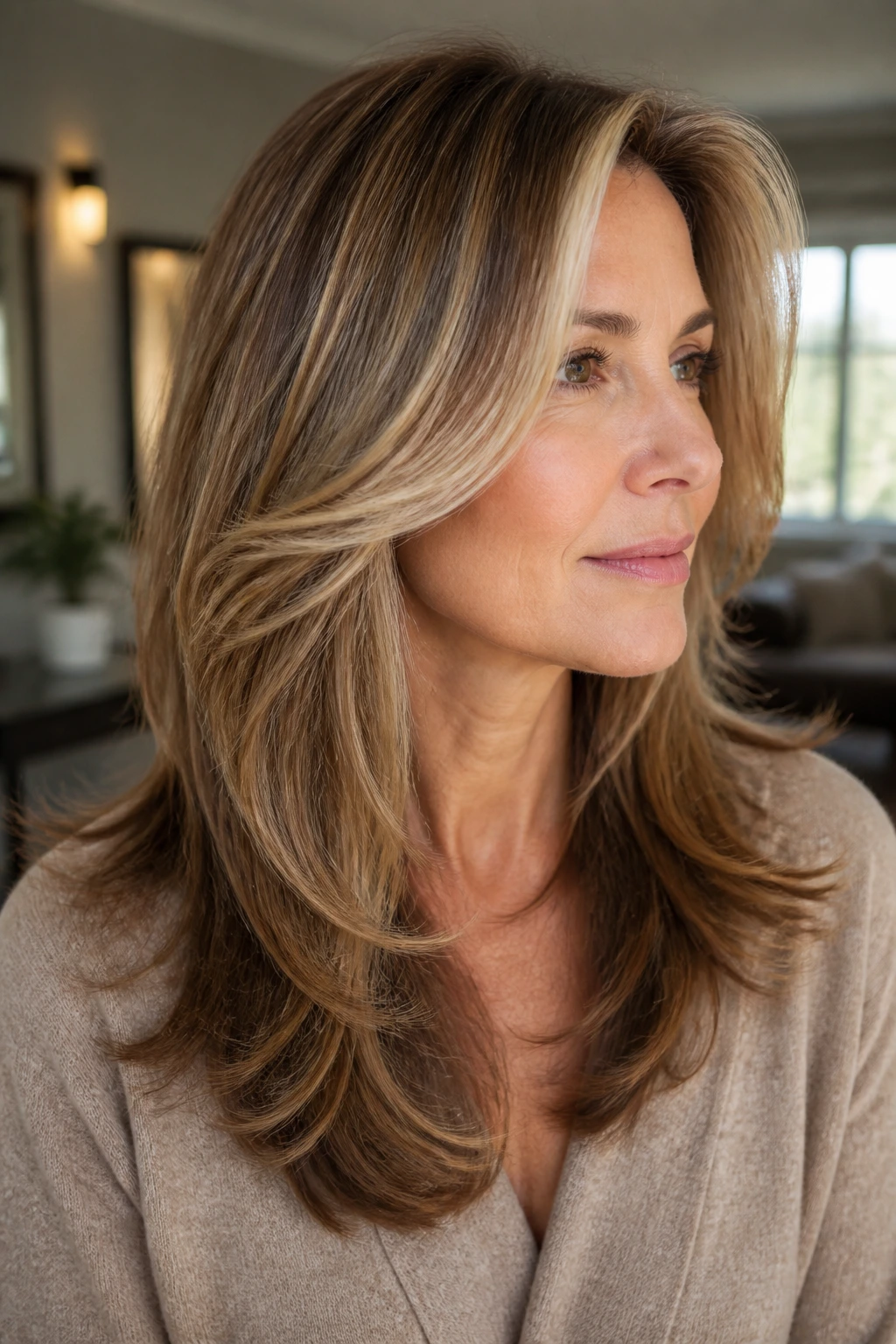
Butterfly layers can be risky on fine hair, and I’m not going to pretend otherwise. Too many short pieces at the crown and you’re left with airy ends and not much left to work with. Keep the top layer long, let the shorter face pieces start gradually, and the whole cut suddenly becomes much easier to live with.
The babylights make the money piece work. Without them, the front sections can look isolated; with them, the lighter face frame folds into the rest of the hair and feels intentional. I like this look best when the bright pieces are just one or two levels lighter than the base, not icy blonde for the sake of it.
Style it with a large round brush or a 1.25-inch iron, curling away from the face at the front and leaving the ends a touch loose. That little bit of softness keeps the haircut from turning into costume hair.
4. Curtain Bangs and Swept-Back Waves
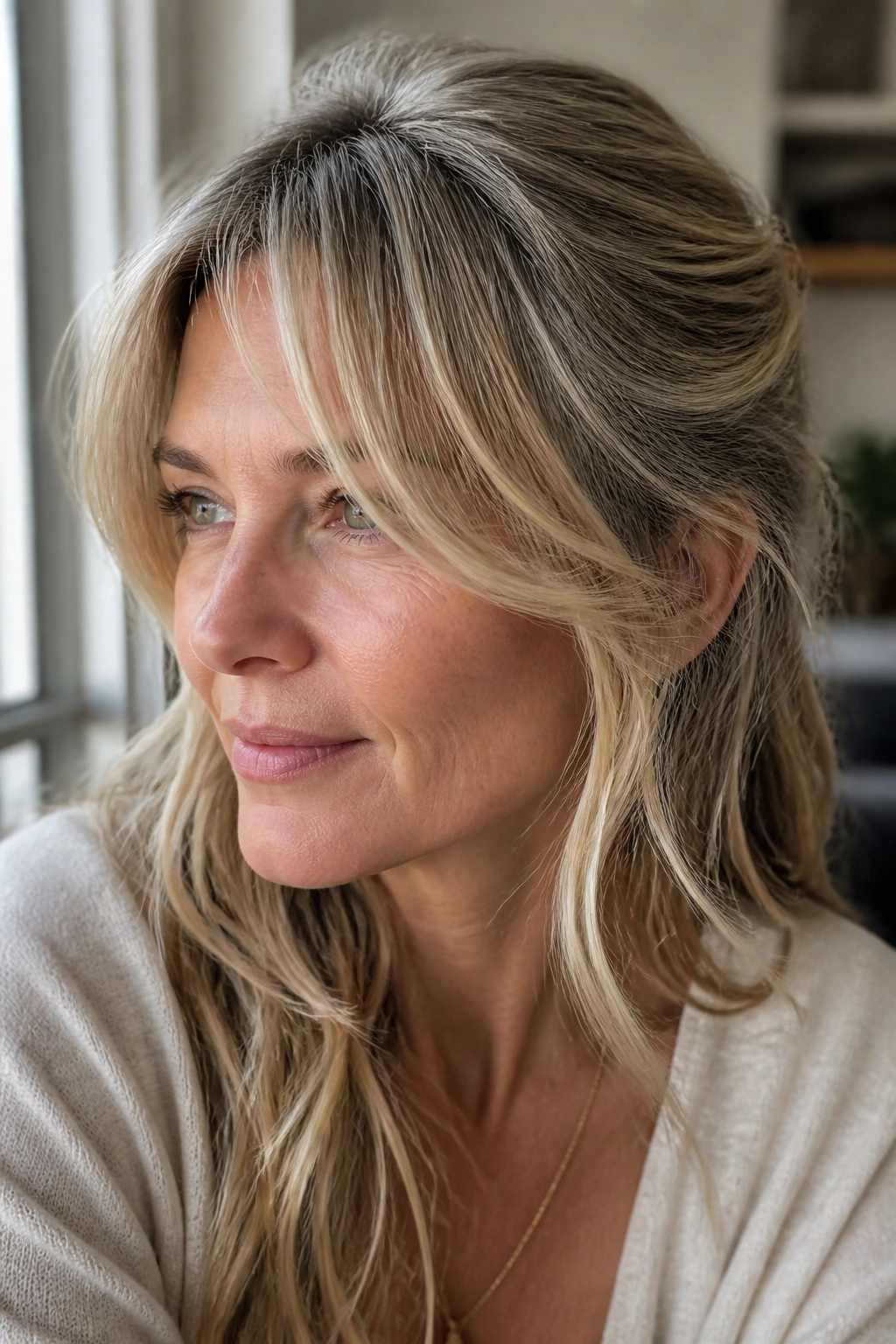
Curtain bangs on fine hair need patience and a good cut. If they’re too short, they separate awkwardly. Too dense, and they sit there like a curtain rod with feelings. The sweet spot is a long, cheekbone-grazing fringe that can be tucked back, split open, or blended into waves.
Babylights around the fringe area soften the line where bangs meet the rest of the hair. That matters because fine hair can show every boundary. A few lighter pieces around the eyes and temples make the bangs feel airy instead of heavy, and the rest of the length can stay darker for contrast.
This is one of those styles that looks better with a slight off-center part on days when the crown feels flat. The waves do not need to be perfect. In fact, they look better when they bend a little unevenly and move when you turn your head.
5. Glassy Straight Length with Invisible Layers
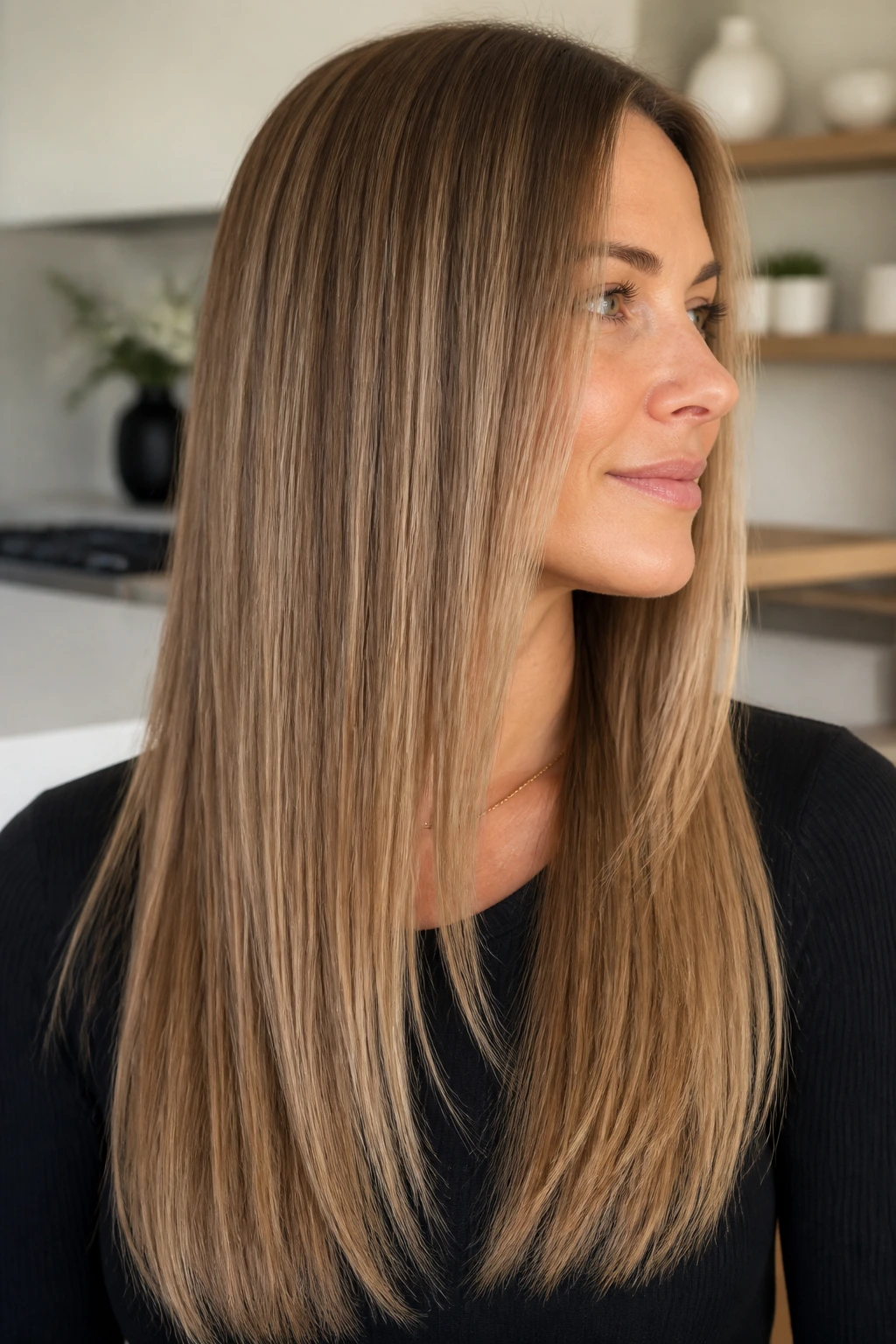
Straight hair on fine strands can either look sleek or look like a curtain rod. The difference usually comes down to the cut and the finish. Invisible layers — tiny internal removals that don’t destroy the outer line — keep the surface smooth while stopping the ends from hanging too bluntly.
Babylights in this style should be delicate enough that you notice them when the light moves, not when you stare at the hairhead-on. That “peek” effect is what gives straight hair life. Too much contrast and the style gets stripey; too little and the shape disappears.
A paddle brush blowout, a concentrator nozzle, and a quick pass with a flat iron on the outer veil are usually enough. I’d skip anything heavy near the roots. Fine hair remembers product in the worst way.
6. Hollywood Blowout with Rounded Ends
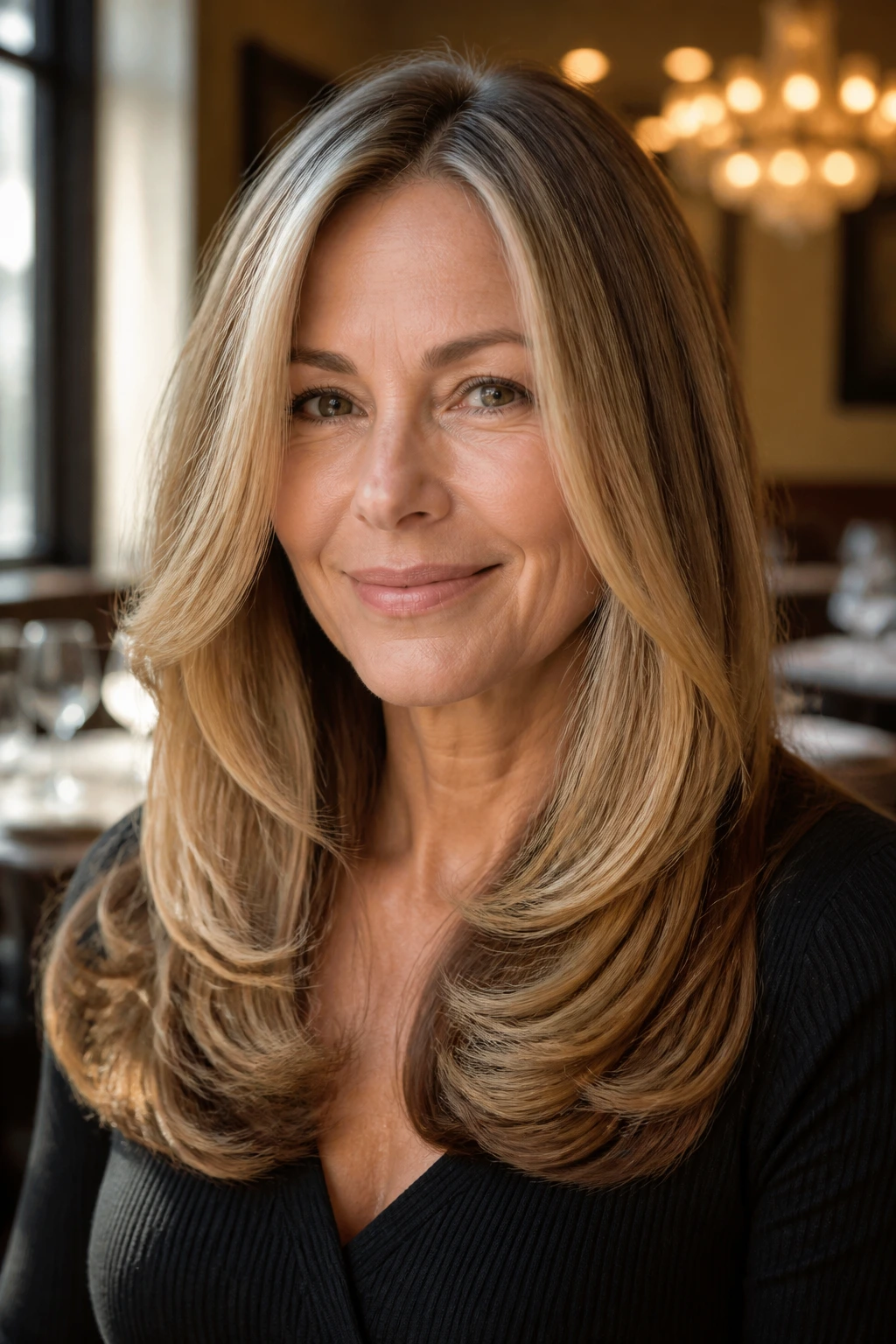
A rounded blowout can save a lot of hair that looks tired in a straight line. The trick is not teasing — please, no — but building bend through the mid-lengths and curling the ends under just enough to make the silhouette look fuller. Babylights shine here because the curves let the lighter strands catch and release light as the hair moves.
Ask for layers that support the shape without hollowing out the back. Around the face, the brighter pieces can start at the jaw or just below it, which keeps the style soft rather than fussy. If your hair is very fine, the crown should stay airy, not puffy.
This is the style I’d pick for a dinner out or any time you want the hair to look done without looking overworked. It has a little old-school polish, which is rarely a bad thing.
7. Soft Mermaid Waves with Ribbon Babylights
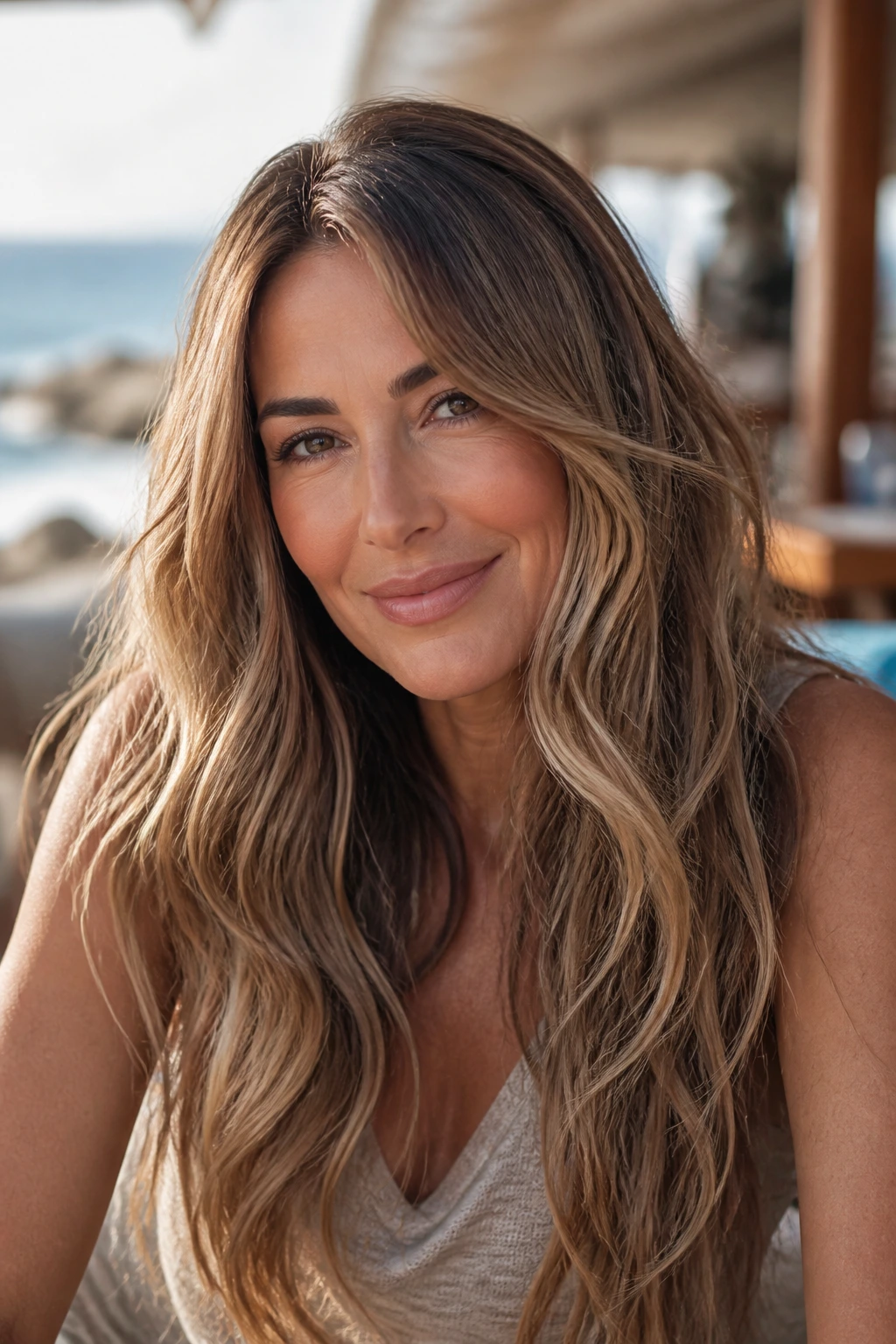
Mermaid waves on long fine hair can be lovely, but they need restraint. Tight beach crimping tends to make the hair look smaller, not bigger. The better move is a loose S-wave with a 1.25-inch iron and a slow brush-out once the curls cool completely.
Babylights should be placed in thin ribbons through the mid-lengths and ends so the waves read as textured, not frosted. That placement keeps the top closer to the base color, which helps the scalp area look a little fuller. The eyes follow the alternating light and dark, and that visual movement does half the work for you.
A salt spray can help, but use a light hand. Fine hair does not need to be coated in grit to look interesting. A soft mist and a few finger-separated waves are usually enough.
8. Long Shag with Wispy, Piecey Texture
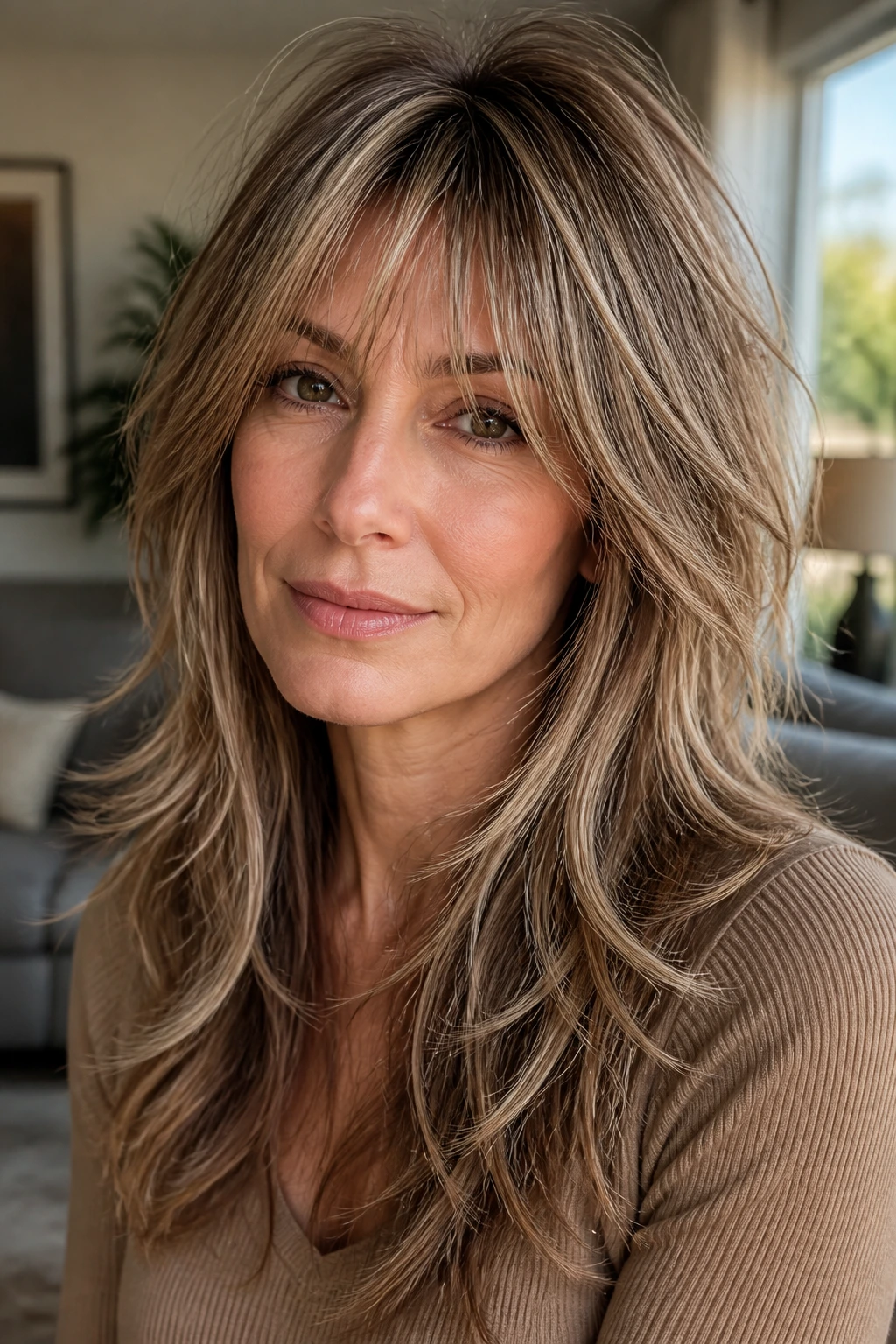
A shag on fine hair needs discipline. The fashionable version with heavy choppy layers can backfire fast, because it eats away the little weight fine hair has left. Keep the layers wispy and long, with just enough texture around the face to create lift.
Babylights are useful here because they define the pieces. On darker hair, they separate the texture so the layers do not collapse into one bland shape. On lighter hair, the contrast can make the feathered ends visible in a way that still feels soft.
This cut suits someone who likes a little mess and does not mind spending five minutes with a texture cream. Air-dry it halfway, twist a few strands around your fingers, and let the hair decide the rest. That’s the attitude this look wants.
9. Half-Up Crown Lift with Loose Bends
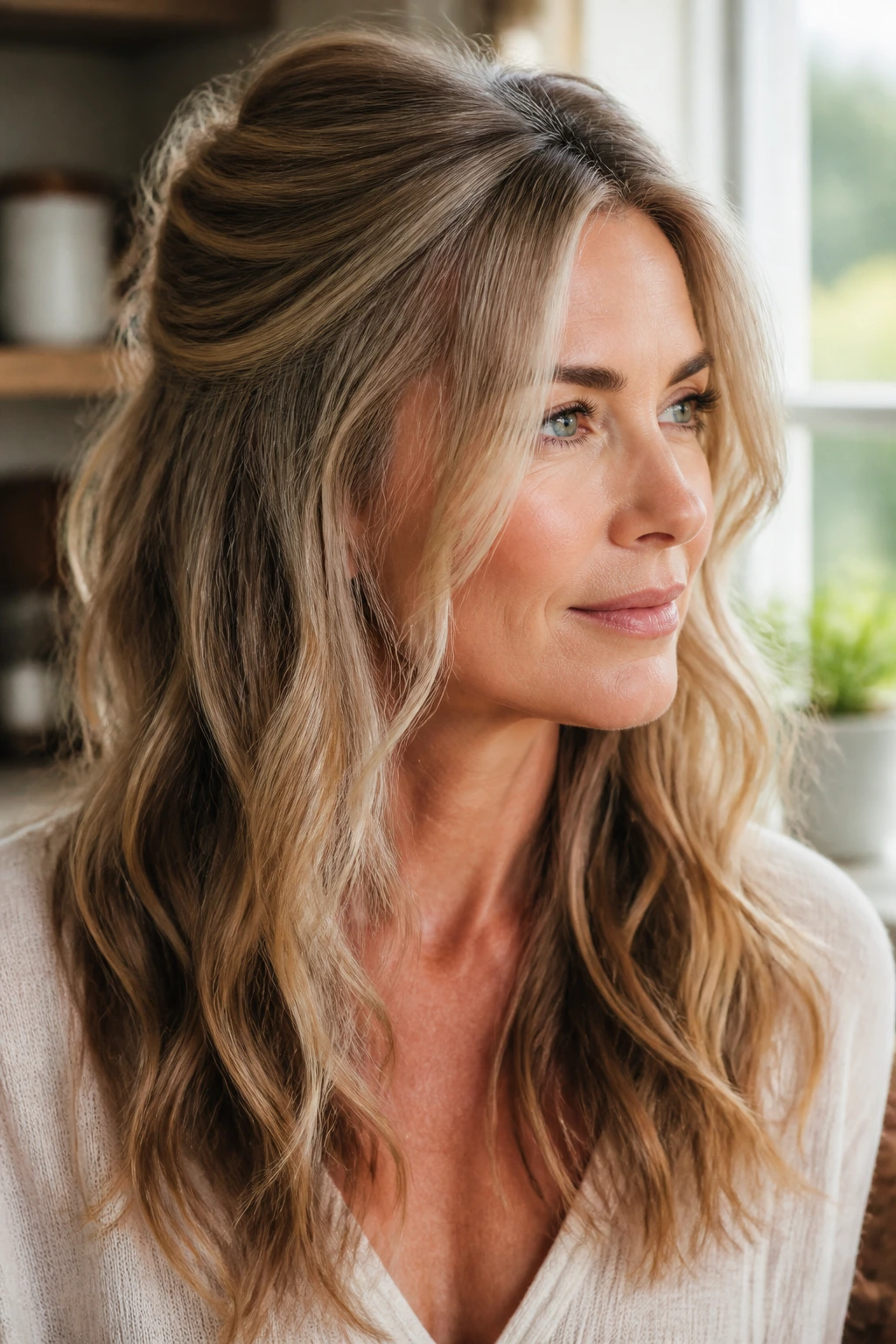
Half-up styles can do what products promise and rarely deliver: real lift at the crown. On long fine hair, pulling only the top section back creates an instant illusion of fullness without sacrificing the length that makes the hair feel like itself.
Babylights around the crown and the face matter here because the lifted section shows more of the scalp-to-strand contrast. Tiny light pieces break up the flatness, while the loose lower half keeps the look relaxed. It’s a small adjustment, but it changes the whole mood.
Use a clip or a small elastic and leave a few front pieces out. Then bend the ends of the lower section with a iron or large wand. It should look like you meant to wear your hair this way, not like you grabbed it on the way out the door.
10. Side-Part Volume with Deep Layers
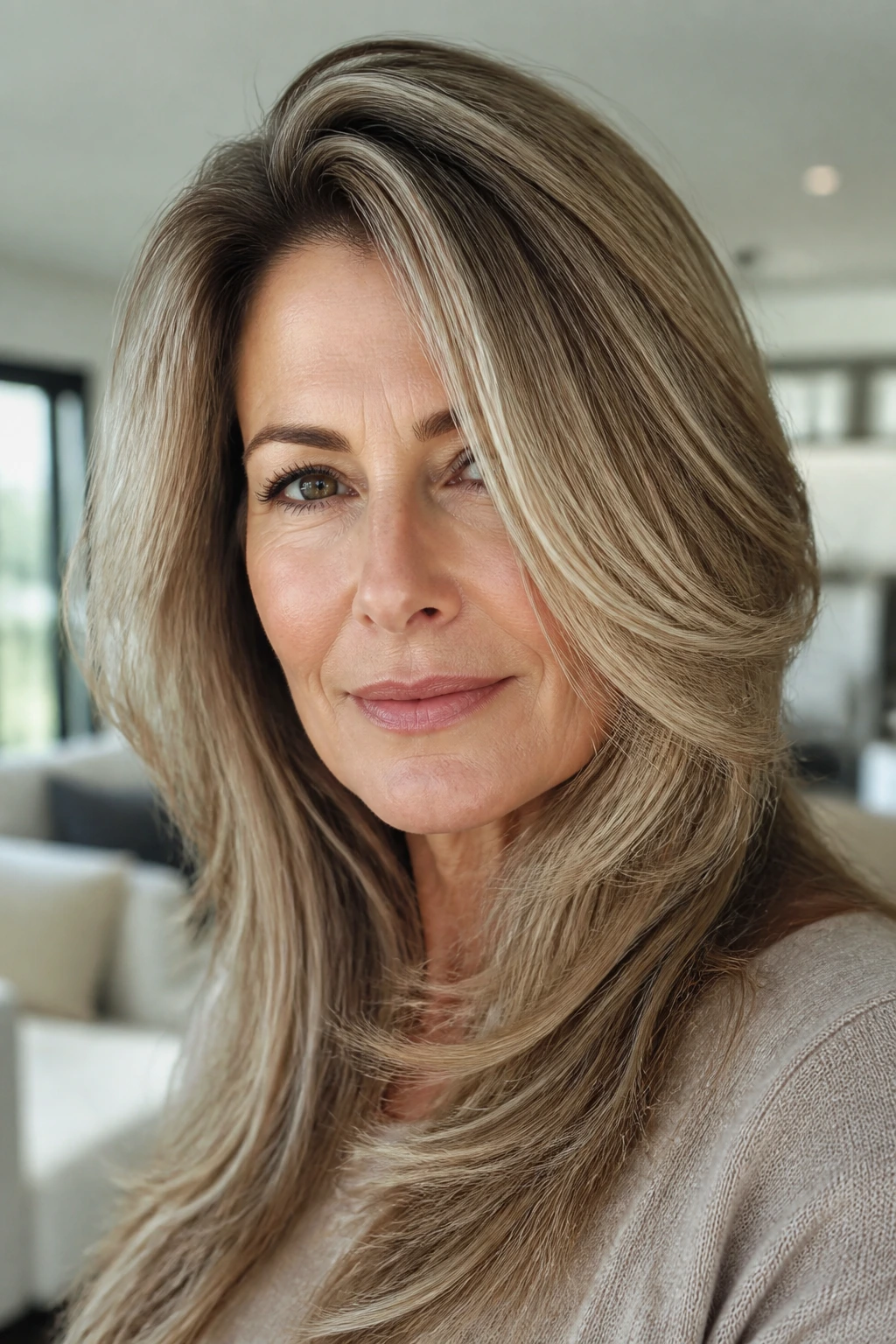
A side part is almost unfair on fine hair. One shift, and the whole head looks fuller. That deeper sweep creates immediate lift at the root, especially if the heavier side gets a few brighter babylights near the front and through the top layers.
Deep layers can work here, but they need to stay long enough that the ends do not thin out. Think shape, not subtraction. The cut should fall with a little arc around the shoulders, then release into soft movement as it reaches the collarbone.
I like this one for hair that refuses to hold volume at the center part. Sometimes the answer is not more product. It’s just moving the part and letting the hair fall where it wants to.
11. Low Ponytail with Polished Face Framing
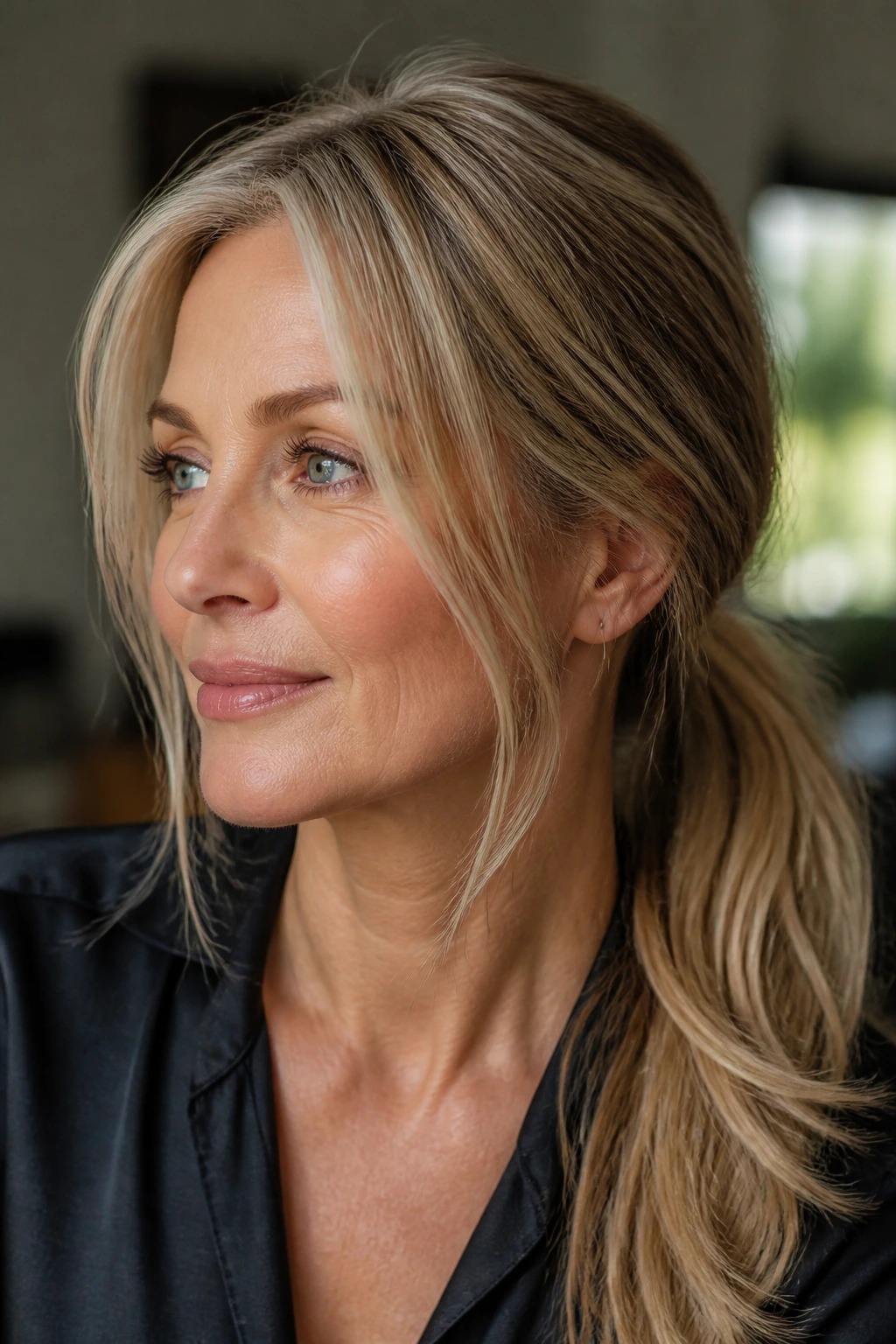
A low ponytail can be one of the most flattering looks for long fine hair, if you stop treating it like a gym default. Smooth the top with a boar-bristle brush or soft paddle brush, then leave a small section around the face loose so the style has shape and not just tension.
Babylights make the ponytail more interesting because the gathered hair shows off the lighter strands in motion. If the face-framing pieces are bright and the lengths stay a shade deeper, the ponytail reads refined instead of severe. That contrast matters more than people think.
Wrap a small section of hair around the elastic if you want a cleaner finish. A little root lift at the crown keeps the style from pulling the face down. Tiny move. Big difference.
12. Loose Braids with Dimension Through the Mid-Lengths
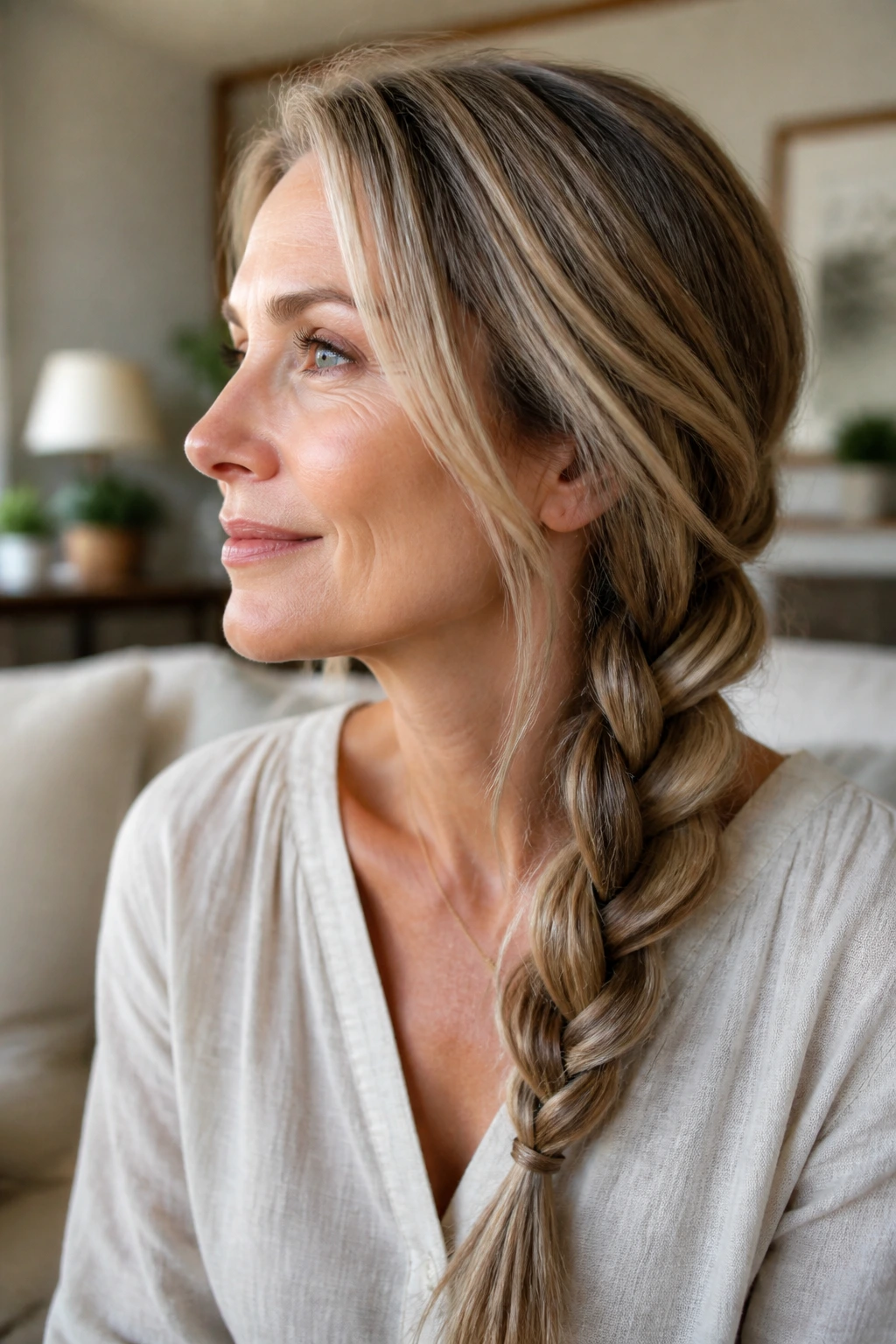
Braids on fine hair need help from color, plain and simple. Babylights create enough variation that the plait doesn’t disappear into one narrow rope. You can see the pattern, which is half the point.
A loose three-strand braid, a side braid, or even a low rope braid works better than a tight, polished braid when the strands are delicate. Pancake the braid gently after securing it to widen the shape, but do not stretch it so far that it turns stringy. That’s the line.
This style is good for second-day hair, a lunch date, or any day you want to pretend you tried harder than you did. A light texturizing mist before braiding makes the sections hold a little better without feeling sticky.
13. V-Cut Layers for Fuller-Looking Ends
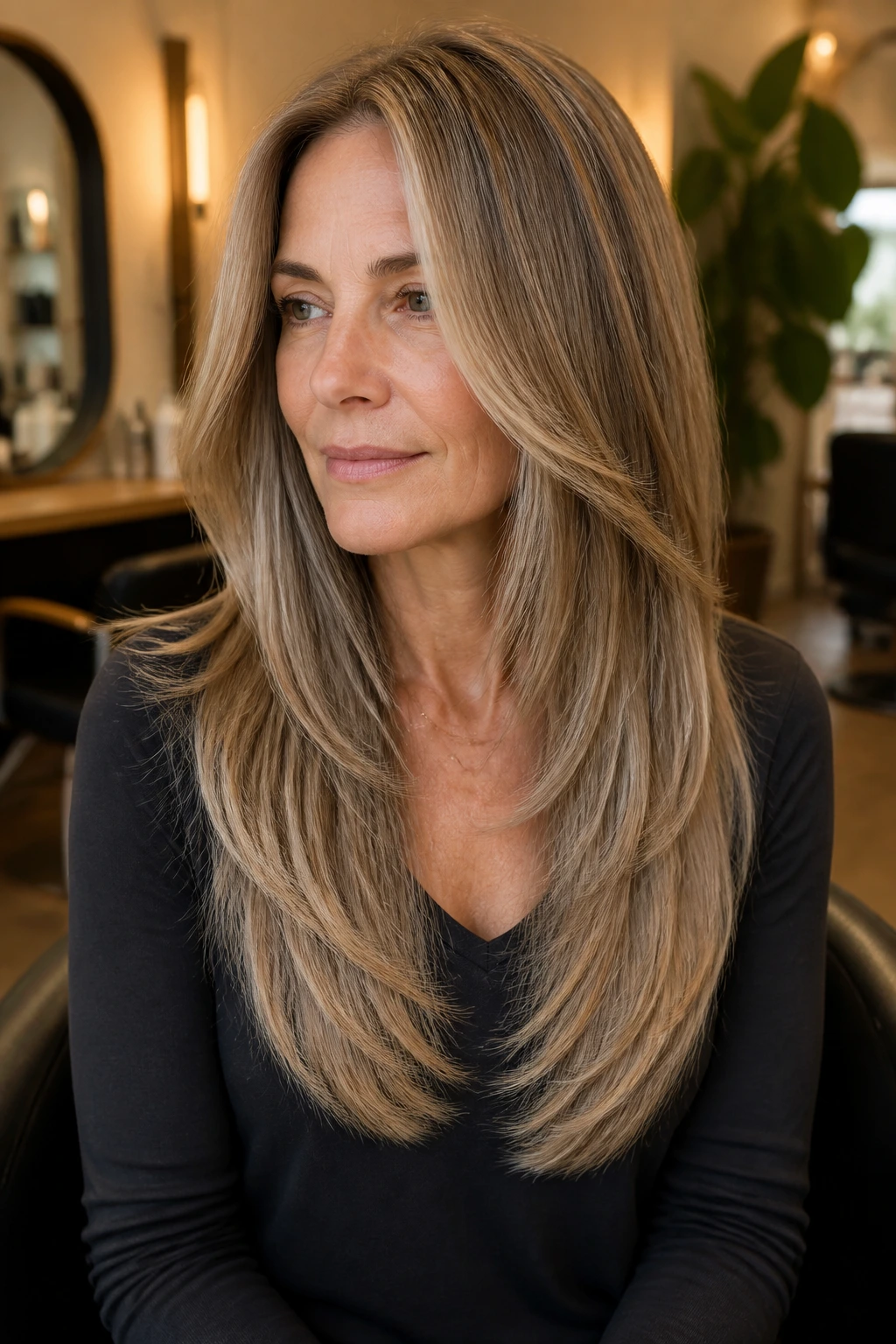
The V-cut gets mixed reviews because people often overdo it. On fine hair, a dramatic V can leave the perimeter looking too narrow. Keep the angle soft and long, and it becomes a useful shape that preserves some length while creating movement at the bottom.
Babylights work best here when they’re concentrated on the outer veil and the ends, where the V actually shows. A few lighter ribbons in that area make the edge look more textured, which keeps the shape from feeling heavy or blocky.
This is a good option if you want your hair to move when you walk. It sounds silly until you see it in the mirror. Then the whole cut makes sense.
14. Bottleneck Bangs with Long Length
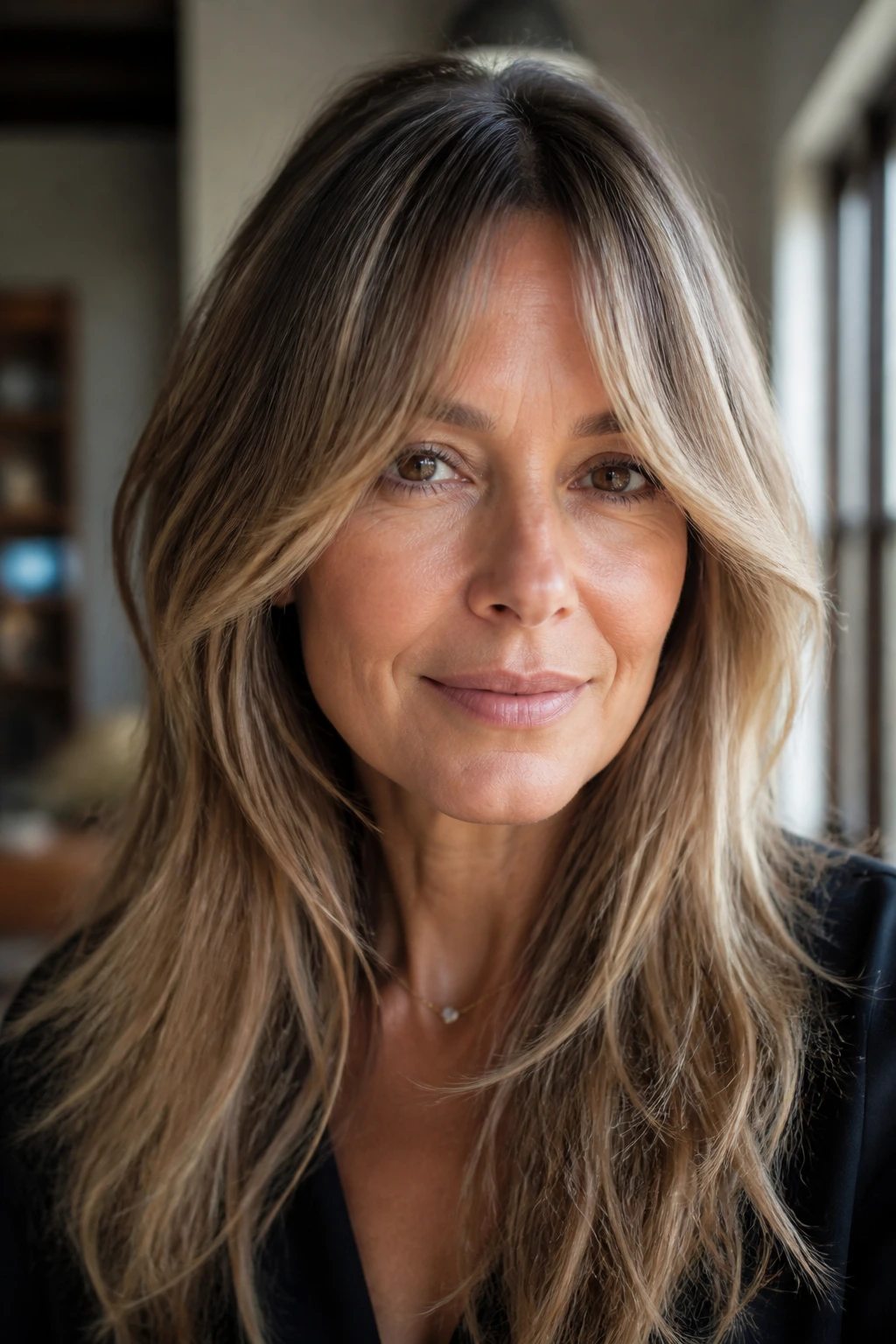
Bottleneck bangs are one of the better fringe choices for fine hair because they start narrow in the center and widen softly toward the temples. That shape softens the forehead without taking too much density from the front hairline.
Babylights near the fringe area can make the whole face look brighter without creating a hard blonde stripe. Keep the lightest pieces around the eyes and cheekbones, then let the color fade back into the rest of the length. The result is softer than a standard money piece and usually easier to wear.
The bangs need regular trims, which is the price of admission. Not a huge one, but still real. If you hate maintenance, skip this look. If you like hair that makes your cheekbones look a little sharper, it’s worth the trouble.
15. Air-Dried Texture with a Creamy Finish
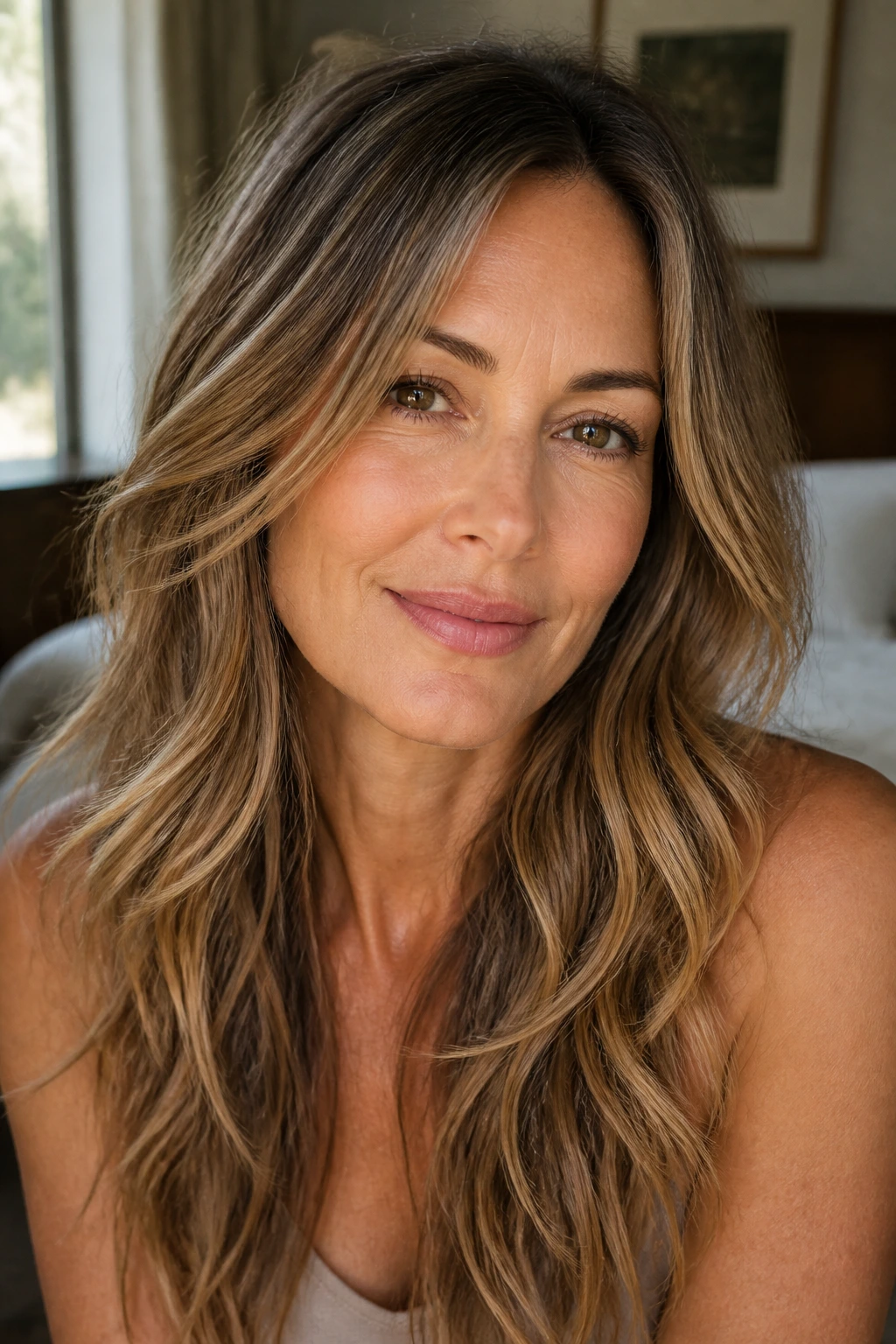
Some mornings, the hair is going to air-dry whether you planned for it or not. The trick is to make that look deliberate. A lightweight leave-in, a small amount of cream, and a little scrunching at the ends can keep long fine hair from drying into limp strings.
Babylights help because air-dried texture needs contrast. Without light and shadow, the hair can look unfinished; with babylights, every bend and wave shows up a little more clearly. The style feels softer and less accidental.
Do not overdo the product. Fine hair turns greasy fast when you load it with rich creams. Start with a nickel-sized amount, keep it away from the roots, and let the hair dry before you decide whether it needs anything else.
16. Low Twisted Bun with Bright Side Pieces
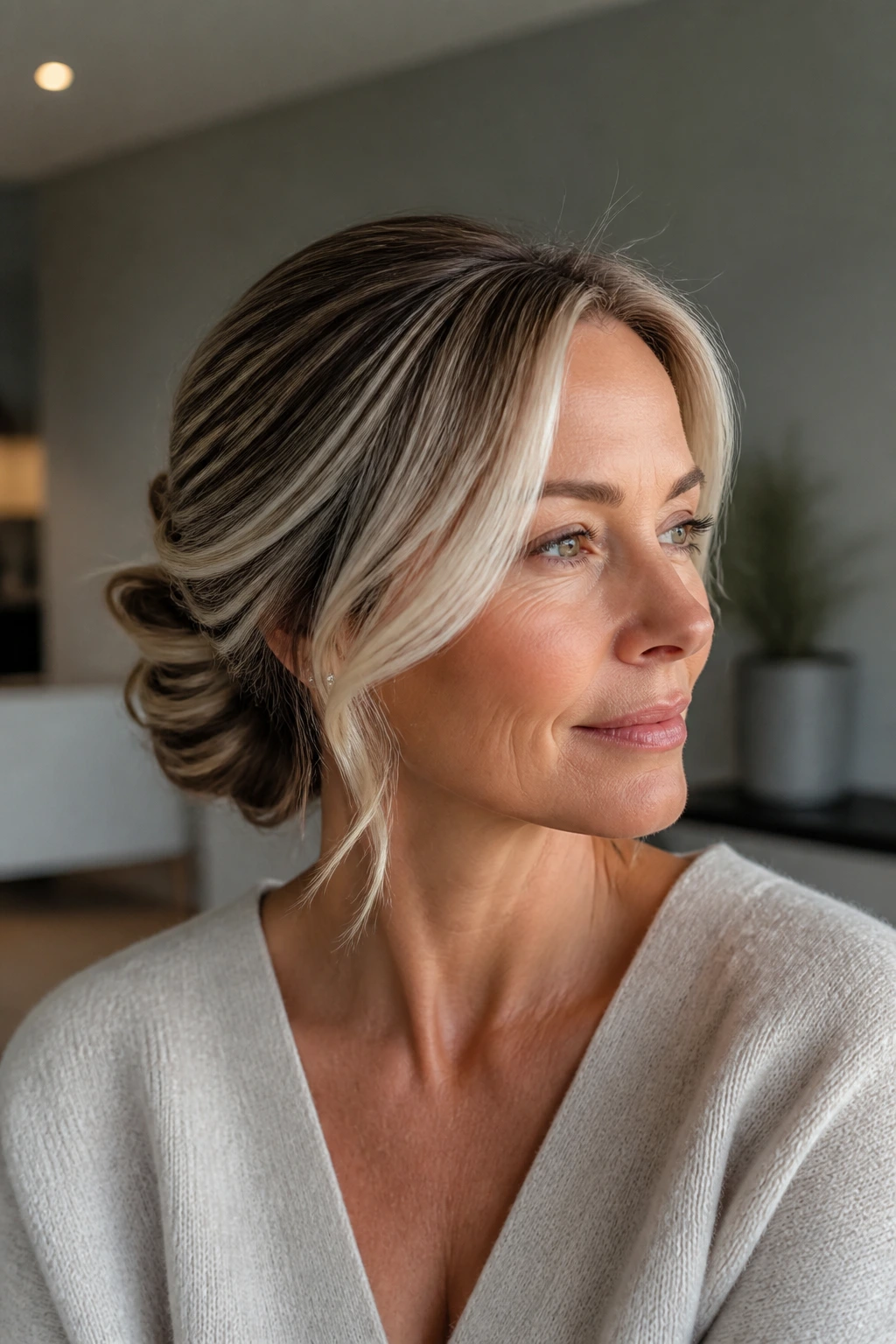
A low twisted bun can be elegant or sleepy, depending on how you handle the front. The bun itself should stay loose enough that it does not suck every bit of body out of the crown. A few bright side pieces from the babylights make the shape feel lighter around the face.
This works especially well when the color has a soft root shadow. The darker root makes the crown look fuller, while the lighter side pieces keep the bun from vanishing into the back of the head. That little balance is what makes the style read intentional.
Pin the bun low and flat enough to stay in place, but not so tight that the hairline gets that strained, shiny look. If you want polish, smooth the front. If you want softness, pull a few fine strands free near the temples.
17. Long Layers with a Soft Root Shadow
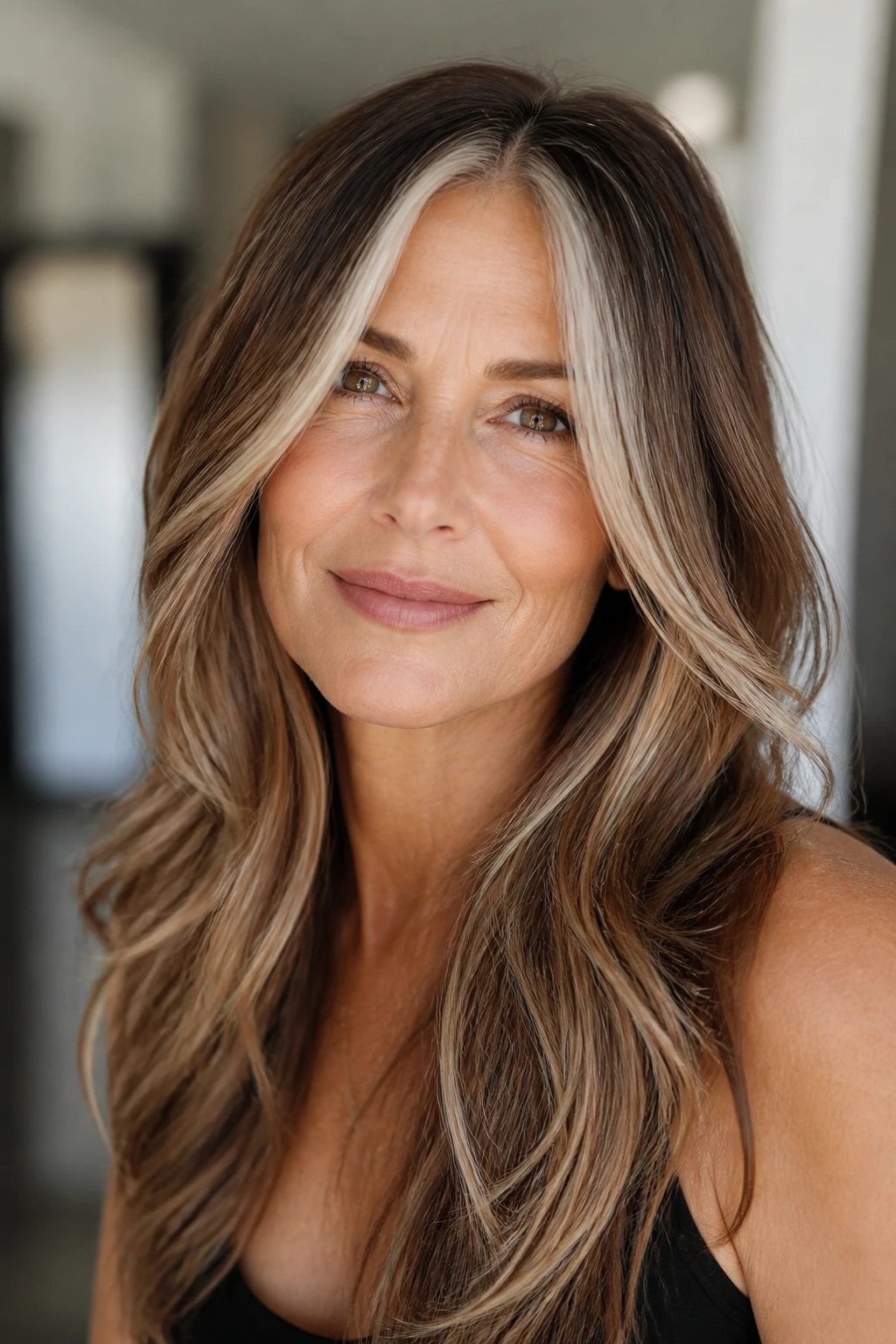
A root shadow is one of the smartest things you can ask for on long fine hair. It keeps the scalp area from looking too stark, and it gives the hair a bit of depth at the base, where fine strands often need help most. Pair that with long layers and the whole head starts to look more grounded.
Babylights should stay lightest through the mid-lengths and a little softer near the root. That blurred transition keeps regrowth from looking harsh and makes the length feel thicker. The eye reads the gradual change as fullness.
I prefer this look when the colorist keeps the shadow subtle, not muddy. Too dark, and the hair can look heavy on top. Too light, and the whole point disappears. You want a quiet shift, not a dramatic ombré.
18. Blunt Perimeter with Micro-Layers
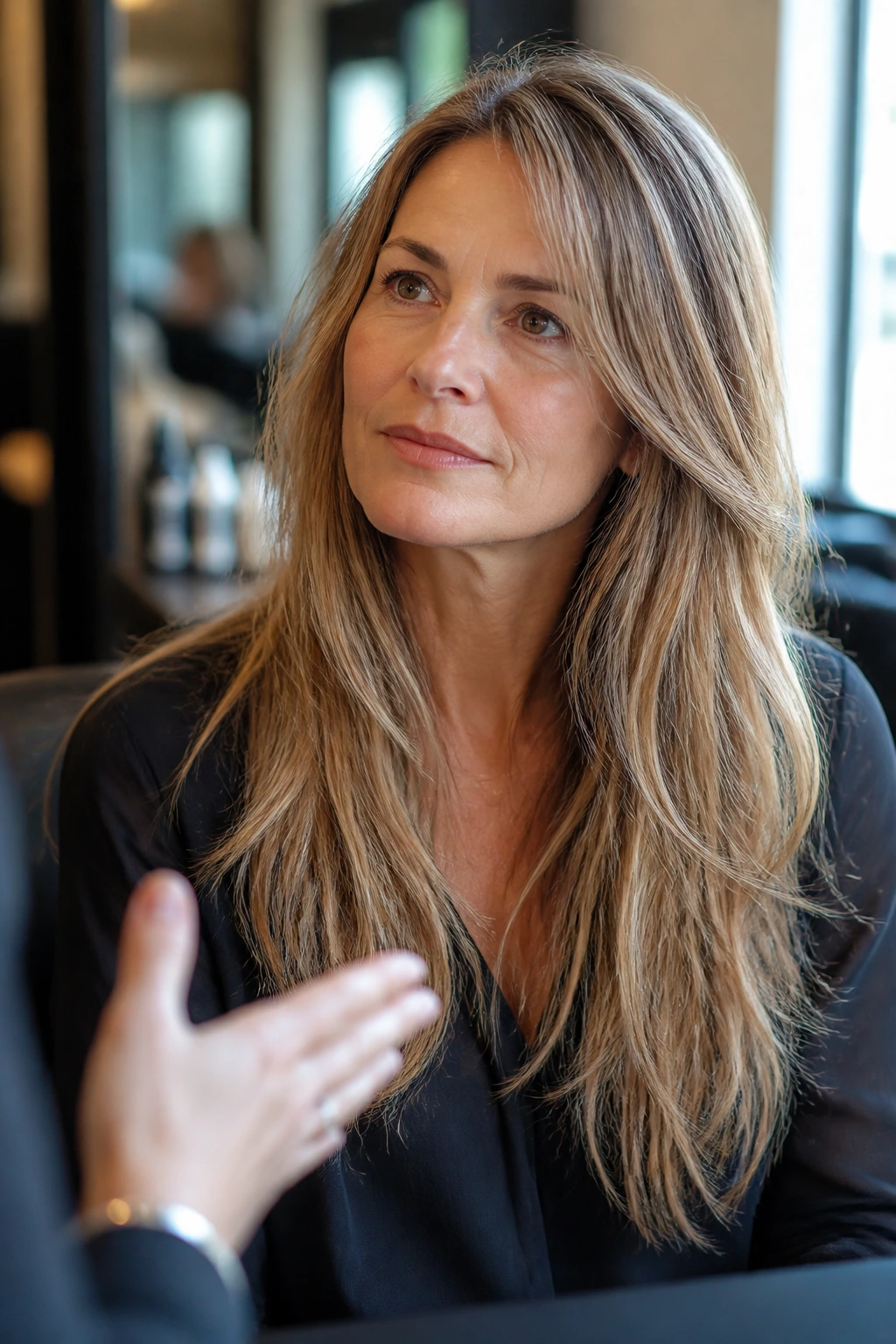
This is one of my favorite options for very fine hair, full stop. A blunt perimeter gives the illusion of thickness because the ends land in a straight, solid line instead of fizzing out into wisps. Add only micro-layers near the top for movement, and the hair keeps its weight where it matters.
Babylights should sit in the canopy and around the face, not all the way through the bottom. That keeps the perimeter looking full while the upper layers catch the light. The contrast is subtle, but subtle is the point. Loud color on fine hair usually works against you.
If your hair has been over-layered, this cut can be a reset. It grows out neatly, styles quickly, and does not need much beyond a round brush and a decent blow-dry.
19. Tucked-Under Ends and a Round-Brush Finish
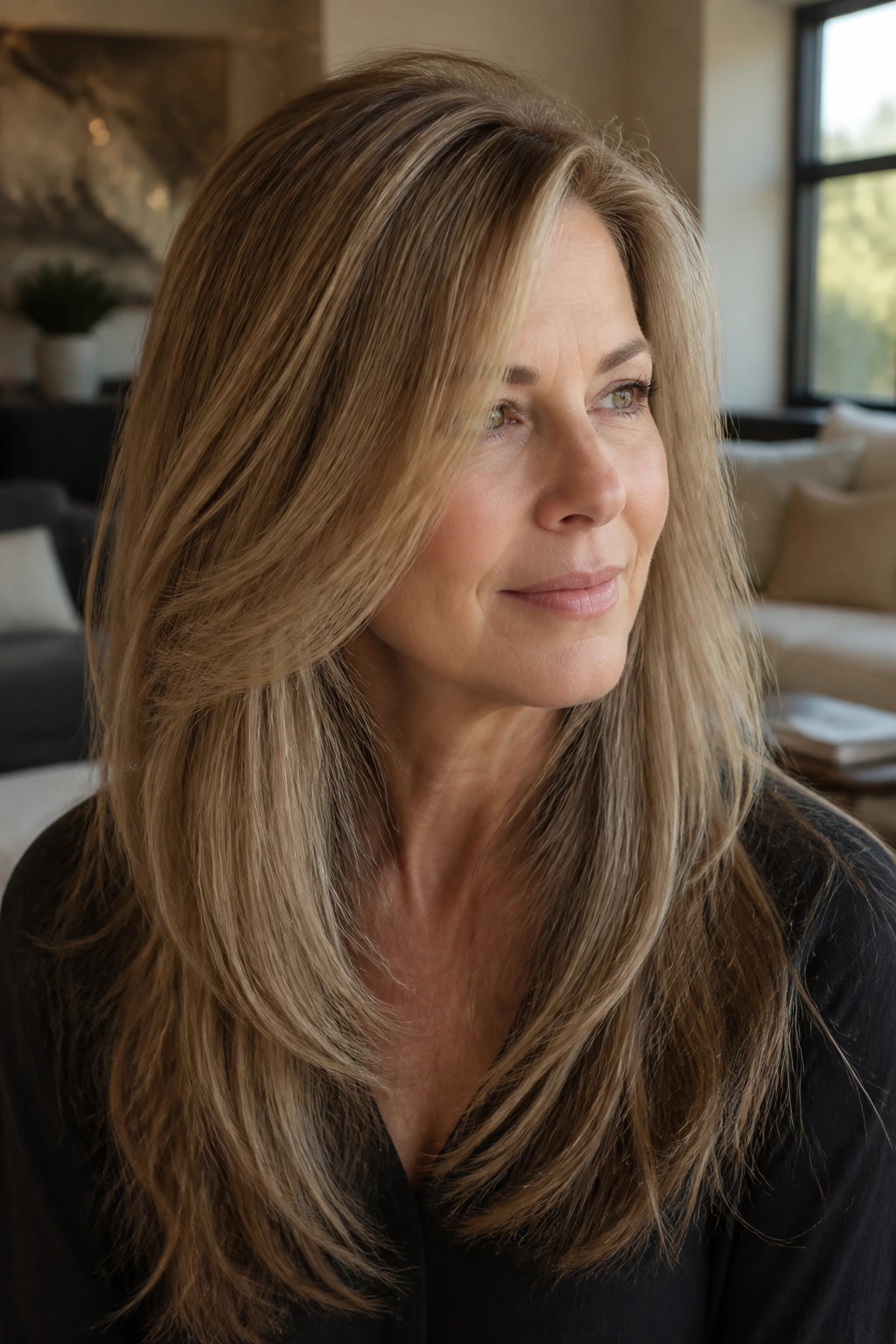
A tucked-under finish gives long fine hair a little structure. The ends curve inward just enough to look fuller, which is useful when the bottom half is naturally soft or thin. It’s an old-school move, but it works.
Babylights show up nicely when the hair is bent this way because the curved ends expose the lighter pieces from different angles. The style looks polished in a way that still feels light. Not stiff. Just finished.
Use a medium round brush and aim the blow-dryer under the ends for the last minute of drying. Then let the shape cool before you touch it. That cooling step matters more than people expect.
20. Beachy Bends with Lowlights for Depth
Can beachy hair look too bright on fine strands? Absolutely. If every piece is light, the hair can start to look washed out instead of dimensional. That’s where a few lowlights earn their keep.
This look mixes delicate babylights with deeper strands through the interior, so the wave pattern has something to sit against. The lowlights do not need to be dramatic. A half-tone darker in the right places can make the whole head look fuller, especially at the ends and around the underneath sections.
The waves themselves should stay loose and irregular. Tight curls turn this style into something older and heavier than it needs to be. A soft bend, a finger rake, and a bit of separation are enough.
21. Claw-Clip Half-Up with Lift at the Crown
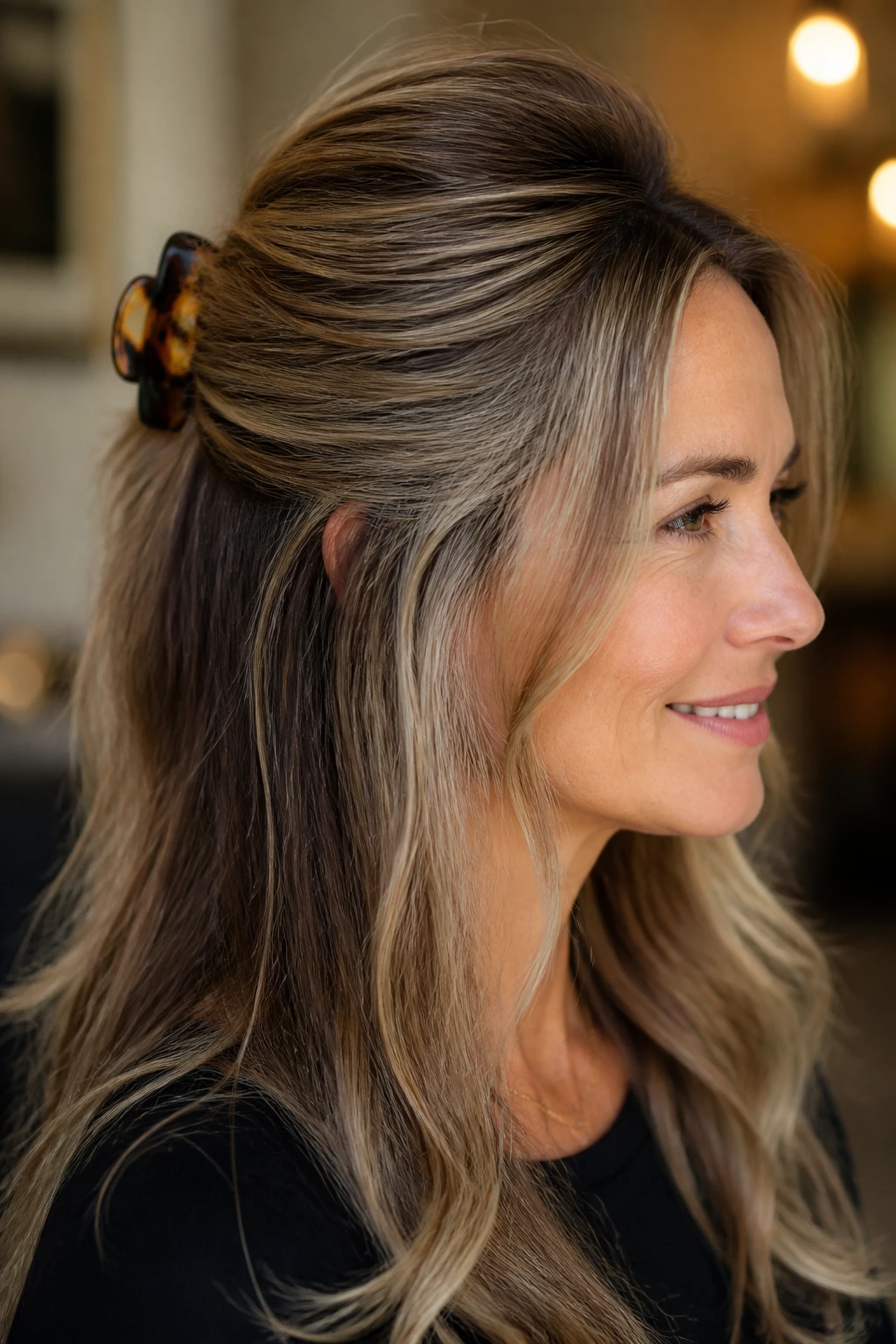
A claw-clip style can either be chic or lazy depending on the lift. On fine hair, the secret is to create a little cushion at the crown before you clip it up. That single move keeps the top from collapsing into the scalp and gives the style some shape.
Babylights make the half-up section more visible, which sounds obvious until you see how much better the style looks when the top layer has dimension. The lighter pieces around the face and upper sides keep the clip from feeling too plain.
This is one of the easiest looks on the list, and that’s why it belongs here. It works on second-day hair, with a blazer, with earrings, with very little thought. Sometimes that’s the best kind of style.
22. S-Shape Waves with Delicate Babylight Ribbons
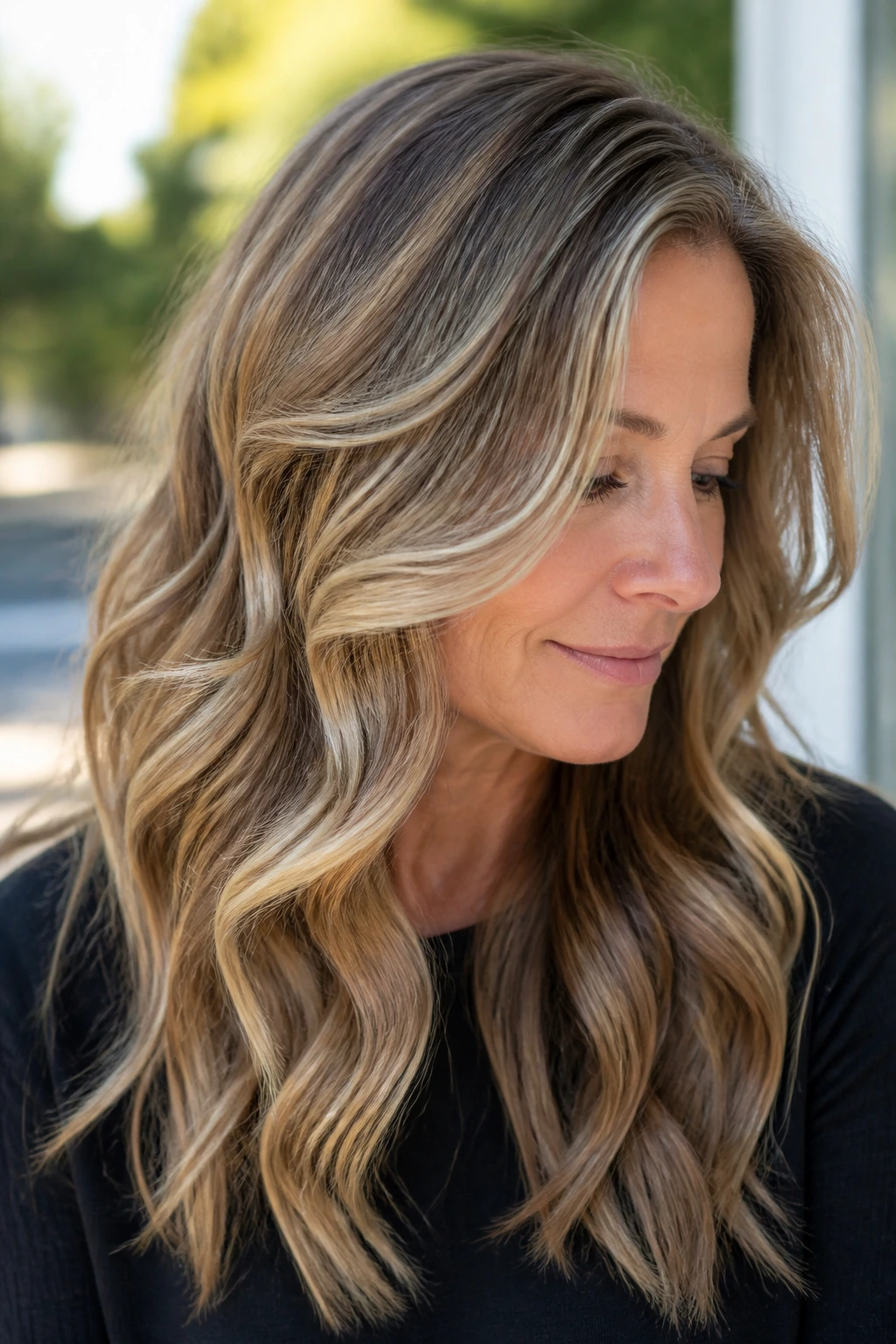
S-waves are the polished cousin of beach waves. They move in a softer, more deliberate pattern, which makes them a good match for long fine hair that needs a little structure without a lot of bulk. The waves should bend, not crimp.
Babylight ribbons are especially nice in this finish because the wave pattern makes the light pieces alternate with the darker ones in a way that feels natural. The hair almost looks woven. That tiny visual texture goes a long way when the strands are delicate.
I like this look with a side part or a deep off-center part, depending on how much lift you want. It’s a good end-point for the whole collection because it sits right between casual and dressed-up, which is usually where long fine hair looks its best.
Why Babylights Make Long Fine Hair Look Denser
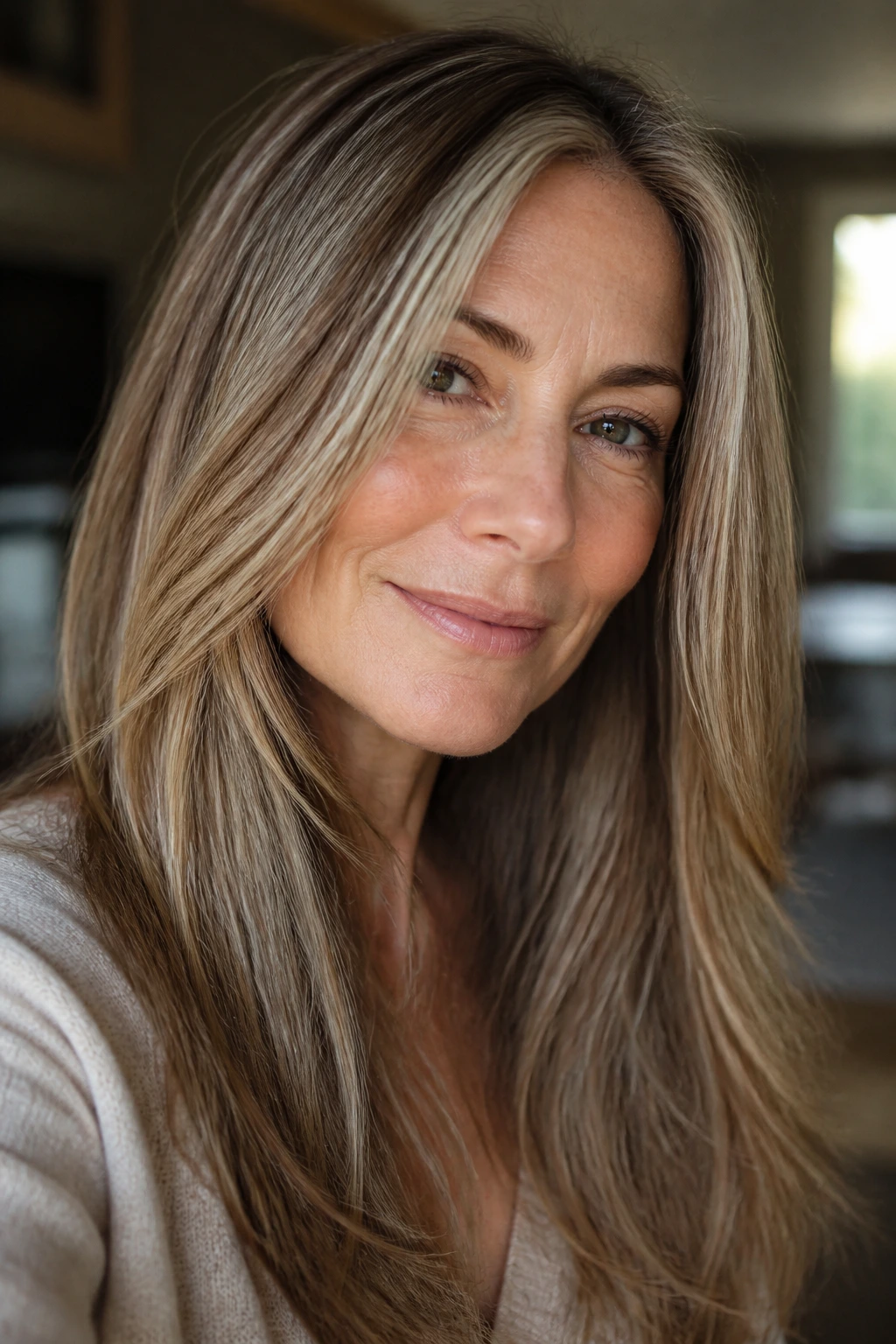
Babylights work on fine hair because they add contrast in a small enough dose that the hair still looks like hair, not a patchwork quilt. A highlight that’s too wide can expose too much scalp and make the ends feel see-through. Tiny weaves do the opposite. They break up the surface just enough to give the eye something to follow.
That visual trick matters. The eye reads light and shadow as shape, and shape as fullness. If the whole head is one flat color, long fine hair can look thinner than it is, especially under bright indoor light. Babylights soften that problem without forcing the hair into heavy maintenance.
I also like them because they grow out quietly. A root shadow, a few lowlights, and a beige or neutral gloss can keep the blonde from going chalky. On fine hair, chalky is the enemy. It makes everything look drier and skinnier than it needs to.
Tiny Weaves, Real Payoff
Professional colorists usually place babylights in slivers roughly 1/16 to 1/8 inch wide. That tiny sectioning preserves bulk, which is exactly why the color reads as airy instead of chunky. On very fine hair, a wider highlight can look loud fast.
Why Lowlights Matter Too
A few deeper strands stop the whole head from drifting into flat brightness. I like lowlights especially on blondes and silver blends, where the hair can lose depth if every piece is the same shade. The goal is contrast you can feel, not stripes you can count.
What to Tell Your Colorist Before the Foils Go In
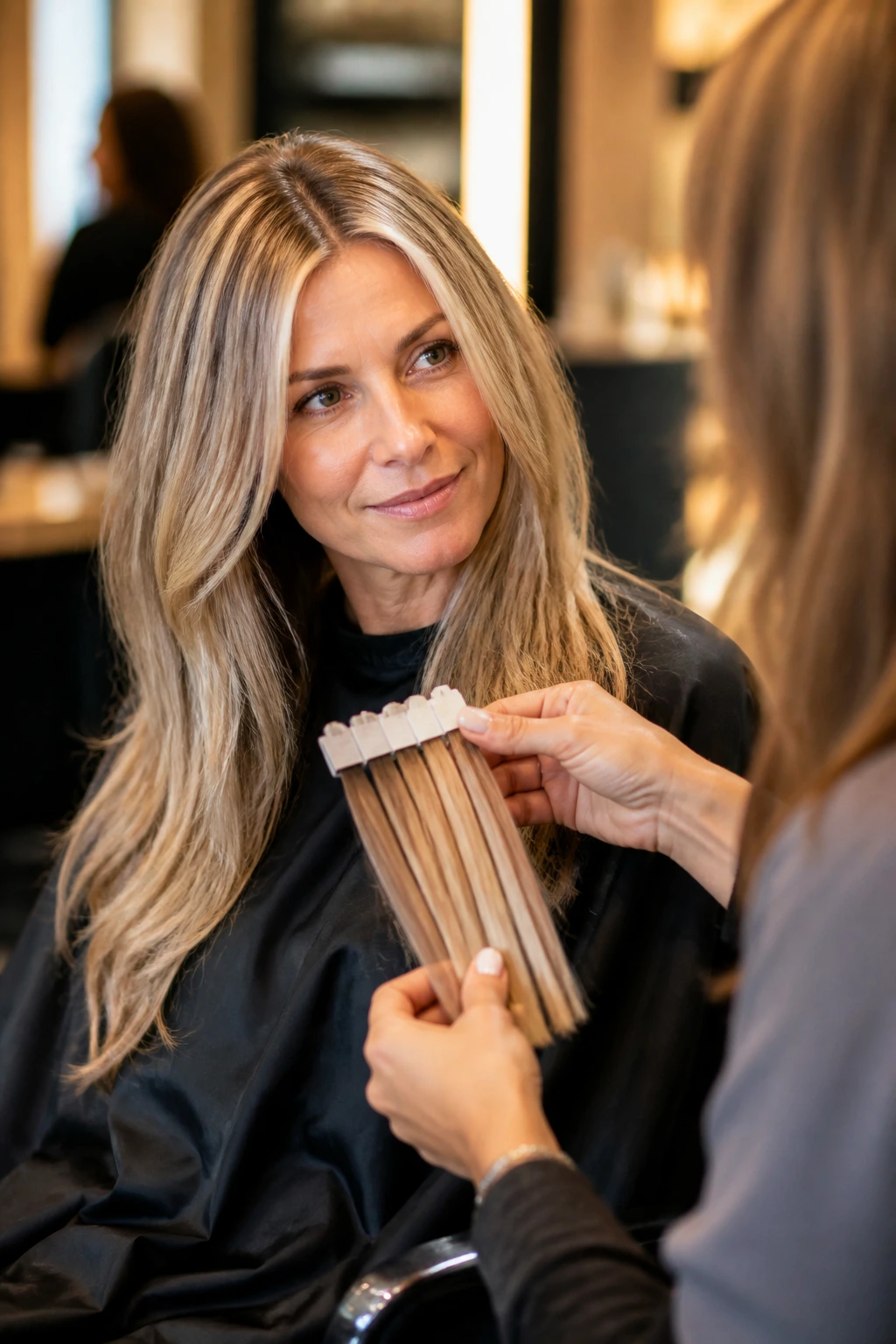
Bring photos, yes, but bring the right kind. One picture for the cut, one for the color, and maybe a third for the fringe or part if you’re fussy about that. A single inspo shot rarely tells the whole story, especially when you want long fine hair to look fuller rather than just lighter.
Say the words that matter: tiny babylights, soft grow-out, and a little root shadow. If you tell your colorist you want “blonde,” you may get brightness where you really needed depth. Be specific about how much maintenance you want, because that changes the formula more than people realize.
If your hair is delicate or porous, ask for a toner that stays beige or neutral rather than going icy. And if your hairline is sparse, tell them you want the brightest pieces slightly back from the hairline, not painted right on the edge. That one detail can save the front of the style from looking striped.
- Ask for micro-weaves: This keeps the highlights fine enough that the hair still reads full.
- Keep the lift controlled: One to two levels lighter than your base is usually enough on fine hair.
- Mention your styling habits: Air-dried hair, heat styling, and daily ponytails all change where the color should land.
- Request a soft root shadow: A shadow at the part and crown helps the scalp look less exposed.
- Talk about lowlights early: They matter more than people think if your hair is very light or has gone translucent at the ends.
Tools and Products That Keep Fine Hair From Falling Flat
- Blow dryer with a concentrator nozzle — Directs air where you need lift and keeps the cuticle smoother.
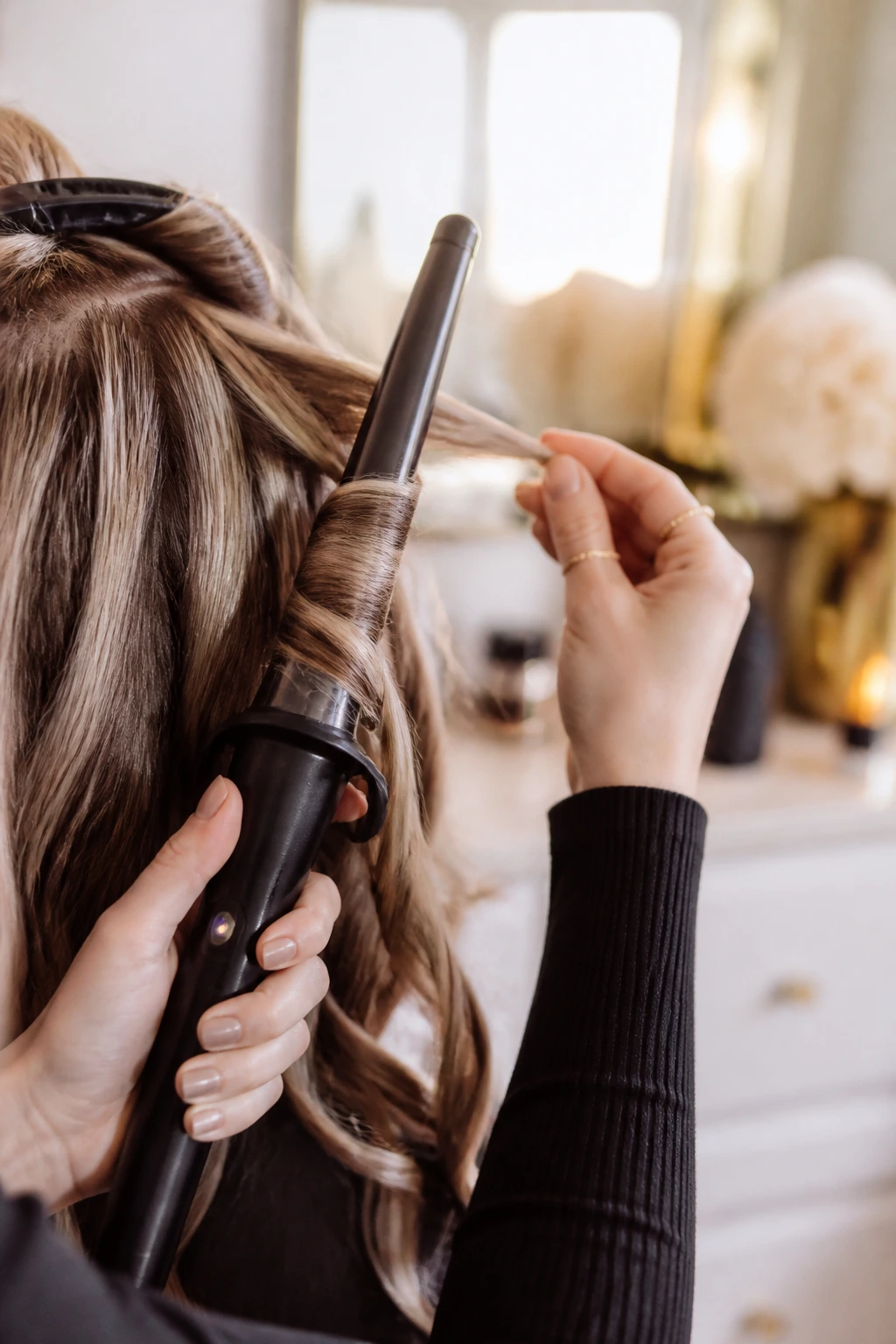
- 1-inch to 1.25-inch curling iron or wand — Best for loose bends that do not overwhelm fine lengths.
- Medium round brush — A 1.5- to 2-inch brush is easier to handle than a giant barrel on delicate hair.
- Tail comb — Useful for clean parts, crown lift, and sectioning babylights-friendly styles at home.
- Sectioning clips — They keep top sections out of the way while you shape the lower lengths.
- Volumizing mousse — Gives the roots some memory without the sticky feel of heavy gel.
- Lightweight heat protectant spray — Fine hair burns fast; this is not optional if you use hot tools.
- Root-lift spray — Best applied at the crown before blow-drying for extra support.
- Color-safe shampoo and conditioner — Helps babylights stay bright longer and keeps toner from slipping out fast.
- Purple or blue shampoo — Use only when brass shows up; overuse can make fine hair look muddy.
- Dry shampoo — Useful at the roots, especially on day two or three when the crown starts to collapse.
- Lightweight serum or oil — Good for ends, but only a drop or two. Fine hair does not forgive overpouring.
- Microfiber towel or soft T-shirt — Reduces friction and frizz while the hair is damp.
- Silk pillowcase or sleep bonnet — Helps preserve waves and keeps highlighted hair from rubbing up rough.
Styling Moves That Hold a Shape All Day
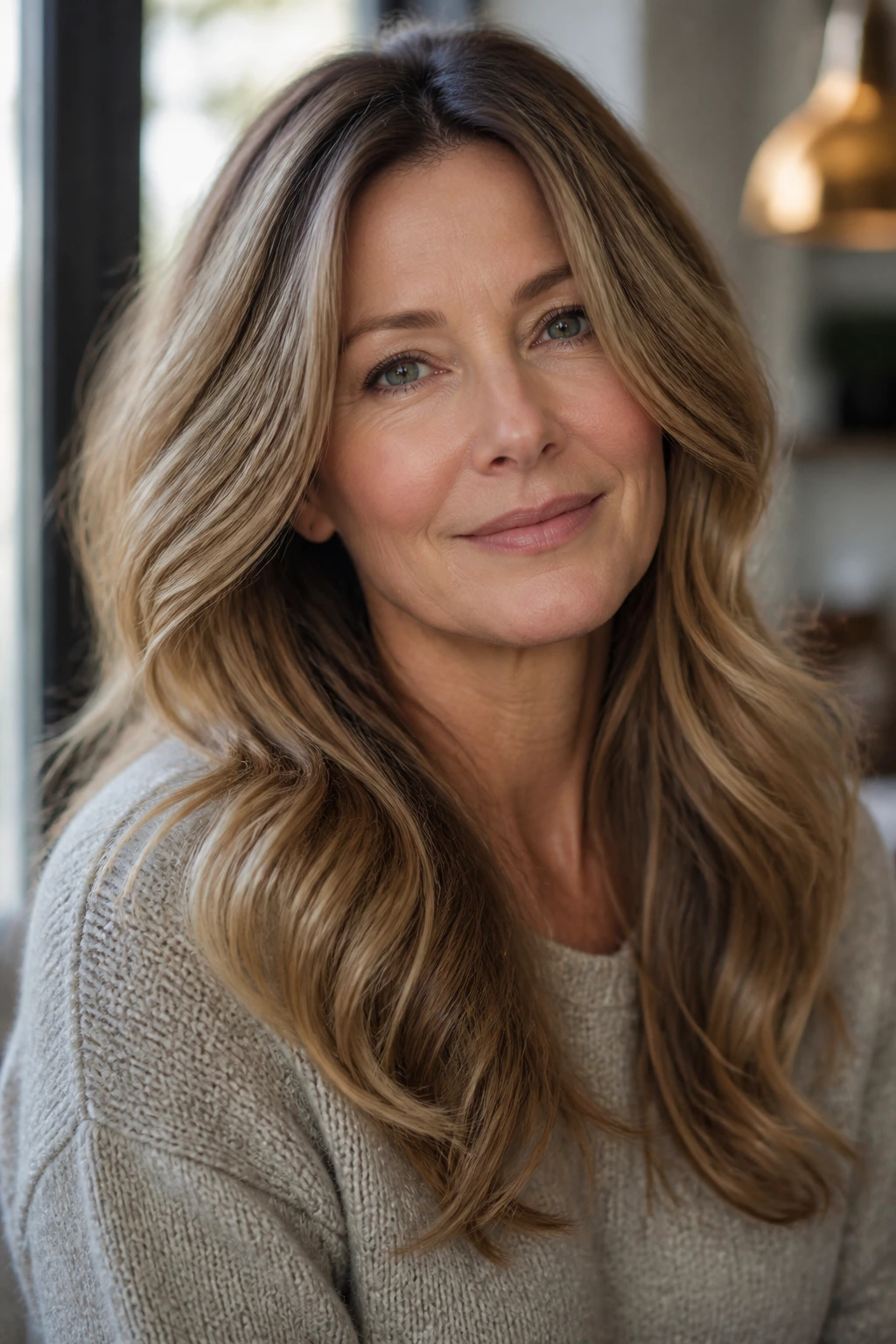
The roots need support first. If you put all the effort into the ends, the style falls flat by lunch and the hair looks tired. Start with damp roots, lift them at the scalp, and dry that area fully before you fuss with curls or smoothness through the lengths.
For straight or blowout styles, aim the dryer at the crown from the opposite direction of your part. It feels odd for a minute. It works. Then switch back, shape the front, and cool the hair down before brushing through. That little reset helps the roots stand away from the head instead of collapsing back in.
For waves, let each curl cool completely before you touch it. Warm hair forgets everything. Cool hair remembers. That’s the whole trick, and it’s why so many rushed blowouts look limp by the time people get home.
How to Keep Babylights Fresh Between Salon Visits
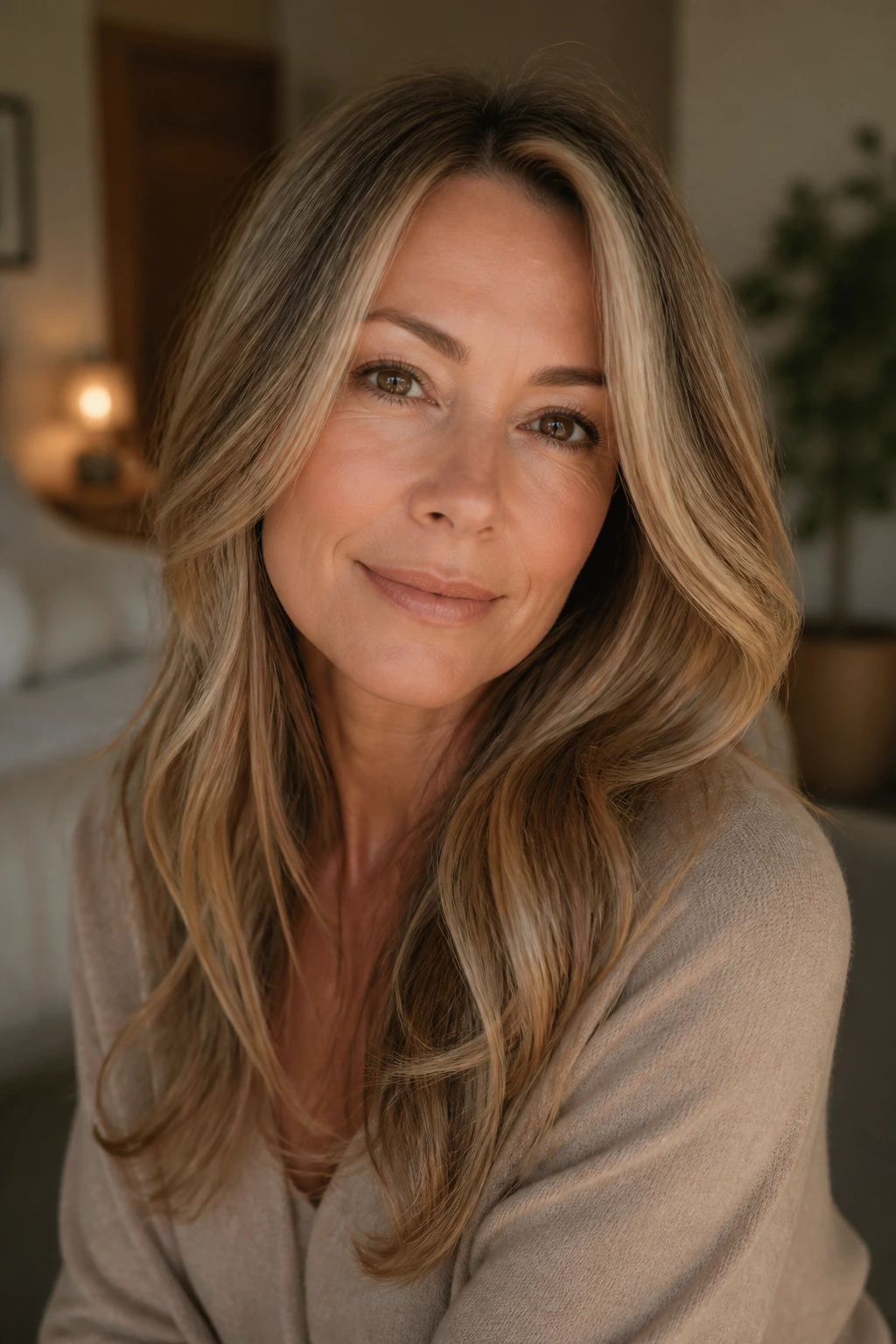
Babylights age best when the hair is trimmed and the color is not beaten to death with harsh shampoo. On fine hair, washing too often can strip the toner and leave the lighter pieces looking dry. A few washes a week is usually enough unless your scalp gets oily fast.
Use a color-safe shampoo most of the time, then bring in a clarifying wash only when product starts to coat the hair. Once every 2 or 3 weeks is usually plenty. If the hair is blonde, a purple shampoo can help, but I’d rather see it used sparingly than sprayed on like a miracle.
Trims matter more than people admit. Every 8 to 10 weeks keeps the perimeter full, and a gloss or toner refresh every 6 to 8 weeks can stop the babylights from drifting brassy. If the hair feels stiff, use a light mask. If it feels mushy, add a protein treatment once a month and back off the moisture overload.
Common Mistakes That Make Fine Hair Look Sparse
The first mistake is going too short with the layers. Fine hair can handle movement, but if the crown and sides are heavily chopped, the ends lose the weight that keeps them looking solid. The fix is a long, deliberate layer pattern that protects the perimeter.
The second mistake is making the babylights too bright. Platinum ribbons on delicate hair can look expensive in the bowl and patchy on the head. Stay within a shade or two of the base color and use lowlights if the hair needs depth.
Heavy products are the third trap. A thick oil, a rich cream, and a leave-in all at once can flatten the roots into the scalp and make the lengths look greasy. Use one lightweight product at a time, and keep it off the top inch or two.
A fourth mistake is ignoring the part. Fine hair that sits in the same place every day often shows more scalp than it needs to. Change the part a little, lift the roots with your fingers, or use a zigzag at the crown when the hair starts looking too neat.
Variations for Brunettes, Blondes, and Silver Hair
Warm Brunette Blend
Caramel and honey babylights soften brown hair without turning it orange. Ask for a beige toner and a soft root shadow so the brightness stays inside the length instead of crowding the hairline. This version works especially well if your base is chestnut or light brown.
Soft Champagne Blonde
Champagne is easier on fine hair than a hard icy blonde because it keeps a little warmth in the mix. Add a few lowlights if the ends are porous or too light already. The style looks richer and less fragile, which matters more than chasing the palest shade.
Silver-Soft Dimension
If your hair is going gray, babylights can blend the transition beautifully when they’re placed around the face and crown. A silvery beige gloss and a few deeper strands stop the color from going flat. The result is softer than full coverage and usually easier to live with.
Air-Dry Friendly Wave
For naturally wavy hair, keep the cut long and the layers subtle, then let the babylights show through the bends. A salt-free cream and a microfiber towel are enough most days. This version is for people who would rather spend five minutes than twenty.
Polished Event Finish
Take any of the styles above and smooth it into a round-brush blowout with tucked ends or soft S-waves. The babylights will look brighter because the hair reflects light more evenly. It’s the same cut, just dressed with a little more intention.
Questions People Ask Before Booking the Appointment
Do babylights make fine hair look thinner?
Not when they’re done lightly. Babylights are much thinner than chunky highlights, so they preserve the look of density while adding dimension. Problems usually start when the highlights are too pale or too packed together.
Should women over 40 avoid long hair if it’s fine?
No. Length is not the issue; shape is. Long fine hair looks best when the perimeter stays full, the layers stay long, and the color adds depth instead of scattering brightness everywhere.
What part works best with fine hair and babylights?
A center part can look elegant, but a side part often gives more lift at the root. If your scalp shows easily at the crown, switch the part a little off-center and see how much fuller the hair feels.
How often should babylights be touched up?
A gloss or toner refresh every 6 to 8 weeks keeps the color clean, while the foils themselves can often stretch longer if the grow-out is soft. If you like a more polished blonde, expect a shorter schedule.
Can I ask for lowlights too?
Yes, and on fine hair I often think you should. Lowlights keep the color from going one-note and help the ends look thicker. They’re especially useful if the hair is very light or has started to lose depth.
What if my babylights turn brassy?
Use a color-safe shampoo first and reach for purple or blue shampoo only when you need it. If the brass keeps coming back, the toner may need to be shifted toward beige instead of ash, especially on porous hair.
Do these styles work on wavy hair?
They do, and sometimes even better than on pin-straight hair. Waves make the babylights move, which gives the color more life. The main job is keeping the layers long enough that the wave pattern still looks full.
Can I wear long fine hair up without losing volume?
Yes, if you keep some lift at the crown and leave a few face-framing pieces out. Low ponies, clips, and loose buns are often better than tight knots because they don’t squash the hair into the scalp.
Soft Volume That Keeps Its Shape
The smartest long hairstyles for fine hair do not try to fake thickness with drama. They use shape, shadow, and a careful hand with babylights to make the hair look fuller where the eye expects to see fullness. That means a cleaner perimeter, a little depth at the root, and lighter pieces placed with restraint instead of enthusiasm.
That restraint is what makes the styles wearable. They grow out more quietly, they style faster, and they stop the hair from looking like it is working against you. If you pick one cut that keeps its edge and one color formula that leaves some room for depth, the rest becomes a lot easier.
The next salon visit goes better when you know what you want the hair to do, not just what you want it to look like in a selfie.