



Thin hair tells the truth fast. One wrong brush stroke, and the crown goes limp, the part widens, and the whole style starts looking smaller than it felt in the mirror five minutes earlier.
That’s why romantic hairstyles for thin hair with side-swept bangs need a different kind of thinking. You are not trying to force heavy volume out of delicate strands. You’re building the illusion of movement, using diagonals, soft bends, tucked ends, and bangs that slide across the forehead instead of sitting there like a flat curtain.
Side-swept bangs do a sneaky amount of work. They break up the front of the hairline, soften the part, and give you a built-in frame even on days when your roots are behaving badly. When the rest of the style is light and loose — not overbuilt, not lacquered into place — the whole look reads softer and fuller.
Why These Styles Work So Well on Thin Hair
Diagonal lines are your friend.
Side-swept bangs pull the eye across the face instead of straight down the center, which helps a sparse part look less exposed.
Soft texture beats heavy structure.
Thin hair usually looks better with bends, twists, and airy pieces than with rigid shapes that reveal every gap.
These styles use the ends on purpose.
When the crown is delicate, the finish matters more. A flipped end, tucked bun, or loose braid makes the hair look intentional instead of underbuilt.
They let the bangs stay part of the design.
A side-swept fringe can blend into waves, twists, or pins without disappearing. That matters more than people think.
Nothing here depends on giant volume.
That’s the real trick. You are not pretending the hair is thicker than it is. You are giving thin hair shape, movement, and a soft edge that looks romantic instead of sparse.
The Cut and Part That Make Everything Easier
A good style starts before the curling iron is even warm. If the part is too rigid or the fringe is cut too blunt, thin hair tends to look even finer because there’s nowhere for the eye to rest. A side-swept bang with a little length through the cheekbone usually gives you more flexibility than a short, chopped fringe.
Ask for soft, point-cut bangs that can slide into the rest of your hair. Ask for layers that begin below the chin if your hair is long enough, because that keeps the ends from looking wispy and tired. If your hair is very fine, too many layers can backfire. They remove weight faster than they add movement.
A deep side part also helps. Not every face wants the same angle, but a part that sits an inch or two off center usually gives the roots a better lift than a dead-center split. Small change. Big difference.
Why You’ll Love This Collection
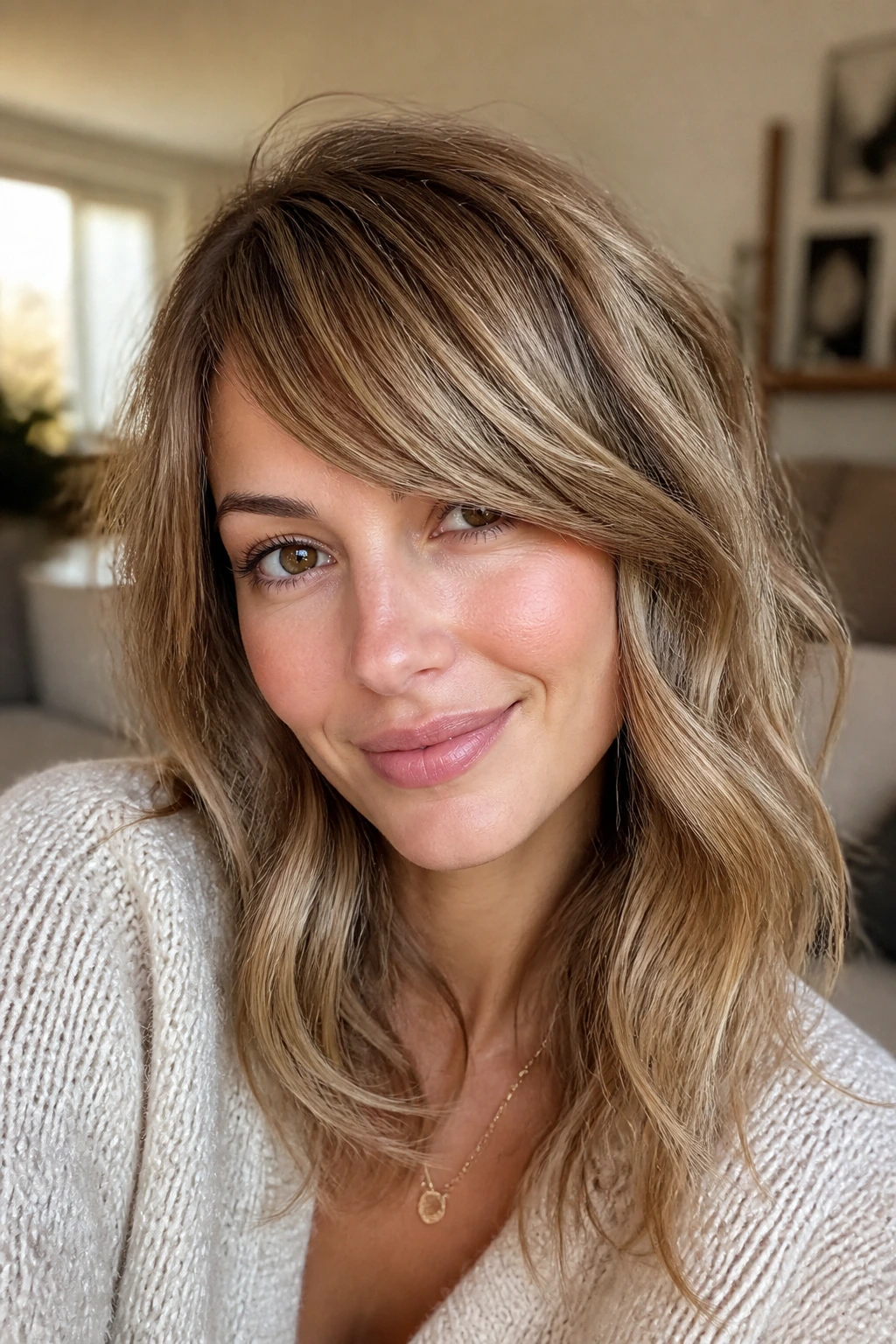
- Built for low density: These looks rely on parting, texture, and placement instead of pretending you have twice as much hair as you do.
- Kind to side-swept bangs: Every style leaves room for the fringe to move, so the front doesn’t get swallowed by pins or ponytails.
- Works with short or long hair: You’ll find pixie, bob, shoulder-length, and longer options that actually make sense for thin strands.
- Easy to refresh: Most of these styles can be revived with a mist of water, a few finger-combed bends, and a little dry shampoo.
- Romantic without looking fussy: Soft tendrils, loose twists, and airy waves give the finish a gentle feel, not a stiff formal one.
- Good for real life: These are the kinds of styles that can survive dinner, a photo, or a long day without needing a bag full of backup pins.
1. Soft Side-Parted Waves with Airy Ends
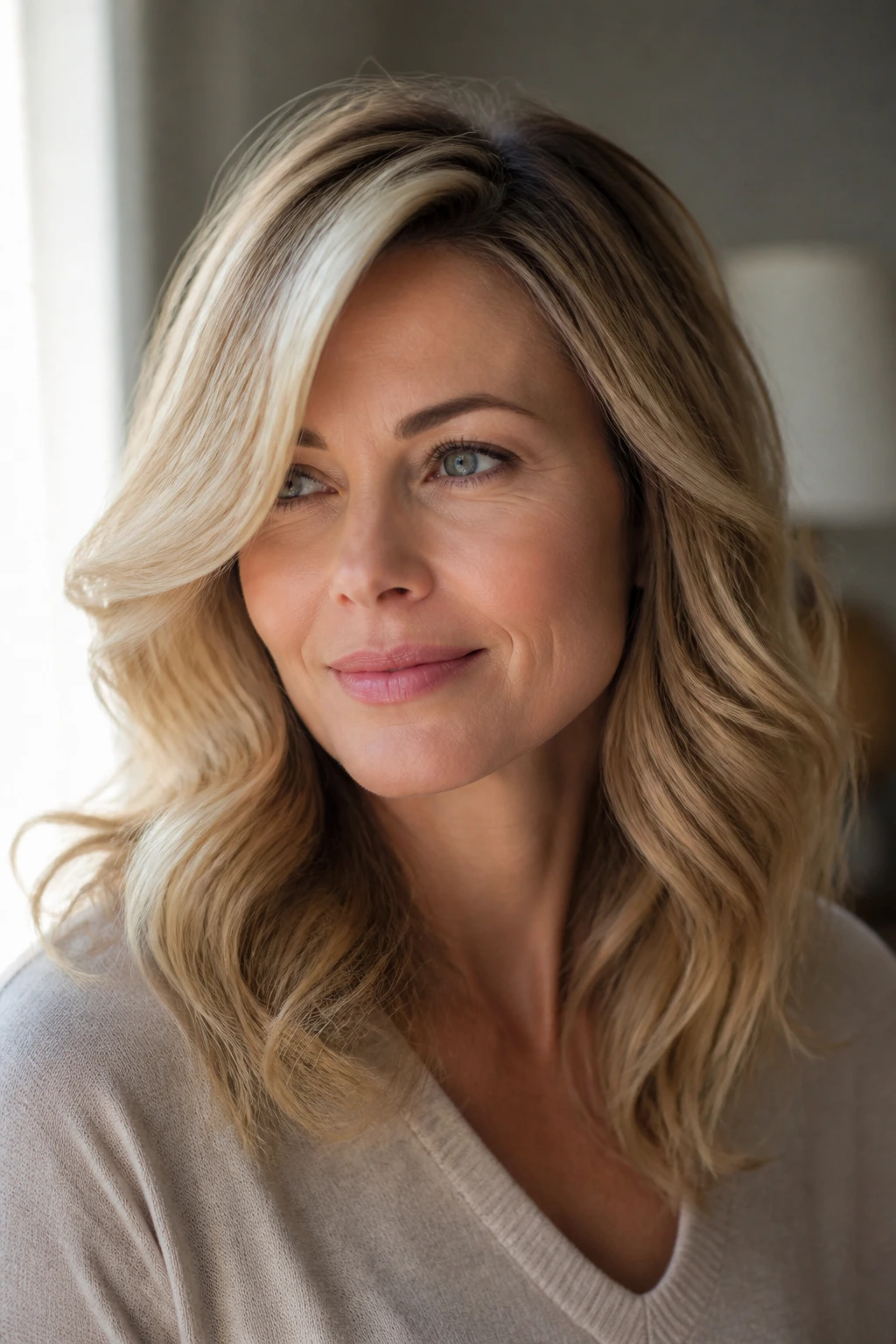
This is the style I reach for first when thin hair needs to look alive without looking overworked. The side part gives the crown a lift, the waves add width through the mid-lengths, and the ends stay soft instead of puffed out.
Why It Works
Side-swept bangs melt into this look instead of sitting on top of it, which is half the battle. Use a 1-inch curling iron or wand, curl away from the face, and leave the last inch or two out so the ends don’t turn into little springs. That tiny gap keeps the shape romantic rather than prom-night crunchy.
- Best for: shoulder-length to long hair.
- Texture trick: Mist a little texturizing spray after the curls cool, then rake them apart with your fingers.
- Fringe note: Sweep the bangs across the forehead and pin them loosely for 10 minutes if they refuse to cooperate.
Pro tip: Clip the top section at the crown while the curls cool. Thin hair holds shape better when it sets in the exact bend you want.
2. Low Twisted Chignon with a Loose Side Sweep
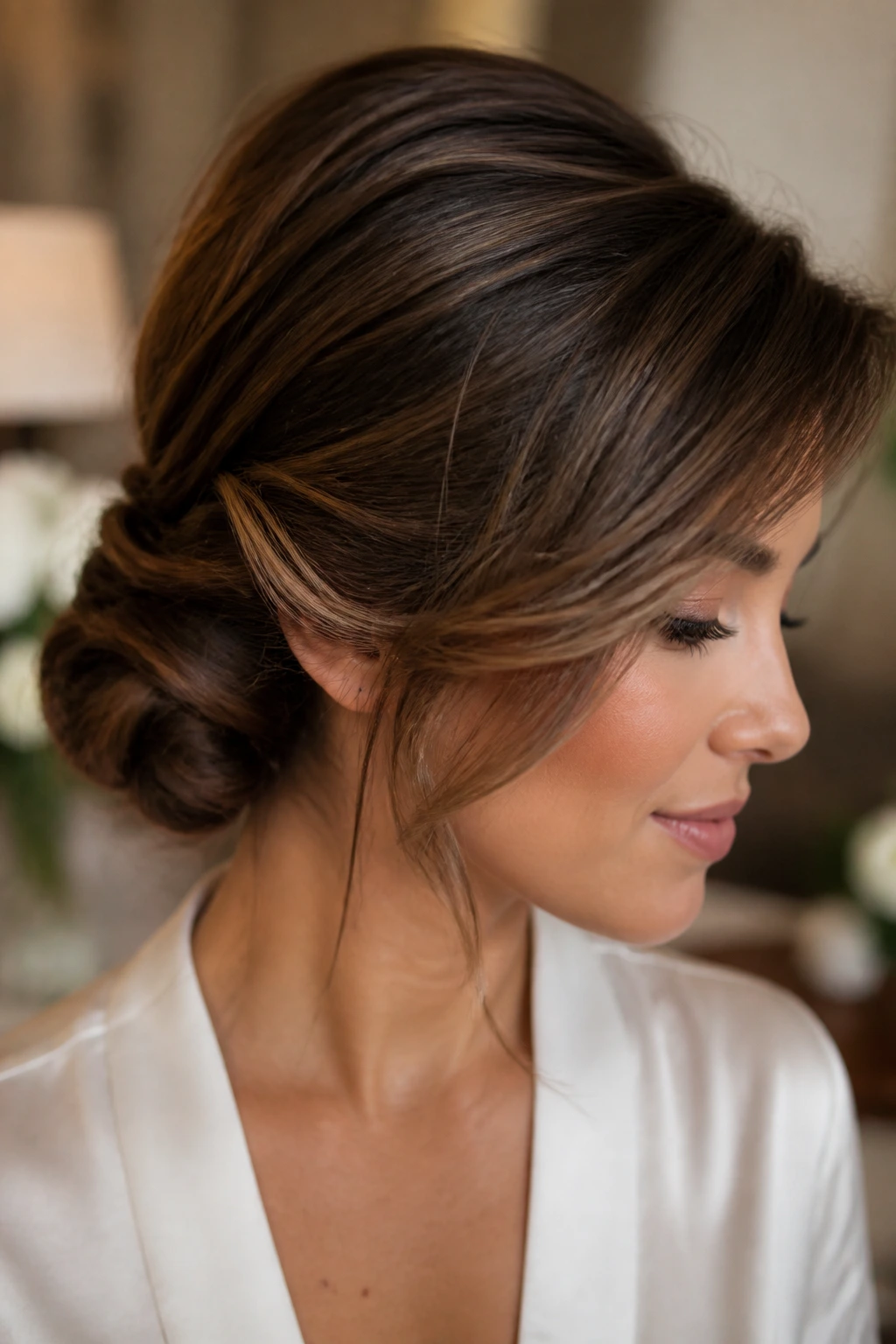
A low chignon can look sparse if you build it too tight. Keep it soft, twist the hair in two sections, and pin them low at the nape. With side-swept bangs falling across one temple, the whole style feels less severe and more lived-in.
The real win here is that a twist hides the fact that there isn’t a huge amount of hair to gather. You’re not stuffing hair into a ball. You’re folding it into place. That subtle difference changes the whole finish.
Use a little mousse at the roots, then a pea-sized touch of cream on the lengths — not the scalp — if your hair slips out of pins easily. A few face-framing pieces help too, especially if your bangs are grown out. Clean lines are fine. Hard lines are not.
3. Half-Up Crown Twist with Face-Framing Bangs
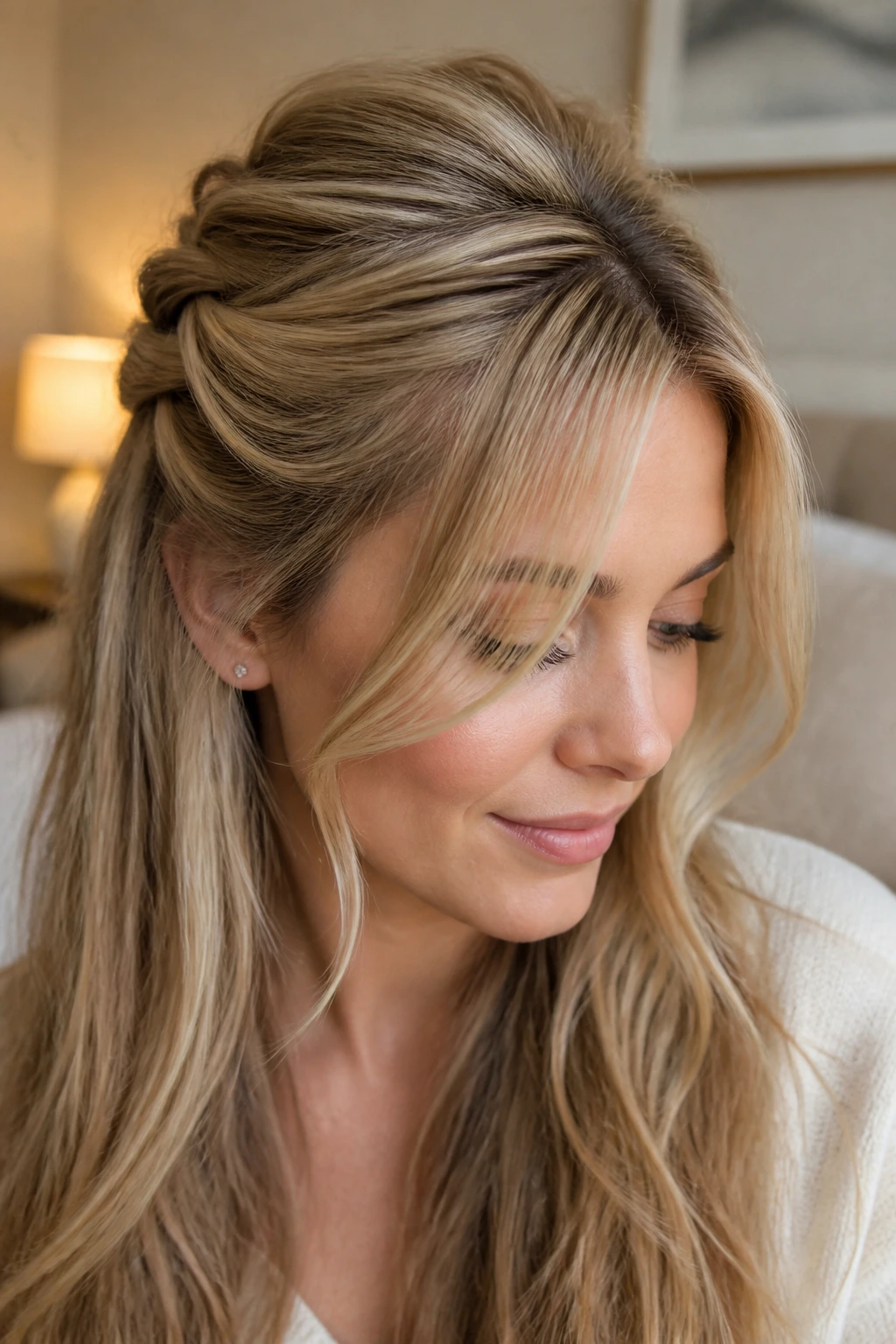
Why does this one work so well on thin hair? Because the top section gets lifted, but the bottom section still hangs freely and makes the overall style look fuller. You get height without losing length.
Twist back two small sections from the temples, meet them at the back of the head, and pin them in place just above the occipital bone. That spot matters. Pin too low and the style goes flat. Pin too high and it starts looking fussy.
How to Style It
Let the side-swept bangs stay loose and a little bendy. If the ends are long enough, curl them away from the face so they blend with the twist instead of fighting it. A tiny barrette or pearl pin can sit where the twist meets, but keep it small. Thin hair gets swallowed by oversized accessories fast.
4. Sleek Low Ponytail with a Wrapped Base
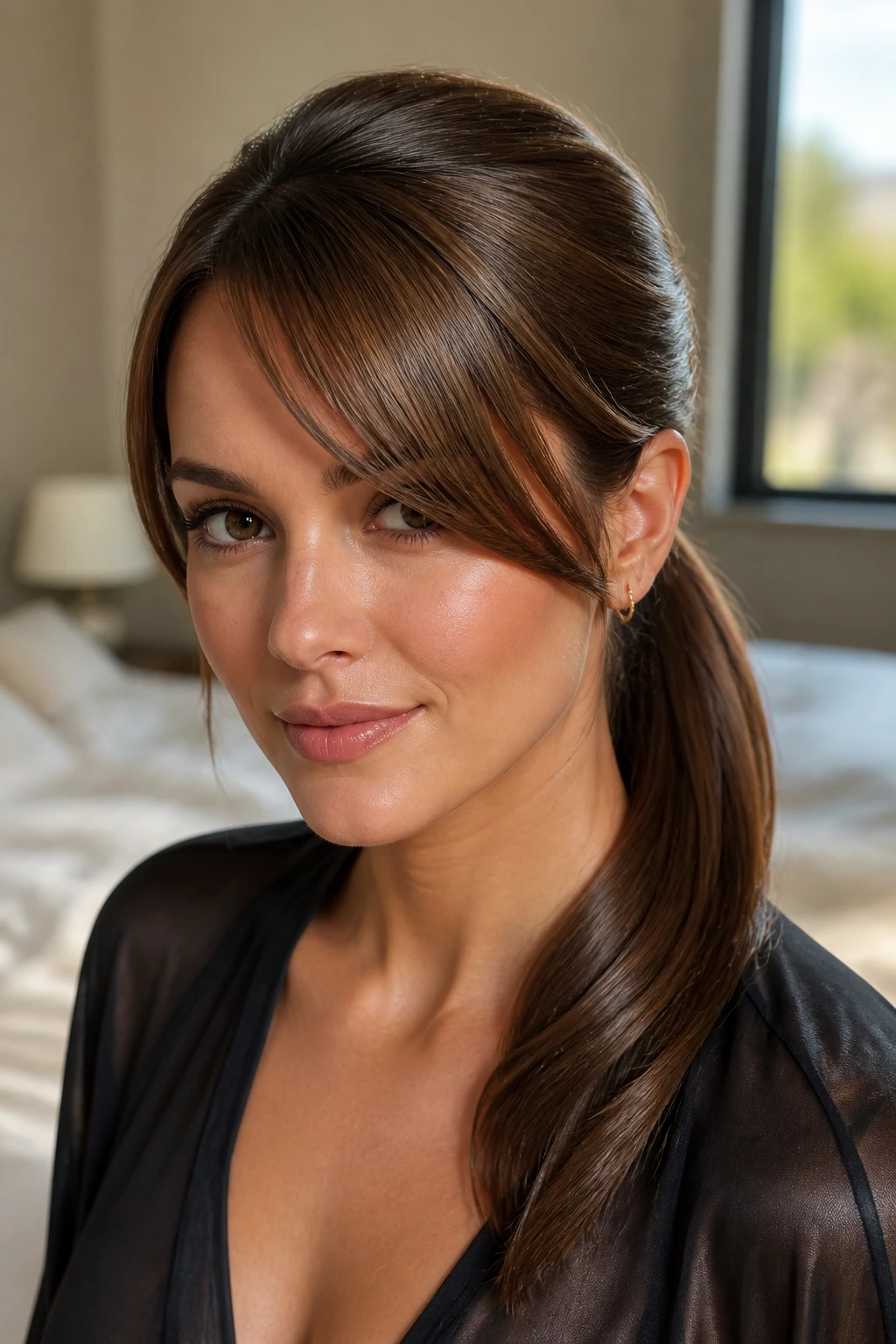
A sleek low ponytail sounds simple, and it is, but thin hair needs a few smart moves here. Smooth the roots with a brush, leave a little lift at the crown, and wrap a small strip of hair around the elastic so the base looks finished.
Side-swept bangs keep this from feeling severe. They soften the forehead and make the ponytail look deliberate instead of plain. The trick is to keep the pony low and the crown a touch airy. If you flatten the top completely, the whole thing can look smaller than it is.
A light mist of flexible hairspray helps, but don’t soak the lengths. Thin hair turns greasy-looking in a hurry. Clean roots, soft fringe, tidy base. That’s the formula.
5. Tousled Lob with Bent Ends and Soft Fringe

A lob — especially one that sits around the collarbone — can be a thin-hair lifesaver because the perimeter still looks strong. If you bend the ends slightly inward and outward, the line looks fuller than stick-straight hair ever will.
This is not about curls. It’s about movement. Use a flat iron or small wand to make a loose bend through the mid-lengths, then leave the ends a little messy on purpose. The side-swept bangs should skim toward the cheekbone, not lie hard against the forehead.
A blunt-ish edge gives the illusion of density. Too much layering through the bottom can make the lob look airy in a bad way. Ask for a little weight at the ends if your hair is naturally soft and slips flat by noon.
6. Faux Bob with Tucked Ends and a Romantic Side Sweep
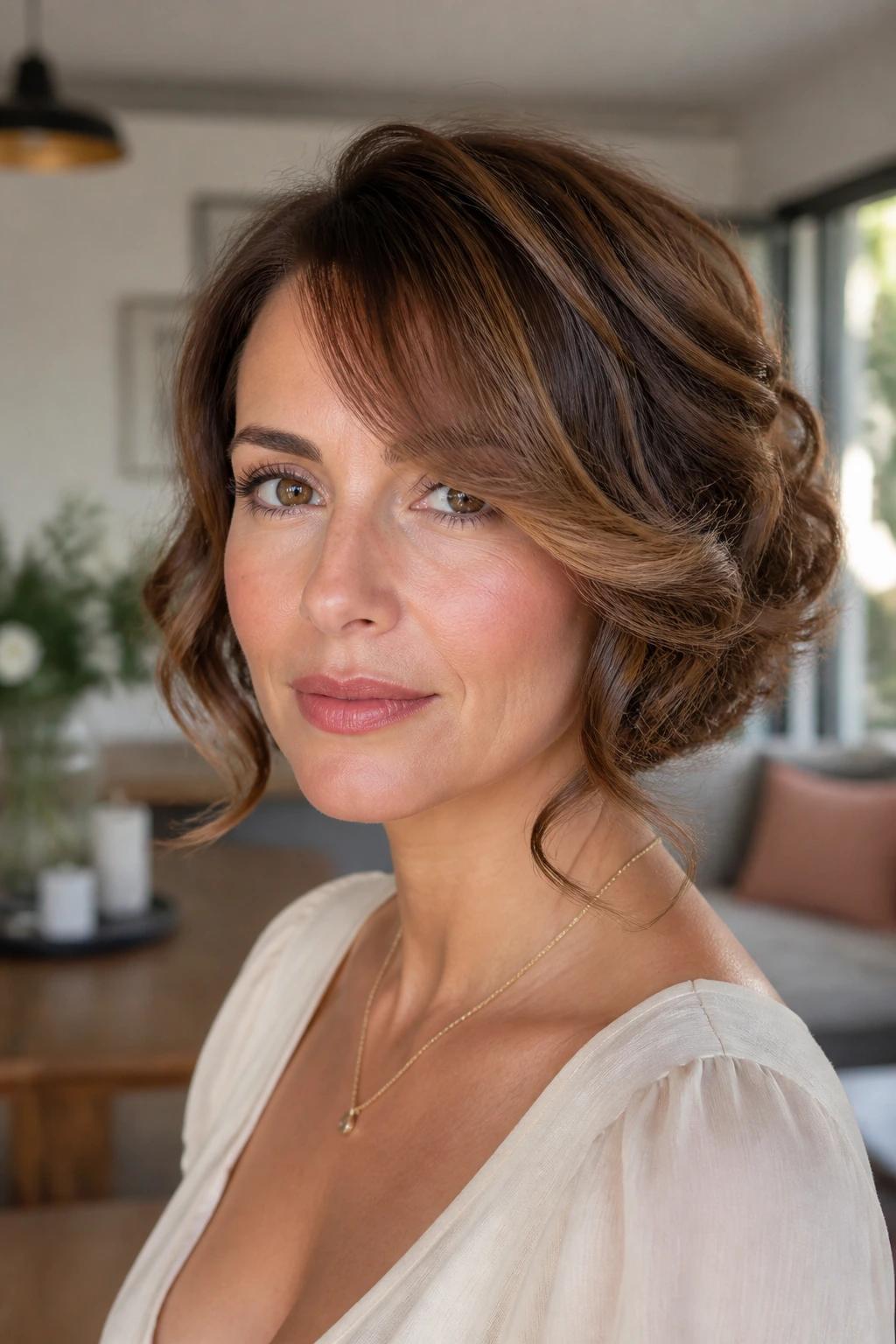
Short hair energy, without the scissors. A faux bob works by curling the hair first, then tucking the ends under and pinning them discreetly at the nape. Thin hair actually behaves nicely here because it doesn’t create a bulky roll.
The side-swept bangs are what make this look romantic instead of costume-y. They soften the front and keep the eye moving diagonally. If you want the bob to look less polished, leave one or two curls looser around the jawline.
This style is especially good when your lengths are too thin to hold a thick braid or a full bun. It gives shape where your hair already wants to cooperate. Not everything has to be long to look intentional.
7. Loose Side Braid That Looks Fuller Than It Is
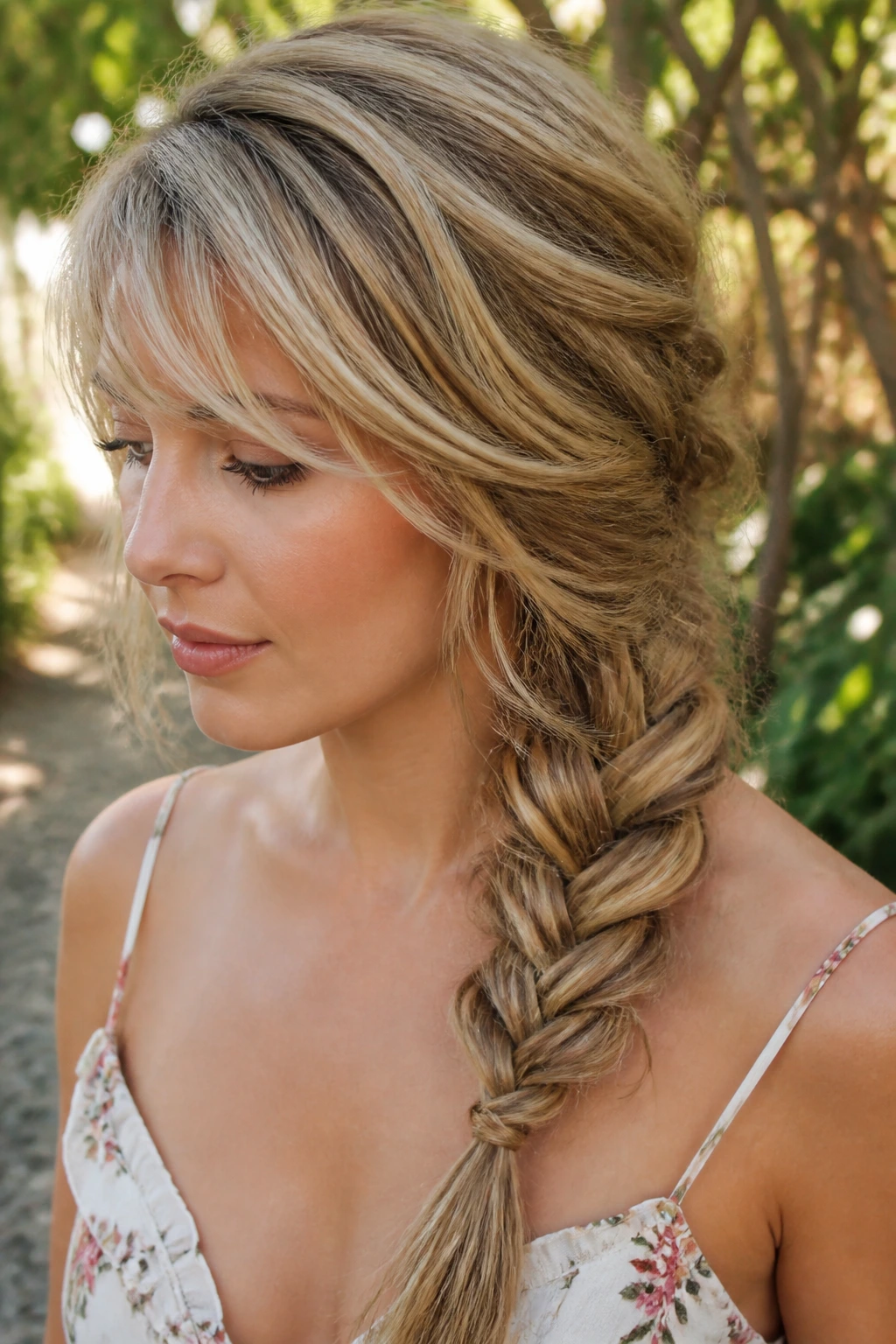
A side braid can look tiny if you braid it tight and leave it alone. Don’t do that. Start with a little root lift, braid loosely over one shoulder, then gently pull the braid apart from both sides — the old “pancake” trick — until it looks wider.
Side-swept bangs soften the front and keep the braid from taking over your whole face. A few wispy pieces near the ears help too. Thin hair often looks best when there’s some softness around the edges.
If your braid keeps slipping, spray the sections lightly before you braid. Not a lot. Just enough grip to keep the weave from collapsing. A loose braid on silky hair needs help, and there’s no shame in that.
8. Voluminous Blowout with Flipped Ends
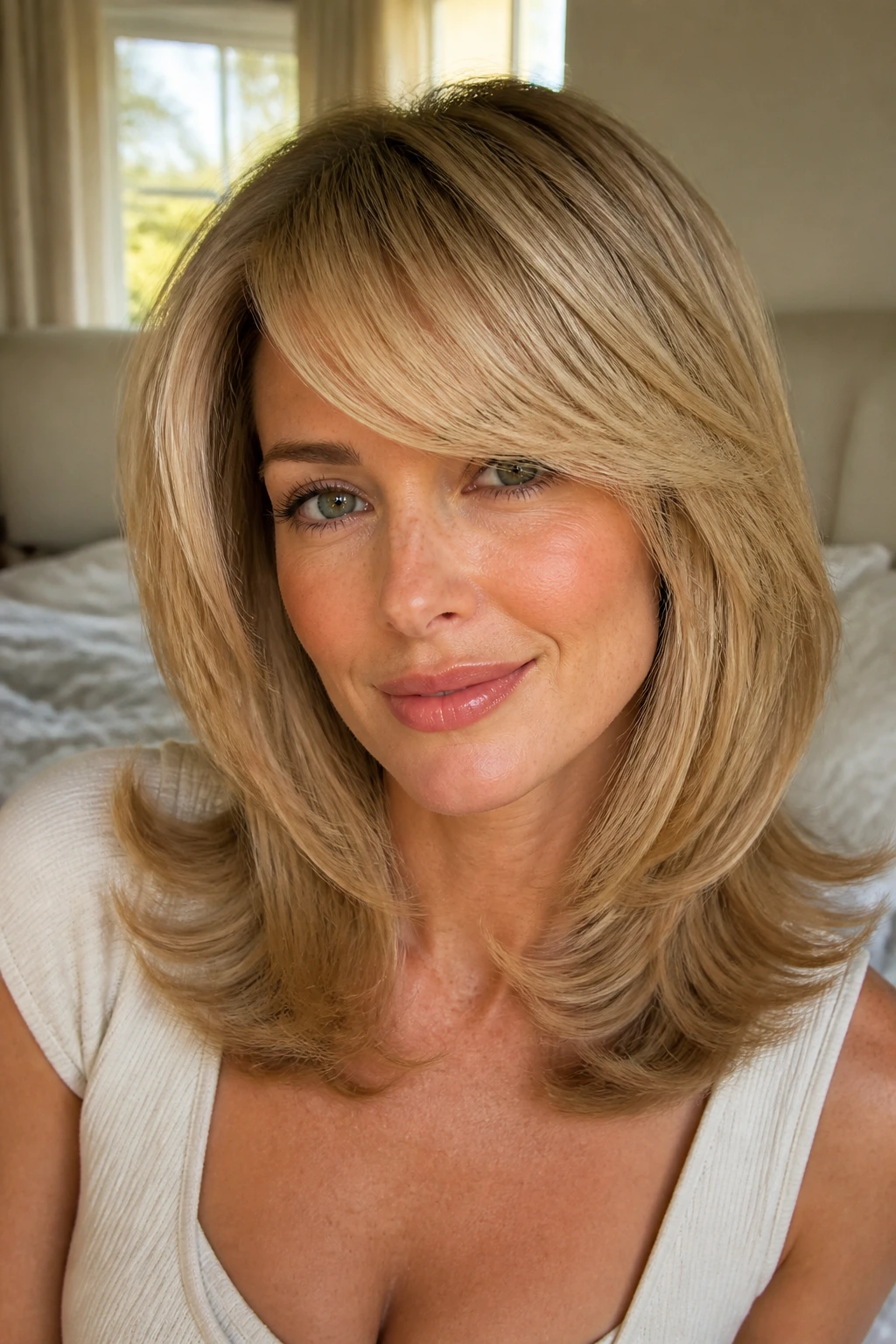
This is the style that proves thin hair can look plush without looking teased. Use a round brush, lift the roots, and flip the ends slightly away from the neck so the shape opens up. The result is airy, polished, and a little old-Hollywood if you keep the bangs swept low and soft.
The key is sectioning. If you try to blow-dry everything at once, the top will fall flat before you’re done with the sides. Work in clean sections, clip the crown up, and let each bend cool in place before you touch it.
Velcro rollers at the crown can help if your hair goes limp fast. They’re old-school for a reason.
9. Messy Low Side Bun with a Few Soft Pieces
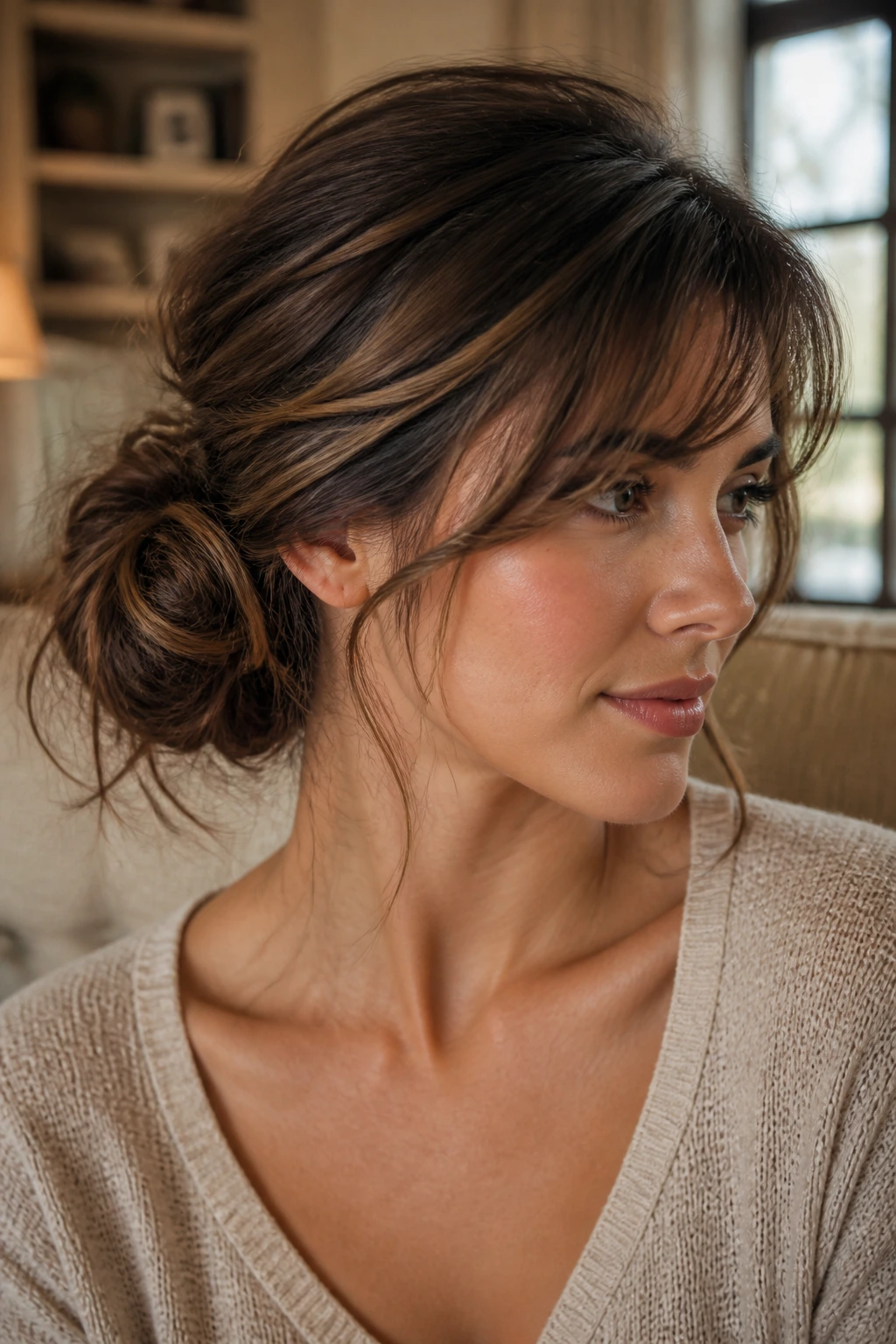
A bun placed off to one side looks less severe and gives thin hair a better excuse to be a little imperfect. Twist the lengths loosely, pin them low near the ear or just behind it, and leave a couple of tendrils around the face and nape.
Side-swept bangs are the bridge here. They connect the face to the bun and keep the style from looking like a quick fix. If the bun feels too small, don’t chase size with brute force. Pull the crown upward a touch, then widen the bun by gently spreading the twist before pinning.
This one works because the asymmetry feels romantic. A centered bun can be unforgiving on thin hair. A side bun feels soft on purpose.
10. Waterfall Braid with a Light, Airy Finish
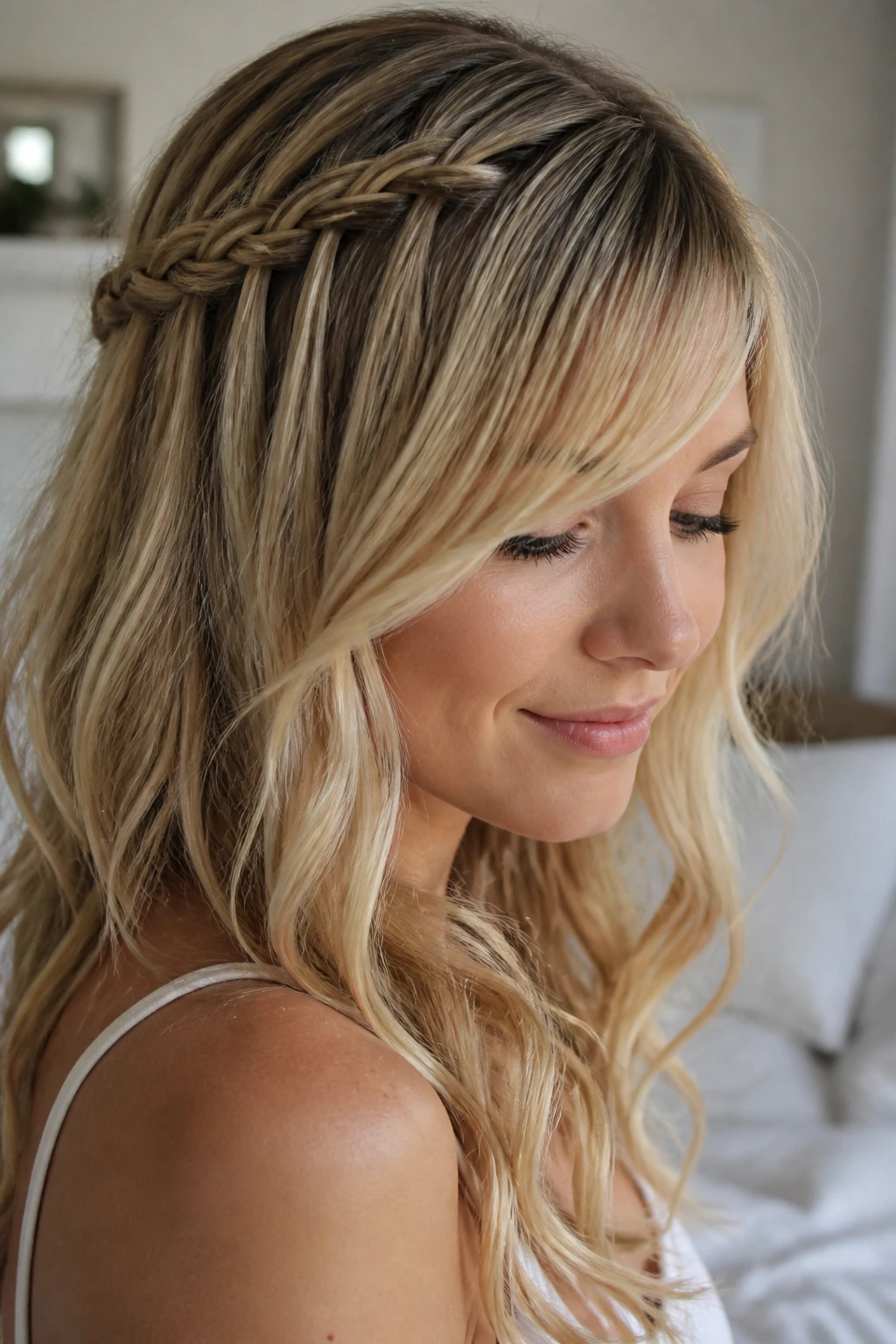
A waterfall braid gives you detail without pulling all of the hair away from the head. That matters when density is low. The braid sits up top, the lengths still fall free, and the side-swept bangs keep the front from looking too busy.
Use it when your hair is medium to long and you want the finish to feel delicate. Tight braids tend to show every gap in thin hair. A waterfall braid lets you hide that by letting pieces drop through the braid on purpose.
Keep the rest of the hair softly waved. Straight ends can make the braid look disconnected, which is a shame because the technique itself does the heavy lifting.
11. Pinned-Back Waves and a Decorative Clip
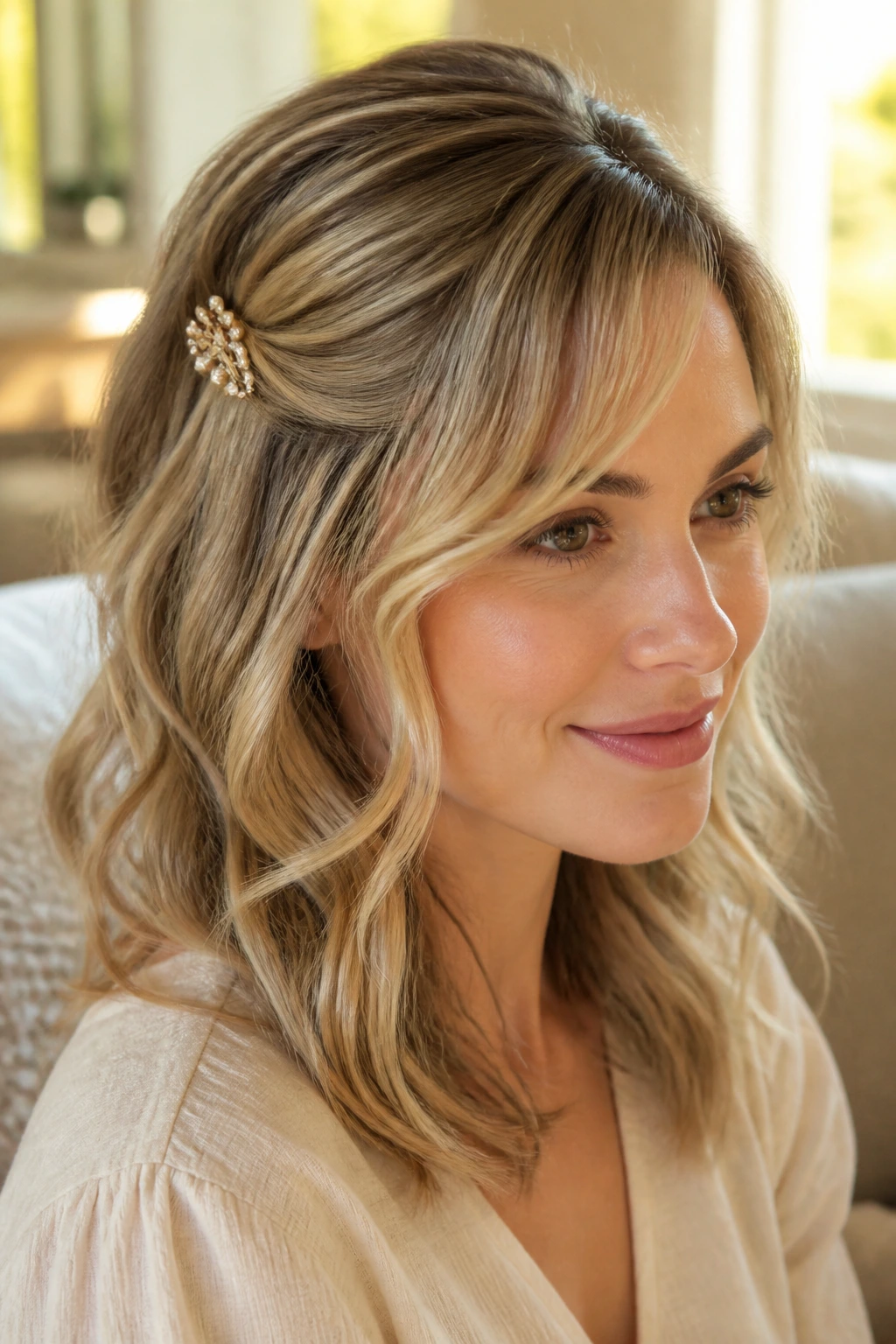
Sometimes you don’t need a full updo. Pin one side back, leave the rest in soft waves, and add a single clip where the ear meets the temple. That one piece of hardware can make thin hair look styled instead of merely managed.
The trick is to use a clip with enough grip to hold fine strands without chewing them up. A small barrette, pearl slide, or slim metal clip works better than a giant claw that can swallow the whole side of your head. The bangs sweep across the forehead and balance the pinned side nicely.
This is a good lazy-day romantic style. Honestly, it’s hard to mess up.
12. Curled Half-Up Half-Down with Crown Lift
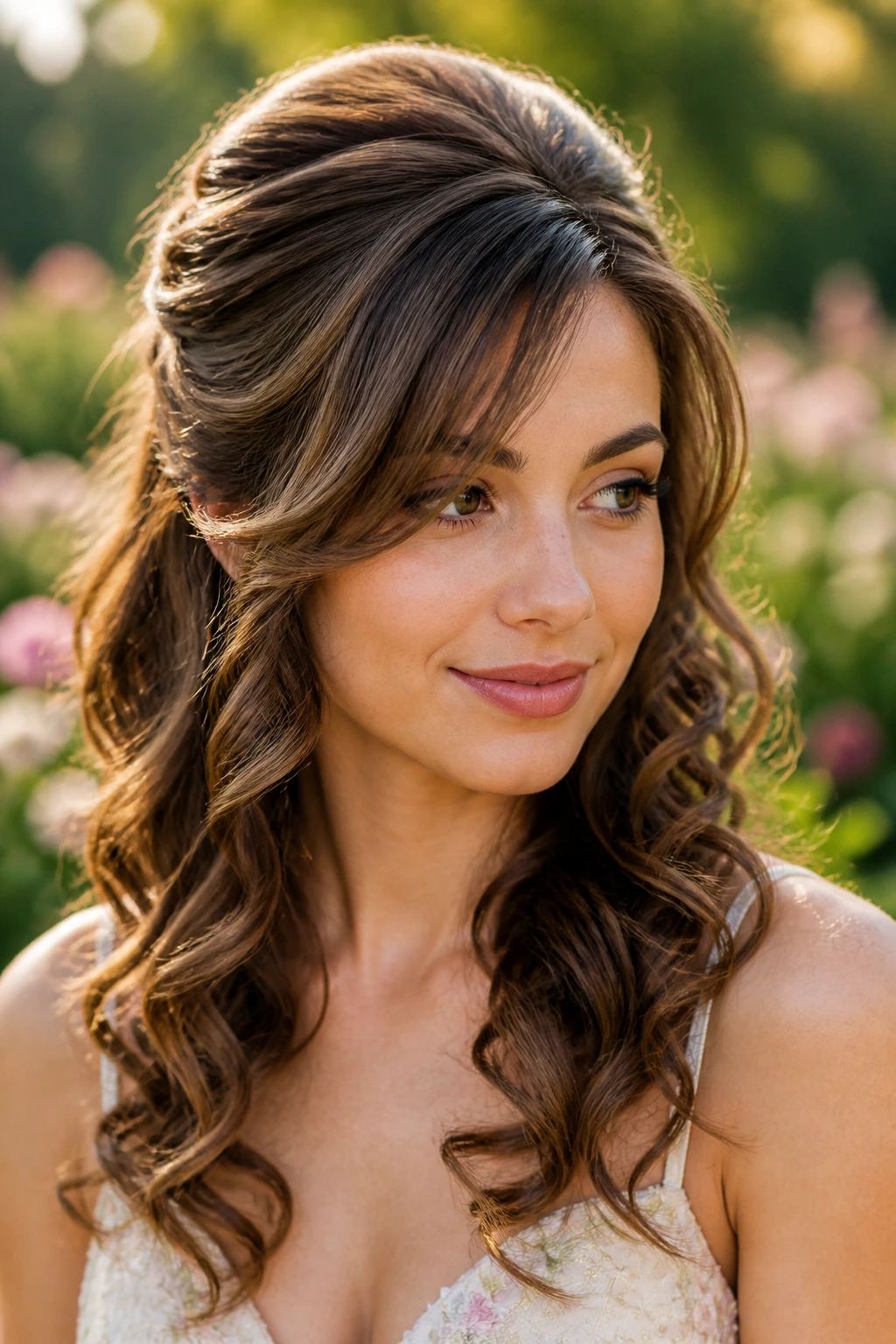
If you want maximum softness, this is a safe bet. Curl the whole head first, then take the top section from temple to temple and pin it back with a gentle lift at the crown. The lower half stays loose, so the hair still reads as plentiful.
The side-swept bangs should be left out and slightly separated, not shellacked into one piece. Thin hair gets more movement when the fringe has a little air between the strands. A little separation looks better than a perfect curtain.
If your hair is very fine, curl fewer sections but make them hold their shape better. Loose waves with a clean half-up shape often look fuller than a head full of weak curls.
13. Textured Pixie Sweep with Side Bangs
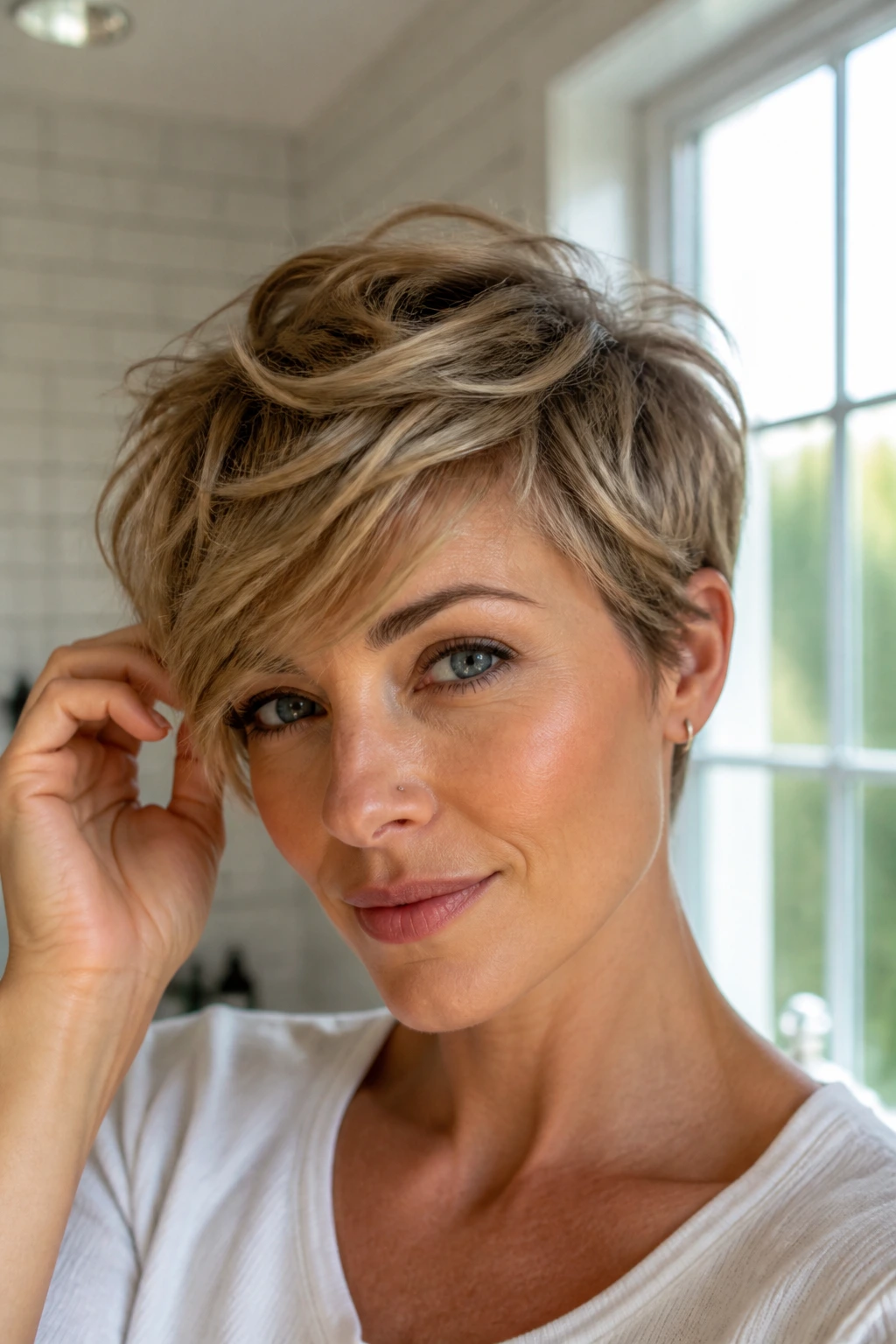
Short hair can be romantic too. A pixie with a side-swept fringe works beautifully when the top has a little piece-y texture and the sides stay neat. Thin hair often benefits from a pixie because the cut can look fuller once the shape is tailored to the head.
Work a tiny bit of matte paste through the top and push the bangs across the forehead with your fingers, not a brush. The goal is movement, not helmet hair. If the crown is flat, a bit of root powder can wake it up fast.
This look is especially good when you want softness without length. It’s light, clean, and surprisingly elegant when the fringe falls just right.
14. Soft French Twist with Loose Tendrils
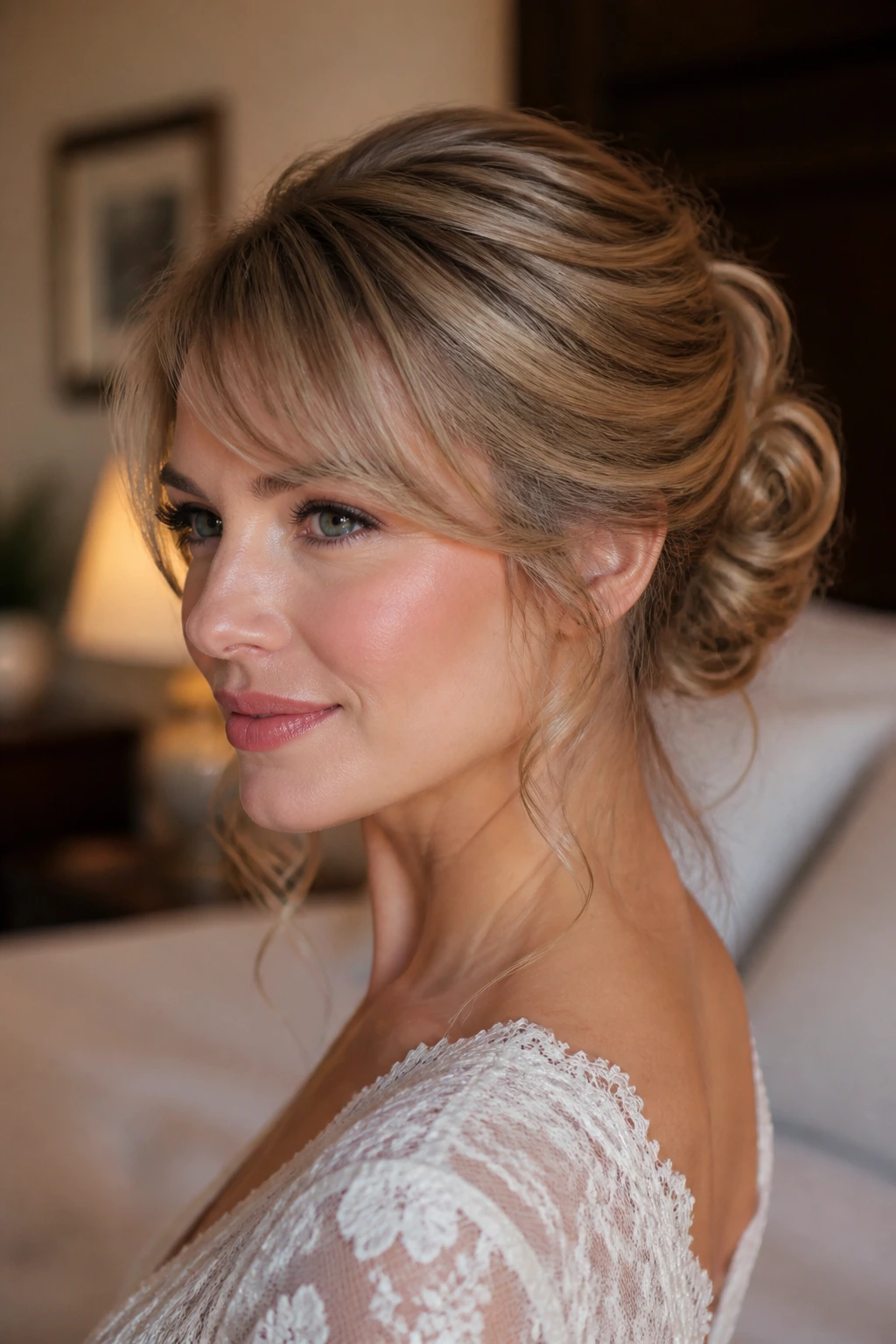
A French twist can look severe on thin hair if it’s too tight. Keep it loose, let the twist sit a little lower, and leave small tendrils around the ears and hairline. The side-swept bangs soften the front and keep the whole thing from reading as formal.
Thin hair does not need a giant twist. It needs a clean shape. Roll the lengths upward, tuck the ends in, and pin vertically if you need more grip. A few crossing pins can hold more than one giant clip that slides around.
The finish should look graceful, not airtight. If a piece slips, leave it. That little irregularity is usually the part that makes the style feel human.
15. Bubble Ponytail with Soft Volume at the Top
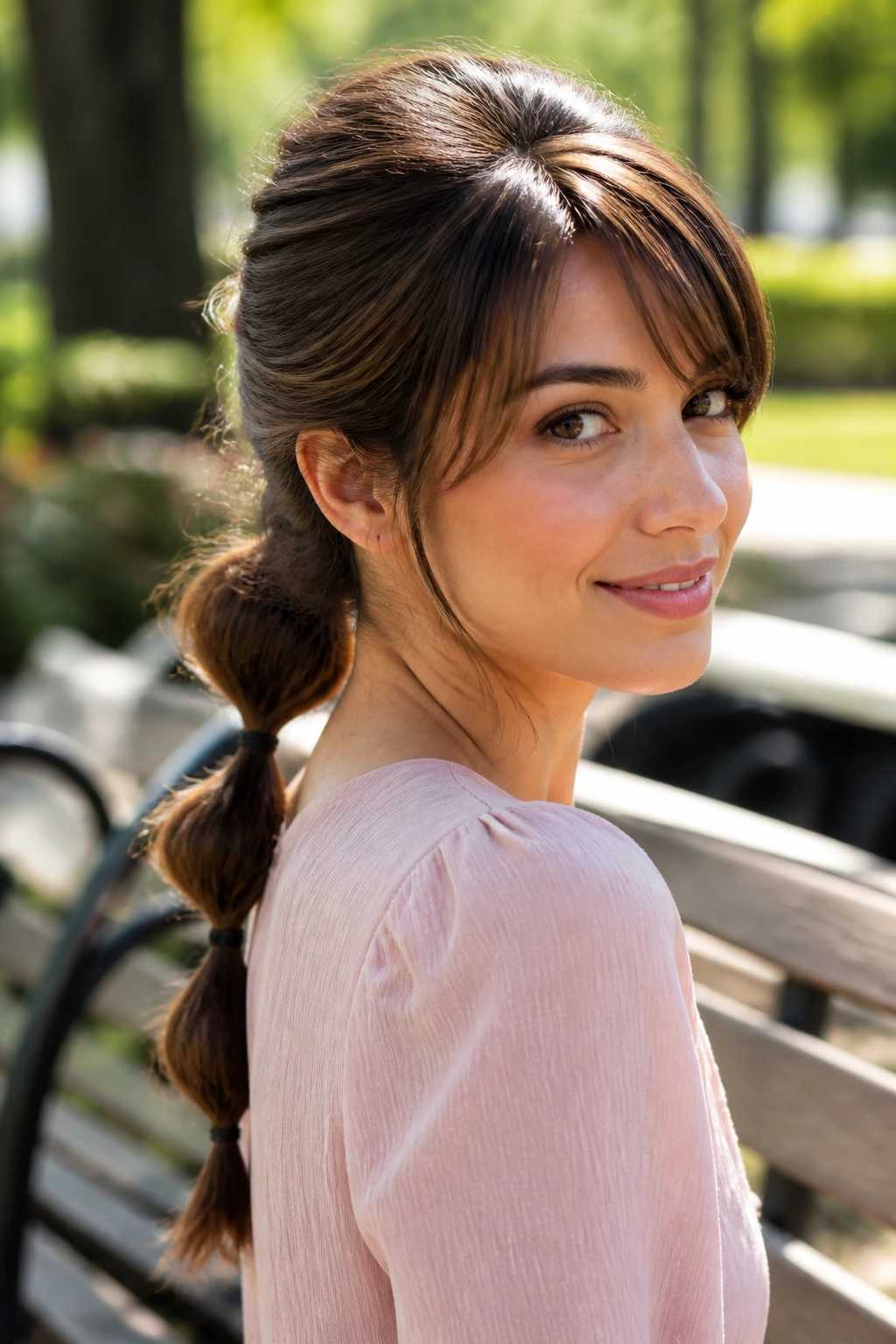
This style is playful, but it can still look romantic if you keep the bubbles soft and the crown lifted. Secure the ponytail low or mid-level, then add small clear elastics every couple of inches down the tail. Gently pull each section wider so it rounds out.
Thin hair benefits because each “bubble” creates shape where there might not be much natural fullness. The side-swept bangs keep the front soft and stop the style from feeling too graphic. Tease the crown lightly before you secure the ponytail if your roots collapse quickly.
You do not need a ton of hair for this. You need clean sectioning and a little patience.
16. Rope-Braid Halo with Tucked Ends
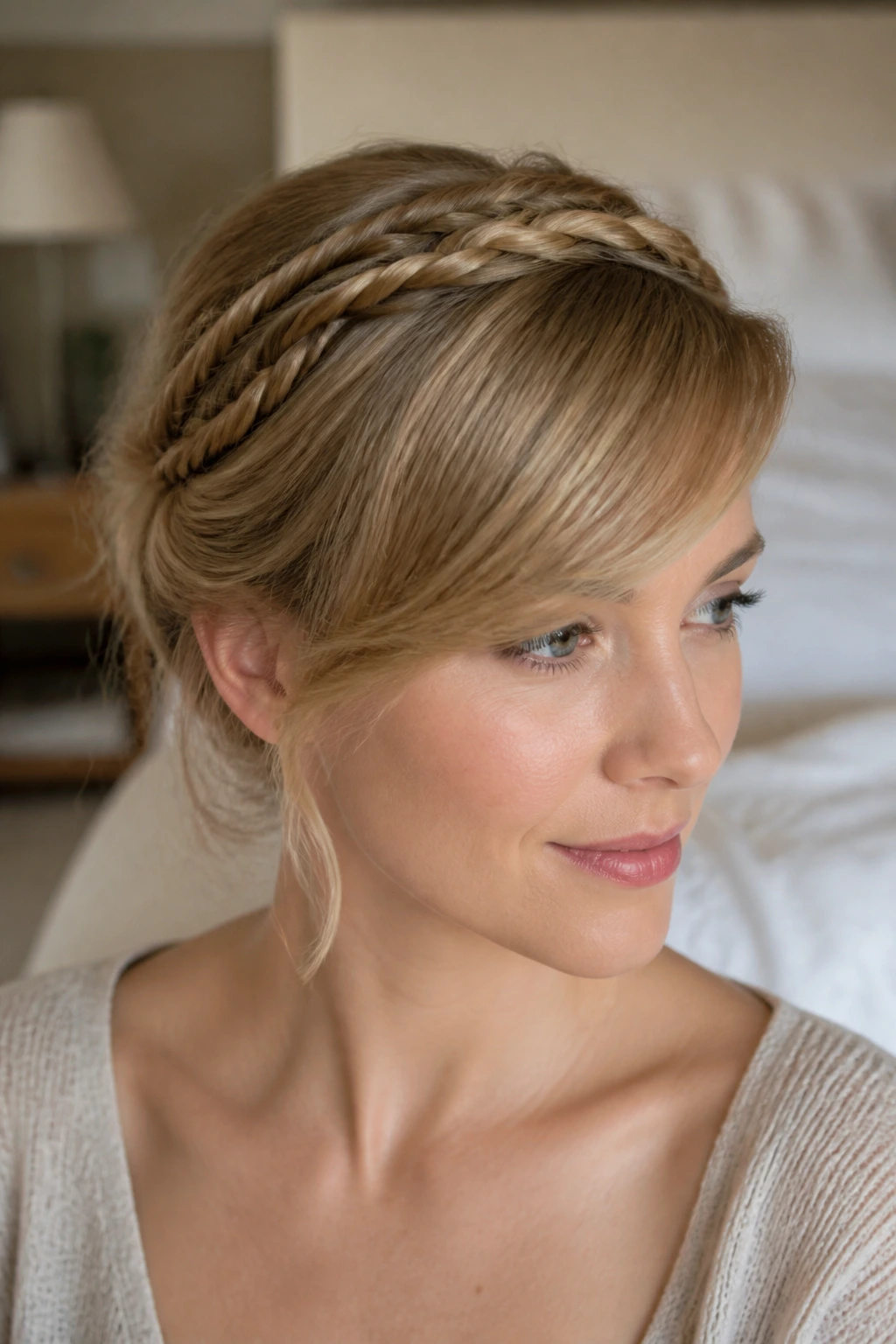
A rope-braid halo can look delicate in the best way on thin hair. Instead of a thick crown braid that demands density, two rope twists travel around the head and meet at the back. The texture is neat, soft, and not as bulky as a traditional braid crown.
The bangs sweep across one side and break up the circular line. That matters, because without the fringe, the halo can take over the face. Keep the braid close to the head and tug it gently wider after pinning if you want a little more width.
This is a good choice when you want a style that feels special without needing a lot of volume. Small details. Big payoff.
17. Feathered Shag with Side-Swept Fringe
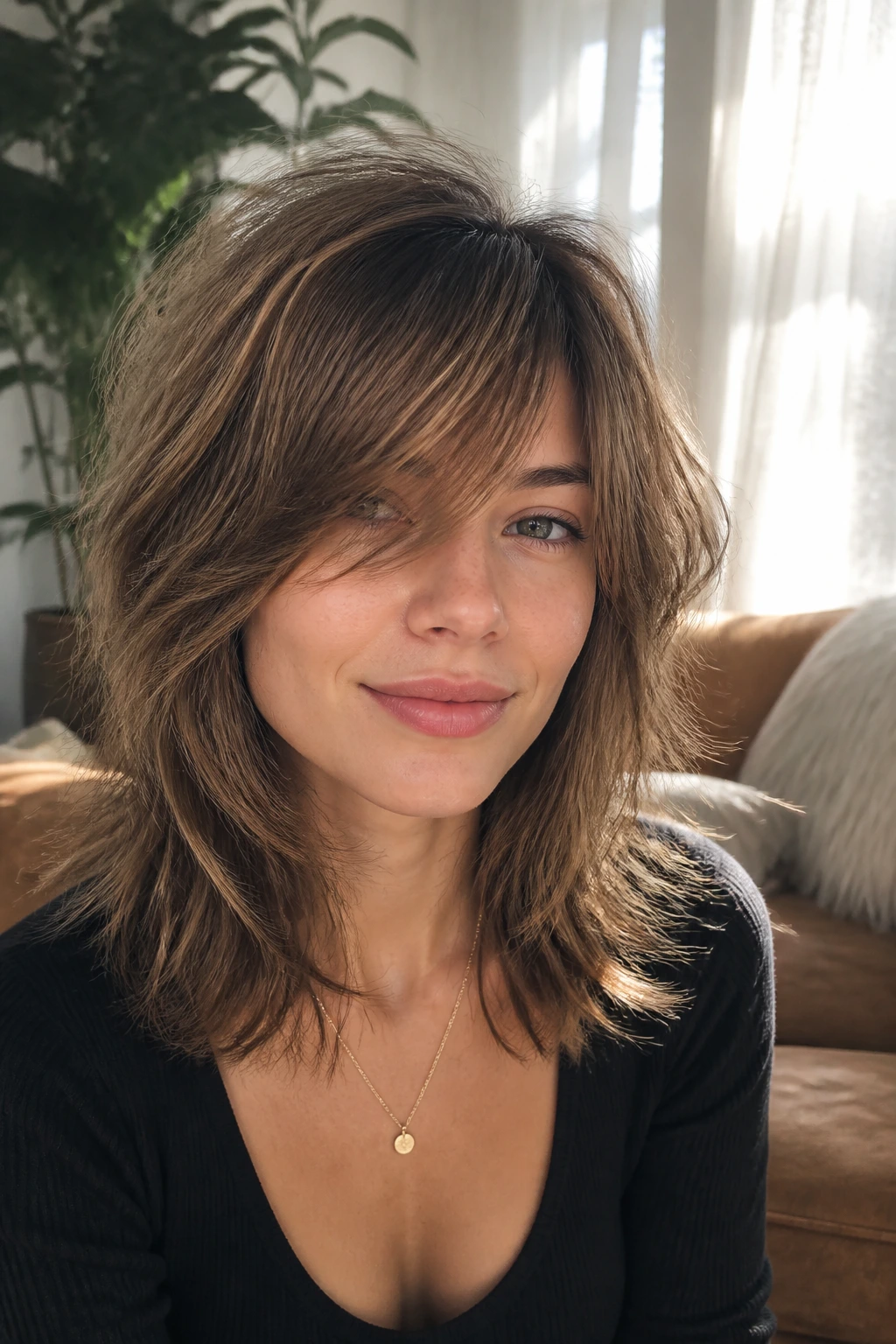
If your hair is thin and straight, a feathered shag can be a smart cut because the layers create motion without relying on heavy thickness. The side-swept fringe becomes part of that movement instead of sitting separately at the front.
Use a round brush or medium brush to flip the layers away from the face as you dry. Don’t chase a perfectly smooth finish. A little roughness helps the feathering show up. The strands should move when you turn your head, not cling to your scalp.
This one is more about haircut plus styling than a single pinned-up look. Still, it’s romantic in that soft, breezy way that works across a whole day, not just for photos.
18. Deep Side-Part Glam Curls
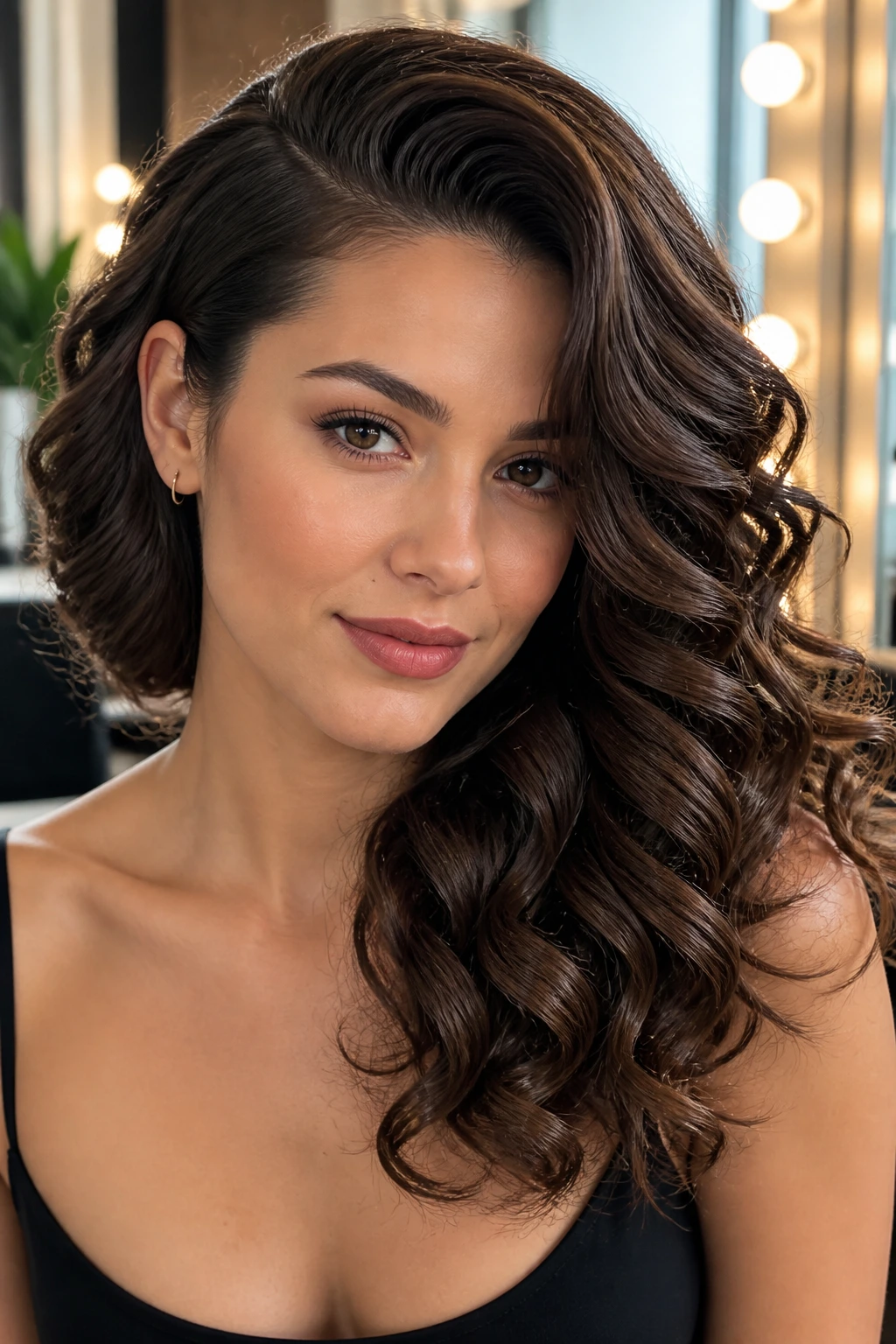
A deep side part can make thin hair look instantly richer because the roots lift on one side and the bangs fall into a dramatic sweep on the other. Add smooth, uniform curls and the whole style gets a denser outline.
Curl everything away from the face, then brush the curls lightly into one larger wave pattern if you want a polished finish. Thin hair often looks better in a few clear shapes than in a lot of loose chaos. That sounds picky, but it matters.
A shine spray on the mid-lengths — not the roots — helps the style feel finished. Keep the top soft. The drama comes from the part, not from teasing the life out of the hair.
19. Low Knot with Face-Framing Pieces
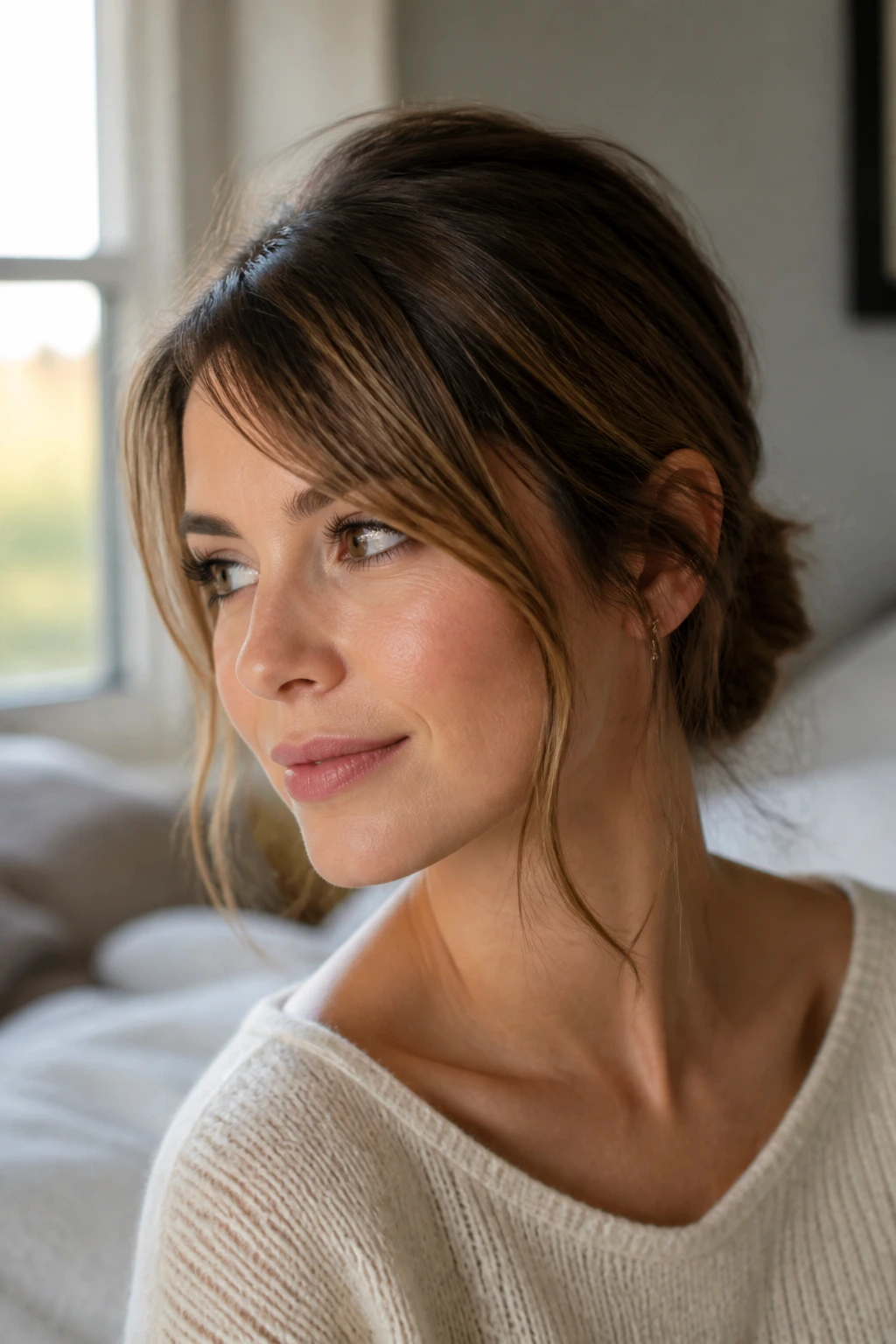
A low knot sounds plain until you loosen it the right way. Gather the hair low at the nape, twist it into a knot, and let two or three pieces stay loose around the face. The side-swept bangs slip into that softness easily.
This works because the knot keeps the style contained while the fringe and face-framing pieces give it shape. Thin hair can disappear in a tight bun. A low knot with a few loose pieces looks more generous and less severe.
If the knot feels too small, widen it gently before pinning. Don’t stuff in more pins than necessary. Over-pinning can flatten the whole thing.
20. Twisted Half-Crown on Chin-Length Hair
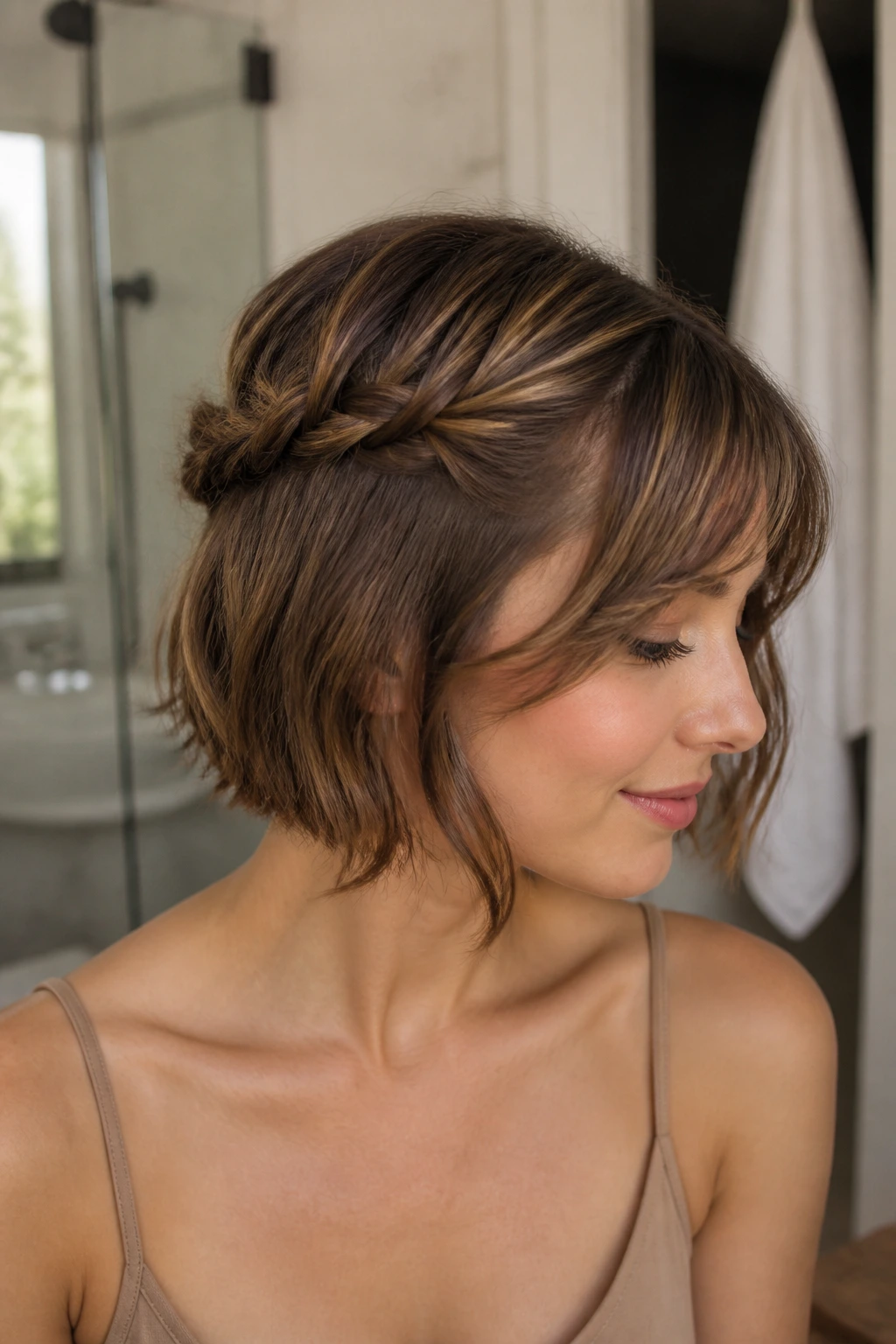
Shorter hair gets tricky around the back, which is why a twisted half-crown works so well. Take small sections from each side, twist them toward the back, and pin them under each other. The remaining hair can stay tucked and textured.
Side-swept bangs give the front enough movement that the shorter length doesn’t feel bare. That’s the part people usually forget. On chin-length hair, the bangs are not an accessory; they’re part of the architecture.
A little wave through the bottom layers helps a lot. Straight short hair can look sharp in a way that fights the romantic mood. Soft bends keep it friendly.
21. Retro Flip with Side-Swept Fringe
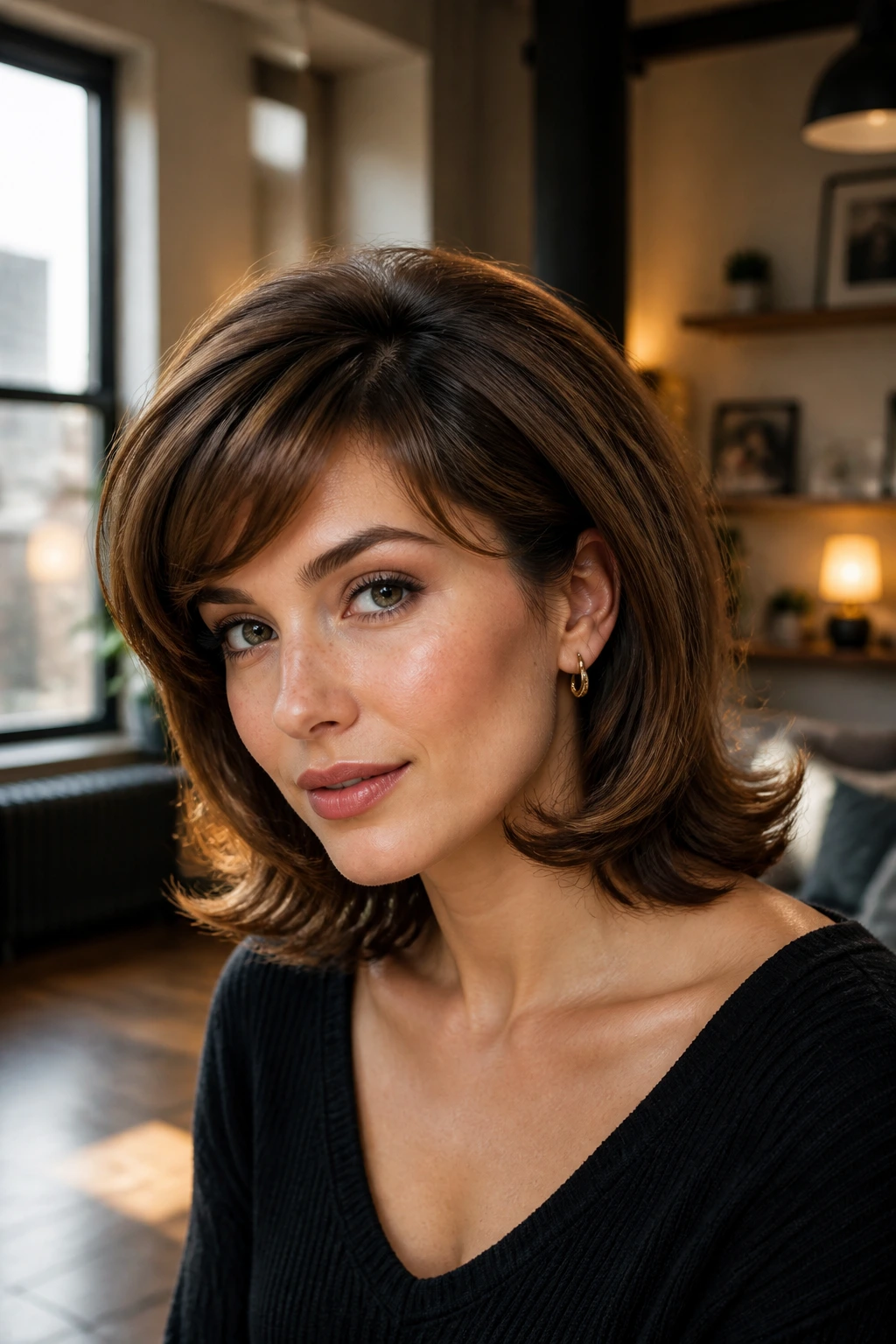
This one has a little attitude, and thin hair actually handles it well because the shape is built from the ends. Blow-dry the hair with volume at the crown, then turn the ends outward with a brush or iron. The side-swept fringe keeps the face soft and gives the style a polished finish.
If the roots are flat, clip them up while they cool. Old habit, still useful. The flip looks better when the top has some lift, even if it’s only an inch or two.
This style can edge into playful or elegant depending on the size of the flip. Keep it small for daytime. Go broader if you want more drama.
22. Braided Crown Bun
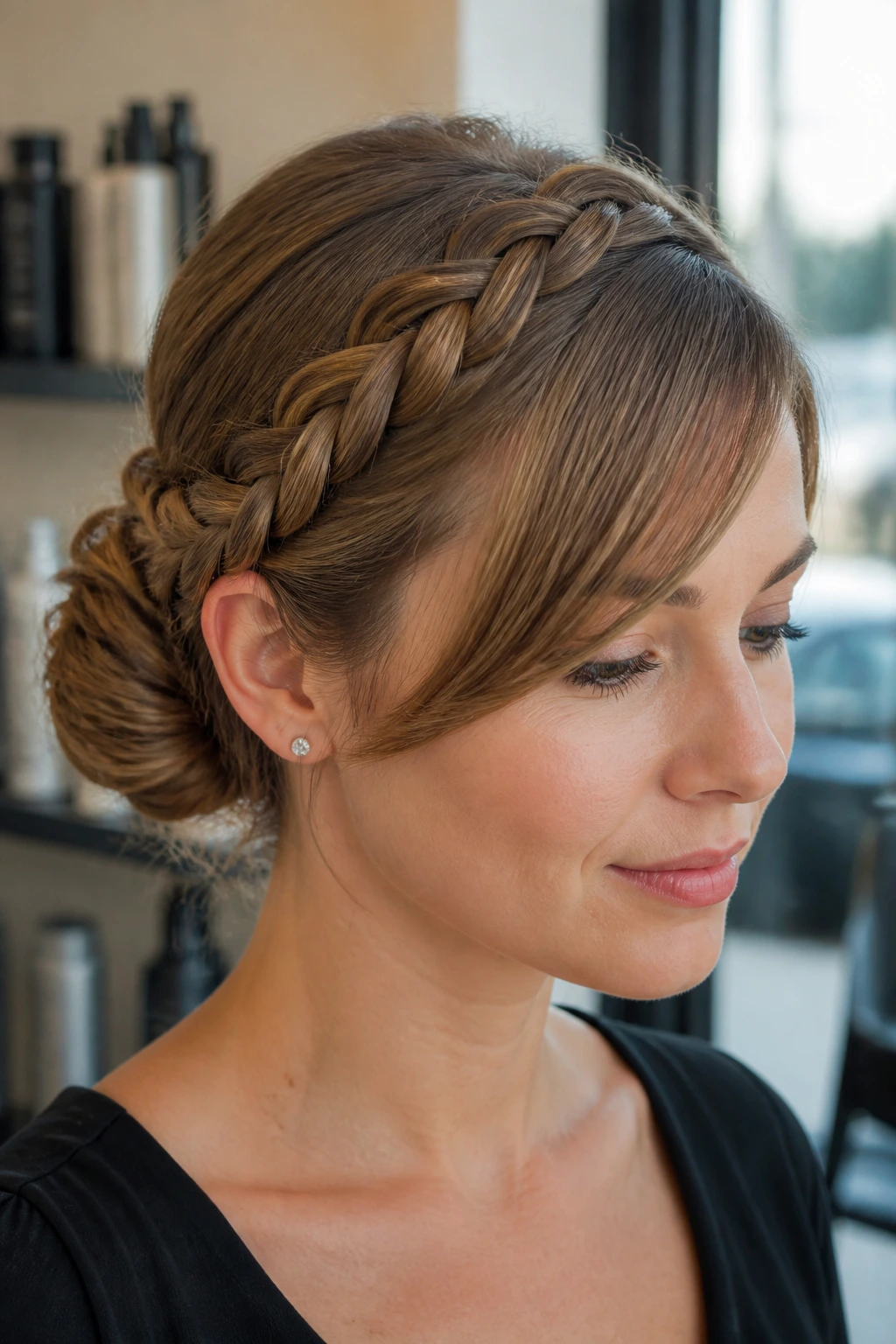
Think of this as the more compact cousin of the halo braid. Braid or twist along the hairline, then gather the rest into a small bun at the back. Thin hair likes this because the braid adds visual detail before the bun appears.
The side-swept bangs make the style feel softer around the forehead. Without them, crown styles can look a little too neat for the amount of hair involved. A few loose ends near the ears stop the whole thing from getting stiff.
If you need extra support, cross two bobby pins through the base of the bun in an X. That tiny trick holds better than one pin shoved in at random.
23. Soft Asymmetrical Updo
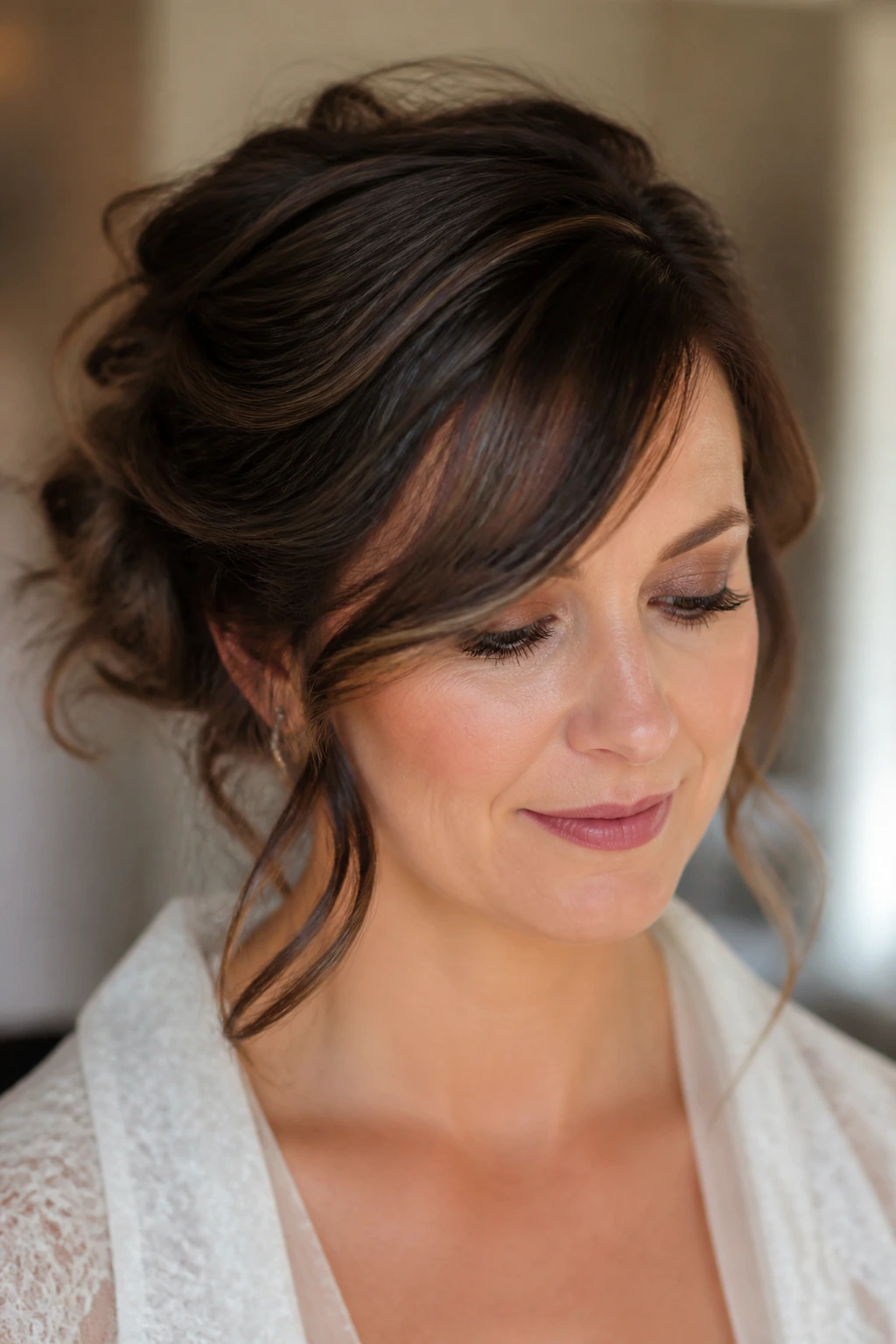
Asymmetry is useful when hair density is modest because it creates interest without demanding fullness everywhere. Pull the hair slightly off center, twist one side tighter than the other, and let the shape lean in one direction.
Side-swept bangs are the anchor. They echo the off-center layout and make the style look planned. This is one of those looks that can seem simple until you get the balance wrong, so pay attention to where the volume sits.
Keep the crown lifted, the nape neat, and a few small pieces loose near the cheek. That’s enough. You don’t need to decorate every inch of the head.
24. Clipped-Back Side Sweep with Lift at the Crown
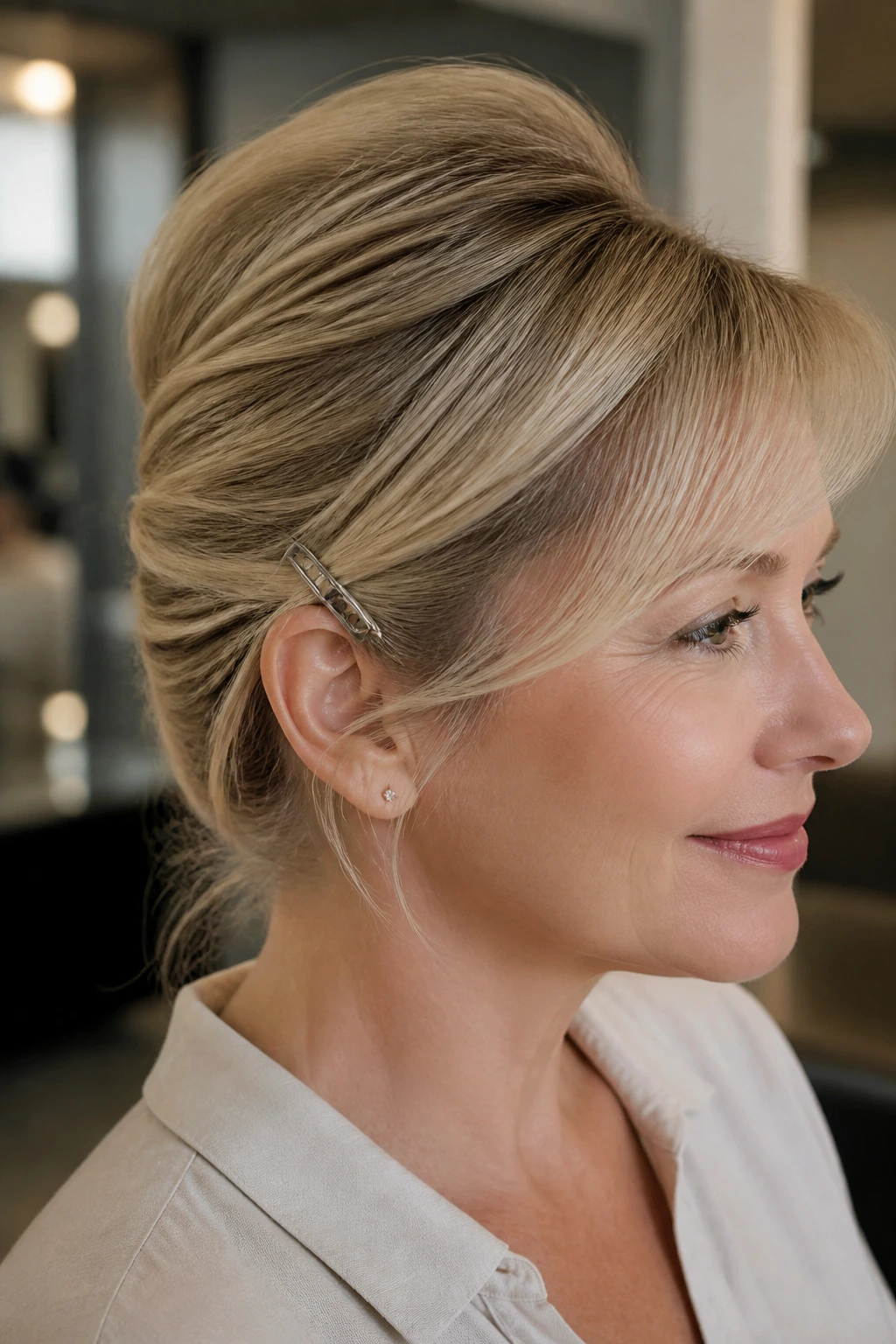
A heavy styling day doesn’t always make sense, and this one saves time. Build a little lift at the crown with mousse or root powder, sweep the bangs and front section to one side, and pin or clip them back just behind the temple.
The style looks especially good on very fine hair because it uses the hair you already have instead of asking for a complicated shape. The crown height makes the whole head look taller, and the side sweep keeps the fringe from collapsing across the forehead.
Use a clip that sits flat. Bulky clips can tilt the front down. You want the opposite. Clean lift, soft side, done.
25. Softly Undone Long Layers with a Side Fringe
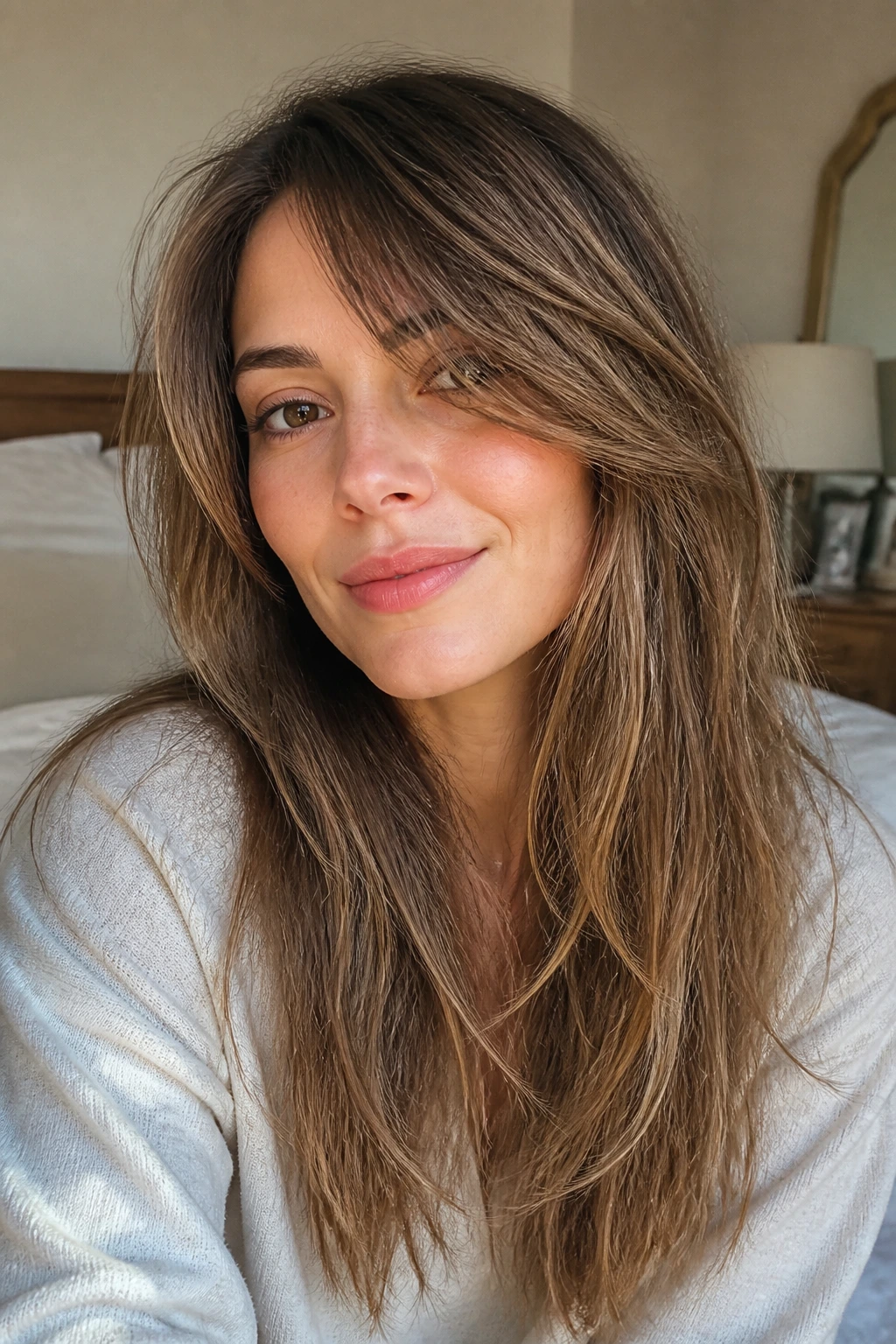
If your hair is long and fine, this may be the easiest romantic option in the bunch. Long layers keep the movement going, while the side fringe draws the eye upward and away from any sparse-looking spots at the part.
Wrap a few sections around a curling iron, then brush them out until they look like soft bends rather than separate curls. The goal is width through the mid-lengths and airy movement at the ends. A little dry shampoo at the roots can help keep the crown from falling flat before dinner.
This is the style I’d choose when I want the least fuss. It does not try too hard. That’s the point.
How to Make Thin Hair Hold Shape Without Feeling Crunchy
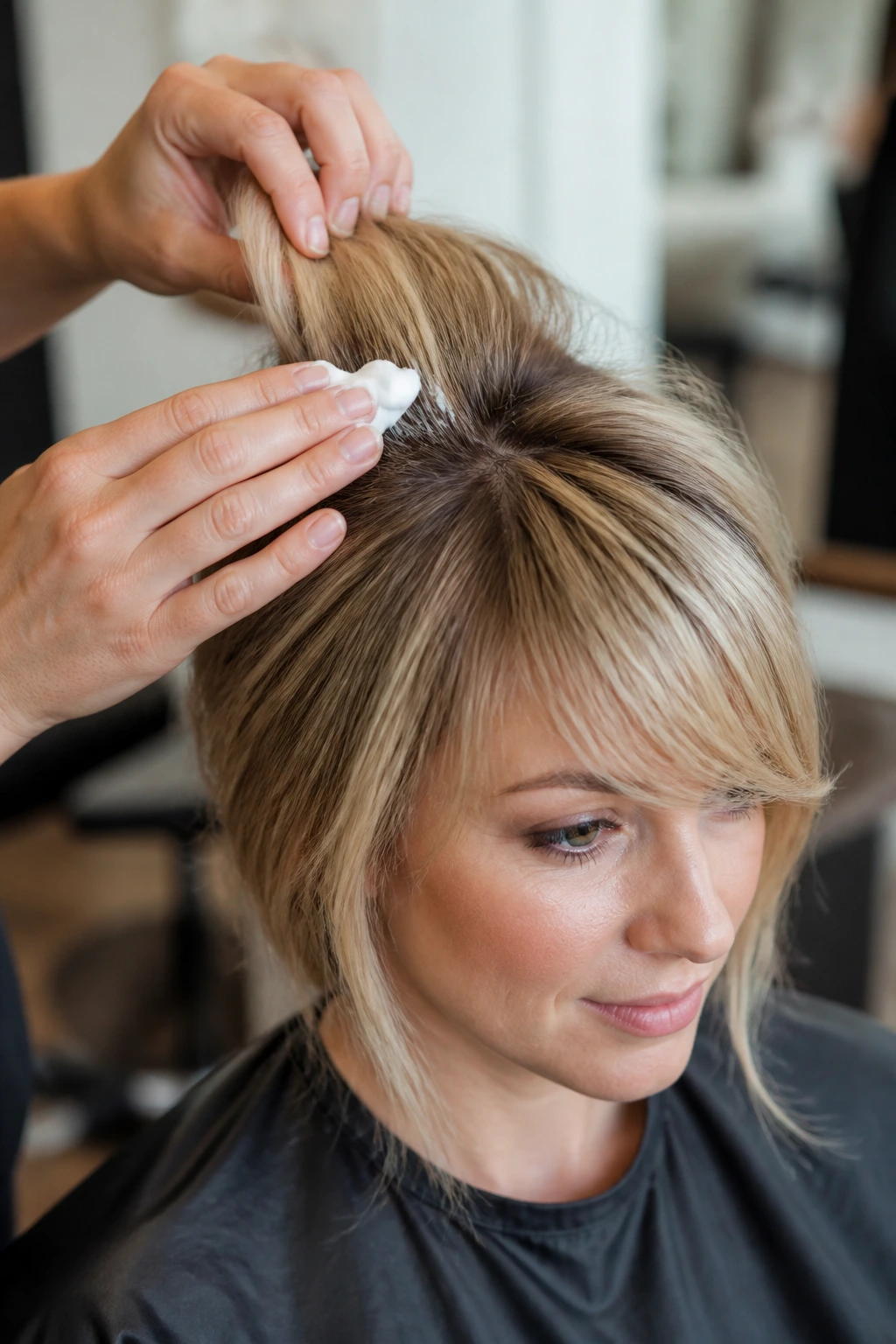
Thin hair often fails in the same places: the crown falls flat, the ends go stringy, and too much product makes everything greasy by noon. The fix is not more product. It’s better placement.
Root Lift: Start with a lightweight mousse on damp roots, then blow-dry with the nozzle pointed down the shaft so the cuticle lies flatter. Clip the crown up for a few minutes while it cools if you need extra height.
Texture: Use dry shampoo or texturizing spray only where the style needs support — usually at the roots and mid-lengths, not the ends. Ends that feel coated tend to separate in a sad way.
Hold: Flexible hairspray beats stiff shellac. Spray from about 10 inches away so the mist lands lightly. If a section needs extra security, cross two bobby pins in an X. That holds better than one pin, and it leaves less denting.
Shape: Thin hair looks fuller when the style has a clear outline. A soft wave, a low knot, or a braid with widened loops all create shape without making the hair feel like cardboard.
Common Mistakes That Make Thin Hair Look Thinner
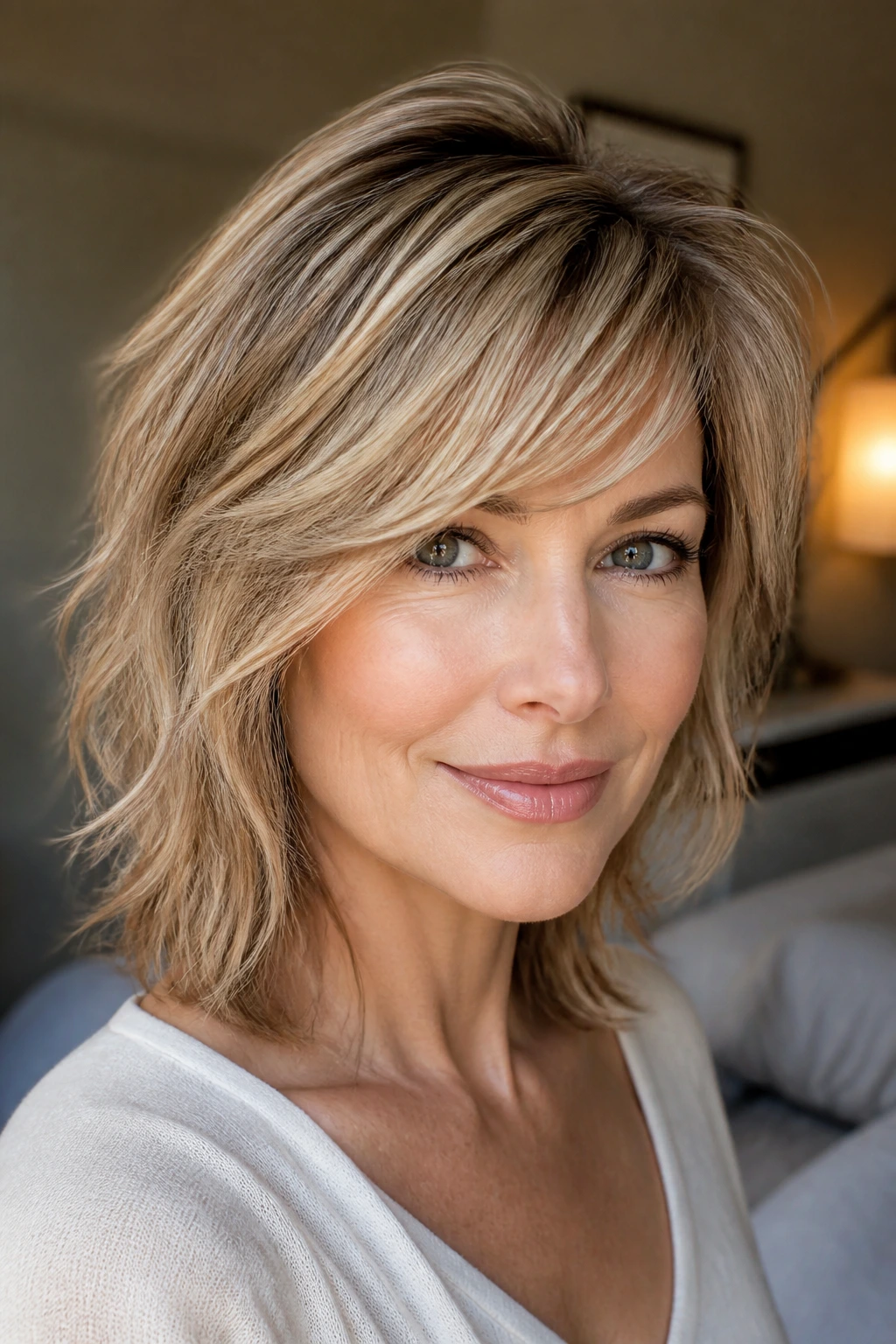
The biggest mistake is slathering on heavy oils or smoothing creams at the roots. That makes the scalp show faster, and the front goes limp before the rest of the hair even has a chance. Keep richer products on the ends only.
Another one: starting with hair that’s too clean and too slippery. Freshly washed hair can be hard to shape unless you add grip. A little mousse, a bit of texture spray, or even a day-old wash gives the style something to hold onto.
Over-teasing is ugly on thin hair. It can look good for half an hour, then collapse into a rough, damaged mess. If you need lift, use a round brush or root clips instead of shredding the hair with a teasing comb.
Bang shape matters too. If the fringe is cut too short or too thick, it can sit like a heavy panel on a small amount of hair. Side-swept bangs should move. If they don’t, they’re too blunt for this job.
And one more thing: too many loose pieces around the face can make thin hair look stringier, not softer. Leave out a few. Not ten.
Fresh Ways to Adapt These Looks for Different Hair Lengths
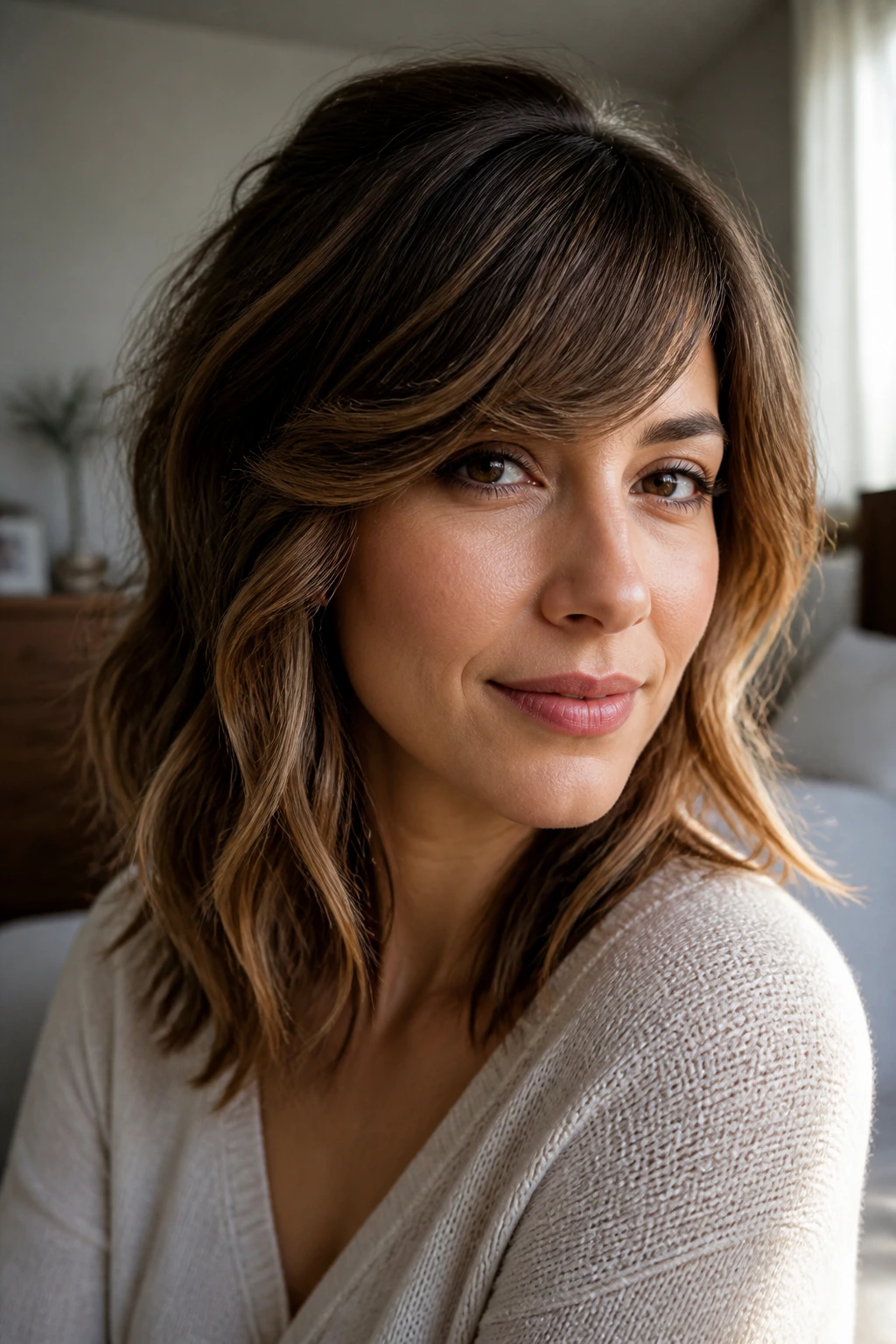
Pixie and Crop Mode:
Short hair wants texture, not bulk. Use side-swept bangs, a dab of matte paste, and a lifted crown to create shape without fighting the cut. The romantic part comes from the fringe and the softness around the ears.
Bob and Lob Mode:
This is the easiest length range for braids, twists, and faux updos. Keep the ends blunt enough to look full, then add waves or bends through the mid-lengths so the hair doesn’t fall into one flat sheet.
Mid-Length Romance:
Shoulder-length hair gives you room for half-up styles, low buns, and soft side braids. That length is usually where side-swept bangs shine the most because they blend into the rest of the style instead of hanging out alone.
Long and Fine Hair:
Long hair can look gorgeous, but it needs structure. Layers should be controlled, not shredded, and the best styles usually involve waves, wraps, or a deep side part so the weight doesn’t drag everything flat.
Curly or Wavy Texture:
You can skip some of the heat styling and let the texture do more work. Shape the bangs with a diffuser or a quick bend at the front, then let the curls fall into a side sweep instead of forcing them straight.
Essential Tools for These Hairstyles
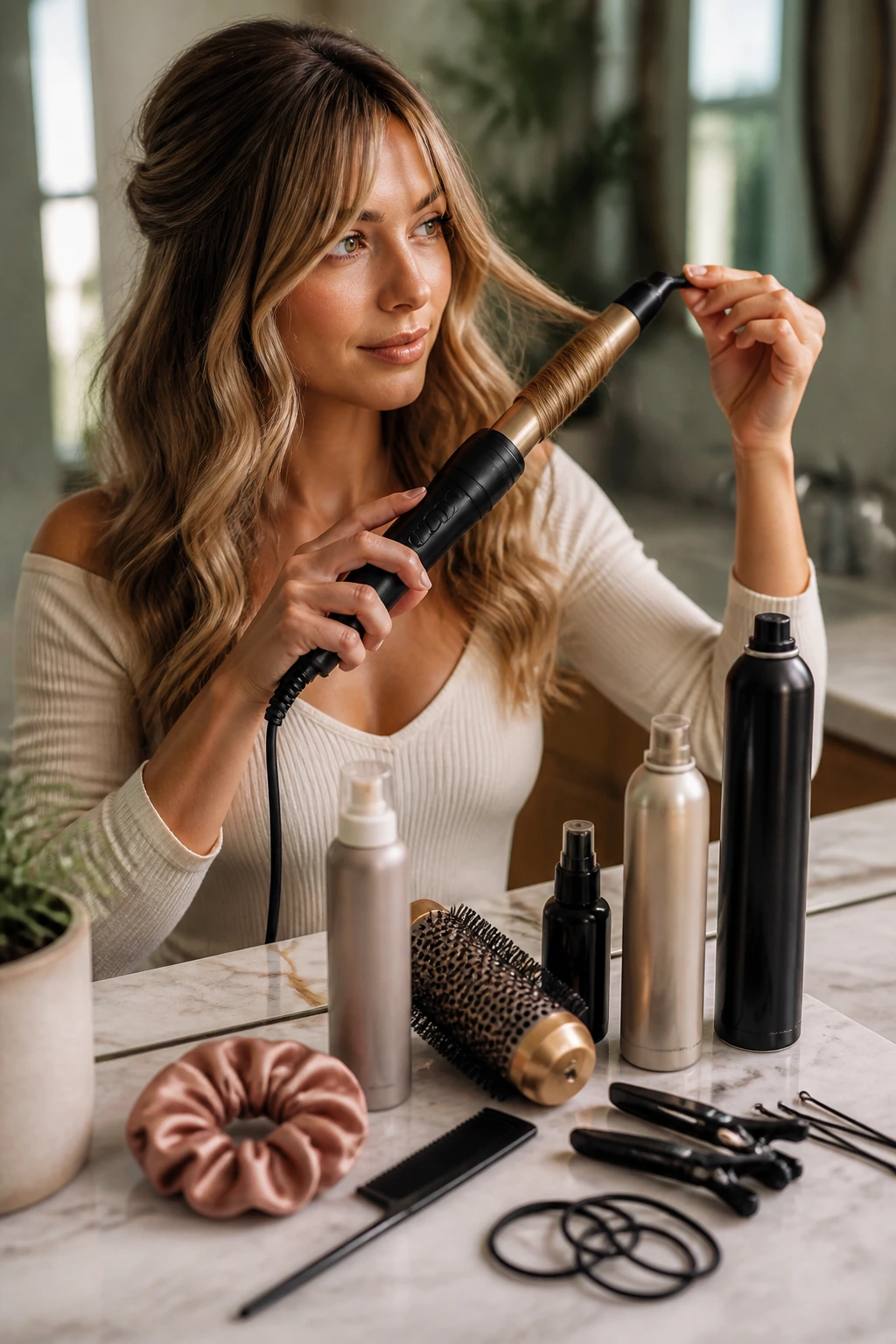
- 1-inch curling iron or wand — Best for soft bends, loose waves, and the kind of curl that thin hair can actually hold.
- Round brush, 1½ to 2 inches — Useful for blowouts, crown lift, and flipping the ends under or out.
- Lightweight mousse — Gives damp hair enough grip without turning it stiff.
- Texturizing spray — Adds that slightly rough finish that thin hair often needs to stay in place.
- Dry shampoo — Helps the roots look fuller and gives slippery hair some bite.
- Flexible-hold hairspray — Holds the shape without freezing the bangs into a helmet.
- Bobby pins in two shades — Matching the color keeps them from flashing through thin sections.
- Mini clear elastics — Handy for bubbles, half-up twists, and tiny braid details.
- Tail comb — Makes side parts cleaner and sectioning much easier.
- Duckbill clips — Great for setting waves or keeping the crown lifted while it cools.
- Silk scrunchie or soft tie — Better than tight elastics when you want to avoid dents and breakage.
- Small decorative clips — The right clip can pin back a side sweep without looking bulky.
How to Keep the Style Looking Fresh
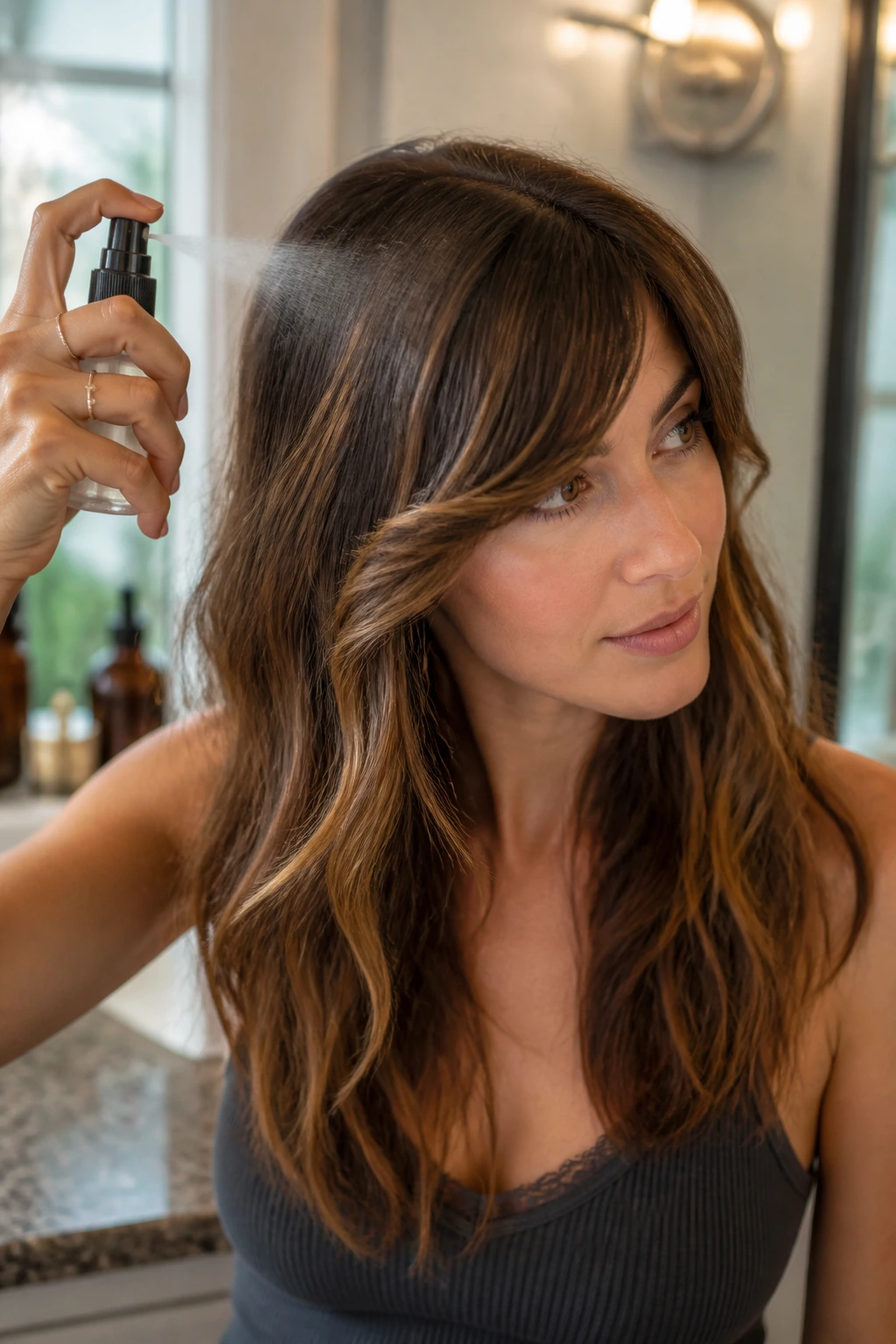
Thin hair usually loses shape faster than thick hair, so a little maintenance goes a long way. If you want to wear these styles beyond the first hour, protect the roots first. That means sleeping on a satin or silk pillowcase, clipping bangs loosely to one side if they need help, and avoiding heavy overnight oils near the front.
The next morning, don’t start with a full wet wash unless the style really needs it. A quick mist of water on the fringe, a pass of the blow dryer, and a touch of dry shampoo at the roots can bring back the shape fast. For waves and curls, re-bend just the top few pieces rather than redoing the whole head. That keeps the style light.
Updos and braids usually hold best for one day, maybe two if your hair is cooperative. If a twist loosens, tighten only the hidden pins, not the whole shape. And if a ponytail or braid starts looking stringy, that’s your cue to refresh the texture spray instead of piling on more hold product.
Frequently Asked Questions
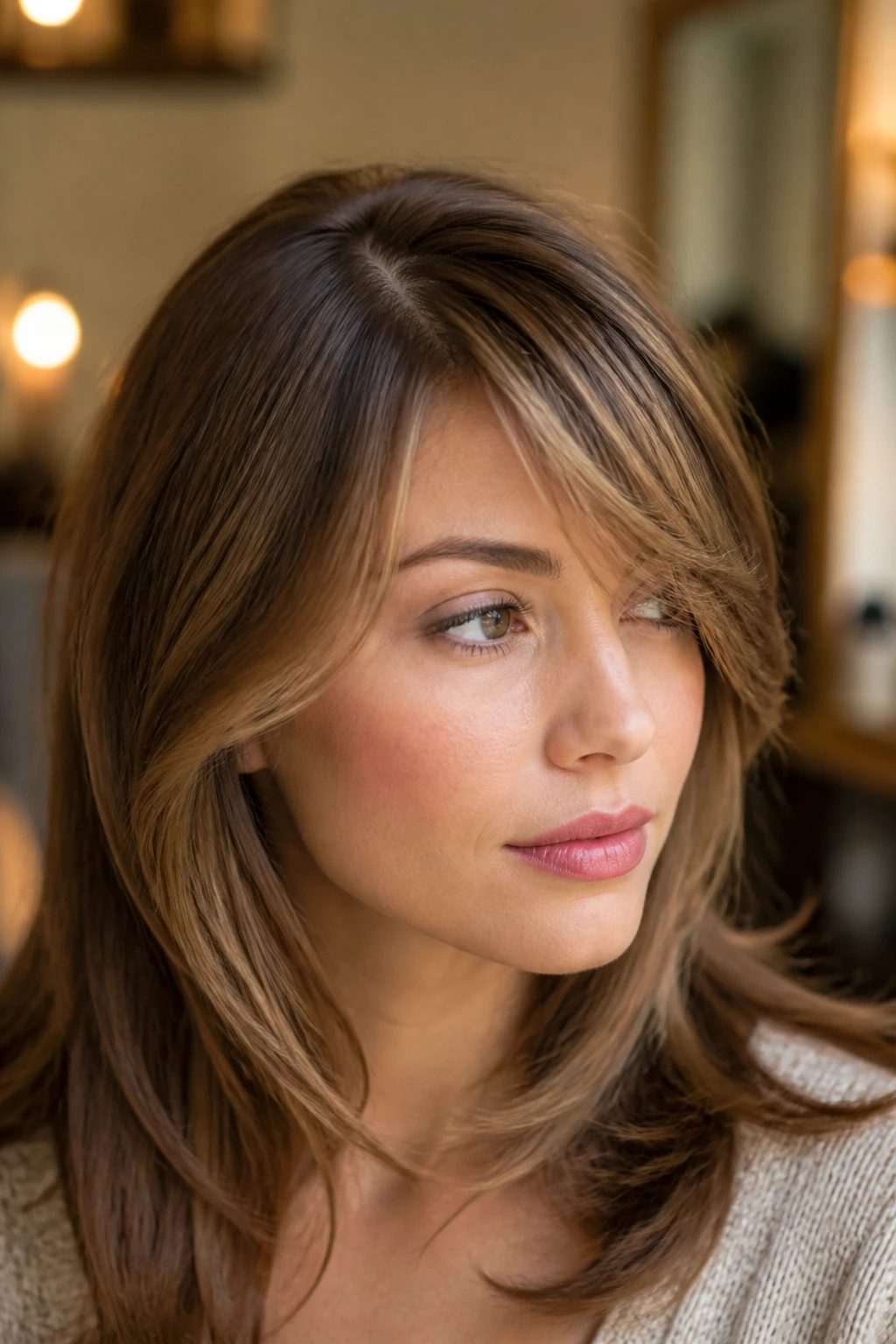
Can side-swept bangs really make thin hair look fuller?
Yes, because they break up the front line and create movement across the forehead. That diagonal shape makes the hairline look softer and takes attention off any flatness at the part.
Which hairstyle in this list is easiest for a beginner?
The pinned-back waves, low side bun, and soft side-parted waves are the least fussy. They don’t need exact sectioning, and a few imperfect pieces actually improve the look.
How do I stop side-swept bangs from falling flat?
Use a little mousse at the roots before blow-drying them sideways with a round brush. If they still collapse, clip them in the direction you want while they cool for a few minutes.
Are braids a bad idea for thin hair?
Not at all, but loose braids usually work better than tight ones. A tight braid can expose gaps and make the tail look tiny, while a looser braid can be widened gently for more body.
Should I tease thin hair before styling it?
A little lift at the crown is fine, but aggressive teasing often leaves fine hair looking rough and flat later. Root clips, blow-drying with lift, and dry shampoo usually give a cleaner result.
What products should I skip?
Heavy oils, thick smoothing creams, and sticky gels can make fine hair collapse fast. Keep richer products on the ends and use lightweight mousse or spray near the roots.
Will these looks work on straight hair that never holds a curl?
Yes, but you may need extra grip. Use texture spray before curling, let each section cool fully, and pin the curl in place for a minute or two so it sets instead of drooping.
How often should I trim side-swept bangs?
Usually every 3 to 5 weeks, depending on how fast they grow and how much movement you want. Once they fall into the eyes or split awkwardly, the style starts losing its shape.
The Soft Finish
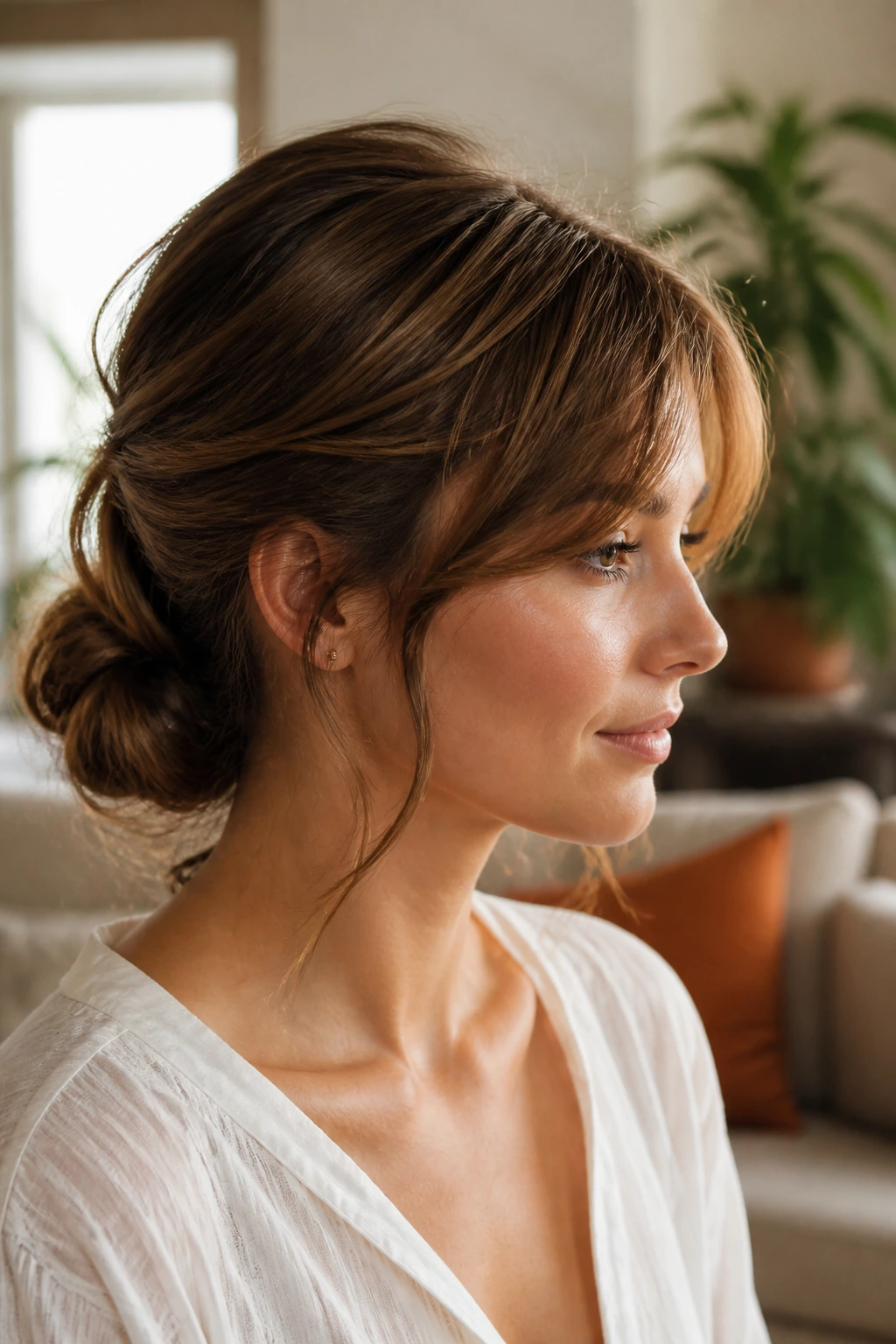
Thin hair does not need to be forced into looking thick. That usually ends badly, with crunchy bangs, broken pieces, and a style that falls apart before the evening starts. What it needs is shape, a good side part, and enough softness that the hair still moves when you do.
Side-swept bangs are the quiet hero here. They give you framing, help the part look less obvious, and make even simple styles feel considered. A low bun, a wave, a braid, a clip — none of it has to be complicated to look beautiful in real life.
Pick one of these styles and try it on a day when you have a few extra minutes. Thin hair tends to reward small, careful choices more than dramatic ones, and that’s exactly why these looks work.