



Short hair and bangs are a lot less forgiving than most wig ads pretend. The line sits right at your face, the cap has nowhere to hide, and every extra ounce of density shows up the second you turn your head. That’s exactly why human hair wigs with bangs for short hair matter so much: they give you shape up front, a believable fringe, and enough length control to keep the whole look from sliding into wiggy territory.
A good short wig does not need drama. It needs a front edge that sits where it should, a bang that falls cleanly after the first wash, and a cut that still makes sense when the room is warm, the air is dry, or you’ve been wearing it for five hours straight. Short hair shows the work. Which is why the details become the whole story.
I keep coming back to bangs because they solve problems the rest of the wig cannot. They soften a tricky hairline, hide a cap edge that’s a little too honest, and pull the eye where you want it before anyone notices the lace, the part, or the nape. And on short cuts, that effect is even sharper. A chin-length bob with a heavy fringe feels very different from a feathered neck-length cut with wispy bangs, even if the fiber quality is identical.
The 15 looks below lean into that difference on purpose. Some are crisp and polished. Some are soft enough to wear with almost no fuss. A few are bold enough to make a plain outfit look intentional. All of them work because the bang is part of the cut, not an afterthought glued on top.
Why These Short Banged Wigs Stand Out
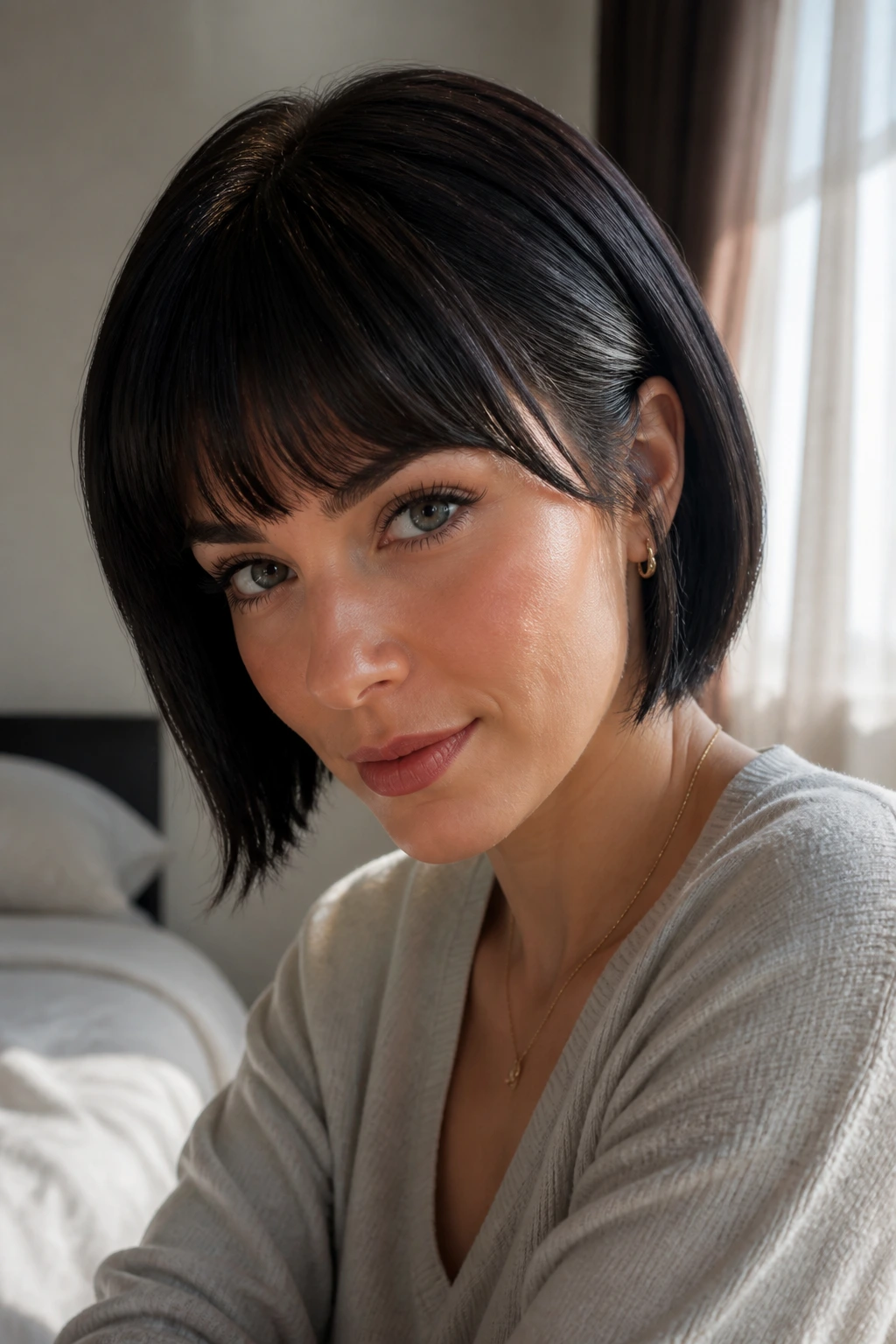
-
Short length keeps the shape honest: These cuts sit close to the head, so you can see whether the cap fits and whether the fringe really belongs with the rest of the style.
-
Bangs do the framing work fast: A fringe changes the feel of a short wig before the ends even come into play, which is useful if you want coverage at the forehead or a softer front line.
-
Human hair gives you room to adjust: You can blow-dry, steam, trim, and reshape the bangs in tiny increments instead of living with whatever the package gave you.
-
The cuts cover different comfort levels: Some styles are blunt and clean, some are airy and forgiving, and a few are textured enough to hide a slightly imperfect first styling session.
-
Short wigs usually sit more naturally: There’s less length tugging at the cap, less tangling at the nape, and fewer awkward shoulder flips to manage.
-
The fringe hides more than people think: A good bang can camouflage a lace line, an uneven temple area, or a part that does not want to behave.
1. Blunt Chin-Length Bob with Thick Straight Bangs
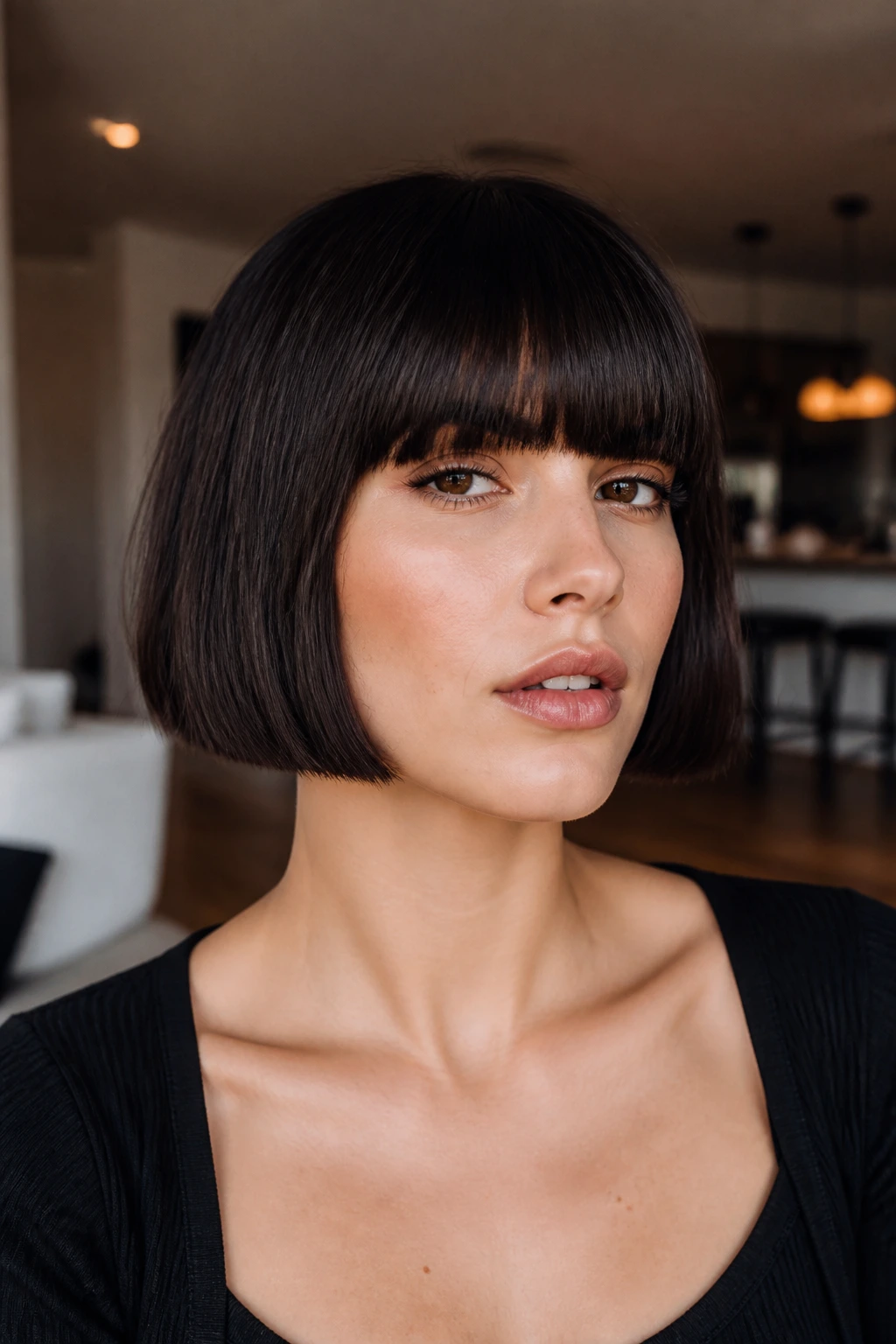
A blunt chin-length bob with thick straight bangs is the short wig I reach for when I want the whole look to stop negotiating. The edge lands right at the jaw, which gives the face a firm outline, and the fringe sits in one solid sweep across the forehead instead of breaking into little pieces. Clean. Direct. No apology.
Why this cut works on short hair
Short hair gives the bangs room to lead. On a longer wig, a heavy fringe can compete with the rest of the style; here, the bob supports it. The shape looks especially strong in human hair because you can blow-dry the fringe flat, then bend the ends under just enough to keep the bob from feeling boxy.
The best versions keep enough density under the bang so the front does not go transparent when you move. I like this shape at 150% to 180% density. Less than that and the blunt line starts to look thin at the edges.
- Best bang length before trimming: just below the brows
- Heat range for shaping: 280°F to 300°F
- Best parting: center or very slight off-center
- Best face shape match: oval, heart, and long faces
My rule: trim the fringe in tiny dry snips. Big cuts are where regret lives.
2. Feathered Neck-Length Bob with Wispy Fringe
This is the softer cousin of the blunt bob. The ends are lighter, the fringe is airier, and the whole wig moves when you turn your head instead of standing there like it has a grudge. I like it for people who want short hair but do not want to feel boxed in by it.
The wispy fringe matters here. It gives you forehead coverage without building a wall of hair across the front, which is exactly why this shape feels easier on a real day, not just in a mirror. If you wear glasses, this is one of the kinder options because the fringe can lift, split, or tuck without fighting the frames.
A little mousse at the roots helps. Not much. Just enough to keep the feathered ends from collapsing into the neck. The trick is to let the cut look soft, not wispy because it has gone flat.
3. Rounded French Bob with Eye-Grazing Bangs
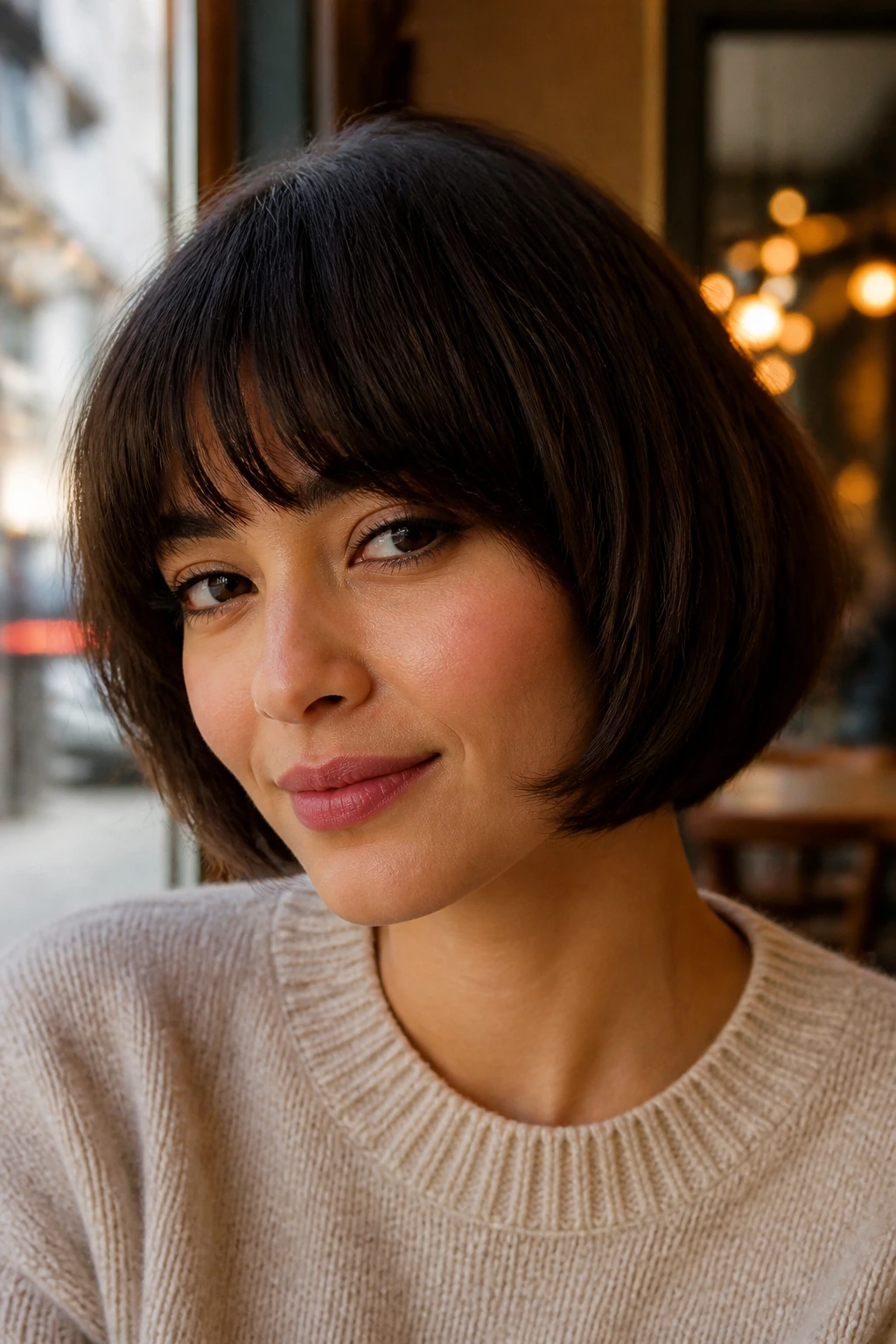
Why does a French bob look so deliberate even when it’s barely past the chin? Because the curve does half the styling for you. The rounder shape hugs the cheekbones, and eye-grazing bangs give the front a little mystery without turning it into a full curtain of hair.
How to wear it
This is the short wig I suggest when someone wants a polished shape but does not want to fuss with layers all morning. A round brush or a medium-barrel brush under the ends gives you that gentle inward bend. Keep the bangs long enough to brush the lashes when dry, then trim a whisper at a time. Human hair has a way of settling shorter than you expect once it cools.
The style is strongest on straight to slightly wavy texture. If the fiber is too thick at the root, the round silhouette can puff up in the wrong place, and that ruins the clean line. A monofilament top helps if you like shifting the part a little, though the bang is still the main event.
I like this one for anyone who wants a short wig with a little Paris energy and not much maintenance. It’s the opposite of fussy. That’s the charm.
4. Layered Shag Wig with Curtain Bangs
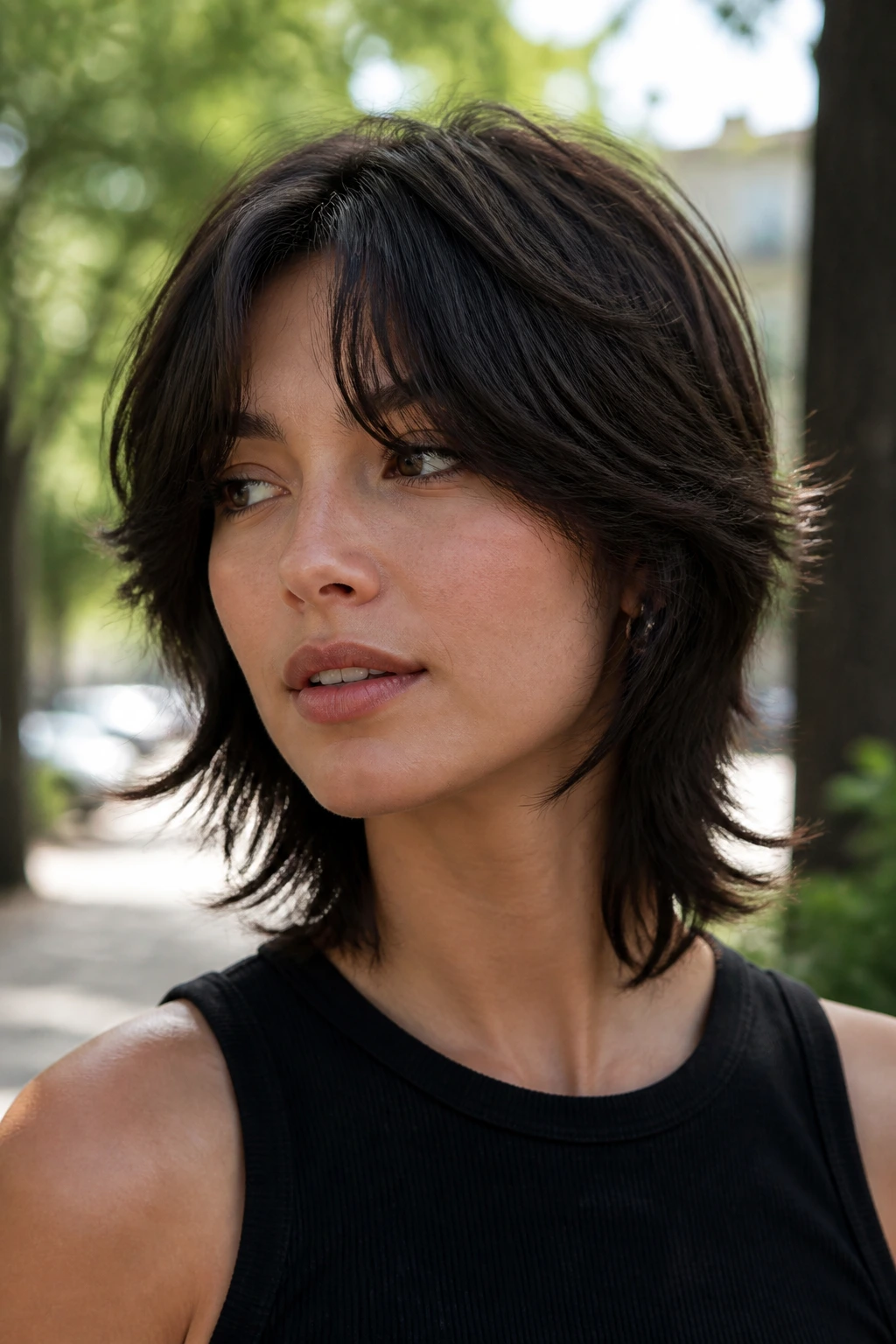
If you want short hair that does not sit still, the layered shag with curtain bangs is the one I’d hand over first. It has movement everywhere: the crown, the sides, the ends, the fringe. Nothing feels pinned down, and that looseness makes it easier to wear on days when a too-perfect style feels like hard work.
Curtain bangs are the reason this cut works. They split around the face instead of taking over the whole forehead, which gives you room to push them wider, center them, or let them fall a little messy. On human hair, that flexibility matters because the cut can change with a quick blow-dry or even a few minutes of air-drying.
What makes it forgiving
- The layers break up the cap line better than a blunt edge.
- The fringe can be tucked behind one ear without looking unfinished.
- A little bend at the ends keeps the shape light.
- It looks better with texture than with stiffness.
I am partial to this cut when I want a short wig that feels lived-in from the first wear. It can be a little messy and still look deliberate. That’s a nice trade.
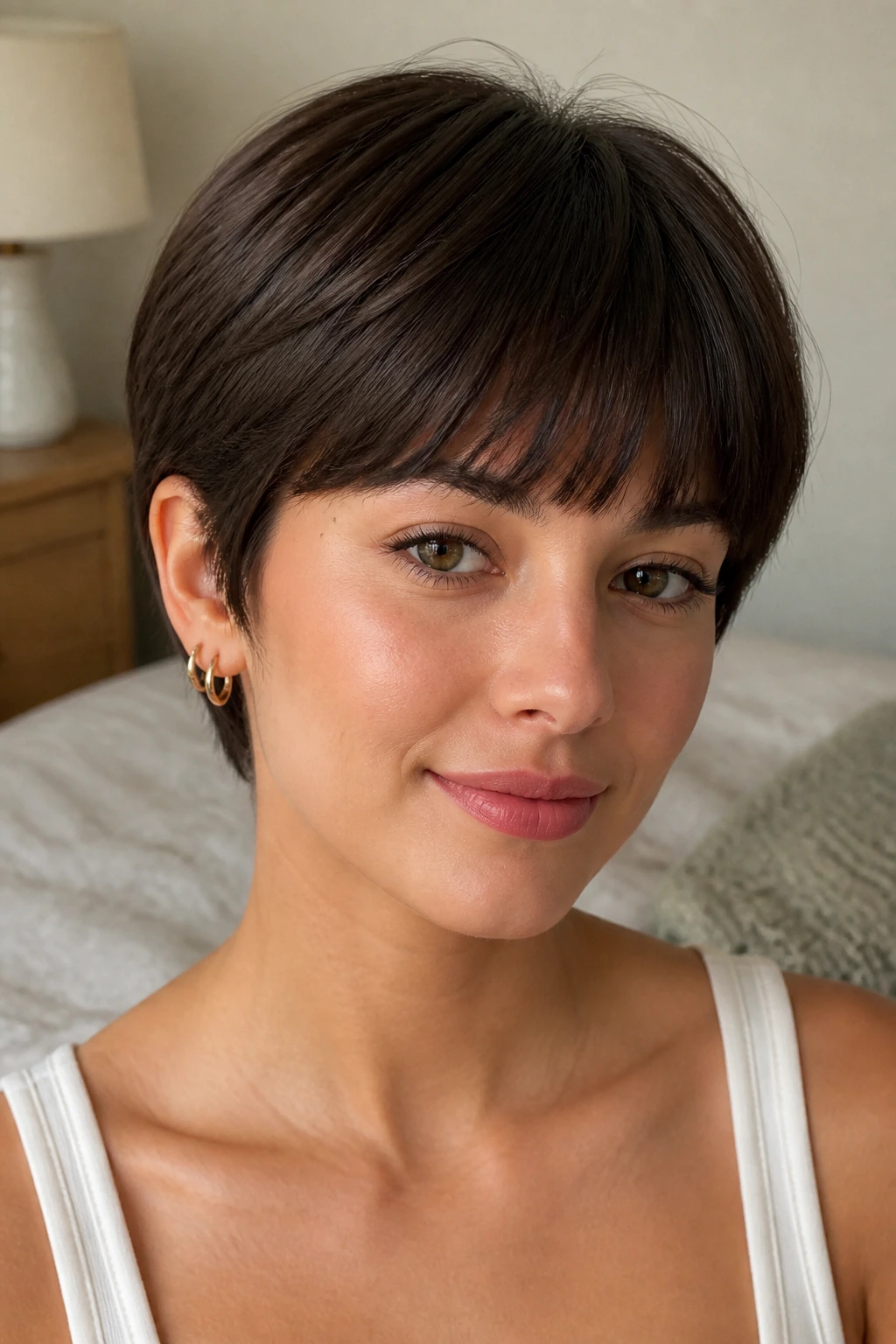
5. Sleek Pixie-Bob Wig with Micro Bangs
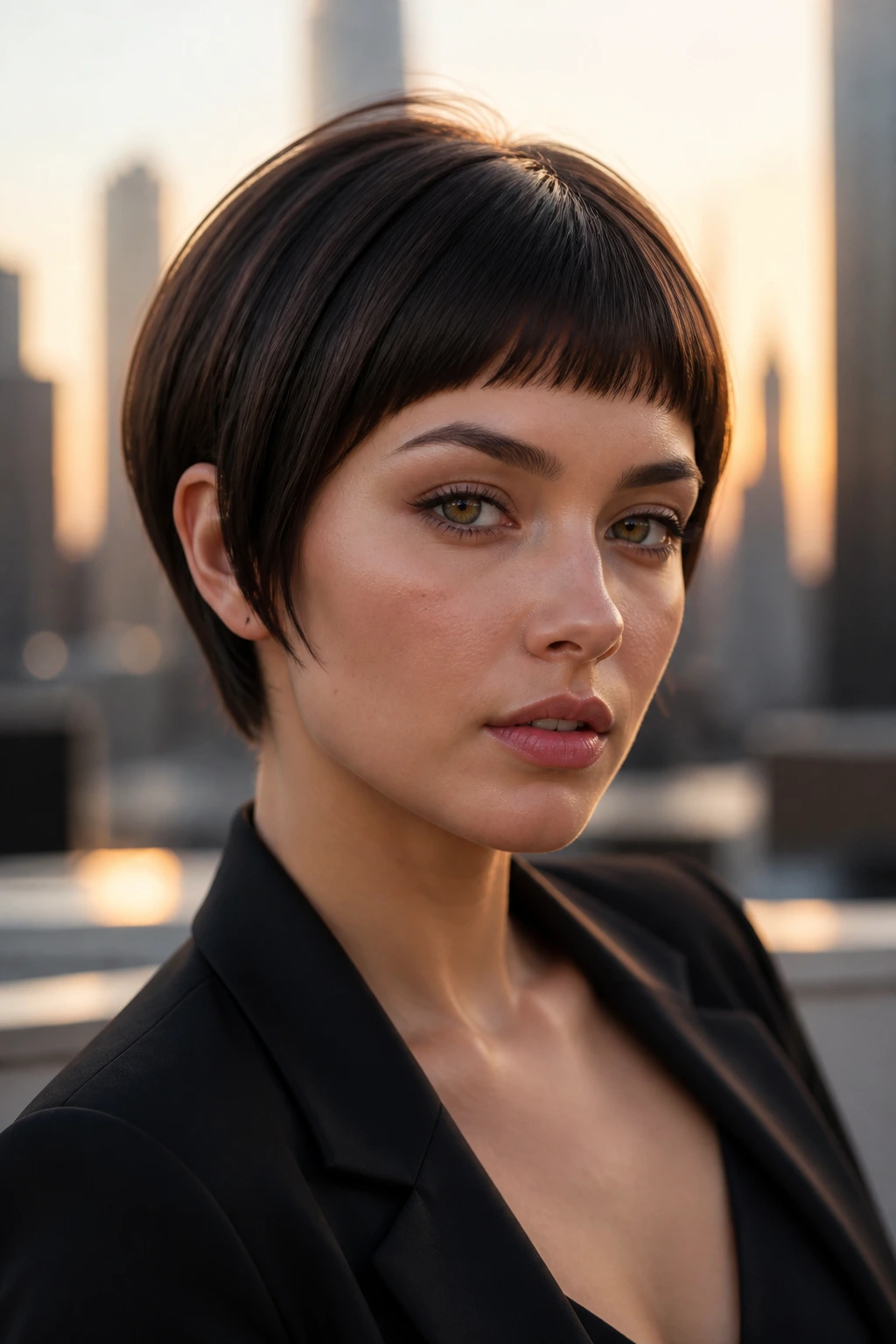
A sleek pixie-bob with micro bangs is not a shy wig. It puts the forehead, brows, and cheekbones right on display and keeps the neck clear, which gives the whole look a sharp, almost editorial edge. There is nowhere to hide, and that’s why it works.
Micro bangs demand confidence, but they also solve a very practical problem: they make a short wig feel compact and deliberate instead of like a longer cut chopped off at the last minute. On a human hair wig, the reduced length means the shape can stay crisp with a quick pass from a flat iron at low heat. I would stay around 250°F to 280°F unless the maker says otherwise.
This style suits people who like clean lines and do not mind regular touch-ups. The fringe will need small trims to keep its shape, and the front has to sit flat. If the cap is loose, this cut turns fussy fast. If the fit is good, though, it looks sharp in a way that longer wigs cannot fake.
6. Soft C-Curl Bob with Side-Swept Bangs

Unlike a blunt bob, a soft C-curl bob eases the edge of the face instead of drawing a hard line around it. The ends curve under just enough to soften the jaw, and the side-swept bangs slide across the forehead rather than sitting straight on top of it. That single change makes the whole wig easier to live in.
This is one of the friendliest options for a first human hair wig. Side-swept bangs are less exacting than straight fringe, and the C-curl gives you shape even when you do almost nothing. A round brush or a large roller set can push the ends under without much struggle. The cut is especially kind to square or round faces because the sweep creates a longer visual line.
If you want a short wig that can look polished without feeling severe, this is a solid bet. It wears well in an office, on a casual day, or anywhere you want the hair to look done without shouting for attention.
7. Tapered Asymmetrical Bob with Piecey Bangs

A small asymmetry can fix more than a heavy fringe ever will. The tapered bob shortens one side or angles the front a touch longer, which gives the eye something to follow. Piecey bangs keep the front from becoming a solid block of hair, so the cut feels modern instead of stiff.
What to watch for
- Keep the longer side subtle, not dramatic.
- Use a light texturizing spray on the ends, not the roots.
- Bend the bang pieces with your fingers after drying.
- Don’t over-smooth the fringe; the separated pieces are the point.
I like this style when someone wants a short wig with a little attitude but does not want micro bangs or a severe crop. It works well with a slightly off-center part, and it can be tucked behind one ear without losing the shape. The asymmetry does the visual work, so you do not need a lot of extra styling.
If straight bobs feel too neat for you, this is the softer way to break the rule. Just enough angle. Not a lecture.
8. Dense Yaki Straight Wig with Full Bangs
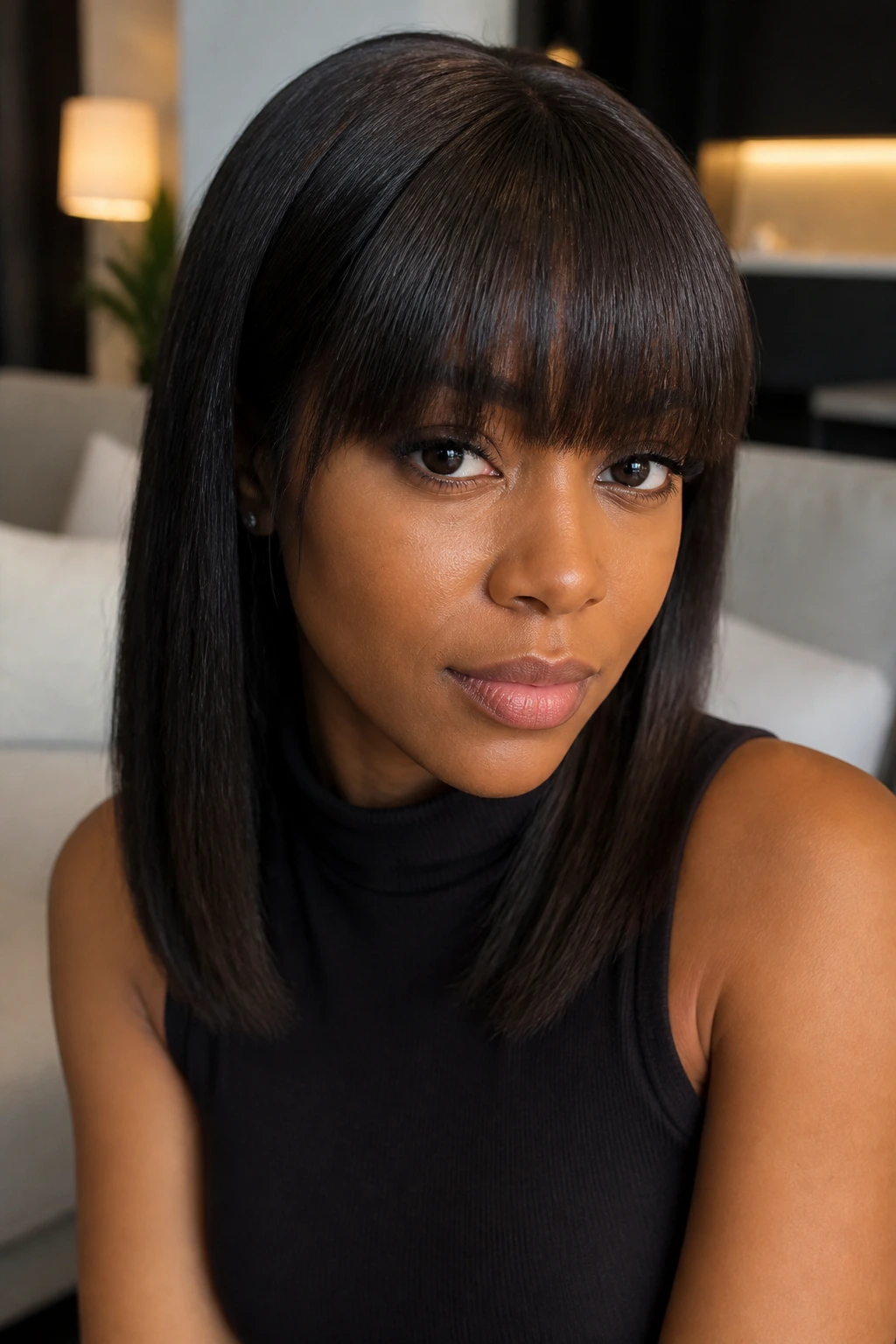
A dense yaki straight wig with full bangs has a grounded, pressed-out look that feels closer to a fresh blowout than a glossy salon sheet. The texture has a little grip to it, not the slippery shine of some straighter hair, and that makes the fringe sit in a more believable way on short hair.
I like yaki texture when the goal is fullness without that slick plastic finish. Full bangs on yaki hair look cohesive because the front and the body share the same visual weight. If the fringe is too thin, the texture underneath shows through; if it’s full enough, the whole cut reads as one piece.
This is a good option if you usually wear your own hair textured, relaxed, or blown out and want the wig to sit in that same neighborhood. It takes low to moderate heat well, but I would not keep going over it with hot tools. A few passes at 300°F or lower usually do the job. After that, the ends start to look tired.
9. Body-Wave Lob with Light Bangs

Not every short wig has to sit crisp at the jaw. A body-wave lob with light bangs gives you a little more length, a little more bend, and a front fringe that does not take over the whole face. The wave keeps the cut from feeling flat, and the lighter bangs leave enough space around the eyes that the look does not feel crowded.
This one is good when you want softness more than precision. The body wave gives movement from the mid-length down, so you can shake it out and still have shape. The light bangs can sit forward, split slightly, or sweep to one side if you do not feel like wearing them straight.
I would pick this style for anyone who wants a short wig that still behaves like a day-to-day haircut. It tucks under a coat collar well, it does not tangle much, and it gives the face a gentle frame without demanding a lot from the cap. It’s a practical shape, which is not the same thing as boring.
10. Bouncy Curly Wig with Curly Fringe
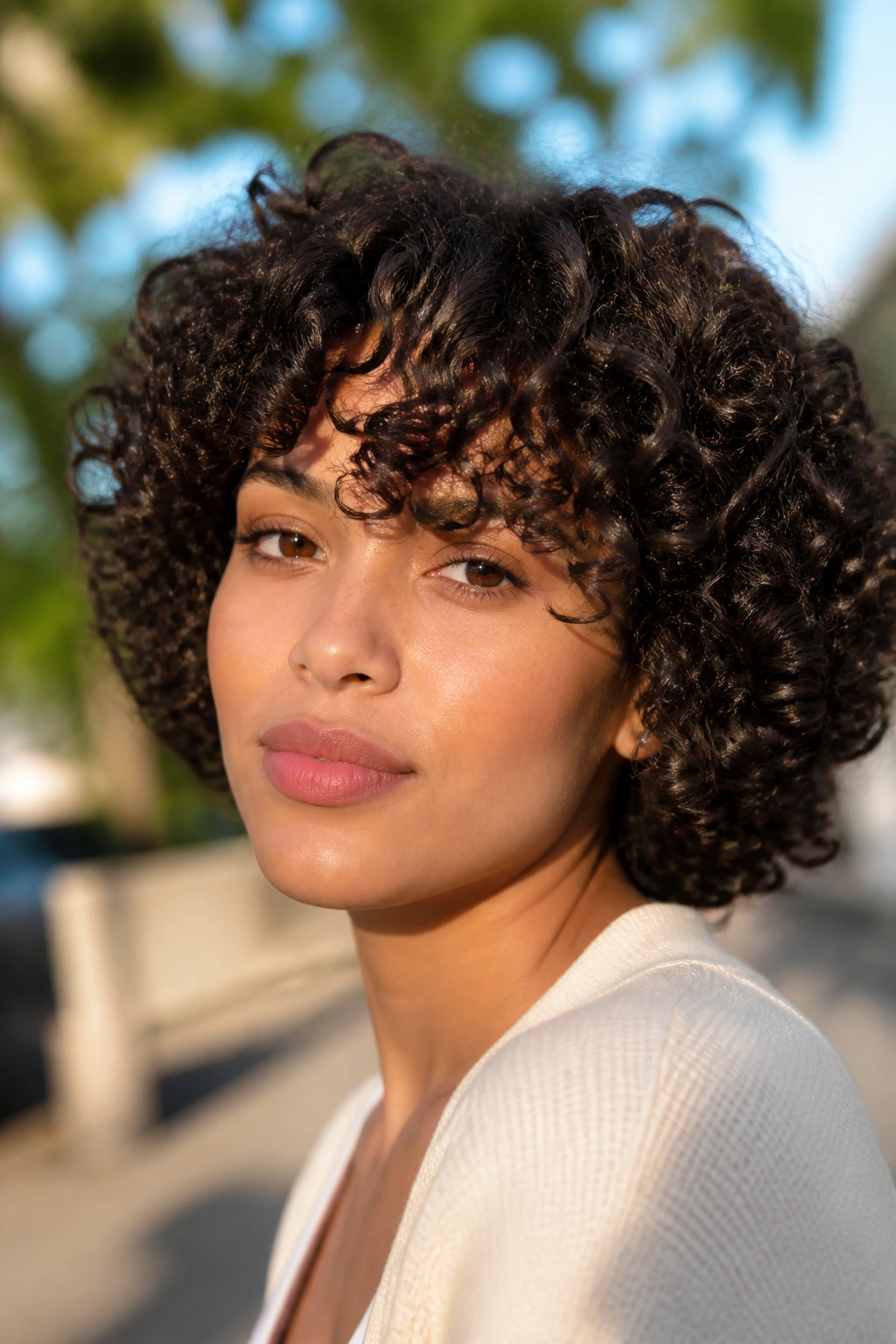
Curly bangs are their own little ecosystem. They spring, bend, and shrink in a way straight hair never does, so the fringe has to be cut and styled with the curl pattern in mind. On a bouncy curly wig, that front line can look playful, soft, and surprisingly polished if the curls are cut dry and left a little longer than you think.
How to style it
Start with the curls damp, not dripping, and work a small amount of leave-in through the mid-lengths and fringe. Then diffuse on low heat or let the wig air-dry on a stand until the curl pattern sets. Do not brush it once it dries. That’s the fastest way to turn a fringe into a puff of frizz.
Curly bangs work best when you respect shrinkage. If the curls spring an inch, that is normal. If they spring two inches, the fringe was cut too short. I like this style for people who want short hair that still has personality and does not flatten against the head. It feels alive, which is a nice change from the usual blunt options.
11. A-Line Bob with See-Through Bangs

An A-line bob gives you a little angle without going fully asymmetrical. The back sits shorter, the front stretches a touch longer, and the whole shape points the eye downward in a nice, tidy way. See-through bangs keep the front light, which stops the style from getting heavy at the forehead.
This is one of the best choices if you want short hair with a bit of breathing room around the face. The bangs let some skin show through, so the front does not feel as dense as a full fringe. That makes it easier to wear on smaller faces or on anyone who wants a fringe that can be brushed aside without a fight.
A light root lift at the crown helps the A-line angle read cleanly. Too much volume up top and the bob starts to look bubble-shaped. Too little and the cut loses the point of the angle. The sweet spot is a firm crown, a slim fringe, and ends that sit just below the jaw.
12. Razor-Cut Shag with Bottleneck Bangs
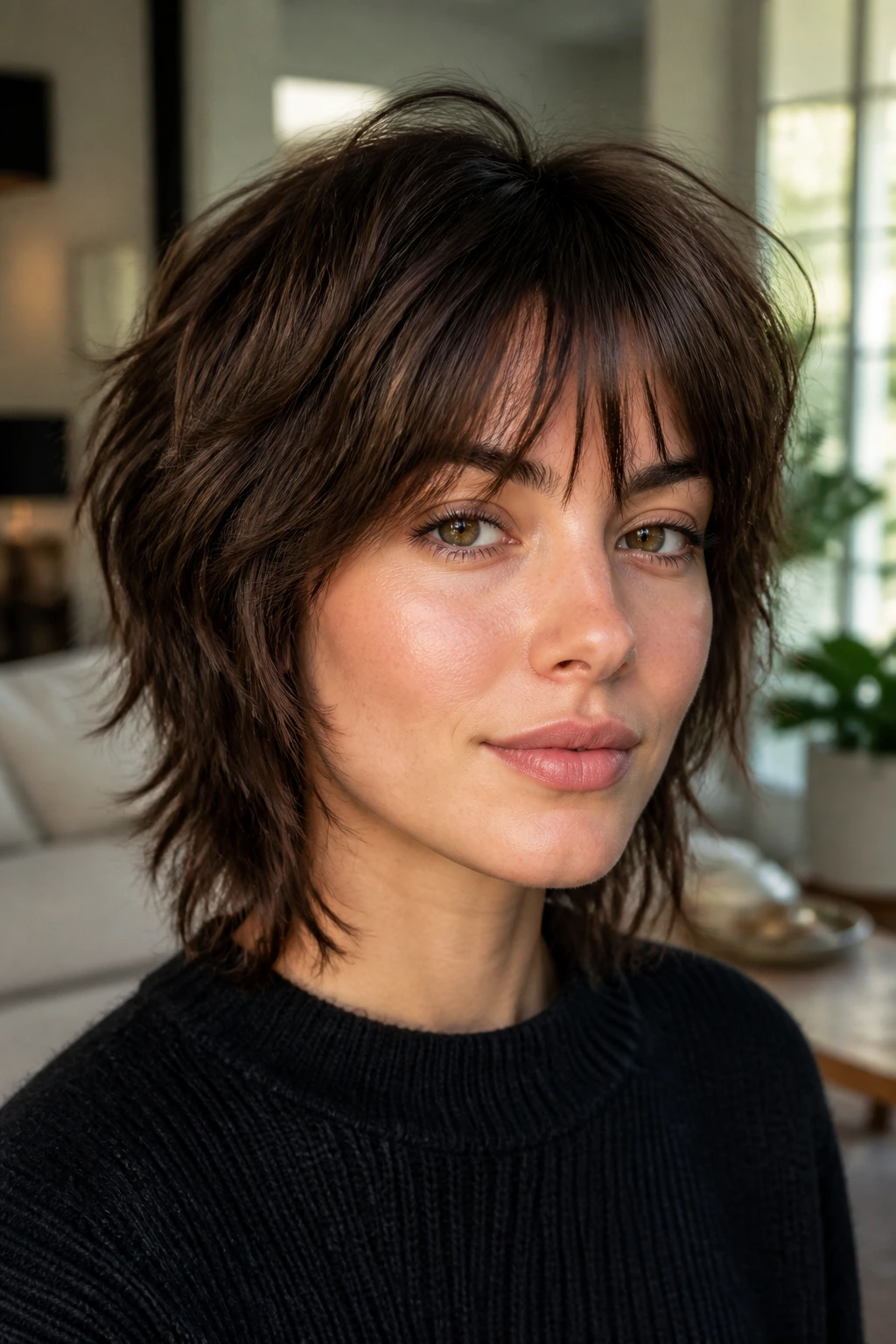
A razor-cut shag with bottleneck bangs has a little edge without going full fashion-week. The ends are sliced enough to move, the layers are broken up enough to avoid a blocky shape, and the bangs are narrower in the center before opening near the temples. That shape gives the forehead coverage and a bit of breathing room at the same time.
Why the bang shape matters
Bottleneck bangs are one of the smartest fringe choices for short wigs because they soften the center line but do not crowd the face. They can hide a less-than-perfect hairline, and they also let you slide the fringe to one side when you want a looser look. On a human hair wig, that flexibility is gold.
The razor-cut shag likes texture more than polish. A little air-drying, a little scrunching, maybe a touch of mousse at the roots. That is enough. If you flatten it too hard, you lose the whole point of the cut. If you add too much product, the layers clump, and the bangs start hanging like wet paper. Neither look is flattering.
I trust this cut for someone who wants movement and does not mind a little mess. It has real shape, but it is not precious.
13. Tucked-Behind-Ears Crop with Baby Bangs
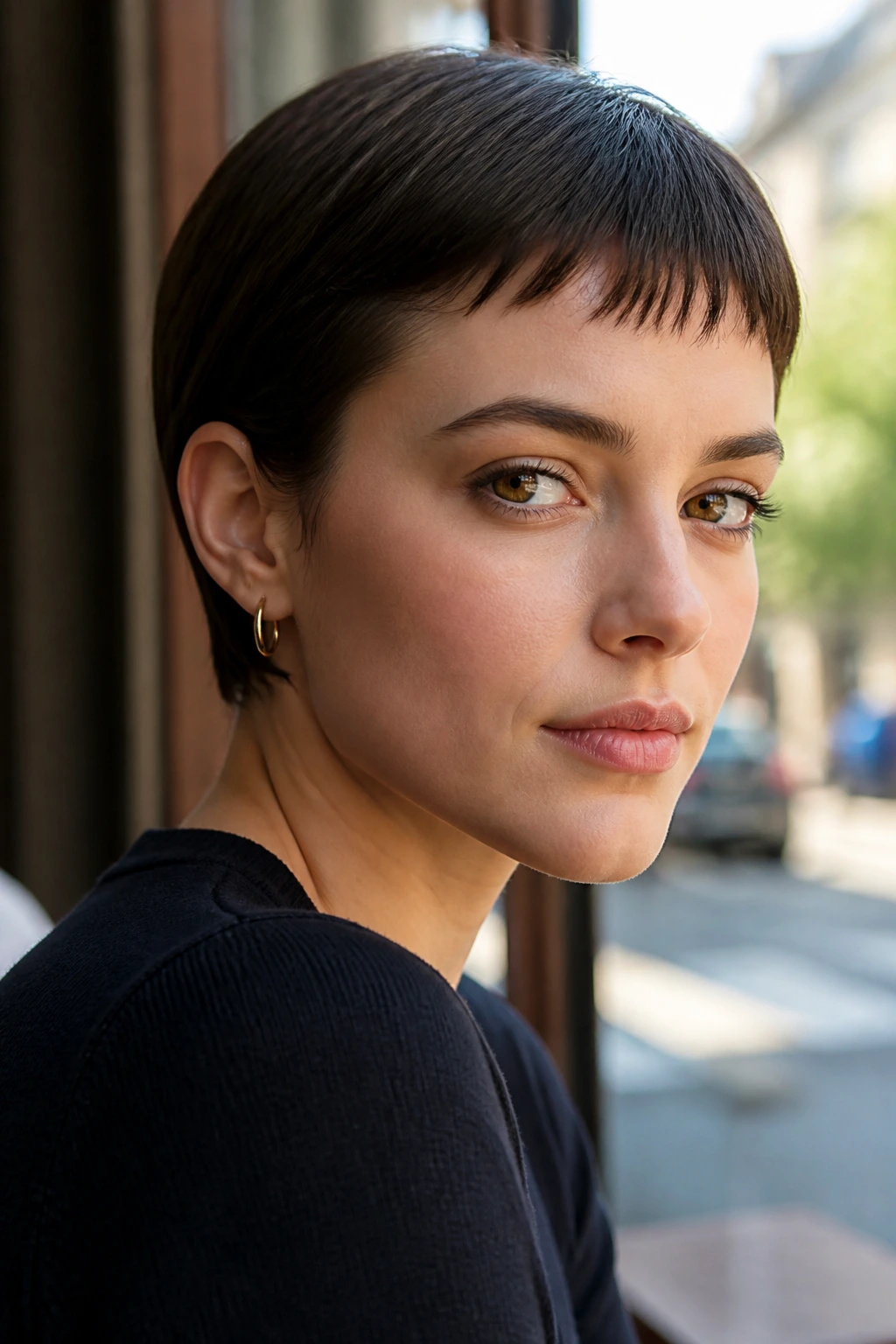
A tucked-behind-ears crop with baby bangs is the shortest look in the bunch, and it knows it. The sides sit close, the ears stay visible, and the fringe lands high enough to show the brows or even a sliver above them. It is sharp, a little daring, and very clear about what it wants.
This cut works best when the cap fits snugly and the hairline is stable. Because there is so little length to distract the eye, any wobble at the front shows up right away. On the plus side, the shape is cool in warm weather, easy to pack, and quick to style. You can smooth the front with a tiny amount of cream, tuck the sides, and be done.
Baby bangs are not a casual add-on. They need regular touch-ups, and they do not give much coverage if you want the forehead hidden. But if you like a crisp crop and do not mind the maintenance, they bring a strong shape to short hair that nothing else quite matches.
14. Deep Side-Part Bob with Sweeping Fringe
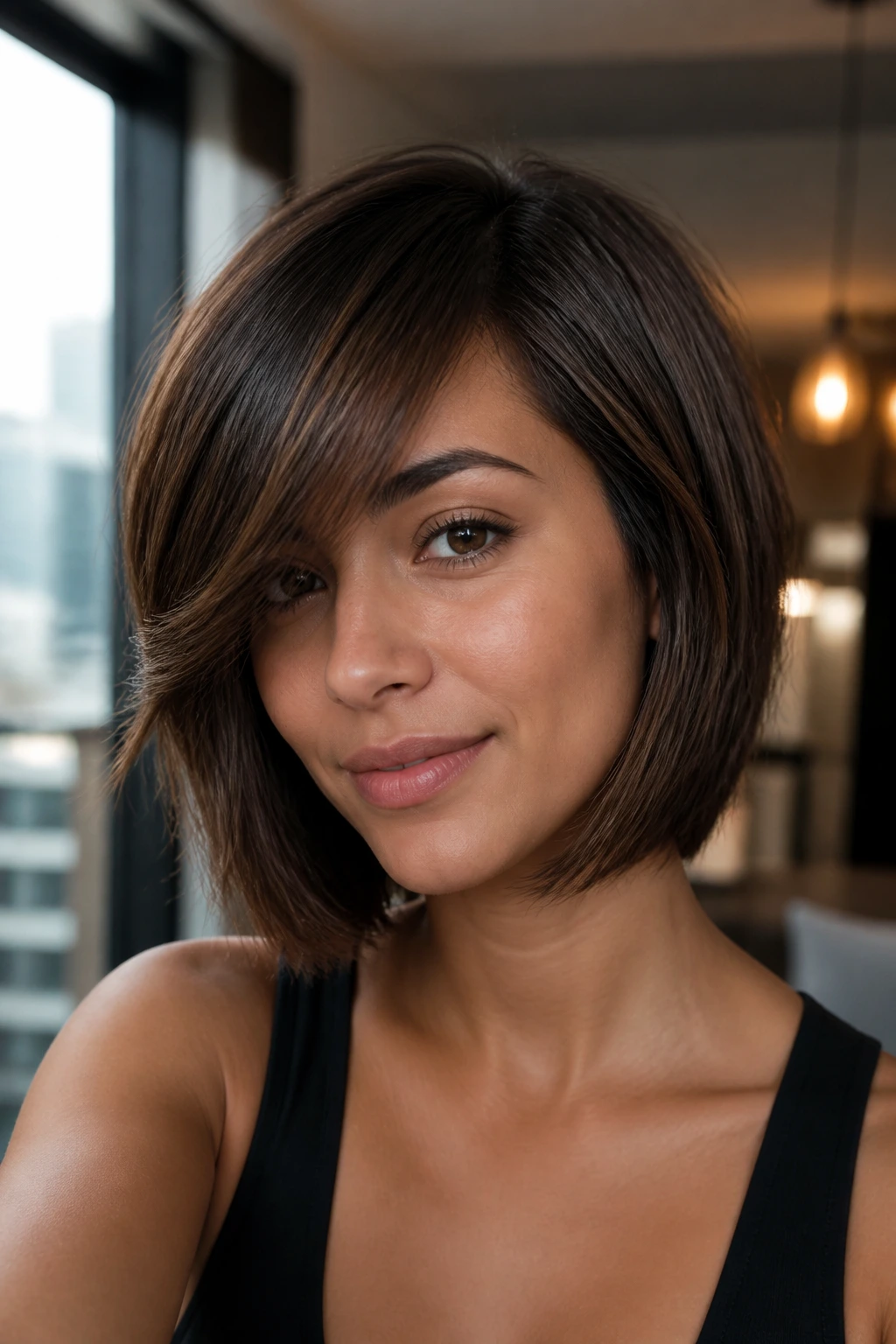
A deep side-part bob changes the whole mood of a short wig. The part shifts the weight to one side, the sweeping fringe crosses the forehead diagonally, and the cut suddenly has more movement than a center-part bob ever will. It is one of the easiest ways to make a short human hair wig feel less rigid.
This style is especially good if your own hairline is uneven or if you want the front to look softer without going into curtain bangs. The side sweep can cover more of the forehead, then taper away near the cheekbone so the face does not disappear under it. The trick is to keep the crown lifted just enough that the part does not flatten.
I like this when someone wants a grown-up short wig that still has a bit of drama. It is not loud. It just knows how to lean.
15. Layered Collarbone Cut with Face-Framing Bangs

A layered collarbone cut is the bridge style for anyone who wants short hair but is not ready to go all the way to the chin. The length brushes the collarbone, the layers move softly around the face, and the bangs open into face-framing pieces that can be tucked, curled, or split with a comb.
That extra length gives you options. You can wear it sleek, bend the ends under, or let the front pieces fall a little loose around the cheeks. Face-framing bangs are useful here because they keep the cut from looking like one long blunt shape. The hair still feels light, but it has more swing than a strict bob.
This is the style I’d recommend to someone who wants the safest entry into short wigs with fringe. It does not ask for much. It fits into everyday life without demanding a new wardrobe or a new attitude.
Why Human Hair Wigs With Bangs For Short Hair Feel So Natural
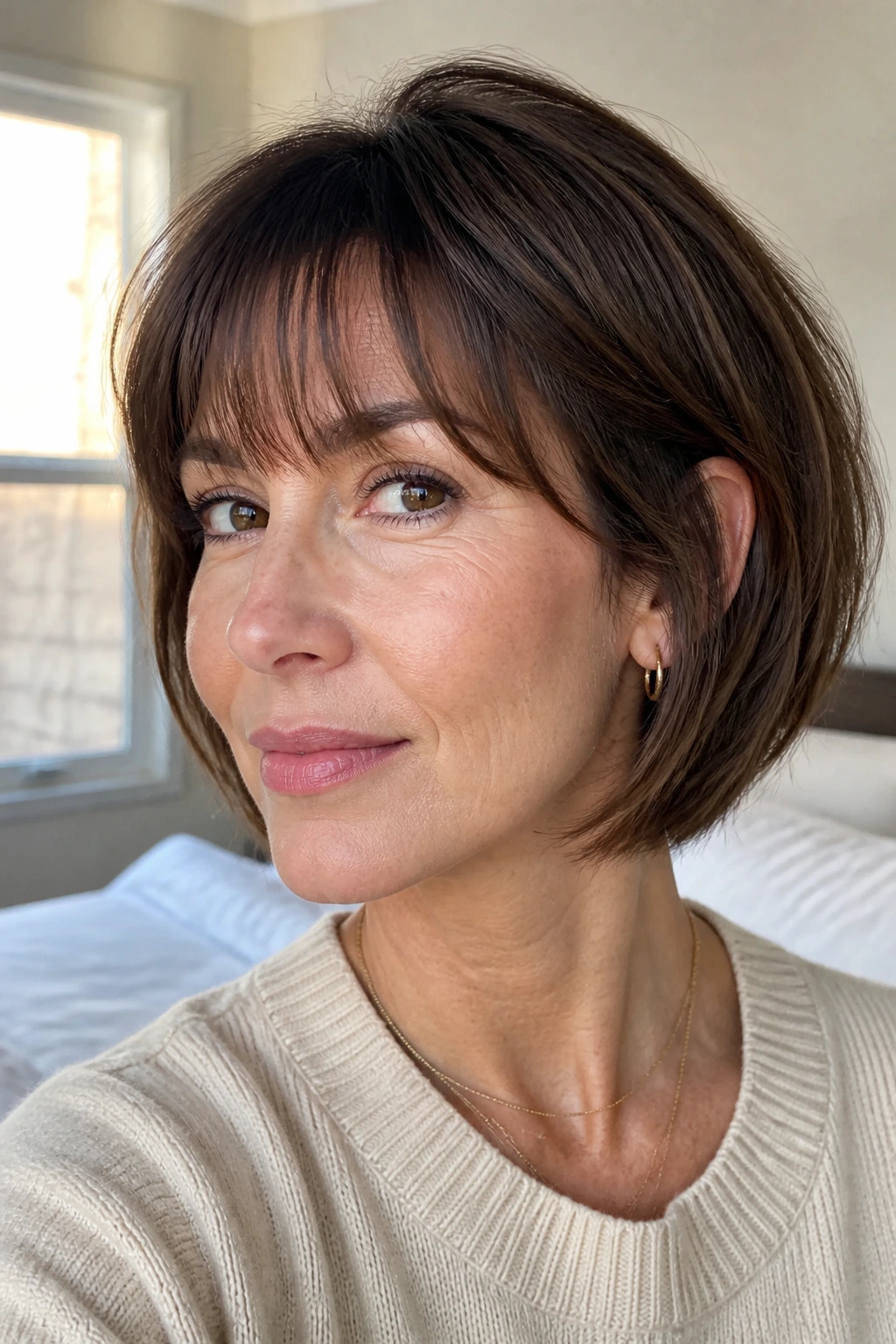
Short wigs have one unfair advantage: they show their work less than longer styles do. A chin-length bob or a cropped shag sits closer to the head, so the eye notices the fringe, the jawline, and the nape before it starts inspecting the cap. That is a very useful thing when you are trying to make a wig feel like a haircut instead of a costume piece.
Bangs help even more. They soften the front edge, hide a little lace that might otherwise catch the light, and give you a place to build the style without leaning on long fiber movement. A front fringe can carry a surprising amount of the visual weight. That’s why a short wig with the right bang often looks more believable than a longer wig with a prettier density.
Human hair matters because it lets you make small corrections. If the bang lands a little too low, you can dry it forward and trim a hair at a time. If the ends sit too flat, you can bend them under with a brush. If the front needs to be softer, a bit of steam or a low heat pass can loosen the line. Synthetic wigs can be lovely, but human hair gives you more control when the cut needs to be nudged rather than reinvented.
There is one catch, though. Short wigs are less forgiving about balance. If the fringe is too heavy, the whole look gets blunt in a way that can feel harsh. If the bangs are too sparse, the front edge starts to look accidental. The sweet spot is shape first, volume second, detail third. Get that order right, and the wig starts doing the work for you.
Cap Size, Lace, and Density: The Parts Worth Reading Twice
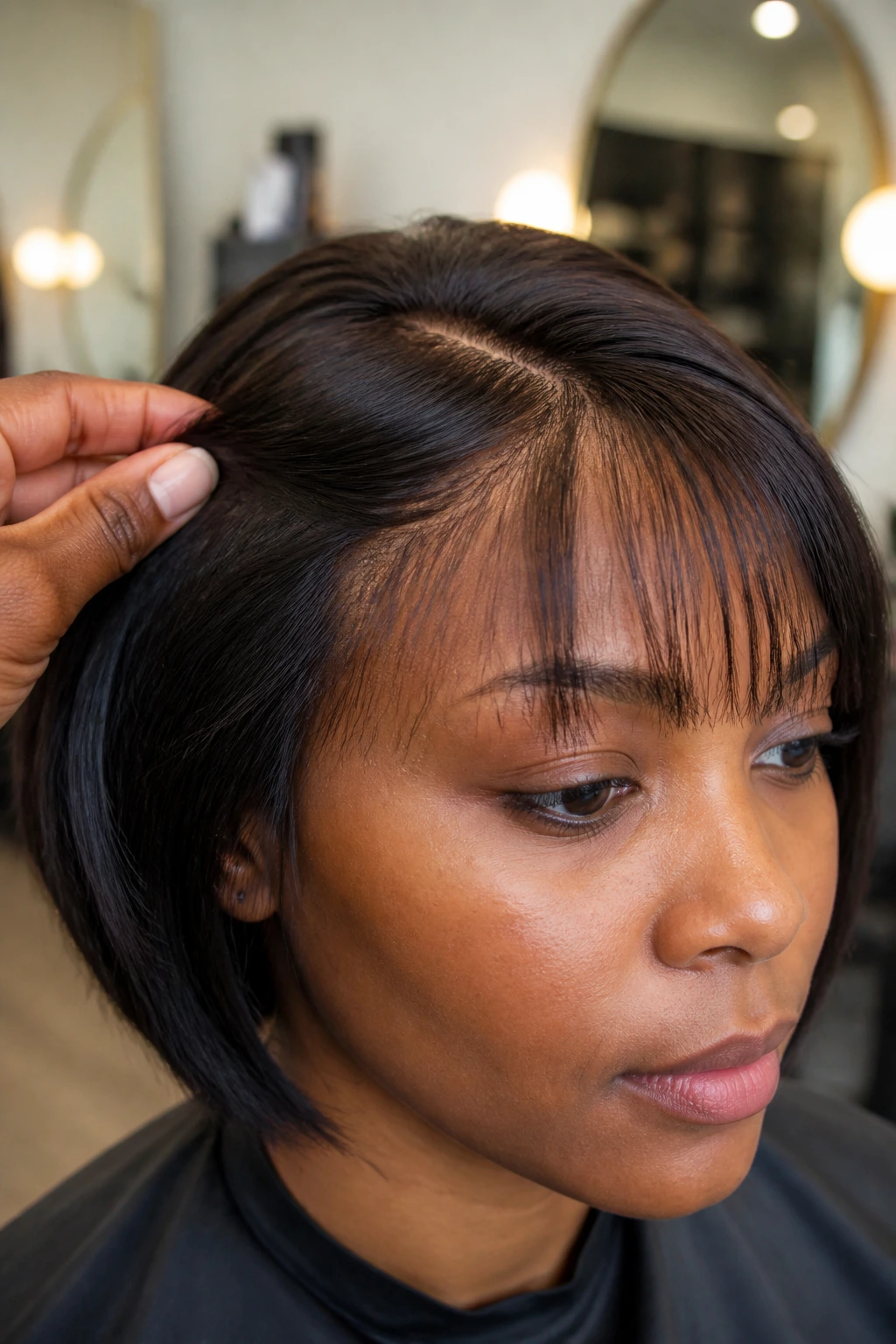
A wig can have gorgeous bangs and still sit wrong if the cap is off by half an inch. Short styles make that easier to see because there is less length to distract from the fit. The front has to sit flush, the ear tabs have to lie flat, and the crown has to stay close enough to the head that the bangs do not drift backward as the day goes on.
Measure the head, not the hope
Measure the circumference, then check ear-to-ear and front-to-nape. A lot of people skip the second two and then wonder why the bob puffs at the temples or the nape lifts when they turn their head. If you are between sizes, lean toward the cap that sits snugly and use the adjustable straps to fine-tune it. A loose cap is harder to fake than a slightly snug one.
Decide how much front you want to show
A lace front still matters on a wig with bangs, even when the fringe covers most of the hairline. If you want to sweep the bang to one side or split it like curtain fringe, you’ll be glad the front edge looks realistic. If the bangs are thick and blunt, the lace matters less visually, but a clean front still helps around the temples.
Match density to the cut
Short cuts need restraint. 130% density works well for wispy bobs and see-through bangs. 150% density is the sweet spot for most blunt bobs, side-swept fringes, and layered crops. Go denser only if the style is meant to look plush, because too much fiber on a short cut can turn into a helmet fast. That is the one mistake people make again and again.
Monofilament tops are useful if you like changing the part. Hand-tied caps are softer against the scalp. Glueless construction is worth paying for if you plan to take the wig on and off daily. Each of those features matters more when the wig is short, because there is less hair length to hide a cap that sits badly.
Smart Shopping for Bang Length, Texture, and Parting
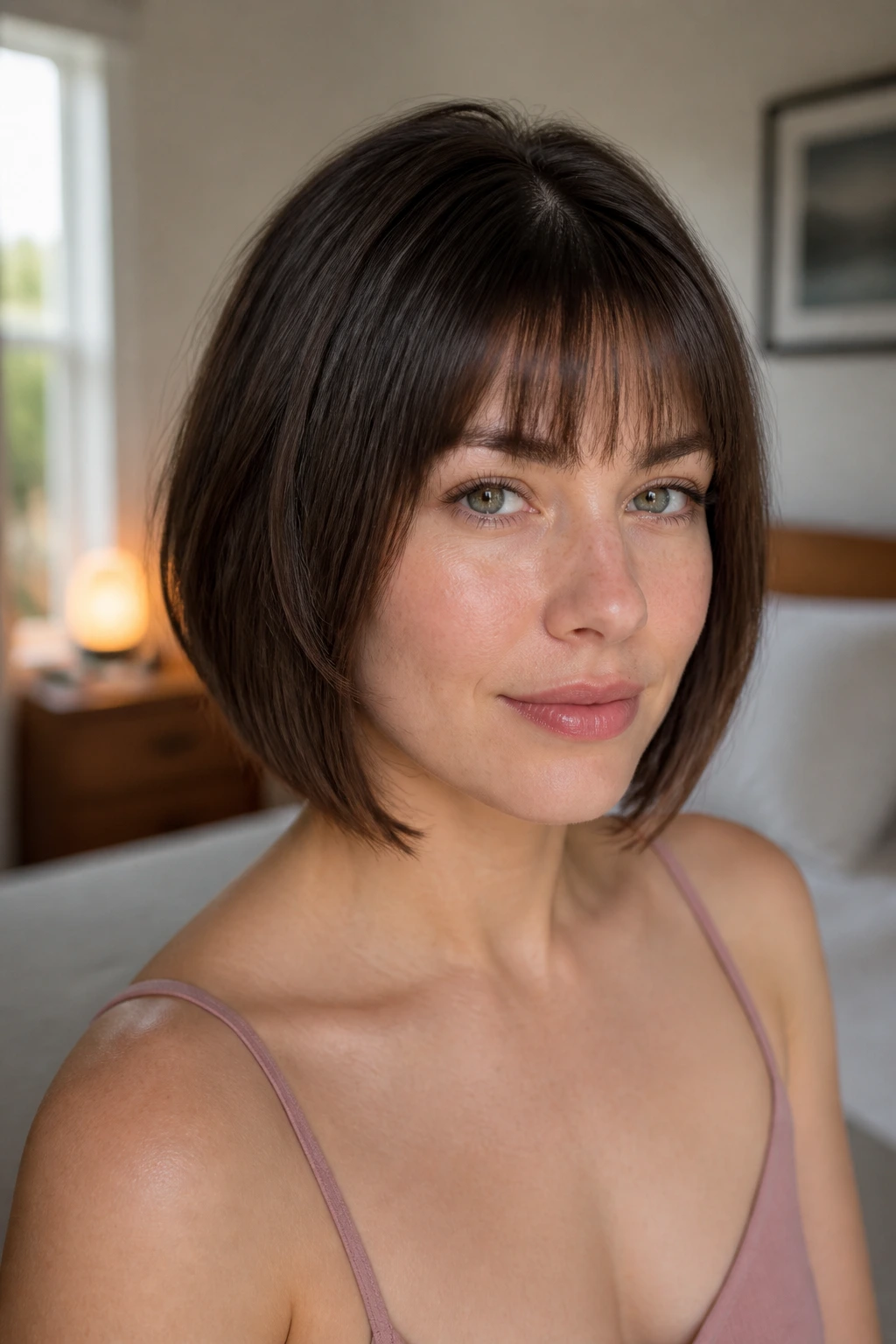
The fringe length you buy is rarely the fringe length you keep. Straight bangs usually settle shorter after blow-drying, while curly bangs shrink enough to make people nervous if they are cut too close to the brow. That is why a good wig shop or stylist leaves a little extra length in the front and trims in tiny passes after the hair is dry.
Texture should match your maintenance habits, not your fantasy self. If you know you will not spend twenty minutes with a round brush, a blunt bob with straight bangs may irritate you. If you like movement and hate a fixed shape, curtain bangs or a shag will be kinder. The more the cut needs help, the more honest you need to be about your routine.
Parting matters too. A center part gives symmetry, but on short wigs with bangs it can also expose more of the cap if the fringe starts splitting. A slight off-center part is often more forgiving. It gives the bang somewhere to fall, and it tends to hide a less-than-perfect front edge better than a dead-straight middle line.
Color is worth a look, even though it gets ignored. A root shadow or slightly deeper base makes a short wig feel more grounded, especially when the bangs are light. Pure single-tone blonde or black can look flat on a cropped style unless the cut has strong movement. That little bit of tonal depth does more than people expect.
Essential Equipment for Styling and Maintenance
-
Canvas block head or wig stand: Keeps the cap and fringe in shape while the wig dries; a wire stand works in a pinch, but it is less stable.
-
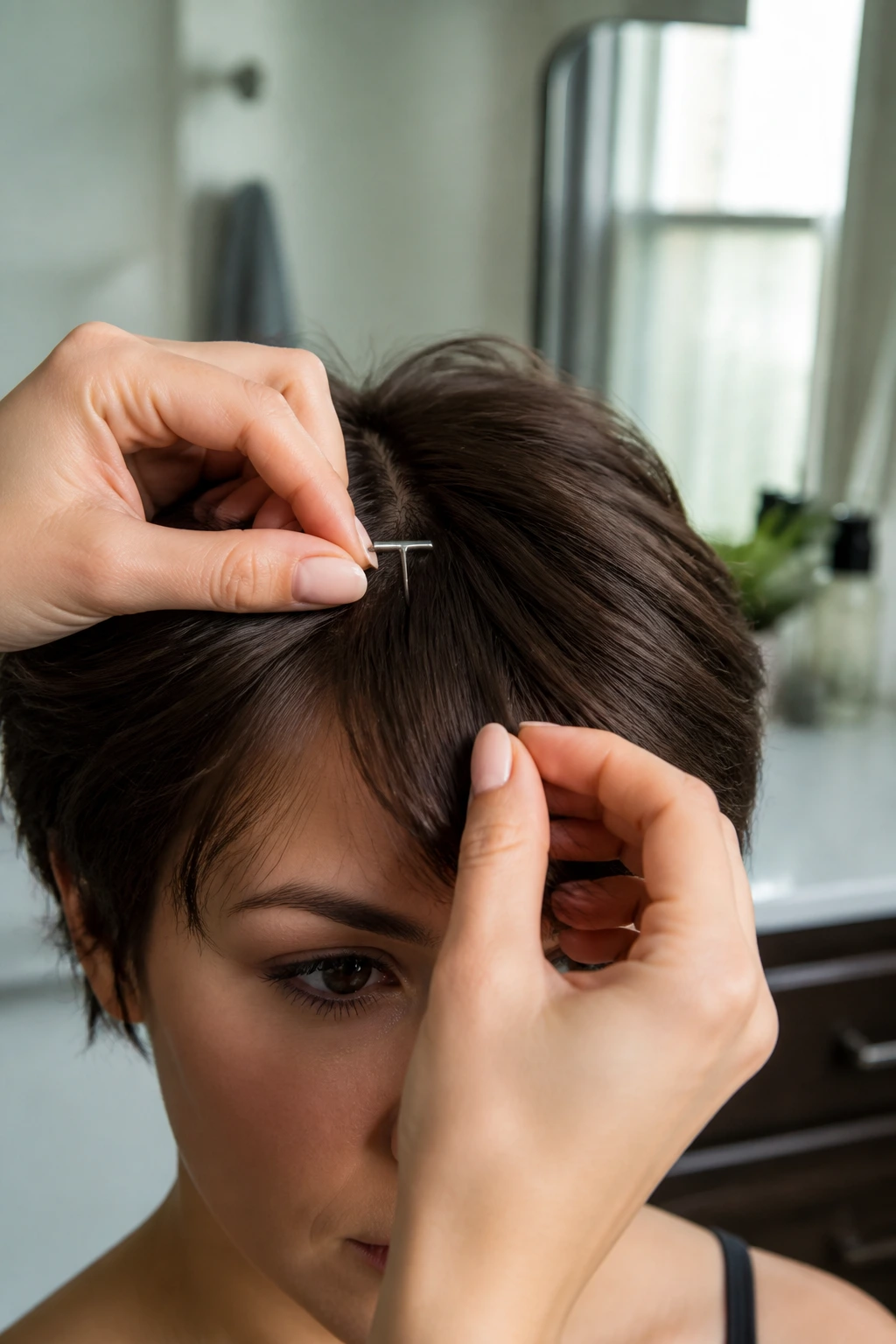
T-pins: Hold the wig steady for trimming bangs or smoothing the front edge without stretching the lace.
-
Small hair-cutting shears: Regular household scissors chew through the fringe and leave a jagged line.
-
Rat-tail comb: Helps section bangs cleanly and directs the hair forward before trimming.
-
Wide-tooth comb or loop brush: Detangles the ends without tearing at the cap or puffing up the fringe.
-
Adjustable flat iron or curling iron: Lets you nudge the shape at low heat instead of forcing it flat or curled.
-
Heat protectant spray: Keeps the human hair from drying out when you style the bangs or ends.
-
Wig grip or velvet band: Reduces slip, which matters more on short cuts because the front has nowhere to hide.
-
Lightweight mousse or styling lotion: Gives curtain bangs, shags, and curls a bit of memory without heaviness.
-
Sulfate-free shampoo and conditioner: Gentler on processed human hair and less likely to strip the cut dry.
-
Silk or satin storage bag: Prevents the fringe from bending and protects the fiber between wears.
How to Keep the Hairline Flat and the Fringe Lying Right
Placement comes first. Set the wig so the front edge sits where the cap is meant to sit, not where your instinct says to yank it. On most heads, that means just a little behind the natural hairline, not right on top of it. A wig grip helps more than a mountain of product ever will, and it keeps the short style from creeping backward when the day warms up.
Start with the front before you style the rest
Dry the bangs forward first. Do not start by curling the ends and then discover the fringe is splitting weirdly at the center. Short wigs are front-heavy in a visual sense, so the first thing you should fix is the part people will notice immediately. A tiny mist of water or a touch of styling lotion at the bang line can help the hair sit in one direction while you brush it into place.
Keep product off the fringe
Serum on bangs is a bad habit. It makes the front look greasy faster than you think, and greasy fringe separates in a way that shows every strand. Put shine products only on the ends, and use the smallest amount that still smooths the cuticle. If you need the front to lie flatter, use low heat and a comb, not oil.
Give the cap a clean base
If you wear a wig cap under the wig, keep it smooth and flat. Bumps under a short wig show faster than they do under a longer one. A little foundation or scalp tint on the lace part is fine if you need it, but keep it light. The goal is to blend the edge, not paint it.
When the fringe still wants to split, cool it in place. That tiny bit of cooling time after heat makes more difference than another pass with the iron. Annoying, yes. True, too.
Styling Moves That Change the Mood Fast
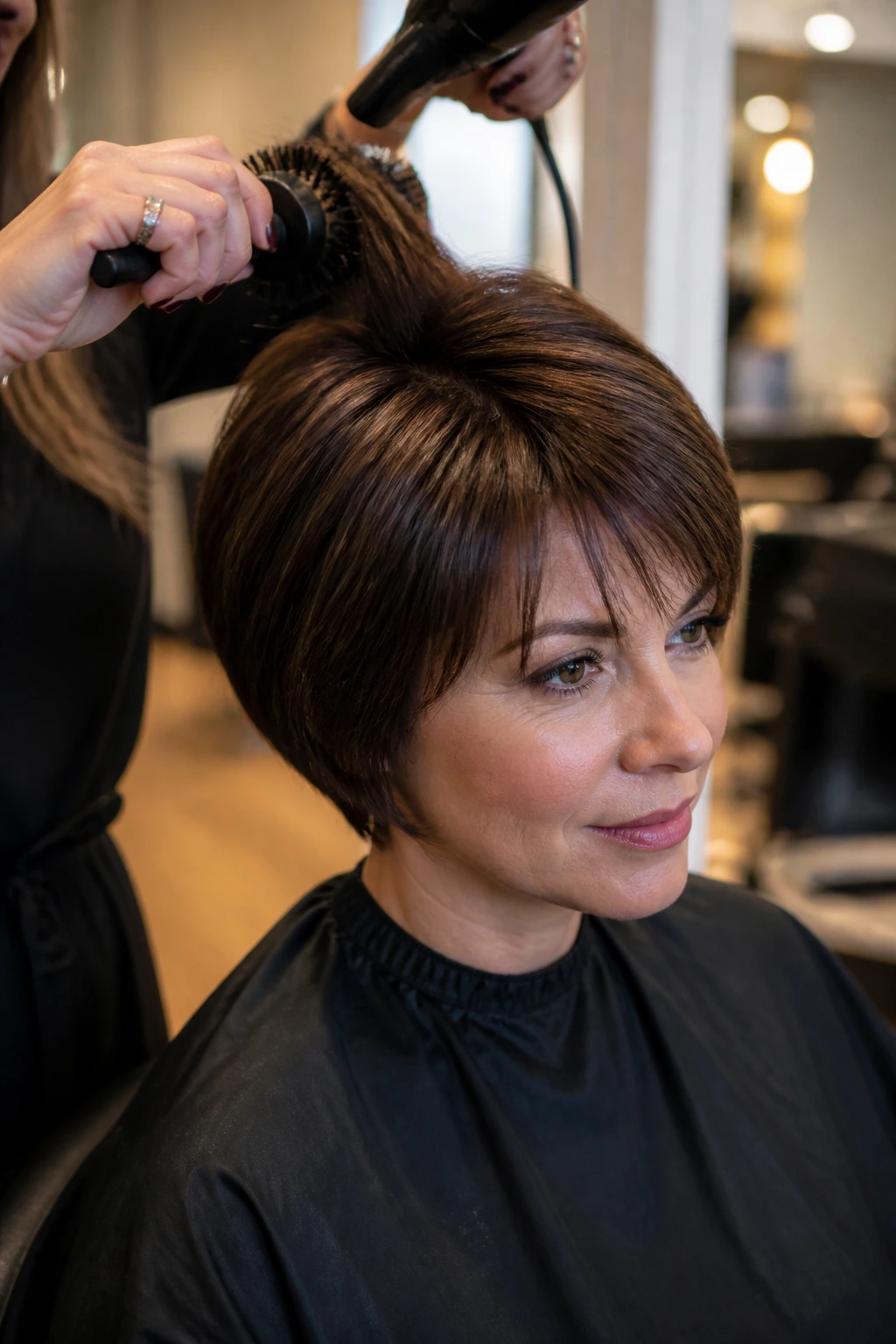
Root lift: A short wig with flat roots can look tired even if the cut is good. Use clips or a round brush at the crown while the hair cools, and you get a little height without turning the style into a puffed-up mess.
Soft bend: A one-inch bend under the ends changes everything on a bob. It takes the edge off the line and helps the haircut sit closer to the jaw instead of sticking straight out. Keep the curl soft; you want movement, not ringlets.
Part shift: A slight move away from the center can make a wig feel more relaxed immediately. It also helps the fringe fall in a way that hides the front edge better. Tiny change. Big payoff.
Fringe tweak: If the bang sits too wide, pinch the ends forward and trim in the dry state only. If it sits too narrow, steam the outer pieces away from the center and let them open toward the temples. That shape is what keeps the fringe from looking pasted on.
Finish: Use less product than you think. A pea-sized amount of smoothing cream or mousse is enough for most short human hair wigs. More than that and the front starts separating, which is the opposite of what you want.
I am a fan of low heat and small corrections. A short wig responds better to two careful adjustments than to one aggressive styling session.
Common Mistakes That Make Short Wigs Look Off
-
Buying the bangs too short on purpose: The fringe ends up sitting higher than expected after drying, and the forehead looks exposed. Fix: leave extra length and trim in tiny dry passes.
-
Ignoring cap size because the style is short: A cap that is too loose causes the fringe to drift backward and the crown to ripple. Fix: measure carefully and use the adjustable straps before you decide the wig itself is wrong.
-
Choosing too much density for a cropped cut: Heavy fiber on a short bob turns the silhouette bulky and makes the front feel top-heavy. Fix: stay closer to 130%-150% unless the style is clearly meant to be full.
-
Over-oiling the fringe: The bangs separate, cling together, and lose their crisp line. Fix: keep shine products off the front and use them only on the mid-lengths and ends.
-
Trimming while the wig is on your head: The hair falls differently, and one side usually ends up shorter than intended. Fix: pin the wig to a stand, comb the fringe forward, and cut dry in small sections.
-
Skipping daily reset time: Short wigs need a minute to settle after wear. Fix: hang the wig on a stand for airflow, then smooth the fringe again before the next wear.
These are not glamorous mistakes. They are small, ordinary, and surprisingly expensive-looking when you make them. Fix them once, and the whole wig gets easier.
Variations and Alternatives Worth Trying
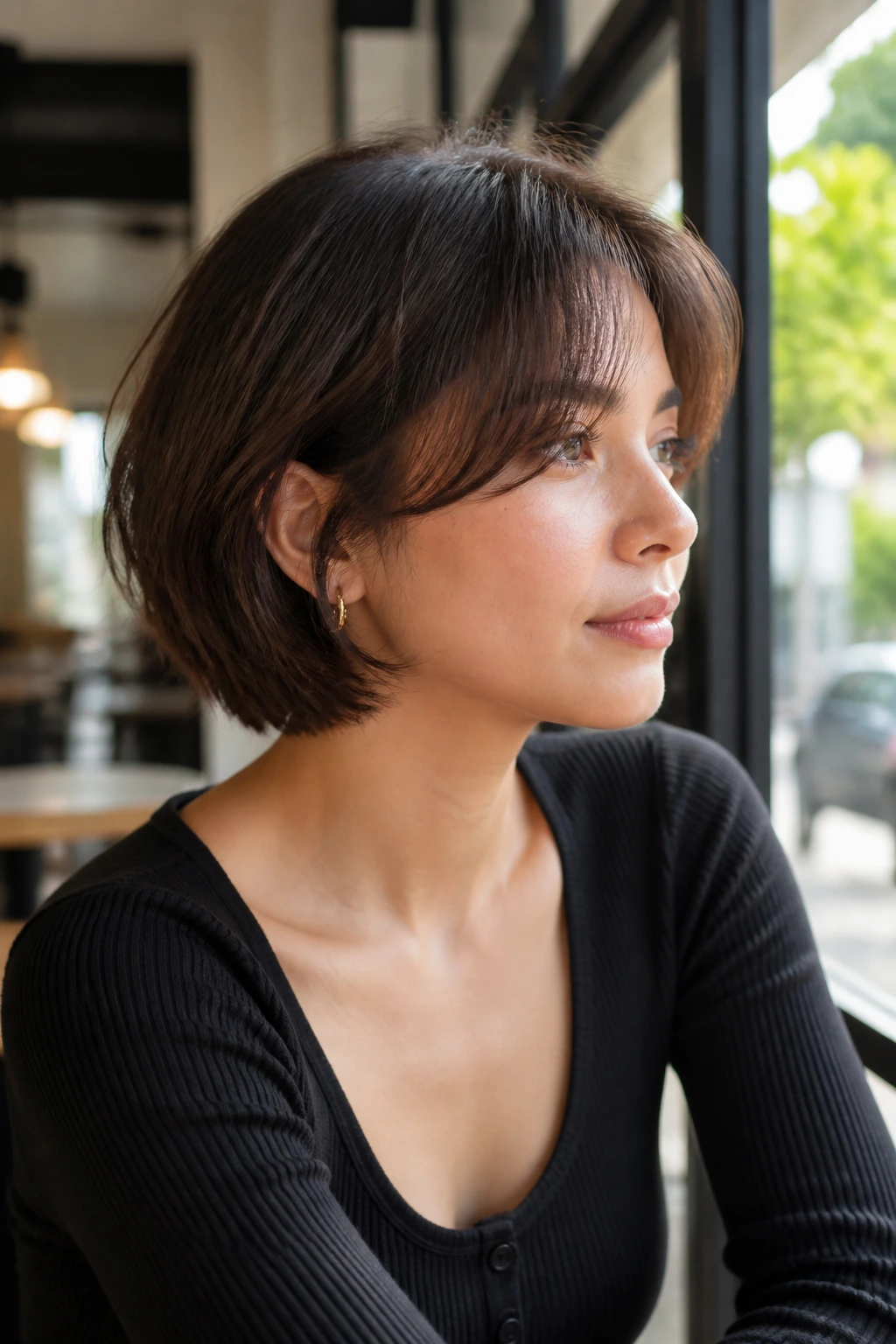
Curtain-Bang Starter Set: If blunt fringe feels too committed, start with curtain bangs on a layered bob or shag. They split easily, wear well with glasses, and give you room to move toward a fuller fringe later if you want it.
Glueless Everyday Build: Choose a glueless lace-front cap with elastic bands and soft ear tabs if you plan to put the wig on fast. This is the version that works for daily wear without adhesives, and it keeps the front flatter than a loose cap ever will.
Textured Natural Match: If your own hair has body or a pressed texture, a yaki straight bob or shag will usually feel more believable than a high-shine straight cut. The texture keeps the fringe and body in the same visual family.
Soft Side-Sweep Reset: A deep side part with sweeping bangs is the easiest way to tone down a fringe that feels too blunt. It also helps if your face shape or glasses make full bangs feel crowded.
Editorial Crop Switch: Baby bangs, a tapered nape, and a tucked-behind-the-ear finish create a sharper look without adding length. It is a strong style, but it is the right kind of strong if you want a short wig that feels deliberate instead of safe.
Curly-Texture Match: Curly and coily wigs with bangs work best when the fringe is cut dry in the same curl pattern. That keeps the bang from shrinking too far and helps the cut look like one shape instead of a frontal add-on.
Washing, Drying, and Storage for Human Hair Wigs

Human hair wigs need cleaner handling than most people expect. Not because they are delicate in a precious way, but because they dry out faster than your own hair and do not have a scalp feeding them oil. The short length helps a little, since there are fewer tangled ends, but the fringe and front line still need regular care.
Wash every 7 to 10 wears if you use light product and do not sweat much in it. If you smooth the fringe daily, live in humidity, or add mousse and serum, wash sooner. When you do wash, use cool to lukewarm water, work the shampoo downward with your hands, and do not twist or wring the hair. That rough motion is how short wigs start looking frayed at the ends.
Drying matters more than people think. Put the wig on a stand and let air circulate through the cap for at least 8 to 12 hours. For a thicker bob or a dense fringe, it can take longer. If the bangs are stubborn, blow-dry the front forward on low heat while the rest air-dries. Keep the dryer moving. One hot spot can flatten the bang in a bad way.
Condition the mid-lengths and ends, not the roots or knots. Heavy conditioner near the front can loosen the look and make the fringe separate the next day. Every three or four washes, a deeper conditioning treatment on the ends is enough. If the hair starts feeling rough, that is usually a sign you have gone too long between treatments or used too much heat without protection.
For storage, keep the wig on a stand if you wear it often, or place it in a satin bag with the fringe smoothed forward if you need to pack it away. Do not store it warm, damp, or crushed under other things. The front edge bends first, and once the bang has a hard crease, it takes work to coax it back.
Frequently Asked Questions

-
How short should the bangs be on a human hair wig?
Start longer than you think you want, then trim dry. Straight bangs usually need to land around the brows before shaping, while curtain or side-swept fringe can stay longer and be blended into the sides. -
Can I trim wig bangs myself?
Yes, but only with sharp hair shears and tiny snips on a stand. Cut less than you think, step back, and check the shape in daylight before touching it again. -
Do bangs hide a bad wig hairline?
They hide more than a center part does, but they do not fix a bad cap fit. If the front lifts or slides, the fringe will separate and show the problem anyway. -
What density looks most natural on short wigs with bangs?
For most people, 130% to 150% looks the most believable on short styles. Heavier density can work, but it needs a cut that justifies the volume or the wig starts to feel bulky. -
Are side-swept bangs easier to wear than blunt bangs?
Usually, yes. Side-swept fringe is more forgiving if the cap fit is a little off, and it gives you room to shift the part without exposing the front edge. -
How do I keep bangs from splitting in the middle?
Dry them forward, then let them cool in that direction. A tiny bit of mousse or styling lotion at the roots helps, but the biggest fix is correct placement and a snug cap. -
Can I use hot tools on a human hair wig with bangs?
Yes, but stay modest with the heat. I would start around 280°F to 300°F for straight or wavy looks and lower for color-treated or lightly processed pieces. -
What if the bangs are too heavy after I buy the wig?
Thin them slowly from the underside, not across the whole front line at once. If you take too much from the center, the fringe turns see-through fast. -
How often should I restyle a short wig with bangs?
Lightly reset the fringe after each wear and do a deeper restyle when the shape stops holding. For many people, that means a quick refresh every few wears and a proper wash-and-shape when the front starts losing its clean line.
The Fringe Effect

Short wigs change the face faster than long ones do, and bangs change them faster still. That is the whole appeal here. The cut sits close, the fringe does the framing, and the style looks deliberate because the front edge has a job to do.
The best choice is not the fanciest one. It is the one that matches how much forehead you want to show, how much styling you’ll actually do, and how sharp you want the cut to feel when you catch yourself in the mirror. A blunt bob, a shaggy curtain fringe, a cropped pixie, a curly fringe, a side-swept bob — each one says something different before the rest of the hair even comes into play.
Pick the shape that fits your life, then let the bangs do the talking.