



Rock chick hairstyles for women over 50 have a useful habit: they make hair look like it has opinions. A good one is a little rough around the edges, a little piecey, and far more flattering than the over-sprayed helmets that used to pass for polished. There’s a reason these cuts keep coming back. They don’t pretend hair is the same at 25 and 55. They work with texture, gray, cowlicks, softer jawlines, wider frames, and the simple fact that most women want shape without a half-hour battle in front of the mirror.
Once hair starts changing — and it usually does, with drier ends, finer crowns, or waves that suddenly bend where they never used to — blunt rules get annoying fast. A rock chick cut solves that by making movement the point. Think choppy ends, lifted roots, a side-swept fringe that skims the eyes, or a shag that turns a “bad hair day” into a style choice. Not messy. Styled messy. There’s a difference, and it matters.
The best part? These cuts are not all loud. Some are subtle with edge. Some are sharp and close-cropped. Some lean into silver and look even better for it. The real trick is choosing the version that suits your texture, your face, and your tolerance for upkeep. The list below stays in that lane — attitude first, fuss second.
Why These Cuts Have More Bite Than a Safe Salon Menu
-
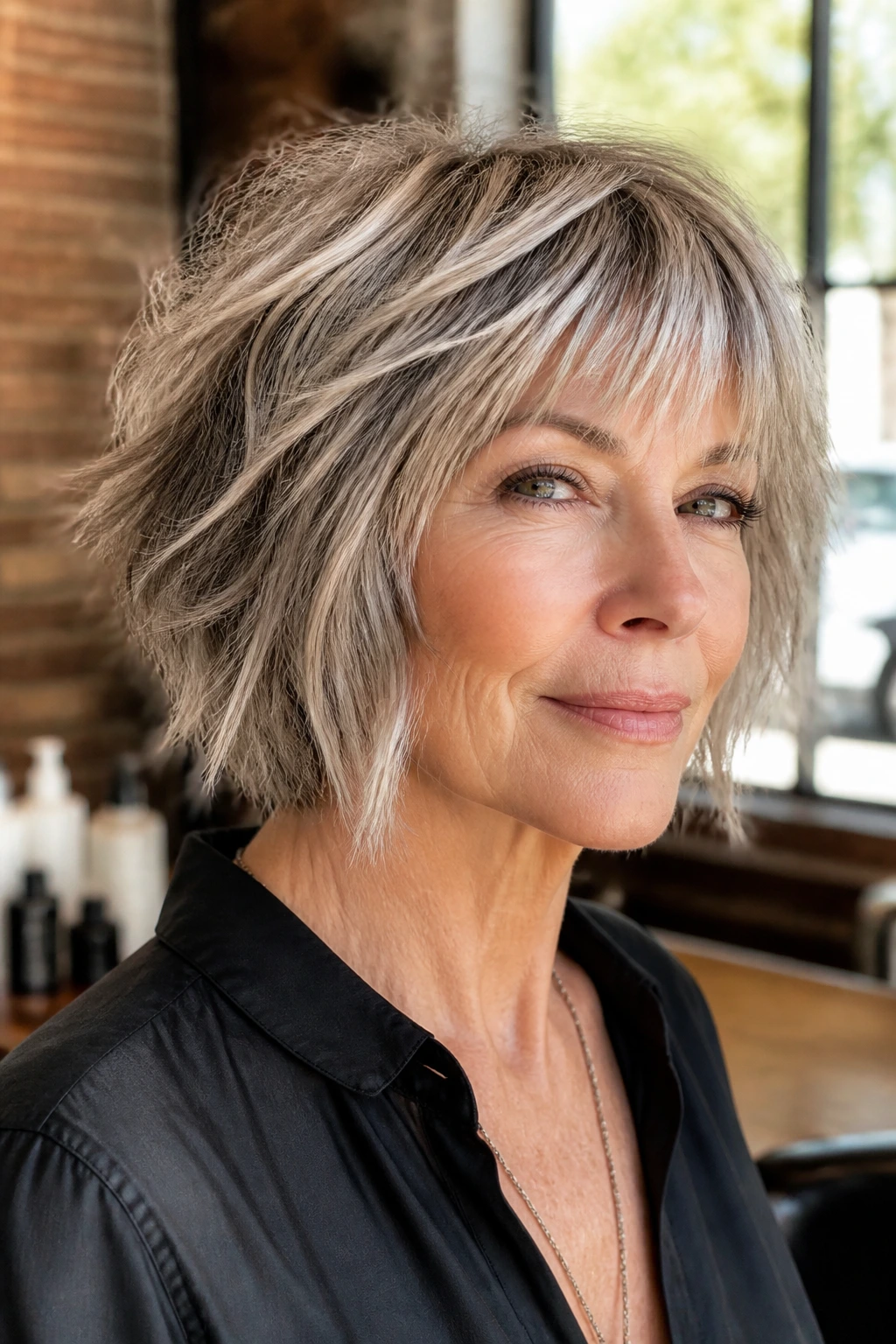
Texture does the heavy lifting: A choppy layer or razor-cut end creates movement where straight, one-length hair can look flat and tired by noon.
-
They don’t fight gray hair: Silver strands tend to feel wirier and drier, which means a tousled shape often looks better than a sleek, overworked blowout.
-
The crown stays alive: Shorter, layered, or lifted cuts keep the top from collapsing, which matters a lot when hair has less natural density.
-
They frame the face without dragging it down: A side fringe, curtain bang, or broken-up bob line can soften the cheek area without hiding your features.
-
They work with glasses and strong jewelry: Small detail, big payoff. A sharp cut around the eyes or jaw keeps frames and earrings from fighting the hair.
-
They let you choose your level of rebellion: You can go full pixie, or you can keep shoulder length and still get that slightly undone, rock-and-roll finish.
A rock chick look is not about dressing like a teenager. It’s about hair with shape, movement, and a little nerve. That’s the whole game.
Why Rock Chick Hair Keeps Working After 50
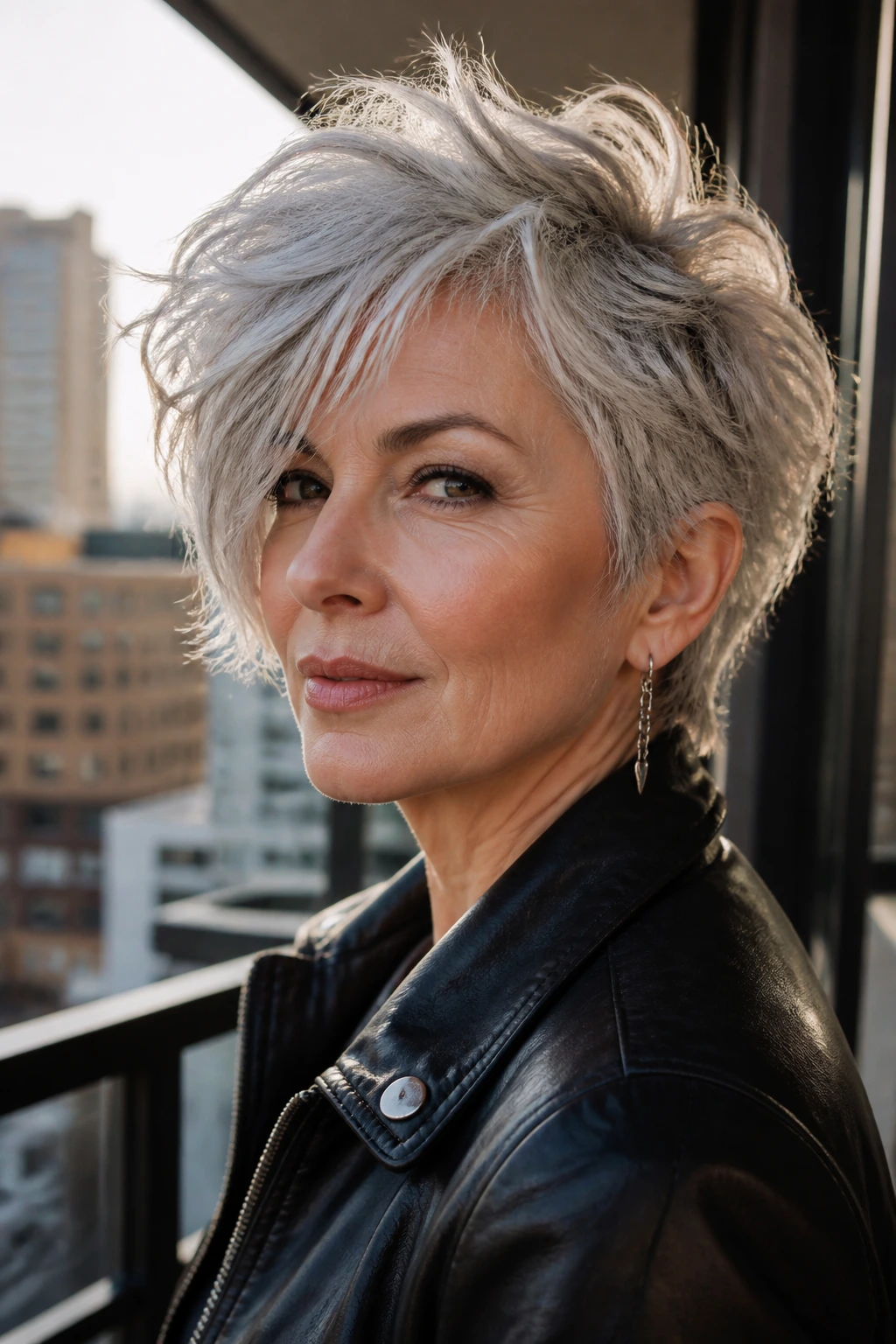
The cleanest answer is this: mature hair usually needs shape more than it needs length. Once the ends get a little thinner or the crown starts lying flatter, a blunt, heavy cut can make everything look dragged down. A rock chick cut fixes that by creating lift, gaps, and movement on purpose.
There’s also the matter of texture. Gray hair often comes in coarser, drier, or more resistant to smoothing. Instead of wrestling that into submission, these styles make use of it. A shag turns roughness into body. A pixie turns density changes into sculpted lines. A lob with sliced layers lets the hair swing instead of hang.
And no, this does not mean “more layers” is always better. Too many layers can turn fine hair see-through, and too much razoring can chew up thick hair until the ends look frayed. The smart versions of these cuts keep enough weight in the right places — usually around the perimeter or the nape — so the style still has a body, not just fluff.
That balance is why these looks age so well. They read as intentional. They don’t apologize. They also don’t demand a curling wand every single morning, which, frankly, is a sensible deal.
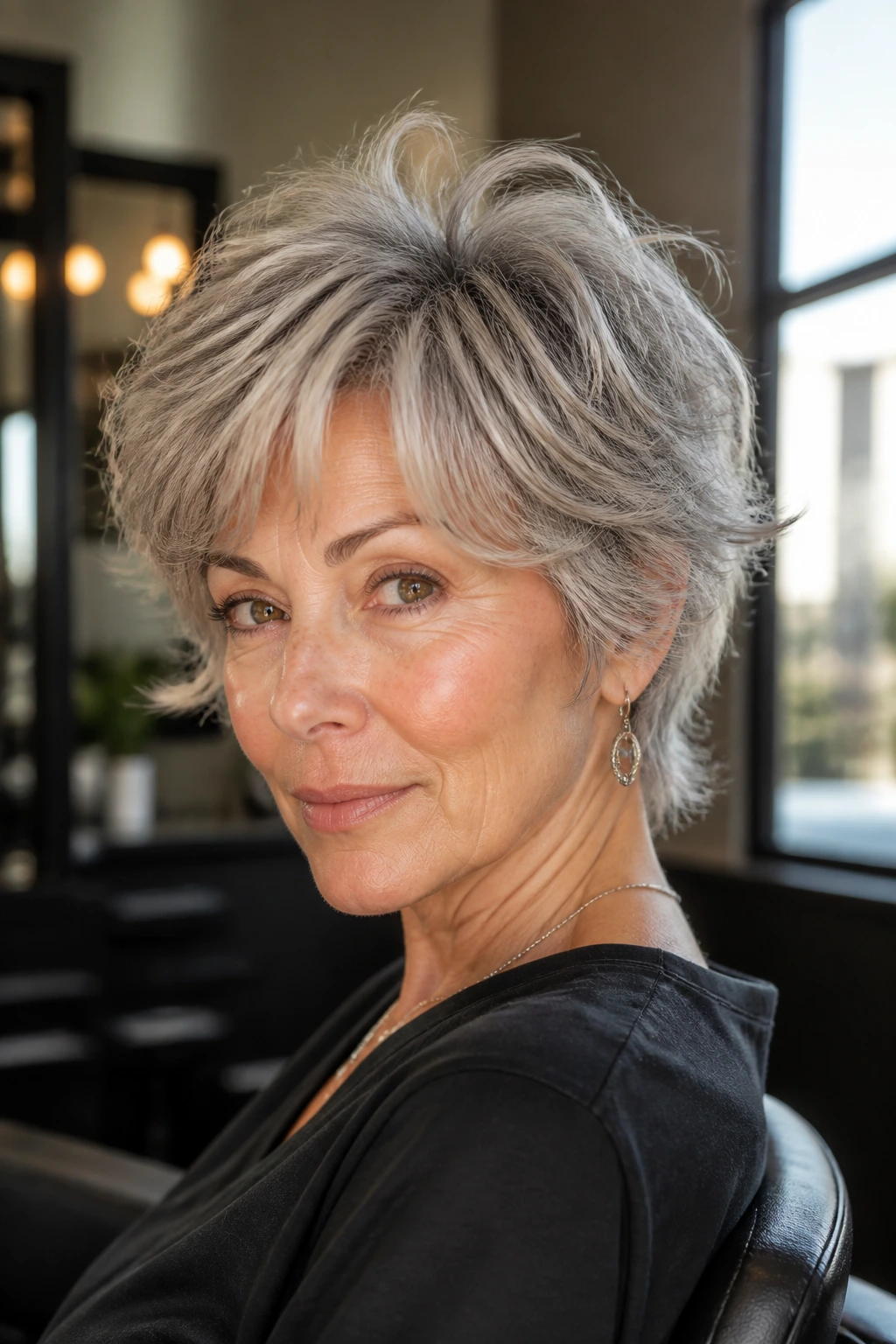
1. The Crown-Lift Pixie
This one has a little swagger built in. The crown is kept light and airy, the sides stay close enough to show the cheekbones, and the top has just enough length to push up with mousse or a quick blast from the dryer. It’s the kind of pixie that looks sharp in silver, salt-and-pepper, or rich brunette.
Why it works: Fine hair benefits from a cut that removes bulk where it lies flat and keeps a bit of height where the eye lands first. A crown-lift pixie does exactly that. Ask for short, tapered sides and point-cut texture on top, not a blunt helmet of hair that will collapse by lunchtime.
A tiny amount of paste or root-lift spray is enough here. The point is separation, not stiffness. If your hair sticks up too easily in the crown, have the stylist leave a touch more weight there and keep the nape tighter.
What to ask for
- Short, tapered sides
- Soft point cutting through the top
- A crown that’s light, but not thinned to nothing
- A neckline that hugs cleanly
Best on: Fine to medium hair, especially when you want lift without a lot of styling time.
Styling note: Dry the top forward first, then push it back with your fingers. That little change in direction gives the cut its attitude.
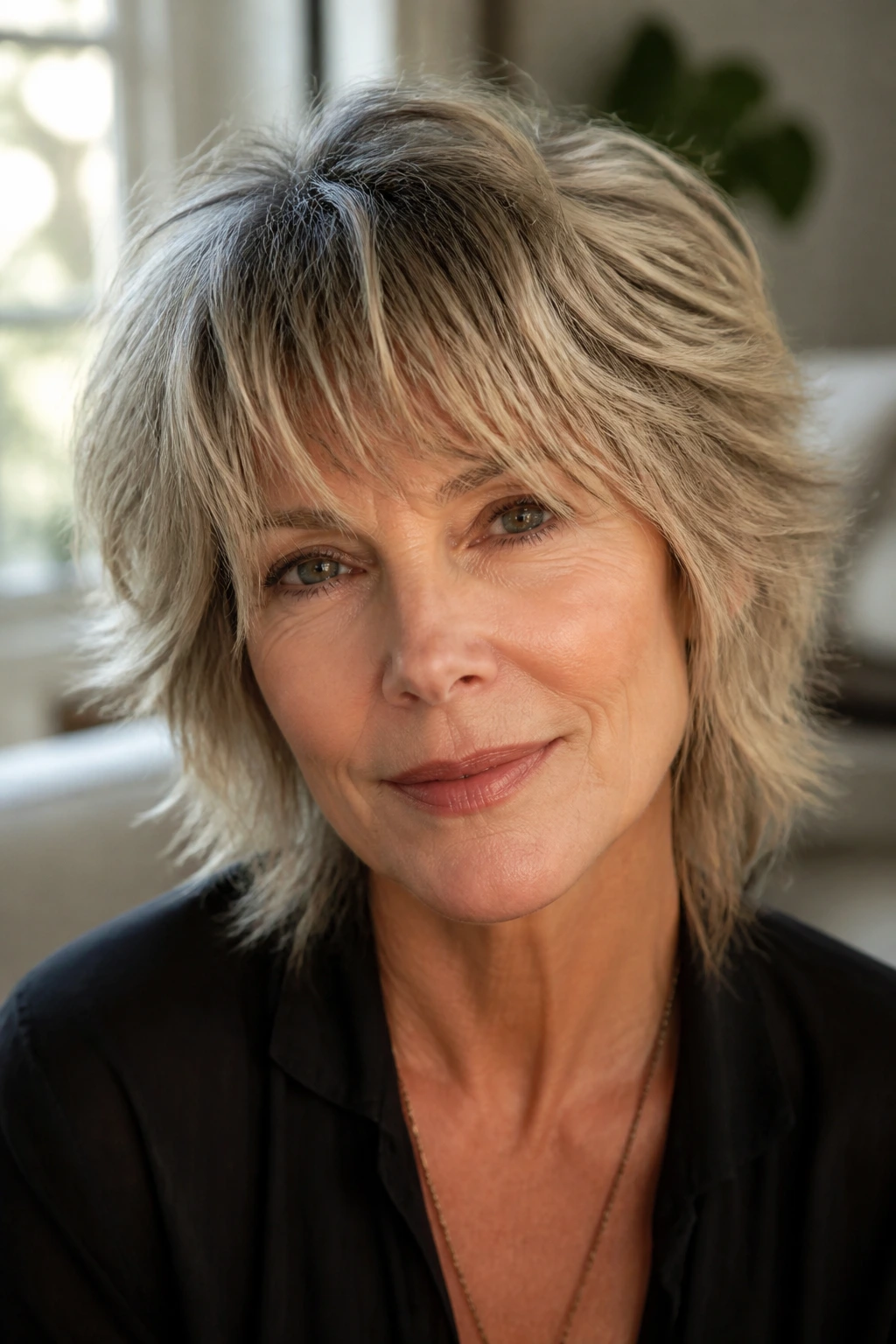
2. The Curtain-Bang Shag
A shag with curtain bangs is one of those cuts that looks casual in the best possible way. The fringe opens away from the face, the layers fall in broken pieces, and the whole shape has that slightly lived-in energy that a flat blowout can’t fake. It’s flattering without trying to be sweet.
Why women keep coming back to it is simple: it softens the forehead and the cheeks at the same time. If hair has started to lose density, the loose fringe can create the feeling of fullness up front without closing in on the face. And if your wave has a mind of its own, this cut gives it a job.
Ask for a fringe that starts a little longer than you think you need. Curtain bangs shrink once they dry, and if they sit too high above the brow, the whole shape can feel choppy in the wrong way. A good shag should look broken up, not hacked at.
3. The Collarbone Lob with Edge
A collarbone lob is a good answer when you want length but don’t want your hair hanging in a tired straight line. The trick is in the ends. Instead of cutting them blunt and heavy, have them sliced or lightly razored so they move when you turn your head.
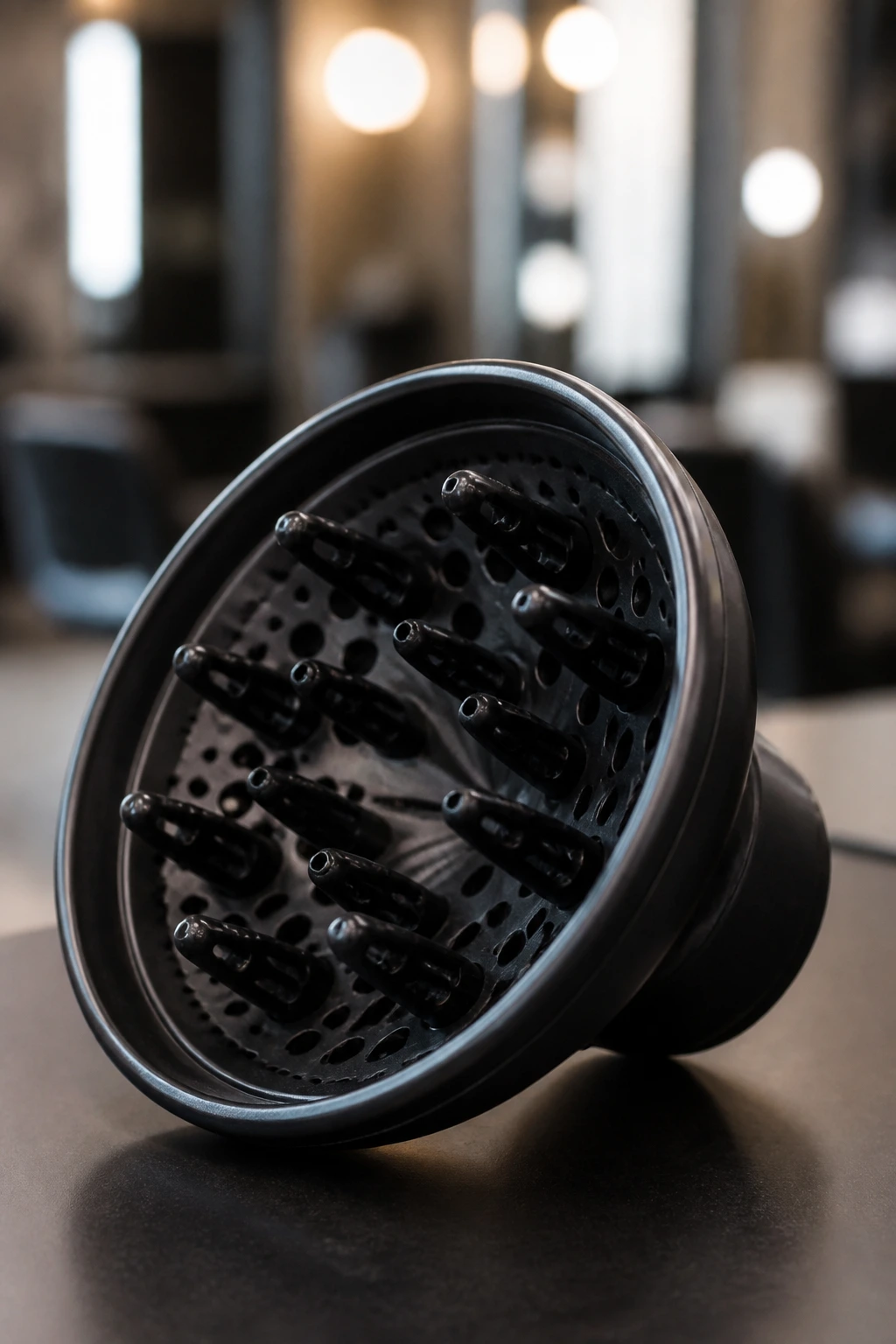
That little bit of edge changes the whole mood. The cut still reads polished, but the ends flick instead of sit there. If your hair is straight, a bend through the mid-lengths with a 1-inch iron keeps it from looking too office-clean. If it’s wavy, you may not need the iron at all — just a bit of smoothing cream and a diffuse dry.
This is one of the safest places to start if you’ve worn longer hair for years and you’re not ready to chop it off. It keeps the neck visible, which helps the shape feel lighter, and it still gives you enough length for a clip or low bun on the days you can’t be bothered.
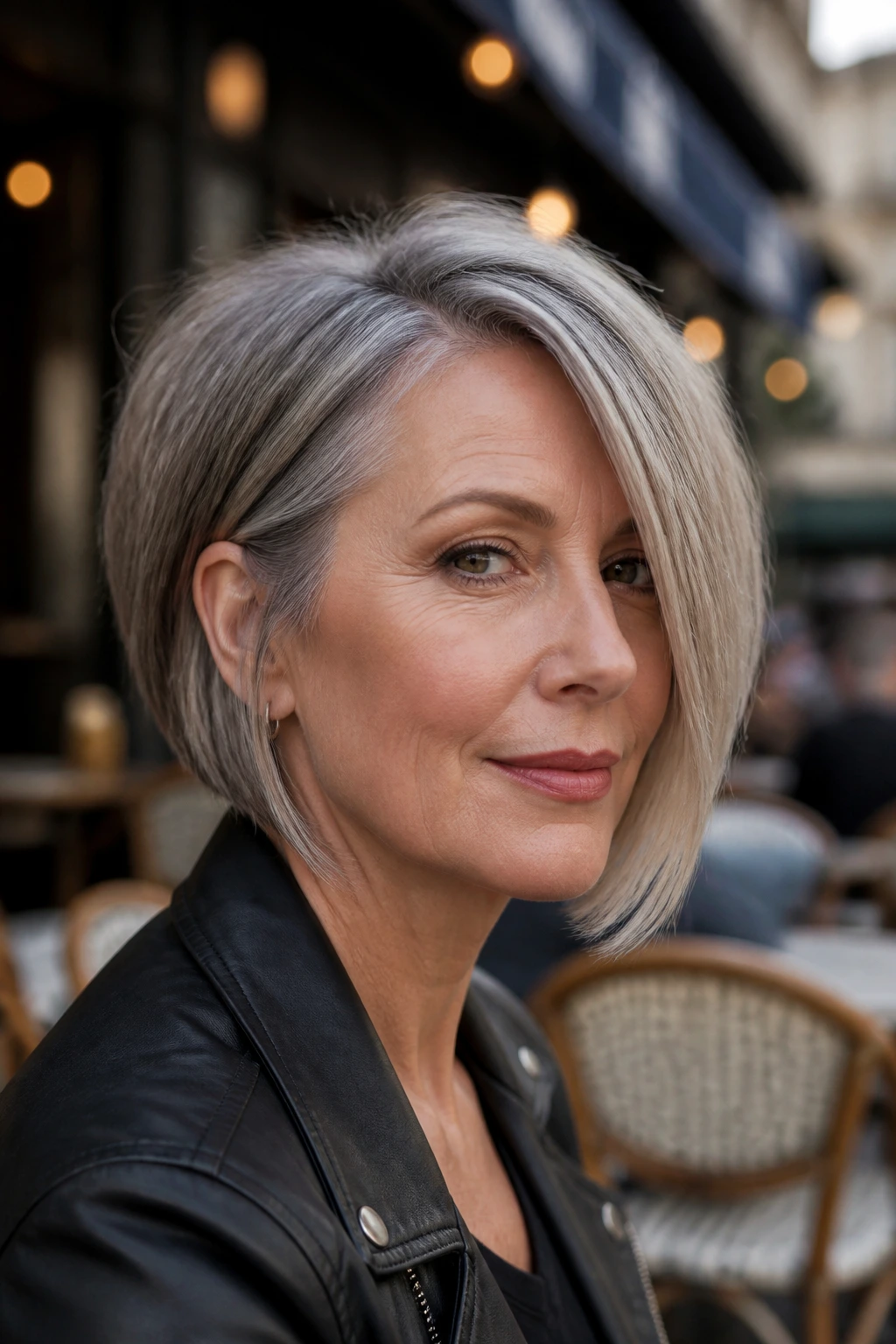
4. The Asymmetrical Bob
A bob with one side a touch longer can sharpen the whole face in a way a symmetrical cut often can’t. The angle draws the eye down and across, which gives the jawline more definition and keeps the style from feeling too neat. A little imbalance is the point.
Here’s what I like about it: it has built-in attitude. Not cartoonish attitude. Just enough. If one side skims the chin and the other sits closer to the cheek, the cut feels intentional even when you’ve only done a rough blow-dry. It’s especially good for women who wear glasses, because the line of the bob can sit under or around the frame without competing with it.
Keep the asymmetry subtle if your hair is very fine. Too much difference between sides can look gimmicky on softer textures. The sweet spot is usually half an inch to an inch of change — visible, but not theatrical.
5. The Feathered Bixie
The bixie is the sweet spot between a bob and a pixie, and that in-between quality is exactly why it works. It keeps more softness around the ears and nape than a cropped pixie, but it has enough lift and shape to feel sharper than a standard short bob.
This cut shines on hair that wants movement but not bulk. Feathered sides stop it from looking blocky, and the top can be styled forward, off the face, or tousled with a fingertip-sized dab of styling cream. If you’ve ever looked at a too-short cut and thought, I need a little more hair than that, this is the lane.
Ask for feathering around the temple and cheek area, not aggressive thinning. There’s a difference. Feathering gives lightness. Over-thinning leaves the ends wispy in a way that can make mature hair look sparse.
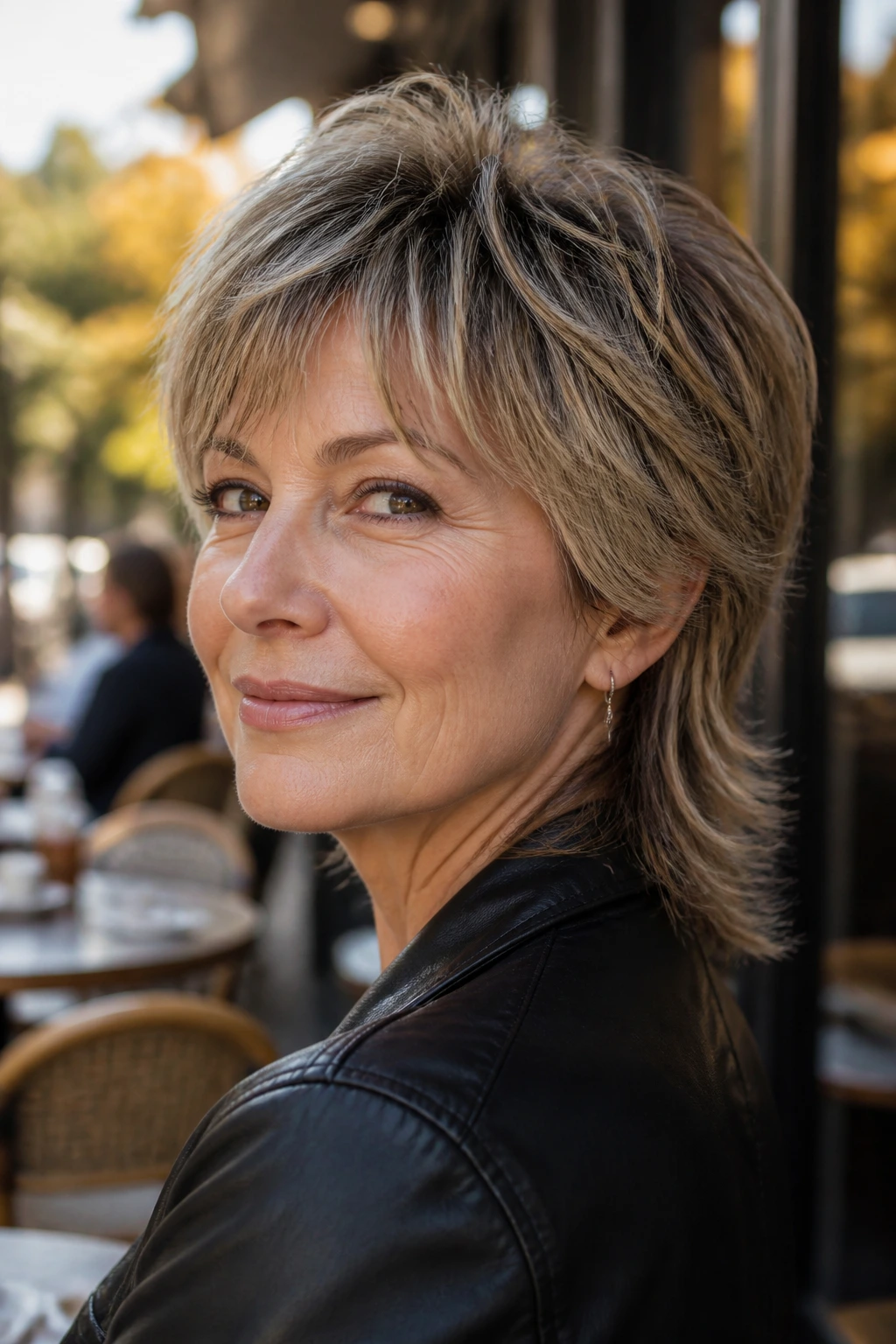
6. The Soft Mullet
A mullet with a softer back sounds bold on paper and wearable in practice. The magic is in the transition. The top and sides stay neat enough to flatter the face, while the back carries a little more length so the whole cut has swing and movement.
If that sounds scary, relax. The best versions are not punk-show caricatures. They’re more like a shag that got a little braver in the nape. The top can be pushed up, the fringe can be wispy or curtain-style, and the back can rest on the collar instead of floating away from it.
This cut is excellent if you have thick hair and want to remove weight without losing personality. It’s also good for women who like a bit of drama with very little daily effort. Air-dry it with texturizing spray and your hands, and the shape almost does the work for you.
7. The Shoulder-Length Riff
Shoulder length can sound safe until you add rough layers and a broken-up finish. Then it turns into something with a little more bite. The hair still brushes the shoulders, which keeps the style versatile, but the ends don’t hang there in one straight line like a curtain.
This cut works well on people who need a practical length for ponytails, clips, or gym days. It also plays nicely with waves that kick up at the ends. A blunt shoulder cut can feel heavy fast; a layered version has room to breathe. If your hair is medium to thick, this can take a surprising amount of weight out without making the shape feel thin.
A middle part keeps it modern, but a deep side part gives it more rock energy. Try both. The same cut can look soft one day and a little more defiant the next.
8. The Curly Halo Shag
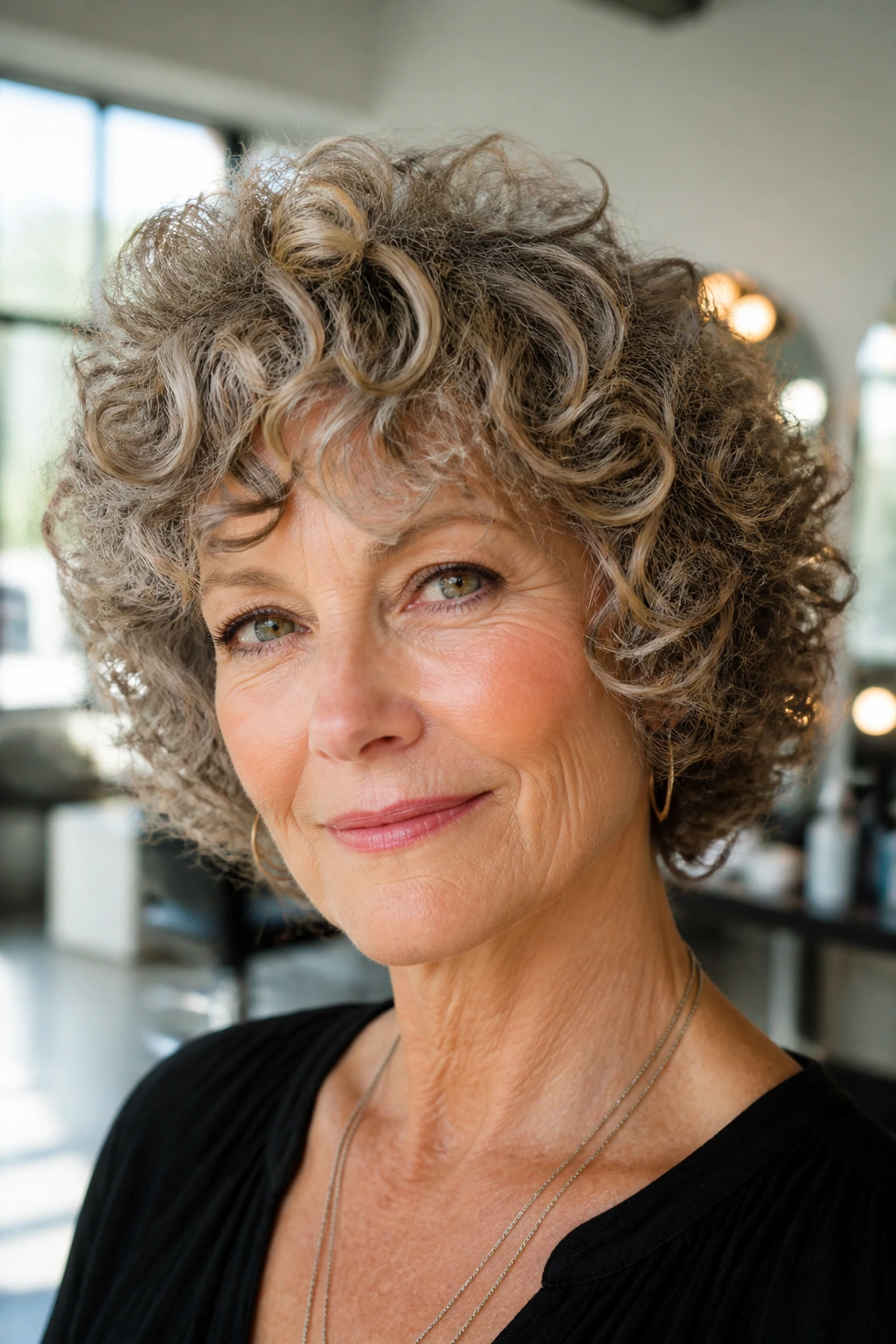
Curly hair and rock chick style are old friends. They just need the right shape. The halo shag builds layers around the crown and cheeks so curls stack in a round, lifted shape instead of spreading into a triangle or falling flat at the roots.
The best thing about this cut is how little it needs once it’s done correctly. A curl cream, a diffuser, and a small amount of gel at the ends are often enough. The layers should be cut where your curls actually spring, not where they look longer when wet. That matters more than most stylists admit.
If your curls have gotten looser or drier over time, this style still works. It lets the hair keep its bounce while taking enough weight off the bottom so the top doesn’t feel dragged down by the end of the day.
9. The Micro-Fringe Crop
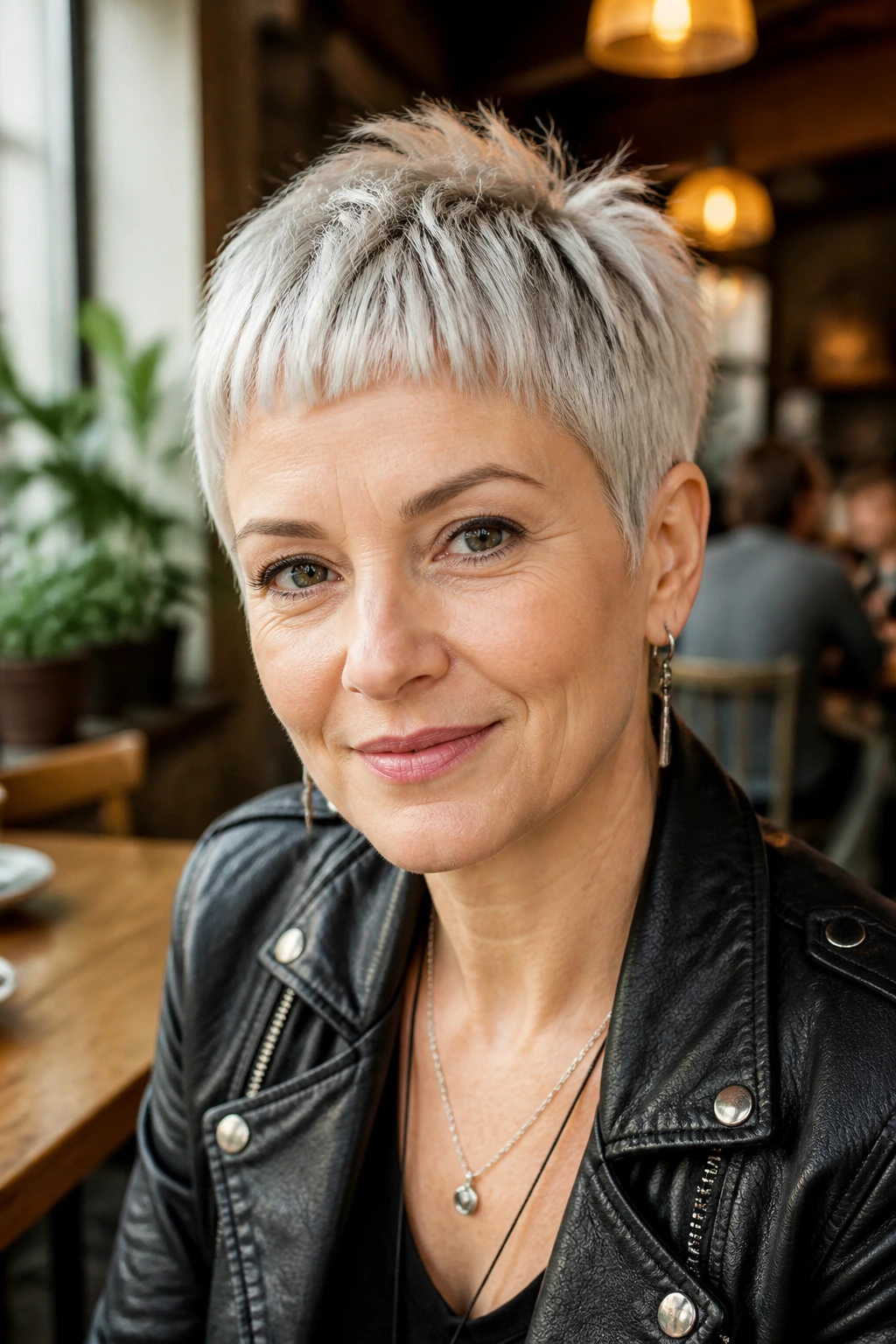
A tiny fringe changes the whole mood of a cropped cut. Suddenly the eyes are the center of the look, and the hair has that slightly rebellious, not-here-to-be-neat feel that reads rock without much effort. It’s sharp. It’s playful. And it can be incredibly flattering on strong features.
This one is not for everyone, which is part of its charm. It works best when you’re comfortable showing your face and when your forehead can handle a shorter bang line without feeling boxed in. Keep the crop close at the sides and textured on top so the fringe doesn’t look like a separate piece stuck on the front.
Micro-fringes are easier to wear on straight or lightly wavy hair. On very curly hair, they need a bit more maintenance. If you’re the kind of person who likes a dramatic lip or bold glasses, this haircut gives those details room to land.
10. The Piecey Blunt Bob
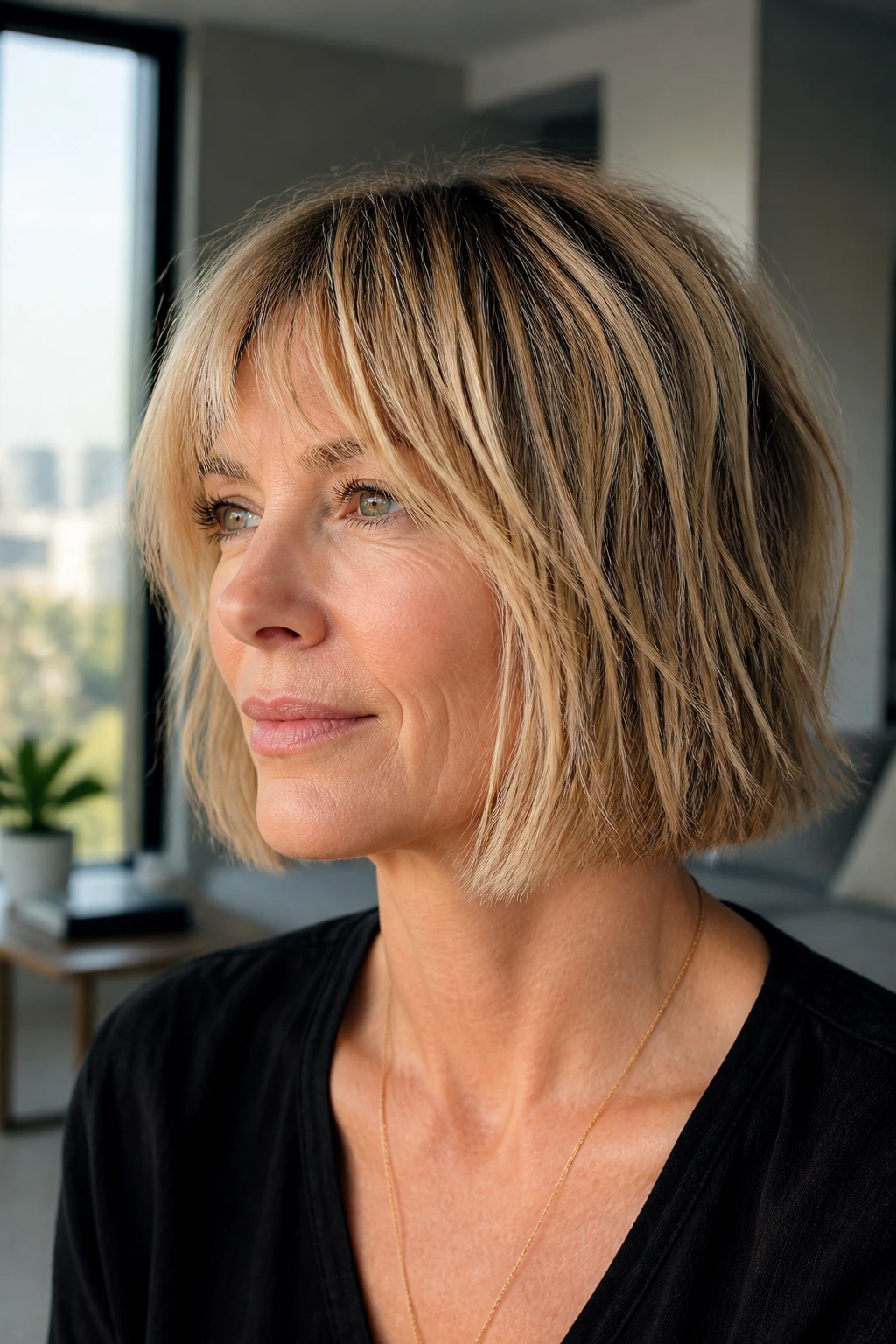
A blunt bob sounds polished, maybe even a little serious. Add piecey ends and it turns meaner in the best way. The line at the bottom gives the cut weight, while the texture keeps it from looking too smooth or precious.
This is a strong choice for thick hair because it preserves the body that hair already has. Instead of removing too much, the stylist can soften the interior or slice into the ends just enough to stop the bob from looking like a block. If the hair is straight, a flat iron pass with a tiny bend at the ends gives it the right finish.
You do need some upkeep with this one. A blunt shape shows growth faster than a shag. But if you like clean edges with a bit of grit, it’s a very good trade.
11. The Undercut Pixie
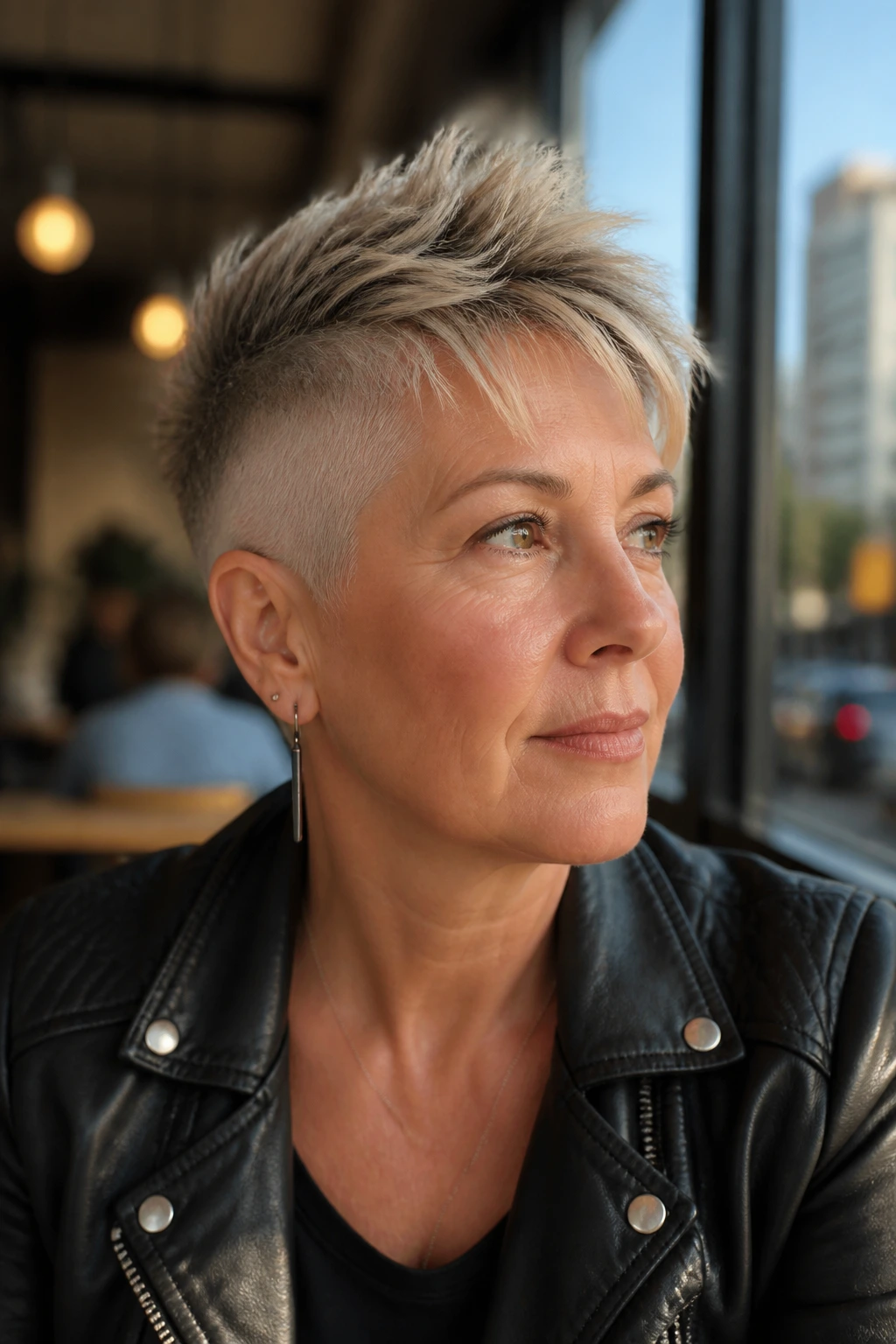
An undercut pixie is the haircut equivalent of taking the weight off your shoulders, literally and visually. The sides or nape are cut very close, sometimes with a clipper, while the top is left longer and styled with texture. That contrast is where the energy comes from.
It’s a smart option for thick hair that feels too bulky in a regular short cut. It also helps in warm weather, though I’m not using that as a lazy excuse. The real payoff is shape. The top can be swept back, pushed forward, or mussed up into a little ridge, while the undercut keeps the silhouette tidy.
This cut can be softer than people expect. You don’t have to make it severe. A few longer pieces around the temples or a feathered top keeps it feminine, if that word still means anything useful to you.
12. The Sliced Wavy Lob
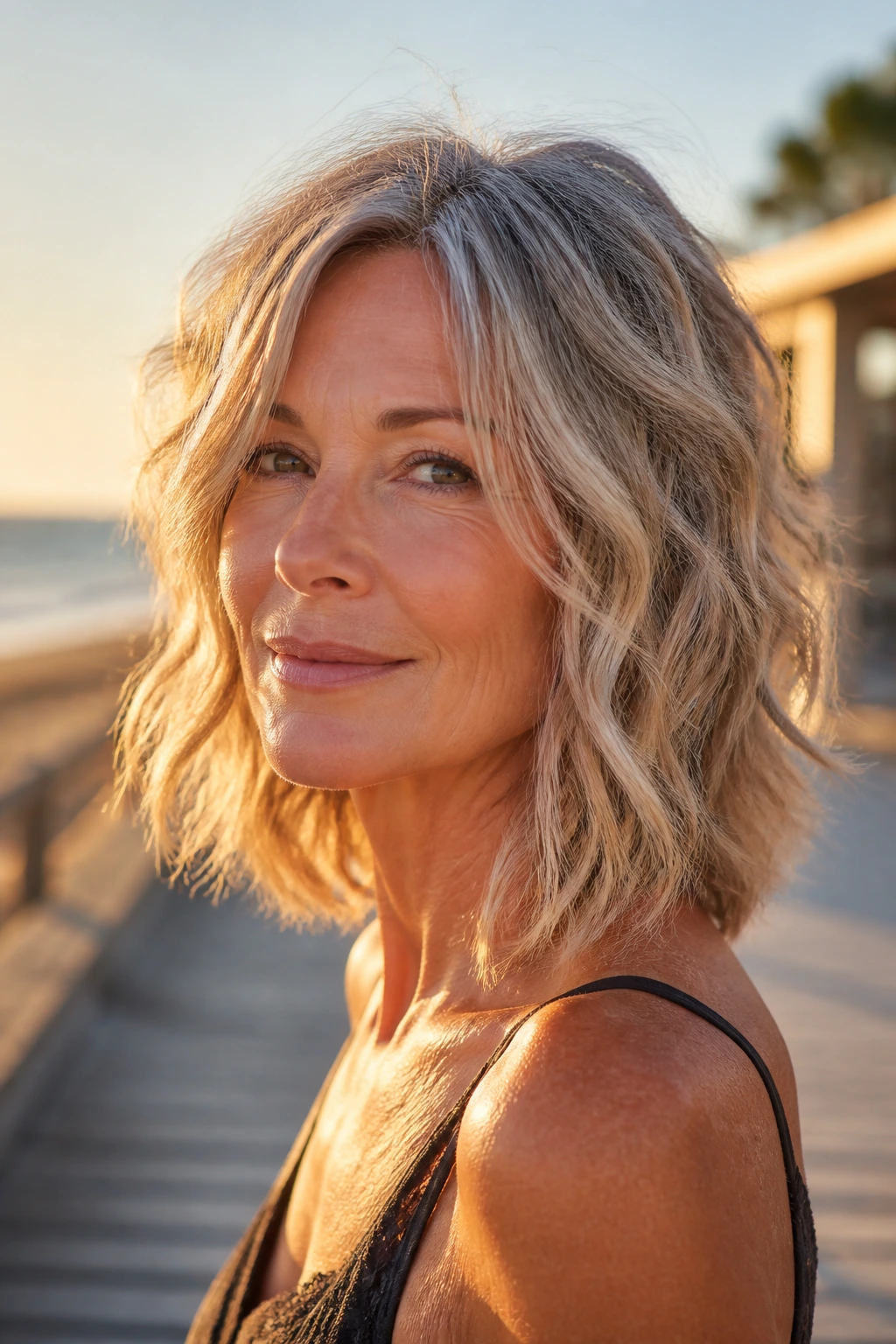
The sliced lob is a good friend to natural wave because it removes just enough weight to let the bend show up. The ends are cut so the line doesn’t feel thick and clunky. There’s movement, but not too much sprawl.
If your hair tends to puff around the face, this version helps. Ask for face-framing pieces that start around the cheekbone or mouth rather than a heavy layer that begins too high. The difference is subtle on paper and obvious in the mirror. One gives structure; the other can make wave look fuzzy.
A little sea salt spray can make this cut feel more rocker, but I’d keep it light. Too much and the ends go crunchy. The goal is touchable separation, not dried-out beach static.
13. The Silver Side-Sweep Crop
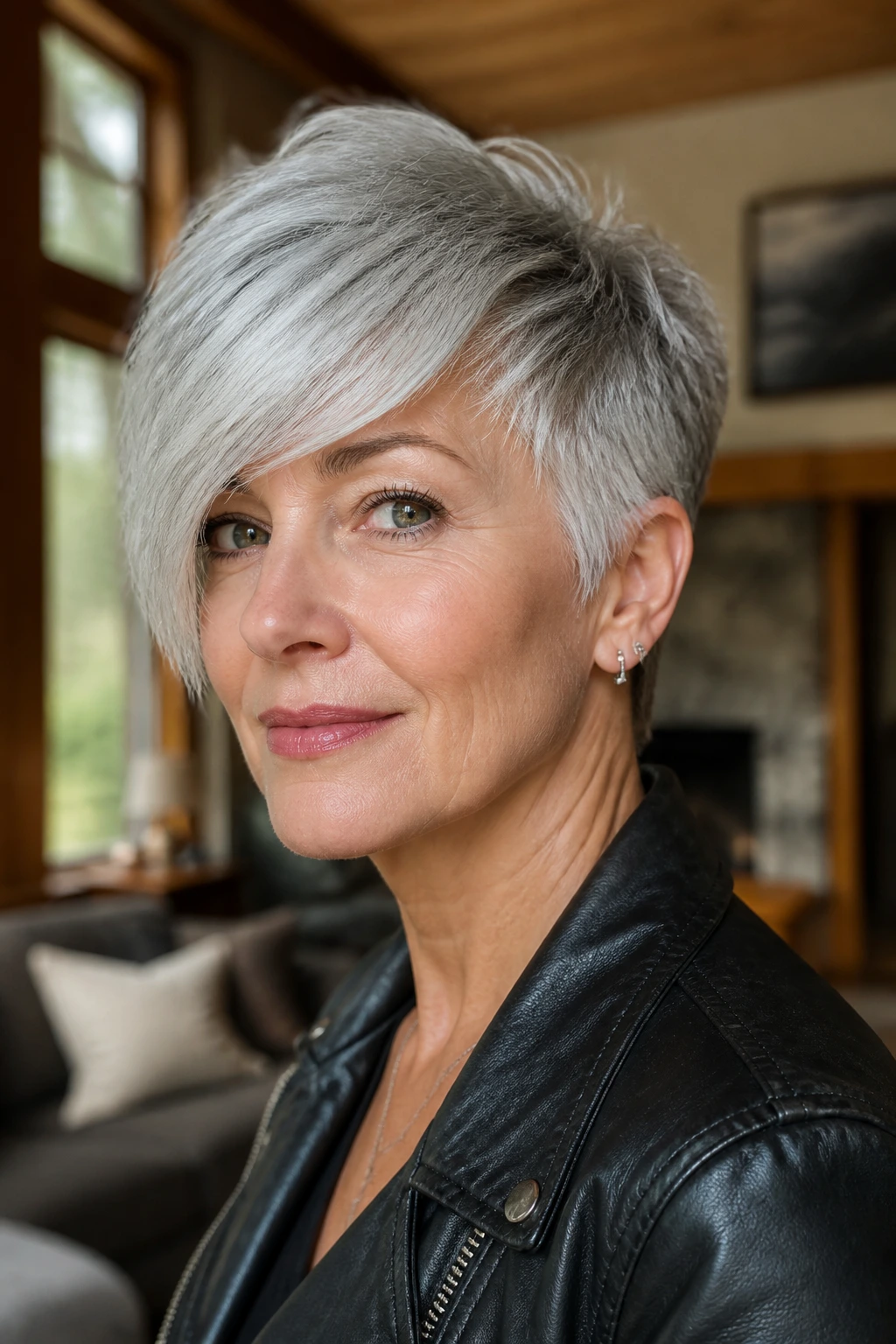
Gray hair loves a strong shape. A side-swept crop gives it exactly that. The sweep adds motion across the forehead, the shorter sides keep the neck and jaw visible, and the silver color does the rest.
This is one of those styles that looks more expensive than it is to maintain, which I always appreciate. A bit of mousse at the roots, a quick blow-dry with a small brush, and the whole thing reads deliberate. If your silver hair has become wiry, a light cream on the ends can soften the surface without flattening the lift.
A side sweep also works beautifully with a strong brow or statement earrings, because the hair moves away from the center of the face. It’s not a timid cut. It knows where to point the eye.
14. The Rocker Wedge
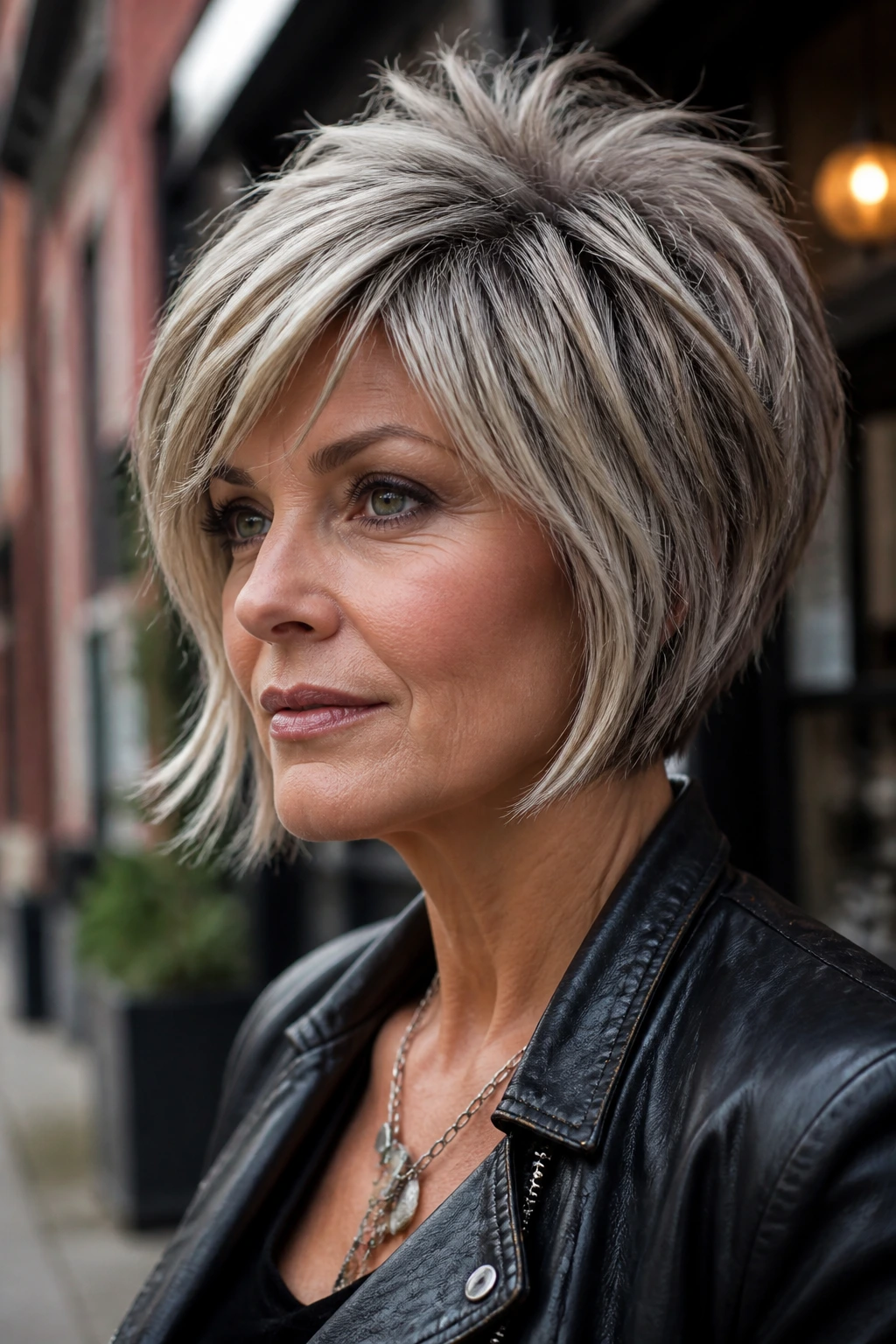
The wedge got a bad reputation in some decades, which is a shame because the modern version can be very cool. The back is stacked enough to lift the crown, while the sides stay clean and curved toward the jaw. The result is a sharp shape with movement, not a helmet.
This style works best when the cut is softened with texture at the top. If it’s left too precise, it can feel dated fast. But with a little razoring or point cutting, the shape becomes lively and surprisingly flattering, especially on straight to slightly wavy hair.
If you want a haircut that behaves in the morning without needing much heat, this is worth a look. It tends to fall back into place well after a wash, and the back keeps the neck feeling open.
15. The Long Layer Curtain Cut
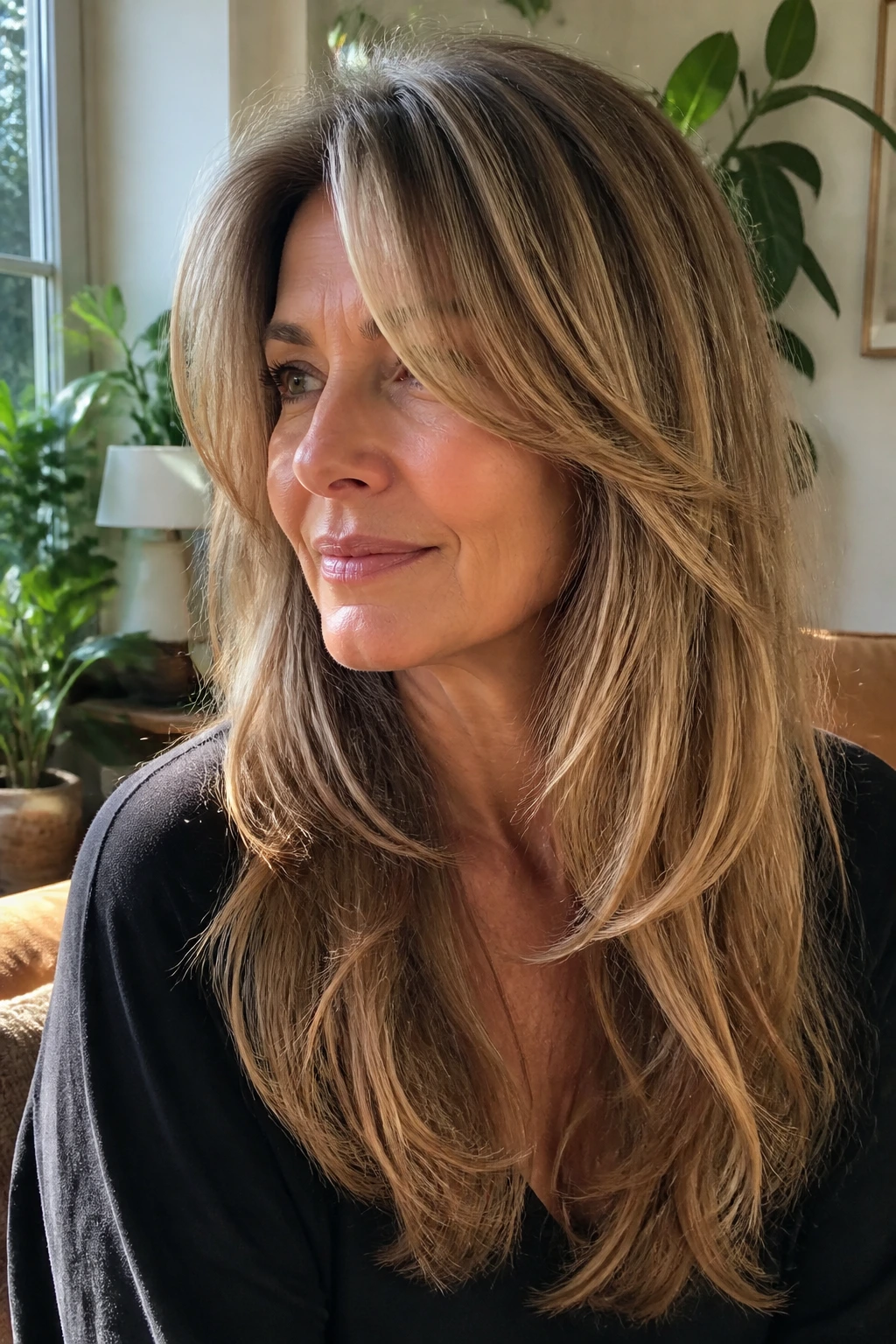
Not everyone wants short hair. Fine. Keep the length and make the layers work harder. A long curtain cut keeps the perimeter below the shoulders while adding movement around the face and through the mid-lengths, so the hair doesn’t hang like one heavy sheet.
This is a good answer when you want rock chick energy without giving up ponytail length. The layers should be soft enough to move, but not so numerous that the ends disappear. A curtain fringe can be blended into the front if you want more face-framing shape, though it can be skipped if you’d rather keep the forehead clear.
The thing to watch with long hair after 50 is drag. Heavy, one-length lengths can make the face feel lower than it is. This cut avoids that by breaking up the line, especially if you add a bend with a large barrel iron or a loose blowout brush.
16. The Faux Hawk Sweep
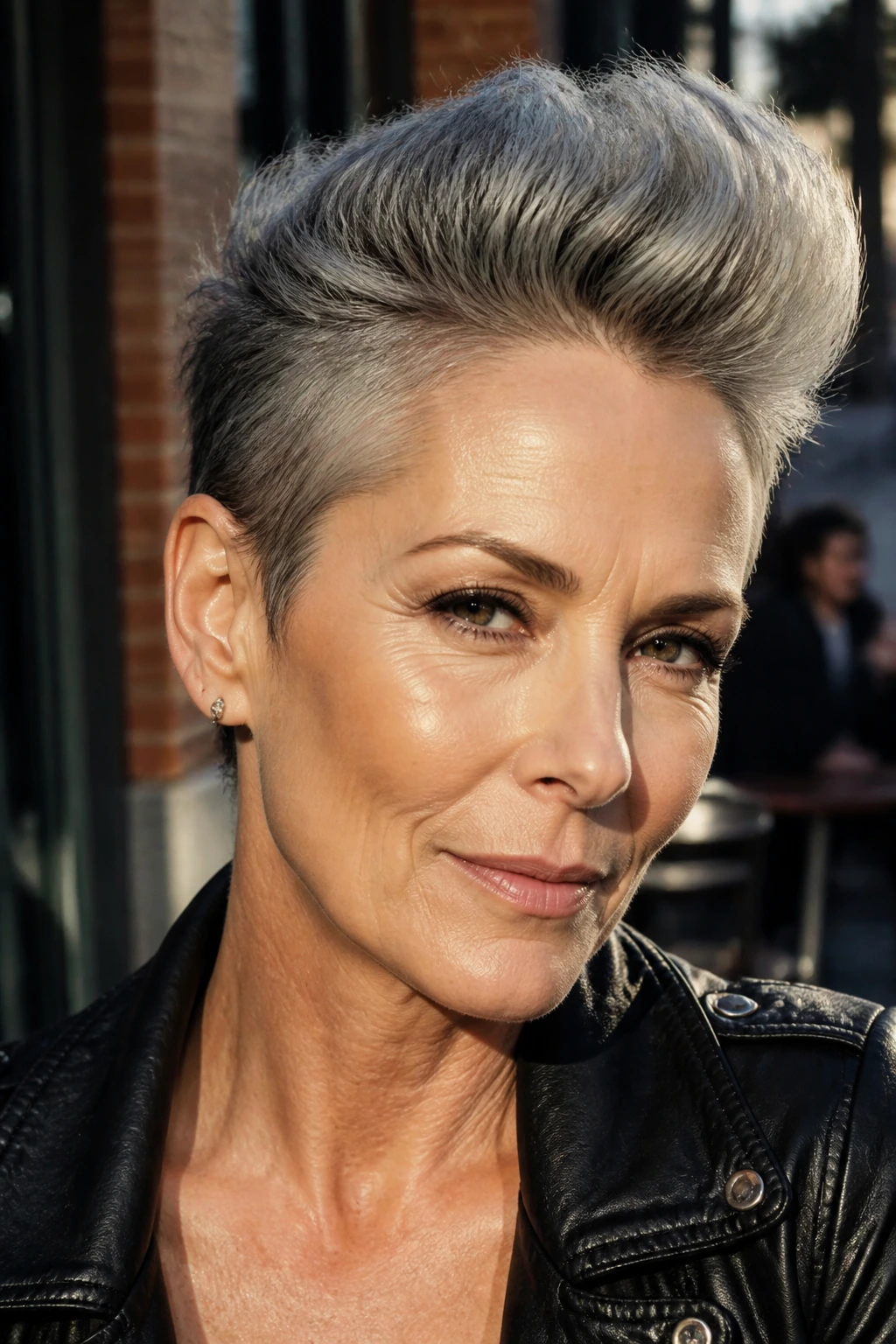
A faux hawk sounds dramatic until you see the softened version. Then it’s just a smart way to create height through the middle of the head while keeping the sides flatter and neater. The look says confidence without requiring a clipper cut or a full mohawk commitment.
It’s a strong choice for an event, a night out, or any day you want your hair to have a little bite. The center section can be teased lightly at the roots and sprayed, then brushed into a ridge or soft sweep. The sides stay tucked close so the whole shape remains wearable.
This one is especially fun on shorter cuts with enough top length to sculpt. If your hair is fine, start with root foam. If it’s thick, a bit of smoothing cream on the sides stops the shape from ballooning outward.
17. The Chin-Length Underlayer Bob
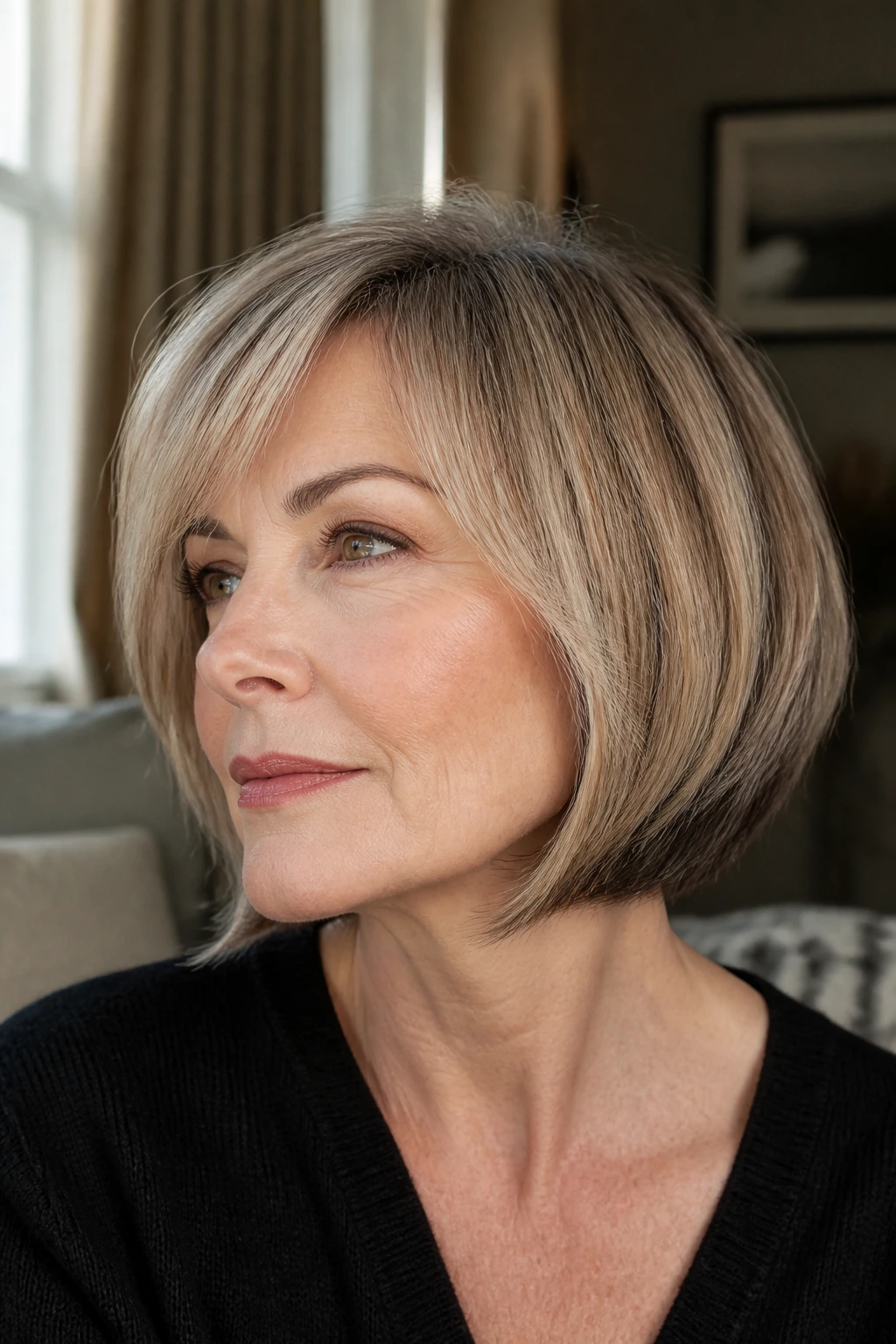
A chin-length bob can feel crisp and smart, but the underlayer is what gives it edge. Hidden shorter pieces beneath the surface add lift and a touch of swing, so the cut doesn’t sit like a solid block around the jaw.
That underlayer matters more than most people think. It keeps the bob from turning too bulky near the chin, which can be a problem if your face is narrower or if your hair has a lot of body. With the right dry, the ends flip slightly under or out, and the look changes from safe to sharp in about ten seconds.
This cut plays nicely with a deep side part. It also gives you room to switch moods: smooth it down for a cleaner line, then rough it up a bit with paste for something more rebellious.
18. The Deep-Part Short Shag
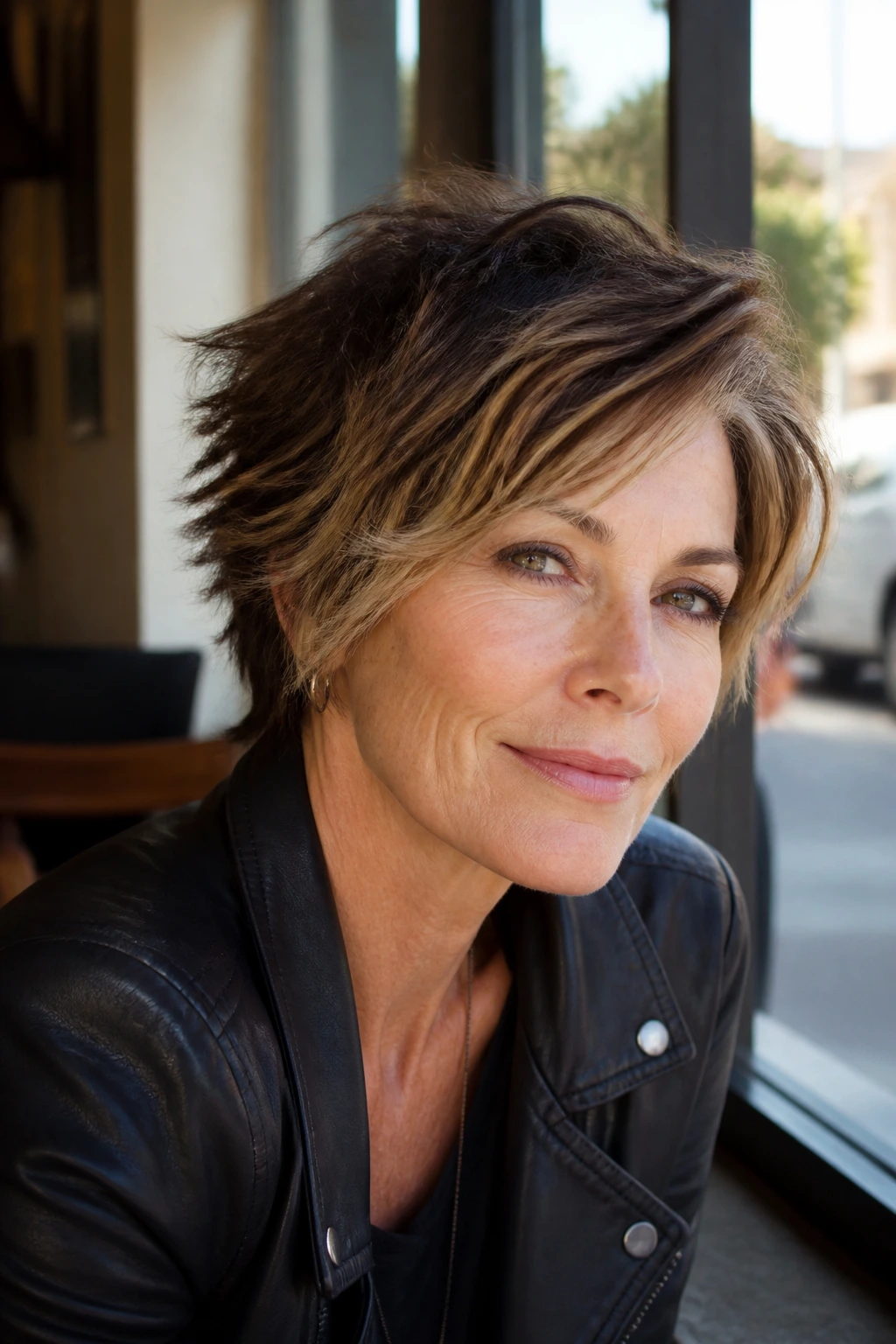
A deep side part can rescue a short cut that feels too neat. Add shaggy layers and you get movement, asymmetry, and a little drama right where the eye lands. It’s a very good fix for hair that wants to lie flat on top but still has some texture in the ends.
The part itself is doing more work than people realize. It lifts one side of the root, creates shape at the front, and gives the fringe a place to fall. A short shag with a deep part can also make glasses easier to wear because the hair doesn’t sit evenly across the frame.
This style is one of the easiest to rough-dry. Scrunch in mousse, direct the top in the opposite direction of your natural part, and let the hair dry with some bend. A tiny bit of paste through the fringe at the end keeps it from looking soft in a sleepy way.
19. The Tapered Soft Pixie
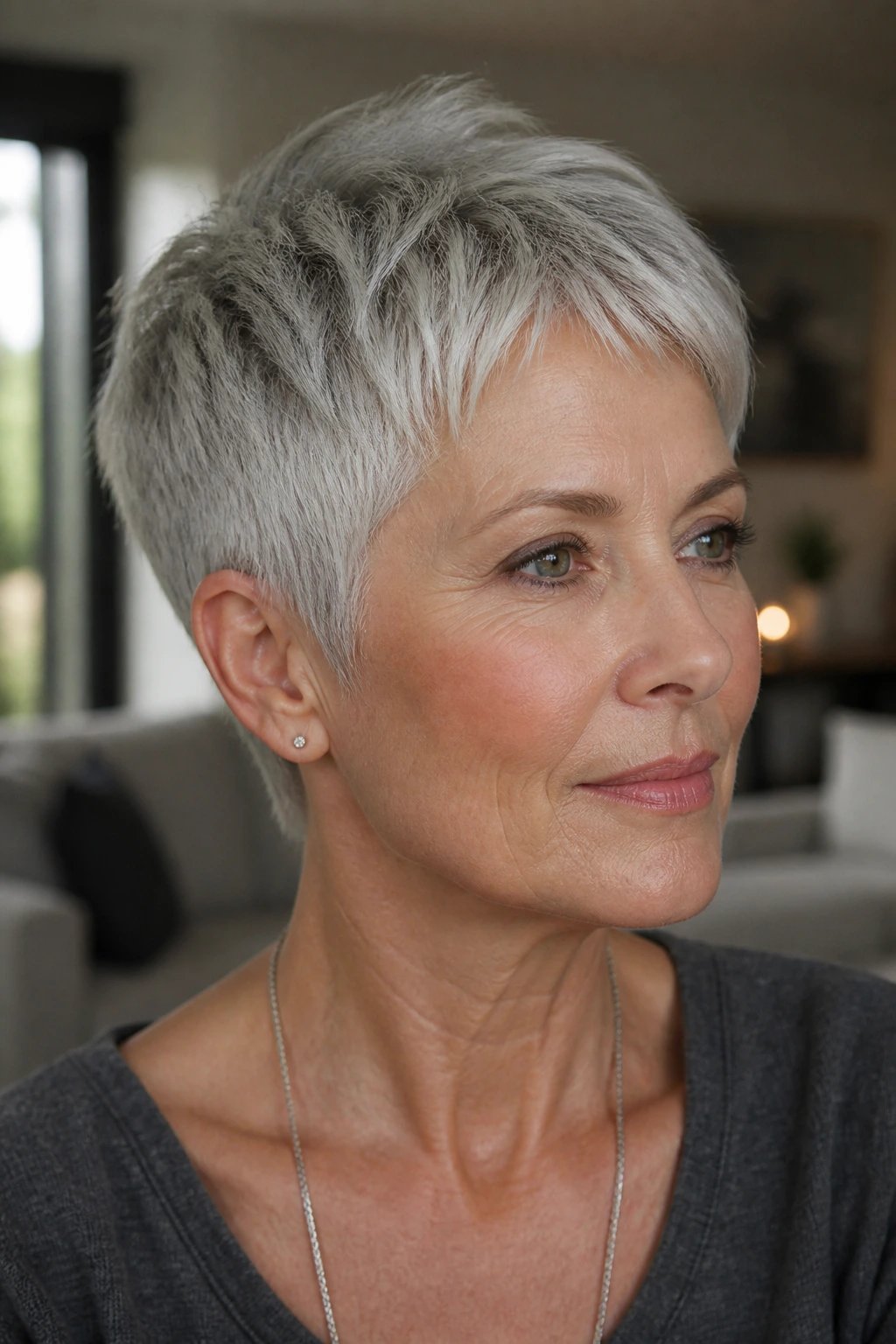
The tapered soft pixie keeps the ears and nape neat while leaving enough length on top to style with fingers. It’s a very practical cut, but not a boring one. The softness comes from the edges, which are cut to blend rather than stand out.
If you like shorter hair but don’t want anything too severe, this is a good middle ground. The taper makes the back lie close to the head, which is flattering if you want to show off the neck. The top can be lifted for a little height or brushed forward for a more relaxed finish.
I’d call this one a quiet rebel. It doesn’t shout. It just knows exactly where it wants the head shape to go.
20. The Shoulder-Graze Wolf Cut
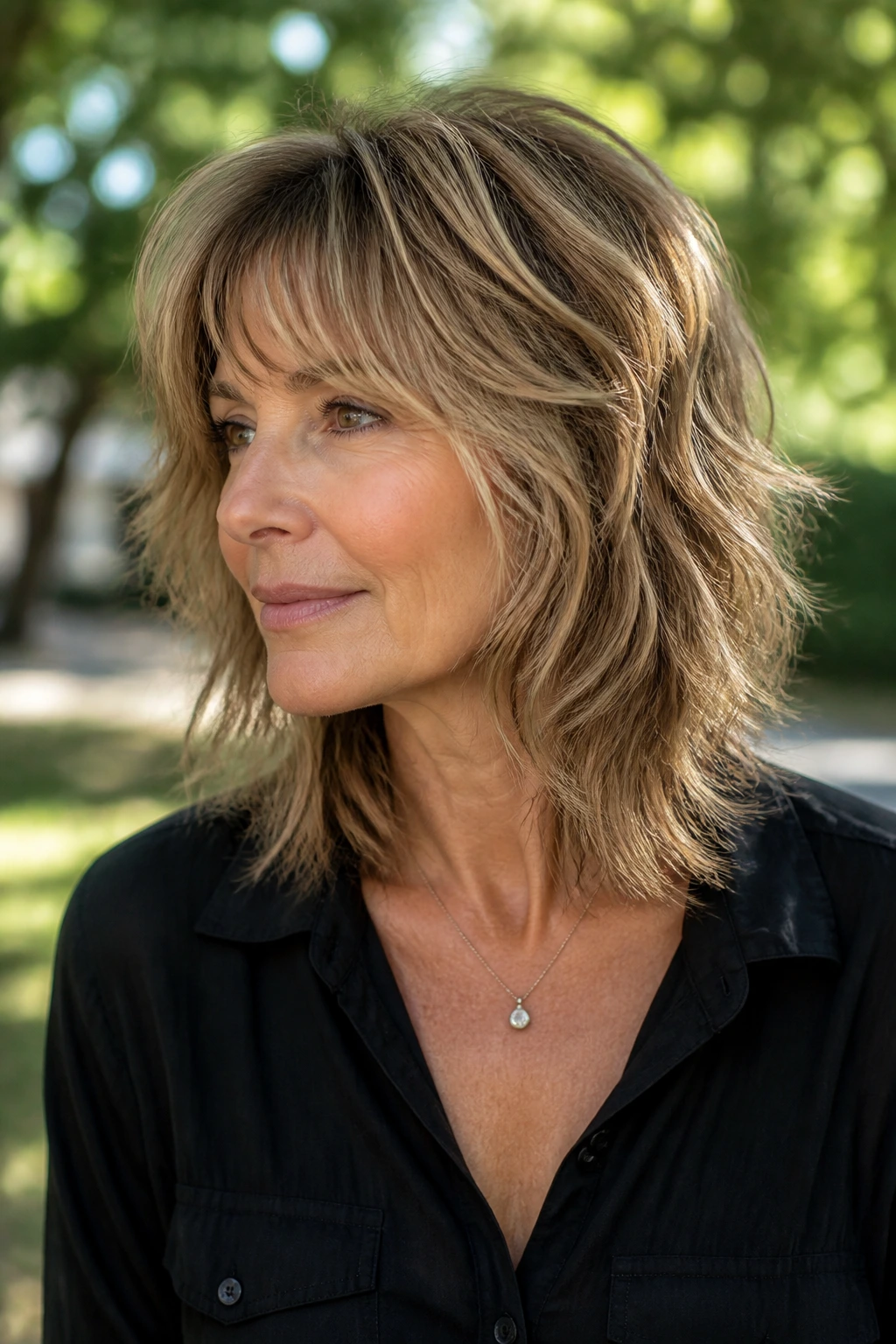
A wolf cut that grazes the shoulders has more bite than a standard layered cut and less chaos than some of the heavier versions people post online. The top is airy, the mid-lengths are broken up, and the ends are left shaggy enough to move.
This style works best when the hair has some natural bend. If it’s pin-straight, you’ll need a little styling help to bring out the shape. If it’s wavy, the haircut can look almost effortless, which I say with caution because effortless usually still takes a diffuser and a bit of product.
What I like most here is the balance between softness and edge. The cut can be worn a little smoother for day-to-day life, then roughed up more when you want the ends to kick out.
21. The Curved Flick Bob
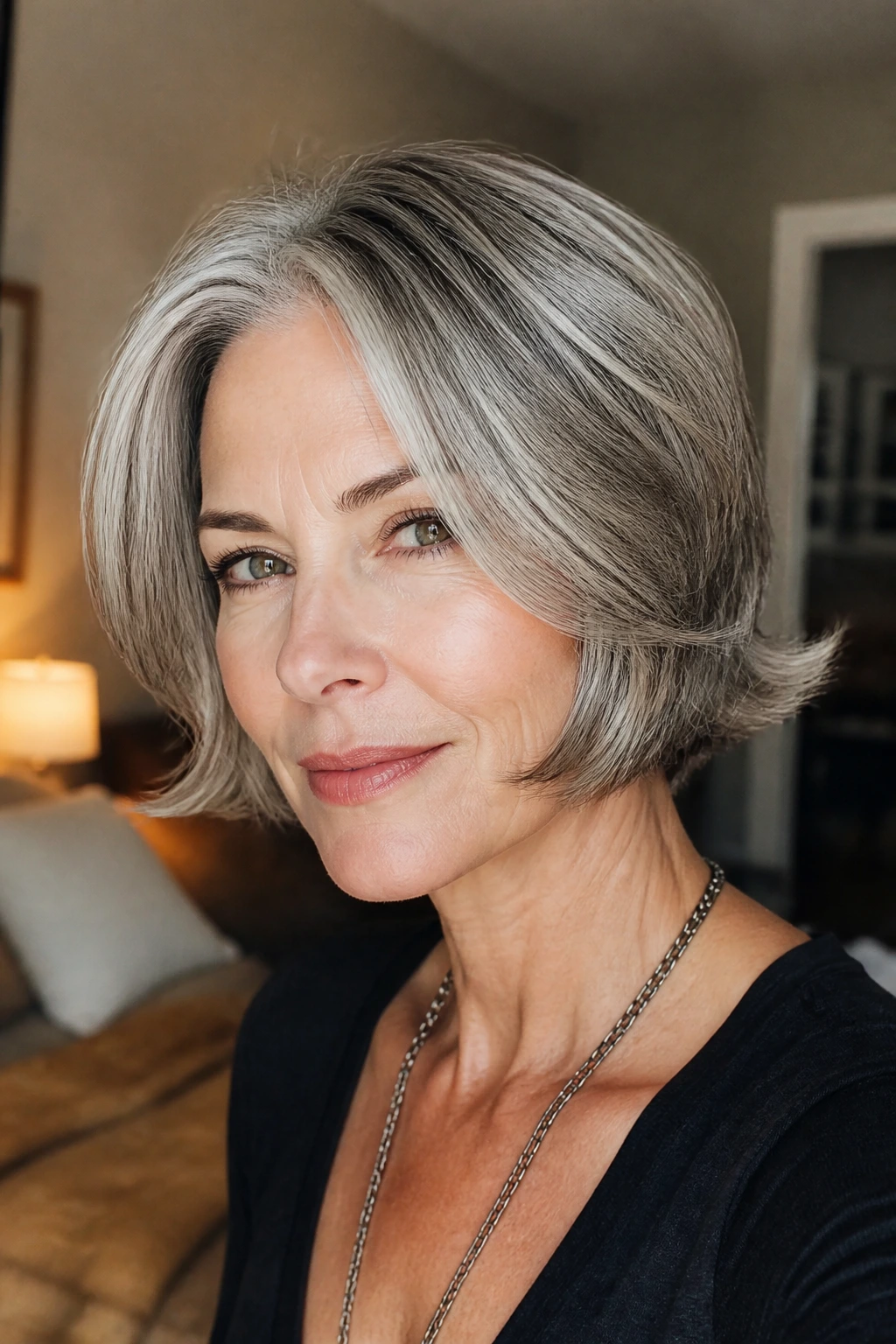
A curved bob sounds polished, but the flick at the ends gives it some attitude. The hair wraps around the jawline, then turns slightly outward at the tips, which keeps the style from becoming too tidy. It’s sharp without feeling harsh.
This is a flattering choice if you like structure near the face. The curve lifts the eyes, the flick keeps the bottom from hanging straight, and the length can be adjusted just under the chin or a touch longer. A round brush and a little heat are enough to set the shape, though a velcro roller at the ends can work too.
If your hair tends to flip out anyway, this cut is almost cheating. You’re leaning into the natural bend instead of fighting it. That’s a good rule in general.
22. The Razor Fringe Bob
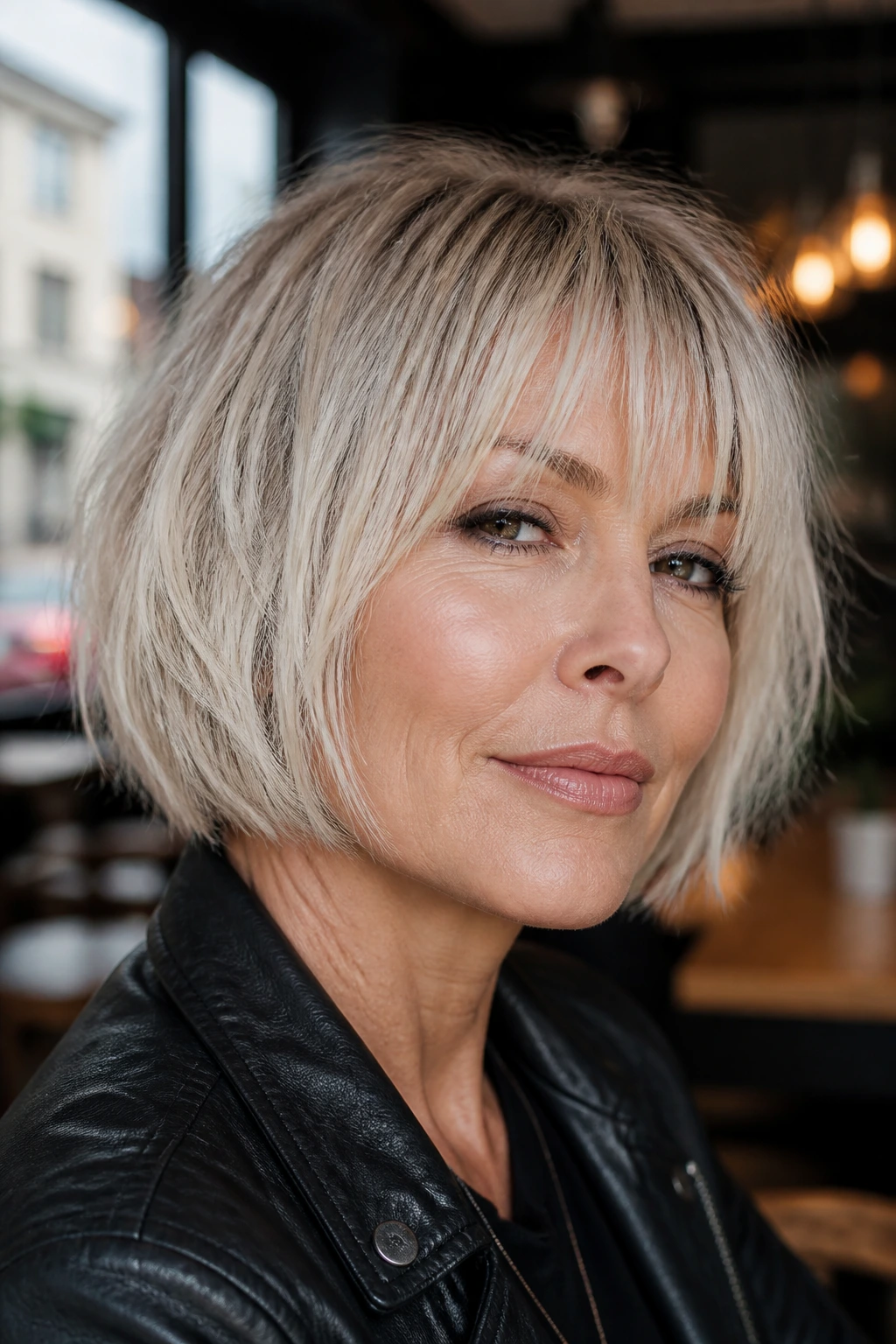
A razor fringe can make a bob feel lighter instantly. The fringe is cut so it falls in airy pieces rather than a solid line, and the bob itself keeps enough shape to stop the whole thing from looking wispy.
This cut is a nice option for women who want texture near the eyes without committing to a full shag. It works especially well if your hair is medium density and you want the front to feel alive. The razor cut softens the edges, though it should be used with care on very fine or fragile hair because too much slicing can leave the ends looking thin.
Keep the styling simple. A little blow-dry, a touch of paste, and maybe a slight bend in the fringe. The haircut should do the heavy lifting, not your styling arm.
23. The Curly Control Bob
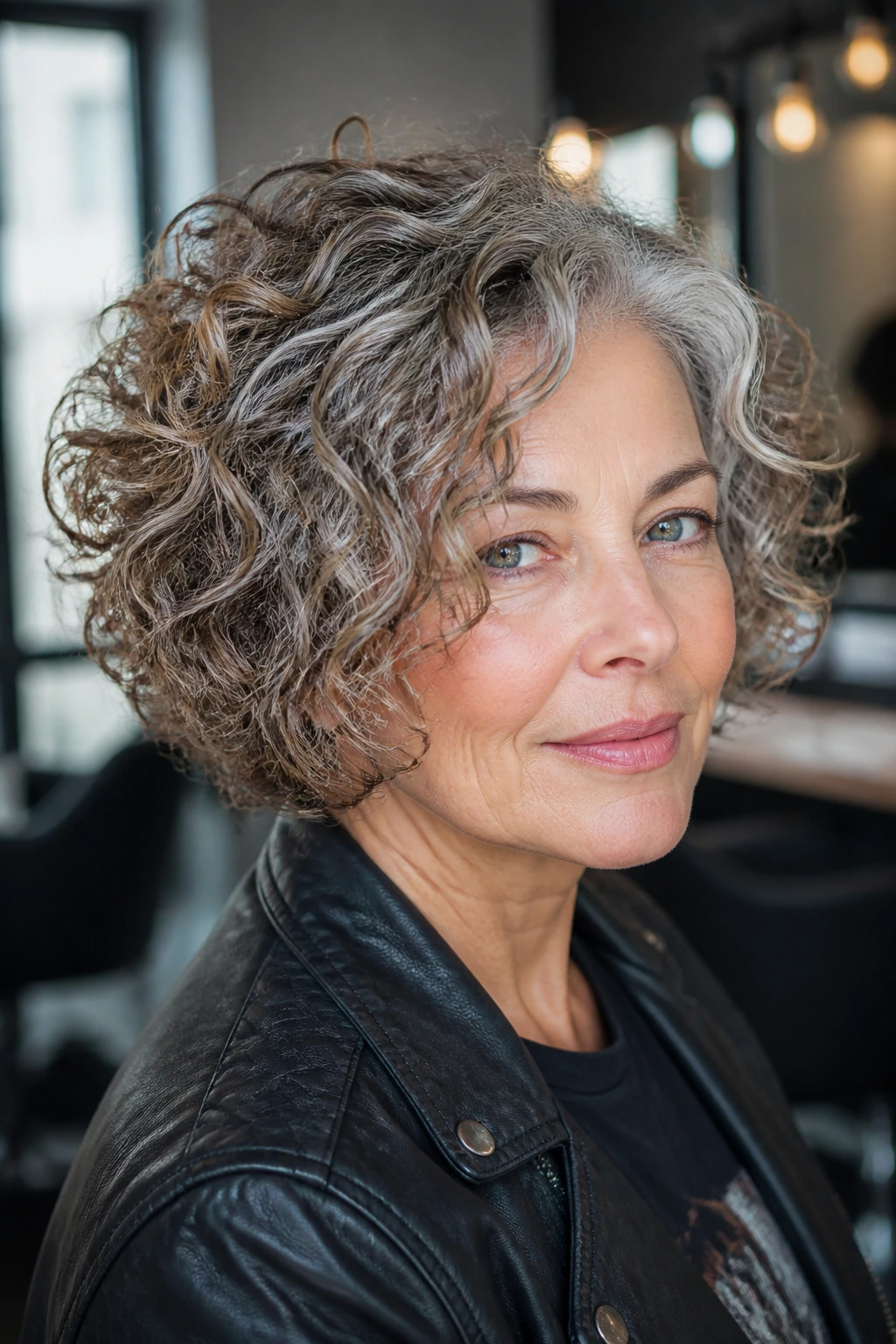
Curly hair in a bob needs shape more than it needs taming. A curly control bob gives the curls a round outline, keeps the sides from bulging outward, and lets the top keep enough lift so the whole cut feels intentional.
The best version is cut dry or close to it, with the stylist paying attention to where each curl falls when it’s in its natural state. That part matters. Wet curls lie. Dry curls tell the truth. If the bob is cut only when stretched, the result can be uneven in all the wrong places.
This style is a strong match for silver curls too. The color catches the twists, and the bob keeps the shape from swallowing the face. A little gel cast scrunched out after drying gives the curls hold without crunch.
24. The Face-Framing Long Layers
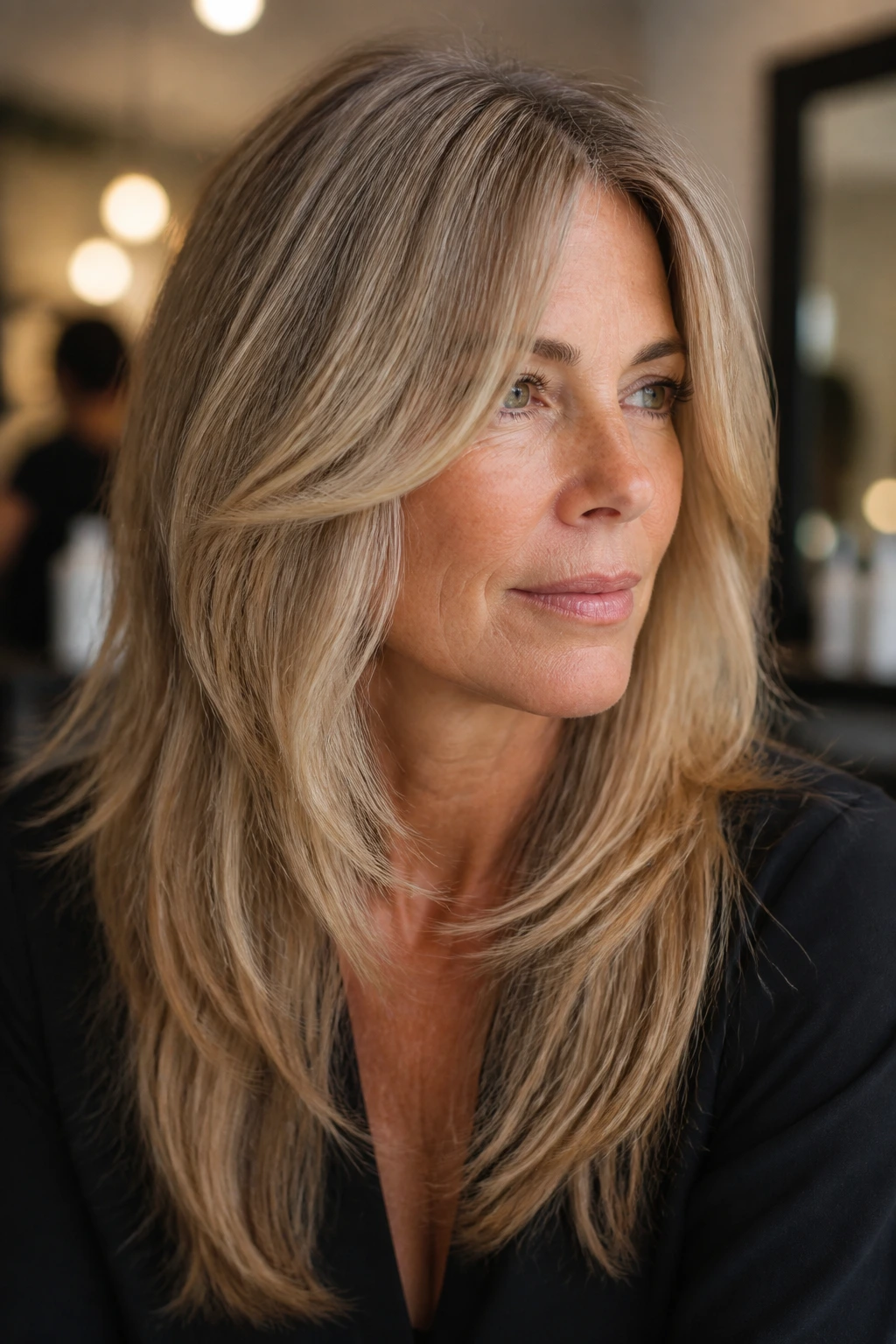
Long layers don’t have to mean soft and safe. When they’re cut with a bit of bite around the front, the whole style shifts. The layers can start around the cheekbone, chin, or collarbone, which gives the hair movement right where it matters most.
This is a good option if you like length but want the style to look less heavy and more alive. A center part can make the face-framing pieces fall like curtains; a side part gives them a little more attitude. Either way, the ends should not all land in one blunt line. That’s where long hair starts to look tired.
If you wear your hair up a lot, these layers still help. They release some weight from the shape when the hair is down, and they make a messy bun or clip-up look more deliberate when the day gets away from you.
25. The Grunge Texture Bob
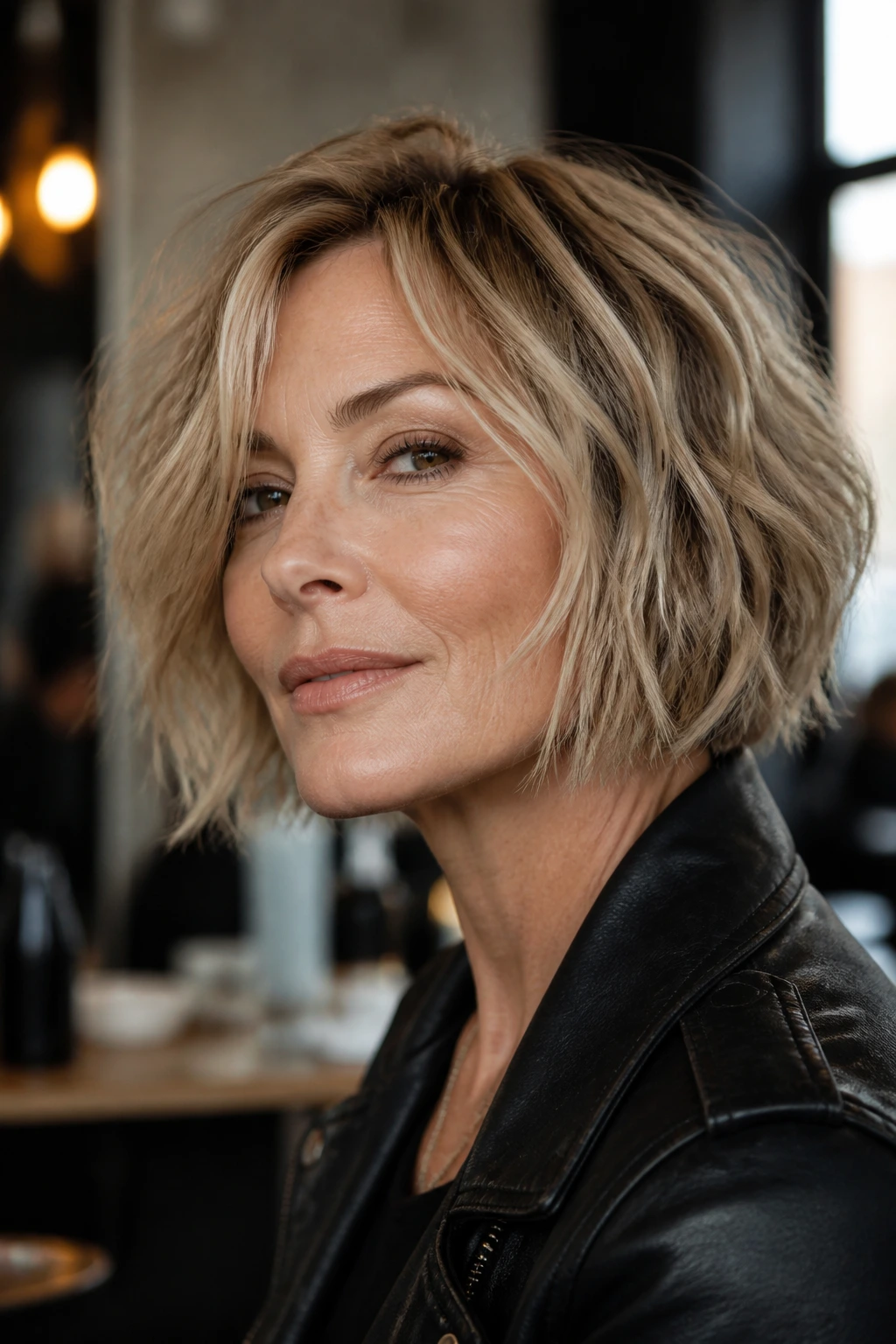
A grunge texture bob is the haircut version of a leather jacket that fits just right. It has roughness in the ends, a little separation through the body, and enough shape to keep it from sliding into “I forgot to brush my hair.” That difference is everything.
This cut is one of my favorites for women who want edge without height. It sits around the jaw or just below it, but the texture keeps it from feeling heavy. A touch of dry shampoo at the roots and a rough bend through the lengths can wake it up fast. If your hair is thick, ask for internal removal so it doesn’t puff into a triangle.
The beauty of this one is that it looks better after a little wear. Not sloppy. Just broken in. That is the sweet spot.
How to Wear the Texture Without Trying Too Hard
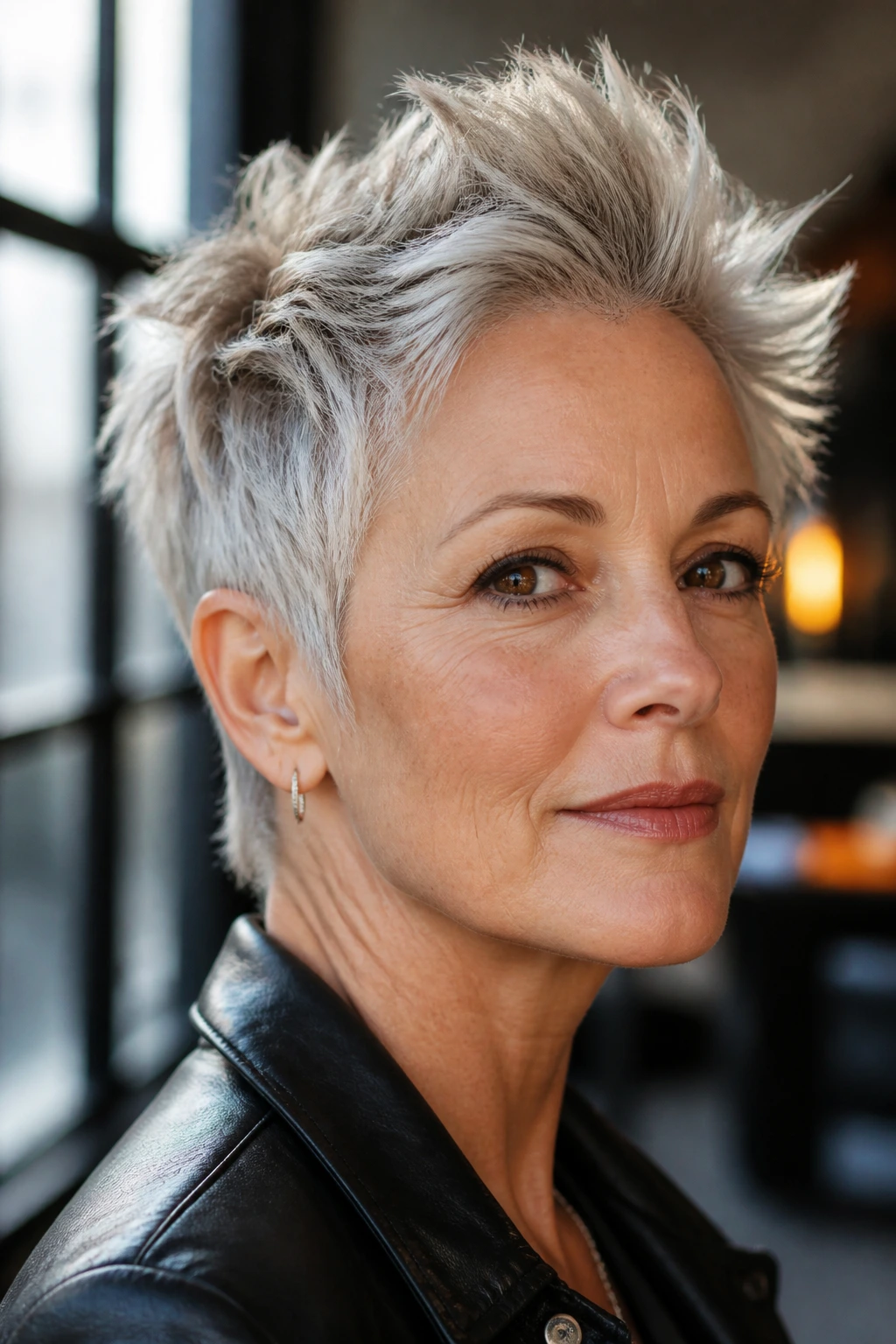
Presentation: Keep the finish slightly undone. A deep side part, a finger-combed crown, or a little lift at the roots usually looks better than a smooth, sculpted shell. If the haircut has movement, let it move.
Accompaniments: Glasses, hoop earrings, a sharp collar, or a simple leather jacket can make the cut feel even more deliberate. Long necklaces can get lost in a shag, but a clean neckline or strong earrings usually work well.
Scale: Shorter versions bring more drama to the face. Longer versions are easier to tuck, clip, or smooth back. If you’re nervous, keep the overall length and introduce edge through texture first — it’s easier to live with and easier to grow out.
Finishing touch: A pea-sized amount of matte paste or a mist of texturizing spray can keep the look piecey without turning it crunchy. Less is usually more here. Too much product turns a cool shape into a sticky one.
Essential Tools for These Cuts
-
Blow dryer with a nozzle attachment — Directs air at the roots and keeps the top from collapsing.
-
Small round brush — Good for lifting bangs, bends, and shorter layers around the face.
-
Medium round brush or vent brush — Helps longer bobs and lobs move without making them too polished.
-
Flat iron with rounded edges — Useful for adding a bend, not pin-straight tension.
-
Curling wand or 1-inch iron — Gives broken-up waves to lobs, bobs, and longer layers.
-
Diffuser — A must for curly or wavy cuts if you want shape without frizz.
-
Root-lift mousse or foam — Works at the crown and keeps short cuts from lying flat.
-
Texturizing spray — Adds separation to the ends; use in short bursts, not half the bottle.
-
Lightweight paste or pomade — Best for pixies, crops, and fringe detail.
-
Heat protectant — Keeps the style from getting fried when you do use hot tools.
-
Wide-tooth comb and small clips — Handy for sectioning and for letting curls dry in the right direction.
-
Photo reference on your phone — Not glamorous, but useful. Bring at least two photos: one for cut shape, one for texture.
How to Ask for the Cut Without Getting a Generic Bob
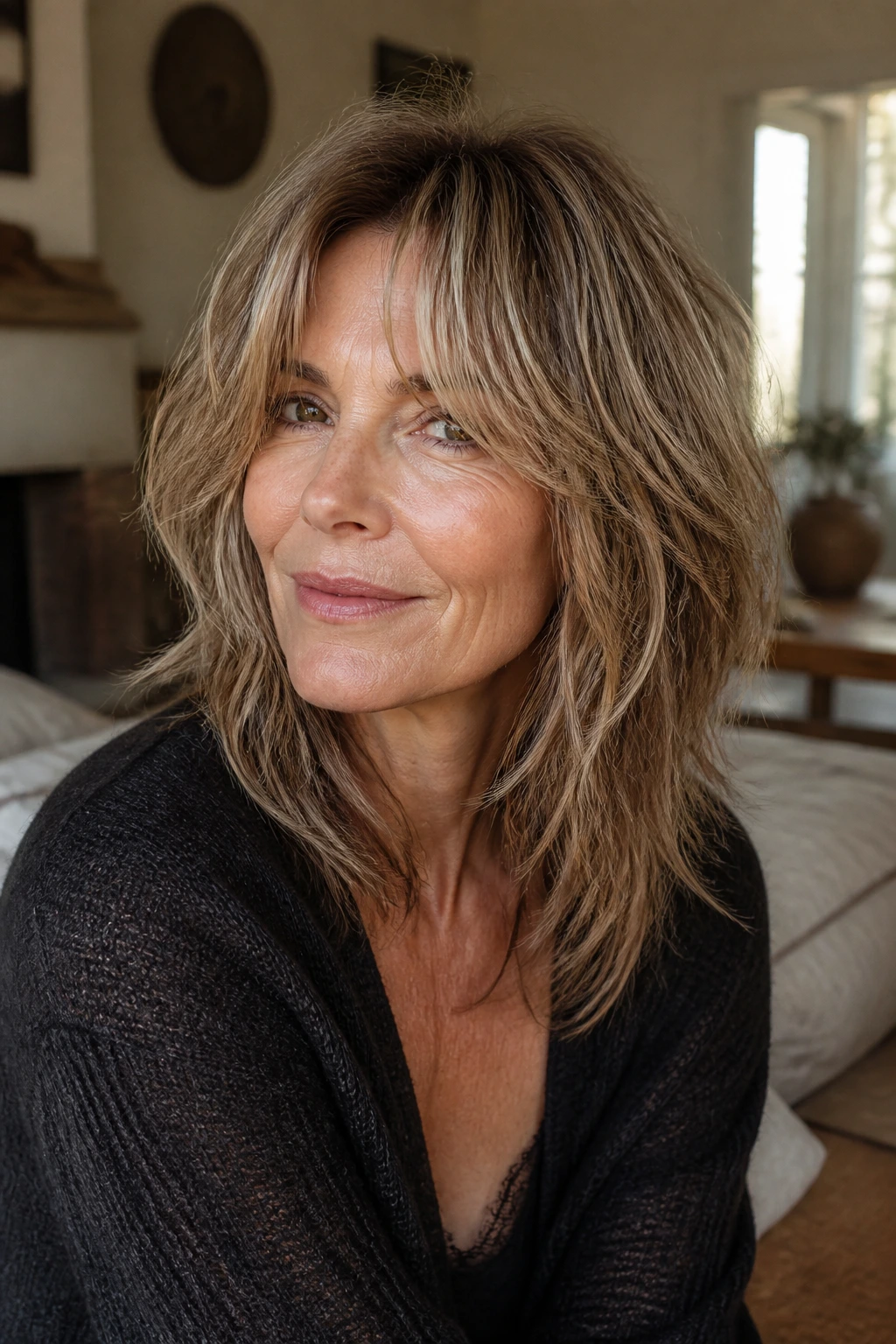
The fastest way to miss the mark is to ask for a style by name and stop there. A “shag” means different things to different stylists. So does a pixie, a bob, and almost every other haircut on this list. Bring a picture, yes, but also say what you want the haircut to do.
Try this instead: tell the stylist where your hair falls flat, where it frizzes, and how much time you want to spend styling it. If you want lift at the crown, say that. If you want to keep weight around the jaw, say that too. If your fringe grows in a cowlick or your hair splits at the crown, mention it before the scissors come out.
Be specific about texture words. Point cutting creates softer ends. Razoring can thin a dense shape fast, but it’s not the right move for every hair type. Underlayers remove bulk without changing the visible outline much. Those details matter more than the label on the cut.
One more thing: tell the stylist what you do not want. Not too puffy. Not too triangular. Not too polished. That negative language is often more useful than a vague request for “something edgy.”
Smart Product and Color Moves That Make the Cut Better
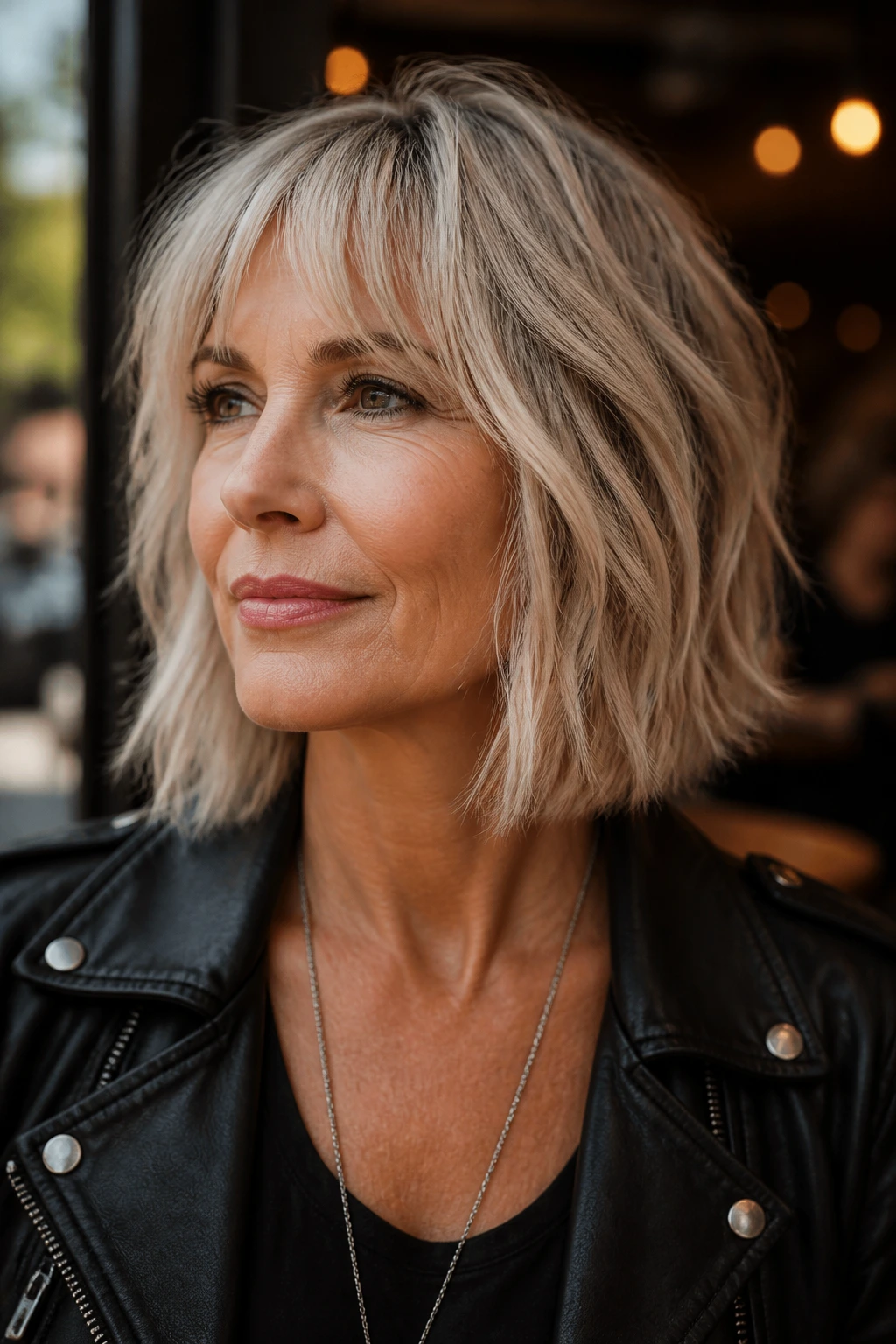
Product choice can rescue a good haircut or smother it. For fine hair, go light: mousse, root spray, and a dry texturizer that doesn’t leave white grit. Thick hair usually needs more control, so a smoothing cream on the mid-lengths and a paste on the ends often works better than a heavy oil that makes everything slip flat.
Gray and silver hair deserves special care because it can go yellow or dull if it’s washed with the wrong stuff. A purple shampoo used once a week is enough for many people; more than that can leave the hair looking flat or strangely lilac. If the hair is coarse, a leave-in conditioner on the mid-lengths and ends can keep the texture from turning crisp.
Color can also sharpen a rock chick cut. A subtle money piece around the face can make curtain bangs pop. Darker roots under lighter silver can add depth. A solid all-over color can look sleek, but if the cut is very textured, a little dimension usually helps the layers show.
And please, don’t drown a choppy cut in shine serum. Shine has its place. It’s just not the whole story here.
Common Mistakes That Flatten the Look
-
Too much thinning at the crown: The hair goes fluffy for a day, then the top collapses and shows scalp. Ask for texture, not aggressive removal, if your hair is already fine.
-
A fringe cut too short on the first go: Bangs bounce up as they dry. If they hit high on the forehead in the chair, they may end up even shorter at home.
-
Blowing everything straight down: A round brush or even a rough-dry with lift at the roots matters. Flat drying kills the attitude fast.
-
Using heavy oils on textured cuts: The ends look stringy, and the separation turns greasy instead of piecey. A paste or texturizing spray usually gives a cleaner finish.
-
Ignoring natural growth patterns: Cowlicks at the crown, temple swirls, and a stubborn part line can make a great cut misbehave. Work with them, not against them.
-
Chasing every trend at once: A shag, curtain bang, and undercut can all be good ideas on their own. Put them all together without restraint and you can end up with a haircut that argues with your face.
Variations and Adaptations to Try
The Softer Rebel: Keep the same rock chick shape, but soften the fringe and leave more length around the ears. This works if you like edge but want something that still tucks behind glasses and behaves on office days.
The Silver Blade: Lean all the way into gray or white hair with a crisp crop, a clean side part, and strong root lift. The contrast between cool color and sharp shape gives the style a clean, electric feel.
The Curly Riot: Use the same shag or bob idea, but cut it for curl pattern instead of straight hair. The layers should land where the curls spring, and the finish should be rounded rather than flat at the sides.
The Low-Heat Version: Choose a cut that air-dries well, like a shaggy lob or a curly bob, and skip the round brush most days. A little leave-in, a scrunch, and a bit of root lift at the crown can be enough.
The High-Drama Version: Keep the same cut, but add a deeper part, more root lift, and a stronger finish through the ends. This is the version for nights out, concerts, or any day you want the hair to look a touch louder.
Keeping the Shape Between Salon Visits
Shorter rock chick cuts usually need a trim every 4 to 6 weeks if you want the shape to stay crisp. Bobs and lobs can often stretch to 6 to 8 weeks, while longer layered cuts may hold for 8 to 10 weeks before they start losing their structure. The growth pattern matters more than the calendar, though. A fringe that hits the lashes one week can start poking the eyes the next.
Dry shampoo helps, but it’s not a substitute for washing when the scalp needs it. Use it to revive the roots between washes, not to build a permanent crust. If the ends look dry, a tiny bit of leave-in on damp hair or a very small amount of cream on the dry lengths is enough.
Sleeping on a silk or satin pillowcase helps the texture stay smoother overnight. A loose clip at the crown can also protect a blowout or keep curls from getting flattened. Small habits. Big payoff.
Frequently Asked Questions
Can women over 50 wear a really short rock chick cut without looking too severe?
Yes, if the top has some softness. The difference between severe and stylish usually comes down to texture around the crown and fringe, not the length alone. A few broken pieces near the forehead can warm up a cropped cut fast.
Do these cuts work on fine hair?
They can, especially pixies, bixies, and short shags. Fine hair usually needs less layering than people think; too many layers make the ends look thin. Ask for lift and movement, but keep enough weight in the perimeter so the hair still looks like it belongs to one head.
What if my hair is curly or very wavy?
Then the cut needs to respect curl pattern. A curl-specific shag, bob, or layered lob will usually work better than a straight-hair version copied from a photo. A good stylist will cut it dry or nearly dry so the shape lands where the curls actually live.
Are bangs necessary for a rock chick look?
Nope. Curtain bangs and fringe can add a lot, but you can get the same mood through texture, asymmetry, or a sharper silhouette. A side part and a choppy end finish can carry the whole style without any fringe at all.
How do I keep a choppy cut from looking messy instead of cool?
Use less product than you think, and focus on the roots and ends rather than coating the whole head. A little lift at the crown and a bit of separation through the tips usually reads intentional. Heavy cream or too much spray makes the texture collapse into fuzz.
Will a rock chick haircut make gray hair look frizzy?
It can, if the cut is too thinned out or the hair is left to dry without any moisture support. Gray hair often likes a leave-in conditioner, a light cream, or a small amount of gel at the ends if it’s curly. The haircut should create movement, not dryness.
Can I still tie my hair up with these styles?
With lobs, long layers, and shoulder-length cuts, yes. Pixies and short crops obviously won’t do ponytails, but they can still be pinned back or tucked with a clip. If tying your hair up matters most, keep the nape long enough to gather.
How often should I style these cuts with heat?
As little as your hair allows. Many of these shapes look better with rough drying, finger styling, or a diffuser than with daily hot-tool work. If you do use heat often, a protectant is non-negotiable.
The Right Kind of Edge

A good rock chick cut doesn’t make you look younger. It makes you look more yourself with the volume turned up a little. That’s the part people miss when they chase “edgy” hair and end up with something that feels costume-y. The best versions here have shape, motion, and enough restraint to grow out well.
What I keep coming back to is this: the haircut should fit the way you actually live. If you want five minutes and a comb, choose a pixie or a well-cut bob. If you want more length but still want attitude, go shaggy, layered, or angled. If your silver hair already has attitude built in, lean into it. Don’t sand it down.
Bring a photo. Bring your honest habits, too. If you air-dry half the week, say so. If you hate bangs by day three, say that too. The right cut is the one that still looks cool when you are not trying very hard, and that’s the real trick with rock chick hair.