



Thick hair can look magnificent after 60 — until it starts doing that blunt, bell-shaped thing at the sides and swallowing the neck in warm weather. I’ve seen it happen in salon chairs more times than I can count. The fix is rarely “shorter” in some blunt, punishing sense. It’s usually smarter shape, cleaner weight removal, and a cut that lets the hair bend instead of sitting there like a helmet.
That’s why hairstyles for women over 60 with thick hair need a different eye than cuts made for fine hair. Thick strands can hold structure, which is a gift, but they also pile up fast. Add gray or silver texture, which often feels coarser and a little drier, and you get a head of hair that needs direction more than decoration.
The good news? Thick hair gives you options most people would kill for. You can wear a soft bob that keeps its line all day. You can wear a shag that doesn’t collapse by noon. You can keep length, if you want it, without looking hidden under it. The trick is choosing a shape that works with density, not against it.
Why These Styles Work for Thick Hair
-
They remove bulk where it counts: Most of these cuts take weight out of the lower half or the crown, so the hair stops flaring outward at the sides.
-
They keep movement near the face: A little bend at the cheekbone or jaw makes thick hair look lighter, even when the actual density is still there.
-
They play nicely with gray texture: Silver and white strands can be a bit wiry, so styles with layers, sweep, or texture usually sit better than stiff one-length cuts.
-
They’re easier to refresh between washes: If the shape holds after a sleep on a silk pillowcase and a quick root lift, you’ll actually wear the cut instead of just owning it.
-
They work with glasses and earrings: A good shape leaves room around the temples and ears, which matters more than people think.
Thick Hair After 60: What the Cut Has to Do
Thick hair after 60 is not one problem. It’s usually three. Density, texture, and growth pattern all start pulling in different directions. You can have dense hair that still feels dry at the ends, or coarse gray hair that looks full but needs more bend, or a crown that lifts nicely while the nape lies flat. That’s why one blunt haircut can look sharp on one woman and heavy on another.
Density Is Not the Same as Volume
Dense hair has more strands per square inch. Volume is what the haircut does with those strands. A dense mane without shape can feel enormous, especially at the jawline. A cut with clean layers, a soft perimeter, or a bit of graduation can keep that same hair from looking boxy.
Gray Hair Changes the Feel of the Cut
Gray and white hair often comes in drier, rougher, and a touch more stubborn. It doesn’t always slip into place the way pigmented hair did. That means a style needs enough structure to hold its shape, but not so much stacking that it turns puffy. I tend to favor point-cut ends, soft layering, and side parts for that reason.
Heavy Thinning Can Backfire
A little internal weight removal is fine. Too much thinning, especially with aggressive shears, can create frizzed-out ends and weird little frayed sections that stick up in humidity. Thick hair does not need to be hacked at. It needs calibrated removal. Big difference.
1. Feathered Shoulder-Length Layers
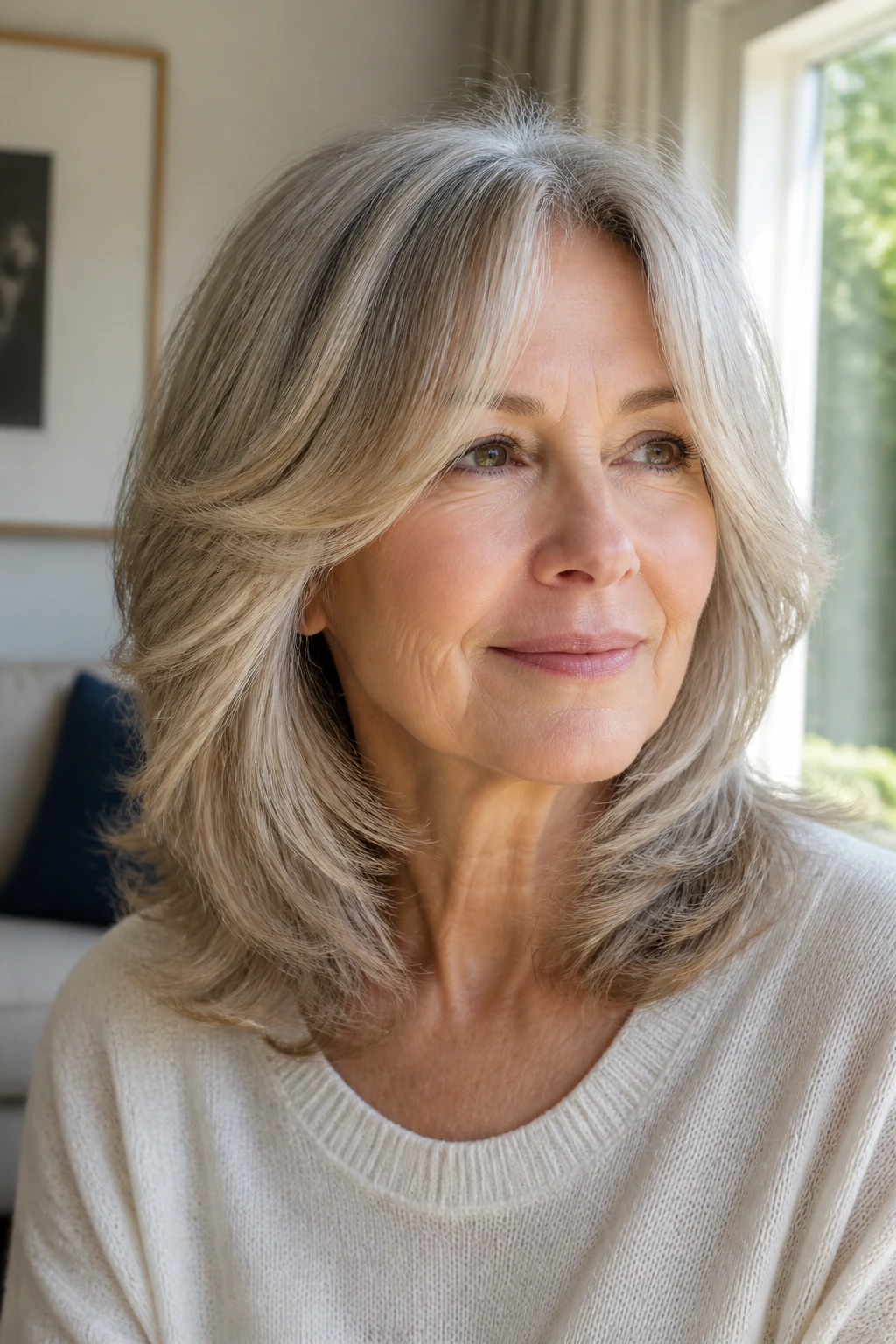
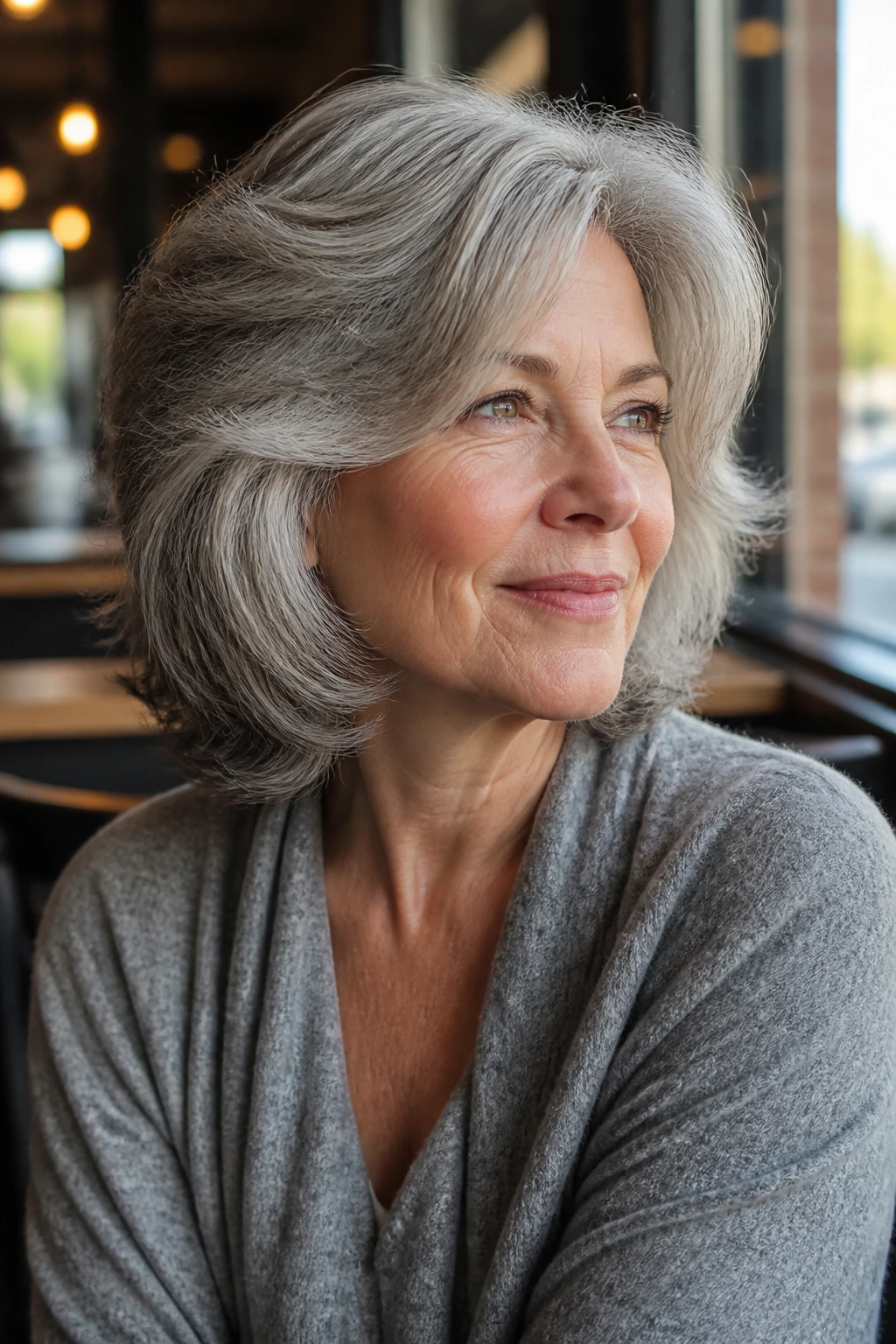
This is one of the safest bets for women over 60 with thick hair because it keeps the fullness, but breaks up the mass around the shoulders. The ends move instead of sitting in a hard line, and that matters when hair gets heavy enough to collapse inward or balloon outward. Ask for long layers that start below the chin and a soft feathering through the front.
Why it works
Shoulder-length hair gives thick strands room to breathe without forcing a dramatic chop. The layers let the hair swing when you turn your head, which is the whole point. If the cut is done well, you get movement around the collarbone without losing the body that thick hair naturally has.
Styling is straightforward. A round brush and a blow-dryer with a nozzle are usually enough. I like a light mousse at the roots and a tiny bit of cream on the ends, because thick hair can take a little product without going greasy fast.
2. Chin-Length Side-Part Bob
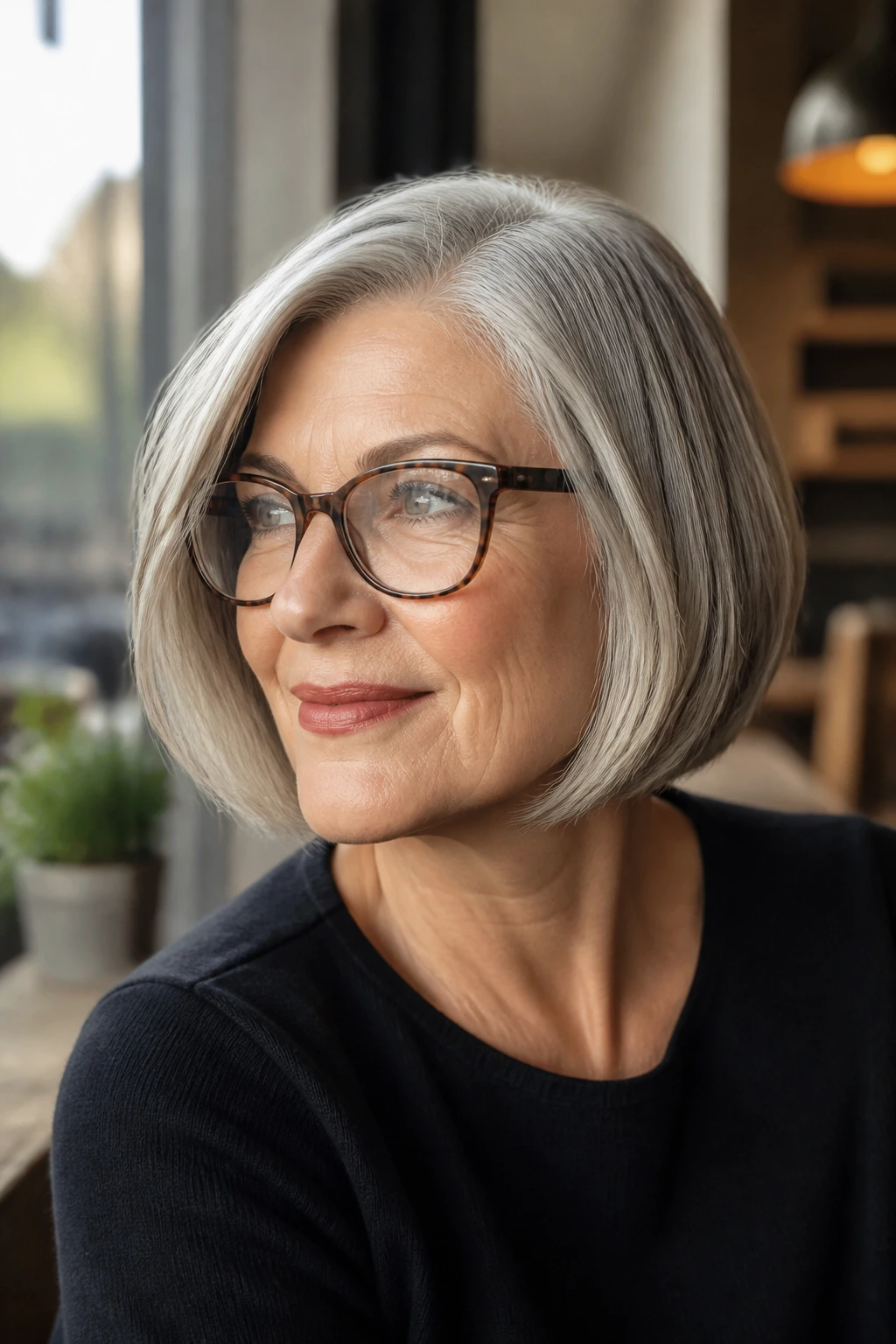
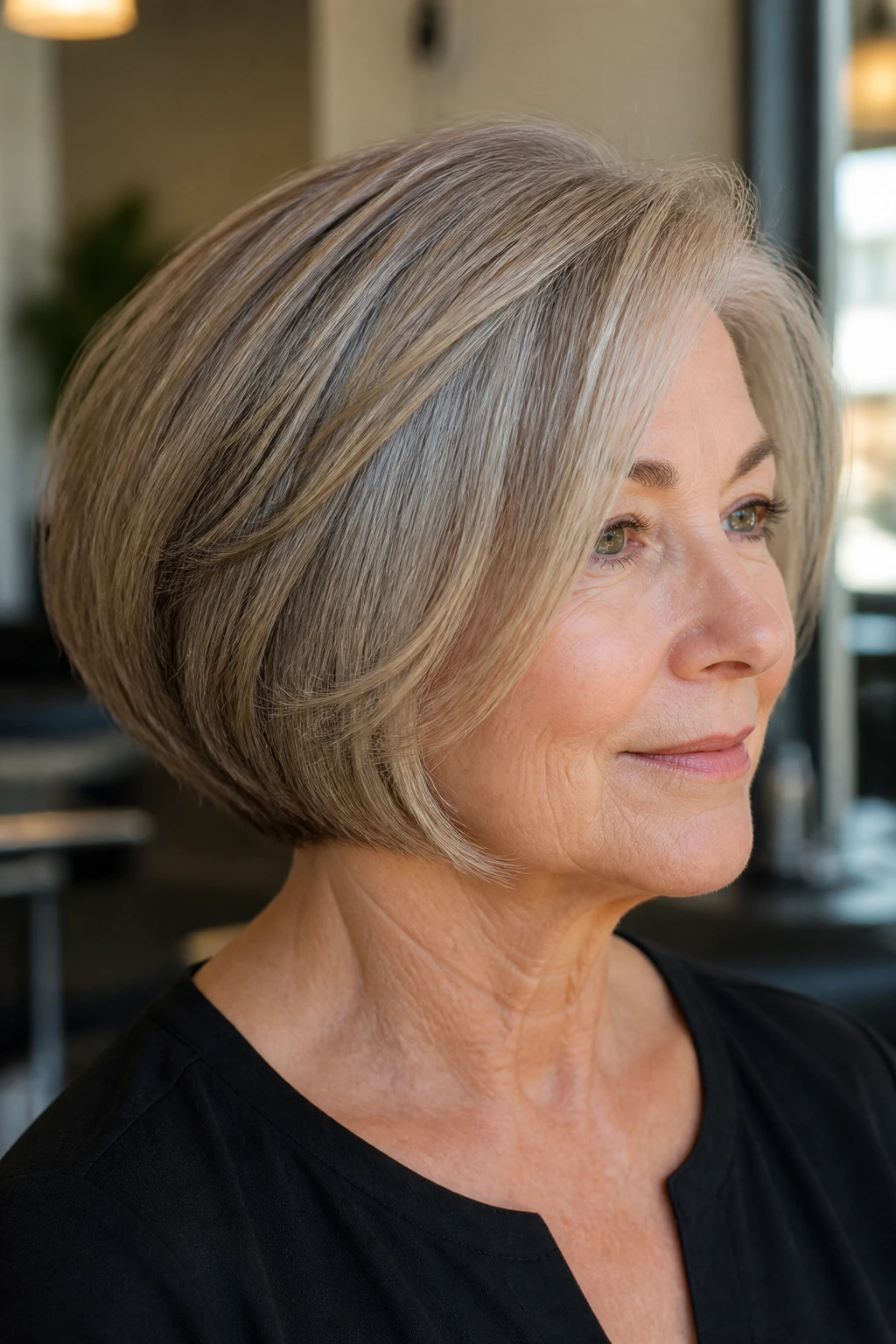
A chin-length bob is sharp without being severe, and the side part keeps it from looking too symmetrical or too flat on top. On thick hair, the key is to keep the line clean while softening the inside with subtle point cutting. You want the shape to hug the jaw, not flare out like a mushroom cap.
This cut is especially good if you wear glasses. The line sits high enough to show the frames, but not so high that the hair crowds the temples. If your hair tends to puff at the sides, ask your stylist to leave the perimeter slightly beveled under the jaw instead of bluntly straight across.
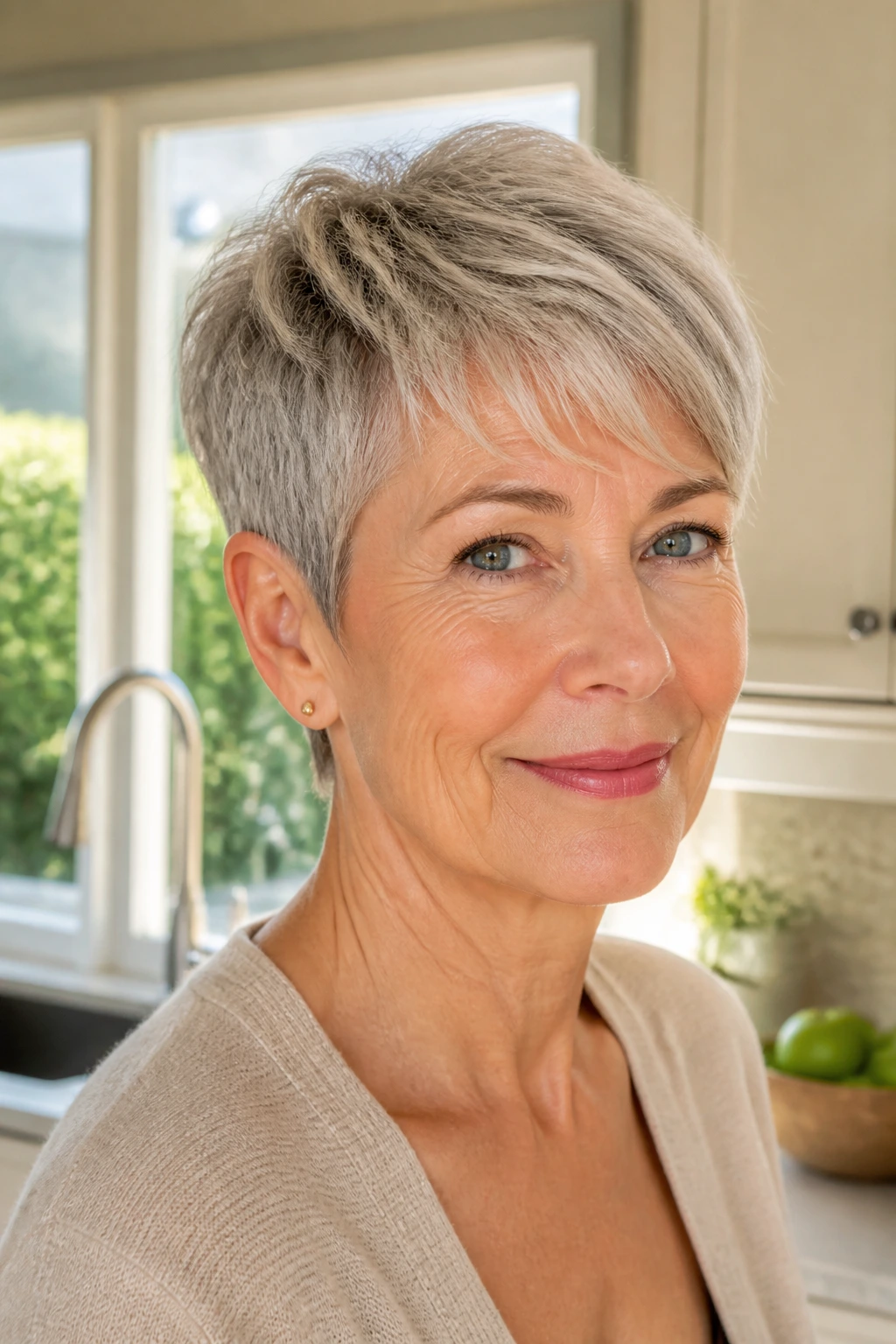
3. Tapered Pixie with a Soft Fringe
A pixie on thick hair can look fantastic when it’s tapered at the nape and around the ears, then left a little longer on top. The softness in the fringe keeps the style from reading too harsh. You get shape, lift, and a clean neckline, which is a lovely thing when thick hair starts feeling warm or bulky.
What to ask for at the salon
Ask for a short nape, feathered top, and a fringe that can be swept forward or to the side. If your stylist reaches for the thinning shears too quickly, slow them down. You want weight removed in controlled sections, not stripped out everywhere. That’s how you avoid the fuzzy, over-thinned look that thick hair can pick up fast.
4. Collarbone Lob with Long Internal Layers
If you’re not ready to lose length, a collarbone lob is one of the smartest middle-ground shapes. It sits just long enough to gather into a clip or small ponytail, but short enough that thick hair doesn’t drag itself flat. Long internal layers keep the outside line looking smooth while letting the inside move.
This one works especially well on hair that gets puffy at the ends. The collarbone length gives the hair a landing point, and the layers stop it from turning into a block. Blow-dry it with the ends turned slightly under, or let it air-dry with a little cream and a few clipped sections at the crown. Low effort. Good payoff.
5. Rounded Graduated Bob
A rounded graduated bob has more structure in the back and a softer sweep toward the front. On thick hair, that graduation takes weight off the nape and keeps the back from hanging like a curtain. The curve also gives the haircut a polished silhouette, which is handy if you like your hair to look finished with minimal fuss.
Best for
This shape is especially strong if your hair grows out wide at the sides or if the back tends to poof when it’s too short. It gives you a little lift at the crown without turning the whole head into a stacked wedge. Keep the layers controlled. Too much texture can make this bob lose the tidy curve that makes it work.
6. Long Layers with Face-Framing Pieces
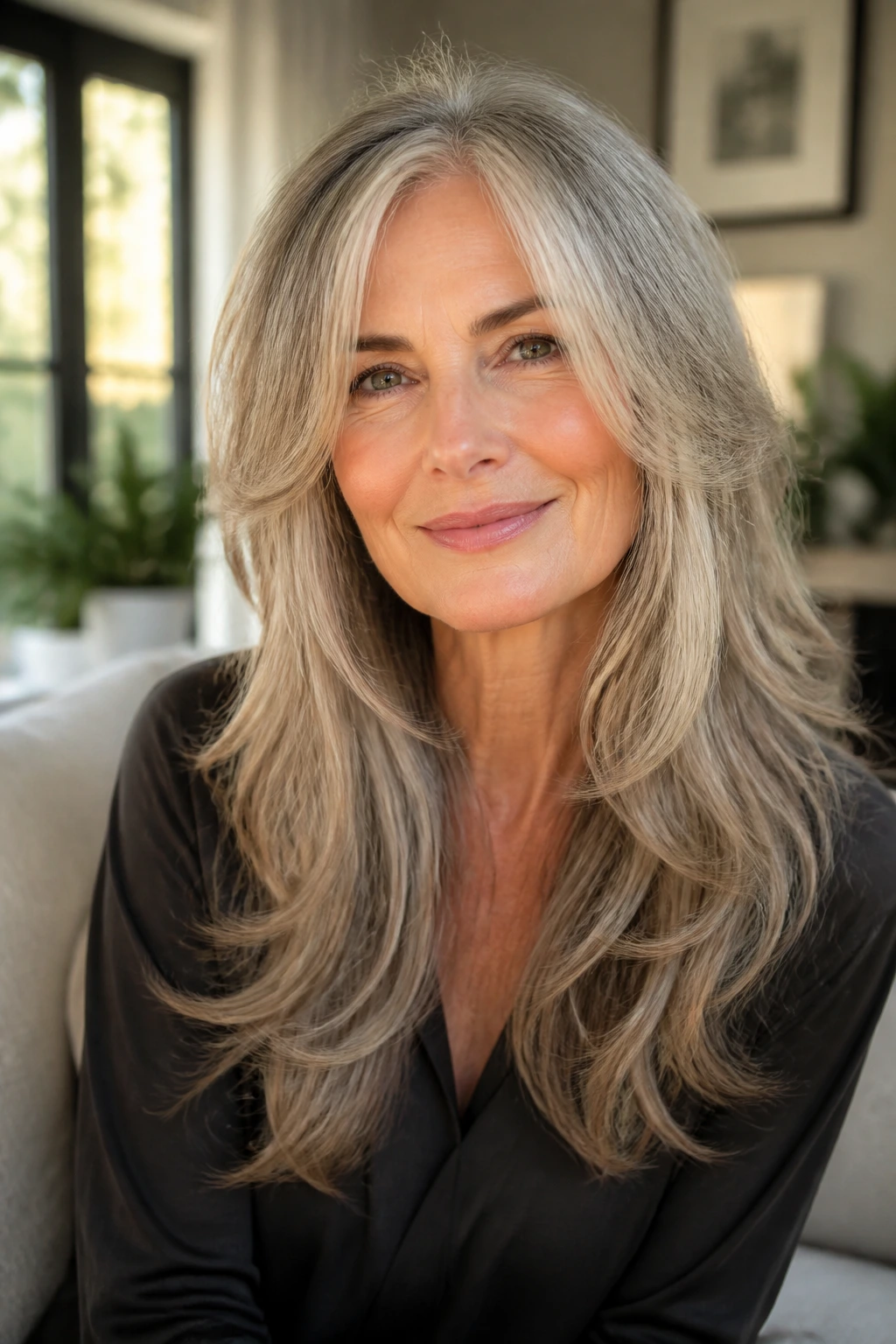
Not every woman over 60 with thick hair wants shorter hair. Fair enough. Long layers can be a better choice if your hair still feels healthy and you like the weight of it. The trick is to remove bulk through the mid-lengths and add face-framing pieces that start around the cheekbone or lower lip.
That front movement matters. Without it, long thick hair can pull the face down and hide the neckline. With it, the same hair looks softer and lighter. I’d skip razor-heavy ends here unless your hair is especially coarse and resistant. Point-cutting tends to age better because the ends stay stronger and less frayed-looking.
7. Curtain-Bang Shag
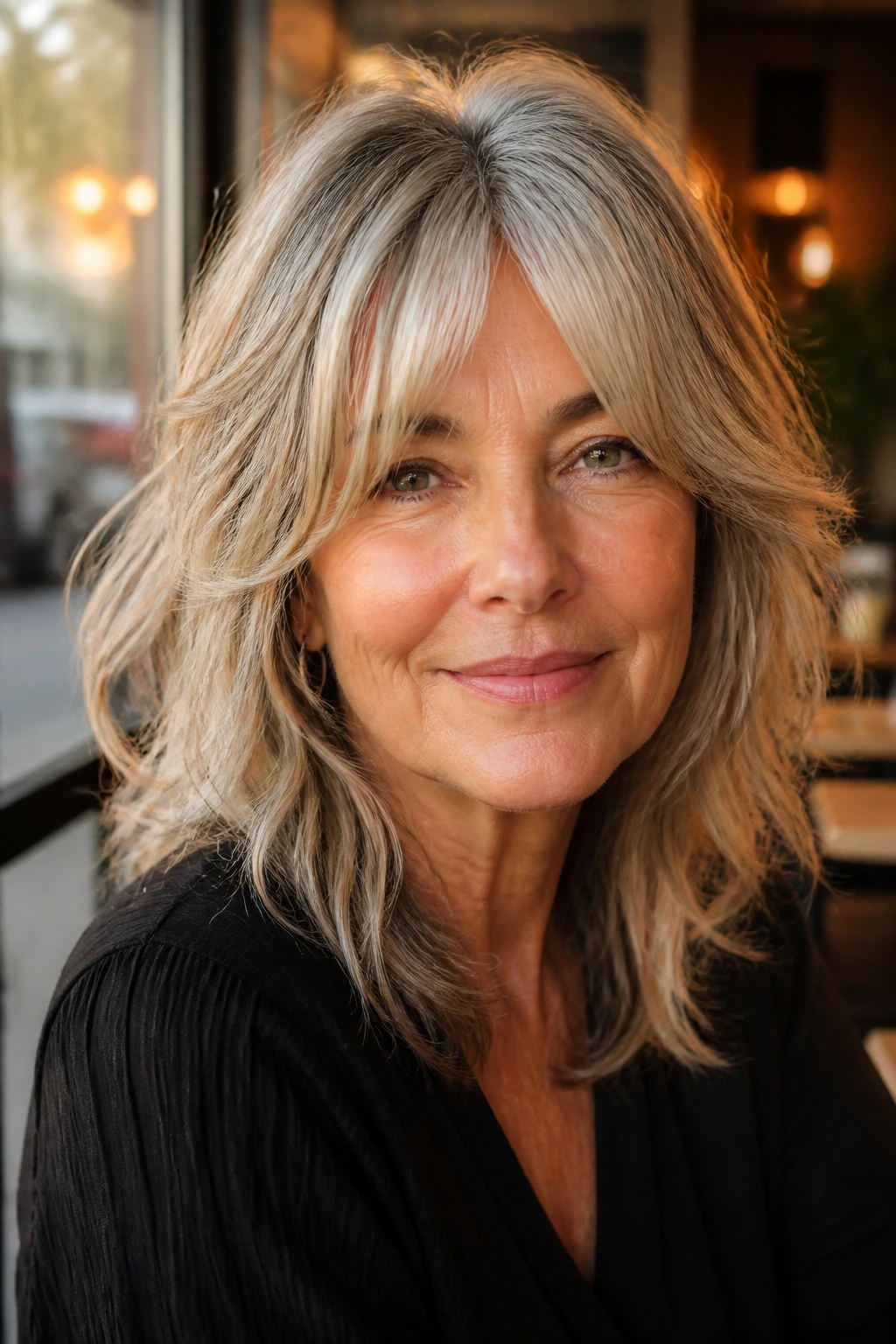
A shag with curtain bangs is not for someone who wants hair to sit still. Good. Thick hair likes a little chaos, and this cut uses that to its advantage. The bangs open the face, while the layers around the crown and cheekbones break up density. It has motion even on a day you barely touch a blow-dryer.
The key is restraint. Too many short layers and the whole thing goes frizzy. Too few and it turns into a shag-shaped lump. Ask for soft curtain bangs that blend into the sides, plus mid-length layers that can be scrunched or brushed out. If you have silver hair, this style can look especially nice because the light catches the texture instead of exposing it.
8. Sleek Blunt Bob with Soft Ends
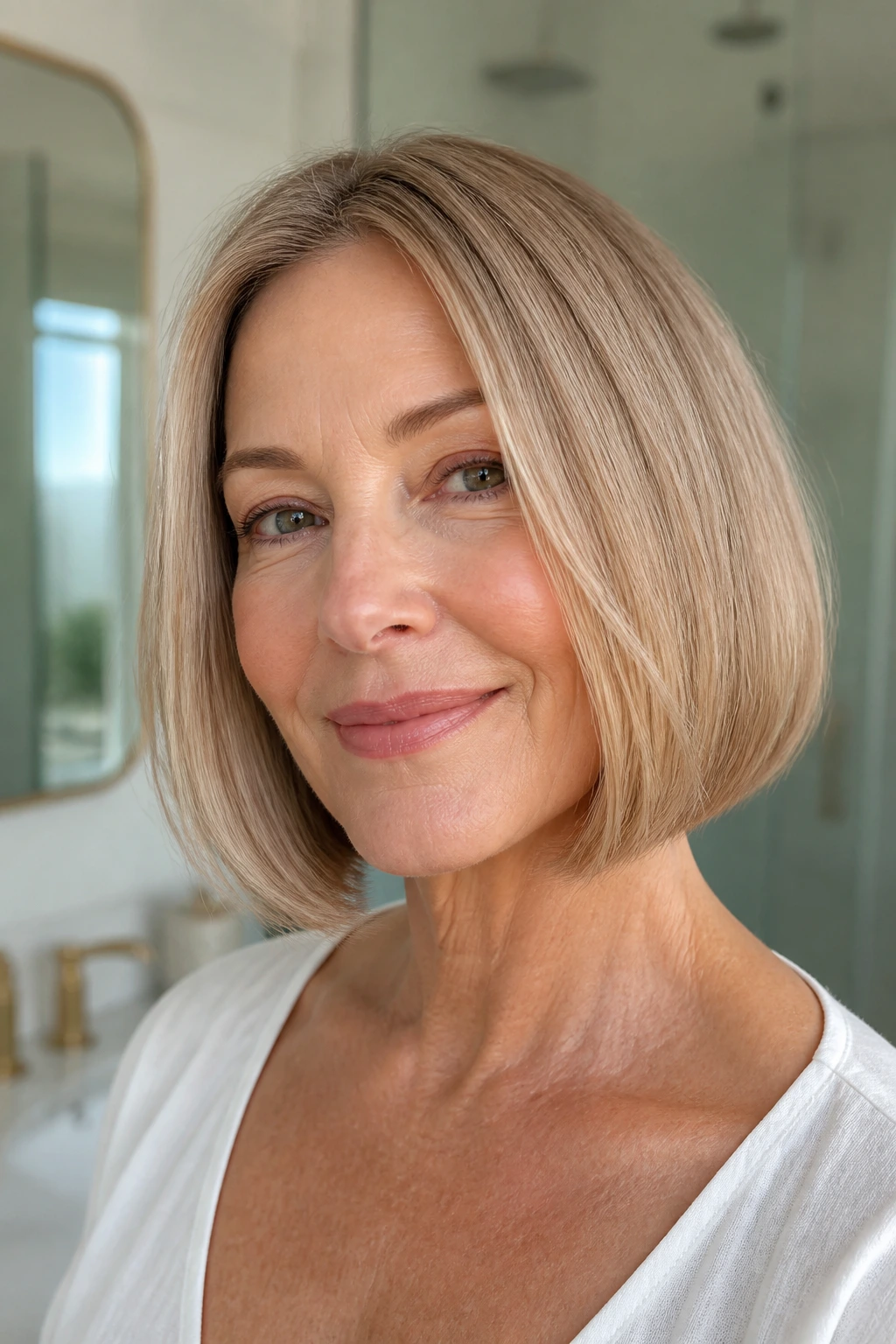
A blunt bob can work on thick hair after 60, but only if the ends are softened a little. I’m not talking about choppy texture. I mean a clean, blunt line with just enough internal smoothing so it doesn’t look like a haircut block. The shape should feel precise, not heavy.
This style suits people who like a sharper outline and don’t want lots of movement around the face. It looks especially good with straight or slightly wavy hair that can be smoothed with a paddle brush. If your hair flips outward at the ends, a subtle undercurve during the blow-dry usually fixes it. Not a mountain of product. Just direction.
9. Soft Wedge Cut
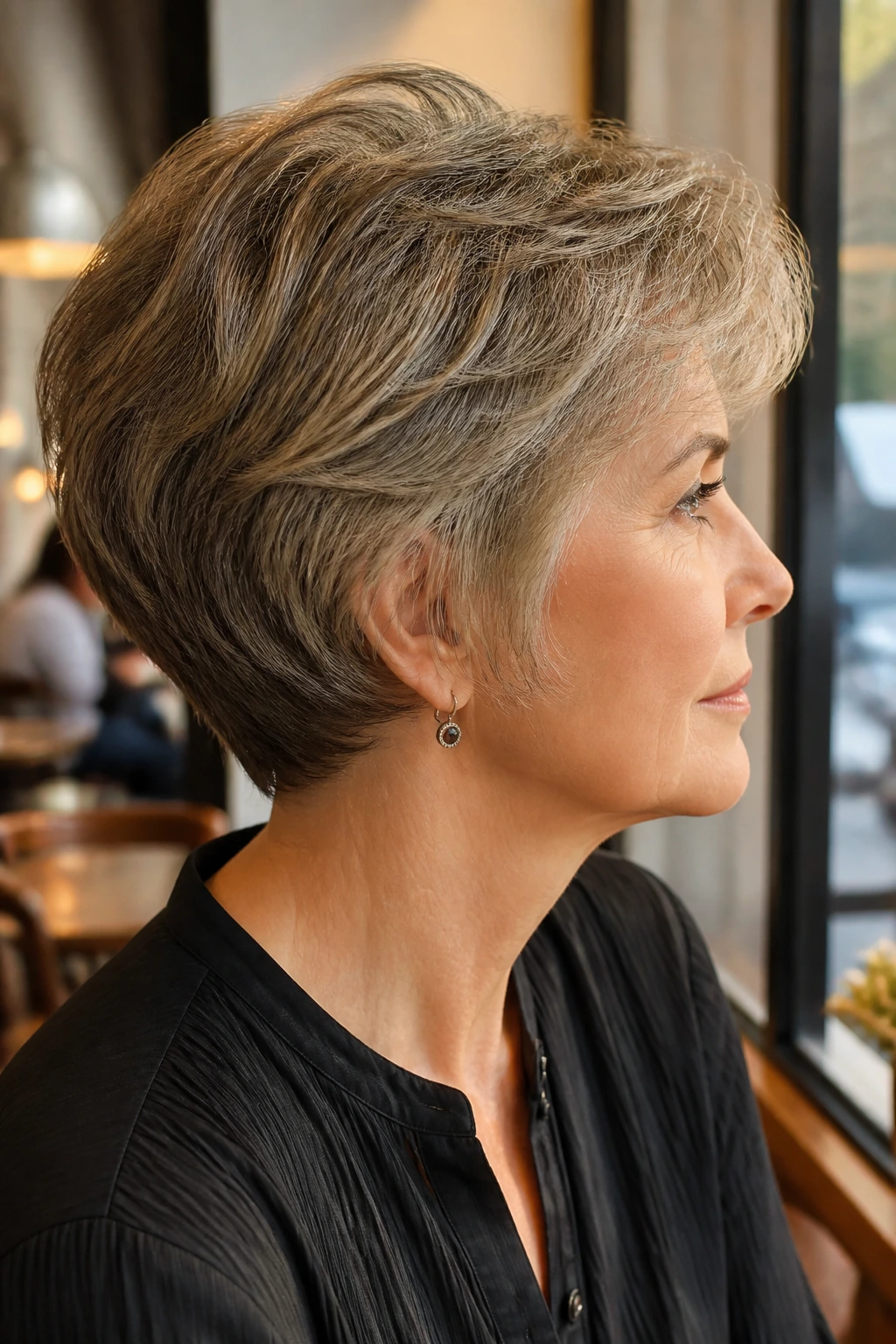
The wedge cut gets a bad reputation because people picture the rigid versions from decades ago. That’s not the version I mean. A soft wedge uses graduated layers in the back and a gentler front angle, so thick hair gets lift at the crown and a narrower shape around the neckline.
It’s a strong choice if your hair feels too wide from ear to ear. The wedge shape tucks the back in and keeps the silhouette neat. It also works nicely with glasses, since the sides don’t need to be long enough to interfere with the frames. Keep the layers soft, though. Hard stacking can look dated fast.
10. Curly Crop with Sculpted Layers
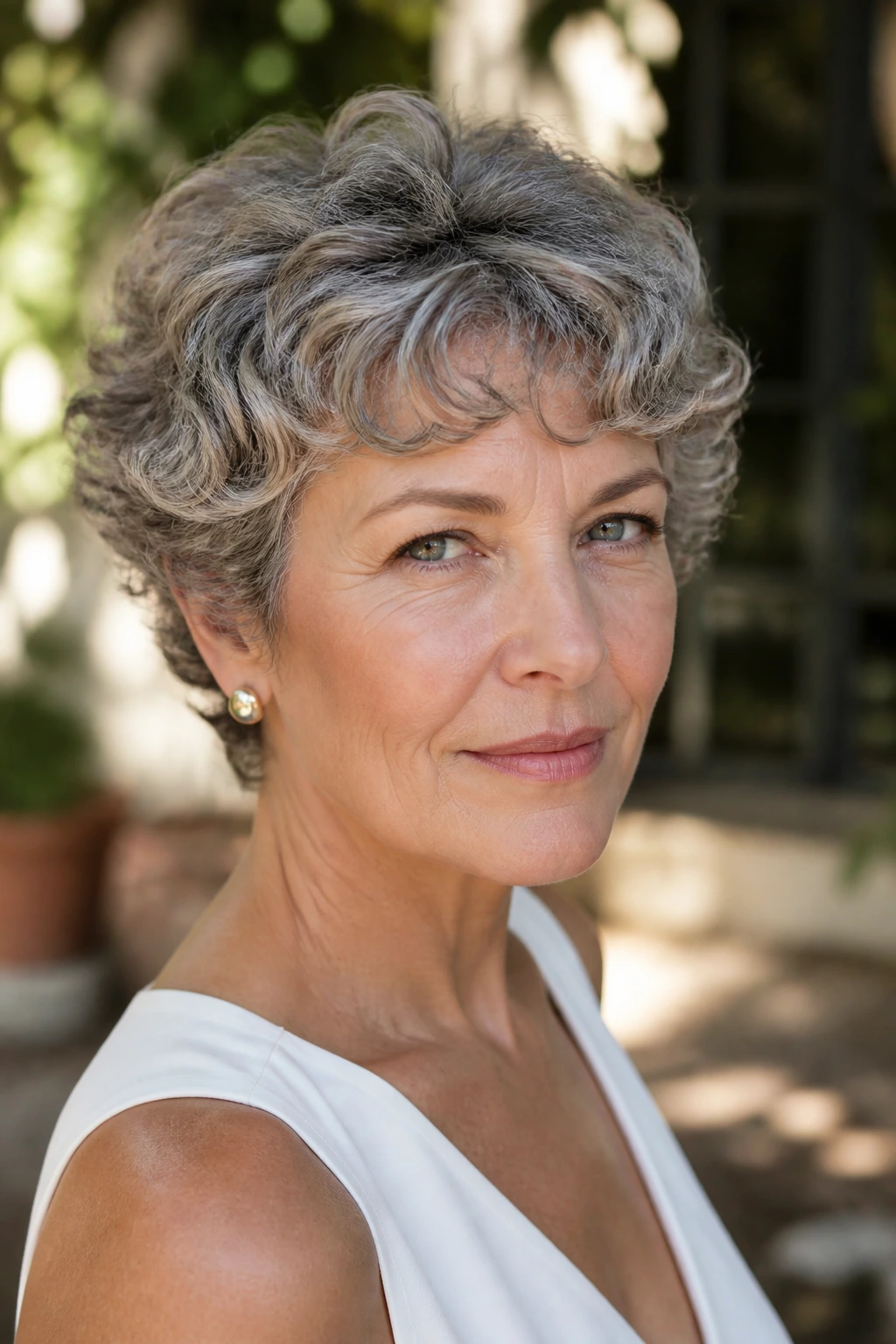
If your thick hair has curl or a strong wave pattern, don’t fight it with a flat iron every day. A curly crop with sculpted layers lets the curl do the work while trimming away the triangle shape that can happen when curls keep too much width at the bottom. This is one of those styles that can look expensive even when it isn’t trying very hard.
The science behind the shape
Curly hair springs upward as it dries, so the haircut has to account for that shrinkage. If the layers are cut dry or with curl awareness, the shape lands where you want it instead of bouncing to the cheekbones in a random way. Ask for rounded layers, not choppy shelves. The difference shows the first time you walk out into humidity.
11. Side-Swept Crop Tucked at the Nape
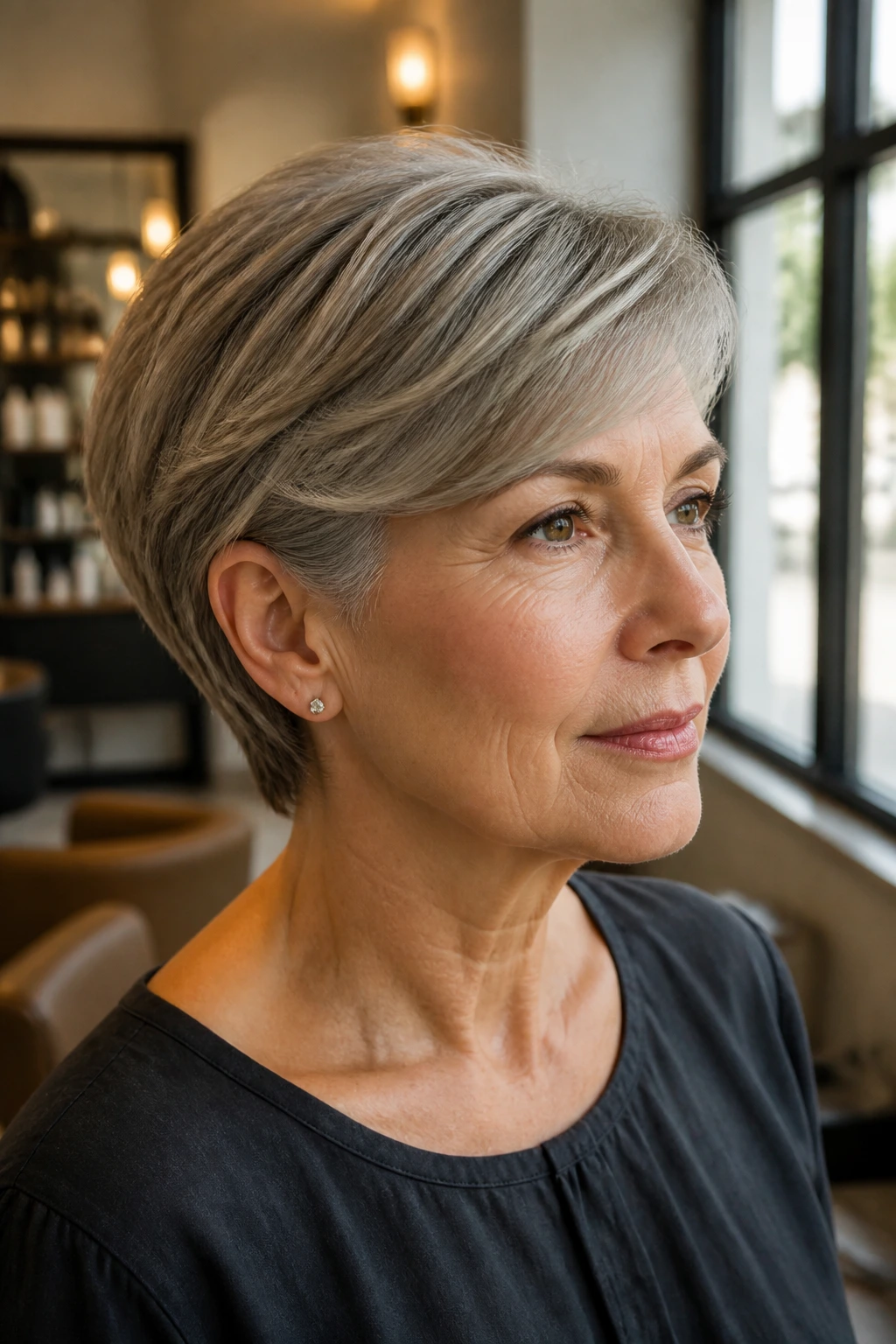
This one is tidy, graceful, and a little underused. A side-swept crop with a gently tucked nape keeps thick hair close to the head while leaving enough softness at the front to avoid a severe look. It’s a nice answer for women who want short hair but don’t want to look cropped down to nothing.
The side sweep matters more than people think. It keeps the forehead area soft, and it gives the style some movement even if the back is neat. Ask for enough length on top to brush diagonally across the forehead and temple. If the top is cut too short, the whole thing can look abrupt. A little extra length saves it.
12. Mid-Length Cut with Bottleneck Bangs
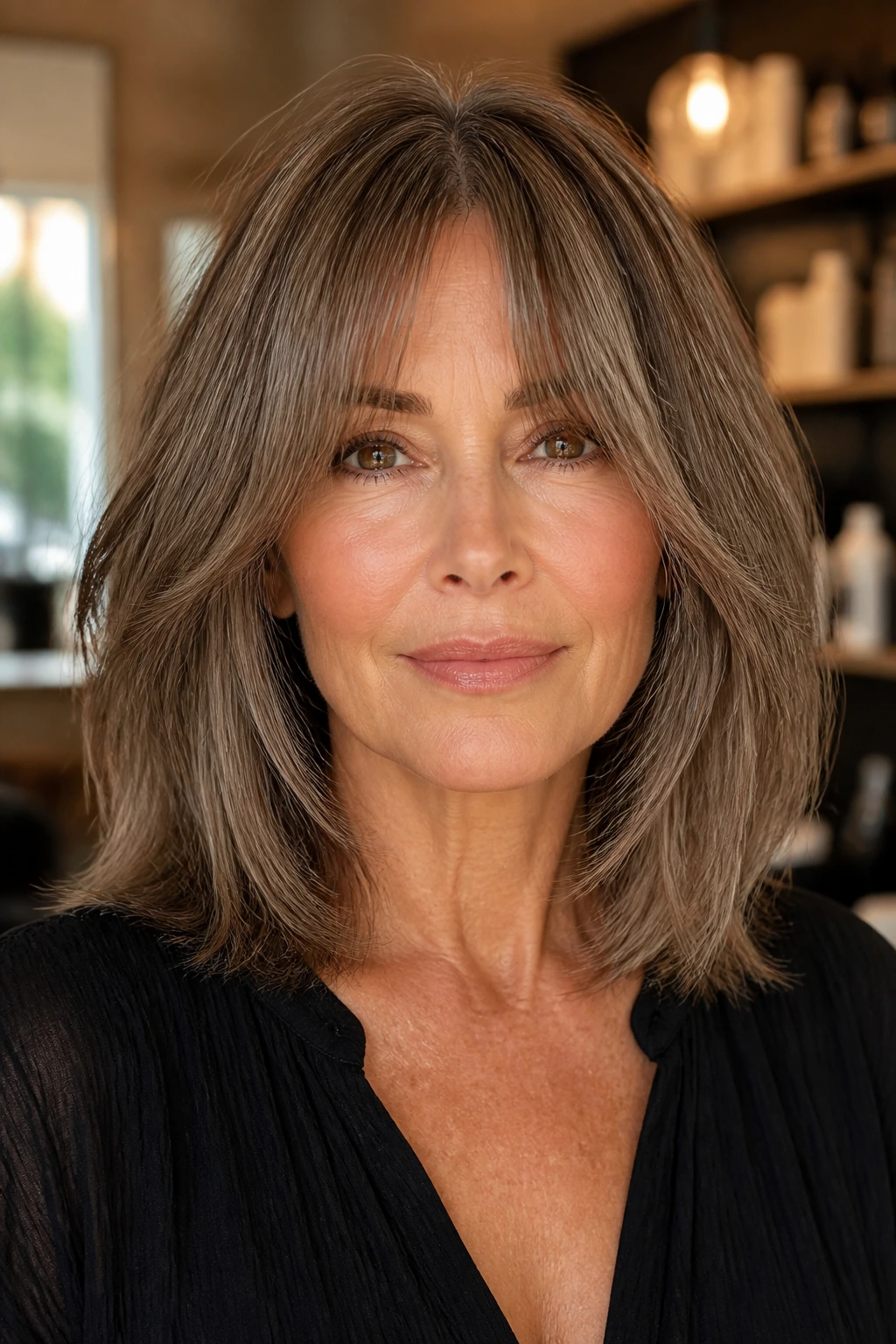
Bottleneck bangs are a smart compromise if you like fringe but hate the maintenance of a full blunt bang. They start narrower at the center and open out toward the temples, which works well with thick hair because the bangs don’t take over the face. On a mid-length cut, they pull attention upward and soften the whole outline.
This style is especially good if your forehead feels wider than it used to or if you want some face framing without a curtain bang that needs constant fixing. Thick hair carries these bangs well because the fringe has enough body to sit properly. A quick round-brush bend is usually enough. No need for a full styling routine every morning.
13. Half-Up Twist with Lift at the Crown
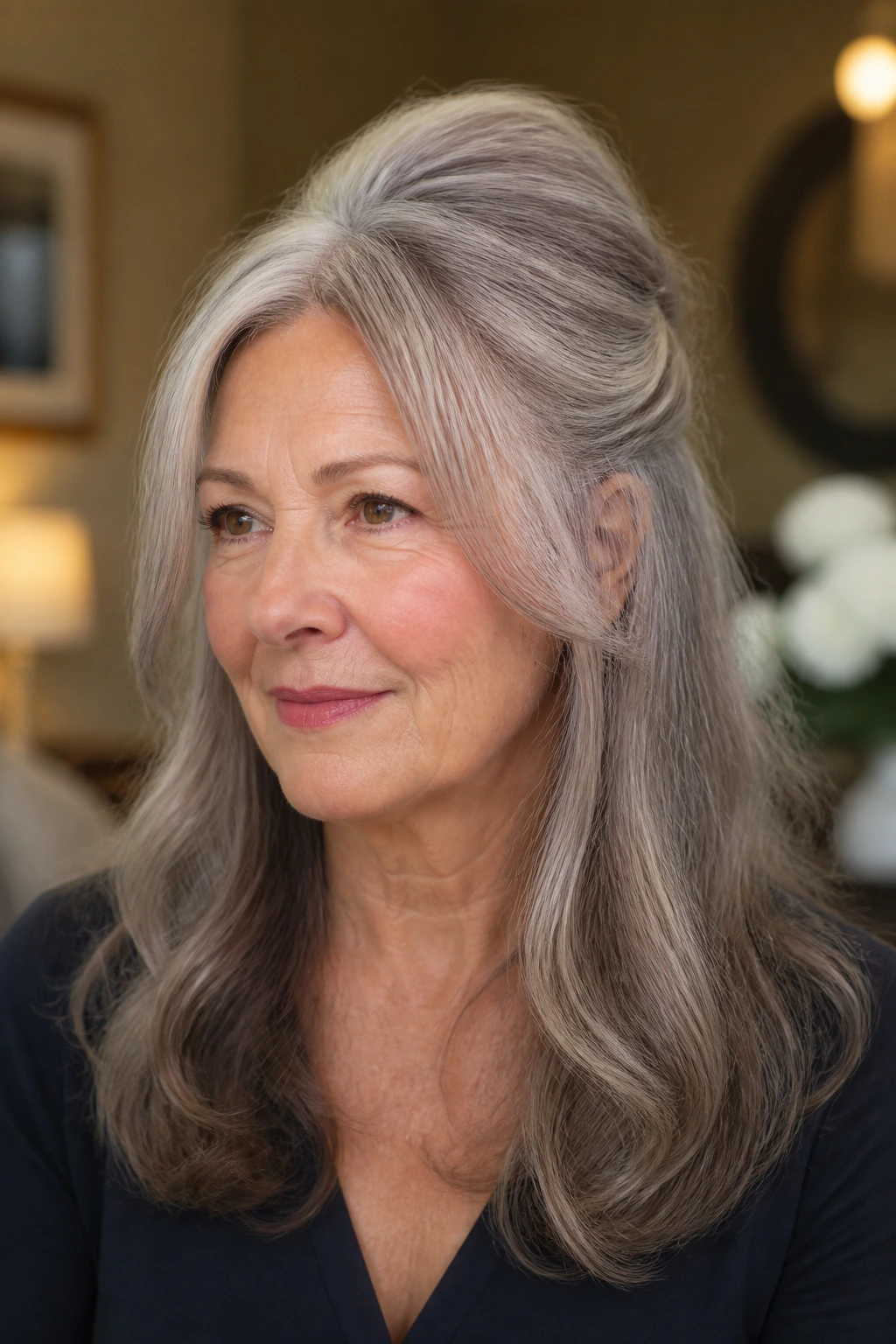
Sometimes the best hairstyle isn’t a cut at all. It’s a way to wear thick hair so it feels lighter. A half-up twist gives you lift at the crown, keeps the sides off the face, and leaves the length down so the style still feels full. It’s useful on days when loose hair feels too heavy but an updo feels too formal.
How to make it work
Take the top section from temple to temple, twist it back loosely, and pin it with two cross-pinned bobby pins rather than one giant clip. That keeps the twist flat and stable. Leave a few face-framing strands out if you want softness, but keep them away from the cheeks if your hair tends to frizz. Thick hair holds this style better when it’s not freshly squeaky clean.
14. Low Chignon with Swept-Back Sides
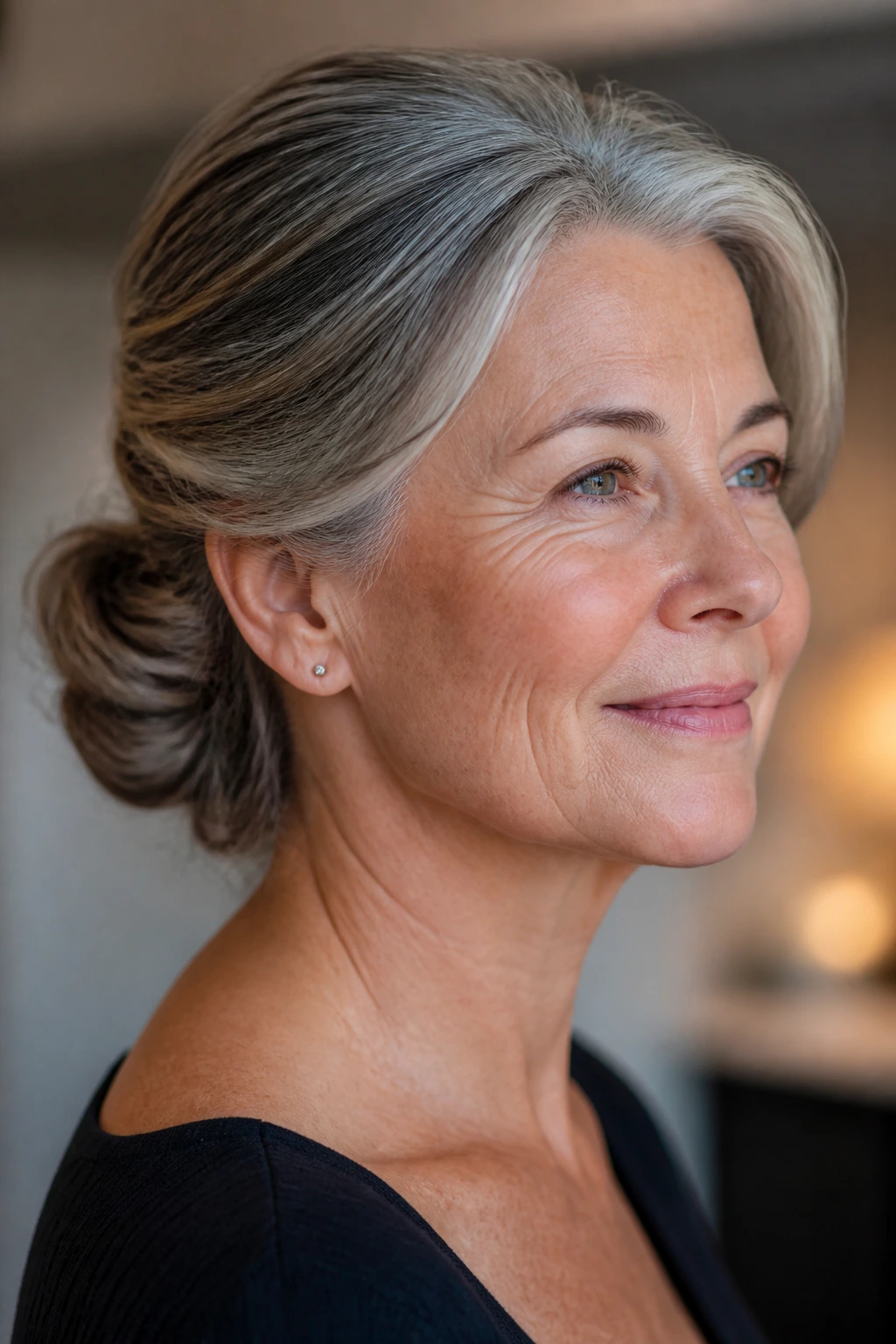
A low chignon is one of my favorite ways to give thick hair a break. It gathers the weight at the nape, which can feel cooler and more comfortable, especially if collars or scarves bother your neck. Swept-back sides keep the profile clean, and a slightly loose bun prevents the style from looking tight or severe.
The secret is not to over-smooth the front. Thick hair can look flat and pulled if you chase every flyaway. Leave a touch of lift at the crown, then pin the bun low and secure it with U-shaped pins if the hair is heavy. A light mist of flexible spray is enough. You do not need shellac.
15. Shoulder-Length Blowout Layers
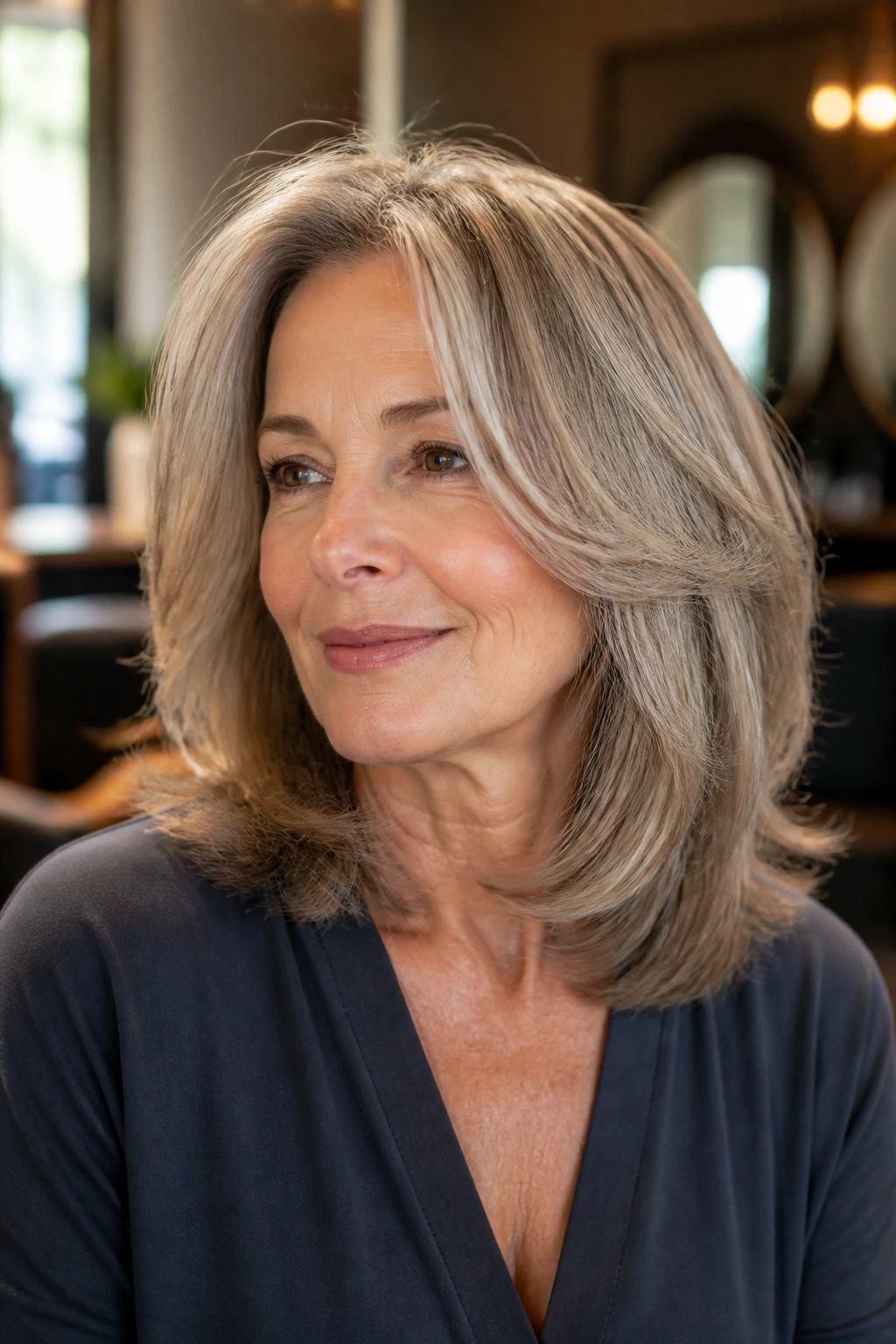
This is the glossy, salon-finished look that thick hair can wear without apology. Shoulder-length layers give the cut movement, and a round-brush blowout brings out the swing. The shape lands somewhere between polished and relaxed, which is probably why so many women keep coming back to it.
It’s a good choice if you like a little volume near the cheekbones and a smooth end result. Thick hair often holds a blowout better than fine hair, so you get a bit more mileage from the effort. Work with a heat protectant, a medium round brush, and sections no wider than two inches. Bigger sections make thick hair lazy. Smaller ones keep the movement crisp.
16. Tousled Silver Shag
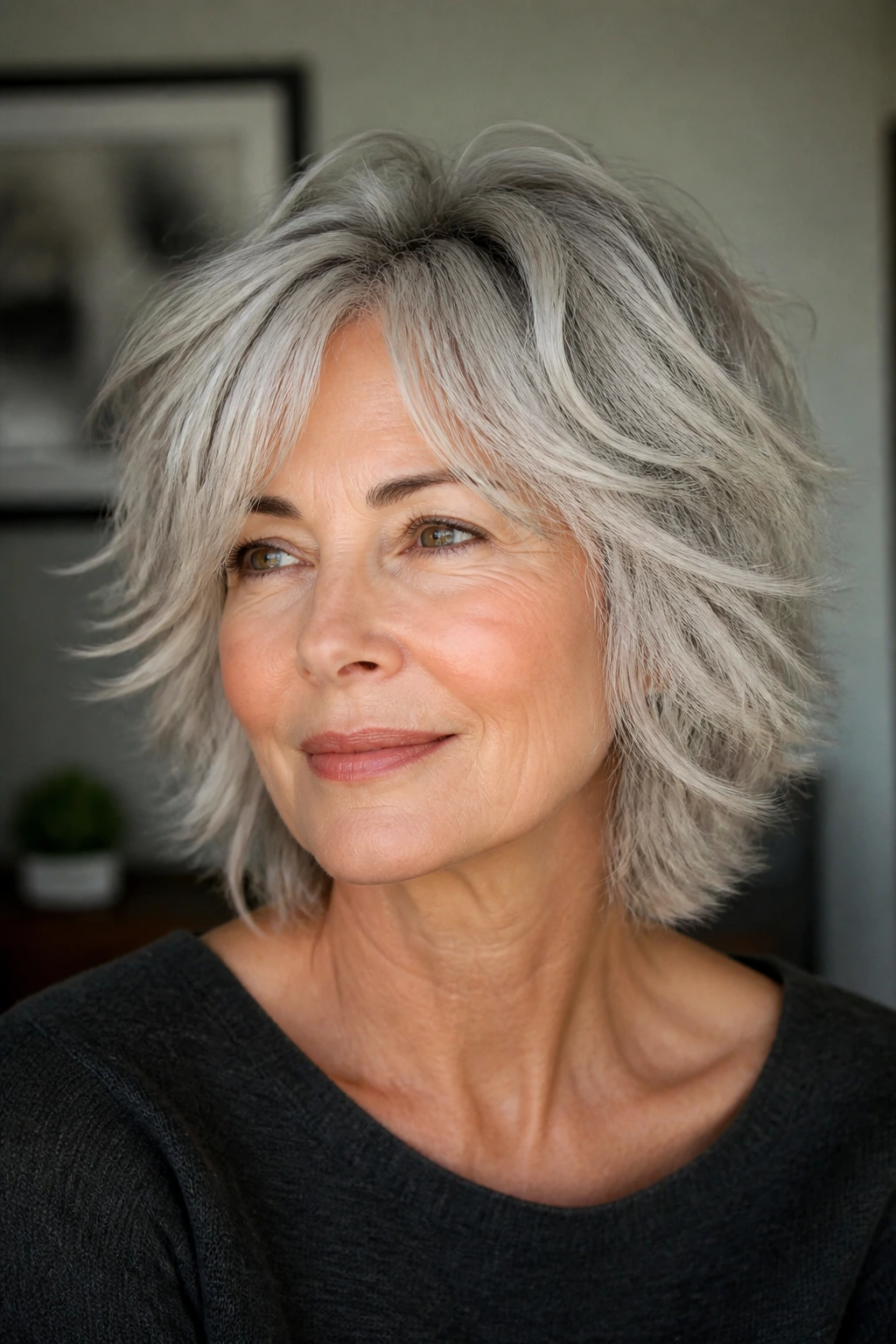
Silver hair and a shag cut often belong together. The texture shows off the layers, and the layers stop the color from reading flat. On thick hair, a tousled shag adds body near the top while releasing bulk through the sides and ends. It’s a style with some edge, but it doesn’t need to look messy.
I like this cut because it forgives a little imperfection. If your hair goes a bit wild on a humid morning, it still looks intentional. Ask for soft layering, not feathered aggression. A dab of styling cream through damp hair and a quick scrunch is enough for many women. If your hair is straighter, bend a few sections with a large-barrel iron and leave the ends loose.
17. Long One-Length Cut with Interior Weight Removal
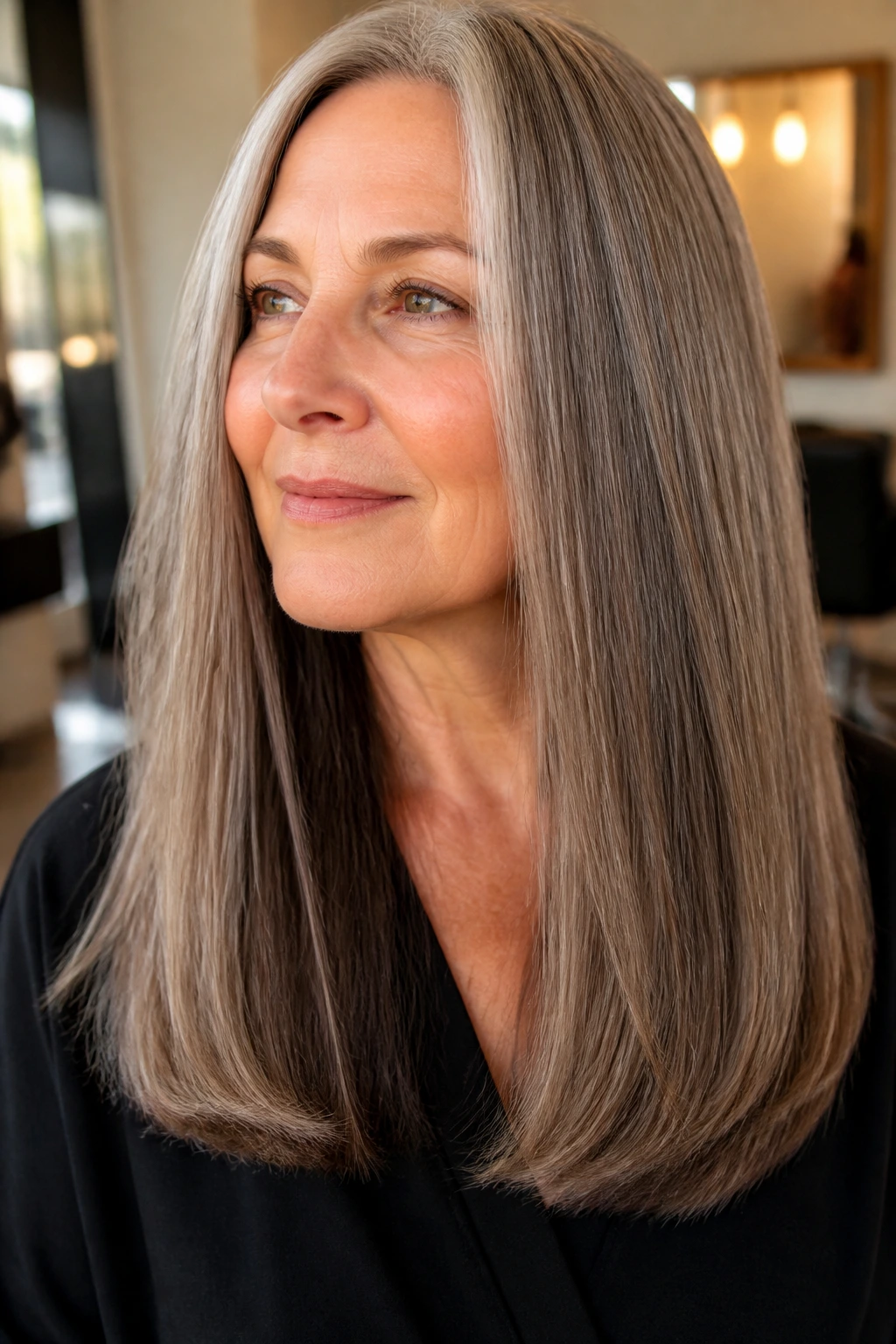
Yes, you can keep long hair. No, it should not be one giant curtain. A long one-length cut with careful internal weight removal lets thick hair stay long while preventing the bottom from becoming a heavy block. The outer line stays clean, but the inside loses enough bulk to let the shape move.
This is a strong option if your hair still feels healthy and you like wearing it in braids, clips, or low ponytails. Ask for invisible layers rather than obvious chopping. The haircut should still look long from the outside. If the stylist removes too much weight near the front, the hair can start to frizz and float away. Keep the interior work subtle. That’s where the magic is.
18. Pixie-Bob Hybrid with Feathered Fringe
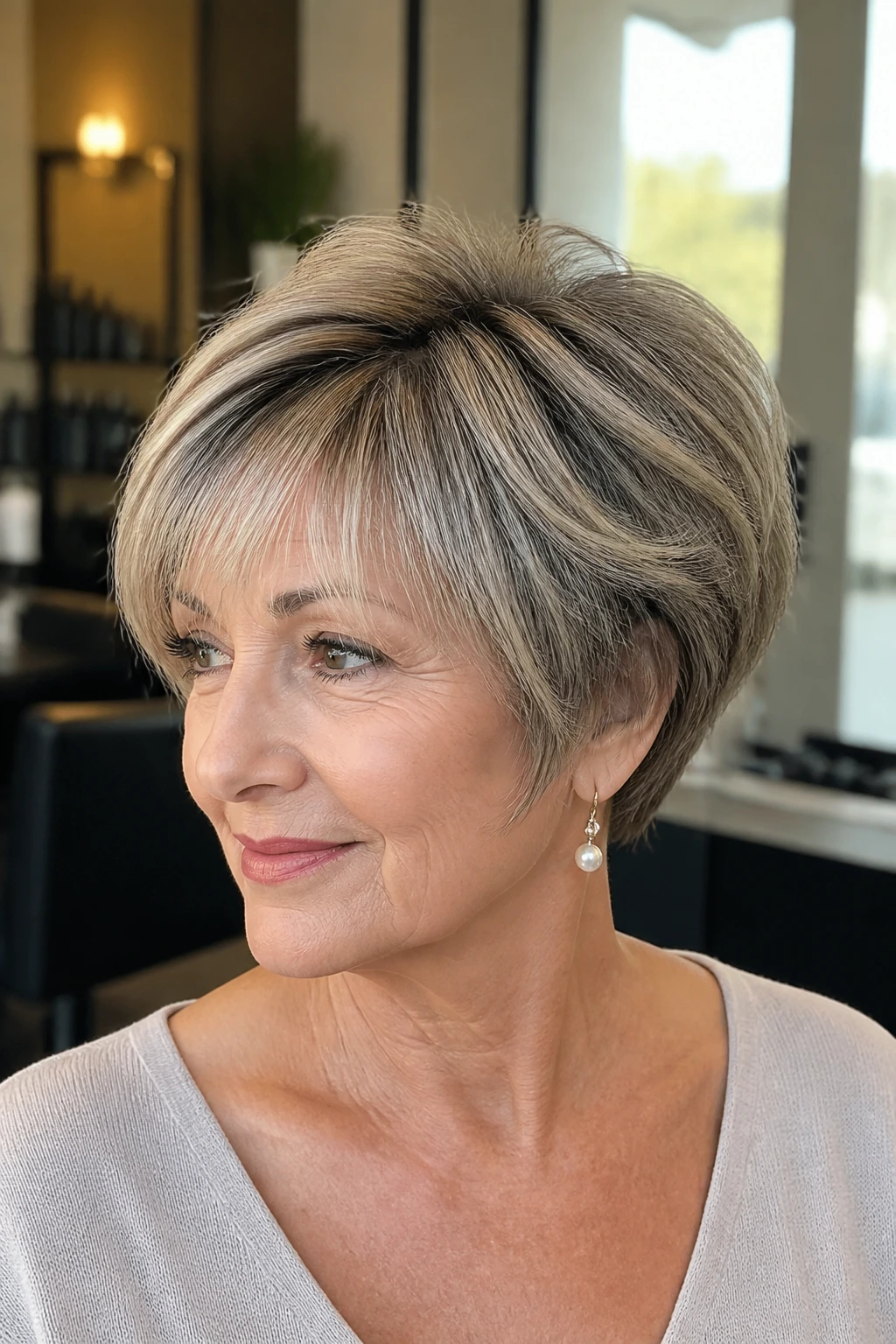
The pixie-bob sits between a short crop and a tidy bob, which is exactly why thick hair can wear it so well. It keeps enough length on top and around the sides to feel feminine and soft, but the nape and back are short enough to control the bulk. Feathered fringe gives the face a little softness without hiding the eyes.
This style works if you want something low on fuss but not severe. It’s especially good for women who like to run fingers through their hair and go. The shape looks best when the top has a little lift and the ends are point-cut rather than blunt. Ask for a smooth transition from the nape to the sides so the whole cut feels intentional, not chopped into pieces.
Styling Tricks That Keep Thick Hair Light
Root Lift First: Thick hair often loses shape at the roots before it loses shape at the ends, so start with mousse or root spray at the crown and temples, then dry those areas first. If you wait until the hair is half dry, the root support is weaker and the whole style collapses faster.
Use Direction, Not Just Heat: Point the nozzle down the hair shaft when you want polish, or lift sections straight up when you want volume. Thick hair reacts fast to the angle of the dryer. That’s why a rough dry can leave it puffed in one spot and flat in another.
Go Easy on Oils: A drop or two on the ends is enough. Thick hair can take more moisture, but too much oil makes the ends cling together and the shape gets stringy. Put product on the palms, rub them together, then smooth the last two inches only.
Trim Before the Bulk Returns: Don’t wait until the cut feels unbearable. Thick hair grows into itself, which means the shape can go boxy before the actual length seems dramatic. A trim at the right time keeps the style from turning into a chore.
Mistakes That Make Thick Hair Look Heavy
Over-thinning the middle: The hair may feel lighter in the chair, but a month later you can end up with fuzzy ends and a wide, puffy outline. The fix is asking for controlled internal removal, not aggressive thinning all over.
Keeping the same blunt line everywhere: A chin-length bob can be sharp and stylish, but a blunt cut at every level — sides, back, bangs, ends — often creates a shelf effect on thick hair. Softening just one or two zones makes the shape much easier to wear.
Chasing a flat top: Some women want every bit of volume gone. That usually backfires. Thick hair needs a little lift near the crown or it drags the whole face down. The goal is balance, not flattening.
Letting the ends get too dry: Thick gray hair can split quietly, then suddenly make the cut look frayed. A small trim every few weeks beats waiting for damage to spread upward.
Choosing bangs that are too heavy: Dense fringe across the forehead can feel hot and look closed-in. If you want bangs, go softer — curtain, bottleneck, or side-swept usually age better with thick hair.
Ways to Adapt These Looks to Your Life
The Glasses-Friendly Version: Keep the sides slightly tucked or tapered so the frames don’t fight the hair at the temples. Side parts, curtain bangs, and cropped bobs usually behave better than a full blunt fringe.
The Low-Styling Version: Ask for a shape that falls well with air-drying, not a cut that only works after a full blowout. Shoulder-length layers, shag shapes, and pixie-bobs do that job well if the layering is light and clean.
The Soft Gray-Blend Version: If your hair is transitioning from pigmented to silver, choose cuts with movement and texture so the color shift looks intentional instead of patchy. A shag or feathered lob can make the blend look rich instead of uneven.
The Neck-Comfort Version: If heat or collar irritation is the problem, keep the nape short or use a low chignon, pixie, or stacked bob. Thick hair off the neck changes the whole feel of the haircut.
The Length-Keeping Version: If you want to stay long, add internal weight removal and face-framing layers rather than chopping off the bottom. That keeps the silhouette graceful instead of broomy.
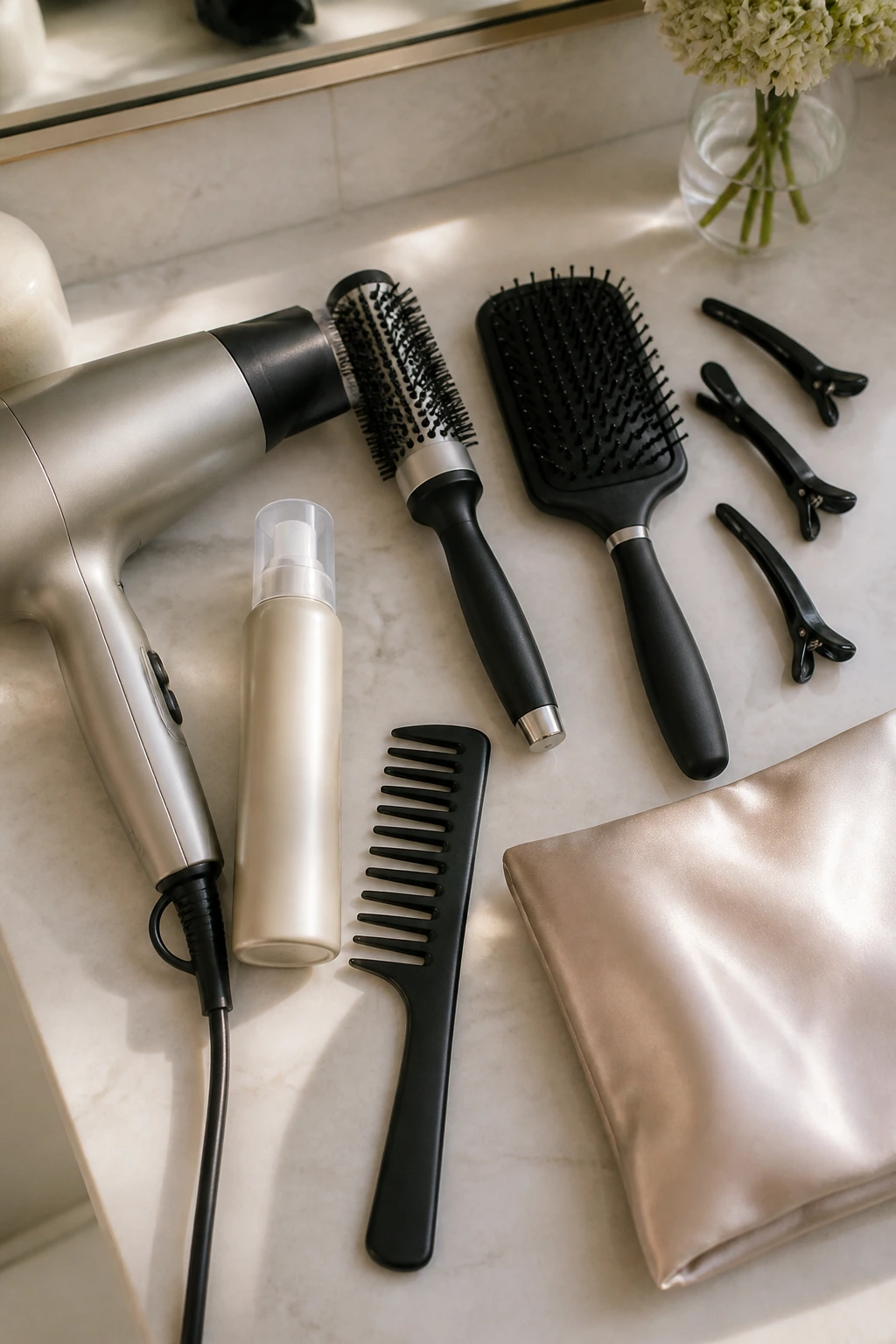
Tools That Earn Their Spot on the Vanity
-
Hair dryer with a concentrator nozzle: The nozzle matters. It directs airflow so thick hair smooths faster and frizzes less.
-
Medium round brush, 1.5 to 2 inches: Small enough to shape layers, large enough not to tangle in dense hair.
-
Paddle brush: Good for straightening the mid-lengths during a blowout and taming the bulk at the ends.
-
Sectioning clips: Thick hair needs sections. Otherwise half of it stays damp under the top layer.
-
Root-lifting mousse or spray: Gives the crown some lift without making the hair crunchy.
-
Light heat protectant: Especially important if you use a blow-dryer, hot brush, or iron more than once a week.
-
Wide-tooth comb: Best for detangling damp thick hair without ripping through the ends.
-
Silk or satin pillowcase: Less friction at night means fewer snarls and less puff at the back of the head.
Keeping the Shape Between Salon Visits

Thick hair punishes laziness, but it also rewards a little upkeep. Shorter cuts usually need shape every 4 to 6 weeks. Bobs and lobs can often go 6 to 8 weeks, and longer layered cuts can stretch a bit farther if the ends stay healthy. The minute your haircut starts looking wide at the sides or heavy at the nape, it’s time.
For daily care, a small amount of product is usually enough. Refresh the crown with a bit of dry shampoo or root spray, then rough it up with your fingers before adding any brush work. If you brush thick hair hard from root to end every morning, you often flatten the top and puff the ends. That’s a bad trade.
At night, tie long hair loosely or use a silk pillowcase so the cut doesn’t mangle itself by morning. If your hair is shoulder length or shorter, a quick pin at the nape can keep the back from kinking oddly. And if you wear your hair blown out, sleep with the ends flipped up over the pillow, not crushed under your head. Small thing. Big difference.
Questions People Ask Before Choosing a Thick-Hair Style
Should women over 60 avoid long hair if they have thick hair?
Not at all. Long thick hair can look elegant when it has internal weight removal, face-framing movement, and a healthy end line. The problem is not length by itself; it’s too much bulk sitting in one continuous block.
Is a pixie cut good for thick hair?
Yes, if the shape is tapered properly. A pixie on thick hair can feel lighter and easier to manage than a short bob, but it needs careful removal around the nape and sides so it doesn’t balloon out.
What’s better for thick hair: layers or one length?
Layers usually win for most women over 60 because they control bulk and keep the hair moving. One-length cuts can still work if the hair is straight and the density is manageable, but they need soft internal shaping so the ends don’t sit like a shelf.
Can thick gray hair handle bangs?
It can, but the best bangs are usually side-swept, bottleneck, or curtain styles. Dense blunt bangs can feel heavy and need more upkeep than they’re worth unless your hair is very cooperative.
How do I stop my thick hair from looking boxy?
Ask for movement around the jaw, not just length removal at the bottom. A boxy shape usually means the width has been left intact at the wrong points, especially around the cheeks and lower sides.
What if my hair gets frizzy after layering?
That usually means too much thinning or too many short layers near the ends. You can calm it with better conditioning, but the real fix is a cleaner cut with less aggressive texturizing.
Which style is easiest if I wear glasses every day?
A chin-length bob, a cropped pixie-bob, or a soft side-swept cut tends to sit best with frames. These shapes leave room at the temples and don’t crowd the face.
How often should thick hair be trimmed to keep the style?
Short cuts need more frequent shaping — often every 4 to 6 weeks. Shoulder-length and longer cuts can usually go 6 to 10 weeks, depending on how fast the shape widens.
The Cut Should Move, Not Fight You
The best hairstyles for women over 60 with thick hair don’t try to erase the hair’s strength. They shape it. That’s the whole game. Keep the crown from going bulky, keep the ends from turning blunt and heavy, and leave enough movement around the face to keep the style soft where it matters.
I’d choose a cut that makes your mornings easier and your hair feel lighter by lunchtime, not one that looks tidy for exactly twelve minutes in the salon mirror. Thick hair can do graceful, sharp, relaxed, polished, and effortless-looking on the same head — if the cut is doing its job.
Pick the shape that matches your real life, then let the hair do what it does best.