



Mother of the groom hairstyles for women over 50 have a specific job, and it’s not a small one. They need to survive hugs, flash photography, a long ceremony, dinner, and that moment when someone leans in for a group photo from the wrong angle. If the style falls flat at the crown or turns stiff at the ends, you feel it immediately.
The sweet spot is usually somewhere between polished and human. Not helmet hair. Not a fussy updo that needs constant guarding. The best looks work with silver strands, softer density, layered cuts, and the little shifts in texture that come with time. A clean side sweep can open the face. A low knot can make a neckline look deliberate instead of crowded. A bit of root lift can keep fine hair from disappearing under a veil or fascinator.
Some women want elegant and formal. Others want something that looks like they simply have excellent hair. Both are fair requests. The styles below lean into real life: shorter hair, shoulder-length layers, white streaks, thinning at the temples, thick waves that refuse to sit still, and the practical need to look composed without spending the whole reception thinking about bobby pins.
Why This Collection Feels Worth Saving
- It respects real hair texture: These looks work with fine, thick, straight, wavy, and curly hair instead of pretending all hair behaves the same way.
- It flatters mature features: Soft lift at the crown, side parts, and face-framing pieces keep the style from pulling the face downward.
- It holds up in photos: Each style has a shape that reads cleanly from the aisle, the table, and the dance floor.
- It suits different lengths: Short cuts, bobs, lobs, and longer styles all get a real place here.
- It leaves room for accessories: Combs, pins, pearls, and small flowers can be added without fighting the hairstyle.
- It skips the fake youth stuff: Nothing here depends on over-teasing, crunchy spray, or trying to hide silver hair.
1. Soft Low Chignon with a Side Sweep
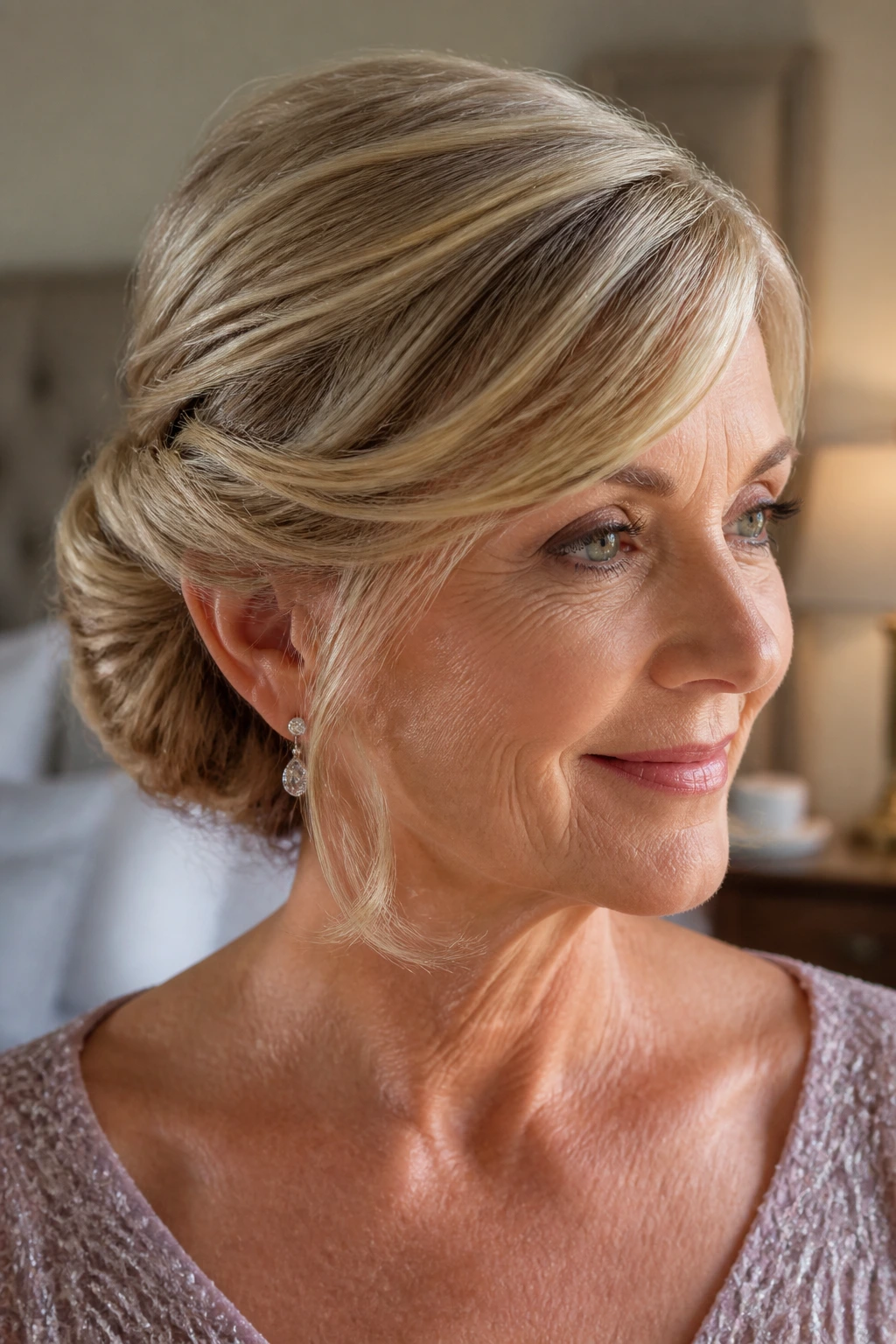
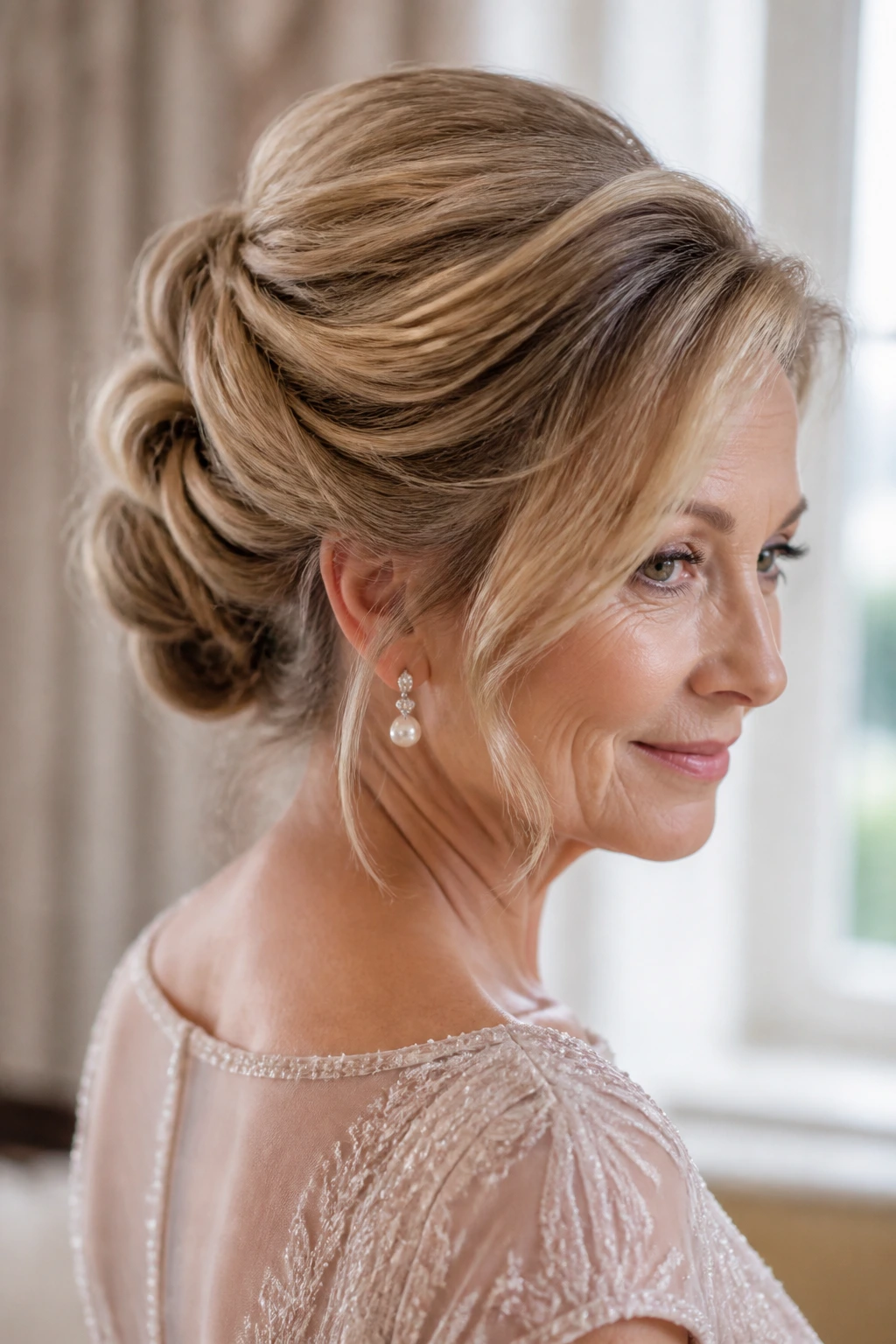
A soft low chignon is the kind of style that never looks like it’s trying too hard, which is exactly why it works so well for a wedding. The side sweep gives the front a little movement, while the bun sits low enough to feel elegant rather than formal in a stiff, old-fashioned way.
What makes this one especially good for women over 50 is the way it softens the face without hiding it. You get a clean line at the nape, a little lift near the crown, and a shape that works with pearl earrings, a beaded neckline, or a small comb tucked into one side.
Quick styling note: if your hair is layered, twist the shorter pieces inward before pinning. They stay put better than loose ends, and the bun looks fuller without needing a ton of padding.
2. Polished Shoulder-Length Blowout with Face-Framing Layers
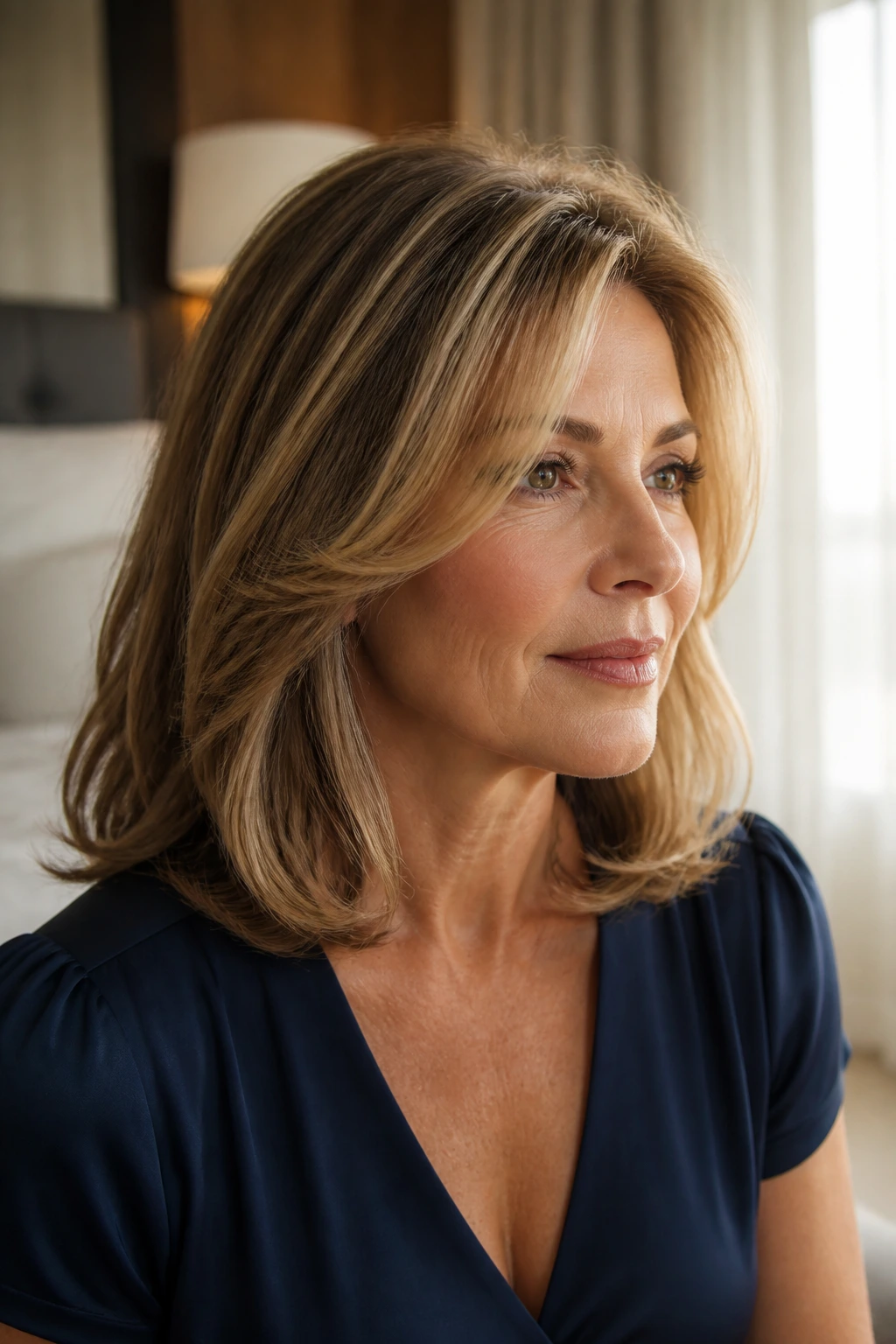
Shoulder-length hair can be a gift on wedding day, as long as it has shape. A polished blowout with face-framing layers keeps the ends from puffing out in weird directions and gives the whole style that clean, expensive finish people always notice in family photos.
This is a strong choice if you don’t want an updo. The hair still moves when you turn your head, but it doesn’t collapse into flatness by dessert. A round brush, a concentrator nozzle, and a light smoothing cream are usually enough to get the job done.
Why it stands out: the front layers skim the cheekbones instead of clinging to them, which helps if your hair is finer around the temples or if you want to balance a fuller dress neckline.
3. Sleek French Twist with a Gentle Crown Lift
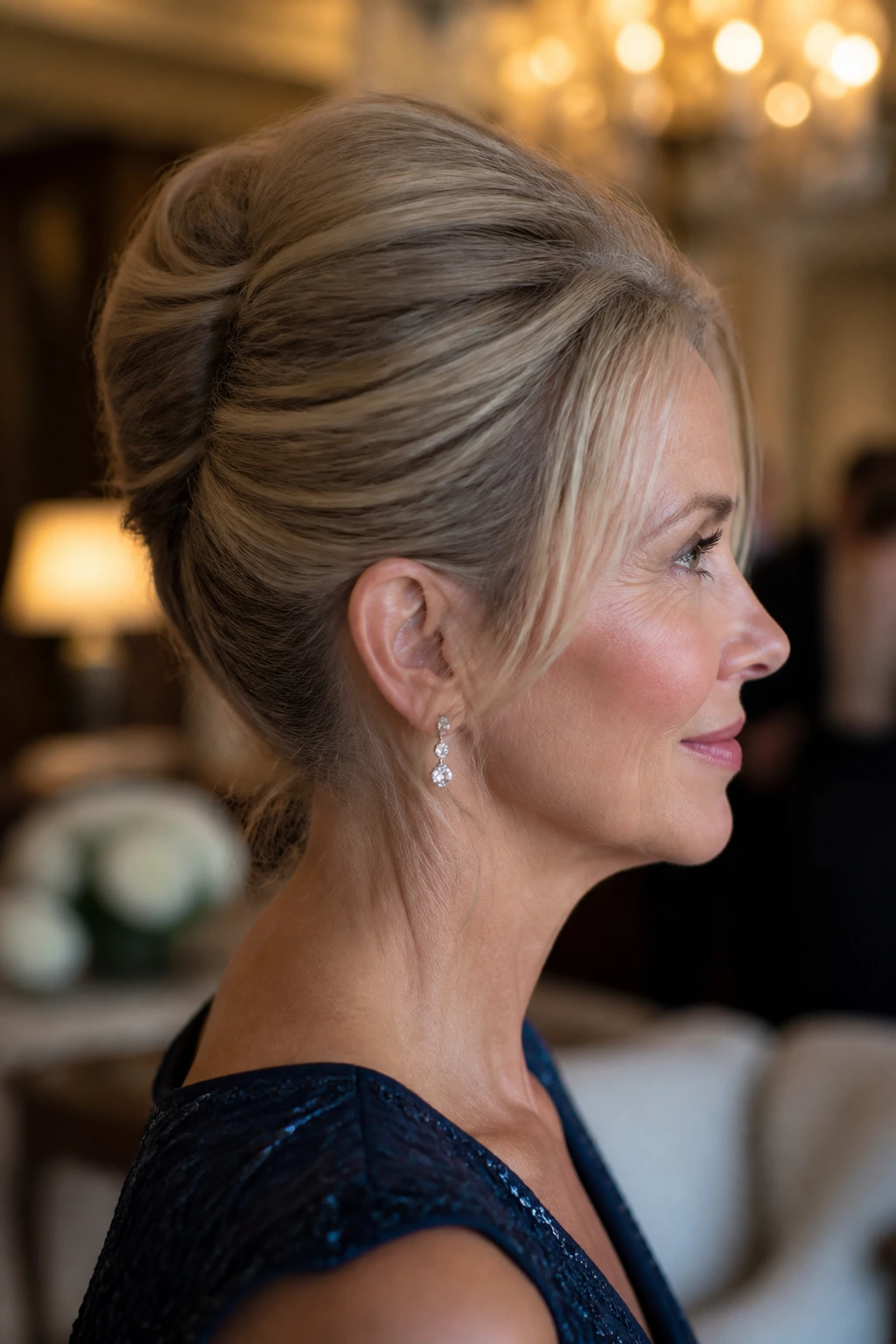
A French twist earns its place because it creates height without fuss. The trick for this age group is to keep the crown lifted, not teased to the moon. A soft bump at the top gives shape, and the twist itself keeps the profile neat from the back and side.
This style works best when the hair has enough length to tuck cleanly, but it doesn’t need a lot of bulk. In fact, too much volume can make the twist look heavy. A smooth finish and a few strategic pins usually look better than a load of spray that makes every strand behave like wire.
Best for:
- Thicker straight hair
- Formal dresses with open necklines
- Weddings where you want the back of the head to look just as tidy as the front
4. Curly Half-Up Half-Down with Loose Tendrils
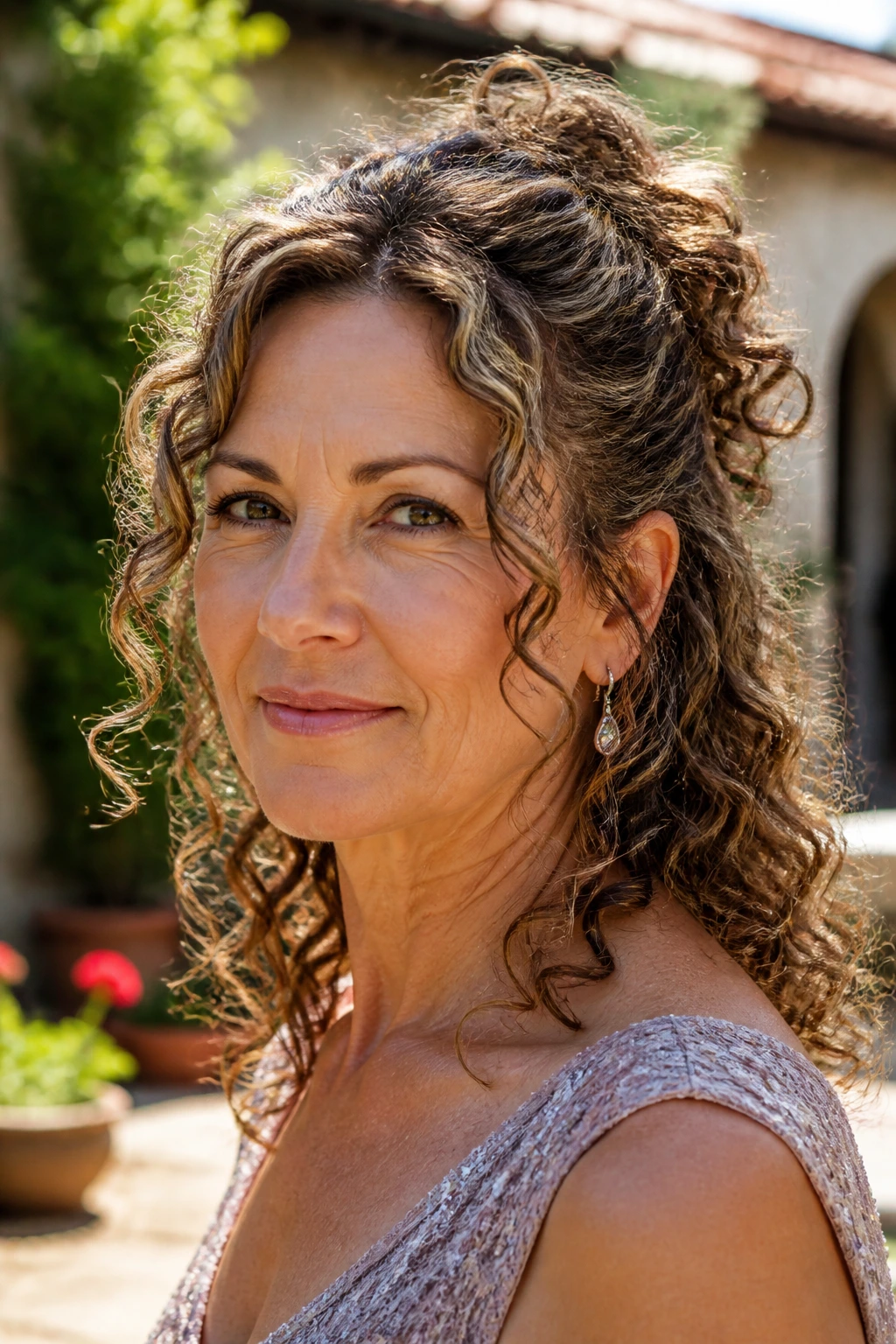
If your hair already has curl or wave, don’t fight it into submission. A half-up style lets the top stay controlled while the bottom keeps its soft movement, and those loose tendrils near the cheeks keep the whole look from feeling severe.
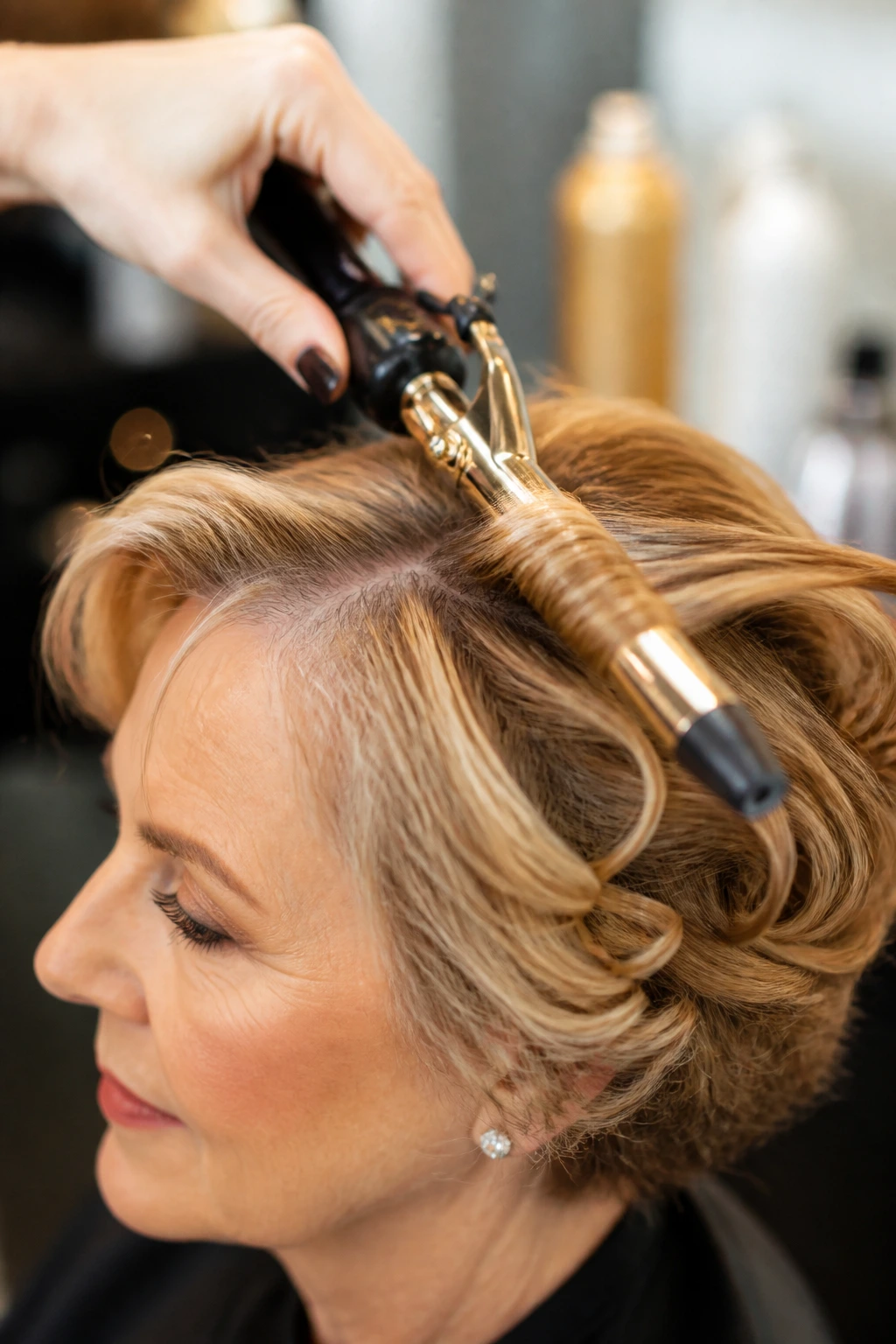
This one reads romantic without tipping into prom territory. The trick is restraint. Pin back just enough hair to lift the face, then leave the curl pattern intact through the ends. A 1-inch curling iron can help refresh areas that need a little shape, but the goal is always a relaxed outline, not a perfect barrel curl.
A small comb or two pearl pins can sit at the back where the half-up section joins. Keep them subtle. The curl should be the feature.
5. Textured Pixie with a Side-Swept Fringe
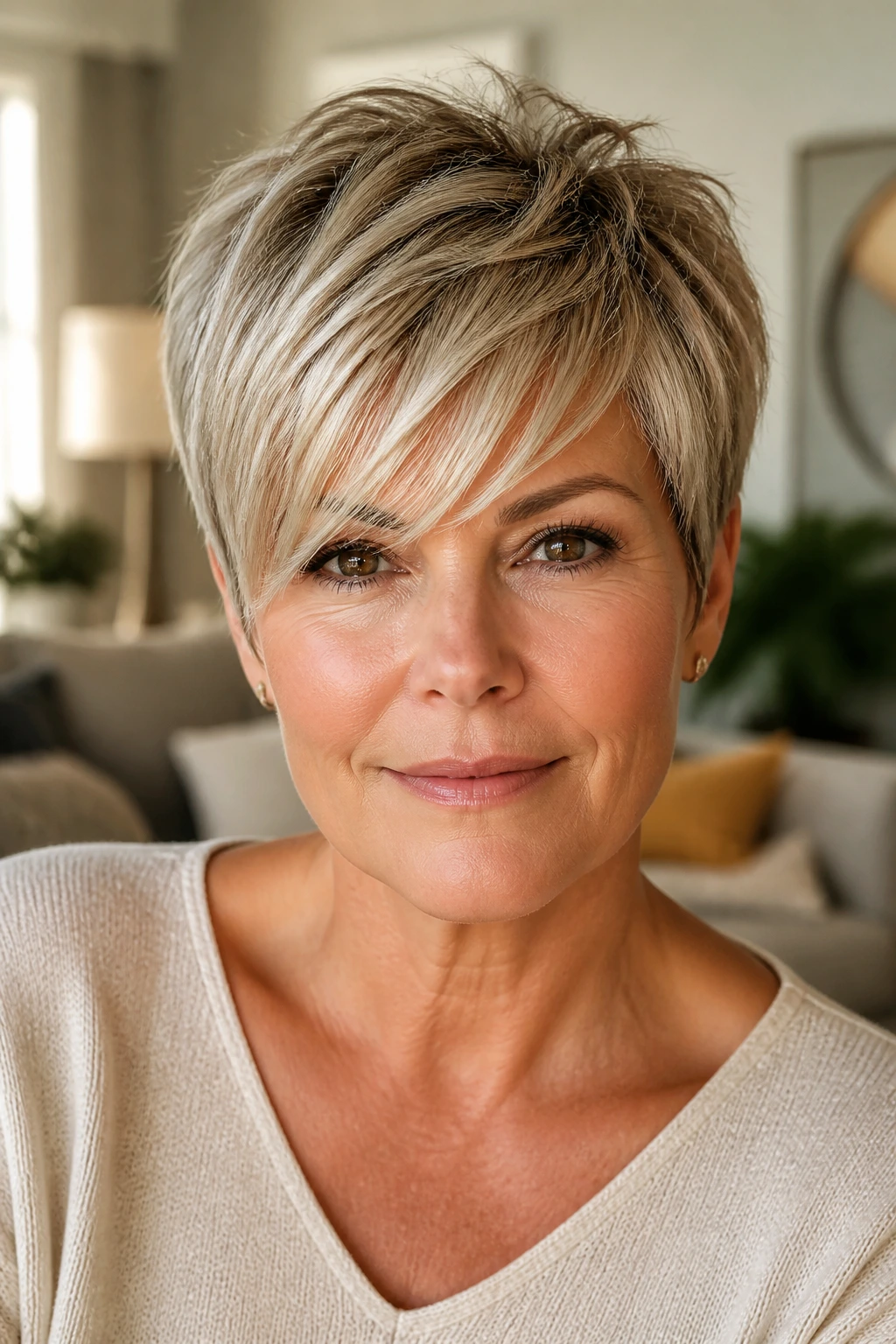
A pixie cut can be the smartest hair choice in the room. Short hair shows the face, the jawline, and the earrings, and on a woman over 50 it often looks more modern than a heavily styled updo that’s trying to manufacture volume it doesn’t have.
The side-swept fringe is the key. It softens the forehead and gives the cut a little movement, which matters when the rest of the hair is cropped close. A pea-sized amount of styling paste or cream is usually enough. Too much product and the hair starts looking damp in the wrong way.
My take: a good pixie is one of the easiest mother of the groom hairstyles to keep fresh through the whole event. It doesn’t collapse. It doesn’t need rescuing every forty minutes. It just needs a quick finger-fluff before photos.
6. Tucked-In Low Bun with Pearl Pins
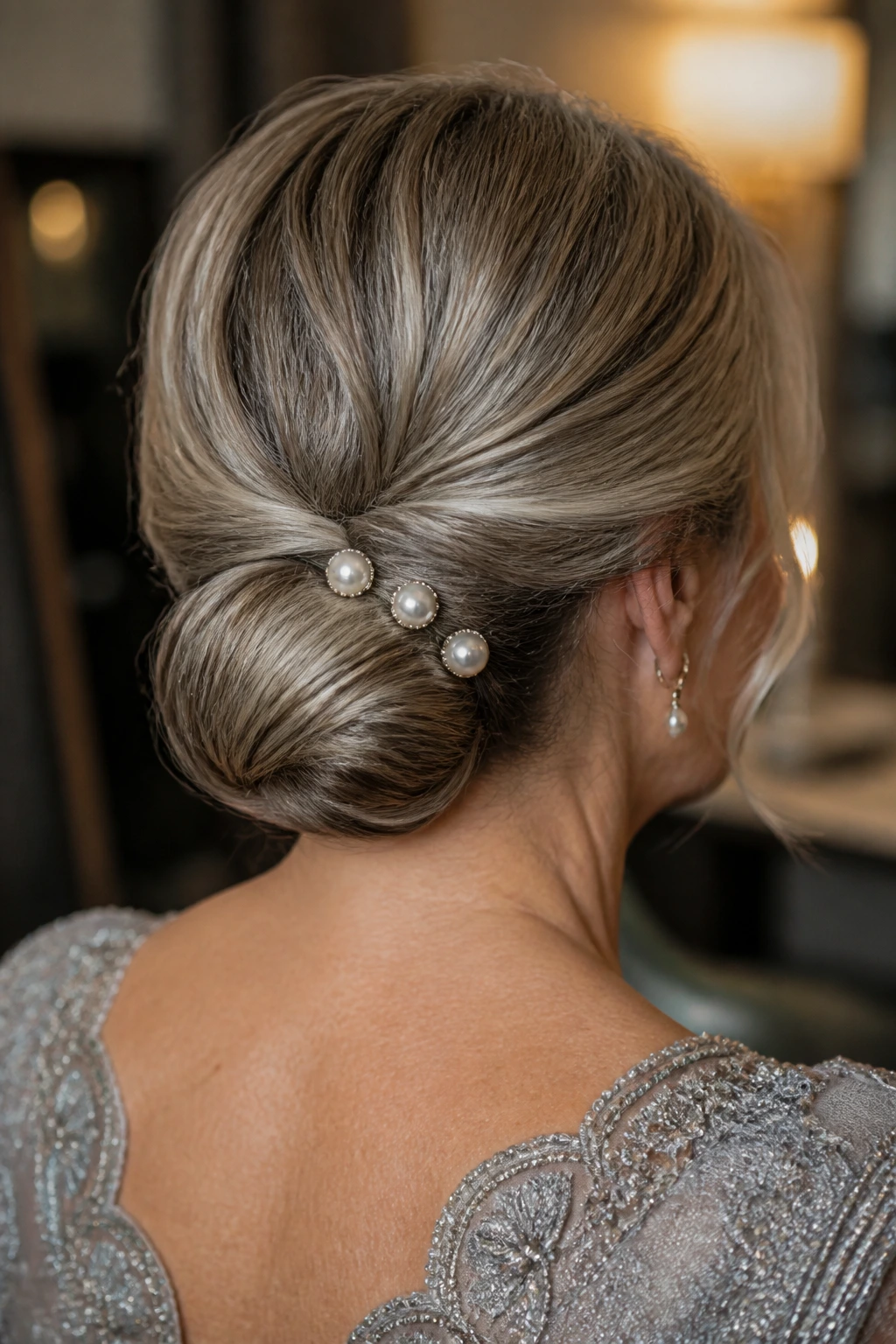
The tucked-in low bun has a calm, finished look that feels especially right for a formal ceremony. Hair is smoothed back, tucked inward at the nape, and held with pins so the silhouette stays compact. Add pearl pins, and the whole thing takes on a quiet, polished feel.
What I like about this style is its discipline. It keeps the neck line open, which helps if the dress has lace, beads, or a high collar. It also behaves well under a veil, if that’s part of the plan. No extra drama. No dangling pieces to catch on fabric.
Why it works
- The tucked ends create a clean back view.
- Pearl pins give a little light near the bun without pulling attention away from the face.
- It keeps medium to thick hair secure for hours.
7. Old-Hollywood Waves on Midlength Hair
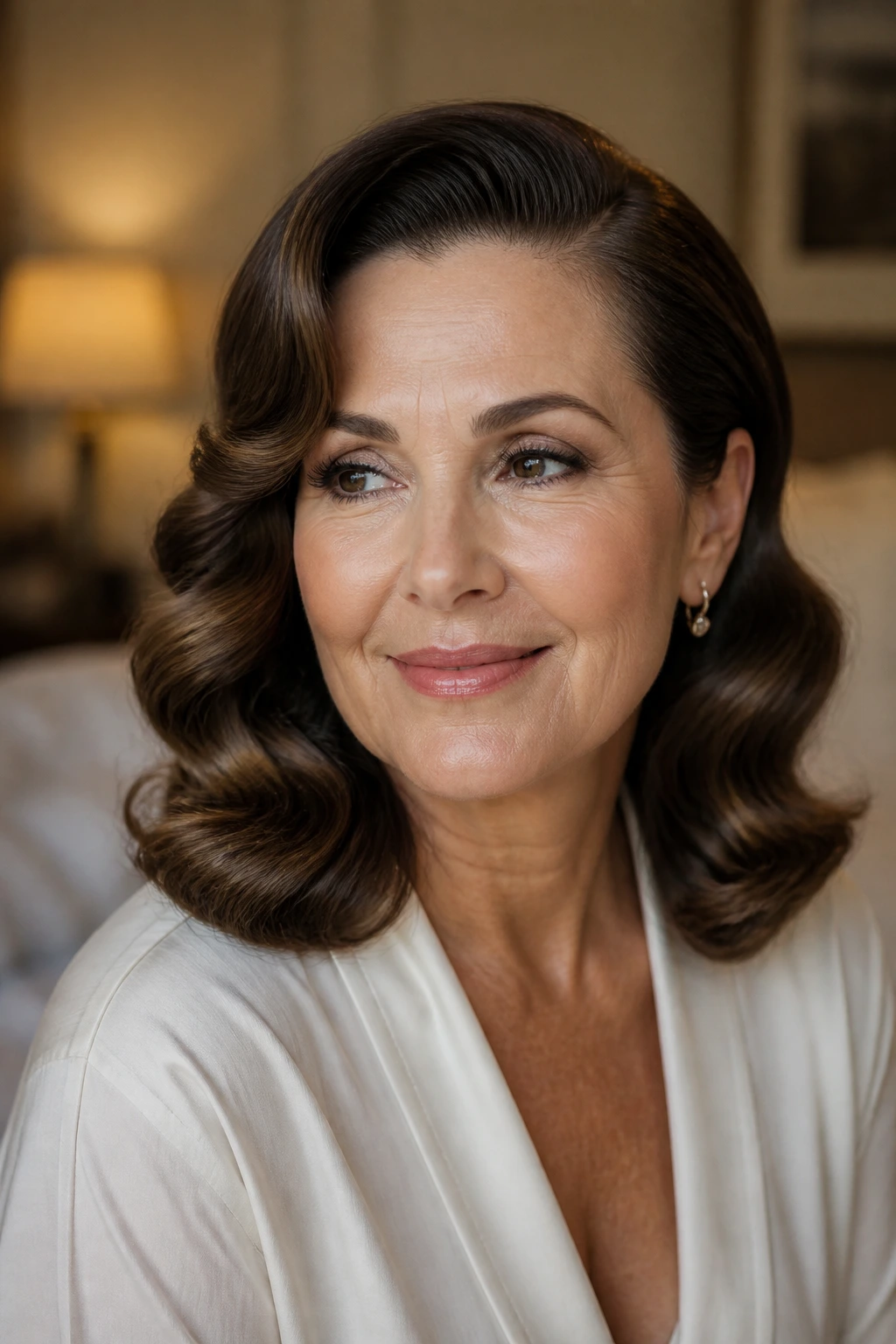
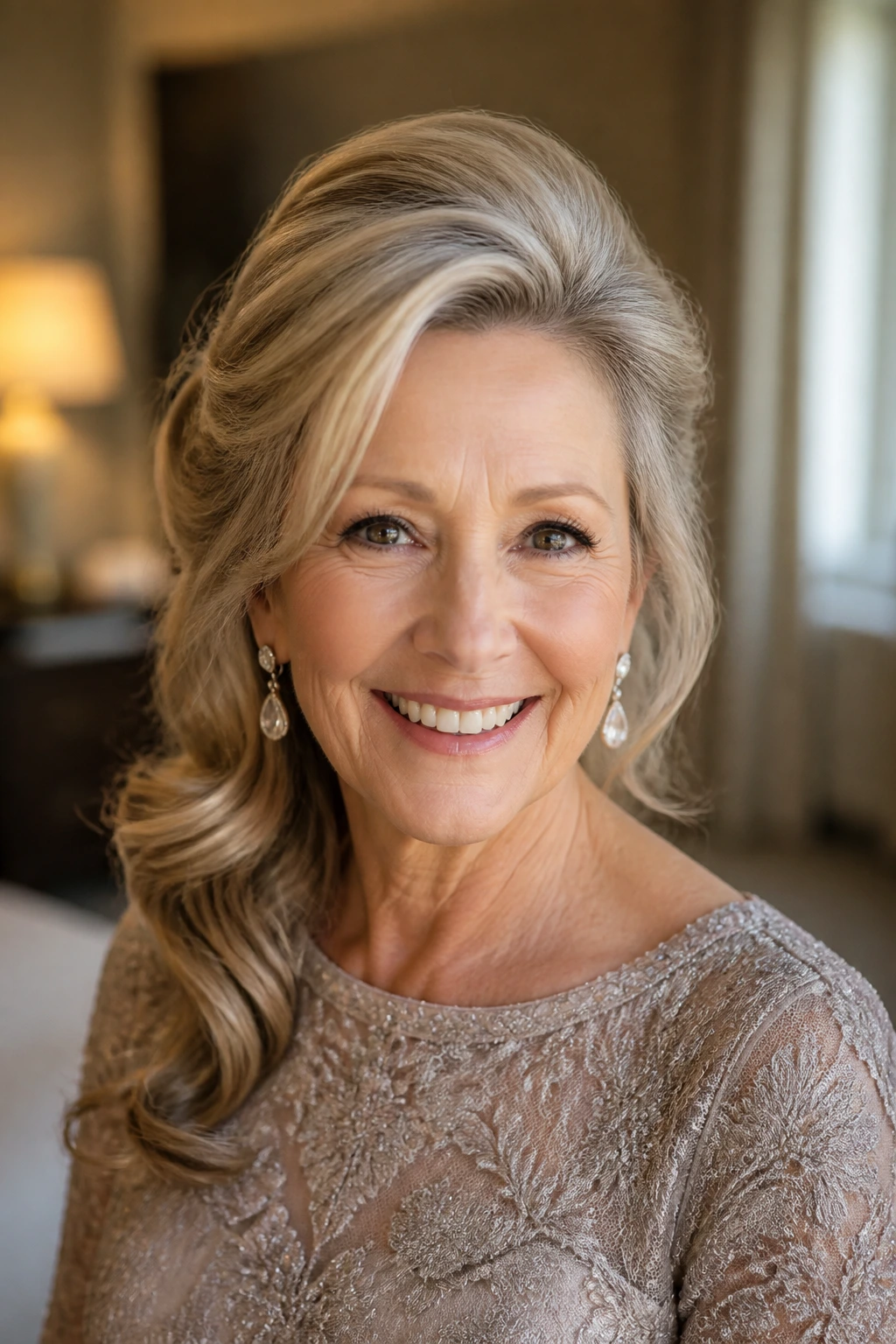
Old-Hollywood waves are not the same as loose curls. They have direction. The front sweeps in a controlled pattern, and the curve of the wave makes even plain midlength hair look intentional and expensive in photos.
For women over 50, this style works because it brings softness around the face while keeping the shape coherent. A deep side part helps. So does a 1.25-inch curling iron and a good brush-out once the curls are cool. If you skip the cooling stage, the wave loses that polished bend and starts looking messy instead of elegant.
This is one of the few styles here that can carry a bit more shine. A small amount of serum on the mid-lengths and ends is enough. Too much and the wave falls apart.
8. Modern Bob with a Deep Side Part
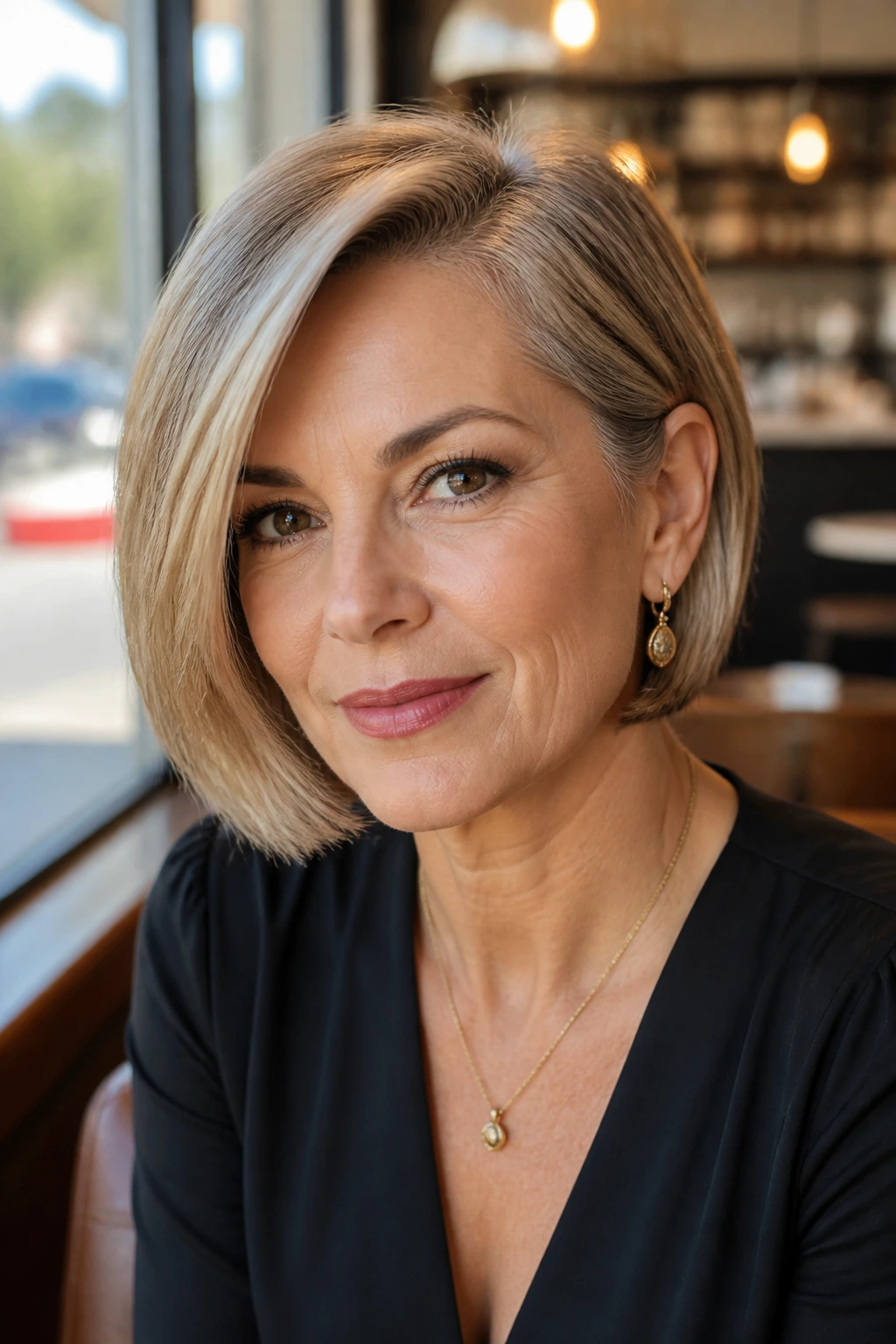
A bob with a deep side part has edge, but not in a loud way. It’s tidy, face-opening, and sharp enough to look modern without looking severe. The side part gives you instant lift, which matters if your hair tends to lie flat near the crown.
This style is especially good when the bob lands around the jaw or just below it. Too short and the shape can feel abrupt; too long and the cut starts acting like a lob instead of a crisp bob. Tuck one side behind the ear, add a small clip on the other if you want, and let the line of the cut do the work.
If your dress has a busy neckline, this is a smart choice. It keeps the hair out of the way while still feeling styled.
9. Braided Crown into a Low Knot
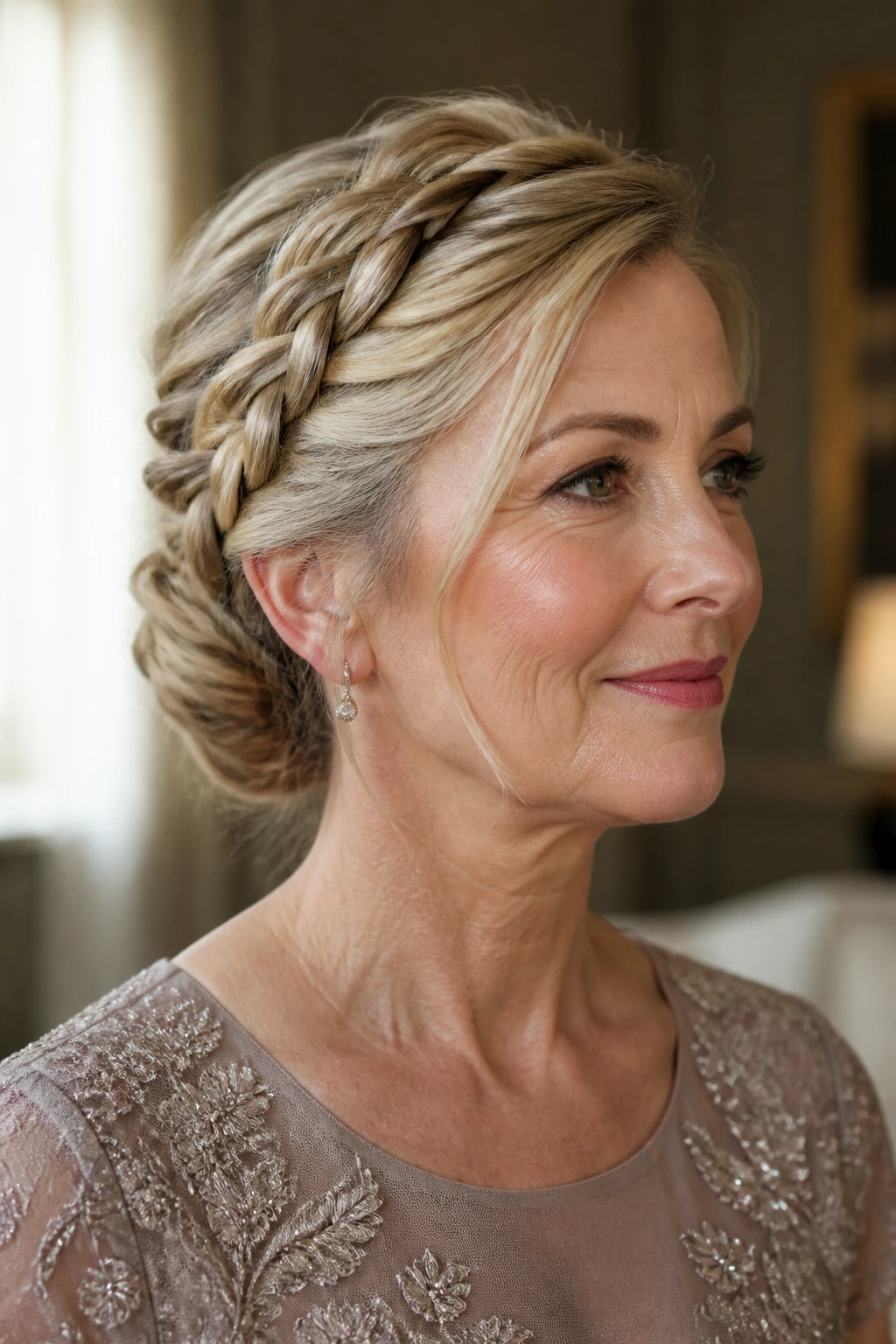
A braided crown into a low knot has a little ceremony to it, which makes sense on a wedding day. The braid gives the top of the head structure, then the knot anchors everything low and neat at the back.
This style is a strong answer for thick hair that wants to expand on its own. The braid keeps the front controlled, especially around the temples, and the knot prevents the style from becoming too wide at the sides. It also works well if you want to tuck in a few tiny flowers or a small decorative pin.
The only thing to watch is tension. Pull the braid snug enough to hold, but not so tight that it reads severe. A little softness around the hairline helps the whole thing breathe.
10. Voluminous Blowout for Fine Hair
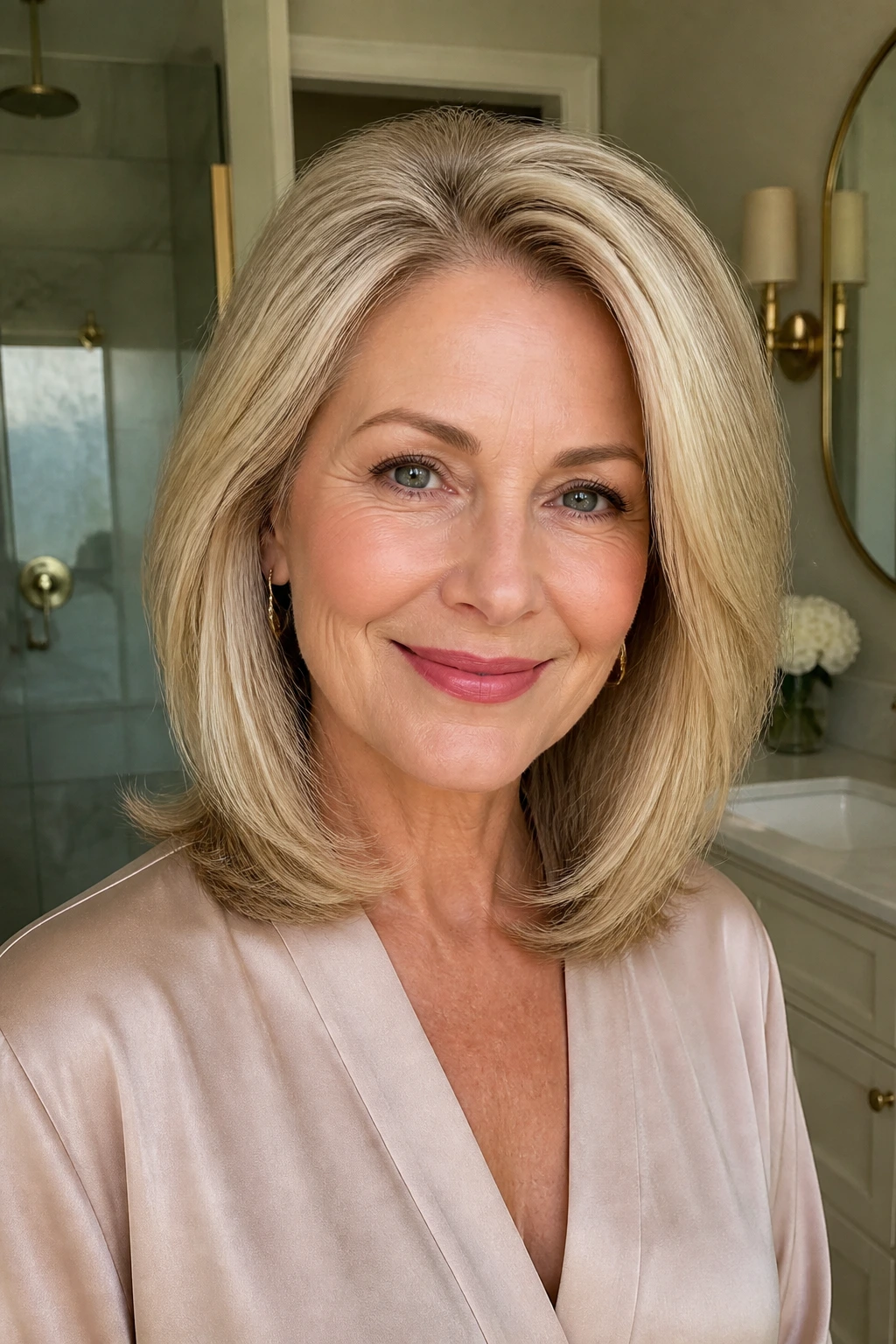
Fine hair needs shape more than it needs drama, and a voluminous blowout gives it exactly that. The point isn’t giant roots and sprayed ends. It’s a clean lift at the crown, smooth lengths, and ends that turn under just enough to keep the outline full.
This style wins because it doesn’t ask fine hair to be something it isn’t. A mousse at the roots, a round brush, and sectioning the hair in small parts can make a bigger difference than doubling the hairspray. After the blow-dry, let the hair cool before brushing it out. That cooling time matters. It locks the bend in place.
What to watch for
- Don’t overload the roots with product.
- Don’t skip the cool-down stage.
- Don’t flatten the crown with a brush after styling.
11. Wavy Lob with One-Side Tuck
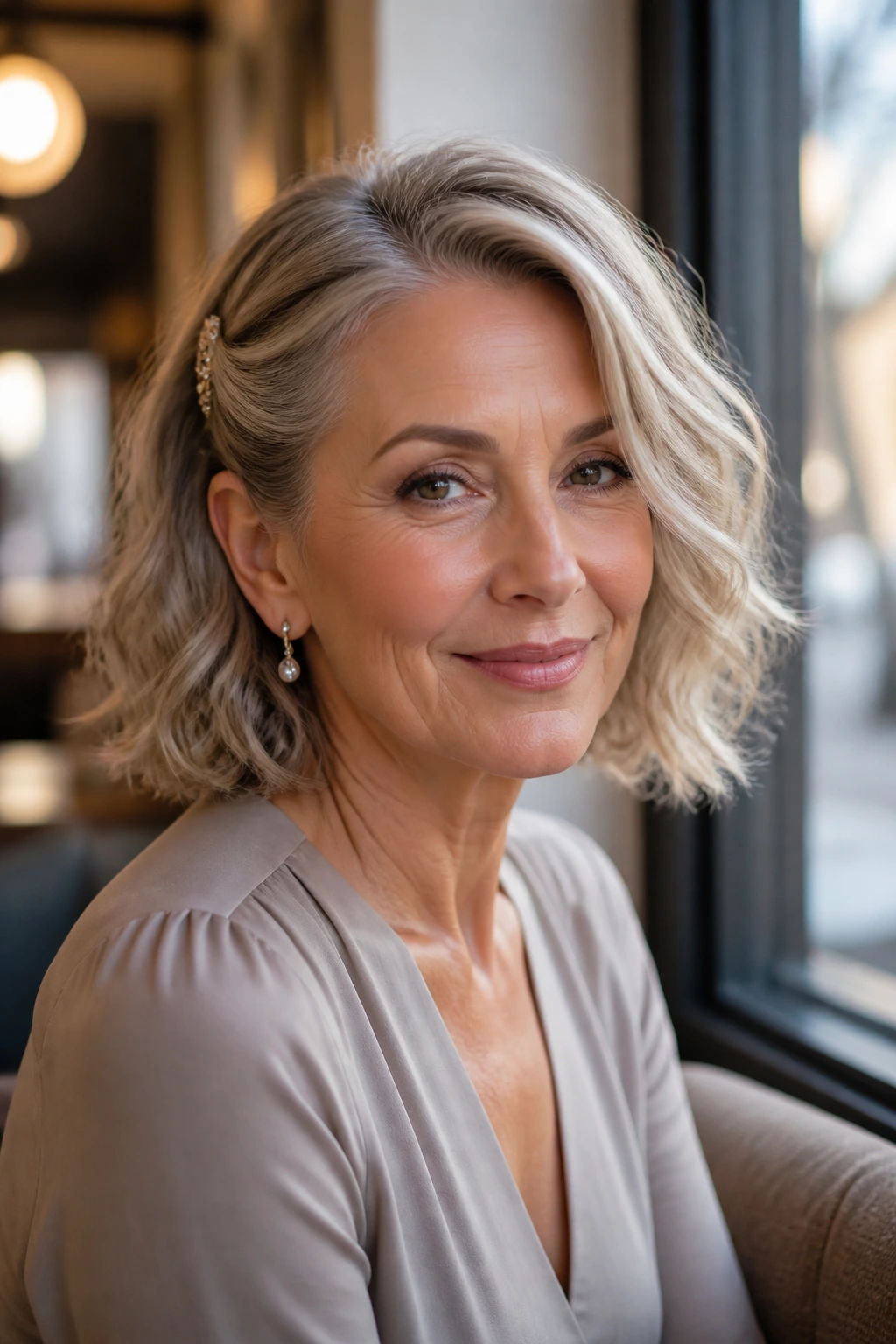
A wavy lob gives you movement without the maintenance of long hair. Tuck one side behind the ear, and suddenly the whole cut feels deliberate instead of casual. It’s a small move, but it changes the balance of the face and makes earrings look like part of the outfit.
This is a nice option if you want to look polished but not overdone. A soft bend through the mid-lengths keeps the shape friendly, and the one-side tuck creates a little asymmetry, which is flattering on almost everyone. It also works well if your hair has a mix of textures—say, smooth at the top and slightly wavy at the ends.
A decorative clip on the tucked side can work, but I’d keep it slim. The lob itself is the feature.
12. Smooth Shell Tuck with a Vintage Feel
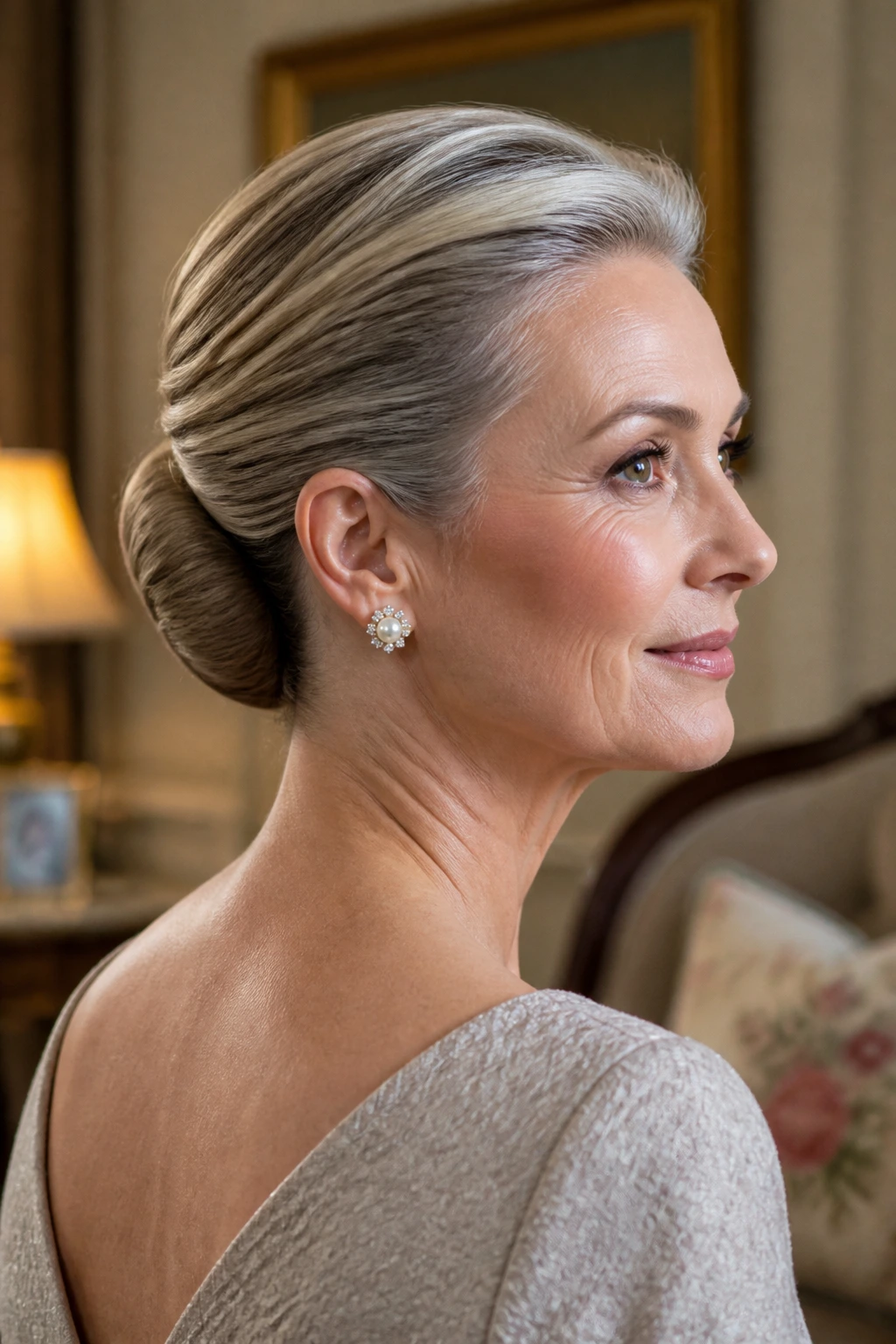
The shell tuck has a lovely old-fashioned shape, but it doesn’t have to look dated. Hair is smoothed back and tucked under itself so the back forms a rounded shell-like curve. It’s neat, elegant, and very steady once pinned properly.
This one is good for women who want their hair off the neck without choosing a hard bun. The shape feels gentler. It also pairs well with hats, fascinators, or comb-style accessories because the surface stays relatively flat and clean. If your hair is shoulder-length or a touch longer, it usually tucks more easily.
The trick is using enough grip at the base. A little texture spray at the roots can help the pins hold. Otherwise, the style slips before the first toast.
13. Twist-and-Pin Updo for Layered Hair
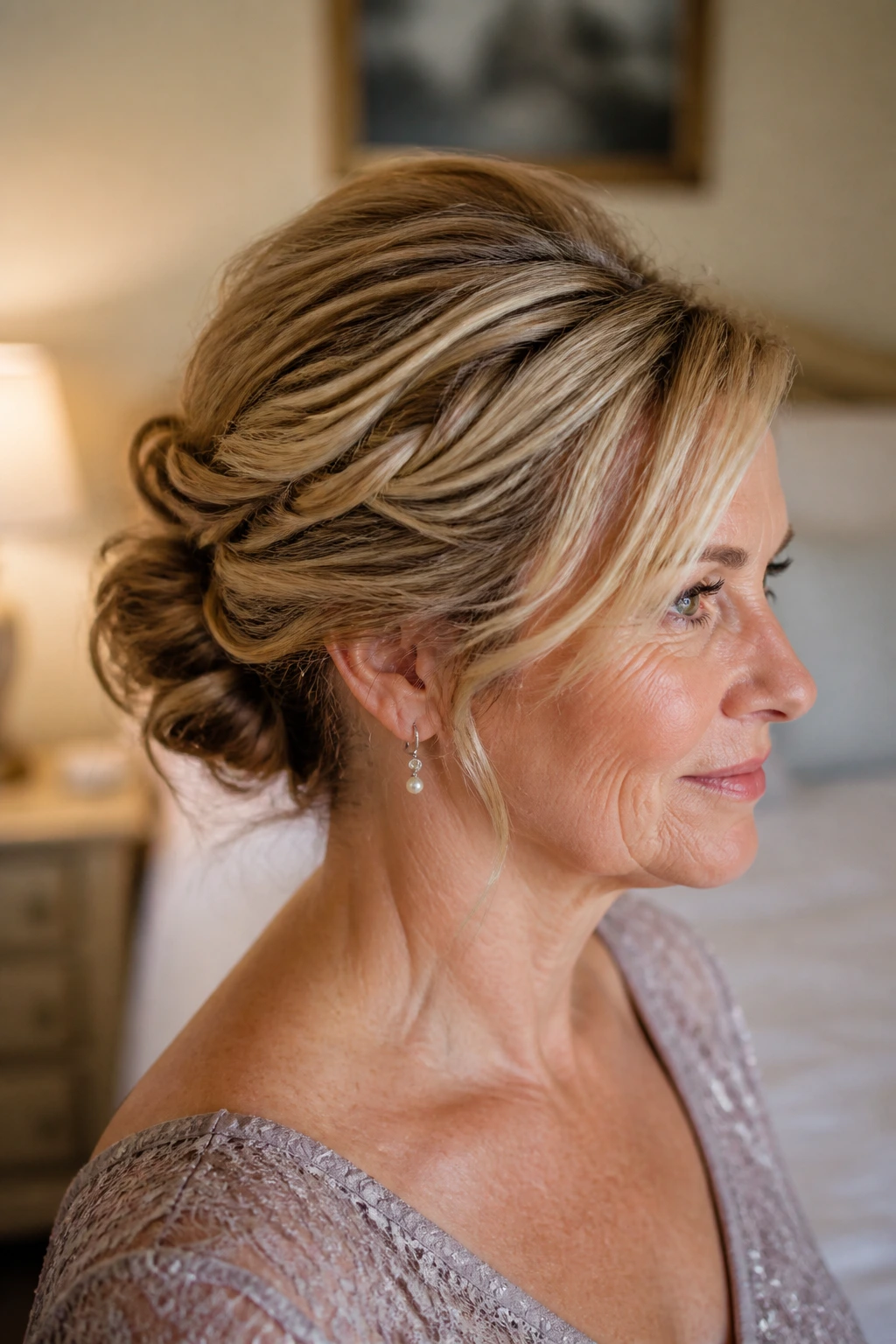
Layered hair can be a nuisance on wedding day because the shorter pieces escape just when you want everything to stay in place. A twist-and-pin updo handles that problem well. Instead of trying to force the layers into one giant knot, you twist small sections and pin them where they naturally settle.
That creates a softer, more lived-in look than a rigid bun. It also makes the style forgiving if your hair is not perfectly uniform in thickness. Each twist gives a little structure, and the finished result usually looks better from the side than a single tight coil.
Styling trick
Work in sections no wider than two inches. Larger pieces tend to slip, especially if your hair is silky. Smaller twists give the pins something to catch.
14. Feathered Short Cut with a Luminous Finish
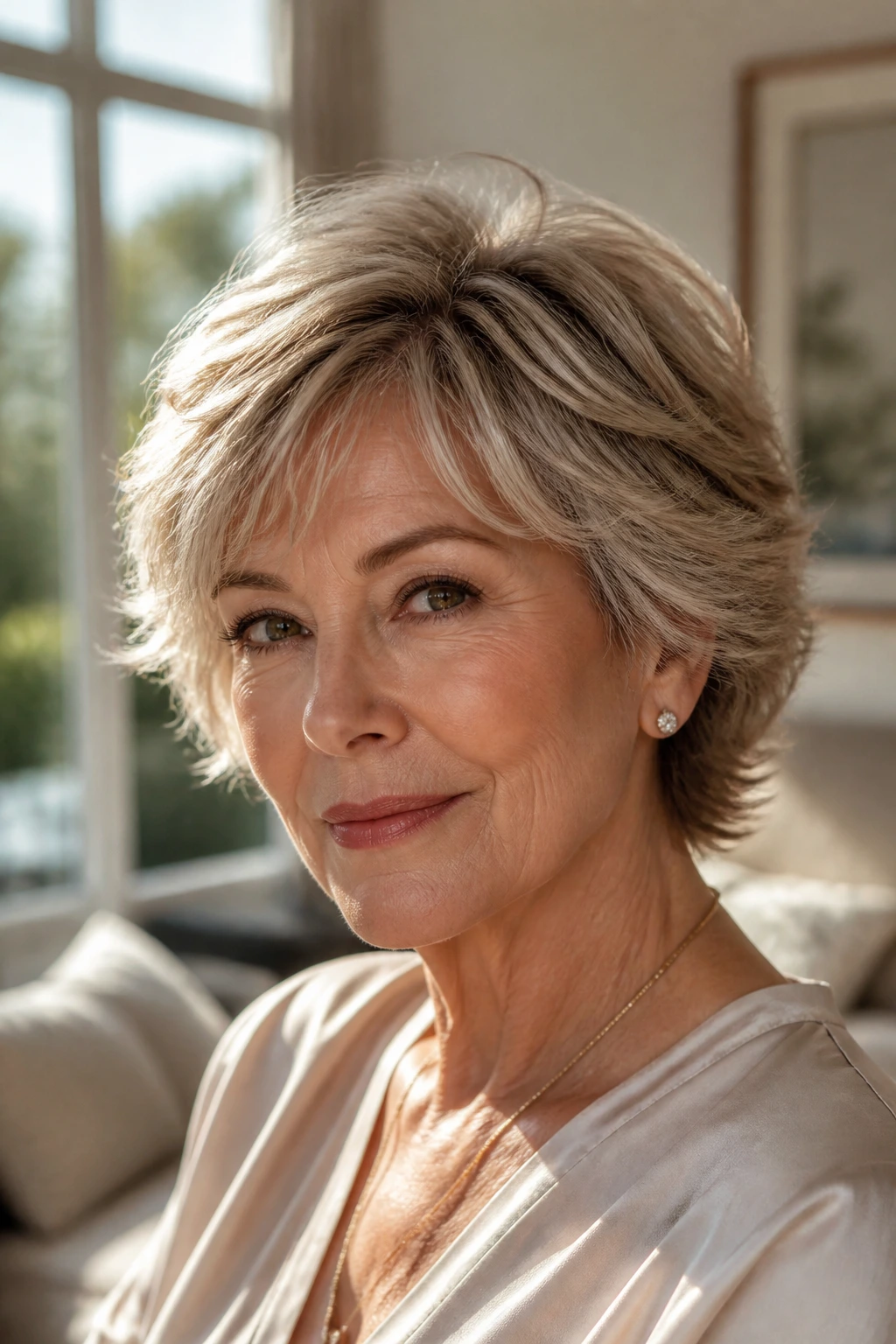
Feathered short hair has a lighter feel than a blunt crop. The ends soften outward just enough to create movement, and a luminous finish keeps the cut from looking dry or overworked under event lighting.
This is a good style for women whose hair has thinned a bit at the crown but still has nice shape at the sides. The feathering keeps the outline airy. A little shine spray, used sparingly, helps silver or highlighted hair pick up light without turning oily.
No need to over-style this one. In fact, that’s the appeal. A feathered cut with a bit of separation at the ends can look more expensive than a hard, heavily sprayed short style that never moves.
15. Low Ponytail with a Wrapped Base
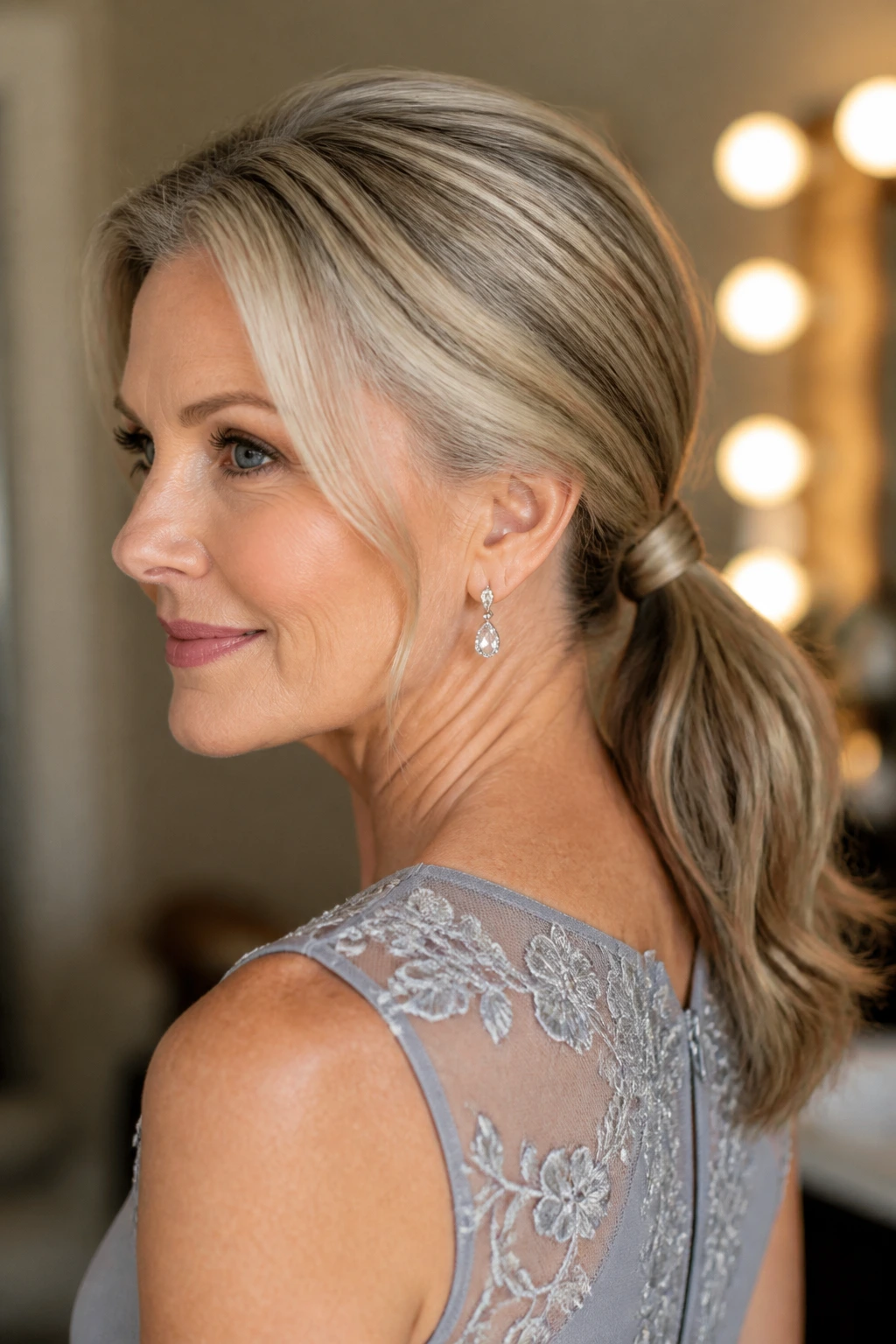
A low ponytail can look surprisingly elegant if the base is wrapped. That single wrapped section hides the elastic and gives the style a finished line, which makes the whole look feel intentional instead of casual.
I like this for women who want comfort. It keeps the hair off the shoulders, won’t fight with a high-back dress, and stays put through a long day. The ponytail can be straight, softly waved, or slightly curled at the ends depending on the texture you already have. If your hair is fine, a little backcombing underneath the top section gives the ponytail more body.
It’s also one of the easiest styles to adjust. Too sleek? Pull a few pieces loose near the temples. Too plain? Add a narrow barrette right above the wrap.
16. Romantic Barrel Curls with Soft Ends
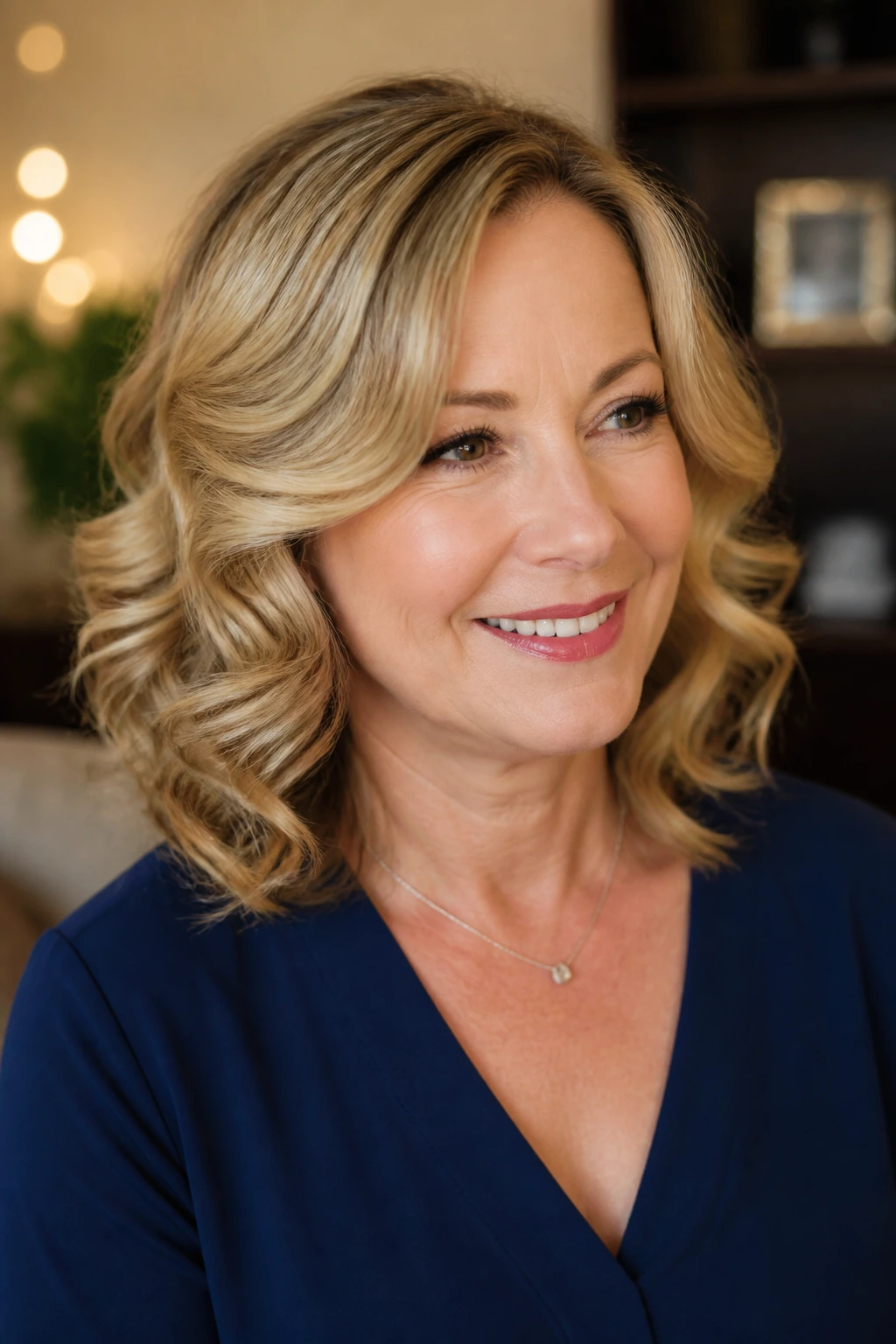
Barrel curls can go wrong fast if they’re too tight, too shiny, or too uniform. The better version for a mother of the groom is softer: curls that start midshaft, loosen at the ends, and still hold enough shape to look deliberate.
This works especially well on hair that falls below the shoulders. The curls give body and movement, and the soft ends keep the style from becoming pageant-like. A 1.5-inch iron usually gives a more wearable result than a smaller barrel, especially if your hair is dense or coarse.
Let the curls cool fully before brushing them apart. That cooling window is where the shape sets. Skip it, and the curls collapse into soft fuzz.
17. Twisted Half-Up for Medium Hair
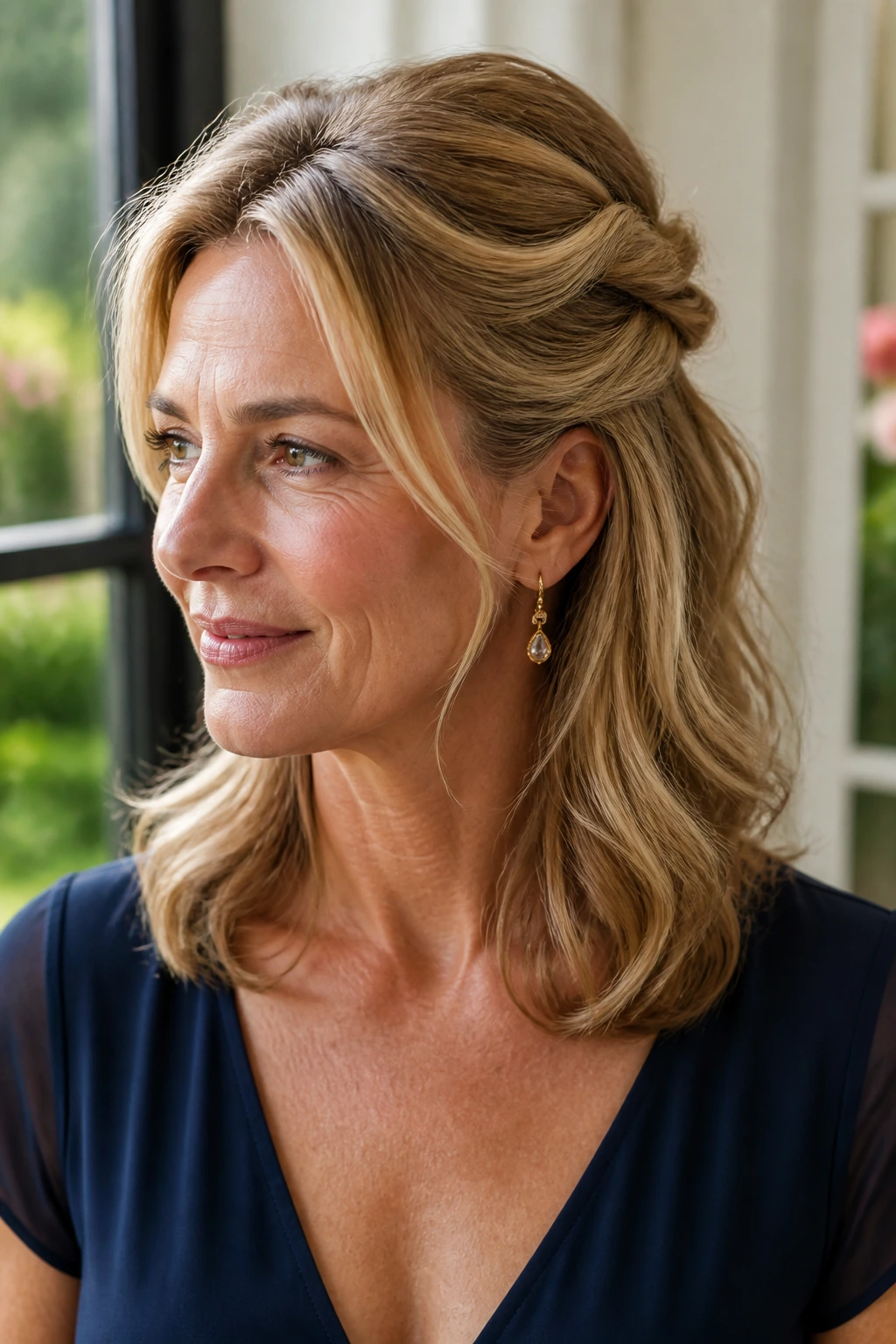
A twisted half-up style has a gentler feel than a full updo. The front stays lifted, the back keeps its movement, and the twists add enough detail that the whole thing looks dressed for the occasion.
This is a nice bridge between formal and relaxed. It gives you the security of hair off the face without taking away all the softness of wearing it down. If your hair is medium length and has some wave, the twists help control the top while the lower sections keep their shape.
A small decorative comb or two matching pins can sit right where the twists meet. That’s usually enough. More than that and the half-up starts competing with the dress.
18. Curled Bob with a Side Clip
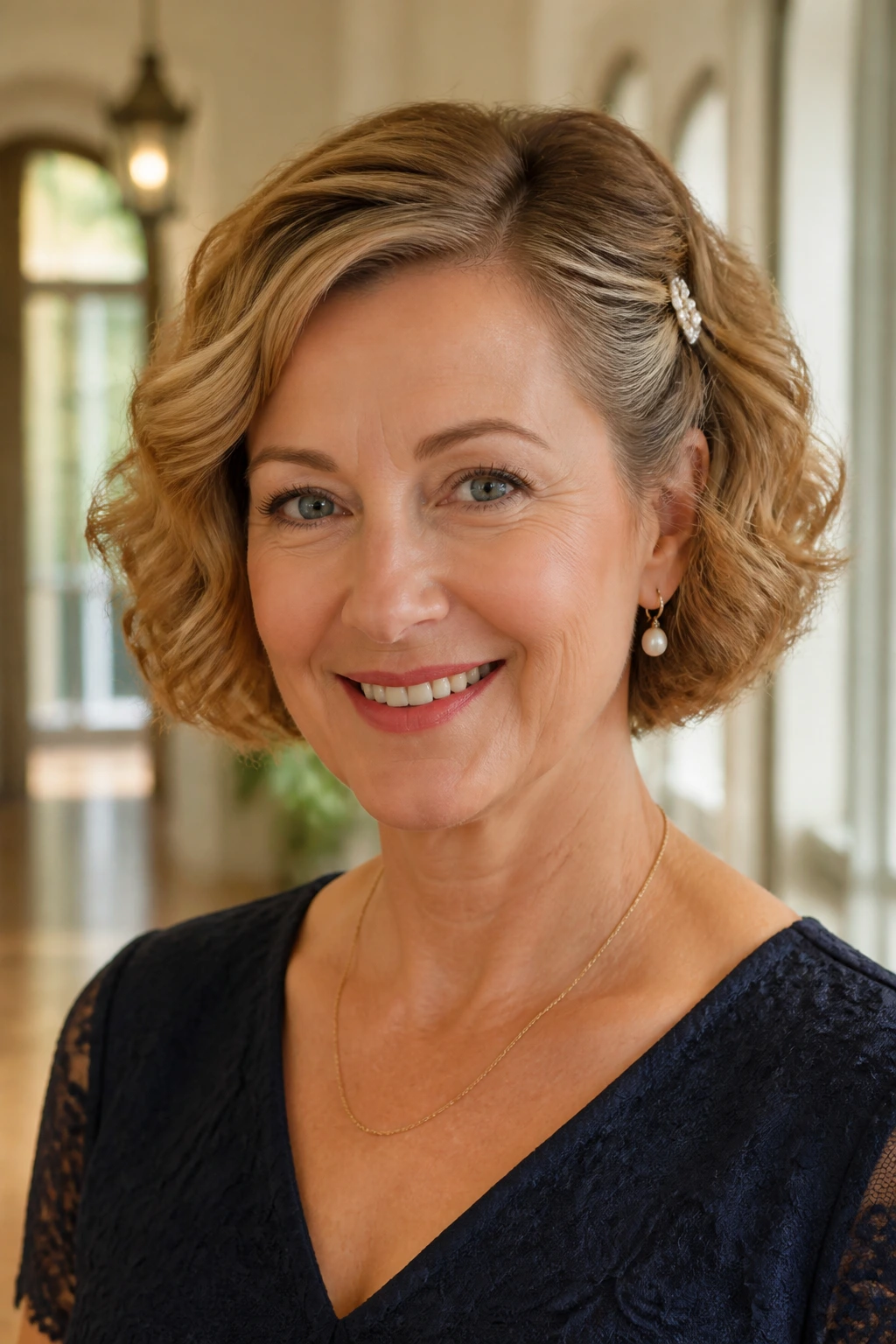
A curled bob can look structured without being stiff, especially when one side is anchored with a clip. The curls add fullness, and the side clip keeps the shorter front pieces from falling forward during photos or dinner.
The style is especially helpful if your bob hits at chin length or just above the shoulders. That length can flip in odd directions if left alone. Curling in alternating directions and then pinning one side back keeps the shape balanced. A small crystal or pearl clip looks good here because the cut itself is tidy and compact.
Best for:
- Straight bobs that need body
- Hair that slips out of barrettes
- Women who want something polished but not pinned into a full updo
19. Elegant Side Bun with Loose Ends
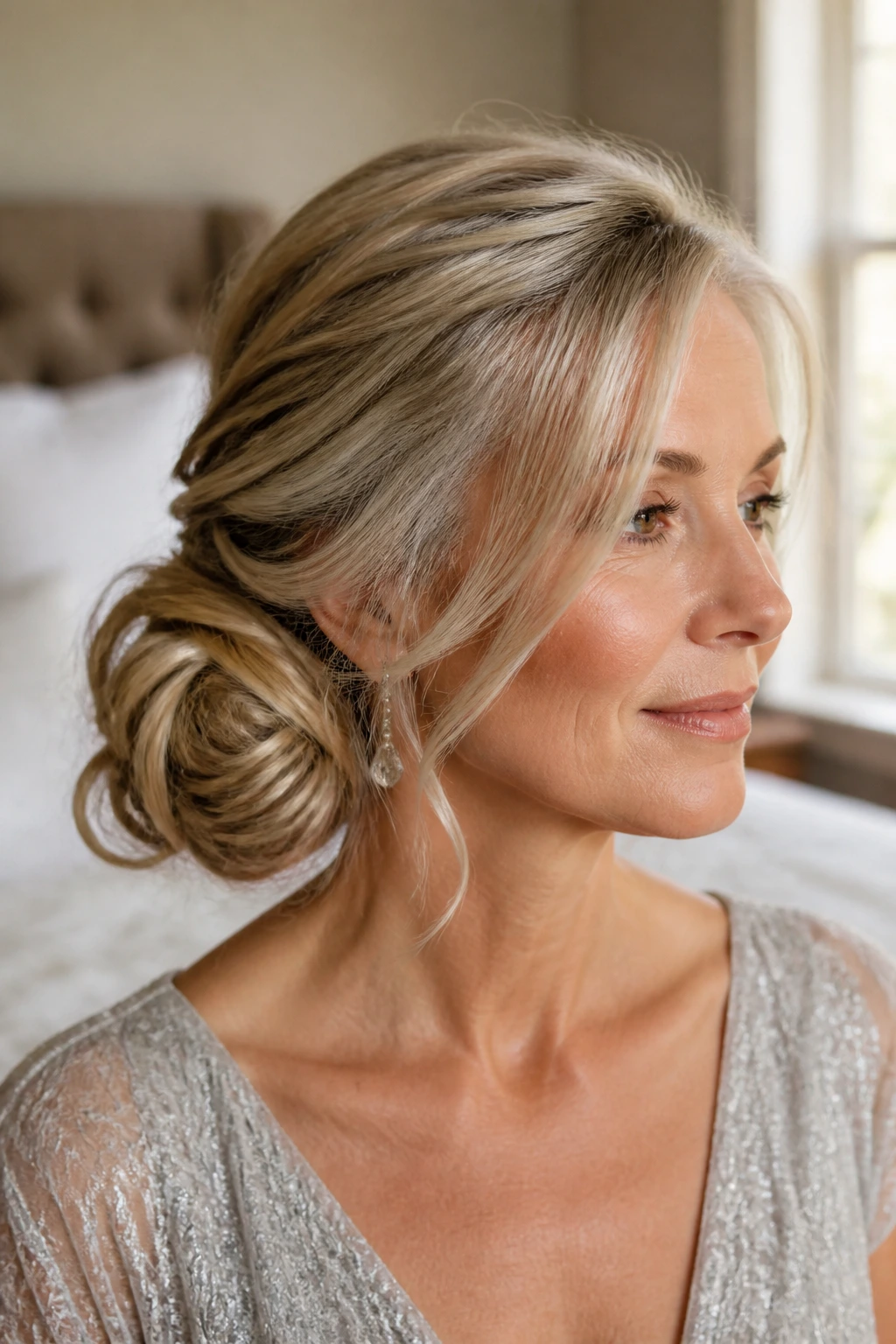
A side bun has a softer mood than a centered bun. It sits a little lower and a little to one side, which gives the face a more relaxed frame. The loose ends are the important part here; they keep the bun from looking too hard or too severe.
This shape works well with asymmetrical necklines and earrings that deserve some attention. It also gives the stylist or at-home helper a place to add pins, small flowers, or a decorative comb. The bun should look anchored, not stuffed.
I’d choose this over a high bun almost every time for a mother of the groom. It feels easier on the eyes. And, frankly, on the neck too.
20. Straight and Glossy with Tucked Back Front Sections
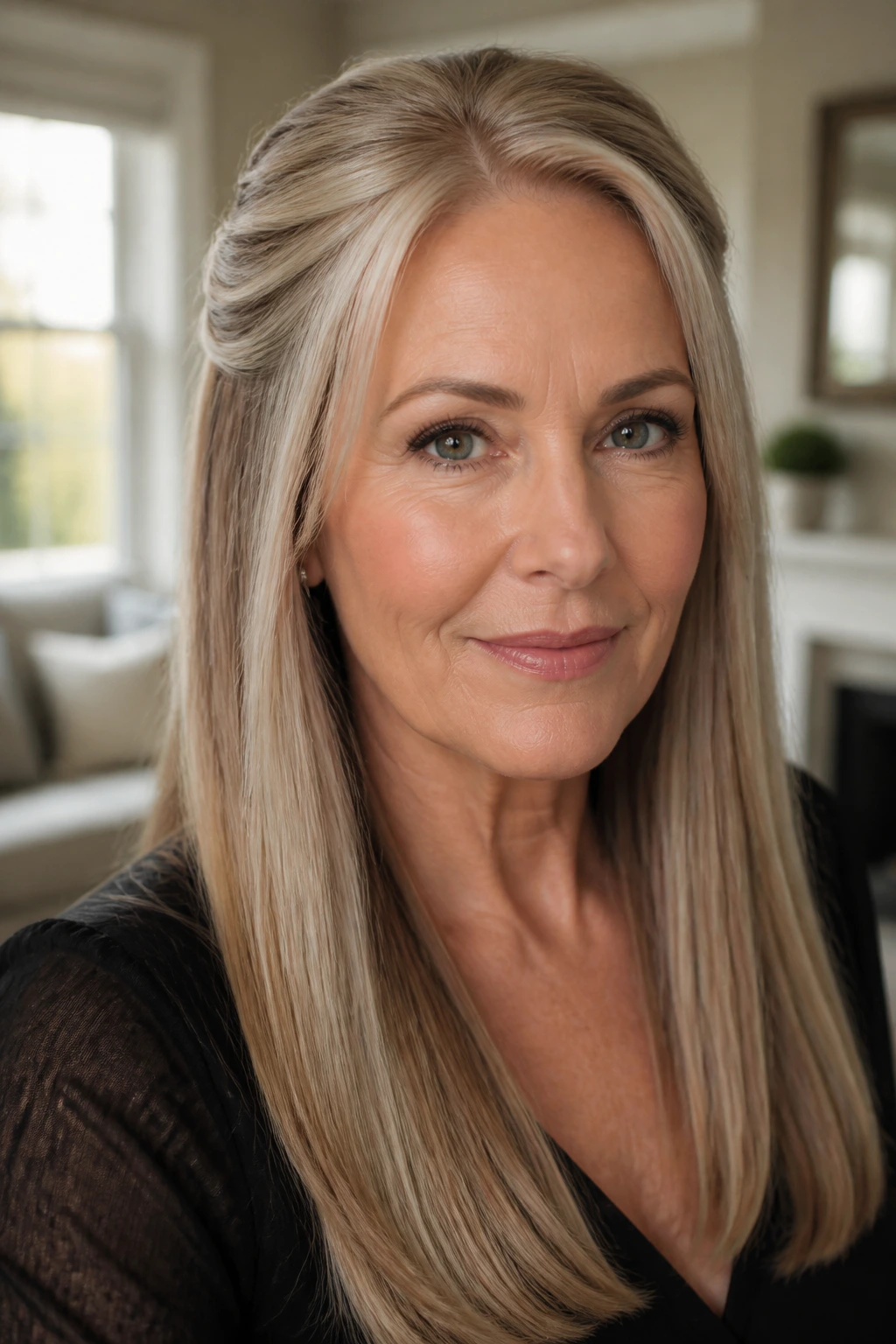
Straight hair can feel plain if it’s left hanging in a flat sheet. Tuck back the front sections, though, and the whole style changes. Suddenly there’s face opening, line, and a little structure near the temples.
This look works best when the straight hair is in good condition and has a smooth finish. A flat iron can sharpen the ends if needed, but the point is not poker-straight severity. It’s clean shine and a controlled front. That tucked-back detail also lets earrings show and keeps hair from drifting into the eyes during the ceremony.
If your hair is silver or salt-and-pepper, this style can look especially smart. The contrast between glossy strands and a simple neckline is strong without being flashy.
21. Messy-but-Intentional Updo
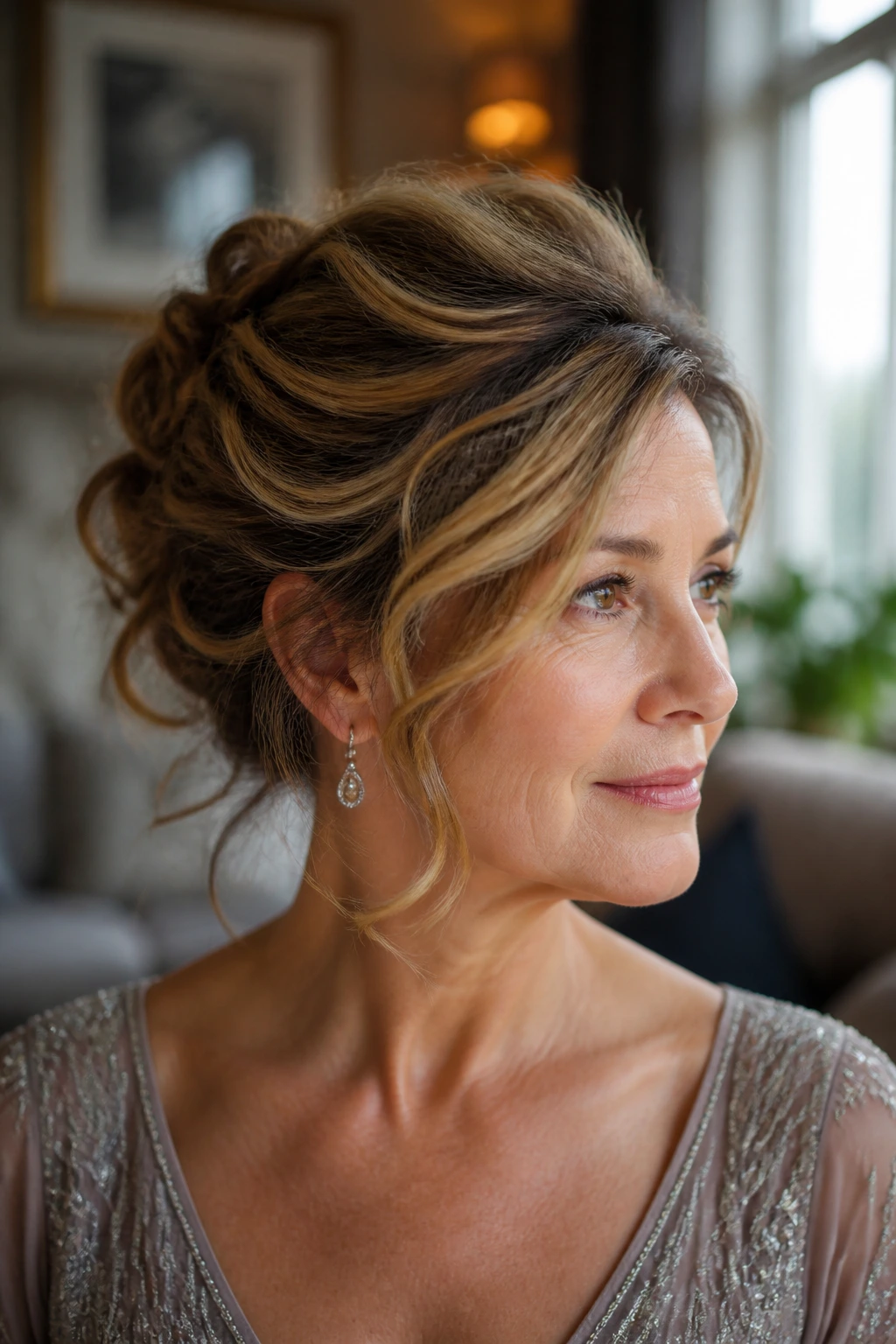
There’s a line between relaxed and careless, and this style lives right on it in the best way. A messy-but-intentional updo uses loose twists, soft loops, and a few face-framing pieces to create movement that looks deliberate rather than accidental.
It’s a good fit if your hair resists rigid shapes or if you simply don’t like the feeling of a tightly pinned style. The updo has enough structure to stay through the event, but the surface stays soft, which is more flattering than a hard shell of spray. Keep the crown slightly lifted and avoid flattening the sides too much.
A tiny bit of texture spray before pinning helps. Without it, the twists can slide apart faster than you’d like.
22. Halo Braid for Longer Hair
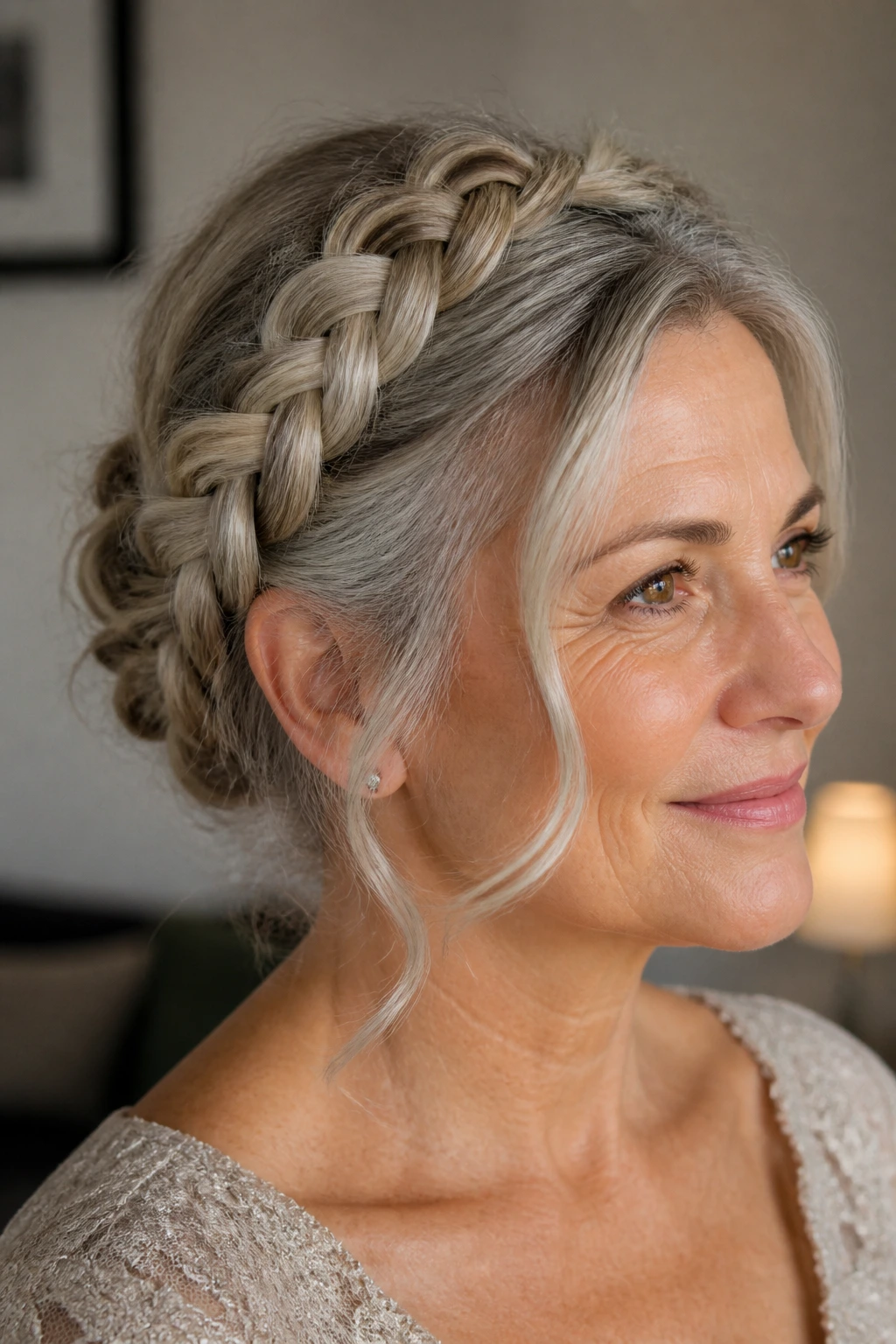
A halo braid can look a little youthful if it’s too tight or too polished. Loosen it a bit, and it becomes elegant. The braid wraps around the head like a crown, which is useful if you want the hair off the neck and still want something more interesting than a plain bun.
This style is practical for longer hair because it contains length without hiding it completely. It also works well with silver strands, since the braid pattern shows the different tones in a way that flat styles don’t. If the braid feels too broad, leave a few soft bits around the ears. That keeps it from looking severe.
I’d use this when the dress is simple and the hairstyle needs to carry a little more visual weight.
23. Shoulder-Length Layers with Curtain Bangs
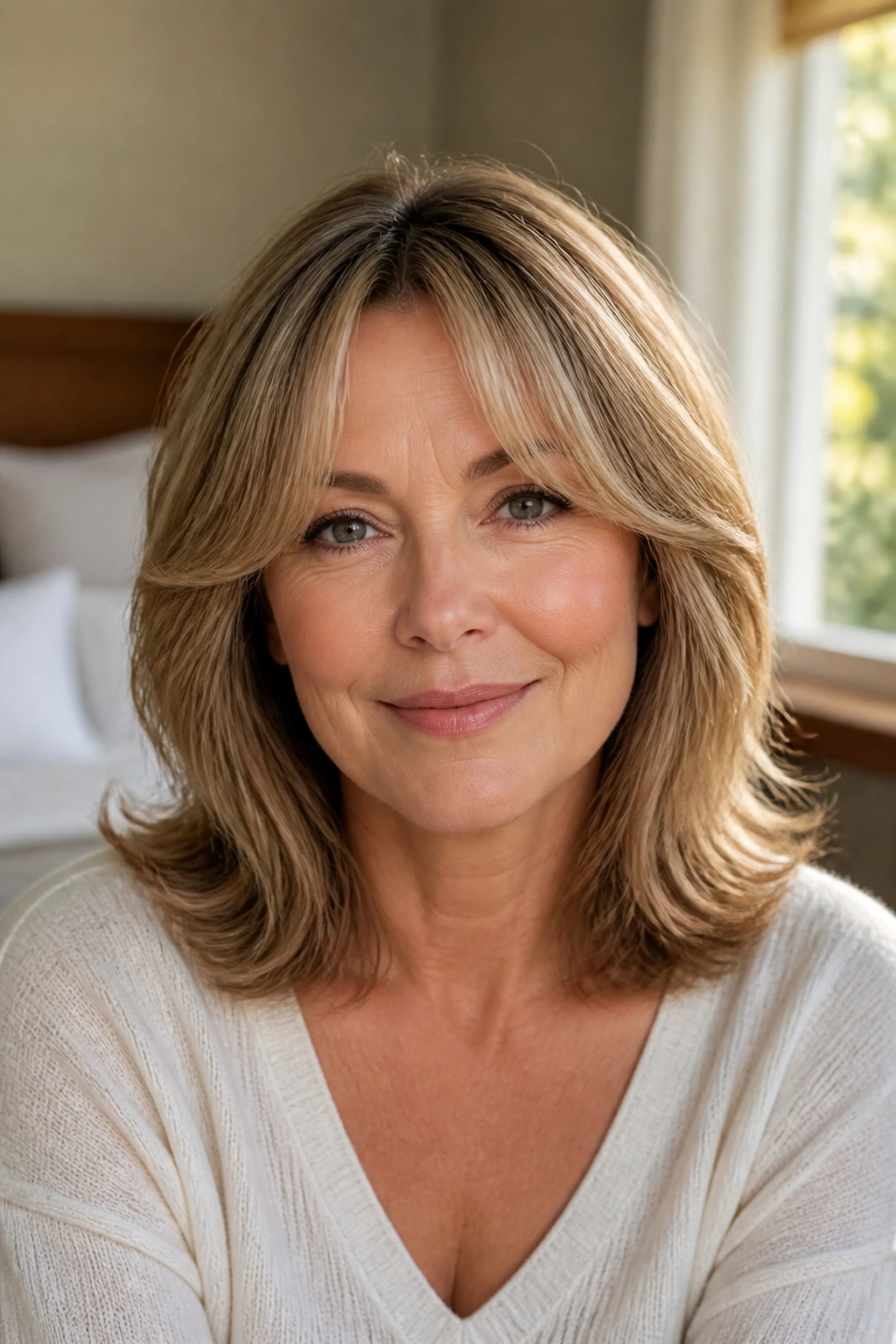
Shoulder-length layers with curtain bangs can be a quiet winner. The layers keep the ends from looking heavy, and the bangs create a soft frame that can take years off the face without looking like a makeover stunt.
This is a strong option if you want movement but not curls. A medium round brush and a gentle bend at the ends are usually enough. Curtain bangs can be brushed to either side, which makes the style forgiving if you’re not committed to a precise part.
It also pairs well with almost any neckline. The layers rest nicely on the shoulders, and the fringe keeps the front from feeling too open. That balance matters more than people think.
24. Short Shag with Controlled Texture
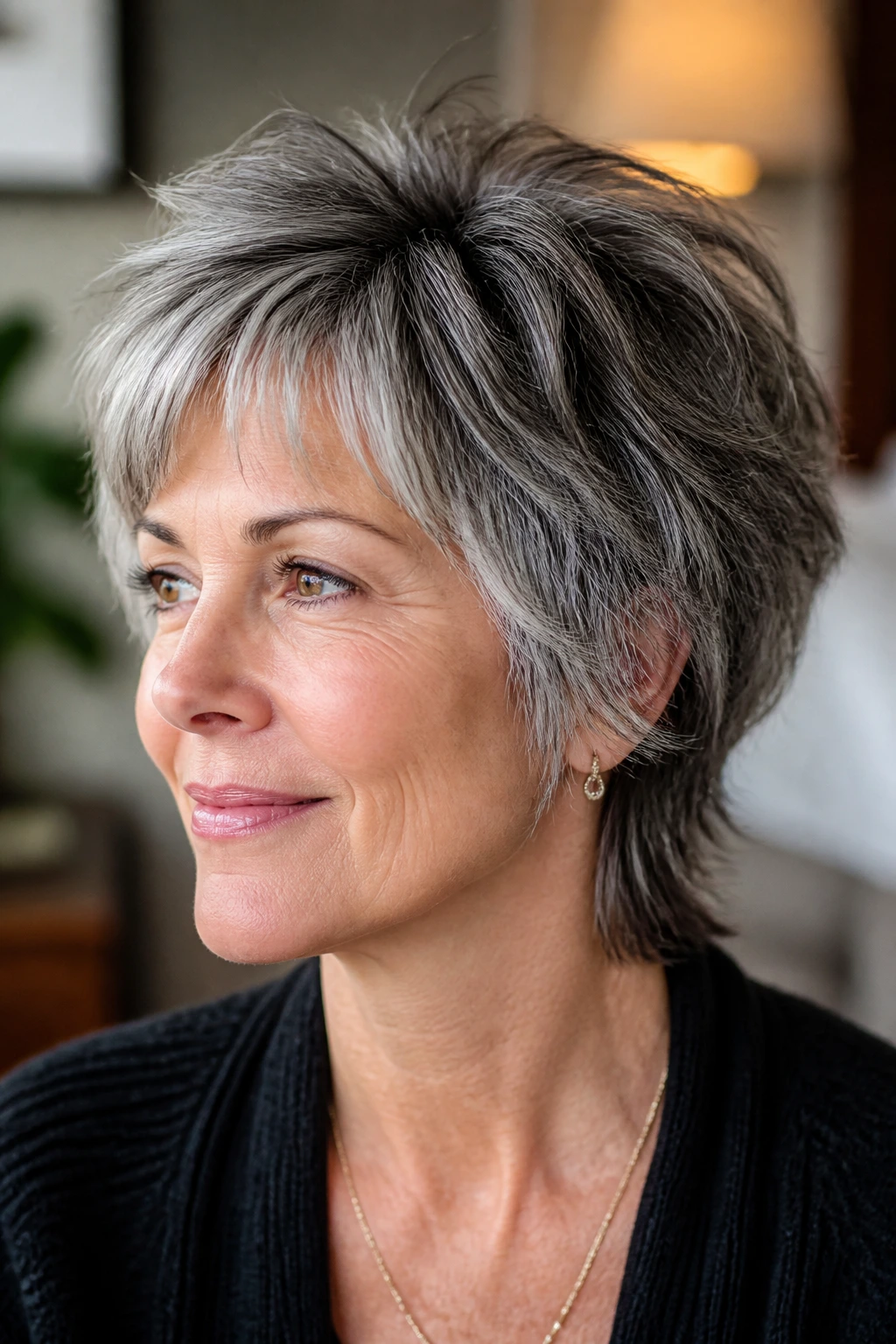
A short shag can be fantastic on women over 50 because it brings life to hair that’s gone soft or flat. The trick is controlled texture. You want separation, not frizz. A light styling cream or paste, worked through the ends, gives the cut definition without puffing it up.
This cut is especially good for wavy or slightly curly hair. The layers do the shaping for you. If the wedding is more relaxed or outdoors, the shag can look easier and more modern than a formal style that needs babysitting all day.
What makes it different
- It lifts the face without needing a big blowout.
- It shows off silver streaks and dimension.
- It feels current without chasing trends that age poorly in photos.
25. Soft Roll-Updo with a Veil-Friendly Shape
A soft roll-updo has a graceful curve at the back and enough height to look dressed up without turning into a rigid shell. It’s one of the most reliable choices if you need something that works with a veil comb, decorative pins, or a small hat.
What I like most is the profile. From the side, it reads clean and composed. From the back, it has shape. And from the front, it leaves room for the face and earrings to do their part. That matters. A wedding hairstyle should not swallow the rest of the outfit.
If you’re choosing just one style that feels formal, secure, and kind to mature hair, this is near the top of the list.
Why These Styles Work on Wedding Day Hair
A wedding hairstyle for a mother of the groom is not only about looking finished. It has to survive time. Ceremonies run long, photos take longer than anybody promises, and the reception usually asks more of a style than the front row ever did.
That’s why the most useful looks create shape where mature hair often needs it most: at the crown, through the sides of the face, and around the nape. A little lift keeps the style from collapsing into the scalp. A clean side sweep opens the eyes and softens the jawline. A low anchor point—bun, chignon, twist, ponytail—keeps the whole thing grounded when the night stretches out.
The other reason these styles work is simple. They don’t try to disguise age. Silver hair looks elegant when it has shine. Fine hair looks good when it has body, not when it’s buried under twenty pins and half a can of spray. Thick hair looks better when it’s directed, not flattened. That’s the whole game.
Essential Tools for These Looks
- A blow dryer with a concentrator nozzle: This helps direct airflow so the cuticle lies smoother and the shape lasts longer.
- A 1-inch and 1.25-inch curling iron: Smaller barrels give tighter bend for short hair; the larger one gives softer wedding waves.
- A round brush: Choose a medium barrel for shoulder-length hair and a smaller one for short cuts.
- Fine-tooth tail comb: Useful for clean parts, sectioning, and crown lift.
- Bobby pins in two shades: One close to your hair color and one darker. The wrong color shows up more than you’d think.
- Strong-hold hairspray: Pick one that sets without turning the hair into a helmet.
- Texturizing spray: Better than dry shampoo for many styles when you need grip before pinning.
- Light smoothing cream or serum: Use this on mid-lengths and ends, not at the roots.
- Small decorative combs or pins: Helpful when the style needs one elegant accent, not a pile of accessories.
- Travel-sized touch-up kit: Keep extra pins, a mini spray, and a comb in the bag. You’ll be glad you did.
Smart Product Choices for Mature Hair
The right products make a bigger difference than a fancier curl pattern. For fine hair, mousse at the roots and a light texturizer before pinning often work better than heavy creams. Fine hair gets weighed down easily, and once it falls, it’s hard to bring back without starting over.
For thick or coarse hair, smoothing cream matters more. A little on damp lengths can take the frizz down and make blow-drying less of a fight. If your hair has a natural wave, use enough product to define it but not enough to mute it. Hair that loses all movement starts looking stiff, especially in wedding photos where the lighting doesn’t forgive.
Silver or white hair deserves a different kind of attention. Shine sprays and purple shampoo can help, but don’t go wild with either. Too much shine spray makes the hair look greasy; too much toning shampoo can turn white strands violet at the edges. Light hand, always.
And if your hairline has become a little sparse, that’s not a styling failure. It just means you should choose styles that build softness nearby instead of pulling everything tight. A side part, a few face-framing pieces, and a touch of root lift can do more than any miracle product on a shelf.
How to Choose the Right Style for the Dress and the Face
Neckline first: A high neckline usually calls for hair that stays up or partly up, so the fabric doesn’t disappear into the style. A strapless or sweetheart neckline gives you more room for waves, lobs, or a softer side sweep.
Face shape second: Round faces tend to like height at the crown and length near the cheeks. Longer faces usually look better with width at the sides—waves, a tucked bob, or a side bun that adds balance. Square faces soften up nicely with side-swept bangs or loose tendrils around the jaw.
Hair density matters too: Fine hair often needs a style with structure and lift, while thick hair behaves better in controlled twists, braids, or low buns. If your hair is in the middle, you’ve got the most room to play, but you still need a style that won’t flatten halfway through the reception.
Accessories should support the shape, not fight it: If the dress is detailed, keep the hair simpler. If the dress is clean and plain, the hairstyle can carry a comb, clip, or pearl pin.
Additional Tips for Lasting, Comfortable Wedding Hair
Prep the day before: Wash if your hair is very oily, but many styles hold better on hair that was washed the day before. Clean hair can be slippery. Slightly lived-in hair grips pins and curls better.
Set the crown first: A little lift near the top changes the whole balance of the style. If the crown goes flat, the rest of the look starts to sag visually even if the pins are still holding.
Check the back in daylight: Bathroom mirrors lie a little. Natural light shows whether the bun is centered, whether the twist is too tight, and whether a stray section has slipped loose.
Pack a five-minute rescue kit: Bobby pins, a small comb, lip color, and a travel spray. That’s enough. You do not need a giant bag of products.
If you’re wearing glasses: Make sure the sides of the hairstyle don’t press into the arms of the frames. A tucked front section or a softer half-up style often solves that problem before it starts.
Common Mistakes to Avoid With Wedding Hair Over 50
The biggest mistake is chasing stiffness. Hair that looks shellacked in the mirror usually looks harsher in photos, especially around the eyes and jaw. If the style feels crunchy, it probably is. Back off the spray and choose a shape with better structure instead.
Another common problem is over-teasing. A little lift at the crown is helpful. A huge mound of teased hair is not. It can make the face look shorter and the whole head look disconnected from the dress. Aim for support, not height for its own sake.
Skipping a trial run is risky. A style that sounds perfect at 8 a.m. may collapse by lunch, or worse, feel uncomfortable at the temples after an hour. Try the look with the earrings, neckline, and any accessories you’ll wear to the wedding. That’s the only test that matters.
Heavy accessories can ruin a good style fast. If the hair is already carrying a lot of shape, a large comb or oversized clip can crowd it. Keep the accent small unless the hairstyle is very simple.
And don’t ignore the cut itself. Sometimes the problem isn’t styling. Sometimes the haircut needs a cleaner layer, a slightly shorter length, or a fringe that actually moves. If your hair fights every style, that’s a haircut clue, not a personal failure.
Variations and Alternatives to Try
Silver-First Finish: Let gray, white, or salt-and-pepper hair stay visible and use shine spray lightly. The contrast between the natural color and the polished shape often looks more elegant than aggressive coloring ever could.
Short-Hair Glam: For pixies and cropped bobs, focus on texture and directional styling instead of volume. A side-swept fringe or lifted crown does more than trying to puff short hair into a shape it doesn’t want.
Softly Formal: If you want a dressier look without a strict updo, try a half-up style with pinned sides and curled ends. It keeps the face open and still gives the back some movement.
Humidity-Smart Style: In damp weather, choose buns, twists, or tucked styles over loose curls. Heat and moisture loosen curls fastest around the face and ends.
Accessory-Led Look: If the hairstyle is simple, let one comb, pin set, or barrette carry the style. The accessory should anchor the look, not sit there like an afterthought.
Make-Ahead, Longevity, and Day-Of Maintenance
Hair for a wedding usually looks best when it’s not freshly washed and slippery. For most styles, washing the day before gives the hair enough grip to hold pins, curls, and volume without getting dirty-looking. If your scalp is oily, use a light dry shampoo at the roots after styling, not before.
If you’re curling the hair, let every section cool fully before brushing it out. That can mean 10 to 15 minutes after the last curl, depending on thickness. Rushing this part weakens the set. The same goes for updos: pin the shape, wait a few minutes, then re-check it before leaving.
Bring a small touch-up kit with 6 to 10 pins, a mini spray, and a fine comb. If the reception is long, a quick mirror check after dinner is usually enough. Most styles don’t need a full reset; they just need one stray piece nudged back into place.
Avoid overhandling the style once it’s set. Fingers flatten volume faster than weather does. If you need to freshen the shape, lift at the roots gently with the tail comb and smooth only the outer layer of the hair.
Frequently Asked Questions
What’s the best hairstyle if my hair is thinning at the crown?
A low chignon, soft blowout, or side-swept bob usually works better than a very high style. These looks give you shape where the hair is strongest and keep the crown from becoming the focus.
Can I wear my hair down and still look dressed up enough?
Yes, as long as the shape is controlled. A polished blowout, Old-Hollywood wave, or wavy lob with a side tuck looks intentional and elegant without being pinned up.
What if my hair is very short?
Short hair can be one of the easiest options. A textured pixie, feathered crop, or short bob with a side part needs less maintenance than an updo and often photographs cleaner.
Should I match the hairstyle to the bride’s style?
Only loosely. You don’t need to imitate it. Aim for a level of polish that feels coordinated with the wedding rather than competing with it.
How much hairspray is too much?
If your hair feels hard to the touch or you can hear it when you move, you’ve gone too far. Use enough spray to hold the shape, then stop. You want motion at the ends and control at the roots.
Can I add extensions for volume?
Yes, if the style needs body and you’re comfortable wearing them. Clip-ins work well for blowouts, curls, and some updos, but they need a trial run so the color blend and weight feel right.
What if my style falls flat before the ceremony starts?
Start by lifting the roots with a tail comb and misting a little texturizing spray underneath, not on top. If the front collapses, it usually means the crown was under-supported, not that the whole style failed.
Do silver and white hair need special products?
Sometimes. A soft purple shampoo can keep yellow tones away, but use it sparingly. For styling, a shine spray and lightweight cream usually beat heavy serums that can darken the look.
A Graceful Finish
The best mother of the groom hairstyle is the one that lets you move through the day without thinking about your hair every ten minutes. That usually means shape, comfort, and a finish that looks deliberate from the front and the back. A style can be formal without being stiff. It can be soft without falling apart. Both things matter.
If you’re choosing between two options, pick the one that fits your hair’s natural behavior with the least amount of fighting. Wedding day is not the time to bully straight hair into fake curls or squeeze thick hair into a tiny bun that keeps escaping. Work with what’s already there. It usually looks better anyway.