



The first cold morning changes hair faster than people expect. Wool collars snag blunt ends, dry air steals shine, and a cut that looked easy in warmer weather can start sitting flat by lunch. That’s why fall hairstyle trends for women over 40 are leaning toward shapes that bend, tuck, and move instead of fighting the clothes on top of them.
And no, this is not about chasing a younger look. It’s about smarter hair: collarbone lengths that don’t puddle in a scarf, fringe that softens the face without swallowing it, and bobs that still look clean when the humidity drops. Some of the best fall hairstyles here need only a round brush and eight minutes; others work because they look better on day two. That’s the part I like.
Hair changes over time. The crown can lose lift, the ends can feel thinner, and gray strands often behave like little wiry truth-tellers. The right cut doesn’t hide that. It uses it. The 22 styles below cover short, midlength, and longer shapes, from polished and sharp to soft and lived-in, so you can pick the version that makes your hair behave with less coaxing.
Why These Cuts Earn Their Keep
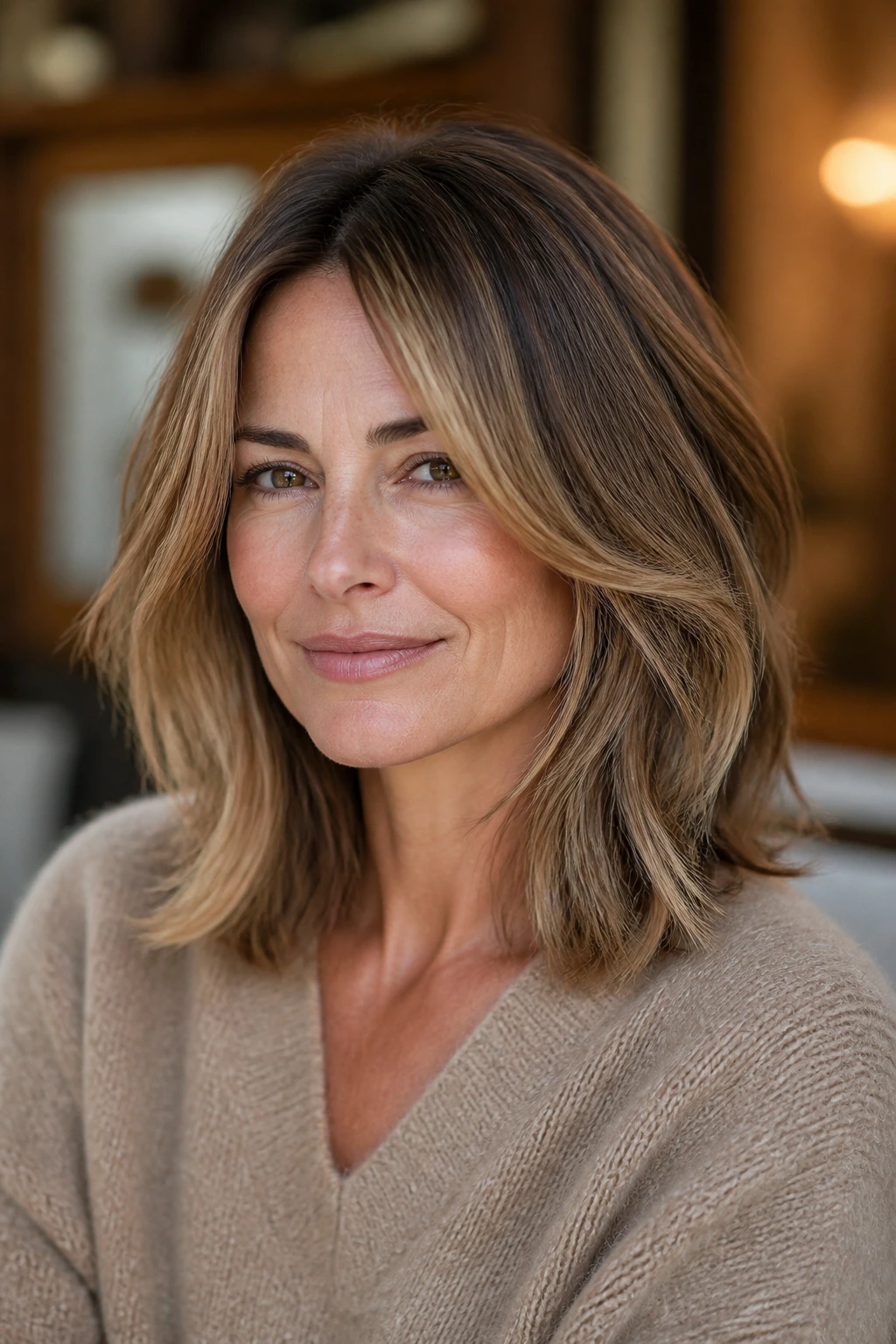
- They play nicely with scarves and collars: A shape that stops around the chin, collarbone, or nape won’t get crushed the second you pull on a coat.
- They work with changing texture: Layers, fringe, and blunt ends can all be adjusted for finer hair, thicker hair, or curls that have a mind of their own.
- They do not ask for a perfect blowout every morning: A lot of these looks depend on line and movement, not shellacked volume.
- They make gray, silver, and highlighted hair look intentional: Clean ends and soft framing help mixed tones read as shine instead of frizz.
- They cover a wide maintenance range: You’ll see styles that need a trim every six weeks and others that can drift a little longer without looking sloppy.
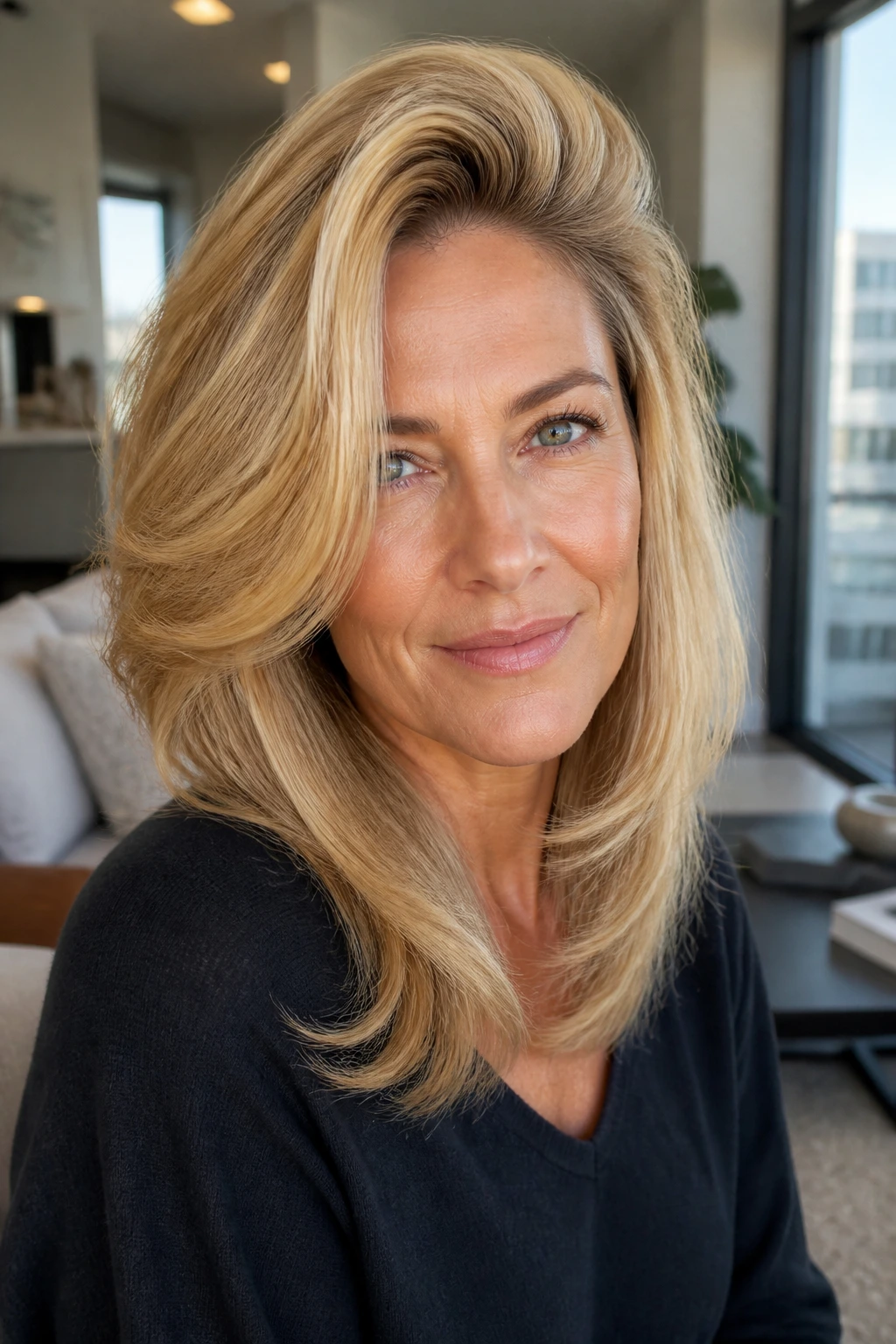
- They give you options: Short, shoulder-length, tied back, pinned up, brushed sleek, or worn with texture — the same haircut can live several different lives.
1. Collarbone Layers for Women Over 40
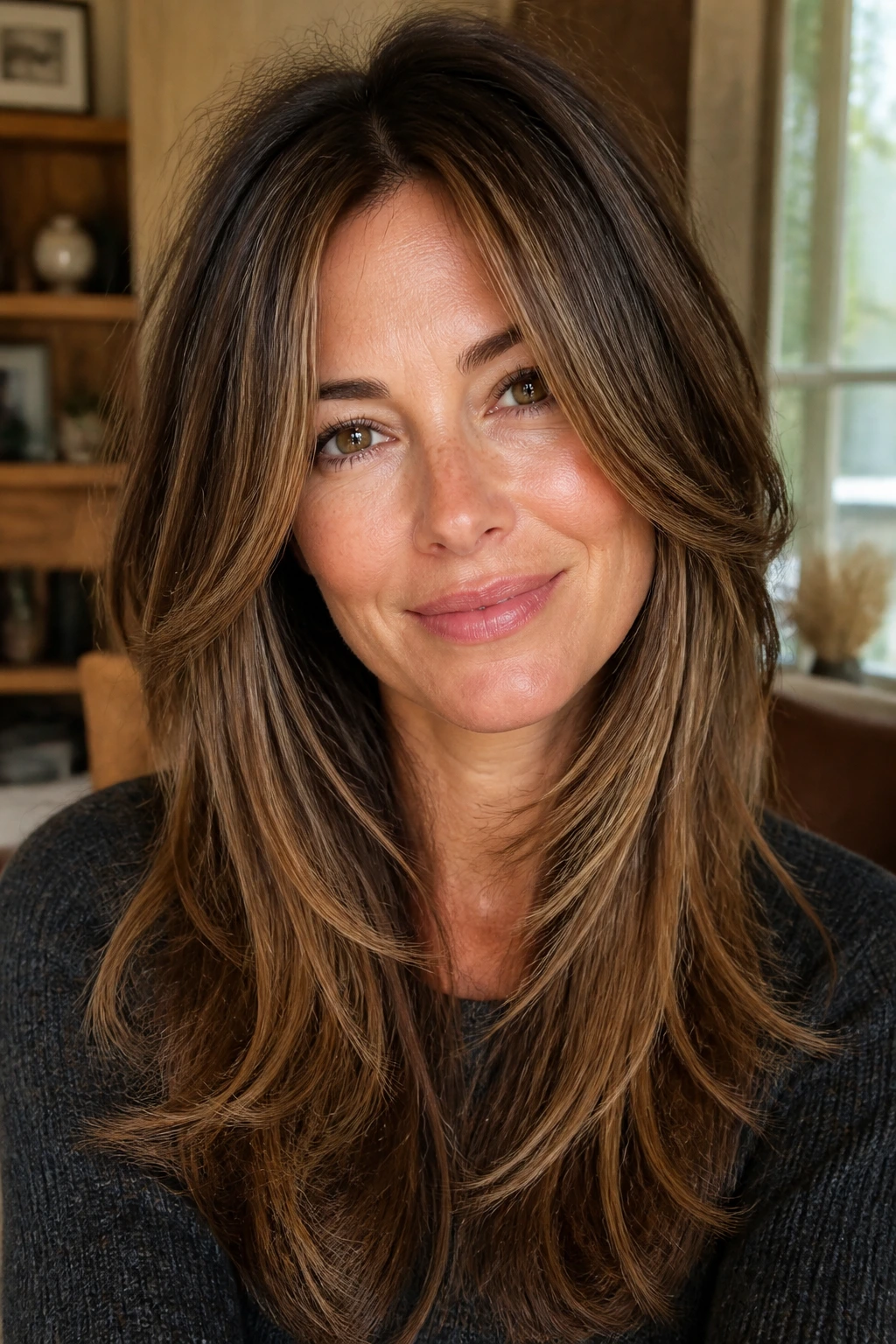
This is the haircut I keep coming back to because it behaves. The ends hit near the collarbone, which means the hair still feels substantial, but it no longer hangs in one heavy curtain that gets rubbed flat by coats and cardigans. Ask for soft internal layers, not choppy ones, so the movement starts in the midlengths and the bottom edge stays clean.
The charm of this cut is the way it bends. A quick blow-dry with a round brush gives you a soft inward turn; a curling iron on the outer pieces gives you that loose, expensive-looking wave without much effort. It’s especially kind to hair that has gotten a little finer at the temples or around the face, because it keeps the outline tidy while letting the middle of the haircut move.
What to ask for: Keep the shortest face frame below the cheekbone and above the shoulder. That sweet spot keeps the hair from puffing out at the jaw.
Best for: Straight, wavy, or slightly thick hair that needs shape without losing length.
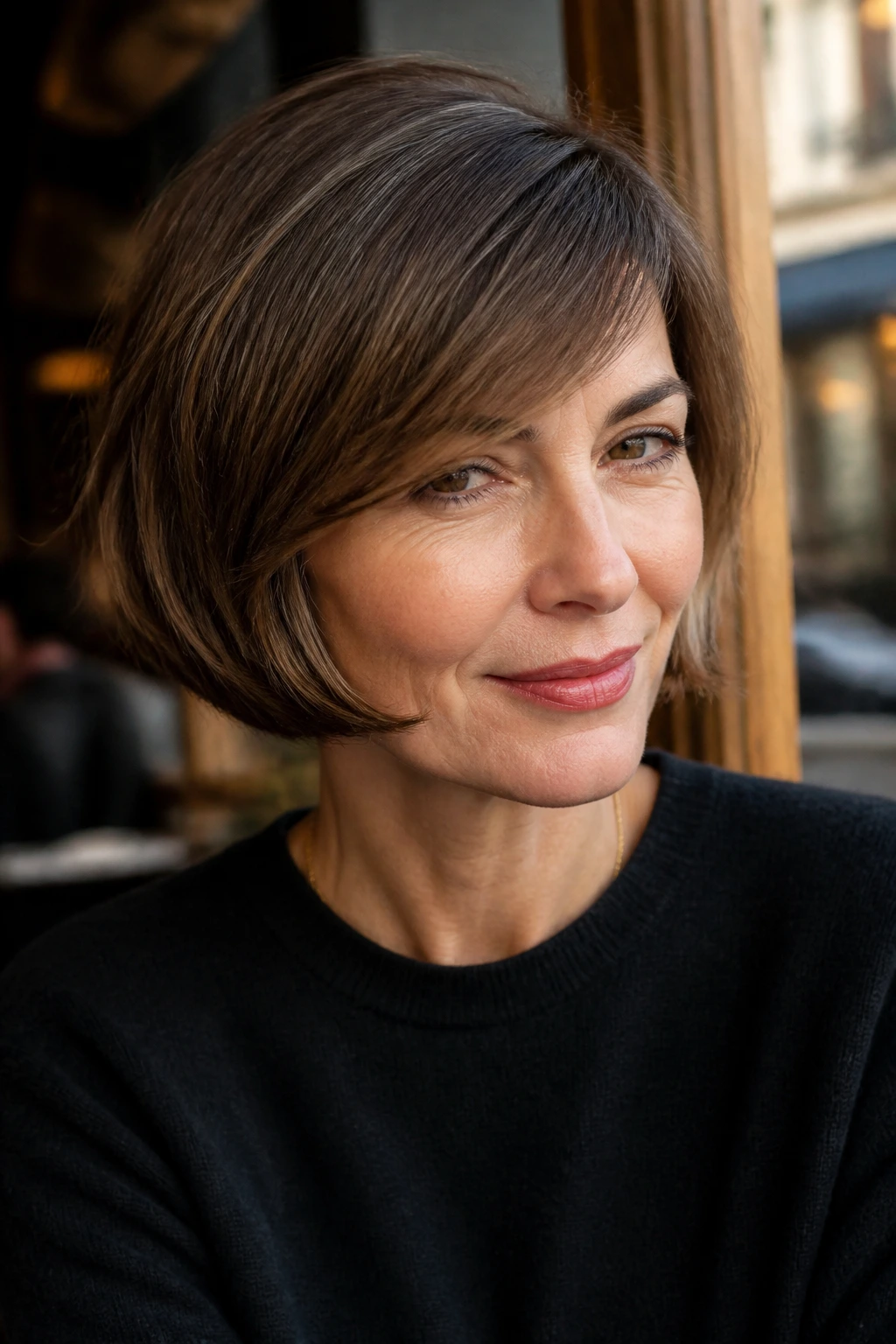
2. French Bob with a Side-Swept Fringe
Why does this look keep coming back? Because it does one very useful thing: it makes a jawline look deliberate. A French bob skims the chin or lands just below it, and the side-swept fringe breaks up the line in a way that feels softer than a blunt bang.
This cut works best when the ends are clean, not shredded. If your hair is naturally straight or bends a little at the ends, you can air-dry it with a touch of cream and still get a neat shape. If it leans puffier, a quick pass with a brush dryer keeps it from ballooning around the cheeks.
The part matters more than people think
A deep side part gives this bob a little lift at the crown and makes the fringe fall in a flattering diagonal. That diagonal is doing a lot of work. It draws the eye away from fullness at the middle of the face and keeps the style from feeling severe.
- Ask for a bob that hits at the top of the neck or just under the jaw.
- Keep the fringe soft enough to tuck behind the ear on one side.
- Use a pea-sized amount of smoothing cream, not a heavy serum.
3. A Blunt Lob with Under-Curved Ends
Blunt does not mean harsh. In the right hands, it means clean. A lob that sits between the collarbone and the shoulders gives you a strong line, and when the ends are tucked under just a little, the whole thing looks polished instead of boxy.
This is one of the better choices if your hair is thick and tends to flare outward at the bottom. The blunt perimeter keeps the shape from fraying, while the slight curve at the ends makes it softer around the neck. It also looks good with fall knits. That matters more than people admit. A haircut should still make sense when you pull on a turtleneck.
If you like a calm, tidy look, this is your lane. If you want movement, you can add a loose bend with a flat iron only on the lower inch of hair. Don’t overwork the top. The line is the point.
4. Curtain Bangs for Women Over 40
Curtain bangs have earned their place because they don’t trap you the way a dense fringe can. They open from the center, skim past the brows, and blend into medium-length layers without turning the whole haircut into a bang situation. That makes them a strong option if you want softness around the face but not a full forehead cover.
The trick is length. Too short, and they sit in a weird shelf above the eyes. Too long, and they just collapse into the rest of the haircut. The sweet spot usually lands somewhere between the cheekbone and the top of the lip, depending on your face shape and how much wave your hair has.
How to style them without a fight
Blow-dry the bangs first, while they’re damp, using a round brush and directing each side away from the face. Once they cool, they stay open better. If you wear glasses, this is one of the friendliest fringe choices around because the bangs can sit lightly instead of crashing into the frames.
- Keep the center shorter than the sides.
- Use a heat protectant before any brush-drying.
- Skip heavy oils at the fringe; they make it piecey in the wrong way.
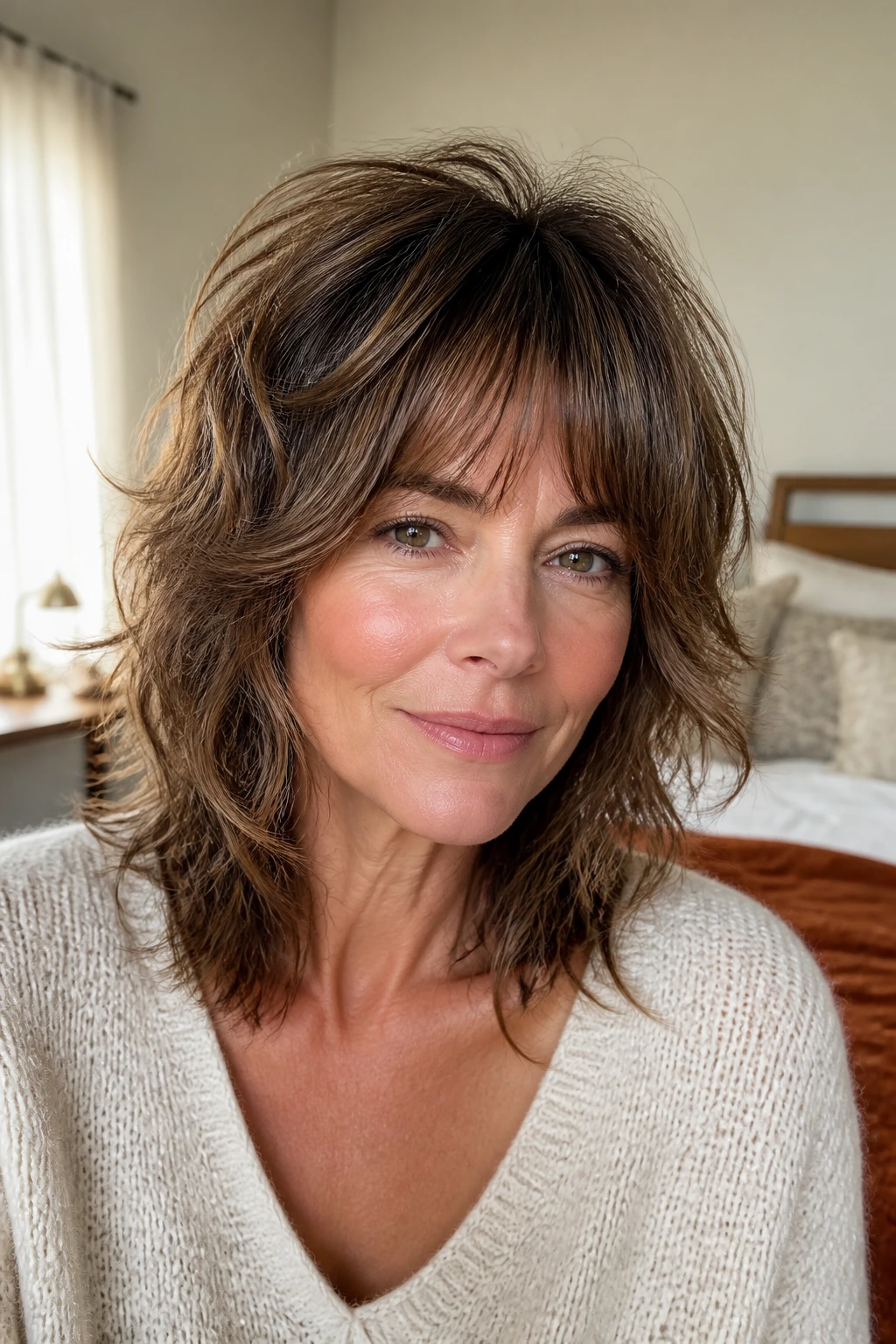
5. Feathered Shag with a Soft Crown
If the word shag makes you picture stiff 1970s layers, relax. The modern version is looser and smarter. A feathered shag lifts the crown, removes bulk in the right places, and gives the lengths enough texture that they don’t hang like wet rope by noon.
This style is especially kind to wavy hair, because the natural bend becomes part of the shape. You’re not forcing the hair into obedience. You’re nudging it. That matters. The best shag for this age group isn’t wild; it’s controlled enough to look deliberate and loose enough to survive a real life.
A little mousse at the roots and a diffuser on low heat will go a long way. If your hair is very fine, keep the layers longer and softer. If it’s thick, you can ask for more movement around the crown and cheekbones without making the ends wispy.
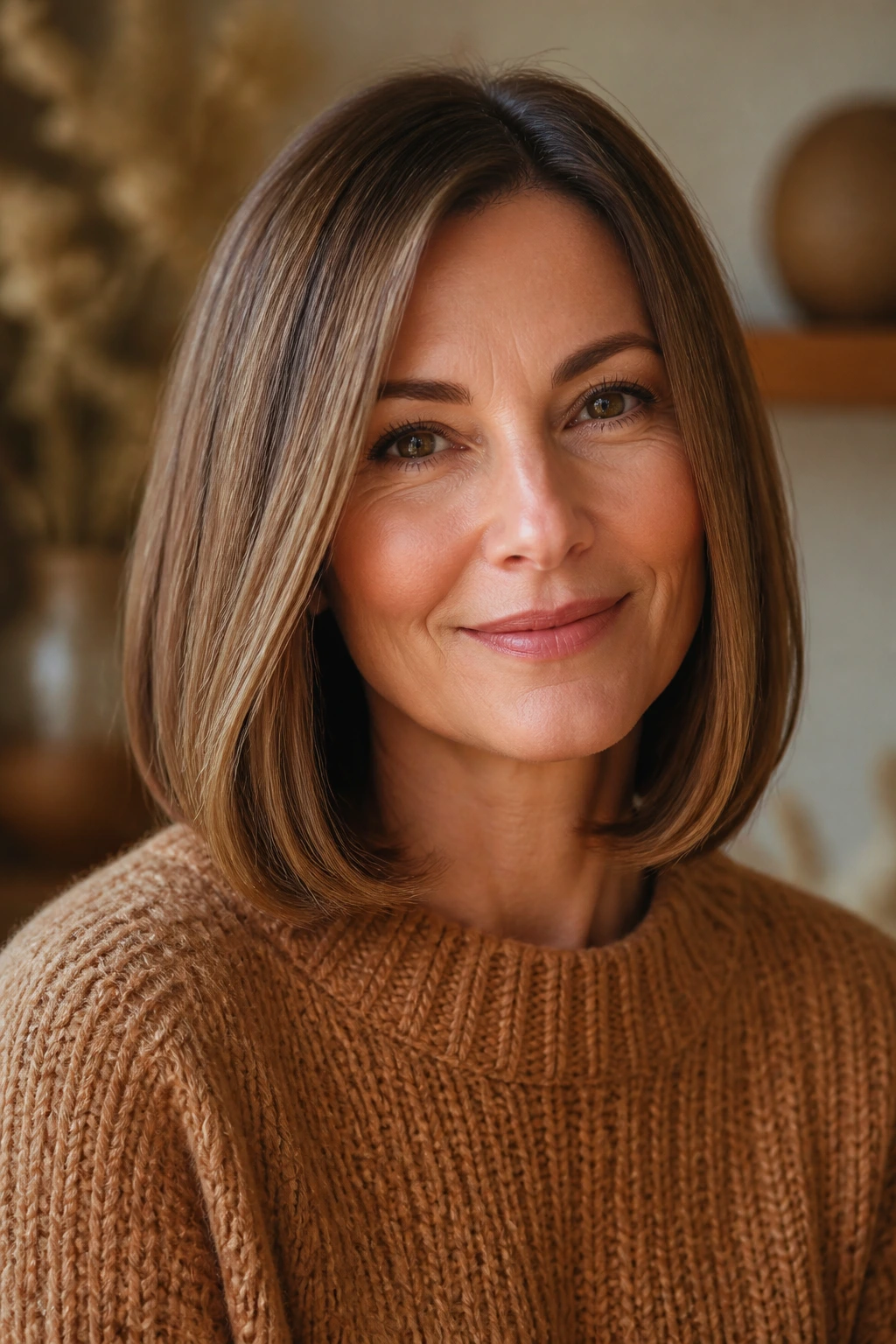
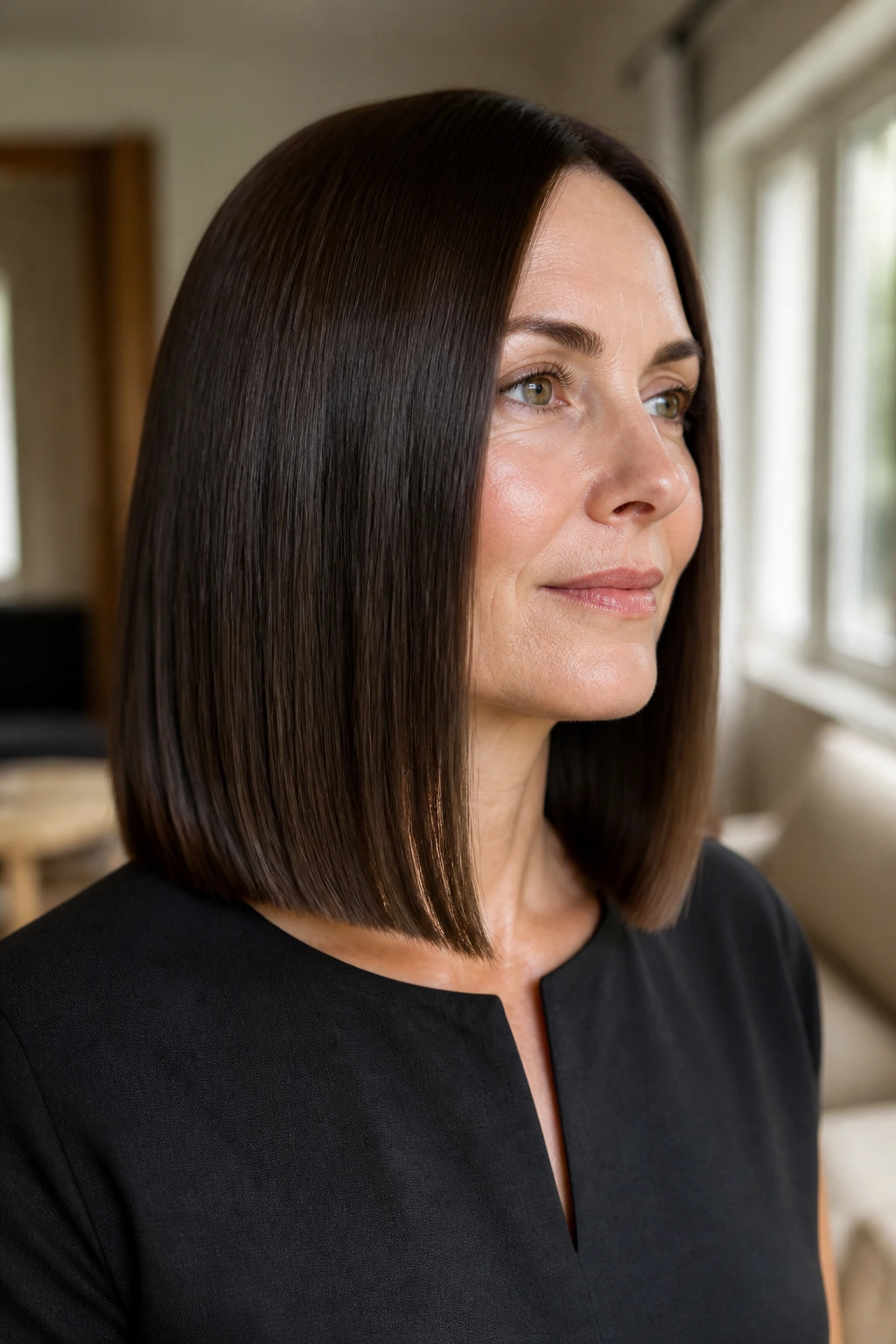
6. Glassy Straight Lob
Some haircuts look better a little messy. This is not one of them. A glassy lob — straight, shiny, and cut with a clean edge — lands beautifully on hair that naturally falls fairly smooth or can be blown smooth without too much battle. The effect is simple, but not plain. Straight hair with a healthy sheen looks expensive in the most un-fussy way.
The real secret is the perimeter. Keep the ends blunt, then smooth the surface with a flat brush or paddle brush before you go in with a flat iron. A heat protectant with a light silicone finish helps the strands slide instead of puff. On grayer hair, this matters even more because silver can show every rough end.
One warning: if your hair is very layered already, this cut may not give you the mirror-like line you want. It needs a solid base. The payoff is that it can look sharp with almost no accessories. A center part, a soft lip color, and a knit sweater are enough.
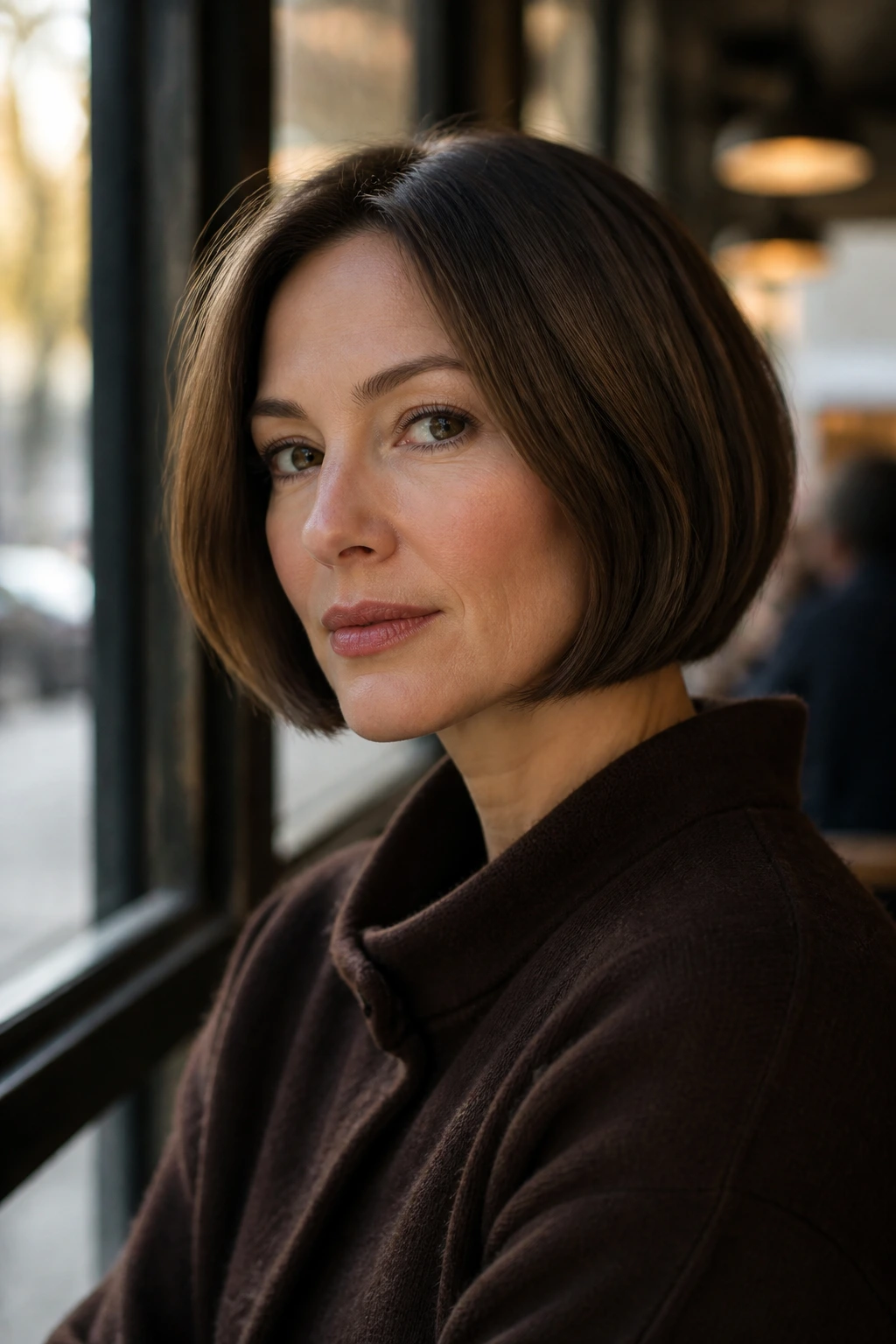
7. Chin-Grazing Bob with a Clean Jawline
A chin-length bob is a bold little haircut. It puts the shape of your face on display, and that is exactly why it can look so fresh. The line lands right at the jaw, which gives structure to softer features and keeps the hair from swallowing the neck.
This cut works best when it’s not over-layered. The outline needs to be crisp, then just a touch softened at the ends so it doesn’t read as rigid. If your hair is thick, ask for a slight forward angle so the front pieces rest a little longer than the back. That saves the cut from turning into a helmet.
It’s especially nice with statement earrings. That’s not a vanity detail. It’s part of the silhouette. Shorter hair opens the space around the face, and the result can be cleaner than a longer cut that keeps dropping into the shoulders.
8. Deep Side-Part Blowout
A deep side part changes more than people expect. It lifts the crown, softens the face, and gives even mid-length hair the kind of movement that feels a little dressier than a center part. On days when your hair feels flat, this is the move that can rescue it.
The blowout itself does not have to be theatrical. Start with root-lift spray on damp hair, blow-dry the part in place, then use a large round brush or Velcro roller at the front section to create lift that lasts through the day. Finish with a flexible hairspray, not a firm helmet spray, or the hair loses that airy bend.
The reason this works so well for women with changing hair texture is simple: it shifts the weight. More volume sits at the top, less hangs around the face. That can be useful if your hair has become a little finer at the temples or if you just want your features to look less dragged down by the afternoon.
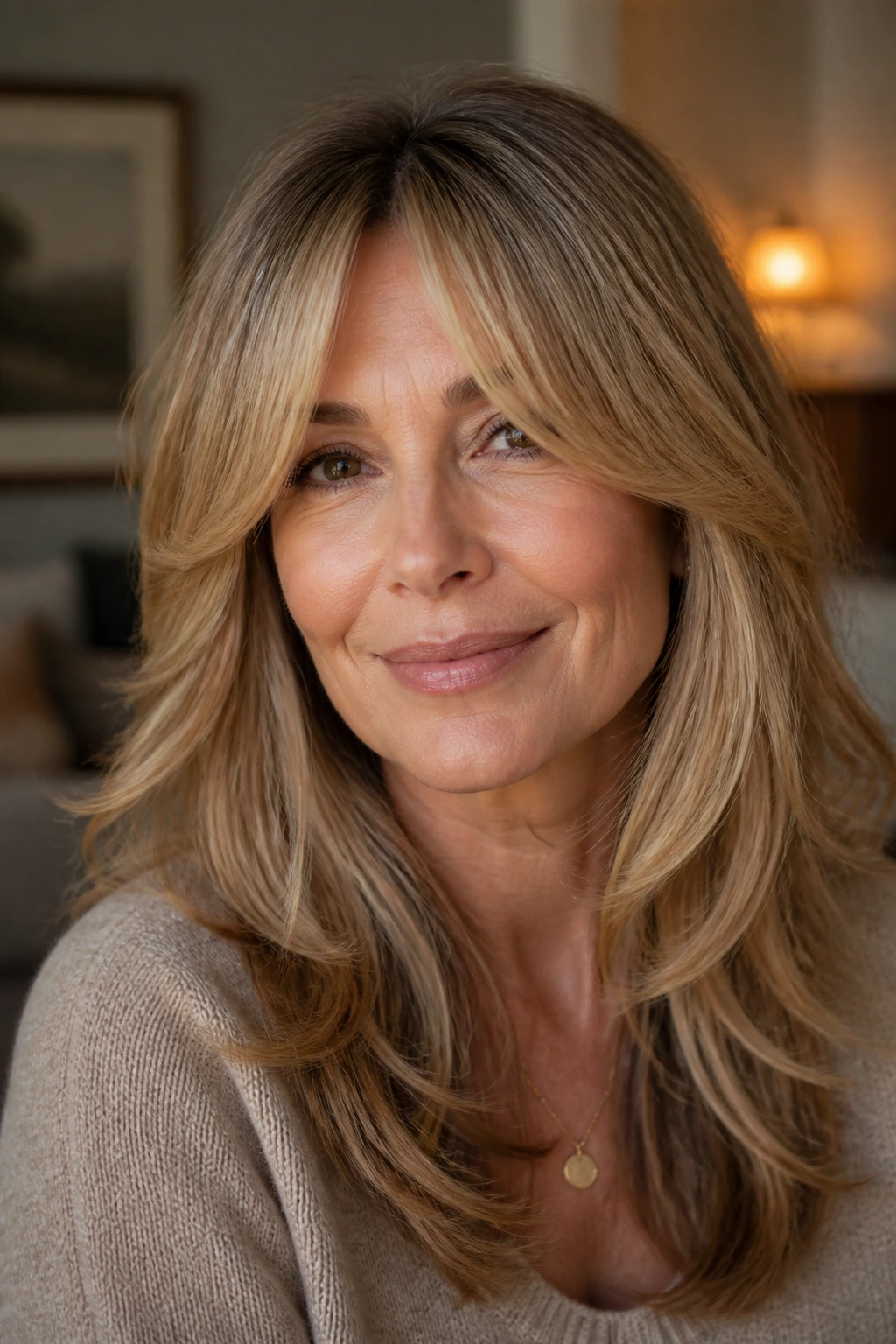
9. Long Layers with Face-Framing Pieces
Long hair does not have to mean one flat sheet. In fact, long hair often looks better when the layers are placed with a bit of restraint. The face-framing pieces matter most. If they start around the cheekbone or mouth, they can soften the front without stripping away the length that makes long hair feel like itself.
The goal here is movement without over-thinning. Too many layers at the ends can make long hair look stringy, especially if it’s already fine. Better to keep the bottom line fairly solid and let the front do the talking. That way you still get ponytail length, but the hair doesn’t look like it’s carrying all its weight in one place.
Where the shortest piece should land
For many faces, the first layer works best somewhere between the cheekbone and the chin. Lower than that, and the front can feel heavy. Higher than that, and you risk the old “helmet with bangs” problem that nobody asked for.
10. Modern Pixie for Women Over 40
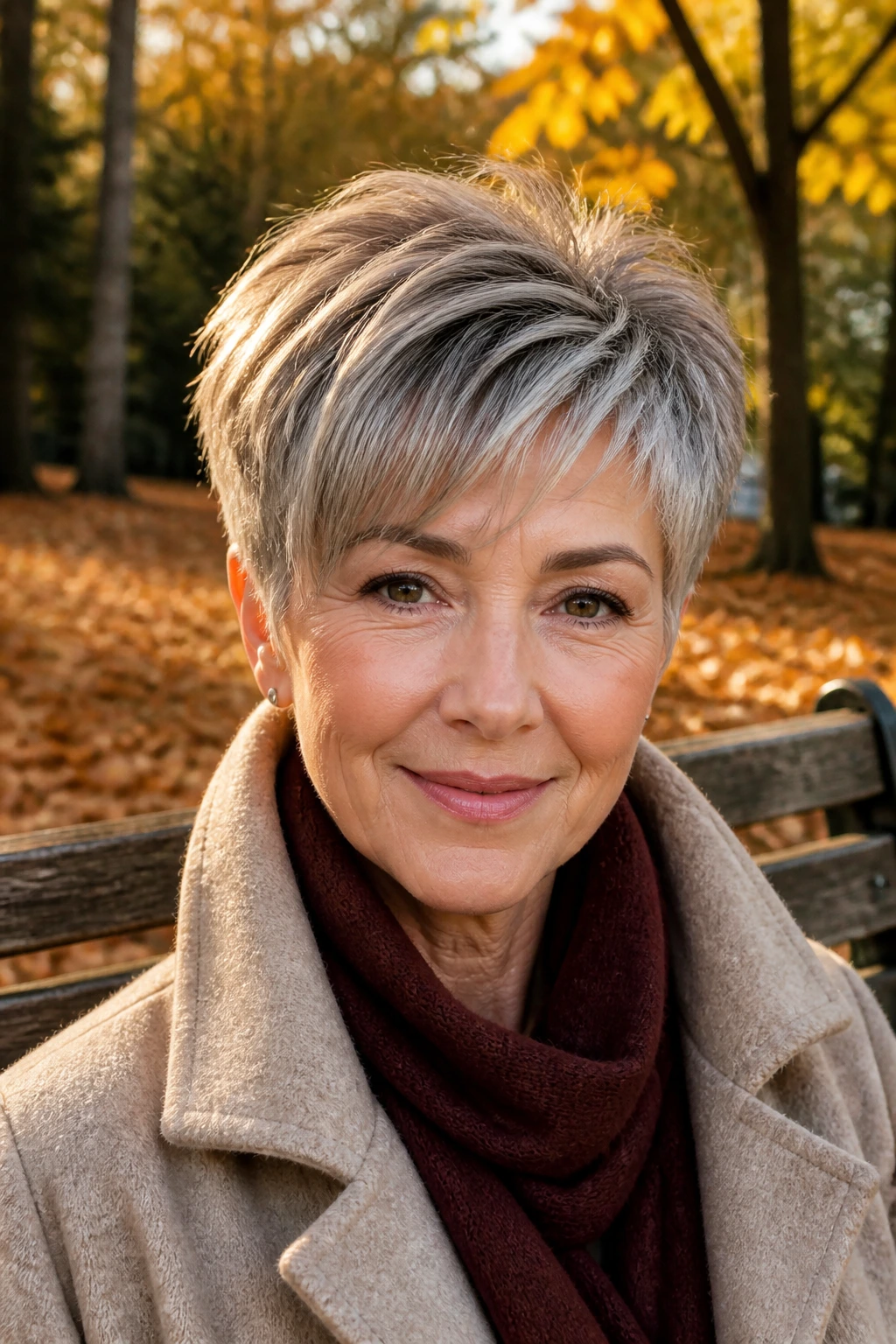
A pixie looks modern when it keeps a little length on top and enough softness around the hairline to avoid that clipped, hard-edged feel. The best versions have texture through the crown, a neat taper at the nape, and just enough fringe to make the forehead look intentional. Not severe. Intentional.
This cut is especially good if your hair has a bit of natural lift or if you’re tired of styling longer hair every morning. A dab of paste or lightweight cream can piece the top into shape in under two minutes. If your hair is silver or salt-and-pepper, this cut can show off the color variation instead of hiding it.
One thing I like about a pixie in fall: it stays neat under scarves and collars. No static-prone ends brushing against wool. No bunching at the nape. That sounds small until you’re actually living in it.
11. Tapered Crop with a Wispy Fringe
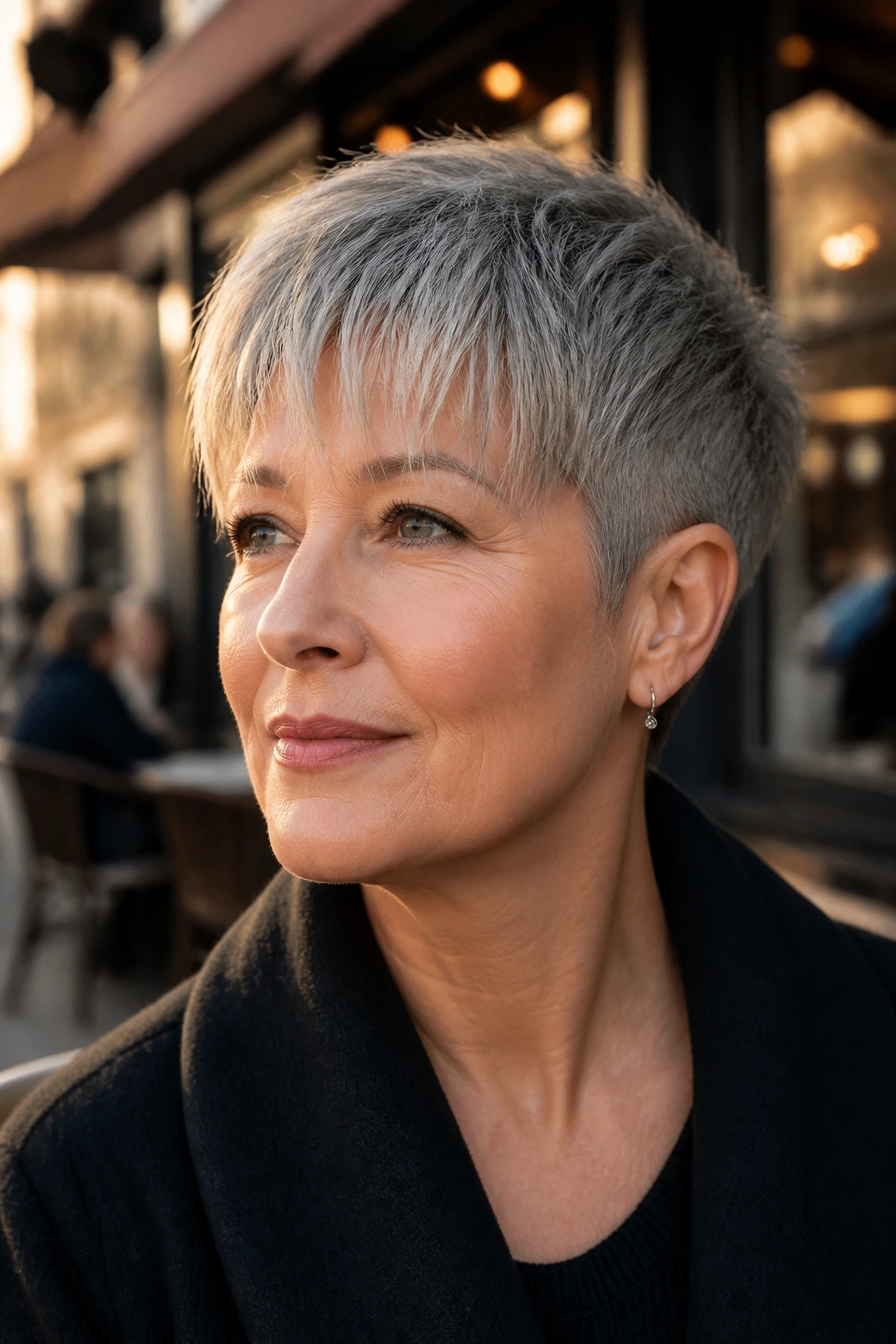
A tapered crop is the quieter cousin of the pixie. The sides and back are tighter, but the top isn’t chopped into stiff spikes. A wispy fringe keeps the face soft and gives the cut a little air, which matters if you want short hair without the hard, boyish edge some crops can take on.
This look works well for fine hair because it builds shape where the eye lands first: the front and the crown. The taper at the neck keeps the whole cut neat, and the fringe keeps it from reading too bare. If your forehead is a little broader or you wear glasses, this is a smart place to play.
The styling is quick, but not careless. Blow-dry the fringe forward with a small round brush, then pinch the ends with a tiny bit of texture cream. That’s enough. Too much product will make the fringe clump and show every piece of scalp.
12. Wavy Midi Cut with Invisible Layers
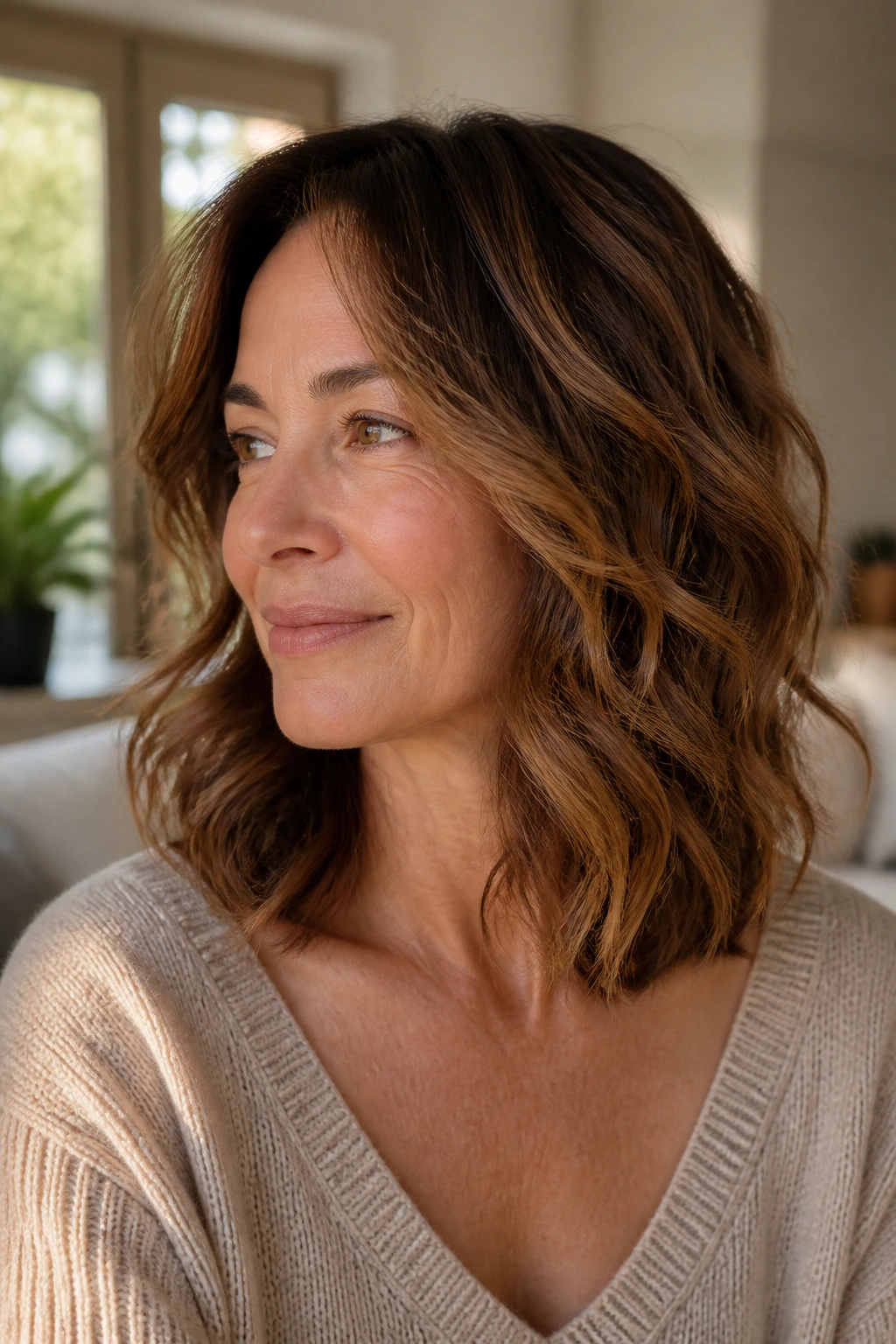
This is the haircut for people who want their natural wave to show up without becoming the whole performance. A midi cut sits around the shoulders or just above the collarbone, and the layers are cut so lightly that they disappear into the movement instead of shouting about themselves.
It’s a strong choice if your hair swells when it’s humid or gets frizzy around the ends. Invisible layers remove just enough bulk to let the wave bend, but they don’t create obvious steps. That means the haircut still looks full. Not puffy. Full.
Use a lightweight curl cream or air-dry lotion, then scrunch with your hands while the hair is still damp. If you diffuse, keep the heat low and stop before the hair is bone dry. A little natural moisture left in the strand helps the wave settle instead of turning fuzzy.
13. Low Chignon with Loose Tendrils
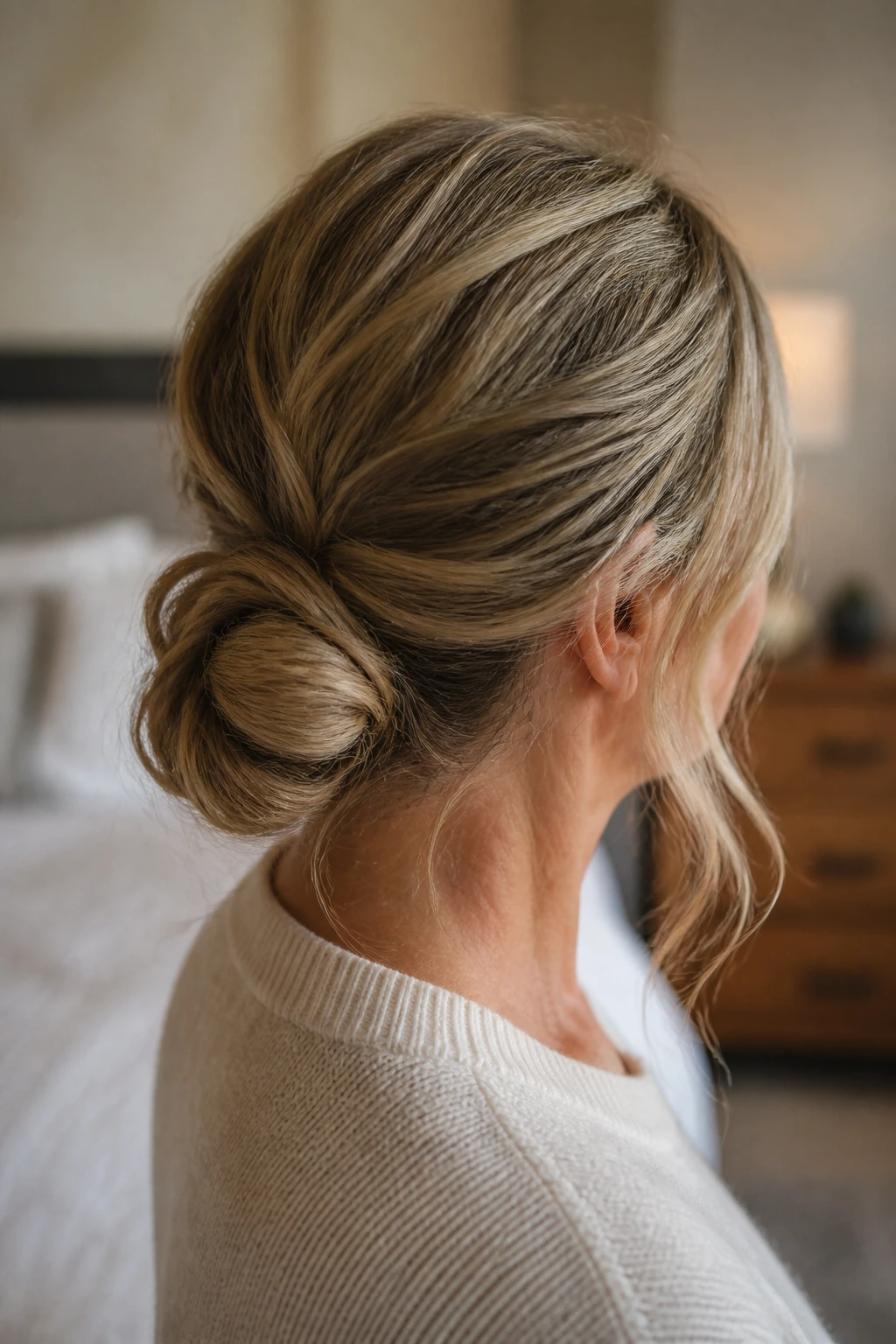
A low chignon sounds formal, but the modern version is softer than that. It sits at the nape, not high on the head, and it leaves a few face-framing pieces out so the style doesn’t become too stiff. The whole look works because it keeps the shape low and close to the neck, which feels especially right when the weather turns cool.
This is the updo I’d reach for with a sweater dress, a blazer, or anything with a higher neckline. It clears the collar without looking fussy. If your hair is medium to long, twist it into a loose coil and pin it with bobby pins in a crisscross pattern. That keeps the bun from sagging after an hour.
A little texture spray helps. So does a side or center part that stays visible at the front. A chignon that looks too polished can tip into bridesmaid territory fast. The loose pieces save it.
14. Sleek Ponytail with a Wrapped Base
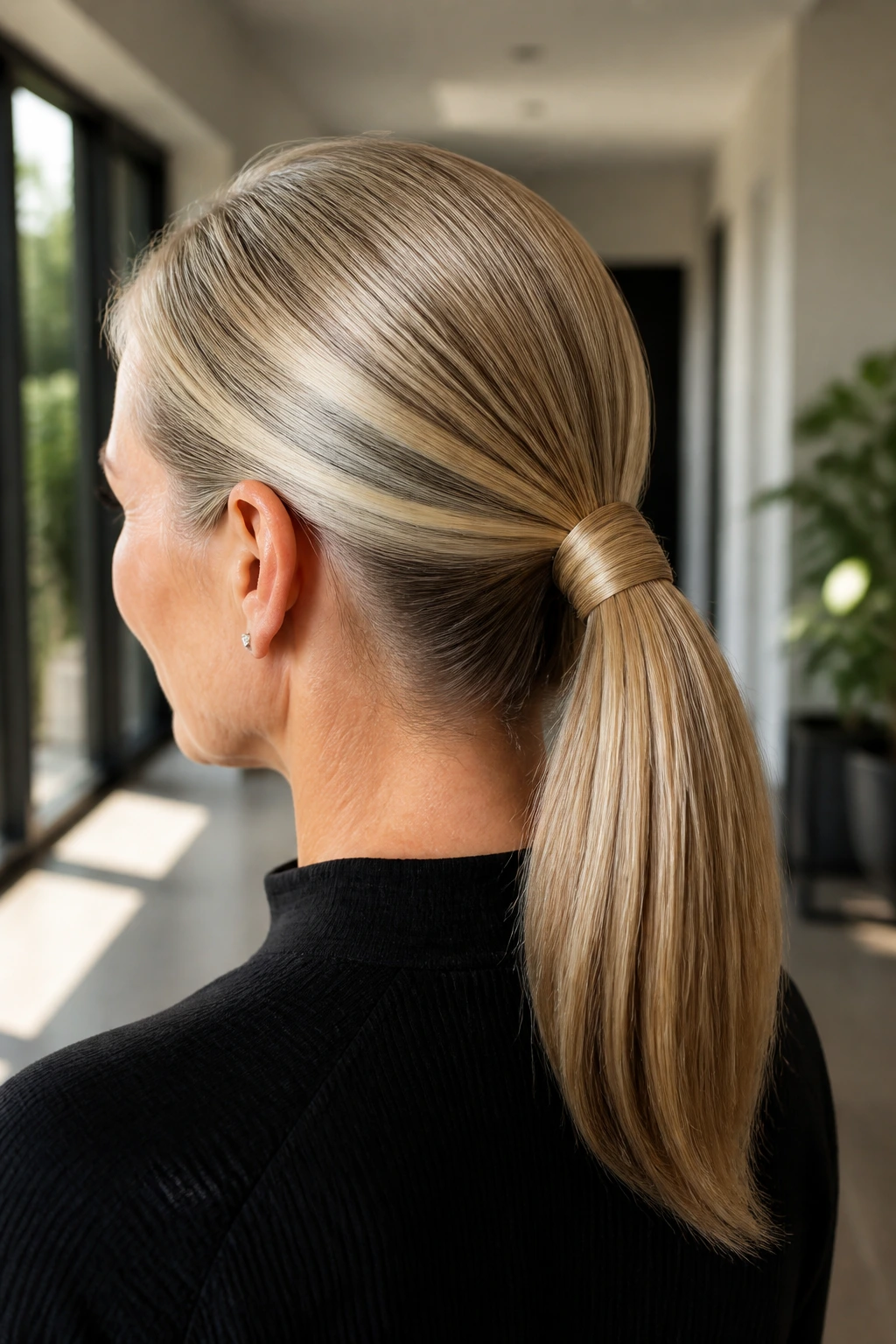
The slick ponytail keeps appearing because it solves an actual problem: the hair is being uncooperative, and you still need to look put together. A low or mid-height ponytail with a wrapped base looks cleaner than a thrown-together elastic and works especially well with straight or smoothed hair.
Brush the hair back with a boar-bristle brush, smooth a little cream at the surface, and secure it firmly. Then take a small section from the ponytail and wrap it around the elastic before pinning it underneath. That one move changes the whole look. It hides the band and makes the ponytail feel finished instead of accidental.
This style is great under coats because it stays contained. It also looks good with a bold lip or strong earrings. The face is open, the neck looks longer, and the hair doesn’t fight your outfit. Some mornings, that is the whole point.
15. Claw-Clip Twist with Soft Ends
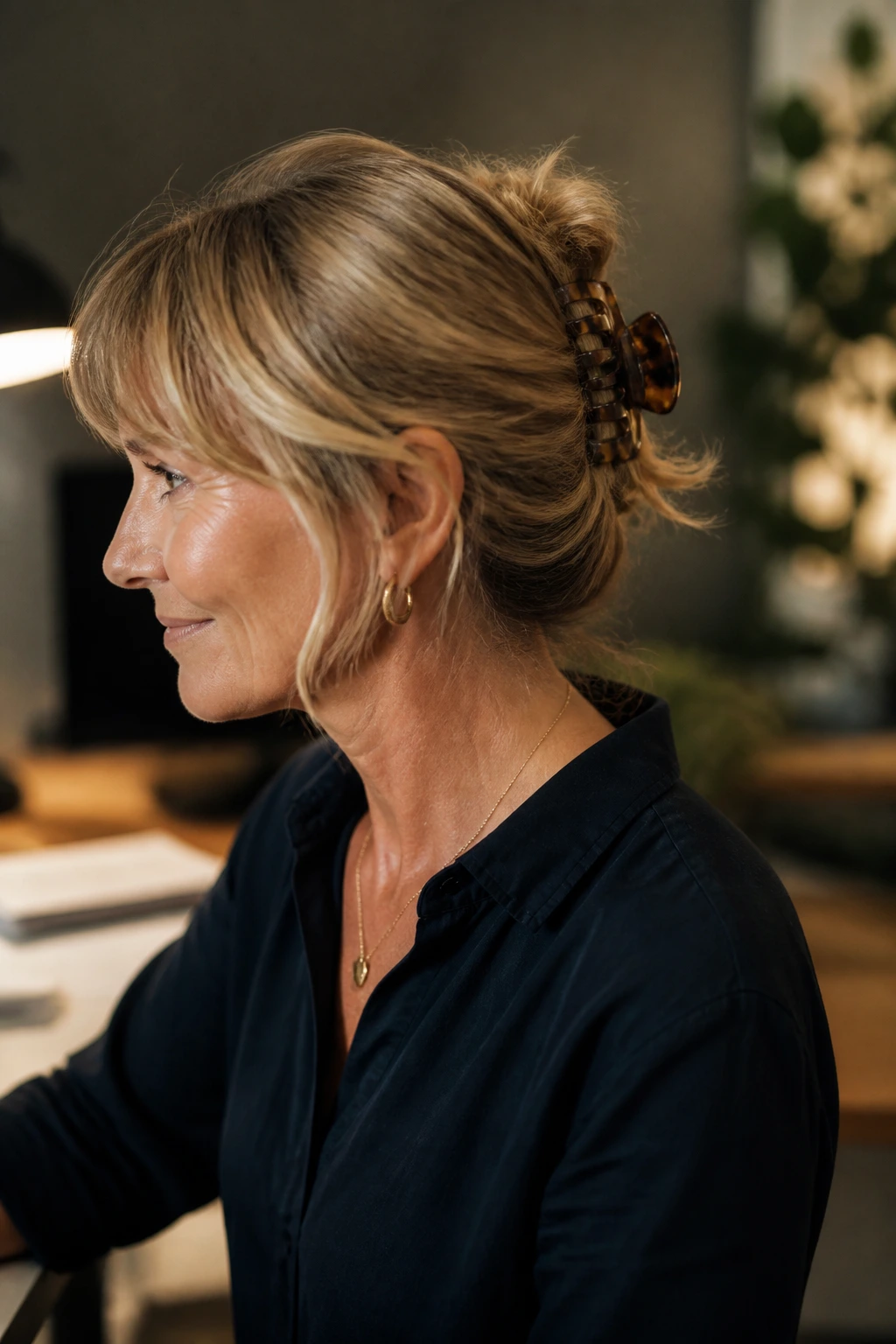
A claw-clip twist can look lazy or polished, depending on the shape. The polished version starts with a little bend through the lengths, then gets twisted once and folded upward so the ends stay soft and visible instead of jammed flat against the scalp. That’s the difference.
Use a medium or large clip, but not one so huge it swallows your hair. If your hair is layered, leave the shortest face pieces loose. That keeps the style from feeling too tight. A little root lift at the crown helps too, because the whole point is softness with some lift, not a collapsed bun pretending to be a twist.
I like this one for in-between days. It’s fast, it keeps hair off the neck, and it doesn’t stress the scalp the way a high ponytail can. And yes, it can look stylish with a blazer. No need to reserve it for the bathroom mirror.
16. Half-Up Style with Crown Volume
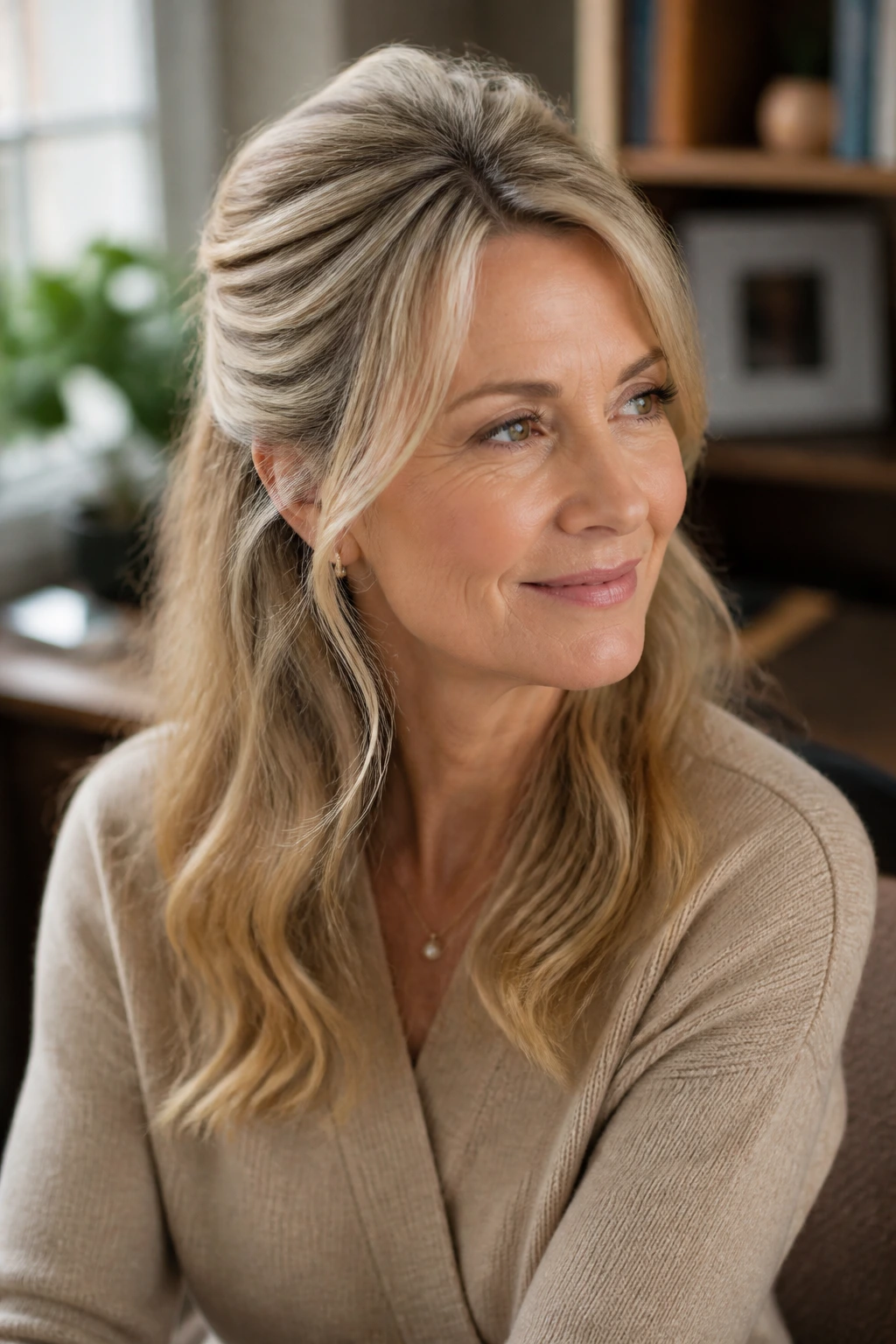
A half-up style gets much better when you build a little height at the crown. Not a teasing tower. Just enough lift that the top doesn’t lie flat against the head. That small change can make medium and long hair look fresher, especially if the front layers are starting to sit heavy.
The best version leaves the lower half loose and slightly waved. You can secure the top section with a small clip, a clear elastic, or a few pins hidden under a thin twist of hair. If you want the style to feel less sweet and more grown-up, keep the front pieces a little undone. Clean at the crown. Soft at the sides.
This is a useful choice for hair that has lost some volume at the temples. It pulls the eye upward and gives the face a bit more openness. A half-up style can do a lot with very little, which is the kind of efficiency I always respect.
17. Braided Crown with Soft Texture
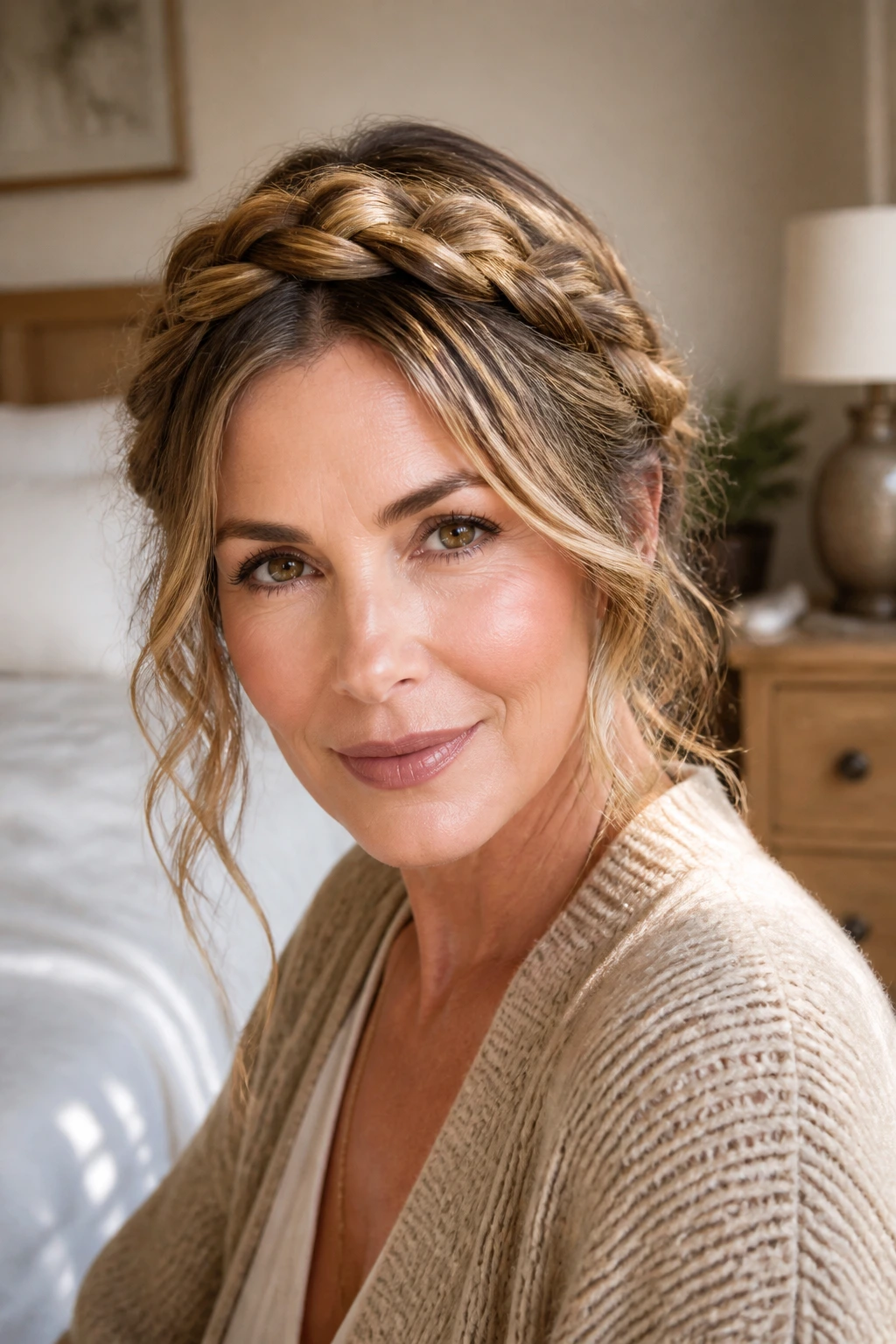
A braided crown can look fussy if it’s too tight or too perfect. The version that works here is loose, slightly lived-in, and pinned low enough that it feels like a frame rather than a costume. Think texture first, braid second.
Start with hair that has a bit of grip — second-day hair, dry shampoo, or a light texturizing spray helps. Then braid along the hairline or take two braids and pin them across the back. Leave a few tendrils loose around the temples and ears. Those tiny gaps keep the style from looking overworked.
This is a nice option when you want your hair up but not severe. It also happens to be friendly to mixed lengths and waves, which helps if your layers are growing out. The braid should look like it was made by hand, not a machine. Tiny irregularities are part of the appeal.
18. Tucked-Behind-Ear Bob
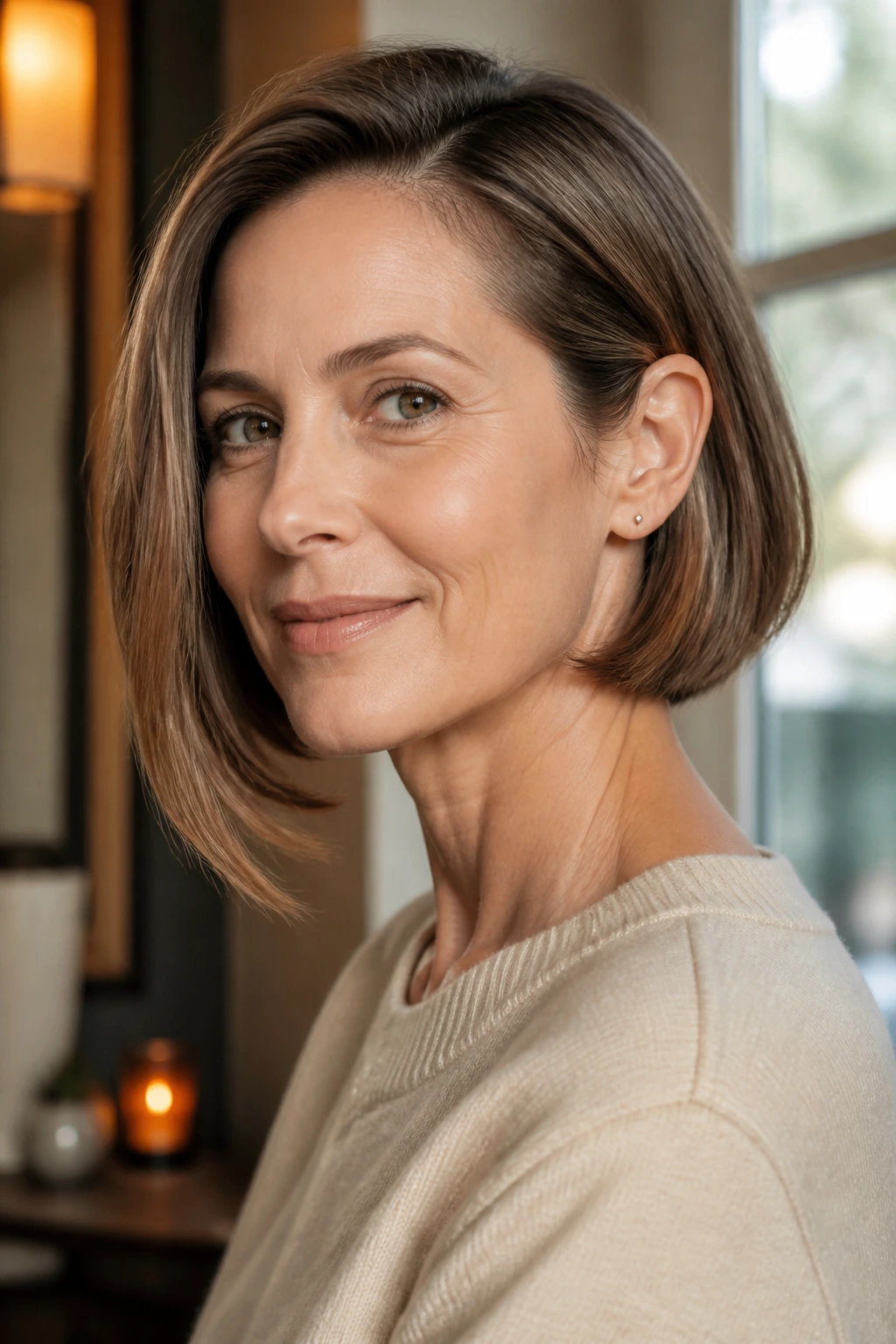
Sometimes the chicest move is also the simplest. A bob tucked behind one ear changes the whole line of the haircut, especially when the front is cut clean and the back keeps enough body to support it. You get shape, a little asymmetry, and a reason to wear earrings.
The trick is not to tuck both sides the same way. One side can stay loose while the other gets tucked, which gives the face more openness without making the style look forced. If your hair has a little bend, this looks even better because the tucked side stays put while the loose side carries the movement.
It’s a quiet haircut trick, but it matters. A tucked bob looks good with sweaters, blazers, and collared shirts because it clears the line around the neck and jaw. It’s also one of the easiest ways to make a bob feel intentional after the second or third day.
19. C-Shaped Layers with Brushed-Out Waves
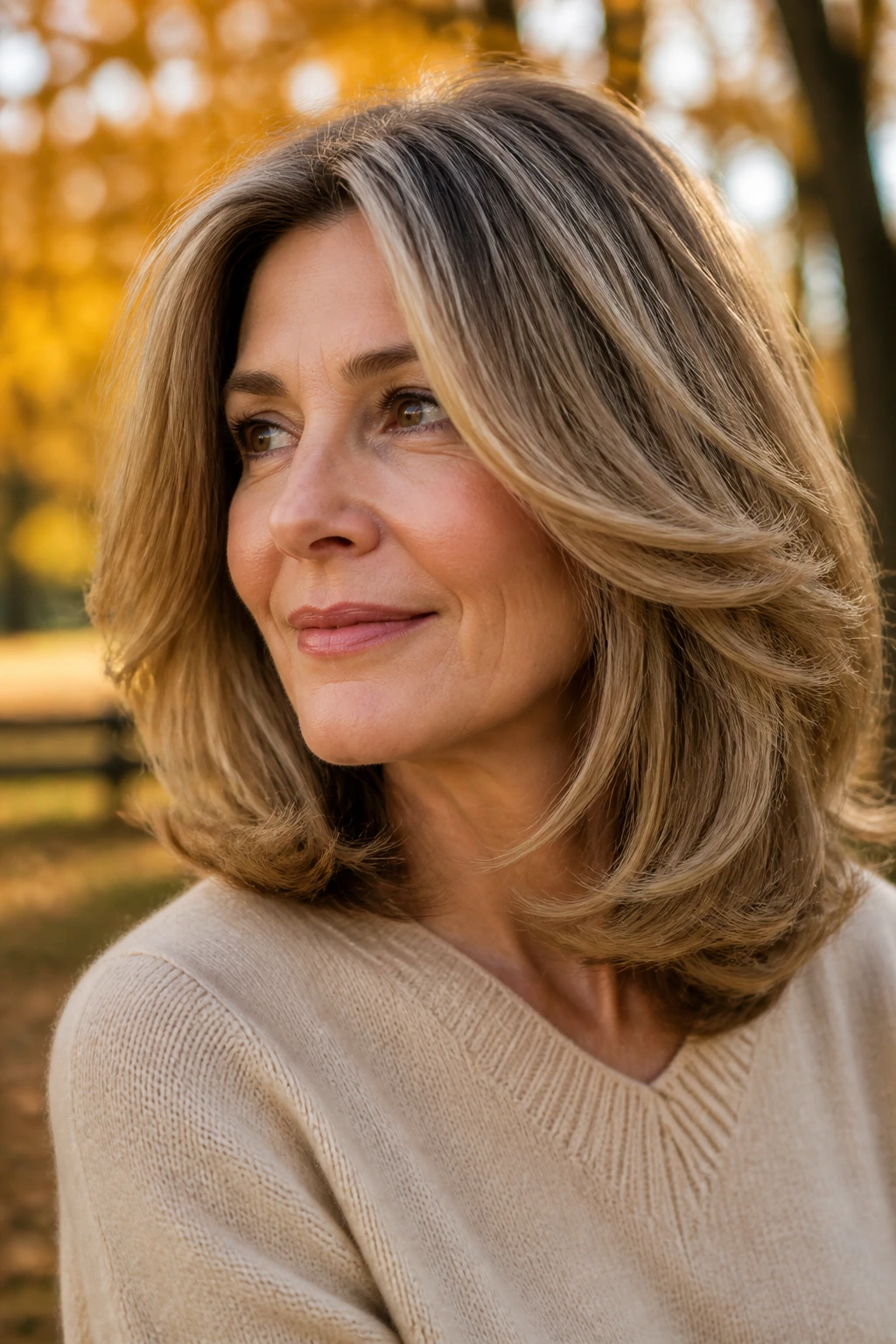
A good C-shape does not scream at you. It curves. That’s the whole point. Layers that are cut to bend inward and outward in a soft arc give medium-length hair movement without turning the whole cut into a stack of disconnected pieces. The brushed-out wave makes the shape visible.
To get it, use a 1 to 1.25-inch curling iron, curl away from the face in alternating directions, then brush the waves out gently once they cool. The brushed finish matters. It turns the curl into a softer bend and makes the hair look fuller in a controlled way. This works well on hair that’s medium to thick and wants a little structure.
If your hair grows out at the same rate in front and back, this is a good shape to live with. The movement feels deliberate even when the styling is minimal. That’s rare enough to be worth paying attention to.
20. Midi Cut with Bottleneck Bangs
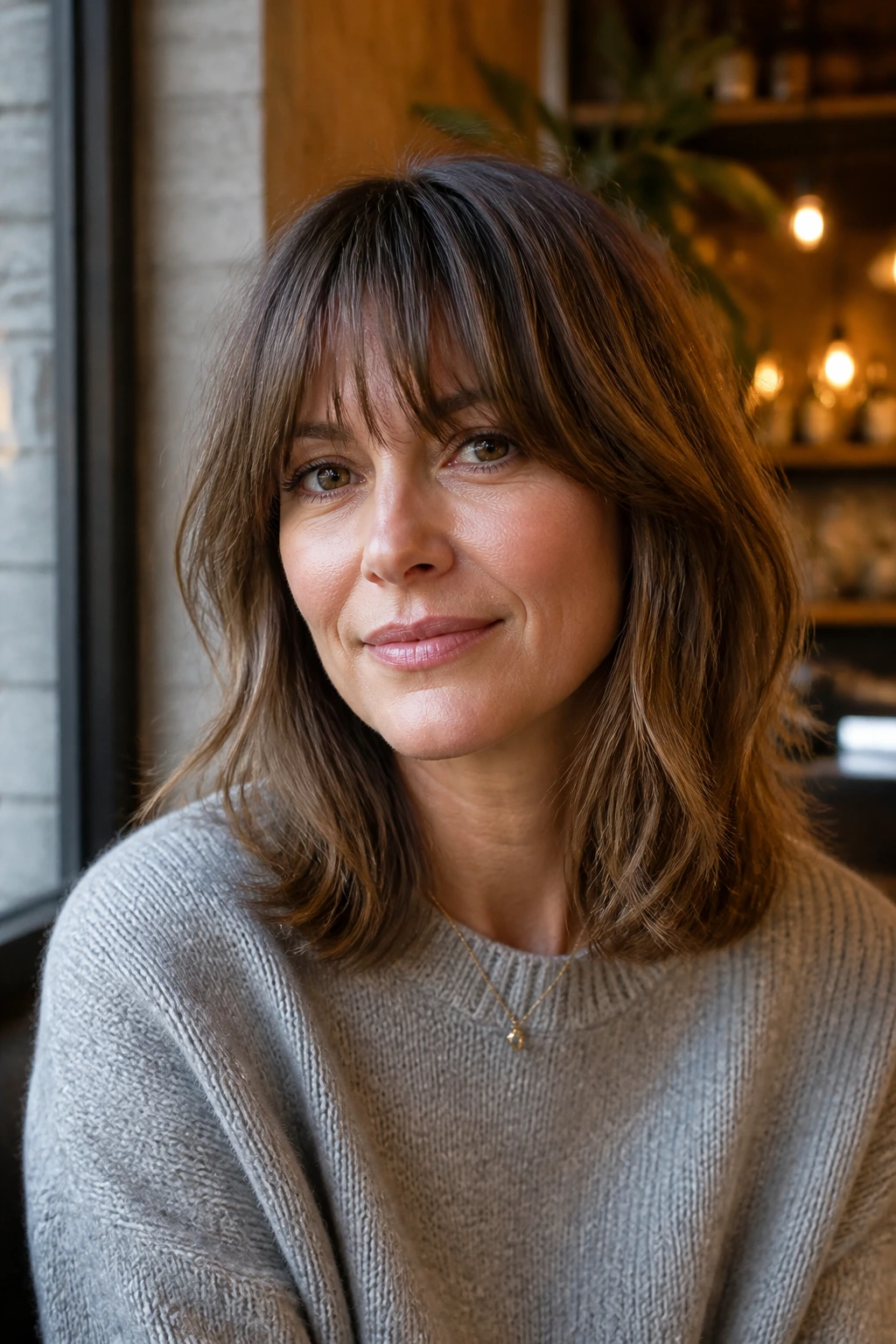
Bottleneck bangs have a funny name and a smart shape. They start narrow at the center, then widen softly toward the cheekbones, which gives you the feeling of fringe without a hard wall across the forehead. Paired with a midi cut, they can make the whole haircut feel current without being loud.
The length is the part that needs respect. Too short and the bangs stand up weird. Too long and they vanish into the sides. The sweet spot sits in a range that lets the center skim the brows while the sides connect to the layers. If you wear glasses, this is often easier to live with than blunt bangs because the shape opens around the frames.
I’d avoid this if your front hairline has a strong cowlick or if you never want to touch a round brush. Otherwise, it’s a smart way to get fringe movement without the commitment of a heavy bang.
21. Wolf Cut Lite with Controlled Ends
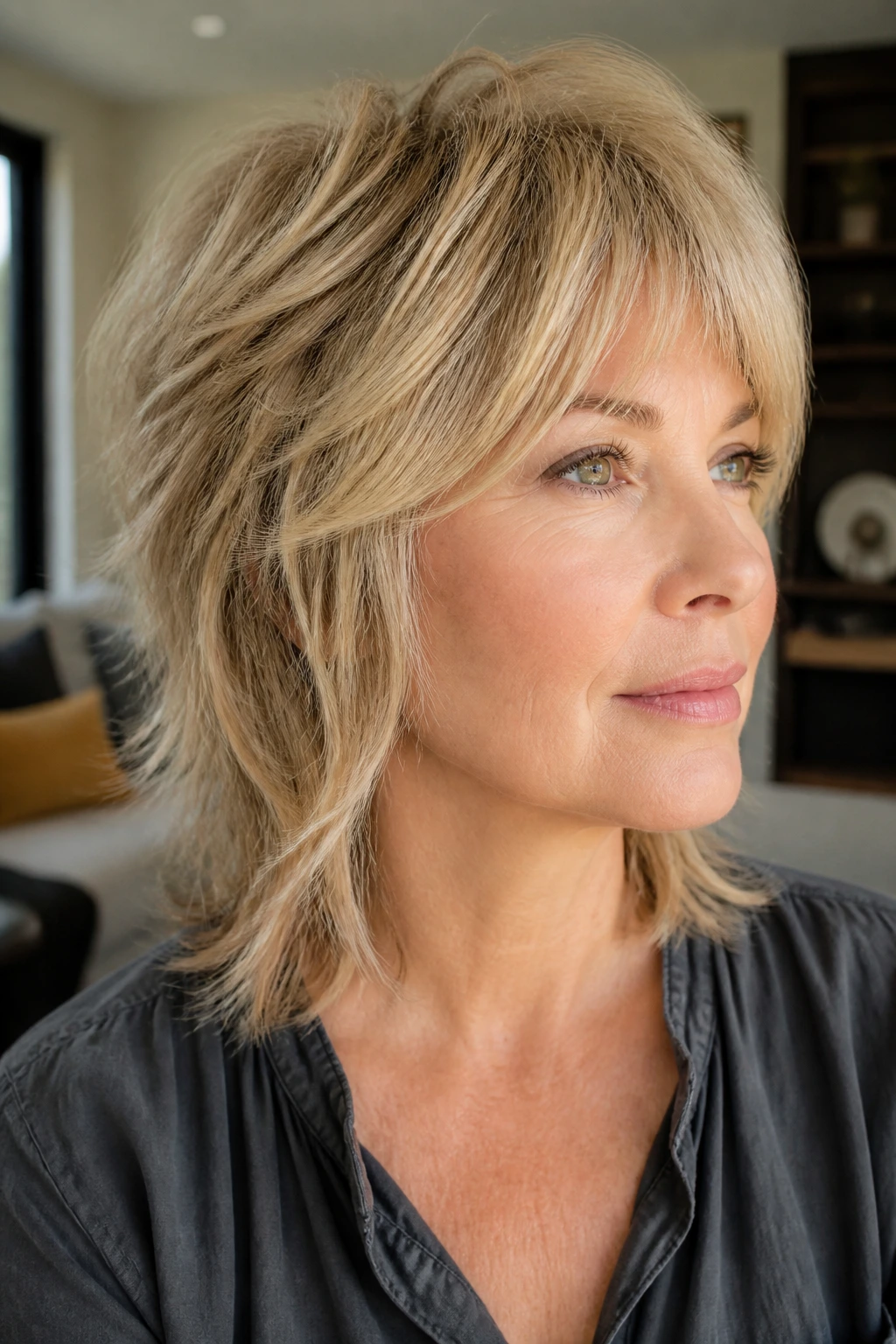
The wolf cut can be too much if it’s done with a heavy hand. The lighter version keeps the movement and softens the edges. Think more wearability, less costume. You still get layers, a little crown lift, and a lived-in texture, but the perimeter stays controlled enough to look tidy when the hair is brushed out.
This is a good option for wavy hair that gets flat at the top and puffy at the bottom. The layers lift the crown and remove some weight through the middle, while the ends keep enough shape that the whole haircut doesn’t dissolve into fuzz. If your hair is thick, this can be a relief. If your hair is fine, keep the layers longer so you don’t end up with scraps instead of shape.
The strongest version of this cut is usually styled with a diffuser or rough-dried with a bit of mousse. It likes texture, but it doesn’t need drama. That’s the version I’d send to most real people.
22. Shoulder-Length Curls Shaped from the Inside Out
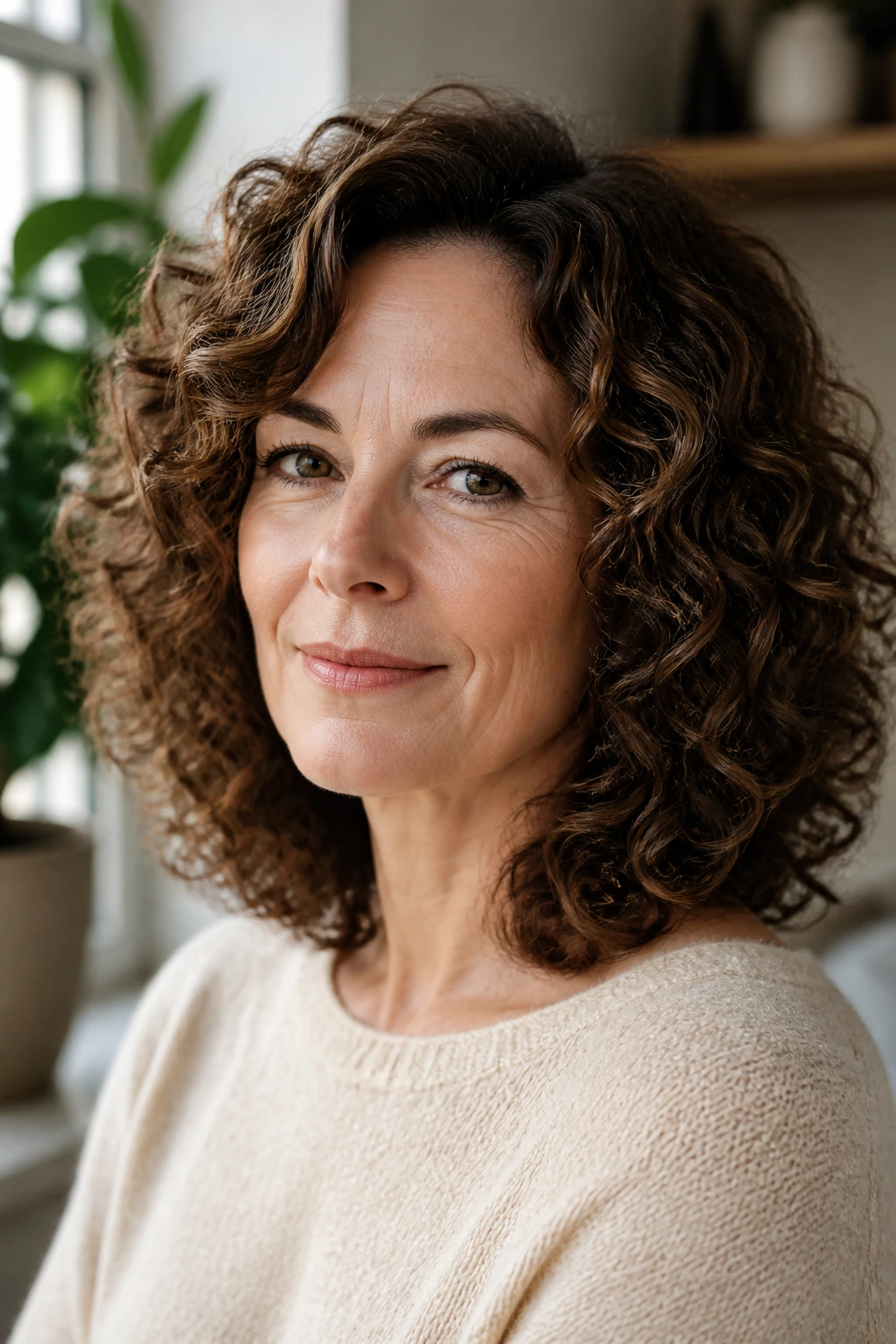
Curly hair at shoulder length can be gorgeous when the shape is cut from the inside out. That means the stylist removes bulk where the curls cluster, instead of hacking at the outside and hoping the volume lands in the right place. The result is springy, not frizzy.
This shape is a gift if your curls have changed texture over time. Some strands get looser, some get tighter, and the cut needs to respect both. Long internal layers help the curl stack without puffing at the shoulders. A diffuser, a curl cream, and a little patience do the rest.
The goal is not to force every curl into the same pattern. It’s to let the ringlets sit where they want to sit and keep the outline clean enough that the whole style reads as a shape, not a cloud.
Why These Fall Styles Hold Up When the Weather Turns Dry
Hair behaves differently when the air gets cooler and drier. Static shows up faster. Ends get rougher. Scarves rub. Coat collars flatten the crown and bend the back sections into odd shapes. That’s why these fall hairstyle trends lean toward lines you can trust: collarbone lengths, chin-grazing bobs, tidy pixies, and updos that stay close to the head.
There’s also a practical reason so many of these cuts use softness around the face. Heavy winter layers can make a face look boxed in. A side fringe, a loose tendril, or a lifted crown opens everything back up. Tiny shift. Real difference.
What I like most is that none of these styles depend on pretending your hair is something it isn’t. Fine hair gets shape. Thick hair gets control. Curly hair gets room. Gray hair gets shine. That is the whole job, really.
Brushes, Clips, and Products That Earn Their Spot on the Counter
- A 1.5- to 2.5-inch round brush: Best for collarbone layers, curtain bangs, and soft blowouts; smaller brushes give more bend, larger ones give smoother finish.
- A blow-dryer with a nozzle attachment: The nozzle matters. It aims airflow where you want it instead of frizzing the whole head.
- Heat protectant spray or cream: Use it before flat ironing, curling, or even a strong brush-dry; dry hair shows heat damage fast.
- Light mousse: A good pick for shaggy layers, wave support, and crown lift without crunch.
- Texture spray or dry shampoo: Helpful for claw-clip styles, braids, and second-day volume at the roots.
- A 1-inch flat iron: Handy for bends in bobs, lob ends, and polished fringe.
- A 1- to 1.25-inch curling iron or wand: Good for loose waves, brushed-out curls, and C-shaped movement.
- Duckbill clips: Small, cheap, and worth keeping around for sectioning bangs and crown sections.
- Boar-bristle brush: Useful for sleek ponytails and smoother blowouts because it helps lay the surface flat.
- Flexible-hold hairspray: Gives shape without freezing the hair into place.
- Bobby pins that match your hair color: Better than fighting with shiny silver pins that show up in every photo.
- Satin pillowcase or bonnet: Not mandatory, but it cuts down on frizz and bedhead, especially for blowouts and curls.
How to Wear These Looks With the Rest of Your Outfit
Necklines: Shorter cuts like the bob, pixie, and tucked-behind-ear styles look clean with turtlenecks, crewneck sweaters, and shirt collars because they don’t crowd the neckline. Longer styles and soft waves pair better with open necks, V-necks, and layered necklaces, where the hair can move without competing.
Glasses and earrings: If you wear glasses, side-swept fringe, curtain bangs, bottleneck bangs, and tucked bobs are the easiest friends. They leave room around the frames. Big earrings? Short hair, lifted crown styles, and ponytails make them visible instead of letting them disappear under hair.
Morning speed: A French bob, a clean lob, or a slick ponytail can be done fast and still look finished. Soft shag layers, curls, and brushed-out waves ask for a little more shaping. That trade-off is fine if the payoff is the hair looking better on day two.
Evening polish: Low chignons, half-up volume styles, and side-part blowouts all sharpen up nicely with a few pins and a shine spray. One good finishing touch — usually shine, lift, or a clean tuck — changes the whole mood.
Small Touches That Make the Style Feel Intentional
Gloss boost: A clear gloss, shine spray, or a tiny amount of serum on the last two inches of hair keeps ends from looking dry under indoor light. Use less than you think. Too much and the hair looks greasy by hour two.
Root lift: A little mousse at the roots or a quick blast of dry shampoo under the crown can save flat hair. Focus on the back of the head, not just the hairline; that’s where many styles collapse first.
Texture balance: If the cut is sharp, soften it with a bend. If the cut is soft, give it one crisp line. That contrast keeps the hair from reading as overdone. The hair should look styled, not staged.
Fringe control: Bangs and face-framing pieces need a minute of attention in the morning. Dry them first, then let the rest of the hair go. That tiny sequence keeps them from shrinking or separating at the wrong time.
Make-it-yours move: Tuck one side behind the ear, add a barrette, or leave the ends a touch undone. Hair gets personal fast. The best version usually has one detail that feels like your habit, not a salon poster.
Common Mistakes That Make a Good Cut Look Off
- Too many short layers at the front: The symptom is hair that flips out around the cheeks and never settles. Ask for face-framing pieces that blend instead of stepping up in obvious chunks.
- Skipping regular trims on blunt styles: A clean bob or lob goes fuzzy fast if the ends split. Trim every 6 to 8 weeks if you want the line to stay sharp.
- Choosing bangs without checking your cowlicks: Fringe that fights your growth pattern can split, pop up, or sit crooked. A stylist can cut around the cowlick, but only if they know it’s there.
- Using heavy oil near the crown: The hair looks flat at the roots and stringy by noon. Keep oils on the mids and ends unless your hair is coarse enough to need more weight.
- Over-teasing short hair: It can feel necessary when you want volume, but too much backcombing leaves the surface rough and hard to brush out. Use mousse, rollers, or root spray first.
- Thinking every style needs the same finish: A sleek lob, a shag, and a curly cut do not want the same product mix. The wrong product can flatten the very shape you paid for.
Variations and Adaptations for Different Hair Textures
Fine-Hair Edit: Favor blunt edges, collarbone lengths, and a little crown lift. Fine hair can disappear when it’s layered too hard, so keep the perimeter honest and use a root spray rather than piling on cream.
Thick-Hair Edit: Ask for internal shaping, not aggressive thinning. Thick hair often needs weight removed from the inside so the outline stays smooth and the ends don’t explode outward.
Curly-Hair Edit: Choose cuts that respect shrinkage and cut them dry or mostly dry if that’s how your curls behave. Long internal layers and shoulder-grazing lengths often give curls the room they need without creating a triangle.
Gray-and-Silver Edit: Shine matters more here than camouflage. A bob, lob, or pixie with clean lines lets silver read as bright, while a small amount of gloss or smoothing cream keeps coarse strands from looking frayed.
Low-Maintenance Edit: Pick shapes that still look good after being air-dried or loosely styled the night before. A claw-clip twist, a clean bob, or a soft lob will usually ask for less daily effort than layered fringe or high-texture cuts.
Glasses-Friendly Edit: Fringe should sit a little higher, softer, or more to the side so it doesn’t sit on the frames all day. Curtain bangs, side-swept fringe, and tucked bobs usually cooperate better than blunt bangs.
Keeping the Style Fresh Between Salon Visits
Haircuts live or die in the weeks after the appointment. A bob that looks razor-clean on day one can start to blur around the edges if you wait too long between trims. A pixie grows out fast at the ears and nape. Bangs need attention even sooner. That’s normal. The point is to plan for it instead of being surprised by it.
For shorter styles — pixies, crops, chin-length bobs — I’d keep trim appointments around every 4 to 6 weeks if you want the shape to stay crisp. Collarbone cuts and lobs can usually stretch to 6 to 8 weeks, sometimes a bit longer if the line is forgiving. Long layers can go 8 to 10 weeks, but the face frame may need a tidy-up before the rest of it does.
At home, the best maintenance move is not more product. It’s smarter product. Use heat protectant before hot tools, light texture spray at the roots, and only enough serum to smooth the ends. On second-day hair, dry shampoo should go at the roots while the hair is lifted in sections. Give it a minute to settle before you brush it through. That keeps the powder from looking dusty.
Night care matters too. A loose clip, low braid, or satin pillowcase can keep brushed-out waves and blowouts from turning into a knotted mess overnight. Curly styles usually like a pineappling method or a loose bonnet. Sleek styles like less friction. Tiny habits. Big difference by morning.
Questions People Actually Ask Before Booking
Which of these hairstyles works best if my hair has thinned a bit at the crown?
A deep side-part blowout, a collarbone-length cut, or a modern pixie with lift on top can all help. The trick is creating height where the eye lands first instead of letting the part sit flat in the middle.
Are bangs a bad idea if I’m over 40?
Not at all. The wrong bangs are a bad idea; that’s different. Curtain bangs, side-swept fringe, and bottleneck bangs can soften the face without turning into a daily battle.
What if I don’t want to use heat every day?
Choose a cut that makes air-drying easier: a wavy midi, a shag with soft layers, a claw-clip twist, or a bob that holds its line. Then use one styling product that matches your texture instead of layering three.
How do I keep a bob from looking too severe?
Softness at the ends helps, and so does a bit of movement around the face. A side part, tucked side, or small bend at the bottom makes a blunt bob feel modern rather than rigid.
Can these styles work with gray or silver hair?
Yes, and some of them look better on gray than on colored hair. Clean lines, shine, and controlled texture make silver strands look intentional instead of wiry.
What should I bring to the salon besides a photo?
Bring notes about your routine: how long you want to spend styling, how often you’re willing to trim, and whether you wear glasses or ties your hair back often. A photo without those details is only half the story.
How often should I trim bangs or fringe?
Every 3 to 4 weeks is a safe range for most bangs, especially curtain or bottleneck shapes. If you let them grow too long, they lose the lift around the eyes and start behaving like side pieces.
Which styles grow out the most gracefully?
Collarbone layers, long layers with face-framing pieces, and soft lobs usually hold their shape well as they grow. Sharp bobs and short crops need more upkeep if you want them to look deliberate instead of overgrown.
The Haircut That Fits Your Life
The smartest fall hairstyle is not the loudest one in the room. It’s the one that sits well under a coat, still looks right after a long day, and doesn’t ask you to become a different person before breakfast. That’s why these shapes keep showing up: they make room for texture, texture changes, and the ordinary mess of real life.
Pick the cut that matches your habits, not the one that only works on salon day. If you reach for earrings, sweaters, and quick clips, short and midlength styles will probably serve you well. If you like softness and movement, layers and fringe are doing the heavy lifting for you. Either way, the right shape should make your hair feel easier to live with — and that’s a much better goal than chasing some imaginary ideal.