



Shoulder length hairstyles for women over 40 have a sweet spot that shorter cuts miss and longer cuts usually overwork. Hit the collarbone, and the hair gets lift near the face, movement through the ends, and enough length to tuck behind an ear when you want it out of the way. Miss that zone by a few inches, and the whole look changes fast.
That matters more once hair starts behaving differently. Fine strands can go limp at the crown. Gray hair often comes in a little coarser and drier at the ends. Color-treated hair can lose its bounce a bit sooner than it used to. A shoulder-grazing cut gives you room to work with all of that instead of fighting it.
And that is the real charm here. These cuts are not about looking younger. They’re about looking polished with less wrestling, which is a far better deal. Some are blunt and clean, some lean airy and layered, some keep curls in a tidy shape, and some are all about making the most of what your hair already does well.
Why These Cuts Keep Working So Well

- They land in the useful zone: Hair at the collarbone can still move, still tuck, still clip back, and still show shape without dragging the face down.
- They suit changing texture: A little layering can wake up flat hair, while a blunt line can make finer hair look denser at the ends.
- They play nicely with glasses and jewelry: Shoulder length leaves room around the face, so earrings, frames, and necklines do not get swallowed by hair.
- They grow out better than short cuts: A good mid-length shape can stay flattering for 8 to 12 weeks, even when the last trim is starting to stretch.
- They work with gray, highlights, and natural color: Dimension shows up more clearly on a medium-length cut, especially when the ends are kept clean.
- They’re easier to style in real life: A round brush, a flat iron, or a diffuser can finish the job without turning the bathroom into a salon marathon.
1. The Soft Collarbone Lob
The soft collarbone lob is the one I recommend when someone says, “I want it cut, but not chopped.” It lands right where the neck narrows and the shoulder begins, which keeps the shape light without making the hair feel too short to pin back. The line is gentle, not severe. A tiny bend at the ends is enough.
Why It Flatters the Neckline
Ask for the longest point to skim the collarbone, with the front pieces a touch longer than the back. That small difference matters. It keeps the cut from kicking out in an awkward shelf at the shoulders, which is where a lot of mid-length cuts go wrong.
A soft lob like this suits straight, slightly wavy, and medium-density hair especially well. If your hair tends to puff at the ends, a light point-cut through the perimeter will calm it down. If it goes flat, a blunt-but-soft finish gives you shape without stripping away too much bulk.
- Best for: Oval, heart, and soft square faces
- Ask for: A collarbone length with subtle internal shaping
- Style with: A 1.25-inch round brush or a flat iron bend at the ends
- Maintenance: Trim every 8 weeks if you want the line to stay crisp
Best detail: Keep the front just long enough to tuck behind the ear without fighting you.
2. Long Layers That Start at the Cheekbone
Here’s the blunt truth: layers can help or they can wreck a cut. When they start too high, the ends look stringy and the shape starts to fray. When they start around the cheekbone, they frame the face instead of chewing through the bulk.
This version is one of my favorites for hair that feels heavy around the jaw. The layers lift the cheek area, which can soften a strong chin or draw attention upward if the lower half of the face feels wider than you’d like. The trick is restraint. You want movement, not a staircase.
A shoulder length cut with cheekbone layers also gives you something to do with a blow-dryer. The shorter front pieces curve away from the face, and the longer back keeps the overall shape grounded. It’s a good middle road for anyone who wants softness without the airy, over-layered look that can go thin fast.
3. Curtain Bangs with Shoulder-Grazing Length
Do curtain bangs have staying power? They do, if they’re cut with enough length to sweep out of the way. The sweet spot is usually somewhere between the cheekbone and the mouth corner, then blended into shoulder-length hair so the front doesn’t look chopped off.
Curtain bangs help when the forehead feels too dominant or when you want the face framed without committing to a full fringe. They also do a nice job balancing glasses, because the parting opens the face instead of crowding the frames. That little split in the middle gives the cut some breath.
How to Wear It
Blow the bangs forward first, then roll them away from the face with a small round brush. Don’t overcurl them. You want that soft bend, not a perfect helmet shape. If your hair is fine, a touch of mousse at the roots is enough to keep the front from collapsing by noon.
Curtain bangs are not low effort on day one, but they are forgiving on day two. That’s a better trade than a blunt fringe for most women, especially when the rest of the cut sits at the shoulders and needs a little air around it.
4. The Blunt Shoulder-Length Cut
A blunt shoulder-length cut looks sharp for a reason: it keeps every strand working toward the same line. On thicker hair, that line can look clean and expensive in the nicest possible way. On finer hair, it can fake density because the ends don’t scatter into wisps.
This cut is the opposite of fussy. There’s no need to over-layer it, and that’s part of the appeal. If your hair has been over-thinned, chemically lightened, or just worn down by too many hot tools, a blunt perimeter gives it a stronger backbone. It also looks especially good with a center part and a smooth finish.
The catch is maintenance. You’ll know when it starts to grow out because the ends lose that solid edge and the shape turns soft. If you like a clean line, keep trims regular. If you prefer something less exact, let it grow for a few extra weeks and wear it with a loose wave.
5. The Wavy Lob with Hidden Layers
This is the cut for hair that wants to move but refuses to cooperate in a slick, polished way. The layers sit inside the shape instead of hanging all over the outside, so the perimeter stays full while the bulk gets lifted from within. That matters a lot if your hair bends naturally and puffs at the ends.
Hidden layers are the quiet fix. You don’t see them when the hair is still, but you feel them when you scrunch or blow-dry. The lob gains swing, and the shoulders stop acting like a shelf. If your hair is thick, this is one of the best ways to remove weight without leaving the ends wispy.
A little sea-salt spray or light texturizing cream helps, but don’t drown it. The goal is touchable wave, not crunchy beach hair. Air-dry it halfway, then finish with a diffuser or a few bends from a flat iron if you want more polish.
6. Feathered Layers for Fine Hair
Feathered layers are a smarter choice than heavy layers when hair is fine. Heavy layers can make the ends look see-through. Feathering keeps the movement soft, with the weight still sitting at the perimeter where it can make the hair look fuller.
A good feathered cut usually starts lower, near the jaw or collarbone, not high on the crown. That prevents the top from going flat and the bottom from getting stringy. You get lift around the cheeks and a softer finish near the shoulders. That combination is hard to beat when hair has lost some of its old thickness.
What Makes It Different
Unlike choppy layers, feathering doesn’t scream “I have layers.” It just makes the hair bend more easily and move a little better when you walk. That’s the point. On women with fine hair, subtlety usually wins.
Use a lightweight volumizing mousse at the roots, then dry with a round brush that isn’t too big — 1 to 1.5 inches is enough. Too much barrel size and the hair falls straight before you leave the bathroom.
7. The Modern Shag with Piecey Ends
The modern shag is not the ragged, overly chopped cut people sometimes remember from old photos. The newer version is softer through the top, with piecey ends and a little lift around the face. It looks especially good at shoulder length because the shape has room to breathe without tipping into mullet territory.
This cut has a bit of attitude, which I like on women who are tired of hair that behaves politely all the time. It works beautifully on natural waves and on gray hair that has grown a little wiry, because the texture becomes part of the style instead of a problem to smooth away. The ends stay light, the crown gets some movement, and the whole thing feels lived-in without looking careless.
A shag does ask for product. A pea-sized amount of cream or styling paste can bring the pieces together. Too much and the cut collapses into mush. Too little and it can look frizzy at the ends. There’s a narrow middle ground here, and it’s worth finding.
8. The Deep Side Part Blowout
A deep side part can change a haircut faster than a scissor line can. Seriously. If the crown is flat or the face needs a little lift, moving the part a few inches over creates instant volume where you want it.
This style works best with shoulder-length hair that has enough length to swing. Blow the roots in the opposite direction first, then flip the part over and set it with a round brush. That little trick creates a bit of height near the front without teasing the hair into a nest. The side with less hair can also be tucked behind the ear, which opens the face and shows off earrings.
It’s a polished look, but not stiff. Great for dinner out, meetings, or any day you want the hair to look like it’s cooperating. If your face is long, keep the front pieces softer. If your face is round, let the side part start a little deeper so the line rises above the brow.
9. The Textured Razor Lob for Thick Hair
Thick hair at shoulder length can feel like a wool coat if the cut is too blunt and too heavy. A textured razor lob lightens the mass without taking the whole shape apart. The blade softens the ends, so the hair falls in a more relaxed way instead of building a hard shelf at the shoulders.
What to Ask For
Ask for texture through the ends, not random thinning all over the head. Those two things are not the same, and a lot of bad haircut stories start there. You want movement through the perimeter and maybe a little internal removal near the bulkier back sections.
The razor finish works especially well if your hair has a slight wave or tends to bend at the ends on its own. It can look almost undone in a good way. If your hair is very frizzy or damaged, though, go easy — a blunt clean-up might be better than shredding the ends further.
A smoothing cream plus a blow-dry brush usually does the job. Save the flat iron for the front pieces or the last inch of the ends if they flare out.
10. Shoulder-Length Curls with a Rounded Shape

Curls need shape, not punishment. When curly hair hits the shoulders without enough layering, it can puff wide on the sides and flatten at the top. A rounded shoulder-length cut keeps the silhouette balanced, which is the difference between “well styled” and “triangle.”
The best version usually has curl-by-curl shaping or a dry cut from a stylist who understands shrinkage. Wet curls lie. That’s just the way it is. What looks long in the sink can spring up several inches once it dries, so the finished shape has to account for that.
A rounded cut also gives you a better day-two silhouette. The curls can settle without collapsing into a flat top and a heavy bottom. Use a leave-in conditioner and a light gel, scrunch gently, then leave the hair alone until it’s dry. Hands in the hair too early ruin the shape faster than anything else.
11. The Choppy Lob with Airy Ends
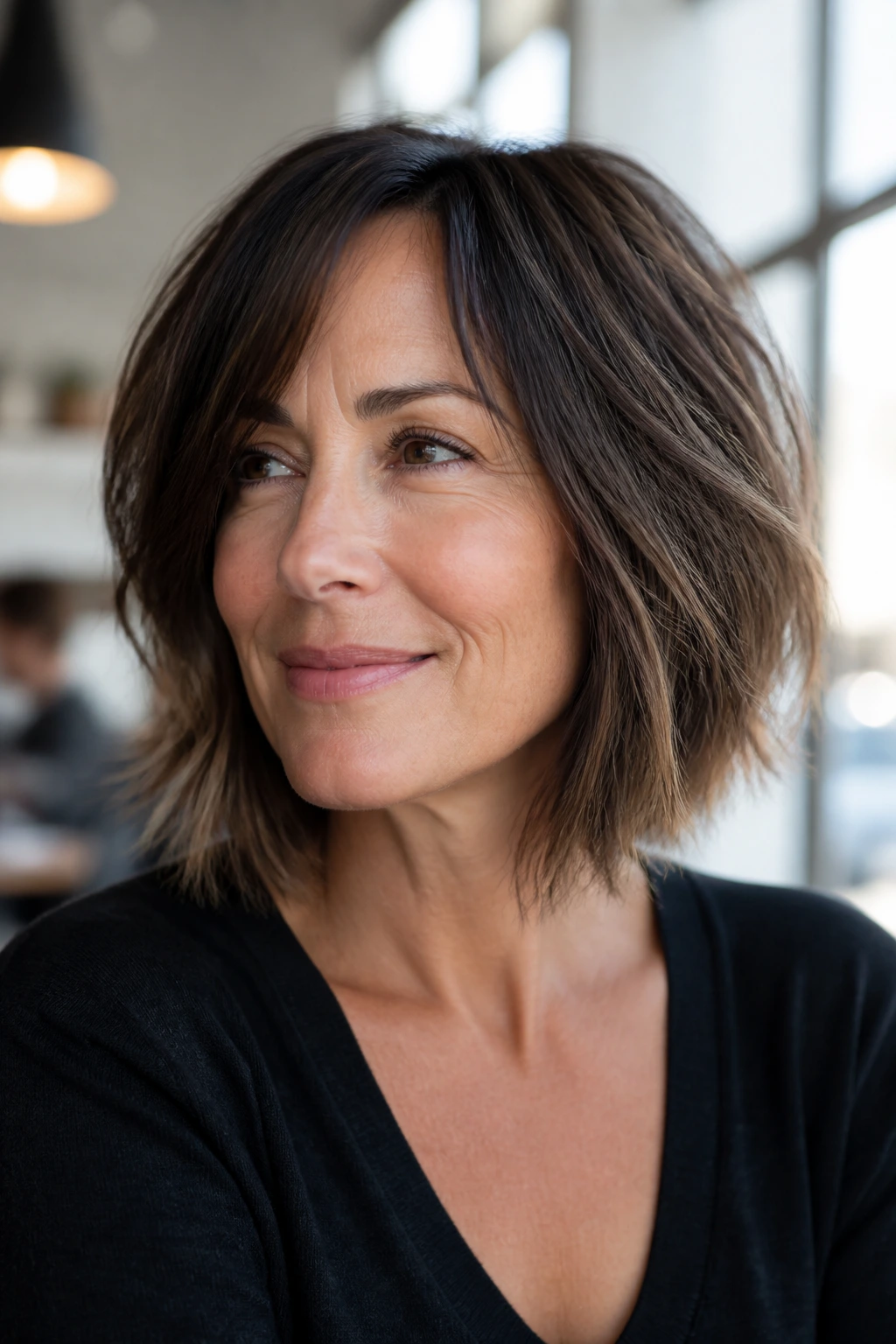
If a blunt cut feels too polished and a shag feels too wild, the choppy lob sits in the middle. The ends are broken up enough to move, but not so much that the cut loses its outline. It’s the haircut version of a crisp shirt worn with slightly rumpled sleeves.
This shape works well on medium-density hair that needs some life near the ends. The choppiness prevents the cut from hanging like a single heavy slab, which can happen around the shoulders when hair gets to this length. It also gives straight hair a little personality without forcing curl where there isn’t any.
A flat iron bend or a loose wave spray can bring out the texture. But even air-dried, this kind of lob holds its shape better than you’d think. That’s part of the appeal. It looks intentional on days when you’ve done almost nothing, which is a useful trick.
12. The One-Length Shoulder Cut
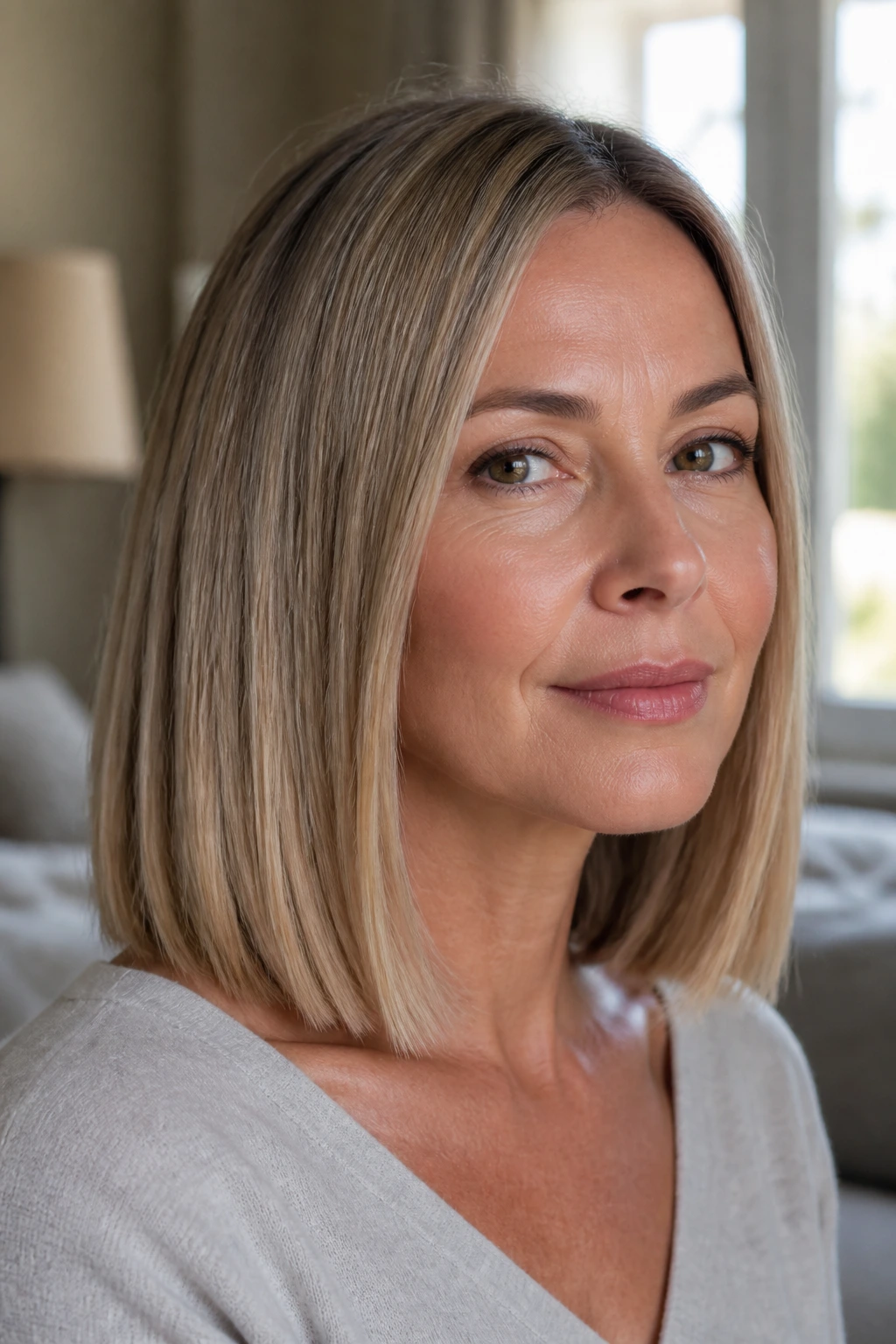
A one-length shoulder cut is almost stubbornly simple, and that’s why it works. No layers. No fuss. Just a clean edge that makes the hair look thicker at the bottom and easier to smooth.
This is one of the best cuts for fine straight hair, especially if the ends have started to look wispy or overprocessed. A straight line gives the illusion of density because every strand contributes to the edge. It also pairs nicely with a center part, a soft side part, or a tucked-behind-the-ear finish.
The downside is that it can go flat if the roots are weak and the ends are dry. That means you need to treat the top and the bottom differently. Root lift at the crown, serum at the ends. Don’t smear product all over the head and hope for the best. That’s how clean cuts turn limp.
13. The U-Shape Cut with Longer Front Pieces
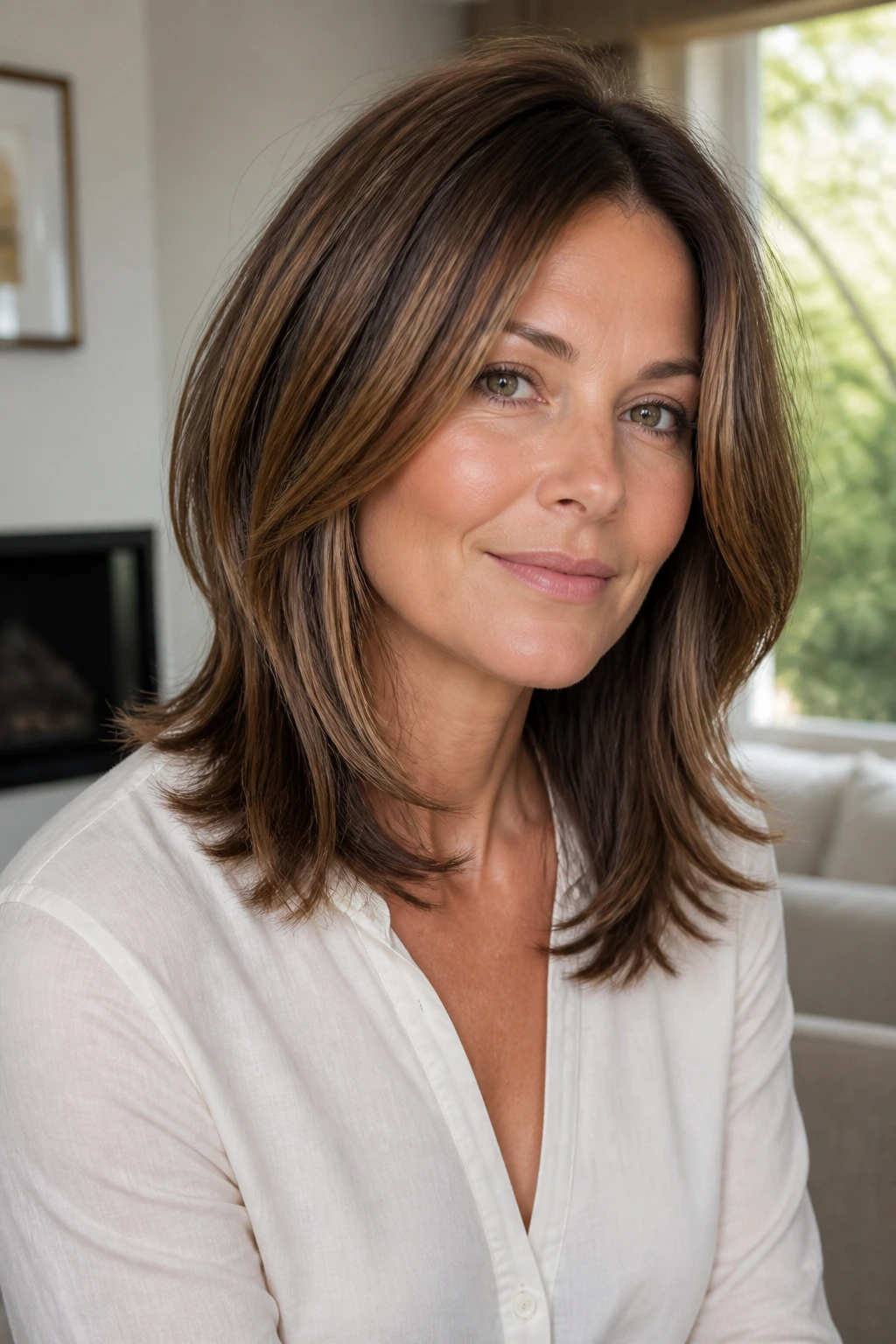
The U-shape cut is one of those quiet shapes that looks more expensive than it sounds. The back stays slightly shorter, the front drifts longer, and the line curves gently instead of stopping in a hard wall. It gives the hair movement without chopping away the length you still want to hold onto.
This shape is smart for medium to thick hair because it removes some weight from the back while leaving the front pieces long enough to frame the face. It also grows out with grace. When the trim gets old, the line softens instead of looking broken.
The thing to watch is the depth of the U. Too deep and the front starts to feel disconnected. Keep it subtle. You want the cut to read as smooth and balanced, not theatrical. A small bend under at the ends keeps the whole thing neat.
14. The Silver-Friendly Layered Lob

Gray and silver hair often deserves its own haircut logic. The texture can come in wirier, the shine can change, and the old styling tricks do not always land the same way. A layered lob gives that hair room to move without turning fuzzy at the ends.
What makes this cut work is balance. Enough layers to stop the bulk from puffing out. Enough perimeter left behind to make the hair look full. If the gray is blending with darker strands, the layers help show the color shift instead of burying it.
I’d keep the finish glossy here. A smoothing cream, a little shine spray, and a trim schedule that doesn’t drift too far apart will keep the silver looking crisp. Purple shampoo can help with brassiness if the hair has been lightened, but do not overuse it or the tone can look dull and flat.
15. Side-Swept Bangs with a Soft Flip

Side-swept bangs have lasted this long for a reason. They soften the forehead, skim the brow, and blend into shoulder-length hair in a way that feels easy instead of forced. The modern version is less heavy than the old-school swoop and a lot more flexible.
The soft flip at the ends gives the whole cut a little motion. You can wear the hair tucked under for a smoother, more classic look, or turn the ends out a bit for something less formal. That small change can make the same haircut work on a Tuesday and a dinner night.
This style is especially kind to women who wear glasses. The side sweep keeps the front from crowding the frames, and the longer front pieces can either rest beside the glasses or slide behind the ear. Small thing. Big difference.
16. The Air-Dry Lob
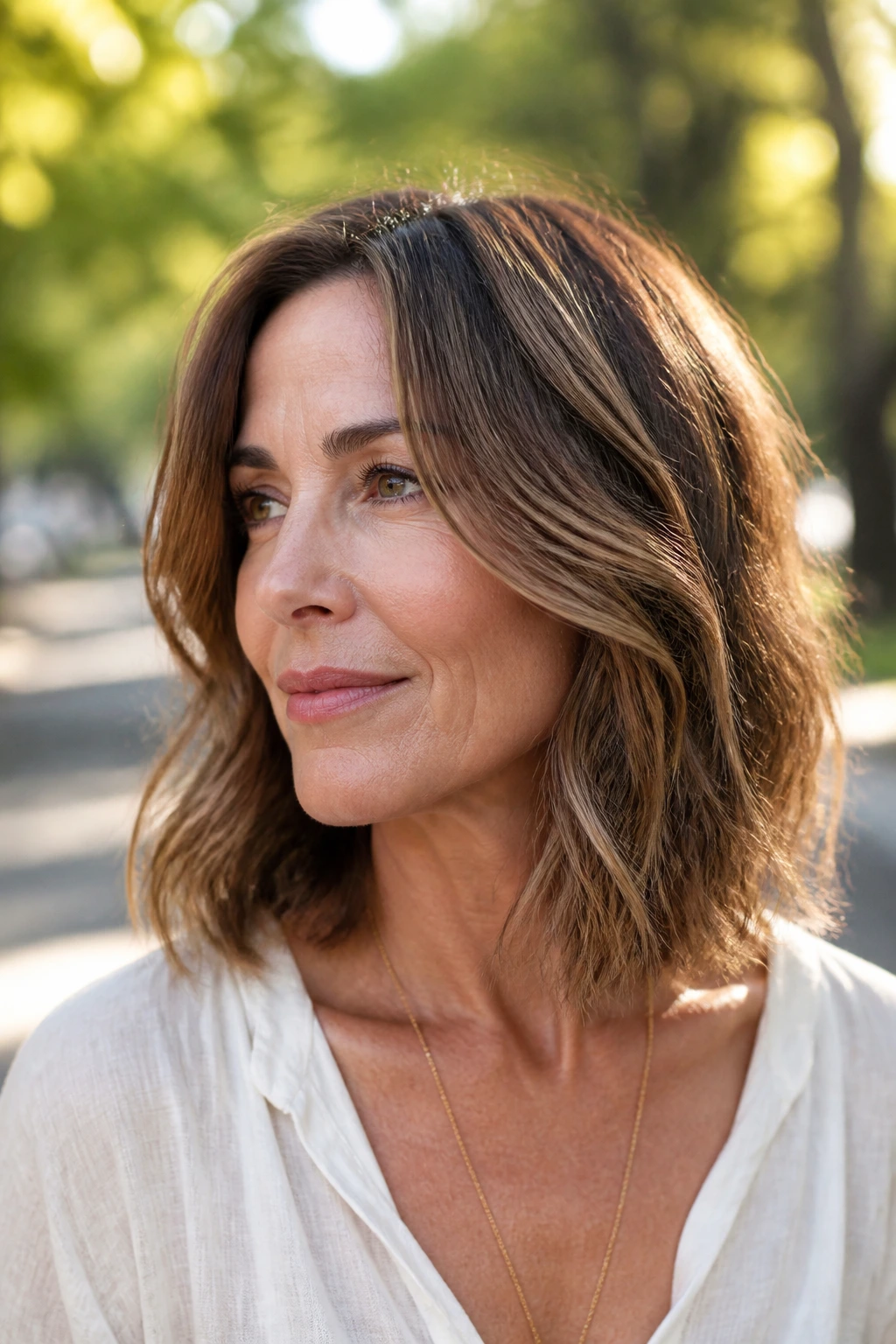
Not every shoulder-length cut needs a brush and a blow dryer. The air-dry lob is built for hair that already has some bend or wave, and it usually sits best with soft internal shaping rather than heavy layers. The goal is to let the hair fall with a little edge and not force it into a polished shape it will reject by lunchtime.
A leave-in conditioner or light curl cream does most of the work. Apply it through damp hair, scrunch once or twice, and then stop touching it. That’s the hard part. If you keep fiddling with it while it dries, the texture gets frizzy and you lose the shape that made the cut appealing in the first place.
This is a strong option for busy mornings, yes, but that’s not the main reason to like it. The bigger win is that it lets natural texture do the heavy lifting. If your hair has changed over time and won’t hold a round-brush blowout the way it used to, this cut meets it halfway.
17. Invisible Layers for a Sleek Finish
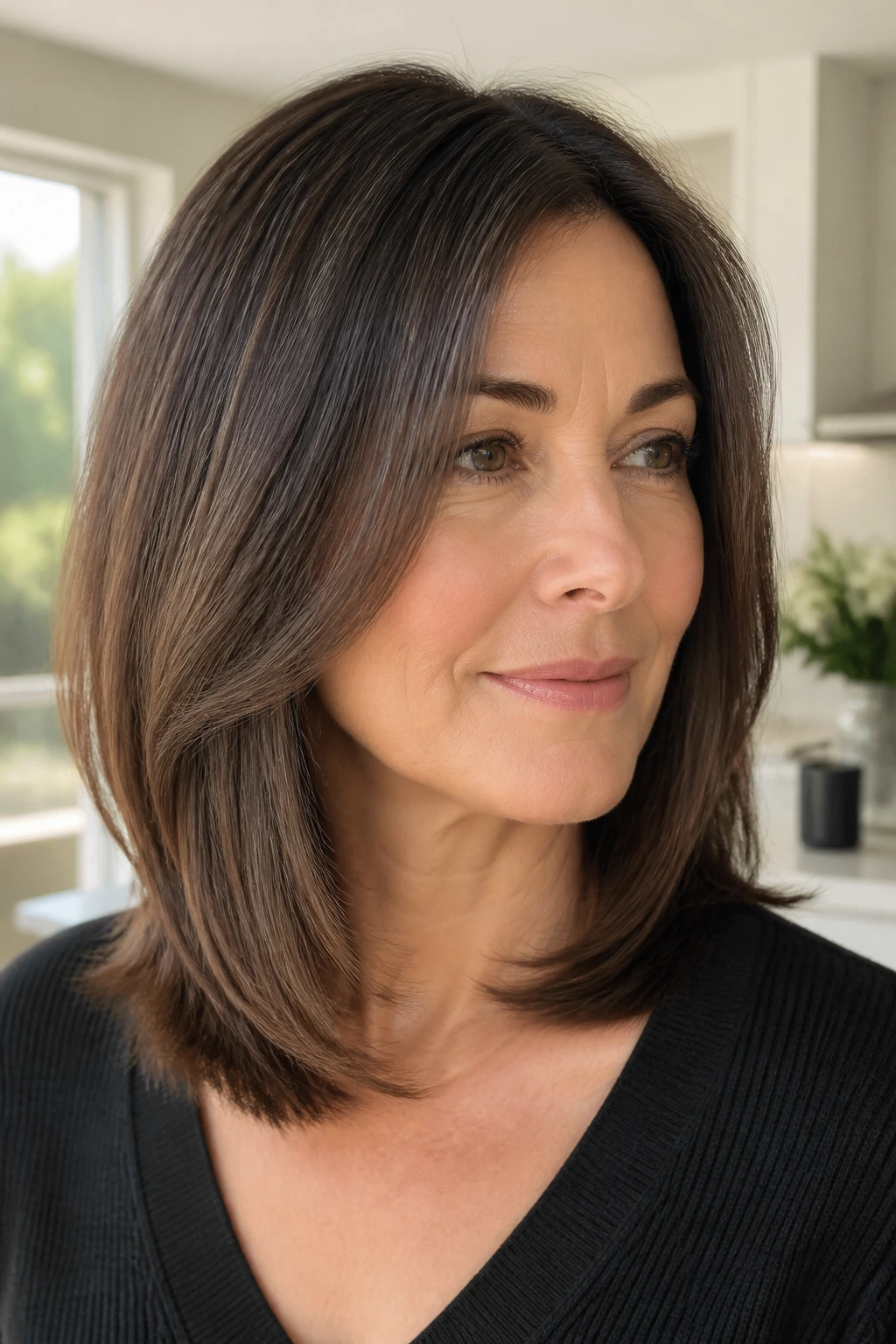
Invisible layers are for the woman who likes her hair smooth but not flat. The outer line stays clean, which keeps the shape elegant and tidy, while the inside is subtly carved so the hair can move. You do not see the layers at first glance, but you feel them when the ends swing instead of hanging dead straight.
This cut is useful on medium-density hair that needs a little body without looking shaggy. It’s also a smart compromise if you want the look of a blunt cut but hate how heavy a truly blunt line can feel at shoulder length. The internal shaping takes the weight off the ends while keeping the outline intact.
A flat iron or blow-dryer brush finishes it well, but keep the passes light. One or two slow swipes per section is enough. The point is smooth movement, not ironing the life out of it.
18. The Bra-Friendly Lob
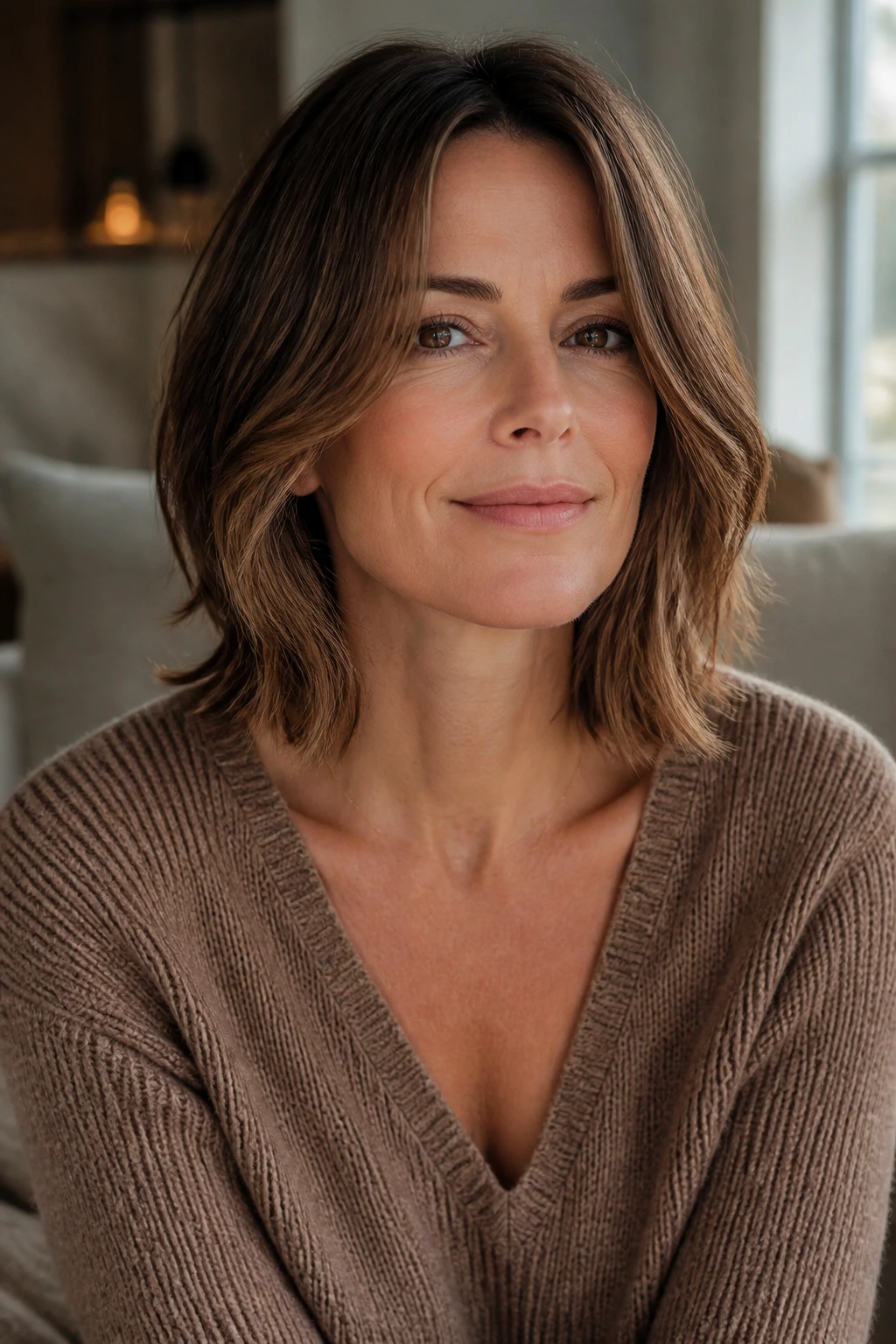
Some cuts look lovely in photos and annoying in real life. The bra-friendly lob avoids that problem. It sits long enough to pull into a low braid, twist, or clip, but short enough to feel tidy when worn down. That balance matters if your days involve workouts, travel, or a lot of behind-the-neck movement.
A small amount of layering around the face keeps it from reading plain. The rest stays clean, so the hair still gathers neatly when you need it out of the way. I like this cut for women who want shoulder-length hair but do not want to lose the ability to tie it back without a dozen bobby pins.
You can wear it smooth, wave it loosely, or let it dry naturally. That flexibility is the whole point. If you’ve ever had hair that was “almost long enough” or “too long to be cute tied back,” you already know why this one earns its keep.
19. Shoulder-Length Coils with Defined Layers
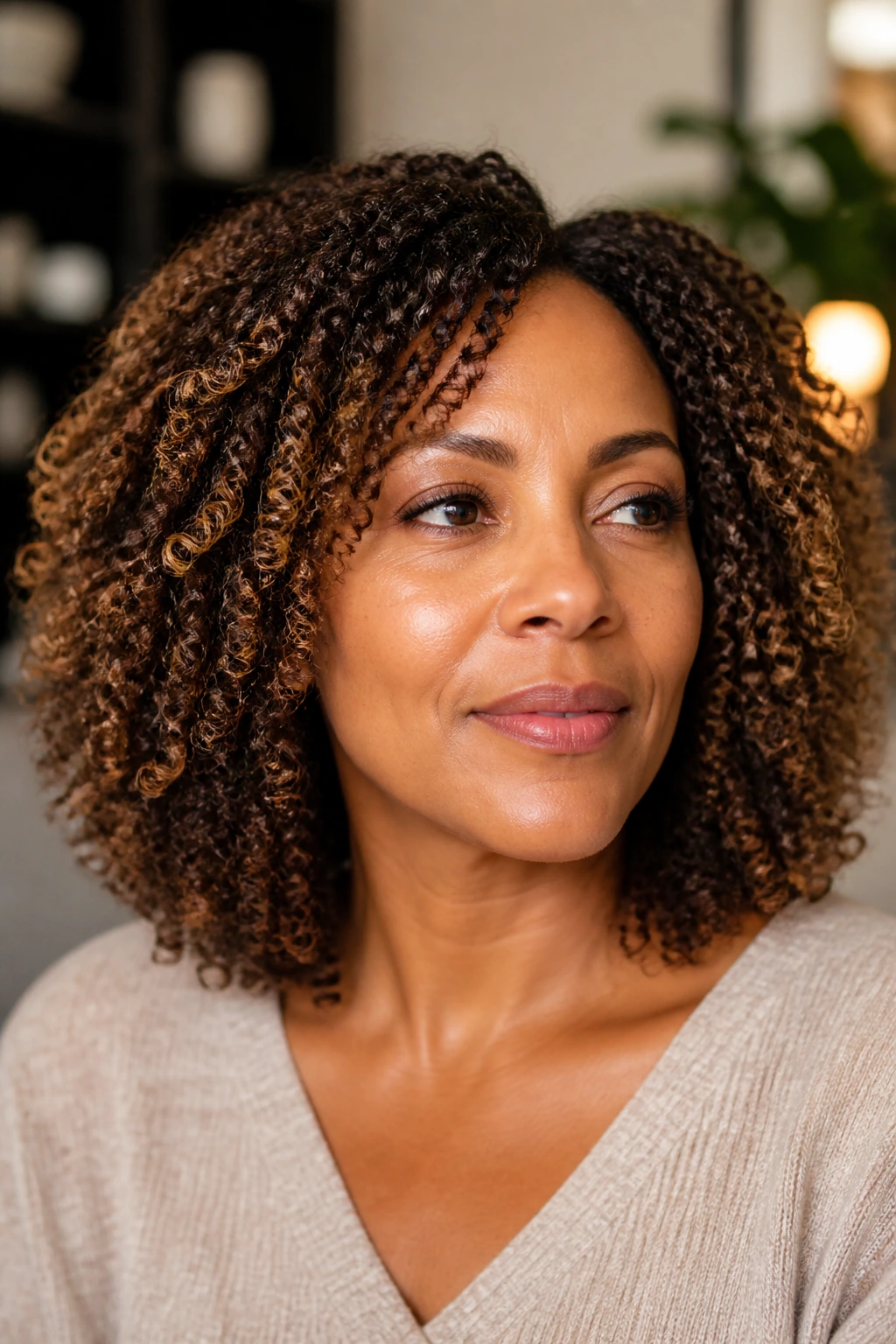
Coils at shoulder length need respect for shrinkage and shape. A cut that looks generous when wet can spring right up once it dries, so the styling plan has to account for the final silhouette, not the raw length. Defined layers help the coils stack without crowding the neck or ballooning at the sides.
This style can be gorgeous when the layers are carved with the coil pattern in mind. That keeps the shape rounded and intentional, not bulky. It also helps the coils fall where they should instead of clumping into one heavy block near the bottom.
A good leave-in, a defining cream, and a diffuser are usually enough. You do not need to overwork the hair. In fact, the less you rake through it while it’s drying, the cleaner the curl pattern tends to look. The coils do the design work. You just need to stop fighting them.
20. The Tapered Lob with a Long Front
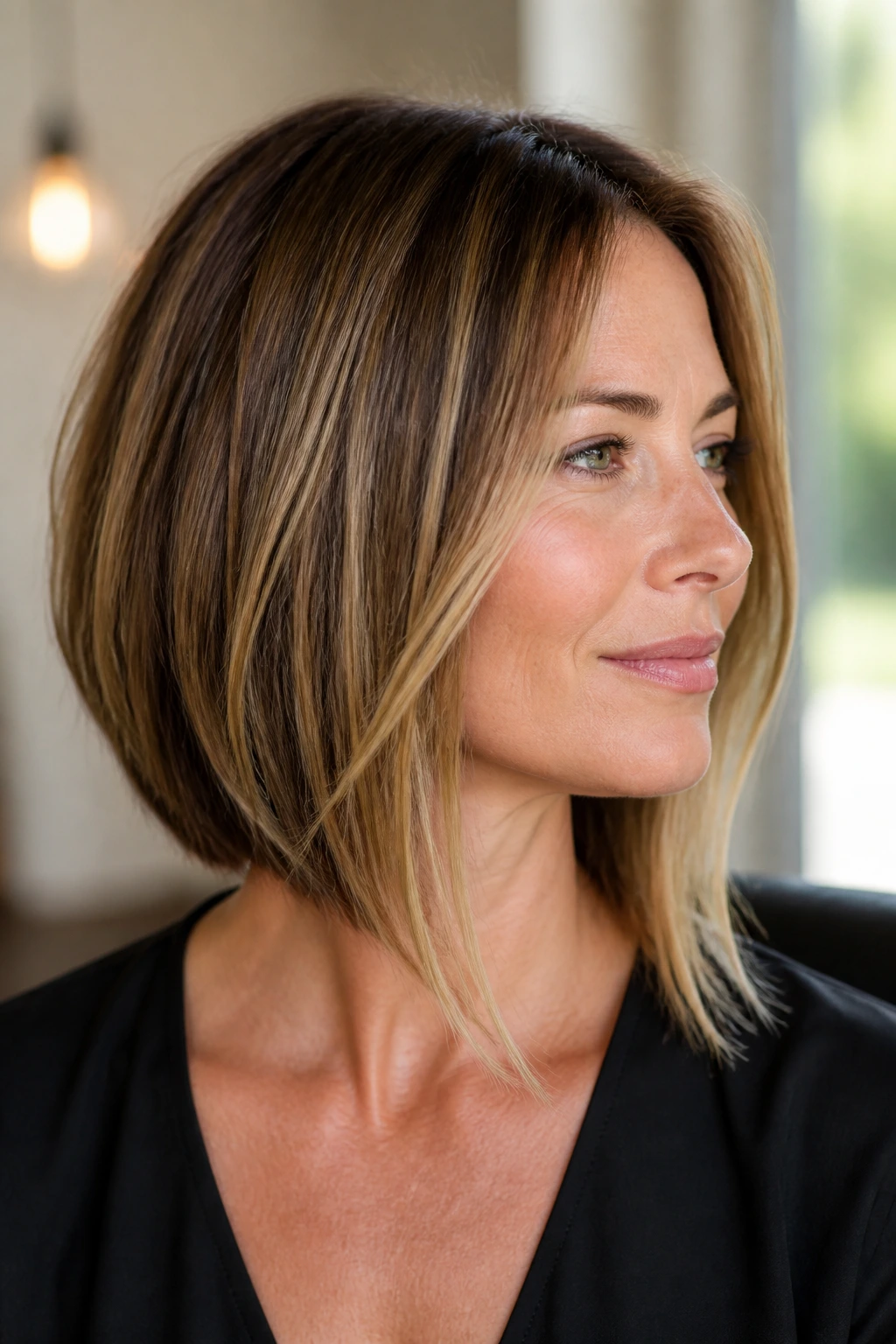
The tapered lob with a long front is the one I reach for when someone wants movement, shape, and a grow-out that still looks deliberate. The back sits a touch shorter, the front falls longer toward the collarbone, and the whole cut narrows slightly as it moves down the neck. It has a neat outline, but not a stiff one.
That taper helps the hair sit better around jackets, collars, and scarves, which matters more than people admit. Hair at this length can flip weirdly under a coat, and a gentle taper keeps the bulk from building up right at the shoulder seam. The longer front pieces also give you room to tuck or sweep the hair depending on your mood.
This is a polished choice for straight and slightly wavy hair, especially if you want a cut that keeps looking intentional as it grows. It is not loud. It does not need to be. It just keeps behaving.
Why Shoulder Length Keeps Its Shape Without Working Too Hard

There’s a reason shoulder length keeps showing up again and again in salon chairs. The cut sits in the one zone where hair can still move, still frame the face, and still behave when you want to clip it up. That middle ground matters a lot once hair texture changes.
A shorter crop can be energizing, but it exposes every cowlick, every swirl at the crown, every rough patch around the hairline. Longer hair gives you more to work with, but it also asks for more heat, more time, more patience, and more product. Shoulder length trims the worst of both sides. It leaves enough body for a blowout, enough length for a ponytail, and enough room for layers or blunt ends depending on what your hair needs.
The cut also handles color well. Highlights show more clearly when the length is not dragging them down. Gray streaks look intentional when the shape is clean. Even a simple one-length line gets extra life from the way it sits around the collarbone and neckline.
That’s why these styles age well without looking like they are trying to. They work with the face, not against it. And that is usually what people are after, even if they ask for something different.
What to Ask for at the Salon and What to Keep in Your Bathroom Drawer

The best shoulder-length cut starts with a clear conversation, not a vague “something that suits me.” Bring photos, sure, but talk about density, styling time, and how your hair behaves after washing. A stylist can do more with that information than with a celebrity picture alone.
At the salon: ask whether your hair wants blunt ends, soft layers, or hidden internal shaping. If your hair is wavy or curly, ask about a dry cut or at least a dry finish check before the final snip. If your crown goes flat but your ends puff, the right internal shaping matters more than the trendy name of the cut.
At home: a 1 to 1.5-inch round brush, a blow dryer with a nozzle, a flat iron, a diffuser, and a tail comb cover most of these styles. You do not need every gadget on the shelf. You need the one or two tools that fit your texture. Fine hair usually likes mousse and root lift. Thick hair usually needs a smoothing cream and better sectioning. Curly hair needs a diffuser and a leave-in that does not flake.
For color-treated hair: a heat protectant is not optional. Neither is a decent conditioner that reaches the ends instead of living only on the crown. Shoulder length shows split ends faster than waist-length hair does, and that is a blessing in disguise. You’ll catch damage earlier.
How to Wear and Finish Them Day to Day
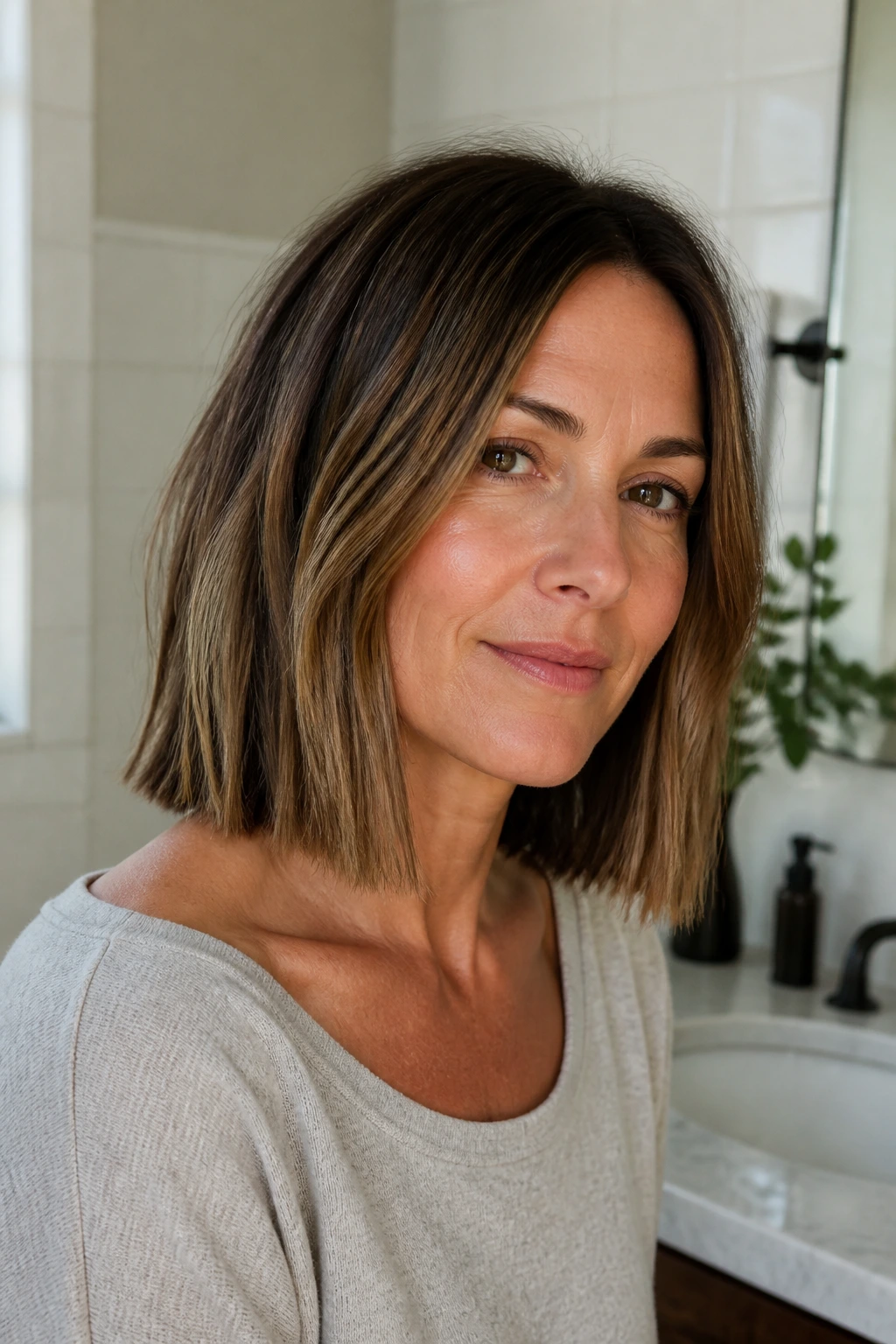
The right finish changes the whole mood of a shoulder-length cut. That’s the part people skip when they’re in a hurry, and it’s a shame because a small styling choice can make the same haircut feel sleek, airy, or modern.
For fine hair: work a lightweight mousse into the roots before drying, then lift the top section with the brush and let the ends stay softer. Heavy oils near the scalp will flatten the shape fast. Keep product at the mids and ends only.
For thick hair: section the hair with clips and dry it in layers. If you try to rush it all at once, the top gets overworked and the bottom stays damp. A little smoothing cream on the ends will keep the shoulder area from flipping out in ugly ways.
For waves and curls: scrunch in leave-in while the hair is damp, then leave it alone until it’s mostly dry. A diffuser helps, but your hands are the bigger problem. The more you touch it, the frizzier the finish gets.
For sleek days: tuck one side behind the ear, add a touch of shine serum to the ends, and keep the crown smooth. That tiny asymmetry keeps the style from looking too stiff. A shoulder-length cut can handle a little polish, but it still looks best when it moves.
Common Mistakes That Make Shoulder-Length Hair Look Off
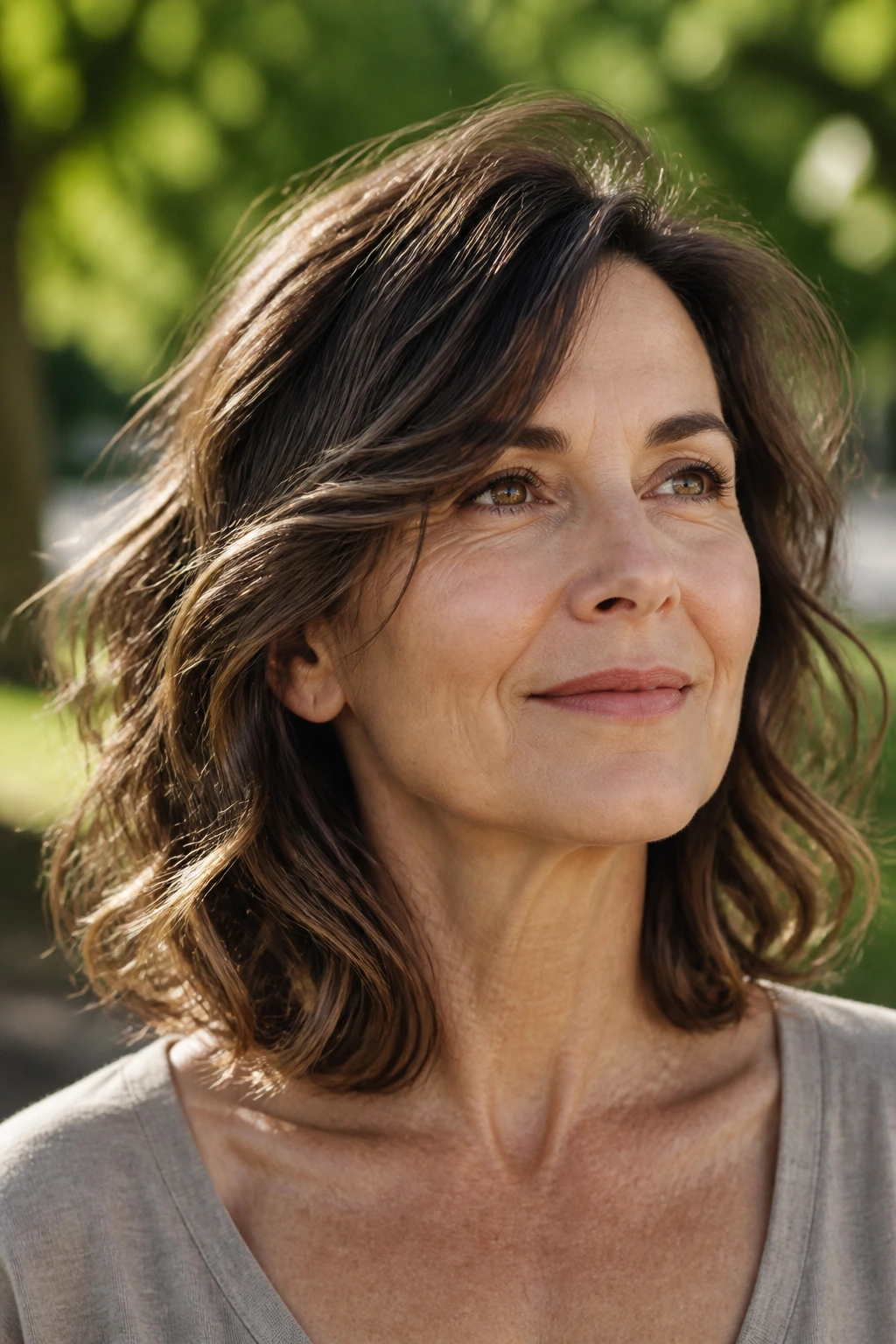
The most common mistake is cutting the ends to sit exactly on the shoulder seam. That’s the danger zone. The hair catches, flips, and builds a hard line that makes the whole style look awkward. The fix is simple: go a touch above or a touch below, and shape the front so the hair falls around the shoulder instead of sitting on top of it.
Another bad move is over-layering fine hair. Too many short pieces can leave the perimeter wispy, which makes the cut feel smaller and less full than it should. If density is low, keep the shape cleaner and use styling to create movement instead of slicing the hair to bits.
Over-thinning thick hair can backfire too. The ends may look light in the chair, then puff unevenly once the hair dries. Ask for internal shaping or point-cutting instead of aggressive thinning shears if your hair already has a strong texture.
Product buildup is a sneaky one. Too much oil, cream, or leave-in at the roots kills lift and makes even a good cut look tired. Put the richest product on the ends, not the scalp. That sounds obvious until you’re running late and doing everything too fast.
Variations and Alternatives to Try
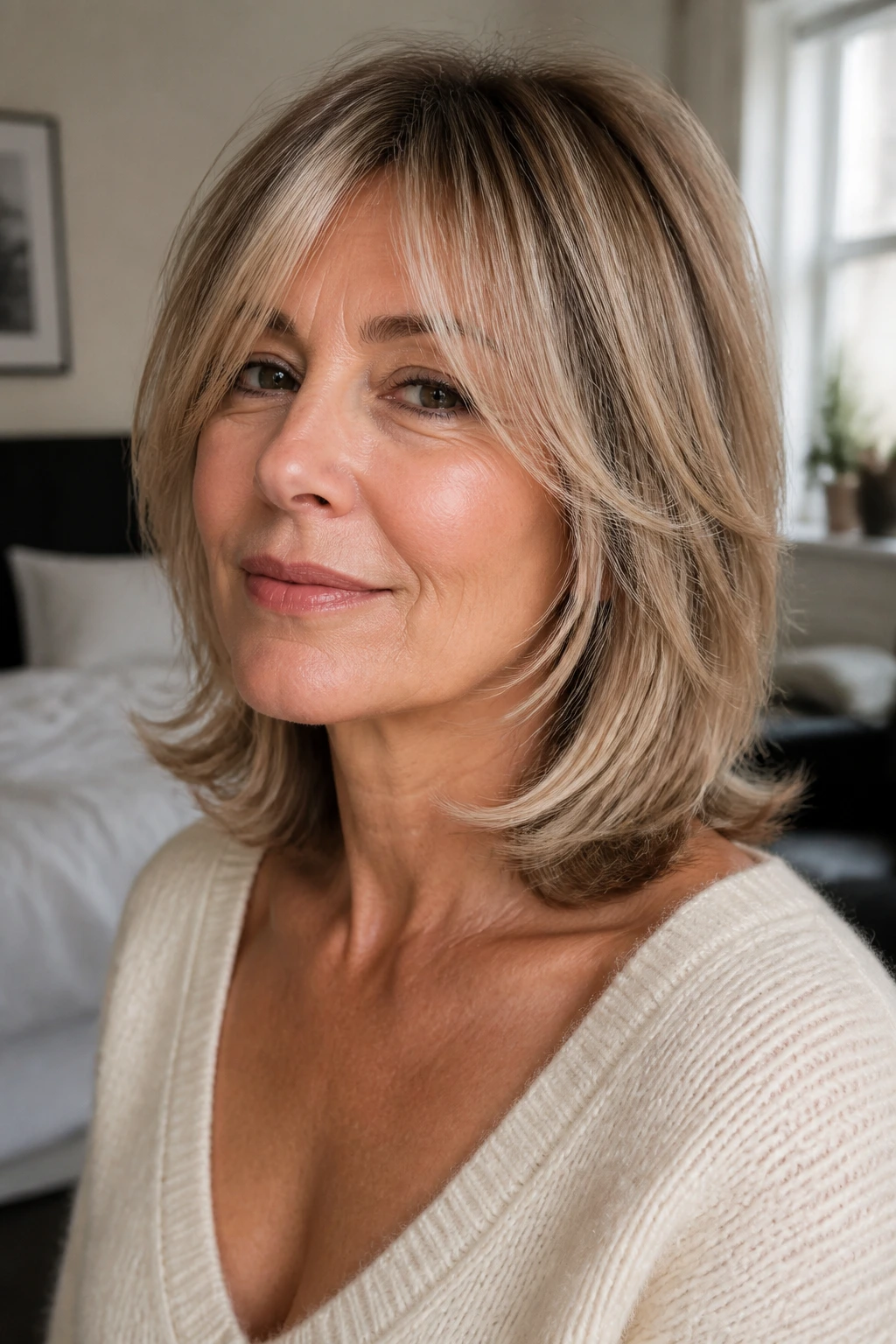
For Glasses Wearers: Choose a shape with face-framing pieces that stop just below the cheekbone. That keeps the hair from crowding the frames and makes the front feel lighter around the temples. Side-swept bangs can work too, as long as they are long enough to move off the lenses.
For Fine Hair That Needs More Body: Go blunt at the perimeter with only a few soft internal layers. The clean edge creates fullness, while the hidden shaping keeps the hair from going flat and boxy. Mousse at the roots will help more than heavy cream ever will.
For Curly and Coily Hair: Ask for a dry cut or a shape adjusted to shrinkage. A shoulder-length curly cut that looks right wet may end up too short once it dries, so the final silhouette matters more than the starting length. Keep the shape rounded and the layers intentional.
For Low-Maintenance Mornings: Pick an air-dry lob or a one-length shoulder cut. Both grow out gracefully, and both can be pulled back or tucked behind the ears without losing the outline. If heat styling is rare, choose a shape that already agrees with your natural texture.
For Grow-Out Mode: A tapered lob with longer front pieces gives you room to stretch between trims without looking neglected. The line stays purposeful as it grows, which is a nice way to buy yourself another few weeks before the salon chair.
Keeping Shoulder-Length Hair Fresh Between Trims

A shoulder-length cut only looks effortless if the ends stay cared for. That does not mean constant salon visits, but it does mean paying attention before split ends start climbing up the shaft. Most shoulder-length styles do best with a trim every 6 to 10 weeks, depending on how sharp you want the shape.
If you wear curtain bangs or side-swept bangs, those may need a touch-up sooner. Bangs show growth faster than the rest of the cut, and a half-inch can change the whole face-framing effect. A quick bang trim between full cuts can save you from wearing them pinned back for a month.
Heat matters too. Shoulder length is long enough to tempt you into a full blowout every day, but that is not free. Use heat protectant on damp hair, keep the iron moving, and give the ends a break when they start looking dry or rough. A good mask once a week helps more than three fancy serums.
Gray hair, highlighted hair, and color-treated hair often benefit from a gloss or conditioner that brings the ends back to life. Nothing elaborate. Just enough moisture and shine to keep the line from looking frayed. Hair at this length can look polished for a long time if the ends are fed and the part is changed once in a while.
Frequently Asked Questions

Is shoulder-length hair flattering on women over 40?
Yes, and usually for a simple reason: it gives the face structure without pinning everything to the jawline. The length can lift the neck, soften the cheeks, and still allow styling options that shorter cuts sometimes limit.
What’s the best shoulder-length haircut for fine hair?
A blunt lob or a cut with very soft internal layers usually works best. Fine hair needs the ends to look full, so too many layers can make it look sparse instead of airy.
Can shoulder-length hair still be tied back?
Absolutely. A low ponytail, twist, claw clip, or braid all work well at this length, especially if the front is long enough to tuck or pin. That’s part of why the cut stays practical.
Are layers or a one-length cut better after 40?
Neither one wins every time. Layers help when hair is thick, wavy, or heavy around the face. A one-length cut helps when hair is fine, straight, or thinning at the ends.
How often should I trim shoulder-length hair?
Most people do well with trims every 6 to 10 weeks. If you wear a blunt edge, keep it closer to 6 or 8 weeks. If the cut is soft and layered, you can usually stretch a little longer.
What if my hair flips out at the shoulders?
That usually means the ends are sitting right on the shoulder line. Ask your stylist to move the length a touch above or below that point, and finish the ends with a round brush so they bend under instead of kicking out.
Can I wear shoulder-length hair with curly or coily texture?
Yes, and it can be a very good length for curls because it keeps volume controlled without flattening the shape. The key is cutting for shrinkage and defining the layers to match your curl pattern.
What should I avoid if my hair is thinning at the crown?
Heavy layers at the top and too much product at the roots are the usual culprits. A cut with lift near the front, plus root-friendly styling, tends to help more than trying to plaster the crown down.
A Length That Keeps Paying Its Rent
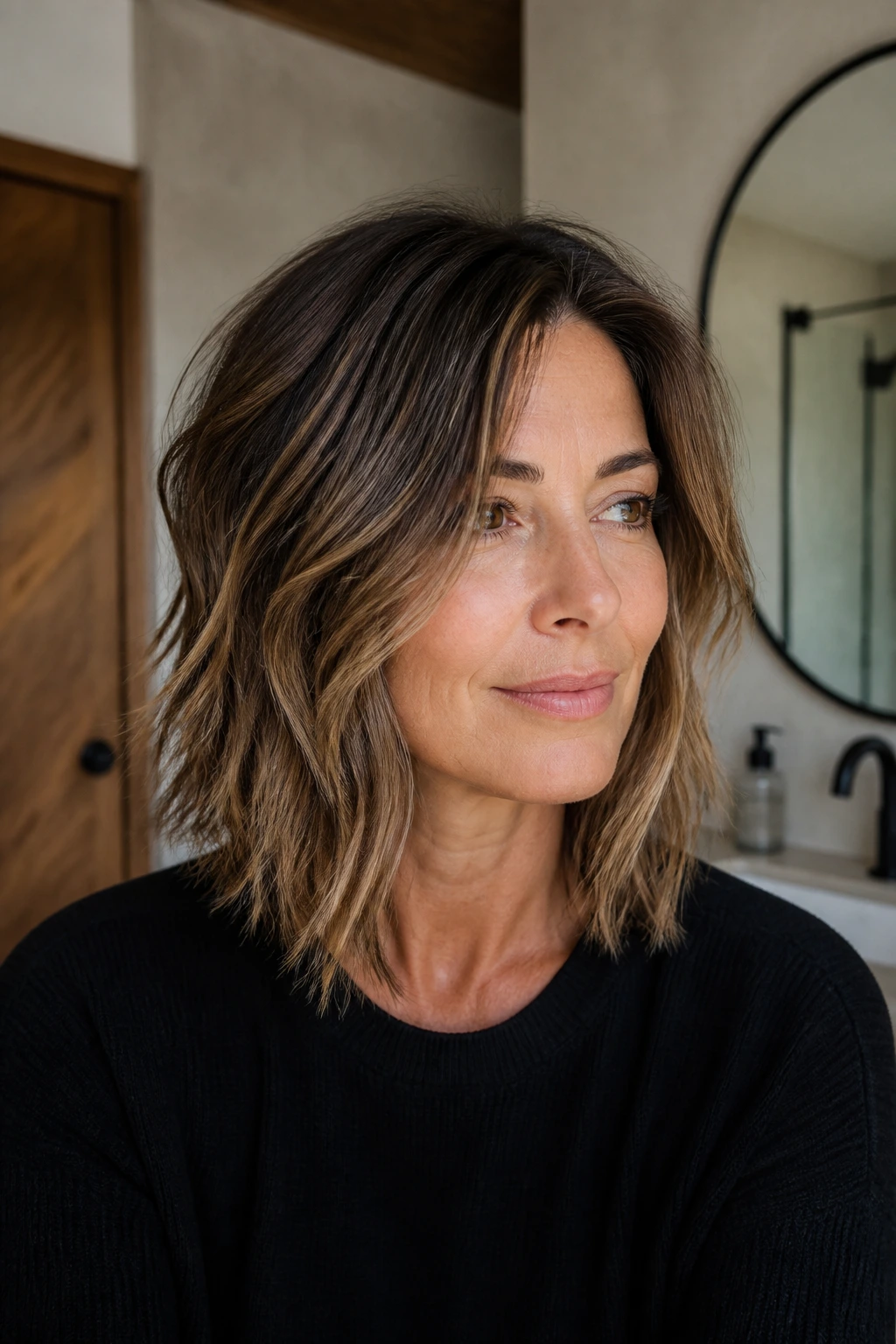
Shoulder length is one of those rare hair choices that keeps earning its place. It can be neat, airy, polished, curly, soft, blunt, or piecey, and it still plays nicely with the practical parts of life — clips, glasses, coats, humid air, rushed mornings.
What matters most is choosing the version that matches the hair you actually have, not the one you wish you had. Fine hair needs different shaping than thick hair. Gray hair needs different moisture than highlighted hair. Curly hair wants a different cut line than straight hair. Once that part is honest, the rest gets easier fast.
A good shoulder-length cut should make your mirror feel easier, not more demanding. If it does that, you’ve got the right one.