



Shoulder-length fine hairstyles for women over 40 work because they stop hair at the point where it still has swing. Go much longer and the ends can start to look see-through; go much shorter and you lose some of the bend that gives fine hair a little body. At collarbone length, hair can hit the shoulder, flip under, or fall into a soft wave instead of dropping in one tired curtain.
That matters more than people admit. Fine hair isn’t the same as thin hair, but both can look flatter than you want when the cut is too heavy, too layered, or too long for the strand thickness you actually have. The right shoulder-grazing cut gives the eye a line to follow, which makes the whole head of hair read fuller even when the individual strands are delicate.
And no, this isn’t about chasing a younger look. It’s about choosing a shape that works with real life: quick blow-dry, maybe a round brush, maybe a side part, maybe a little dry shampoo at the crown and out the door. Some cuts here are polished, some are a little undone, and a few lean into texture in a way that makes fine hair look lively instead of overworked.
Why These Shoulder-Length Fine Hairstyles Earn Their Keep
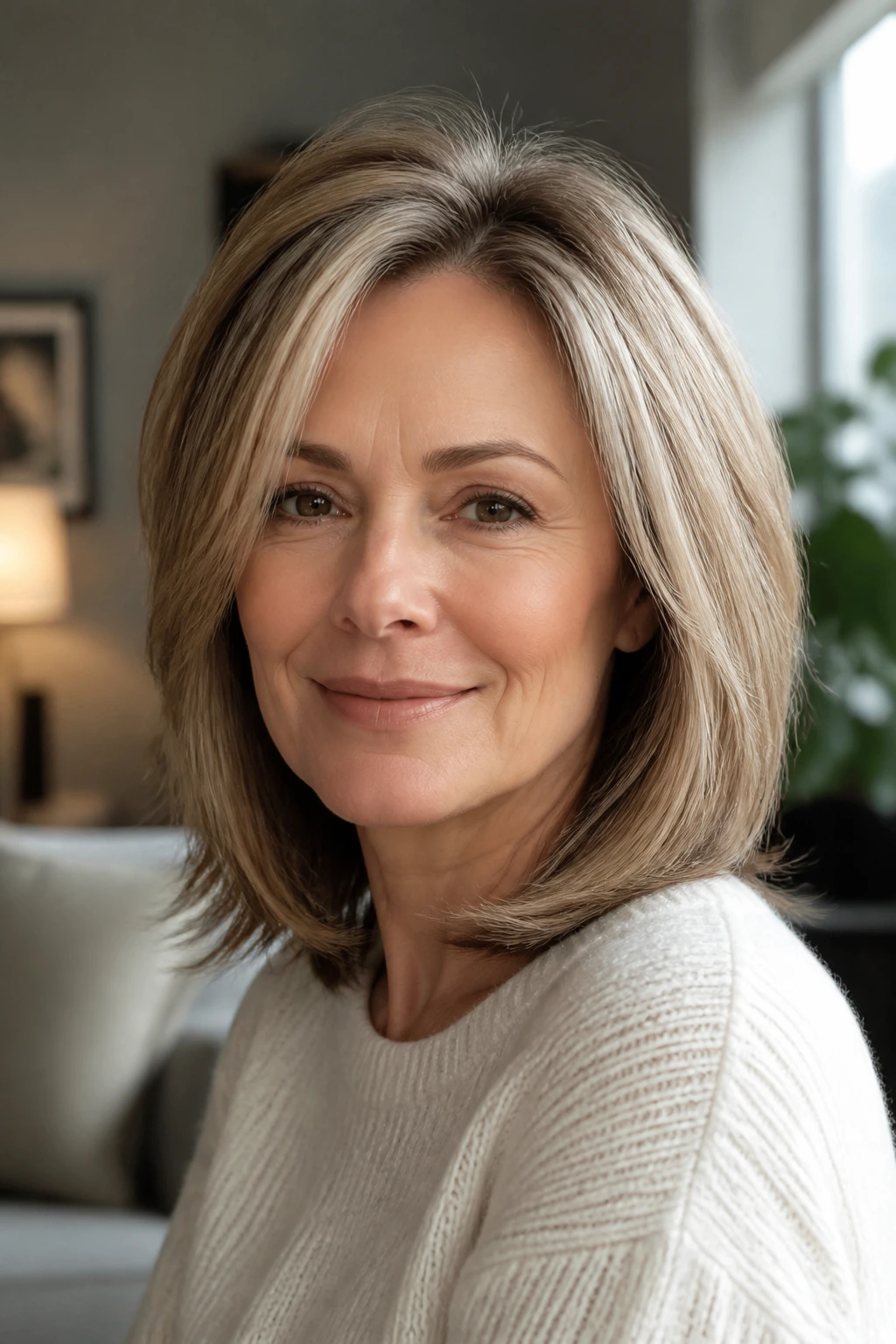
- They keep the perimeter honest: A strong line at the ends makes fine hair look denser because the eye sees a fuller edge, not wispy gaps.
- They don’t collapse under their own weight: Shoulder length is short enough to avoid that stringy drag you get with longer hair, especially when the strands are fine.
- They give you room for lift where it counts: A little volume at the crown or around the cheekbones changes the whole silhouette without piling product onto the ends.
- They work with gray, highlights, and natural dimension: Fine hair can look flatter when it’s all one shade; even soft dimension helps the shape read better.
- They grow out in a civilized way: A blunt lob or soft layered cut still looks intentional when it’s two or three weeks past a trim.
Why the Collarbone Is Such a Good Landing Spot for Fine Hair
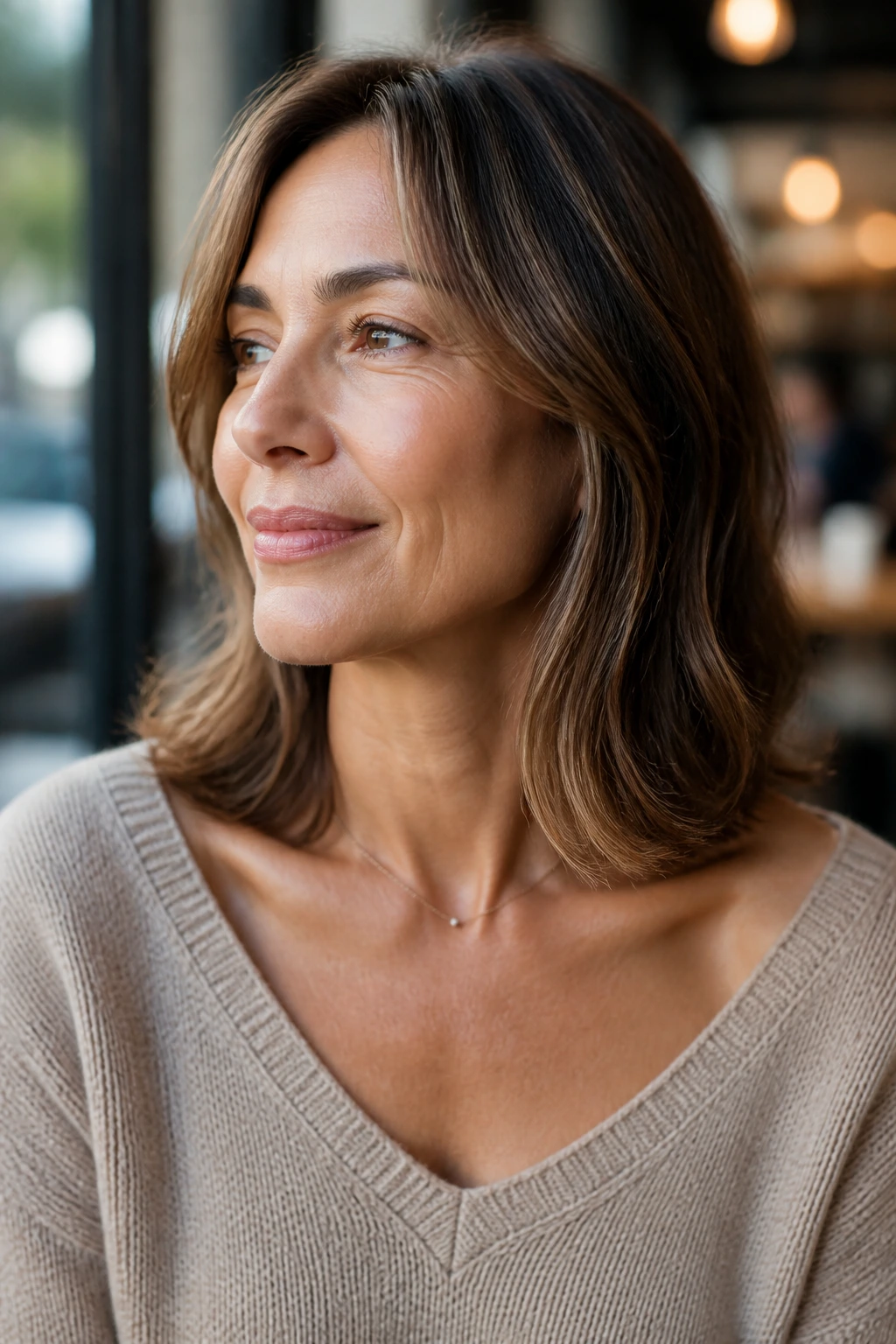
Fine hair often looks best when the ends can catch on the collarbone or skim the top of the shoulders. That little bit of friction changes the way the hair moves. Instead of hanging straight down like a wet ribbon, it gets a bend. A bend is your friend here.
There’s also a practical side to the shape. Shoulder-length cuts leave enough weight in the outline that the hair doesn’t break apart into thin, separated pieces by noon. At the same time, the length isn’t so long that it tugs everything downward and steals lift from the roots. That balance is the whole trick.
I’m also a big fan of shoulder length because it gives stylists room to build shape without stripping away too much density. On fine hair, that matters. A haircut can be full of movement and still keep its weight where the eye needs it most: the outer edge, the front pieces, and the crown.
1. The Collarbone Lob with Blunt Ends
This is the cut I’d hand to someone who wants fine hair to look thicker without a lot of fuss. The ends sit right at the collarbone, so the shape gets a natural bend as you move. Keep the perimeter blunt, though. That’s the part that gives the style its backbone.
What makes it work
A blunt lob keeps the outline clean, which makes the hair read as denser. If you add too many short layers, the ends disappear and the whole style starts to look airy in the wrong way. A small amount of internal texturizing is fine, but the outer line should stay solid.
How to wear it
Blow-dry with a medium round brush and turn the last inch under just a touch. If your hair flips out on its own, don’t fight it too hard — that bit of movement can look better than a stiff finish. A center part works, but a soft off-center part usually adds a little more lift at the crown.
Best for: straight or slightly wavy fine hair that needs shape more than volume products.
2. The Soft Layered Lob with Face-Framing Pieces
A soft layered lob can be a smart move when fine hair wants movement around the face but not a mess of short pieces everywhere else. The key is restraint. Ask for layers that start below the cheekbone and taper gently through the front, not a choppy cut that eats into the ends.
The face-framing pieces matter because they pull attention upward. Around forty and beyond, that’s useful in the best possible way. They can soften a jawline, break up a heavy outline, and keep the style from feeling blunt in a rigid, helmet-like way.
My take: this one looks best when the layers are almost quiet. You notice the shape, not the scissors.
A light mousse at the roots and a quick bend through the front with a round brush will usually do it. Don’t over-stack product in the ends; fine hair shows every extra drop.
3. The Deep Side-Part Lob
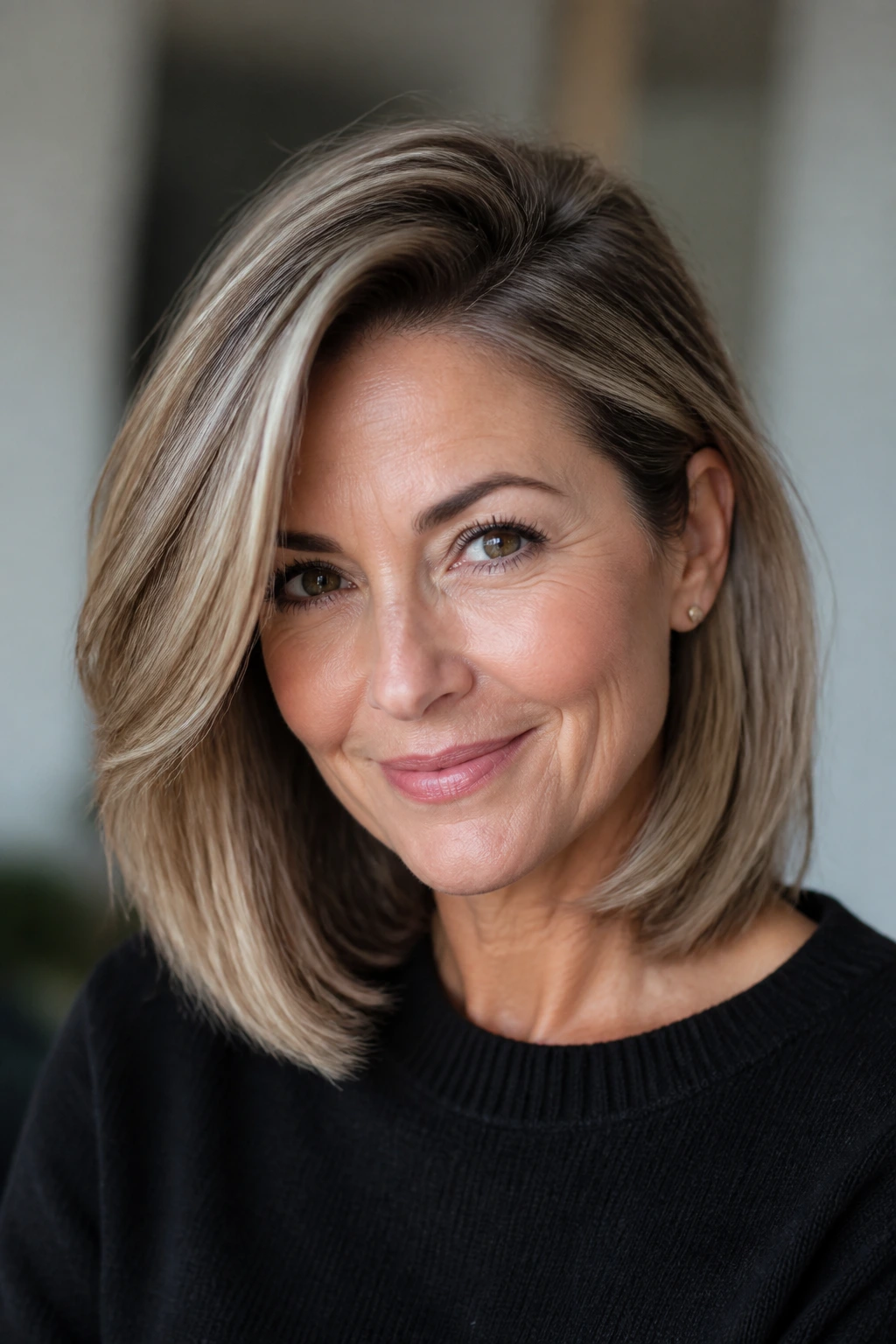
Why does a side part change so much? Because it shifts where the hair lands and where the eye goes. A deep side-part lob gives the crown a boost on one side and creates a line that looks fuller than a straight-down center part on many fine heads.
It’s especially good when one temple or one side of the hair line looks flatter than the other. We all have a weaker side. Fine hair makes that more obvious, and a deep part is one of the easiest ways to cheat a little height without touching a teasing comb.
Styling note
Keep the heavy side smooth and the lifted side loose. If you curl the front section away from the face, the shape opens up even more. A root spray at the part line helps, but use it sparingly; too much and the hair gets sticky fast.
4. Curtain Bangs with Shoulder-Length Waves
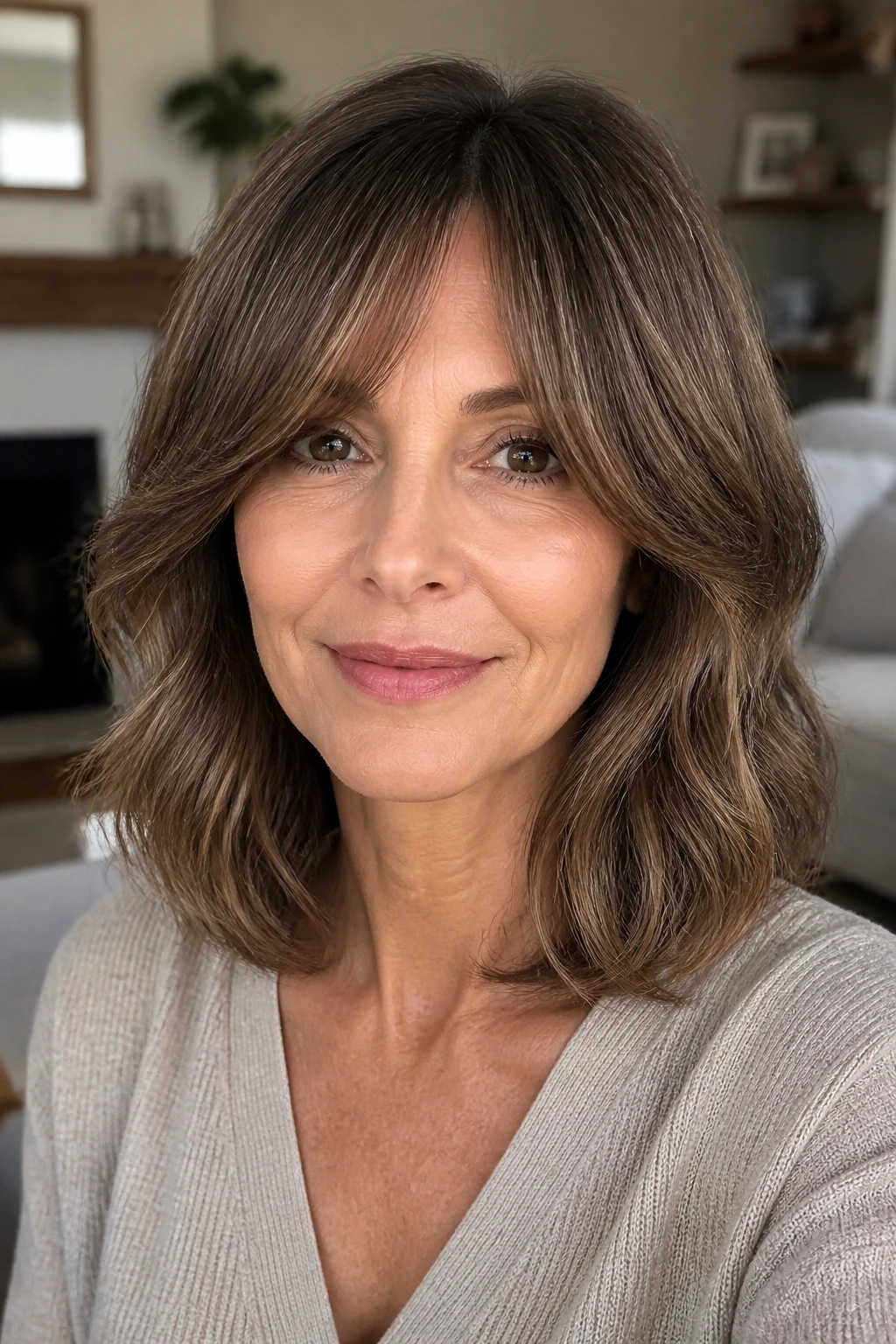
Curtain bangs work when they stay soft. That’s the whole game. On fine hair, a dense fringe can eat up too much hair from the front and make the rest feel sparse, while a wispy curtain shape blends into the sides and keeps the line airy.
The beauty of this cut is that it gives you a built-in frame without cutting a hard line across the forehead. That’s a gift if you wear glasses, if your forehead feels a little wider than you want, or if you just like hair that moves away from the face instead of sitting on it.
How to keep the fringe airy
Ask for the bangs to hit around the cheekbone or just below it, then have the stylist taper them into the sides. Style them with a small round brush and dry them forward first, then sweep them apart. That tiny step keeps them from separating into flat strings.
5. The Feathered Blowout Lob
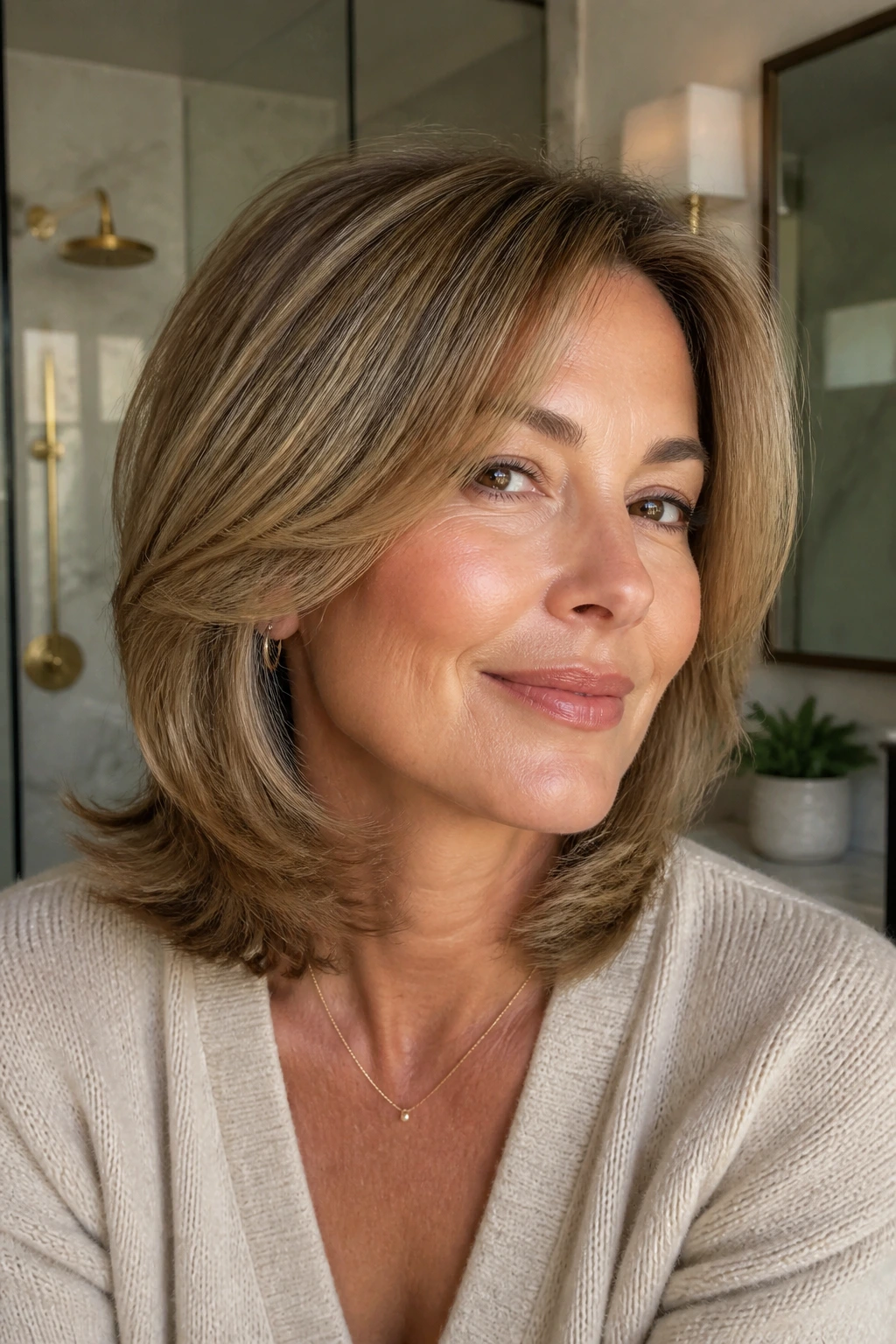
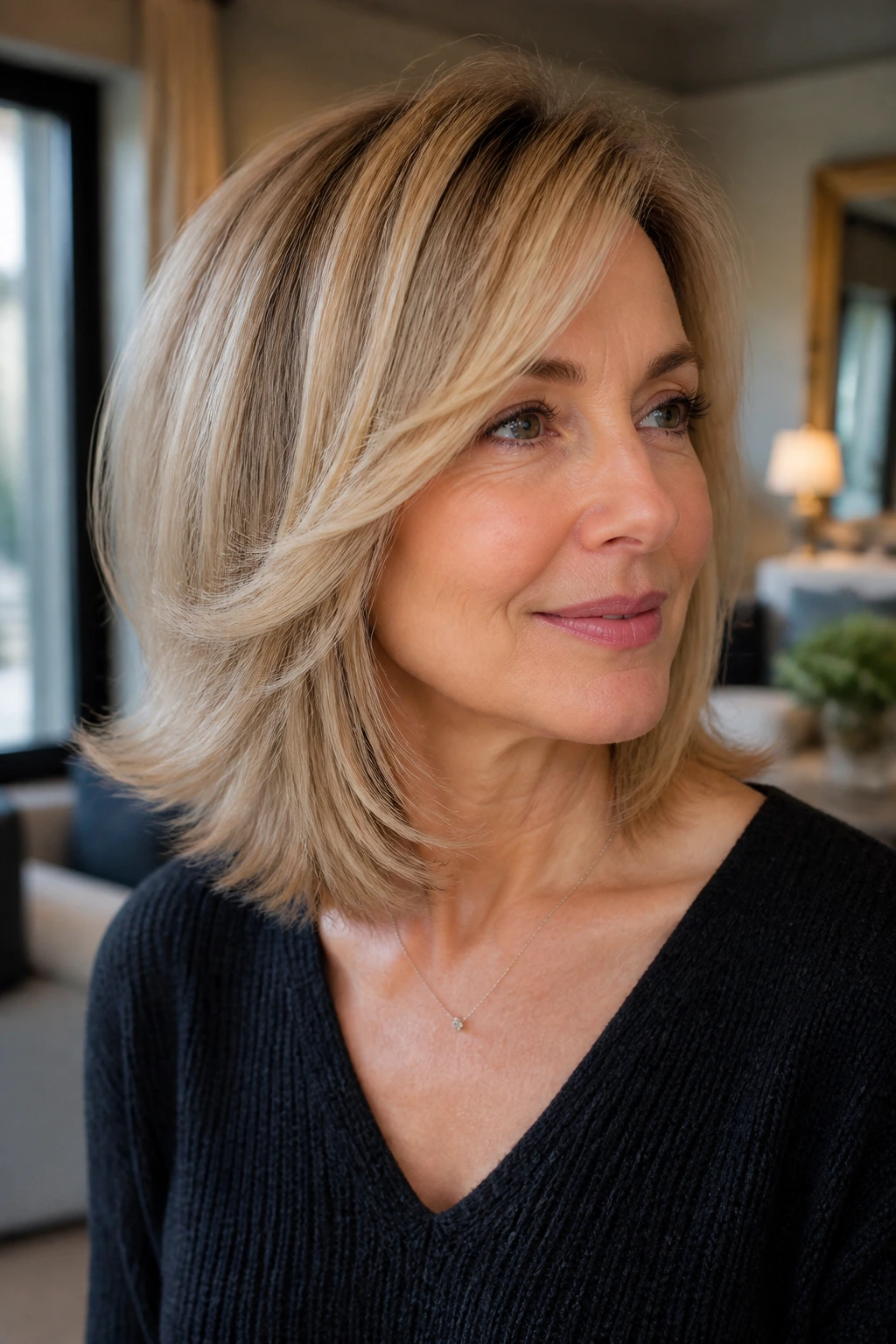
This one has a bit of old-school polish, but it works when the feathering stays soft and the ends keep some weight. Think of it as a lob with movement, not a haircut that has been thinned to death. Fine hair needs air, yes. It does not need to be shredded.
A feathered blowout lob gives the illusion of fullness because the layers curve away from the face and lift at the mid-lengths. When the blow-dry is done well, the top has some height and the ends flick with just enough shape to keep the cut from dropping flat by lunch.
It’s a good fit if you like a salon finish and don’t mind spending 10 minutes with a round brush. A nozzle on the dryer matters here. So does patience.
6. The Angled Lob with Longer Front Pieces
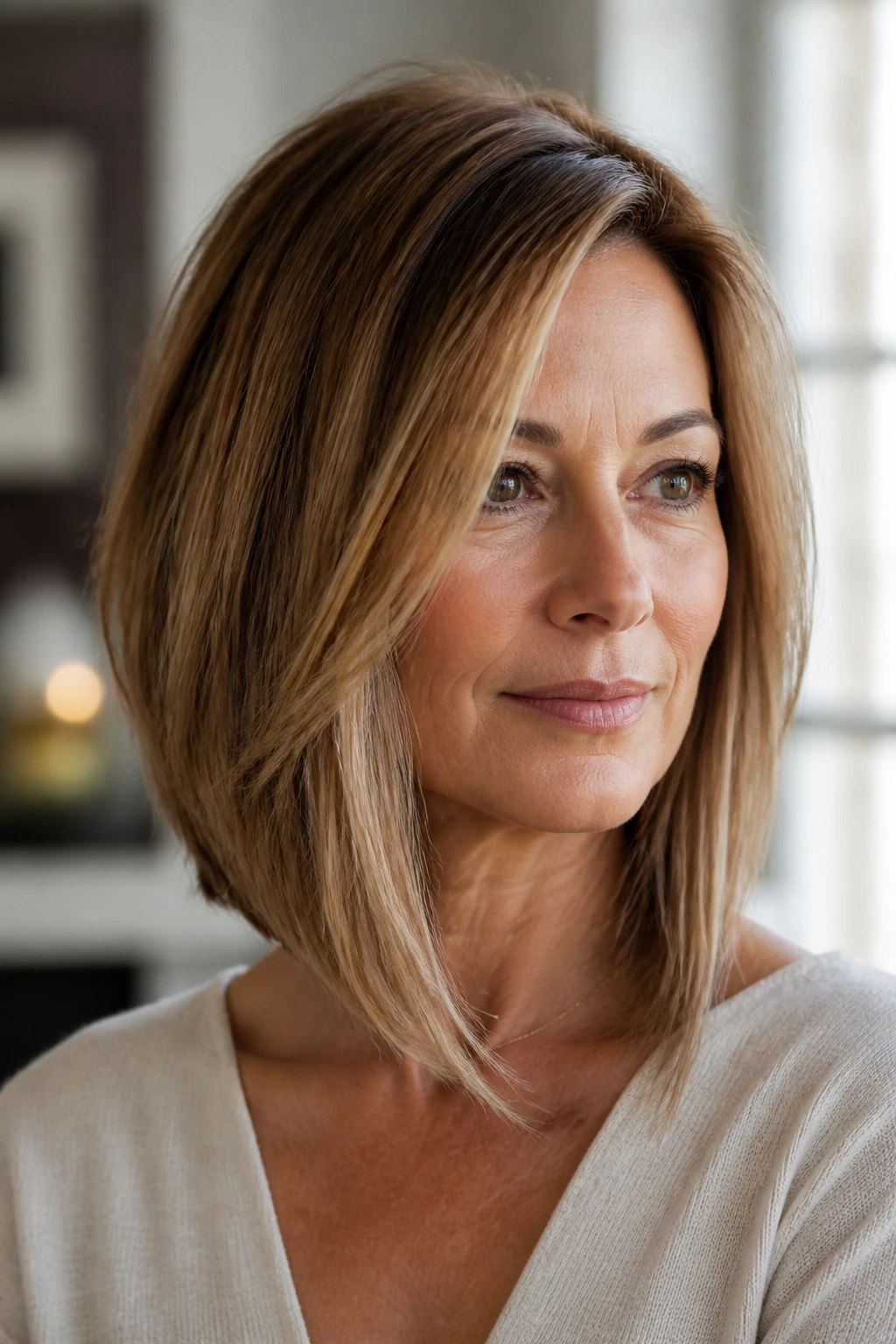
This is one of the cleaner ways to build structure into fine hair without making the ends look thin. The back sits slightly shorter, the front hangs longer, and the line creates a little movement even when the hair is straight. It’s subtle. That’s why it works.
The angled shape is especially nice if your hair naturally dips forward around the face. Instead of fighting that, the cut uses it. The front pieces skim the collarbone and give the style a forward sweep, while the shorter back keeps the whole shape from dragging.
If you want something that looks crisp even on a second-day blowout, this is a strong choice. It’s neat without feeling severe.
7. The Airy Shag for Fine Hair


A shag can be brilliant on fine hair — if it’s done with discipline. Too many short layers and you end up with a halo of ends and not much else. Done well, though, an airy shag gives the crown lift, the sides movement, and the ends a little broken-up texture that keeps the hair from sitting like a sheet.
Where the layers should start
The best shag for fine hair usually starts the shortest layers below the cheekbone, not up at the temples. That keeps the front from going sparse. You want a lived-in outline, not a haircut that looks like it forgot the bottom half of the head.
A texture spray at the ends and a quick finger-dry can be enough. If your hair goes limp fast, this shape is one of the few that actually looks better when it’s not over-styled.
8. The Invisible-Layer Shoulder Cut
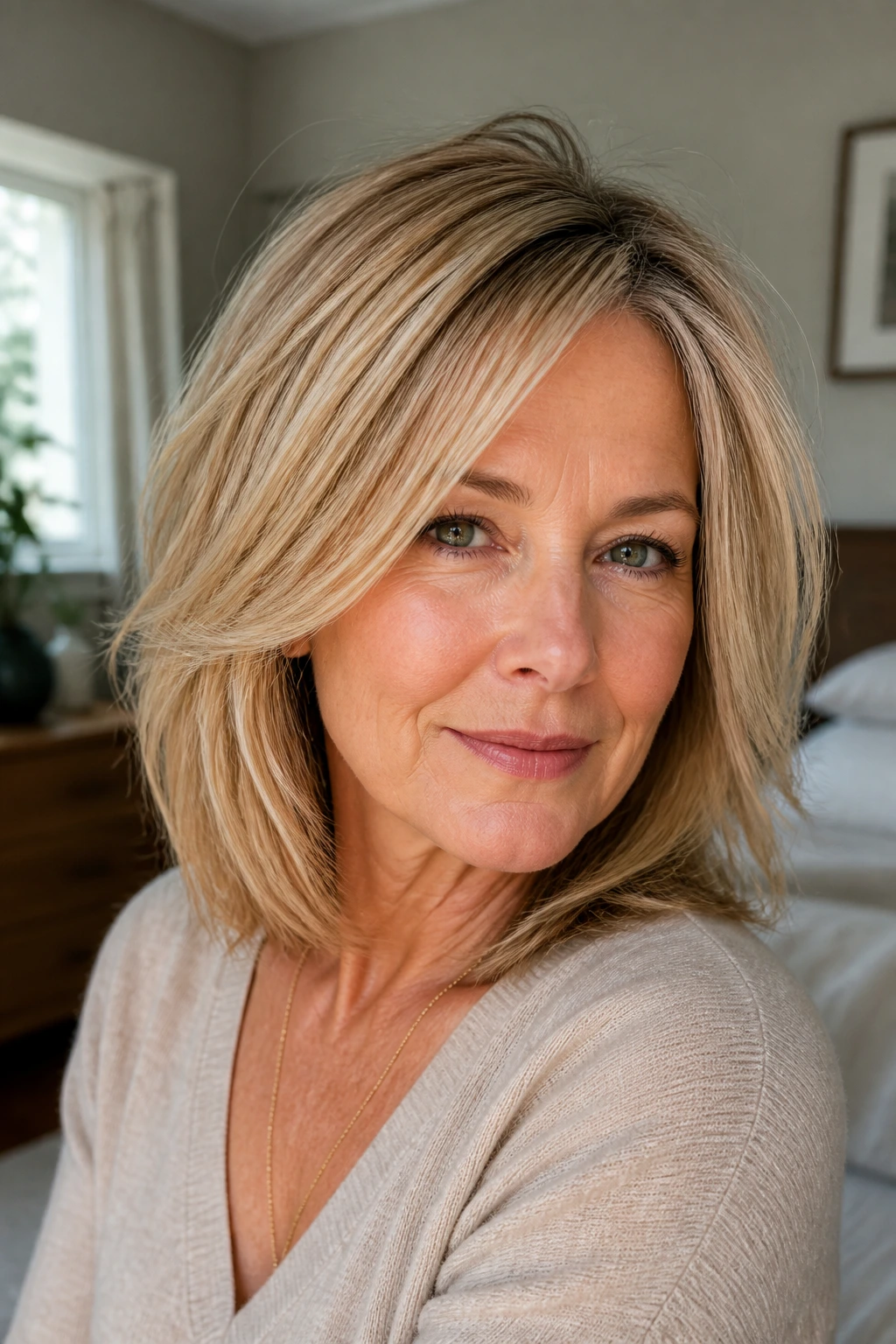
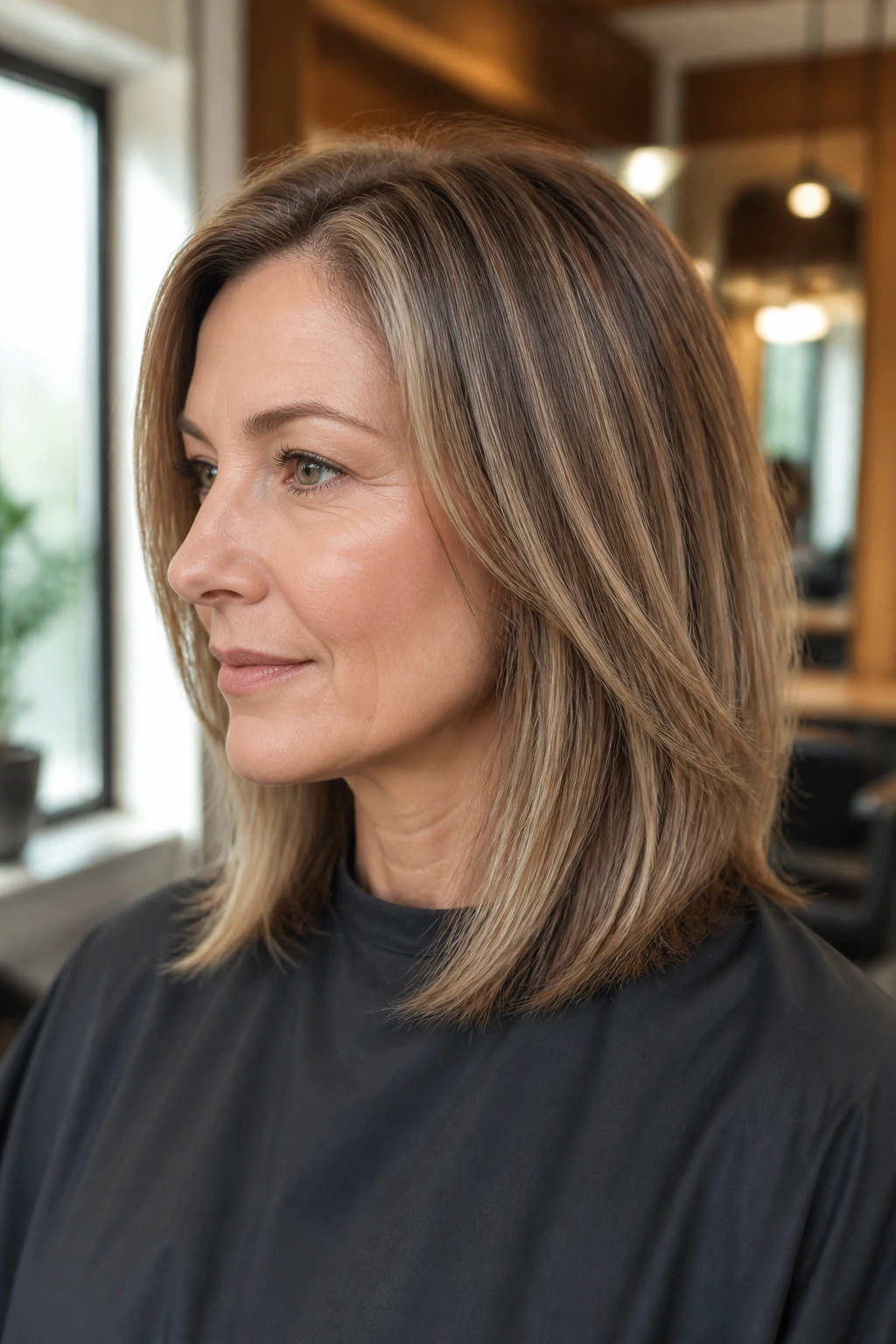
This is the cut for anyone who wants fullness and hates seeing chopped-up ends. Invisible layers live inside the shape instead of showing off at the surface, so the outer line stays thick while the inside gets some movement. Fine hair often needs exactly that.
I like this cut because it behaves. It doesn’t demand a blowout every single morning. The surface can still look smooth and one-length, but the hidden layers stop the shape from turning into a heavy block.
If your hair is fine but plentiful, this is a very smart compromise. The silhouette stays clean, and you still get a little swing when you walk.
9. The Deep Side-Swept Bob
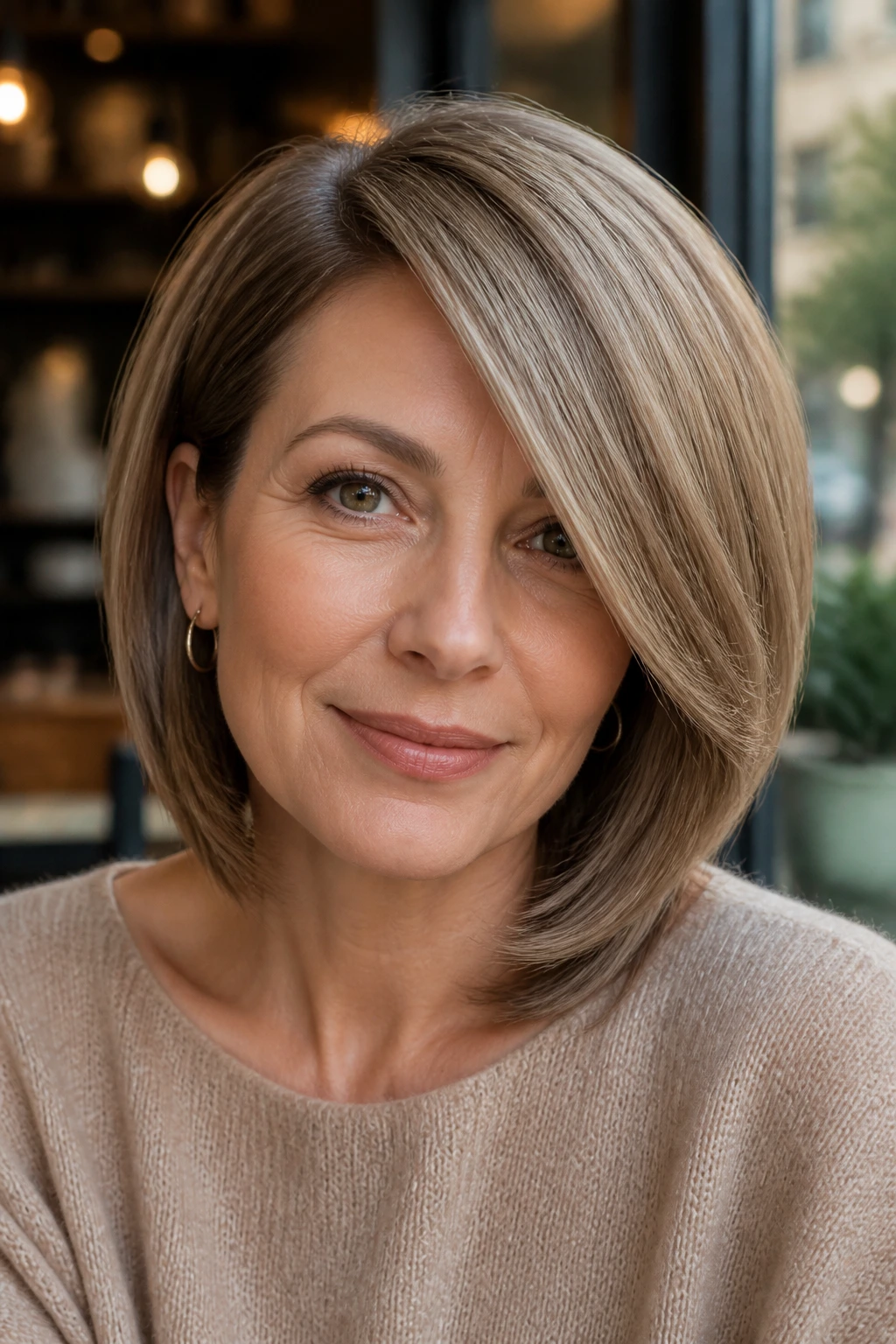
A deep side-swept bob makes the front feel fuller by moving the weight in one direction. It’s a strong choice if your hairline is uneven, one side falls flatter, or you simply want a cut that looks a touch more dramatic without losing too much length.
The side sweep gives the forehead a diagonal line, which is often kinder than a blunt straight-across shape on fine hair. It also creates a natural place for volume to live: at the roots on the heavier side and through the sweep on the opposite side.
A pea-sized amount of mousse at the roots and a brush set in the lift direction can do a lot here. Let the hair cool before you touch it. Warm hair collapses. Cool hair remembers.
10. Textured Waves with Piecey Ends
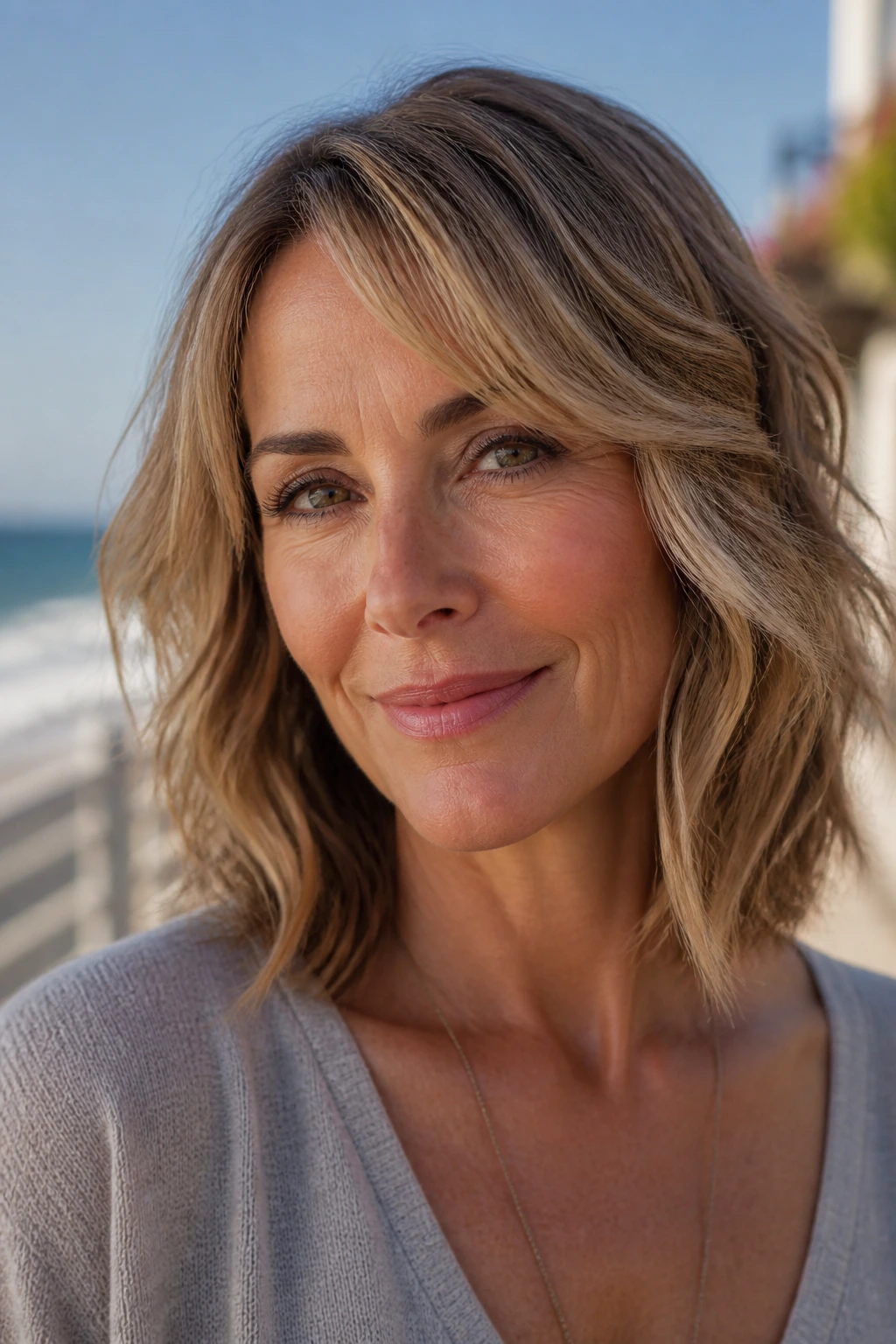
This style can look beachy, but the good version is more controlled than that. The waves should live mostly through the lower half of the hair, with the ends separated just enough to avoid a heavy, helmet-like finish. Fine hair loves that broken texture because it creates more visual space.
What makes it different
- The wave starts below the cheekbone, so the roots can stay lifted.
- The ends stay piecey instead of fluffy.
- A 1-inch iron or wand gives a tighter bend that relaxes into a softer wave after brushing out.
I’d skip the heavy sea-salt spray unless your hair is naturally oily and very slippery. On dry fine hair, it can make the ends feel rough in the worst way.
11. The One-Length Shoulder Cut with a Center Part

This is the bluntest answer to fine hair that looks too wispy when it gets over-layered. One length can be surprisingly good if the hair has enough density to support it, because the edge stays solid and the middle doesn’t splinter into thin sections.
The center part gives the style a calm, modern line. It’s clean. Almost severe, but in a useful way. If your face is narrower or your features are symmetrical enough to carry a straight part, this cut can look polished with very little effort.
The danger is only one: if the ends are too dry, the whole thing turns sad fast. A light cream at the last inch or two is plenty.
12. Bottleneck Bangs with a Smooth Lob

Bottleneck bangs are smarter than blunt fringe on fine hair. They’re narrower in the center, a bit wider as they sweep out, and they blend into the side lengths without taking too much density from the front. That keeps the haircut feeling soft instead of over-fringed.
This is a good choice when you want a little forehead coverage but don’t want to commit to a heavy bang that needs constant trimming. The shape sits nicely on a shoulder-length lob and gives the face a soft frame without stealing too much hair from the body of the cut.
What to ask for
Ask for the shortest point to land just below the brows, then taper the sides into the cheekbones. That keeps the fringe light enough for fine hair and stops it from forming a thick shelf across the forehead.
13. Flipped-Out Ends with a Side Part
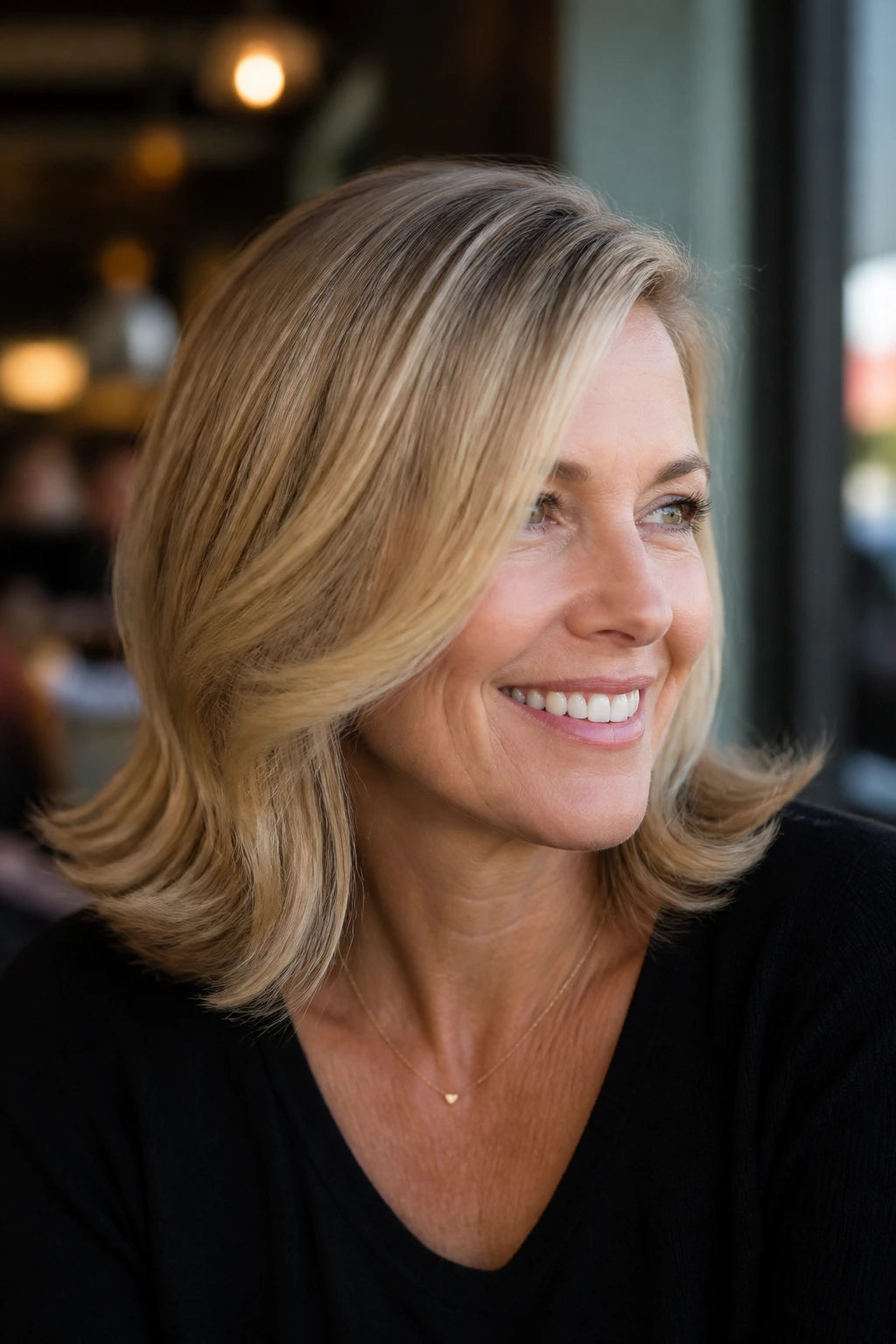
There’s a reason flipped-out ends keep coming back. On fine hair, they add motion at the perimeter, which is exactly where a flat cut looks weakest. A side part helps the style feel casual and lived in, while the flipped ends keep the shape from dropping into one straight line.
This cut is especially good if your hair naturally wants to flick outward anyway. Work with that instinct. The trick is not to flatten the flip into submission with a heavy serum or a giant round-brush bend.
A little lift at the crown, then a soft turn outward at the bottom, makes the whole head of hair look lighter and more awake.
14. The Tucked-Under Bob with a Polished Finish

If you like a neat outline, this one is hard to beat. The hair sits at shoulder length or a shade above, and the ends curve under just enough to make the perimeter look deliberate. Fine hair benefits from that tucked finish because it makes the edge look thicker.
This is the style I’d choose for someone who likes earrings, crisp collars, or a blazer that needs a clean hair shape around it. There’s a tidy energy to it that feels good without being stiff.
The blow-dry matters. Use tension. Pull the brush slightly under at the ends and let the hair cool there. If you rush the cooling part, the ends will flop out and the whole effect is gone.
15. The Grown-Out Shag with Soft Framing
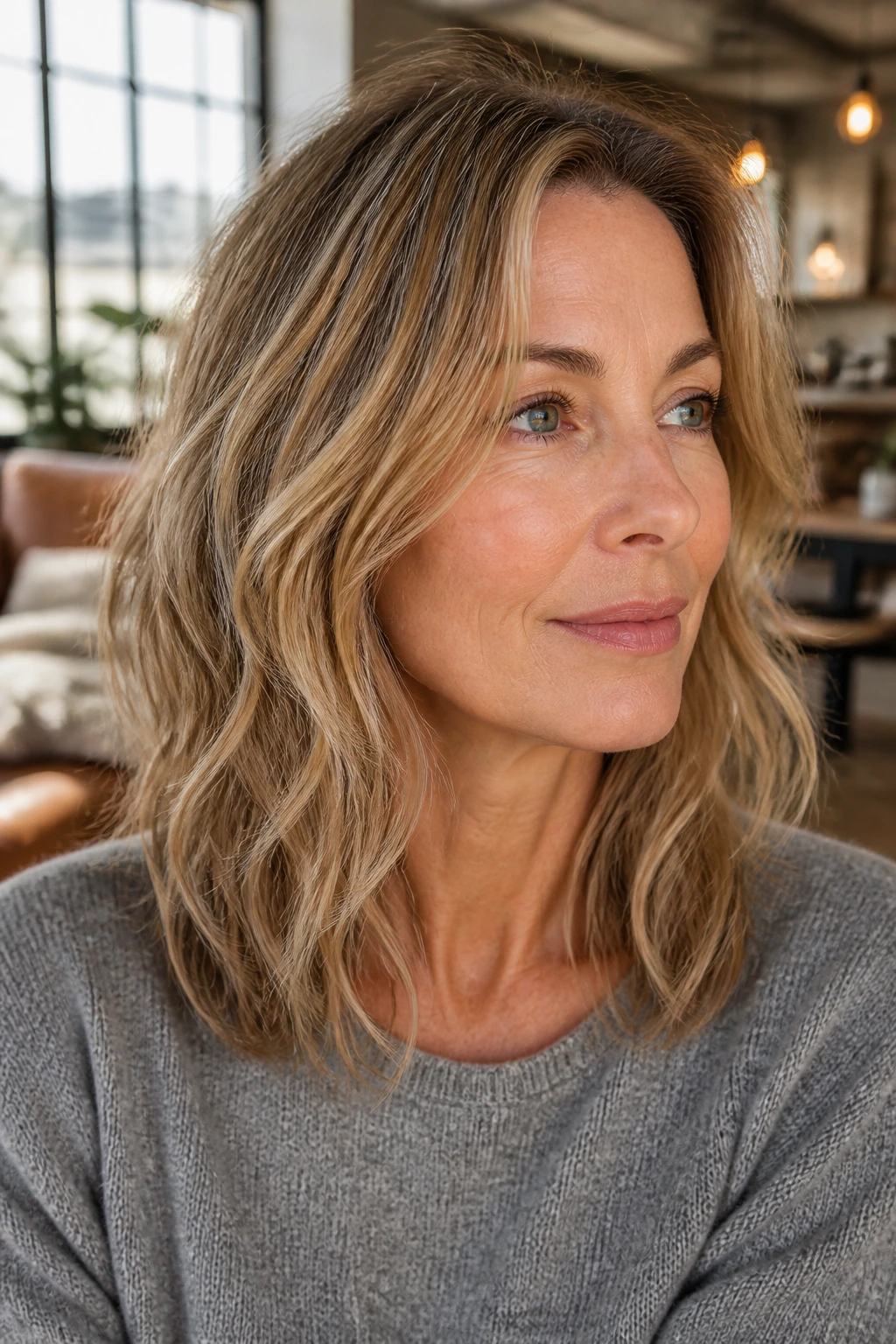
A grown-out shag is useful when you want movement but hate a haircut that looks freshly attacked by scissors. The layers are soft, the fringe is almost nonexistent, and the shape keeps enough length at the sides to protect the density of fine hair.
This style is easy to live with because it doesn’t need a perfect finish. If the hair dries with a little wave or a bend in the front, that only helps. The cut is doing the work, not the styling tools.
It also grows out cleanly, which matters. A shag that goes lopsided after three weeks is a pain. A softer version keeps its structure longer and doesn’t demand as much maintenance.
16. The Rounded Bob That Hugs the Jaw

A rounded bob can be a sneaky good choice for fine hair because it gives the style a clear shape without relying on heavy layering. The curve at the bottom makes the hair look fuller around the jaw and keeps the outline from splaying outward.
Why the curve helps
The rounded finish creates the impression of density where the eye expects it most: along the jawline and lower face. If the ends stick straight out or sit too flat, the whole cut can look thin. The curve solves that.
A soft side part keeps the crown from lying too close to the scalp. And if you wear glasses, this shape can sit neatly without fighting the frames. It’s a tidy cut that still has some softness.
17. The Razor-Soft Lob with Choppy Ends
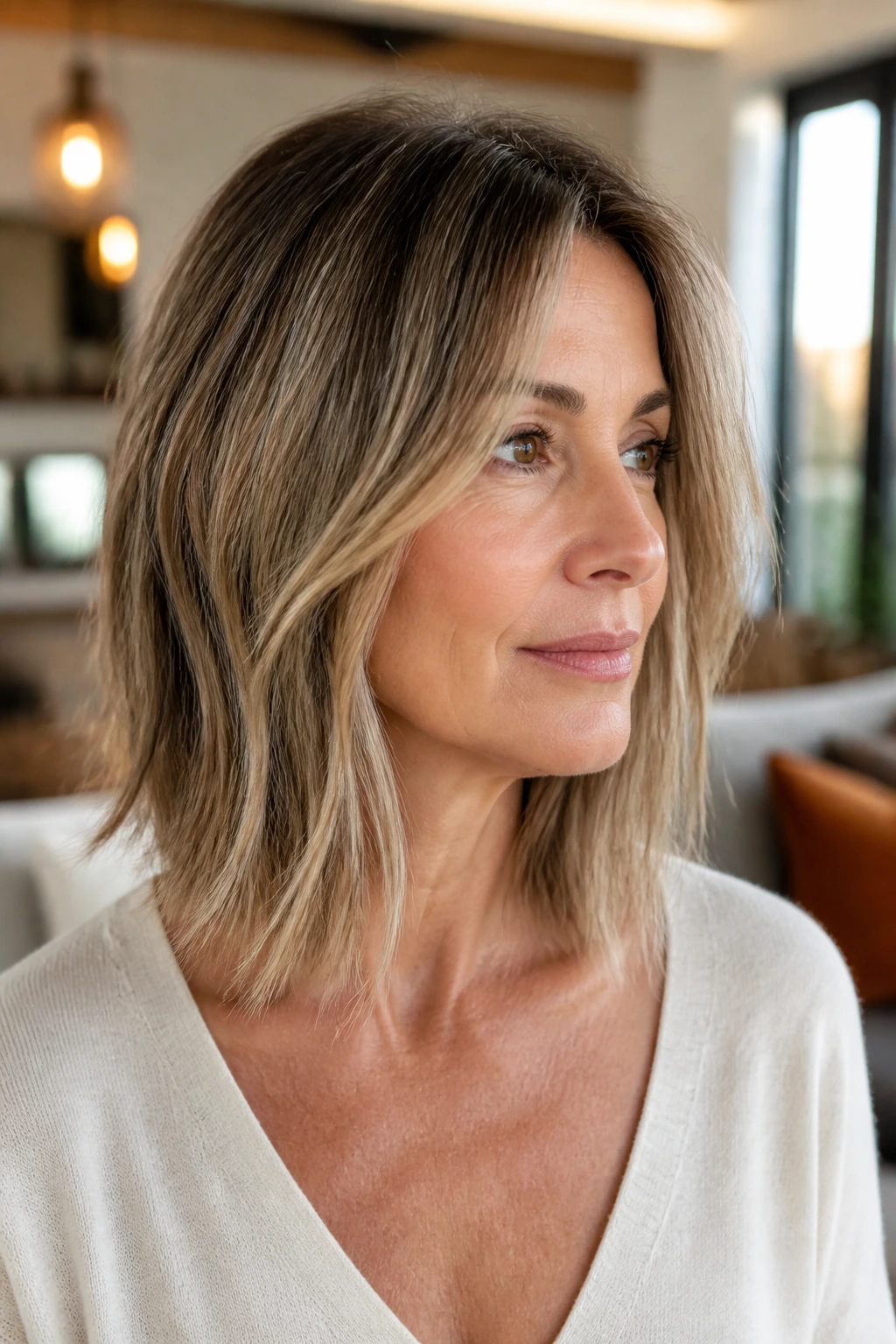
Razor-cut hair is one of those things people ask for because they want movement, then regret because it got overdone. On fine hair, a razor can be useful only when the stylist uses it lightly and keeps the perimeter controlled. The result should be soft, not shredded.
This version has choppier ends than a blunt lob, but the pieces still need enough weight to hold shape. The cut works best on hair that already has a little texture or a bit of natural bend. If your hair is pin-straight and slippery, ask for a less aggressive version.
I’d call this a choice for people who like a slightly undone look and don’t mind a bit of styling cream on the ends. It has movement. It also needs discipline.
18. Soft Curls at Shoulder Length
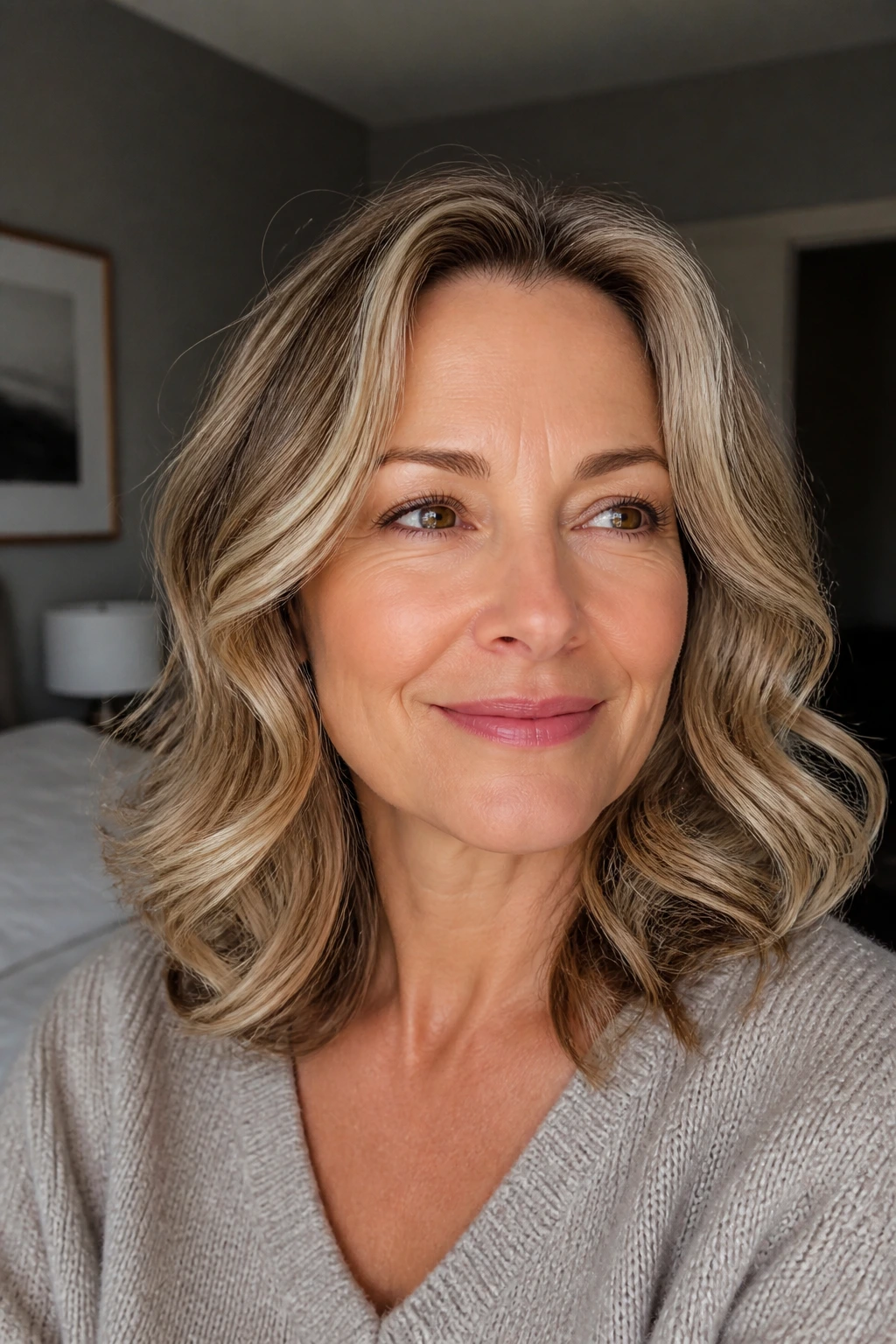
Shoulder-length curls can be gorgeous on fine hair when they are loose and well placed. Tight curls at this length can shrink the hair too much and reveal the ends in a weird way. Soft curls, though, add body without eating the shape.
The trick is to curl away from the face on the front pieces and leave the ends a little less polished. That way the style doesn’t turn into a pageant curl situation. No one needs that.
This cut works best when the curl pattern is either natural or created with a larger iron, around 1¼ inches. Smaller tools can make fine hair look over-styled fast.
19. The Gray-Blending Lob with Dimension
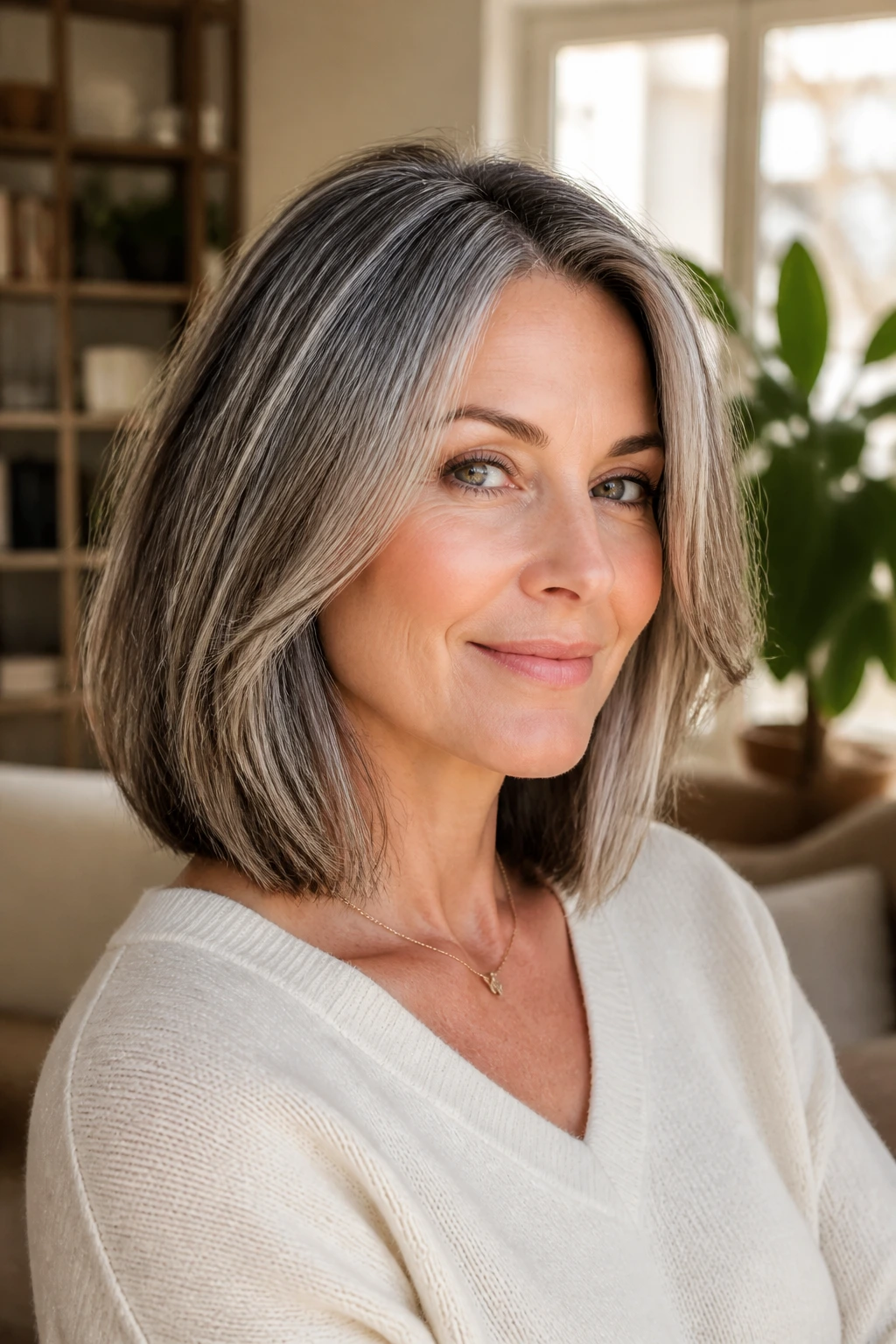
Gray hair can be beautifully fine, and it often benefits from a cut that gives the eye some movement. A gray-blending lob with dimension does two things at once: it keeps the shape clean and gives salt-and-pepper color a place to breathe.
I like this when the hair has natural silver coming through at the temples or crown. A little softness around the face, plus a strong outline at the ends, keeps the contrast from looking flat. Highlights, lowlights, or a clear gloss can help, but the cut itself does a lot of the work.
A strong perimeter and a few face-framing pieces are enough. You do not need a busy haircut when the color already has character.
20. The Classic Blowout Lob
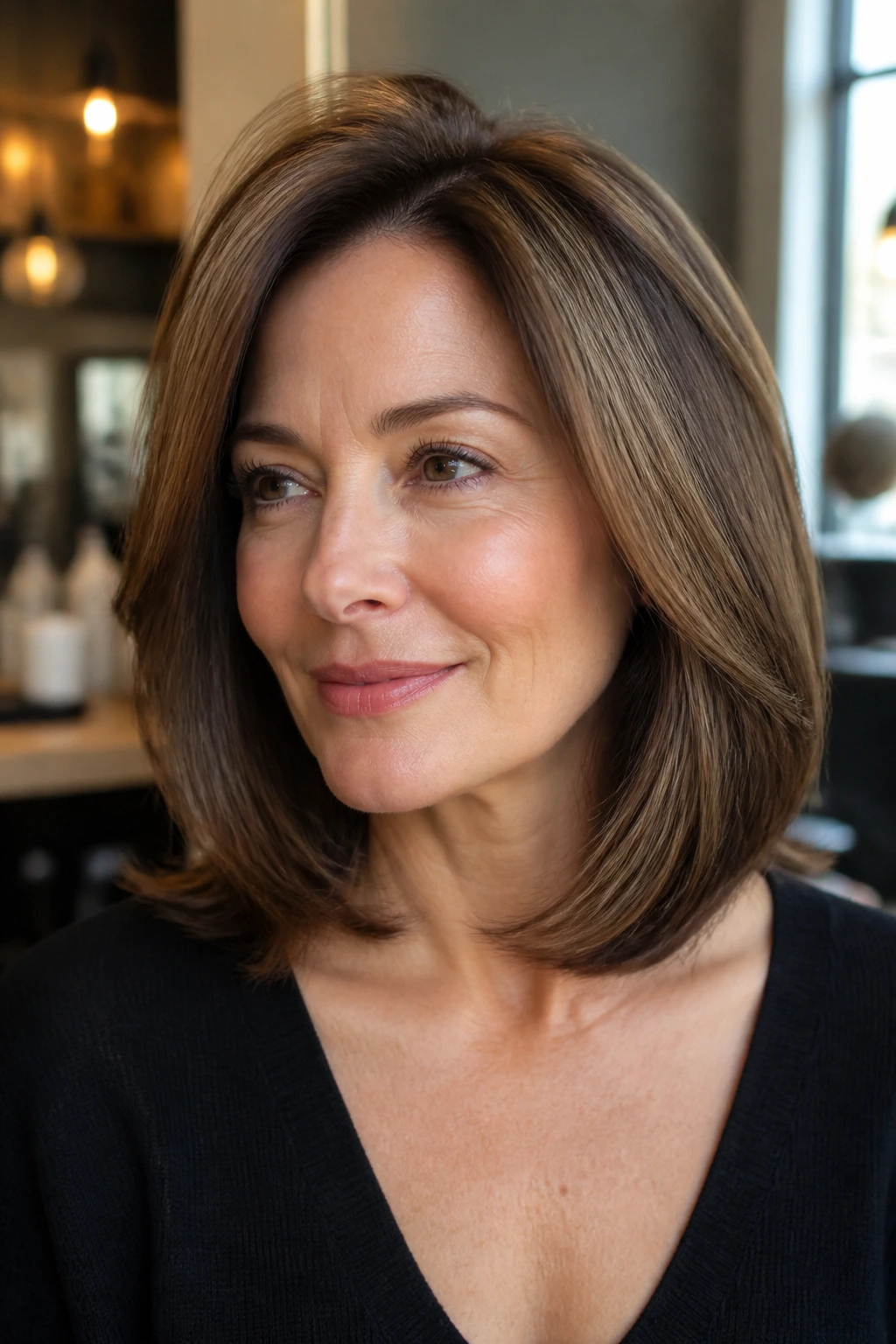
Some styles survive because they work. The classic blowout lob is one of them. It relies on a smooth root, a lifted crown, and ends that bend under or away just enough to keep the shape full. Fine hair loves this because it gives structure without a lot of fuss.
The round-brush reality
You cannot fake this one with a lazy dry. Use a round brush, keep tension through the mid-lengths, and direct the airflow from root to tip. Let each section cool before you move on. That cooling step is where the shape settles.
It’s a little more effort than air-drying, yes. But the payoff is clean volume that doesn’t feel crunchy or over-sprayed.
21. The Long Layered Cut with Cheekbone Pieces

This cut is for someone who wants movement but not a lot of chopping through the body of the hair. The layers are long, the front pieces hit around the cheekbone, and the shape stays anchored at the shoulders. That keeps fine hair from looking over-thinned.
It’s also one of the easier cuts to wear with glasses, because the front pieces can be directed away from the frames instead of getting trapped under them. The result is softer around the face, not busier.
If you like to tuck hair behind one ear or wear it half-up, this shape behaves well. The front pieces make the whole style feel deliberate, even on lazy days.
22. The Wavy Lob with S-Bend Texture
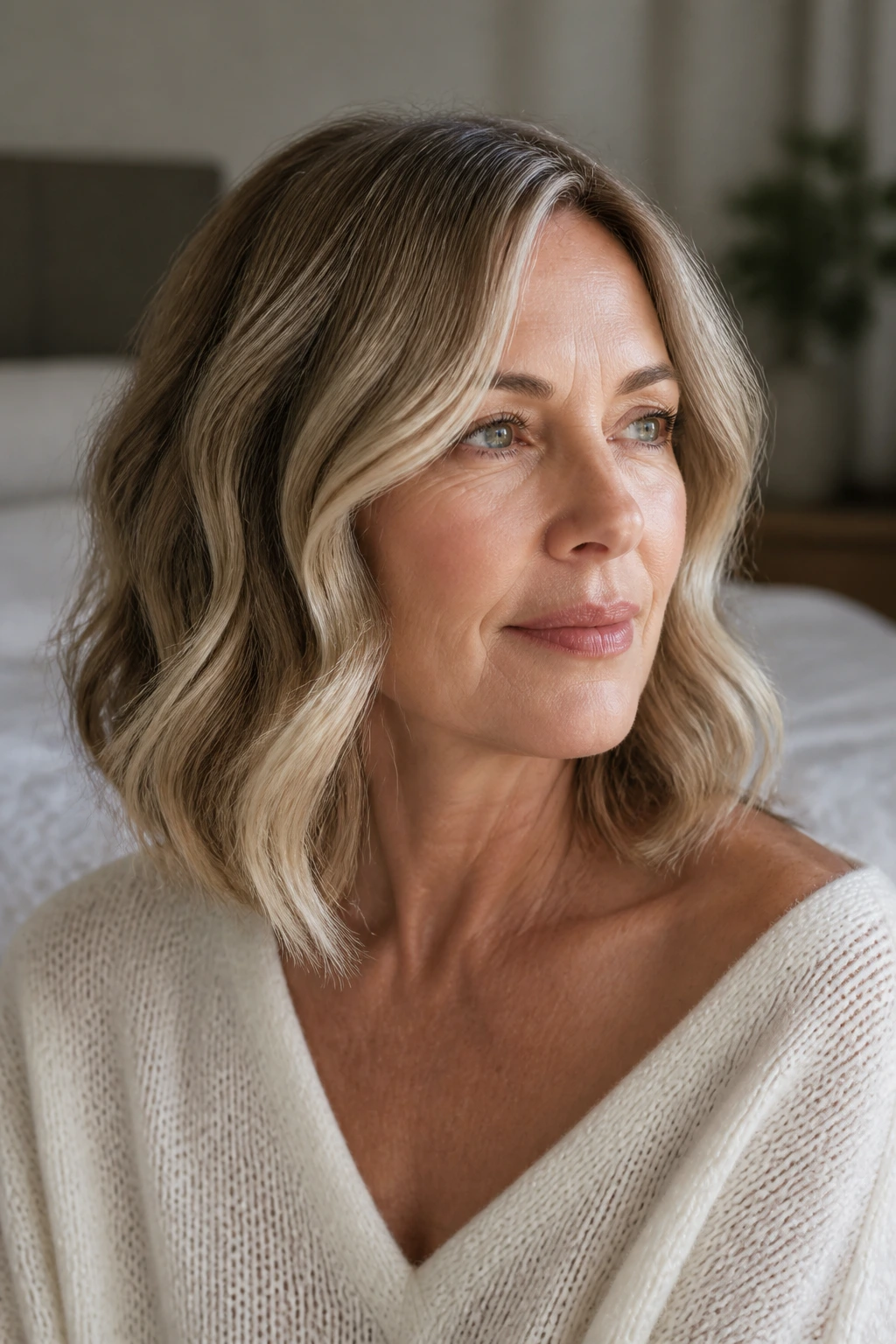
An S-bend wave looks smoother than a beach wave and tends to be kinder to fine hair. The bend runs in a loose rhythm instead of forming obvious curls, so the style reads sleek and soft at the same time. It’s one of my favorite ways to give fine shoulder-length hair movement without losing the line.
This works especially well when the wave starts mid-length. Keep the root area smoother and let the bend show up through the middle and ends. That keeps the crown from puffing up and preserves the density at the base.
A flat iron can make this shape faster than a curling iron if you know what you’re doing. Small movement. No crimping. Just a soft bend.
23. The Minimalist Shoulder Cut with Beveled Ends

If you like clean lines and low drama, this cut may be the smartest one here. The hair sits at shoulder length, the layers are minimal, and the ends are beveled just enough to avoid a hard shelf. Fine hair often looks best when it isn’t asked to do too much.
This shape is good for straight hair that gets stringy with too much texture product. The beveled ends give the appearance of motion while still keeping the silhouette intact. That means the cut can air-dry, blow-dry, or tuck behind the ears without falling apart.
It’s quiet. That’s not a weakness.
24. The Side-Swept Fringe with Sleek Length
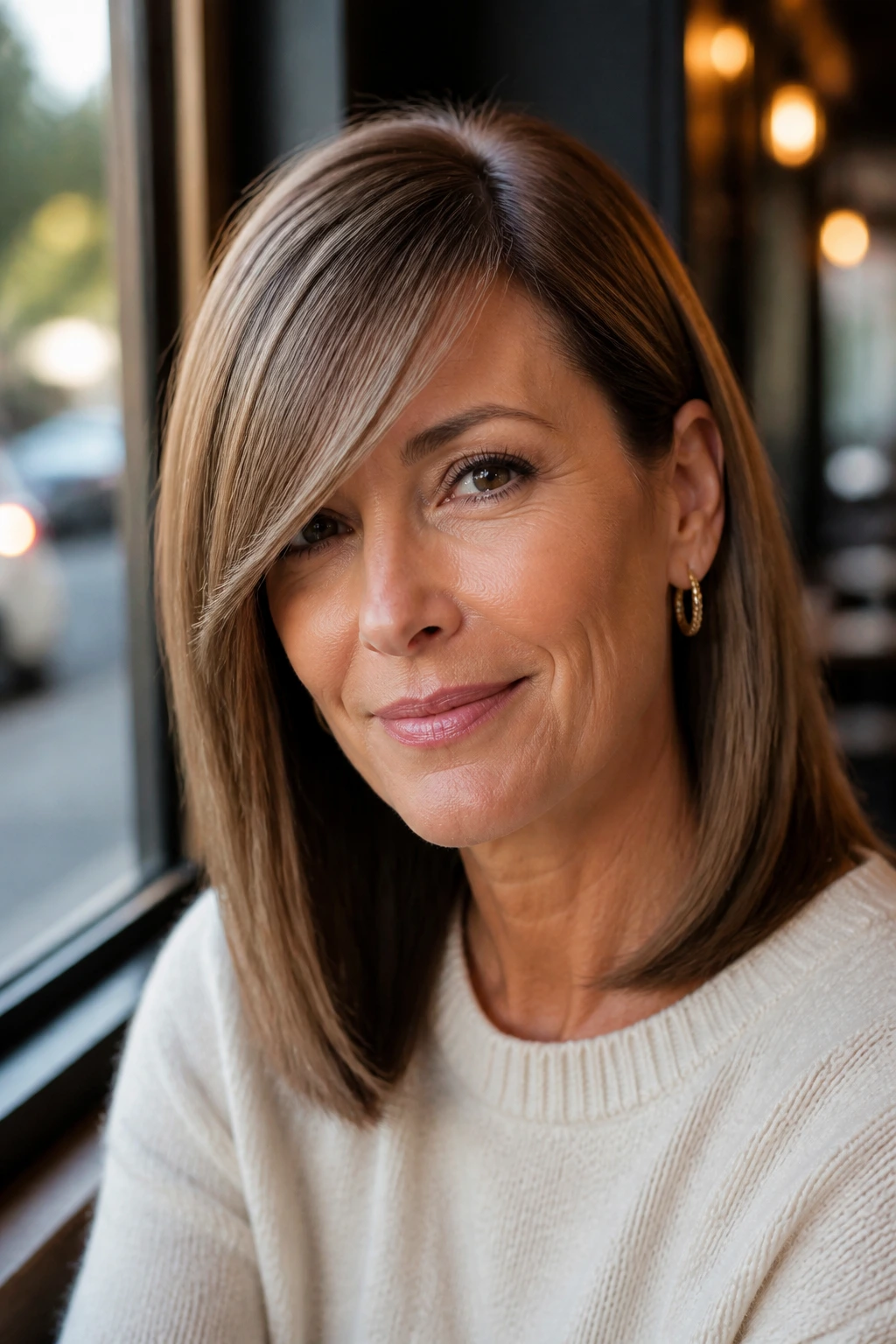
A side-swept fringe gives fine hair a little drama without crowding the forehead. The length stays sleek through the shoulders, which keeps the outline long enough to look elegant, while the fringe softens the face and creates a point of interest. It’s a neat contrast.
This one works well if your hairline is a little sparse at the temples or if you want to draw attention away from the center of the forehead. The diagonal line of the fringe does that job naturally. No heavy styling needed.
Keep the fringe light and the rest smooth. If the front gets too heavy, trim it back before it starts eating the cut.
25. The Modern French Lob
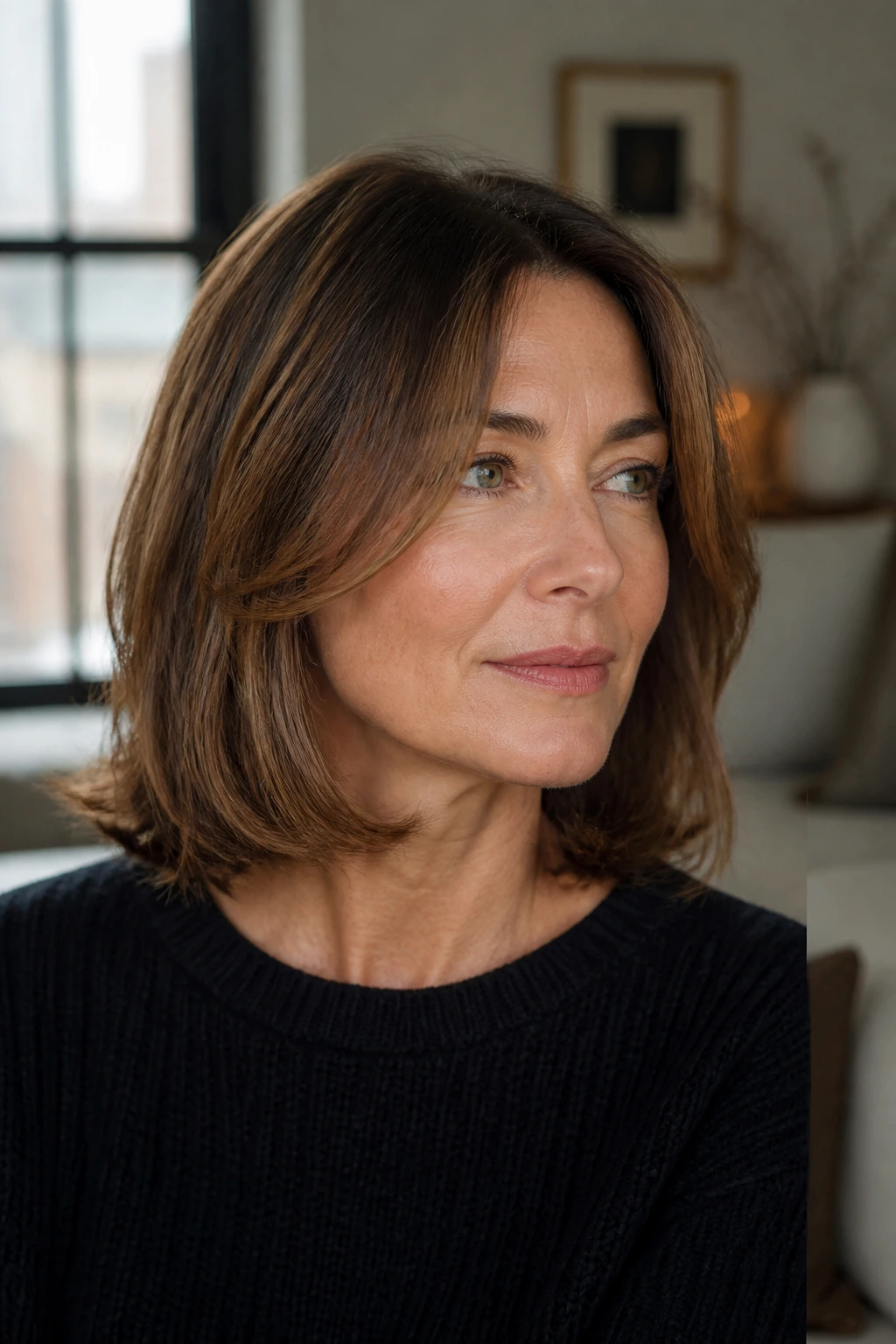
This is the cut for someone who wants hair that looks like it belongs in real life, not on a hard-to-touch mood board. The length sits around the shoulders, the outline is soft but not messy, and the ends usually bend under or flick just enough to keep the style moving. It works because it’s not trying too hard.
The modern French lob is especially good when your fine hair has a bit of natural texture. A rough-dry, a touch of cream at the ends, and maybe a loose tuck behind one ear can be enough. It feels chic because the shape is controlled, not because the styling is fussy.
If I had to pick one cut here for someone who wants easy polish, this might be the one. It carries well on good days and bad ones.
How to Make Shoulder-Length Fine Hair Look Fuller Without Teasing It
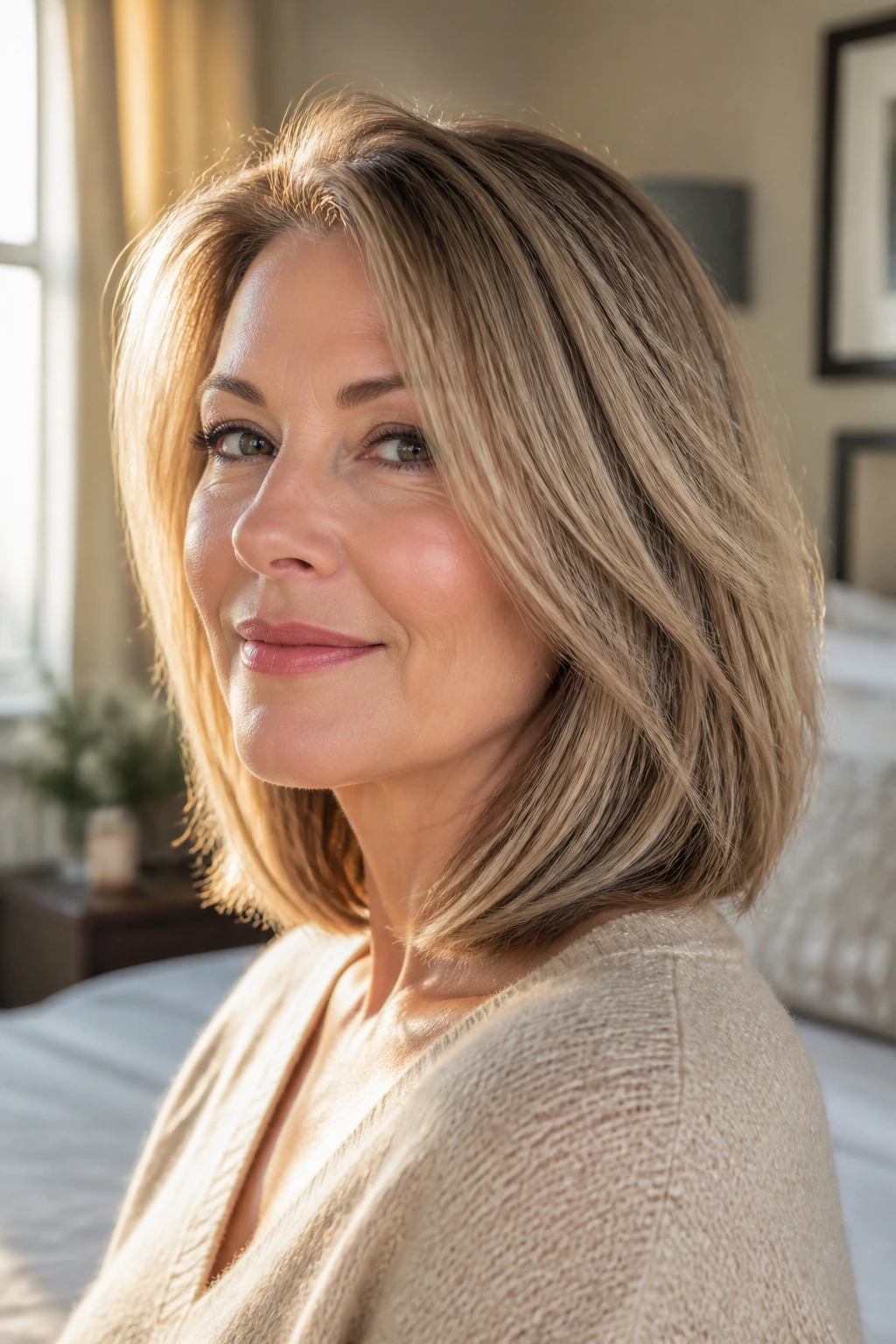
Start with the perimeter: Ask for a strong outline at the ends, even if you want layers. Fine hair usually needs a visible edge more than it needs a lot of internal cutting. That edge is what makes the hair read thicker from across the room.
Put product at the roots, not the ends: A little mousse, root spray, or volumizing foam at the crown does far more than heavy oil at the bottom. The ends of fine hair get weighed down fast. Keep the styling cream to the last inch or two.
Blow-dry with direction: Aim the nozzle from roots to ends, then lift sections at the crown with a round brush or vent brush. If you dry everything flat, you’ll spend the rest of the day trying to rescue it. Heat can help, but only if it’s aimed with some care.
Use texture with restraint: A light mist of dry texture spray or flexible hairspray on the mid-lengths can give grip. The word there is light. Too much product turns fine hair sticky, and sticky hair clumps into thinner-looking sections.
Essential Tools for Styling Fine Shoulder-Length Hair
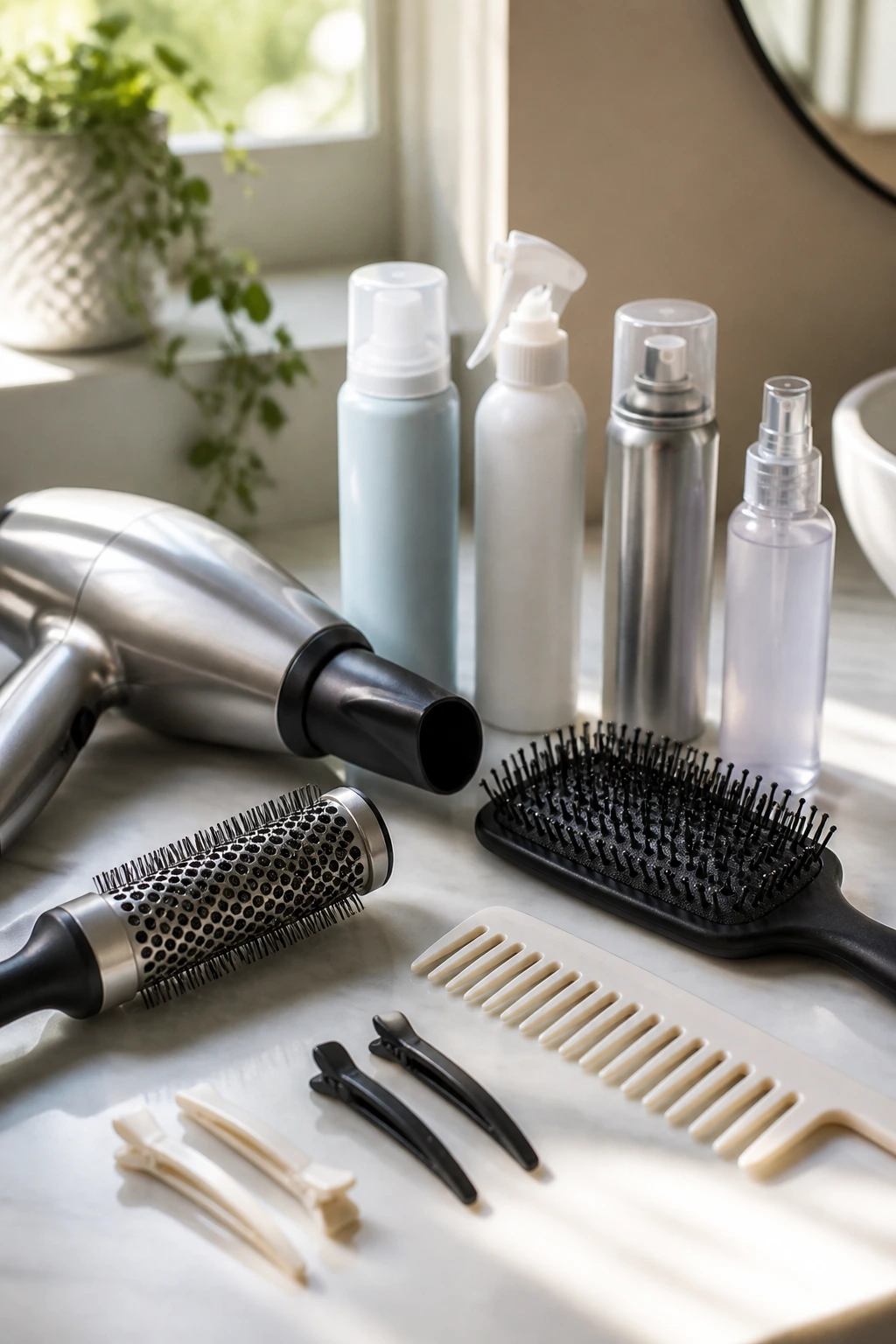
- Blow-dryer with a nozzle attachment: The nozzle directs airflow where you want it and helps the cuticle lie flatter.
- 1-inch to 1¼-inch round brush: Smaller brushes build bend; larger ones build smoother volume at the ends.
- Root-lifting mousse or foam: A golf-ball-sized amount is usually enough for fine hair that gets limp at the crown.
- Lightweight heat protectant: Fine hair burns easily and needs protection before any hot tool touches it.
- Vent brush or paddle brush: Good for rough-drying when you want speed and a softer finish.
- Dry shampoo: Useful on day two, especially at the crown and around the hairline.
- Texturizing spray: Best on the mid-lengths and ends, not the scalp.
- Wide-tooth comb: Better than yanking a brush through damp fine hair.
- Sectioning clips: Small clips keep the blow-dry controlled instead of chaotic.
Common Mistakes That Make Fine Hair Look Thinner
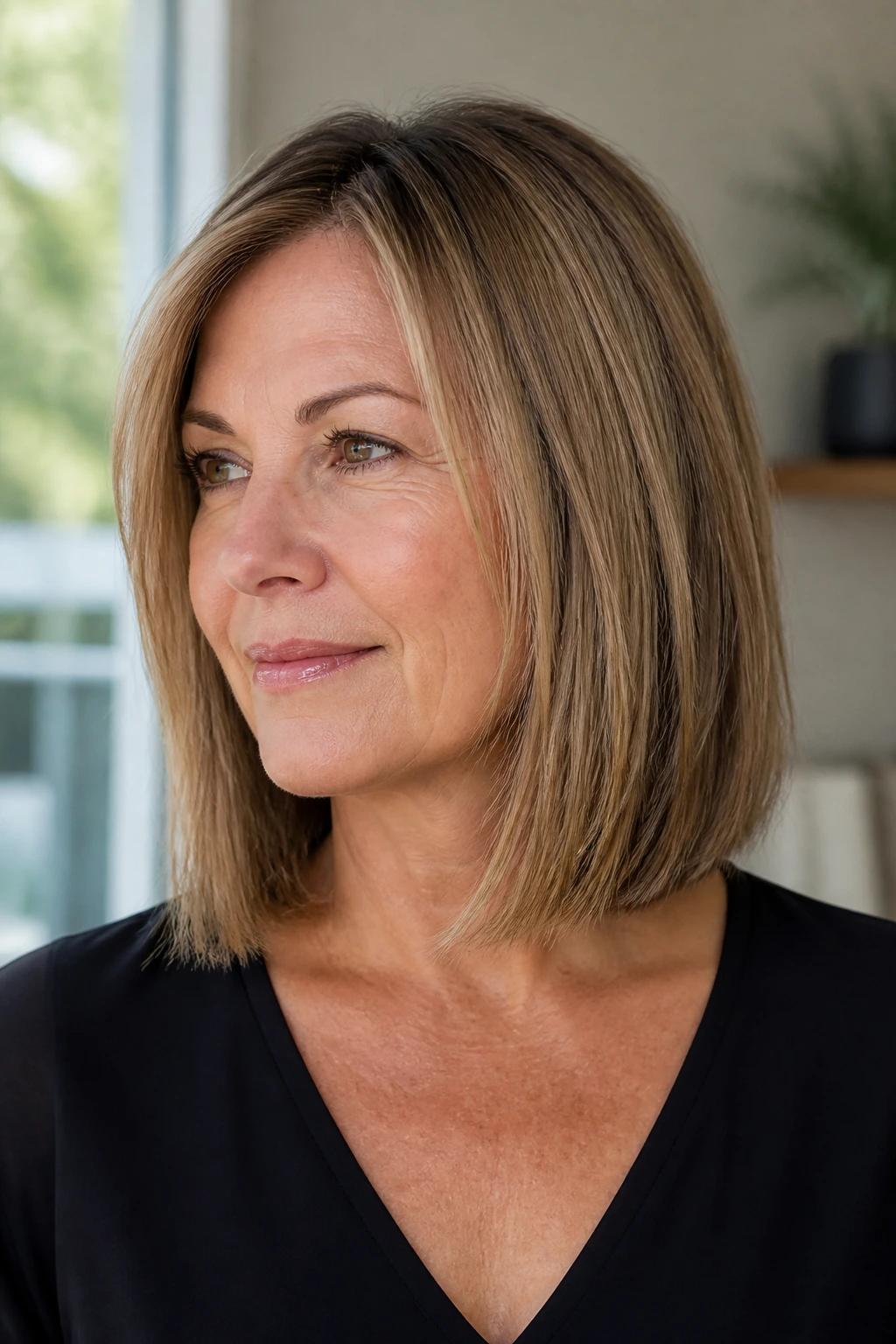
Over-layering the ends: This is the big one. When the stylist takes too much weight from the bottom, the hair loses its outline and starts to look see-through. Ask for movement inside the cut, not a bottom edge that looks feathered to nothing.
Using heavy conditioner too high up: Fine hair gets greasy fast near the roots. If your conditioner creeps up to the scalp, the crown will flatten before you’ve finished drying. Keep conditioner from the ears down unless the hair is very dry.
Skipping trims for too long: Split ends and wispy ends are not the same thing, but they often travel together. Once the perimeter frays, the whole shape looks thinner. A blunt or beveled cut needs regular trimming to stay useful.
Choosing product over shape: A thick cream can’t fix a bad haircut. It just makes a bad haircut feel oily. Get the shape right first, then use products to support it.
Wearing the same part every day: Hair gets trained. If you always wear a deep side part in the same place, the roots lie flat where the part lives. Flip the part now and then, even if only by an inch.
Variations and Alternatives to Try

The Glasses-Friendly Fringe: If you wear frames, ask for fringe that stops above or just below the brow and tapers at the sides. That keeps the bangs from pushing into your lenses and makes the whole cut look deliberate instead of crowded.
The Silver-First Lob: For gray or salt-and-pepper hair, a soft lob with a clean perimeter and a gloss finish can look sharper than lots of layering. The cut lets the color show its natural dimension instead of hiding it in choppy pieces.
The Low-Maintenance One-Length Cut: If you hate styling, keep the ends blunt, the layers minimal, and the length right at or just above the collarbone. It air-dries more predictably than a highly layered shape.
The Texture-Heavy Weekend Cut: If you like a more relaxed shape, ask for soft internal layers and enough length at the front to tuck behind the ears. It gives you room to rough-dry with mousse and let the texture do the rest.
The Polished Corporate Bob: For a neat finish that still feels modern, keep the bob beveled under, add a side part, and style the crown flat with lifted ends. It’s tidy, but not severe.
Keeping Shoulder-Length Fine Hair in Shape Between Salon Visits
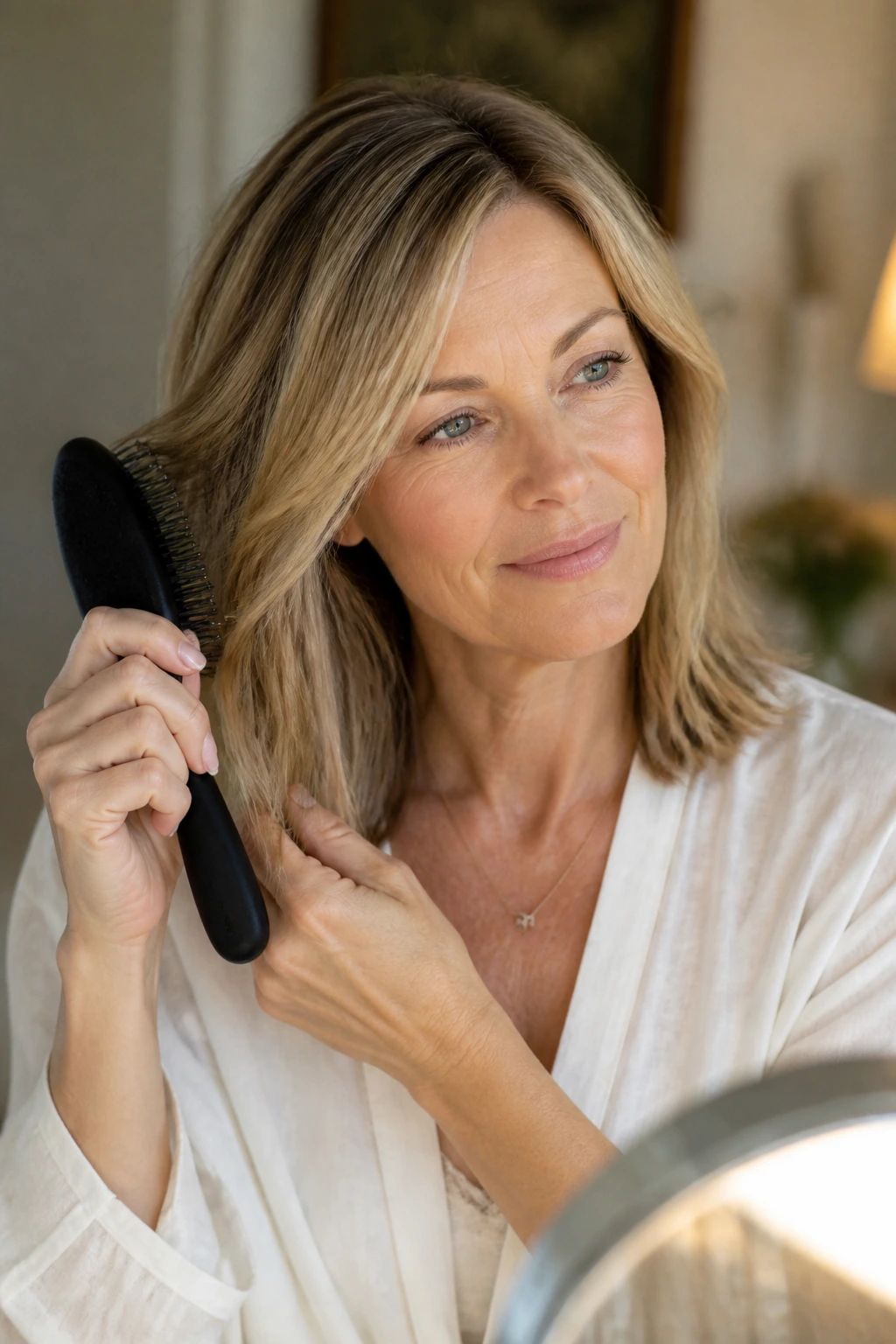
Fine hair usually needs a trim sooner than people expect. If you love a blunt edge, plan on 6 to 8 weeks. Softer layered cuts can stretch to 8 or 10, but once the ends start to fray, the style loses the thickness it was built to show.
Wash frequency depends on scalp oil, but many fine-haired people do best washing every 1 to 3 days. Dry shampoo can buy you an extra day, though it’s not a miracle. Use it at the roots, wait a minute, then massage it in before brushing.
Heat styling should stay moderate. If you blow-dry, use a protectant every time. If you use hot tools, keep the passes limited and avoid cranking the heat so high that the ends feel dry and crunchy. A quick gloss or lightweight serum on the final inch can help, but don’t flood the hair with oil.
At night, a loose clip or a silk pillowcase can reduce friction. That won’t create volume, but it does help keep the cut from looking battered by morning. Small thing. Big difference.
Questions Women Ask Before Cutting Fine Hair to Shoulder Length
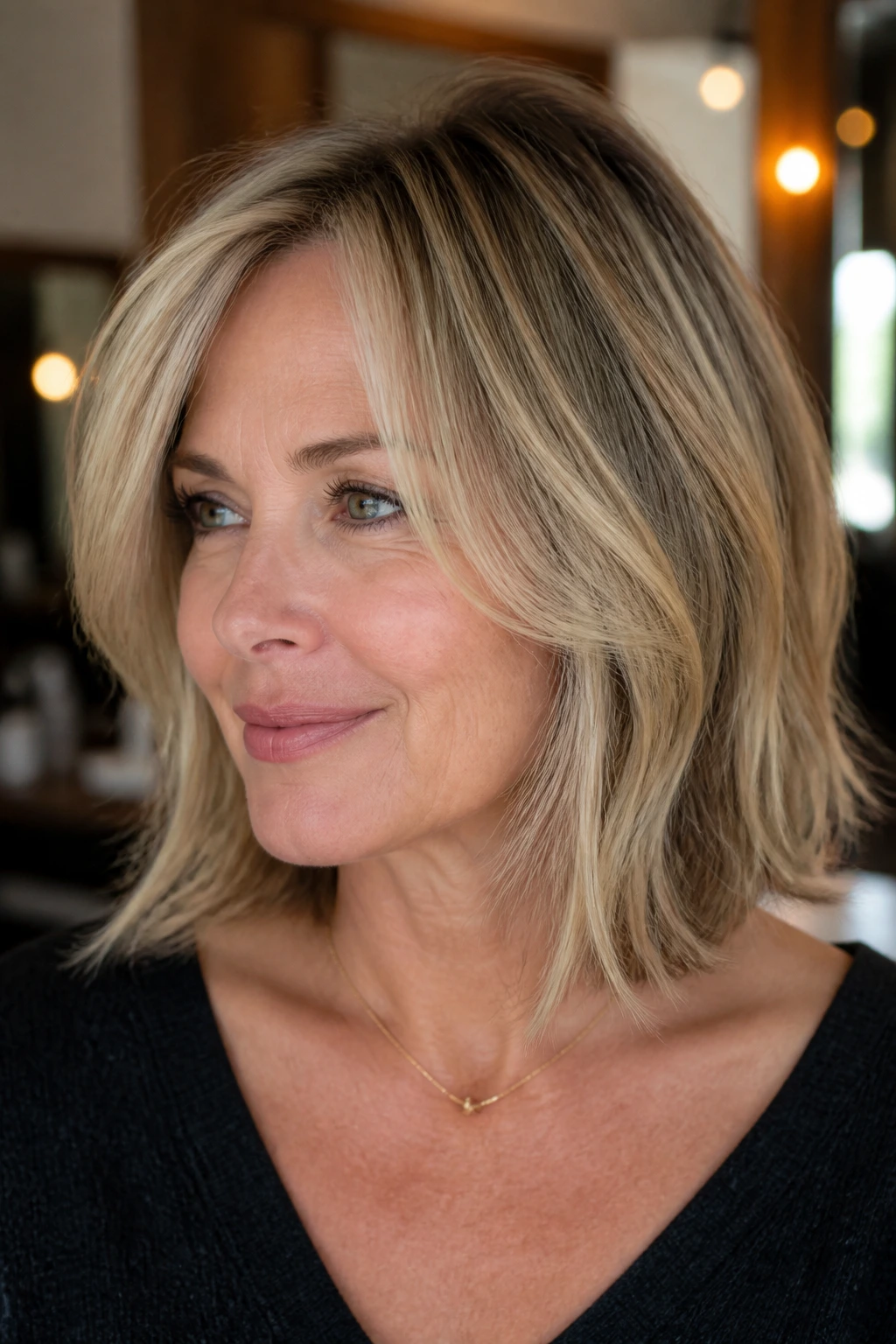
Will shoulder-length hair make fine hair look thinner?
Not if the cut keeps a clean perimeter. Shoulder length usually looks fuller than very long hair because the ends don’t stretch out into see-through wisps.
Are layers bad for fine hair?
Too many layers can be bad, yes. Soft internal layers or face-framing pieces are fine when the outer line stays strong.
Should fine hair have bangs after 40?
Bangs can work, but they need to be light enough not to steal too much density from the front. Curtain bangs and bottleneck bangs usually behave better than a thick blunt fringe.
What’s better: center part or side part?
A center part gives a neat, modern line, while a side part adds lift at the crown. If your roots lie flat, the side part often wins.
Can I air-dry shoulder-length fine hair and still look polished?
Yes, if the cut is shaped for it. A blunt lob, soft layered lob, or beveled shoulder cut usually air-dries better than a heavily layered shag.
What if my hair is very straight and slippery?
Choose a blunt edge or a beveled finish and keep products light. Over-texturizing straight fine hair can make it fall flat faster.
How do I tell my stylist what I want?
Say where you want the hair to hit — collarbone, top of shoulder, or just below — then describe the finish: blunt, beveled, lightly layered, or softly face-framed. That gives a stylist something concrete to work with.
What if my crown is flat?
Ask for a cut that keeps weight at the sides while allowing a little lift near the top, then use root-lifting foam and blow-dry upward at the crown. Cutting alone won’t fix a flat crown, but it can make the styling much easier.
A Shape Worth Keeping
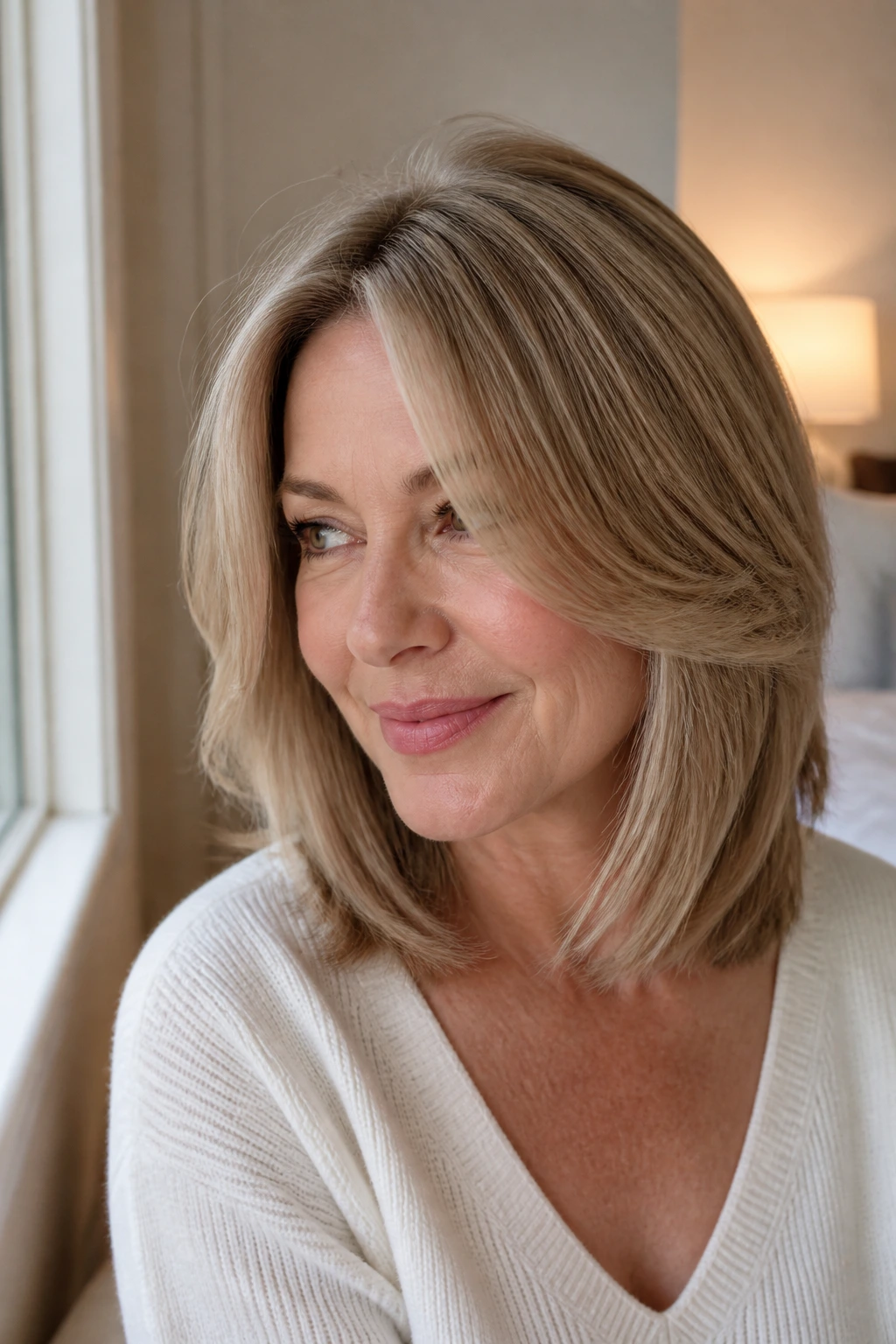
Shoulder-length fine hairstyles for women over 40 work because they respect the hair you actually have. Not the hair in a shampoo commercial. Not the hair on a stranger with three hours and a curling wand. The real thing. A good lob, a soft layered shape, or a blunt collarbone cut can make fine strands look more deliberate, more polished, and a lot less apologetic.
The smartest versions are the ones that keep an edge, give the crown a little lift, and leave enough room for your hair to move without collapsing. That’s the sweet spot. Once you find it, the rest gets easier: faster mornings, fewer fights with flat roots, and a cut that still looks like itself a few weeks after the salon chair.