



Fine hair doesn’t need more drama. It needs a cleaner shape.
That’s the reason chin-length haircuts for women over 50 with fine hair make such a strong case for themselves. When the perimeter lands around the jaw, the eye reads density first and length second. The ends stop looking like they’ve been stretched thin for one more inch.
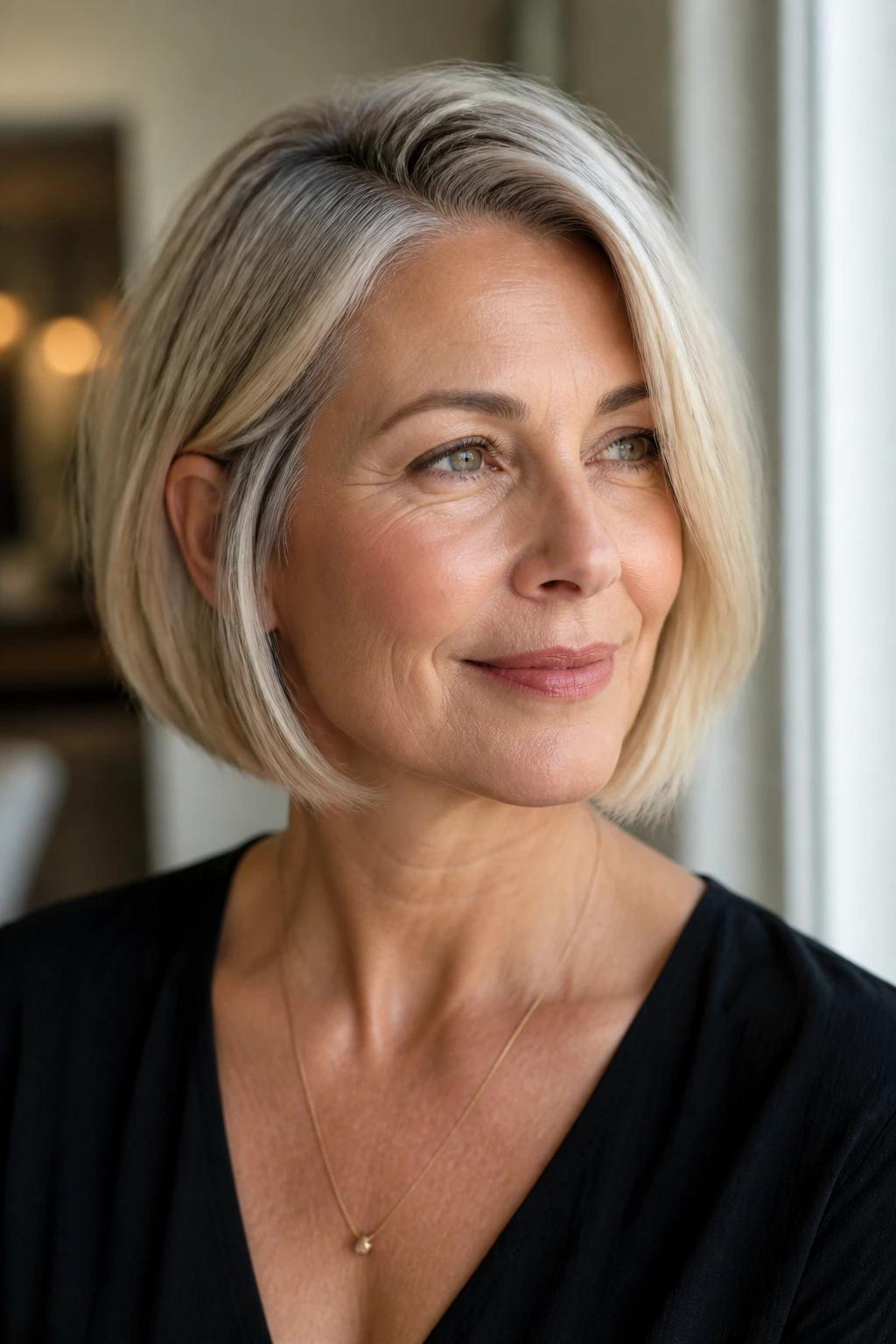
There’s a catch, though. A chin-length cut can look crisp and full, or it can look like a narrow strip that forgot to finish the job. Too much razoring, a weak part, heavy conditioner at the roots, or a line that lands at the widest part of the jaw will flatten the whole effect fast. The difference is in the architecture.
And that’s what makes this length so useful. Some versions lift the crown. Some soften the face. Some work better with glasses, some with waves, some with straight hair that likes to collapse by lunch. The good ones don’t fight fine hair. They give it a better frame.
Why These Chin-Length Haircuts Work So Well on Fine Hair

- They keep the ends looking denser: A blunt or softly curved perimeter reads thicker than hair that hangs past the jaw and thins out at the bottom.
- They borrow structure from the face: The chin and jaw give the cut a built-in line, which helps fine strands look deliberate instead of sparse.
- They are easier to lift at the root: Shorter hair loses less volume to gravity, so a side part or quick blow-dry can do more work.
- They play nicely with glasses and earrings: The length stops in the same zone where frames and jewelry sit, so the whole look feels balanced.
- They don’t demand a huge styling session: A round brush, a little mousse, and a cool shot are often enough when the cut is shaped correctly.
1. The Soft Blunt Chin-Length Bob
A blunt edge is the oldest trick in the book for a reason. On fine hair, it gives the ends one clean line instead of a wispy little tail that disappears in dry air. At chin length, that line sits where the eye expects fullness, which makes the hair look denser before you even touch a brush.
Why it works on fine hair
Ask your stylist for a solid perimeter with almost no internal layering. If the ends are point-cut at all, it should be light and only to remove a touch of harshness. The whole idea is to keep the body at the bottom, not shave it away.
This cut works especially well when the hair is straight or only slightly wavy. It can also be a relief for women who are tired of long layers that hang flat at the shoulders and split at the bottom like a broom.
A 1.25- to 1.5-inch round brush and a light mousse at the roots are enough for daily styling. Blow the ends under just a little. Not a curl. Just a bend.
2. The Side-Part Chin-Length Bob
If the crown goes flat by noon, a side part is the fastest fix that doesn’t involve teasing and prayer. Shifting the part off center moves more hair over one temple, which creates lift where fine hair usually gives up first. It’s a small change with a big visual payoff.
A side-part bob also softens the face without adding bulk through the ends. The longer side can skim the cheekbone while the shorter side keeps the shape from feeling boxy. That little angle keeps the cut moving.
If your hair has a stubborn cowlick, build the part on the calmer side and blow-dry the roots in the opposite direction for 20 to 30 seconds. Then flip the hair back where you want it. That tiny reset helps the part stay open instead of collapsing into the scalp.
3. Chin-Length Bob with Curtain Bangs

Want softness around the face without giving up the fullness at the perimeter? Curtain bangs do that job neatly. They open in the middle, slide toward the cheekbones, and leave the rest of the bob free to look thick.
The fringe length that actually works
Keep the shortest point of the curtain bang around the bridge of the nose or slightly lower. If the bang starts too high, it can look choppy and steal weight from the front. If it starts too low, it turns into a face curtain that feels heavy.
The rest of the bob should stay fairly clean. I’d avoid too much layering through the bottom half, because the bangs already add movement. You want contrast: airy front, solid ends.
A small round brush or a flat brush with a quick bend away from the face is enough. And if you wear glasses, curtain bangs can be especially nice because they don’t fight the frame line the way a heavy fringe can.
4. The Rounded Chin-Length Bob

This is the cut for anyone who wants polish without a hard edge. The perimeter curves inward slightly, so the hair tucks under the jaw instead of hanging in a straight slab. On fine hair, that curve makes the silhouette look intentional.
Rounded bobs can be a little deceptive. If the stylist overdoes the graduation in the back, you end up with a helmet shape. That’s not the goal. The back should support the shape, not announce itself.
I like this cut for women whose hair falls straight but lacks body. The soft inward bend gives the illusion of thicker ends, especially when the blow-dry is finished with a cool shot. If you want the style to last all day, clip the crown while it cools. That one move matters more than people think.
5. The Piecey Razor-Cut Bob
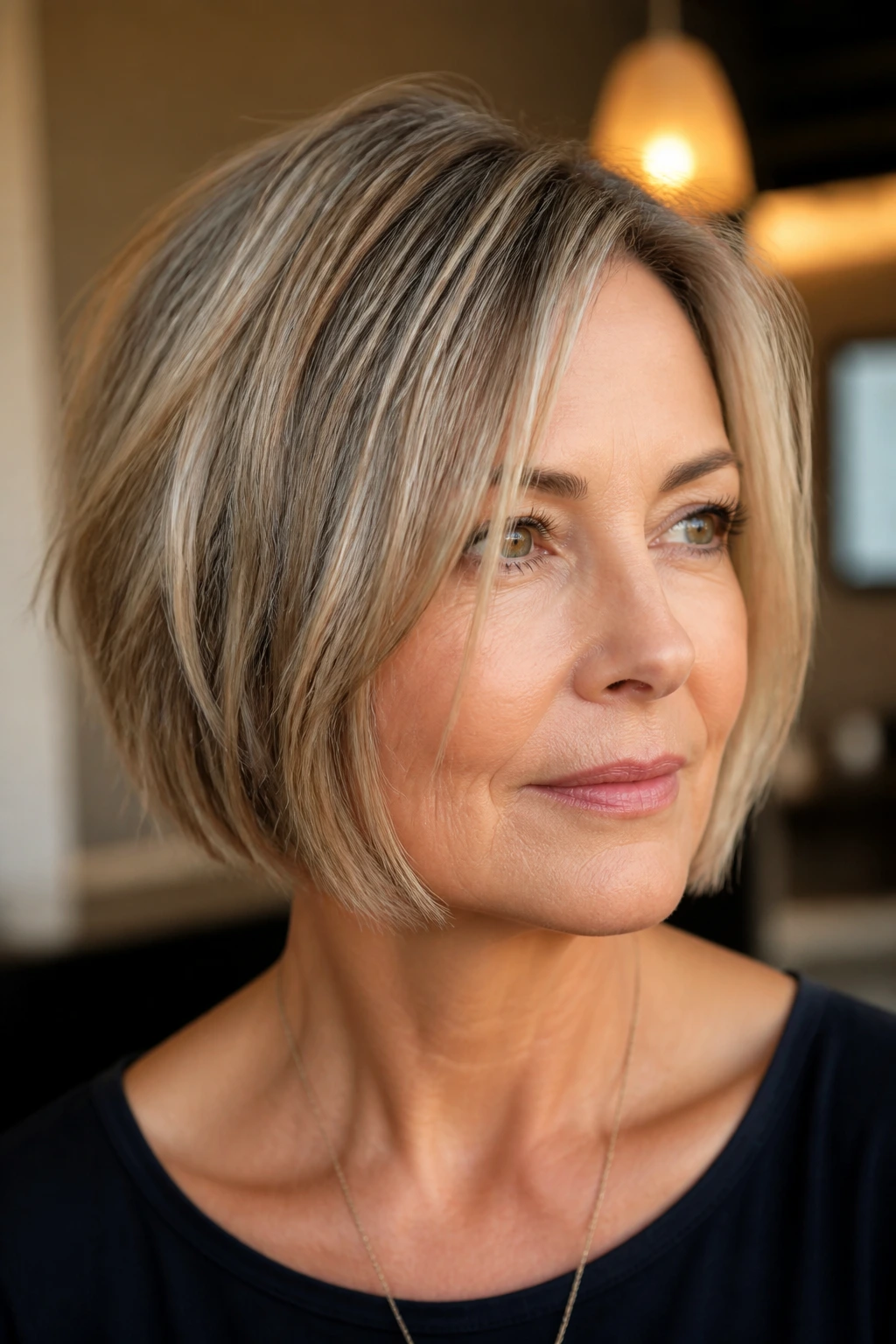
Razor cutting can ruin fine hair if the stylist gets enthusiastic with it. It can also bring life back to hair that has gone too compact and stiff. The trick is restraint.
Use the razor on the surface layers and a little at the face frame, not through the whole perimeter. Keep the bottom line intact. That way you get movement near the cheek and temple without sacrificing density at the ends.
This version suits straight or slightly wavy hair that feels heavy but still looks thin when it’s all one length. A light texturizing spray at the mid-lengths gives it a lived-in finish. Skip the oily cream. It separates the strands too much and makes the whole thing read smaller.
6. Chin-Length Shag with Soft Layers

If your hair goes flat at the crown and puffs out at the bottom, a soft shag can rebalance the whole head. The layers should start above the cheekbone, then taper gently toward the chin. Keep the perimeter strong enough to hold the shape.
Where the layers should live
The best part of this cut is that the layers do not need to reach the ends. That’s where many fine-hair shags fall apart. Once the bottom gets too chipped, the hair starts looking thin instead of airy.
This cut works well with a little natural wave. Scrunch in mousse on damp hair, twist a few sections with your fingers, and let it air-dry halfway before finishing with a diffuser. The goal is bend and separation, not crunchy texture.
If you like an undone look, this is one of the more forgiving choices in the whole list. It can survive a rough day better than a sleek bob because the shape already expects movement.
7. The A-Line Chin Bob
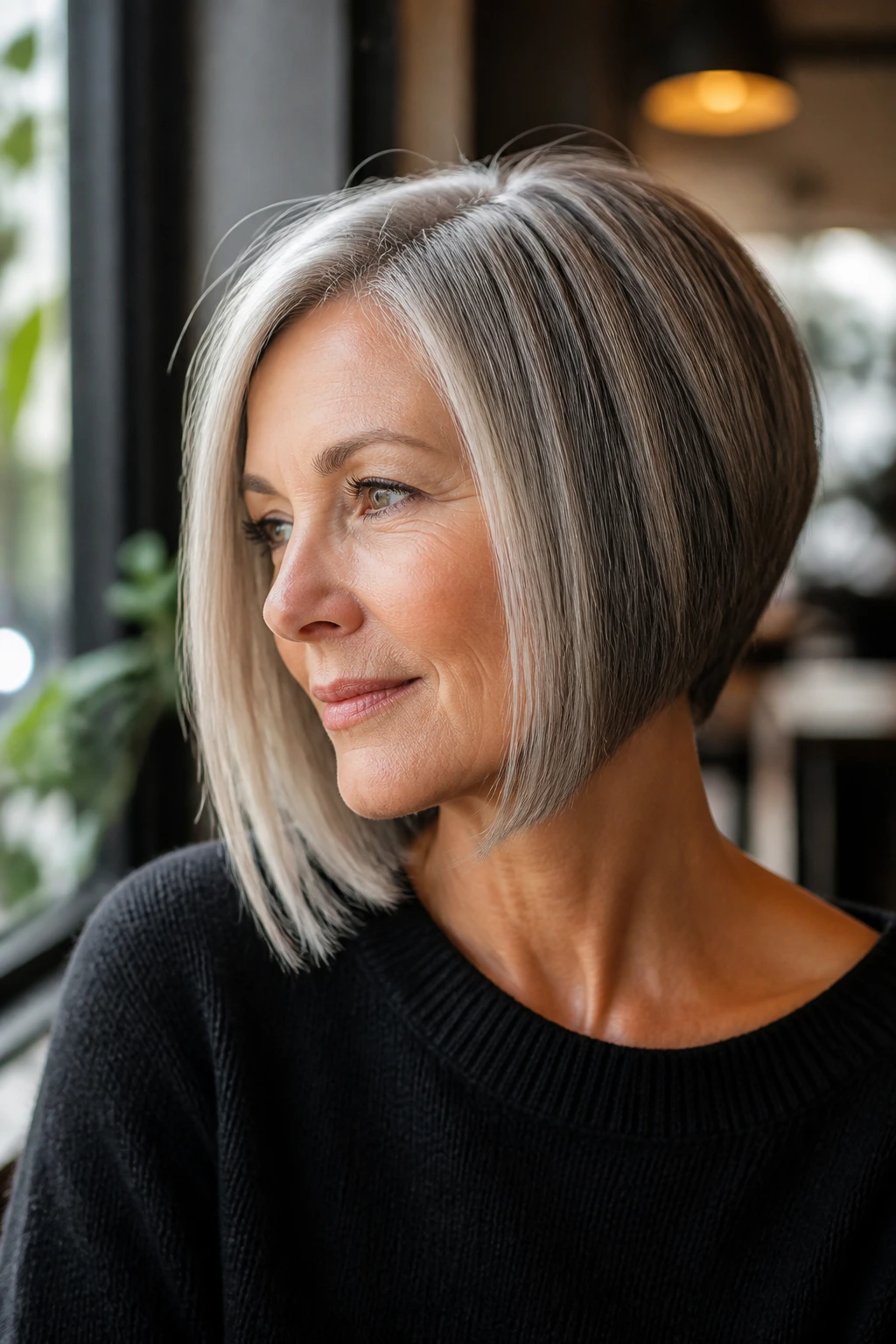
The A-line bob is quietly smart. The front sits a touch longer than the back, which pulls the eye forward and gives the cut a little swing without making the ends look stringy. For fine hair, that forward tilt helps the face read sharper and the hair read fuller.
This is a good pick if you want structure and do not want a stacked back. Ask for a difference of about 1 to 1.5 inches between the nape and the front pieces. More than that starts to feel dramatic. Less than that can disappear once the hair settles.
I like this shape for round or square faces because it lengthens the line along the jaw. A flat iron with a soft bend at the ends works well here. Keep the iron moving; don’t clamp and fold, or the hair will look bent instead of shaped.
8. The Inverted Bob with Crown Lift
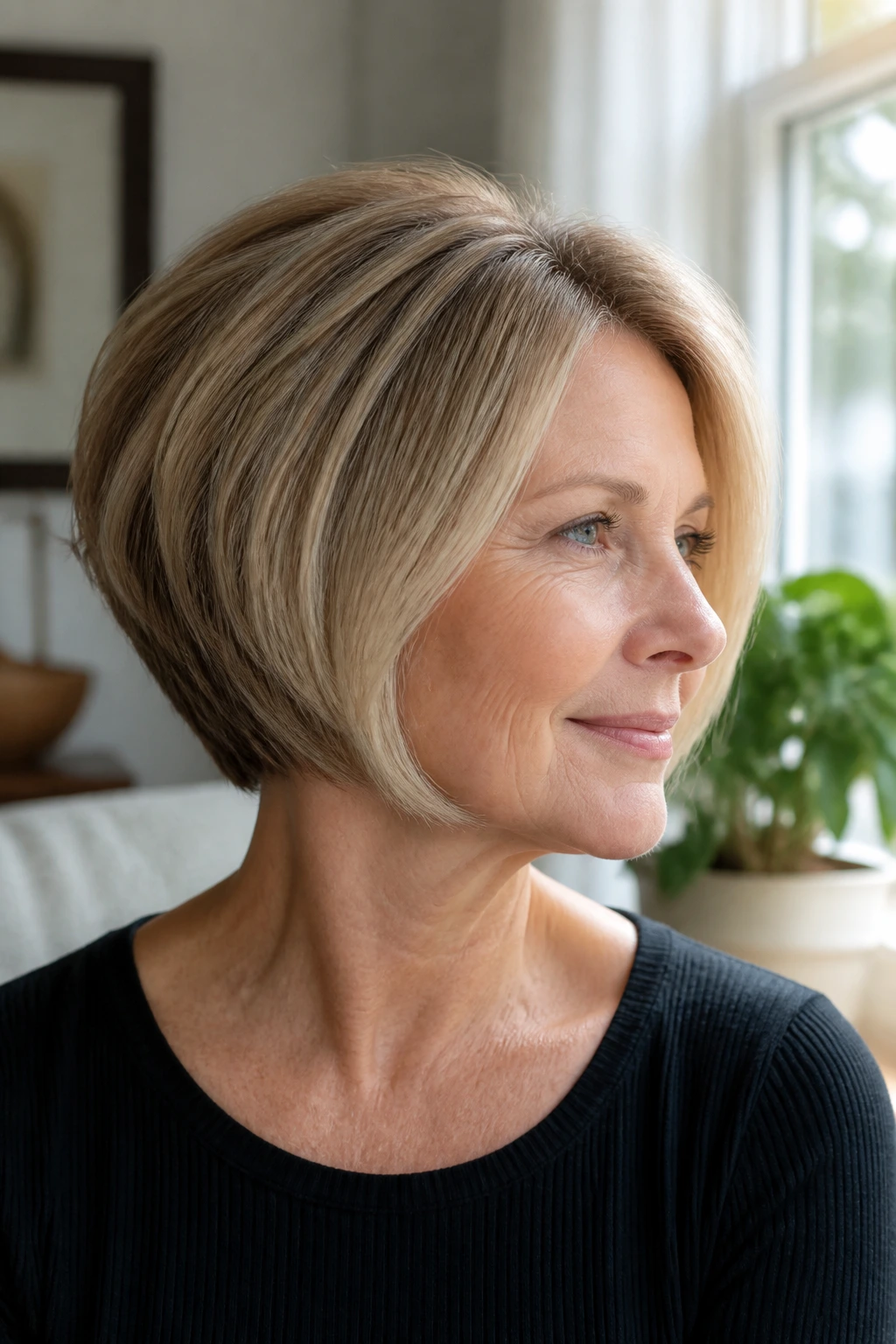
Need lift where people can actually see it? The inverted bob stacks a little support in the back so the top doesn’t collapse. That extra structure can be a gift for fine hair that lies flat at the crown but still has enough body through the sides.
This is not the stiff, over-stacked bob from old salon magazines. A modern version keeps the nape neat and the top soft. The transition should feel smooth, not chopped. If the angle is too steep, the front can look narrow and the back can balloon.
A root-lift spray and a couple of duckbill clips while the hair cools make a real difference. Set the crown, clip it for 5 to 10 minutes, then let it down. The lift lasts longer because it cools in place.
9. Layered Bob with Side-Swept Fringe

A side-swept fringe softens the forehead and lets the rest of the bob stay mostly full. That combination is useful when straight-across bangs feel too committed or too heavy for fine hair. The sweep creates movement without slicing the front too thin.
The layers should start around the jaw or a little above it. If they begin too high, the shape loses density fast. If they begin too low, the bob can feel blocky. There’s a narrow sweet spot here, and it’s worth asking your stylist to show you exactly where the first layer will fall.
This cut also does well with a gentle blowout. Direct the fringe away from the face with a round brush, then tuck one side behind the ear. The asymmetry keeps the style from going flat and makes the whole look feel lived-in rather than severe.
10. Curved Chin-Length Bob with Face-Framing Pieces

A curved bob with face-framing pieces is for the person who wants softness without losing the discipline of a clean cut. The perimeter curves in slightly, while two or three longer pieces at the front lift the cheekbones and soften the jawline.
That front detail matters when fine hair tends to cling to the sides of the face. A little length around the cheek gives the eye something to follow, and it keeps the style from feeling too square. The rest of the hair can stay controlled and polished.
I’d keep the face-framing pieces subtle. Nothing shaggy. Nothing that falls into separate little strands by the end of the day. Think of them as a soft border, not a second haircut.
11. Chin-Length Cut with Micro Layers at the Crown
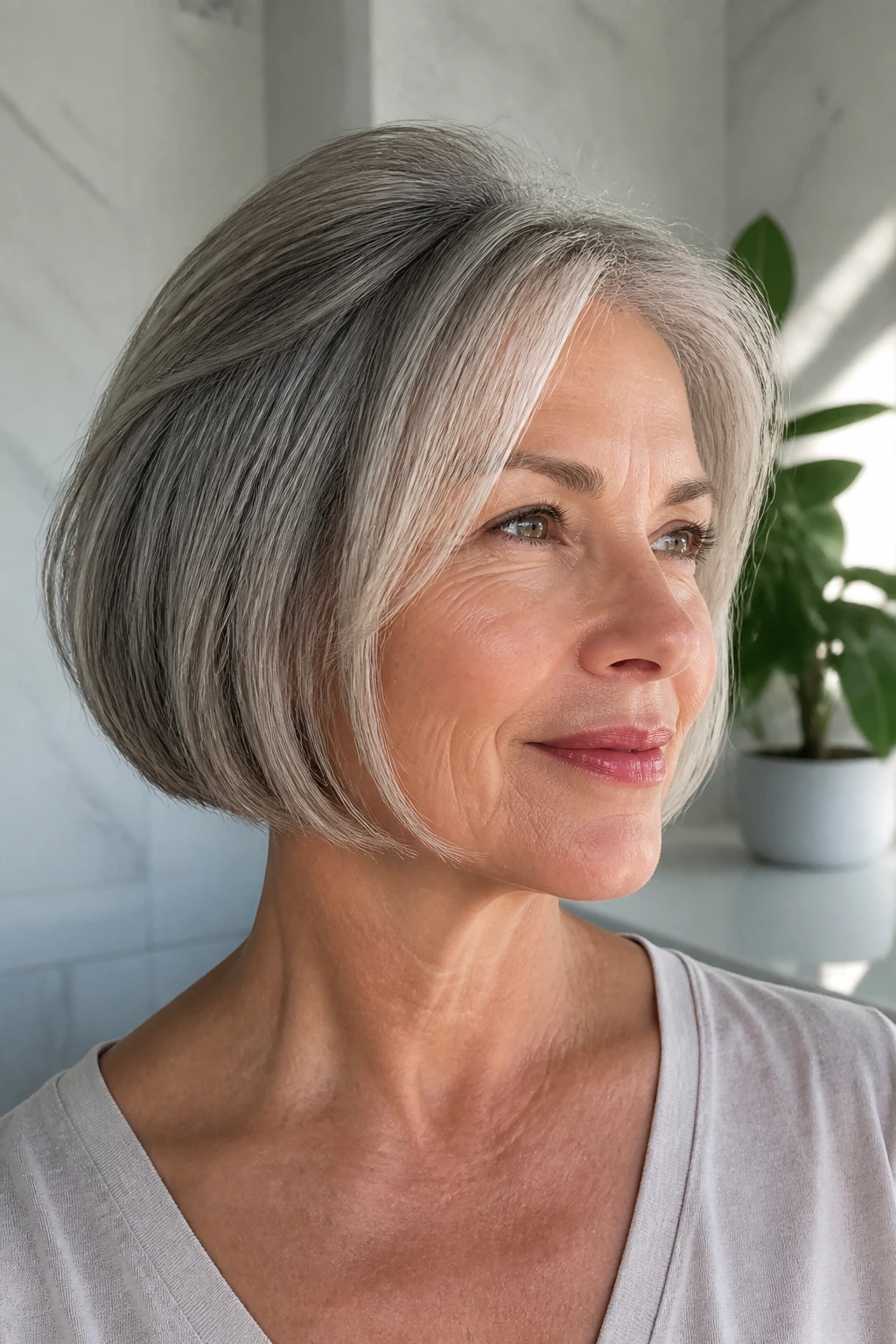
What if your hair is fine but also flat right at the top? Then you want tiny layers at the crown, not a full layered bob. Micro layers create a pocket of air where the roots need it, while the perimeter stays thick enough to read as a real shape.
The crown should be lifted, not thinned
This is one of those cuts that looks simple and can go wrong fast. A stylist with heavy shears can overdo the interior and leave the hair looking hollow. Ask for very light removal at the top, with the ends left full.
It’s a smart choice for women whose hair grows straight and lies close to the scalp. A little mousse at the roots, blow-dried in small sections, gives this shape more staying power than you’d expect. Skip heavy creams. They flatten the crown and make the whole trick disappear.
12. The Sleek Center-Part Bob
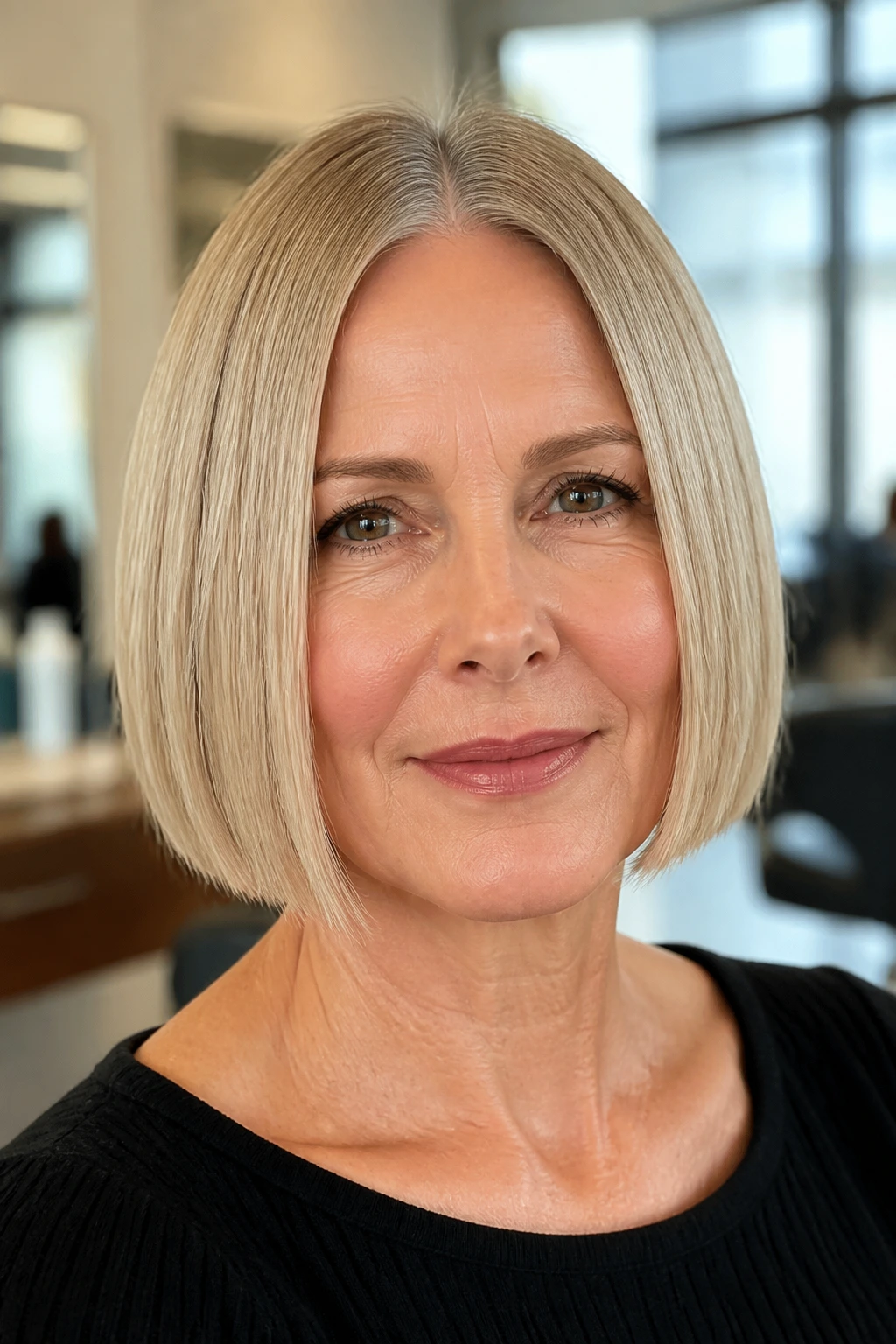
A center part is not off-limits after 50. It only looks severe when the cut itself has no density. Give the hair a clean chin-length line, and the center part can look sharp, modern, and calm at the same time.
The key is balance. Both sides need to be close in length, and the ends need enough weight to sit in a straight line or a very soft curve. If the perimeter gets too thin, the center part will expose every weak spot at the temples.
This is a good choice if your hair is naturally straight or if you like a quick flat-iron finish. Use a light smoothing serum on the mid-lengths and ends only. Keep it off the roots, or the part will widen and stay there.
13. Tousled Wavy Chin-Length Bob

Some mornings call for hair that looks intentional but not overworked. A tousled wavy bob fits that mood. The shape lands around the chin, while the wave pattern breaks up the line enough to keep fine hair from looking stiff.
The trick is controlled irregularity. Bend a few sections with a 1-inch iron, leave the ends out on some pieces, and alternate the direction of the wave. That gives the hair movement without turning it into a curl pattern that is too uniform.
Air-drying can work well here, but only if you use a light mousse or wave cream and don’t pile on the product. Fine hair will show buildup fast. If the strands feel sticky before they dry, they’ll look limp after.
14. The Classic French Bob
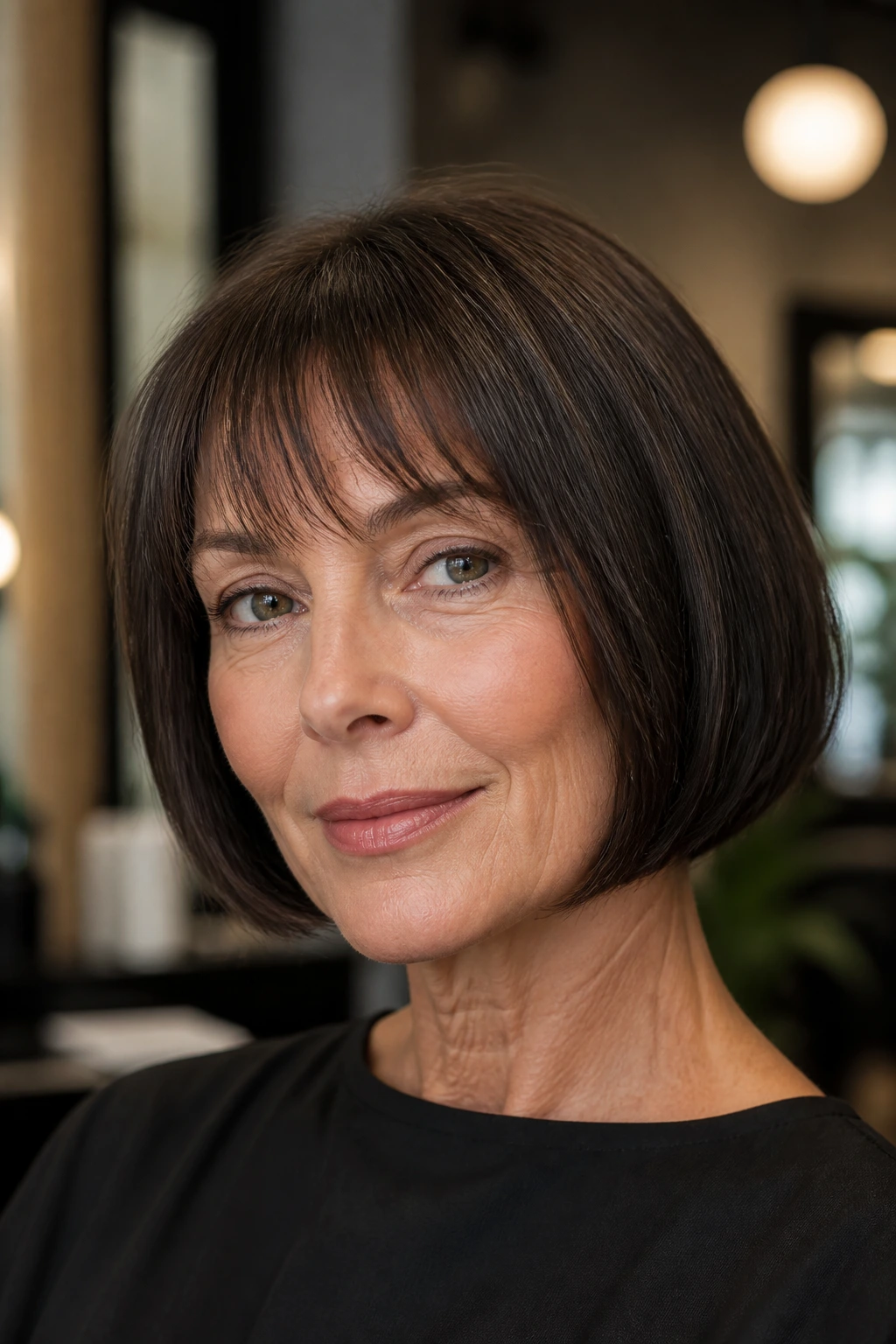
The French bob is shorter, cheekier, and a little more exacting than a standard bob. It usually sits at or slightly below the chin, often with a fringe or a clean face frame. On fine hair, it looks best when the line is crisp and the ends have enough density to hold their own.
This cut is a strong choice if your hair already has some natural body or if you’re happy to style it daily. It doesn’t hide much. That’s part of the charm. The face becomes the focus, and the hair acts like a frame instead of the main event.
I’d avoid over-texturizing the French bob. Too much piecey work makes it lose the very thing that gives it presence: a defined outline. A little bend under the ends is enough.
15. Chin-Length Bob with Wispy Bangs
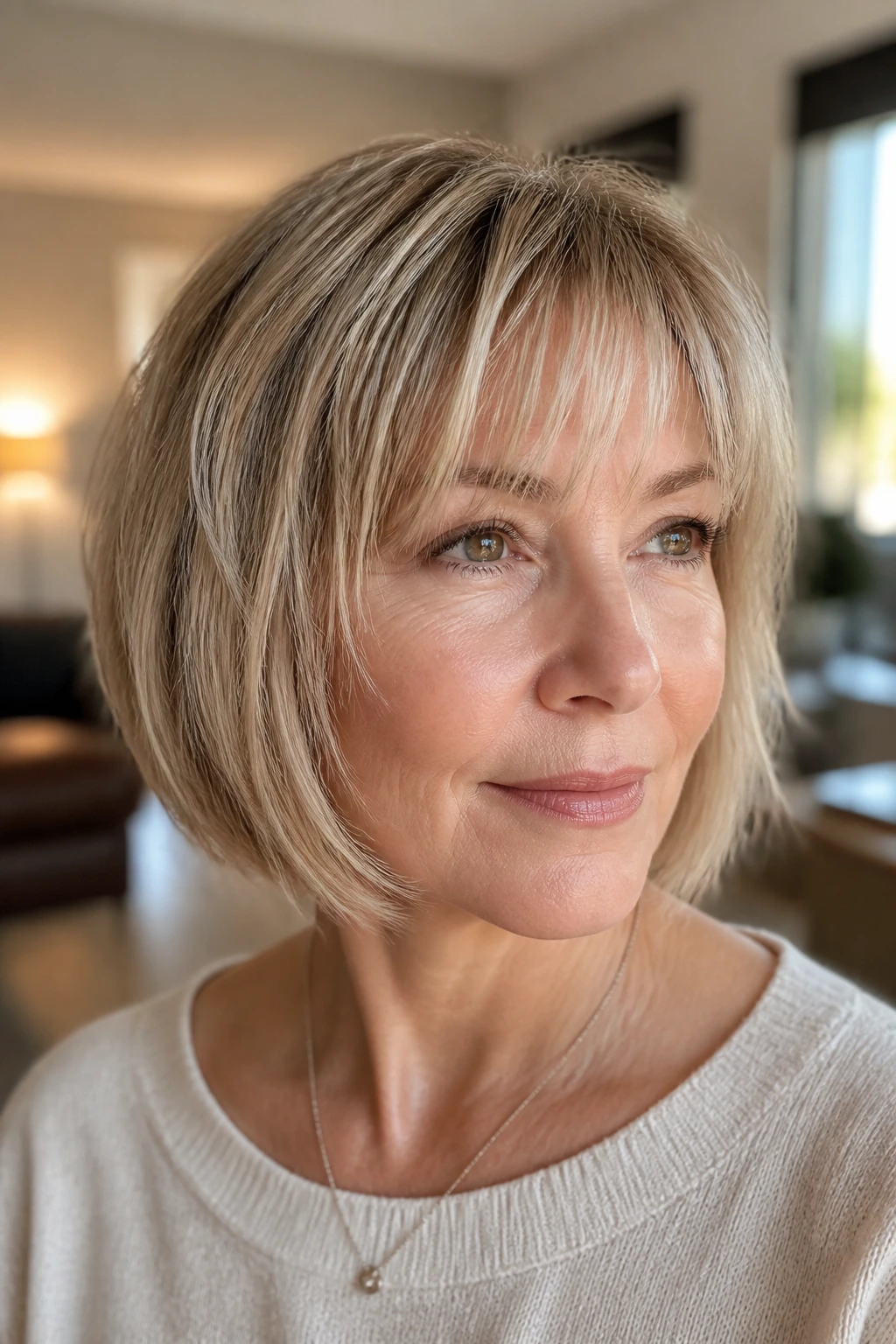
Want forehead coverage without a heavy sheet of hair? Wispy bangs give you that middle ground. They soften the front, leave some skin showing, and keep the rest of the cut from feeling crowded.
The bang should float, not sit like a shelf
Ask for point-cut ends and a bang that breaks into a few light pieces instead of one solid bar. That keeps the fringe from swallowing fine hair. If the bangs are too thick, they can drag the whole style downward.
This version works especially well if your hairline has gotten a little lighter or if you want to soften a strong brow. It also plays nicely with glasses because the fringe stays airy. A tiny bit of mousse at the root and a quick finger-dry are usually enough.
16. Feathered Jawline Bob

Feathering gets a bad reputation because some versions look old-fashioned and over-thinned. Done at the jawline, though, it can help fine hair move without losing its body. The feathering should soften the edge, not erase it.
This style helps when your hair flips outward at the ends or feels too compact in one block. The feathered texture breaks up that stiffness and gives the jawline a cleaner outline. It’s especially good on hair that is fine but not sparse.
Ask for feathering around the perimeter only, and keep the layers light. If the top gets feathered too, the cut can start to look airy in the wrong way. A small round brush and a cool shot are enough to shape it.
17. The Asymmetrical Chin-Length Cut
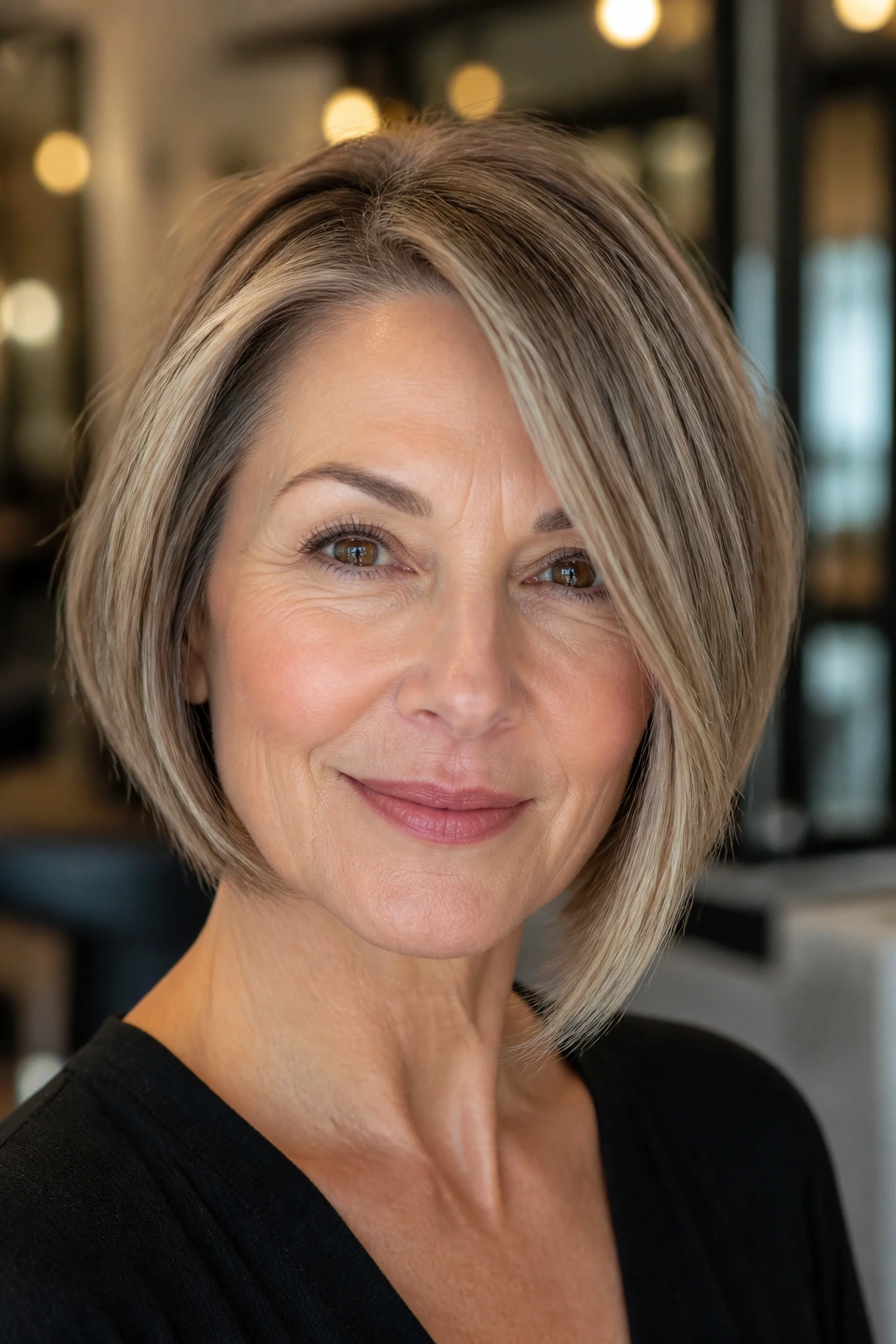
A little asymmetry can do a lot. One side sits about half an inch to an inch longer, which creates movement and makes the whole cut feel deliberate. For fine hair, that slight imbalance gives the eye something to follow.
This is a nice option if your face is slightly uneven, your part has a stubborn habit of drifting, or you want a cut that feels modern without being loud. Keep the difference subtle. If it goes too far, the haircut starts to look like a statement instead of an everyday shape.
The asymmetrical line also helps if one side of your hair is fuller than the other. The longer side can balance a thinner temple or a cowlick, which is one of those small fixes that makes morning styling easier.
18. Choppy Textured Bob with Nape Lift
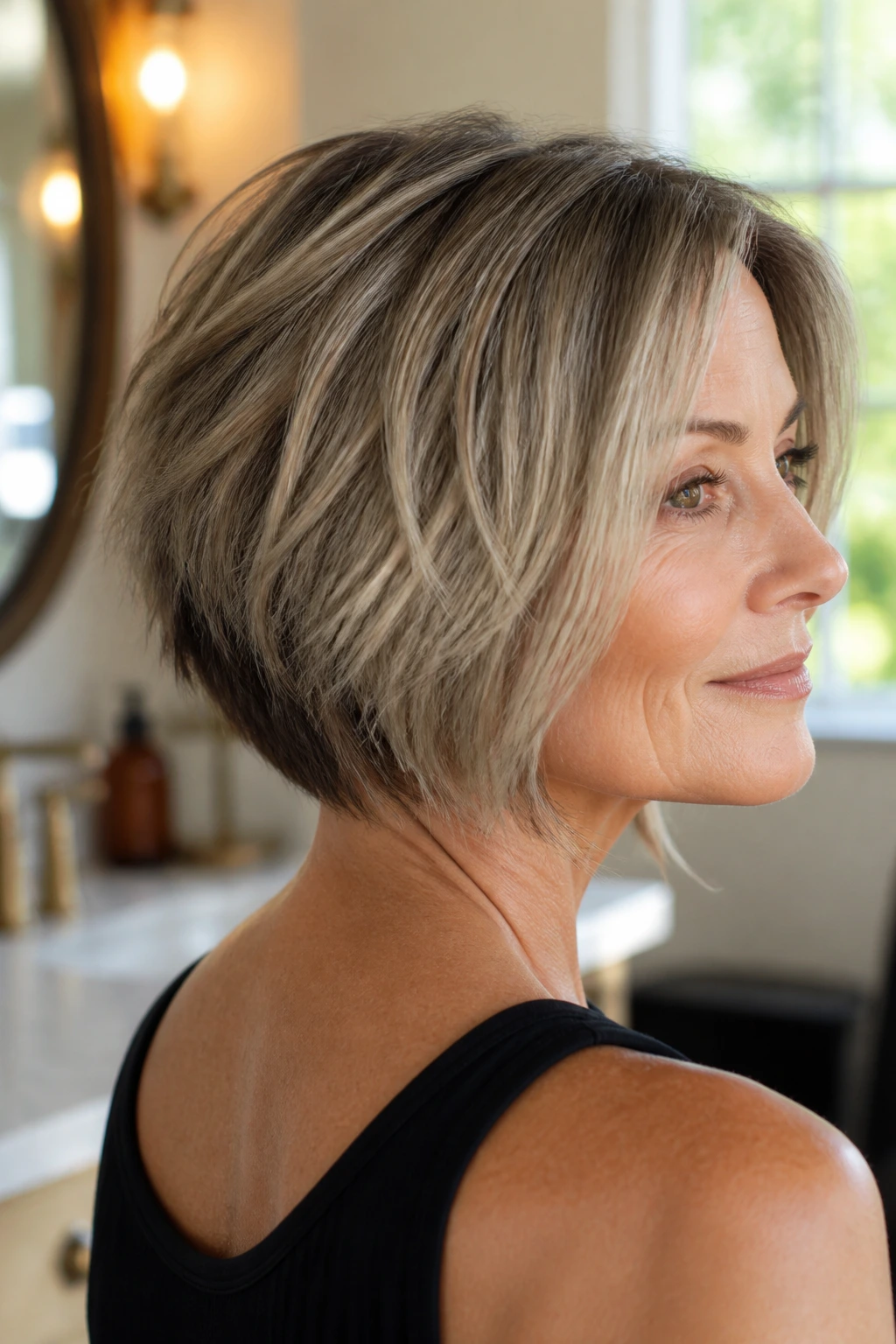
Some hair needs a little roughness to stop looking too neat and too thin. A choppy chin-length bob uses texture in the interior and a small lift at the nape to give the style more life. The bottom still needs weight. That part is non-negotiable.
This cut is a solid pick for fine hair with a lot of strands but not much density, or for hair that goes soft the minute humidity shows up. The choppiness creates movement, while the nape lift keeps the back from collapsing against the neck.
Work a texturizing spray through the mid-lengths, then pinch a few pieces while they cool. Don’t overload the roots. A little separation goes a long way, and on fine hair, too much can make the cut look dry and busy.
Why Chin-Length Cuts Hold Their Shape on Fine Hair

Fine hair is not the enemy. Gravity is.
Once the length gets past the jaw, the weight of each strand starts pulling down on the shape. That’s why shoulder-length cuts can look strangely tired even when the hair is clean and freshly brushed. Chin length shortens the distance between the root and the end, so the hair has less chance to slump.
The jawline also gives the cut something to rest against visually. A blunt or slightly curved perimeter lands where the eye already expects form, and that makes the hair look fuller than it would at the collarbone. It’s a small optical trick, but it works.
A lot of the struggle after 50 comes from the crown, not the ends. Hair often loses lift at the root first, then feels thinner at the temples, then refuses to hold a bend for more than a few hours. Chin-length cuts make room for a clean line at the bottom while using the top of the head for strategic lift. That’s the whole game.
The best versions here don’t over-layer. They build shape with the perimeter, a smart part, and just enough movement around the face to keep things from going boxy.
The Tools That Make These Cuts Easier to Style

- 1- to 1.5-inch round brush: Small enough to bend the ends under without making fine hair look overworked.
- Blow dryer with a concentrator nozzle: Direct airflow matters more than speed when you want a smooth crown and a clean finish.
- Duckbill clips or root-lift clips: Useful for setting the crown while it cools so the lift stays in place longer.
- Fine-tooth tail comb: Helps make a clean side part or center part without flattening the roots with your fingers.
- Lightweight mousse: Gives the hair grip at the root and a little memory through the lengths.
- Heat protectant spray: Fine hair can’t take endless hot-tool passes without showing the damage at the ends.
- Texturizing spray: Best for the last 10% of the look — not the whole head.
- Flat iron with rounded edges: Good for soft bends on the blunt, A-line, or center-part versions.
- Velcro rollers, optional: Handy if you want extra lift at the crown while you do makeup.
Smart Product Choices for Fine Hair at the Chin
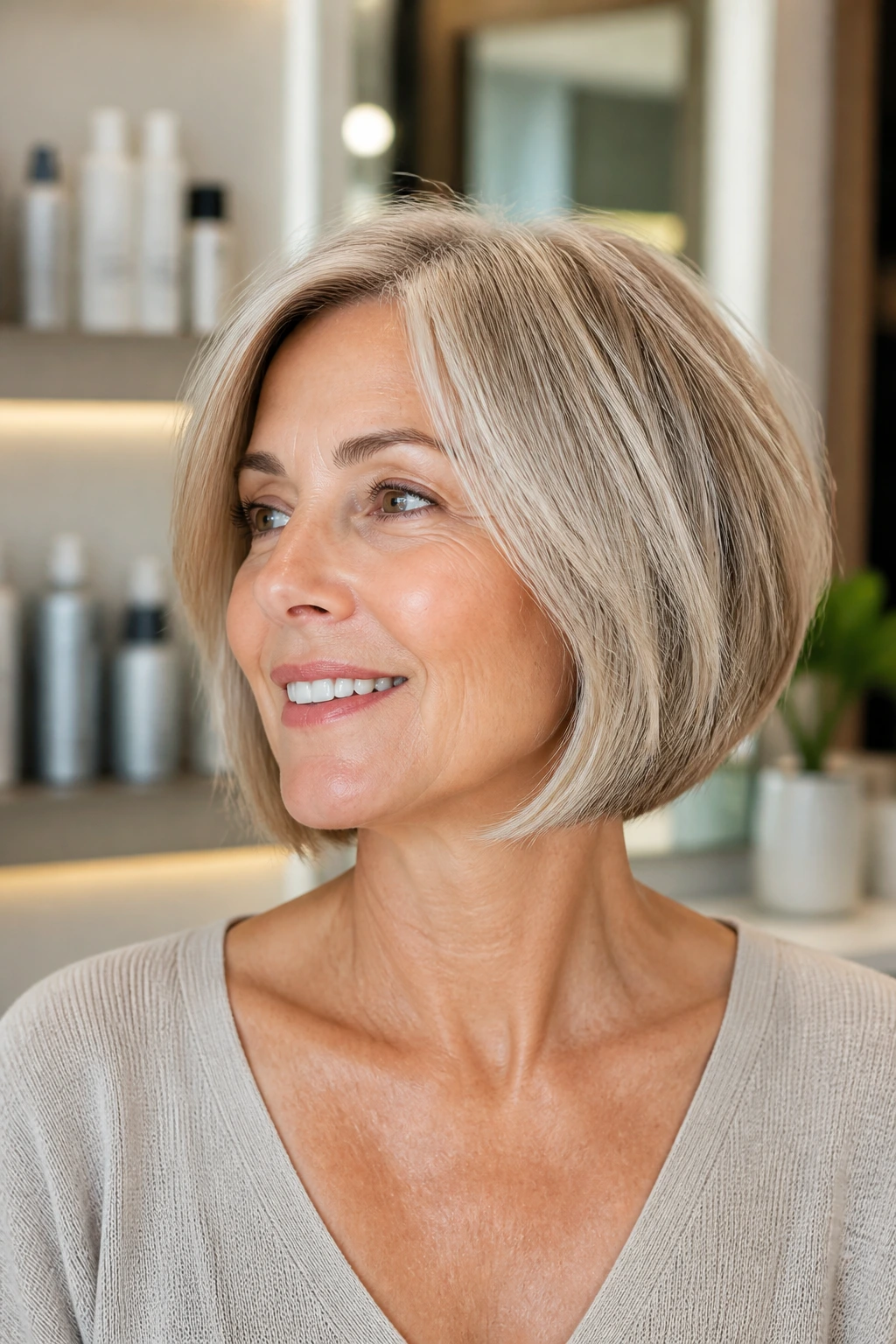
Fine hair gets weighed down faster than most people expect, which means product choice matters more than product quantity. A light shampoo and conditioner pair is usually enough for the wash stage, but the conditioner should stay away from the scalp unless your hair is very dry. Start it around ear level and let the ends take what they need.
A good mousse can do more than a heavy cream ever will here. Look for one that gives grip without leaving the hair sticky after it dries. If the label promises shine and softness but no hold, it probably won’t keep a chin-length shape from collapsing by midday.
Root-lift spray is worth the cabinet space if your crown goes flat easily. Use it on damp roots, then blow-dry with a nozzle and lift the hair at the scalp with your fingers or a brush. A little goes a long way. Too much and the roots can feel chalky.
Dry shampoo is useful, but not as a rescue for every problem. It’s better as a day-two volume tool than a greasy-root fixer. And if your hair is color-treated or gray, a clarifying wash once every 2 to 4 weeks helps keep product buildup from dulling the shape.
I’m not a fan of heavy oils all over fine hair. A tiny drop on the ends is fine. A glossy puddle from mid-length to root is not. It flattens the crown and makes the perimeter separate.
How to Wear These Cuts with Glasses, Earrings, and Collars

Presentation: Ask for the perimeter to land at the chin or a hair below it, not right on top of the jawbone. That keeps the shape visible and avoids the “stuck in the middle” look that fine hair can get when the length is too precise. If you wear glasses, make sure the front pieces either tuck cleanly or sit clearly above or below the frame line.
Best With: Hoop earrings, small drops, or a simple stud all work because the cut already frames the face. High necklines and turtlenecks can be strong with chin-length hair too, but the cut should have enough lift at the crown so the whole look doesn’t feel crowded. A V-neck or open collar gives the hair more space if you want a lighter feel.
Length Sweet Spot: If your hair is very fine, don’t let the cut drift much past the chin. A little more length can be useful if your hair has good density, but on low-volume hair, that extra inch often turns into see-through ends. Slightly above the chin can also work, especially if the back is kept clean and the front is a touch longer.
Style Mood: Sleek and tucked behind the ears gives a sharper, cleaner line. A loose bend and a side part read softer. Same cut. Different story.
Small Styling Moves That Add Lift Without Drama
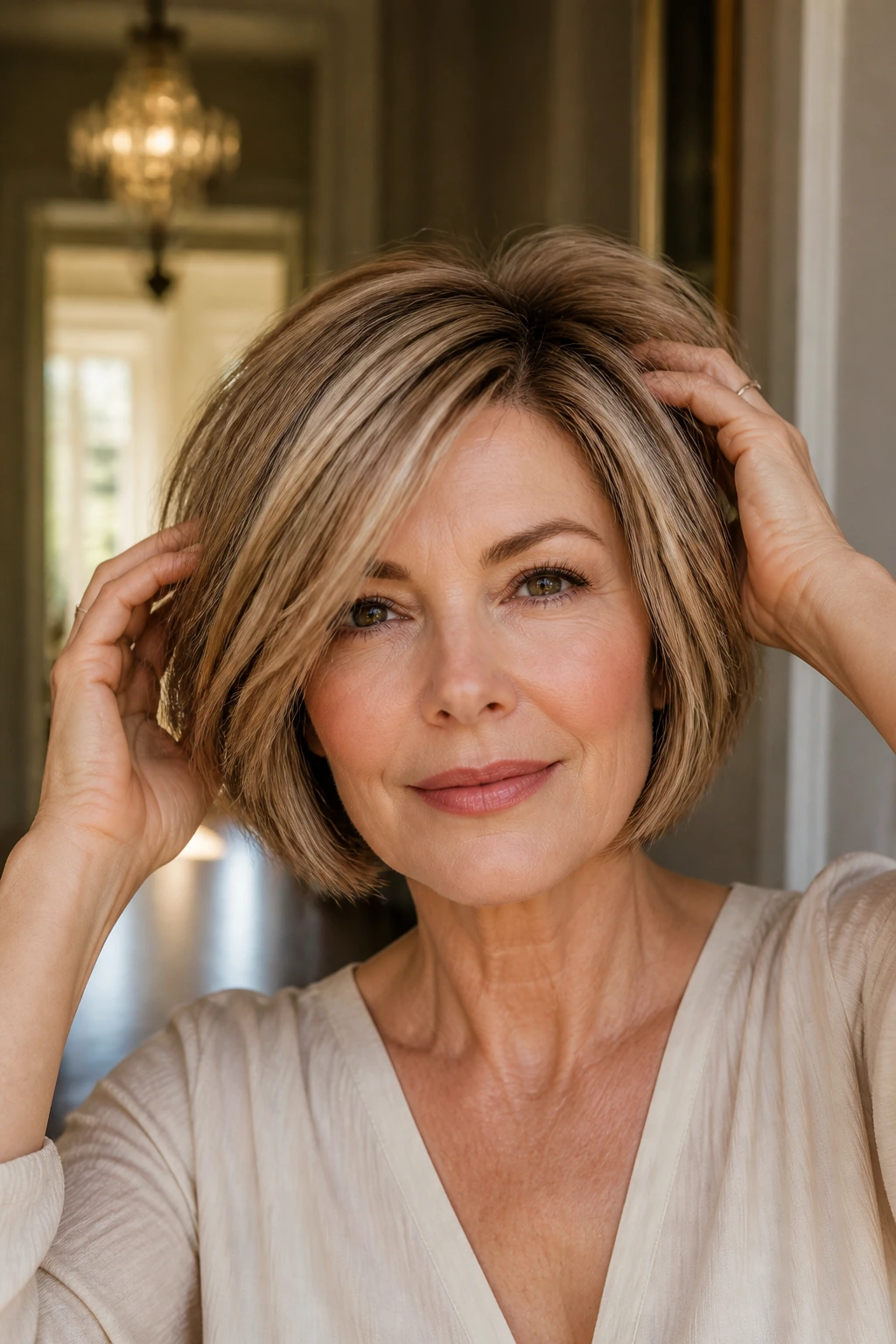
Root Lift: Blow-dry the crown first, not last. If the roots dry flat, it takes twice the work to change them later. A little mousse at the scalp and a quick lift with the brush can make the top look fuller in five minutes.
Texture: Bend only a few random pieces with a flat iron or curling iron. Fine hair looks denser when not every strand follows the same pattern. I prefer irregular movement over perfect curls on this length.
Finish: Keep serum away from the roots. Use a pea-sized amount on the ends if they feel dry, and stop there. The perimeter should look smooth, not slick.
Color Support: Soft highlights or lowlights can give fine hair more visual depth, especially in silver or salt-and-pepper shades. A single flat color can look thinner than a dimensional one, even when the cut is the same.
Mistakes That Make Fine Hair Look Thinner
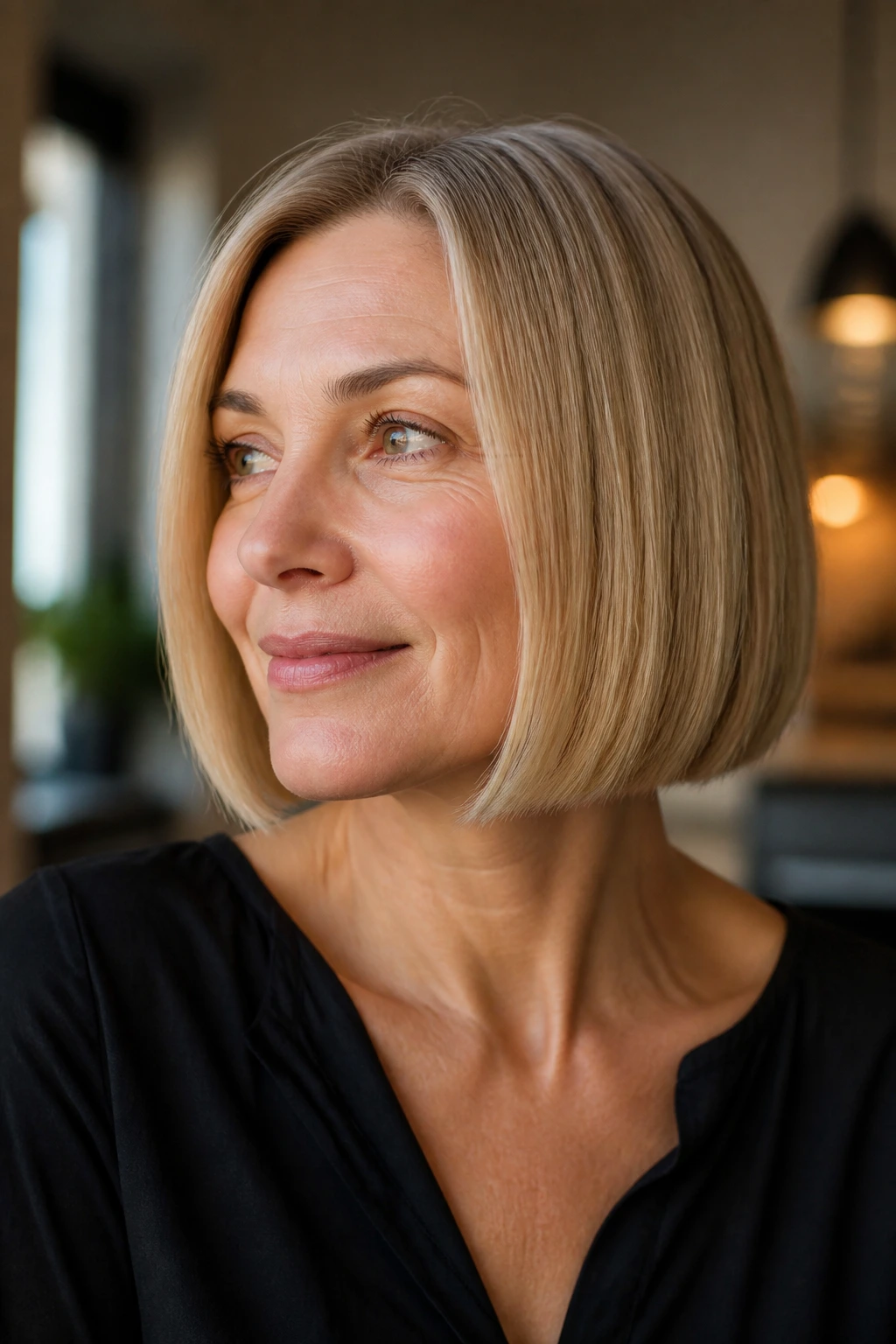
- Over-layering the ends: The symptom is see-through tips that look stringy when the hair moves. The fix is a stronger perimeter and lighter layers that stay higher up.
- Landing the cut at the widest part of the jaw: That can make the face look broader and the hair look shorter than it is. Shift the line slightly above or below that point so the shape has room to breathe.
- Using heavy creams at the root: Fine hair collapses fast when the scalp is coated. Keep moisturizers on the ends and use lighter sprays or mousses near the crown.
- Skipping regular trims: A chin-length bob loses its line fast once the ends split or flip in odd directions. Trim before the shape turns ragged.
- Over-styling with hot tools: Too many passes make the hair look polished but thin, because the bend gets pressed out and the ends start to look dry.
Variations and Adaptations to Try

The Glasses-Friendly Curve: Keep the front a little longer than the chin and add a soft inward bend. That gives glasses room to sit without the hair fighting the frame. It’s one of the easiest ways to keep the cut looking calm, not crowded.
The Gray-Blend Bob: If your silver strands are coming in with more texture, keep the perimeter blunt and let the color do some of the work. A little dimension from highlights or lowlights can break up flatness without adding more layers.
The Air-Dry Version: For naturally wavy hair, ask for a shape that looks good with no brush at all. The cut should be clean enough to air-dry into a shape, but soft enough that the wave doesn’t puff at the sides.
The Polished Blowout Version: This version uses a round brush and a slightly beveled end. It works for special events or days when you want the hair to look smoother and more defined. Keep the layers minimal so the blowout has something to hold on to.
The Fringe-Light Version: If bangs feel too heavy, use just a few face-framing pieces and keep the forehead mostly open. That still gives softness around the eyes without taking volume away from the front of the bob.
Care Between Salon Visits

A good chin-length cut stays sharp for about 6 to 8 weeks before the line starts to soften. If you wear bangs, that window gets shorter. Curtain bangs and wispy bangs usually need a tidy-up every 3 to 5 weeks if you want them to keep their shape instead of falling into your eyes.
At home, keep product buildup under control. Fine hair shows it fast, and a coated root can make even a good cut look tired. A clarifying wash every couple of weeks helps reset the shape, especially if you use dry shampoo, texture spray, or mousse most days.
Night care matters too. Sleep on a silk pillowcase if you can, or at least clip the hair loosely at the back so it doesn’t kinks around the jaw. A tiny mist of water in the morning can wake up the front pieces, but don’t soak the whole head. That usually makes the hair lose its lift instead of finding it.
If you’re growing the cut out, ask for dusting rather than a full reshaping. That keeps the line from getting ragged while the length comes up a little.
Common Questions About Chin-Length Haircuts for Women Over 50 with Fine Hair
Will chin-length hair make fine hair look thinner?
Not if the cut keeps a strong perimeter. Long, wispy hair usually looks thinner than a clean chin-length bob because the eye sees the end of the hair more clearly.
Are layers a bad idea for fine hair?
Not at all, but the placement matters. Too many layers through the ends can make the hair look sparse, while light crown layers or face-framing pieces can add useful lift.
Is a blunt bob better than a stacked bob?
For many fine-hair clients, yes. A blunt edge keeps the ends looking dense, while stacking is better when the back needs lift and the hair can handle a little more structure.
What if my hair is wavy or curly instead of straight?
You can still wear chin length, but the cut should respect the wave pattern. Leave enough weight in the bottom so the hair doesn’t spring out into a triangle once it dries.
How often should I trim a chin-length cut?
Most people do well with a trim every 6 to 8 weeks. If you have bangs or a very precise line, shorten that to around 4 to 6 weeks.
Can I wear this length with glasses?
Yes, and a lot of these cuts look especially good with frames. The trick is to keep the front pieces clear of the frame line so the hair and glasses don’t crowd each other.
What if my crown is flat no matter what I do?
Choose a cut with some root support — a side part, micro crown layers, or a slight inverted shape. Then blow-dry the roots first and let them cool before touching the ends.
Should I ask for thinning shears to remove bulk?
Only if your stylist uses them with a very light hand and you truly need weight removed. On fine hair, too much thinning can leave the ends looking frayed and smaller than they should.
A Shape That Holds Up

The best chin-length haircut is the one that gives your hair a better job to do. It can frame the face, keep the ends full, and make the crown look less tired without asking for an hour in front of the mirror. That’s the real appeal here.
Bring a photo, yes, but bring a clear opinion too. If you want blunt, say blunt. If you need crown lift, say that. If your hair has gone lighter at the temples or flatter at the top, point it out before the scissors come out. The difference between a good chin-length cut and a forgettable one is usually a single decision made early.
When the shape is right, fine hair stops apologizing for itself. It just sits there, neat and full and believable, which is more than a little satisfying.