



Square faces give you something a lot of people try to fake with contour and styling tricks: strong structure. The trouble is that the wrong braid placement can make that structure feel harsher than you want, especially on natural hair, where shrinkage, density, and braid size all change the final line. Two braids for natural hair and square faces work best when they shape the face instead of boxing it in.
The braid itself is only half the story. Parting angle, where the braid starts, how much hair you leave loose around the temples, and whether the ends fall straight or soften into curl all change the read of the style. A center part can lengthen. A side part can soften. A curved base can take the edge off a broad forehead. And if your hair is tightly coiled, the prep matters even more because a braid that starts too tight at the hairline can look stiff by lunchtime.
There’s also the practical side nobody likes to admit: natural hair is not one texture. The roots may puff, the crown may shrink, and the lengths may behave like they belong to another head entirely. That’s not a problem to solve with more tension. It’s a problem to solve with better planning. The styles below lean into that reality instead of fighting it.
Why These Two-Braid Looks Earn Their Spot
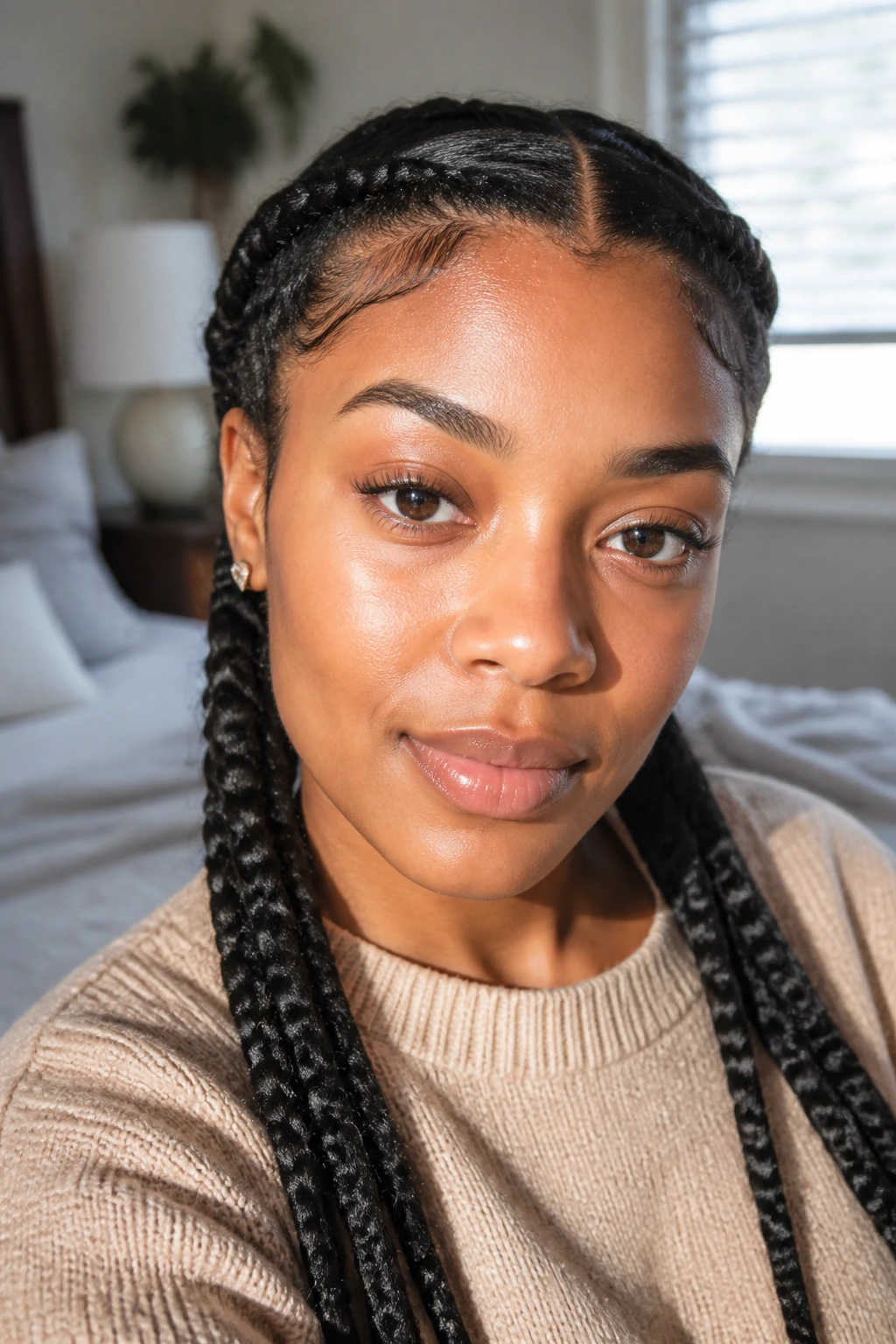
- Face-Lengthening Partings: A center line, a soft side part, or a curved base can pull the eye vertically instead of letting it sit squarely across the forehead and jaw.
- Low-Tension Roots: Two-braid styles can stay gentle at the hairline when the first inch is laid cleanly and the sections are not tiny.
- Natural Hair Friendly: Coils, stretched curls, or blown-out natural hair all work here; the style changes less with texture than with section size and direction.
- Easy to Dress Up: Beads, cuffs, curls at the ends, or a tucked finish can shift the same basic braid from plain to polished in seconds.
- Protective Without Hiding Your Face: You keep ends tucked away and still let your bone structure show. That balance is the whole point.
- Works With Real-Life Density: Thick hair, fine hair, high shrinkage, and length in-between all have a version of these braids that makes sense.
1. Sleek Center-Part Feed-In Braids
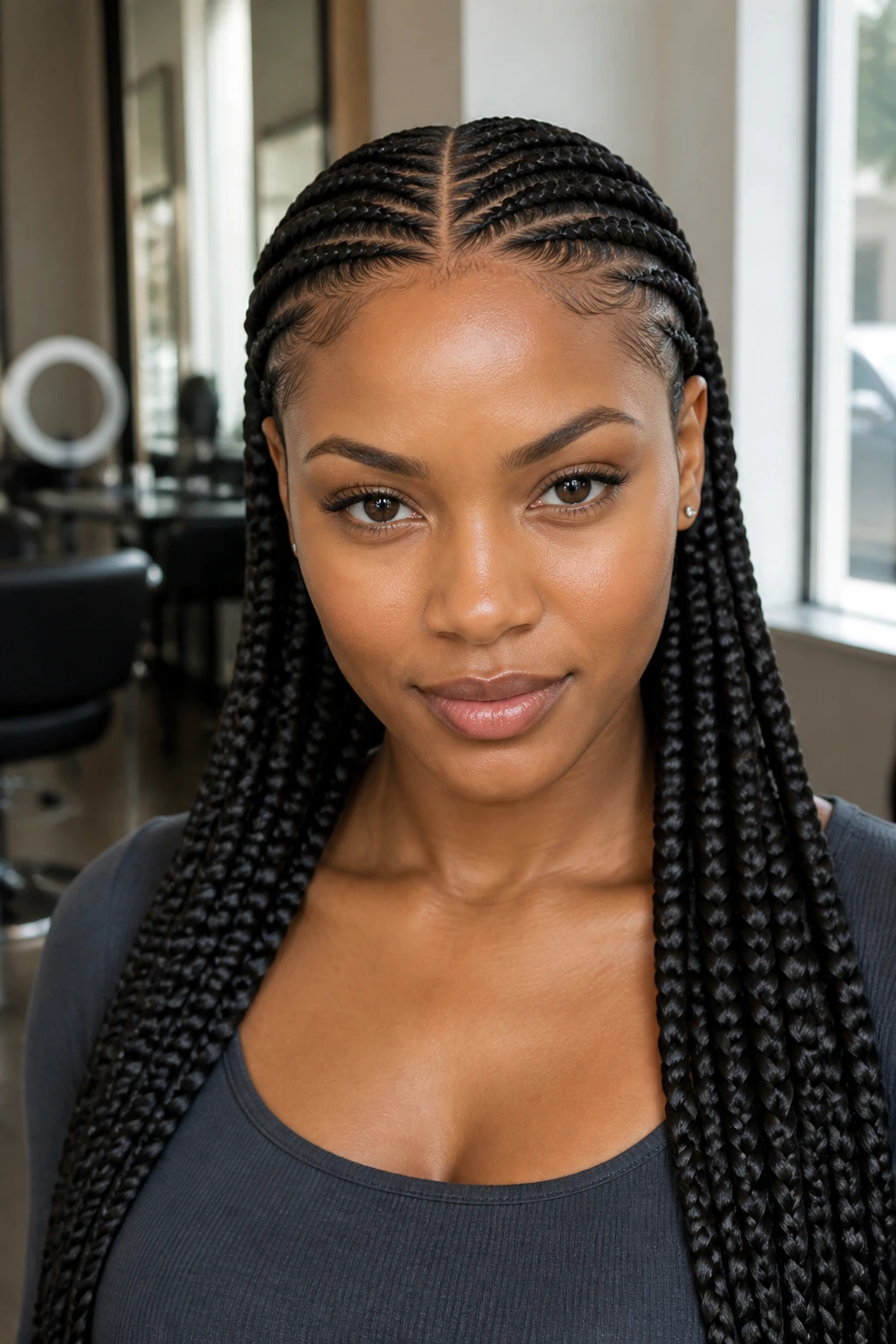
A clean center part does more for a square face than people give it credit for. The straight line acts like a vertical path down the middle of the head, which visually lengthens the face and stops the jaw from feeling like the widest point in the frame.
Feed-in braids help here because they start small and build gradually, so the braid base stays flatter and less bulky at the hairline. That matters on natural hair, where a heavy start can make the front read chunky before the braid even gets going.
Why it works on square faces
The center part gives symmetry, but the feed-in technique keeps it from looking severe. If the braids fall to collarbone or chest length, the eye keeps moving downward instead of landing on the jaw and stopping there.
A tiny bit of sheen at the roots is enough. I’d skip the thick layer of gel that leaves the scalp looking glossy in a way that feels more helmet than hairstyle.
2. Deep Side-Part Braids with Soft Ends
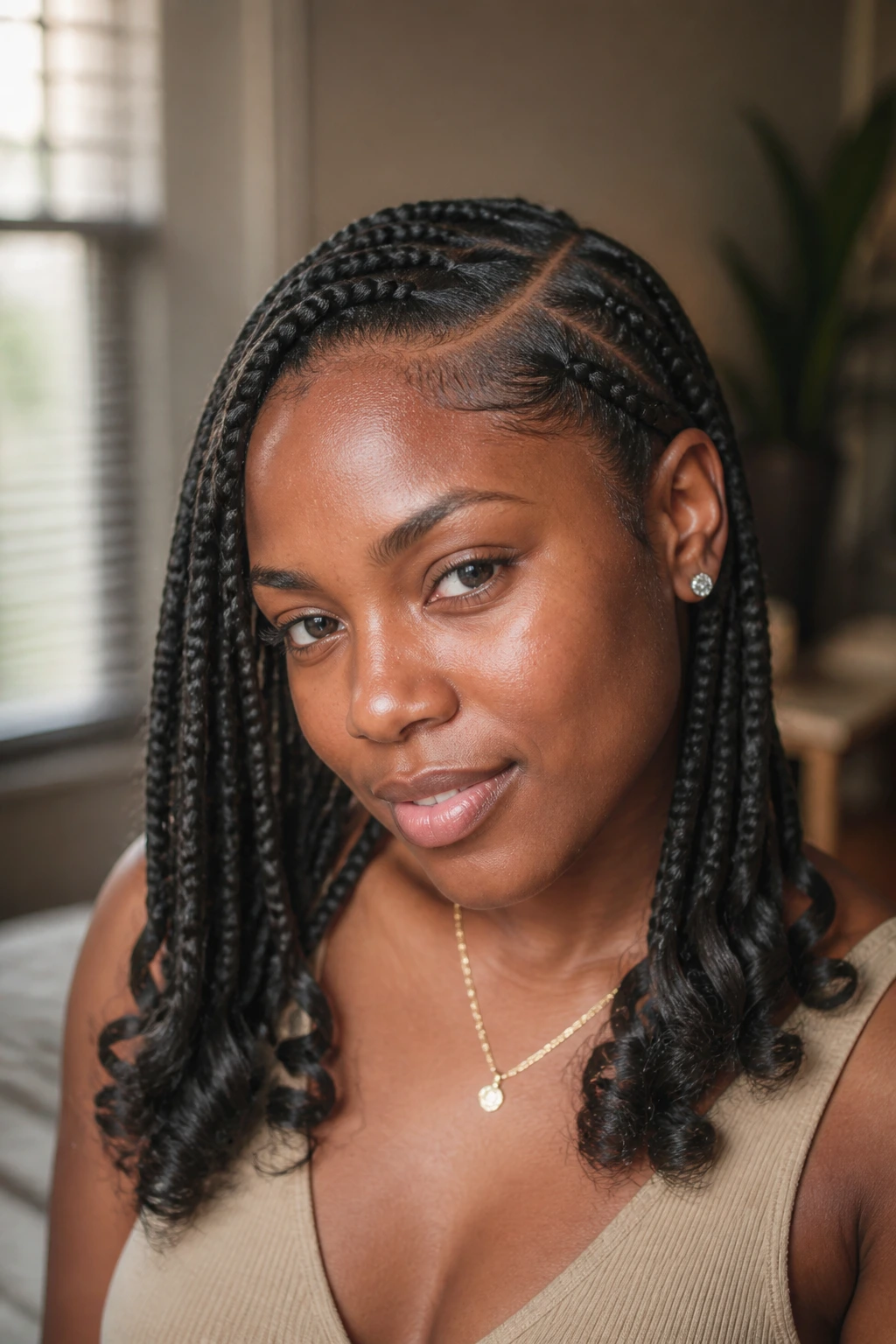
Why move the part? Because square faces already carry a lot of strong horizontal line from forehead to jaw, and a deep side part cuts straight across that geometry in a better direction.
The best version starts the part over the arch of one eyebrow and lets one braid sit slightly forward while the other falls back. That asymmetry softens the face without hiding it, which is the sweet spot most people are after.
What to watch for
If your side part is too deep, it can expose too much scalp on one side and make the style look accidental instead of intentional. Keep the front section broad enough that the first braid has room to curve gently.
Soft ends help too. A small curl at the bottom, set with flexi rods or a light hot-water dip if you’re using extensions, breaks up the straight line that can make square features feel boxed in.
3. Curved Cornrow Two Braids
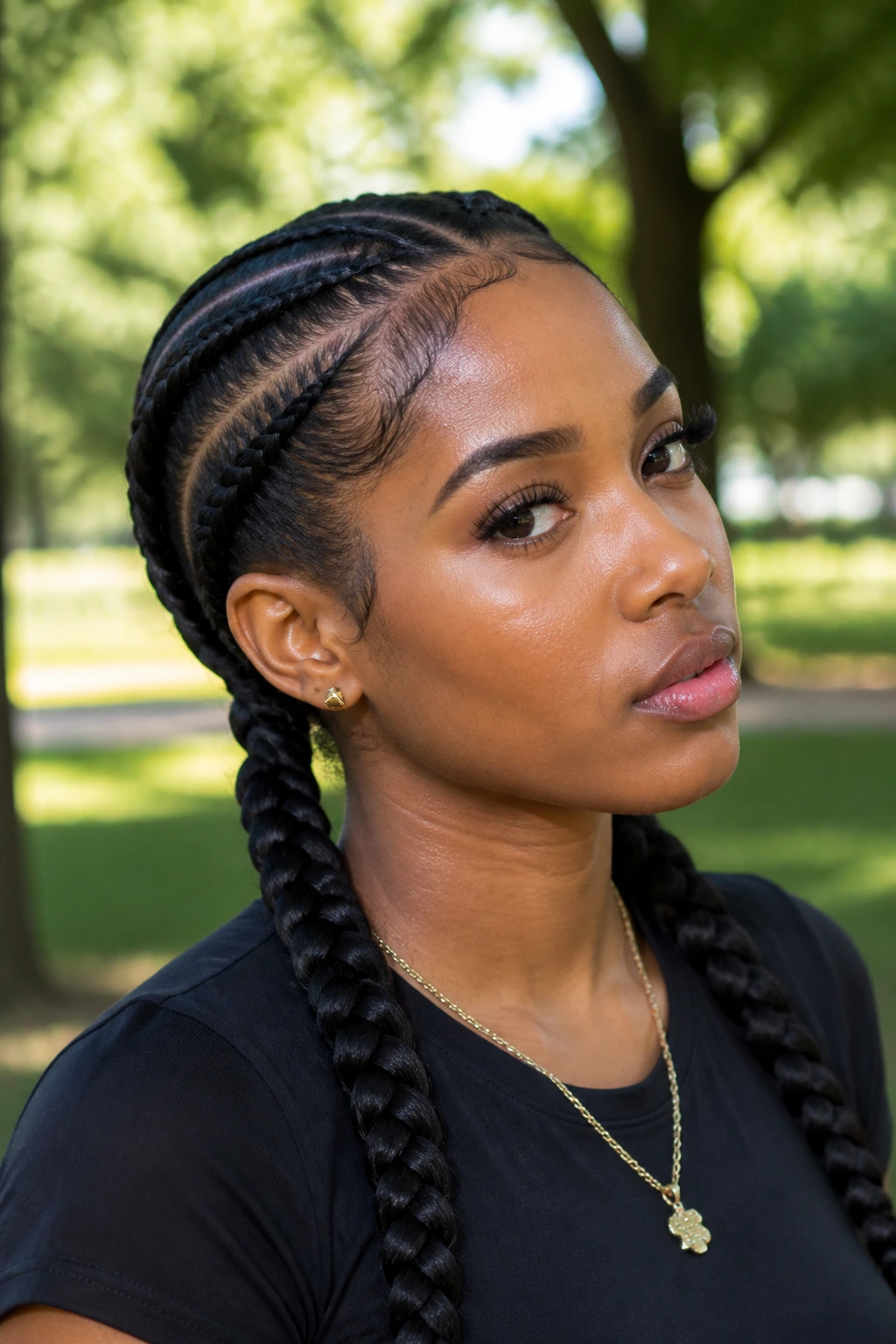
A curved part changes the whole mood. Instead of slicing across the forehead in a straight line, the braid base bends around the head, which creates motion right where square faces usually need it most.
This one is especially useful if your hairline is a little fuller at the temples. The curve gives the eye a path to follow, and that path is doing the work that a blunt line would do badly.
The shape trick
Ask for, or draw, a part that arcs slightly rather than landing dead straight. Even a subtle curve of half an inch or so can shift the final read of the style.
Keep the braids medium-thick. Too skinny, and the curve looks fussy. Too thick, and the braid base can overpower the face.
4. Chunky Knotless Braids with a Soft Profile
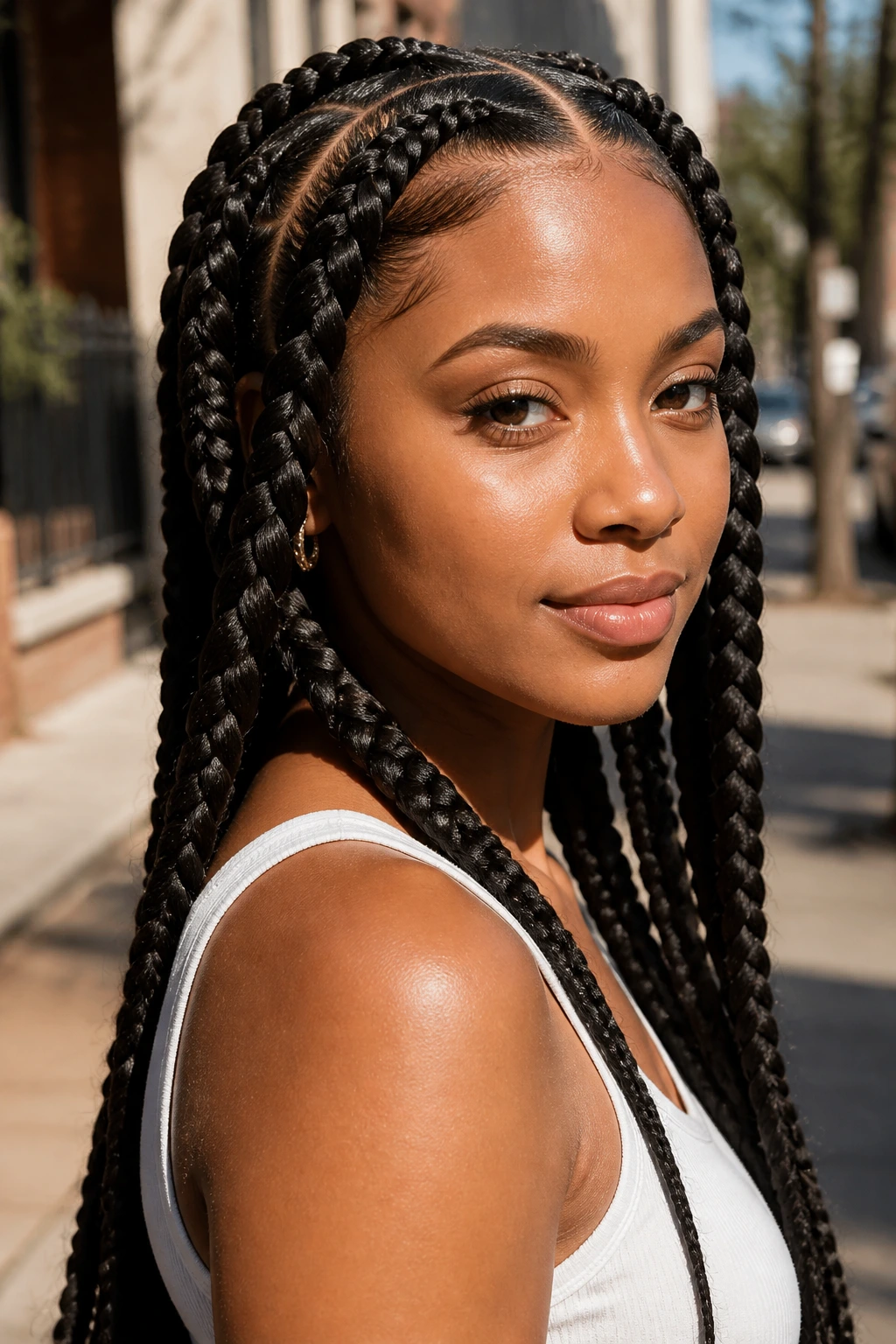
Chunky knotless braids are a quieter fix than they look. The lack of a hard knot at the root means the start sits flatter, and the larger size keeps the style from turning into a row of sharp little lines around the head.
For square faces, that soft profile matters. Big braids create broader visual bands that feel smoother than lots of fine sections, and the weight of the braid pulls the eye downward instead of outward.
The catch? Sectioning has to be balanced. If the parts are uneven, chunky braids can start to look bulky instead of sleek, especially on dense natural hair. I’d keep the sections neat and the first few inches laid close, then let the length get fuller.
5. Goddess Braids with Curly Leave-Out
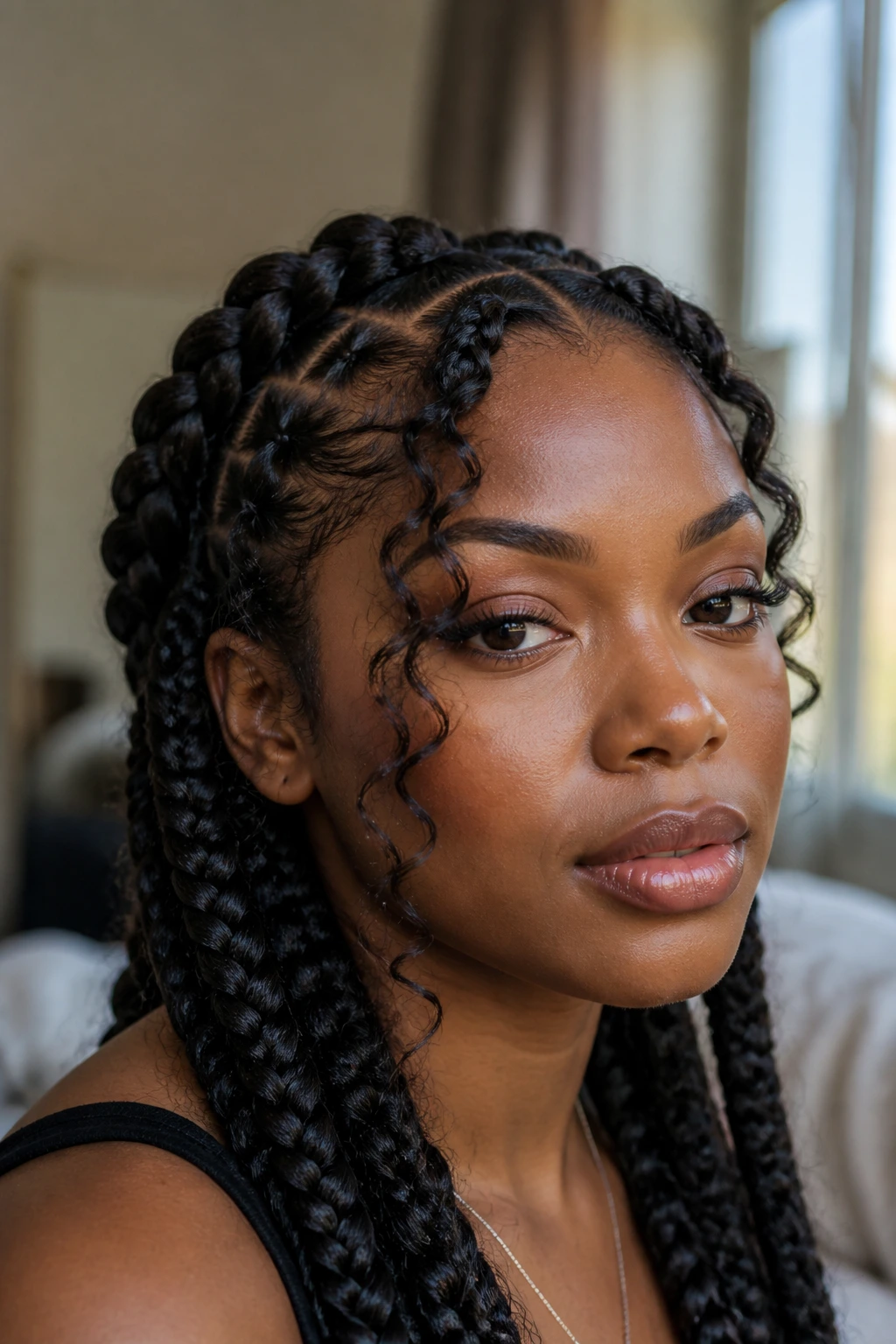
This is the style for anyone who wants softness without losing definition. The braids give structure, but the curly leave-out at the ends, or around the front, breaks up the hard lines that can make a square face feel more angular.
The curls matter more than the braid itself sometimes. A few well-placed spiral pieces near the cheekbone or chin can do a better job of softening a jawline than a whole pile of extra hair ever would.
Best use case
Set the loose pieces on ½-inch flexi rods or perm rods so they hold shape instead of looking frizzy by noon. Keep the leave-out intentional—two or four pieces, not an entire halo of fuzz.
This style looks especially good when the braids themselves stay neat and the curls bring the movement. Too much volume all at once and the whole thing gets busy.
6. Two Braids Twisted Into Low Buns
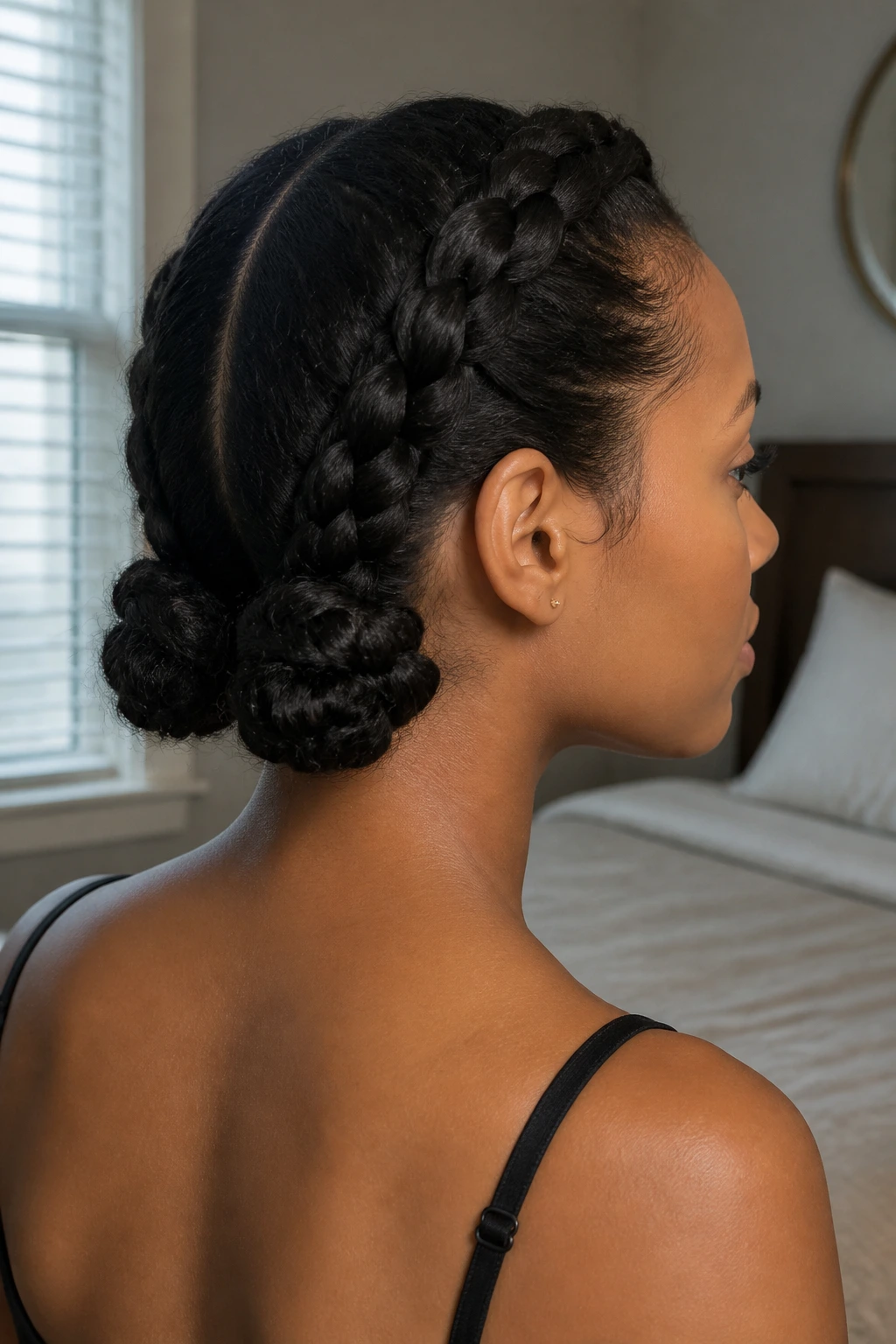
If you need your hair out of the way, this is the move. Two braids folded into low buns at the nape keep the face open and shift the visual weight downward, which helps a square face feel longer and less wide.
The low placement is the point. Buns near the crown can push the eye upward and widen the top of the head. Low buns do the opposite. They quiet the forehead and let the jaw line sit without extra competition.
It’s a strong choice for work, events, or anything where you do not want your hair falling forward. Keep the buns soft rather than pulled tight against the scalp. A little looseness around the base reads better and feels better.
7. High Pigtail Braids with Crown Lift
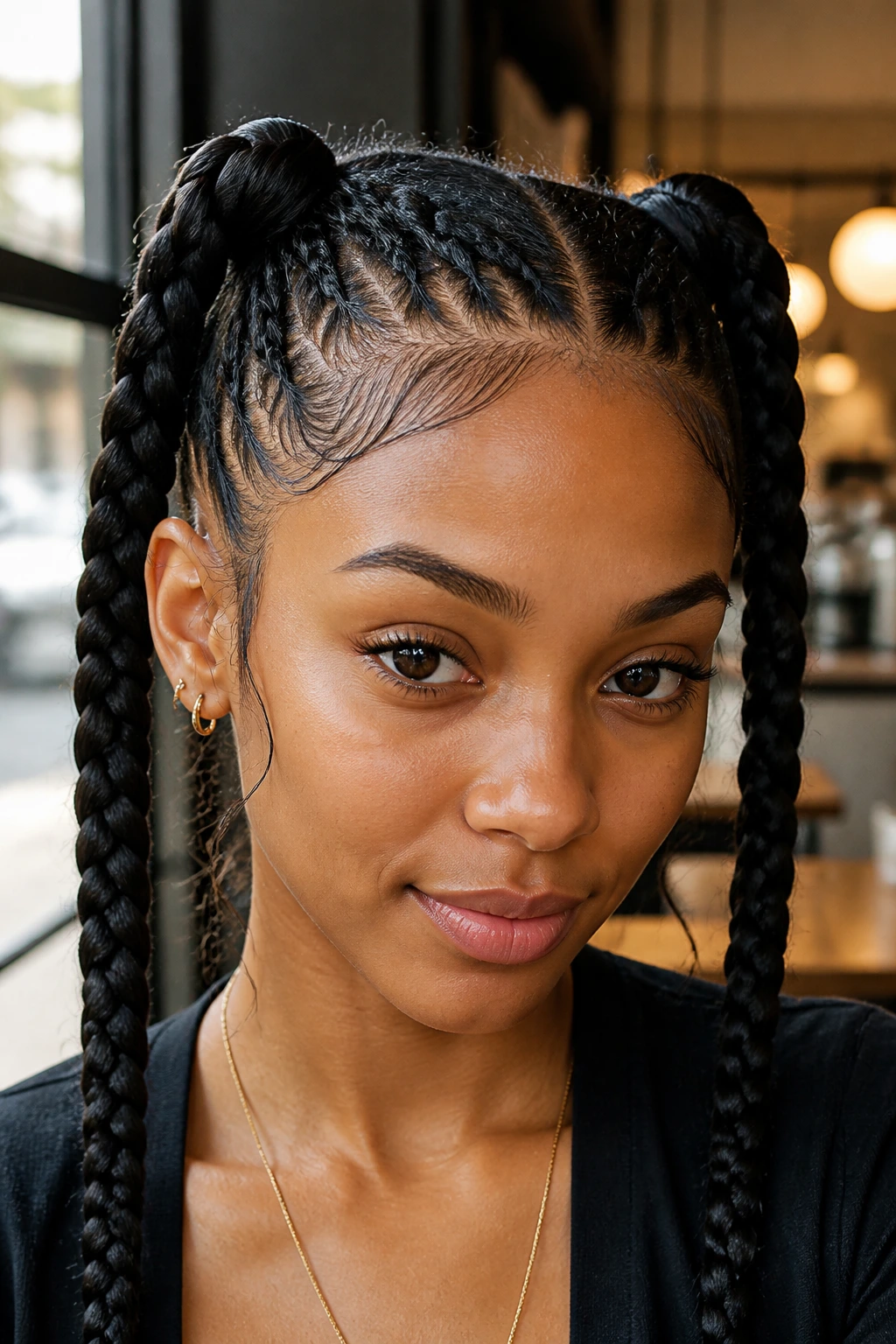
A square face often benefits from a little vertical lift. High pigtail braids do that fast, especially when the roots are clean and the base sits a touch above the midpoint of the head.
This style works because it gives the eye something upward to chase. The face feels taller, not wider. That said, the front sections cannot be yanked back so hard that the hairline looks strained. Height is useful. Tension is not.
Keep the braids full enough to show shape, but not so thick that they drag the crown down. A little mousse at the roots after parting helps the style stay crisp without making the whole head stiff.
8. Braids with Face-Framing Tendrils
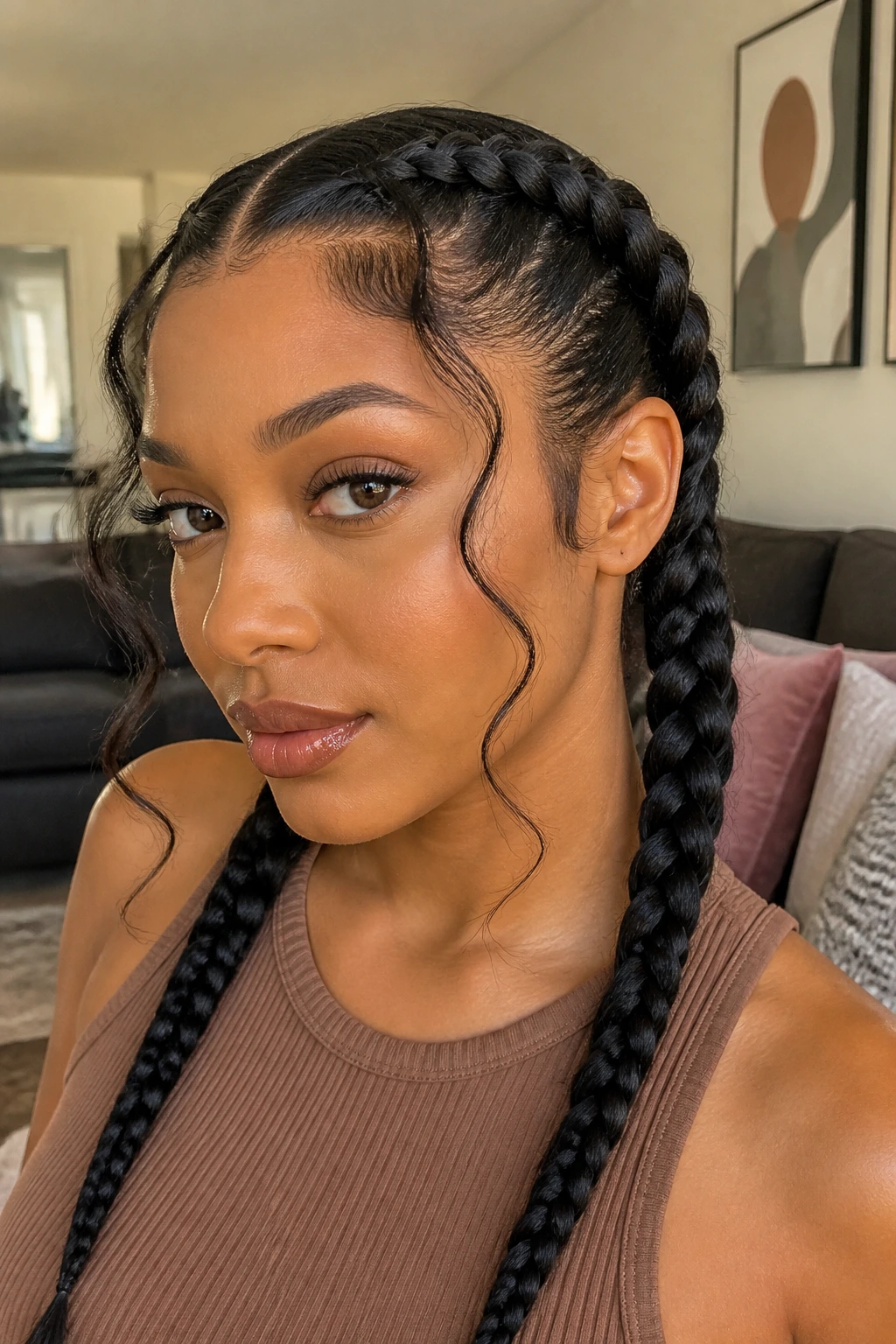
A few loose pieces near the temples can change everything. They interrupt the hard edge that sometimes shows up when natural hair is braided too neatly off the face, and they make the jawline feel less boxed in.
The trick is restraint. Two small tendrils per side, or even just one side if you like an uneven look, is usually enough. If you leave out too much hair, the style starts to look unfinished rather than soft.
A square face can take a strong braid, but it usually looks better when there’s some movement near the cheeks. Lightly defined tendrils—set with a cream or a tiny bit of mousse—do that without turning into fluff.
9. Stitch Braids with Clean, Geometric Lines
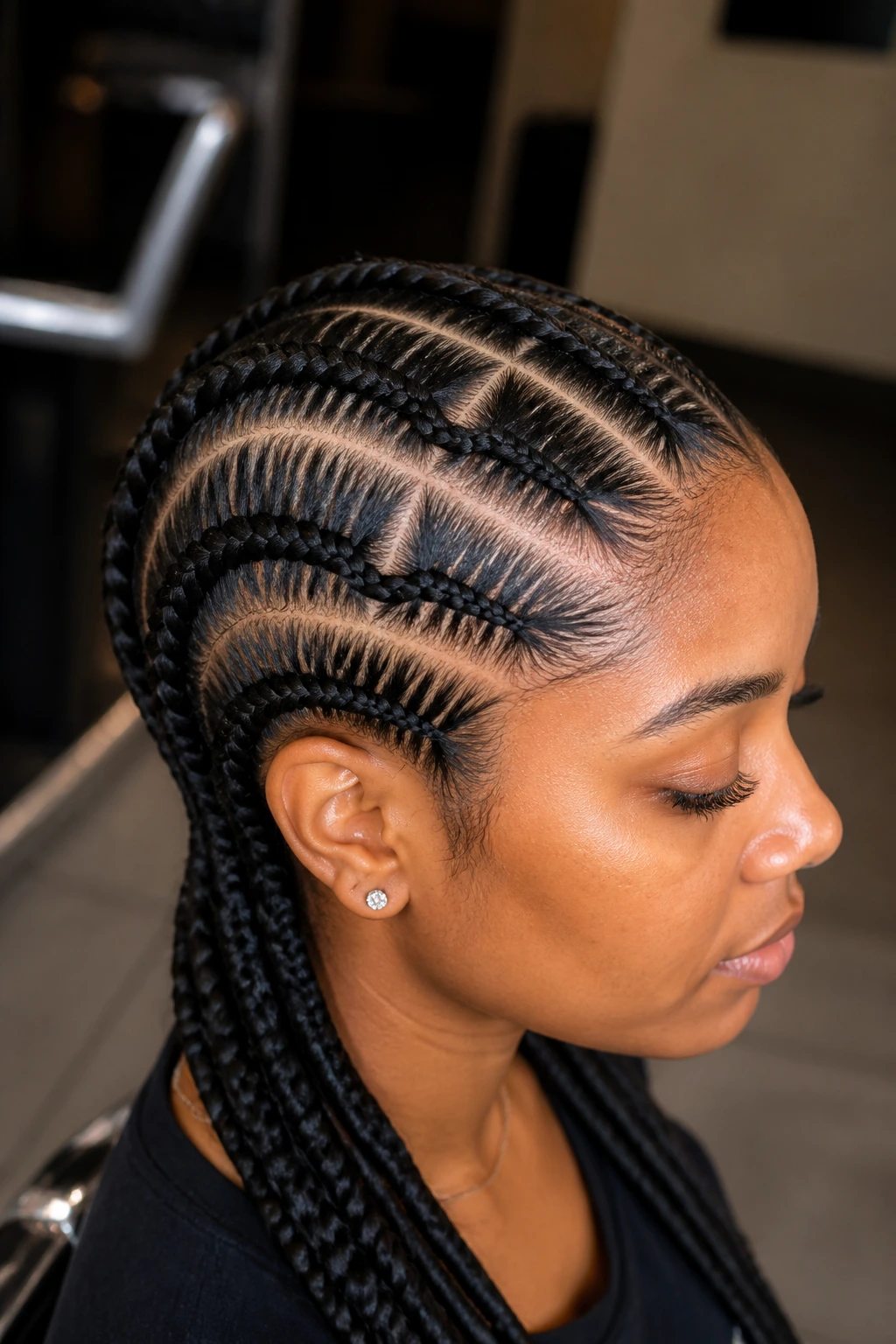
Not every square face needs softening in the same direction. Some look best with clarity, not camouflage, and stitch braids are the neatest, sharpest version of that idea.
The stitch pattern gives a clean, segmented look at the scalp, which makes the style feel deliberate. On square faces, the key is to keep the rest of the look from becoming too rigid. A little length, a bit of curl at the ends, or a side placement keeps the geometry from feeling heavy.
This is the style for someone who likes precision. If your edges are sensitive or your hairline is easily stressed, ask for a gentler start and keep the sections broad enough that the braid does not have to fight the scalp.
10. Zigzag Part Braids
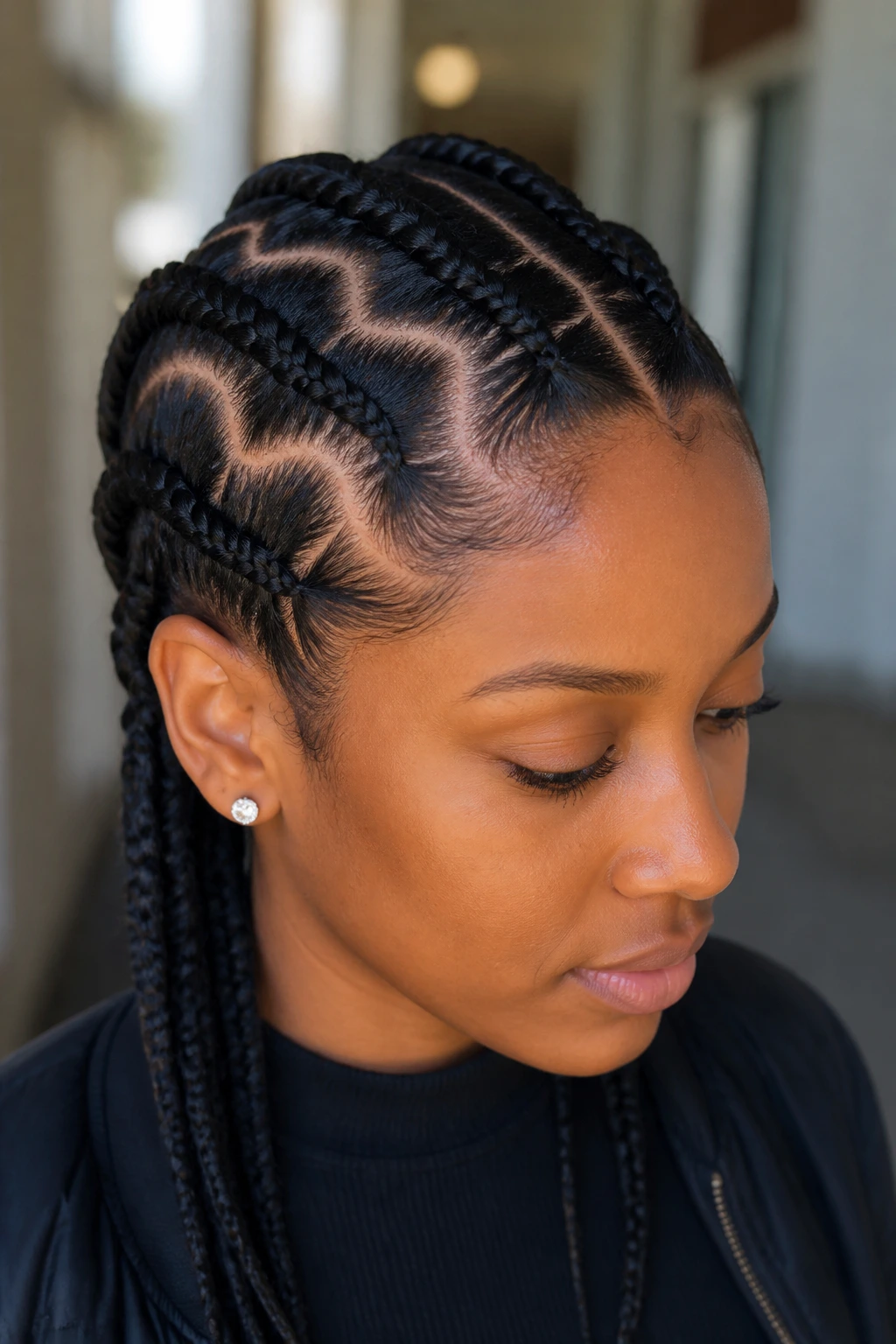
A zigzag part is one of those details that looks small until you see the result. Straight parts create hard horizontal lanes; zigzags break that up and give the scalp pattern some motion.
That motion matters on square faces because it keeps the eye from locking onto the width of the forehead. Instead, it moves across the head in little turns, which softens the whole frame without changing the braid count at all.
The style takes a steadier hand than a plain part, and a rat-tail comb with a sharp tip helps. Keep the zigzag moderate rather than wild. If the points are too dramatic, the whole thing can start feeling busy.
11. Braided Halo with Two Side Braids
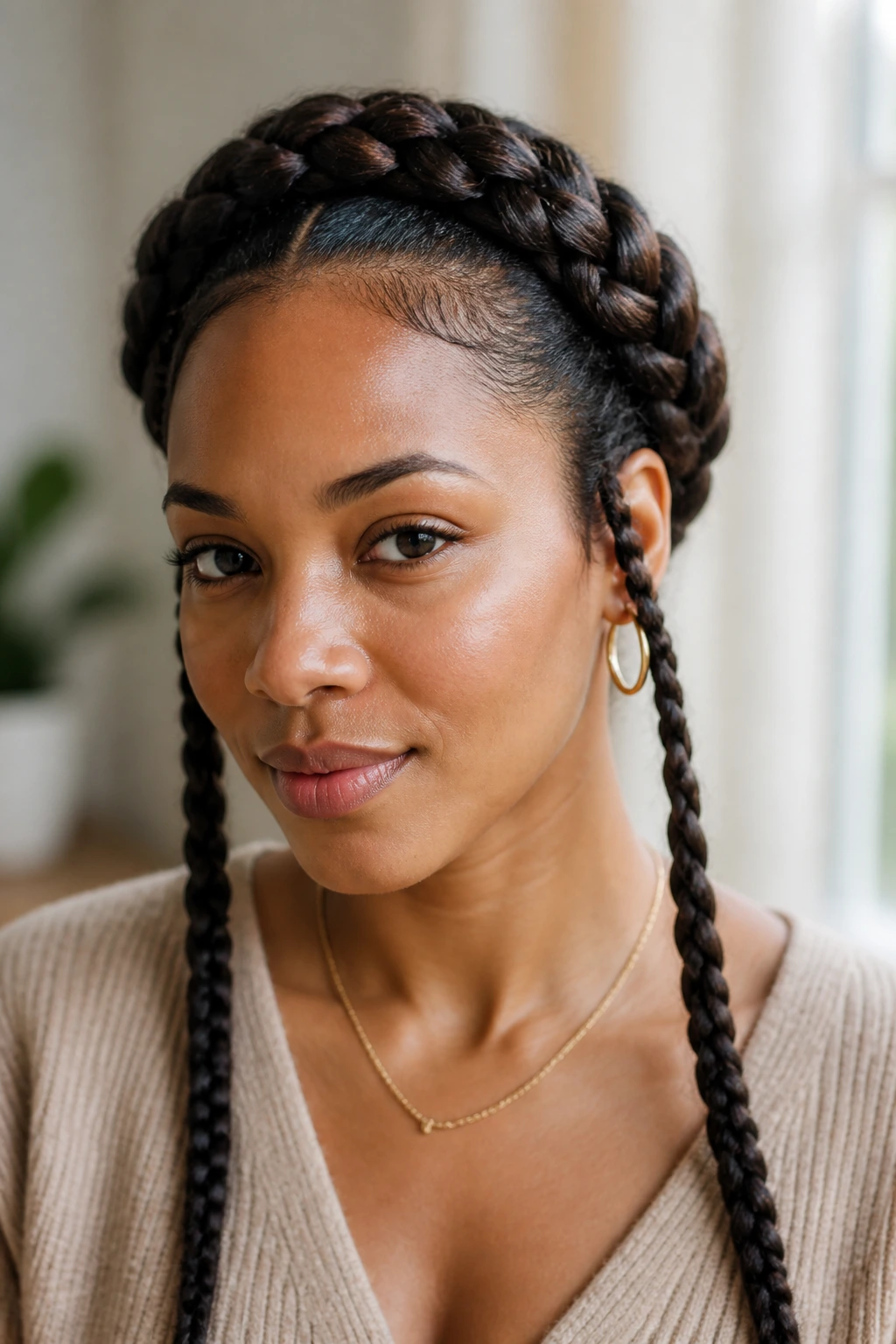
This is a smart one if you want the face to read a little longer and a little lighter. The halo sits around the upper head and sends attention upward, while the two side braids keep the look grounded.
The halo line should sit just behind the hairline, not plastered directly on it. That tiny shift matters. It avoids squashing the forehead area and leaves space for the face to breathe.
Square faces usually look best when the center of interest is not all at jaw level. A braided halo gives you a crown-like lift, and the side braids stop it from feeling too princessy or formal.
12. Rope-Twist Braids for a Softer Edge
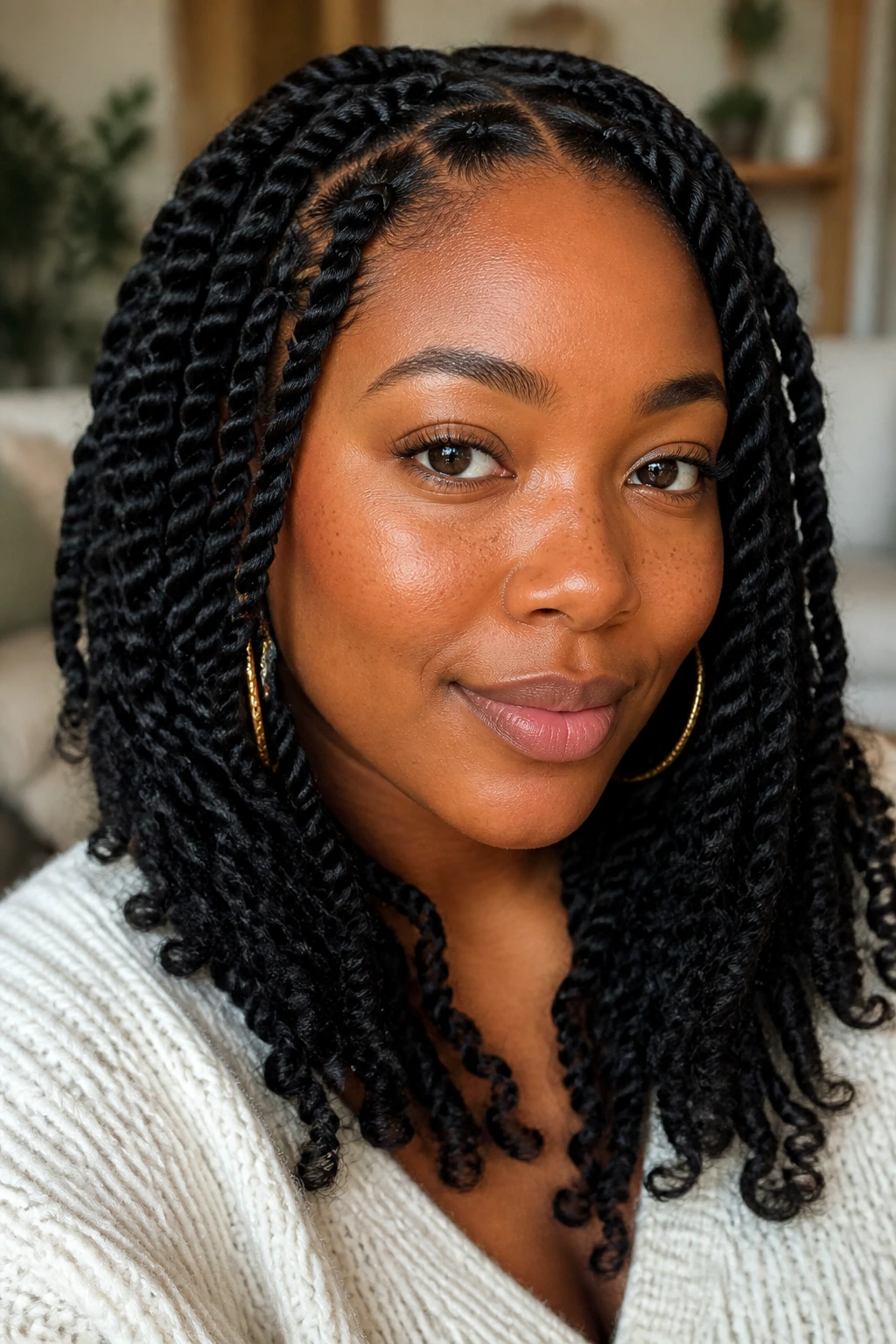
Rope twists have a rounder feel than classic three-strand braids. Even when they’re neat and polished, the texture reads a little softer, which can be a relief if your features already have strong angles.
They’re especially nice on stretched natural hair because the twist pattern shows clearly without needing a lot of product. The finish feels less rigid than a tight braid, and the movement is easier to see when you turn your head.
If you like a style that looks tidy but not severe, this is a good lane. Use a light setting mousse at the ends so they don’t puff up and distract from the shape.
13. Braids Finished with Beads or Cuffs
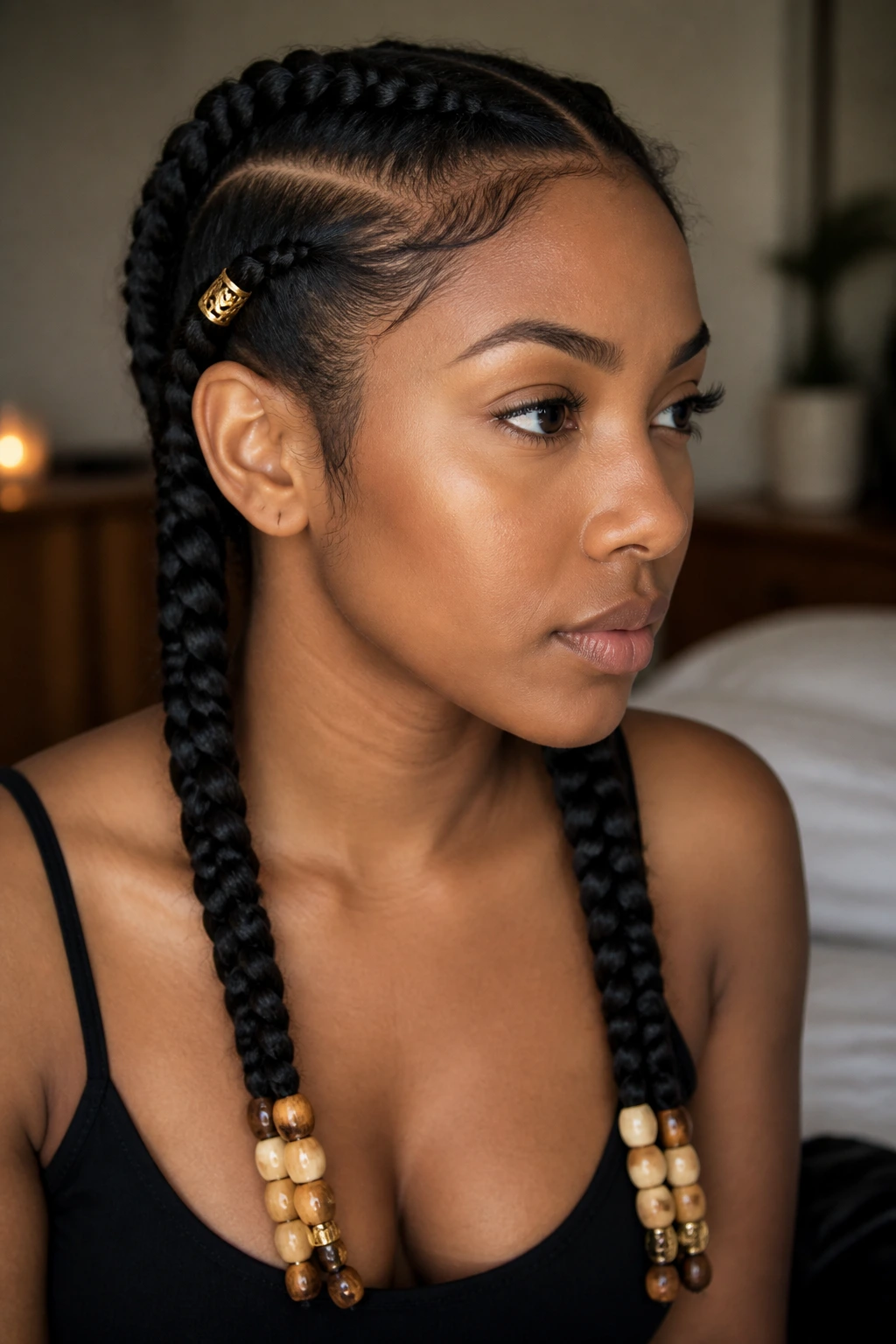
Accessories are not just decoration here. They change the visual endpoint of the braid, and where the eye stops matters a lot on a square face.
Beads at the ends pull attention downward. Cuffs placed in the lower third of the braid do something similar without the sound and weight of beads. I usually prefer a few cuffs over a heavy stack, especially on natural hair, because too much hardware can drag the style down in an awkward way.
Pick one focal point and keep the rest quiet. A set of wooden beads or a few gold cuffs is enough. The aim is movement, not noise.
14. Dutch Braids with Soft, Tucked Ends
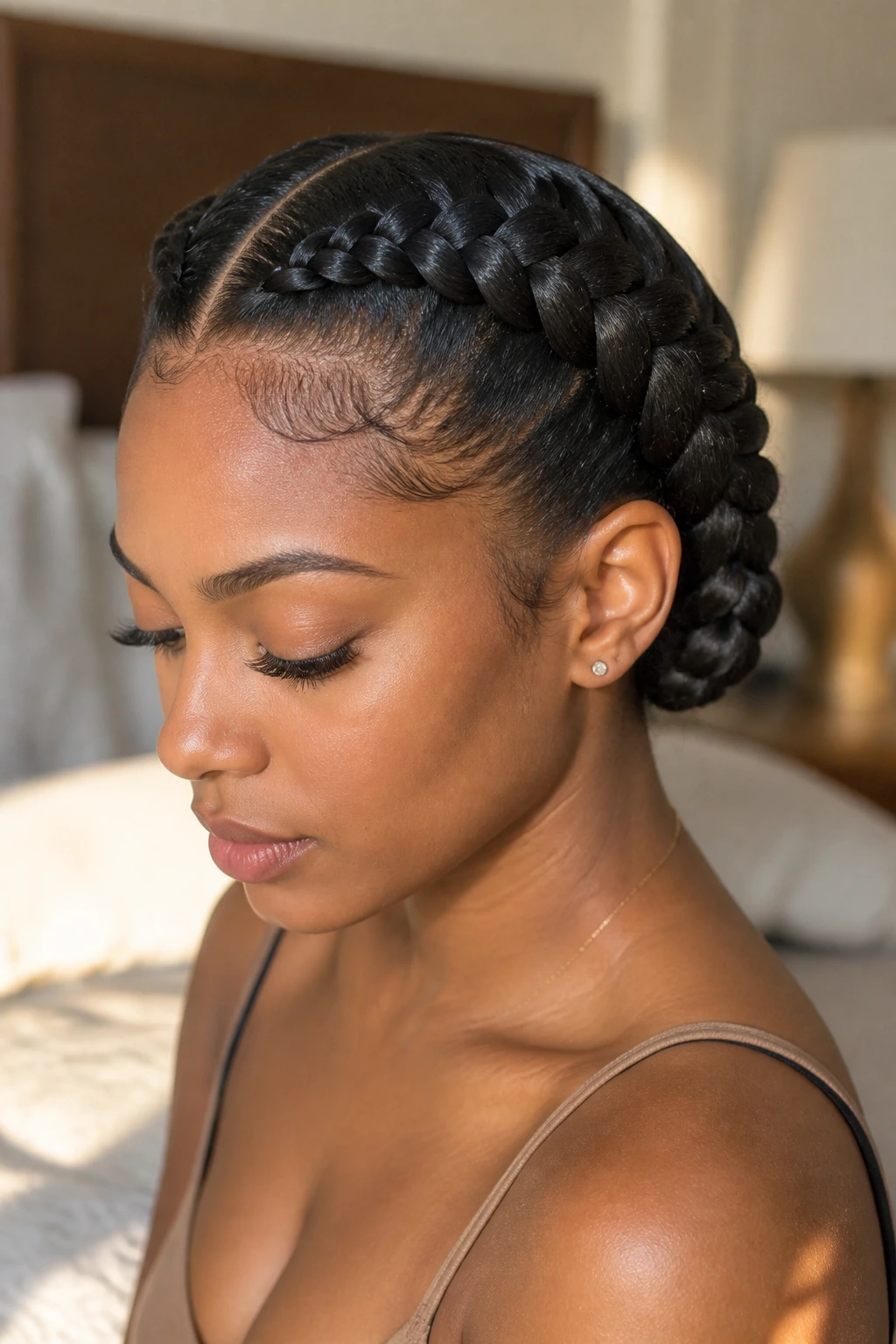
Dutch braids sit on top of the hair instead of sinking into it, so they add lift right away. That lift can help a square face feel taller, especially if the braids start a little above the temples and not dead flat along the hairline.
The ends matter. If you leave them too blunt, the style can stop abruptly at the jaw or neck. Tucking the ends under, curling them, or folding them into a soft finish keeps the line from ending in a hard block.
This style is one I’d choose for medium-to-thick natural hair because the braid pattern holds shape well. On finer hair, keep the sections moderate so the braids don’t look sparse.
15. Side-Swept Braids Tucked Behind One Ear
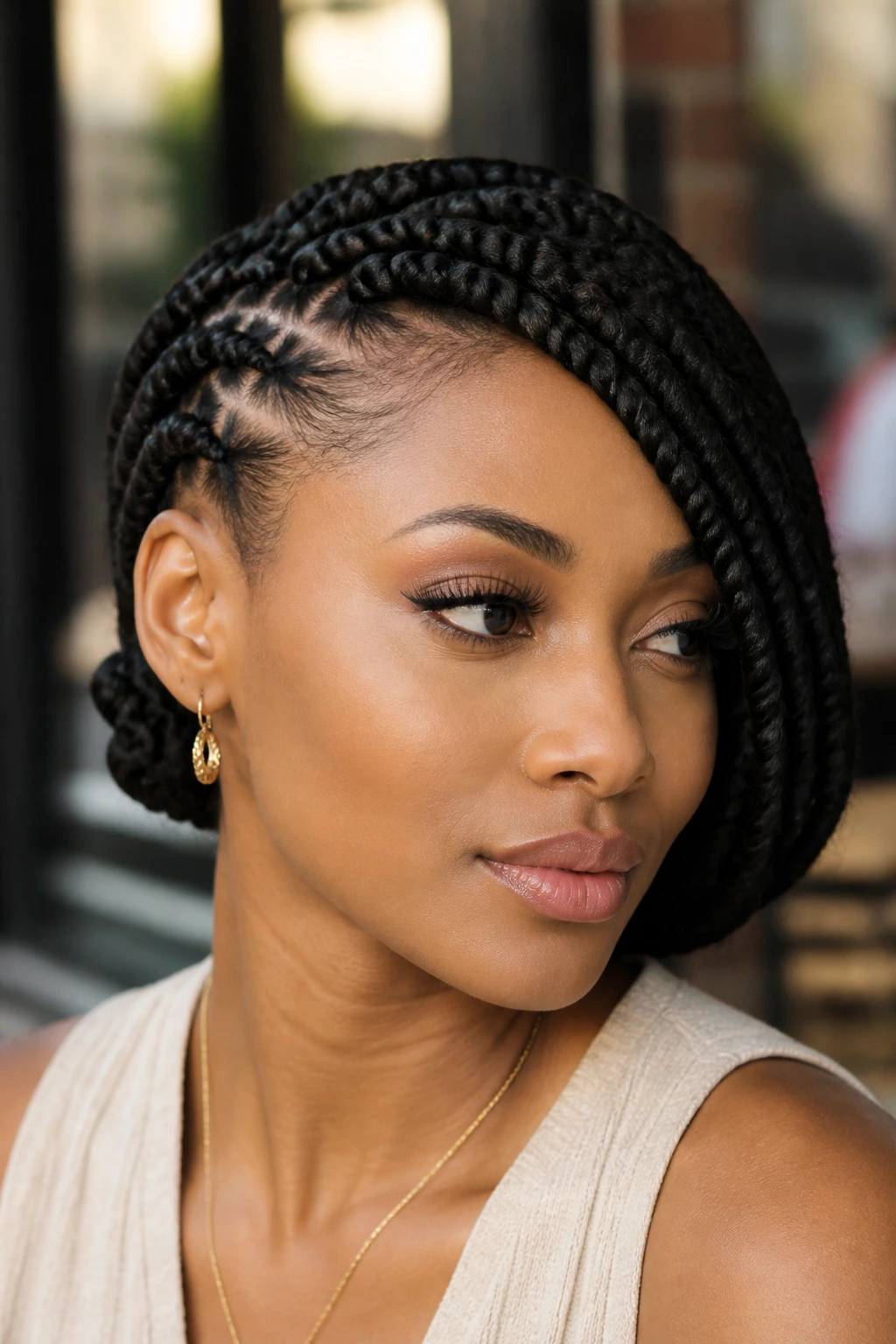
A side-swept braid is a small cheat code for square faces. The diagonal line changes the whole geometry of the head, and the tucked-behind-one-ear finish opens one side of the face in a way that feels controlled rather than fussy.
The braid should sweep forward just enough to skim the cheekbone, then move back. That little arc gives the face a softer outline, especially if your jaw is the strongest part of your shape.
A small hoop earring or a plain cuff looks good here because the style already has movement. You do not need much else. In fact, too many accessories can fight the clean line that makes this style work in the first place.
16. Crisscross Feed-In Braids
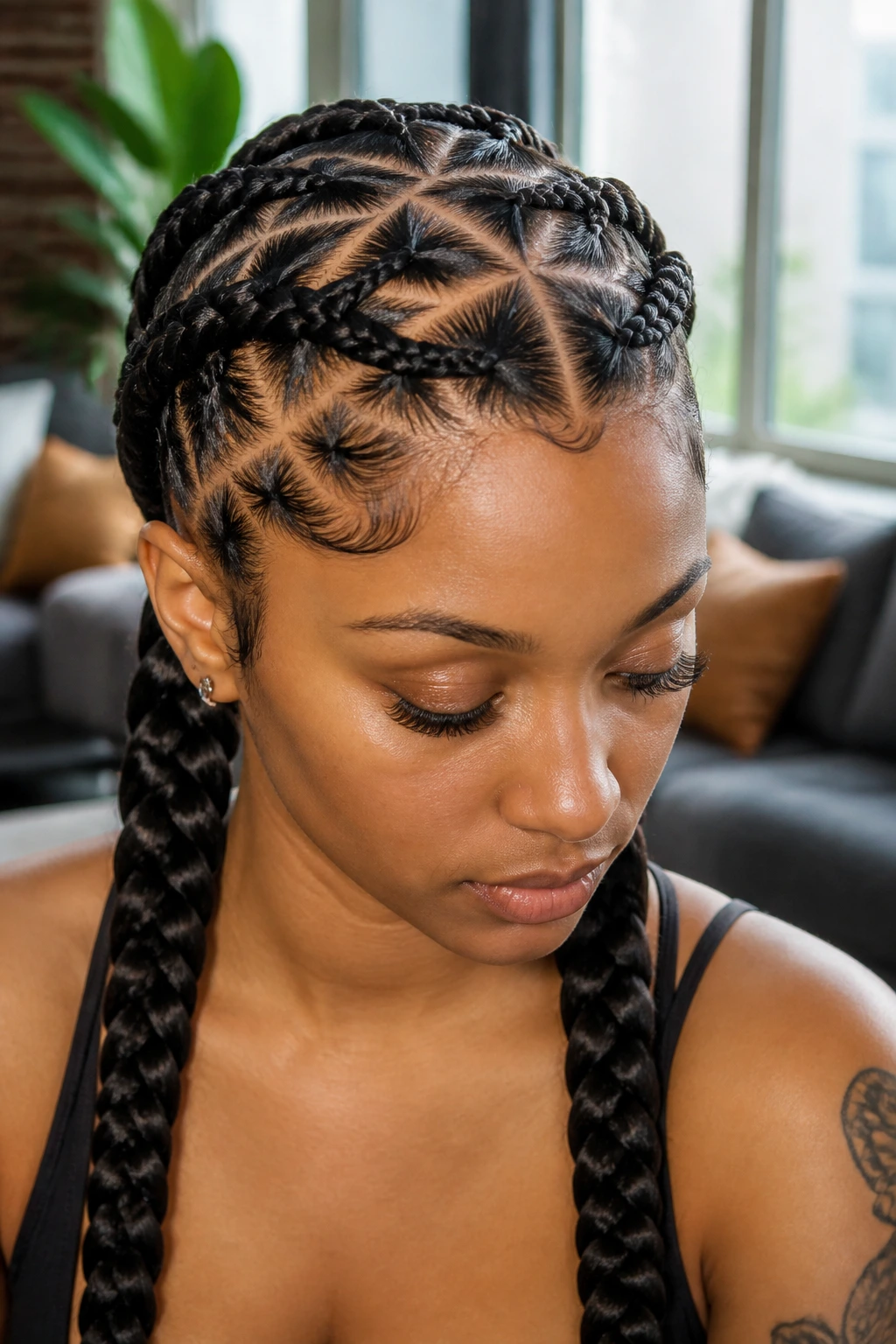
Crisscross parting adds a layer of detail without making the hair look crowded. The intersecting lines keep the scalp design active, which is useful when a square face might otherwise feel too boxy under straight braid rows.
This is one of the more technical looks on the list. The sections have to be clean, and the feed-in starts need to stay flat so the crisscross pattern reads clearly. If the parts are sloppy, the whole thing falls apart fast.
It’s worth the effort if you like braids that look considered. The visual movement gives the face a softer frame even though the style itself is structured. That’s the funny thing with braids: sometimes the most orderly styles look the least harsh.
17. Half-Up, Half-Down Two Braids
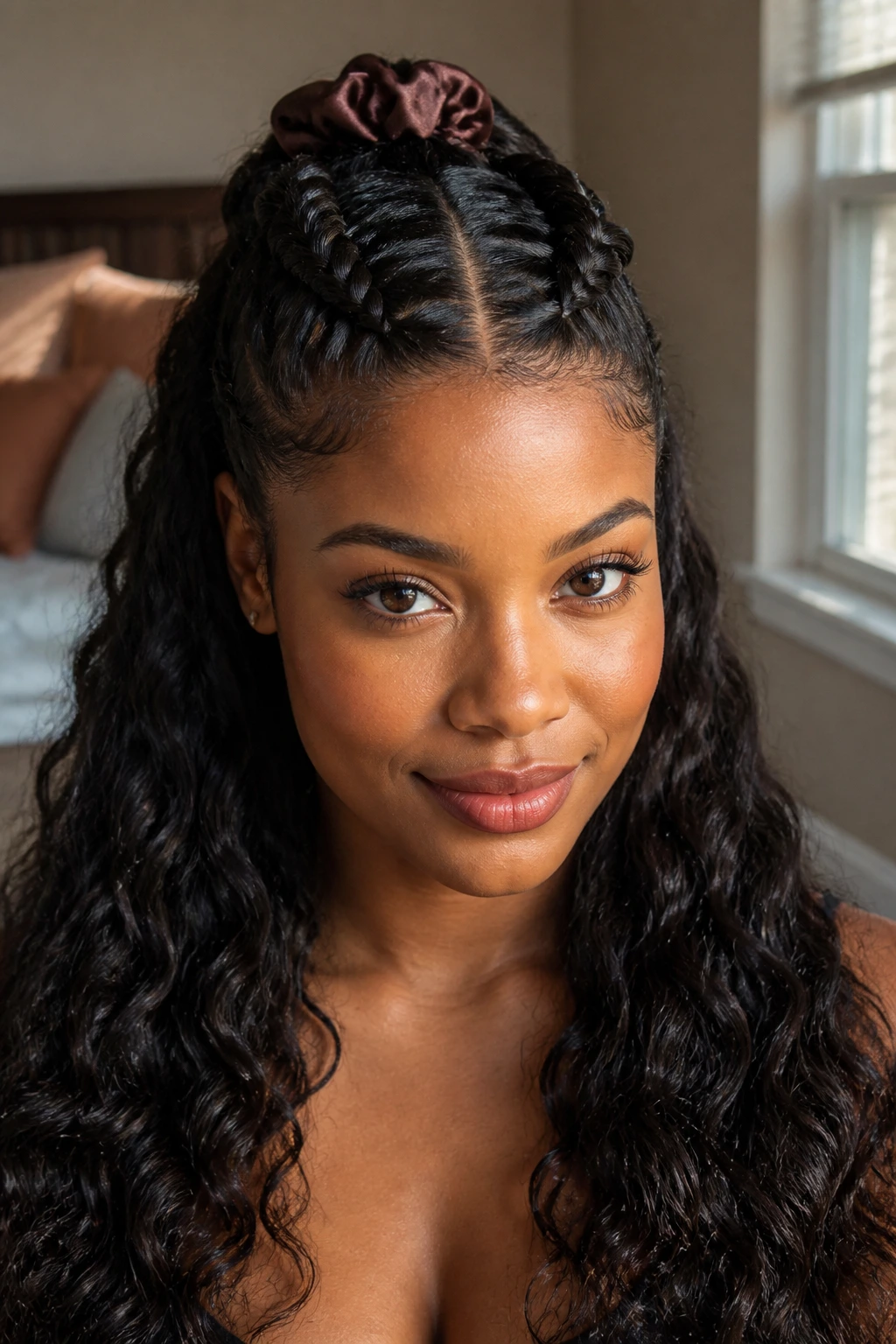
Half-up, half-down is a nice middle ground when you want structure and softness at the same time. The top section gives lift, the lower section gives length, and that combination is kind to a square face.
The crown feels a bit taller because the upper hair is pulled back. The lower hair then trails down and lengthens the whole silhouette. On natural hair, this works especially well if the ends are curly or lightly stretched rather than pin-straight.
A satin scrunchie or a covered elastic keeps the top from snagging. And if you want more shape, twist a small piece around the base instead of leaving a plain elastic exposed. It’s a tiny detail, but it changes the finish.
18. Stretched-Hair Low-Tension Braids
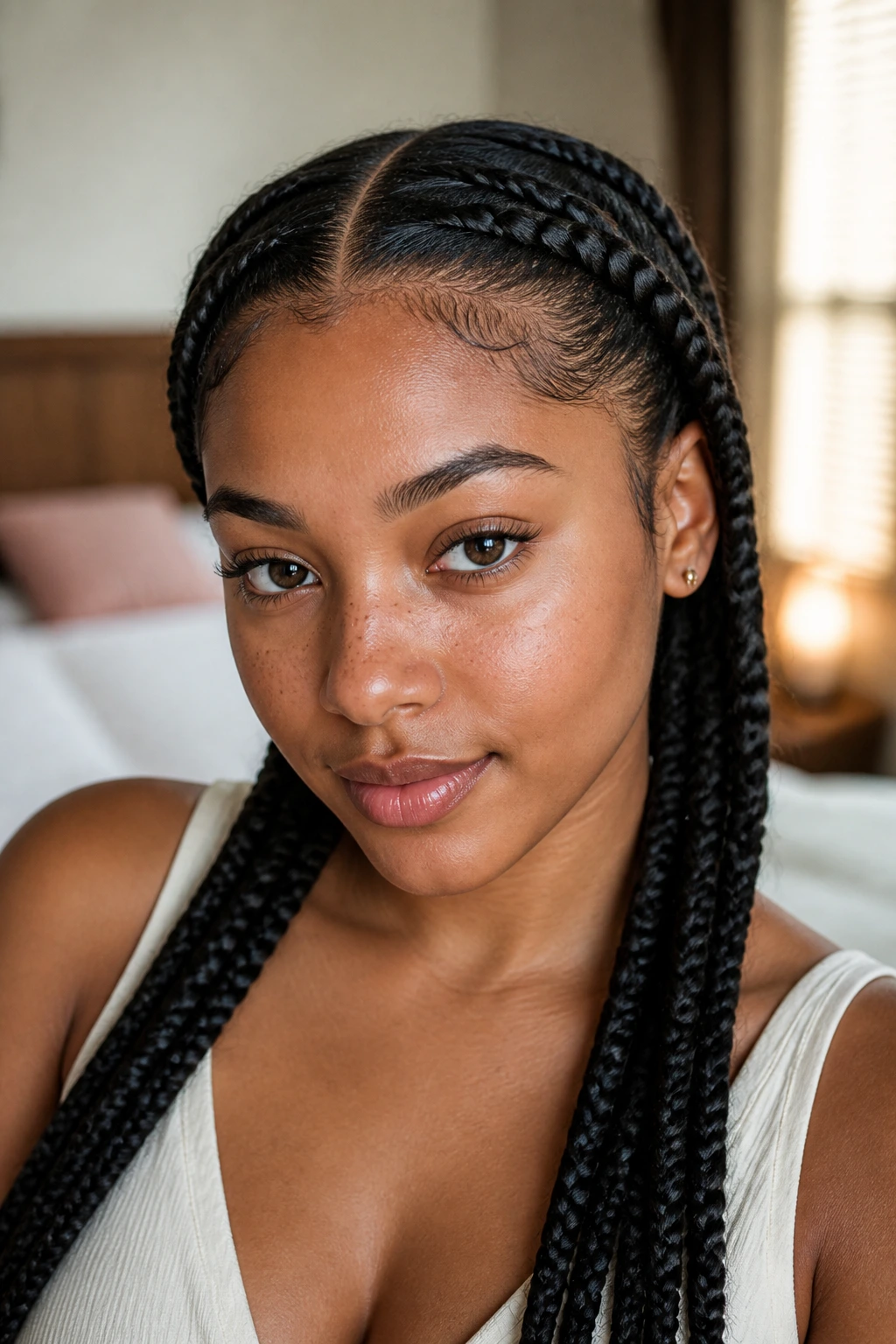
If your curls shrink hard, stretch the hair first. Banding, threading, or a gentle blow-dry on low heat gives you a calmer base to part, and the braids sit more evenly when the roots aren’t springing back on themselves.
This matters for square faces because clean parting and low tension make the style feel smoother around the temples and crown. When the roots are too compressed, the braid base can puff out and widen the face in ways you probably do not want.
Low-tension braids are also easier to live with. Less pulling. Less soreness. Less of that tight, shiny look around the front that usually means the style was installed too aggressively.
19. Boho Two Braids with Curly Tendrils
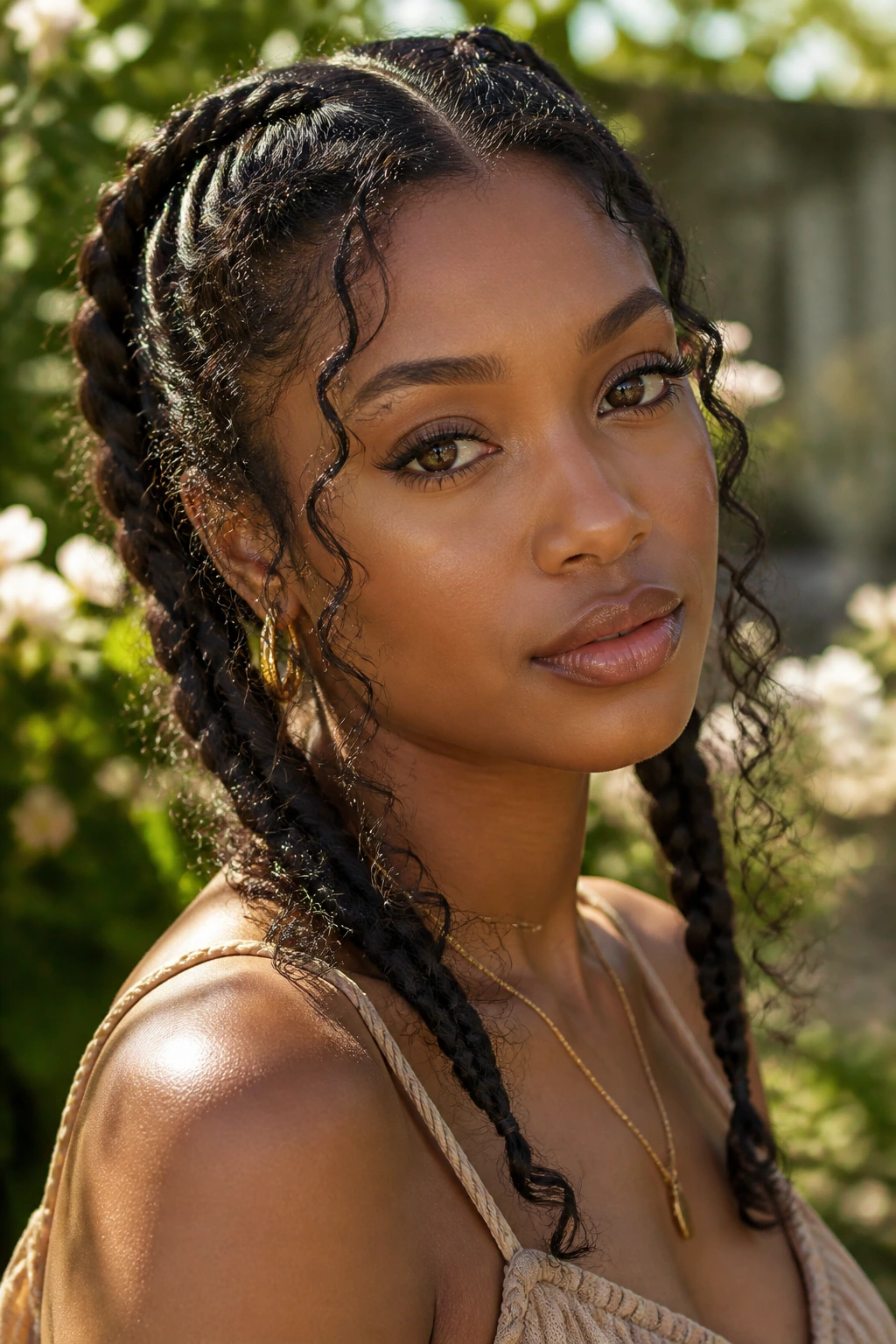
Boho braids soften the face in the easiest possible way: they let texture show. Curly tendrils at the temples and ends break the line of the braid, which takes the edge off a strong jaw and gives the face more movement.
The trick is to keep the loose pieces controlled. A few spirals near the front are enough. If you leave out too much, the style can turn fuzzy fast, especially on humid days or on hair that loves to swell.
Set the tendrils with flexi rods or finger coils so they have a defined curl pattern. That keeps the look intentional and keeps you from waking up to a halo of frizz that feels like it has a mind of its own.
20. Braids Wrapped Into a Low Crown
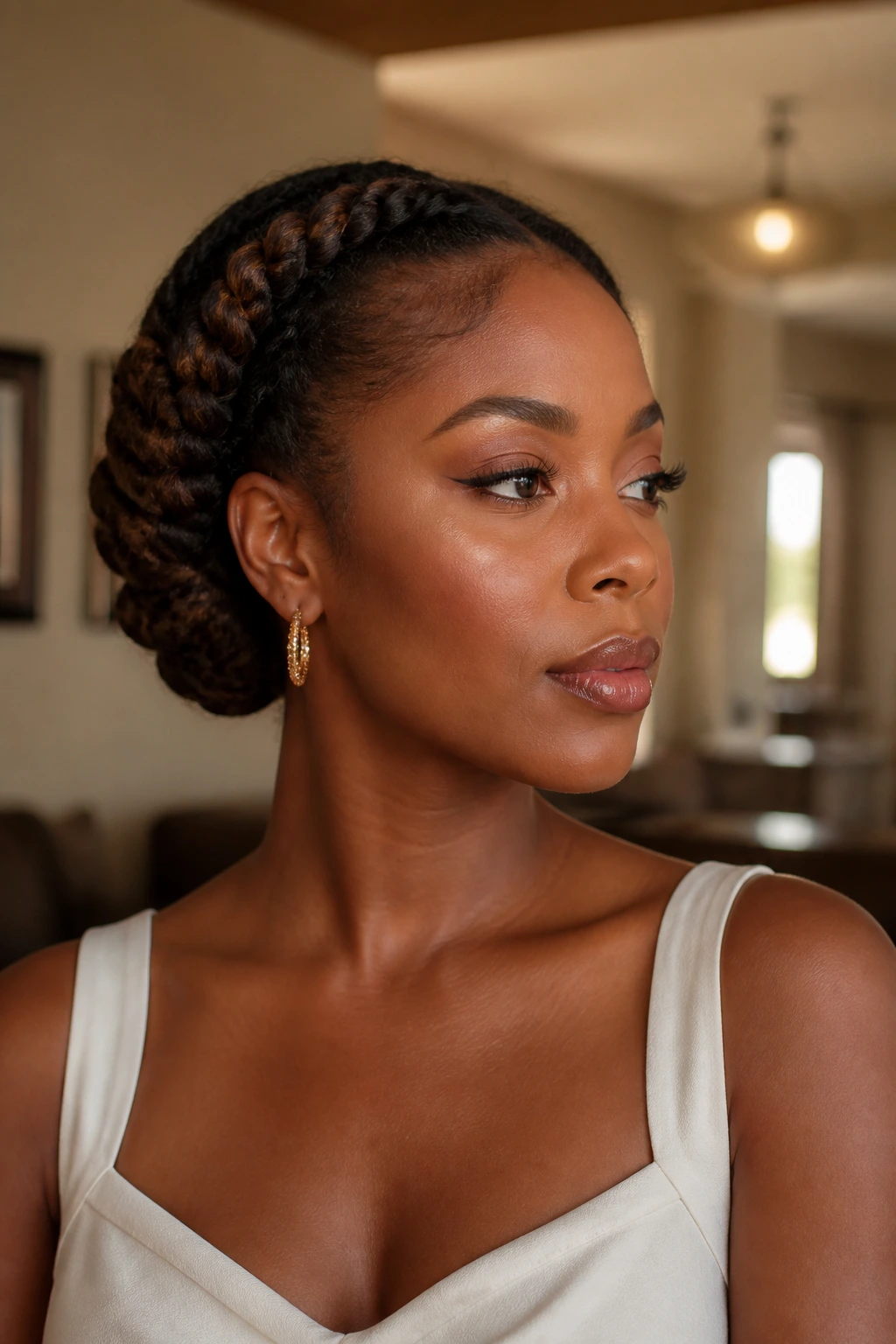
This is one of the prettiest low-profile options in the group. The two braids wrap around the lower head, which keeps the center of the face open and lets the jawline sit without extra pressure from hair.
The low placement is what makes it work on square faces. You get shape and detail without building bulk at the sides of the face. If the wrap is too tight, though, it can flatten the back of the head in a way that looks unfinished, so leave a little softness in the tuck.
It’s a good formal option when you want your hair off your neck and your face fully visible. A couple of pins and a satin tie hold it just fine.
21. Oversized Chunky Braids with Long Length
Chunky braids create big, clean visual lanes. That can work beautifully for square faces because the braids add length without adding a lot of little lines that would crowd the face.
The longer the finish, the more the eye moves downward. That vertical pull is useful. It makes the jaw feel like part of the overall shape instead of the endpoint of the whole look.
Go too thick, and the weight can start to sit heavily at the neck. The fix is simple: keep the sections balanced and avoid overloading the braid with unnecessary extension hair. You want fullness, not a rope that feels like it belongs to another style entirely.
22. Low Braids with Tapered Ends
This is the clean, quiet answer when you do not want to think too hard. Two low braids that taper gently at the ends keep the face open, the jaw soft, and the whole look easy to wear.
Tapered ends matter because blunt ends can stop the eye too suddenly. A slight taper, whether natural or created with a light curl at the bottom, keeps the style moving. On a square face, that movement is doing real work.
It’s also the style I’d hand to someone who wants the least drama and the most repeat wear. No big parting games, no heavy accessory choice, no extra bulk. Just a calm braid line that knows where to stop.
Why the Parting Does Half the Work
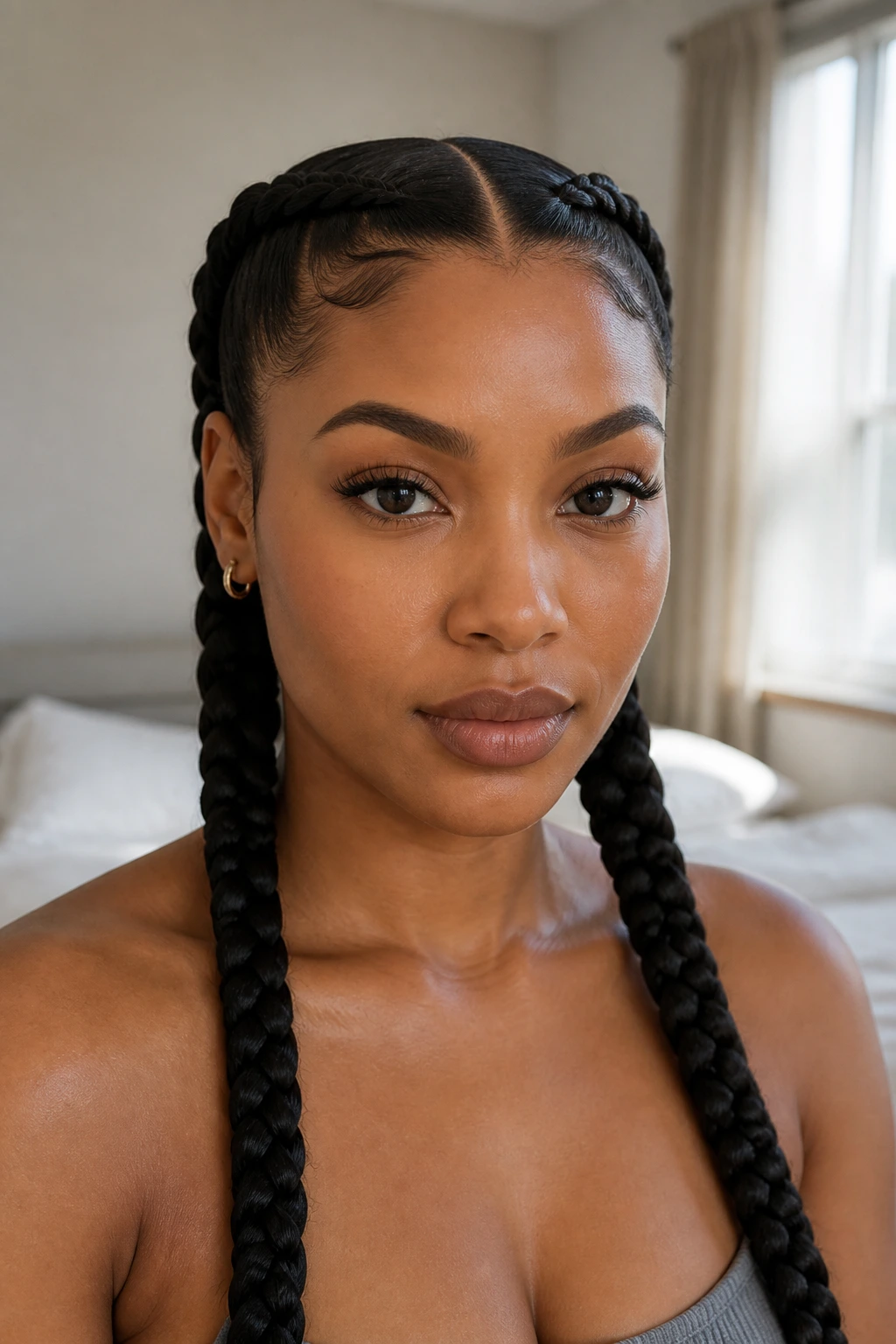
Square faces usually have a broad forehead, a strong jaw, and a fairly even width from top to bottom. That structure is sharp in a good way, but it can look harsher if the hair echoes the same lines right across the face. Two braids can either repeat the shape or redirect it.
Parting is the redirection. A center part sends the eye down the middle. A side part breaks the width. A curve softens the top corners. Even the height where the braid starts changes the effect, because braids anchored too low can draw attention to the jaw, while braids that sit a touch higher can give the face more length.
Hair density matters here too. Very tight coils create volume at the roots, which can make parts disappear if you don’t stretch first. A stretched base gives the braider a cleaner canvas, and on square faces that cleaner line usually reads better than extra puff at the temples.
Tools and Hair Products That Make the Style Cleaner
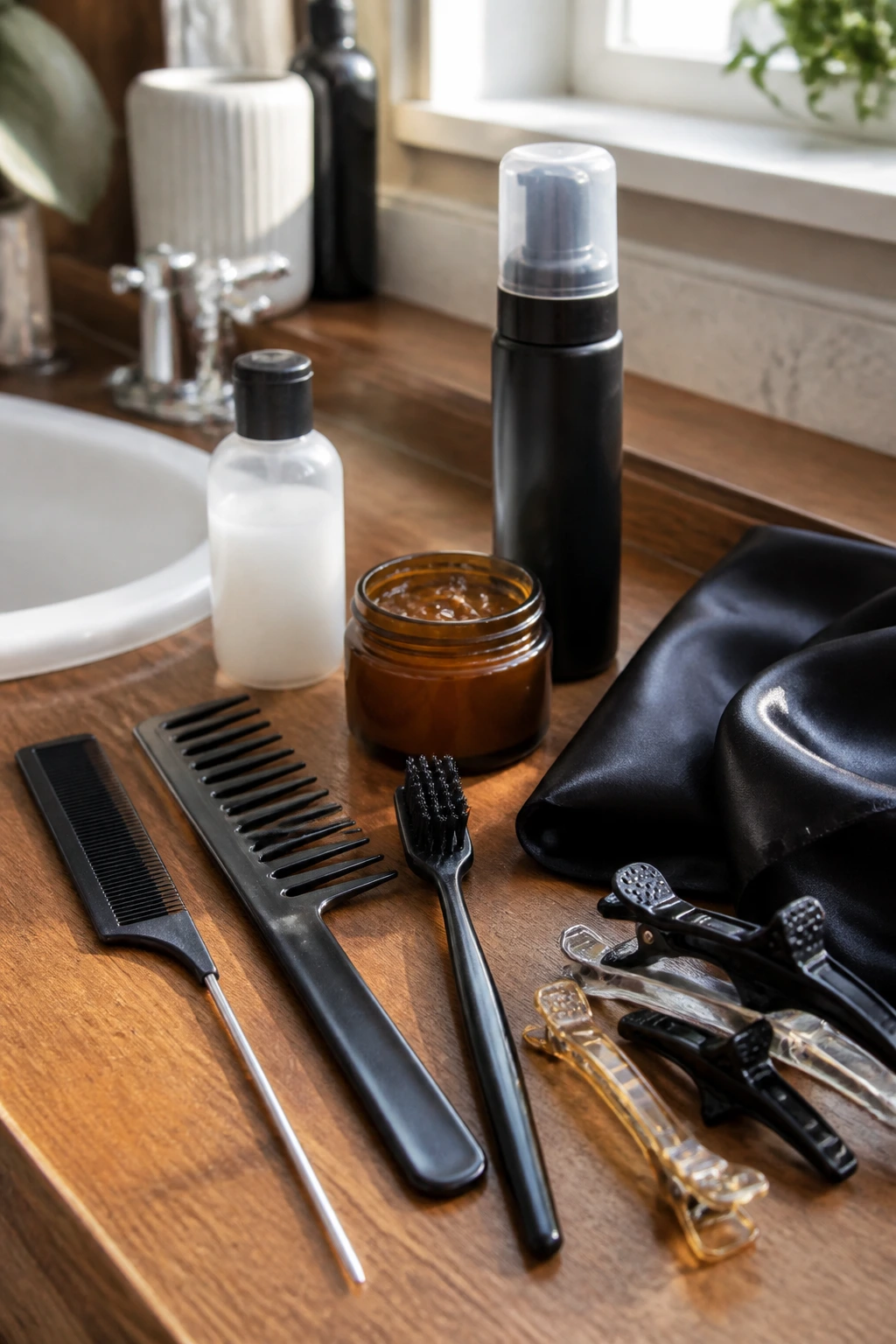
- Rat-tail comb: You need the pointed end for parts, and a metal tail makes crisp lines easier on dense natural hair.
- Wide-tooth comb: Use it before braiding so detangling happens once, not halfway through the install.
- Edge brush: Handy for smoothing the front hairline without dumping product onto the whole scalp.
- Braiding gel or styling pomade: A small amount helps the part stay visible; too much turns the roots stiff and flaky.
- Leave-in conditioner: Keeps natural hair pliable under the braids so the style feels better after day one.
- Mousse: Good for setting flyaways and taming the surface of the braid after the install.
- Satin scarf or bonnet: Night protection, non-negotiable if you want the style to stay neat.
- Hair clips: Sectioning clips save time and keep the second braid from getting tangled while you work.
- Optional blow-dryer with comb attachment: Useful if you stretch your hair before braiding, especially on high-shrinkage textures.
Choosing the Right Hair Prep and Product Load
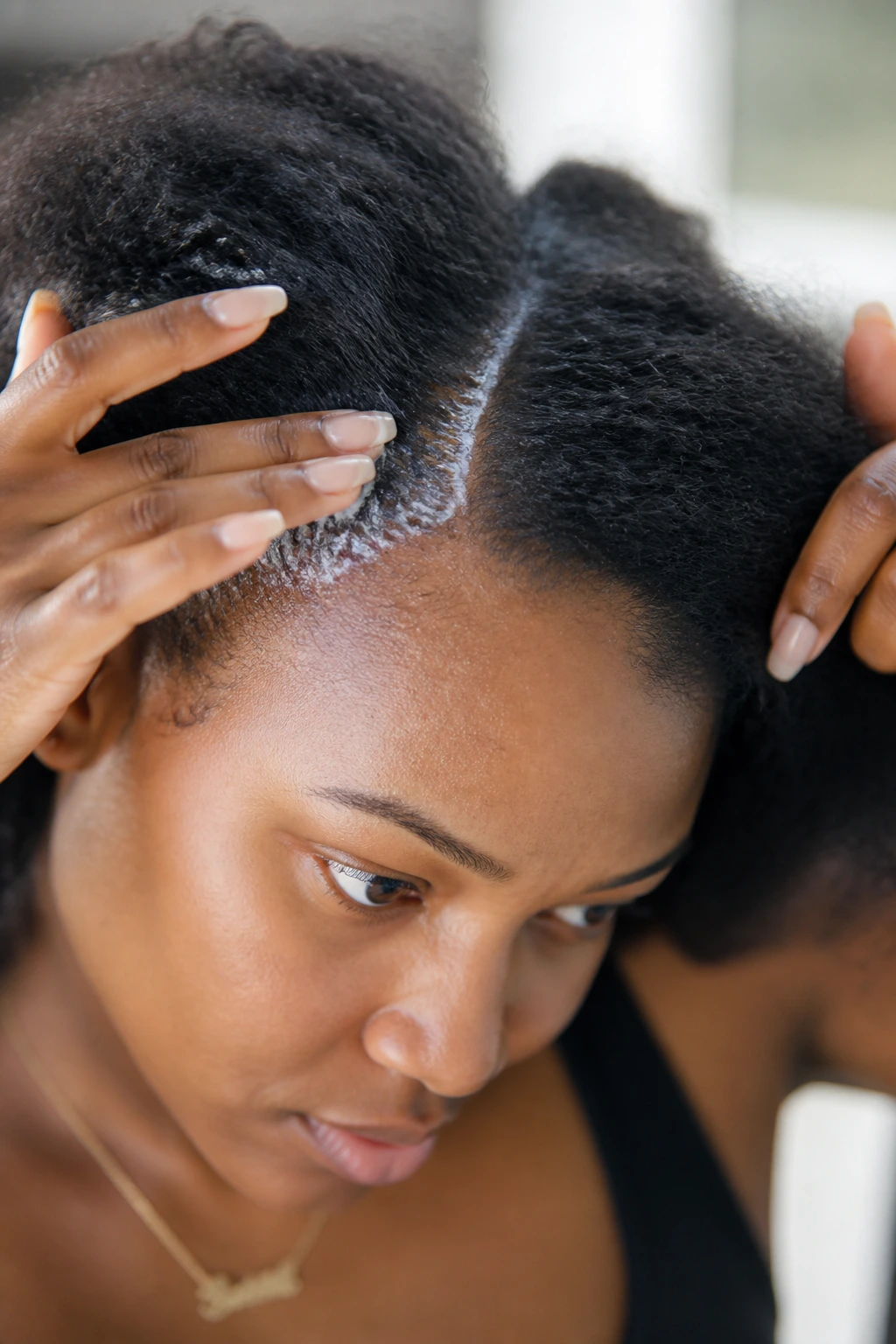
Natural hair likes balance here. Too little product and the braid slips apart before you finish the second side. Too much and the scalp turns pasty, heavy, or flaky by the next morning. The sweet spot is usually a light leave-in on clean hair, a small amount of gel at the part, and mousse only after the braids are in.
If you’re adding extensions, pre-stretched braiding hair tends to blend better because the ends taper more naturally. It saves time too. If you’re leaving your own hair out, stretching first with banding, threading, or a low-heat blow-dry gives the braids a cleaner root and helps square faces by keeping the parting lines calm instead of puffy.
Hair density changes the plan. High-density hair can handle larger braids without losing shape. Finer hair usually looks better with medium sections, because braids that are too thick can overwhelm the face. And if your hairline is sensitive, skip any style that needs the first inch pulled tight to look neat. The scalp remembers that.
How to Wear These Braids With Square-Face Features
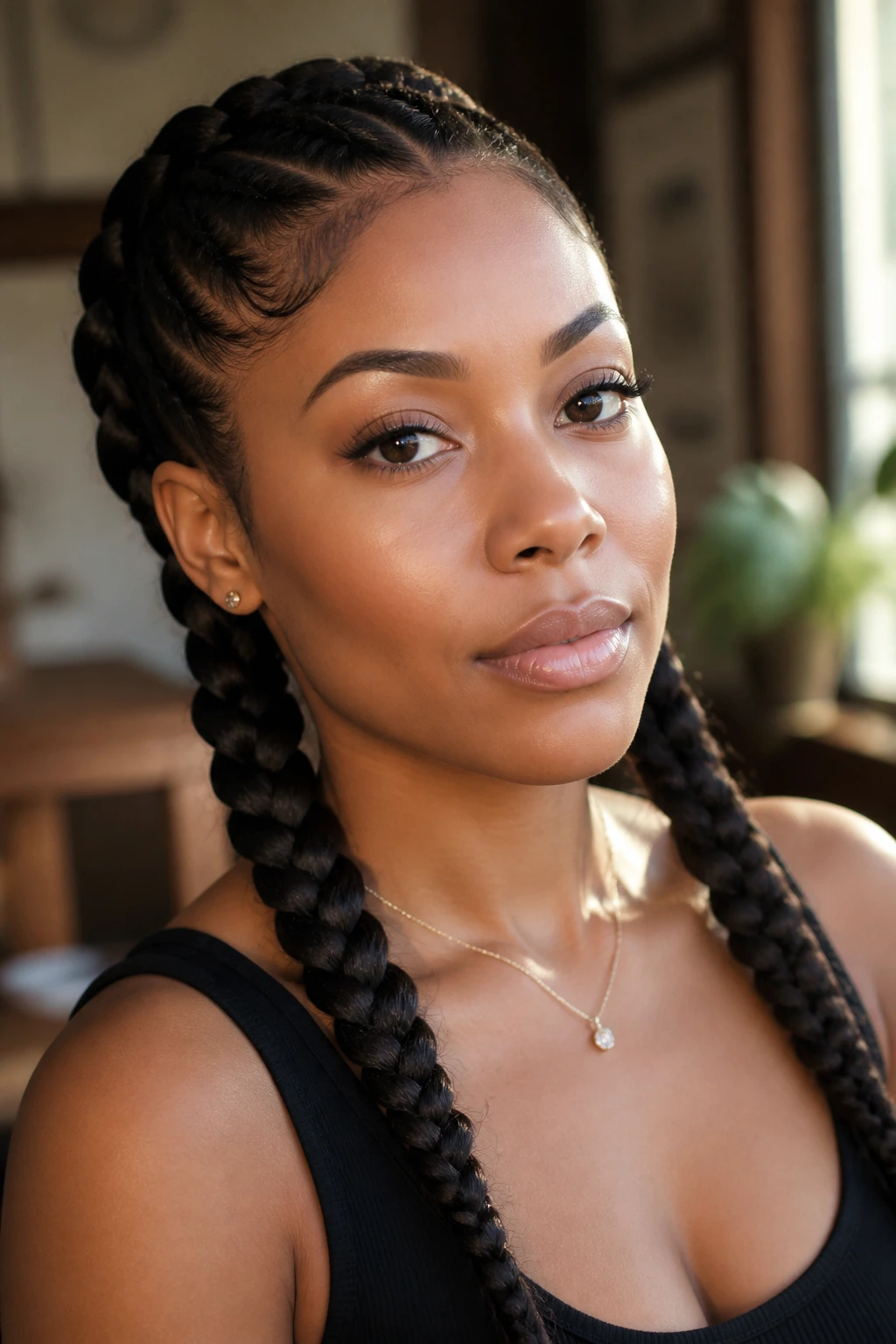
Silhouette: Keep the part, braid start, and end point moving in different directions when you can. A braid that starts high, sweeps diagonally, and finishes long usually reads softer than one that runs straight back and stops bluntly at the jaw.
Accessories: Medium hoops, slim cuffs, or a single scarf wrap are enough for most of these looks. Heavy earrings plus thick braids can crowd the lower half of the face, and that’s the part you usually want to keep open.
Balance: If your forehead and jaw feel equally strong, let the top of the style do a little lifting and the ends do a little lengthening. That can mean a side part, a high crown section, or just a braid that lands at the collarbone instead of the chin.
Finish: A light mousse pass and a tiny amount of shine spray keep the surface neat without making the hair look frozen. You want the braids to look finished, not lacquered.
Small Style Moves That Change the Whole Look
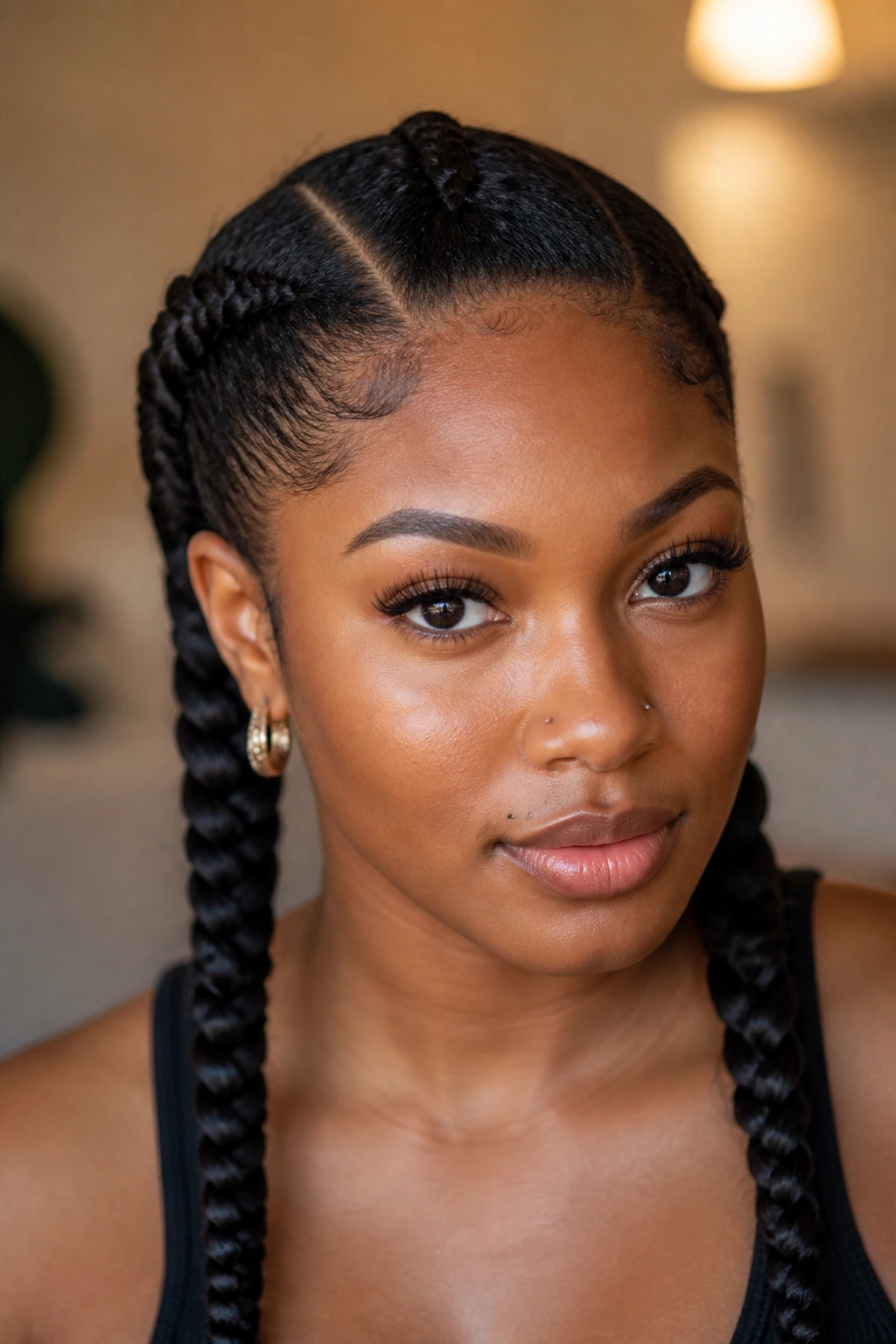
Angle Trick: Shift the part just half an inch off center if a dead center line makes your face feel boxy. That tiny move often changes the whole balance.
Texture Trick: Stretch the hair before braiding when shrinkage makes the root look too dense. Cleaner roots give the braid a smoother start, which square faces usually wear better.
Dress-Up Move: Add cuffs to the lower third of the braid or curl the ends with rods if you want the style to feel more finished. The change is small, but the eye notices it immediately.
Low-Tension Move: Keep the first inch of the braid gentle at the hairline. If it hurts, it’s too tight. If it leaves red marks, it’s too tight and too thin.
Make-It-Yours: Want softer? Leave out a couple of tendrils. Want cleaner? Tuck every loose end and keep the braid line smooth. Want more drama? Go bigger on the braids and longer on the length.
Mistakes That Make Two Braids Work Against a Square Face
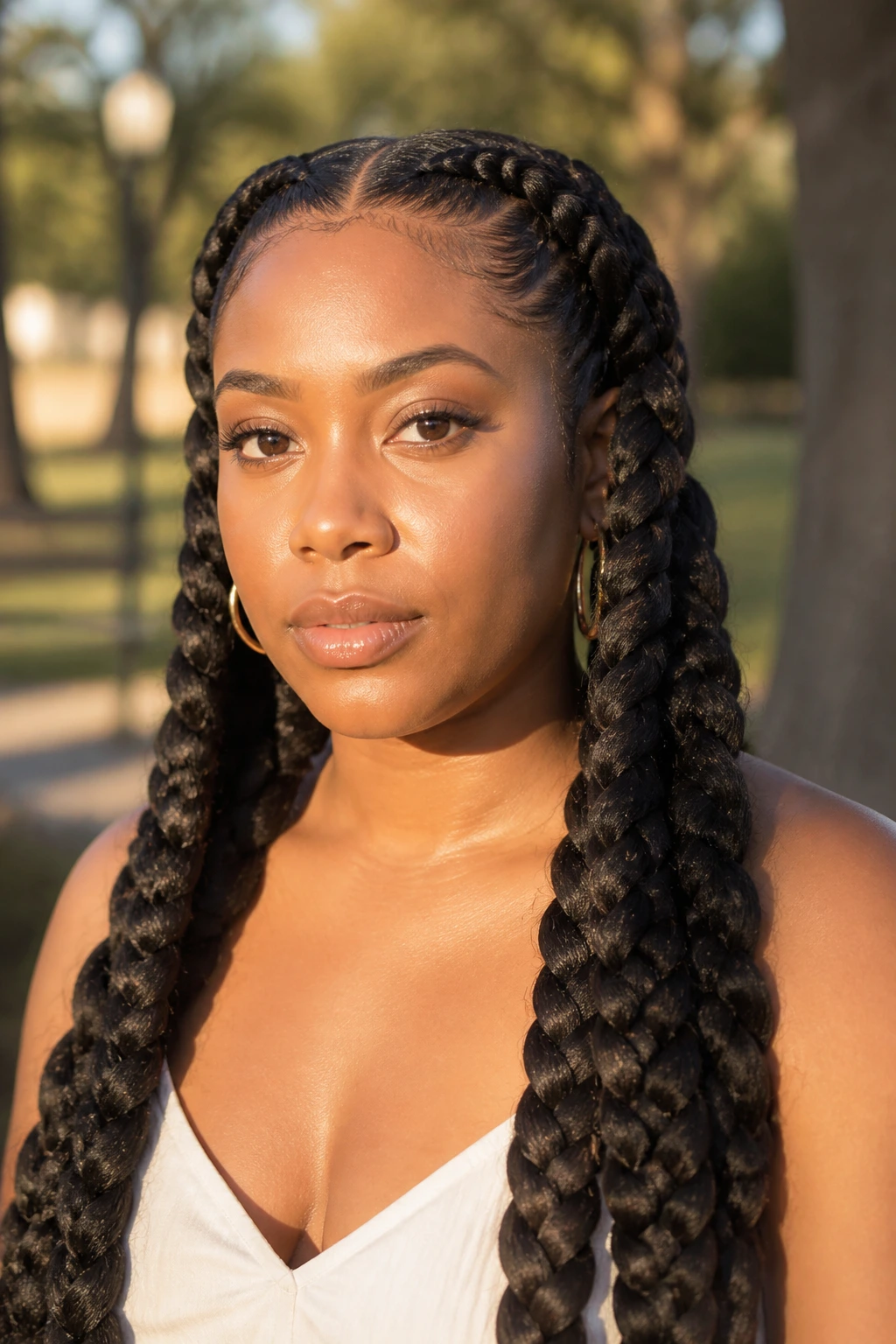
The first mistake is braiding the front too tight. You’ll feel it before you see it—a headache, a shiny hairline, maybe tiny bumps if the tension is rough. The fix is simple: leave the first section a little looser and stop chasing that ultra-flat look around the temples.
Another common slip is a blunt, straight part on a face that already has strong horizontal lines. It can make the forehead and jaw read wider than they are. If that happens, switch to a soft side part or curve the front by a small amount instead of drawing a ruler-straight line down the head.
Product overload is another one. Gel clumped at the roots, edge control layered on top, and mousse piled on later can leave the braids crunchy and flaky by day two. Use less than you think. Then use less again.
And yes, leaving braids in too long will catch up with you. Roots fuzz, scalp buildup shows, and the style loses its clean shape. Once the front starts looking rough even after a refresh, it’s time to take them down.
Variations and Adaptations Worth Trying
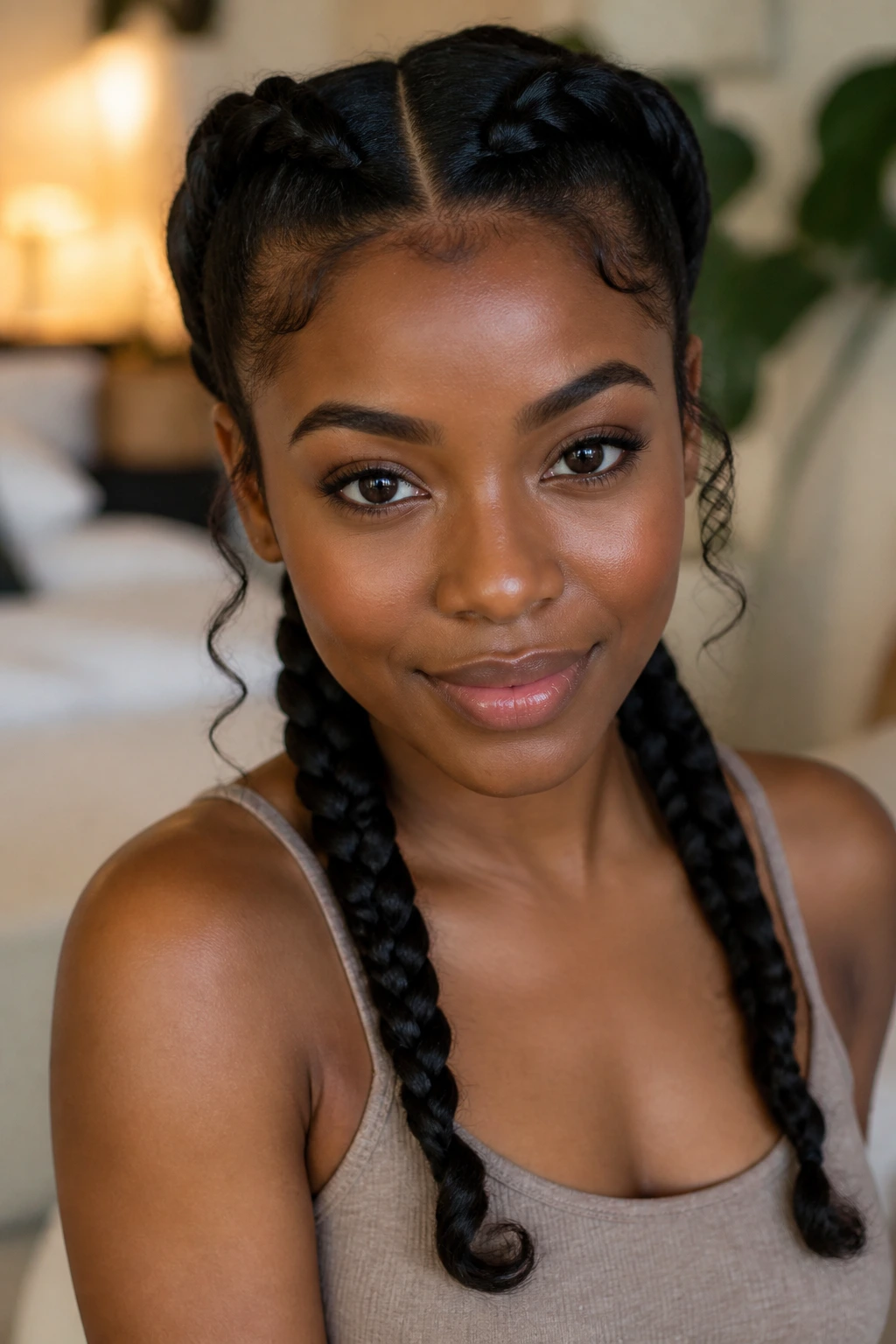
The No-Extension Version: Use your natural hair only and keep the braids medium-sized. This is a good choice if you want less weight and more texture at the root. It also works well on square faces because the braid line stays closer to the head.
The Added-Length Version: Feed in pre-stretched synthetic hair for extra length and a smoother drop past the shoulders. The extra length helps pull the eye downward, which can soften a strong jawline fast.
The Stretched-and-Sleek Version: Prep with threading, banding, or a blow-dry first, then braid on calm, stretched hair. This gives cleaner parting and a neater root, which suits anyone who wants the style to read polished.
The Soft-Frame Version: Leave two small pieces out near the cheekbones and curl the ends. This is the easiest way to soften the face without changing the whole braid pattern.
The Low-Maintenance Version: Skip accessories, keep the part simple, and finish with a satin wrap at night. It’s the version to choose when you want the style to stay neat without much fuss.
Keeping Two Braids Fresh Between Wash Days
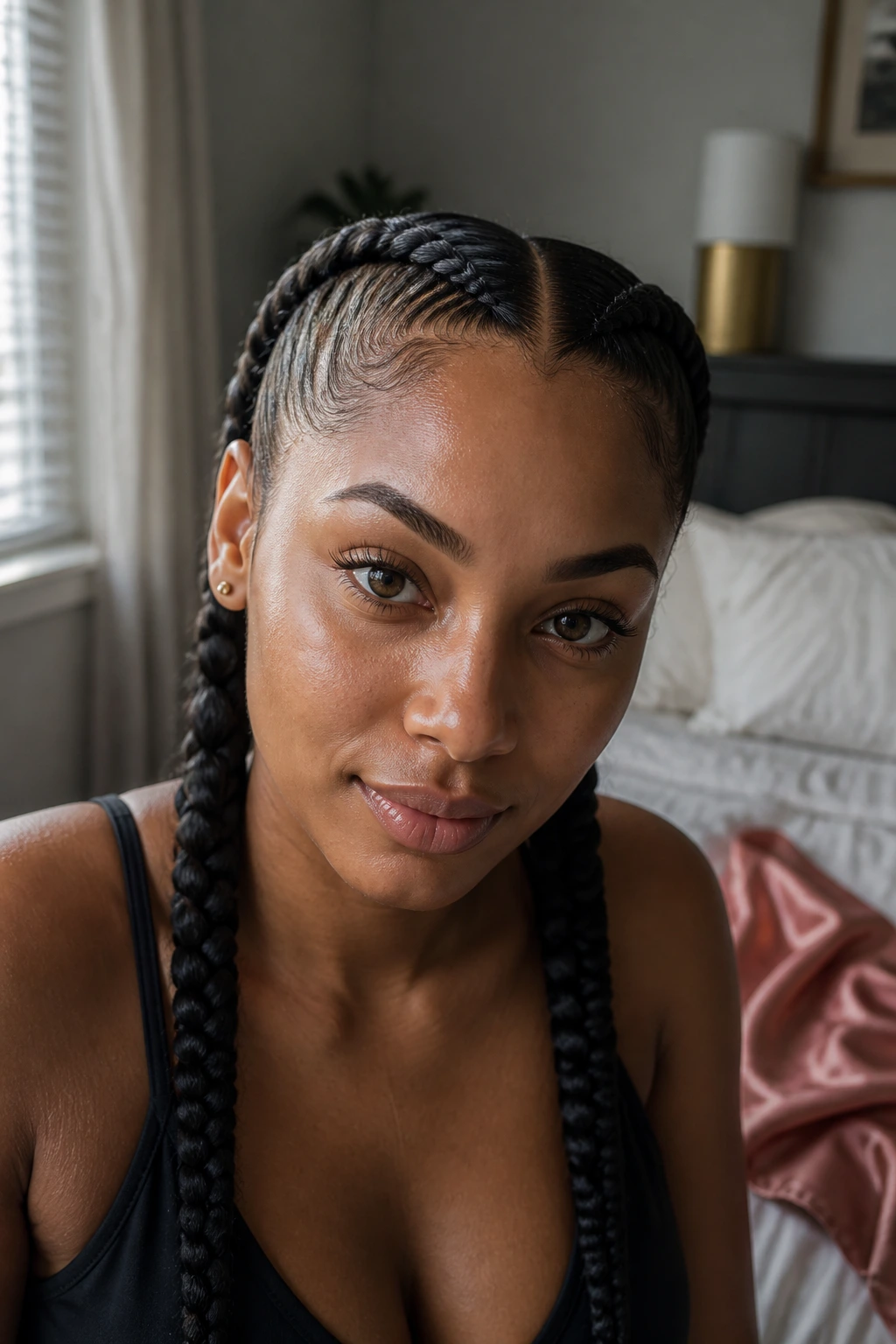
Braids stay cleaner when you treat the scalp and the lengths differently. At night, a satin scarf or bonnet protects the parting from friction, which slows down frizz around the front. If your hair is long enough to brush your shoulders, the scarf also keeps the braid ends from roughing up on your pillow.
A light scalp refresh every few days helps, but don’t drown the roots in product. A small mist of diluted leave-in or a dedicated scalp spray is enough for most people. If you wear extensions, wiping the part line with a damp microfiber cloth before bed can keep gel buildup from getting chalky.
Most two-braid styles on natural hair are best kept for around two to four weeks, depending on your scalp, your hair texture, and how much new growth you see. If the roots start tugging, or the style starts puffing in a way that changes the shape of the braid, take it down. A style that looks neat but feels tight is not worth the headache.
When it’s time to remove the braids, go slow. Separate the hair first, finger-detangle the shed hair as you go, and follow with a conditioner soak if the style has been in long enough to need it.
Frequently Asked Questions
Which part is best for a square face: center or side?
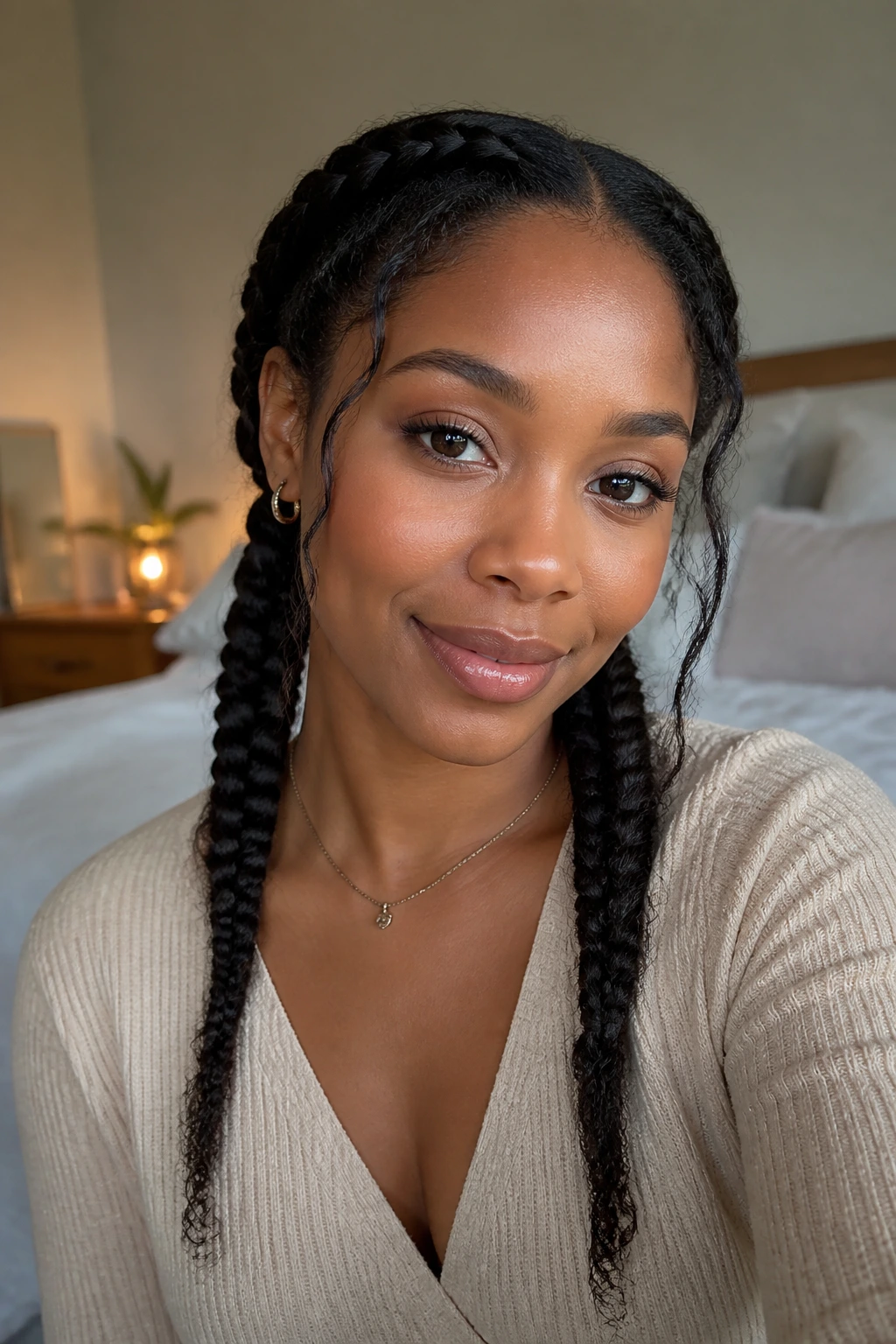
Both can work. A center part adds length, while a soft side part breaks up the width across the forehead. If your face already feels broad up top, I’d start with a side part or a very slight curve.
Are two braids better than one thick braid for square faces?
Usually, yes, because the two lines create vertical framing on both sides of the face. One thick braid can look clean, but it also gives you one heavy shape down the center, which is not always the softer choice.
Can I do these styles on short natural hair?
Yes, as long as the hair is long enough to grip neatly and you’re willing to use a little added hair for length if needed. Short natural hair often looks best in feed-in, knotless, or low-braid versions because the roots stay flatter.
How tight should the braids feel?
Tight enough to hold, not tight enough to throb. If your scalp feels sore within the first hour, or the hairline feels pulled when you move your eyebrows, the install is too aggressive.
What if my roots puff up fast?
Start with stretched hair, use less product at the root, and choose a braid size that matches your density. Tiny sections on high-shrinkage hair often expand faster and make the style look wider than you planned.
Do beads or cuffs work on square faces?
They do, as long as you place them low or keep them light. Accessories near the ends help pull the eye downward, while a lot of weight near the scalp can make the face look wider.
How do I keep the front neat without flakes?
Use a small amount of styling gel on the parts, not the whole front section. Then set the hair with mousse once the braids are finished instead of layering on more edge control.
Can I wear these braids to work or a formal event?
Absolutely. The low buns, side-swept versions, and braided crown styles lean dressy. The center-part feed-ins and low tapered versions skew cleaner and more everyday.
The Shape You Keep Reaching For
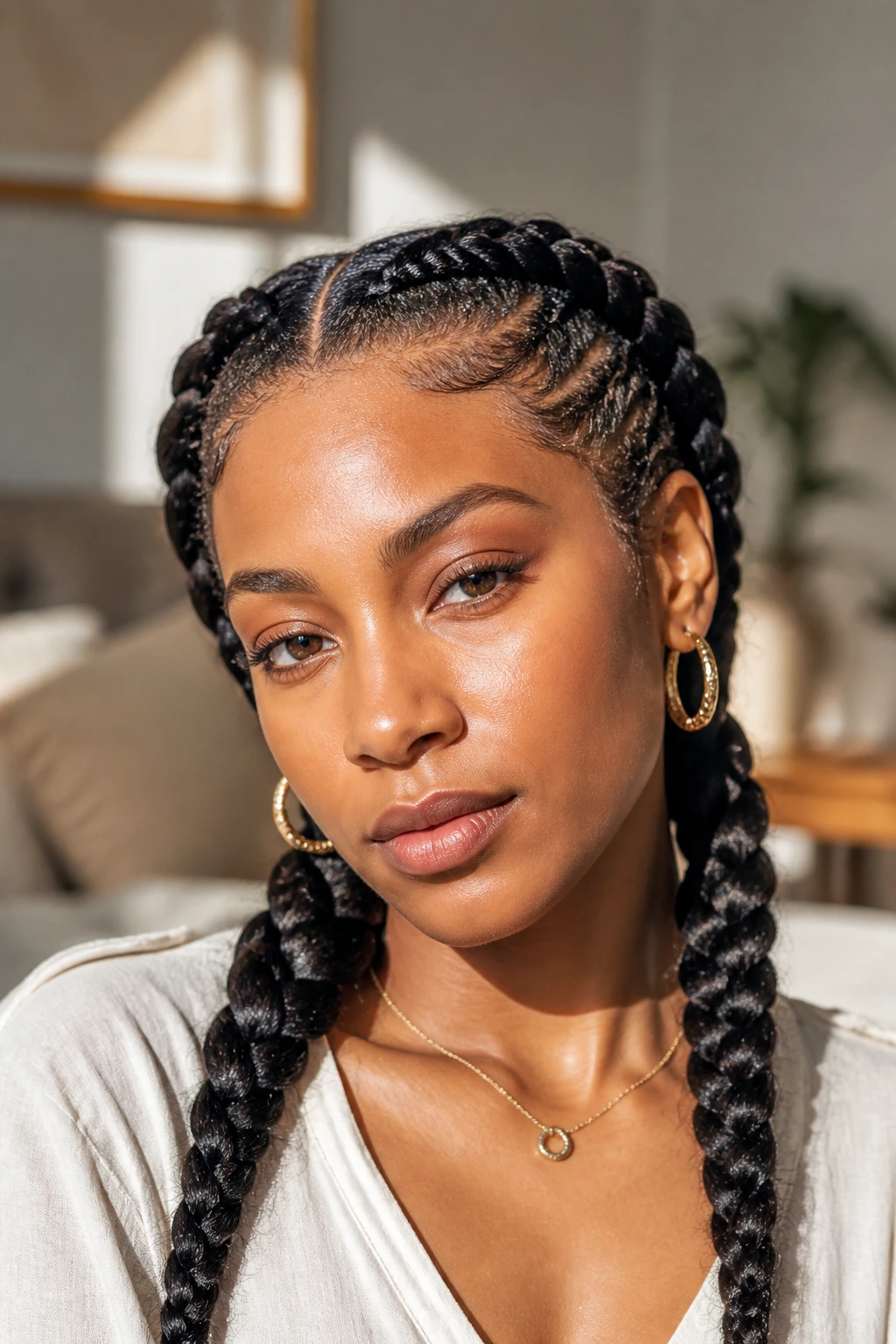
The best two-braid styles for square faces do one thing well: they change the direction of the eye. Sometimes that means a center line that lengthens the face. Sometimes it means a side sweep, a curved base, or a little curl at the end that breaks a hard edge. The braid count matters less than the geometry.
Natural hair gives you even more room to play because texture, shrinkage, and density all create their own version of the style. Work with that. Keep the roots calm, the parts intentional, and the tension light enough that your scalp doesn’t complain by lunchtime.
Pick one style that gives you softness, one that gives you lift, and one that keeps your hair out of the way on the days when you want zero drama. That’s the small stack I’d build first, and it’s usually the one people keep coming back to.