



Old hairstyles for round faces and curly hair work best when they stop fighting the face and start shaping it. A deep side part, a little lift at the crown, and curls that fall below the widest part of the cheeks can change the whole picture. That’s the part a lot of people miss. The style does not need to be new to look good. It needs to create line, movement, and a little bit of distance between the cheeks and the outer shape of the hair.
Curly hair brings its own rules. It has memory, shrinkage, and a habit of expanding where you least want it. So the smartest old-school styles are the ones that use that energy on purpose: finger waves that stay close to the head, bouffants that build height instead of width, pin-up rolls that pull the eye upward, and soft side sweeps that break up a full circle shape. Straight-across bluntness tends to work against a round face. Angles, lift, and asymmetry usually work with it.
The best part? These looks are not museum pieces. A lot of vintage hair can feel fussy if you copy it too literally — too much teasing, too much lacquer, too many exacting curls. But the bones of the style are still useful. You can keep the shape and lose the stiffness. That’s where the good stuff lives.
Why These Old-School Styles Keep Working
-
Round-face balance: These styles move volume away from the cheeks and toward the crown, side, or nape, which keeps the face from reading wider than it is.
-
Curl-first structure: Every look here respects shrinkage, bend, and natural texture, so you are not building a style that collapses the second humidity shows up.
-
Vintage without costume energy: The useful part of retro hair is the shape — waves, rolls, side parts, soft lifts — not the shellacked finish that can make the whole thing look stiff.
-
Works across lengths: You’ll find options for pixies, lobs, shoulder-length curls, and long coils, which matters because round-face advice gets lazy fast when it only talks about one haircut.
-
Useful on second-day hair: A lot of these styles look better after the curls have settled and the roots have a little grip. Freshly washed hair can be too slippery for pins and rolls.
-
Easy to personalize: Swap the part, soften the fringe, or change the placement of the bun, and the same old-school idea can read polished, casual, or dressy.
1. Deep Side Part with Lifted Crown
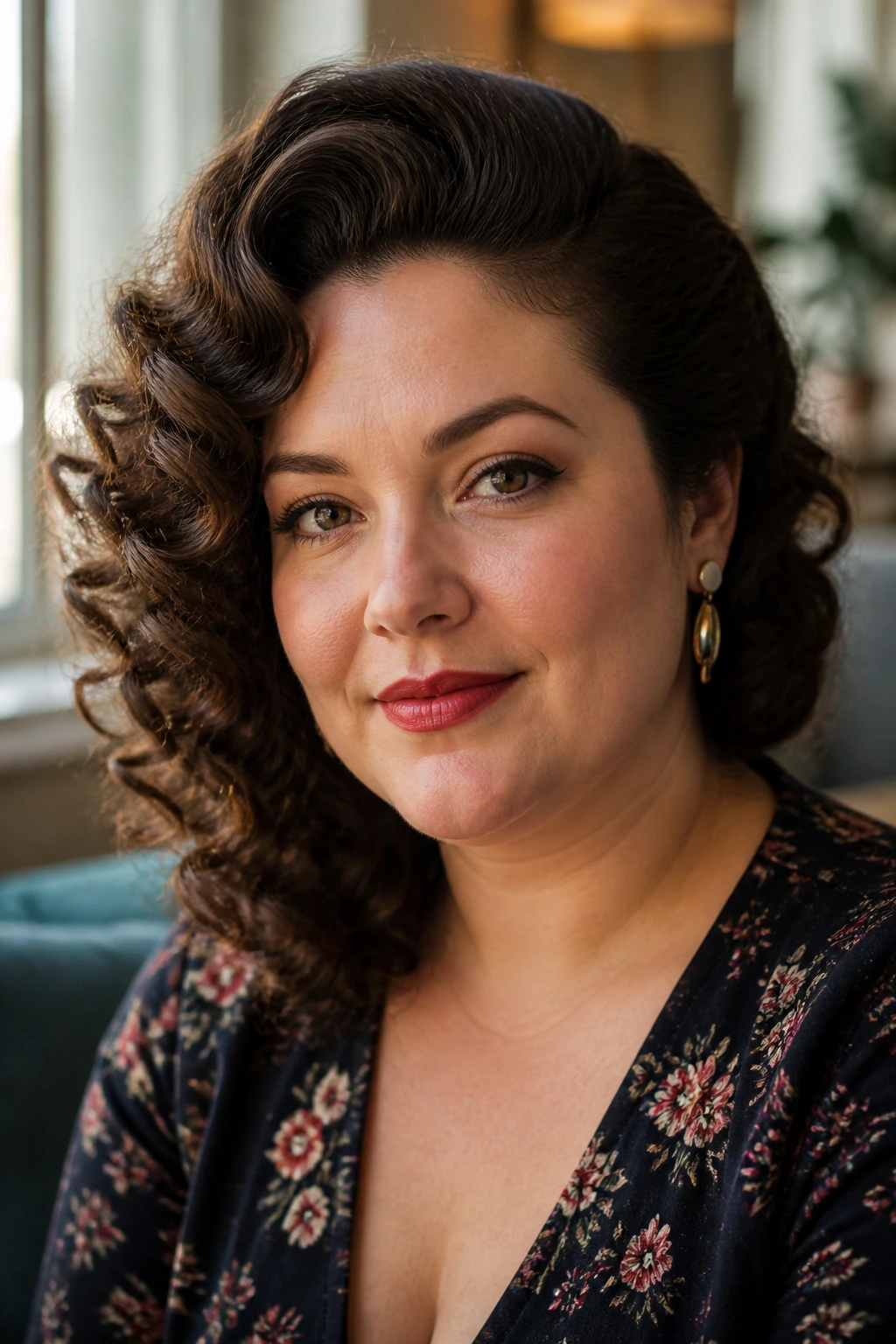
A deep side part is one of those old tricks that keeps surviving because it actually does the job. On a round face, it cuts the face shape diagonally instead of boxing it in, and the lifted crown keeps the top of the head from flattening into the widest part of the cheeks. With curly hair, that extra lift is gold. It gives the style some air.
Why It Works on Curly Hair
The key is keeping the part low on one side and using clips or a diffuser to encourage height at the roots. If your curls sit between shoulder length and collarbone length, this shape is especially useful because the sides can drape instead of puffing outward. Leave a few face-framing pieces loose. They should fall past the cheekbone, not stop right on it.
- Best with medium to long curls
- Use a root clip while drying for 10 to 15 minutes
- Keep the heavier side tucked behind one ear if you want more length through the face
My favorite move: lift the roots at the part with a comb, mist with water, and let that section dry before you touch it again.
2. Shoulder-Length Shag with Cheekbone Layers
A shag is one of the few old haircut ideas that still feels honest on curly hair. The layers stop the silhouette from turning into a single round puff, and the shoulder-length finish gives the curls space to hang instead of ballooning at the sides. On a round face, that matters. You want shape, not a cloud.
The trick is where the shortest layers land. If they start too high, the volume can sit right beside the cheeks, which is the opposite of what you want. Keep the face-framing pieces a little longer, around cheekbone to jaw length, so the eye gets a vertical line instead of a horizontal one. This cut also behaves well when air-dried with a curl cream and a light mousse; it keeps that lived-in, slightly undone texture that made the shag famous in the first place.
3. Finger Waves with Loose Curly Ends
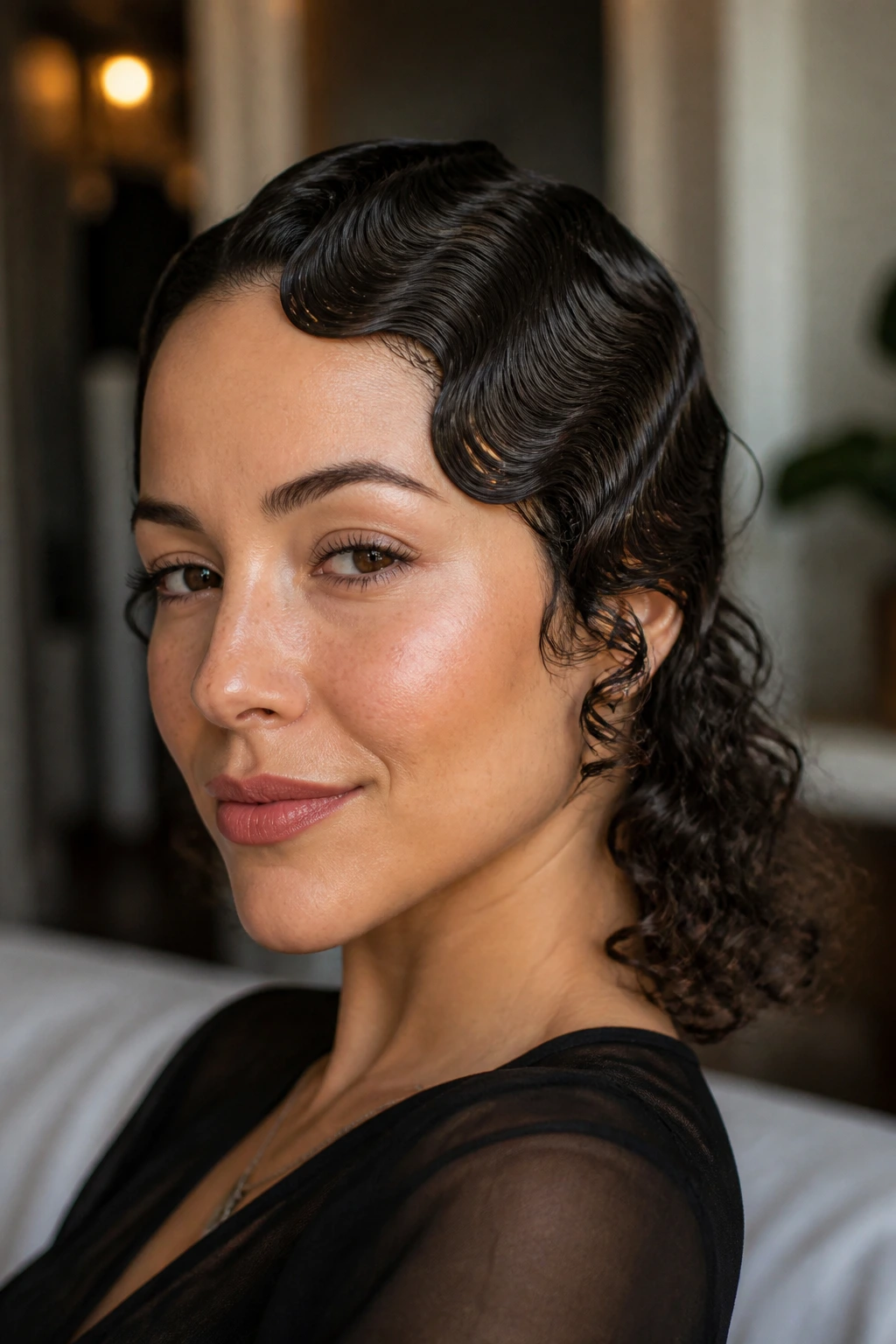
Want a style that looks polished without dragging the face wider? Finger waves do that beautifully. They hug the head close through the front, which takes volume away from the temples, while the loose ends keep the whole thing from feeling too severe. On curly hair, the contrast is what makes it work.
How to Wear It
This style works best when the top and front are set while damp with gel or setting lotion, then pinned into the wave shape until dry. The length can stay curly at the back or through the ends, which softens the face in a way straight finger waves can’t. If your curls are tighter, stretch them a bit first so the wave pattern sits cleanly.
A few small details matter here. Use a fine comb to draw the wave ridges neatly. Keep the lines smooth near the part and ears. And don’t make the waves too deep — dramatic in photos, yes, but bulky around the face in real life.
4. Curved-In Bob with Tucked Sides
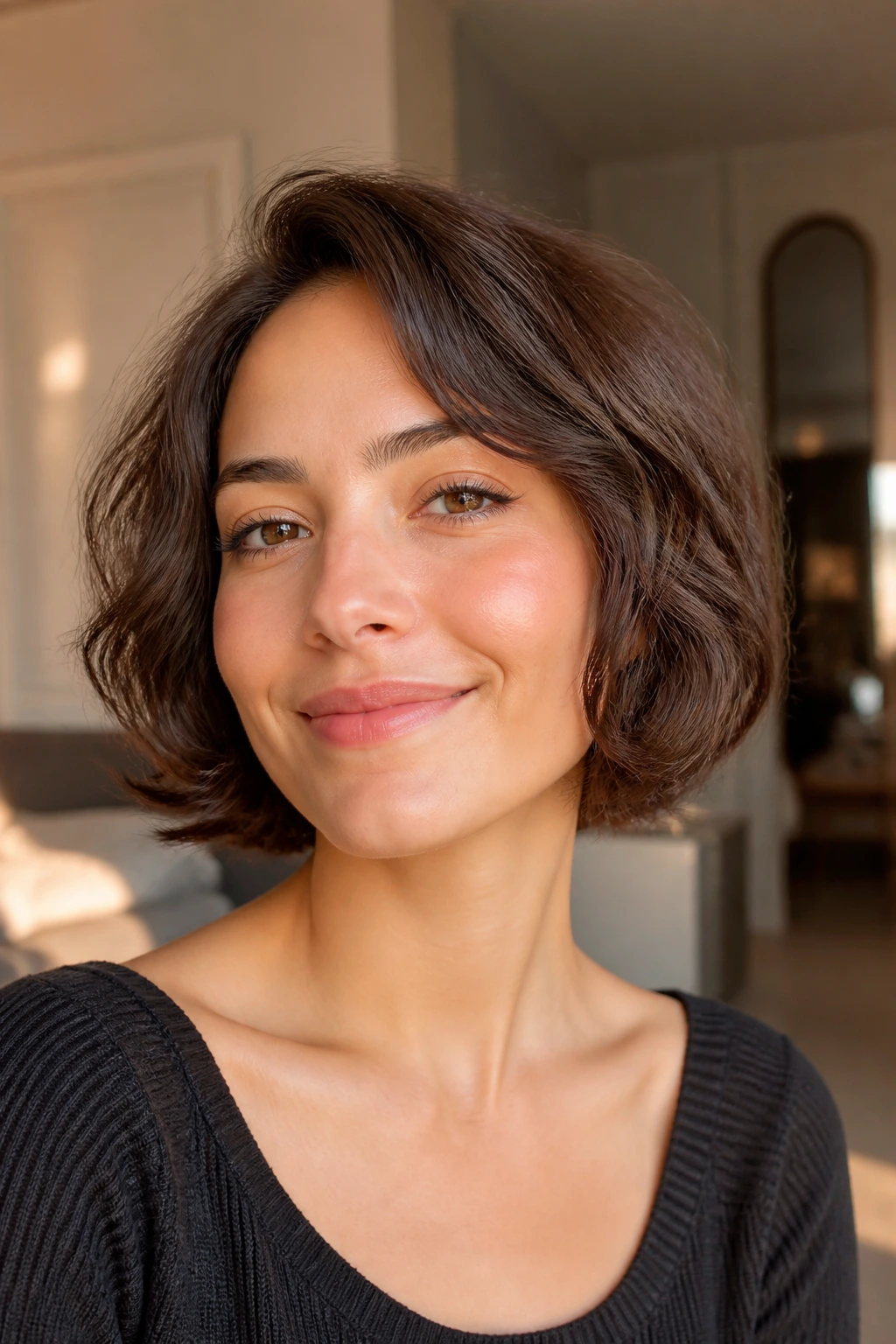
A chin-length bob can be a rough deal for round faces if it stops dead at the jaw. A curved-in bob fixes that. The ends bend softly toward the neck instead of flaring outward, and the length sits just below the cheek line so the face gets a little more vertical space. Curly hair can absolutely wear this shape, but it needs a controlled edge.
The styling goal is not pin-straight perfection. It’s a clean outline with a touch of bend at the ends. If your hair is thick, ask for internal weight removal rather than too much slicing at the top. That keeps the sides from turning into a triangle. If your curls are looser, a round brush at the ends or a few low-set rollers can give you the tuck without crushing texture.
Keep one side a touch fuller than the other. That tiny asymmetry helps more than people think.
5. Half-Up Bouffant with Cascading Curls
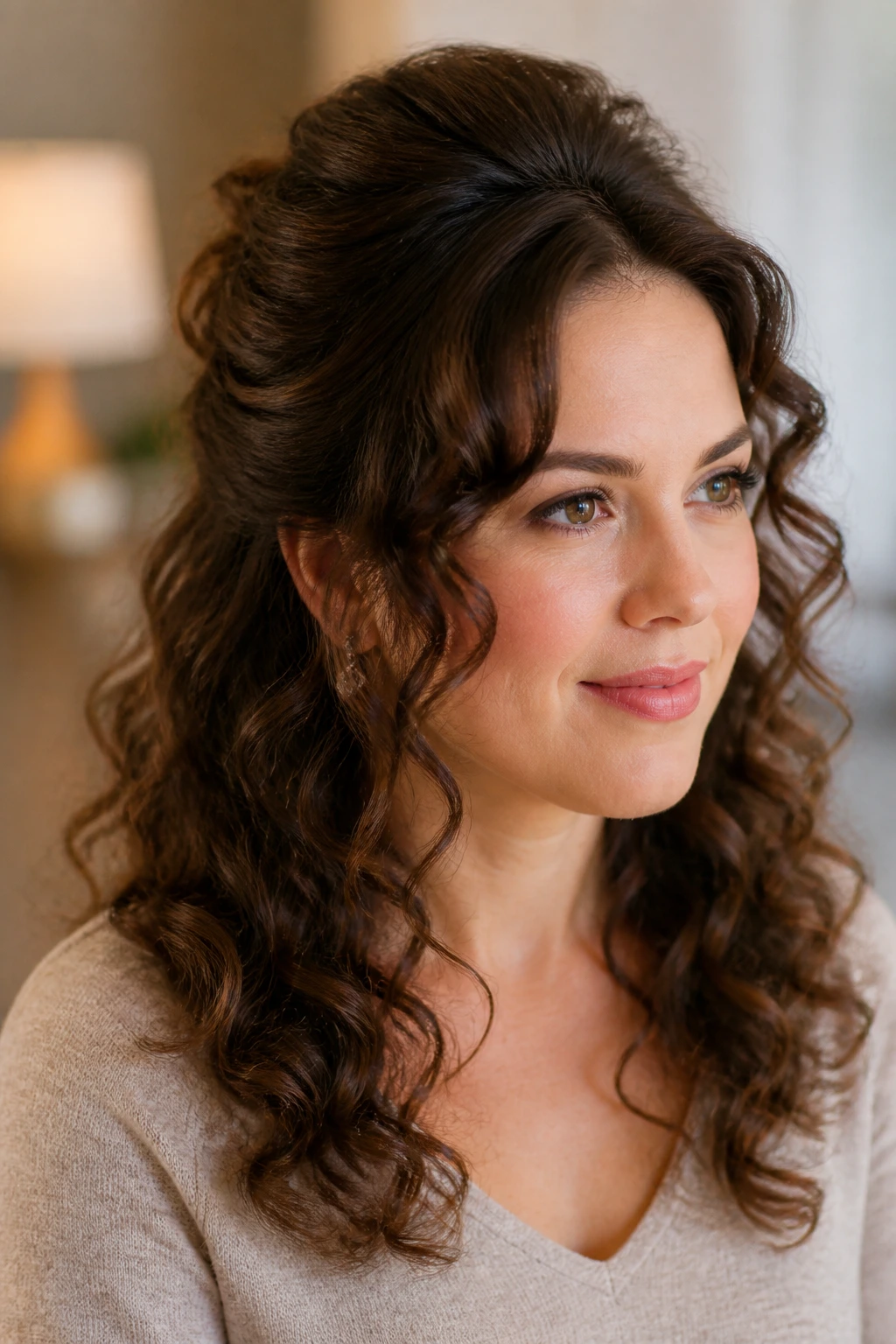
There’s a reason this look keeps showing up in old photos and still makes sense now. It lifts the top half of the hair away from the cheeks, which opens the face, while the rest of the curls fall below the widest point and do their own soft thing. The shape is almost mathematical in how well it works.
The bouffant part does not need to be huge. A small bit of crown height is enough. Backcomb the roots lightly, smooth the surface, and secure the top half a few inches above the ears. Then let the lower curls stay loose and touchable. If you’ve got thick curls, this is a smart way to control volume without flattening the texture. If your hair is finer, the half-up section gives the illusion of more fullness without needing a ton of product.
It’s a good style for events, yes, but it also works on a plain day when you want your curls off your face and your cheek line a little less exposed.
6. Faux Bob with Hidden Pins
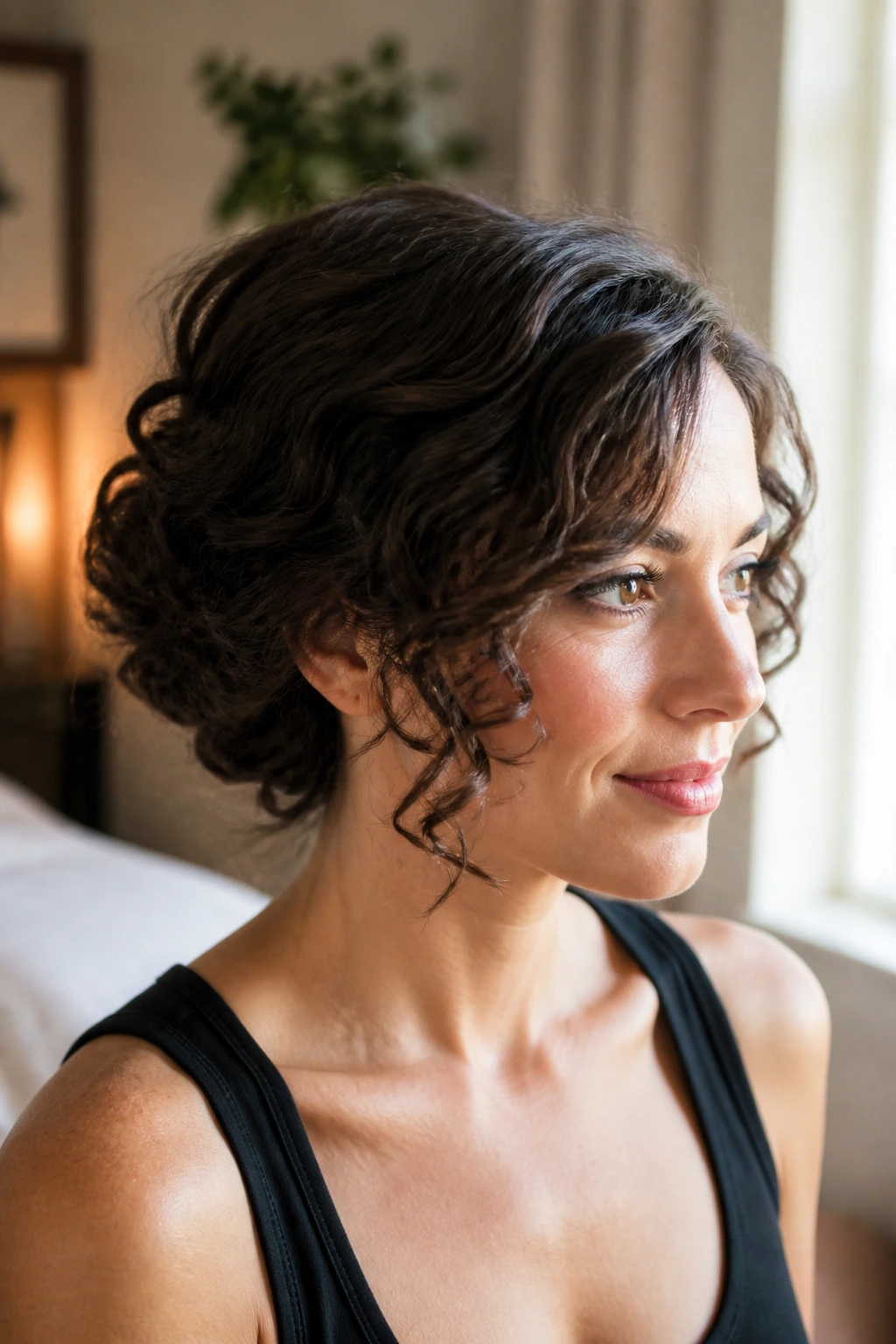
A faux bob is one of those styles that looks more complicated than it is. You keep the length, but you tuck and pin it so the silhouette reads like a shorter, older-style bob. For round faces, that shorter-looking frame can be useful as long as the front pieces stay soft and the ends don’t sit right at the cheeks.
What makes this version better than a true blunt bob is flexibility. You can leave enough length at the front to skim the jaw, which gives the face more shape. The back gets pinned under in neat folds, usually at the nape, where the pins are hidden under the curls. It’s a strong choice for medium to long curly hair on nights when you want a clean neckline without losing all your length.
Use duckbill clips first, then bobby pins once the shape looks right. That little extra step saves a lot of frustration.
7. Halo Braid with Soft Tendrils
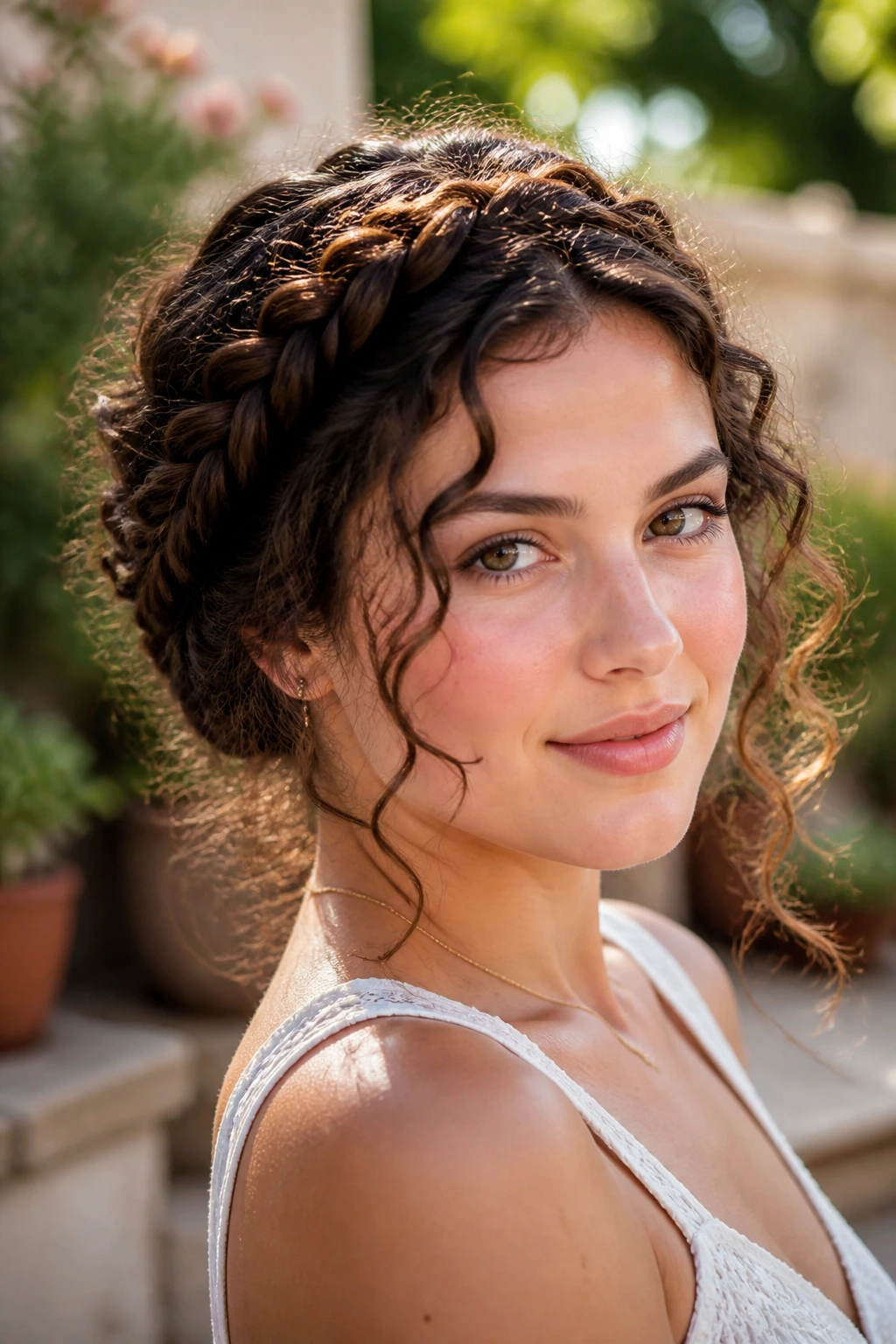
A halo braid pulls hair away from the sides of the face, and that alone is enough to make it useful for round faces. The braid creates a visible circle around the head, but because it sits on top rather than around the cheeks, it doesn’t add width where you don’t want it. The soft tendrils are the part that keeps it from looking severe.
Key Details to Get Right
- Start the braid slightly behind the hairline so it doesn’t press the face in too tightly
- Leave out 2 to 4 curled tendrils around the temples and near the ears
- Pin the braid flat enough that it sits close to the head, not like a raised rope
- Keep the rest of the curls soft and separate at the ends
This is one of the better options for thick curls, especially when they’re on day two and have a little grip. Fresh curls can slip. Slightly lived-in curls hold the braid better and make the whole thing feel more natural.
8. Low Curly Chignon with Swept Front
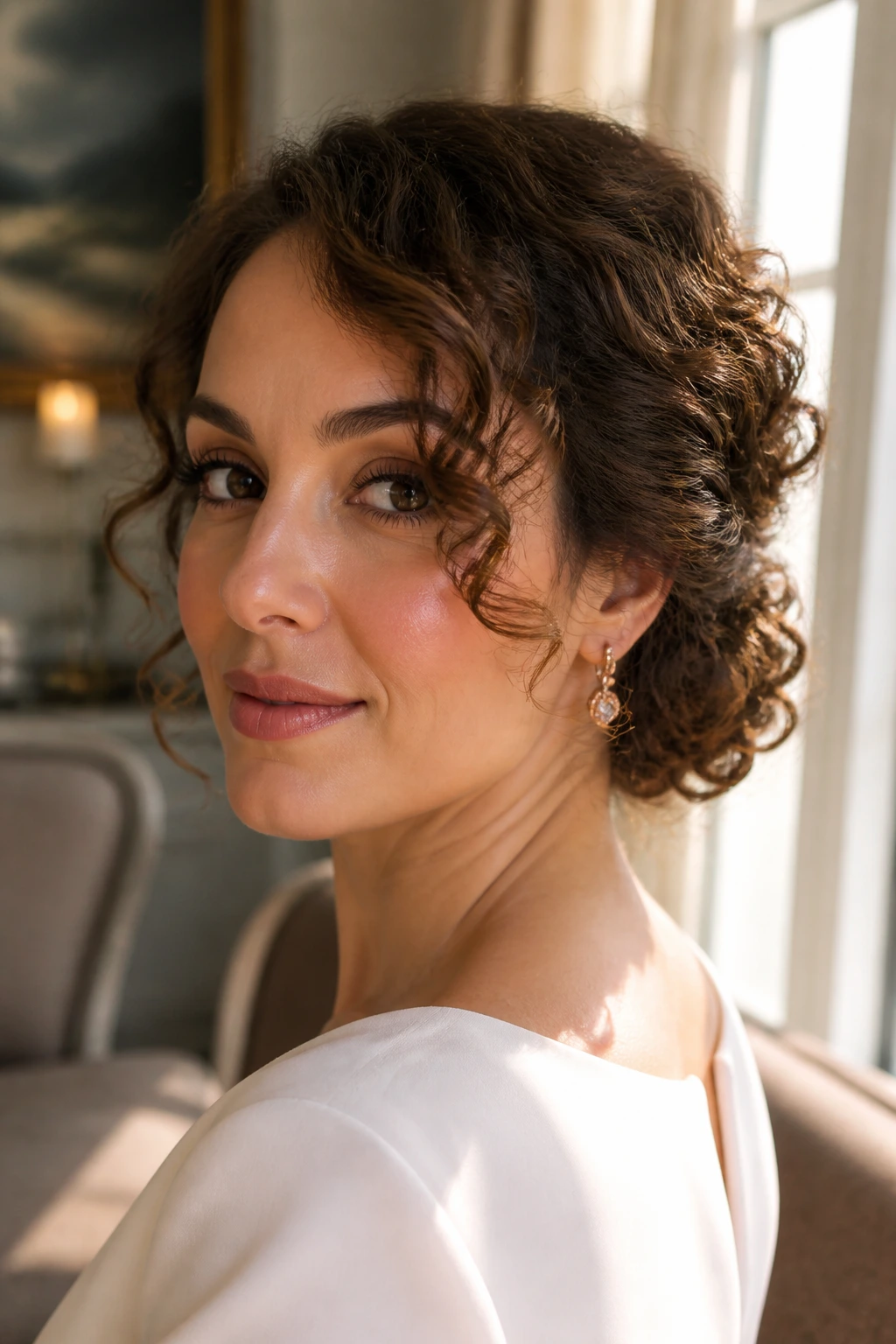
A low chignon is quiet in the best way. It puts the bulk at the nape instead of the sides, which lengthens the face and keeps the cheeks from feeling boxed in. On curly hair, the texture makes the bun look richer and less formal than a sleek version, which is why I like it so much better.
The swept front does the face-flattering part. Bring the front section across in a side sweep, let it skim the forehead, and pin it low behind one ear or across the temple. That line breaks up the roundness right away. The bun itself should be soft and slightly loose, not pressed flat like a ballet knot. If your curls are dense, twist them loosely before pinning so the shape holds without becoming a lump.
It’s a style that works for work, dinner, and dressy events. No drama. Just clean lines.
9. Victory Roll Accent with Open Length
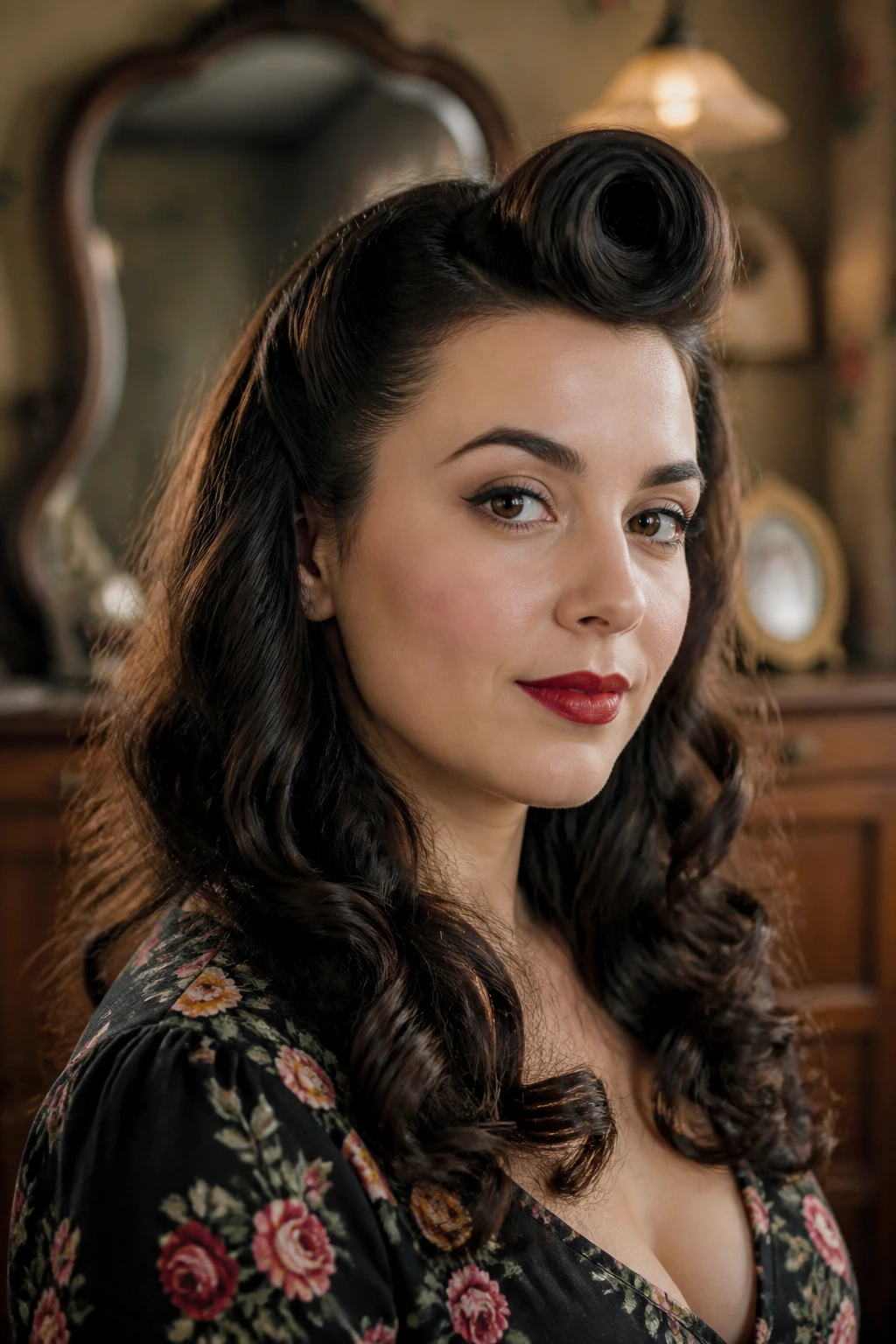
Can one small roll change a whole face shape? Yes, if you place it well. A single victory roll or two small rolls at the front adds height above the forehead and keeps the rest of the hair free to fall below the cheeks. On a round face, that mix of lift and release is exactly what makes the style feel balanced.
The best version is not a full pin-up helmet. Just one accent roll near the front hairline, with the rest of the curls left open or lightly pinned back. That keeps the look from getting too wide. Use a setting cream or a light gel, then roll the front section away from the face and pin it securely at the base. Let the curls through the length stay loose and springy.
If your hair is shoulder-length or longer, this is a lovely way to get old-school detail without committing to a full updo. It’s small. It’s precise. And that’s the point.
10. Flipped-Out Lob
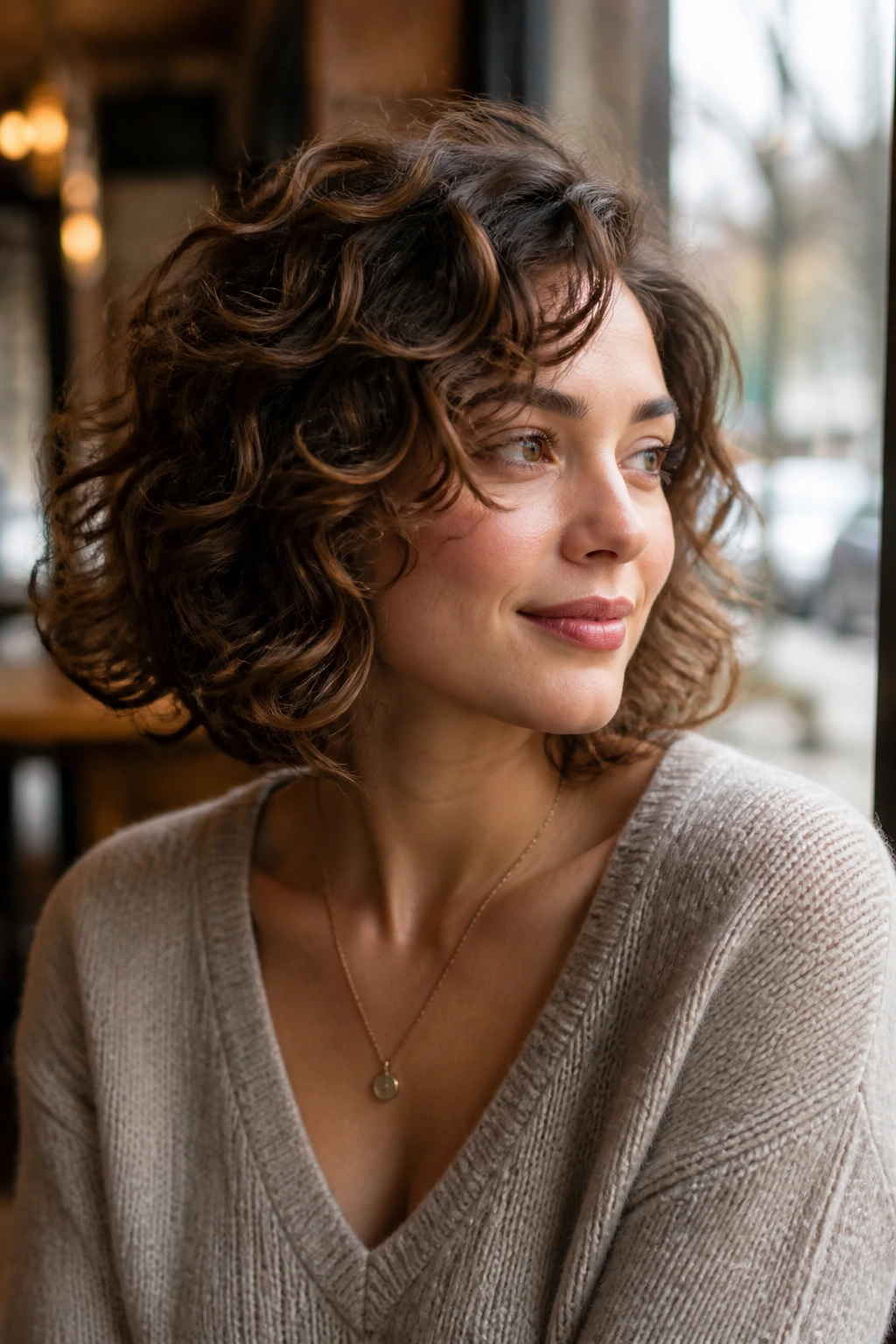
A flipped-out lob has a cheerful little kick at the ends, which sounds simple until you see how much it does for a round face. The length usually lands below the chin, so the face gets a vertical line, and the outward flip keeps the shape from collapsing into one soft circle. Curly hair can wear this with ease if the ends are shaped instead of blunt.
The flip can come from a round brush, a diffuser with a twist at the ends, or a few minutes with a curling wand on just the bottom inch or two. Keep the top smooth enough that the flip reads as intentional. If the whole head is puffing outward, you lose the effect. A side part or a slightly off-center part helps the cut look more grown-up and less bubble-like.
It’s a good everyday style because it doesn’t need perfect curl definition. A little texture works. Too much polish is almost a drawback here.
11. Curly Pixie with Height on Top
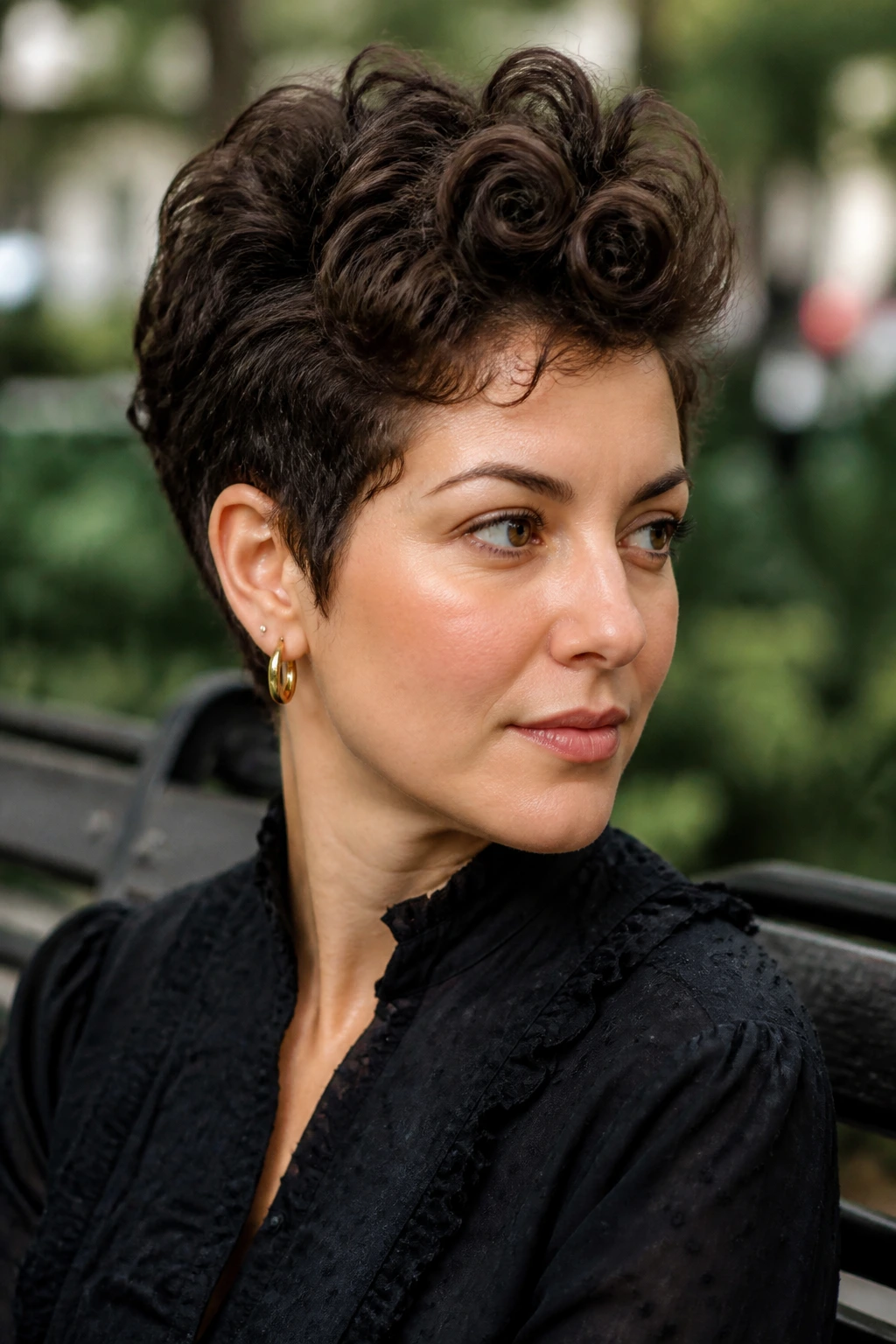
Short hair can be a blessing on round faces if the shape is right, and a curly pixie with height on top gets that right. The sides stay closer to the head, which keeps the silhouette narrow, while the top lifts the eye upward. That top-heavy balance matters. A round face usually wants more vertical movement than horizontal spread.
The curls on top should stay defined but not crunchy. A small amount of curl cream or mousse is enough if your hair is already dense. If it’s finer, a stronger gel at the roots can help the shape hold without turning stiff. The important part is the outline around the temples and cheeks. Keep that area neat. If the sides balloon, the face reads wider fast.
I like this cut because it’s blunt about structure. No pretending. It either frames the face well or it doesn’t. When it works, it looks sharp, modern, and a little cheeky in the best way.
12. Brushed-Out Hollywood Waves
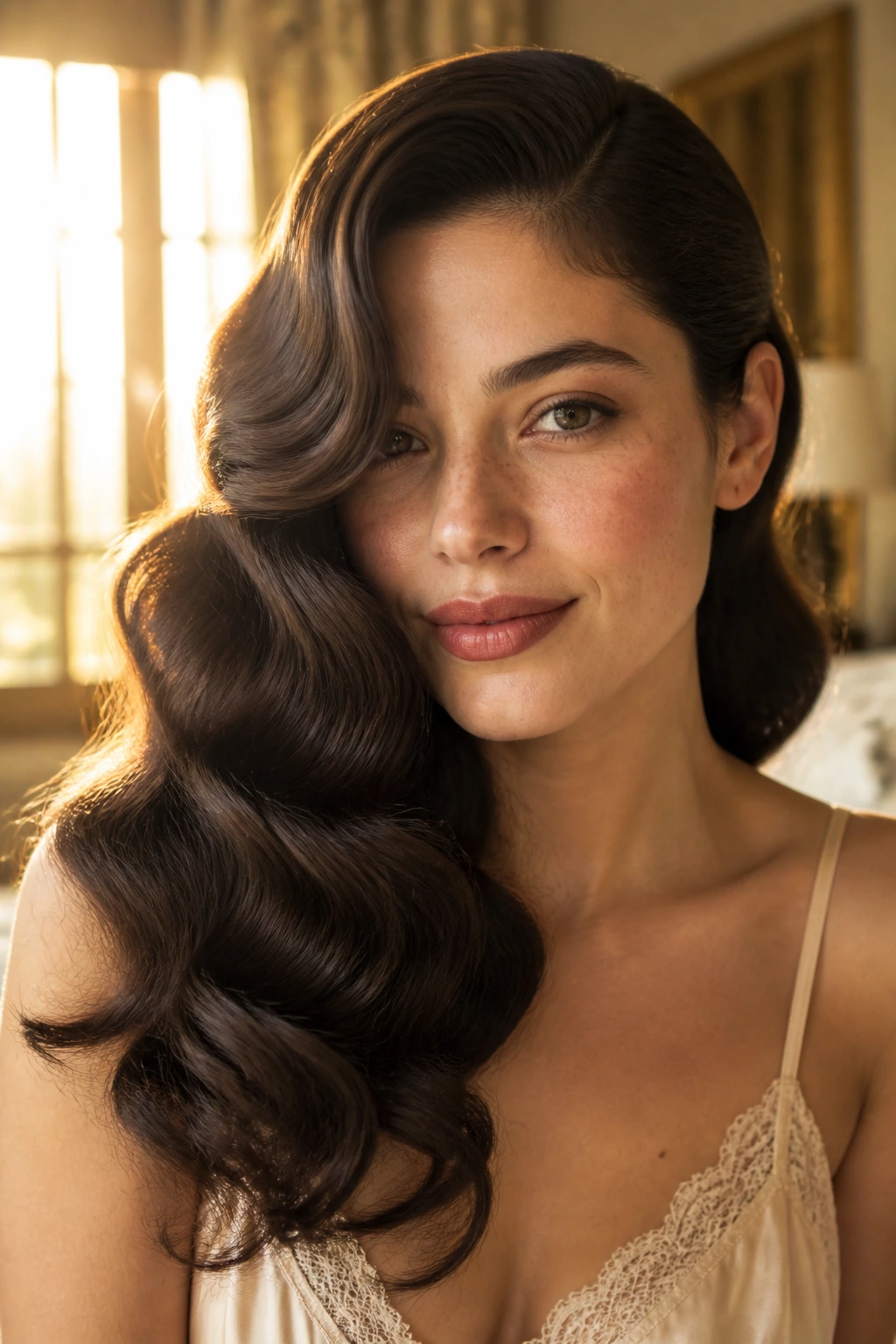
Brushed-out waves are the glamorous cousin of tighter curls. They soften the curl pattern into wide S-shapes that flow diagonally across the face, which is useful on a round face because the eye keeps moving. The style has old movie energy, but the trick is keeping the wave line long and smooth instead of fluffy at the sides.
What Makes It Different
This is not a style for fighting frizz with brute force. You set the curls, let them cool, then brush them out with a soft hand so the surface becomes one connected wave. A side part helps a lot. So does tucking one side behind the ear and letting the other side drape. That asymmetry does half the work for you.
Best on medium to long hair. Best on curls that can be stretched a little before setting. If your hair has a strong coil pattern, you may need to set it in larger sections so the final wave doesn’t shrink up too much.
13. Crown Twist Updo
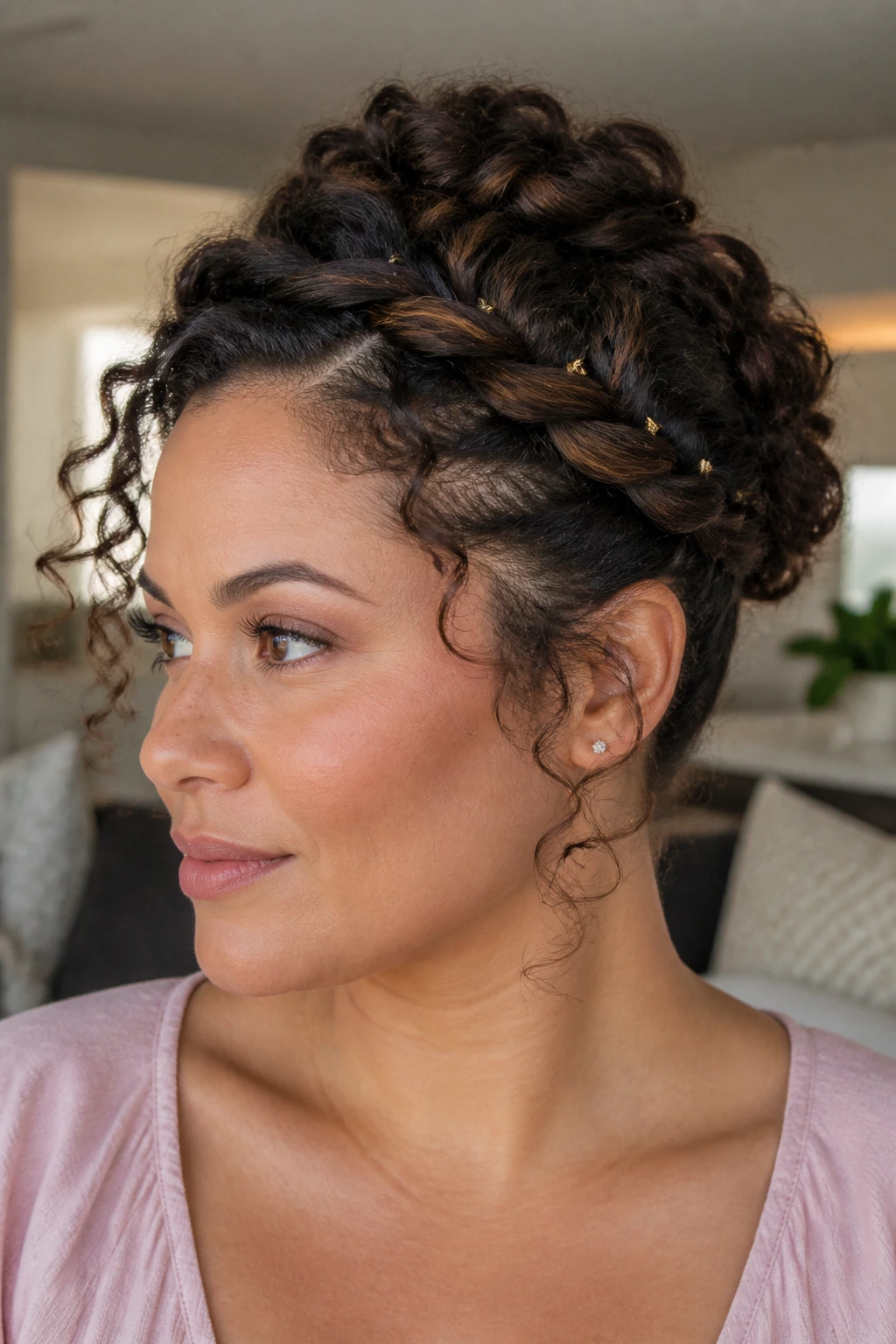
A crown twist updo pulls the eye upward in a way that round faces usually love. The twists start near the temples or just above them and move toward the crown, where they can be pinned into a soft gathered shape. The back can stay full, tucked, or partially loose depending on how formal you want it.
Why It Flatters Round Faces
The line of the twist is diagonal, which matters more than people think. Straight back can feel boxy. Diagonal lines slim the face a little and add movement. Curly hair gives the twists extra texture, so the finished style looks fuller without needing teasing.
A few small pins hold this together better than one or two heroic pins shoved in at odd angles. Use at least three or four bobby pins per twist, crossing them in an X if the hair is thick. If the front curls are soft, leave a couple of them out near the temples. That breaks the outline and keeps the style from looking too severe.
14. Off-Center Curly Lob
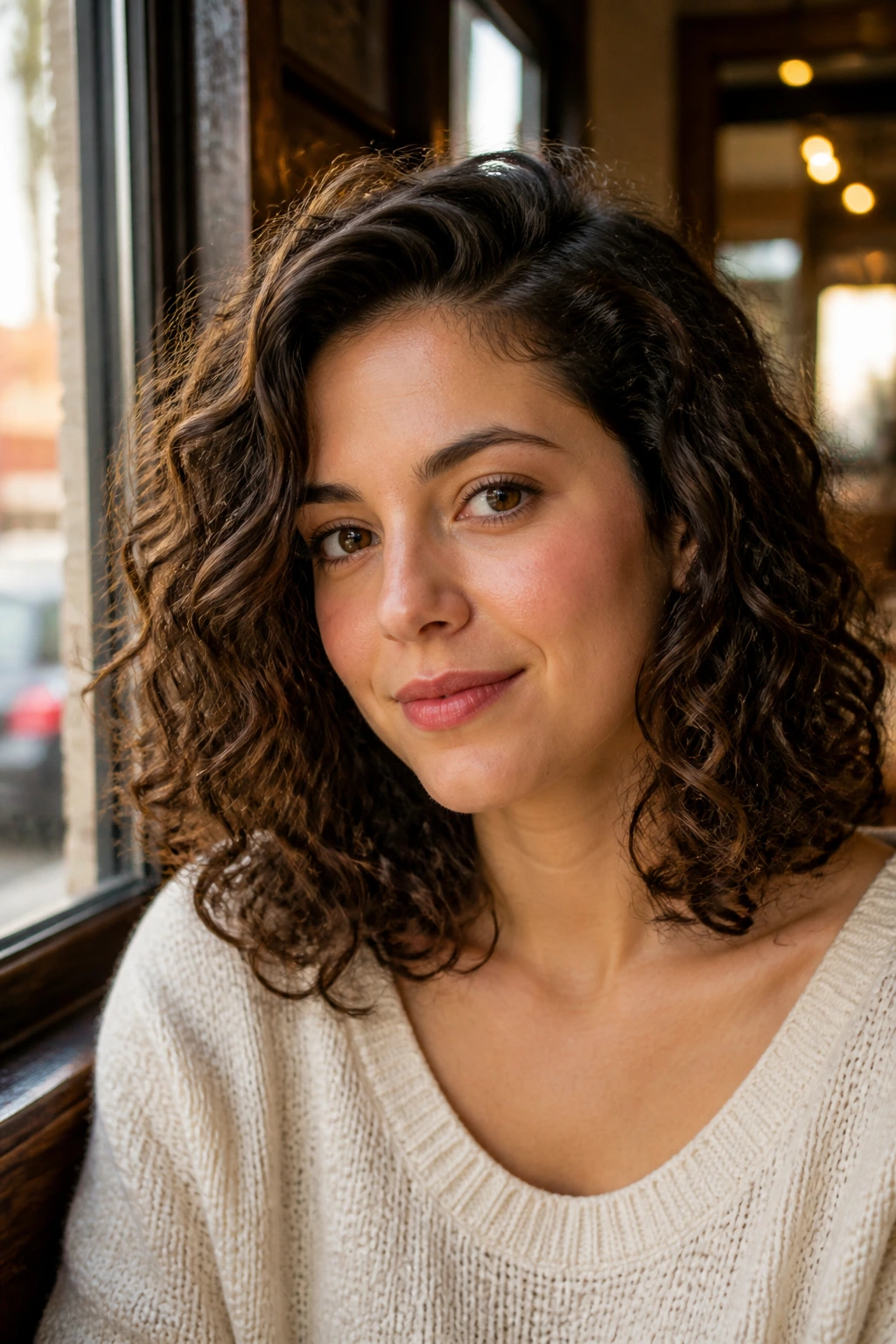
A curly lob with an off-center part is the kind of everyday style that quietly fixes a lot of shape problems. The part shifts volume to one side, which breaks up the symmetry that can make a round face feel even rounder. The length of the lob keeps the curls below the cheekbone line, so the face gets more room.
The off-center part does not need to be dramatic. Just a few inches away from the middle is enough. That small shift gives the hair an easier fall and makes the style look less predictable. If your curls are dense, this cut is especially useful because it lets the bulk sit lower and longer instead of flaring out at the sides. Use a light curl cream and a touch of gel on the ends. That keeps the shape tidy without flattening the whole head.
It’s one of the easiest vintage-friendly styles to live in. You can wear it clean, soft, or a bit messy, and it still makes sense.
15. Side-Swept Pinned Curls
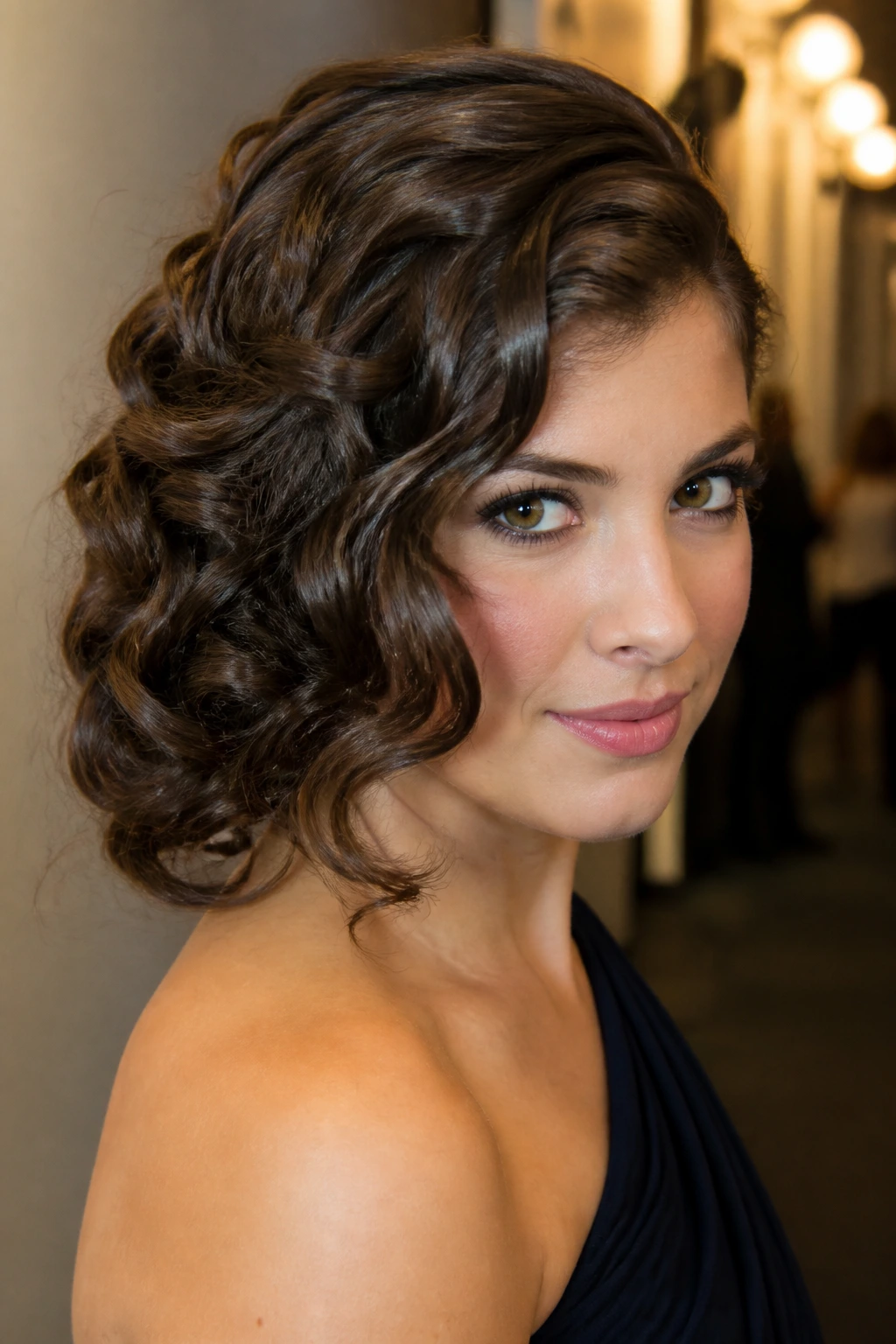
Side-swept pinned curls are an old formal favorite for a reason: they create a diagonal path across the face and keep the volume controlled on one side. On a round face, that diagonal line is the whole trick. It draws attention from the cheeks to the eyes and the sweep of the hair instead.
Do not over-pin the side. You want the hair secured, yes, but not glued to the scalp. Leave some lift at the root and a few defined curls falling forward. If your hair is shoulder length, the pinned side can be tucked back while the rest cascades over one shoulder. If it’s longer, the sweep can be more dramatic, with the length collected lower and softer.
A decorative pin helps here, though it should not fight the texture. A plain metal pin or comb often works better than something overly ornate. Let the curls do the talking.
16. Pageboy with Soft Texture
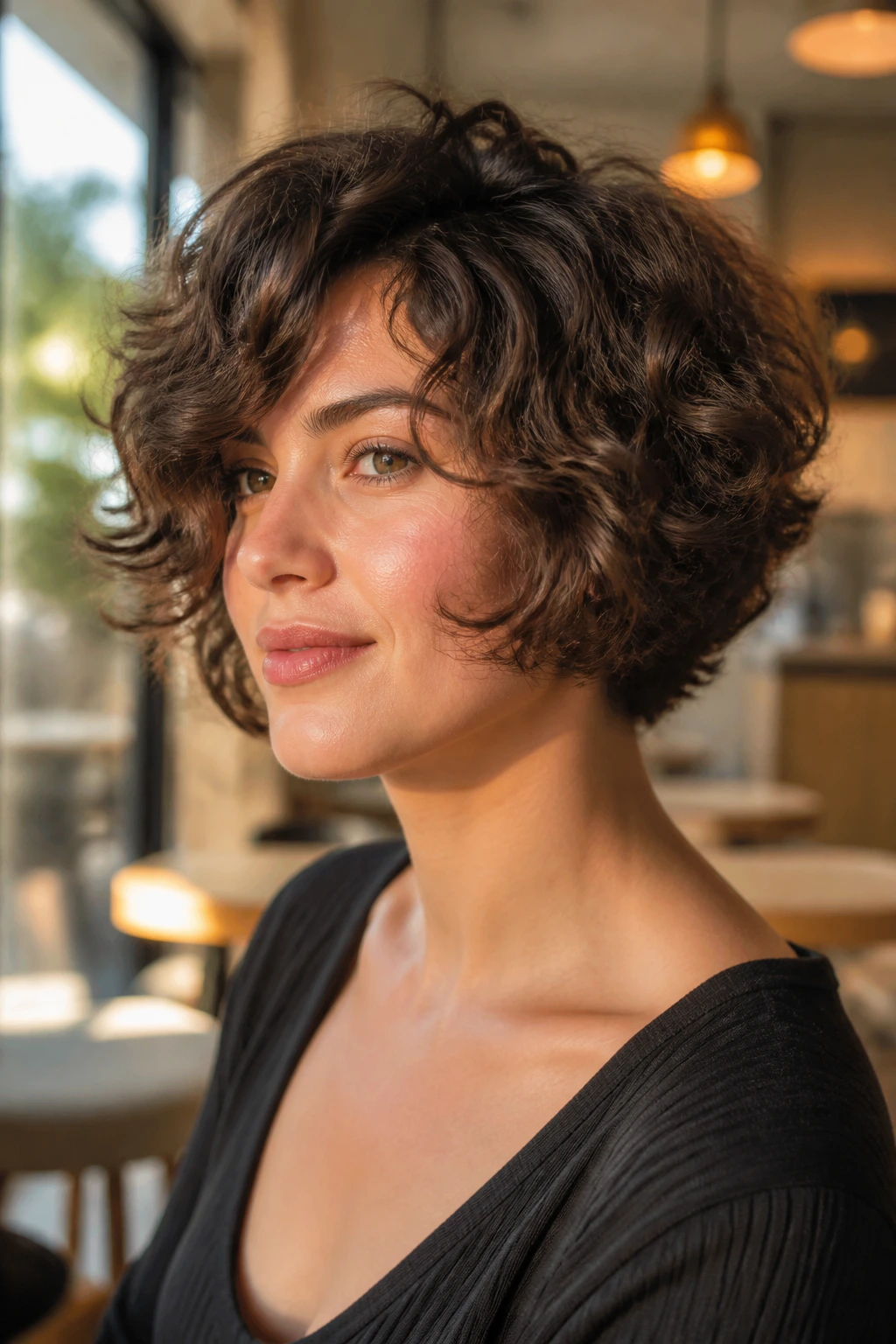
A pageboy can be tricky on a round face, which is exactly why the soft version is worth knowing. The classic shape curves under at the nape and skims around the jaw, but on curly hair it needs a little looseness so it doesn’t turn into a helmet. When the texture stays soft, the cut reads as polished instead of rigid.
The nape curve is the part to watch. Keep it clean and slightly tucked, while the top has enough root lift to stop the whole shape from sitting flat on the head. If your curls are thicker, a pageboy with internal shaping works better than a blunt perimeter. That keeps the sides from ballooning. A touch of side sweep in the front makes the cut feel more forgiving on the cheeks.
This is a good style for someone who likes old shapes but does not want a stiff finish. It’s neat, but not hard.
17. Pompadour Puff with Short Sides
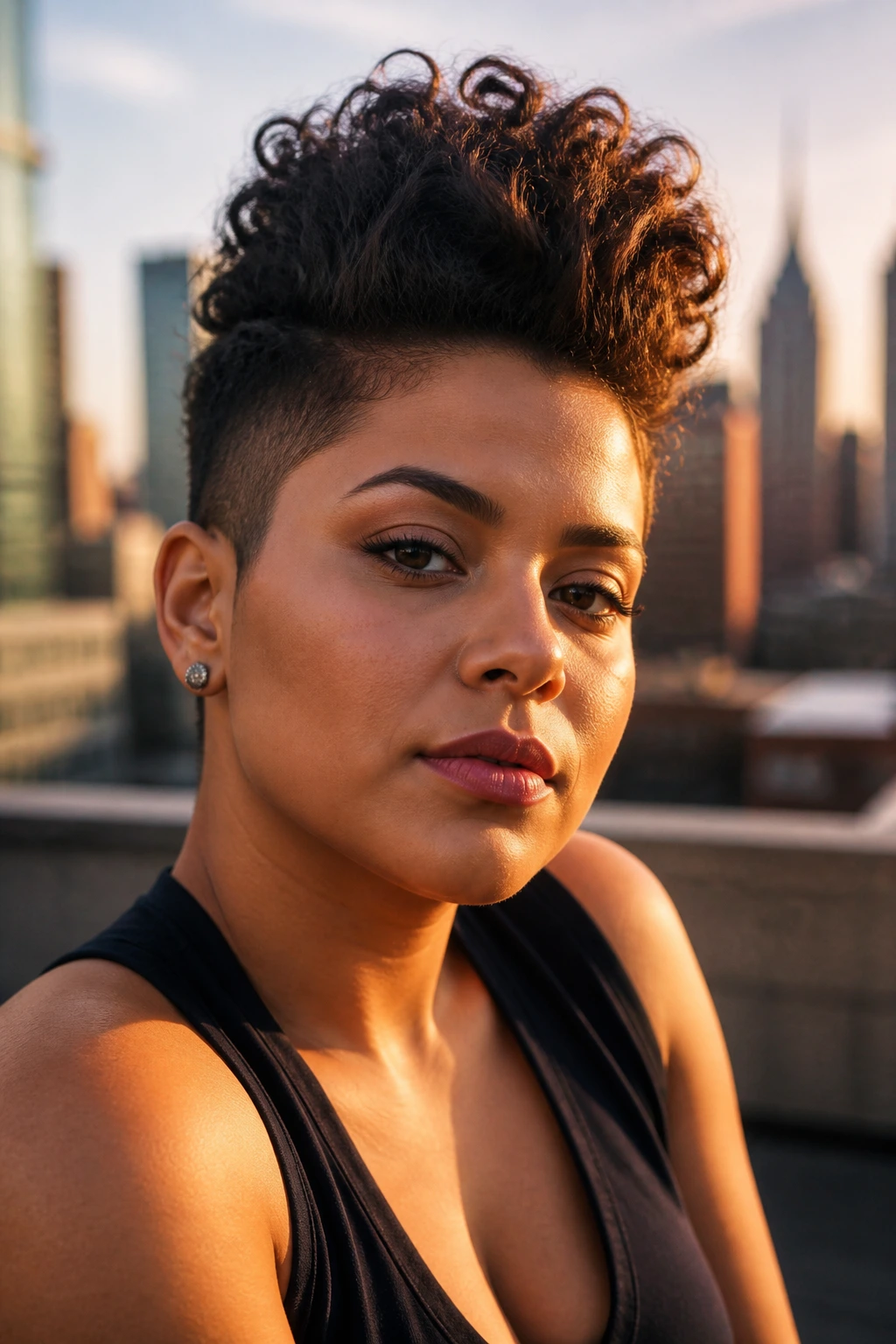
A pompadour puff gives you height where a round face can use it: straight up front, not out at the sides. The shorter sides keep the silhouette narrow, and the puff adds a strong vertical line that changes the whole balance of the face. On curly hair, the texture makes the front lift look less polished and more alive, which I prefer.
The top needs enough length to hold shape. If your curls are very short, you may get more of a mini-puff than a full pompadour, and that still works. Use a strong-hold gel near the hairline and a curl cream farther back so the top stays defined. Keep the sides close to the head. If they puff out, the effect is gone.
This style has attitude. It’s not shy, and that helps if you want the face to read longer and sharper.
18. Curly Curtain Bangs and Long Layers
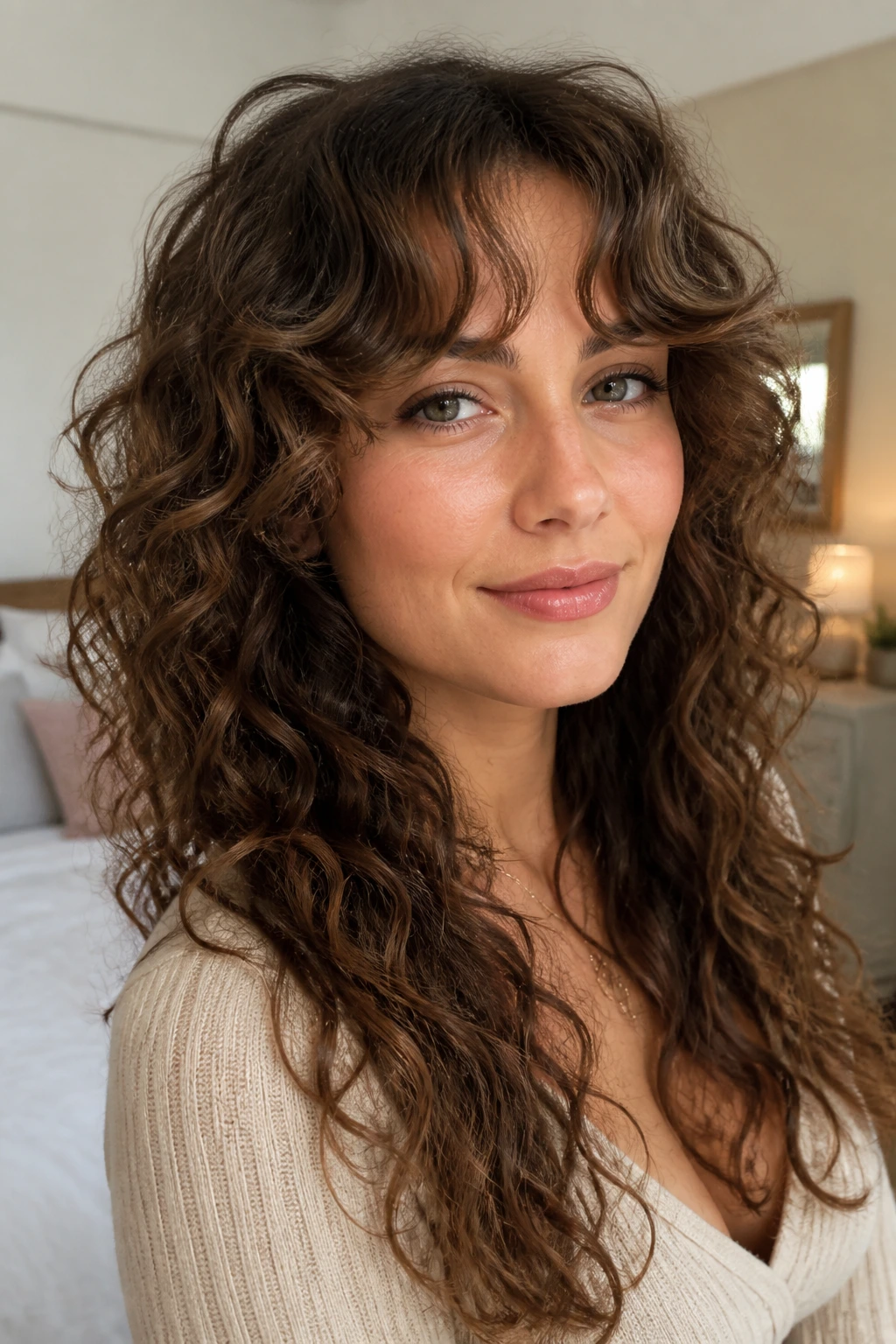
Curtain bangs are a smart old idea dressed in a more relaxed way. They split the front of the hair and open the forehead, which helps break up the wide center of a round face. With curly hair, the trick is keeping the bangs long enough to curve past the cheekbones instead of ending right at them.
What to Watch For
- Ask for curl-specific shaping, not a dry blunt cut across the front
- Keep the shortest pieces around eyebrow to cheekbone length
- Let the side layers fall below the jaw
- Use a diffuser or air dry without touching the fringe too much
Long layers make the rest of the shape fall away from the cheeks, which is what the bangs need to do their job. I like this combination because it gives you softness without swallowing the face.
19. Sculpted Tapered Cut
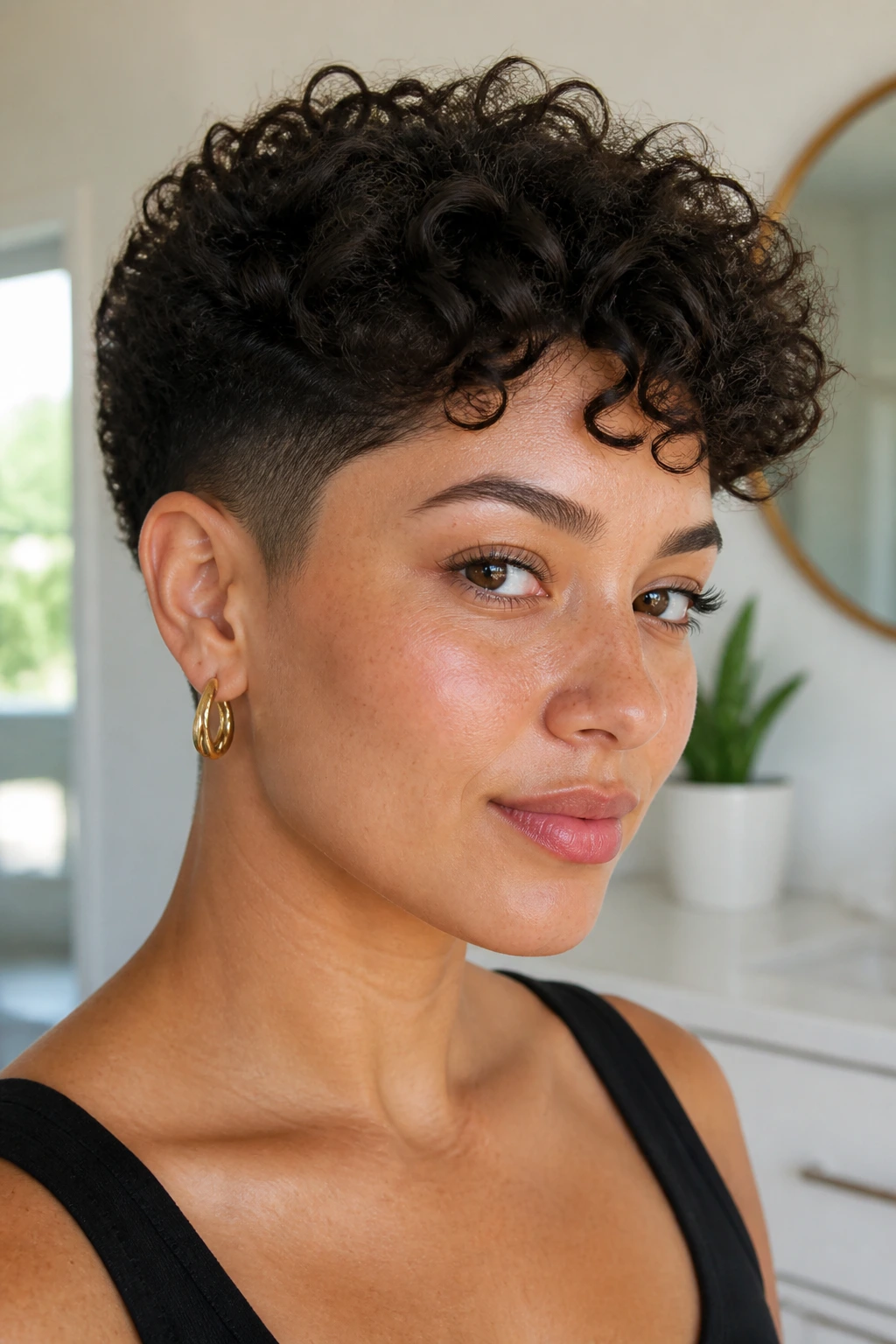
A sculpted tapered cut is one of the cleanest ways to wear curly hair on a round face. The sides taper down, the top keeps height, and the overall outline stays narrower near the cheeks. That shape matters more than length alone. A short curly cut can still be flattering if it knows where to stop and where to rise.
Why It Works So Well
The taper gives the face breathing room. The top curls create lift, and the shape around the temples stays neat instead of bulky. If your hair is coily or very dense, this kind of cut can be a relief because it removes the extra width that often piles up beside the cheeks. The only catch is maintenance. It wants regular shaping so the silhouette stays crisp.
A little curl cream and a diffuse-dry are enough for daily wear. If you like a more dramatic finish, a touch of shine serum at the top can make the sculpted shape stand out. This is a cut with real lines. I respect that.
20. Rolled Bangs with Long Curls
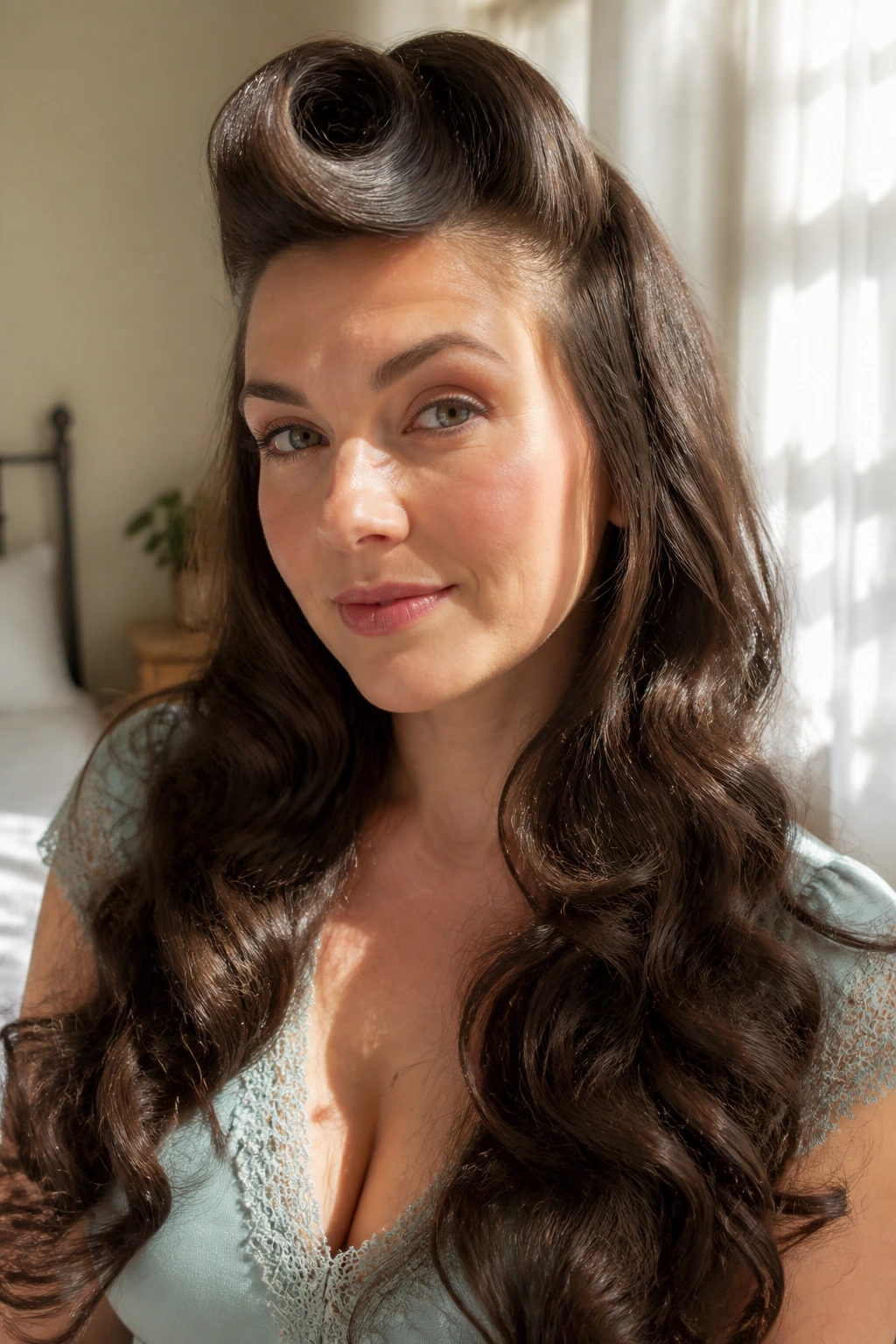
Rolled bangs are a small detail with a big effect. They lift the front of the hair away from the forehead and give the face a little vertical boost, while the long curls below keep the rest of the silhouette soft. On a round face, that split between lifted front and loose length is useful because it stops everything from bunching up at the cheeks.
The roll can be made with a small roller, a pin curl, or a finger-set front section that’s pinned until dry. You do not need a huge roll. A modest one is better, since too much height at the front can feel theatrical. The rest of the hair can stay loose, brushed into shape, or pinned lightly over one shoulder.
It’s one of those styles that looks more polished than it is. People notice the front first, then the soft length after. That order works in your favor.
21. Low Rolled Bun with Face-Framing Pieces
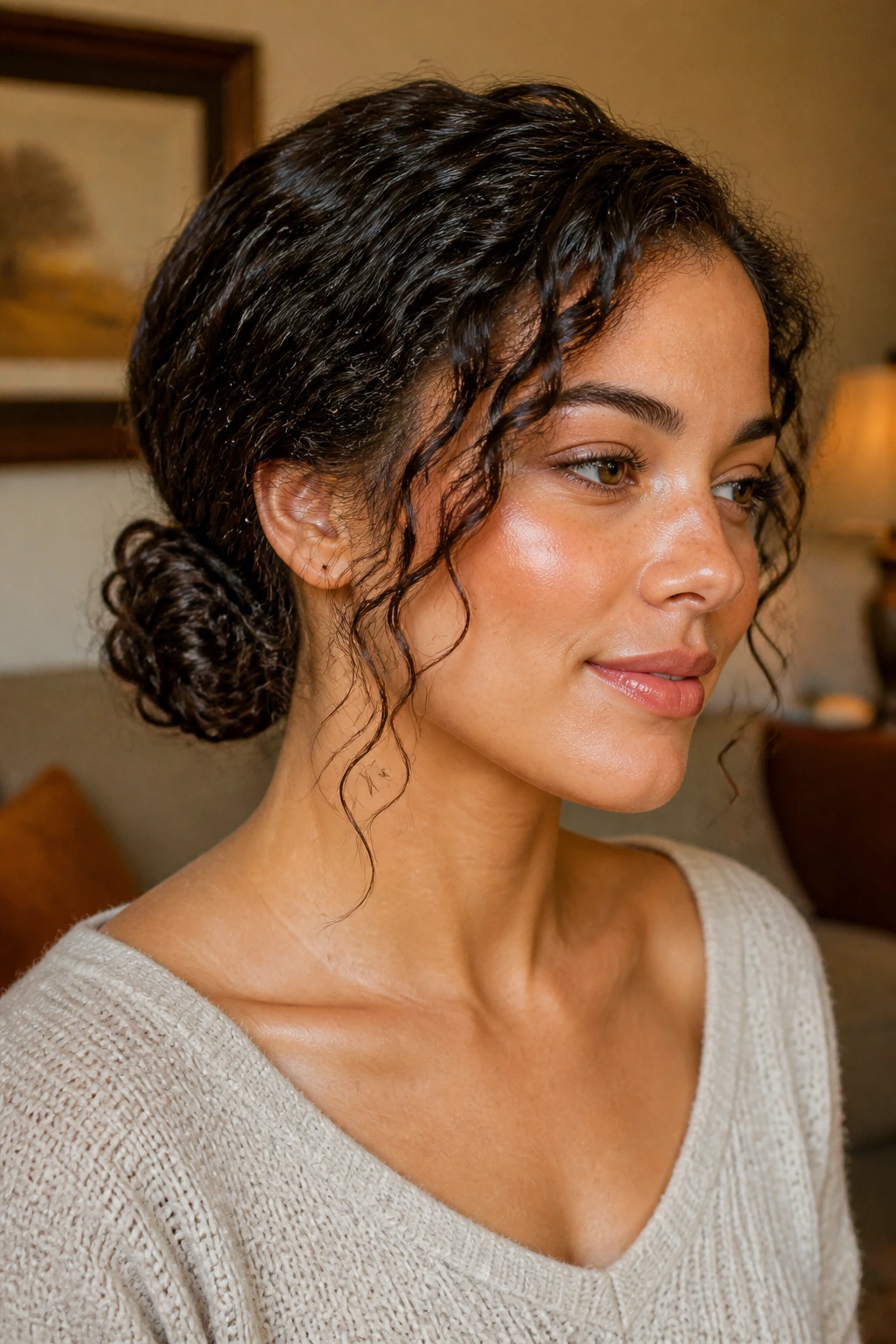
A low rolled bun keeps the weight near the nape, which is exactly where round faces tend to benefit from it. The bun itself can be soft and slightly rounded, but the front pieces should stay loose enough to break the outline around the cheeks. If you pull everything back too hard, the face gets all the attention in the wrong way.
How to Style It
Gather the hair low, twist it loosely, and roll or tuck it under so the bun sits flat enough to feel intentional but not stiff. Leave a couple of thin pieces around the temples and jaw. That softness matters. With curly hair, those loose pieces can be full curls or stretched tendrils, depending on the texture and length.
This one is good for dressy days, but it also has a practical side. It keeps curls off the neck and holds up well if the hair has a little grit from day two or day three styling.
22. Marcel Waves on Medium Length Hair
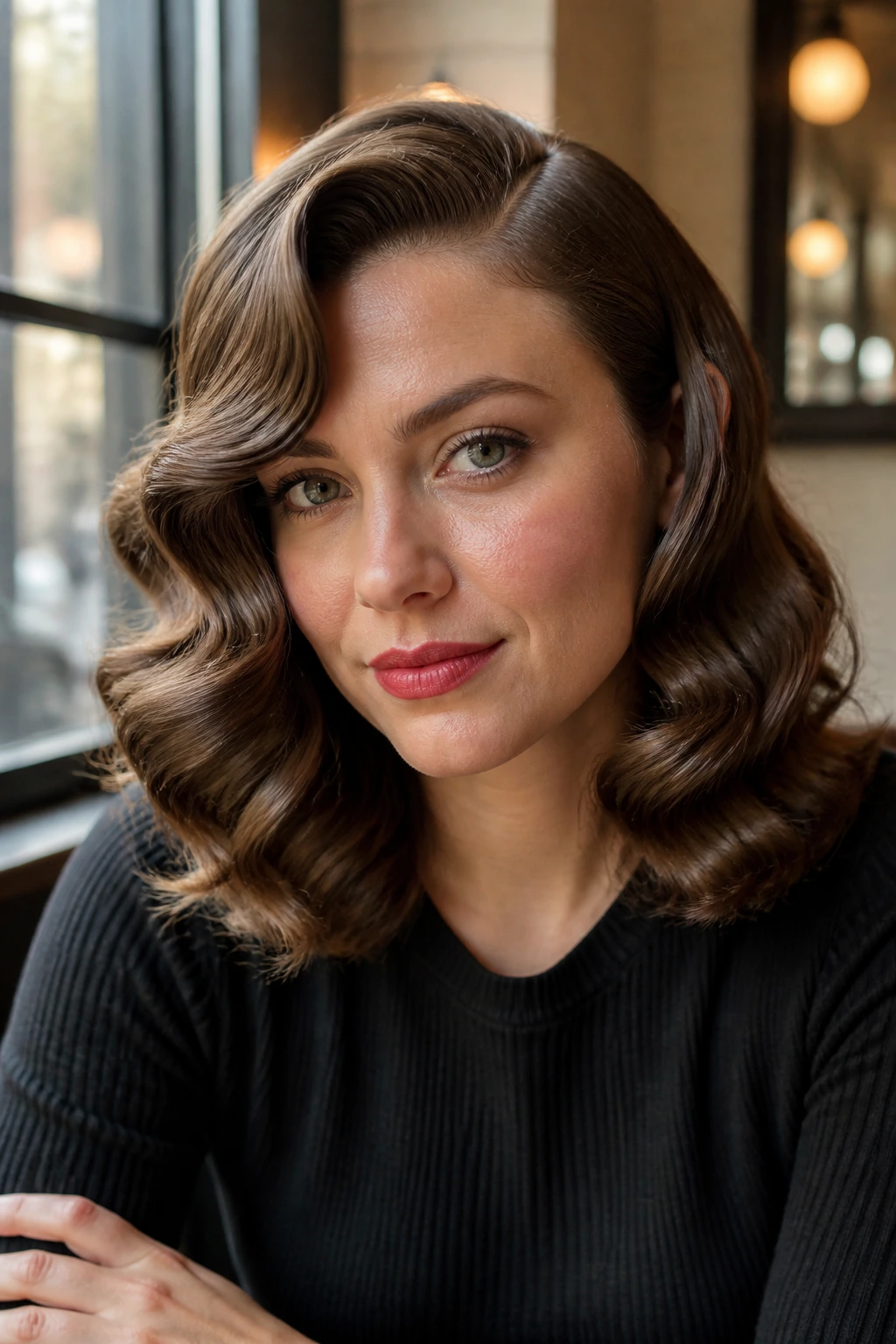
Marcel waves are the disciplined cousin of beach waves. They create a smooth, repeating S-shape that runs from root to end, and that smooth line can be excellent on a round face because it avoids the side puff that bigger curl patterns sometimes create. The style works especially well on medium-length hair where the wave can show without getting lost.
The set needs patience. Small sections, a good heat protectant, and careful shaping with clips or a wave iron if you’re using heat. Once the waves cool, do not yank through them with a brush. Press them gently into shape with your hands. If your hair is naturally curly, you can stretch it first and then wave it, which gives you the shape without making the finish too stiff.
This is one of the more formal looks in the group, but it pays you back with clean structure.
23. Curly Bouffant Ponytail
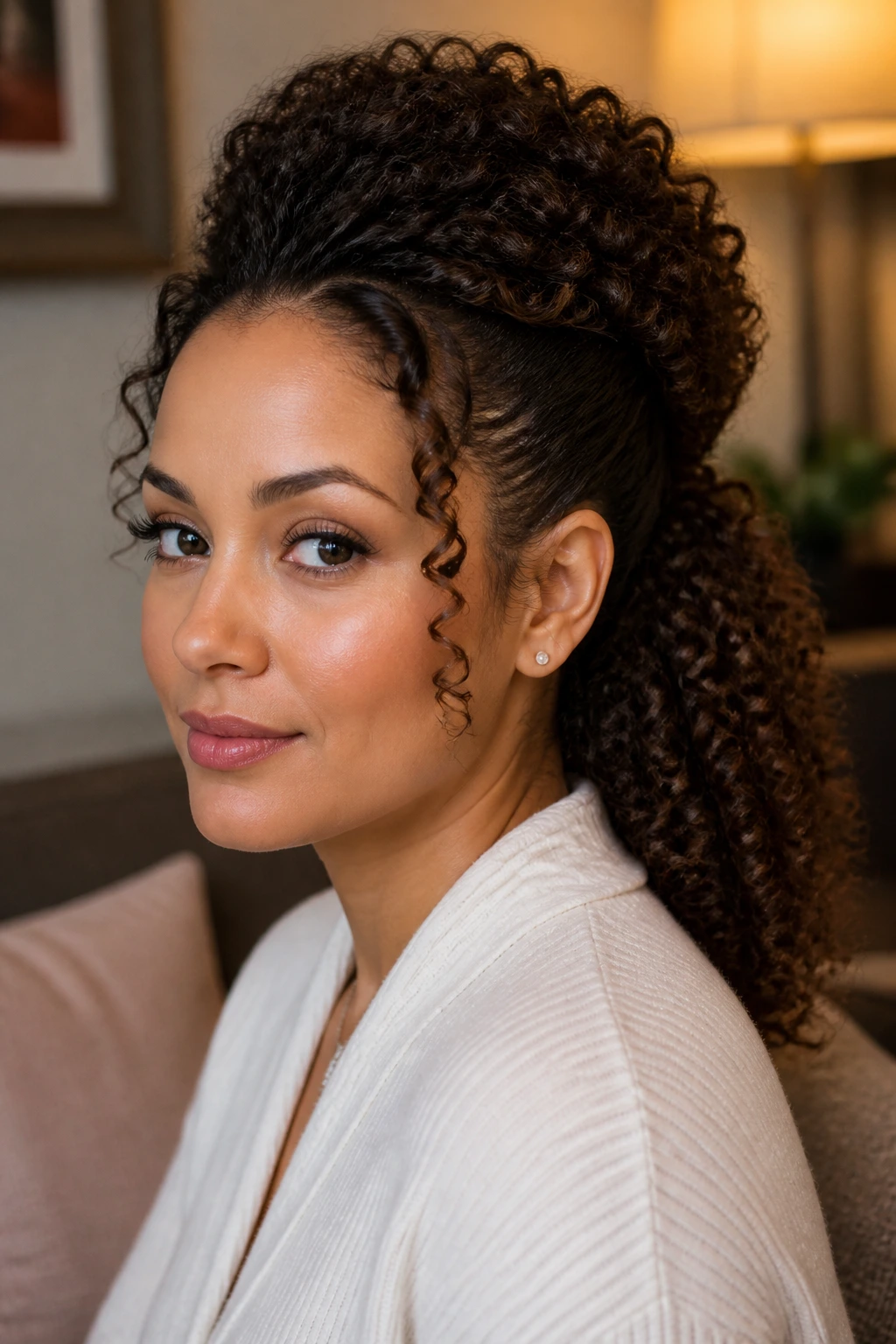
A bouffant ponytail solves two problems at once: it gives the crown height and keeps the curls collected away from the sides of the face. That makes it a smart option for round faces, especially if your hair tends to spread outward when it’s loose. The lifted front is the whole point.
The ponytail can sit mid-height or low, depending on how much length you want to show. Tease the crown lightly, smooth the top surface, and secure the ponytail without dragging the sides tight. Wrap a small section of hair around the elastic if you want a cleaner finish. The curls in the tail should stay loose and defined. If they get brushed too much, the style loses its shape fast.
This is a better look than people give it credit for. It’s quick, it keeps the face open, and it still feels old-school in a good way.
24. Waterfall Braid with Loose Ends
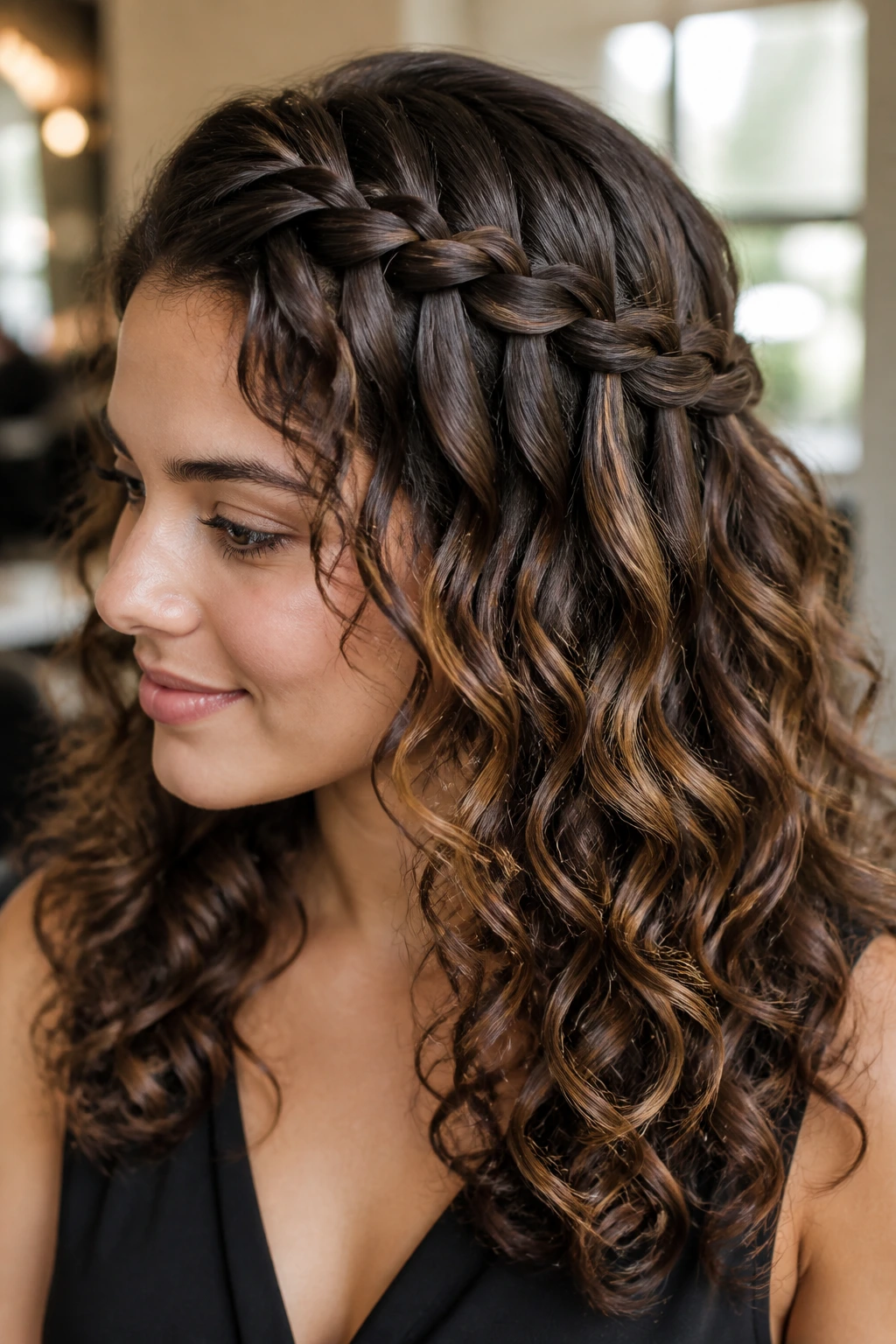
A waterfall braid keeps hair moving across the crown while letting sections drop through, which is exactly why it works on a round face. The braid creates a horizontal accent near the top, but because the rest of the curls fall loose, the style never feels too heavy around the cheeks. It gives structure without turning the whole head into one solid shape.
Best Use Case
Long curly hair. That’s where it shines. The braid holds better when the curls have a little texture, so a second-day wash or a bit of dry shampoo can help. Start the braid high enough to matter, then let the released curls fall through in soft loops. The rest of the length can stay loose down the back or over one shoulder.
Keep the braid loose enough that it blends into the curls rather than sitting like a tight cord. You want the eye to move, not stop.
25. Soft Tucked Gibson Roll
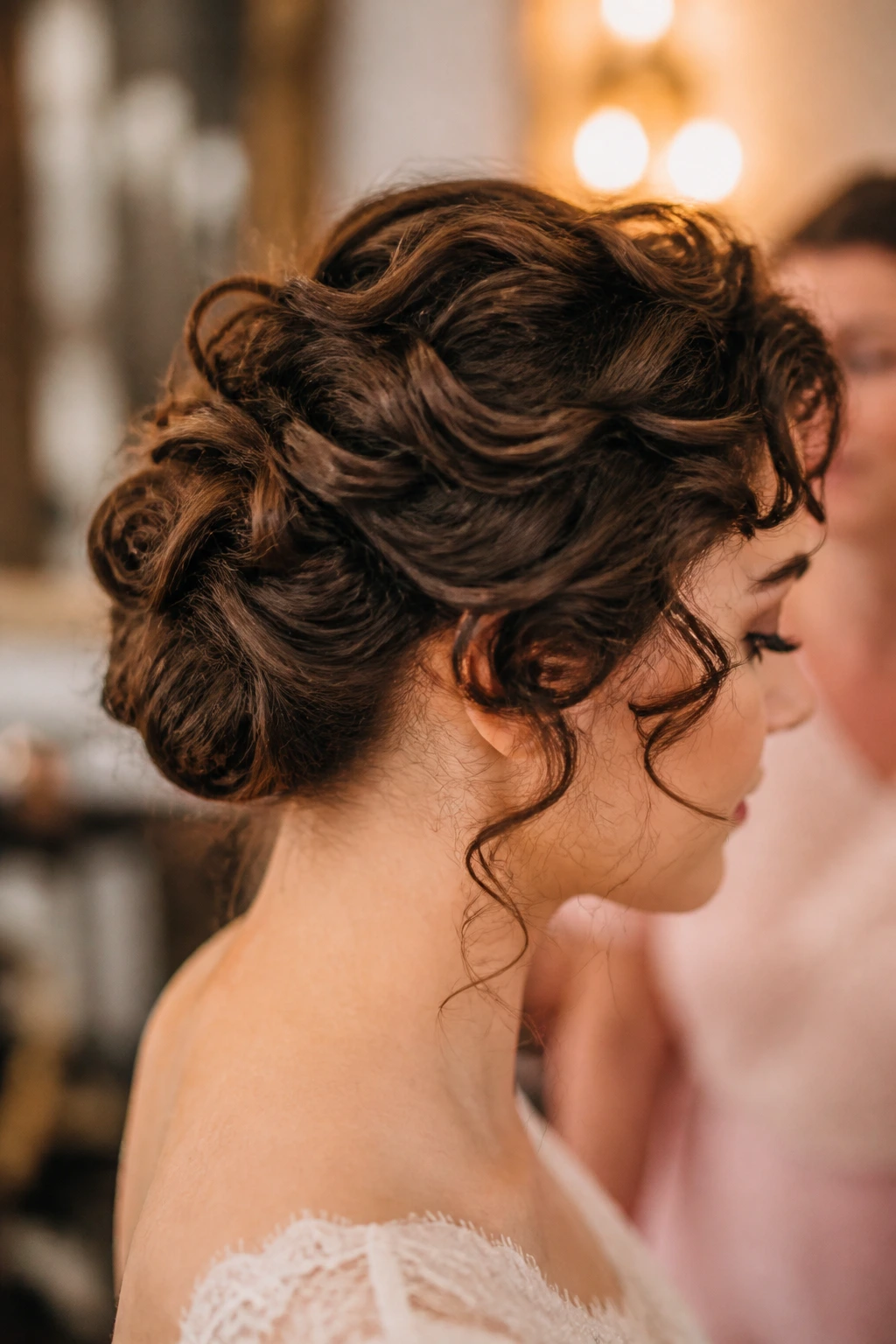
The Gibson roll is old-fashioned in the best sense. Hair gets tucked and rolled at the nape, which removes width from the sides and gives the face a longer line. On curly hair, the roll gets a little texture and softness that straight hair often lacks. That keeps it from feeling too stiff or formal.
Why It Still Earns a Spot
It opens the face, keeps the nape neat, and lets a few front pieces escape if you want them. That last part matters. A couple of loose curls near the temples or jaw can keep the style from feeling sealed shut. If your hair is shoulder length or longer, this is a strong option for weddings, dinners, or any day when you want the hair controlled without looking flat.
Pin the roll securely at the base and tuck the ends inward. Use enough pins that the shape stays put, but not so many that the roll turns lumpy. Balance matters here. So does patience.
The Styling Logic That Makes These Shapes Work
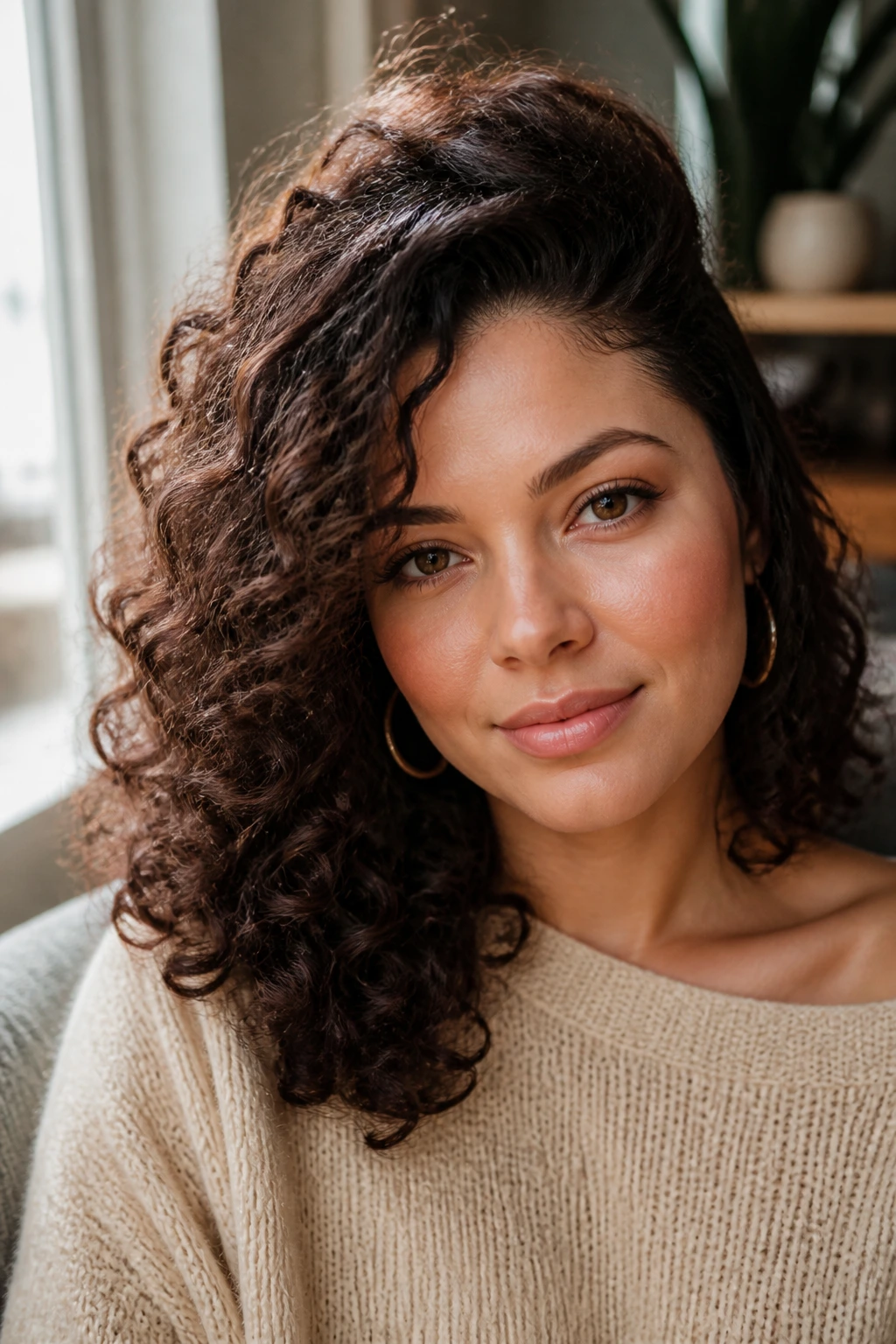
Old hairstyles survive because they do something useful with the geometry of the face. Round faces usually need a little extra height, a little asymmetry, or a clean line that falls below the cheekbone. Curly hair needs a shape that respects expansion, because curls rarely stay where you first placed them. Put those two truths together and the best styles become obvious: side parts, lifted crowns, low buns, sweeps, waves, rolls, and cuts that keep the width under control.
A lot of bad haircut advice treats curls like they’re a problem to solve. They’re not. They’re the material. The only job is to shape them so the silhouette helps the face instead of fighting it. That’s why some of the oldest looks still matter. They were built for shape first, trend second.
And yes, a modern finish helps. A softer part, a cleaner edge, a little less spray, a little more movement — that keeps retro hair from feeling costume-like. You want the bones of the style, not the museum exhibit.
The Tools That Make These Styles Hold
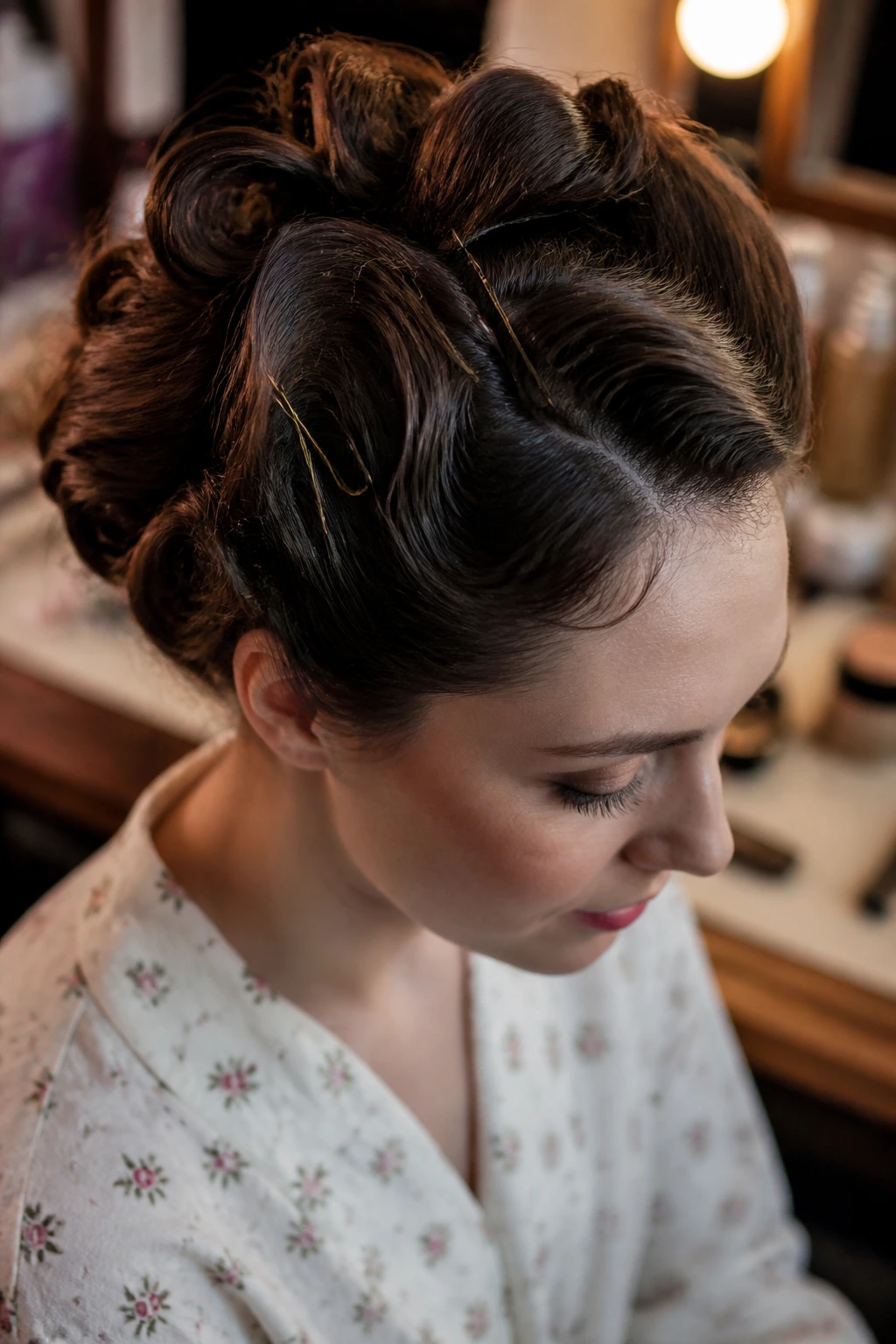
- Rat-tail comb: Best for crisp parts, sectioning finger waves, and directing curls where you want them.
- Wide-tooth comb: Safer than a brush for separating curls without turning them into fuzz.
- Duckbill clips: Useful for pinning wave sets, crown lift, or shaping the front while hair dries.
- Bobby pins in two sizes: Small pins disappear better near the temple; larger ones hold buns and rolls more securely.
- U-pins: Handy for chignons, Gibson rolls, and soft tucked buns because they grip curls without flattening them.
- Curl cream: Keeps definition in the mid-lengths and ends without the stiff finish of heavier styling pastes.
- Mousse or foam: Better than cream alone when you want lift at the roots or a light bouffant shape.
- Strong-hold gel: Best for finger waves, Marcel waves, and rolled bangs that need to dry in place.
- Heat protectant: Non-negotiable if you’re setting waves with a wand or iron.
- Diffuser: Good for adding shape at the root and drying curls without blasting them apart.
- Silk scarf or bonnet: Keeps overnight frizz down and protects pin-set styles.
- Light hairspray: Look for flexible hold; the helmet stuff is too much for most of these looks.
Picking the Right Products Without Weighing the Curls Down
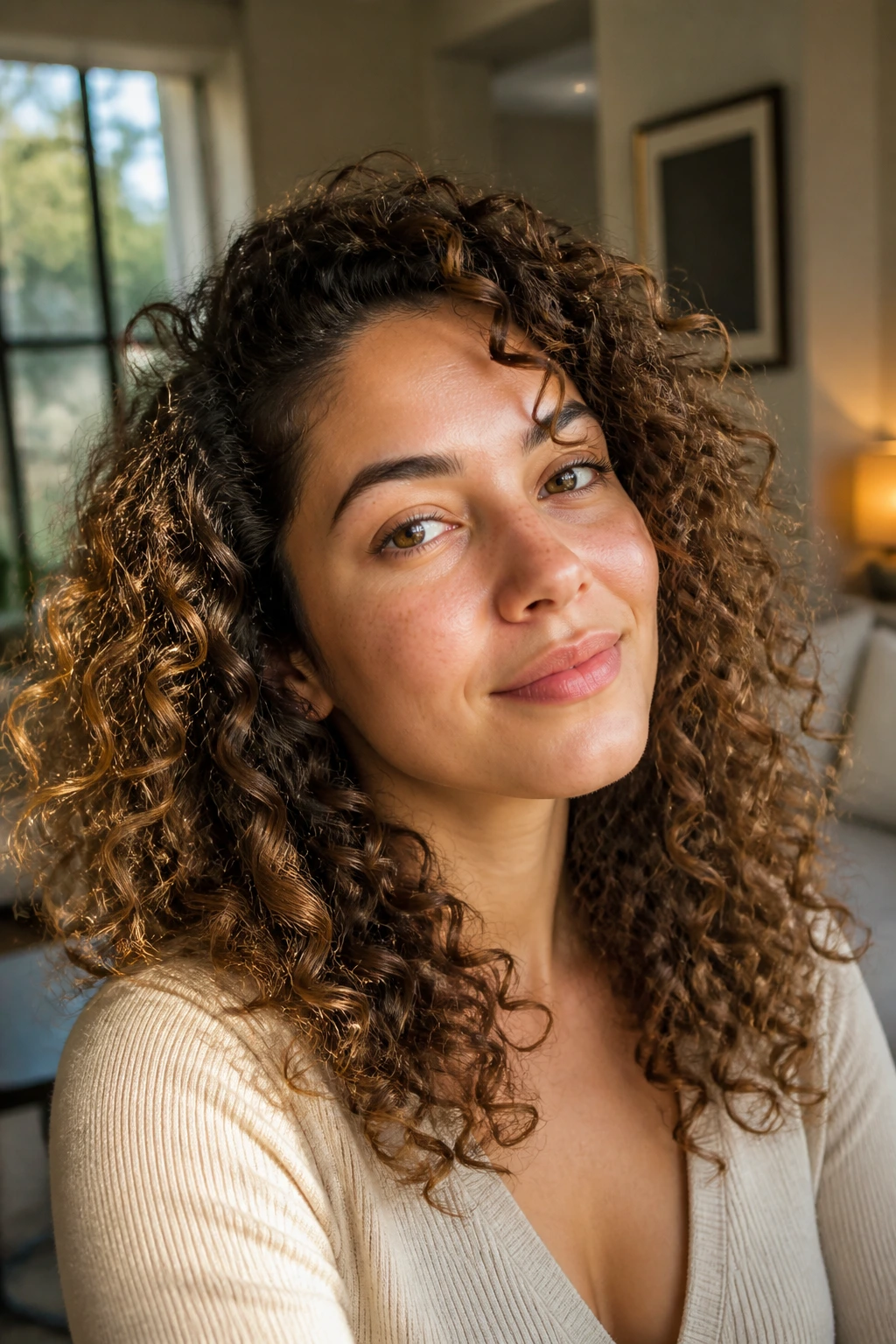
The biggest mistake with curly retro styles is overloading the hair before you’ve even started shaping it. Thick cream can collapse the crown. Heavy oil can make pins slide. And if your curls are fine, too much product turns every pretty wave into a limp ridge by lunch.
Start with the curl pattern you actually have. Loose curls usually need mousse or foam for lift, plus a small amount of cream on the ends. Medium and tighter curls can take a bit more cream, but the root area still needs to stay light. For finger waves, Marcel waves, and any set style, a gel with real hold matters more than shine. If the hair never dries firm enough to keep its shape, the style will soften too early.
Pins deserve more attention than they get. Smooth bobby pins slide in silky hair. Matte pins grab better. If your hair is very slippery, rough up the base of the section with a bit of dry shampoo or a quick spray of texturizing mist before you pin. That tiny move saves you from chasing loose pieces all night.
How to Wear These Styles Without Fighting Your Curl Pattern
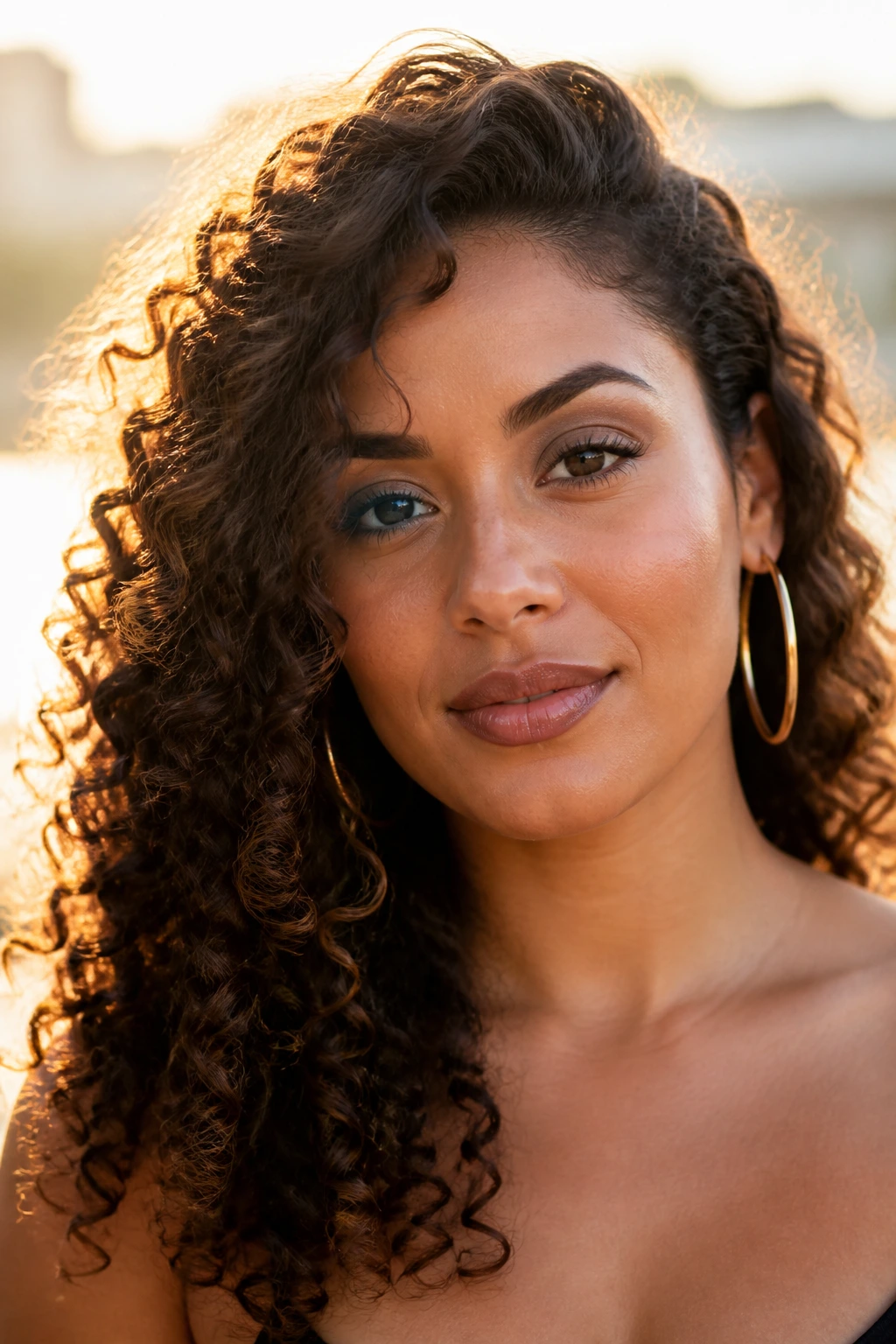
For everyday wear: reach for the off-center lob, the side-swept pinned curls, the flipped-out lob, or the shoulder-length shag. They keep the face open without asking for a full setting session, and they let curls behave like curls instead of forcing them into a shell.
For dressier events: finger waves, victory rolls, Hollywood waves, and the low rolled bun all bring that old-school finish people remember. These styles take more prep, but the shape stays neat in photos and under indoor light. A small extra detail — a side comb, a tucked curl, a clean part — goes a long way.
For short curls: the curly pixie, sculpted taper, and pompadour puff work best. They rely on height and outline rather than length, which is good news if your curls shrink a lot. The sides stay controlled, the top stays lively, and the face gets more vertical room.
For thick, heavy curls: choose the halo braid, crown twist, or bouffant ponytail. These styles manage volume instead of pretending it isn’t there. That’s a much saner plan.
Small Tweaks That Change the Whole Shape
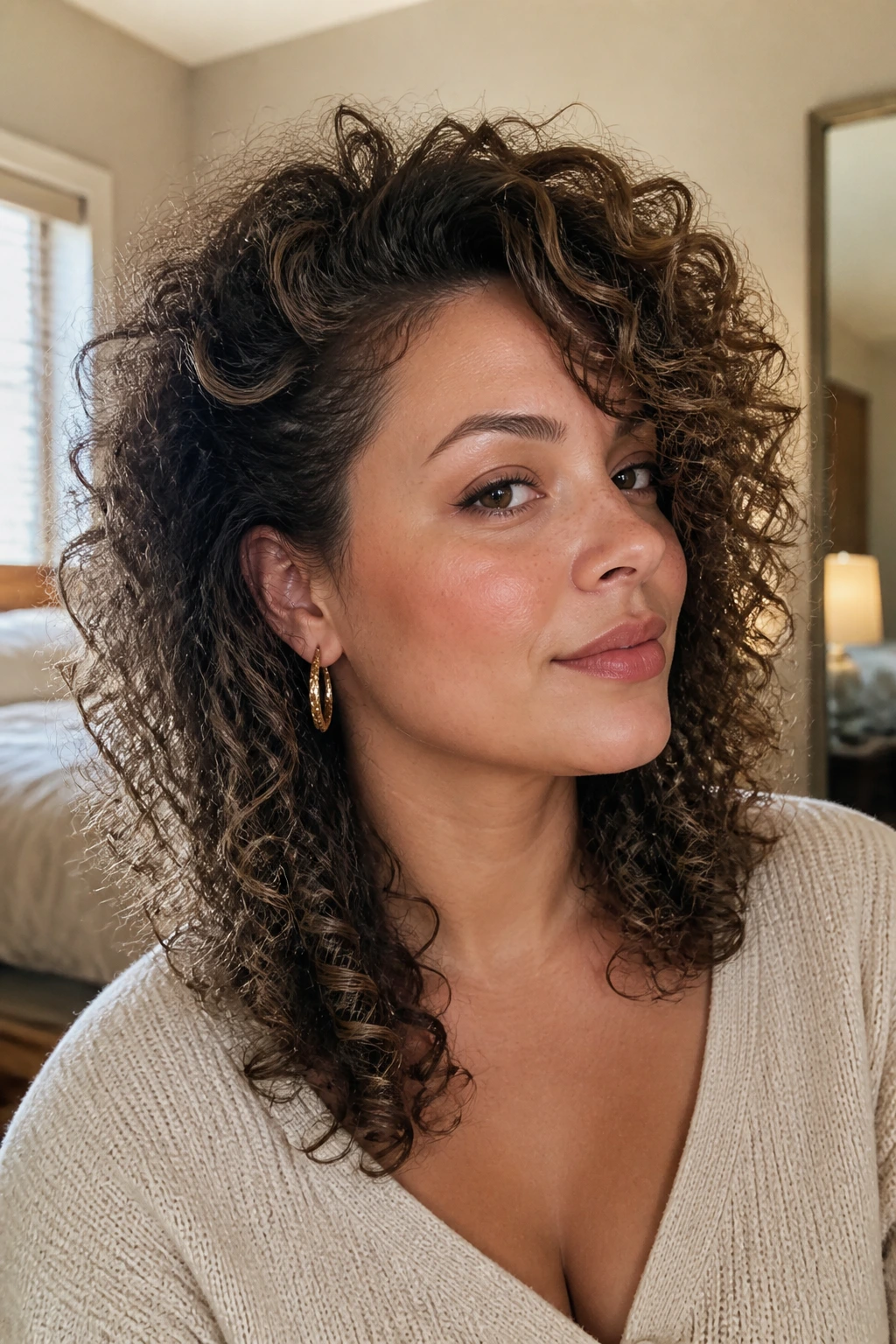
Crown Lift: A little clip at the roots while hair dries can change a face shape more than an extra inch of length. If the top is flat, the cheeks do all the work.
Diagonal Lines: A side sweep, a braided crown, or even a rolled front section breaks up the roundness faster than a centered style. The eye likes motion. Use that.
Taper the Sides: With short cuts, keep the width away from the temples. Curly sides can puff out fast, and that’s where a lot of round-face styles go wrong.
Let Ends Stay Soft: The ends do not need to be military-precise. A little curl, a little bend, a little movement at the jaw keeps the style from looking heavy.
Use One Statement Detail: One roll. One braid. One lifted section. Too many vintage details at once can feel crowded, especially on thick curly hair.
How to Keep the Style Alive Overnight
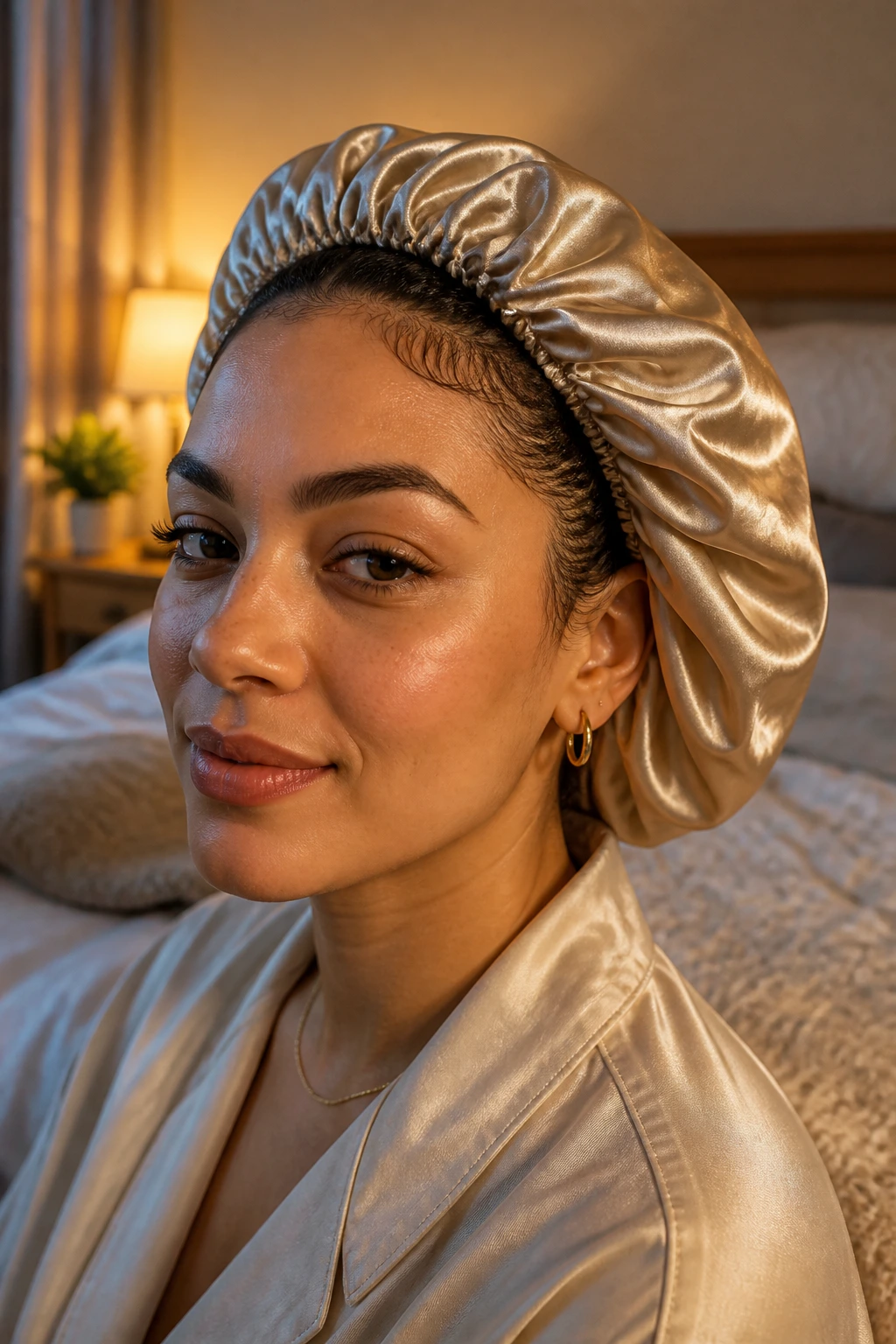
Most of these looks survive a lot better when you don’t sleep on them carelessly. For loose styles, a silk bonnet or scarf keeps the curl surface from catching on cotton and puffing up overnight. For pinned styles, sleep with the highest-pressure spots cushioned — the back of the head, the nape, and the sides where pins sit. If the style has a lot of structure, a loose bun on top of the head inside a bonnet is often safer than leaving it fully free.
The next morning, start with a light mist of water or a reactivating spray. Two to six spritzes per section is usually enough. You are not trying to soak the curls. You’re trying to wake them up. Smooth frizz with a pea-sized amount of cream on your hands, then reshape the crown, front sweep, or bun with your fingers before you reach for more pins.
Curly retro styles usually hold for one to three days, depending on the shape. Finger waves and Marcel waves can last longer if they were set hard. Loose bouffants, braids, and side-swept looks often need a quick refresh each day. A five-minute reset is normal. A full restart is not always necessary.
Variations and Adaptations to Try
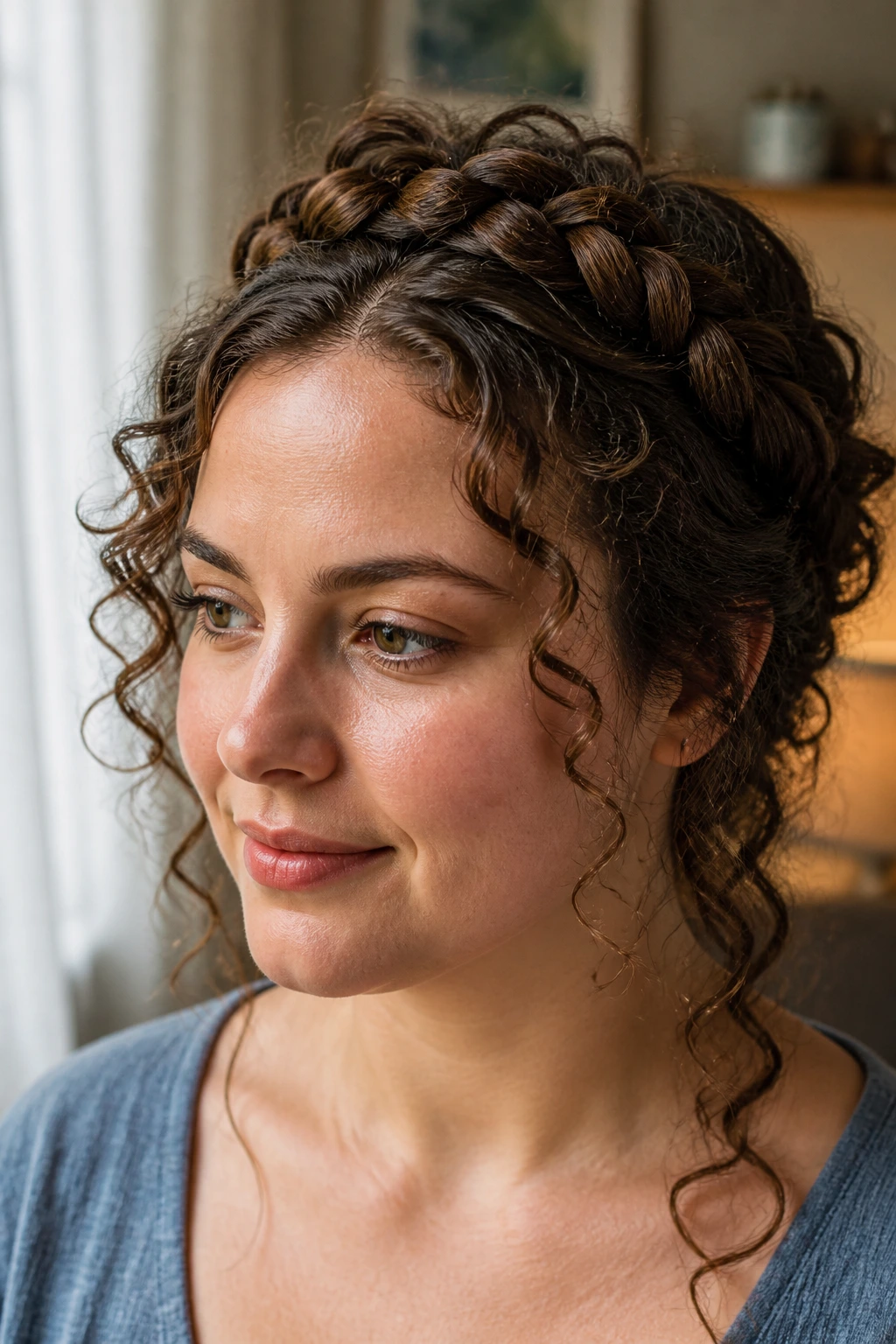
Fine-Curl Version: Choose lighter products, skip heavy cream at the roots, and use more clips than pins when shaping. Fine curls lose lift fast, so a little mousse at the crown and a side part do more than a thick styling balm ever will.
Thick-Curl Version: Build the style in sections and control the sides first. Thick curls need a clear boundary line around the cheeks or they expand right into the face shape you were trying to soften.
No-Heat Version: Try halo braids, side-swept pinned curls, low buns, or a Gibson roll set on damp hair. These styles rely more on placement than heat, which keeps the curl pattern healthier and the finish less frizzy.
Short-Length Version: Focus on the curly pixie, pompadour puff, or sculpted taper. These styles keep height on top and width tight at the sides, which is the whole game for round faces in short hair.
Humidity-Proof Version: Use stronger hold at the roots, fewer loose tendrils, and a soft anti-frizz spray after styling. In sticky air, the best shapes are the ones that survive movement without relying on perfect smoothness.
Formal-Event Version: Pick finger waves, Hollywood waves, or the low rolled bun. They photograph cleanly, hold their lines, and keep the face framed instead of crowded.
Common Mistakes That Make Retro Styles Fight the Face
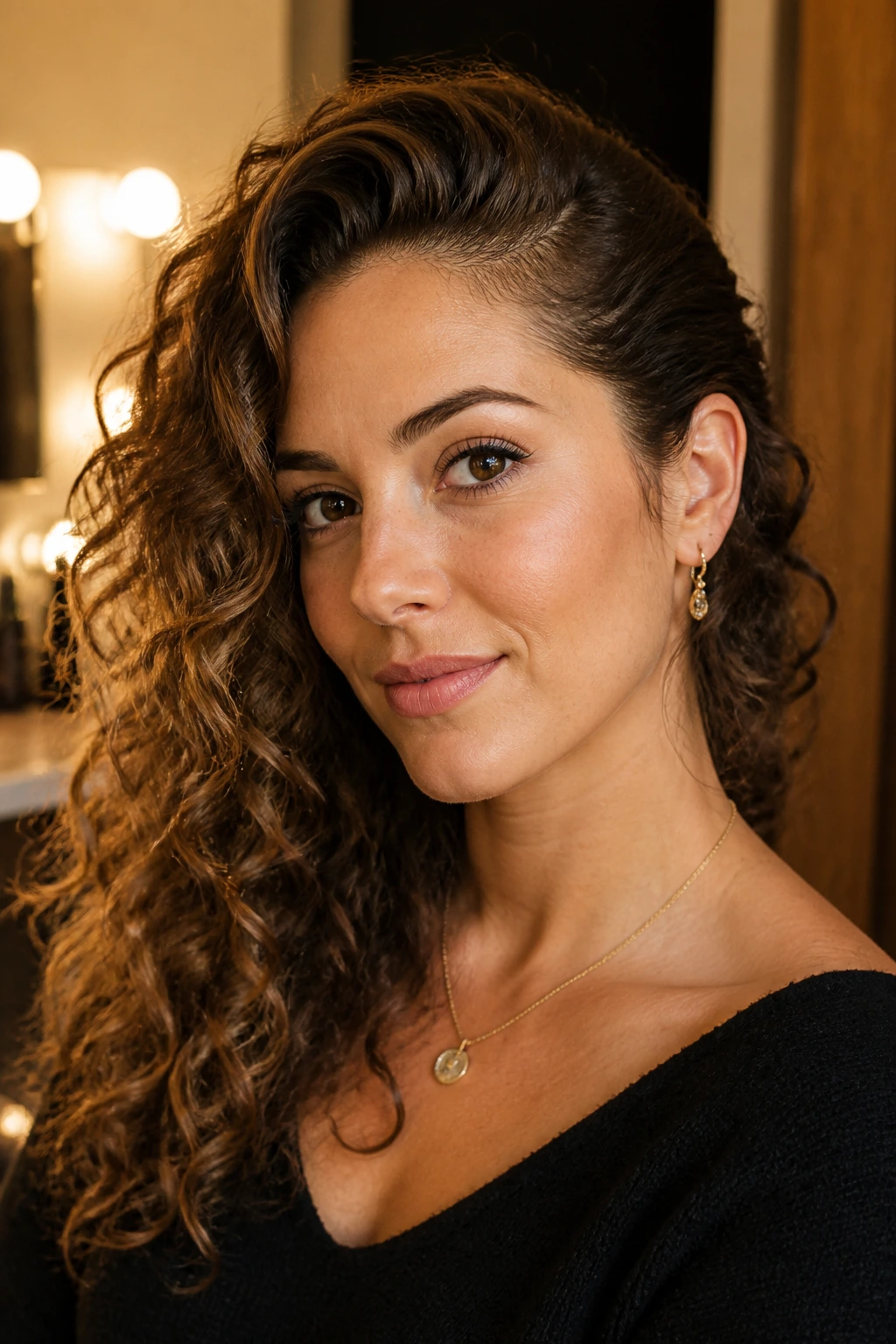
Too Much Width at the Cheeks: This is the classic mistake. The style gets big right where the face is already full, and the result looks boxy. Fix it by moving volume up, down, or to one side.
A Hard Center Part With No Height: A center part can work, but only if the crown has lift and the sides don’t puff. If the hair falls straight down with no shape, the face can look wider. A slight off-center part usually behaves better.
Over-Smoothing the Curls: When curls are pressed flat with too much product or heat, they lose the texture that helps vintage shapes feel soft. The fix is to keep definition in the mid-lengths and leave the ends a little loose.
Pins That Are Too Few or Too Small: Loose styles fall apart fast when the base is weak. If the bun or roll shifts after ten minutes, add pins in crossed directions and anchor the section against a drier, grippier part of the hair.
Setting Waves Too Close to the Cheeks: Finger waves, rolls, or pin curls that sit too low can emphasize facial width. Move the structure higher or keep the front pieces lighter and softer.
Ignoring Shrinkage: Curly hair will lift. Always. If you plan a style at its final stretched length without accounting for that, you can end up with a shape that sits too high or too short. Leave a little extra room in your planning.
Questions People Usually Ask
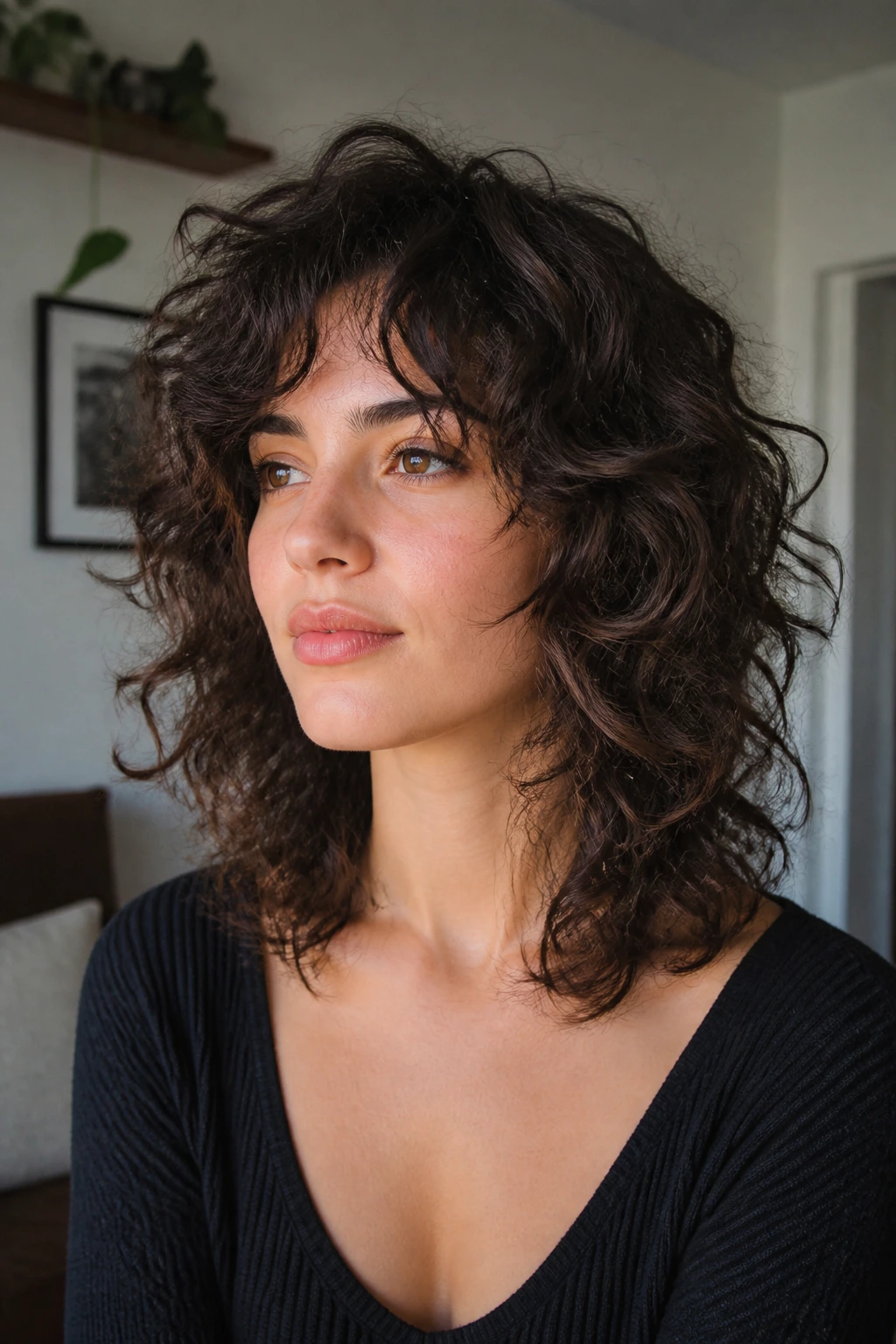
Can round faces wear a center part with curly hair?
Yes, but it works best when the crown has height and the curls below the cheekbone stay long enough to create a vertical line. A dead-flat middle part with width at the sides is the part to avoid.
Do old hairstyles work better on long curly hair than short curly hair?
Long hair gives you more options, but short curls can be even easier to shape well because the sides are easier to control. The real issue is silhouette, not length.
What if my curls get frizzy after I pin them?
Use less touching. Frizz usually comes from too much handling, dry pins being ripped out, or brushing through curls after they’ve already started to set. Smooth with damp hands and a tiny bit of cream instead.
Which style is easiest for day two hair?
The side-swept pinned curls, bouffant ponytail, halo braid, and low bun all behave well when the hair has a little texture. Freshly washed curls can be too slippery for those shapes.
Can fine curly hair pull off vintage styles without falling flat?
Yes. Fine hair often does better with styles that rely on shape, not weight — finger waves, rolled bangs, or a small bouffant at the crown. The trick is lightweight product and precise pinning.
How do I keep a curly updo from looking too severe on a round face?
Leave a few soft pieces around the temples or jaw and avoid pulling every strand straight back. A little softness at the front keeps the face from feeling boxed in.
Are these styles only for formal occasions?
Not at all. The lob, shag, side part, curly pixie, and off-center rolls can live in everyday wear. They only feel formal if you push the finish too hard.
What should I do if my bangs shrink too short?
Stretch them while drying with a brush or clip them to one side while they cool. Curly bangs are happiest when cut a bit longer than they look in the chair.
The Styles That Still Know What They’re Doing
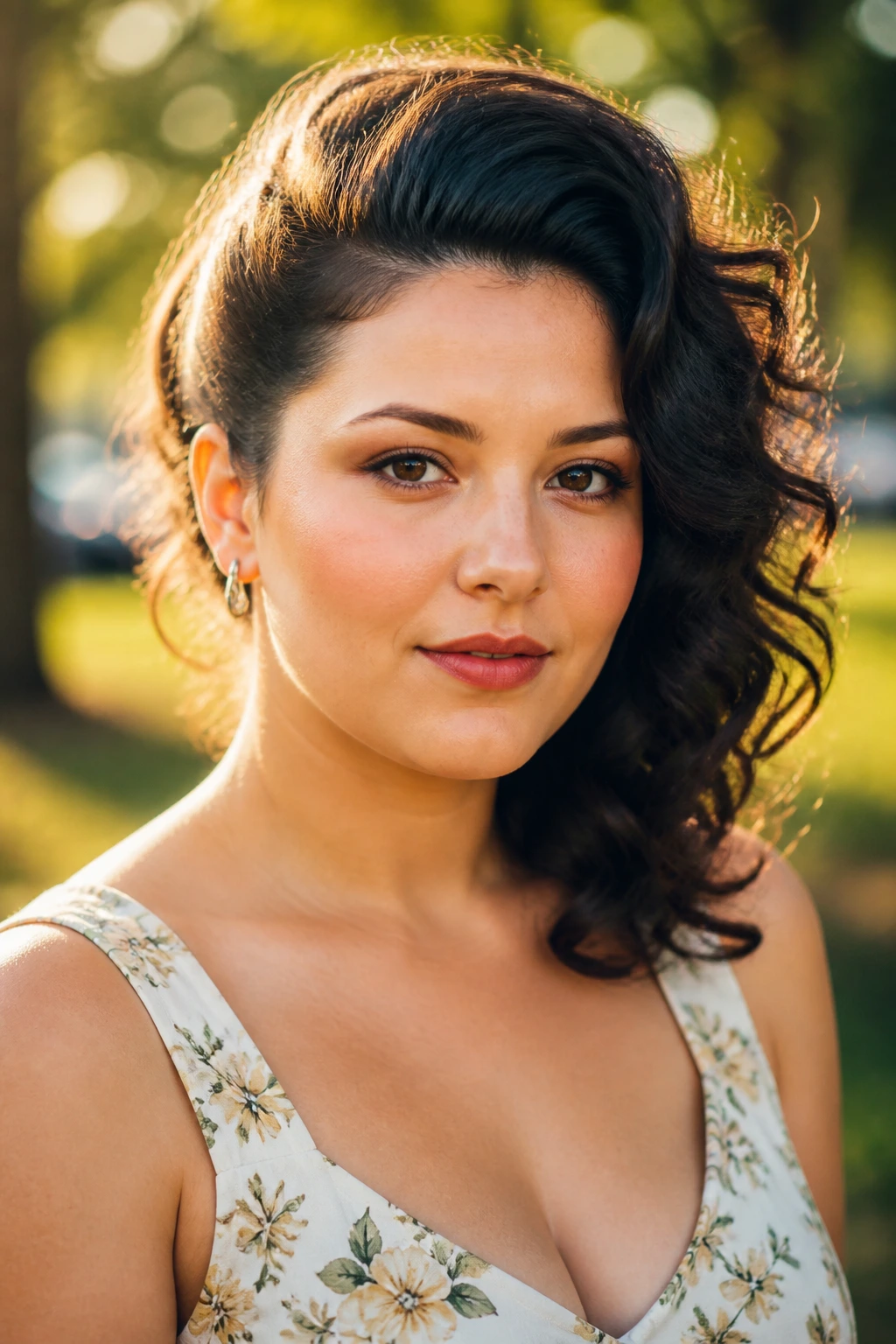
The reason these old hairstyles keep coming back is not nostalgia. It’s shape. They know how to move the eye, how to manage width, and how to let curls do useful work instead of just expanding in every direction.
That matters on round faces more than most people admit. A good side part, a lifted crown, a low bun, or a swept wave can change the whole balance of the hair without making you look like you tried too hard. The best part is that you do not need a dozen tools or a perfect curl pattern to get there.
Pick the shape that works with your length, your density, and how much time you actually want to spend in front of the mirror. Then let the style do its job.