



Medium skin and caramel balayage have an easy chemistry when the tone is chosen with some restraint. Too pale and the hair starts looking borrowed from someone else’s palette; too orange and the whole thing fights the face. The sweet spot lives in that warm middle ground — brown sugar, toasted honey, beige caramel, even a soft toffee — and beachy waves break it into ribbons instead of stripes.
That’s the part people get wrong most often. Caramel isn’t one color, and medium skin isn’t one undertone. A golden complexion can take a richer honey tone near the face. Olive skin usually looks better with a beige or neutral caramel that doesn’t swing too copper. And if your skin reads neutral, you’ve got room to play with a little more warmth without tipping into brass.
Beachy waves are doing half the work here. Straight hair can flatten balayage into a single note, but loose bends give the color somewhere to live. You see the depth at the root, the glow through the mids, the brighter edge on the ends. The result is movement first, color second — which is exactly why this pairing keeps showing up in salons.
Why This Set Keeps Getting Saved
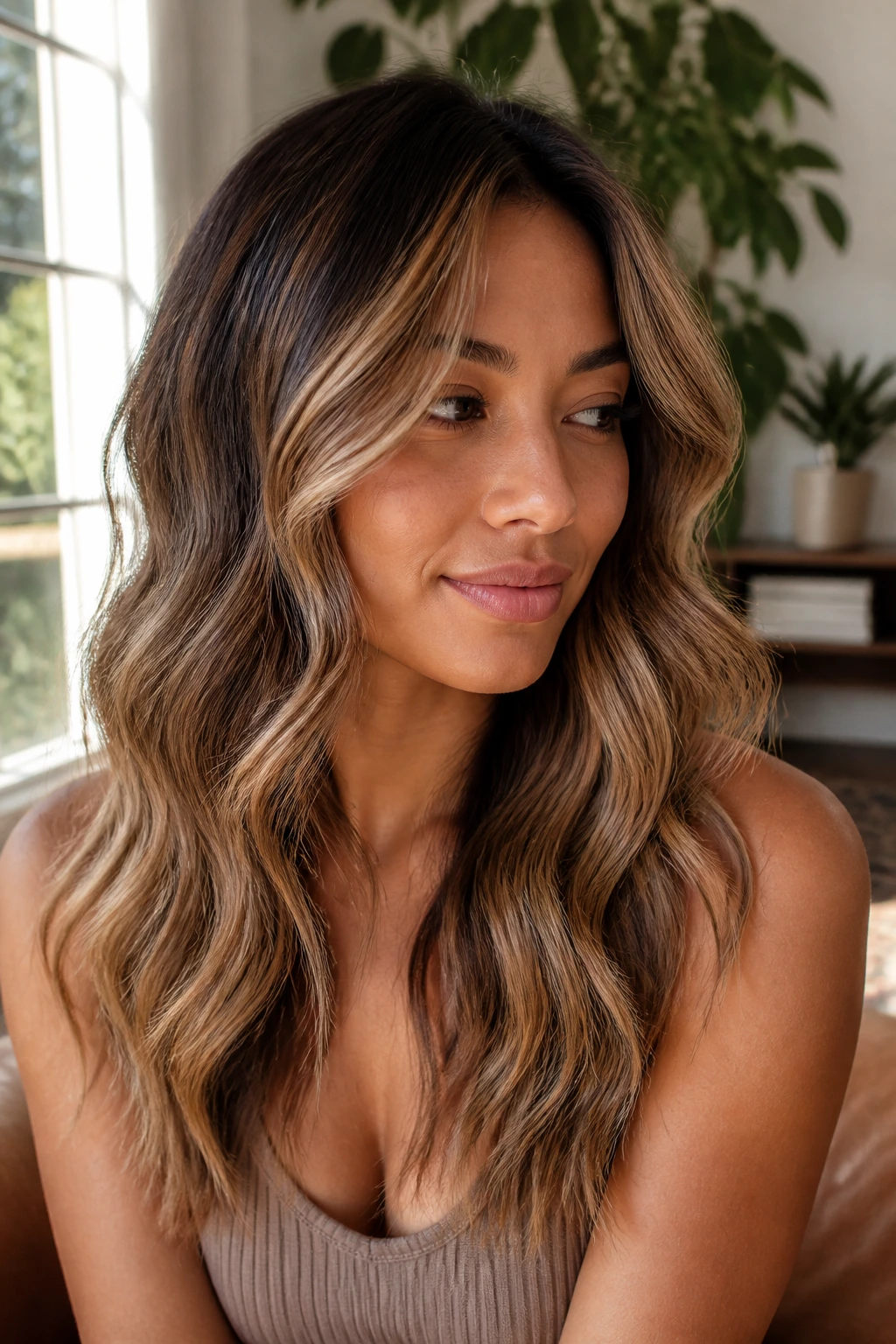
-
Warmth without the fake tan effect: Caramel sits close to the natural warmth in medium complexions, so it reads as richness rather than a neon add-on.
-
Wave-friendly placement: Painted ribbons show up best when the hair bends, which is why beachy texture makes this color look more expensive than blunt foil stripes ever do.
-
Grow-out stays softer: A good balayage leaves the root line blurred, so you can stretch the maintenance without staring at a harsh band six weeks later.
-
Face-framing control: You can brighten the front pieces one level higher than the rest and still keep the overall look grounded.
-
Room for personal taste: Honey, toffee, beige, bronze, cinnamon — the family is broad enough to match golden, olive, and neutral medium skin without forcing one formula.
1. Honey Ribbon Face Frame
This is the first caramel balayage look I’d hand to someone who wants the face to look a little more awake without going blonde. The front pieces are lifted into a soft honey-caramel, then left deeper through the mids so the brightness feels deliberate, not sprayed on. On medium skin with golden or neutral undertones, that little frame of warmth near the cheekbone does a lot of heavy lifting.
The cleanest version of this style uses a center part and loose beachy waves that start below the eye line. That keeps the front ribbons visible, but not harsh. If the highlights start too high or too pale, the whole thing can get skippy and obvious. A half-step deeper tone near the roots usually fixes that fast.
I like this most on shoulder-length to long layers, because the wave movement keeps the face frame from sitting still. It’s the kind of color that looks even better on day two, when the bends are a little softer and the honey pieces settle into the rest of the hair.
2. Toasted Almond Melt on a Dark Brunette Base
What if you want caramel, but you do not want the grow-out to announce itself from across the room? This is the answer. The base stays dark brunette, the painted pieces shift into toasted almond through the mids, and the ends carry a warm beige sheen that shows up when the wave opens.
Why It Stays Quiet
The magic is in the contrast control. Keep the caramel one to two levels lighter than the base near the top, then let it brighten a touch more at the bottom third. That creates a melt, not a stripe. It also suits medium skin well, because the color sits close to the natural depth of the face instead of floating above it.
- Ask for a smoky root shadow if you want the grow-out to stay soft.
- Keep the brightest pieces away from the part line unless you want more drama.
- Use a low-shine finish if your hair is very dark; glossy hair can make the caramel look thinner than it is.
This style is a smart pick for anyone who likes hair that looks intentional even when it’s air-dried. The waves do not need to be polished. A rough bend is enough.
3. Caramel Ends with a Smoky Root Shadow
Picture long brunette hair with a root that looks softly shaded, not flat, and ends that catch a warm caramel glow every time the wave flips. That’s the whole point here. It leans a little toward ombré, but the transition is softer and more modern, with painted pieces tucked into the mids so the ends do not feel heavy.
This version loves beachy waves because the lighter ends show up at the curve of each bend. Straight hair can make it look more like a simple fade. Add some movement, though, and the color starts doing what you paid for — breaking up the length and making the cut look fuller.
- Best on long layers or a U-shaped cut
- Works well if you want low-maintenance grow-out
- Looks strongest with a deep side part or soft center part
- Needs a gloss every 6 to 8 weeks if you want the caramel to stay clean
I’d choose this for thick hair before fine hair. Thick strands can handle the darker top and still look airy at the ends. Fine hair sometimes needs more brightness near the face, or the whole thing can feel a little heavy.
4. Golden Toffee Lob with Soft S-Waves
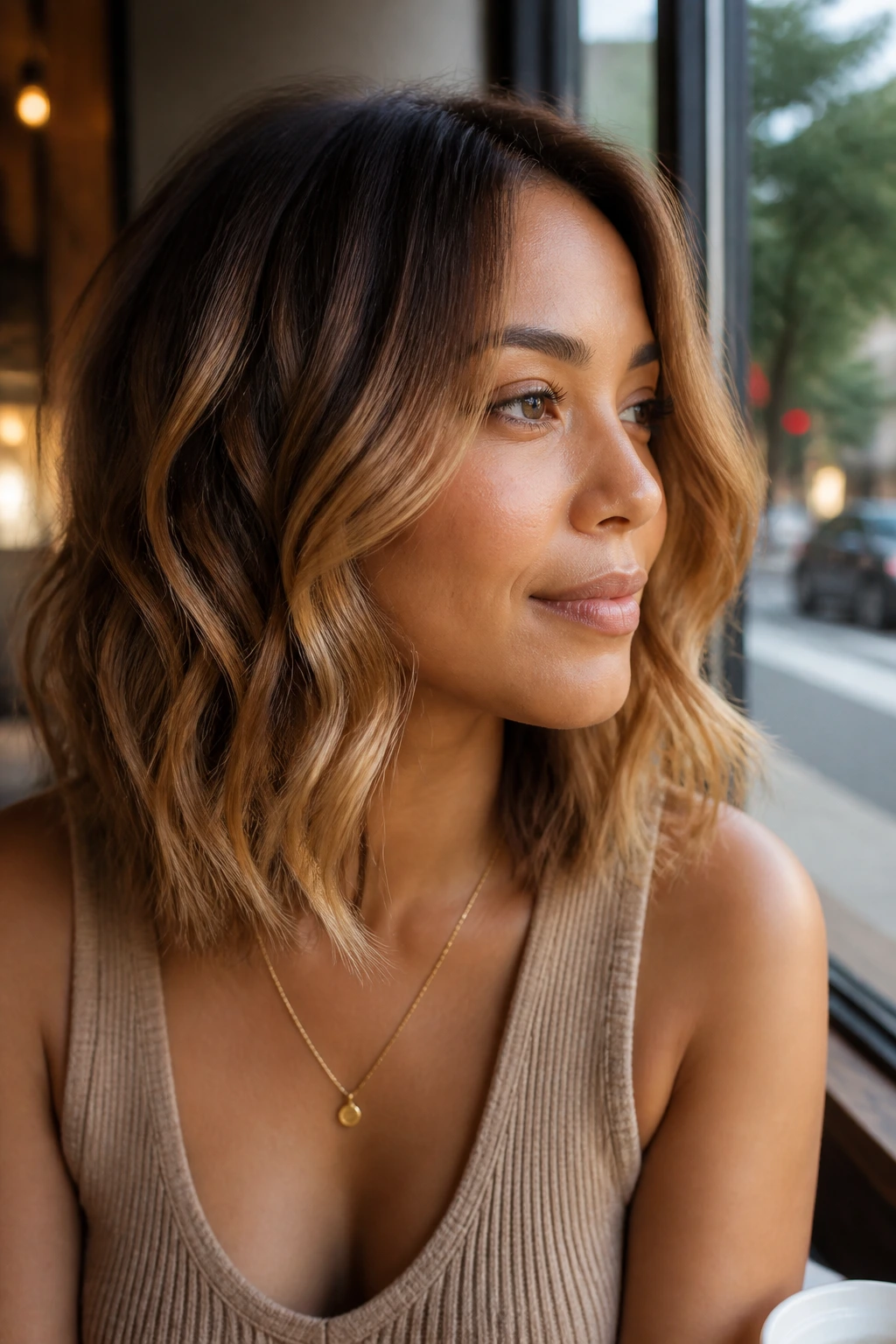
A lob does not need a lot of color to look expensive. It needs the right one. Golden toffee through a shoulder-grazing cut gives you warmth, shine, and enough contrast to make the wave pattern visible without turning the hair into a highlight catalog.
This is one of those looks that works because it respects the cut. The balayage isn’t fighting the bluntness of the lob; it’s softening it. On medium skin, especially skin with a golden cast, the toffee tone keeps the face from looking washed out next to a cooler beige blonde. A lot of people reach too light here. I wouldn’t.
The wave pattern matters. Keep the bends loose, almost lazy, and stop the iron just before the ends. That tiny stretch at the bottom stops the lob from looking too curled or too neat. It should feel like you spent ten minutes on it, not twenty-five.
5. Cinnamon-Caramel Money Piece
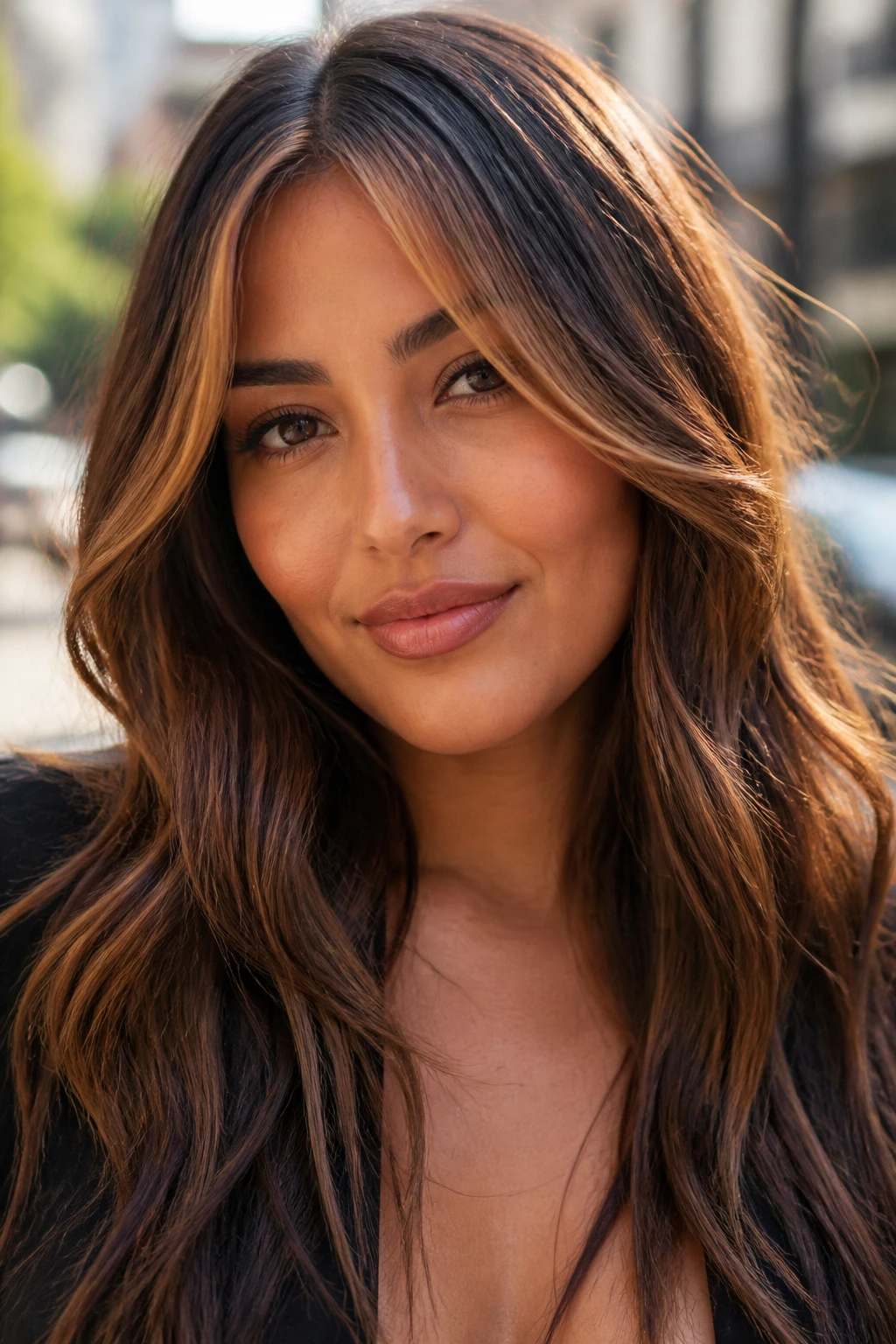
A brighter front section can be a sharp move if the rest of the hair stays grounded. The cinnamon-caramel money piece gives medium skin a warm lift near the eyes, then lets the rest of the color settle back into a richer brunette-caramel mix. It’s bolder than the honey frame, but not as loud as a blonde streak.
Why the Front Sections Matter
The money piece is where the eye lands first. On medium skin, that means the tone has to work with the face, not just with the hair. Cinnamon-caramel is a good middle point if honey feels too yellow and copper feels too orange.
Use this when you want the front to do more of the talking. It looks especially good with curtain bangs, because the lighter pieces peek through the bends instead of sitting in one obvious line. If your face shape benefits from width around the cheekbones, this one earns its keep fast.
A simple way to describe it to a stylist: “Keep the base rich, brighten the front by one to two levels, and blend the transition so the color still looks painted, not striped.” That sentence does more work than a vague photo ever will.
6. Warm Beige Balayage with Mid-Length Bend
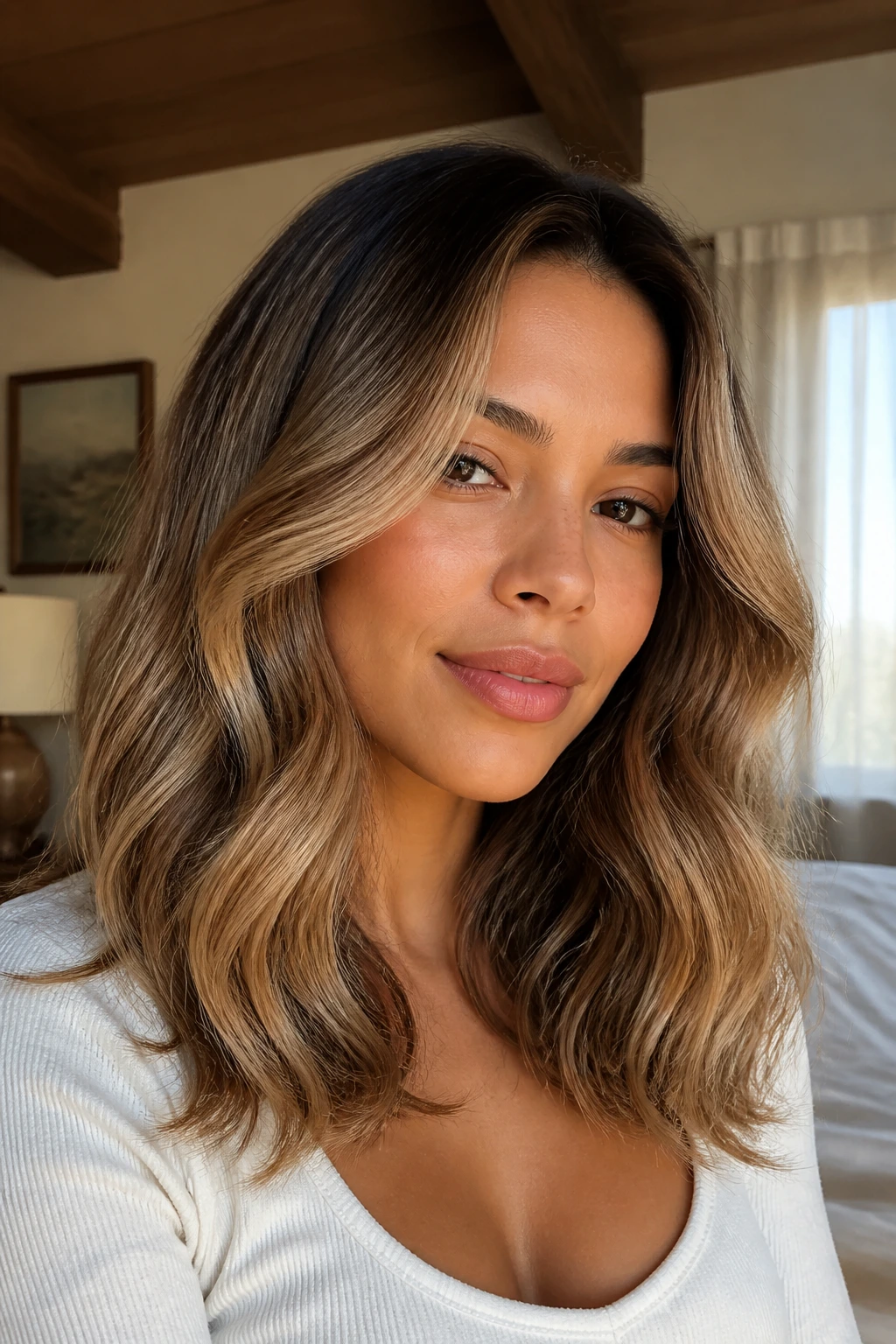
This is the safest-looking option in the group, and I mean that in a good way. Warm beige caramel has enough gold to flatter medium skin, but not so much that it starts to read brassy in bathroom light. The bend is mid-length, the wave is soft, and the whole finish looks calm rather than flashy.
Compared with a traditional highlight job, this version feels less segmented. The darker base still shows through, which keeps the hair from losing depth. Compared with a full ombré, it also starts a little higher, so you get dimension through the middle of the hair instead of only at the bottom.
That middle placement is the reason it works so well on medium-length cuts. There’s enough room for the caramel to move, but not so much hair that the lighter pieces disappear. If you wear your hair tucked behind one ear a lot, this one still reads nicely from the front.
7. Chestnut and Caramel Ribbon Layers
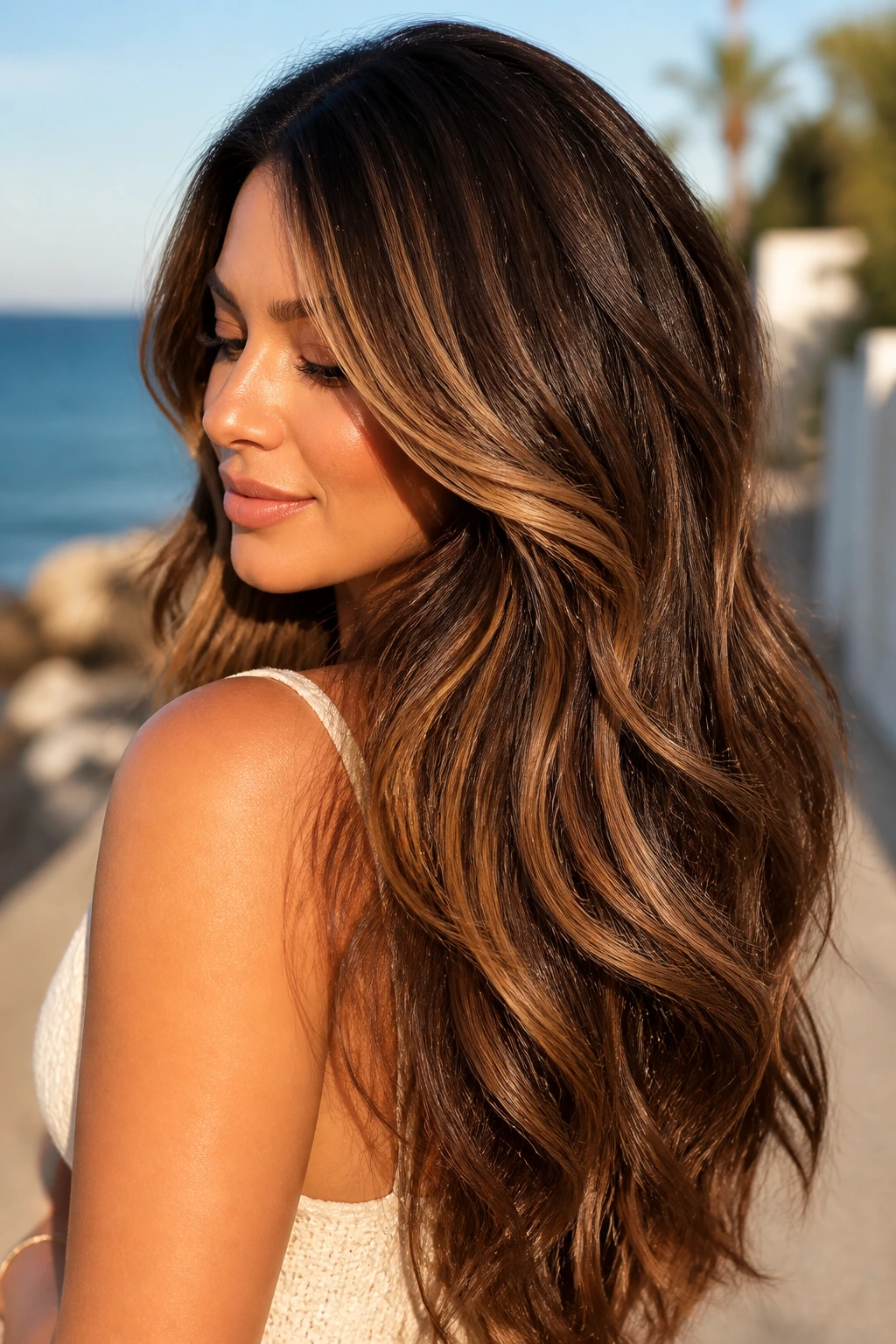
This one looks best on layered hair that already has some shape in it. The chestnut base gives the whole style a plush, dimensional feel, and the caramel ribbons thread through the layers like little flashes of warm thread. It is not a loud look. It is a rich one.
The reason I like it on medium skin is simple: chestnut keeps the overall tone grounded, so the caramel can brighten without turning theatrical. If your skin has olive or neutral undertones, the mix tends to feel balanced rather than overly sweet. And with beachy waves, the layered pieces separate just enough to show the contrast.
A clean center part is nice here, but a deep side part gives the caramel more drama. Either way, the waves should stay loose and brushed-out. Tight curls would clutter the whole thing.
8. Cocoa Base with Sunlit Caramel Tips
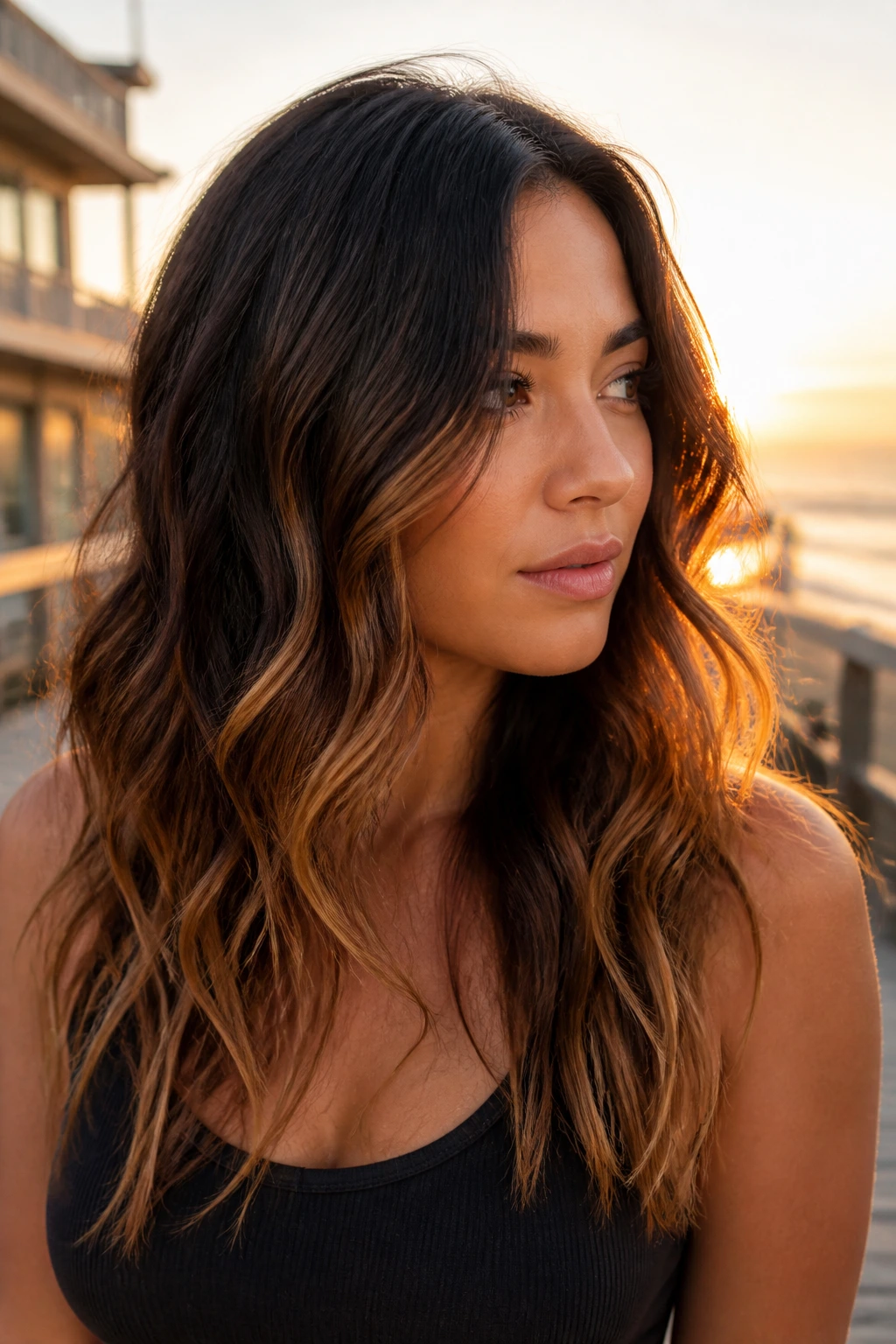
The first thing you notice here is depth. The base stays cocoa-dark, almost like melted chocolate, while the tips pick up a warmer caramel that shows up most clearly at the ends of each wave. It’s softer than a full fade and less obvious than chunky highlights.
This is the look for someone who likes a darker root and a lighter finish without making the change too dramatic. Beachy waves are important because they keep the caramel tips from sitting in one solid block. Every time the hair bends, the lighter edge appears and then disappears again. That little flicker is the whole point.
My favorite version keeps the caramel tips one shade deeper than you think you need. Too pale and the ends can look dry. A richer caramel feels more like gloss than bleach, especially on medium skin that already carries some warmth.
9. Rooty Caramel Swirl on Long Waves
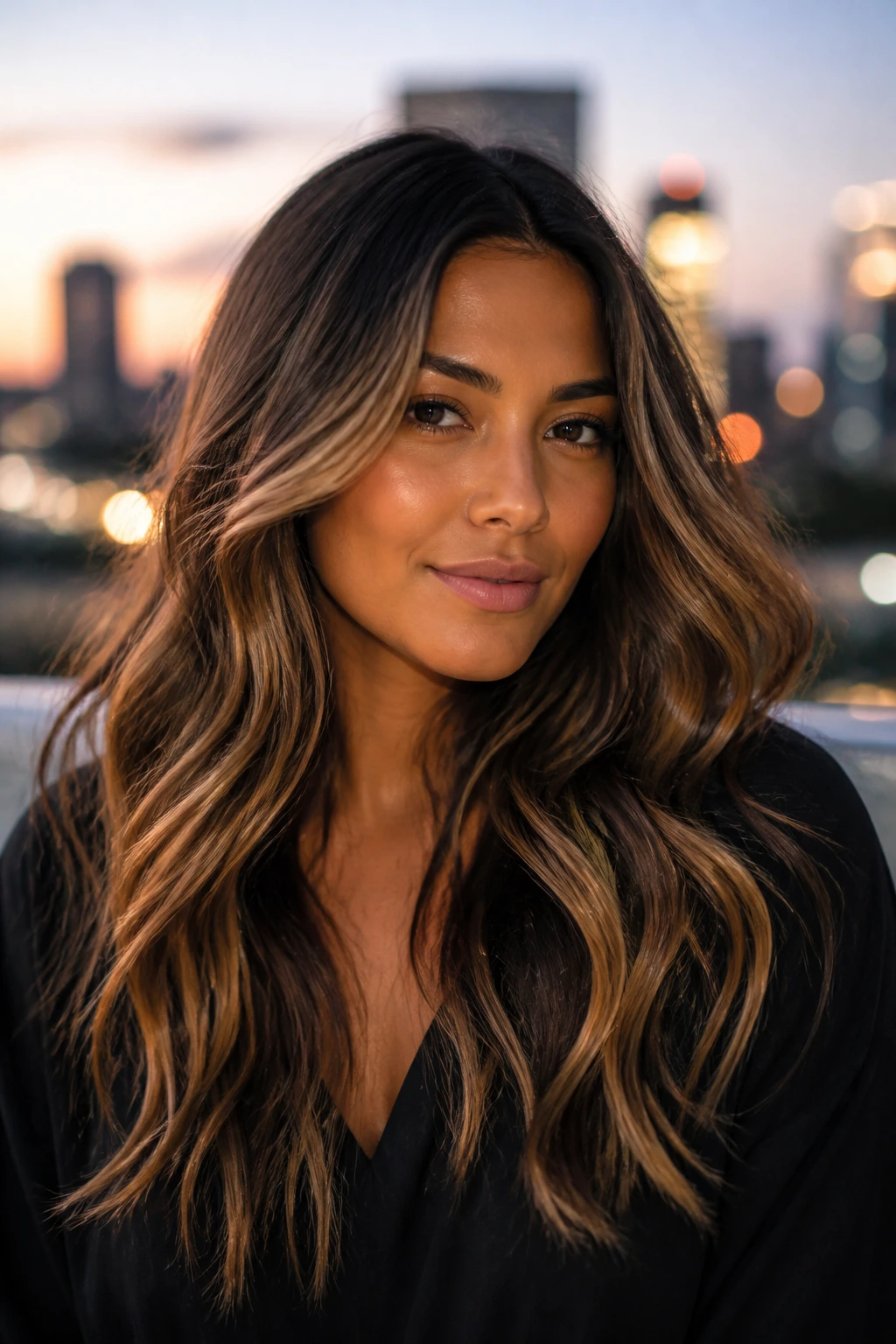
Long hair can get visually heavy fast. A rooty caramel swirl fixes that by keeping the top grounded and weaving lighter caramel through the lengths in a soft spiral pattern. It is especially good if your hair is thick or tends to fall straight with no life in it.
Why does it work? Because the root shadow gives the eye a place to rest. Then the caramel pieces take over through the mids, where the wave breaks the color into moving sections. The result is lift without harshness.
What to ask for
- A soft root shadow, not a solid dark block
- Caramel ribbons that are painted through the mids and ends
- A finish that stays lighter around the face
- Beachy waves that are loose, not curly
I’d choose this if you want length to look lighter without losing the richness that medium skin can carry so well. It’s an easy style to wear with a simple black top or a white button-down, because the color does the talking.
10. Buttery Caramel on a Wavy Bob
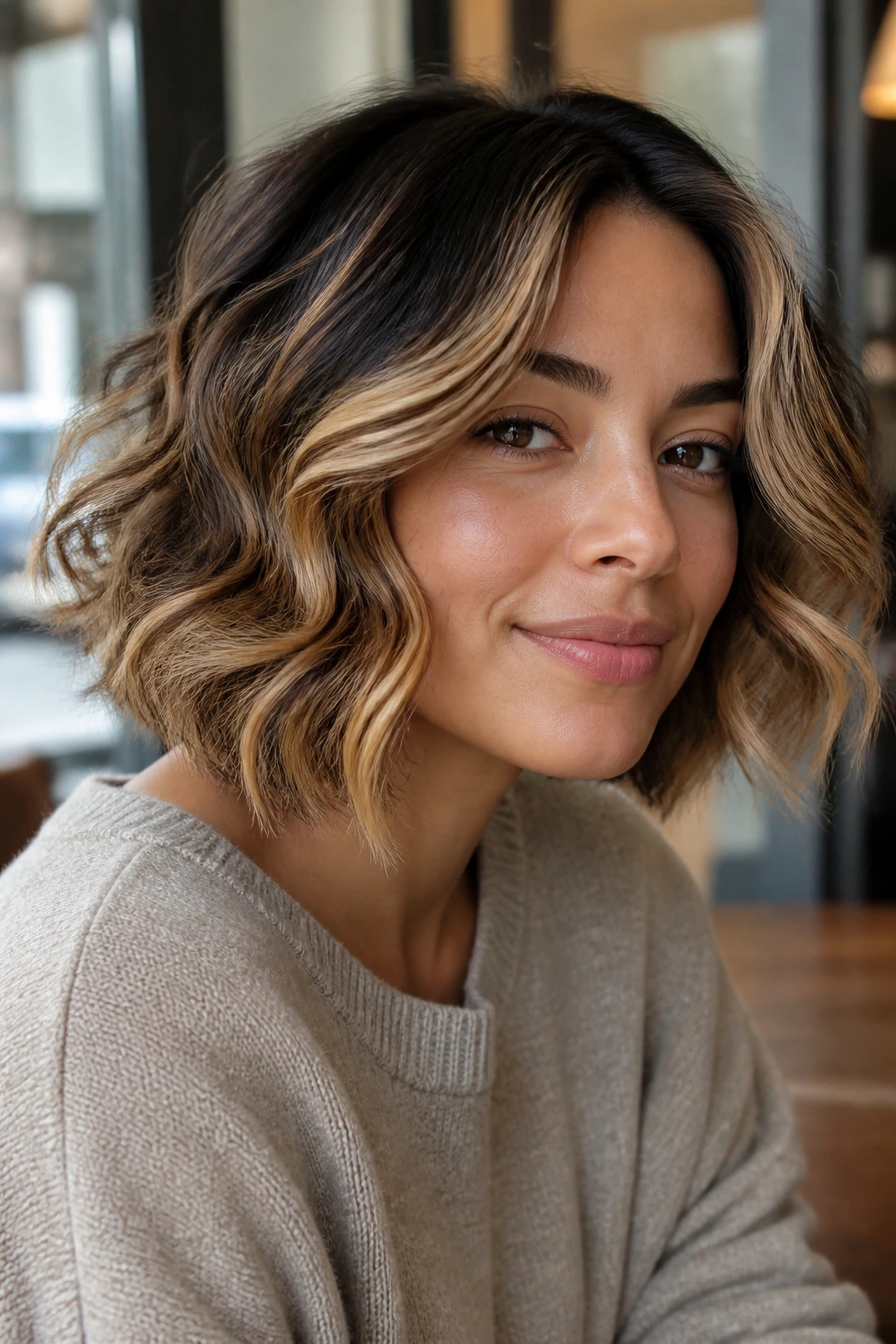
Shorter hair needs confidence. A bob with buttery caramel balayage has to be placed carefully, or the brightness gets chopped up and the whole thing looks accidental. When it’s right, though, it’s one of the best uses of caramel on medium skin because the color sits close to the face and the waves get to show off every inch.
This version should feel soft at the ends and a little brighter in the top layer. The wave pattern doesn’t need to be uniform. In fact, it shouldn’t be. Alternate the bend direction so the caramel pieces stop looking like a marching line and start looking like movement.
- Keep the brightest ribbons near the top layer
- Leave the ends a touch deeper so they don’t fray visually
- Use a light texture spray, not a heavy cream
- Best on a chin-length to collarbone bob
It’s a neat little look. Not fussy. And it gives medium skin a warm frame without needing lots of length to make the color obvious.
11. Amber Balayage with Curtain Bangs
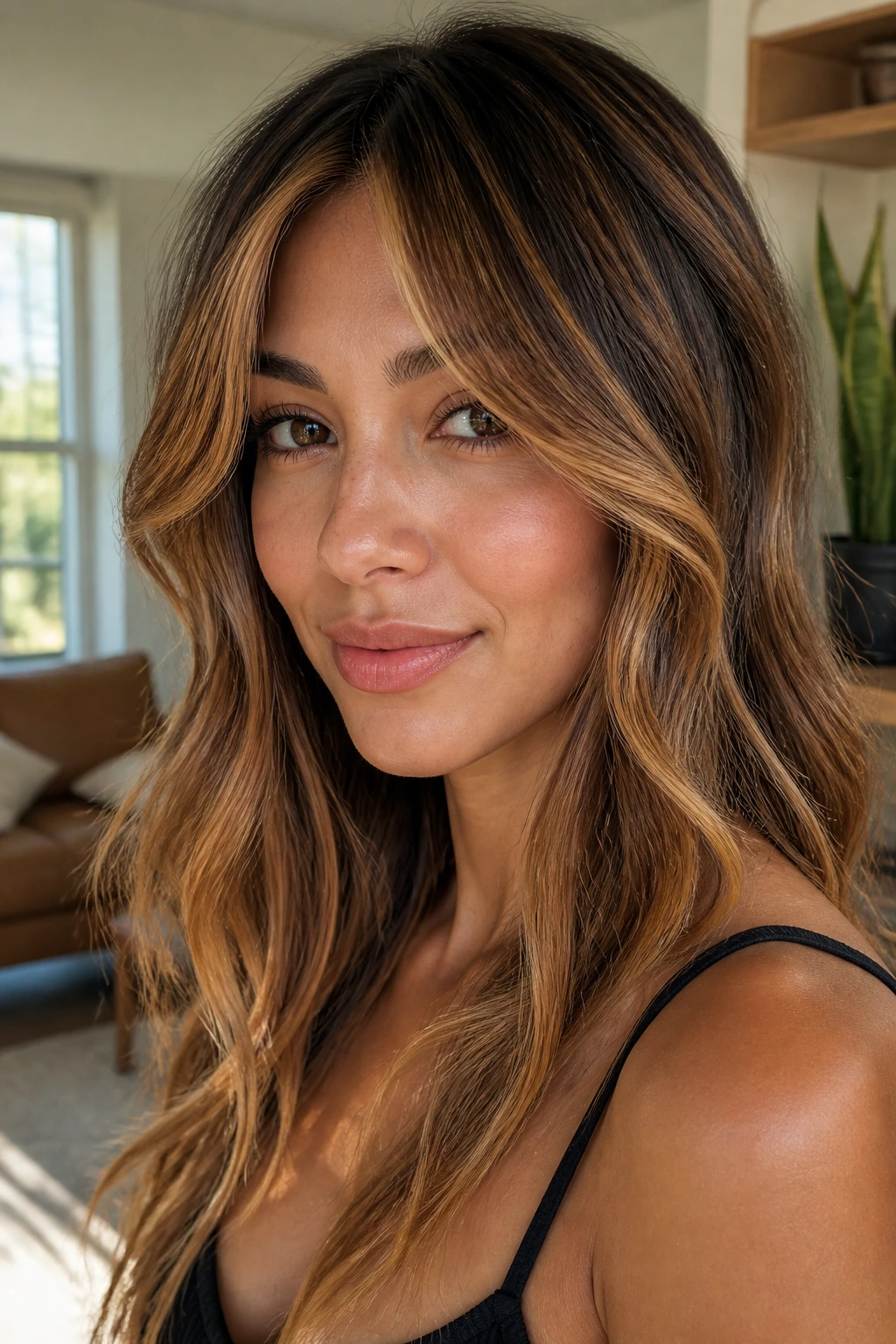
Curtain bangs change the whole conversation. They bring the caramel closer to the eyes, which means the front pieces need to be softer and a little more feathered than the rest. Amber caramel does that beautifully on medium skin, especially when the undertone leans golden or warm-neutral.
Why the fringe matters
The bangs act like a frame inside the frame. If the amber is too bright or too chunky, the bangs start to look separate from the rest of the hair, which is a mess no one asked for. Keep the dimension subtle through the fringe, then let the brightness increase below the cheekbone where the wave opens up.
This style is especially good if you usually tuck your hair behind your ears or wear sunglasses a lot. The caramel catches the movement around the face without needing constant styling. On a day when you want the hair to look done with minimal effort, this one behaves.
12. Espresso-to-Caramel Melt for Thick Hair
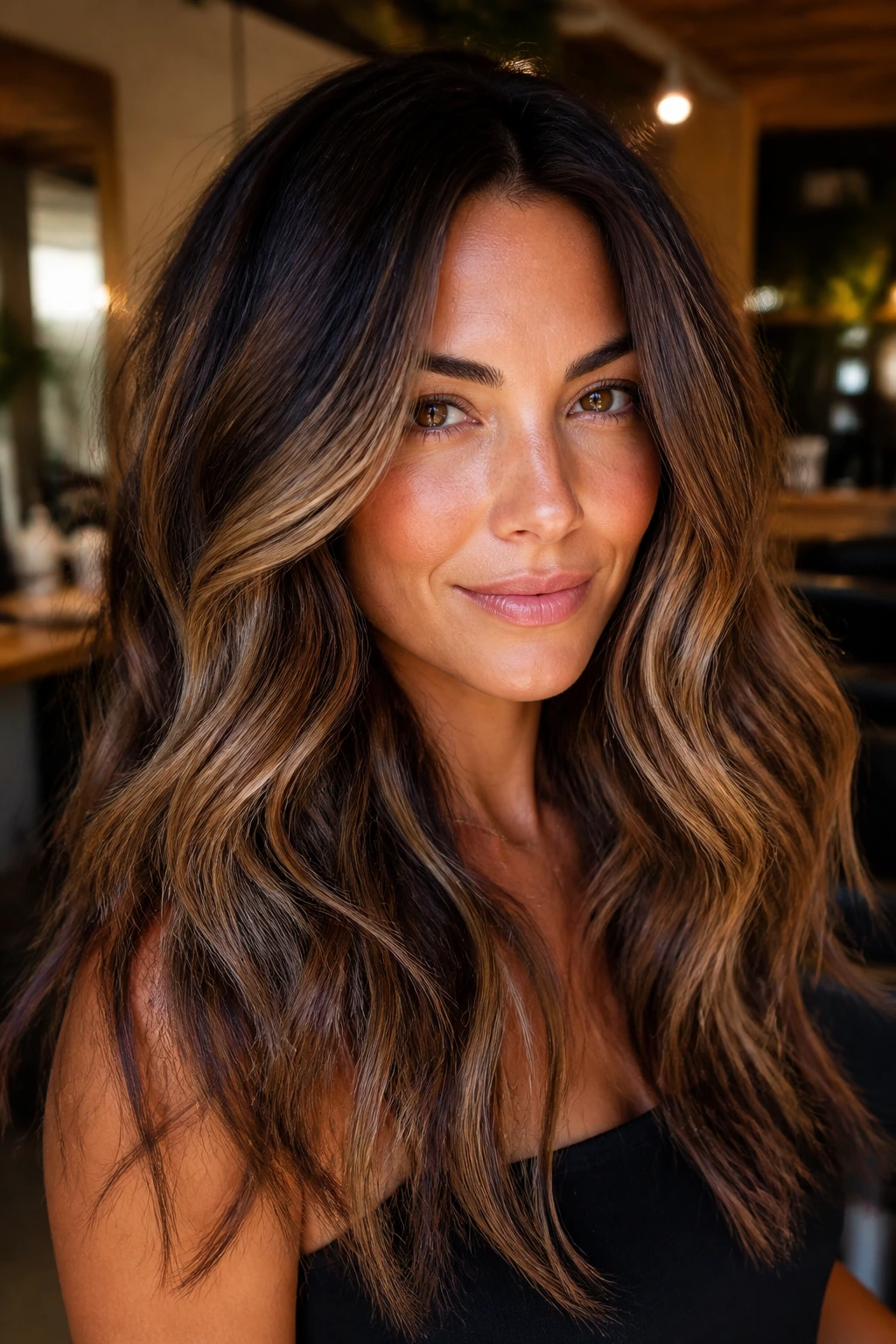
Thick hair can take more contrast than fine hair. That’s the honest truth. An espresso base melting into caramel gives the hair enough depth at the root and enough warmth through the mids to keep the length from looking like one huge dark sheet.
The reason this works on medium skin is that the espresso keeps the overall tone substantial, while the caramel breaks up the weight. On a cut with lots of density, the wave pattern can get swallowed unless the color has enough contrast to separate the sections. This solves that problem.
I’d push for wider painted panels here instead of tiny, delicate highlights. Thin ribbons disappear inside thick strands. Bigger pieces show up once the wave is brushed out, which is exactly what you want. It’s one of the few times I’ll say bolder placement is the better move.
13. Bronze Caramel Dimension on Medium Lengths
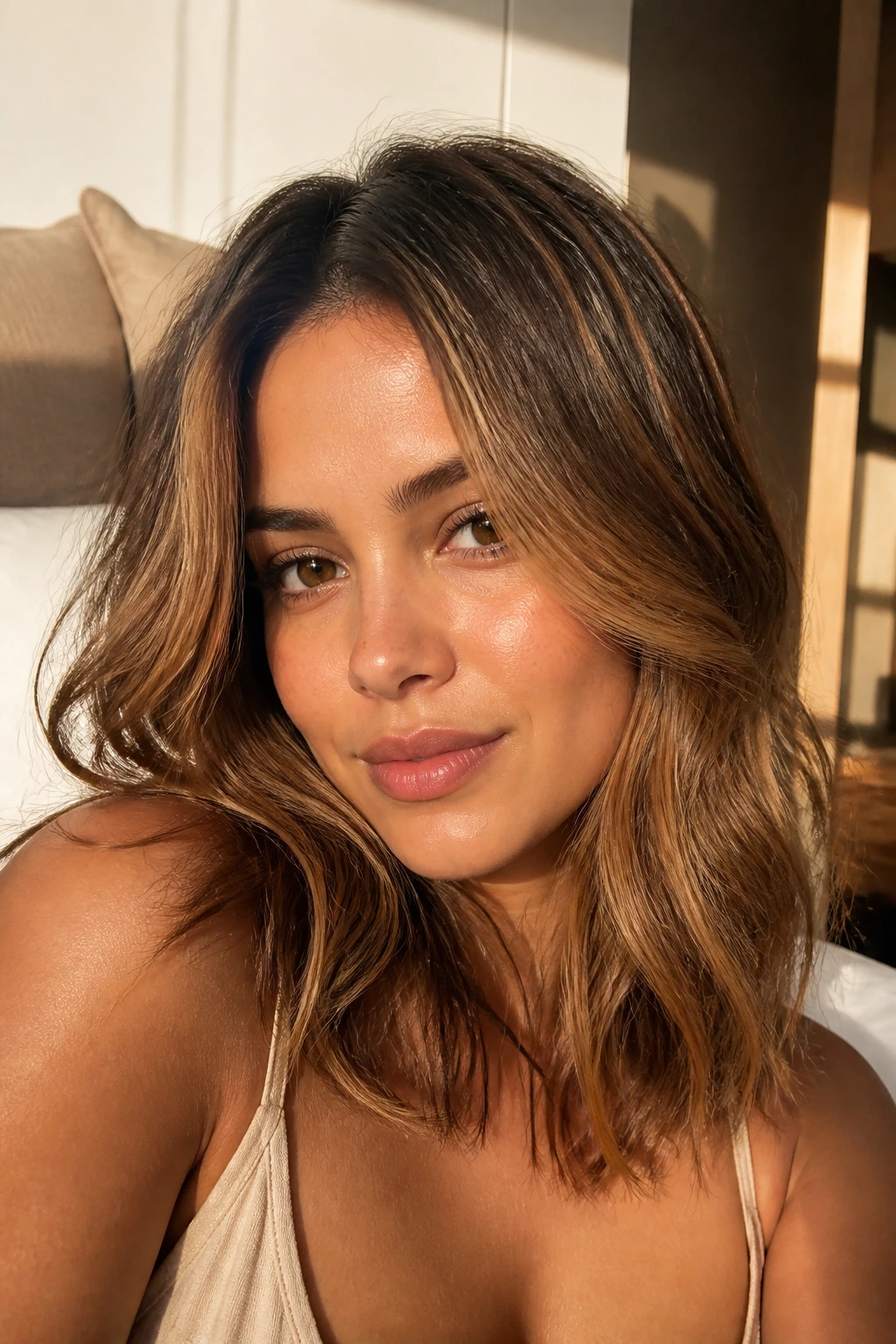
Bronze caramel lives in a nice place between warm brown and soft gold. It’s a little richer than beige caramel and a little less orange than cinnamon, which makes it a smart fit for medium skin that wants warmth without screaming for attention.
Compared with classic honey highlights, bronze caramel looks deeper and more grounded. Compared with ash-brown balayage, it feels warmer and more alive in sunlight. That middle position is why it wears well on medium-length cuts, where the color has enough space to move but still sits close enough to the face to matter.
If you want this look to read cleanly, keep the waves piecey. Not crunchy. Just separated enough that the bronze notes can catch along the bends. A light gloss at the end helps a lot here, because bronze can lose its shine faster than honey if the cuticle gets rough.
14. Soft Mocha Balayage with Piecey Waves
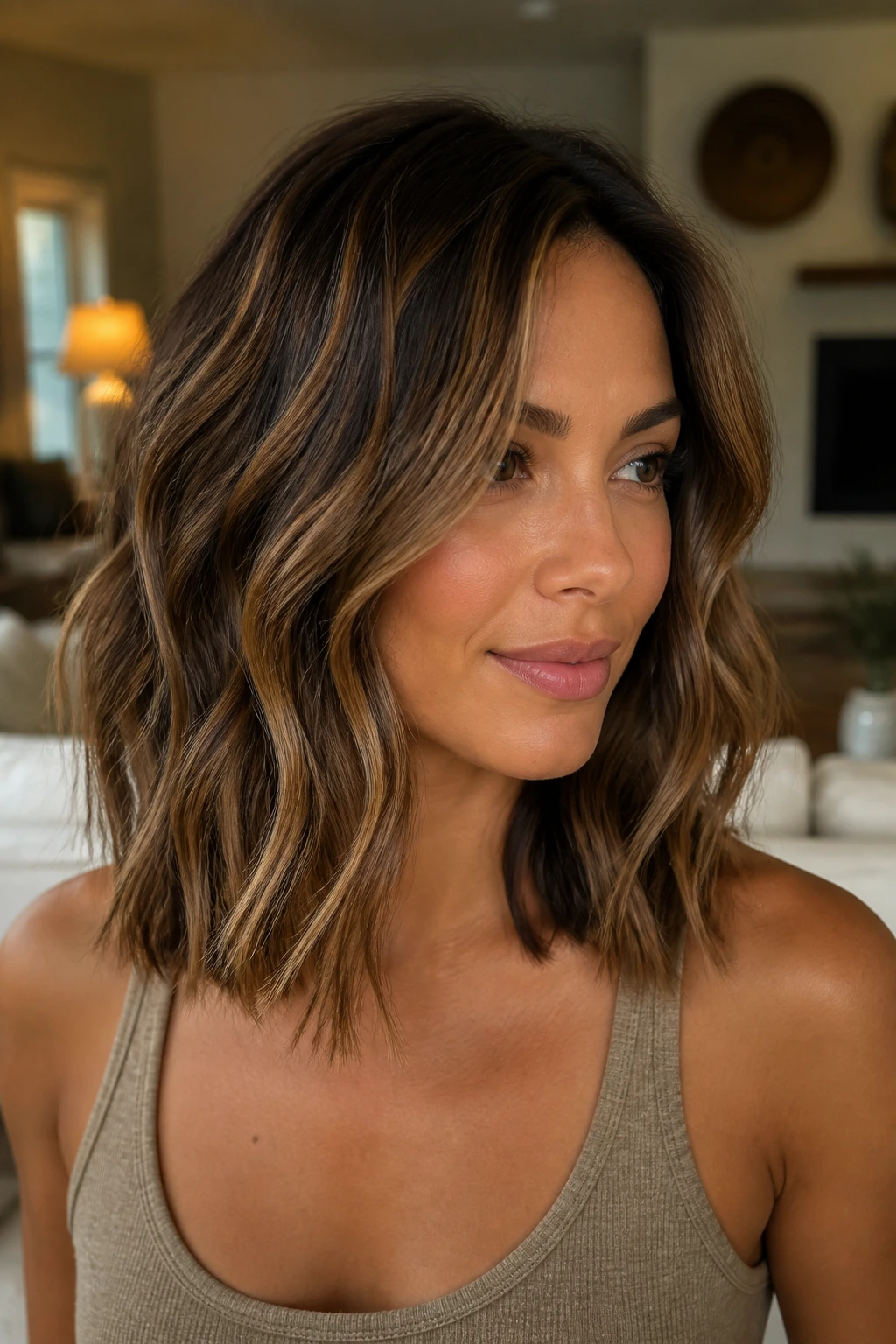
The hair should look like it has been touched by warm light, not like it has been painted from root to tip. Soft mocha balayage does that when the caramel is kept within a narrow range of brightness and the waves are broken into loose, piecey sections. It’s understated in the best possible way.
What to ask for
Ask for mocha through the base with caramel threads that stay soft at the ends and around the face. If your skin is medium with neutral or slightly olive undertones, this is one of the easiest shades to wear because it doesn’t swing too yellow. The color still feels warm, but it stays polished.
A wide-barrel iron or a flat iron bend works well here. Then brush the hair out with your fingers, not a stiff brush, or the pieces will collapse into one blur. You want visible texture. Not fluff.
15. Peachy-Caramel Glow for Neutral Undertones
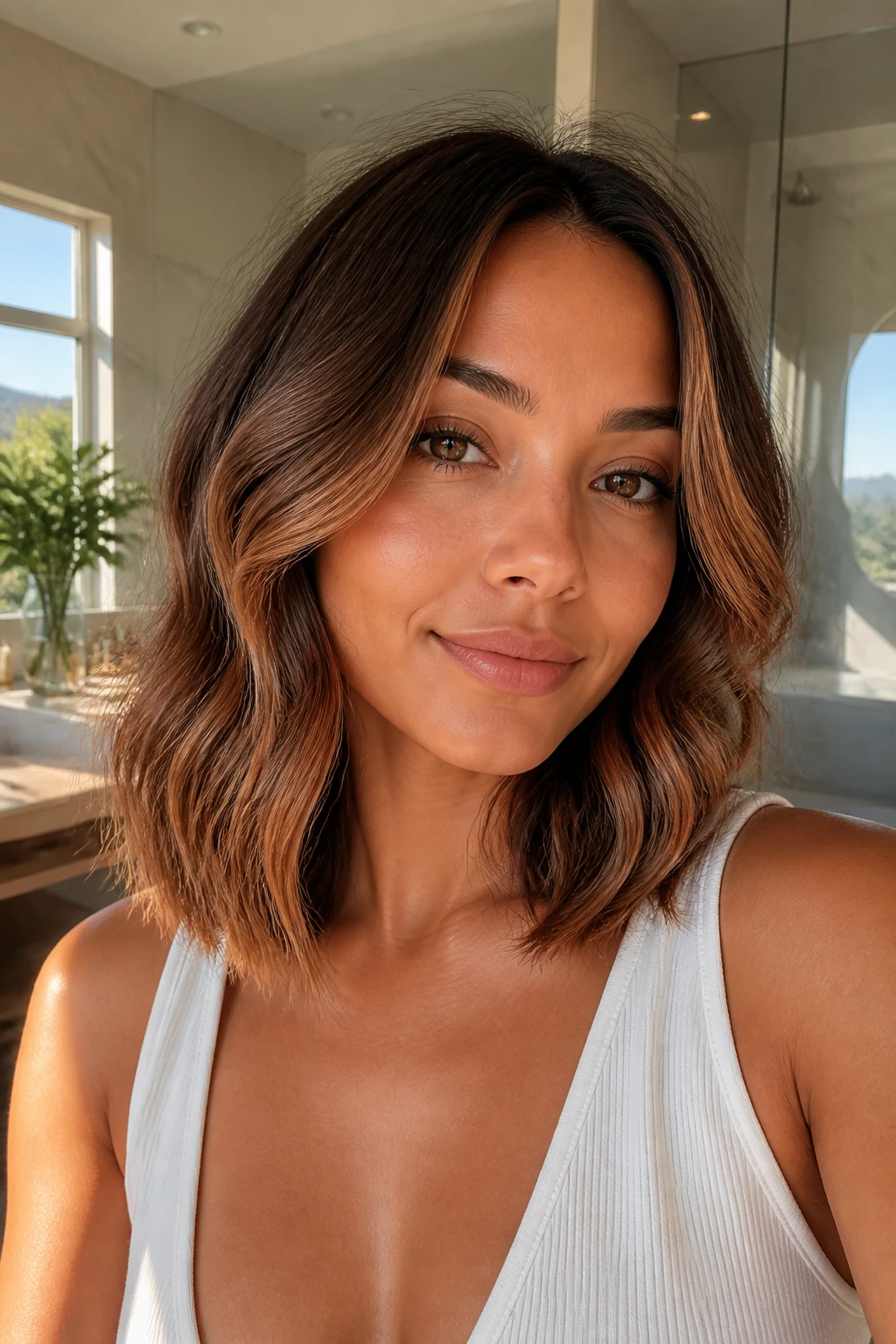
Can caramel lean a little peachy without turning orange? Yes, if the rest of the formula stays balanced. This is the version I’d suggest for neutral medium skin that can handle warmth but doesn’t want a heavy gold tone near the face.
The peach note sits quietly inside the caramel, which gives the hair a faint rosy warmth when the light hits it at an angle. It’s not loud. It just keeps the color from going flat. With beachy waves, that little extra warmth helps the midlengths look more dimensional, especially on layered cuts.
I would not make this my first pick for very golden skin, because the peach can compete with the undertone. For neutral skin, though, it’s a sweet spot. It feels fresh without tipping sugary.
16. Deep Brunette with Lighter Caramel Veils
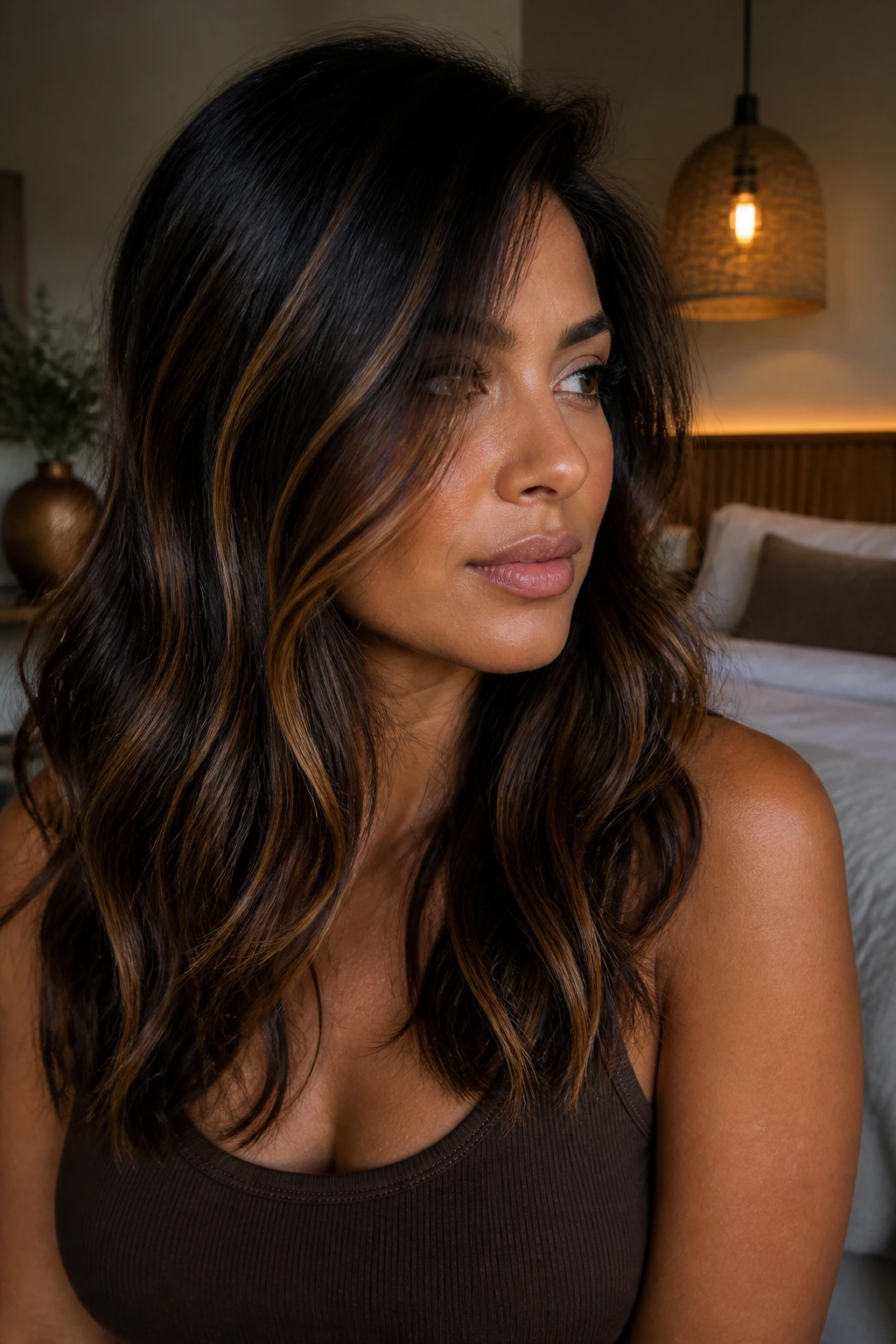
Stripes are the wrong answer here. Veils are better. Lighter caramel veils on a deep brunette base let the hair keep its depth while still breaking up the shape of the waves, which is a much cleaner look on medium skin than chunky contrast.
Why veils, not stripes
Veil highlights sit under the top layer and peek through as the hair moves. That matters if you wear your hair down a lot, because the color shows in motion instead of sitting on top in obvious lines. It also keeps the front from getting too bright if your skin leans olive or neutral.
This style is one of my favorites for people who want dimension but hate obvious highlights. It’s subtle when still, more visible when the waves move, and it grows out with less fuss than a high-contrast front piece. Not dramatic. Just smart.
17. Sandy Caramel Layers for Air-Dried Texture
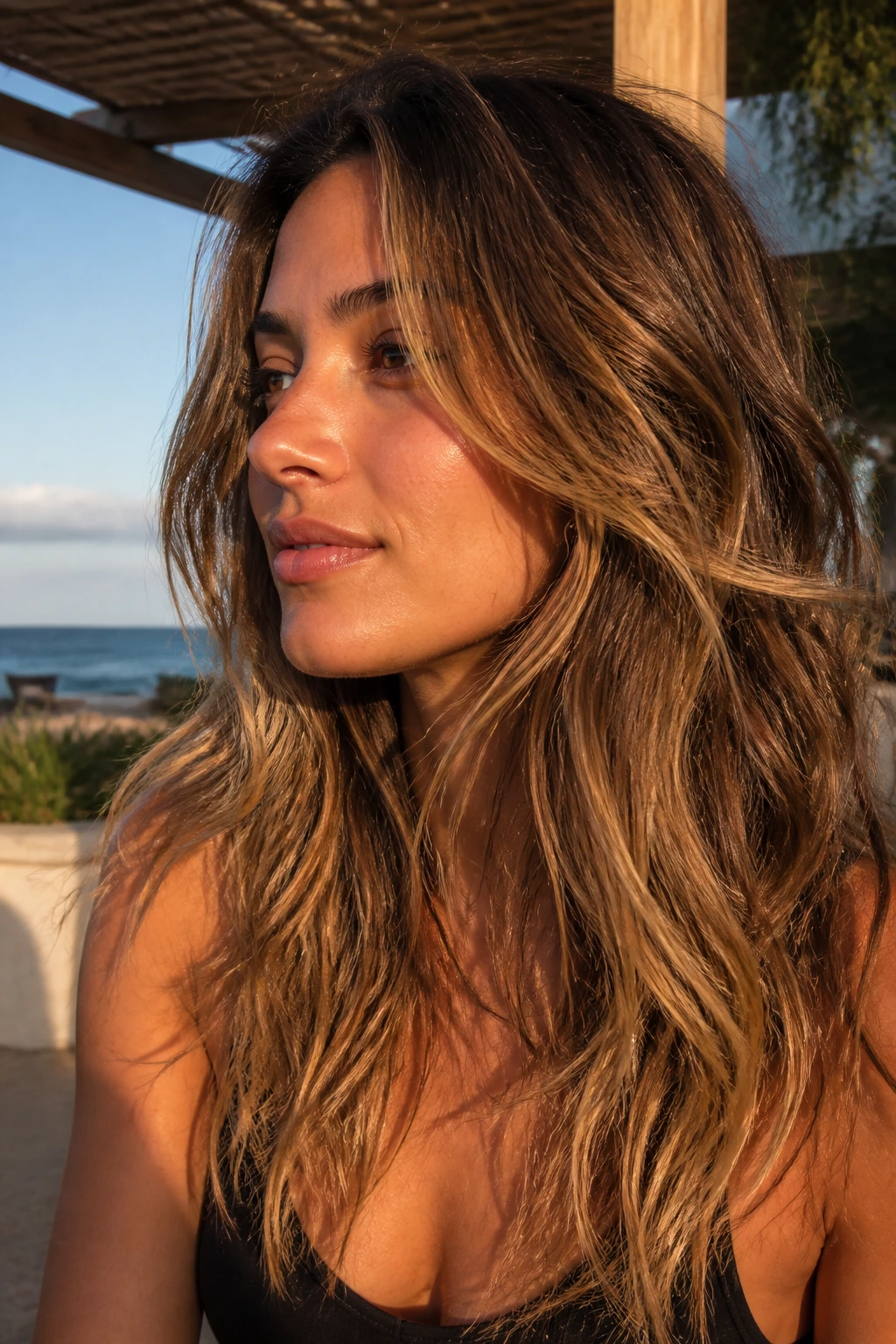
Air-dried hair and caramel balayage have a particular kind of honesty about them. Sandy caramel on medium skin gives that lived-in, sun-softened feel without asking for a perfect blowout. The layers do the work, and the color sits in the bends that happen naturally as the hair dries.
This look is especially good if your texture is already a little wavy. The caramel threads around the layers, then the air-dried bends break the color into softer sections. A lot of people think beachy waves need a hot tool. They don’t. A little leave-in, a scrunch, and some patience can do the trick.
- Best with layered cuts
- Looks cleaner when the caramel stays medium, not pale
- Pair with a light leave-in cream
- Avoid heavy serums that make the waves collapse
The only thing I’d watch is dryness. Sandy tones can look rough if the ends are fuzzy. A clean cut and a weekly mask help more than most people expect.
18. Glossed Caramel Wavefall
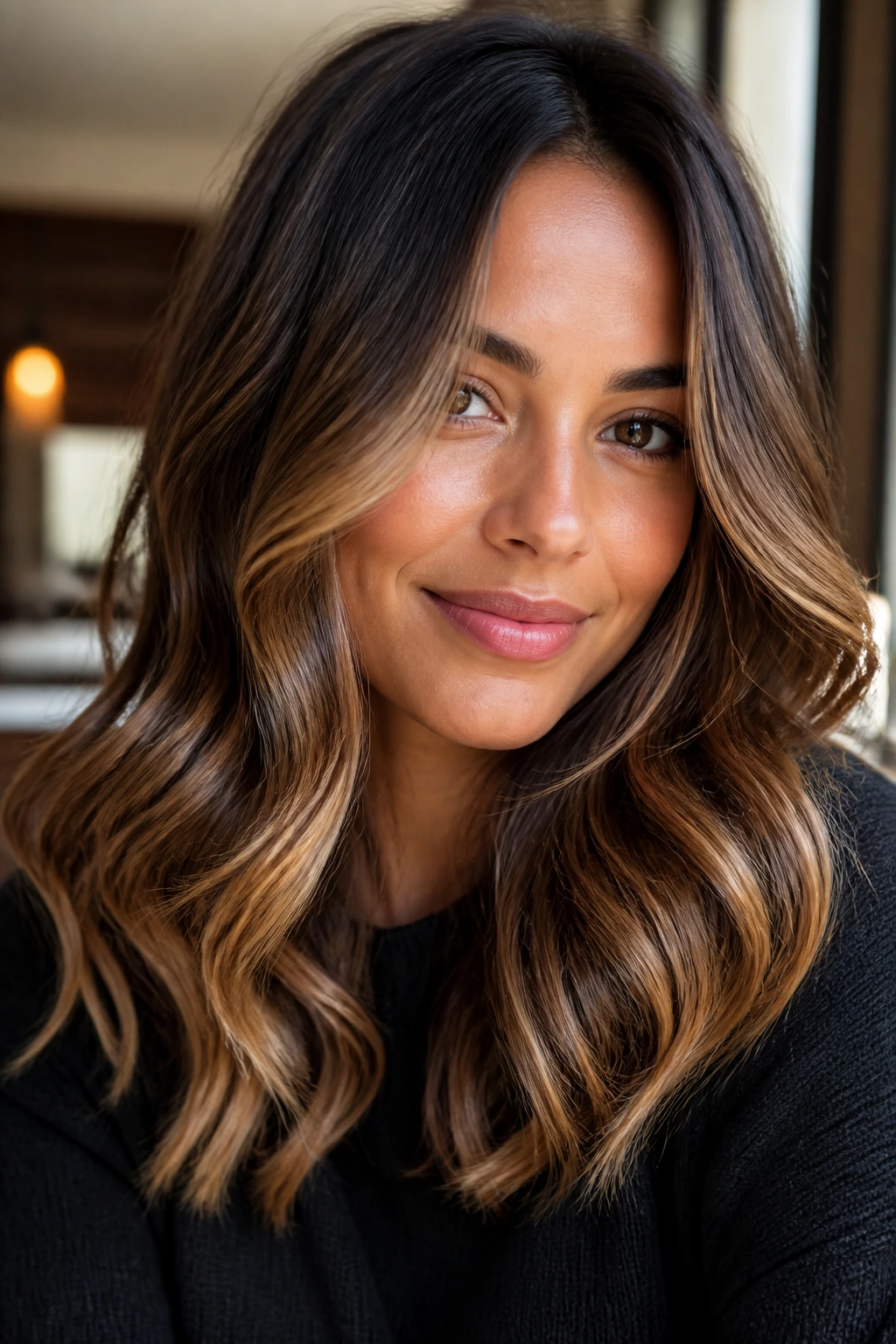
There’s a reason the polished version of caramel balayage keeps coming back. A glossy caramel wavefall looks rich without needing a massive color change. The base can stay medium brunette, the ribbons can stay soft, and the shine does most of the visual work.
On medium skin, this is one of the easiest styles to wear because the warmth sits comfortably near the face. The waves give the gloss somewhere to show up, and the mix of deeper and lighter tones keeps the hair from reading flat under indoor light. If you want hair that looks cared for even when the style itself is loose, this is the one.
I’d keep the finish silky, not oily. A drop of serum on the mids and ends is enough. Too much product kills the movement, and this look lives or dies on movement.
Why Caramel Works So Well on Medium Skin
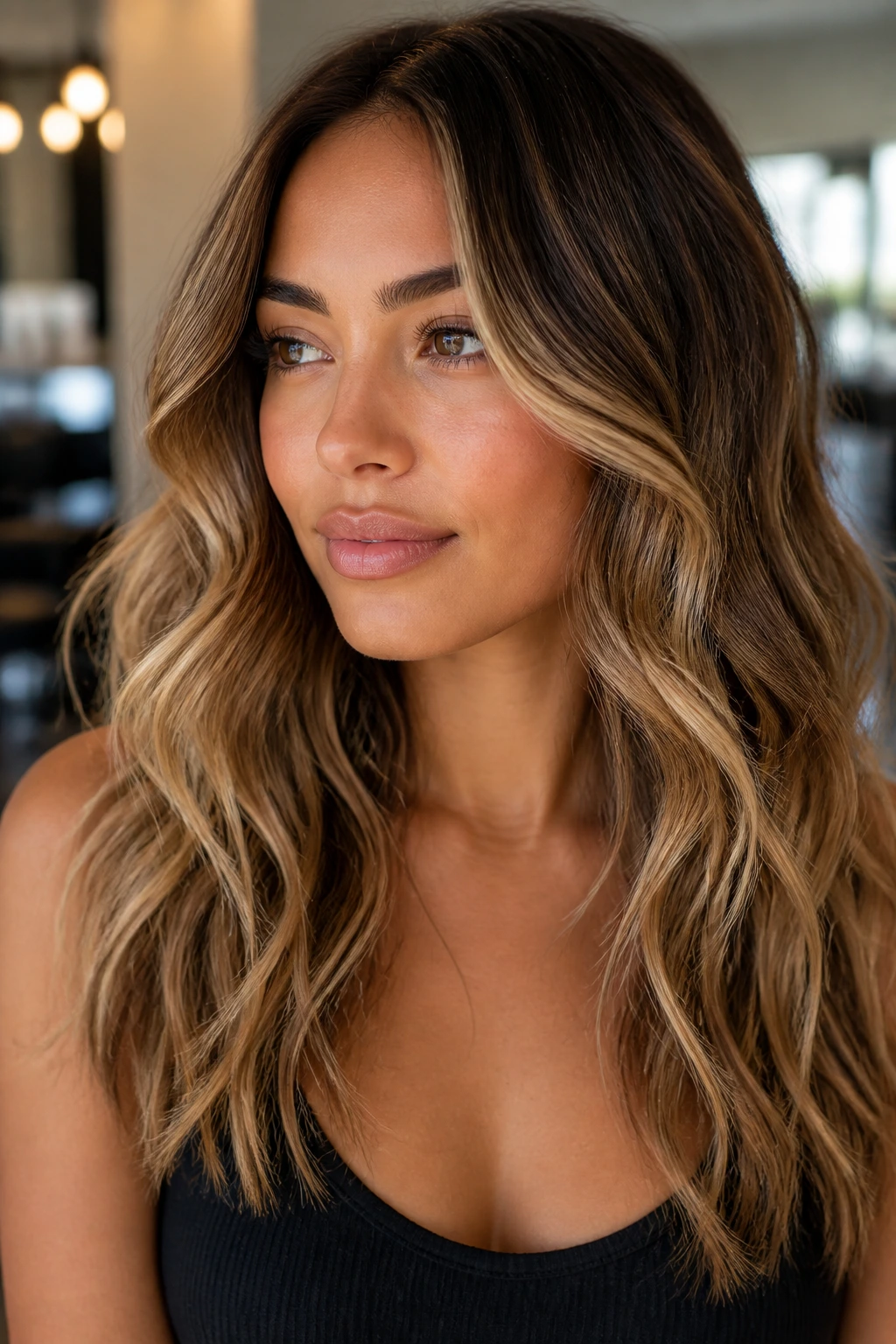
Medium skin has a useful kind of flexibility. It can carry warmth without looking orange, and it can hold contrast without losing the face to the hair. That is why caramel balayage tends to look more natural here than it does on much lighter or much deeper complexions.
The trick is matching the caramel to the undertone, not just the skin depth. Golden medium skin usually likes honey, toffee, and bronze. Neutral skin can handle beige caramel and peach-leaning warmth. Olive skin usually looks best when the caramel stays a little muted, because too much gold can turn the whole look loud in a bad way. I would rather see a caramel that is one shade deeper than one that is too pale and floaty.
Beachy waves help because they create motion without forcing a tight curl pattern. The bends open the color up. The roots stay grounded. The mids take the warmth. The ends catch the brightest ribbon. That is the formula, and it is why this pairing works again and again.
Reading Warm, Neutral, and Olive Undertones
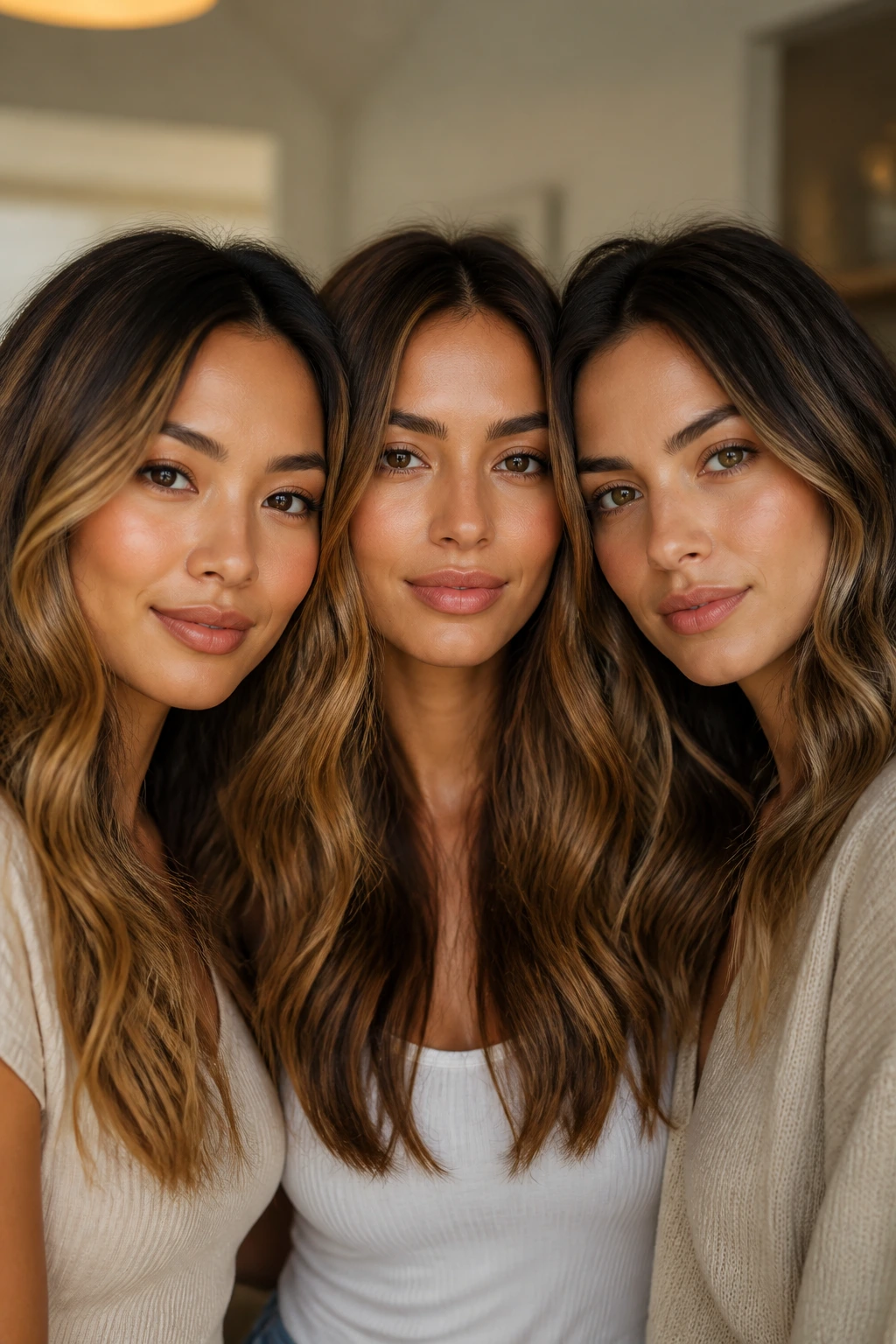
Undertone matters more than most salon conversations admit. A shade chart can tell you the level of the hair, but it won’t tell you whether a caramel should lean gold, beige, or slightly smoky against your face. That’s the part you have to think through before anyone lifts a brush.
Warm medium skin usually has a yellow, golden, or peach base. Honey caramel and toasted toffee look clean there because they echo what is already happening in the skin. Neutral skin gives you more room. You can keep the caramel bright, or you can soften it with beige gloss so the color doesn’t get too sunny.
Olive undertones are the tricky one. Too much gold can pull the hair into a yellow cast that looks off in daylight. Beige caramel, mocha caramel, or a root shadow with muted warmth usually behaves better. If you’ve ever had a highlight job look strangely orange near your face and perfect everywhere else, that is usually the clue.
One simple test helps: if your favorite jewelry is both gold and silver, you probably sit in neutral territory. If gold always looks better, lean warmer. If gold looks too harsh, step down the warmth a little. Hair color doesn’t need a blood test. It needs a sharp eye.
How to Ask for the Color at the Salon
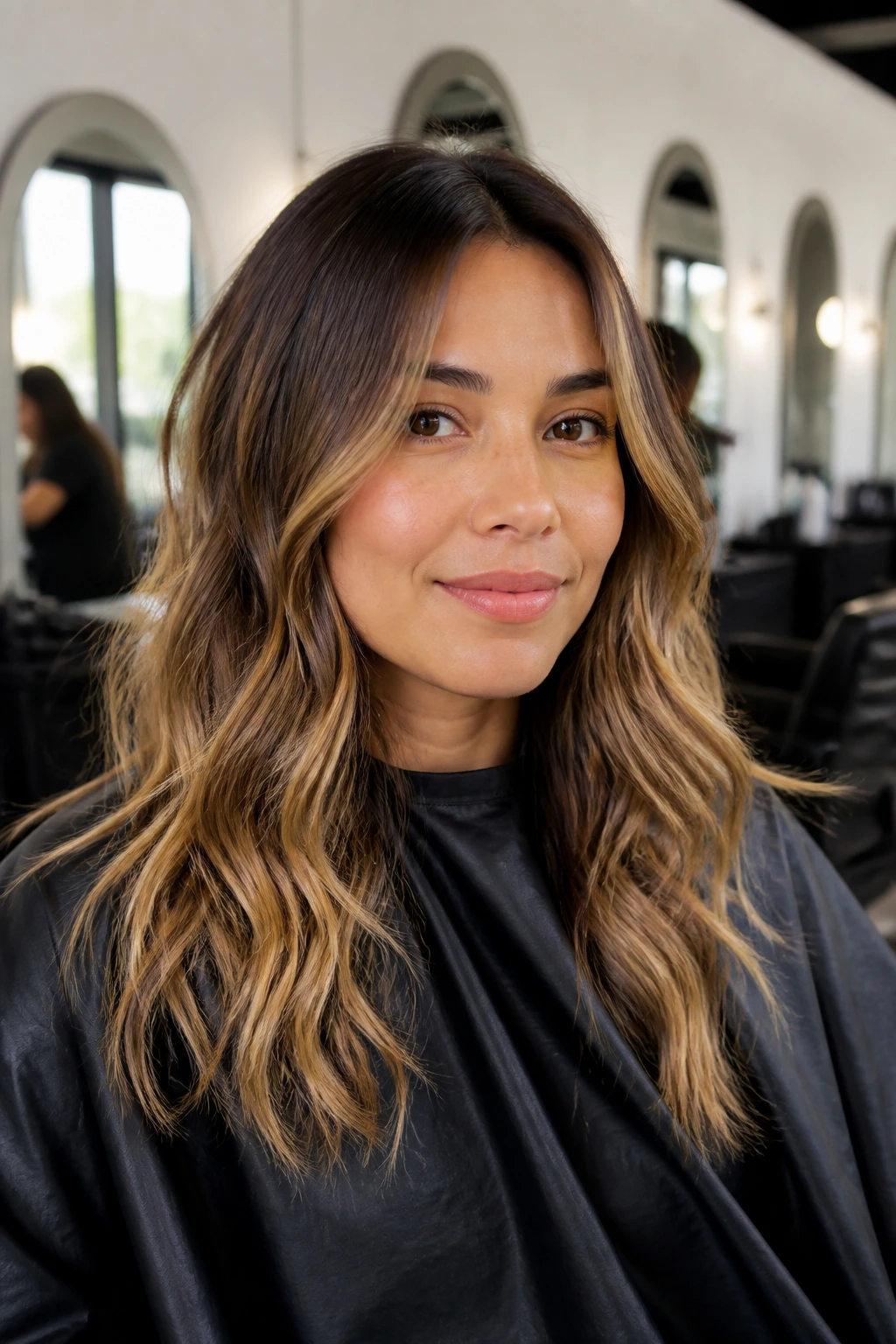
The best appointment conversations are boring in the right way. You want numbers, placement, and tone words — not just “caramel” and a hope for the best.
Try a script like this: “I want a medium brunette base with caramel balayage one to two levels lighter, a softer face frame, and a root shadow that keeps the grow-out blurred.” That tells the stylist where to place the lightness, how much contrast you can handle, and whether the overall finish should stay subtle or bright.
If you want more movement, say so. Ask for ribbons through the mids, not only bright ends. If you want the color to feel softer, ask for a beige or toasted gloss instead of a gold one. If your hair pulls warm fast, mention that before the appointment, because the toner choice matters more than people think.
Bring photos that show placement, not only color. One picture can show the money piece you like. Another can show the depth you want at the root. The more specific the visual reference, the less likely you are to walk out with something too light near the face and too flat everywhere else.
How to Shop for the Right Gloss, Shampoo, and Texture Spray
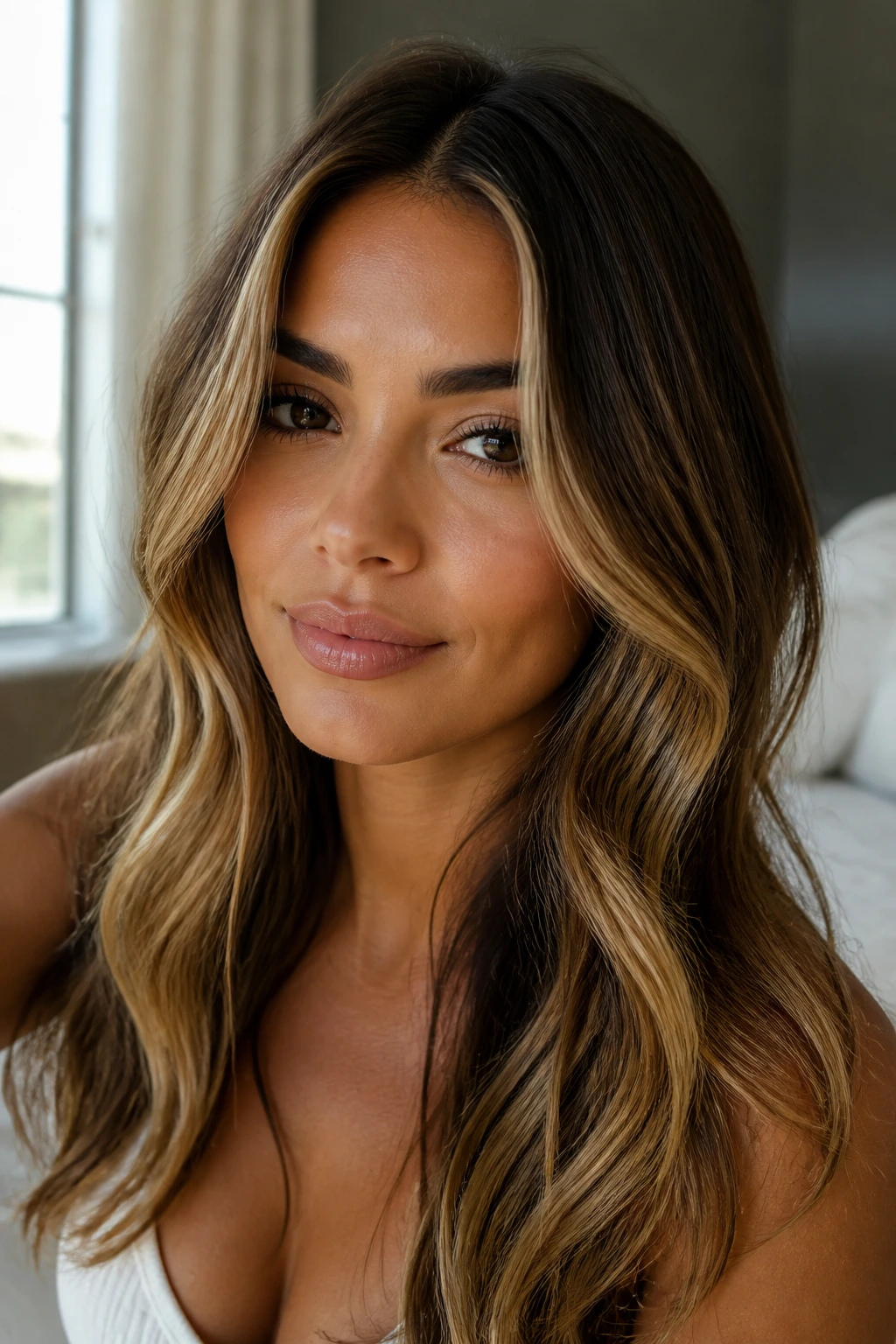
Hair color lives or dies by what you put on it afterward. Caramel tones are especially sensitive to dulling, because one wrong shampoo can turn warm brown into a flat beige haze. The shopping list does not need to be huge, but it does need to be chosen with some care.
Look for a sulfate-free color shampoo if your hair is freshly toned or highlighted. Sulfates aren’t evil, but they can strip the gloss off caramel faster than you’d like. A conditioner with fatty alcohols, glycerin, or ceramides gives the mids enough slip to keep the wave pattern from frizzing out. If your ends feel dry, a light leave-in with a small amount of silicone usually helps more than a heavy oil.
Texture spray is where people often go wrong. A gritty sea salt spray can make the hair look dry if you use too much. A flexible texture spray gives the beachy bend without roughing up the caramel. If your hair is fine, choose a lighter formula. If it is thick, you can go a little stronger, but not crunchy.
For warmth control, I’d only use a purple or blue product when the tone starts drifting brassy, and even then, sparingly. Warm caramel should stay warm. If you strip all the gold out of it, you lose the whole point.
Essential Tools and Products for Beachy Waves
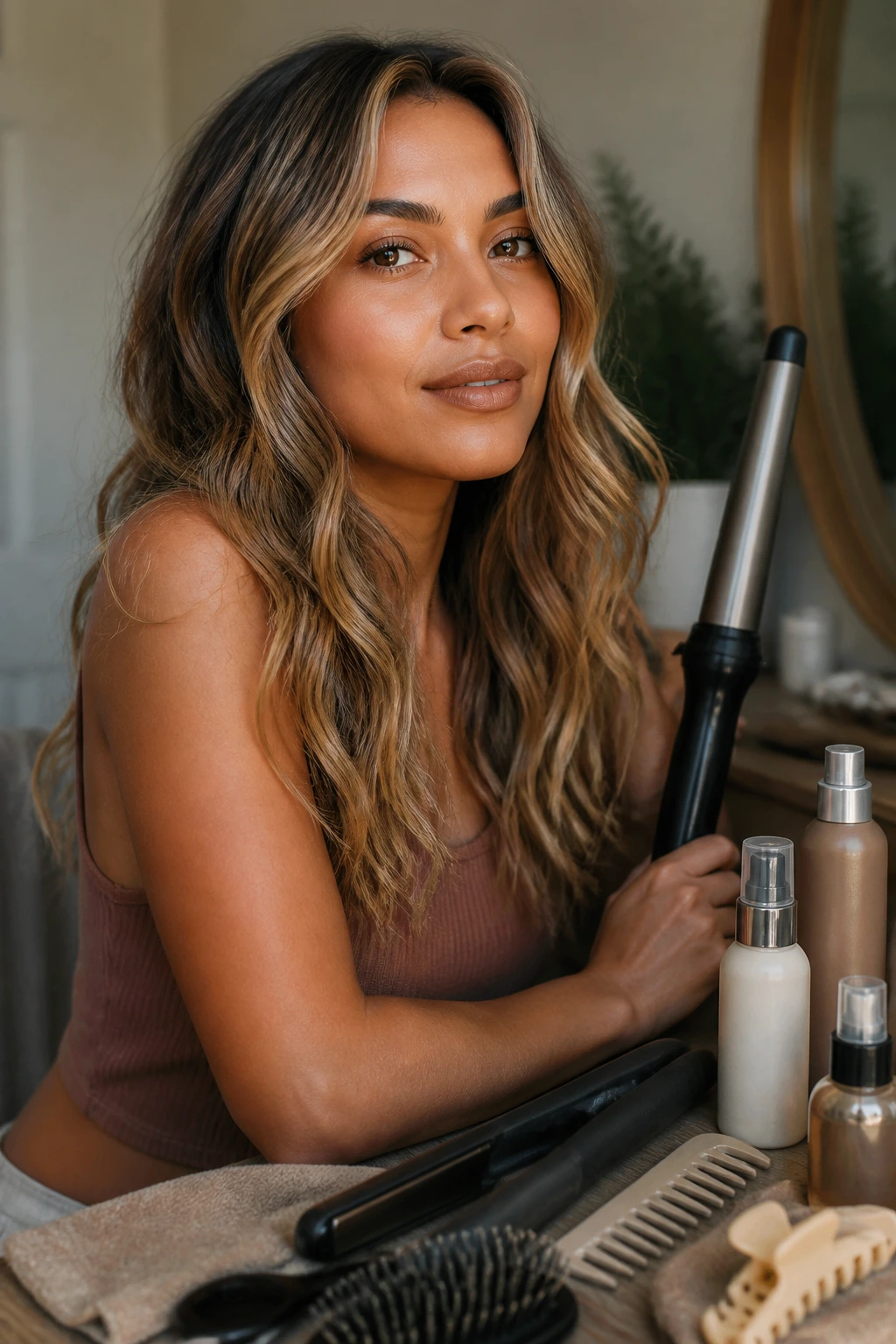
- 1-inch curling wand or iron: Best for loose bends that show off the caramel ribbons without making the hair too curled.
- Flat iron with rounded edges: Handy for creating softer S-waves on shorter lengths or blunt cuts.
- Heat protectant spray: Non-negotiable if you use hot tools more than once a week.
- Wide-tooth comb: Breaks up the waves gently once they cool, so the color looks piecey instead of stuck together.
- Light texture spray: Adds separation at the mids without turning the ends dry and fuzzy.
- Color-safe shampoo and conditioner: Helps the caramel stay rich instead of fading into a muddy brown.
- Microfiber towel or soft T-shirt: Cuts down on frizz while your hair dries.
- Shine serum or lightweight oil: Use a drop or two on the ends only; too much will flatten the wave pattern.
- Sectioning clips: Especially useful if you style your hair in layers or have thick hair that needs control.
How to Style the Waves So the Caramel Shows
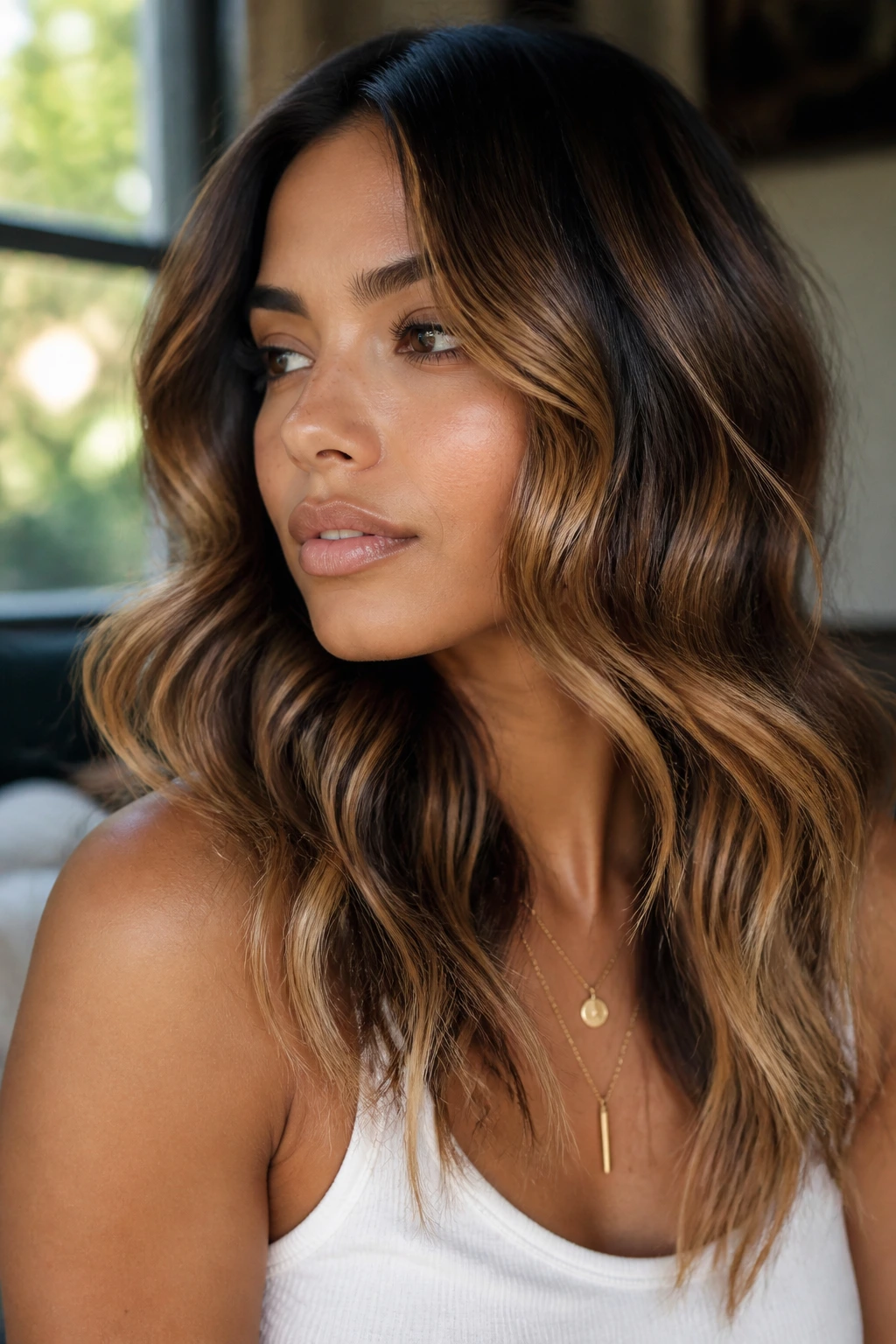
The simplest rule: the wave has to bend, not curl in a neat little spiral. Neat curls hide balayage. Loose bends show it. Wrap sections around the iron away from the face near the front, then alternate direction through the back so the whole style doesn’t lean one way.
Let the hair cool before you break it up. Five to ten minutes is enough. If you rake through the wave while it’s still hot, it falls apart and the caramel loses its shape. Once it’s cool, use your fingers or a wide-tooth comb to separate the sections. That keeps the ribbons visible.
A little product placement matters too. Mist texture spray through the mids, not the roots. Put shine serum only on the last few inches. If you put everything on the top, the hair looks weighed down and the highlights blur together. The wave should feel touchable, not stiff.
If you want the style to look even more lived-in, try clipping the front pieces back for a few minutes after curling. It helps the bend set with a soft lift around the face, which is exactly where caramel tends to make the biggest difference.
Extra Shine and Dimension Boosters
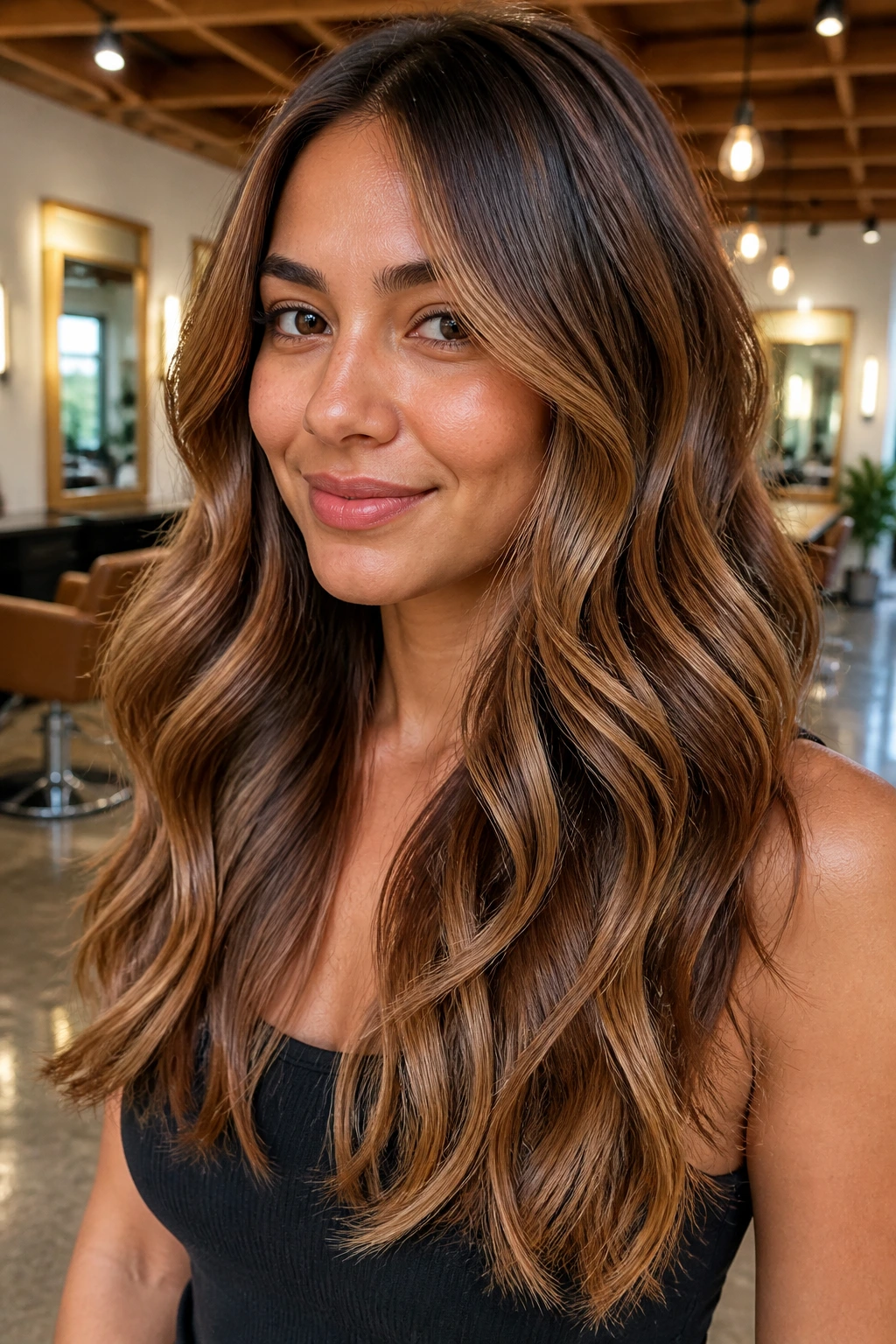
Color Glow: A clear or beige-leaning gloss every 6 to 8 weeks keeps caramel from going dull. If the hair starts to feel chalky, that is the move I’d make before another round of lightening.
Texture Boost: Use a light sea salt spray only on the midlengths if you want more separation. The ends should stay a little smoother, or the color can look fried instead of beachy.
Customization: Swap a heavy money piece for a softer veil if your face-framing highlights feel too obvious. It is the easiest way to reduce contrast without changing the whole color story.
Make-It-Yours: Curly hair usually needs wider painted sections so the caramel doesn’t vanish into the coil pattern. Fine hair usually needs less contrast and a slightly brighter face frame, or the dimension disappears.
Serving Suggestions: If you wear earrings, choose shapes that sit near the jawline or collarbone. They frame the same part of the face the brighter pieces do, and the whole look feels more finished. Small thing. Makes a difference.
Maintenance, Refreshes, and Touch-Ups
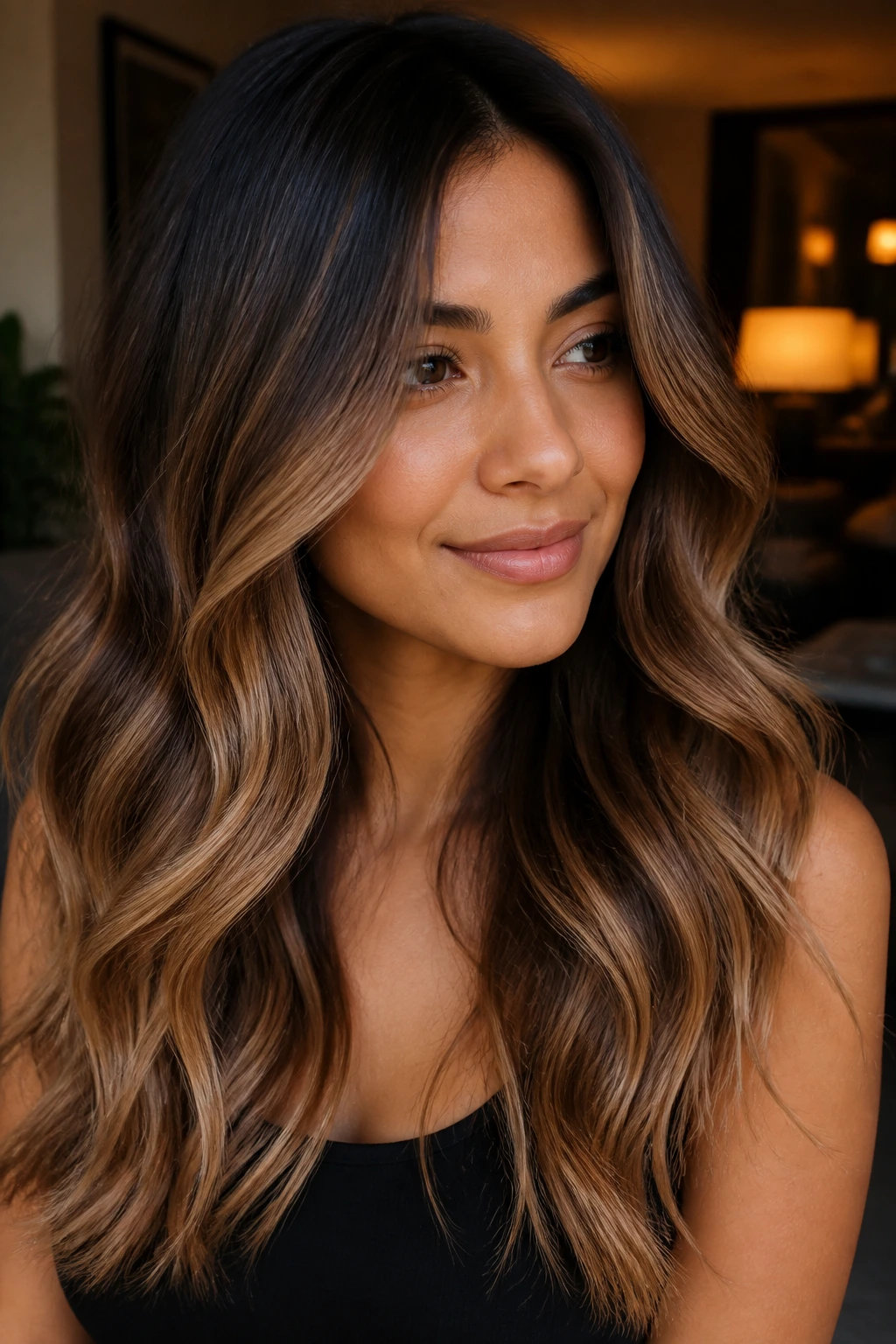
Caramel balayage is friendly, but it is not maintenance-free. That would be a fantasy. The color usually looks freshest for the first few washes, then settles into something softer. If you like that lived-in stage, great. If you want the tone to stay shiny and defined, you need a few habits.
Wash with cool or lukewarm water, not hot. Hot water roughs up the cuticle and makes the caramel look washed out faster. Shampoo two or three times a week at most if your scalp allows it. On the in-between days, dry shampoo at the roots can buy you time without stripping the mids.
A weekly mask keeps the ends from looking dusty, especially if the hair was lightened to create the caramel. If your hair feels stiff after protein treatments, back off. Not every caramel head needs more protein; some need moisture and a smaller hand with the heat.
For salon maintenance, a gloss every 6 to 8 weeks helps keep the tone clean. A face-frame refresh every 8 to 10 weeks makes sense if you wear a brighter front section. If your balayage is soft and rooty, you can often wait longer before touching the lightener itself. The root shadow is doing work for you. Let it.
Common Mistakes to Avoid
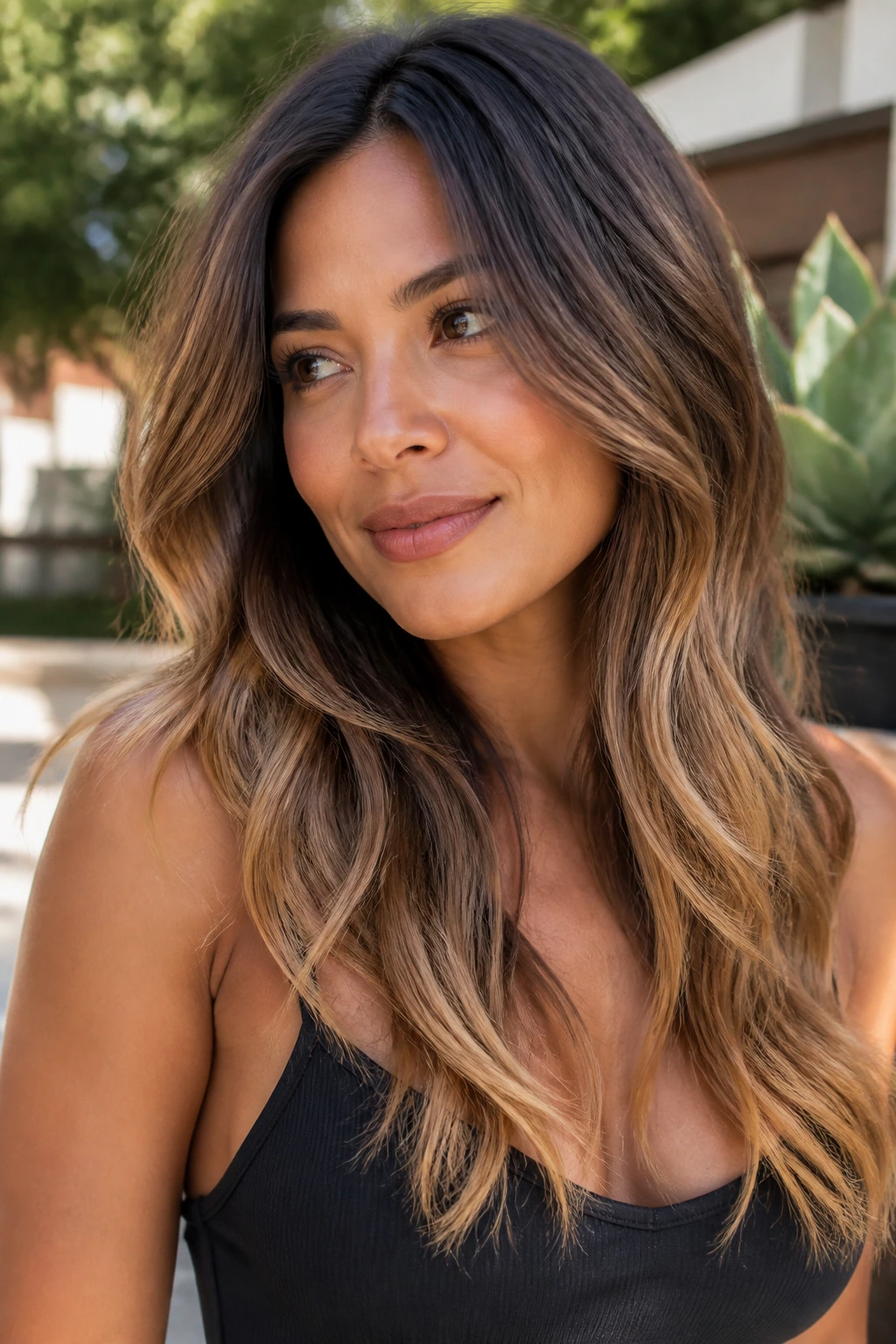
The biggest mistake is going too light too close to the face. Medium skin can handle brightness, but if the front pieces jump several levels lighter than the base, the face starts to look disconnected from the hair. The fix is simple: keep the face frame a step softer, then brighten the waves through the mids instead.
Another problem is chasing gold until the hair turns brassy. Caramel and brass are not the same thing. Brass has a loud orange-yellow cast and usually shows up after a few washes. If that happens, use a proper toner or a gentle blue or purple product sparingly, not every shampoo.
People also over-style this look into a ringlet. That kills the whole beachy effect. Loose, brushed-out waves let the color move; tight curls make the placement obvious in the wrong way. If the style looks too formal, break it up with your fingers and add a little texture spray at the mids.
Last one: using too much heavy oil. It makes the highlights look slick and dark, and the dimension disappears. A drop on the ends is enough. More than that, and you start smearing the very detail you paid for.
Variations and Adaptations to Try
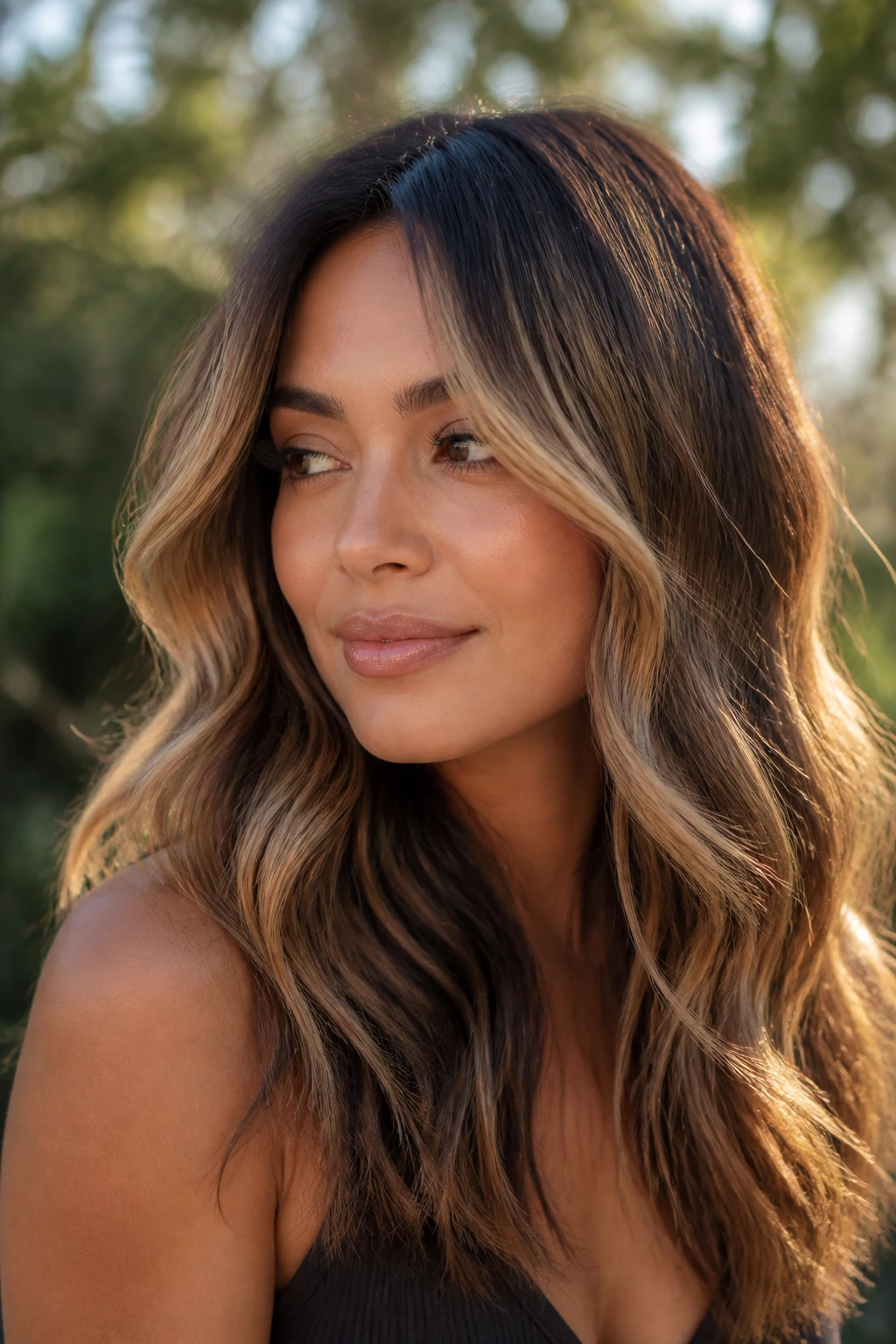
Honey-First Glow: Push the caramel a little warmer and brighter around the face if your medium skin has a golden or peach base. It reads sunny without needing a big contrast change.
Beige Latte Blend: Keep the caramel soft, creamy, and slightly muted for neutral or olive undertones. This version is the easiest to wear if you hate anything that looks orange in daylight.
Rooted Brunette Softness: Leave more depth at the top and concentrate the caramel through the lower half of the hair. It is a good fit for people who want less maintenance and more richness.
Curly Caramel Ribbons: On curly or wavy natural texture, ask for wider painted sections so the color doesn’t disappear into the pattern. The caramel should sit where the curl opens, not on every single strand.
Bob-Friendly Sweep: If your hair is short, keep the brightest pieces at the surface and around the front. That way the color still shows when the wave flips, and the cut keeps its clean shape.
Soft Copper Kiss: If your medium skin leans warm and you like a little extra glow, let the caramel tip into a gentle copper note. Not orange. Just enough warmth to feel alive.
Questions People Ask Before Booking
Will caramel balayage wash out medium skin?
Not if the tone is chosen well. Medium skin usually handles caramel better than very pale blonde because the warmth sits closer to the natural depth of the face. The problem is usually too much gold or too much contrast, not caramel itself.
How light should the caramel be?
Most medium skin tones look best when the caramel sits one to two levels lighter than the base, with brighter pieces reserved for the face frame or ends. That keeps the hair dimensional without pushing it into blonde territory.
Can this work on dark brown hair?
Yes, but the lift needs to be controlled. Dark brunettes usually look better with a rich brunette-to-caramel melt than with a very pale highlight, because the deeper base gives the color somewhere to land.
What if my skin leans olive?
Choose beige or muted caramel over very golden tones. Olive skin can make gold read more yellow than intended, especially in daylight, so a softer gloss usually looks cleaner.
Do beachy waves matter that much?
They matter a lot. The waves break the color into moving sections, which is what makes balayage look soft and expensive instead of stripey. Straight hair can still work, but the dimension is harder to see.
How often do I need touch-ups?
A gloss every 6 to 8 weeks is a good rhythm for keeping the caramel fresh. If you have a bright face frame, plan a partial refresh around 8 to 10 weeks. Rooty, low-contrast looks can often go longer.
Can I do this at home?
I wouldn’t recommend a full balayage at home unless you already know how your hair lifts. A gloss or tone refresh is one thing; painting strategic ribbons around the face and mids is another. A bad placement job is hard to hide once the hair moves.
Will purple shampoo ruin the warmth?
If you use it too often, yes. Warm caramel should stay warm. Reach for purple or blue shampoo only when the tone starts turning brassy, and use it lightly so you don’t flatten the color.
A Shade That Stays in Motion
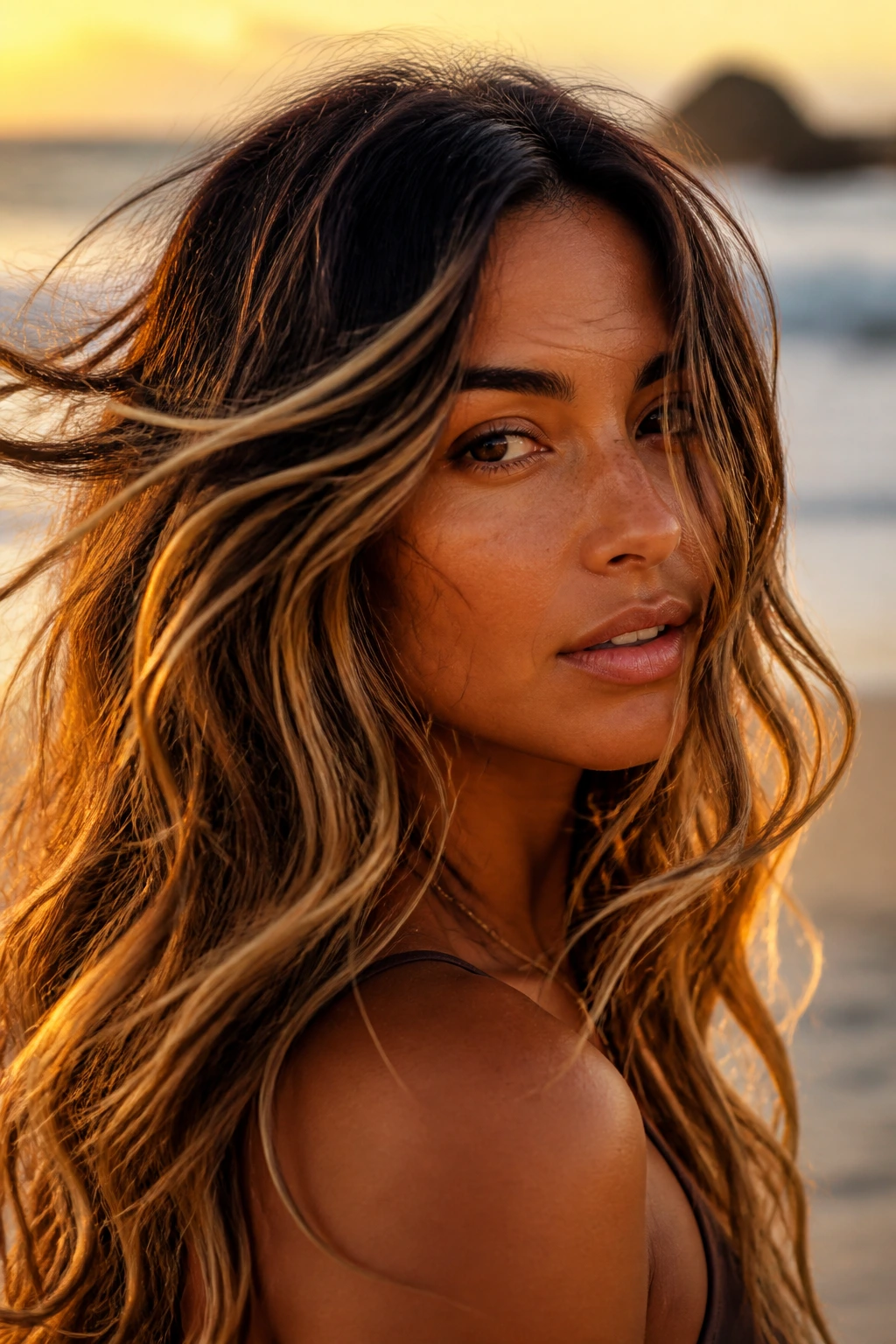
Caramel balayage on medium skin works because it understands balance. The color stays warm, but not loud. The placement feels soft, but not vague. And the beachy waves do the final bit of stitching, pulling the ribbons together so the whole look moves when you do.
If you want the safest bet, start with a softer root shadow and one bright frame around the face. If you want more drama, push the contrast through the mids and keep the ends lighter. Either way, the best version is the one that looks like it belongs to your hair, not like a separate trend dropped onto it.
That’s the version worth asking for.