



Curly hair does not age out. It just gets less patient with bad cuts.
That’s the part too many salon conversations miss. Once hair starts changing texture, losing density in one spot, or turning a little drier at the ends, the old one-length shape that used to behave can start puffing out in all the wrong places. Mature curls usually need a cleaner perimeter, a little lift where the crown has gone flat, and layers placed with purpose rather than enthusiasm.
Gray and silver curls add another wrinkle. They often feel a bit coarser, sometimes drier, and they can frizz faster around the halo. That doesn’t mean they need to be hidden. It means the haircut has to work with the curl pattern, not against it, and that’s where the right shape changes everything.
Why These Styles Are Worth Your Time
- They respect shrinkage: Curly hair can spring up 1 to 4 inches after drying, so these cuts are chosen with that bounce in mind.
- They keep the jawline visible: A good curly cut opens the face without chopping off the movement that makes curls interesting.
- They work with gray texture: Silver curls often look best when the shape is intentional enough to keep them from spreading outward.
- They make second-day hair less annoying: The right layers and length make refresh days less of a wrestling match.
- They give you options: Short, mid-length, and long looks all show up here, so you’re not stuck in the tired “shorter is the only answer” box.
- They play well with glasses and earrings: That matters more than people admit. A curl cut can either frame your face or crowd it.
1. Jaw-Grazing Curly Bob
A bob that stops right at the jaw has a clean, face-lifting effect that long hair can’t fake. The curl sits high enough to show the neck and collarbone, but there’s still enough length for movement, which keeps the cut from turning boxy.
Ask for soft internal layers and a slightly longer front if your curls shrink hard. That detail matters. Without it, the bob can kick out at the sides and build a little triangle shape that no one wants.
Best for: women who want shorter hair without giving up curl definition.
2. Silver Curly Pixie With a Long Crown
Short hair can still have personality. A pixie with a longer crown lets the curl pattern stay visible on top while the sides and nape stay neat, which is a smart move if your hair is getting finer or if you’re tired of fighting volume where you don’t want it.
The trick is balance. Keep the crown long enough for a real curl or bend—usually around 2 to 4 inches, depending on texture—then let the stylist taper the edges so the cut hugs the head instead of puffing away from it. Silver curls look especially sharp here because the short shape shows off the color change instead of hiding it.
3. Shoulder-Length Curly Shag With Curtain Bangs
This is the cut that makes a lot of curly heads breathe easier. The shag removes weight from the bottom, which helps the curls spring up instead of hanging in one tired column, and curtain bangs soften the forehead without demanding flat-iron discipline.
Why it works
The layers give thicker curls room to stack without choking each other. That means better movement around the cheekbones and less drag at the ends.
Curtain bangs are the detail people get wrong. They should start long enough to sweep, not sit like a blunt shelf, and they need to be cut with shrinkage in mind or they’ll jump too high.
4. Rounded Curly Afro With Soft Shape
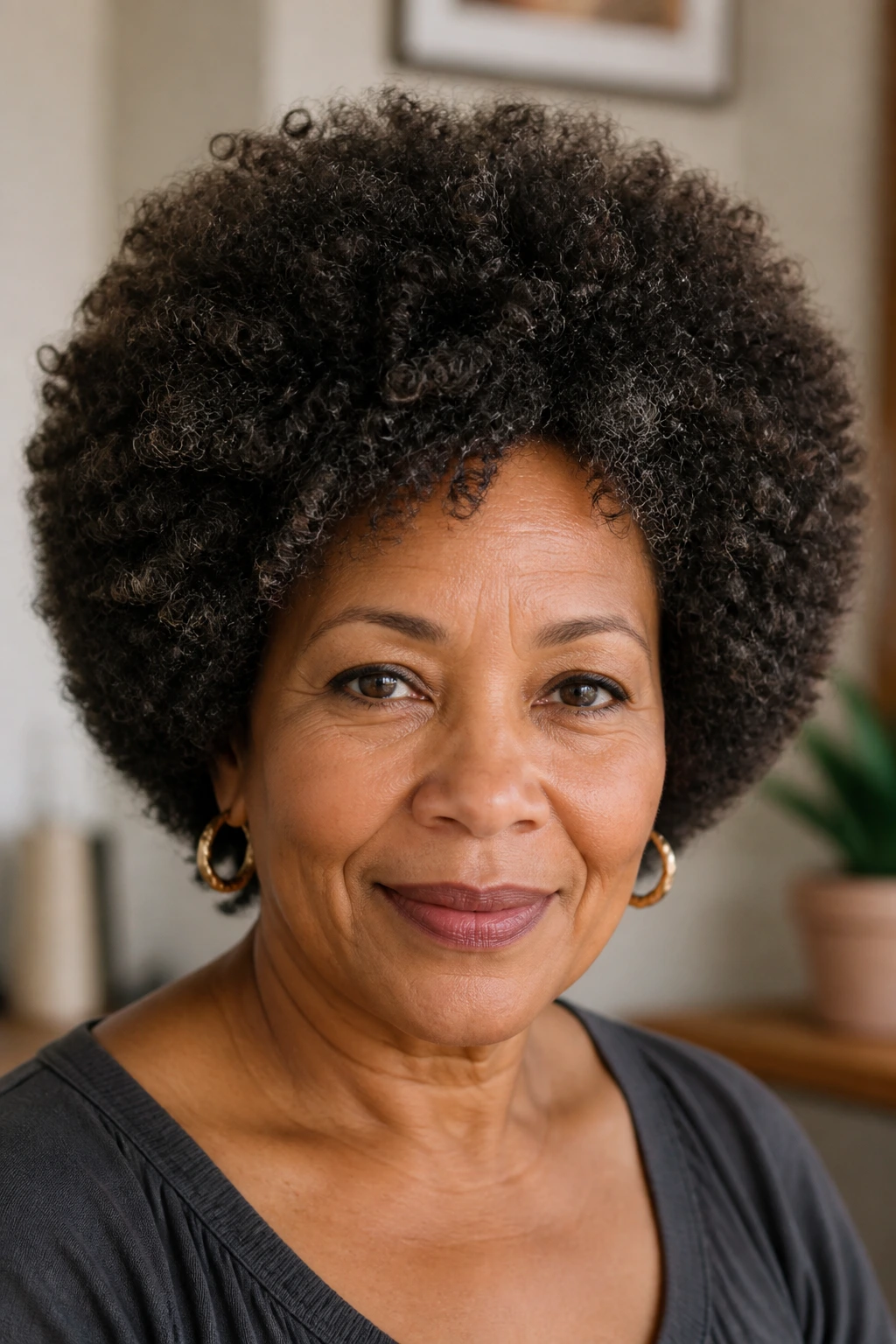
If your curls already have height, do not sand them down into a flat silhouette. A rounded afro keeps the natural sphere of the hair while trimming the sides and crown just enough to prevent that overgrown edge that can make the whole shape feel heavy.
This cut is especially good on tightly coiled hair because it honors the texture instead of forcing a fake outline onto it. Moisture matters here. So does a shaped pick at the roots, used lightly, not aggressively.
A good rounded afro looks clean at the perimeter and alive at the center. That’s the difference between a shape and a puffball.
5. French Bob for Loose Curls
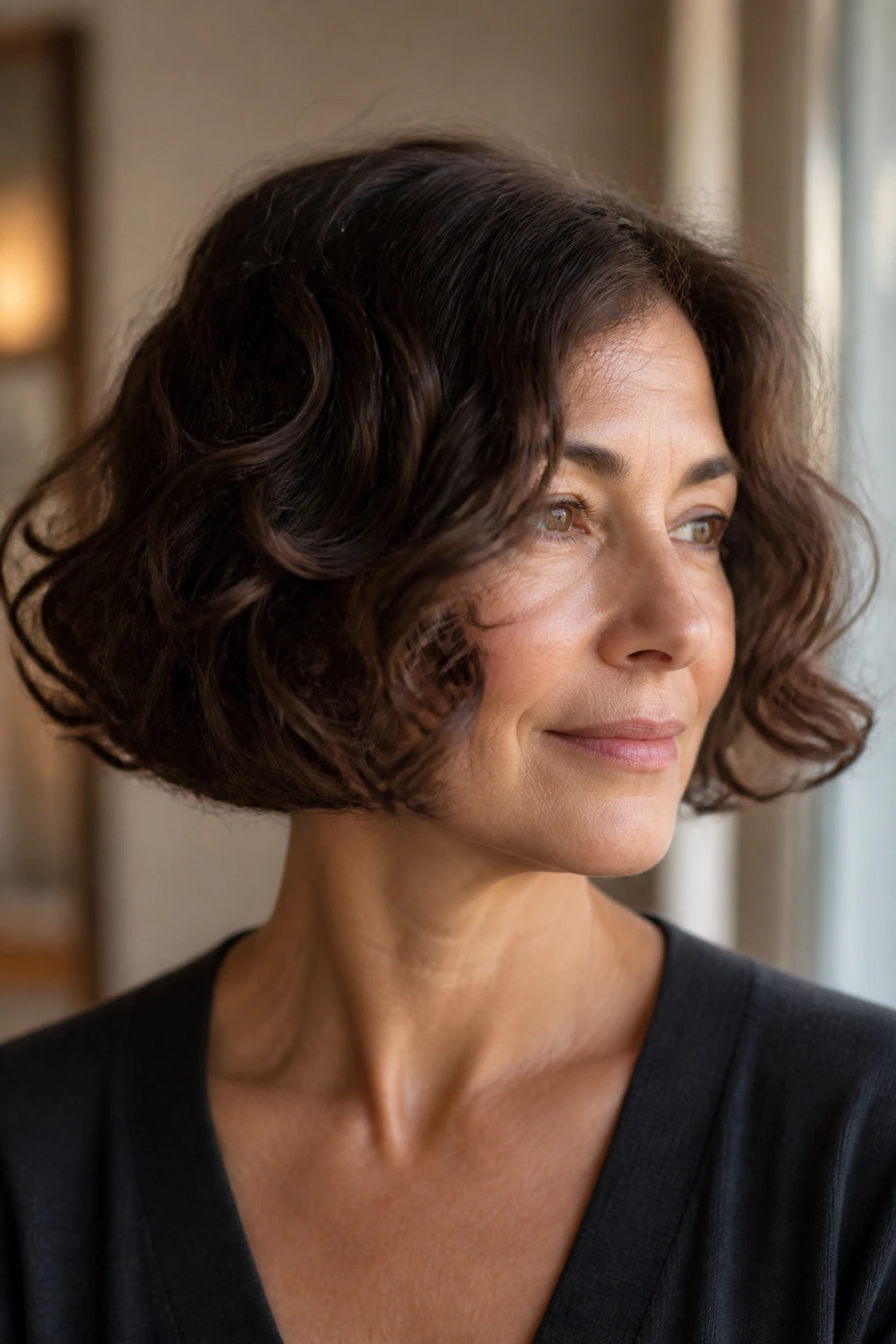
A French bob sits shorter than a classic bob and usually lands around the chin or just above it. On loose curls and waves, that length has a crisp, slightly chic feel that doesn’t need a lot of extra styling to look finished.
Unlike a blunt straight bob, this version relies on texture. The curl should bend inward at the ends, not stick out like a shelf, which is why a little face framing helps so much. If your curls are softer, ask for a deep side or off-center part. It breaks up the line and keeps the haircut from feeling too severe.
6. Side-Parted Curly Lob
A lob gives you breathing room. It sits between chin and shoulder length, which means enough hair to pull back, tuck, or air-dry, but not so much that the weight pulls your curls straight.
The side part is the small move that changes the whole look. It gives the crown a lift, softens the forehead, and makes the curl pattern fall in a more natural sweep. I like this one for women whose curls flatten on top but still have good shape at the ends. It hides a bad root day better than a center part ever will.
7. Tapered Curly Crop With Short Sides
This cut is neat without looking stiff. The sides and nape stay short, while the top keeps enough length for curl movement, which creates a sharper outline than a soft round crop.
- Use it if: you want less bulk around the ears and neck.
- Ask for: tapering, not razor-thin cutting, so the edges stay soft.
- Style it with: a little mousse at the crown and a diffuser on low heat.
The result is clean, low-maintenance, and a little modern without trying too hard. Good short curls should look deliberate, not like they got caught in a trim machine.
8. Spiral Fringe Cut
Can curly bangs work on older women? Absolutely, if the fringe is cut to curl instead of being bullied into straightness. A spiral fringe sits just long enough to bend around the brows and soften the face without turning into a helmet.
The detail that matters
The fringe should be slightly longer than you think you need. Curls shrink, and bangs that feel safe when wet can spring up a full inch after drying.
Leave a few face-framing pieces longer than the fringe itself. That gives the cut room to grow out gracefully, which is the part nobody likes talking about until they’re two weeks into a bad bang decision.
9. Stacked Curly Bob
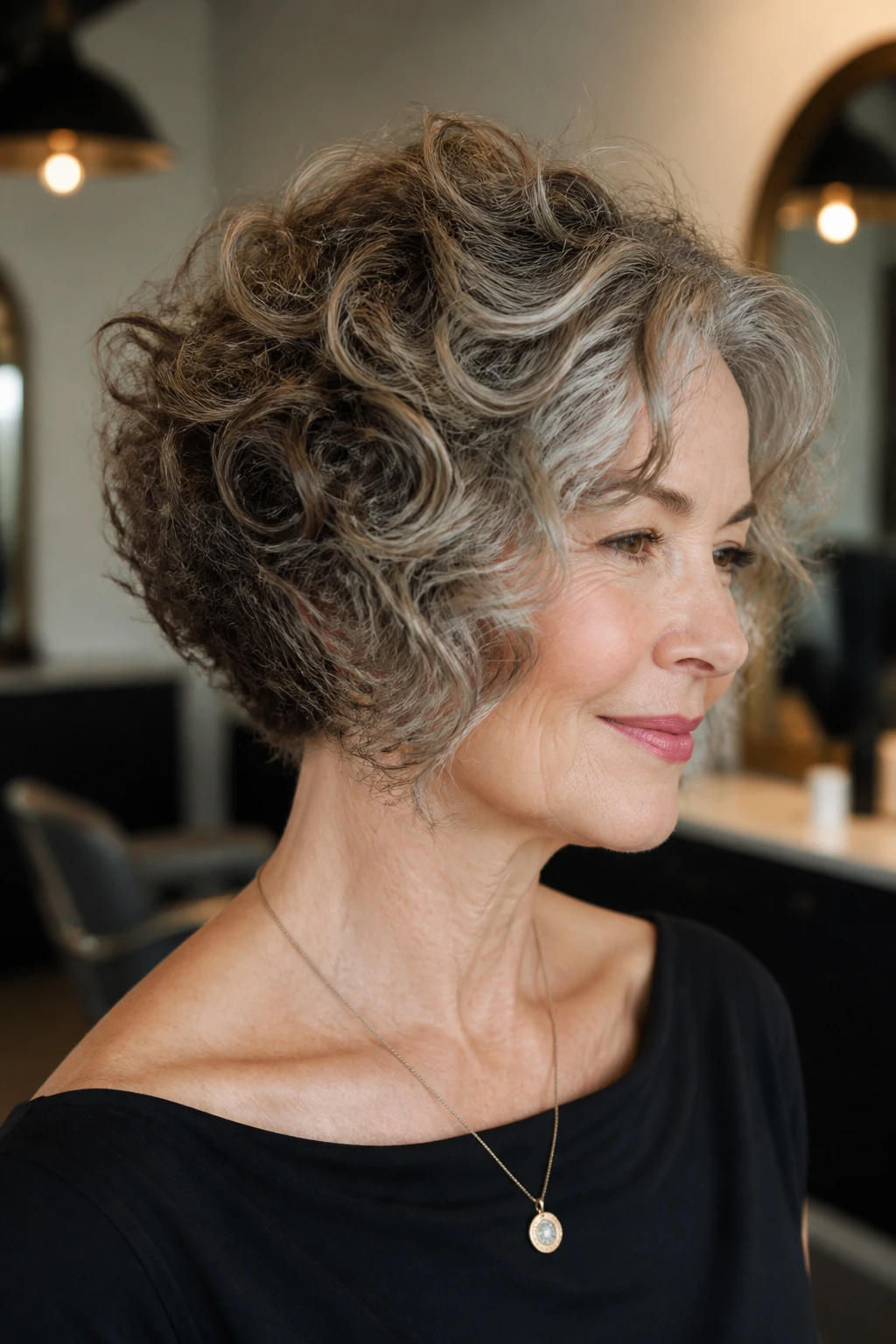
A stacked bob builds lift in the back by placing the layers shorter near the nape and gradually longer toward the front. On curly hair, that shape can be a small miracle for fine or medium textures that go flat at the crown.
What I like about this cut is that it solves a real problem: curls that look heavy in the back and thin at the top. The stack creates a little internal scaffolding. The front stays soft, the crown gets support, and the shape sits closer to the head instead of drifting outward.
This is a salon cut that looks best when the stylist understands curl shrinkage. If they don’t, you can end up with a back that feels too short. Be specific.
10. Long Layers That Keep the Ends Light
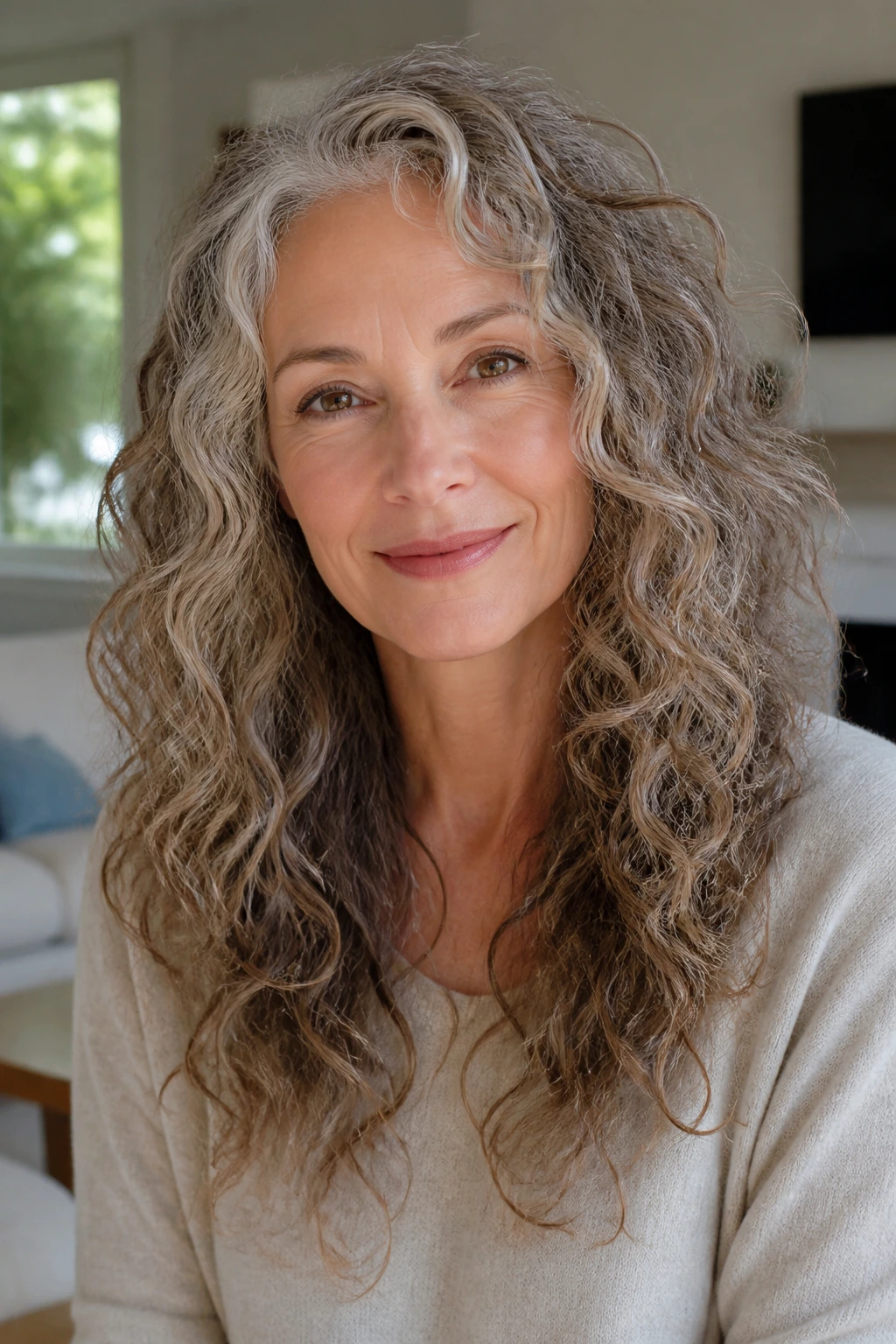
If you love length, keep it. Just don’t keep it all one weight. Long layers remove bulk from the mid-lengths so the ends don’t become a shelf, which is especially useful for thick curly hair that swells when it dries.
The best long layered curl cut still leaves enough perimeter to feel full. It just stops the bottom from dragging the whole head down. That matters more as hair gets drier or a little more fragile with age, because blunt ends can look thin and tired fast.
This is the cut for someone who likes her hair to move. Not swing. Move.
11. Curly Wolf Cut With Soft Edges
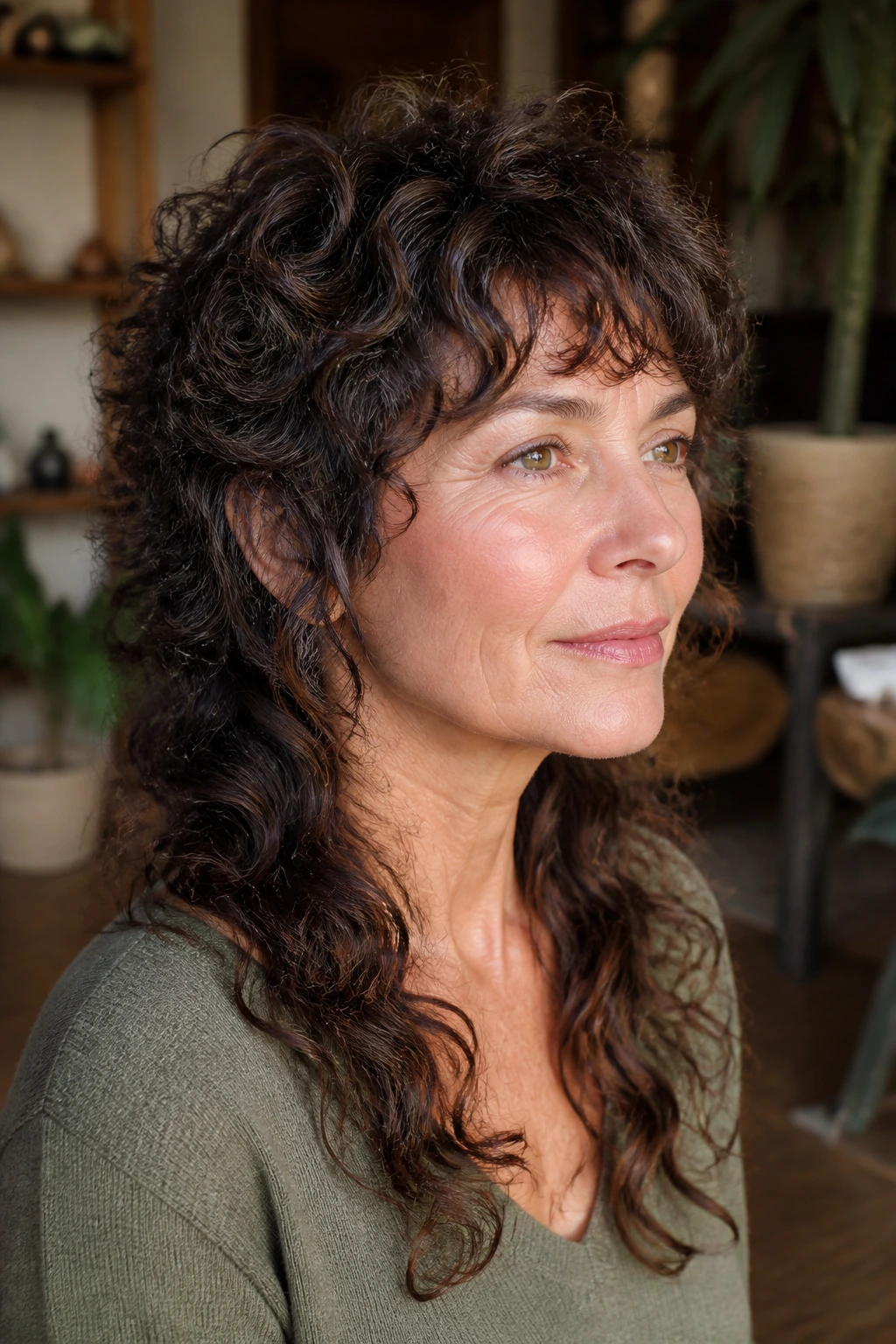
The wolf cut has a little edge, but it doesn’t have to look punk or messy. On curly hair, the right version keeps the crown a touch shorter and leaves length through the back, which gives the silhouette a lived-in shape that still feels polished enough for everyday wear.
What makes it different
Unlike a standard shag, the wolf cut carries more attitude at the top and more looseness below. That can be useful if your curls collapse near the face but stay springy lower down.
It suits women who want texture first and neatness second. If you ask for soft edges rather than aggressive razoring, you get the shape without the frayed finish.
12. Asymmetrical Curly Bob
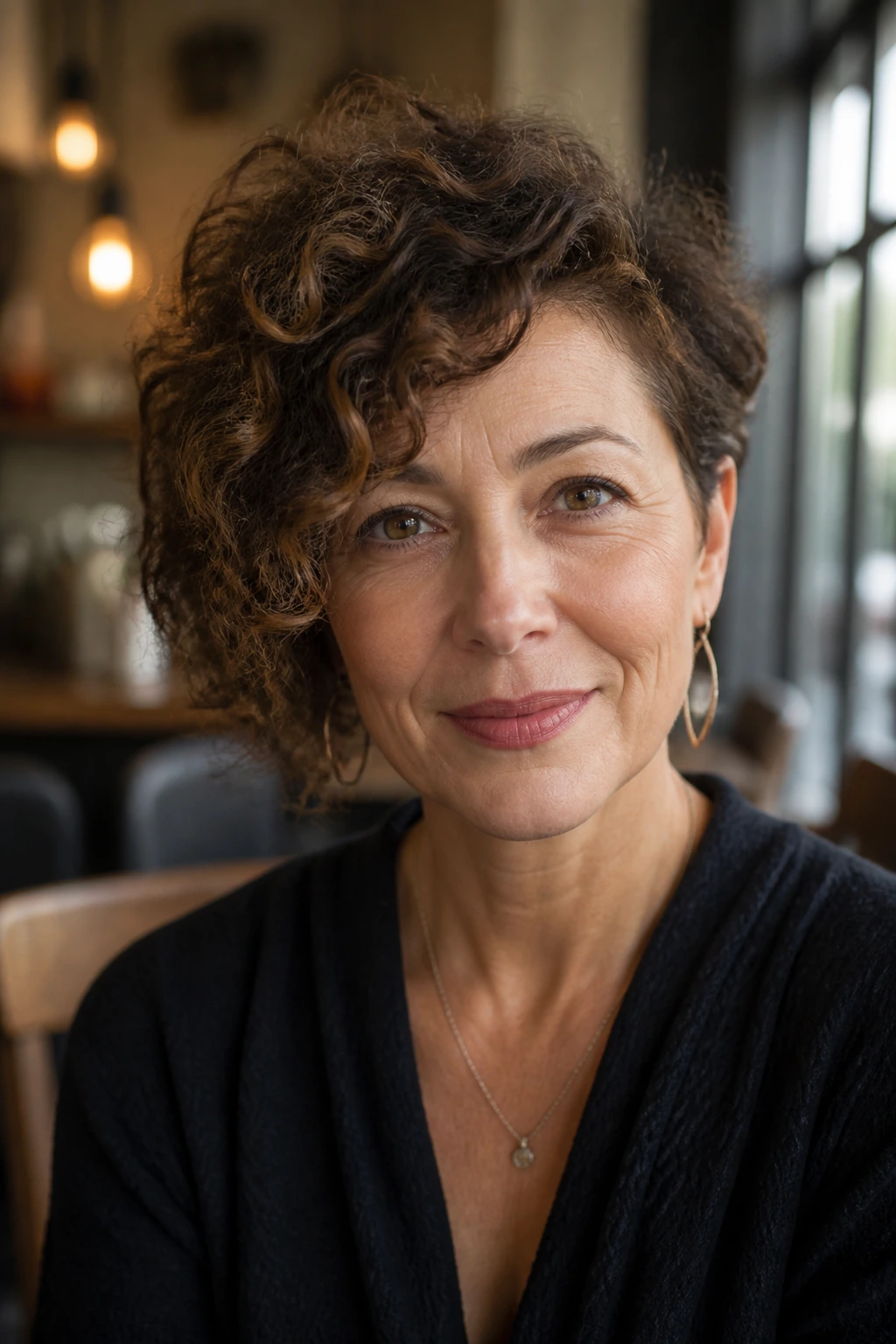
A little imbalance can make curly hair look more alive. With an asymmetrical bob, one side sits slightly longer than the other, which draws the eye diagonally and stops the shape from feeling too round or too square.
This cut works well for fine curls because it creates the illusion of movement even on days when the roots aren’t cooperating. It’s also useful if one side of your hair grows denser than the other, which is more common than people think.
Keep the difference subtle. Half an inch to an inch is enough. You want the cut to look intentional, not like someone got distracted halfway through.
13. Half-Up Twist for Second-Day Curls
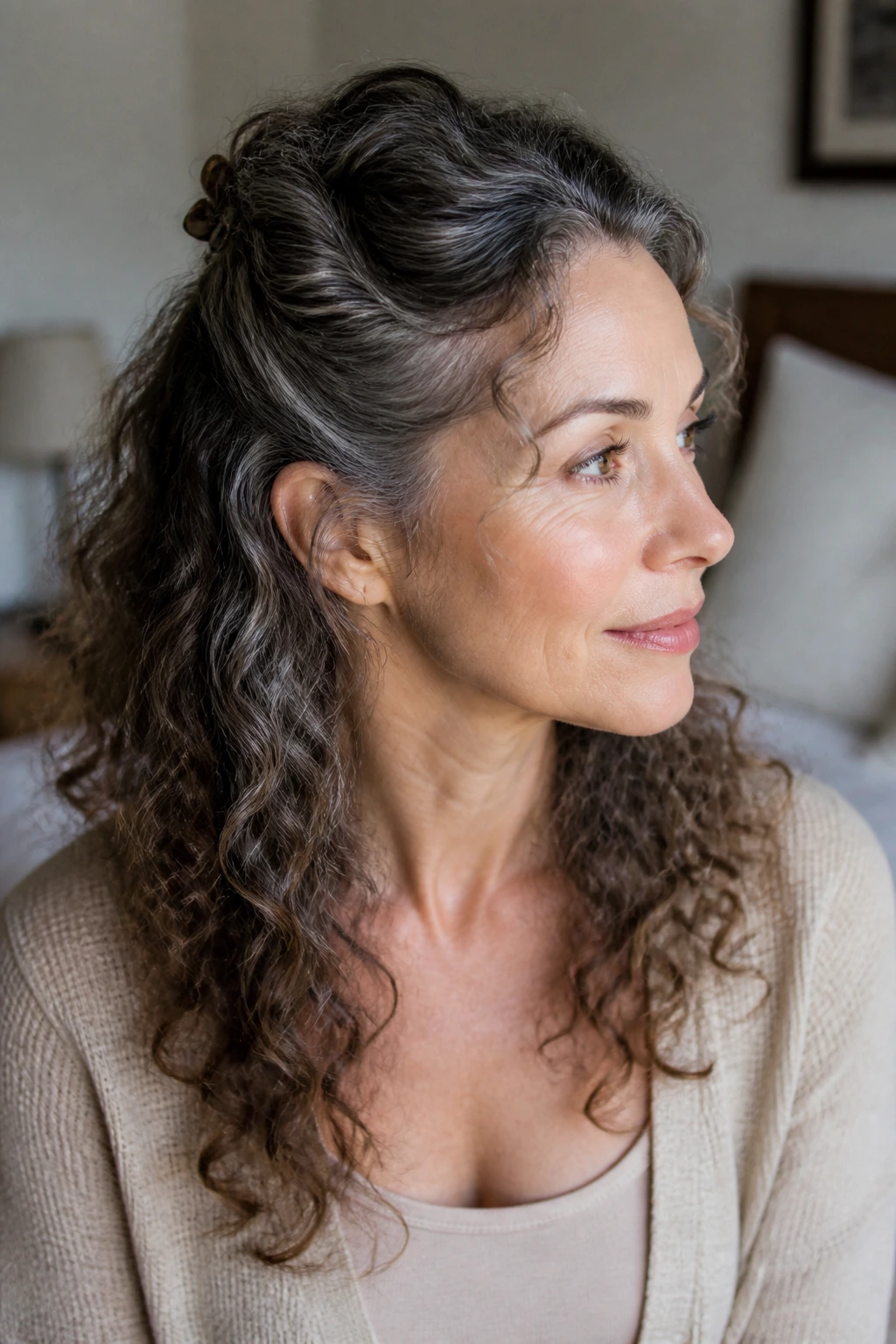
Second-day curls often lose their polish at the top first. The half-up twist solves that without hiding the curl pattern you actually like.
Pull the front sections back loosely, twist them once or twice, and pin them at the back of the crown. Leave the rest of the curls down so the style still reads as curly, not scraped-back. A matte clip works better than a shiny one here, unless you want the accessory to be the whole statement.
This is one of my favorite low-effort fixes for a day when the roots need help and the ends still have life.
14. Pineapple Updo With a Polished Finish
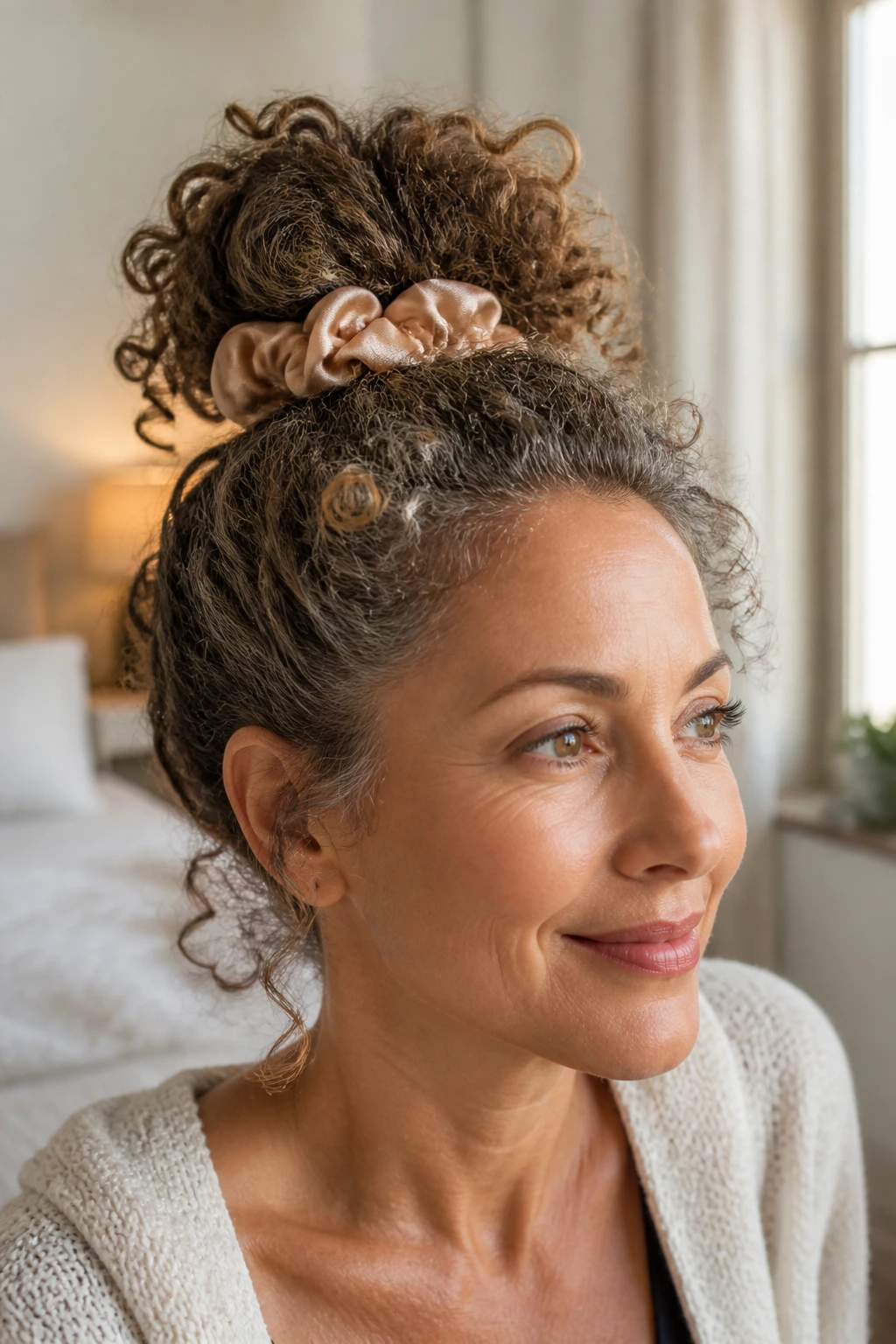
What do you do when your curls are good, but your face-level hair has started to frizz? Put them up high, but don’t flatten them into a tight ponytail. A pineapple updo gathers curls near the crown and lets the ends spill upward, which protects shape and adds a little height.
Use a satin scrunchie or a soft coil band. Hard elastics can leave dents that take forever to disappear, especially on drier gray curls.
This style is friendly to both tight coils and looser spirals. It’s also the easiest way to stretch wash day without looking like you gave up.
15. Low Curly Chignon With Loose Tendrils
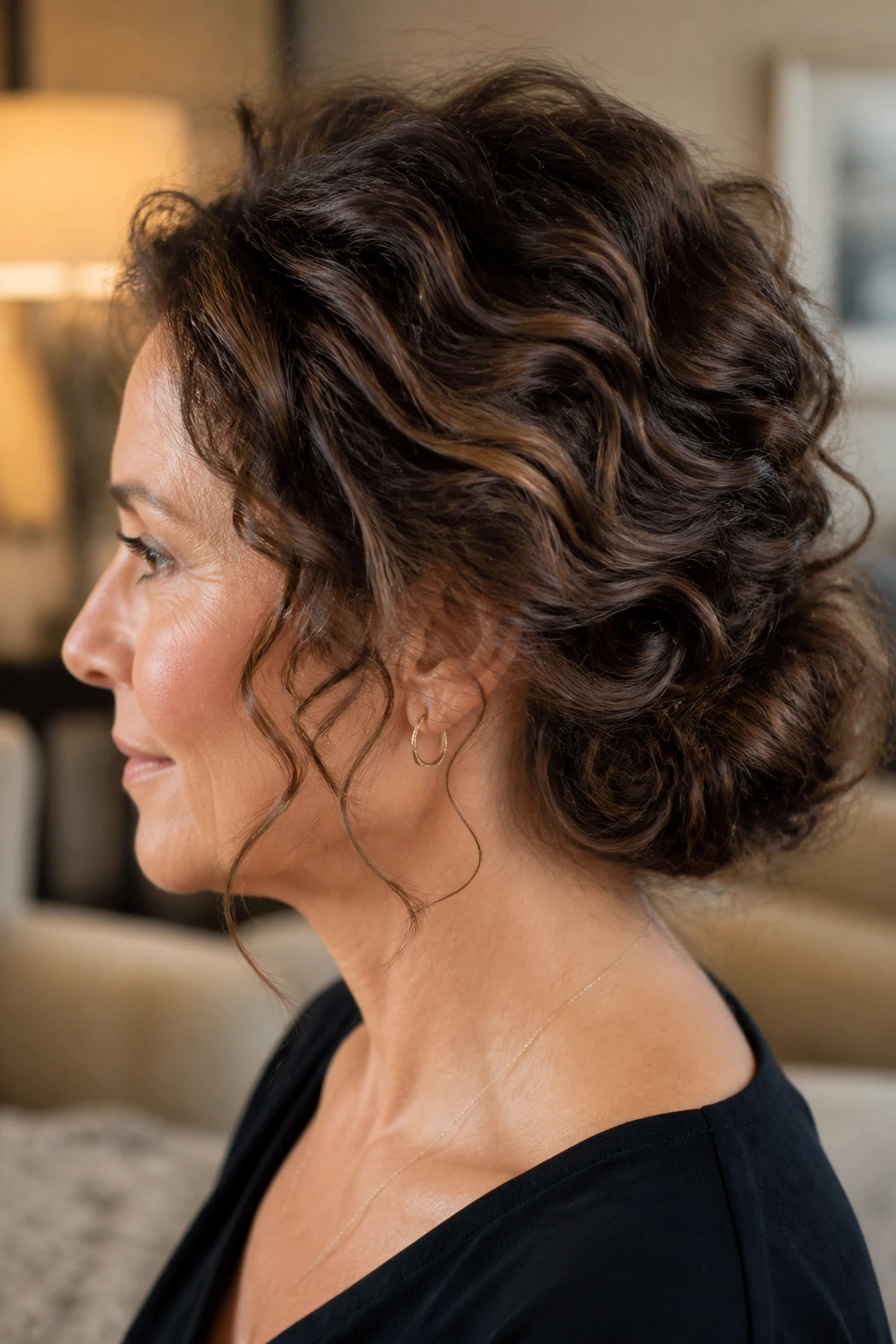
A chignon can look too formal if it’s scraped tight. On curly hair, the better version sits low at the nape, with soft tendrils left around the ears and temples so the style still feels like hair, not architecture.
The best curly chignon keeps a little texture at the surface. Smooth the crown only enough to gather it. Leave a few curls loose at the face. That softness matters because it stops the updo from aging the face instead of lifting it.
This is the style I’d reach for when you want elegant, not stiff.
16. Curly Ponytail With Crown Volume
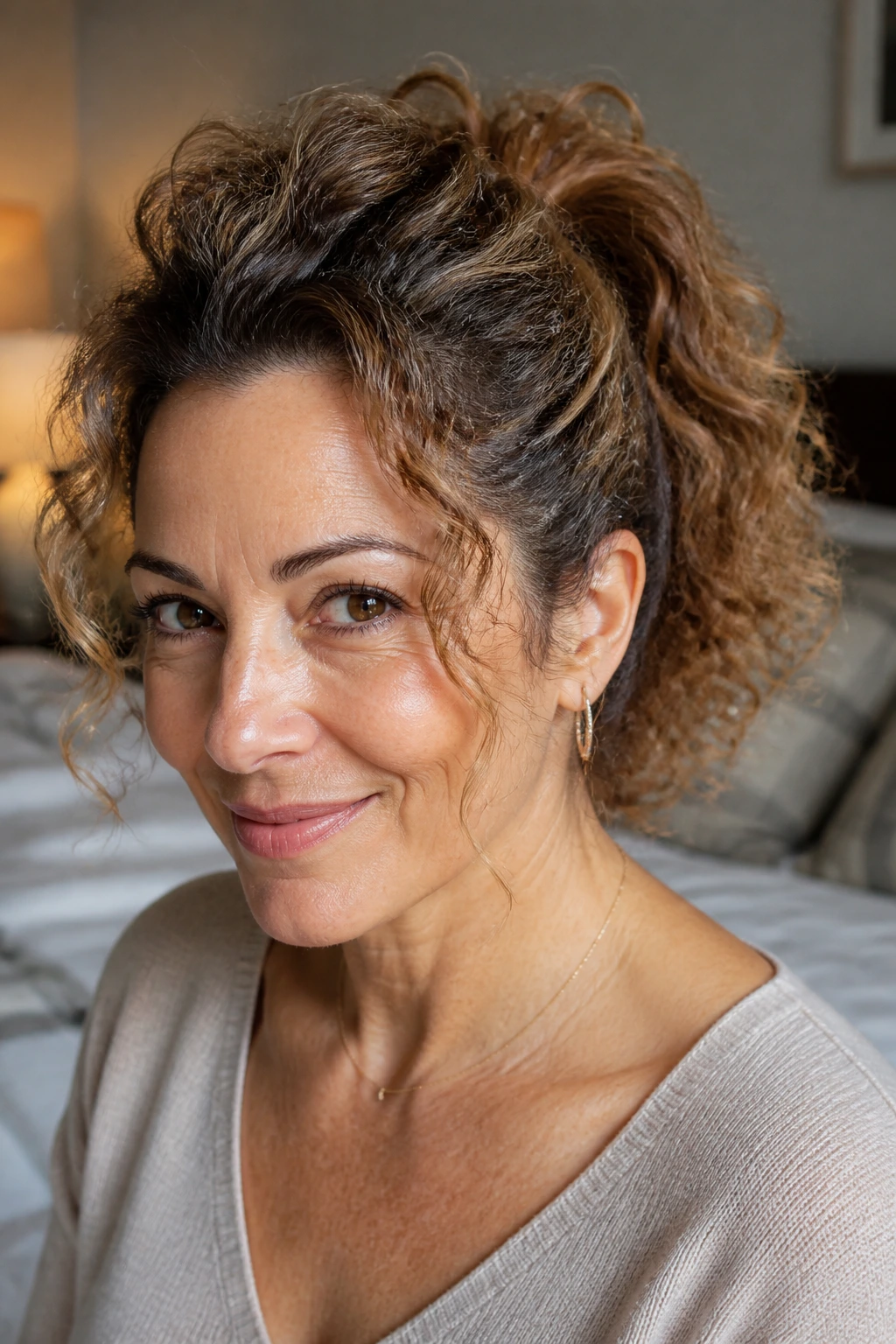
A curly ponytail should never be flat at the roots. Never. The whole point is to keep the crown lifted while the ponytail itself shows off the curl pattern.
Tease the roots lightly or clip them at the base while they dry. Then gather the hair loosely and wrap a small curl around the elastic if you want a cleaner finish. Mid-height usually looks better than a very low ponytail, especially on mature faces, because it keeps the shape from dragging downward.
It’s a fast style, but it doesn’t have to look like a fast style.
17. Deep Side-Sweep Lob
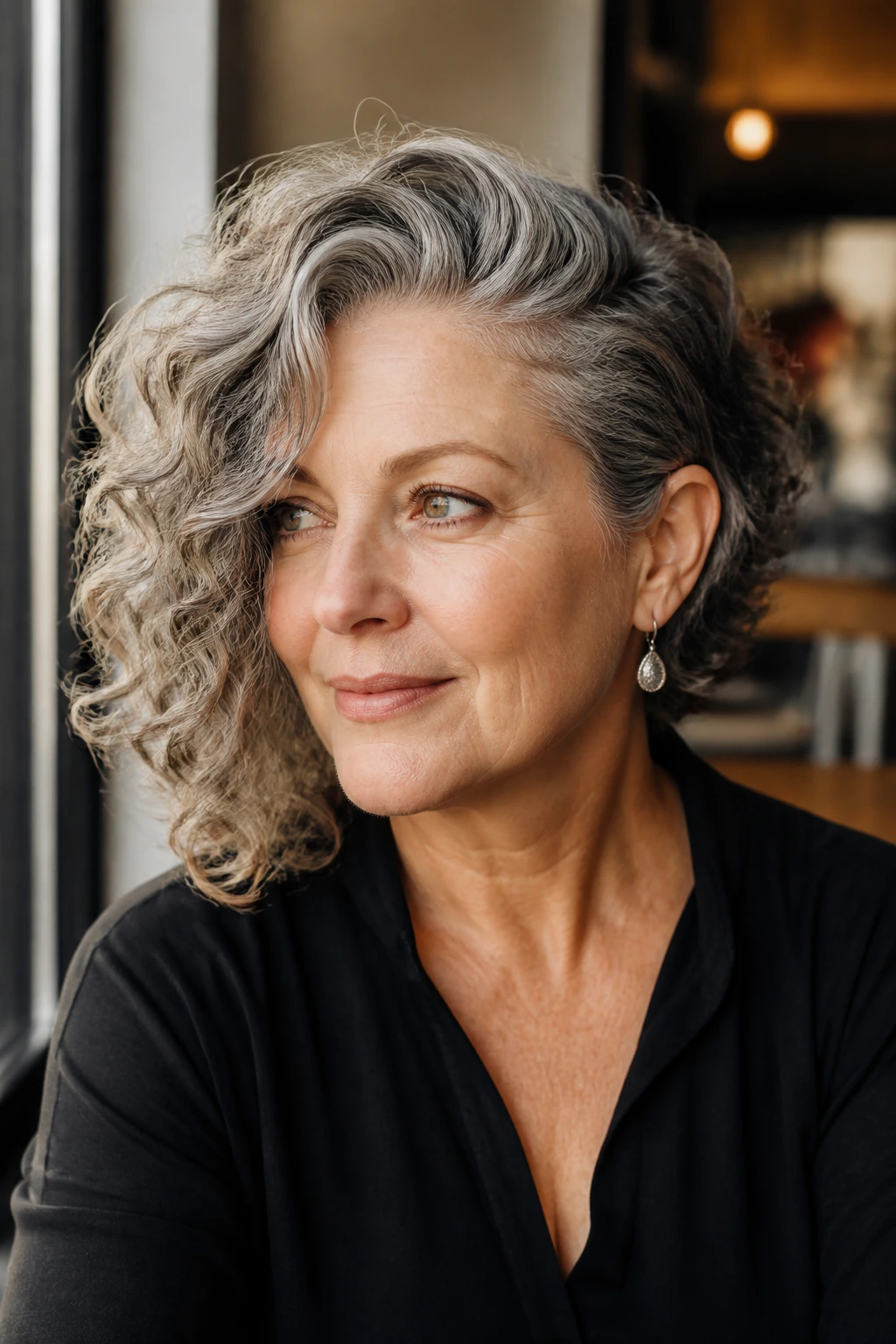
A deep side part changes the posture of curly hair. It adds lift on one side, softens the forehead, and gives the whole style a little sweep that feels polished without being stiff.
This cut is especially handy for loose curls and bigger waves that lose definition in the center. The side sweep gives those curls a direction. Tuck the smaller side behind the ear, let the larger side drape forward, and you get movement right where the face needs it.
If you wear earrings, this one is a gift. The asymmetry gives them room to show.
18. Neck-Length Cut With Soft Volume
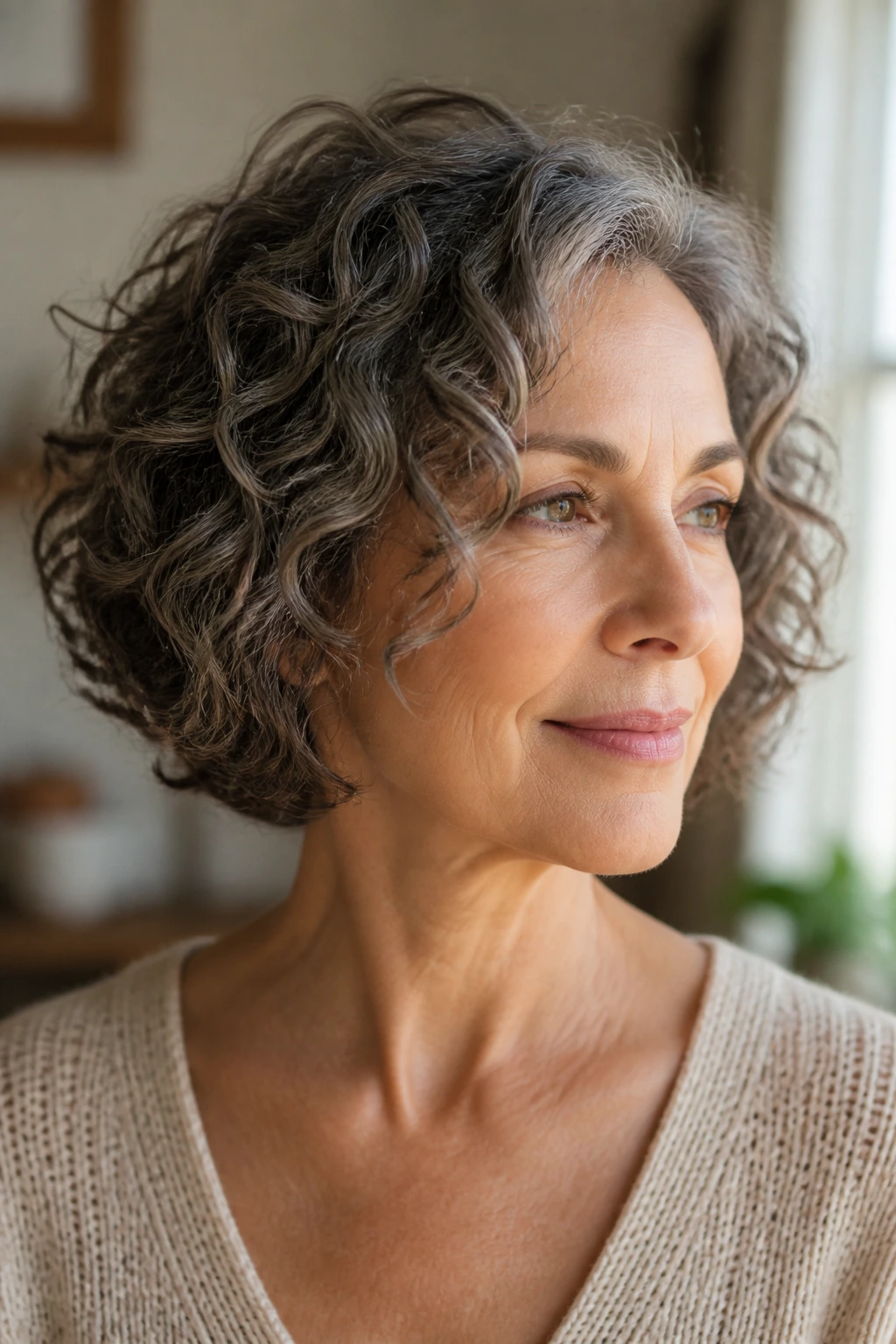
There’s a sweet spot between a bob and a pixie, and neck length lives there. It keeps the ends off the collar, which makes sweater season a lot less annoying, but it leaves enough hair to keep the curl pattern interesting.
This length is great when your curls start flipping awkwardly at the shoulders. That’s usually the point where the cut begins to fight clothing, scarves, and wind. Neck length solves that by ending before the friction starts.
Ask for soft volume, not a round puff at the base. The shape should hug the neck and then open gently at the top.
19. Wash-and-Go Ringlet Cut
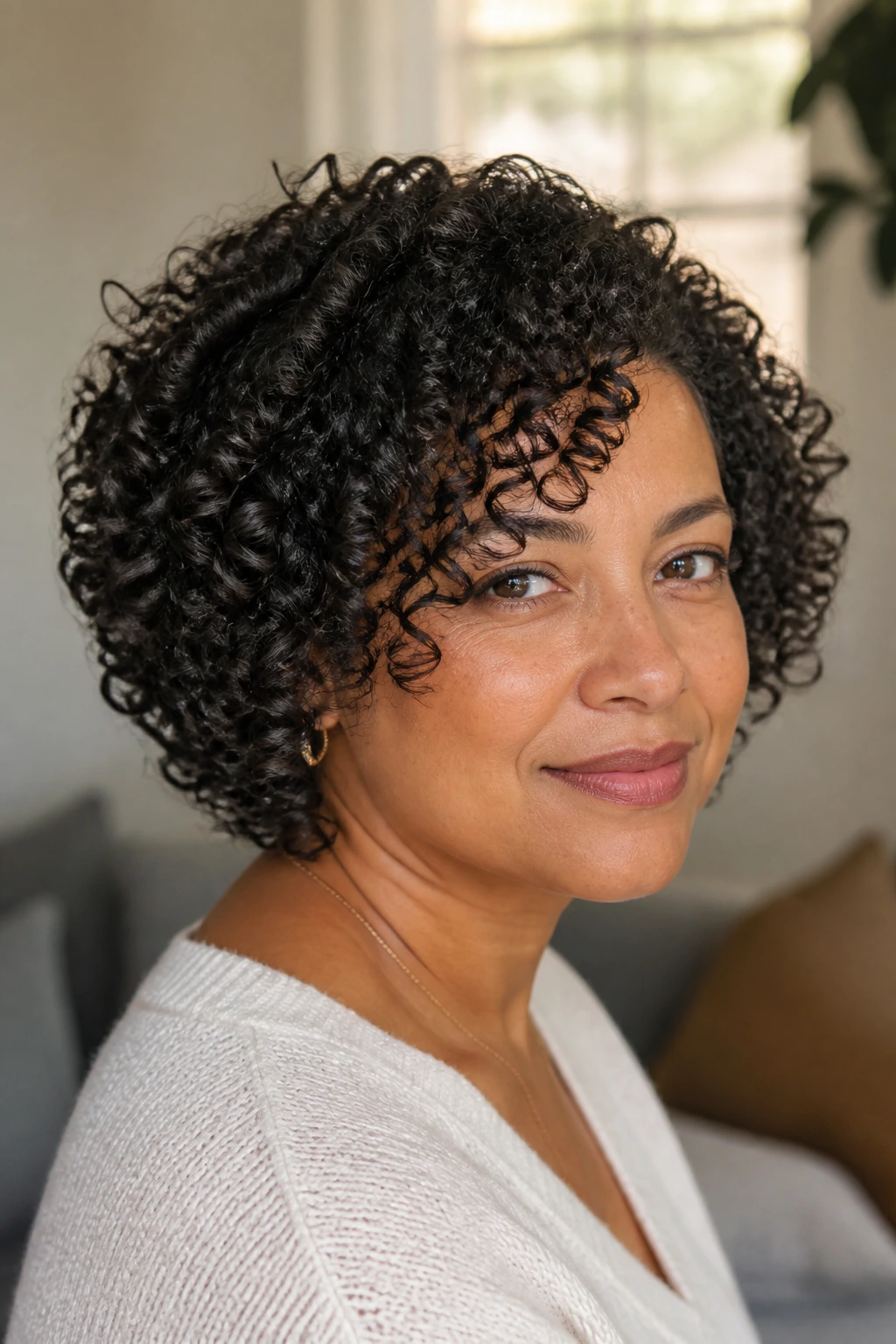
Why fight definition on a curl pattern that already knows what it wants? A wash-and-go ringlet cut is built to let the curls dry into their natural spring without over-brushing, over-layering, or overthinking.
The key is placement. Face-framing layers should fall where the ringlets need space, and the crown should keep enough length to avoid standing up too high. This cut usually loves a good leave-in and gel combo because the curl clumps matter more here than soft fluff.
If your curls are uniform and springy, this is one of the least annoying styles to live with.
20. Soft Crop With Tapered Nape
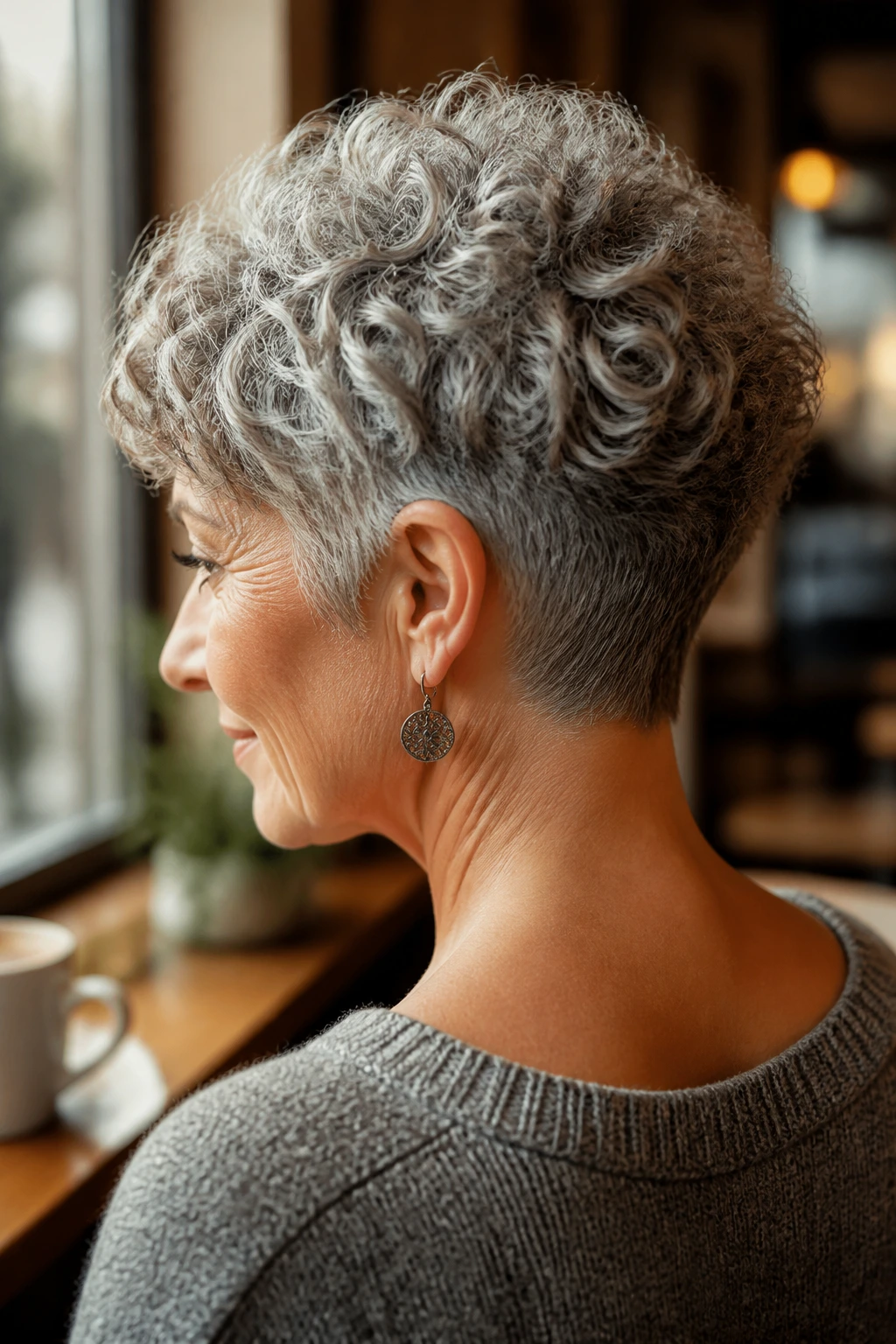
A neat nape changes the whole haircut. A soft crop keeps the top full enough for curl texture while tapering the back so the cut sits close and tidy around the neck.
This is a strong choice if you’re active, warm easily, or just hate hair touching your collar. The shape stays clean longer than a longer cut because the nape doesn’t fray as fast. Keep the top softly layered so the crown has some life; otherwise the whole thing can look too clipped.
It’s short, but it still feels like curl. That’s the point.
21. Thick-Hair Mid-Length Layered Cut
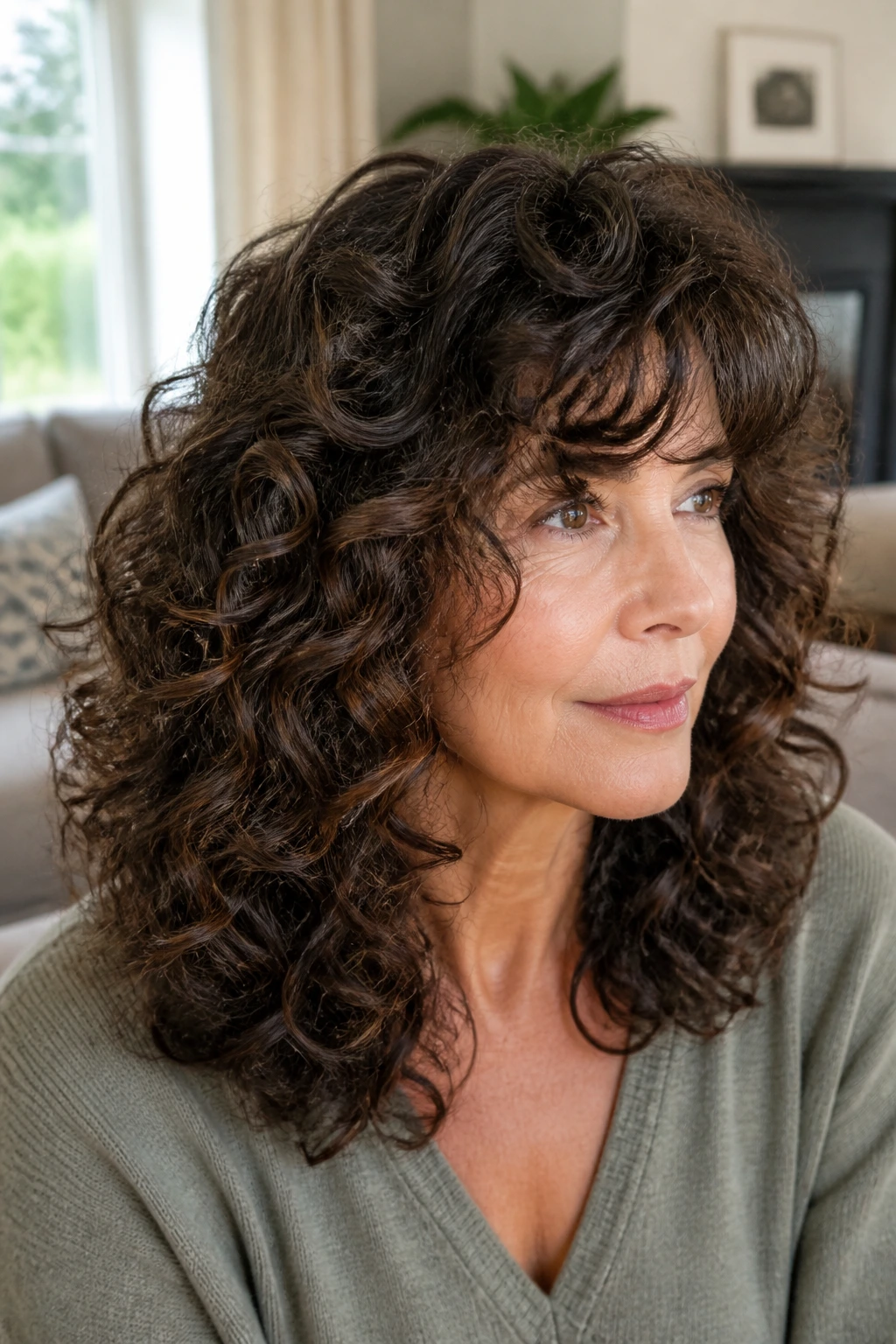
Thick curly hair needs weight removed in the right places, not hacked away randomly. A mid-length layered cut keeps enough length to feel substantial while reducing the bulk that makes thick curls balloon into a heavy outline.
- Best for: coarse or dense curls that dry wide.
- Ask for: internal layering, not just surface layering.
- Style with: a denser cream or gel to keep the curl clumps together.
This cut is honest. It does not try to pretend thick hair will ever be tiny. It just gives the curls a better shape to live in.
22. Side-Swept Fringe Cut
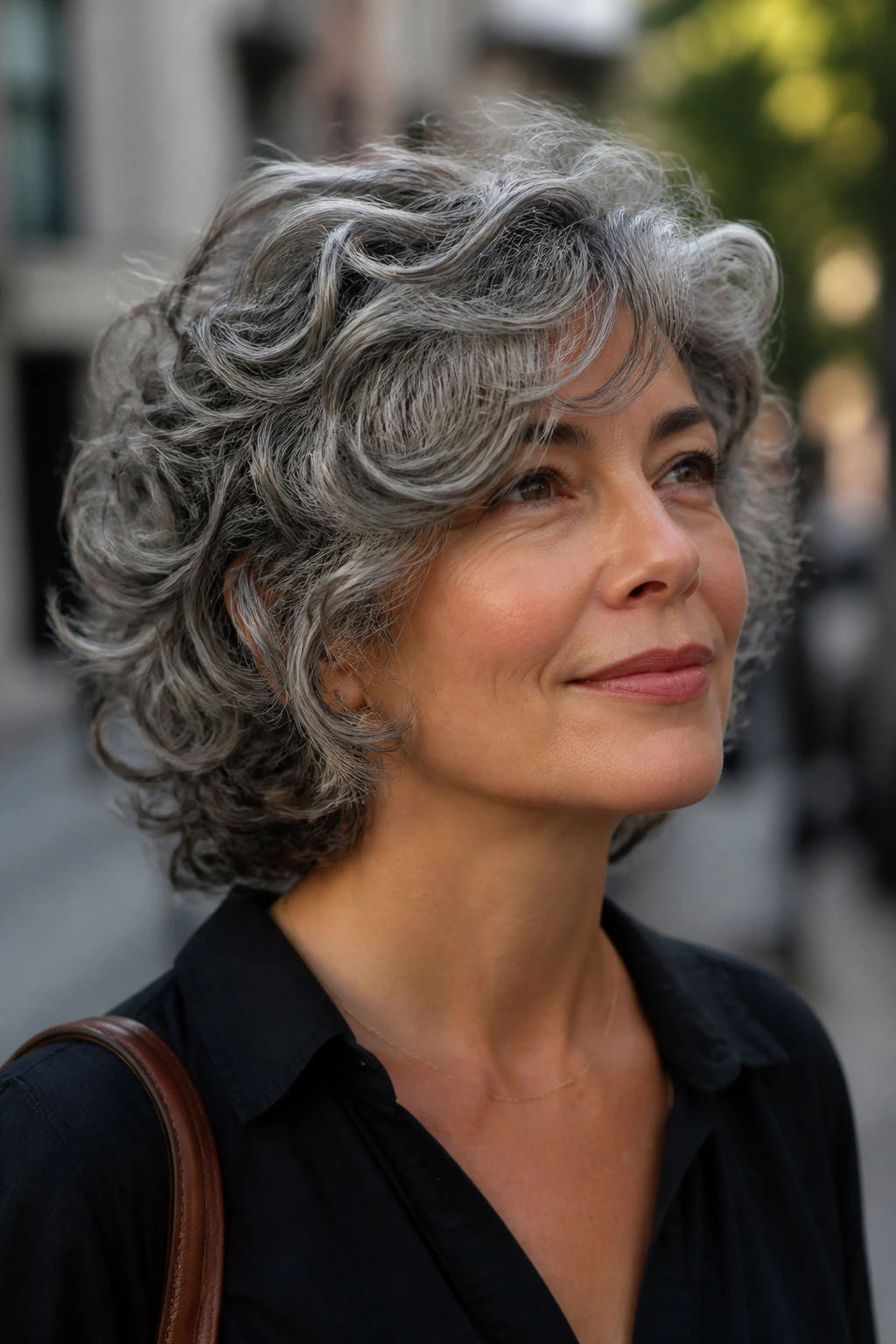
A side-swept fringe is the easier cousin of full bangs. It blends into the layers, moves with the face, and gives you fringe coverage without boxing the forehead in.
That matters if your curls shrink unpredictably or if you wear glasses. A side fringe can tuck, fall, or part with the rest of the hair, which makes it more forgiving on days when the weather has ideas of its own.
I prefer this over blunt bangs on many mature curl patterns because it grows out with less drama. Less drama is a useful thing in hair.
23. Halo Braid With Curly Ends
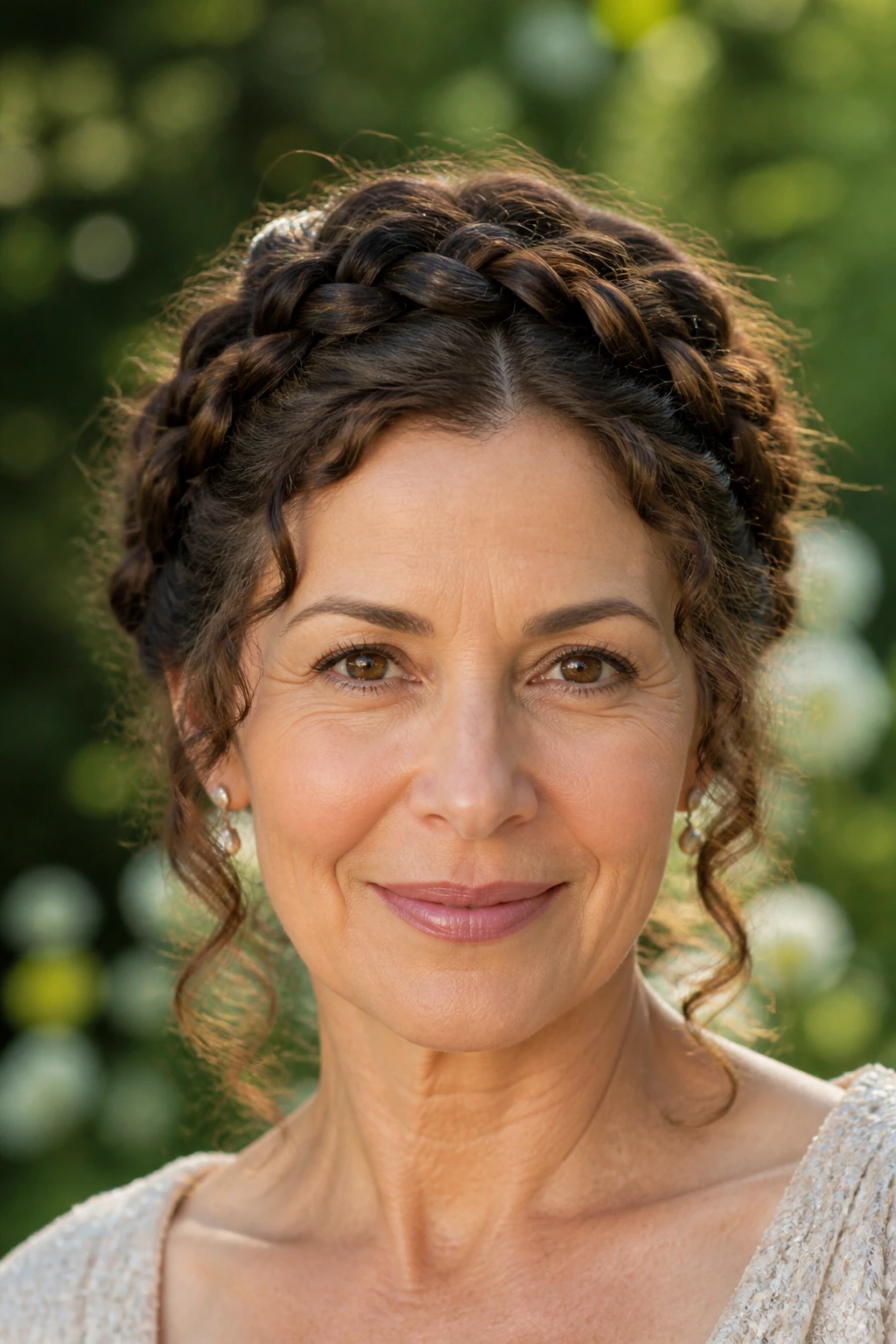
A halo braid keeps the crown controlled while letting the ends stay curly and visible. It’s one of those styles that looks more complicated than it is, which is useful when you want the hair off the face but don’t want to lose the texture entirely.
Pull the braid close to the head and keep tension even so it doesn’t split open halfway through the day. Leave the curly ends tucked low or pinned softly at the back. If your curls are dry, add a little cream first so the braid doesn’t look fuzzy by noon.
This works especially well for events, heat, or any day when you need the front of your hair to stay put.
24. Shoulder-Length Cut for Gray Curls
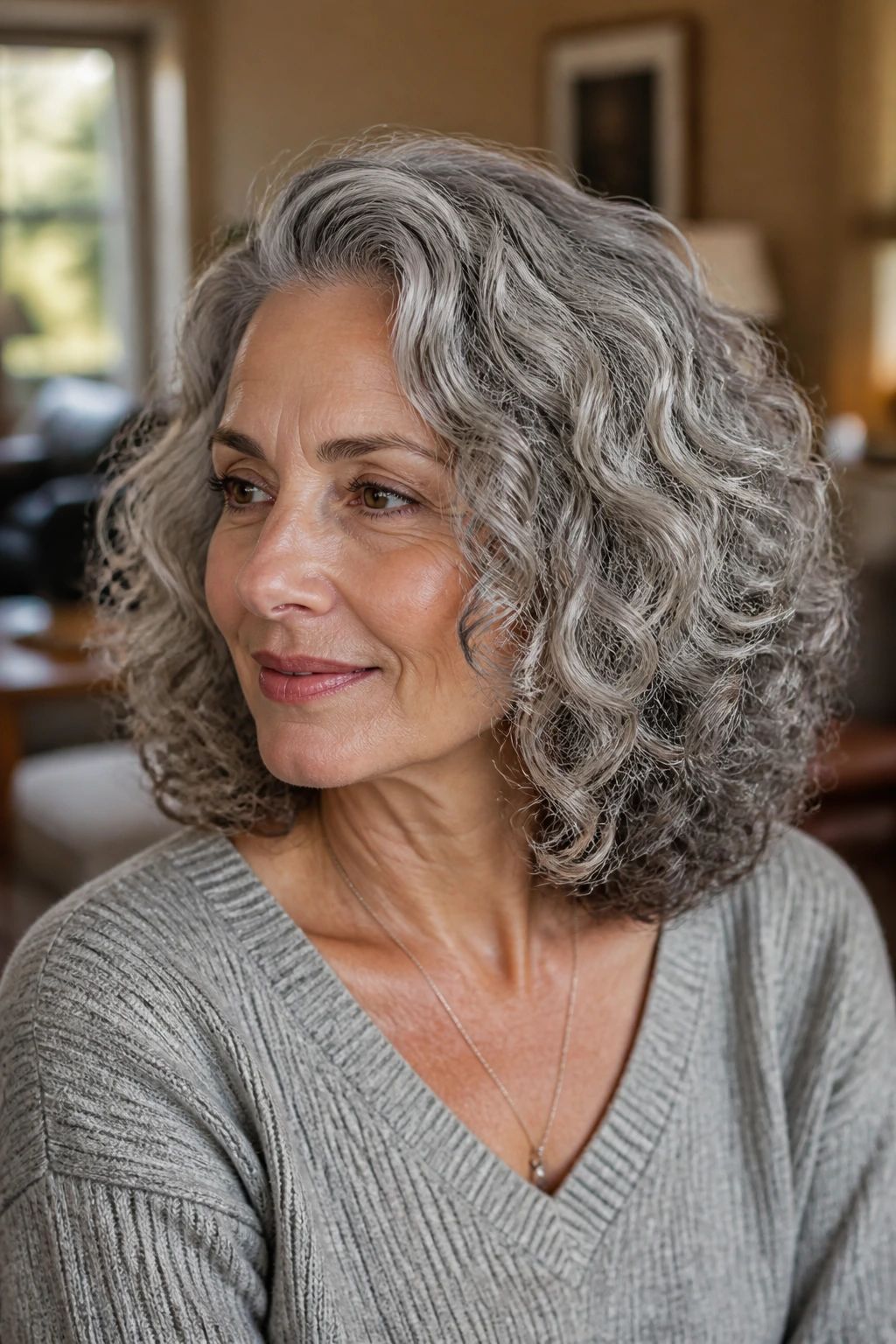
Gray curls often look strongest at shoulder length. The hair has enough weight to keep the shape from exploding outward, but not so much length that the ends get stretched and tired.
This is also a good length if your silver texture has gone a little wiry. Shoulder length gives the curls room to bend and stack, and a few gentle layers around the face can stop the front from hanging straight while the back springs up.
A lot of women think gray hair needs to be hidden under a heavy style. It usually needs the opposite: clean shape, good moisture, and a cut that lets the silver read as texture, not frizz.
25. Curly Bixie With a Soft Nape Taper
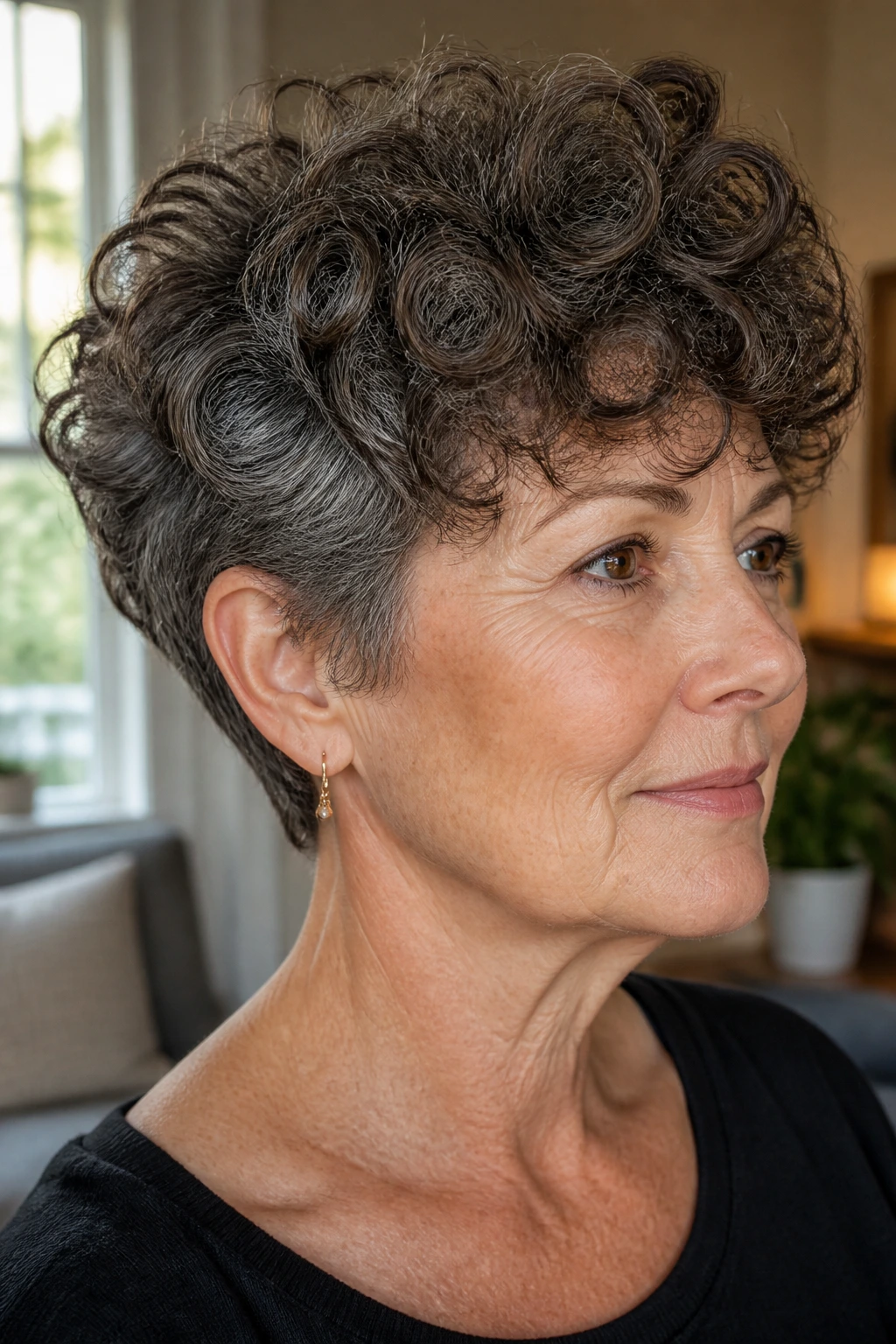
If you want short hair but not a true pixie, the bixie sits in that useful middle ground. It keeps more length than a crop, but it still has enough lightness to lift the face and show off the curl pattern.
The soft nape taper keeps the back neat while the top stays a little longer and touchable. That makes the haircut easy to finger-style, especially on mornings when you want something that looks finished after a few scrunches and a quick diffuse.
This is a strong choice for women who like short cuts with a little softness around the ears and forehead. It doesn’t try to be severe. Good. That would be the wrong move here.
Why Curly Hair Needs Shape, Not Just Length
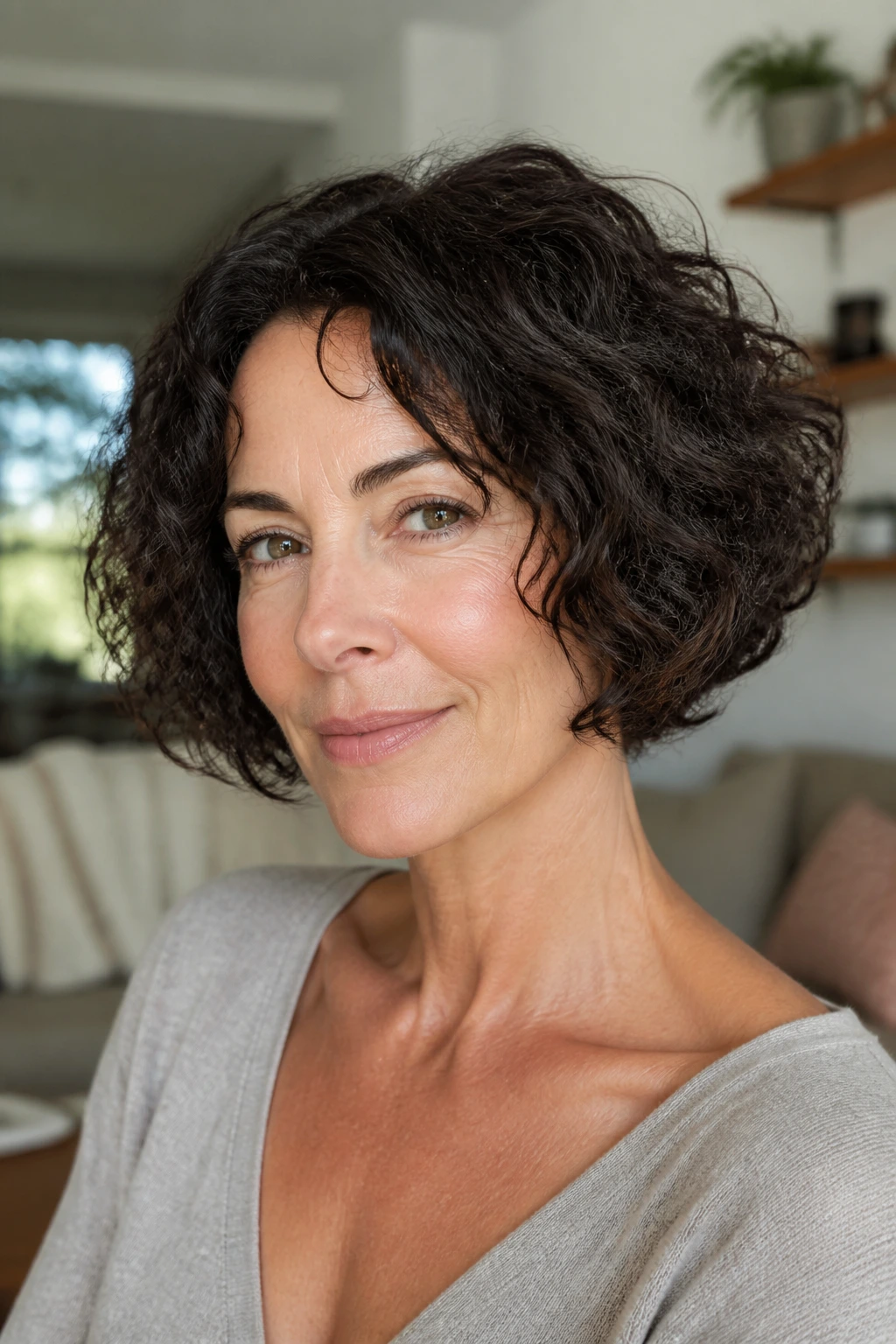
Curly hair has a way of lying to you in the chair. Wet, it looks longer and calmer. Dry, it can shrink, widen, and build little shelves where none existed twenty minutes earlier. That’s why the best curly cuts for older women are shaped around where the hair actually lives when it’s dry, not where it lands after a wash.
The old habit of taking off a little dusting at the ends and calling it a day usually backfires. You keep the weight in all the wrong places, and the curls spend their energy pushing outward instead of falling into a shape. A good cut removes bulk from the interior, preserves movement at the perimeter, and makes the crown do some work instead of collapsing.
Gray and silver curls complicate the picture in a good way. They often have a coarser feel and a looser surface, so a blunt line can look too heavy fast. Shape softens that edge. It gives the hair room to move without letting it balloon into a triangle, which is the one silhouette almost everybody complains about once they see it in the mirror.
Essential Tools That Make Curly Styling Easier
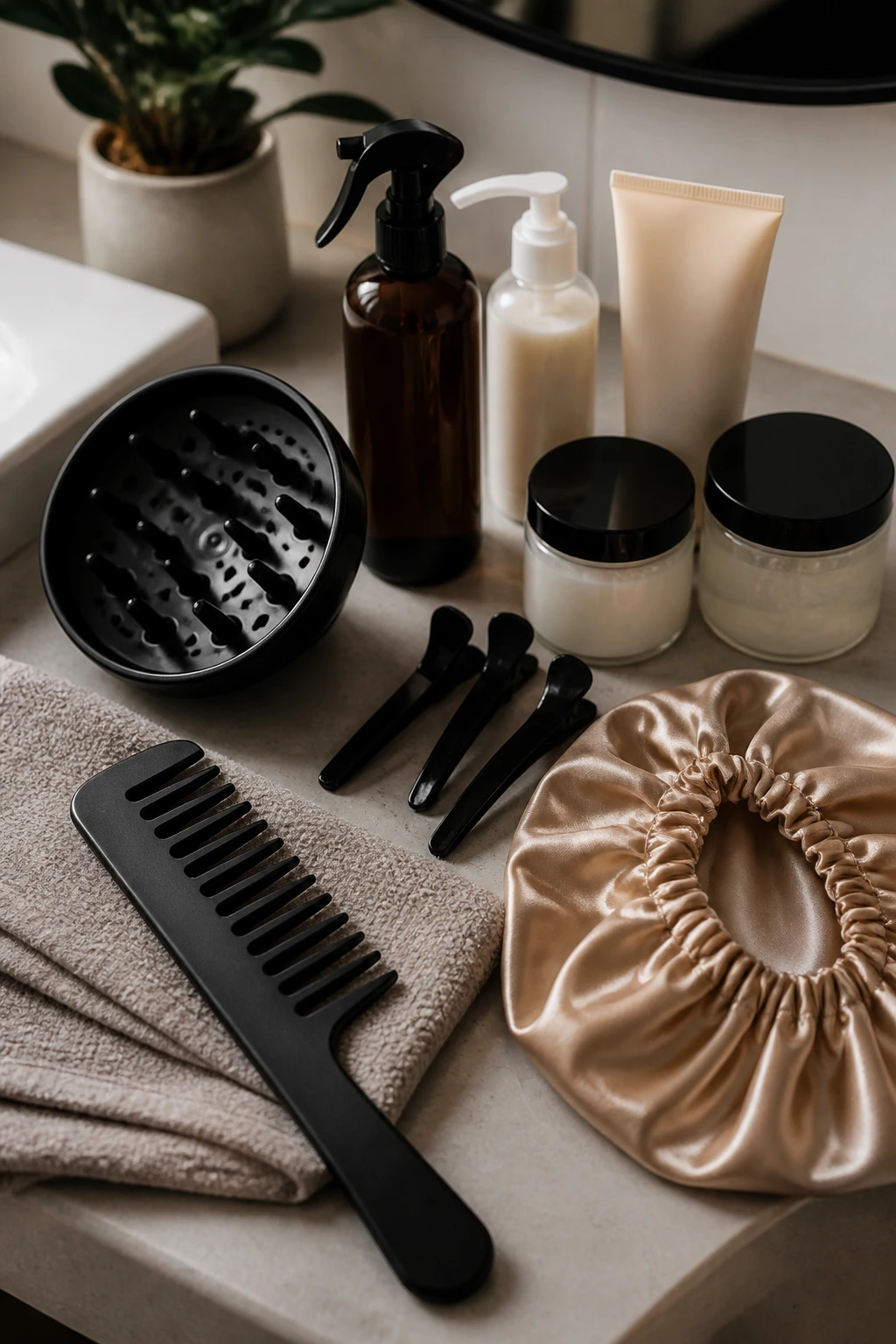
- Wide-tooth comb: Gentle detangling in the shower, especially when conditioner is still on the hair.
- Microfiber towel or cotton T-shirt: Cuts down on rough frizz after washing; terry cloth tends to pull too much.
- Diffuser attachment: Helps set the curl pattern at low or medium heat without blasting the shape apart.
- Duckbill or curl clips: Handy for lifting the roots while the hair dries.
- Spray bottle with water: The simplest refresh tool for day-two and day-three curls.
- Satin pillowcase or bonnet: Keeps curls from getting rubbed into a puff overnight.
- Leave-in conditioner: Useful for drier gray or porous curls that need a little slip.
- Curl cream or mousse: Cream for softness, mousse for lift; many people need both in different amounts.
- Medium-hold gel: Especially helpful if your curls frizz at the halo or lose shape in humidity.
- Pointed tail comb: Good for clean parts and for lifting a few root sections at the crown.
How to Choose the Right Cut for Your Curl Pattern
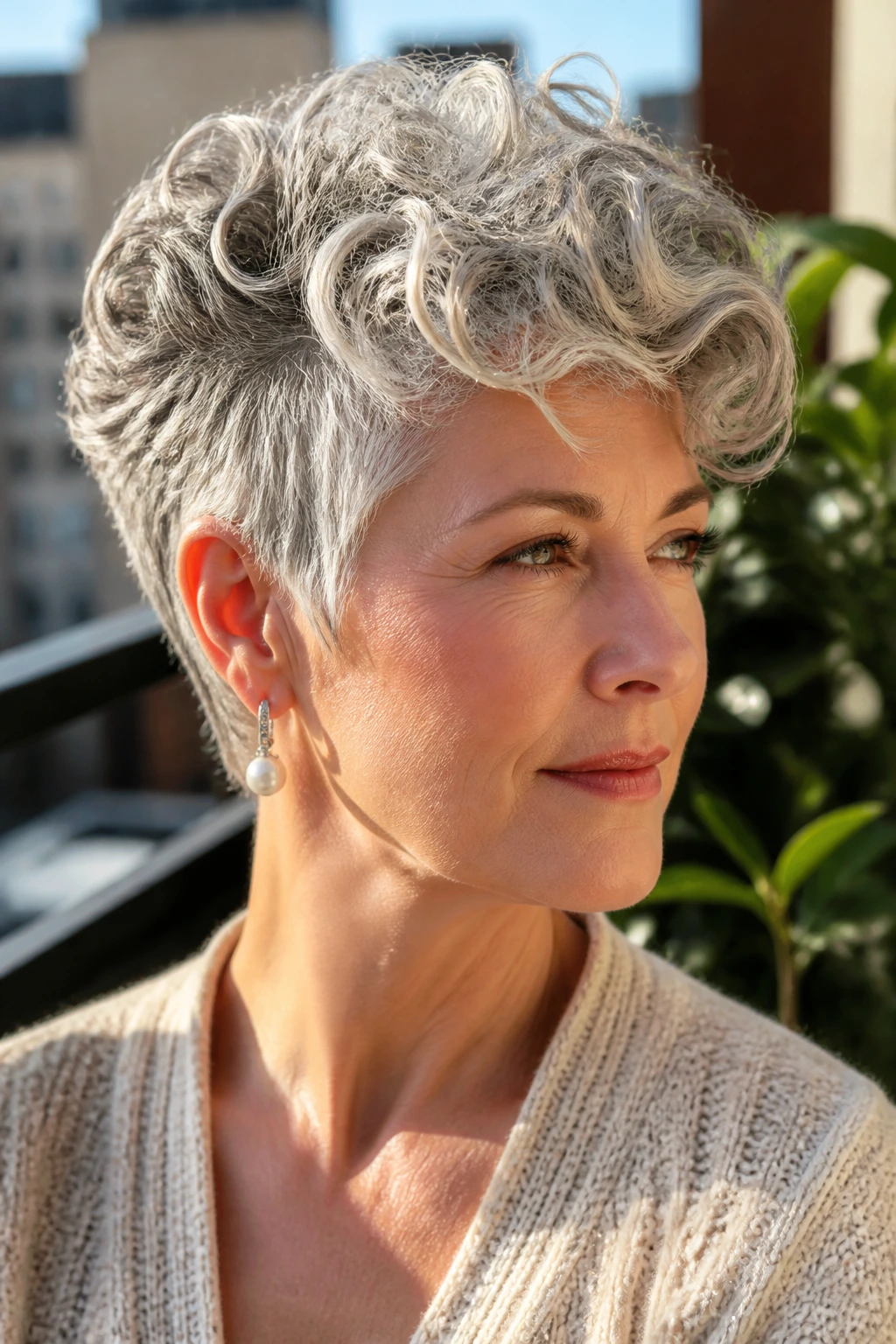
Fine curls need support more than they need heavy layering. Too many choppy layers can leave them looking thin at the ends and wide at the sides, which is a bad trade. Bobs, lobs, and stacked shapes often work best because they build shape without stripping away too much hair.
Thick curls are a different animal. They usually need internal weight removal so the bottom stops sitting like a shelf. Shags, wolf cuts, and long layered cuts can work beautifully here, but only if the layers are placed with discipline. Random texturizing turns thick curls into fuzz. Nobody asked for fuzz.
Tighter coils and strong ringlets often look best when the stylist respects shrinkage and leaves enough length for the curl to form. These textures can handle shorter crops, rounded afros, and pixies better than loose curls can because the curl pattern creates the shape on its own. Loose waves and soft spirals usually need a little more length or a diagonal part to keep them from collapsing.
Product Picks That Pull Their Weight
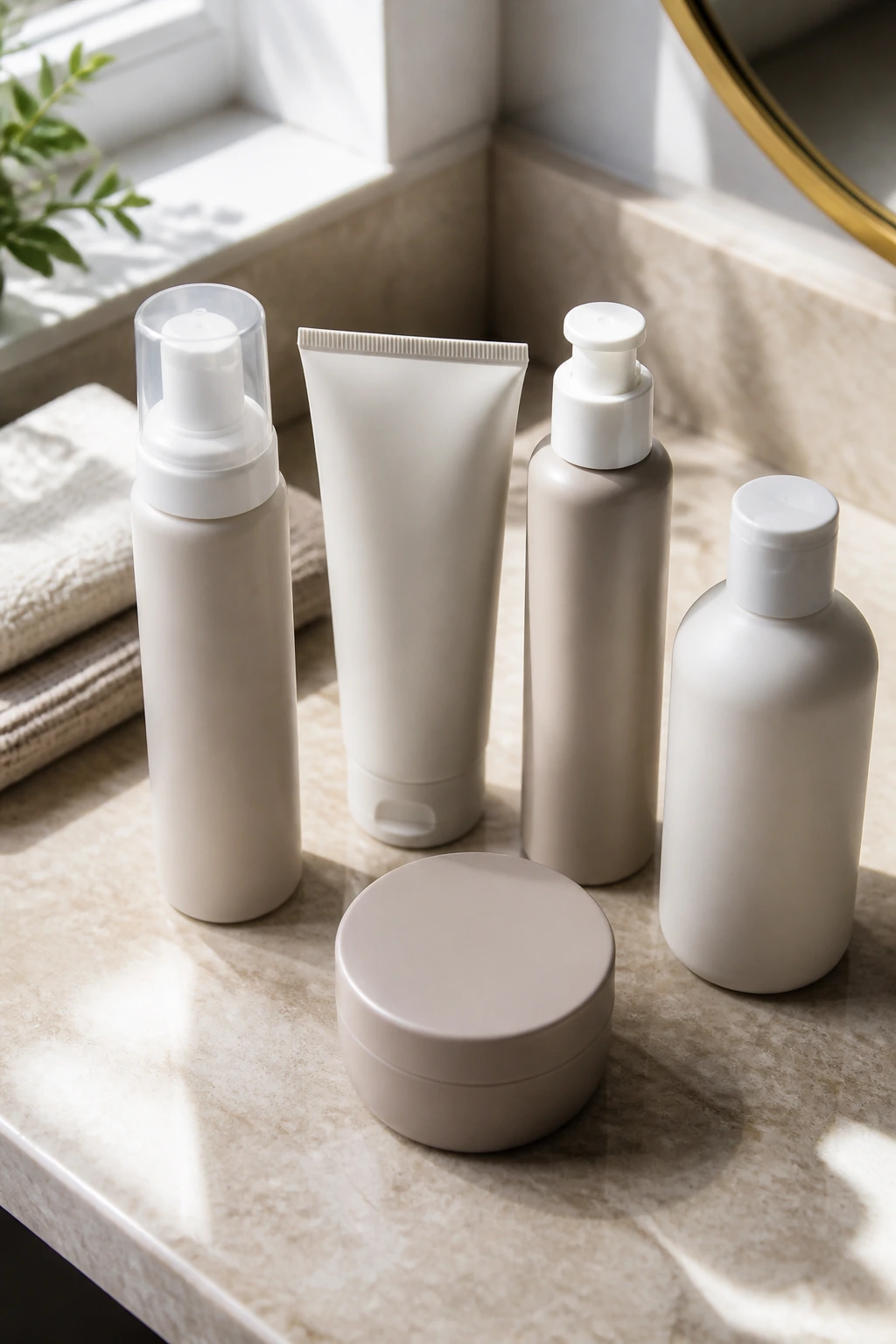
Lightweight mousse: Good for crown lift on bobs, bixies, and fine curls that need a little support without a greasy finish.
Curl cream: Best for drier gray curls, mid-length layers, and thicker hair that wants softness at the ends.
Medium-hold gel: The better choice if your curls frizz fast or your bangs need to stay put for more than an hour.
Leave-in conditioner: Useful after every wash if your hair feels rough, tangles easily, or drinks product fast.
Clarifying shampoo: Use it when curls start feeling coated or dull, usually every 2 to 4 weeks depending on how much styling product you use.
Protein treatment: Helpful when curls go limp, stretchy, or mushy after washing. If your hair feels too soft to hold shape, protein can help bring some structure back.
How to Wear These Styles Day to Day
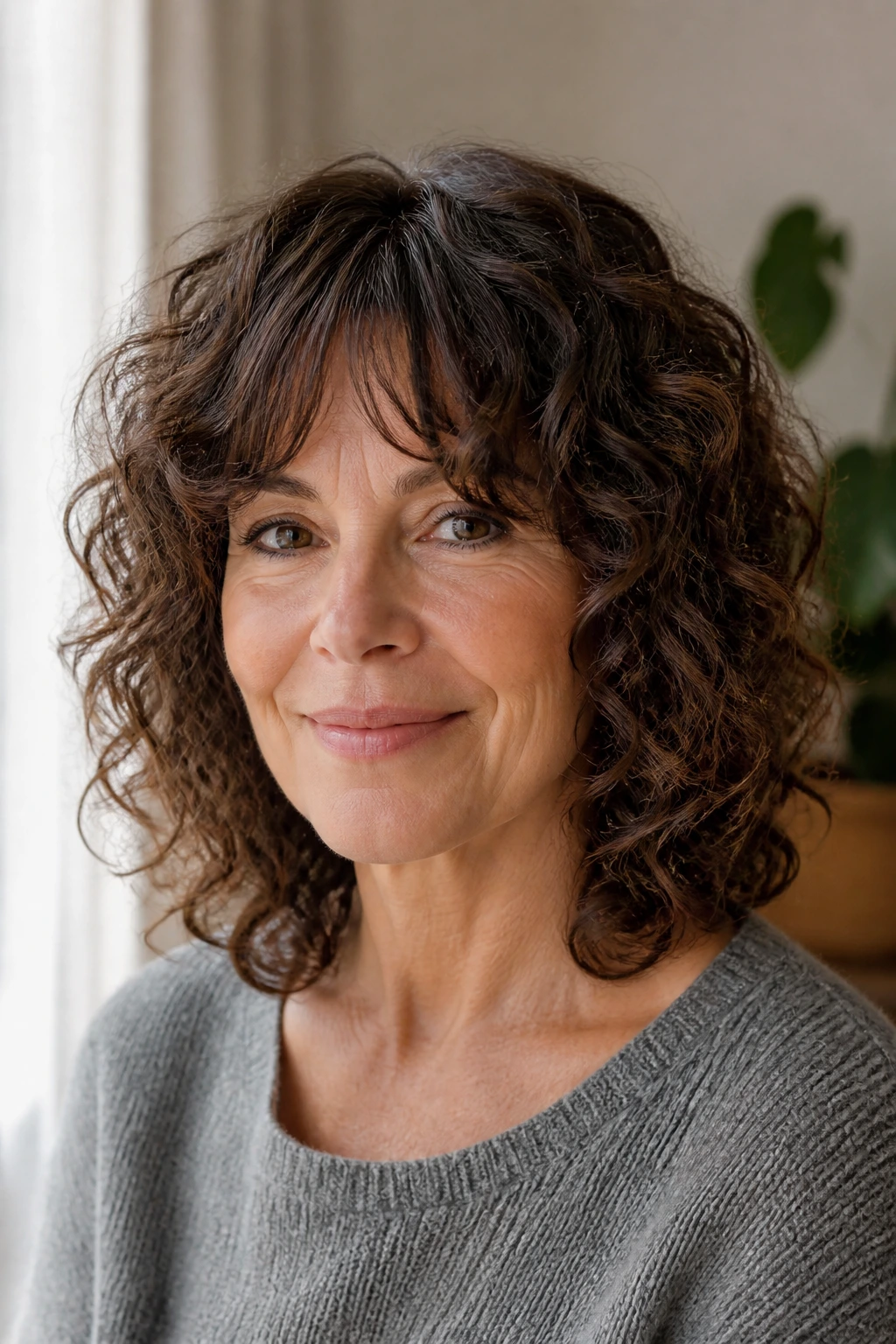
Shape: Keep the volume where the cut was designed to live. Short curls usually want lift at the crown, while lobs and shaggy cuts look better when the width sits around the cheekbones instead of at the very ends.
Finish: Soft cream gives a more touchable look. Gel gives you cleaner ringlets and better hold around the fringe. If you like a little movement, use less product at the ends and more at the roots.
Accessories: Glasses pair well with shorter bobs, pixies, and side parts because they leave room around the temples. Longer cuts look cleaner with a neckline that stays open, especially if you wear collars, scarves, or statement earrings.
Everyday wear: A good curly style should survive a messy bun, a clip, a scarf, and a day that runs too long. If a cut only looks good with ninety minutes of styling, it’s asking for too much.
Practical Tips for Better Curl Shape
Crown Lift: Clip the roots at the crown while the hair dries, especially if your top section keeps collapsing. Two or three clips placed at the root line can change the whole silhouette.
Drying Shortcut: Micro-plop with a T-shirt for 10 to 15 minutes before diffusing. That removes enough water to speed things up without crushing the curl clump.
Refresh Trick: Mist the hair lightly, then smooth a pea-sized amount of leave-in between damp palms and scrunch the mids and ends. Do not soak the hair unless you want to start over.
Salon Shortcut: Ask for the cut dry or mostly dry if your curls are unpredictable. Curl-by-curl shaping helps the stylist see where the pattern actually sits, not where it pretends to sit when wet.
Keep the perimeter honest: Trim the outline before it starts to fray. Once the ends split and spread, curly hair can make a clean cut look old fast.
Common Mistakes That Flatten Mature Curls
Cutting everything one length: This is how you get a triangle, especially on dense hair. The fix is internal layers or a shaped perimeter, not more length.
Using heavy butter on fine curls: The hair looks nice for twenty minutes, then drops. Fine curls usually need lighter mousse or a small amount of cream, not a thick coating.
Bang regret from cutting too short: Curly fringe shrinks faster than most people expect. Keep the first bang appointment conservative and let the shape move upward over a second appointment if needed.
Over-diffusing on high heat: That can rough up the outer cuticle and make silver curls look fuzzier than they are. Low or medium heat keeps the curl clump calmer.
Skipping trims too long: Curly ends hide damage for a while, then suddenly don’t. Once the ends start looking stringy, the whole style loses shape.
Brushing dry curls: This breaks up the curl family and leaves the surface puffy. Detangle wet with conditioner, then stop touching the hair unless you’re refreshing it.
Variations for Fine, Thick, Gray, and Transitioning Hair
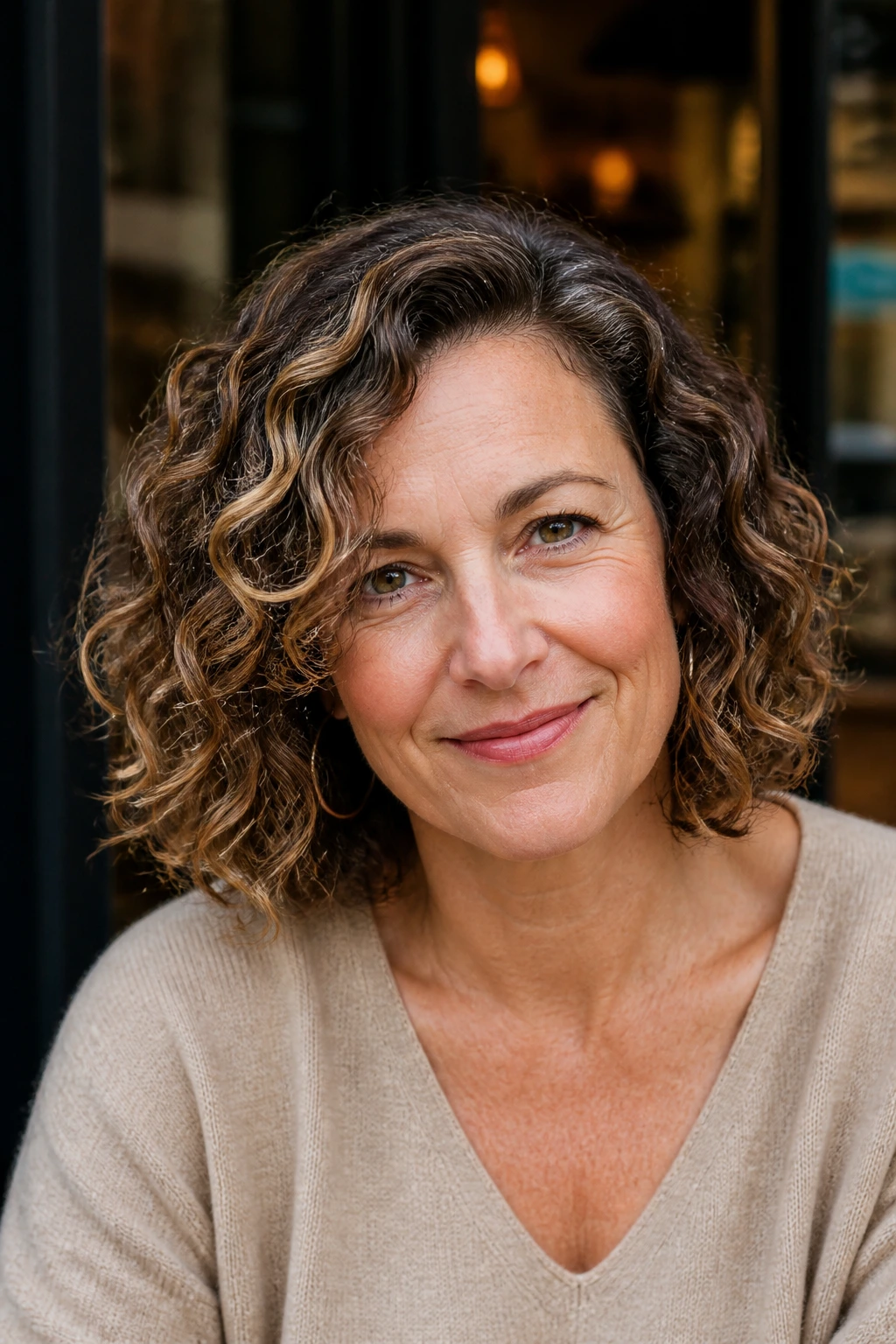
The Fine-Curl Lift Plan: Choose a jaw-grazing bob, stacked bob, or bixie and ask for minimal thinning. Fine curls need shape support, not aggressive layering that leaves the ends wispy.
The Thick-Curl Weight-Removal Plan: Go for a shag, wolf cut, or mid-length layered shape and ask for internal layers only where the bulk collects. The goal is movement, not frizzed-out ends.
The Silver Shine Plan: Keep the cut clean, the layers soft, and the moisture routine steady. Gray curls usually look best when the shape is simple enough to let the texture and color do the talking.
The Glasses-Friendly Frame: Side parts, curtain bangs, and jaw-length bobs keep the face open without crowding the temples. This matters more than people admit once frames become part of the daily look.
The Low-Fuss Routine: Pick a cropped pixie, tapered crop, or shoulder-length cut that can air-dry with a little cream. If your styling patience is low, shorter and more structured usually wins.
Keeping the Style Fresh Between Washes
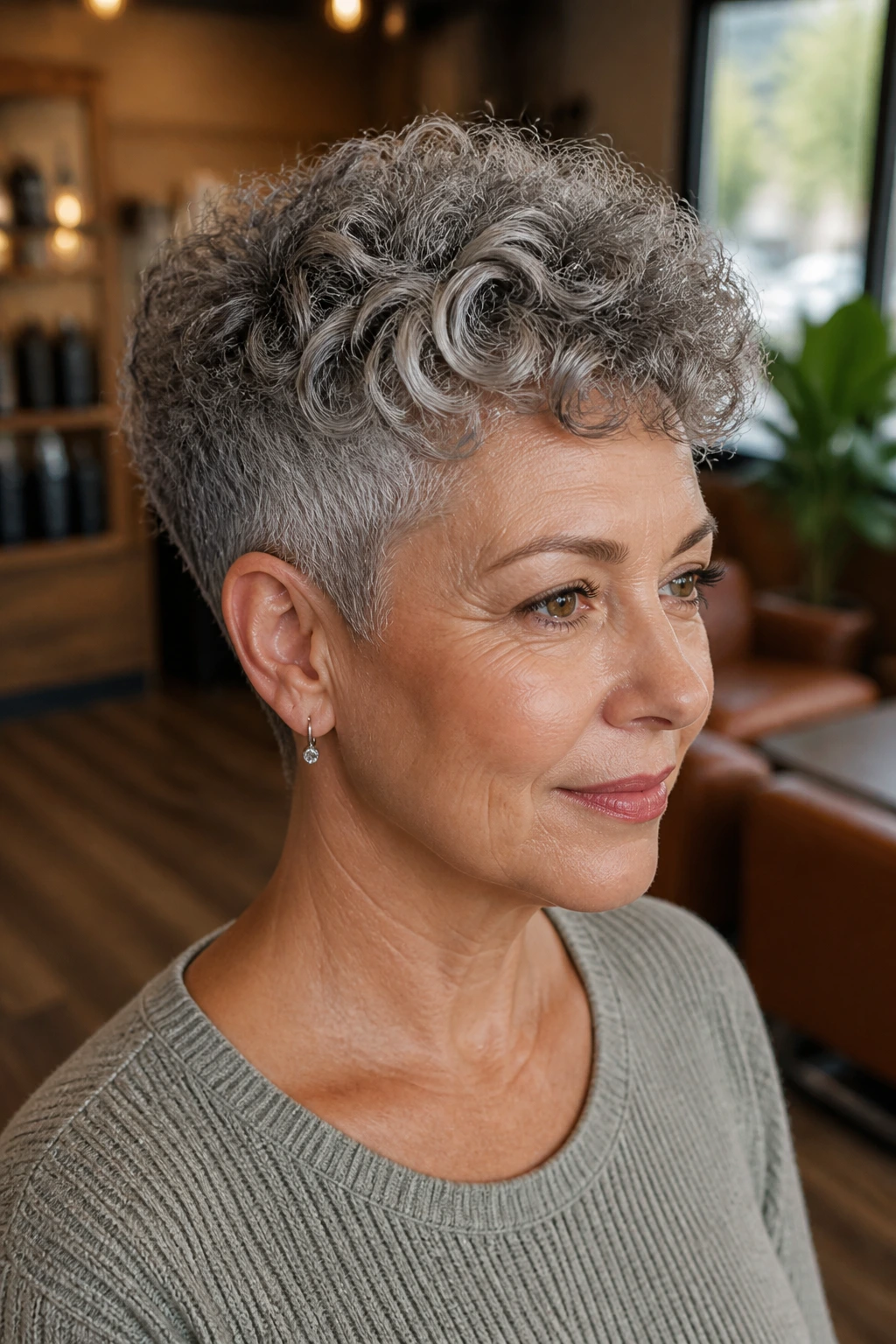
The first rule is boring but true: don’t sleep on a rough pillowcase and expect curls to behave. A satin pillowcase or bonnet reduces friction overnight, which keeps the cut looking calmer around the crown and the sides. That alone can add a day of wear to a style.
For day-two or day-three refreshes, use a light mist of water and scrunch the sections that have gone flat. If the ends feel dry, smooth a tiny amount of leave-in over them first. If the roots are the problem, clip them for 10 minutes while the hair settles.
Trim short cuts every 8 to 10 weeks if you want the shape to stay crisp. Mid-length cuts can usually stretch to 10 to 12 weeks, and longer layered cuts often go 12 to 16 weeks before the perimeter starts to wander. Gray curls that fray quickly may need trims a touch sooner, especially around the face and nape.
Clarify every 2 to 4 weeks if you use mousse, gel, or curl cream often. Product buildup makes mature curls look dull and can flatten the crown in a way that’s hard to fix without a proper wash.
Questions People Ask Before the Salon Visit
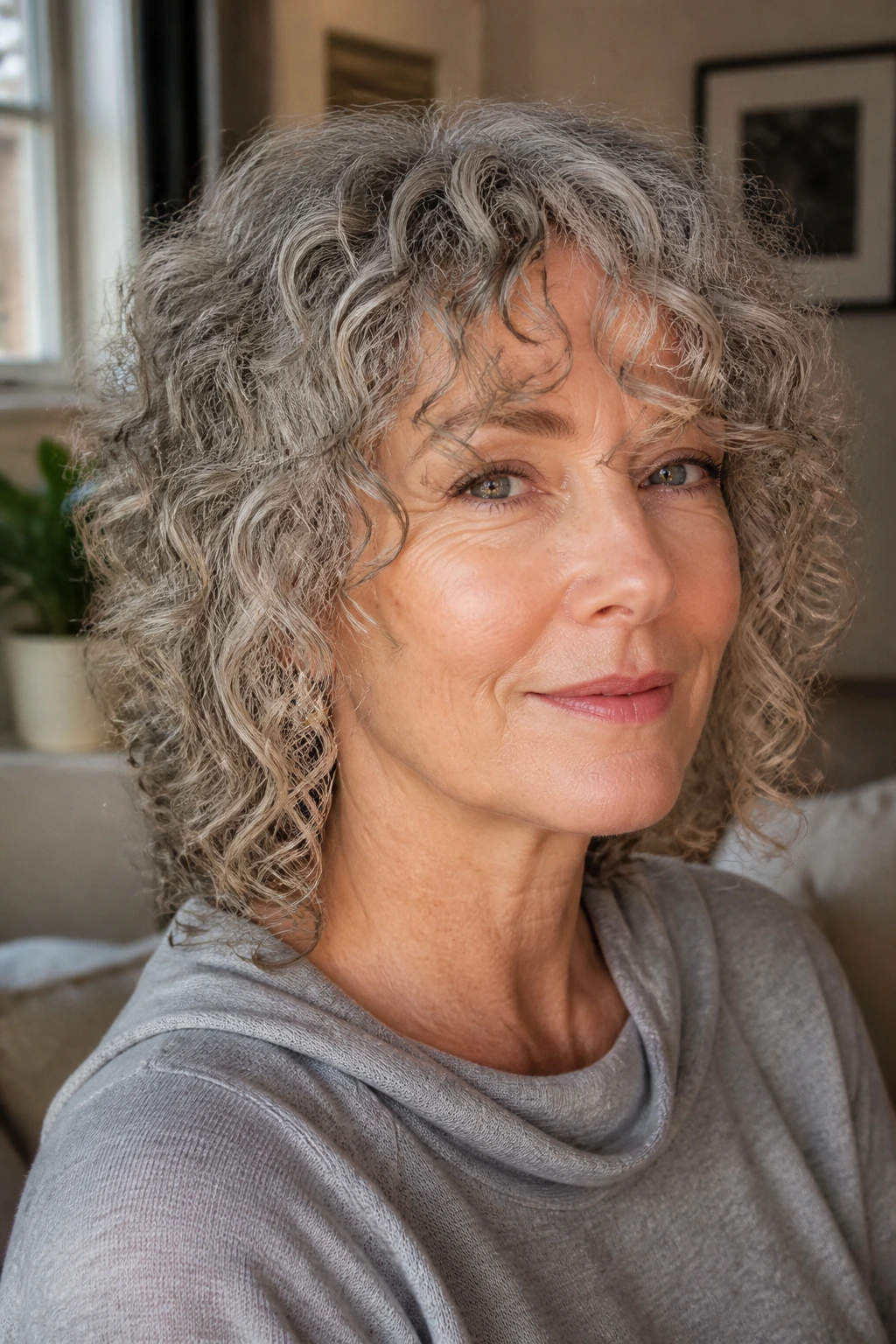
What’s the best short curly haircut for older women?
A pixie with a longer crown, a tapered crop, or a jaw-grazing bob usually gives the cleanest shape. The “best” one depends on whether you want your curls to sit close to the head or keep some width at the sides.
Are bangs a bad idea on curly hair?
No, but they need to be cut with shrinkage in mind. Curtain bangs and side-swept fringe are safer choices than a blunt short bang if you want movement and less daily fuss.
Should gray curls be cut differently than darker curls?
Not radically, but gray curls often benefit from cleaner shape and more moisture. The texture can be drier and a little rougher on the surface, so soft layers and regular trims help a lot.
How often should mature curly hair be trimmed?
Short cuts usually need attention every 8 to 10 weeks. Medium and long cuts can go a little longer, but once the ends start fraying or the shape spreads outward, it’s time.
What if my curls are fine and getting thinner?
Avoid heavy layering and avoid thinning shears unless the stylist is very careful. A bob, lob, or stacked shape usually gives more visual body than a cut that removes too much hair from the ends.
Can I wear these styles without heat?
Yes. In fact, many of them look better with air-drying plus a diffuser on low if needed. The key is applying product to soaking-wet hair and leaving it alone while it forms its clumps.
How do I stop the triangle shape?
Take weight out of the interior and keep the crown supported. The triangle usually appears when the ends are too heavy and the top is too flat, so the fix is shape, not more product.
What should I tell the stylist at my appointment?
Bring two or three photos of curls that match your texture, then say whether you want more lift, less width, or easier styling. Those three goals are more useful than asking for a vague “modern” cut.
The Cut That Fits the Curl You Already Have
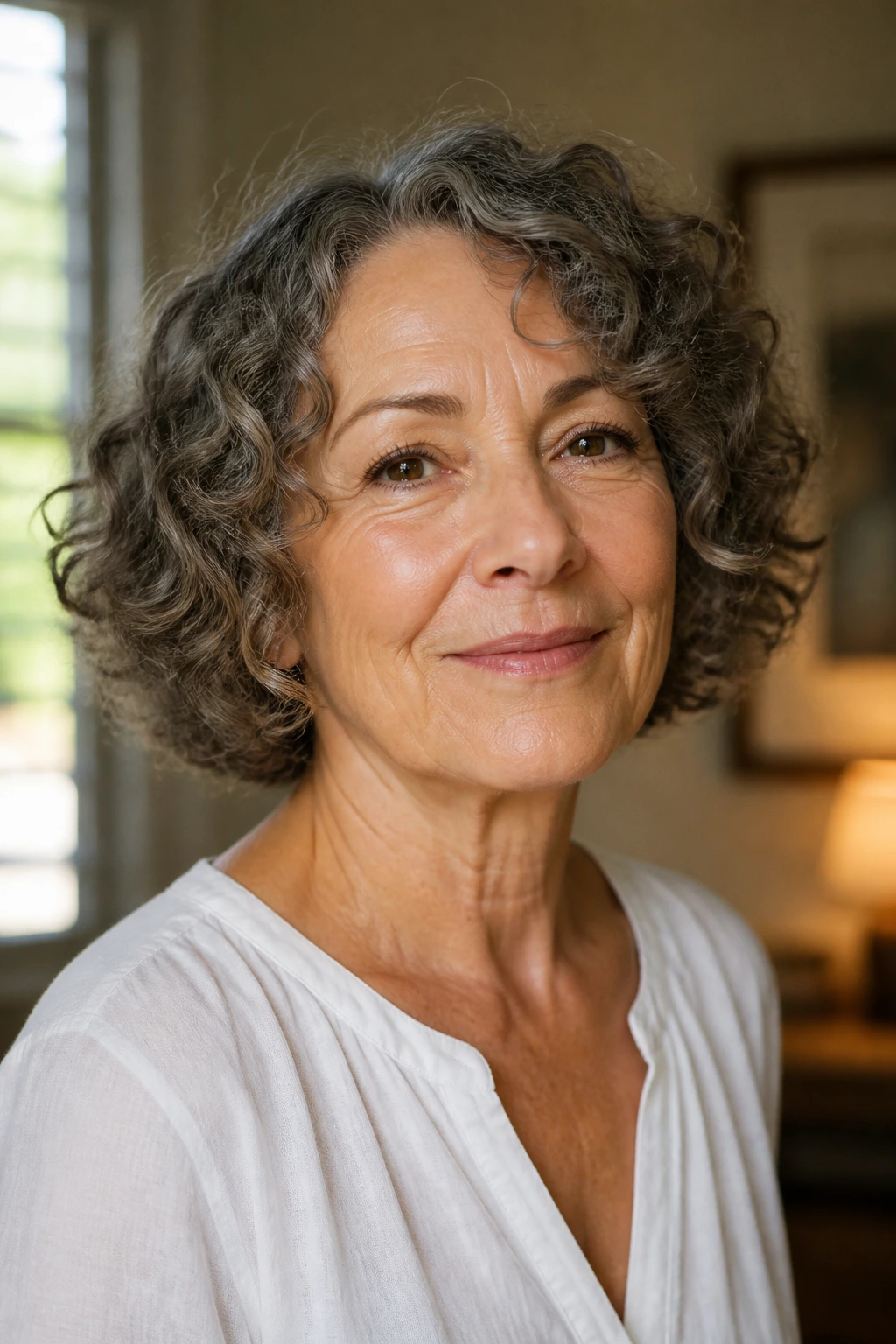
The best hairstyle for older women with curly hair is the one that lets the curl do its job without dragging the rest of the face down with it. That might mean a short crop with a neat nape, a bob that lands at the jaw, or a shoulder-length cut that keeps the weight in check and the movement alive.
If you’re torn between two lengths, choose the one that asks for less fighting in the morning. Curly hair tells the truth quickly. Give it a shape that matches the way it dries, and it stops acting difficult and starts looking like it knows exactly where it belongs.