



Long haircuts for women with curly hair live or die by shape, not length. That’s the part people miss when they stare at the inches and forget the architecture. A curl pattern can make a haircut look lush and expensive, or it can turn the same length into a triangle with a shelf at the bottom and a flat crown. One wrong layer line does more damage on curls than on straight hair. A good cut doesn’t fight the curl. It gives the curl somewhere smart to go.
The best long curly cuts work with shrinkage, density, and spring. They keep the silhouette from getting bulky at the ends while still leaving enough weight to stop the style from puffing out like a dandelion in humid air. Some shapes are polished and rounded. Some are shaggy, airy, and a little wild. The useful thing is that all of them solve a real problem: how to keep long curls looking intentional instead of accidental.
I’ve always thought curly hair looks best when it has room to move. Not “big hair” in the old, crunchy sense. Movement. A clean bend at the cheekbone. A softer line around the shoulders. A perimeter that still feels full when the hair dries and shrinks up three inches higher than it looked wet. That’s the difference between a long cut that hangs there and one that actually wears well.
So let’s get into the shapes that make long curls look lived-in, balanced, and worth keeping long in the first place.
Why These Long Haircuts for Women with Curly Hair Keep Their Shape
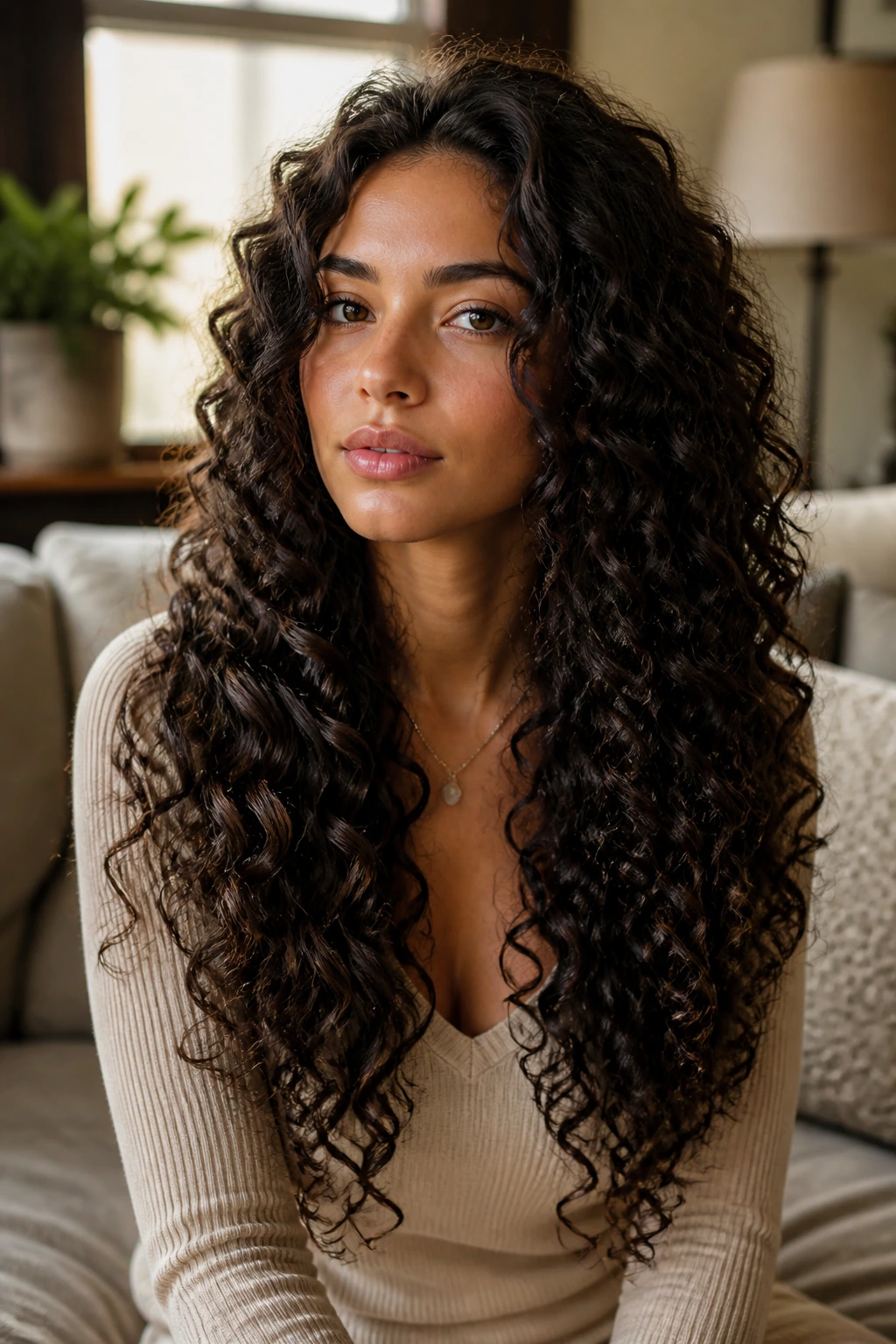
-
Shape beats length every time: A few smart layers can stop the ends from looking heavy while keeping the lower half of the hair from ballooning out.
-
Shrinkage gets respected: These cuts account for the way curls jump when they dry, which is the whole trick if you hate surprise bangs and uneven side pieces.
-
Thick and fine curls both get options: Some cuts remove weight from inside the hair; others keep a stronger perimeter so finer curls don’t go stringy.
-
Face framing is doing real work here: The right front pieces can shorten a long face, soften a square jaw, or make a round face look less wide.
-
Most of these cuts are salon-friendly to explain: You can point to a photo and say “keep the length, move the bulk,” which is a much better conversation than “just tidy it up.”
-
They grow out with less drama: A clean long curly shape usually looks deliberate for months, not weeks, which matters when you’re not trimming every six minutes.
1. Soft U-Shape Layers
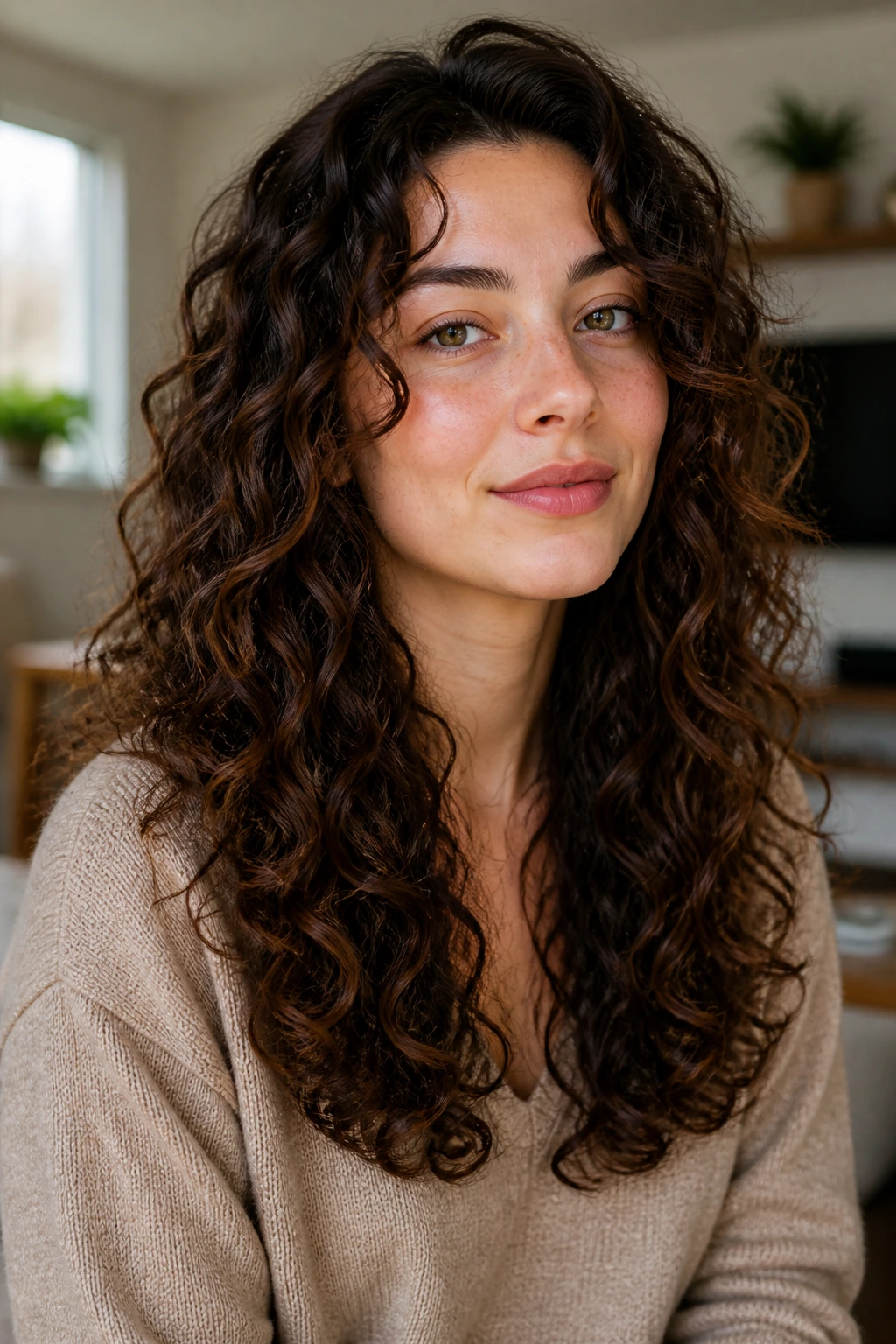
A soft U-shape is one of those haircuts that looks quiet at first and then does all the right work once the hair dries. The outline dips slightly lower in the back, which gives long curls a gentle curve instead of a hard shelf. On curly hair, that little bit of rounding makes the ends look fuller and the whole shape feel less blocky.
Why It Works
The U-shape keeps weight at the perimeter, which is useful if your curls puff out before they fall. It also gives the eye a clean line to follow, so the cut reads as polished even when the texture is a little messy. I like this shape on medium-density curls because it doesn’t ask for a ton of styling time. The haircut is doing enough on its own.
Best on: loose spirals, medium curls, and anyone who wants length without the bottom looking square.
2. Butterfly Bounce Layers
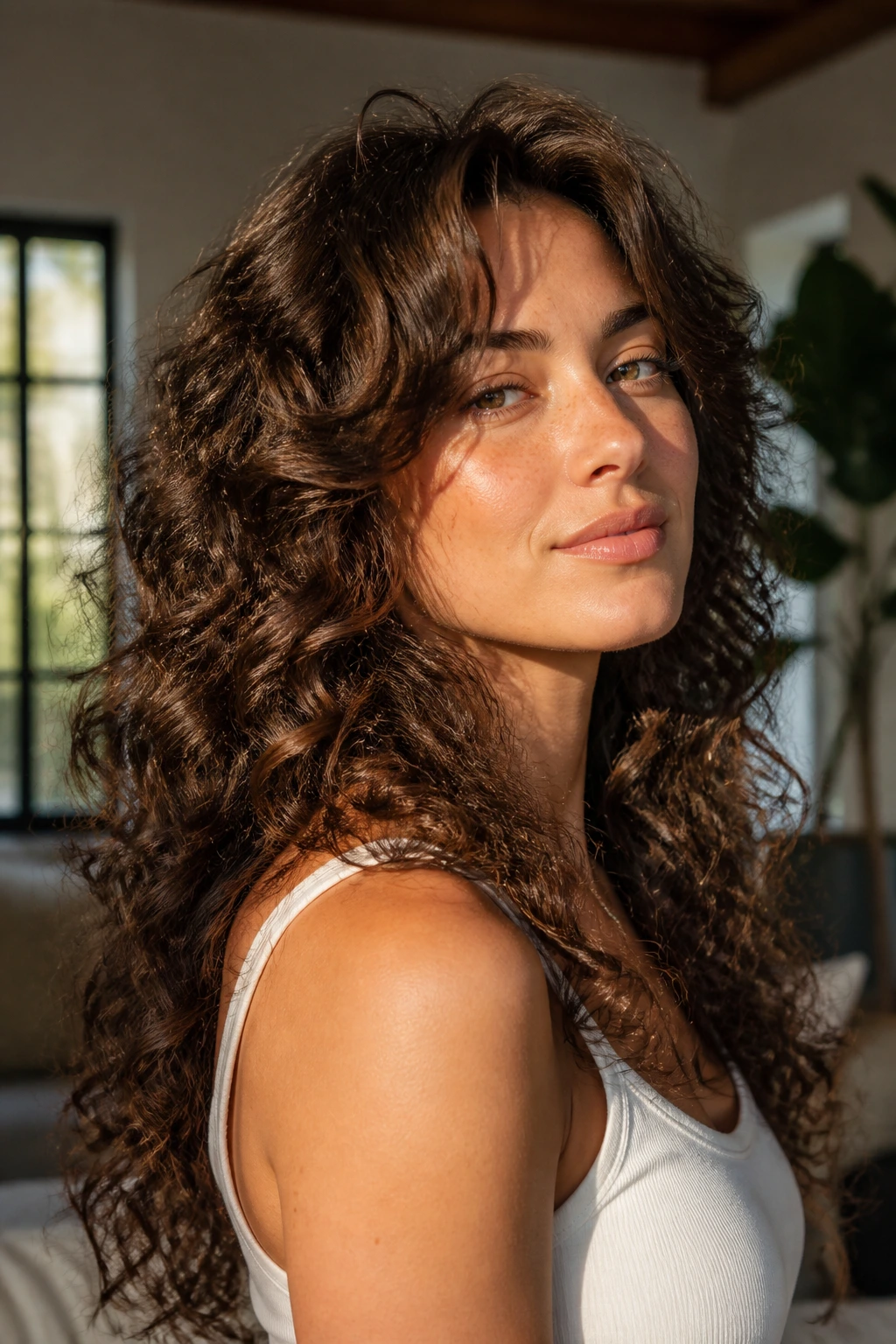
This cut has a little drama in the front and a lot of length in the back, and that’s the whole point. The top and face-framing layers are shorter, which creates lift around the crown and cheekbones, while the longer back section keeps the hair feeling like long hair, not a mid-length disguise.
What Makes It Different
The butterfly shape is good when the top of your curls goes flat by noon. The shorter upper layers wake up the outline without forcing you into a shaggy haircut that feels too chopped up. It’s especially nice on dense hair because it spreads the bulk around instead of dumping it at the ends. If you like a blow-dried diffused finish, this one has a lot of payoff.
3. Curly Wolf Cut
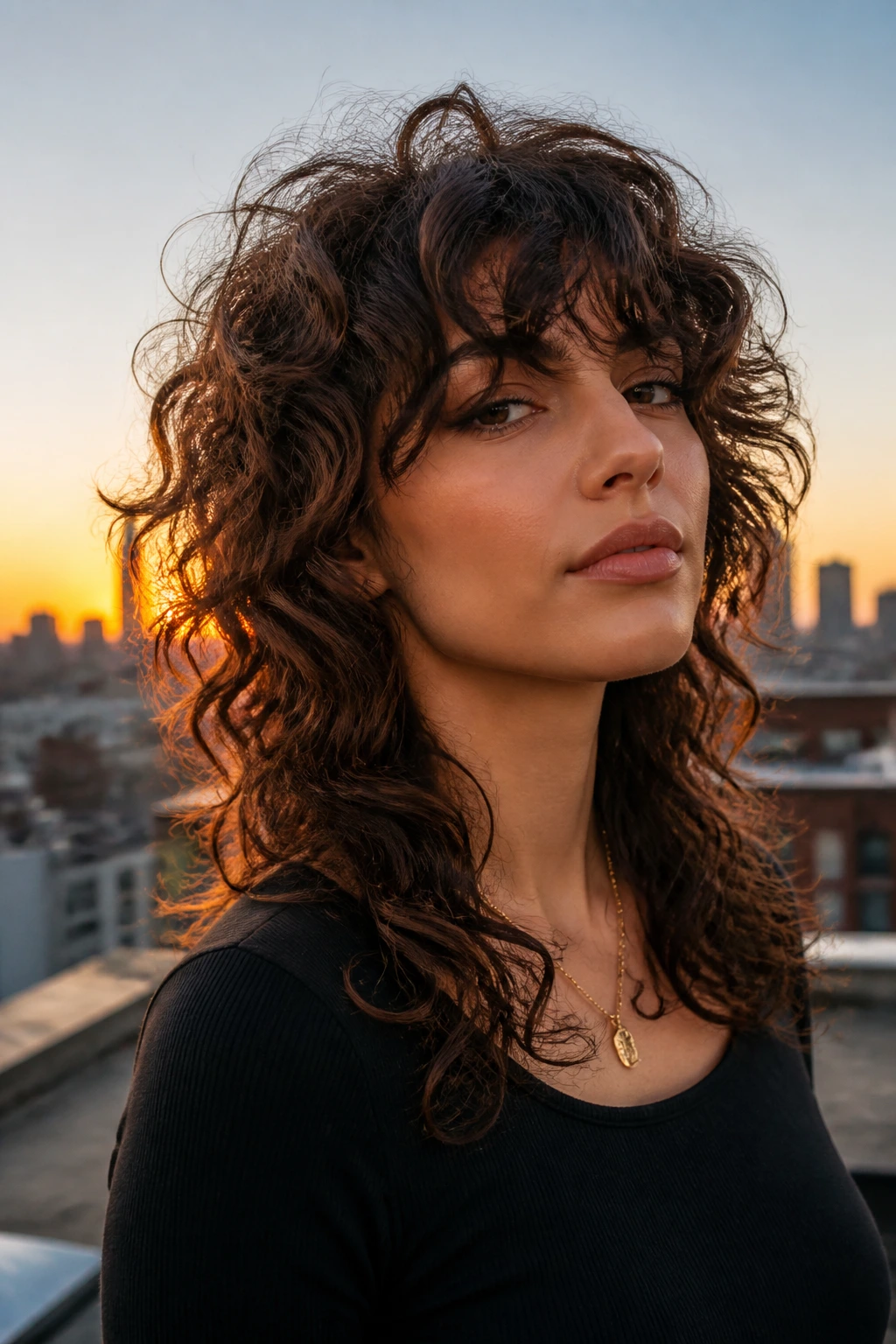
This one has teeth. Not literally. But it does have a sharper, choppier attitude than the softer long cuts, and curly hair makes that edge look more natural than it does on straight hair. The crown sits a little shorter, the back keeps its length, and the whole thing feels a bit unruly in the best way.
What to know: the wolf cut shines when the curl pattern already has some spring and volume. If your hair is fine and sparse at the ends, too much chopping can make the bottom look see-through. On thicker curls, though, it’s a smart way to keep the shape from turning into a heavy curtain.
A good curly wolf cut should look lived-in, not hacked apart.
4. Rounded Cascade Layers
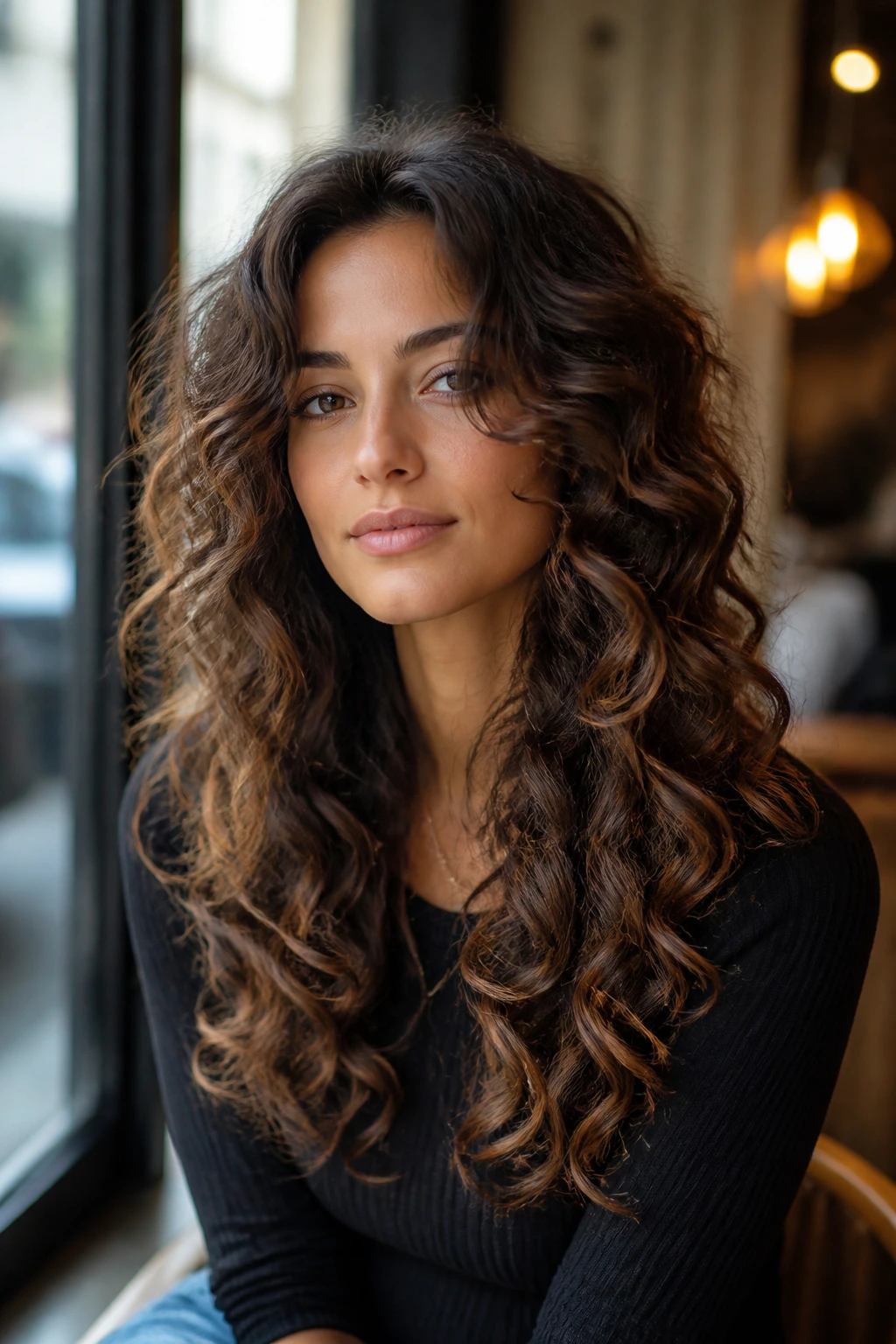
Picture a long curtain of curls that falls in soft waves around the shoulders instead of jutting out at the sides. That’s the rounded cascade. The layers are blended so the outline follows the head’s natural curve, which keeps the sides from getting wide and the bottom from turning blunt.
Why It Works
A rounded shape is usually the most forgiving on curly hair that has a lot of volume. It lets the hair sit close enough to the face to feel intentional, but not so close that the cut loses body. This is the one I’d recommend to someone who wants a classic long curly shape and doesn’t want to explain it every time they sit in the chair. It’s easy to wear, and it grows out in a civilized way.
5. Curtain-Frame Center Part
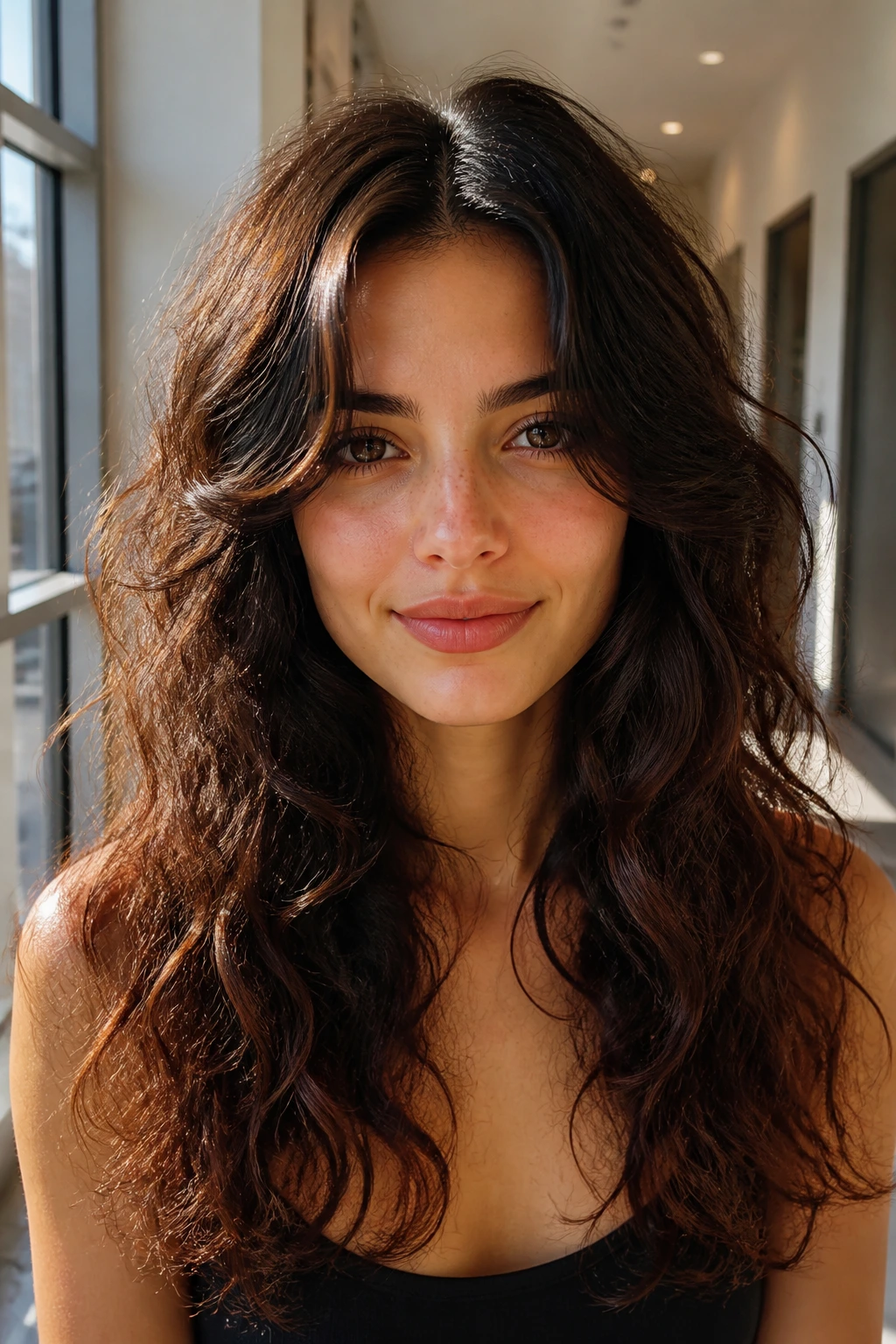
This cut is built around the center part and the long face-framing pieces that open away from the face like curtains. The length stays long, but the front gets enough movement to keep everything from looking heavy near the jaw. On curls, those front pieces can land at the cheekbone, mouth, or collarbone and still move well after shrinkage.
Who It Suits
If you want your curls to feel softer around the face without chopping the whole front section off, this is a good compromise. It works especially well on oval and round faces because the center part creates vertical lines. The trick is not to overdo the face frame. Too much taper and the front gets wispy fast. Keep the first shorter layers purposeful, not feathered to death.
6. Curly Shag With Fringe
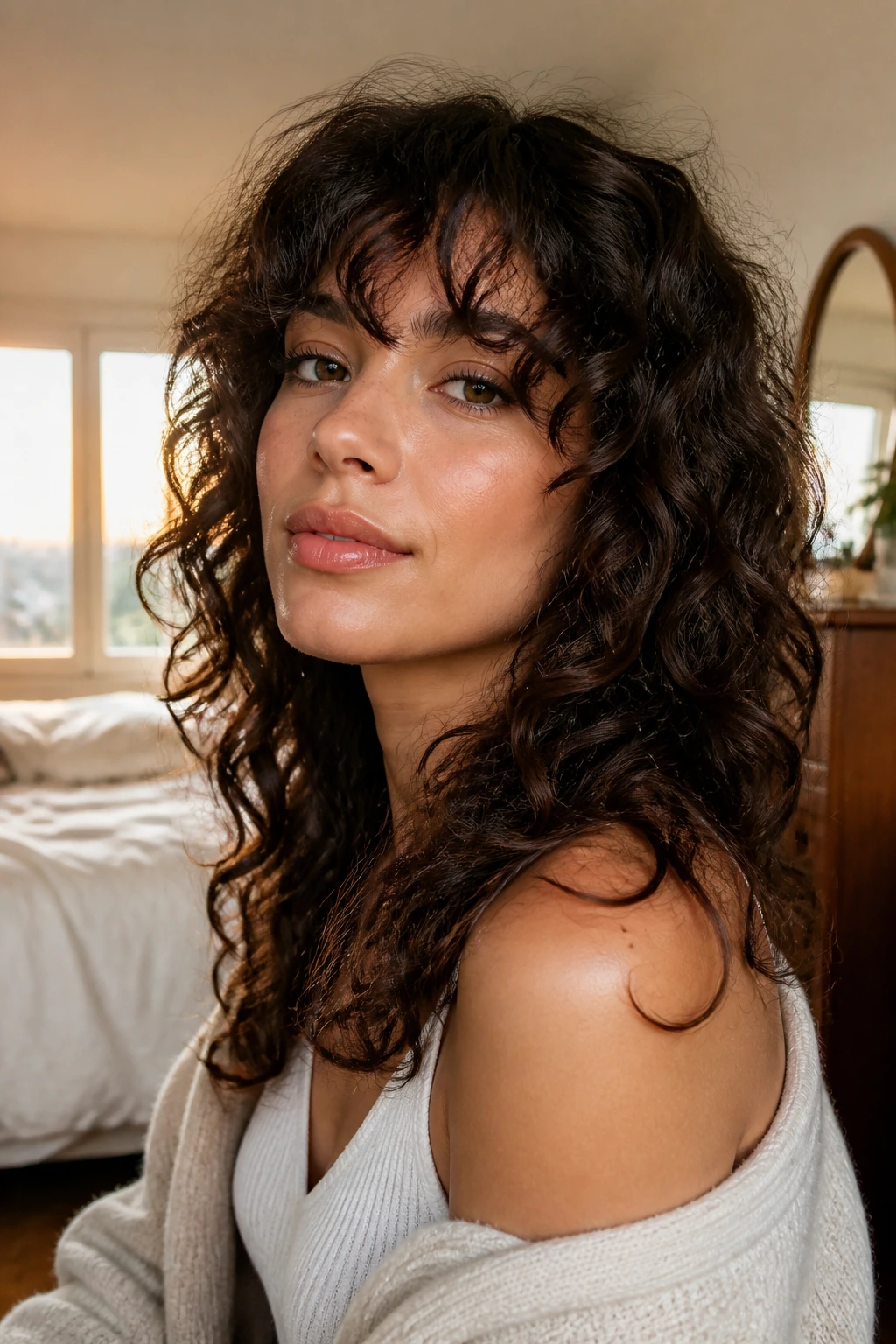
A shag on curly hair should feel airy, not frizzy. That means layers that break up bulk and a fringe that blends into the rest of the cut instead of sitting like a separate haircut on top. The overall shape is looser than a rounded cut and less severe than a wolf cut, which is why a lot of curl people land here and stay there.
The fringe is the detail that makes this one sing. A curly fringe can add personality immediately, but it does need commitment. If your curl pattern changes a lot from humidity to dry weather, the fringe will too. Still, when it’s right, it makes the whole haircut feel modern without trying too hard.
7. Dry-Shaped Curl-by-Curl Cut
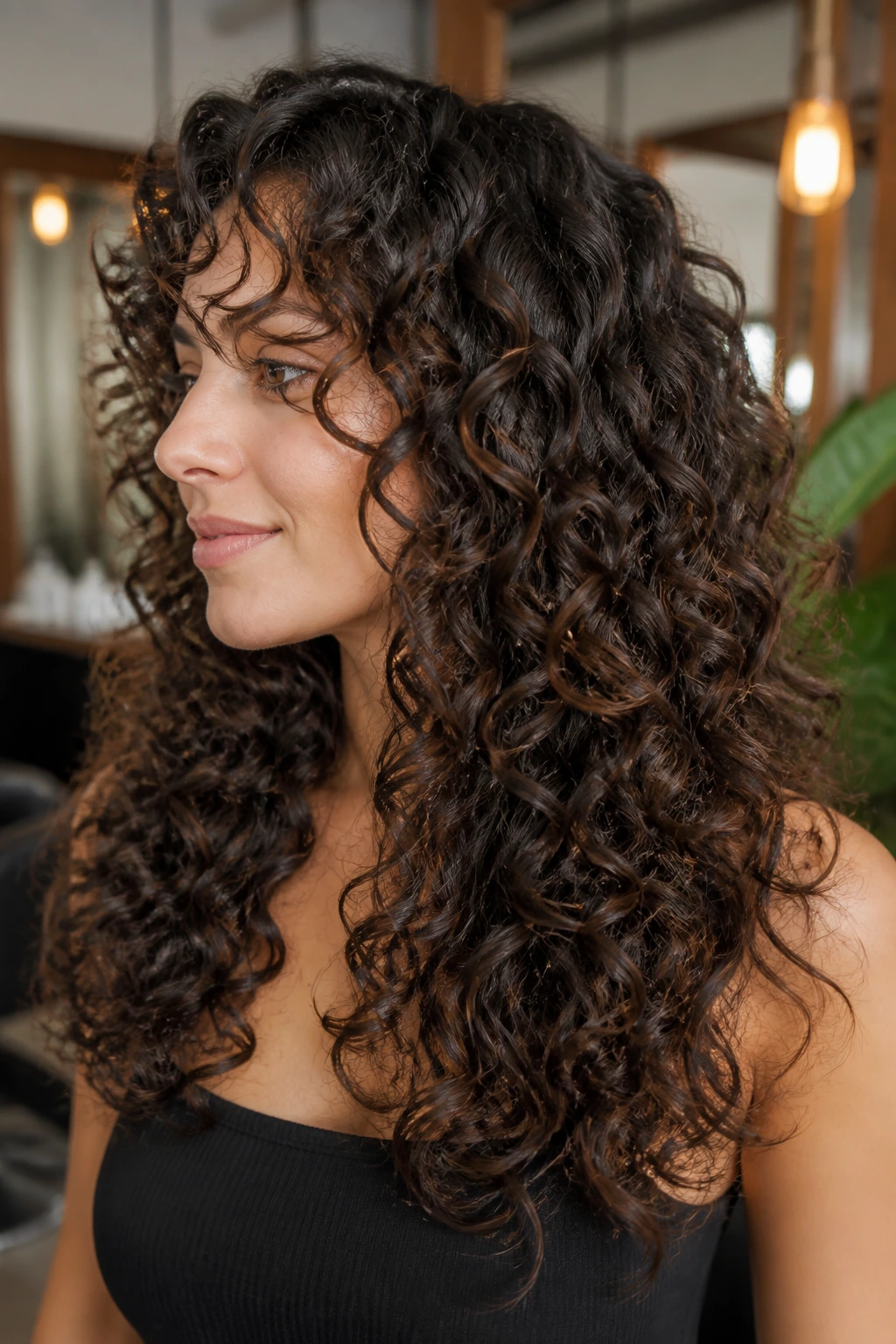
This is the practical person’s favorite. The stylist cuts the hair dry, curl by curl, so the true length and spring show up while the scissors are working. That matters because a wet curl can hide half its personality, and a straightened section can lie to everybody in the room.
Why It Works
A dry-shaped cut is one of the best ways to avoid uneven layers on curly hair. Every curl gets judged where it actually lives, not where it pretends to live when it’s wet. That helps with mixed textures, unpredictable shrinkage, and curls that don’t all behave the same way from one side of the head to the other. It’s slower. Worth it.
8. Invisible-Weight Lift Layers
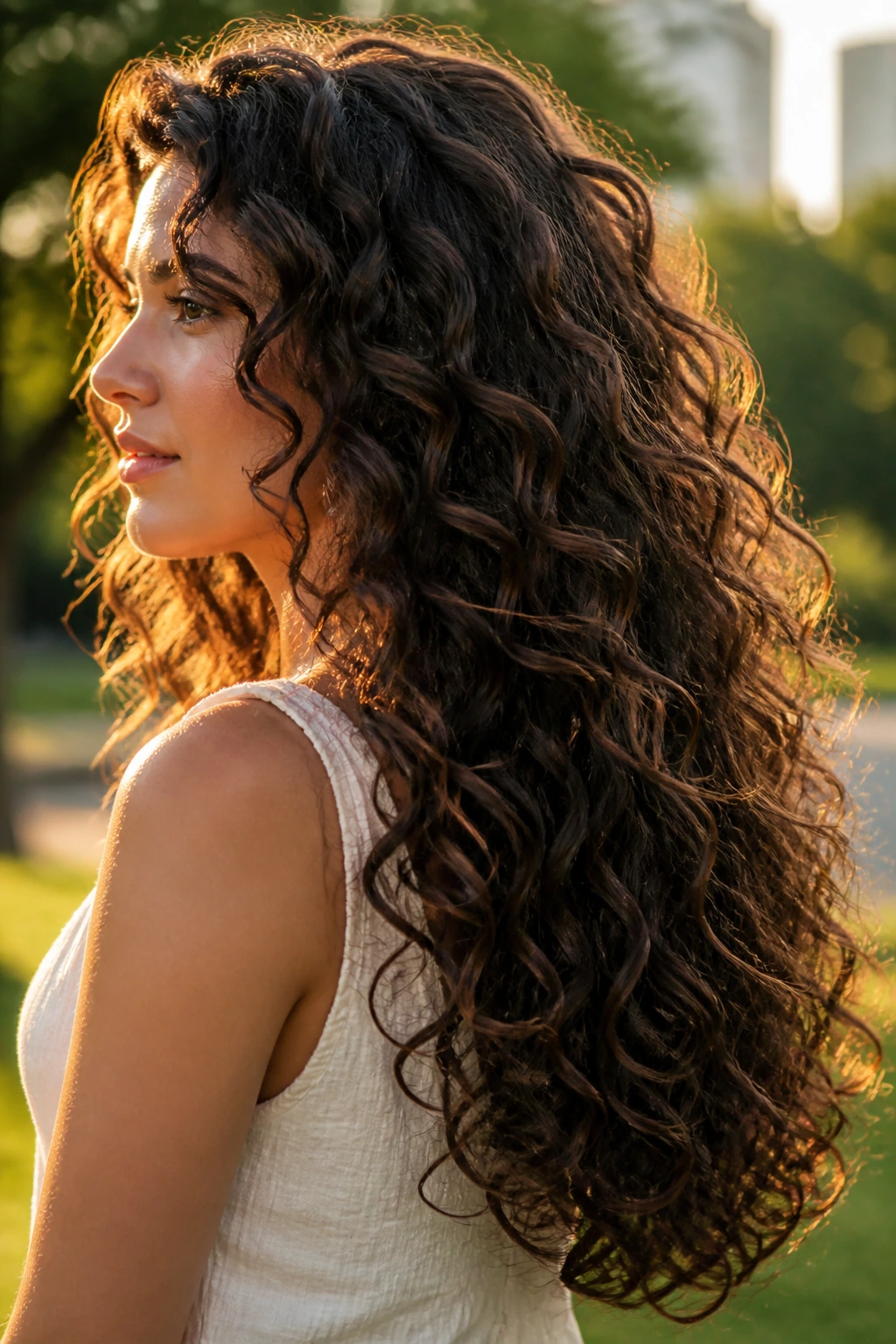
This is the haircut for people with thick curls who want movement without obvious short layers flashing through the surface. The stylist removes weight from inside the shape instead of carving visible steps all over the outside. From the front, it still reads as long hair. From the inside, it’s lighter and easier to bend.
Best use case: dense curls that swell at the bottom and feel heavy at the crown. Internal layers help the top sit better without making the ends look thin. If your hair gets huge but not in a nice, springy way, this cut is worth asking about. I’d still avoid over-thinning. The goal is lift, not a hollow middle.
9. V-Tail Silhouette
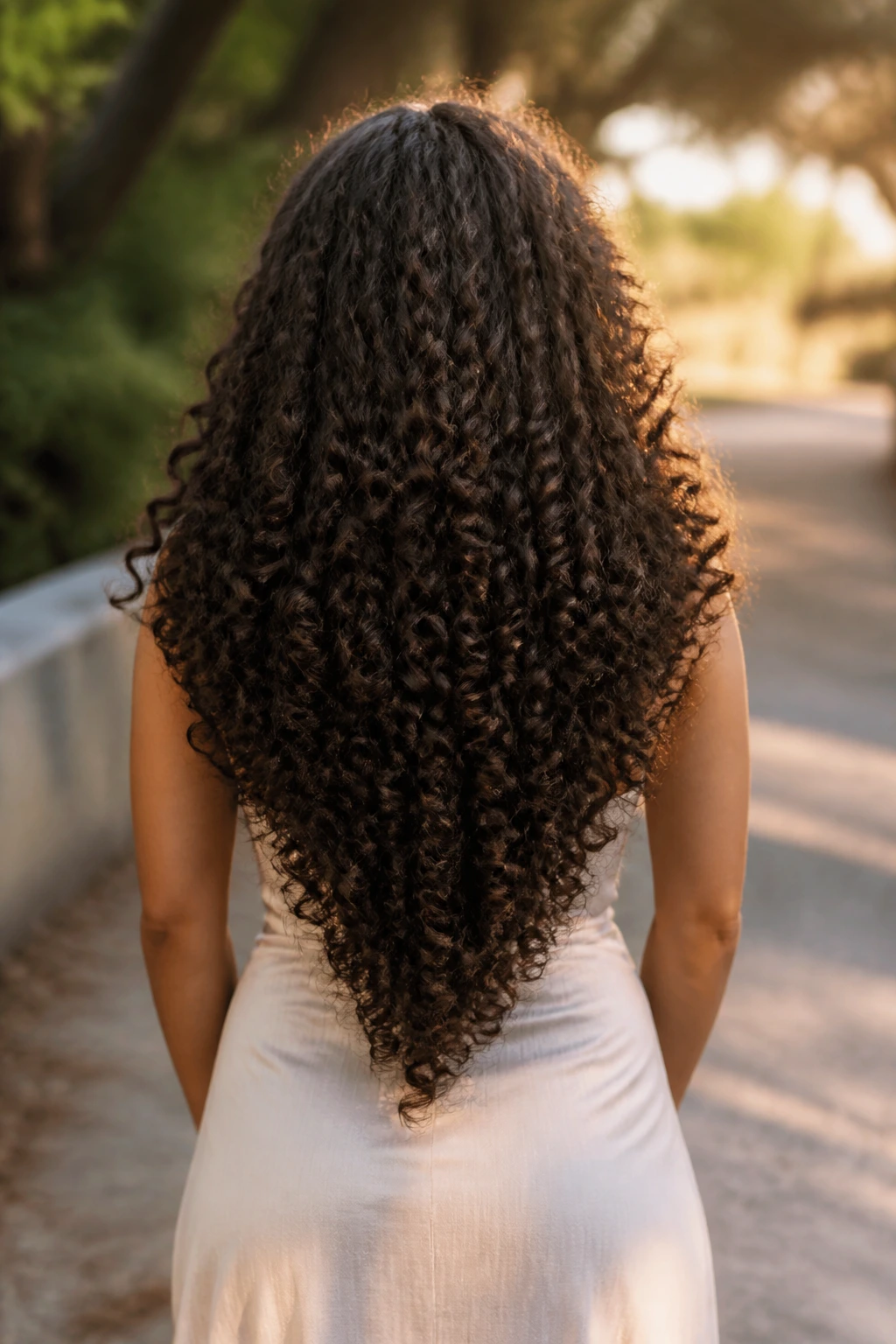
A V-shape gives long curls a point at the back, which sounds dramatic because it is. The center length drops lower than the sides, so the silhouette narrows toward the ends. On very long curly hair, that point can be gorgeous if the curl pattern stays consistent and the hair has enough density to hold the shape.
It’s not my pick for hair that’s already fine through the ends. The V can make a sparse hemline look stringy if the layers are too aggressive. But on thicker curls, it creates a strong line that looks intentional from behind, which matters more than people admit. Most of the time, we see our hair from the back first.
10. Side-Part Sweep Layers
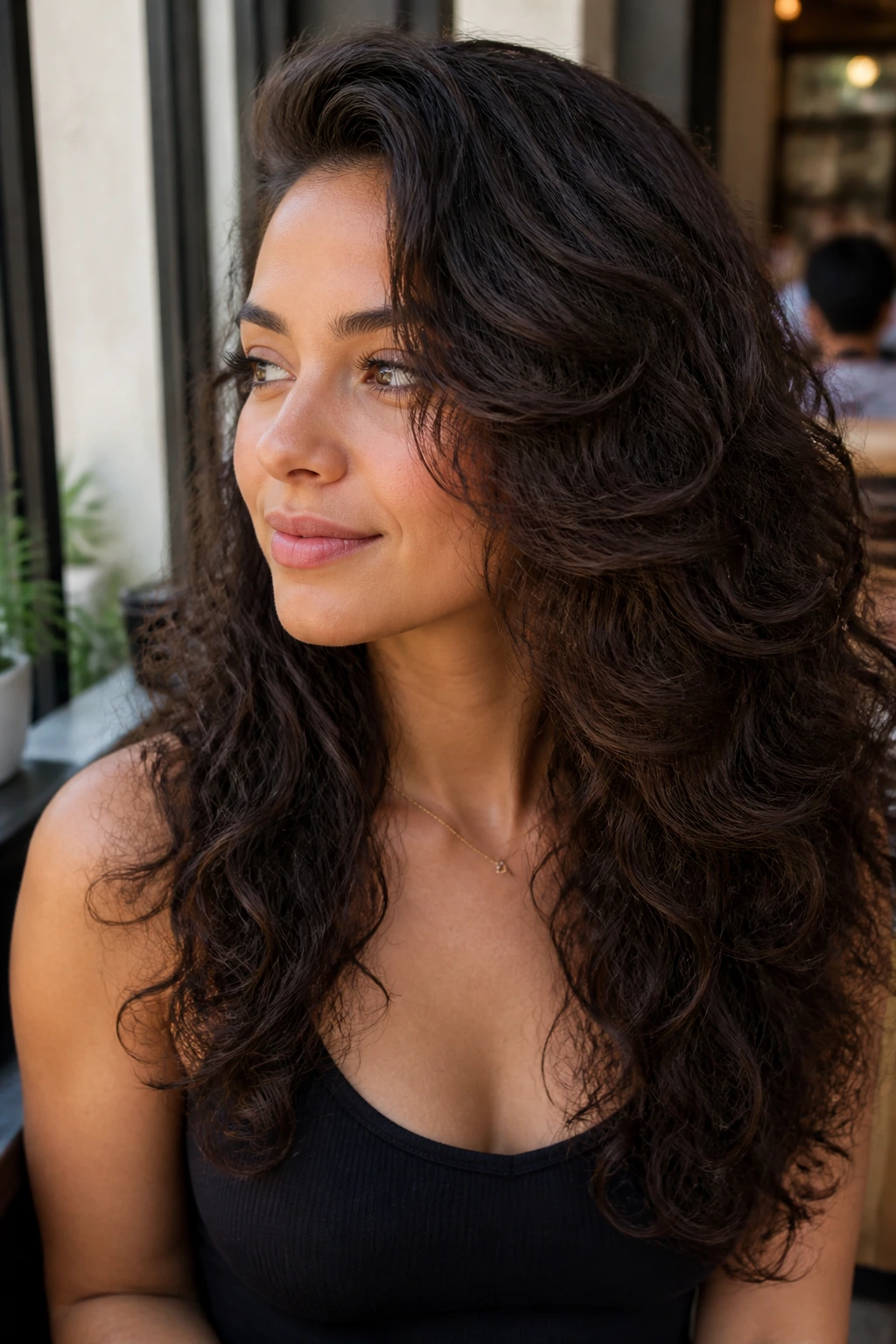
A deep side part changes the haircut more than people expect. It gives the roots a place to lift, it moves volume off the center line, and it makes long curls fall in a more sculpted way across the face. The layers can be long and soft, but the part does the styling work before the diffuser even comes out.
What to Ask For
Ask for a cut that keeps enough length on both sides to avoid one side collapsing flatter than the other. The longer front pieces should sweep away from the part, not hang in your eyes. This works especially well if one side of your hair naturally has more spring than the other. A side part gives that difference a job.
11. Full Fringe Length
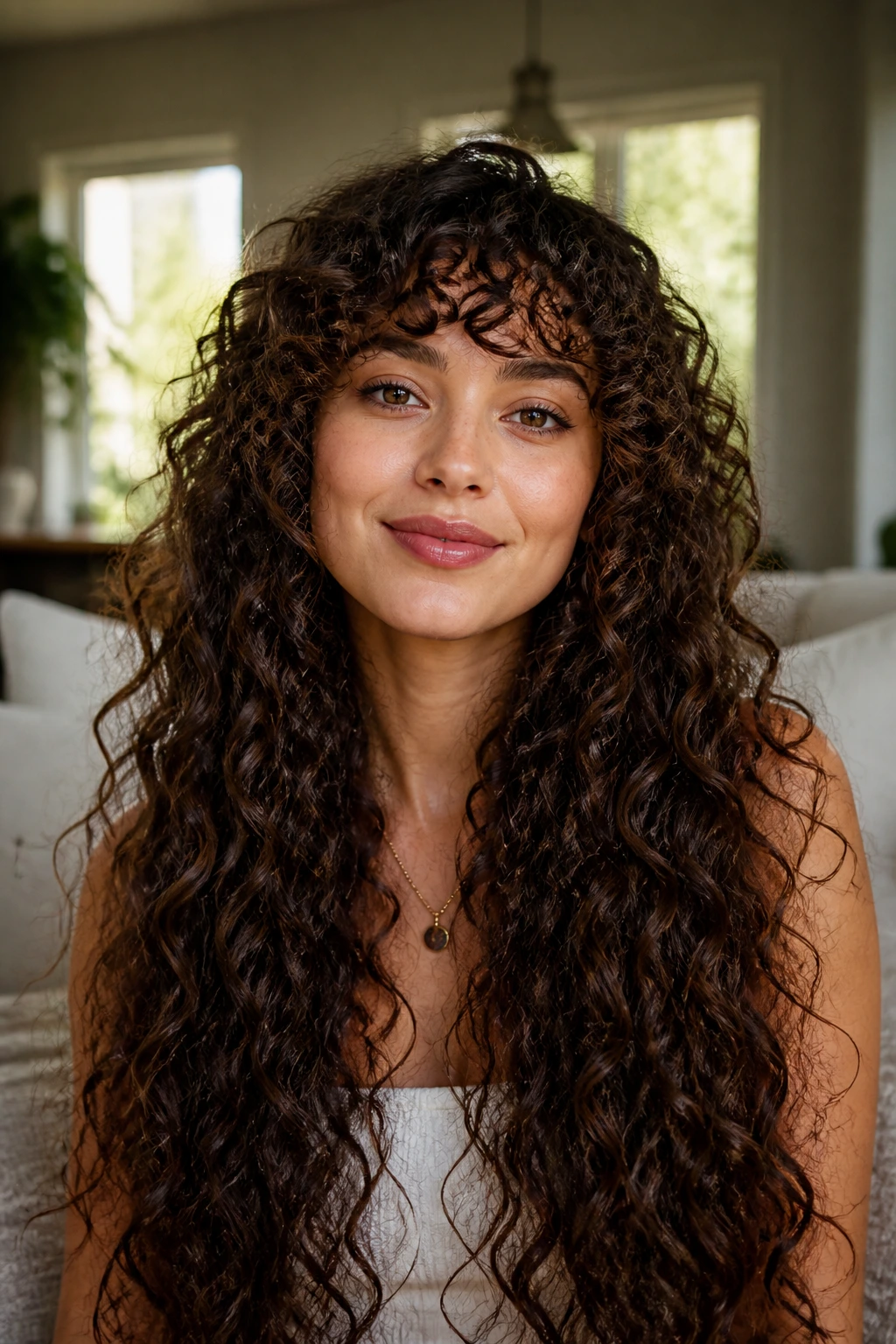
A full curly fringe is a bold move, but it can be stunning when the curls are dense enough to support it. The fringe sits higher on the forehead and lands with plenty of bounce, while the rest of the hair stays long and flowing. The contrast is the whole charm.
It does need upkeep. Fringe curls shrink. A lot. And they can separate faster than the rest of the cut if you don’t style them with the same care you give the length. Still, when the shape is right, a full fringe makes long curls look romantic rather than merely long. That’s a big difference.
12. Soft Asymmetry Cut
A little asymmetry can make curly hair feel more modern without turning it into a statement piece. One side can sit a touch longer, or the front layers can be placed so the shape leans slightly off-center. The result is subtle, not theatrical.
This cut works well when your curls are dense but you don’t want a lot of layering through the back. The asymmetry gives the eye somewhere to travel, which keeps long hair from feeling like one giant block. It also flatters faces that need a little angular break. Keep the difference gentle. A tiny shift is often enough.
13. Halo Layer Cut
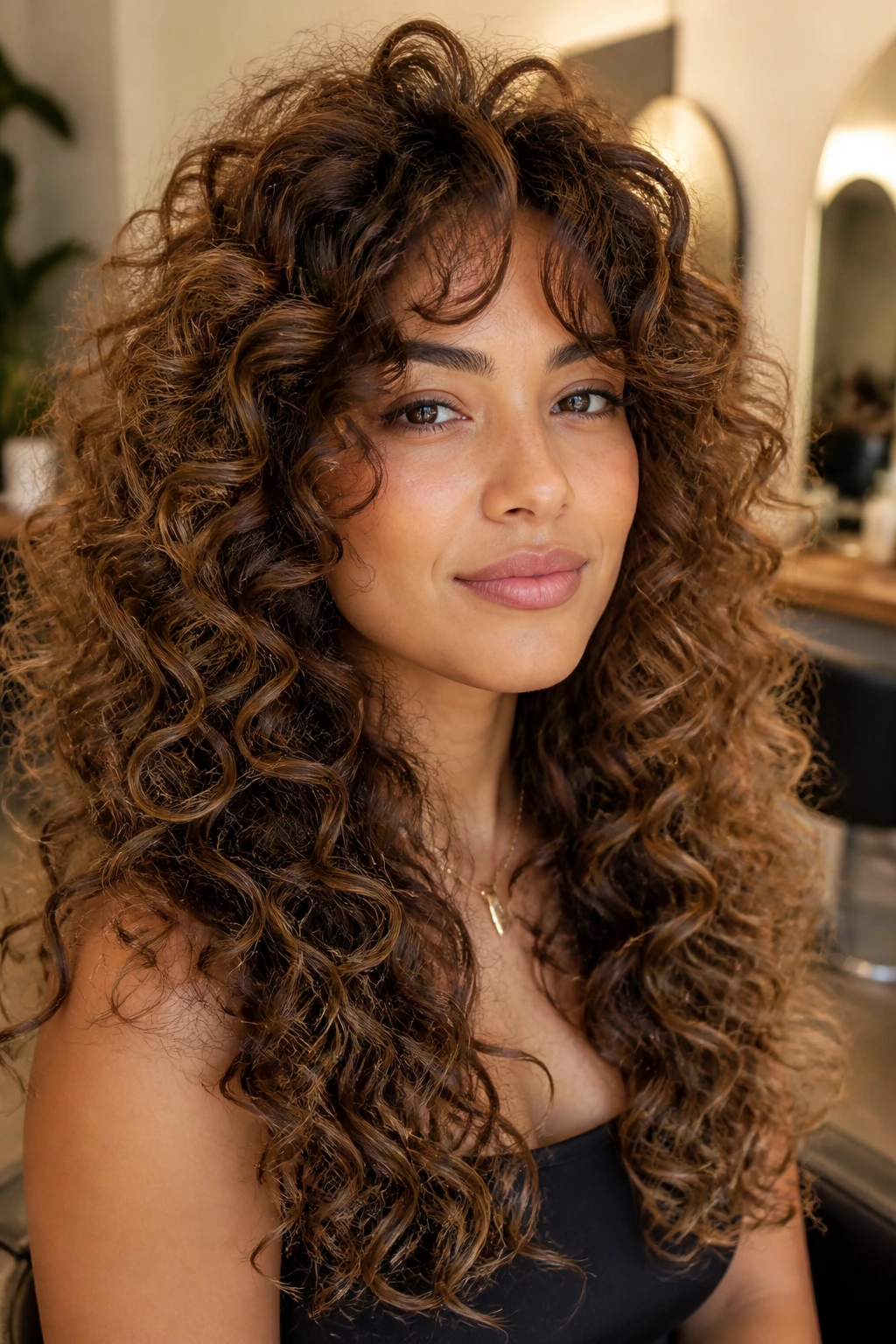
The halo cut builds lift around the crown and upper sides, almost like the curls are sitting in a light frame above the rest of the length. It’s especially useful when long curly hair tends to flatten at the roots and puff only from the ears down. The top gets shape. The length stays there.
The Science Behind It
Hair that hangs straight from the crown can make curls look tired even if the ends are healthy. A halo layer changes that by putting a bit of bend and lift up top, which helps the whole silhouette read taller and lighter. I’d call this one smart rather than flashy. It solves a problem without announcing itself in the mirror.
14. Razor-Soft Edge Cut
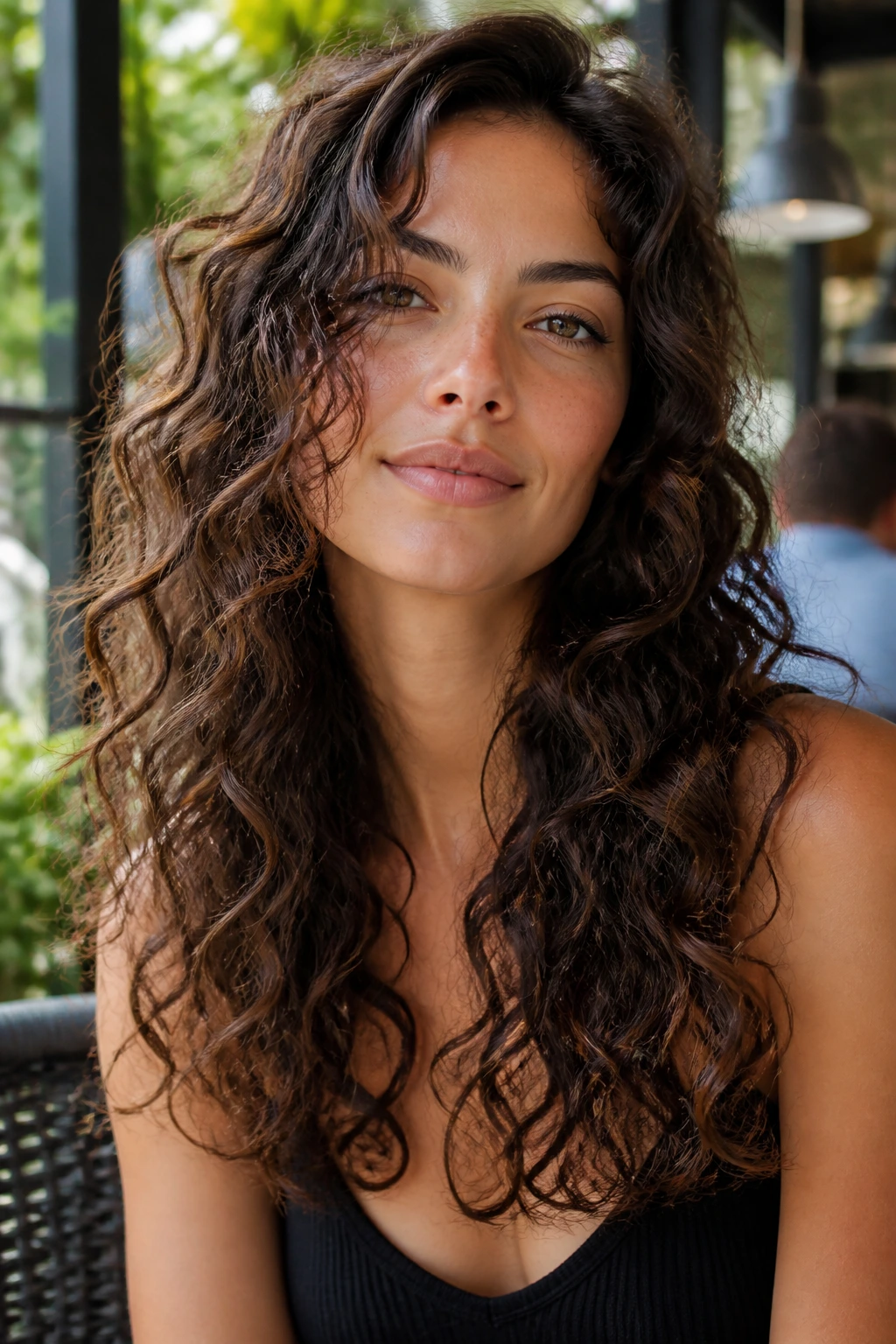
Some long curly cuts need sharper shaping; this one needs a softer edge. The ends are lightly texturized or razor-softened so they don’t sit like a dense block. On coarse curls, that softening can keep the bottom from looking heavy and stiff.
The catch is restraint. Too much razor work and curls can fray at the ends, especially if the hair is already porous or damaged. A little edge softness goes a long way. I like this cut on long, thick curls that want air between the strands but still need a full-looking hemline. Done badly, it looks ragged. Done well, it looks expensive and easy.
15. Tapered Coil Shape
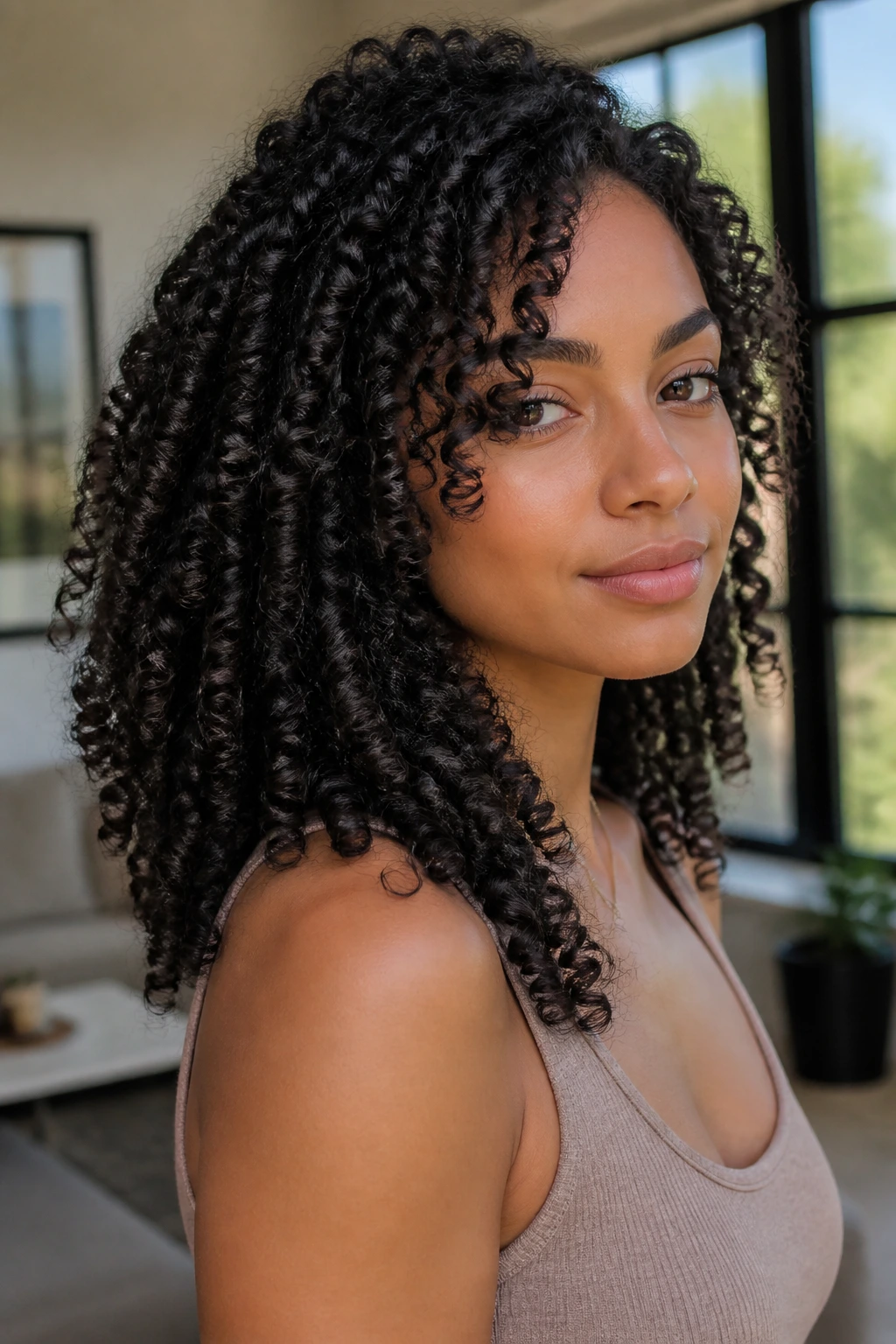
Tighter curls and coils often need a different balance than loose spirals. A tapered shape keeps the outline narrower near the head and fuller through the length, which prevents the awkward mushroom effect that can happen when every curl is left at the same length. The silhouette feels cleaner and more controlled.
That taper also helps with shrinkage. Coils shrink differently from layer to layer, so leaving a little more length where the hair naturally compresses keeps the shape from jumping all over the place. This is one of those cuts that looks simple but needs a good eye. A bad taper looks like a helmet. A good taper looks deliberate from every angle.
16. Long Mermaid Layers
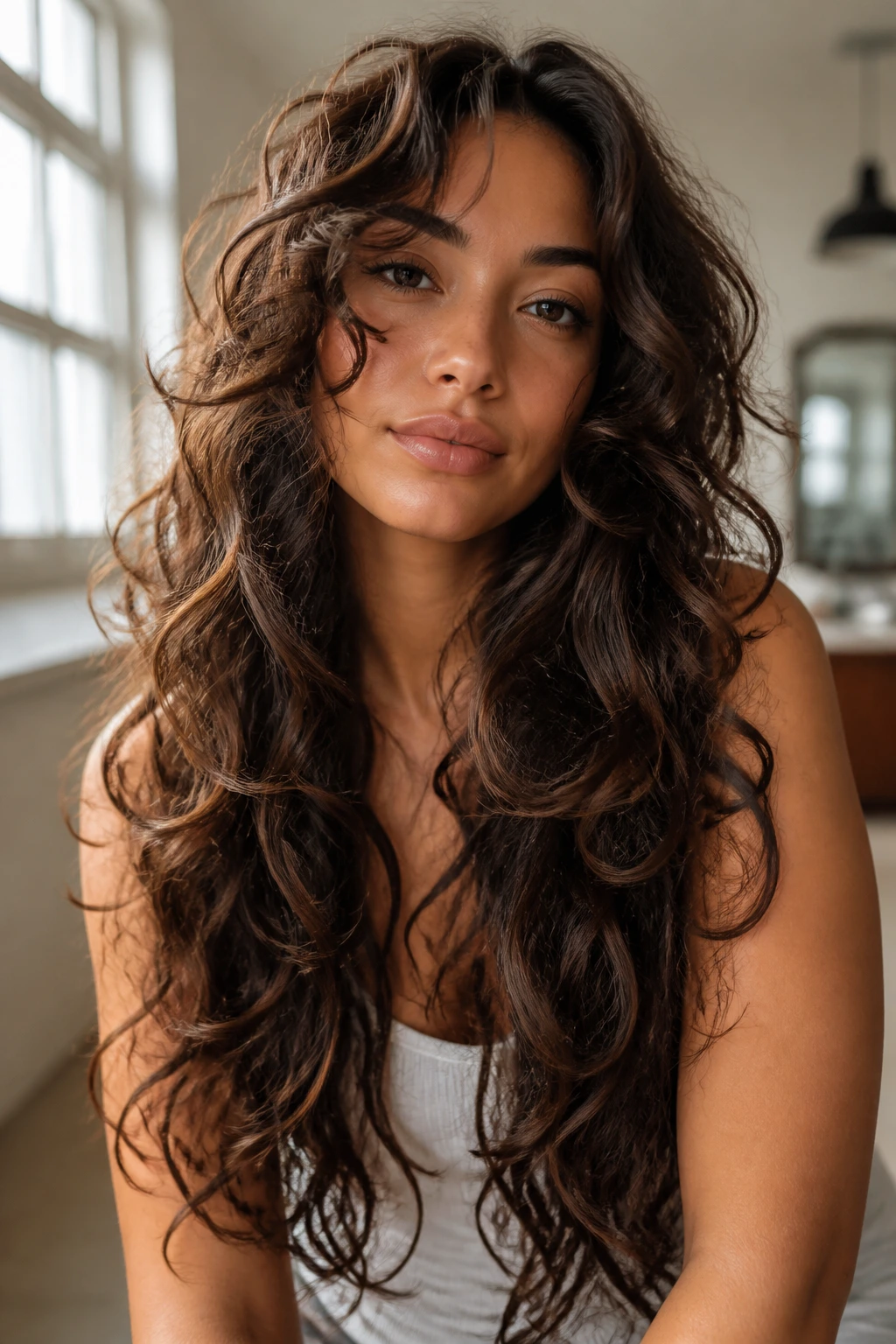
This is the glamorous one. Long, cascading layers keep the overall length dramatic while letting the curls move in soft waves instead of one solid mass. It’s the kind of cut people want when they say they want “long hair,” but what they really mean is flow.
Mermaid layers work best when the hair is healthy enough to hold shape through the ends. If the bottom is dry or thin, the whole look can turn straggly. But when the length is strong, the effect is lush and almost cinematic. Not overdone. Just long, curved, and full of motion.
17. Cheekbone Frame Layers
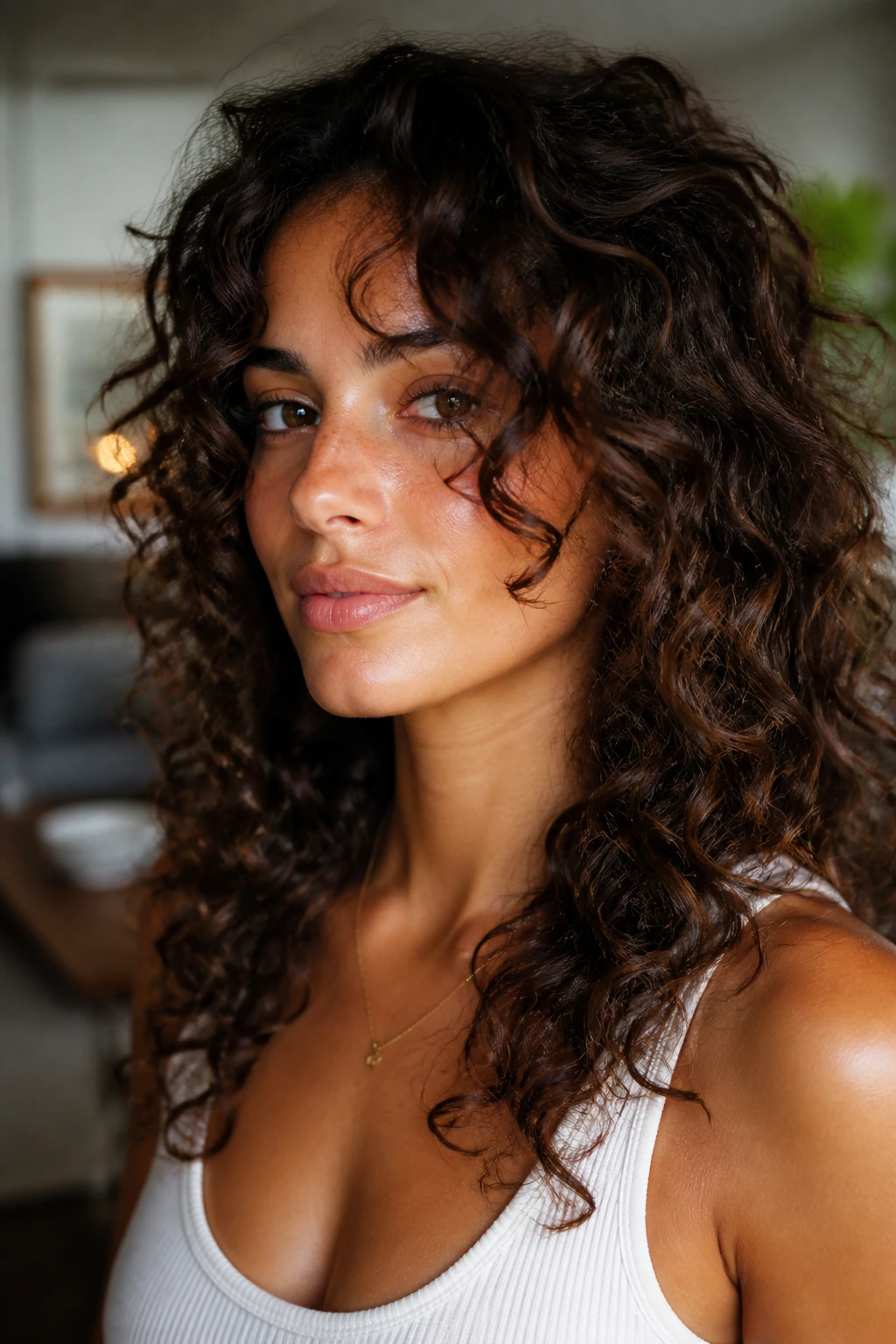
Cheekbone layers are exactly what they sound like: front pieces that hit near the cheekbones and pull the eye upward. On curly hair, that placement matters because curls add width quickly. A face frame that starts too low can drag the whole shape downward. One that starts higher gives the face room.
Best For
Round and heart-shaped faces usually benefit most, but I’ve seen this cut flatter square jawlines too because the curls soften the angles near the mouth. Keep the shortest front pieces long enough to curl properly. Too-short face framing becomes a blur of frizz instead of shape. Aim for movement, not a chopped effect.
18. Length-Keeper Dusting Cut
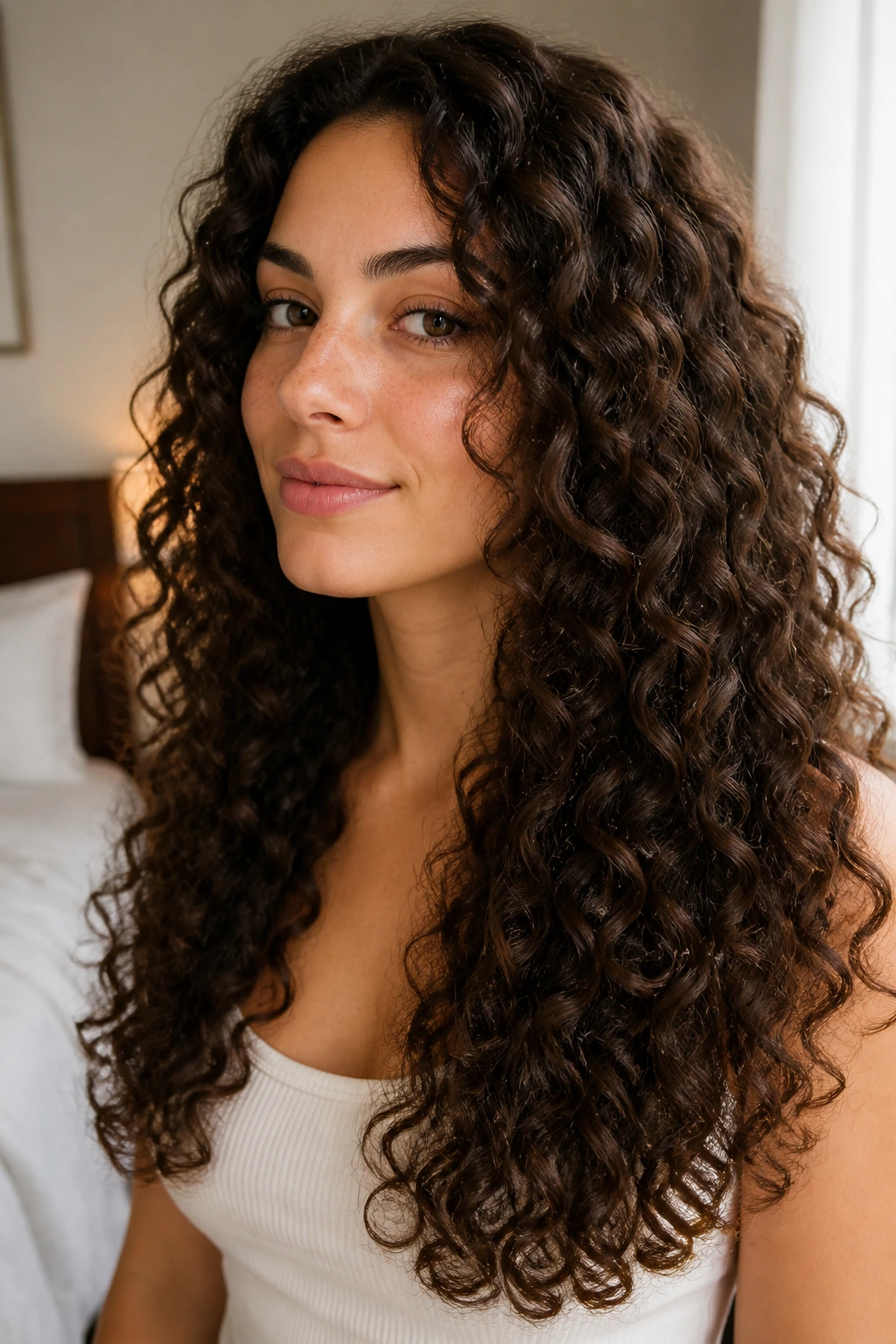
Sometimes the best haircut is the one that takes the least. A length-keeper dusting cut trims split ends, cleans up the perimeter, and maybe adds a tiny bit of shaping around the face. The goal is to keep as much length as possible while preventing the ends from looking tired.
This one is for people who love long hair more than they love dramatic shape changes. It works if your curls already have a good outline and just need maintenance. Not every curly haircut needs a ladder of layers. Sometimes the smartest move is to preserve the line you already have and keep the bottom healthy enough to hold it.
19. Curly Mullet Lite
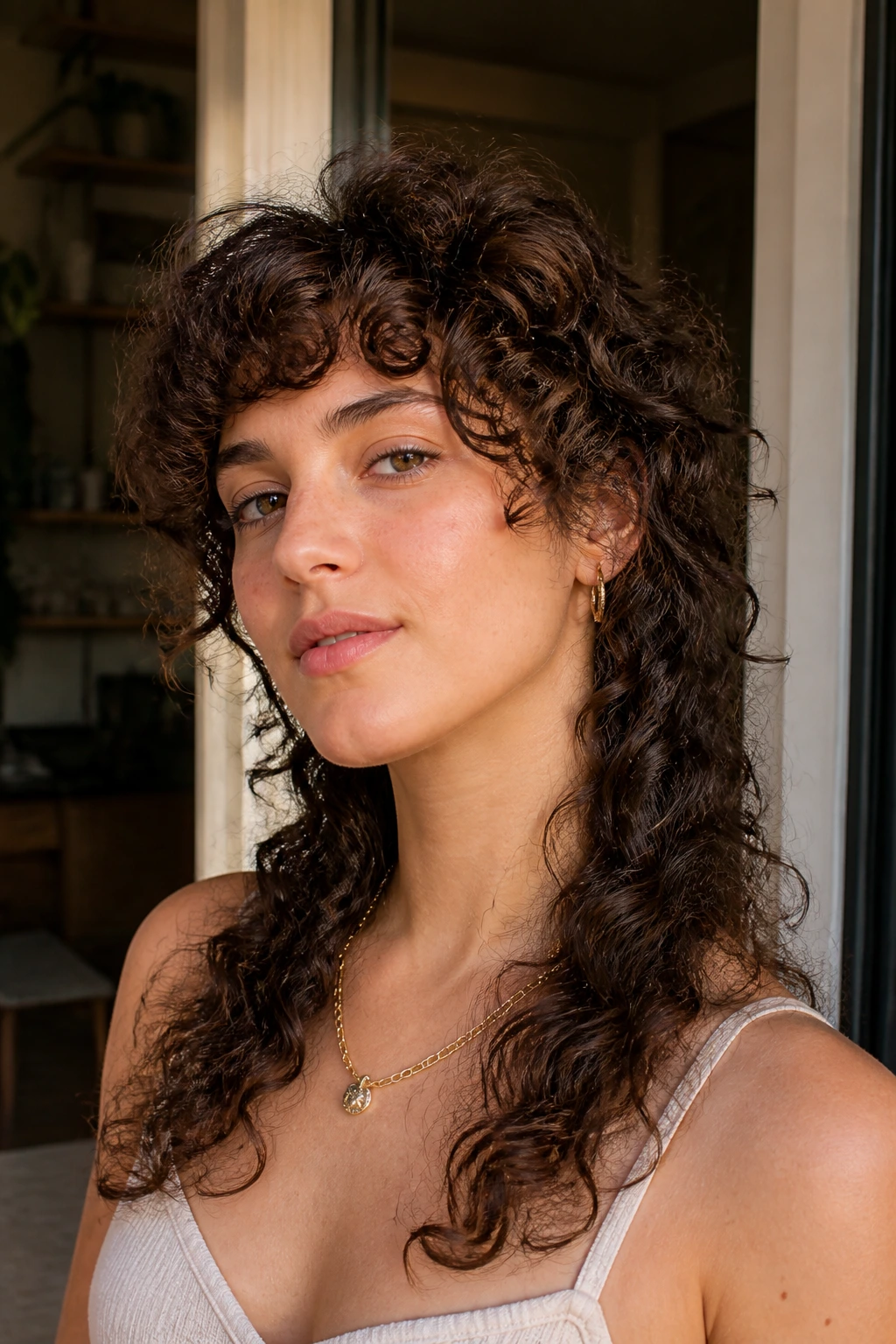
The modern curly mullet is less about shock value and more about balance. Shorter pieces near the front and crown make the hair lighter where it often needs it, while the back stays long enough to keep the style feminine, soft, and wearable. The word “mullet” sounds rougher than the haircut usually looks on curls.
It’s a good choice if you want personality without sacrificing length. The trick is blending the transitions so the cut flows instead of looking chopped into three zones. I’d trust this on hair with a bit of natural volume and spring. It’s not the safest choice. It is one of the most interesting.
20. Density-Release Layers
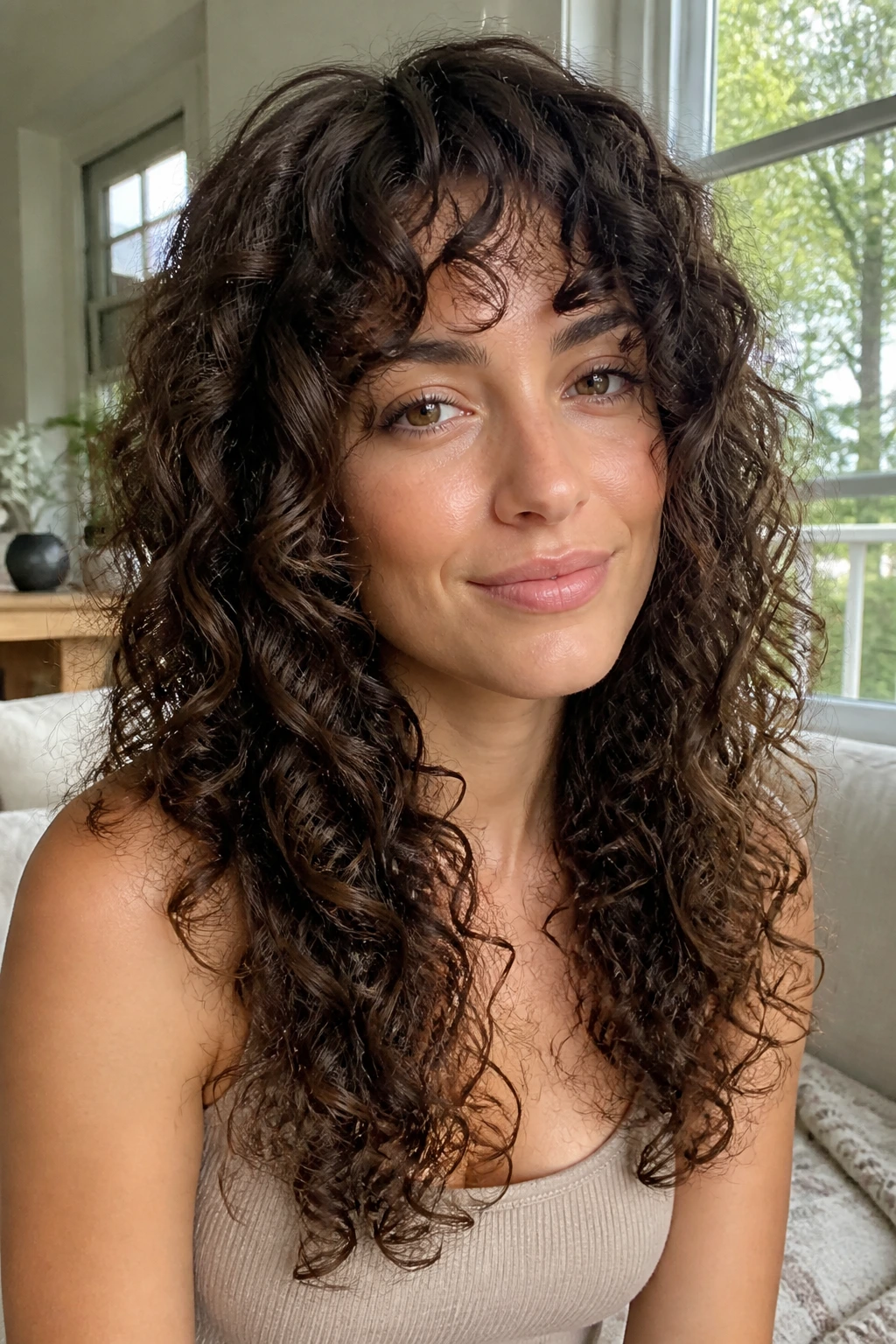
If your curls feel heavy, bulky, and hard to fully dry, density-release layers can help. The styling goal is to remove mass from the thickest parts of the head without stripping the perimeter bare. That means the hair can dry faster, move better, and sit with less puff at the sides.
This cut is especially useful for people with a lot of hair, not necessarily coarse hair. Density and texture are different things, and that distinction matters here. A person can have fine strands and a ton of them, or coarse strands with less total hair. The haircut should respond to that. This one does.
21. Waterfall Shape
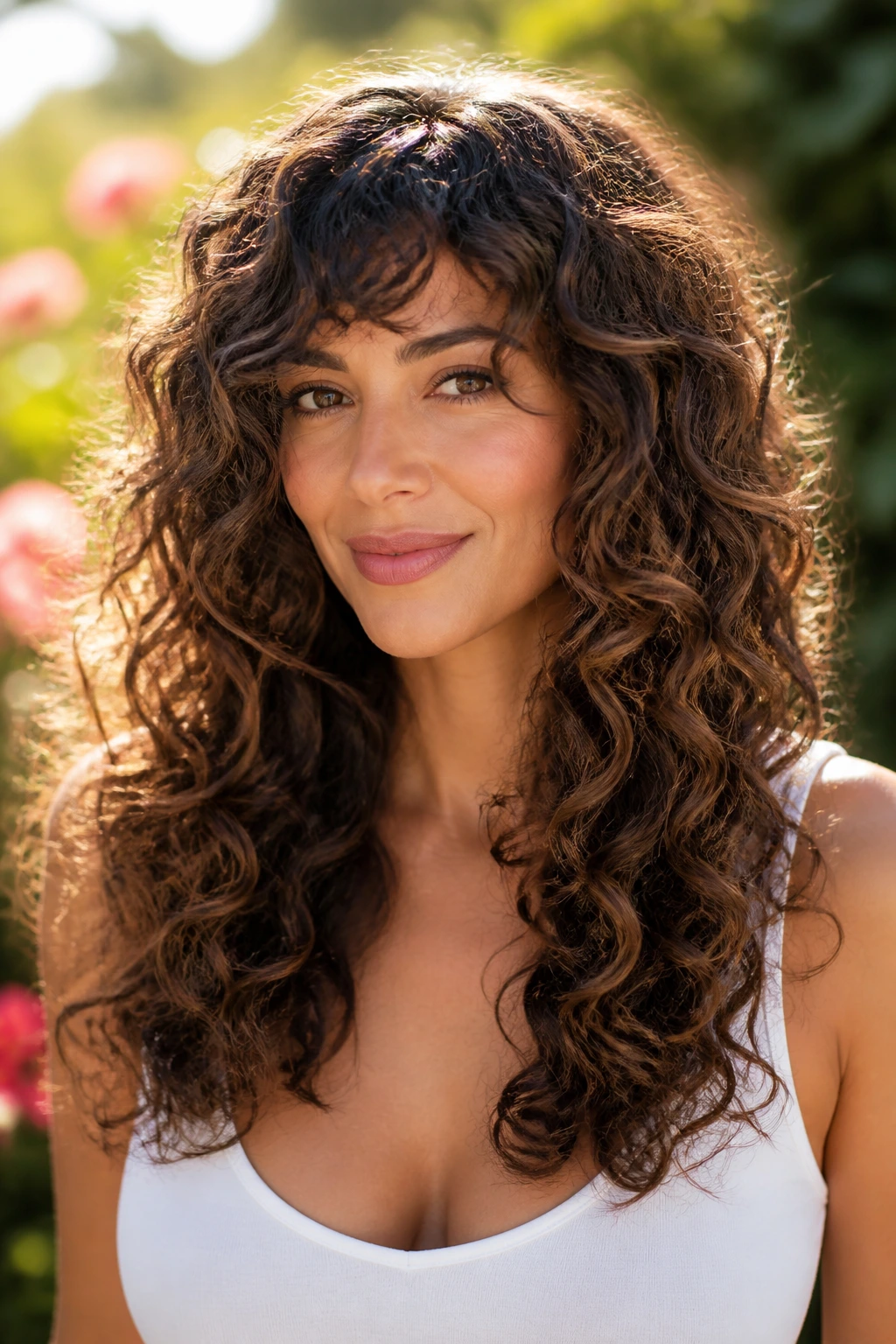
The waterfall cut lets the layers fall in cascading steps that stay soft instead of choppy. There’s a lot of movement through the mid-lengths, and the silhouette feels flowing from top to bottom. On long curls, that can be gorgeous because the different lengths catch light and shape in a way a one-length cut can’t.
It’s a good middle ground for someone who wants layering but not a shag. The curve from shorter to longer pieces should feel gradual. When it’s cut well, the hair looks like it was shaped by gravity, which is the nicest kind of haircut trick. Too many abrupt steps and the “waterfall” starts looking like a staircase. Not the same thing.
22. Bottleneck Bang Blend
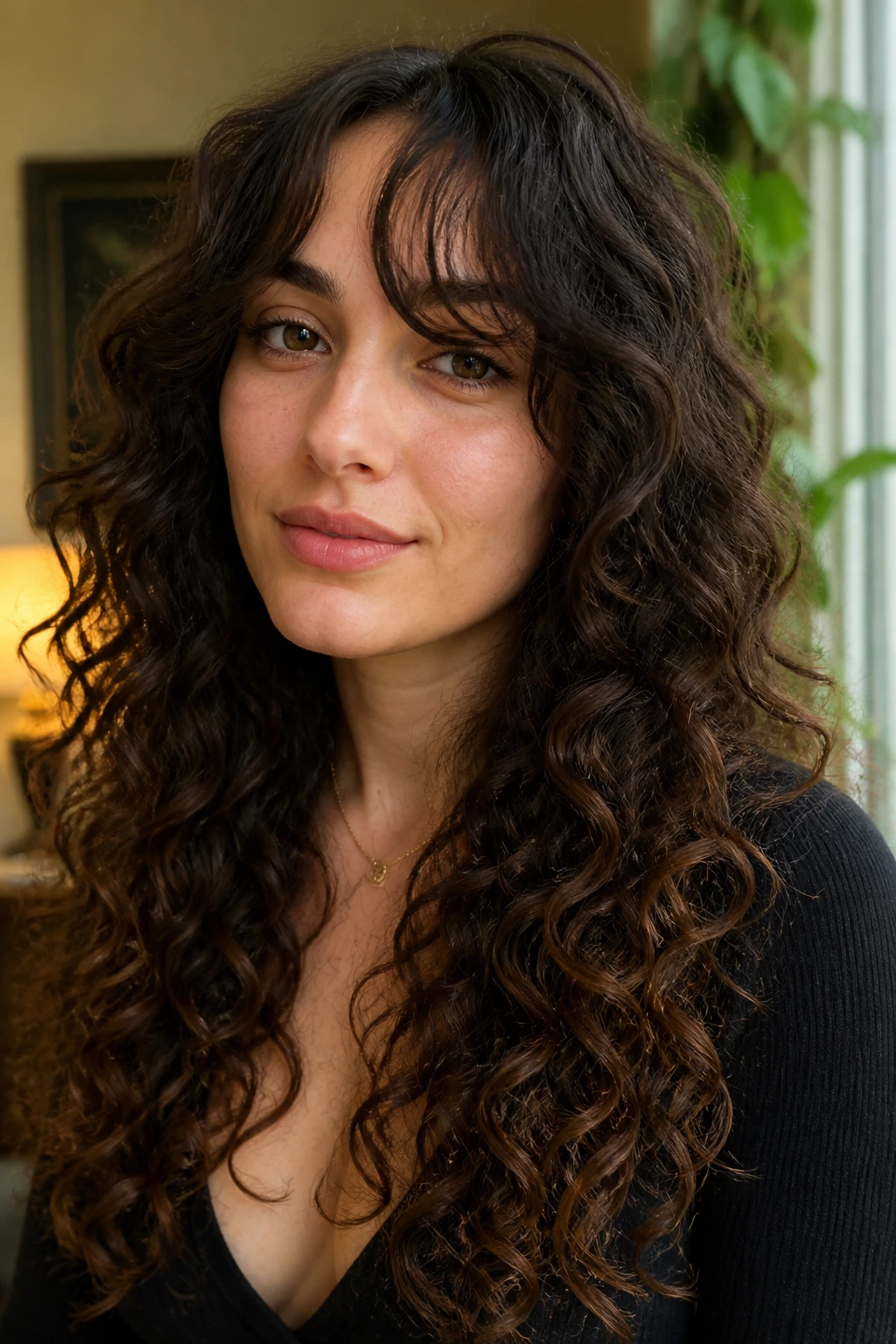
Bottleneck bangs are narrower near the center of the forehead and open out into softer face-framing pieces. On long curly hair, that gives you fringe without the heavy block of a full curly bang. The bangs blend into the rest of the haircut more naturally, which makes styling less fussy.
Why people like it: it gives structure around the face while still letting the length stay the star. It also grows out more gracefully than a blunt fringe, which is handy because curls don’t always behave on a schedule. If you want some forehead coverage but don’t want to fight your bangs every morning, this is a smart compromise.
23. Heavy Blunt Curl Perimeter
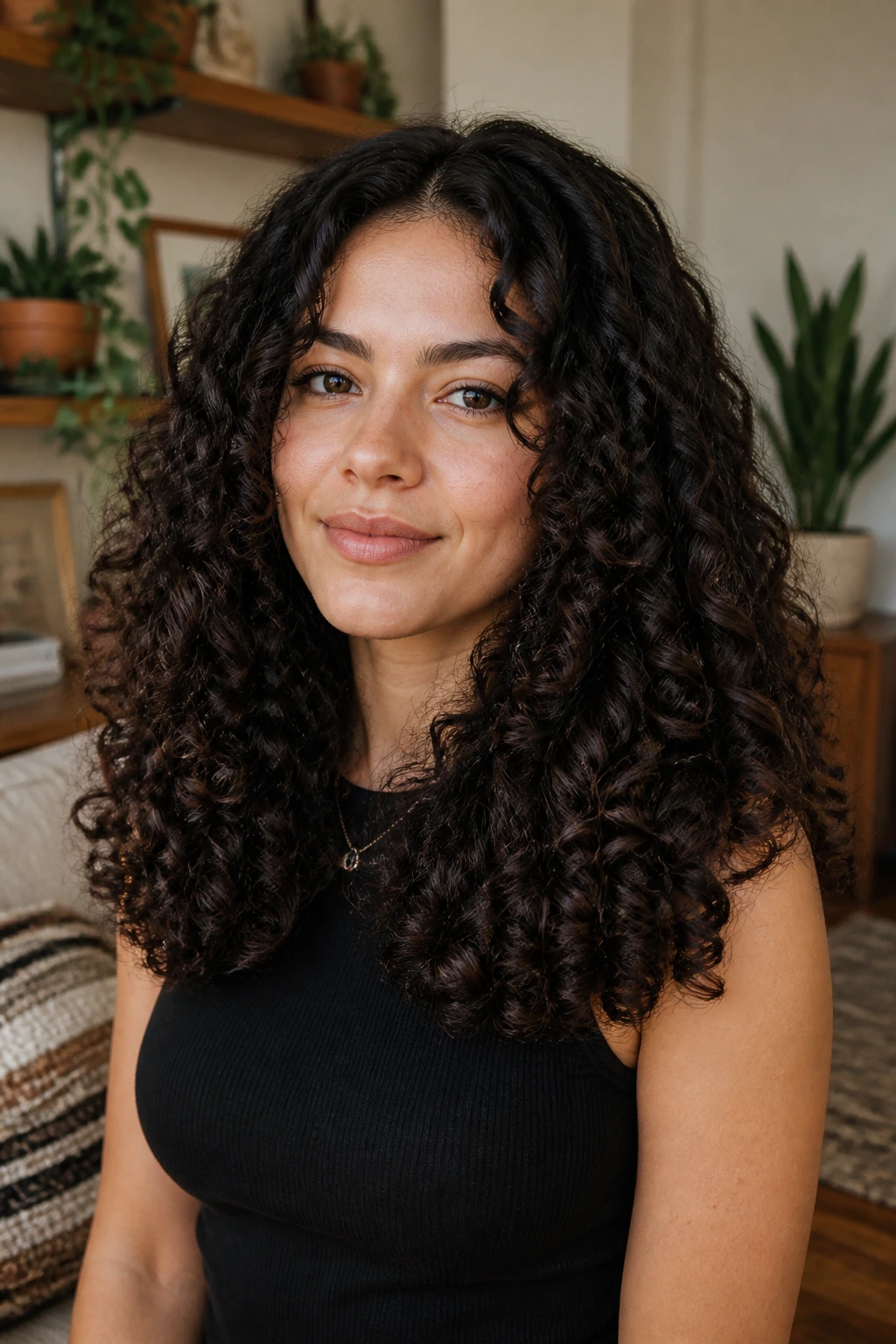
A blunt perimeter on curly hair sounds severe until you see how rich it can look when the curls are dense enough to support it. The hemline stays fuller and stronger, which gives the whole style a lush bottom edge. On the right texture, that density is the point.
I like this for curls that go sparse when over-layered. Too many layers can make the ends look hungry. A heavier line keeps the hair looking expensive and full, especially when the curls clump well on wash day. The downside is weight. If your hair is very thick, the bottom can get draggy. If it’s fine, this can be a lifesaver.
24. Fine-Curl Body Builder
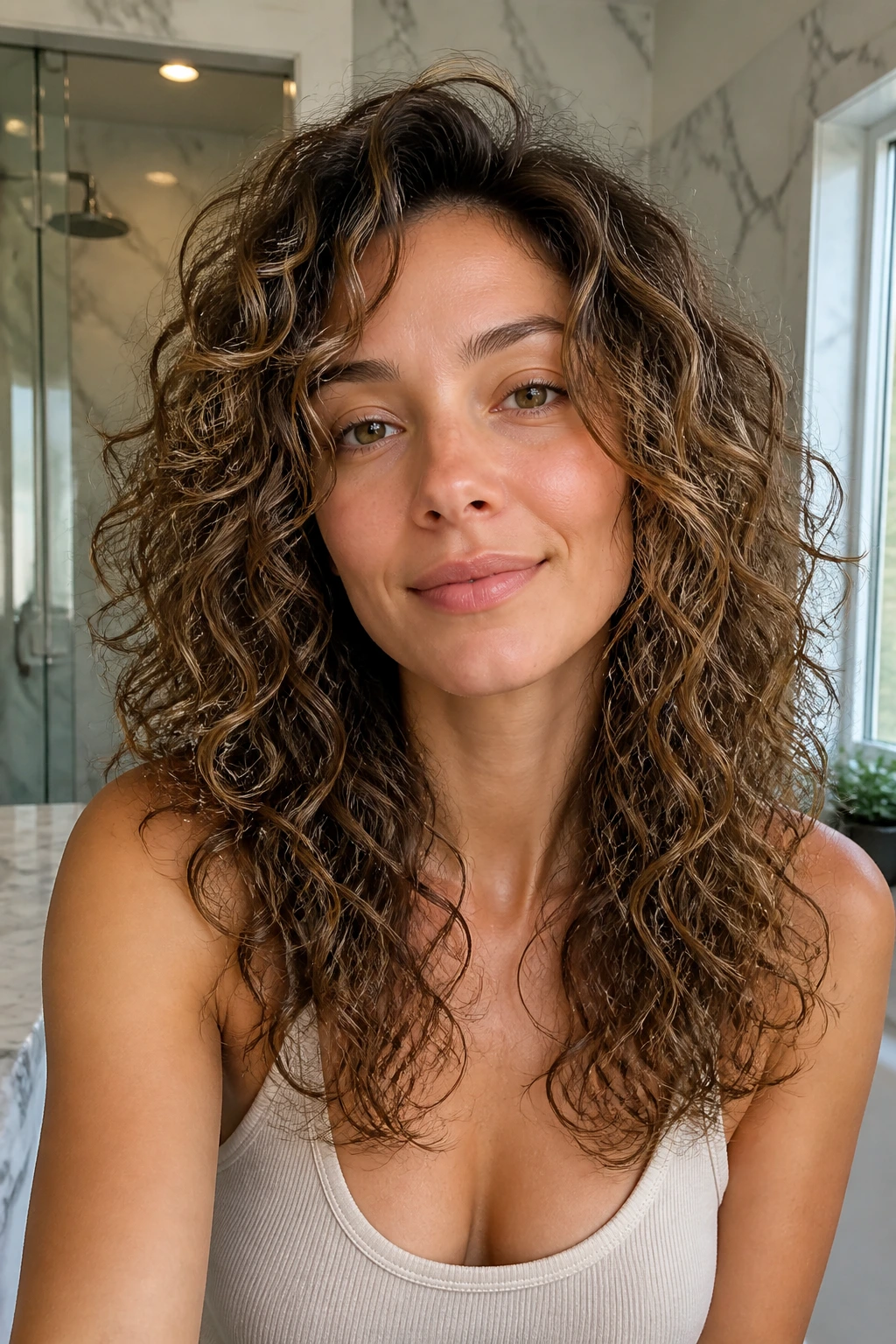
Fine curls need a different kind of respect. You can’t slash away so much weight that the ends turn wispy, but you also can’t leave the whole head one flat shape and hope for the best. The fine-curl body builder uses careful, light layering to make the hair lift without exposing too much scalp or leaving the hemline thin.
The aim is volume through the body, not a stack of obvious steps. This cut works best when the stylist knows how curls spring back after drying. A little too much texturizing and the shape loses its confidence fast. A careful hand can make fine curls look fuller than they are. That’s the whole game here.
25. Long Minimal-Shape Trim
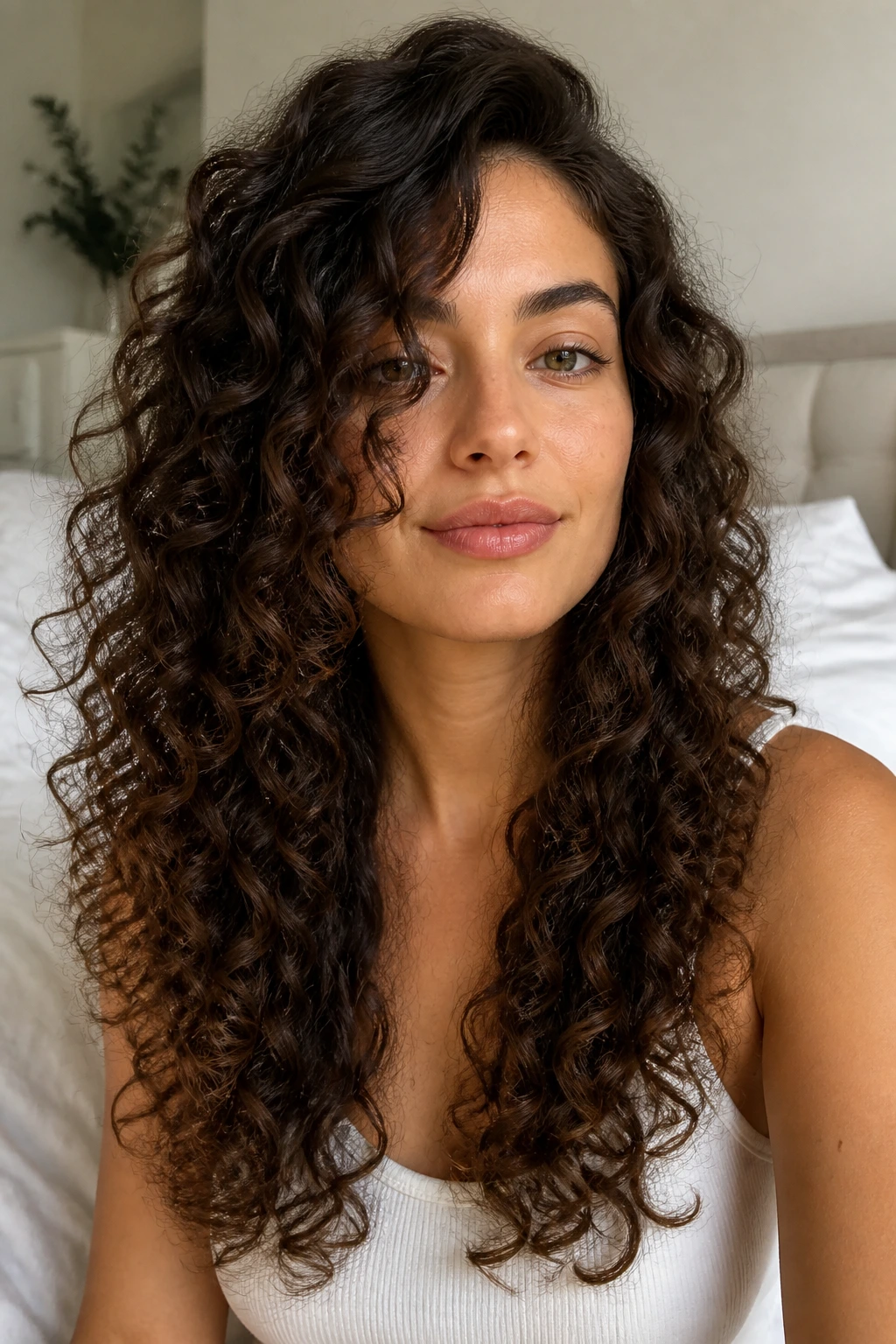
Sometimes the prettiest long curly haircut is nearly the same as long curly hair, just cleaned up. The minimal-shape trim keeps the length as intact as possible, touches the ends, and adds just enough around the face so the hair doesn’t read as one heavy curtain. It’s the most restrained option in the group.
This is the cut for people who are growing their hair out, protecting fragile ends, or simply not interested in a lot of layering. It works best when the curl pattern is already strong and the hair has healthy density through the bottom. If you want the longest possible look with the least interruption, this is where I’d start.
How to Choose the Shape That Fits Your Curl Pattern
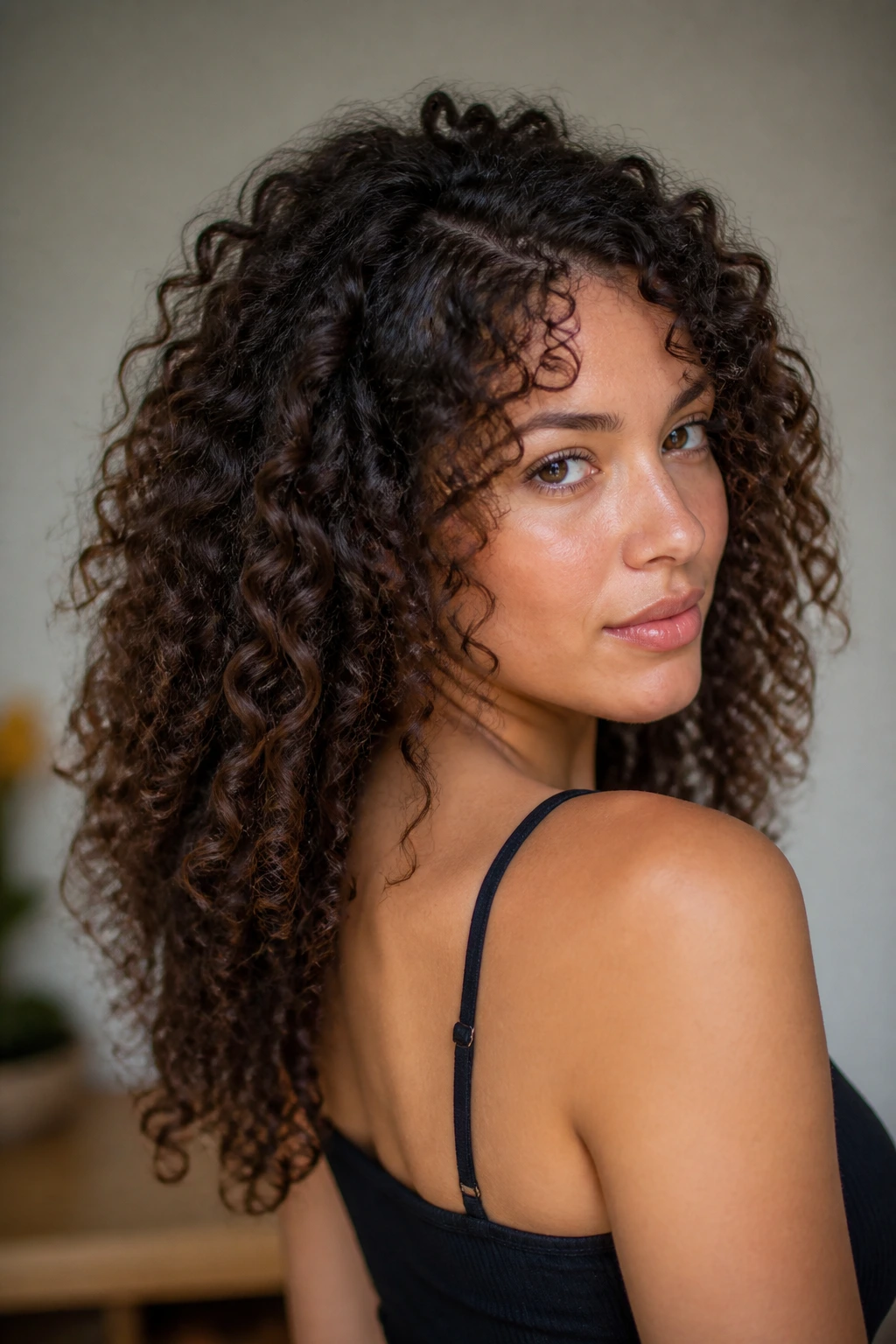
The most useful question is not “What’s trendy?” It’s “Where does my hair break down?” Some curls collapse at the crown. Some turn bulky at the bottom. Some get fuzzy around the face and leave the back flat. The haircut should fix the part that bothers you most, not just create a different silhouette for the same problem.
Loose curls and waves usually handle soft layers, butterfly shapes, and curtain framing well because those patterns show movement without needing a ton of structural help. Tighter curls and coils often benefit from more deliberate perimeter control, dry cutting, or tapering, because shrinkage can hide the true shape until it’s too late. Fine curls usually need restraint. Thick curls can take more shape.
Match the Cut to the Problem
- Flat crown: butterfly bounce, halo layers, side-part sweep
- Bulky ends: U-shape, invisible-weight lift, density-release layers
- Too much frizz at the face: cheekbone frame, bottleneck bang blend, curtain-frame center part
- Hair feels heavy all over: curly shag, wolf cut, curly mullet lite
- Hair looks stringy when layered: blunt perimeter, length-keeper dusting cut, minimal-shape trim
That’s the cleanest way to decide. Start with the problem, not the Pinterest board.
How to Ask Your Stylist for the Right Curly Cut
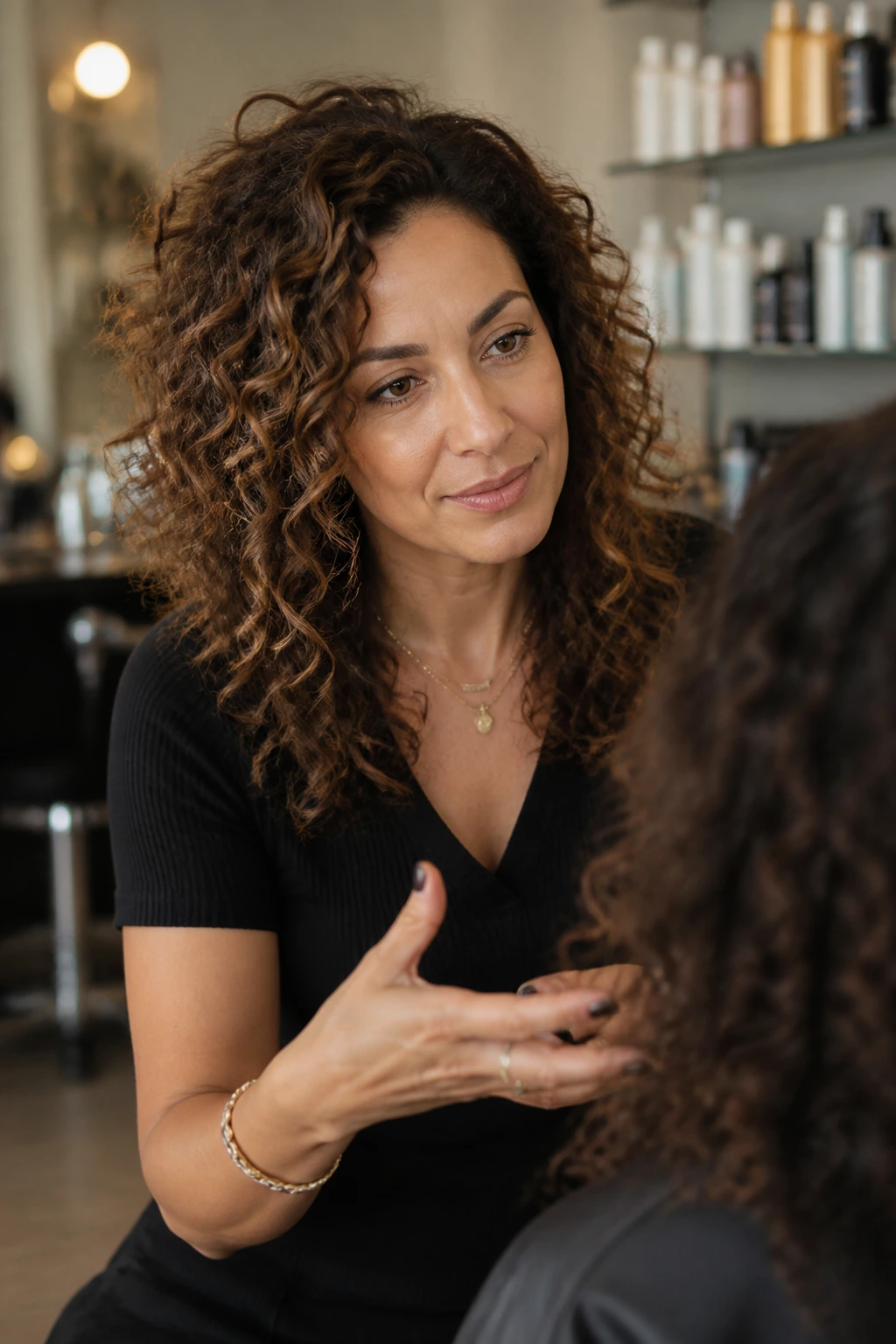
Bring photos, but bring the right kind. A picture of someone with loose waves and a diffuse blowout won’t translate cleanly to tight curls. You want images that show the hair in its natural shape, not after a round brush has had its way with it. I’d bring two or three photos at most. Too many photos and the conversation gets mushy.
Say what you want to keep. Say what you hate. Say where your hair feels bulky, where it goes flat, and how much time you’re willing to spend styling it. The useful language is plain: “I want to keep the length below my shoulders,” “I need less bulk at the sides,” “Please don’t thin out the ends too much,” or “I want my crown to lift without losing the perimeter.”
If your stylist cuts curls dry, ask how they plan to check balance when the hair is wet and when it’s dry. If they cut wet, ask how they account for shrinkage. There’s no one correct method for every head of curls. There is, however, a correct answer to the question “How are you making sure this still looks good when it dries?” Ask that one.
The Best Tools for Long Curly Haircuts
- Wide-tooth comb: Good for detangling in the shower without ripping apart curl clumps.
- Detangling brush with flexible bristles: Useful if your curls tangle near the ends and you need a little more control.
- Microfiber towel or cotton T-shirt: Cuts down on rough friction after washing.
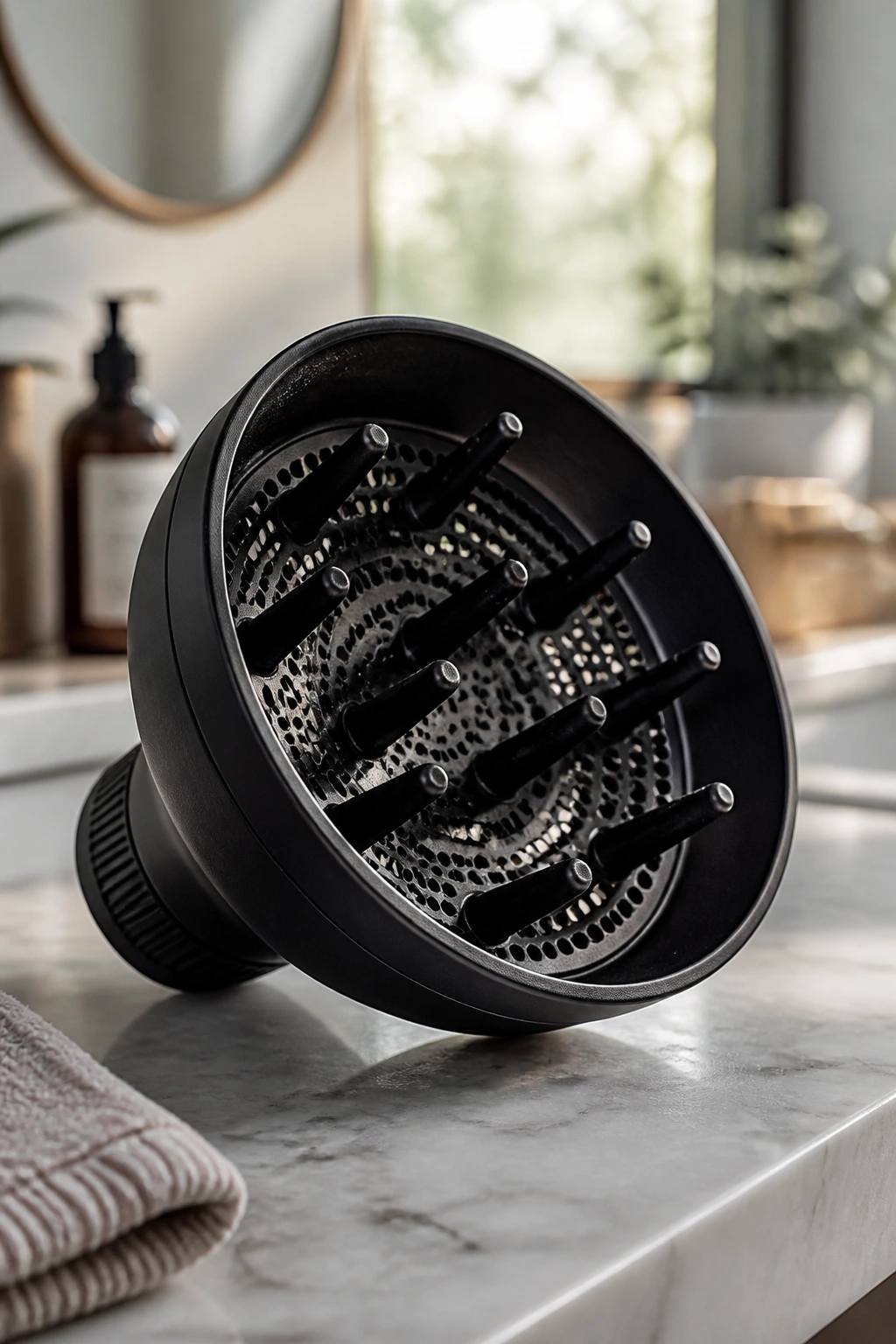
- Diffuser attachment: Helps curls dry with lift instead of hanging flat and then puffing.
- Sectioning clips: Handy for styling, drying, and keeping product distribution even.
- Spray bottle with water: Perfect for refreshing a few flattened sections without re-washing everything.
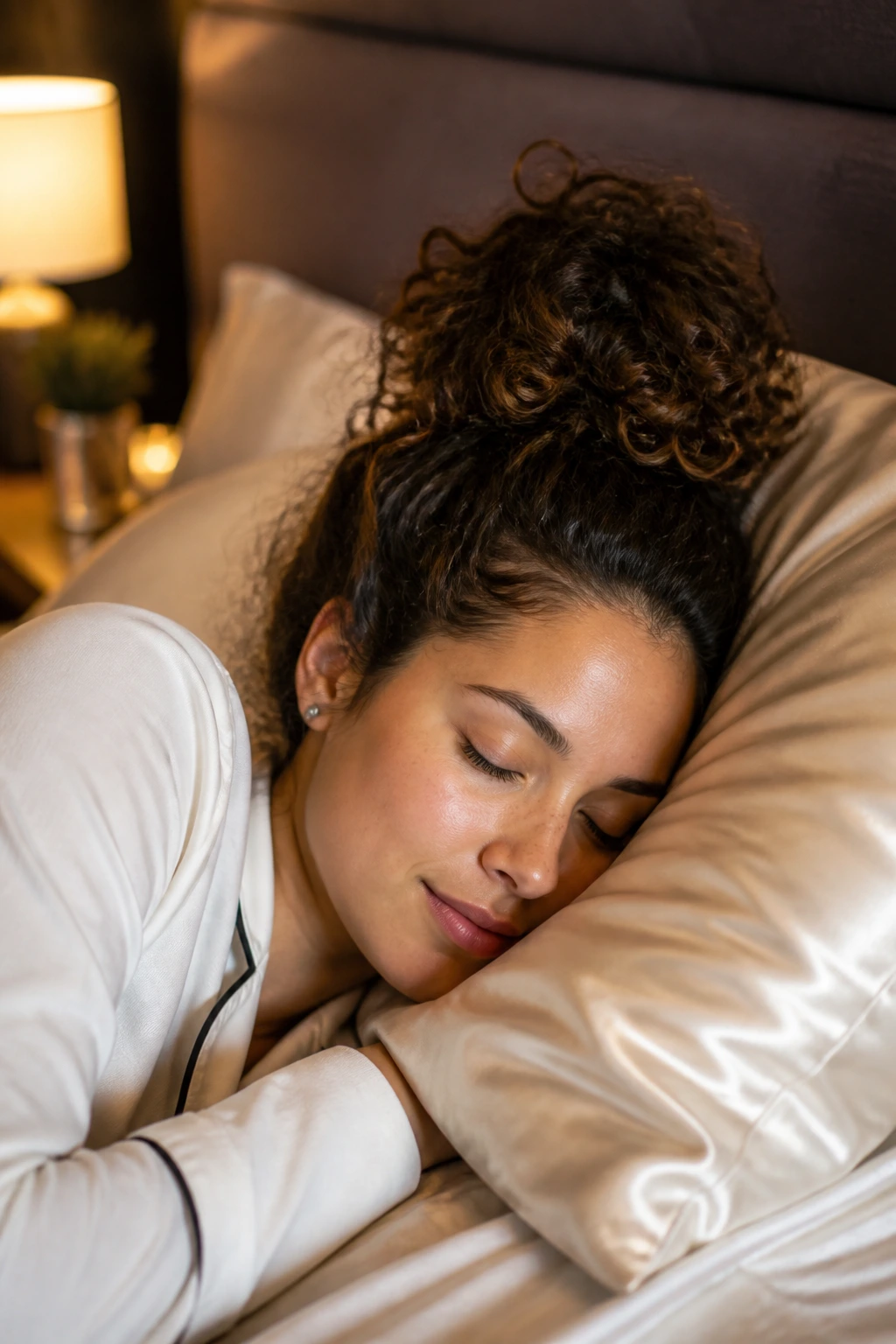
- Satin pillowcase or bonnet: Keeps the cut from getting crushed overnight.
- Curl cream, mousse, or light gel: Pick the one that matches your thickness and hold needs.
- Hand mirror: Not glamorous, but it helps you check the back shape and the hemline.
You do not need all of this at once. But the diffuser, the towel, and the sleep protection are the ones I’d call non-negotiable if you want the haircut to keep its shape.
How to Style These Cuts So the Shape Shows Up
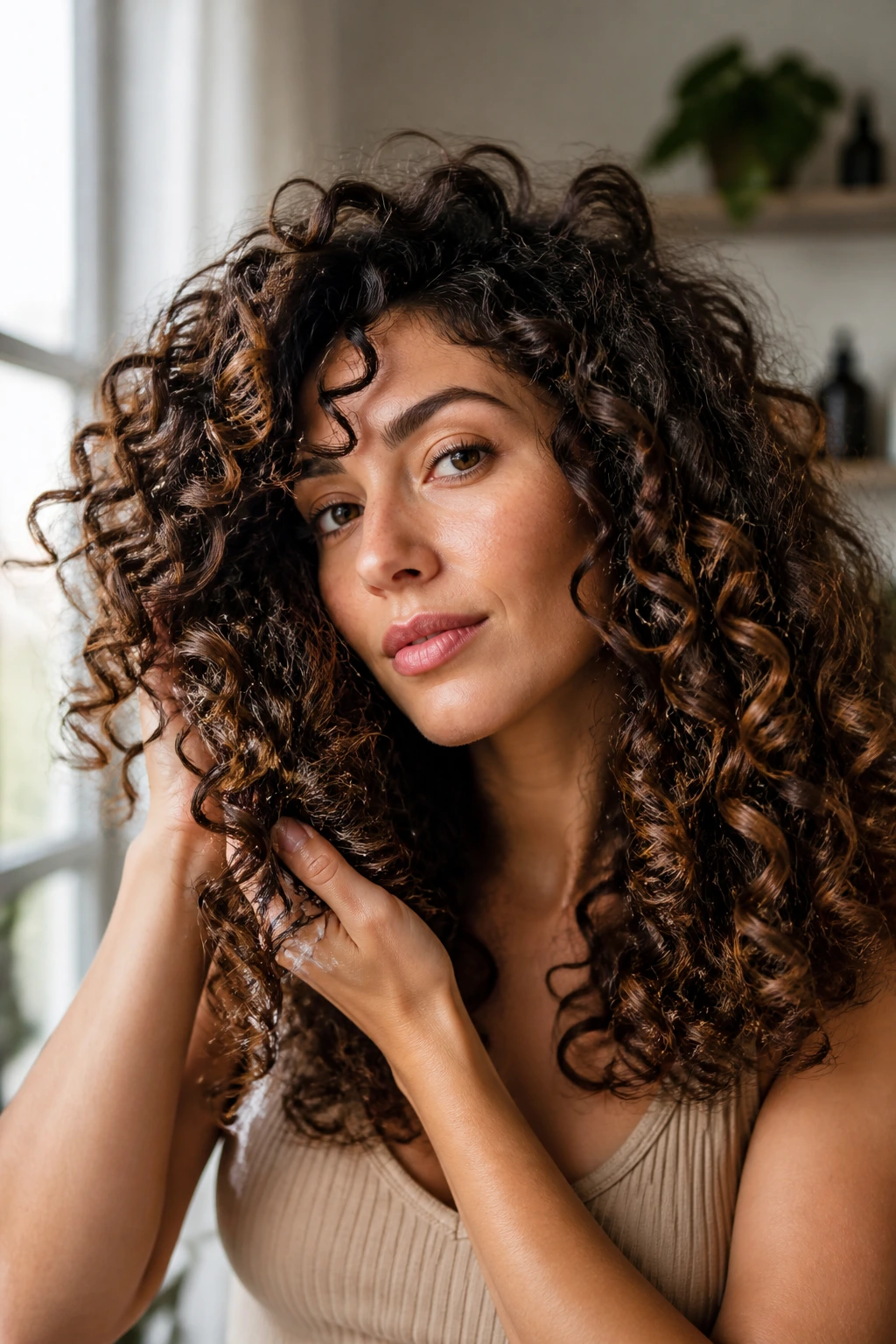
The cut is only half the story. If the roots dry flat or the ends turn fuzzy, the shape disappears fast. Start with water-based product on soaking-wet hair, not damp hair that has already started to frizz. Scrunch, don’t smash. A little lift at the roots matters more than people think, especially on layered cuts that can collapse when dried too quickly.
Air-Dry Days: Best for softer shapes like the rounded cascade, U-shape, and length-keeper trims. Use a light leave-in and something with soft hold so the curls don’t separate into dry little springs.
Diffuser Days: Better for butterfly layers, side-part sweeps, halo cuts, and anything with crown lift. Keep the airflow low and move the diffuser slowly so the curl pattern sets without getting blown apart.
Refresh Days: A spray bottle, a tiny bit of leave-in, and a few scrunches are usually enough. Focus on the face frame and crown first. Those are the parts that most often make a haircut look tired before the rest of the hair does.
Common Mistakes That Flatten Long Curly Length
The first mistake is cutting curls as if they were straight. That usually leads to strange shrinkage and a shape that looks fine in the chair and weird two hours later. Curly hair needs the final silhouette planned around how the strands actually coil. Wet cutting can work, but only when the stylist knows exactly how much the hair will spring.
The second mistake is over-thinning. A lot of long curly hair looks thick enough to “handle” it, so people start slicing away bulk until the ends feel airy. Then the bottom turns see-through. The fix is simple: remove weight from the places that cause puff, not from every visible curl.
The third is ignoring the perimeter. If the bottom line is too blunt for the curl pattern, the whole head can read as heavy. If it’s too shredded, the ends look hungry. There’s a middle ground, and it’s usually the right one.
The fourth is getting layers without a styling plan. A cut with crown lift and face framing needs product and drying habits that support that structure. Otherwise the top collapses and the front pieces get lost in the rest of the hair. Shape doesn’t live in the scissors alone.
Ways to Make These Cuts Work Harder
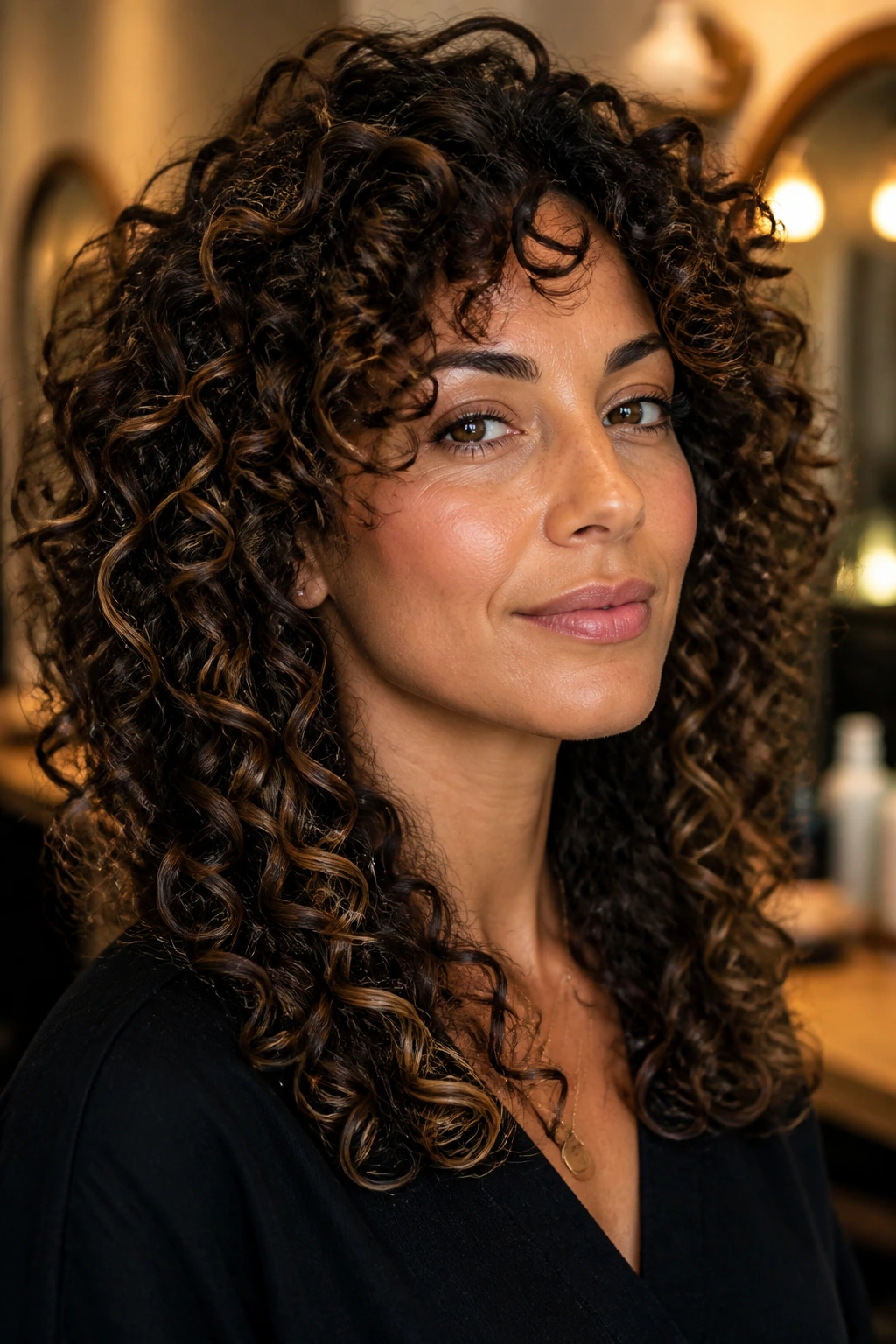
Shape Boost: Ask for the shortest layers to land where your curls can actually curl. A short layer that sits in the wrong spot just sticks out. One that lands on a natural bend shows up as shape, not noise.
Customization: If your hair is dense at the back but flat at the front, ask for more framing around the face and less inside the perimeter. If the sides balloon out first, focus on internal weight removal there instead.
Serving Suggestion: A side part, a tucked-behind-one-ear finish, or a clip at the temple can change how the haircut reads without touching the scissors again. Tiny styling choices matter more than people give them credit for.
Humidity Help: If your curls frizz at the first sign of moisture in the air, favor stronger hold near the top and lighter oils at the ends. Too much oil on fine or medium curls can make the shape collapse by lunch.
Grow-Out Plan: If you want something that won’t annoy you in three months, choose shapes with soft transitions: the U-shape, rounded cascade, curtain frame, or length-keeper trim.
Variations and Alternatives to Try
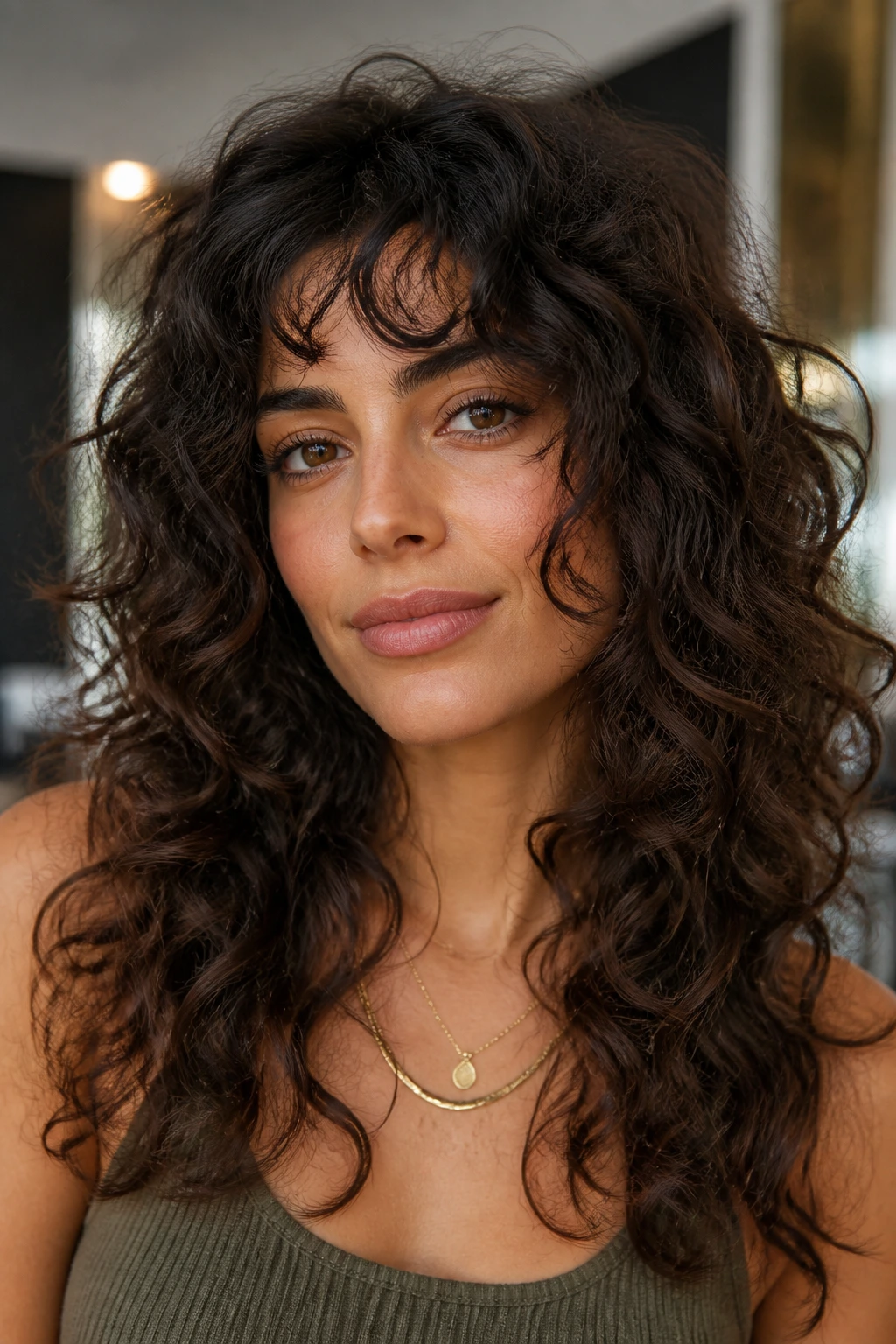
The Low-Maintenance Wash-and-Go: Choose a U-shape, rounded cascade, or minimal-shape trim, then keep styling to leave-in plus light gel. This version is for people who want their hair to cooperate with a quick scrunch and a diffuser pass.
The High-Volume Crown Version: Butterfly layers, halo layers, or a side-part sweep give the roots more life without sacrificing length. Use this if your hair goes flat at the scalp before it ever reaches the shoulders.
The Soft-Glam Version: Curtain-framed center parts, cheekbone layers, and long mermaid layers work well when you want movement that looks polished rather than shaggy. These cuts read especially nicely with a smooth diffused finish and a strong face frame.
The Texture-First Version: Curly shag, wolf cut, and curly mullet lite lean into shape and attitude. Pick one of these if you like your hair to look a little unruly, a little cool, and never too precious.
The Protect-the-Length Version: Length-keeper dusting cuts and long minimal-shape trims are the safest choice if you’re growing out damage or just love long hair more than layers. You still get a clean outline. You just don’t sacrifice much length.
Maintenance, Trims, and Overnight Care
Long curly cuts stay nice longer when you stop waiting until the shape falls apart. Most layered curly cuts need a trim every 8 to 12 weeks if you want the layers to keep their intention. The more structured the cut—wolf, shag, butterfly, mullet—the more often it usually needs a clean-up. Softer shapes like the U-cut or a minimal trim can stretch longer.
Night care matters more than people expect. A satin pillowcase helps, but a loose pineapple or bonnet does more when the hair is long and layered. If the front pieces keep getting smashed, clip them up lightly before bed. No tight elastic. No twisting the curls into a knot. That kind of sleep routine creates frizz at the exact places you want to keep smooth.
Wash rhythm depends on product load and scalp needs, but many long curly cuts do well with a refresh between wash days instead of a full reset. If the crown is limp and the ends are dry, refresh the roots first and save the length from over-wetting. That small habit keeps the haircut looking shaped instead of puffy and tired.
Frequently Asked Questions
What long curly haircut is lowest maintenance?
A soft U-shape, rounded cascade, or length-keeper dusting cut usually needs the least fuss. These shapes keep a clean outline without asking you to restyle every layer every morning.
Should curly hair be cut wet or dry?
Either can work, but dry cutting is often better for curls with mixed patterns or unpredictable shrinkage. Wet cutting can still be fine if the stylist knows how the curl will spring back when it dries.
What if my curls are thick and triangular?
Ask for internal weight removal, halo layers, or butterfly-style shaping. The goal is to lighten the sides and crown without thinning the ends to nothing.
Can fine curly hair wear long layers?
Yes, but the layers need to be light and strategic. Too many short pieces can make fine curls look wispy, so a blunt perimeter or very soft layering is usually safer.
Do bangs work with long curly hair?
They do, but the type matters. Bottleneck bangs, curly fringes, and soft curtain pieces usually grow out more gracefully than a blunt fringe that lands too high.
How do I stop my long curls from looking flat at the crown?
Choose cuts that build lift up top—halo layers, butterfly shapes, and side-part sweeps—and dry the roots with a diffuser or root clips. Product at the scalp should stay light, or the crown will collapse again.
What should I tell a stylist if I want to keep my length?
Say it plainly: “I want to keep the length below my shoulders, but I need the shape cleaned up.” That sentence does more work than asking for “movement” and hoping for the best.
How do I fix a haircut that got too layer-heavy?
You usually have two options: grow it out with careful trims, or have a stylist reshape the perimeter so the layers blend better. Trying to carve more short pieces into a cut that’s already too light usually makes the problem louder.
A Shape That Still Feels Like You
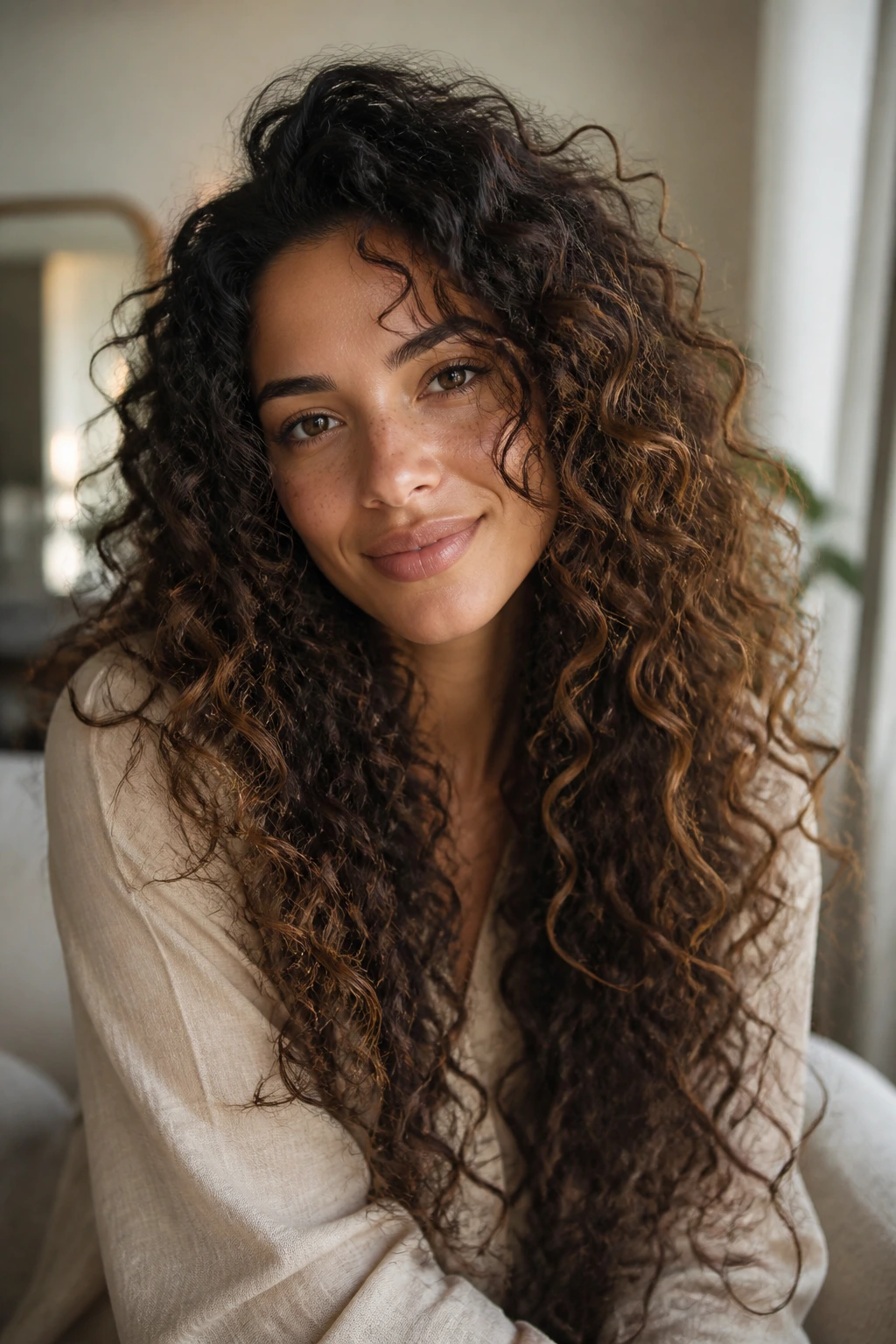
The best long curly haircut is the one that makes your hair look like it finally has a plan. Not a hard plan. Not a stiff one. Just enough structure that the curl pattern can do its best work without fighting the shape every time it dries.
If you’re heading to the salon, bring one clear goal: more lift, less bulk, cleaner face framing, or a softer outline. That single decision usually does more for curly hair than chasing a trendy name ever will. And once the cut is in place, the real magic is boring in the best possible way—good drying habits, a sensible trim schedule, and a shape that still looks like itself on day three.