



Square faces and curls can be a gorgeous match, but the cut has to know where to bend and where to stop. A blunt line dropped at the jaw can make the whole face look boxier than it is, while the right shape lets curls soften the angles naturally.
Shrinkage is the sneaky part. A style that looks balanced when wet can spring up two or three inches once it dries, which is why curly haircuts for square faces need to be planned on the curl’s real shape, not the length you see on wash day.
The best versions use curve, diagonal movement, lift at the crown, or face-framing pieces that don’t land dead-on the widest part of the face. Some keep length and add softness. Some go short and let the texture do the work. A few are a little bolder, and honestly, that’s part of the fun.
Why These Cuts Work on Curly Hair and Square Faces
-
They soften the jawline: Square faces read strongest at the chin and jaw, so cuts that curve around the lower face keep the eye moving instead of stopping hard at one line.
-
They respect shrinkage: Curl length changes a lot once hair dries, so these cuts are shaped with spring in mind rather than the wet length in the chair.
-
They create vertical movement: Height at the crown, longer front pieces, and diagonal parts all make the face feel a touch longer and less wide.
-
They avoid the triangle effect: A lot of curly cuts go puffy at the sides and narrow at the top. The better ones remove bulk in the right places, not everywhere.
-
They work across curl patterns: Loose waves, springy ringlets, and tight coils all need different shaping, but the same face-shaping logic applies.
-
They’re easier to grow out: A cut with soft layers and a rounded outline keeps looking intentional as it gets longer. That matters.
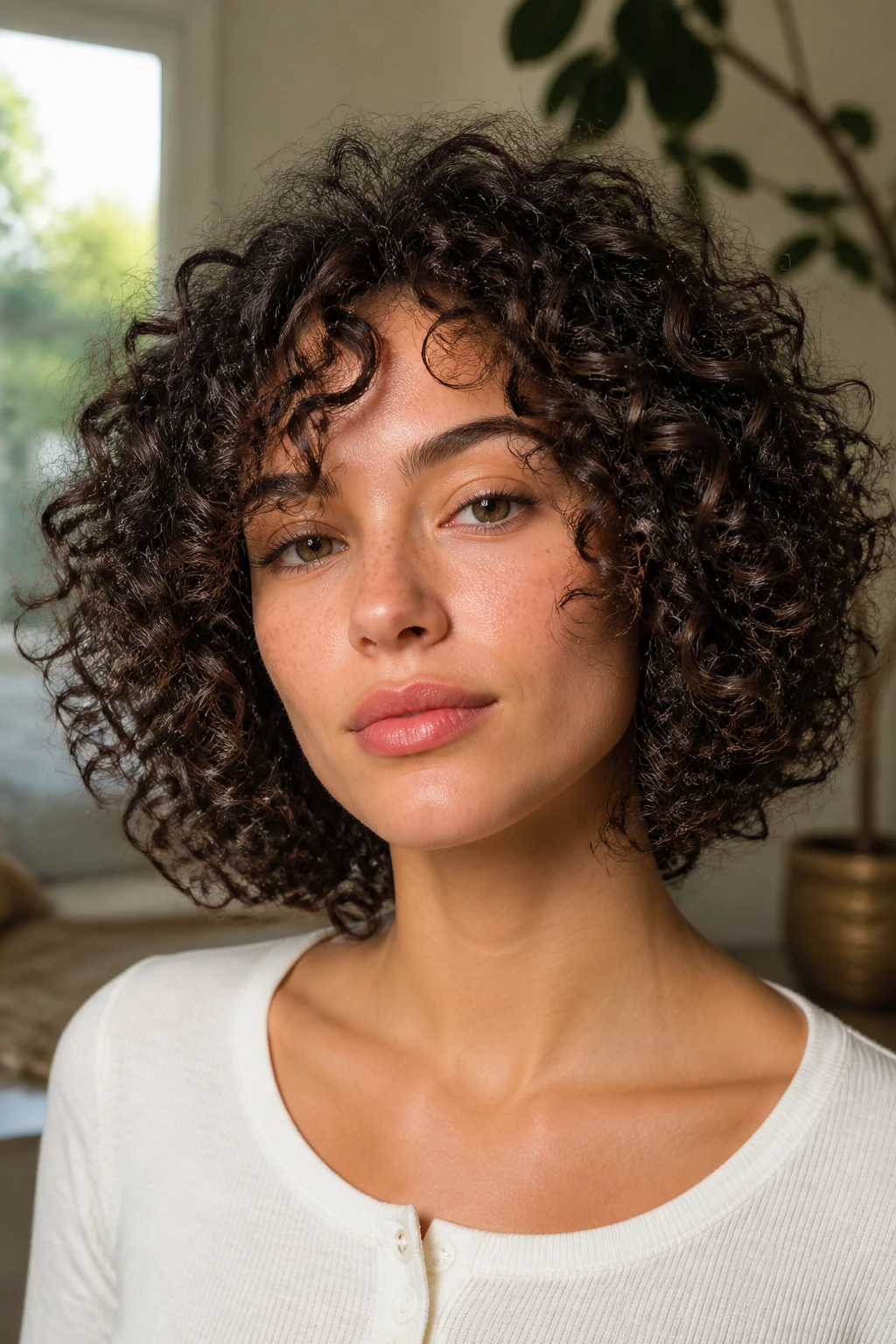
1. The Collarbone Curly Lob with Broken-Up Ends
This is the cut I’d hand to someone who wants the safest possible win. The length lands around the collarbone, which keeps the jaw from getting boxed in, and the ends are chipped up just enough to keep the whole shape light. On square faces, that little bit of distance below the chin makes a bigger difference than people expect.
Stylist note: ask for a lob that’s slightly longer in front than in back, with face-framing pieces that start near the cheekbone. If your curls are tighter, have the stylist dry-check the length so the shrinkage doesn’t pull it straight up to the jaw. The result should feel soft, not sliced into.
The beauty of this cut is that it works with both a middle part and a deep side part. It’s not flashy. It just does the job quietly.
2. The Rounded Jaw-Skimming Bob
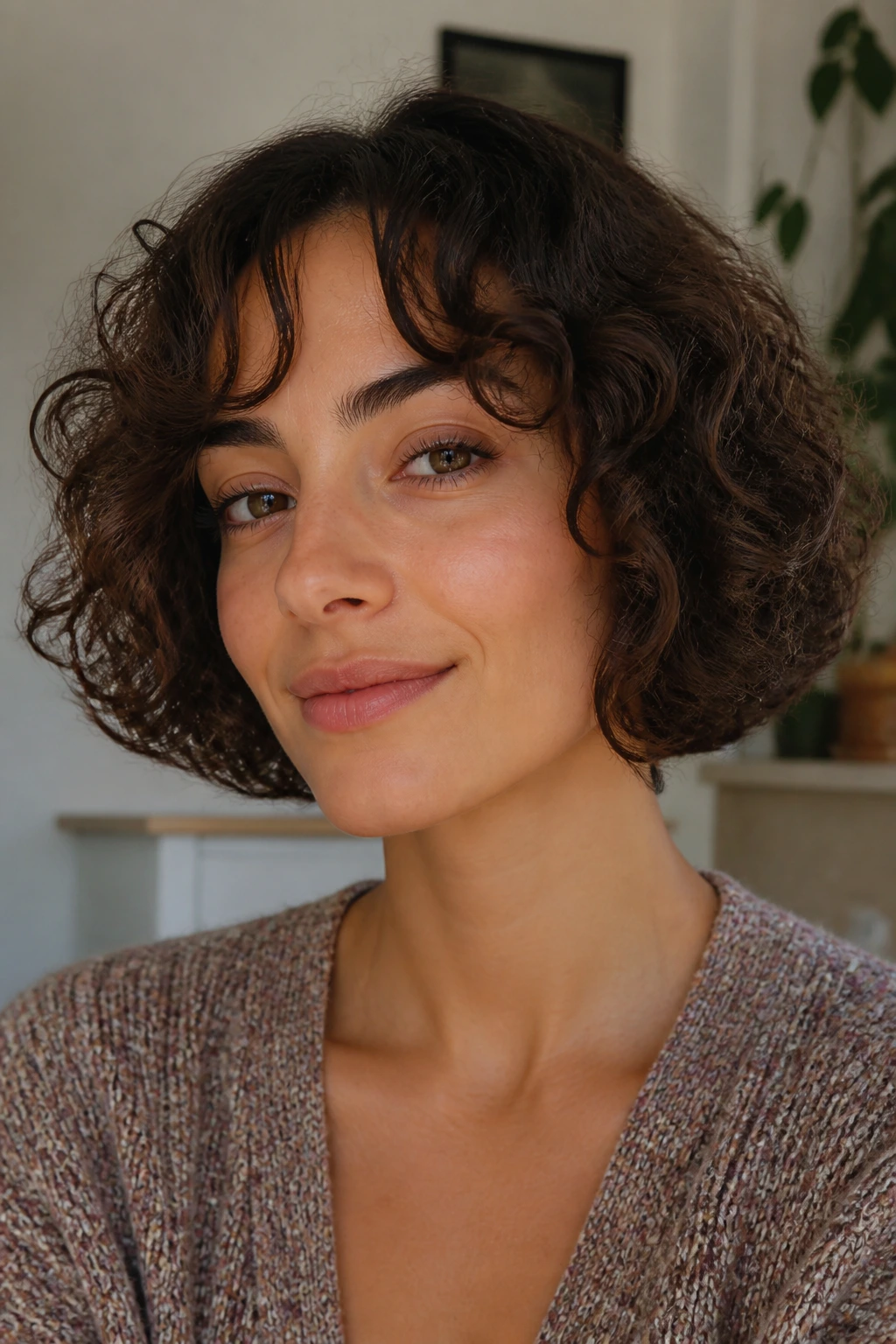
A jaw-skimming bob can work on a square face, but only if it’s rounded rather than blunt. The shape needs some curve through the sides, and the ends should bend under or flip outward just a bit so the cut doesn’t read like a box. Curl pattern helps here; a little bend goes a long way.
I like this best on hair with medium density and a curl that already has some spring. The bob sits close enough to the face to feel clean, but the rounded silhouette keeps it from hardening the jawline. If your curls are very tight, I’d still keep the bob a touch below the jaw. That extra half-inch matters.
Ask for: a soft perimeter, internal debulking only if needed, and no sharp corners at the sides. No helmet. No shelf. Those are the things to avoid.
3. Butterfly Layers That Keep the Crown Lifted
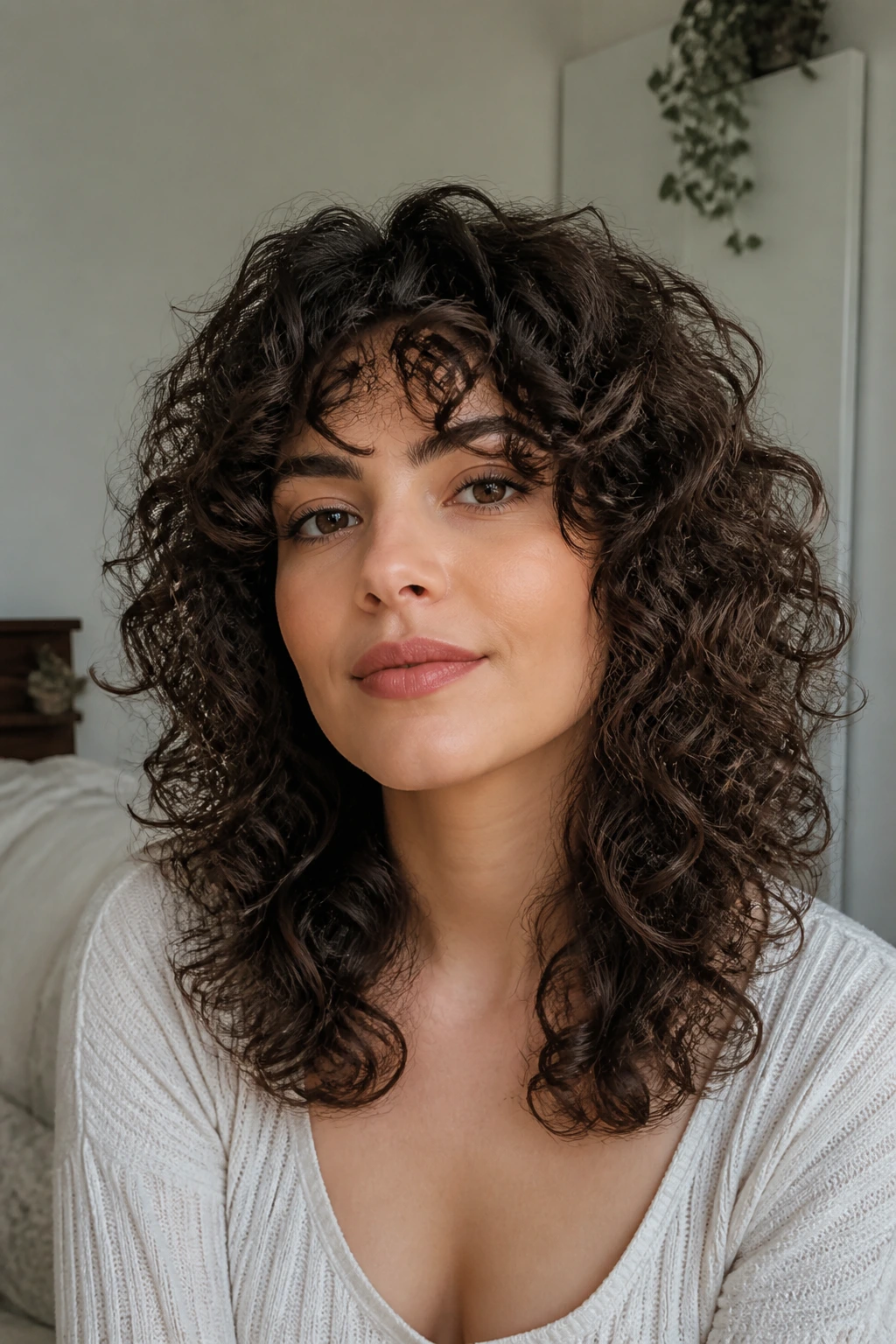
Butterfly layers are a smart move when you want movement without giving up length. The shorter layers live around the crown and upper cheek area, while the longer pieces stay down around the shoulders or chest. On a square face, that upper lift helps pull attention upward and away from the jaw.
What makes this shape work is the contrast. The top has bounce, the bottom keeps some weight, and the whole cut feels airy instead of heavy. If your curls flatten at the roots, this one can wake them up without requiring a ton of product or heat.
Keep the shortest layer above the jawline if you can. That’s the part many stylists miss. Too much layering low on the face can widen the sides, and nobody wants that.
4. The Curly Shag with Curtain Bangs
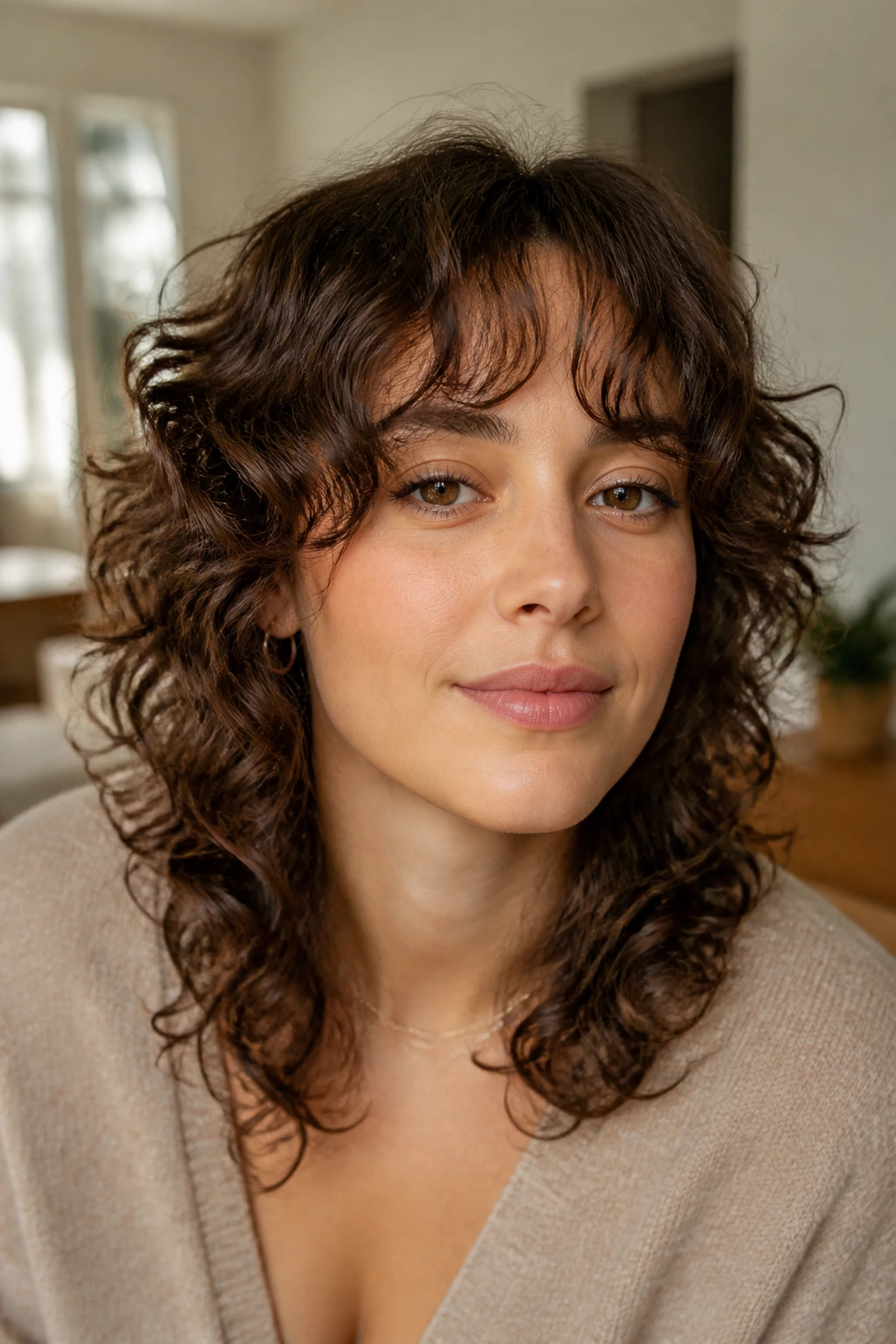
There’s a reason shag cuts keep coming back for curls: they like movement, and curls like movement back. A good curly shag breaks up width at the cheek and jaw, then uses curtain bangs to make the forehead and temples feel softer. It’s a flattering mess when it’s done right.
The key is restraint. You want layers, not a thinning attack. The ends should still have enough weight to clump into curls instead of fraying into fuzz. If the stylist razors the life out of it, the shape gets airy in the wrong way.
Best for: 2C to 3B curls that need volume but not bulk. The curtain fringe helps square faces because it cuts a diagonal through the front of the face. Diagonals do more work than people think.
5. A Soft Wolf Cut for Thick Curls
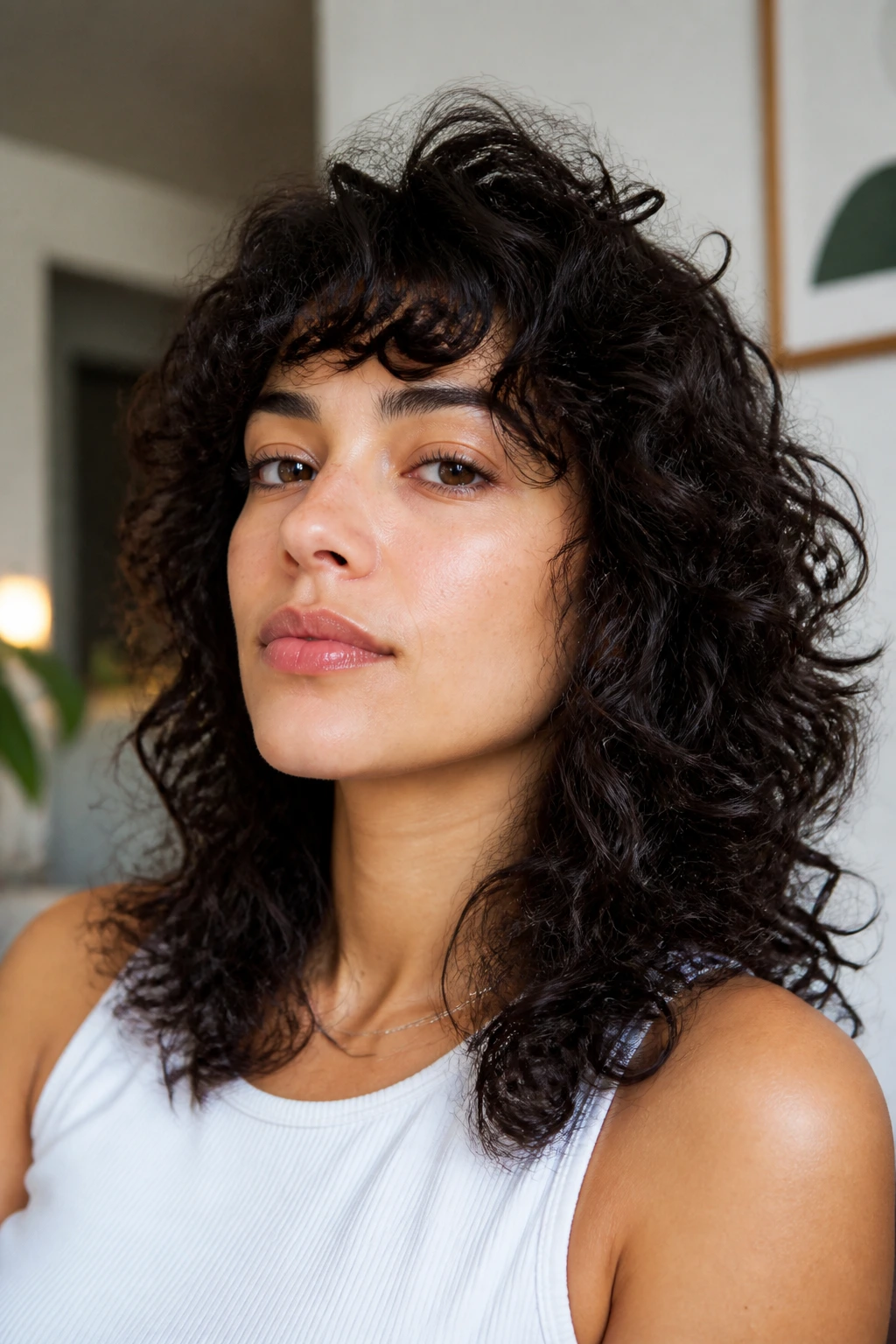
A wolf cut on curls can look fantastic or look like a bad growth-out. The difference is in the softness. For square faces, the version that works keeps the sides rounded, leaves enough weight at the bottom, and avoids the harsh disconnect you see in the more extreme versions.
Thick curls love this cut because it takes out some of that mushroom-like bulk at the top while leaving the shape lively. The crown gets a little lift, the nape stays lighter, and the face doesn’t get buried in width. I’d choose this when the hair has a lot of density and you want attitude without going full mullet.
If your hair has strong shrinkage, tell the stylist exactly where you want the shortest layer to land once dry. That’s not a luxury. It’s the whole point.
6. The Side-Swept Pixie for Loose Texture
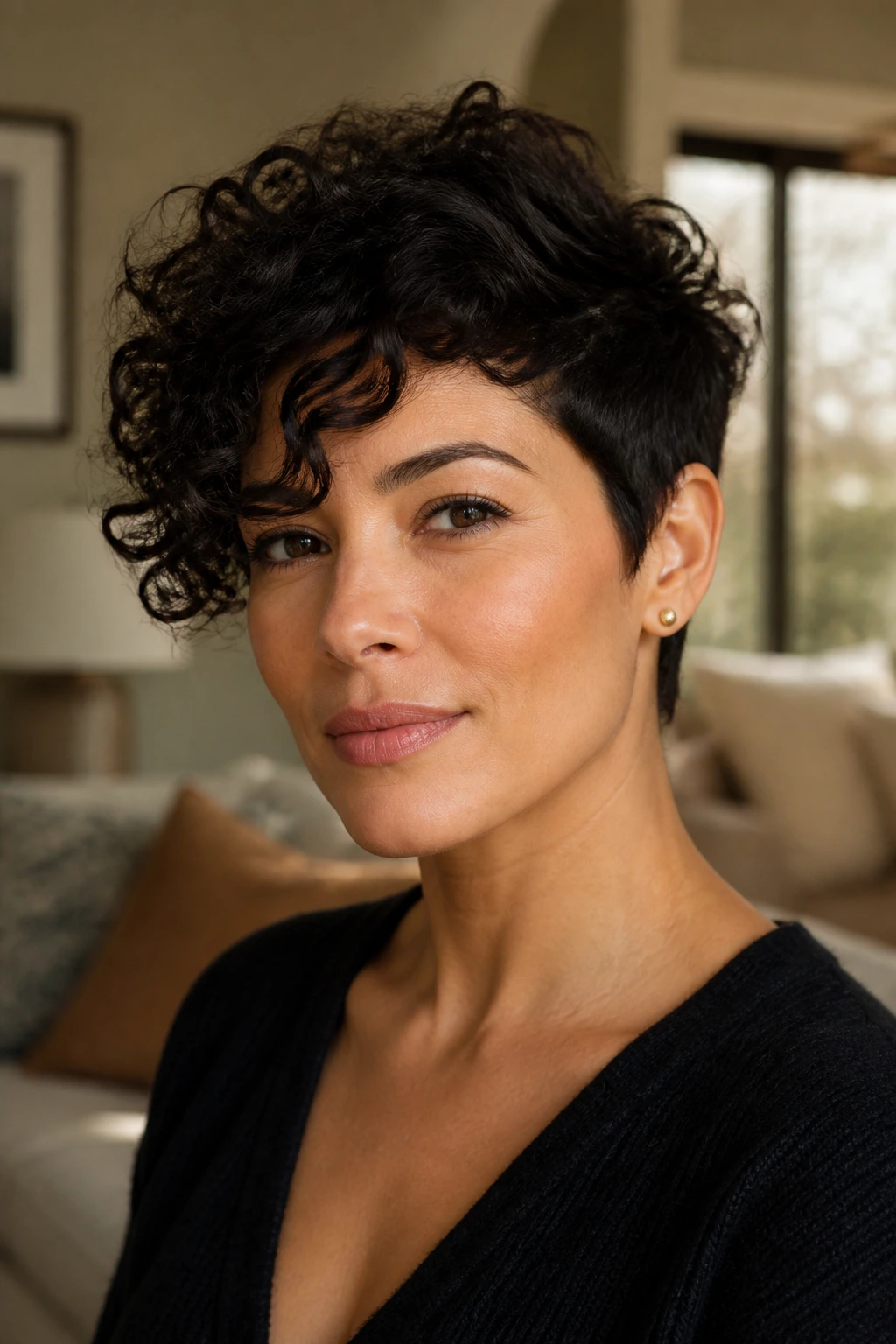
Short hair on a square face doesn’t have to be severe. A side-swept pixie with loose curls keeps one side longer, lets the fringe fall diagonally across the forehead, and gives the face a bit of softness where a blunt crop would sharpen it. It’s a neat little trick.
This cut works best on waves and loose curls that can hold shape without fighting the cut. The top needs enough length to form a bend, and the sides should be tapered gently, not shaved to the bone unless that’s your thing. If the top is too short, you lose the curve that makes the style flattering.
It’s a bold cut, sure. But it can also be one of the easiest ways to make square features look less rigid.
7. The Asymmetrical Bob That Breaks the Box
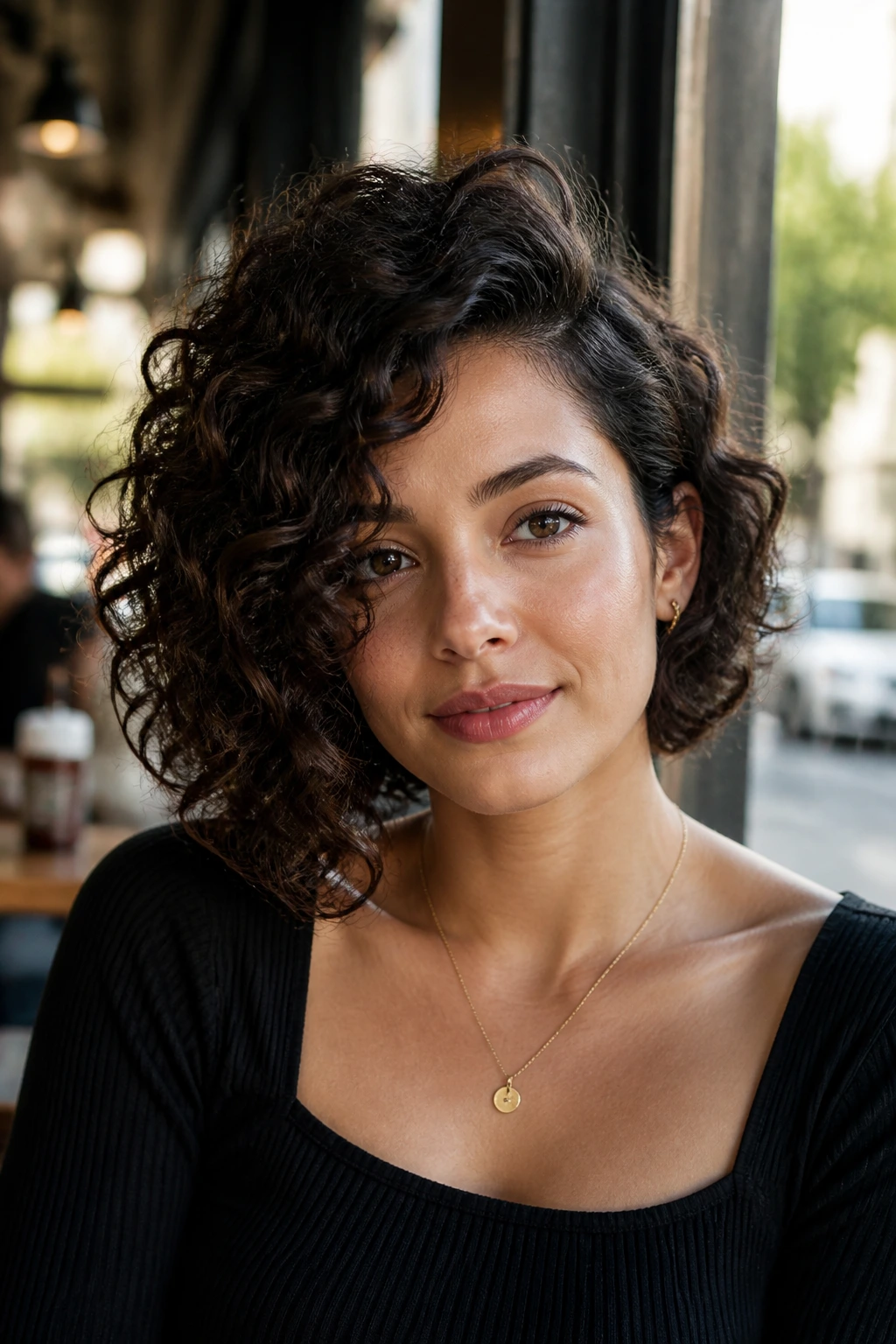
Symmetry can be the enemy here. A square face already has strong balance, so a slightly asymmetrical bob helps break up that built-in shape and adds movement before the curls even do their work. One side sits a touch longer, the part shifts off-center, and the whole look feels less squared-off.
The trick is subtlety. You do not need a dramatic angle that screams for attention. A small difference in length and a side part are usually enough. On curly hair, the texture adds another layer of unevenness, which keeps the eye moving.
This is a good choice if you like structure but don’t want a cut that feels precious. It has shape. It has edge. It also grows out better than people expect.
8. Collarbone Length with Bottleneck Bangs
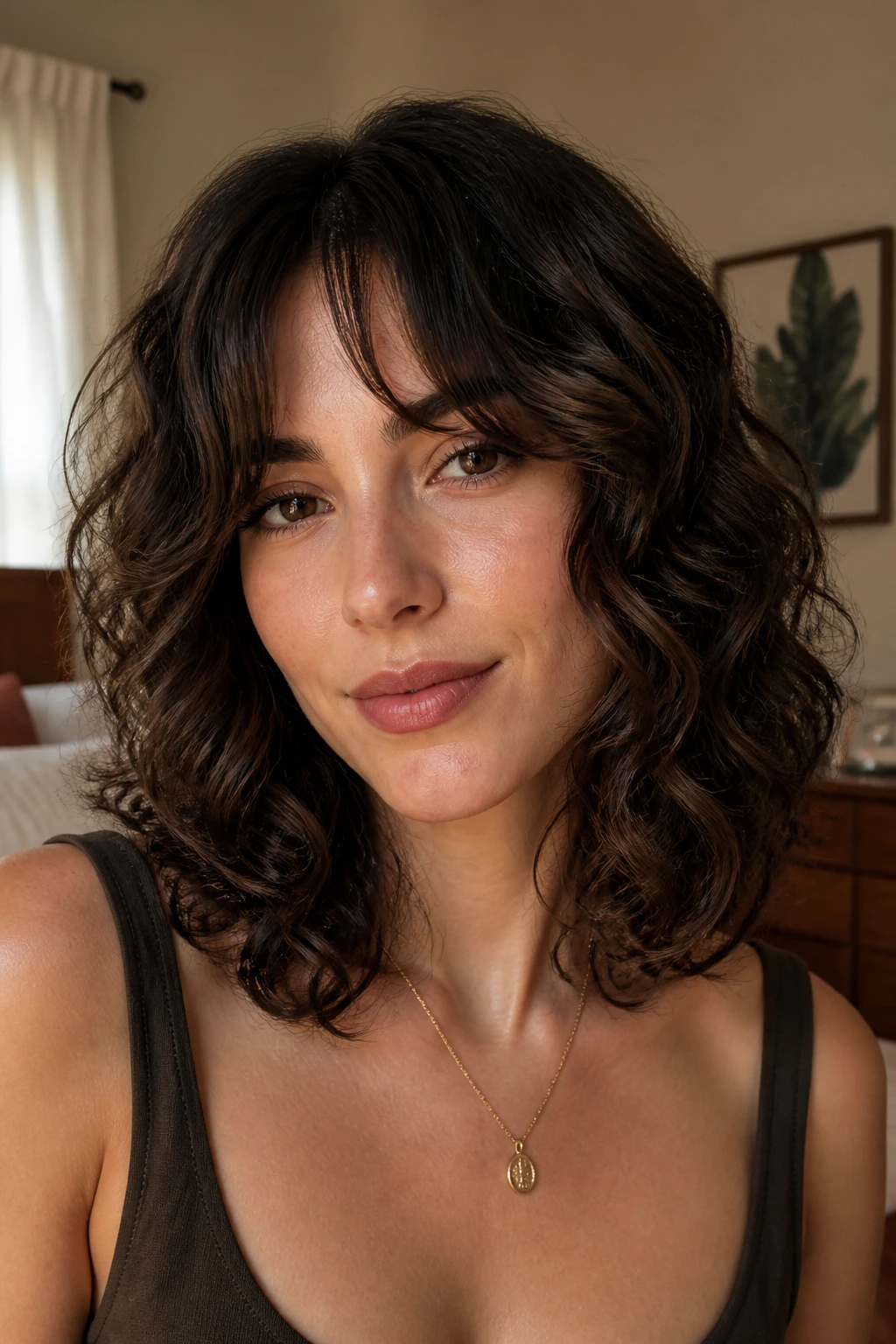
Bottleneck bangs do a lot of quiet work. They start narrower in the center, then open around the temples and cheekbones, which gives square faces a softer front frame without dropping a heavy fringe across the whole forehead. Pair that with collarbone-length curls, and the result feels balanced fast.
The length matters because it gives the bangs room to breathe. If the rest of the cut is too short, the bangs can dominate. At collarbone length, the face-framing pieces can travel downward in a long line, which is what you want when you’re trying to reduce width near the jaw.
Stylist note: have the bangs cut dry or at least checked dry. Curly bangs lie to you when wet. They always do.
9. A Dry-Cut Deva Shape with Internal Layers
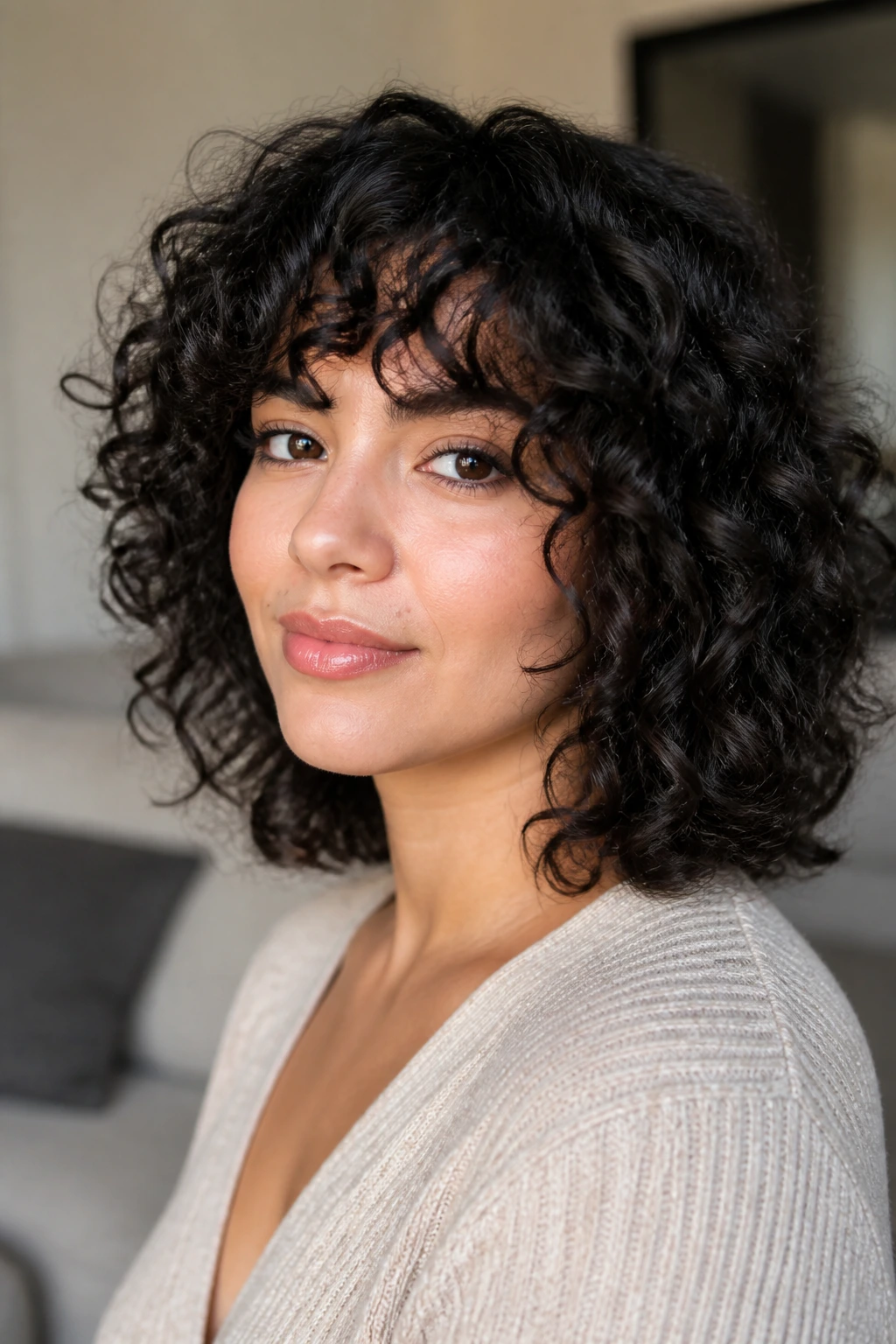
A Deva-style cut isn’t about one exact silhouette. It’s about shaping the curls where they live instead of forcing them into a wet, straight map. That matters on square faces because the stylist can build softness into the outline while keeping the curl groupings intact.
The real win here is internal layering. Bulk comes out from inside the shape, not from the perimeter, so the outer line stays smooth. For square faces, that lets the curls round off the sides without creating a shelf at the jaw. The cut can be bob length, midi length, or long. The method is what makes it work.
If you’ve got an uneven curl pattern, this approach is worth the time. It’s one of the few methods that can make a head of curls look intentional from every angle.
10. The U-Shaped Midi with Cheekbone Framing
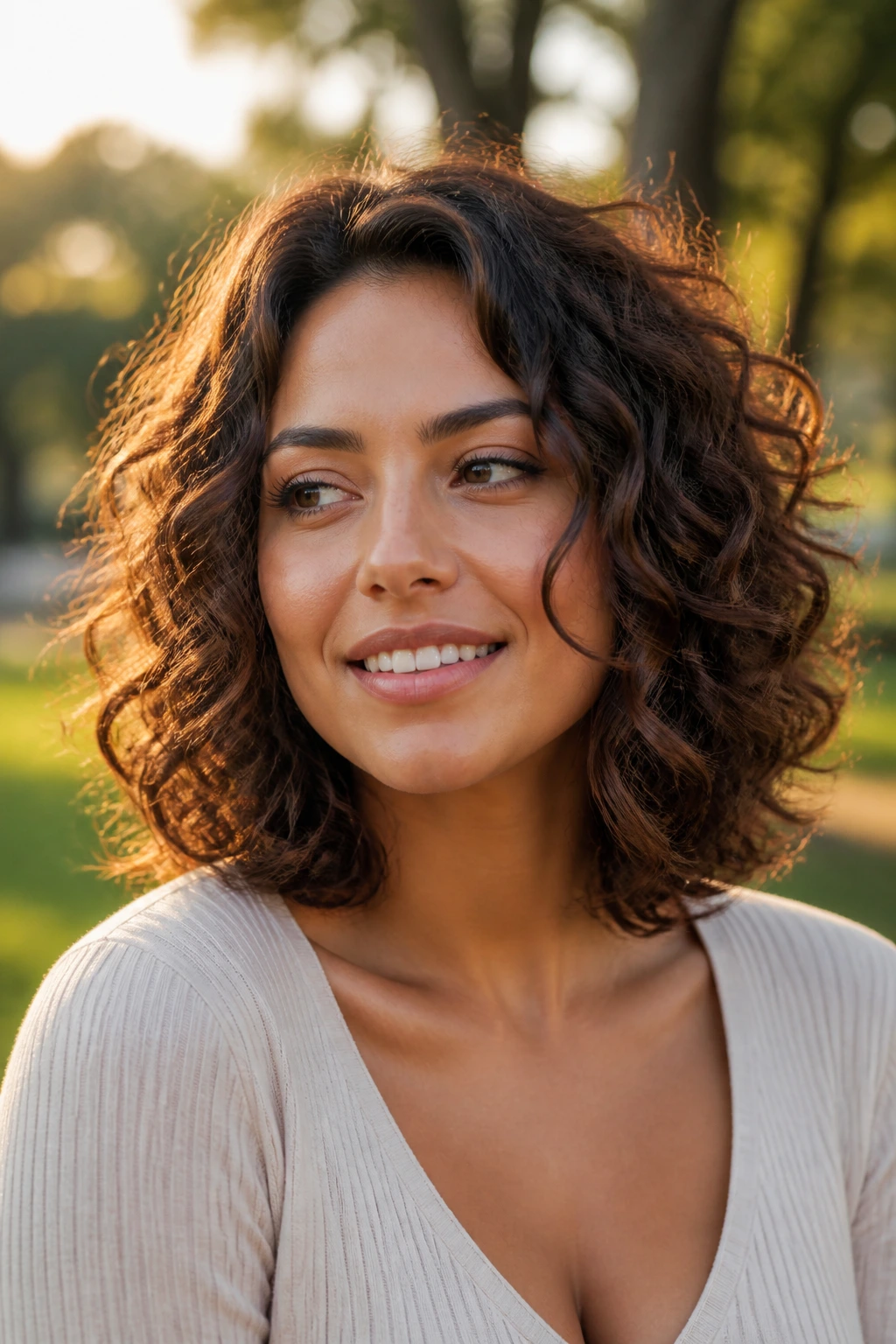
A U-shaped cut is a nice middle ground for people who want some length but don’t want their hair hanging like a curtain. The back sits a little shorter, the sides flow longer, and the front pieces begin around the cheekbone and drift down. That front movement is the part that helps a square face most.
The U shape keeps the length visually soft. A straight-across cut can make curls form a heavy line; this one bends the eye downward and keeps things loose. It’s especially good if your curls are thick and you want the outline to feel rounded instead of rectangular.
You can wear it with a center part if the front pieces are long enough. Or move the part off-center and let the cheekbone pieces swing across the face a little. Both work.
11. The Tapered Curly Crop for Tight Coils
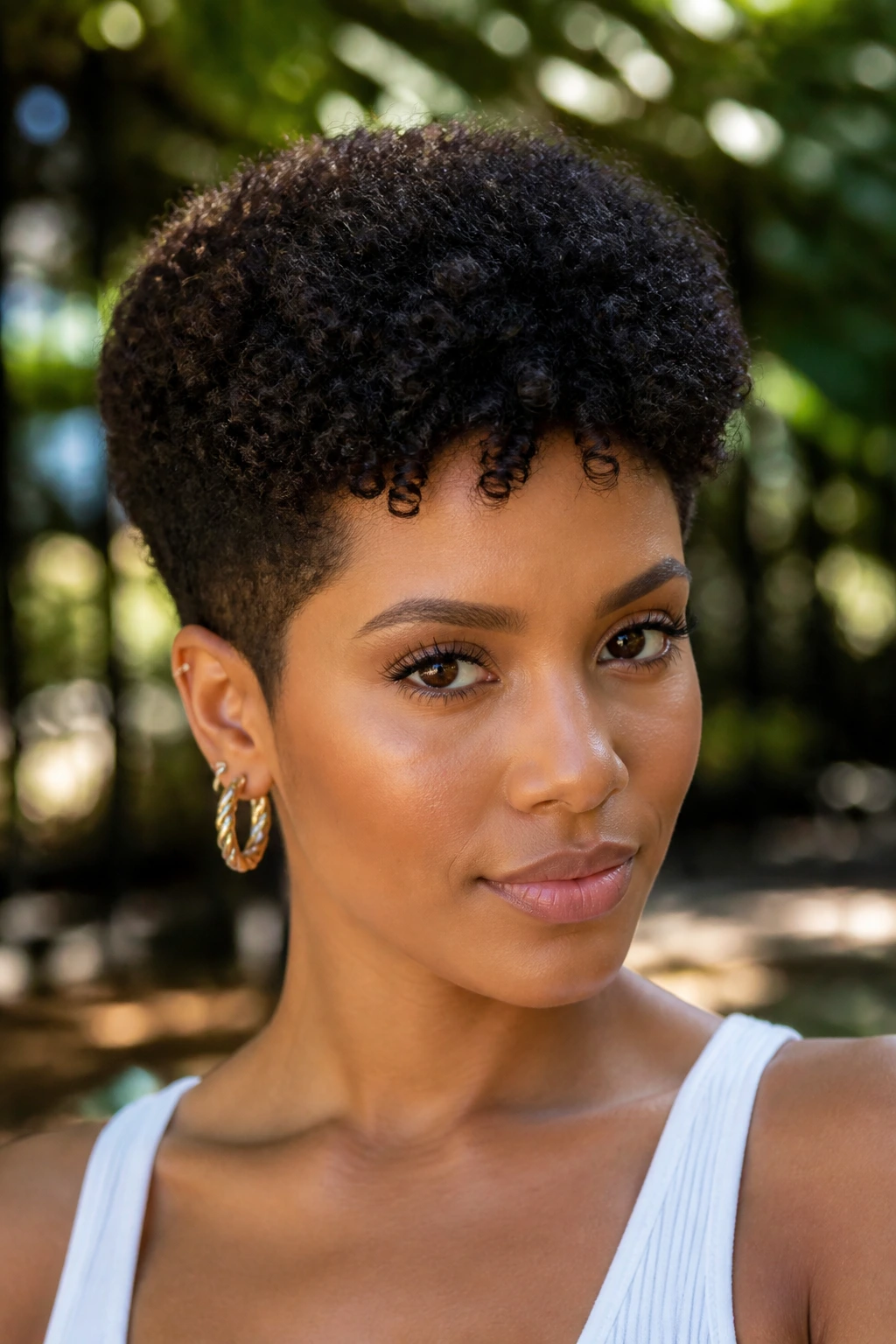
For tight coils, a tapered crop is often the cleanest answer. The sides and nape are kept shorter, the crown stays fuller, and the silhouette rounds out instead of spreading wide at the jaw. On a square face, that upward emphasis is a gift.
What you want here is softness in the taper, not a harsh fade unless you want something sharper. The top should still have enough length to form a visible curl pattern, and the crown should be shaped into a dome or oval rather than a flat top. That keeps the whole cut from looking too angular.
This cut looks especially strong when the hairline and temples are cleanly edged but not overcut. Tiny details. Big payoff.
12. The French Bob with Airy Fringe
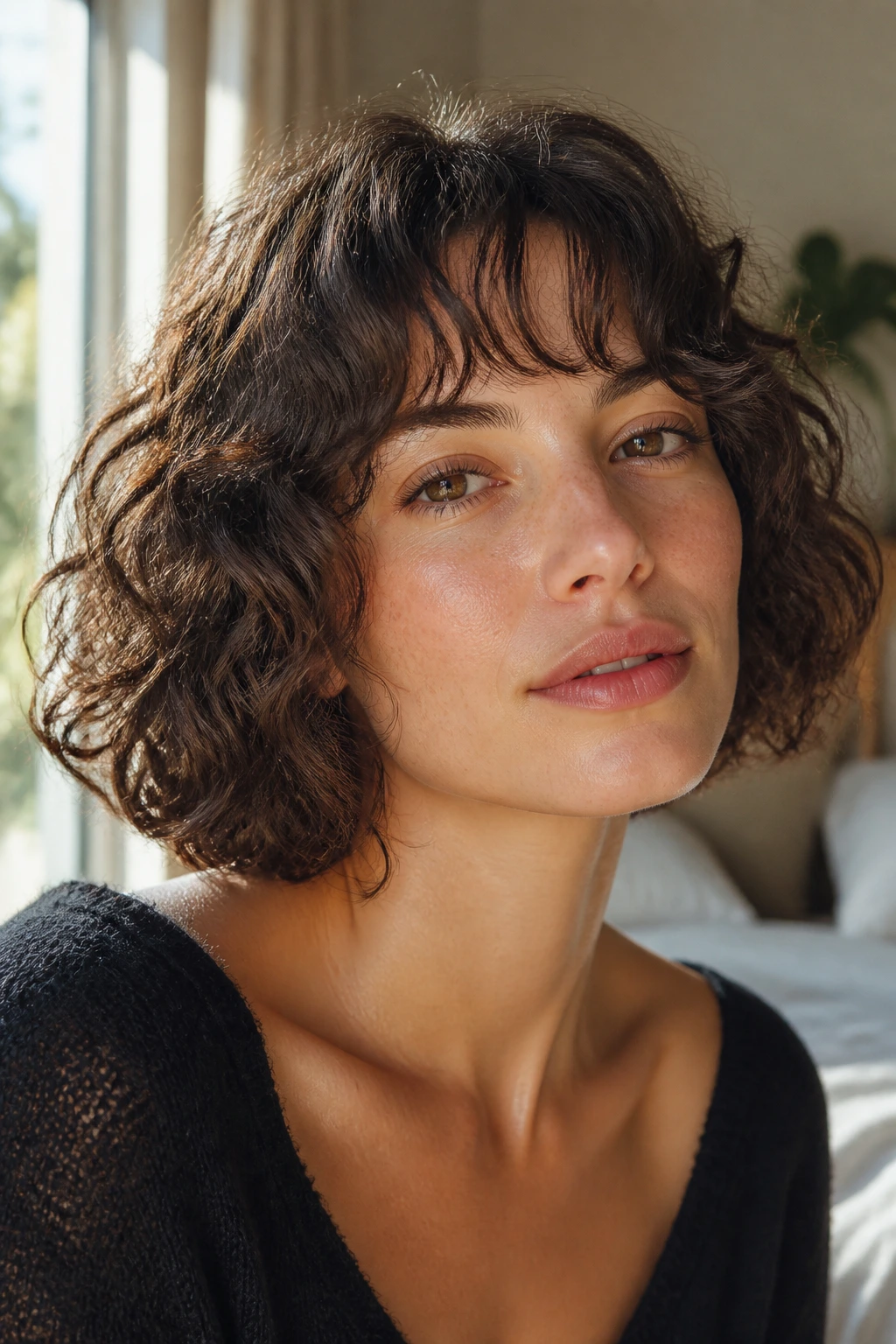
A French bob can be tricky on square faces, which is exactly why the curly version needs care. The length should hover around the cheekbone or just below the jaw, and the fringe should stay light, broken, and airy. Straight, heavy bangs would box the face in. Soft curls do the opposite.
This cut suits waves and looser curls best. The shape needs enough bend to curve inward at the ends, especially around the cheeks. If the bob sits too blunt, it can sharpen the jaw. If it sits too high, it can widen the cheeks. The sweet spot is small, but it’s there.
I like this cut when the goal is chic, not fussy. It has that tidy outline with a little softness at the front. No stiffness.
13. The Curly Bixie with Choppy Top Layers
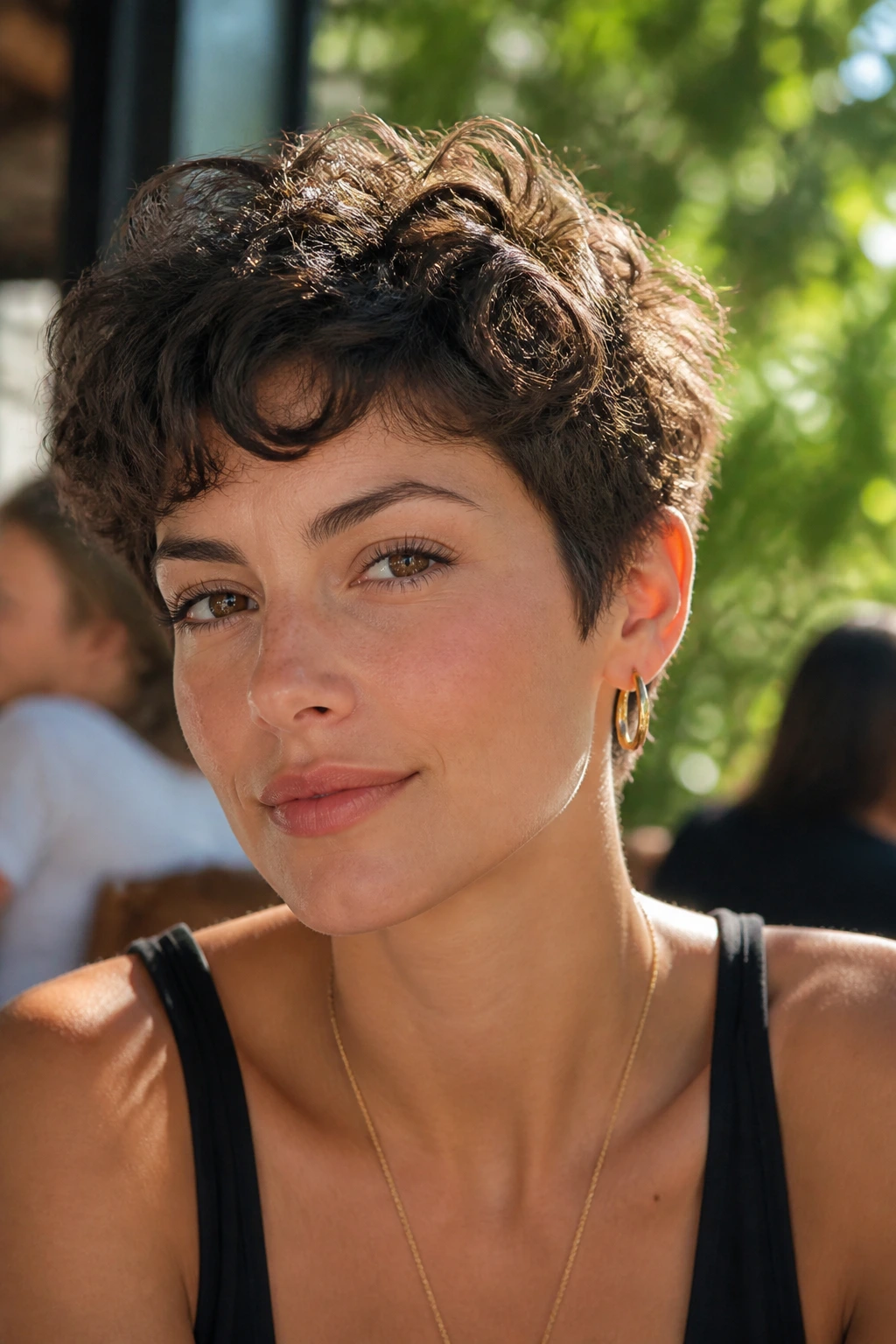
A bixie is the middle child between a bob and a pixie, and curly hair makes it better. The top stays choppy and lively, the sides stay light, and the back doesn’t collapse into a square block. For square faces, that mix of shortness and roundness works far better than a severe crop.
The important thing is texture control. If the layers are too short all over, the style balloons at the sides. If they’re too long, you lose the bixie shape and it turns into a shapeless grow-out. The best versions keep the crown piecey and the outline rounded.
This one needs trims more often than a lob. That’s the tradeoff. The upside is that it gives you a lot of shape without much daily work.
14. Long Waterfall Layers and a Deep Side Part
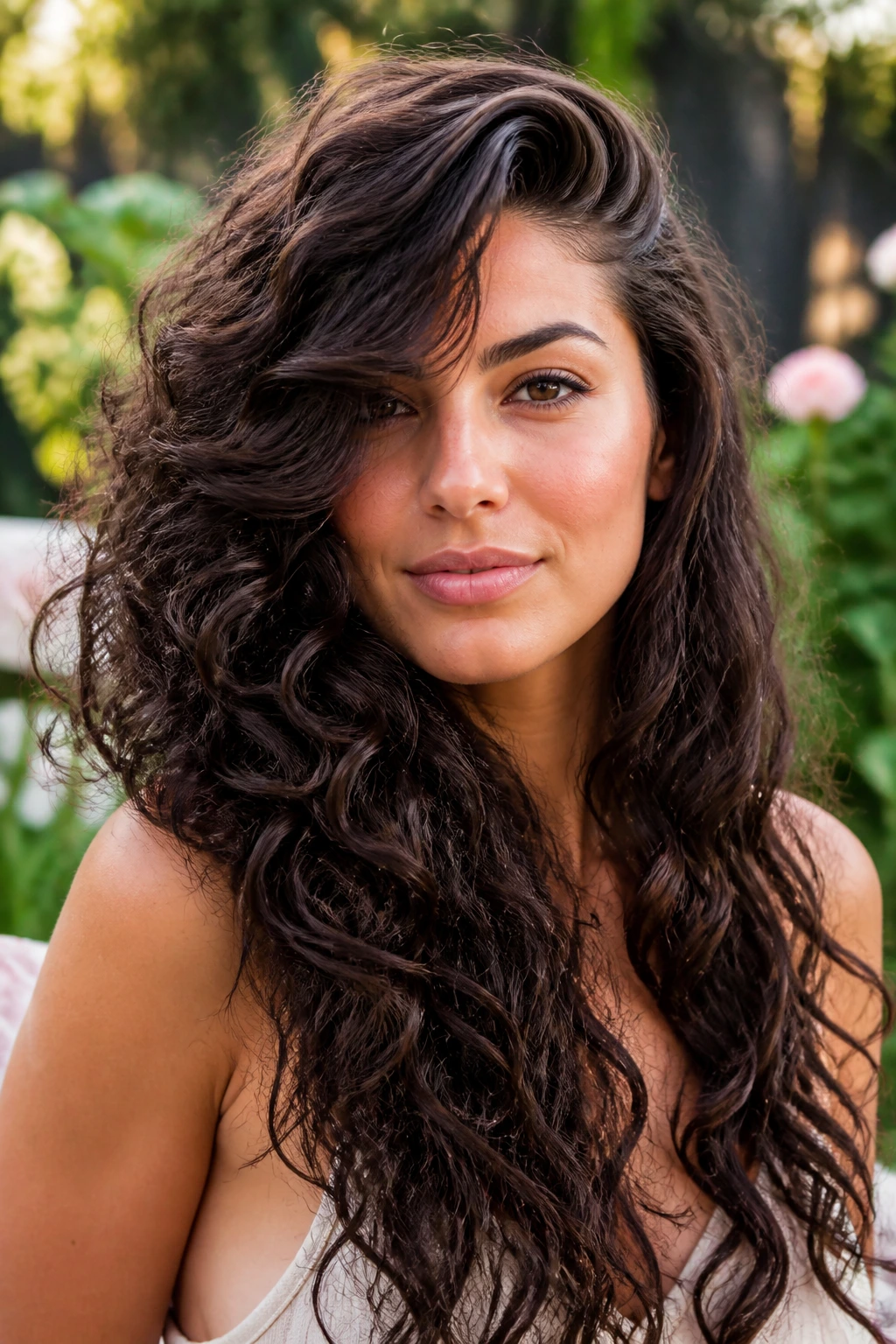
A deep side part can change a square face fast. It breaks the symmetry, creates a diagonal line across the forehead, and gives curls a place to fall that isn’t directly on the widest part of the face. Add waterfall layers, and the hair starts moving in soft steps instead of one heavy sheet.
This is a strong option if you love length and don’t want to sacrifice it. The layers should start high enough to add motion but low enough to keep the ends from getting wispy. Around the face, the longest layers should brush the cheekbones and then drift past the jaw.
Some cuts need drama to work. This one needs a little attitude. Shift the part, let the curls land where they want, and don’t over-fluff the sides.
15. The Side-Parted Cut with Face-Skimming Bangs
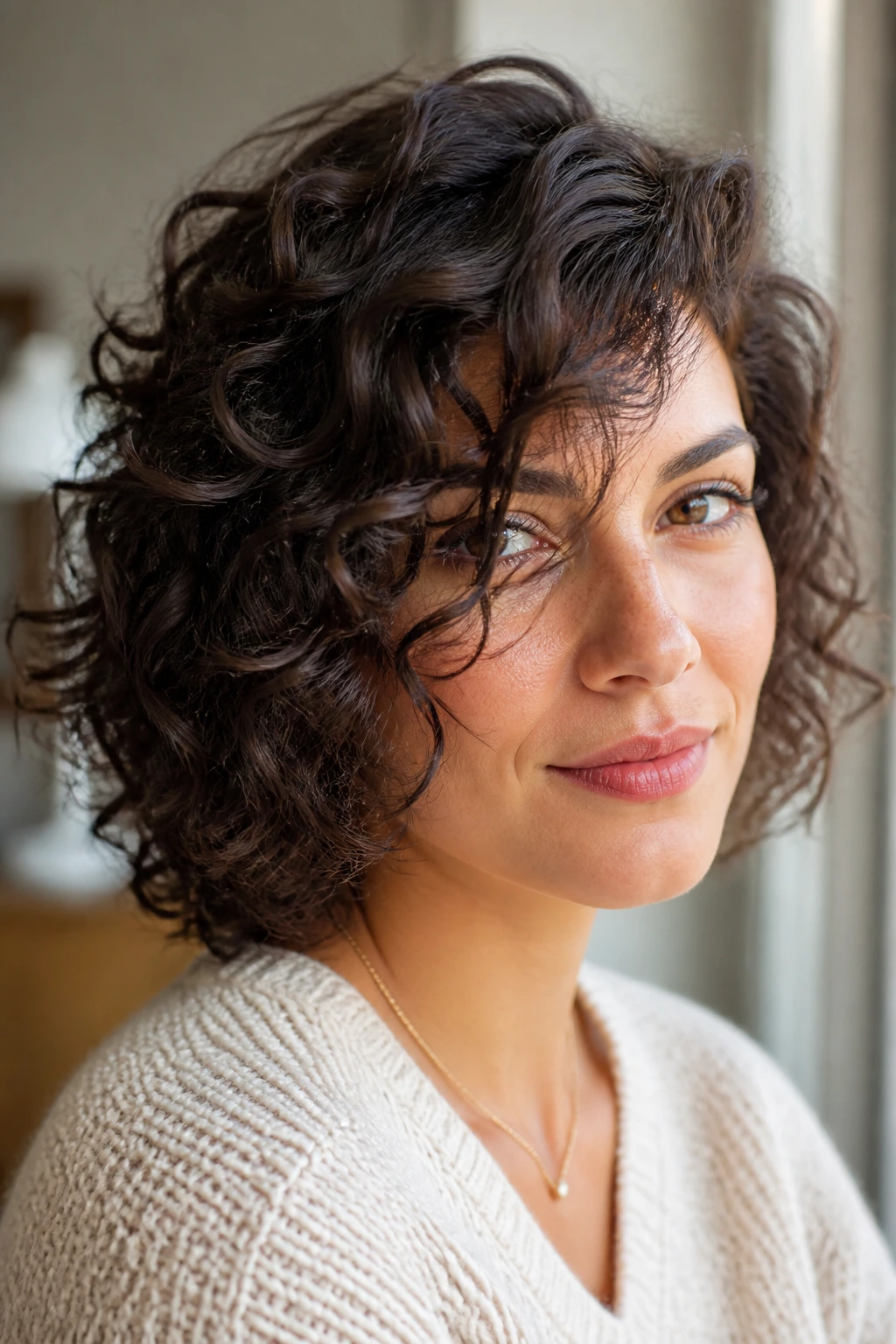
Face-skimming bangs are one of my favorite fixes for square faces because they make the front of the haircut feel alive. They move across the forehead, brush the upper cheek, and stop the eye from settling on the jawline. On curls, they should look light, not chopped.
The side part is doing half the work here. It lets the bangs fold over naturally and creates a longer line through the face. If the curl pattern is loose enough, you can keep the bangs a bit longer; if the curls are springy, you’ll want to leave extra length for shrinkage.
This is a good choice when you want softness up front without committing to full bangs. Easy to style. Easy to grow out. That matters more than people admit.
16. The Soft Curly Mullet That Stays Polite

A curly mullet can be brilliant on a square face if it’s softened enough to keep the outline rounded. The top and crown carry more shape, the sides are trimmed close enough to reduce width, and the length in back gives the cut a little swing. The word “soft” does a lot of heavy lifting here.
Why it works: the eye goes up and down instead of straight across. That vertical movement helps a square face feel less broad. The curls also disguise the transition between short and long sections, which makes the style look less stark than it would on straight hair.
I’d only ask for this if you want personality. It’s not the most conservative option in the room. It is one of the most interesting.
17. Long Layers with Bottleneck Bangs
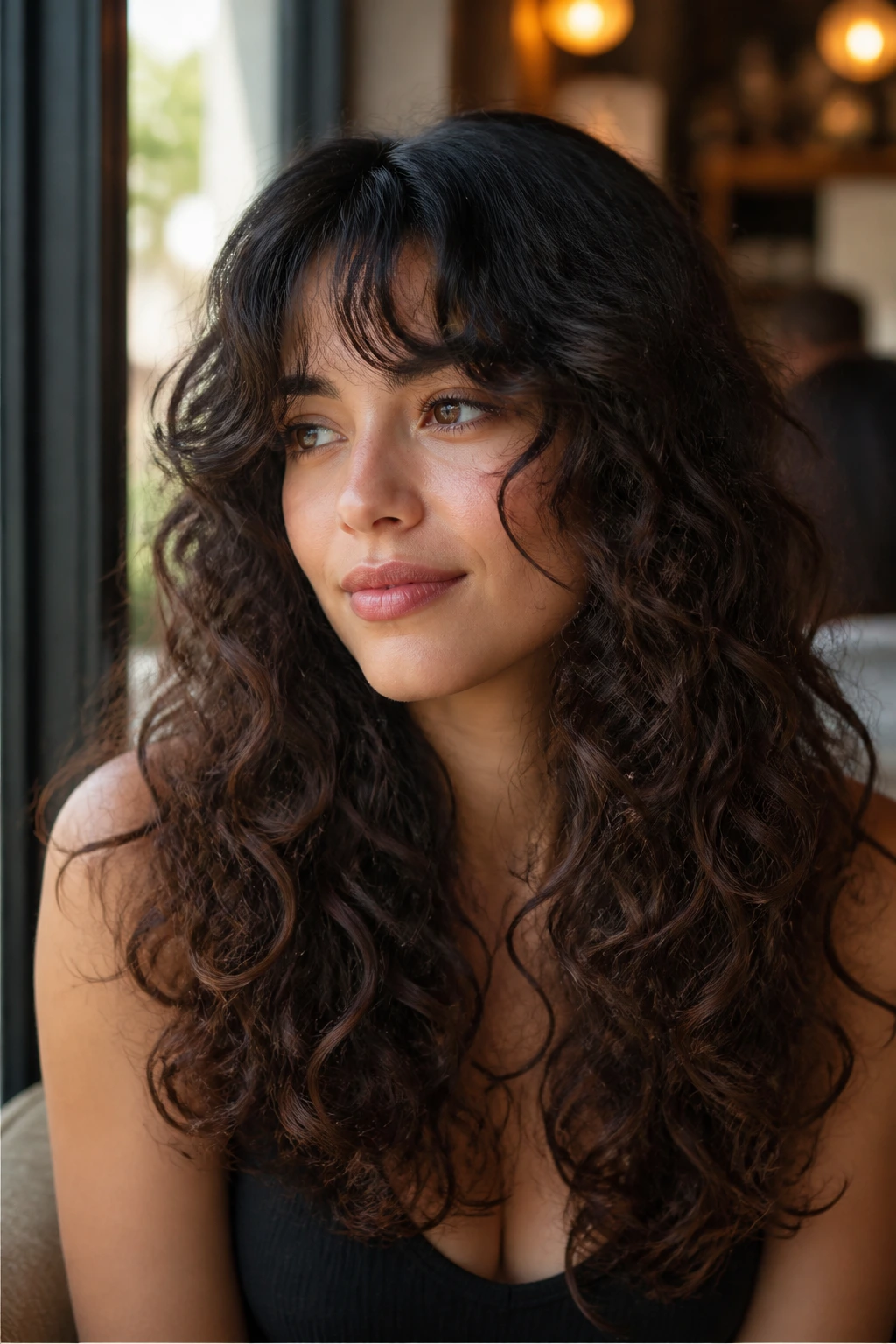
Long hair can absolutely suit a square face, but it needs movement near the front or it starts to feel heavy. Long layers remove that drag, while bottleneck bangs create a soft frame that opens at the temples and gently narrows the forehead. The effect is subtle, which is why it ages well.
This cut is especially good if you like to wear your curls down most days. The layers should be long enough to preserve weight and curl clump, not so many that the ends look thin. Keep the face-framing pieces slightly longer than you think you need. Curly hair bounces up when it dries, and the bang area is the place where that surprise matters most.
If you also straighten your hair sometimes, this is a solid compromise. It still looks tidy when smoothed out.
18. The Rounded Afro with a Sculpted Silhouette
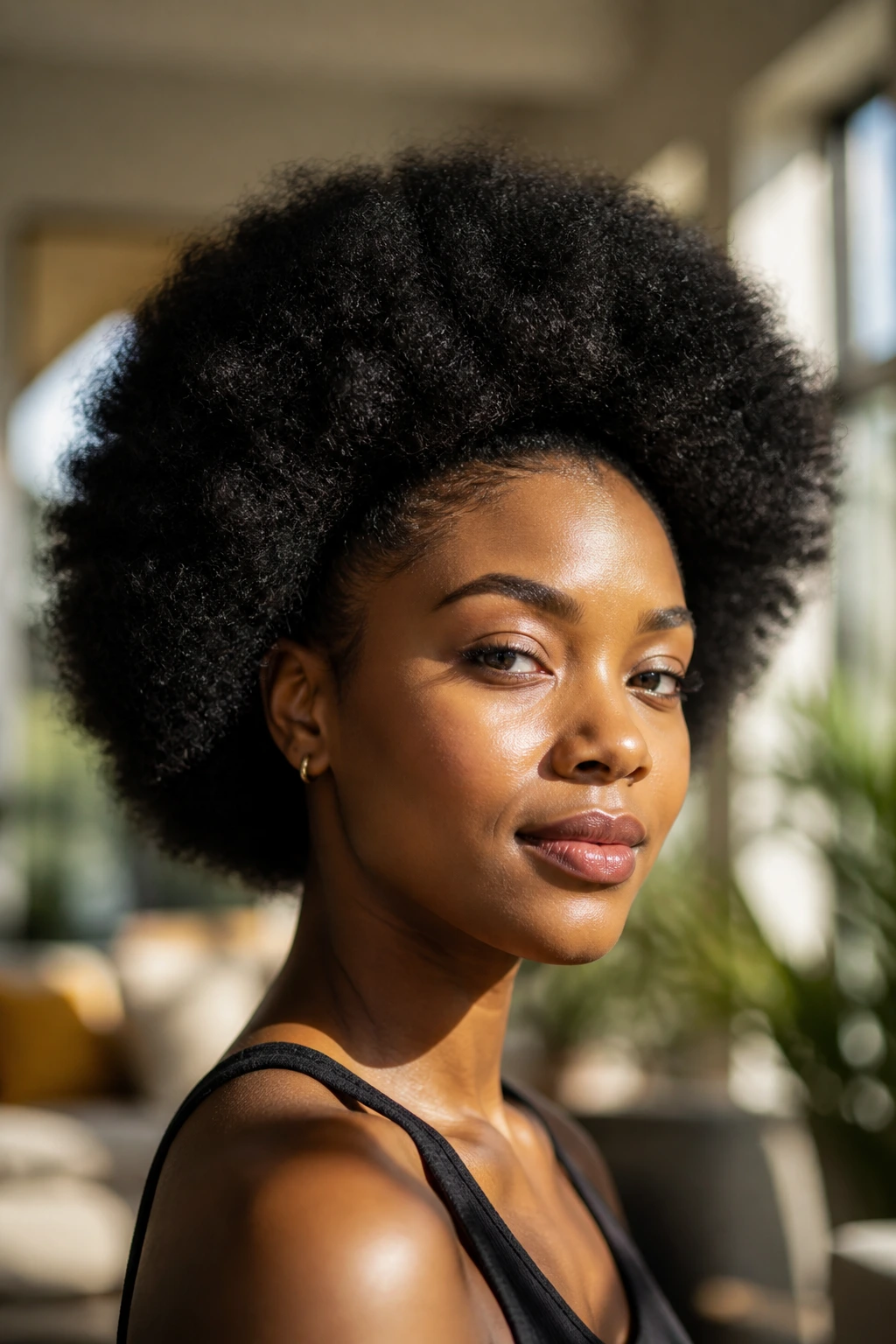
For coily hair, a rounded afro is one of the cleanest shapes for a square face. The outline needs to stay oval or dome-like, not square across the sides. That roundness softens the jaw and keeps the head shape from feeling too angular.
The secret is where the bulk sits. A good rounded afro has width, sure, but it’s distributed with purpose. The sides are shaped in, the crown stays full, and the edges are smoothed so the silhouette reads curved from every angle. Tiny trims make a huge difference here.
What to Ask For
- A rounded outline, not a flat top.
- Soft tapering at the temples and nape.
- Enough length on top to keep the crown lifted.
- Shape maintenance that follows the curl’s natural fall.
19. The Angled Lob with Soft Front Pieces
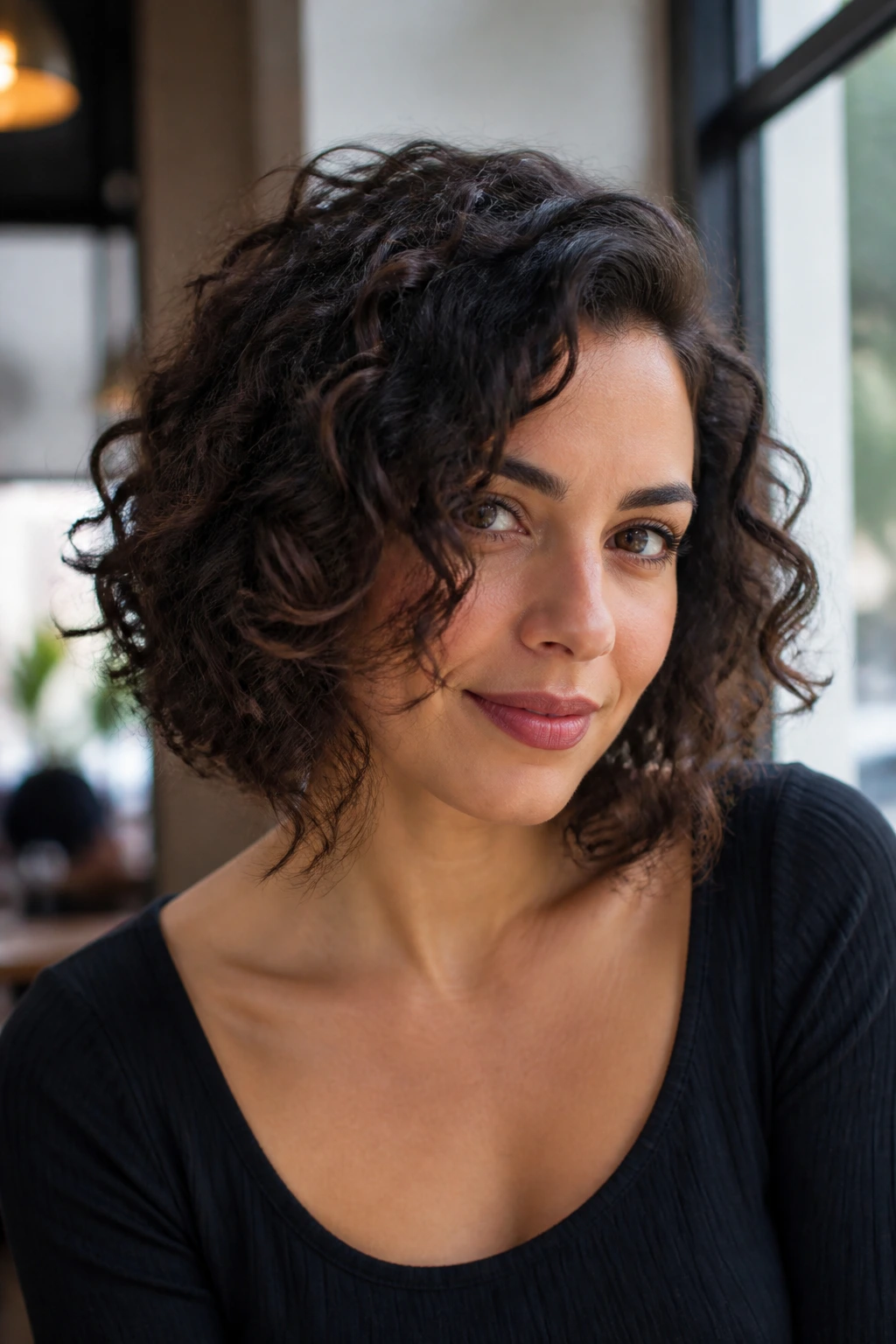
An angled lob is a classic for a reason, and curls make it feel less sharp if the front is softened. The back sits a touch shorter, the front drapes longer, and the face-framing pieces curve around the jaw instead of ending right on it. That angle gives square faces some needed diagonal movement.
I prefer this version when the hair has moderate density and a fairly predictable curl pattern. Too much volume can make the angle disappear. Too little and the cut can go flat. When it lands correctly, though, it has just enough structure to feel polished without looking stiff.
This is one of those cuts that seems simple until you see it in motion. Then the shape makes sense.
20. The Curly Cut with an Undercut Nape
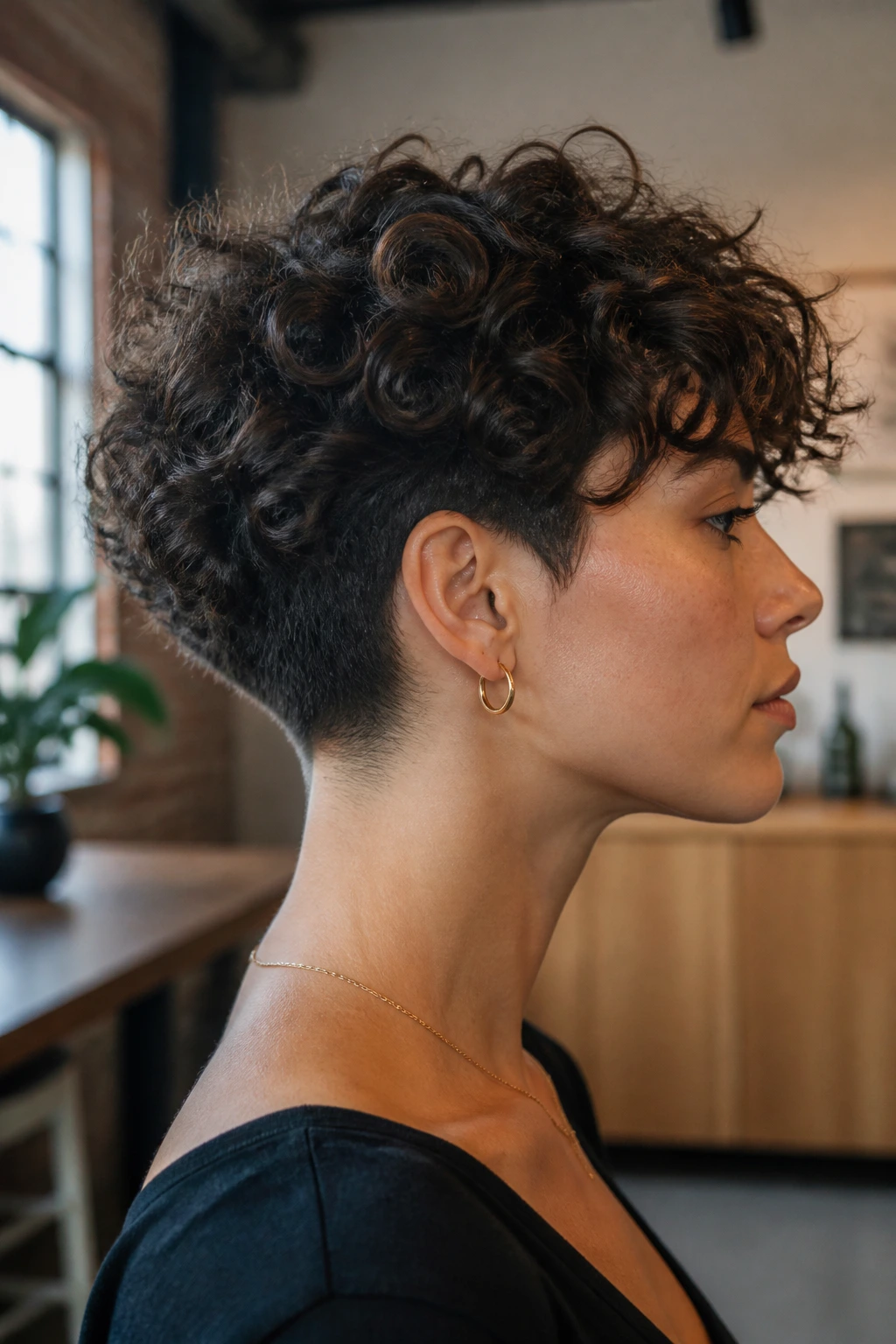
An undercut nape is one of the smartest hidden tricks for dense curls. The outside shape stays rounded and soft, but the bulk underneath gets removed so the hair doesn’t push outward at the bottom. On square faces, that matters because extra width near the jaw is usually the problem.
The undercut doesn’t have to be dramatic. It can be tiny and hidden. But it changes how the whole cut sits. You get cleaner movement, less puff at the neck, and a silhouette that feels lighter without losing the curls on top.
This is especially useful if you wear your hair up a lot. A hidden undercut makes buns and ponytails sit flatter, which is a nice side benefit nobody complains about.
21. The Halo-Length Cut That Sits Around the Face

A halo-length cut lands in that medium zone where curls can frame the face without crowding it. The idea is to create a rounded shape that sits around the head like a soft frame instead of dropping straight down in a curtain. For square faces, that curved outline makes the angle of the jaw feel less abrupt.
This cut works well when the curls are springy and want to spread. The stylist can shape the perimeter in a soft oval, then keep the front pieces slightly longer so they drape around the cheeks. It’s a nice option if you want body without sharpness.
The vibe is gentle, but not boring. There’s enough shape to keep it interesting.
22. Invisible Layers for Long, Heavy Curls
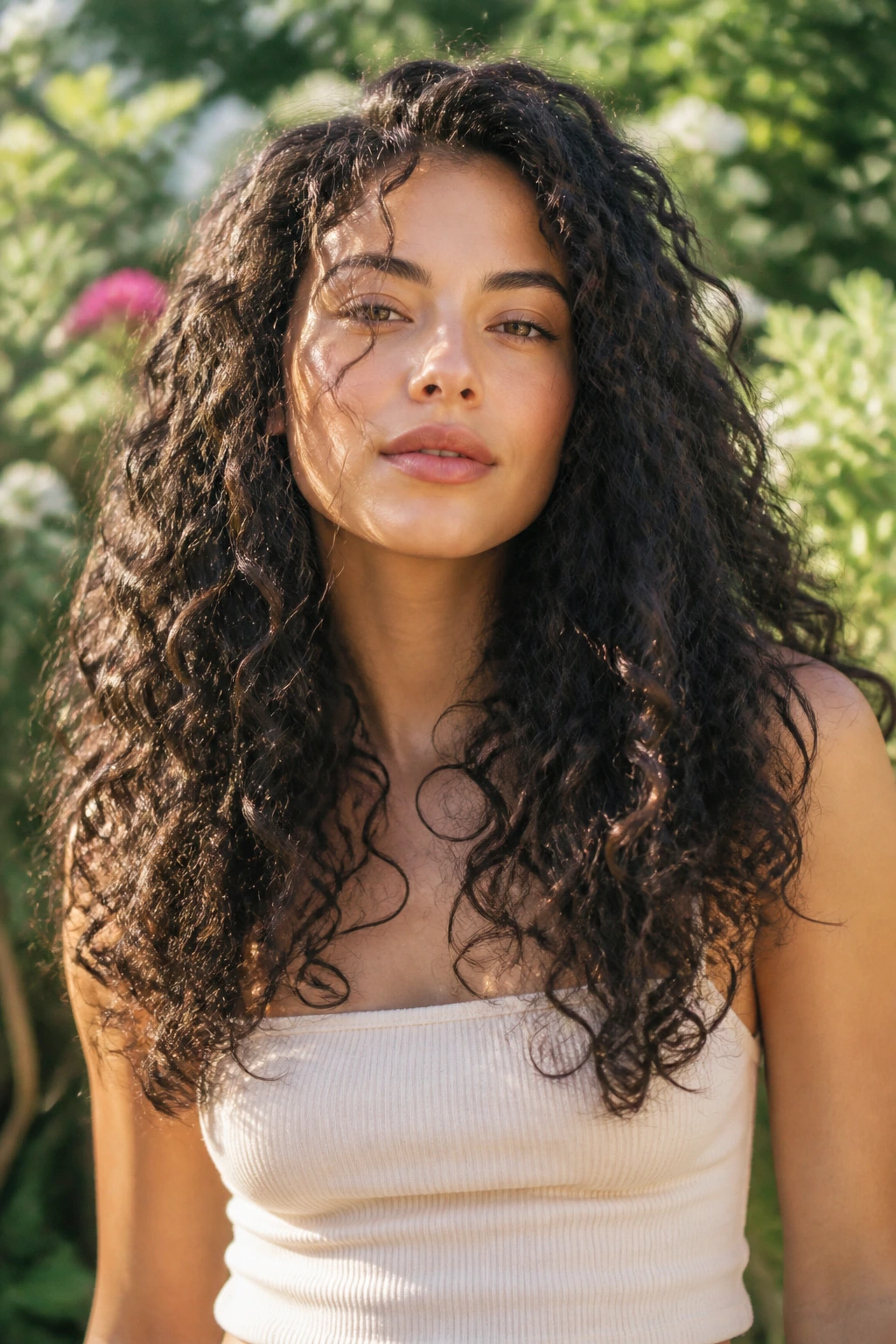
Long curls can start to feel like a lot of fabric if they’re cut bluntly. Invisible layers solve that by removing weight inside the shape while keeping the outer line full. On square faces, that’s a smart move because the hair stays soft around the edges instead of turning into one hard block.
This is a good choice if you want to keep length and density. The stylist should preserve the perimeter, lift the crown a bit, and use internal layering to stop the sides from swelling out at the widest point. The change is subtle when the hair hangs still, but it shows the second you move.
If you love length and hate losing it, this is the quiet answer.
How to Brief a Stylist So the Shape Lands in the Right Place
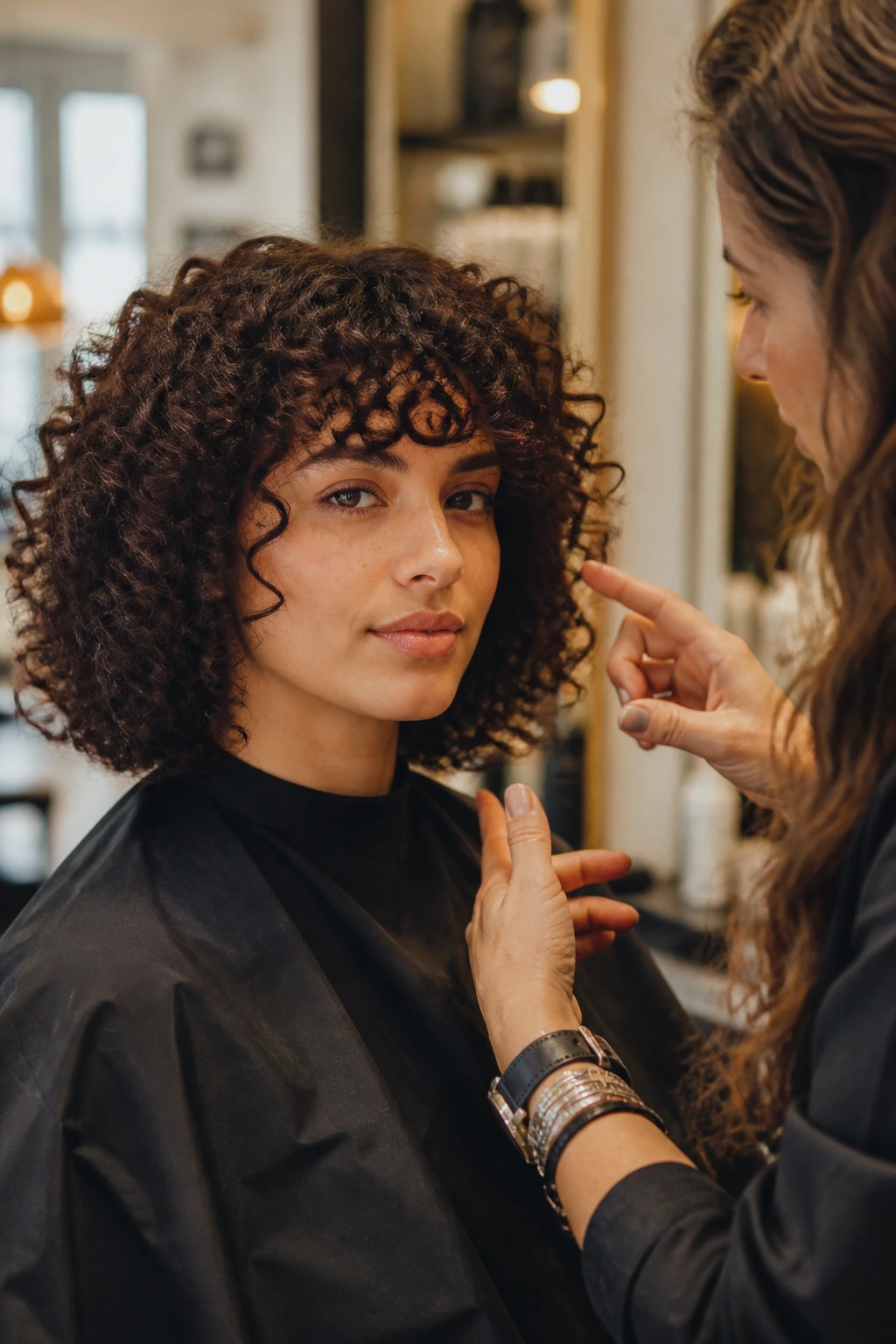
Bring pictures, yes, but bring the right pictures. One photo of a cut you love is not enough if the curl pattern, density, or face shape is completely different from yours. Save three or four images, then point out the exact pieces you want: the fringe, the cheekbone length, the crown lift, the perimeter.
Shrinkage talk comes first. Say how much your curls bounce up when they dry, and be honest about whether you air-dry, diffuse, or stretch them. A stylist can’t guess that part, and guessing is how you end up with a jaw-length surprise.
Use shape language, not vague praise. Try phrases like “rounded through the sides,” “longer in front,” “soft around the jaw,” or “shortest layer at the cheekbone.” Those words tell a stylist what to build. “Make it cute” does not.
A good consultation should also cover whether you wear your hair straight sometimes. If you do, the haircut needs to behave in both states. That changes where the layers should fall.
Mistakes That Make a Square Face Look Boxier
-
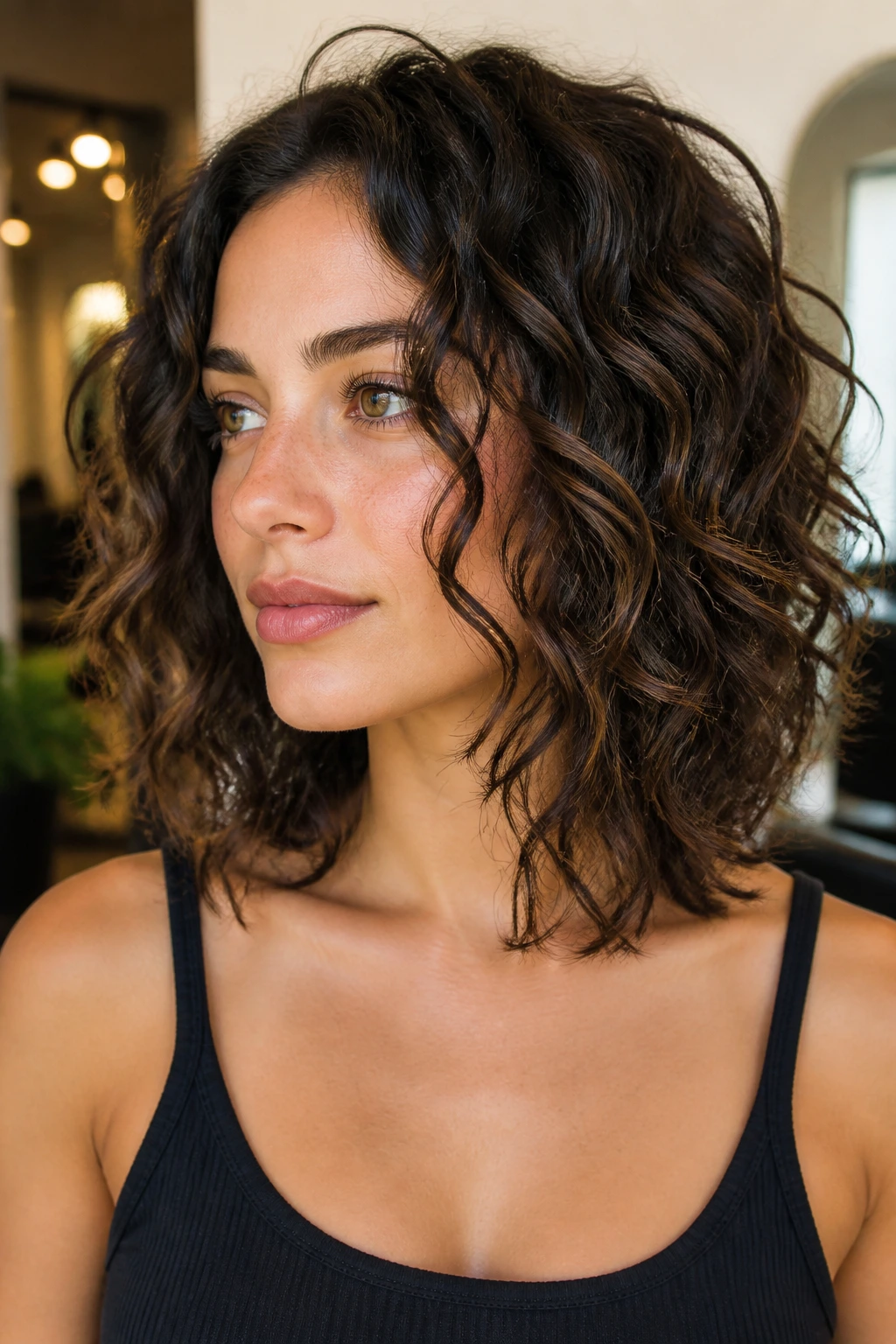
Stopping the length right at the jaw: That’s the fastest way to sharpen the face. If the hair hits exactly where the jaw gets widest, the cut can look like a frame. Move the length above the cheekbone or below the chin instead.
-
Blunt corners on the sides: Curly hair with sharp side corners can read as bulky. Ask for rounded edges or soft internal layers so the silhouette curves instead of sitting flat and square.
-
Over-thinning the ends: Thin ends frizz, separate, and turn wispy. The cut loses body, and the face can look wider because the shape no longer hangs cleanly.
-
Ignoring crown height: Flat roots plus wide sides make square faces look broader. A little lift at the crown pulls the eye up and changes the whole balance.
-
Cutting bangs too straight across: Heavy, blunt bangs can make the face feel shorter and boxier. Softer shapes—curtain, bottleneck, side-swept—usually sit better.
Ways to Adapt These Cuts for Different Curl Patterns and Routines

Loose-wave version: If your hair lives around 2A to 2C, lean on lobs, side parts, and long face-framing pieces. Loose curls lose their shape fast when over-layered, so keep the perimeter a little stronger.
High-shrinkage version: For tighter curls and coils, cut with the dry finish in mind and keep the silhouette rounded. Shorter styles often need a bit more length than you think so they don’t spring above the jaw.
Low-maintenance version: If you don’t want to restyle every morning, choose a shape that looks good when air-dried. Rounded lobs, U-shapes, and invisible layers usually behave better than highly disconnected cuts.
Straight-days version: If you sometimes blow out or flat-iron your hair, keep the front pieces long enough to soften the jaw in both states. That usually means avoiding bangs that only work curly.
Tools That Make Curly Haircuts Easier to Live With
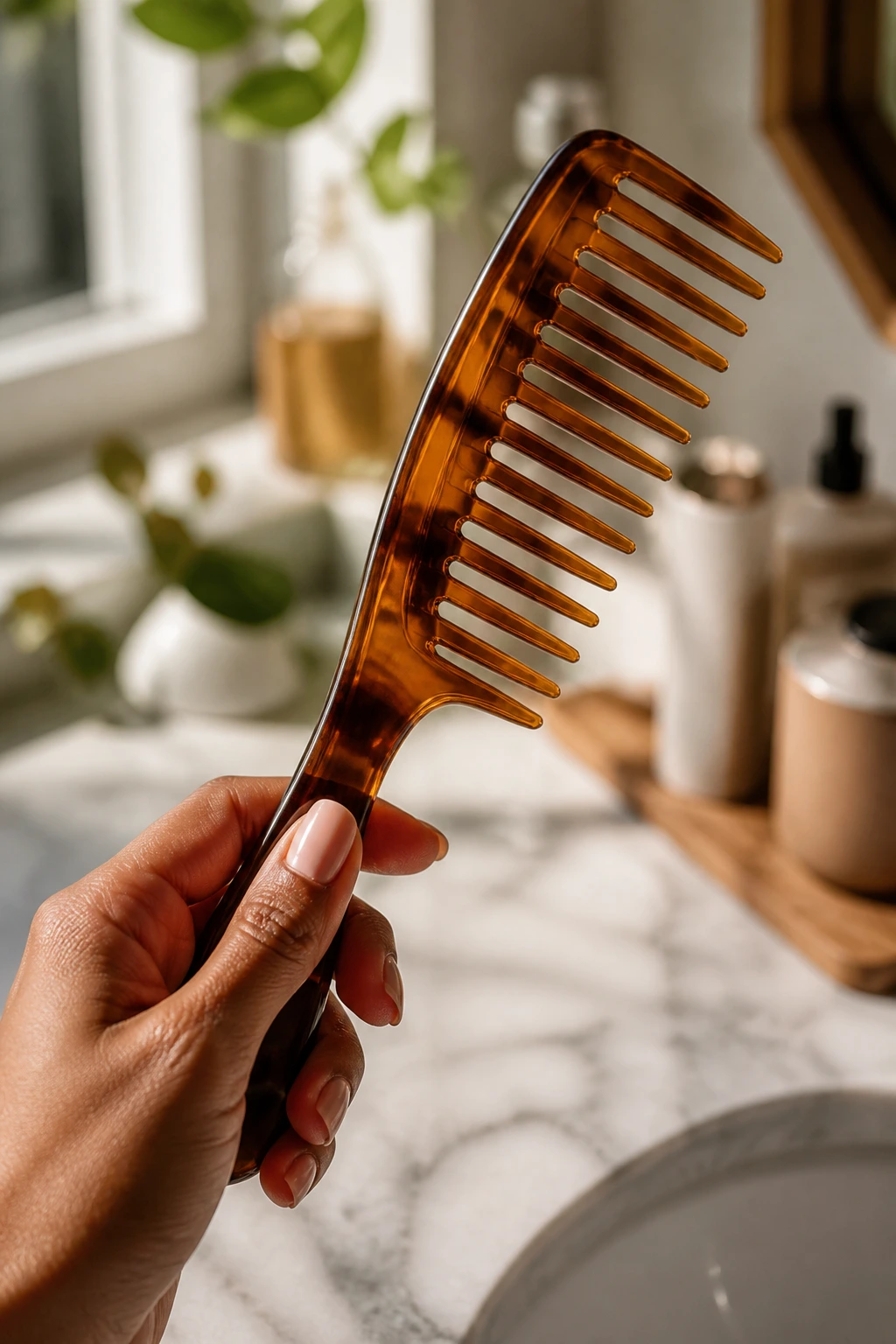
- Wide-tooth comb: Good for detangling without pulling the curl pattern apart.
- Spray bottle with water: Handy for refreshing the front pieces or reshaping bangs.
- Microfiber towel or cotton T-shirt: Reduces rough frizz right after washing.
- Diffuser attachment: Helps the crown keep lift and shape without blasting the curls flat.
- Sectioning clips: Useful when you’re styling a layered cut and want the top to stay separate.
- Hand mirror: Worth having for checking the back and nape, especially on bobs, crops, and undercuts.
- Satin bonnet or pillowcase: Keeps the shape from getting crushed overnight.
- Light styling product: A curl cream, mousse, or gel that holds the outline without turning it crunchy.
Keeping the Shape Between Salon Visits
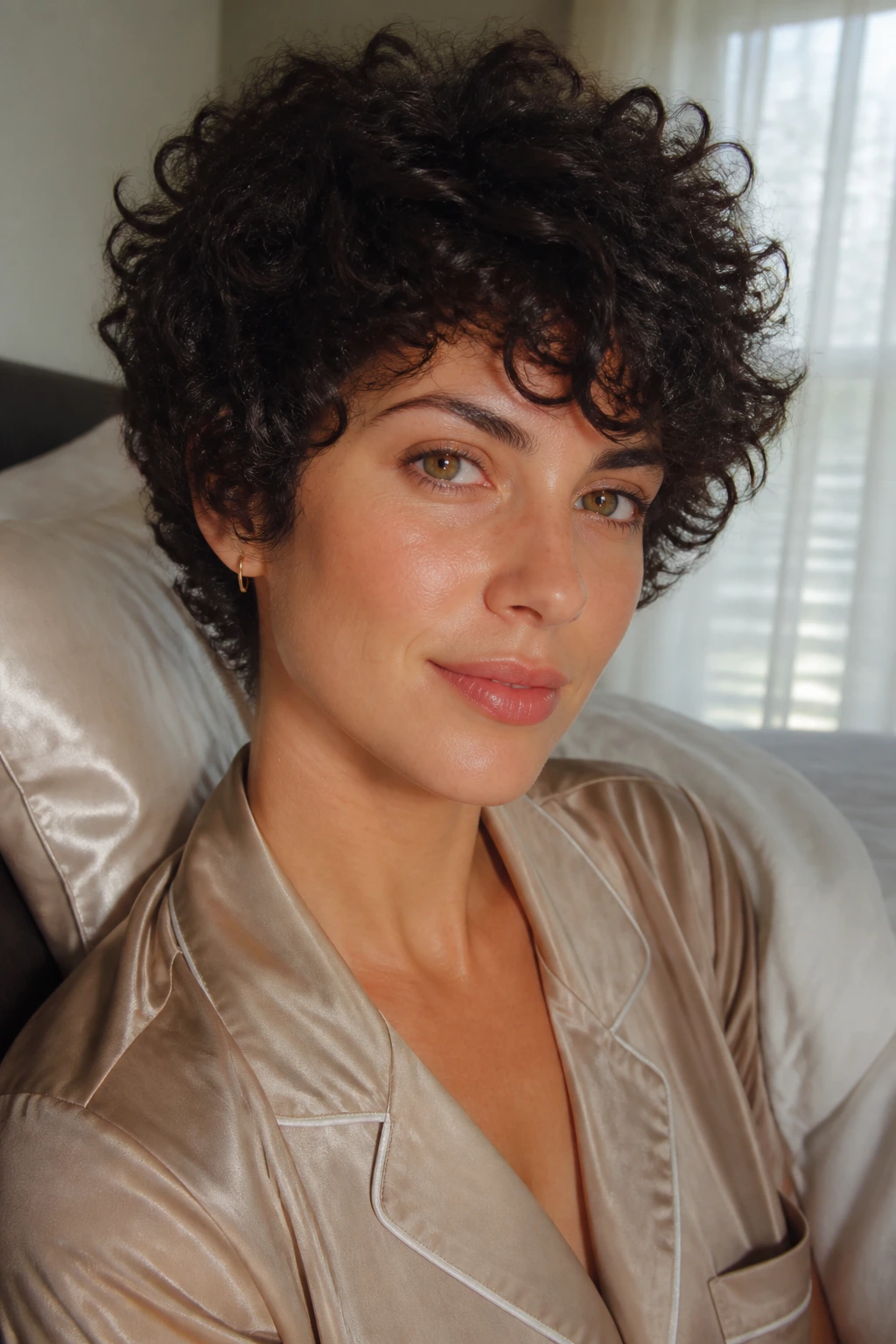
Shorter curly cuts need more frequent cleanup than long ones, and that’s just the deal. A bixie, pixie, or tapered crop usually wants a trim every 4 to 6 weeks if you want the shape to stay crisp. Lobs and layered mid-length cuts can often go 8 to 10 weeks. Long layers can stretch to 10 to 14 weeks, but the bangs may need a quicker touch-up.
Between visits, refresh the front first. That’s where square-face framing lives, so if the bangs flatten or the cheek pieces separate, the whole cut starts looking off. A little water, a dab of mousse, and a quick scrunch can bring the shape back faster than a full restyle.
Sleep matters too. Pineapple the curls loosely, use a satin bonnet, or at least swap to a satin pillowcase. If the hair gets crushed at the sides every night, even a good cut will start fighting you.
Questions People Ask Before They Chop Their Curls
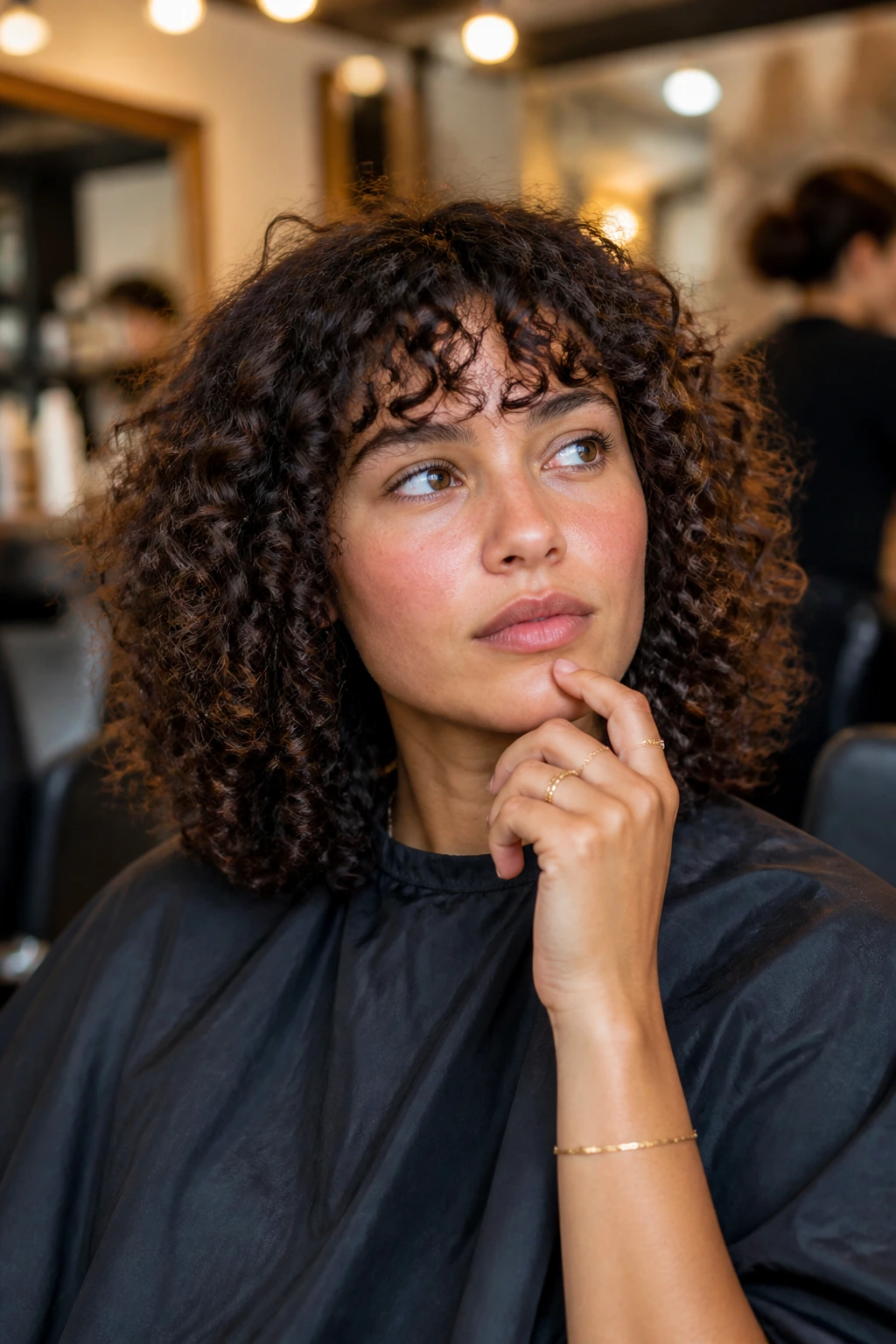
Can a blunt bob work on a square face with curls?
Yes, if the bob is rounded and doesn’t stop right at the jaw. The curl pattern has to soften the line, or the cut can look boxy fast. A side part helps, too.
Are bangs a bad idea for square faces?
Not if they’re soft. Curtain bangs, bottleneck bangs, and side-swept fringe usually flatter better than a straight, heavy line. Curly bangs also need extra length because they spring up.
What if my curls shrink a lot?
Tell the stylist your dry length goal, not your wet length wish. Dry-cutting or a dry check at the end can save you from getting a shape that jumps too high.
Should I avoid center parts?
Not always. A center part can work with enough face-framing length and crown height. If the part makes your face feel wider, shift it a little off-center and see what changes.
Which cuts are best for thick curly hair?
Rounded lobs, shags, wolf-inspired shapes, and cuts with internal layering usually handle density well. Hidden undercuts can help if the bulk sits low at the neck or sides.
Can fine curls wear these styles too?
Yes, but they need gentler layering. Fine curls can lose fullness fast if the cut is too choppy. Keep some weight in the perimeter so the shape still looks lush.
How short can I go without making my face look harsher?
Short is fine if the shape is rounded or asymmetrical. Side-swept pixies, bixies, and tapered crops all soften square features better than a straight, flat crop.
What if I want to wear my hair straight sometimes?
Tell the stylist before the scissors come out. A cut that works curly and straight needs longer face-framing pieces and layers that don’t disappear when the curl pattern is stretched out.
A Shape That Lets the Curls Do the Softening
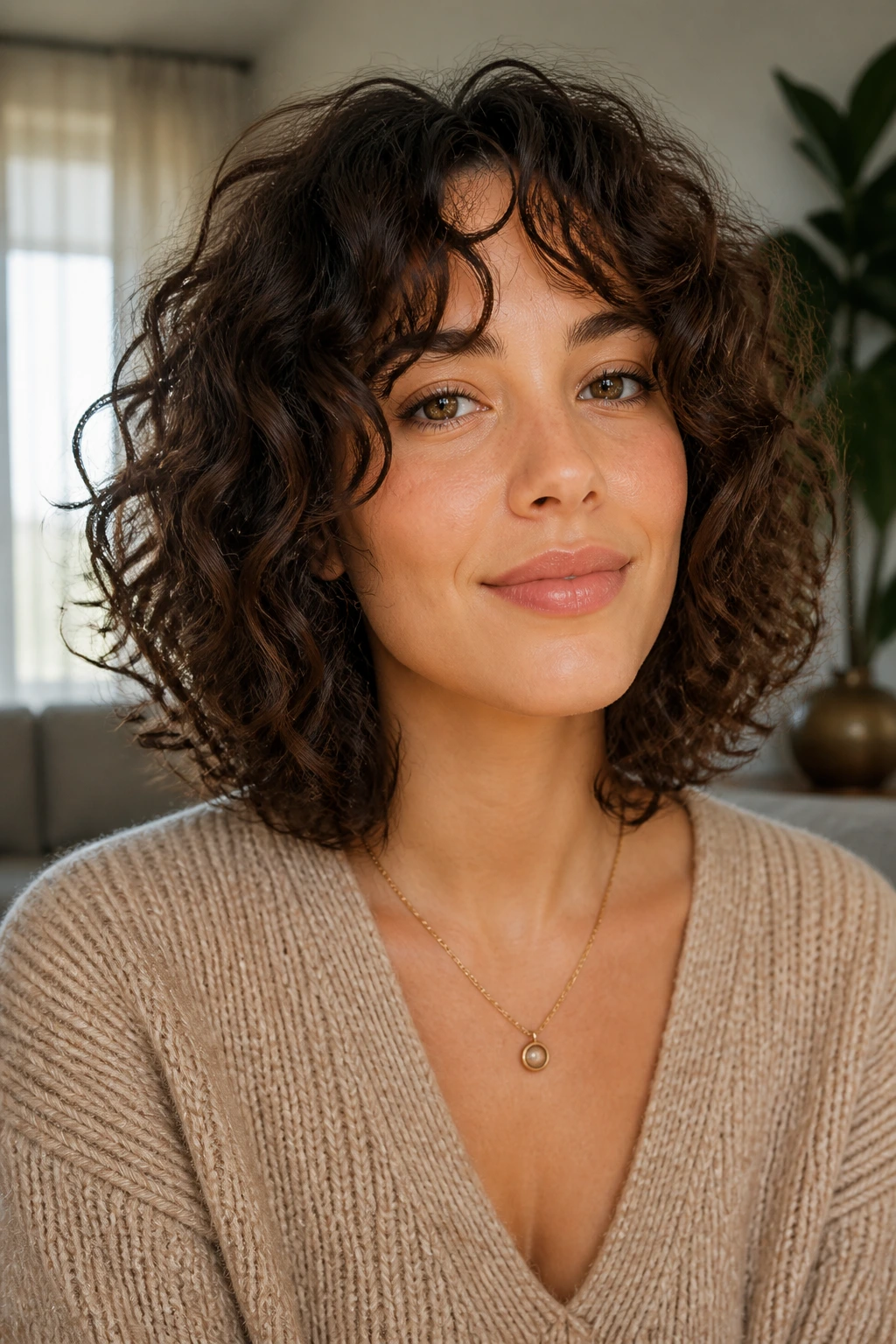
The best haircut for curly hair and a square face doesn’t fight the face shape. It works with it. Rounded lines, soft diagonals, lifted crowns, and cheekbone-framing pieces take the hard edges out of the picture without making the hair look overdone.
That’s the real goal here. Not hiding the jaw. Not chasing some universal “fix.” Just giving the curls a shape that moves around the face instead of stopping against it.
Pick the version that matches your curl pattern, your styling habits, and how much upkeep you’ll actually do. That’s the haircut that will still look like a good idea when you’re five weeks past wash day and running out the door.