



Long hair changes the rules. A curl that sits tight at the iron can stretch into a loose bend before you’ve even crossed the room, and that isn’t failure — it’s weight, gravity, and a little heat memory doing exactly what they do.
The best types of curls for long hair are the ones that respect that weight. Some need a bigger barrel so the shape survives. Some need a tiny section and a hard cool-down. A few only look finished after a brush-out, which is why the curl pattern matters more than the tool in your hand.
Long hair can wear almost every curl mood: soft and glossy, tight and springy, beachy and undone, polished and formal, heatless and low-maintenance. The trick is matching the curl shape to the length, the cut, and the finish you actually want to live with. That’s where the fun starts.
Why These Curl Shapes Matter More on Long Hair
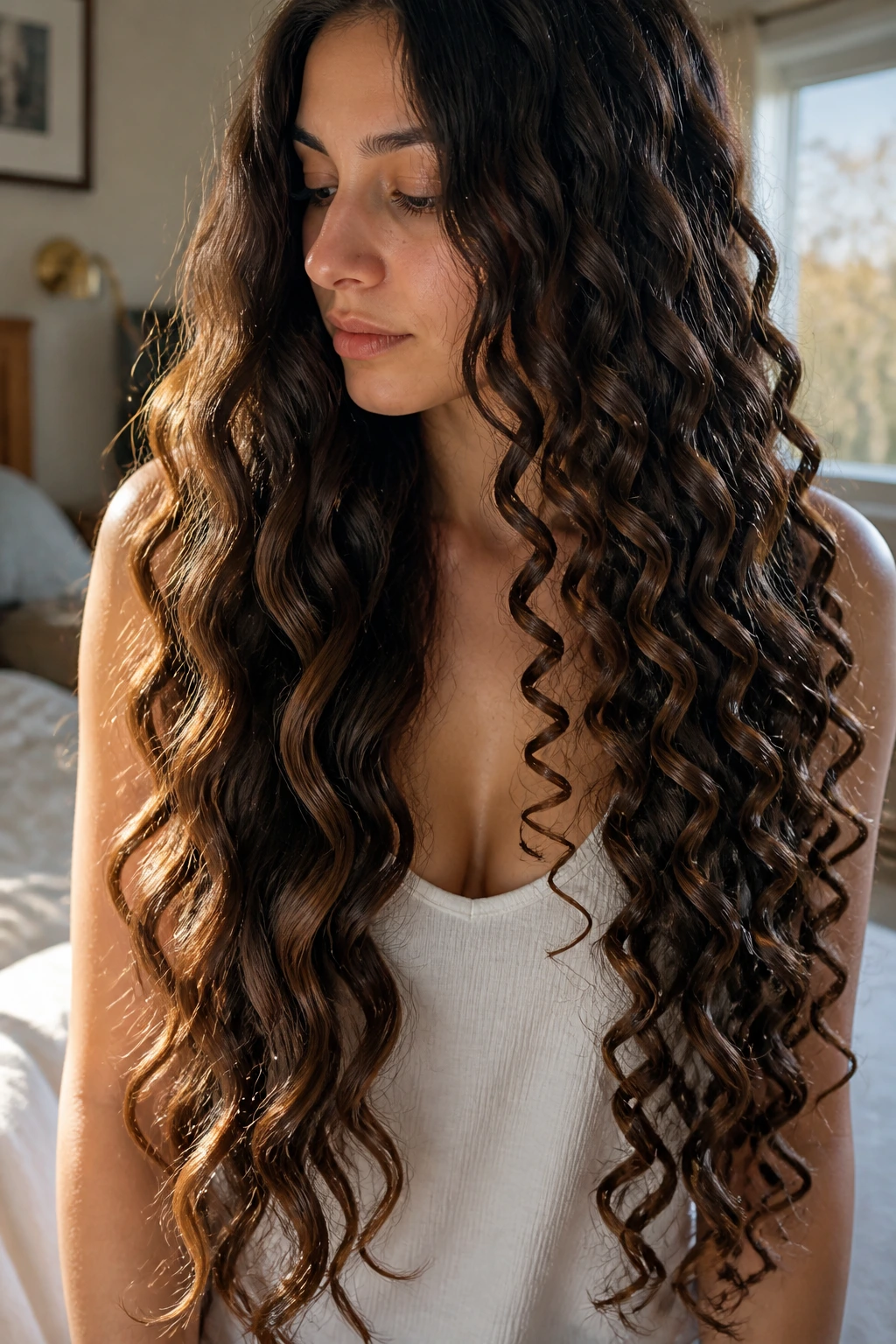
-
Weight changes the outcome: A tight curl on shoulder-length hair can sag into a wave once it reaches mid-back, so the same tool gives a different result on longer lengths.
-
Section size makes or breaks the finish: Thick sections leave a straight spine in the middle, which is why long hair often needs smaller, cleaner panels than people expect.
-
Cooling time is not optional: Long hair holds heat longer in the center of the section, and if you brush it out too soon, the curl collapses before it has a chance to set.
-
The haircut changes the curl story: Long layers, blunt ends, and face-framing pieces each change how curls land, even when the styling method stays the same.
-
Heatless options matter more here: Braids, rods, pin curls, and robe curls can create a shape that survives better than a rushed iron pass, especially on dense hair.
-
One curl can look polished or messy: The difference is usually section control, product choice, and how you finish it, not the iron brand or some magic trick.
1. Loose Barrel Curls
Loose barrel curls are the classic long-hair move. They start with a broad bend near the cheekbone or collarbone, then relax into a soft, glossy sweep that sits neatly on length instead of fighting it. On waist-length hair, they read as deliberate, not stiff.
Why they behave so well on long hair
A 1.25- to 1.5-inch barrel gives the curl enough space to form without turning into a tiny coil that stretches flat two minutes later. If your hair is heavy or very straight, smaller sections help the curl hold its outline all the way to the ends.
- Best barrel size: 1.25 to 1.5 inches.
- Section size: About 1 inch wide.
- Finish: Brush lightly for softness, or leave untouched for more shape.
- Hold: Flexible hairspray keeps the bend without making it crunchy.
Loose barrel curls are the style I’d choose when the goal is movement, not drama. They’re especially good on long layers because the ends keep the shape from looking blocky.
2. Defined Spiral Curls
Want the curl pattern to still look like a curl by dinner? Defined spirals are the answer. They’re tighter than a loose wave, but not as tiny as full ringlets, so long hair gets shape without turning into a puffy halo.
On extra-long hair, spirals work best when the wrap is slow and even. A 3/4-inch wand or curling iron gives the hair enough room to coil, and the section should be narrow enough that the heat reaches the center. If you use wider pieces, the outside curls and the inside stays flat. Annoying. And common.
The sweet spot is a curl that looks springy when it drops from the tool, then cools in the palm or pinned flat so the structure stays sharp. If your hair is silky, a little mousse before drying helps more than piling on hairspray after the fact.
3. Classic Ringlets
Ringlets can look sweet on short cuts and polished on long ones. That’s the difference. On long hair, they have room to fall in visible spirals instead of bunching up at the jaw.
This style needs smaller sections and a little patience. A 1/2- to 3/4-inch iron, or even flexi rods of the same size, gives you those neat loops. The payoff is shape. Lots of it. Ringlets make long hair look fuller because the curl pattern stays intact instead of stretching into one broad wave.
They’re not the curl to reach for if you want “effortless.” They are a more exact look, and that’s why they work. If you brush them out too much, you lose the point. Leave the ends crisp, mist with a light hold spray, and let the hair do the talking.
4. Beach Waves
Beach waves are the messy cousin in the family, but they’re not lazy. On long hair, they need deliberate unevenness: some pieces curled, some left straighter, and the ends kept a little imperfect so the whole shape doesn’t look too neat.
What makes them work
The best beach waves on long hair start lower on the strand, usually around mid-length. That leaves the root flatter and gives the curl room to drop in a natural way. If every section starts at the root, the result can look overdone fast.
- Tool: 1-inch iron or wand.
- Pattern: Alternate curl directions.
- Ends: Leave the last inch out on a few sections.
- Product: Texturizing spray at the end, not heavy cream at the start.
I like beach waves on layered long hair because the cut already adds movement. On blunt ends, they can look a little dense unless you brush them out with your fingers.
5. Hollywood Waves
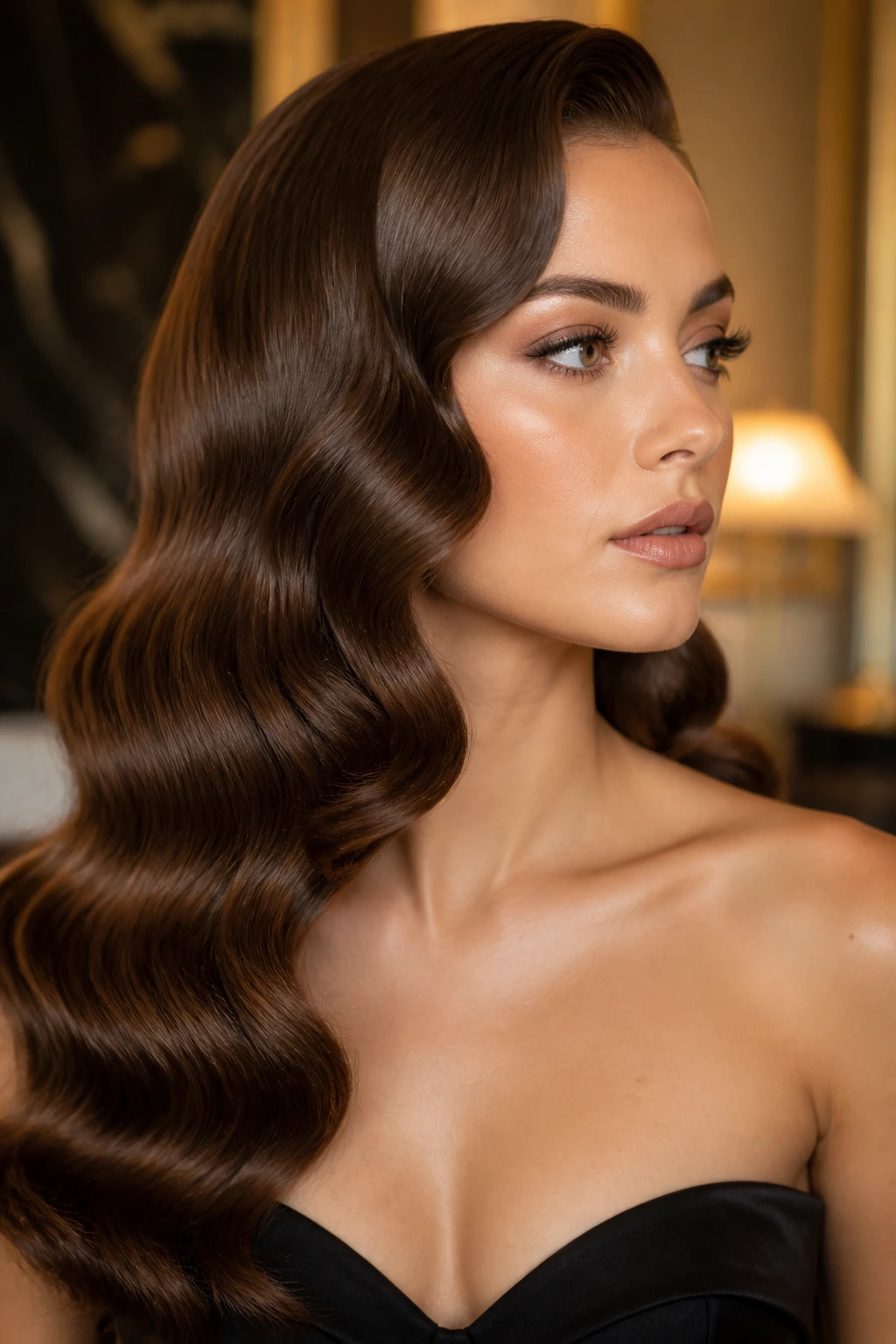
Hollywood waves are the most controlled, polished curl pattern in the bunch. Think deep side part, smooth S-shape, high shine, and not a stray bend in sight. On long hair, the extra length gives the wave room to sweep across the shoulder and still keep its structure.
They start as curls, but they finish as one unified shape. That means pinning each curl while it cools, then brushing through with a soft brush only after the hair is fully set. The result is more sculpture than curl, and that’s exactly why it looks so good on long lengths.
This is the style I’d pick for formal events, photos, or any day you want the hair to look almost liquid. Use shine spray sparingly. Too much, and the waves start to separate in weird patches.
6. Mermaid Waves
Mermaid waves sit between beach waves and glam waves. They’re longer, smoother, and a little more drawn-out, which makes them one of the easiest curl types for very long hair to wear without losing the pattern.
The key is the S-shape. Not a tight coil. Not a flat bend. A long, slow curve that moves down the strand in a way you can actually see. A three-barrel waver gives this look quickly, but you can also fake it with a curling iron by alternating the direction and keeping the sections broad.
Mermaid waves are the style that makes length look intentional instead of heavy. On fine hair, add a light texturizing mist first. On thick hair, clip the crown while the lower layers cool so the top doesn’t fall flat before the rest is ready.
7. Boho Curls
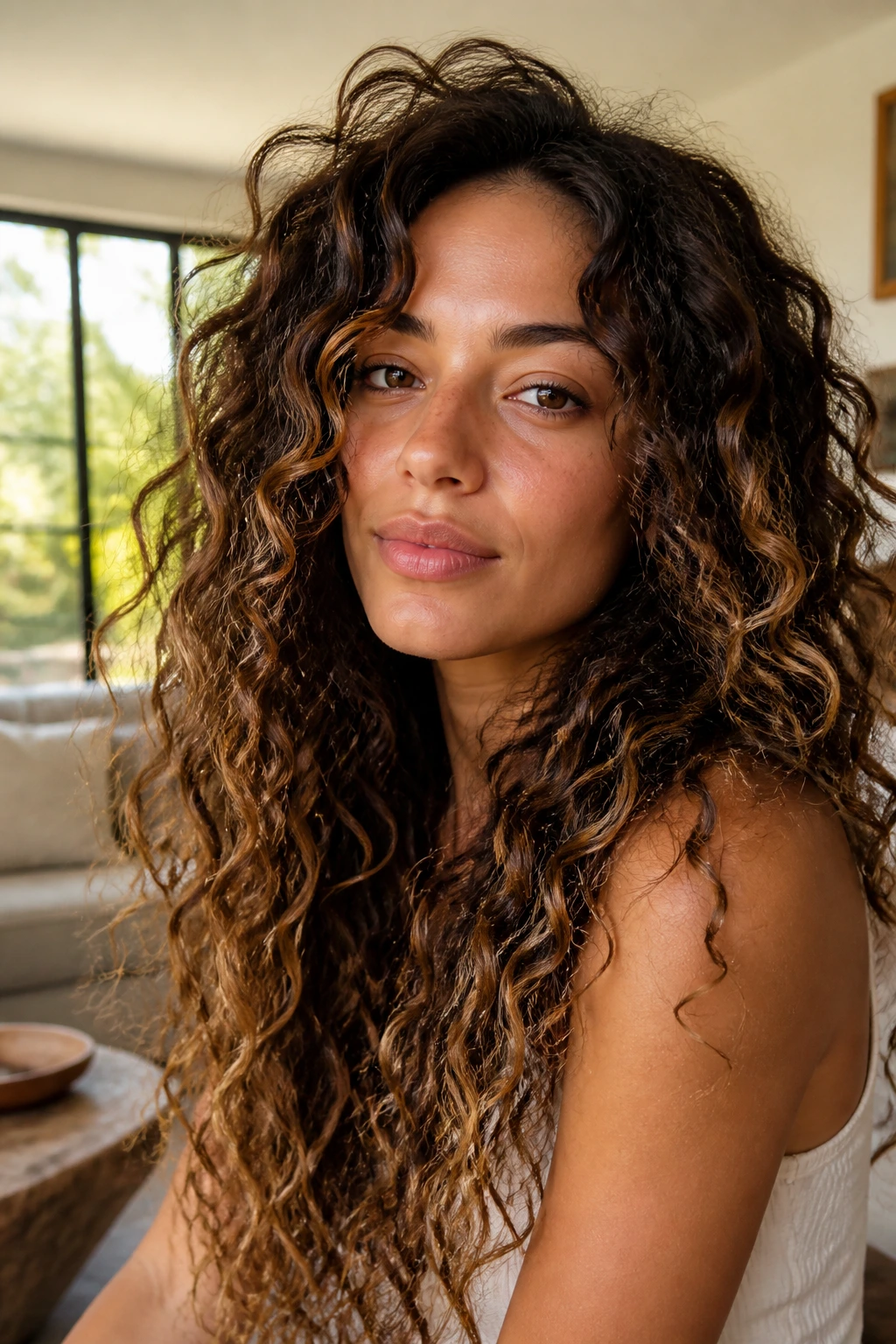
Boho curls are what happen when you stop asking every strand to behave. Some pieces bend sharply. Some fall in loose waves. A few stay straighter near the ends. On long hair, that mix looks relaxed in a way that tight, uniform curls never do.
The point here is texture, not perfect symmetry. A medium wand, a quick twist, and a bit of texture spray at the end can get you there. If the hair is layered, even better. The different lengths break up the pattern and keep the style from reading too heavy.
Boho curls are especially nice when you want something that looks better the next day. That slightly roughed-up finish is part of the charm. Don’t overbrush them. Your fingers are enough.
8. Ribbon Curls
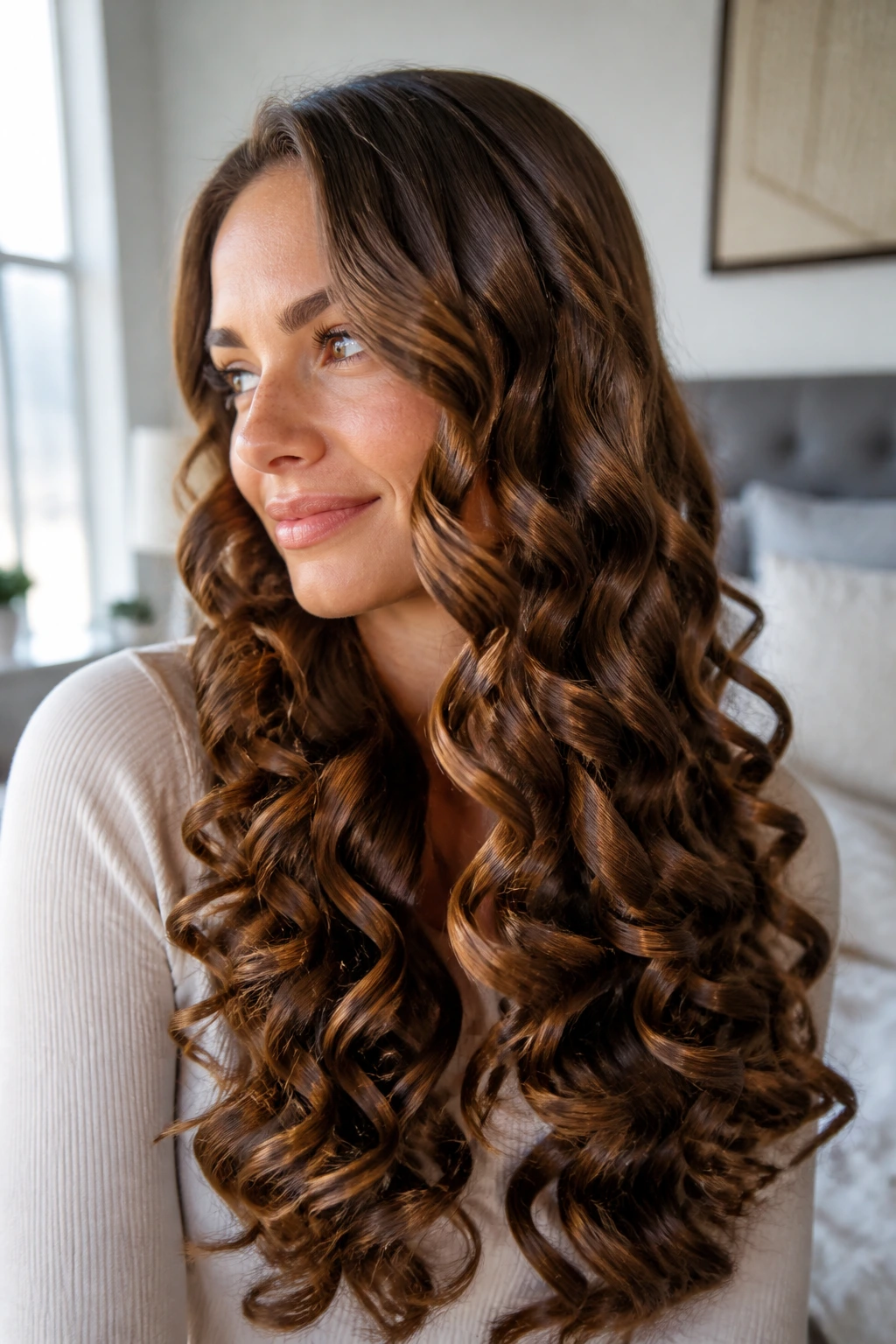
Ribbon curls are smooth, shiny, and very defined. The strand wraps so cleanly around the barrel that it falls back in a long, ribbon-like spiral. On long hair, that smooth line is the whole appeal because you can actually see the curve stretch down the length.
How to get the ribbon effect
Use a clamp-free wand or a very smooth curling iron, and keep the section tension steady from root to end. Sloppy wrapping creates frizz. Slow wrapping creates shape. That’s the difference.
Ribbon curls are nice if your hair has balayage or subtle color shifts, because the spiral shows off the dimension without needing extra volume. They’re not the softest curl on the list, but they are among the most elegant.
9. Corkscrew Curls
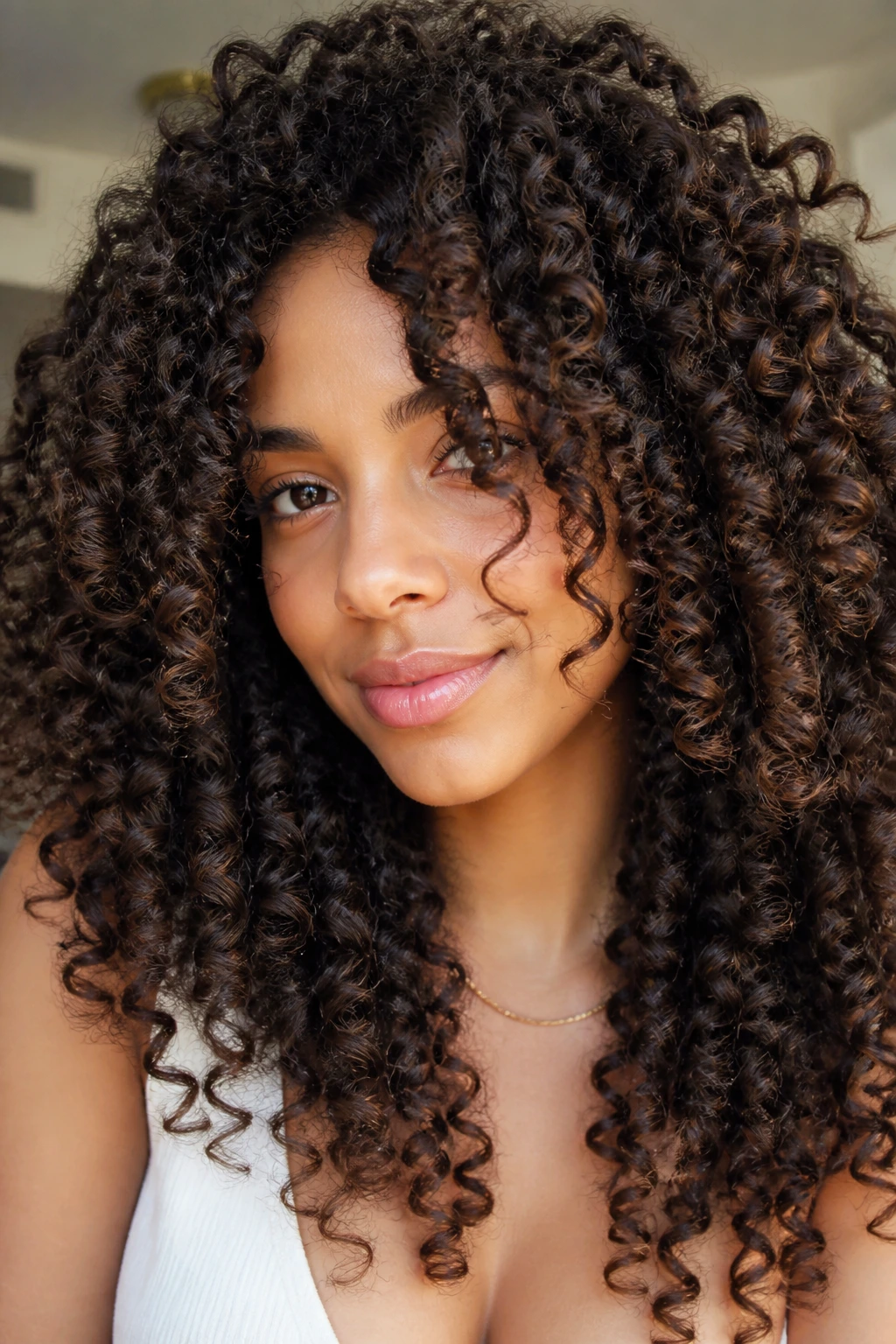
Corkscrew curls are tight, springy, and full of bounce. On long hair, they create a lot of vertical movement, which means the hair looks lively instead of weighed down. They also shrink the length more than most styles, so the curl looks fuller than you’d expect.
These curls need small sections and a smaller tool. Think 1/2-inch to 3/4-inch barrels, flexi rods, or perm rods on damp hair. If the section is too thick, the center stays limp and the shape starts to fray.
They’re a good choice when you want a lot of texture and don’t mind a more structured finish. I’d avoid heavy oil here. It knocks the spring out of the curl before you’ve even left the house.
10. Pin Curls
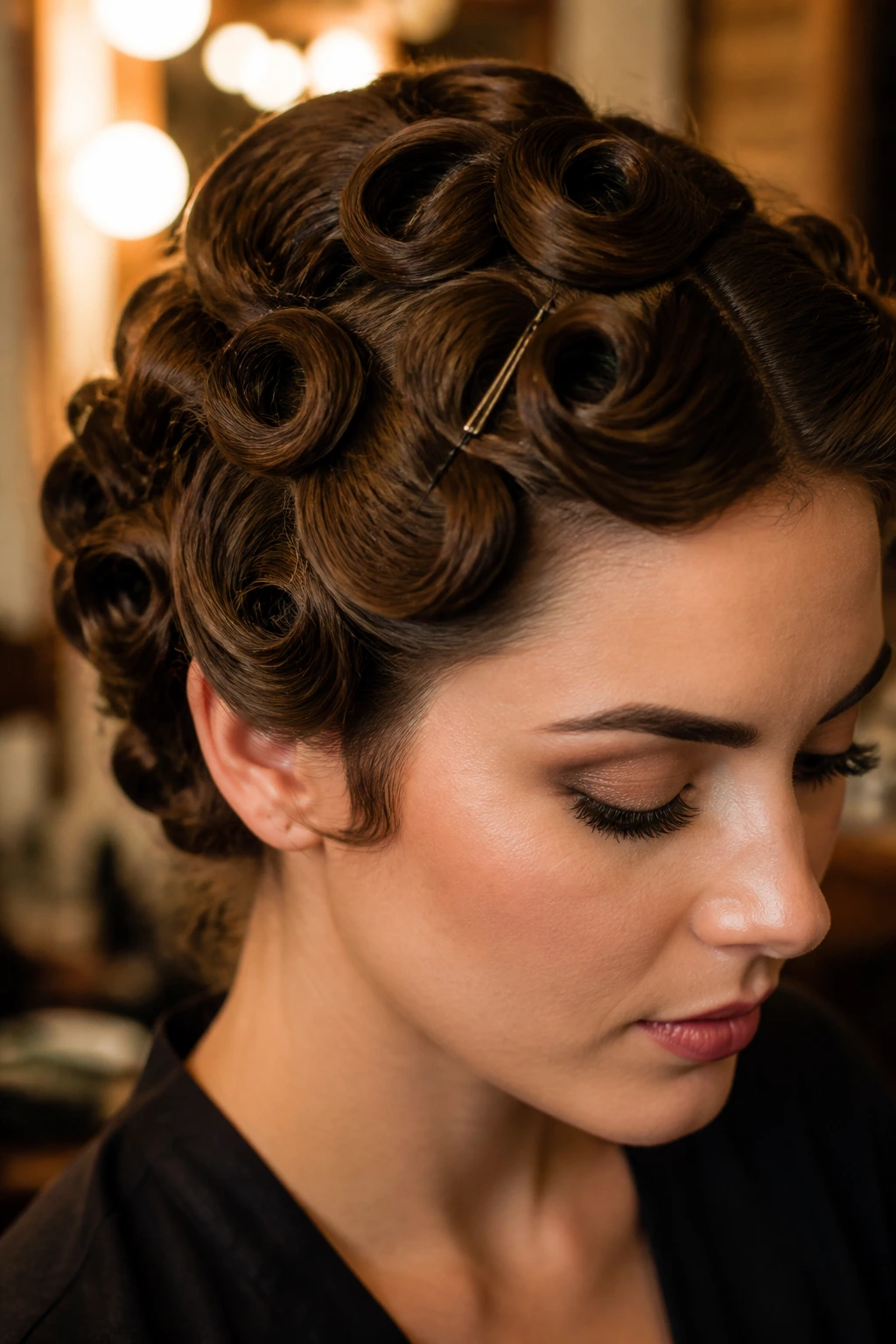
Pin curls are old-school in the best way. The hair is wrapped flat, pinned close to the scalp, and allowed to cool into a curved shape that can later be brushed out or left defined. On long hair, pin curls keep the ends tidy and the top smooth, which is harder to manage with a regular iron alone.
They take time. No way around that. But the payoff is control. Because the curl sets while folded against the head, it holds shape in a way that feels more stable than a loose hot-tool curl.
A setting lotion or light mousse helps, especially if your hair is thick or stubborn. Pin curls are one of those styles that reward patience, and they look particularly good when you want vintage polish without a ton of volume at the roots.
11. Flexi-Rod Curls
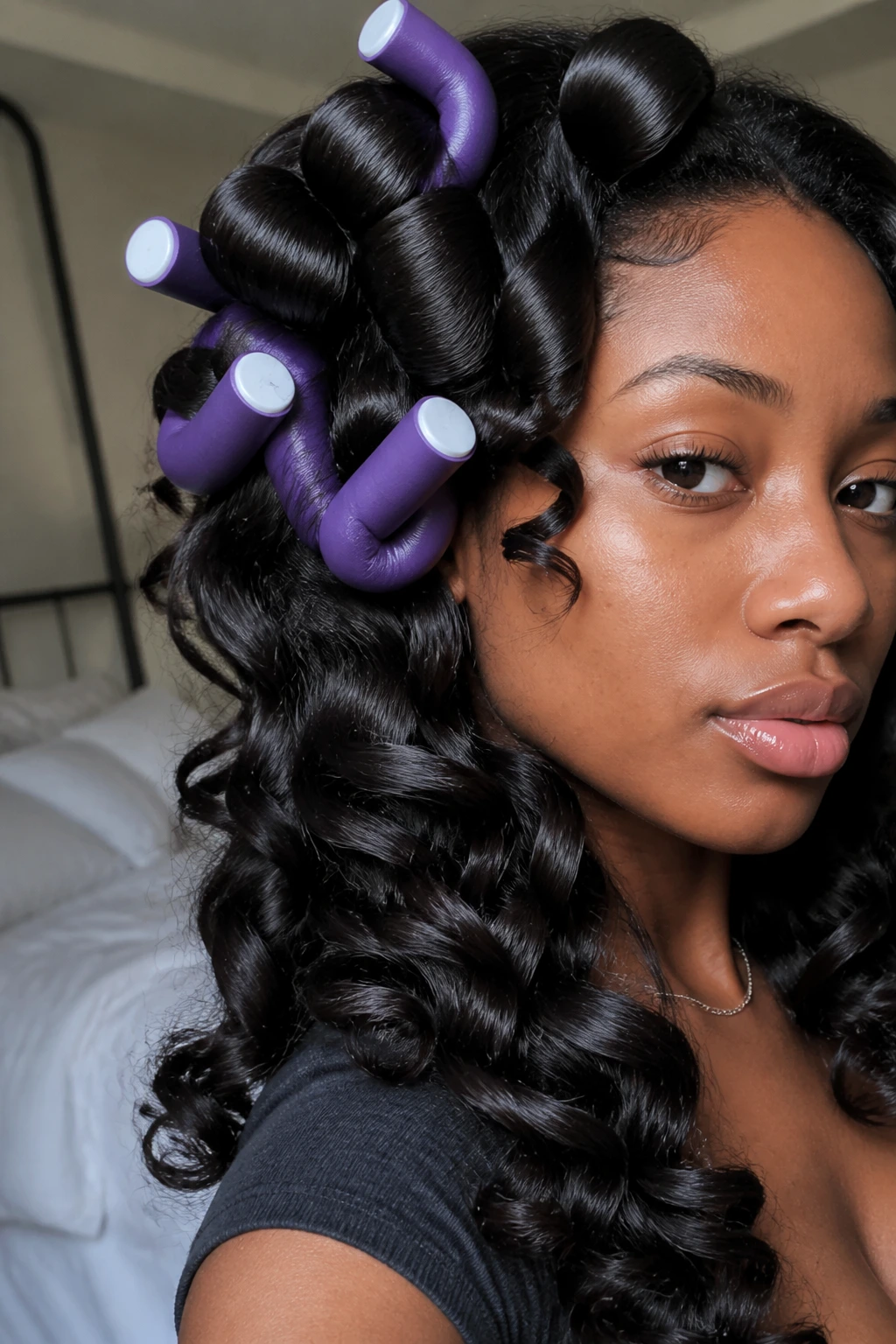
Flexi-rod curls are the low-heat answer for long hair that needs smooth, round shape. The rods bend, so they can hug the length without creasing it, and the curls come out more uniform than braid waves or twists.
Use longer rods if your hair is past the shoulders. Short rods on long hair are awkward; they create bends where you do not want them. Wrap the hair from ends to root, keep the tension even, and let it dry fully before taking the rods down.
They’re especially useful if you want a style that feels set rather than sprayed into place. On naturally textured hair, flexi rods give an even curl map. On straight hair, they create curl memory with less direct heat than an iron.
12. Hot-Roller Curls
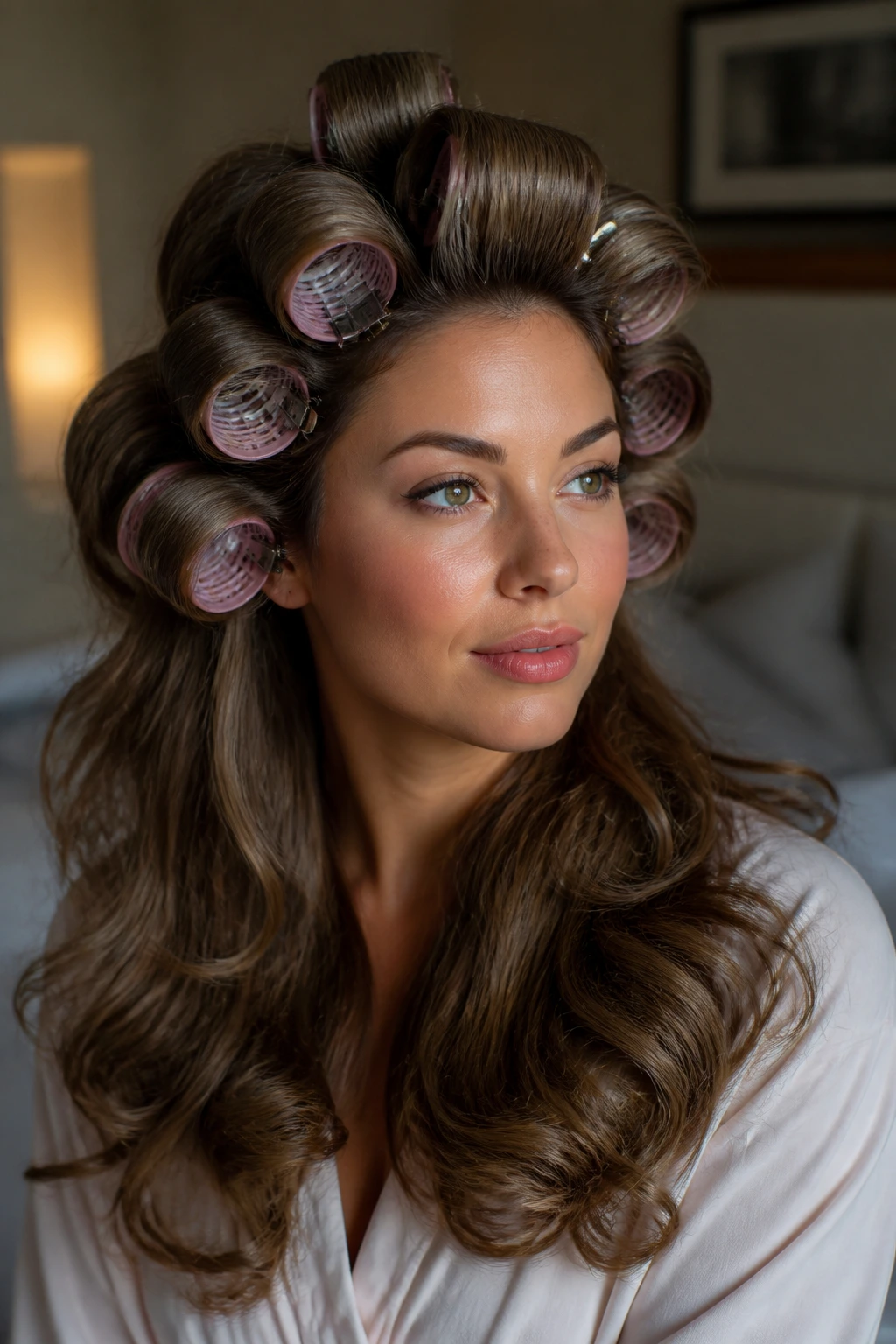
Hot rollers are underrated for long hair. People think of them as old-fashioned, which is a shame, because they give the crown lift and a rounded shape that flat irons and wands can miss.
The rollers work best when the section size matches the roller size. Small rollers near the face give more definition. Bigger rollers through the back keep the style from turning into a dense block. Let them sit long enough to cool fully, because the shape keeps forming after the roller comes out.
If your roots fall flat by noon, hot rollers are one of the better fixes. They lift from the base without needing a lot of backcombing, which is good because too much teasing on long hair can leave the lengths tangled by the end of the day.
13. Wand Curls
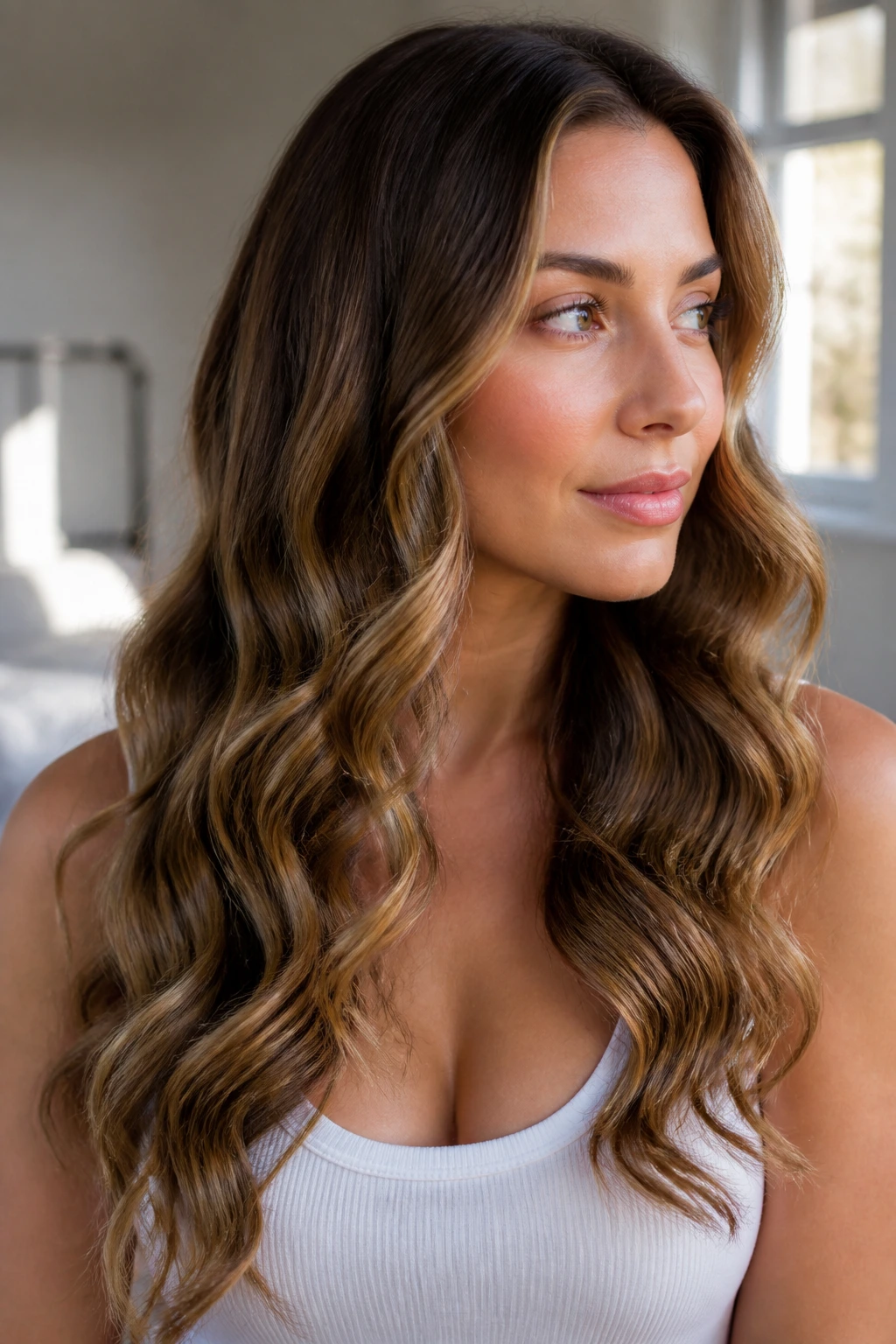
Wand curls are the easiest curls to make look relaxed without looking sloppy. No clamp marks. No ugly crease at the end. Just a clean wrap and a long spiral that can be tight, loose, or somewhere in between depending on the barrel.
Long hair suits a tapered wand especially well. The narrow tip gives the ends more bend, while the wider base adds body at the mid-lengths. Wrap away from the face for a cleaner frame, then alternate a few back sections so the style doesn’t look too uniform.
They’re a strong choice if you want to style fast and still keep some control over the finish. My only rule: don’t use giant sections. Wand curls depend on contact, and thick hair blocks that.
14. Flat-Iron Curls
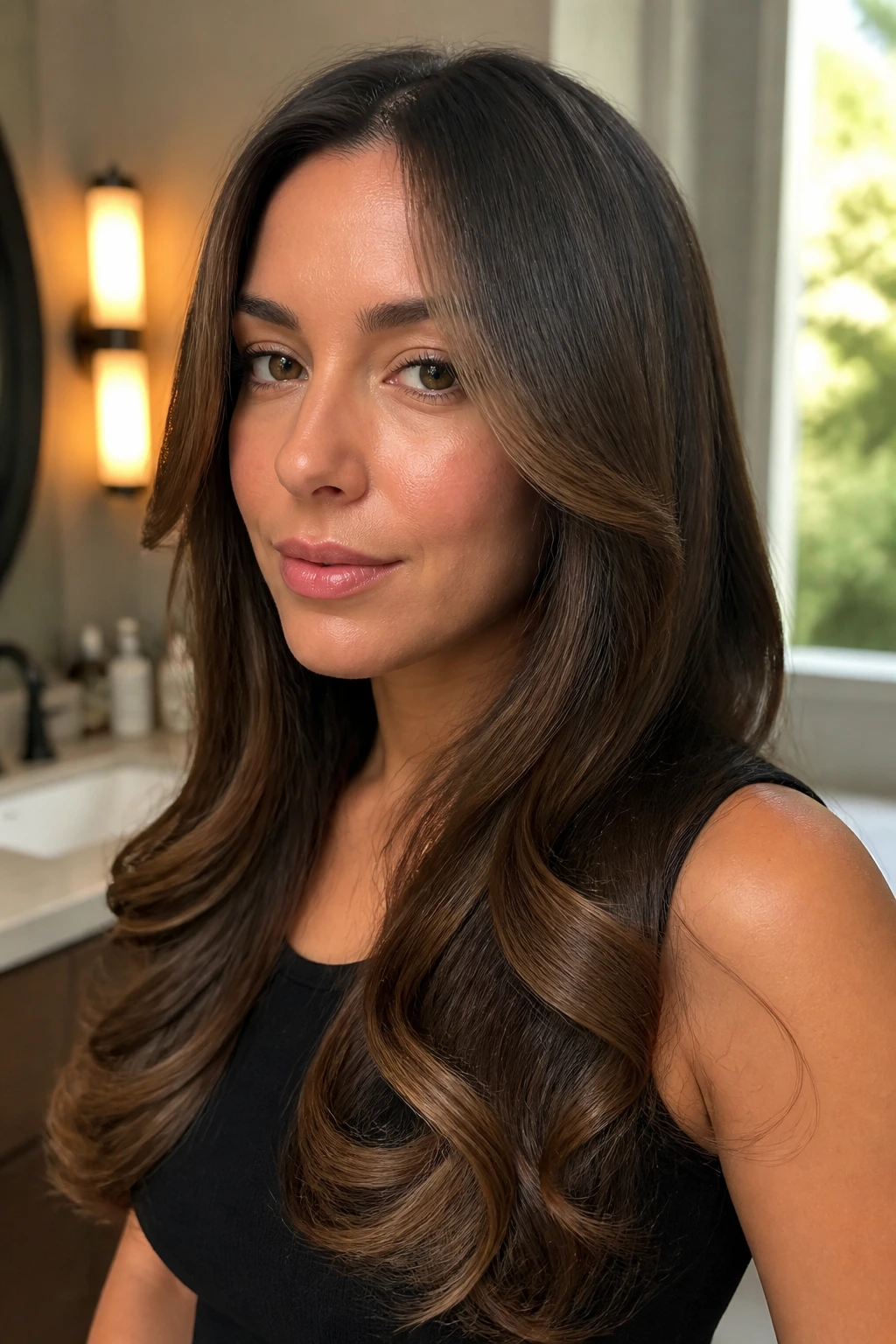
Flat-iron curls are what you reach for when one tool has to do everything. They’re sleek, fast, and surprisingly good on long hair because the iron can chase the length in one smooth pass instead of forcing the section around a barrel.
The motion matters. Slight twist, steady pull, no jerking. If you pause halfway down the strand, the curl kinks. If you move too fast, it barely bends. Once you get the wrist action right, the curls come out polished and controlled, especially on layered ends.
I like this style for face-framing pieces and ends that need a little tuck. It’s also useful when the hair is too long for a standard barrel to feel comfortable. Just keep the heat moderate. Flat irons can overdo the ends if you linger.
15. Twist-Out Curls
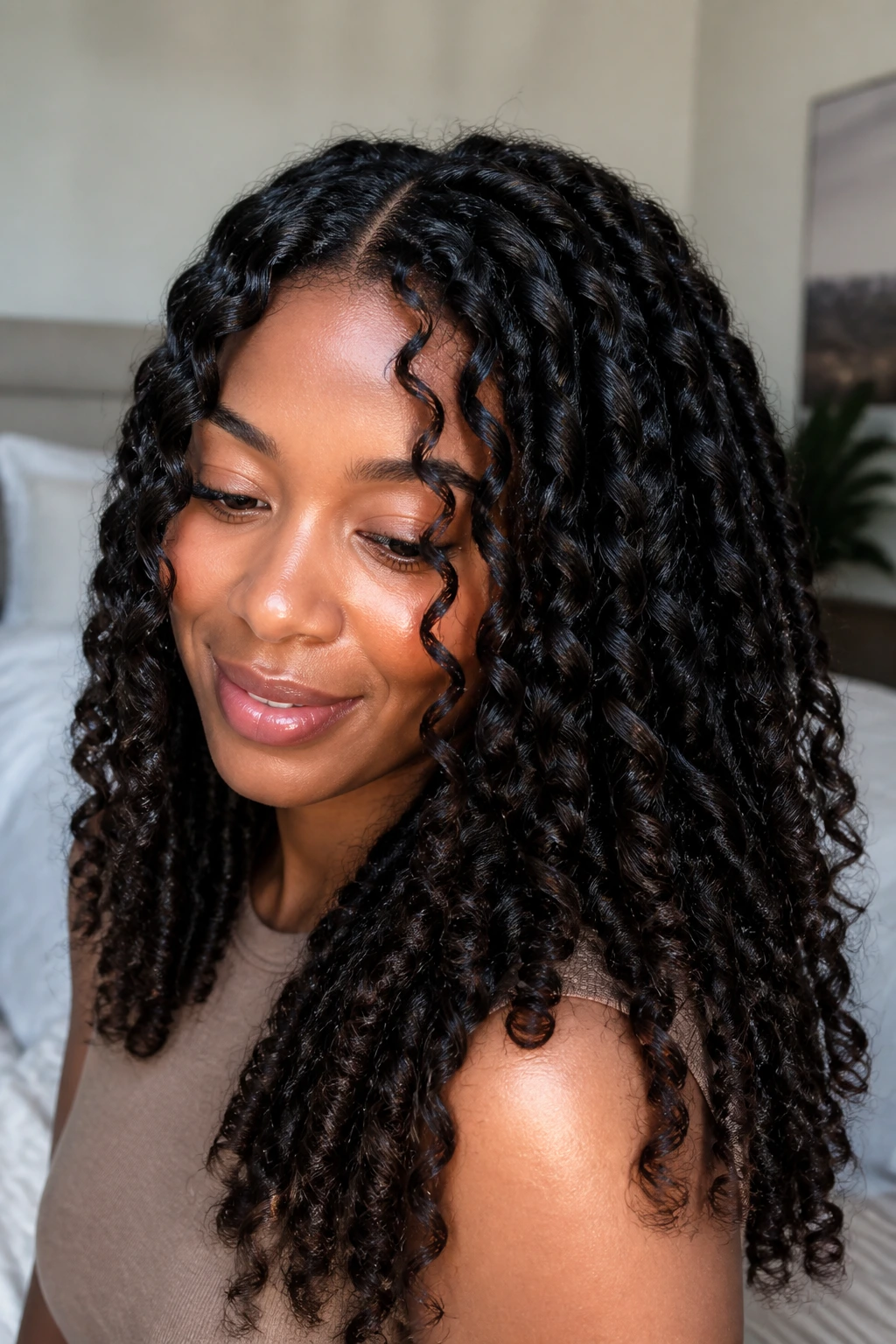
Twist-out curls are less about hot tools and more about patience. Two strands are twisted together on damp hair, allowed to dry, then released into chunky, ropey curls that hold a lot of texture. On long hair, that chunkier shape looks rich and full.
The curl pattern is softer than a tight rod set but more structured than a braid-out. That middle ground is what makes it so useful. You get definition without a polished, salon-finished look.
Twist-outs are especially good if your hair already has some wave or natural bend. Add cream, not a heavy butter, and separate only once the hair is completely dry. Pulling them apart too early ruins the whole thing. Hard truth.
16. Braid-Out Waves
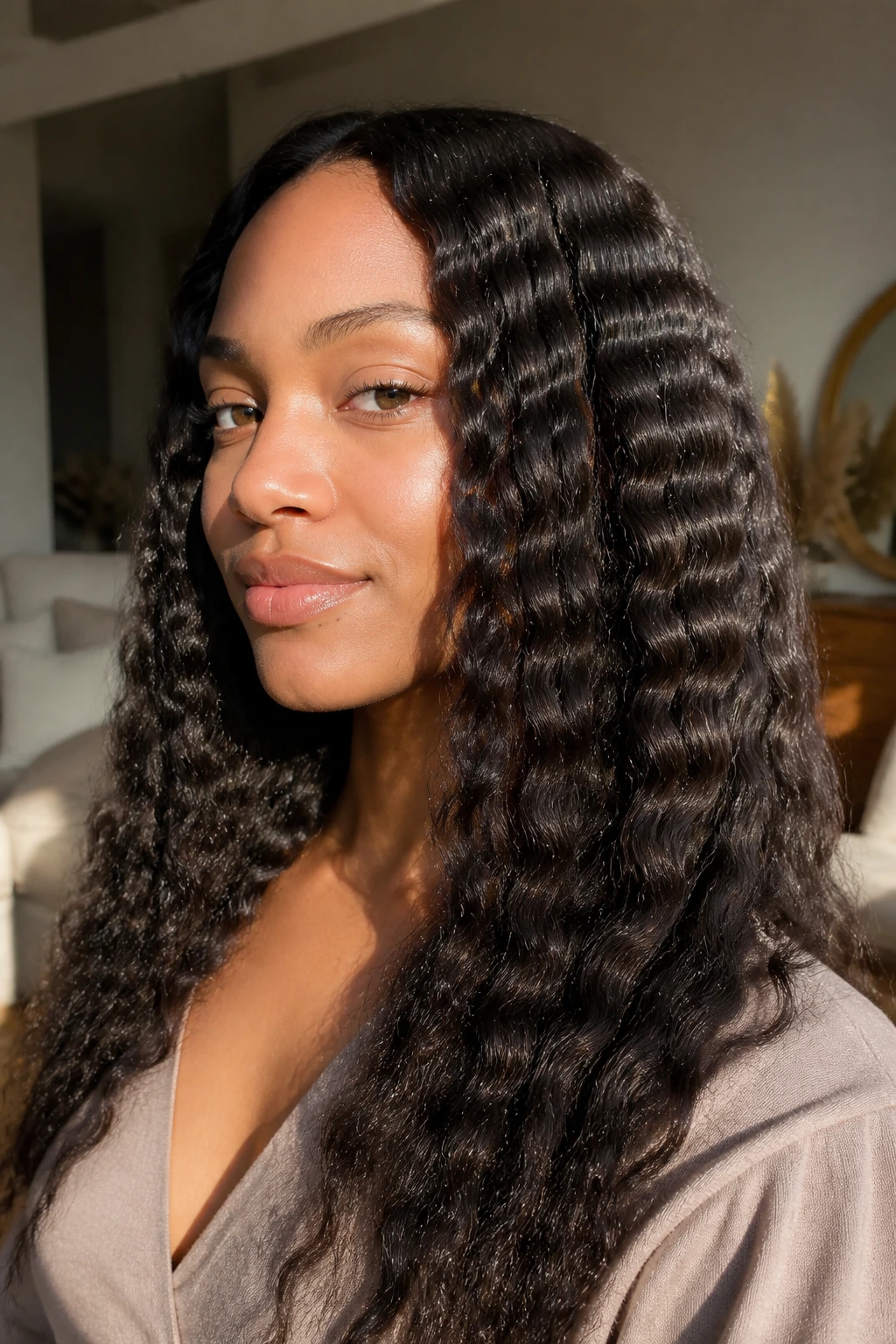
Braid-out waves give long hair a stretched, ribbed pattern that feels calmer than spiral curls and less done-up than Hollywood waves. The braid size controls the result, which is why this style is one of the easiest to customize.
Three-strand braids create a more obvious wave. Two-strand braids give something looser and more rope-like. On long hair, the length itself helps the pattern settle into soft waves instead of puffing up near the scalp.
This is a good choice when you want texture without much heat. It also works well overnight, which is a blessing if you’d rather sleep than stand at a mirror for an hour. A little leave-in and a lightweight styling cream are usually enough.
17. Rope-Twist Curls
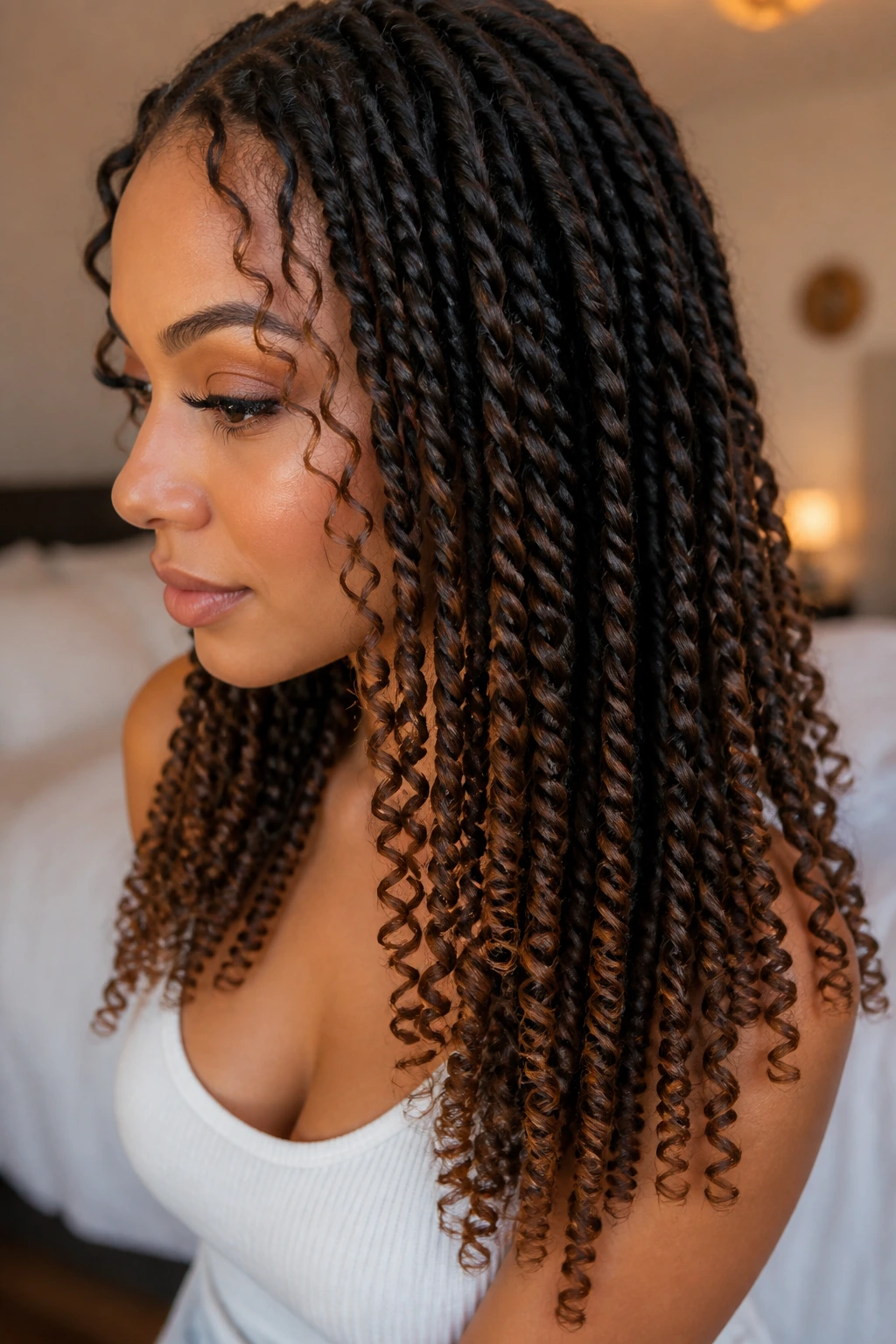
Rope-twist curls are tighter than braid-outs and less chunky than full twist-outs. The hair is split into two sections, twisted around each other, and set until dry. On long hair, the resulting pattern has a springy, almost corded look that can be worn soft or separated for more volume.
What I like here is the control. Rope twists let you shape where the curl starts and how fast it falls. That matters on long hair, where the lower lengths can get heavy fast.
If you want more bounce, make the twists smaller. If you want more stretch, use broader sections. Either way, the pattern is clear enough to read from across the room, which makes it a nice middle ground between natural and styled.
18. Crimped Waves
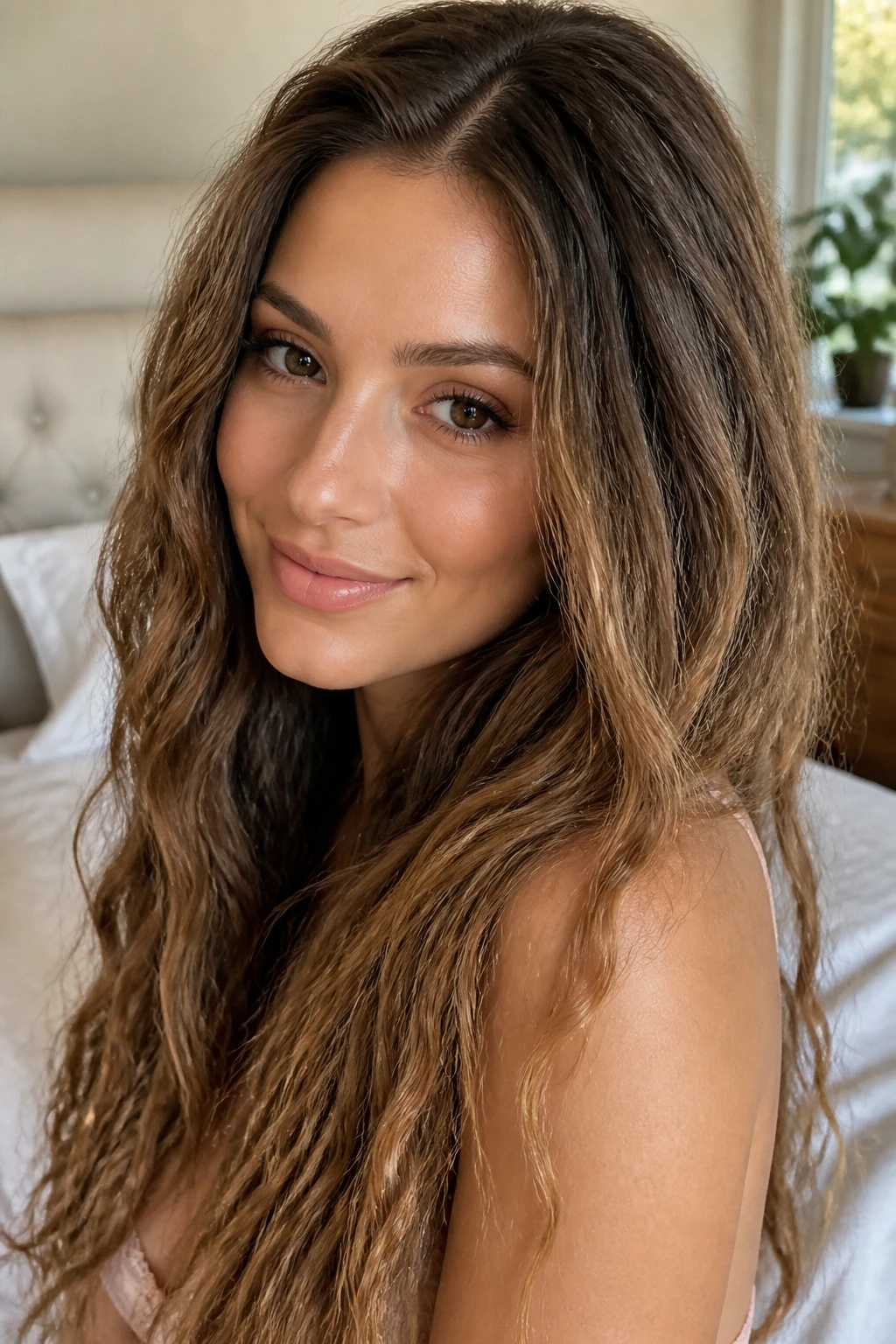
Crimped waves are back in a smarter, softer form. Instead of the full zig-zag from root to tip, a modern crimp often lives underneath the top layer or only through the mid-lengths, where it adds grip and lift without turning the whole head into a costume.
Why long hair can pull this off
The longer the hair, the more room you have to hide a little texture under the surface. That means you can use crimping to thicken flat roots, build body at the crown, or make long layers grip better in an updo.
- Best placement: Underlayers or crown sections.
- Tool: Micro-crimper or narrow flat iron with a wave plate.
- Finish: Finger-comb the top layer so the texture stays soft.
- Use case: Extra body for ponytails and half-up styles.
Crimped waves are not subtle if you crimp the whole head. But used in the right places, they solve a problem plain curls often miss.
19. S-Waves
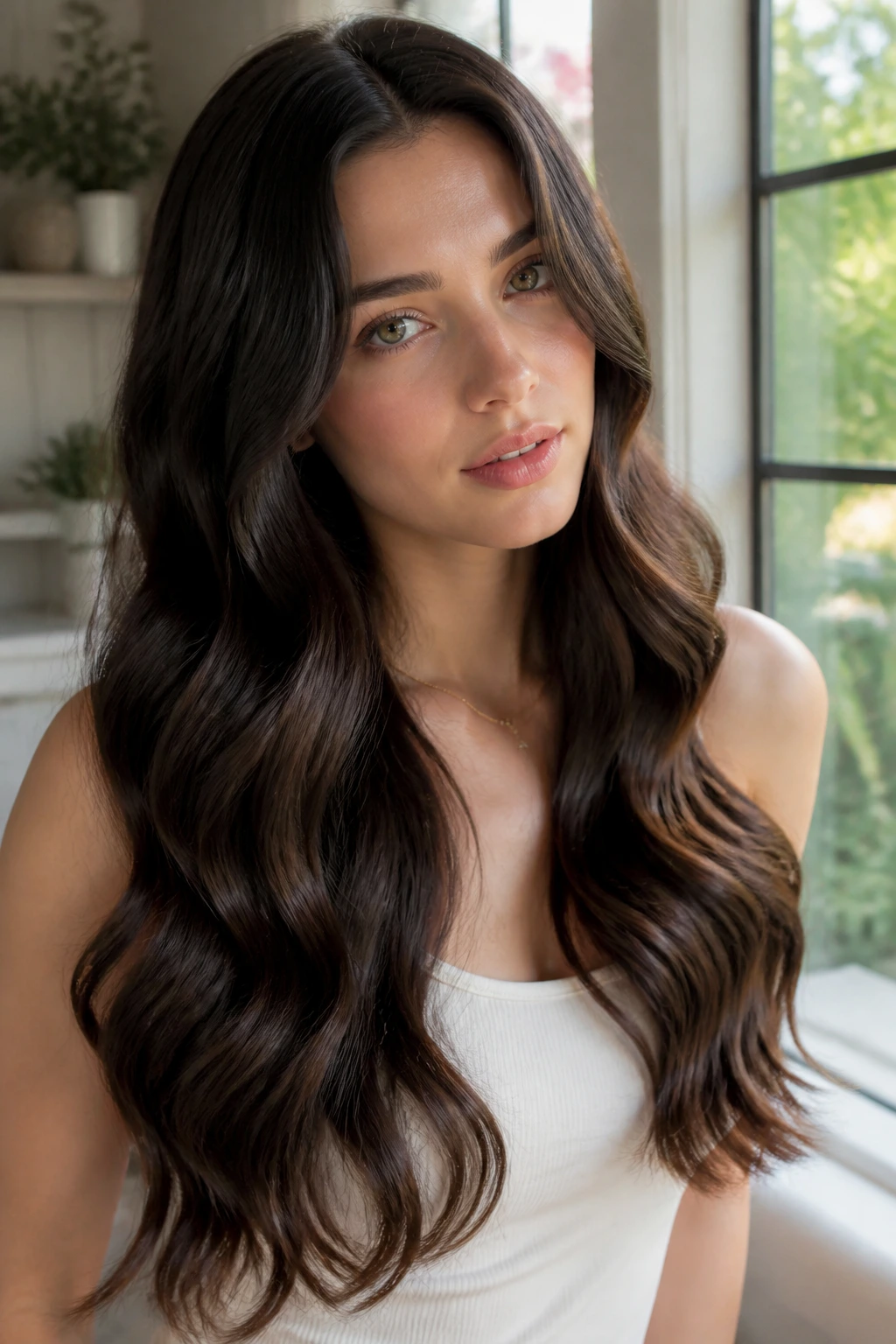
S-waves are smoother than beach waves and less formal than Hollywood waves. The shape is all curves, no tight spirals, which makes them a strong choice for long hair that needs movement but not volume piled on top of volume.
They work especially well when the ends are kept soft and the wave line is long. A flat iron can create the bends, or you can use finger-set waves if you want a more deliberate finish. The visual difference is clear: S-waves look flatter, glossier, and more controlled than messy texture.
If beach waves are casual denim, S-waves are a pressed blouse. They still feel easy, but they read cleaner.
20. Brushed-Out Glam Curls
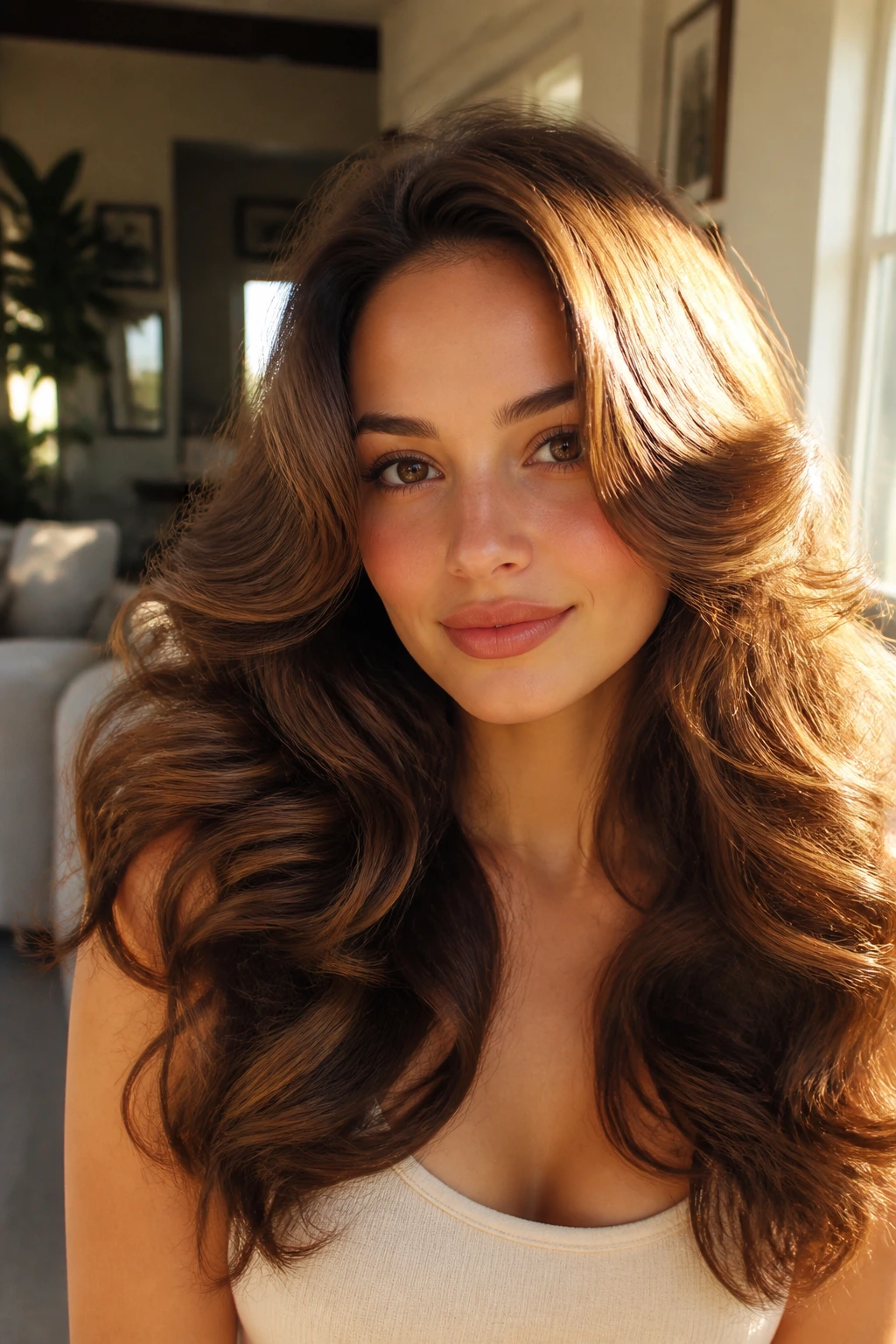
Brushed-out glam curls start as large, polished curls and end as one cloud of soft movement. That brushing step changes everything. On long hair, it creates body that sits in wide curves instead of separate spirals, which is why the style feels airy rather than stiff.
You need patience here. Let the curls cool fully. Then use a soft brush, not a harsh paddle, and move through the hair in small sections so the shape stays intact. If you rush, the curls frizz into fuzz instead of melting into each other.
This is one of my favorites for long hair with some thickness. It turns heavy length into something that looks plush and full, and it usually photographs like a dream. In person, it’s even better because the movement is visible when you turn your head.
21. Layered Cascading Curls
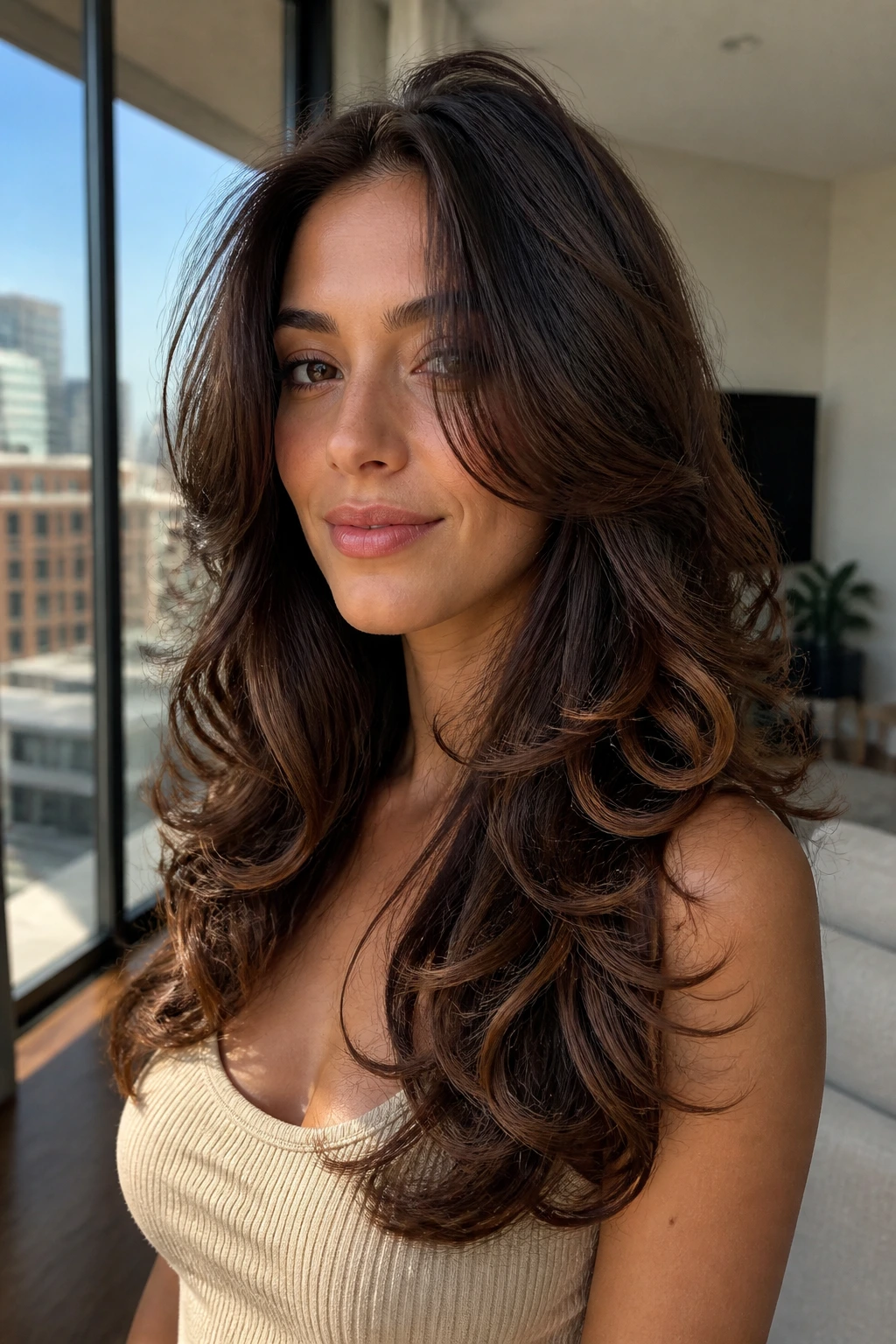
Layered cascading curls are less about a single tool and more about the haircut doing half the work. Long layers give curls somewhere to fall, which stops the hair from hanging like one heavy curtain. Without layers, many curl patterns on long hair just stack at the bottom and leave the top flat.
This is where the cut and the curl pattern meet. You can create loose spirals, brushed-out waves, or even ringlets, but the layers decide how the shape drops. Longer face-framing pieces give movement near the cheekbone. Shorter internal layers keep the crown from disappearing under all that length.
If your hair is one long block, this style will still work, but the effect is softer. With layers, it looks alive from root to tip.
22. Heatless Robe Curls
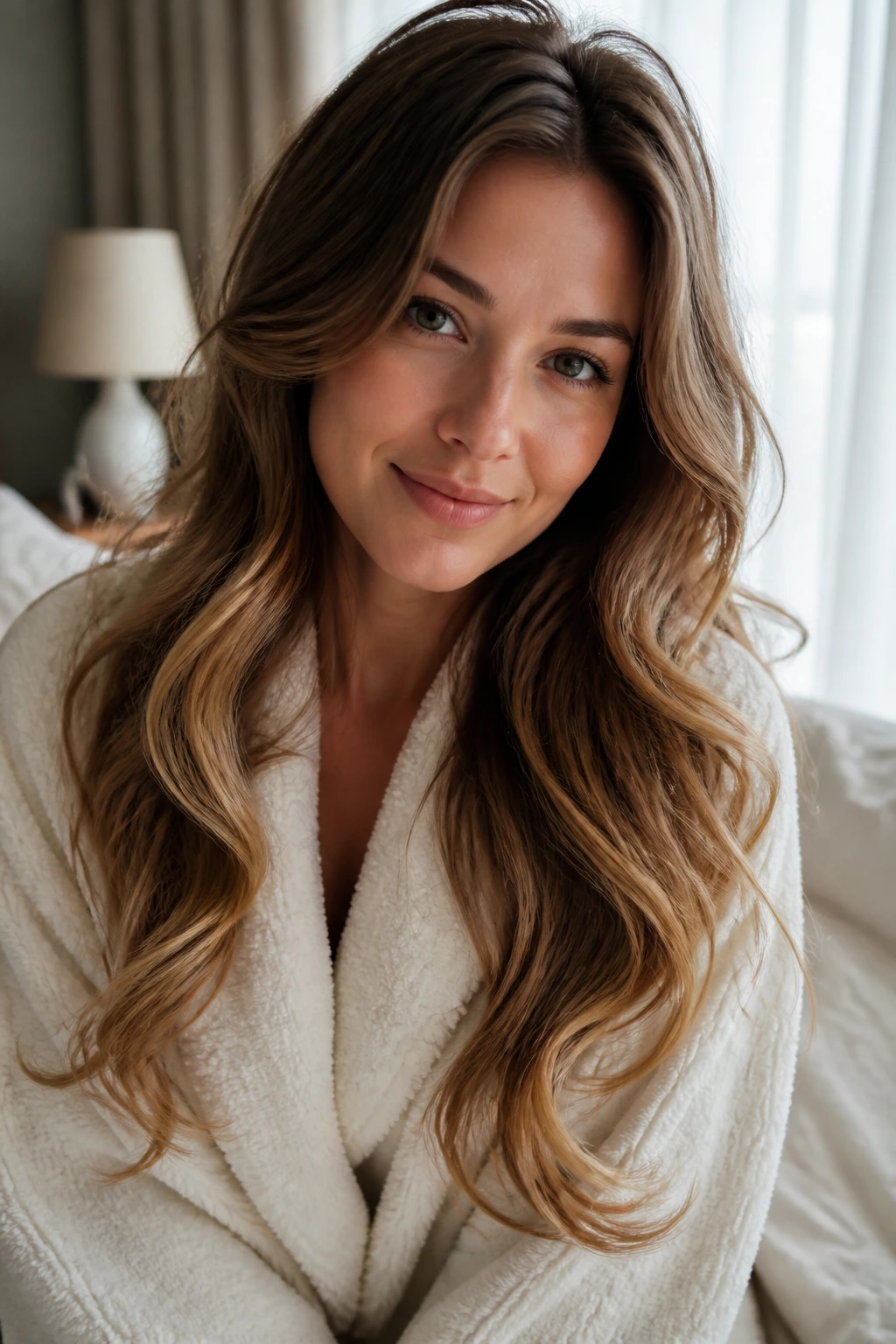
Heatless robe curls are the kind of style that sounds gimmicky until you try them on long hair and realize the length actually helps. A robe tie or soft wrap gives the strands room to coil overnight, and the result is usually a broad, soft wave with a little bend at the ends.
The setup matters. Hair should be damp, not wet, and sections should be smooth before they’re wrapped. If the hair is soaking, it takes forever to dry and the roots can get bent in weird places. If it’s too dry, the curl won’t set evenly.
This is the curl pattern I’d choose when you want low heat and soft volume without a lot of fuss. It won’t give you tight ringlets. It will give you shape that feels easy to wear and even easier to refresh the next day.
Why Long Hair Changes the Curl Conversation
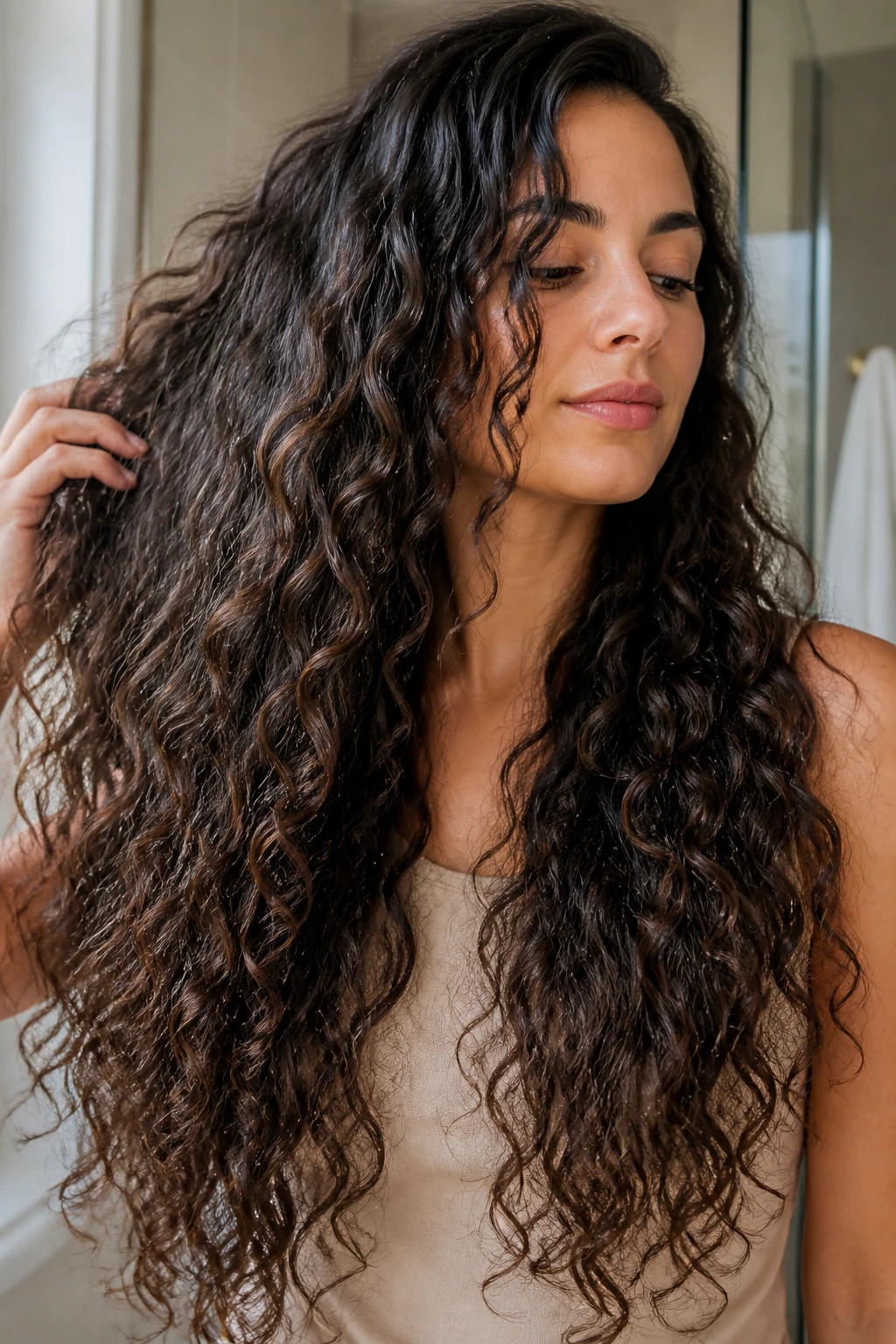
Long hair is honest. It shows you exactly where the section was too wide, where the iron was too hot, and where the product was too heavy. Shorter cuts can hide sloppy technique. Long lengths do not.
That’s why the same curl pattern can behave so differently on a bob, a collarbone cut, and hair that reaches past the shoulder blades. The weight of the hair stretches the curl, and the stretch changes the whole mood. Tight tools can make long hair look overprocessed. Bigger barrels can make it look lazy if the hair is fine and slippery. You have to match the tool to the length, not just the style photo.
Layers change the equation too. Long layers help curls fall in movement instead of hanging as one block, while blunt ends create a more dramatic curtain effect. Neither is wrong. They just ask for a different curl shape.
Essential Tools for Curling Long Hair
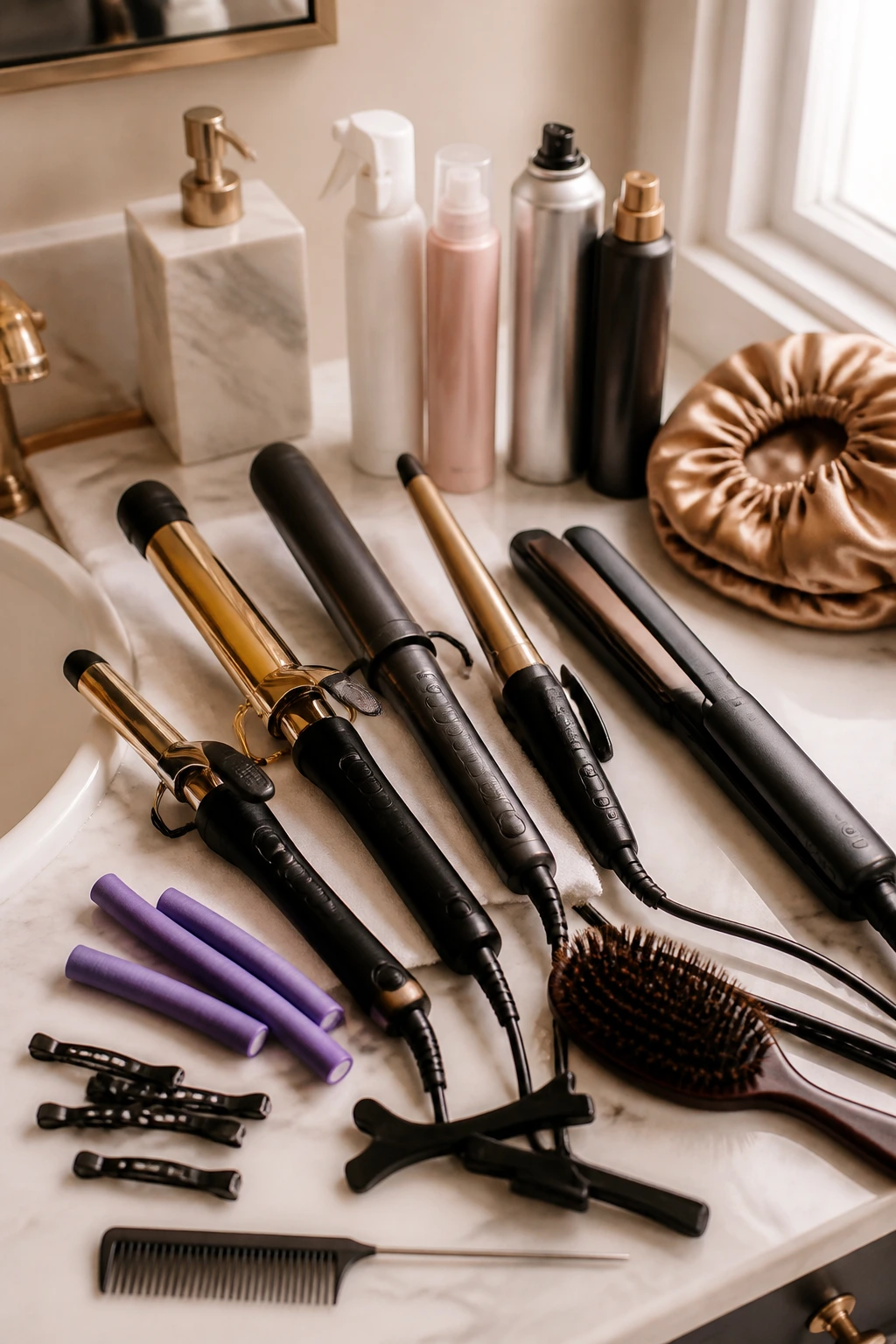
- 1-inch curling iron: The safest all-purpose size for defined curls and softer waves on long lengths.
- 1.25- to 1.5-inch curling iron: Better for loose barrel curls, brushed-out glam curls, and styles that need to survive gravity.
- Tapered wand: Great when you want the ends to look finished without clamp marks.
- Flat iron with smooth rounded edges: Useful for S-waves, flat-iron curls, and face-framing bends.
- Flexi rods or perm rods: A strong no-heat or low-heat option for defined spirals and uniform sets.
- Duckbill clips and sectioning clips: These keep cooled curls out of the way and stop them from dropping too early.
- Tail comb: Helps make clean sections, which matters more than people think on long hair.
- Boar-bristle brush or soft detangling brush: Best for brush-out styles like Hollywood waves and glam curls.
- Heat protectant spray: Non-negotiable if you’re using hot tools; it lowers the risk of brittle ends.
- Flexible-hold hairspray: Adds control without turning the curl into a helmet.
- Mousse or setting lotion: Gives fine or slippery hair enough grip to hold shape.
- Satin bonnet or pillowcase: Keeps the style from getting crushed overnight.
- Dry shampoo and texture spray: Helpful on day two when the roots need lift and the lengths need a little grit.
Smart Product and Prep Choices That Actually Help
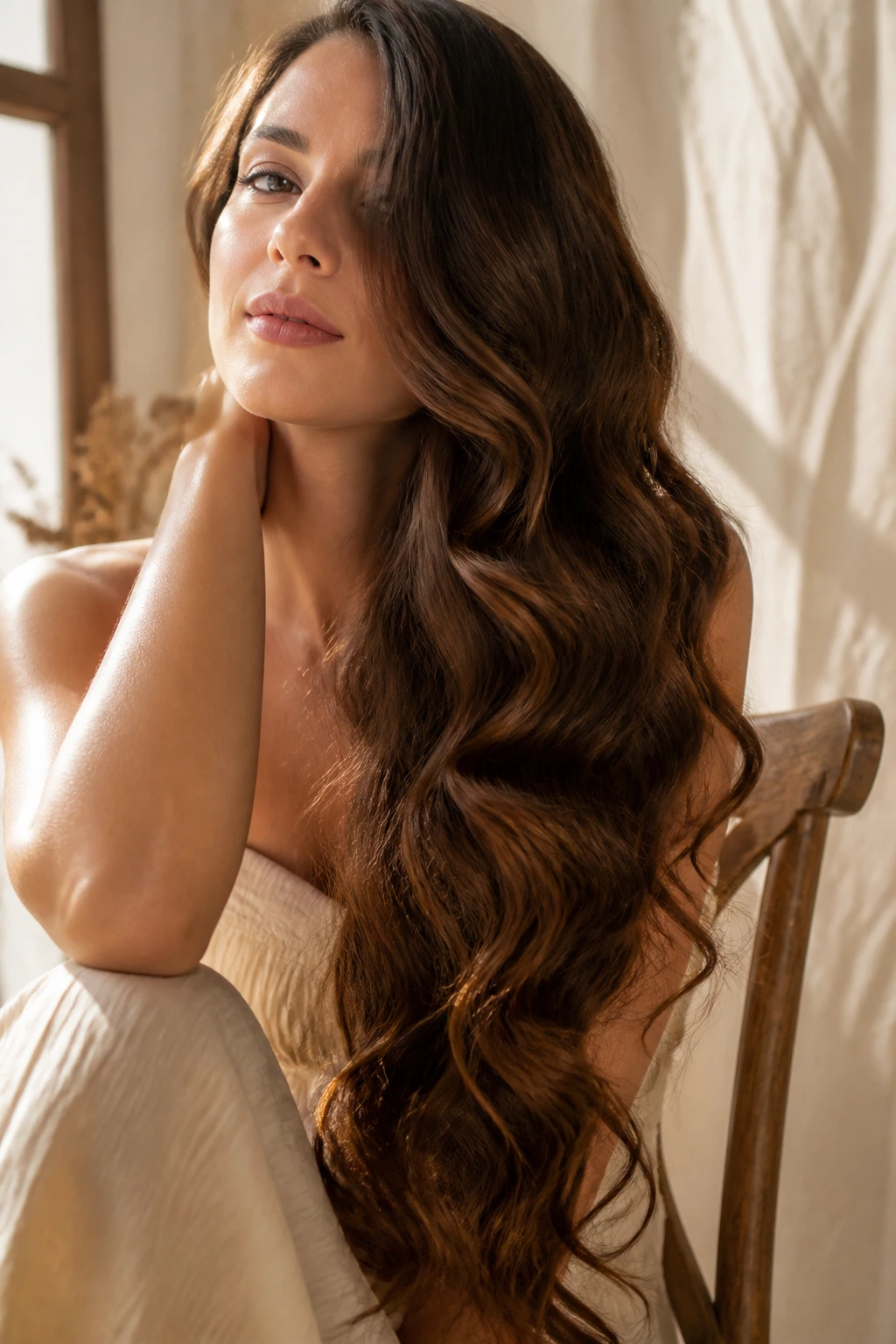
Long hair usually needs more prep than people think, but not more product. That’s the part most people get backward. A heavy cream can make the mid-lengths sticky and the ends limp. A light mousse or setting foam gives the hair memory without dragging it down.
If your hair is fine and straight, start with a root-lifting mousse on damp hair, then blow-dry with a nozzle so the cuticle lies smoother before you curl. If your hair is thick, a heat protectant with a little slip helps the iron move through the section without snagging. Snags are where the curl gets ugly. Fast.
Clean hair is not always the best hair for curls. A little natural texture or a mist of dry shampoo at the roots gives the shape something to hold onto. On very silky hair, that makes a massive difference. On drier hair, you want enough moisture to keep the ends from looking ragged, but not so much that the curl slips apart.
How to Wear These Curl Types on Long Hair
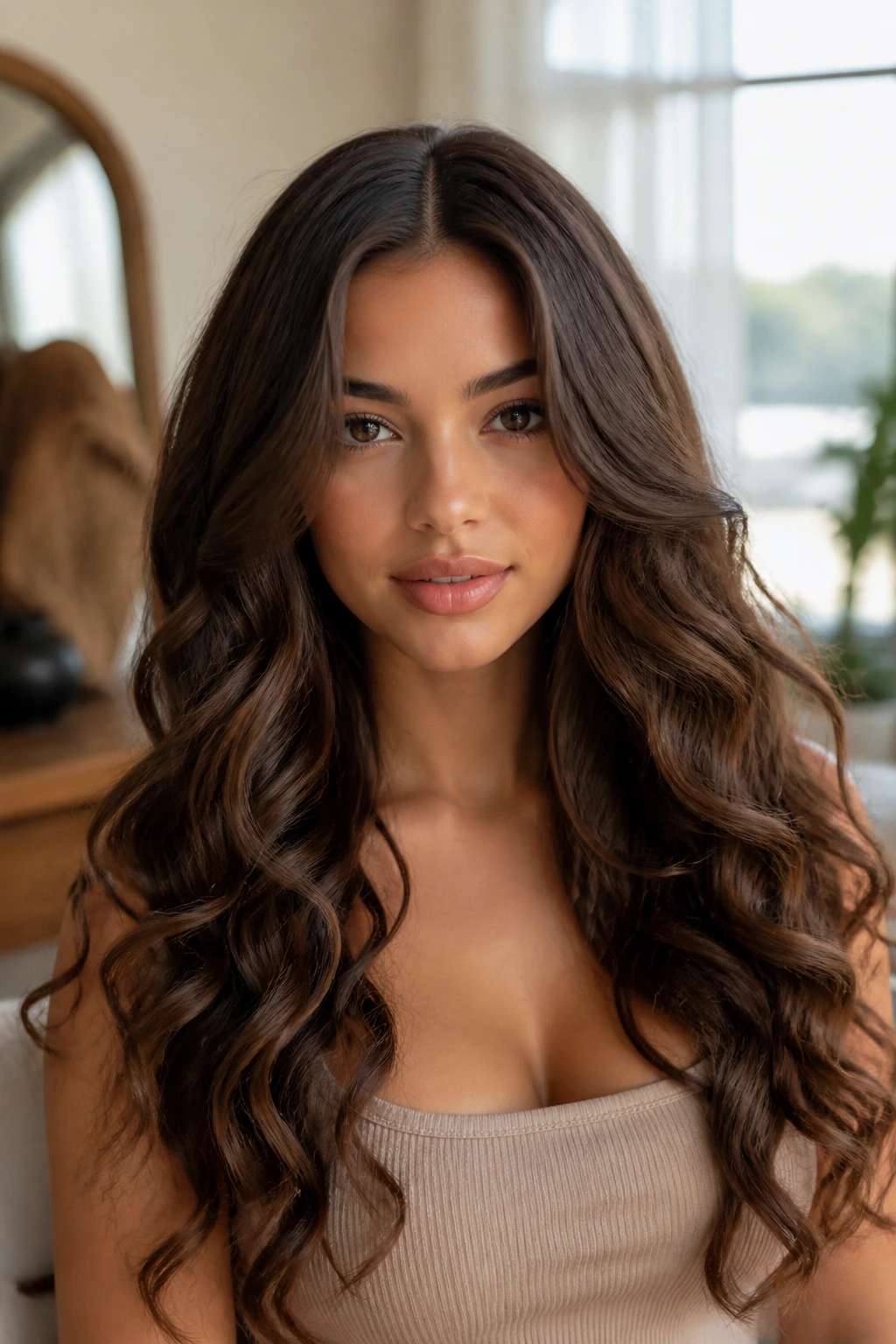
Presentation: A center part makes long curls look longer and cleaner. A deep side part gives the style more drama and usually makes brushed-out curls feel fuller at the crown. If your face-framing pieces are short, let them lead the shape instead of fighting them.
Accessories: Clips, barrettes, silk scarves, and even a simple tuck-behind-the-ear can change the whole read of the curl. A single pin on one side makes Hollywood waves look intentional. A loose scrunchie keeps twist-outs and robe curls from flattening when you need the hair up.
Scale: Smaller sections create tighter definition and more visible curl. Bigger sections create movement and softness. On very long hair, this matters because the same curl can look completely different just from a half-inch change in section width.
Finish: Shine serum on the ends gives polished curls a cleaner edge. Texture spray through the mid-lengths makes beach waves and boho curls look a little lived-in. If you want the curl to stay crisp, skip the brush and let the finish stay separated.
Extra Tricks for Shape, Shine, and Hold
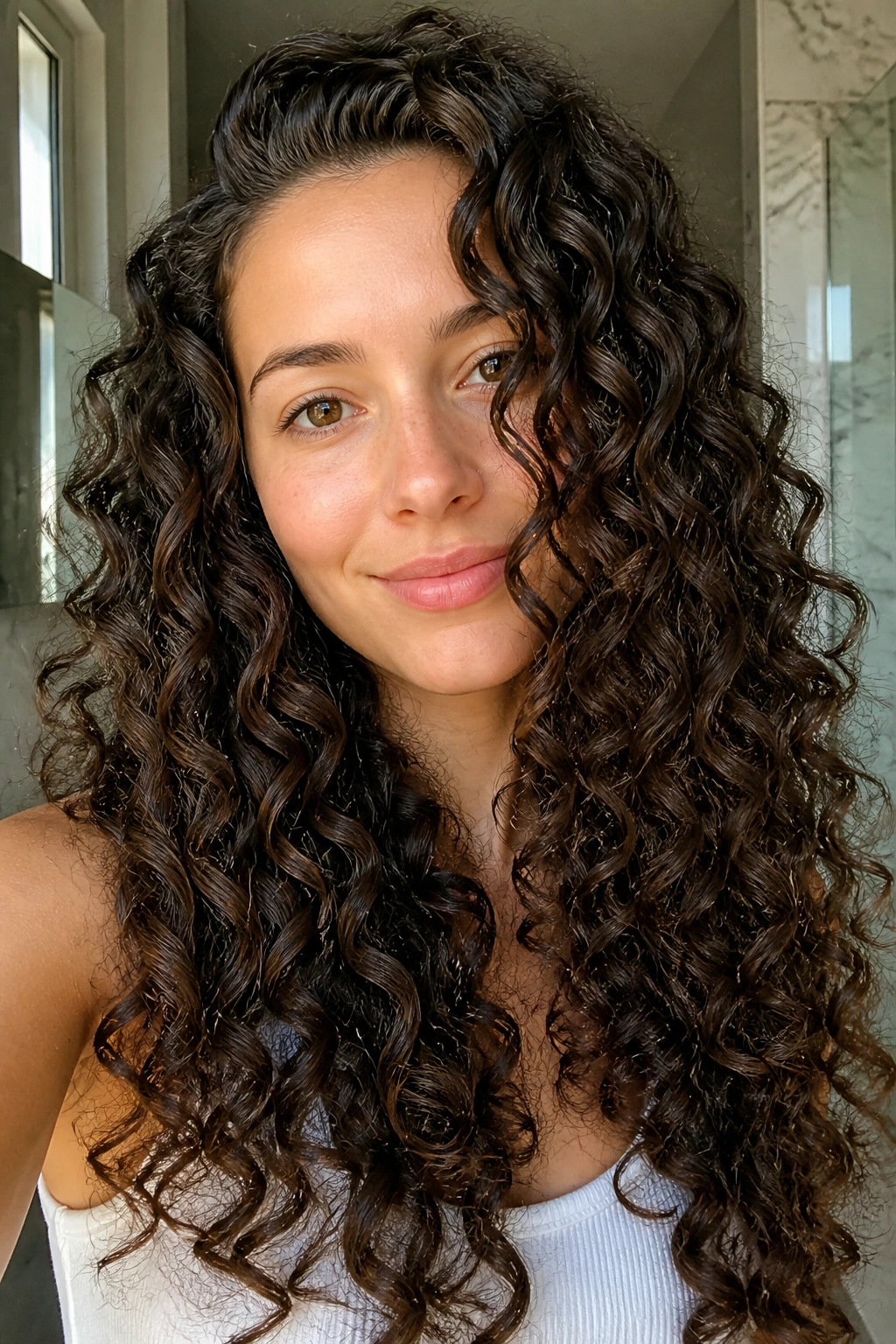
Shape Memory: Pin each curl up while it cools, even if you’re in a hurry. Ten minutes of cooling can save you from having the whole style sag before lunch.
Lift at the Crown: Curl the top layers away from the face and keep the crown sections slightly smaller. Long hair gets heavy near the roots, and this one move keeps the style from looking flat from the front.
Humidity Help: Use anti-humidity spray on the mid-lengths and ends, not just the top layer. That’s where frizz starts first. Root spray alone will not save the style.
Fast Refresh: On day two, mist the curls lightly with water or curl refresh spray, scrunch once, and re-curl only the pieces that went weird. You do not need to restart the whole head. Usually, you just need to rescue the front.
Common Mistakes That Flatten Long-Hair Curls
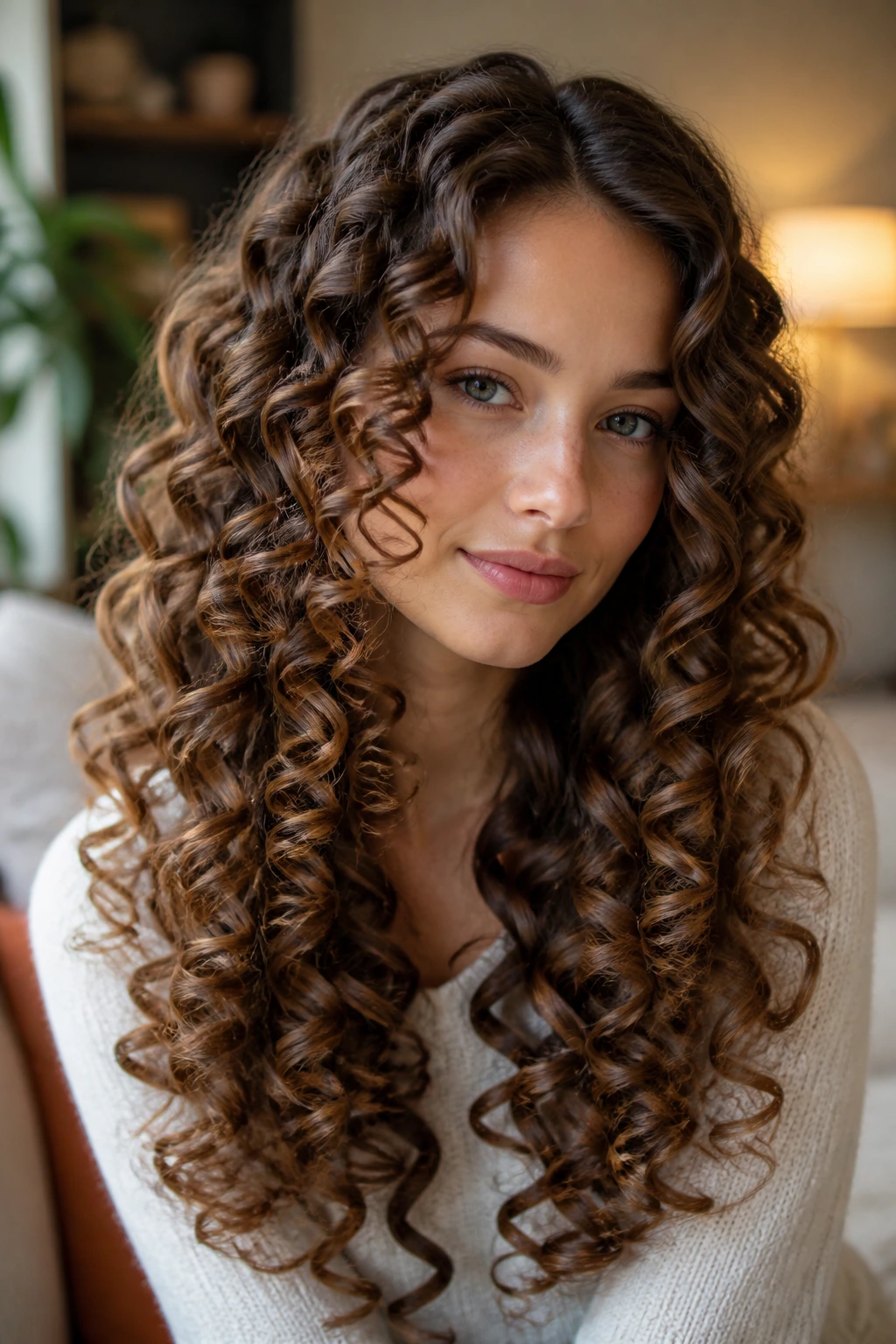
The most common mistake is taking sections that are too thick. Long hair hides that mistake for about five seconds, then the curl drops and leaves a straight line through the middle. Keep the sections smaller than you think, especially if the hair is dense.
Another problem is brushing or separating too early. Hot curls are still soft. If you pull them apart before they cool, they lose the shape they were trying to keep. Clip them up, finish your makeup, answer a text, do anything except destroy the set.
Heavy oil is another sneaky one. A little serum on the ends can tame frizz. Too much turns the curl stringy, especially on fine hair. The same goes for thick cream at the root. It weighs the style down before it starts.
Sleeping on cotton can wreck even a good set. The curls get crushed, the crown flattens, and the ends fray. A satin bonnet, scarf, or pillowcase changes that overnight.
And then there’s the heat issue. Higher heat does not automatically mean better hold. Sometimes it just means drier ends and a curl that goes limp anyway. Match the heat to the hair, and keep the tool moving.
Ways to Change the Look Without Starting Over
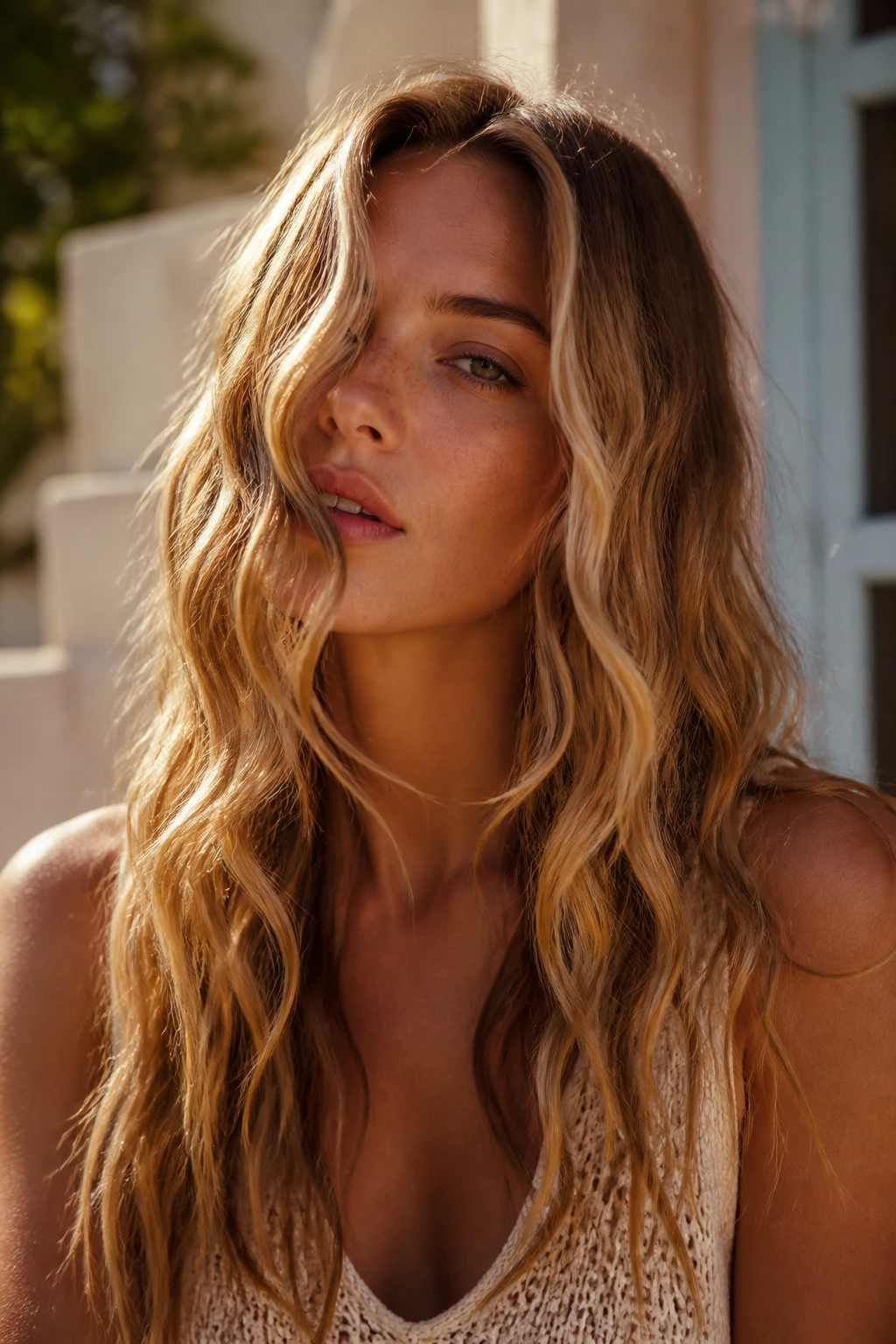
Soft Everyday Version: Use a 1.5-inch barrel, curl away from the face, and brush only the front pieces. This turns a polished curl set into something easier for daylight, errands, or a regular workday.
Full Glam Version: Pick Hollywood waves or brushed-out glam curls, then pin one side with a strong clip. Add shine spray only after the curls cool. Too soon and the hair looks greasy instead of glossy.
Heatless Weekend Set: Go with flexi rods, braid-outs, or robe curls and leave the hair to dry overnight. This works best when you want shape without the hot-tool feel and don’t mind a softer finish.
Fine-Hair Volume Version: Use mousse at the roots, smaller sections on top, and a larger barrel through the lengths. Fine long hair needs lift near the scalp more than anywhere else.
Humidity-Ready Version: Choose tighter spirals, pin curls, or twist-outs and finish with flexible spray. Loose waves are the first to collapse when the air gets sticky.
Keeping Long Hair Curls Alive Overnight
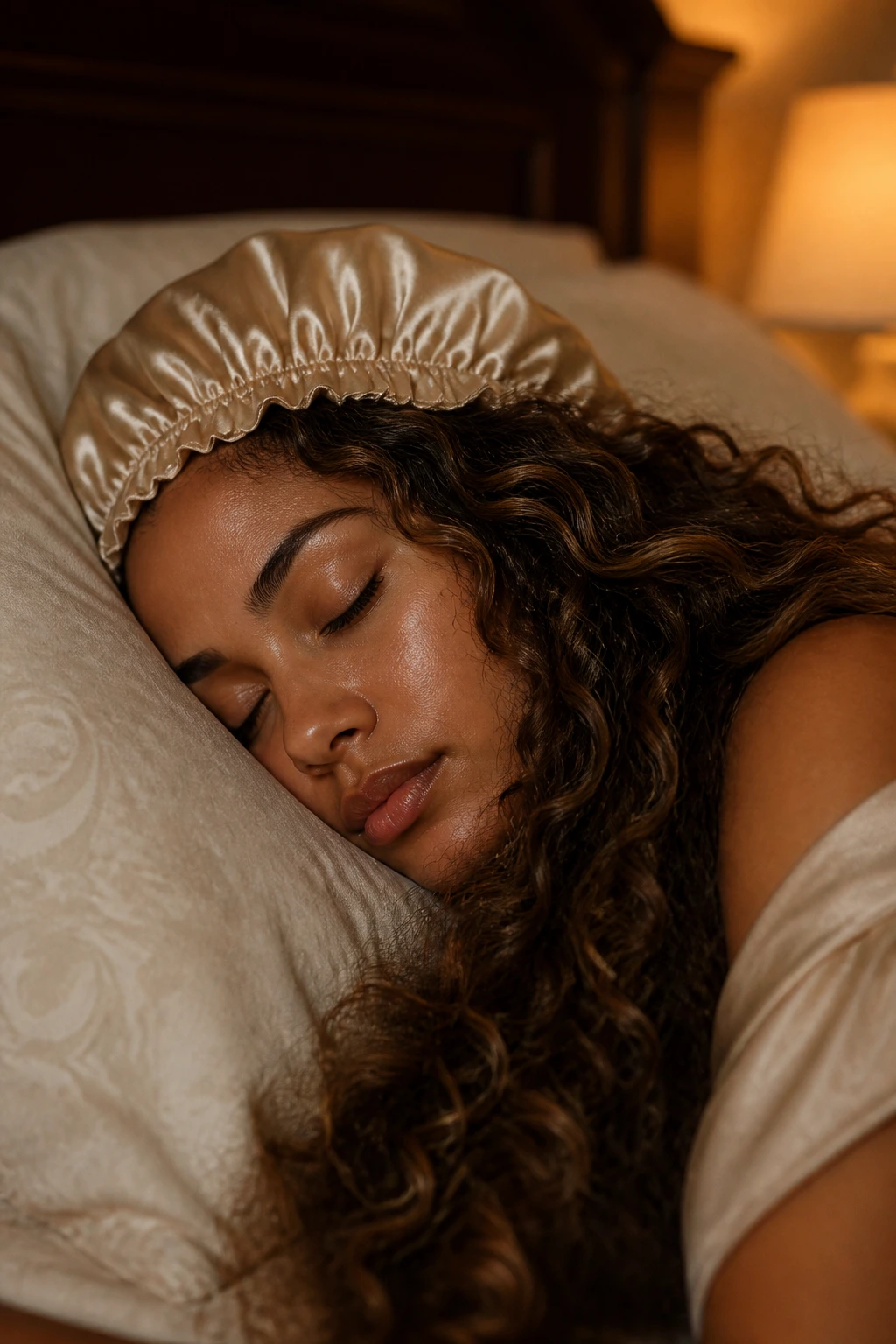
Curls on long hair usually look best on day one, but a good overnight setup can stretch that into day two or three. The trick is protecting the shape without trapping too much moisture. If the hair is still damp at bedtime, the root can bend weirdly and the ends lose their clean line.
A loose pineapple works for waves and glam curls. A satin bonnet is better for twist-outs, rods, and ringlets because it reduces friction without crushing the shape. If the curls are brushed out and soft, a silk pillowcase is often enough. It keeps the hair moving instead of scraping against cotton.
On the morning after, don’t soak the whole head. Mist only the parts that need help, then scrunch or finger-wrap the weak pieces around your finger for a few seconds. A little dry shampoo at the roots can bring back lift fast. If the crown collapsed, clip it up for ten minutes while you get dressed. That sounds too simple. It works.
Frequently Asked Questions About Long-Hair Curls
Which curl type lasts longest on long hair?
Tighter sets like spiral curls, pin curls, flexi-rod curls, and twist-outs usually hold longer because they start with more structure. Loose waves can last too, but they need stronger prep and better cooling.
What barrel size is best for long hair?
A 1-inch barrel is the safest starting point, but 1.25 to 1.5 inches usually works better if you want the curl to stay visible after it relaxes. Very long or thick hair often needs the larger size to avoid looking flat.
Should I curl long hair in small or large sections?
Small sections give better hold and cleaner shape. Large sections can work for loose waves, but the center of the strand often stays too straight unless the tool is very hot or the hair is very fine.
How do I keep curls from falling flat at the crown?
Clip the top section while it cools, use a lightweight root-lifting product, and don’t overload the roots with oil or cream. Long hair puts a lot of weight near the scalp, so crown lift needs help.
Can I mix curl types in one hairstyle?
Yes, and on long hair it often looks better that way. A mix of loose barrel curls through the back, tighter spirals around the face, and brushed-out ends gives the style depth instead of a single repeated pattern.
Are heatless curls better than hot-tool curls for long hair?
Heatless sets are gentler and often hold with a softer finish, but they need more drying time and careful sectioning. Hot tools give faster control. The better choice depends on whether you want speed or softness.
Why do my curls look good at first and then drop by lunch?
Usually the sections were too thick, the curls weren’t cooled enough, or the product was too heavy. Long hair needs structure first and shine second. If the curl never set cleanly, it won’t stay.
Do layers make curls better?
Layers usually make curls look lighter and more dimensional because the pieces fall at different lengths. One-length hair can still curl well, but the result is denser and often needs more brushing or more separation to avoid a blocky shape.
The Curl Pattern That Fits
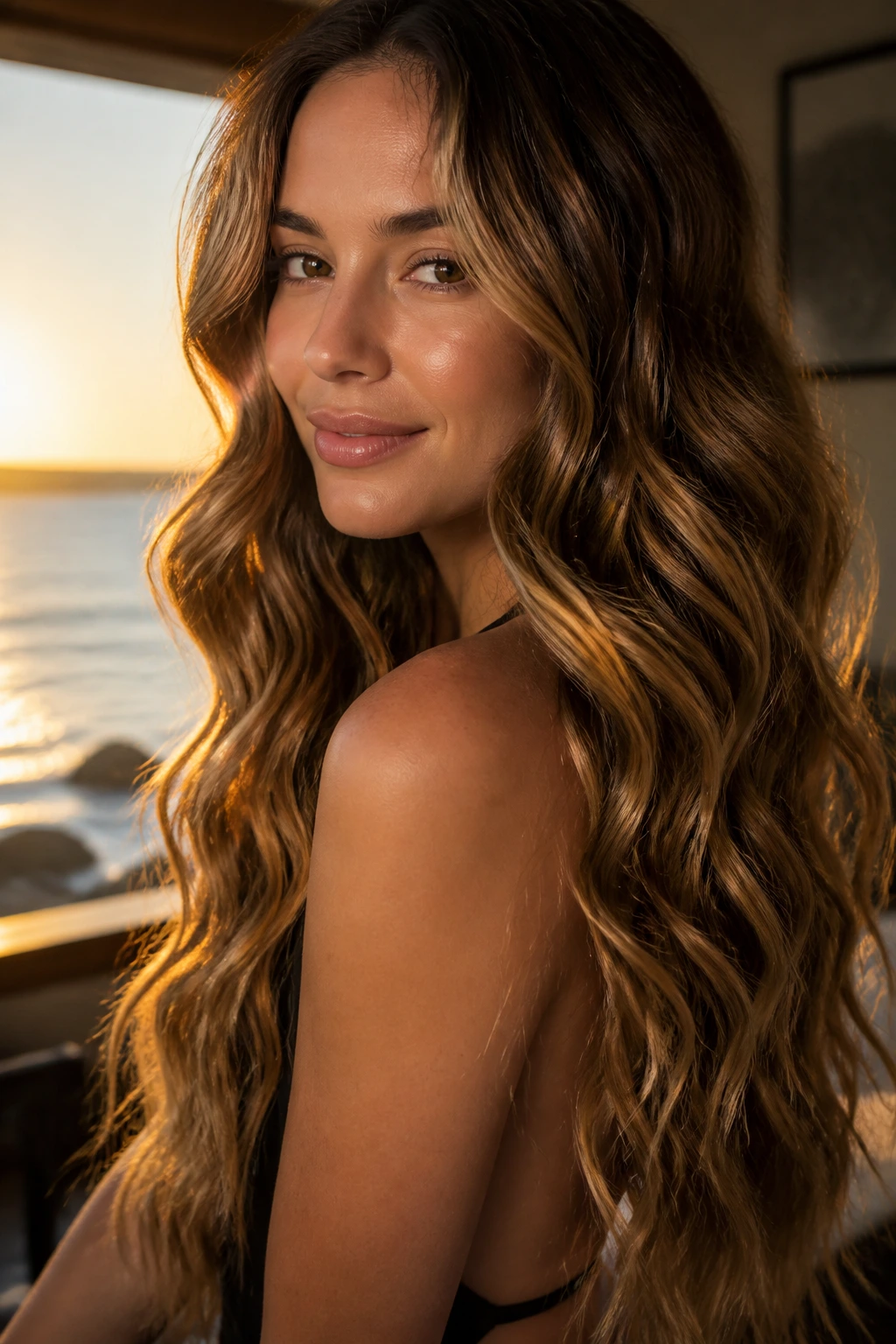
Long hair doesn’t need one “right” curl. It needs the curl that matches the weight, the cut, and the way you actually wear your hair on a normal day. A tight spiral, a brushed-out wave, a heatless rod set, or a polished Hollywood bend can all look right on the same head of hair if the section size and finish are honest.
That’s the part I like most about these curl types. They give you options without forcing you into one look forever. Pick the shape that suits the length, test it with the right product, and notice how much difference a clean cool-down makes. Long hair always tells the truth. Once you learn how to read it, the rest gets a lot easier.