



Warm golden blonde hair color ideas for pale skin tend to work because they do something the wrong blondes never manage: they give the face a little warmth without turning it orange, flat, or loud. On very fair skin, that balance matters. A cool ash can drain the complexion fast, and a pale platinum can make pink undertones stand out in a way that feels harsher than intended.
Gold, honey, butter, beige, champagne — those shades sit in a nicer place. They catch light around the cheekbones, soften redness, and make freckles look intentional instead of accidental. The trick is not chasing the lightest blonde in the room. It’s choosing a warmth level that looks soft in daylight and polished under indoor light, which is where a lot of blonde color ideas fall apart.
I keep coming back to warm blondes on fair skin because they’re less fussy than people think. A root shadow changes the whole mood. A beige gloss can cool down a shade that wants to go too yellow. A few well-placed ribbons around the face do more than an all-over bleach job ever will. The ideas below move from whisper-soft to brighter and more dimensional, so you can pick the one that suits your skin tone, your brow color, and your maintenance tolerance.
Why These Shades Deserve a Spot on Pale Skin
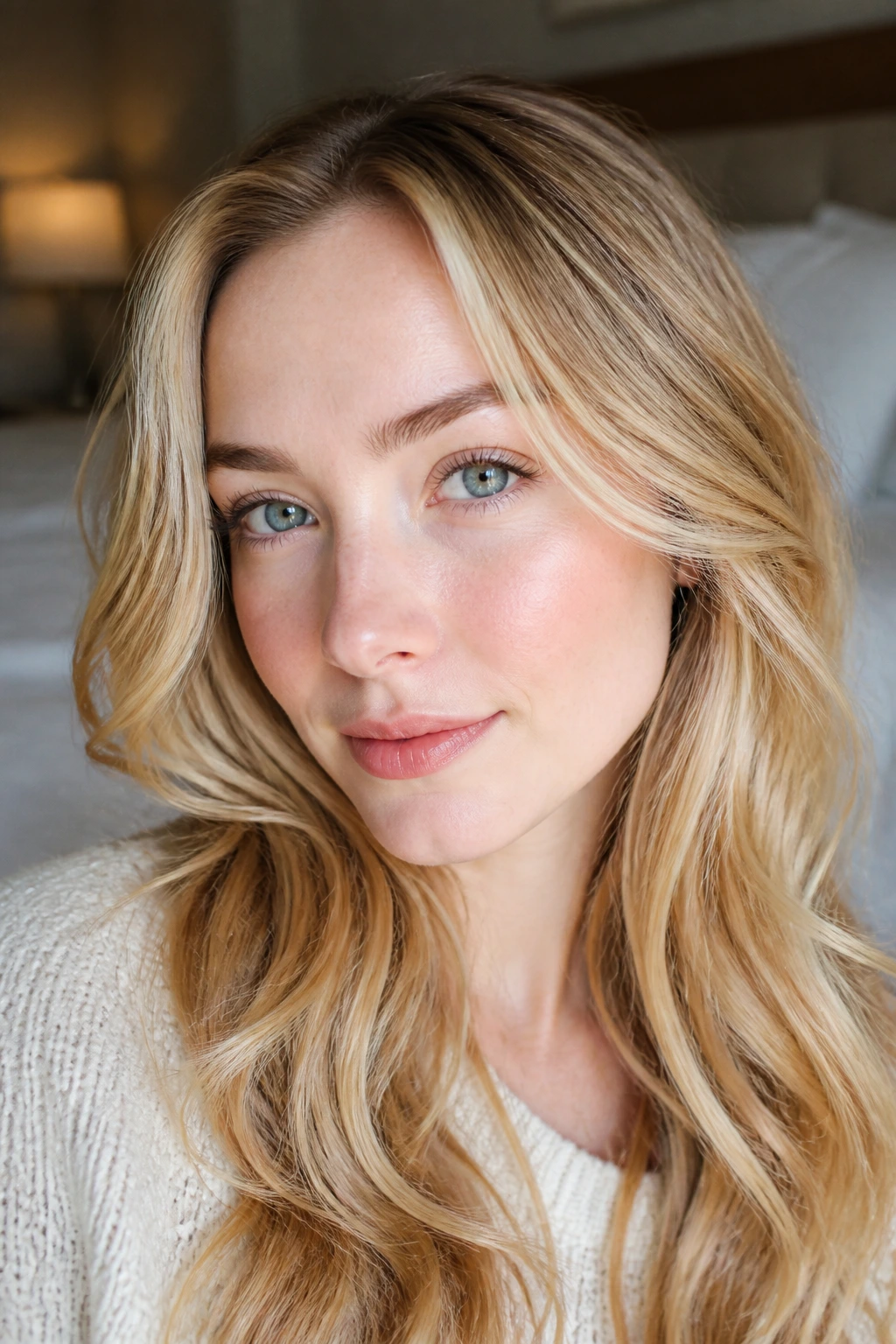
- They stop fair skin from looking washed out: A little gold in the hair brings back the warmth that pale complexions can lose beside very light blonde.
- They work with pink undertones instead of fighting them: Beige-gold and honey tones soften redness in the cheeks and around the nose better than icy ash.
- They give the hair shape: Root shadow, lowlights, and ribbons keep the color from turning into one flat sheet of yellow.
- They can be dialed up or down: The same warm blonde idea can be worn softly with a gloss or more brightly with foils and a brighter money piece.
- They grow out in a kinder way: Rooted versions of warm blonde look deliberate for longer, which matters when you don’t want a harsh line every few weeks.
How Warm Golden Blonde Flatters Pale Skin
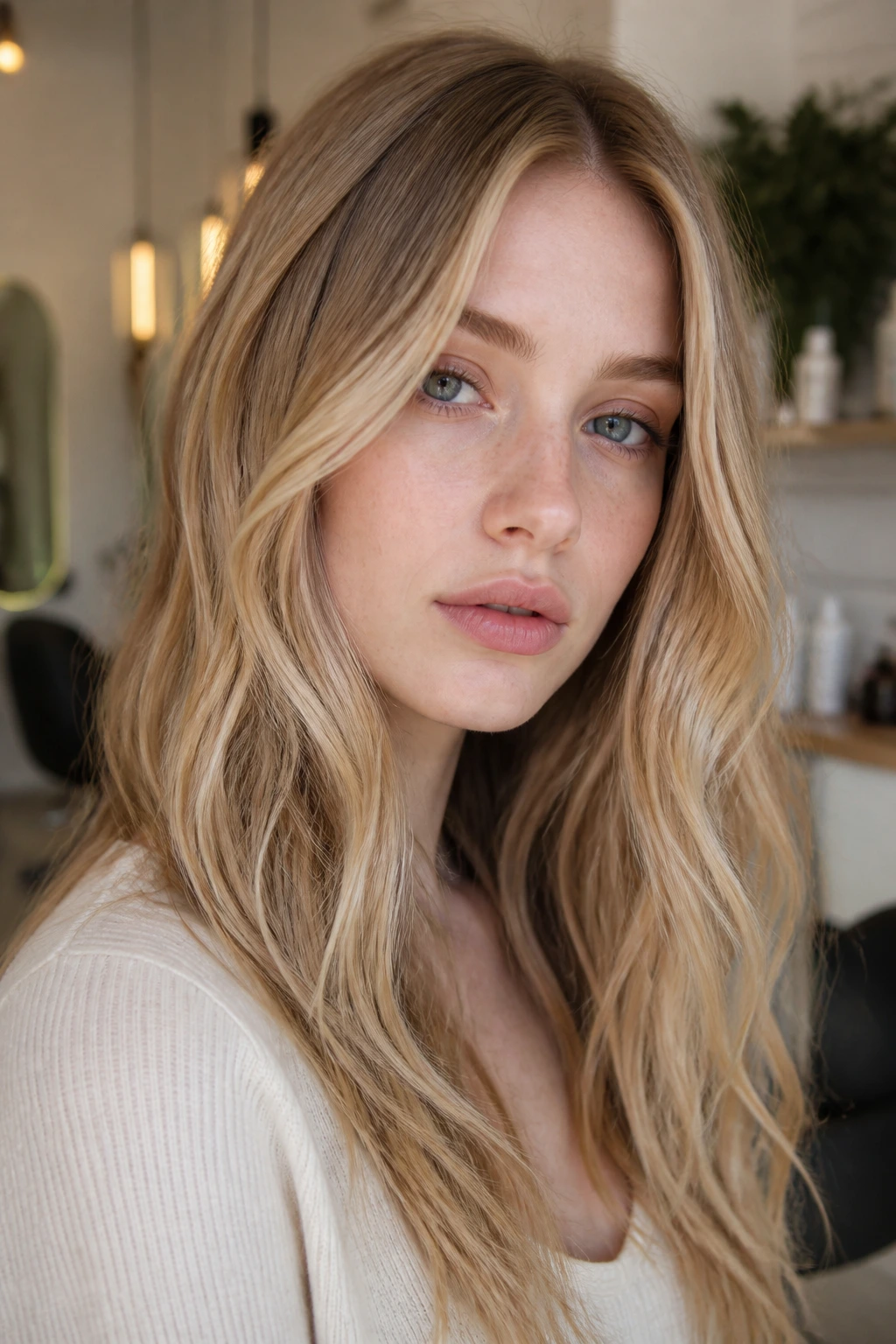
Pale skin is not one thing. Some faces lean pink. Some lean peach. Some are neutral enough that almost any blonde can work, but only if the depth and placement are right. Warm golden blonde usually succeeds because it gives the skin a little reflected color. That tiny bit of warmth keeps the face from going gray next to the hair.
The real move is choosing the right shade family. Honey and butter sit warmer and richer; beige-gold keeps the tone softer; champagne adds brightness without going brassy. If your skin blushes easily, too much coppery gold can feel aggressive. If your skin is very light and your brows are dark, a deeper honey or wheat blonde can look better than a pale, all-over lift because it keeps some contrast on your face.
If Your Skin Reads Pink or Rosy
A beige-gold base usually beats a strong yellow blonde here. You want warmth, not a neon effect. A shadow root or soft lowlight gives the hair some depth so your complexion doesn’t get crowded out.
If Your Skin Reads Neutral
You have room to play. Champagne, buttercream, and golden beige are all good starting points, and the final choice comes down to how bright your brows and eyes are. Neutral skin can carry a little more shine without the color looking loud.
If You Have Freckles or Peachy Skin
Go warmer. Honey, apricot-gold, maple, and caramel ribbons tend to make freckles look crisp instead of muddy. These shades also keep peachy skin from disappearing behind the hair.
What To Bring to the Salon Chair
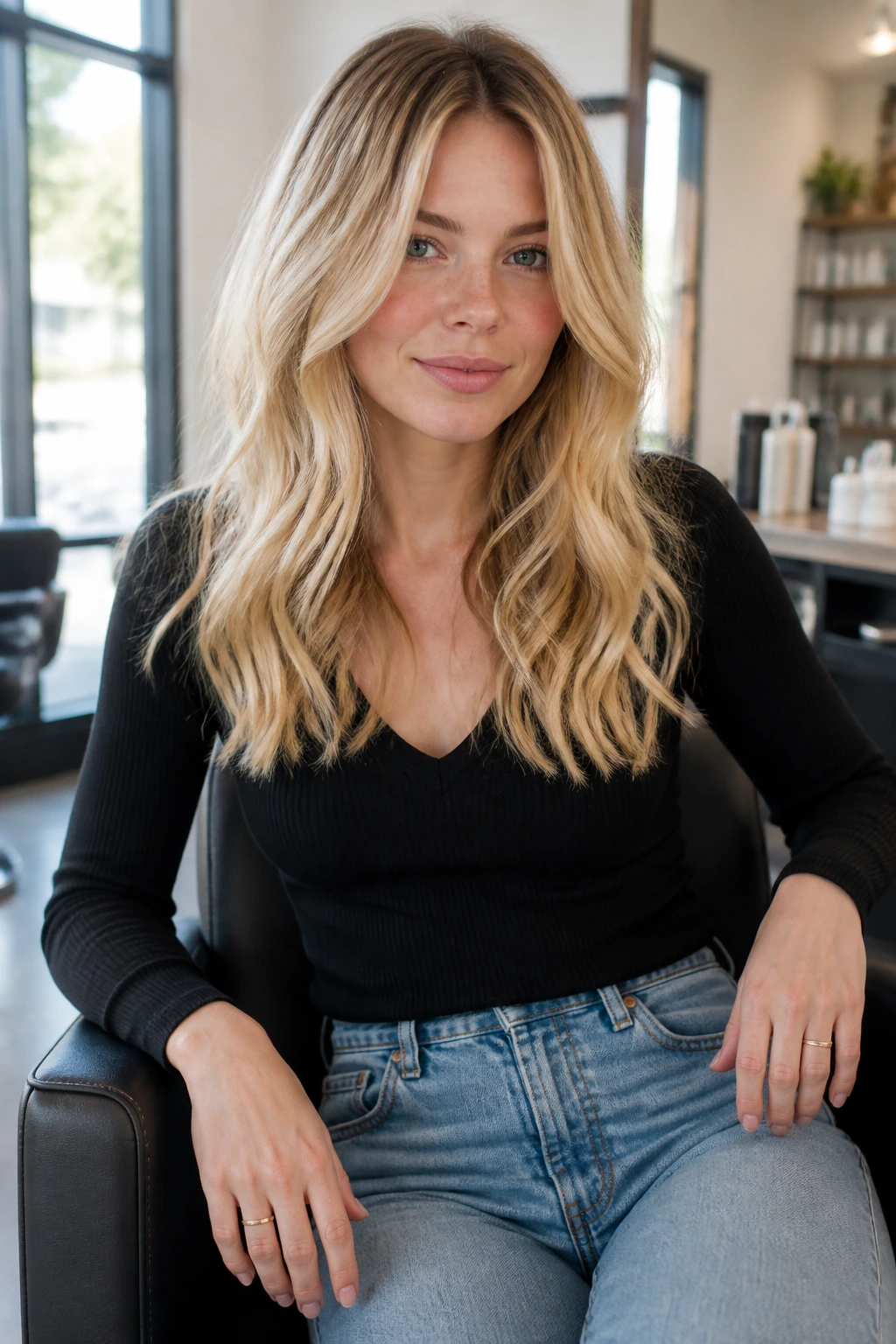
- Two or three daylight photos: Pick images shot near a window, not under bathroom lighting, because warm blonde can look a full shade different under bulbs.
- A note on your natural level: If you know your base color, tell your colorist whether you’re starting from dark blonde, light brown, or already-bleached hair.
- A quick history of your color: Box dye, henna, hard water, and previous bleach all change how golden blonde lifts and tones.
- A tone preference list: Words like honey, beige, butter, champagne, caramel, and wheat help more than saying “blonde but warmer.”
- Color-safe shampoo and conditioner: Bring them if you already have them; if not, buy before your appointment so the color doesn’t get stripped by the wrong wash routine.
- A heat protectant and a weekly mask: Warm blondes hold their shine better when the ends are protected from flat irons and blow-dry heat.
- Optional if you’re doing upkeep at home: Gloves, a tint brush, clips, a mixing bowl, and an old towel. If you are not coloring at home, you do not need the extra clutter.
1. Honey Blonde All Over
Honey blonde all over is the warmest easy entry point on pale skin. It reads soft, golden, and a little glossy, like the color has been sitting in the sun without getting dry at the ends. On very fair skin, that kind of warmth can make the face look less pale in a good way, not a fake tan way.
Why it works
This shade works best when you want one clean color rather than obvious highlight bands. It suits skin that flushes pink or looks a little cool in winter light because honey gives the face a warmer frame. It also photographs in a calmer way than platinum, which can blow out fair skin and make the brows look too sharp.
If your natural base is already light blonde, this can be a simple gloss or single-process lift. If your hair is darker, ask for a soft lift to a level 8 or 9 with honey toner, not a bright yellow finish. The difference is huge.
Best for: pale skin, soft brows, and medium to fine hair that needs one clear tone.
Watch for: if the gold goes too yellow, the skin can look redder by comparison.
My favorite move: keep the roots a half-shade deeper than the ends so the color doesn’t flatten out.
2. Golden Beige Blonde with Soft Ribbons
Golden beige blonde is the shade I reach for when someone wants warmth but hates anything that screams “blonde.” It sits in that sweet spot between creamy and golden, with thin ribbons of brightness that keep the hair from going flat. On pale skin, beige is the part that matters most. It calms the gold.
The ribbons should be fine, not chunky. Think soft light woven through the top layer and around the face, then blended into a smoother beige base. That keeps the complexion fresh instead of overexposed. I like this look on people with neutral skin or light peach undertones because it gives glow without stealing the show.
If you want a low-drama version of blonde, this is one of the smartest choices in the whole lineup. It grows out cleanly, and the beige base gives you a little forgiveness if your toner fades faster than expected.
3. Buttery Blonde with a Shadow Root
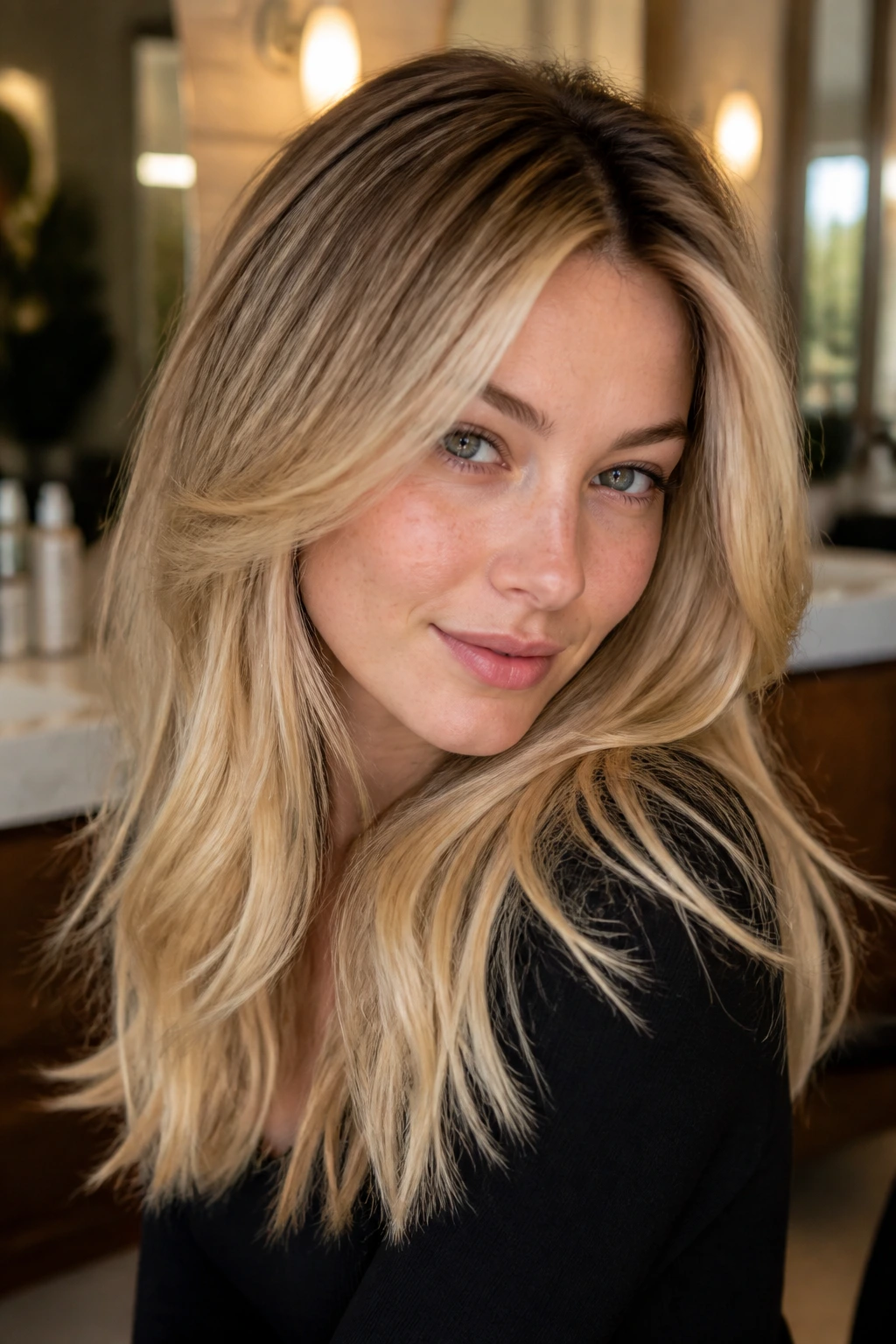
Buttery blonde with a shadow root feels richer than a bright blonde and softer than a beige blonde. The butter tone gives the ends a creamy, almost melted look, while the root shadow keeps the top from looking pasted on. On pale skin, that deeper root line can be a relief. It gives the face some structure.
How to ask for it
Ask for a root smudge one to two levels deeper than the mid-lengths. Then ask for buttery or warm vanilla tones through the mids and ends, not a yellow toner. The butter should look like soft light, not lemon custard.
Why it suits fair skin
The shadow root creates contrast around the hairline, which keeps very light skin from blending into the blonde. That matters more than people realize. Without a bit of root depth, a full blonde can make brows and eyes seem to float.
- Best paired with: soft waves, layered lobs, or shoulder-length cuts.
- Maintenance note: the root buys you extra time between touch-ups.
- Color note: if your skin is very pink, ask for a beige-butter finish rather than a strong gold.
4. Champagne Gold Balayage
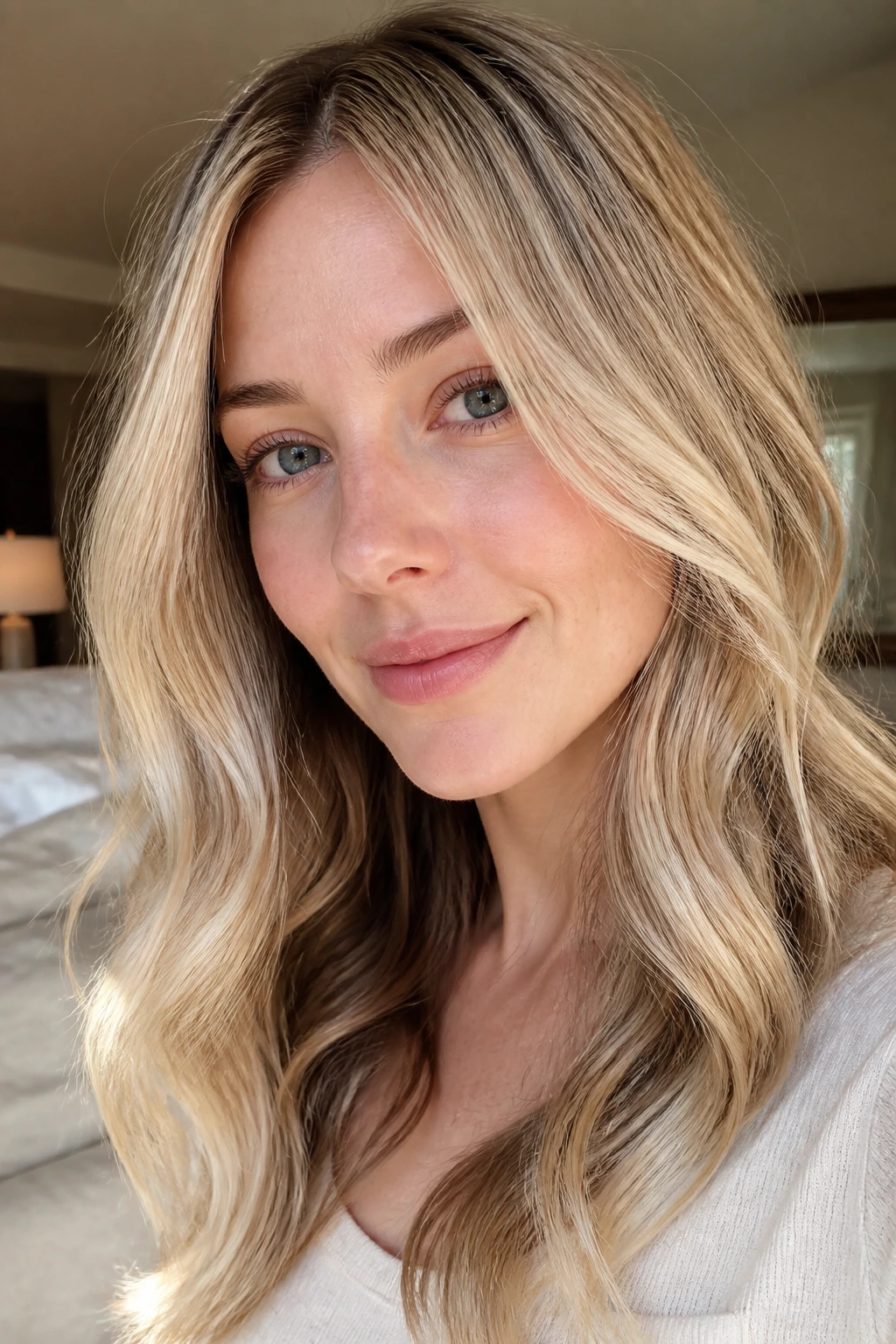
Champagne gold balayage is what happens when you want brightness without the hard edges. The color is lighter than honey, softer than platinum, and a little airy around the face. On pale skin, champagne does a nice job because it reflects light without turning chalky. It gives the hair that clean, polished shine people usually chase with a gloss.
This look depends on placement. Keep the brightest pieces around the crown, the top layer, and the front half of the hair. Let the underside stay a little deeper. That contrast is what keeps the shade from looking one-note. On fair skin, especially with cool or pink undertones, the champagne tone keeps things bright without going icy.
I like champagne balayage most on straight or softly waved hair, where the blend shows off. Tight curls can still wear it, but the placement needs to be more thoughtful so the lighter pieces don’t disappear into the curl pattern.
5. Wheat Blonde With Lowlights
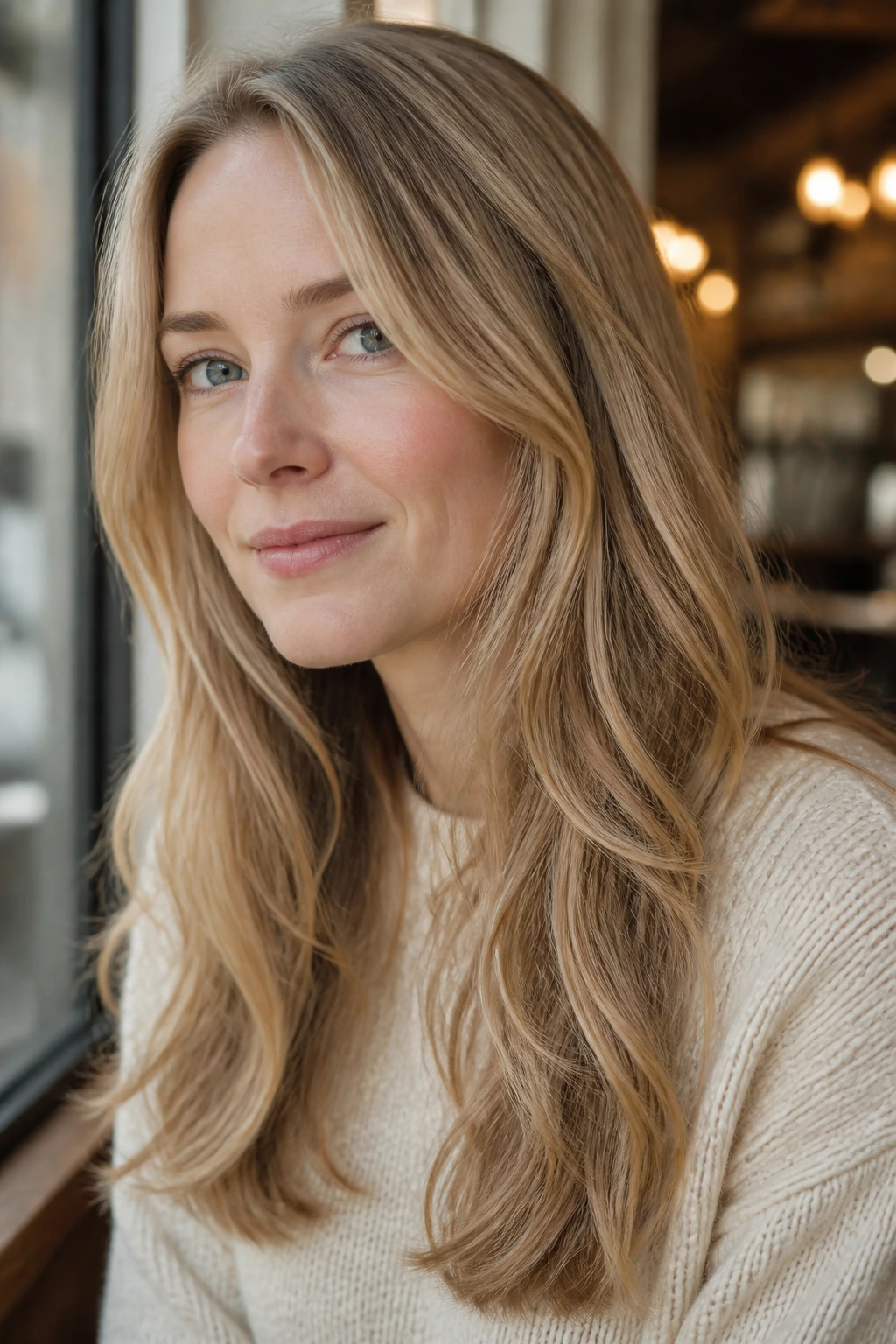
Wheat blonde is one of the more underrated options for pale skin because it has enough depth to give the face shape. Instead of hovering in the pale-yellow zone, it leans into soft grainy warmth with fine lowlights threaded through it. That stops the hair from looking like a single pale strip under indoor light.
This is especially good if your skin is very fair and your features need contrast. Dark brows, blue eyes, or a stronger lip color all sit nicely with wheat blonde because the tone is mellow, not sugary. It also works on hair that tends to go too bright too fast. The lowlights hold the color down and keep it from drifting brassy after a few washes.
If you’ve ever looked at a very light blonde in the mirror and thought, “This needs something,” wheat is usually the something.
6. Sandy Golden Lob
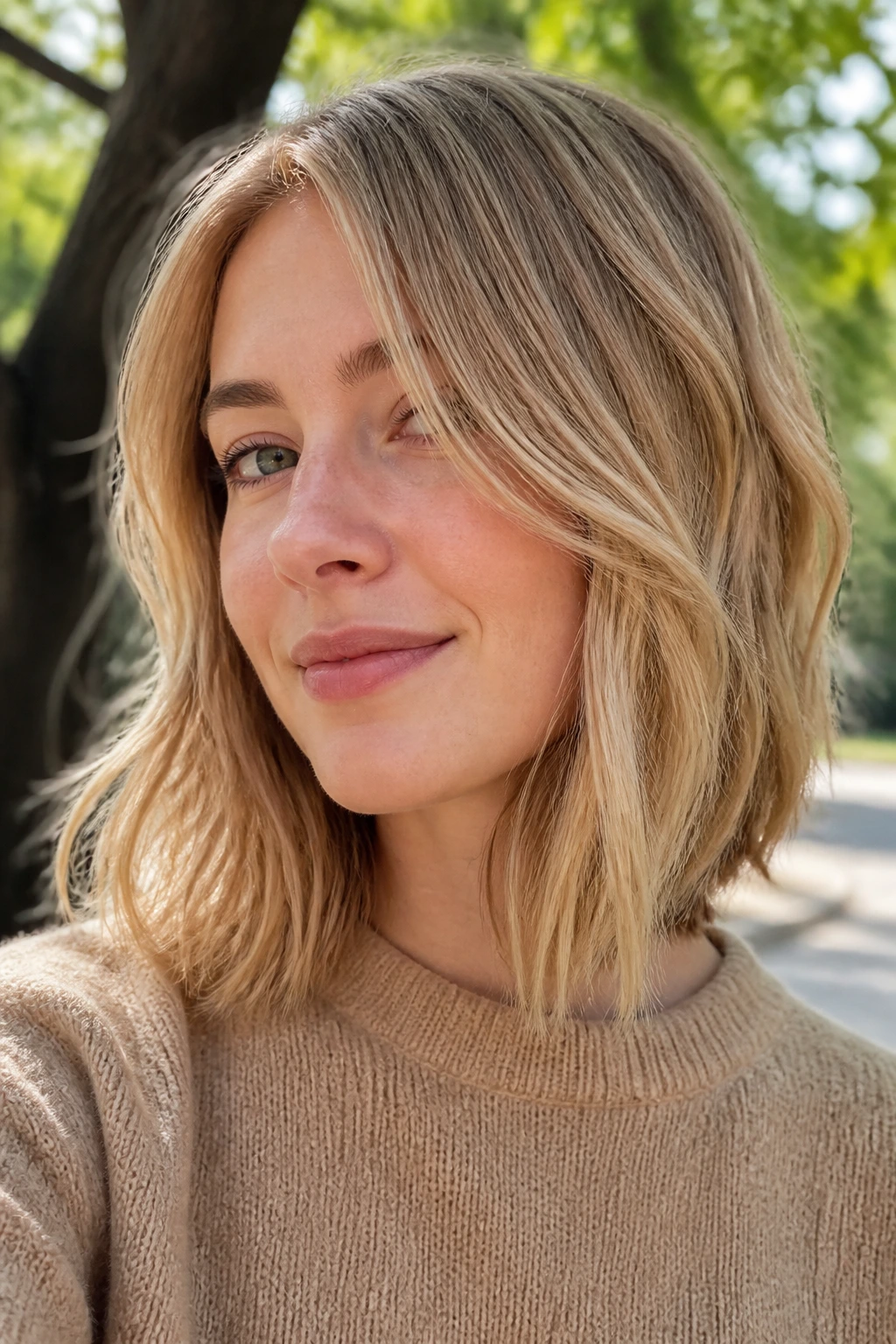
A sandy golden lob gives warm blonde a more casual shape. The cut matters here as much as the color. On a shoulder-length lob, sandy gold looks relaxed and easy, with just enough warmth to keep pale skin from fading into the background. It’s the blonde equivalent of a good linen shirt.
This shade sits lower than champagne and higher than beige, which makes it a useful middle ground. If your hair is fine, the shorter cut helps the color look fuller. If your hair is thicker, the length keeps the ends from getting heavy and dark. I also like it because a lob doesn’t need giant curls to show the color. A blunt bend with a flat iron is enough.
If you want a warm blonde that feels modern without being stiff, this is one of the cleanest choices on the list.
7. Caramel Face Frame Blonde
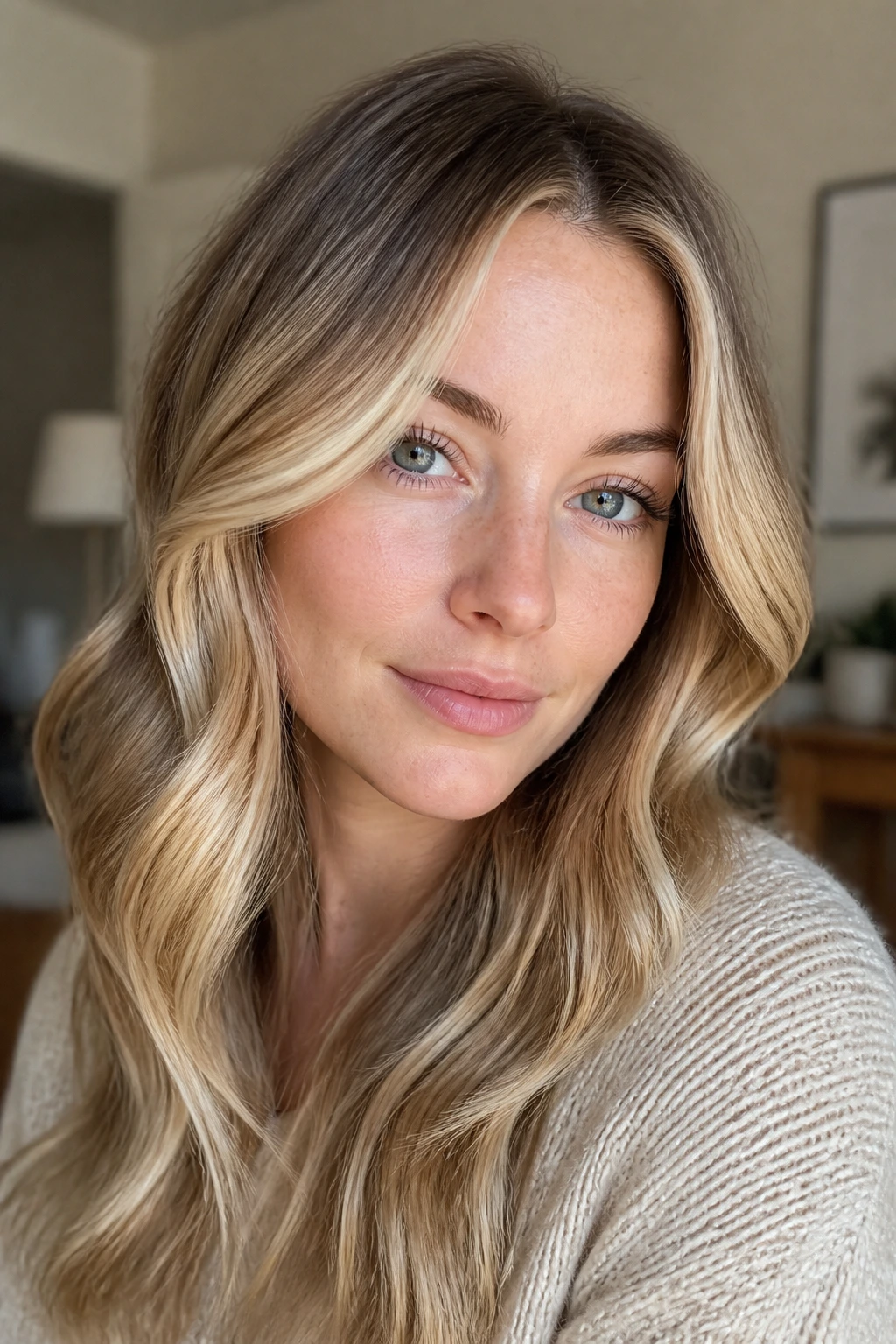
Caramel face-frame blonde does one thing very well: it pulls warmth right where you want it, close to the skin. The face frame should be the brightest area, with caramel and gold weaving back into a softer base through the rest of the hair. On pale skin, that brightness near the cheeks and jaw can make the whole face look more awake.
The trick is restraint. Too wide a face frame and you lose the softness. Keep the brightest pieces narrow enough to sit around the hairline and temple, then let the rest of the blonde melt into a richer caramel-beige. That balance looks especially good on fair skin with darker brows, because the hairline gets lift without the whole head turning high-contrast.
This is a smart choice if you like to wear hair tucked behind the ears or pulled into a loose ponytail. The front pieces still do their job.
8. Apricot Honey Melt
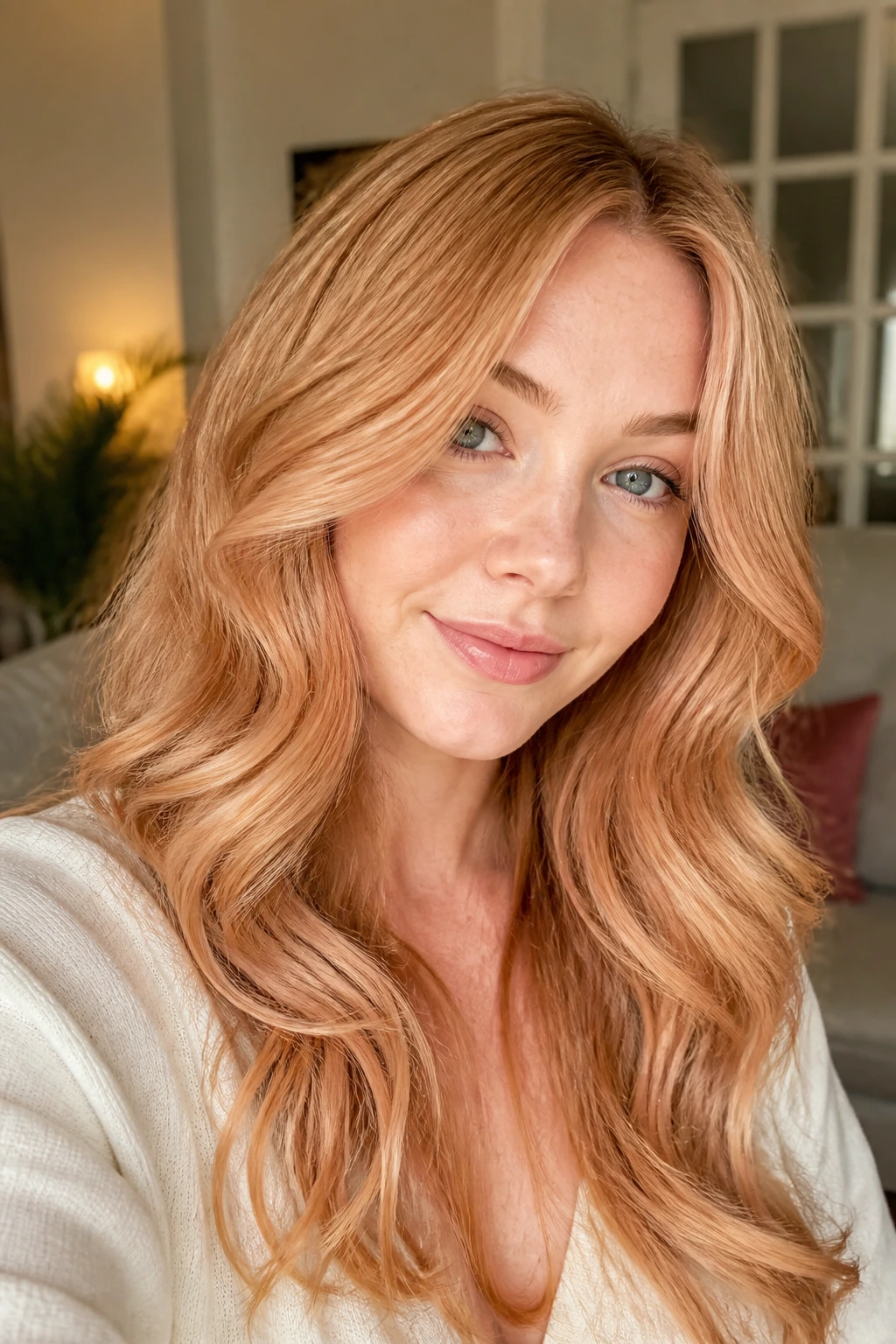
Apricot honey is warmer and more playful than a standard honey blonde. There’s a peachy note in it that makes pale skin look less stark, especially if your complexion has a bit of natural pink or a freckled surface. It can read soft and glowing, but only if the peach stays gentle.
A melt, not a block of color, is the right way to wear it. Keep the roots more golden-beige, let the mids go honey, and allow the ends to pick up that faint apricot warmth. If the whole head goes peach at the same level, it can feel costume-like fast. With the right blend, though, it’s one of the prettiest warm blondes for light skin.
I’d choose this when you want something with personality but not a bright copper turn. It’s warmer than champagne, friendlier than beige, and a little more interesting than plain gold.
9. Buttercream Blonde with Curved Layers
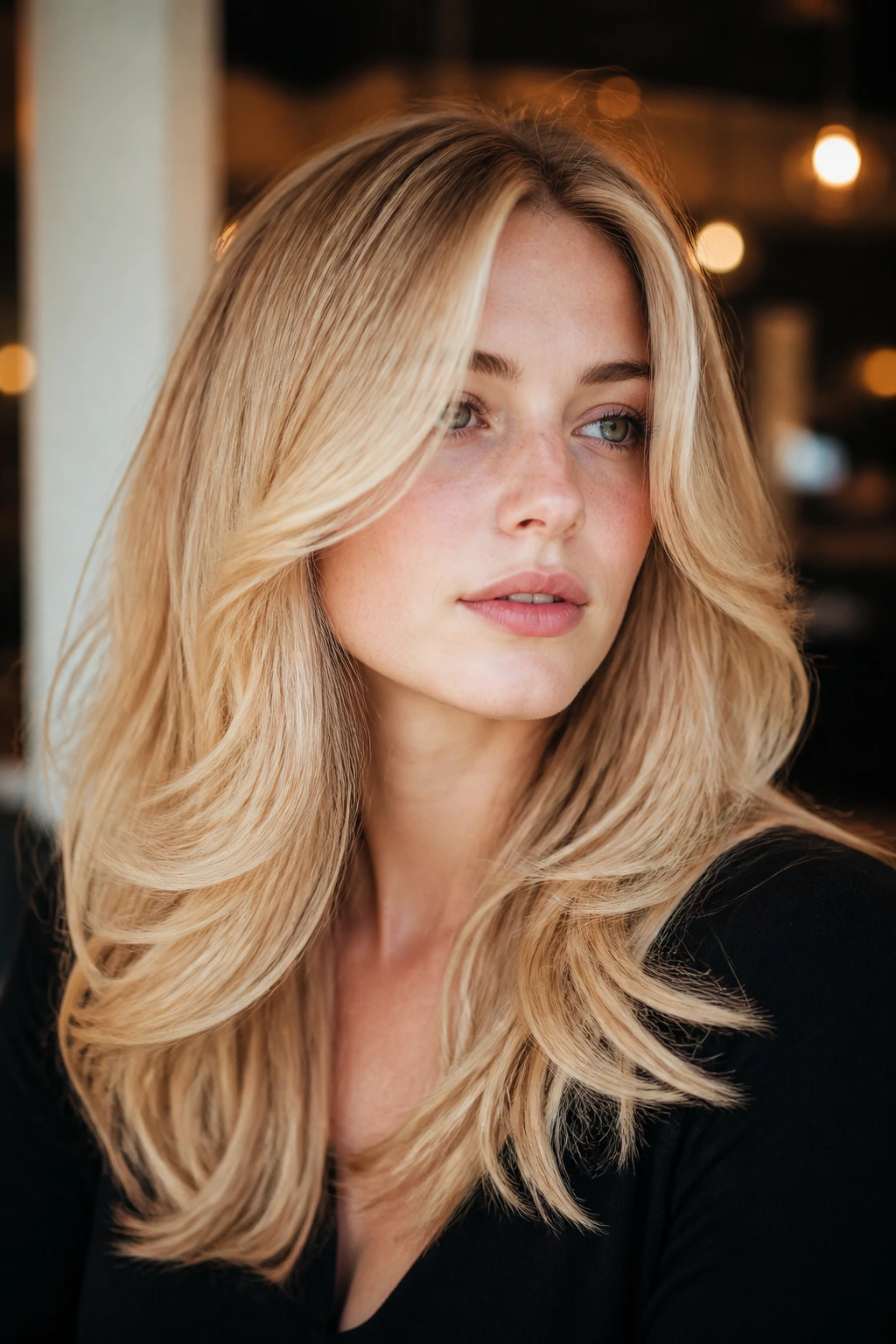
Buttercream blonde has a soft, whipped look that flatters fair skin because it never gets too hard around the face. The color itself is creamy and pale, but the warmth is still there. Curved layers make a big difference. They help the light catch the hair in bends and ribbons instead of leaving it as one flat sheet.
On pale skin, buttercream works best when the tone is glossy rather than chalky. Ask for a beige-gold toner, not a cool pearl toner, unless your skin is very warm already. The cut also matters if your hair is fine. Layers create motion, and motion makes blonde look richer.
This is one of those shades that feels soft from every angle. It isn’t loud. It doesn’t need to be. The little bends in the cut do the talking.
10. Old-Money Gold Blonde
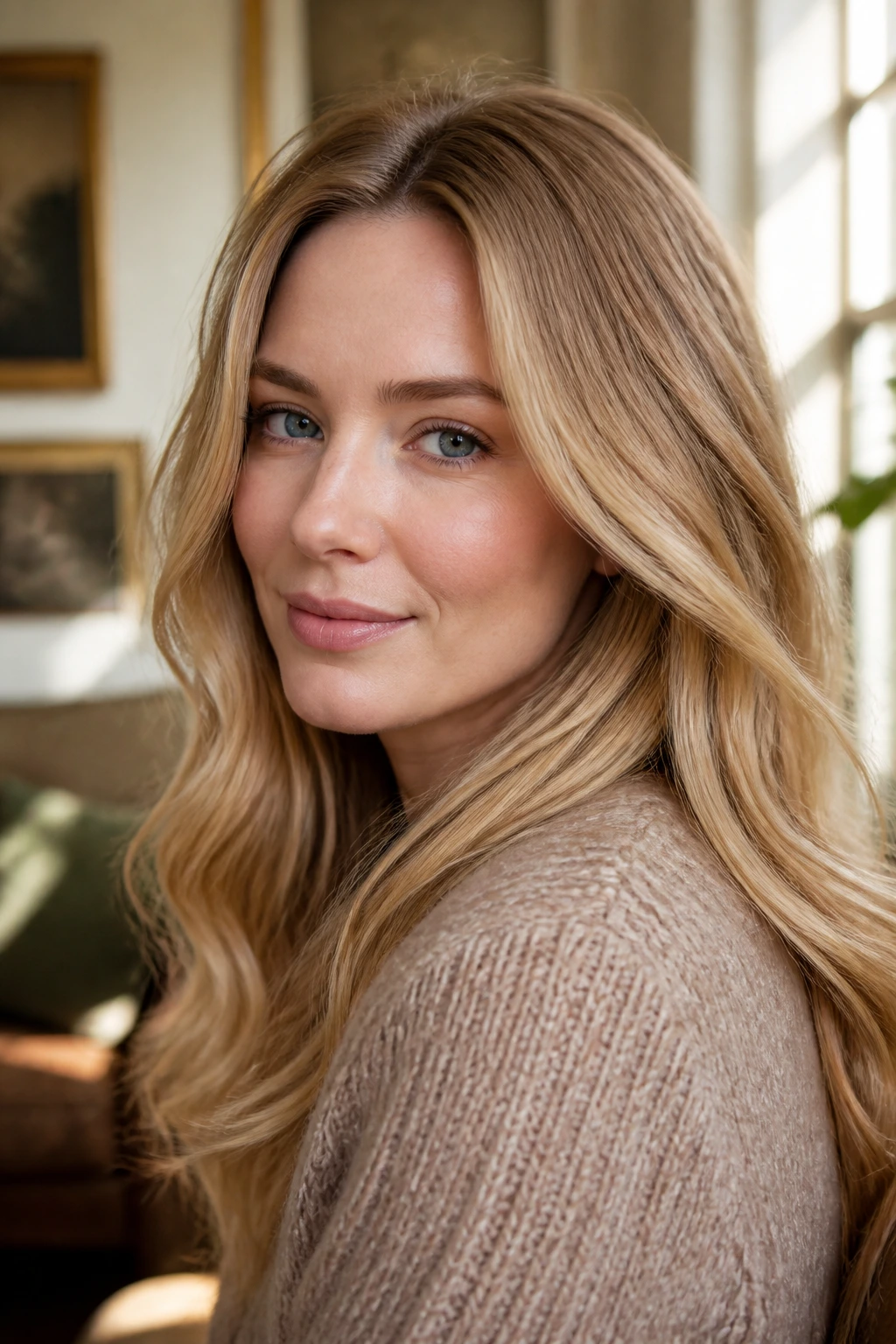
Old-money gold blonde is less bright than it sounds. That’s the appeal. It takes the gold family and mutes it just enough to feel expensive and calm. On pale skin, this kind of color can be better than a brighter blonde because it gives warmth without pushing your complexion into the foreground.
A deeper root, a polished finish, and a slightly muted gold mid-length are the backbone here. You want the hair to look as if the blonde was built slowly, not stripped out in one pass. This shade sits beautifully with strong brows, tailored clothes, and minimal makeup. It’s one of the few warm blondes that can look richer when it’s not ultra-light.
If you like your color to feel deliberate rather than bubbly, this is your lane.
11. Honey Butter Balayage
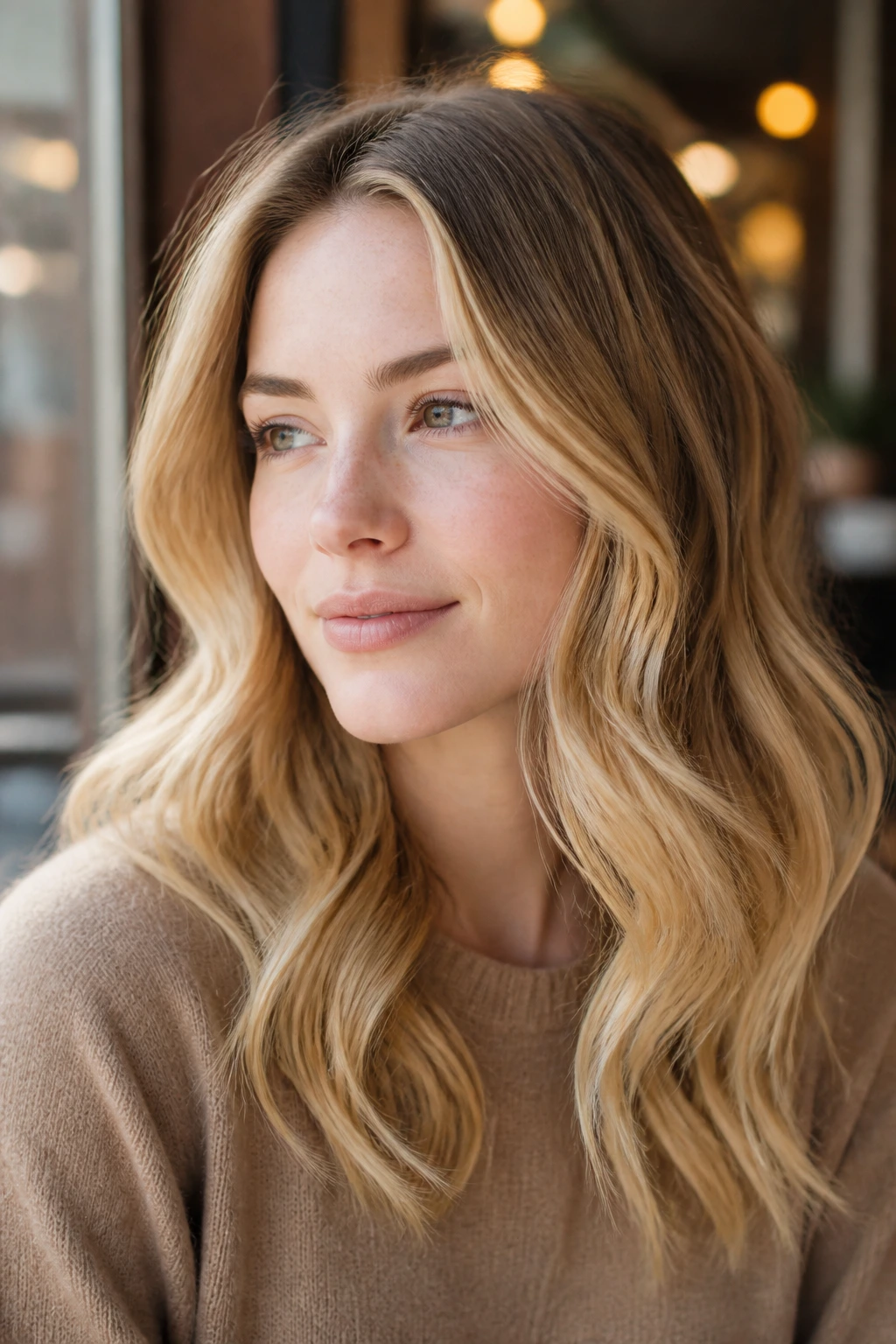
Honey butter balayage is the friendliest kind of golden blonde for someone who wants dimension first and brightness second. The balayage pieces should sit softly over a warmer base, with the honey and butter tones doing the brightening. On pale skin, this gives a warm halo effect instead of a harsh stripe pattern.
The placement matters more than the exact shade. Keep the lightest bits around the top and front, then let the color soften as it moves toward the underside. That keeps the hair from looking too airy or too pale. If your face is narrow or your features are delicate, honey butter balayage can make the whole look feel fuller without changing the cut.
I like this on wavy hair most of all. The bends show off the ribbons, and the warmth lands in little flashes rather than one blast.
12. Vanilla Gold Money Piece
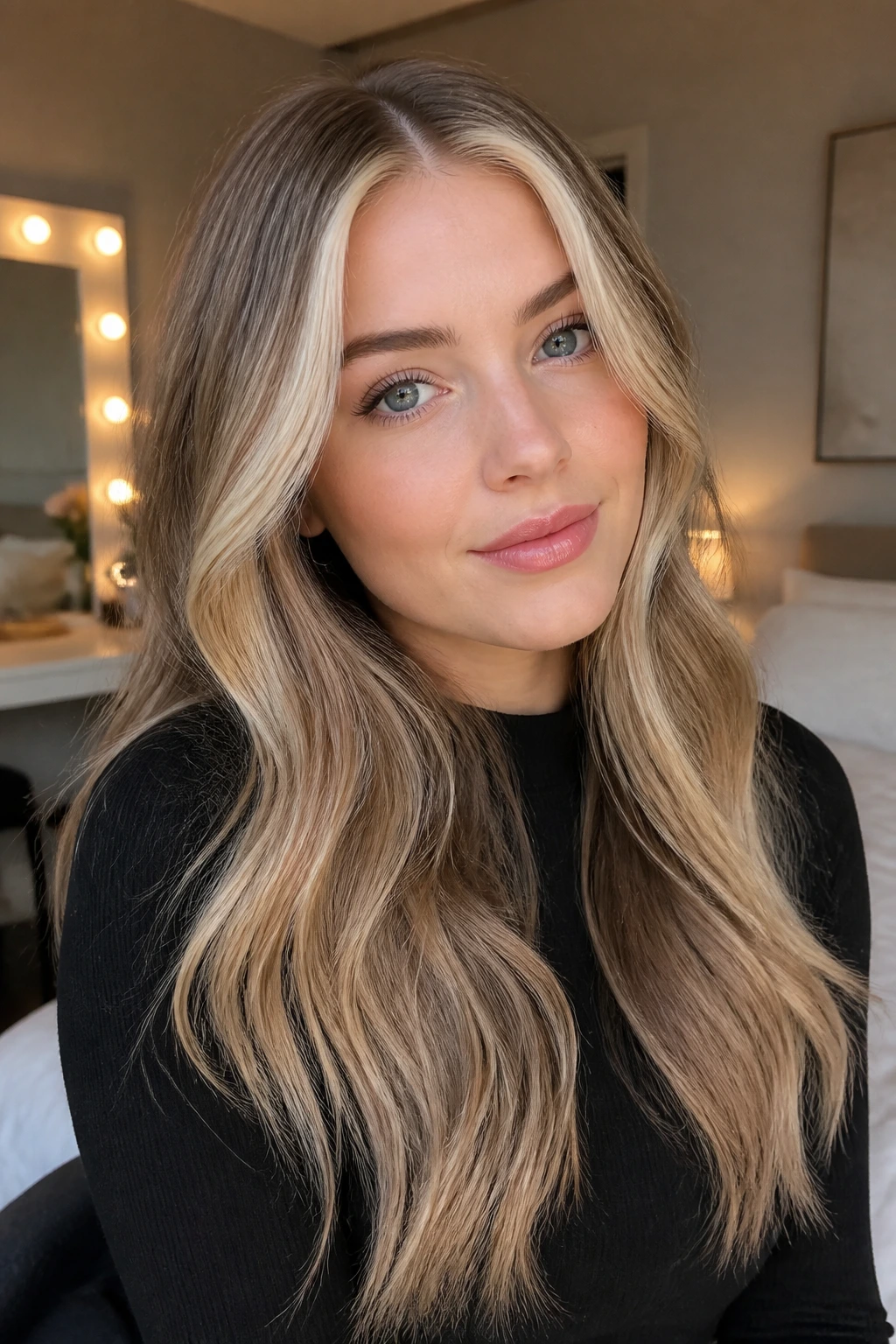
A vanilla gold money piece is for the person who wants a bright front but doesn’t want to live with a fully lightened head. The money piece should be creamy, not icy, and just warm enough to echo the rest of the blonde. On pale skin, that front brightness pulls focus to the eyes and cheekbones without making the color feel heavy.
The rest of the hair can stay a shade or two deeper — beige, honey, or wheat all work. That contrast is what makes the money piece useful instead of random. It gives lift where it counts and leaves the rest of the hair a little quieter.
This is a good option if you like to wear bangs, curtain bangs, or face-framing layers. The front pieces keep moving every time the hair shifts, and that movement keeps the blonde from sitting still in one bland block.
13. Strawberry Gold Blonde
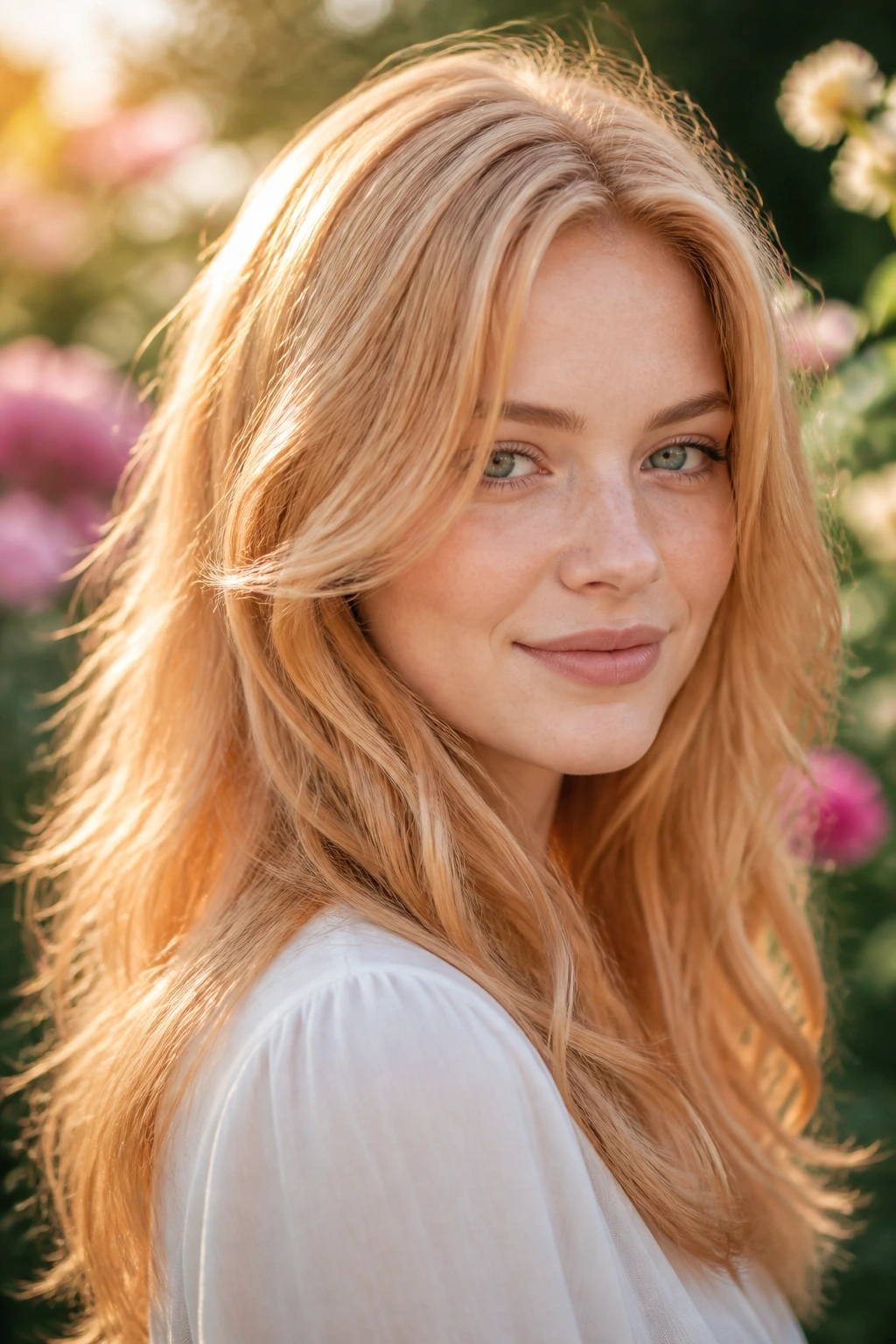
Strawberry gold blonde is a warm blonde with a hint of blush in it. Not copper. Not pink. Just enough rosy warmth to make pale skin look alive instead of drained. It can be a very flattering choice for light skin that leans cool, because the gold prevents the blush from going sugary.
I’d keep this shade soft and airy. The best version is usually a golden base with a whisper of strawberry warmth through the mids and ends. If the red note gets too strong, the color starts reading as copper blonde instead of warm blonde. That can be lovely too, but it’s a different thing.
This one is good for people who want a blonde that feels a little less expected. It has personality, but it still lives inside the warm blonde family.
14. Maple Syrup Blonde
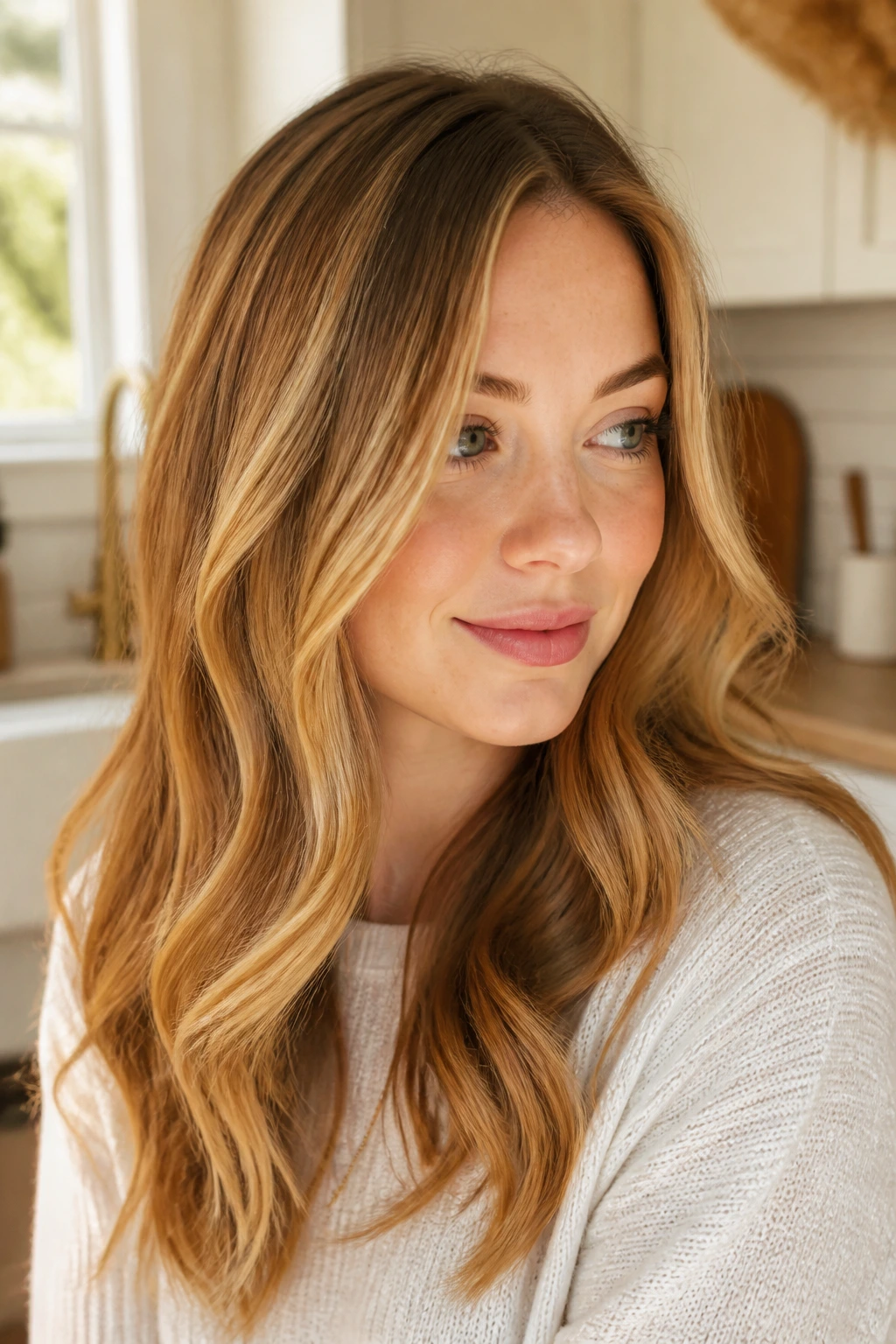
Maple syrup blonde is deeper, richer, and a little darker than most people expect when they hear “golden blonde.” That’s why it works so well on pale skin. The color gives contrast back to the face. Instead of disappearing into the skin tone, it frames it.
This shade leans amber-gold with a brownish depth at the root and mid-lengths. It’s a good choice if your brows are strong or your eyes are dark, because it won’t wash them out. It also holds its shape well over time. As the toner fades, it still reads warm rather than flat.
If you want warmth but hate the look of high-lift blonde, maple syrup is a good middle path. It feels substantial. It behaves better than pale blonde in real life, which is the part that matters.
15. Almond Milk Blonde
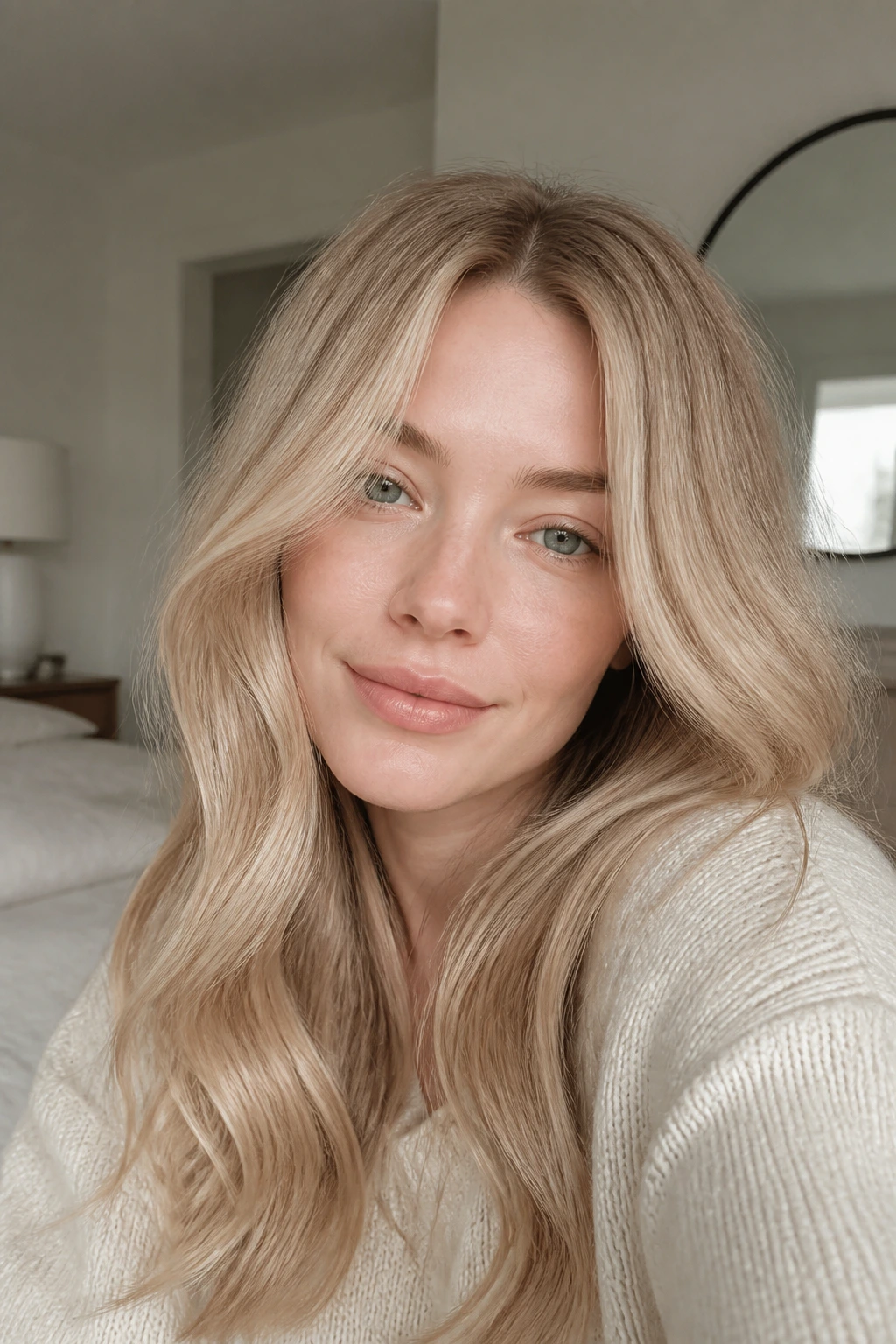
Almond milk blonde is soft, creamy, and much easier on pale skin than a sharp yellow blonde. The almond note keeps it beige, which is the whole point. On fair faces, that creamy tone creates light without making the hair look brassy or one-dimensional.
This is the shade I’d suggest if you like subtle color. It doesn’t shout. It just smooths the whole look out. The best version usually has a slightly deeper root, especially if your natural color is darker than dark blonde. That tiny bit of depth keeps the shade from going flat.
If your makeup style is simple — brushed brows, balm, a bit of blush — almond milk blonde slots in nicely. It doesn’t fight the face. It lets the rest of your features do the work.
16. Gilded Foilayage Blonde
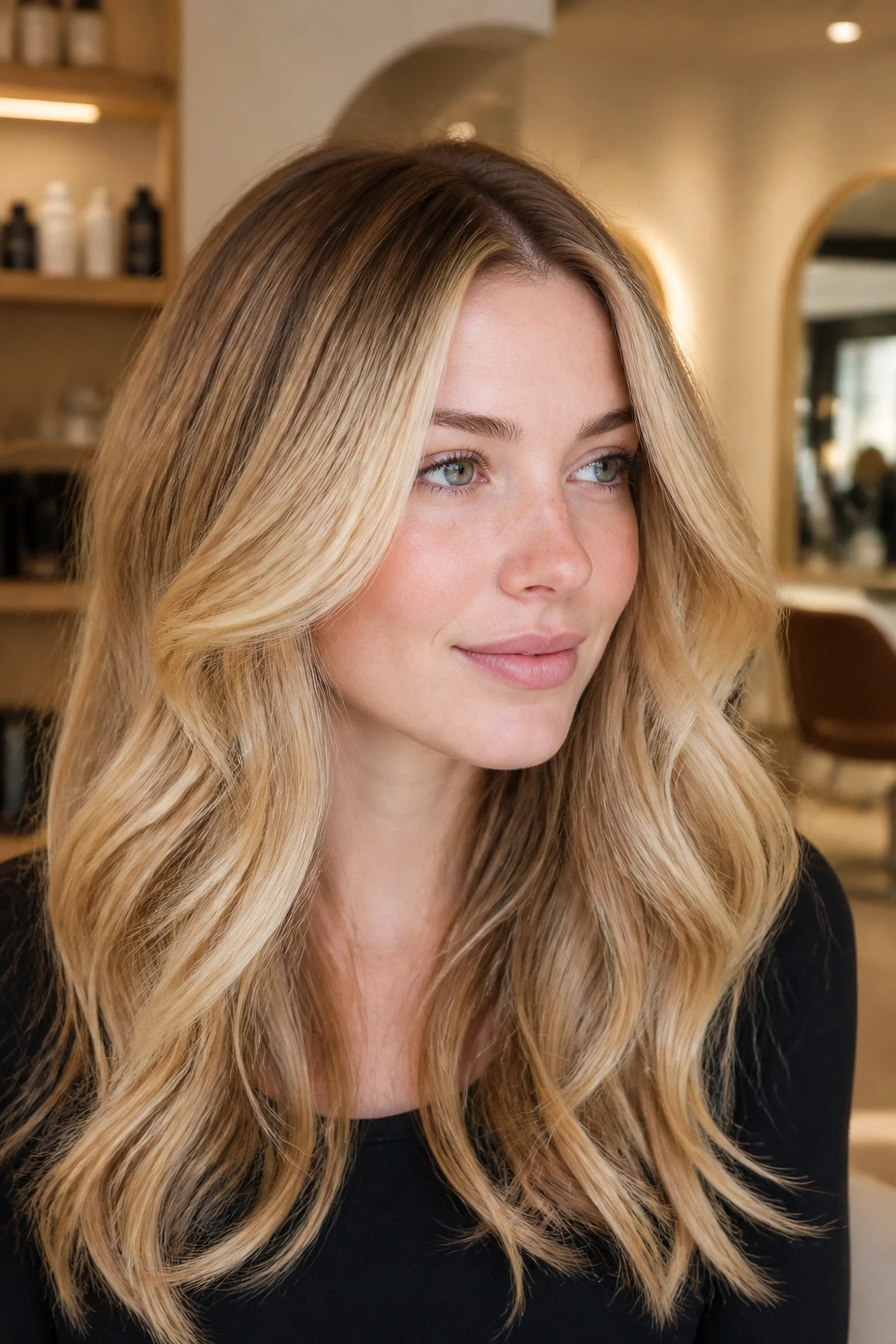
Gilded foilayage is for someone who wants a stronger highlight pattern without losing the soft gold finish. Foilayage gives you brightness where foils lift cleanly, then balayage keeps the transitions from looking stripey. On pale skin, that mix can be a smart way to get glow and contrast at the same time.
The “gilded” part should mean gold, not yellow. If the foil sections lift very light, a beige-gold toner keeps them from going icy. This is especially useful if you have denser hair or want the color to show from across the room without looking harsh. I like it on layered cuts, because the different lengths catch light in different places.
It’s a more salon-heavy look, yes. But when the placement is good, it pays off in movement.
17. Golden Bronde
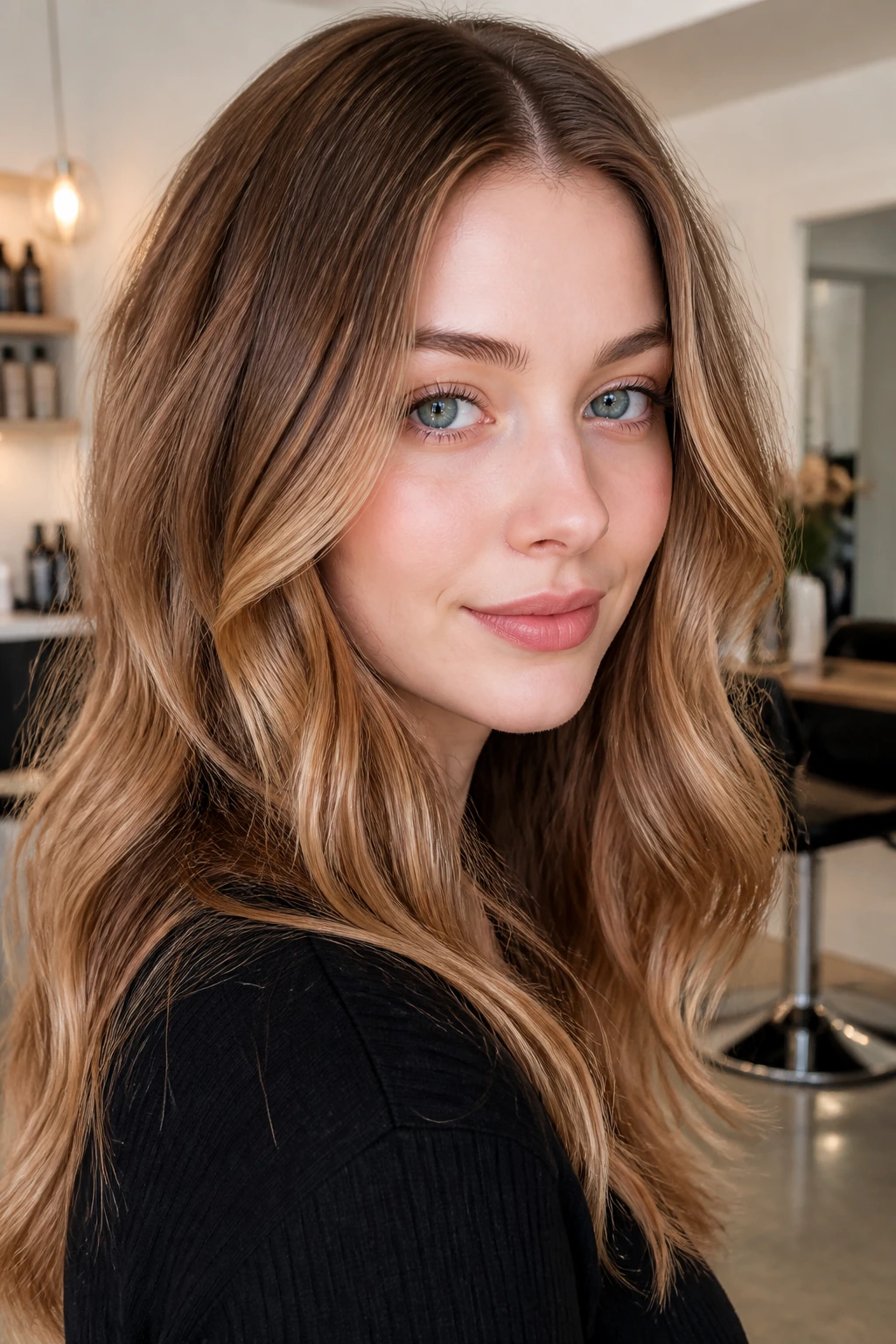
Golden bronde is one of the best warm blonde choices for pale skin if you don’t want to commit to a full blonde head. It sits between light brown and blonde, with gold threaded through the lighter pieces. That keeps the face from looking washed out and the roots from needing constant attention.
Brondes live or die on tone. Too ashy, and the warmth disappears. Too yellow, and it looks off. The sweet spot is a golden beige that lets the hair read soft in daylight and richer indoors. This shade is especially good if your brows are darker than your hair goals. The balance helps everything sit together.
I think golden bronde gets overlooked because it sounds like a compromise. It isn’t. It’s often the smartest answer for fair skin that needs contrast.
18. Peach Honey Blonde
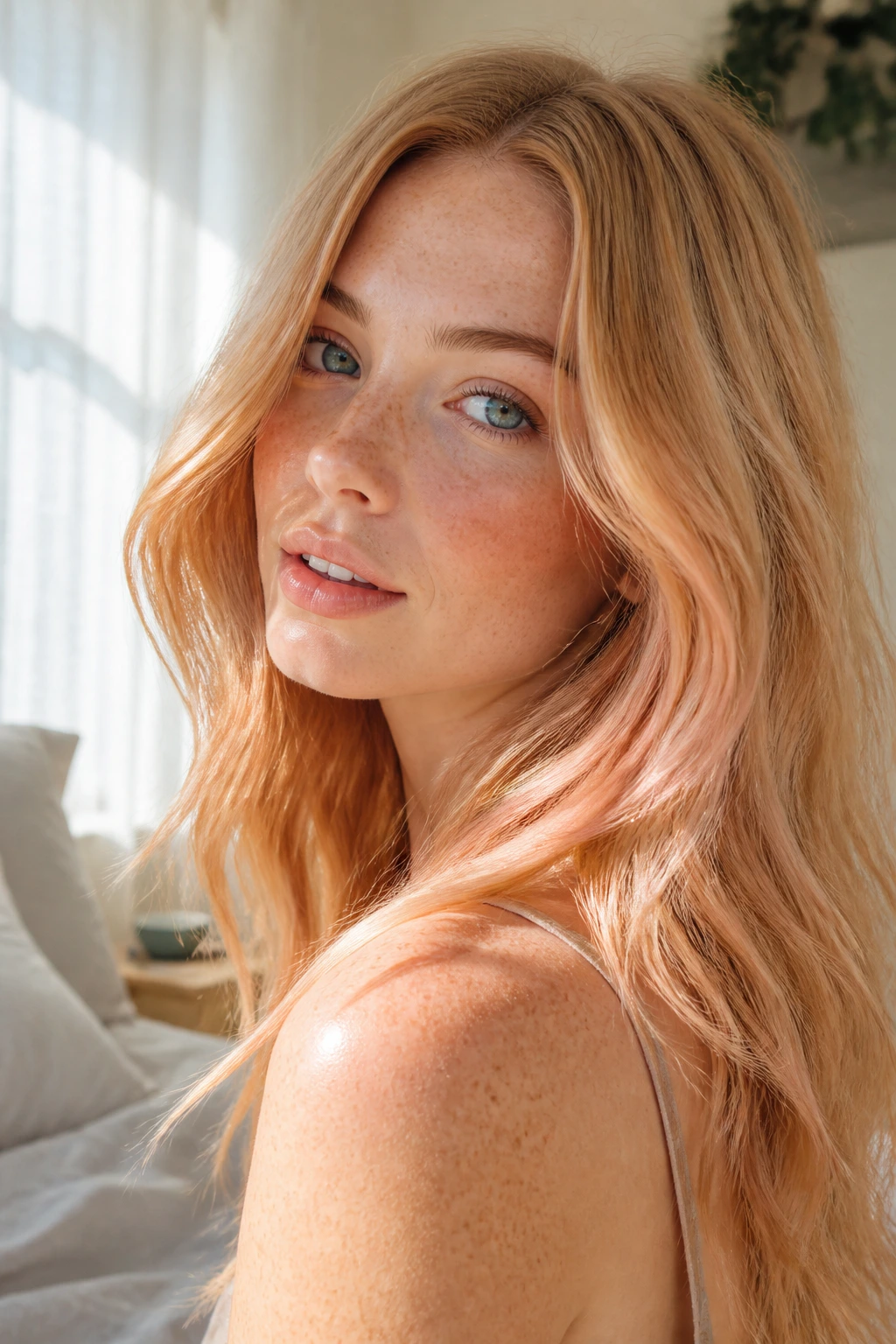
Peach honey blonde has a brighter personality than classic honey, but it still sits comfortably in the warm family. The peach hint keeps pale skin from looking stark, especially if your complexion already has freckles or a little natural blush. It can be a pretty choice when you want warmth that feels slightly youthful without going full copper.
The key is softness. The peach should show up as a glaze or a warm reflect, not a neon shift. A beige-gold base with peachy honey ends usually gives the best result. The color is especially flattering with loose waves, where each bend catches a slightly different note.
This is the kind of blonde that looks sweetest in daylight. Indoor light can flatten it if the tone is too weak, so don’t go too pale with the gloss.
19. Soft Gold Peekaboo Highlights
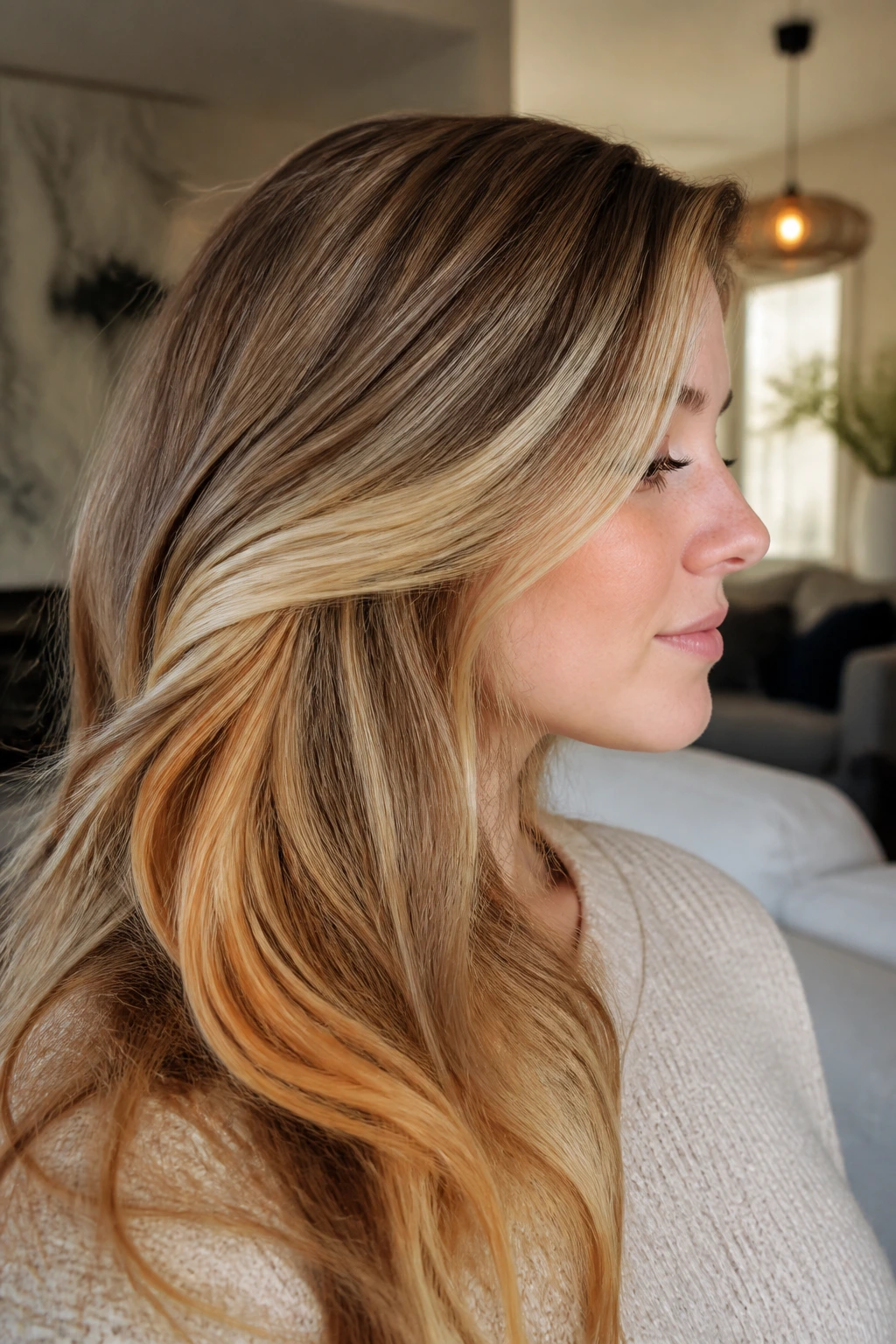
Soft gold peekaboo highlights are for anyone who wants warm blonde without making the top layer dramatically lighter. The color hides under the surface and moves when the hair swings or gets tucked behind the ear. On pale skin, that hidden warmth is enough to add glow without taking over the whole look.
This technique is useful if your hair is fragile or you want to protect the top layer from too much lightening. It also works well if you wear your hair up often. The color shows through braids, buns, and half-up styles in a way that feels clever instead of obvious.
I like peekaboo highlights on pale skin because they keep the face looking fresh while leaving room for the rest of the style to stay soft. Subtle can be the right answer.
20. Toasted Biscotti Blonde
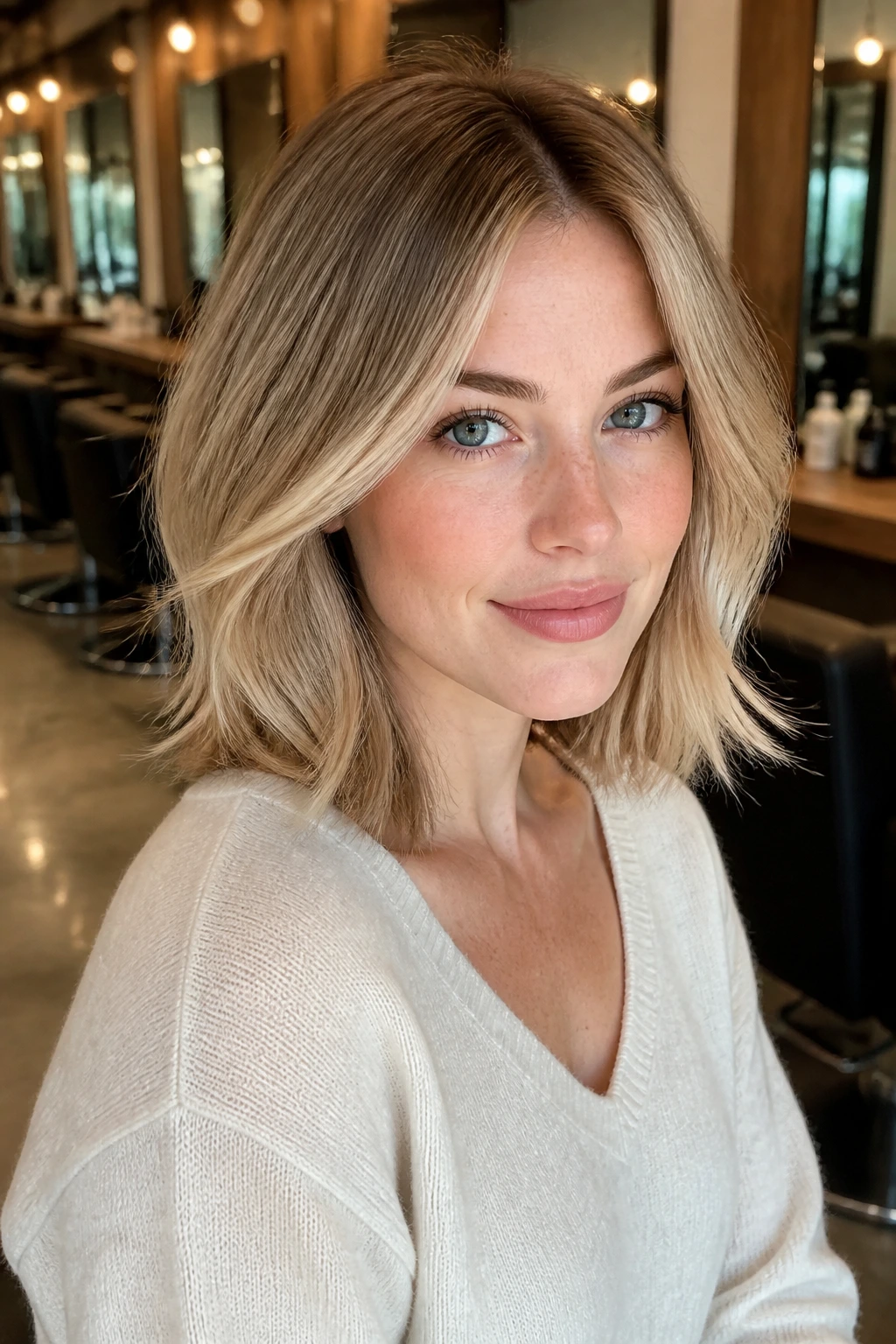
Toasted biscotti blonde has a warm, baked-in depth that makes pale skin look less stark. Think beige-gold with a little toasted brown around the root and a creamy blonde through the ends. It’s a smart shade for people who want blonde that feels grounded.
This color is especially nice on short cuts, bobs, and shoulder-length hair, where the warmth can show in one clean shape. If the roots are a touch deeper, the blonde ends look brighter by comparison. That contrast is what gives it shape. Without it, biscotti turns flat fast.
It’s a good in-between shade for anyone who likes warm blonde but doesn’t want honey all over the head. The tone feels calm, which makes it easier to wear every day.
21. Golden Pearl Blonde
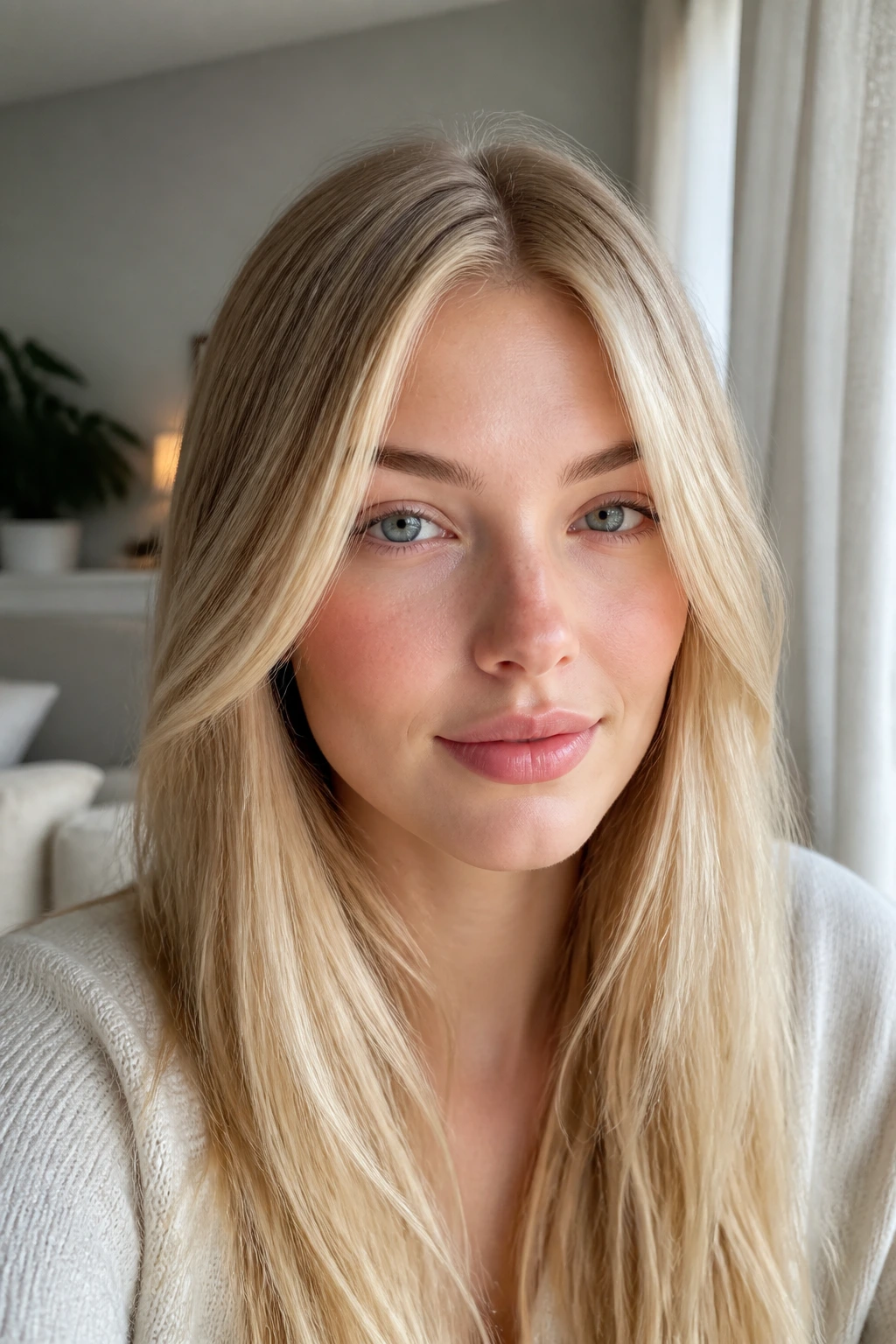
Golden pearl blonde is a softer, more polished take on warm blonde. It combines a warm base with a pearly surface sheen, so the color looks luminous instead of heavy. On pale skin, that balance can be a relief. You get warmth without turning golden in a loud way.
This is not the place for strong yellow toner. You want a beige-gold that leaves some shine in the cuticle and reads smooth under indoor light. It suits fine hair particularly well because the pearly finish can make strands look denser than they are. A clean center part or a low bend in the hair really shows it off.
If your skin is very light and your features are soft, golden pearl blonde can be one of the prettiest options here. It feels quiet. In a good way.
22. Buttermilk Blonde with a Root Smudge
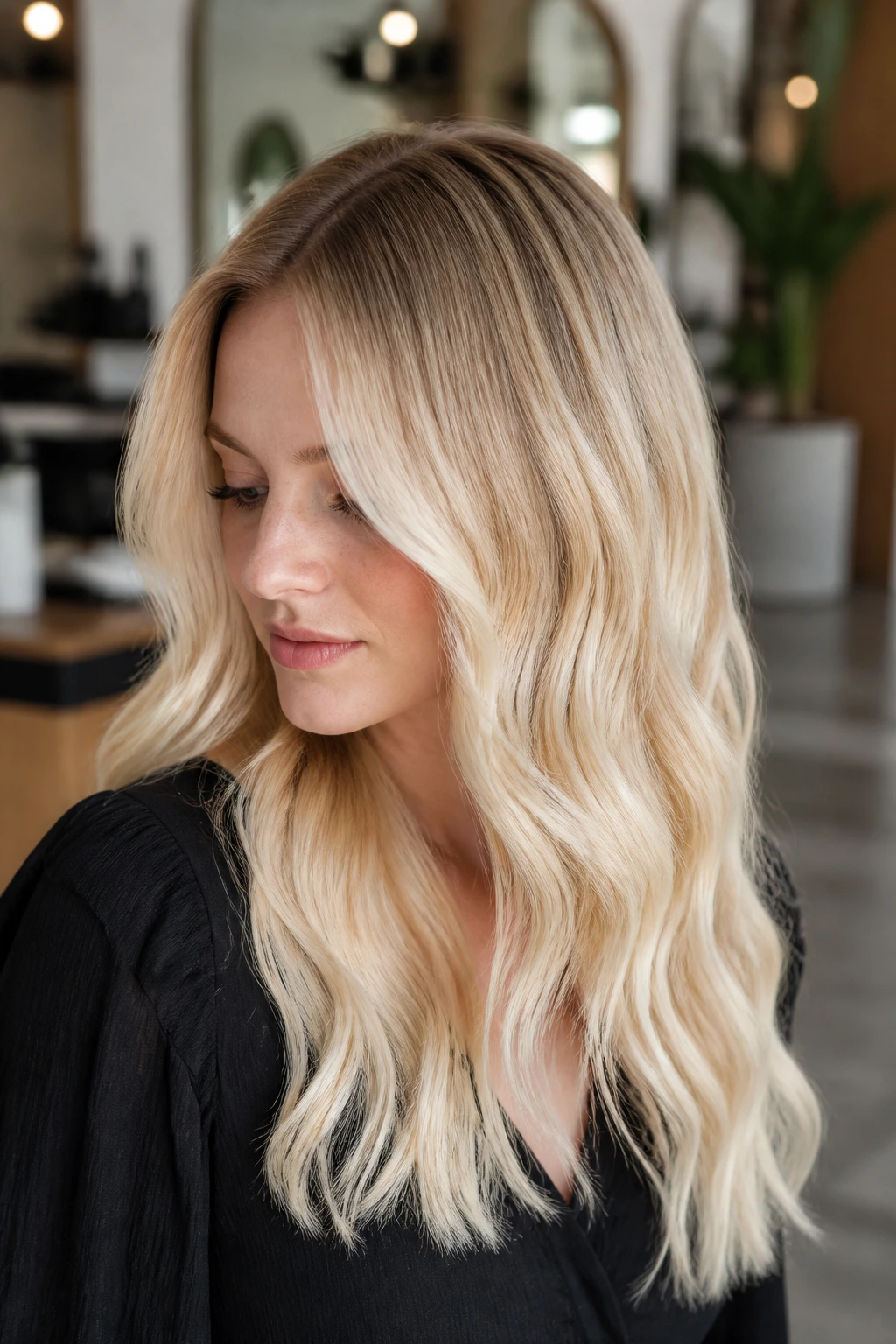
Buttermilk blonde is creamy, pale, and softer than a stronger honey shade. The root smudge is what keeps it wearable on pale skin. Without that bit of depth, buttermilk can wash out lighter complexions and make the brows look disconnected from the hair.
Ask for a root smudge that melts into pale gold mids and ends. That gives the whole head a less processed look, which is useful if you don’t want a stark grow-out line. It also makes the color hold its shape longer between visits. The more delicate the blonde, the more it needs that tiny bit of depth at the top.
This is a nice choice if you like a light blonde but still want your face to look grounded. It’s creamy, not sugary.
23. Amber Baby Lights
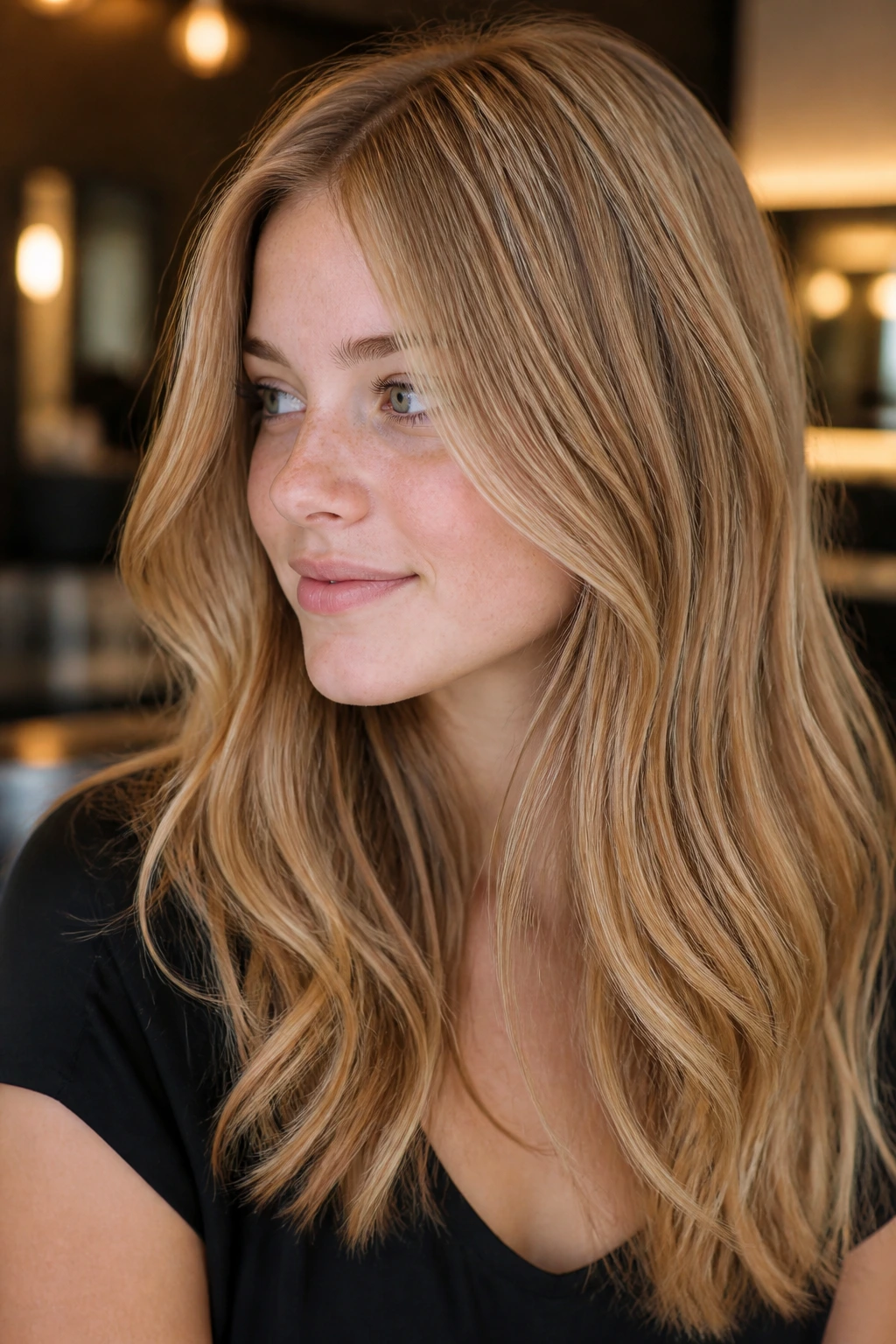
Amber baby lights are tiny, fine highlights that thread warm glow through the hair without screaming for attention. They’re a good fit for pale skin because they create brightness in narrow, believable lines. Instead of one huge lightened section, you get little flashes of gold that move when the hair moves.
This is the kind of technique I’d pick for fine hair or for someone who wants a softer grow-out. Baby lights sit closer together and blend more naturally than chunkier highlights. The amber tone adds depth, so the hair never turns flimsy or too pale. It’s also a good solution if you like warmth but don’t want your whole head lifted several levels.
The result is subtle, but not boring. That’s a useful distinction.
24. Cream Soda Blonde
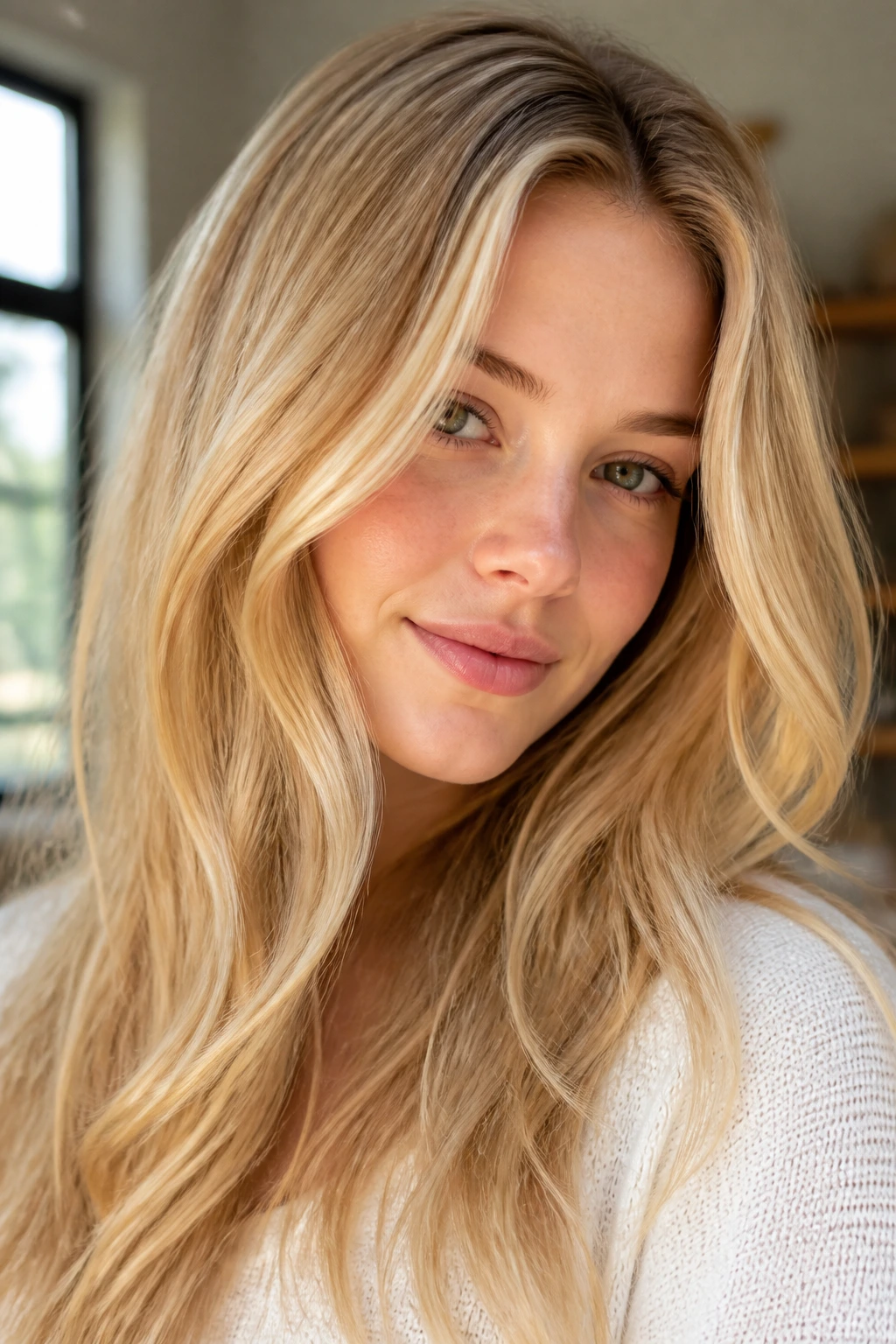
Cream soda blonde feels bubbly, beige, and softly golden all at once. The shade has enough warmth to flatter pale skin, but the beige base keeps it from sliding into brass. It’s a nice choice if you like your blonde to look polished rather than beachy.
What makes this color work is the balance between light pieces and depth. You want creamy highlights, not flat pale yellow. A slight root shadow helps, and a gloss can keep the finish smooth. I like this on medium-length hair because it shows off the movement in the color without needing a dramatic cut.
If honey blonde feels too rich and champagne feels too cool, cream soda sits right between them. That middle ground is often the best one.
25. Sunlit Honey Swirl
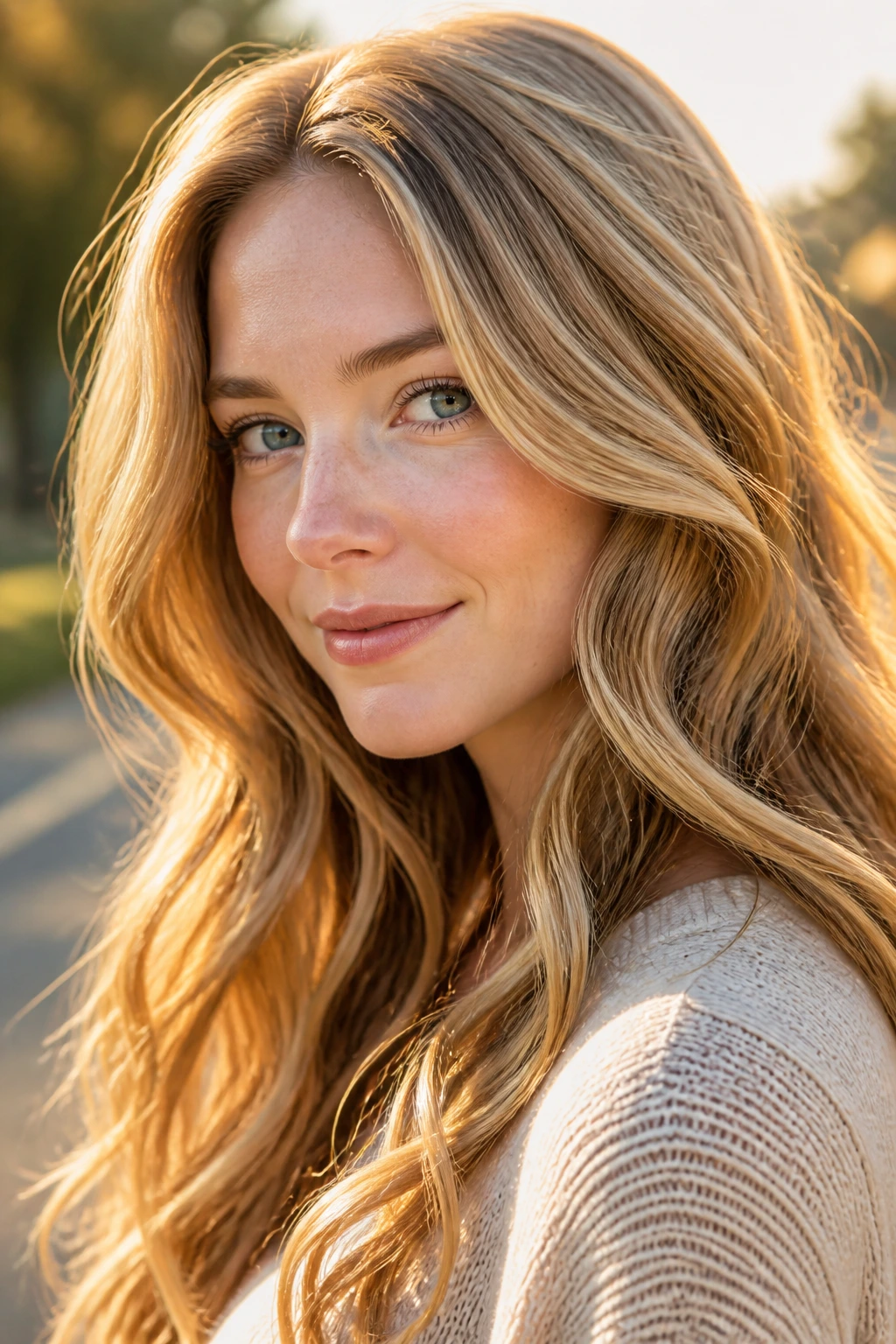
Sunlit honey swirl is the brightest warm blonde in the group, and it earns the name because the light pieces should look like they’re turning through the hair, not sitting on top of it. On pale skin, this works when you want warmth with motion. The color should feel scattered, not sprayed.
The swirl effect matters most on waves and layers. It lets the honey tones show in different places depending on how the hair falls. A few brighter ribbons near the front, softer gold through the mids, and a slightly deeper base underneath keep the whole thing from looking too flat. If you go this bright, glossing matters. A lot.
This is the warm blonde for someone who wants to be noticed a little. Not in a harsh way. Just enough.
How to Keep Golden Blonde From Turning Brass
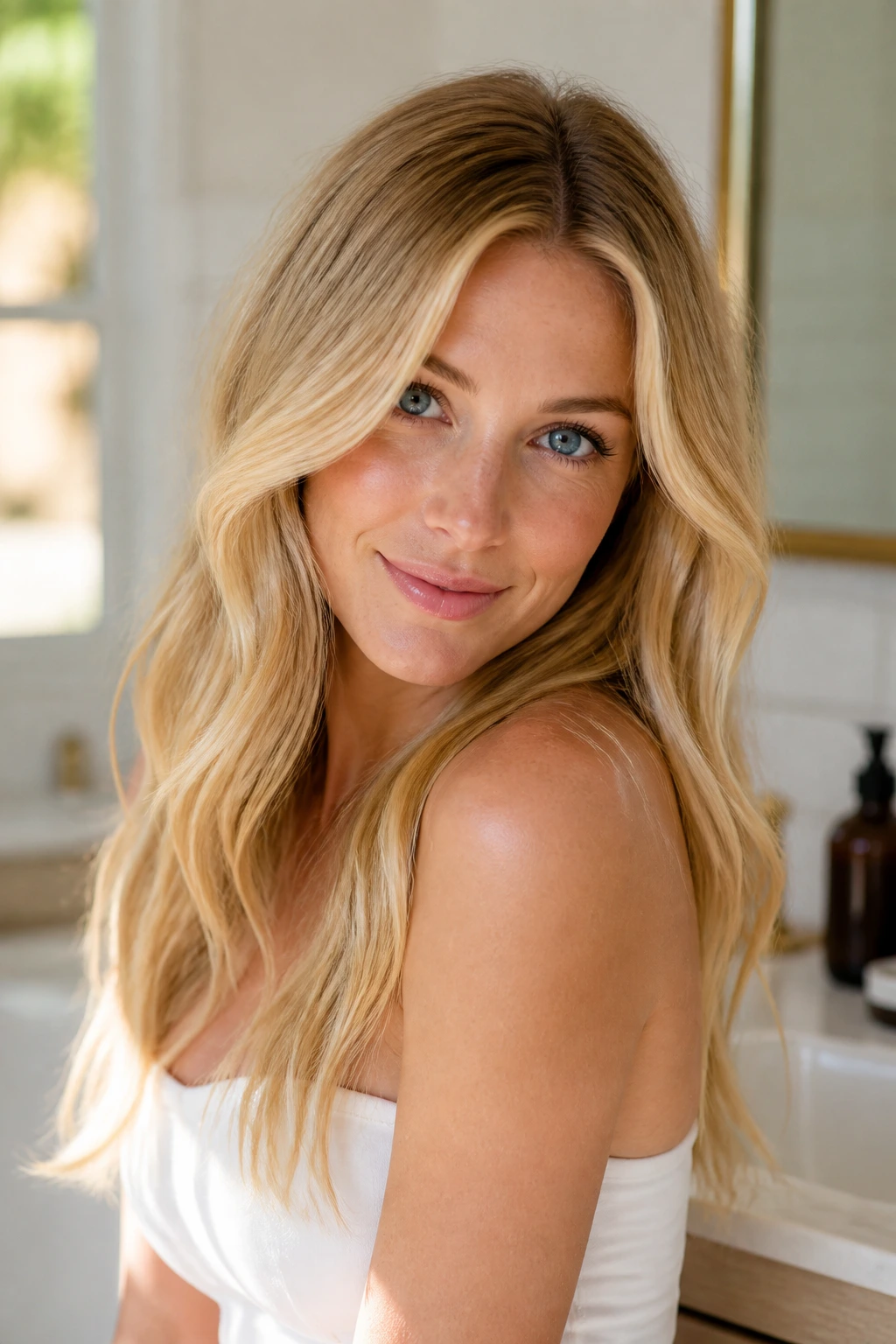
Golden blonde looks rich when it stays clean. Brass creeps in when hard water, too-frequent washing, sun, heat, and strong purple shampoo all start pulling the tone apart. That last part surprises people. Purple shampoo is useful, but warm blonde does not need a weekly ice bath. If the point is honey, beige, or butter, over-toning will flatten the color and make it look dusty.
I’d keep a warm blonde on a simple schedule. Use a color-safe shampoo two or three times a week if your hair gets oily fast, or less often if it’s dry. Rotate in a nourishing mask once a week, especially on the ends, where blondes tend to go rough first. If your color starts to lean too gold-orange, a salon gloss every 6 to 8 weeks usually keeps it in line better than a random at-home toner. Roots can often wait 8 to 12 weeks on balayage or rooted looks, while more solid blondes may need sooner touch-ups.
Heat is the other thief. Blow-dry on medium heat when you can, use a protectant every time, and keep flat-ironing to a minimum if the ends are already light. And if your shower water is hard, a filter is not a silly luxury. It helps more than a lot of people expect.
Small Tweaks That Make the Shade Feel More Expensive
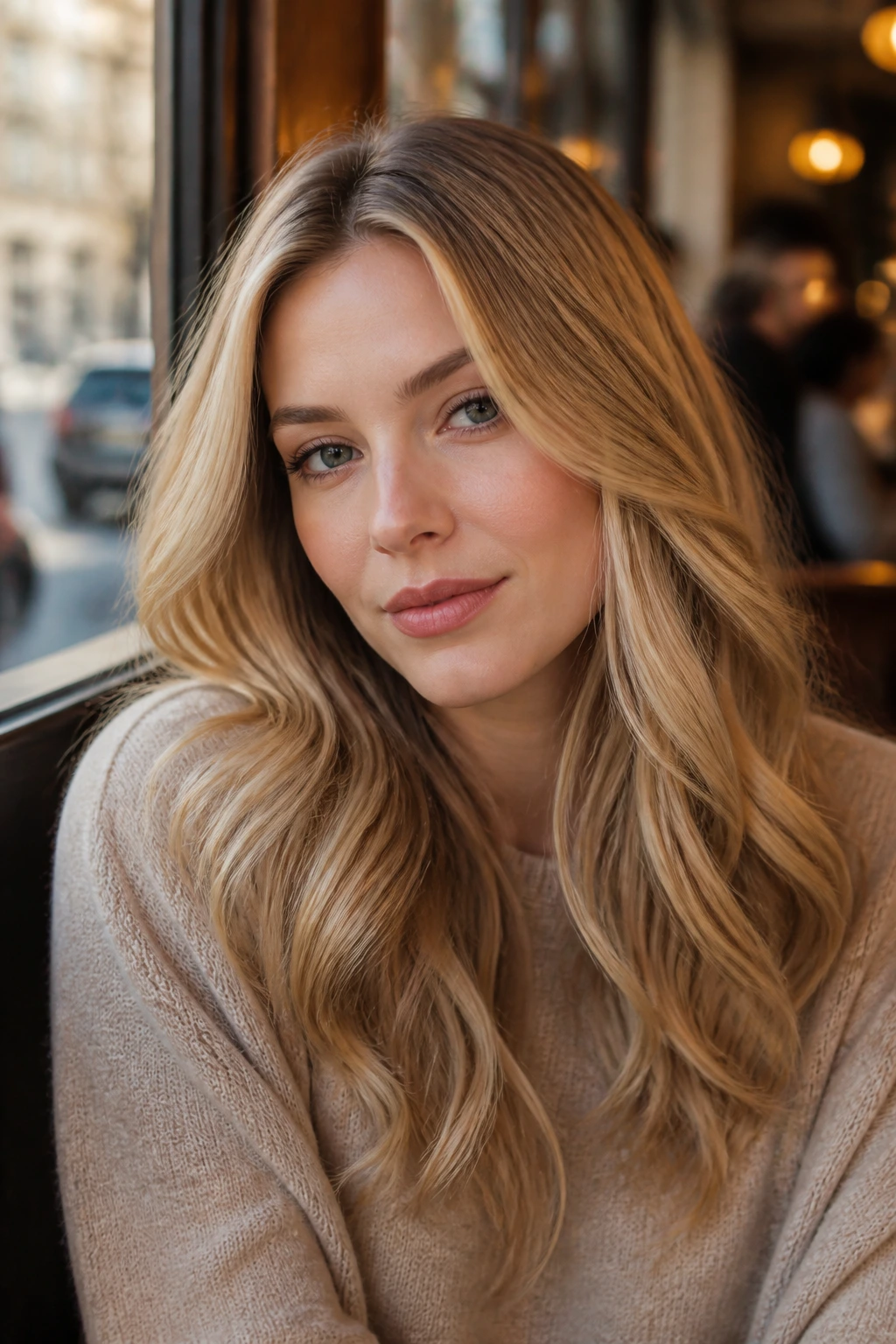
- Gloss Finish: A beige or clear gloss on the mids and ends keeps warm blonde shiny without turning it gold-heavy. I like a salon gloss more than trying to “fix” tone at home with strong purple products.
- Root Depth: A root that’s one or two levels deeper than the lengths gives pale skin something to stand against. It also stops the color from reading like one big light blur.
- Placement: Put the brightest pieces around the eyes, cheekbones, and top layer. Leave the underside a little quieter, or the color loses shape.
- Texture Match: Soft waves show off ribbons and balayage. Straight hair shows off polish and tone. Pick the finish that matches the cut instead of fighting it.
- Brow Balance: If your brows are pale, a softer beige-gold usually looks better than a screaming yellow blonde. If your brows are dark, you can handle a richer honey or wheat shade.
Common Mistakes That Make Golden Blonde Look Off
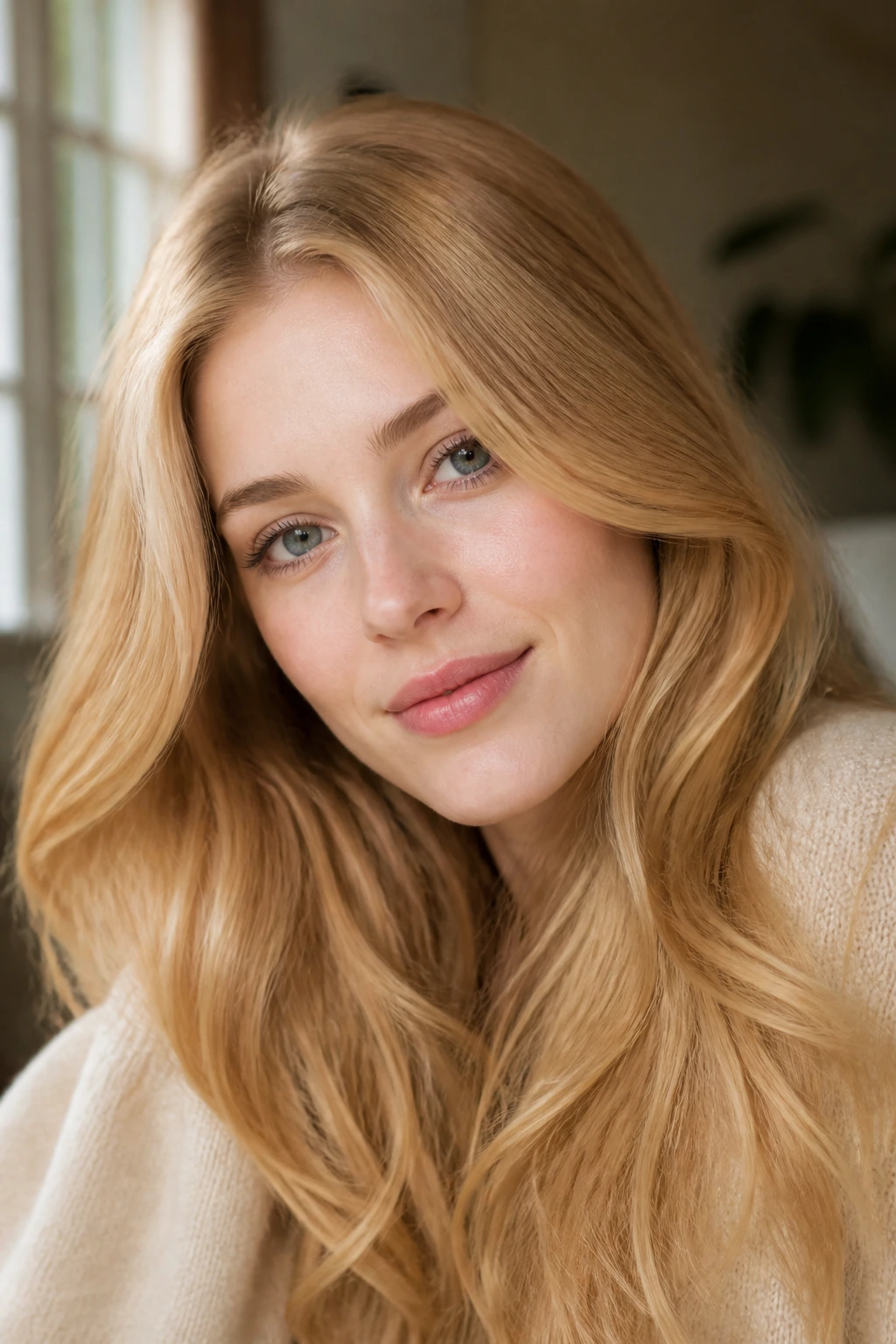
- Going too yellow: The hair can look brassy under indoor light and make pale skin seem red. Fix it with beige-gold toner, not heavy purple shampoo.
- Lifting everything to the same level: Flat blonde loses shape fast. Ask for a root shadow, lowlights, or a slightly darker underside so the color has depth.
- Ignoring your brows: Pale brows and very bright hair can leave the face looking unfinished. A softer shade or a little brow tint usually solves it.
- Using purple shampoo too often: It strips warmth out of a golden blonde and makes the finish dull. Use it only when brass starts to show, not on autopilot.
- Choosing a shade that’s too light for your contrast level: Very fair skin with dark brows often looks better in honey, wheat, or golden bronde than in an all-over pale lift.
- Skipping gloss appointments: Warm blonde fades unevenly. A gloss keeps the tone smooth and the shine up, which matters more than people think.
Variations and Other Ways to Wear the Color
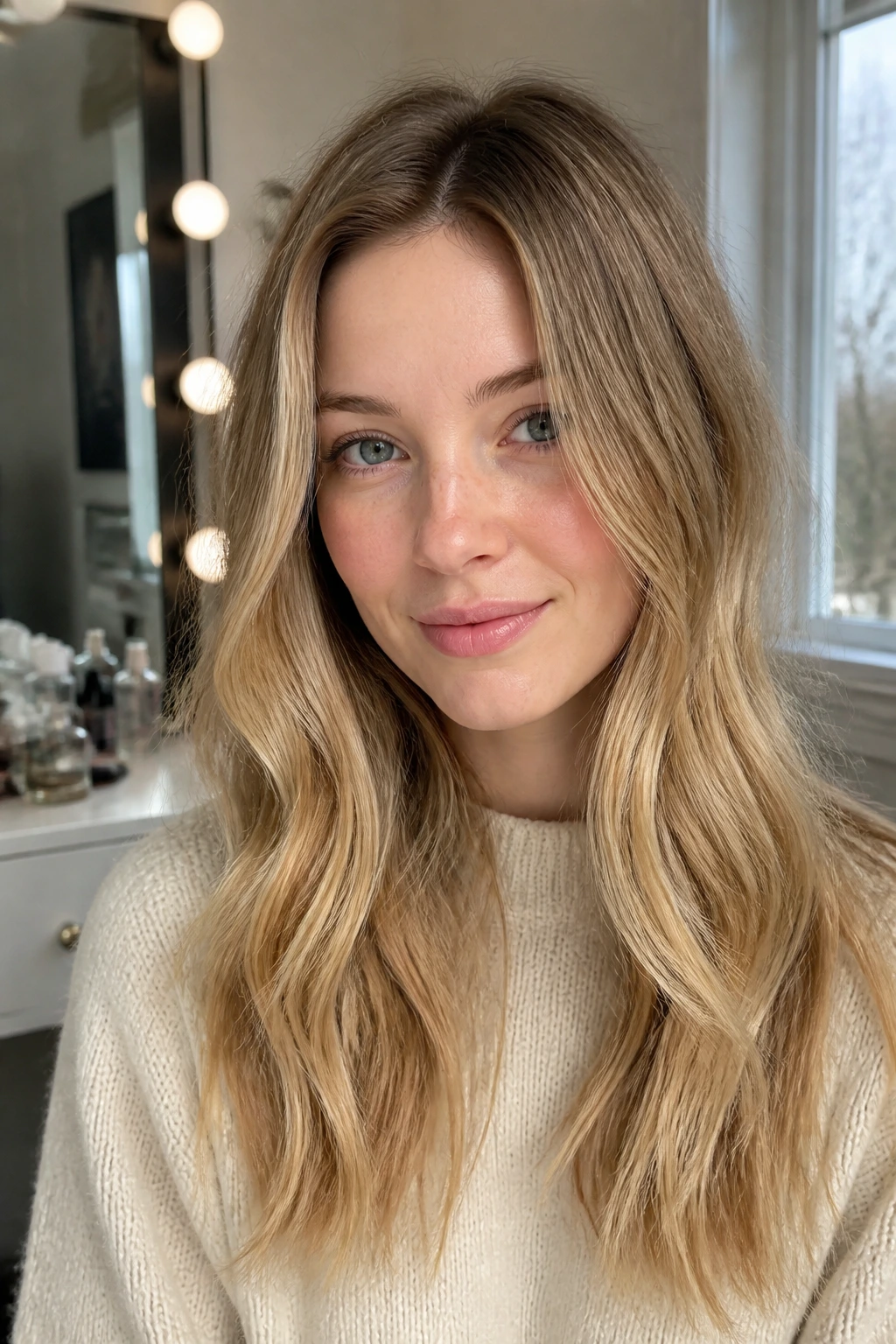
Soft Rooted Gold: Keep the root deeper and the mids a little muted if you want a warmer blonde that grows out quietly. This version works well on pale skin that needs contrast but not drama. It’s the easiest choice for anyone who hates hard maintenance.
Bright Face-Frame Blonde: Add stronger lightness around the hairline and keep the rest softer. This is good if your face looks tired in one-color blonde and you want more lift near the eyes without bleaching the whole head lighter.
Golden Beige for Freckles: Lean beige first, gold second. Freckles look crisp against a softer warm blonde, and the beige keeps the tone from overpowering light skin. This is one of the calmest ways to wear warmth.
Peach-Warm Blonde: Slide the tone a little toward apricot if your skin is peachy or you want a warmer, more playful finish. Keep it soft, though. The color should whisper peach, not turn copper.
Deep Honey Bronde: If full blonde feels too bright, stay in the blonde-brown border and let honey ribbons lift the surface. Pale skin often looks fresher with this kind of depth than with a high-lift all-over color.
Frequently Asked Questions
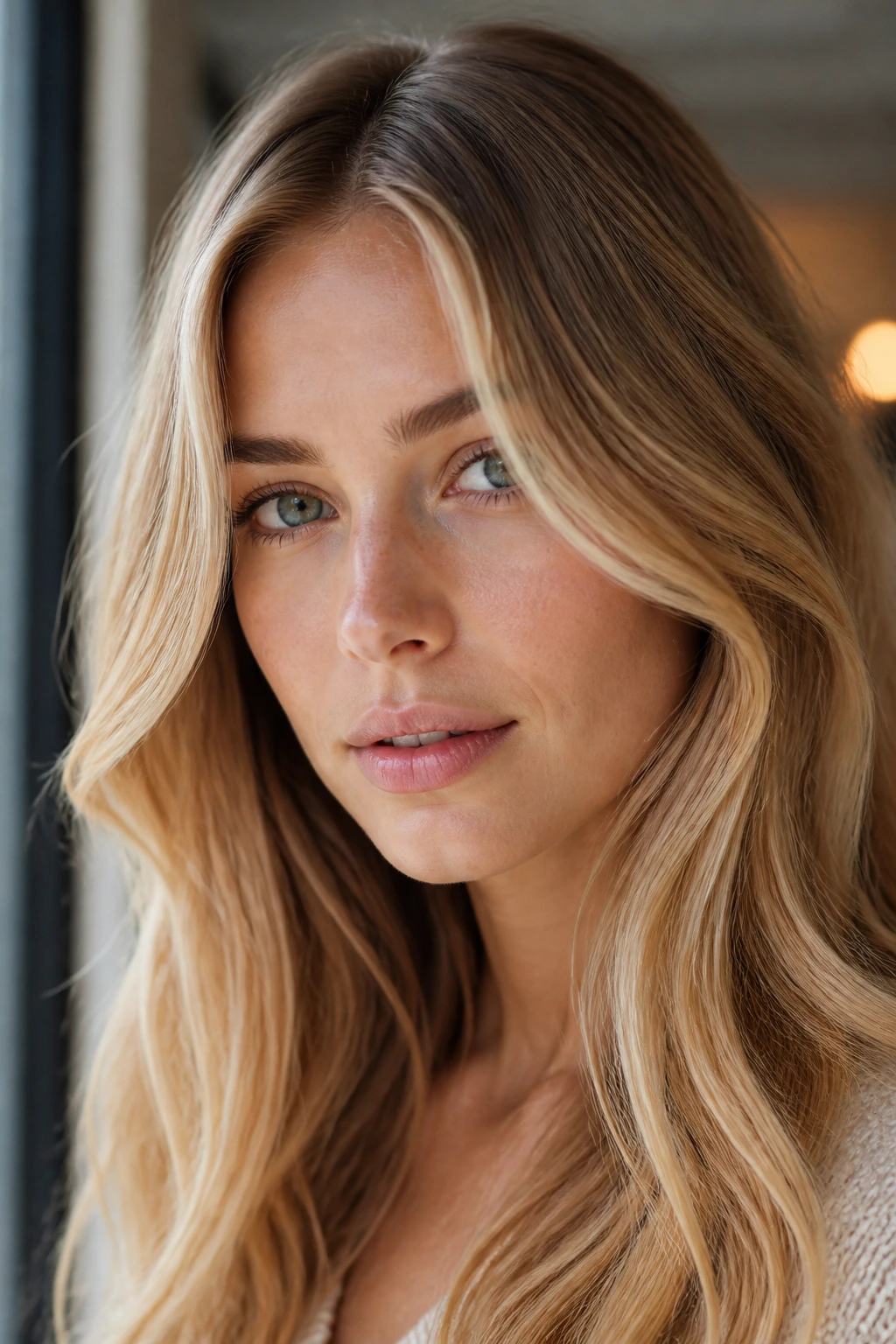
Does warm golden blonde work on very fair skin with pink undertones?
Yes, and often better than ash blonde. The gold offsets redness and keeps the face from looking drained, especially if the shade includes a beige base or a soft root shadow.
What’s the difference between honey blonde and beige blonde?
Honey blonde is richer and warmer, with a stronger golden feel. Beige blonde is softer and more muted, which makes it a safer choice if your skin goes red easily or you want a less yellow finish.
Can I get warm blonde without bleaching my whole head?
Absolutely. Balayage, foilayage, baby lights, and face-framing pieces can create the warmth without lifting every strand. That’s usually kinder to the hair and easier to grow out.
How often should golden blonde be toned?
A salon gloss every 6 to 8 weeks is a solid rhythm for most warm blondes. If you wash often, swim, or deal with hard water, you may need it sooner. The goal is to refresh shine and keep brass under control without erasing the warmth.
Will golden blonde make my pale skin look yellow?
It can if the tone goes too saturated or too orange. Beige-gold, honey, and champagne usually sit safely on pale skin. Strong yellow tones are the ones that tend to cause trouble.
What warm blonde shade is easiest to maintain?
Rooted balayage, golden bronde, and shadow-rooted honey blonde are the easiest to live with. They let the grow-out look intentional, which buys you time between salon visits.
Is this color a good choice if I have freckles?
Yes, and peach-honey, caramel, and maple tones are especially nice with freckles. They keep the face bright without washing out the small color variations that make freckles look crisp.
The Warm Blonde That Stays Kind to Your Face
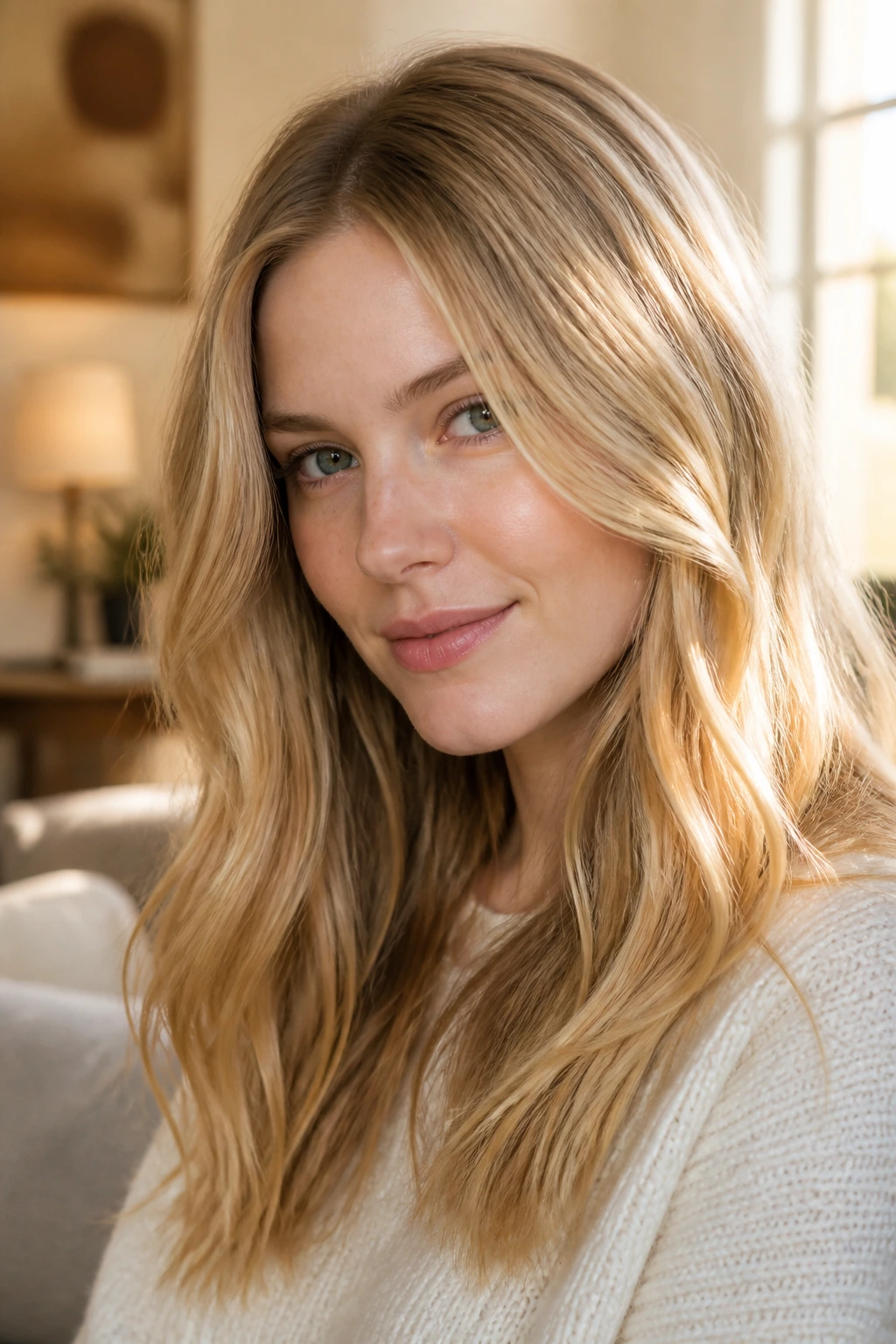
Warm golden blonde on pale skin works best when it looks thought-out, not over-processed. The right shade gives back some warmth, keeps the face from disappearing, and leaves room for your brows, blush, and eyes to do their part. That’s the whole trick. Not more blonde. Better blonde.
If you’re choosing between two options, I’d usually pick the one with a little more beige or a little more root depth. Fair skin tends to look fresher when the blonde has shape. A glossy honey with contrast almost always ages better than a flat, over-lightened head that looked exciting for ten minutes in the salon chair.
And if you want the easiest starting point, pick one shade from the list that matches your maintenance habits, not your mood at 9 p.m. with a hair inspiration tab open. Your future self will thank you for that one.