



Short hairstyles for women with curly hair can look either sharp and expensive or oddly mushroom-shaped, and the difference is usually a matter of half an inch and a bad layer. Curly hair doesn’t forgive lazy cutting. It springs, bends, shrinks, and shows every line in the shape you give it.
That’s why the best short curly haircuts are never just “short.” They’re built with weight, density, curl pattern, and growth pattern in mind. A good bob on curls can look like a cloud with a clean edge. A bad one can puff out at the sides, flatten at the crown, and make you spend half your morning trying to out-stubborn your own hair. Brutal, but true.
The upside is better than most people expect. Once the shape is right, short curls can dry faster, feel lighter, and show off texture in a way long hair sometimes hides. A few of these cuts are soft and wearable. A few are bolder. All of them work because they let the curl do its job instead of fighting it.
Why This Collection Works So Well for Curls
- Less weight, better spring: Taking length off the ends lets curls bounce back instead of hanging limp, especially on dense 3A to 4C textures.
- The shape matters more than the length: A curly pixie and a curly bob can look dramatically different on the same head because the silhouette changes how volume sits.
- Faster styling, fewer touch-ups: Most short curl cuts dry quicker, and that matters on mornings when a diffuser only has 10 minutes to spare.
- Built for different curl patterns: Loose waves, ringlets, corkscrews, and coils all need different levels of layering, and this list covers that spread.
- Easy to personalize: Parting, fringe length, tapering, and crown shape can change the whole mood without needing a totally new cut.
- Grows out with less drama: The right short cut keeps its outline as it lengthens, so you’re not trapped in an awkward in-between stage for months.
1. Curly Pixie Cut
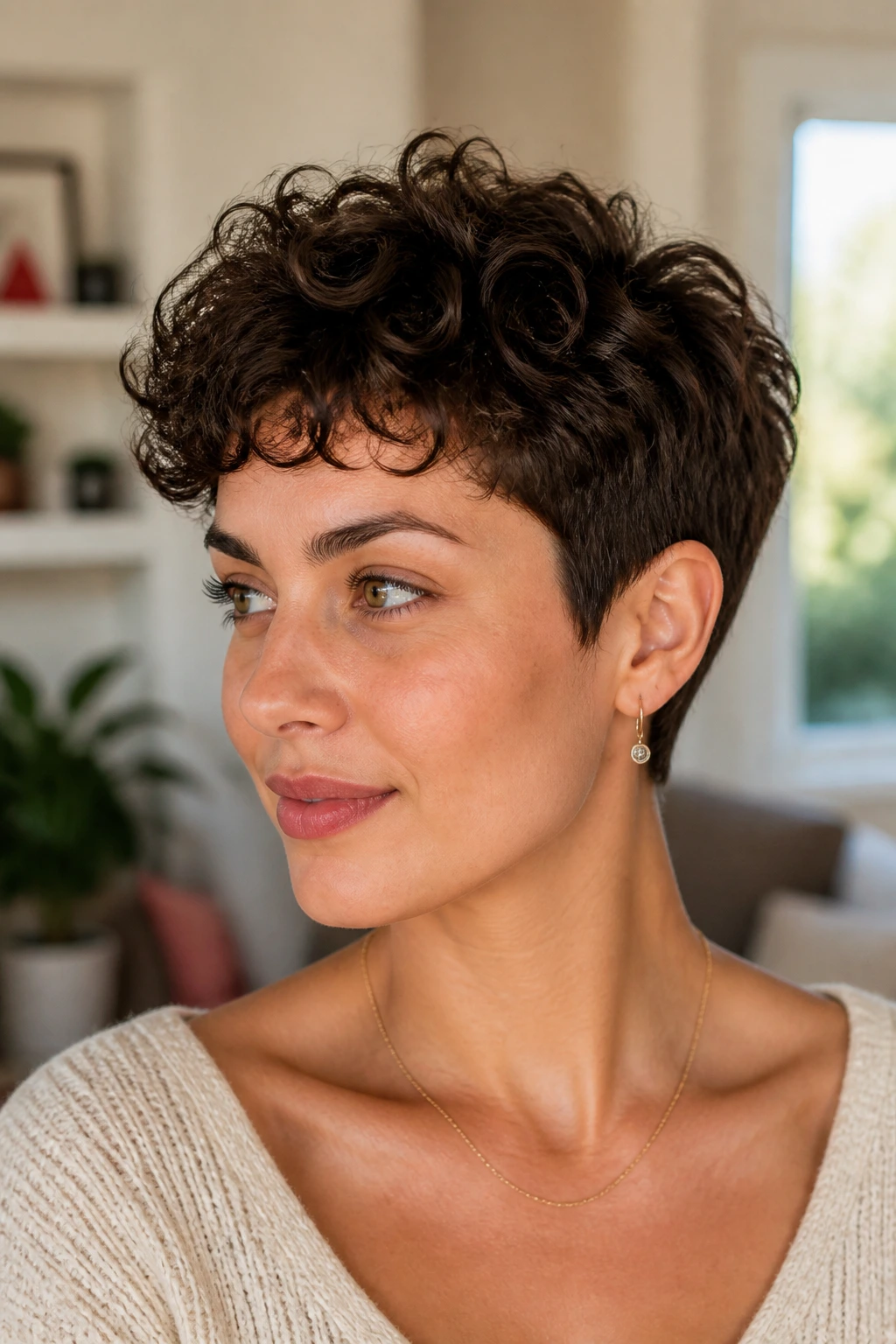
A curly pixie is tiny in length and big in personality. The top stays long enough to let your curl pattern show, while the sides and nape are cleaned up so the whole shape feels light instead of bulky. On tighter curls, it can look plush and sculpted. On looser curls, it reads a little more airy and piecey.
Why It Works
The best curly pixies keep the crown slightly longer than the sides, which gives the haircut some lift without turning it into a helmet. Ask for soft tapering around the ears and nape, not a hard clipper fade unless you want a sharper edge. The top usually needs enough length for at least one full curl pattern to form—think 2 to 4 inches, depending on shrinkage.
A pixie is also one of the easiest short curly styles to style with very little product. A dime-size amount of curl cream or mousse, scrunched through wet hair, is often enough. If your hair tends to frizz when it dries, a small gel cast on top will keep the shape cleaner.
What to Ask For
- Longer curls on top
- Tapered sides and nape
- Soft face-framing pieces, if you want a gentler look
- A dry cut, if your curls shrink a lot
Best for: people who want the shortest possible cut without losing curl texture.
2. Tapered Curly Crop
The tapered crop is the grown-up cousin of the pixie. It keeps the sides and back close to the head, then lets the top build height and shape. On coily hair, this cut can look clean and elegant. On dense curls, it removes the triangle effect that shows up when the sides are too full.
What Makes It Different
A tapered crop is less about “short everywhere” and more about controlled contrast. The nape sits neat, the temples stay close, and the top does the visual work. That makes the haircut feel structured, which is useful if your hair gets wide the second humidity enters the room.
This cut is a good fit if you like a defined outline but don’t want a hard undercut. It also grows out gracefully, because the taper can blend into a bob later without looking like you’re stuck in a transition phase.
Style tip: use a diffuser on low heat and lift the roots with your fingers while the hair is still damp. A crop with flat roots loses half its shape before lunch.
3. French Bob for Curls
A curly French bob sits around the jawline and usually carries a little fringe or a soft bend around the face. It has that slightly undone, slightly polished look that works so well on curly hair because the texture keeps it from feeling severe. Short. Chic. Not fussy.
Why It Flatters So Many Faces
The French bob is a good choice when you want width near the cheekbones and jaw without adding weight at the ends. Curls naturally soften the line, which keeps the blunt edge from looking too hard. If your hair is 2C, 3A, or loose 3B, this cut can sit beautifully at the jaw without exploding outward.
The trick is not over-layering it. Too many short layers and the whole thing starts to puff. Too few and the ends can sit like a shelf. The sweet spot is a line that lets the curls stack on themselves while still keeping the bottom visible.
Best when you want:
- A clean jaw-length shape
- A little fringe or face frame
- Enough length to tuck behind the ears
- A bob that looks intentional even when slightly messy
4. Rounded Curly Bob
This is the bob that behaves like a halo. Instead of a blunt block, the shape follows the curve of the head, with the length sitting around the chin or just under it. It’s one of my favorite cuts for curls that want to puff wide if left to their own devices.
The rounded bob works because it respects the curl’s natural arc. The cut doesn’t try to flatten the sides too much, and it doesn’t leave heavy corners hanging at the bottom. That keeps the silhouette soft and balanced.
If your curls are dense, ask for internal shaping rather than a lot of visible layers. You want the bulk removed from the inside, not sliced away so aggressively that the ends fray. If you have finer curls, a rounded bob can make the hair look fuller without making it feel stiff.
5. Curly Shag
The curly shag is where curls get to be dramatic in the best way. Lots of layers. Lots of movement. A fringe that can be grown out, parted, or left to fall wherever it wants. This cut thrives on texture, so it’s a favorite for hair that feels too triangular or too heavy at the bottom.
What It Does Well
A shag breaks up bulk at the perimeter and leaves the top lighter, which can make the whole head look more lifted. That matters if your curls are dense enough to build a shelf around the jaw. The shag pulls that mass upward and spreads it out in a better way.
It also loves a bit of mess. You do not need mirror-perfect styling here. A scrunch, a diffuser, and a little separation at the ends usually look better than trying to make every curl sit in the same direction.
How to use it
- Scrunch in mousse on soaking-wet hair
- Diffuse until the cast is set
- Break the cast with a drop of oil on your palms
- Let the fringe fall where it wants instead of forcing a straight part
6. Bixie for Curly Hair
A bixie lives somewhere between a bob and a pixie. It has enough length to feel soft, but not enough to act like a full bob. On curly hair, that in-between length is a gift. It gives you movement near the cheeks and a little swing around the jaw without carrying the bulk of longer curls.
This cut is good if you want a short style that still feels touchable. The top can be layered enough to create lift, while the sides stay soft instead of shaved tight. It’s especially nice for people growing out a pixie who don’t want to jump straight into a bob.
The main thing to watch is balance. If the top gets too short, the bixie turns spiky. If the sides get too full, you lose the shape. Keep the front pieces a touch longer than the crown and it stays wearable.
7. Asymmetrical Curly Bob
One side a little longer. One side a little shorter. That’s the entire trick, and it works because curls make asymmetry look more deliberate than straight hair often does. A curly asymmetrical bob can feel sleek, artsy, or a little rebellious depending on how sharp the length difference is.
Why It Works
Curly hair adds softness to the angle, so the style never looks as severe as it would on straight strands. That makes this a smart choice if you want something distinctive but not theatrical. A half-inch difference can be enough. Two inches makes the contrast obvious.
The side part matters here too. A deep side part can amplify the asymmetry and give you a strong sweep across the forehead. A softer part keeps the whole thing more relaxed.
Watch for this: if your hair has very different curl patterns from one side to the other, a heavy asymmetrical cut can expose that difference. A good stylist will shape each side with that in mind instead of copying and pasting the same line on both sides.
8. Chin-Length Layered Cut
This is the classic that earns its keep. Chin-length curls can sit in a very flattering zone because they frame the jaw without dragging the face downward. Layers stop the ends from turning into one heavy ring of hair.
The reason this cut stays popular is simple. It solves bulk. If your curls stack into a triangle when they’re longer, a chin-length layer set can make the whole shape calmer and lighter. It also gives you enough length to pin one side back when you want a change.
I prefer this cut on hair that needs movement more than drama. It’s tidy, but not stiff. If you diffuse from the root and let the ends fall naturally, you get that clean curve without losing the curl pattern.
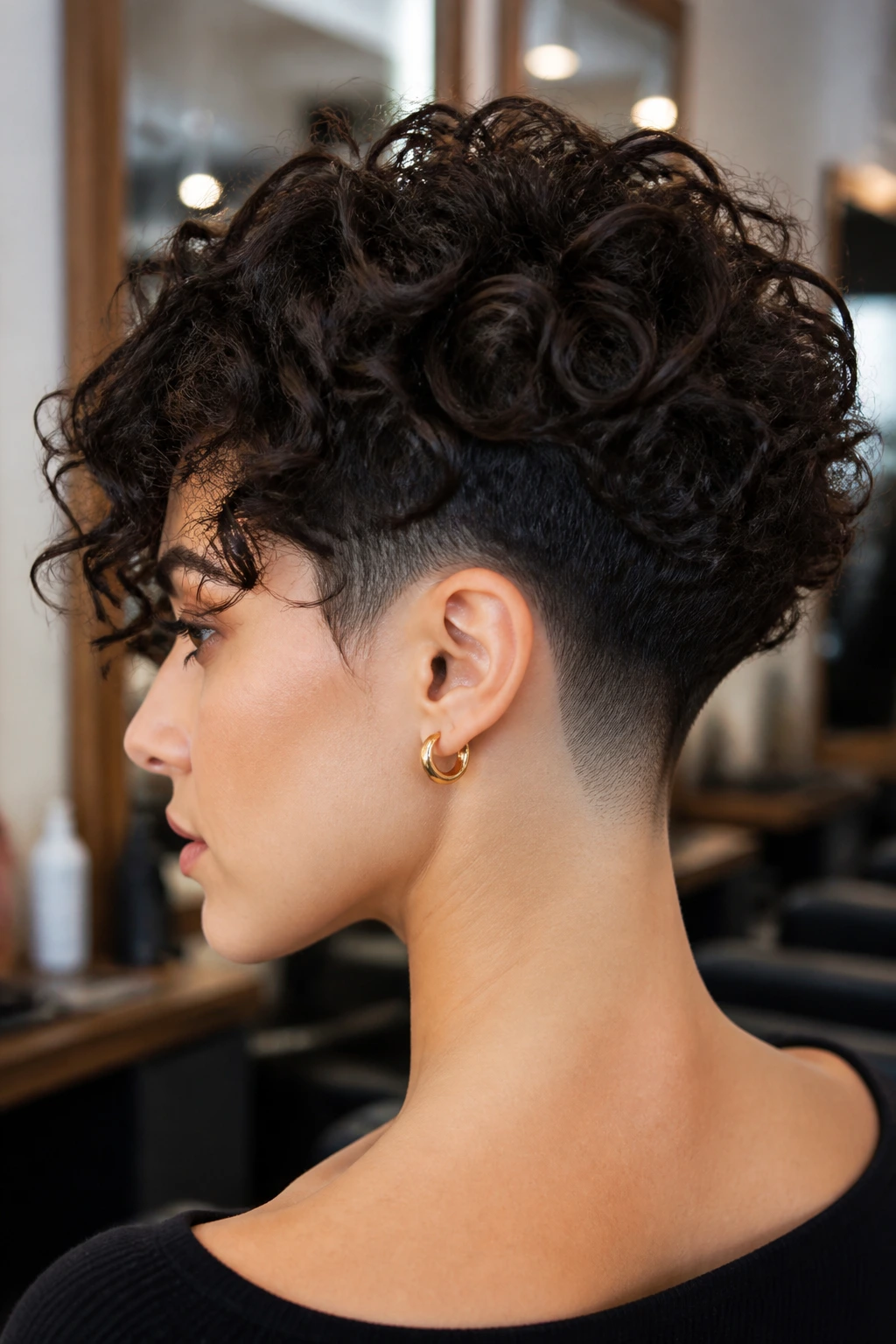
9. Curly Undercut
A curly undercut is for the days when you want the shape to feel sharper and the maintenance to feel easier underneath. The bottom section gets clipped shorter or shaved, while the top stays long enough to fall over it. You can hide it. You can show it. You can do both depending on how you part your hair.
This is a good answer for dense curls that sit hot and heavy around the neck. Removing that hidden bulk can make the whole haircut feel lighter almost immediately. It also makes the top curl pattern pop, because the longer section has less weight dragging it down.
The downside is obvious: grow-out takes patience if you change your mind. So keep the undercut modest if you’re unsure. A small nape undercut is easier to live with than a dramatic side shave.
10. Short Wolf Cut
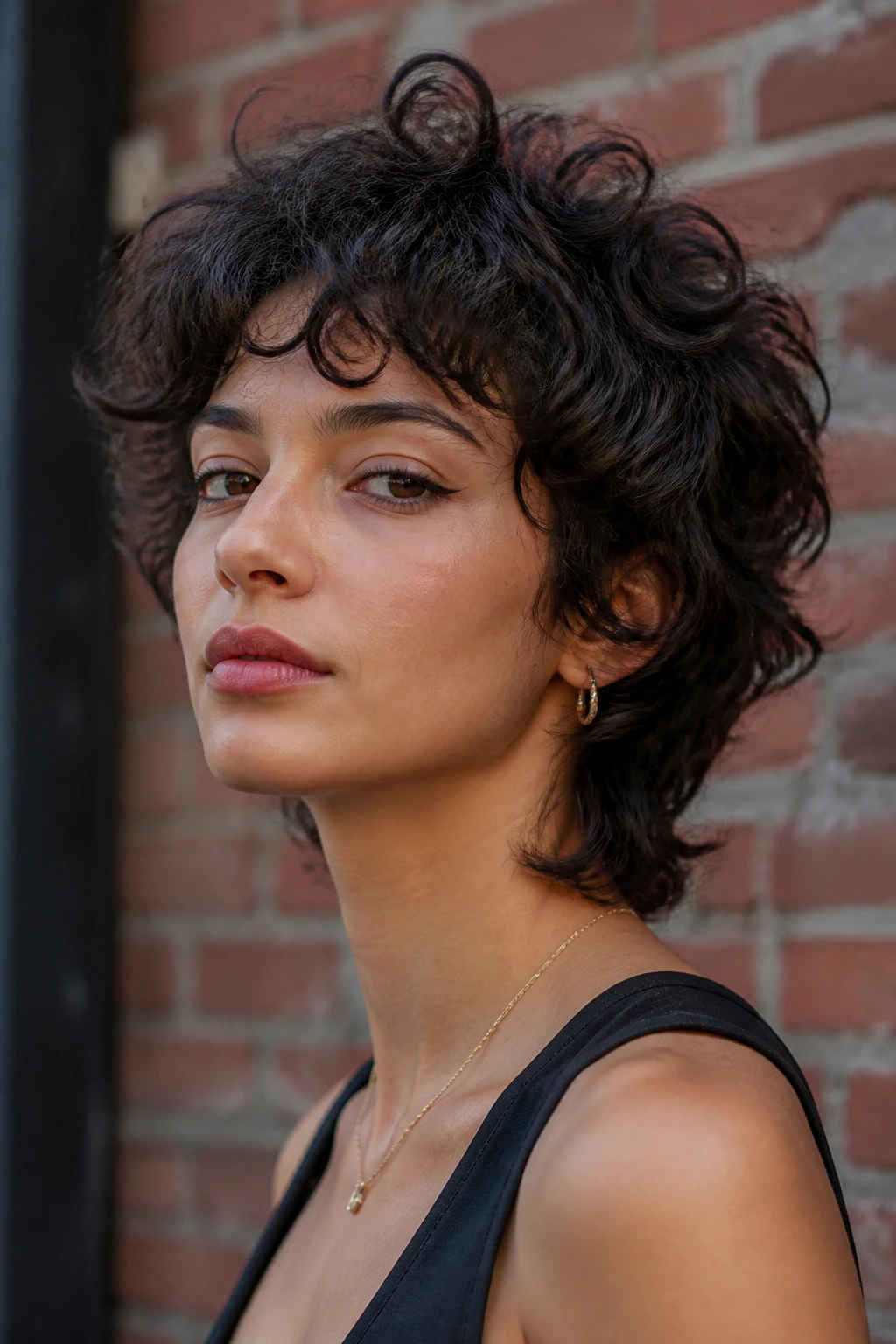
The short wolf cut is shag’s louder cousin. It has choppy layers, a bit of a wild crown, and a shape that looks like it’s moving even when you’re standing still. On curly hair, that movement comes naturally, which is why this cut can look so good without a lot of daily fuss.
The Science Behind the Shape
The wolf cut adds volume at the top and movement through the middle, then lets the ends stay a bit softer. That combination keeps curls from collapsing into one block. If your hair has a lot of density, the choppy layering can stop the whole head from feeling too heavy.
It is not a neat haircut. That’s the point. If you want polished edges, skip it. If you like a cut that can handle a little frizz and still look purposeful, this one has a lot going for it.
Best paired with
- Diffused volume at the crown
- A soft curtain fringe
- Curl cream plus light-hold gel
- Some natural separation at the ends
11. Side-Swept Curly Crop
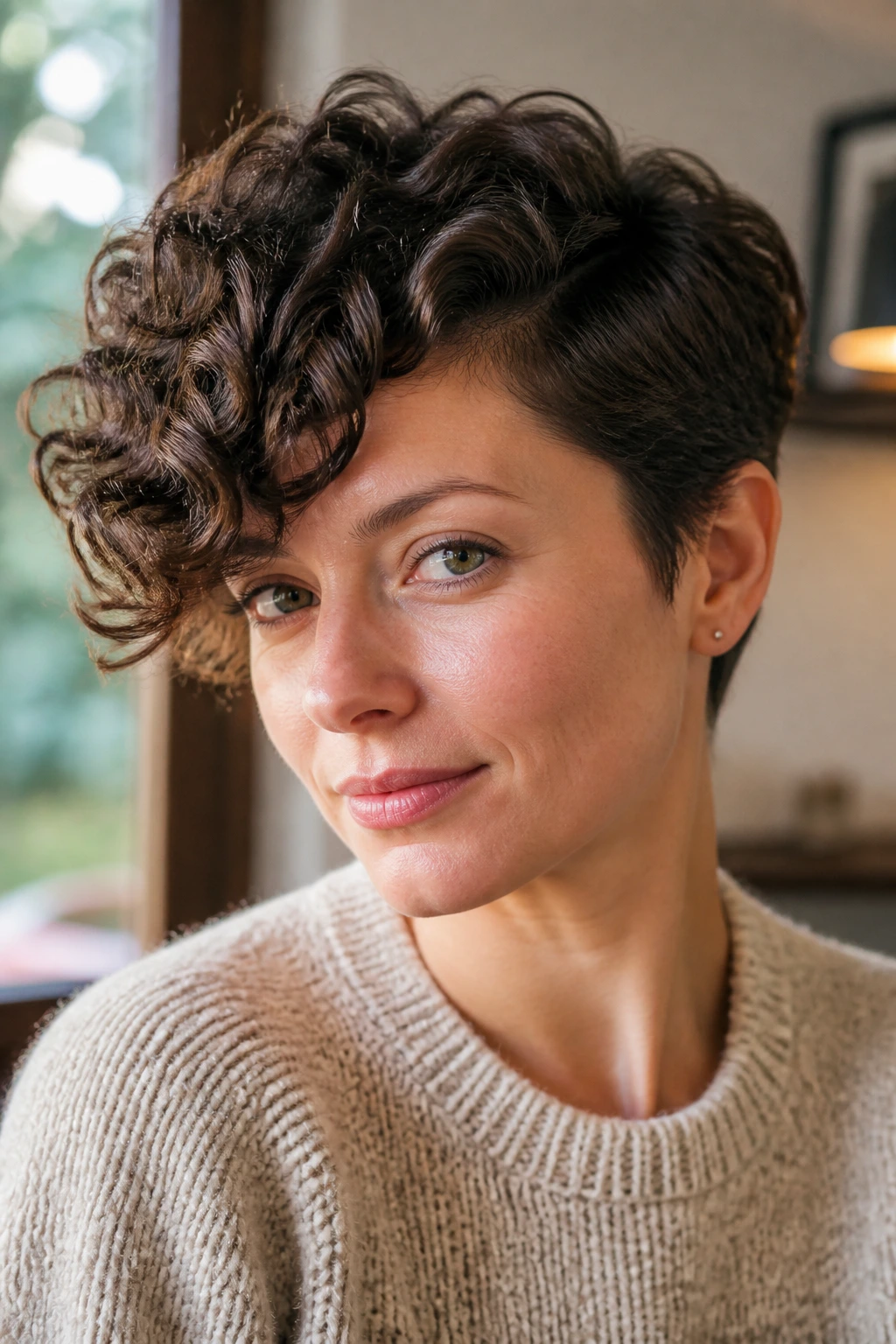
A side-swept crop brings the focus to one direction, which is useful when your curls grow unevenly or your forehead feels like the feature you want to soften. The front is left long enough to sweep across the face, while the back stays short and tidy.
That side movement changes the whole mood. It can make a short cut feel elegant without looking precious. It also gives your curls something to do, which helps on days when they want to spring straight up instead of laying where you put them.
If your hair is prone to flattening at the front, train the part while it’s damp. Use a clip at the root for 10 to 15 minutes while drying. Small trick. Big difference.
12. Ear-Length Curly Bob with Fringe
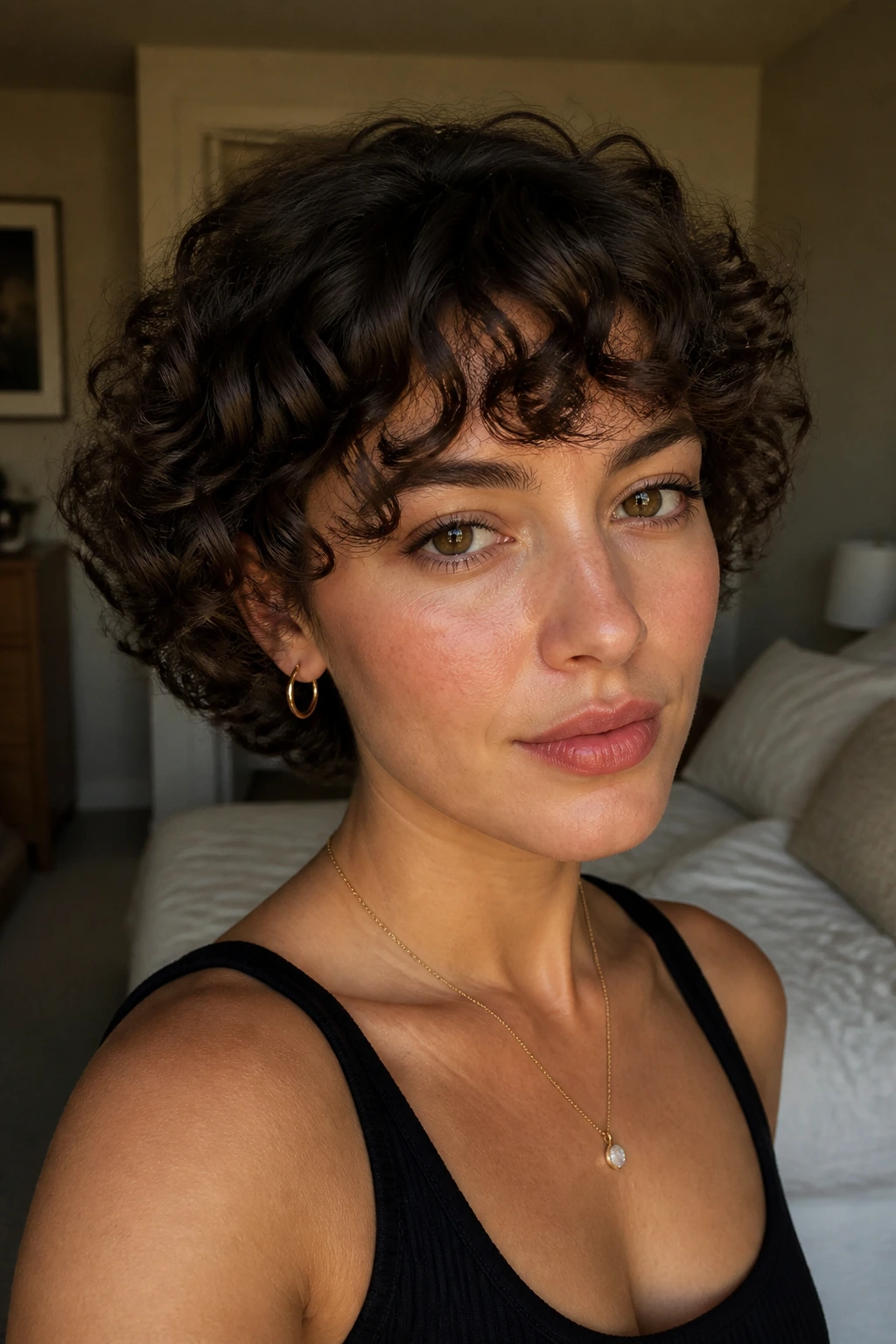
Ear-length sounds tiny until you see it on curls. Then it turns into a shape with real personality: compact, fluffy, and very visible around the face. Adding fringe changes the whole balance, because the bangs create a line up front while the rest of the hair stays rounded.
This cut works best when the fringe is soft, not blunt. Curly bangs that land somewhere around the brow or slightly above can be charming; bangs that are cut too short tend to spring up more than expected. If your curl shrinks hard, leave the fringe longer than your instinct says to.
The ear-length bob is one of those cuts that looks polished on day one and a little more relaxed on day three. That’s not a problem. It’s the appeal.
13. Stacked Curly Bob
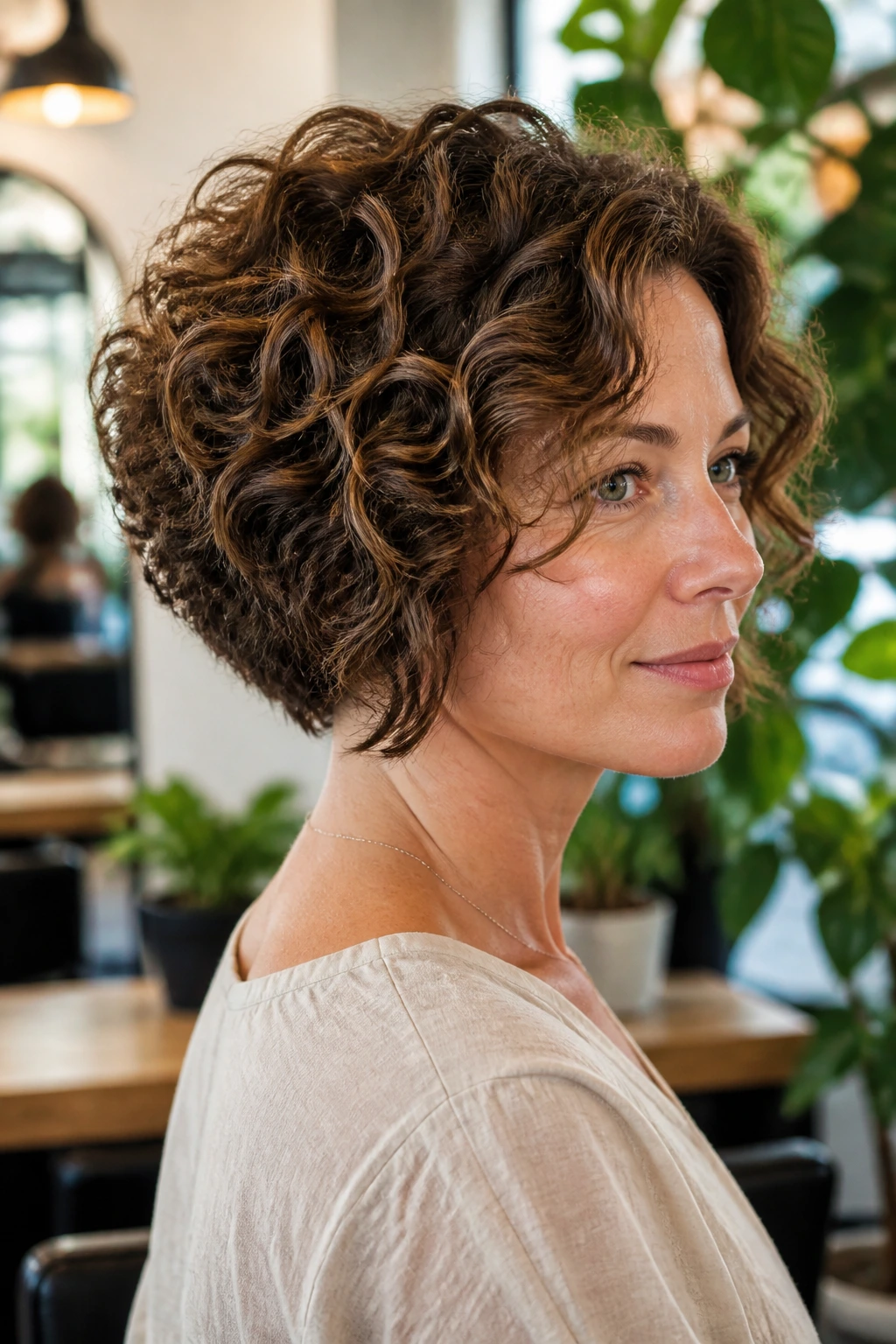
A stacked bob puts more length and weight at the back crown, then gradually removes bulk toward the nape. On straight hair, the shape can feel almost architectural. On curls, it turns into a softer version of that—fuller at the back, clean underneath, and nicely lifted at the top.
Why it helps thick curls
Dense curls often need somewhere for the volume to go. A stacked shape gives them a place to sit without bulking out everywhere at once. The back gains height, the sides stay controlled, and the haircut avoids that boxy look so many short styles fall into.
This is a strong pick if you want the back of your head to look finished from every angle. It’s also useful if your curls flatten in the crown and puff at the edges. Stacking can redirect that volume.
Ask for: a soft stack, not a hard graduation. Too much angle and the cut can look dated fast.
14. Curly Mullet
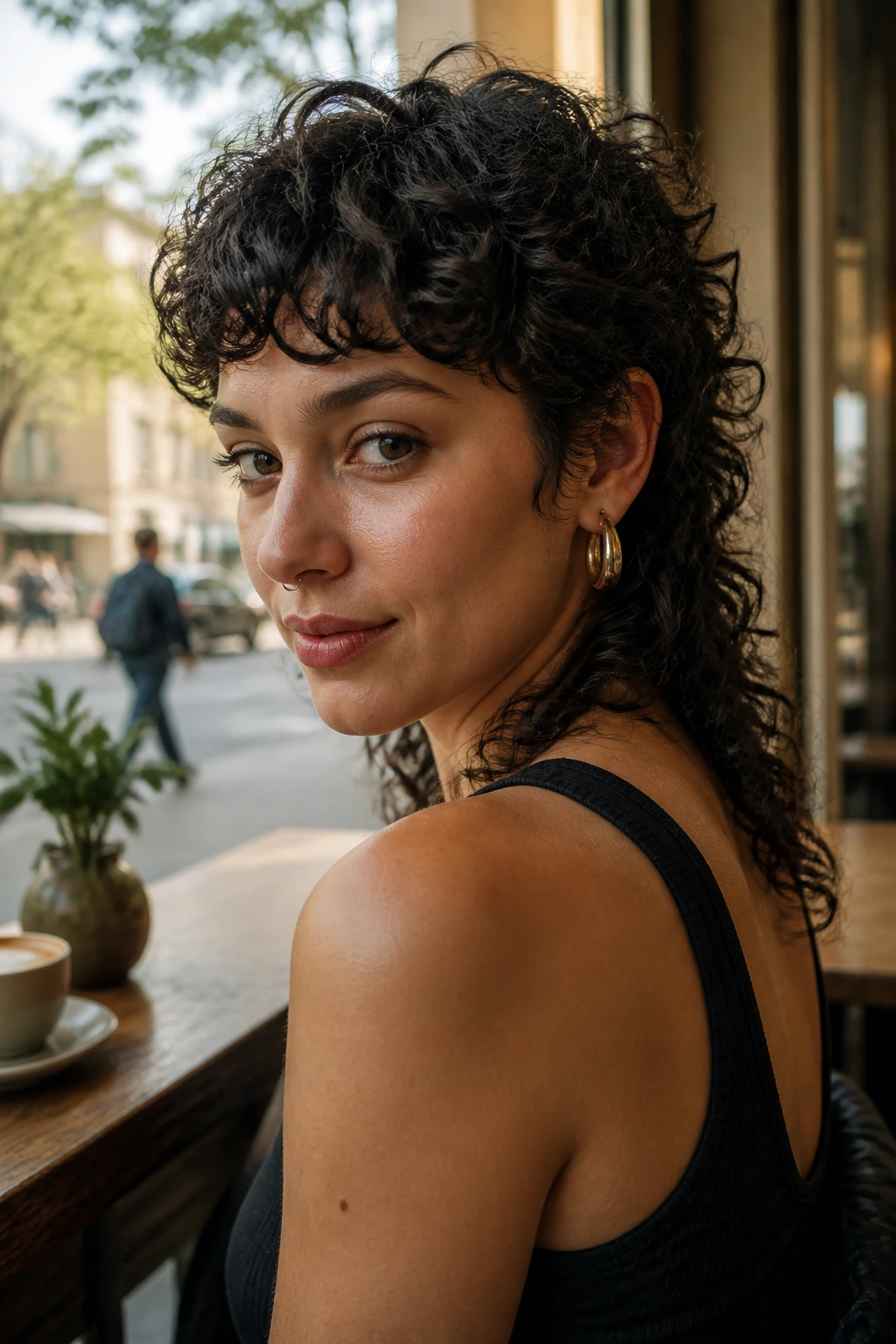
The modern curly mullet is not the old-school version your uncle remembers from a bad year. It’s softer, curlier, and usually more blended. The front stays shorter, the crown gets texture, and the back keeps a little more length so the whole thing has attitude.
It works because curls naturally blur harsh lines. That makes the mullet shape feel less extreme and more wearable. If you want edge without shaving half your head, this is a fun middle ground.
The key is proportion. If the top is too short and the back too long, it starts to feel disconnected. A good curly mullet keeps the transition smooth through the sides so the shape reads as a haircut, not a dare.
15. Tapered Afro
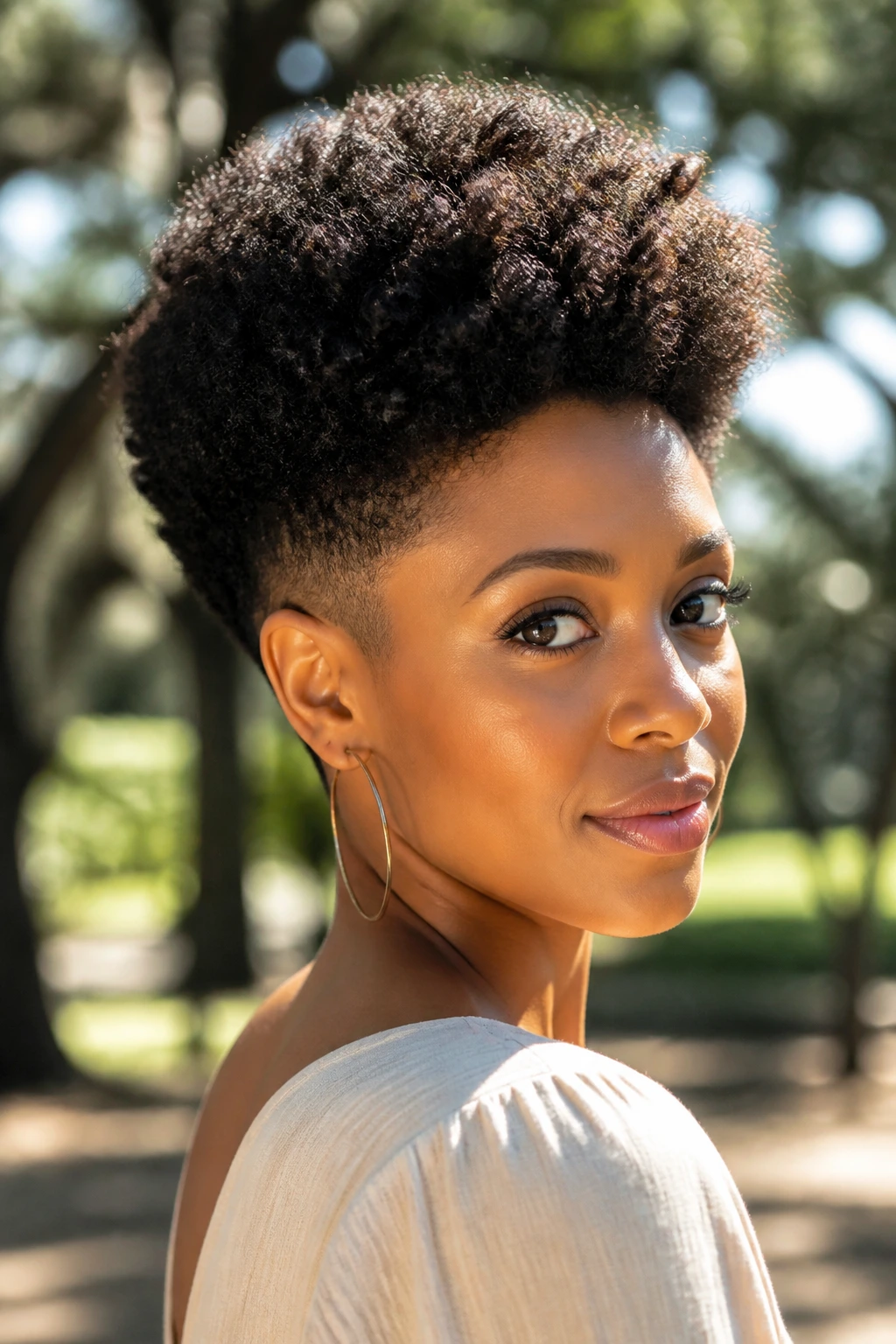
A tapered afro is one of the cleanest short shapes for coily hair. The sides and nape are tapered in, while the crown and top keep enough length to create a rounded cloud of texture. It’s neat, strong, and far more versatile than people give it credit for.
What It Does Right
The taper removes bulk where you do not need it, then leaves the visual fullness where you do. That means the silhouette feels intentional, not puffy. It’s a smart cut for tight curls and coils that want structure without losing softness.
Moisture matters here. A tapered afro looks best when the coils are hydrated enough to clump a bit instead of fraying apart. Leave-in conditioner, cream, and a light seal on the ends help the shape hold together.
Good to know
- A crisp edge-up makes the outline sharper
- A rounded top reads softer and fuller
- A smaller taper gives a more feminine, less dramatic finish
- A bigger taper makes the profile look cleaner and slimmer
16. Mini Shag with Curtain Bangs
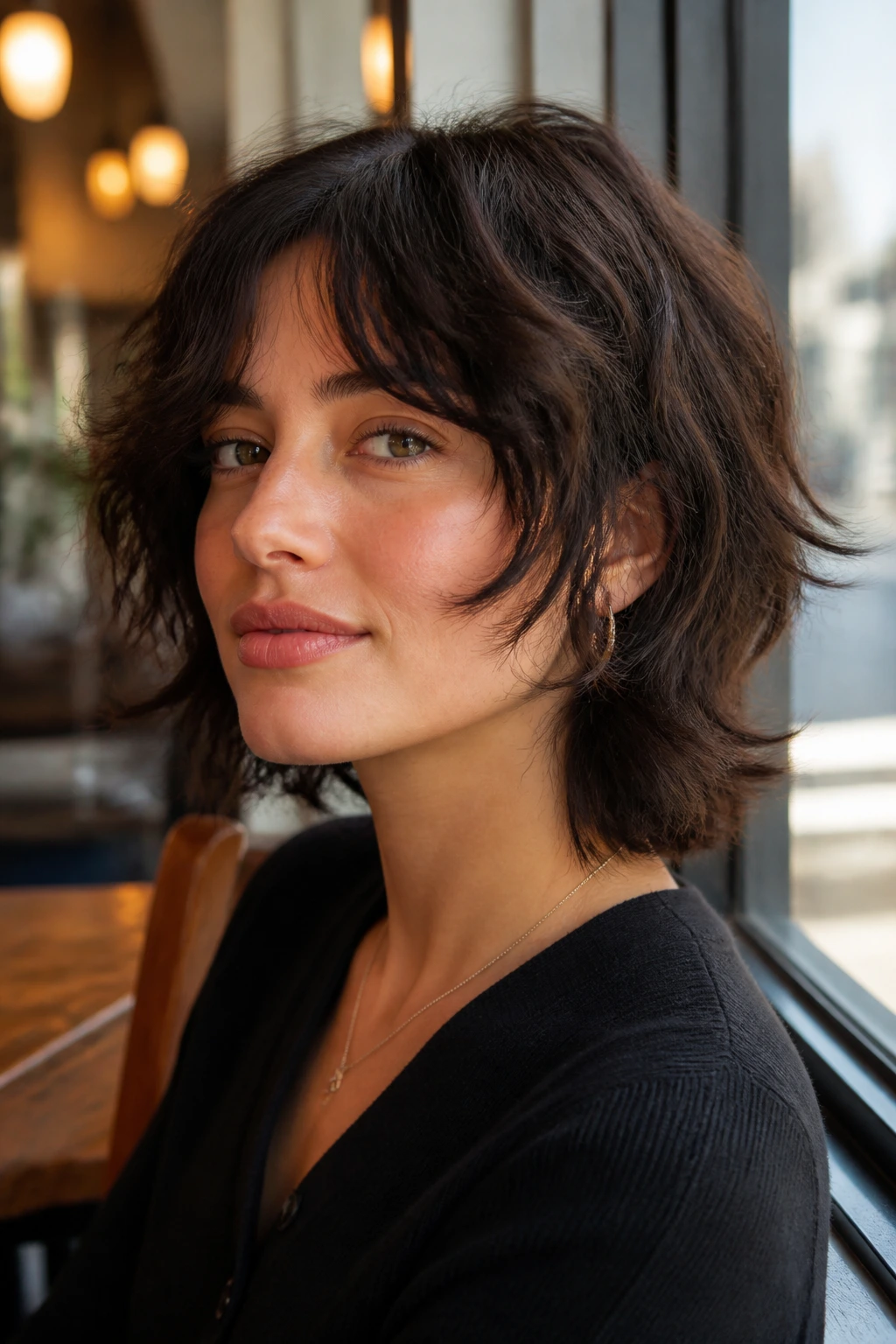
The mini shag borrows the energy of a full shag and scales it down into a shorter, easier shape. Curtain bangs split at the center and fall to either side of the face, which is useful when you want movement without a heavy fringe across the forehead.
This cut is especially nice on curls that fall in the 2C to 3B range. It keeps the top lively and the sides from getting too wide. You get a little rock-and-roll texture, but you can still tuck hair behind the ears if the bangs are behaving themselves.
The trick is cheekbone-length bangs. Too short and they bounce into the eyes. Too long and they lose the frame around the face. That one detail changes the whole haircut.
17. Sculpted Side-Part Bob
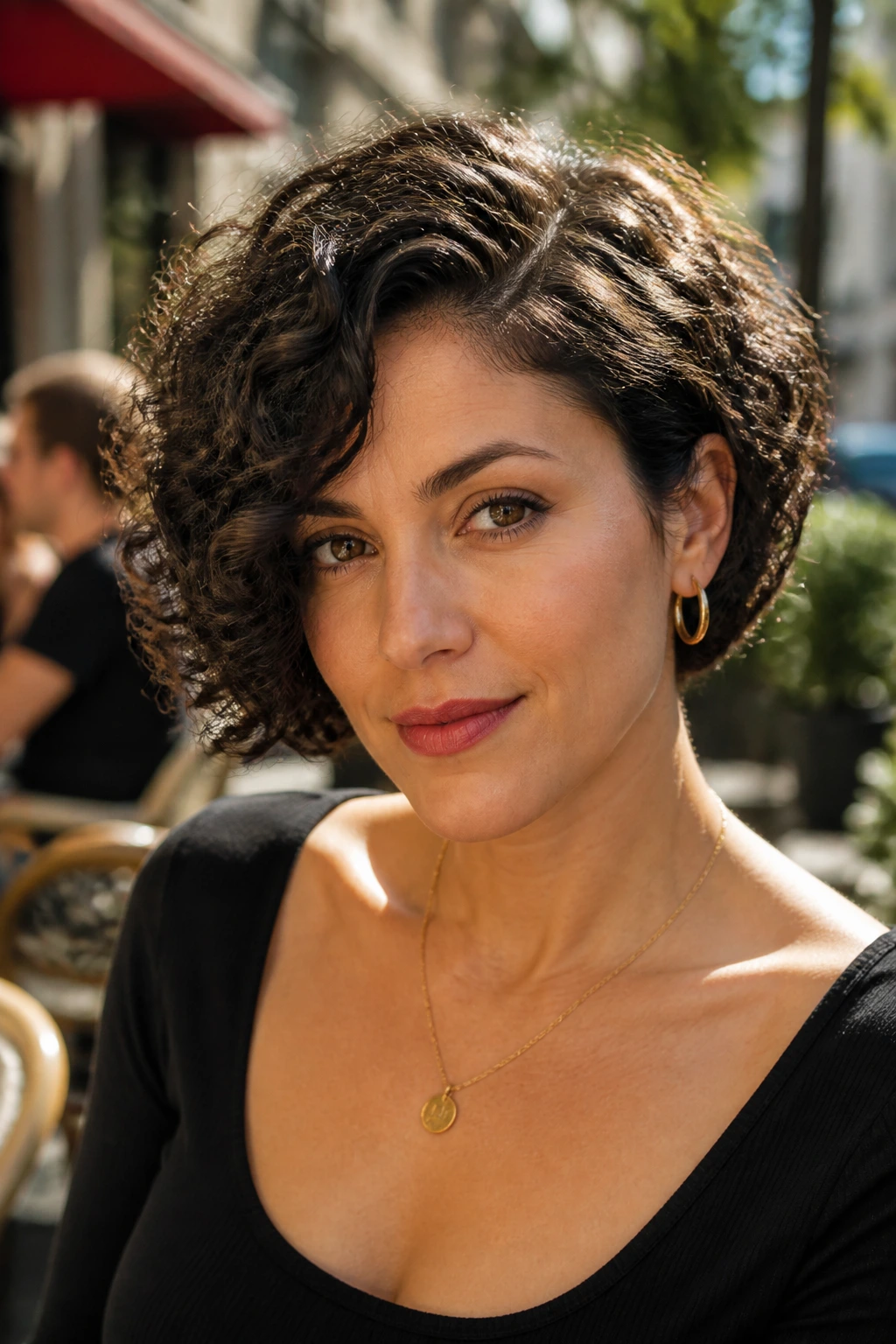
A sculpted side-part bob is for the person who wants a short curly style with a bit of polish. The side part sets the direction, the bob stays compact, and the overall shape feels controlled instead of wild. On curls, that control still looks textured, which is the nice part.
This cut is especially useful if your hair has a natural cowlick or a strong growth pattern near the front hairline. Fighting that pattern gets old fast. Working with it makes the haircut easier to wear.
A side-part bob also photographs the way it looks in real life. The front sweep gives one side a little more weight, the back stays even, and the curl pattern becomes the feature instead of the problem.
18. Curly Bowl Cut with Soft Edges
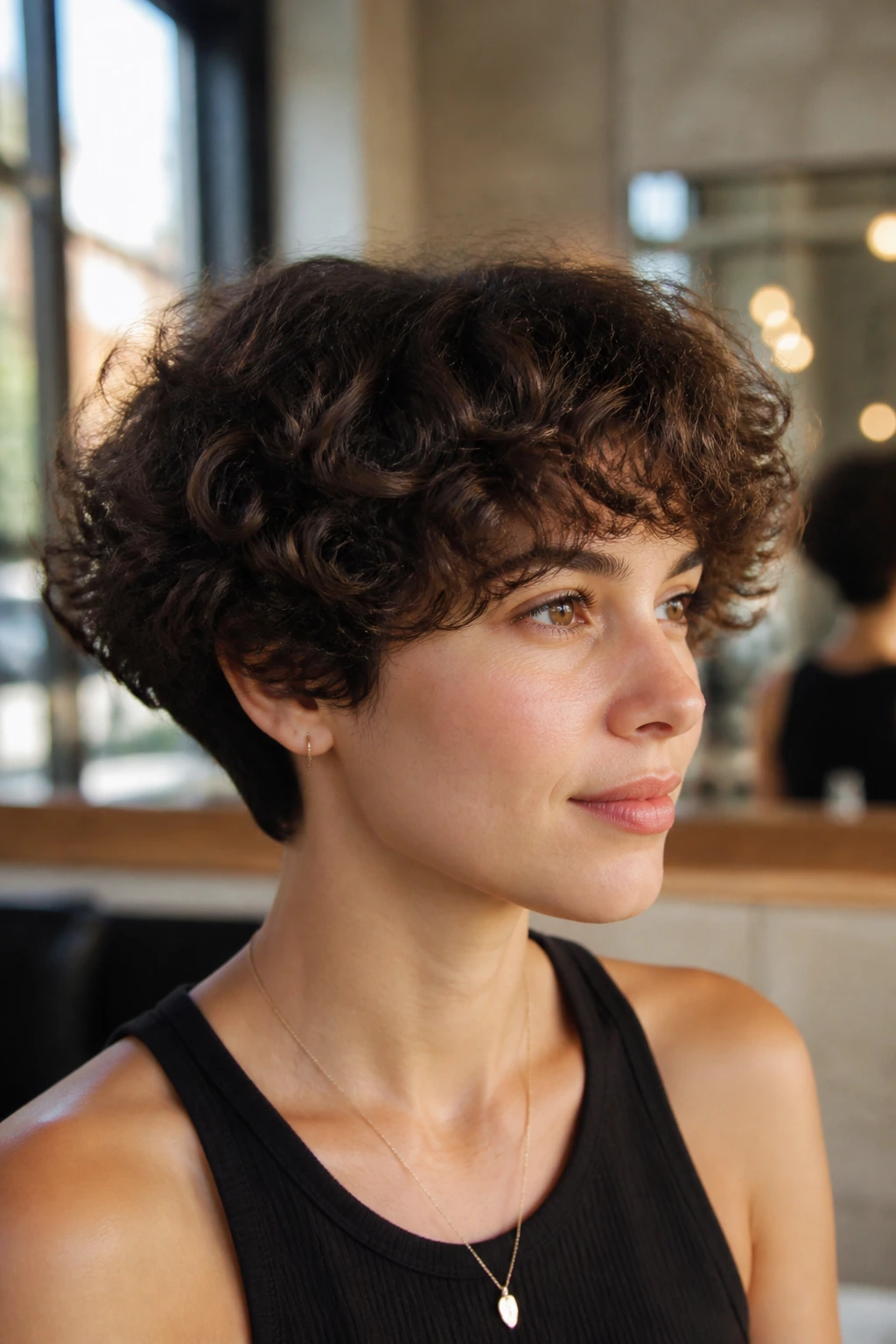
A bowl cut sounds risky because, honestly, the old version was. The curly version with soft edges is a different animal. It keeps the overall round shape, but the lines are broken up with layers so the cut doesn’t sit like a helmet.
This is a bold choice, and it works best when the curls are dense enough to hold a rounded silhouette. If your hair is too fine, the shape can collapse. If it’s thick and springy, the bowl-like curve can look surprisingly fresh.
The thing to ask your stylist for is softness around the perimeter. You want the illusion of a bowl, not the sharp bowl line itself. That one distinction keeps the haircut wearable instead of costume-ish.
19. Pixie Bob with Long Top
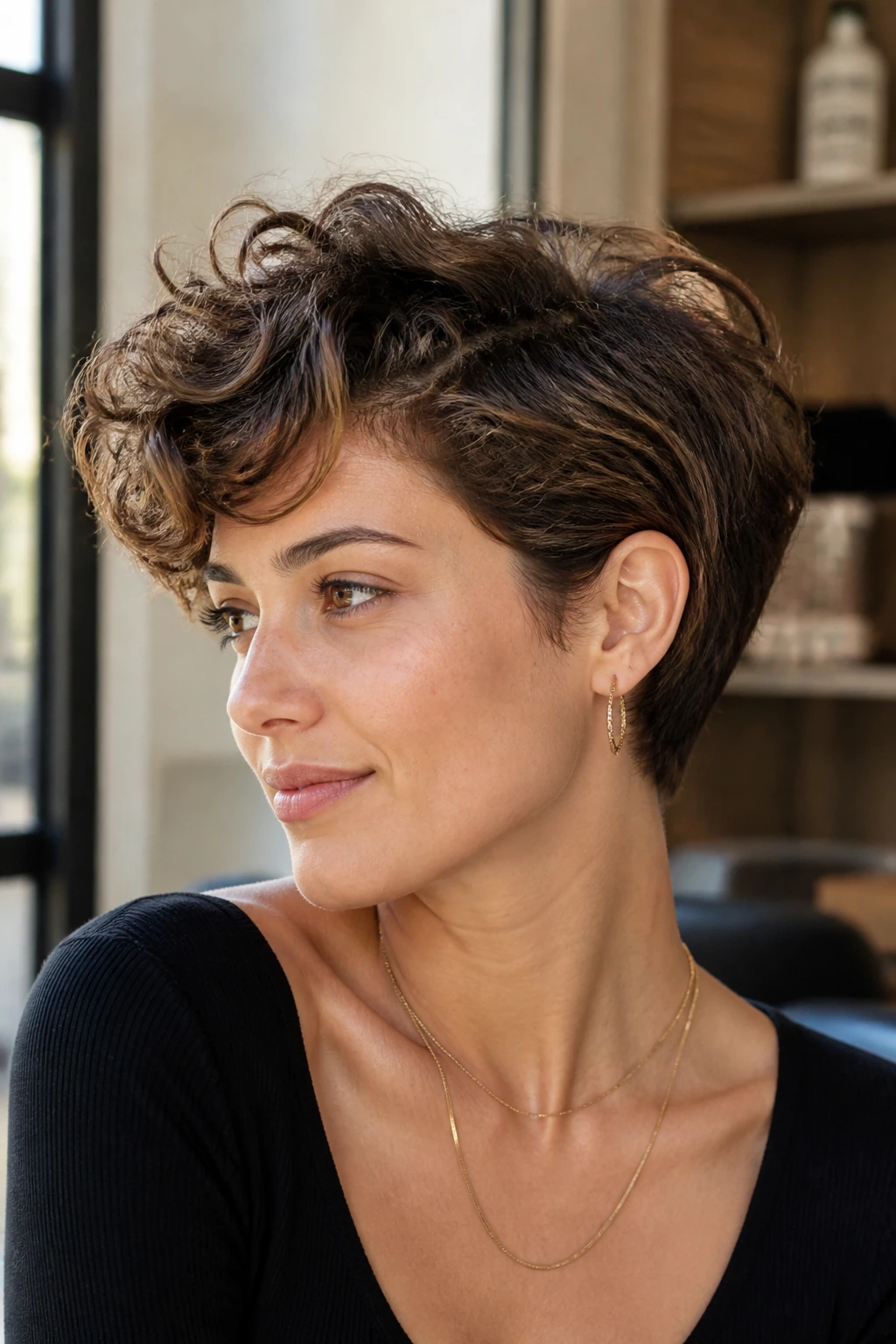
The pixie bob lives in a very useful middle zone. It’s longer than a pixie, shorter than a bob, and it gives you enough length on top to change the part or tuck one side behind the ear. For curly hair, that flexibility matters.
Why it’s such a practical shape
You can wear it fluffy, slick the sides down a little, or let the top pieces fall forward. It changes with your styling mood, which is rare in short cuts. The top usually needs to stay a few inches longer than the sides so the curls have somewhere to sit.
This is also a good transition cut if you’re growing out a pixie but aren’t ready for a full bob. The shape buys you time without looking like an in-between haircut.
Best when you want: a short style that can still be styled three different ways without a full wash day.
20. Curly Crop with Micro Bangs
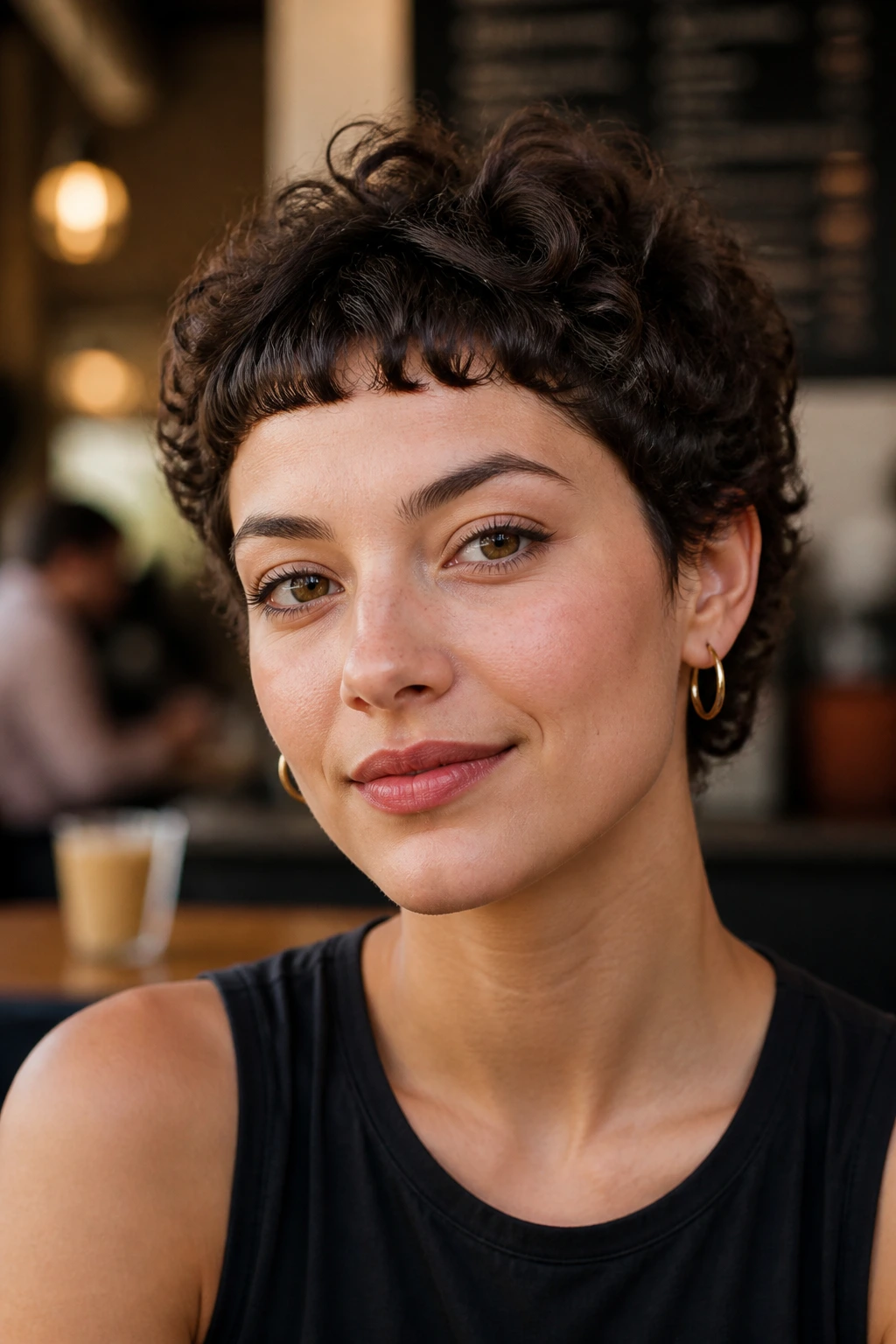
Micro bangs on curly hair are not for everybody. They are for the person who knows she likes a little edge and doesn’t mind a cut that starts conversations. The rest of the crop stays short, while the fringe lands high on the forehead and leaves the brows partly exposed.
The effect is striking because curls make micro bangs less exact than they look on paper. They shrink, bend, and soften, which takes some of the severity out. If your curls are looser, they may sit in a playful arc. If they’re tighter, they can look denser and more dramatic.
This cut works best when the rest of the shape is simple. Too many layers and the bangs start competing with everything else. Keep the outline clean and the fringe stays interesting instead of messy.
21. Mohawk-Inspired Curly Cut
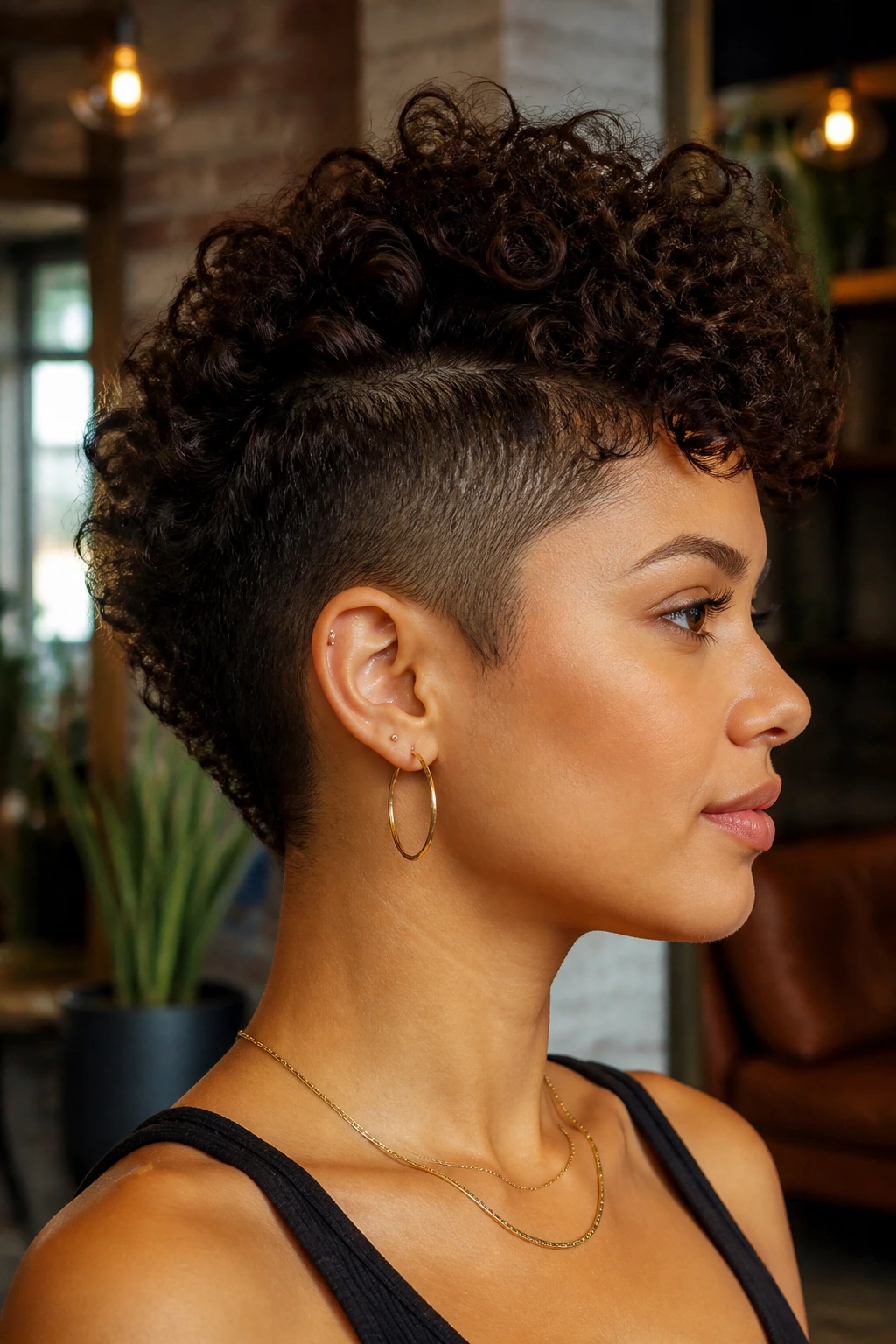
A mohawk-inspired curly cut keeps the sides tight and lets the center section carry the show. It sounds bold, because it is, but curls make the shape feel softer than a straight-haired version ever would. The result can be sleek, fierce, or a little playful depending on how high the center ridge sits.
This cut is smart for dense hair that feels too wide across the sides. Taking the bulk down near the temples and keeping volume through the center narrows the profile in a flattering way. It also gives the top curls a lot of visual lift.
If you don’t want a full mohawk vibe, ask for the sides to be tapered rather than clipped close. That keeps the silhouette lighter without pushing the look into full edge territory.
22. Halo Crop
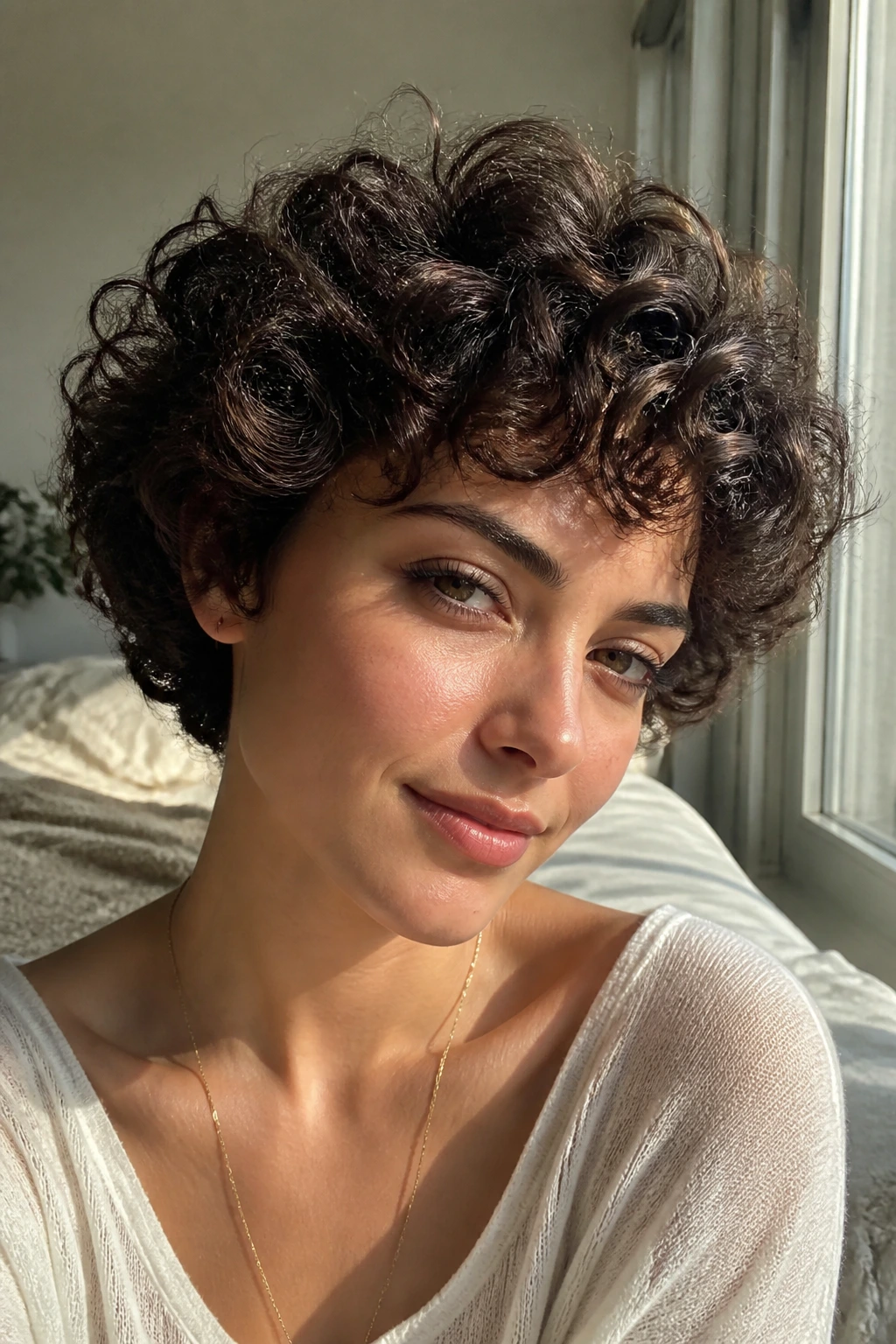
A halo crop is one of the prettiest short shapes for curls when you want softness around the entire head. The cut follows the natural roundness of the curls, creating a balanced outline that feels full but not bulky. Nothing here is trying too hard. That’s why it works.
This is a good fit for people who want a short style that can air-dry and still look intentional. The shape does most of the work, so your daily routine can stay simple: leave-in, cream, maybe a little gel, and hands off while it dries.
A halo crop is especially kind to dense curls that grow outward before they grow down. Instead of chopping that volume off in a blunt line, the shape uses it. And that’s the difference between a cut that feels fought with and one that feels lived in.
Why Short Curly Cuts Work When the Shape Is Right
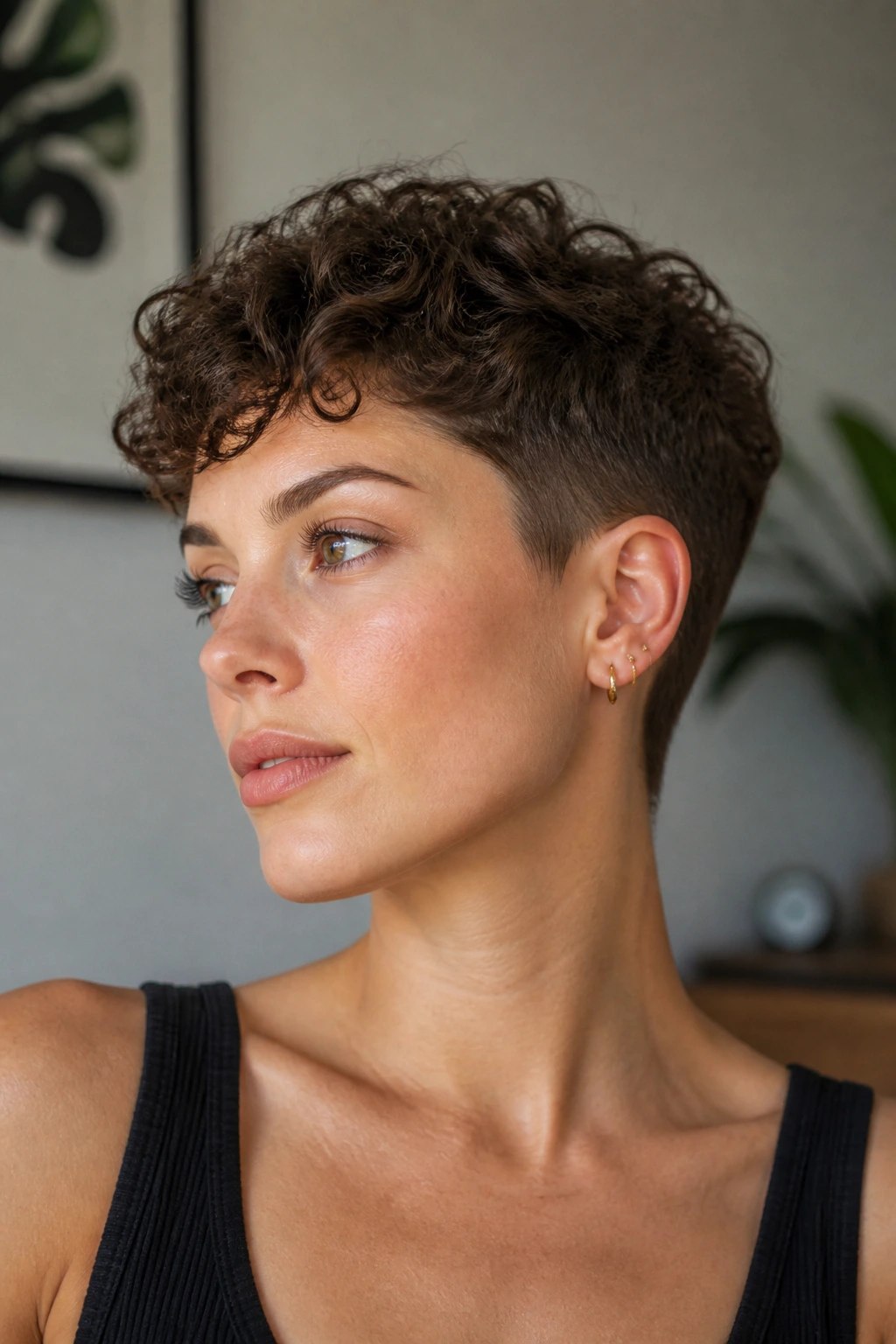
A short curly haircut is never just a haircut with less length. It changes the physics of the whole head. Once the bottom weight is gone, curls spring up faster, the crown gets more volume, and every layer matters more because there’s less hair to hide a bad line.
That’s why stylists who work with curls think about density and shrinkage before they think about inches. A cut that looks balanced when wet can turn into a puffball when dry. The reverse can happen too. Leave it too long, and the curls may pull down into a flat shape that hides the texture you wanted in the first place.
The best short curly styles solve a shape problem. Too much bulk at the sides? Use tapering, stacking, or internal layers. Not enough width on top? Keep the crown longer. Frizz around the face? Add a fringe or a controlled side sweep. This is hair geometry, really. Not glamorous. Very useful.
The Tools That Make Short Curls Easier to Wear
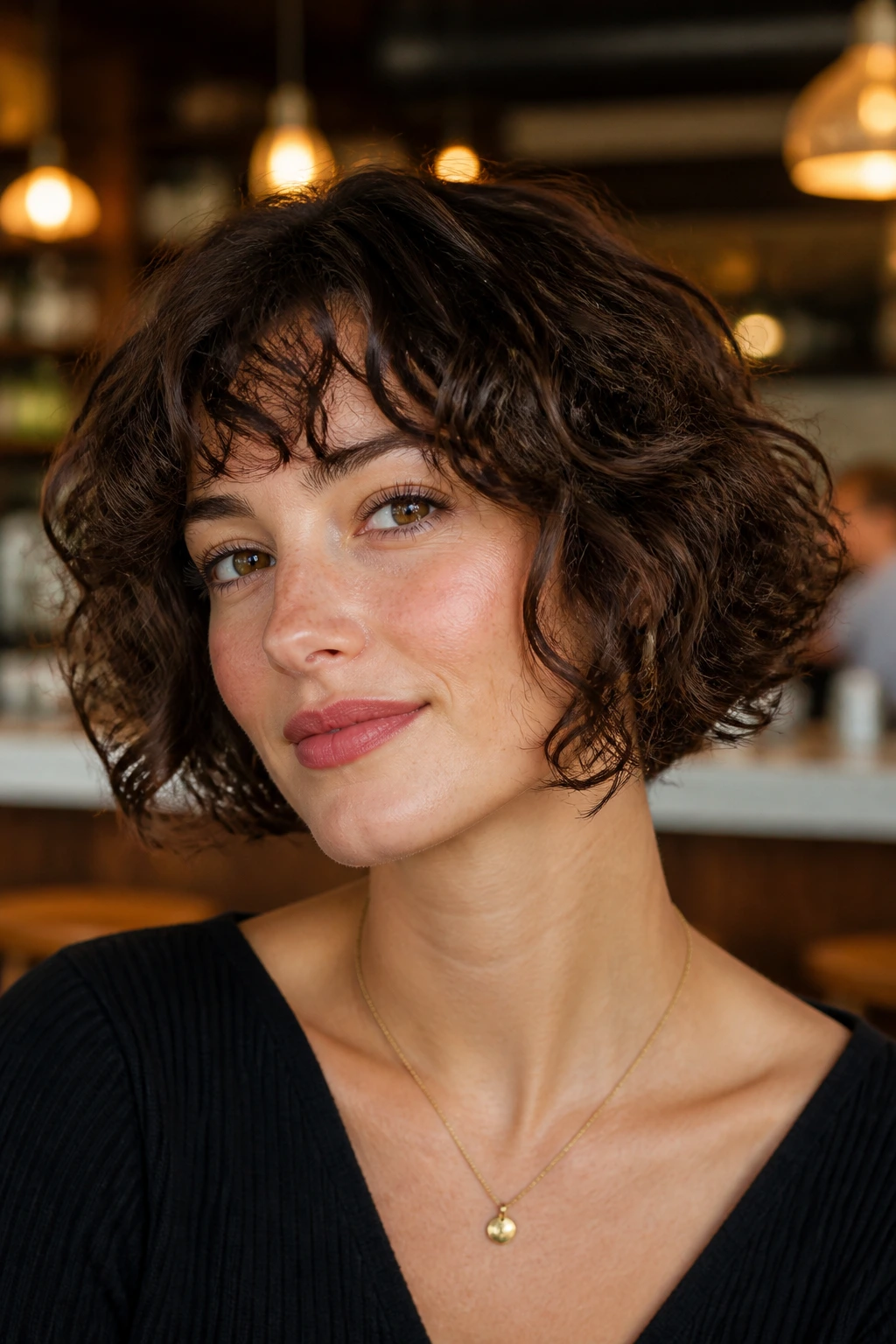
- Diffuser attachment: dries curls with less blast and helps the shape hold at the root.
- Spray bottle: useful for rewetting the front pieces without soaking the entire head.
- Wide-tooth comb: good for distributing conditioner in the shower without tearing up curl clumps.
- Microfiber towel or cotton T-shirt: reduces rough friction when you squeeze out water.
- Duckbill clips or root clips: lift the crown while drying so the top does not collapse.
- Satin bonnet or pillowcase: cuts down on friction overnight, which matters a lot with short hair because every bend shows.
- Light curl cream and medium-hold gel: one shapes, the other keeps the cast in place.
- Scissors for trims: not for at-home reshaping unless you know exactly what you’re doing. For the occasional snip of a straggly bang, fine. For a whole haircut, leave it alone.
How to Choose Short Hairstyles for Women with Curly Hair That Fit Your Curl Pattern
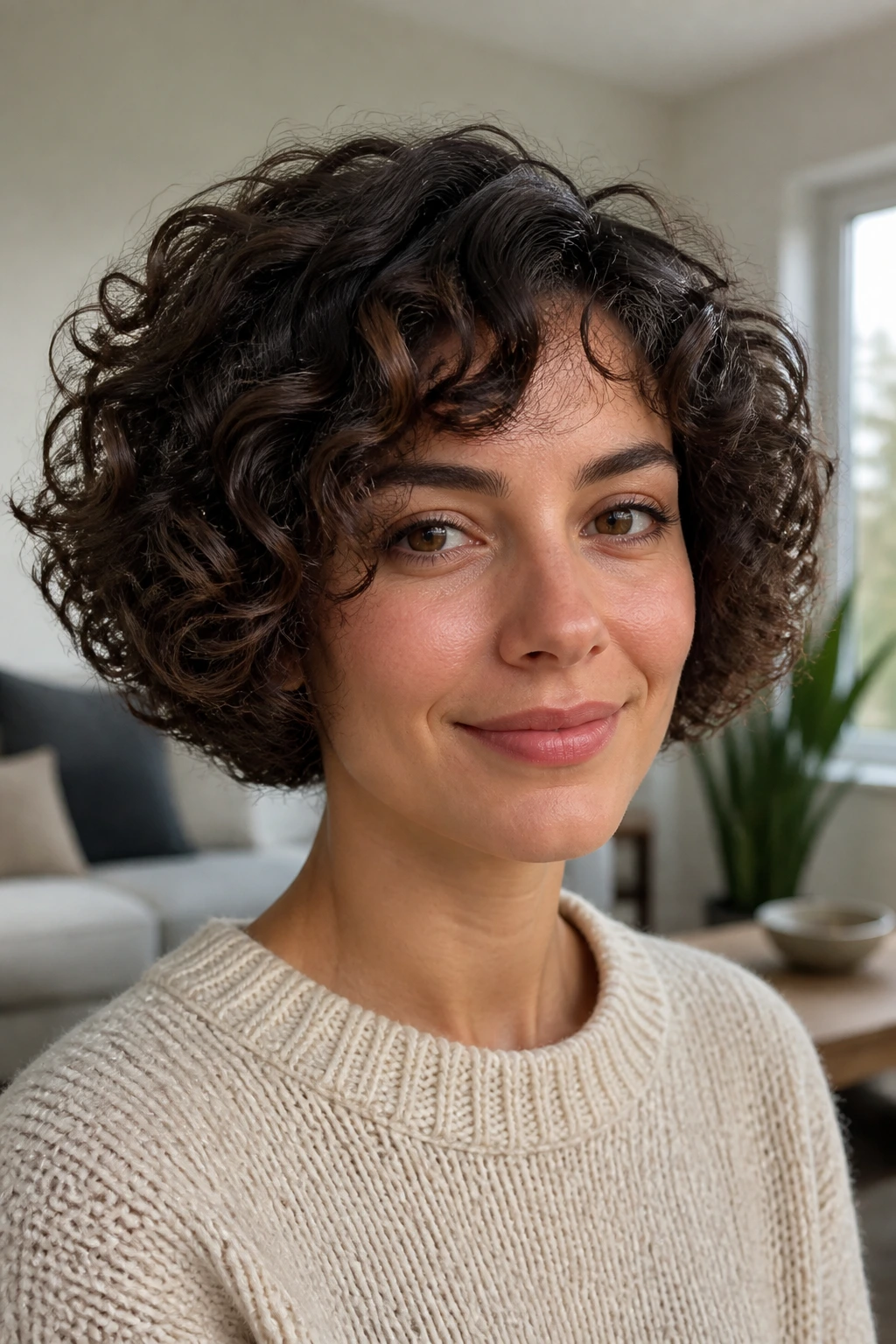
The first question is not “What’s trendy?” It’s “How does your hair behave when nobody is bossing it around?” Loose waves can take a bob or a shag and still fall into line. Tight curls and coils need more room at the top and more planning around the sides, because they shrink harder and build width faster.
Density matters just as much as curl type. Fine curly hair can vanish if it gets over-layered. Dense curly hair can turn boxy if it stays too one-length. That’s why a person with 3A curls and a person with 4B coils may both wear short hair, but not the same short hair.
Face shape matters, too, though I would not obsess over it. A curl pattern that sits near the jaw can soften a strong chin. A fringe can shorten a long forehead. A side part can shift the eye away from one side of the face if you want a little balance. Good cuts do not disguise your face. They frame it.
Curl pattern cheat sheet
- 2C to 3A: French bobs, bixies, rounded bobs, side-swept crops
- 3B to 3C: shags, wolf cuts, stacked bobs, layered chin-length cuts
- 4A to 4C: tapered afros, halo crops, curly crops, soft undercuts
How to Style Short Curly Hair at Home Without Fighting It
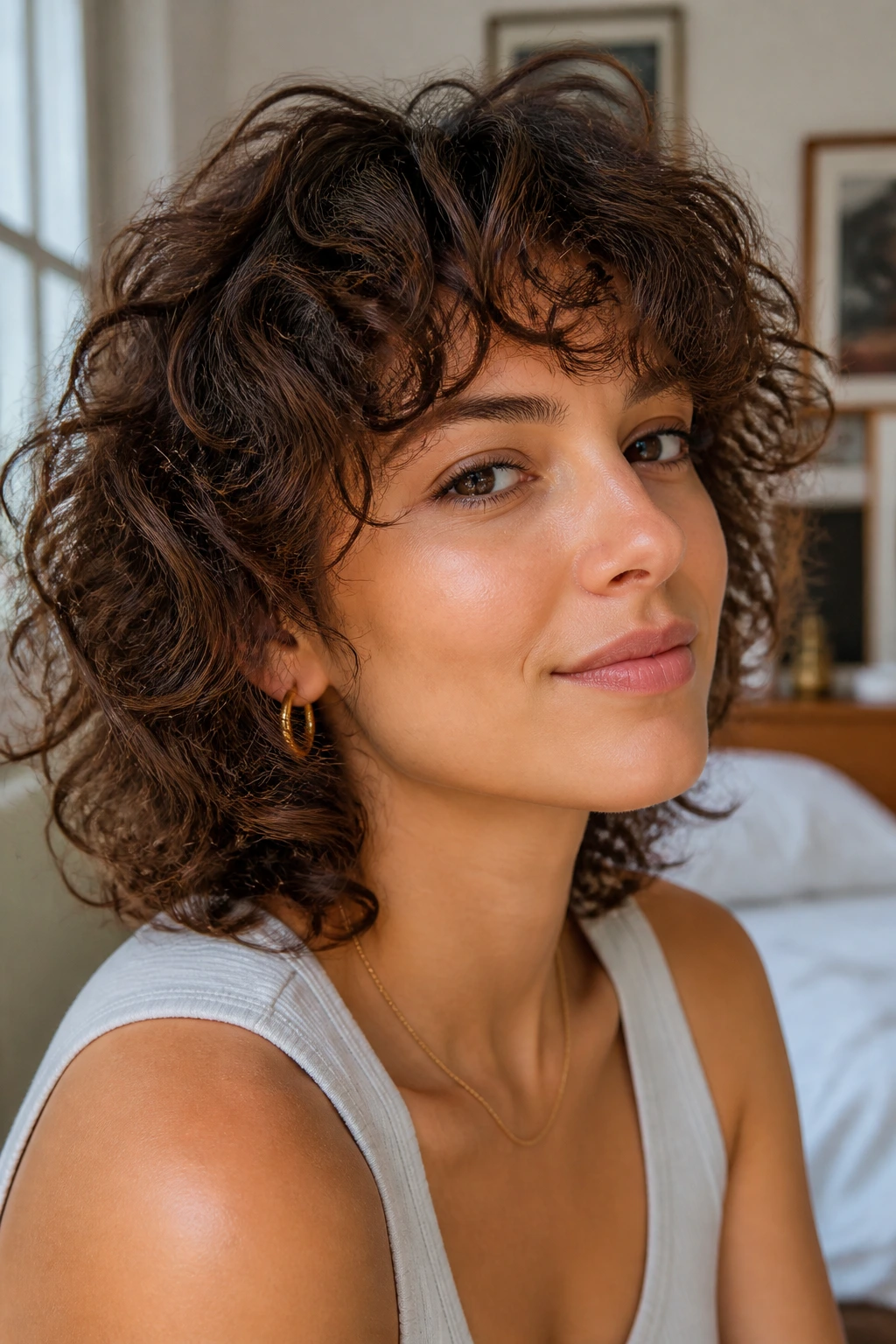
Short curls look best when you stop trying to make them sit still. Start on soaking-wet hair if you want the strongest curl clumps. Work in a leave-in first, then follow with curl cream or mousse, then a gel if you need hold. That layering is not about piling on product. It’s about giving the curl enough slip to form and enough structure to stay formed.
Drying matters more than people think. If you rough up short curls while they’re half-dry, the outer layer frizzes before the inside is finished. Clip the crown, keep the diffuser on low or medium heat, and don’t flip the hair around every 30 seconds. That constant poking is how a neat crop turns into fluff.
A lot of short curly cuts also benefit from a deliberate part line. Set it while the hair is damp. Set it once. If you keep changing your mind during drying, the roots will train in every direction and the final shape will look busy.
Pro move: stop diffusing when the hair is about 80 percent dry, then let the last bit air-dry. That final stretch is where too much heat can leave curls fuzzy and over-dried.
Common Mistakes That Make Short Curls Look Bigger Than They Should
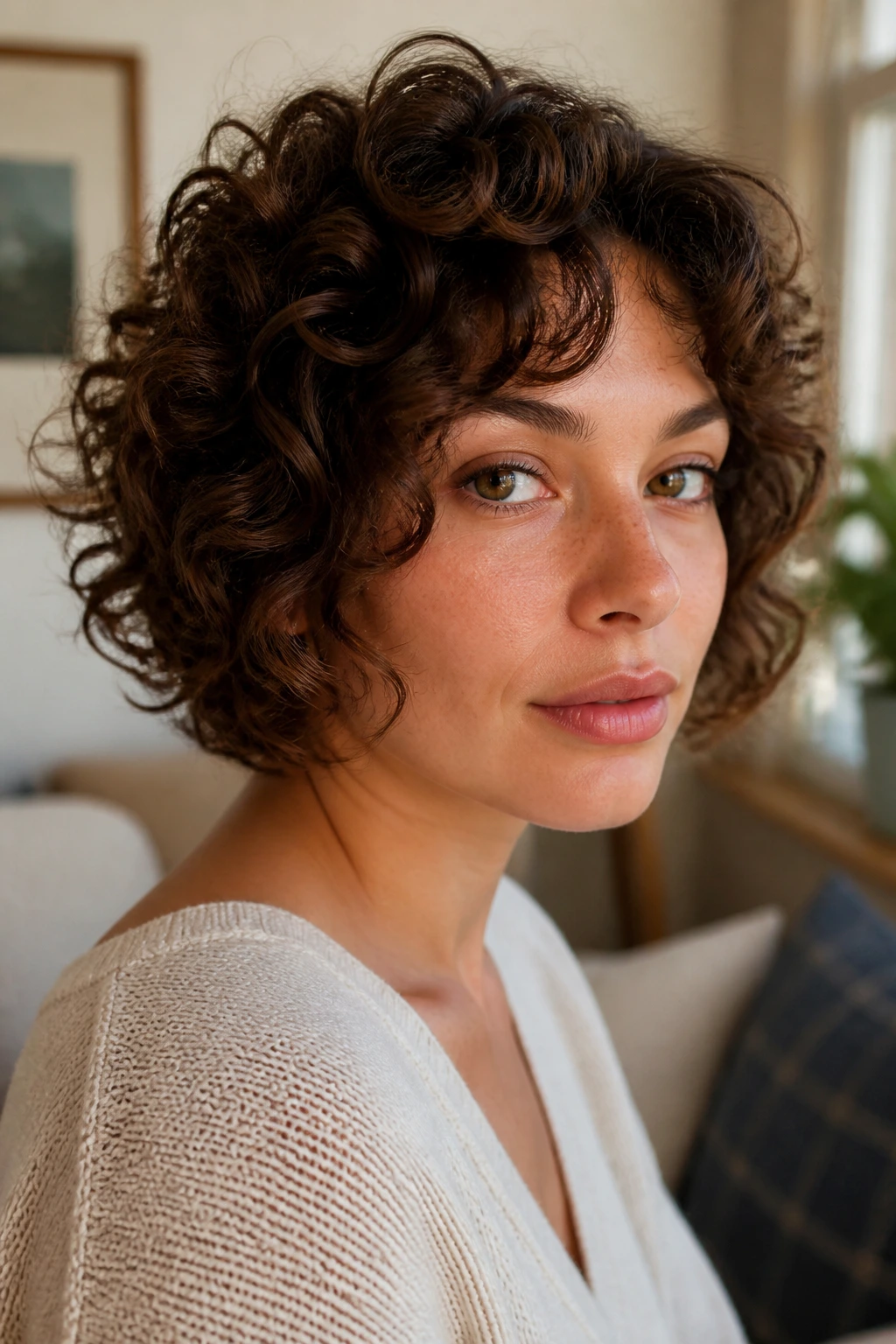
- Cutting too much length while the hair is soaking wet: curls spring up more than you expect. The fix is a dry cut or at least a cautious wet cut with shrinkage in mind.
- Using too many short layers on fine curls: the hair loses weight and puffs out. Ask for softer shaping instead of aggressive thinning.
- Brushing dry curls into place: that breaks the clumps and creates a halo of frizz. Use fingers or a wide-tooth comb only when the hair is wet and coated.
- Skipping the nape and sides when styling: short hair shows missed spots fast. Work product all the way through, especially behind the ears and at the neckline.
- Choosing a blunt shape for very dense curls: the bottom line gets too heavy. Internal layering or tapering usually fixes it.
- Overloading on heavy oils: the hair may look greasy at the roots and limp at the ends. Use oils as a finish, not the main styling product.
Ways to Adapt These Cuts to Your Hair and Your Mood
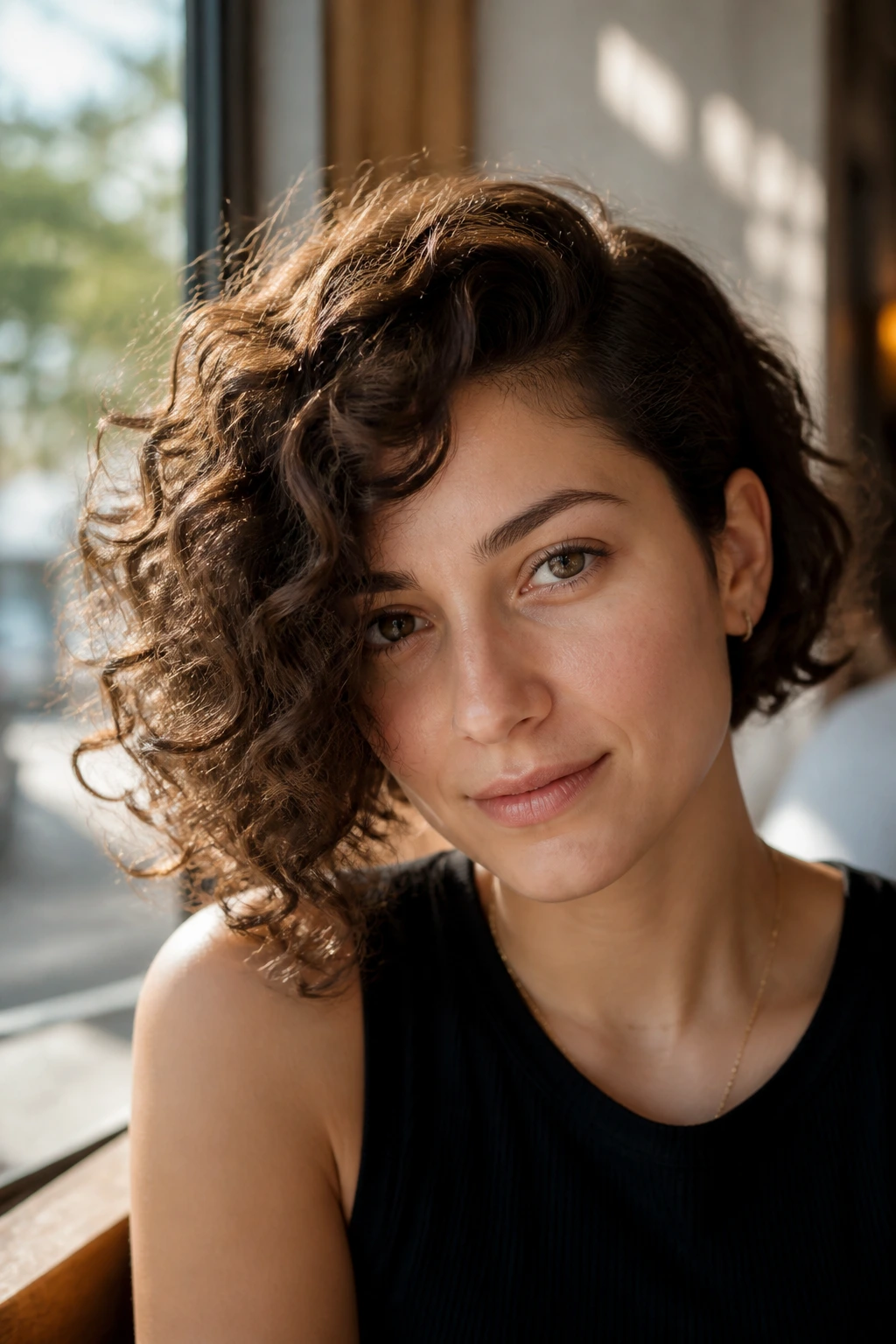
Soft and Rounded: If you like a gentle silhouette, choose bobs, halo crops, and French bobs with minimal perimeter layering. The shape stays feminine and calm, and it grows out without getting weird fast.
Sharp and Editorial: Go for micro bangs, an asymmetrical bob, a curly crop with an undercut, or a mohawk-inspired shape. These cuts rely on contrast, so the outline should stay clean even when the texture is loose and wild.
Low-Fuss Wash-and-Go: Tapered crops, halo cuts, and stacked bobs are the least needy when your morning routine is not interested in drama. They hold shape well with a small amount of product and a short diffuse.
Big-Volume Energy: Curly shags, wolf cuts, and short mullets let the crown climb higher and the layers move more. These are the cuts that look best when you like a little lift, a little mess, and a little attitude.
Grow-Out Friendly: Pixie bobs, chin-length layered cuts, and side-swept crops are easier to live with if you know you won’t keep the same exact length forever. They move through the awkward stage more gracefully.
How to Keep a Short Curly Cut Looking Fresh Between Washes
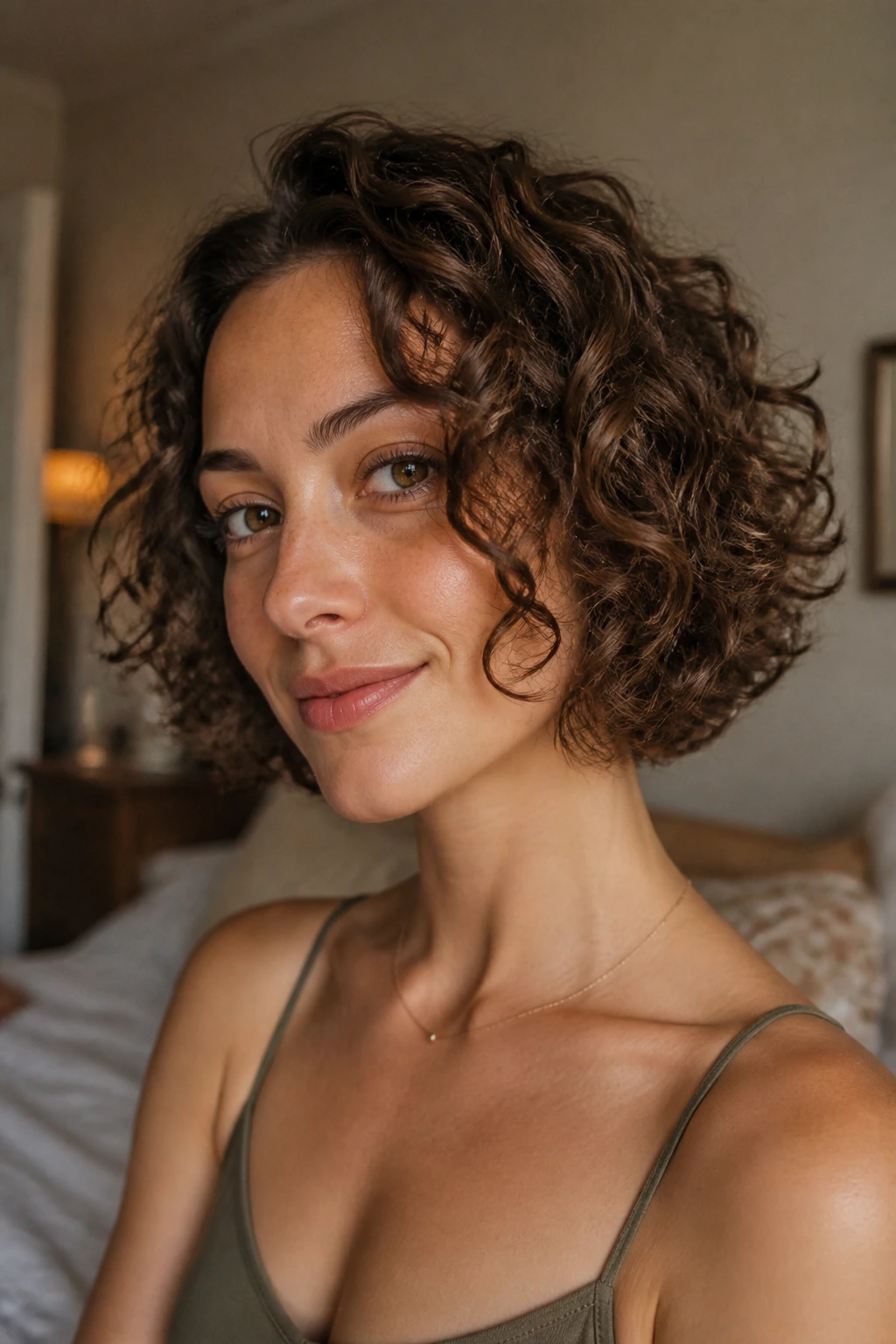
Short curly hair usually needs less washing than straight hair, but it does need more shape maintenance. A good rhythm for many people is washing every 3 to 5 days, then refreshing the front and crown with a spray bottle on the off days. If your scalp gets oily faster, cleanse a little more often; if your curls are dry, stretch the wash cycle and refresh with water plus a pea-size amount of cream.
Sleep setup matters a lot because short hair loses shape fast against a pillow. A satin bonnet works if your hair is compact enough to fit inside without crushing the curl pattern. A satin pillowcase is the easier option if your hair is too short or too fluffy for a bonnet. Either way, the goal is the same: less friction, less frizz, less reshaping in the morning.
Trim timing depends on the cut. Pixies and crops usually need a trim every 4 to 8 weeks if you want the outline crisp. Bobs can go 6 to 10 weeks. Shags and wolf cuts often hold longer, but the fringe may need a small touch-up sooner. Once the bangs start landing in your eyes in a way that makes you mad every day, that’s your sign.
Frequently Asked Questions
Which short haircut works best for very thick curly hair?
A tapered crop, stacked bob, or halo cut usually handles thick curls better than a blunt one-length shape. Those cuts remove bulk where it builds up most and keep the outline from turning boxy.
Do short curly hairstyles make hair look thinner?
Not if they’re cut with the right shape. A good short curl cut can make hair look fuller because the curls sit higher and the ends no longer weigh everything down.
Should curly hair be cut wet or dry?
Dry cutting is often safer for curls because you can see the true shape and shrinkage. Wet cutting can still work, but the stylist has to leave enough room for the curl to bounce up later.
How short can I go if my curls shrink a lot?
Shorter than you think, but not blindly. If your curls shrink 30 to 50 percent, leave extra length at the top and the fringe so the final shape doesn’t jump too high.
What if one side of my hair curls tighter than the other?
That’s common. A good stylist will cut each side to match how it behaves instead of forcing identical lengths that look uneven once dry.
Can I wear bangs with short curly hair?
Yes, and they can be gorgeous, but they need room to shrink. Soft fringe, curtain bangs, and longer curly bangs are safer than very short blunt bangs.
Is a diffuser necessary for short curls?
No, but it helps. If you air-dry, you’ll likely get a softer shape with more frizz. If you want more lift and definition, a diffuser gives you more control at the root.
How do I ask for the right short curly cut at the salon?
Bring photos of the shape from multiple angles and say how much shrinkage your curls have. Also tell the stylist how often you’re willing to style and trim, because a pixie that looks great on a model may be a pain for your routine.
The Cut That Lets the Curls Breathe
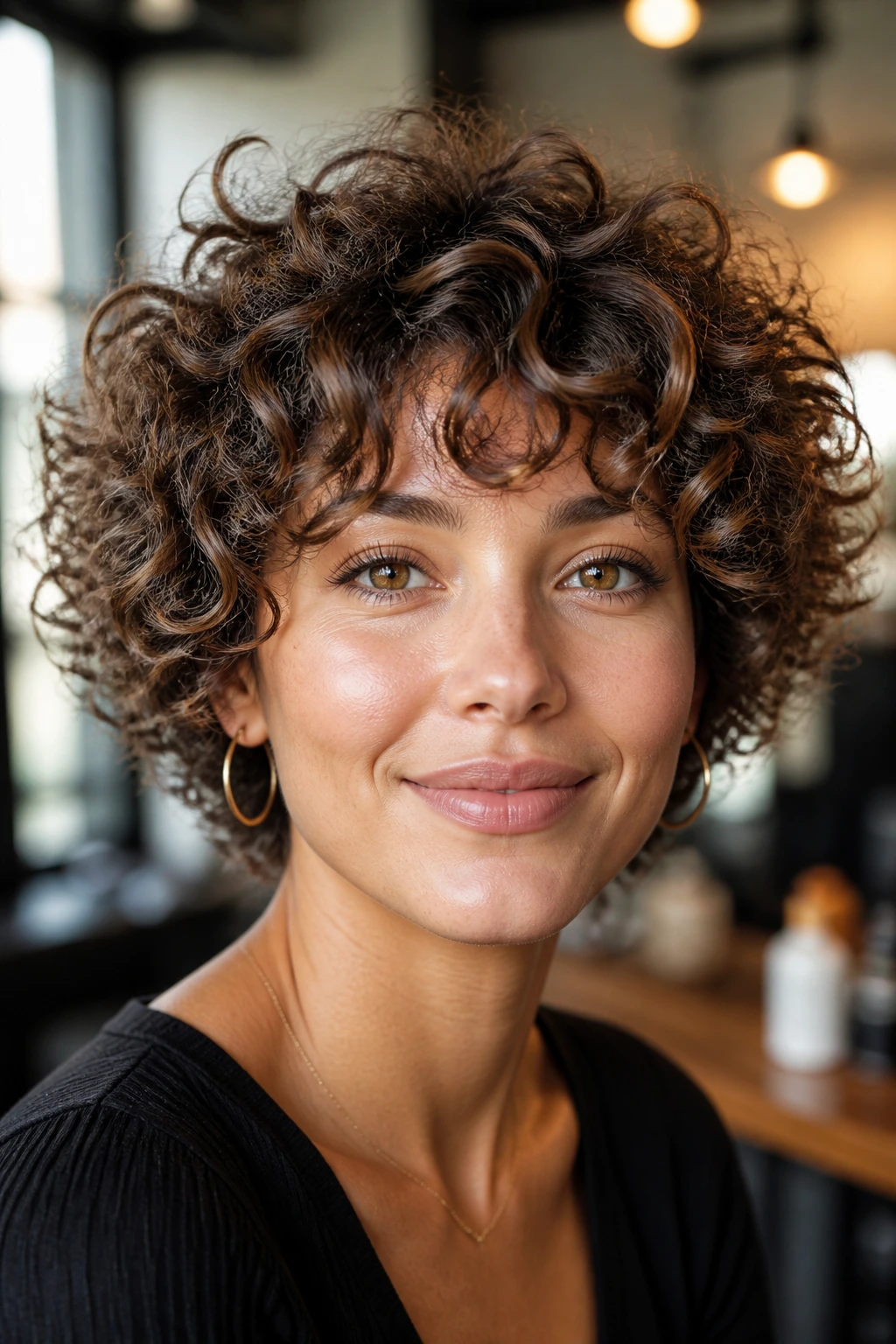
The smartest short curly haircut is the one that respects how curls actually behave. Not how they look wet in the chair. Not how they behave in a magazine photo. How they spring, settle, widen, and soften after you leave the salon.
That’s why this list leans so hard on shape. A good curly bob can look fuller than longer hair. A tapered crop can feel lighter than it sounds. A shag can make the curl pattern wake up. And a pixie, when it’s cut with enough room at the top, can feel cleaner and more alive than a much longer style that spends all day hanging on your head.
If you’re about to change your length, pick the shape first and the trend second. Your curls will thank you for that, and they’ll probably look better for it too.