



Curly hair and round faces can make a haircut look like a math problem the minute the cape comes off. Wet curls lie. Dry curls tell the truth, and they usually tell it in the least flattering way possible: a bob that balloons at the cheeks, bangs that bounce halfway to the brow, layers that puff out like a halo you never asked for.
That’s why some cuts fail so hard on this combo. It isn’t that curly hair is “hard” or round faces are “tricky.” It’s shape. A cut can either stretch the eye up and down, or it can park all the volume right at the widest part of the face and call it a day. One of those looks intentional. The other looks like a bad afternoon with scissors.
The cuts below are the ones I would scrutinize first in a consultation. Some are classic mistakes. Some are modern versions of the same old problem. And a few are sneaky, because they look fine in a flat photo but go sideways the second the curls dry. First up: the shapes that trap width where you do not want it.
Why These Haircut Fails Are Worth Knowing

- Curl Shrinkage Changes Everything: A cut that lands at the chin when wet can jump up an inch or two once the curls dry, which is exactly how a “safe” bob turns boxy.
- Round Faces Need a Vertical Story: Hair that stops at the cheeks or jaw often widens the face instead of balancing it, because the eye has nowhere to travel but sideways.
- The Salon Mirror Lies: Wet curls collapse and look longer, so a shape that seems soft at the chair can turn into a shelf once the diffuser comes out.
- Not Every Layer Helps: Short layers can be useful, but on dense curls they can scatter the shape and make the widest part of the face feel even wider.
- The Fix Is Usually Small: A little extra length, a lower layer, or a softer front angle can rescue the cut without making it boring.
1. Chin-Length Blunt Bob That Stops at the Jaw
A blunt bob that lands right at the jawline is the haircut equivalent of a spotlight on the widest part of the face. On curly hair, that line rarely stays sleek for long. It springs outward, so the whole shape can look like it’s sitting on a shelf.
The problem is not the bob itself. It’s the stopping point. When curls dry, the perimeter puffs, the chin disappears, and the whole silhouette gets shorter and wider at the same time. If the hair is dense, it can also build a hard edge that feels more helmet than haircut.
What makes it a fail
The blunt edge sits exactly where the round face already has shape. That leaves no break in the outline, no soft angle, and no visual length. Instead of framing the face, it crowds it.
If you like this general length, ask for the front pieces to fall below the jaw by at least an inch or two. A tiny angle in front makes a big difference. A bob can still be crisp, but it should not sit like a ruler across the cheeks.
2. One-Length Lob With No Internal Shape
A shoulder-skimming lob sounds harmless. On paper, it’s elegant. In real curls, a one-length lob often turns into a thick block that sits around the face like a pillow.
This happens because curly hair wants movement inside the shape. Without internal layers or a bit of front graduation, the curls stack on top of each other and form a wide rectangle. That rectangle is the enemy of a round face. It adds weight at the sides and gives the eye no reason to move downward.
The look can also get triangular fast. If the roots are flatter than the ends, the bottom half swells and the whole cut feels bottom-heavy.
A better version keeps the length, but relieves the interior. Even subtle long layers or a soft front angle can stop the “one big shelf” effect. If your stylist says they can cut it all one length and “just let the curls do the rest,” ask for a second opinion. Curls do not owe a boxy cut their loyalty.
3. Straight-Across Bangs Cut Too Heavy
Heavy bangs across a round face can look like a little wall. On curly hair, they become a moving wall. They shrink, split, bend, and sometimes curl up in the middle while the sides frizz out first.
That is a lot of action at one of the most visible parts of the face. Too much. If the fringe is thick and blunt, it shortens the forehead visually and pulls the eye right back to the center of the face. The effect is dense, especially if the rest of the haircut is also short or full.
The part people miss: curly bangs do not behave like straight bangs. They need extra length in the chair, because they spring up as they dry. A curl that looks brow-skimming when wet can end up two inches above the eyebrows.
If you want fringe, keep it soft and long enough to hit near the brows when dry, not when wet. Anything shorter needs a very deliberate reason and a stylist who cuts curls dry. Otherwise, the bangs become the whole haircut. Not in a good way.
4. Micro Bangs on Dense Curls

Micro bangs can be cool. On the right face, with the right texture, and the right level of commitment, they can look sharp and graphic. But on dense curls and a round face, they can make the forehead disappear and leave the width of the cheeks doing all the visual work.
The real issue is proportion. Tiny bangs on springy curls tend to bounce up and out, which means they can sit like a little fringe cap above the face. That draws the eye to the upper middle of the head instead of balancing the outline. If the sides are also full, the cut starts to look top-heavy.
The shape problem
- The forehead gets shortened.
- The curl line sits high.
- The cheeks become the widest visible feature.
That is a rough trio.
Micro bangs also demand frequent shaping. Even a few weeks of growth can change the whole line, and curly fringe is less forgiving than straight fringe. If you love the idea, keep the bangs longer and less blunt. A short curly fringe needs room to breathe, or it ends up looking clipped onto the face.
5. Razor-Thinned Shag That Strips Curl Clumps
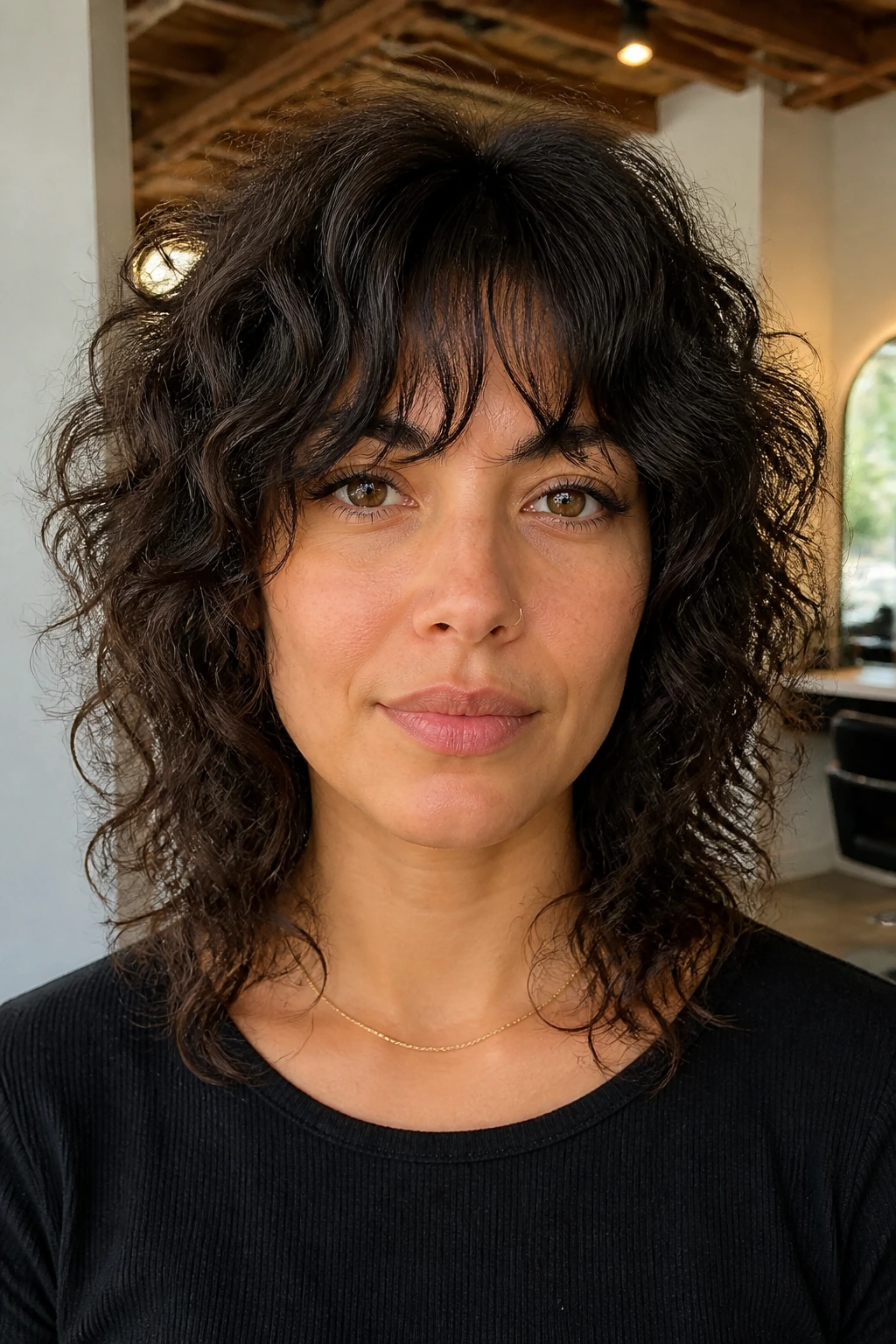
A shag can be gorgeous on curls. I like a good shag when it keeps the curl groups intact and drops the shortest layers low enough to avoid the cheeks. What I do not like is a shag that’s been shredded with a razor until the curl clumps fall apart.
Once that happens, the hair loses its structure. Instead of springy ringlets or defined waves, you get frayed ends and a fuzzy cloud around the silhouette. On a round face, that haze widens the outline in a sneaky way, because the eye reads “more hair” before it reads “more shape.”
Razor work can be useful on the right texture, but it is not a free pass. If your curls already frizz easily, a razor-heavy cut can leave the ends too thin and the mid-lengths too bulky. The result is a cut that looks airy for an hour and then puffs out by lunchtime.
Ask for curl-clump preservation. That phrase matters. You want the stylist to shape the hair without ripping apart the natural groups. The best shag on curls should look layered, not shredded.
6. Triangle Cut That Grows Wider at the Bottom

The triangle cut is one of those shapes nobody means to create, but it shows up anyway. Flat roots, thin crown, and wide ends. That’s the recipe. On curly hair with a round face, the triangle shape adds weight exactly where you already do not need it.
The face gets framed by a base that spreads out near the shoulders or jaw. That makes the lower half of the cut feel heavy and the upper half feel smaller, which throws off the whole balance. Instead of lengthening the face, it drags the eye down and out.
This cut often happens when layers are either too long or too timid. The stylist leaves too much bulk at the bottom because they’re afraid of creating frizz, and the shape ends up broader than the face itself. Not ideal.
A better approach is to build a little movement higher up and keep the perimeter from flaring. You do not need paper-thin ends. You need a shape that keeps the sides from spreading like a skirt.
7. Stacked Bob With a Tall Nape and Wide Sides
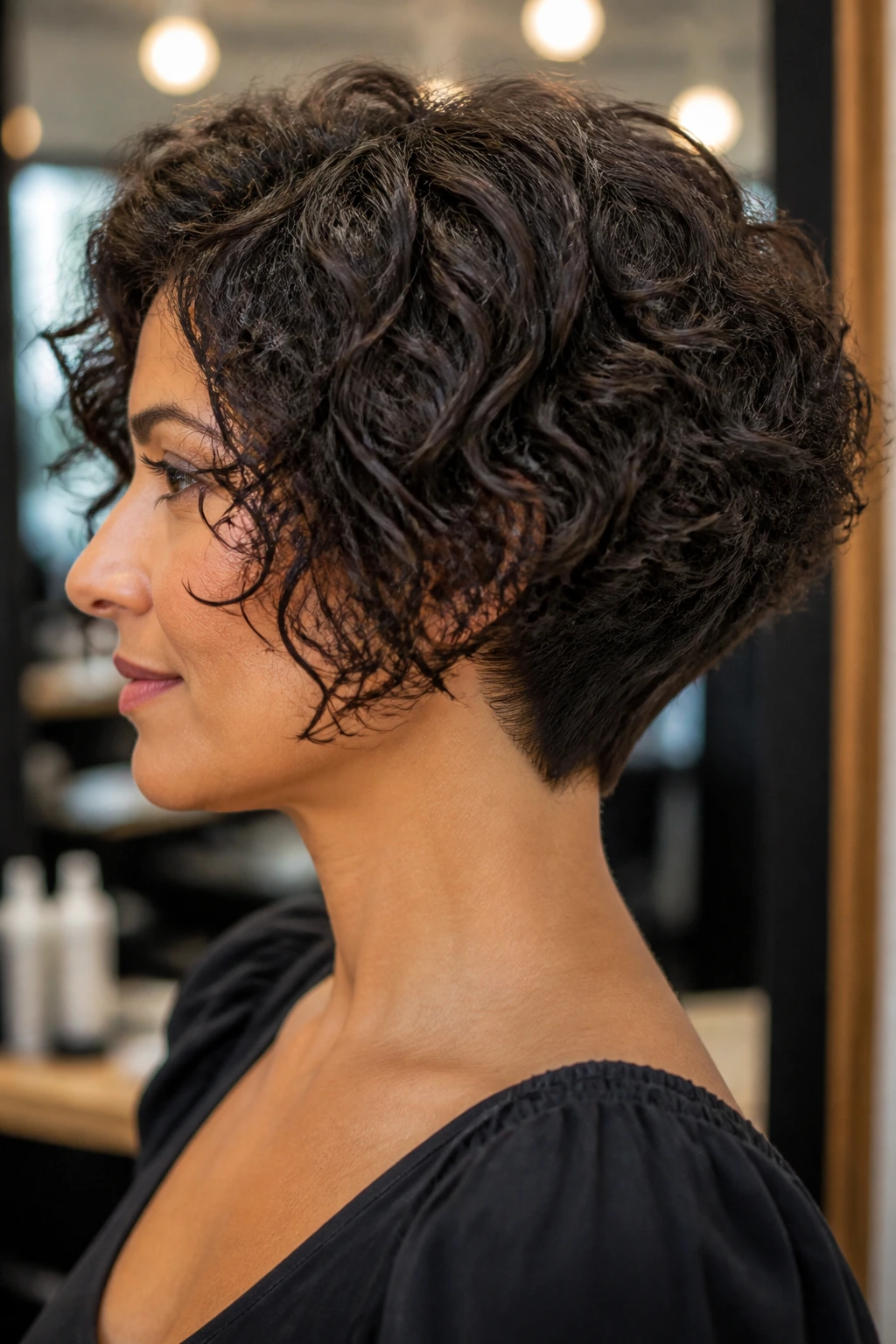
A stacked bob can look polished on straight hair because the graduation is clean. Curly hair changes the game. Add curl spring, and the stack can puff at the back while the sides stay wide, which makes the head look rounder from every angle.
On a round face, the issue is the visual line. A high nape already creates volume at the back of the head. If the sides are kept full too, the silhouette becomes too compact and too circular. The haircut ends up building shape where you least want it — around the ears, cheeks, and lower head.
It can also feel oddly dated, depending on how aggressively the stack is cut. The curl pattern wants softness. The stacked bob wants a sharp geometric line. Those two ideas can argue with each other all day.
If you like the idea of lift in the back, keep it subtle. A gentle graduation is one thing. A high stack that props the whole cut up is another. The second one tends to fight curly hair and round faces at the same time.
8. Face-Framing Layers That Hit the Cheekbones
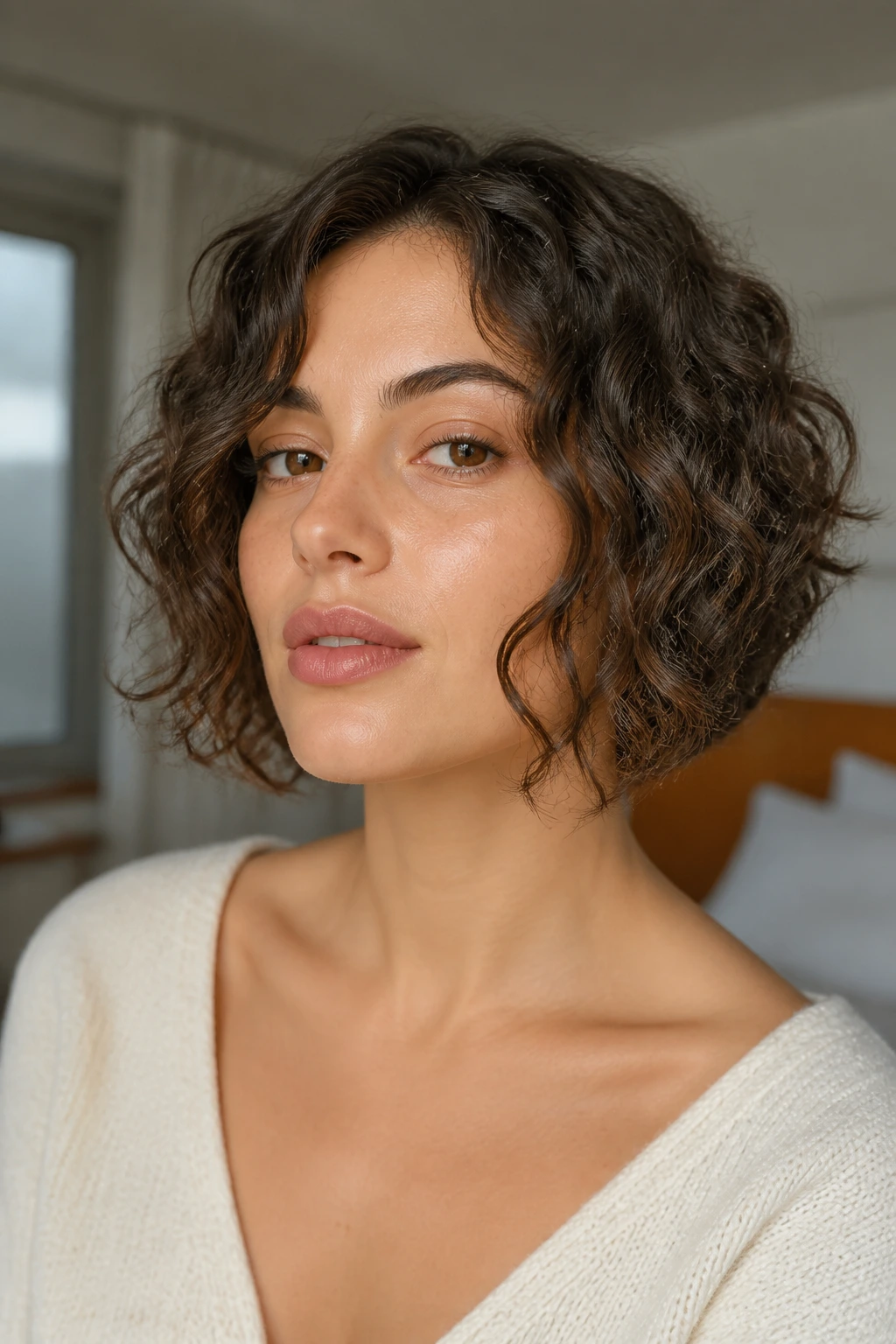
People love face-framing layers. Stylists love them too, because they sound like a fix for everything. But if the shortest pieces land exactly at the cheekbones, they often do the opposite of what you want.
Why? Because cheekbone length puts motion right at the widest part of the face. Curly hair expands there, the layers flip outward, and the frame becomes a little shelf instead of a soft opening. The effect is especially strong if the face already carries fullness in the middle.
Where it goes wrong
The eyes go straight to the cheeks. The layers flare out. The face looks wider, not longer.
A better version usually starts the shortest pieces below the cheek, often around the mouth or a touch lower, depending on curl length and density. That way the frame opens vertically instead of pinching the face from the sides.
If your stylist keeps offering cheekbone layers as a default, ask them to show you where those pieces will sit after shrinkage. That one question can save you from a lot of regret.
9. Rounded Mushroom Cut With a Curved Perimeter
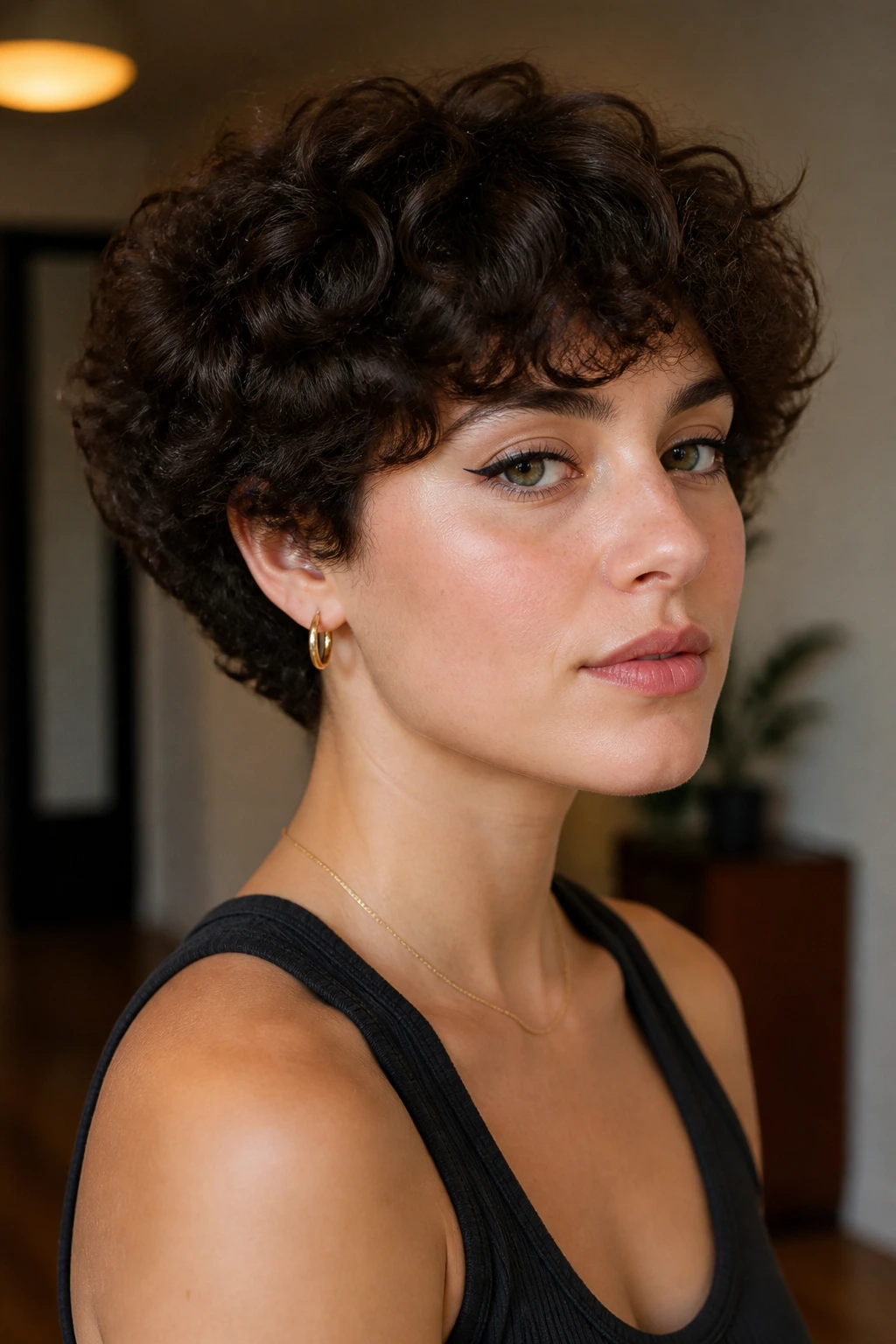
A mushroom shape on curls is exactly what it sounds like: fuller on the sides, round on top, and evenly curved around the head. On a round face, it can look like the haircut is copying the face instead of balancing it.
This shape usually appears when the top is cut too short and the sides are left with too much body. The curls spring outward, the outline wraps around the head, and suddenly the face and the hair are having the same conversation. That conversation is: round, round, round.
It is not the worst cut in the universe. It just needs a very specific face and a very specific curl pattern. If either one is off, the result can feel bulky fast.
The fix is simple in concept, harder in practice: keep the perimeter from bowing outward and preserve some length where the eye needs to travel downward. A little asymmetry or a longer front line breaks the dome. Without that break, the shape becomes a helmet with personality.
10. Close-Cropped Pixie With Bulky Temples
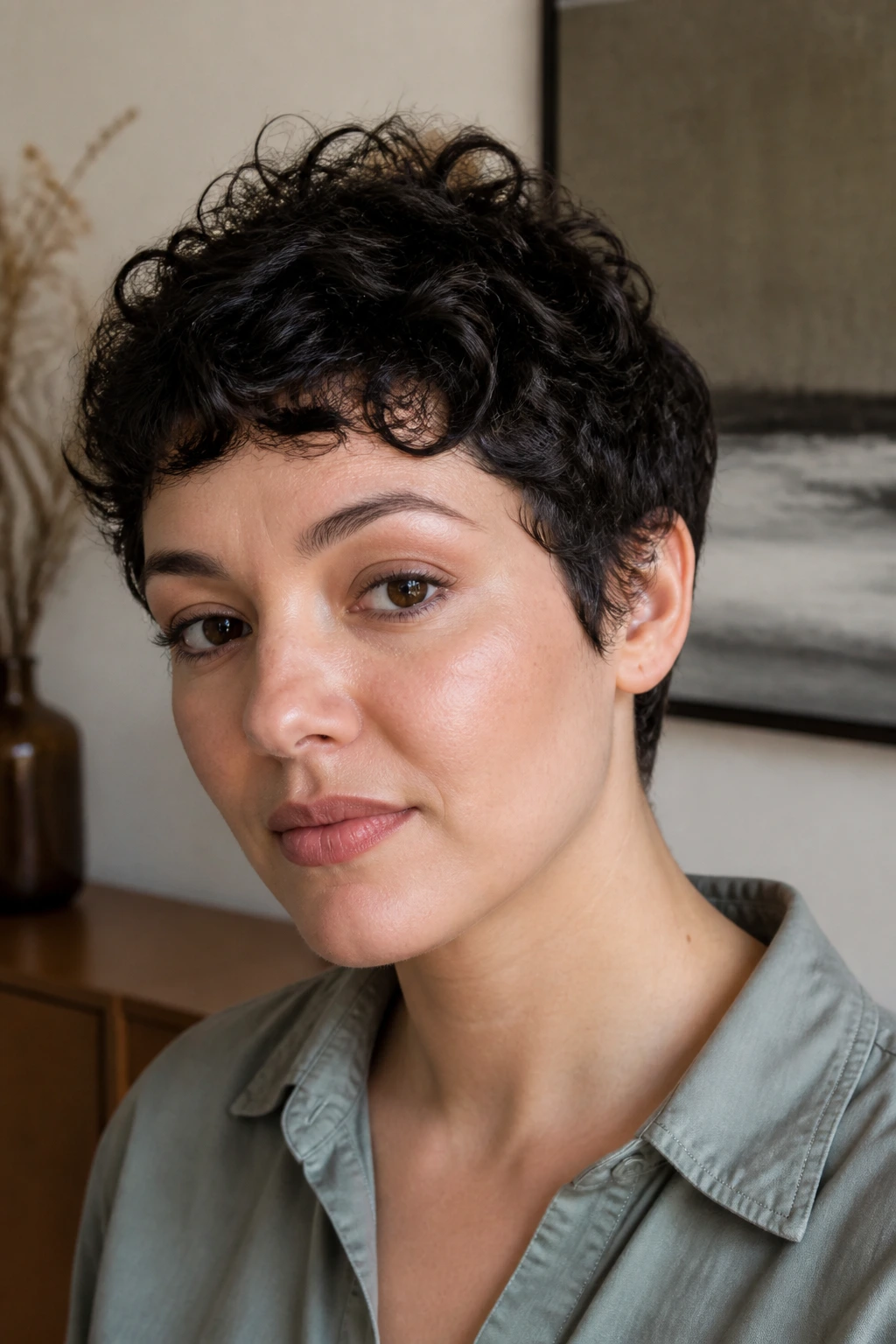
Short hair is not off limits for round faces with curls. Not at all. But a close-cropped pixie with bulky temples can make the sides look wider and the face look even rounder than it is.
This happens when the cut is too tight everywhere except the temples and top sides. The hair there poofs up, the ears get boxed in, and the haircut widens the face at eye level. That is the last place to add bulk.
A good pixie on curls needs intention. It needs either softness around the temples or some vertical lift at the crown — not both sides puffing out like parentheses. The difference is small on paper and obvious in a mirror.
If you want short, ask for tapered sides and a little length on top that can be shaped upward or forward. A short cut can absolutely work here, but the silhouette needs air. Otherwise it starts to look like the haircut is hugging the face too tightly.
11. Blunt Shoulder-Length Cut With No Front Angle
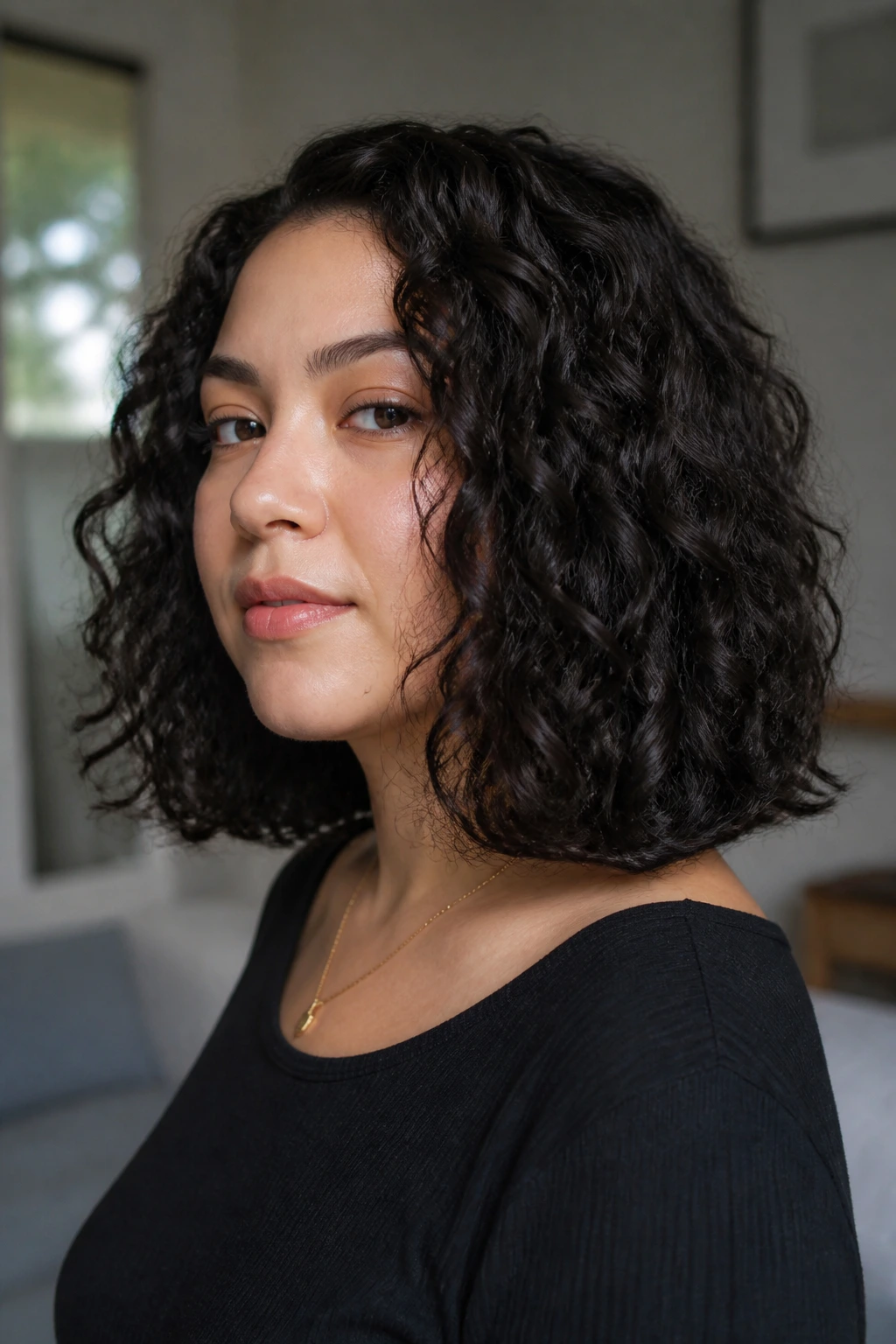
Shoulder length sounds safe because it feels long enough to be flattering and short enough to be light. But if it’s cut blunt all the way across with no front angle, curly hair can turn it into a square.
That square shape lands around the shoulders and cheeks, which means it adds width at two levels. On a round face, that can flatten the visual line and make the whole outline feel heavy. The hair sits there. Solid. Immoveable. A little stubborn, honestly.
The issue gets worse when the front pieces end exactly where the jaw closes. Then the cut acts like a frame that stops the eye in place instead of sending it downward.
A soft front angle solves a lot. Even one inch of extra length in front can pull the silhouette longer. If you want a blunt finish, keep the bluntness in the ends and let the front stay slightly longer. That’s the difference between “clean” and “boxy.”
12. Curtain Bangs Cut Too Short for Curl Shrinkage

Curtain bangs can be lovely on curls. The problem is that too many people ask for them at dry-lengths that work on straight hair, then wonder why they sit way up the forehead once they spring.
Short curtain bangs split into two little arcs and can leave a lot of forehead showing, which might sound balancing in theory. On a round face, though, they sometimes create a new problem: the eye gets pulled upward and inward, then back out at the cheek level. That movement can make the face feel wider instead of longer.
Quick reality check
- Curls shrink upward fast.
- Curtain pieces separate more than straight fringe.
- Short bang lengths need far more room than people expect.
If you want the look, cut them longer than you think. Far longer. A good curly curtain bang often needs to touch or skim the cheek when dry, not hover over the brow. Anything shorter should be treated as a very deliberate choice, not a casual one.
13. Wolf Cut That Spreads Out at the Sides

The wolf cut has a lot of energy. On some curls, that energy reads as cool and loose. On a round face, though, the wrong wolf cut spreads out at the sides and gives the haircut more width than lift.
The classic mistake is putting too much shortness around the upper sides while leaving the lower perimeter bulky. The curls explode outward in two zones: near the cheeks and near the shoulders. That creates a wide middle and a narrow top, which is not the balance you want.
A wolf cut should look lived-in, not overbuilt. If it gets too aggressive, it stops framing the face and starts framing the cheeks. Big difference.
If you love the texture of a wolf cut, keep the shortest layers low enough to avoid the cheekbone zone and make sure the crown has enough structure to hold the shape up. Otherwise the cut becomes all edge and no line. And on curls, edge alone is not enough.
14. Asymmetrical Bob That Lands at the Cheeks
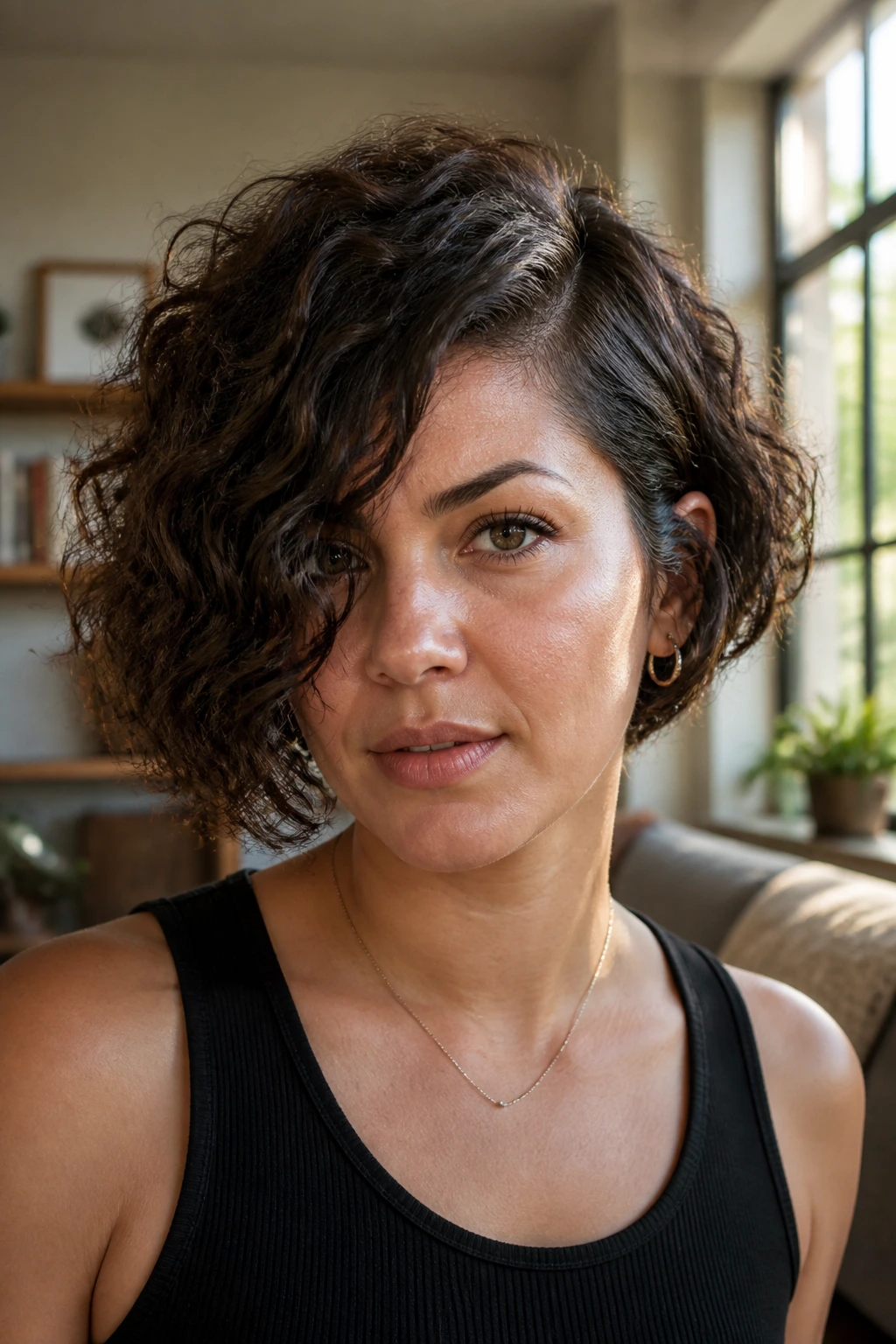
An asymmetrical bob can be a smart move when it is done with purpose. But if one side lands at the cheek and the other side only slightly lower, the cut can pull the eye sideways over and over again. That is a tiring shape.
On curly hair, asymmetry also gets exaggerated because the curls on each side do not dry in the same way. One side may spring tighter, the other may stretch, and suddenly the difference looks accidental instead of designed.
The real issue for a round face is that a short side sitting at cheek level tends to widen the face right where it already has volume. The longer side can’t always rescue it if the shortest side is too short.
A better asymmetrical bob keeps the shortest point below the cheek, or it uses a much softer, less dramatic angle. The line should feel like movement, not a split screen. If the haircut makes people stare at the cheeks first, the angle is too aggressive.
15. Inverted Bob That Kicks Out Under the Ear
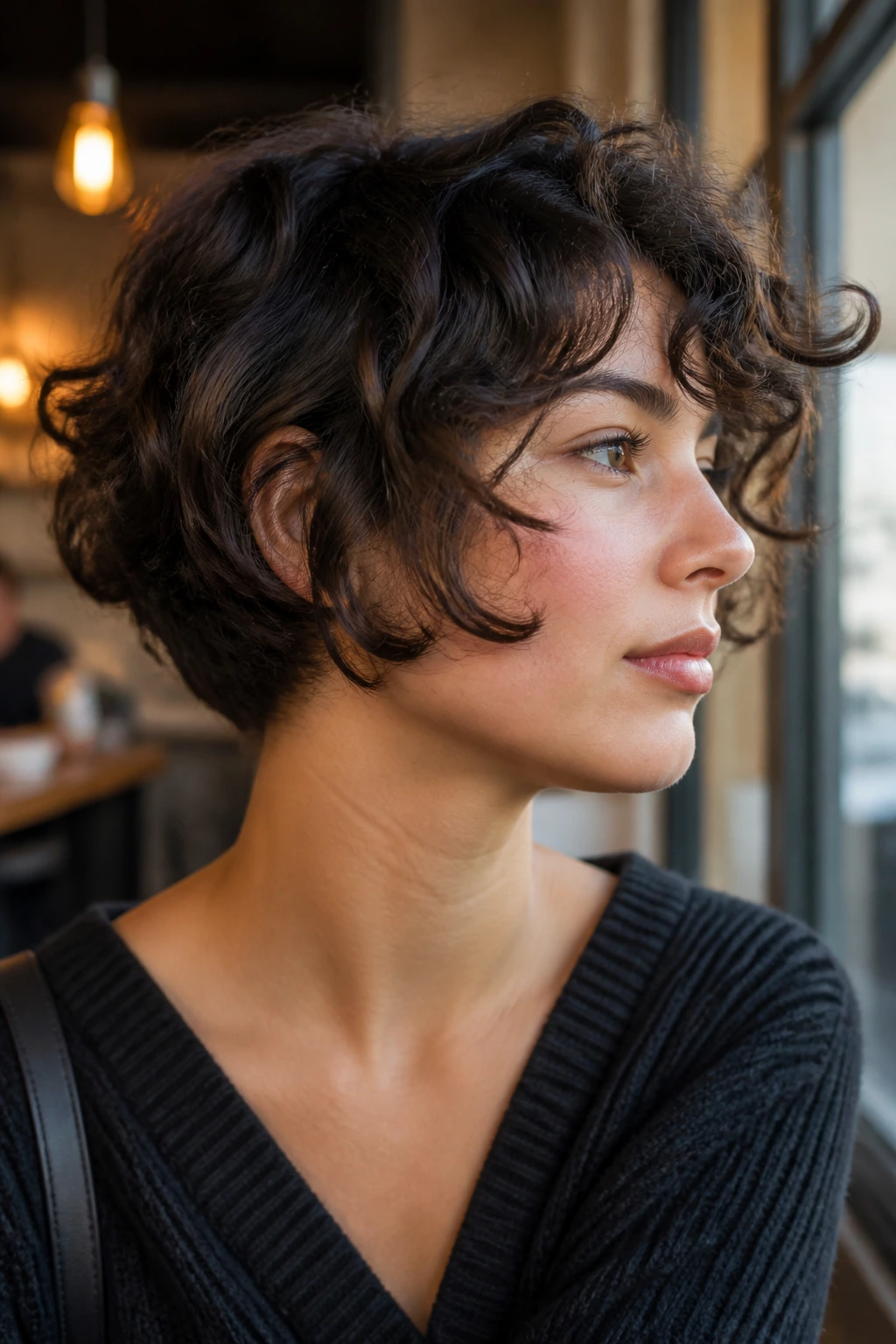
An inverted bob sounds neat until the front pieces kick out right under the ear. Then it becomes a little shelf with a hairline attached. Curly hair loves to do this if the front is too short and the inner layers are too light.
That kick-out lands exactly where a round face does not need extra width. It can also create a double curve: the jawline curves, and the bob curves right on top of it. The eye gets stuck there. Again and again.
What to watch for
- Front length that ends near the ear tends to flare.
- Tight curls magnify the angle.
- A strong inversion can turn into a wedge.
If you like inverted shapes, ask for more length in the front than you think you need. A softer angle reads as modern. A hard kick-out reads as dated and wide. On curls, that difference shows up fast once the hair dries.
16. Over-Texturized Ends That Turn See-Through

Texturizing can save a cut. Or it can wreck it. Too much point cutting or thinning leaves the ends so light that the curl pattern breaks apart and the silhouette starts to look see-through.
That might sound airy and nice, but on a round face it often means the bulk shifts upward while the ends fray out. The cut looks busy around the mid-lengths and wispy at the bottom, which creates a strange, uneven frame. The eye notices the frizz first.
The issue gets worse in humidity. Those thin ends separate fast, so the haircut loses its clean outline by midday. What looked “soft” in the chair becomes fuzzy on the sidewalk.
If your hair is already fine or prone to frizz, ask for careful shaping instead of aggressive thinning. You want the curl clumps to stay together. Thin ends may seem lighter, but they often make the whole cut read wider because the outline stops holding its shape.
17. Long Layers That Start at the Jaw

Long layers can be beautiful. The bad version starts at the jaw and works downward, which sounds harmless until the curls dry and the shortest layer kicks out around the cheeks.
That placement can build a halo right across the widest part of the face. The hair looks full, but the fullness is in the wrong spot. Instead of creating a vertical frame, the layers create a burst around the center of the face.
It’s the kind of cut that looks fine for the first few days and then starts to expand into its true shape. And that shape can be a little too broad for round faces.
A better layer map usually starts below the jaw or at least well below the cheekbone zone. That keeps the upper silhouette calmer and lets the length do some of the work. Layers are not the problem here. The starting point is.
18. Geometric Crop With Hard Corners
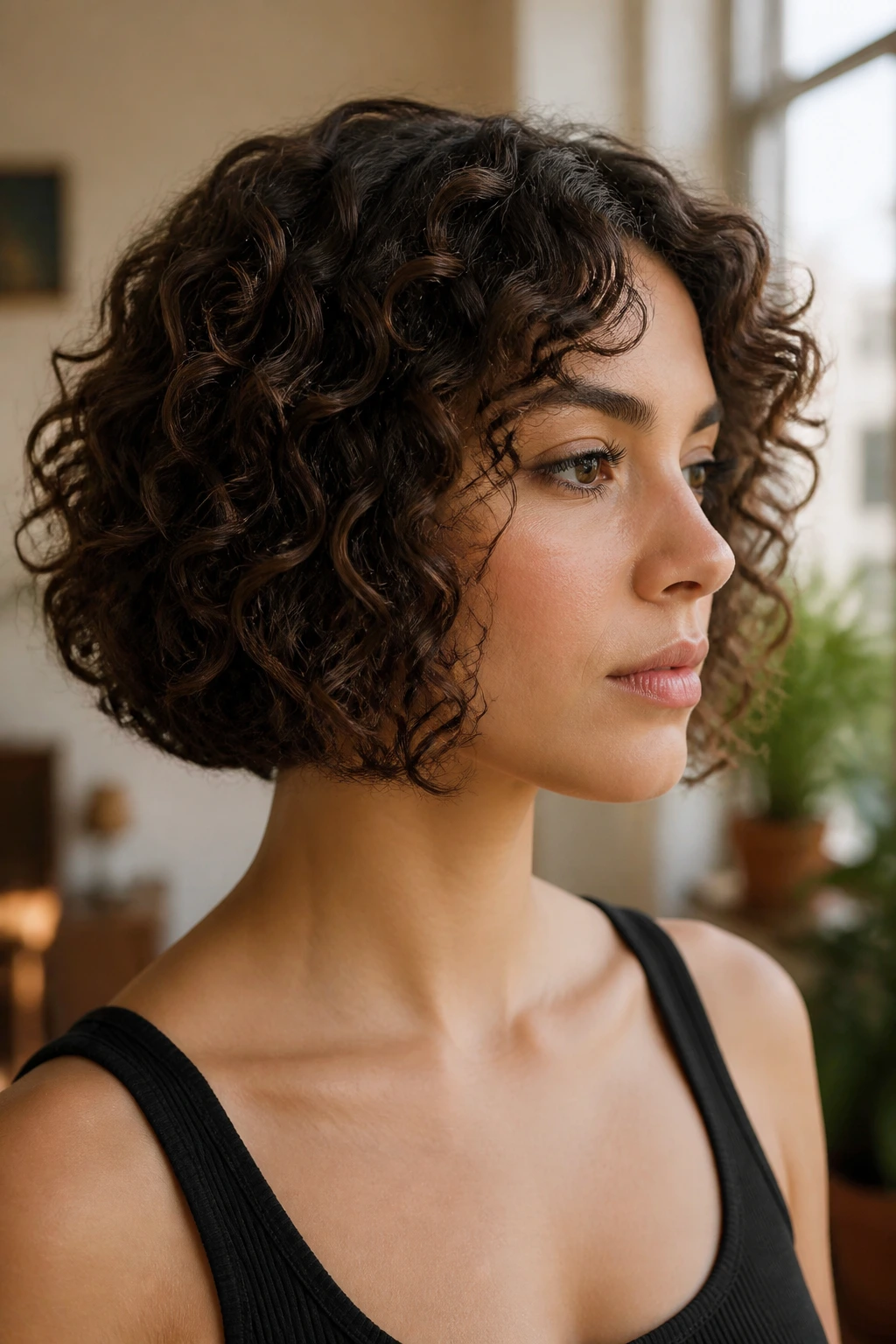
Sharp geometric crops can look striking in photos, especially when the hair is smooth and the model has a narrow face. On curly hair and round faces, hard corners can feel too literal. They draw boxes around the cheeks and jaw instead of softening them.
The problem is contrast. A round face already has softness in the middle. A cut with obvious corners can look heavy because the eye keeps comparing the curve of the face to the square line of the hair. That mismatch is not flattering. It’s distracting.
A little structure is good. Corners, though, need to be softened so the curls can move. If the perimeter looks like it was traced with a ruler, the face ends up looking even rounder by comparison.
If you like precise lines, keep them lower and less severe. Or use a soft edge that still has shape but does not fight the face at every turn.
19. Half-Shaved Cut That Leaves a Wide Halo
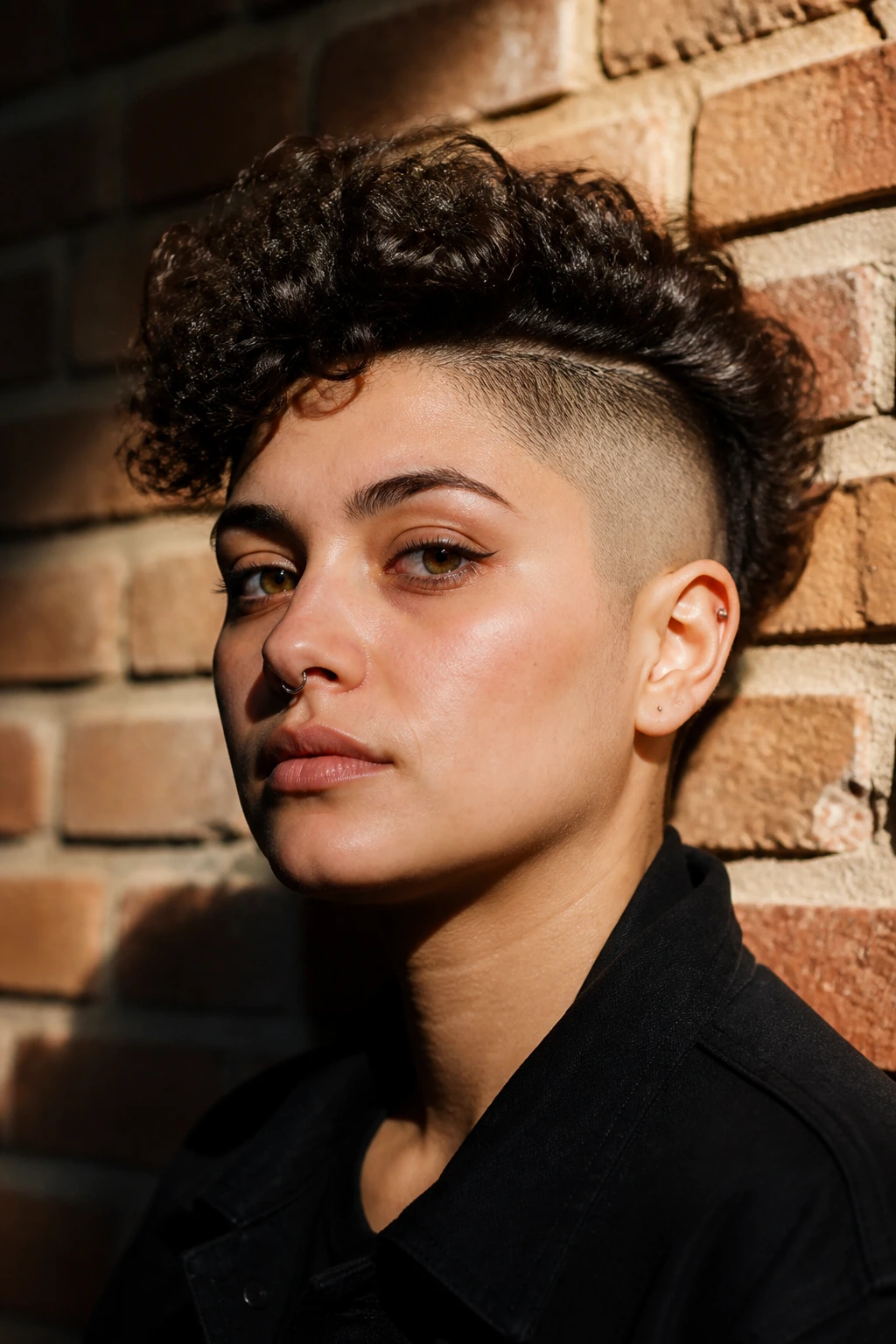
An undercut can be practical on dense curls. It removes bulk and helps the top sit better. But a half-shaved cut that leaves too much hair on top and around the sides can create a wide halo that sits like a ring around the head.
That halo is the problem. On a round face, it adds outward volume without enough vertical length to balance it. The hair can end up looking bigger than the face in a way that feels deliberate for about five minutes and awkward after that.
This is especially tricky if the top is kept too short or too rounded. The contrast between shaved sides and a big fluffy crown can make the head look wider, not smaller.
If you’re going this route, keep the top long enough to shape forward or upward, and make sure the visible perimeter stays tapered. A halo is a cute idea in theory. In real life, it usually needs more shaping than people expect.
20. Crown-Short Cut That Puffs Up on Top
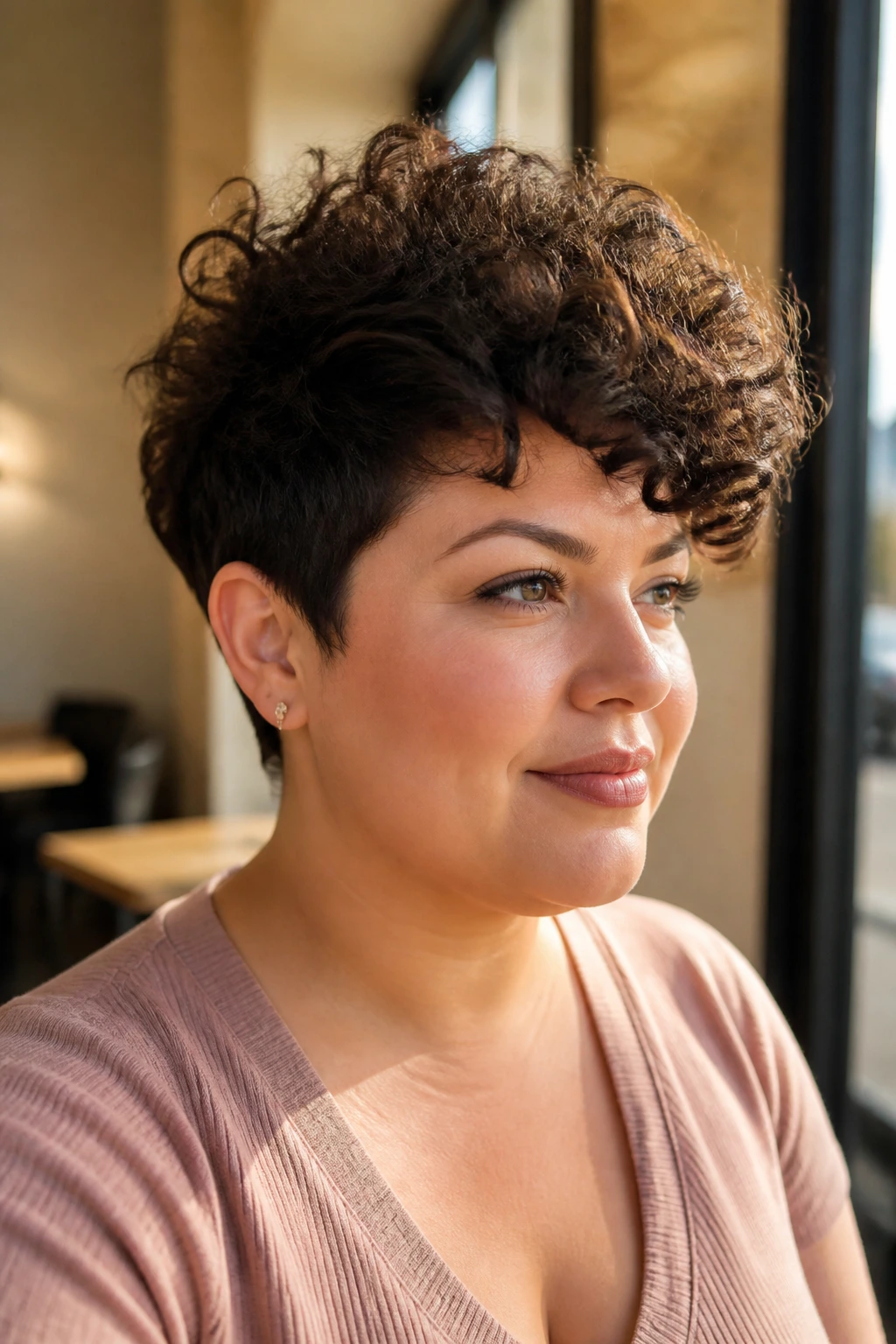
Short crown, full sides, round face. That combination is a recipe for a little puffball effect.
When the top is cut too short, the curls at the crown spring up and refuse to lie flat. If the sides are still broad, the haircut becomes top-heavy and circular. The face looks like it’s wearing a soft dome, which is not the goal unless you’re actively going for that silhouette.
A cut like this can also make the forehead feel shorter. The eye lands on the top volume first, then the cheeks, and then stops. No movement. No length. Just shape sitting there.
If you want height, keep it controlled. You need lift at the crown, not a mushroom cap. That means leaving enough length on top to direct the curl pattern instead of cutting it into a puff.
21. Two-Wide-Point Cut That Hits Cheek and Jaw

This one is sneaky. The cut has a wide point at the cheekbone and another at the jaw, so the outline seems to pinch and expand in two different places. On a round face, that creates a lot of visual noise.
Curly hair makes the issue sharper because the curls exaggerate every line change. A layer that lands at the cheek can flare. Another that lands at the jaw can kick. Put the two together, and the face gets framed by two separate shelves.
That is not balance. That is a trap.
The better move is to choose one focal point and keep the rest calmer. If the shortest layers are higher, the perimeter should be longer and softer. If the front is angled, the sides should not flare at the jaw. One strong shape is easier to wear than two competing ones.
22. Curly Bowl Shape With No Side Balance
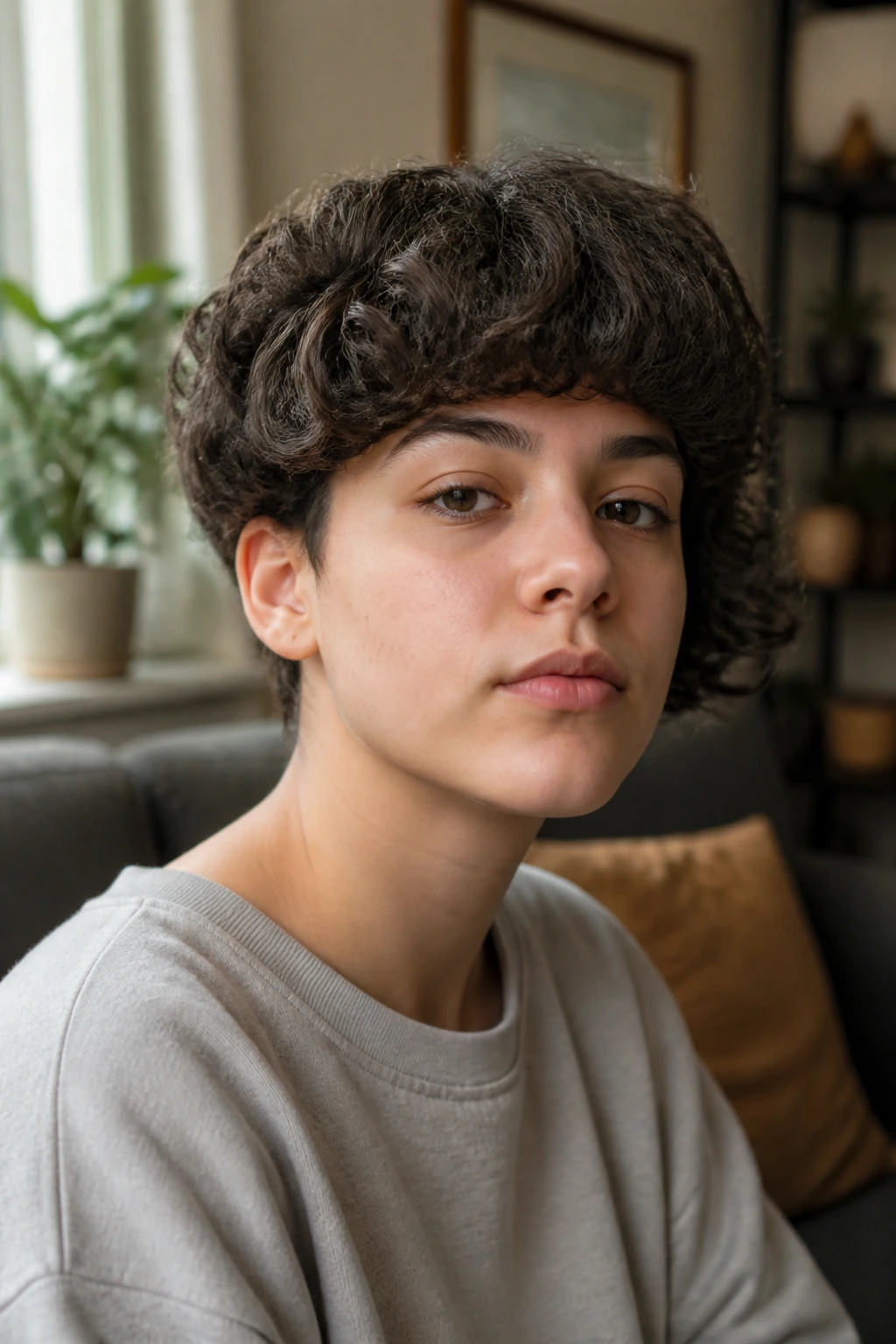
The bowl shape is back every few years in new clothes, but the old problem never goes away: it rounds the head. On curls, it becomes even more spherical because the natural texture expands the line.
For a round face, that can feel like the haircut is echoing the face instead of balancing it. The side balance is the real issue. If the sides are the same length all the way around and the top is cut into a soft cap, the whole silhouette turns circular.
Some people can wear this on purpose. Most cannot, and even fewer can wear it without styling time they do not have. If the goal is to soften a round face, a bowl shape usually goes the wrong direction.
A better alternative keeps the outline open on the sides and a little longer in front. The eye needs somewhere to go. A bowl cut gives it nowhere to go at all.
Why Curly Hair and Round Faces Need the Right Weight Line

The shape problem starts with weight. Where the hair sits matters more than how long it is. A cut that keeps the weight line below the jaw gives the face room to breathe. A cut that parks the weight at the cheeks makes the whole head read wider.
Curly hair adds another layer: shrinkage. Most curl patterns spring upward and outward once they dry, which means a cut that looks careful in the chair can become much shorter and broader once it’s styled at home. That is why a “safe” chin-length bob can end up feeling surprisingly bold. The curls are doing their own architecture.
A round face does not need hair that copies its outline. It needs hair that offers contrast. That contrast can come from length, from a lower front angle, from soft layering below the widest point, or from a crown that rises a little without exploding sideways. I’m picky about this because I’ve seen too many cuts fail for one simple reason: the stylist thought shape was the same as length.
It isn’t. Shape is the whole game.
What to Bring to a Curl-Savvy Consultation
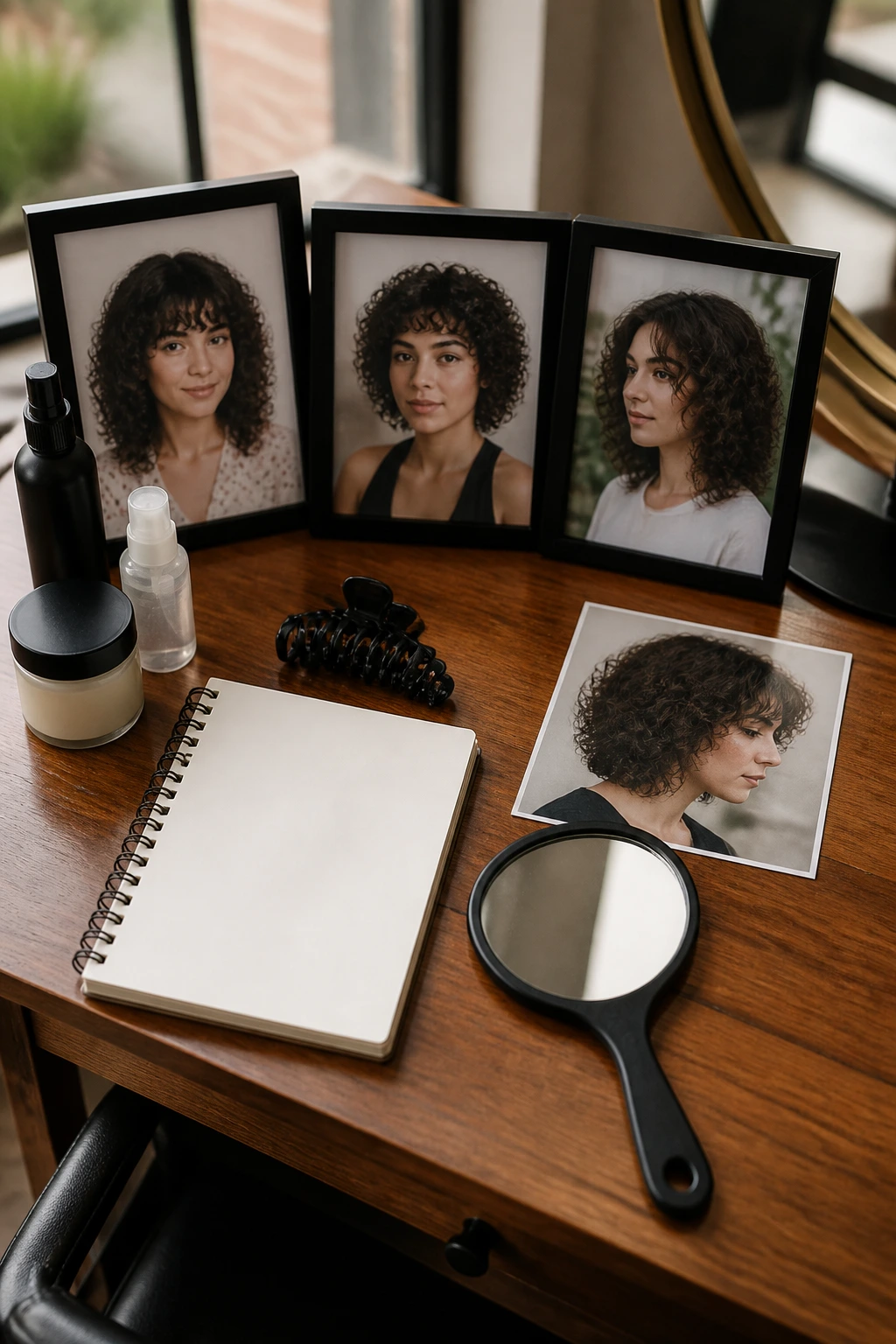
A good consultation is half the haircut. Bring photos, but bring the right ones. One photo should show the front, one should show the side, and one should show the curl pattern after dry styling, not after a round-brush blowout that lies through its teeth.
Write down what your hair does at home. Does it shrink an inch? Two inches? Does one side curl tighter? Does your fringe separate into three pieces by noon? That stuff matters. The more specific you are, the less likely you are to end up with a shape that only works in ideal lighting.
Bring one photo of a cut you love and one photo of a cut you absolutely do not want. That second photo often helps more. It tells the stylist where the danger zones are — cheekbone bang length, jaw-level bob, shelf layers, whatever it is.
How to Choose a Stylist Who Understands Curls

Look for evidence, not slogans. Anyone can say they “love curls.” Fewer people can show a real range of curl density, face shapes, and finished cuts that still look good three weeks later. That’s the test that matters.
Dry-cut photos are useful, but not enough. You want to see curls at different lengths, especially on clients whose faces aren’t narrow and oval by default. If every example is long, loose, and heavily styled, the portfolio is more decoration than proof.
Ask how they decide where the shortest layer should land on a round face. A good answer will mention cheekbones, jawline, shrinkage, and density. A weak answer will sound vague and reassuring in the worst way. Skip the vague one.
I also like to ask whether they cut curl by curl or do a broader shape first. Both can work. What matters is whether they know how to account for spring-back and how to keep the outline from getting too wide at the sides.
What to Bring to the Chair
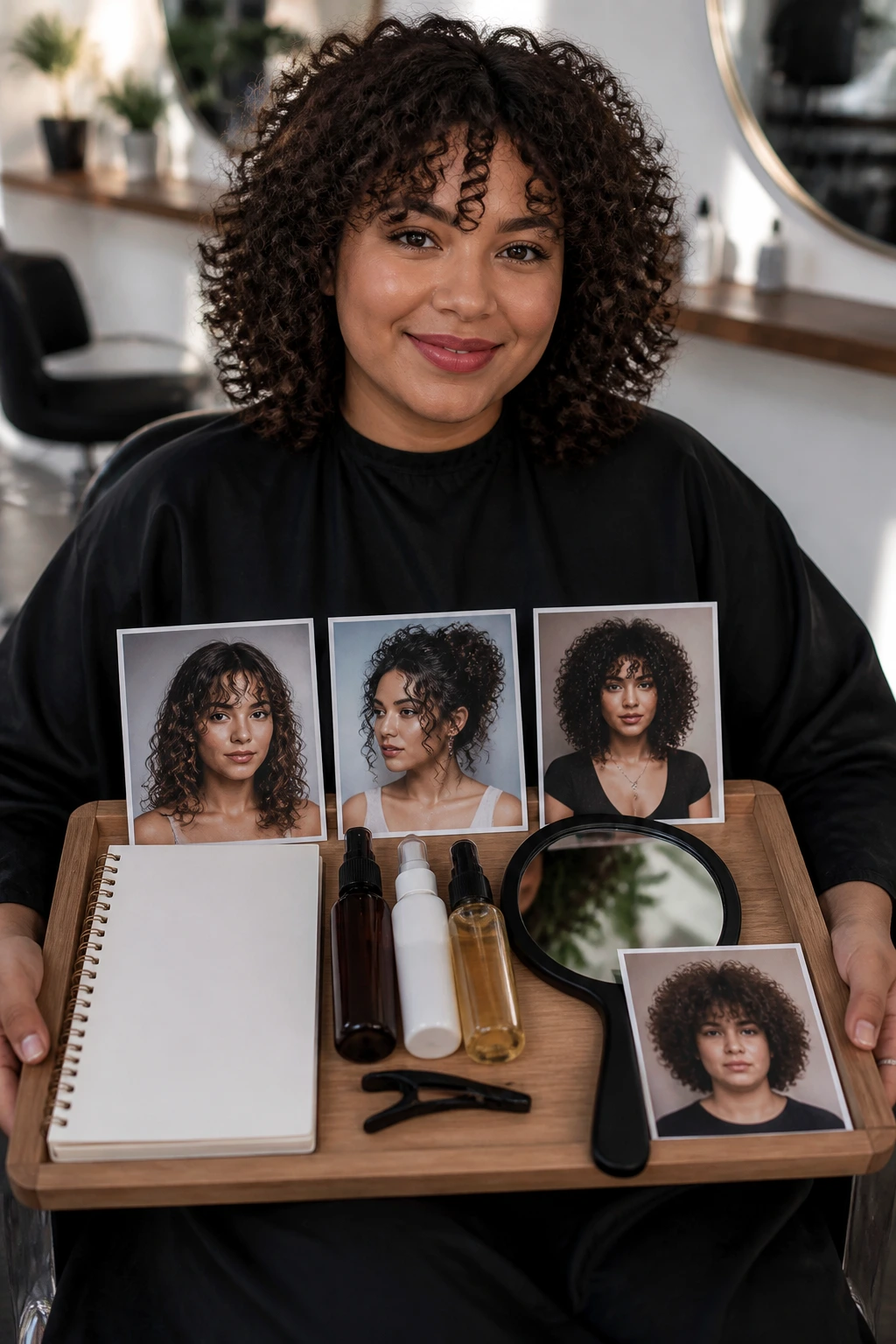
- Three reference photos: One front view, one side view, and one finished style that matches your curl pattern.
- A note about shrinkage: Tell the stylist how much length you usually lose once your hair dries.
- Your everyday product list: Bring the names or photos of the leave-in, gel, or cream you actually use.
- A small clip or tie: Useful for sectioning and showing how you usually wear the hair around your face.
- A hand mirror: Handy for checking side balance and the line at the nape.
- A photo of a bad haircut: Not for drama. For details. It shows what shape you never want again.
Small Changes That Make a Bad Cut Easier to Wear
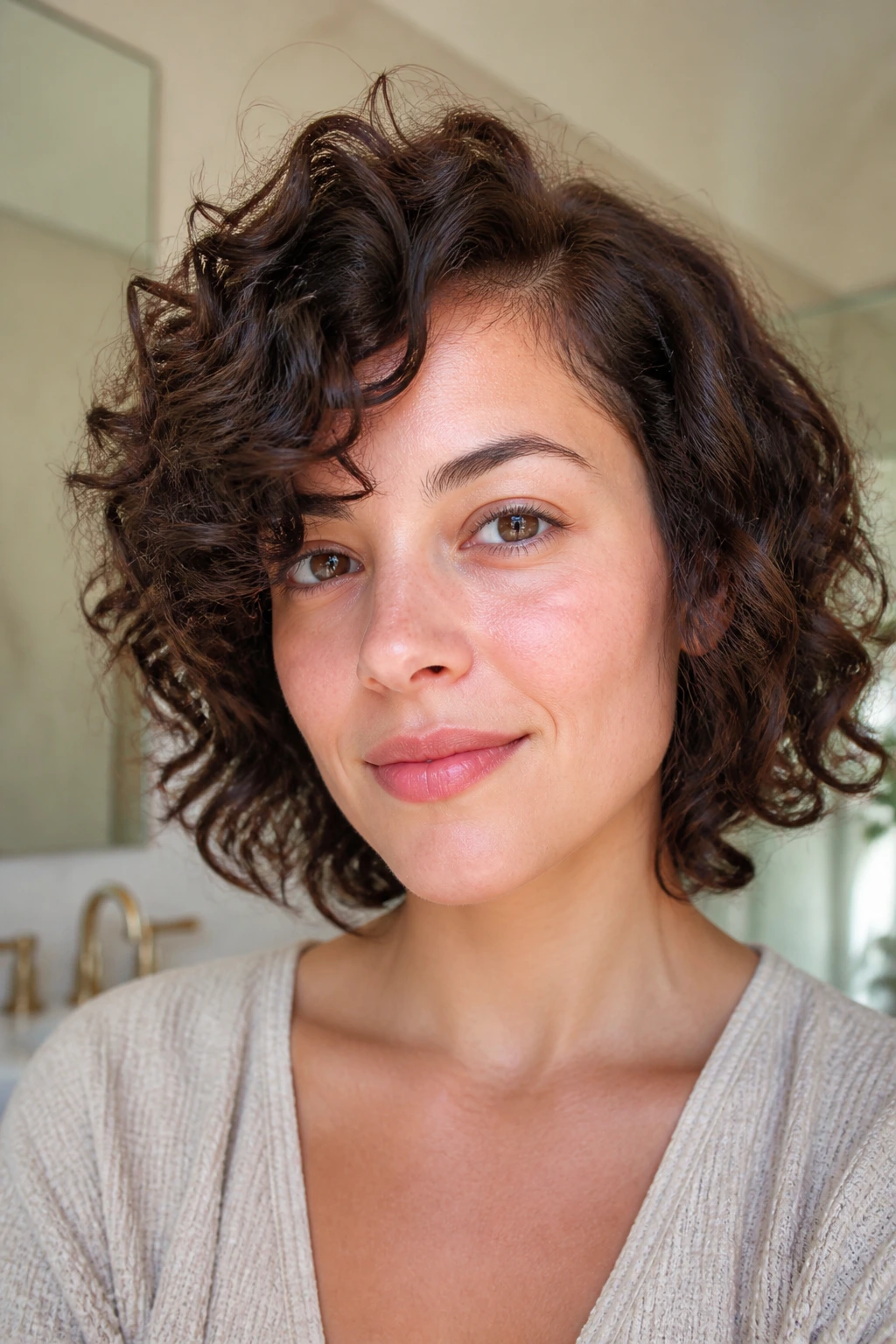
If you already have one of these cuts, do not panic and do not reach for the scissors again. Start with the part. Moving it half an inch off center can break up a wide shape fast, especially on day-two hair. That small change can pull the eye away from the cheeks.
A second fix is root direction. Clip the crown while the hair dries, or diffuse with the head upright so the top keeps some lift. If the sides are collapsing inward or puffing out too much, a little root control can make the silhouette look more deliberate.
Accessories help more than people admit. A barrette, a headband used low on the head, or a half-up twist can reduce width at the exact place the haircut is fighting you. I’d rather see a smart clip than three extra styling products doing nothing.
And if the haircut is only bad because the front is too short, work with that. Tuck, twist, pin, or let a few pieces fall forward longer while the rest of the hair settles. You are not trying to “fix” the cut in one morning. You’re trying to make it wear better until the next trim.
Better Haircut Directions for Curly Hair and Round Faces

The Collarbone Curtain: This is the safe place a lot of people should start. The length sits below the jaw, the front opens softly around the cheeks, and the curls have room to spring without widening the face. It gives shape without boxing anything in.
The Low-Layer Curl Shag: The key here is placement. The shortest layers stay below the cheekbone zone, so the top gets movement without building a halo at the middle of the face. It works best when the stylist protects the curl clumps instead of over-thinning them.
The Soft Front Lob: Keep the back near the collarbone and let the front sit a little longer. That tiny angle changes everything. It makes the face feel longer and stops the haircut from landing as a block.
The Tapered Curly Crop: Short can work, but it needs tapering at the sides and a little height at the crown. The sides should not balloon. The top should not become a puff. If the shape is clean, the crop can look sharp instead of round.
The Balanced Rounded Shape: If you like fullness, keep it controlled and slightly longer in front than you think. The goal is not to erase roundness. It’s to keep the hair from repeating it.
Keeping the Shape Between Appointments

Curly cuts can drift fast. Bangs usually need attention first, often every 4 to 6 weeks if they sit anywhere near the brow. Layered shapes and lobs can usually stretch to 8 to 12 weeks before the outline starts to fray.
The trick is watching the parts of the cut that carry the most width. If the cheeks are starting to puff out again, that’s the point to trim or reshape, not when the whole cut feels disastrous. A tiny dusting can keep the perimeter from spreading too far.
Sleep matters more than people want to hear. A satin pillowcase or bonnet helps preserve the side shape and keeps the crown from flattening into a wider silhouette overnight. If the haircut is already close to too round, rough sleep makes it worse fast.
And if the cut is growing out awkwardly, resist the urge to keep “cleaning it up” at home. That usually turns a shape problem into a length problem. Better to let it grow a little, then have the perimeter reshaped with intention.
Common Mistakes That Make the Cut Worse
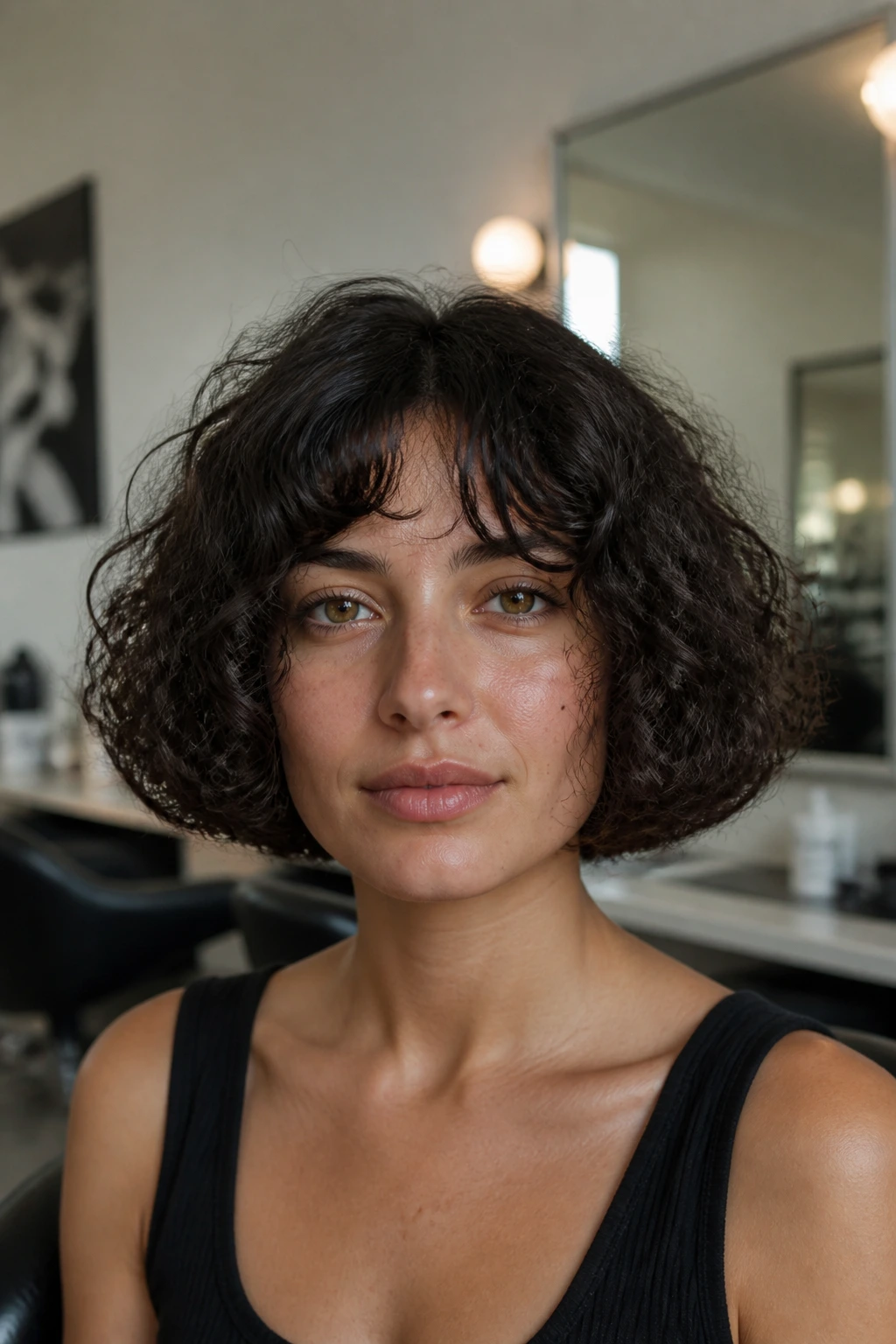
The first mistake is trusting wet hair. Wet curls lie flat and look longer, so a stylist can cut too much off the bottom or place bangs too high. Always ask where the curl will sit once it dries.
The second mistake is asking for “lots of layers” without saying where those layers should begin. That phrase is too vague to be useful. On a round face, layers that start at the cheeks can widen the face fast.
Third, people often let the stylist thin the ends too much because the hair feels heavy in the chair. Heavy is not the same as boxy. Removing too much weight can make curls frizz and spread.
The fourth mistake is choosing a style photo that has been stretched with heat and product. If your hair is curlier, denser, or shorter than the model’s, the same cut can behave very differently. Match the texture, not just the mood.
And finally, there’s the “product will fix it” trap. Product can help shape, hold, and define. It cannot save a bad geometry problem.
Frequently Asked Questions
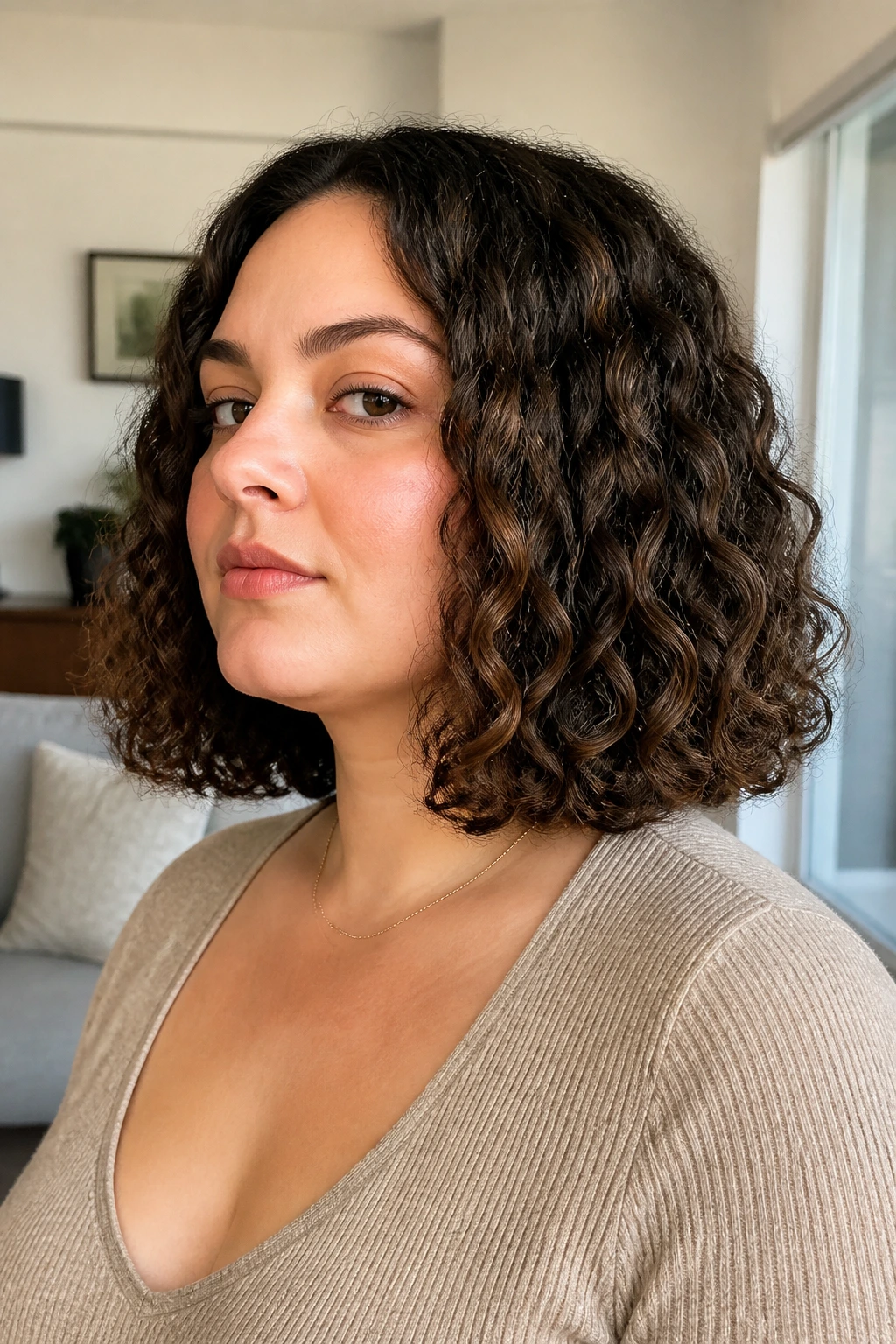
Can curly hair and round faces wear short hair at all?
Yes, but the shape has to be controlled. A short cut works best when the sides are tapered and the crown has some direction, not when everything is cut to the same puffed-out length.
Are bangs off limits for round faces with curls?
No, but the length matters a lot. Curly bangs usually need to be cut longer than straight bangs because they spring upward as they dry, and the best versions are soft rather than blunt.
Do layers always make a round face look wider?
Not if they’re placed well. Layers that begin below the cheekbone can add movement and length, while layers that start at the cheeks or jaw tend to widen the face.
Is a dry cut better than a wet cut for curls?
Dry cutting often gives a better read on shape because the stylist can see where the curls actually land. Wet cutting can still work, but only if the stylist understands shrinkage and checks the cut after it dries.
What if my curls are loose waves instead of tight coils?
The same rules still apply, just a little less dramatically. Loose waves can tolerate some shorter layers, but jaw-level bobs, cheekbone bangs, and boxy perimeter cuts can still widen a round face.
How often should I trim a curl cut?
Most shapes need a cleanup every 8 to 12 weeks, while bangs often need attention sooner. If the outline starts sitting at the cheeks or jaw again, that’s the sign to book sooner rather than later.
What should I say if I already have one of these bad shapes?
Ask for the weight line to be moved lower and the front to be softened. That gives the stylist a target, which is much better than saying you want “more layers” and hoping they guess right.
Can styling products fix a haircut that’s too wide?
They can improve definition and control puffiness, but they cannot change where the length sits. If the haircut is parked at the jaw or cheeks, you need a reshape, not a stronger gel.
A Cleaner Shape Next Time
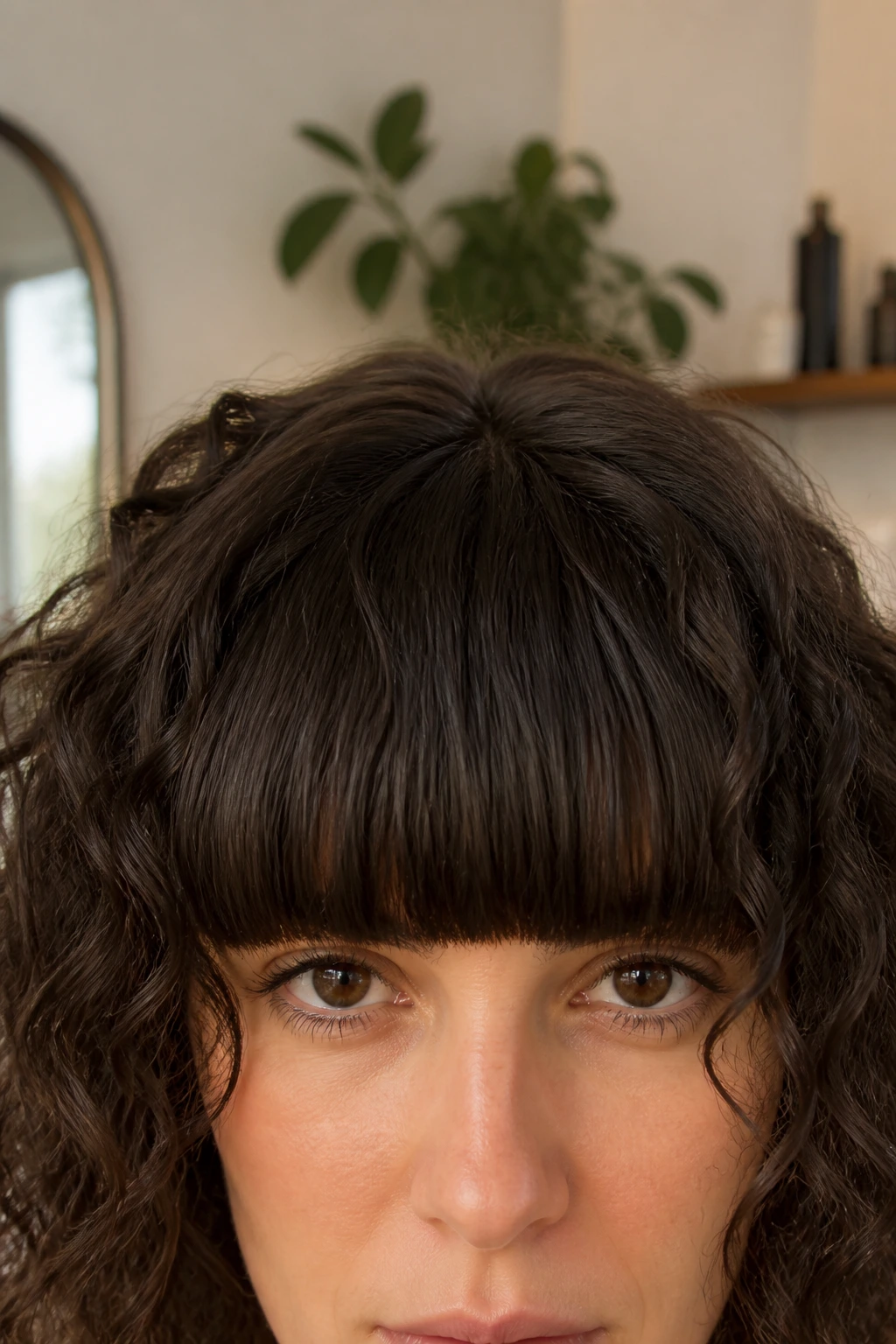
The best cuts for curly hair and round faces do not shout. They guide. They keep the sides from flaring, let the length pull the eye downward, and leave enough room for the curls to do their own thing without turning the face into a circle with bangs.
That’s the part people usually miss. A good haircut here is not about hiding your face or fighting your texture. It’s about placing the weight where it belongs, then getting out of the way.
Take that shape into the next appointment. Bring the photos, name the spots that have failed you before, and be very specific about where you do not want volume sitting. The next conversation at the chair gets a lot easier when you know exactly what to avoid.