



Curly hair and round faces have a tricky little relationship. Put the wrong bob at the wrong length, and the whole cut can spread outward like a bell. Put it in the right place, though, and the same curls suddenly look controlled, lifted, and a lot more intentional.
That’s why classic bobs for curly hair and round faces are worth a closer look. The good ones don’t fight the curl pattern. They work with it, letting shrinkage do some of the shaping while the perimeter keeps the face from looking wider than it is. A bob that sits at the cheekbone can be a problem; a bob that drops just below the jaw or gets softened with internal layers can change the whole line of the face.
There’s also a practical side to this that gets missed all the time. Curly bobs are not one-size-fits-all. Density, curl tightness, shrinkage, and even how much one side of your hair holds water will change the way the cut settles. A cut that looks neat wet can turn puffy dry. A cut that seems conservative in the chair can spring up two inches once the diffuser comes out. Those details matter.
Why These Bobs Earn Their Keep
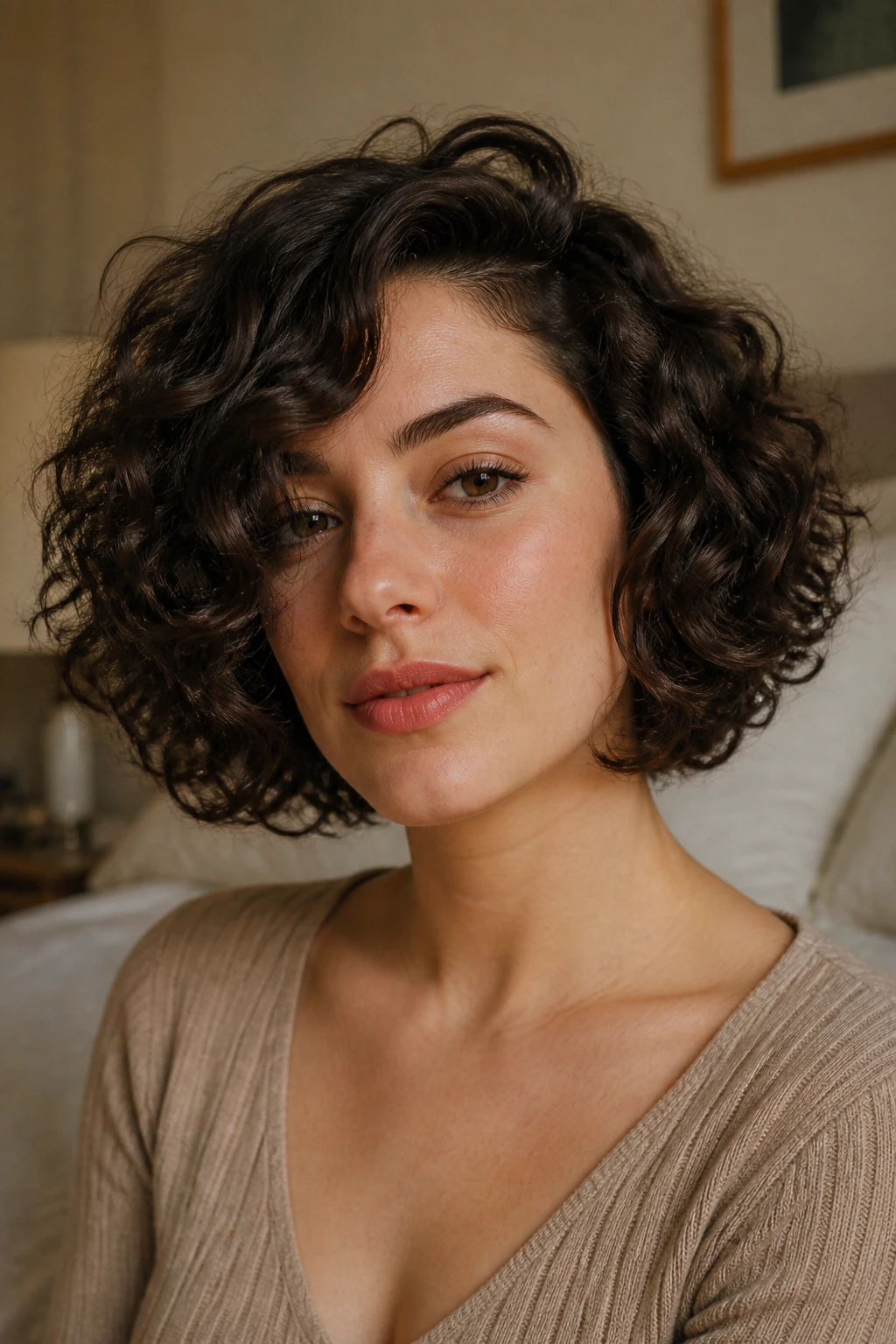
- Length placement matters: A bob that lands below the widest part of the cheek keeps the eye moving downward instead of stopping at the middle of the face.
- Curl shrinkage can work for you: The right shape leaves room for curls to bounce upward without turning into a triangle.
- Side parts change the whole silhouette: An off-center part breaks up facial width fast, especially when the hair has a strong curl pattern.
- Layers need a purpose: A few well-placed layers remove bulk where curls stack up, but too many short layers can send the sides outward.
- Styling stays sane: These cuts are chosen because they still look like a bob when they air-dry, diffuse, or get refreshed on day three.
The Shape Rules That Make a Curly Bob Flatter a Round Face
A round face usually reads widest through the cheeks, with soft curves and not much angularity at the jaw. That does not mean you need to hide your face. It means the bob has to create a little vertical movement. The easiest way to do that is to keep the strongest volume away from the exact middle of the cheeks.
Where the silhouette should sit
The sweet spot is usually between the jawline and the collarbone, depending on curl shrinkage. If your curls shrink hard, what looks like a chin-length cut in the chair may become a cheek-skimming bob after drying. That can still work, but only if the shape has some length in front or some lift at the crown.
What to avoid at the cheekbone
A blunt line that lands right at the cheekbone is the fastest way to widen a round face. So is a cut that is shorter at the front and extra full at the sides. You want the bob to move past the widest part of the face, not park there.
The little details that change everything
A side part. A soft angle. A few internal layers. A fringe that opens in the middle instead of forming a heavy curtain. Those are small shifts, but on curly hair they matter a lot because curls hold shape with attitude. They do not drape the way straight hair does. They spring.
1. Chin-Length Curly Bob with a Soft Side Part
A chin-length curly bob can look sharp on a round face when the part is offset and the curls are allowed to fall in a loose arc instead of a perfect circle. The trick is not the length alone. It’s the way the front pieces break up the face and keep the whole shape from reading too symmetric.
Why this shape works
The side part pulls attention away from the center of the face, and the chin-length perimeter keeps the curls from collapsing into a heavy mound. If your hair has medium density and a springy S-wave or loose ringlet pattern, this is one of the easier cuts to live with. It gives shape without looking overworked.
Best when you want
- A clean outline that still feels soft
- Enough length to tuck one side behind the ear
- A bob that survives air-drying without a lot of fuss
Pro tip: Ask for the front to sit just below the chin if your curls shrink hard. That extra half-inch is the difference between “intentional” and “too short.”
2. Blunt Jaw-Length Bob with Clean Ends
This one sounds bold, and it is. A blunt jaw-length bob can absolutely work on curly hair, but only when the texture is controlled at the root and the perimeter stays tidy. The clean line gives the cut authority, while the curls keep it from looking stiff.
The jaw-length placement is what makes it round-face friendly. It pushes the shape away from the cheeks and gives the face a little more length. If your curls are loose to medium and your density is not extremely high, the blunt edge can look crisp without puffing out.
It is not the cut I’d hand to someone who wants zero styling. You need enough product to keep the ends together and enough moisture to stop the hair from frizzing into a halo. But when it’s done well, the result has a certain old-school confidence to it. Straightforward. No fluff.
3. A-Line Curly Bob that Slides Longer in Front
Does an angled bob work on curls? Yes, and this is one of the safest versions for a round face. The back is slightly shorter, the front is left longer, and that forward drop creates a narrow visual line along the cheeks.
The angle does two jobs at once. It keeps the nape from bulking up, and it gives the front pieces enough length to skim the jaw instead of ending right at the widest part of the face. On wavy or loose-curly hair, this cut can look especially polished because the shape stays readable even when the curl pattern loosens.
How to wear it
Keep the front pieces defined with a light cream or gel, then let the back stay a little more compact. You want the length difference to show, not disappear into frizz. A deep side part can sharpen the angle even more if your face needs more vertical line.
4. French Bob with Airy Fringe
A French bob on curly hair is never going to look flat. That is the point. The shape is short, cheeky, and full of movement, but the airy fringe keeps it from feeling boxy around a round face.
The fringe should not be dense or heavy. It needs to separate a bit and sit around the brow or just above it, depending on shrinkage. If the curls in front are tight, the fringe can spring up fast, so I prefer to leave a little extra length and let the final shape happen after drying.
This cut is best if you like hair that feels styled even when you did not spend long on it. It has attitude. It has charm. And it works especially well when the curls are shiny, because shine keeps the short length from looking frizzy or choppy.
5. Rounded Bob with Internal Layers
The outside line of this bob is soft and curved, but the inside is quietly thinned out so the hair can fall instead of balloon. That internal shaping is the whole story. Without it, curly hair can turn into a round puff that sits right where you do not want it.
This is a strong choice for dense curls that hold width at the sides. The round perimeter keeps the cut feeling classic, while the hidden layers remove some of the bulk that tends to widen the face. It is a very good example of a haircut doing quiet work in the background.
What makes it different
- The outline stays classic and feminine
- The weight is reduced without obvious choppy layers
- The style still reads as a bob, not a shag
Small warning: If the layers are cut too high, the sides can start to flare. Keep the shaping low and deliberate.
6. Inverted Bob with a Tapered Nape
Compared with a straight one-length bob, the inverted version gives you a stronger line under the jaw and a cleaner back. That shorter nape helps the curls stack without dragging the whole shape down, which matters on a round face because extra width near the cheeks can feel heavy fast.
The front stays longer, usually grazing the jaw or a bit below it. That front length creates the vertical pull you want, while the tapered back keeps the outline neat. If your curls are medium to tight, this shape can feel surprisingly controlled once it dries.
It’s a good cut for anyone who likes a bob that looks finished even on a low-effort day. The silhouette does some of the work for you.
7. Layered Curly Bob for Dense Curls
Dense curls need room. Not chaos. Room.
That’s the difference with a layered curly bob. The cut removes enough weight for the curls to separate, but it leaves the perimeter long enough that the shape doesn’t expand outward like a cotton ball. On a round face, that balance matters because too much width on the sides is exactly what you’re trying to avoid.
Why the layers need restraint
Short layers on dense hair can explode. Longer layers, placed through the interior and around the front, let the curls stack in a cleaner way. If your hair takes a long time to dry, this cut can also shorten that process a little because the bulk is spread more evenly.
Ask for layers that follow the curl pattern instead of cutting through it like straight hair. That one detail changes everything.
8. Collarbone Curly Lob with Soft Ends
The lob is the easy answer when you want the bob idea without the commitment of going short. A collarbone-length curly lob gives round faces the most forgiving line in the whole category because it sits below the cheeks and gives the eye room to travel downward.
Soft ends are the key. A blunt edge at collarbone length can still work, but soft ends tend to move better with curls, especially if the hair is medium to thick. The length also buys you some flexibility: you can pin one side back, tuck it under a blazer collar, or let it fall forward when you want more framing.
This is the style I’d point to if someone says, “I want a bob, but I’m nervous.” Fair enough. This is the cautious version, and there’s nothing dull about it.
9. Stacked Bob with Controlled Crown Lift
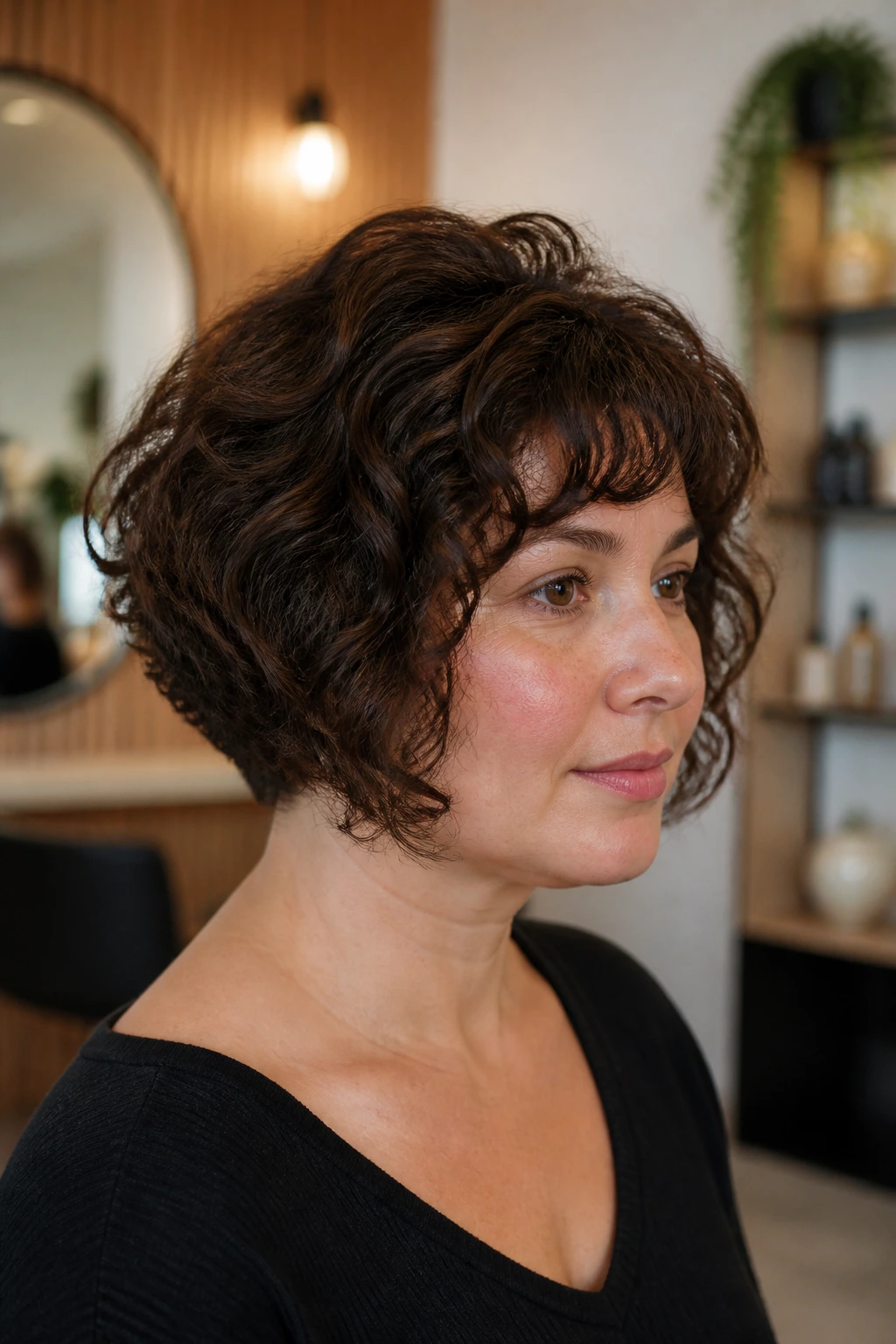
A stacked bob can be a little risky on round faces if the crown gets too high and the sides puff out. But when the stacking is controlled, it gives the back a neat curve and keeps the front from feeling too heavy.
The crown lift is what changes the face shape. A bit of height at the top creates a longer line through the face, which helps balance the natural softness of round features. The danger is over-stacking. Too much and the cut starts to look like a helmet from the side.
Best used for
- Hair with enough density to support shape
- Curls that settle well after diffusing
- People who want a polished, structured look
Keep the stacking subtle. Think shape, not architecture.
10. Deep Side-Part Bob with Cheekbone Coverage
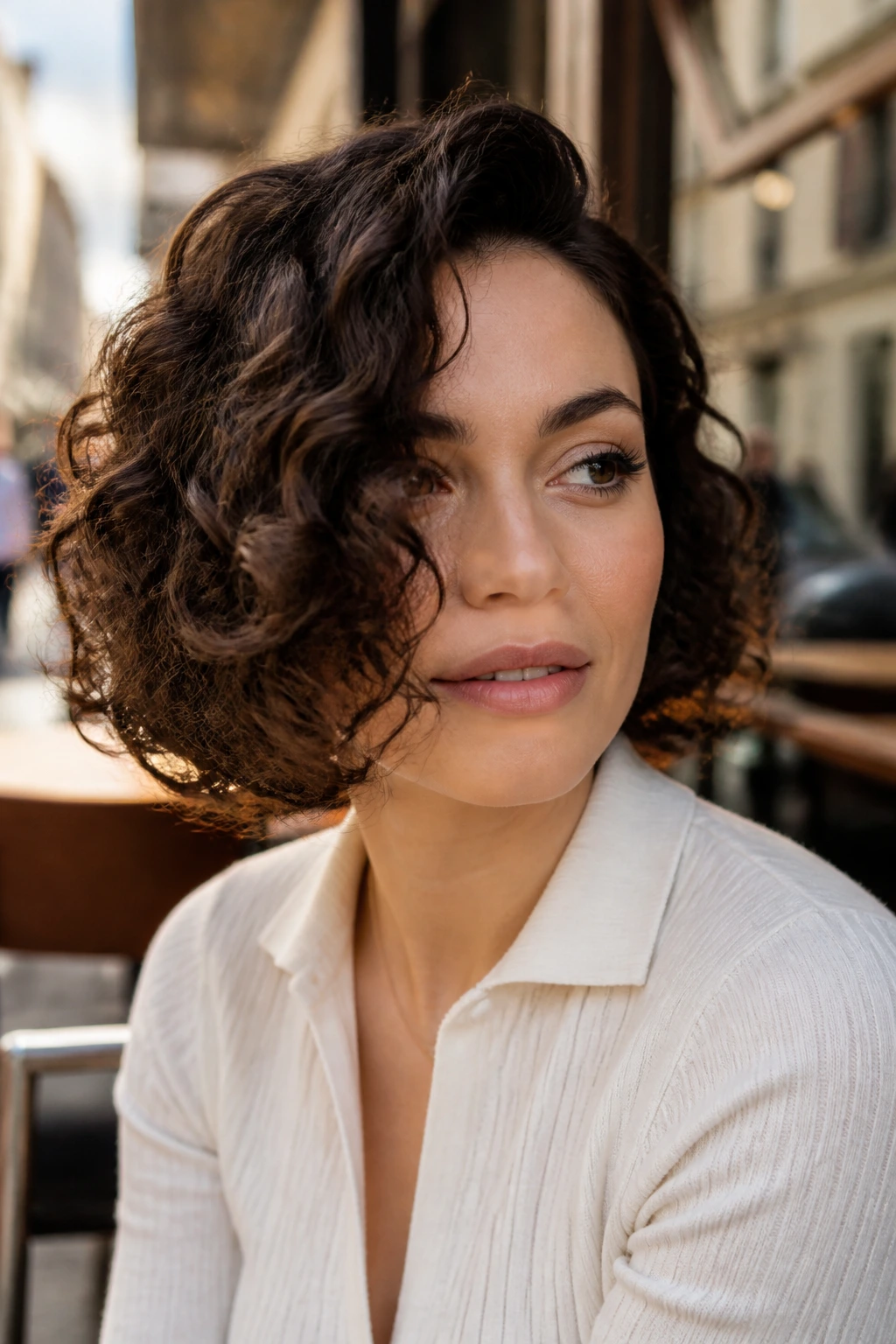
A deep side part can do more for a round face than an entire extra inch of length. It breaks the symmetry, shifts the weight line, and lets curls fall over part of the forehead and cheek in a way that softens the face without hiding it.
This bob works especially well when one side is tucked slightly behind the ear and the other side is left fuller. That asymmetry helps the face feel less circular. If your curls are looser, the effect is cleaner; if they are tighter, the look gets richer and more textured.
No complicated styling trick here. The part is the whole point.
11. Deva-Cut Bob with Curl-by-Curl Shape
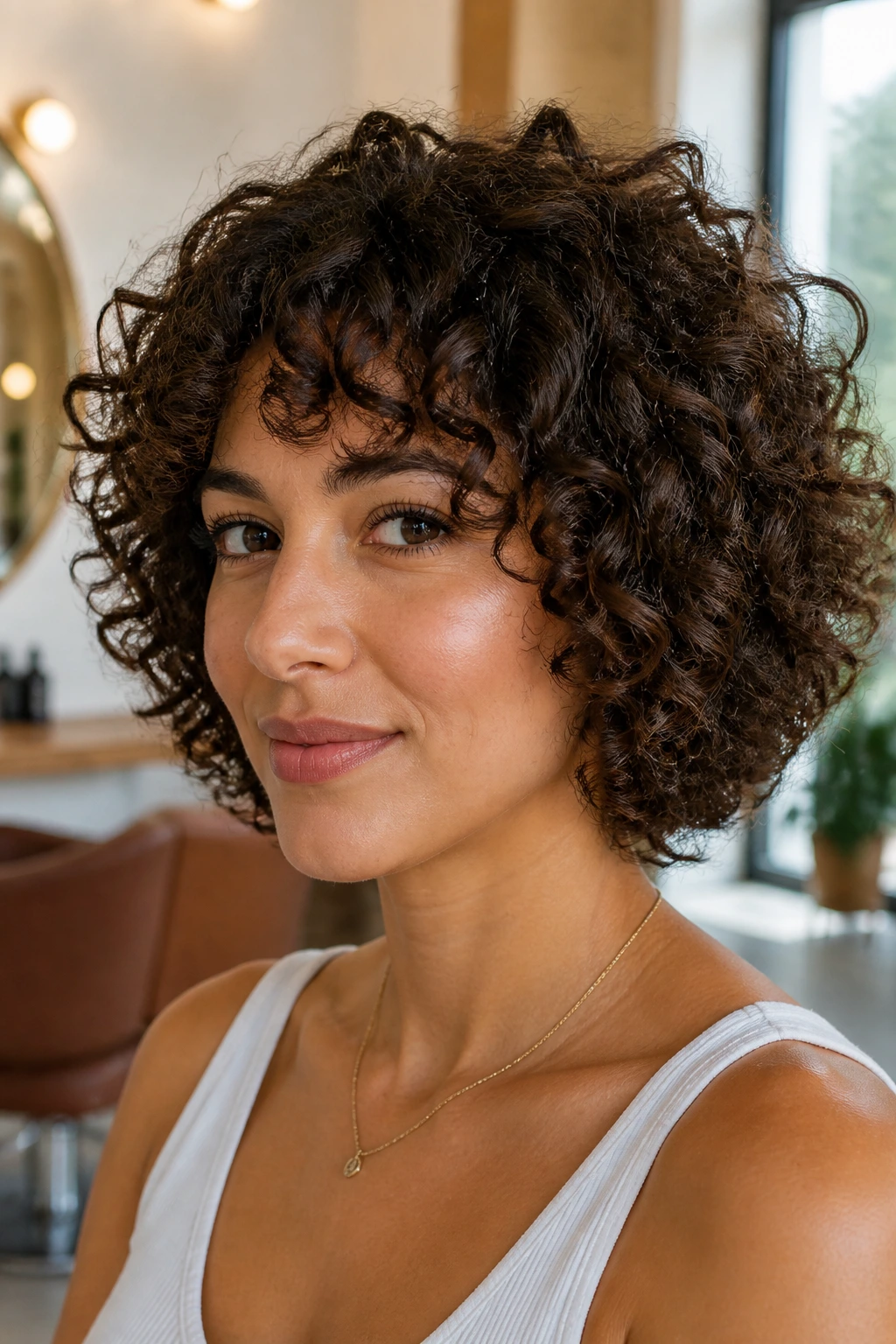
A Deva-cut bob is different because it’s shaped curl by curl, usually while the hair is dry. That means the stylist can see where each ringlet wants to sit and avoid cutting a line that later turns into a lopsided puff.
For round faces, this precision matters. A curl-by-curl bob can keep volume where you want it—usually around the crown and lower perimeter—while leaving the cheeks less crowded. It’s especially useful if one side of your hair curls tighter than the other, because the cut can account for that instead of pretending both sides behave the same.
It’s not the cheapest or fastest route, but it often saves you from months of fighting a shape that never quite lands right.
12. Asymmetrical Bob with One Longer Side

Some haircuts try to soften a round face with sweetness. This one uses imbalance instead. A longer side creates a diagonal line across the face, and diagonal lines are your friend when you want to make the face look a bit longer.
The asymmetry does not need to be dramatic. Even a subtle difference of an inch or two can change how the bob sits against the cheeks. On curly hair, the effect is even stronger because the longer side tends to form a more noticeable curtain.
It suits people who like a classic shape with a slight edge. Not loud. Just enough to keep the cut from feeling too predictable.
13. Feathered Bob with Light, Separated Ends

Feathering sounds soft because it is. The ends are cut to separate a little instead of sitting in one heavy line, which gives curly hair more movement and less bulk at the sides.
Why it flatters
The separated ends stop the bob from reading as a single round mass, and that helps a round face look a little less broad. If your curl pattern is looser, feathering can make the bob look almost airy. If your curls are tighter, it creates texture without forcing the silhouette into a blunt box.
It’s a good choice if you want the haircut to feel light, but not thin. That distinction matters. Thin hair and light hair are not the same thing.
14. Box Bob with Crisp Corners
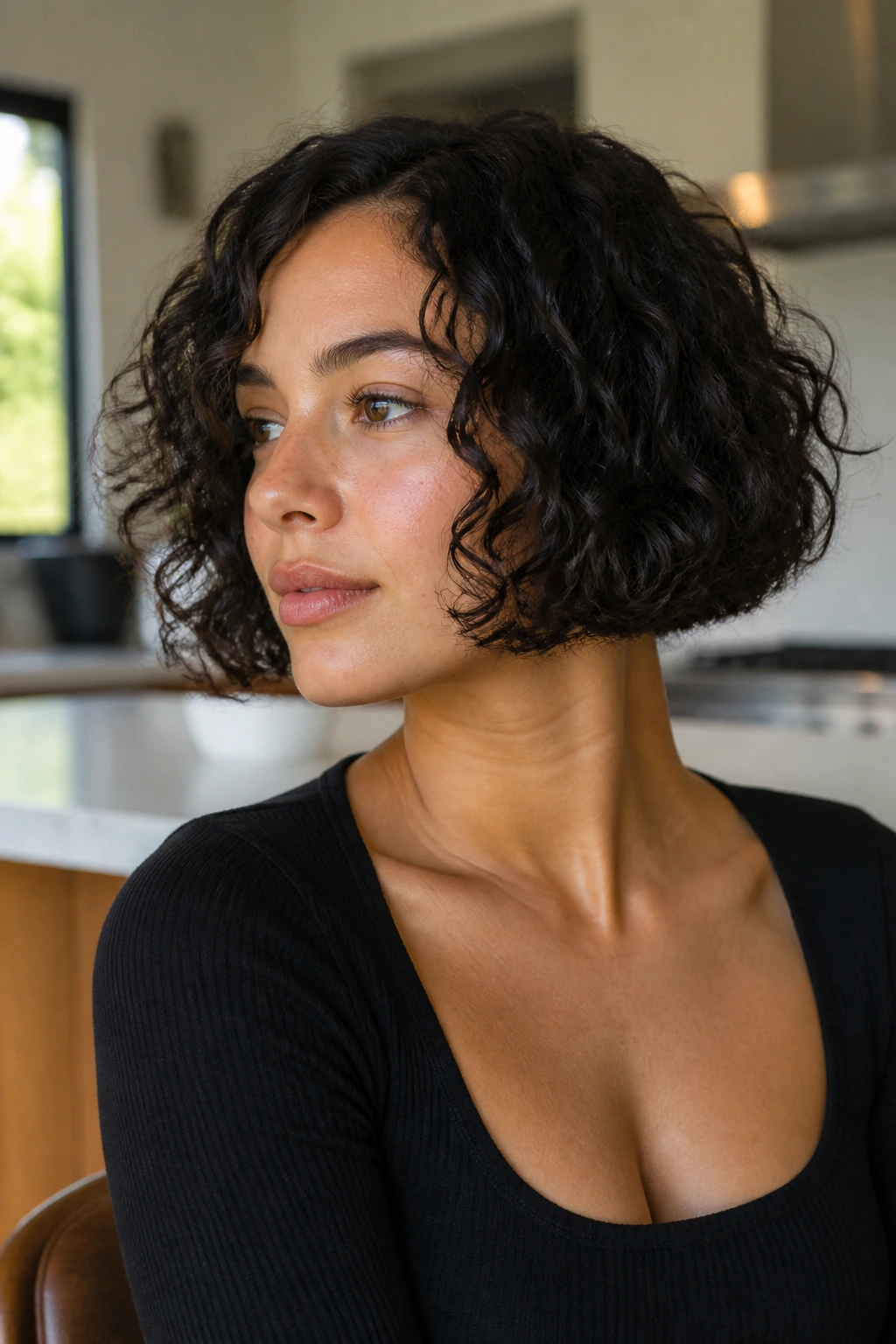
A box bob is the neat freak of this list. It has a controlled perimeter, square corners, and enough structure to make the curls look deliberate rather than wild. On a round face, the boxier outline can work because it introduces angles where the face has curves.
The key is not to let the sides swell. Keep the shape smooth, and make sure the curl product holds the perimeter together. If you have thick hair, a box bob can be a blessing because it gives the density somewhere to go without turning into a puffed-out cloud.
It’s sharp, but not severe. Think tidy, not stiff.
15. Jaw-Skimming Bob with Face-Framing Pieces

Can a bob sit at the jaw and still flatter a round face? Yes, if the front pieces are placed with care. The bob itself should skim, not stop, and the face-framing sections should soften the transition from cheek to jaw.
This style works best when the front pieces are slightly longer than the rest of the perimeter. That tiny shift keeps the cut from drawing a hard line right where the face is widest. On curls, those pieces can be let loose or tucked back depending on the day, which gives the cut more life than a single fixed shape.
It is one of the most wearable lengths on this list. Easy to style. Easy to move around. Hard to mess up once the right line is there.
16. Tapered Bob for Tight Curls
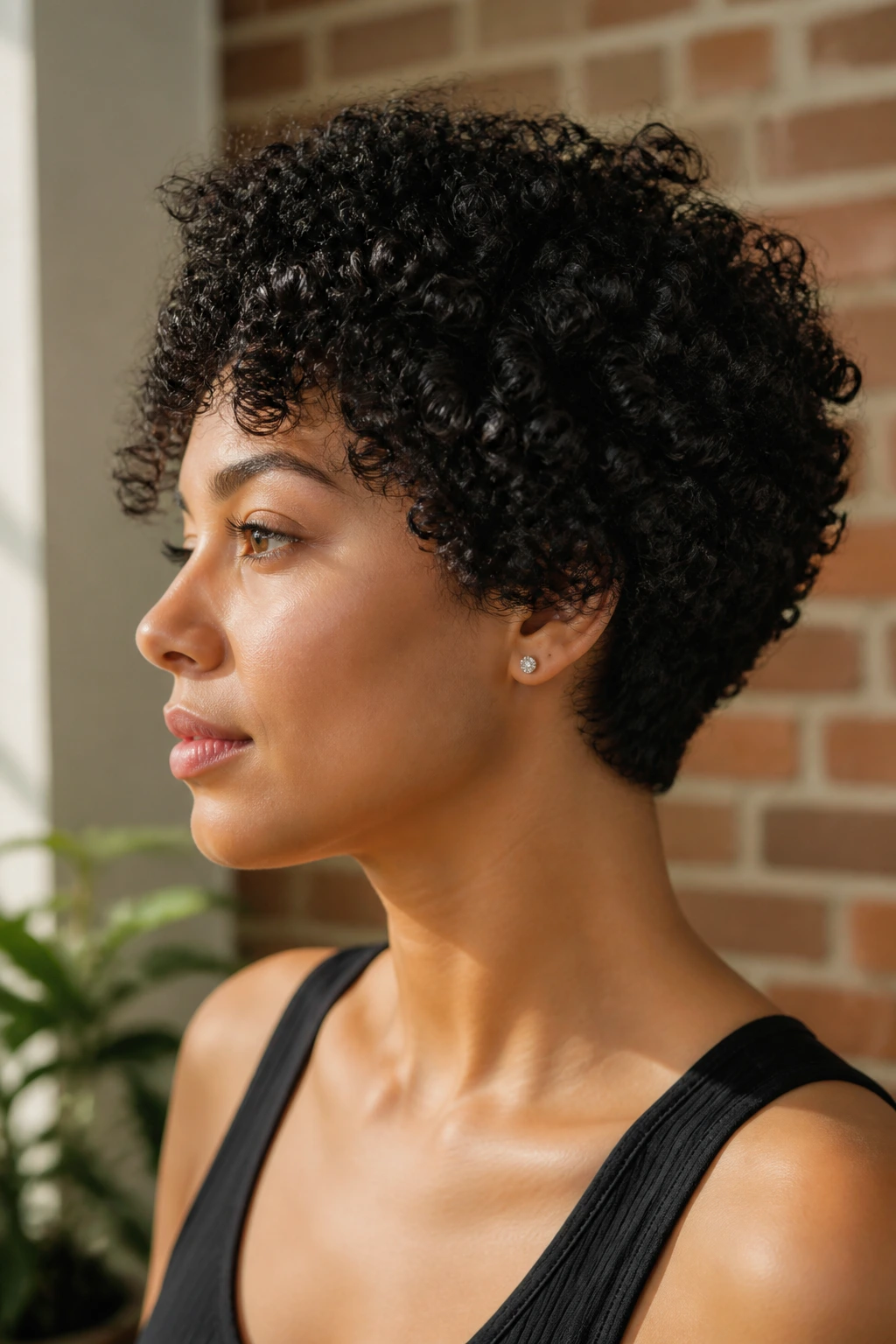
Tight curls need a bob that respects shrinkage. A tapered shape does exactly that by keeping the bulk controlled at the bottom and allowing the top to stay a little fuller. That helps the hair fall in a cleaner cone instead of expanding outward at the sides.
For a round face, tapering creates a more vertical silhouette. The neckline stays neat, the sides stay contained, and the curls can pile without looking bulky. If your hair has a lot of spring, this is one of the smarter cuts because it leaves room for movement without losing shape.
A small salon note
Ask for the taper to be gradual. A harsh taper can make the bob look too narrow at the nape and too wide everywhere else. Subtle wins here.
17. Soft Shag Bob for Loose Ringlets

A shag-bob hybrid is not the first thing people think of when they hear “classic bob,” but the soft version belongs here. It keeps the length in bob territory and uses just enough layering to stop loose ringlets from hanging in one heavy curtain.
What makes it flattering on a round face is the movement. The texture breaks up the outline, and the layers help the curls live a little farther away from the cheeks. If the front gets a few airy pieces around the cheekbone, even better.
This cut has a relaxed feel. Not sloppy. Just less polished in the best possible way.
18. Bob with Curtain Bangs and a Center Part

Curtain bangs can work on round faces because they open in the middle and sweep outward, which creates a vertical line down the face instead of a closed fringe across the forehead. On curly hair, they also add a little motion right where the face needs it.
The bob itself should stay simple. Don’t over-layer the rest of the cut or the bangs will compete with the perimeter. You want the bangs to act like a frame, not the whole picture.
This style is especially useful if you like to wear your curls loose around your face but still want a bit of forehead coverage. It reads soft. A little romantic, but not precious.
19. Rounded Bob with a Light Underlayer
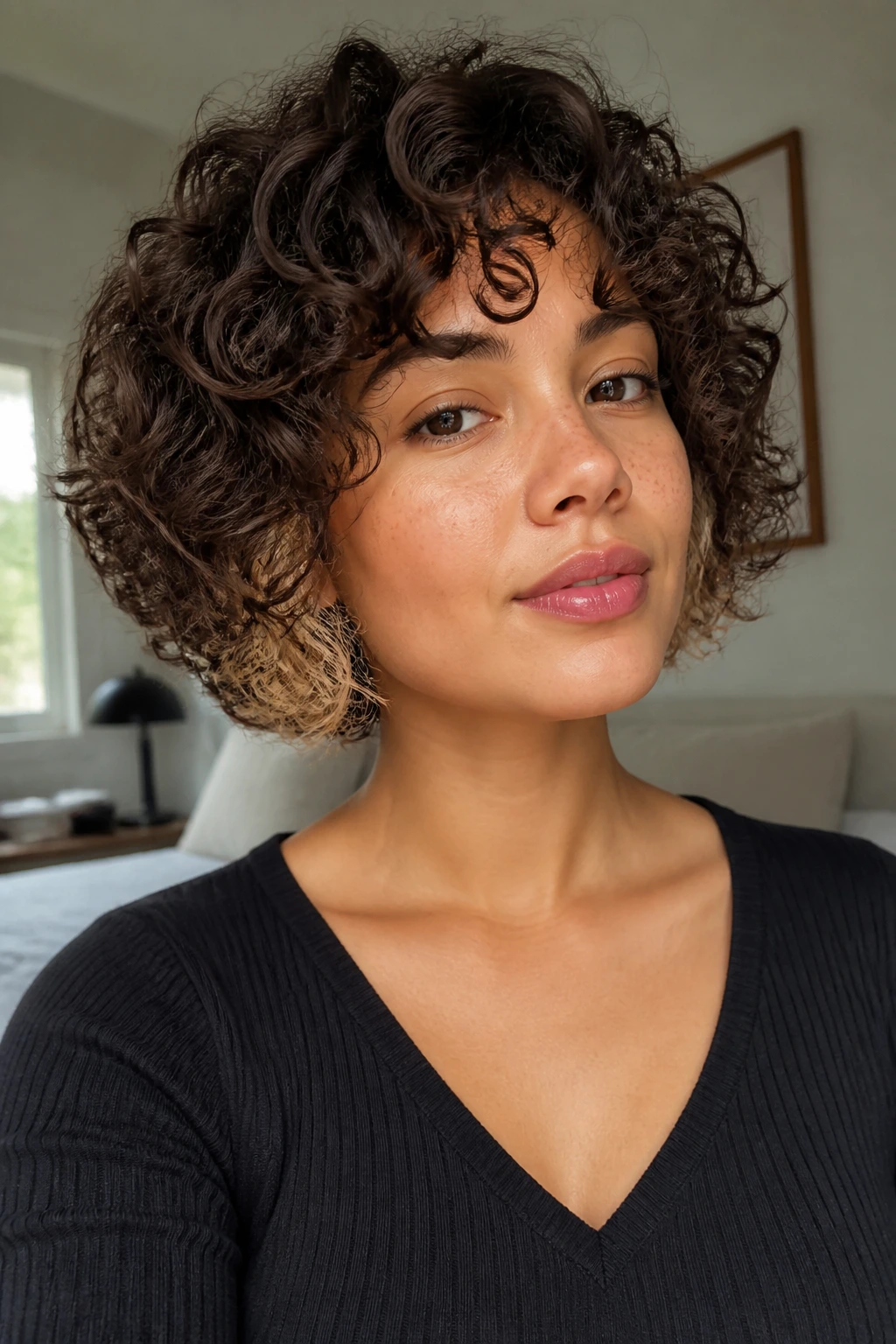
The phrase “rounded bob” can sound dangerous for a round face, and sometimes it is. But a light underlayer changes the equation. The outer shape stays curved, while the inside is thinned enough to stop the cut from becoming too puffy at the sides.
That underlayer is subtle. You may not even see it, which is exactly the point. It lets the curl pattern stack with less bulk, especially if your hair is thick or coarse. The face gets a smooth frame instead of a wide one.
What to ask for
- Soft rounding at the perimeter
- Weight removal low in the interior
- No short pieces that stick out at the cheek
20. Sculpted Bob with a Side Sweep

A side sweep gives a curly bob a bit of drama without making it fussy. The longer front piece or sweeping fringe crosses the forehead and pulls the eye across the face, which helps a round shape feel a little narrower.
Compared with a center-part bob, this one has more movement at the front and less symmetry through the top. That can be useful if your face is especially soft or if your curls tend to sit flat at the crown. The sweep adds shape in one stroke.
It’s a nice compromise between structure and softness. And it photographs well, if you care about that sort of thing.
21. Piecey Bob for Fine Curls
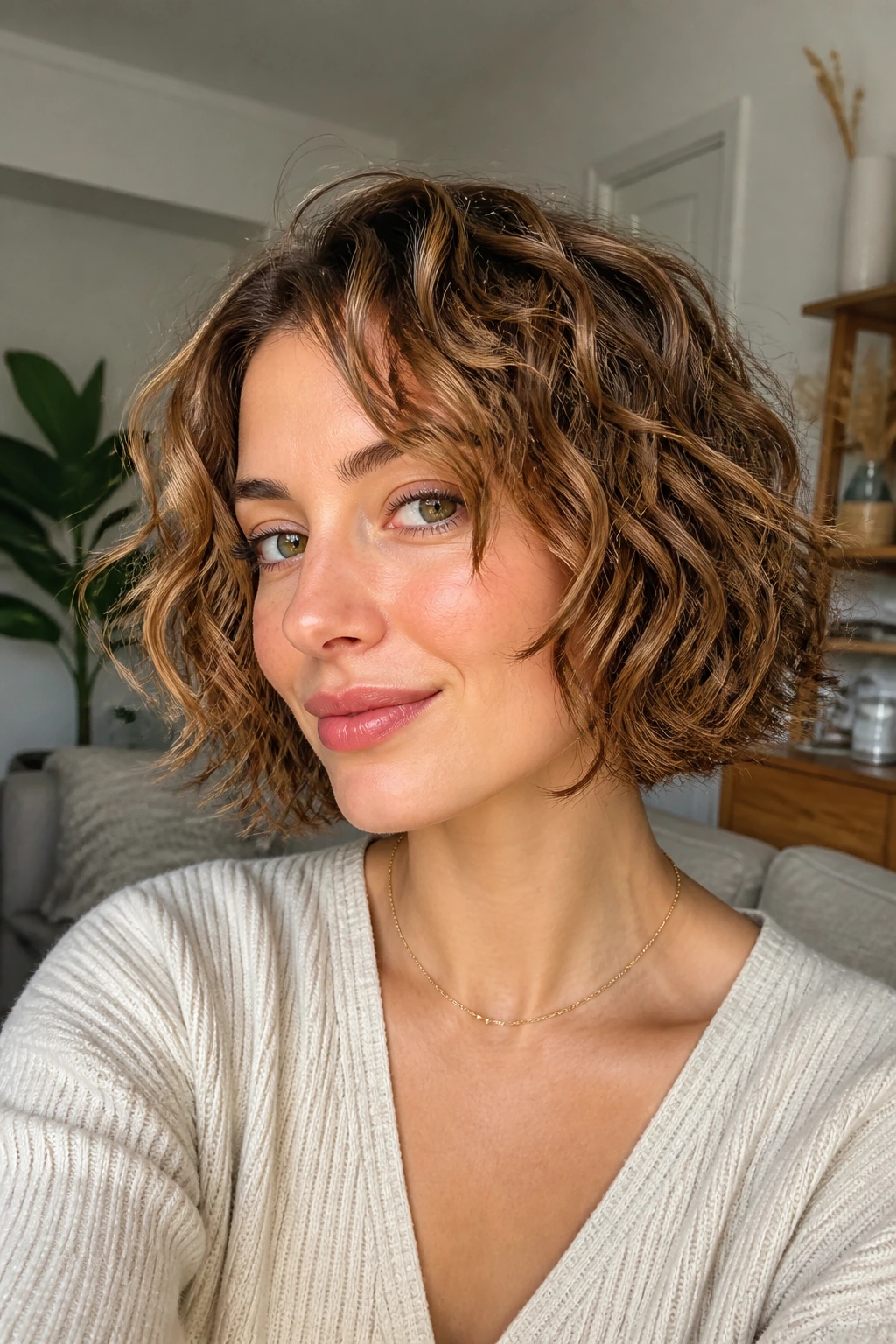
Fine curls need a different kind of support. Too much layering and they disappear. Too little and the bob can look flat at the roots and stringy at the ends.
A piecey bob solves that by creating separation without taking away the weight the curls need. The shape stays light around the face, which keeps a round face from looking fuller, while the ends remain visible enough to read as a bob. A little mousse at the roots and a light gel on the ends can help the pieces stay defined.
What to watch for
If the layers are too short, fine curls lose their body. Keep the cut a touch longer than you think you need. Fine hair always shrinks emotionally before it shrinks physically.
22. Tucked-Under Bob with Smooth Ends
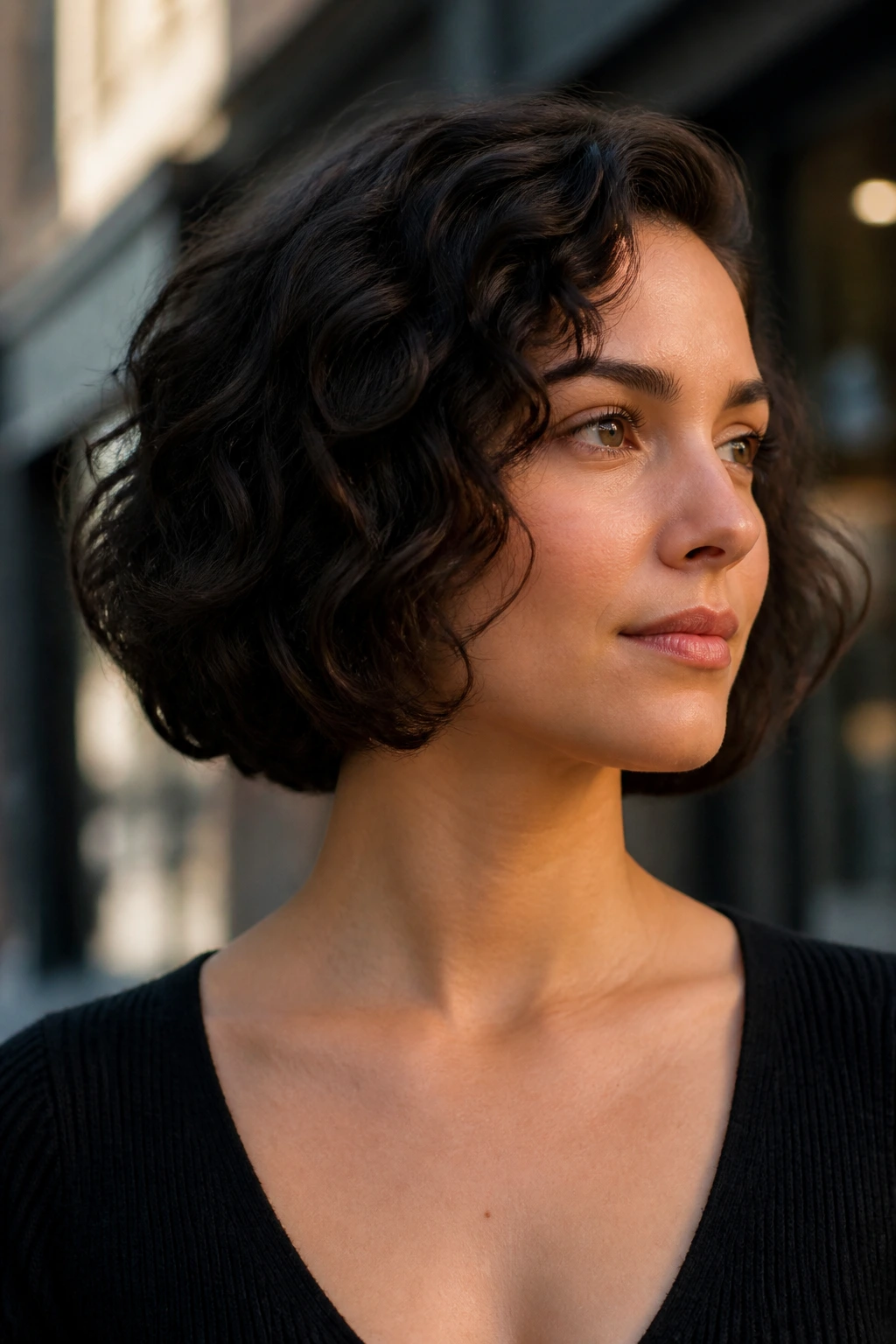
This one has an old-fashioned feel in the best way. The ends are shaped so they bend slightly inward, which makes the bob sit neatly under the jaw instead of flaring out.
That tucked-under curve helps on round faces because it creates a cleaner frame and avoids the side puff that some curls develop at chin length. It works especially well on hair that has a smoother curl pattern or on curls that take to a diffuser without exploding into frizz.
You may need a little more control product than you think. The shape depends on the ends staying together, not separating into a halo.
23. Long Curly Bob with Collarbone Length

If you like the bob idea but hate the risk of going short, this is the safest lane. Collarbone length gives round faces a strong vertical line, and curly texture keeps the cut from feeling plain.
The longer bob also gives you room for movement around the face. You can flip the part, tuck one side, or pull half of it back without losing the shape. That flexibility matters if your curls go through different moods depending on humidity, sleep, or whether you remembered to use enough leave-in.
It’s the style for people who want shape with options. A sensible haircut. Which sounds dull until you realize sensible is often what actually works.
24. Classic Graduated Bob with a Full Back Shape
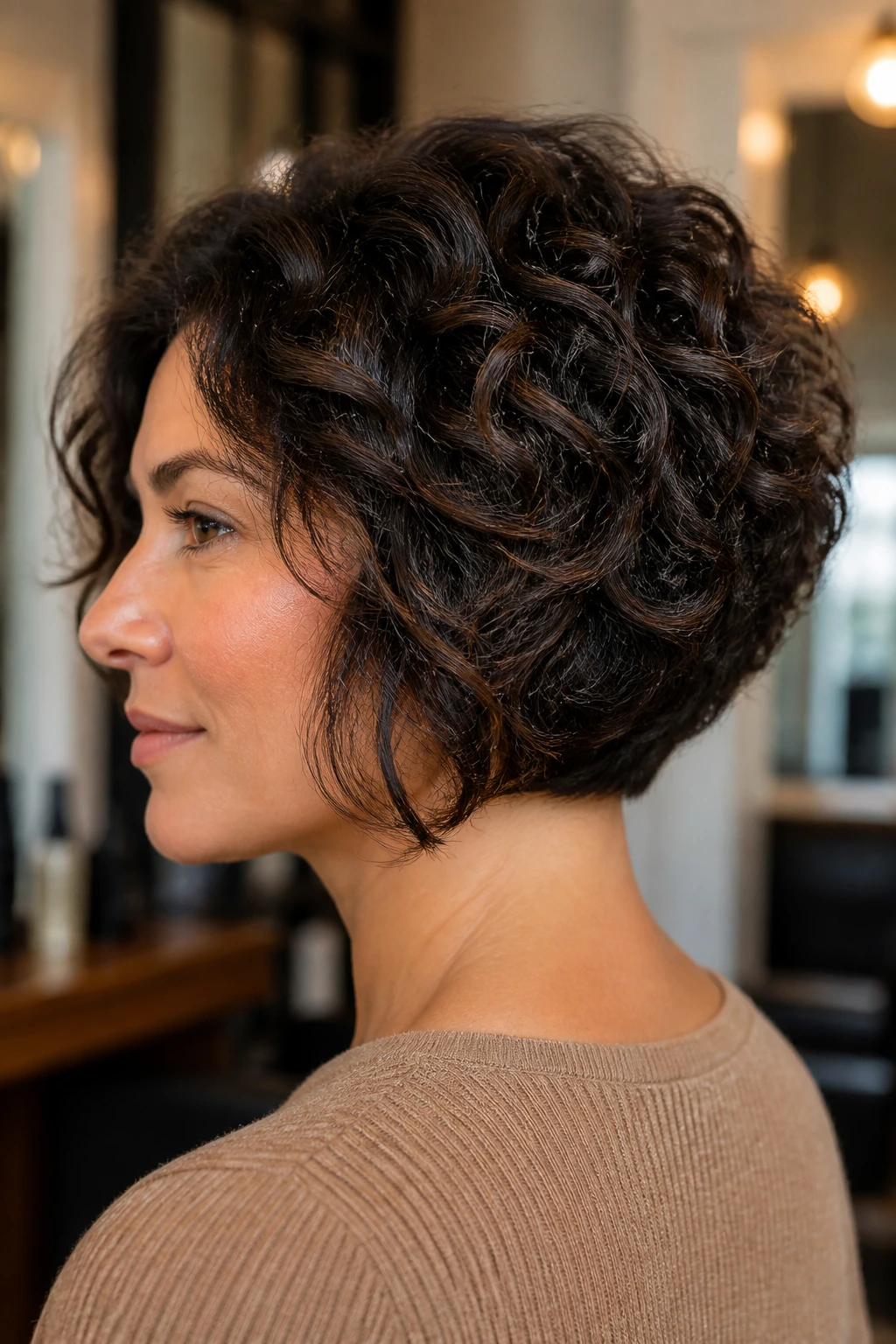
A graduated bob is built on a fuller back and a slightly longer front, and that graduation can be used to balance a round face if the transition is smooth. The fuller back creates structure, while the front length prevents the face from looking too wide.
The danger is overdoing the graduation. If the back stacks too aggressively, the silhouette can feel top-heavy. Keep the line clean, and let the curls soften the edges. On curly hair, the cut needs less forcing than on straight hair anyway.
This is one of the more polished options on the list. It looks intentional from every angle. Especially the side view, which is where a lot of curly bobs either win or lose.
25. Low-Maintenance Curly Bob for Growing It Out
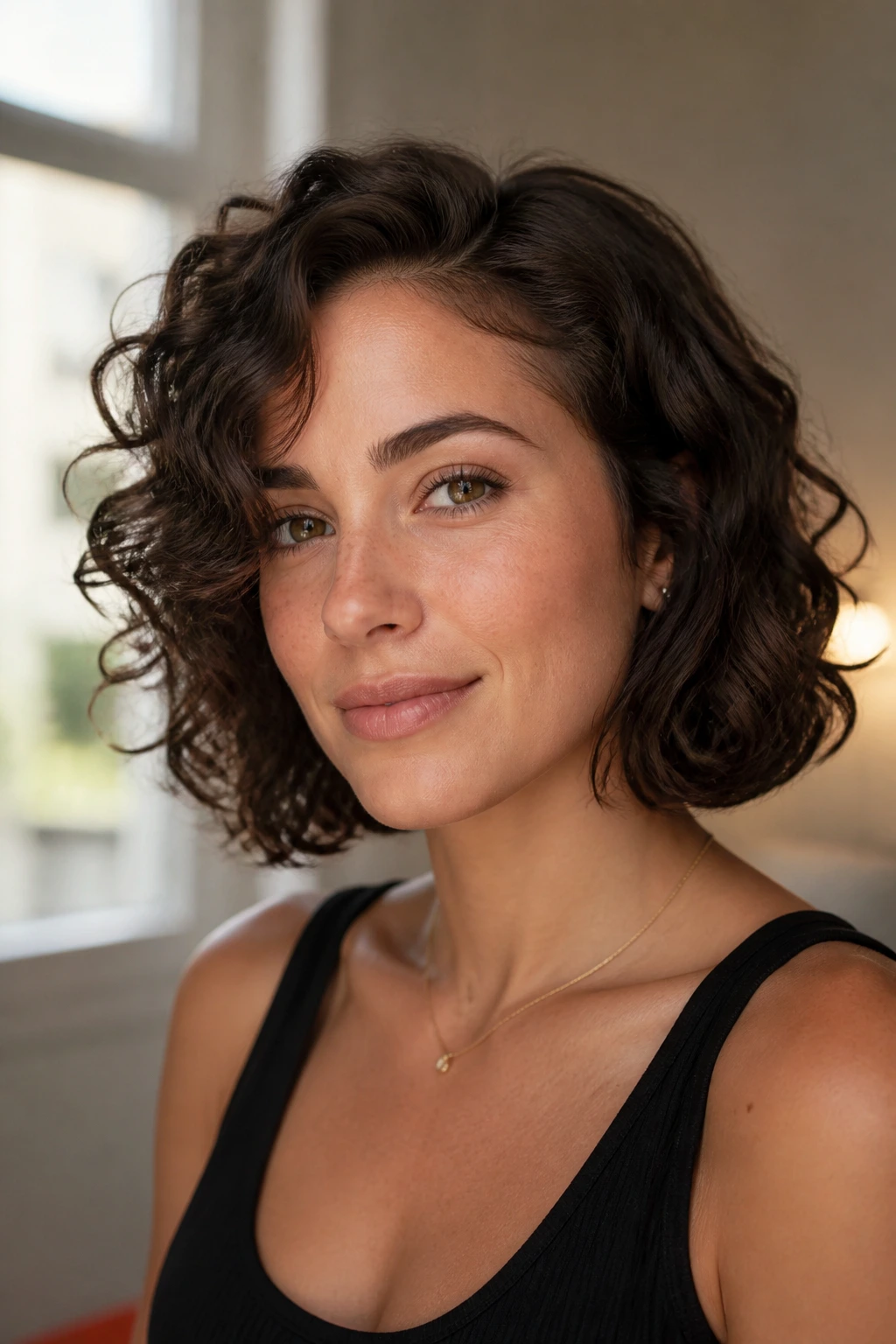
The easiest bob to live with is the one that still looks good when it grows an inch or two. This version keeps the perimeter slightly longer, the layers soft, and the shape loose enough that it doesn’t collapse the moment the salon day gets pushed back.
For a round face, that grow-out friendliness matters because a too-short bob can start to widen the cheeks once the outline loses its clean edge. A longer, softer cut avoids that problem and buys you time between trims.
Why I keep coming back to this one
It behaves. That’s the honest answer.
If you want a bob that won’t turn into a maintenance project the second it starts growing, ask for soft edges, a gentle side part, and enough front length to stay below the cheekbone. It will not be the most dramatic cut on the list. It may be the one you wear the longest.
How to Brief Your Stylist Without Guessing at the Chair
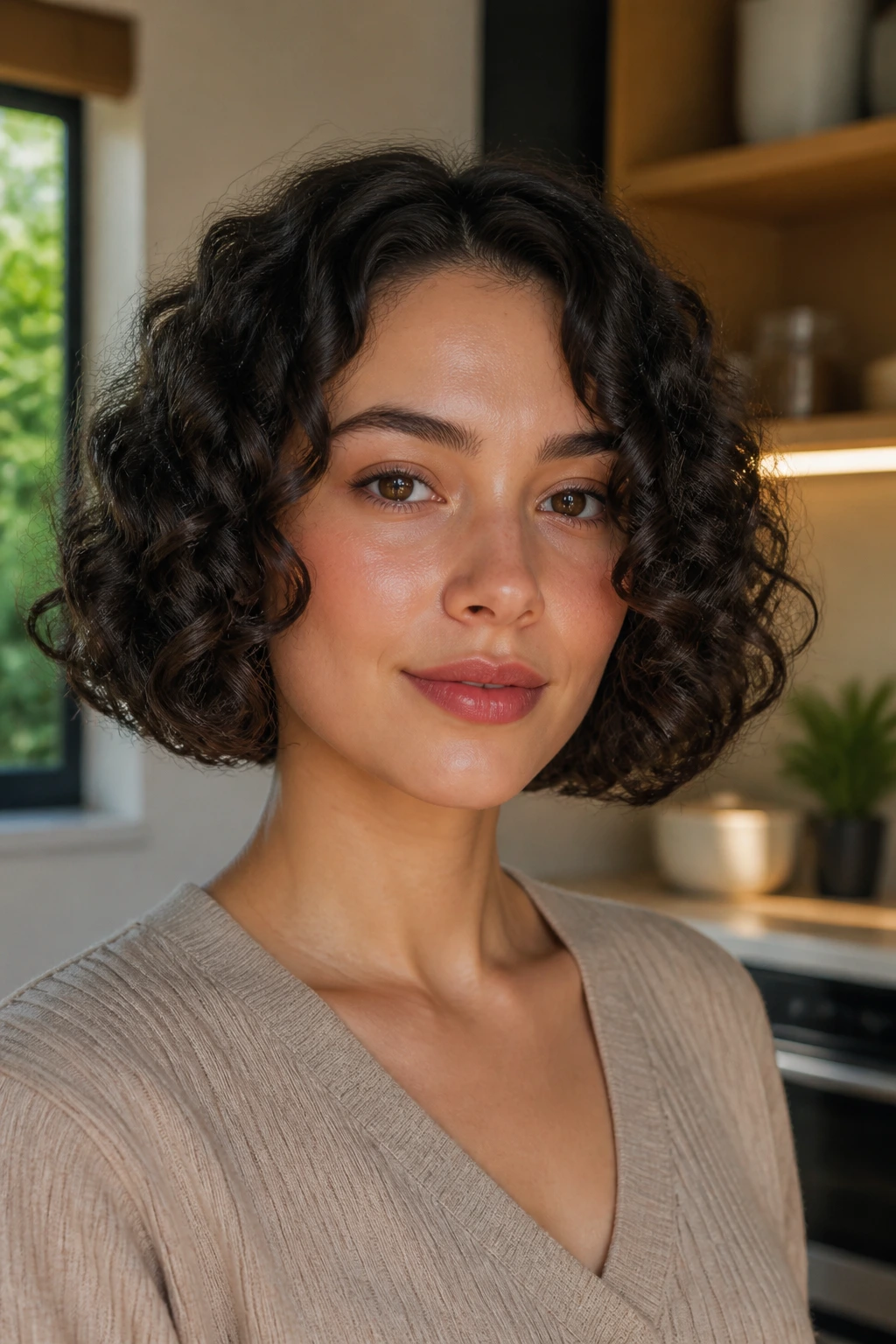
A good curly bob starts with better language in the salon chair. “Shorter” is too vague. “Around the chin” is better, but on curly hair you’ll want to go one step further and talk about where the curls land when they dry. Shrinkage changes everything.
Bring two or three photos, but choose them for shape, not for exact curl pattern. A stylist can translate a side part, a front angle, or a rounded perimeter. They cannot copy another person’s curl density. That’s fine. The goal is not cloning. It’s getting the same silhouette on your hair.
If you know your hair behaves differently when wet and dry, say so out loud. Mention whether one side is flatter, whether your crown dries faster, and whether the nape tends to puff. Those little facts save everyone from surprises later.
Common Mistakes That Make Curly Bobs Feel Wider
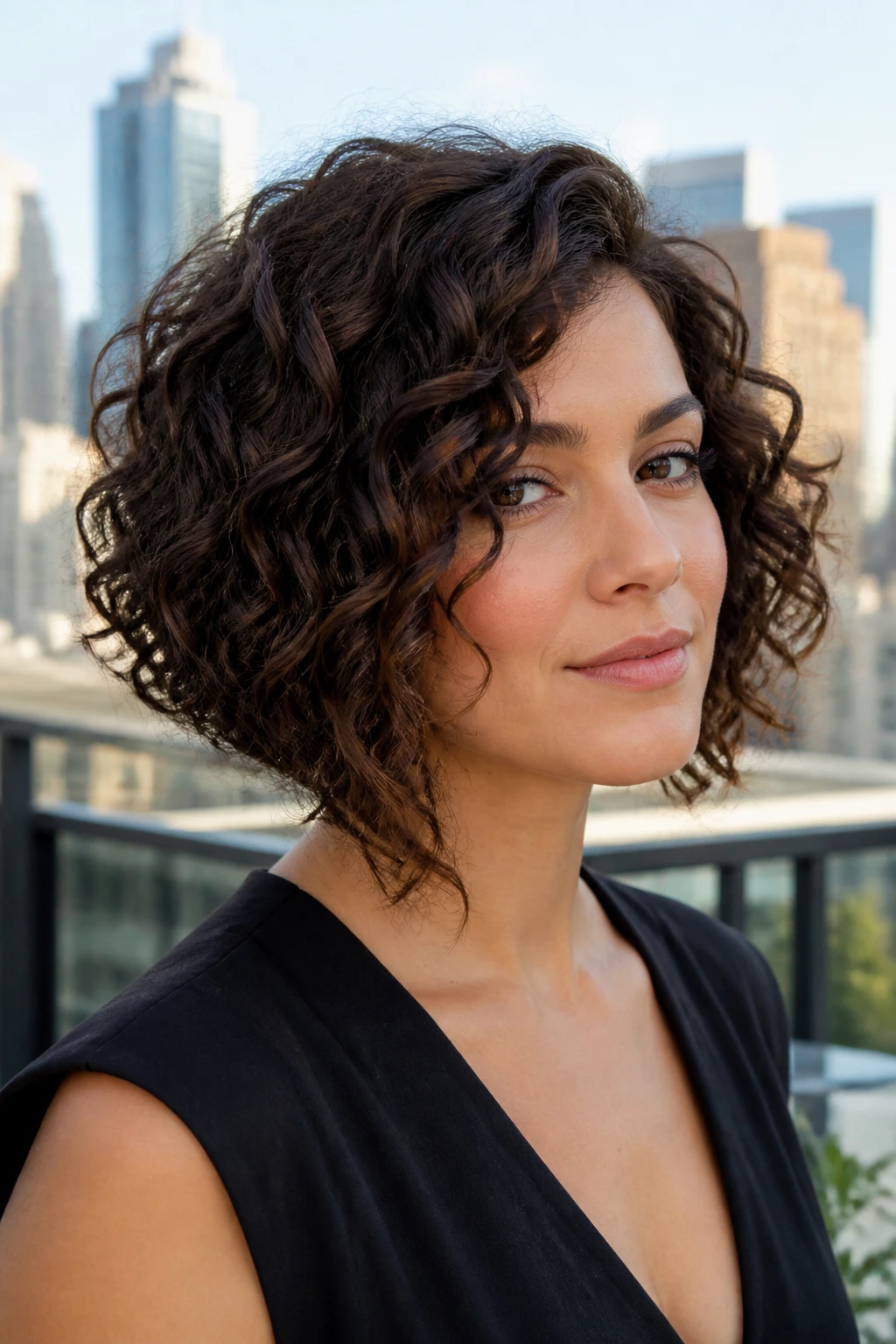
The most common mistake is cutting the bob too short at the cheeks. The second is leaving the sides too full. Both mistakes make a round face look wider because the haircut starts and ends in the same place.
Another trap is over-layering the top while leaving the bottom heavy. That can create a shelf effect. The curl sits on the side of the head instead of falling into the neck. Not flattering. Not hard to avoid, either, if the stylist pays attention to how your curl pattern stacks.
A third problem is styling with too much product at the roots. That can lock in volume exactly where you don’t want it. Keep heavier cream lower through the mids and ends, and use lighter foam or gel near the crown if you need hold.
Variations and Different Ways to Wear the Same Cut

The Soft-Edge Version: Keep the perimeter longer and the layers hidden. This is the one to choose if you want a bob that grows out gracefully and never looks too sharp around the face.
The Full-Body Version: Add a little more crown volume and keep the front pieces slightly longer. It suits denser curls that need shaping without losing their bounce.
The Low-Styling Version: Ask for fewer layers and a side part. This keeps the silhouette simple, which is helpful if you dry your hair quickly and don’t want to fuss with definition.
The Strong-Fringe Version: Choose curtain bangs, a French fringe, or a side sweep. These all add movement across the forehead and can make a round face feel longer without changing the bob itself.
Tools and Styling Aids That Make Curly Bobs Easier
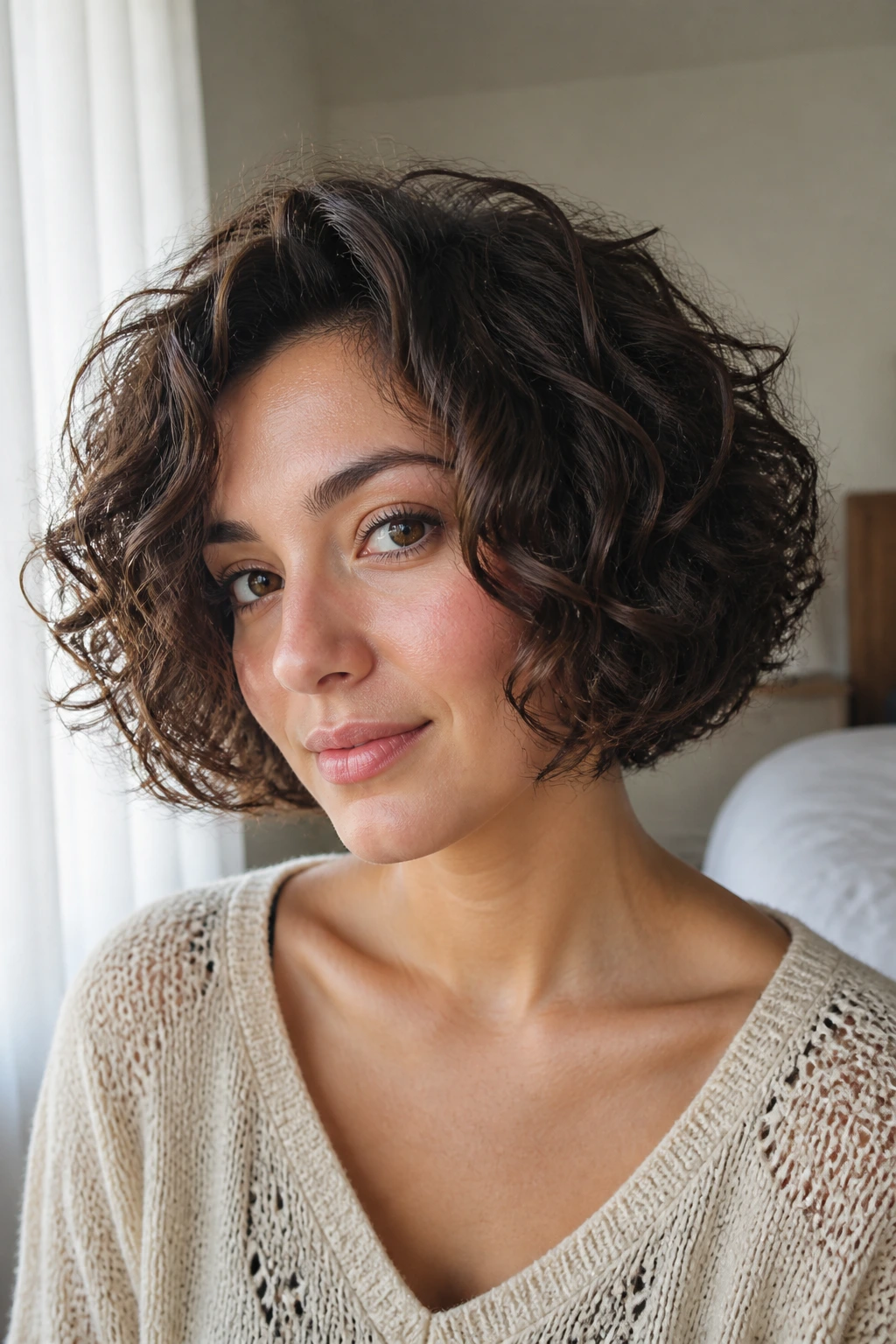
- Wide-tooth comb: Detangles without stretching curl clumps apart.
- Microfiber towel or cotton T-shirt: Cuts down on rough frizz after washing.
- Curl cream: Helps medium and coarse curls hold together through the ends.
- Light mousse: Useful for fine curls that need lift without heaviness.
- Gel with flexible hold: Keeps the bob’s perimeter from fraying by midday.
- Diffuser attachment: Speeds drying while preserving shape and reducing side puff.
- Duckbill clips: Handy for creating a little root lift at the crown while the hair dries.
- Salon photos on your phone: More useful than saying “I want something cute,” which, frankly, is not enough to work with.
How to Keep the Shape Between Washes
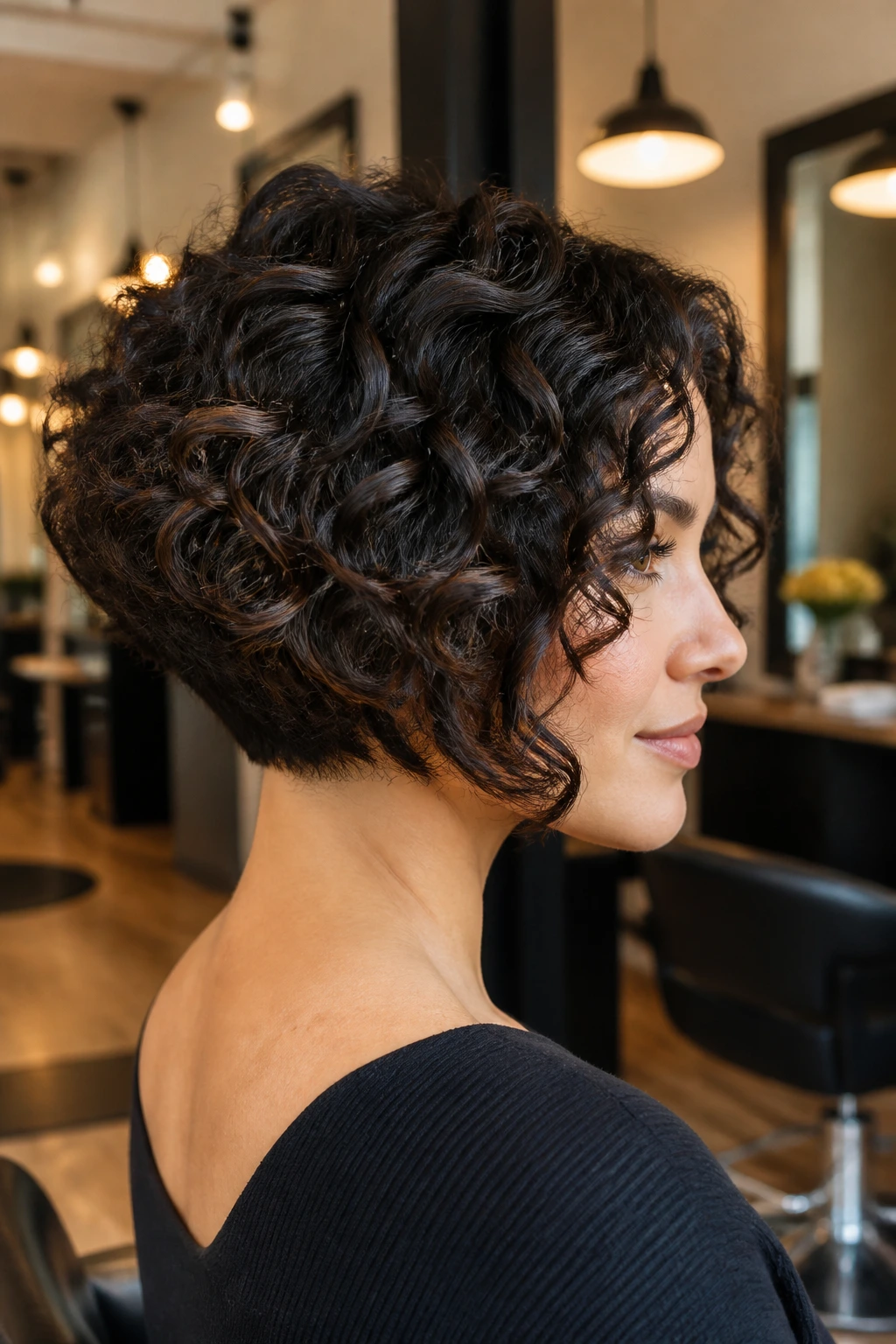
Curly bobs usually need a quick refresh, not a full reset. Sleep on a satin pillowcase or wrap the hair loosely so the curls don’t get crushed at the sides. If the perimeter looks fuzzy in the morning, mist it lightly with water and a tiny bit of leave-in, then scrunch the ends back into place.
Trims matter more than people think. A curly bob can lose its shape fast once the ends start fraying. For most curl types, a trim every 8 to 12 weeks keeps the outline honest. Tight curls or high-shrinkage hair may need it a little sooner if the bob starts to sit unevenly.
Wash day is another place where small choices change the shape. Use enough slip to detangle, but do not overload the roots with heavy cream. That’s how you get a bob that looks great when wet and flat when dry. The goal is curl clumps that stay separated, not a slick helmet.
Frequently Asked Questions
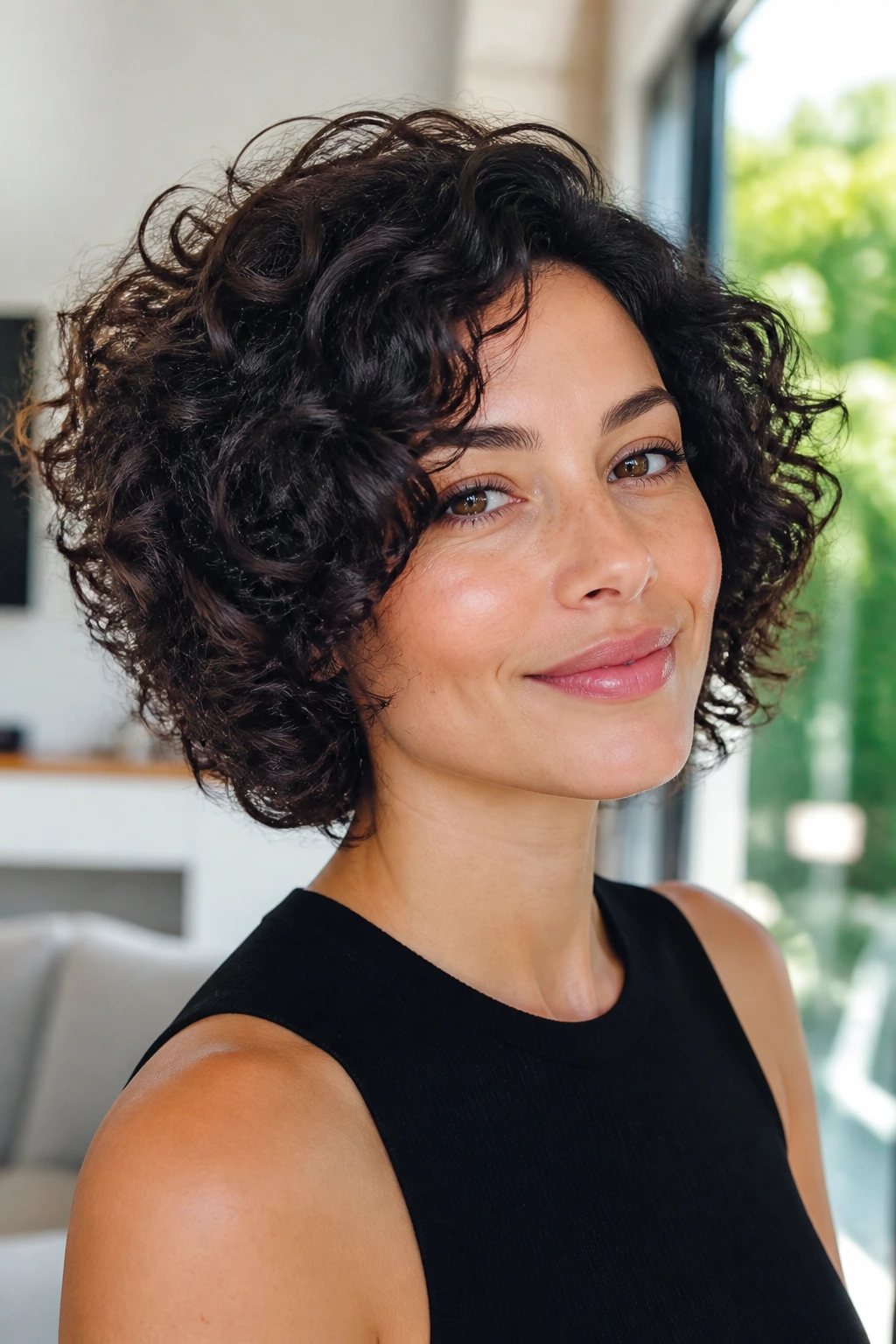
What bob length is best for a round face with curly hair?
The safest lengths are usually just below the jaw or around the collarbone, because they move the eye downward. Chin-length can work too, but it needs side parting, angle, or face-framing pieces so the curls do not stop right on the cheeks.
Do blunt bobs make round faces look wider?
They can if the edge lands right at the cheekbone and the sides are too full. A blunt bob works better when it sits a little lower, stays controlled at the ends, and has enough interior shaping to keep the width from ballooning.
Should curly bobs have layers?
Usually, yes, but the layers should be placed with restraint. Curly hair often needs some removal of weight, yet too many short layers can make the bob puff outward. Hidden or internal layers are often safer than obvious choppy ones.
Can I wear bangs with a curly bob and a round face?
Yes, and curtain bangs are usually the easiest place to start. A soft fringe that opens in the middle breaks up face width better than a heavy straight-across bang, which can shorten the face if it sits too low.
How often should a curly bob be trimmed?
A trim every 8 to 12 weeks usually keeps the shape clean. If your curls shrink a lot or your bob has a strong angle, you may want to tighten it up sooner so the silhouette does not drift.
What if my curls puff out at the sides?
That usually means the cut is too short at the cheek or too heavy in the wrong place. Ask for a little more length in front, less bulk at the sides, and a styling product that defines the ends without building root volume.
Is a curly lob better than a short bob for a round face?
Often, yes, if you want the lowest-risk option. A lob gives you more length below the cheeks, which is forgiving, and it still reads like a bob when the curls bounce up.
How do I ask for this at the salon?
Say where you want the longest pieces to sit when dry, mention your shrinkage, and show photos that match the shape you want. That gives the stylist a real target instead of a vague mood board of hair that may behave nothing like yours.
The Bob That Fits Your Curl Pattern

The best curly bob for a round face is the one that respects both the curl and the geometry. Shorter is not automatically better. Bigger volume is not automatically better. The cut has to land in the right place, then leave enough room for the hair to do its own thing without turning into a puffed circle.
That’s why these 25 styles stay useful. Some are sharp and neat. Some are soft and roomy. Some are for dense coils, some for loose ringlets, and some are for the person who wants a clean line with the least possible drama. Pick the shape that works with your curl pattern, and the rest gets easier.
And if you’re standing in front of a stylist with one hand on your phone full of photos, that’s probably a good sign. You’re already thinking about the shape, which is where a good bob starts.