



Thick hair can make a bob look expensive in five minutes and unhinged in ten. One wrong snip and you get the dreaded triangle: wide at the bottom, puffy at the sides, and somehow both too full and not full enough. On an oval face, the stakes feel a little different. You already have the easiest face shape for short hair, so the cut does not need to hide anything — it needs to control the volume and give it a cleaner line.
That is why fall bobs for thick hair and oval faces deserve a careful eye. Coats, scarves, sweater necks, and high collars all change how a bob sits. A cut that looked crisp in July can bend, flip, or puff in strange places once the weather turns and the clothes get bulkier. The sweet spot is usually somewhere between the jaw and the collarbone, but the real trick is less about the exact inch count and more about where the weight lives.
Some of these bobs are sharp and polished. Some are softer, with fringe and movement around the cheekbones. None of them depend on fine hair, pin-straight texture, or a full hour in front of the mirror. That is the whole point. Thick hair already brings the body; the cut should decide where that body goes.
Why These 18 Bobs Work on Thick Hair and Oval Faces

-
They control bulk without killing movement: the right bob keeps density in the perimeter and removes it only where the shape starts to balloon, which is how thick hair stays clean instead of square.
-
Oval faces can take real structure: a blunt line, a short fringe, or a diagonal front piece does not throw off the balance here; it gives your features something to sit against.
-
Sweaters and scarves matter more than people admit: these cuts stay readable above a turtleneck or under a coat collar instead of getting lost in fabric.
-
You can style most of them in 10 to 15 minutes: a good round brush, a blow dryer nozzle, or a flat iron is enough for most of the looks here.
-
They give you room to choose your vibe: sleek, French, shaggy, rounded, boxy, flipped, or softly curved — all of those live comfortably in bob territory when thick hair is doing the heavy lifting.
-
They age well between trims: if the perimeter is cut with intention, the shape usually grows out into a different bob, not a bad haircut.
1. Collarbone Blunt Bob with Soft Ends
A collarbone-length bob is the cleanest place to start if you want the cut to behave. The blunt line gives thick hair a defined edge, and the length keeps the ends from shooting out at the jaw. On an oval face, that extra inch or two creates balance without dragging the whole look down.
Why it works
Ask for a strong perimeter with just a whisper of softening at the last half-inch. You want the line to read as blunt from the front, but you do not want the ends to feel like a shelf. That tiny bevel matters once you start tucking hair behind the ear or pulling on a wool scarf.
Styling stays simple. Blow-dry with a nozzle pointed downward, then use a 1.5- to 2-inch round brush just to curve the ends under once. Too much bend makes the cut look dated. A little shine cream on the last two inches keeps the finish smooth when thick hair wants to puff.
If you live in sweaters, this is one of the smartest lengths in the whole list. It clears the neck, sits nicely under collarbones, and does not fight with bulky outerwear.
2. French Bob with Brow-Grazing Fringe
A French bob on thick hair only works when someone respects the density. Shorter does not mean lighter. The best version sits around the jaw and pairs with a brow-grazing fringe that breaks up the width at the top so the style doesn’t look like a helmet.
What makes it different
The fringe is the whole story here. On an oval face, a straight-across fringe can look sharp in the best way, but it needs a little softness at the edges — especially if your hair grows dense at the temples. I like this cut when the crown has enough internal removal to stop the top from bulking up while the bottom stays tidy.
Keep the ends blunt, not wispy. Wispy ends on thick hair often expand into fuzz by noon. A small round brush or a quick pass with a flat iron is enough to coax the fringe into place, and you can leave the rest of the bob a little rougher. That contrast is what makes it feel French instead of overstyled.
It is not the easiest bob in the group. It asks for regular fringe trims and a little morning effort. Still, when it lands, it has that crisp, tailored shape that looks especially good with a coat collar.
3. Rounded Bob with Invisible Layers
Why does a rounded bob keep thick hair from turning into a triangle? Because it curves the silhouette inward before the sides have a chance to puff out. That small bend changes everything.
How to ask for it
The cut should follow the jaw and then tuck slightly underneath, almost like the hair is being nudged back toward the neck. The layers stay hidden inside the shape — not stacked, not choppy, just enough internal removal to make the bulk settle. A stylist who knows thick hair well will often dry-cut part of this shape, because wet hair can lie about how much width it really has.
This version flatters oval faces because it softens the lower half without making the face look longer. It also plays nicely with deep side parts. If one side of your hair grows heavier than the other, this is a sneaky way to balance the difference without a dramatic asymmetrical cut.
I like this shape when someone wants a bob that feels finished even when it air-dries in a hurry. A little smoothing cream, a paddle brush, and a bend at the ends — that’s enough. It looks polished without trying too hard, which is a rare thing in the bob world.
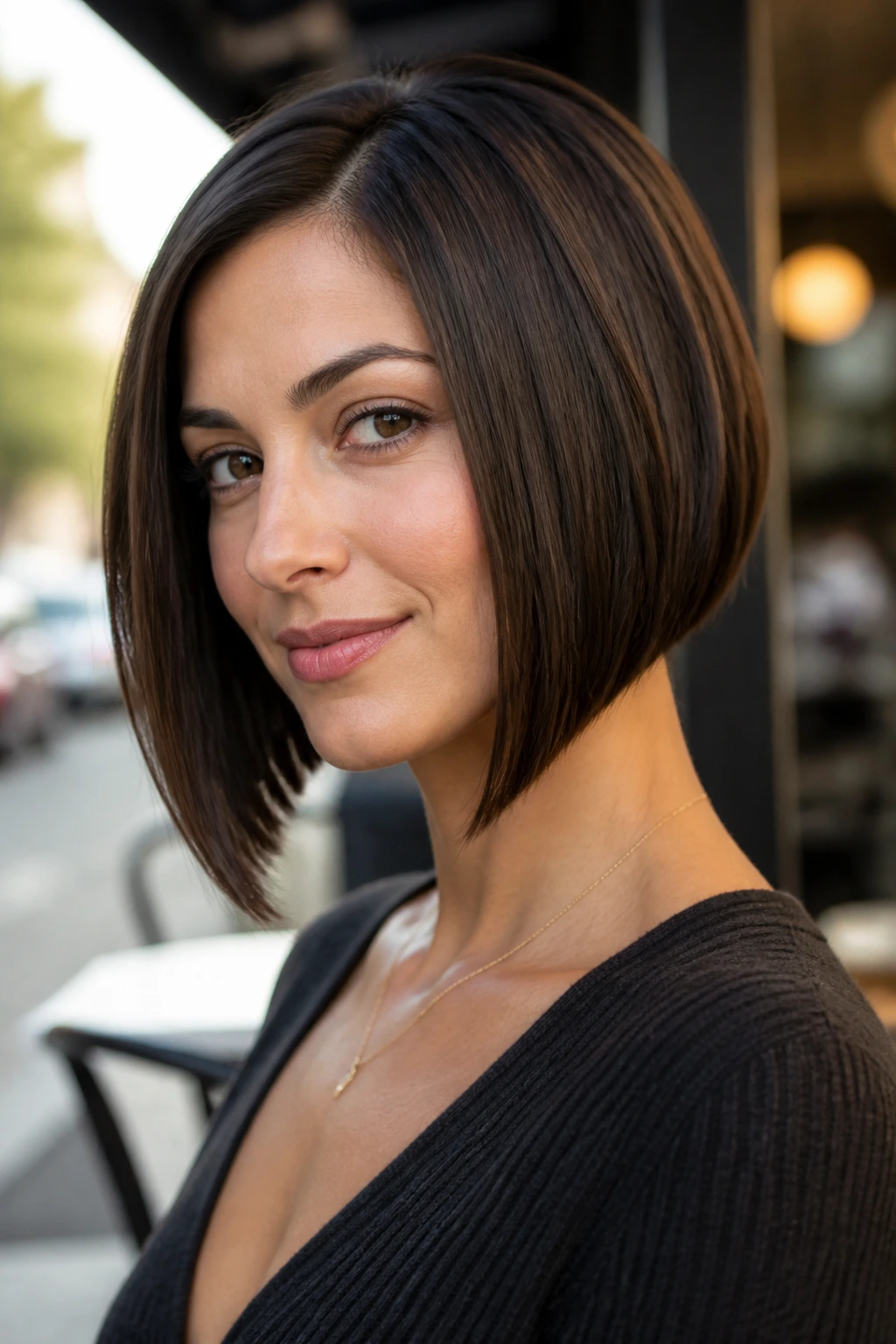
4. A-Line Bob with Long Front Corners
An A-line bob gives thick hair a direction. Shorter in the back, longer in the front, it pulls the eye forward and down, which keeps the width from sitting all around the face at once. That angle is especially kind to oval faces because it stretches the line of the jaw without crowding the cheeks.
The shape matters more than the label
If the angle is too dramatic, thick hair can start to look triangular in a new way. Keep the back neat, but do not chop it so short that the crown mushrooms. The front pieces should graze the chin or slip just past it. That little bit of length is what makes the cut read as sleek instead of severe.
This is one of the better choices if you part your hair to the side. The diagonal front line gives the face a bit of movement, and the longer corner can be tucked behind the ear when you want earrings to do the talking. It also survives grow-out well, which matters if you only want to visit the salon every few weeks.
Blow-dry it with a round brush, but do not curl the ends too much. A soft bevel works better than a hard bend. The whole look depends on that clean diagonal line.
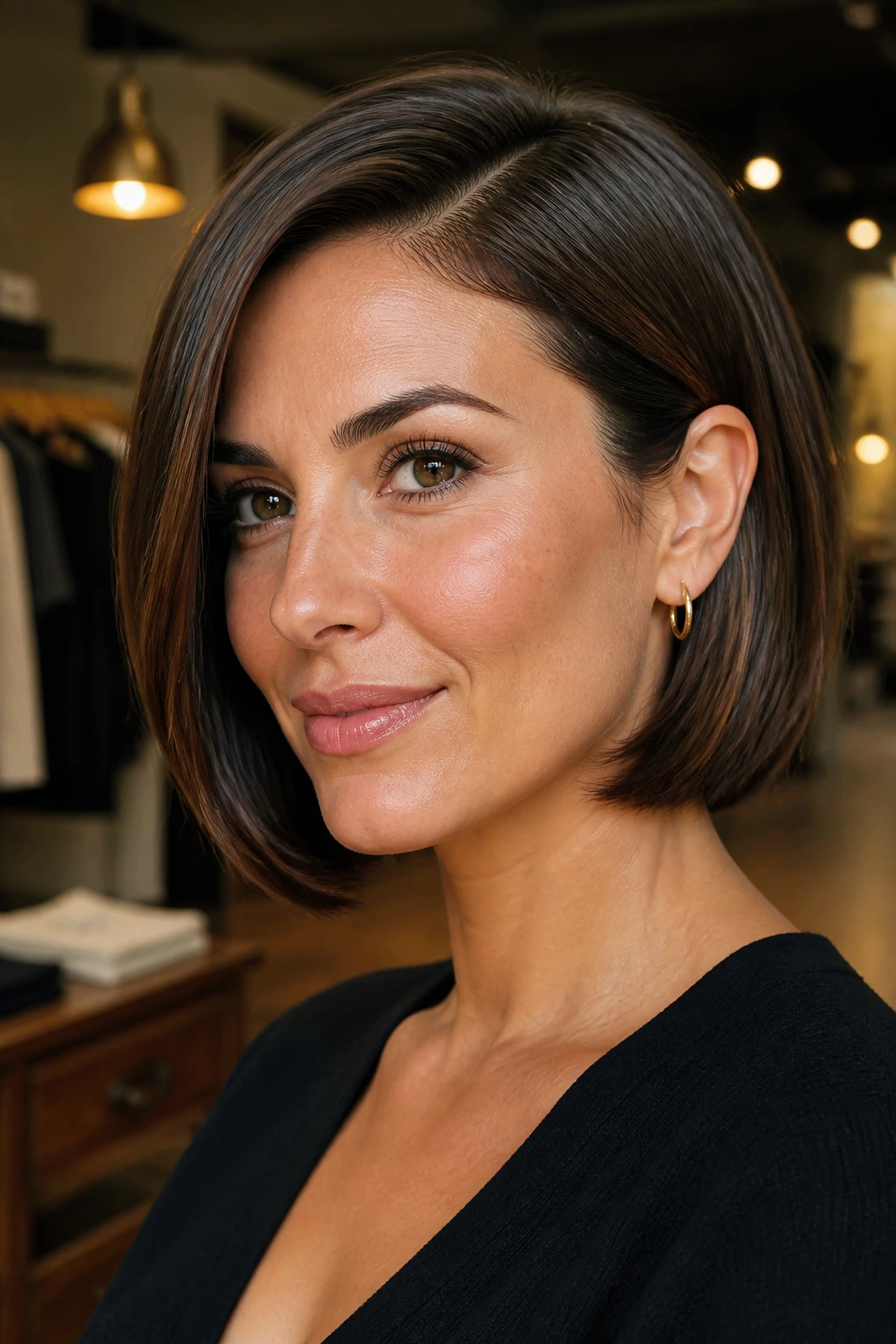
5. Side-Part Sleek Bob with Tucked Ear Length
A side part does more work on thick hair than most people think. It lifts the crown, shifts weight away from the center, and keeps the bob from sitting like a solid block around the face. On an oval face, that asymmetry gives the cut a little attitude without stealing balance.
Why this one feels polished
The key is the tucked-ear length. You want enough hair to slip behind one ear cleanly, but not so much that the whole side collapses into the face. The cleaner side should still show a real line at the jaw or just below it. If the hair is too heavy there, the side part will start to droop by lunchtime.
This is a good cut for coarse or very dense hair because the side part gives the root a place to rise while the rest of the shape stays controlled. A smoothing cream through the mid-lengths, then a flat brush or paddle brush during drying, keeps the surface neat. I would not over-style the ends. A slight inward turn is enough.
The best part is how well it wears with earrings, glasses, or a strong brow. It looks deliberate. Not fussy. That matters.
6. Textured Shag Bob with Light Fringe
Not every thick-haired bob needs to be crisp. Sometimes the answer is to let the bulk breathe a little. A textured shag bob gives you movement through the middle of the shape, which helps if your hair feels heavy or triangular the moment it grows past the chin.
What to watch for
The danger here is over-layering the crown. That is the fastest way to get a puffy top and see-through ends. Ask for texture through the mid-lengths and around the face, not everywhere. A light fringe or curtain fringe softens the front without committing you to a heavy bang line.
This cut looks best when it is allowed to feel a little undone. A sea-salt spray is fine in small doses, but a better choice is a lightweight mousse at the roots and a touch of texture spray at the ends after drying. The shape should look separated, not frizzy.
Oval faces can wear this easily because the fringe breaks up the forehead while the layers skim the cheekbones. If your thick hair waves naturally, this might be the easiest shape on the list to live with. It is one of the few bobs that gets better when it is not perfectly behaved.
7. Box Bob with a Strong Weight Line
The box bob is blunt, square, and a little dramatic in the best way. Thick hair gives it structure; the clean perimeter gives it purpose. On an oval face, a boxy shape can look striking because the face itself already carries balance, so the haircut does not have to soften every edge.
Why it needs a disciplined cut
This is not a shape for sloppy thinning. If the interior is hacked away with random razor work, the ends puff and fray. The better approach is hidden debulking underneath while the surface line stays solid. That keeps the bob looking heavy in the right way — weighty, not swollen.
A box bob works especially well if you like a straight blowout or a glassier finish. It also looks smart with a center part, though a side part can make it a little less severe. I would skip this one if you know you hate regular styling. The sharp perimeter needs a bit of attention to stay sharp.
Still, there is a lot to love here. It has presence. It sits nicely against chunky sweaters. And when the ends are polished, it looks like the haircut made a decision.
8. Curly Bob with Interior Layers
Curly thick hair changes the rules. A curly bob needs space to spring, but it also needs structure or the bottom starts to balloon into a halo. Interior layers solve that problem by removing weight from inside the shape instead of from the perimeter.
A dry cut helps here
If your curls are regular and predictable, a dry cut is often the smartest move. Wet curls lie. They stretch, then bounce back higher than expected. A stylist who cuts the bob in its natural state can see where the curls hit at the cheek, the jaw, and the neck, which makes the final line much more accurate.
Oval faces can wear this cut in several ways. A middle part creates symmetry, while a soft side part gives the curls a little sweep. A few curlier pieces at the front can hit the cheekbone and make the face look framed rather than engulfed.
Use a curl cream that gives slip, not crunch, and diffuse on low heat until the roots are dry. Then stop touching it. Seriously. Thick curls get bigger the more they are fussed with, and no one wants to spend the day separating a shape that was already good.
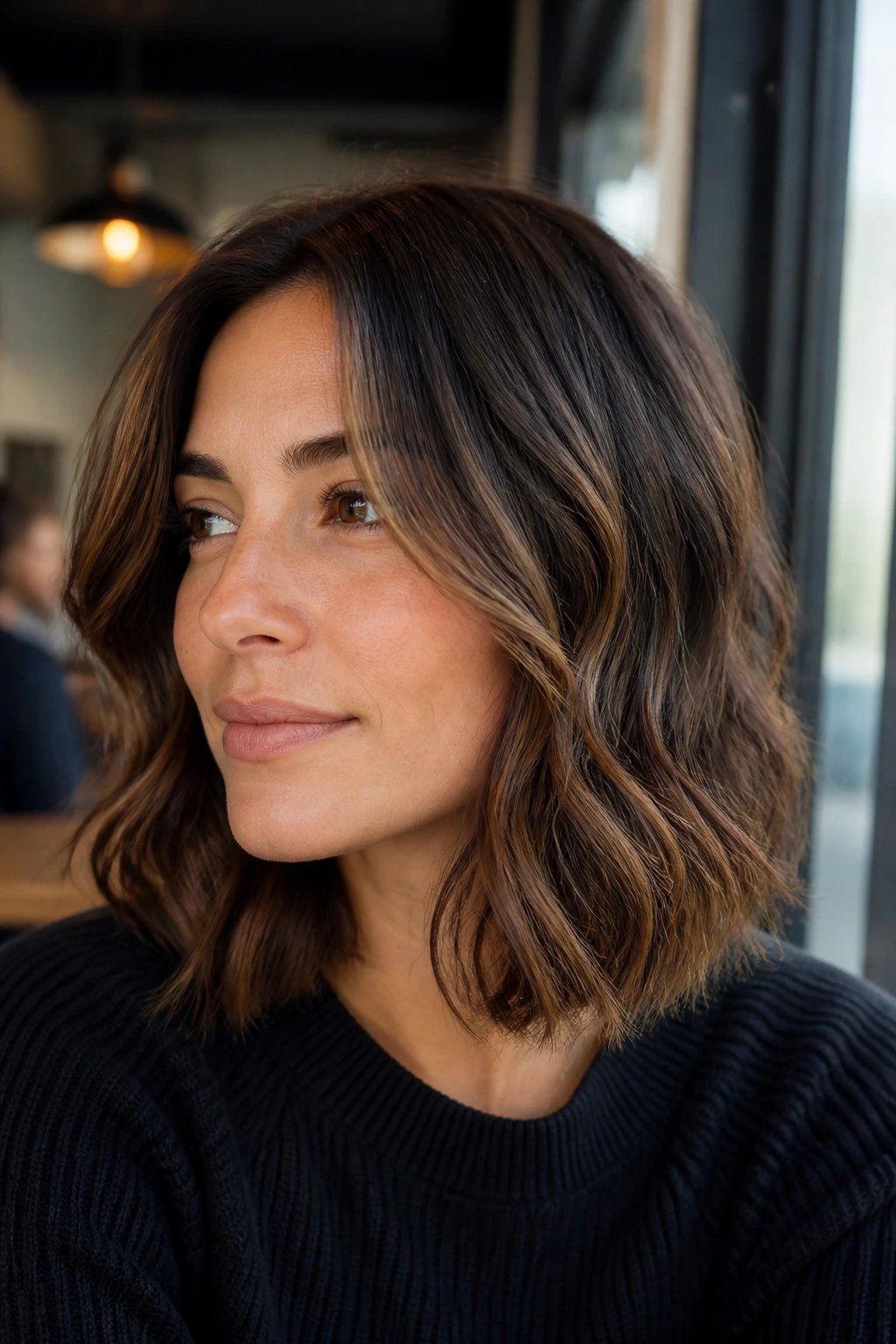
9. Wavy Lob with Face-Framing Slices
If you want a bob that is easy to wear with coats, scarves, and long days, this is the one I keep coming back to. A wavy lob leaves enough length to brush the collarbone, which helps thick hair settle instead of flaring outward at the jaw.
The face frame should be subtle
A lot of people ask for face-framing layers and end up with two bright streaks of hair that look disconnected from the rest. That is not what this cut wants. The slices should start around the cheekbone or just below it, then melt into the rest of the lob. The idea is to guide the eye, not split the haircut in half.
On an oval face, this shape is easy. It keeps the front pieces soft without trying to create fake symmetry. The wave gives it movement, and the longer length means you can tuck it, braid a bit of it, or twist it back when you are dealing with a scarf and want your hair to behave.
A medium-barrel iron or a quick bend with a flat iron works well here. You do not need a tight curl. A little bend at the ends, a little movement through the mid-lengths, and the cut does the rest.
10. Asymmetrical Bob with a Deep Side Part
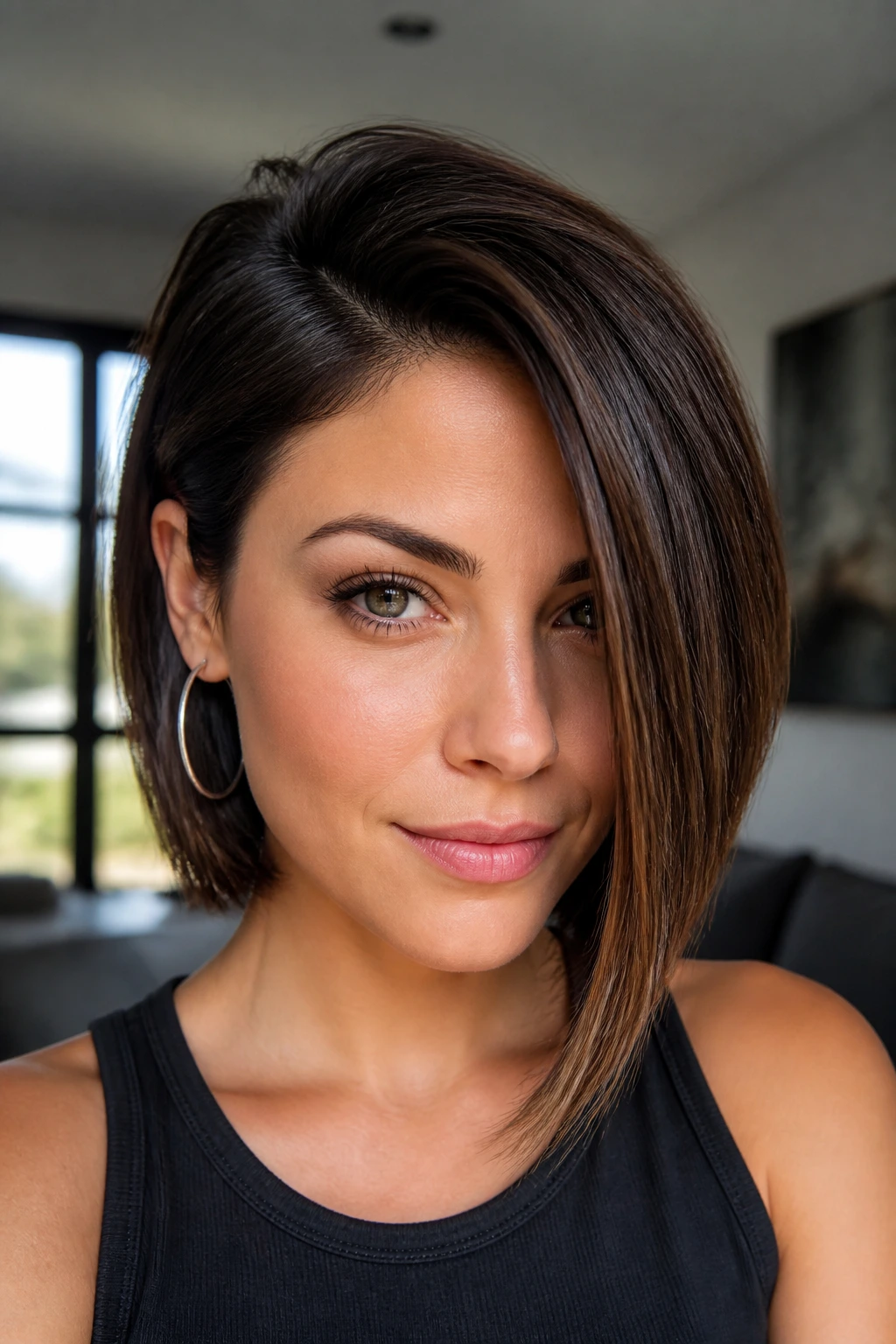
An asymmetrical bob brings a little tension to thick hair, which is exactly why it works. One side stays shorter; the other falls longer and sleeker. That diagonal line keeps the haircut from sitting too evenly around the face, which can make dense hair look broad.
Best for a little drama
The deep side part gives the shorter side lift and the longer side swing. On an oval face, the asymmetry does not fight your proportions. It adds shape where you want shape. If your jawline is strong, this cut can look especially good because it frames it without crowding it.
The haircut should still feel intentional, not lopsided. Ask for a clear plan: one side grazing the jaw, the other lengthening toward the collarbone or just below. If the contrast is too extreme, it can start to feel costume-y. The best versions are clean and a little unexpected.
Style it smooth. This is not the time for fuzzy ends. A blow dryer, nozzle, and round brush are enough for most days, though a flat iron can sharpen the longer side if your hair wants to puff at the edges.
11. Bixie-Bob Hybrid with a Tapered Nape
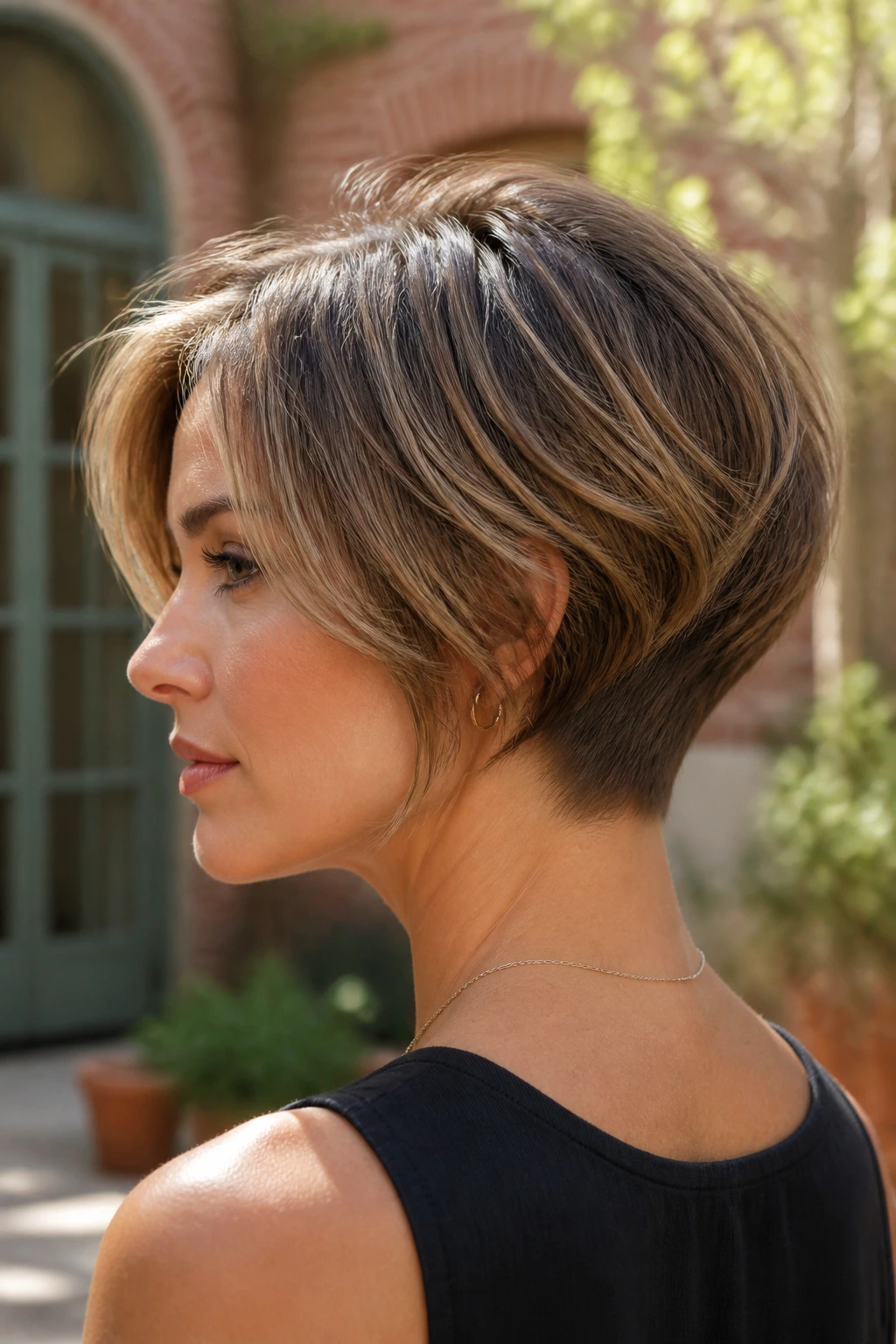
Shorter in the nape, fuller around the sides, and a little longer up top — the bixie-bob hybrid is for thick hair that wants relief without giving up personality. It is not quite a pixie, not quite a bob. That middle ground is the point.
Why the tapered nape matters
The tapered back removes the weight that tends to bunch at the neck. That is useful if your hair grows dense right where shirts and collars sit. The front stays long enough to soften the face, and oval faces can carry the shorter length without looking compressed.
This cut is one of the most practical choices if you get annoyed by hair touching your neck. It clears the nape, dries quickly, and can be shaped with a little paste or light cream. If you like a piecey finish, great. If you like smoother, that works too.
Do not let the top get too tall. A bixie-bob should be tidy, not spiky. The best ones have a little lift at the crown and a soft, contained shape around the ears. It is a tidy little haircut with enough edge to keep things interesting.
12. Feathered 90s Bob with Airy Ends
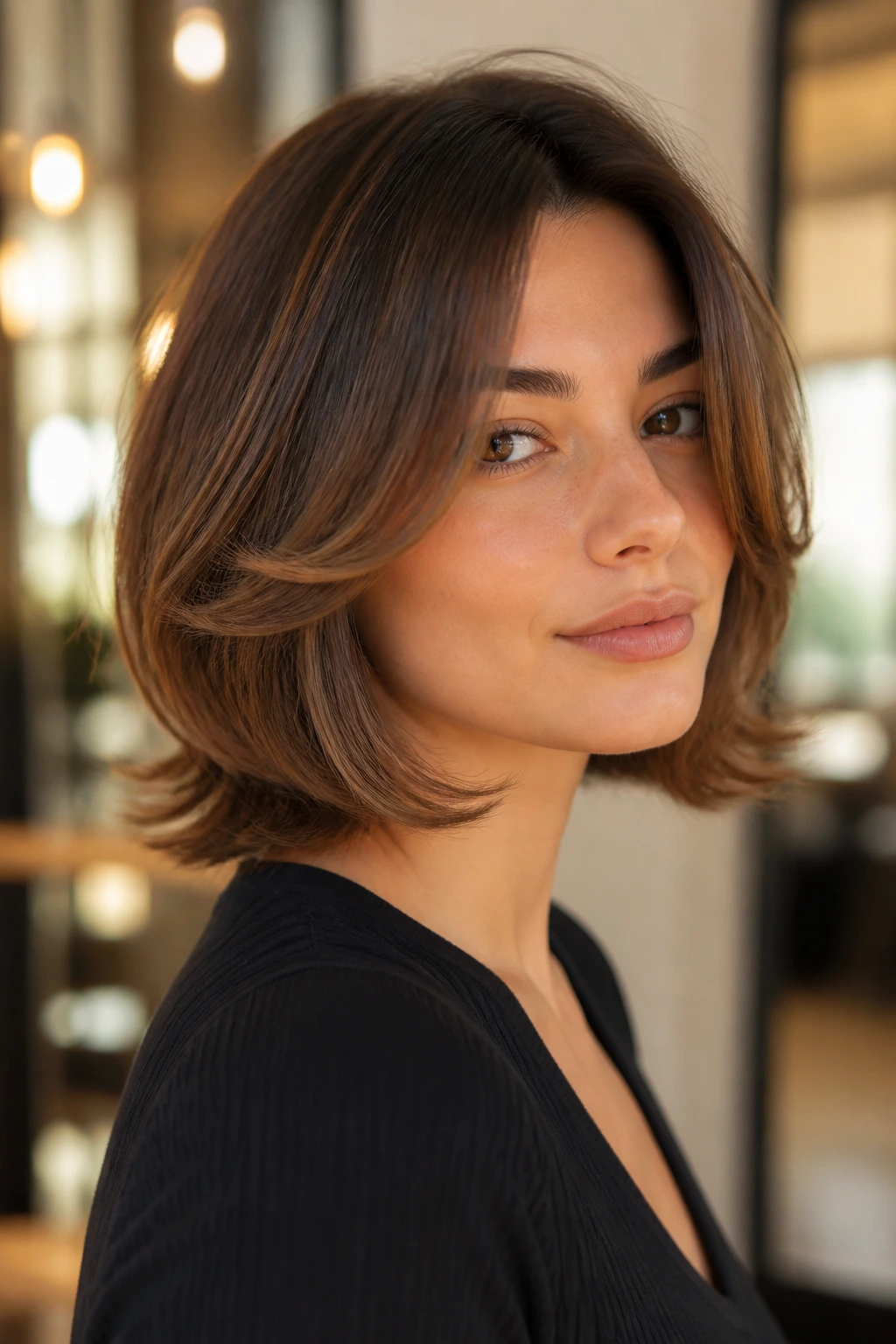
A feathered bob can go wrong fast, but when it is cut with restraint, it gives thick hair a lightness that blunt shapes sometimes miss. The ends should feel airy, not shredded. Think movement, not layers for their own sake.
The finish changes the whole mood
This cut works especially well if you like a blowout. A round brush can bend the ends out and away from the face in a soft, flicked way that feels lifted without looking overdone. On an oval face, feathering around the cheeks can soften the line just enough while still leaving the face open.
I would avoid heavy, choppy layering here. The point is not to thin the hair into nothing. The point is to keep the surface smooth while letting the perimeter feather out a little. That tiny difference is what makes it feel nostalgic instead of messy.
A lightweight volumizing mousse at the roots and a brush through the ends while they are still warm is usually enough. If your hair is coarse, one pass of shine serum on the bottom half keeps the feathering from getting dry and stringy.
13. Glass Bob with a Precision Edge
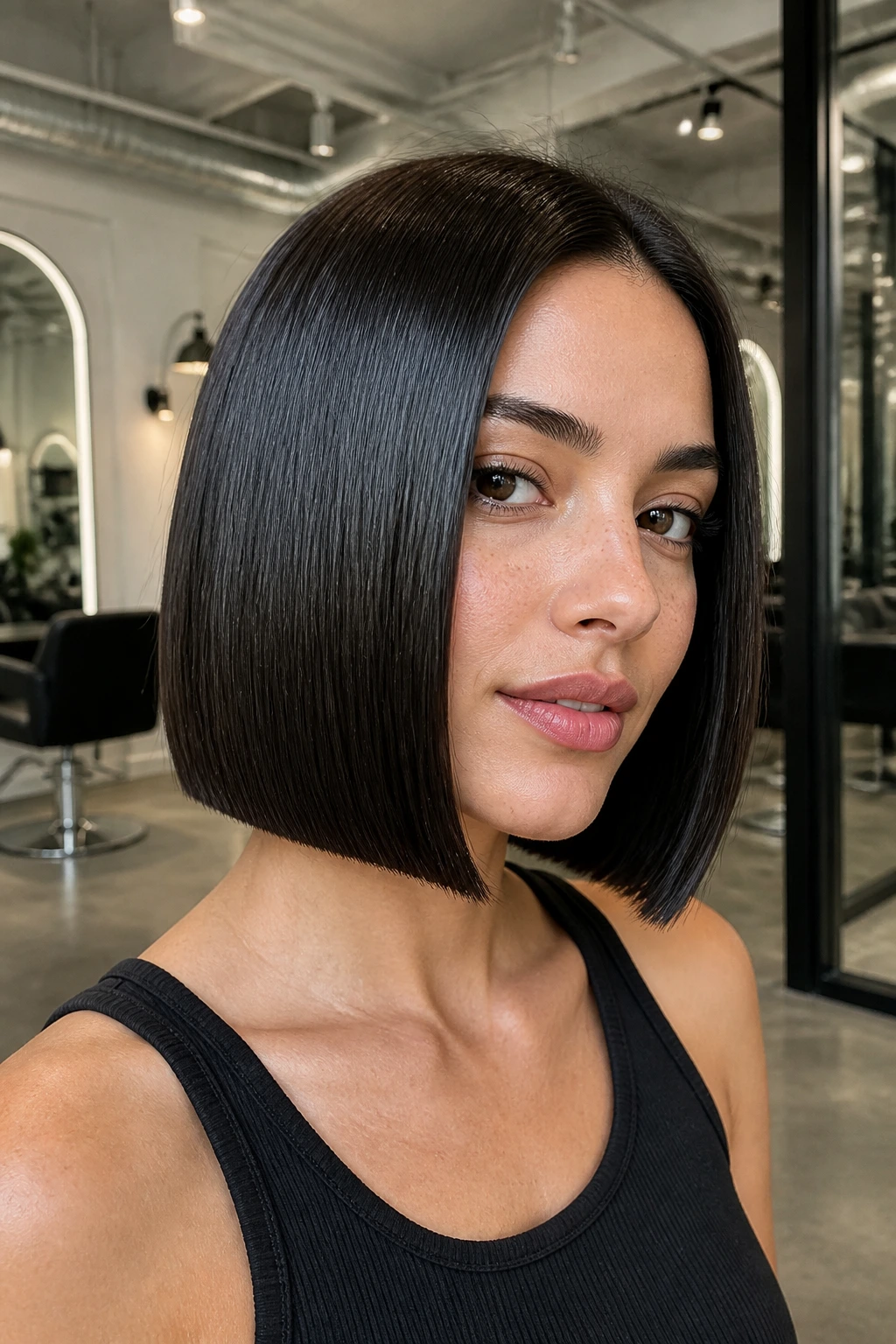
A glass bob is the opposite of shaggy. It is sleek, reflective, and cut with a very clean perimeter that lets thick hair look controlled instead of bulky. On an oval face, the precision line feels modern without needing a lot of extra styling tricks.
This cut asks for discipline
If the hair is damaged or frayed at the ends, you will see it here. Everything shows. The shine, the line, the bluntness, the clean part — all of it matters. That can be good news if your hair is in decent shape, because a well-kept glass bob looks sharp with very little visual clutter.
Ask your stylist for a careful, blunt line with minimal surface texture. You want polish, not breakup. At home, the best friend of this cut is a heat protectant, a flat iron with smooth plates, and a tiny amount of serum worked from mid-length to ends.
This is a strong choice if you like your hair tucked behind one ear or worn with a center part. It makes earrings look deliberate and coats look cleaner. No muss. No hair floating in a messy halo around the collar.
14. Undercut Bob with Hidden Relief
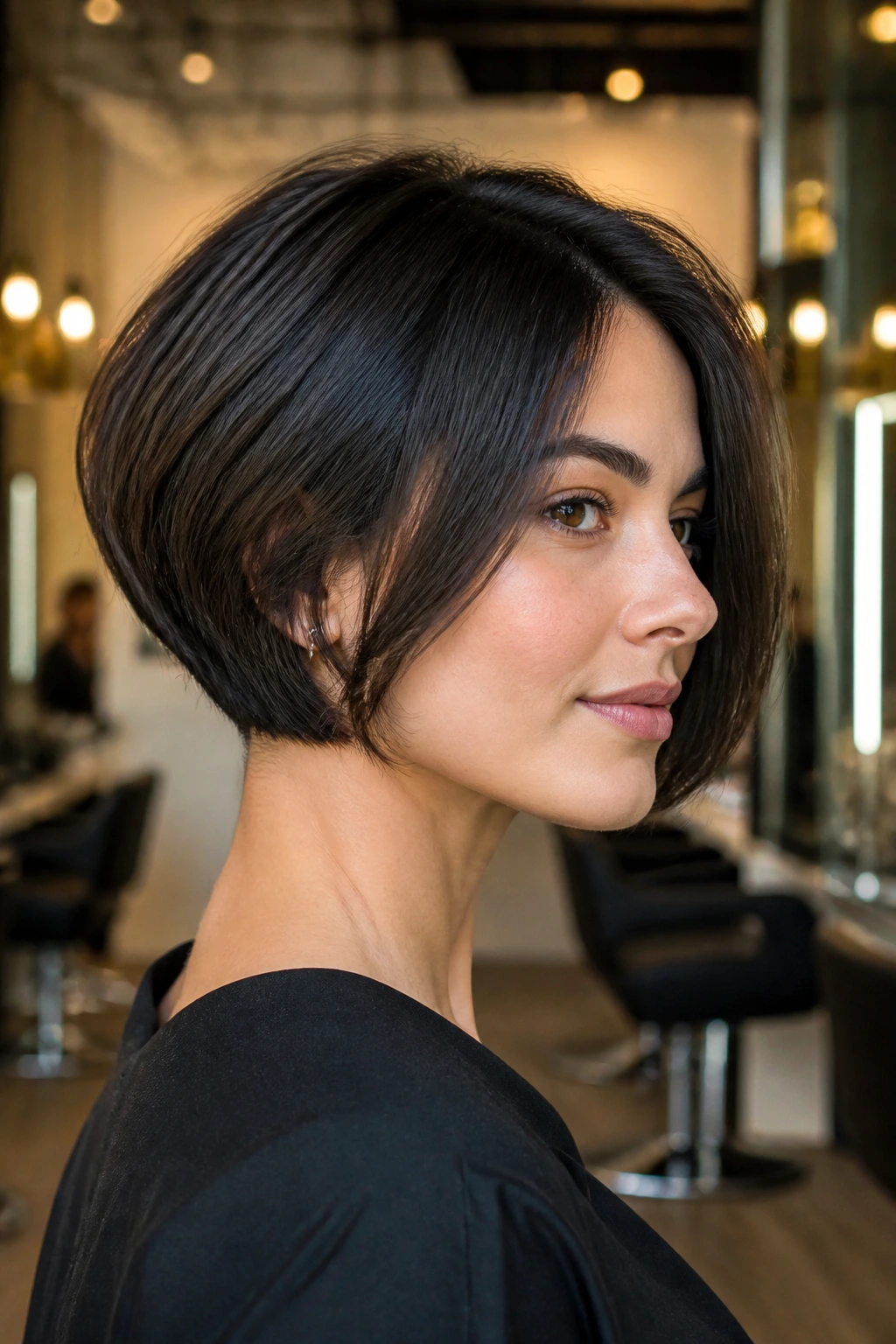
For very dense hair, an undercut can be the difference between a bob that sits and a bob that swells. The trick is to keep the undercut hidden. You want relief, not a visible shave line unless that is the look you actually want.
Hidden means hidden
The usual places are the nape, behind the ears, or a narrow strip underneath the surface layers. That removes weight exactly where thick hair tends to sit like a brick. The top layer keeps the visible shape, so the haircut still reads as a bob and not as an entirely different style.
Oval faces can wear this easily because the perimeter can stay neat and balanced while the underlayer does the heavy lifting. It is a smart cut if you hate the feeling of hair bunching at the neck. It also tends to dry faster, which is a quiet bonus nobody thinks about until they stop spending twenty extra minutes on the back of the head.
This is not the place to cut corners. The undercut has to be blended well or the grow-out can feel awkward. But when it is done right, it buys you shape, movement, and a little sanity.
15. Flipped-Out Bob with Ends That Kick

A flipped-out bob feels playful without getting silly, which is harder to pull off than people think. Thick hair holds a bend at the ends better than fine hair, so the shape can look intentional instead of limp. On an oval face, the outward movement near the jaw adds a little width in a controlled way.
The trick is the ends
You do not want a full-on 1960s flip unless that is your thing. A soft outward kick at the last inch or two is enough. A round brush, a dryer nozzle, and a fast flick of the wrist at the ends will do most of the work. If you use a flat iron, turn the iron just at the bottom quarter of the strand and leave the rest smooth.
This cut can feel especially good with heavier clothes because the movement keeps the hair from flattening against collars. It also wears well if your hair has a little natural wave. The bend in the ends gives that wave a place to live instead of spreading it everywhere.
I like this one for people who want a bob with a little personality but no real fuss. The finish says you made a choice. That is enough.
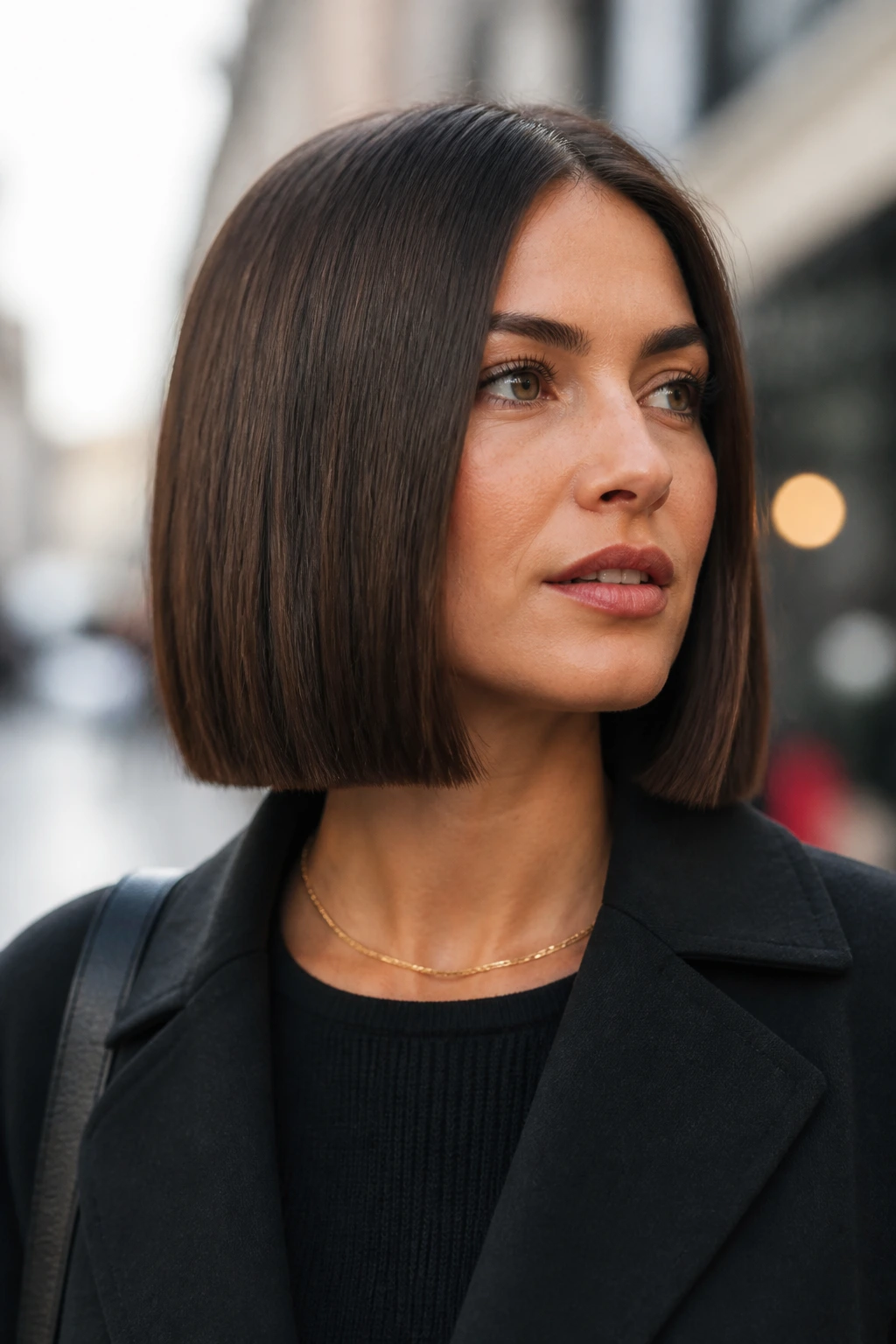
16. Center-Part Soft Blunt Bob
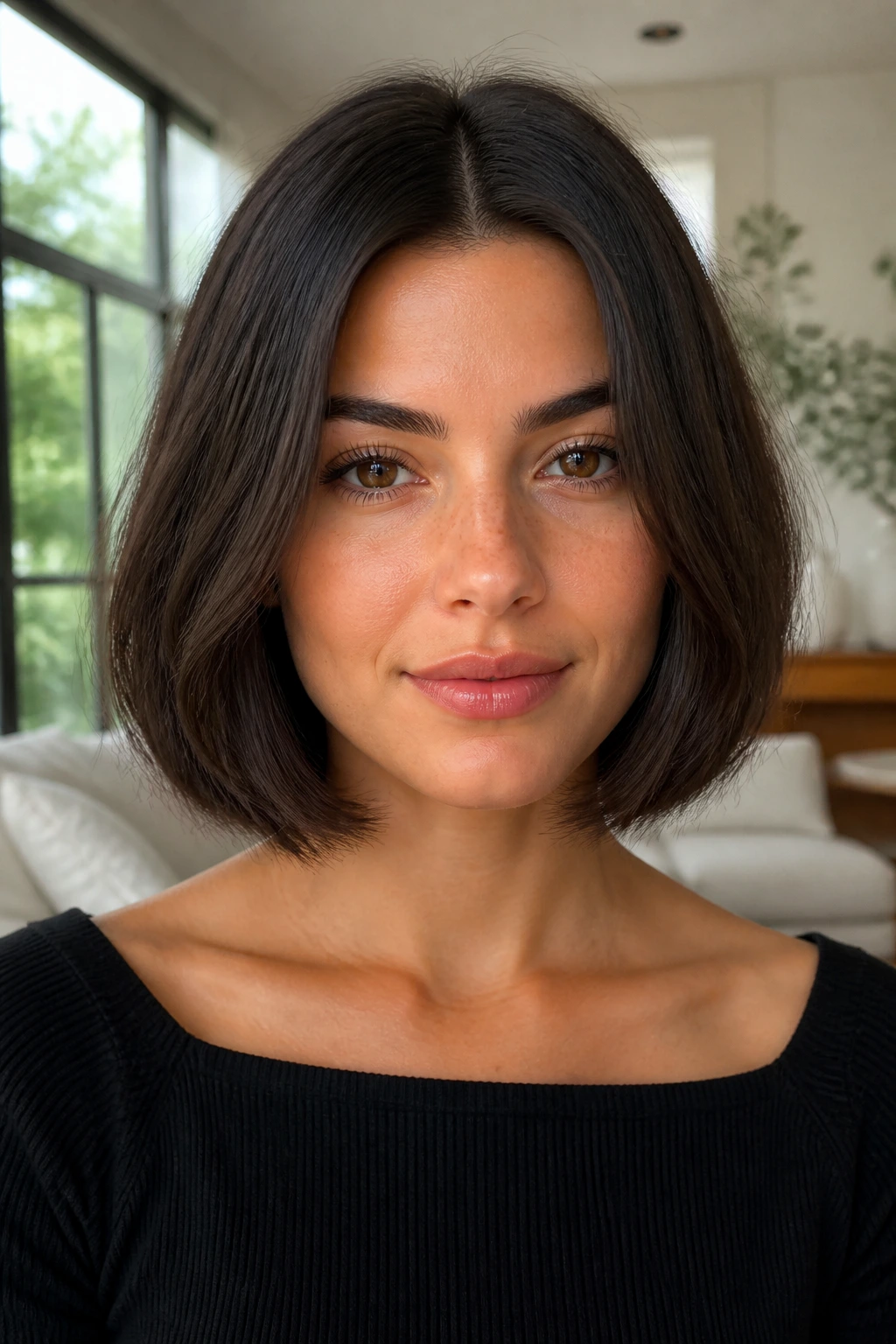
A center part on an oval face can be a gift. It shows the symmetry of the face and lets a blunt bob do its clean, quiet work. The trick is not to make the bluntness too hard. Thick hair needs the perimeter, but it also needs the edge softened a touch so the shape does not read like a cut block.
Why this looks expensive
The center part creates balance, then the soft blunt line keeps the weight under control. If the hair is very thick, a stylist may remove some bulk underneath while leaving the outer line untouched. That helps the bob sit flat at the sides instead of flaring out.
This is one of the most low-drama choices if you prefer a neat outline and do not want a lot of face-framing pieces. It works with straight hair, blowouts, and even a tucked-behind-the-ear moment. The center part is what makes it look intentional rather than accidental.
Use a smoothing blow-dry cream and a paddle brush for the first pass, then finish with a flat iron if your ends need a cleaner line. Keep the ends slightly rounded under. Too much bend and the whole point of the blunt cut disappears.
17. Piecey Jaw-Length Bob with Micro-Layers

A jaw-length bob can be beautiful on thick hair if it is cut with enough intelligence to avoid the triangle. Micro-layers — tiny, controlled adjustments, not obvious shag layers — give the hair some separation without erasing the line.
A little piece goes a long way
This is the cut for people who like their hair to feel lived-in instead of severe. The pieces at the surface can be nudged with a dab of wax or pomade, which gives the bob texture without making it look messy. On an oval face, the jaw-length perimeter shows the bone structure without crowding it.
I would not make this cut too short at the back. Thick hair at jaw length can pop out if the nape is too tight, and then the whole shape starts to lift where you do not want it. Keep the line clean, keep the layers tiny, and let the styling product do the talking.
It is a good one for busy mornings because it looks better with a little imperfection. That is rare, and worth appreciating.
18. Collarbone Flip Bob with a Curtain Fringe

This is the easiest romantic bob on the list. The collarbone length keeps thick hair grounded, the flip at the ends keeps it from feeling heavy, and the curtain fringe softens the front without boxing in the face. On an oval face, the middle part and fringe create enough movement to keep the look fresh.
A soft frame, not a heavy curtain
The fringe should part cleanly in the middle and sweep away from the cheeks. You do not want it dense enough to hide the face. That would defeat the point. A curtain fringe works here because it gives the bob a little fall-friendly softness around the eyes while leaving the rest of the haircut open.
This shape is especially good if you want to wear your hair with sweaters and still have it look deliberate. The collarbone length clears the neck, and the flip at the ends prevents the haircut from sitting flat under layers of clothing. It also grows out gracefully, which is a nice thing to have on your side.
A medium round brush, a quick bend at the fringe, and a soft outward flick at the ends are enough. The look should feel airy and slightly undone, not fussy.
What Makes a Thick-Hair Bob Hold Its Shape
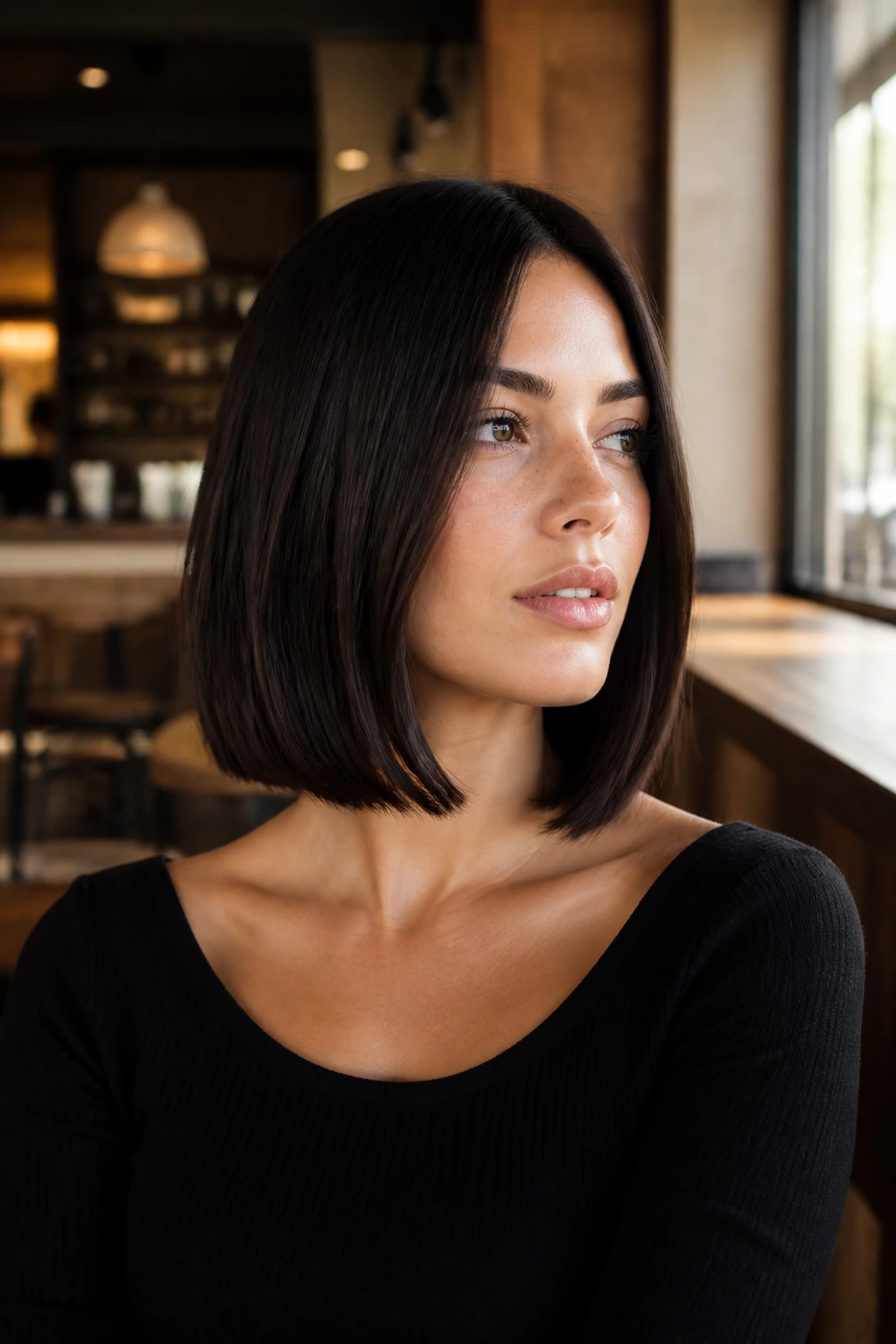
Thick hair is generous, but it can be stubborn. That stubbornness is not a flaw. It just means the cut has to respect the way the hair wants to fall. The bobs that work best on dense hair usually do three things well: they keep a clean perimeter, they remove weight in the right places, and they do not fight the natural body of the hair.
A blunt edge is often your friend. So is an internal layer, when it is used sparingly. What you do not want is a lot of random thinning near the surface. That can leave the top looking smooth and the ends looking ragged, which is a miserable trade. If a stylist reaches for thinning shears, ask what problem they are solving. If the answer is vague, that is a warning sign.
Oval faces make life easier, but they do not erase the need for shape. The face can handle short fringe, side parts, center parts, and strong lines, which gives you a lot of freedom. The haircut can be bolder, but it still needs to follow your density, your neck length, and the way you actually style your hair.
Fall adds another twist. Scarves rub. Coat collars bend the nape. High necklines can flatten the back of a bob before you even get to lunch. A good fall bob is one that still looks like itself after real life has touched it. That is the test.
The Tools That Keep the Shape Clean

-
Blow dryer with a nozzle attachment: the nozzle directs airflow down the cuticle, which keeps thick hair smoother and less frizzy at the surface.
-
1.5- to 2-inch round brush: this is the sweet spot for bending bob ends under or out without creating a tight curl.
-
Paddle brush: useful for rough-drying and smoothing the mid-lengths when you want the bob to lie flatter.
-
Flat iron with rounded edges: best for glass bobs, sleek side-part styles, and sharpening the ends of a blunt cut.
-
Heat protectant spray or cream: thick hair can handle heat better than fragile hair, but it still needs protection if you want the ends to stay clean.
-
Lightweight mousse: gives roots a little lift without turning the bob into a puffy helmet.
-
Smoothing cream or serum: use a small amount on the mid-lengths and ends to keep coarse or dense hair from fuzzing out.
-
Texturizing spray: helps piecey bobs and shaggy shapes separate without looking sticky.
-
Sectioning clips: make blow-drying much easier, especially if your hair is dense enough to hide layers in the back.
-
Diffuser: a must for curly or wavy bobs if you want the shape to dry with less frizz.
How to Choose the Right Length, Fringe, and Finish
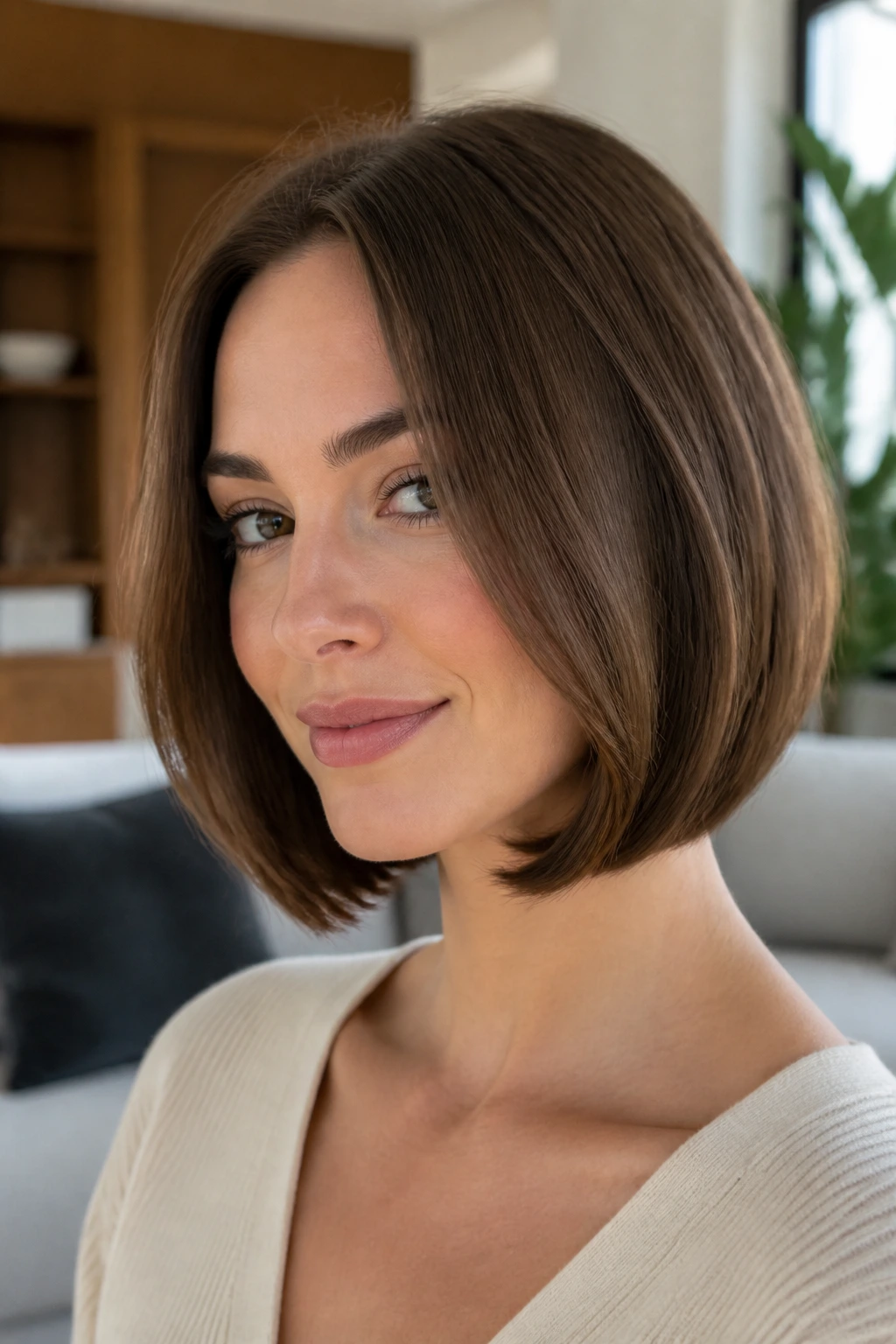
If your hair is very coarse, keep the perimeter longer. Jaw-length can work, but collarbone or just-below-jaw lengths usually give coarse strands enough room to sit without springing outward. The shorter you go, the more the hair fights the line.
If your hair grows wide at the sides, choose a cut with direction. That means an A-line, a side part, or a shape with longer front corners. You want the eye to travel somewhere instead of stopping at the widest point.
If you wear a lot of turtlenecks and scarves, think about the neckline first. A nape that is too short can get crushed against fabric, which makes the back of the bob flip weirdly. A collarbone bob or one with longer front pieces usually sits better under fall clothes.
If you love bangs, choose the fringe around your cowlicks, not against them. Thick hair can hide a stubborn swirl at the front, but it can also make fringe sit heavy. Brow-grazing, curtain, and light blunt fringes all work; the right one depends on how your hair grows at the temple and forehead.
If you want low maintenance, avoid a shape that only looks good with hot tools. A glass bob is beautiful, but it asks for polish. A rounded bob, wavy lob, or soft shag bob is easier if you want the haircut to look good after a quick air-dry and a bit of product.
Where Bob Cuts Go Wrong on Dense Hair
-
Over-thinning the whole head: the hair looks fluffy for a day, then the ends go wispy and the shape loses weight. The fix is targeted removal underneath, not a blanket attack with thinning shears.
-
Cutting the nape too short: thick hair springs up at the back and starts to mushroom when it hits the neckline. Leave enough length to let the hair settle, especially if you wear high collars.
-
Ignoring the crown: if the top is left too heavy, the bob can tip forward or puff out at the sides. Ask your stylist to check the silhouette from every angle, not only the front.
-
Choosing fringe without checking the growth pattern: a good bang can frame an oval face beautifully, but a stubborn cowlick will split it down the middle every morning if the cut is not planned around it.
-
Leaving the front too blunt and too wide: a thick, even front can swallow cheekbones fast. A tiny bit of face-framing or angle usually makes the cut feel lighter without sacrificing strength.
-
Styling the bob as if it were fine hair: thick hair needs more smoothing, more sectioning, and usually more control at the ends. If you blow-dry it in one giant chunk, the surface will look puffy and the underneath will stay damp.
Easy Variations When You Want More Softness or Edge
-
The Softer Frame: keep any of these bobs at the same length, then add a little more movement around the cheekbones. It works well if you want the haircut to feel less strict without changing the overall shape.
-
The Sleeker Finish: choose the blunt, box, or center-part version and style it with a flat iron and a touch of serum. This is the one for people who like a sharper outline and clean shine.
-
The Curl-First Version: for naturally wavy or curly hair, keep the same bob length but cut it dry and allow the shape to sit where the curls actually land. The result is softer and much easier to live with.
-
The Edgier Nape Cut: add a hidden undercut or a tighter taper in the back if your hair is so dense that it stacks at the neckline. It changes the way the whole bob hangs.
-
The Fringe Swap: if bangs feel too committed, trade them for curtain pieces, a side-swept front, or a light face frame. That gives you the same softness without the daily trim anxiety.
Tools and Products Worth Having on Hand

-
Heat protectant: use it every time you blow-dry or flat iron. Thick hair can hide heat damage for a while, then the ends start splitting all at once.
-
Lightweight smoothing cream: best for blunt, rounded, and glassy bobs that need the surface to lie flat.
-
Volumizing mousse: helpful if your bob tends to collapse at the crown after drying.
-
Dry shampoo: useful for refreshing the roots without over-washing, especially when the bob starts to feel heavy at the scalp.
-
Texturizing spray: gives piecey and shaggy bobs definition at the ends.
-
Small claw clips: handy for tucking one side behind the ear or setting the front while it cools.
-
Silk or satin pillowcase: not glamorous, but it helps keep thick bob ends from getting roughed up overnight.
-
Wide-tooth comb: better than yanking through wet dense hair with a small brush.
-
Root clips: a small detail that helps the crown dry with lift instead of flatness.
-
A good pair of salon shears, if you trim bangs at home: not kitchen scissors. Never kitchen scissors.
Keeping a Thick Bob in Shape Between Cuts
A bob on thick hair usually needs a trim every 6 to 8 weeks if you want the line to stay clean. Fringe needs attention sooner — every 3 to 4 weeks is a safer bet if you wear bangs or curtain pieces. Letting it go too long is how the cut slides from crisp to bulky, and thick hair makes that shift faster than fine hair does.
Wash frequency depends on your scalp, not a moral code. If your roots get oily fast, cleanse as needed, but don’t scrub the ends into oblivion. A bob wears better when the mids and ends are not stripped dry. On days between washes, dry shampoo at the roots is enough for most people. Spray it where the head gets flat, then wait a minute before massaging it in.
At night, a loose clip or a satin pillowcase can keep the ends from getting bent into odd shapes. If you wake up with a rogue flip at the back, mist the ends lightly with water and re-bend them with a brush or flat iron. Do not soak the whole head. That just starts the morning over.
If you air-dry your bob, work in a little cream or mousse while the hair is damp and keep your hands out of it until it is about 80 percent dry. Thick hair gets frizzier the more it is touched while drying. If you blow-dry, finish the roots first and the ends last. That order keeps the silhouette under control.
Frequently Asked Questions

What bob length is most flattering on thick hair and oval faces?
Usually the safest lengths are just below the jaw, chin-skimming, or collarbone length. Those spots keep the hair from kicking out too much at the sides while still showing enough shape around an oval face.
Is a blunt bob or a layered bob better for thick hair?
A blunt bob usually wins if you want structure, but the key is what happens underneath. Thick hair often needs hidden internal debulking, not lots of visible layers, so the perimeter stays clean and the bulk stays under control.
Can oval faces wear bangs with a bob?
Yes, and they can wear several kinds — blunt, curtain, brow-grazing, or side-swept. The real question is how the bangs sit with your cowlicks and density. A fringe that fights your growth pattern will look stubborn fast.
How short can thick hair go before it puffs out?
That depends on the texture, but many thick heads start to expand when the bob cuts too close to the widest part of the jaw or the nape gets chopped too high. If you want a shorter style, ask for shape control at the back so the hair has somewhere to fall.
Should I ask for thinning shears?
Only if the stylist can explain exactly where and why. Too much thinning on thick hair can leave the ends frayed and the top flatter than the rest. I’d rather hear words like internal layering, point cutting, or weight removal in the interior.
How do I keep the ends from flipping out?
Use a round brush or flat iron to guide the ends under while they cool. If the hair still kicks out, the perimeter may be too short for your texture, or the layers may be fighting the line. Sometimes the fix is a slightly longer cut, not more product.
Can I air-dry a thick bob, or does it need hot tools?
You can air-dry it if the cut is forgiving — rounded bobs, shag bobs, and curly bobs usually do fine. A glass bob or a sharp blunt bob will usually look cleaner with some heat because thick hair likes to dry in its own shape.
How often should I get it trimmed?
Every 6 to 8 weeks is a safe rhythm for keeping the shape honest. If you have bangs or a very precise line, book a touch-up sooner. Once thick hair grows past the intended line, it stops looking like a bob and starts looking like a compromised idea.
Which of these bobs is easiest for busy mornings?
The collarbone blunt bob, rounded bob, and wavy lob are the easiest to live with. They can survive a rough dry, a little cream, and a quick bend at the ends without demanding a full styling session.
What should I show my stylist if I want one of these cuts?
Bring 2 or 3 photos from different angles, plus one picture of a fringe or finish you like. Then point to the length, the line, and the texture separately. That prevents the usual salon confusion where one photo is treated like a complete haircut map.
The Shape That Still Looks Good Under a Coat
A good bob on thick hair does not fight your texture. It gives it a place to land. That is the whole job, and when it’s done well, the haircut looks sharper in real life than it does in the mirror.
Oval faces have a lot of freedom here, which is a nice problem to have. You can go blunt, curved, fringe-heavy, asymmetrical, or softly tousled. The real decision is how much structure you want to wear every morning, and how much of your hair’s natural body you want the cut to keep.
If you are bringing one of these looks to a stylist, bring the ones that match your life, not only the ones that look pretty in a screenshot. Thick hair tells on a lazy cut fast. A smart bob, though, holds its line through sweaters, scarves, and the messy little things that happen between the salon chair and the front door.