



A good haircut after 60 should do two things at once: make your hair easier to live with and make your face look more rested without pretending time stopped. That’s the sweet spot of aging gracefully hairstyles for women over 60. Not a disguise. Not a costume. A cut that understands what hair actually does at this stage — a little finer at the temples, a little more stubborn at the crown, sometimes drier at the ends, sometimes wirier in the gray strands that used to be silky.
The best styles aren’t the ones that scream “youth.” They’re the ones that keep their shape when the blowout loosens, when the weather turns damp, and when you don’t feel like wrestling a round brush for 25 minutes. A bob that moves, a pixie that lifts, a lob that doesn’t hang like a wet scarf — those are the cuts that earn their keep.
I’ve always thought the biggest mistake in hair after 60 is chasing a photo instead of a shape. A gorgeous picture on a stranger means almost nothing if your cowlick lives at the front hairline, your neck is short, or your glasses sit right where the bangs want to fall. The right style works with the hair you have, not the hair you used to have. That’s the whole game.
Why These Hairstyles Work So Well After 60
-
They make the face look framed, not hidden: A little lift at the crown or a soft curve at the jaw gives the face structure without dragging attention downward.
-
They grow out cleanly: A good older-woman haircut should still look deliberate at week five, not like it’s in emergency mode after three shampoo cycles.
-
They handle texture changes better: Gray hair often changes feel — more coarse, more dry, sometimes puffier. The right layers and weight removal keep that from turning into a triangle.
-
They save time in the morning: The styles below are chosen because they can air-dry with shape or need only a quick blow-dry and a few passes with a brush.
-
They work with glasses, earrings, and necklines: That matters more than people admit. A style that collides with your frames or your collar can look busy fast.
-
They don’t ask hair to do impossible things: Fine hair needs lift, thick hair needs movement, and curls need room. The best cuts respect that instead of fighting it.
1. Soft Layered Bob That Lifts the Jawline
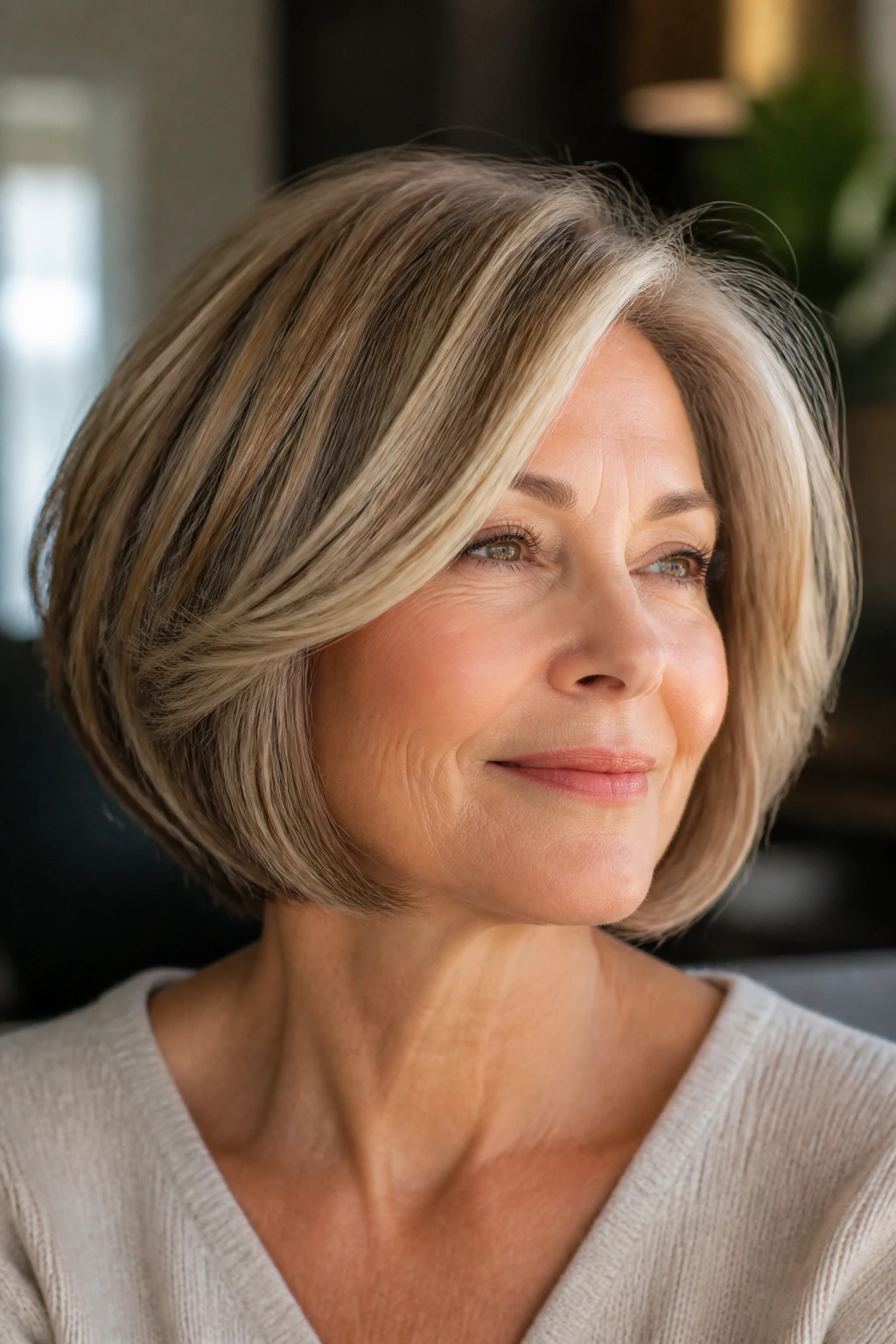
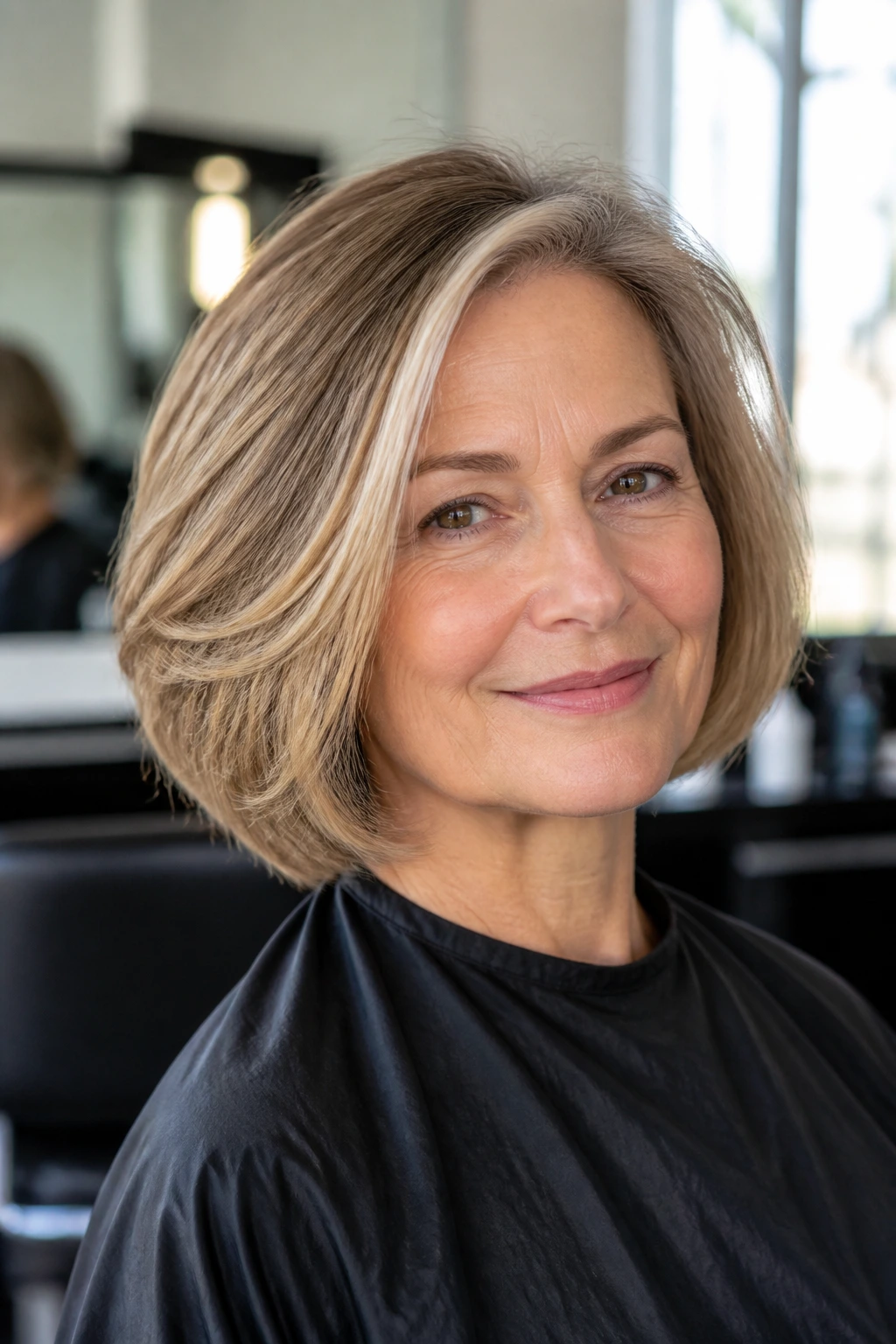
This is the bob I recommend when someone wants polish without stiffness. The cut sits around the chin, but the layers are soft enough that the ends don’t look chopped or blocky. It’s one of those styles that quietly makes the whole lower face look tidier.
Why it works
A layered bob removes enough weight to keep the hair from settling flat at the sides, which is where older hair often starts to look tired. The length around the jaw gives the face a clear edge, and that edge matters if your hair has become a little finer than it used to be.
Ask for the perimeter to land just below the jaw if you want softness, or right at the jaw if you want a sharper frame. I like the slightly longer version on most faces because it moves better and doesn’t flip out at the wrong moment.
What to ask for
- Chin to jaw length
- Soft interior layers, not choppy razoring
- A gentle bend under the ends
- Side part or deep side part if you want more lift
A round brush gives it a neat curve, but it still looks decent air-dried with a bit of mousse. That’s the mark of a good bob. If it only looks good in the salon mirror, keep walking.
2. Chin-Length French Bob With a Clean Edge
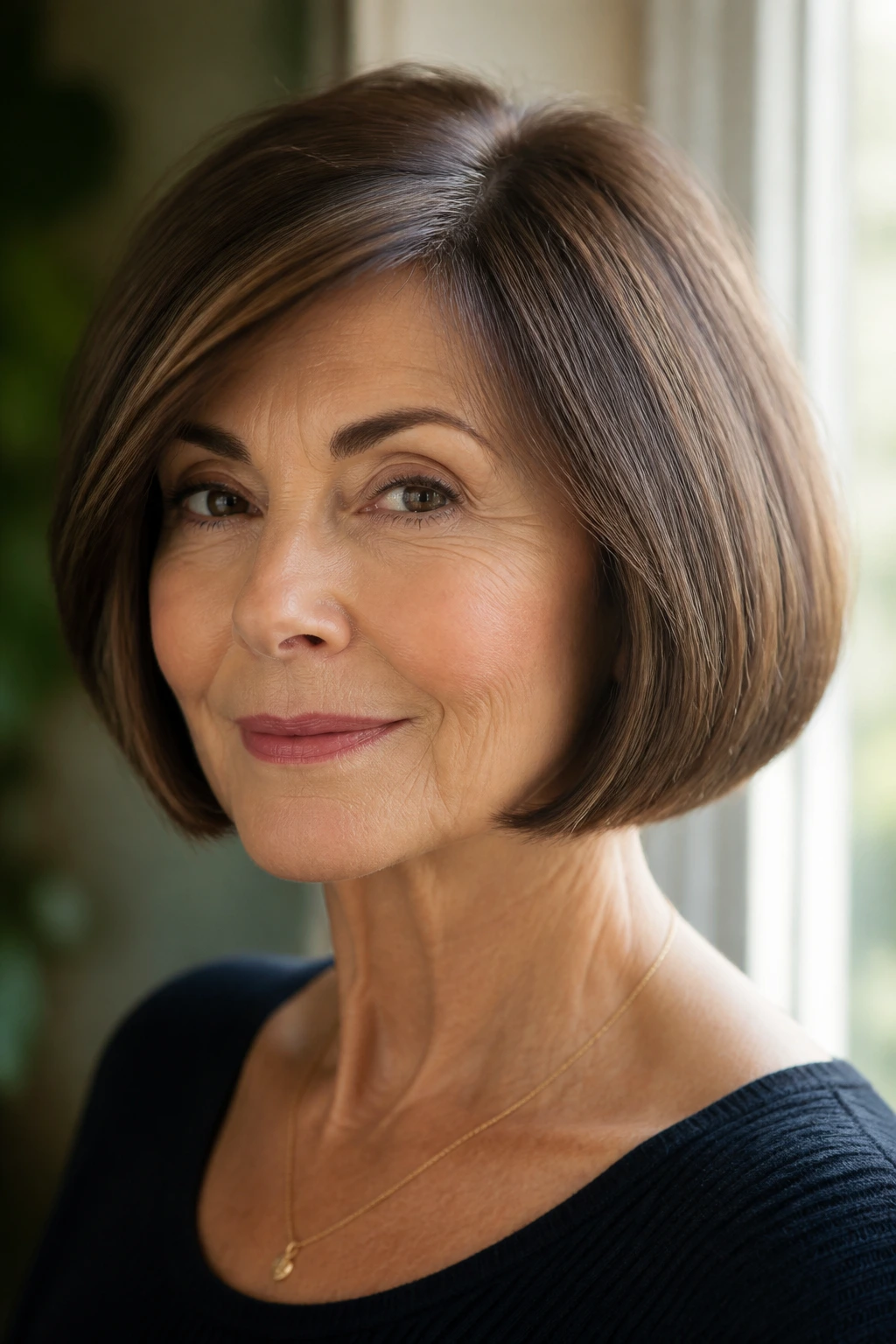
The French bob has a little attitude, but the mature version is calmer than the fashion-magazine version. Think cheekbone exposure, a neat line, and enough softness around the ends to keep it from feeling severe. It’s especially nice on women with straight or slightly wavy hair that likes to settle into a tidy shape.
What I like about this cut is its honesty. There’s no pretending it’s long hair in a shorter outfit. It just is what it is — clean, elegant, and low on fuss. When the line hits at the cheek or just under it, the whole face tends to look lifted.
It does ask for a little maintenance. Blunt edges show growth faster than layered cuts, so this one looks best with regular trims. If your hair grows fast and you hate salon appointments, that’s the catch.
A side part softens the look. A tucked-behind-the-ear finish gives it a bit of old-school polish that never feels stale.
3. Side-Swept Pixie That Opens the Face
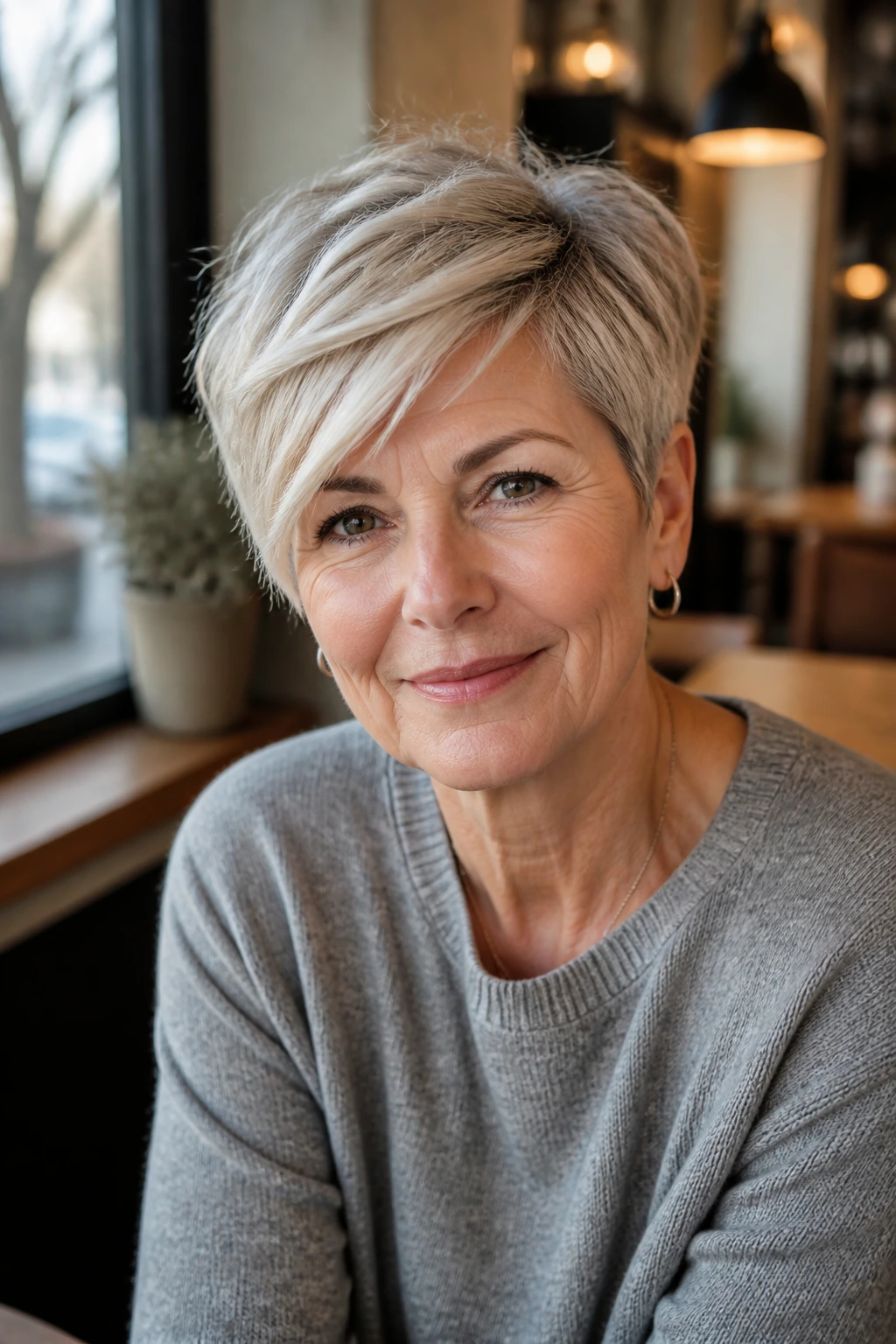
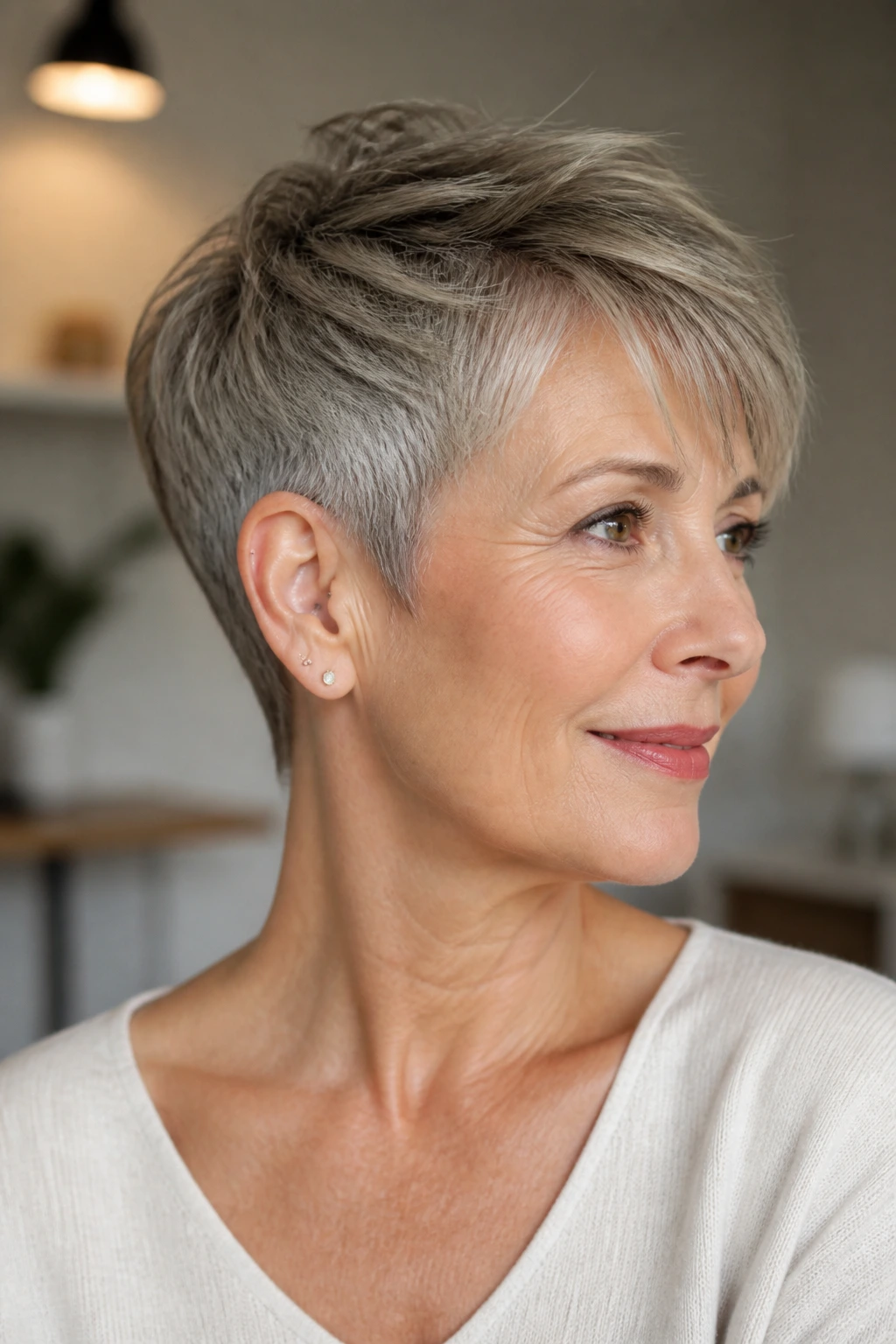
A pixie can go wrong fast if it’s cut too tight or too helmet-like. The side-swept version avoids that trap by leaving enough length on top and through the fringe to make the style feel lived in, not severe. The sides stay neat, the top gets a little lift, and the fringe falls across the forehead in a soft diagonal.
This cut is especially good if your hair has become lighter around the temples or if you’re tired of fighting flatness. It takes the pressure off the back and sides, where too much length can start to drag. The shape does a lot of the work for you.
Best for
- Fine hair that needs height
- Straight hair with a stubborn cowlick
- Glasses wearers who want the frames visible
- Women who like short hair but not a cropped military look
Keep a pea-sized amount of matte paste or styling cream on hand. A little goes a long way here. Too much product makes the whole thing stick together, and nobody needs that.
4. Collarbone Lob With Curtain Bangs
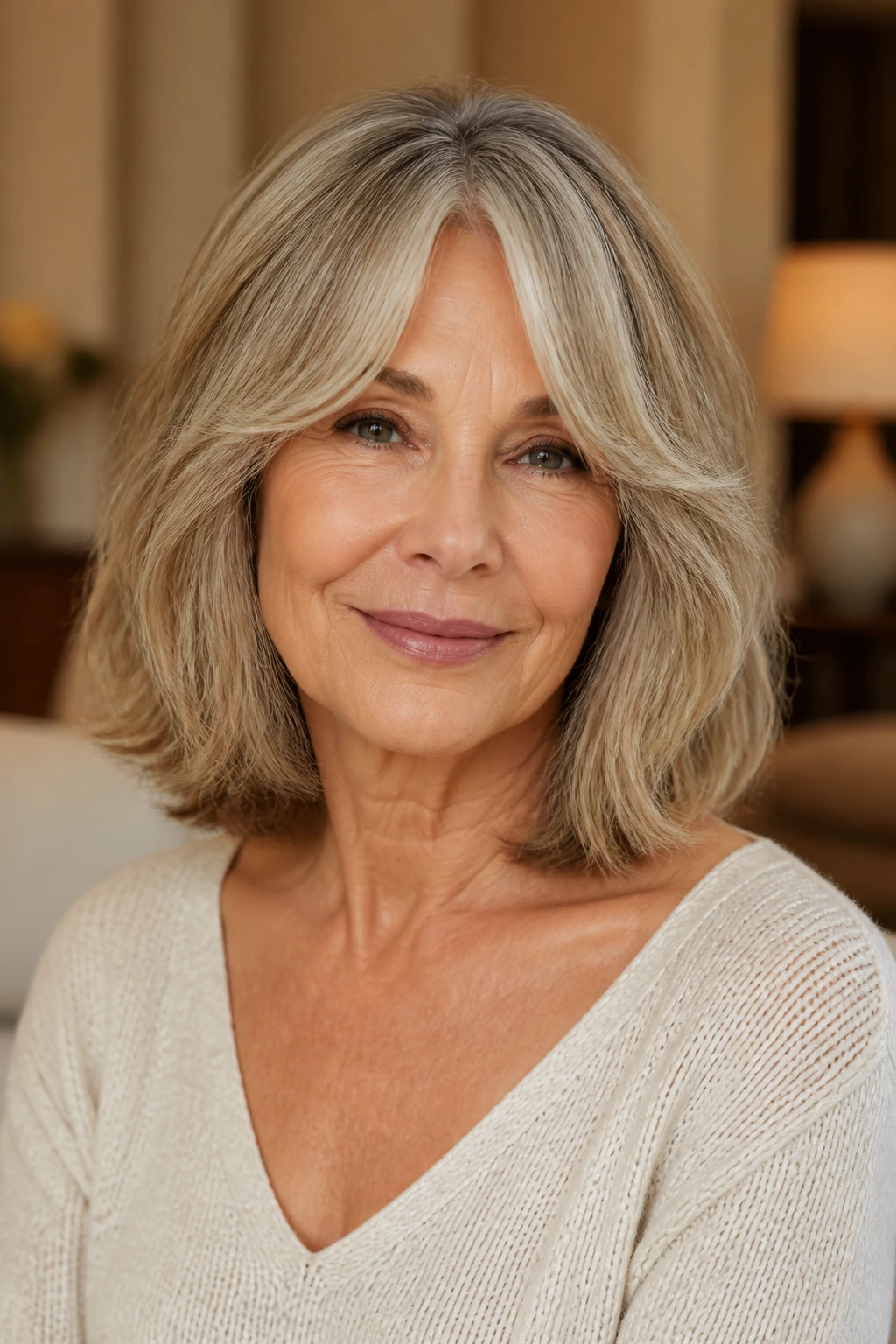
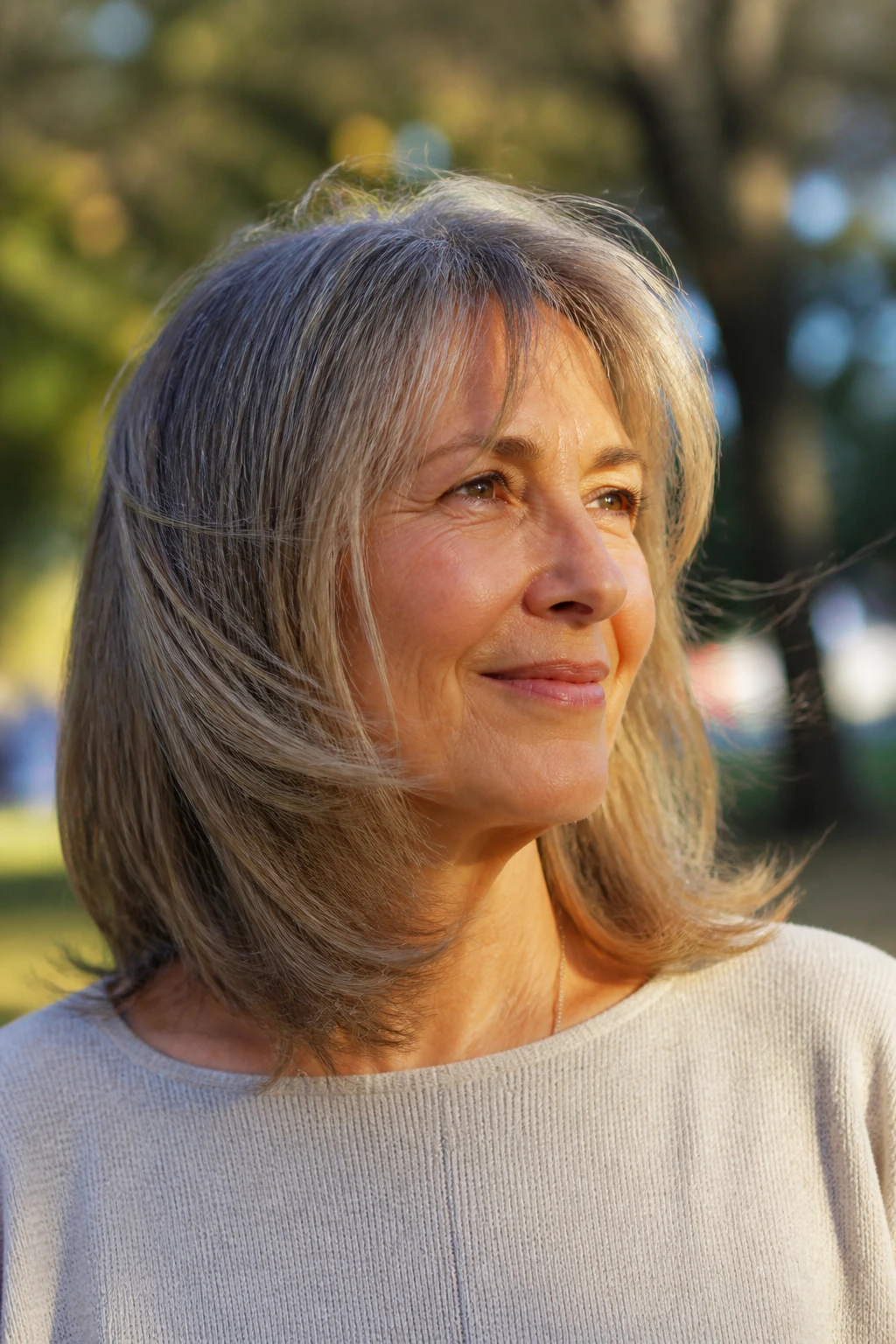
If you want length but not weight, this is the one I’d put at the top of the list. The collarbone lob sits in that useful middle zone where hair still feels feminine and swishy, but it doesn’t eat your whole morning. Curtain bangs help the front feel intentional instead of heavy, and they’re kinder than blunt bangs if your forehead changes with expression lines.
The magic is in the angle. The cut should skim the collarbone, not sit awkwardly on it. That tiny difference matters because a bad lob can flip out at the shoulders in a way that looks accidental. A good one bends around the body and settles into a clean line.
Curtain bangs need to start long enough to split and fall to each side. If they’re cut too short, they can look peppy in a way that fights the rest of the cut. Keep them soft, and they’ll frame the eyes without shouting for attention.
5. Feathered Crop With Air Around the Hair
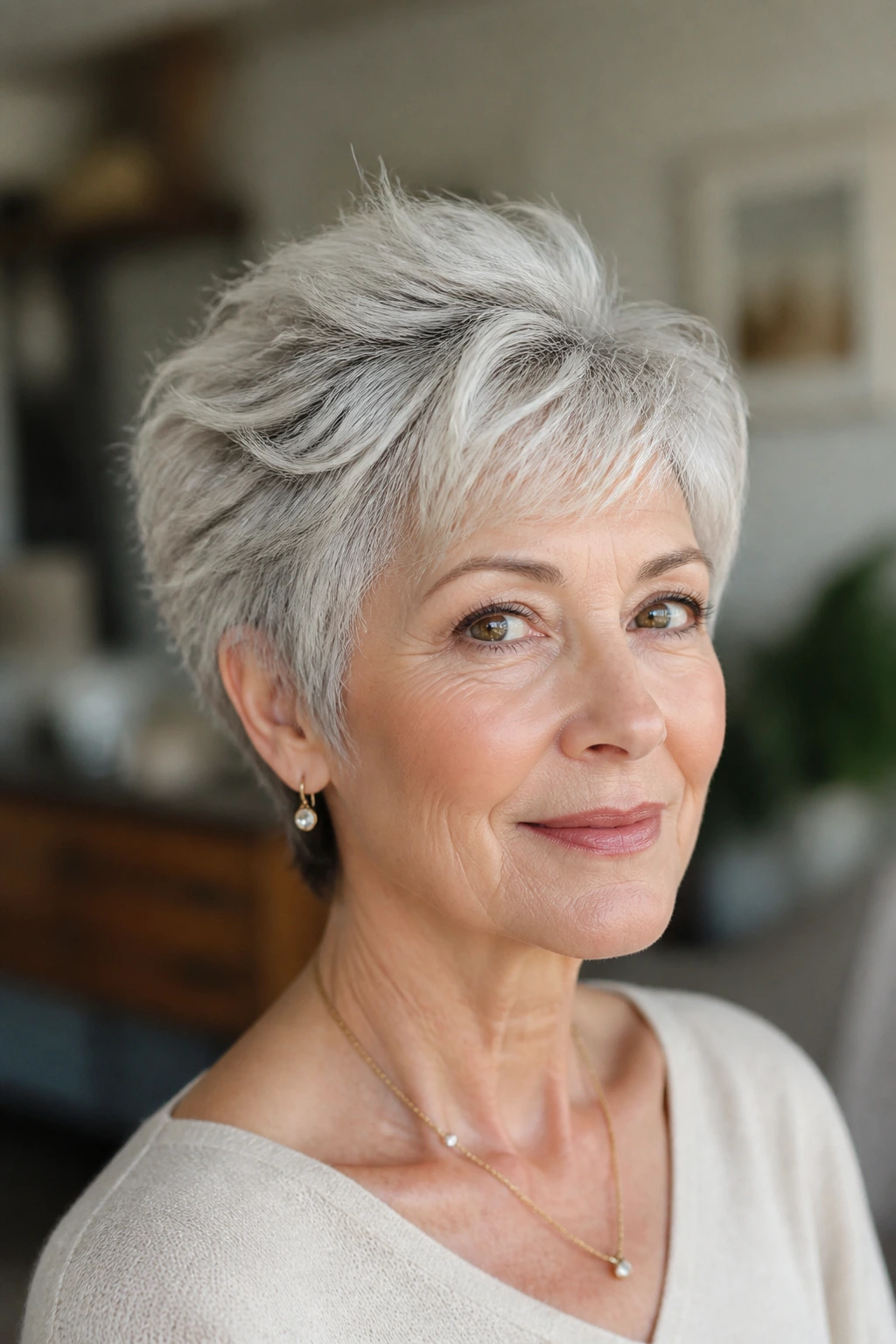
This style has the lightness of a shorter cut without the hard edges that make some crops feel dated. Feathering creates a soft finish at the top and through the sides, so the hair seems to float a bit instead of sitting in one heavy shape. On fine hair, that lift can be a small miracle.
The trick is restraint. Feathering should be subtle, not shredded. Too much texturizing and the ends start looking dry before the week is out. Done well, though, the cut keeps the top airy and the sides neat, which gives gray or white hair a lovely softness.
I like this on women who want a wash-and-go style but still like a little movement around the face. It works especially well if your hair dries quickly and doesn’t want to hold a lot of heat styling anyway.
6. Stacked Bob With Crown Lift
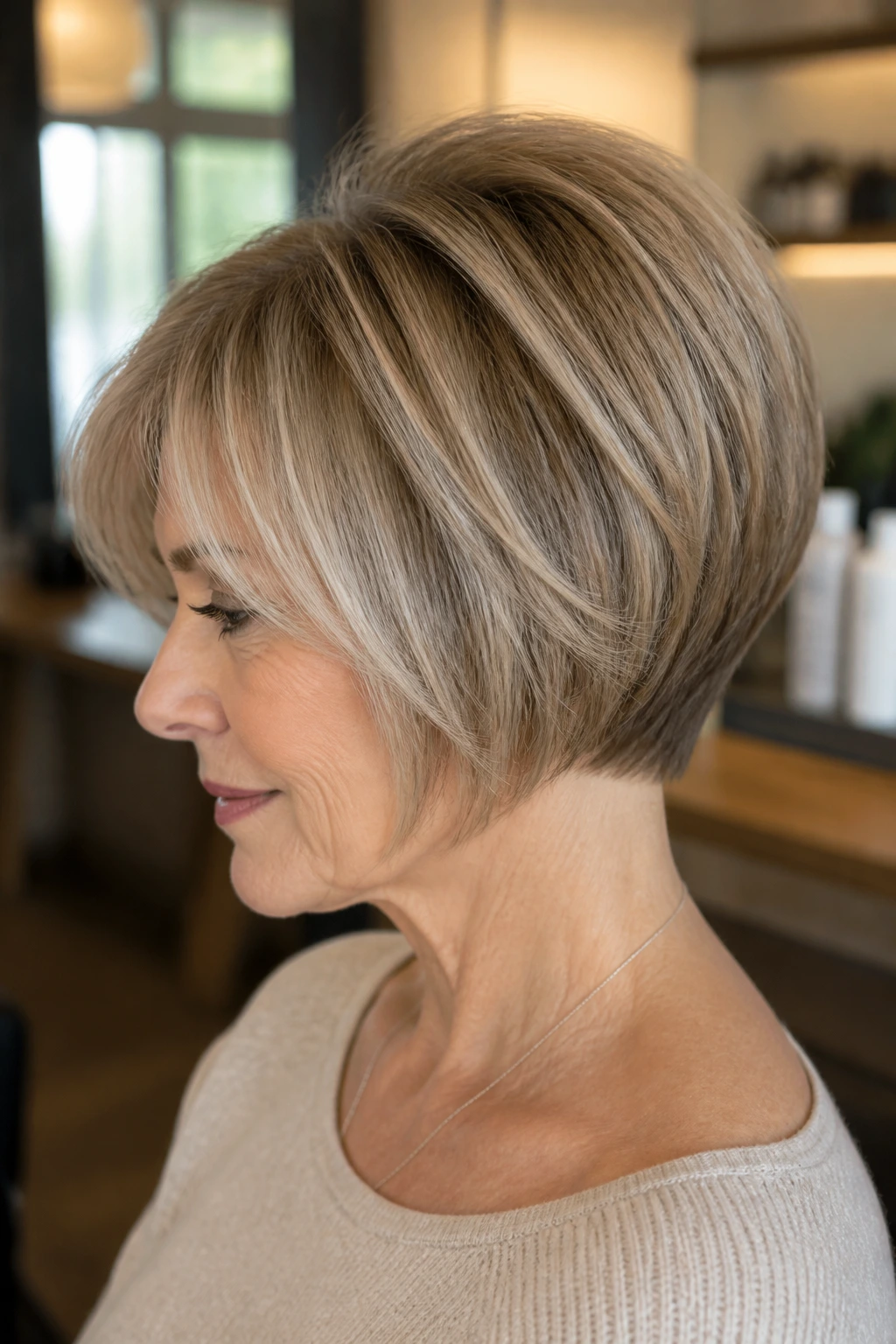
A stacked bob gives the back a little rise and shape, which is useful if your hair lies flat at the crown. The shorter layers in the back create lift, while the front stays longer and softer so the style doesn’t turn into a wedge. That balance is what keeps it modern.
This cut is one of the best options for straight or slightly wavy hair with medium density. If you have a thick mane, the stacking can take out some bulk. If your hair is fine, it can create the illusion of more shape without needing teasing or a ton of product.
The important part is the graduation. Too much stack and the back gets too high. Too little and you lose the shape that makes the style special. Ask your stylist to keep the transition smooth, not abrupt.
A little root-lift spray at the crown can do more here than a heavy mousse ever will.
7. Loose Wavy Shag With Soft Layers
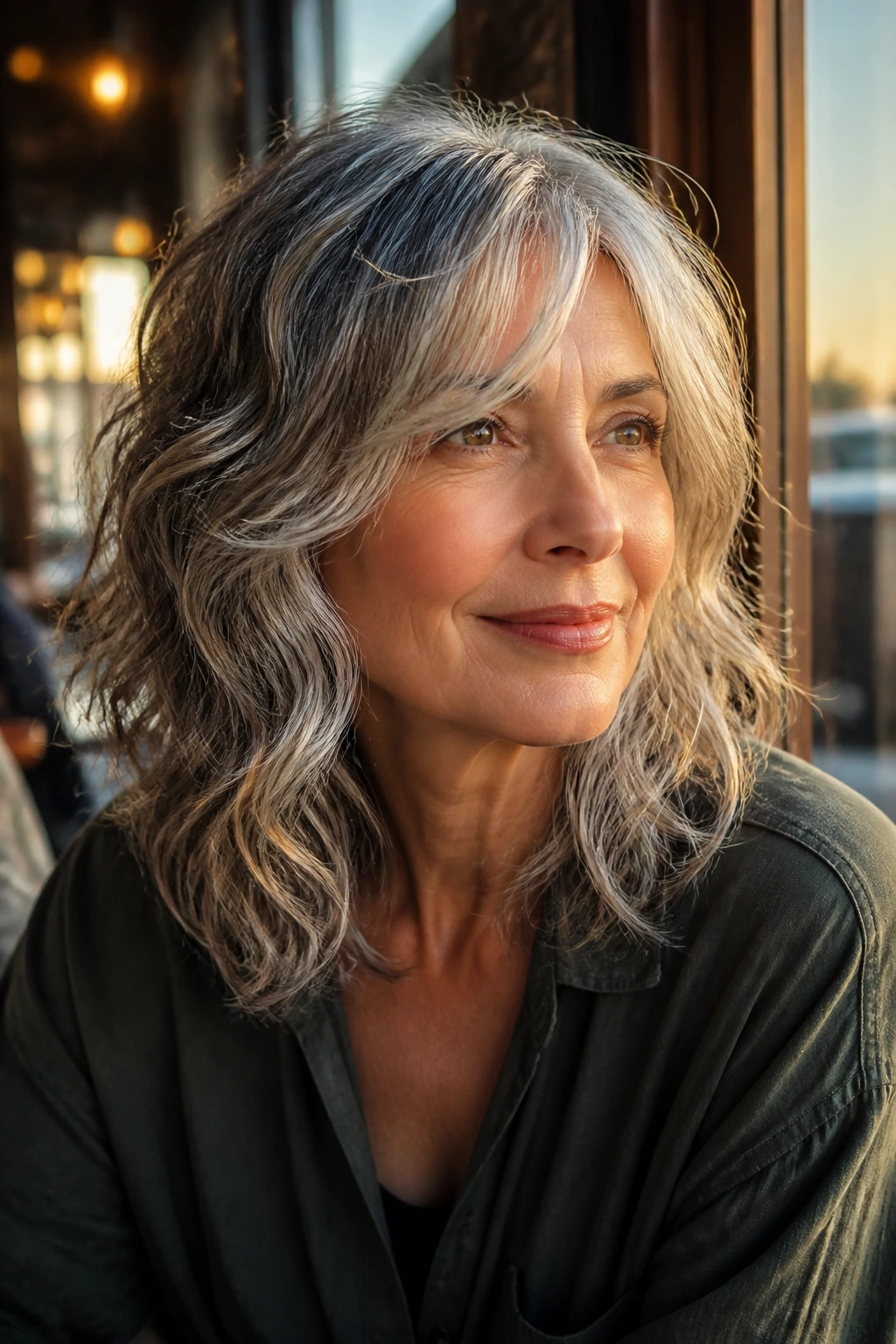
A shag doesn’t have to mean wild fringe and choppy ends. The softer version is far more flattering on many women over 60 because it keeps the movement but drops the drama. You get layers that work with waves, not against them, and the whole cut has a relaxed feel that looks especially good on silver and salt-and-pepper hair.
The reason it works is simple: waves need space. A blunt cut can make them stack up in the wrong places, while a shag lets the bends fall naturally. That makes the hair look fuller without getting puffy.
What to watch for
- Keep the layers long enough to avoid frizz at the top
- Let the fringe stay piecey, not heavy
- Ask for softness around the face, not razor-sharp texture
If your hair already has bend, this cut is a gift. If it’s straight as a pin, you’ll need a diffuser or a soft wave routine to get the effect.
8. Sleek Blunt Bob With Soft Ends
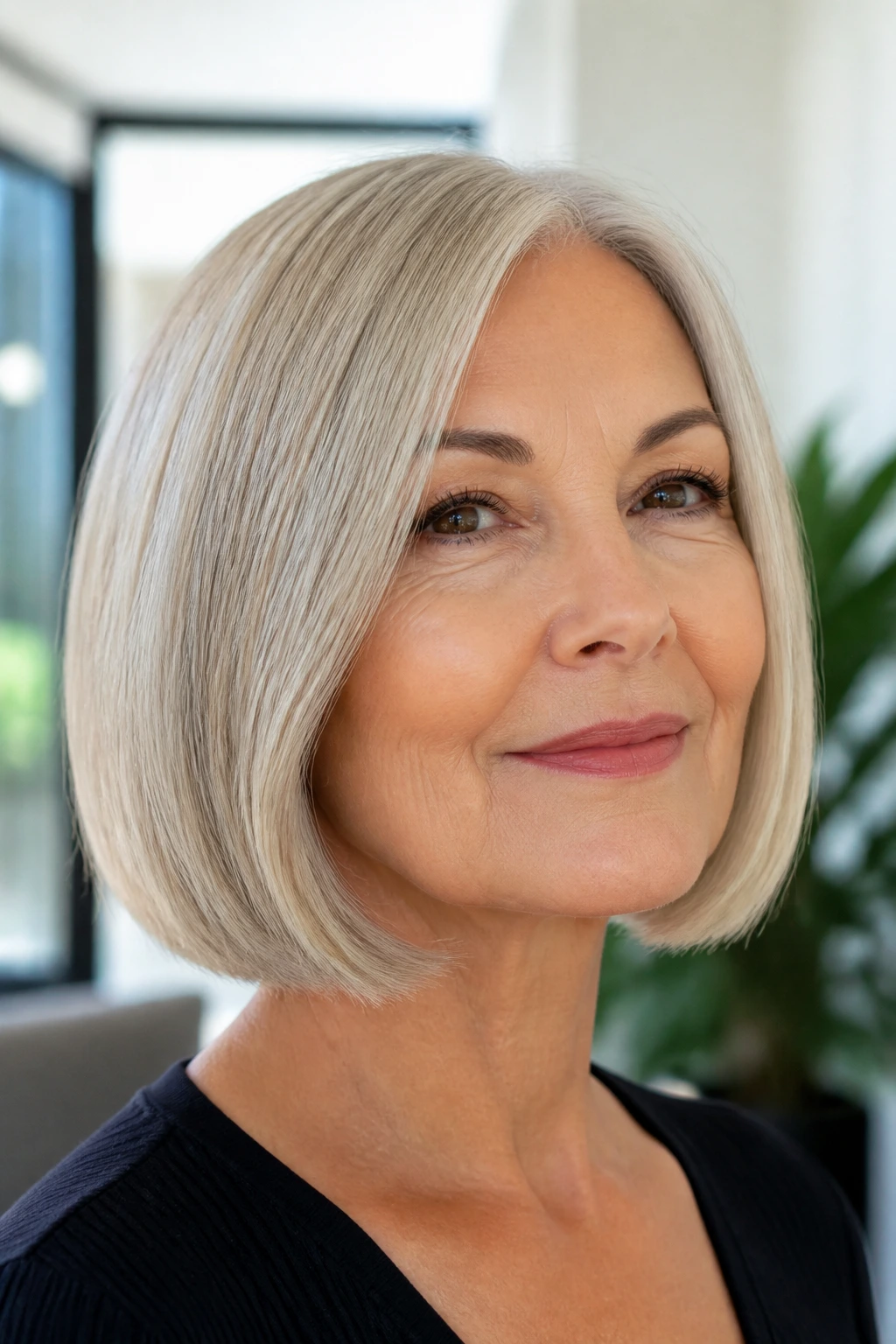
This is the polished one. A blunt bob makes hair look denser because the ends share the same line, which helps if your strands have thinned a bit and you want the shape to read fuller. But I like the mature version with softened ends, not a hard helmet line.
There’s a quiet strength to this style. It looks neat with a side part, sharp with center part, and especially good when the hair has a healthy shine. Gray hair can look beautiful in a blunt bob because the light catches the line at the ends and makes the shape more visible.
Keep the texture smooth, but don’t flatten it to death. A little movement at the bottom makes the cut feel expensive in the right way — not flashy, just cared for.
A flat iron is useful here, but only if you move quickly and don’t press the life out of the hair.
9. Silver Curly Bob That Lets the Curl Breathe
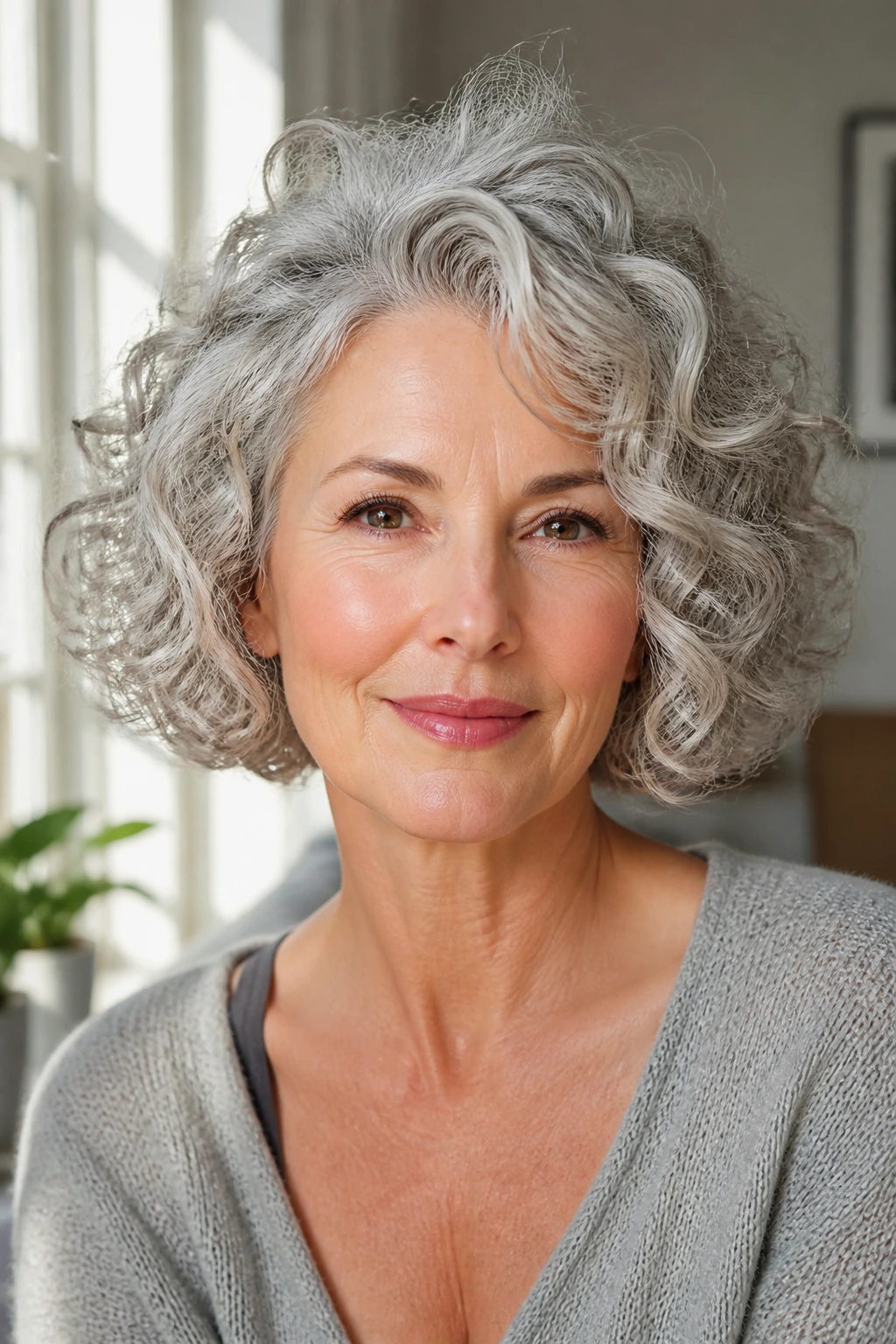
Curly silver hair has a kind of drama that straight hair never quite matches. This bob keeps the curl pattern at a manageable length so the shape stays around the face instead of ballooning out at the shoulders. The best version usually lands between the jaw and just below it, depending on how springy the curls are.
This one absolutely should be cut on hair that’s dry or nearly dry, because curls lie about their length when wet. That’s where so many bad cuts begin. A good stylist will shape each curl family so the bob dries into a rounded frame instead of a lopsided mushroom.
Curl cream matters, but not the heavy sticky kind that leaves the hair coated. Use enough to define the curl, then stop. Let the silver shine do the rest.
10. Tapered Pixie With Height at the Crown
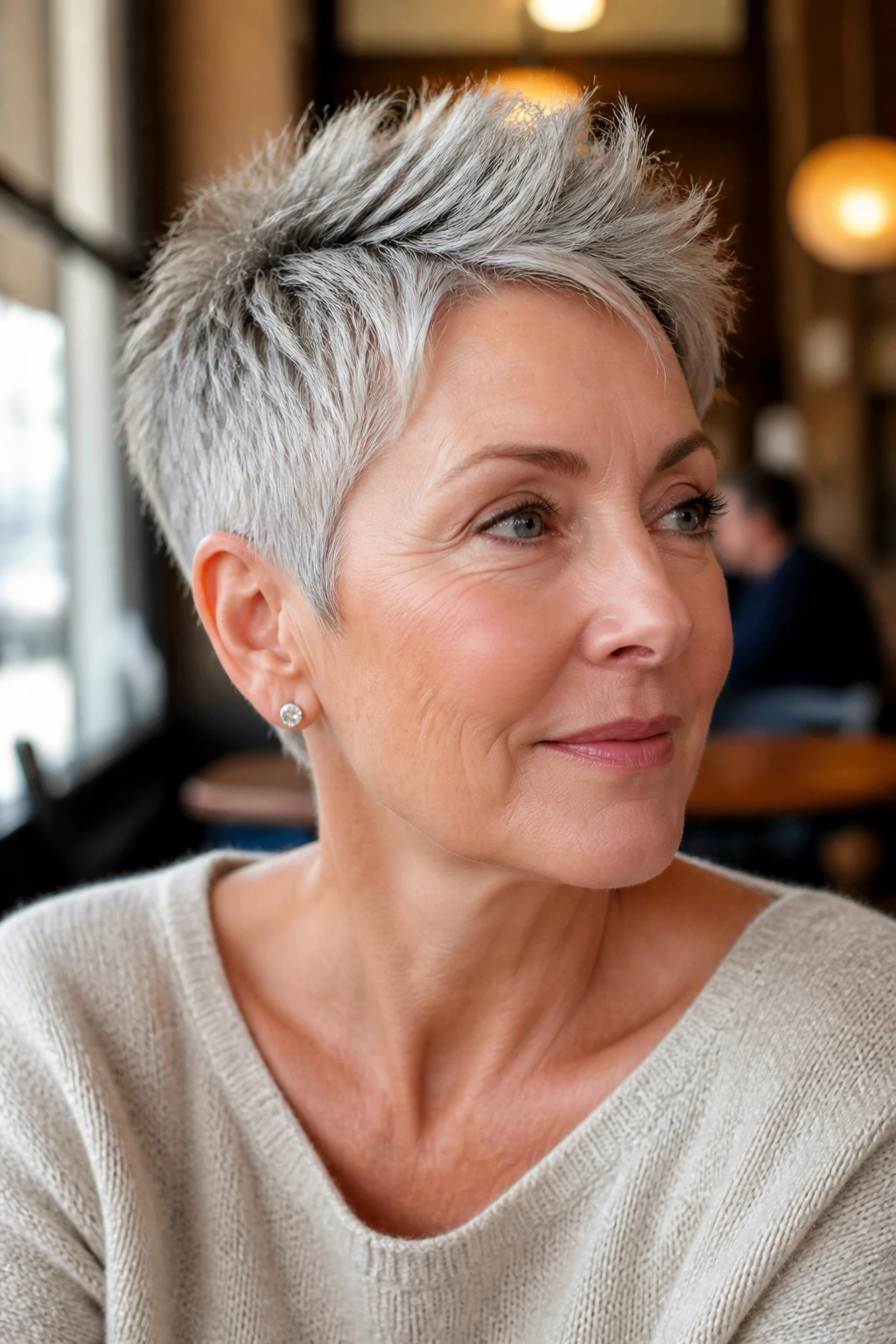
If your hair has lost some lift, a tapered pixie can bring it back with almost no daily fuss. The sides and back are kept close enough to stay neat, while the top stays longer so you can push it up, over, or slightly forward depending on the day.
The taper is what makes it flattering. Short at the nape, neat around the ears, fuller at the top — that shape keeps the head looking balanced. It also works well for women whose necks look better with clean lines rather than hair sitting on them.
A lightweight volumizing mousse at the roots gives this cut a little extra bite. If your hair is coarse, use a cream instead so it doesn’t turn fuzzy. The point is lift, not stiffness.
11. Shoulder-Length Layers With a Side Part
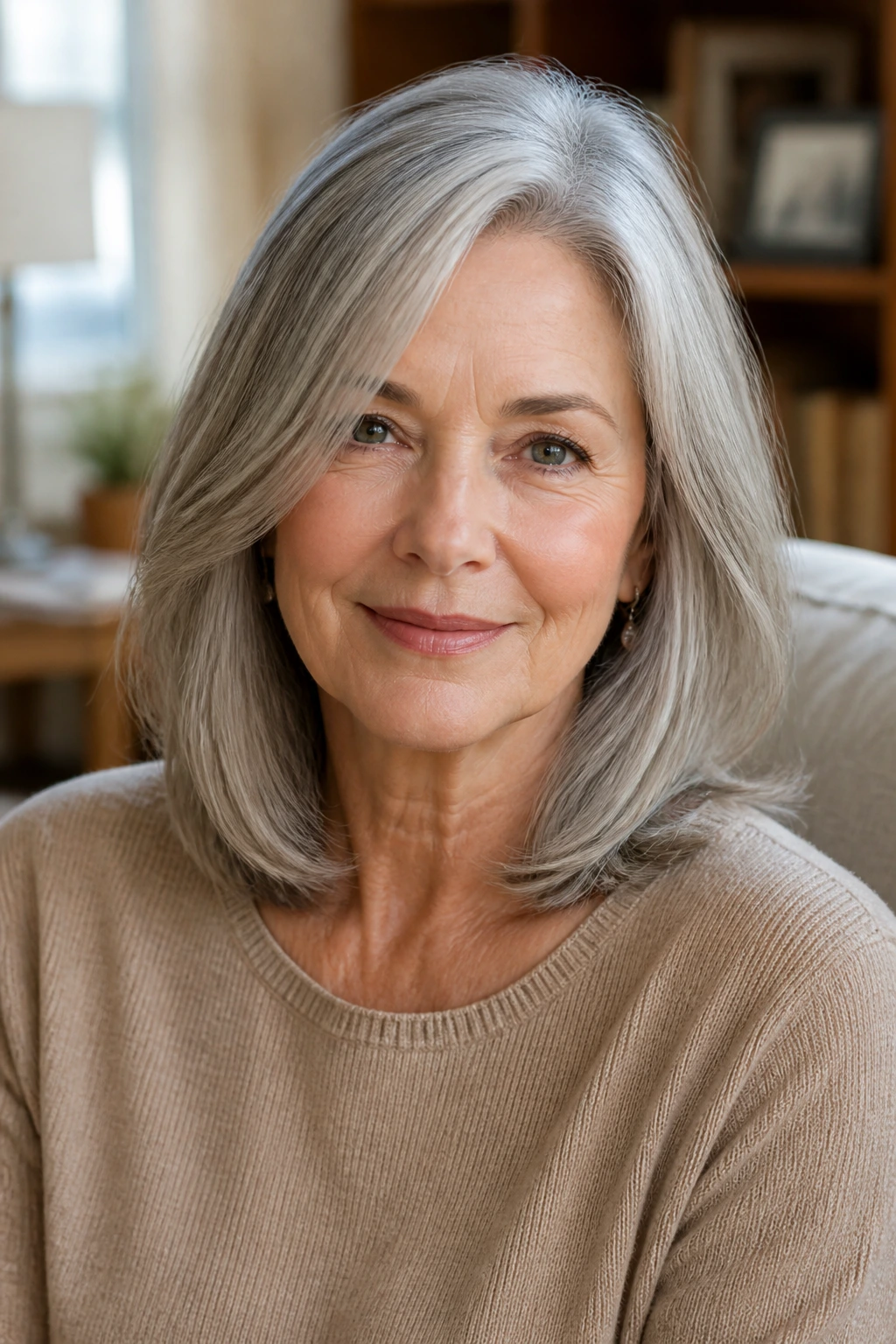
Not everyone wants to go short, and honestly, you don’t have to. A shoulder-length cut with layers can look elegant if the layers start low enough to keep the ends from dragging. The side part helps the face by adding a little asymmetry, which is often kinder than a center split if the hair has lost density.
This is the cut I reach for when someone wants to tuck hair behind the ears, wear it down, or twist it up without committing to a shorter perimeter. It gives options. That matters.
The danger here is heaviness. If the layers begin too low or are too subtle, the hair can just hang. If they begin too high, the style frays. Aim for a clean contour through the collarbone area and keep the front pieces a touch shorter so they don’t collapse into the chest.
12. Short Shag With a Wispy Fringe
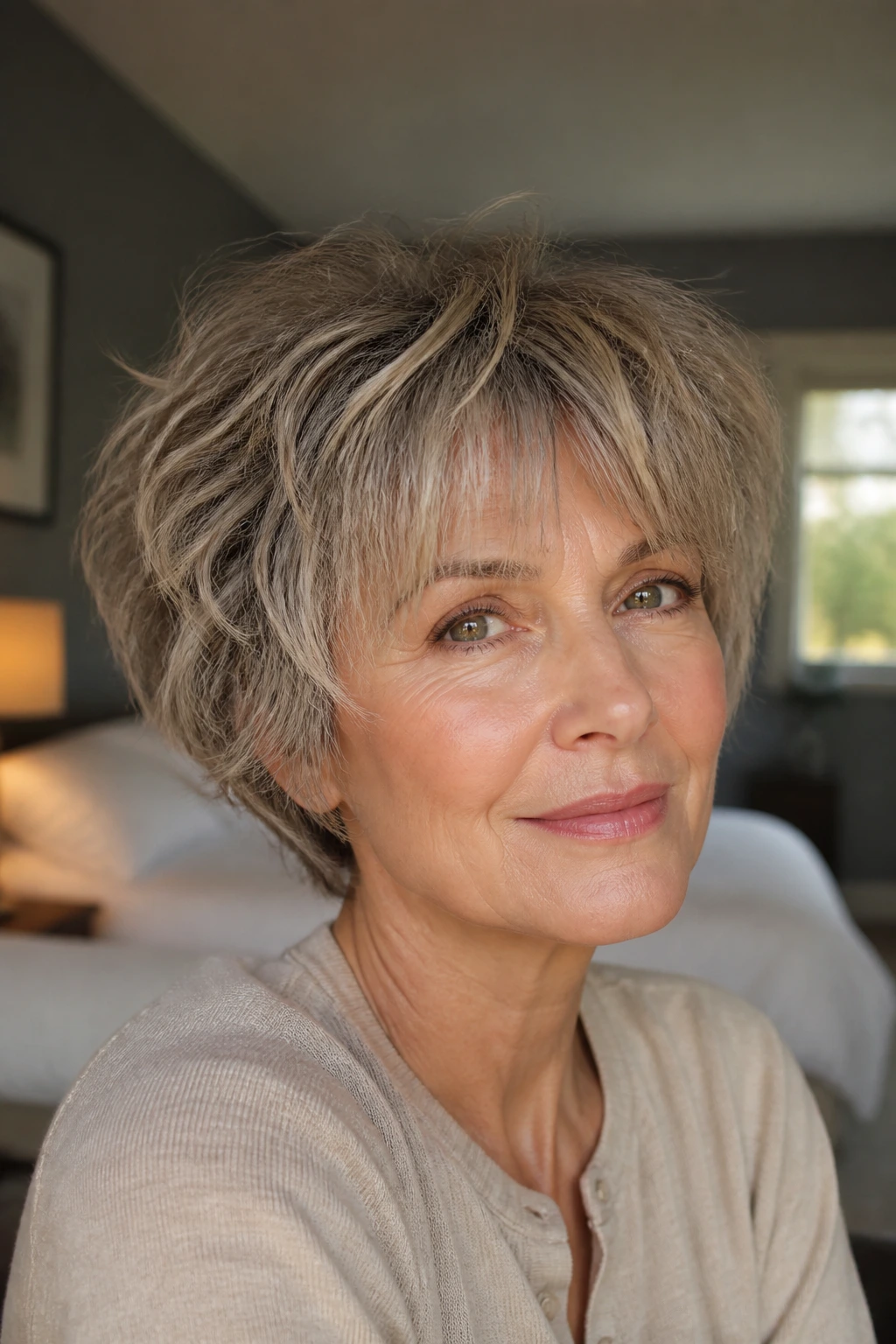
A short shag can look edgy in the wrong hands, but the softer version is terrific on older hair. The fringe should be wispy, not dense, and the layers should break up bulk without making the outline ragged. It gives the face a little lift and keeps the crown from feeling flat.
This cut is especially good if your hair has natural texture or a bit of wave. It looks like it belongs there, which is half the battle. A lot of older women get a shag and then fight it every morning because they were sold a style they don’t actually want to maintain. The softer version avoids that.
How to wear it
- Scrunch in a light mousse for wave
- Blow-dry the fringe forward, then sweep it aside
- Keep the nape neat so the style doesn’t grow shaggy in the bad sense
I’d avoid heavy styling cream here. It collapses the airy bits and makes the fringe stick together.
13. Face-Framing Mid-Length Cut
This is the practical cut for someone who likes hair around the shoulders but wants less weight near the face. The front pieces are cut to frame the cheekbones, while the rest of the length stays long enough to pull back or twist into a clip. It’s a smart middle ground.
What makes it work is the way the framing layers sit. If they start too high, they can look like old-school layers from a bad salon memory. Too low, and they do nothing. Cheekbone to mouth level is usually the sweet spot, especially if you wear glasses or want the front to soften the jaw.
This style plays well with a loose wave, but it doesn’t need one. Straight hair can use it too, as long as the ends stay clean and the front doesn’t get swallowed by the rest of the length.
14. Rounded Bob With Tucked-In Ends
A rounded bob is tidy in the best possible way. The ends curve slightly under, which gives the whole cut a smooth outline and keeps the neck area looking clean. It can be elegant without becoming severe, especially when the line is softened with a little internal layering.
I like this cut for hair that naturally wants to puff at the sides. The rounded shape controls that puff and channels it into something more deliberate. It’s also a good answer for hair that looks uneven after air-drying because the curve hides a few minor quirks.
A 1.25-inch round brush is the usual tool here, but if that sounds annoying, a large Velcro roller at the front and a quick blow-dry at the back can get you close. Not every good haircut needs a complicated routine.
15. Shoulder-Grazing Cut for Natural Curls
Curly hair over 60 often looks best when it’s given enough length to show the curl pattern but not so much that it stretches under its own weight. Shoulder-grazing works because the curls can bounce, lift, and frame the face without turning into a triangle.
Dry cutting helps here. Wet curls can lie about half an inch, sometimes more, and that half inch is the difference between a flattering curl line and a shape that ends too high or too low. The best version has layers that encourage movement at the top and keep bulk from building at the sides.
If your curls are silver or white, the texture becomes part of the appeal. The hair doesn’t need to look slick to look cared for. It needs definition, moisture, and a shape that follows the curl family.
16. Bixie Cut With Soft Edges
The bixie sits between a bob and a pixie, and that middle ground is exactly why so many women like it. You get short sides and back, but the top and fringe stay long enough to style with a little sweep. It’s not as severe as a pixie and not as formal as a bob.
That makes it a nice choice if you want short hair but aren’t ready to show everything around the ears. The softness around the temples matters. It keeps the style from feeling too exposed, which some face shapes really appreciate.
A bixie works best when it’s textured with intention, not shredded into pieces. Ask for movement through the top and crown, but keep the neckline tidy. You want a shape, not a frayed edge.
17. Layered Lob With Flipped Ends
A lob with a little flip at the ends has a cheerful shape without looking childish. The layers keep the length from dragging, and the flipped-out finish gives the cut a bit of motion around the shoulders. It’s especially good if your hair falls straight and tends to look flat once it gets past the chin.
This style is forgiving. You can wear it smooth, tuck one side behind the ear, or give it a soft bend with a round brush. That flexibility is useful when you don’t want to remake the whole style every morning.
If you have fine hair, keep the layers light so the ends don’t thin out too much. If your hair is thick, a bit more weight can stay in the perimeter to keep the flip from looking wispy.
18. Soft Undercut Pixie
An undercut sounds edgy, but the soft version is one of the most practical cuts for dense or coarse hair. The hidden shorter section at the nape removes bulk where hair tends to puff, while the top stays longer and feminine. You get less heat trapped at the neck and less triangular shape at the sides.
This cut is a lifesaver if your hair grows out in a heavy block after a month. The undercut keeps the outline clean longer than a standard pixie. It also feels cooler, which some women love and some don’t notice until they try it.
The key is that the undercut should be hidden enough that it doesn’t feel harsh when the hair is worn down. You want relief, not a statement.
19. Long Layers With Airy Movement
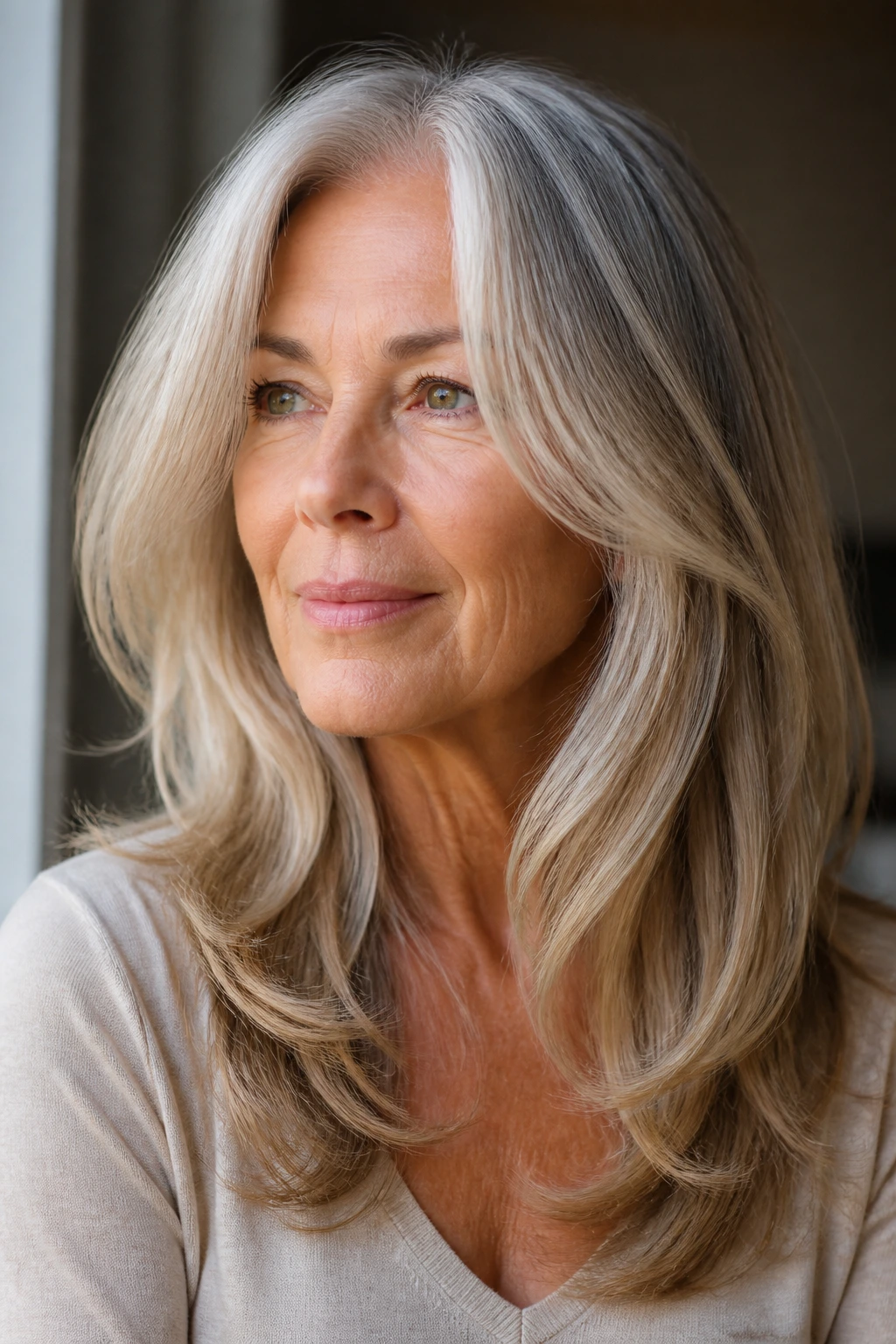
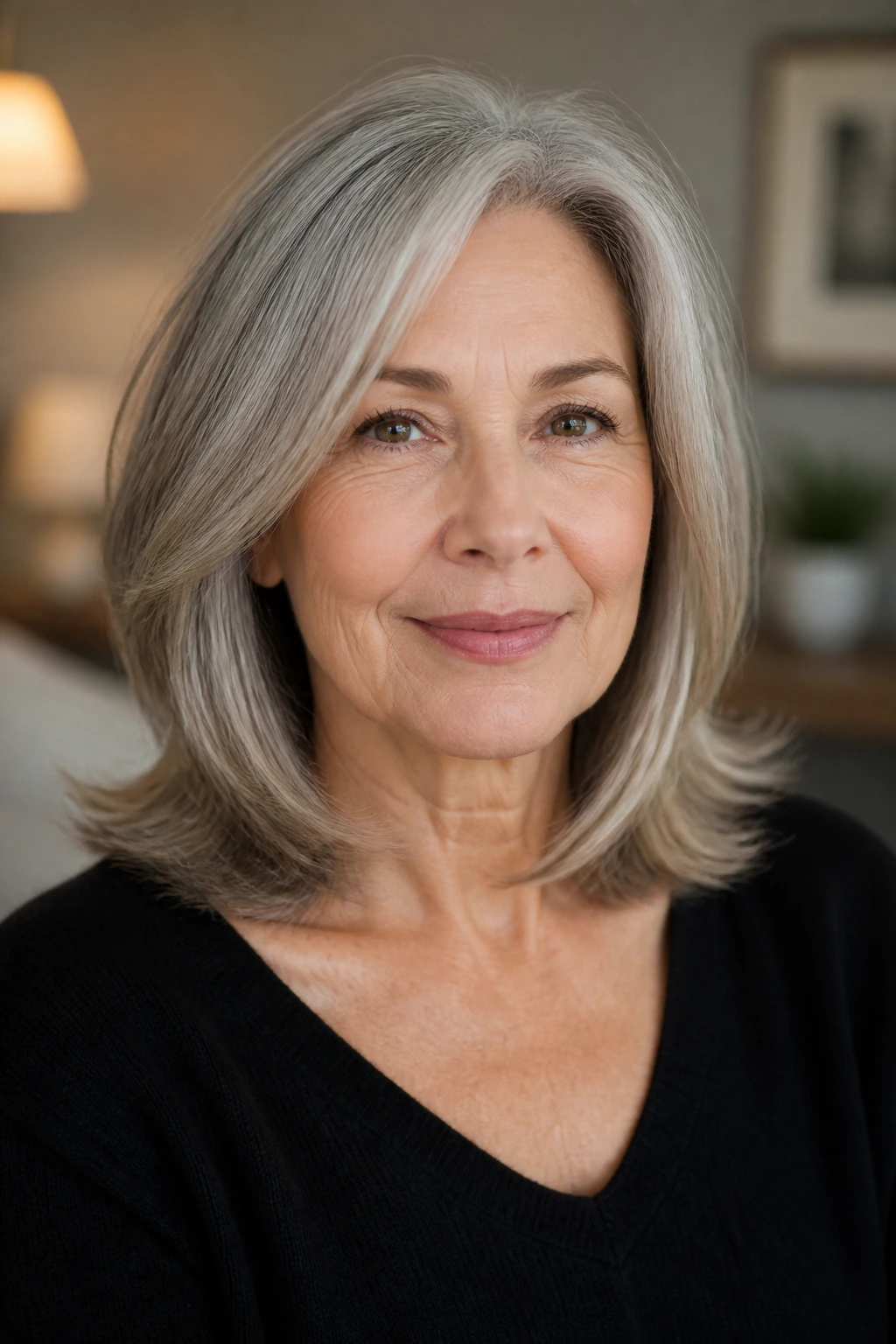
Some women want to keep length, and there’s no reason not to if the hair still has enough body to support it. Long layers keep the ends from looking heavy and let the hair move rather than hang. If the first layer starts around the collarbone and the next one drops lower, the shape can feel soft instead of stringy.
I prefer this on hair that has a little natural wave or on straight hair that holds a bend from blow-drying. On very fine hair, too many layers can make the ends look thin, so the cut needs a careful hand. Not a rake-through-with-thinning-shears situation. That’s a mess.
Wear it with a side part for more lift, or with soft bends through the mid-lengths if you want a little polish. The goal is movement from the shoulders down, not all the action at the roots.
20. Elegant Low Chignon With Loose Pieces
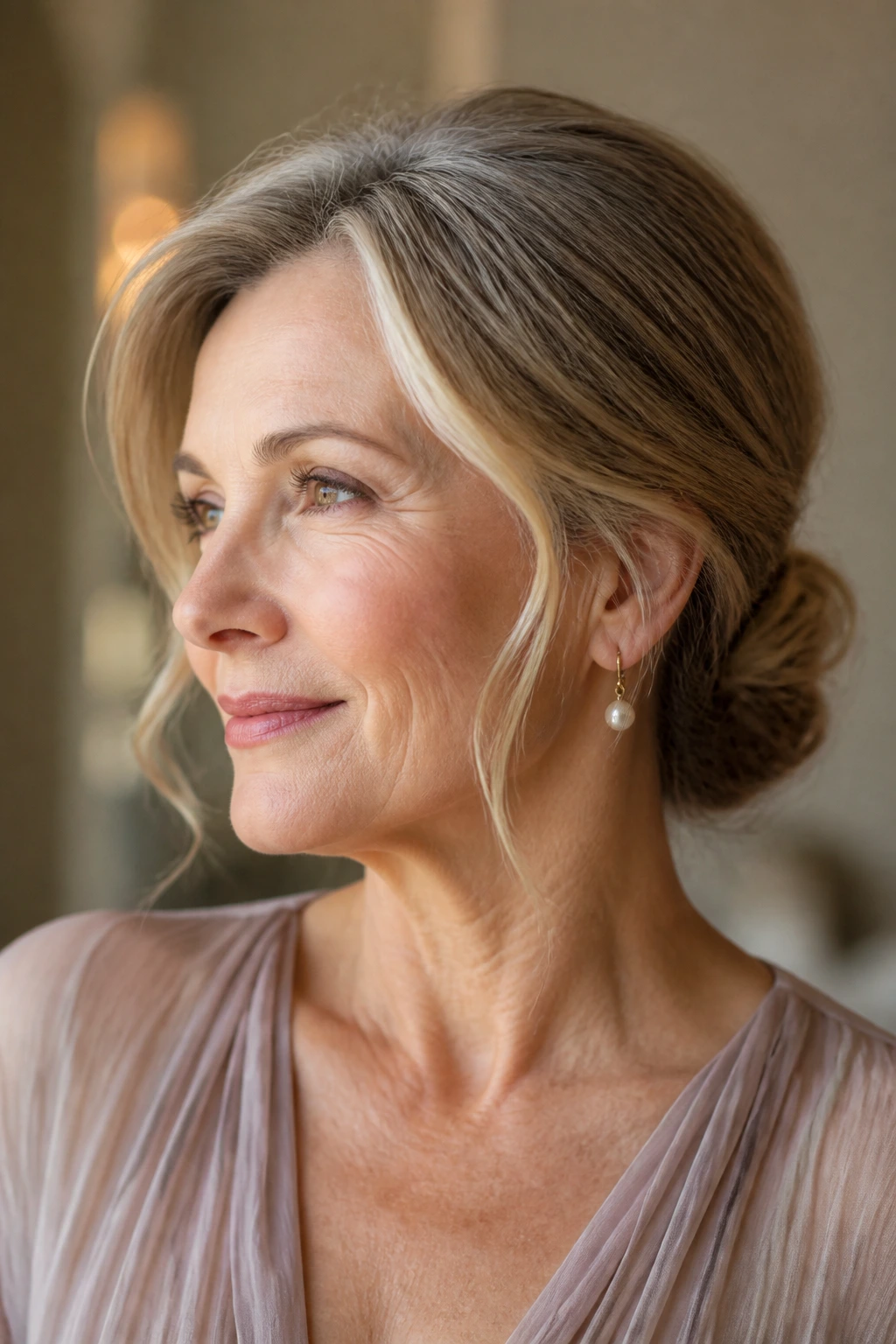
An updo belongs in a list like this because aging gracefully isn’t only about cuts. Sometimes you need a style that pulls the hair up cleanly while leaving a little softness around the face. A low chignon with a few loose pieces at the temples does exactly that.
The trick is to keep it low and slightly relaxed. A tight ballerina bun can pull hard across the face and highlight anything you’d rather soften. A low chignon sits more naturally against the nape and works well with earrings, high necklines, or a dress that needs a calmer hair shape.
A little texture helps here. Hair that’s too silky can slip out of pins, so a mist of dry texture spray or a day-old wash often gives better hold.
21. Side-Swept Bob With Fullness at the Top
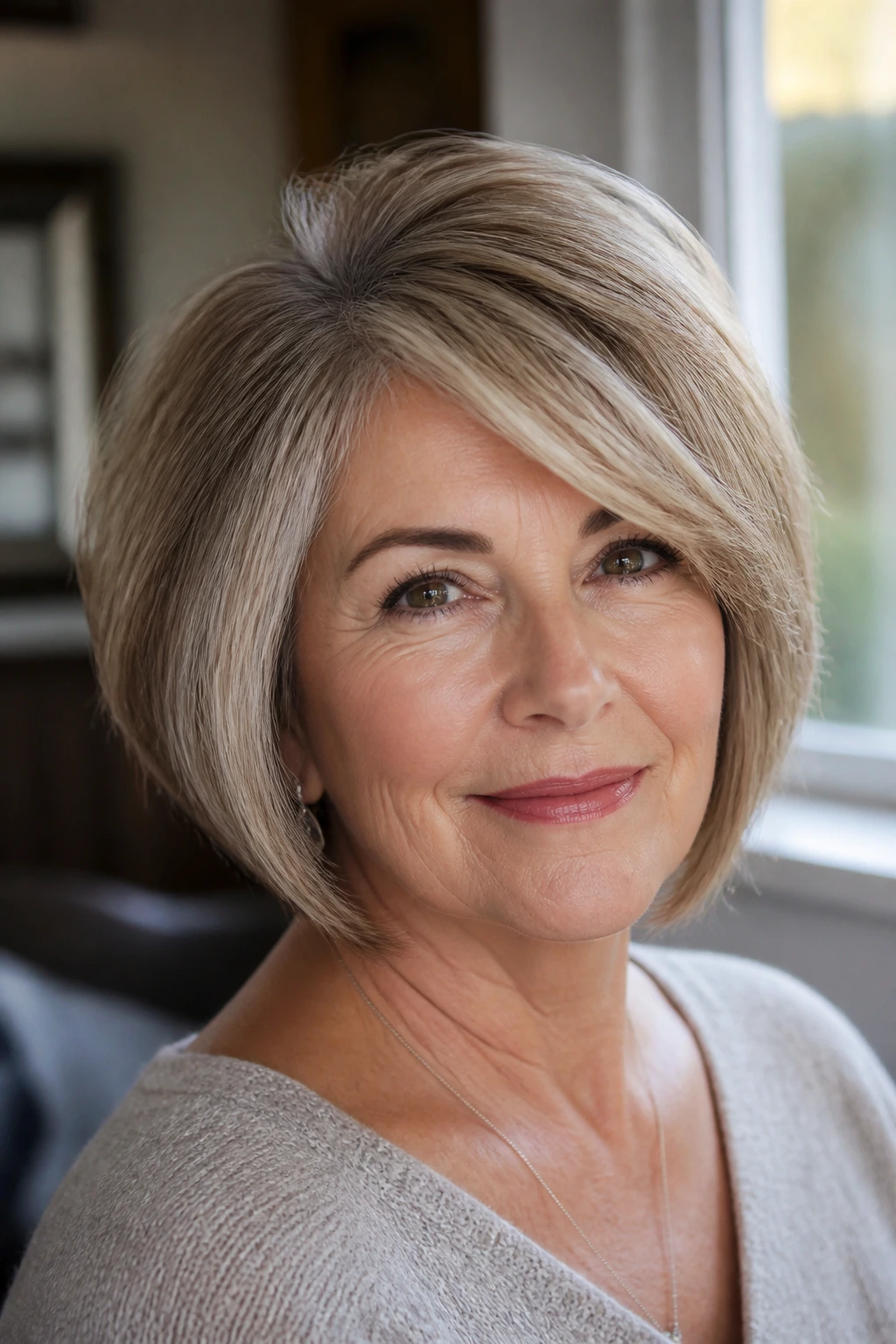
If your hair tends to collapse at the crown, a side-swept bob gives you a way to cheat a little height without piling on product. The part goes off center, one side carries more volume, and the top gets enough lift to make the face look more open.
This cut is friendly to women who wear glasses because the side sweep keeps the hair from fighting the frames. It also softens rounder faces by creating diagonal movement instead of a flat horizontal line.
A blow-dry with a medium round brush and a touch of root spray is usually enough. Don’t overdo the side part, though. If it’s too deep, the style can start to look like it’s hiding something. You want lift, not drama.
22. Textured Crop for Fine Hair
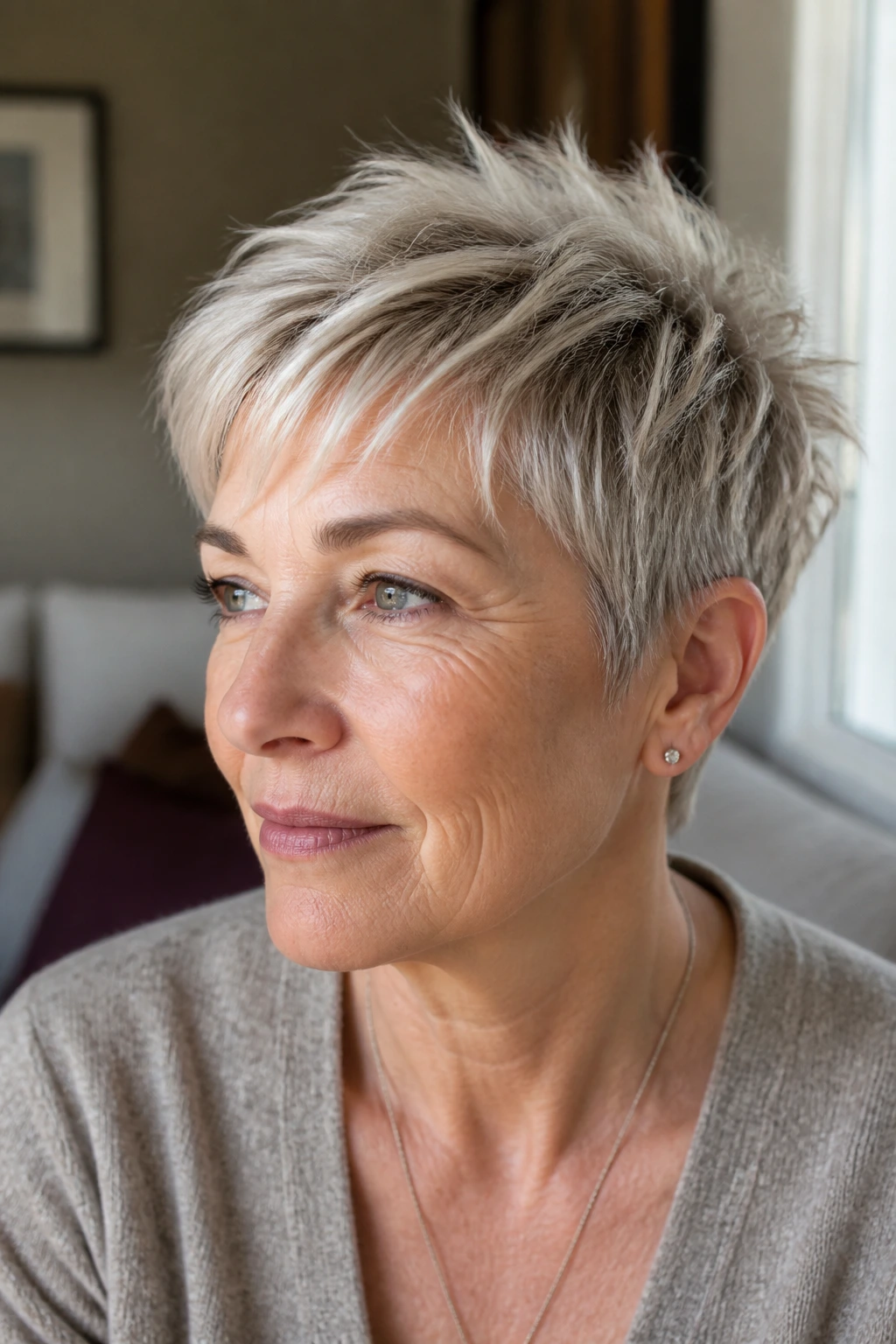
Fine hair can look limp fast, and a textured crop solves that by shortening the length and creating tiny points of lift through the top. The crop is not the same as a pixie; it usually has a little more separation in the fringe and crown, which helps the hair feel less heavy.
The real trick is the finish. Too much smoothing makes fine hair lie flat. Too much rough texturing makes it look frayed. The sweet spot is piecey and light, with enough definition to show shape but not so much that you can count every strand.
A small amount of matte paste works better than glossy serum here. Fine hair doesn’t need extra shine so much as it needs structure.
23. Blunt Shoulder Cut With Minimal Layers
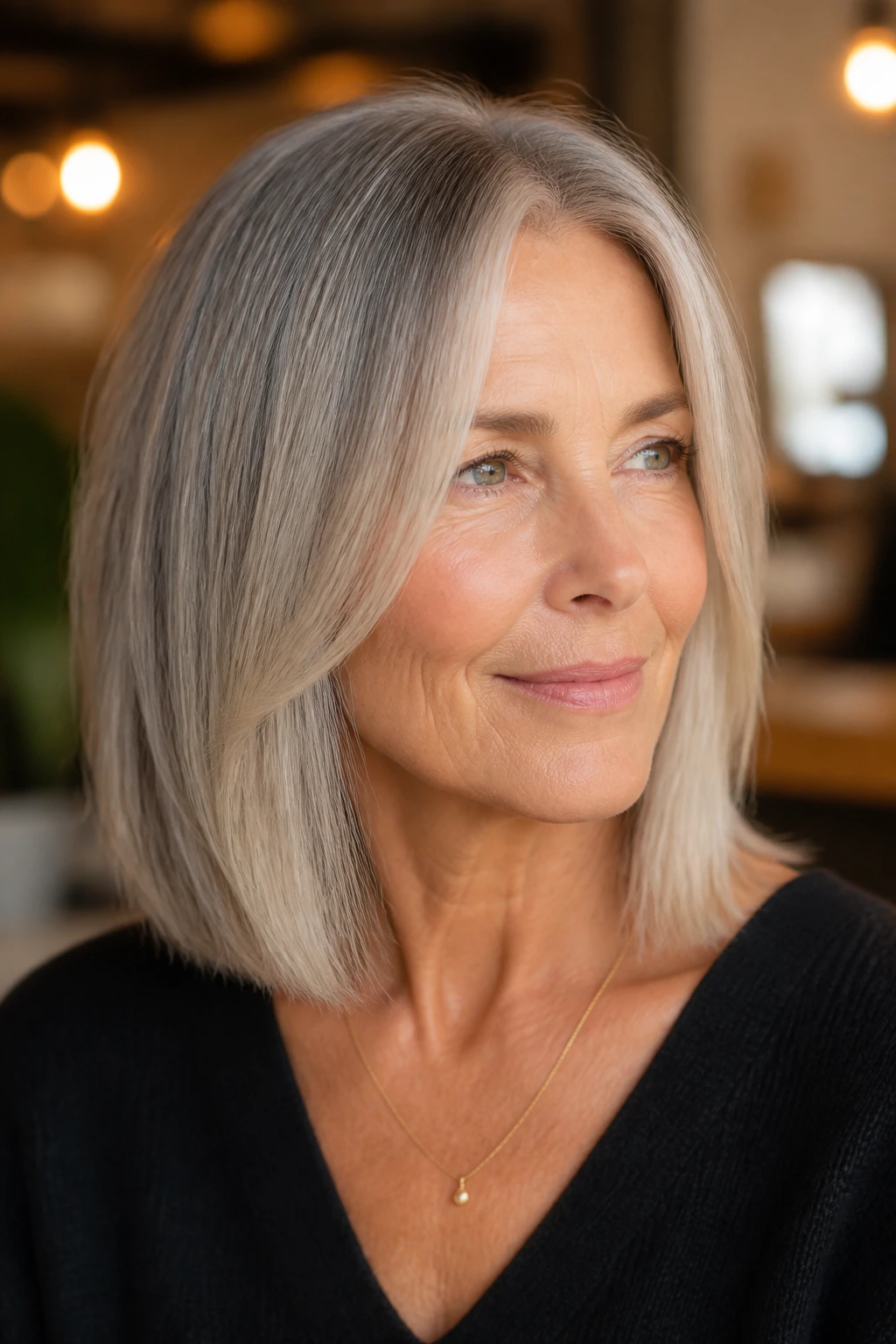
A blunt shoulder cut can make hair look thicker because the ends are packed into one strong line. That line is useful if you’ve lost density, especially at the ends. The minimal layers should stay near the face only, just enough to keep the cut from feeling boxy.
This is a strong choice for women who like their hair neat and who don’t want to spend time reshaping curls or waves every morning. It looks clean in a ponytail, good half-up, and still polished when worn down. There’s a reason so many women come back to this shape after experimenting with fussy layers.
The risk is heaviness. If the hair is thick, the cut can feel bulky unless the ends are handled carefully. If it’s fine, the blunt line is an advantage.
24. Soft Roll-Under Bob
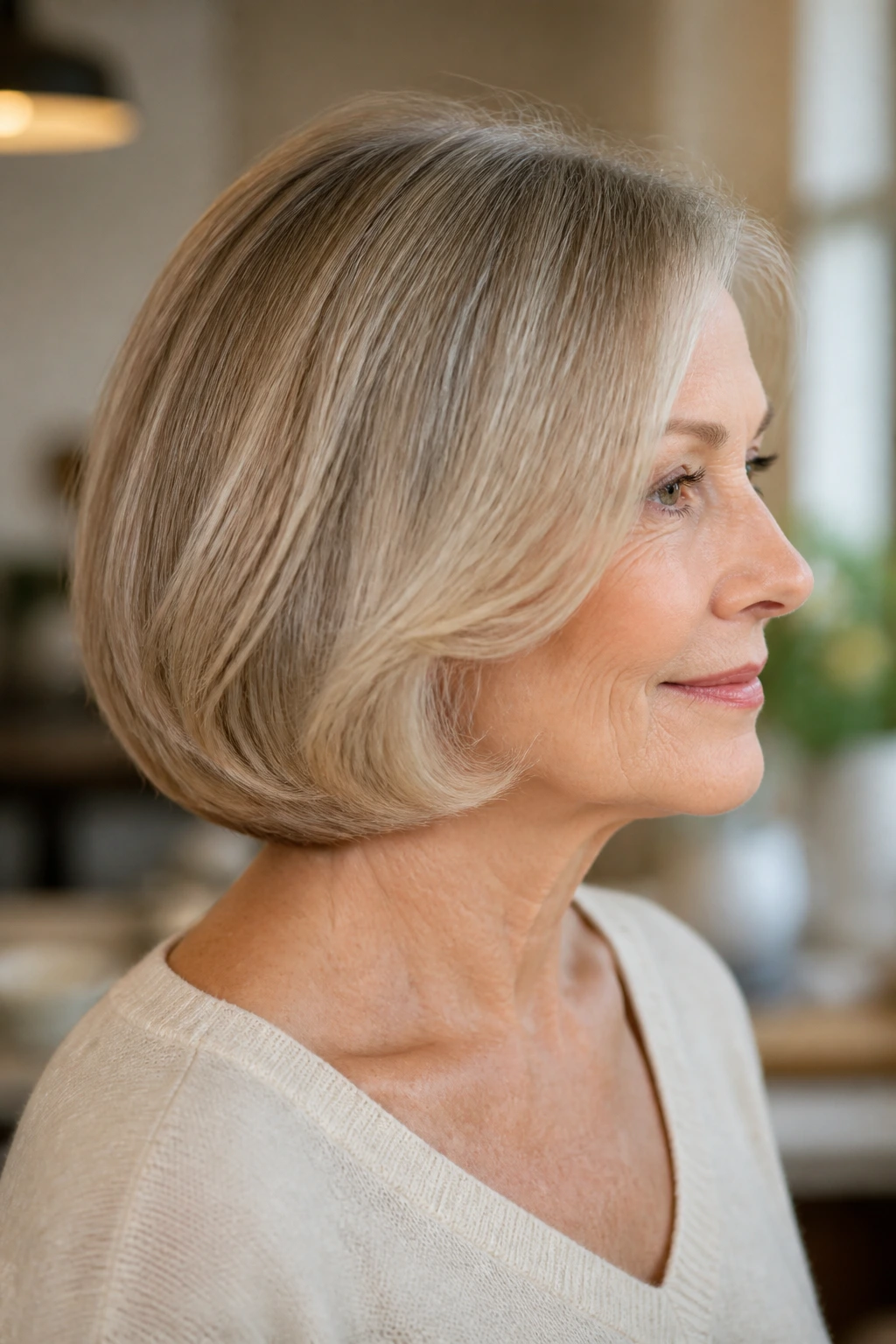
This is the tidy bob’s gentler cousin. The ends roll under just enough to create a smooth curve at the neckline, which can be very flattering if you like the feeling of hair that stays close to the head. It’s neat, controlled, and still soft around the edges.
The roll-under finish works especially well on straight or slightly wavy hair. A brush with a slight curve at the end of each blow-dry helps, but the cut does a lot of the work. That’s why I like it: the style isn’t all about styling effort.
It also pairs well with side-swept fringe or a soft side part. The combination keeps the cut from looking too tidy, which is a real danger with this shape.
25. Wispy Layered Cut With Light Bangs
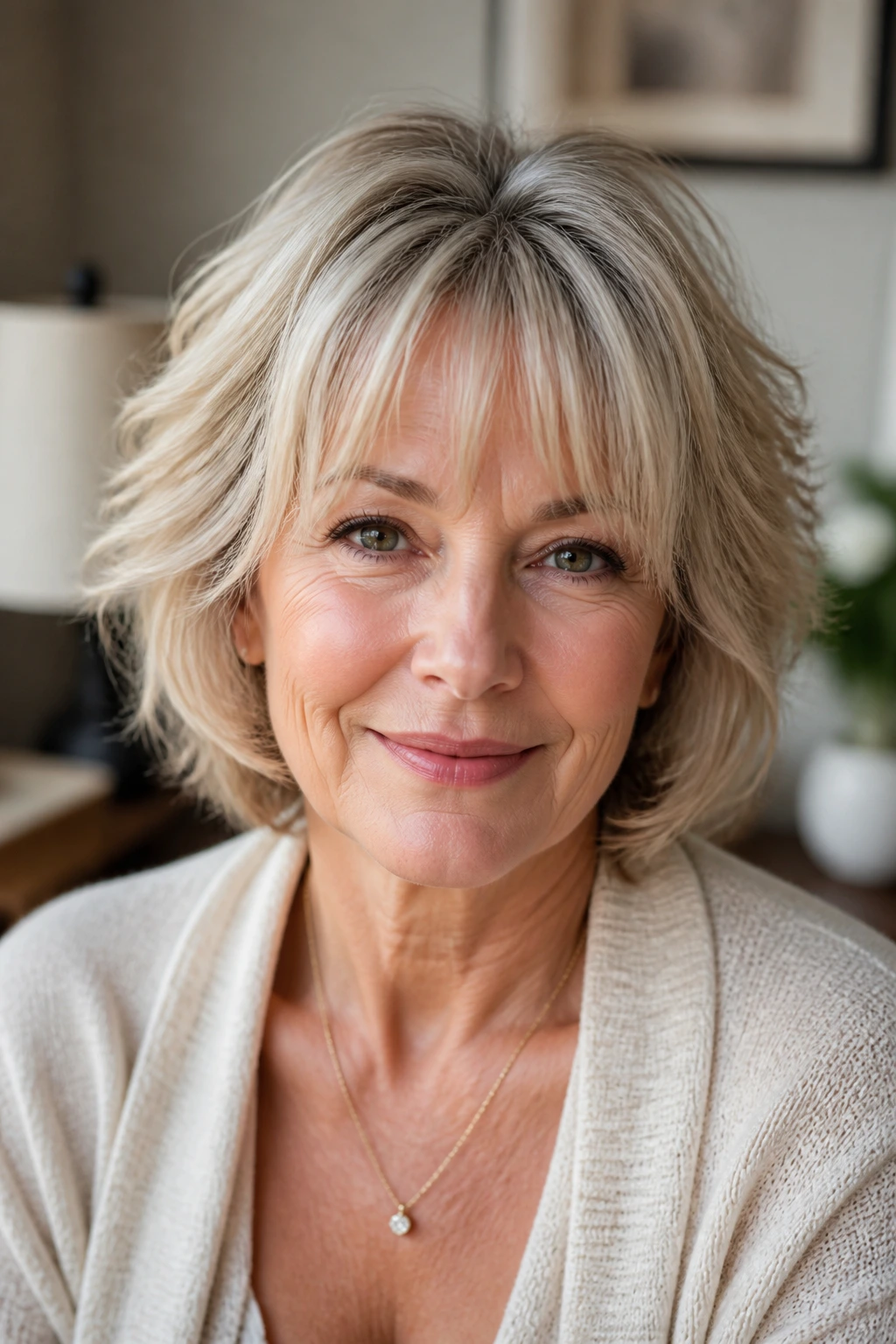
A wispy layered cut is the easiest way to get softness around the face without committing to a big bang or a heavy fringe. The layers break up bulk, while the light bangs skim the forehead instead of covering it. That keeps the face open and the style airy.
This is a strong option if your hair has a little wave, because the layers can play into that movement without making the cut look overdone. On straighter hair, the wispy bang gives a hint of shape that doesn’t demand much styling.
Keep the bangs light. Really light. If they’re cut too thick, they can sit on the forehead and feel oppressive, especially on fine hair. The whole point is softness — a little veil of movement, not a curtain.
What Makes a Cut Look Lively Instead of Flat
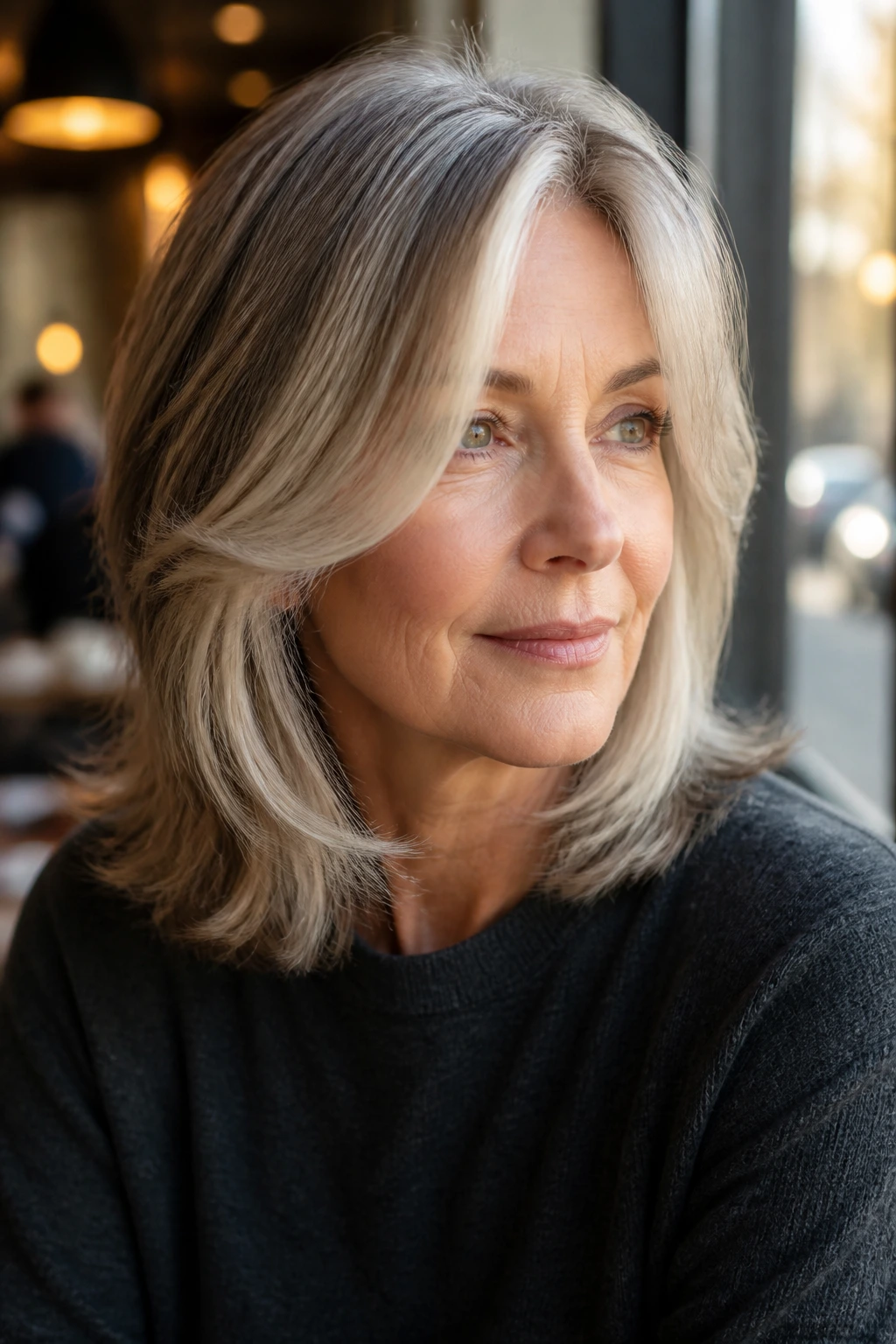
A hairstyle ages gracefully when it still has lift, shape, and clean edges three weeks after the salon visit. That’s the real test. Day one is easy. Day twelve tells the truth.
The biggest clues live in three places: the crown, the perimeter, and the front. If the crown is too flat, the face can look heavier. If the perimeter is too blunt in the wrong cut, the hair can seem dense in a boxy way. If the front sits badly around the eyes or glasses, the whole style starts to feel slightly off.
I pay attention to how a haircut behaves when the wearer turns her head. That little swing matters more than a dramatic transformation. Hair that moves with the neck and shoulders looks alive. Hair that sits there like a cap does not.
Gray, white, and silver hair usually benefit from a bit of motion because the texture can be coarser or more resistant than it used to be. A strong line can be lovely, but it needs either shine or movement. Ideally both.
Essential Styling Tools for These Looks
-
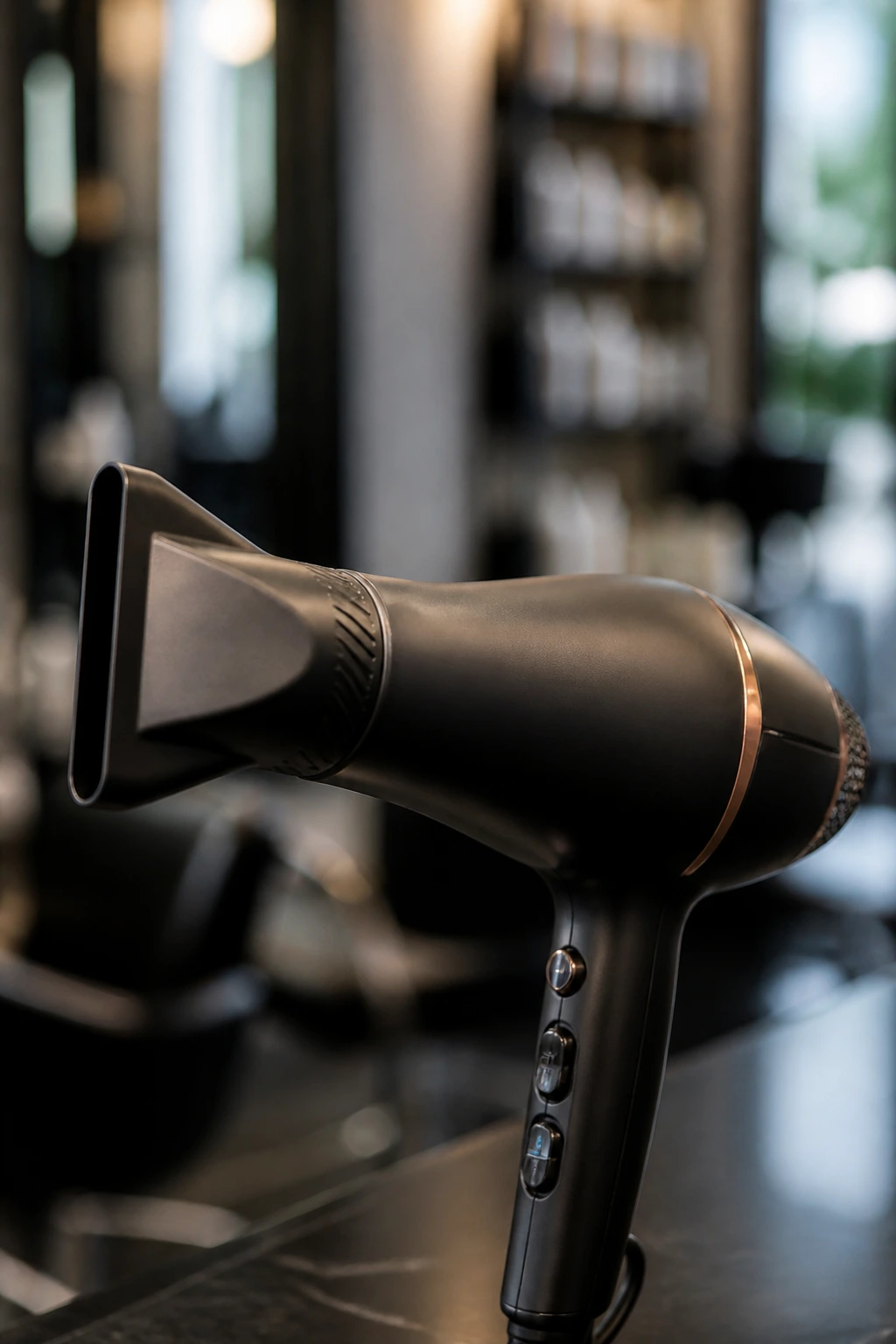
A quality blow dryer with a nozzle: The nozzle keeps air moving in one direction, which helps smooth the cut without blasting it apart.
-
A 1-inch or 1.5-inch round brush: Best for bobs, lobs, and soft roll-under shapes. Smaller brushes give tighter bend; bigger ones give softer movement.
-
A wide-tooth comb: Good for curls and waves when you need to detangle without roughing up the texture.
-
Light root-lift spray or mousse: Useful for crowns that lie flat, especially on pixies, stacked bobs, and side-swept cuts.
-
Matte paste or light styling cream: Helps short cuts hold shape without turning greasy or stiff.
-
A diffuser attachment: Worth having if your hair is curly or wavy and you want definition without frizz.
-
A flat iron with adjustable heat: Handy for blunt bobs and lobs, but keep the heat moderate. Fine hair does not need punishment.
-
Salon shears for trim-ups only if you know what you’re doing: Otherwise, leave the cutting to a professional. Kitchen scissors are a crime against hair.
Smart Salon Notes That Save You a Bad Cut
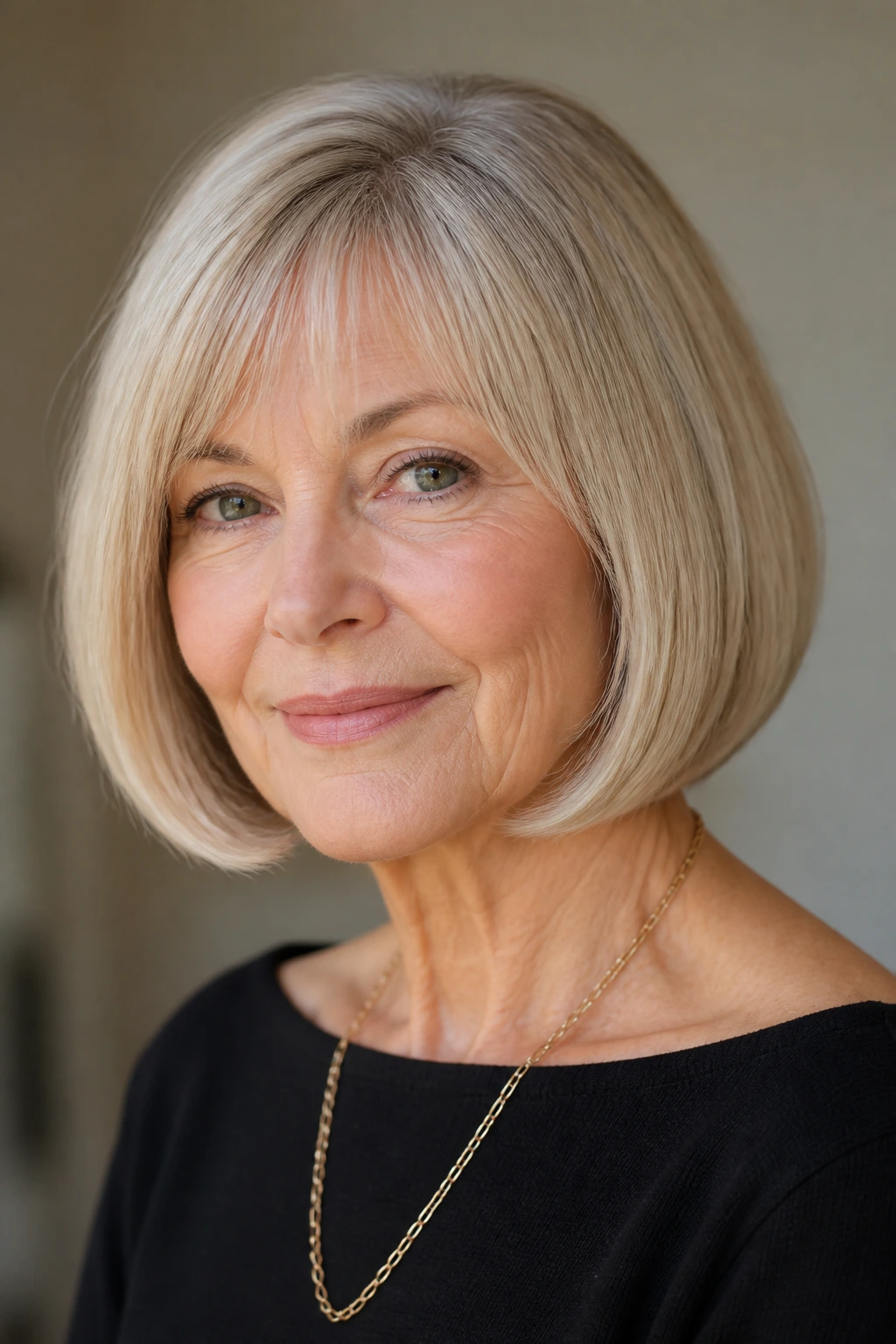
Bring photos, sure, but bring words too. Tell the stylist how long you spend on your hair, whether you air-dry, whether you wear glasses, and whether your hair grows out in a poof around the ears. Those details change the cut more than the celebrity picture on your phone.
Be specific about what you do not want. If you hate bangs touching your lashes, say it. If your neckline gets hot and itchy with too much bulk, say that too. A good stylist can work with a lot, but they can’t read your mind through the cape.
Talk about your growth pattern. Cowlicks at the front, a flat crown, or a strong part all affect the final shape. If your hair flips out at the nape, the cut has to account for it from the start. Otherwise you’ll be fighting the same battle every morning.
One more thing. Mention your best and worst hair days. That one piece of information is often more useful than a dozen adjectives.
Small Tweaks That Make the Style Yours

Flavor Enhancement: For short cuts, a tiny amount of texturizing spray at the roots gives the hair grit and lift, which is often more useful than extra hold.
Customization: If your face needs softness, keep the front a little longer. If you want lift near the eyes, open the fringe and move the part off center.
Serving Suggestions: Think about the whole picture — earrings, glasses, lipstick, neckline. A clean bob with bold earrings reads differently than the same bob with a turtleneck and no jewelry.
Make-It-Yours: If you prefer low-maintenance, choose a cut that looks decent air-dried. If you enjoy styling, choose one that lets you play with a round brush or roller set. Those are not the same haircut.
Gray-Hair Boost: If your silver hair looks yellowed, a purple shampoo once every 1-2 weeks can help. Use it lightly. Leave it on too long and the hair can go dull or lavender-tinted.
Common Mistakes That Make Hair Look Older Than It Is
Too much thinning at the ends: Hair can look wispy and see-through instead of light. The fix is to keep the weight line cleaner and remove bulk from the inside, not the very edge.
Heavy bangs cut too short: Short blunt bangs can pull the eye down and make the forehead feel crowded. Ask for softer, longer fringe that can split or sweep aside.
A cut that only looks good blown out: If you hate heat styling, don’t buy a style that depends on it. You’ll end up wearing it in a ponytail by week two.
Ignoring the crown: Flat roots can make even a good cut look tired. A little root spray, a better part, or a shorter crown section can fix that.
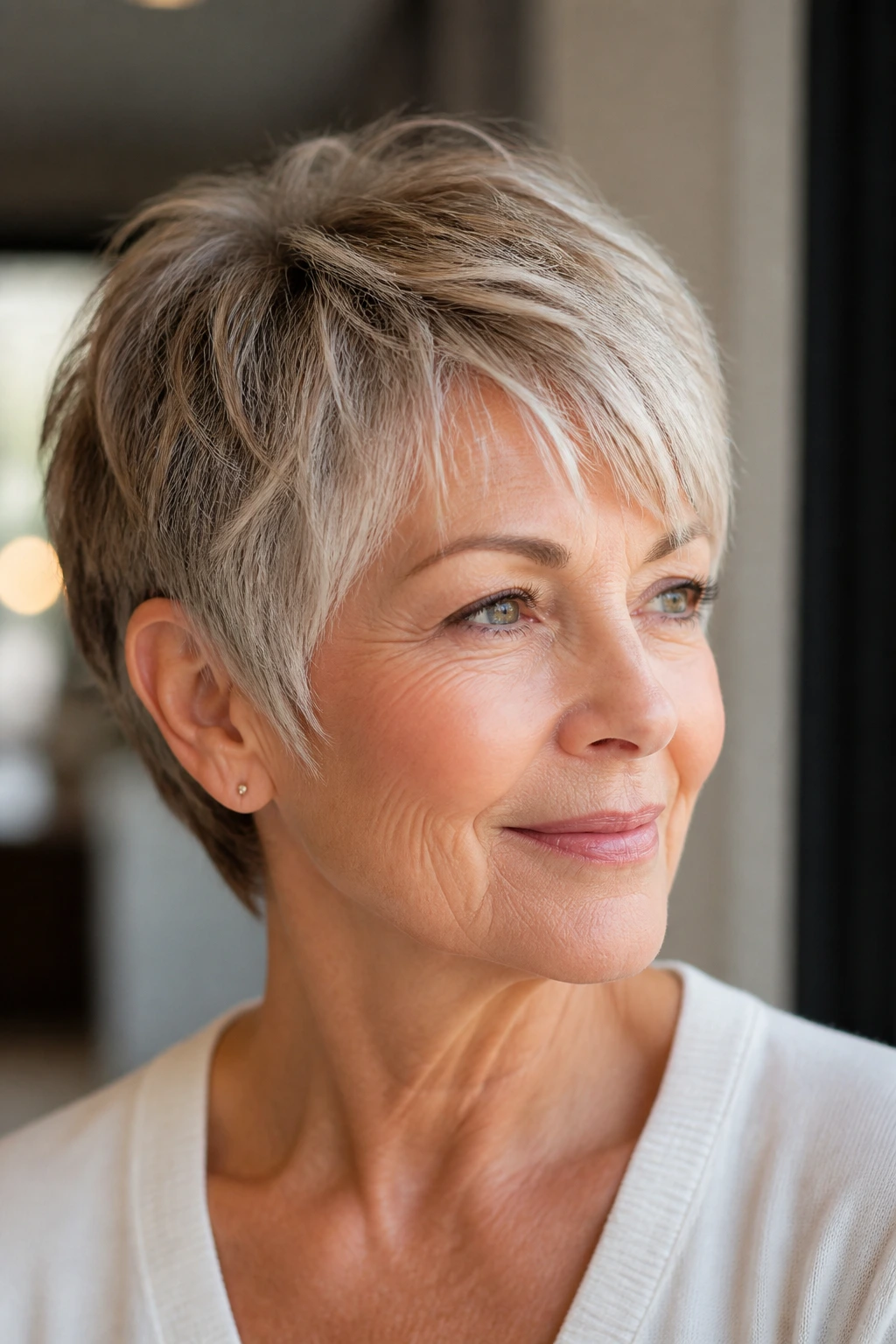
Letting a pixie overgrow: Short cuts lose their shape fast. If the nape and ears start puffing out, the whole style goes from neat to messy in a hurry.
Using too much serum on gray hair: Gray strands often need moisture, but heavy products can make them hang limp and oily. Start small. Add more only if the ends need it.
Variations and Alternatives to Try
The Fine-Hair Lift Version: Choose bobs, crops, or pixies with clean lines and light interior layers. Avoid too many long layers, which can make fine hair disappear at the ends.
The Curly-Texture Version: Keep the shape longer and let the curls stack naturally around the face. Ask for a dry cut or a curl-by-curl shape so the style follows the actual pattern.
The Glasses-Friendly Version: Go for side-swept bangs, shorter temples, and volume that sits above the frames rather than colliding with them. This keeps the face open and the glasses visible.
The Low-Heat Version: Pick a lob, shag, or layered bob that air-dries with shape. Use a little mousse or cream, scrunch, and let the haircut do the work.
The Silver-First Version: Lean into shine and movement. A blunt bob, soft curl bob, or airy layered cut can show off white or silver tones instead of hiding them.
The Grow-Out-Easy Version: A lob with soft layers is the safest bet if you hate frequent trims. It stretches better than a pixie and still keeps the hair from feeling heavy.
How to Keep the Shape Between Salon Visits
Shorter cuts need more frequent trims. A pixie or bixie usually wants attention every 4-6 weeks. Bobs and lobs can often go 6-8 weeks. Longer layered cuts can stretch a bit farther, but only if the ends stay healthy and the front still frames the face.
Night care matters more than people think. A satin pillowcase or loose silk wrap can keep the ends from roughing up, especially if your hair is wavy, curly, or silver and dry at the tips. Morning refresh is easier when the hair isn’t already tangled from sleep.
For day-two styling, dry shampoo belongs at the roots, not the lengths. Use a little at the crown, wait a minute, then brush it through. If you dust it down the ends, the hair starts to feel chalky and dull.
If your hair is silver or white, watch for brassiness around the face and part line. A gentle purple shampoo every week or two can keep the color crisp, but don’t overuse it. Too much tone-correction can make the hair look flat and tired.
Questions Women Ask Before They Cut Their Hair
Should women over 60 keep their hair long?
Yes, if the hair still has enough density and shape to support it. Long hair is not the enemy; flat, heavy, stringy long hair is. A long cut with good layers can look elegant and modern, while a shorter cut can look dated if the shape is wrong.
Are bangs a good idea after 60?
They can be, if they’re cut with softness and enough length to move. Wispy bangs, curtain bangs, and side-swept fringe usually flatter more faces than heavy, blunt bangs. The wrong bang is harder to fix than almost any other hair mistake, so go cautious.
What haircut makes thin hair look fuller?
A blunt bob, a textured crop, or a short stacked bob can all help thin hair look denser. The trick is to avoid over-layering the ends. Density is built by keeping a stronger perimeter and adding lift where the eye sees it most.
How often should these styles be trimmed?
Pixies and bixies usually need trims every 4-6 weeks. Bobs and lobs do well around 6-8 weeks. If your hair grows quickly or your crown collapses early, shorten that interval a little.
Can gray hair look stylish without being dyed?
Absolutely. Gray hair often looks best when the cut has movement and the finish has shine. The shape matters more than the color, and a clean bob or airy crop can make silver hair look intentional, not accidental.
What if my hair is curly and frizzy?
Choose a cut that leaves room for curl expansion. Dry cutting, curl cream, and a diffuser can help, but the shape has to be built for the curl pattern. A shoulder-grazing curly cut or curly bob usually beats a very short blunt style.
Which styles work best with glasses?
Side-swept pixies, soft bobs, curtain bangs, and collarbone lobs tend to sit well with frames. The main thing is keeping volume away from the temples so the hair and glasses do not fight each other.
What if my stylist keeps thinning my hair too much?
Say so, plainly. Ask for less texturizing at the ends and more shaping inside the cut. If the hair feels see-through after styling, the cut probably removed too much weight from the wrong place.
Hair That Moves With You
The prettiest hairstyles for women over 60 are the ones that don’t look anxious. They sit well, grow out well, and still feel like your hair on a rushed morning with no special plans. That’s what all 25 of these cuts have in common, even though they come in very different shapes.
If there’s one thing I’d keep in mind, it’s this: choose the style that behaves well on ordinary days. Not the photo-day version. The one that looks good after a walk, after a nap, after the weather changes, after you tuck it behind your ear and forget about it.
Pick the shape that gives your face a cleaner line and your mornings a little less friction. That’s the haircut that earns its place on your head.