



Thick hair has a way of making itself known the second it leaves the shower. It has weight. It has opinions. It will either sit like a polished sheet or puff out like it paid rent in every direction, and women over 50 with thick hair know that feeling down to the last stubborn cowlick.
The funny thing is that thick hair is often treated like a problem to be reduced. I think that’s backwards. The better haircut does not fight density; it uses it. That means choosing shapes that respect the bulk at the nape, soften the sides without hollowing them out, and keep the crown from collapsing flat after an hour in the real world.
Gray hair, dyed hair, straight hair, waves, curls — thick strands can do all of it, but they behave best when the cut has structure. The styles that follow aren’t about chasing youth or hiding hair texture. They’re about making thick hair easier to wear, easier to style, and a lot less likely to turn into a triangle by lunchtime.
Why You’ll Love These 20 Hairstyles
-
They work with density, not against it: Thick hair needs shape, not over-thinning, and these styles keep the weight in the right places.
-
They grow out with less drama: A cut with a smart line at the bottom or soft movement through the interior still looks intentional three to six weeks later.
-
They shorten your morning routine: Several of these looks need little more than a round brush, a few pins, or a quick bend with a flat iron.
-
They flatter changing face shape and hair texture: Hair after 50 often feels a little different at the roots and ends; these styles handle that shift without looking stiff.
-
They give you options: You’ll find shorter cuts, shoulder-length shapes, polished updos, and low-fuss styles that let thick hair feel lighter without disappearing.
1. The Collarbone Lob With Airy Layers
A collarbone lob is one of those cuts that quietly solves a lot of thick-hair problems. It sits long enough to keep weight in the ends, but it stops short of the chest, where heavy hair can start dragging the whole shape downward. Add airy layers through the middle, and the cut stops looking like a single solid block.
Why It Works
The collarbone length keeps the outline neat, especially if your hair tends to flare out at the sides. Airy layers do the real work here. They remove a little bulk through the interior without making the ends feel stringy, which is the mistake I see most often with thick hair cuts.
Ask for layers that begin below the chin and fade softly through the mid-lengths. That gives the hair some swing when you move, but it won’t create that choppy, over-cut look that ages badly. A soft bend at the ends — even just from a medium round brush — is enough to finish it.
Best for: straight to wavy thick hair that needs control without looking chopped up.
Styling note: Keep a lightweight blow-dry cream on the roots and a touch of oil on the ends. Too much product here turns the lob into a limp curtain.
2. The Feathered Shoulder Cut
Feathering gets a bad reputation because people remember the versions that were too stepped and too fluffy. The modern version is calmer. It softens the perimeter of thick hair so the shape doesn’t feel like a helmet, but it keeps enough length that the hair still has swing.
What makes it useful: thick hair often looks heavy at the bottom and puffy in the middle. Feathered ends break up that weight line without shredding the whole cut. That matters. A lot.
When you ask for this style, be specific about where you want the feathering. I prefer it around the ends and face frame, not high through the crown. If your stylist starts hacking layers up near the top, the cut can turn wide instead of soft. You want the opposite: a gentle taper that lets the hair fall closer to the head.
- Tell your stylist: “Soft feathering through the ends, not too much removal at the crown.”
- Style with: a vent brush and a medium-hold mousse at the roots.
- Skip: heavy serums near the root area; they flatten the feathered lift.
3. The Chin-Length Bob With Internal Graduation
Can thick hair wear a chin-length bob without becoming a mushroom? Absolutely — if the shape is built correctly. The trick is internal graduation at the back, which means the cut has stacked support where the head curves, instead of just hanging straight off the jaw.
That graduation gives the bob a little lift under the occipital bone, which is the area at the back of the skull that tends to collapse when the cut is too blunt. The front stays crisp. The back stays tidy. The whole shape feels deliberate instead of bulky.
What to ask for
Ask for a bob that hugs the chin but leaves a bit of room at the front so it doesn’t swing in and out like a box. If your hair is extremely dense, a stylist may remove a small amount of weight from the inside, not the visible outer edge. That keeps the line sharp while reducing the “cap” effect thick hair can create.
This cut looks especially good with a side part. The side part breaks up the symmetry and gives the top a little lift without needing hot rollers. Nice and clean. No fuss.
4. The Long-Crown Pixie
Short hair is not the enemy of thick hair. Bad short haircuts are. A pixie with a longer crown keeps thick hair from puffing out at the sides while giving you that easy, lifted top that older women with dense hair often want.
The magic is in the balance. The sides and nape are tight enough to look neat, but the crown stays long enough to move. That means you can push it forward, sweep it back, or rough it up with a little paste and still keep the shape readable.
If your hair grows coarse or silver, this cut can be a gift. Coarser strands hold a pixie shape better than fine hair does, and a neat nape keeps the whole style from looking fuzzy. It’s one of the few short cuts that can make thick hair look lighter without making it look thin.
A pea-sized amount of styling cream is enough. More than that and the ends separate too much.
5. The Curly Shag With Soft Fringe
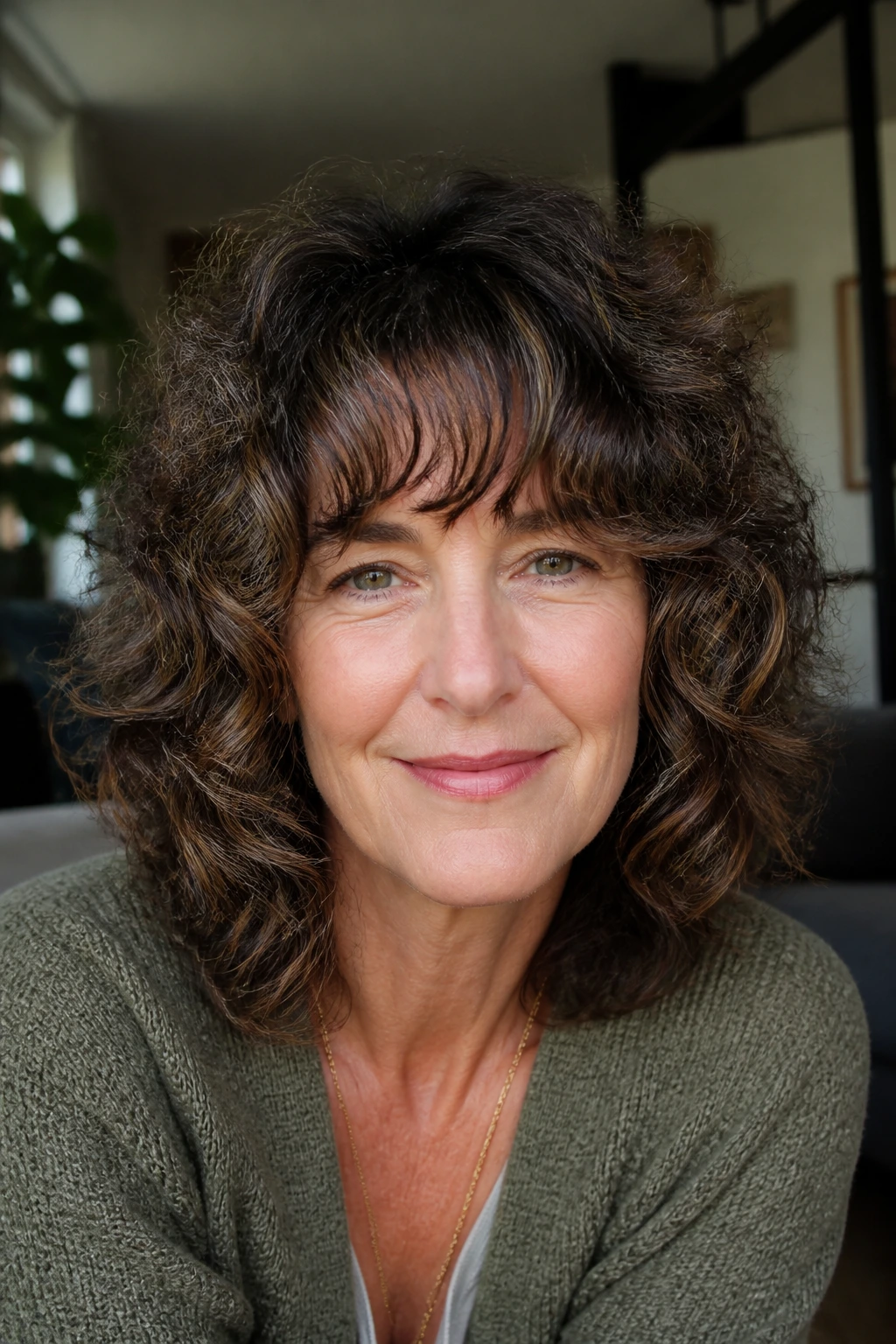
Curly thick hair needs room to spring. If you cut it into a block, it will fight you every morning. A shag with a soft fringe lets the curls stack in a way that feels airy, not crowded, and that changes everything.
This style works best when the layers are cut to follow the curl pattern instead of cutting straight across it. That’s especially important around the fringe. A soft fringe that lands around the brows or cheekbones can make a lot of density near the forehead feel lighter without going too short.
What to watch for
Dry-cutting is often the smarter route for this one, because curls shrink and bunch in ways that are hard to judge when wet. If your stylist cuts it wet, they need to leave a little more length than they think. Otherwise the fringe can spring up higher than you wanted.
A curl cream, a diffuser, and a hands-off drying method are the whole game here. Don’t rake your fingers through it once it starts setting. That’s how you get frizz around the crown and lose the shape that made the cut work in the first place.
6. The Blunt Lob With Beveled Ends
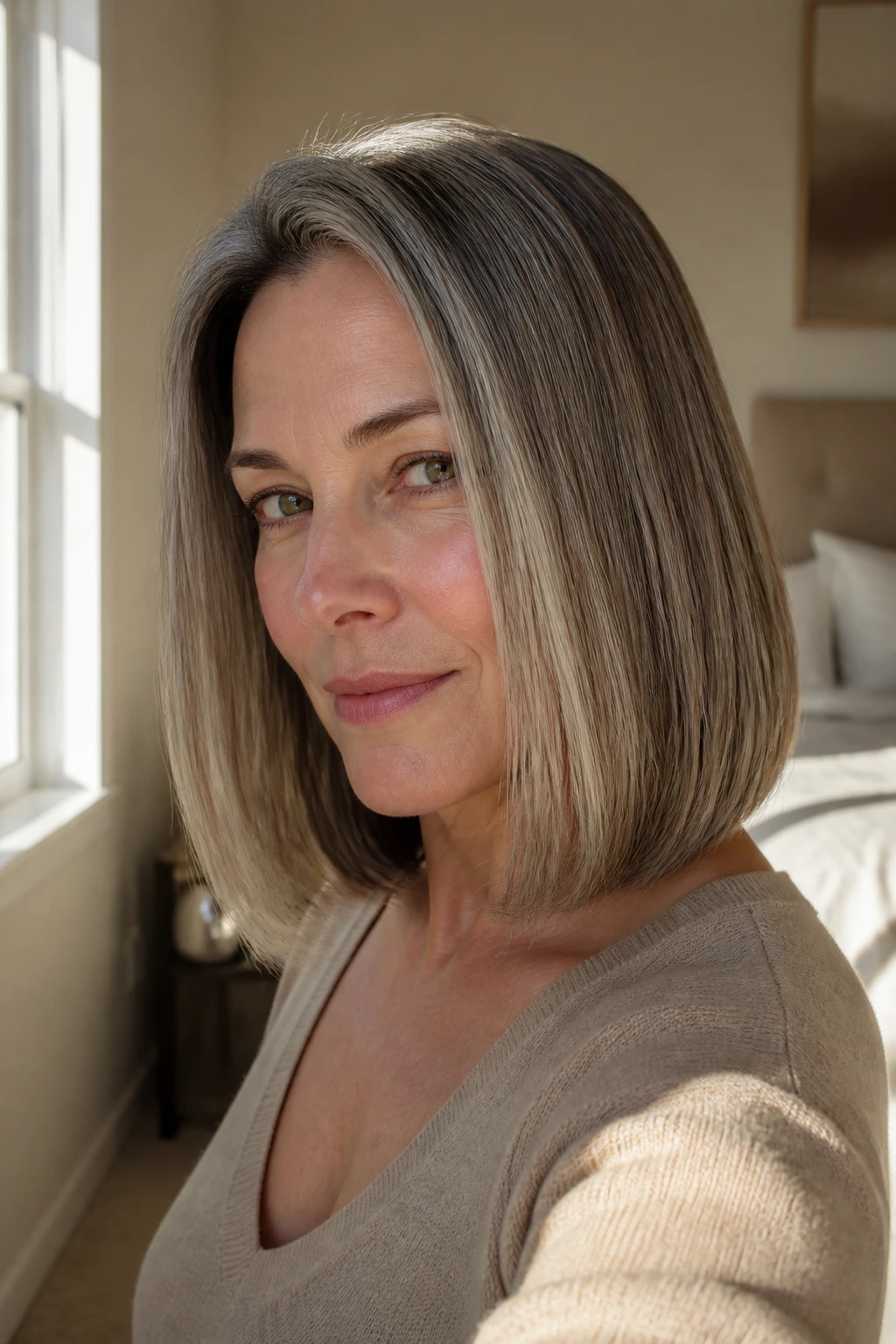
A blunt lob sounds severe on paper. On thick hair, though, it can look rich and polished in the best way — as long as the ends are beveled slightly so they don’t sit like a shelf.
I like this cut for women who want a cleaner line and don’t want to spend half the morning coaxing layers into place. The blunt edge makes thick hair look intentional. The beveled finish keeps the bottom from feeling heavy or square.
It’s a strong choice if your hair is straight or has just a touch of bend. If you wear glasses, the blunt line can balance the frame of your face in a really nice way. It also grows out gracefully, which matters more than people admit. A style that looks good at week six is worth more than a perfect haircut that falls apart by week two.
One warning: if your hair flips outward at the ends, ask for slightly more weight removal underneath, not shorter length on top. That solves the shape without stealing the line.
7. Side-Swept Long Layers
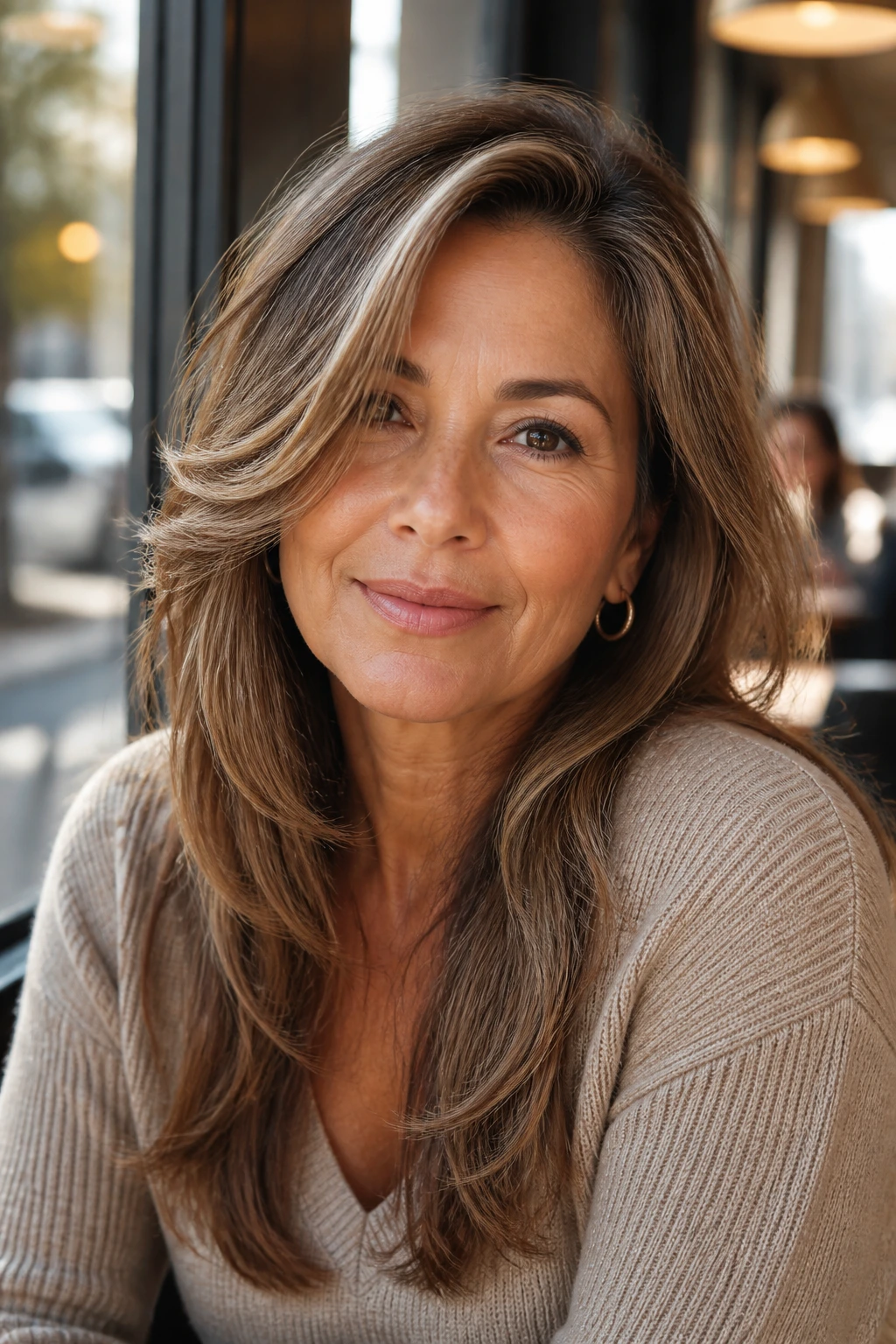
Some women don’t want to lose length, and I get that. Thick hair often looks most luxurious when it keeps some reach. Side-swept long layers let you hold on to that length while stopping the cut from feeling like one massive curtain.
The side part matters more than people think. It shifts weight off the center, gives the crown a little rise, and softens the area around the eyes. That small move changes the whole haircut. If your hair falls flat on top but puffs at the sides, a side-swept shape usually brings it back into balance.
- Ask for: long layers that start below the cheekbone.
- Best styling move: blow-dry the front away from the face first, then direct the rest down.
- Works well with: thick hair that you wear loose four days a week and tie up the other three.
This is the style for someone who wants movement without giving up the feel of “real hair.” It still reads as full. It just behaves better.
8. The Rounded Bob With Tucked Ends
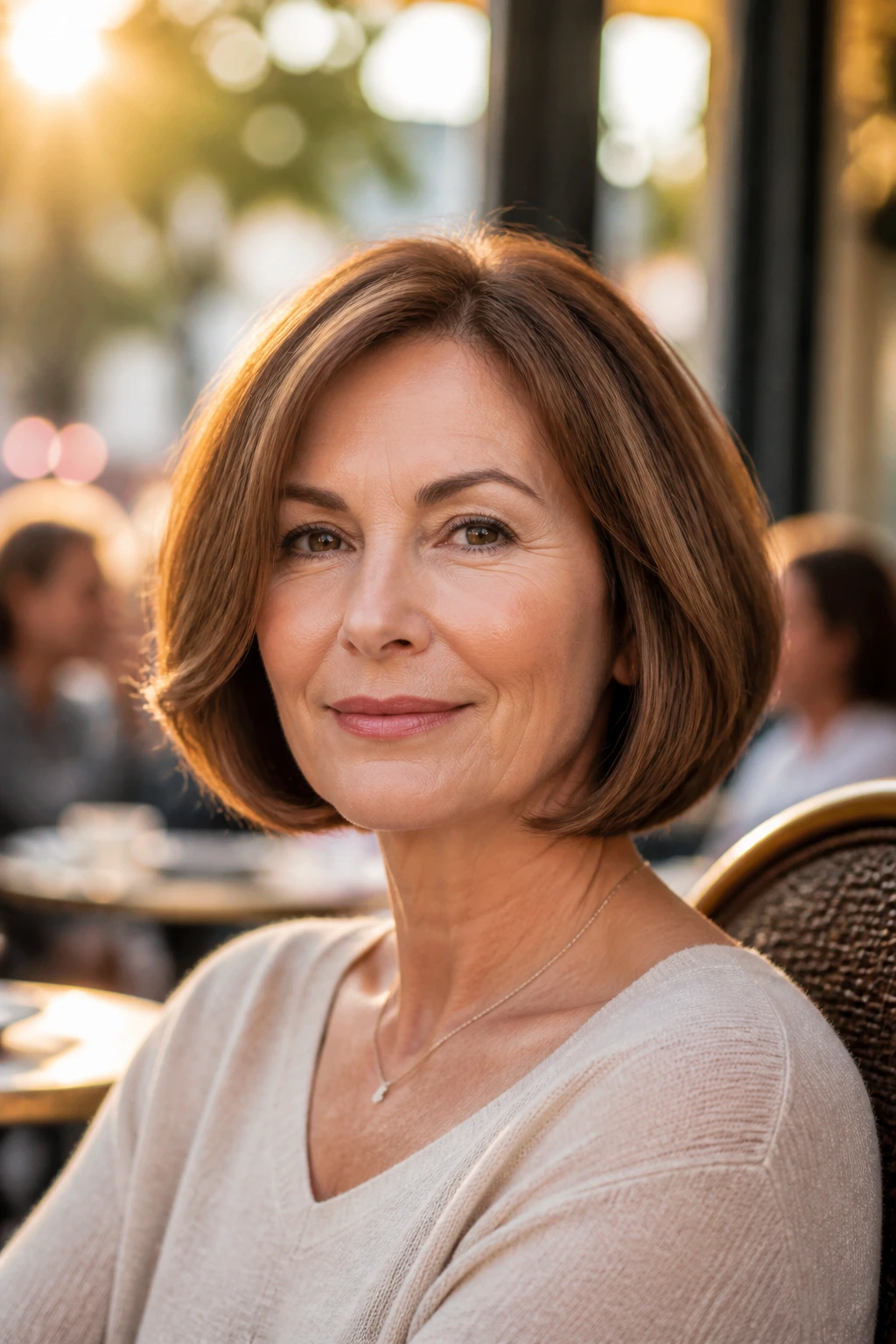
A rounded bob has a softer outline than a square one, and thick hair needs that softness more often than not. The curve at the bottom keeps the cut close to the jaw and neck, which is a good thing if your hair tends to kick out or expand at the shoulders.
The shape should hug, not balloon. That’s the difference between a flattering rounded bob and one that looks like it was trimmed with kitchen scissors. The back should have enough structure to support the curve, while the front should taper gently toward the face. Tucked-under ends make the whole thing feel neat.
This is one of my favorite looks for women who want polish without stiffness. It pairs well with earrings, scarf collars, and glasses because the neck area stays open. If you wear it with a side part, the bob picks up a little asymmetry and looks even less severe.
A small round brush or a flat brush used under the ends is enough to get the tuck. You do not need a hard curl. That would ruin the shape.
9. Curtain Bangs With Shoulder-Length Hair
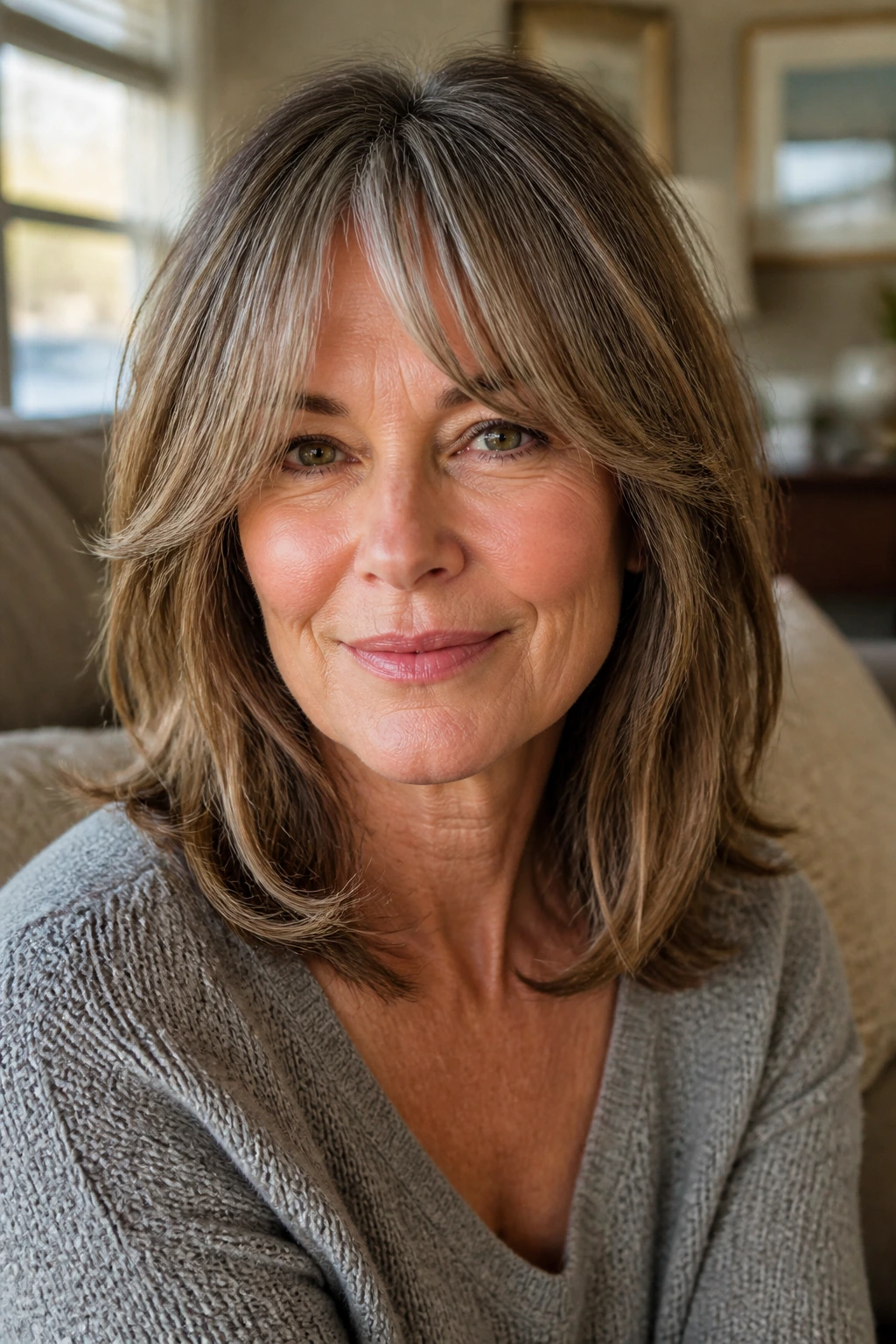
Do curtain bangs work with thick hair after 50? Yes — when they’re cut long enough to part, not chopped into a tiny fringe. Thick hair actually helps here, because the bangs have enough body to drape instead of sticking to the forehead like wet paper.
The sweet spot is usually at the cheekbone or just below it. That gives the fringe room to split away from the face and mix into the rest of the cut. Short curtain bangs can look cute for a week and then become a daily wrestling match if your hair has a strong cowlick or grows fast at the front. Longer is safer.
What to ask for
Ask for a face frame that starts soft near the nose and opens wider around the cheekbone. That lets the bangs blend into shoulder-length hair without creating a hard line. If you wear your hair wavy, this style gets even better on day two. The front pieces settle in a way that looks deliberate, not fussy.
A dab of dry shampoo at the roots keeps the fringe from separating too much. Use a very small amount. Overdoing it leaves the bangs dusty and rough.
10. The Tapered Crop With Piecey Texture
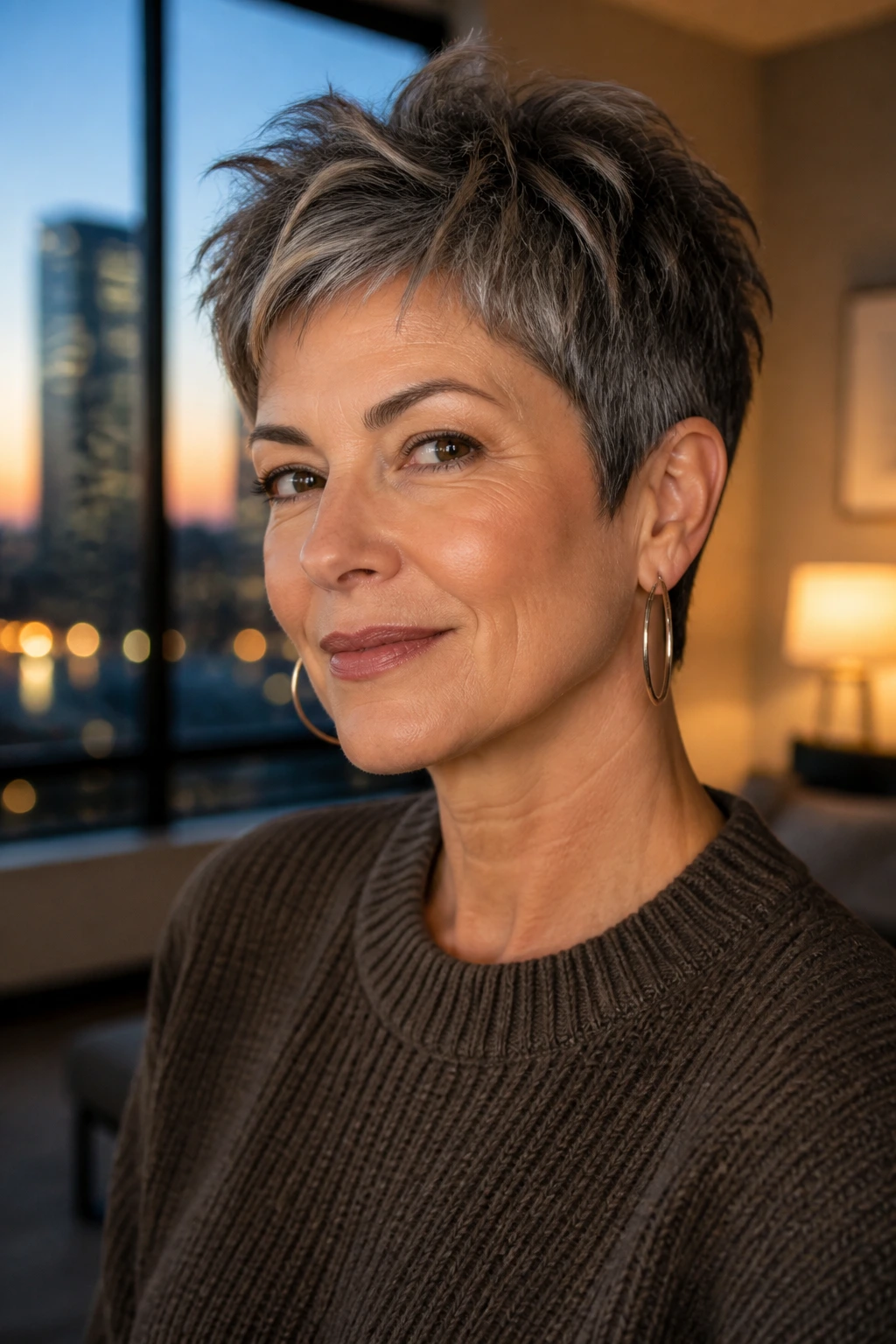
A tapered crop is proof that short hair can still have shape, softness, and a little edge. On thick hair, tapering the sides and nape keeps the bulk under control while the top stays piecey enough to play with.
The best version is not helmet-short. The top should have enough length to sweep, spike lightly, or tuck to one side. That means you can style it neatly for dinner and mess it up with your fingers the next morning. Thick hair holds that kind of movement better than fine hair does, which is one reason this cut works so well.
What to ask for: tighter nape, soft sideburns, and a little extra length at the crown.
What to avoid: over-thinning the top. Once the density disappears up there, the crop can start looking wispy instead of chic.
A matte paste or styling cream is enough to define the ends. If the product shines too much, the crop can look greasy fast.
11. The Modern French Twist
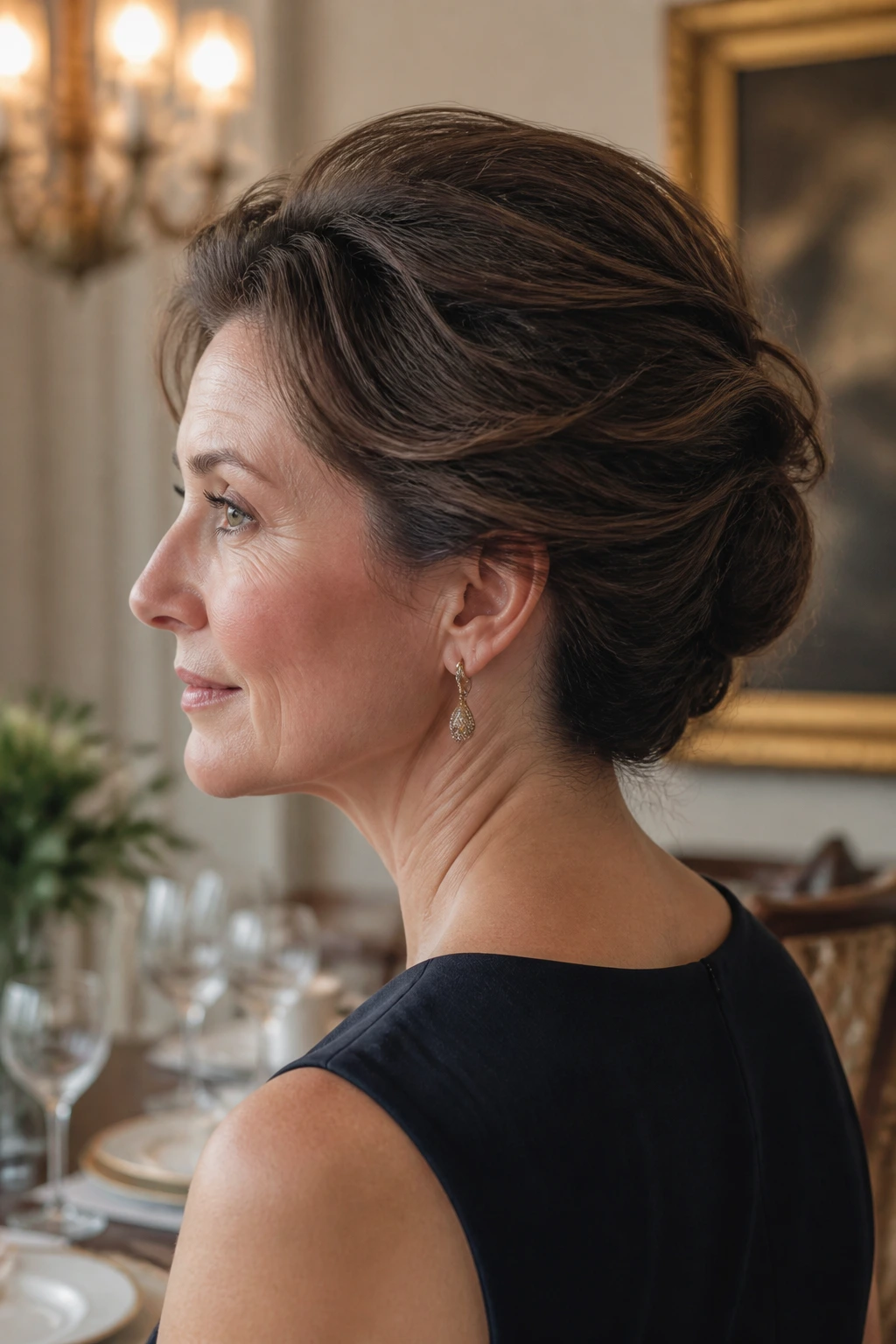
The modern French twist is what happens when a classic updo stops being rigid and starts making sense for real life. Thick hair gives this style body, which means you do not have to fight for volume the way finer-haired women often do.
Keep the twist low enough that it feels relaxed, not towering. Pull it in at the nape, twist upward, and leave a little softness at the crown so the head doesn’t look flattened. That little lift is the difference between formal and severe. You want elegant, yes, but not tight enough to make your temples ache.
This is a smart style for events, dinners, or any day when you want thick hair off your neck but still want it to look like hair, not a bun. Two strong pins usually do the job if the hair is dense enough. If your layers are shorter, pin them first so the twist doesn’t unravel at the edges.
A spritz of flexible hairspray at the end gives the style staying power without making it crunchy.
12. The Braided Low Bun
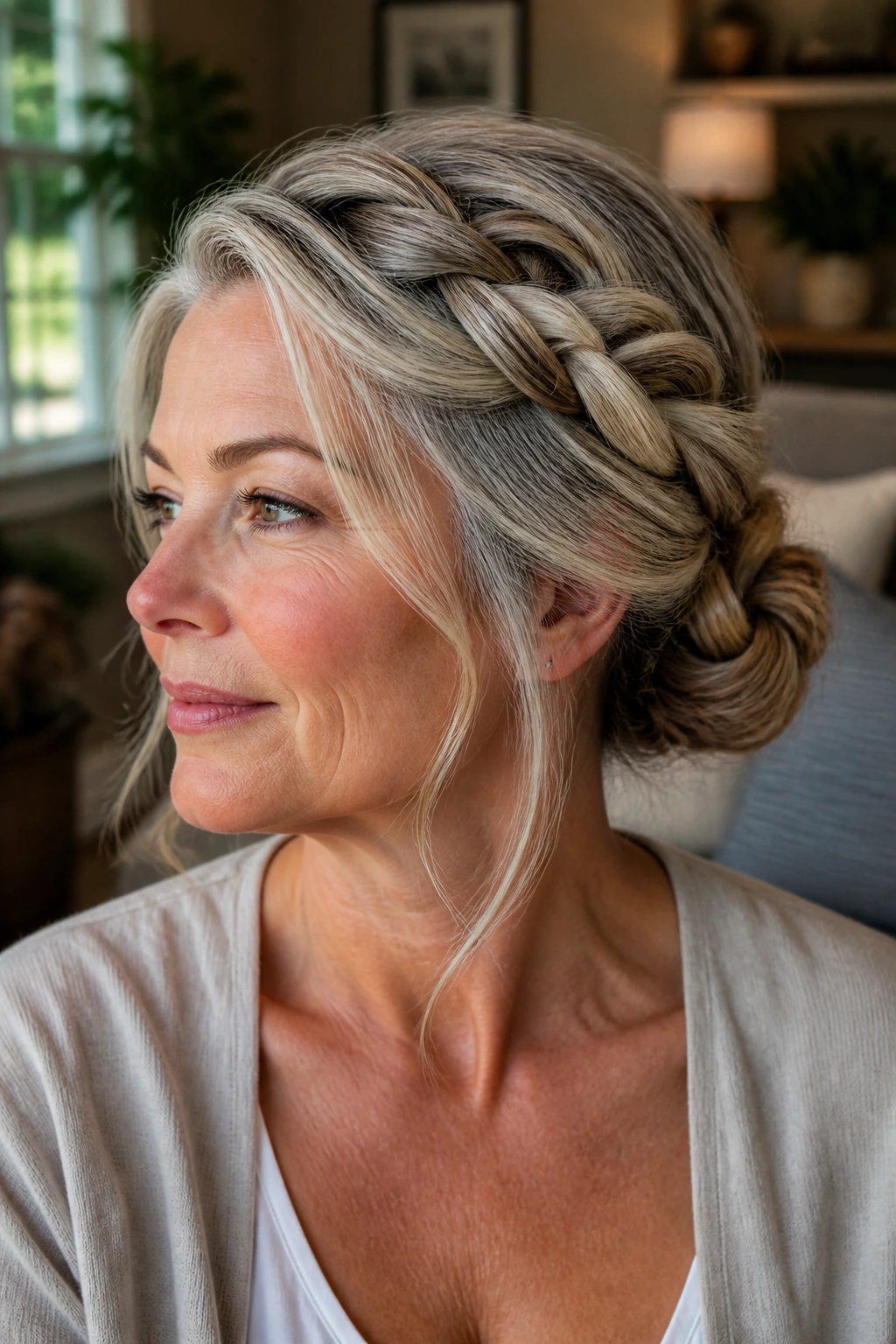
When thick hair feels like too much volume for the day, a braided low bun can be the easiest way to calm it down without making it look flat. The braid is doing more than decorating the style; it distributes the bulk so the bun sits closer to the head and stays put.
That matters on windy days, humid days, or any day when you can feel your hair expanding by the hour. The braid also gives the bun a little visual texture, which keeps the style from looking too plain. It’s practical, but not dull. Good hair should rarely be dull.
A loose three-strand braid into a wrapped bun is enough. If you’re comfortable with a French braid, that works too, and it pulls even more weight into the structure. Leave a few face pieces soft if you want the style to feel less severe.
Best for: medium to long thick hair that refuses to sit still.
Tip: secure the bun with pins that cross in an X shape. One straight pin often slips out of dense hair by lunchtime.
13. The Soft Half-Up Twist
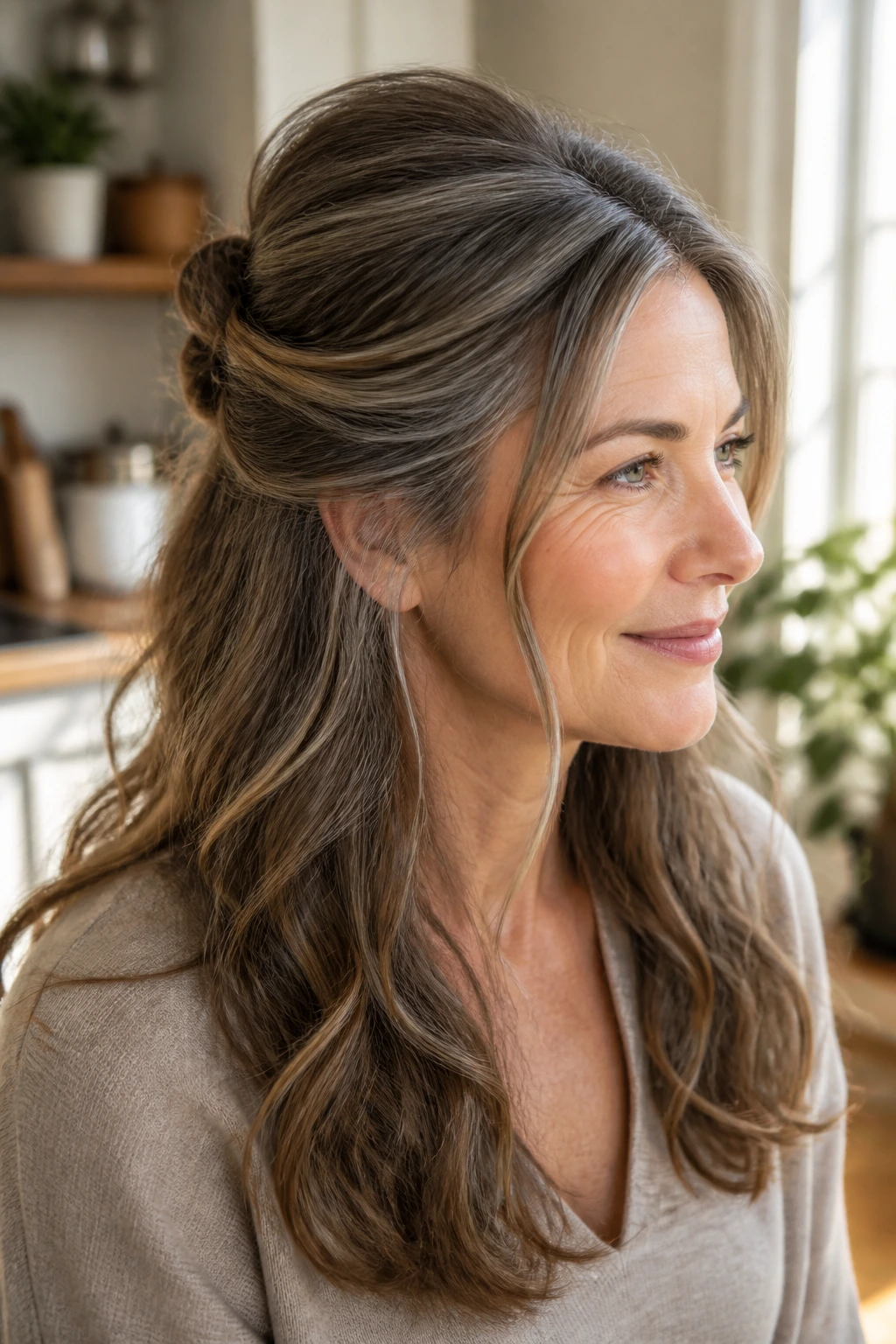
There are days when you want the length, but not all the length. That’s where a soft half-up twist earns its keep. Thick hair gives the twist enough grip to stay in place, and the loose bottom section keeps the style from feeling overworked.
Pull back the top third of the hair, twist it loosely, and pin it into place just above the crown. Don’t tug it tight. The point is lift, not control at all costs. The rest of the hair can stay straight, wavy, or softly curled. This style looks especially good when the front pieces are left a little loose around the cheeks.
It’s the kind of look that can go from errands to dinner with no trouble. You can wear it with a clip, a barrette, or two hidden pins if you prefer the minimalist route. Thick hair helps because the twist has enough body to look full without needing a lot of teasing.
A light mist of texture spray at the roots gives the twist something to hold on to. Straight, silky hair may need a little extra grip.
14. Voluminous Blowout Layers
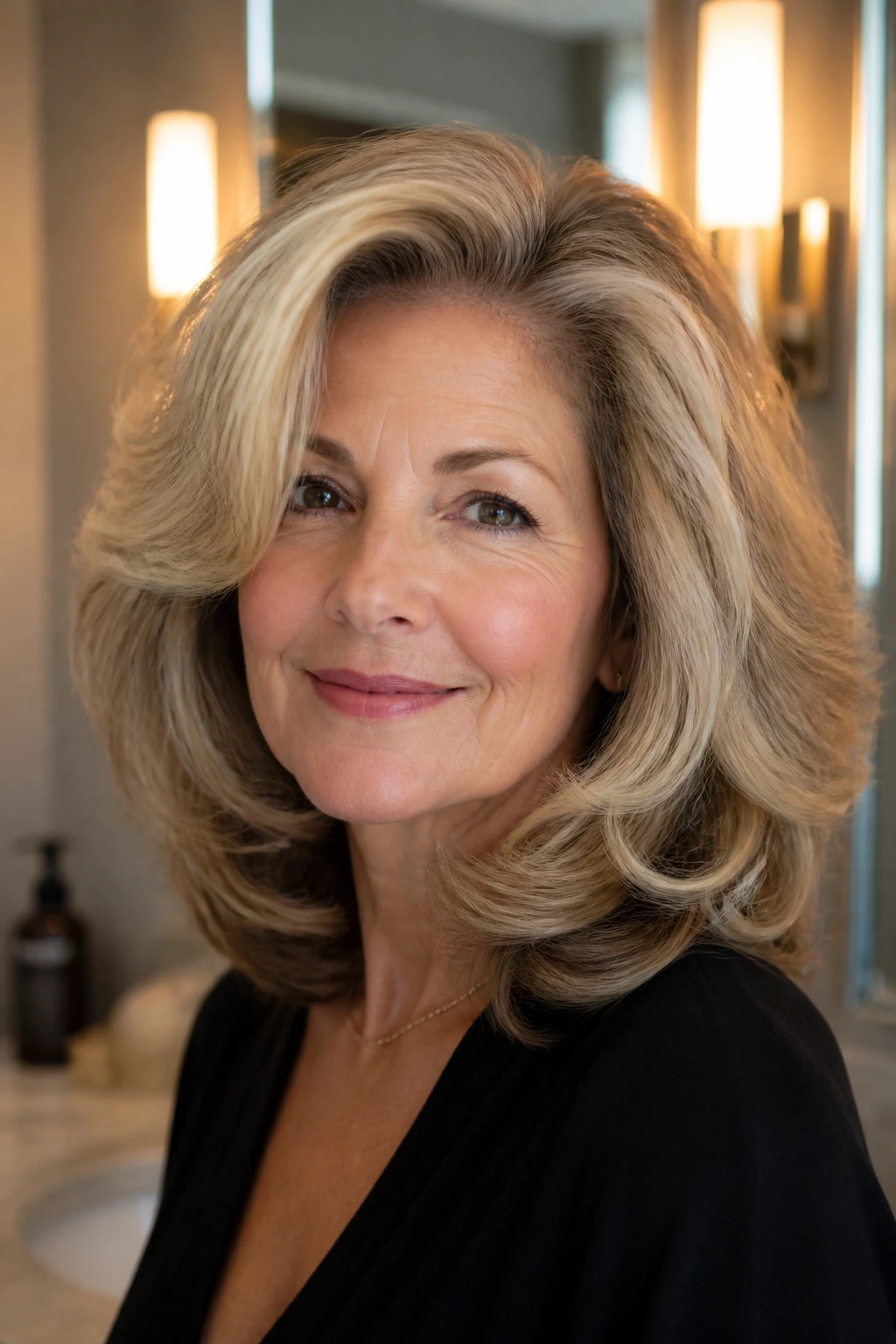
A good blowout on thick hair is not about making the hair bigger. It’s about making the volume sit where you want it. Layers are the secret here, because they let the ends move while the top keeps lift.
How to style it at home
Start with damp hair and divide it into four sections. Dry the roots first with a nozzle attachment, lifting at the crown so the hair does not dry flat against the head. Then take a medium round brush and smooth each section away from the face, rolling only at the last inch or two of the ends. That gives you movement without the over-curled salon look that can date a blowout fast.
This style is especially good when thick hair needs body around the face but not the sides. It opens up the shape and makes the cut feel lighter, which is a useful thing after 50 when heavy hair can drag features downward.
Finish with a cool shot. That step matters more than most people think. It sets the bend and keeps the blowout from falling apart before lunch.
15. The Wavy Mid-Length Cut
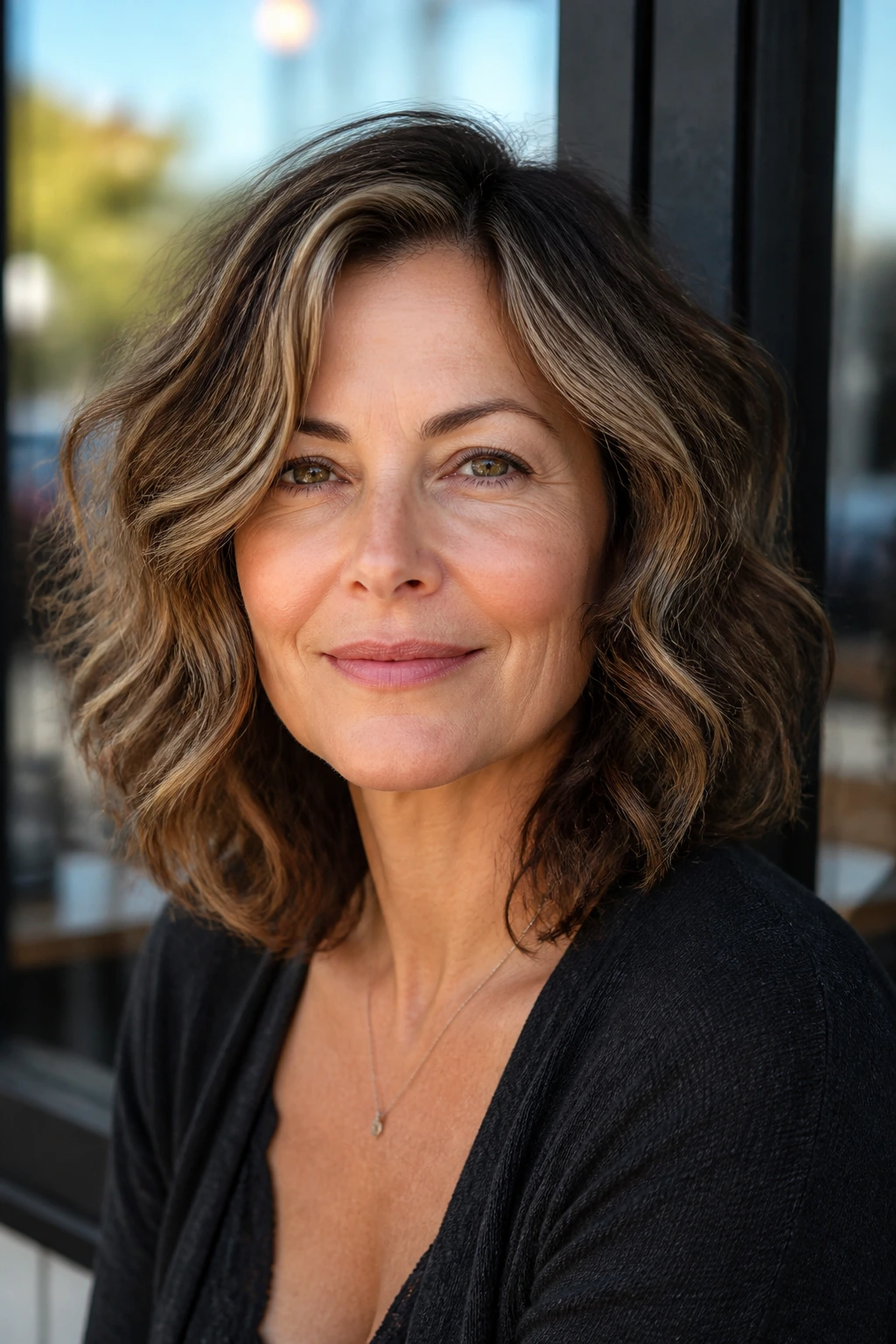
Waves and thick hair make a strong pair when the cut has enough length to settle the bulk. Mid-length gives the waves room to move, while keeping the overall shape from growing too wide at the shoulders.
This is a good answer if your hair likes to hold a bend but gets puffy when it’s too short. The wave breaks up the density in a way that straight haircuts can’t always manage. It also softens strong jawlines and can make the whole face look less framed-in.
If you use a curling iron, work in large sections and leave the last inch out for a more relaxed end. If you use a flat iron, create a soft S bend instead of a tight curl. Tight curls on thick hair can quickly turn into bulk on bulk, and that’s a battle nobody wants.
This cut tends to look best a little messy, which is a mercy. Perfection is not the point here. Shape is.
16. The Graduated Bob
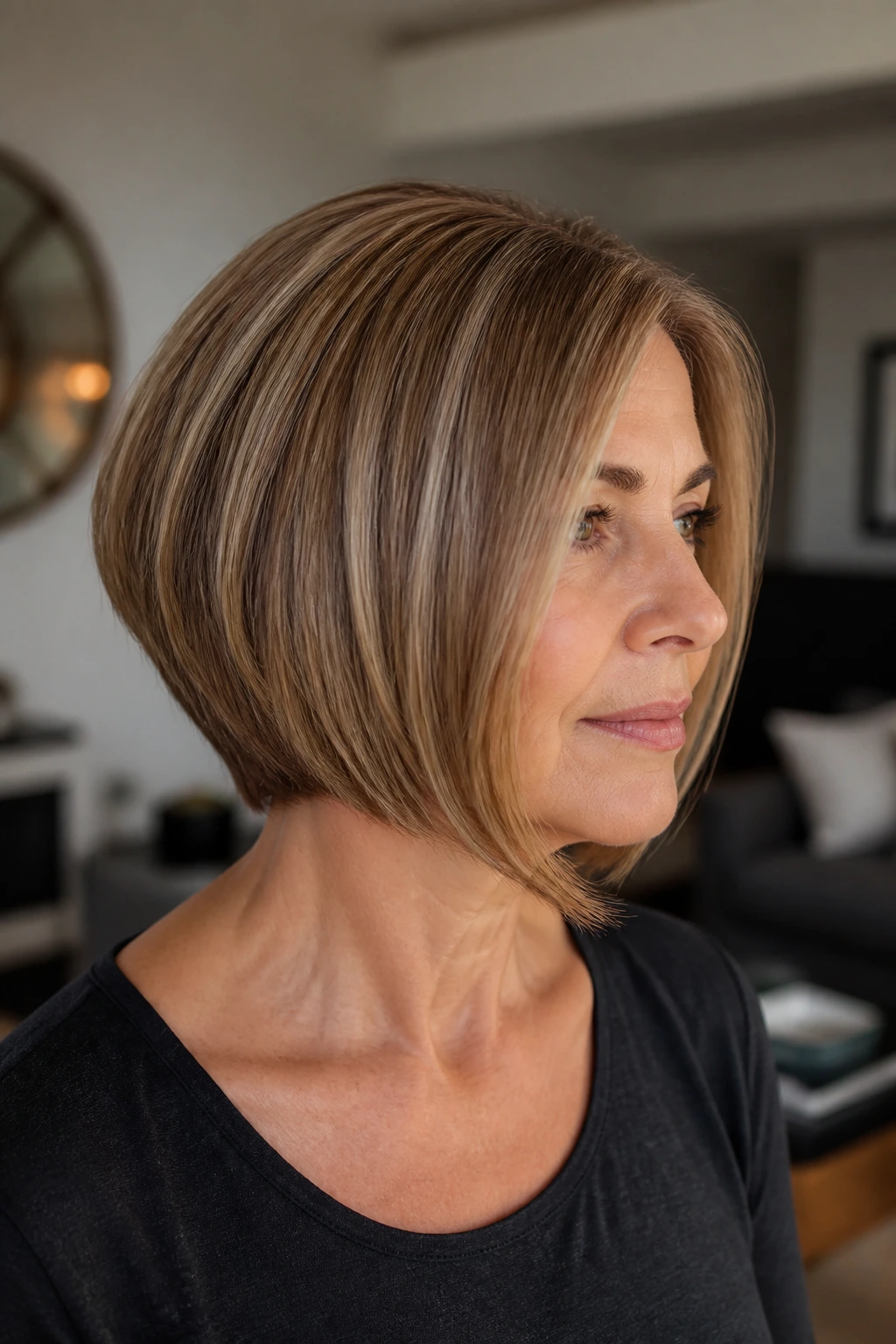
A graduated bob is built with a shorter back and longer front, and thick hair gives that shape real presence. The graduation lifts the nape so the cut sits cleanly against the head instead of hanging in a blunt line that feels heavy.
The profile matters most. From the side, a good graduated bob should look sleek at the back and slightly longer toward the chin. That angle creates movement without needing a lot of layers all over the place. It’s a strong shape for women who like structure and want the haircut to do most of the work.
Why it helps thick hair
The shorter back removes weight where dense hair often collapses. The longer front keeps enough softness near the face so the cut does not feel severe. If you wear it with subtle highlights or gray blending, the angle shows beautifully because the light catches the line as you move.
A flat brush and a blow-dryer can set this style fast. You’re aiming for smooth, not poker-straight.
17. The Sleek Side Part Tuck
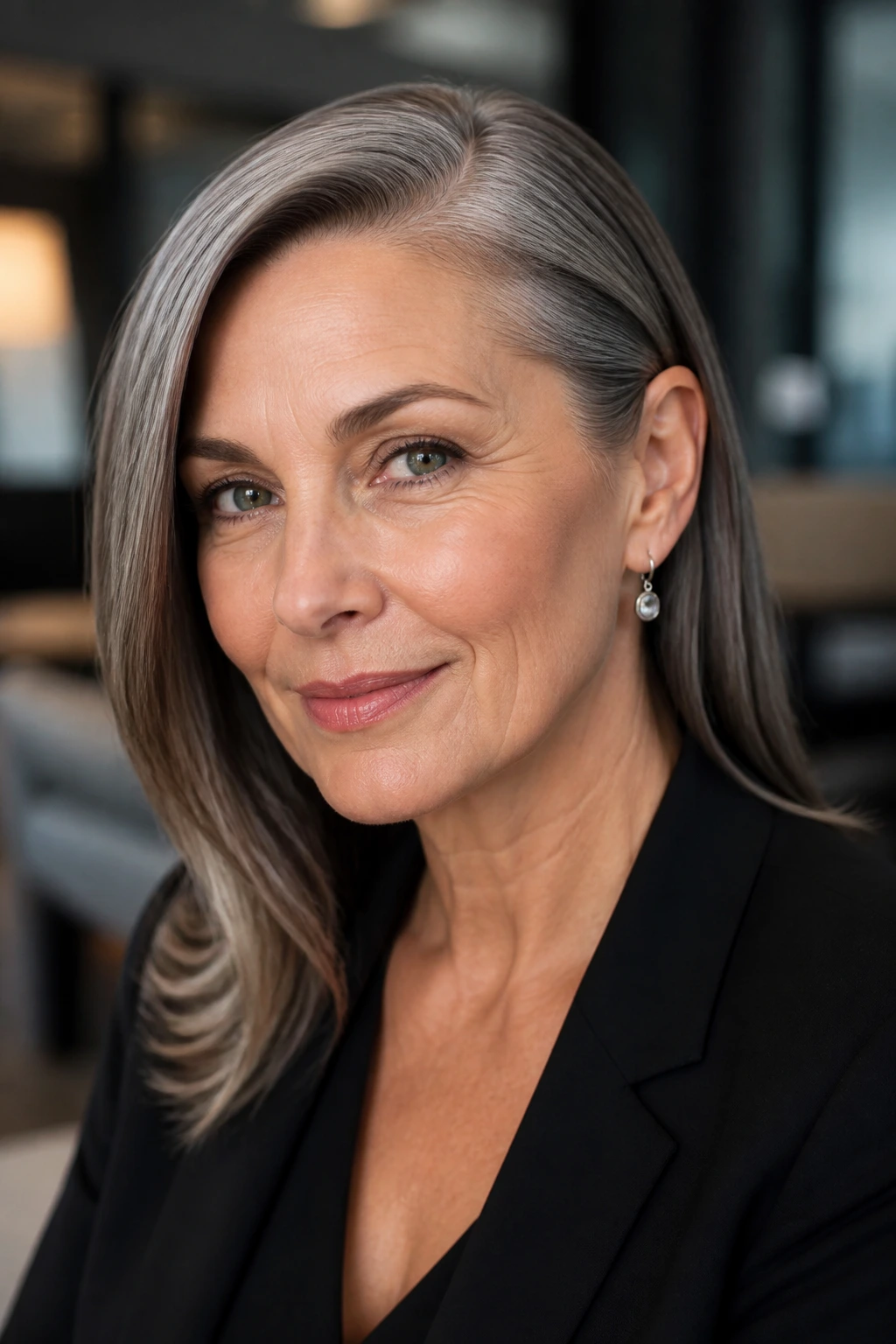
Sometimes the simplest styles are the smartest. A sleek side part tucked behind one ear can tame thick hair in a way that feels clean, modern, and almost stubbornly elegant. It works because it shifts the hair off the centerline and gives the face one open side and one fuller side.
The key is control at the roots and restraint everywhere else. A little smoothing cream near the part and a light pass with a flat iron on the front sections is enough. You don’t need to straighten the whole head unless you want that polished look. The tuck itself does part of the styling work, especially on thick hair that naturally wants to come forward.
This style is also kind to glasses, earrings, and strong necklines. It keeps the focus on the face, not on a giant curtain of hair. If your hair gets frizzy around the ears, tuck it while it’s still slightly warm from styling so it settles into place.
One good pin under the tucked section can keep it from slipping out later.
18. The Layered Cut With Face-Framing Ribbons
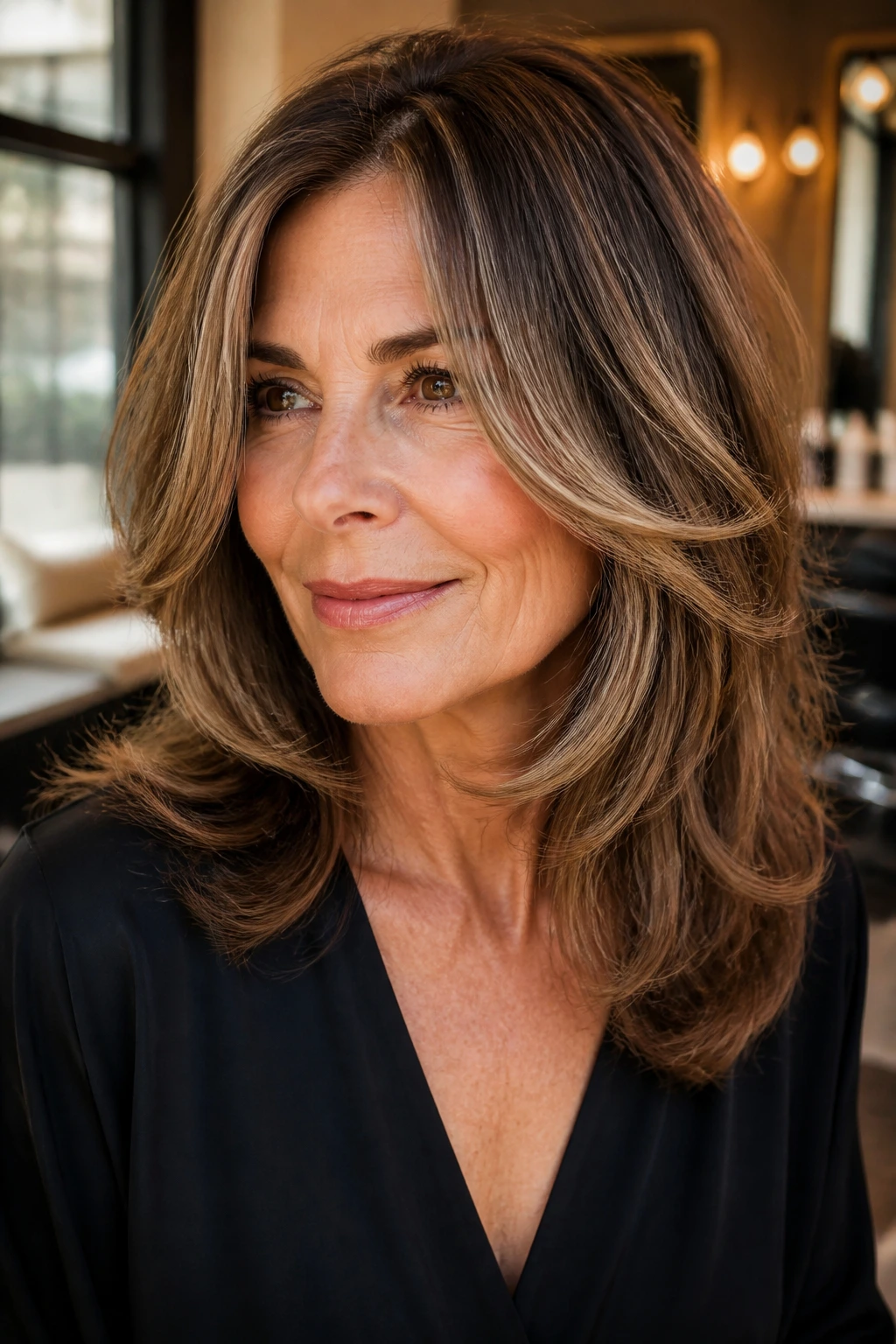
Face-framing ribbons are the pieces that start soft near the cheek and fall toward the collarbone, and thick hair wears them well because there’s enough density to make the shape read clearly. The result is softer than a blunt frame and less fussy than heavy bangs.
That’s useful if you wear your hair loose most of the time but still want the front to move away from the face. These ribbons can sharpen or soften the look depending on where they land. Cheekbone length brightens the eyes. Jawline length softens the chin. Collarbone length stretches the neck a little. Small difference, big effect.
Good for grow-out
This is one of the easiest styles to live with because the face frame still looks intentional as it grows. That makes salon visits less stressful. If your hair is silver or salt-and-pepper, the ribbons can make the color variation around the front look deliberate rather than patchy, which I think is a nice bonus.
Keep the layers around the face soft, not too short. The front should move, not flick outward like a question mark.
19. The Textured Crop With Swept Fringe
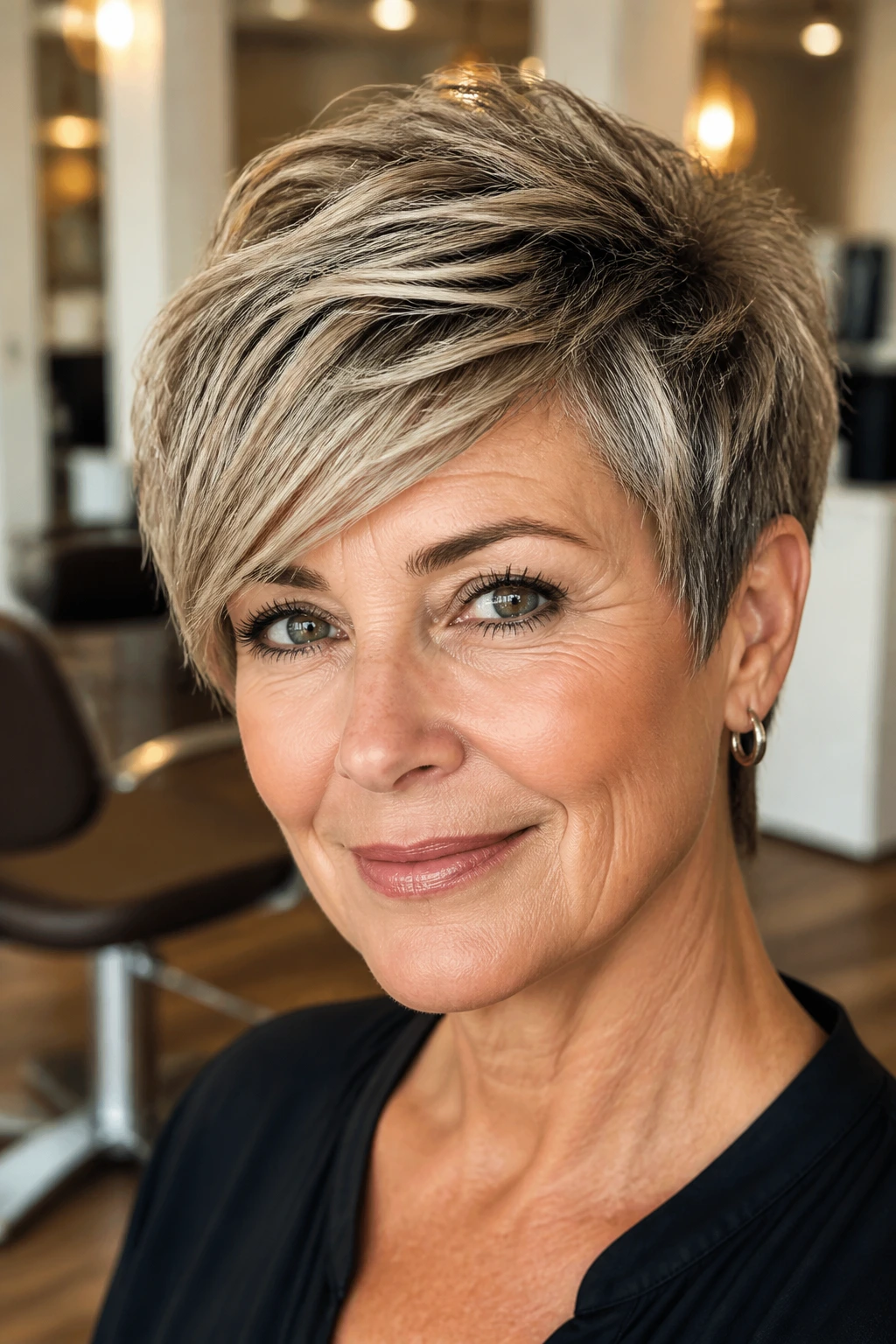
A textured crop with a swept fringe is a good answer when thick hair needs to be shorter, lighter, and less needy. The top stays full enough to style, but the sides and back are trimmed close enough to keep the bulk from taking over.
The fringe does a lot of the visual work. Swept to one side, it creates motion and breaks up the forehead without the bluntness of straight bangs. Thick hair usually supports this better than thin hair because the fringe has enough body to sit in place.
This cut feels especially good if you want something that dries fast and still looks like a real style, not an emergency shortcut. A small amount of texturizing cream through the top and a finger-comb at the front is often enough. If the hair is coarse, a touch of balm on the ends keeps the crop from sticking out in sharp little spikes.
It’s low-maintenance, yes, but not lazy. There’s a difference.
20. The Low Chignon With Loose Pieces
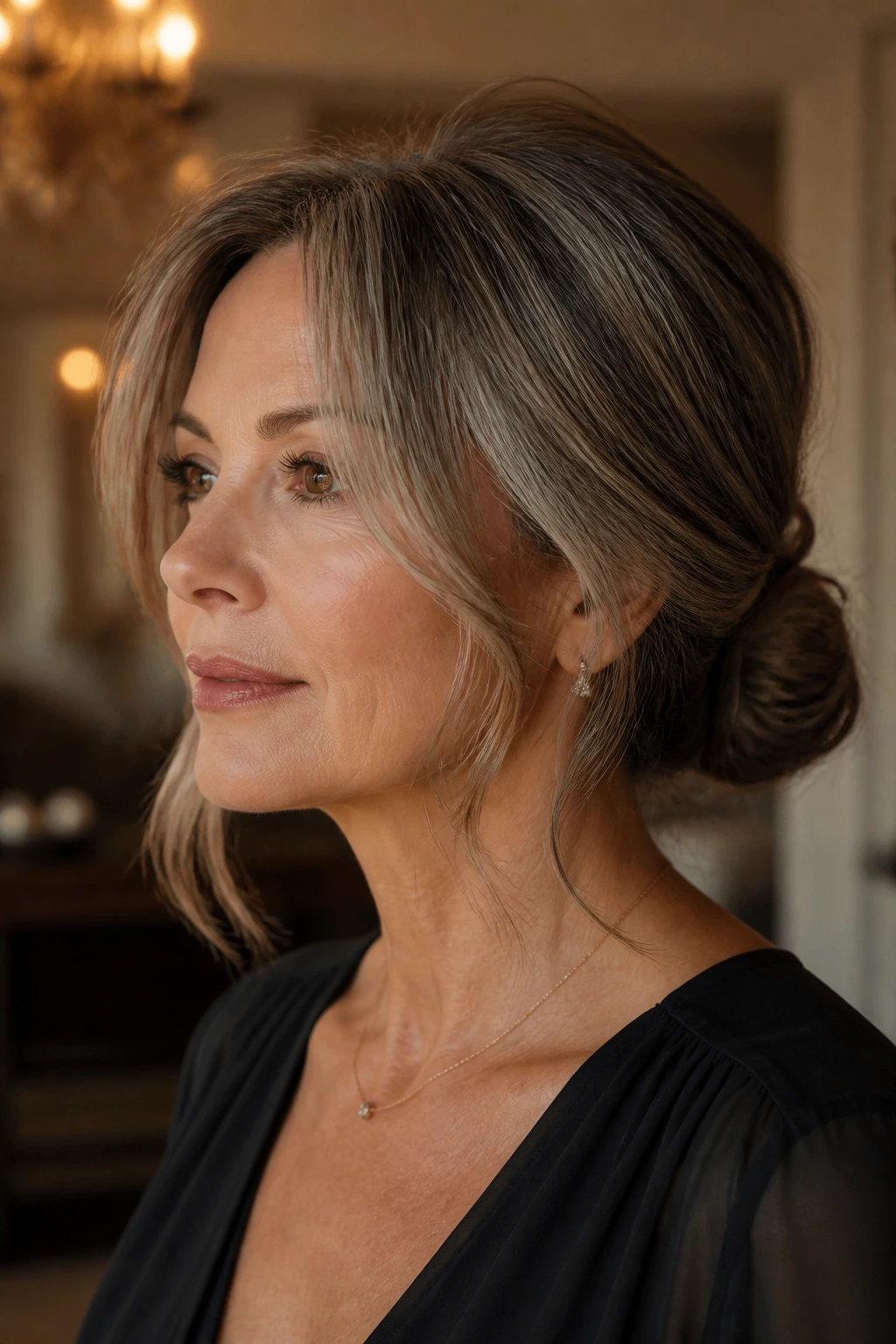
A low chignon is one of the most useful hairstyles for women over 50 with thick hair because it turns density into shape. Instead of stuffing the hair into a knot and hoping for the best, you gather it low at the neck, coil it gently, and let a few soft pieces fall around the face.
The shape should sit close to the nape. That keeps the style elegant and stops thick hair from building too much height at the back of the head. If you have layers, pin the shortest pieces first so they don’t slip free halfway through the day. Thick hair usually gives you enough material to create a bun with body, even if the hair itself is not very long.
I like this style because it doesn’t demand perfection. A low chignon with a little looseness reads as polished, but not rigid. That’s a rare balance.
A light mist of hairspray and two or three U-pins are usually enough. Use more only if the hair is heavy enough to pull the chignon downward.
What Thick Hair Needs After 50
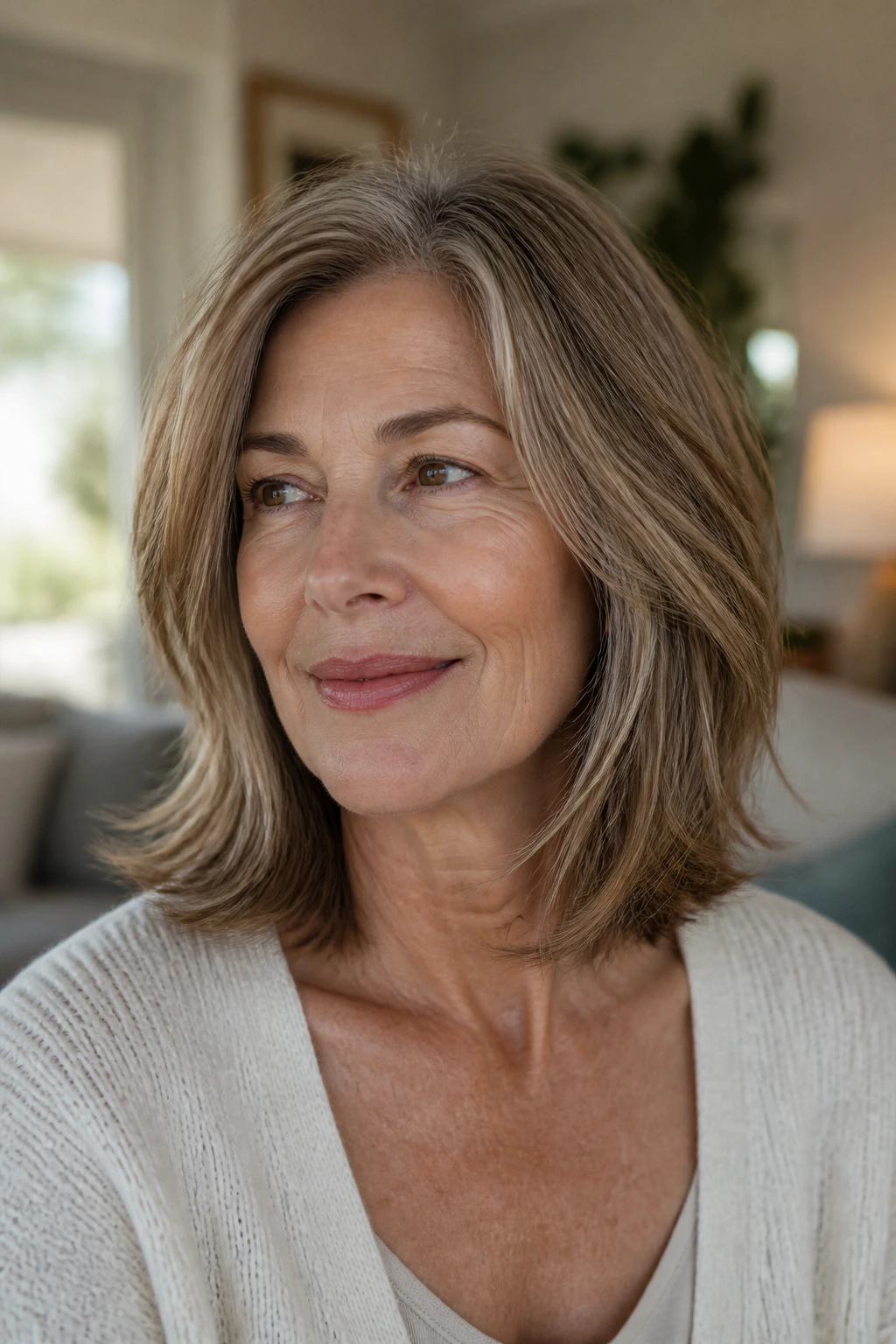
Thick hair changes the rules in small ways that add up fast. A cut that looked fine at 35 can feel bulky, square, or oddly heavy later if the shape is not adjusted for the way the hair actually falls now. That’s not a flaw. It’s just gravity doing what gravity does.
The biggest mistake is treating thick hair like it needs to be “taken down” everywhere. Not really. It usually needs weight removed in the right places and left alone in the places that give the style its line. If you take too much from the crown, the hair can puff. If you remove too much from the ends, it can fray and flip out. There’s a narrow middle ground, and that middle ground is where the good cuts live.
Hair texture can shift too. Some women notice coarser strands, drier ends, or a little less lift at the roots. That means the best hairstyles are the ones that give you shape without depending on perfect texture every single morning. Reliable beats fussy.
Essential Tools for These Hairstyles
-
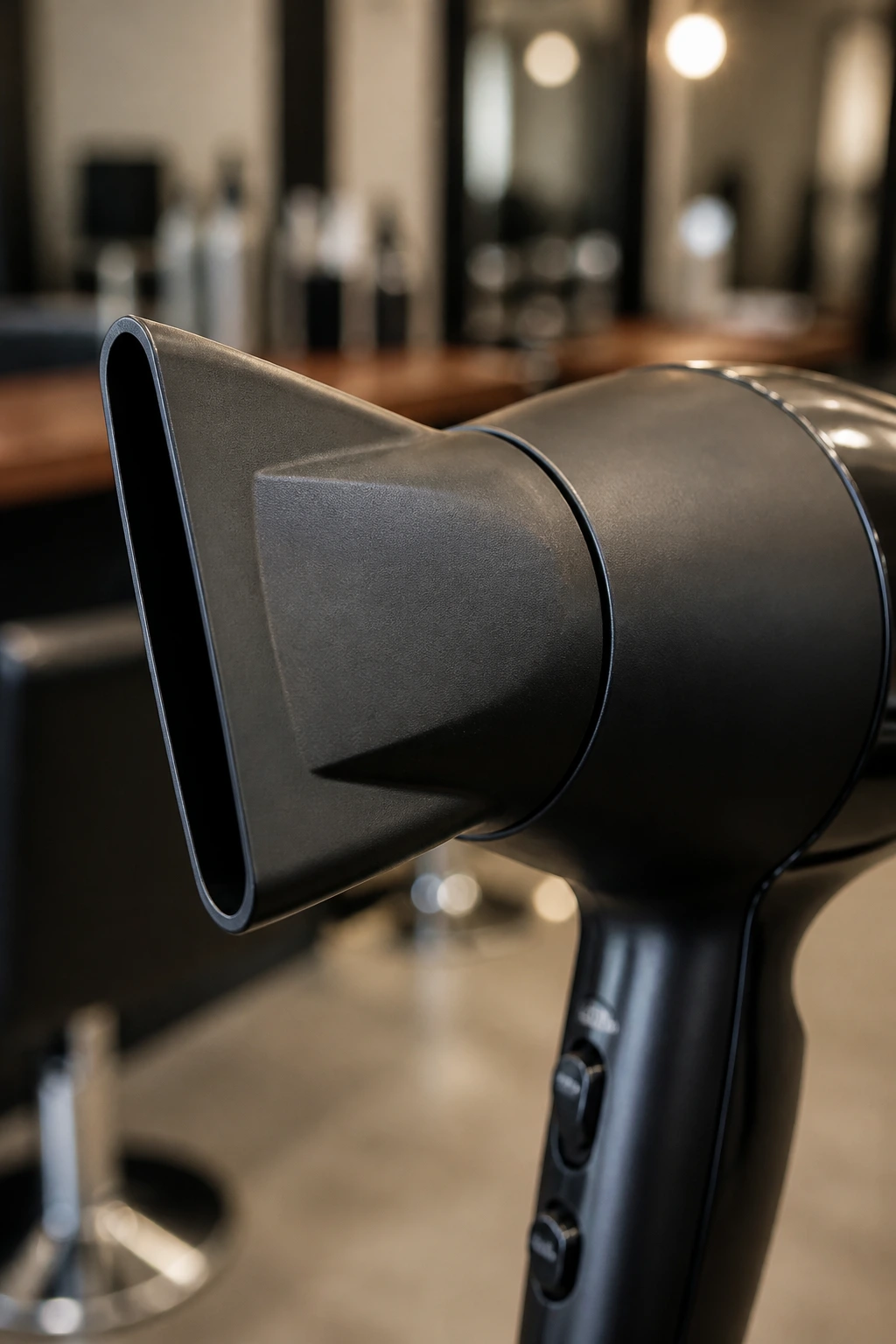
A blow dryer with a nozzle attachment: Directs airflow and keeps thick hair from ballooning while you dry the roots.
-
Medium and large round brushes: A medium brush gives lift near the crown; a larger brush smooths shoulder-length ends without over-curling them.
-
Sectioning clips: Thick hair needs clean sections. If you skip these, the underlayers stay damp and the top gets overworked.
-
Wide-tooth comb: Useful for detangling wet hair without breaking up the curl or wave pattern.
-
Light styling cream or blow-dry lotion: Helps thick hair stay controlled without turning sticky or heavy.
-
Texturizing spray: Best for pixies, shags, and piecey crops where you want movement more than shine.
-
Flat iron: Handy for face-framing pieces, side tucks, and polishing the ends of lobs.
-
1-inch or 1.25-inch curling iron: Good for adding soft bends to mid-length styles without making the hair look overdone.
-
U-pins and strong hairpins: Better than flimsy clips for buns and twists; thick hair eats weak pins for breakfast.
-
A tail comb: Makes clean parts, especially for sleek side parts and half-up styles.
How to Ask for the Right Cut at the Salon
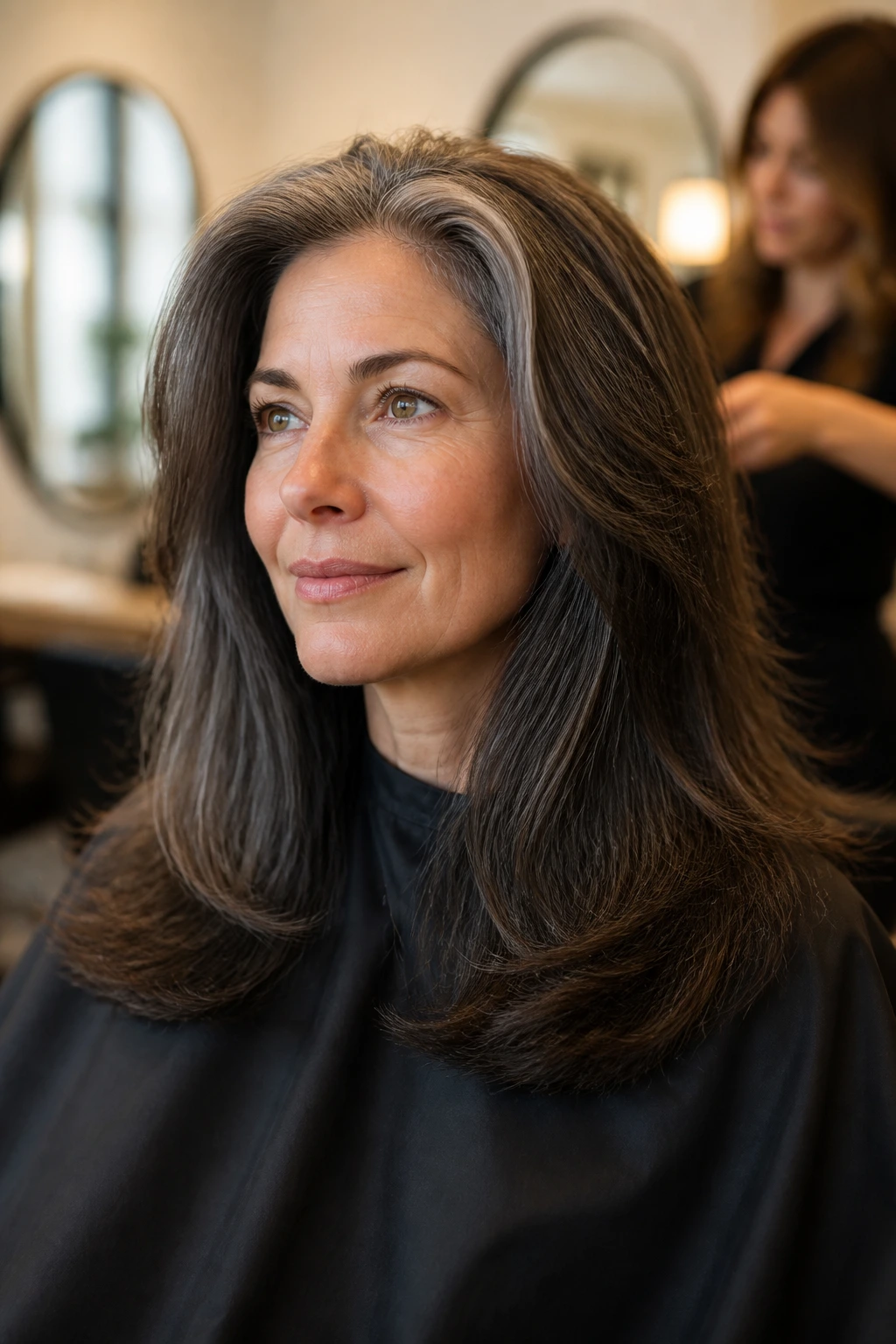
The best salon request is not “make it lighter.” That phrase can send a stylist in the wrong direction fast. Say what you want the hair to do. Do you want lift at the crown? Less width at the sides? A cleaner line at the nape? More movement around the face? Those are useful instructions.
Bring one or two photos, but talk about the shape, not the model’s face. A good stylist can adapt a rounded bob or layered lob to your bone structure, but only if you point out the parts you like: the neckline, the side length, the fringe, the amount of layering. Thick hair needs a plan before the scissors come out.
Salon script: “I want to keep the bulk under control, but I do not want the ends thinned out so much that they go stringy.” That sentence alone saves a lot of regret.
And say how you wear your hair. If you live in a ponytail, ask for face-framing pieces that still look good when tied back. If you dry it with a brush, say that. If you air-dry most days, say that too. The cut should fit your mornings, not some imaginary person with endless patience.
Common Mistakes That Make Thick Hair Act Up
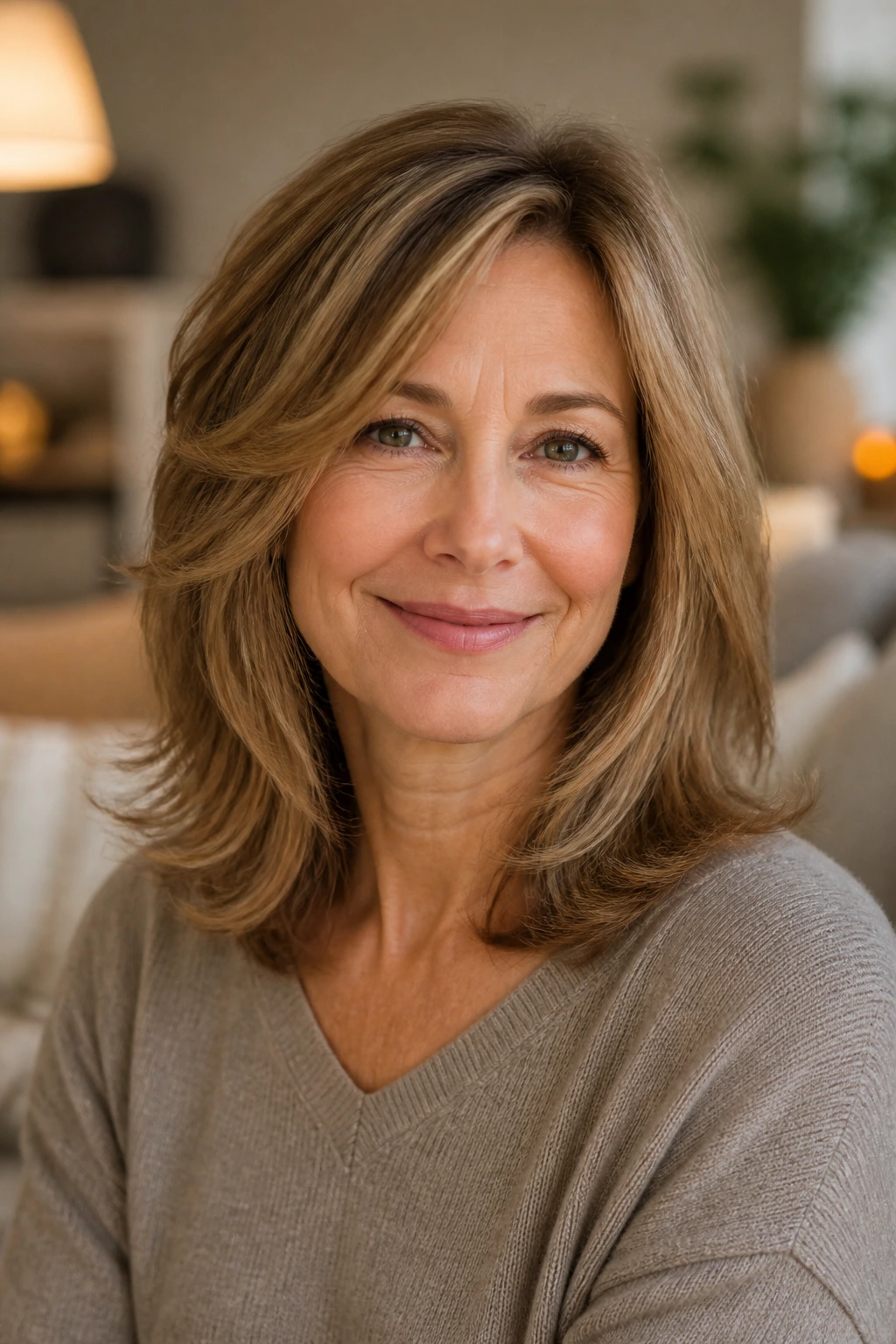
The most common error is over-thinning the top layer. Thick hair can look shredded, frizzy, and oddly see-through when too much bulk is removed at the crown. The fix is to keep the internal weight where the cut needs support and remove bulk lower down or inside the shape, not up top.
Another one is cutting layers too short around the jaw. That creates a triangle, and on thick hair it shows fast. If you like layers, keep them longer and softer so they guide the hair instead of making it kick outward.
Too much product is a sneaky problem. Thick hair can handle more cream than fine hair, but only up to a point. Heavy oil at the roots or a thick mousse coating can make the whole style sag by noon. Use less than you think, then add a touch more only if the hair needs it.
Bangs can go wrong when they’re cut too short or too blunt for a dense front section. Thick hair often grows with more push at the forehead, so the fringe needs room to settle. Long curtain bangs or a side-swept fringe usually behave better.
Last one: tight updos that pull the hair flat at the temples. They can make the face look harder and the hairline look strained. Leave a little softness. The style can still be neat.
Easy Variations for Curls, Gray Hair, and Fine Ends
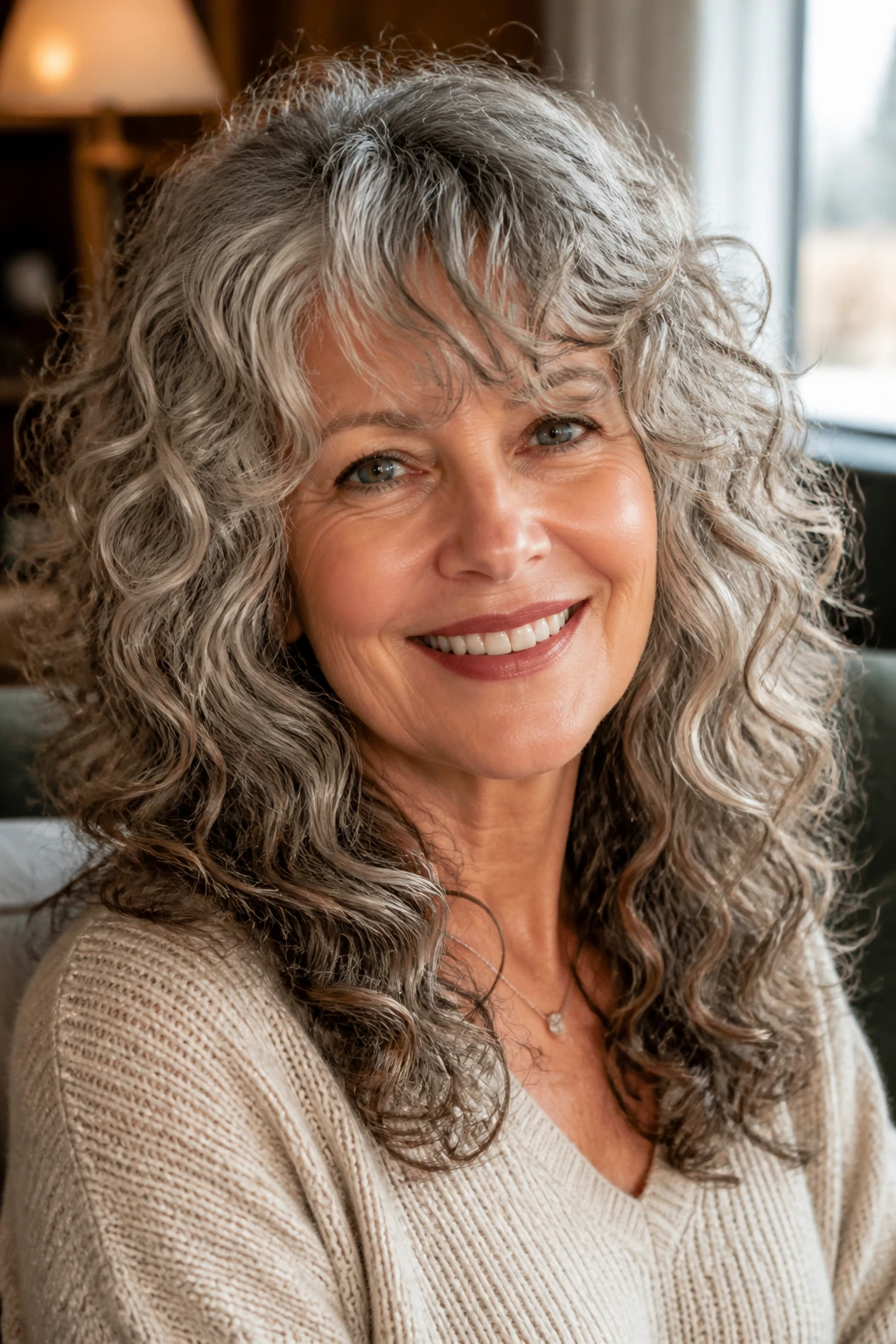
The Silver Softness Version: If your gray hair has gone wirier or dryer, lean into softer layers and less aggressive thinning. A rounded bob, curtain bangs, or a collarbone lob with beveled ends keeps silver hair from looking poofy at the bottom.
The Curl-First Version: For natural curls, the shag, long-crown pixie, and layered mid-length cut work best when the shape is cut to the curl pattern. The goal is to give each curl room, not force it into a straight shape that collapses in humidity.
The Fine-Ends, Thick-Roots Version: Some women have heavy roots and weaker ends. In that case, keep the shape longer and add internal movement instead of chopping length off. A lob, long layers, or a soft blowout cut can keep the ends from looking sparse.
The Glasses-Friendly Version: If you wear glasses, choose styles with face frame that clears the temples — side-swept bob, layered lob, or a soft pixie. Thick hair around the frames can feel crowded fast, and this adjustment makes the whole look calmer.
The Low-Heat Version: If you avoid heat styling, go for styles that air-dry with a little shape: shags, soft waves, braided buns, and half-up twists. Thick hair usually keeps enough natural body to look styled even when it’s not blown out.
Keeping Thick Hair Looking Fresh Between Washes
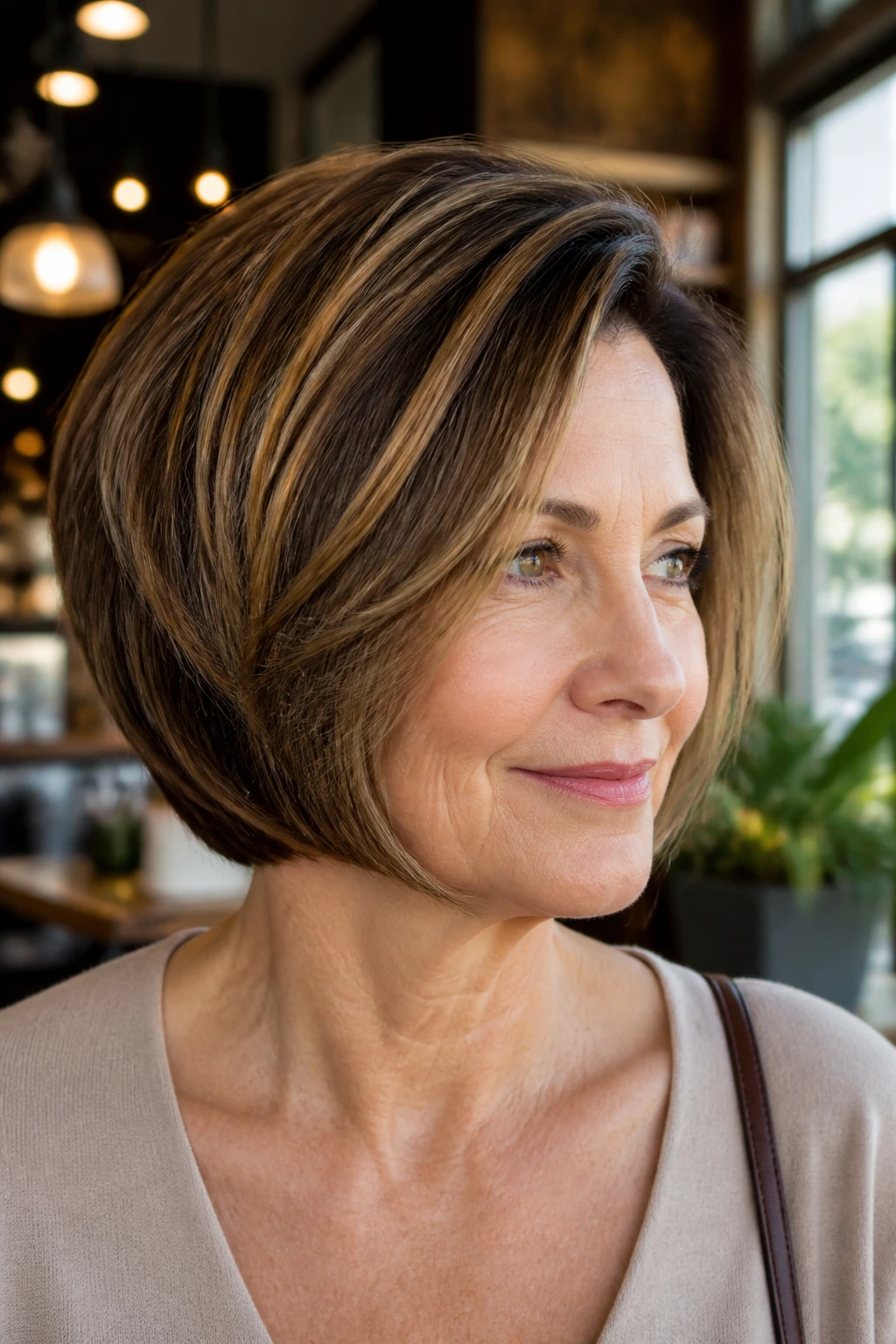
Thick hair often holds style for a day or two, but the roots can get heavy while the ends go dry. That’s the balancing act. Wash every 2 to 4 days if your scalp needs it, and use a dry shampoo only at the roots, never through the full length. The ends need softness, not powder.
Sleep matters more than people admit. A loose silk scrunchie, a low braid, or a soft clip can keep a lob or layered cut from getting crushed overnight. For curls and shags, a pineapple at the top of the head can preserve shape without making the next morning miserable.
Trim the ends every 6 to 10 weeks if you wear a shorter style like a bob, pixie, or crop. Longer layered styles can usually go a bit longer, but once the ends start to spread out or flip hard, the cut has lost its edge. Refreshing the shape is easier than trying to rescue it later.
Heat styling should always start with a protectant. Thick hair can hide damage for a while, then surprise you with rough, bent ends when it’s already too late. Use the least heat that gets the job done.
Frequently Asked Questions
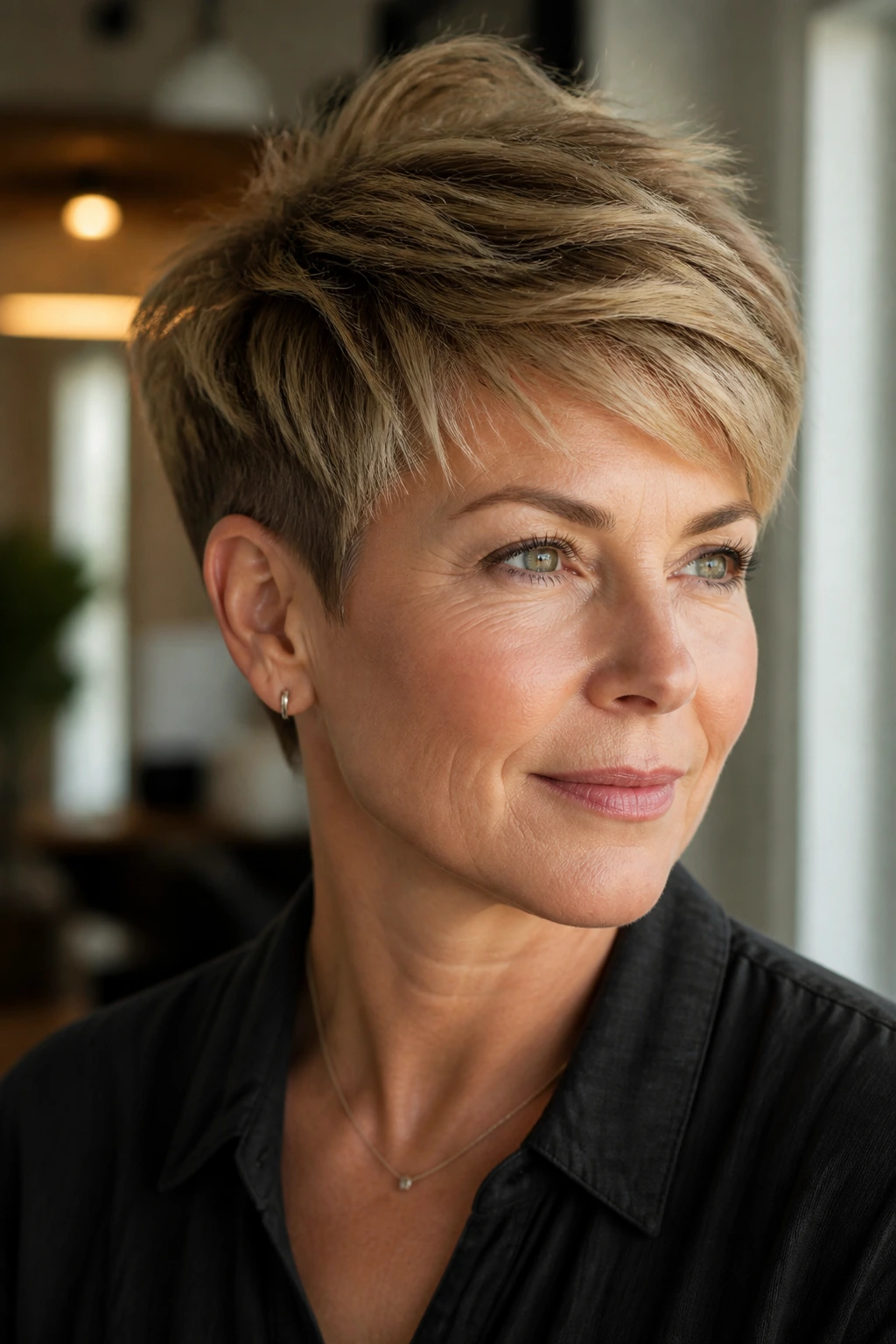
What haircut makes thick hair look lighter without thinning it too much?
A collarbone lob, graduated bob, or long layered cut usually removes the bulk where you feel it most while keeping enough structure for the hair to sit well. The goal is shape and movement, not making the hair flimsy.
Are bangs a bad idea for women over 50 with thick hair?
Not if they’re cut with enough length and softness. Curtain bangs and side-swept fringes tend to be easier than blunt short bangs because thick hair needs space to settle.
Should I ask for thinning shears?
Only if your stylist knows exactly where to use them. On thick hair, over-thinning near the crown can create frizz and odd gaps. Internal layering is often a cleaner fix.
What is the easiest style for thick hair on busy mornings?
A blunt lob, a tapered crop, or a side part tuck usually needs the least fuss. Those styles keep their shape even when you do a fast blow-dry and move on with your day.
Can thick hair be worn short after 50?
Yes, and in many cases it looks sharper short than long. A long-crown pixie, textured crop, or tapered short cut can control bulk better than a longer style that never settles.
How do I stop thick hair from puffing at the sides?
Keep the weight line lower, avoid too many short layers around the cheeks, and dry the hair downward first before adding movement. Side parts also help shift volume away from the widest point.
What if my hair is thick but the ends are dry and weak?
Go longer on the shape and lighter on the layering. A lob, long layers, or face-framing ribbons will give the hair a polished outline while protecting the fragile ends.
Which styles work best if I wear glasses every day?
Cuts that open the sides of the face — rounded bobs, side-swept lobs, pixies with longer crowns — keep the hair from crowding your frames. Too much width at the temples gets annoying fast.
A Shape That Fits Real Life
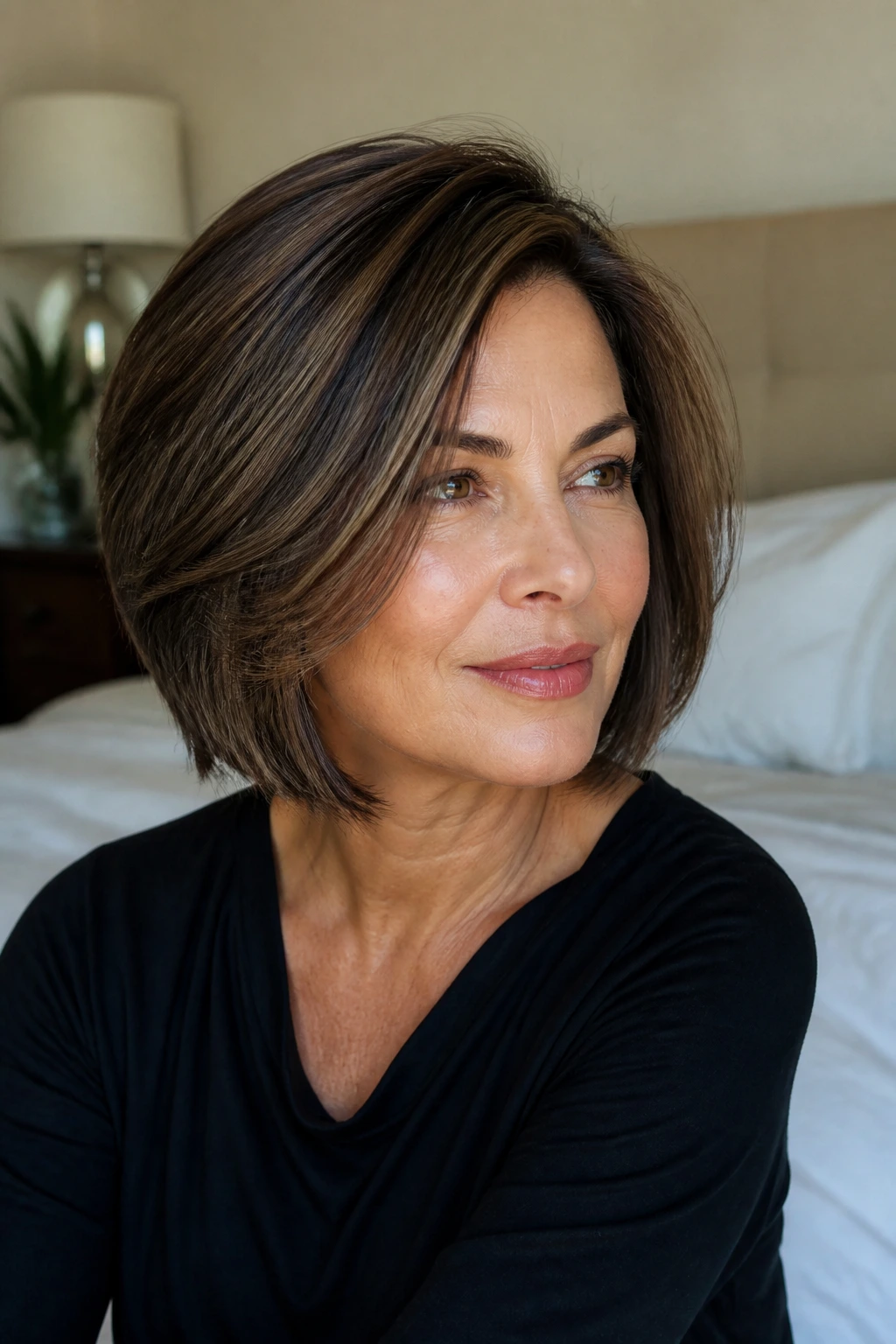
The best hairstyles for women over 50 with thick hair are not the ones that fight the hair into submission. They’re the ones that give it a shape it can actually hold. That means cleaner edges, softer internal layers, and styles that look finished even when you only had ten minutes and one good round brush.
Thick hair has its own kind of luxury, but it asks for honesty. A good cut should make the weight work for you, not against you. If you get that part right, everything else gets easier — the blow-dry, the grow-out, the second-day hair, all of it.
Bring the shape you want to your next salon visit, talk about how your hair behaves in the chair and at home, and choose the version that suits your neck, your glasses, your mornings, and your patience. That’s the haircut worth keeping.