



A cut that lands in the wrong place can make a round face look wider and fine hair look thinner. That is the annoying little double bind here: the same line that softens one problem can worsen the other. The best haircuts for fine hair and round faces do the opposite. They build lift where the eye needs it, keep enough weight at the ends to suggest fullness, and stop the silhouette from ballooning at cheek level.
That usually comes down to a few inches, not a dramatic makeover. A fringe that starts too high. Layers that are too eager. A bob that stops right at the widest part of the face. Tiny mistakes, loud results. When the cut is right, though, fine hair can look crisp instead of sparse, and a round face can look longer without looking pinched or severe.
I’ve always had a soft spot for cuts that do a lot with a little. A blunt edge, a smart side part, a bit of crown lift — that’s the good stuff. Not fluffy, not over-texturized, not dependent on a dozen styling tricks before breakfast. Just shape. Real shape. The kind that still looks intentional after a windy commute, a damp day, or the third time you tuck it behind one ear.
Why These Haircuts Stand Out on Fine Hair and Round Faces

- They create vertical movement: the strongest cuts in this group pull the eye up and down, which helps a round face look a touch longer.
- They keep density at the ends: fine hair needs a clean perimeter or the whole shape can go stringy by noon.
- They avoid side bulk at cheek level: that’s the spot where too much width makes a round face read even rounder.
- They work with crown lift, not against it: a little height at the top does more than heavy layers ever will.
- They leave room for real-life styling: most of these cuts still look decent when you air-dry, bend the ends, or skip a perfect blowout.
What Fine Hair and Round Faces Need From a Cut
Fine hair and thin hair are not the same thing, and that distinction matters more than most salon conversations give it credit for. Fine hair means each strand has a smaller diameter. Thin hair means fewer strands overall. You can have fine hair with a dense head of hair, or fine hair that is also sparse. The first can handle a little more movement; the second needs a much stricter perimeter so the ends do not vanish.
A round face needs the cut to do two jobs at once. First, it should build a vertical line, either through length, a deeper side part, or crown lift. Second, it should avoid creating width right where the cheeks are fullest. That means the best haircuts usually keep the longest pieces below the chin or angle them forward so the face feels longer, not wider.
I’m wary of aggressive layering on fine hair for exactly that reason. Too many short layers can make the hair float away from itself. It looks airy in the chair and exhausted a week later. Better to keep some structure, then add movement in carefully chosen spots: a soft fringe, a little bevel at the ends, or just enough internal layering to stop the cut from collapsing.
The real goal is not to hide your face shape. It is to give it a cleaner frame. That is a different thing. And it works.
1. Chin-Length French Bob with Soft Side Part
A true chin-length bob can be gorgeous on a round face, but only if the line is handled with a little restraint. If the ends curl inward hard at the cheeks, the face can look wider. If the cut sits a fraction below the chin with a soft side part, though, it draws a neat diagonal that feels sharper and more deliberate.
Why It Works
The blunt perimeter makes fine hair look fuller at the bottom, which is where most thin-looking bobs lose their nerve. A soft side part breaks the face shape just enough that the roundness does not read as a full circle. I like this cut best when the front corners are left a touch longer than the back, even if the difference is only half an inch.
What to Ask For
- Keep the length just under the chin, not right on it.
- Leave the front pieces slightly longer than the nape.
- Avoid heavy texturizing through the middle of the bob.
- Ask for a gentle bevel, not a big round-under finish.
Best styling note: a quick bend with a round brush or 1-inch iron is enough. You want movement, not a bubble.
2. Textured Pixie with Crown Lift
Short hair is not the enemy of a round face. A good pixie can be the fastest way to make the face look less wide, because it clears the sides and puts the attention where you want it — up top, at the eyes, at the cheekbones. The trick is keeping the crown long enough to lift and the sides clean enough to stay close.
The version that works on fine hair is not choppy in every direction. It has shape. Think 2.5 to 3.5 inches on top, tapered sides, and a fringe that can sweep a little off center. If the top is too short, the cut turns flat. If the sides are too fluffy, the face widens again. So, yes, the balance is fussy. But when it’s right, it’s sharp.
Fine hair loves a pixie because there is less weight to fight. You can rough-dry it in minutes, pinch a little mousse through the roots, and let the crown sit up on its own. No wrestling. No round-brush marathon.
3. Collarbone Lob with Invisible Layers
Why does this cut show up so often in good salon work? Because it solves two problems at once. The collarbone length drops below the cheeks, which helps elongate a round face, and the hidden layers stop fine hair from hanging like a single tired sheet.
The Part That Matters
Ask for layers you can feel more than see. That phrase sounds vague, but stylists usually know what it means: remove some interior weight without carving obvious steps into the surface. On fine hair, those visible steps can make the ends look shredded. Invisible layers let the hair swing.
How I’d Style It
A center part can work here, but only if the front pieces graze the collarbone and the roots have a bit of lift. A soft side part gives a little more shape and is easier if your crown is flat. Either way, bend the ends slightly inward or outward, not pin-straight and not curled into little rolls.
- Best for straight or slightly wavy hair
- Good if you want length without heaviness
- Easier to grow out than a short bob
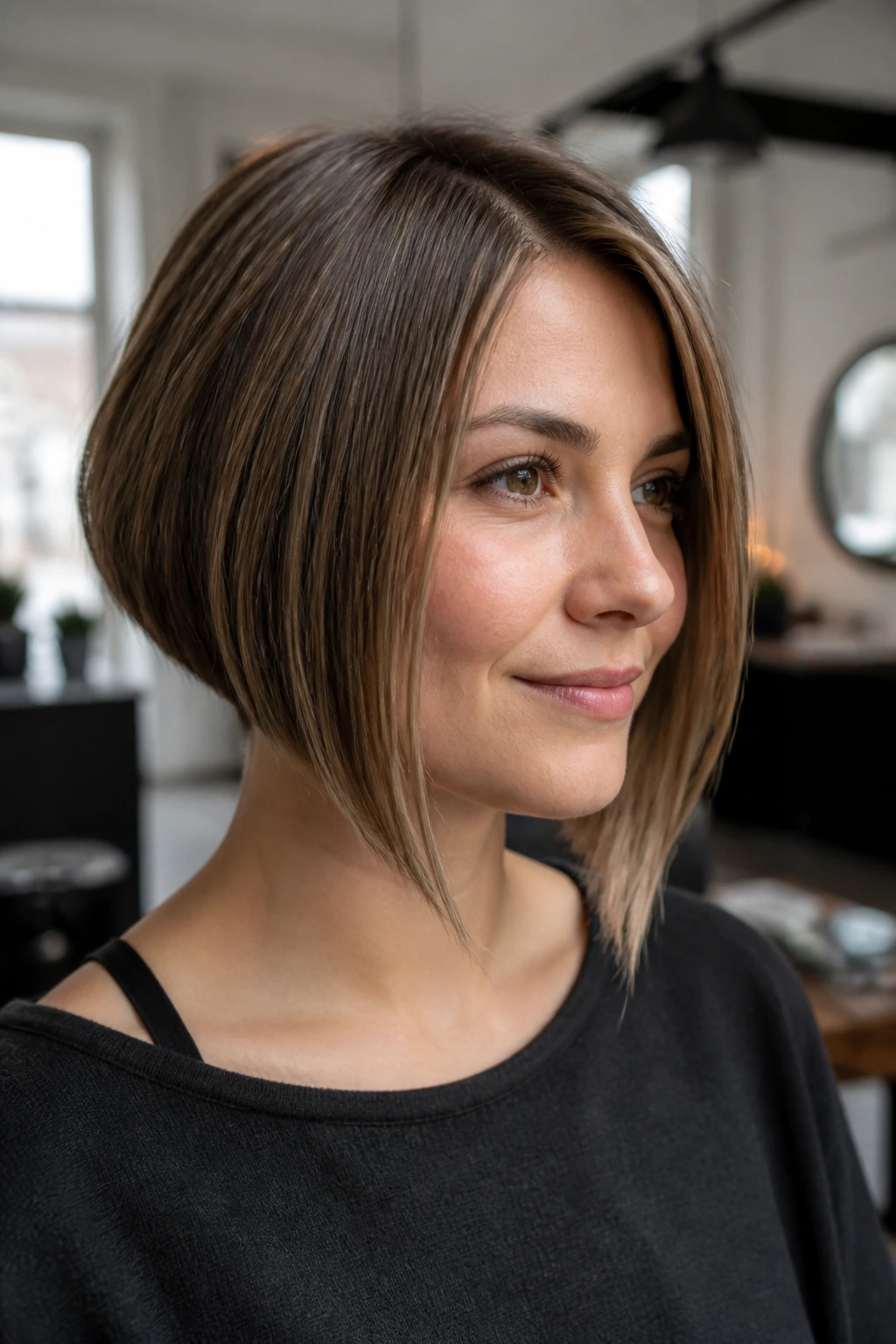
4. A-Line Bob with Longer Front Corners
If your hair goes limp by lunchtime, an A-line bob can cheat a little structure back into it. The shorter back builds a clean line at the nape, while the longer front corners keep the face from reading boxy. That diagonal matters. It gives the eye somewhere to go besides straight across the cheeks.
This cut is especially good for fine hair because it concentrates the shape into one clean perimeter. There’s less slack, less dragging weight, less chance the ends will look scruffy. The front should fall a little below the jaw, not stop right on it. That extra inch or two is doing real work.
I like this cut on people who want a sharper look but still need softness around the mouth and jaw. It feels polished without being stiff. And if your hair has a little natural bend, the front pieces curve into place almost on their own.
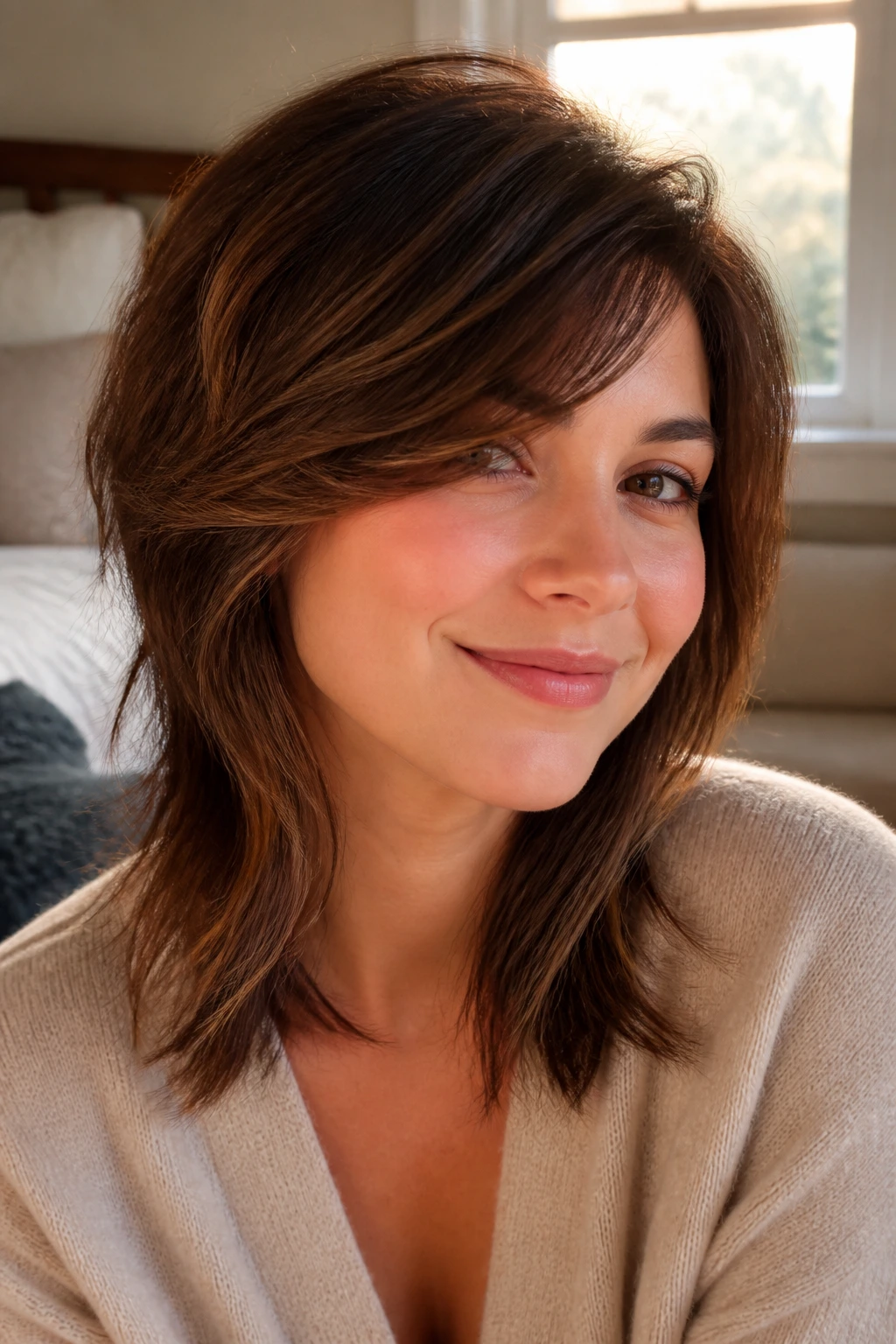
5. Side-Swept Shag with Soft Ends
A shag can go wrong on fine hair in a hurry. Too many short layers and you end up with a halo of see-through ends. But when the shag is softened and the side-swept fringe does the heavy lifting, it becomes one of the better round-face cuts around.
The important thing is where the layers begin. They should not start high and punch out around the cheeks. They should live lower, then move diagonally across the face. A side-swept fringe breaks up the roundness much better than a straight fringe, and the soft ends keep the hair from looking sliced apart.
This cut suits hair that already has a bit of bend or one that can be coaxed with a diffuser. Straight, slippery hair can wear it too, but you’ll need some root support or it will collapse into a plain lob with attitude.
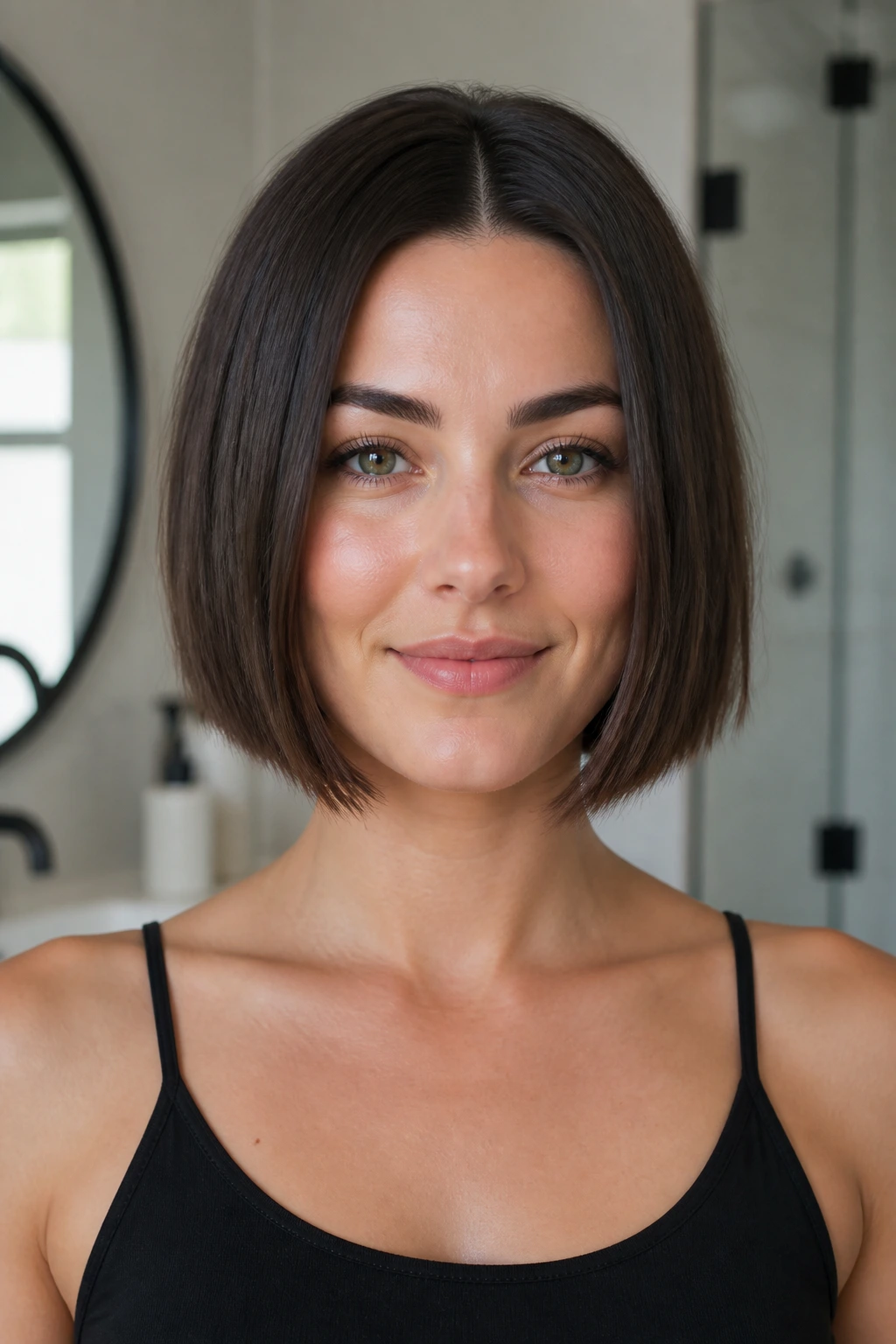
6. Blunt Bob with Micro-Texturizing
A blunt bob is the blunt answer to fine hair. It makes the edge look thicker because the eye sees one solid line instead of a dozen wispy ends. On a round face, the catch is placement. If the bob stops right at the cheeks, it can widen the silhouette. If it lands just below the jaw and stays sleek, it can look clean and surprisingly slim.
Why It Works Better Than You’d Expect
Unlike a shag, this cut doesn’t ask fine hair to fake fullness through movement. It builds density through line. That is a smarter trade when the hair is truly fine. The only texture I’d allow is a whisper of point cutting at the ends, maybe the last quarter-inch, just to stop the bob from looking like a helmet.
Best For
- Straight or mostly straight hair
- People who want a neat shape with low fuss
- Fine hair that needs the ends to look substantial
One caution: do not let someone over-thin the interior. That is the fastest way to turn a blunt bob into a limp one.
7. Curtain-Bang Lob
Curtain bangs are one of the few fringe styles that can help a round face look less wide without boxing it in. The split down the center opens the forehead, and the longer sides sweep into the cheek area in a way that feels soft rather than blunt. On fine hair, though, they need to stay airy. Heavy curtain bangs swallow the face.
The best version starts a little lower than most people think — often around the bridge of the nose or even a touch below — then opens toward the cheekbones. That length keeps the bangs from sitting like a wall. Pair them with a collarbone lob and you get a shape that feels long, broken up, and easy to move.
If your hair is very fine, ask for the bangs to be cut with a light hand. They should fall in pieces, not in a thick sheet. The whole point is to frame the face, not crowd it.
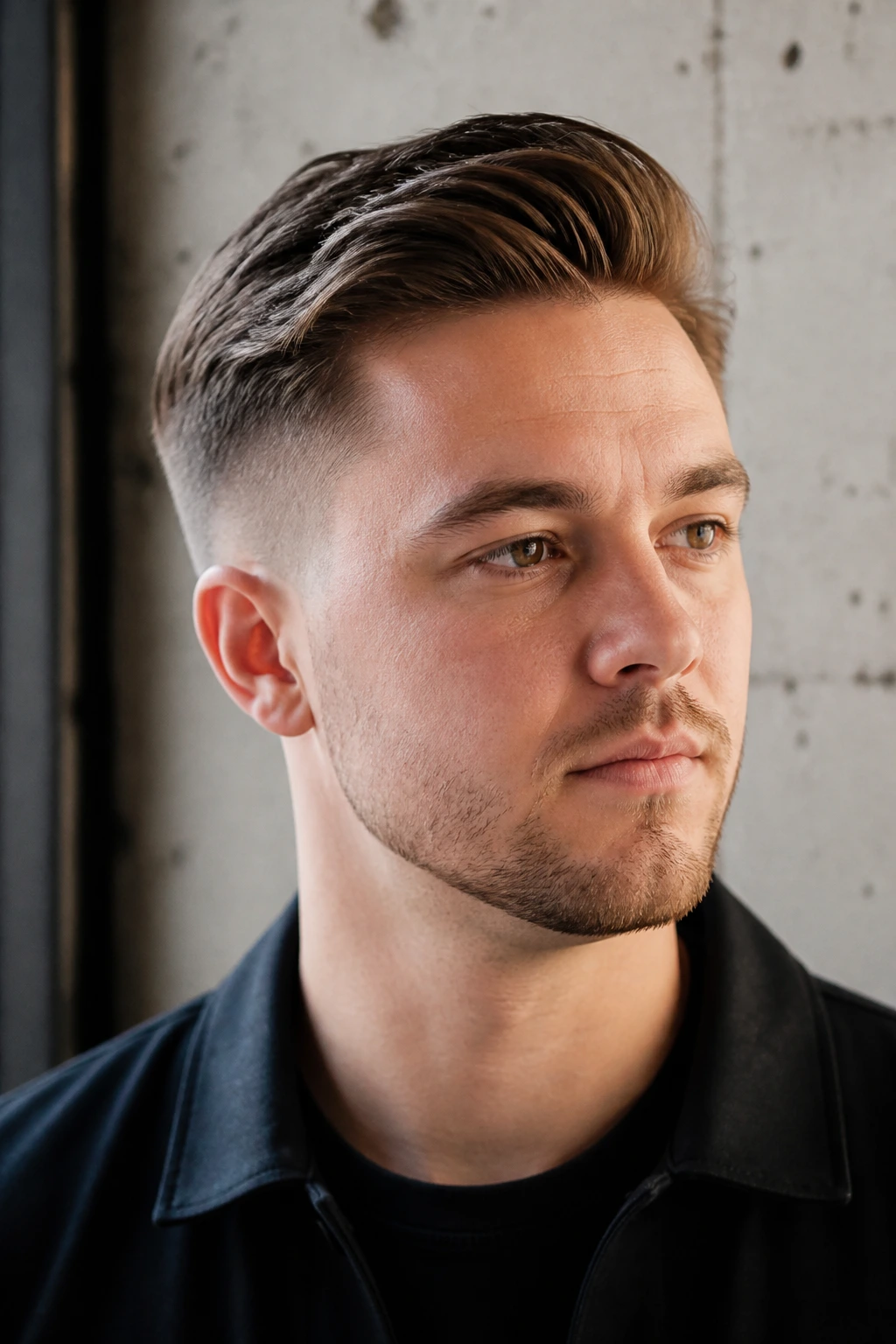
8. Swept-Back Crop
A swept-back crop is a sharp little haircut with more room in the face than people expect. Because the sides are kept close and the top is styled backward or slightly upward, the eye goes vertically instead of sideways. That helps a round face a lot. Fine hair also benefits because there’s less weight dragging the shape flat.
This is not a lazy crop. It needs intent. The top should be long enough to push back with fingers or a small brush, and the front should have enough length to create lift, not just lie down. A dab of mousse at the roots and a quick blow-dry usually do the trick.
I like this for people who want something clean and a little bold. It opens the face, shows off the jawline, and keeps styling time short. If you want soft edges, leave the sideburns slightly longer. That keeps the look from getting too severe.
9. Angled Lob with Long Front Pieces
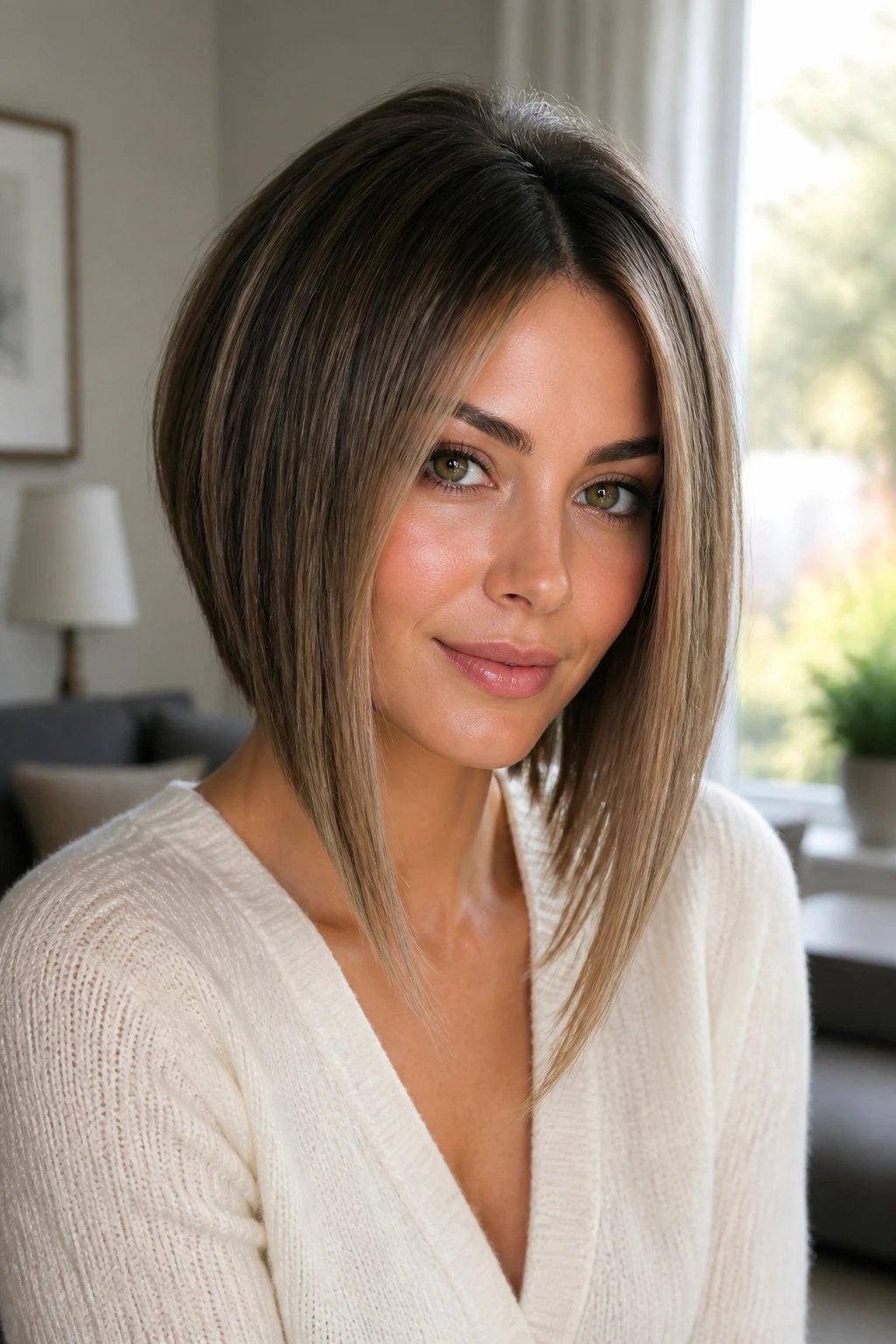
An angled lob is the polite middle ground between a bob and longer hair, but it is not boring when it is cut well. The back sits a little shorter, the front drops lower, and that forward angle lengthens a round face in a way that feels subtle rather than theatrical. Fine hair gets a bonus too: the longer front pieces create the illusion of density because the eye sees more surface.
What matters here is restraint. You do not need a dramatic slant. A gentle one is enough. If the front corners fall around the collarbone and the back grazes the shoulder blades, the cut reads modern without swallowing your neck.
This is one of those cuts that can look neat on day one and still look good after a long week. A quick bend at the ends keeps it from hanging straight and flat. If you want to keep some softness near the cheeks, ask for the front to be cut on a slight forward line instead of all one length.
10. Feathered Mid-Length Cut
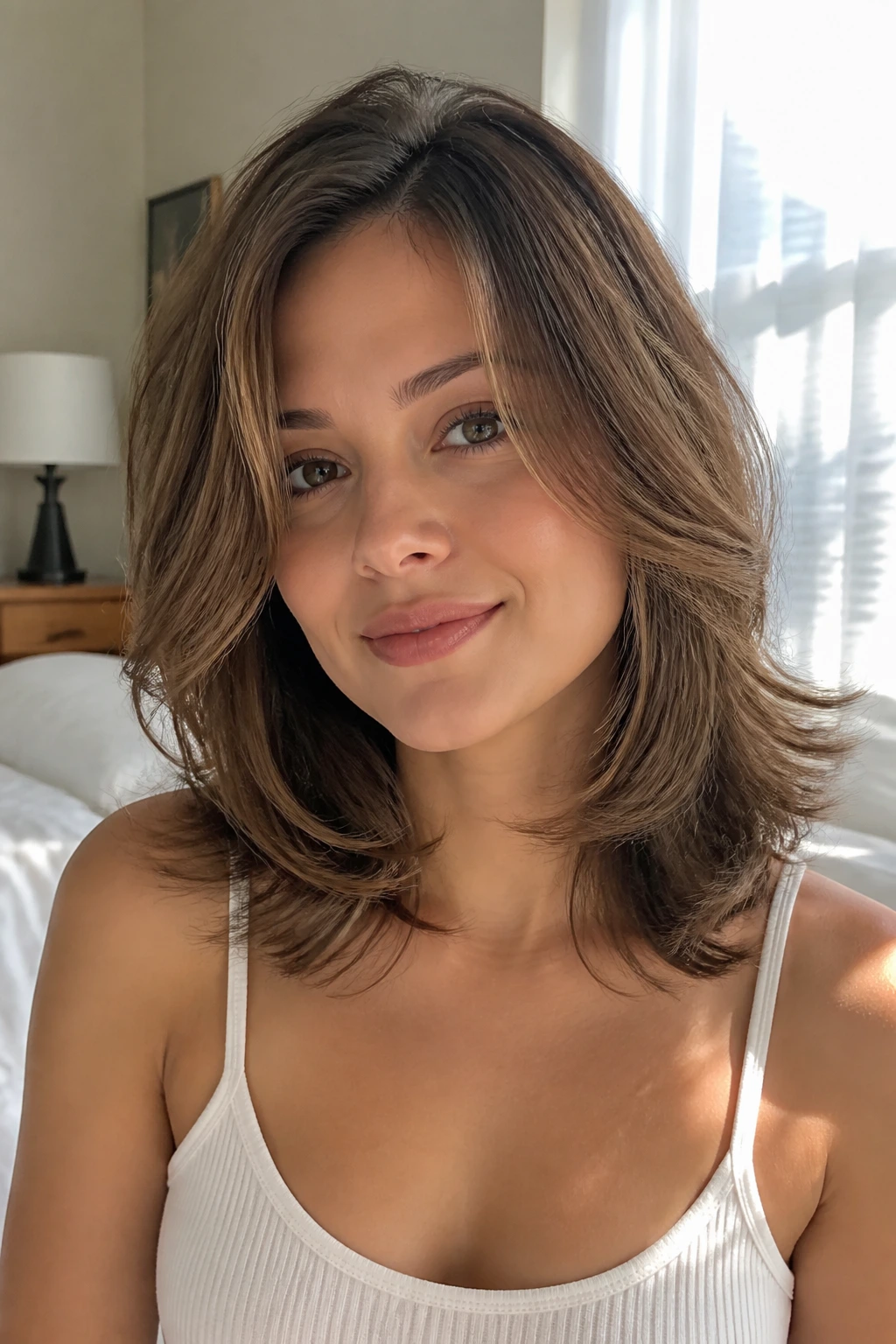
Feathering gets a bad reputation because people remember the overdone versions — the ones that look airy in theory and sparse in real life. On fine hair, feathering has to be light and deliberate. It should create movement through the mid-lengths, not shred the perimeter.
This works well on round faces because the layers can guide the eye downward instead of out. The ends stay soft, the top keeps a little lift, and the face gets a cleaner frame. I’d keep the shortest pieces below the cheekbone and avoid any feathering that blooms around the sides of the face.
The best way to wear it is with a round brush or a wide flat brush, drying the roots up and back, then turning the ends under just a bit. Too much curl at the sides adds width. A little bend does the job without making the hair look staged.
11. Bixie with a Tapered Neckline
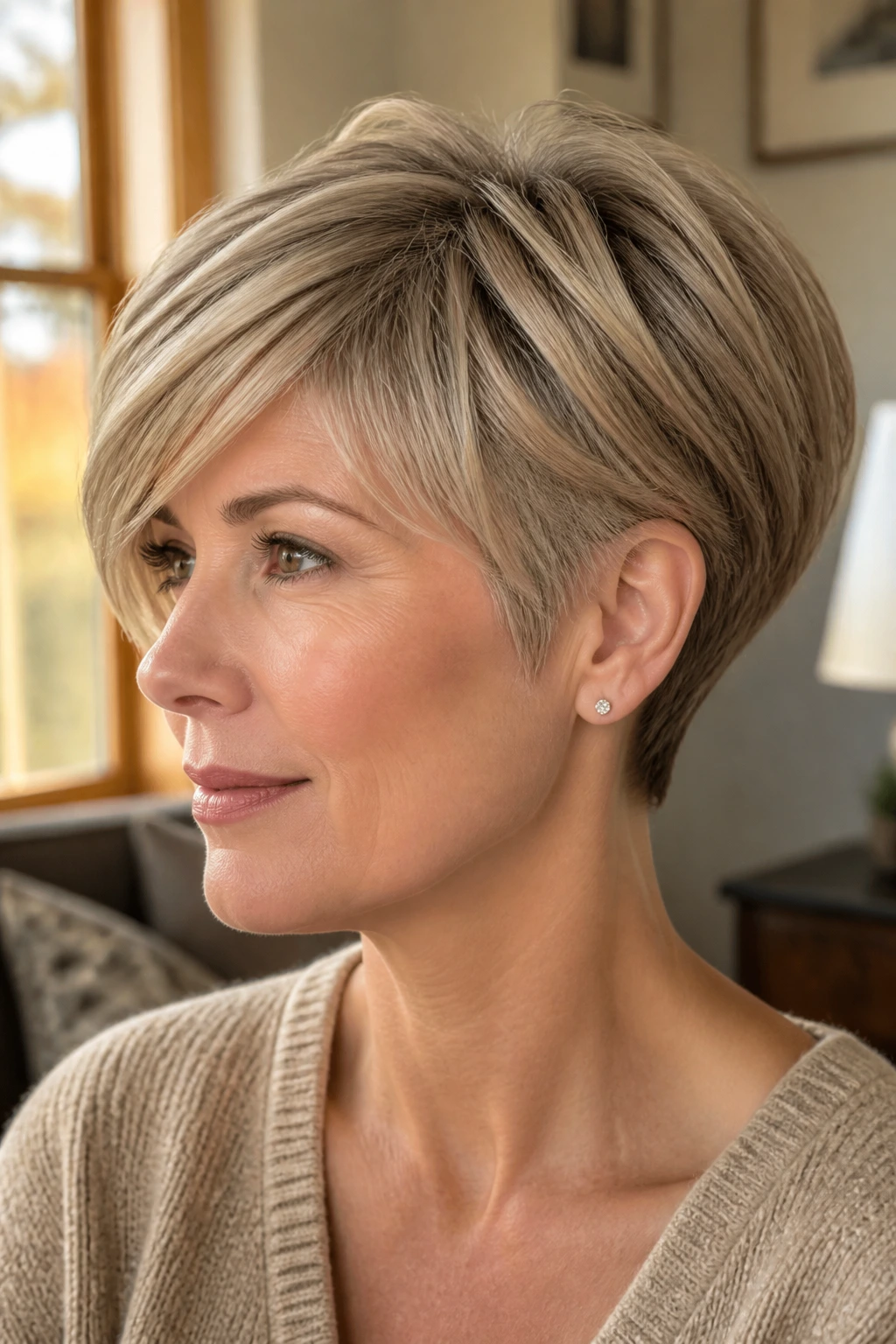
The bixie lives in that useful little space between a bob and a pixie. On fine hair, it can be a gift. You get the density of short hair, the softness of longer top layers, and a neckline that stays tidy instead of puffing out. On a round face, the tapered sides and slightly longer top keep the silhouette from getting too broad.
This cut is best when the top is left with enough length to sweep, not spike. Think soft piecey movement, not rigid spikes from another era. The fringe can be side-swept or lightly broken up, depending on how much forehead you want to show.
A good bixie looks intentional when it’s brushed forward or back with fingers. That is part of the appeal. It does not need a lot of heat, just a bit of cream or lightweight paste. If your hair is finer than fine, keep the texturizing light so the ends don’t disappear.
12. Long Layers with Face-Framing
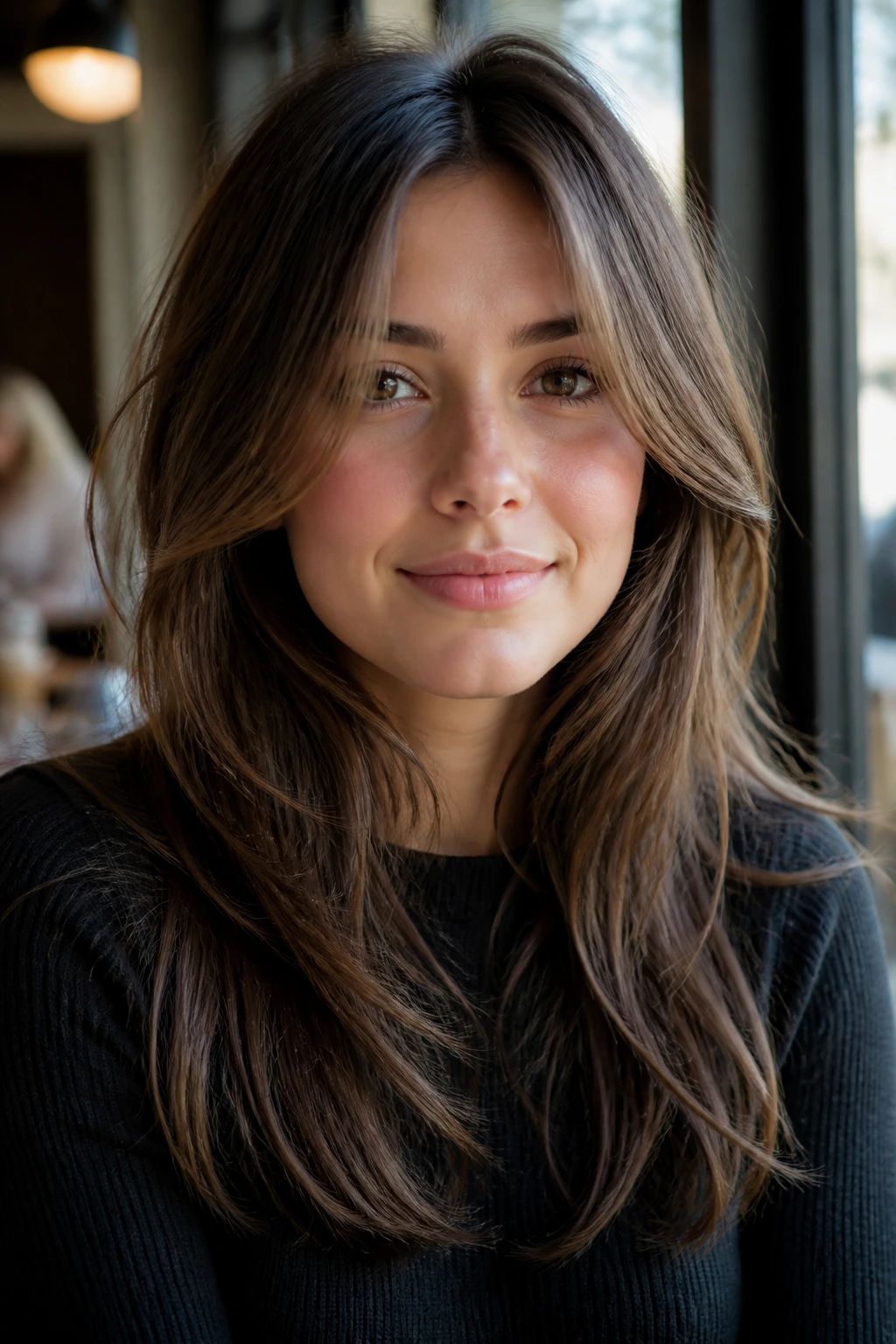
Yes, long hair can work here. No, it cannot be lazy. If the layers start too high, fine hair turns transparent and a round face gets a halo of width. The smarter version keeps the base long and uses face-framing pieces to stretch the line around the cheeks.
Where the First Layer Should Sit
For a round face, the shortest front layer should usually begin below the cheekbone, often closer to the jaw or even the upper neck. That placement narrows the face instead of widening it. The longest layer should stay solid enough that the ends still feel full.
What to Avoid
- Choppy layers at cheek height
- Too much thinning at the ends
- Framing pieces that stop right at the widest part of the face
This cut is for someone who wants length but hates the flat curtain effect. A slight bend with a large iron or a round brush gives the front pieces enough movement to matter. Without that bend, long layers can drift into looking plain.
13. Tucked-In Shoulder Cut

Shoulder-length hair can be the trickiest length on a round face because it likes to sit exactly where the face is widest. But a tucked-in shoulder cut solves that by creating a controlled curve under the shoulders and around the collarbone. Fine hair gets to keep some length, and the face keeps a cleaner outline.
The cut should not be too blunt at the sides. It needs enough shape to tuck behind the ears or turn under when you style it, otherwise it can puff outward at cheek level. A slight bevel at the ends helps. So does keeping the part a little off center.
I like this on people who wear glasses, earrings, or both. The tuck behind the ear becomes part of the style, not an afterthought. If your hair is straight, a smooth blow-dry with a brush gives this cut its best version. If it’s wavy, let a little of that wave stay in the mid-lengths and just control the ends.
14. Rounded Layered Bob with Volume at Crown
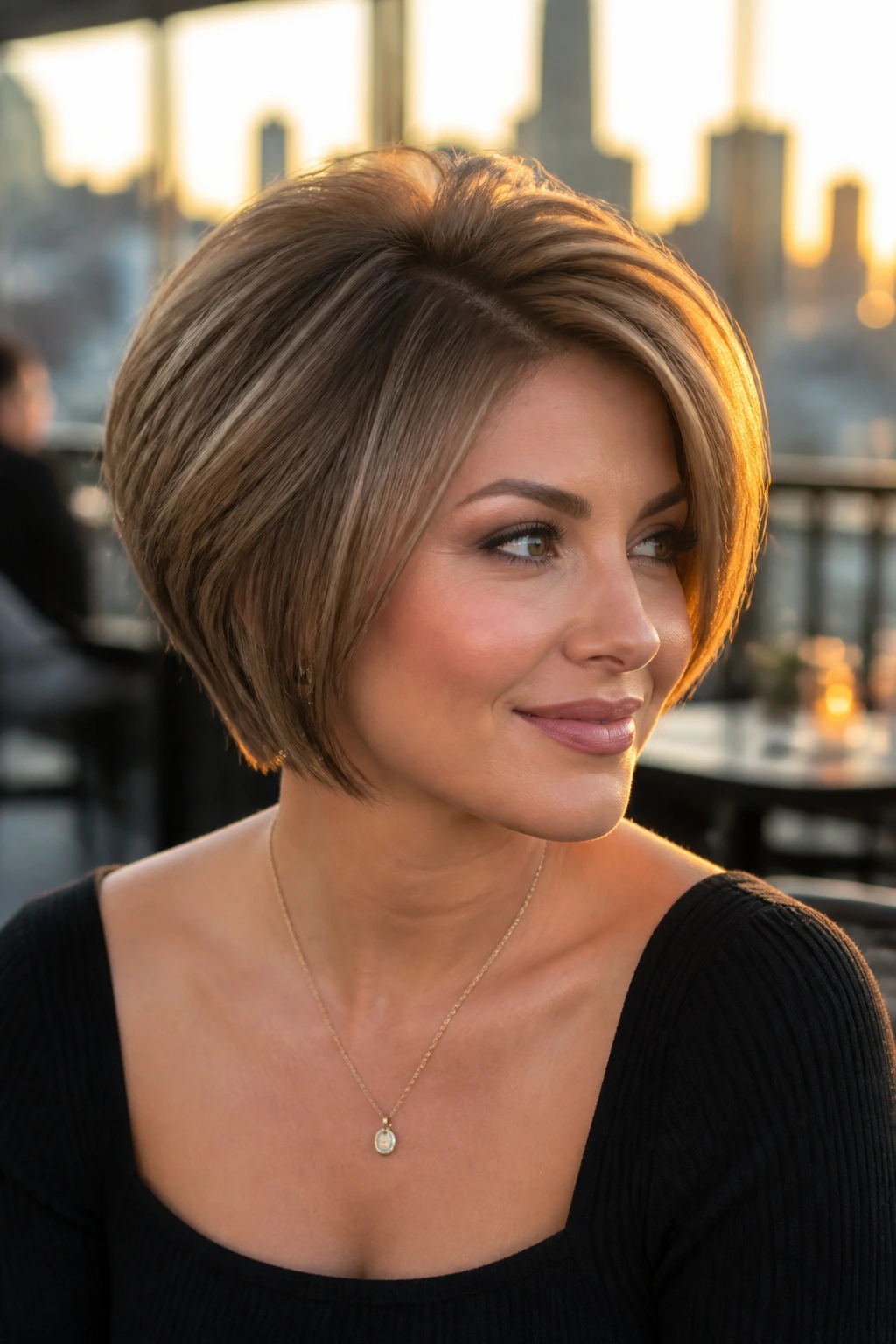
Rounded does not have to mean wide. That is the misunderstanding people make. A rounded layered bob can be one of the better haircuts for a round face if the volume is placed up top and the sides stay tighter. The shape should feel lifted, not puffed.
Fine hair often needs a little structure at the crown to keep the cut from collapsing. This bob gives it that, while the layers at the back help the head shape look neater. The perimeter still needs weight, though. If the ends are thinned too much, the bob loses the full line that makes it work.
I’d keep the sides smooth and the crown softly elevated. Think polished, not puffy. If you want a bit of motion around the face, ask for a gentle sweep in the front rather than a stack of short layers. That keeps the face open instead of boxed in.
15. Shattered Shaggy Lob

A shattered shaggy lob has more edge than the softer lob styles, but it still needs discipline on fine hair. The word “shattered” should mean broken-up ends and airy movement, not a haircut that has been sliced into a thousand weak pieces. The density has to stay in the perimeter.
This cut works best when the longest parts hang at the collarbone and the shorter layers move around the mouth and jaw only lightly. That keeps the face from getting wider while still giving the hair a lived-in feel. The texture should show when the hair moves, not only when you stand under bright bathroom lights.
If your hair already has a natural wave, this lob can look done with very little effort. If it is straight, a few bends with a flat iron and a quick mist of texturizing spray are enough. I would not pair it with heavy cream products. They drag the whole thing down.
16. Asymmetrical Bob
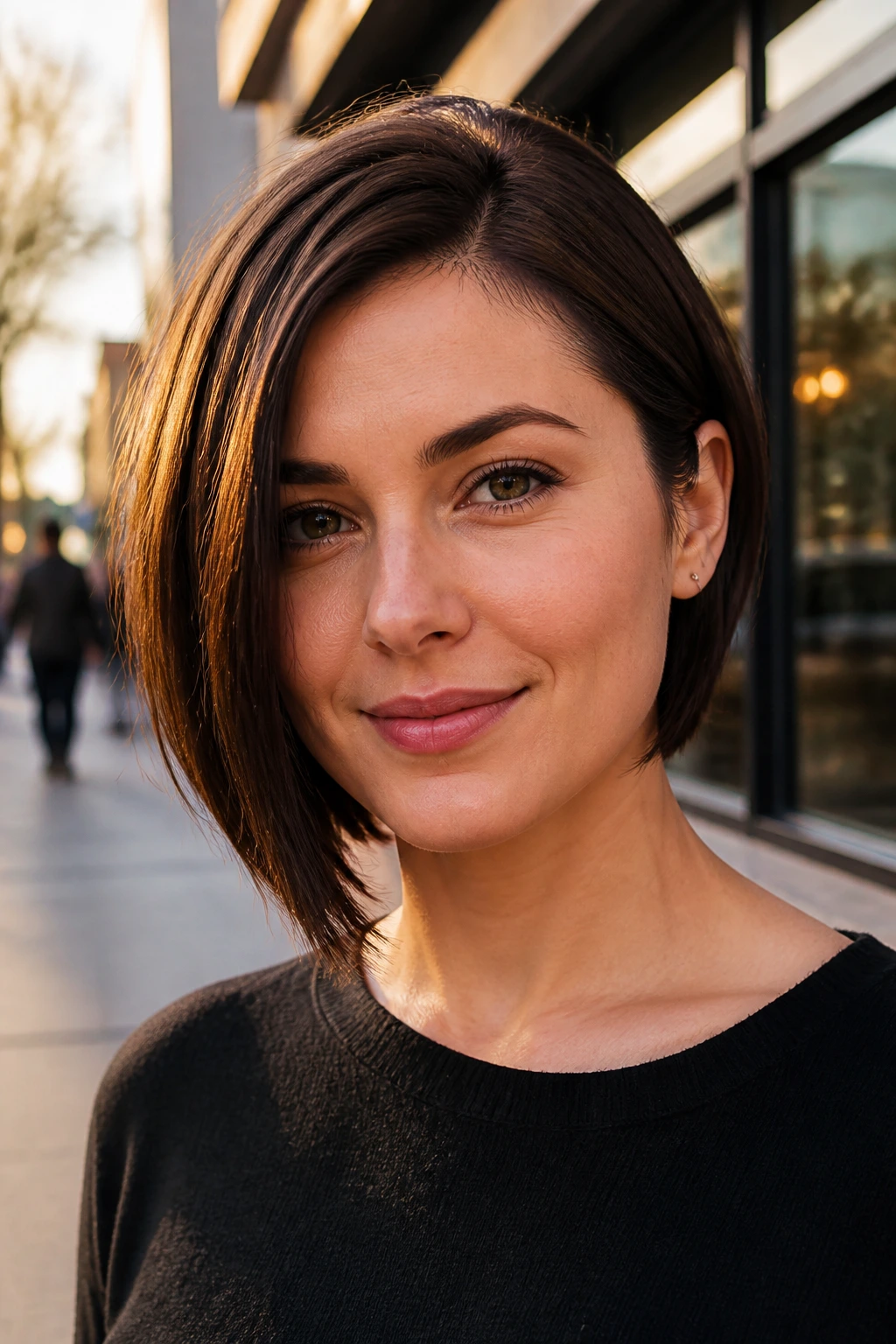
An asymmetrical bob changes the face shape without shouting about it. One side is longer than the other, usually by somewhere between half an inch and an inch and a half. That tiny difference breaks the roundness and gives the eye a line to follow. On fine hair, it can also make the cut look a little fuller because the longer side carries more visual weight.
Keep the difference subtle. If the imbalance is too dramatic, the cut starts to look costume-like, and that is a hard mood to live with every day. The longer side should skim past the jaw and land where it helps the face feel narrower, not drag downward like a wet ribbon.
This is a good pick if you like sleek hair with a bit of attitude. It also works well with a side part, since the off-center part supports the asymmetry. I’d avoid over-layering this one. The line is the point.
17. Soft Wolf Cut for Fine Hair
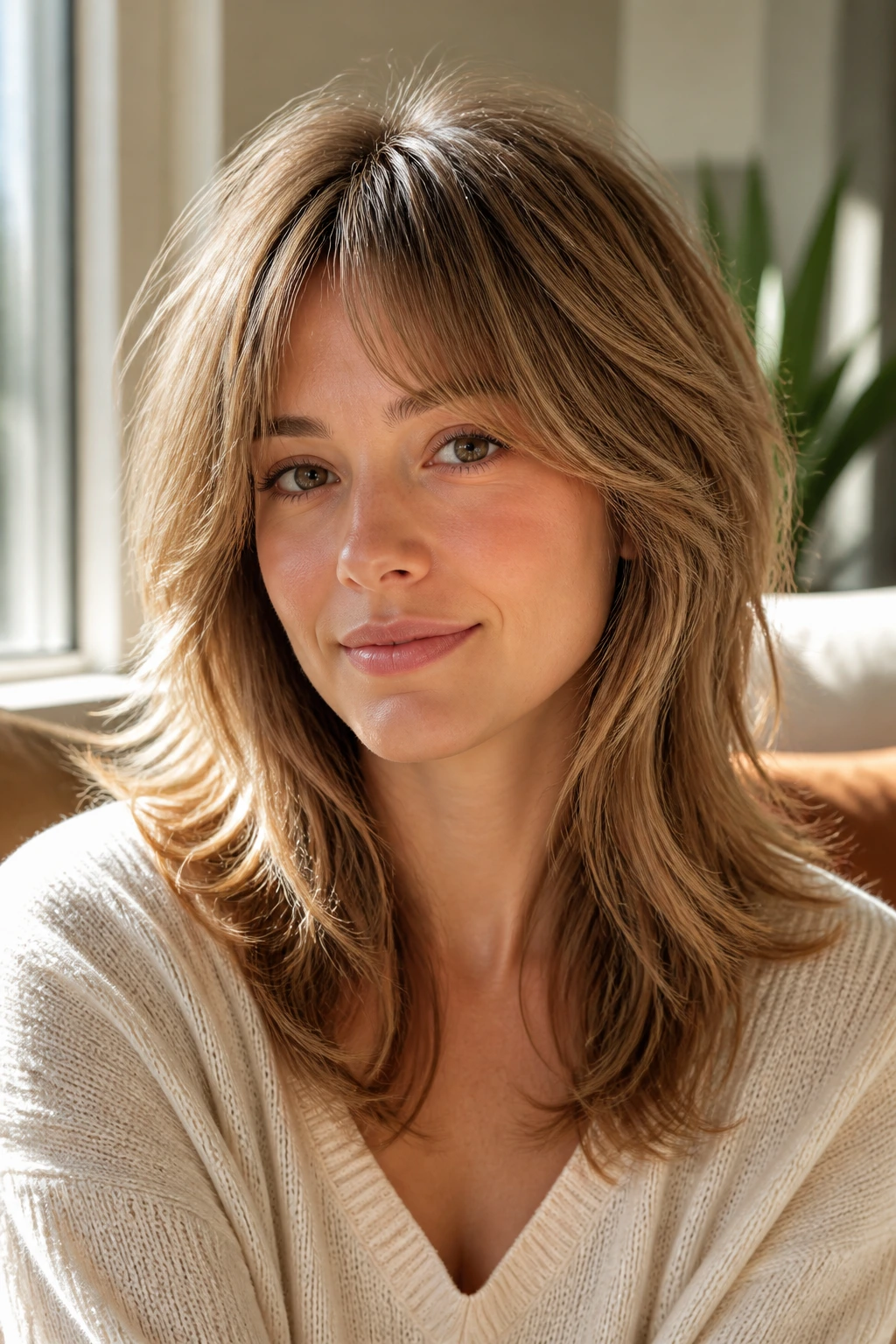
A full wolf cut can be too hungry for fine hair. It takes too much out of the sides and leaves the ends with not enough to say. But a soft wolf cut — the lighter, more restrained version — can work beautifully. The crown has some lift, the perimeter stays long enough to hold shape, and the layers are kept gentle.
The key is leaving the outer line intact. You want shag energy, not a shredded mess. The shorter pieces should sit near the crown and upper back of the head, not bloom around the cheeks. That keeps the face from widening. A little face-framing is fine. Too much and the haircut loses its backbone.
This version suits wavy hair especially well, because the movement helps the layers separate without extra effort. Straight hair can do it too, but it needs some lift at the roots and a bend through the ends. Otherwise it just looks like a tired layered cut from the early days of dry shampoo.
18. Ear-Length Crop with Wispy Fringe

An ear-length crop is not for everyone, but on the right person it is clean, sharp, and strangely flattering on a round face. Fine hair often looks denser when it is short, and this cut uses that fact rather than fighting it. The secret is the fringe: it has to be wispy enough to soften the forehead without creating a heavy horizontal line.
The Balance to Aim For
- Keep the top a little longer so there’s lift at the crown.
- Leave some softness around the temples.
- Make the fringe airy, not blocky.
- Avoid a blunt line that stops straight across the brow.
This is a confident cut. It shows the face. So it helps if you like that. If you wear glasses, this style can look especially good because the short shape doesn’t compete with the frames. If you want more softness, keep the sideburns a little longer and let them taper into the jaw.
19. Long Pixie with Side Bangs
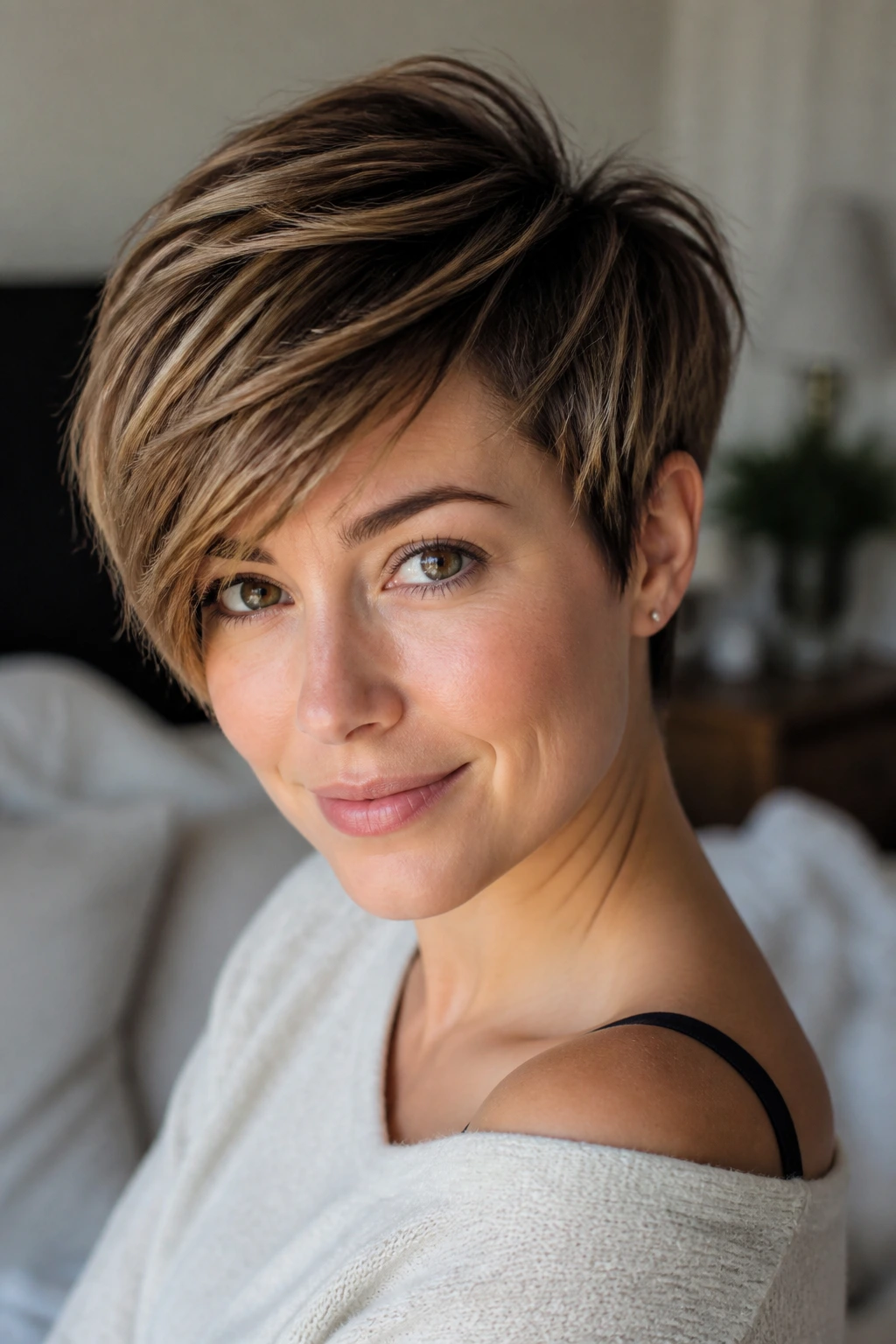
A long pixie is the forgiving version of a short crop. It keeps enough length on top and through the fringe to make styling easy, but it still clears the sides of the face so a round shape does not get boxed in. The side bangs are the important part. They create a diagonal line that softens the forehead and narrows the face a bit.
Fine hair usually cooperates with this cut because there is less bulk to control. A touch of mousse, a quick finger-dry, and maybe a little paste through the front is enough. If the top is too short, the cut can look flat. If the bangs are too heavy, they can pull everything down. So the best version stays light and mobile.
I’d choose this if you want the freedom of short hair without losing all softness around the face. It is tidy, but not severe. And it grows out more gracefully than a super-short crop, which matters when you are not running back to the salon every few weeks.
20. Shoulder-Length Cut with Internal Layers

Shoulder-length hair can be a nuisance on fine strands because the weight sits in the wrong place. But internal layers fix that without chopping up the outside line. That is the useful part. The hair keeps its length, the ends still look full, and the inside loses enough bulk to move.
On a round face, this cut works best when the outer edge is kept clean and the layers are hidden. The silhouette stays slim. The movement shows up when you walk or turn your head, which is a nicer effect than visible, jagged steps. I prefer a slight off-center part with this cut because it keeps the top from falling straight down the middle like curtains.
This is a good option if you want a haircut that behaves at work, in a ponytail, or on a second-day style. It’s one of the most practical choices in the whole group, which is not the same as boring. Practical hair is underrated.
21. Face-Framing Butterfly Lite
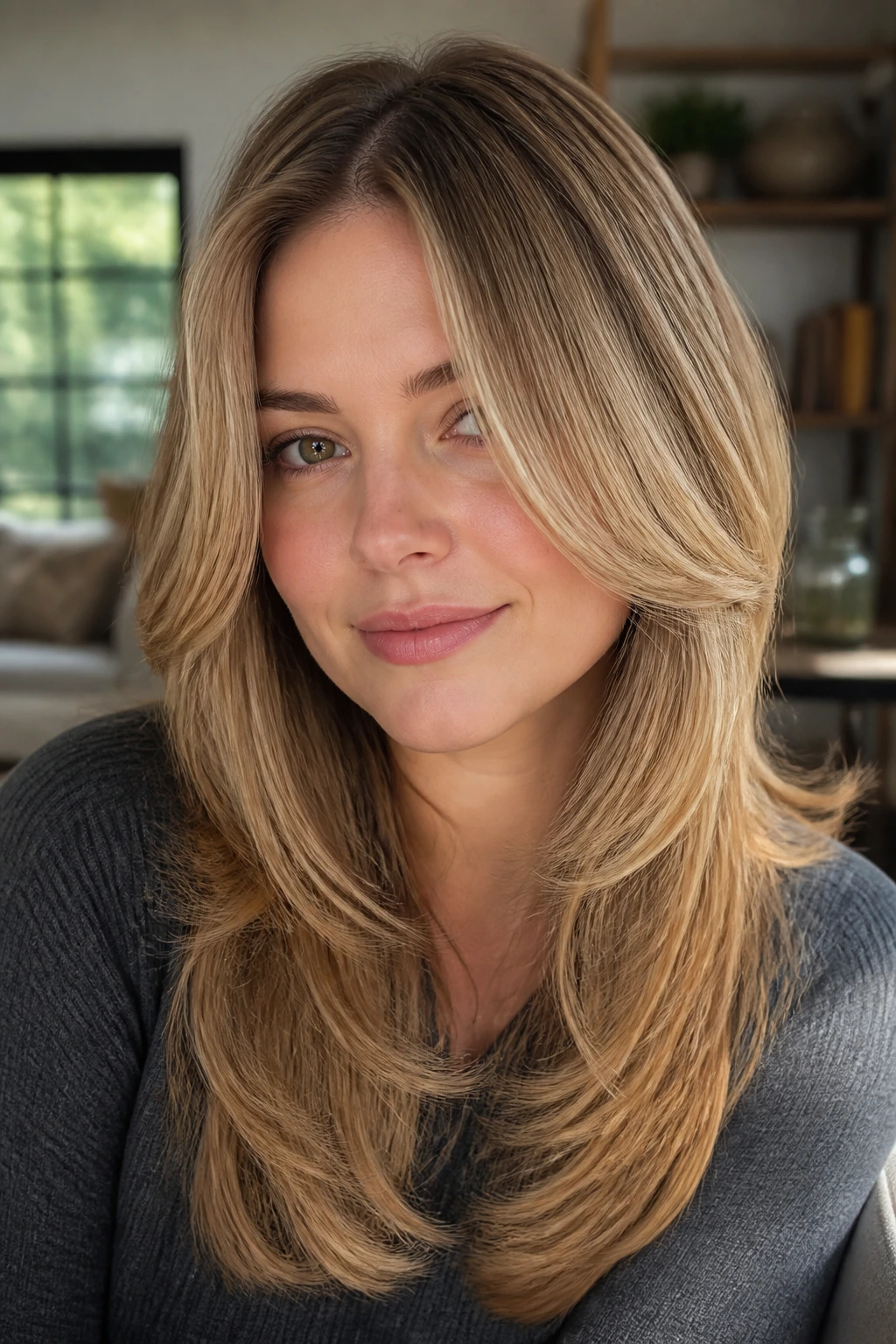
A full butterfly cut can be too much for fine hair because it leans hard on layers. The lighter version keeps the longer back pieces strong and adds just enough face-framing around the front to create movement. That front movement helps a round face look a little longer, especially when the shortest pieces begin below the cheekbone.
How to Keep It Fine-Hair Friendly
Ask for fewer interior layers than you see in dramatic butterfly cuts. The goal is a floaty front, not a separated shell of hair. The lower layers should stay dense enough to support the cut’s shape. If the whole thing gets too chopped up, it loses the smooth swing that makes it useful.
This cut works well if you like blowouts and want hair that flips away from the face. It also behaves nicely with large Velcro rollers or a round brush at the front. The lift belongs near the crown and through the front pieces, not puffed across the cheeks.
22. Sleek Center-Part Lob with Bent Ends
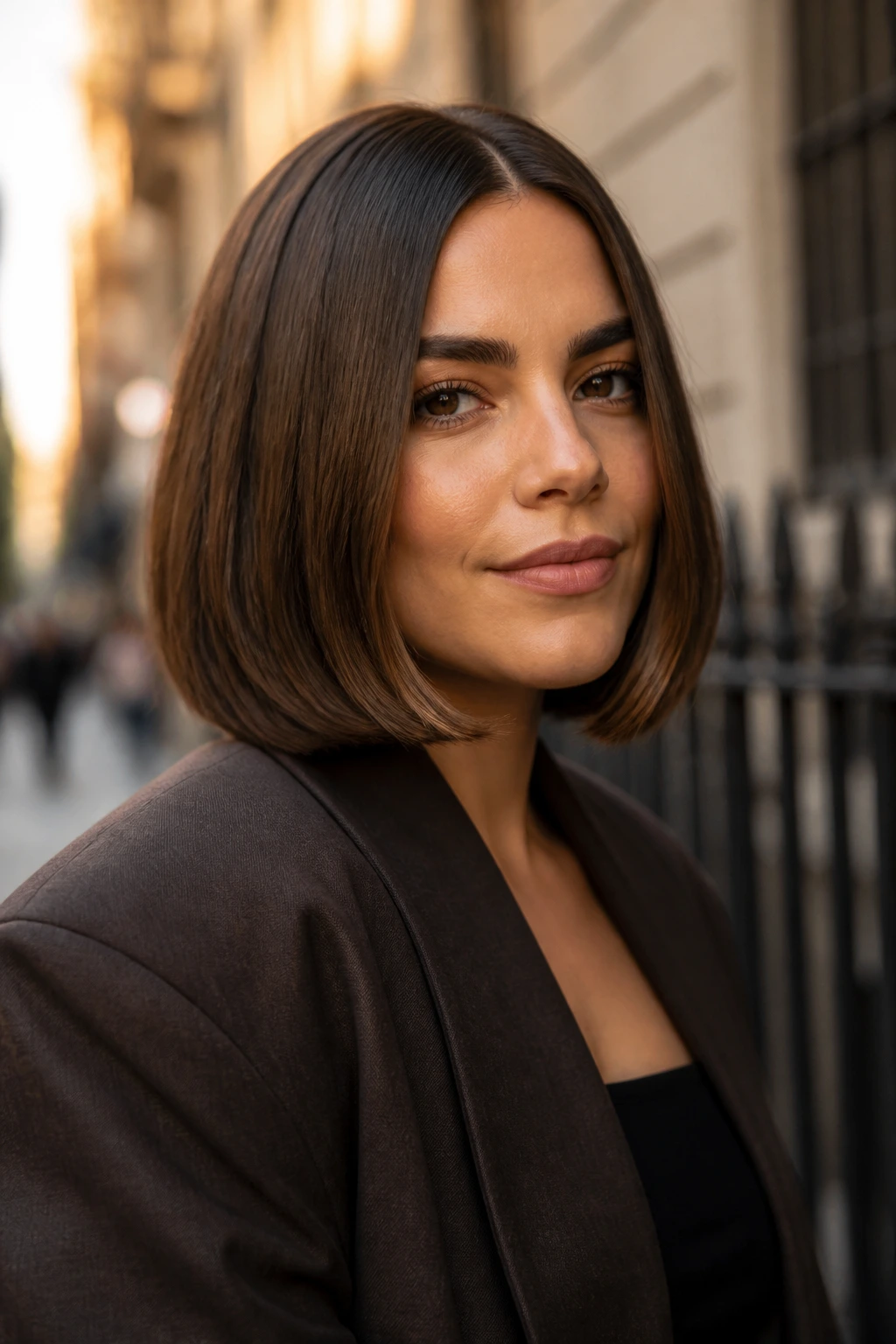
A center part is not banned for round faces. It just needs the right shape around it. A sleek lob that sits below the chin and has softly bent ends can make the face look longer by keeping the line clean and uninterrupted. Fine hair benefits from the simpler outline. There is less room for frizz, fuzz, or uneven layering to show.
The trick is to keep the ends from lying dead straight. A tiny bend inward or outward keeps the cut from looking flat and gives the hair a little motion. If the lob sits at collarbone length, the center part becomes much easier to wear. Shorter than that, it can feel too wide. Longer than that, it stays elegant and narrow.
This is the cut for someone who likes clean lines and doesn’t want a lot of fuss. It works especially well when the roots have a bit of lift from blow-drying or a light mousse. Straight hair looks sharp here. Slightly wavy hair looks polished with less effort, which is usually the better deal.
How to Style These Cuts So They Keep Their Shape
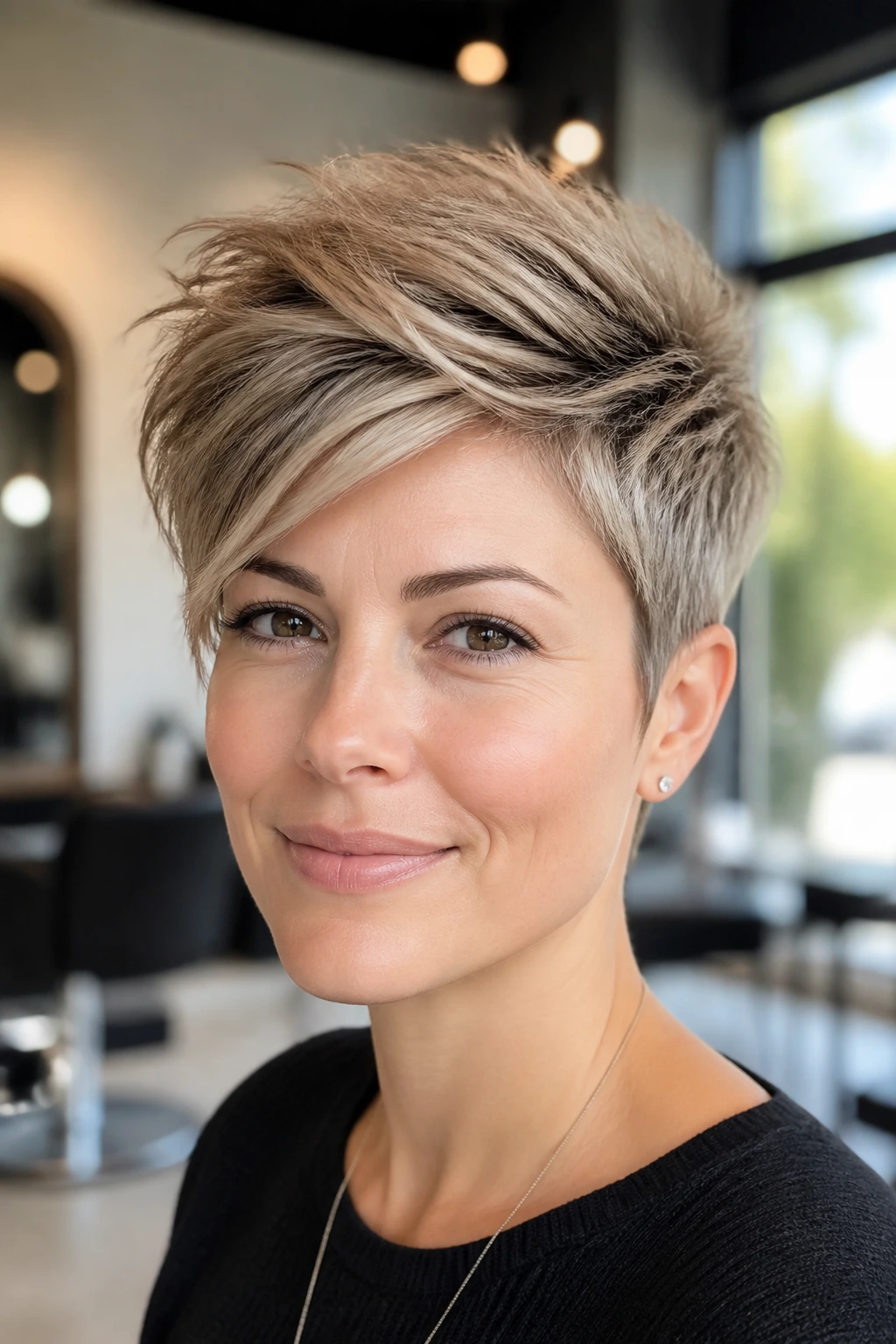
A good cut does half the job. The styling does the rest, and with fine hair that means being a little stingy with product. Heavy creams, thick oils, and too much smoothing serum can flatten the roots before you’ve even left the bathroom. Start light. Add more only if the hair asks for it.
Root prep: put volumizing mousse or a root-lift spray on damp hair, mainly at the crown and the top sides. That’s where fine hair needs support. Work it through with your fingers, not your palms. You want coverage, not saturation.
Drying direction: blow-dry the roots in the opposite direction from how they will sit. That little bit of push creates lift that lasts longer than trying to flatten everything into place and hoping for the best. A nozzle helps. So does a medium round brush if you want a cleaner bend.
End finish: keep the ends simple. A tiny under-bend or soft outward flick is enough for most of these cuts. If you curl the ends too hard, the shape gets rounder in the wrong places. If you leave them dead straight, fine hair can look saggy.
Second-day fix: dry shampoo at the roots before the hair is greasy, not after it has already collapsed. That small timing change matters. Fine hair drinks up oil fast, and prevention works better than rescue.
What to Tell Your Stylist at the Salon
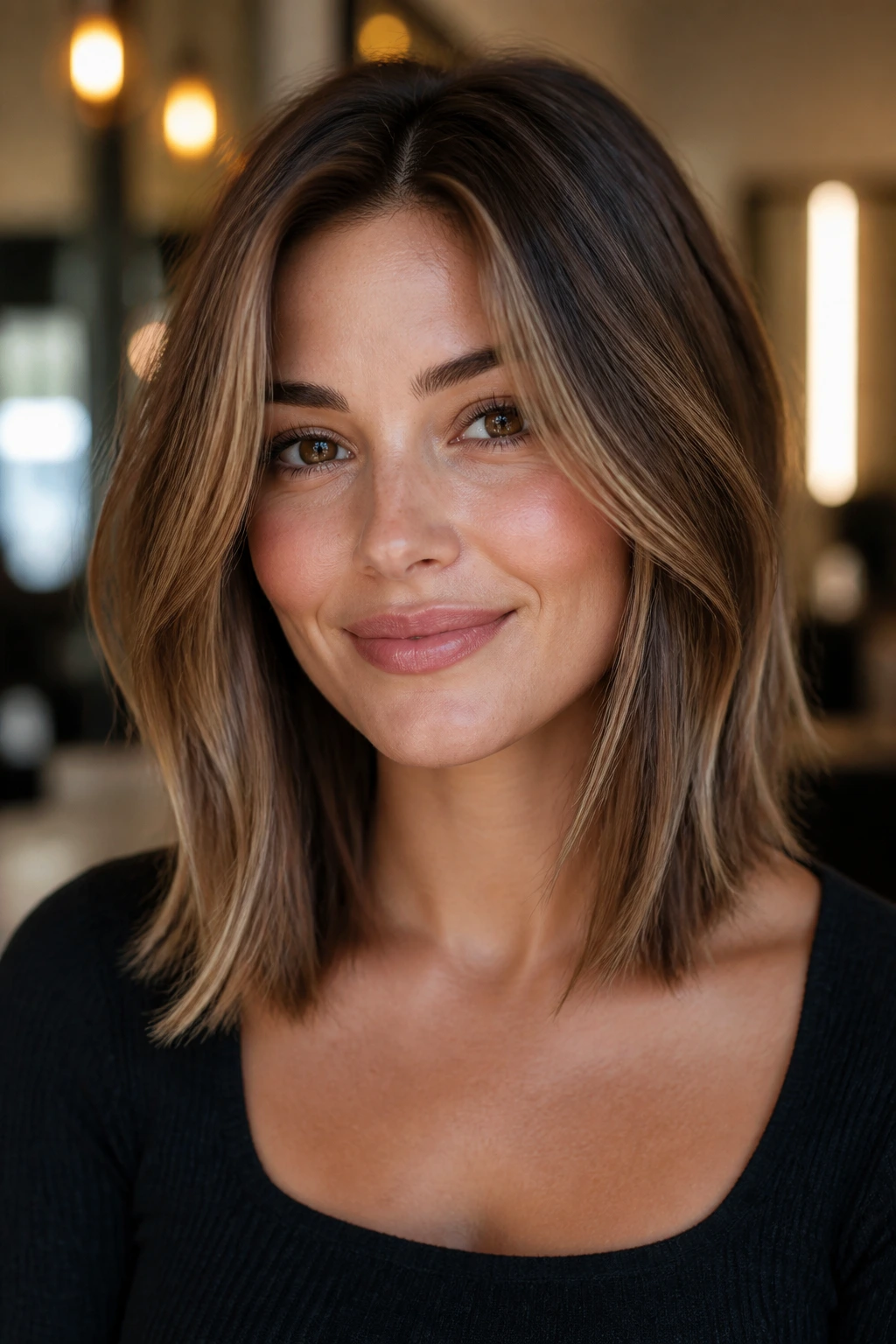
The fastest way to get the right haircut is to talk in shape, not in vague words like “volume” or “texture.” Those words mean different things to different people. Be precise. Say where you want weight, where you want movement, and where you do not want bulk.
Perimeter: ask to keep the bottom line strong. Fine hair usually looks better with a cleaner edge than with a lot of shattered ends.
Cheek level: say you do not want too much fullness right at the cheeks. That is the zone that can make a round face look wider.
Crown: ask for enough lift up top, especially if your hair falls flat by midmorning. Even a small bit of crown shape helps.
Layers: if you want them, ask for internal or low-starting layers rather than short layers that pop out around the face. That one request changes a lot.
Fringe: if you want bangs, ask where they will sit when dry. Wet bangs are liars. They always look longer and more obedient in the chair.
Bring photos, yes, but point out the exact parts you like. The length. The fringe. The nape. Not just the whole vibe. Vibe is not a haircut. Shape is.
Essential Tools and Products Worth Having
- Volumizing mousse: gives fine roots some grip before drying, which helps several of these cuts hold their shape.
- Root-lift spray: best for the crown and top sides when you want a bit of height without stiffness.
- Heat protectant spray: needed if you use a blow dryer, flat iron, or round brush with heat.
- 1-inch or 1.25-inch curling iron/flat iron: useful for putting a soft bend into bobs, lobs, and face-framing pieces.
- Round brush with a smaller barrel: good for lifting roots and shaping the ends of shorter cuts.
- Velcro rollers: optional, but handy for a crown lift on lobs and bobs.
- Dry shampoo: keeps fine hair from collapsing at the roots between washes.
- Light texturizing spray: use lightly on the mid-lengths and ends for piecey movement.
- Tail comb: useful for clean parts and controlled sectioning.
- Wide-tooth comb: better than a harsh brush when your hair tangles easily and you want to keep breakage down.
Maintenance, Trims, and Grow-Out Care
Fine hair shows damage faster than thick hair does. Split ends make the perimeter look thinner, and a thin perimeter is what you are trying to avoid. That is why these cuts usually need more regular trimming than people like to admit. Short bobs and pixies may need a shape-up every 4 to 6 weeks. Lobs can usually go 6 to 8 weeks. Longer layered cuts can stretch a little farther, but once the ends begin to fray, the shape loses its nerve.
The grow-out phase matters too. A good cut should still look intentional as it gets longer. If you are between salon visits, shift the part, use a little root lift, and bend the front pieces so they keep their line. That tiny effort often buys you another week or two before the haircut starts looking sleepy.
If you’re growing out a pixie or bixie, keep the neckline neat and let the top soften gradually. If you’re growing out a bob, ask for dusting rather than heavy thinning. Fine hair does not like to lose its edges. The edges are the point.
Variations and Styling Directions to Try
The Air-Dry Version: best for soft waves and low-fuss mornings. Ask for a cut with a strong perimeter and fewer short layers, then scrunch in a light mousse and let the hair settle on its own. You will get less polish, but the shape can still hold.
The Sleek Blowout Version: this suits bobs, lobs, and shoulder-length cuts. Use a round brush at the roots, then tuck the ends under just a touch. The result feels cleaner and longer through the face, which round faces usually wear well.
The Piecey Weekend Version: this one leans into texture. Use a small amount of dry texture spray and separate a few front pieces with your fingers. It works best on shags, bixies, and long pixies where movement is already built in.
The Low-Maintenance Grow-Out Version: choose a lob or shoulder-length cut with internal layers. These hold their shape longer and don’t scream for attention as they grow. If you hate a haircut that turns unruly by week three, this is the safer lane.
The Soft-Fringe Version: good if you want a little forehead coverage without a heavy bang. Curtain bangs, wispy fringe, or a side-swept piece can all do the job. Keep the fringe light so it doesn’t crowd the face.
Common Mistakes That Make Fine Hair Look Flatter

- Cutting right at the cheekbone: that is the widest part of a round face, and a bob or lob that lands there can make the face look broader. Move the length slightly below or angle it forward.
- Over-thinning the ends: fine hair needs density. If the ends are razor-thin, the whole cut looks see-through fast.
- Stacking too many short layers near the sides: this adds width where you do not want it. Keep movement lower or higher, not right across the cheeks.
- Heavy, blunt bangs that stretch ear to ear: they can shorten the face and make the top half feel boxed in. Lighter fringe or a side sweep usually works better.
- Skipping crown lift entirely: without a bit of height at the top, round faces can look fuller and fine hair can collapse. A small amount of root support changes the whole cut.
- Using too much smoothing product: fine strands get greasy or flat before you finish your coffee. Use a little, then stop.
Frequently Asked Questions
Which haircut makes fine hair look thickest on a round face?
A blunt bob, a collarbone lob with minimal layers, or a textured pixie with a strong perimeter usually makes fine hair look the fullest. The common thread is density at the ends and lift at the crown.
Is short hair better than long hair for a round face?
Not automatically. Short hair can slim the face if it has height on top and close sides, while longer hair can work if the front pieces fall below the cheeks and the layers stay controlled.
Can I wear bangs with a round face and fine hair?
Yes, but the type matters. Curtain bangs, side-swept fringe, and wispy bangs tend to work better than heavy, blunt fringe because they open the face instead of boxing it in.
Should fine hair avoid layers?
Not all layers. Harsh, high layers can make the hair look sparse, but low internal layers or face-framing pieces can give movement without stealing too much density.
Is a center part a bad idea?
No. A center part can work with a longer lob or sleek cut if the length goes past the jaw and the roots have some lift. On very short cuts, a slight off-center part is often easier.
How often should these haircuts be trimmed?
Pixies and sharp bobs usually need shaping every 4 to 6 weeks. Lobs and shoulder-length cuts can often go 6 to 8 weeks before the line starts to soften too much.
What if my hair is wavy instead of straight?
That can help. Wavy fine hair gives several of these cuts more movement, especially shags, bixies, and curtain-bang lobs. Just keep the layers light so the wave does not puff the sides out.
Can I get one of these cuts without heat styling?
Yes, but choose carefully. The better air-dry options are the soft shag, the bixie, and some lobs with strong perimeters. If you hate styling altogether, skip cuts that rely on precise bends at the ends.
Picking the Shape That Actually Holds

The best haircuts for fine hair and round faces are not the loudest ones. They are the ones that keep their line after the first wash, keep the cheeks from feeling boxed in, and make the ends look thicker than they are. That usually means a smart perimeter, a little crown lift, and enough length in the front to pull the eye downward.
If you want the safest bet, start with a collarbone lob, an angled bob, or a soft pixie with height on top. If you want a little more personality, try a curtain-bang lob or a restrained shag. The bad cuts are easy to spot once you know what to look for: too much side volume, too many high layers, too little edge at the bottom.
Hair like this does not need a miracle. It needs a shape that respects what it is doing already. Get that part right, and the rest gets easier.