



The best short hairstyles for women over 60 do not try to hide the hair. They work with it. That sounds obvious until you sit in the chair and realize how much the wrong shape can do: flatten a crown, drag the face down, make a fine neck look harsher, or leave a good pair of glasses fighting with a fringe that sits in the wrong place.
A smart short cut can change the whole mood of the head in a matter of minutes. It can make silver hair look clean and intentional instead of fluffy at the ends. It can give thin hair some backbone, or take the puff out of thick hair that refuses to lie down. And yes, it can make styling in the morning feel less like a battle and more like a two-minute routine with a brush, a dab of product, and a little patience.
What I like most about short hair after 60 is that it gets honest. Cowlicks show up. Density shifts. The hairline changes. That is not a problem to solve so much as information to use. The right crop, bob, or pixie pays attention to where your hair wants to live, then shapes it into something neat enough for real life and soft enough to feel like you.
Why This Collection Is Different
-
It treats texture first: Fine hair, coarse hair, straight hair, and curls all need different short shapes, and this set doesn’t pretend one cut works for all of them.
-
It respects gray and silver hair: Gray strands often feel drier and a little wirier, so the best short hairstyles use shape and movement instead of heavy bulk.
-
It includes soft and sharper options: Some women want a clean nape and a tidy ear line. Others want cheekbone softness, fringe, or more swing through the crown.
-
It plays nicely with glasses: A lot of short cuts fail because the fringe lands right on the frame. These picks leave room for eyewear to sit cleanly.
-
It covers low-effort and styled looks: Some of these cuts air-dry with little fuss. Others need a round brush or a bit of paste, but the payoff is shape that lasts.
-
It keeps the haircut honest: No fantasy hair here. These are styles that can live on a real head, with a real cowlick, on a day when the weather is rude.
1. Feathered Pixie With a Soft Crown
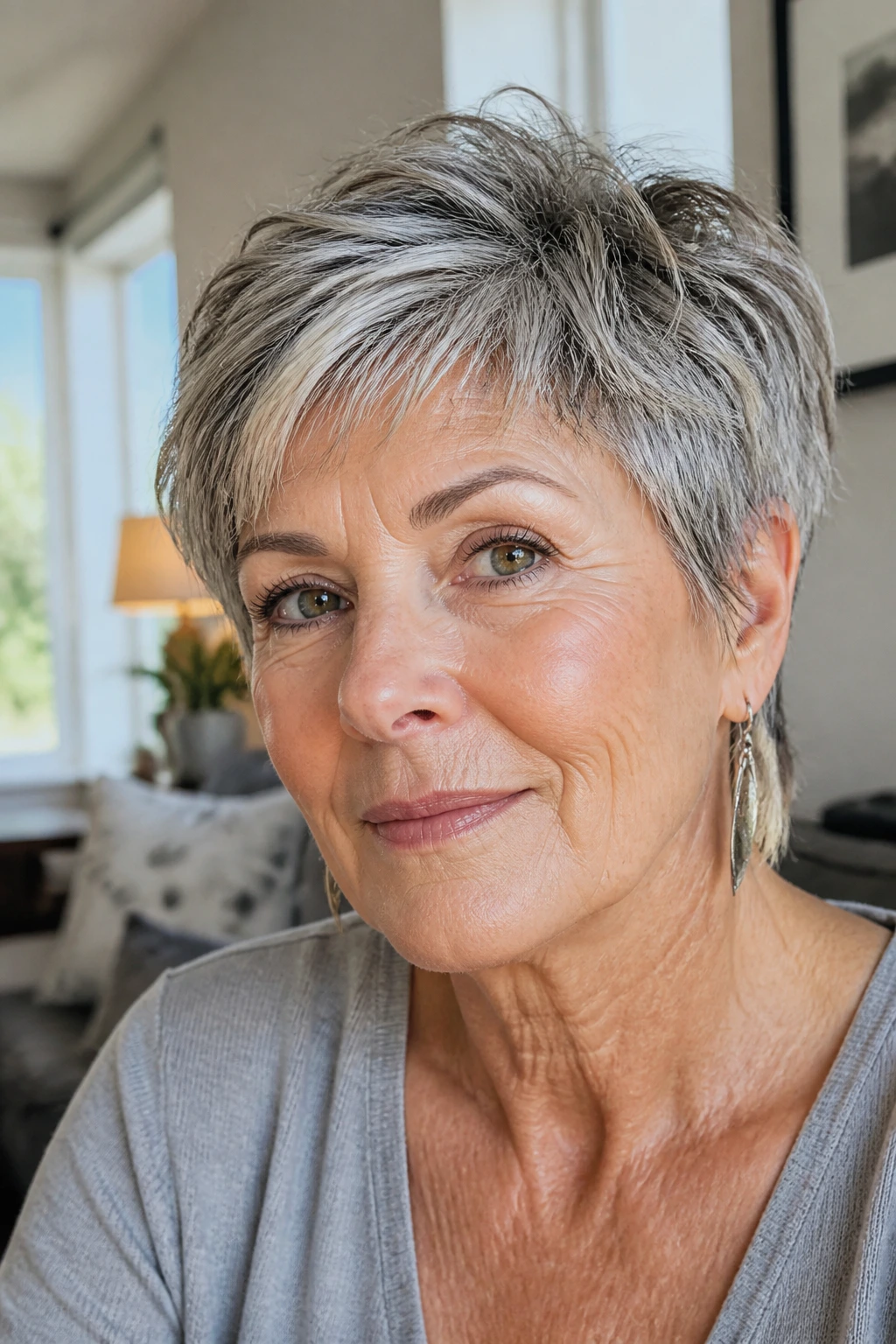
A feathered pixie is the cut I reach for when hair has gotten finer and the crown has started to lie down like it’s given up. The layers are short, but they are not choppy in a harsh way. They’re sliced and feathered so the top moves a little when you run your fingers through it, which is exactly what keeps the style from looking helmet-like.
Why It Flatters
The magic is in the crown. Leave about 1.5 to 2 inches there, then taper the sides tighter so the top has somewhere to go. That little bit of height gives the face a cleaner line and keeps the cut from collapsing against the head.
It also works well with silver hair because the feathering breaks up the surface. Gray strands can look dense and matte in one solid block, but feathered layers give them dimension without needing a lot of product.
Best for: Fine to medium hair, especially if the top goes flat fast.
Ask your stylist for: Short, soft layers on top; a tapered nape; and point-cut edges around the fringe so the line doesn’t look blunt.
Styling note: A pea-sized amount of mousse at the roots, then a quick blow-dry with fingers, is usually enough. Anything heavier and the lift disappears.
2. Side-Swept Pixie With a Soft Fringe
A side-swept pixie is for the woman who wants short hair but does not want her face fully open. The fringe moves diagonally across the forehead, so the whole cut feels gentler than a straight-across crop. It’s a useful shape if your forehead feels wider than you’d like or if you wear frames that need a little breathing room.
The side sweep also hides a lot of real-world mess. A cowlick near the front? Covered. A slightly uneven hairline? Handled. That’s why this cut has such staying power.
The best version is never plastered down. Dry the fringe in the direction you want it to sit, then flip it back once or twice while it cools so it keeps a bit of bend. That tiny bit of lift keeps it from looking glued to the skin.
3. Textured French Bob That Skims the Jaw
The French bob gets copied badly all the time, which is a shame, because a good one is crisp and flattering. The line usually lands somewhere around the jaw or just under it, with soft texture at the ends so the shape doesn’t look too blocky. On women over 60, that little bit of softness matters more than people think.
What keeps this cut from feeling severe is the balance between the jawline and the neck. If the ends are too blunt and the hair is fine, the bob can sit there like a cut-out. If the ends are softly textured and the front pieces are a touch longer, it hugs the face without hardening it.
This one is especially nice with glasses. The hair stops before it crowds the frames, which makes the whole face read cleaner.
Good for: Straight or lightly wavy hair.
Styling tip: Use a 1 to 1.25-inch round brush and tuck the ends under just a little. Not a curl. Just a bend.
4. Stacked Bob With a Lifted Nape
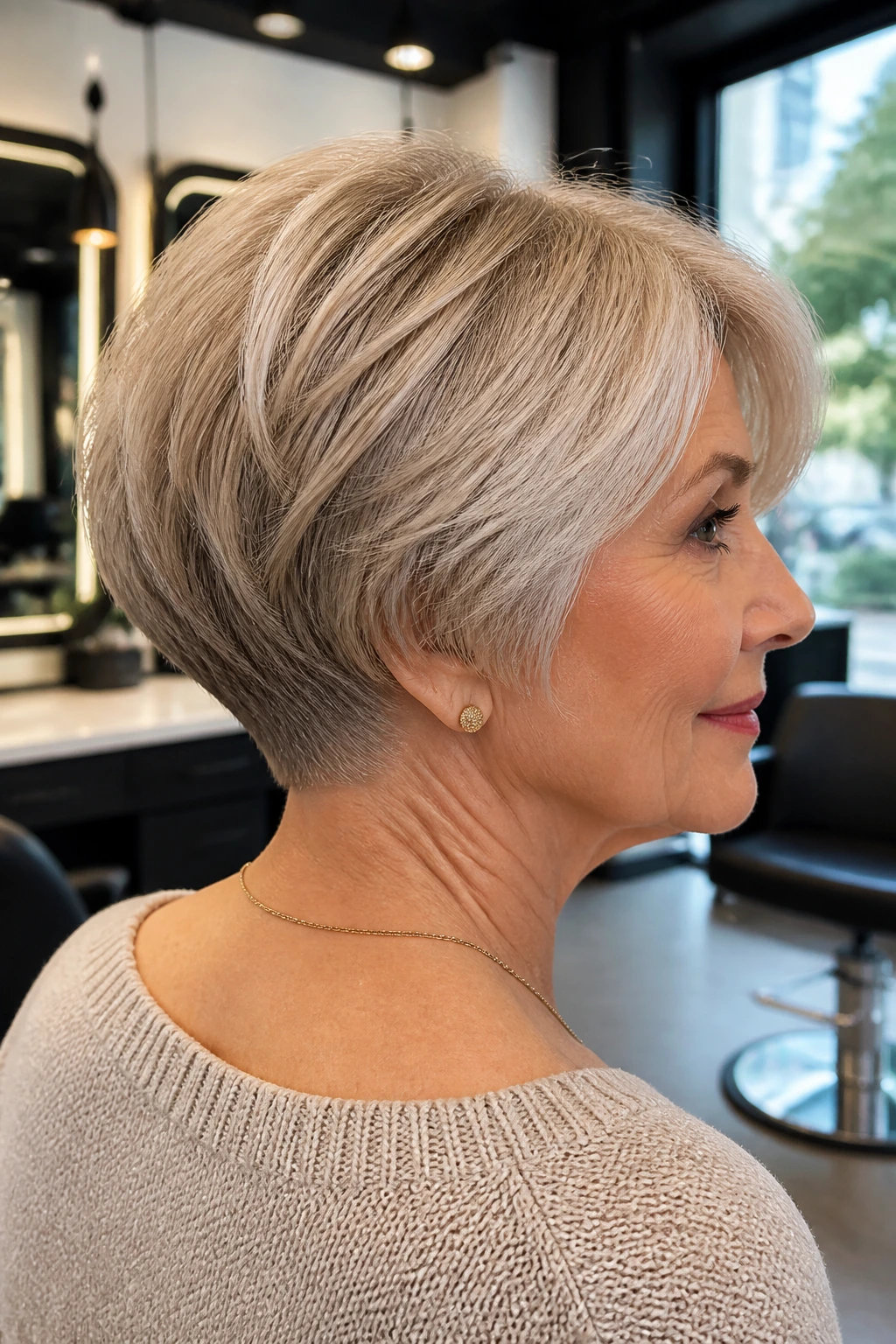
A stacked bob solves a very specific problem: hair that looks flat at the back but bulky everywhere else. The stacking builds weight into the shape at the nape, then lifts the crown so the back of the head looks sculpted instead of limp. It’s one of the best short hairstyles for women over 60 with thick or medium-thick hair.
What Makes It Work
The angle matters. The back should rise gradually, not jump abruptly, or the style starts looking dated. Ask for shorter layers underneath and longer panels over the top so the silhouette stays smooth. That keeps the bob from puffing out into a triangle.
This is one of those cuts that looks even better after a proper blow-dry than it does on the chair. A round brush, a little tension, and a cool shot at the end make the stacked line settle in.
- Best on: Thick hair, straight hair, or hair that holds shape well.
- Watch for: Too much razoring at the bottom, which can make the ends fray.
- Style with: A smoothing cream through the mid-lengths and a light spray at the roots.
5. Curly Crop With Tapered Sides
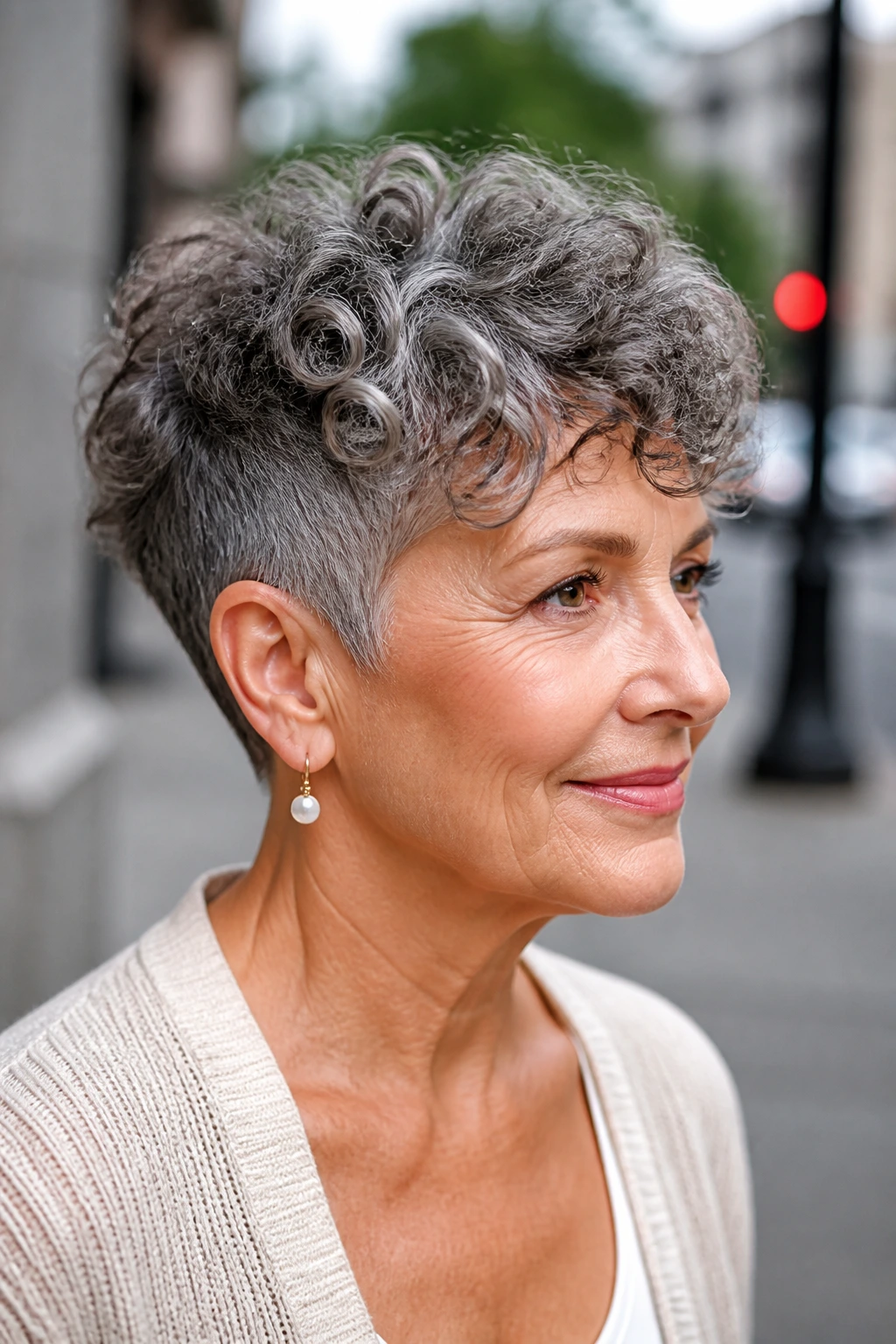
Why do curly-haired women keep getting told to “just go short” as if every short cut is the same? It isn’t. A curly crop needs shape that respects the curl pattern, not a generic chop that leaves the top puffing out and the sides sitting too tight.
The tapered sides help the head keep a neat outline while the top stays long enough for curls to spring. That length on top is the whole point. Cut it too short and the curl shrinks upward; leave it too long and the shape can slump.
Dry cutting works well here because curls lie about their final length when they’re wet. If your stylist knows curls, they’ll shape the top in a way that follows the fall of the coil, not the fantasy of it.
How to Style It
Use a leave-in conditioner, then scrunch in a curl cream on damp hair. Diffuse on low heat, or air-dry if you have the patience. Once dry, break the cast with a drop of lightweight oil on your palms.
6. Bixie Cut With a Longer Top
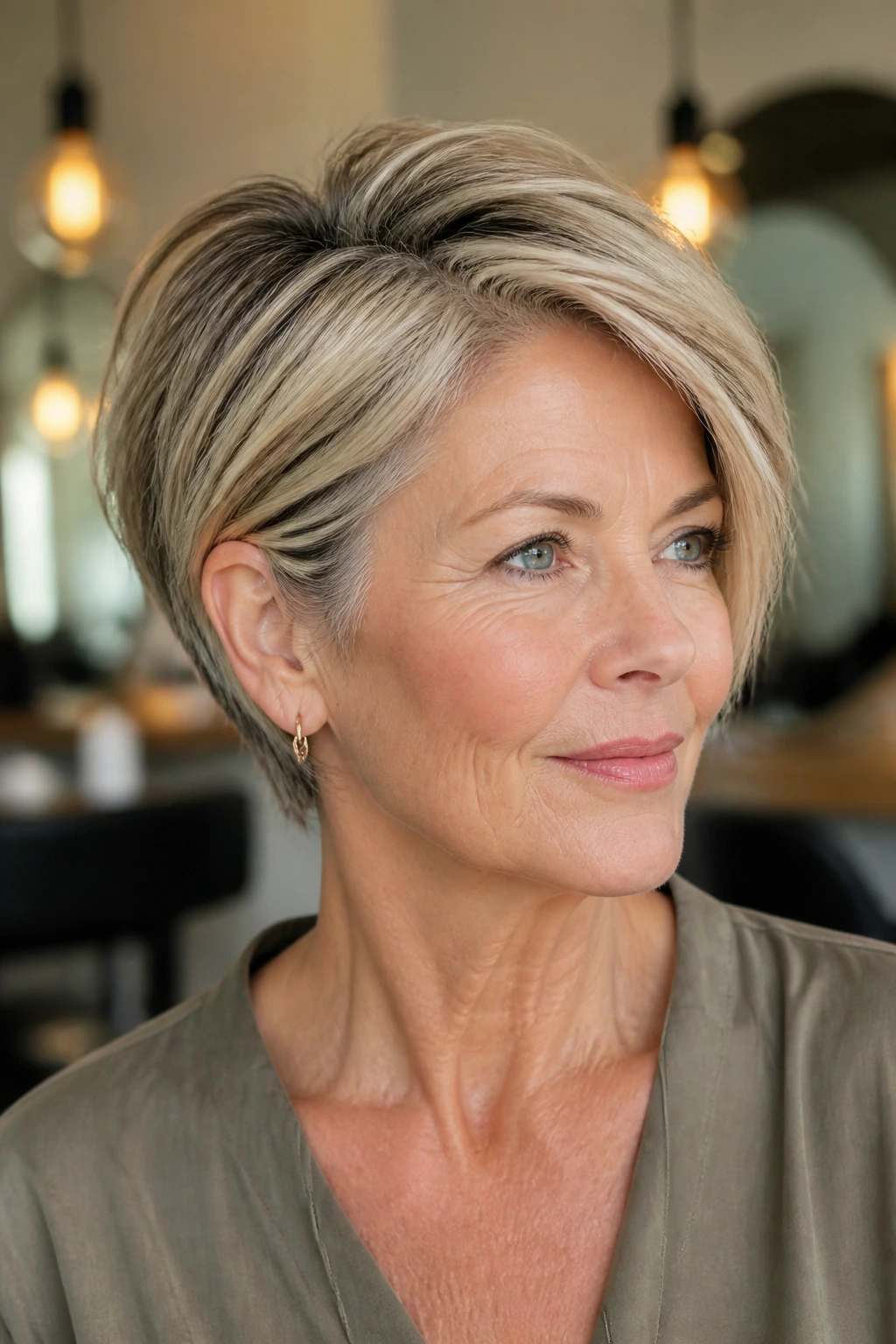
A bixie sits in that sweet middle ground between a bob and a pixie. It’s shorter than a classic bob, but it keeps enough length on top and around the sides to feel soft. If you’ve ever liked a pixie in theory but wanted a little more hair to touch, this is the cut.
The bixie is excellent when you want movement without the sharpness of a close crop. It lets you tuck one side behind the ear, push the top forward, or part it off-center and change the mood in seconds. That makes it friendlier than a very short pixie for anyone who likes to vary the styling.
It also grows out in a nicer way than some stricter cuts. The shape stays readable for weeks, not days.
Why I like it: It gives you short-hair ease without that “nothing left to work with” feeling.
Best styling product: A light matte paste or soft wax. Use less than you think; the goal is piecey, not sticky.
7. Tapered Crop That Follows the Neck
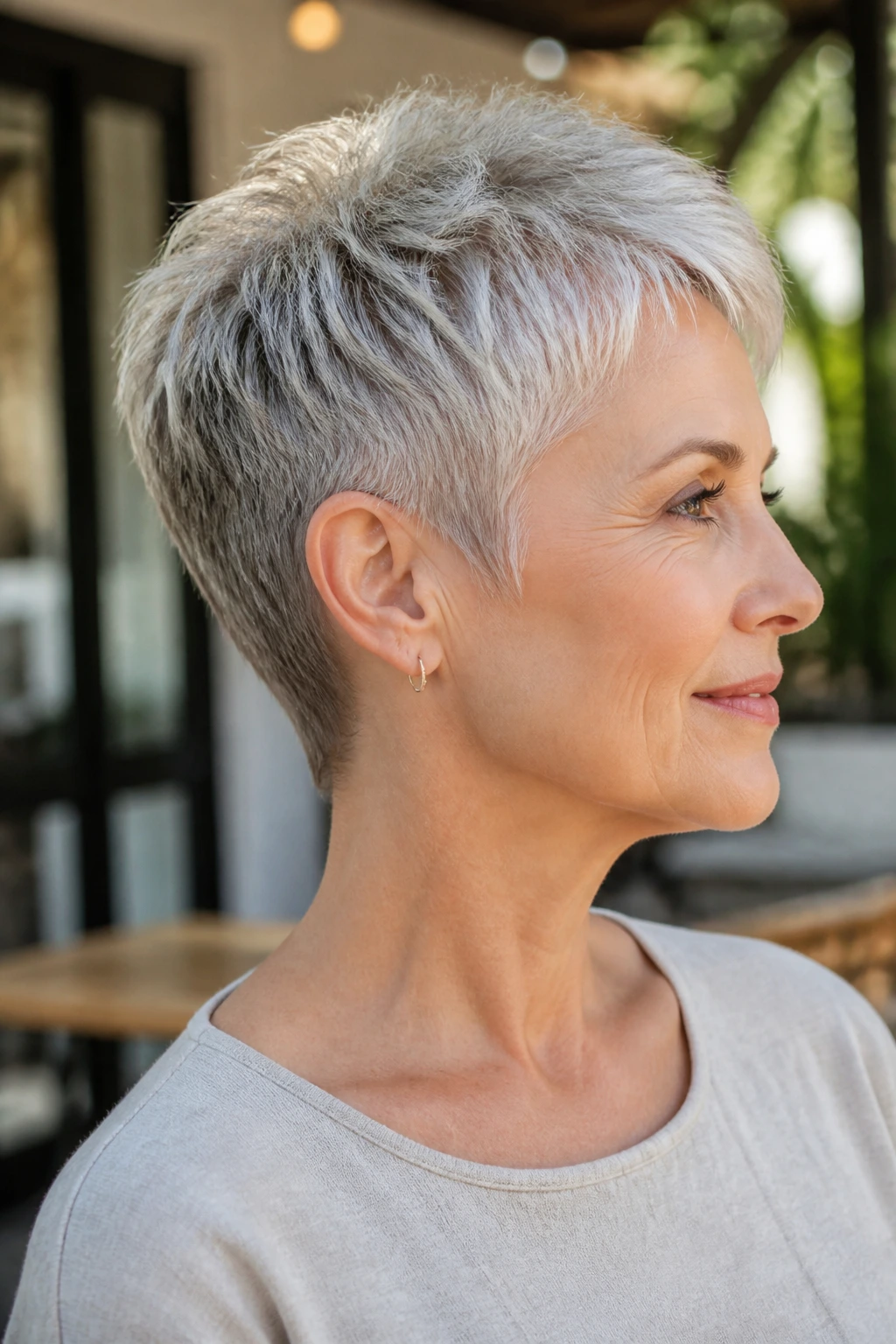
A tapered crop is one of the cleanest short hairstyles for women over 60 because it follows the head instead of fighting it. The neckline is short and neat, the sides are close, and the top has just enough lift to keep the style from feeling flat. It’s a good answer if you want the neck visible and the maintenance low.
This cut is especially nice on silver hair that has a little natural body. The taper keeps the outline tidy, and the top can be brushed forward, swept back, or separated with fingers depending on the day. There isn’t one “correct” way to wear it.
A tapered crop also handles hot weather well, which sounds minor until you’ve lived with hair sticking to your neck. Then it becomes a very big deal.
8. Layered Chin-Length Bob
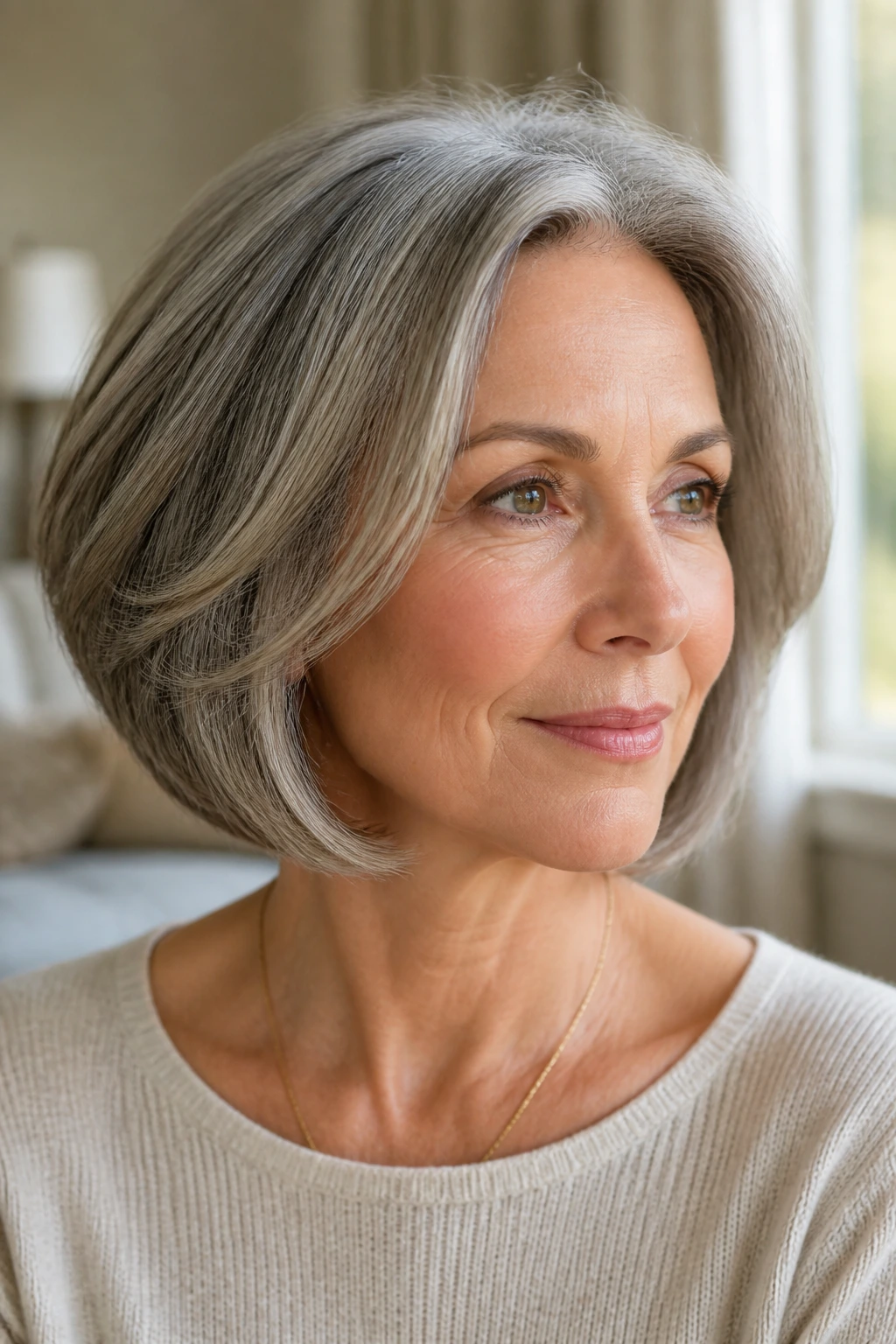
The chin-length bob is still one of the smartest shapes for older women, mostly because it works with the jaw instead of sitting on top of it. Add layers inside the shape, and the cut stops turning into a box. That internal movement matters a lot if your hair is fine but dense, or medium in texture but prone to puffing.
A blunt chin-length bob can look gorgeous on the right hair, but on many women it ends up too solid. Layers under the surface remove that weight while keeping the outline clean. The ends should move when you turn your head, not sit there like one hard line.
This cut is also kind to cheeks. A little face-framing piece near the front softens the lower face without making the whole style fussy.
9. Silver Shag Crop
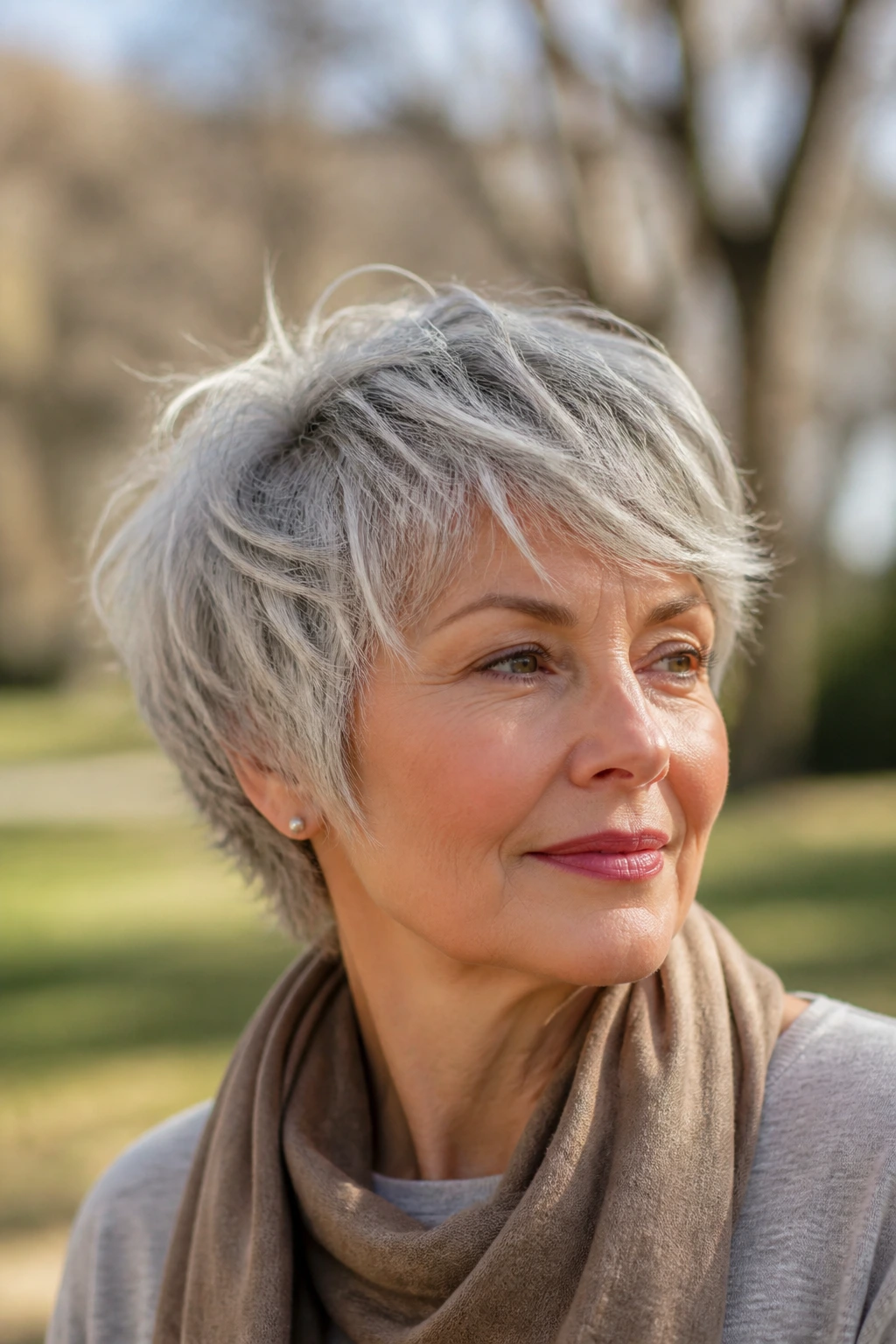
The silver shag crop has a little attitude, and I mean that in the best way. The layers are shorter around the crown, lighter through the sides, and loose enough to let gray or white hair show its own texture. If your hair has gone more wiry or airy with age, this shape can be a gift.
It works because the shag does not ask the hair to behave like a polished bob. It wants movement. It likes a bit of lift, a bit of separation, a bit of mess at the ends. On silver hair, that reads as lively rather than wild.
A texture spray helps, but not too much. If the hair gets crunchy, the shag loses its easy swing. Finger-drying is usually enough.
10. Ear-Length Crop With Soft Edges
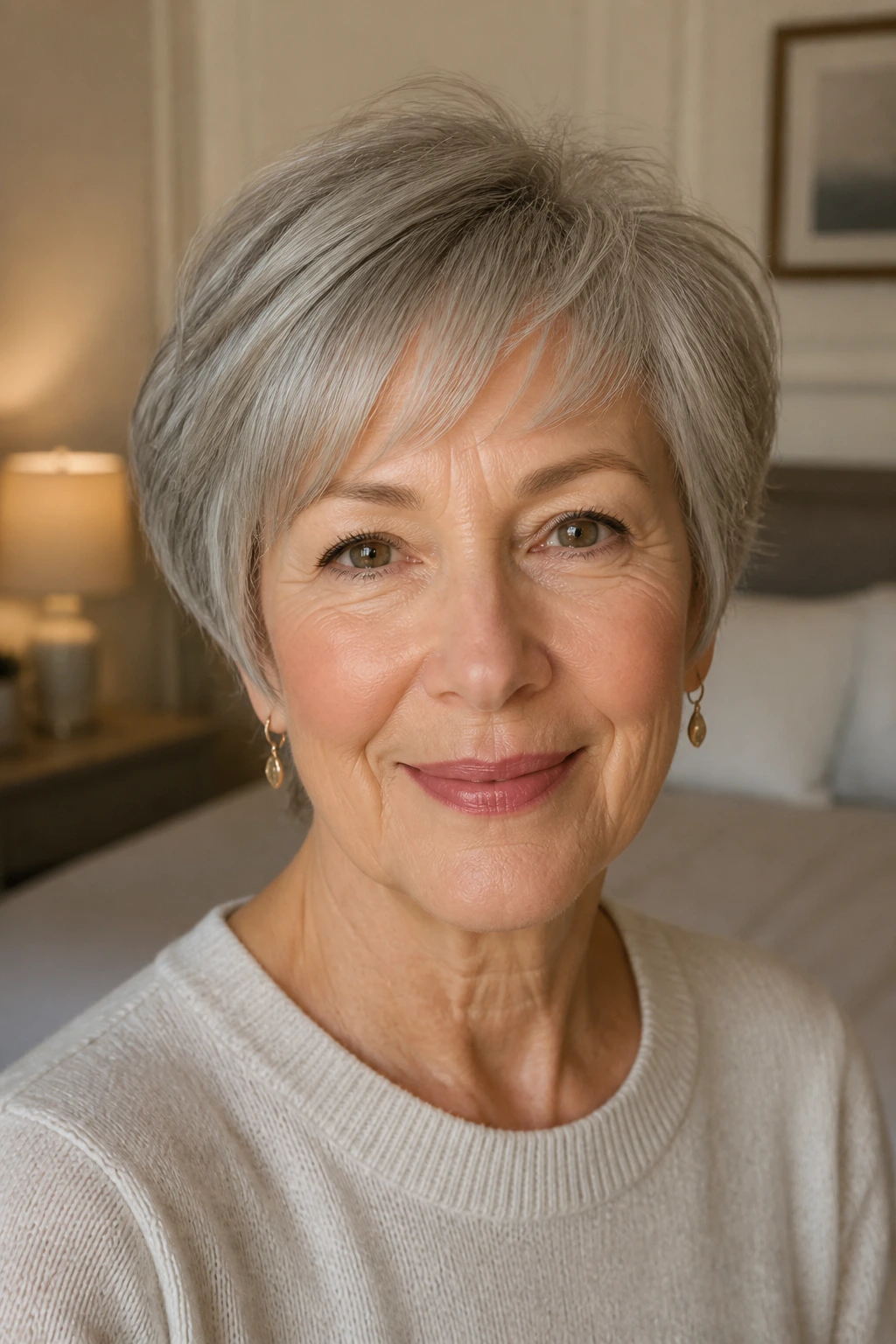
Ear-length cuts do something useful that longer bobs can’t always manage: they show the face and the jewelry without leaving the hair too exposed. This is a nice length if you want your ears partly covered, or if you simply like a little more fabric around the face.
The soft edge matters. Cut too blunt, and ear-length hair can look severe. Softening the perimeter makes it sit better against the cheek and side of the neck. It also helps if your hair has a natural wave that kicks at the ends.
This one is a quiet shape. It doesn’t shout for attention, which is partly why it ages so well. It frames rather than dominates.
11. Wedge Cut With a Gentle Curve
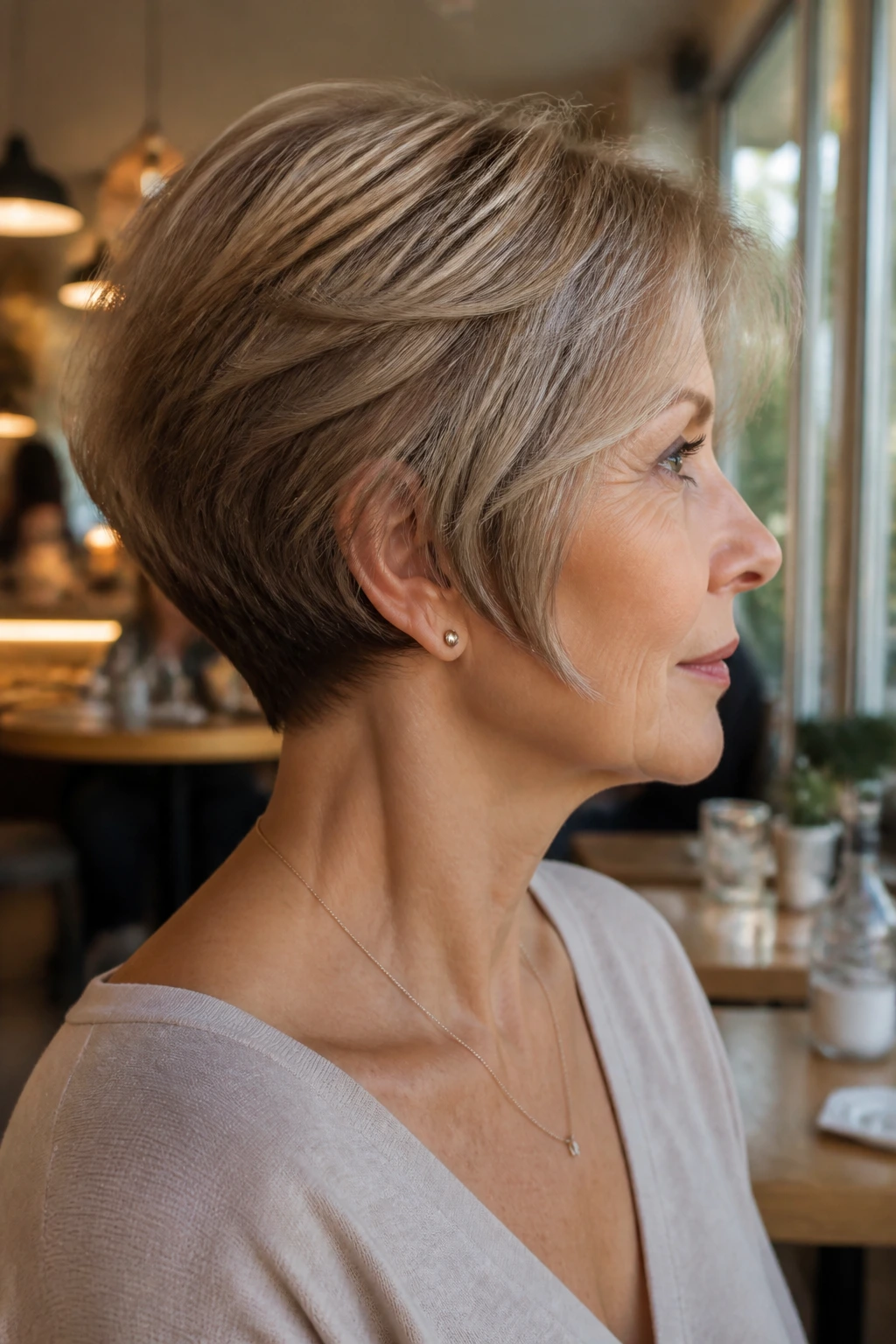
The wedge cut has a retro reputation, but the modern version is smoother and less rigid. The back is shorter and rounded, the front is longer, and the whole silhouette curves around the head in a tidy way. When it’s done well, the shape makes the profile look clean from every angle.
Why It Still Works
The wedge is good for straight hair that tends to collapse or flip awkwardly at the ends. The geometry gives the style a built-in structure, so you are not asking your brush to do all the work. It also creates a neat lift at the crown without needing a lot of teasing.
Ask for softness around the ears and fringe. That’s the difference between a dated wedge and a fresh one. Harsh edges age a cut fast.
- Good if you want: A polished outline with minimal daily styling.
- Ask for: A curved nape and softened side panels.
- Avoid: A hard stack with no transition at the crown.
12. Rounded Bob That Hugs the Head
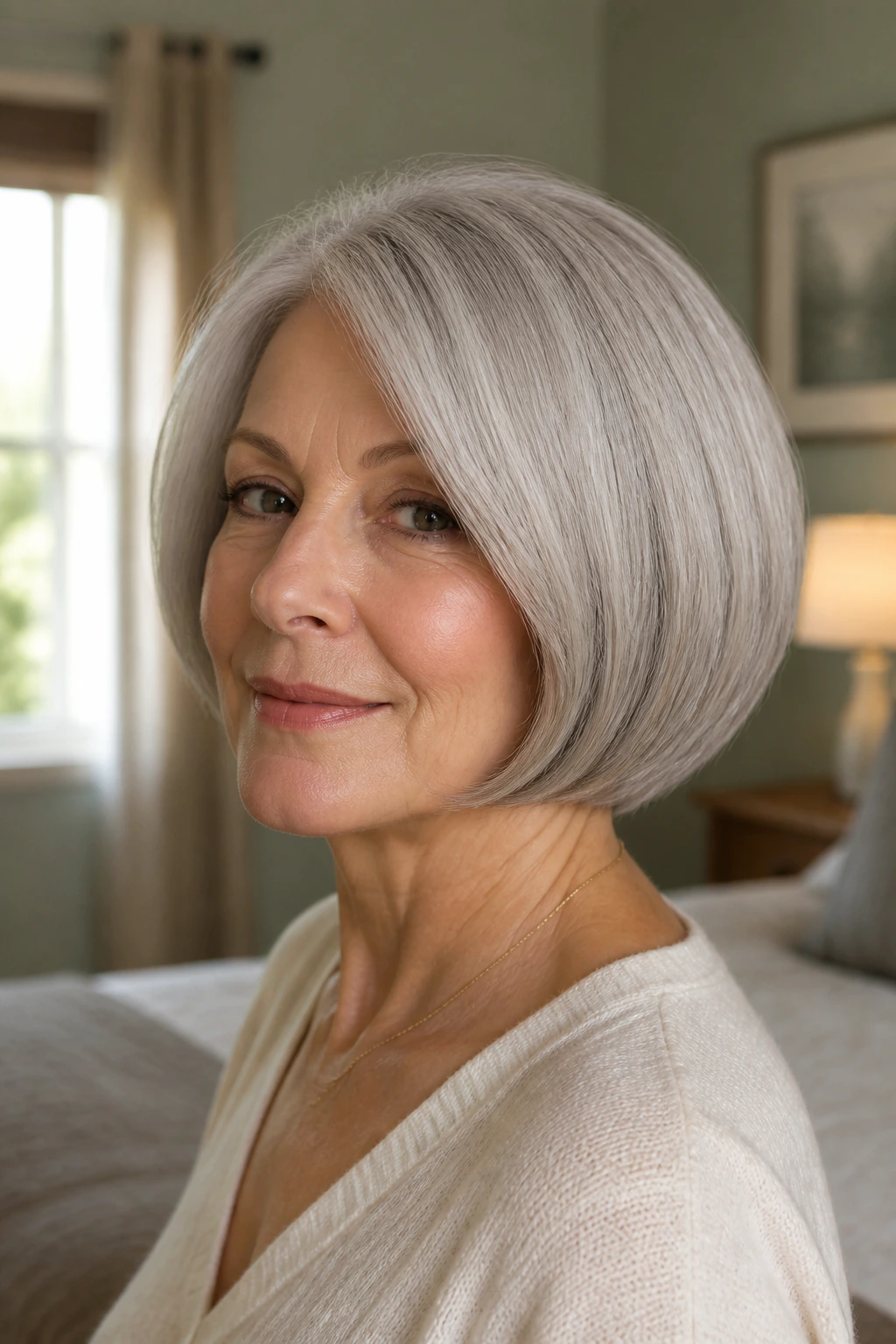
A rounded bob is one of my favorite short hairstyles for women over 60 with thicker hair because it keeps the width under control. Instead of flaring out at the sides, the shape curves gently around the head. That makes it look deliberate, especially on dense or coarse strands.
The trick is not to over-layer it. Too many short layers can make the silhouette frizzy. You want enough internal shaping to remove bulk, but not so much that the haircut starts looking puffy at the sides.
It’s a particularly good choice if you prefer a neat finish and don’t want a lot of visible texture. A smoothing cream and a paddle brush can carry it a long way.
13. Tousled Crop With a Longer Top
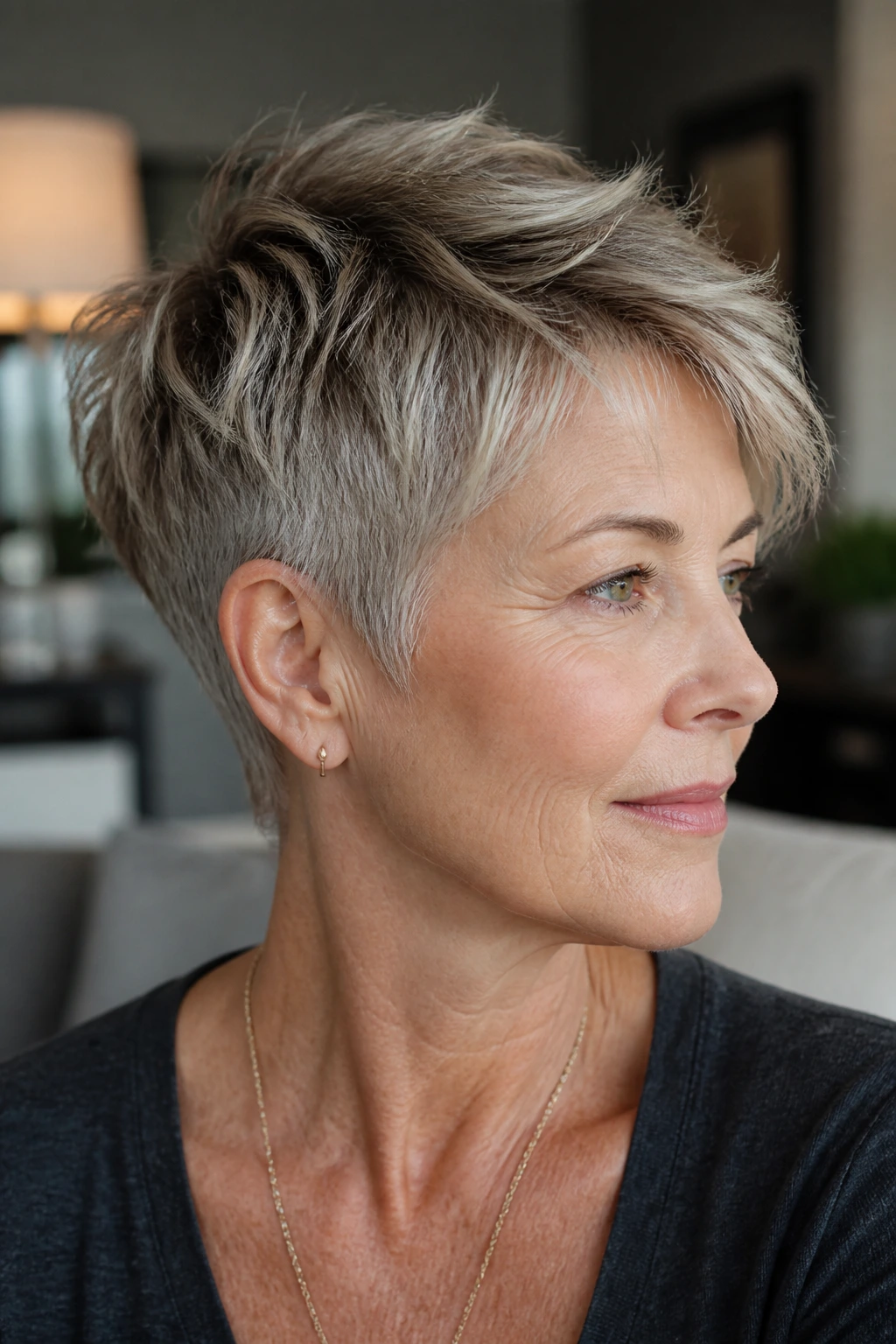
A tousled crop is for the woman who wants short hair that still looks a little casual, a little easy, and not overworked. The top stays longer, the sides are cropped but not shaved, and the pieces are left with enough separation to move when you shake your head.
This style tends to look best when it’s not trying too hard. Blow-dry the crown for lift, then let the ends stay imperfect. That undone finish is the point. It gives the face a softer frame than a super-sleek cut would.
It’s also forgiving on a day when the styling went sideways. If one section wants to flip, you can usually coax it into place with a dab of paste and a finger.
14. Undercut Pixie for Thick or Coarse Hair
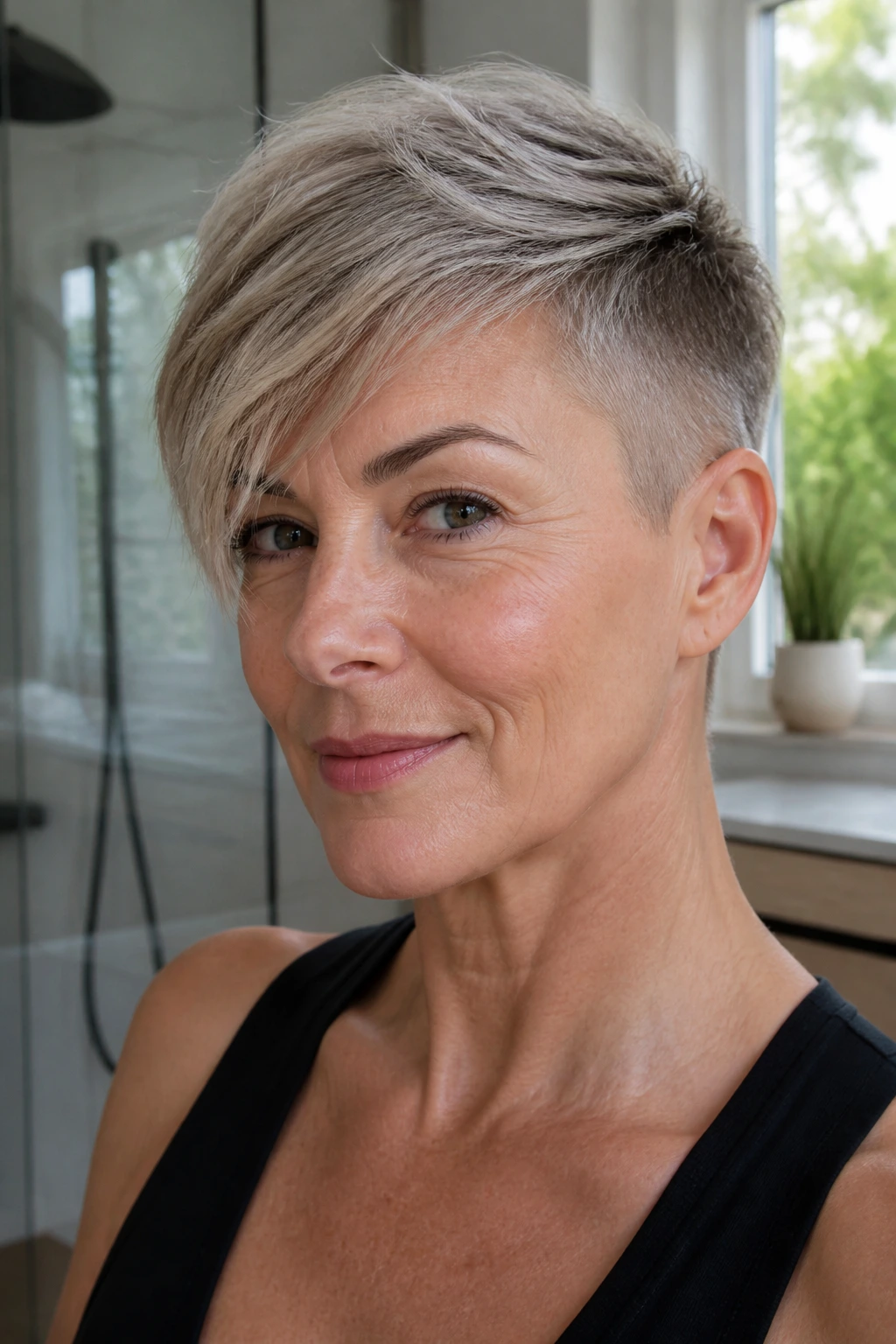
An undercut pixie is not shy. It removes bulk at the sides and back, which can be a relief if your hair grows out wide and heavy. On thick hair, that underlayer lets the top sit cleanly instead of puffing out like a mushroom cap.
Here’s the part people get wrong: the undercut should support the shape, not become the whole style. The top still needs length and softness, or the cut can feel too severe. A little fringe, a side sweep, or a feathered crown keeps it wearable.
This is a great option if you dislike spending time blow-drying a lot of hair. There’s simply less of it to manage. Less bulk, less heat, less drama.
15. Feathered Bob With Wispy Bangs
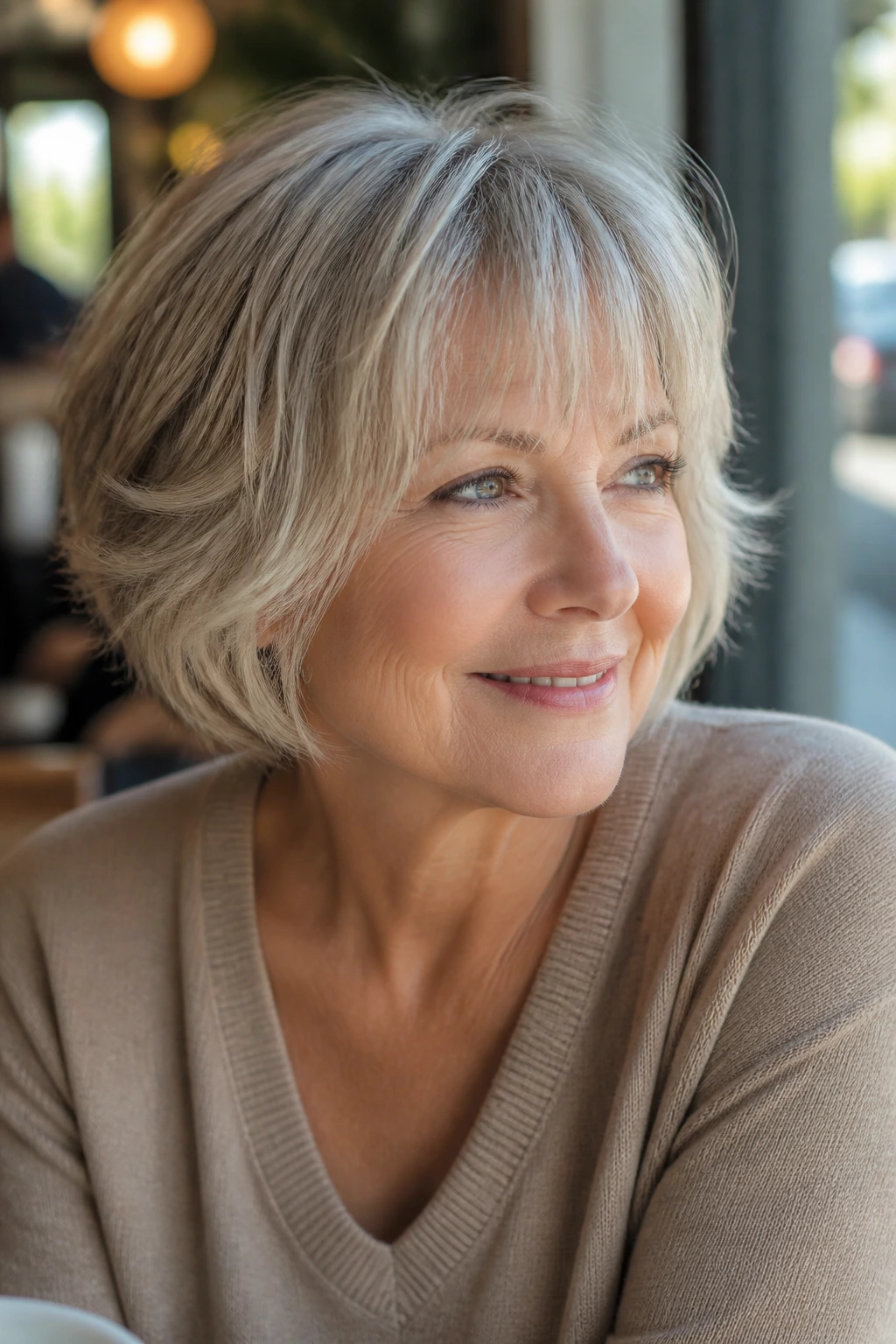
If you like bangs but hate the blunt wall effect, this is the smarter move. The fringe is light and wispy, brushing the brows instead of sitting like a block across the face. The bob underneath stays feathered, so the whole style feels soft rather than stiff.
Wispy bangs can be brilliant on foreheads that feel wider, or on faces where you want to break up a long line from hairline to chin. They also pair well with glasses if they’re cut to stop just above the frames. Too short and they bounce around. Too long and they crowd the eyes.
A feathered bob with bangs does need regular trimming. Leave the fringe alone too long and it stops looking airy and starts looking accidental.
16. Soft Mullet With Gentle Layers
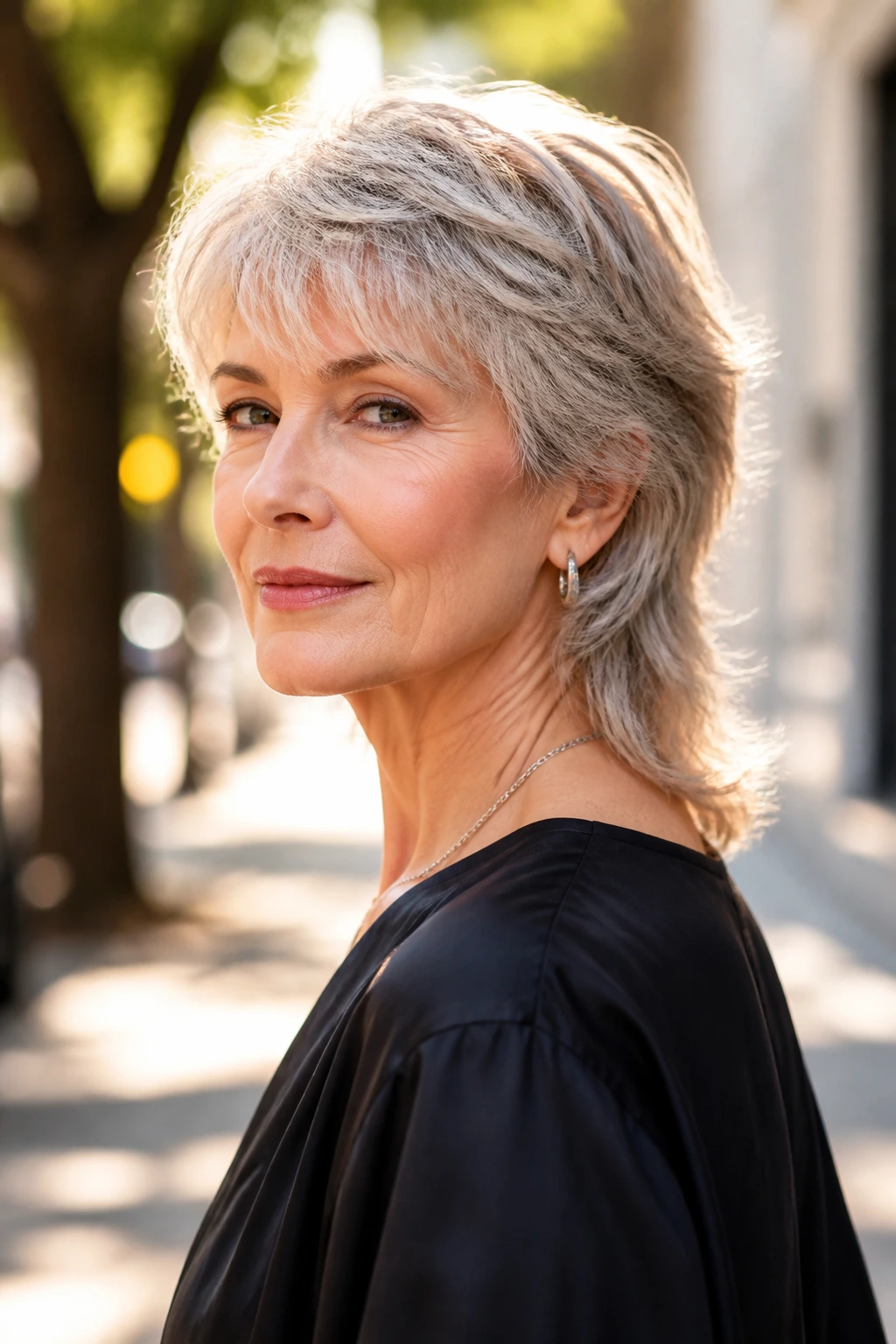
A soft mullet sounds rebellious, which is probably why some women avoid it. But the modern version is not a rock-show joke. It’s a short, layered shape with a little extra length in the back and softness around the face. Done lightly, it has movement and lift without turning severe.
The reason it can work so well after 60 is that it respects different growth zones. Some hair is fuller at the crown, some grows flatter at the sides, and some has a stubborn neck flip. The soft mullet uses those differences instead of flattening them out.
Keep the layers feathered and the transition smooth. If the contrast between top and nape is too abrupt, the whole thing tips into costume territory. That’s not the goal.
17. Cropped Curly Bob
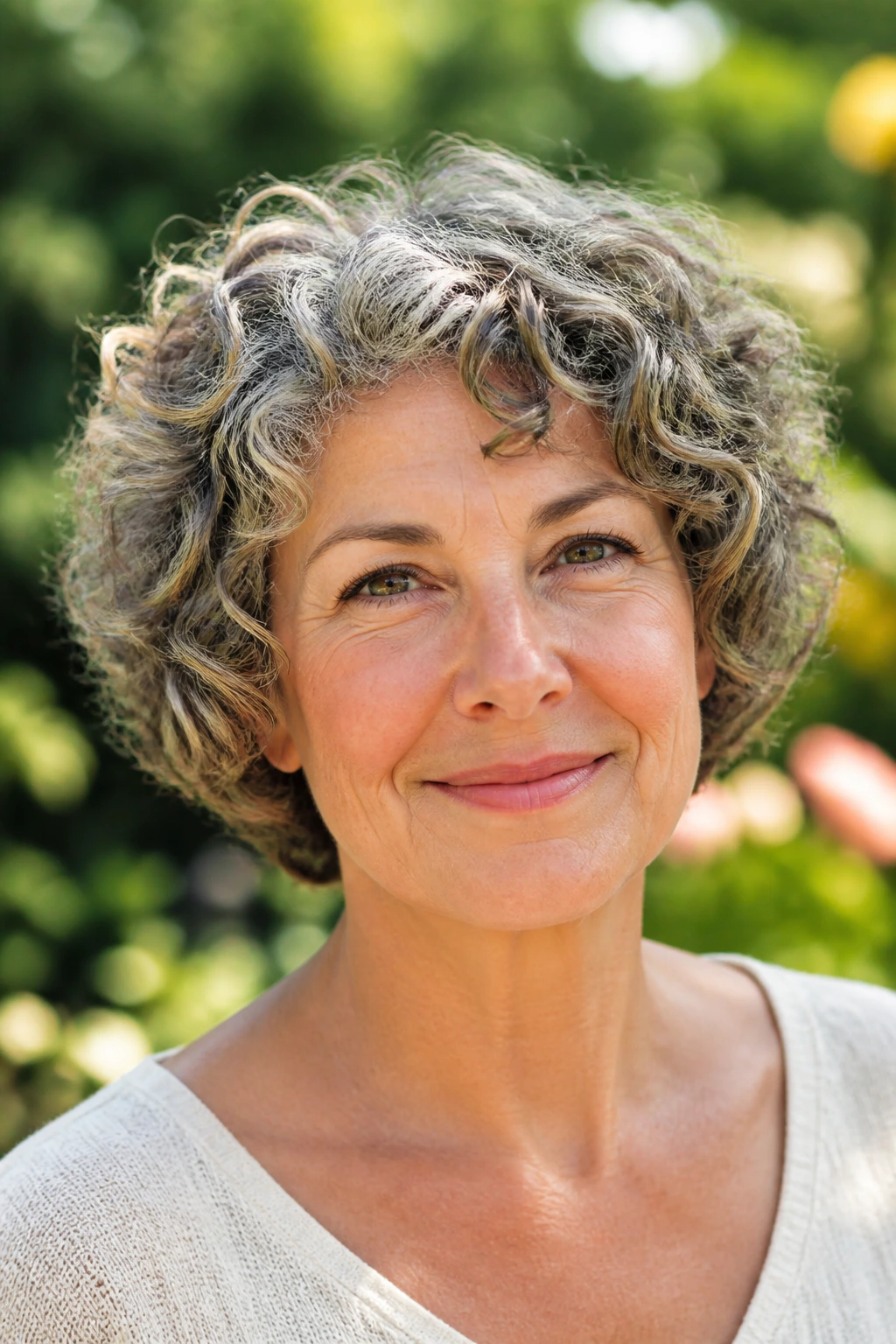
A cropped curly bob sits right between “I want length” and “I want my curls to behave.” It gives enough room for curl pattern to show, but it stays short enough that the weight doesn’t drag the shape down. For many women with curls after 60, that balance is better than a very short crop.
The length usually lands near the jaw or just below it, which gives curls room to stack without ballooning too much. Shorter layers around the top can help the curl spring upward, but the perimeter should still have enough weight to keep the outline readable.
Diffusion helps, but don’t over-handle it. Curls get frizzy when they’re fussed with half-dry. Let them set, then separate them gently with hands that have a tiny bit of leave-in or oil.
18. Swept-Back Crop That Opens the Face
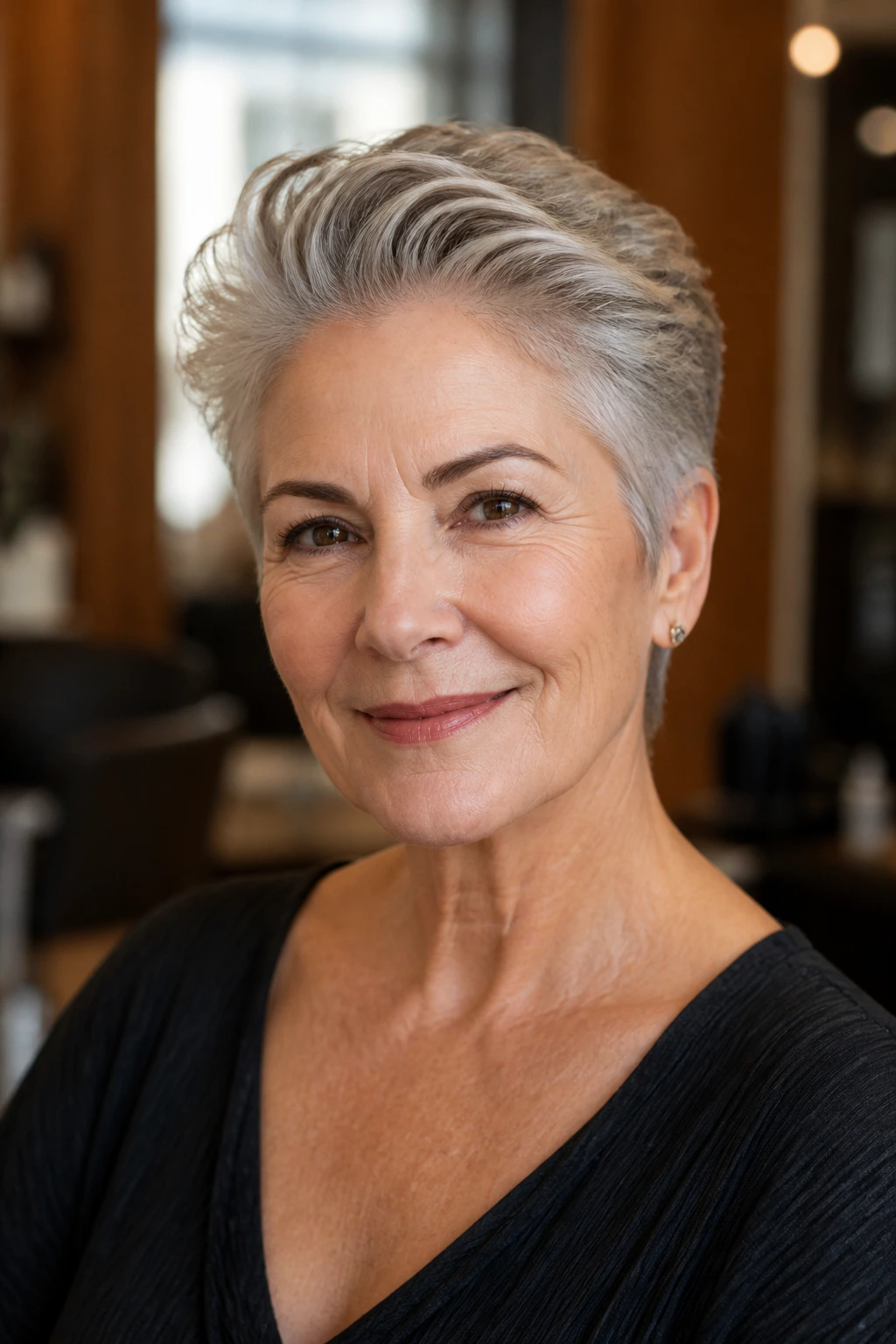
A swept-back crop has a clean, open feeling that works beautifully when you want the face fully visible. The hair is cut short enough to push back easily, but long enough on top to hold a little height. It gives cheekbones, brows, and earrings room to do their thing.
This is one of the best options if you dislike bangs. It also suits women with strong features because it doesn’t compete with them. The shape is simple, but simple is not the same as plain.
For styling, a root-lifting mousse or a light blow-dry cream helps the front stay away from the forehead instead of collapsing forward by noon. If the hair wants to split, a side part usually helps more than brute force.
19. Classic Pageboy Bob With a Soft Finish
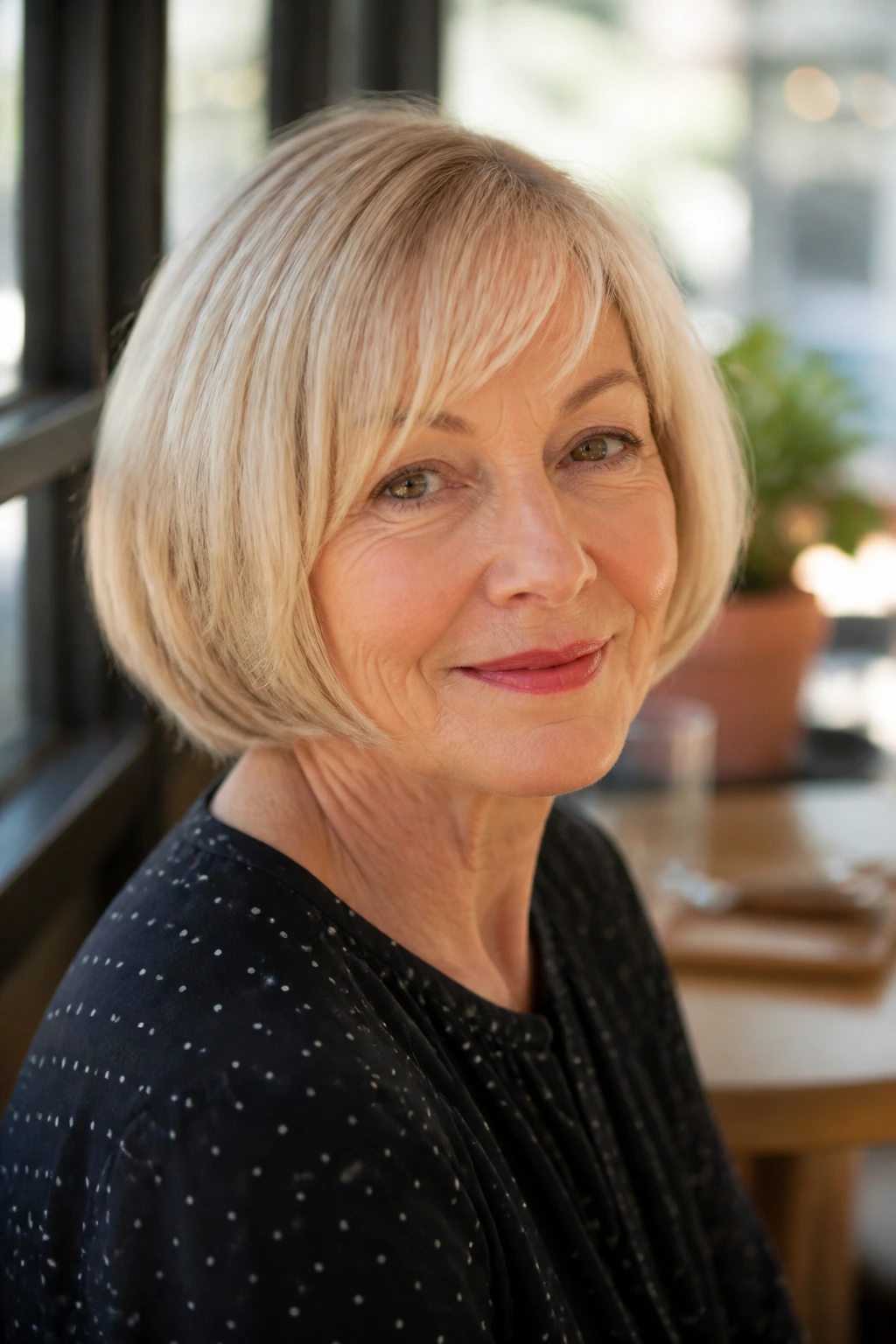
The pageboy bob has a neat little curve that still has a place, especially when it’s softened at the ends. The old-school version could look stiff. The better version bends under gently and keeps the fringe or side sweep loose enough to move.
It’s a smart choice if your hair is naturally straight and you like order. The line stays clean, and the body of the cut tucks in close to the jaw. That can make the lower face feel more balanced, especially if your hair is thick enough to hold shape but not so thick that it explodes outward.
This one benefits from a good blow-dry and a decent brush. Skip the heavy oils. They flatten the curve and make the ends look greasy faster than you’d think.
20. Wispy Crop With a Light Fringe
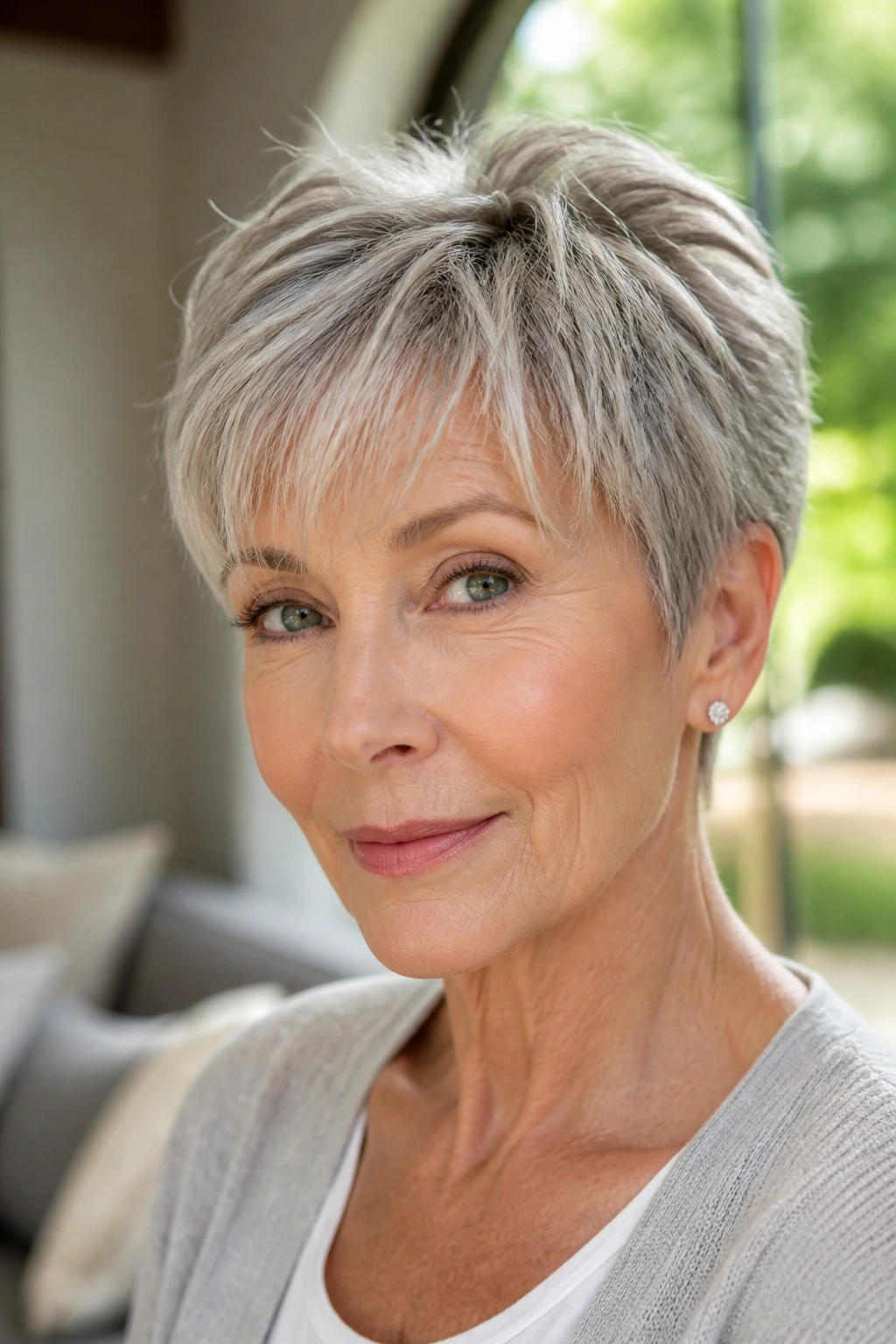
A wispy crop is the haircut version of taking a deep breath. It’s airy, light, and never overbuilt. The fringe is soft rather than dense, which means it brushes the forehead without turning into a wall.
This is a good answer for very fine hair, because heavy layers can strip it of what little body it has. A wispy crop keeps the ends feather-light and lets the hair move without collapsing. It also works well with silver strands that look best when they’re not packed too tightly together.
Don’t overload this cut with product. A little texture mist at the roots and a fingertip amount of paste at the ends is enough. Too much and the hair separates into little strings.
21. Sculpted Tapered Afro
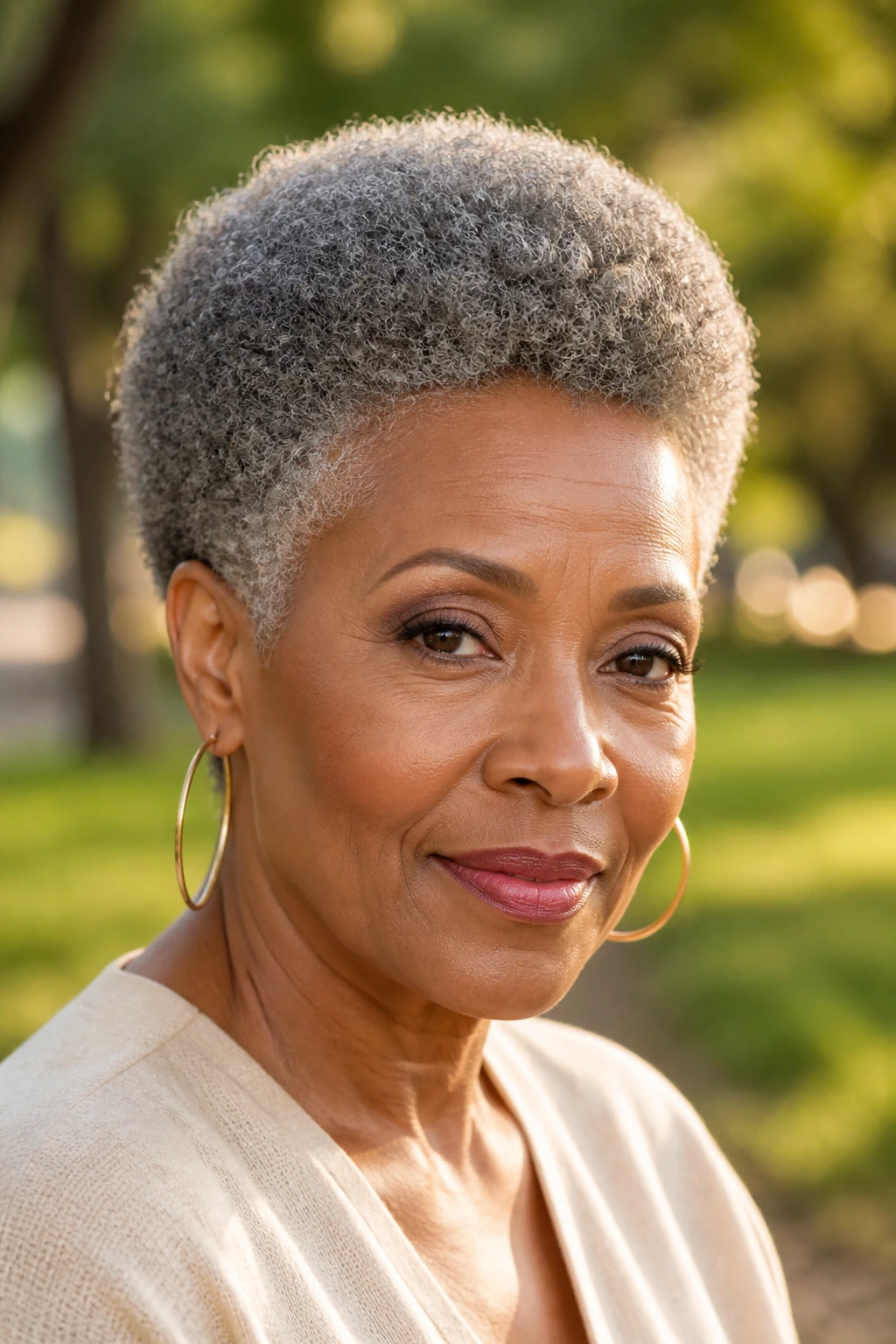
A sculpted tapered afro should be shaped, not flattened. The sides are kept neat, the crown keeps a rounded body, and the outline follows the natural growth pattern of the hair. That shape matters because coils and curls shrink differently in different zones, and a good taper respects that.
The best versions keep moisture in the hair and let the texture stay soft rather than crispy. A leave-in conditioner, a curl cream, and a little oil on the ends can keep the shape from getting dry-looking. A dry curly shape is usually a sad curly shape.
This cut is especially satisfying when the taper is clean around the ears and nape. It makes the crown read fuller without adding bulk where you do not want it.
22. Piecey Salt-and-Pepper Pixie
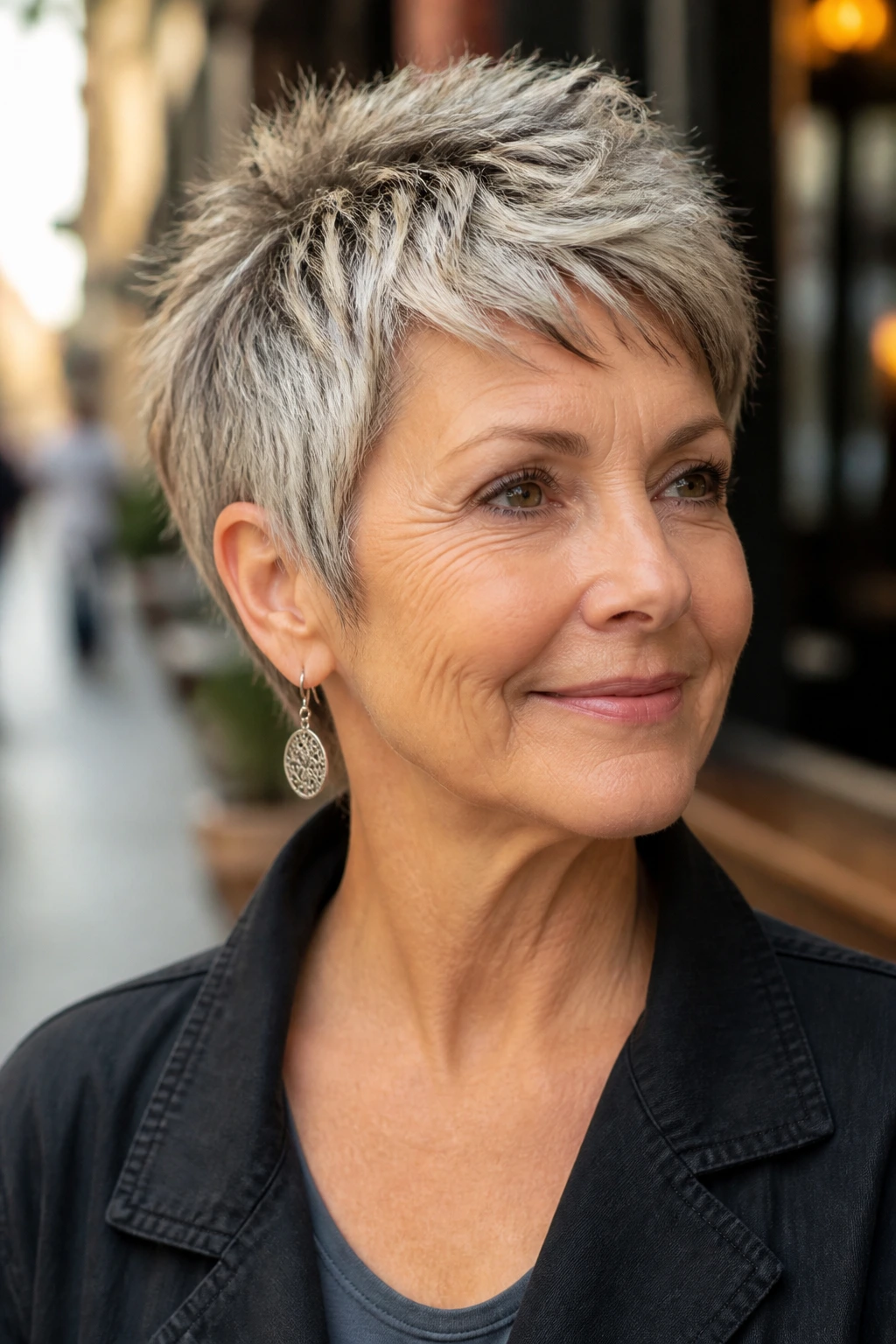
A piecey salt-and-pepper pixie is a cut that knows exactly what it is. The layers are short enough to give the hair movement, and the color variation does a lot of the work for you. The lighter and darker strands catch the eye in a way that makes the texture look deliberate, not patchy.
This style thrives on separation. A matte paste or light wax lets the pieces show rather than merging into one flat shape. I prefer this finish over anything glossy here; shine can make the cut look oily if the hair is fine.
It’s one of the easiest cuts to wear if you like personality in a short shape. It doesn’t need much. A clean neckline, a slightly longer top, and a bit of finger styling are usually enough.
How to Choose the Short Cut Your Hair Can Actually Hold
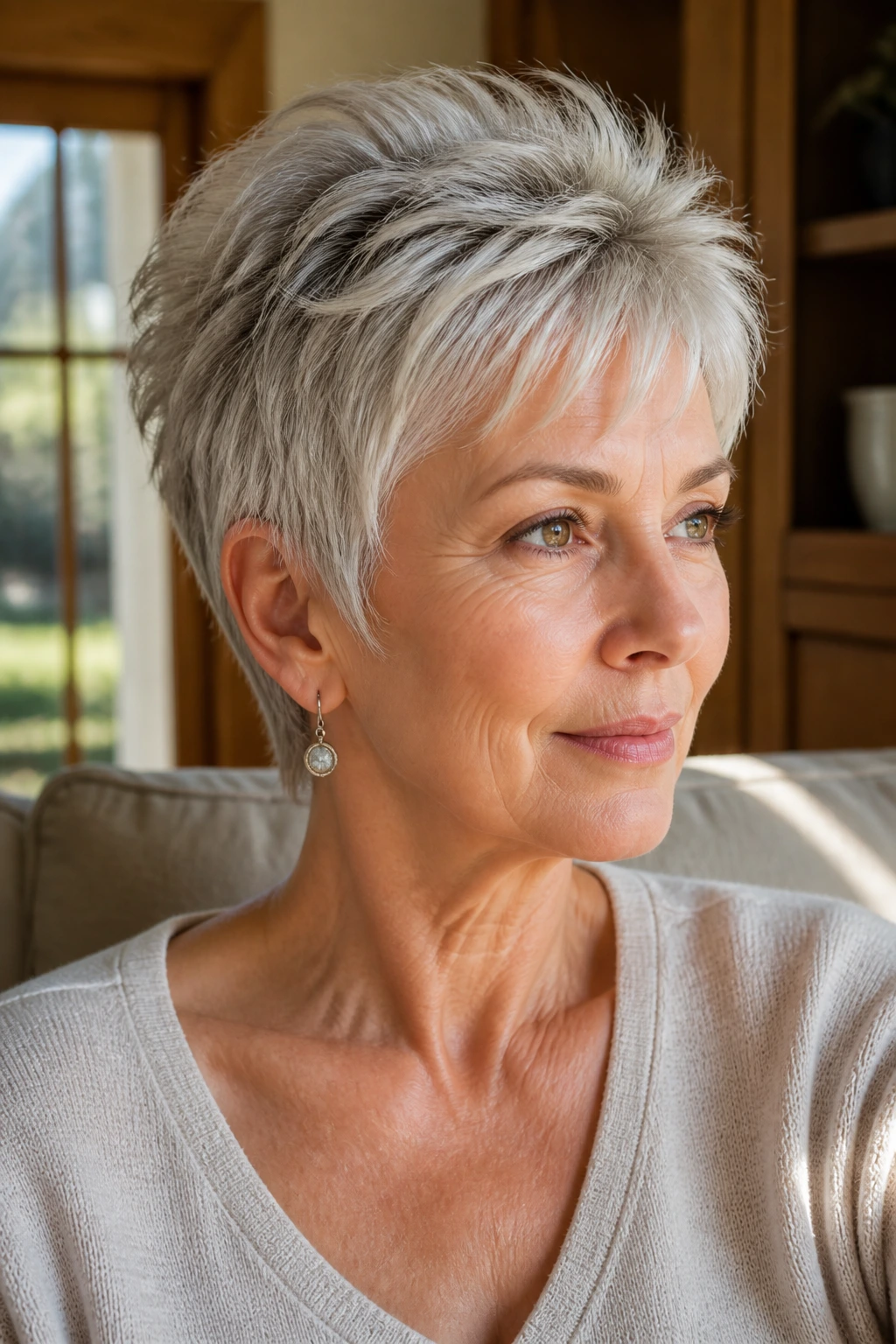
A good short haircut starts with the hair you have, not the hair you wish you had. Fine hair needs a different shape than coarse hair. Straight hair behaves differently from waves that puff up at the ends. Curls need room to spring, and cowlicks need to be negotiated instead of bullied.
Fine hair: Look for blunt weight lines, soft crown lift, and light layering. Too many short layers can make the hair look see-through.
Thick hair: Ask for internal removal of bulk, a tapered nape, and clean edges around the ears. Without that, thick hair spreads out.
Curly hair: Cut with the curl pattern in mind, ideally dry or mostly dry. A good curly crop is shaped, not just shortened.
Glasses: Leave a bit of breathing room at the temples and don’t let a fringe sit exactly on the frame. That collision makes the whole face feel crowded.
Neckline and growth pattern: If your neckline is high or your hair swirls at the crown, choose a style that works with those shapes. Fighting them every morning is a tax you do not need to pay.
Essential Tools for Short Hair Styling
-
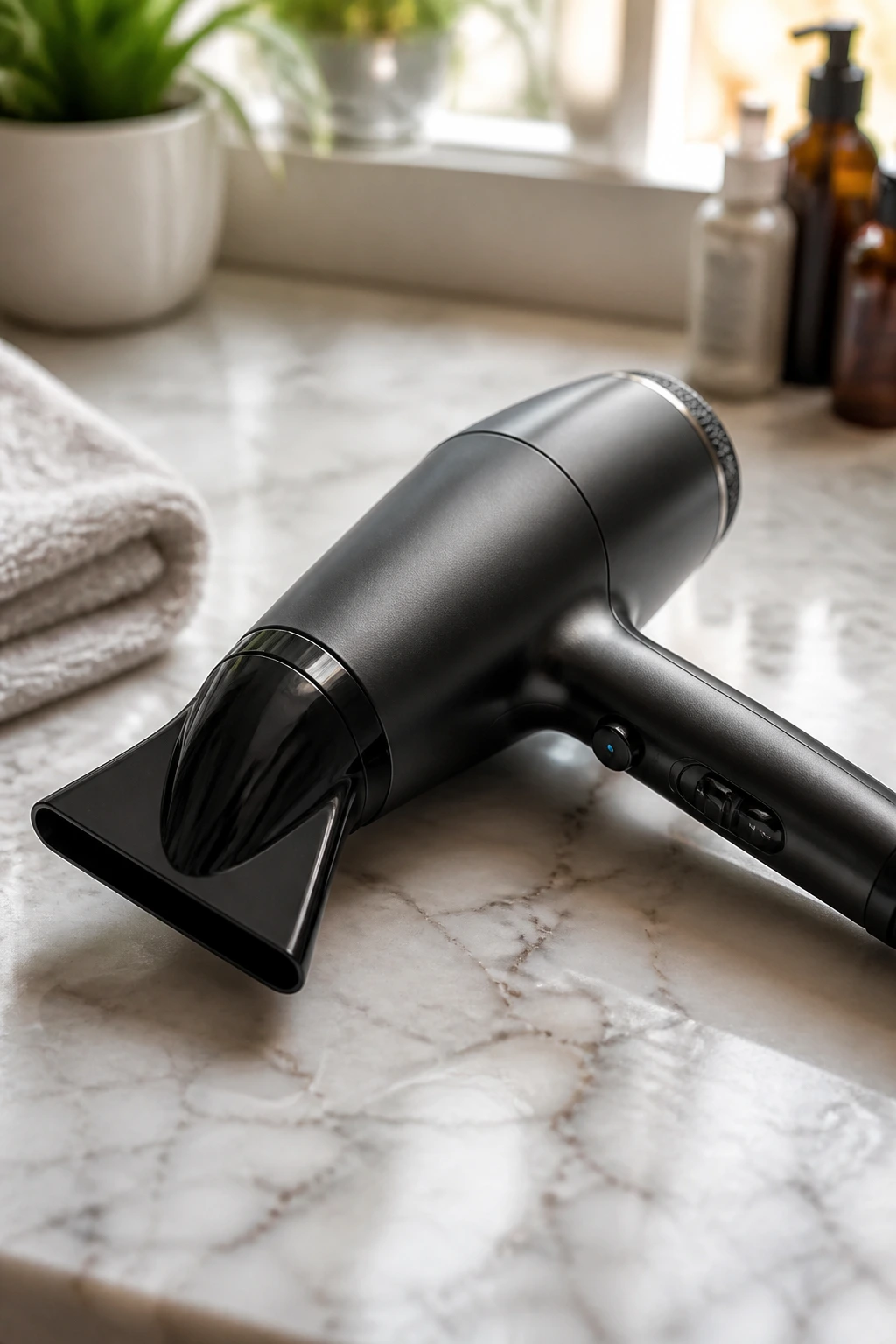
Blow dryer with a nozzle attachment: Directs airflow where you want lift, especially at the crown and fringe.
-
1 to 1.25-inch round brush: The workhorse for bobs, pixies, and any shape that needs a bend at the ends.
-
Vent brush or paddle brush: Best for quick drying and smoothing without building too much curl.
-
Wide-tooth comb: Useful for curly crops and for spreading leave-in conditioner without pulling.
-
Duckbill clips: Handy for holding the top section while you dry the sides and nape.
-
Lightweight mousse: Gives root support without making fine hair feel stiff.
-
Texture paste or matte wax: Good for piecey pixies and bixies; use a pea-sized amount, then add only if needed.
-
Curl cream or leave-in conditioner: Necessary for curly cuts that need definition more than hold.
-
Finishing spray with flexible hold: Keeps shape in place without turning the hair crunchy.
-
Satin pillowcase: Cuts down on roughness overnight and keeps short pieces from sticking up like little wires.
How to Keep Short Hair Looking Sharp Between Trims
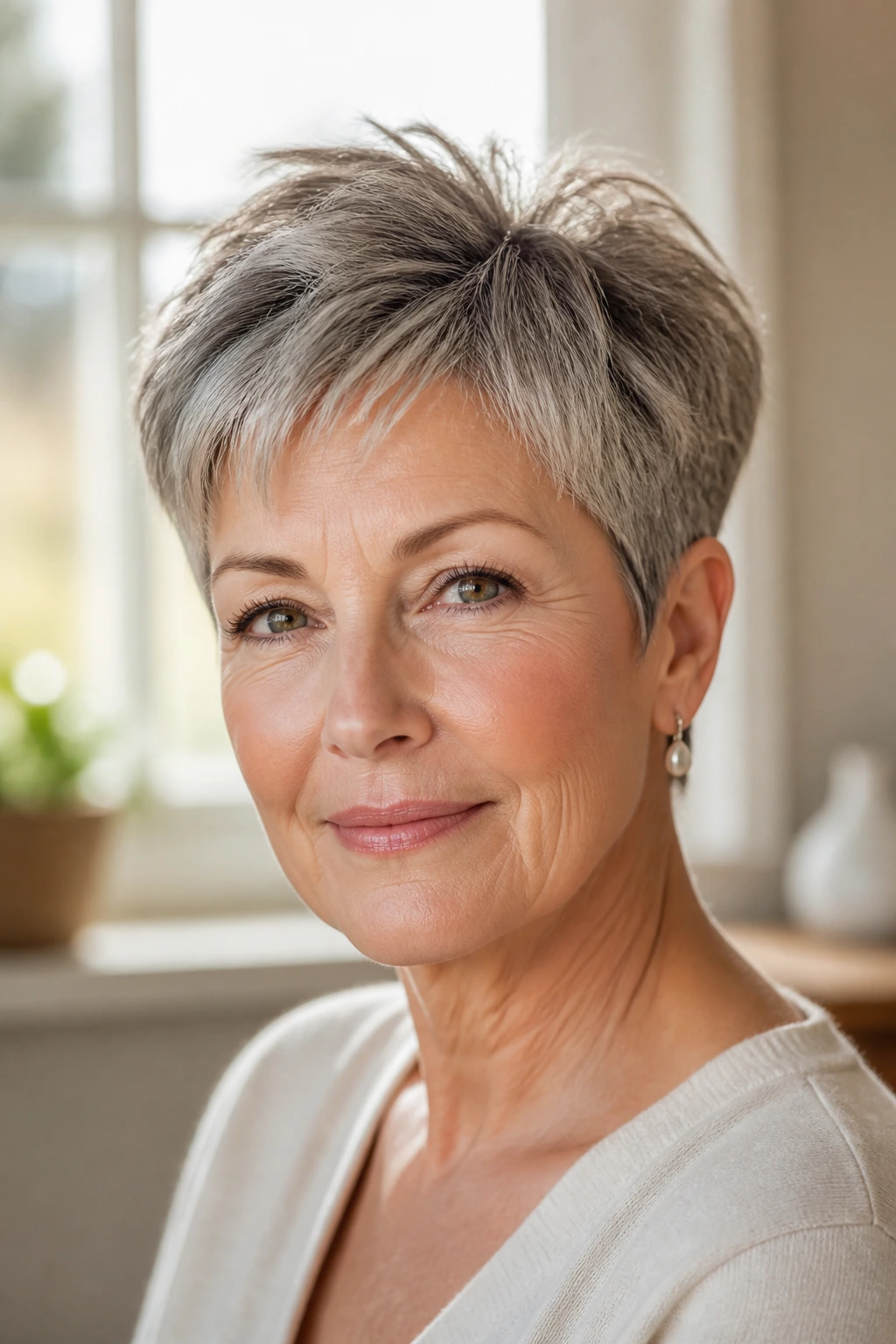
Short hair has a short memory. That’s the blunt truth. A pixie can lose its clean line in 4 to 5 weeks. A bob usually buys you 6 to 8 weeks, sometimes a little longer if the shape is soft. Curly cuts can stretch farther between trims, but they still need shaping before the silhouette turns boxy or triangular.
Wash frequency matters more with short hair than a lot of people realize. If your scalp gets oily fast, three to four washes a week may be fine. If your hair is dry or gray, washing two to three times a week can be kinder, especially if you use a gentle shampoo and focus it on the scalp, not the ends.
Nighttime care is tiny but useful. Sleep on a satin pillowcase, or at least avoid cotton that roughs up the cuticle. If the fringe has a habit of sticking up, mist it with water in the morning and re-dry it for 20 to 30 seconds instead of drowning it in product.
The other thing that helps? Asking for a trim before the shape is ruined. Waiting until short hair looks desperate means you’ve waited too long. That’s where the cut starts feeling old, even when the hair itself is fine.
Common Mistakes That Make Short Hair Look Older
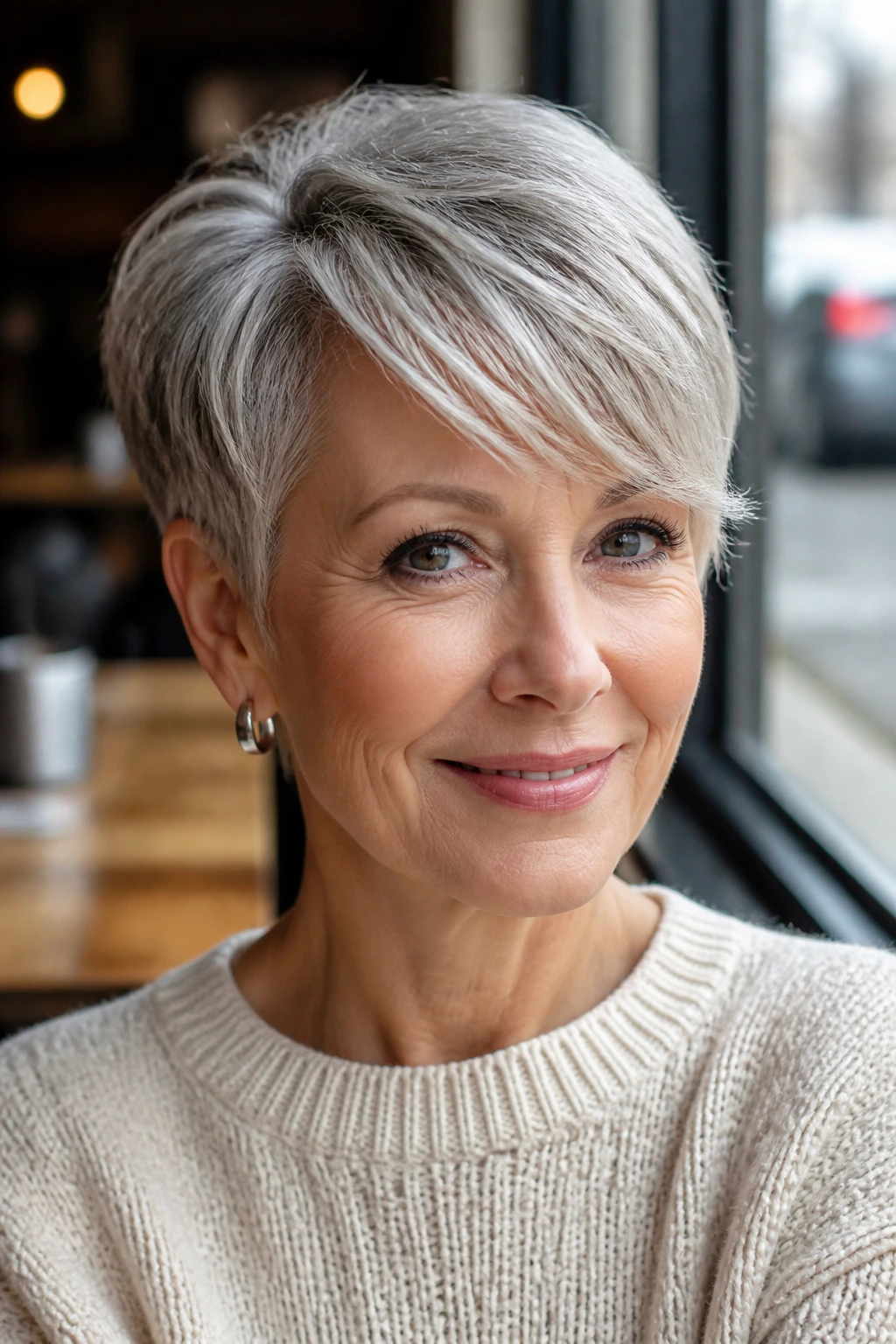
The biggest mistake is choosing a photo without checking the shape underneath it. A cut can look lovely on a model with dense, straight hair and still fall apart on fine, wavy hair with a swirl at the crown. The fix is to translate the idea, not copy the exact picture.
Another common error is over-thinning curly or coarse hair. It sounds like a good way to remove bulk, but too much thinning leaves a frizzy halo and ends that split apart. If the hair is thick, ask for weight removal in the right places, not random texturizing.
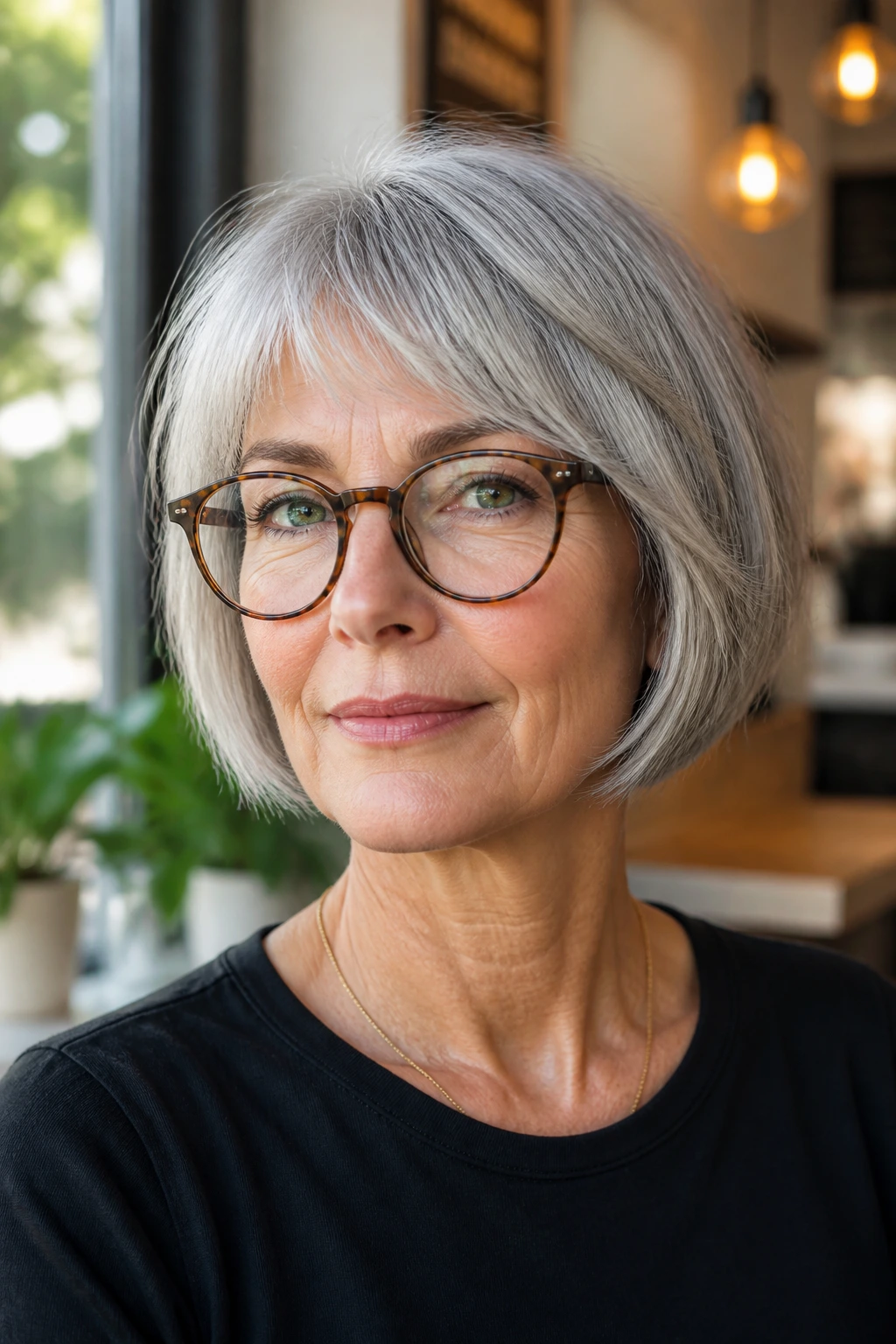
Bangs cause trouble when they’re too blunt, too short, or cut without thinking about glasses. The symptom is a front that keeps bouncing around your eyes or sitting right on the frame. A side-swept or wispy fringe usually behaves better.
Cutting the crown too short is another one. The top goes flat, the scalp shows more, and the whole style can look older in a hurry. Leave enough length for lift, even if it means sacrificing a tiny bit of that super-short pixie fantasy.
Heavy product is the quiet saboteur. A dime-sized dab can become too much on short hair fast, especially if the strands are fine. Start smaller than you think. You can always add another touch.
Fresh Variations to Try If You Want a Softer or Bolder Finish
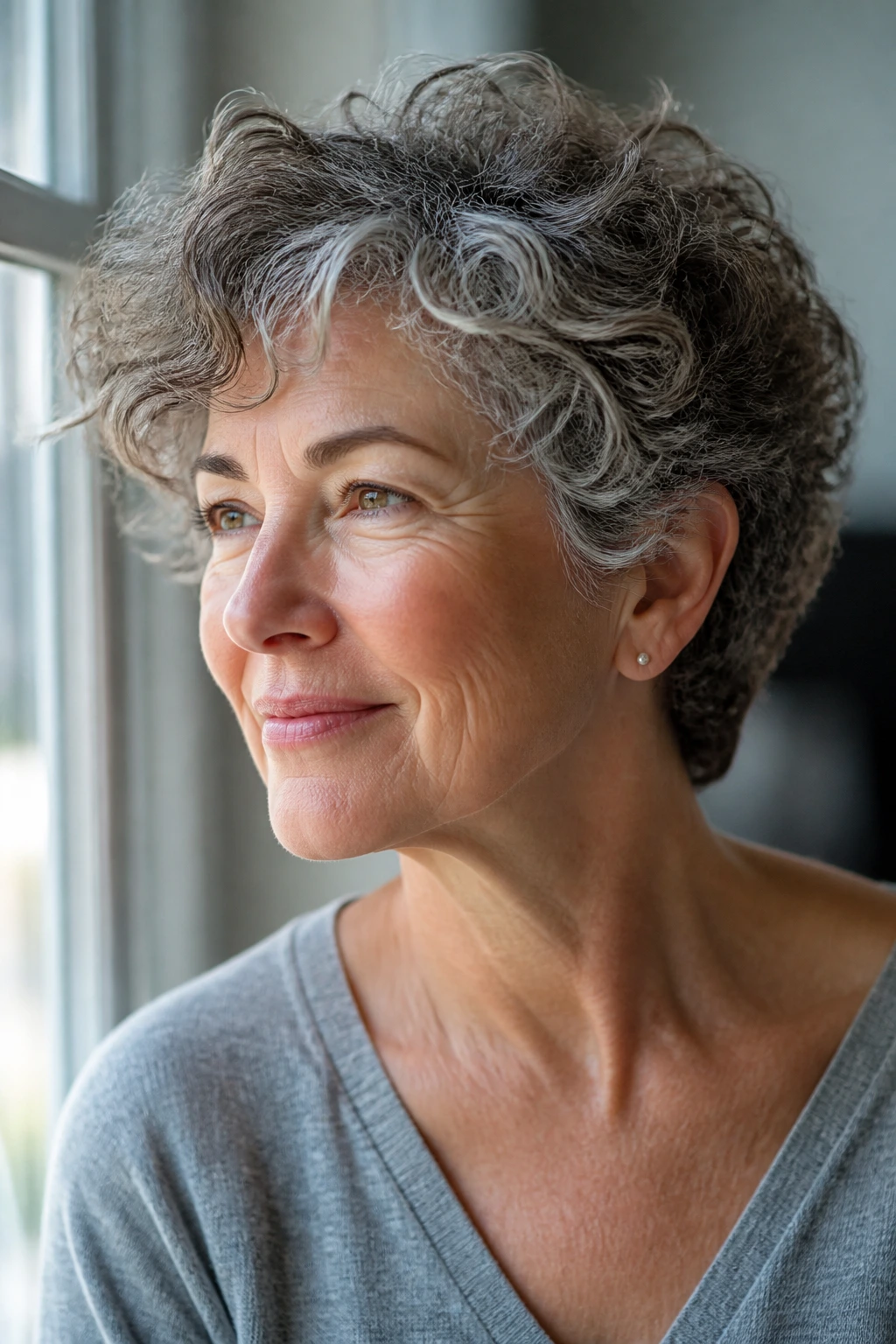
The Softer Grow-Out: Keep the nape trimmed but leave the top and fringe a little longer than usual. This works if you want a short cut that won’t look messy after five weeks, and it grows out with less drama.
The Glasses-First Fringe: Ask for a fringe that ends just above the frame line or sweeps away from the temples. It stops the front from competing with your glasses and keeps the face open.
The Curl-Respecting Version: Keep curls longer on top, with less aggressive thinning at the sides. Dry cutting and a diffuser make this version behave better than a wet haircut that ignores shrinkage.
The Silver-Showcase Shape: Choose a crisp outline with textured ends and a bit of shine at the top. This one makes salt-and-pepper color look intentional, especially when the layers are clean.
The Low-Maintenance Air-Dry Cut: Leave enough length to tuck, sweep, or scrunch, then ask for soft edges rather than a lot of precision. It’s a good fit if you want a shape that looks decent without heat.
Questions People Ask Before Going Short
Will short hair make my face look older?
Not if the shape is right. Harsh lines, heavy bangs, and flat crowns are what age the face, not short length itself. A soft fringe, a little lift at the crown, and a clean neckline usually do the opposite.
What short haircut makes fine hair look fuller?
A feathered pixie, bixie, or rounded bob with internal shaping tends to work well. The goal is controlled lift, not too many short layers that leave the hair looking wispy.
Are bangs a bad idea after 60?
No, but blunt bangs can be high-maintenance. Wispy, side-swept, or cheekbone-skimming bangs usually behave better and are easier to grow out if you change your mind.
How often should a short haircut be trimmed?
Pixies often need shaping every 4 to 5 weeks. Bobs can usually go 6 to 8 weeks. Curly styles may need less frequent cutting, but they still need regular shaping around the outline.
What if my hair is very curly or frizzy?
Choose a cut that gives the curls room without over-thinning them. A dry or mostly dry cut, plus leave-in conditioner and a diffuser, usually works better than a blunt wet cut.
Can I wear short hair if I have a double crown or cowlick?
Yes, but the cut has to work with the growth pattern. Ask your stylist to leave enough length at the trouble spot so the hair can settle instead of sticking straight up.
Is a bob easier than a pixie?
Not always. A bob can need more blow-drying, while a pixie can need more frequent trims. The easier cut is the one that fits your texture and your morning routine.
What should I tell my stylist in the chair?
Talk about how you dry your hair, whether you wear glasses, and which parts of your hair misbehave. A good stylist needs that information more than a celebrity photo.
The Shape That Fits
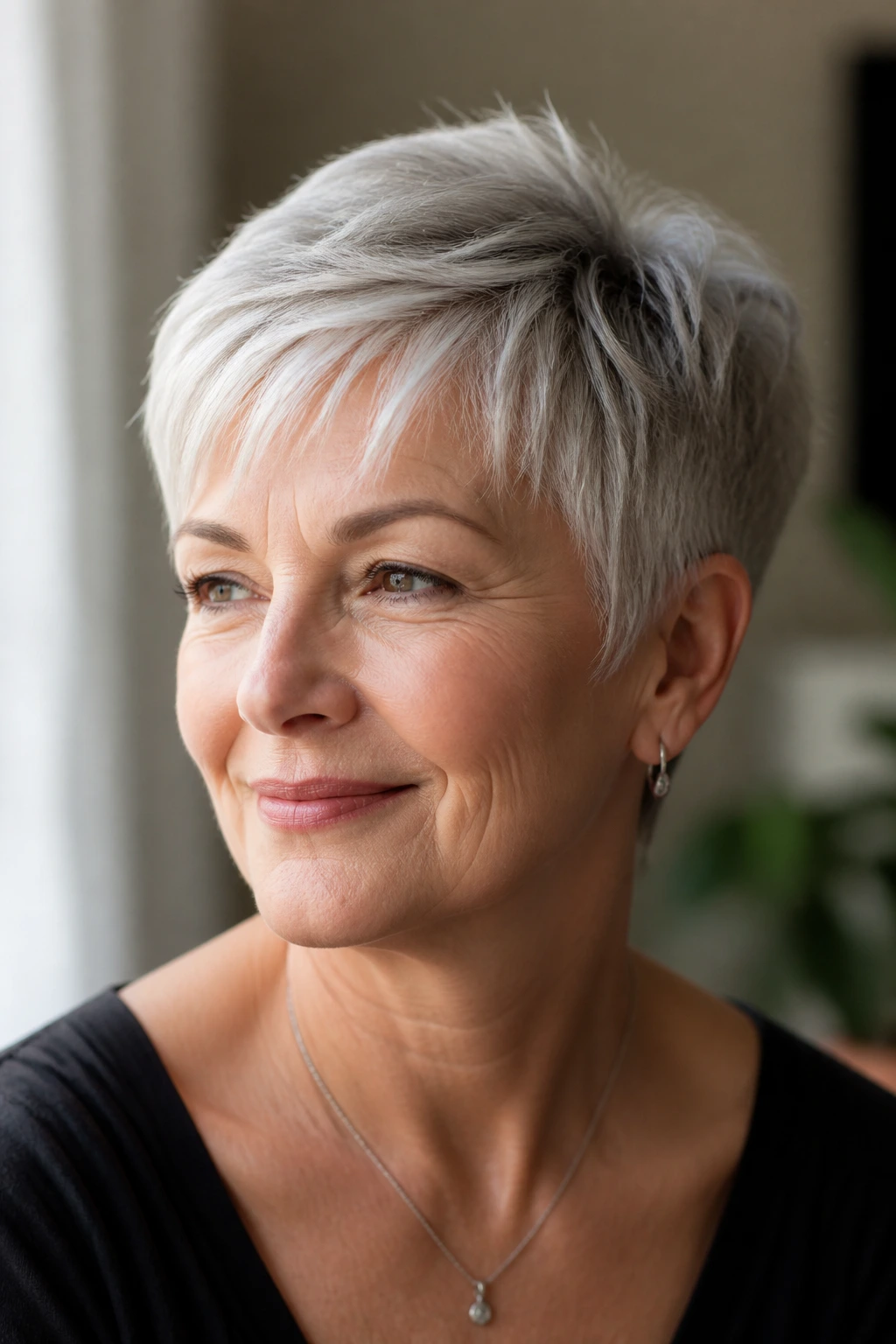
The nicest thing about short hair after 60 is that it can stop being a compromise. It can be sharp or soft, neat or airy, polished or a little undone. What matters is that the cut matches the way your hair actually grows and the way you actually live.
That’s the part people miss when they chase “short.” Short is only the length. The shape is the real decision. Once you get that right, the rest gets easier fast — the drying, the styling, even the way you look in the mirror when your glasses are on and your hair is doing exactly what it should.