



A good haircut can change how your hair behaves before you’ve touched a single hot tool. That matters a lot with Korean long haircuts for women over 50 with fine hair, because the wrong shape turns every extra inch into stringy ends, while the right one makes the whole head read as fuller, softer, and more expensive-looking than it actually is. Fine hair does not need to be chopped to the chin to look alive. It needs the weight handled with a little more judgment.
The trick is that “long” does not have to mean “heavy.” In Korean-inspired cuts, the line is usually cleaner, the movement sits in smarter places, and the face frame is chosen with intent — not hacked in with a razor and good intentions. That’s why these cuts can be so flattering after 50. Hair often gets a touch drier, a bit less dense at the crown, and a little more prone to flattening at the roots. A cut that respects that reality is worth its weight in gold.
What I like most here is the range. Some of these cuts stay sleek and polished. Some lean airy and feathered. A few bring in bangs, but only the kind that don’t swallow the face whole. If you’ve been told that fine hair and long hair are enemies, the styles below should make you side-eye that advice a little. There’s a smarter way to keep the length.
Why This Collection Feels Different
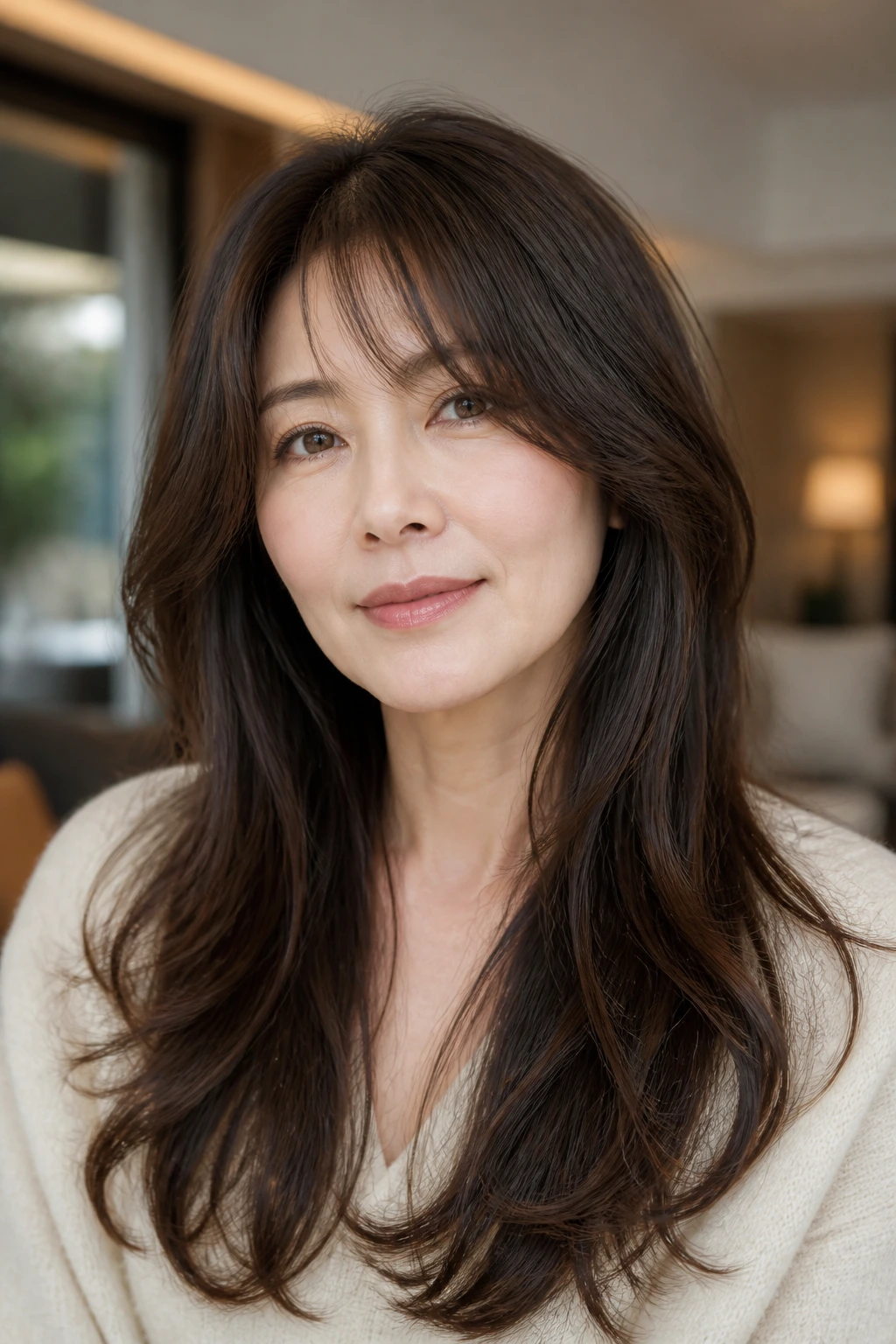
-
The length stays, but the hemline gets stronger: These cuts keep the bottom looking intentional instead of wispy, which matters when fine strands start to go transparent at the ends.
-
Movement is placed where it helps most: The best Korean-inspired layers sit around the face, crown, or mid-lengths, not everywhere at once, so the cut still looks full.
-
Bang options are light, not bulky: See-through bangs, curtain pieces, and side-swept fringes soften the face without building a heavy curtain across the forehead.
-
They work with glasses, silver strands, and color-treated hair: The shapes below can be adjusted so they don’t fight frames, gray regrowth, or delicate ends.
-
Styling stays realistic: Most of these cuts need a round brush, a blow dryer, and a little wrist action — not a curling iron marathon before breakfast.
1. Soft C-Cut Lengths
A soft C-cut gives the ends that gentle inward sweep you see in polished salon photos, except it actually earns its keep on fine hair. The curve makes the perimeter look deliberate, which is half the battle when the strands themselves are delicate. Around the face, it softens the jaw; through the back, it keeps the length from looking like a dry string.
Why it works on fine hair
The C-shape keeps weight at the bottom, so the cut does not collapse into a see-through ladder of layers. Ask for the shortest face-framing piece to start around the cheekbone, then let the rest drift down toward the collarbone. That spacing gives the eye a smooth line to follow.
- Keep the perimeter blunt enough to look full.
- Let the front curve under with a round brush.
- Skip aggressive thinning shears near the ends.
Best styling cue: Blow-dry the front pieces away from the face first, then tuck the ends inward for a clean C-shape.
2. The Hush Cut with Airy Ends
The hush cut has a quiet, feathery finish that can be a gift for fine hair when it’s done with restraint. The point is not to carve the hair into pieces. The point is to create movement without making the ends look chewed up. That difference matters more than people think.
On women over 50, this cut works best when the layers are softened through the mid-lengths and left almost intact at the bottom. You get lift around the cheeks and a little bend in the body, but the hemline still holds together. If your hair goes flat by noon, this is one of the better options because it lets the shape move without demanding a ton of volume.
3. Curtain Bangs and Long Face Frames
Can bangs help fine hair? Yes — if they’re light enough to breathe. Curtain bangs can make the forehead area look softer without stealing too much density from the rest of the head, which is the mistake I see most often with mature hair and fringe.
How to wear it
Ask for curtain pieces that start narrow at the center and open gradually toward the cheekbones. The longest parts should blend into the rest of the cut rather than stopping abruptly at the chin. That creates a face frame that feels grown-up, not boxy.
- Keep the center of the bang section sheer.
- Blend the side pieces into the front lengths.
- Use a large round brush or a blow-dry brush to bend the fringe away from the face.
This is a strong choice if you want the eyes and cheekbones to do more of the visual work.
4. Blunt Mid-Back Length with Hidden Lift
A blunt mid-back cut sounds plain, and that’s exactly why it works. When fine hair is long, bluntness gives it a thicker-looking edge, especially if the interior is handled with a light hand. The magic is in what you do not see.
I like this on women whose hair has thinned a bit at the ends but still has enough body in the crown to support length. A stylist can add hidden lift by removing a little weight just under the surface layers, then leaving the visible perimeter solid. That way, the hair moves when you walk, but it still reads as one coherent curtain.
5. Feathered Butterfly Layers
Butterfly layers can look too busy on fine hair if they’re cut with a heavy hand. Done the Korean way — softer, lighter, and closer to the face — they can be surprisingly flattering. The shorter front pieces create a lifted effect around the collarbone while the longer back keeps the hair from feeling chopped up.
This is a good pick if your hair is long enough to fall past the shoulders and you want visible shape without surrendering length. The front should fan outward slightly, then sweep back into the rest of the cut. Think airy, not spiky. If the layers are too high on the head, the whole thing loses its softness and starts to look thin at the bottom.
6. See-Through Bangs with Sleek Length
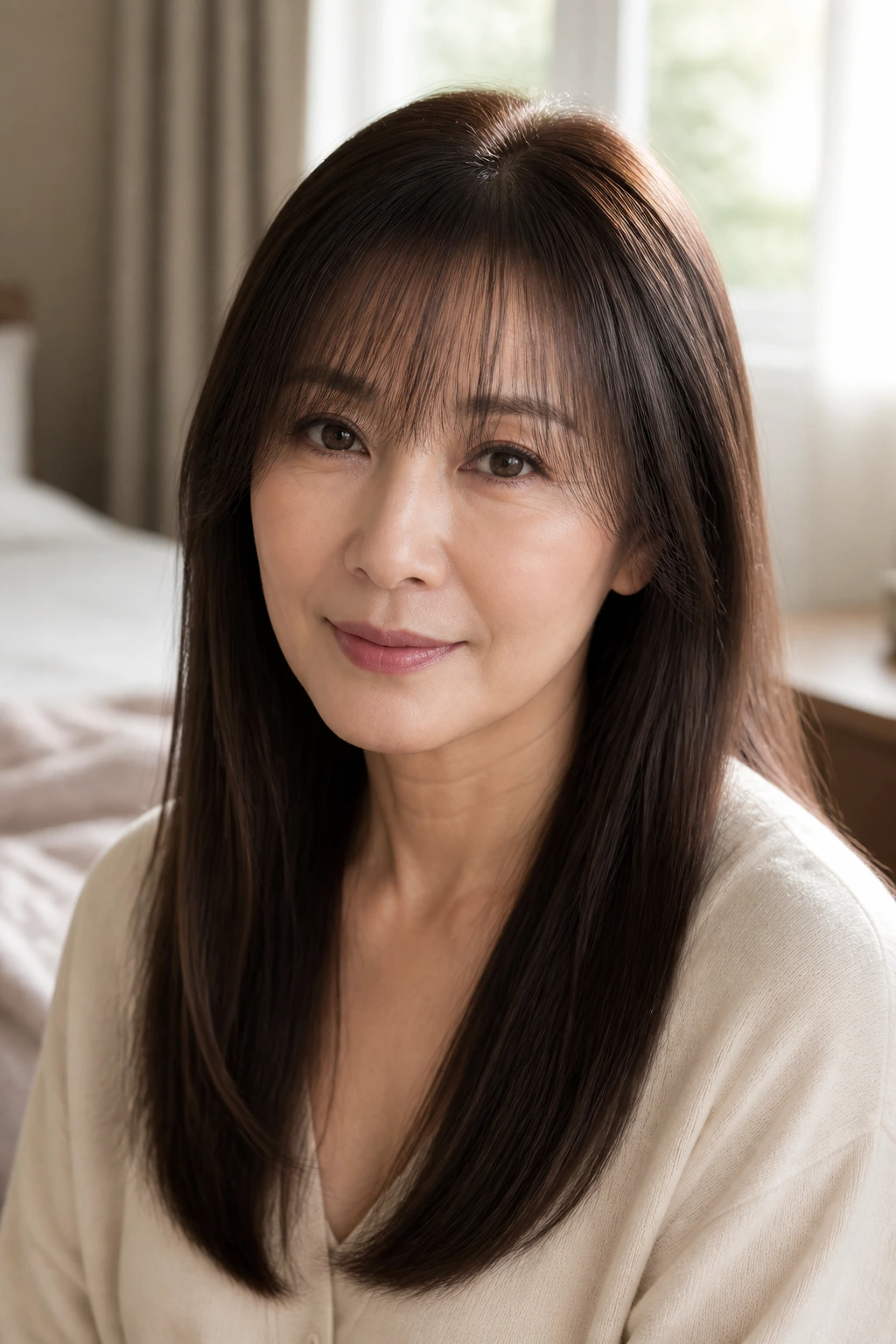
See-through bangs are the antidote to heavy fringe. They let light pass through the front of the haircut, which keeps the forehead area soft without building a block of hair that flattens the rest of the style. On fine hair, that’s a smart trade.
The rest of the length should stay sleek and simple. I prefer this when the client wants a cleaner, straighter finish and does not want the sides taking over the face. The bangs can be trimmed to a narrow center section, then feathered out just enough to sit lightly on the brow. It’s the least fussy fringe in the room, and that’s why I like it.
7. Rounded U-Shape Cut
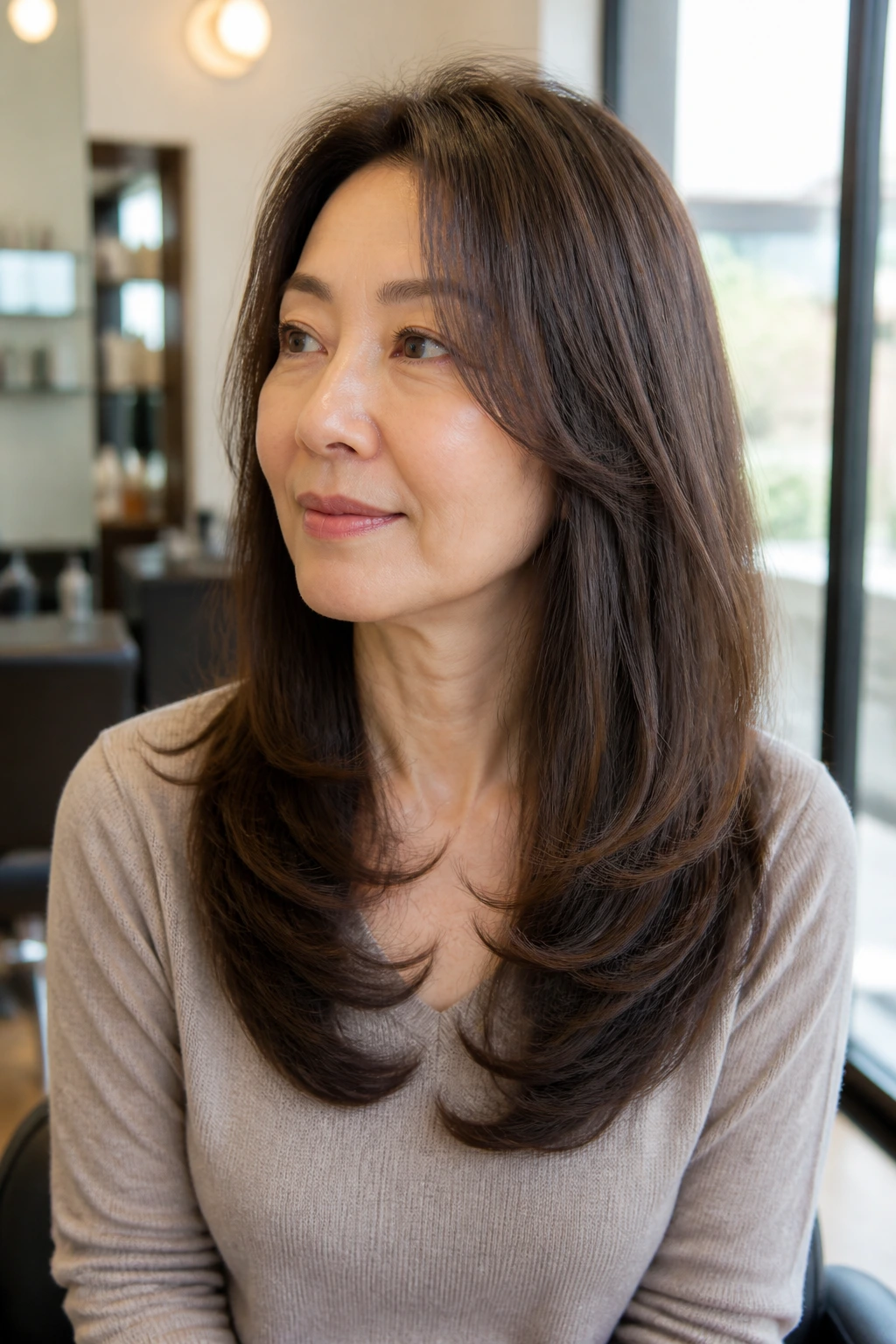
A U-shape keeps more weight at the sides than a V-cut, so the hair looks fuller in motion. On fine hair, that means the ends do not taper into a point so sharp that they disappear when you turn your head. It’s a small thing. It changes everything.
What to ask for
Tell your stylist you want the back to curve gently, not fall into a tight point. The side lengths should stay long enough to frame the shoulders, while the center back sits just a touch lower. If your hair is straight, this cut looks especially clean. If it has a slight wave, the curve gets even softer.
Good for: women who want length, a polished outline, and almost no daily styling drama.
8. Side-Swept Fringe with Draped Layers
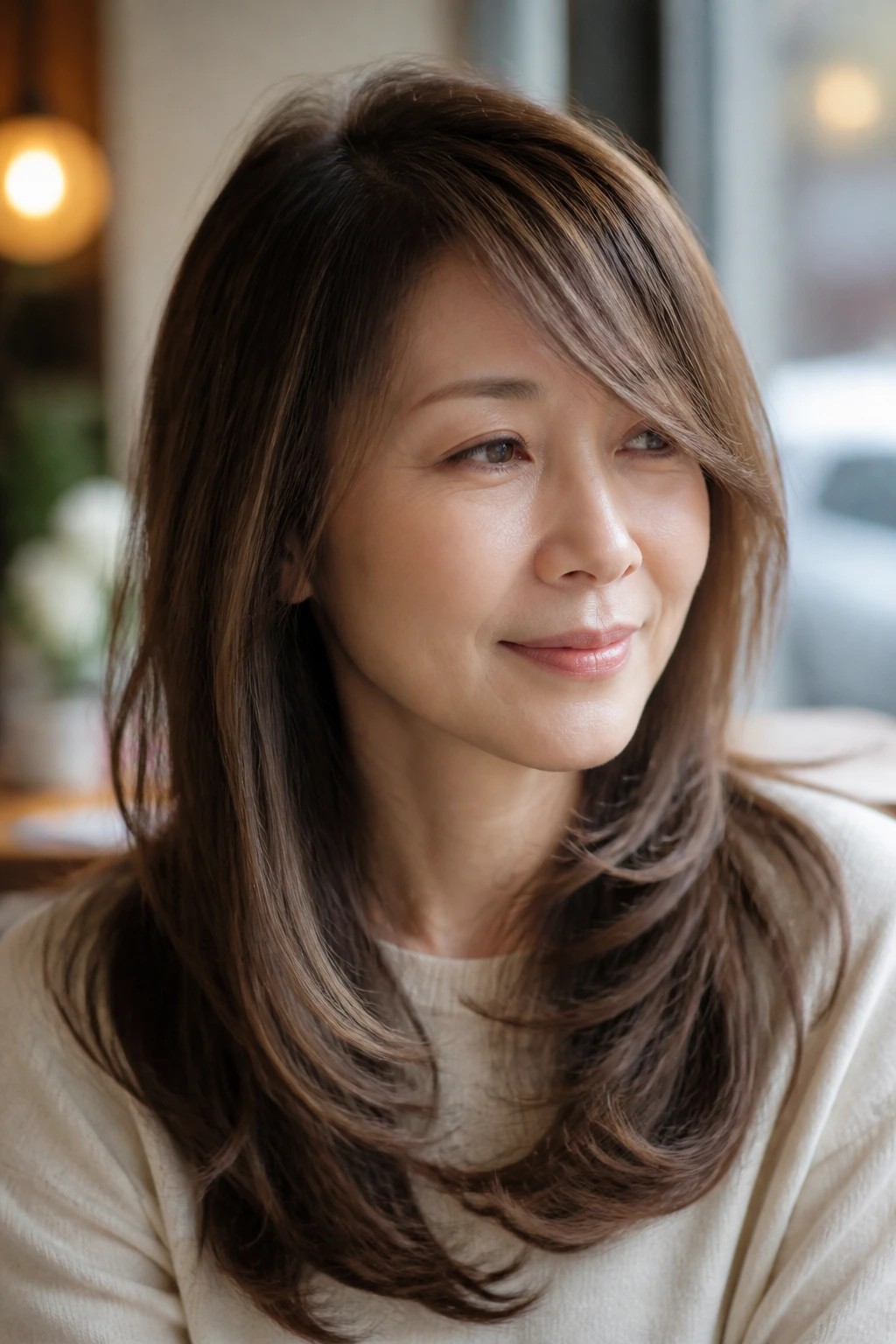
A side-swept fringe is one of those old-school moves that still earns a place because it solves a real problem: it gives the front of the haircut movement without requiring a full curtain bang. That matters when the hairline is finer than it used to be.
This style works well if your part naturally drifts off-center or if you like a little asymmetry around the face. The fringe should be long enough to sweep into the cheekbone, not short enough to bounce awkwardly above the eyes. Keep the rest of the haircut draped and soft, with layers that fall like fabric rather than slices of cake. The result looks easy, but it’s not random.
9. Polished Long Wolf Cut
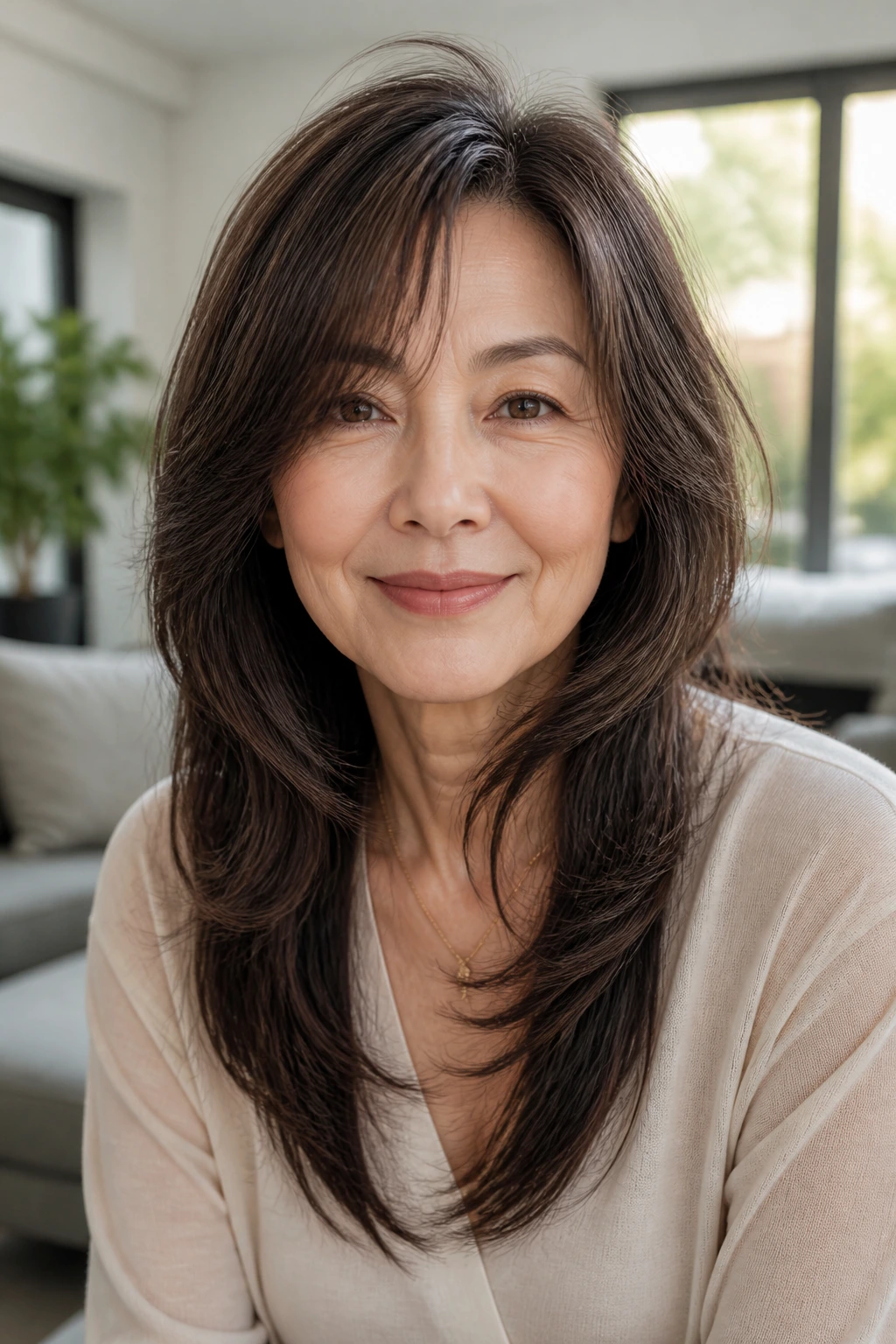
A wolf cut can absolutely work on fine hair — if you stop before it gets crunchy. The Korean version is usually more controlled, with softer transitions between the crown and the lengths. That keeps the hair from turning into a shaggy triangle.
The appeal here is lift. Fine hair often needs a little help at the crown, and this cut gives it that without forcing you into a short style. The trick is to keep the texture refined. Ask your stylist to avoid over-texturizing the lower lengths. You want air and movement, not a shredded outline that goes limp after one wash.
10. Long Shag with Glossy Finish
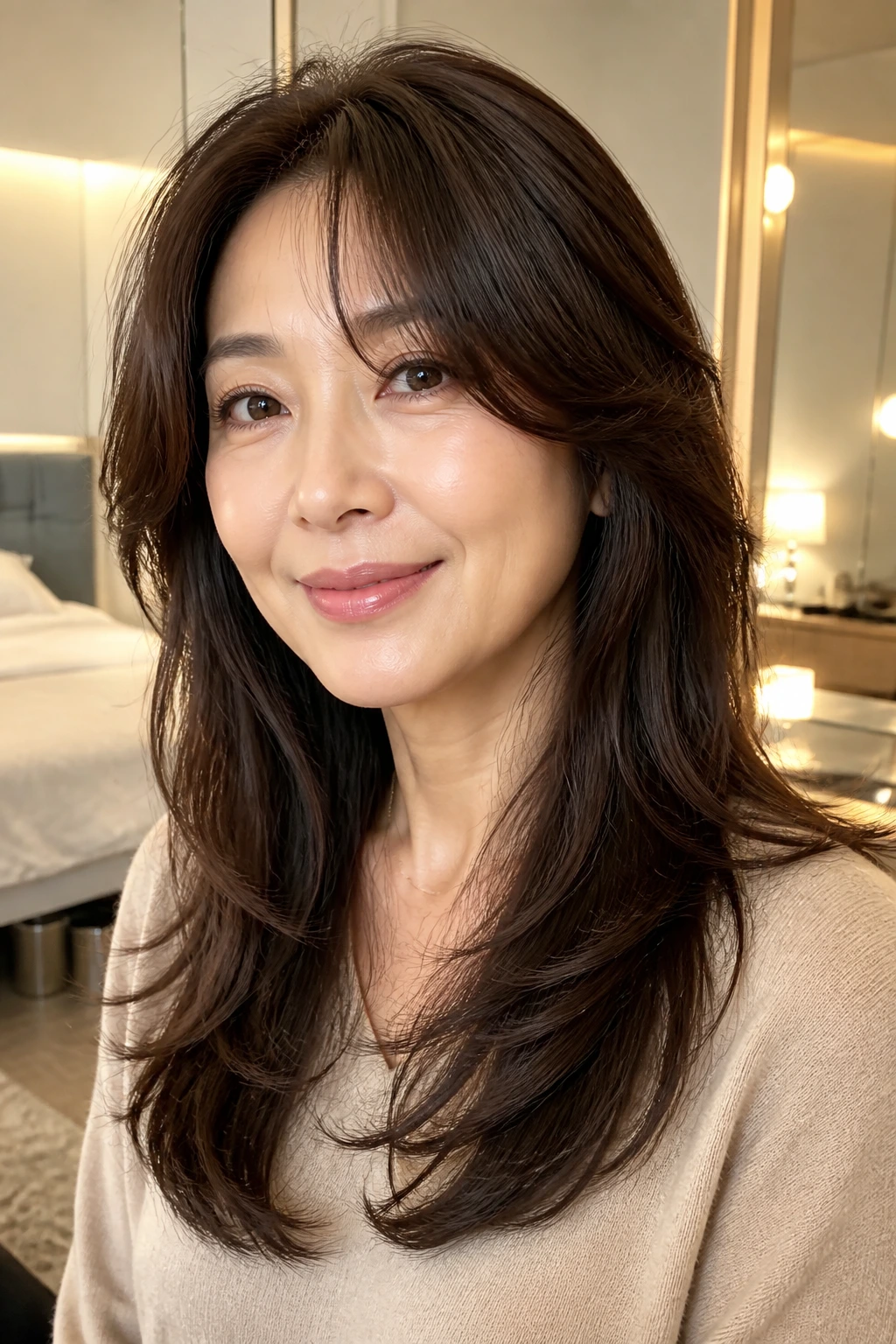
A long shag can look glamorous rather than messy when the layers are spaced well and the finish is smooth. This is the version I’d suggest for someone who likes a little attitude but doesn’t want the hair to look overworked. The layers should start lower than you might expect, usually around the collarbone or below.
On fine hair, the shine matters almost as much as the cut. If the surface is glossy and the ends are tidy, the layers read as deliberate. If the hair is dry and fuzzy, the shag loses its charm fast. That’s why this one needs a decent blow-dry or at least a smart smoothing cream on the mid-lengths.
11. Glass-Hair Straight Cut
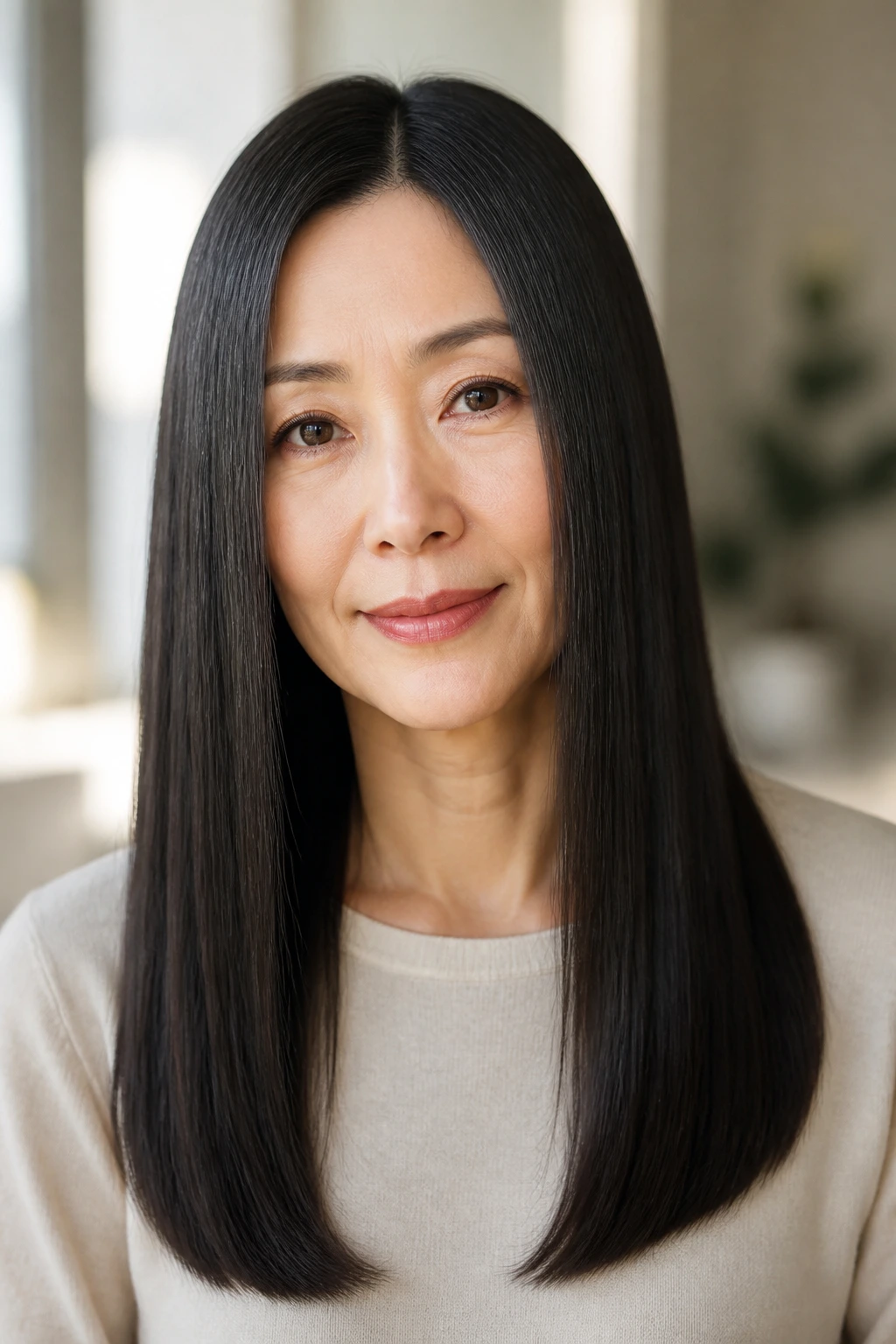
Does fine hair need layers? Not always. Sometimes the smartest move is a long, straight cut with a crisp hemline and a mirror-smooth finish. Glass-hair styling puts the attention on shine and line, which can make fine hair look denser than it is because the eye sees a continuous surface.
The cut itself should stay simple. No busy layering. No choppy ends. If you want a little movement, let the stylist add tiny internal shifts that do not show from the outside. Then style with a flat brush blow-dry and a pea-sized amount of serum on the last two inches. Clean, quiet, expensive-looking. That’s the whole point.
12. Crown-Lift Layers Starting Below the Cheekbone
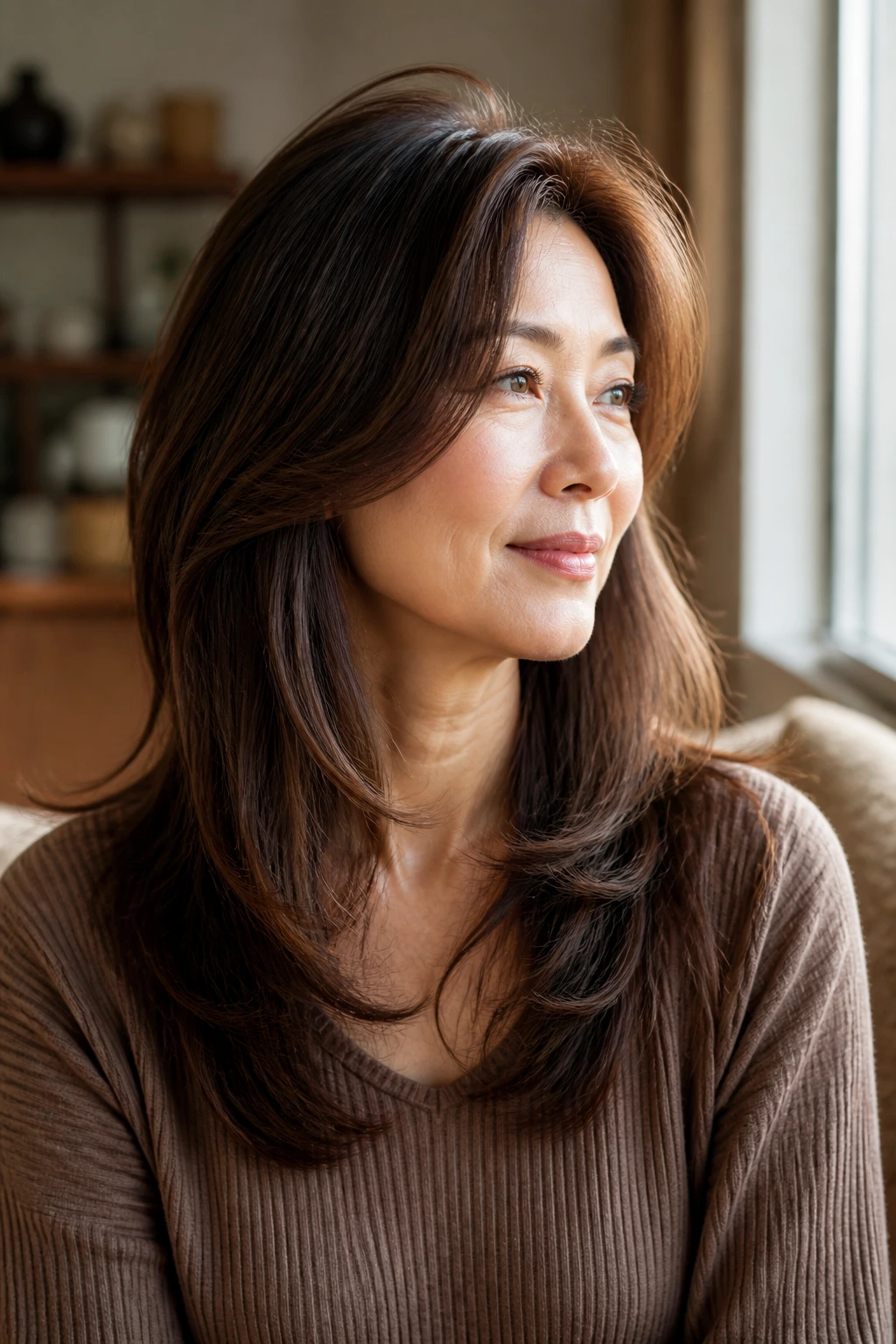
This is the haircut for hair that gets slick at the top and puffy only at the bottom — a common complaint, especially with fine strands after 50. By starting the shorter layers below the cheekbone, the stylist can lift the crown without making the face frame look thin.
It’s a better strategy than high layers, which often leave the top sparse and the rest flat. The length still behaves like long hair, but the root area has room to breathe. If you like a side part, this cut takes to it nicely. If you prefer the center, it can still work, but I’d keep the crown area clipped while drying for a few minutes.
13. Bent-In Ends with Inner Movement
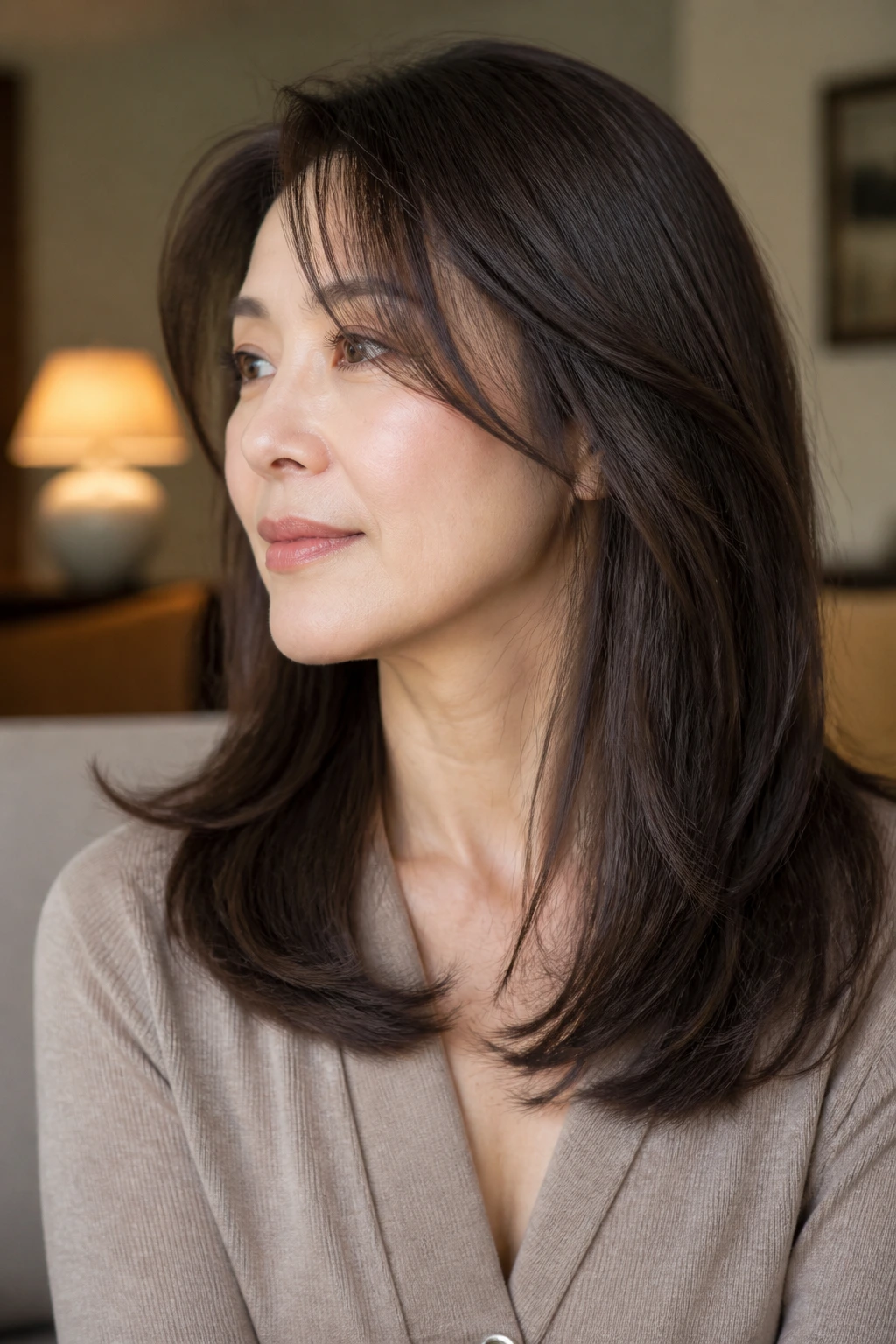
This cut is about the finish. The ends bend inward just enough to keep the outline polished, while the inside of the hair has a little hidden motion. That combination is useful for fine hair because the outer line stays solid even if the inner sections are soft.
Salon note
Ask for a long shape with point-cutting only where it helps the hair sit better, not all over the hemline. The shortest front pieces can skim the cheekbone, then slide into the length. The overall effect is graceful rather than obvious, which is often the sweet spot for mature hair that still wants to feel modern.
14. Digital-Perm Ready Layered Length
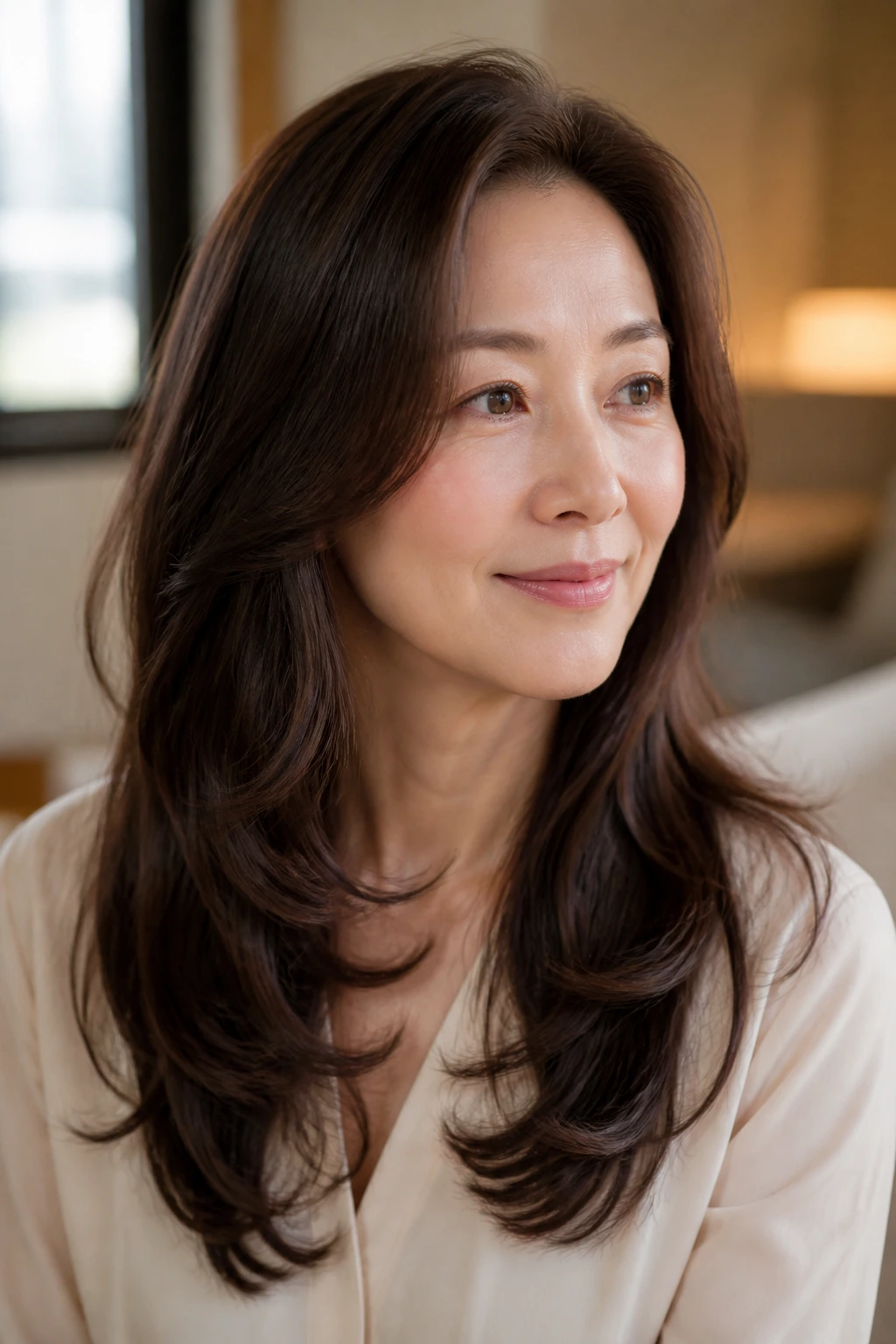
A digital perm can be a smart move if your fine hair refuses to hold a bend, but the cut has to support it. Without the right layering, a perm on long hair can puff out in the wrong places and leave the ends looking sparse. With the right cut, though, it gives body that lasts beyond the first hour.
The layers should be long and soft, never stacked. The shape is built to hold an S-curve, not a tight corkscrew. If you’re thinking about this route, tell your stylist you want movement that stays loose and round. Fine hair usually looks better with larger bends than with lots of tiny curls.
15. Low-Layer L-Shape Cut
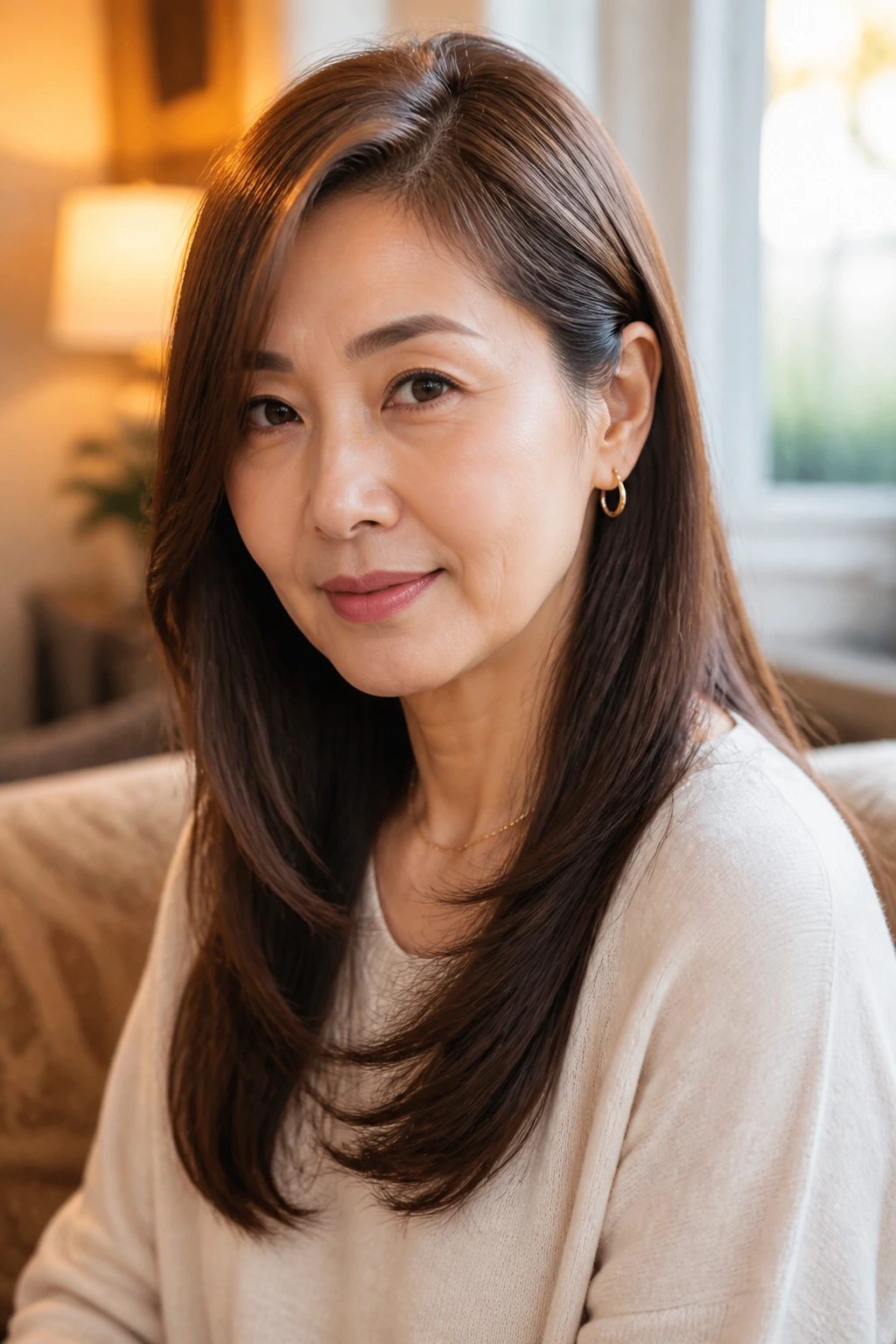
A low-layer L-shape is a useful compromise when you want movement but can’t stand seeing too much of the ends removed. The hair keeps a strong visual length, then tapers just a little as it moves toward the front. That lower placement keeps the density where you need it.
I like this for women whose hair is fine but plentiful enough to hold a long line. The cut looks especially good when tucked behind one ear or worn with a soft side part. It gives the hair a slight lean, which keeps it from feeling static. If your ends tend to fray, this is kinder than a heavily razored style.
16. S-Curve Face Frame
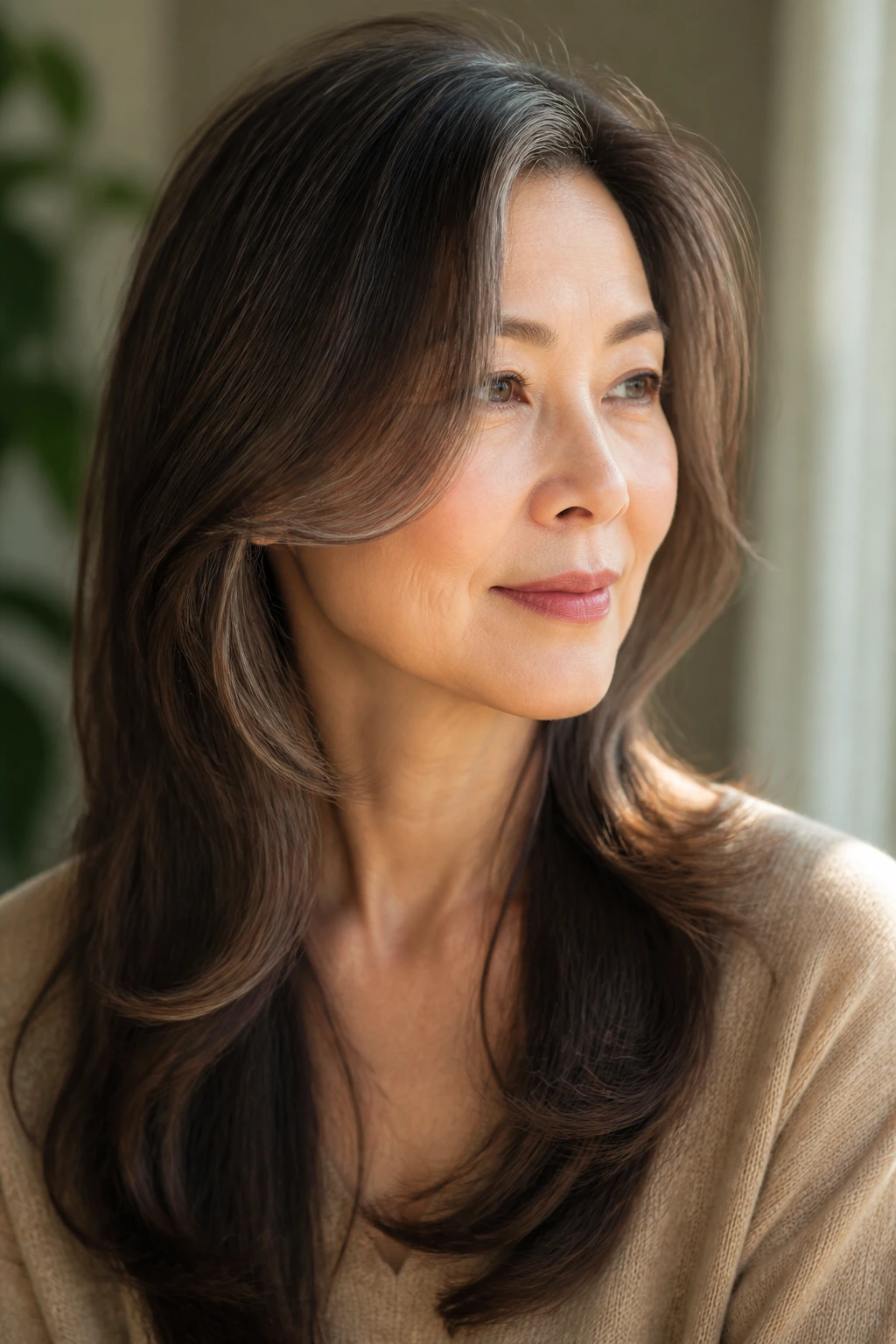
An S-curve face frame is one of those details that looks small on paper and does a lot in real life. The hair bends once near the cheekbone and again near the jaw, which softens the face without making the front pieces bulky. On fine hair, that second bend matters because it keeps the front from hanging like wet ribbon.
The rest of the haircut should stay long and restrained. The front does the talking. The back supports it. If you want a salon ask that sounds specific, say you want a curved face frame that can be blown into an S-shape with a round brush. That tells the stylist you care about movement, not just length.
17. Tapered Ends with Point-Cutting
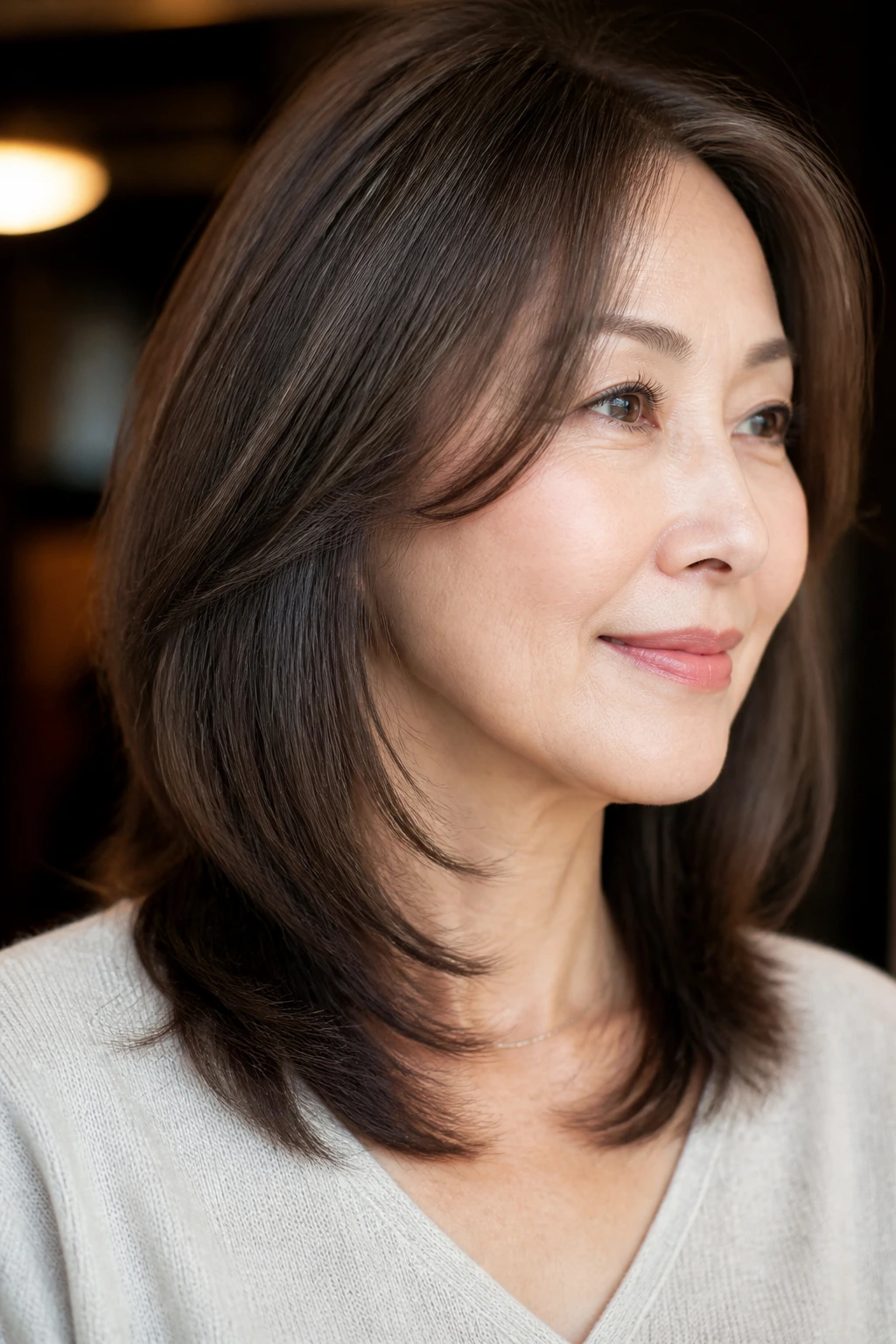
Point-cutting can be a blessing or a mess. On fine hair, a little of it goes a long way. The goal is to soften the perimeter so the ends sit lightly, while leaving enough weight that the hair doesn’t evaporate at the bottom.
This cut works best when the stylist uses the scissors vertically into the very tip of the section, not across a whole horizontal line. That creates a softer edge without blasting through density. If your hair feels bulky around the neck but fragile at the ends, this is a smart middle path. No drama. Just a cleaner fall.
18. Outward-Flip Collarbone Length
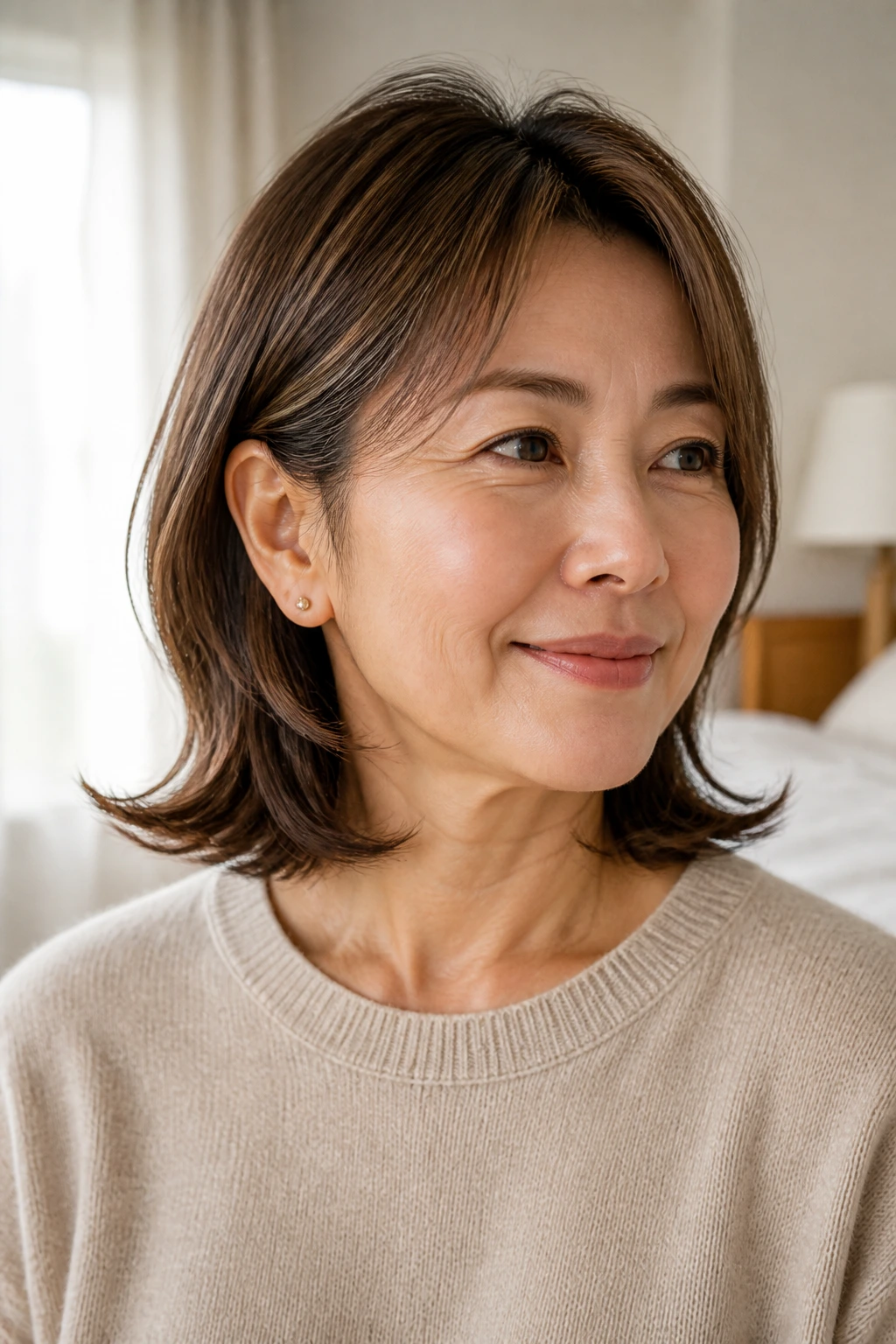
Sometimes the most flattering move is to let the ends flick outward instead of bending under. The outward flip gives collarbone-length hair a little lift and attitude, and it’s a nice fix for hair that wants to collapse inward and cling to the neck.
This cut works especially well with a round brush or a large-barrel hot tool, but the shape should still come from the cut itself. Ask for the length to land around the collarbone with softened ends that can flip out naturally. It’s a good choice if you wear earrings, because the movement around the jaw and neck feels balanced rather than severe.
19. Airy Center-Part Layers
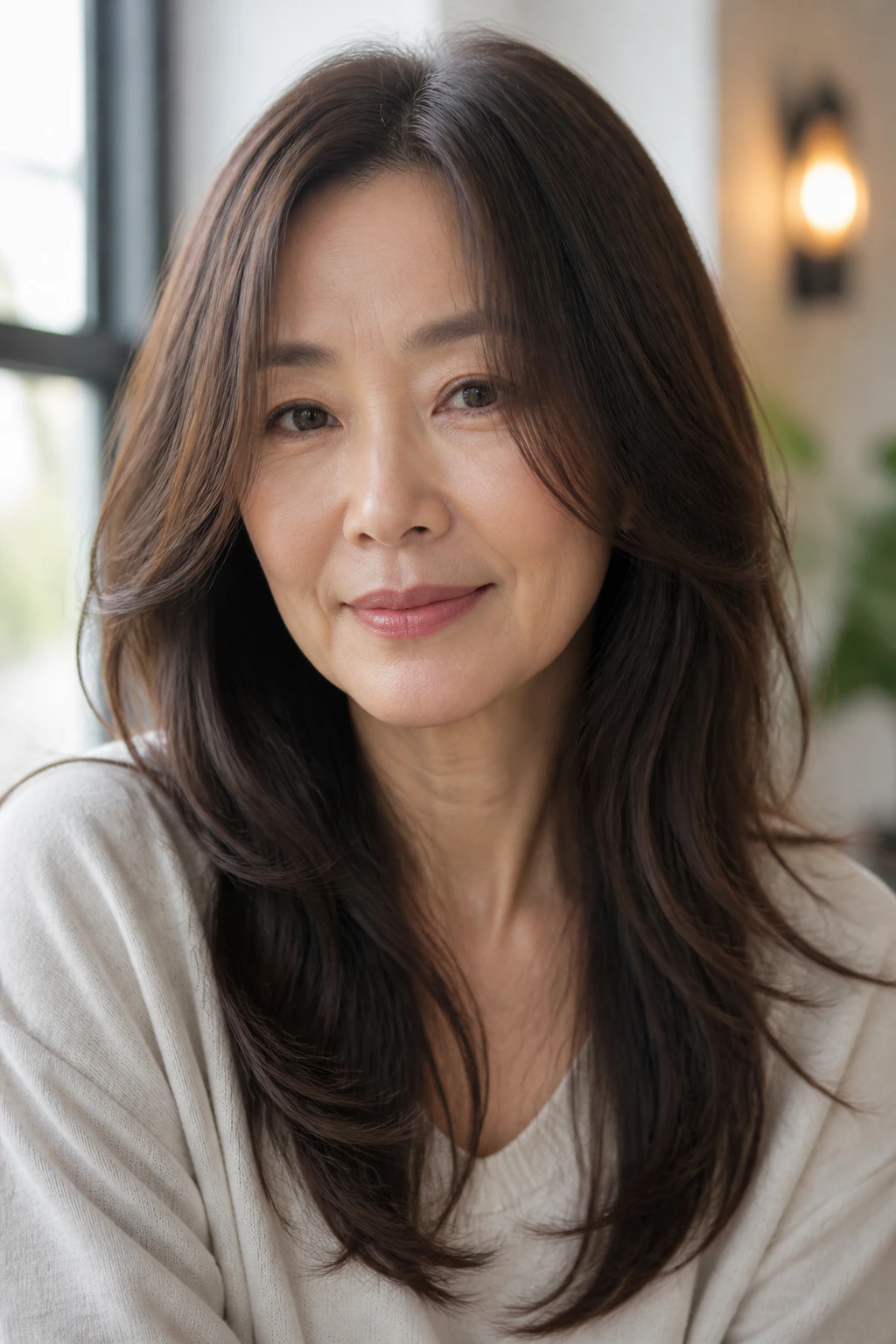
A center part can be unforgiving on flat hair, which is why the layer placement matters so much here. The trick is to keep the front pieces long enough to frame the face, then let the rest of the hair fall in narrow, airy layers that do not eat the perimeter.
I like this on women who want a calm, symmetrical look. It’s clean. It’s easy to wear. And if the ends are kept healthy, it can make fine hair look more orderly and full at the same time. Use a bit of root spray at the crown, then bend the front sections away from the face for a softer line.
20. Bra-Strap Blunt Cut with Mini Layers
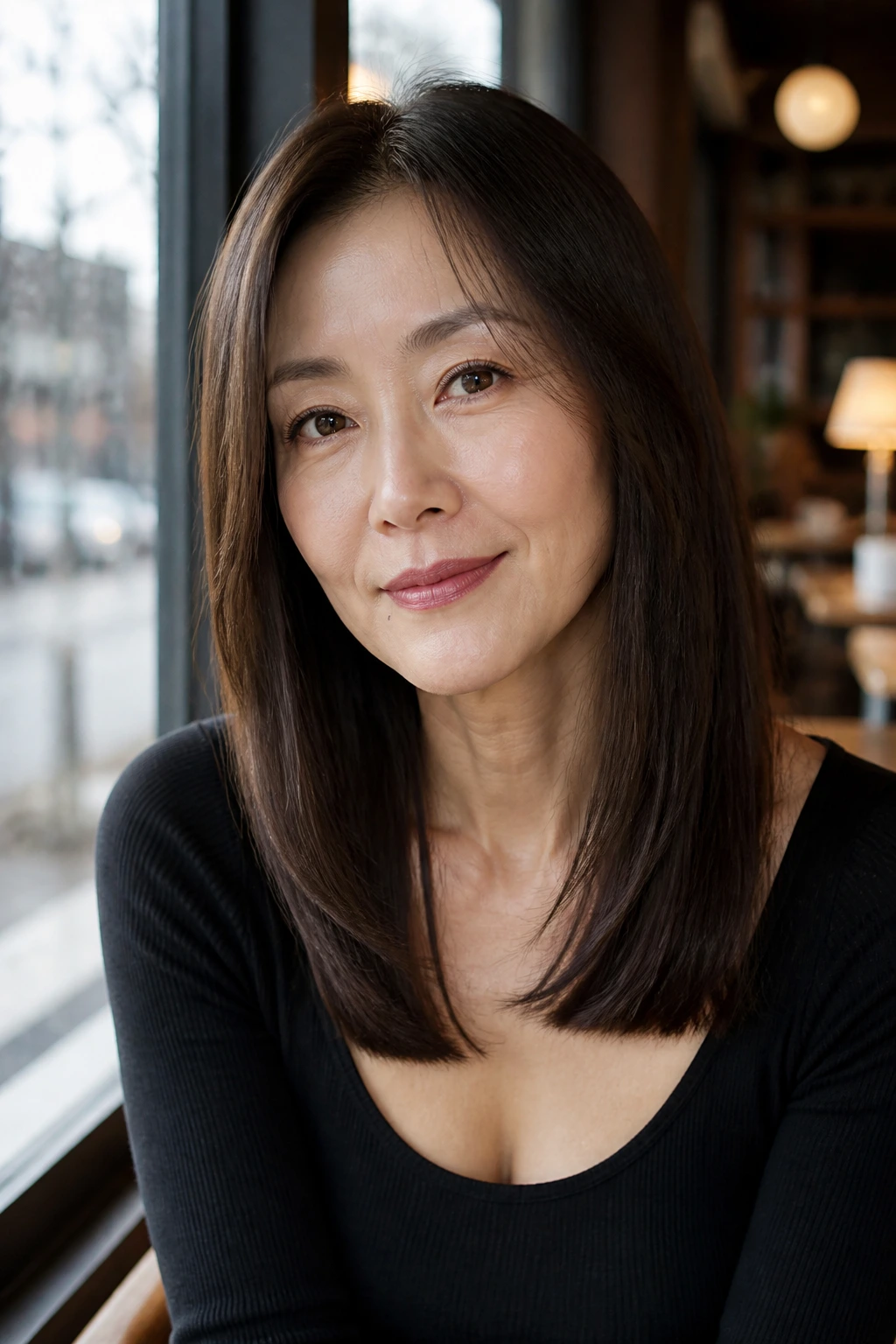
A bra-strap blunt cut is long enough to feel feminine and strong, but the real advantage is the bluntness at the hemline. Fine hair benefits when the eye sees one solid edge. Mini layers can be added only where the hair needs a nudge — usually around the cheekbones or under the crown.
That keeps the length from becoming a heavy curtain. It also helps if your hair is color-treated, because repeated lightening can make the ends look thinner than they are. With this cut, I’d avoid heavy texture products. Let the line do the work.
21. Softly Tapered Length with Ear-Level Movement
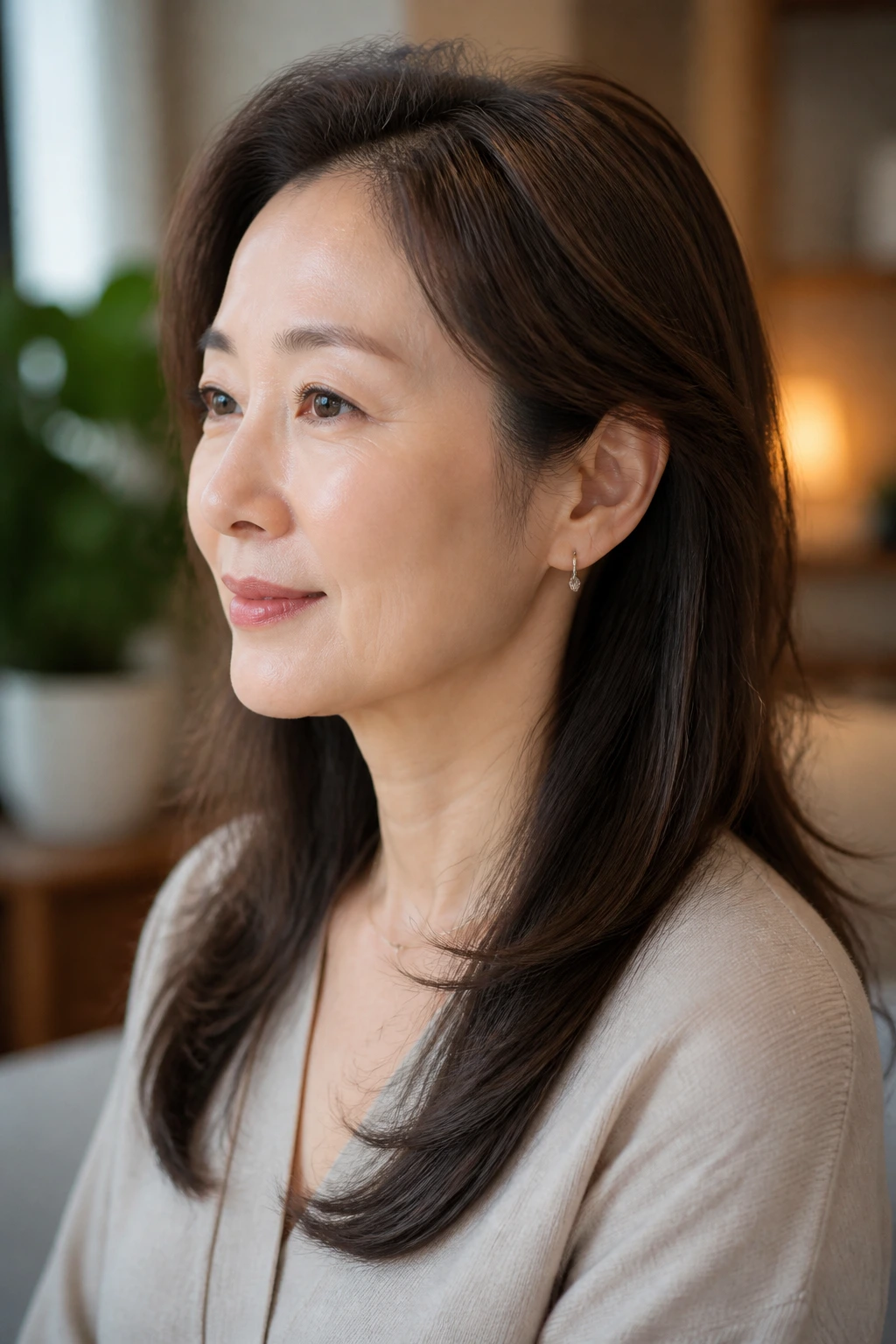
This one is subtle, and that’s why it’s good. The hair remains long, but the area around the ears gets just enough movement to stop the style from sitting like a sheet. The tapering should be quiet, almost invisible, with the ends kept strong.
It’s a nice option if you wear glasses, because the hair can be guided around the frames instead of landing on them. The shape also works well for anyone who likes to tuck the front behind the ears during the day. That small habit is easier when the cut already has a little bend built in.
22. Long Curtain-Frame Cut with Gentle Volume
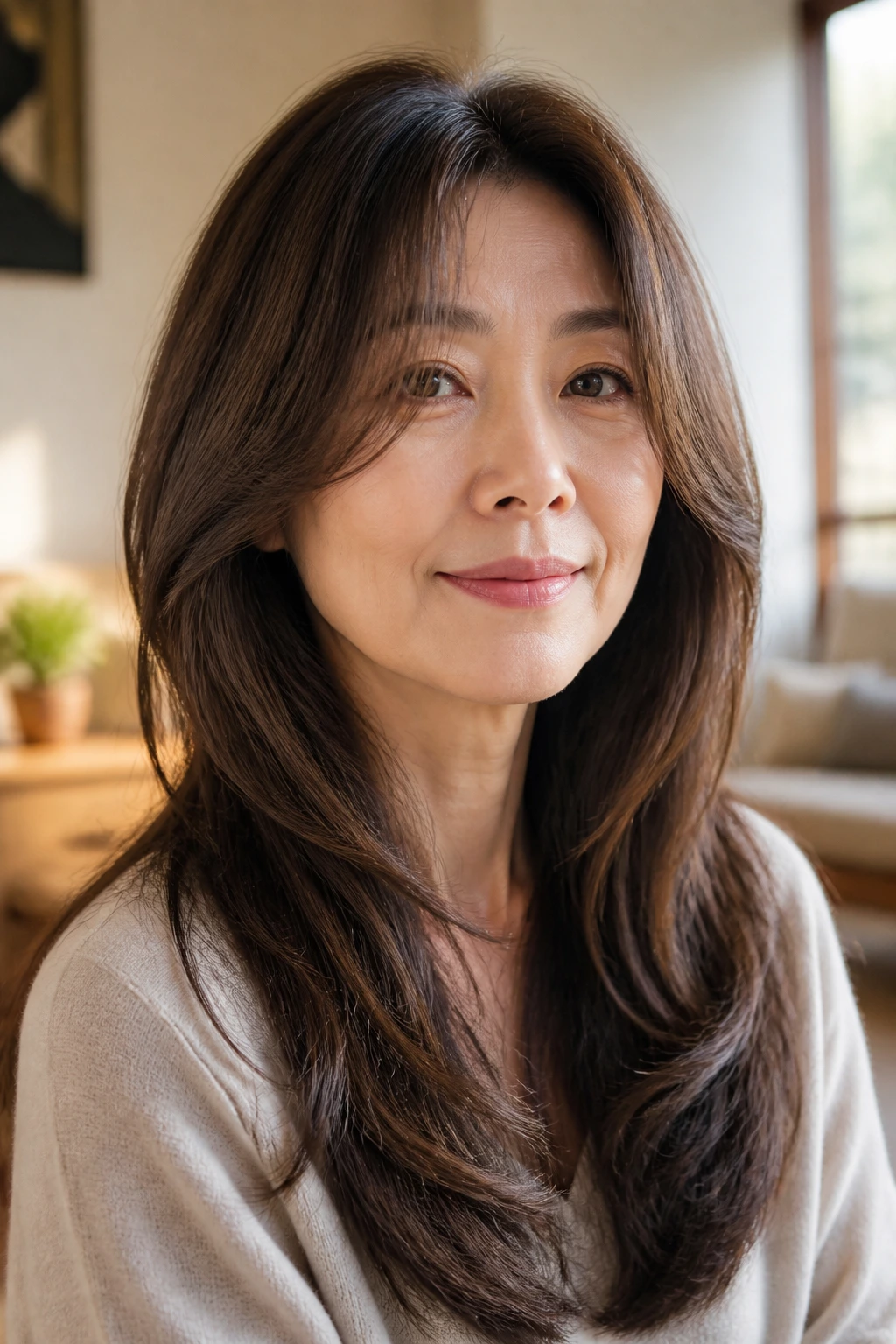
If you want one cut that checks most of the boxes, this is it. The curtain frame opens the face, the length stays long, and the volume lives in the right places instead of puffing everywhere at once. On fine hair, that balance is hard to beat.
The front should open softly at the center and slide toward the cheekbones, while the back keeps a steady line. It’s a polished cut, but not stiff. I’d call it the most forgiving of the bunch if you like to air-dry some days and blow-dry on others, because the shape still makes sense either way.
Why Korean Long Haircuts Stay Full on Fine Hair
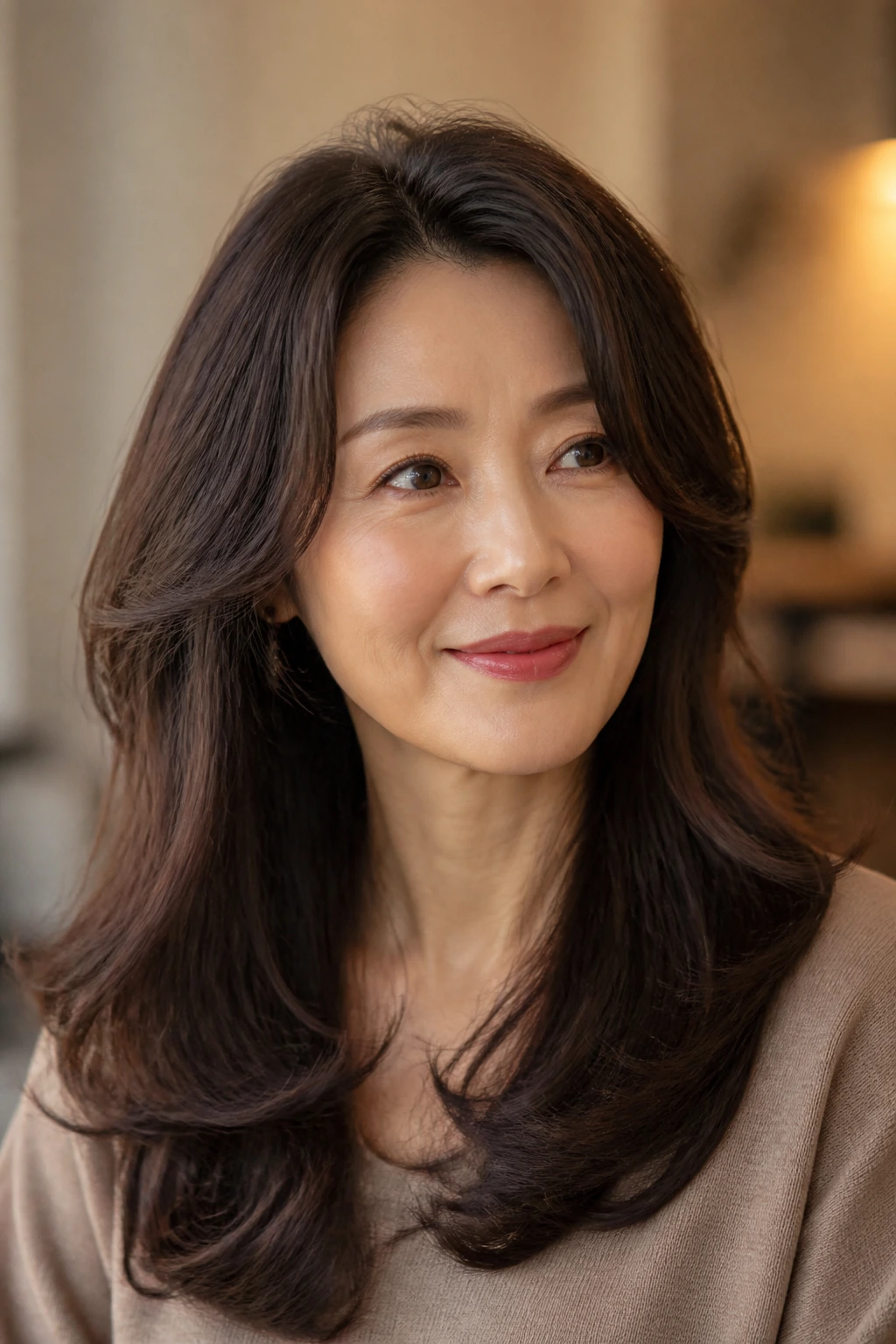
The reason these cuts work is not magic. It’s weight placement. Fine hair needs somewhere to sit, and if every inch is over-layered, the bottom disappears. Korean-inspired long haircuts usually protect the outline while introducing movement in the places the eye notices first: the front, the crown, and the area just below the cheekbones.
There’s also a style logic here that suits mature hair. After 50, hair often becomes less predictable at the root and a little softer at the ends. A cut with a blunt perimeter and gentle internal layering can make that shift look intentional instead of accidental. That’s a much kinder result than trying to force volume everywhere.
What I’d ask for, very plainly, is this: keep the ends strong, keep the crown soft, and place the face frame where it helps the face rather than where it just fills space. That sentence is doing a lot of heavy lifting. It should.
How to Ask for a Korean Long Haircut Without Losing Density
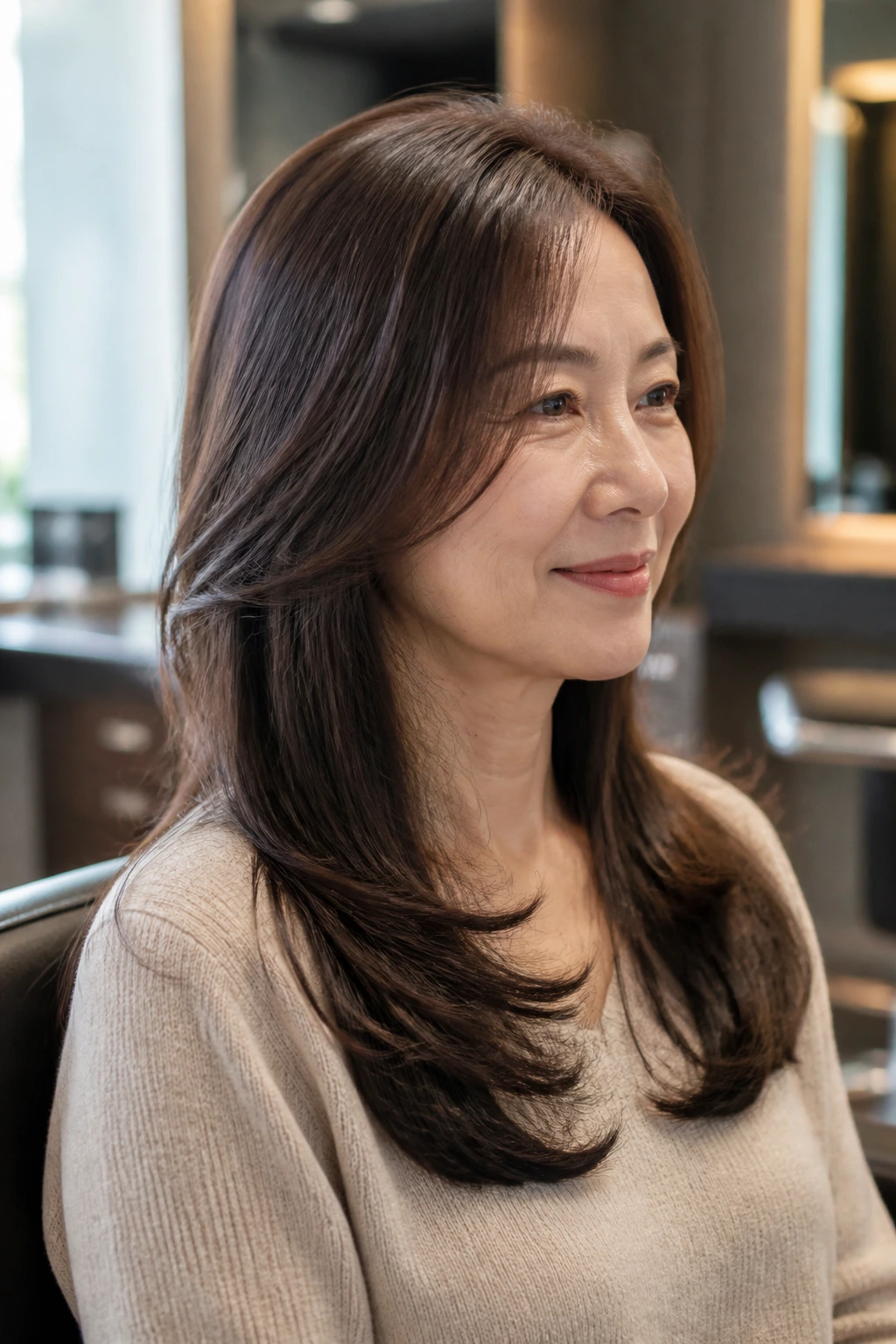
Bring photos, yes, but bring a sentence too. Tell the stylist where your hair goes flat, where it frays, and how much time you actually spend styling it. Those three details matter more than a vague request for “more volume.”
Be specific about the perimeter. If you want long hair to look full, say you want the bottom kept blunt or only lightly softened. If you want movement, ask for it around the face and mid-lengths, not all through the ends. That one distinction can save you from the dreaded see-through hemline.
If your hair is especially fine, I’d also say this out loud: do not over-thin the ends. Some stylists still reach for thinning shears as a reflex, and on fine hair that can be a mess. Ask for point-cutting or soft slide-cutting instead, and only where it improves the shape.
Essential Tools for Styling Fine Hair at Home
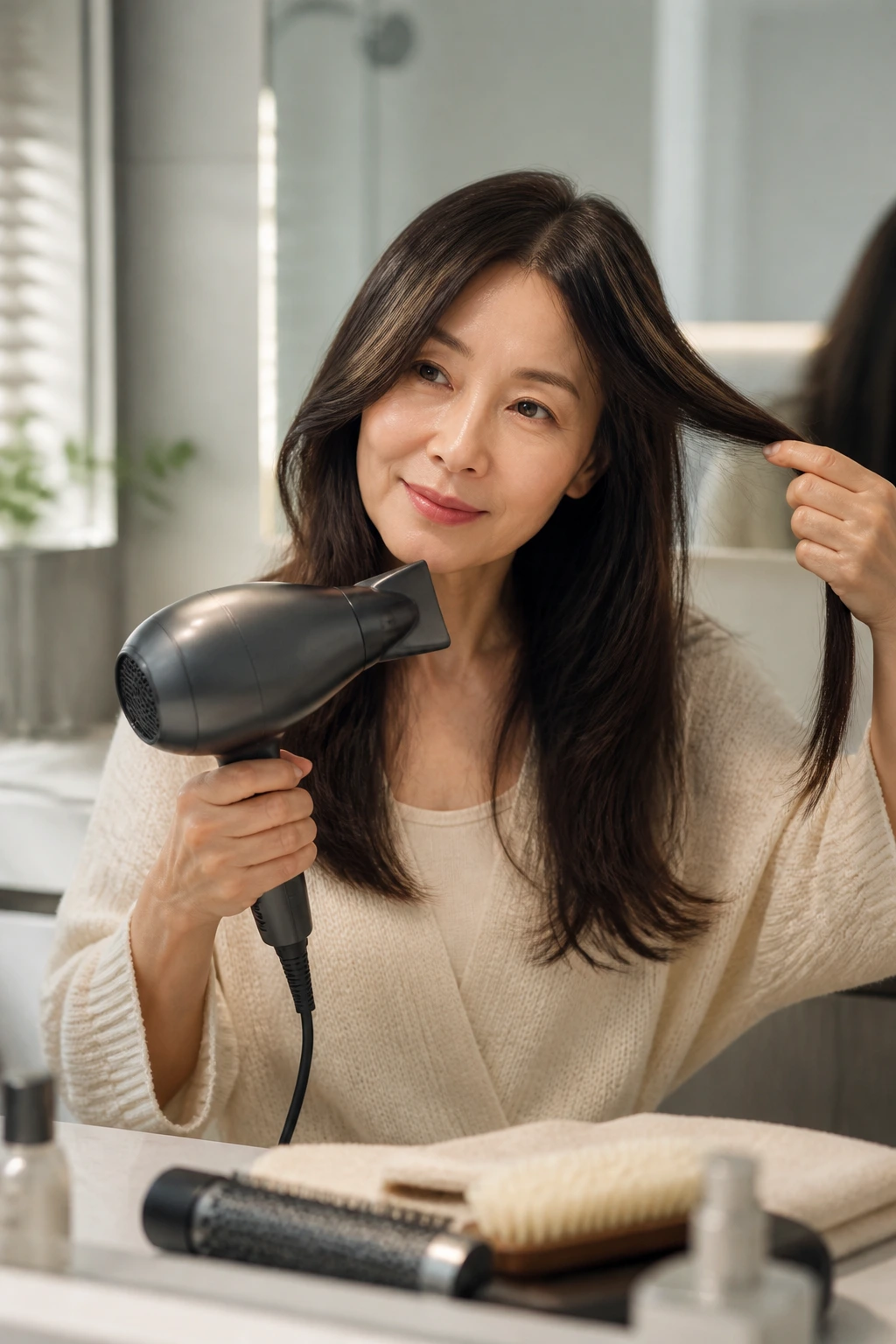
- Blow dryer with a concentrator nozzle: Helps direct the airflow so the cut sits smooth instead of frizzy.
- 1.25-inch round brush: Big enough to bend the ends without creating too much curl.
- Root clips or duckbill clips: Useful for lifting the crown while the hair cools.
- Heat protectant spray: Keeps fine ends from getting dry and see-through after repeated styling.
- Lightweight volumizing mousse: Gives body at the roots without the sticky feel of heavier creams.
- Fine-tooth comb or tail comb: Handy for sectioning bangs and face-framing pieces cleanly.
- Large Velcro rollers: Good for setting the front and crown while you finish makeup or clothes.
- Flat iron with adjustable heat: Use only if you want a smoother, glossier finish; low heat is enough for fine hair.
- Dry shampoo: Best used at the roots, not all over the length, to soak up oil and add a bit of grip.
- Light serum: One or two drops on the ends keeps the perimeter from looking fuzzy.
Smart Salon Shopping and Product Labels That Matter
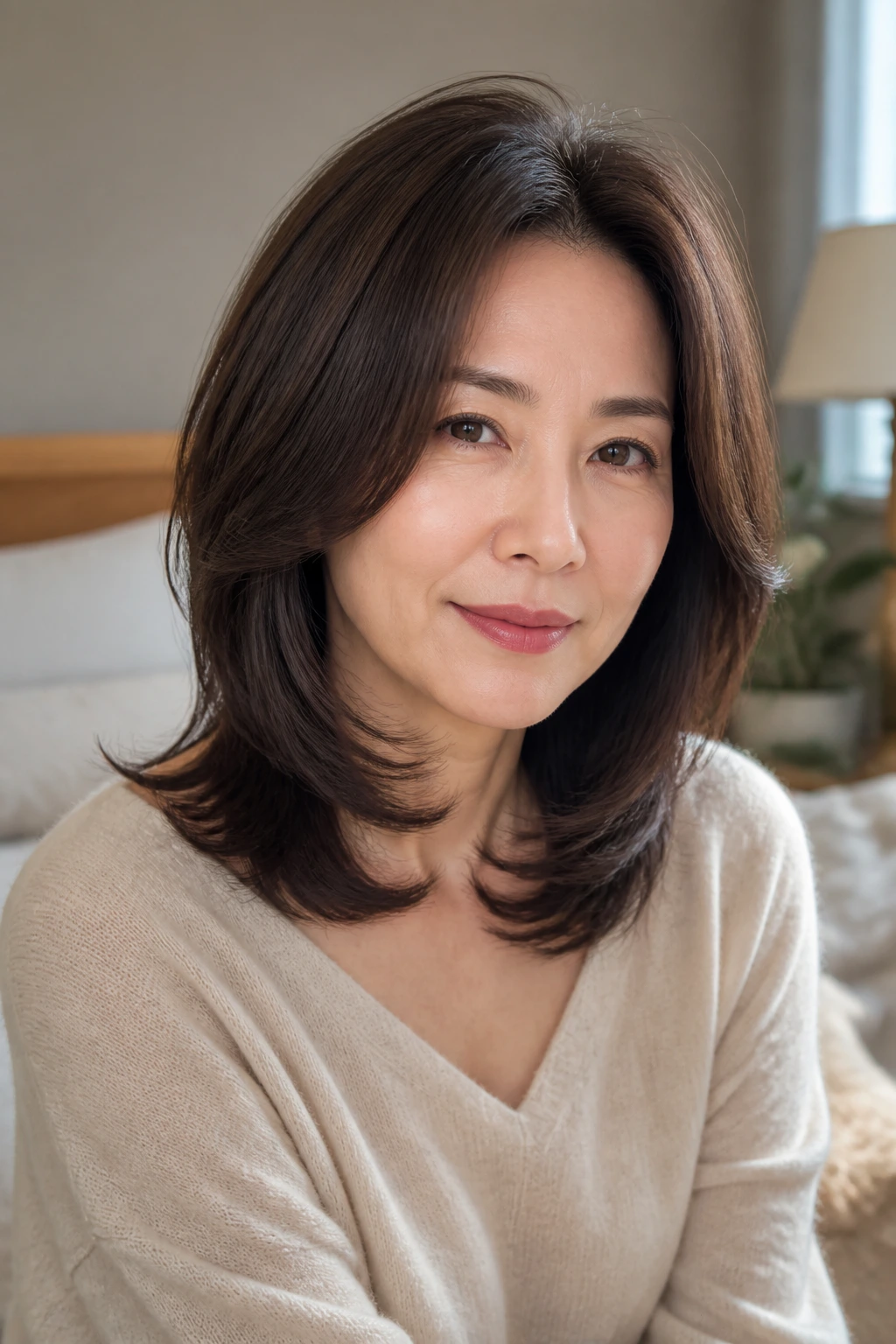
Fine hair gets dragged down by heavy products fast, which is why the label matters. Look for lightweight mousse, root-lift spray, and leave-ins that say “fine hair” or “weightless” for a reason. Thick creams meant for coarse curls can leave the roots flat within an hour. That’s not a theory. It happens.
On shampoo, I prefer formulas that clean without leaving a slick coating. If your scalp gets oily, a gentle cleanser with decent wash power may serve you better than a rich, buttery formula. Sulfate-free is not automatically better for every fine head of hair; sometimes the lighter, more cleansing wash gives you more lift and less buildup.
For styling, panthenol, hydrolyzed proteins, and lightweight polymers are helpful because they give the strands some grip and surface support. A pea-sized amount of serum on the ends can calm frizz, but only on the ends. Put oily products at the crown and you’ll be back in flat-hair territory before lunch.
How to Wear These Cuts Day to Day
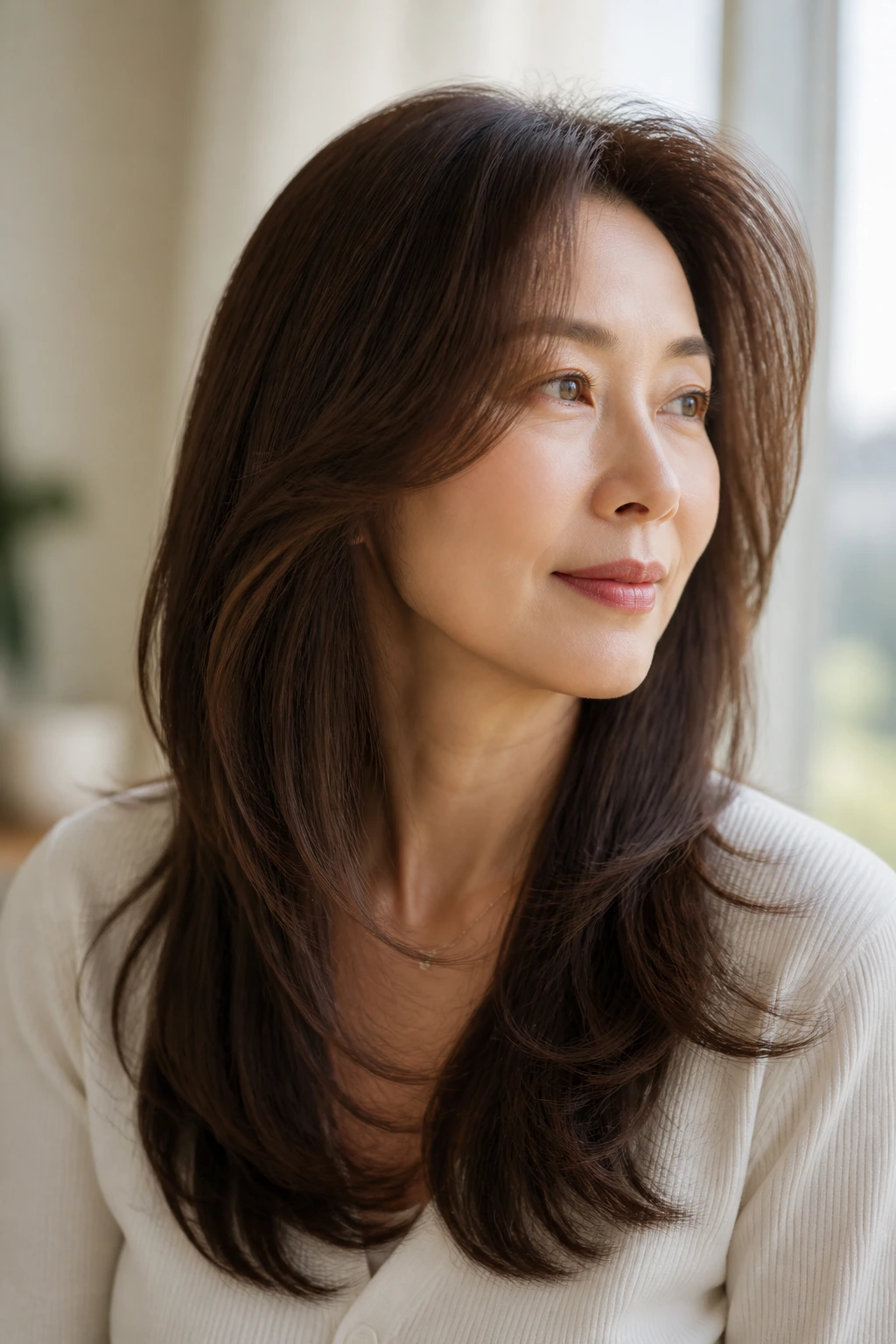
Presentation: Let the cut show its shape. That means the front should be bent softly away from the face or tucked inward at the ends, not pressed flat against the cheeks.
Accompaniments: Curtain bangs, a side part, small hoops, and glasses all play nicely with these cuts. Heavy, blocky fringe does the opposite. It can swallow the face and make the hair look thinner by comparison.
Length Balance: For most fine hair, the sweet spot lands between the upper back and bra strap. Shorter than that can help if density is very low; longer than that works if the hemline stays blunt and healthy. The line matters more than the bragging rights.
Finish Pairing: Choose the finish based on the cut. A C-cut or U-shape likes inward bends. A wolf cut or shag likes a little bend and separation through the mid-lengths. Keep the roots lifted and the ends tidy, and the whole thing looks deliberate.
Styling Boosters That Add Shape Without Heavy Product
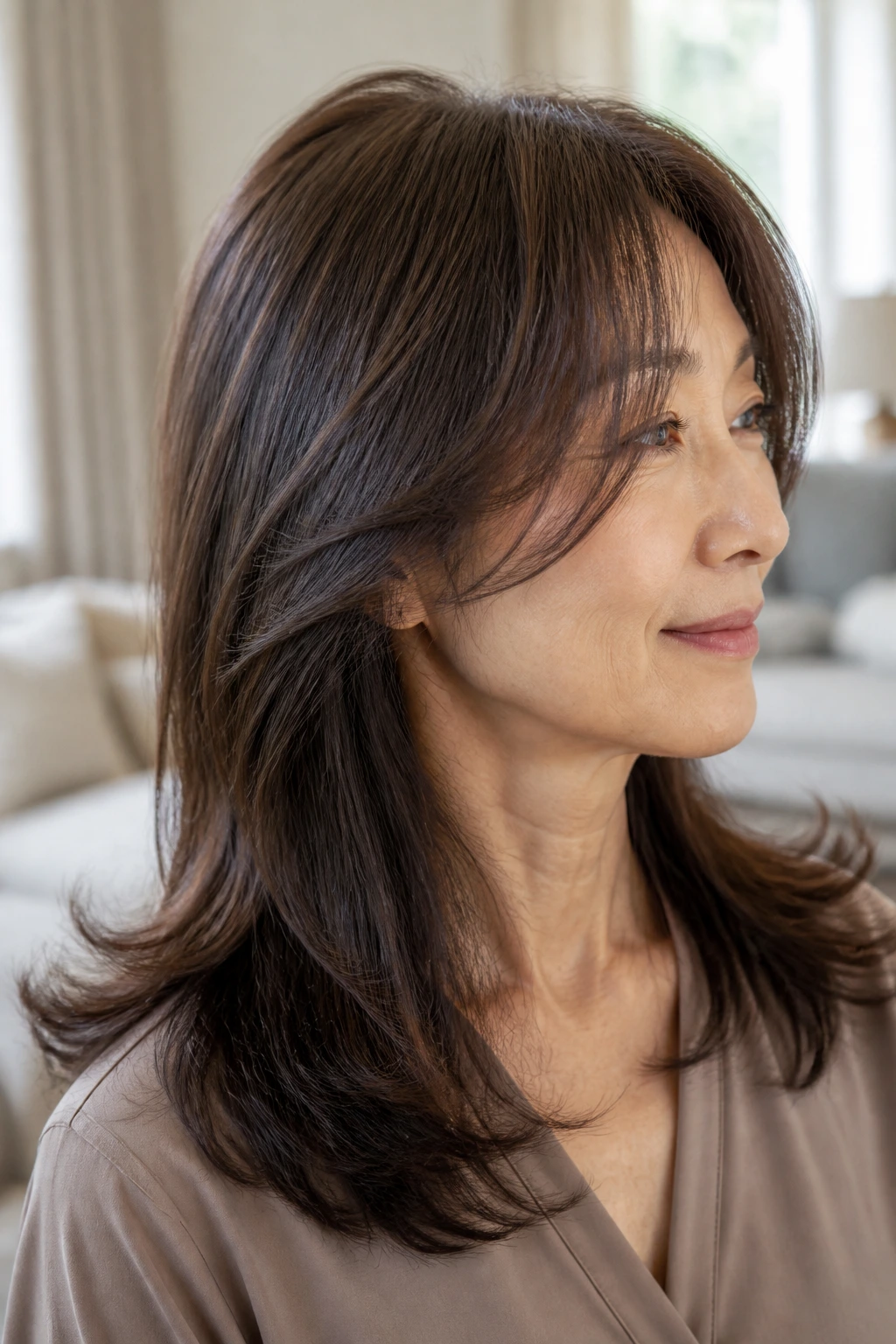
Volume Boost: Clip the crown while the hair is still warm from the blow-dryer, then let it cool for 5 to 10 minutes before removing the clips. That tiny pause helps the lift last longer than blasting more product at it.
Sleekness Trick: Put serum on damp ends first, then use a round brush to smooth the surface. If you wait until the hair is dry and then smear oil over it, the strands can clump and look stringy.
Fast Morning Fix: Mist the front sections lightly with water, roll them around a large brush or your fingers, and blast them for 20 to 30 seconds. That’s usually enough to restore the face frame without starting over.
Make-It-Yours: If your hair is wavy, keep the layers longer and use the natural bend to your advantage. If it’s pin-straight, ask for a stronger perimeter and rely on blow-dry shape rather than extra chopping.
Common Mistakes That Flatten Long Fine Hair
-
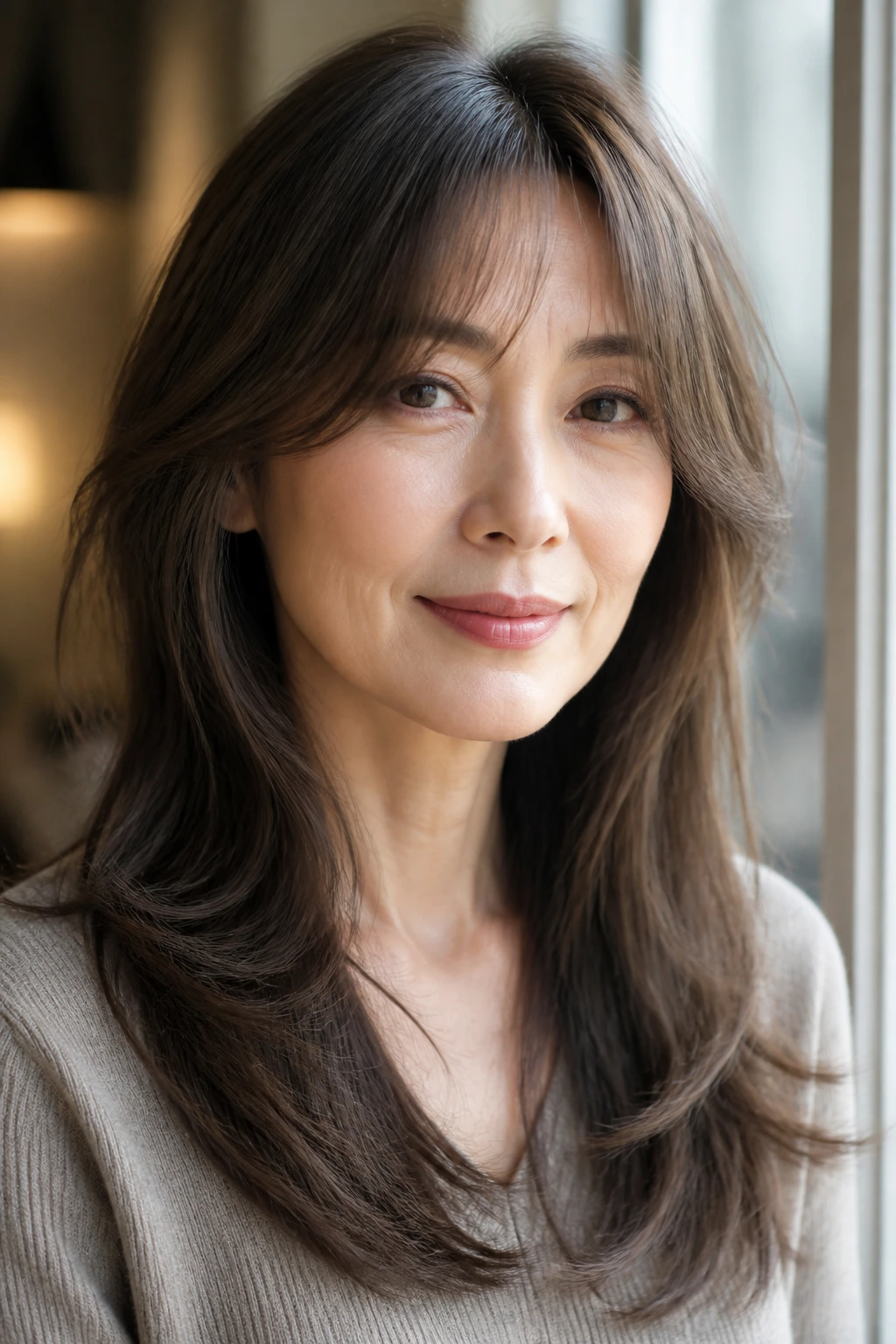
Too many short layers at the top: The hair looks busy in the chair and flat by noon. Ask for longer layers that begin lower, especially if your crown is already sparse.
-
Heavy product at the root: A creamy leave-in or thick oil near the scalp can collapse volume fast. Keep the root area clean and light, then treat the ends separately.
-
Over-thinning the perimeter: Fine hair needs some edge. If the hemline is shredded, the ends go wispy and the whole cut starts looking older than it is.
-
Bang sections that are too wide: Thick fringe can steal density from the rest of the haircut. See-through bangs or a narrow curtain shape usually work better.
-
Ignoring blow-dry direction: Fine hair will happily dry in the shape of a hat if you let it. Bend the front pieces where you want them before the hair cools.
Variations and Alternatives to Try
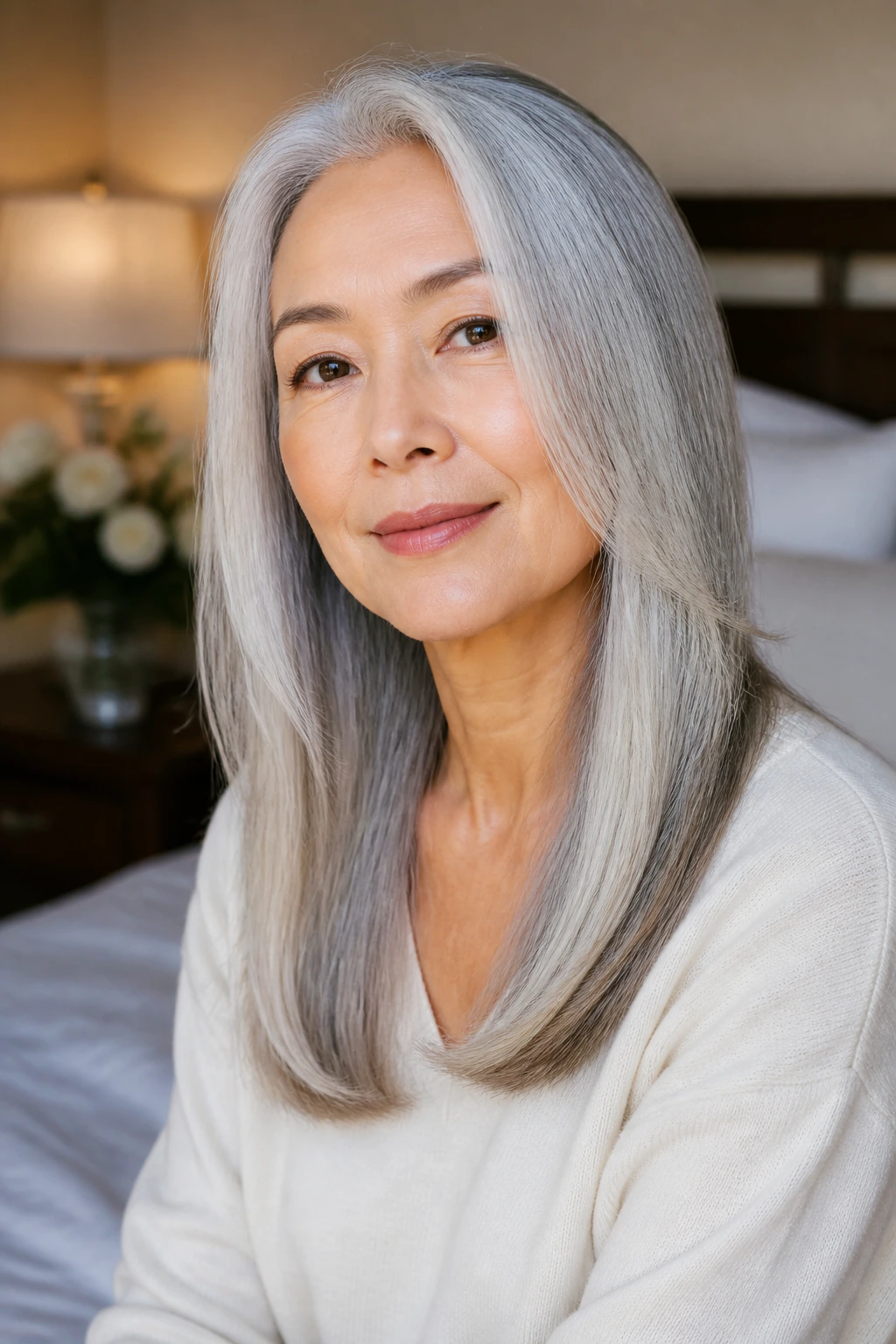
Gray-Glow Version: If you’re wearing silver, white, or salt-and-pepper hair, keep the cut cleaner and the finish glossier. Gray strands can look beautifully sharp in a C-cut or blunt long line, especially with a soft face frame.
Fringe-Free Version: If bangs feel like maintenance you do not want, skip them. A long side frame or a gentle U-shape gives most of the same softness without the daily forehead trim.
Soft-Perm Version: For hair that refuses to hold a bend, a loose digital perm can add body, but only if the cut is layered with restraint. Keep the curls big and the layers long.
Heat-Light Version: If you hate hot tools, ask for a shape that air-dries well: low layers, a strong hemline, and a face frame that falls into place with a bit of scrunching.
Glasses-Friendly Version: Keep the front pieces long enough to clear the frames and avoid bangs that sit right on the brow line. Side-swept or curtain shapes usually behave better.
Keeping a Korean Long Haircut Fresh Between Appointments
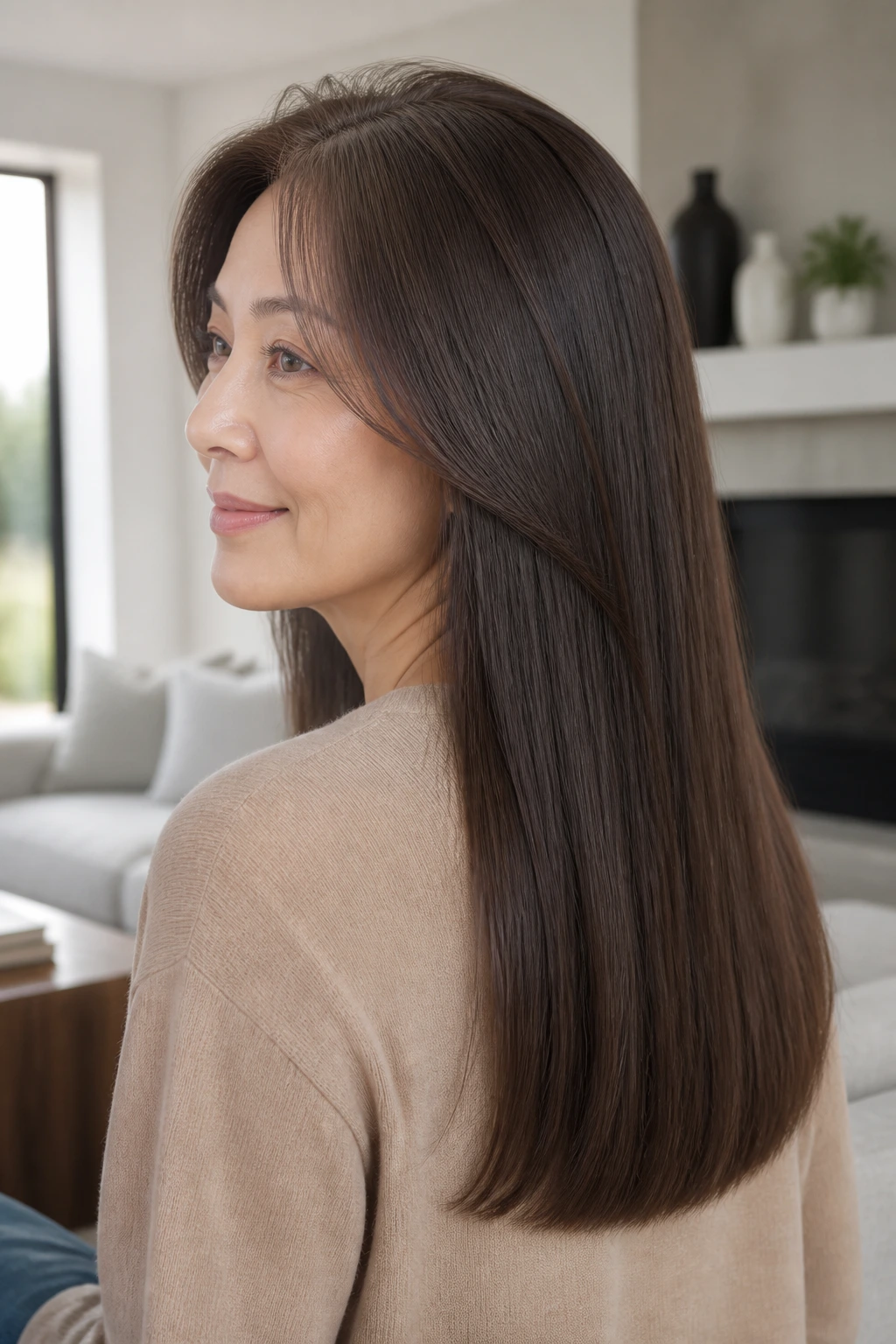
Long fine hair looks best when the ends stay tidy, which means trims matter more than people think. I’d plan on a trim every 8 to 10 weeks if you want the line to stay clean. If you’re growing it out, you can stretch that a little, but once the ends begin to split, the cut loses its shape fast.
Bang trims are a separate issue. See-through bangs and curtain pieces usually need a quick tidy every 3 to 5 weeks, even if the rest of the hair is fine. That small appointment keeps the front from dropping into your eyes or splitting apart in the center.
Product buildup is another quiet shape killer. A clarifying wash every 2 to 4 weeks can reset the roots, especially if you use dry shampoo, mousse, or root spray. At night, a loose clip or a silk pillowcase helps stop the front from getting crushed flat. And if the ends start looking thin, do not just coat them in oil and hope. Trim them. Oil can’t replace a clean line.
Frequently Asked Questions
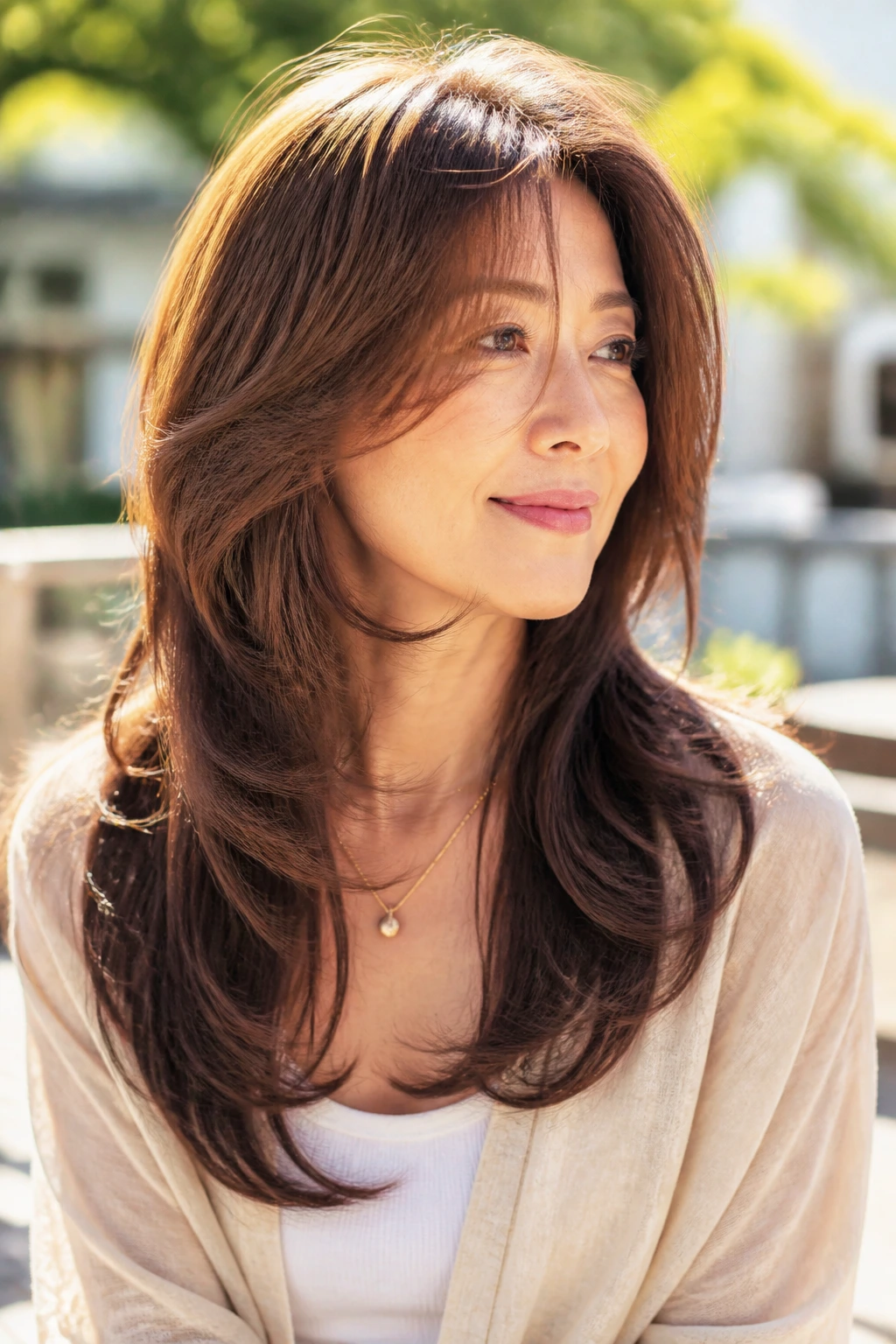
Can women over 50 really keep long hair if it’s fine?
Yes, if the cut respects density instead of fighting it. The key is keeping a strong perimeter and placing movement in the right spots, not removing so much hair that the ends vanish.
What’s the best bang style for fine hair that’s thinning a bit at the front?
See-through bangs or a narrow curtain fringe usually work best. They soften the face without taking a big chunk of density from the rest of the haircut.
Should fine hair have layers or stay one length?
A little of both is usually the sweet spot. A blunt line gives fullness, while long internal layers or face framing keep the style from sitting flat and heavy.
Does a digital perm damage fine hair?
It can if the hair is already fragile, over-processed, or very dry at the ends. If you go that route, keep the curls loose and make sure the cut underneath is designed to support the texture.
How often should this kind of haircut be trimmed?
Every 8 to 10 weeks is a good rhythm for keeping the ends tidy. Bangs may need attention sooner, especially if they fall into your eyes or split apart.
What if my hair gets flat by lunchtime no matter what I do?
Start with a lighter conditioner, use less serum, and clip the crown while the hair cools after drying. Flat hair often has more to do with product weight and drying direction than with the cut itself.
Can gray or color-treated hair wear these styles?
Absolutely. In fact, a polished long cut can make gray hair look crisp and deliberate, while color-treated hair often benefits from the stronger outline these styles give.
What should I tell the stylist if I’m nervous about losing too much length?
Say the words out loud: keep the hemline strong, keep the layers long, and do not over-thin the ends. That’s a clear instruction, and a good stylist will understand exactly what you mean.
Soft Length, Better Shape
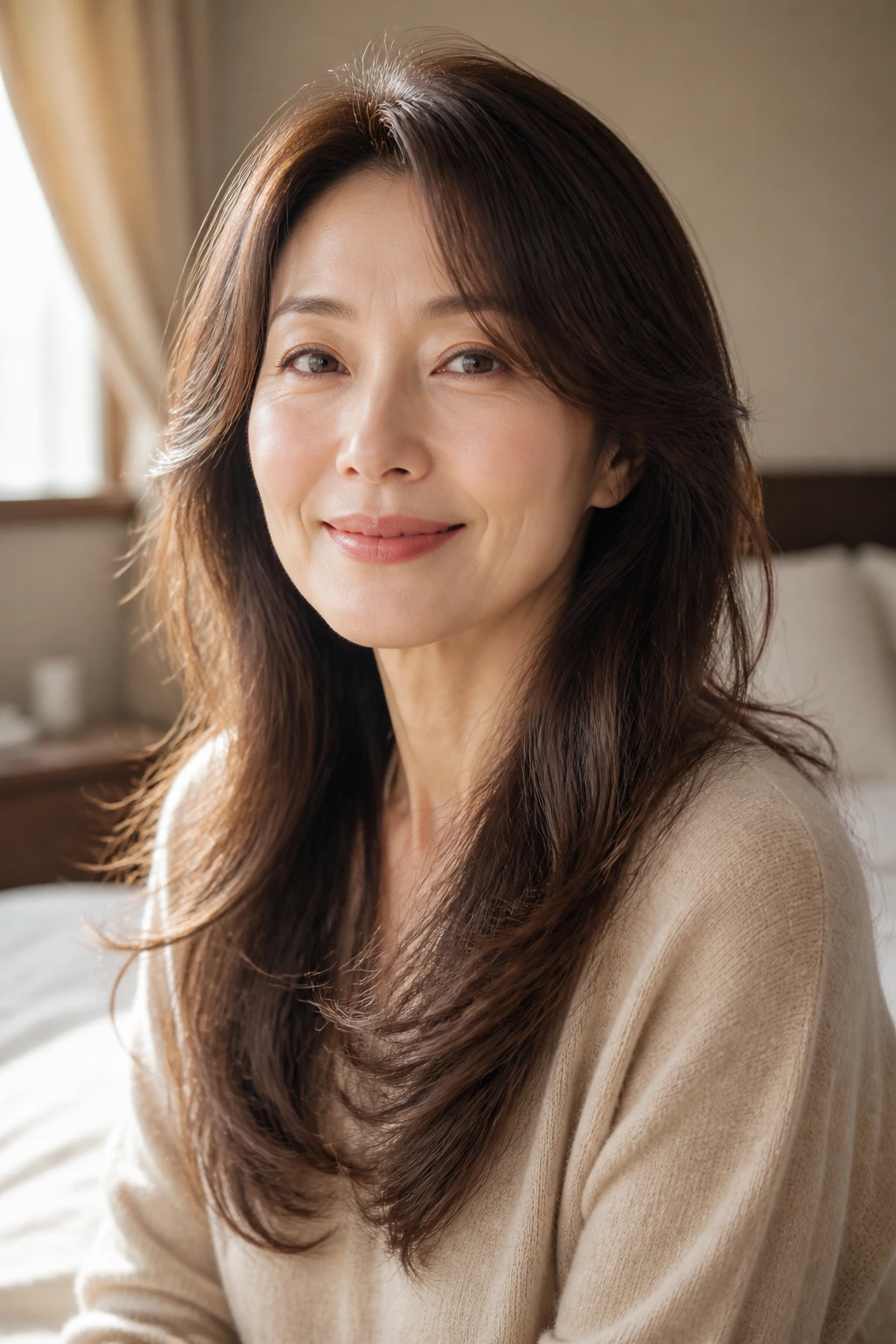
Long hair after 50 does not need to apologize for itself. When the cut is smart, fine strands can look graceful instead of flimsy, and the length can stay in the room without dominating it. That balance — softness with structure — is what makes these Korean-inspired shapes so useful.
If you’re choosing one direction to try first, I’d start with the cut that best protects your perimeter and gives the front some gentle movement. That’s usually where the transformation happens fastest. And once you see your hair behave with a little more order and a little less fuss, it’s hard to go back to the old blunt assumption that long and fine can’t live together.