



Fine hair after 60 has a particular habit: it gets polite. It lies down when you want lift, clings when you want movement, and shows every heavy layer the minute the blow-dryer cools. That’s why the best short fine hairstyles for women over 60 rarely chase length. They work by subtracting weight, sharpening the outline, and leaving enough softness around the face so the cut doesn’t look stern.
I’ve always had a bias toward shorter hair on fine strands, and I’m not shy about it. A chin-length shape can look airy and pretty on thick hair, but on finer texture it can turn see-through at the ends and flat at the crown in a week. Short hair keeps the silhouette cleaner. It lets silver hair shine instead of dragging it down with dead ends, and it makes the whole head look more deliberate — which matters when you’re dealing with thinning at the temples, a cowlick at the crown, or glasses that need a little room around the ears.
The sweet spot is not “extremely short” for its own sake. It’s balance. A good cut gives the crown a bit of lift, keeps the sides from ballooning, and leaves enough fringe or face-framing to soften lines without swallowing the face. That’s the real trick, and it’s why some women look refreshed in a pixie while others need a bob with a softer edge. Same hair type. Very different result.
Why These Cuts Work So Well
-
They remove dead weight: Fine hair collapses when it’s left too long, and a shorter shape keeps the ends from looking stringy or translucent.
-
They build height where fine hair needs it most: The crown, the top of the head, and the area just behind the bangs get a little structural help from layers and shape.
-
They make silver and gray hair look intentional: Shorter cuts show off the sheen in white or silver strands instead of letting them sit in a limp curtain.
-
They’re easier to restyle on day two: A mist of water, a dab of mousse, and a quick round-brush pass can usually wake the cut back up.
-
They play nicely with glasses, earrings, and necklines: Fine hair over 60 often looks best when the cut lets your face and accessories do some of the work.
-
They can be soft, not severe: Short does not have to mean spiky or severe. The right neckline taper and fringe shape keep things gentle.
1. Soft Pixie with Crown Lift
A soft pixie is the move when the crown has started to go a little sleepy. The cut is short around the sides and ears, then built with slightly longer layers on top so the hair can be pushed up and forward instead of falling flat like a helmet. On fine hair, that extra inch or two at the crown matters more than a lot of people think.
Why It Works
A pixie like this creates the illusion of density because the shape is tight where it should be tight. The sides stay clean, the nape stays neat, and the top gets room to breathe. That combination makes fine strands look fuller without making them look fuzzy.
Ask for soft texture rather than choppy razoring. Too much razor work can make thin ends look frayed. A good stylist will point-cut the top and leave enough length for a little lift with mousse or a small round brush.
If you wear glasses, this cut is easy to live with. The hair clears the frames instead of fighting them. It also keeps the back of the neck cool and tidy, which sounds minor until you’ve had one of those cuts that sticks to your collar and drives you mad.
2. Feathered Bixie
A bixie sits between a bob and a pixie, and that’s exactly why it works so well on fine hair. You get a little more softness around the face than a pure pixie, but you don’t carry the drag of a full bob. The feathered ends keep the shape airy instead of blunt.
This is the cut I reach for when someone wants movement without fuss. It doesn’t ask for much: a quick blow-dry, a bit of root lift, and maybe a pea-size amount of styling cream on the ends. The outline stays relaxed, which helps if your hair has changed texture and gone drier or more wispy over time.
The best version has longer bits around the cheekbones and a slightly shorter back. That gives the face some frame while keeping the crown from going pancake-flat. If your hair grows in a funny direction, the bixie can usually work with it instead of fighting it.
3. Chin-Length Bob with a Side Part
There’s a reason this cut keeps coming back. A chin-length bob with a side part gives fine hair a clean line at the bottom and a little asymmetry at the top, and that asymmetry is the whole show. Flat hair hates symmetry. It looks thinner.
The side part creates a bit of lift at the root, especially if you dry the hair in the opposite direction first and swing it back at the end. That old trick still works. A narrow section at the front can also soften forehead lines without turning into a heavy fringe that sticks to the brow.
Keep the ends blunt enough to look full, but not so blunt that they sit like a shelf. A tiny inward bend at the bottom — nothing dramatic — keeps the bob from looking boxy. This one is especially good if your hair is straight or only lightly wavy, because the shape stays visible even when you skip the salon blowout.
4. Tapered Crop with Wispy Fringe
A tapered crop is tidy in the back and soft in the front, which makes it one of the most forgiving short cuts for finer hair. The taper removes bulk around the neckline, while the fringe keeps the face from feeling overexposed. You can wear it neat, slightly tousled, or brushed smooth depending on the day.
How to Wear It
If your forehead is broad, a wispy fringe can be a gift. Not a heavy curtain. Not a blunt sheet. Just enough softness to break up the forehead without hiding your face. That’s a useful distinction, because too much fringe on fine hair can leave the top looking sparse.
This cut is also kind to hair that has become a little fragile. The shorter lengths don’t tug as much, and the tapered back keeps the shape from mushrooming. I’d ask for light texture around the fringe and a snug neckline, with no bulky layers around the ear.
5. French Bob with Jawline Curve
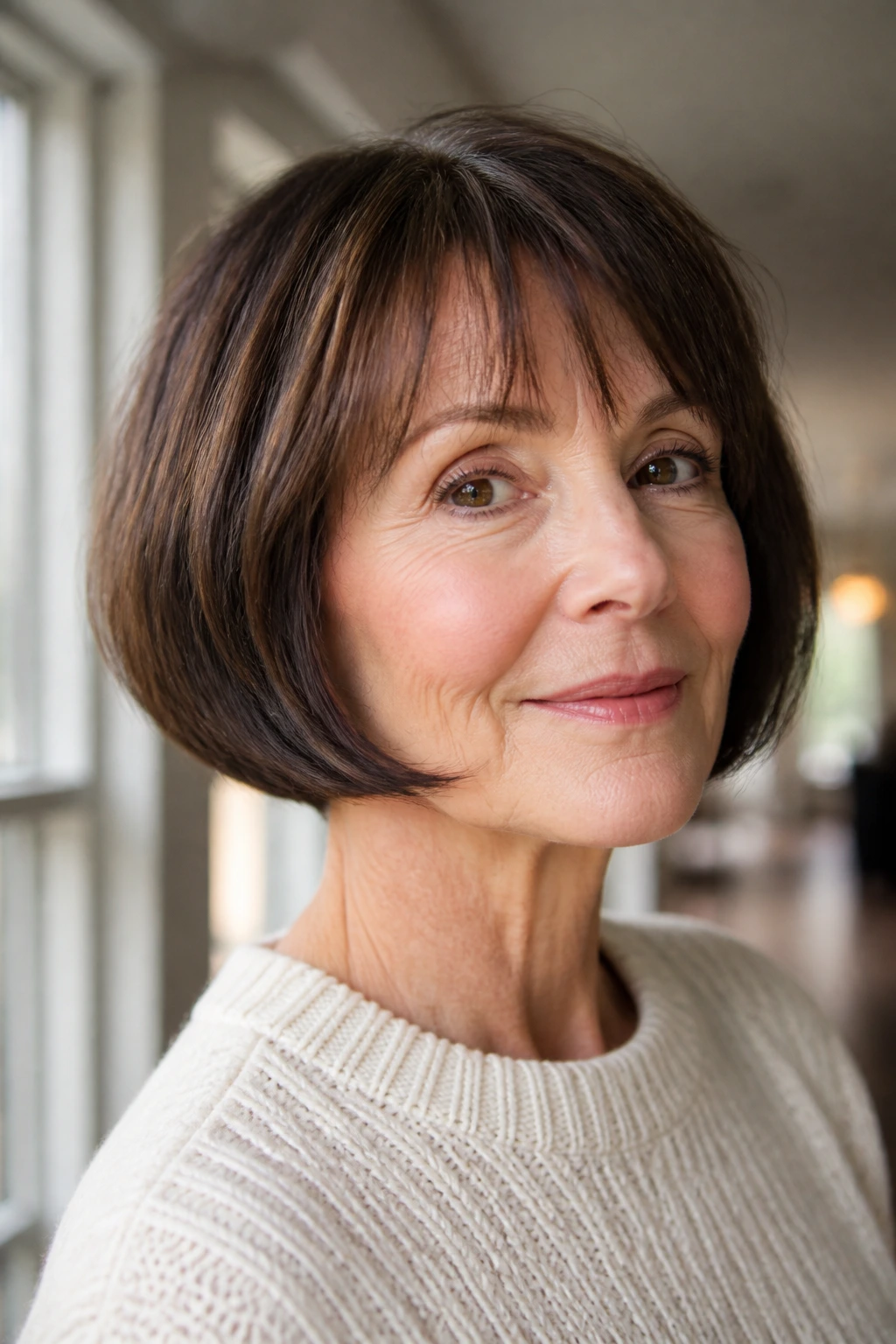
A French bob on fine hair can be gorgeous when it’s kept light and slightly curved under at the jaw. The danger is going too heavy. That turns the style into a blunt block. Fine hair needs a bob with movement, not one that sits like a ruler across the face.
Here, the magic is in the ends. They should skim the jaw rather than hang below it. That small difference sharpens the face and makes the hair feel denser because the silhouette is controlled. If the cut is paired with a side part or soft fringe, it becomes even more flattering around the eyes and cheekbones.
This is a polished look, but not fussy. It works when you want to look put together without spending twenty minutes with hot tools every morning. A round brush and a dryer nozzle are enough. Keep the bend soft, not curled to death, or the style starts to feel dated fast.
6. Stacked Bob with Graduated Nape
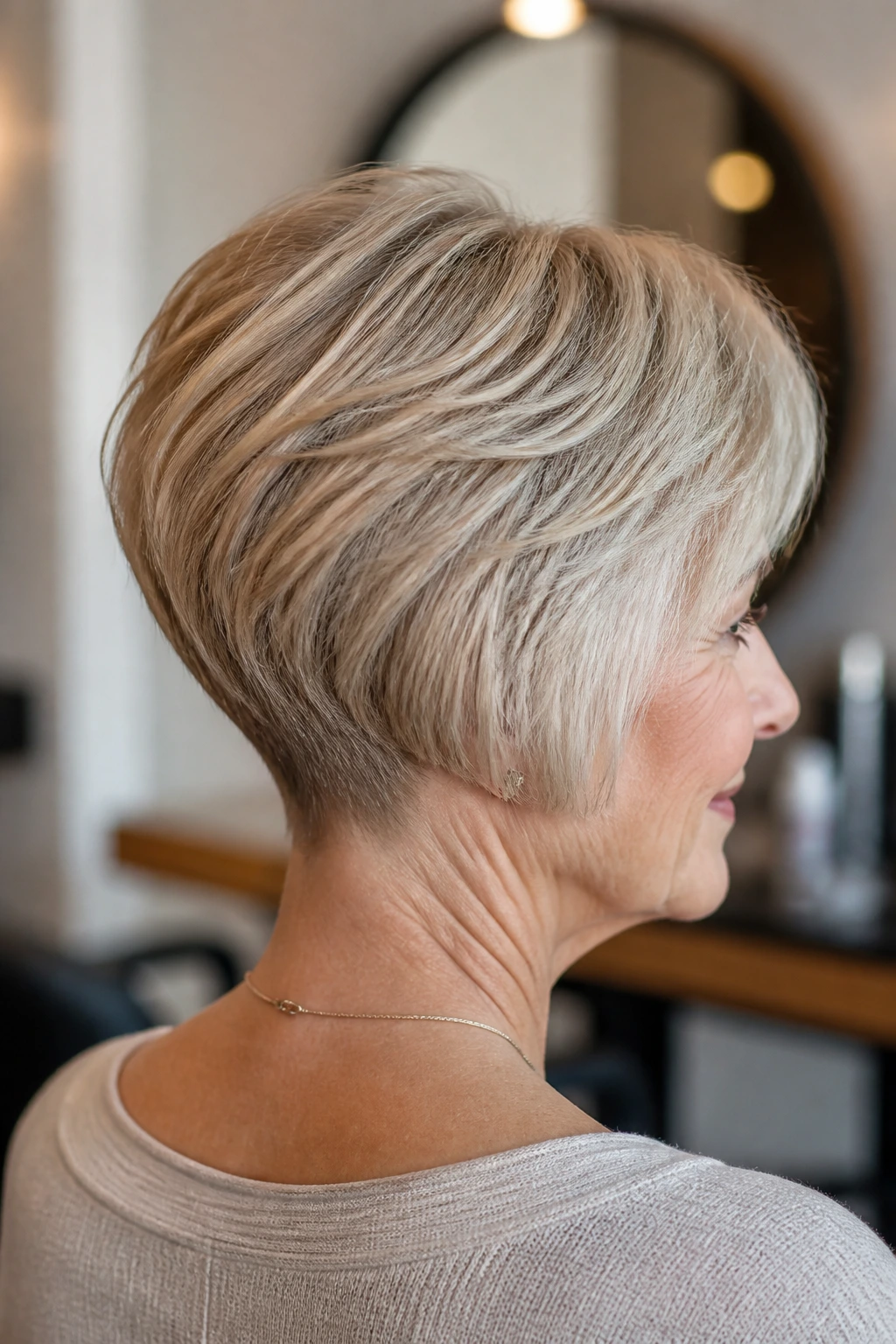
If your hair needs architecture, this is the one. A stacked bob builds lift through graduation at the back of the head, so the cut naturally rises instead of lying down. On fine hair, that stacked shape can make the crown look fuller without forcing you to tease or overload it with spray.
The key is the nape. It should be neatly cut and slightly shorter than the front, with the weight removed in clean layers. When a stylist gets this right, the back of the head looks rounded and full. When they don’t, it becomes choppy and too steep. There’s not much middle ground.
This cut flatters women who like a crisp outline and don’t mind a little maintenance. It keeps its shape best with regular trims because the graduation is what gives it lift. If you’ve got straight fine hair and want visible volume from the side, this is one of the strongest choices on the list.
7. Textured Shag Crop
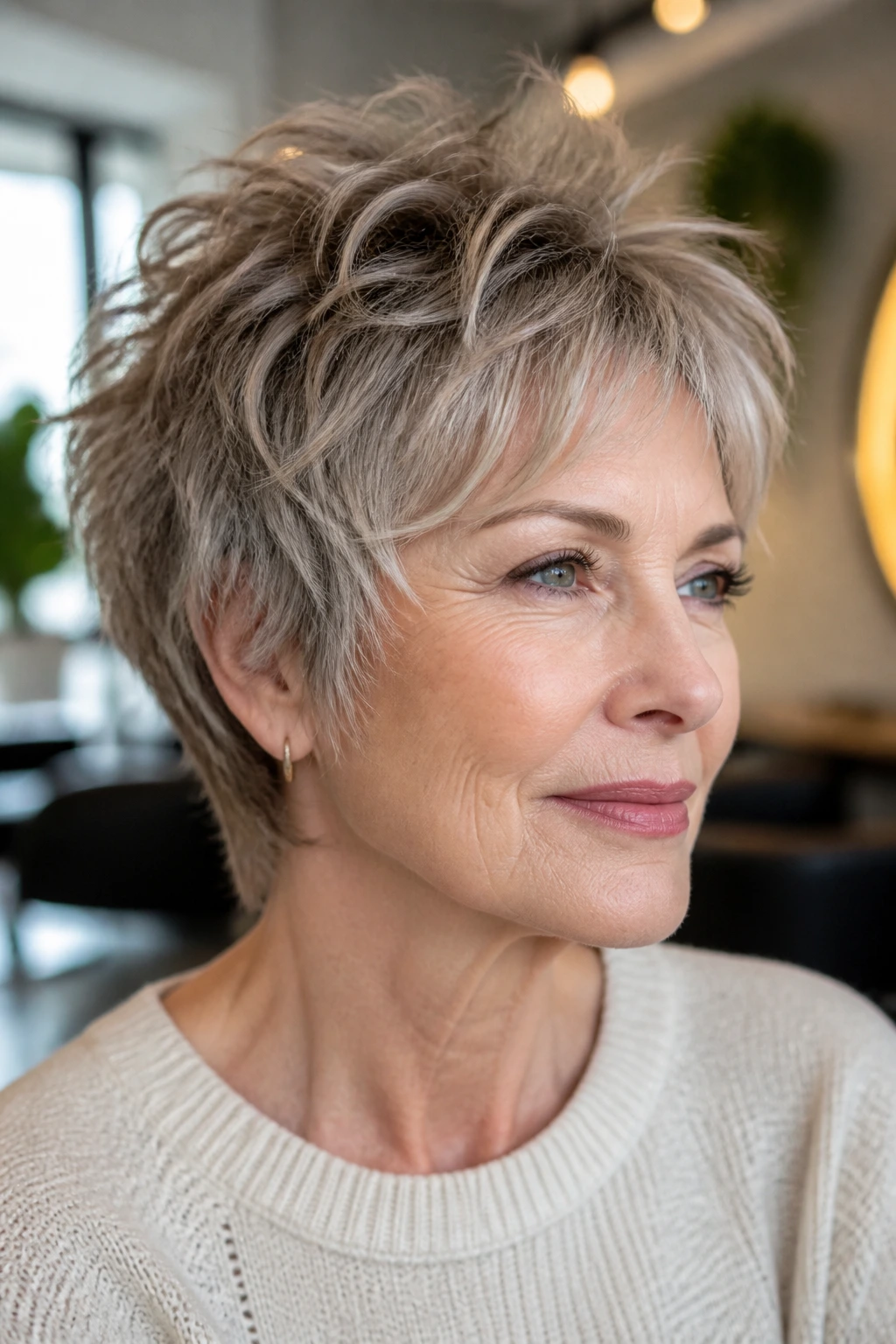
A shag crop is for the woman who wants movement more than polish. Fine hair can look sleepy when it’s cut too neatly, and a light shag fixes that by breaking up the surface and letting the layers fall in different directions. The result is softer, a little piecey, and much less precious.
The trick is restraint. Too many short layers can make fine hair look moth-eaten, especially if the strands are fragile. A good shag crop keeps the top slightly longer, with softer texture through the sides. You want separation, not chaos.
This style works especially well if your hair has a small wave or bends easily with a diffuser. Air-drying can even be part of the routine. A little leave-in, a bit of mousse, scrunch, and go. It’s a good option for women who don’t want their hair to look too “done,” but still want it to have a shape that wakes up the face.
8. Long Side-Bang Crop
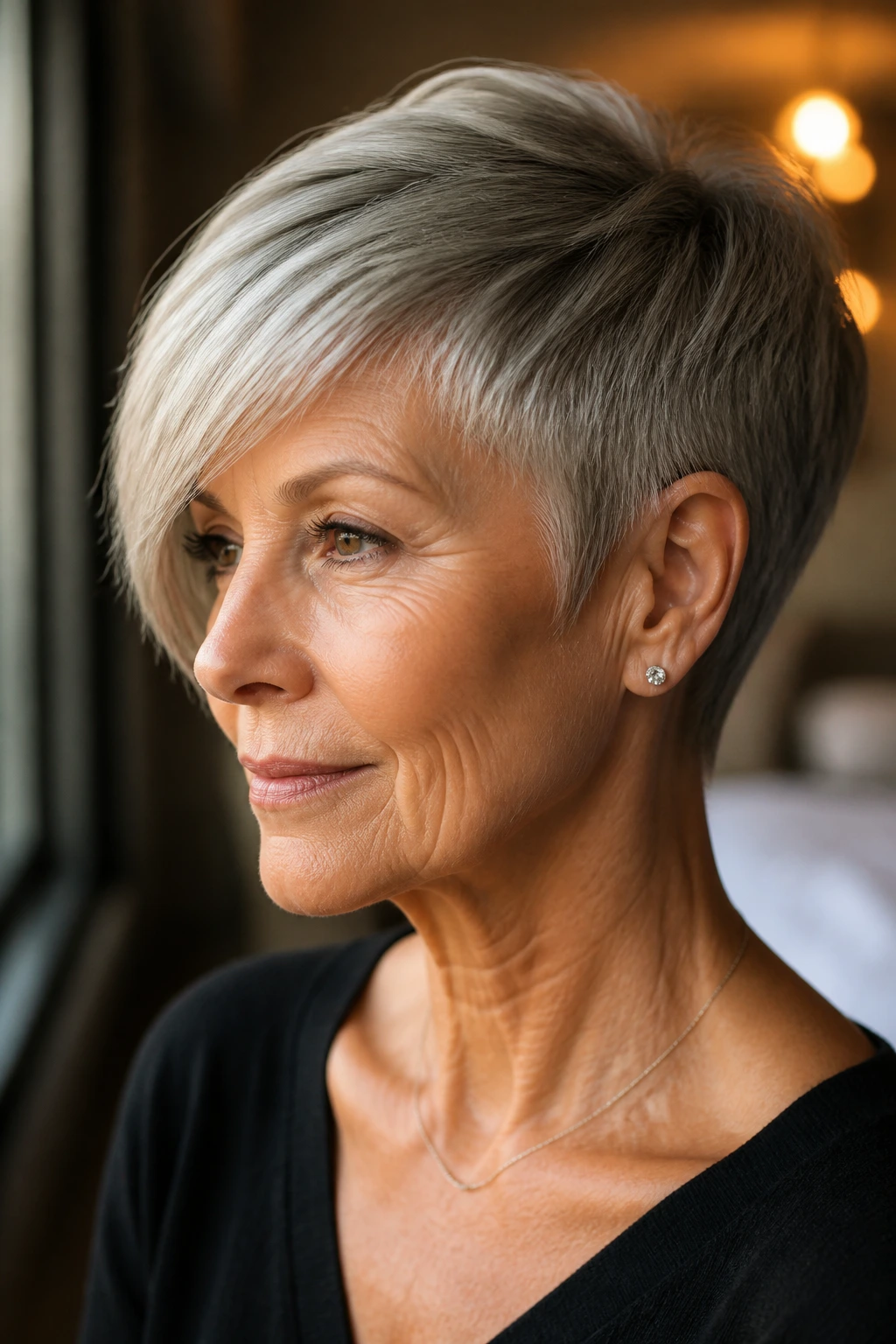
A crop with a longer side bang is one of my favorite ways to soften a short cut without sacrificing lift. The bang gives you a diagonal line across the forehead, which is flattering on almost everyone because it breaks up width and draws the eye upward. The rest of the crop can stay clean and close.
Why does this matter on fine hair? Because heavy bangs can steal density from the top. A longer side bang does the opposite. It gives the front some drama without collapsing the center. You can brush it back, let it sweep across the brow, or tuck part of it behind the ear on the other side.
This cut is especially good if you wear earrings or glasses, since the longer fringe keeps the face from looking too open. Ask for softness at the edges, not a stiff, shelf-like bang. That little bit of movement makes the whole thing look more modern and less helmet-like.
9. Sleek Ear-Tucked Bob
A sleek bob that sits right at or just below the ear can be one of the smartest short fine hairstyles for women over 60, especially if your hair is straight and you like low-fuss structure. There’s a quiet confidence to it. No teasing. No heavy products. Just a neat line, a smooth finish, and a clean tuck behind the ears when you want to show off a necklace or a pair of strong frames.
The important part is the perimeter. It should be crisp enough to hold shape, but not so blunt that it turns into a hard slab. Fine hair often benefits from a little internal layering, even in a sleek cut, because it stops the ends from looking sparse.
This one can look especially good with silver or white hair because the sheen shows off the line of the bob. Use a light smoothing cream and a flat brush while drying. Skip greasy serums unless your hair is very dry; too much shine product can make the roots look thinner than they are.
10. Silver Wedge Cut
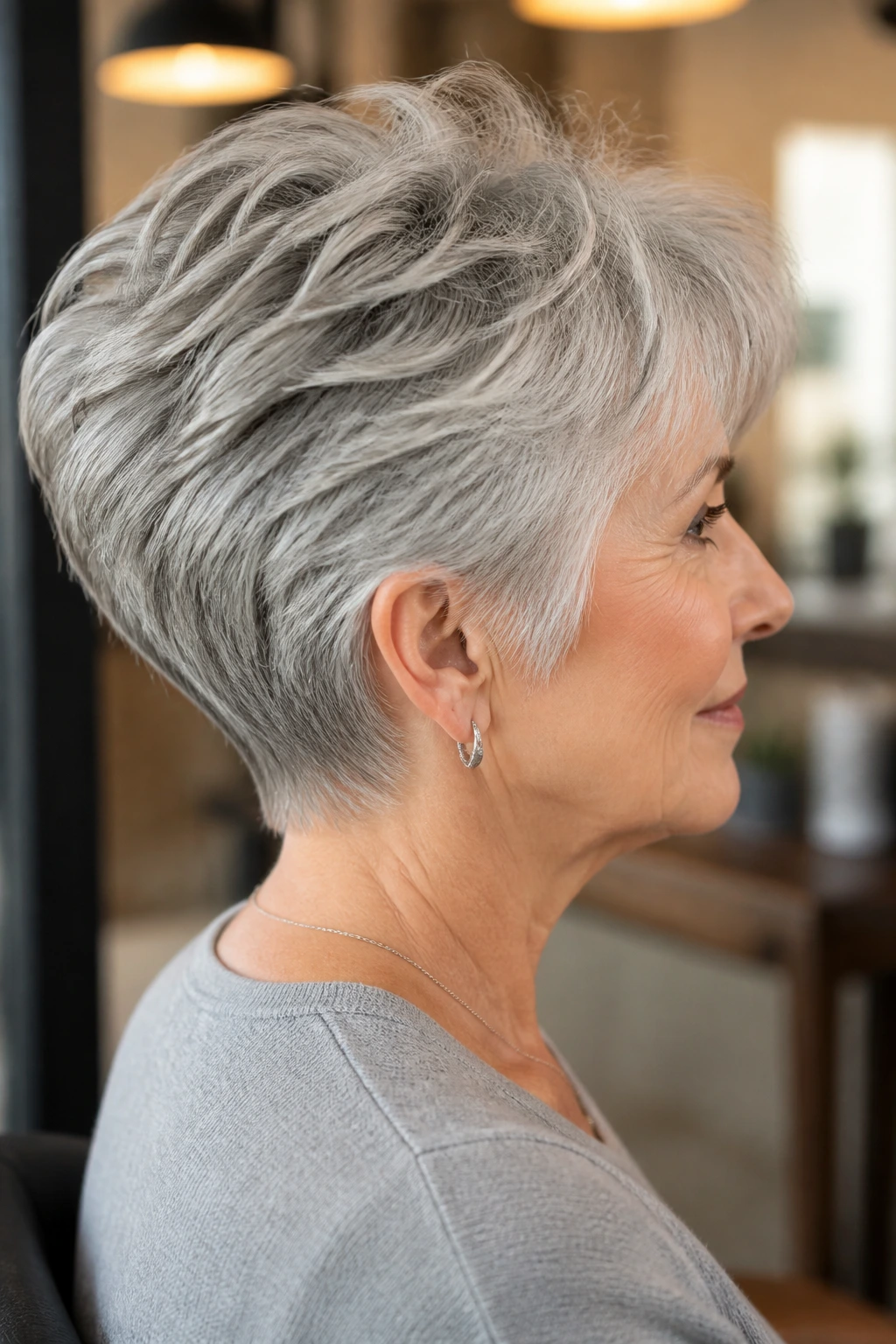
A wedge cut has a built-in sense of lift, which is why it’s still such a strong choice for fine hair. The back angles up neatly, the sides stay close, and the top gets enough length to keep the shape from feeling stiff. On silver hair, that geometry looks sharp in the best way.
This cut works because it creates a visual base. Fine hair often needs a shape that does some of the work for it, and the wedge does exactly that. It gives volume without requiring a lot of styling drama. You blow-dry it with a round brush, push a little root lift into the crown, and the haircut handles the rest.
A wedge can look old-fashioned if it’s cut too bluntly, so the modern version should have soft edges and some movement around the temples. If your hair has become finer but you still want a real shape, this is one of the most dependable options. It’s structured, but not severe.
11. Curly Crop with Defined Top Layers
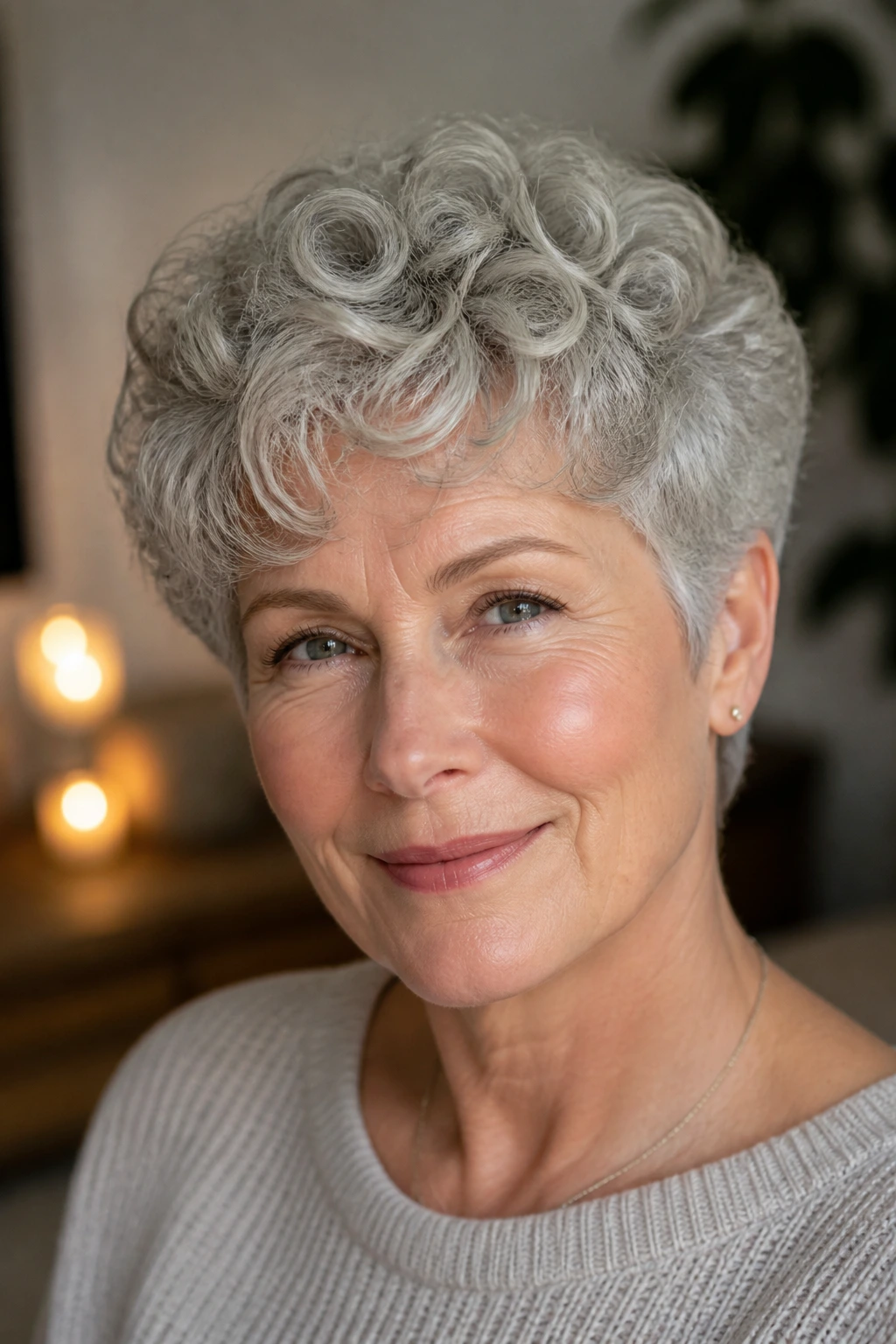
Fine hair can still be curly. People forget that. The curl may be loose, or it may sit closer to the head, but the same basic rule applies: keep the cut short enough that the curls don’t stretch themselves flat under their own weight. A curly crop with defined top layers keeps the shape up where it belongs.
The top layers matter here. They let the curls stack without turning into a triangle. If the cut is too long, the curl pattern weakens and the bottom looks thin. Too short, and the curls can spring up like little springs in every direction. The sweet spot sits somewhere in the middle, with enough length on top for a recognizable curl pattern.
A diffuser is your friend. So is a lightweight gel or foam that dries without leaving a helmet shell. If your curls are very loose, ask your stylist to cut the hair in its natural state. Dry cutting can make a big difference in where the shape actually lands.
12. Piecey Pixie with Choppy Crown
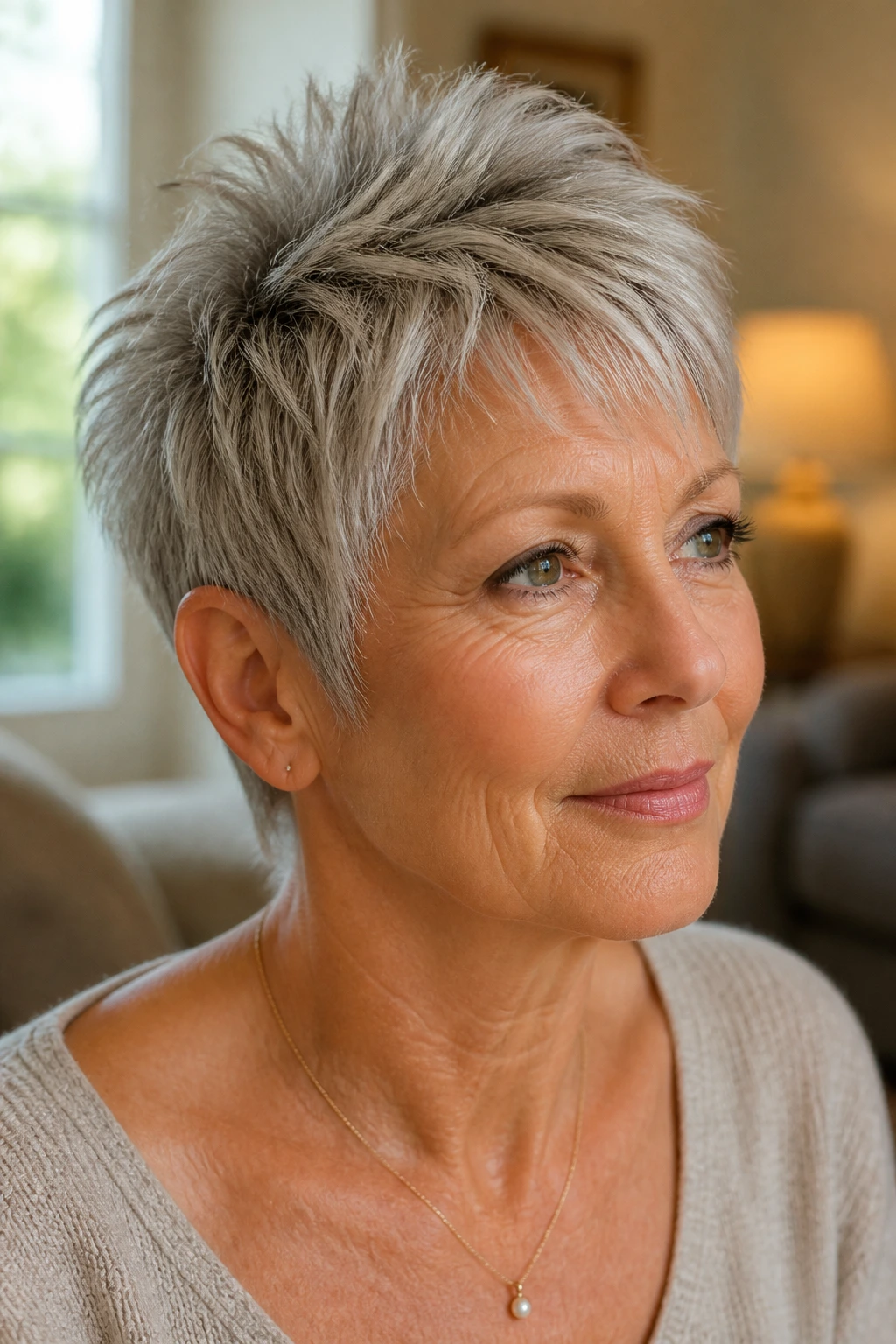
This is the edgier cousin of the soft pixie. The piecey pixie uses small, separated sections at the crown to create movement and the look of density. It’s not about smoothness. It’s about texture that breaks up the scalp line just enough to make the hair feel fuller.
What Makes It Different
The choppy crown gives you visual lift without needing volume spray all over your head. A little matte paste rubbed between the fingertips can define the top in seconds. The effect is modern, a little cheeky, and easier to style than it sounds.
I like this cut for women whose fine hair falls flat by noon. The texture helps it survive the day. The sides should still be neat, though. If the whole cut becomes choppy, the style starts to look overworked. Ask for controlled texture at the crown and softness around the ears.
13. Rounded Bob with Tucked Ends
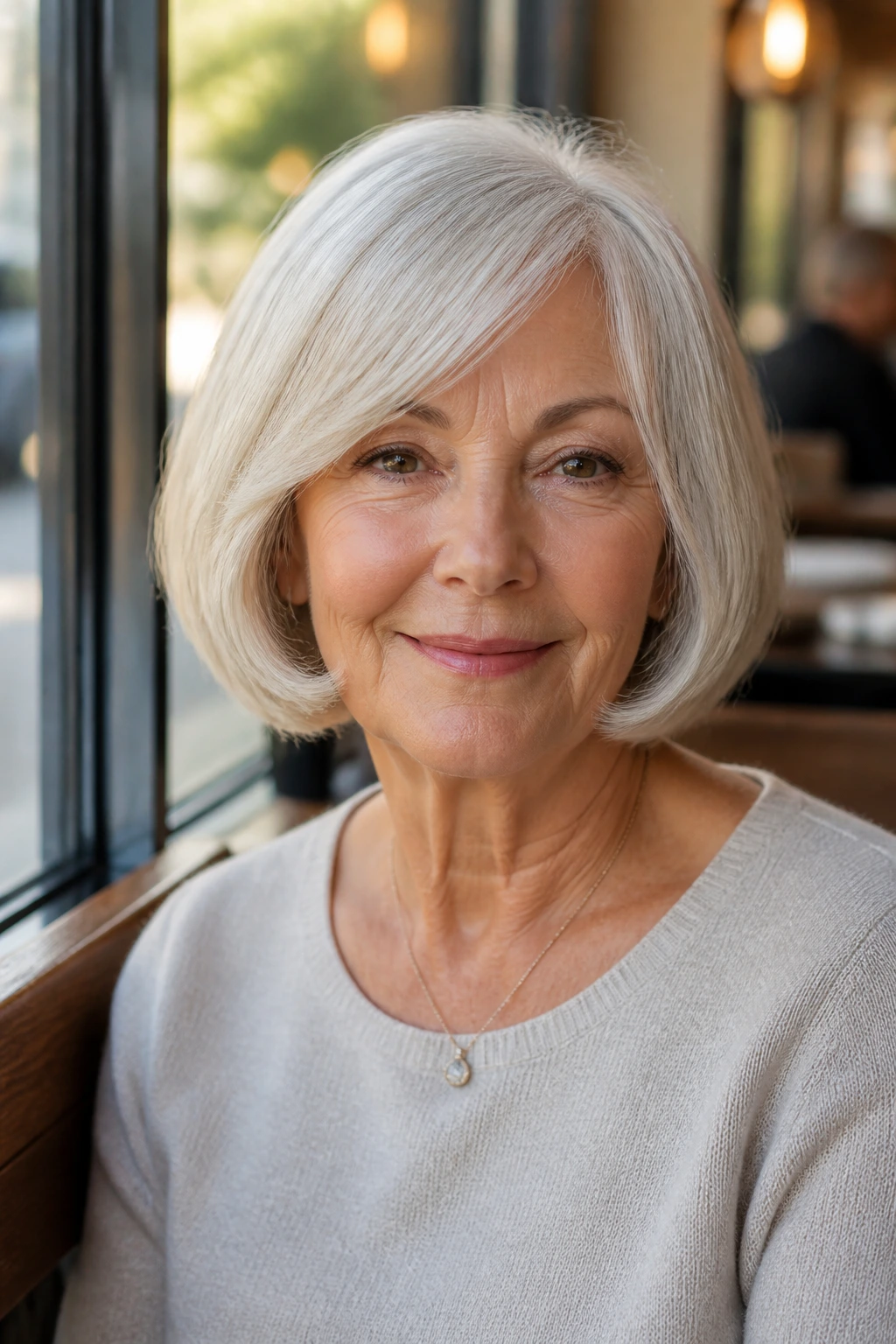
A rounded bob can be a lifesaver when fine hair has gone too straight and too limp. The goal is a soft curve around the head, with the ends gently tucked under rather than hanging straight down. That rounded shape creates the sense of fullness that thinner strands often lack.
The curve should be subtle. If the bob is too round, it can make the head look helmeted. Too flat, and the hair looks spare. The best version lands in between, with enough curve to make the perimeter look healthy and enough air underneath to keep it from looking heavy.
This style is especially kind to jawlines that have softened a bit over time. The rounded line gives the face a clean edge without being severe. It also pairs well with a side part or soft face-framing pieces. The cut works because it manages to be calm and full at the same time, which is rarer than it sounds.
14. Asymmetrical Pixie Bob
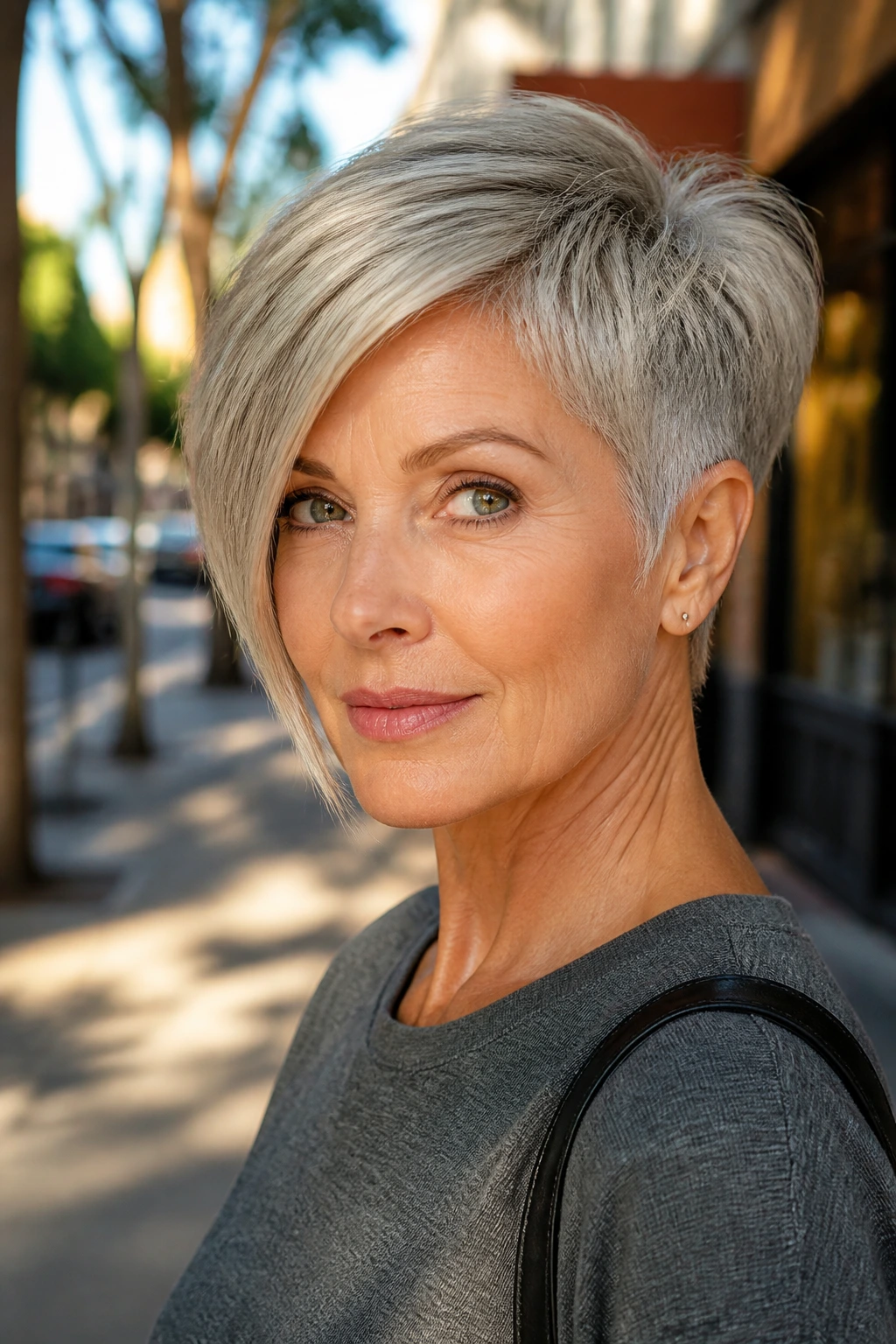
A pixie bob with one side slightly longer can be a smart move when you want a little edge without sacrificing ease. The asymmetry gives the eye somewhere to go, which is handy on fine hair because it creates the impression of more substance. One side can skim the jaw while the other stays shorter and closer to the ear.
That length difference should be modest. A dramatic one-sided cut can steal too much balance from fine hair. Keep it soft, and let the longer side frame the cheek instead of draping heavily over it. The result feels modern without shouting.
This is a good choice if your face is a little rounder and you want a line that pulls it visually longer. It also works nicely if you part your hair on the same side every day and don’t want a cut that fights your habits. Life is too short for haircuts that need a lecture before breakfast.
15. Layered Pageboy
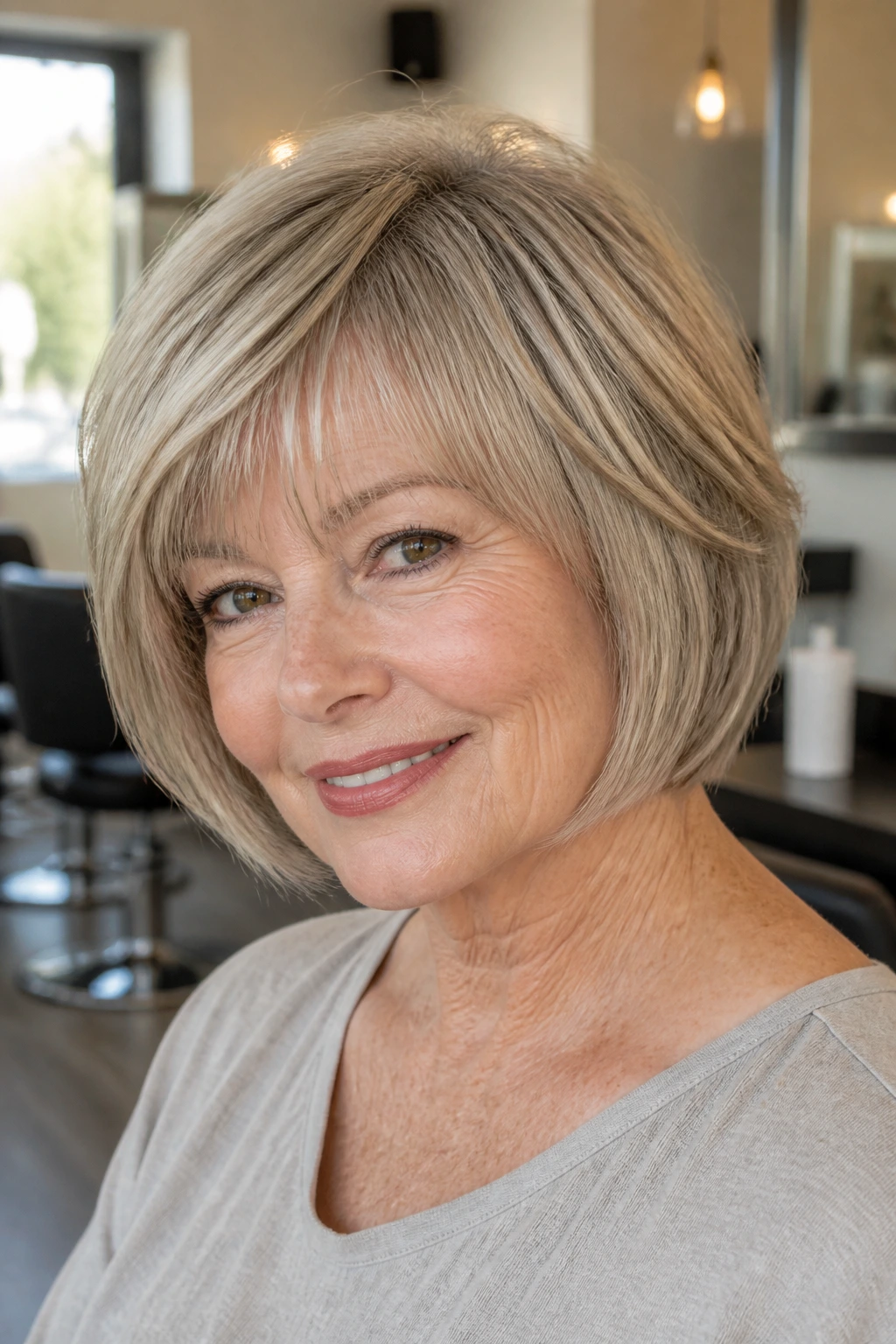
The pageboy used to have a very specific reputation, and some of it was deserved. Too blunt, too tidy, too much of a bowl. The modern layered pageboy is a different animal. It keeps that rounded outline, but softens the edges and lifts the crown so it doesn’t sit like a cap.
Fine hair likes the pageboy shape because it gives the ends a clear direction. You get fullness through the curve, especially around the jaw and nape, and that makes the hair look healthier. It’s a strong option if you want something classic but not stale.
Styling is straightforward. A medium round brush, a quick blow-dry, and a little bend through the ends are enough. If you have straight hair, the pageboy’s shape can hold beautifully. If your hair has a wave, ask for softer layering so it doesn’t puff in the wrong places.
16. Micro Bob with a Soft Bend
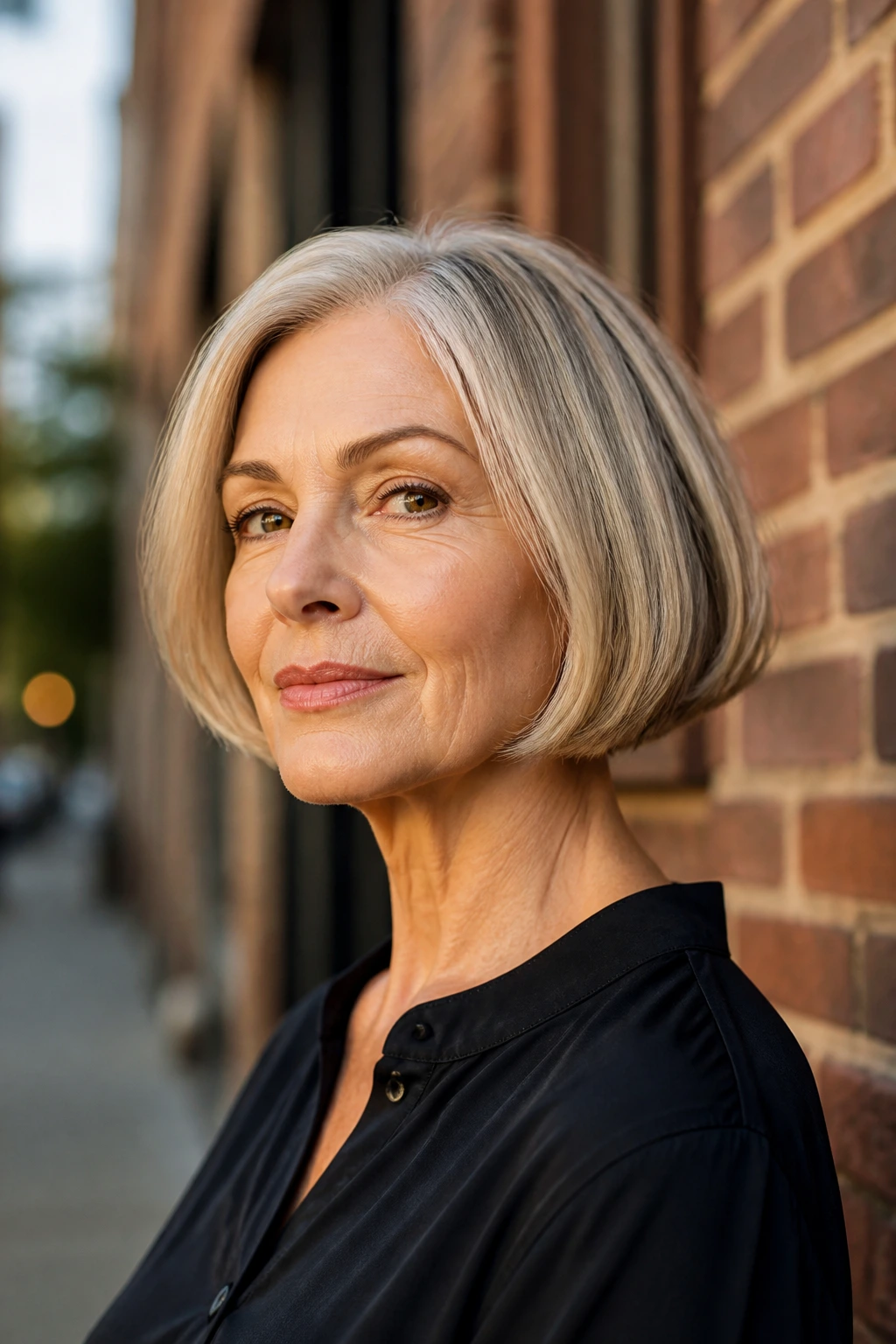
The micro bob sits shorter than a traditional chin-length bob, usually grazing the jaw or landing just above it. On fine hair, that shorter length can be a relief. Less weight. Less collapse. More visible shape. It’s a clean cut, but the “soft bend” at the ends keeps it from looking severe.
This cut is a favorite when you want the polish of a bob without the drag of extra length. It’s especially flattering if your neck is something you like showing off, because the shorter line opens that area up. If you wear statement earrings, even better. The cut gives them room to matter.
The trick is not to flatten it with too much product. A light mousse at the roots and a bend at the ends is enough. Over-smoothing this cut kills the whole point. You want the outline to be visible, but not frozen in place.
17. Tousled Crop with a Soft Undercut
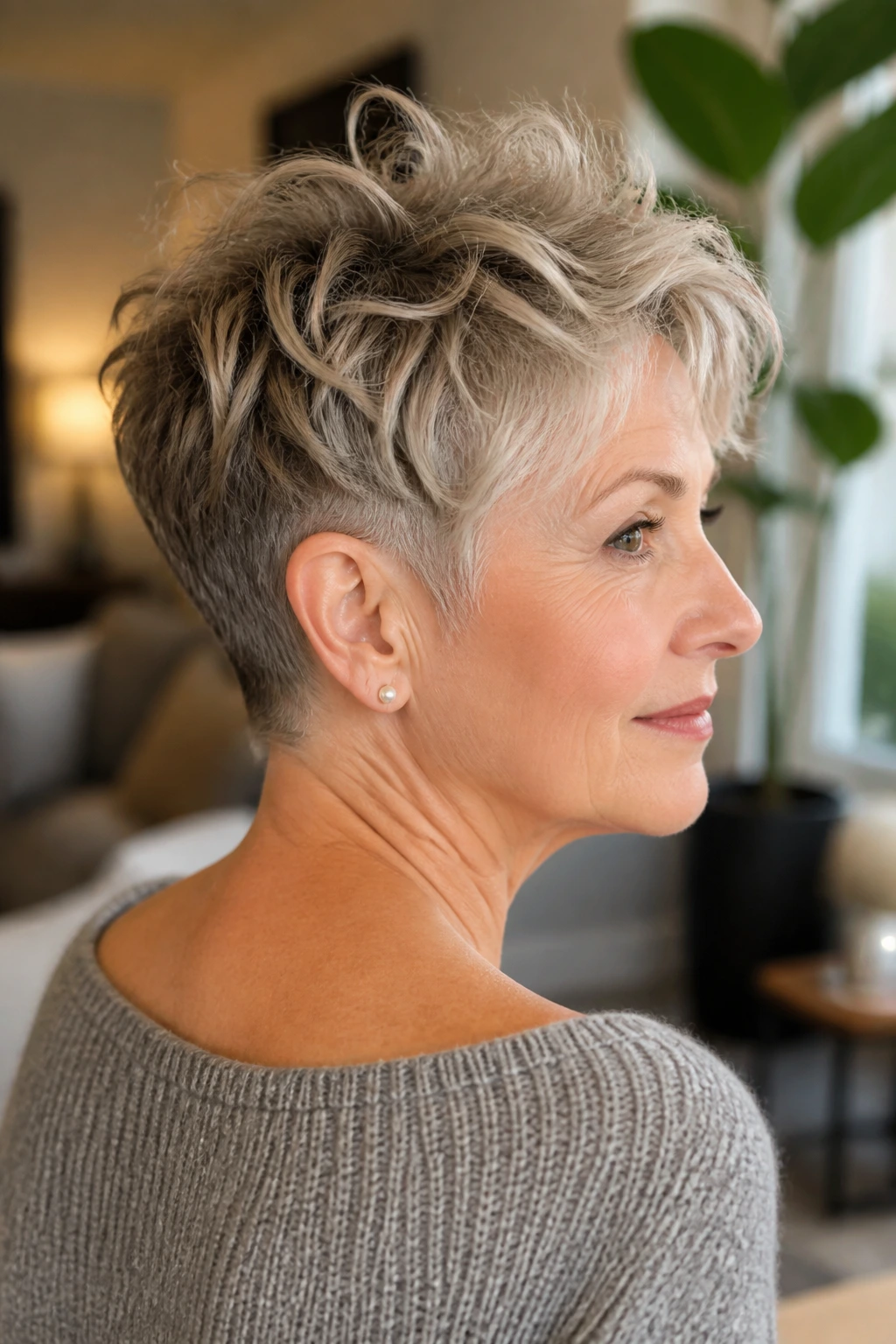
An undercut sounds aggressive, and it can be, but a soft version on fine hair is more about removing clutter than shaving off half the head. The nape and lower sides are trimmed snugly, while the top stays a touch longer and tousled. That keeps the silhouette light and avoids the weird puffiness some fine hair gets at the neckline.
This style is useful if your hair grows out strangely at the back or flares under collars. It also helps if you want a little edge without losing femininity. The top should move. That’s the point. Use a texturizing spray, scrunch it with your fingers, and stop before it looks stiff.
Not every woman wants this cut, and that’s fair. It has attitude. But when it suits the face, it solves a lot of small annoyances: bulky sides, flat crown, messy neck growth, and the constant need to tuck stray hairs away.
18. Short Cut with a Deep Side Sweep
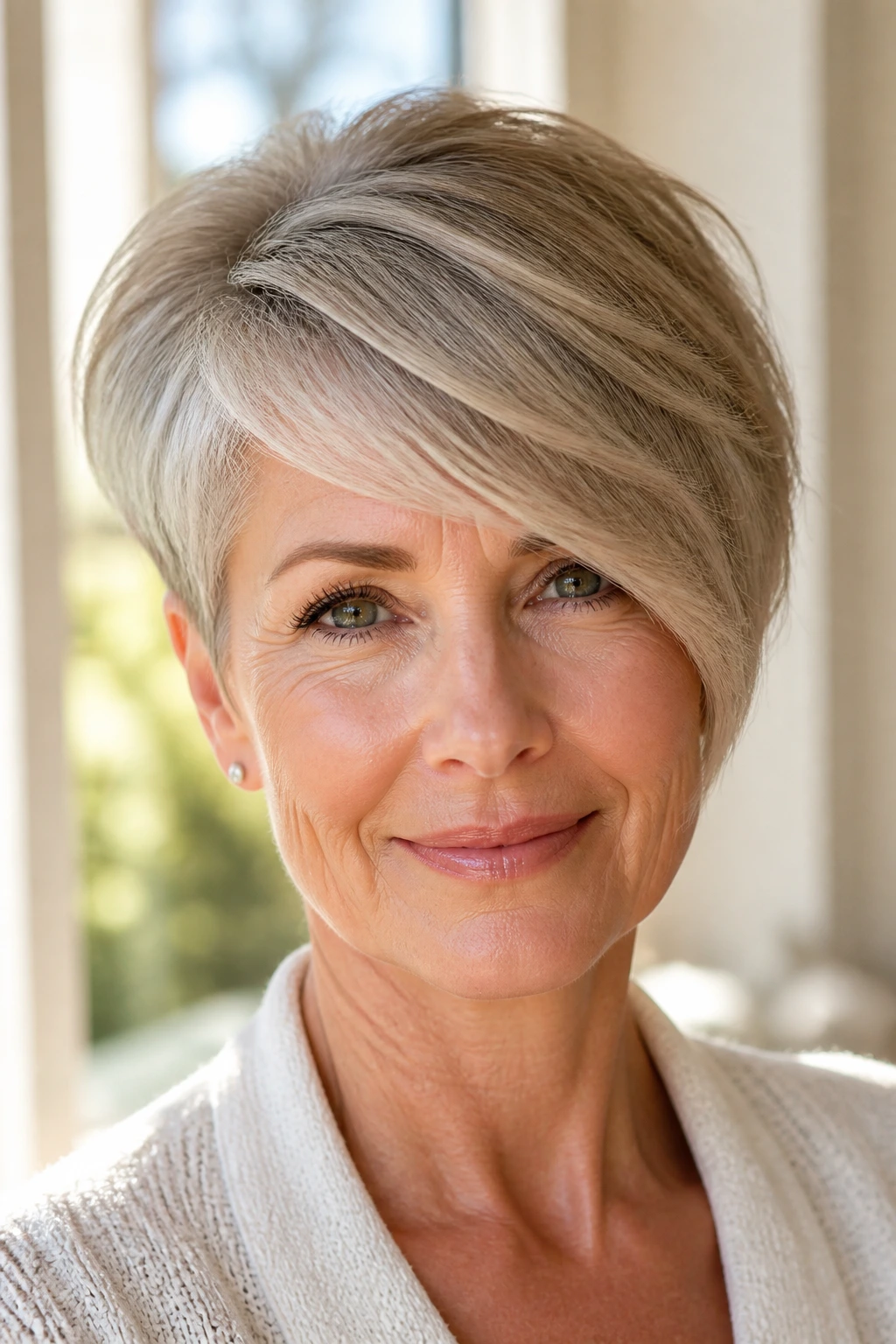
A deep side sweep is one of the easiest ways to make fine hair look richer at the front. By moving the part far to one side, you create a heavier-looking front section and a softer, more flattering line across the forehead. It’s a simple shift, but the effect is bigger than it sounds.
The rest of the cut can stay short and neat — a crop, a bob, even a pixie-bob. The side sweep becomes the focal point. It’s useful if you want more coverage over one temple, or if your hairline is a little thinner where the part sits. The sweep hides nothing in a bad way. It just directs attention better.
I like this one because it doesn’t demand a whole personality change. You can wear it polished, tucked, or a little messy. On day two, a quick mist of water at the roots and a finger-dry can bring it back. Some styles are fussy. This isn’t one of them.
Why Short Hair Gives Fine Strands More Shape
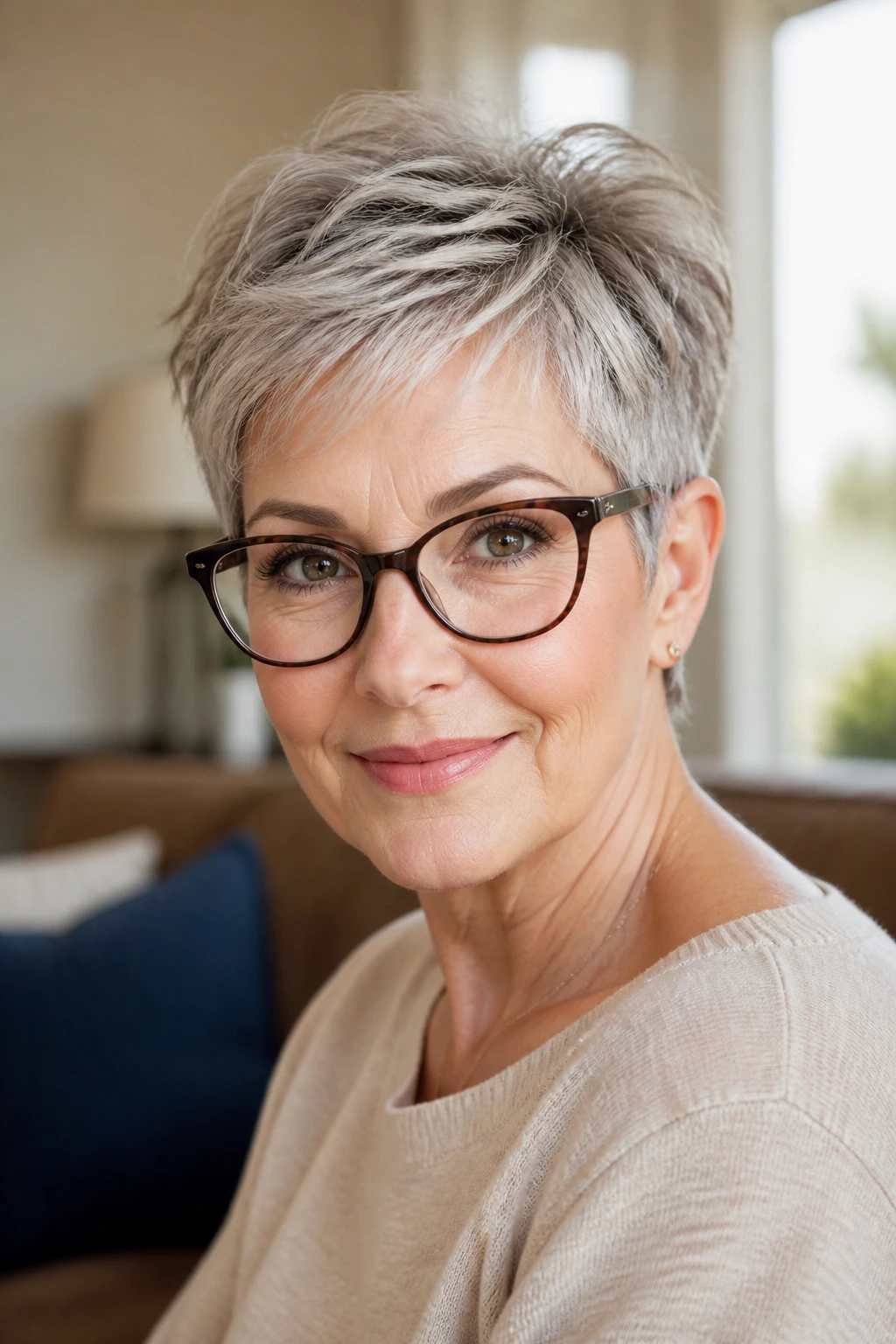
Fine hair is not weak by default. It’s just smaller in diameter, which means weight matters more. A long cut pulls those strands downward. A shorter cut gives the hair a better chance to stand away from the scalp and show a shape that looks intentional rather than apologetic.
The other thing people miss is the perimeter. On fine hair, the bottom line of the cut does a lot of visual work. If the ends are wispy and uneven, the whole head looks thinner. If the outline is clean — not chunky, not blunt to the point of stiffness — the hair reads as fuller from three feet away.
There’s also the matter of silver, white, and salt-and-pepper hair. These shades can be beautiful, but they often feel drier and more porous. Shorter hair simply behaves better. It doesn’t need to fight gravity for as long, and it can be styled with lighter products that don’t drag the roots down.
A lot of women are told to keep hair long because it’s “more feminine.” That advice can be plain wrong for fine strands. Feminine is a good cut that suits your face, your texture, and your life. That’s the part that matters.
The Tools and Styling Products That Pull Their Weight
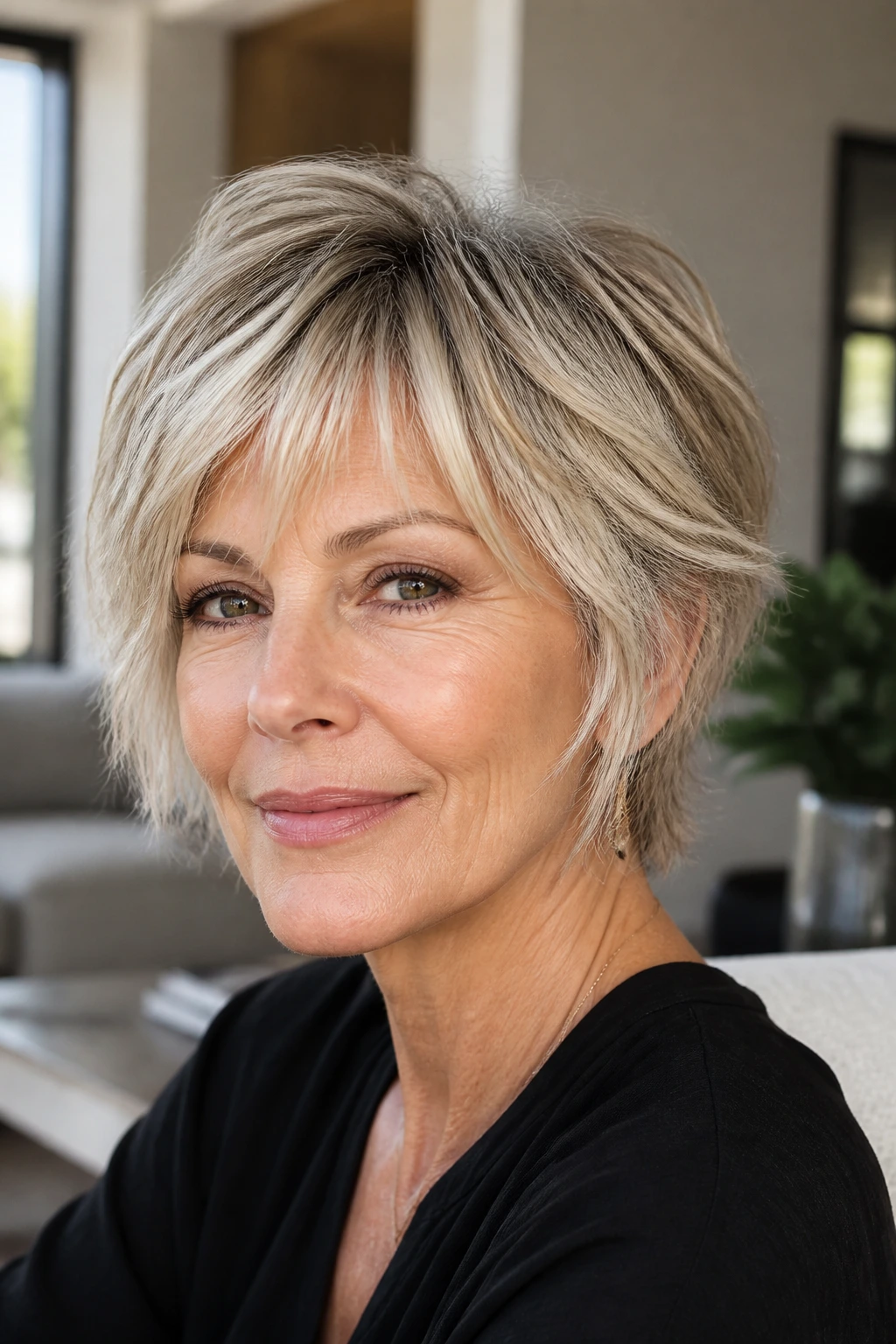
A short cut for fine hair doesn’t need a cabinet full of products. It needs the right few things, and it needs them used lightly. Heavy cream, thick oils, and big dollops of serum are usually trouble. They collapse the root and make the ends separate.
-
A blow dryer with a narrow nozzle: This keeps air focused at the roots so you can direct lift where it matters.
-
A small round brush, 1 to 1.25 inches: Better for shaping short layers and creating a bend at the ends.
-
Lightweight mousse or root foam: Gives structure without turning the hair sticky or stiff.
-
Texturizing spray: Use it sparingly on the top and crown for separation and grip.
-
A fine-tooth comb and a tail comb: Handy for precise parts, lifting the crown, and cleaning up the fringe.
-
A vent brush or paddle brush: Good for quick dry days when you want smoothness with a little body.
-
Soft-hold hairspray: Enough to keep the style in place, not enough to freeze it like lacquer.
-
Dry shampoo: Best on day two, especially at the crown where fine hair shows oil first.
-
A lightweight leave-in spray: Useful if the ends feel dry, but keep it misty, not creamy.
-
A flat iron with narrow plates, optional: Helpful for a slight bend or smoothing a cowlick, not for ironing the life out of the cut.
How to Ask for the Cut at the Salon

Bring photos, yes, but bring words too. A good stylist can read a photo, yet your hairline, crown growth, and cowlicks are the real map. Tell them where your hair falls flat, where it grows in funny, and whether you want volume at the top or softness around the jaw.
Ask for light internal layering, not thin-to-the-point-of-fragile razoring. On fine hair, too much texturizing can create a fluffy outline with weak ends. You want enough movement for the cut to breathe, but not so much that the bottom edge disappears.
If you wear glasses, say so. If you tuck one side behind the ear every day, say that too. Those little habits change where the weight should sit. A cut that looks lovely with both sides loose can behave badly once you live in it.
One thing I’d avoid: asking for “more volume” and stopping there. Volume where? Crown, sides, front, back? Those are different jobs. Fine hair needs a target, not a vague pep talk.
Styling Moves That Add Lift Without Crunch
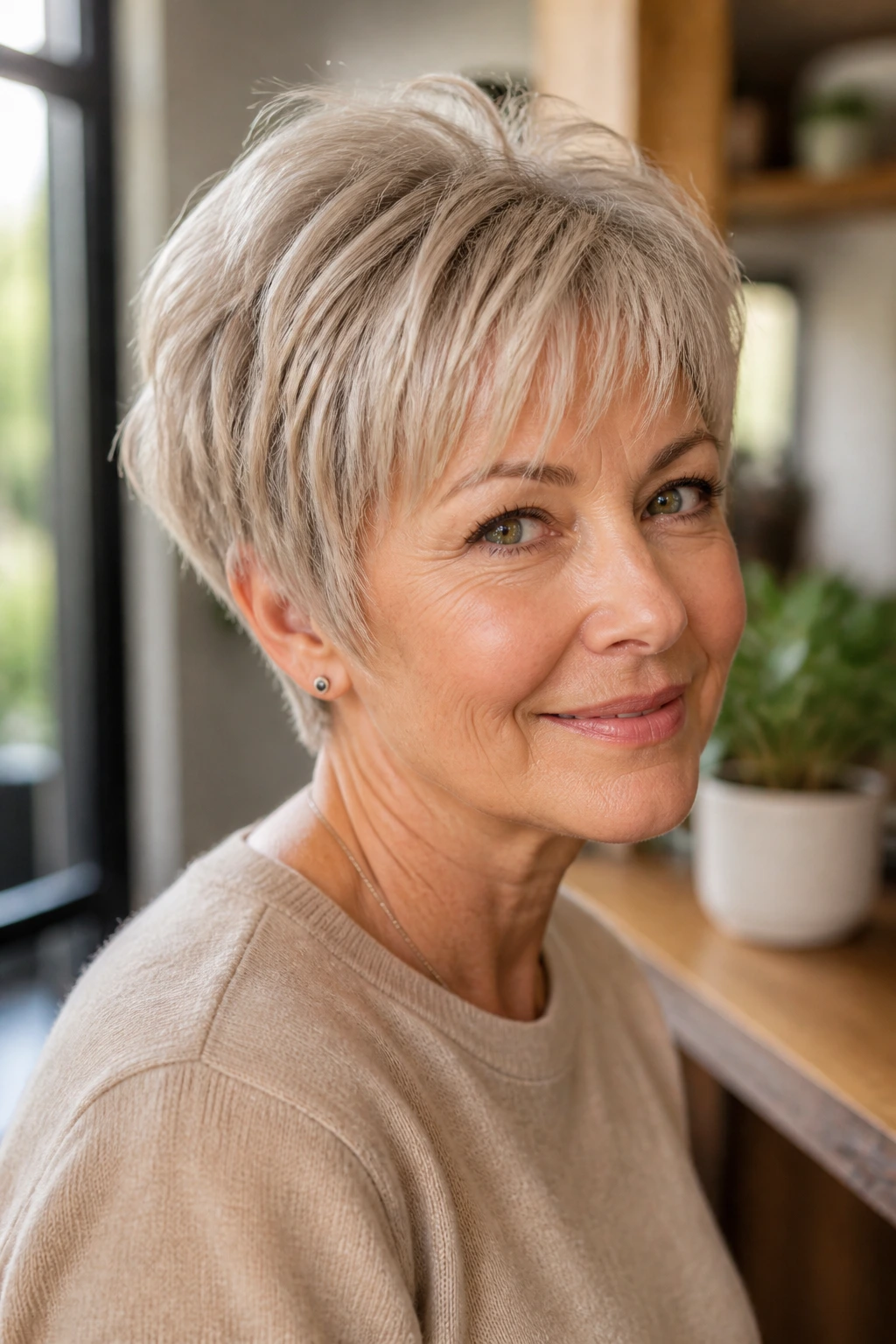
The easiest lift comes from direction, not product. Dry the hair opposite its natural fall for the first few minutes, then switch it back into place. That alone can give you a root line that lasts longer than a heavy mousse job.
Crown First, Ends Second
Start at the crown with mousse or root foam, then use the nozzle to aim air at the roots while lifting sections with your fingers or a small brush. Once the base is dry, shape the ends. If you style the ends first, you flatten the top while you work.
Cool Shot, Not Hot Air Forever
A quick cool shot after each section helps set the shape. The hair feels different when it’s done — less pliable, a little springy. That’s the point. Don’t skip it if your hair falls flat fast.
Product, But Barely
A pea-size amount of paste or cream is usually enough for short fine hair. Rub it between your palms until it almost disappears, then touch the mid-lengths and ends. If your hands look shiny after product, you’ve probably used too much.
Common Mistakes That Flatten Fine Hair
The biggest mistake is keeping too much length because you’re afraid of going short. Fine hair below the shoulders can look elegant, sure. It can also look tired, stringy, and harder to style than it’s worth. If the ends are see-through, the cut is asking for mercy.
Overloading with conditioner is another classic. The hair feels smooth in the shower, then falls limp the second it dries. Use conditioner on the lower half of the hair only, and rinse well. That slippery feel should not survive the towel.
Too many short layers can be a mess too. People hear “layered” and think more is better. Not on fine hair. If the layers are too aggressive, the shape breaks apart and the scalp starts showing through in odd places. The fix is softer graduation and stronger perimeter control.
A bad fringe cut can ruin the whole look. Bangs that are too thick will steal volume from the top. Bangs that are too wispy can look sparse. The sweet spot is usually a lighter fringe, cut to move, not sit.
And please, don’t drown short hair in oil. The shine might look nice for ten minutes. Then the roots go flat and the rest of the cut looks separated in a sad way.
Variations for Different Face Shapes
-
Soft Roundening for Round Faces: Choose a pixie bob or side-swept crop with height at the crown and a little length near the cheekbones. The extra vertical lift helps stretch the face visually.
-
Jaw-Softening for Square Faces: A French bob, layered pageboy, or rounded bob softens stronger angles. Ask for movement near the jaw so the cut doesn’t sit too boxy.
-
Lift and Balance for Heart Shapes: Try a textured crop with side fringe or a bixie that keeps some fullness near the chin. That balances a wider forehead without making the lower face disappear.
-
Clean Lines for Oval Faces: You can wear almost any of these, which is annoying and useful at the same time. A micro bob, wedge, or sleek ear-tucked bob will all sit nicely on an oval shape.
-
Length Control for Longer Faces: Choose cuts that add width, not only height. A chin-length bob, rounded bob, or side-swept crop keeps the face from stretching out too much.
Keeping the Shape Between Salon Visits
Short hair for fine strands usually looks best with trims every 4 to 6 weeks. Wait longer and the shape starts to sag, especially at the nape and around the ears. Fine hair does not hide grow-out as well as thick hair does. It just doesn’t.
If you color your hair, the maintenance gets a little more specific. Silver and gray can yellow around the hairline if the water is hard or the styling products are too heavy, so a gentle purple shampoo once every 1 to 2 weeks can help. Don’t overuse it or the hair can turn dull and slightly smoky.
At home, trim the neckline stray hairs with care or leave them alone and let the salon handle it. Home trimming often turns a neat crop into a lopsided rescue mission. If you must tidy it, use small scissors and cut only the obvious wisps.
On day two, revive fine short hair with a mist of water at the roots, a little mousse, and a quick blast from the dryer. Dry shampoo can buy you another day, but use it before the roots get greasy, not after they’ve already collapsed.
Frequently Asked Questions
Does layering always help fine hair after 60?
No. Light layering helps, but too many short layers can make the cut look thinner and more frayed. Fine hair usually needs a controlled shape with some internal movement, not a shredded finish.
Are bangs a bad idea for fine hair?
Not if they’re cut with restraint. A soft side bang or wispy fringe can add style and soften the forehead, but thick blunt bangs can steal too much density from the top.
Which haircut looks fullest without much styling?
A stacked bob, wedge cut, or chin-length bob with a clean perimeter tends to hold shape best with minimal effort. These cuts do a lot of the visual work for you.
Can curly fine hair wear a short cut?
Absolutely, and it often looks better short than long. Curl pattern can sag when fine hair gets too heavy, so a crop or curly bob can bring the spring back.
What if my hair sticks flat at the crown no matter what I do?
Ask for shorter crown layers and a cut that creates lift through graduation, not just texture spray. Also dry the crown first while lifting it away from the scalp; product alone won’t fix a flat root line.
Will short hair make my face look older?
A bad short cut can do that. A good one opens the face, softens the jaw, and keeps the crown from collapsing. The difference is in the shape, not the length.
How do I keep my short style from looking helmet-like?
Avoid overblowing it smooth and avoid heavy hairspray. Leave a little movement in the top and fringe, and ask for soft edges rather than a hard, blunt shell.
What’s the best cut if I wear glasses every day?
A pixie, bixie, or short bob with a side part usually works well. These cuts clear the frames and keep the hair from fighting the temples.
The Cut You Can Keep Living In
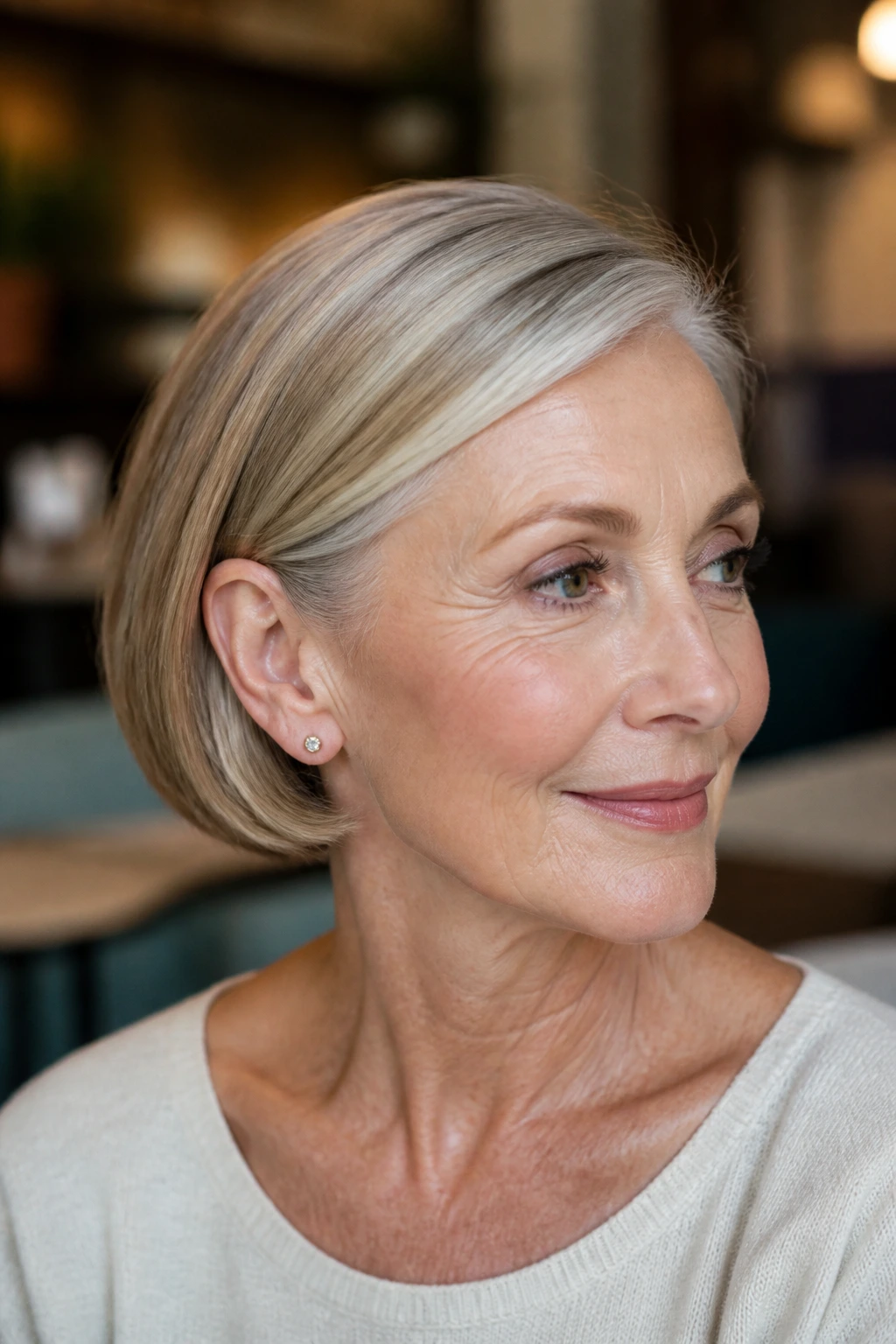
The best short fine hairstyles for women over 60 are the ones that don’t ask your hair to be something it isn’t. They respect the strand diameter, work with the way the hair actually falls, and leave you with a shape that still looks like itself after a windy walk, a shower, or a long afternoon in a restaurant booth.
I like cuts that have a little lift at the crown, a clean edge at the bottom, and at least one soft detail near the face. That combination tends to outlast fashion and, more importantly, it outlasts the first three minutes after a blow-dry. Which is the real test.
If you’re sitting on the fence, start with the shape you can style in under ten minutes on a regular morning. That cut usually turns out to be the one you keep coming back to.