



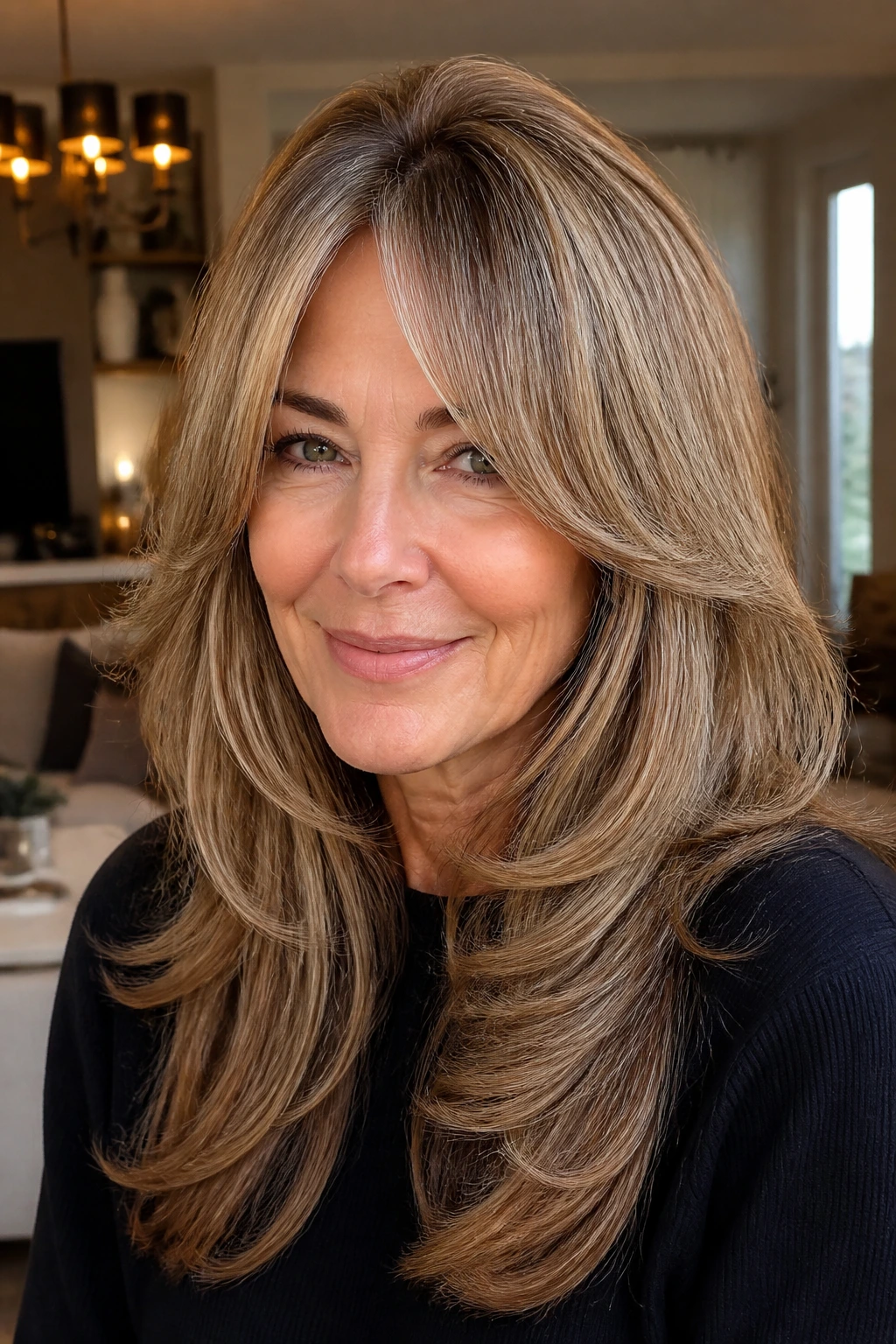
The best modern long haircuts for women over 40 with soft layers do one thing blunt cuts often miss: they keep the length, but the hair stops dragging itself down the back of the head. That matters when the ends have gone a little finer, the gray pieces feel coarser, or the front of the hair needs some help behaving after a long day. Soft layers give long hair a bend at the cheekbone and a little swing at the ends, which is exactly where heavy lengths start looking tired.
Not all layers are kind. Some are chopped high, thinned through the ends, and left to fend for themselves. Those cuts can look lively for a week, then start to fray at the perimeter and feel too airy around the face. The good versions are lower, softer, and more deliberate — more contour than texture, more movement than drama.
That balance matters more after 40 than most salon chatter admits. Hair doesn’t stay frozen in place. Density shifts, part lines widen a bit, and a cut that looked fine with one blow-dry can suddenly expose every rough edge the next morning. The right long haircut works with that reality instead of pretending it isn’t there.
Why Soft Layers Earn Their Place
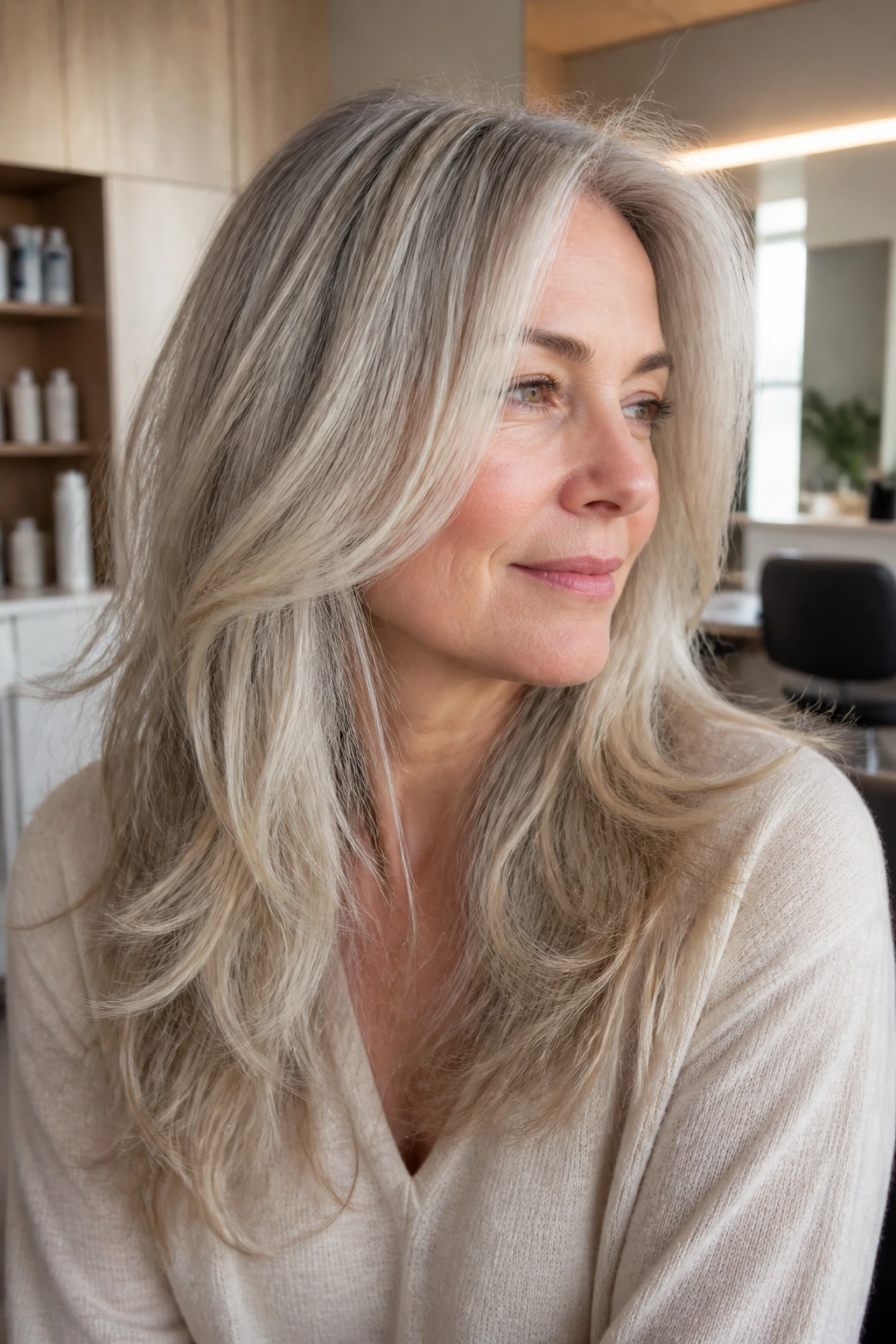
- They remove weight without chopping off length: The hair still falls past the shoulders, but the ends don’t hang like one solid curtain.
- They soften the face fast: A well-placed layer at the cheekbone or collarbone can open the face more cleanly than a short bang ever will.
- They behave better with changing texture: Gray strands, waves, and fine sections all look more intentional when the cut has a little bend built in.
- They save time on styling: Most of these cuts need one round brush, one pass of a curling iron, or a quick air-dry shape-up.
- They grow out with less drama: Soft layers keep their shape longer because the line is blended instead of carved.
- They work with long hair, not against it: You keep the length people like, but the hair stops feeling flat at the sides and heavy at the bottom.
That’s the whole trick. The cut should feel lighter, not look thinner.
1. Butterfly Layers With Curtain Bangs
Butterfly layers have earned their place because they do two jobs at once. The upper layers create lift around the face and crown, while the longer layers keep the length intact, so the whole cut still falls past the shoulders with a proper sweep. Curtain bangs finish the idea by splitting softly down the center and blending into those front layers instead of stopping abruptly at the brows.
The shape is especially good if your hair feels heavy in the front or if you’ve got a face that looks better with a little opening around the cheekbones. Ask for the shortest layer to hit around the cheekbone or just below it, then have the rest of the layers travel downward in a smooth cascade. No choppy disconnects. If the pieces are cut too short, the style can tip from airy to dated fast.
This cut loves a round brush at the front and a soft bend through the mid-lengths. The ends should still look like hair, not feathers from a craft store. That’s the line.
2. U-Shaped Length With Soft Ends
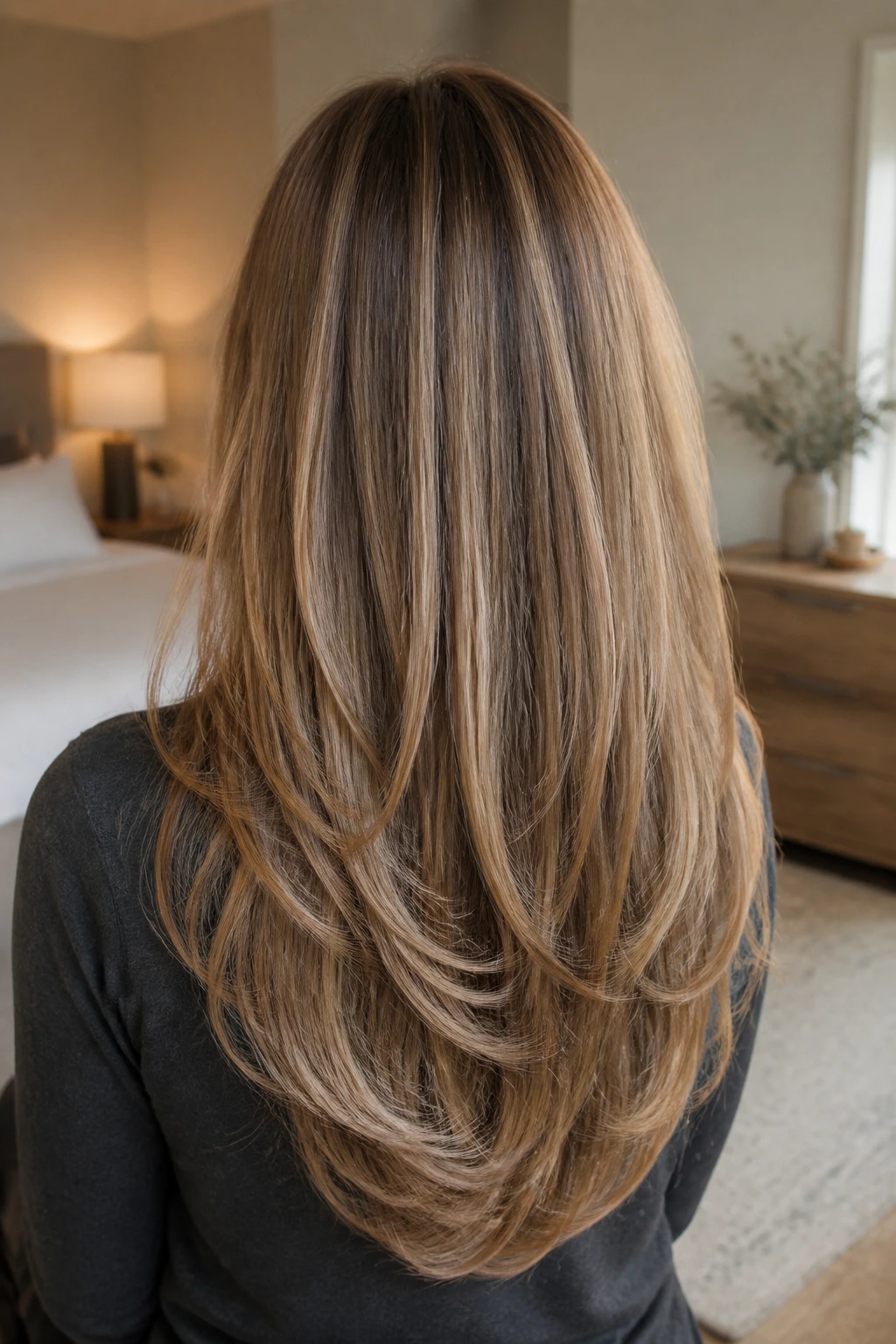
A U-shape is what I reach for when someone wants long hair that still looks full. The perimeter curves gently upward at the sides, so the back remains longer and the whole silhouette feels softer than a blunt straight line. With soft layers tucked inside the shape, the cut keeps weight where it matters and avoids that stringy, over-thinned look.
This is a smart choice for medium to thick hair, especially if the ends tend to puff or flip in odd directions. The U-shape gives the bottom edge a little roundness, which helps the hair sit neatly against the back instead of fanning out. Ask for the lowest layers to stay well below the collarbone so the cut keeps its fullness.
I like this one for women who want polish without a lot of obvious layering. It looks expensive when it’s clean and straight, but it doesn’t fall apart the second you add a wave.
3. C-Cut Layers That Curve Around the Face
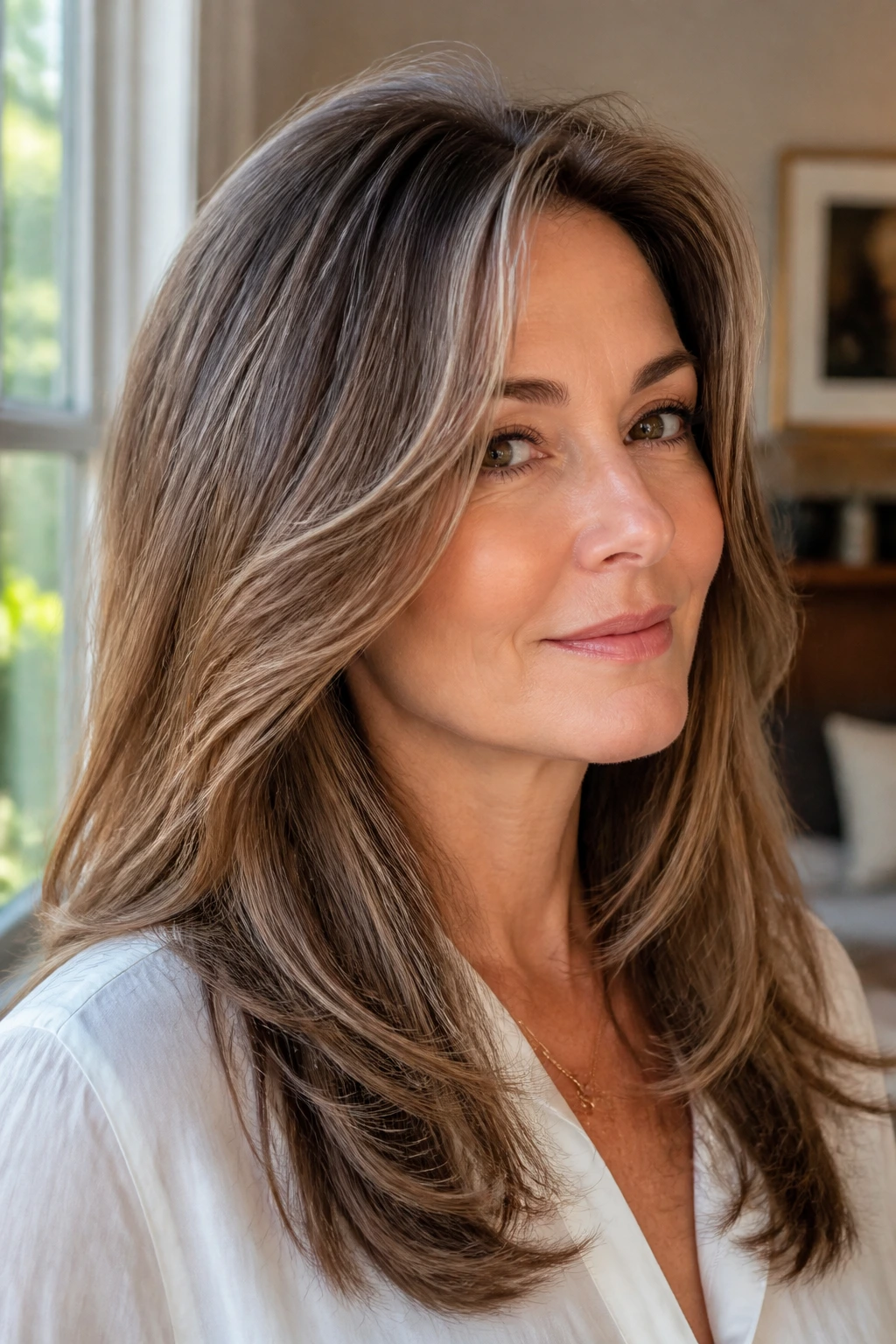
A C-cut is softer than a V-shape and more flattering than a flat one-length line if your hair tends to hang close to the head. The front pieces curve inward like the letter C, so the layers skim the cheekbones and jaw before melting back into the length. It’s subtle, but on long hair that subtlety is the difference between “nice” and “why does this suddenly look lifted?”
This cut works well if you want face-framing without obvious bangs. The front should start around the chin or cheekbone, then gradually drop into longer lengths at the sides. Keep the curve gentle. Too much angle and you lose the calm, modern feel that makes this version work.
I like it on women with straight or slightly wavy hair because the curve shows even when the hair isn’t styled to perfection. It’s one of those cuts that still looks thought-out on a loose ponytail day.
4. Feathered Layers With a Side Part

A side part changes the whole mood of long hair. Shift the part a little off center, add soft feathering through the front, and the cut suddenly has lift where it used to lie flat. This is especially useful if one side of your hair naturally collapses or if you’ve got a cowlick that insists on doing its own thing.
Feathered layers are softer than the old-school versions people remember. They don’t need to scream 1978. The best modern version has ends that taper lightly, with the shortest front piece starting somewhere between the cheekbone and the chin. The point is movement, not decoration.
This shape is a nice fix for fine hair that needs a little body without too much cutting. And if you wear glasses, a side part can keep the front from crowding the frames.
5. Soft Long Shag With Airy Fringe
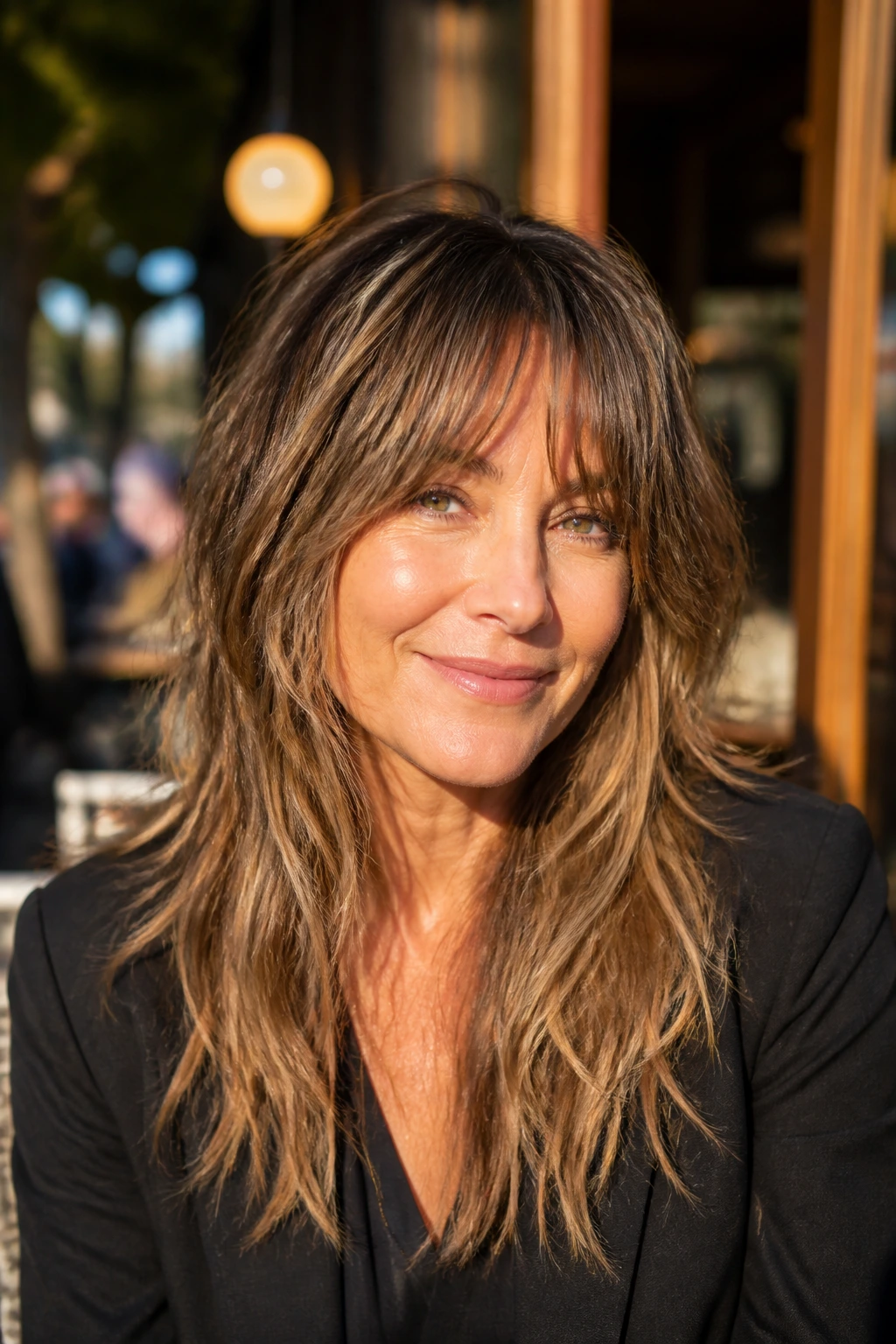
A long shag can be grown-up, calm, and wearable. It doesn’t have to look rebellious or jagged. The version I like keeps the crown lifted, the layers piecey, and the fringe soft enough that it melts into the rest of the hair instead of sitting on top of it like a costume.
This is a good call when your hair has natural wave or when you want texture to do some of the styling work. The crown gets a little more internal shape, the mids get movement, and the ends stay loose. The fringe should whisper, not announce itself. If it’s cut too blunt or too short, the whole thing turns sharp fast.
I’d pick this for someone who hates a heavy blow-dry and doesn’t mind a little lived-in texture. It looks best when the hair has a bend, a slight bend, or even a slightly messy bend. Clean, but not stiff.
6. Invisible Internal Layers for Thick Hair
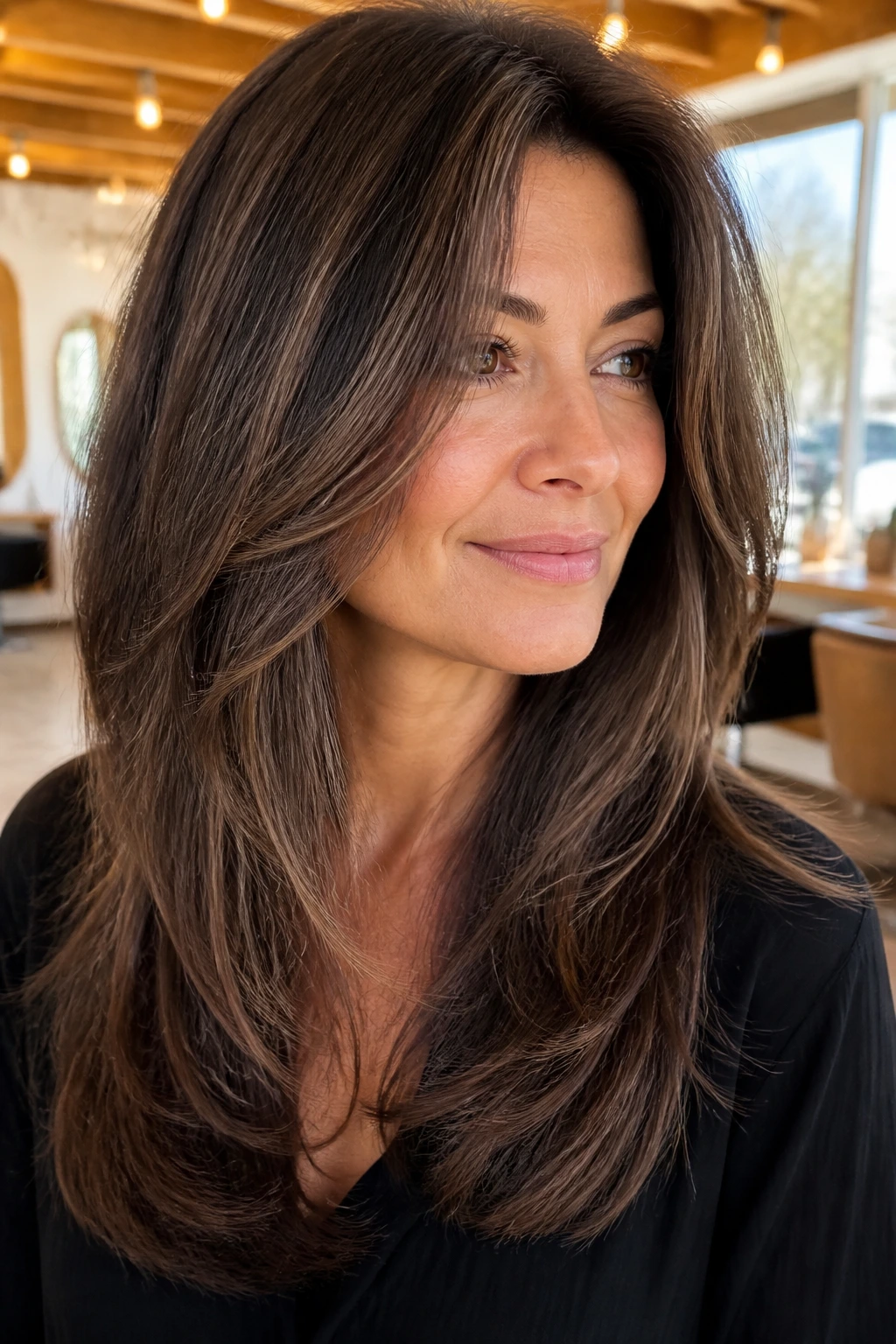
Thick hair can swallow shape unless the cut is handled with a bit of restraint. Invisible internal layers remove bulk from the inside of the haircut while leaving the outside perimeter strong and readable. That means you get less puff, less triangle, and less time spent trying to drag the hair flat with a brush.
What I love here is the way the cut keeps the ends looking full. You don’t want a dense mane with a shredded bottom edge; that’s the fastest route to frizzed-out volume. Instead, the stylist should take weight out underneath and around the crown while preserving the line around the shoulders or mid-back. The haircut should feel lighter in your hands, not look obviously chopped.
If your hair is thick enough to make a hair tie snap twice before it gives up, this is worth asking for. It’s practical. It’s clean. And it grows out in a way that doesn’t demand constant correction.
7. Barely-There Layers for Fine Hair
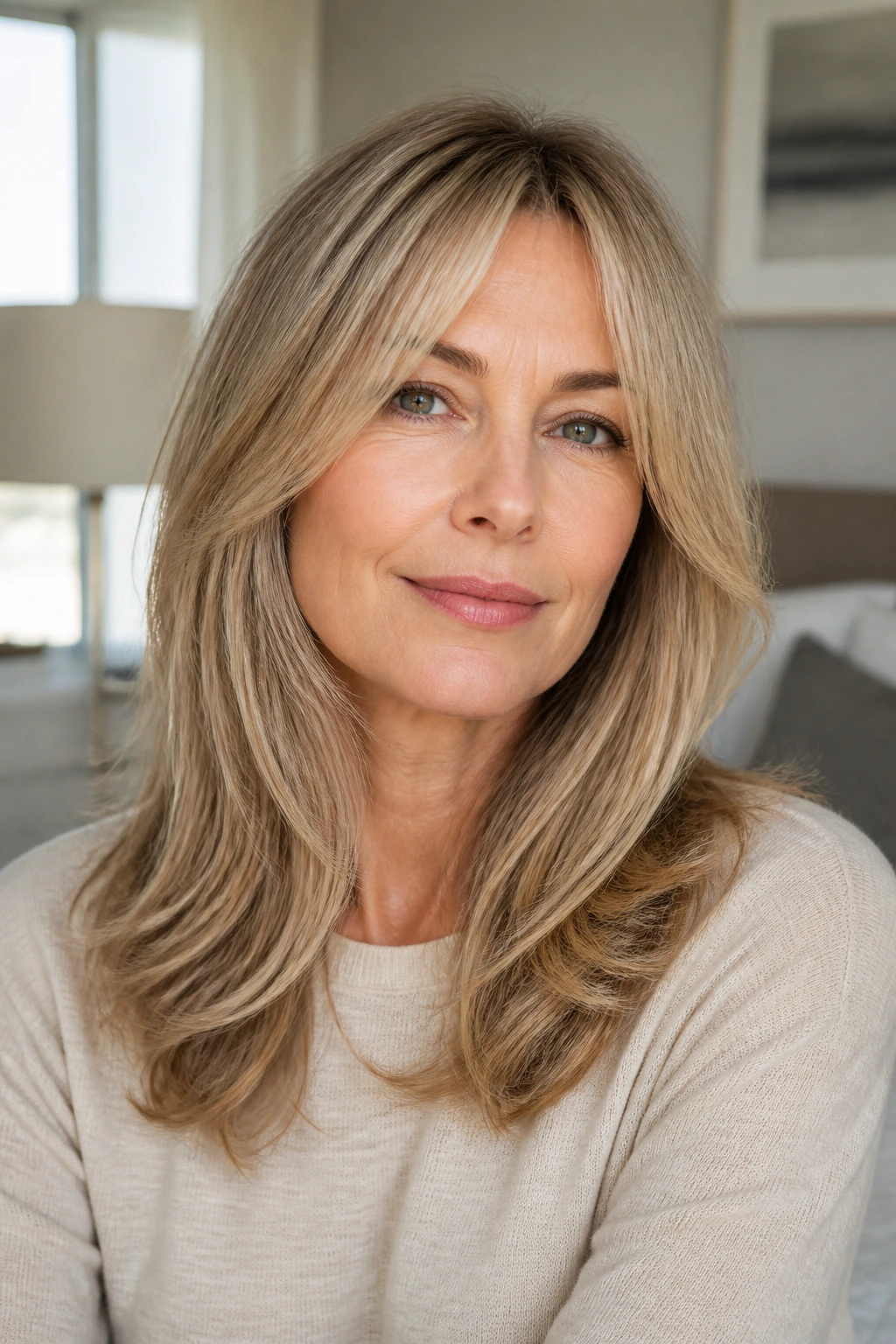
Fine hair needs a disciplined hand. Too many layers and the ends look wispy, which is a bad trade if you’re trying to keep long hair looking healthy and full. Barely-there layers keep the perimeter solid while adding just enough movement around the face and through the mid-lengths to stop the whole shape from falling flat.
This cut is the opposite of overworked. The first layer should sit low, and the transition from the front into the back should be almost invisible when the hair falls naturally. Less layering is not laziness here. It’s the point. Fine hair usually looks better with a fuller edge and a little internal lift than with a lot of obvious shaping.
If you’ve got fine hair and a long length you don’t want to sacrifice, this is the version to bring to the salon chair. It behaves best with a round brush at the front and a light volumizing spray at the roots — not a mountain of product.
8. Deep V-Cut for Long Length
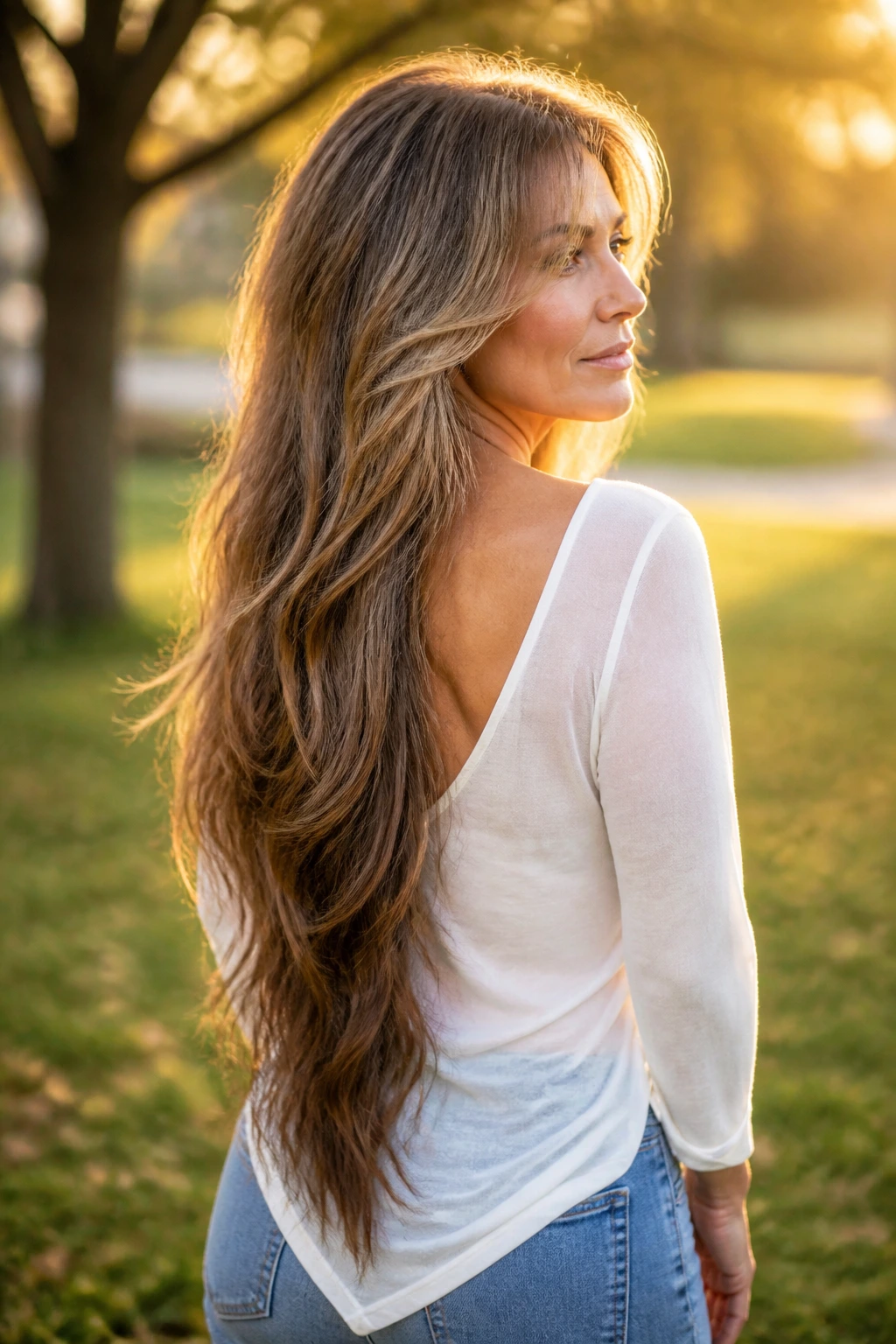
A deep V-cut gives very long hair some drama without forcing the front to get short. The back tapers into a point, while the sides keep enough softness to prevent the look from becoming severe. On hair that reaches the ribcage or longer, the V-shape can make the whole style feel more intentional and less like untreated length.
This is the cut for someone who likes to wear hair down and wants the back to move instead of sitting there like a blanket. It can be gorgeous on straight or wavy hair, but the layers need to be handled gently. If the point gets too sharp, the cut starts looking dated. Keep the transition soft and the interior shape blended.
The V-cut also plays nicely with braids, half-up styles, and loose waves because the point gives the hair a more obvious fall line. It’s one of the few long shapes that still looks put together when it’s simply brushed and left alone.
9. Bottleneck Bangs With Cascading Layers
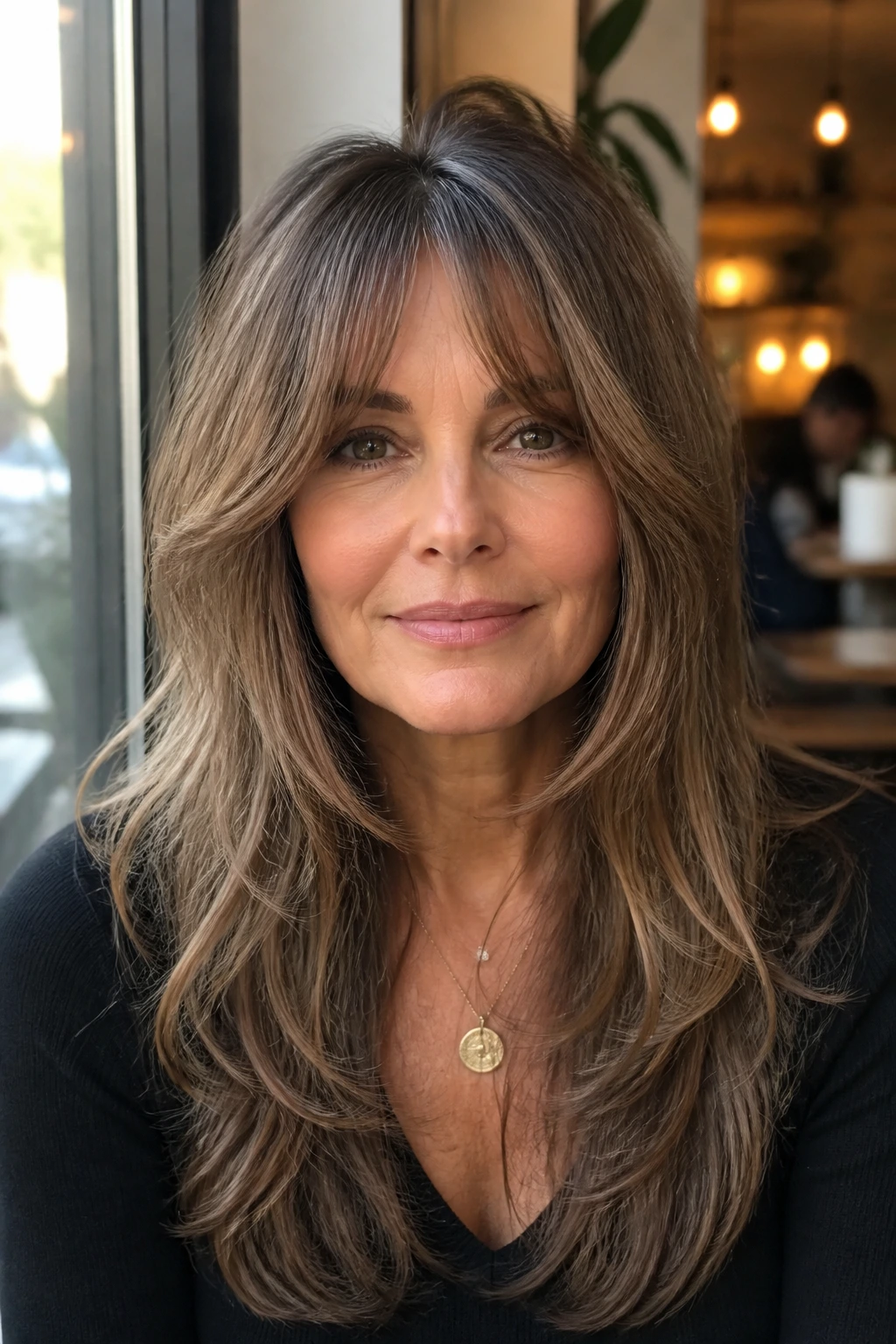
Bottleneck bangs are the quiet cousin of curtain bangs. They begin narrower at the center, then widen softly toward the temples, which gives the forehead a little shape without cutting a hard line across it. Paired with cascading long layers, they frame the face in a way that feels modern but not overstyled.
This is a nice option if you want a fringe, but you don’t want to commit to a blunt bang that needs constant trimming. The bangs should melt into the front layers, not sit apart from them. The transition is what makes the cut feel expensive. Hard edges make this look fussy in a hurry.
I like bottleneck bangs on women who want to soften a longer forehead or bring a little attention back to the eyes and cheekbones. They work well with a center part or a slight off-center part, and they’re more forgiving on growing-out days than a full straight fringe.
10. Modern Rachel Reboot
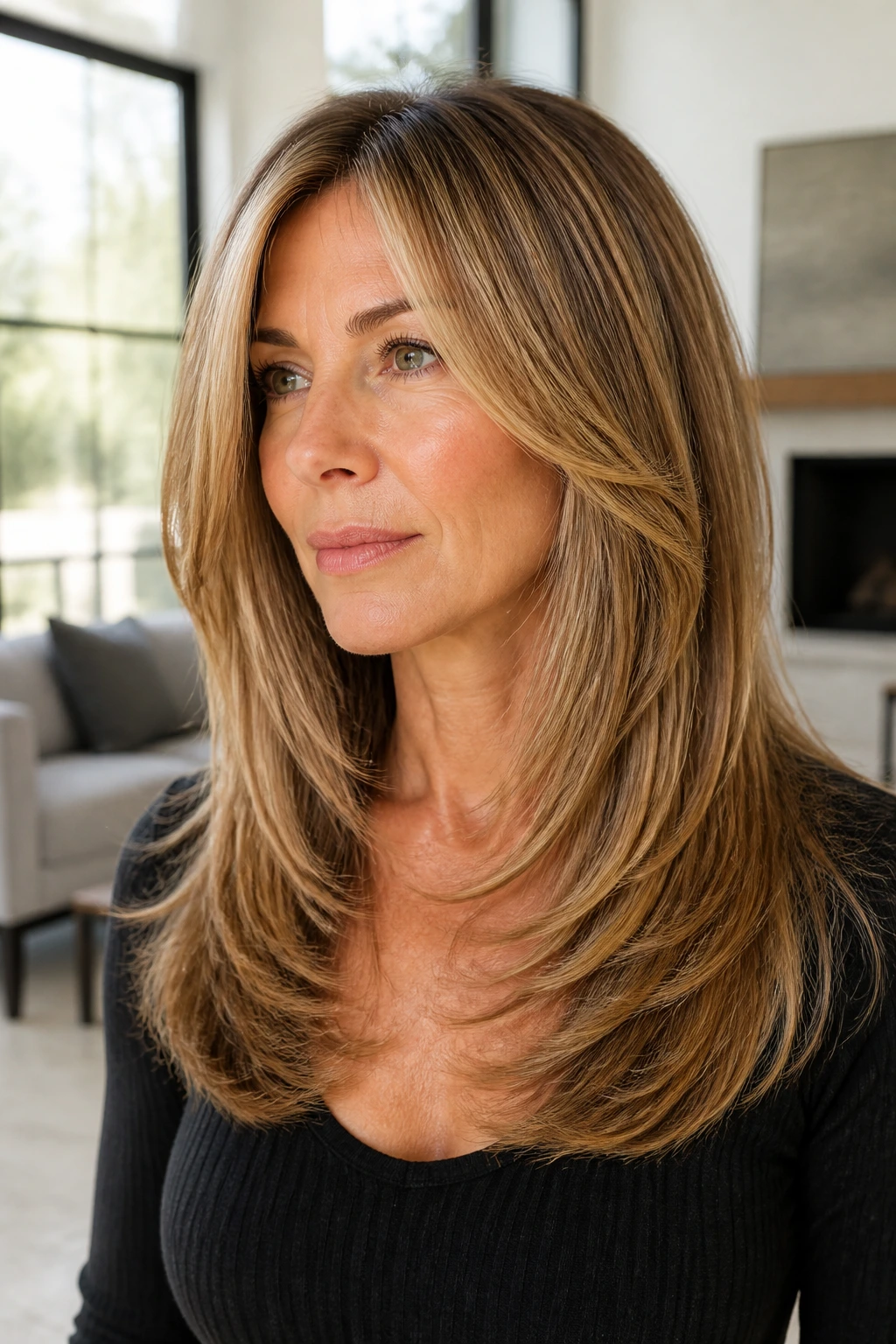
The original layered blowout cut had its moment, and the modern version is better for it. What makes this reboot work is the softer face-framing, the lower layering, and the fact that it doesn’t insist on being flippy in every section. It’s still got that glossy, bouncy energy, but it’s calmer and less stagey.
This cut usually starts with a pronounced front frame that slides back into longer layers through the body of the hair. The shortest face pieces can sit around the chin or collarbone, depending on how much opening you want. The layers should move together, not spring apart like pages of a bad haircut.
It’s a good choice if you like a polished blow-dry and want long hair that shows some shape even when the ends are tucked behind your shoulders. There’s a reason this silhouette keeps coming back. Done well, it flatters. Done badly, it looks like a dated imitation. So keep the softness.
11. Chin-to-Collarbone Face Framing
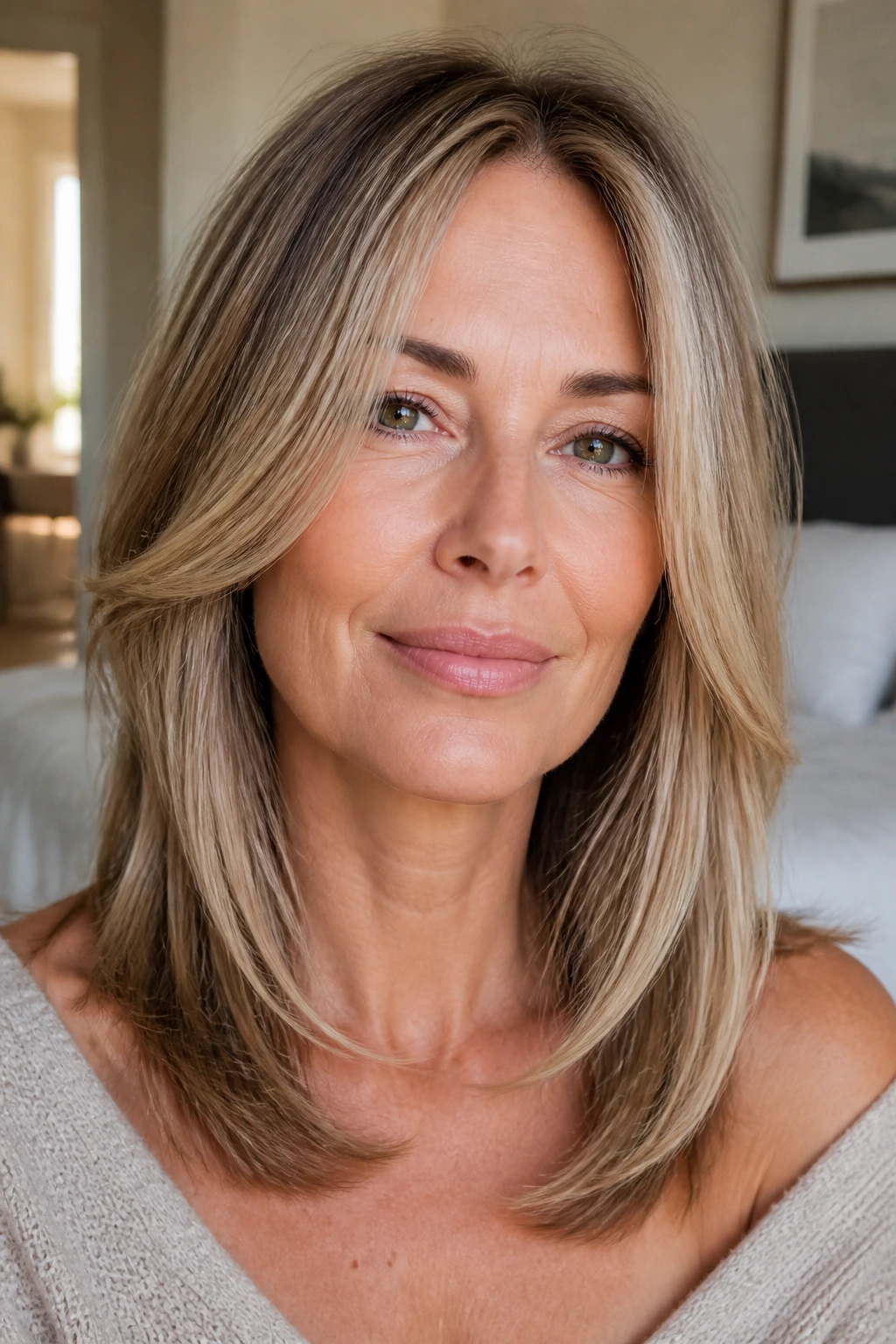
Not everybody wants bangs. Fair enough. Chin-to-collarbone face framing gives you the front movement without covering the forehead, and that makes it one of the most useful long haircuts for women over 40 who want a change without a dramatic shift.
The pieces around the face should start low enough to avoid a helmet effect. Chin length is good if you want definition; collarbone length is better if you want softness and ease. The front should open the face, not fence it in. That’s the mistake I see most often with face-framing layers: they’re cut too short and too eager.
This version works beautifully with glasses, by the way. The longer front pieces keep the temples clear, and the cut still has enough contour to keep the face from disappearing under all that hair.
12. Wavy Long Layers With Broken Ends
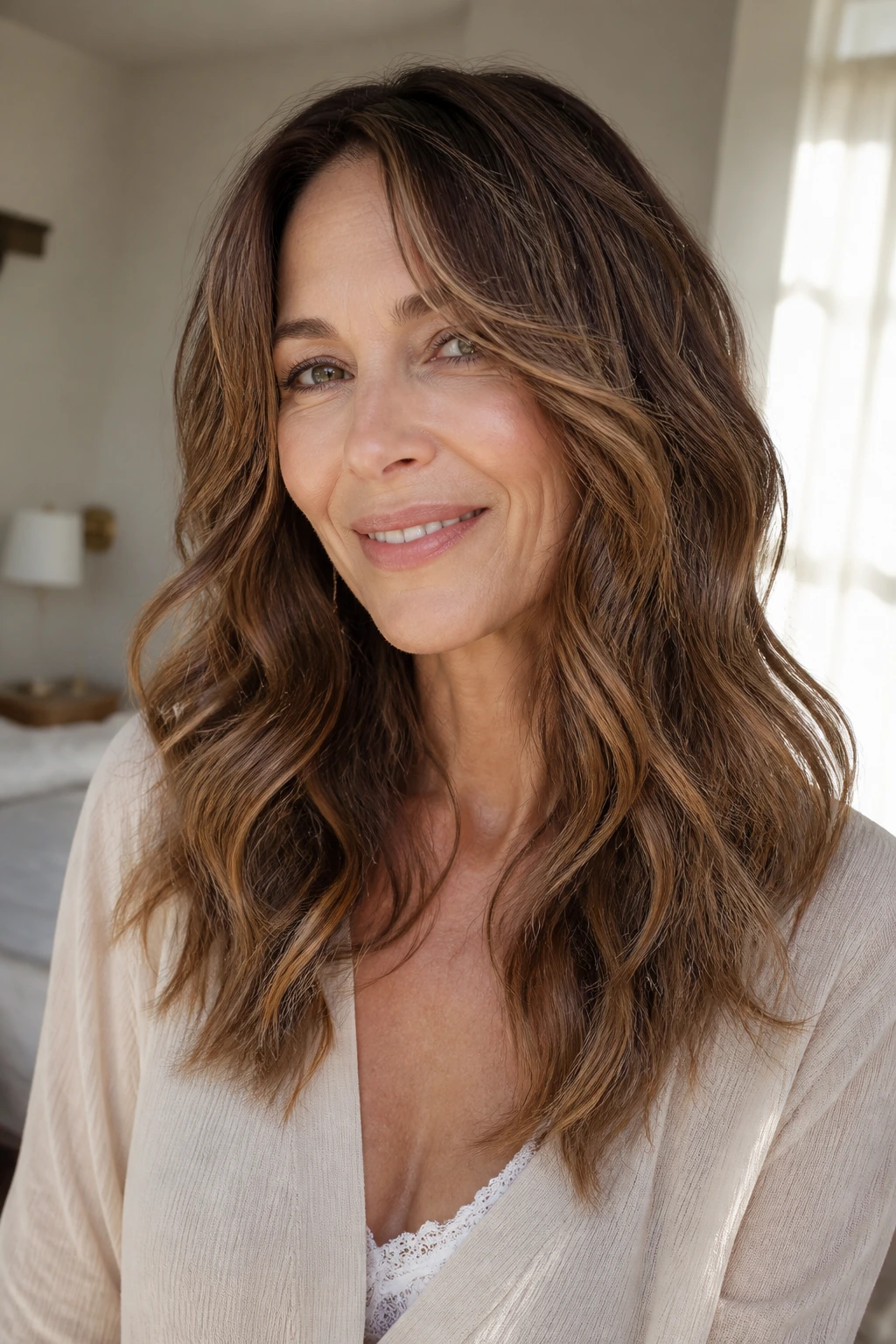
Wavy hair does not need a lot of convincing. It needs shape in the right places and less interference everywhere else. Broken ends — meaning softly tapered, not blunt and heavy — help the wave pattern move without forming that shelf-like edge that can happen when long hair is one solid line.
The best version of this cut respects the wave instead of flattening it. The layers should be placed to encourage an S-shape through the mids, with enough weight left in the ends that the hair doesn’t frizz apart. Too much texturizing and the wave turns fuzzy. Too little and the hair puffs outward in a strange, wide shape.
I like this one because it looks best with a natural finish. A little cream, a little scrunching, and a rough dry can be enough. If your hair already knows how to bend, let it. That’s half the battle.
13. Glassy Straight Layers
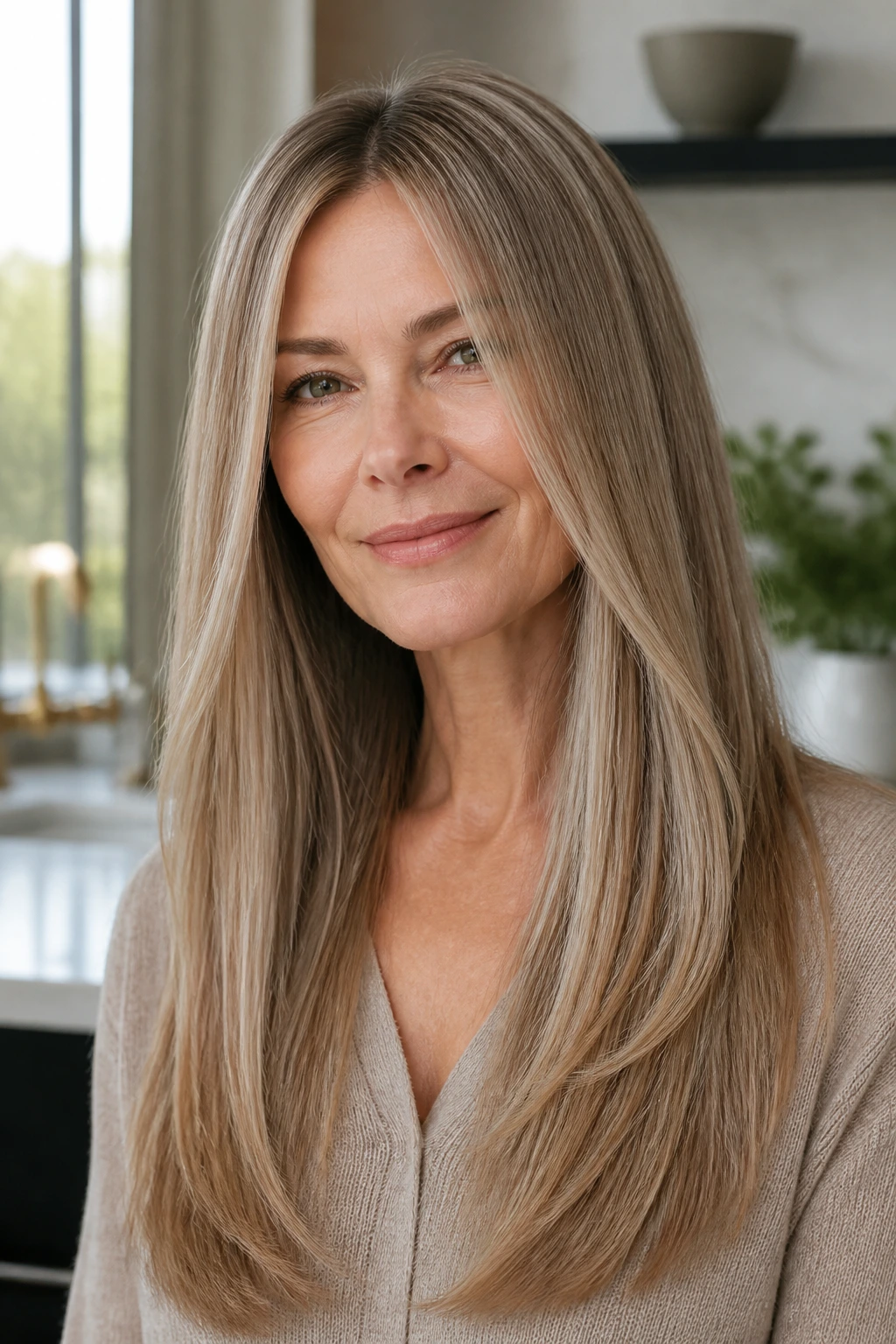
Straight hair can make long layers look either beautiful or boring, and the difference is often in the precision. Glassy straight layers keep the line sleek while adding just enough internal movement that the hair doesn’t sit like a sheet. The surface stays smooth; the shape underneath does the talking.
This is a good choice for women who like polished hair and don’t want a lot of bend in the finish. The layers should be subtle enough that the cut still reads as long and healthy. You want movement, not chunks. Choppy layering on straight hair can look blunt in the wrong places and see-through in the others.
The best version has face framing that starts low and then disappears into the length. It’s the haircut equivalent of a clean white shirt: simple on paper, but the fit has to be exact.
14. Curly Long Layers That Keep Shape
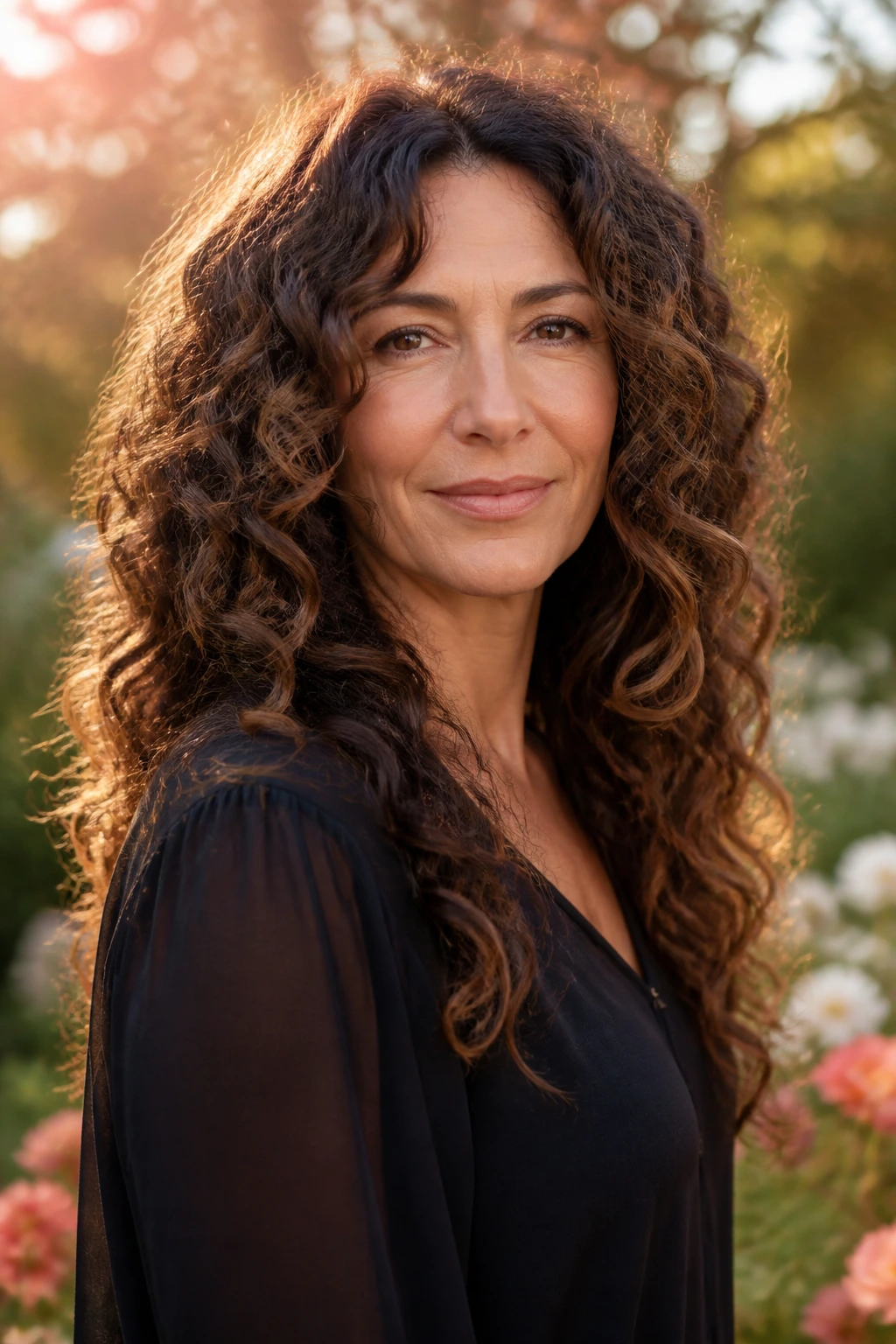
Curly hair changes the rules. Long layers on curls need to work with the curl pattern, or the cut will puff into a pyramid and sit there looking confused. The right version keeps enough length in the lower sections to anchor the shape while taking weight out where curls get too bulky.
This is not the place for aggressive chopping. Curls need room to spring back, and every layer should be placed with shrinkage in mind. What looks long when wet may sit much shorter when dry. That’s why dry cutting or cutting curl by curl often gives a better result than guessing from a soaking-wet section.
The goal is a rounded silhouette with movement around the face and enough length in the bottom to keep the style grounded. If your curls tend to frizz at the sides, soft layers can help the shape settle instead of ballooning outward.
15. Rounded Blowout Layers
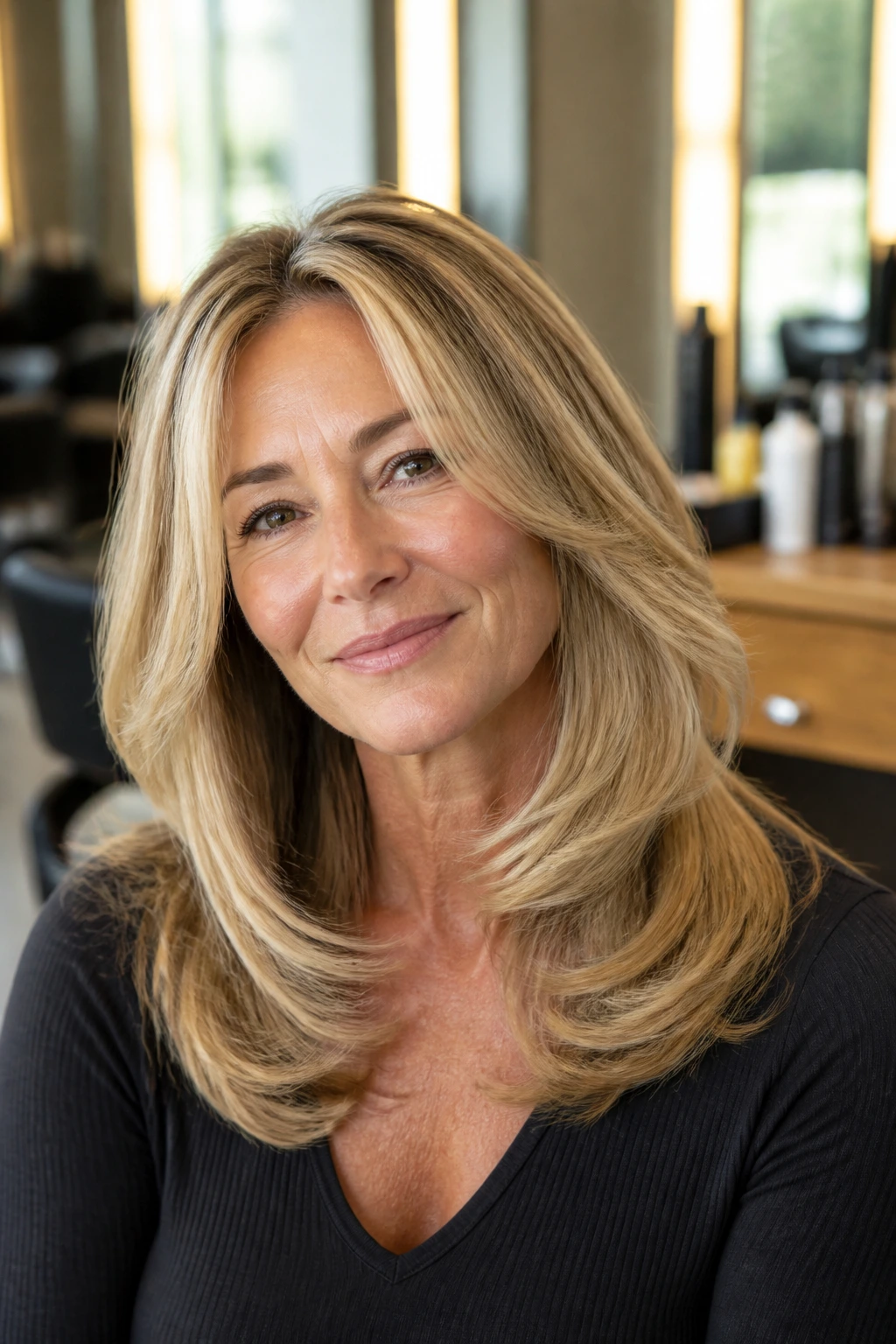
This is the haircut you want if you like hair that brushes the shoulders with a curve and has that finished, rounded shape after a blow-dry. Rounded blowout layers keep the volume centered and the edges soft, so the whole cut feels smooth rather than sharp.
The front should be shaped to turn away from the face and then fold into the rest of the length. It’s a flattering move on longer hair because it creates the impression of lift without forcing short pieces around the jaw. The shape should feel curved, not stacked. Stacking makes the cut feel dated. Curving keeps it current.
This one is especially nice if your hair tends to collapse at the crown or if you like wearing it with a big brush and a little bend at the ends. It doesn’t need a lot of product. It needs direction.
16. Gray-Friendly Long Layers
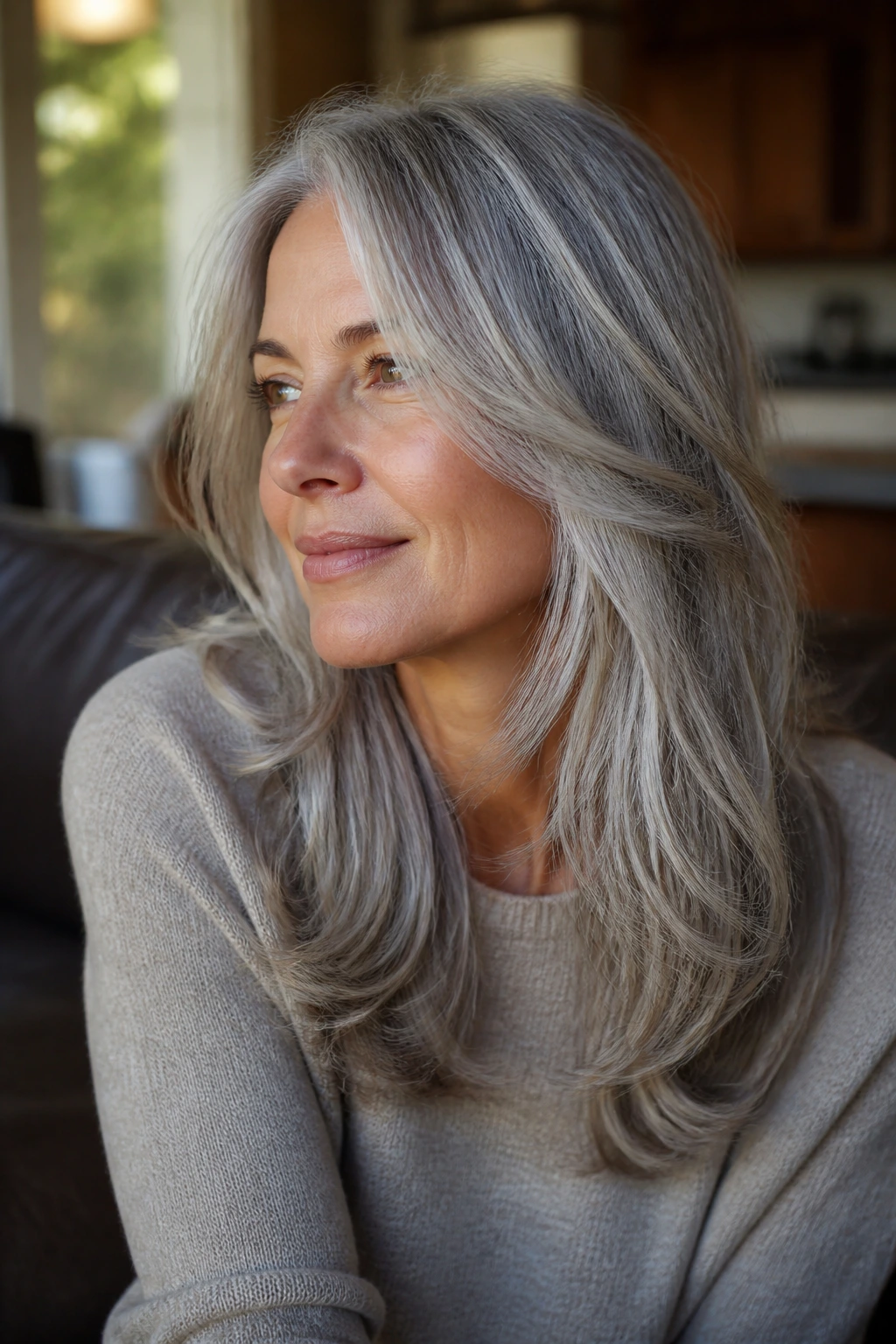
Gray hair often behaves differently from the rest of your head. It can be coarser, more resistant to smoothing, and sometimes more prone to sticking out in odd places. Soft layers help by reducing bulk and giving the silver pieces room to move instead of forming a boxy block.
This is one of my favorite versions for women who want their natural color to look deliberate. The layers should keep the ends full while softening the sides and crown, so the gray pieces don’t create a helmet shape. A little movement makes silver hair look crisp. Too much thinning makes it look tired.
If your gray grows in with a wiry texture, ask for a gentler approach around the face and a stronger perimeter through the lengths. The cut should frame the color, not fight it.
17. Air-Dry Layers That Don’t Fight Your Texture

Some long haircuts are built for a round brush. Others are built for real life. Air-dry layers fall into the second group. They’re placed to let the hair dry with a little shape even when you don’t touch it much, which is a gift if your mornings are not built around hot tools.
The key is to keep the layering soft and strategic. The front needs enough contour to fall away from the face, and the mids need just enough shaping to keep the body from going flat. If the haircut only works after 20 minutes of styling, it’s not low-maintenance. It’s a project.
This version works on waves, loose curls, and some straighter textures that want a bend but not a big blowout. A little leave-in, a touch of cream, and maybe a clip at the roots while it dries can be enough.
18. Center-Part Layers With Soft Balance
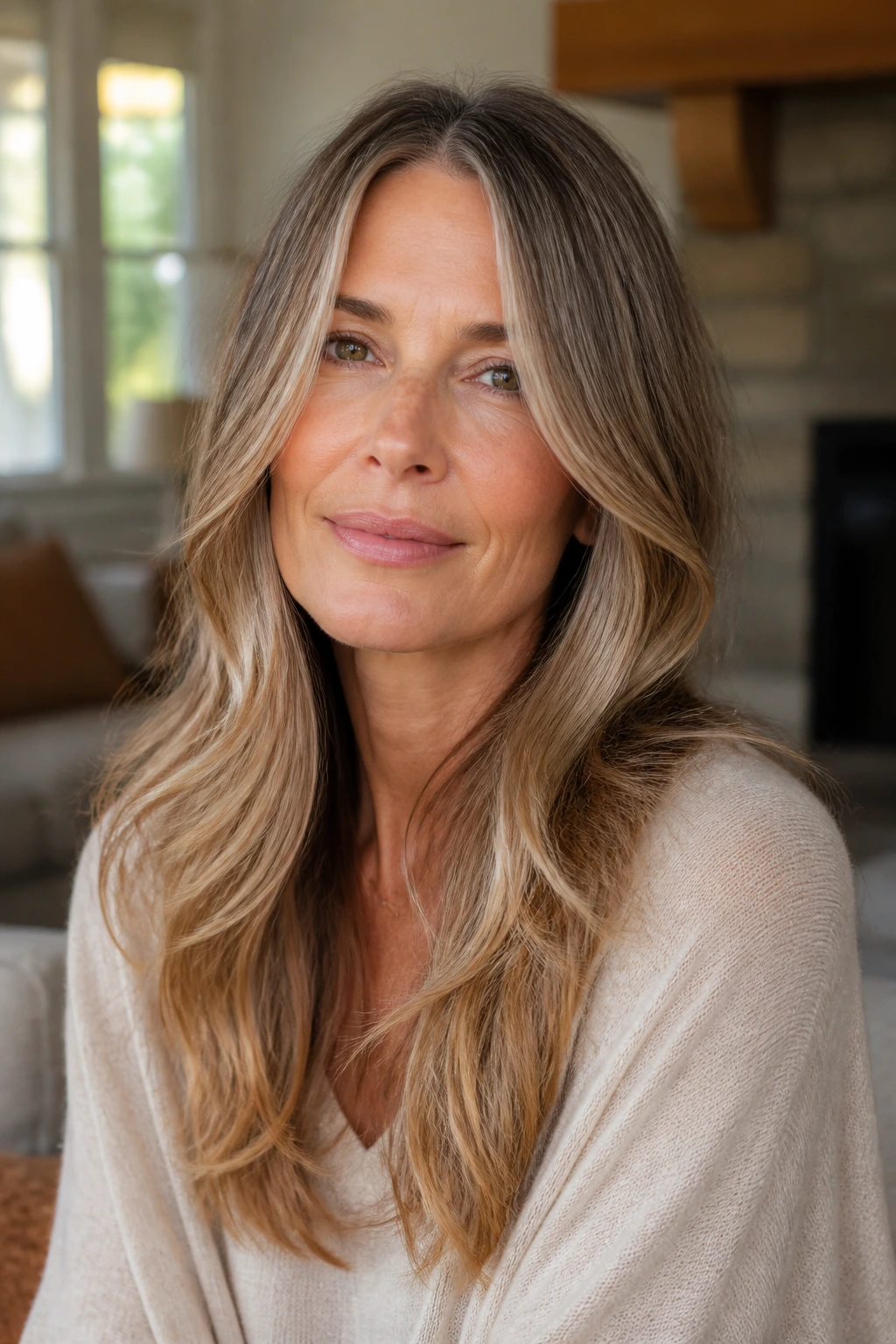
A center part can be wonderfully clean, but long hair needs the right layers to avoid looking too flat around the face. Center-part layers create balance on both sides, with the front pieces falling evenly and the rest of the cut carrying the movement down the back.
This is a smart choice if you like symmetry and you want the face to look a little longer. The front pieces should start high enough to open the cheekbones but low enough to avoid a chopped, triangular frame. The line needs to stay soft. A hard center-part with harsh front layers can look severe fast.
I’d pick this shape for straight or gently wavy hair, especially if you like tucking pieces behind the ears. It holds a clean, easy shape and doesn’t demand that you fight your natural part every morning.
19. Side-Swept Volume Layers
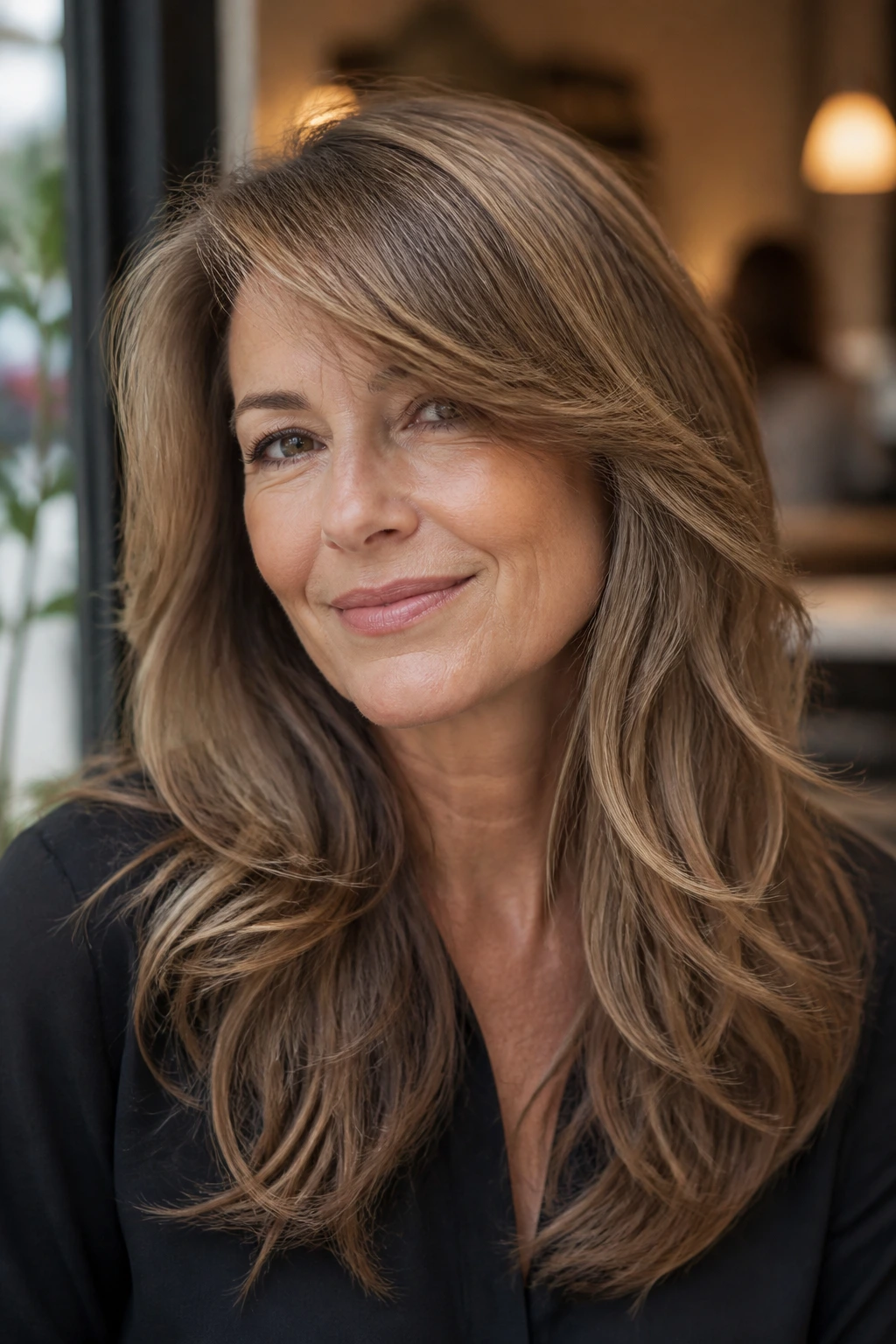
Side-swept layers do one specific thing well: they make the hair feel fuller at the front without making the whole style bulky. The sweep creates lift at the temple and cheekbone, which is useful if your hair has started to feel thinner near the front or if you simply want more presence around the face.
The haircut should start with a longer side panel that moves across the forehead or skims the eyebrow line before falling into the length. The movement should feel diagonal. That diagonal line is what gives the style energy. Vertical hair can look flat. Horizontal hair can feel heavy. Diagonal shape solves both.
This cut is especially flattering if you wear one side of your hair tucked back, or if you want a style that looks a little dressier without needing more length. It’s a polished, useful shape.
20. Blunt-Perimeter Layers With Hidden Movement
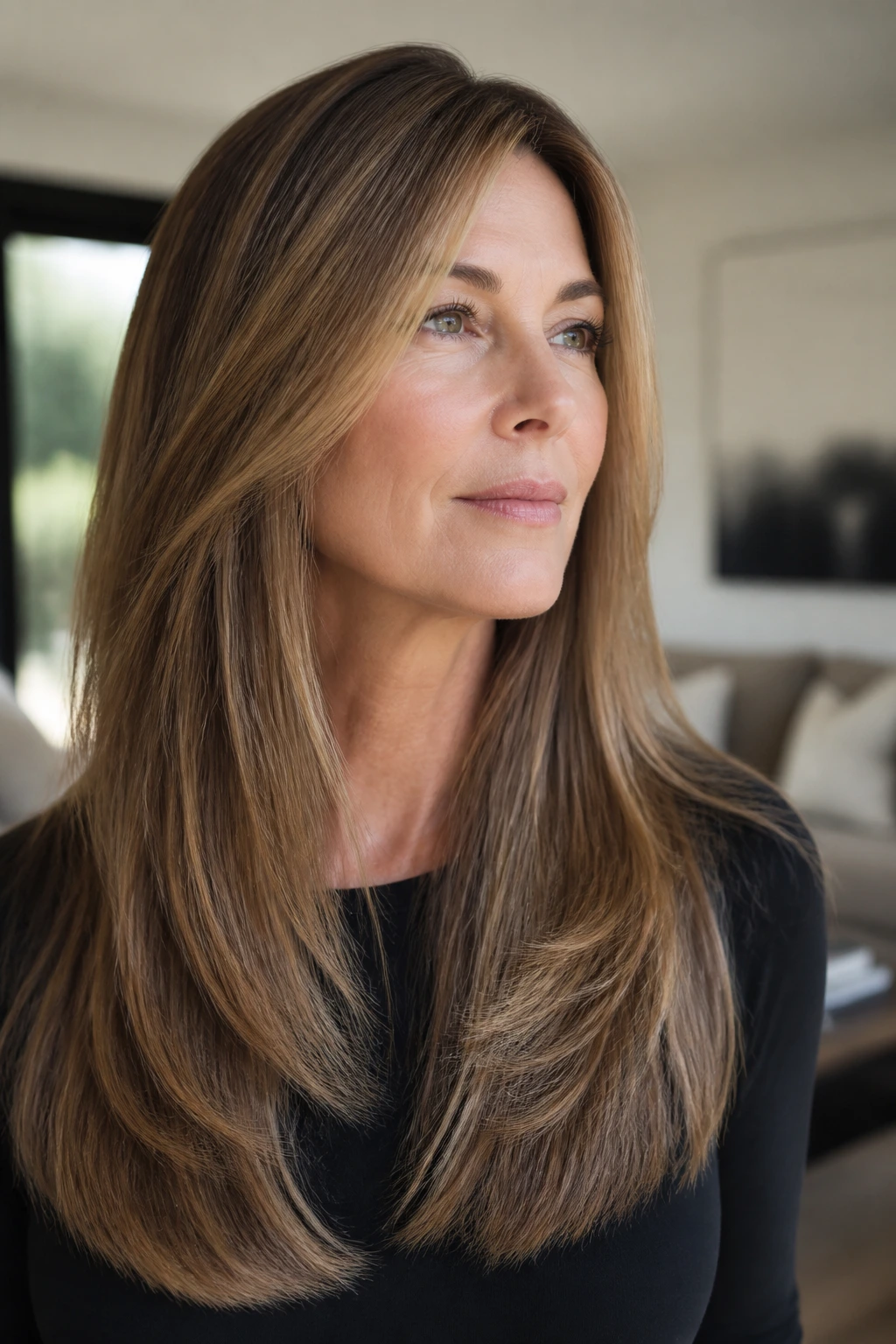
Here’s the part people get wrong: layers do not have to mean a wispy edge. A blunt perimeter with hidden layers underneath gives you the best of both worlds — the fullness of a solid line and the movement of soft internal shaping.
This cut is a strong answer if your hair has thinned a little at the ends but still needs some bend at the crown and front. The perimeter stays dense, so the ends look healthy. The internal layers keep the hair from feeling stiff. That bottom line matters. It’s the line your eye sees first.
I like this one for long hair that needs to look expensive without looking overstyled. It grows out well, it reads clean in a ponytail, and it doesn’t punish you for skipping a blow-dry.
21. Soft Wolf-Inspired Long Cut
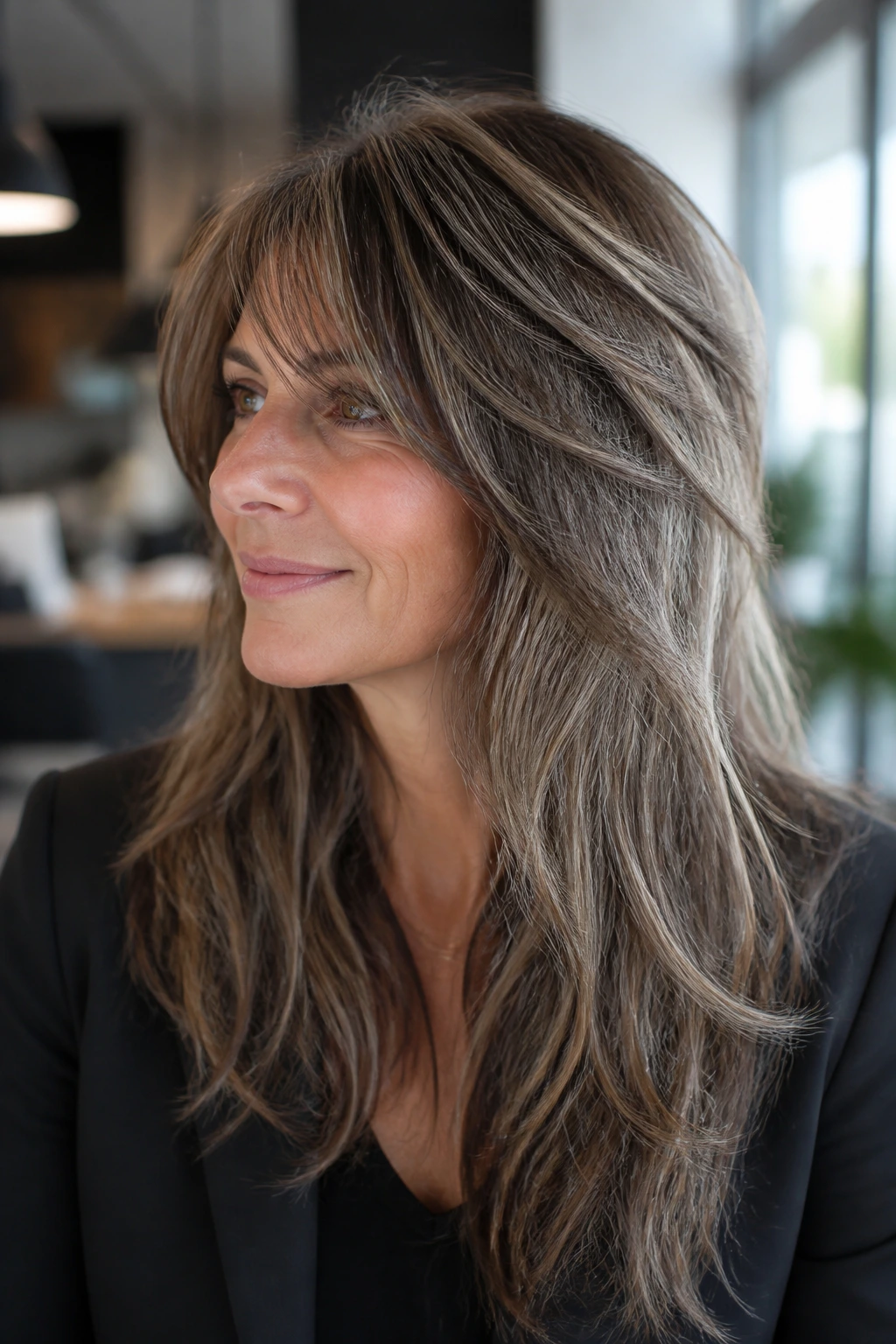
A wolf-inspired cut can look too edgy if it’s pushed hard. The soft version keeps the crown lifted and the front pieces shorter than the back, but the edges stay blended enough that the haircut still feels wearable at the office, school pickup, or dinner, whichever of those you care about.
The crown gets texture. The sides get a little sweep. The lengths stay long enough to keep the haircut from turning into a mullet situation, which, frankly, is where a lot of people lose me. The trick is moderation. You want suggestion, not costume.
This works well on wavy hair and on straighter hair that gets a little stubborn around the face. It has more attitude than a classic layered cut, but not so much that you have to dress around it.
22. Long Fringe Layers
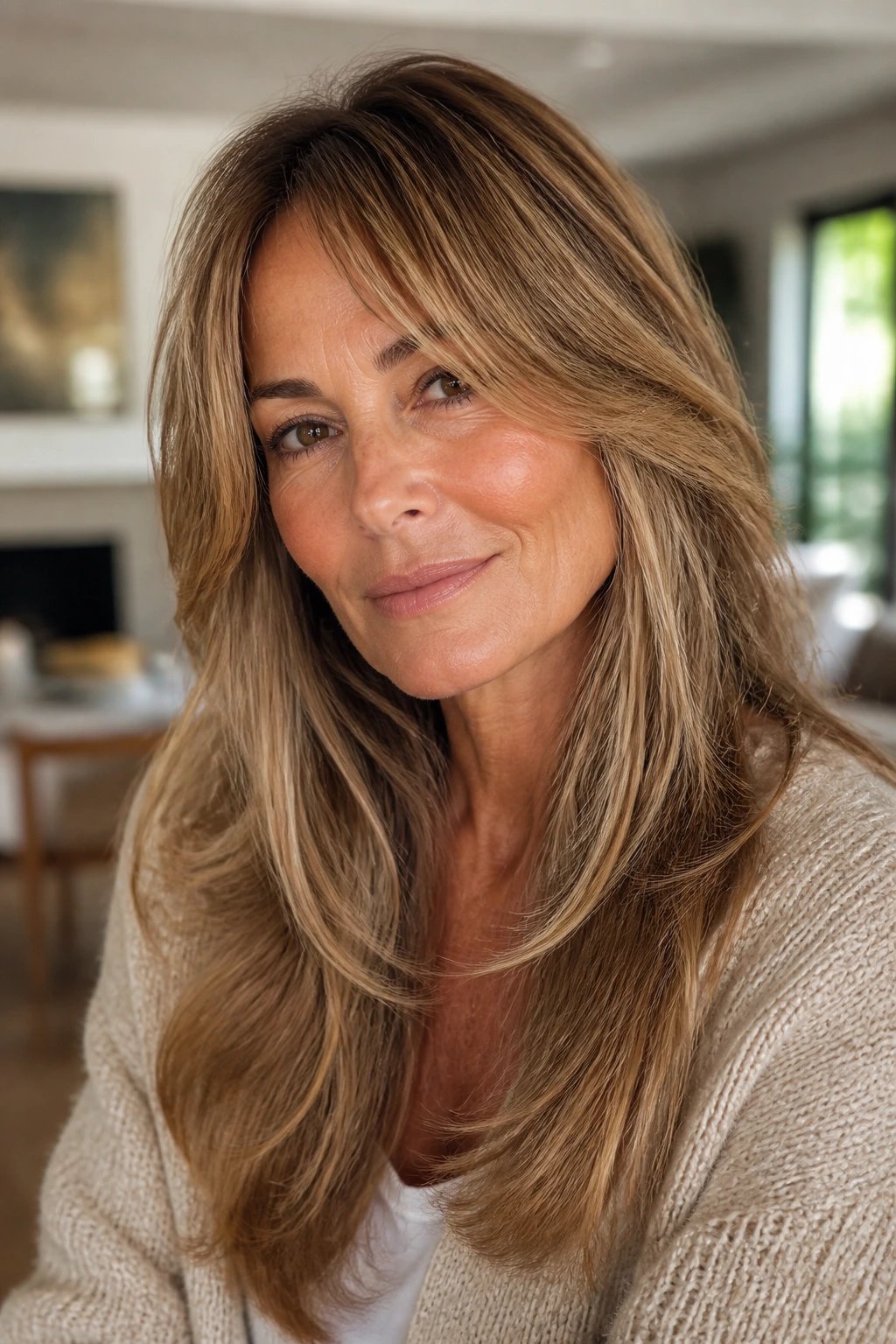
Long fringe is a cleaner answer than short bangs for a lot of women. The fringe starts low, usually around the cheekbone or nose line, and then drifts into the sides so it doesn’t create a hard shelf across the forehead. Paired with long layers, it gives the haircut a soft, modern front without demanding constant bang trims.
This is a useful move if you want some face coverage but still like the idea of tucking hair behind your ears. The fringe should be long enough to sweep aside on a rushed day and still look intentional. If it only looks good when perfectly blow-dried, it’s too short.
Long fringe also works well with glasses because it doesn’t crowd the frames the way a heavier bang can. That alone makes it worth considering.
23. Long Layers for Round Faces
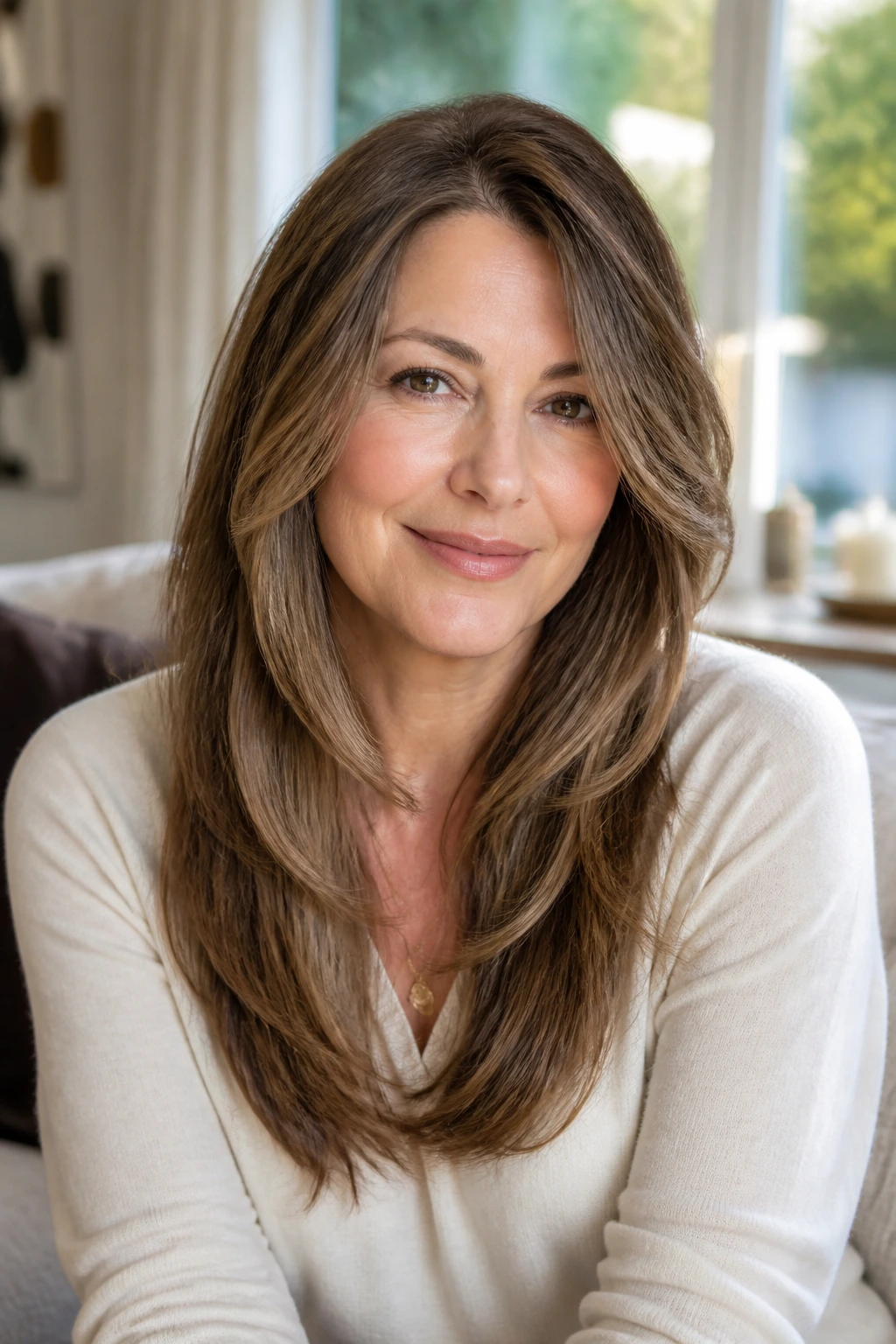
Round faces usually benefit from a cut that adds length and keeps the widest point from sitting right at the cheeks. Long layers for round faces should start below the cheekbone and move downward, creating vertical lines that slim the profile without making the hair look severe.
A center part can work here, but a soft off-center part often gives a little more lift near the crown. The face frame should not stop at the cheeks. That’s the trap. If the shortest piece lands right where the face is widest, the shape can emphasize roundness instead of balancing it.
I’d keep the ends soft and the layers long. This is not the place for a heavy, short front frame. A little movement near the chin or collarbone does the job better.
24. Long Layers for Square Jaws
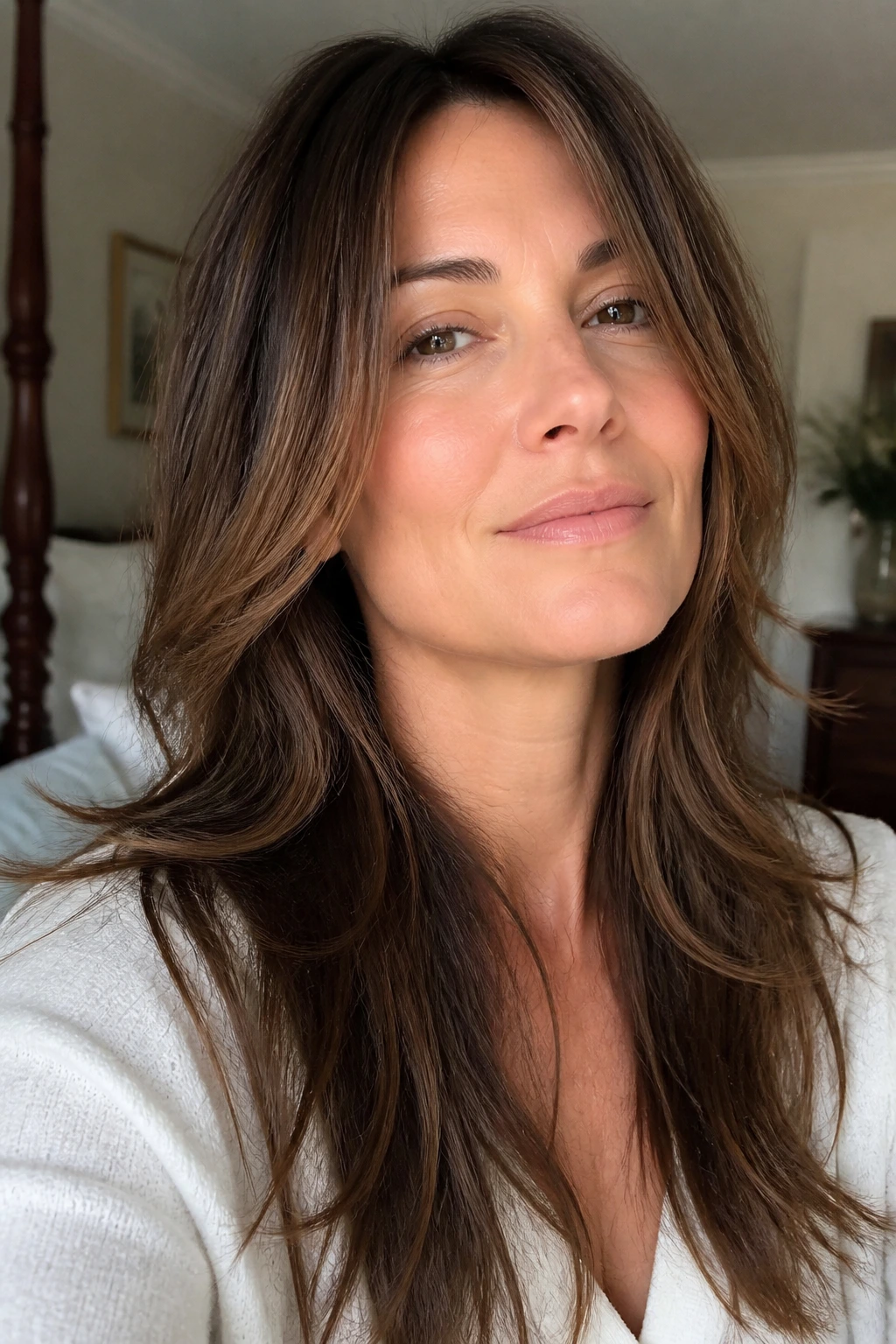
Square jawlines look lovely with long hair, but the cut needs to soften the angles rather than echo them. Long layers for square jaws should curve around the face, with the shortest pieces sitting around the cheekbone or lower so they don’t sharpen the jaw any further.
The best version adds a soft diagonal line from the front into the lengths. That diagonal detail breaks up the strong jaw shape and keeps the whole look from getting boxy. Softness matters more than volume here. Volume at the wrong spot can make the lower face look wider.
This cut works especially well with waves or a loose bend because the movement blurs the angles just enough. It’s one of those haircuts that looks thoughtful without looking busy.
25. Grow-Out-Friendly Layers for Long-Term Wear
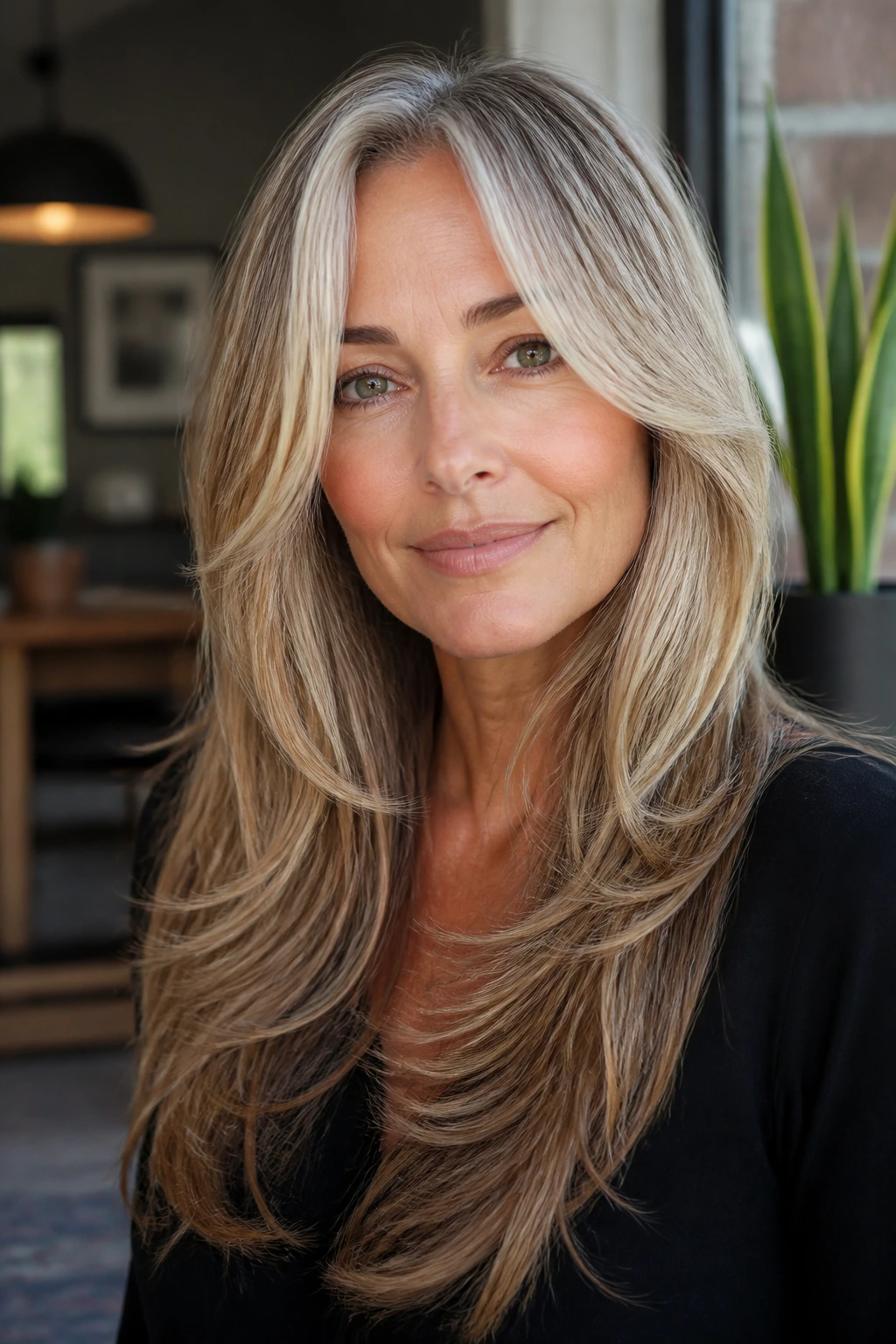
A lot of women want a haircut that still makes sense eight weeks later. Fair request. Grow-out-friendly layers keep the shortest pieces low, the transitions soft, and the perimeter solid enough that the cut doesn’t lose its shape the second the salon blowout disappears.
This version is built for long-term wear. The front should blend into the sides with no abrupt jump in length, and the layers should be scattered enough that they keep moving as they grow. The goal is not perfection on day one. The goal is a haircut that still looks like a haircut when life gets busy.
If you only like seeing your stylist a few times a year, this is the one to pay attention to. It keeps its manners.
What Soft Layers Actually Change in Long Hair
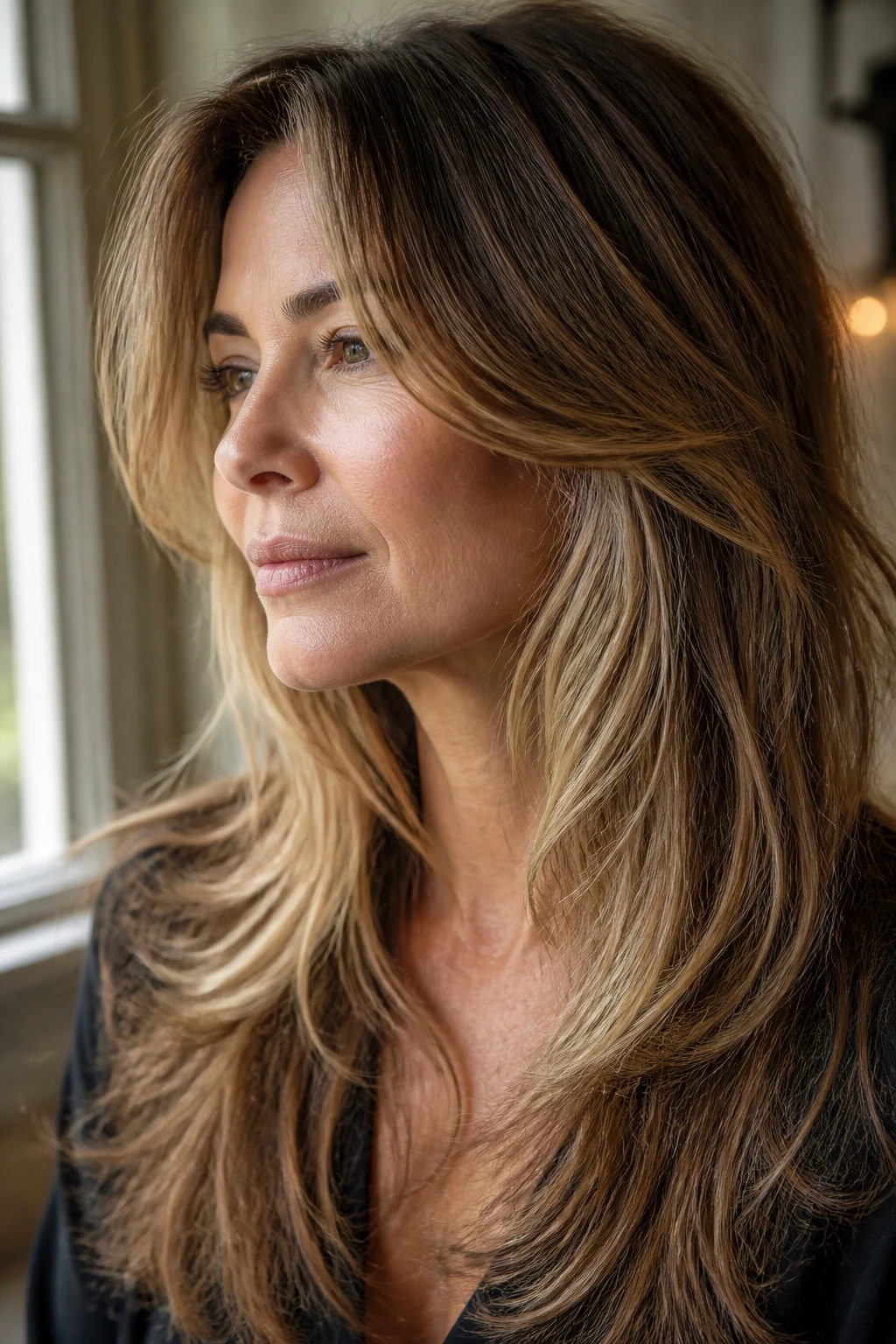
Soft layers change the way long hair sits on the body. That sounds small, but it’s not. Hair that falls in one heavy block pulls at the scalp, clings to the shoulders, and often makes the face look shorter or wider than it really is. Once a cut has a few soft layers in the right places, the whole shape starts to lift off the neck and move when you turn your head.
There’s also a practical side people miss. Long hair changes as it ages, and not just in the sentimental sense. The temple area can look lighter, the ends can lose density, and gray strands often bring a different texture than the rest of the head. Soft layers give those changes somewhere to go. They keep the cut from turning boxy when the texture shifts.
I’m not a fan of over-layering long hair unless the hair is truly dense and stubborn. Choppy layers can look fashionable for a minute, then turn fussy as they grow. Soft layers are calmer. They don’t yell. They just make the haircut feel lighter, cleaner, and easier to live with.
How to Choose the Right Long Cut for Your Hair Texture
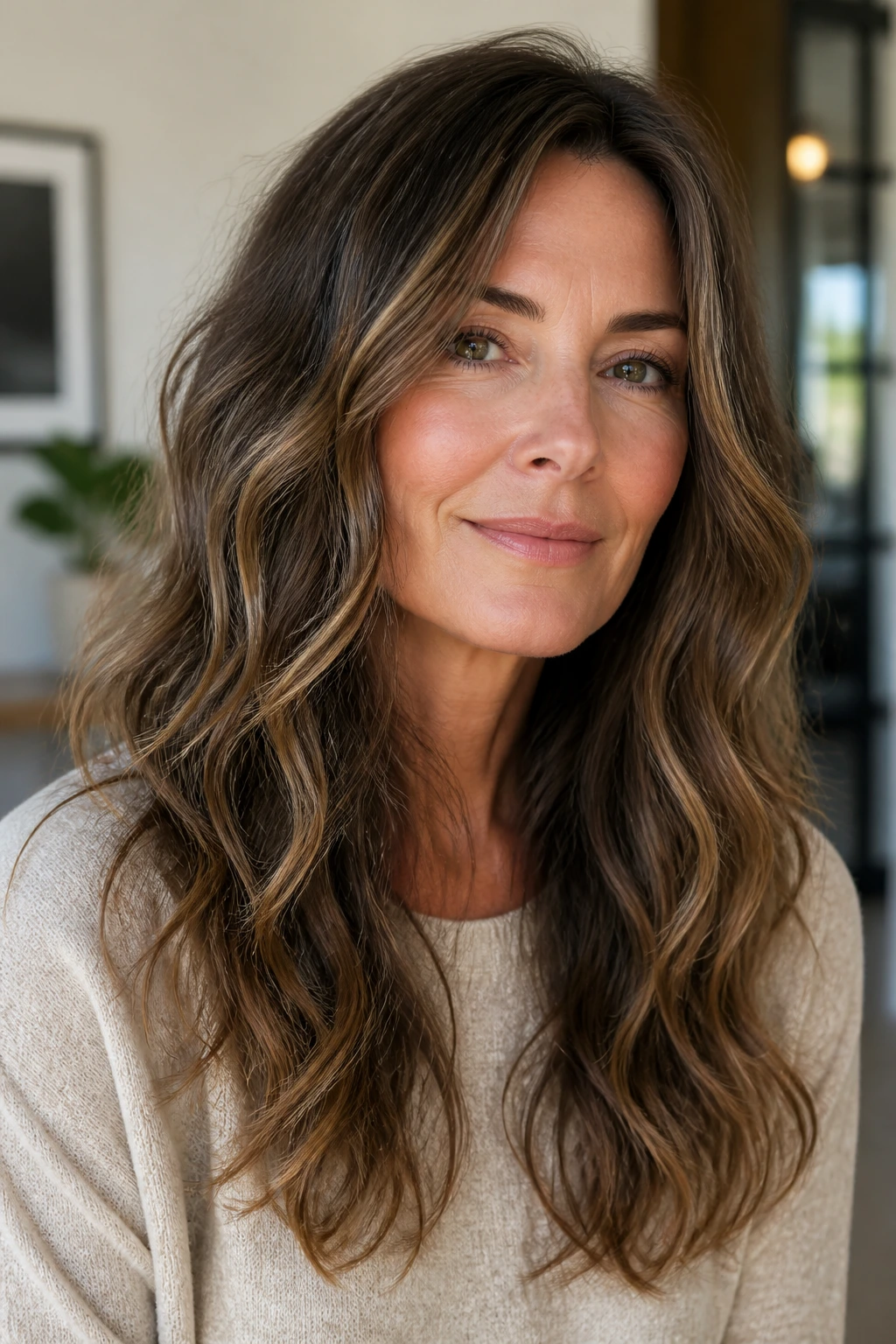
The best cut on paper can be a bad cut on your head if the texture is ignored. Fine hair needs a different hand than thick hair. Straight hair needs different shaping than wavy or curly hair. The cut should work with what your hair actually does, not what you wish it did during a salon blow-dry.
Fine Hair
Fine hair usually looks best with a fuller perimeter and low, controlled layering. Too much chopping creates a see-through end that looks thin the moment the hair dries. Ask for soft face framing and subtle internal movement, then keep the bottom edge solid enough to carry weight.
Thick Hair
Thick hair can take more structure, but not a random pile of short layers. Internal layers, U-shapes, and rounded shapes work because they remove bulk from inside the haircut while leaving the surface clean. That lets the hair move without exploding outward.
Wavy Hair
Waves need room to bend. Soft layers that encourage a curve around the face and a broken line through the mids usually work best. A blunt cut can make waves look heavy. A rough, too-short layer can make them frizz.
Curly Hair
Curly hair should be cut with shrinkage in mind. Dry cutting or curl-by-curl shaping often gives the most honest shape, and the layers should stay long enough that the curls stack without building a triangle. The cut should support the curl pattern, not interrupt it.
Straight Hair
Straight hair shows everything, which can be a blessing and a headache. Soft layers need to be precise, subtle, and blended so the cut doesn’t look bitty. A glassy finish with a low face frame often looks better than lots of visible texture.
What to Ask Your Stylist at the Salon
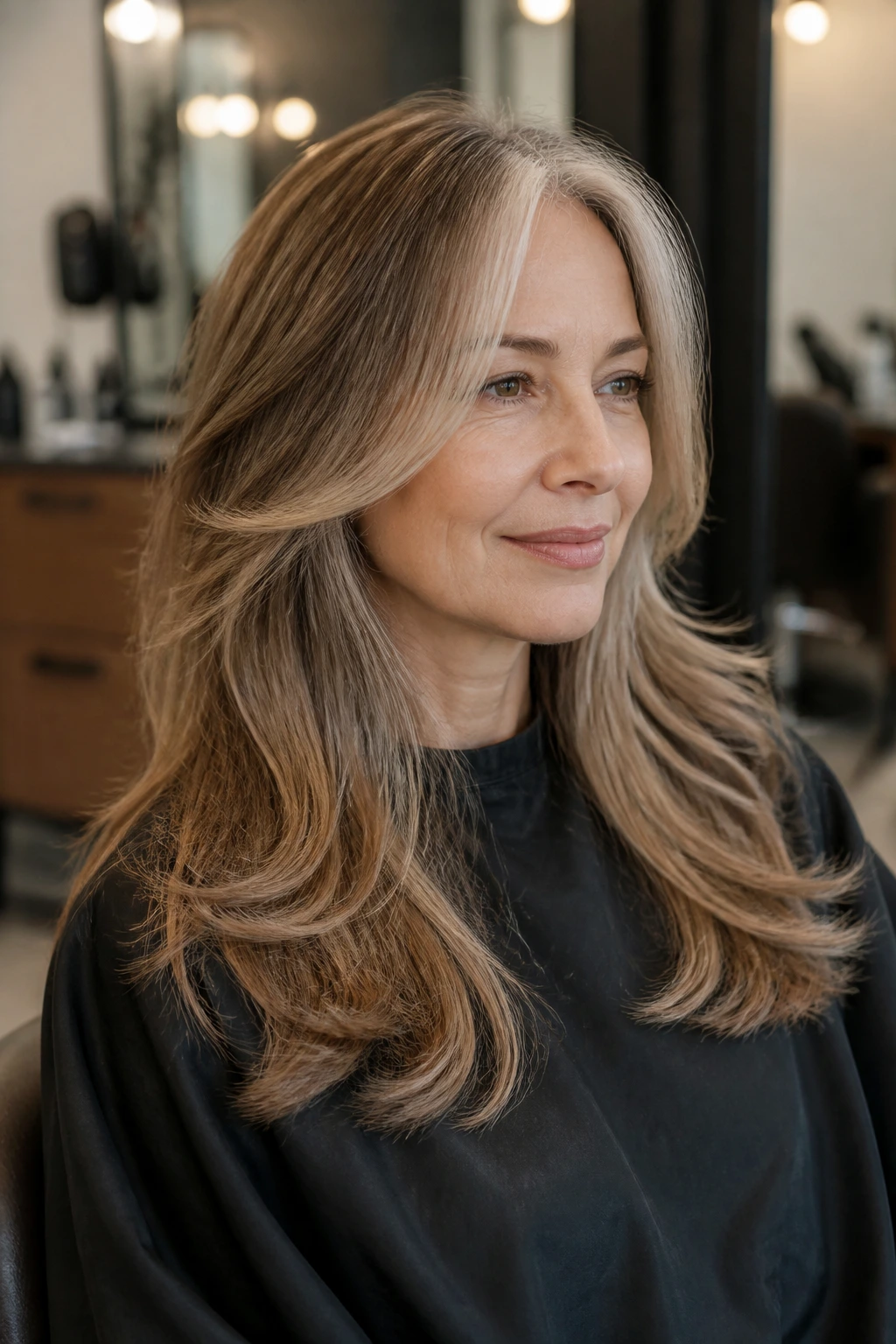
Bring photos, yes. But also bring language. A good stylist can work from a picture and a few clear sentences, and you’ll get a better result if you tell them what the haircut needs to do, not just what it should look like from one angle.
Use lines like these:
- Keep the length at mid-back, but add movement around the face.
- Start the first layer below the chin or at the collarbone.
- Leave the perimeter full so the ends don’t look wispy.
- Blend the front into the sides instead of cutting a hard bang line.
- Use point cutting or soft texturizing, not heavy razor work, on my ends.
Bring up your routine, too. If you air-dry, say so. If you blow-dry once a week and live in a clip, say that too. The cut should fit your real life, not a fantasy version of it. That one sentence saves a lot of bad haircuts.
Small Tweaks That Make the Cut Wear Better
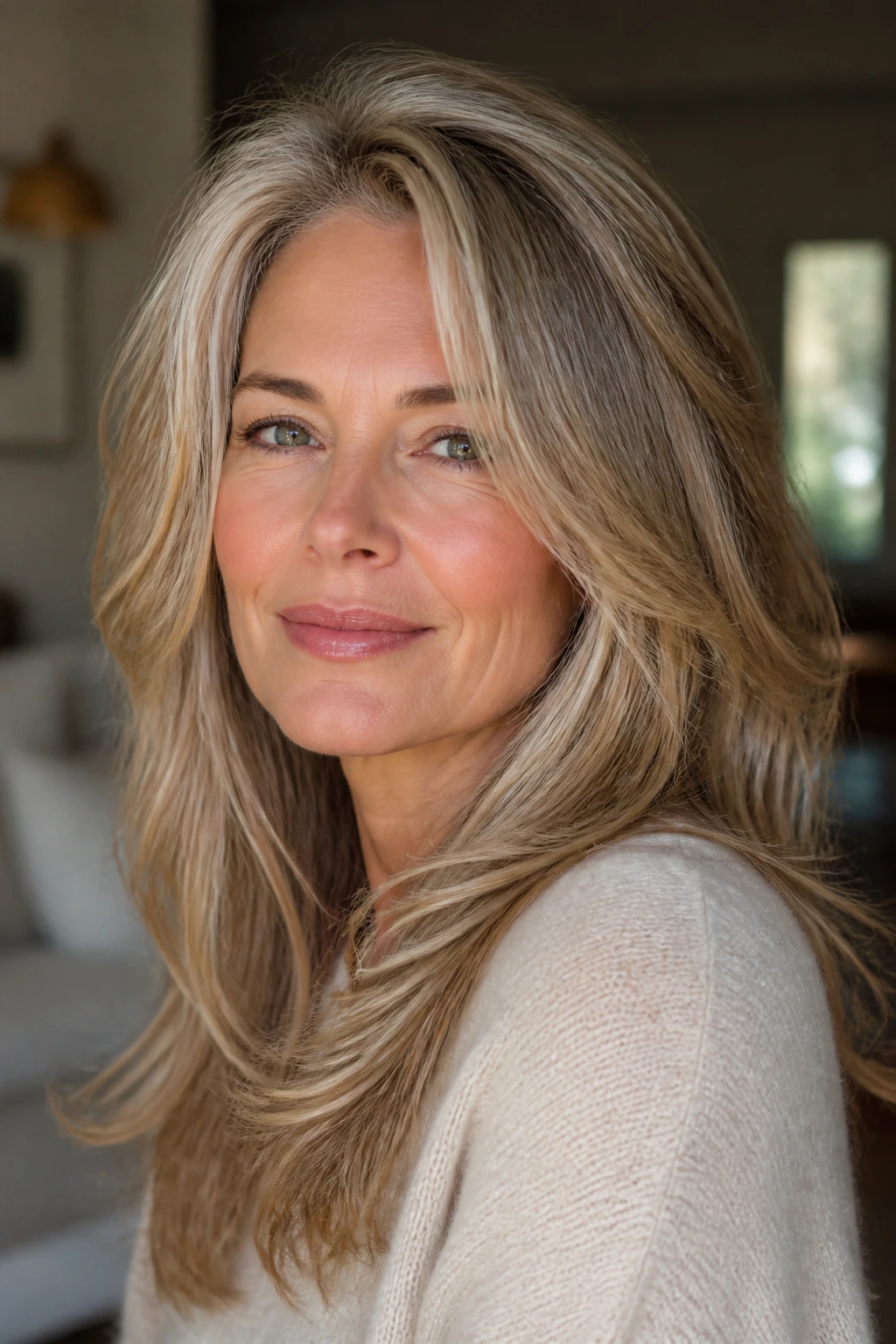
Lift at the crown: If your hair lies flat on top, ask for a little internal shape above the occipital bone rather than more layers through the ends. That gives the cut height without shredding the bottom line.
Softness at the face: The shortest pieces should usually land lower than you think. Cheekbone, chin, or collarbone are safer than jaw length if you want the face to look smoother.
Time-saver: Have the stylist shape the layers around your natural part. That way you’re not wrestling the hair into a line it won’t keep.
Better grow-out: Leave some density in the ends. A heavy edge looks cleaner a month later, which matters when you don’t want to live at the salon.
For gray or coarse hair: Ask for more blending and less thinning. Coarse hair already has its own opinions; it doesn’t need to be attacked.
Tools and Products That Make the Cut Behave
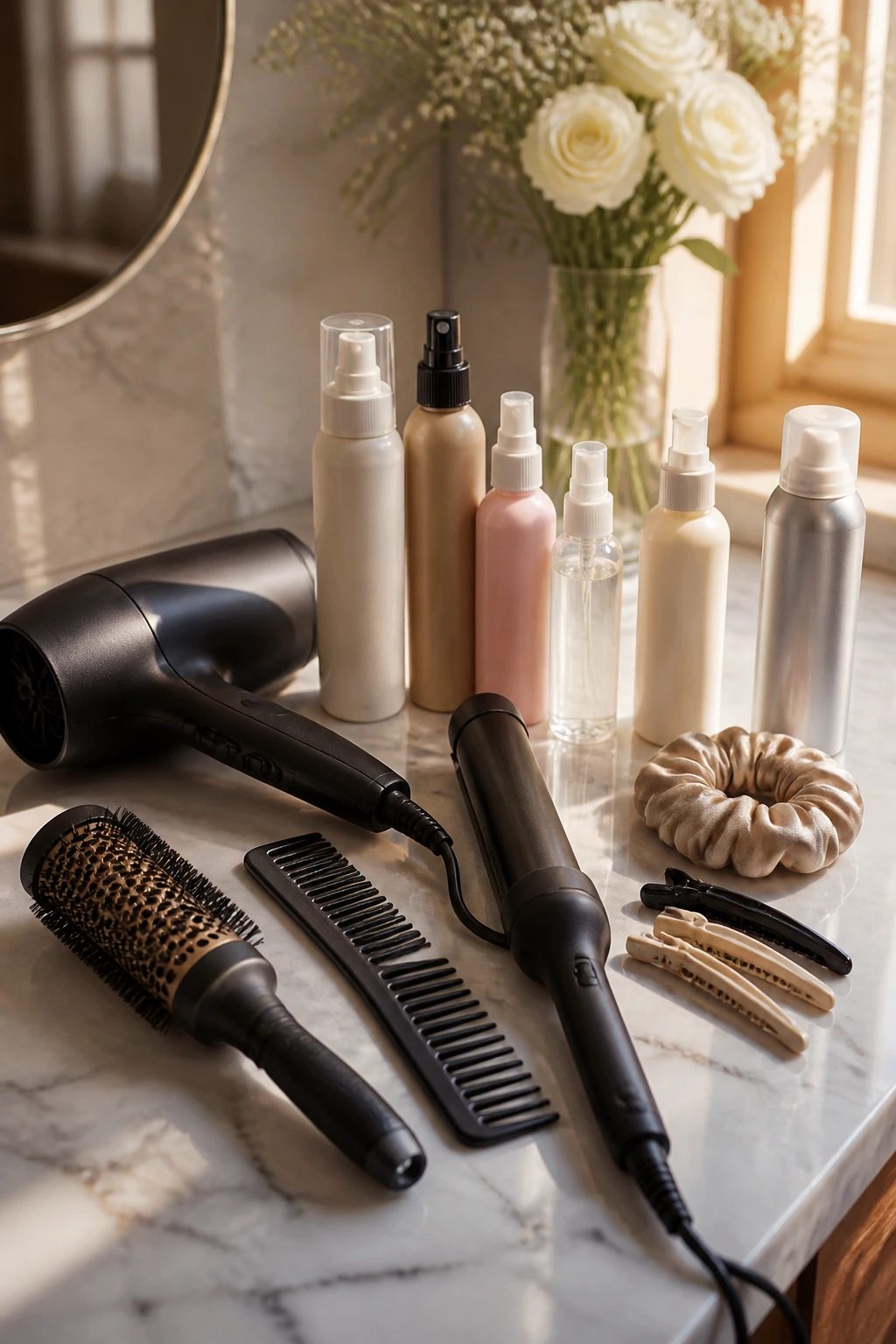
- Blow dryer with a nozzle attachment: Directs airflow so the front pieces and ends dry in the shape you want.
- 1.25-inch round brush: Good for bending the front and creating a soft curve at the ends.
- Wide-tooth comb: Helps distribute leave-in conditioner without pulling the layers apart.
- Lightweight mousse or root lift spray: Gives fine or limp hair some support at the crown without heavy residue.
- Heat protectant spray: Necessary if you use a round brush, flat iron, or curling iron.
- 1-inch to 1.25-inch curling iron or wand: Useful for a loose bend through the face frame and ends.
- Leave-in conditioner: Helpful for dry ends, gray hair, or long lengths that get fuzzy by midday.
- Dry shampoo: Keeps the roots from collapsing and helps the style survive day two and day three.
- Hair clips: Handy for setting the front pieces while they cool, which helps the bend stay in place.
- Silk scrunchie or pillowcase: Cuts down on friction overnight, especially if the layers around the face are fragile.
Styling Long Layers Without Overdoing It
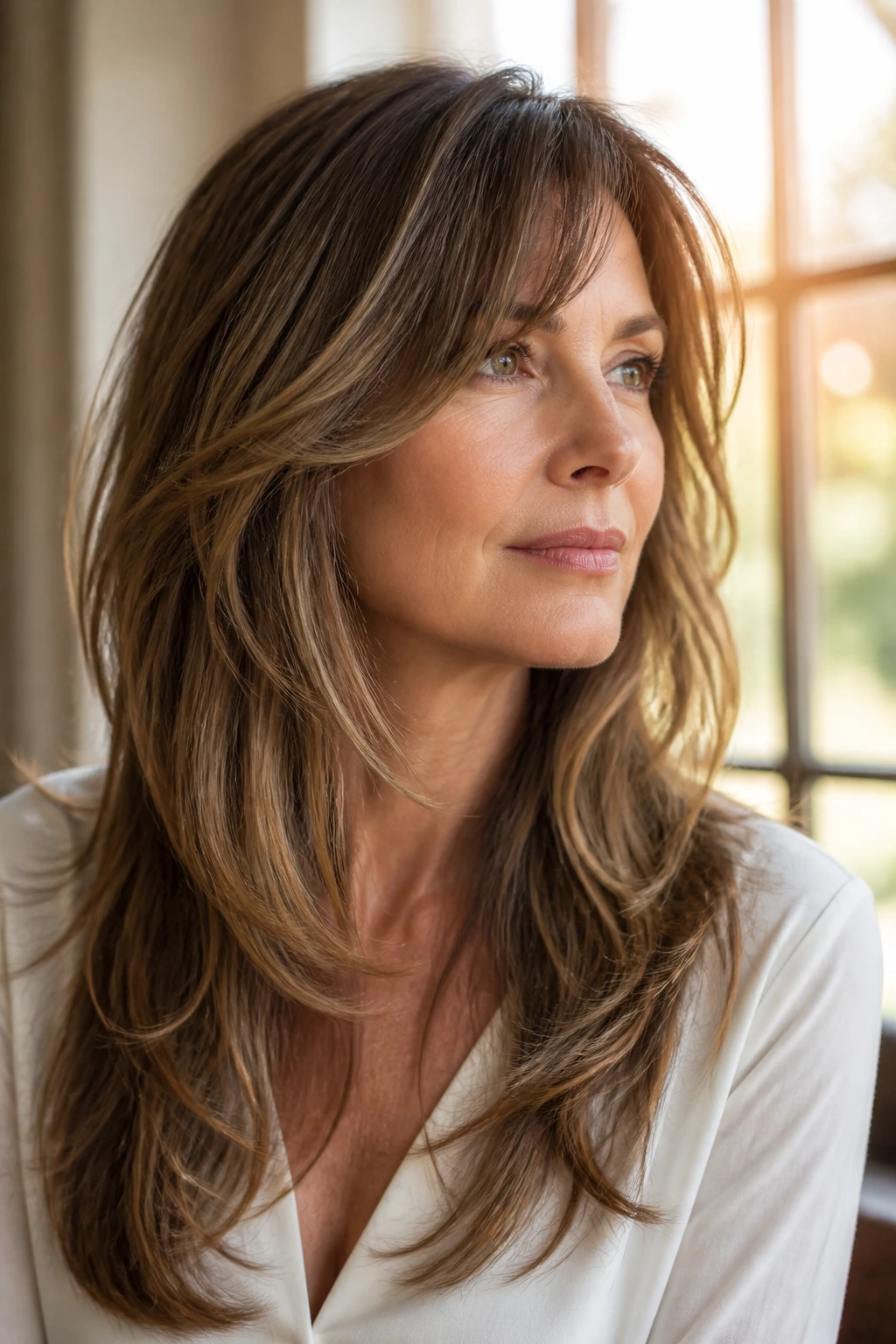
The biggest mistake with soft layers is styling them like every strand needs a separate job. It doesn’t. Start by rough-drying the roots until the hair is about 80 percent dry, then use the round brush only on the front and the top layer that frames the face. The rest can stay a little looser. That keeps the cut from turning stiff.
A curling iron is useful, but only if you use it like a shaping tool, not a wand of punishment. Wrap the front sections away from the face for a few seconds, let them cool in your hand, and stop there if the hair already has enough movement. You do not need to curl the whole head. In fact, that often kills the softness that makes this haircut good.
For air-dry days, work a small amount of leave-in through the mids and ends, then scrunch or twist the face frame into place. Fine hair usually wants less product, thick hair can take a touch more, and curly hair often needs the leave-in spread evenly so the layers don’t dry patchy. That’s the real difference between “styled” and “overworked.”
How to Keep the Shape Between Salon Visits
Long layers grow out better than short cuts, but they still need maintenance if you want them to keep their shape. Plan on a trim every 8 to 12 weeks if the perimeter is important to you, and every 12 to 16 weeks if the cut is more relaxed and you’re okay with a softer grow-out. Face-framing pieces and fringe usually need attention sooner, often around 4 to 6 weeks if they’re sitting in your eyes.
At home, wash frequency depends on scalp oil and texture, not on some imaginary rule. Fine hair may need a wash every other day. Thick or curly hair may stretch longer. Use a weekly mask if the ends feel rough, and keep heat styling modest when the layers are starting to look dry at the tips.
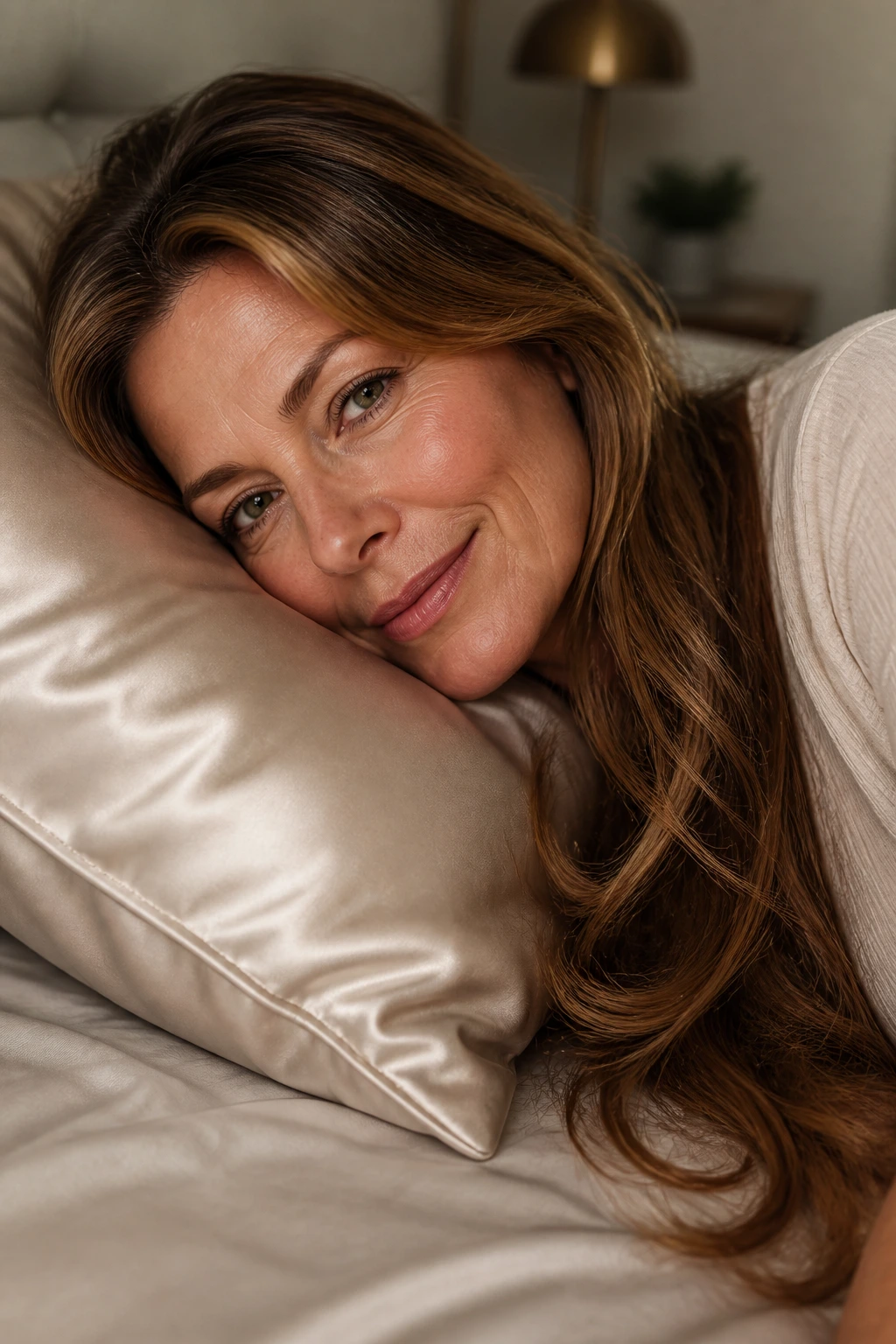
Night care matters more than people admit. A loose braid, a silk scrunchie, or a silk pillowcase can keep the front layers from breaking up into a halo of frizz. The shape survives better when you sleep on it kindly. Simple. Not glamorous. Effective.
The Common Mistakes That Flatten Long Layers
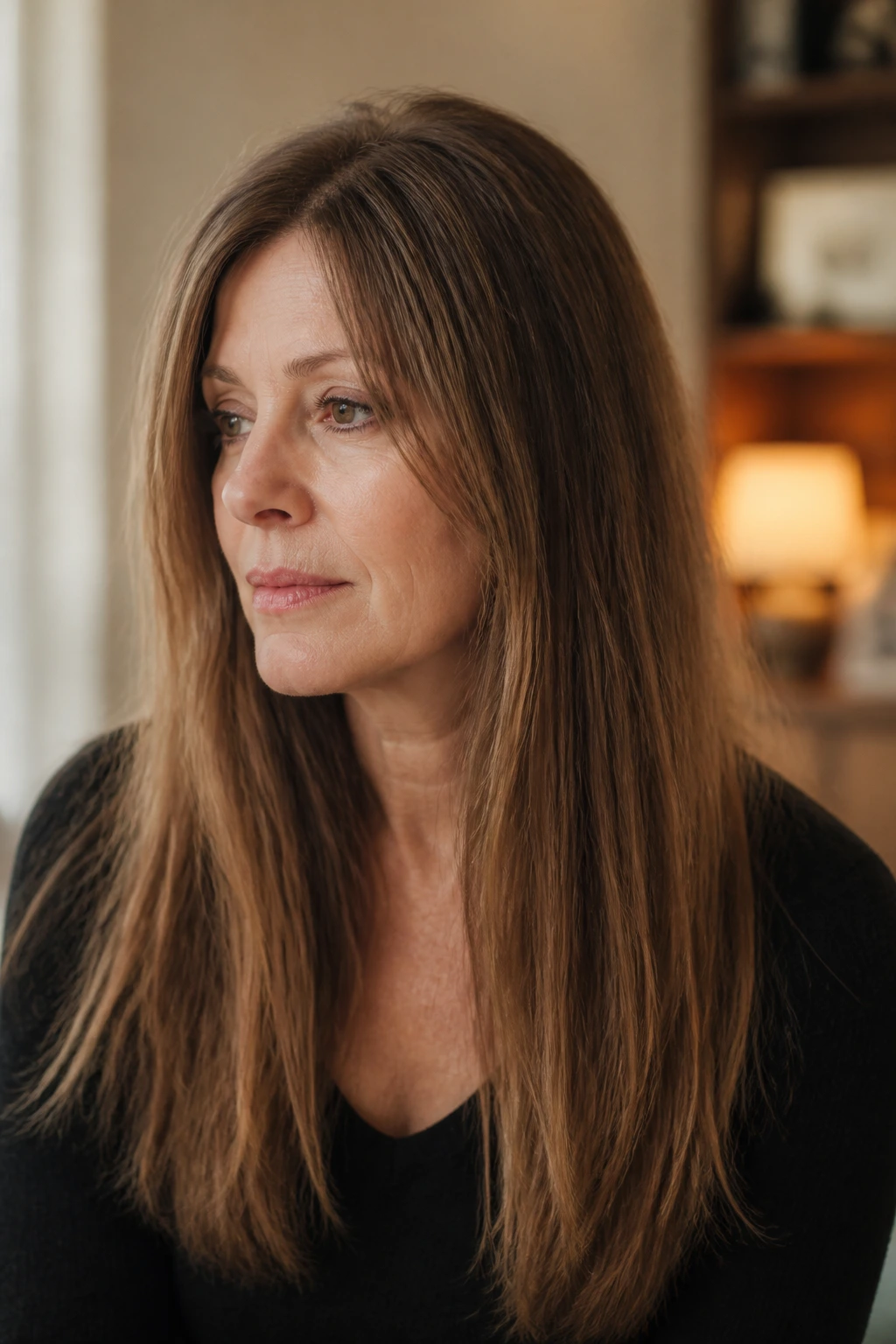
The first mistake is asking for too many short layers near the crown on fine hair. The result is usually see-through ends and a top that looks busy while the bottom looks tired. The fix is easy: keep the shortest layers lower and preserve more weight at the perimeter.
The second mistake is cutting the face frame too high on long hair. Pieces that end at the jaw can sharpen the lower face and make the whole shape feel boxy. Start the frame at the cheekbone, chin, or collarbone instead, depending on how much softness you want.
Third, thick hair gets butchered by over-thinning. A razor-happy cut may look airy for one wash, then puff and frizz as soon as humidity shows up. Internal layers and controlled point cutting usually work better than aggressive texturizing.
Fourth, people ignore their natural part. A cut built for a center part can look odd worn with a deep side sweep, and the reverse is true too. If you never part your hair the way the photo shows, say so before the scissors come out.
Last, don’t over-style the finish. A soft-layered cut should move. If every section is sprayed, curled, and pinned within an inch of its life, the shape loses the very thing you paid for.
Variations and Alternatives Worth Trying
The Air-Dry Version: Keep the layers low and the face frame long, then cut the hair to follow its natural wave or bend. This version works when you don’t want to touch a hot tool most mornings.
The Blowout Version: Add rounded layering through the mids and a more obvious front sweep. It’s a good fit if you like polished hair with a little lift at the ends.
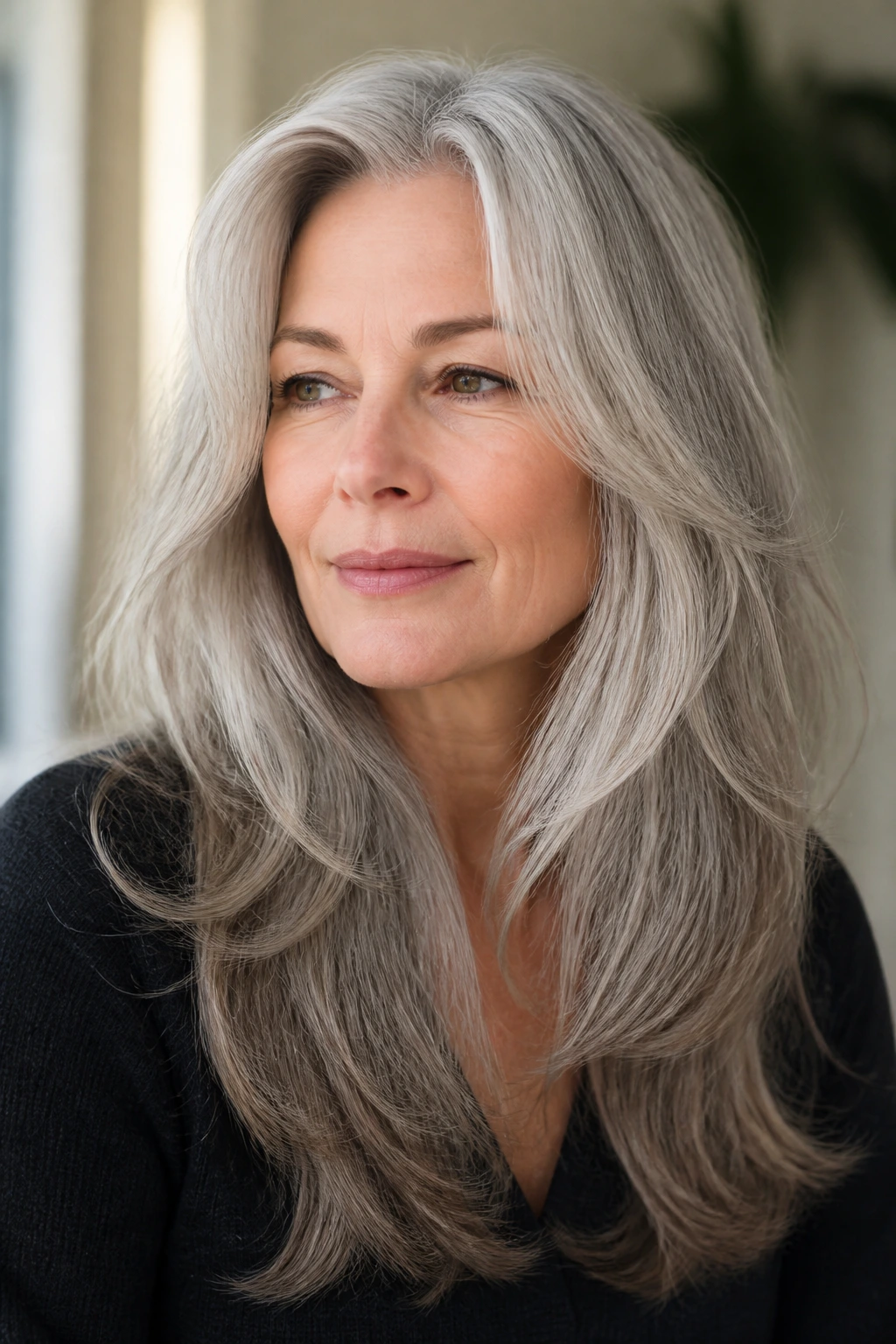
The Gray-Blend Version: Use soft internal layers and a fuller perimeter so coarser silver strands don’t fan out. This one keeps natural gray looking intentional instead of wiry.
The Curly-First Version: Ask for the cut to be shaped on dry curls or near-dry curls. That helps the stylist see the real bounce and avoid cutting the layers too short.
The Low-Maintenance Version: Leave the fringe out of it, keep the face frame long, and let the layers sit below the shoulders. That way the haircut still works when it grows a little.
Frequently Asked Questions About Long Layers
Will long layers make fine hair look thinner?
They can, if the layers are too high or too many. Fine hair usually does better with low, soft layers and a fuller edge at the bottom so the ends don’t look stringy.
What’s the difference between soft layers and a shag?
A shag has more visible texture and usually a stronger fringe or crown shape. Soft layers are calmer and more blended, which makes them easier to wear if you want movement without a heavier style statement.
How often should I trim long layered hair?
Every 8 to 12 weeks is a good range for keeping the shape neat. If you have bangs or a strong face frame, you may want a small cleanup sooner.
Can I keep my long hair and still make it look modern?
Yes. The trick is in the placement of the layers, the softness around the face, and the perimeter shape. Long hair looks modern when it moves with purpose instead of hanging in one flat line.
Do curtain bangs work on women with glasses?
Often, yes. The key is keeping the bangs soft and long enough to move around the frame rather than crashing into it. Bottleneck bangs or a long fringe can be even easier.
What if my hair is gray and a little coarse?
Ask for gentler layering and a stronger perimeter. Gray hair usually looks better with shape and movement, not a lot of thinning at the ends.
Can I air-dry these haircuts?
Many of them, yes. The best candidates are the air-dry layers, the soft shag, and the wavy layered cuts, especially if your texture already has a bend.
What should I avoid if I want the haircut to grow out well?
Too-short face framing, harsh razoring, and layers cut high into the crown. Those choices can look lively for a week and then turn messy when the haircut starts to grow.
A Cut That Still Looks Like Hair
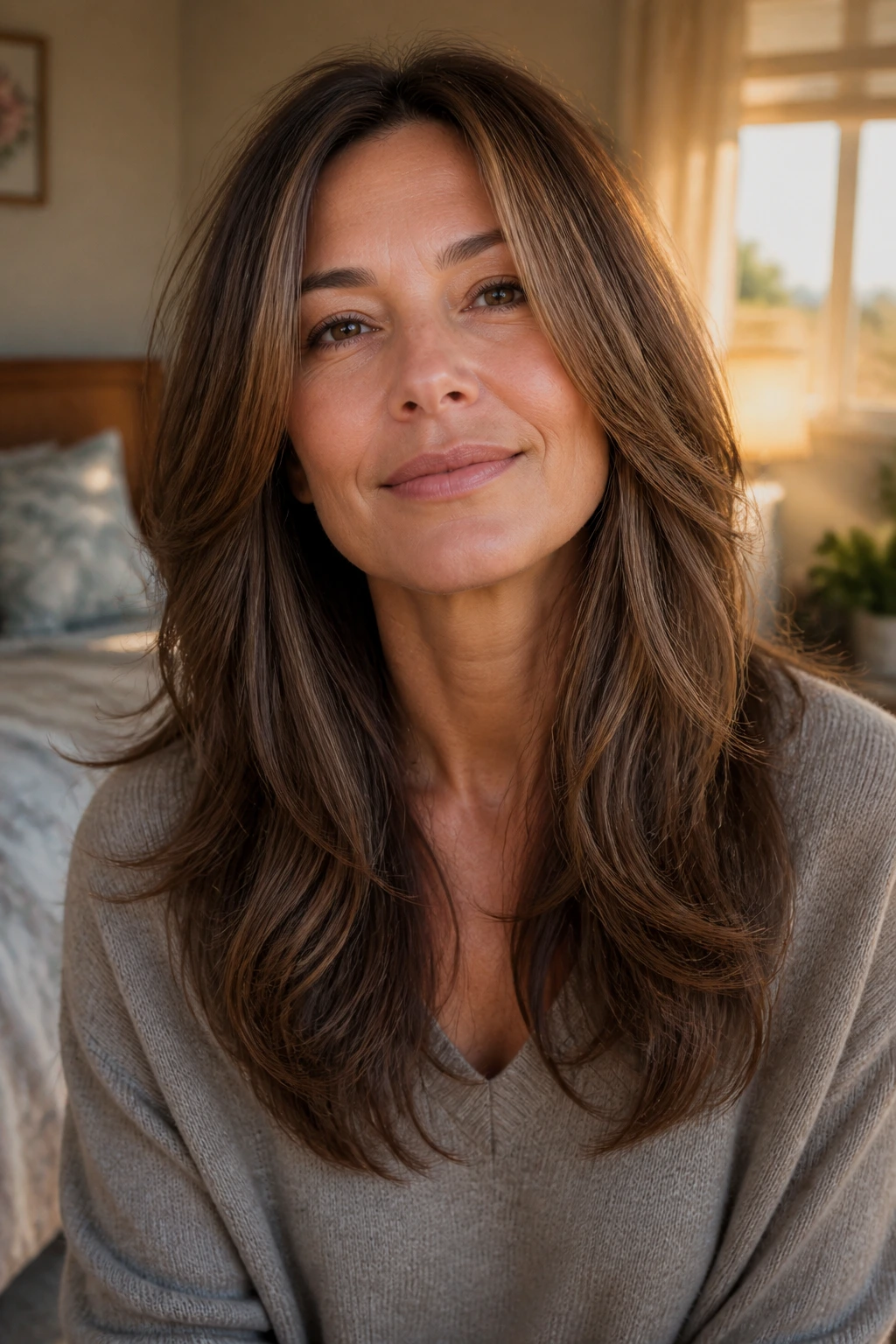
Long hair after 40 does not need to be reduced to one rule or one length. It just needs shape that makes sense. Soft layers keep the movement where the eye wants it, keep the ends from looking tired, and let long hair feel current without forcing it into a hard-edged trend.
Pick the version that matches your texture, your part, and the amount of styling you actually want to do. That’s the part people skip, and it’s usually why a haircut looks good in the salon but awkward at home. The right long layer cut should still look like you on a Tuesday morning.