



A curtain bang can look airy in the mirror and then collapse into two limp strips by lunch. On fine hair, that shift happens fast. A few millimeters of length, one heavy cream, or a blow-dry that points the wrong way can change the whole front of the haircut.
Fine hair is about strand diameter, not how much hair you have on your head. That matters more than people think. A cut that would look soft and easy on medium hair can go flat, see-through, or oddly separated on finer strands, and curtain bangs are the first place that shows up.
The good versions of this look have a light center, a little bend at the cheekbones, and enough weight on the sides to open the face without hanging in one tired sheet. The bad versions do the opposite. They split too hard, sit too flat, or start to look stringy the minute you step out into real life.
These are the mistakes that keep the style from working, and the small corrections that make it behave. Start with the front, and the rest of the haircut gets much easier to wear.
Why These 25 Mistakes Matter More on Fine Hair

- Weight: Fine hair loses shape fast when the front is cut too heavy, because the strands cannot support extra bulk for long.
- Lift: Curtain bangs need air at the root, or they sit on the forehead like a wet ribbon by the end of the day.
- Balance: A fringe that looks fine in isolation can make the rest of the haircut look thinner if the crown and ends are cut badly.
- Growth: Fine strands show every millimeter of grow-out, so a mistake that seems small in week one turns obvious fast.
- Styling Time: The right cut should need one brush, one blow-dry pass, and a light finish. Anything more starts to feel like work.
1. Cutting the Bangs Too Dense at the Center
Dense curtain bangs on fine hair are a trap. They can look flattering for the first ten minutes, then the center starts to hang straight, split awkwardly, and swallow the face frame you wanted in the first place. The problem is simple: there isn’t enough strand bulk to carry that much fringe without showing the weight.
A better version leaves the center a touch see-through and lets the outer pieces do the heavy lifting. Ask for the shortest point to stay around the upper cheekbone or just below the eyebrow, not a solid wall across the forehead. That soft middle is what lets the fringe open instead of sitting there like a little curtain rod.
2. Starting the Shortest Piece Too High on the Face
Why do some curtain bangs feel perky in the chair and impossible at home? Usually because the shortest point is too high. On fine hair, a center piece that starts above the natural bend point loses the softness that makes the shape believable.
The sweet spot is usually a little lower than people expect. For many faces, that means beginning around the eyebrow to upper cheekbone zone, then letting the sides sweep longer toward the jaw. If the front is cut too high, the fringe has nowhere to fall but outward, and that makes it flick strangely instead of folding away from the face.
3. Taking Away Too Much Weight with Thinning Shears
Thinning shears can be useful. They can also turn fine hair into air. That is the problem. When the front is already light, over-thinning strips out the last bit of support, and the bangs end up looking wispy in a bad way — thin at the ends, fuzzy at the middle, and weak when they split.
The fix is restraint. Point cutting with regular shears usually gives enough softness without hollowing out the fringe. If a stylist wants to texturize the bangs, the work should stay on the outer edge, not through the whole center section. You want movement, not gaps.
4. Ignoring a Cowlick at the Front Hairline
A cowlick is a small thing with a big ego. It will push curtain bangs off center, make one side flip higher than the other, and create that annoying little split that reappears even after you’ve blown the hair around three times.
What the Cowlick Is Doing
Fine hair shows growth patterns more clearly because there’s less bulk to hide them. If the front hairline grows forward or sideways, the bangs need to be cut with that in mind. Fighting the cowlick usually leads to a fringe that refuses to settle.
What to Ask For
A better cut works with the natural part, not against it. Tell the stylist where the hair wants to split and let them leave a little more length at the stubborn side. In daily styling, a quick clip at the root for five to ten minutes can help the fringe cool in the right direction.
5. Adding Layers Too High Around the Crown
High layers can be gorgeous on thick hair. On fine hair, they can feel like someone took a chunk out of the top and left the rest to fend for itself. The front loses lift, the crown goes sparse, and the curtain bangs start looking detached from the haircut instead of part of it.
The better move is to keep the shortest layers lower and softer, usually beginning near the cheekbone or below. That keeps weight where it helps the shape and avoids a hollow crown. Fine hair usually needs strategic movement, not lots of slicing near the top of the head.
6. Relying on a Blunt One-Length Base
A blunt cut sounds safe, and sometimes it is. But if the whole haircut is one length and the curtain bangs are doing all the visual work, the front can look pasted on. The bangs become the only thing with movement, which is a lot of pressure for a small section of hair.
A softer perimeter works better. That might mean a bob with a gentle bevel, a lob with a little bend at the ends, or long hair with subtle interior layers. The curtain fringe then feels connected to the rest of the cut instead of standing there like an extra piece.
7. Parting the Hair Too Deeply Off Center
A deep side part can make fine hair look flatter in a hurry. It steals volume from one side and forces the curtain bangs to behave like side-swept fringe, which is not the same thing at all. The result is usually one side that sits too heavy and another that looks too light.
A soft middle or very slight off-center part usually works better. You only need a small shift — sometimes half an inch is enough. That gives the fringe room to split naturally while still keeping enough body on both sides of the face.
8. Blow-Drying the Bangs Straight Down
This is the classic mistake. The bangs dry flat against the forehead, pick up a little moisture from the skin, and then separate into two limp ribbons. Fine hair is especially sensitive to that because it bends where you tell it to bend and stays there.
Use Direction, Not Force
Aim the nozzle downward through the roots at first, then wrap the fringe away from the face with a small round brush. The bend should come from the base, not from pressing the ends flat. A quick cool shot at the end helps the shape stay open instead of collapsing the second you let go.
9. Using a Round Brush That Is Too Big
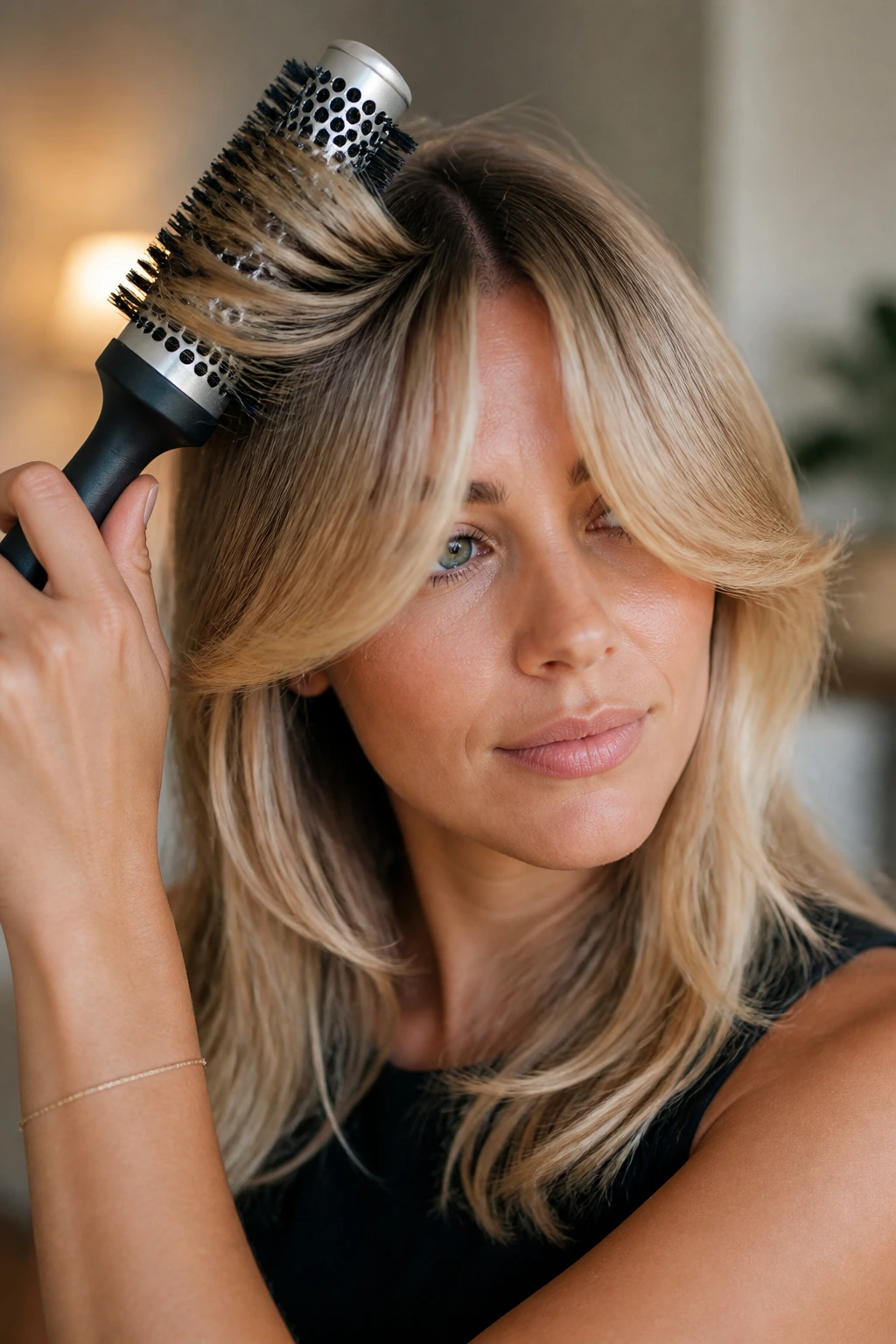
Big brushes can be nice for long blowouts, but they often make curtain bangs too loose. The hair wraps too far around the barrel, gets too much curl, and then falls flat before you’ve even left the house. Fine hair needs a controlled bend, not a giant swoop.
A brush around 1 to 1.5 inches usually gives better control. It creates that soft, face-opening curve without turning the fringe into a corkscrew. If the bang is shorter, go smaller. If it is long and sweeping, stay on the smaller side anyway.
10. Flattening the Shape with a Flat Iron Every Morning

A flat iron can smooth the fringe, but it can also kill the movement that makes curtain bangs look like curtain bangs. On fine hair, repeated heat passes make the front too sleek, too straight, and a little too thin at the edges.
Use the iron only if you need a tiny bend correction. One slow pass with a gentle outward turn at the last inch is enough. If you’re using it every morning because the bangs won’t hold shape, the cut probably needs more root support and less heat, not more.
11. Putting Heavy Cream or Oil on the Roots

A drop of serum can calm flyaways. A puddle of cream can flatten the entire look. Fine hair shows product weight immediately, and the front is the first place to collapse when the roots get coated with something too rich.
Keep heavy products off the fringe and off the scalp. If the ends are dry, smooth a tiny amount through the bottom half only. For curtain bangs, a lightweight mist or foam near the roots usually behaves better than any thick cream ever will.
12. Skipping Root Lift Product Altogether

What happens when the cut is fine and the roots have no support? The bangs sit where gravity puts them. That means they separate too quickly, cling to the forehead, and lose the open shape that makes the style work in the first place.
The Small Bottle That Helps
A little mousse, root spray, or volumizing foam at the front makes a real difference. Work it into damp roots, not the ends, and focus on the first two inches of hair near the part and hairline. Fine hair usually needs less product than people think, but it does need something that gives the roots memory.
13. Leaving Clean Roots Too Slippery

Freshly washed fine hair can be almost too soft. It looks light in the sink and then goes flat the minute it dries. Curtain bangs need a little grip, and clean roots without any texture often feel too silky to hold a bend.
A light dry shampoo on day one can help, not just on day three. Spray it at the roots, wait a minute, then brush it through or shake it in with your fingers. The point isn’t to make the hair dirty. It’s to give the front enough texture to stay put.
14. Letting the Fringe Grow Past the Soft Bend Point

Curtain bangs look best at a certain length, and then they drift. Past that point, the center gets heavy, the sides lose their swing, and the shape starts to sit in the eyes instead of opening around them.
The fix is regular micro-trims. Don’t wait until the bangs are fully in your lashes. On fine hair, the sweet spot usually disappears before the rest of the haircut looks grown out, so a light trim every 4 to 6 weeks keeps the shape awake.
15. Trimming Them While They Are Wet and Pulled
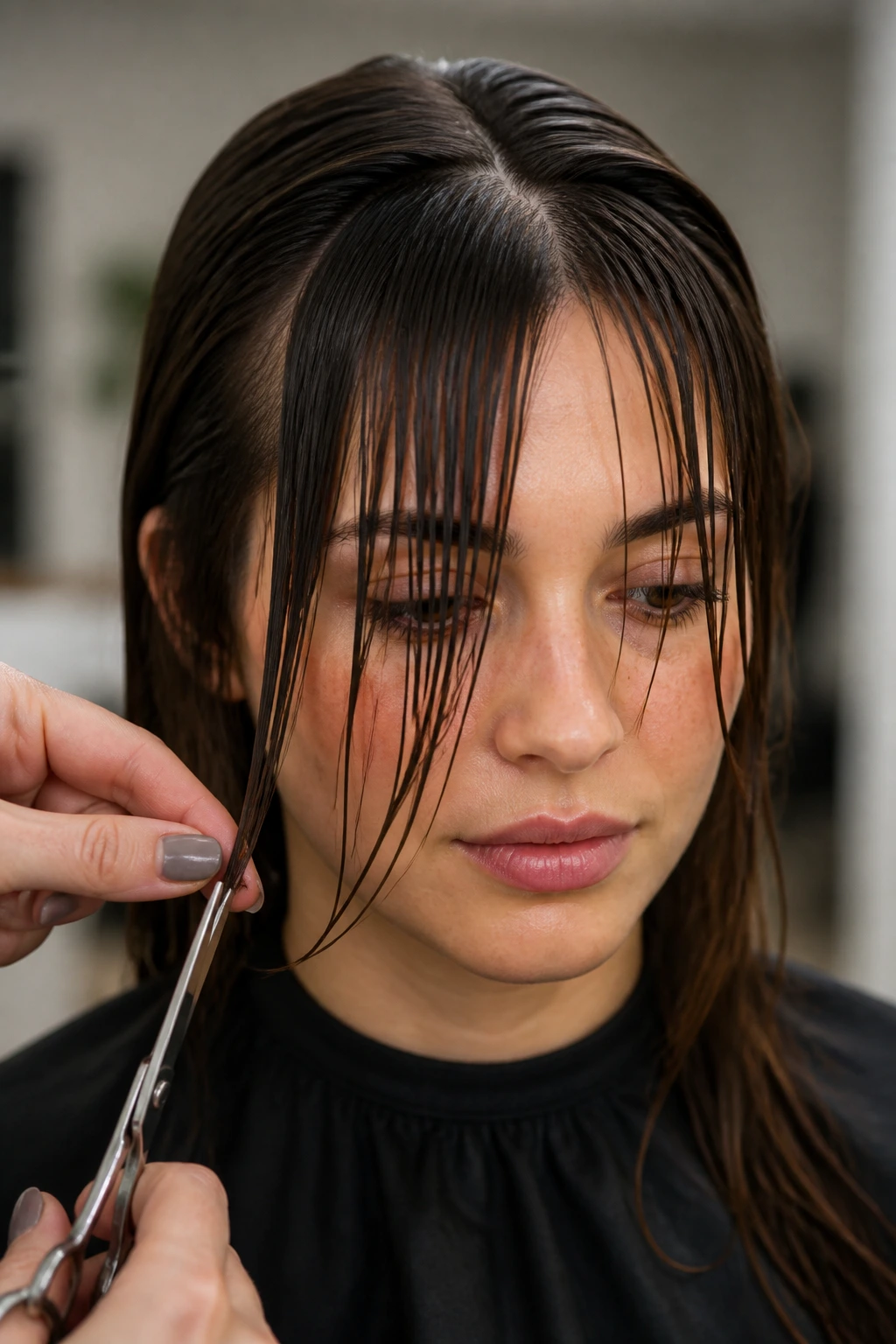
Wet hair lies. It stretches, it shrinks, and it hides the actual fall pattern. If curtain bangs are trimmed wet and pulled taut, they often dry up too short in the center or too jagged at the sides.
A dry or nearly dry check is safer on fine hair. That way you can see where the fringe really sits when it settles. If a stylist does cut them damp, the safest approach is to leave a little extra length and refine once the hair is dry and moving naturally.
16. Air-Drying the Fringe Without Guiding It

Air-drying sounds easy. Sometimes it is. Curtain bangs on fine hair are not the place to get lazy, though, because they can dry in odd bends, split where you do not want them to split, or hang in a flat V that looks accidental instead of soft.
A Better Way to Air-Dry
If you want the rest of the hair to air-dry, at least steer the fringe. Clip it slightly off the face, twist it once with your fingers, or give it a short blast from the dryer at the roots. That small bit of direction saves a lot of mid-day frustration.
17. Clipping the Front Back Tight Every Day

Pulling the fringe hard into clips or pins may feel practical, but it can leave the front bent in awkward places and stressed at the hairline. Fine hair is more prone to breakage there, especially if the same tension lands in the same spot every morning.
Use loose clips, soft rollers, or a light pin-up instead. If you want the bangs out of your face for a while, push them back gently and let them rest, not strain. Tight tension at the front always shows up later as frizz, kink, or a little broken halo.
18. Using Blow Dryer, Iron, and Hot Rollers All at Once
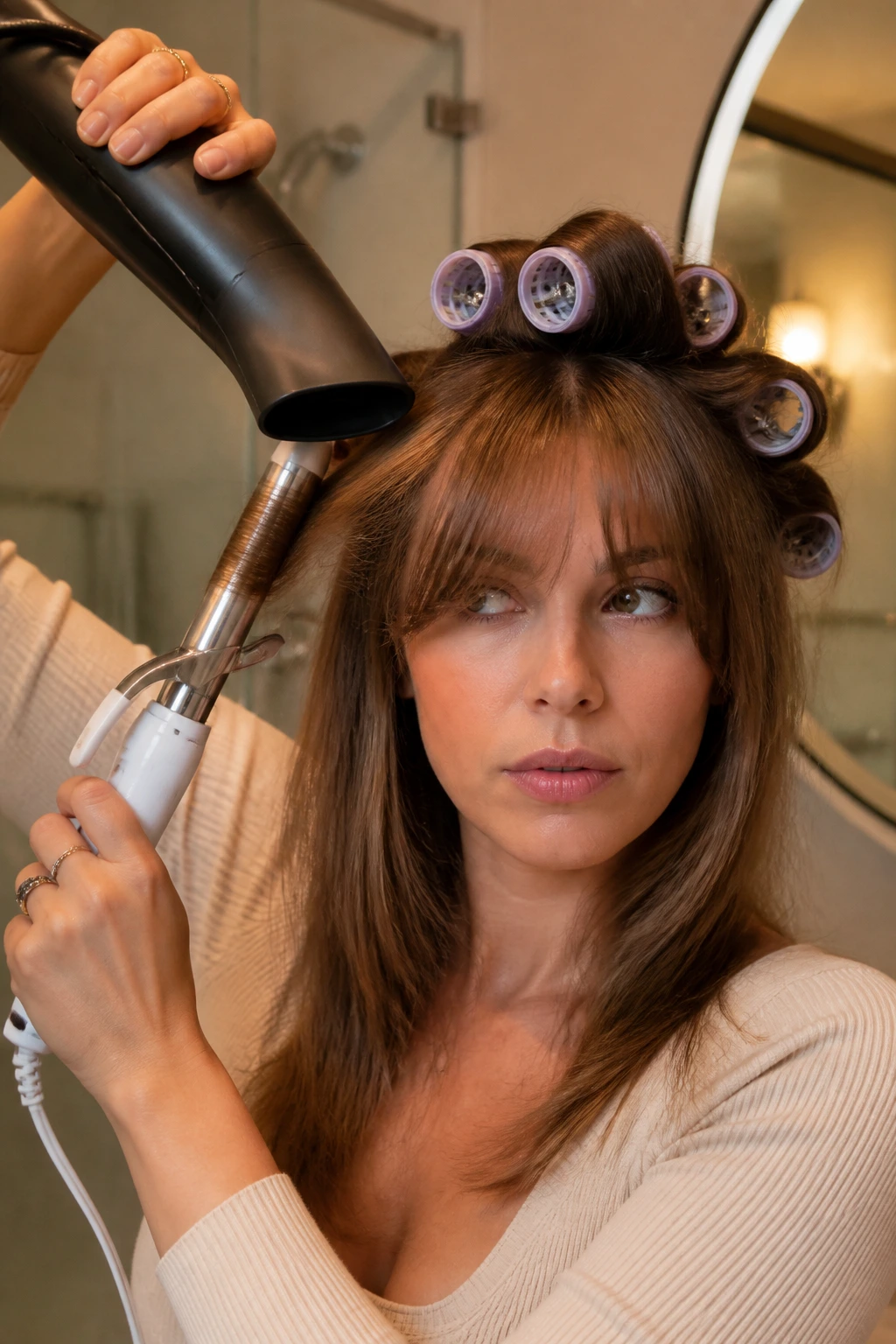
Too many hot tools in one routine is how fine hair gets tired fast. The front becomes limp, the ends lose their bounce, and the cut starts looking older than it is. You do not need three kinds of heat to create one soft bend.
Pick one main shaping tool and let it do the job. A round brush and dryer is enough for many people. If the fringe needs extra memory, a tiny flat iron correction or a short set with a roller can help — not all three, and definitely not every day.
19. Pairing the Fringe with Dead-Flat Ends
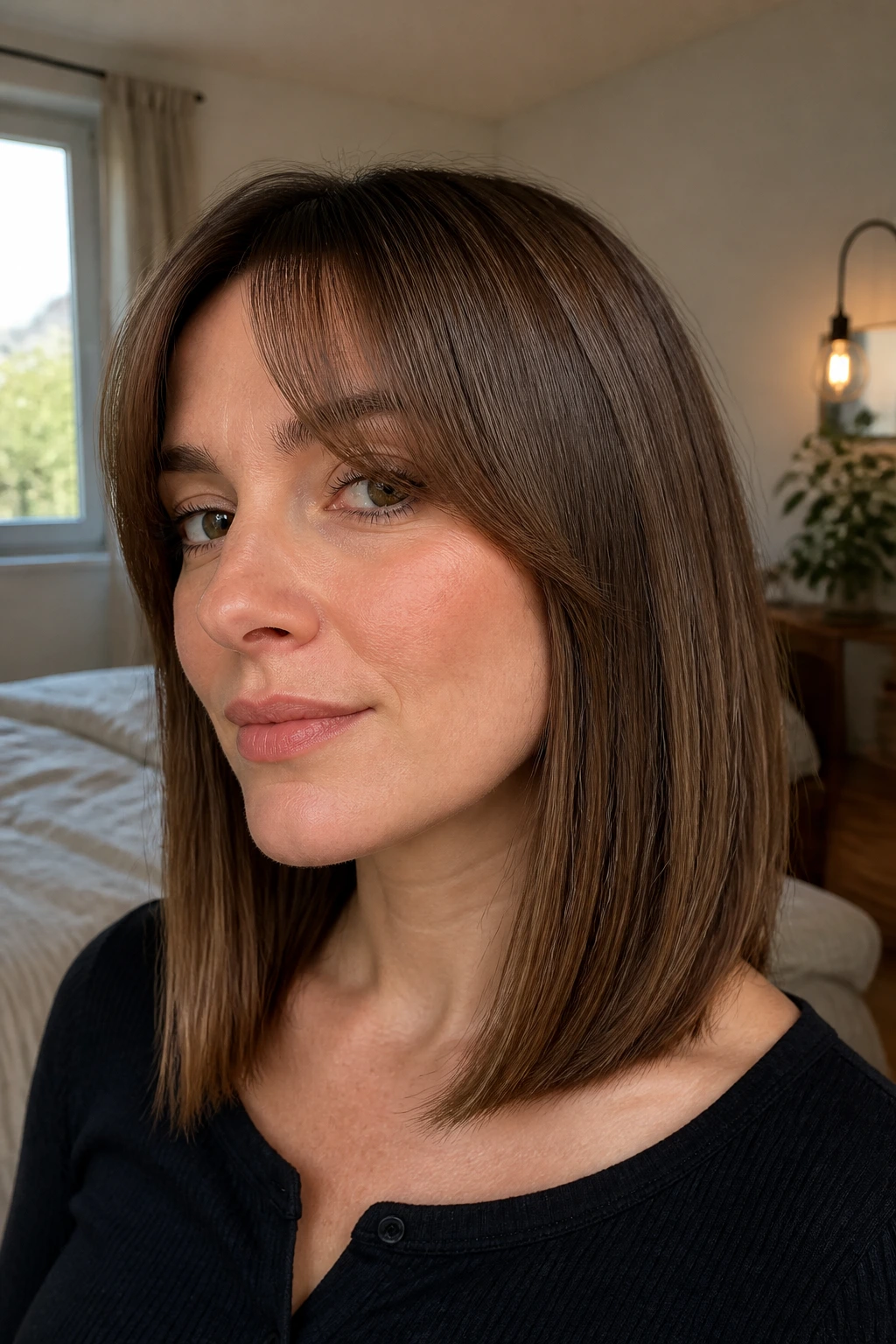
This mismatch is common. The curtain bangs have movement, but the rest of the haircut hangs straight and heavy, so the front looks like it belongs to another person’s style. On fine hair, that contrast can make the ends look even thinner.
A little bevel at the perimeter helps a lot. It can be a soft curve on a bob, a loose bend on a lob, or a few face-framing waves on longer hair. The idea is not volume everywhere. It is consistency, so the bangs and the ends speak the same language.
20. Cutting Face Layers That Stop at the Jaw
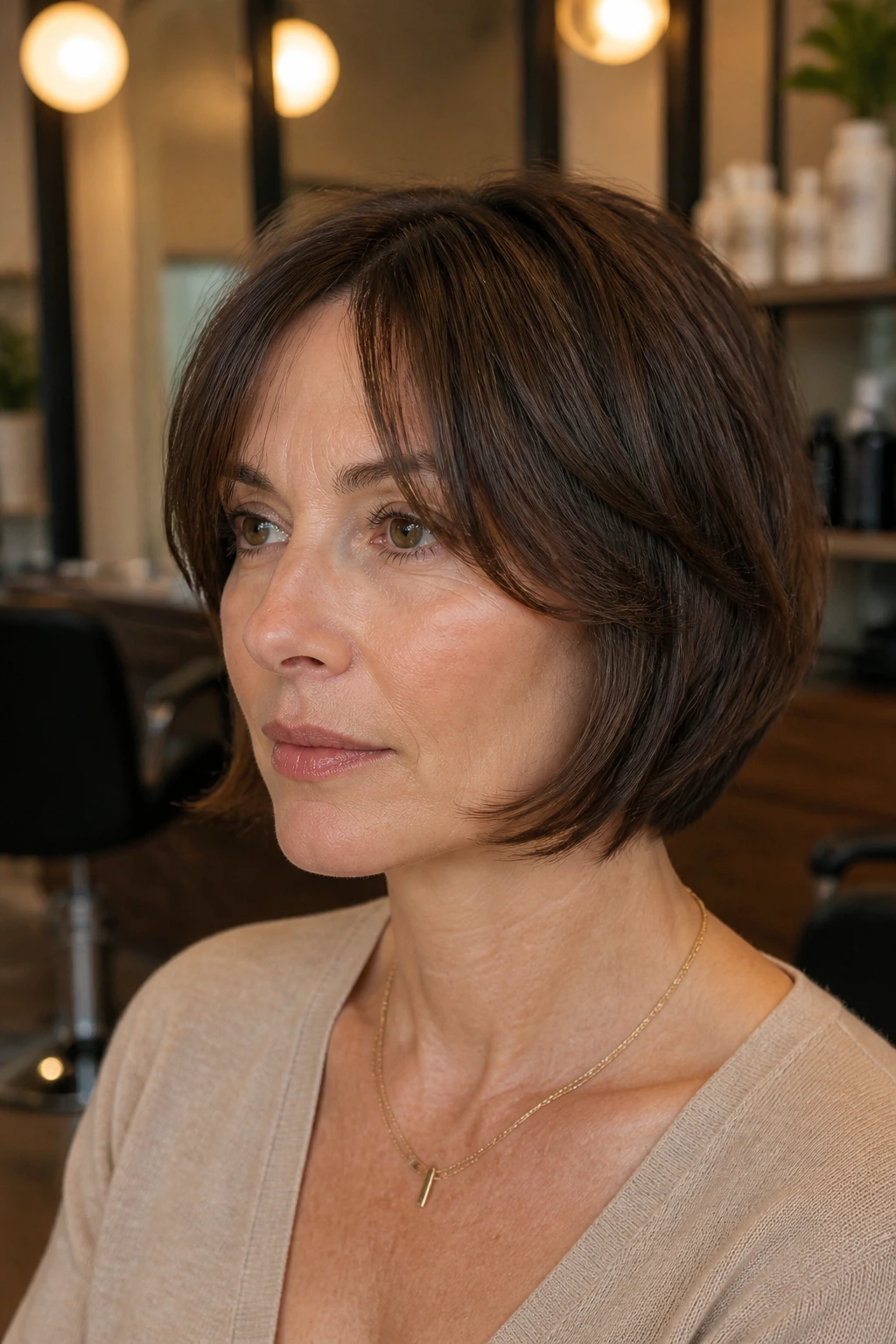
Jaw-length face layers can be tricky on fine hair. They often land at the widest part of the face and then hang there without much movement, which makes the curtain bangs feel abrupt instead of sweeping. The eye goes to the break in the line.
Longer face framing usually works better. Think cheekbone, mouth corner, collarbone — places where the hair can taper and move instead of stopping all at once. The front of the haircut should feel like one soft line, not two separate ideas.
21. Ignoring the Back and Crown When the Front Looks Good
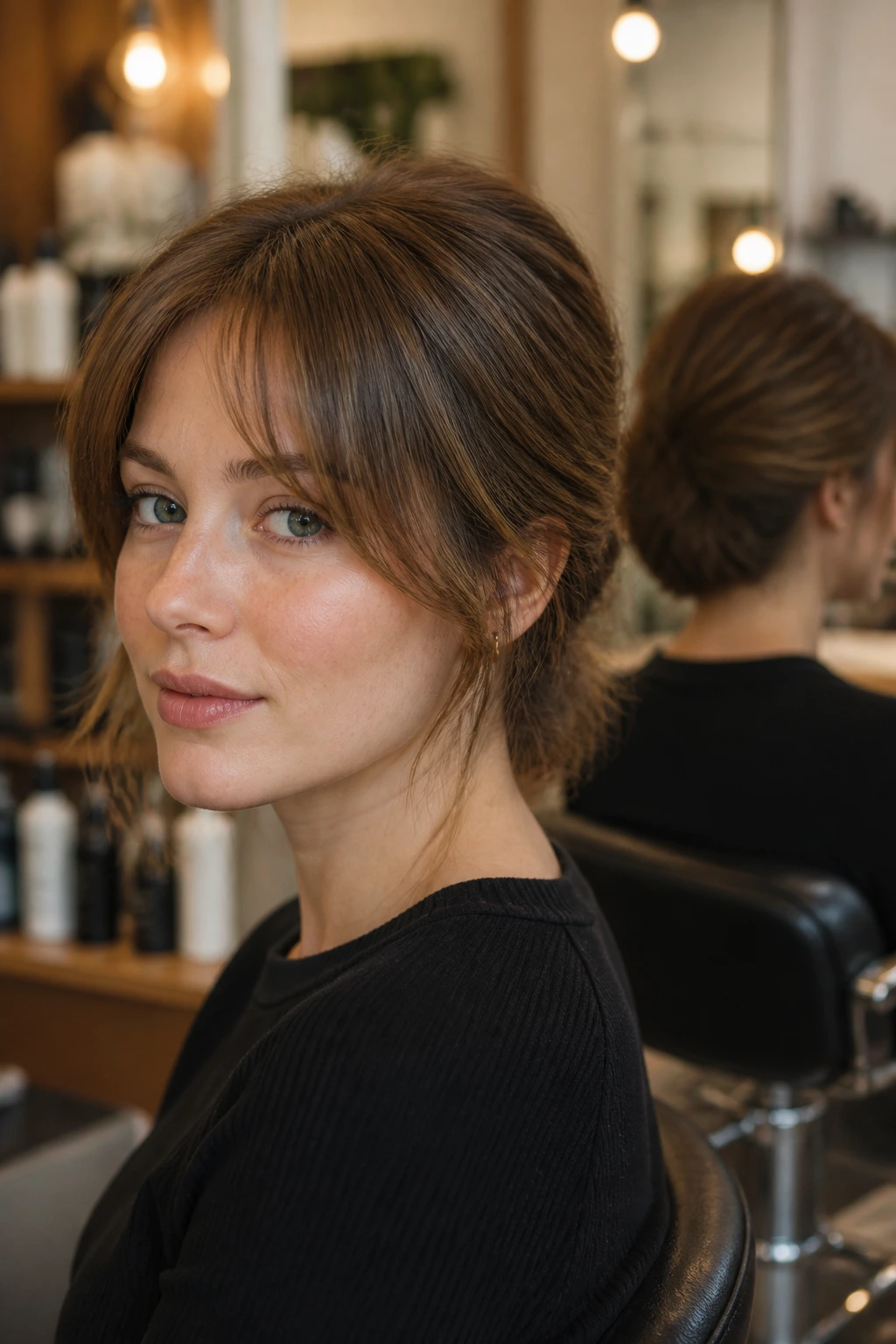
A front view can lie. The bangs might sit nicely, but if the crown is flat or the back is too bulky, the haircut still feels off. Fine hair needs balance. When one part is overworked, the others show it.
That is why a good curtain-bang haircut should be checked from the side and the back as well. The silhouette matters. If the front is soft and the back is heavy, the bangs will look borrowed. If the crown has too much space taken out of it, the whole cut starts to sag.
22. Choosing One Solid Dark Color That Erases Dimension

Color can make fine hair look fuller or thinner. A flat, dark one-process color can sometimes make every strand read the same way, which removes the little shifts in light that help curtain bangs stand out. The haircut gets harder to see, not easier.
A bit of dimension helps. That might be a soft gloss, a few lighter ribbons around the face, or a tone that keeps the fringe from disappearing into the rest of the hair. You do not need streaks everywhere. You need enough contrast that the bang shape has a little definition.
23. Over-Razoring the Fringe Until It Looks Scraggly
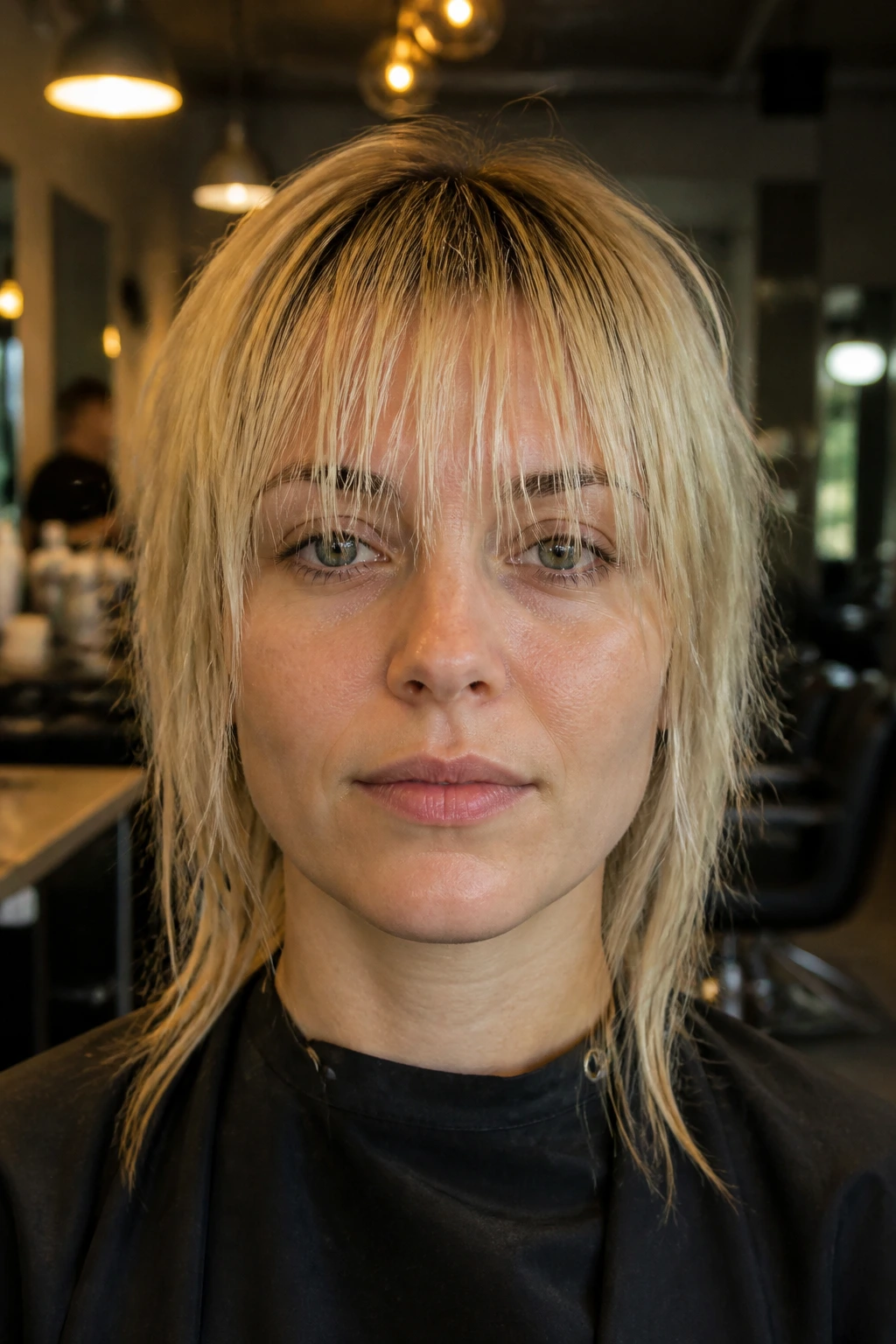
Razor work can create soft edges, but too much of it on fine hair strips out the very ends that give the bang shape. The fringe starts to look feathered in a weak way rather than airy in a flattering way.
The better version keeps the edge soft while protecting the body of the hair. A little point cutting can open the ends without turning them sparse. If the bang already looks thin at the ends, more razor work is the last thing it needs.
24. Choosing a Hair Length That Fights the Bang Shape

Some lengths make curtain bangs easier. Some make them weird. A very short cut can leave the fringe feeling too dominant, while a long, heavy length can pull the face frame down and flatten the bend. The wrong haircut length does not ruin curtain bangs, but it can make them work a lot harder.
If you want the front to stay soft, pair it with a length that gives it room. A bob with movement, a lob, or long hair with softened ends usually gives the bang something to sit against. The goal is a haircut where the fringe feels like part of the plan, not a patch on top.
25. Treating the Whole Cut Like It Never Needs a Reset

This is the quiet mistake that sneaks up on people. The bangs get trimmed once, the ends get ignored, the crown grows out, and suddenly the haircut has no shape left to support the fringe. Curtain bangs do not live alone. They depend on the rest of the haircut holding its line.
Schedule the full reset before the style looks tired. That may mean a bang trim sooner than a length trim, and a length trim sooner than you think. Fine hair looks best when the cut stays slightly ahead of the grow-out, not behind it.
Why Fine Hair and Curtain Bangs Need a Different Rulebook

Fine hair has less strand width, which means less built-in support. That sounds like a small technical detail, but it changes everything about curtain bangs. The front cannot carry as much weight, so a cut that feels harmless on thicker hair can crush the shape on finer strands.
Curtain bangs also live in motion. They need to open at the center, bend at the sides, and settle without looking frozen. On fine hair, gravity wins fast, so the cut has to be a little smarter about where it keeps weight and where it lets go. That is why heavy layering, rich creams, and oversized brushes so often backfire here.
Salon training usually starts with natural fall for a reason. Hair wants to move the way it grows, and fine hair makes that truth obvious. If you cut against the growth pattern or hide the density with too much thinning, the shape looks good for a few minutes and then falls apart in real life.
The Tools That Make the Shape Easier to Control

- 1 to 1.5-inch round brush: Small enough to create a bend without turning the fringe into a curl that drops flat.
- Blow dryer with a concentrator nozzle: The nozzle keeps air pointed where you want it and helps the roots dry in one direction.
- Duckbill clips or small root clips: Useful for cooling the fringe in the right position after blow-drying.
- Lightweight mousse or root spray: Gives fine hair a little memory at the scalp without the sticky feel of a heavy cream.
- Dry shampoo or root powder: Adds grip on clean hair and helps the fringe stay open longer.
- Heat protectant mist: A light spray is better than a thick lotion for this hair type.
- Fine-tooth comb or tail comb: Handy for setting the part cleanly before styling.
- Microfiber towel or soft T-shirt: Cuts down on rough drying that can make the front frizzy.
Product Choices That Keep the Fringe Light

Fine hair does best with products that build shape without leaving a film. A mousse with a light polymer feel, a root spray that dries fast, and a dry shampoo that gives grip are usually more useful than glossy creams. If the product feels slippery in your hands before it even touches your hair, it may be too rich for the fringe.
Conditioner matters too. Keep it from mid-lengths down, and rinse the hairline well so the front does not stay coated. A light clarifying shampoo every couple of weeks can help if the bangs start drooping faster than usual, especially when dry shampoo or leave-ins are building up around the roots.
I’m a little suspicious of anything that promises shine first and hold second for fine curtain bangs. Shine is nice. Shape is nicer. If you have to choose, choose the product that keeps the front lifted through the afternoon.
How to Style the Fringe So It Opens Instead of Splitting
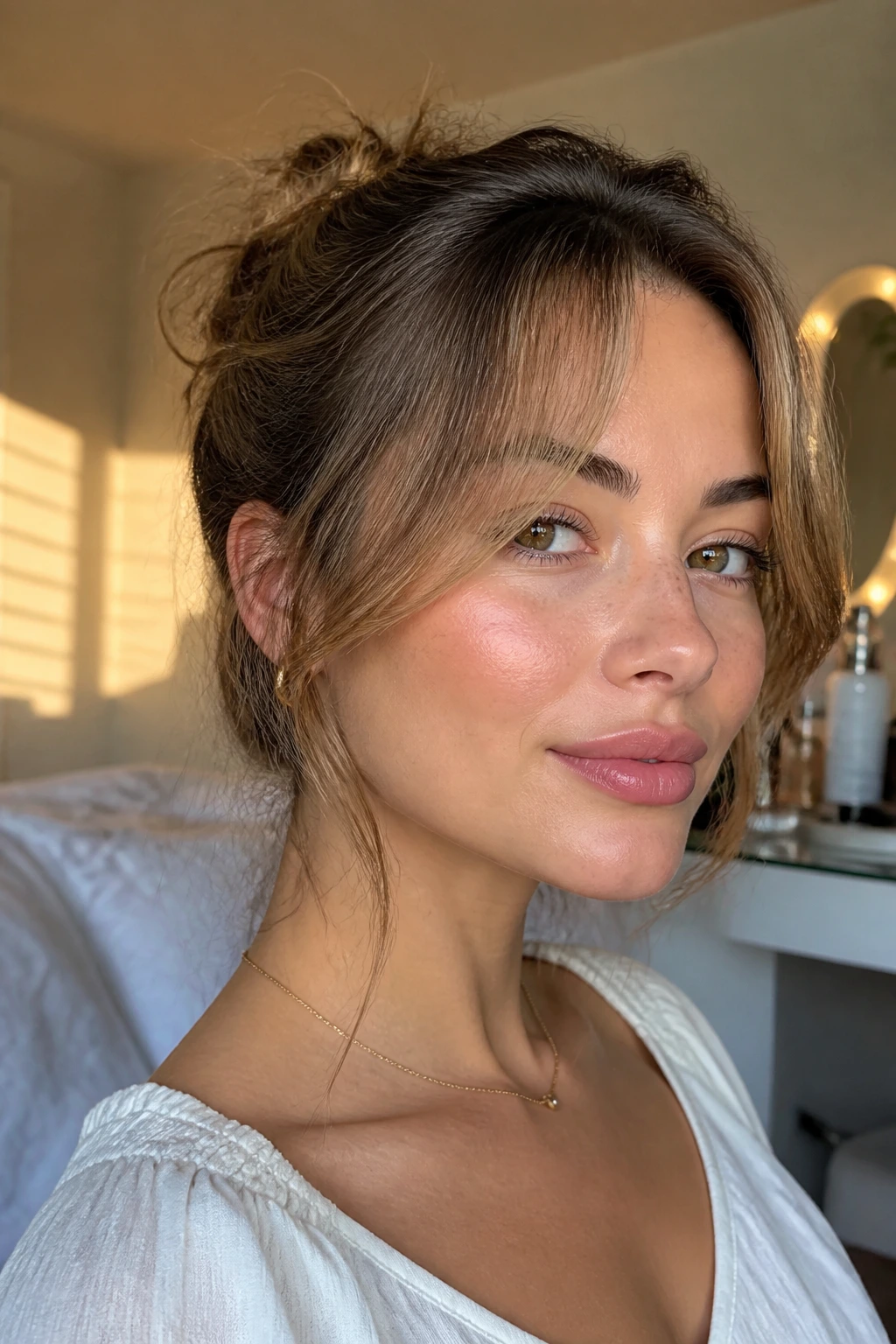
Root Lift: Start on damp hair with a small amount of mousse or root spray right at the front hairline. Work it in with your fingertips, then lift the fringe up and away from the face while drying so the roots do not set flat.
Bend Control: Wrap each side of the curtain bang around a small round brush and turn it away from the face for a few seconds. You are not building a curl. You are making a soft hinge that opens at the cheekbone.
Touch Finish: Once the hair is dry, let it cool for a minute, then separate the fringe with clean fingers. A comb can work, but a brush sometimes smears the bend you just built.
Second-Day Reset: If the bangs go soft by noon, mist the roots lightly with water or a styling spray and re-dry just the front section. That tiny refresh usually works better than redoing the whole head.
Daily Habits That Flatten Fine Hair Fast
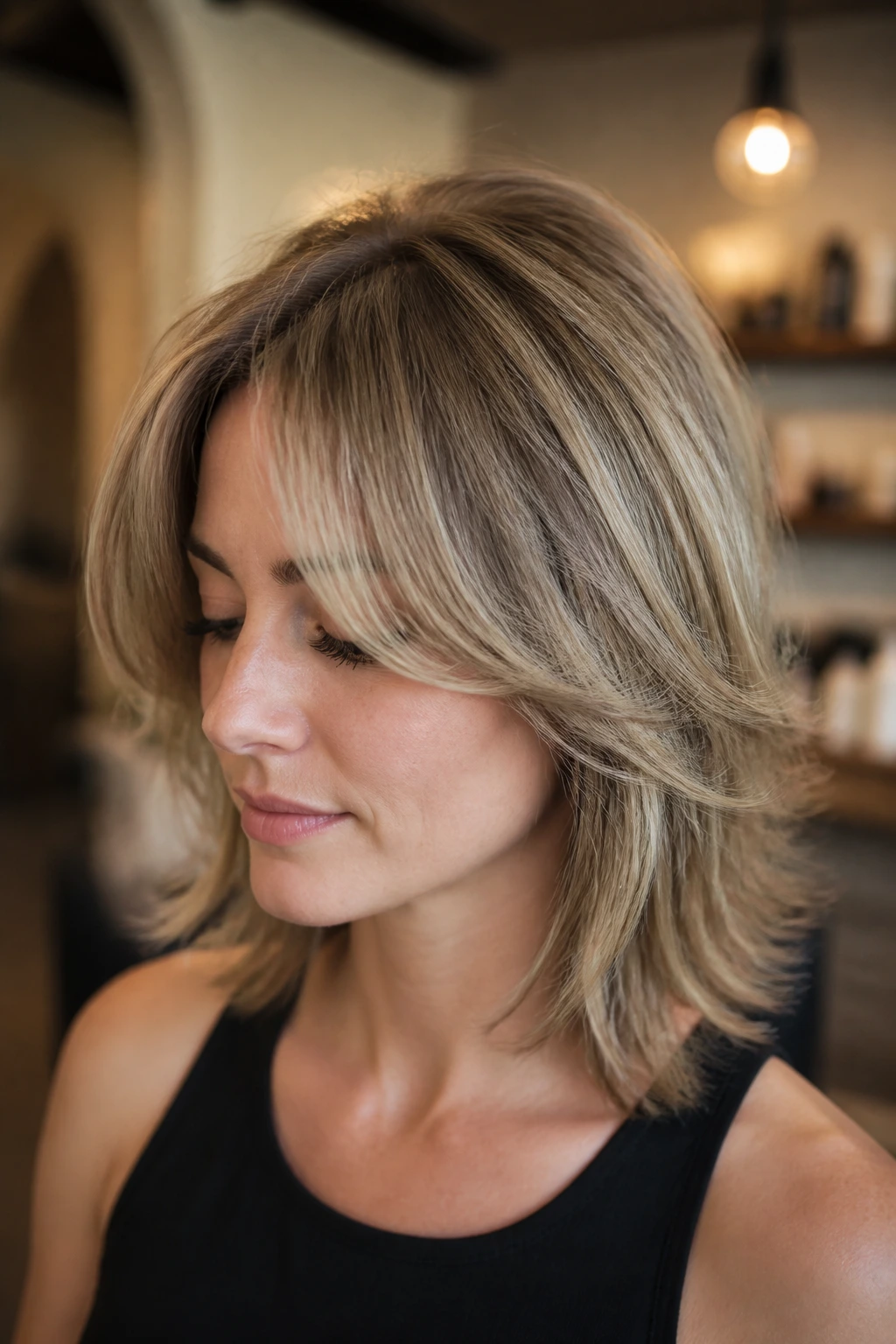
Over-washing can strip the little bit of natural texture fine hair needs to hold a shape. So can conditioning the front too aggressively in the shower. If the bangs are covered in rich product, they will behave like they’ve been oiled for brunch.
Touching the fringe all day is another sneaky one. Hands add oils, and oils kill lift. Sleeping with the bangs wet is even worse, because they dry in whatever shape your pillow gives them.
A better routine is boring in the best way: wash as needed, keep conditioner low, dry the front fully before bed, and refresh the roots before the bangs start sticking to your forehead. Small habits. Big difference.
Cut Variations That Work Better on Different Routines

Barely-There Curtain Fringe: This version keeps the center longer and lighter, which helps if your hair is very fine or sparse through the front. It sits softly instead of trying to make a big statement, and it tends to grow out less awkwardly.
The Collarbone Sweep: A lob or collarbone cut with curtain bangs gives the front more balance than a blunt bob with no movement. The extra length below the jaw helps the fringe feel connected to the rest of the hair.
Soft Rounded Bob: If you like shorter hair, a rounded bob with feathered curtains keeps the outline from looking harsh. The ends curve in slightly, which gives the bangs something to echo.
Air-Dry Friendly Fringe: This version leaves a touch more length at the center and side pieces, so it can survive more natural drying. It works best for people who want low fuss and do not want to round-brush every morning.
Trim Rhythm, Wash Days, and Overnight Care

Curtain bangs on fine hair do best when the maintenance is steady. A bang trim every 4 to 6 weeks keeps the shape open, while the rest of the haircut usually needs a reset a little less often. If the ends start looking stringy or the crown loses its line, the fringe will show it first.
Wash frequency depends on oil and product use, but many fine-haired people land somewhere between every other day and every 3 days. On non-wash days, a small amount of dry shampoo at the roots can revive the front without making it dusty. If the fringe is getting grippy or stiff, a quick rinse of the front only can help.
At night, dry the bangs before bed. If they need protection, clip them loosely away from the face or set them on a soft roller for a few minutes while you wind down. A smooth pillowcase helps, too. It cuts down on friction that can make the front look frayed by morning.
Frequently Asked Questions

Are curtain bangs good for very fine hair?
Yes, if the cut stays light and the shape is built with movement instead of bulk. Very fine hair usually needs a softer center, longer side pieces, and a styling plan that gives the roots some lift.
Should fine hair with curtain bangs have layers?
Usually, yes — but not high, choppy layers that steal density from the crown. Long, soft layers work better because they keep the haircut moving without making the front look sparse.
Can I air-dry curtain bangs if my hair is fine?
You can, but the fringe usually needs a little direction first. If you let it dry completely on its own, it may split in a way that looks accidental rather than soft.
What product should I avoid near the fringe?
Heavy oils, thick creams, and sticky serums are the usual troublemakers. They coat fine strands fast and make the bangs fall flat much sooner.
How often should I trim curtain bangs on fine hair?
Most people do best with a trim every 4 to 6 weeks. Fine hair shows grow-out quickly, and curtain bangs lose their shape before the rest of the haircut looks overdue.
What if my bangs keep separating in the middle?
Check the part, the cowlick, and the amount of root product you’re using. A little dry shampoo or mousse at the front, plus a proper blow-dry away from the face, usually helps more than cutting them shorter.
Do curtain bangs work with a bob?
They can, but the bob needs some movement at the ends. A dead-straight bob with flat curtain bangs often looks too stiff, while a soft bevel or slight wave keeps the whole shape balanced.
A Fringe That Still Has Lift at 4 P.M.
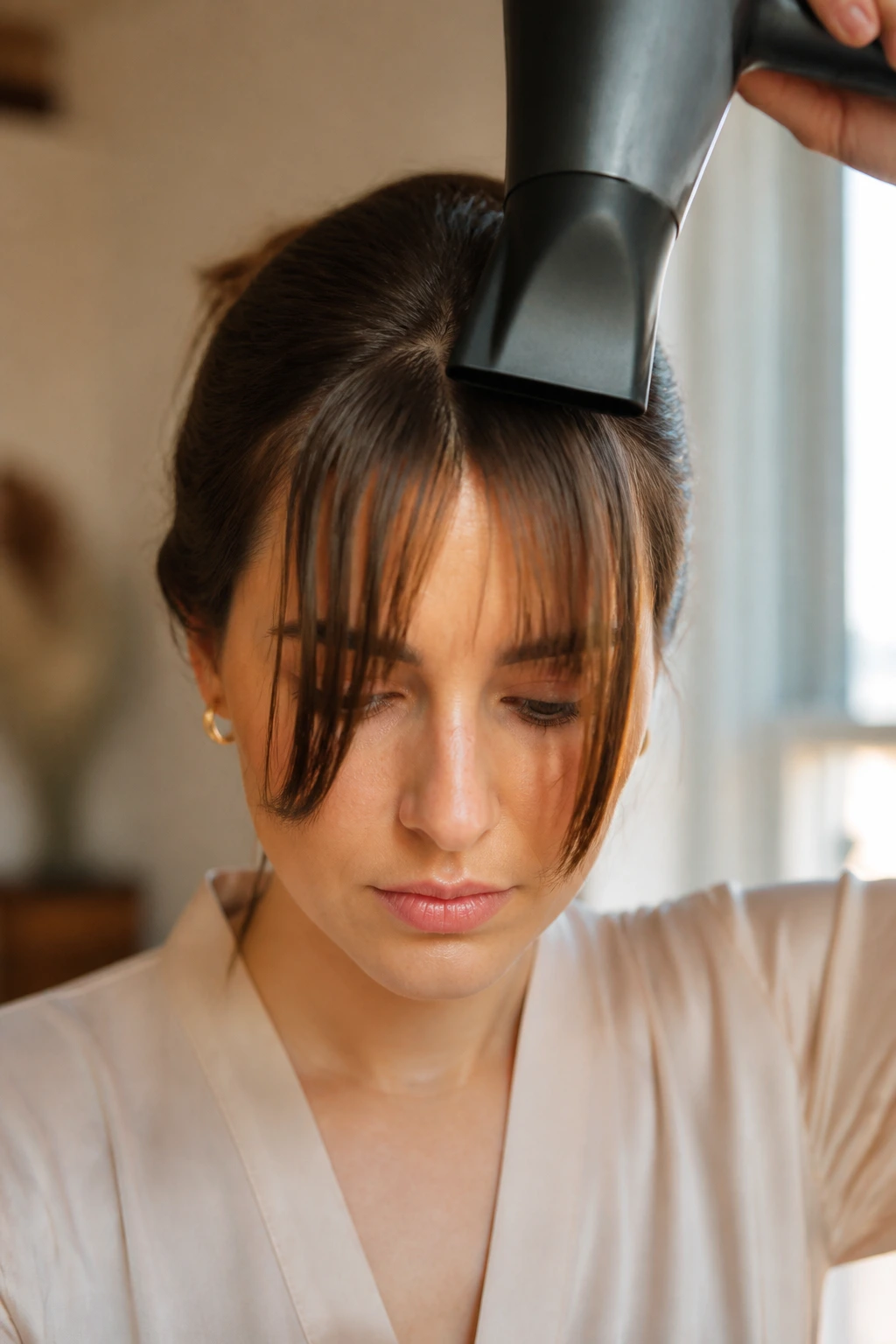
Fine hair does not need more drama. It needs less weight, less friction, and less guesswork. That’s the real difference between curtain bangs that collapse and curtain bangs that keep opening the face all day.
The best version of this haircut is not the one that looks biggest in the salon mirror. It’s the one that still bends nicely after a walk in the wind, a long workday, or a rushed morning with one hand on the blow dryer and the other looking for the clip. Keep the cut soft, keep the product light, and the fringe will do what it was supposed to do in the first place.