



A bob can do a lot more than look neat. On fine hair, the right cut makes the ends look denser than they really are; on a heart-shaped face, the right front pieces soften a wider forehead and keep the chin from getting swallowed by all that hair. Get the shape wrong, though, and the whole thing goes limp fast. There’s a fine line between sleek and full and thin at the bottom, flat at the crown.
That’s why modern bobs for fine hair and heart-shaped faces are such a useful corner of haircut territory. They’re not all the same haircut with a different label slapped on. Some lean blunt and clean. Some bring in a side part or a cheekbone-grazing fringe. Some sit right at the jaw; others drift down to the collarbone so you get movement without losing weight.
The best ones do two jobs at once. They keep enough perimeter to give fine strands some structure, and they redirect attention away from the forehead so the face feels balanced instead of top-heavy. A good bob should make you look like you have better hair than you do. That’s the trick. And the styles below do it in different ways.
Why These Bobs Earn the Save
-
They keep a solid edge. Fine hair looks fuller when the ends are blunt or only lightly softened, because the outline reads as denser.
-
They balance the top half of the face. Side parts, curtain bangs, and cheekbone-length pieces pull the eye down from a broad forehead.
-
They don’t depend on huge volume. These cuts still work when you air-dry, add a little mousse, and call it a day.
-
They can be dressed up or left loose. A flat iron bend, a tucked side, or a few waves change the mood without changing the cut.
-
They grow out without turning weird right away. The better versions keep their shape for six to ten weeks instead of collapsing the second they move past the salon chair.
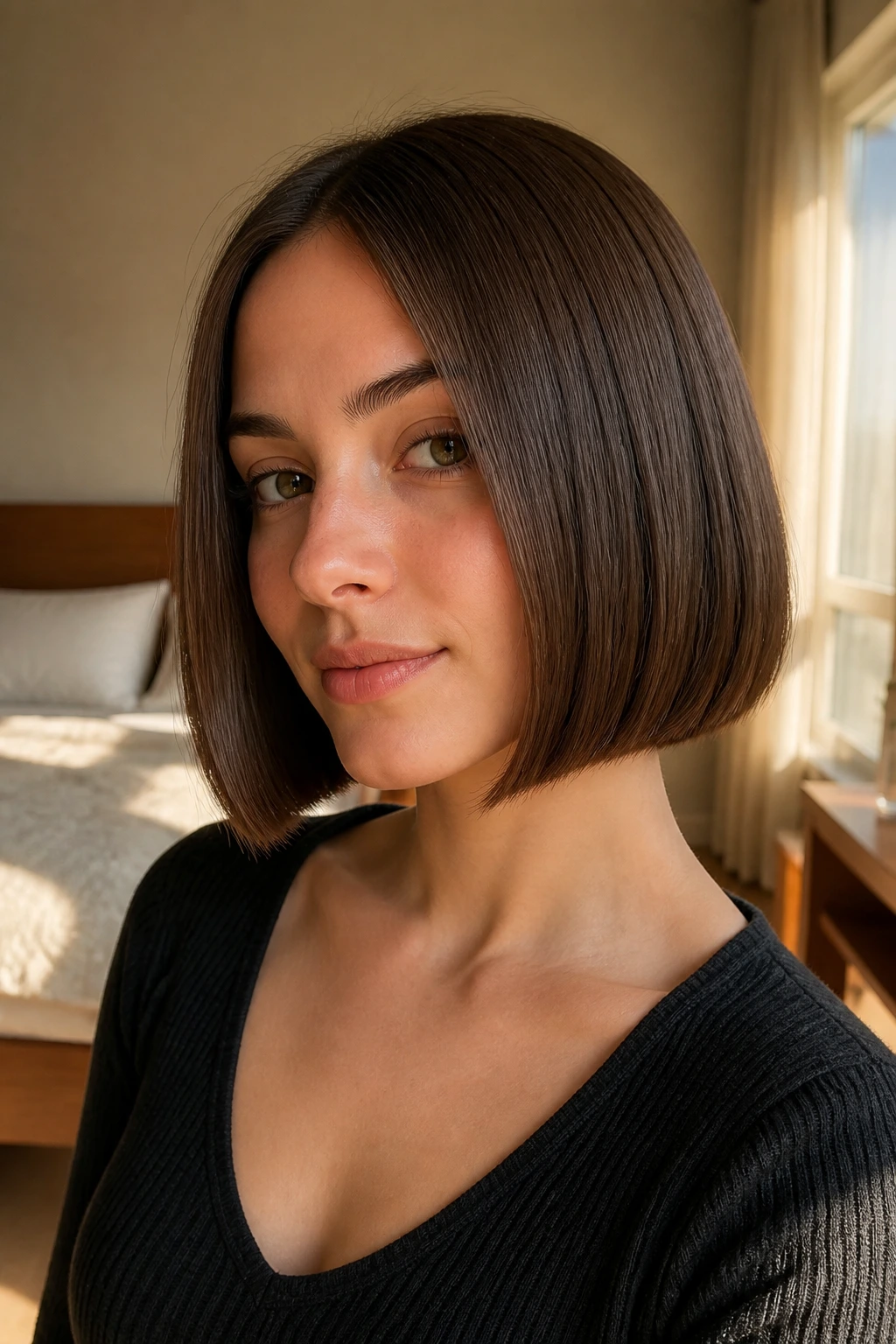
1. Chin-Grazing Blunt Bob
This is the haircut that makes fine hair look expensive. The line sits right around the chin, sometimes a hair below, and the perimeter stays crisp instead of feathered to death. On a heart-shaped face, that chin-level edge gives the lower half of the face a little more presence, which is exactly what keeps the forehead from doing all the talking.
Why It Works
A blunt bob is all about visual weight. Fine hair usually needs that weight at the ends, not broken up by too many short layers. When the line is clean, the hair looks thicker from the side and fuller from the back.
Keep the part slightly off-center if your forehead is wide. A dead-center part can make the top feel too symmetrical, and symmetry is not always your friend here.
Quick Notes
- Best for straight to slightly wavy hair.
- Ask for minimal internal layering.
- Blow-dry with a small round brush and tuck the ends under just a touch.
2. Deep Side-Part Bob
A deep side part does more for a heart-shaped face than most people realize. It shifts the bulk away from the center of the forehead and creates a diagonal line that feels softer than a blunt curtain of hair. On fine hair, that diagonal also gives the top some lift without needing a ton of teasing.
This one looks especially good when the cut itself is simple. You do not need a fussy shape if the part is doing the balancing work. Keep the length between the cheekbone and jawline, and the result reads polished without feeling stiff.
A little root lift spray at the part helps. Not a helmet. Just enough push to keep the roots from collapsing against the scalp by noon.
3. Italian Bob
The Italian bob has that thick, swingy, expensive-feeling outline people keep saving on mood boards. It usually sits at jaw level or a touch below, with enough fullness to look plush but not so much hair that fine strands get buried. For a heart-shaped face, the key is letting the side pieces land around the cheekbones or slightly below them.
What makes it work is the balance between movement and density. It’s not heavily layered, which is a gift for fine hair. The ends keep their substance, and the cut still moves when you turn your head.
A light blowout with a round brush gives it that rounded, glossy finish. If you want it to look less formal, bend the ends outward just a little. That tiny flip keeps it from feeling too serious.
4. French Bob with a Micro Fringe
This one is bold, and I like it more than most people admit out loud. A French bob with a soft micro fringe can be lovely on a heart-shaped face because it shortens the forehead visually and brings the focus to the eyes. Fine hair benefits from the short length, since short hair often looks thicker by default.
The fringe has to be handled carefully. Too blunt and too short, and it can harden the face. Too wispy and it looks accidental. The sweet spot is a light, textured fringe that breaks just above the brows or skims them unevenly.
Best for:
- Straight or softly wavy hair
- Smaller facial features
- Someone who likes a little edge in the haircut
If your forehead is very prominent, keep the fringe softer and slightly longer. The whole point is balance, not hiding your face under a slab of bangs.
5. Collarbone Bob with Invisible Layers
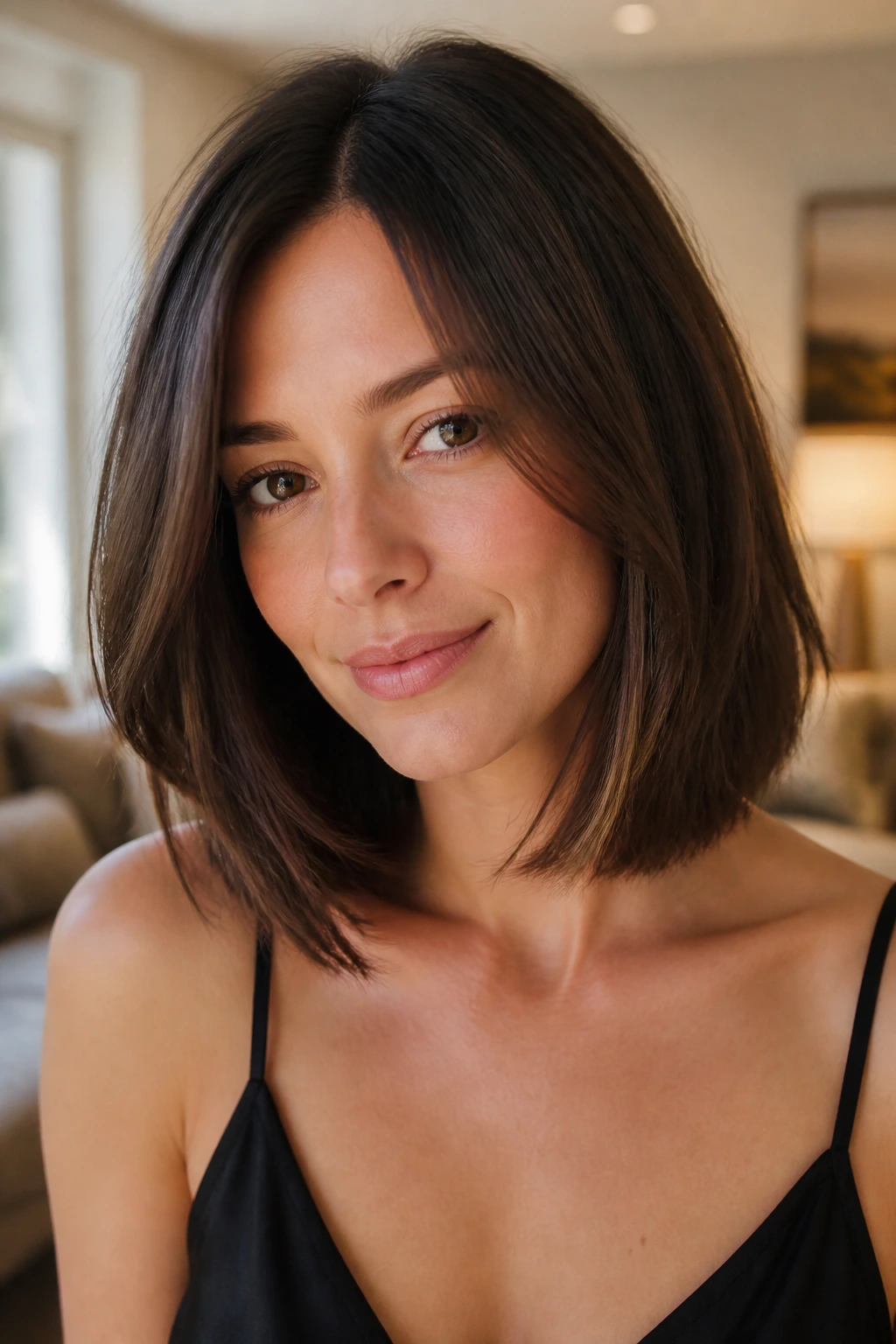
This is the one I recommend to people who want shape but are nervous about losing length. The cut lands at the collarbone, where fine hair can still gather enough weight to look full. Invisible layers are tucked inside the shape instead of chopped across the surface, so the ends stay solid.
Heart-shaped faces tend to like this length because it softens the transition from cheek to jaw without widening the forehead. It also works if your hair has a little bend or a loose wave, since the collarbone gives the strands somewhere to rest instead of flipping out everywhere.
A flat iron can polish it. A round brush can give it bounce. Either way, the silhouette stays calm, which is half the battle with fine hair.
6. A-Line Bob with Tucked Ends
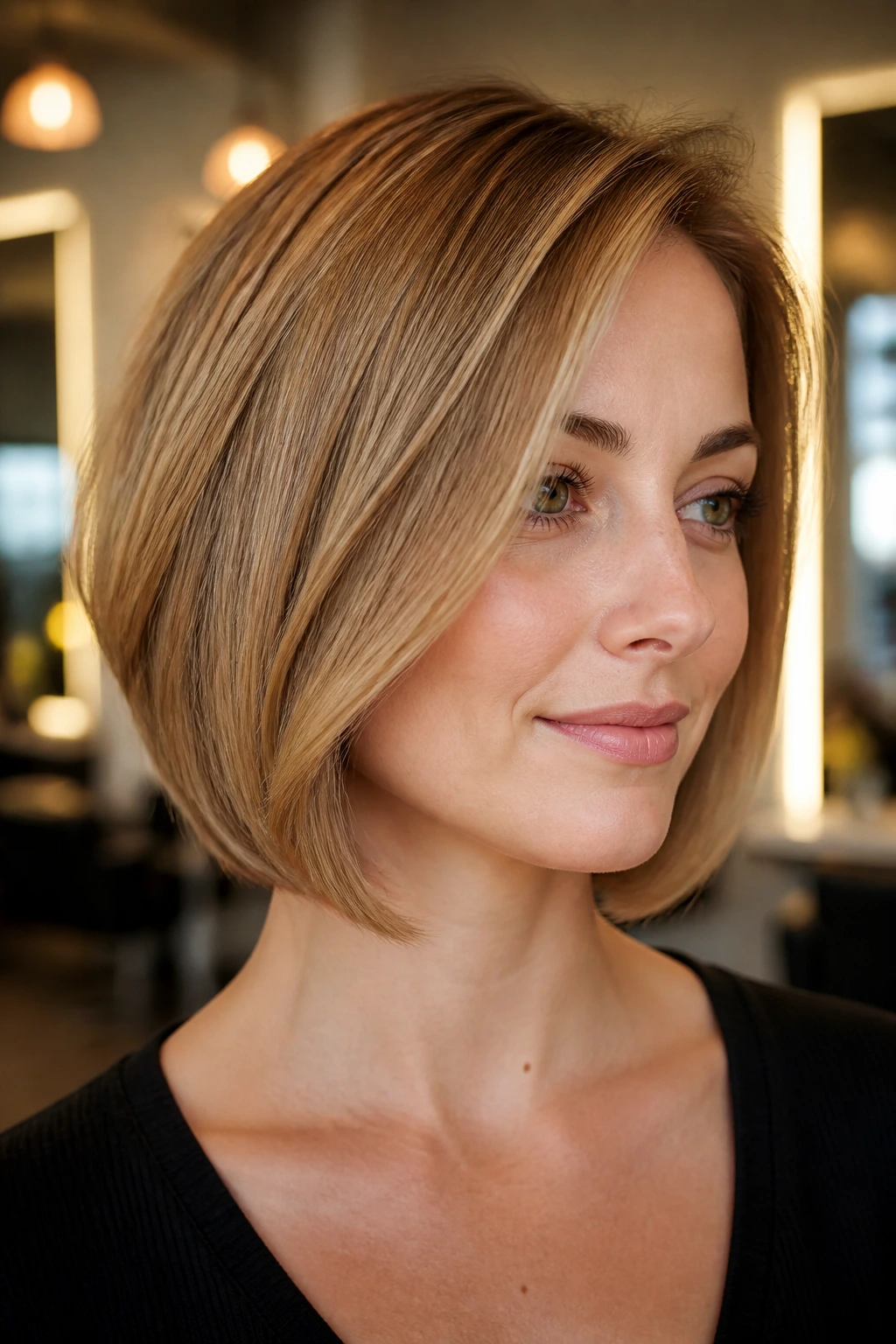
An A-line bob gives you the neatness of shorter hair in back and a little extra length in front, which is useful when you want to pull the eye downward. That diagonal line is flattering on a heart-shaped face because it softens the widest part of the forehead and leads the eye toward the jaw.
The tucked ends matter. You want the front to curve in slightly, not stick out like wings. Fine hair often behaves better when the ends are tucked under just a bit with a round brush or a flat iron bend.
This cut can look very sleek, but it does not need to. A soft side part and a little texture spray through the mids keep it from feeling too sharp.
7. Curved Bob with Face-Framing Pieces
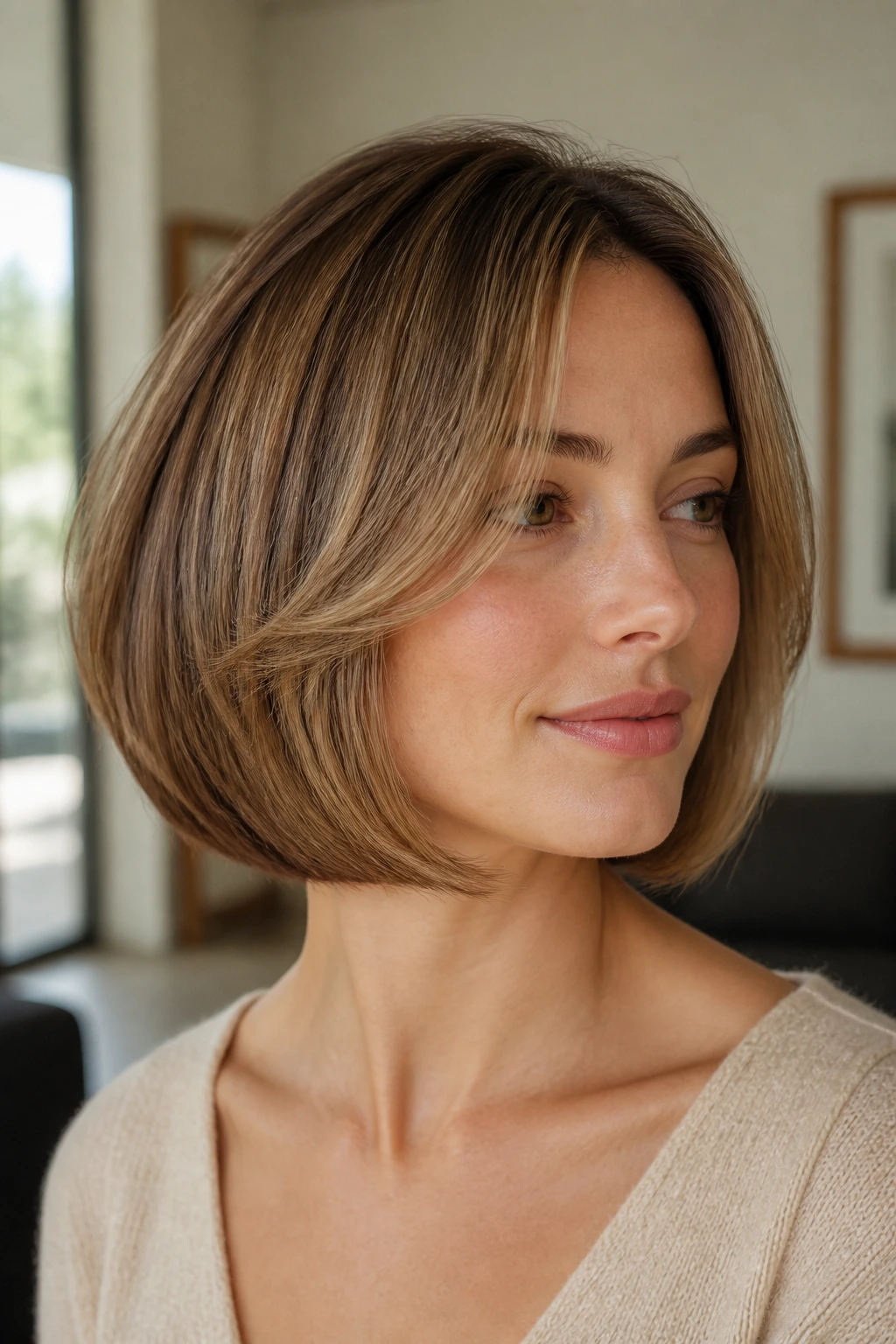
A curved bob is one of those cuts that looks quiet in the best way. The back sits a little shorter, then the shape arcs gently around the jaw instead of hanging in a flat line. That curve gives fine hair movement without stripping away density.
For a heart-shaped face, the face-framing pieces should start around the cheekbone, not at the temples. That’s the difference between flattering and fussy. Cheekbone-level framing draws attention lower, where the face needs it.
What to ask for
- A soft inward curve
- Front pieces cut to the cheekbone or jaw
- Light internal shaping, not heavy texturizing
This cut is especially good if you want a bob that still looks alive on day two. A few bends with a flat iron, and it comes back to life fast.
8. Textured Jaw-Length Bob
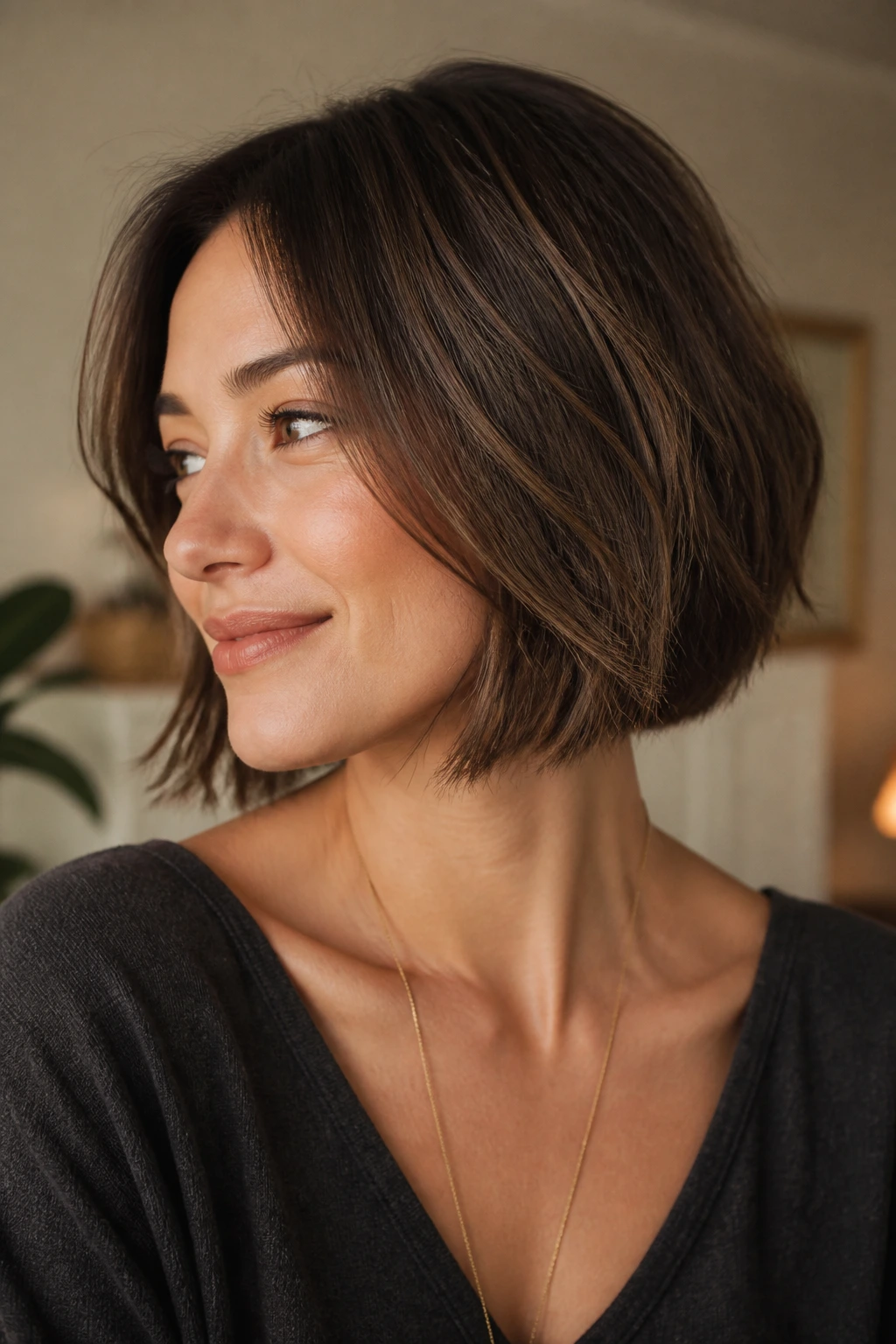
Jaw-length is a dangerous zone if the cut is wrong. Done well, though, it gives fine hair a thick-looking edge and keeps the whole style compact. The texture should be placed sparingly so the ends move, but the body of the bob still has enough weight to show.
Heart-shaped faces do well with this length when the texture is concentrated below the cheekbone. If the top gets too choppy, the forehead starts to look even broader. Nobody wants that. A little roughness at the ends is plenty.
Air-dry with a small amount of mousse and scrunch just the last inch or two. That keeps the texture low and the silhouette neat.
9. Box Bob
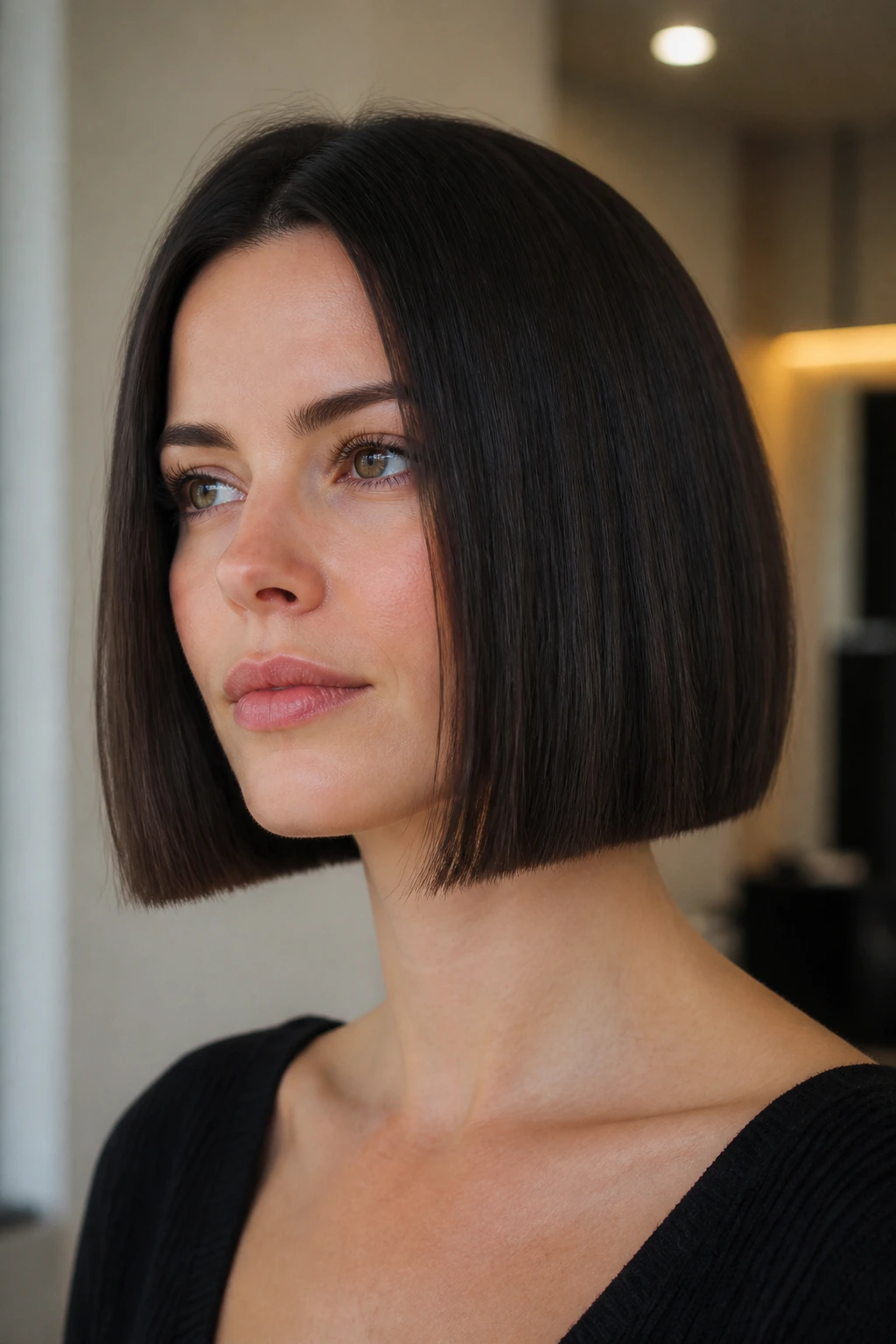
The box bob is blunt in the best possible sense. It has a straight, square outline that gives fine hair the illusion of much more density because every strand seems to land in the same place. On a heart-shaped face, that boxy edge helps anchor the lower half without adding puffiness up top.
This cut works best when the perimeter is strong and the interior is left mostly alone. Too much layering will wreck the whole point. You want the shape to look solid from all angles, almost architectural but not severe.
If your hair is naturally straight, this bob can be a dream. If it bends or flips, a quick pass with a flat brush during blow-drying keeps the line clean.
10. Rounded Bob

A rounded bob looks soft around the edges and fuller through the middle, which is useful when fine hair tends to go flat on the crown. The trick is keeping the roundness low and controlled, not puffed out like a helmet from another decade.
For heart-shaped faces, a rounded bob works best when the curve starts below the cheekbone. That keeps the face open at the top and fuller where the jaw needs support.
Why it flatters
- The curve adds body without heavy teasing.
- The lower fullness balances the pointed chin.
- The shape still looks neat even when the hair settles during the day.
A round brush and a cool shot from the dryer matter here. Don’t skip the cool shot. It’s the difference between a bend that lasts and one that falls flat before lunch.
11. Side-Swept Fringe Bob

A side-swept fringe is one of the easiest ways to handle a heart-shaped face. It softens the forehead without cutting the face in half the way some straight bangs can. On fine hair, a side fringe also adds motion at the front, which helps the haircut feel less static.
Keep the fringe airy. Heavy side bangs can make the whole cut feel old-fashioned fast, and fine hair usually does better with movement than with bulk. The rest of the bob can stay simple and blunt.
This is a useful cut if you like versatility. Wear the fringe across the forehead for softness, pin it back for a cleaner look, or tuck it behind the ear when you want more face open.
12. Glass Bob
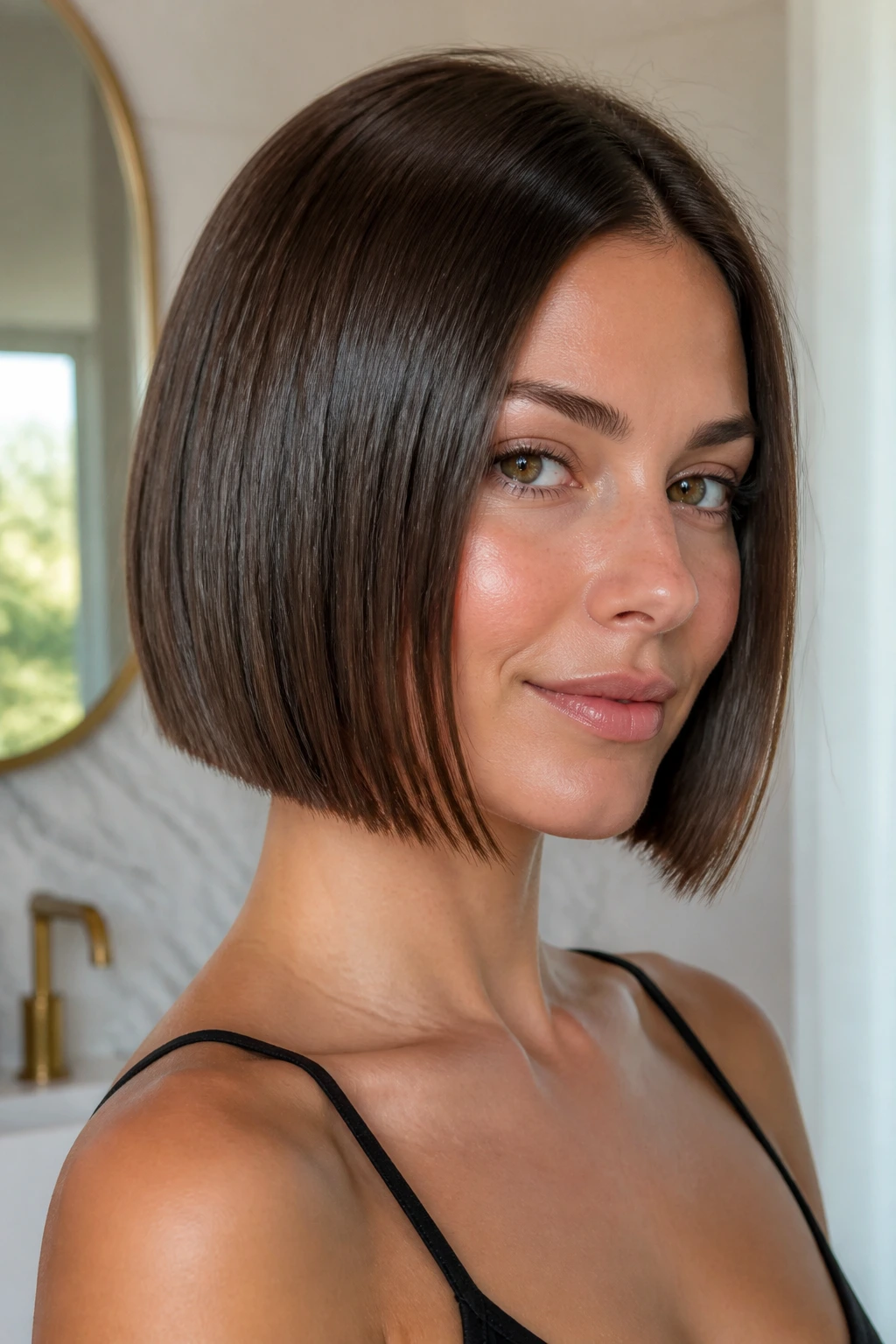
A glass bob is all about shine and precision. It looks smooth, flat in the right places, and almost reflective when the light hits it. Fine hair is actually a good match for this cut because there’s less bulk to tame, which makes the sleek finish easier to get.
Heart-shaped faces do well with a glass bob when the length sits around the chin or just below it. The solid line stops the lower face from looking too narrow, while the smooth top keeps the forehead from getting extra width from volume.
How to style it
- Blow-dry with a nozzle attachment.
- Use a paddle brush to keep the line straight.
- Finish with a tiny amount of shine serum on the ends only.
Go easy on the serum. Too much, and the hair separates into strings. That ruins the whole effect.
13. Flipped-End Bob

There’s something a little cheeky about a flipped-end bob, and that’s part of the appeal. The ends turn outward just enough to keep fine hair from clinging to the neck or collapsing into a straight curtain. It feels modern when the flip is subtle and the rest of the cut stays clean.
On a heart-shaped face, the outward turn pulls attention toward the jaw and cheek area, which helps the face feel more balanced. You do not want a huge flip. Think controlled lift, not retro parody.
This is one of the easiest styles to refresh on day two. A flat iron or a large curling iron, one quick bend at the ends, and you’re back in business.
14. Invisible-Layer Bob
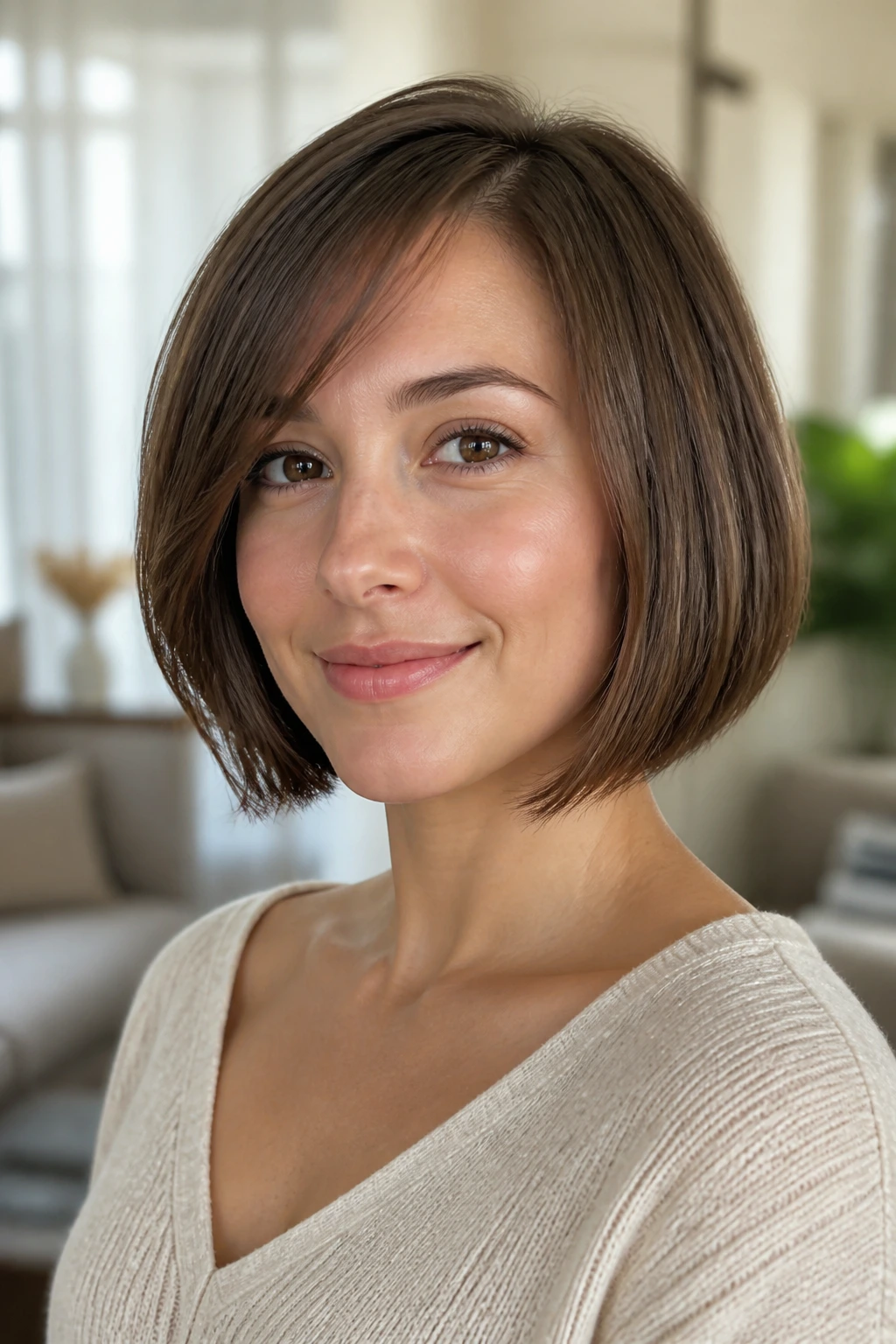
Invisible layers are the quiet hero of fine hair. Instead of chopping obvious layers into the surface, the stylist removes weight from hidden sections so the bob still reads as full and solid from the outside. That matters because too many visible layers can make fine hair look thin at the perimeter.
Heart-shaped faces benefit when the front remains a touch longer than the back. That gentle forward angle helps the lower face feel grounded while the layered movement stays out of sight.
It’s a practical cut, honestly. It gives you swing without the floppiness, and that is rarer than people think.
15. Soft Stacked Bob
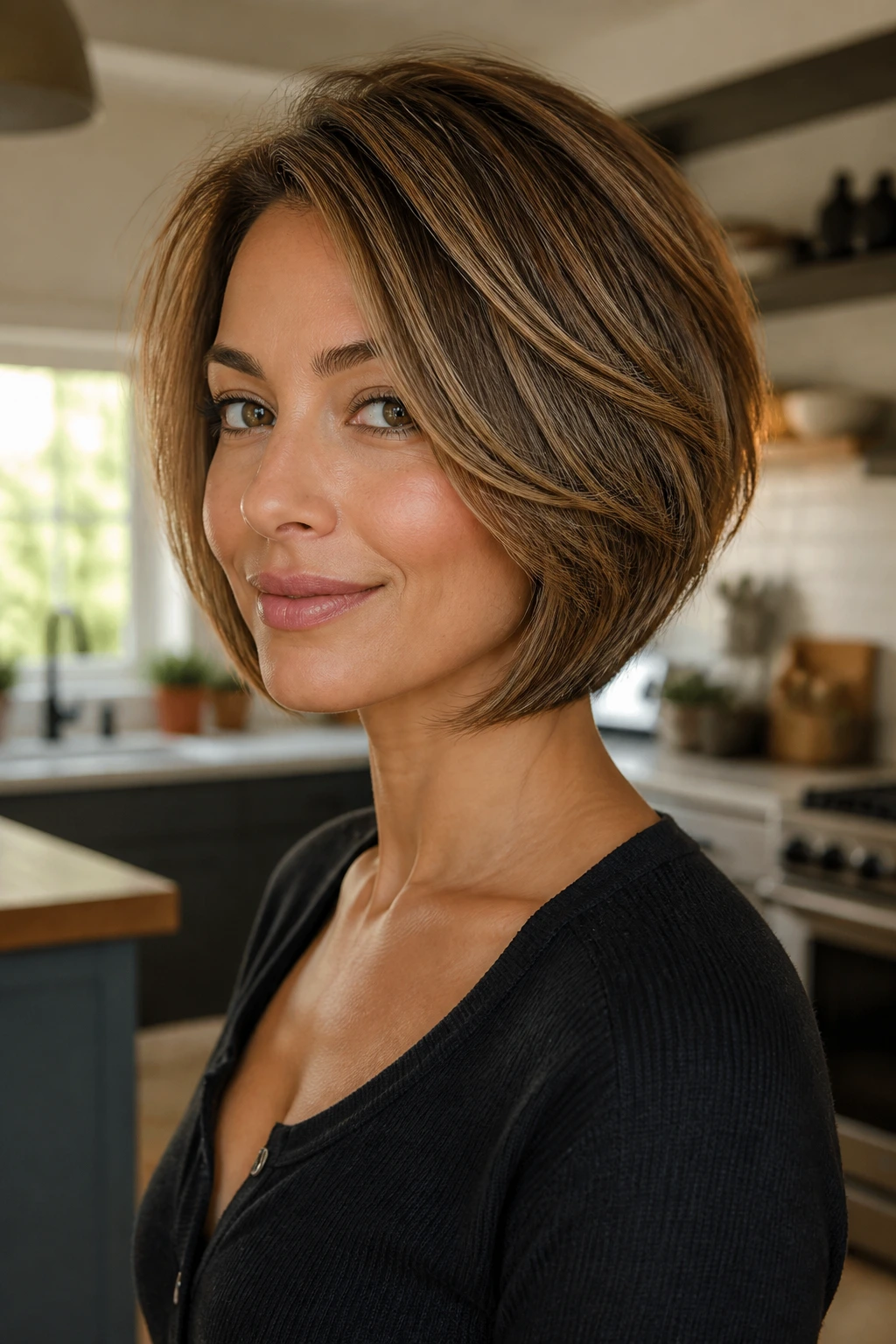
A stacked bob can go very wrong on fine hair if the back gets too short and puffy. But soften the stacking, and it becomes a smart shape: lifted at the nape, slightly longer toward the front, and compact enough to keep the ends looking dense. The result has a little architecture without looking stiff.
For a heart-shaped face, a soft stack is best when the front angles down gently past the jaw. That adds balance without making the chin look pointy. The back should be clean, not bulky.
If you like hair that keeps its shape, this is a strong choice. It holds a silhouette better than a fully one-length cut, especially if your hair naturally falls flat at the roots.
16. Curtain-Bang Bob

Curtain bangs are a safe bet for a lot of heart-shaped faces, and they pair neatly with a bob because they open at the center and sweep into the sides. That split at the front keeps the forehead from dominating the whole look. Fine hair benefits because the fringe doesn’t need to be thick to make an impact.
The bangs should start around the brow or slightly below, then drop into cheekbone pieces. If they’re cut too short, the face can feel top-heavy. Too long, and they just disappear into the rest of the hair.
A curtain-bang bob has good soft focus. It’s less sharp than a blunt fringe, less fussy than heavy layers, and a lot easier to live with when you want movement around the face.
17. Lived-In Wave Bob

A lived-in wave bob is what happens when the cut is simple and the texture does the talking. Fine hair often needs a bit of bend to look thicker, and this bob uses loose waves to create that sense of body without asking for a huge amount of styling time. The shape usually sits around the jaw or a little below.
For heart-shaped faces, the waves should start lower than the temples. If the movement starts too high, the top half of the face gets crowded. Keep the texture from the cheekbone down and the balance improves fast.
Use a texturizing spray that doesn’t feel sandy or sticky. You want touchable bends, not crunchy pieces that snag when you run your fingers through them.
18. Beveled Bob
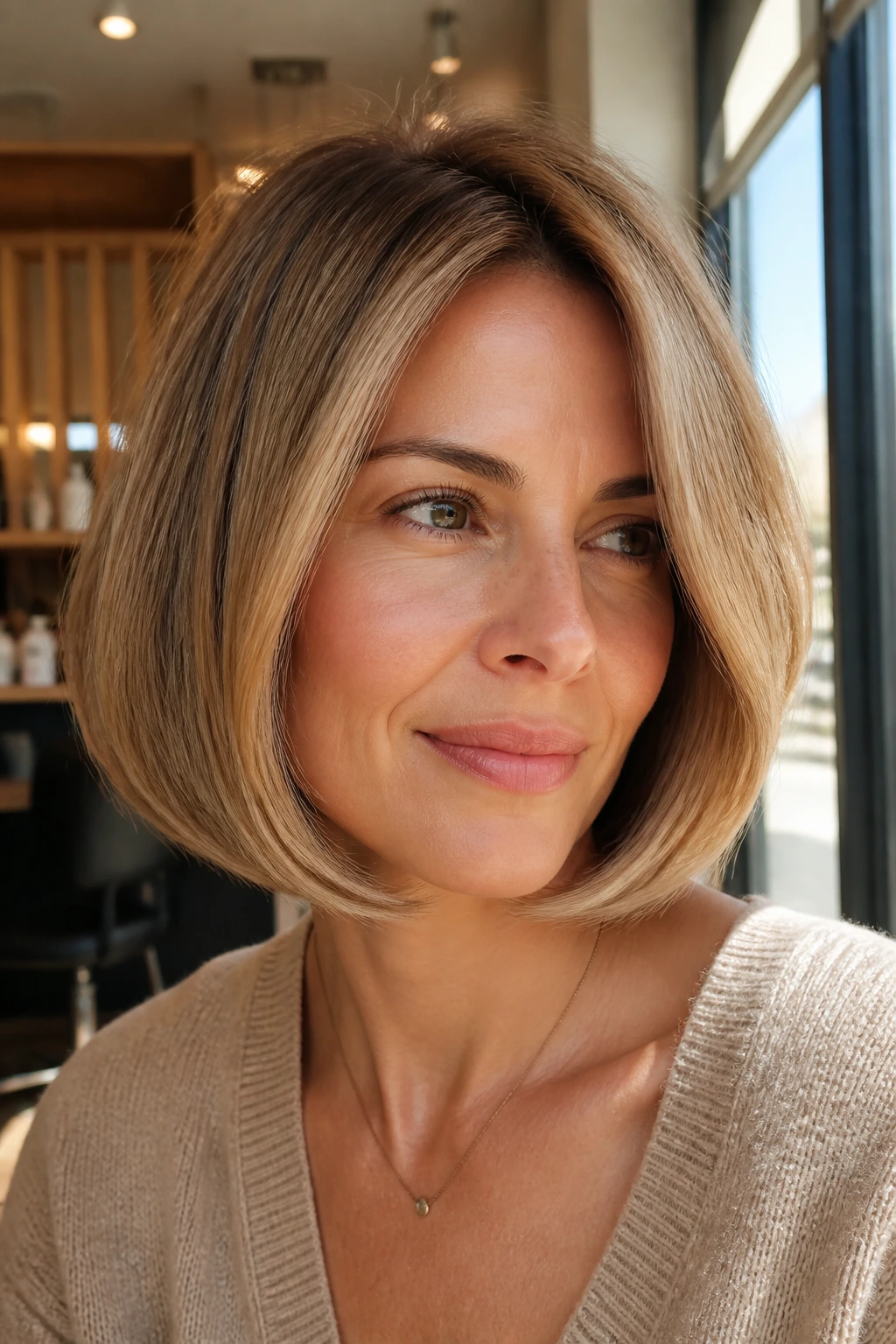
A beveled bob has that inward curve at the ends that makes the hair look polished without feeling frozen. On fine hair, the bevel gives the perimeter some shape so it doesn’t appear wispy. It’s a neat choice if you like a clean outline but don’t want a hard blunt cut.
Heart-shaped faces usually look best when the bevel starts at the jaw or just under it. That helps the lower half of the face feel a little fuller. A center part can work if the front pieces are long enough, but a soft side part usually gives more balance.
This cut loves a round brush. Pull the ends under gently and stop. No overwork. The charm is in the quiet finish.
19. Razor-Cut Bob
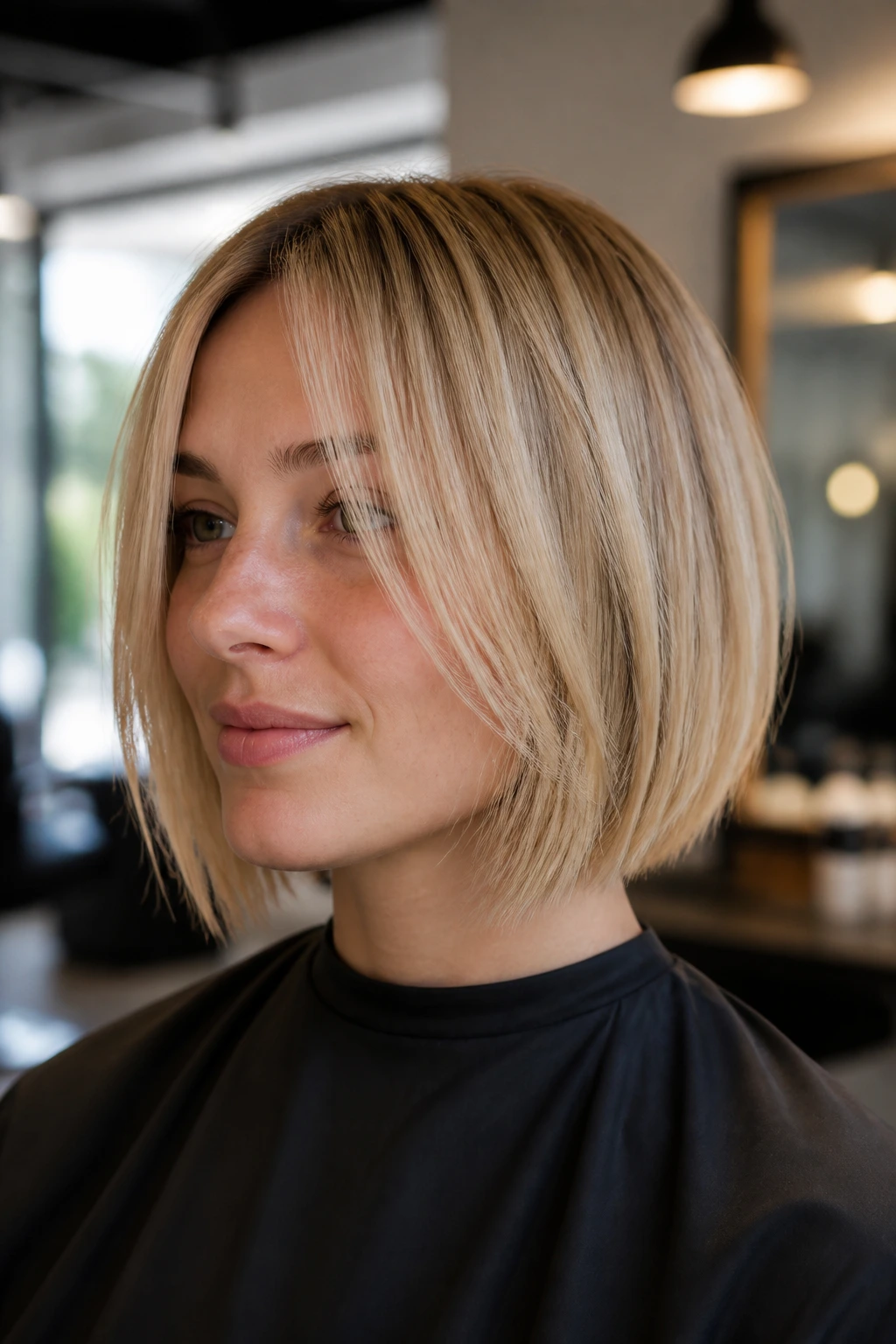
A razor-cut bob is trickier than it sounds. On the right hair, it creates soft edges and movement that keep a bob from feeling too blocky. On very fragile fine hair, though, too much razor work can fray the ends and make them look see-through. So this is a cut for someone whose fine hair still has decent density.
The heart-shaped face benefit comes from the softer perimeter around the jaw and cheek area. Instead of a hard shelf, you get a lighter shape that moves when you turn your head. It looks relaxed, not sloppy.
If your stylist reaches for a razor, ask how much of the perimeter will stay blunt. You want softness, not shredded ends.
20. Shaggy Bob, Light Version

A full shag can eat fine hair alive if it’s done with too much enthusiasm. A light shaggy bob, though, can be excellent. Keep the layers soft, keep the length around the chin or collarbone, and let the texture live mostly around the face and lower half of the cut.
Heart-shaped faces like this version when the face-framing pieces are longer than the top layers. That way, the forehead stays open and the attention moves downward. The look feels modern because it has movement, but it still respects the fact that fine hair needs some weight left in the shape.
If you like air-dried hair and don’t want to fight a brush every morning, this one deserves a long look.
21. Asymmetrical Bob
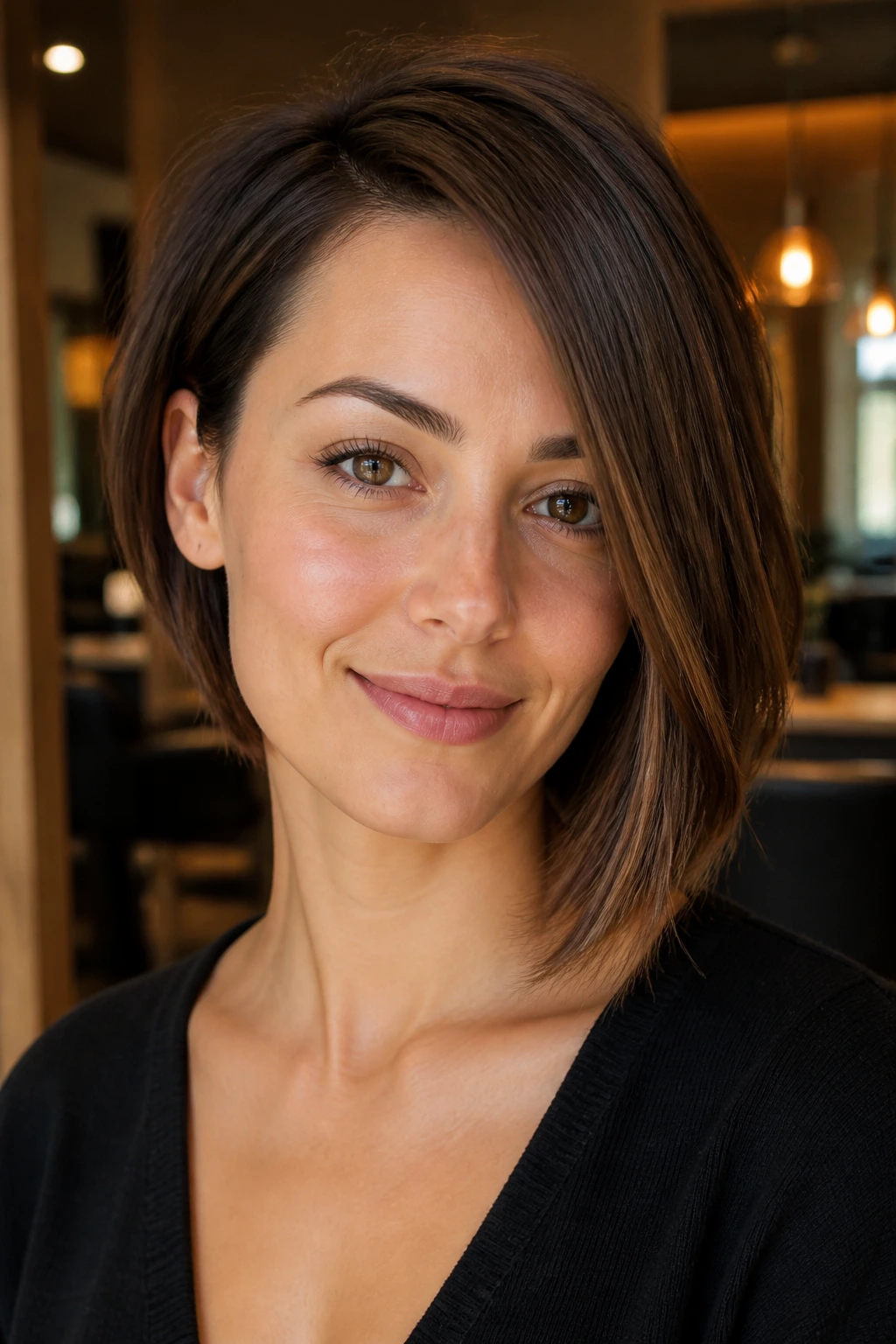
An asymmetrical bob leans into the diagonal instead of hiding it. One side stays a little longer than the other, which gives the cut instant shape and keeps the eye moving downward. For a heart-shaped face, that diagonal line helps soften the upper width of the face and brings attention to the jaw.
Fine hair benefits when the asymmetry is subtle, not dramatic. You want the difference to feel intentional, maybe half an inch to an inch, not a sharp architectural statement unless that’s your whole personality. Too much difference can make thin ends look even thinner.
This one looks best when the hair is smooth. A little bend is fine, but the structure needs to stay visible.
22. Short Lob with Money Piece
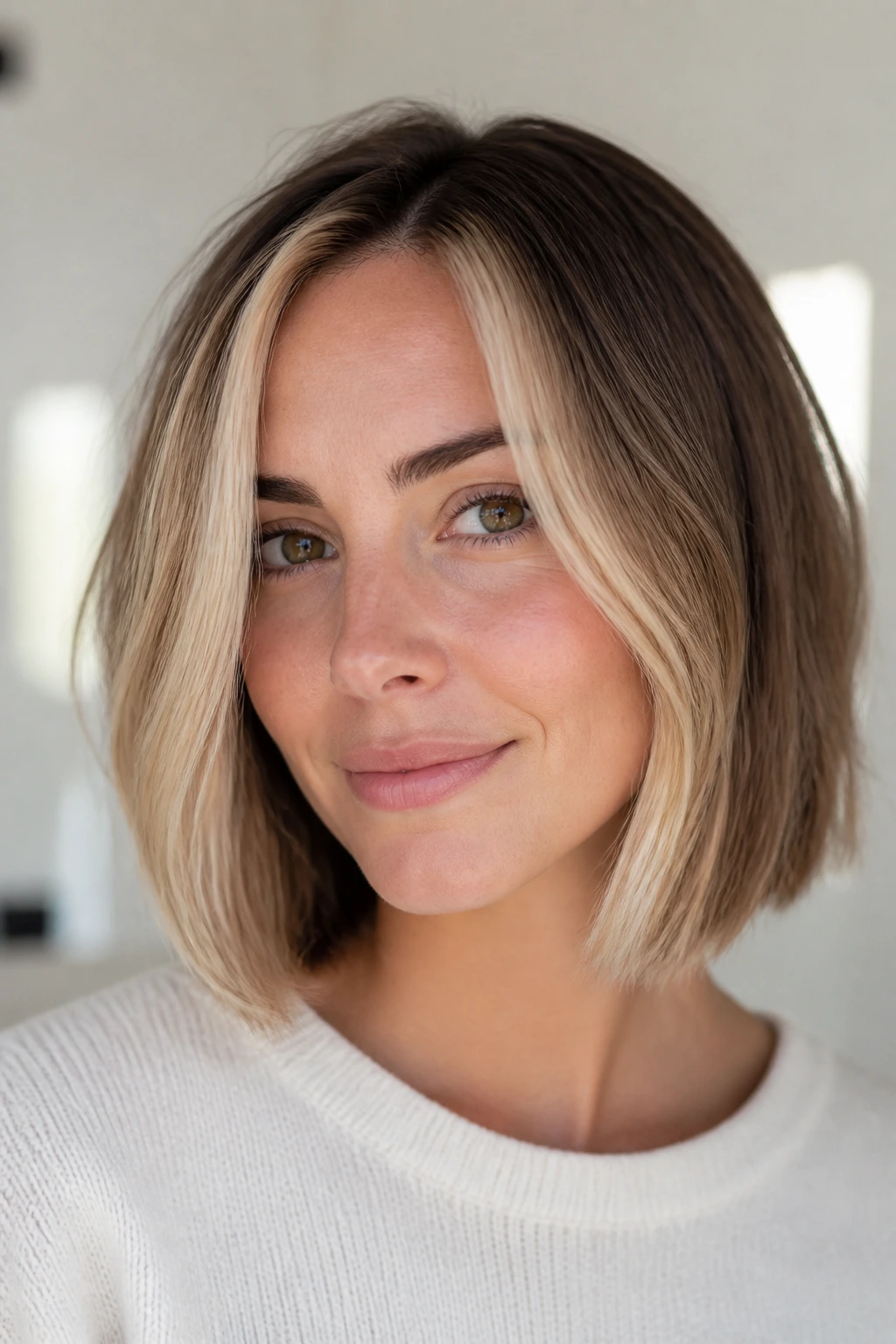
A short lob with a money piece gives you a little extra length while still keeping the cut compact enough to read full. The brighter front strands, or money piece, pull the eye outward and soften the forehead area on a heart-shaped face. Fine hair often looks more alive when the front is a touch brighter because the contrast creates the illusion of dimension.
The length should sit between the chin and the top of the shoulders. That gives enough movement to avoid a helmet effect. Keep the rest of the cut simple so the front detail can do its job.
A useful rule
If the money piece is too chunky, it overwhelms fine hair fast. Keep it thin, soft, and blended, or it starts looking like streaks from another decade.
23. Bixie Bob
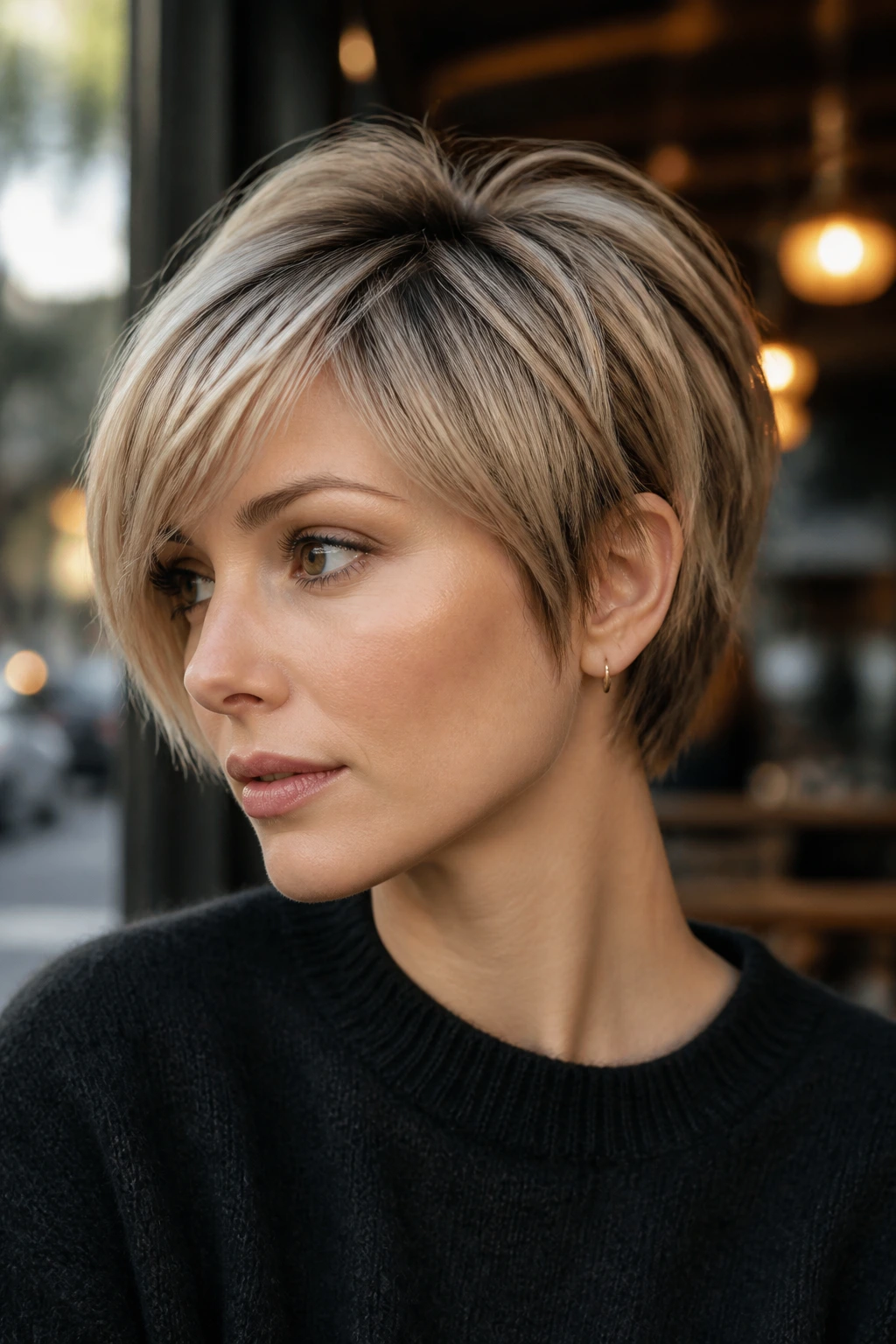
The bixie bob sits between a pixie and a bob, which sounds odd until you see how well it can work on fine hair. The shorter length gives lift, and the bob-like outline keeps it feminine without making it fussy. For a heart-shaped face, the best version leaves a little softness around the temples and cheekbones so the forehead does not feel too wide.
This is a good option if your fine hair struggles under longer bob lengths. Sometimes the cure is not more hair. Sometimes it’s less length and smarter shape.
The crown should stay soft, not spiky. Ask for piecey texture through the top and a fringe or side sweep that cuts the width at the forehead.
24. Undone Wedge Bob
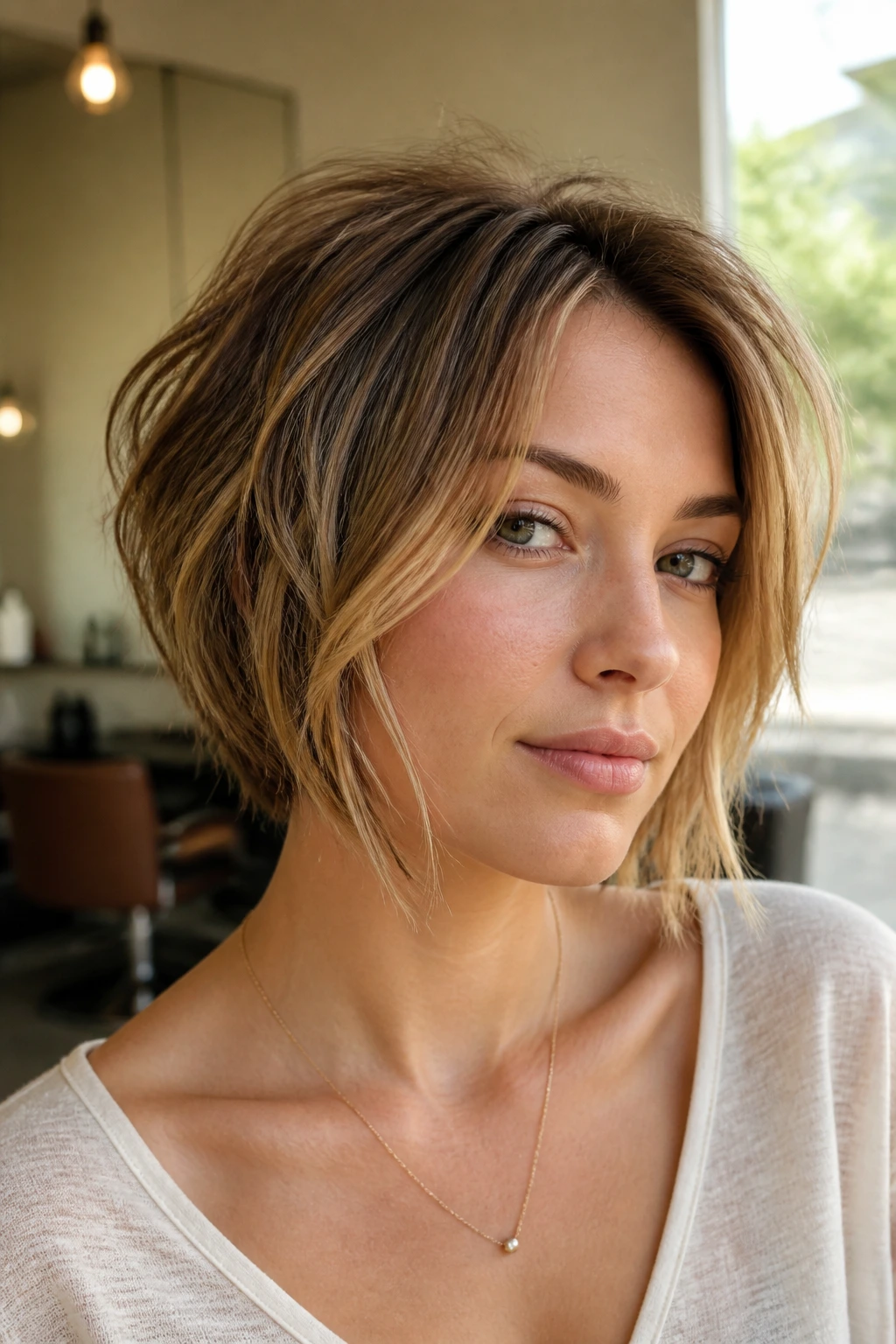
The wedge bob has been through a few reinventions, and the undone version is the one I trust most. It keeps some lift in the back, some length in the front, and enough looseness through the surface that it doesn’t feel stiff. Fine hair benefits because the shorter back can create real body where the hair is strongest.
Heart-shaped faces should avoid too much bulk at the sides. Keep the front pieces a little longer and use texture sparingly. The cut should suggest shape, not shout it.
This style is one of the better choices if you want something a bit sharper than a lob but less severe than a box bob. It has posture. That’s the right word for it.
25. Blunt Lob with Root Lift
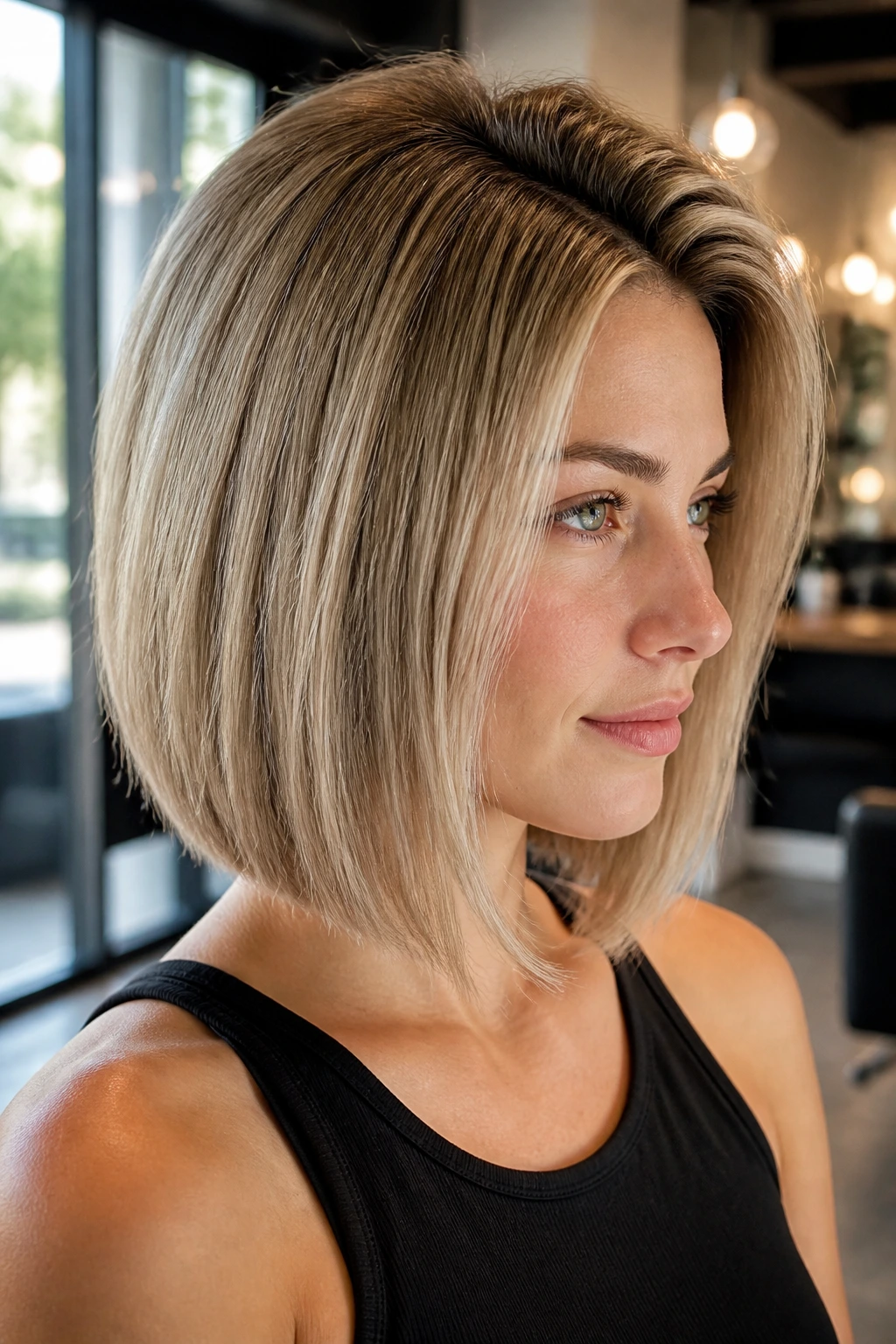
If you want one cut that plays nicely with almost every fine-hair day, this is the one. A blunt lob keeps the ends dense, and the extra length gives the hair enough weight to hang well. Add root lift at the crown, and the whole style looks fuller without needing teasing or heavy product.
For a heart-shaped face, the lob should stop around the collarbone or just above it, with front pieces that skim the cheek or jaw. That keeps the face open while anchoring the lower half. A center part can work here, but a soft side part usually gives a little more balance.
This is the least fussy option in the bunch, and sometimes that’s the smartest choice. Clean, movable, easy to grow out. Not boring. Just practical.
What Modern Bobs for Fine Hair and Heart-Shaped Faces Need From the Cut
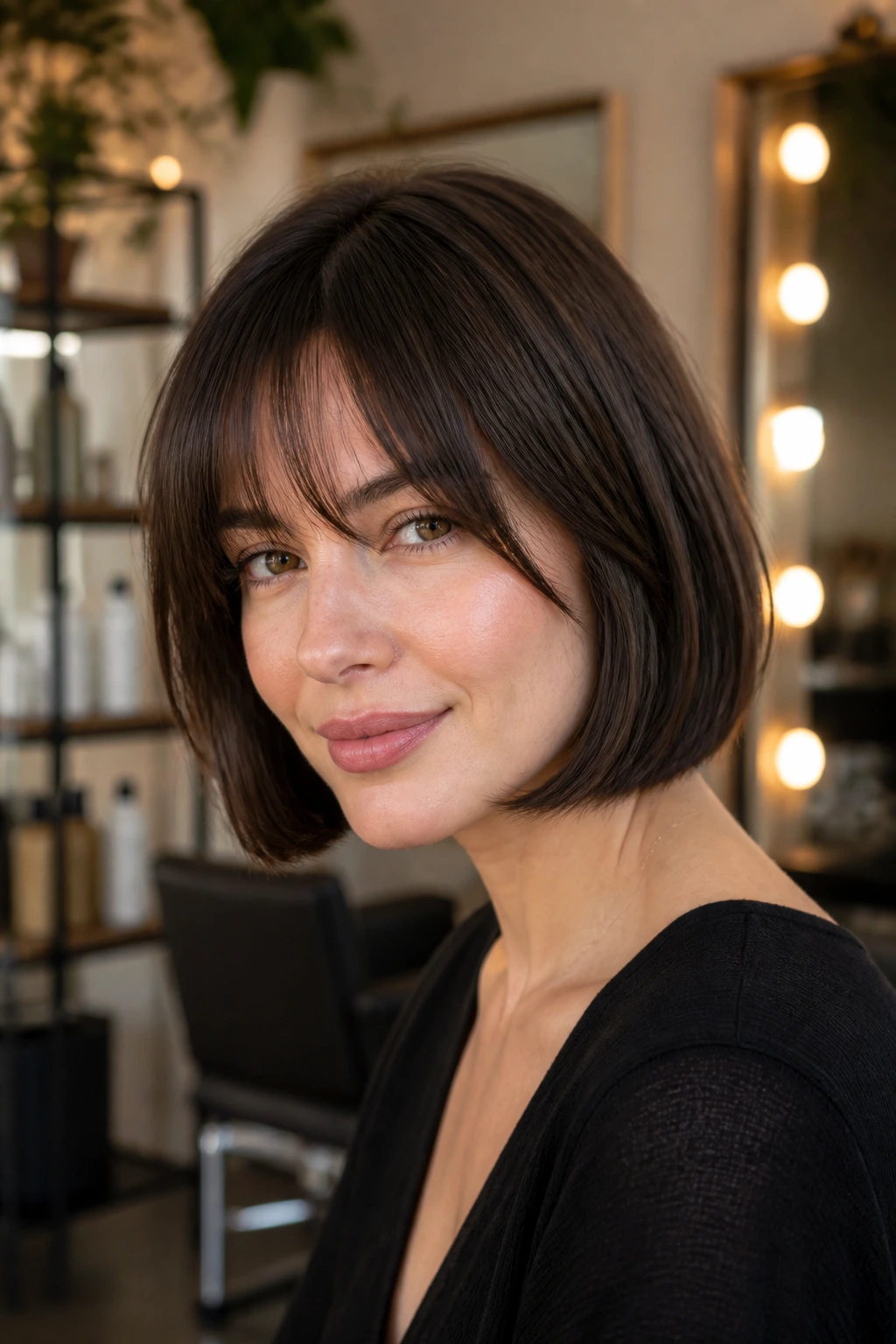
The length matters more than people think. Fine hair usually looks strongest when the line lands on a part of the head that can hold weight: chin, jaw, collarbone. Go too short and the style can flare out. Go too long and the hair may drop flat and stringy. The sweet spot is where the ends can keep a little presence.
Heart-shaped faces want the eye to travel downward. That means you usually want some softness around the cheekbones, a little balance around the jaw, and not too much puff at the crown. The forehead already has enough visual space. You do not need to inflate it with volume.
A blunt perimeter, a soft side part, or a curtain fringe often does more work here than a dozen layers ever will. That’s the part people miss when they sit in the chair and say, “Can we add some movement?” Sometimes the answer is yes. Sometimes the answer is, “No, let the line do its job.”
What to Ask Your Stylist Before the First Snip
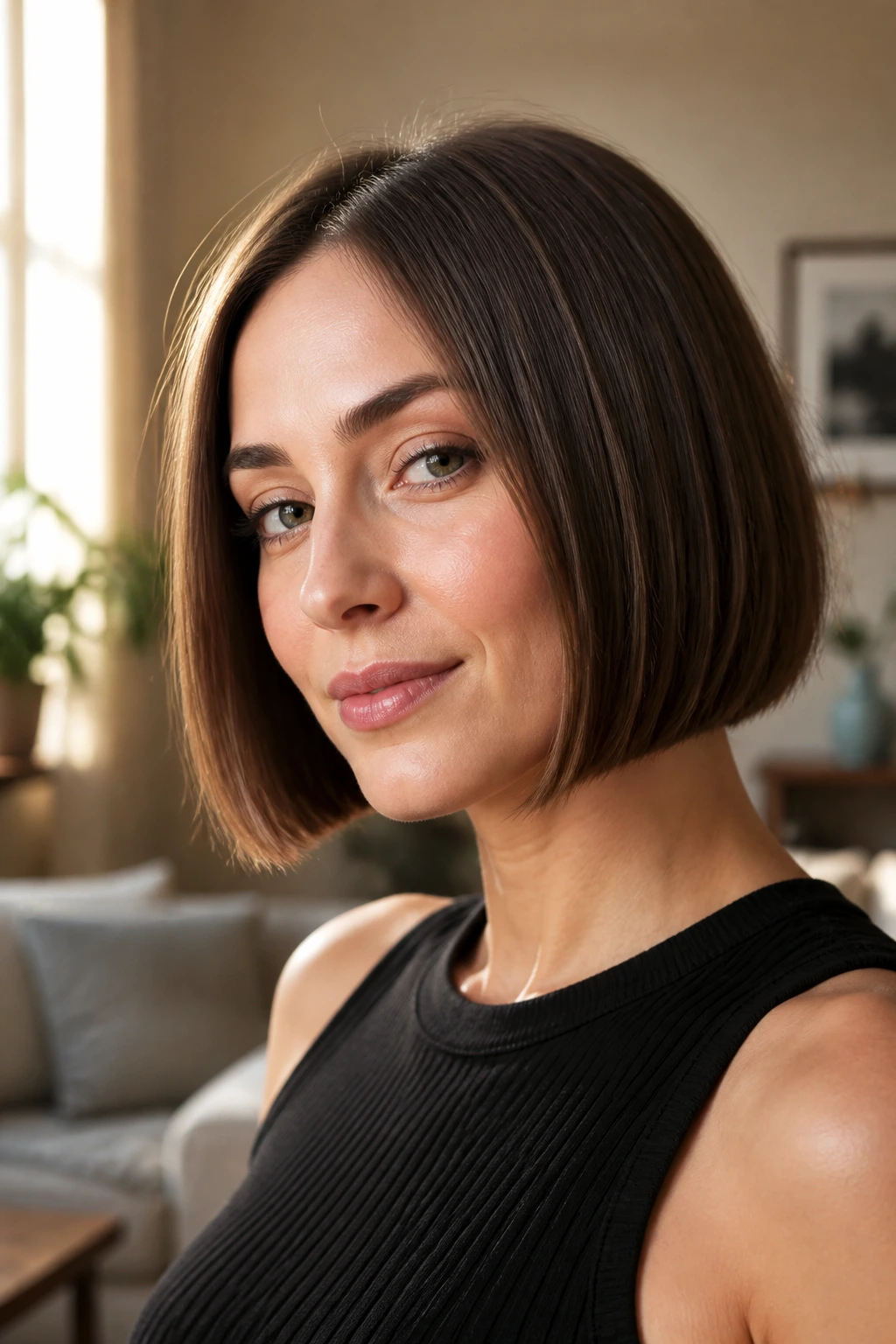
Bring pictures, yes, but also bring a short script. Say where you want the length to land and where your hair falls apart fastest. If your ends are wispy, say you want the perimeter kept full. If your crown gets flat, say you need lift without obvious short layers stacked on top.
Use plain language. “Keep the ends blunt.” “Start any face-framing below the cheekbone.” “Don’t thin the bottom too much.” Those sentences matter more than saying you want something “modern,” because that word means ten different things in one salon.
If you wear a deep side part at home, say that before the haircut begins. A bob cut for a center part can fall strangely when you always wear it off to one side. Haircuts are not theory. They live on your head, in your habits, under your shower nozzle.
Essential Tools for Styling These Bobs
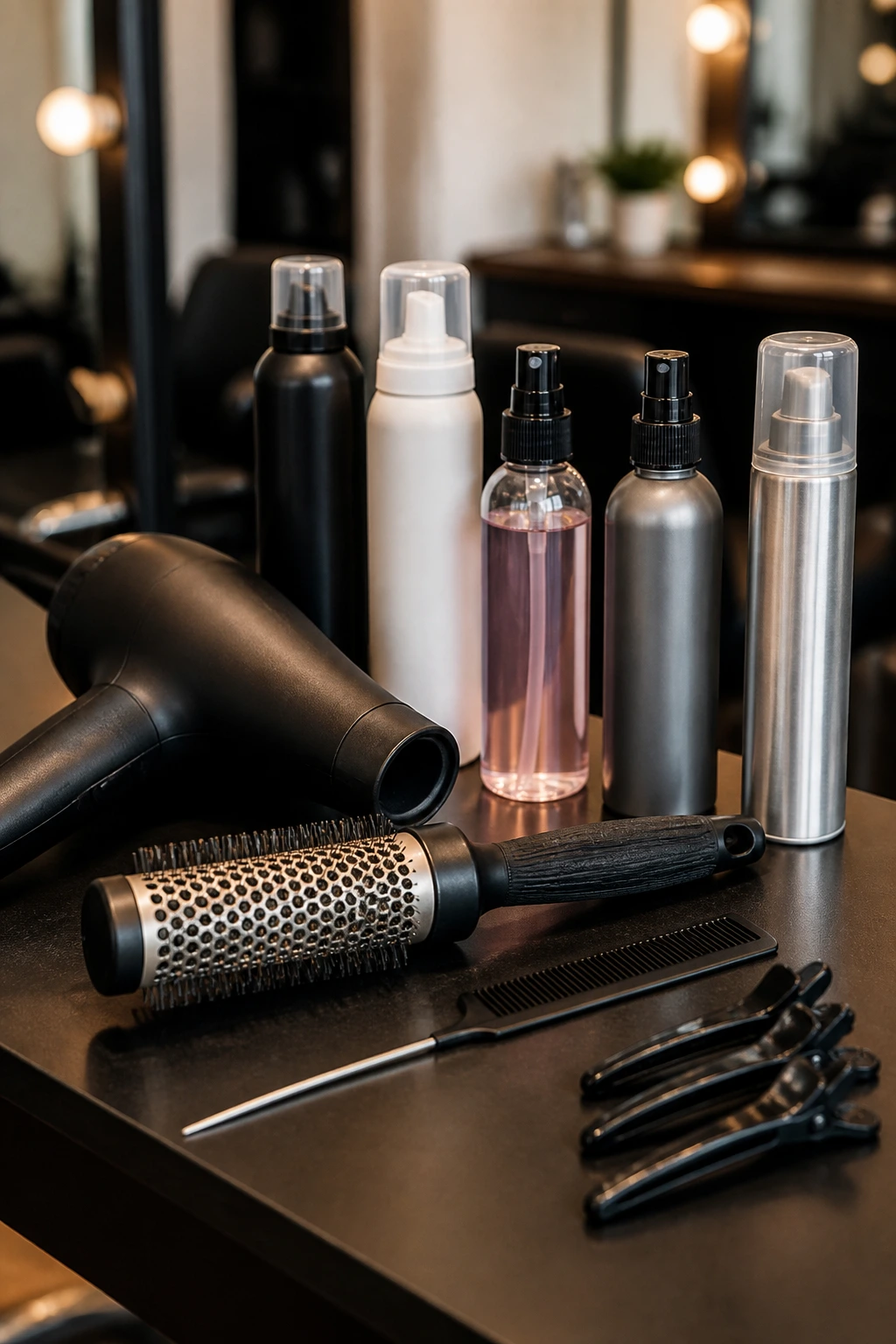
-
Blow-dryer with a nozzle attachment — directs air so the cuticle lays smoother and the shape stays cleaner.
-
Small or medium round brush — a 1-inch to 1.5-inch brush gives enough bend without puffing fine hair out.
-
Lightweight mousse — adds grip at the roots and a little memory through the mids.
-
Root-lift spray — best on damp hair at the crown and part line, where fine hair often sinks first.
-
Heat protectant mist — use before round-brushing or flat-ironing so the ends don’t fry and fray.
-
Tail comb — useful for making a clean part and lifting small sections at the roots.
-
Dry shampoo — not just for grease; it can give day-two bob hair a bit of texture and body.
-
Duckbill or sectioning clips — they make it easier to dry the hair in clean sections instead of chasing it around the head.
How to Style a Bob So Fine Hair Doesn’t Collapse
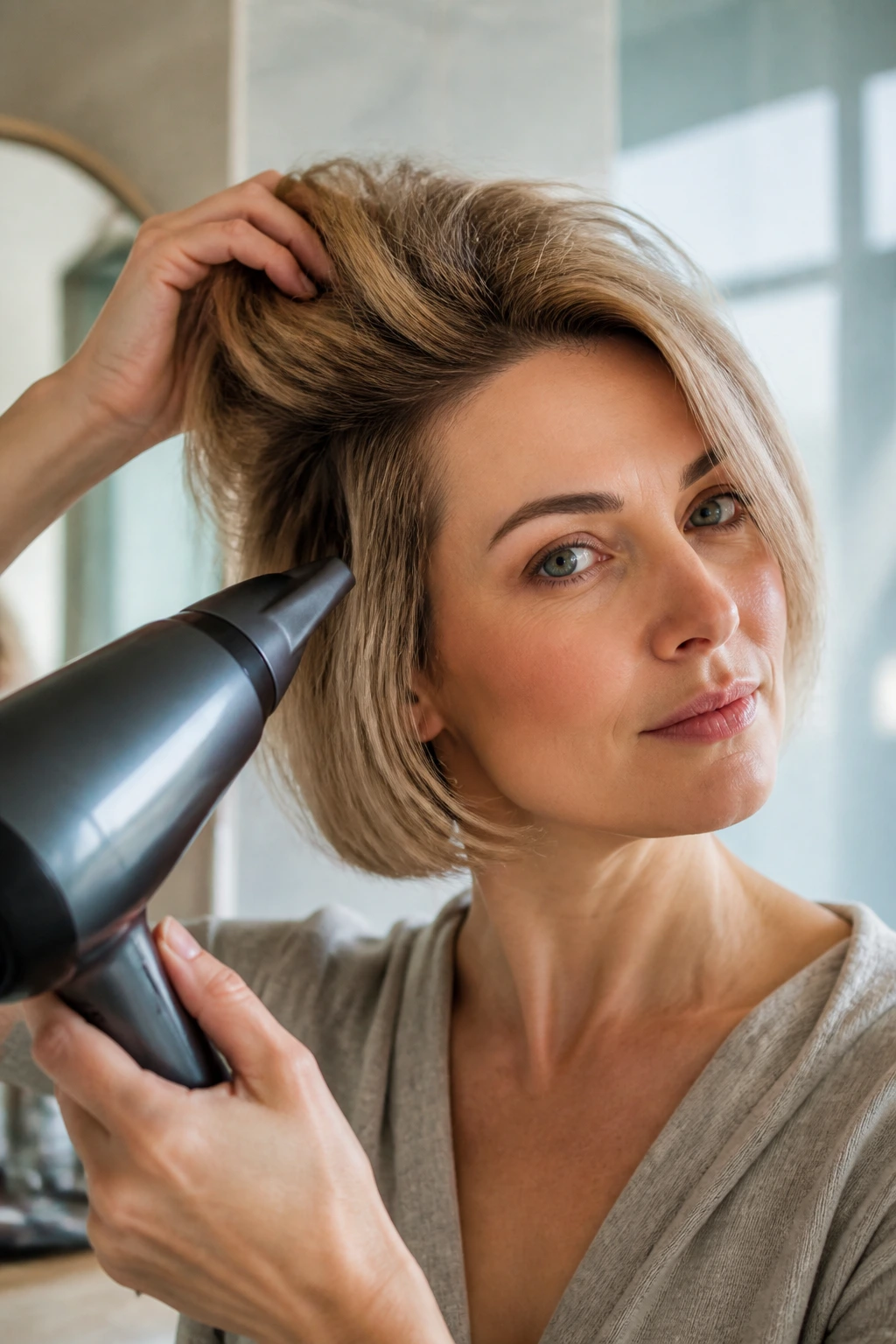
Fine hair needs a lighter hand than people think. Start with a towel-dried base, not soaking wet ends dripping down your back. Apply a small amount of mousse through the roots and mids, then work root spray only where you need lift. Too much product makes fine hair sink faster, not slower.
Blow-dry the roots first. That part matters. If the roots are flat, the cut will flatten no matter how pretty the ends are. Use the nozzle, point the air upward at the crown for a few seconds, then switch to side-to-side movement as the hair dries.
For a sleek finish, use a round brush only on the last two inches of hair. For a softer finish, bend the ends under or out just a little with a flat iron. A bob does not need full curl; it needs a shape that looks deliberate. And if your face feels too open, tuck one side behind the ear. That small move shifts the whole balance.
The Mistakes That Make a Bob Look Thin or Heavy

The first mistake is too much thinning through the ends. Fine hair already lacks density, so aggressive texturizing can leave the perimeter ragged and sparse. The fix is simple: ask for movement inside the cut, not shredded ends on the outside.
The second mistake is ending the cut at the widest part of the jaw. On a heart-shaped face, that can make the lower face feel cut off. A bob that grazes the chin or sits just below it usually reads cleaner and more balanced.
The third mistake is overloading the roots with product. If the roots feel sticky, the hair clumps and loses lift fast. Use less mousse than you think you need. Fine hair does not reward heavy hands.
The fourth mistake is a center part with no face-framing when the forehead is already broad. If that sounds familiar, try a soft side part or a fringe that breaks the forehead line a little. Tiny change. Big difference.
Easy Variations for Different Texture and Routines

-
The Air-Dry Bob
Keep the perimeter blunt, add a little mousse, and scrunch the ends only. This works for wavy fine hair that gets frizzy if you overbrush it. -
The Straight-Glass Version
Ask for a clean, blunt line and wear it polished with heat protectant and a flat brush. Best when you want the hair to look thicker and more formal. -
The Soft Fringe Switch
Swap a heavy bang for curtain pieces or a side sweep. That’s the quickest fix if your forehead feels too exposed in a shorter bob. -
The Longer Grow-Out Lob
Let the cut sit at the collarbone and keep layers hidden. This is the easiest route if you hate frequent trims. -
The Texture-First Bob
Keep the haircut simple, then use wave spray or a 1-inch iron to create bend. Good when your natural texture needs help, not correction.
How to Keep the Shape Between Trims
Fine hair shows growth fast, especially when the perimeter is blunt. Plan on a trim every 6 to 8 weeks if you want the line to stay clean. If the bob is more layered or textured, you can stretch that a little longer, but the ends will lose their crispness.
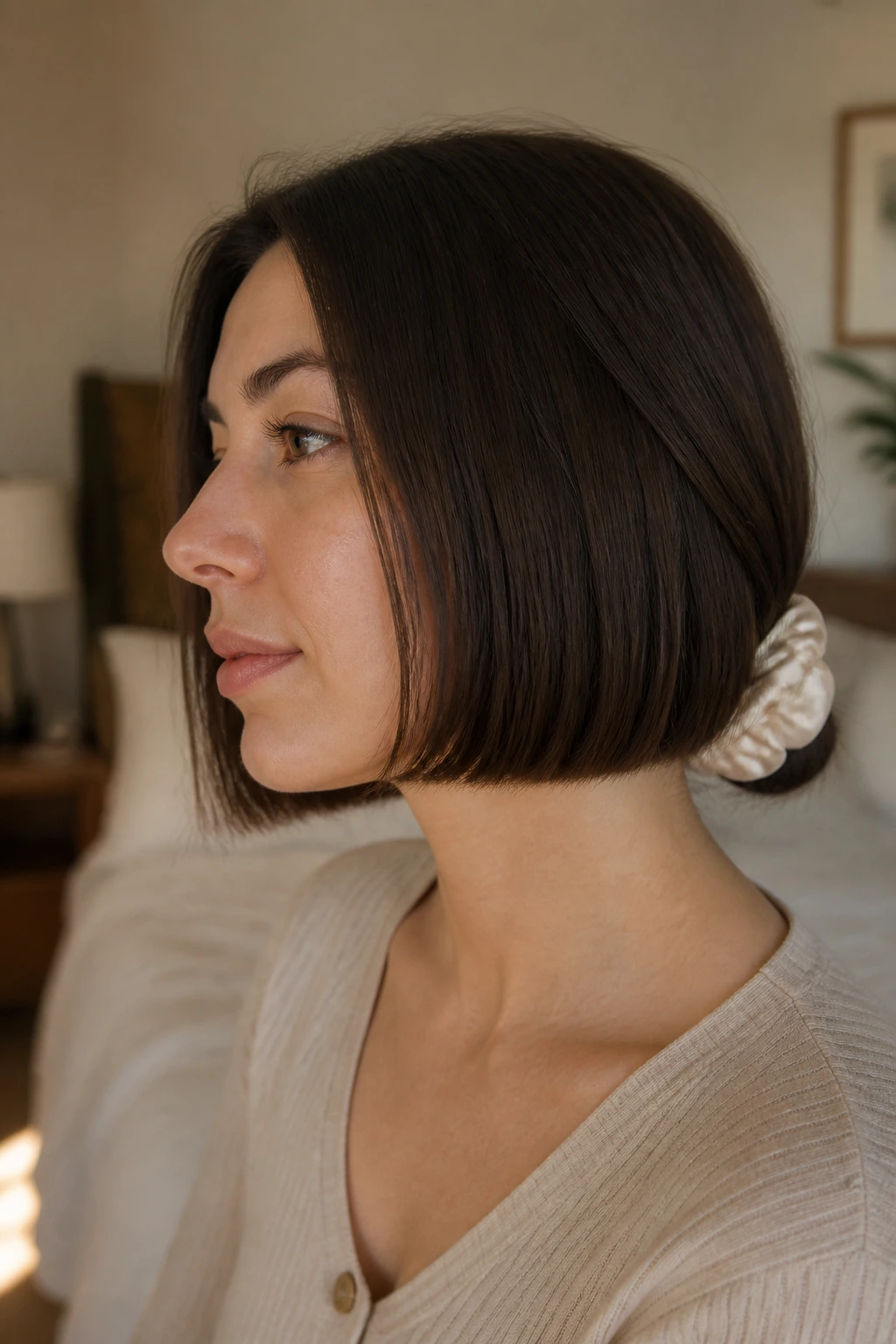
Sleep matters more than people admit. A loose silk scrunchie or a soft clip can keep the hair from bending in strange ways overnight. If you wake up with one side flattened, mist it lightly with water, re-blow-dry the roots for a minute, and reset the part.
Dry shampoo works best on day two, not day five. Use it early, at the roots, and let it sit for a minute before brushing. That small delay gives the powder time to soak up oil instead of just sitting on the surface.
Frequently Asked Questions
What bob length is best for fine hair and a heart-shaped face?
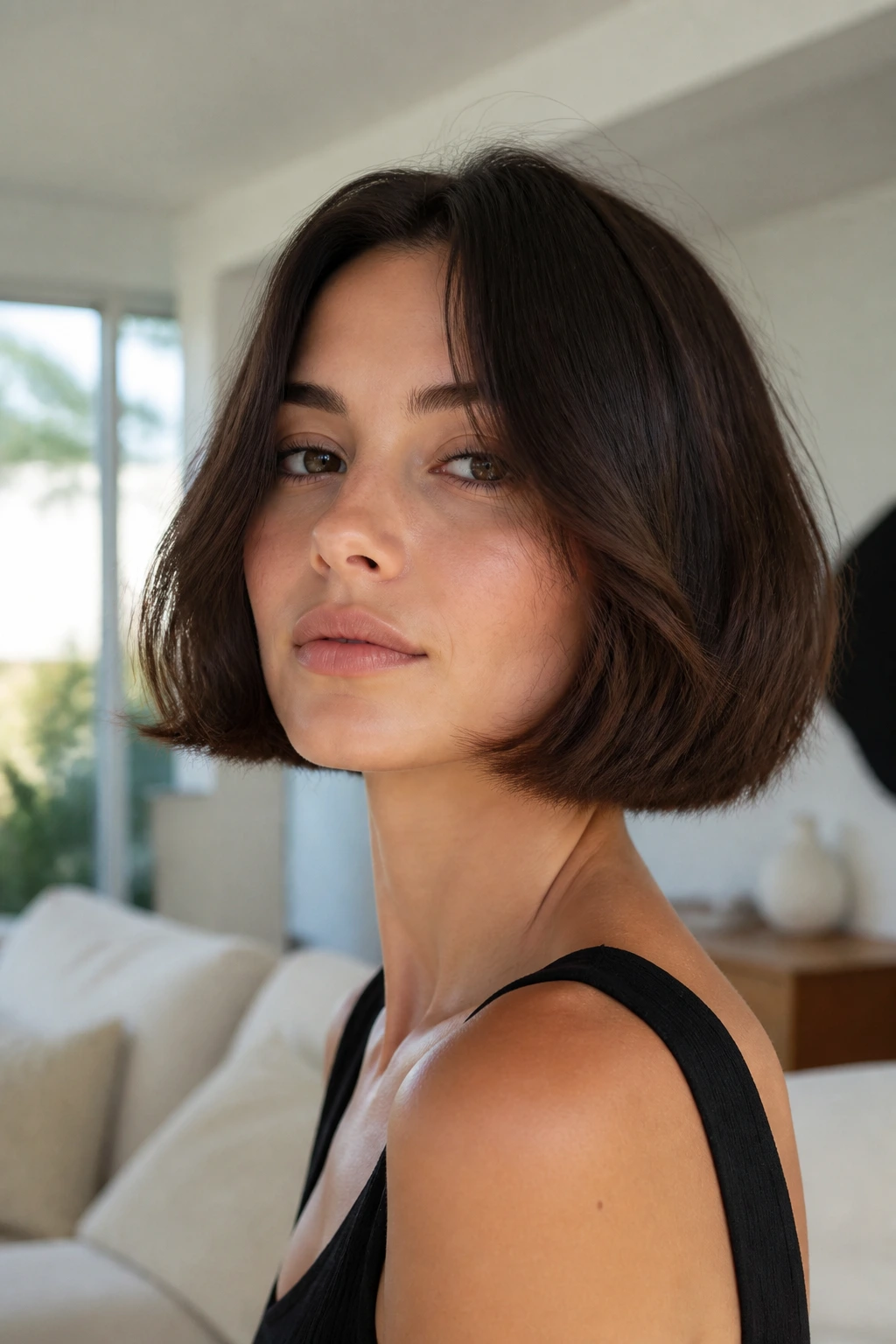
Chin length, jaw length, and collarbone length are the three sweet spots. Chin and jaw lengths add visible fullness, while a collarbone lob gives a little extra weight if your hair needs more body to lie well.
Are bangs a good idea with a heart-shaped face?
Yes, if they’re chosen carefully. Curtain bangs, side-swept fringe, and soft micro fringes can balance a wider forehead without crowding the face; blunt heavy bangs are the ones that tend to feel too dense.
Should fine hair be cut blunt or layered?
Usually blunt with a little internal shaping. Heavy surface layers can make the ends look see-through, while hidden layers keep movement without taking away the visual weight that fine hair needs.
Will a bob make my face look wider?
Not if the front is placed well. A side part, cheekbone-length face framing, or a soft curve at the jaw usually draws the eye downward instead of outward. The wrong length, not the bob itself, is what causes trouble.
Can I wear one of these bob cuts if my hair is very straight?
Absolutely. Straight fine hair often shows the shape best because the line stays clean. A blunt bob, Italian bob, or glass bob can look especially full on straight strands.
What if my hair flips out at the ends?
That’s a length and weight issue more than a styling failure. Ask for a slightly longer perimeter, or keep the ends beveled under with a round brush or flat iron so they sit where you want them.
How much product should I use on fine hair?
Less than your instincts say. Start with a pea-sized amount of mousse for the crown and mids, then add only a small mist of texture spray if the hair still falls flat. Fine hair gets greasy and limp fast when product builds up.
Can these bobs work with waves or a little bend?
Yes, and some of them look better that way. Just keep the shape intentional: blunt ends, clean parting, and waves that begin lower on the face rather than puffing out at the temples.
The Last Snip

A good bob does not need to shout. On fine hair, the smartest cuts are often the quiet ones: a blunt edge here, a soft fringe there, a length that lands exactly where the face needs a little help. When the balance is right, the haircut stops looking like “a bob” and starts looking like your hair, only better behaved.
That’s the part worth chasing. Not novelty for its own sake, but shape, density, and a line that keeps its nerve when the wind hits or the roots go flat. Pick the version that fits your texture, show your stylist the length you mean, and the rest becomes a lot easier to live with.