



A good layered medium cut does something a blunt one-length shape can’t: it moves the hair where you want the eye to go. Around the jaw, at the cheekbones, just below the collarbone — those are the places where a well-placed layer changes the whole read of the haircut. For women over 50, that matters even more, because hair often gets a little finer at the crown, a little drier at the ends, and a little less forgiving if the shape sits in the wrong place.
Medium length is the sweet spot I keep coming back to. It’s long enough to tuck behind the ears, long enough to clip up, long enough to keep some swing, but not so long that it drags the face down or steals all the movement from the ends. Add layers, and the cut stops feeling heavy. Add face-framing pieces, and it stops feeling severe. Done well, the result looks alive from the first bend near the cheekbone to the soft flip at the shoulder.
The trick is not “more layers” for the sake of it. It’s better layers — the kind that remove weight where hair goes flat and keep density where hair needs body. Some of these shapes are polished, some are shaggy, some are quietly elegant. All of them are built to work with real hair, real mornings, and real texture.
Why This Collection Is Different
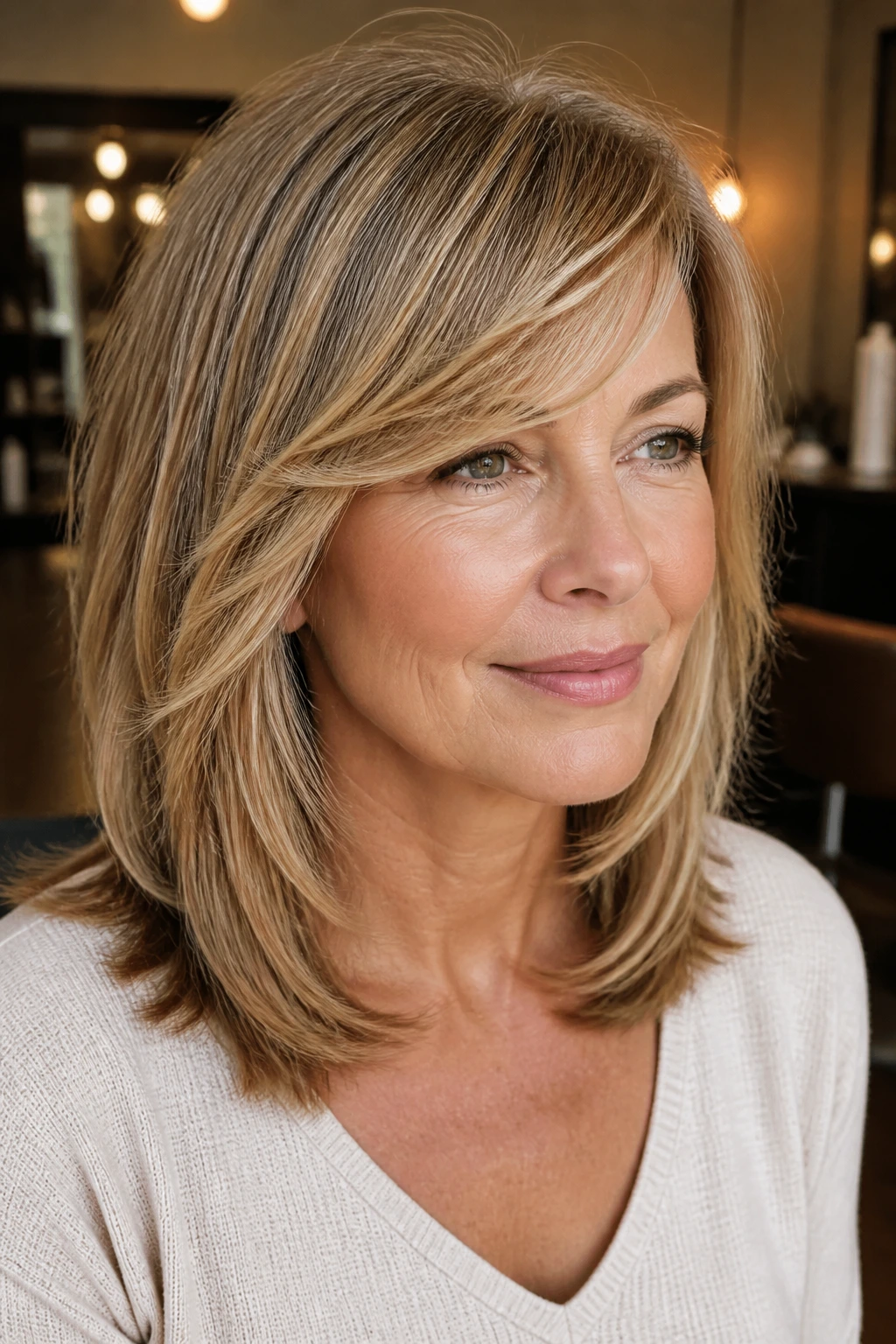
- Face-framing comes first: Every style here uses the front pieces to open the face, soften the jaw, or bring attention to the eyes instead of the ends.
- Medium length stays practical: These cuts keep enough length for a clip, a bun, or a quick bend with a brush, which matters when you do not want a high-maintenance shape.
- Texture gets a seat at the table: Fine hair, thick hair, gray hair, waves, and curls all behave differently, so the cuts are chosen with texture in mind.
- The grow-out is gentler: A good layered medium haircut does not fall apart in two weeks. The shape should still make sense when it grows.
- Volume is placed, not sprayed on: The best versions build lift at the crown, movement through the mid-lengths, and softness at the edges — not helmet hair.
- Bangs are optional, not mandatory: Some of these work with curtain bangs, some with side-swept fringe, and some with no fringe at all, which is a relief if your forehead has a mind of its own.
1. Collarbone Feathering with a Soft Side Sweep
This is the haircut I’d hand to someone who wants movement without looking “done.” The layers start low, around the collarbone, then feather inward so the front pieces bend away from the face instead of hanging in one dull curtain. A soft side sweep gives the whole cut a little lift at the front, which is especially helpful if your hair tends to collapse flat by lunchtime.
Why it works
The collarbone is a smart landing point because it keeps enough weight in the length to avoid frizzing out, but it still lets the ends move. The side sweep also breaks up a straight line across the forehead, so the eye goes up and out rather than straight down. On medium hair, that small shift matters.
- Best for: fine to medium hair that needs a touch more swing.
- Ask for: long layers through the sides, with the shortest face-framing pieces landing near the cheekbone.
- Style cue: bend the ends under with a round brush; do not twist them into a hard curl.
Tip: Keep the root lift subtle. A little volume at the crown is enough here; too much and the feathering loses its softness.
2. Curtain-Bang Lob with Airy Ends
Curtain bangs can look fussy on the wrong cut. On a layered lob, they look relaxed and expensive-looking in the plain-English sense: the front opens like a soft frame, and the rest of the hair keeps moving instead of sitting there like a board. The airy ends stop the length from feeling heavy under the chin.
The magic is in the blend. The bangs should melt into the front layers, not sit on top of them like a separate haircut. If your hair has a slight wave, this shape practically styles itself with a blow-dry brush and a bit of smoothing cream.
Best for: round or heart-shaped faces, especially if you wear your hair parted near the center.
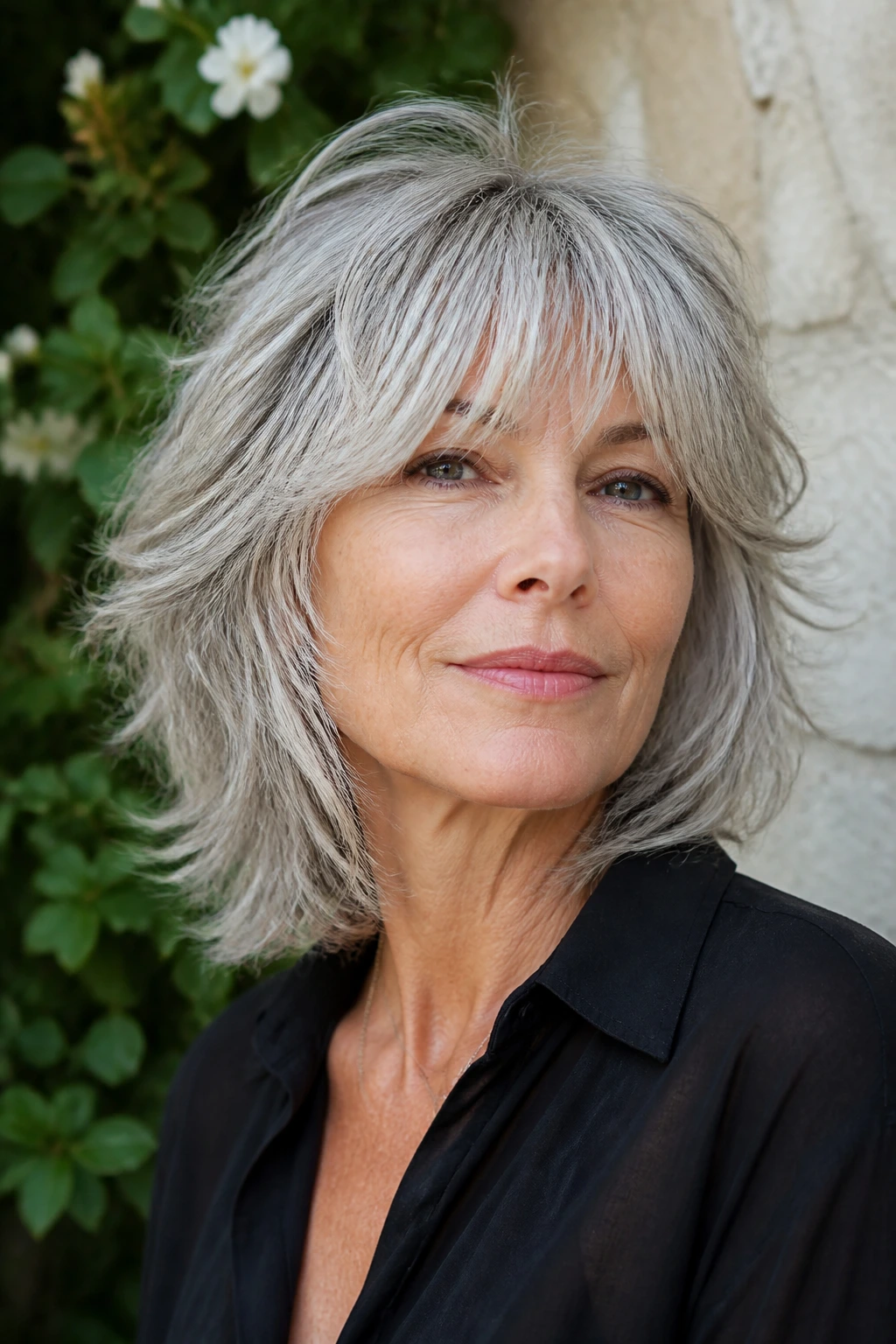
3. Silver Shag with Wispy Fringe
Want gray hair to look lively instead of stiff? A silver shag does that better than almost anything else. The layers are choppier than a classic lob, but the perimeter still sits around the shoulders, so you get shape without losing the ease of medium length. Wispy fringe keeps the front soft instead of boxy.
How to style it
Use a diffuser if your silver hair bends naturally, or rough-dry it with your fingers and a small amount of mousse if it’s straighter. The goal is piece-y movement, not polished perfection. Gray hair can be wiry at the temples; the wispy fringe helps that texture work for the cut instead of against it.
- Great for: salt-and-pepper or fully silver hair with some wave.
- Avoid: heavy oils near the roots; they flatten the airy shape fast.
- Best finish: a matte texture spray, not a shiny pomade.
4. Rounded Layers with a Lifted Crown
This cut is built for hair that goes limp at the top but keeps too much weight at the bottom. The rounded shape lifts the crown, then curves in gently toward the jaw and shoulders, so the silhouette feels fuller without looking puffy. It’s a cleaner answer than piling on product.
The reason it works is simple: the crown gets targeted volume, while the lower lengths are kept softer and slightly tapered. That keeps the cut from turning into a triangle. If you’ve ever had hair that looked great from the front and oddly broad from the side, this shape fixes that.
A round brush and a cool shot at the end are enough. No drama.
5. Side-Parted Layered Lob with Tucked Front Pieces
This is the cut that plays nicely with glasses, earrings, and a busy morning. The side part gives the front a little asymmetry, and the tucked pieces keep the layers from crowding the cheeks. It feels modern without being sharp. That matters.
The front should skim the face, not cover it. Ask for a longer face frame that lands around the jaw or just below it, then let the back keep most of the length. That contrast is what makes the cut look intentional instead of over-thinned.
Who it suits: square faces, soft jawlines, and anyone who likes to tuck one side behind the ear without losing shape on the other.
6. Razor-Soft Midi with Piecey Ends
There’s a difference between soft and frayed. A razor-soft midi, done well, lands firmly on the soft side. The layers are sliced or lightly razored so the ends separate into pieces instead of sitting in one blunt block. On thick hair, that release can feel like taking off a coat.
Compared with scissors-only shaping, this version gives a lighter finish around the bottom third of the hair. It’s especially good if your hair tends to puff outward when it dries. Just don’t let the stylist get too enthusiastic with the razor. Too much thinning and the ends can start to look see-through.
A little grit cream through the mids is enough. Skip the heavy serum unless your ends are truly dry.
7. Wavy Mid-Length Cut with Cheekbone Curls
What if your hair already bends a little on its own? Then use it. This layered medium shape lets natural waves do the lifting, with the front pieces cut to sit near the cheekbones so the bend lands in a flattering spot instead of collapsing at the jaw.
Why it flatters waves
Waves often look best when the layers are cut to support the pattern, not fight it. If the shortest pieces are too high, the wave explodes outward. If they’re too low, the shape goes flat. Cheekbone-level layers hit the middle ground and keep the movement visible.
- Styling move: scrunch in a light curl cream on damp hair.
- Drying move: use a diffuser on low heat for about 70 percent dry, then let it finish air-drying.
- Watch for: frizz at the ends; if that happens, use less product, not more.
8. Shoulder-Length Flip Layers
This one is for people who like a bit of bounce at the ends. The layers are cut so the tips naturally flip out or under, depending on how you blow-dry them. It has a clean, confident feel. Not stiff. Just shaped.
The shoulder-length perimeter keeps the cut from getting too airy, which is important if your hair is fine or medium density. The flip gives the illusion of movement even on days when your blow-dry is imperfect. And yes, that matters. A cut that still looks decent when you only spend eight minutes on it is a keeper.
A medium barrel brush or a large round brush makes the finish easier. Keep the ends smooth; this cut loses its charm when the flips look chunky.
9. Bottleneck Bangs and Blended Layers
Bottleneck bangs are like curtain bangs with better manners. They start a little shorter in the center, then angle out toward the temples, which gives the forehead a softer frame without chopping the face in half. Blended layers underneath keep the rest of the cut moving.
This shape works especially well if you want fringe but do not want to commit to a blunt line. The bangs grow out more gracefully than straight-across fringe, and the blended layers keep the haircut from feeling like two separate ideas pasted together. That little bit of continuity makes a difference.
If your hair is thick, ask for the bangs to be lightened at the ends. If it’s fine, keep them a touch denser so they do not disappear.
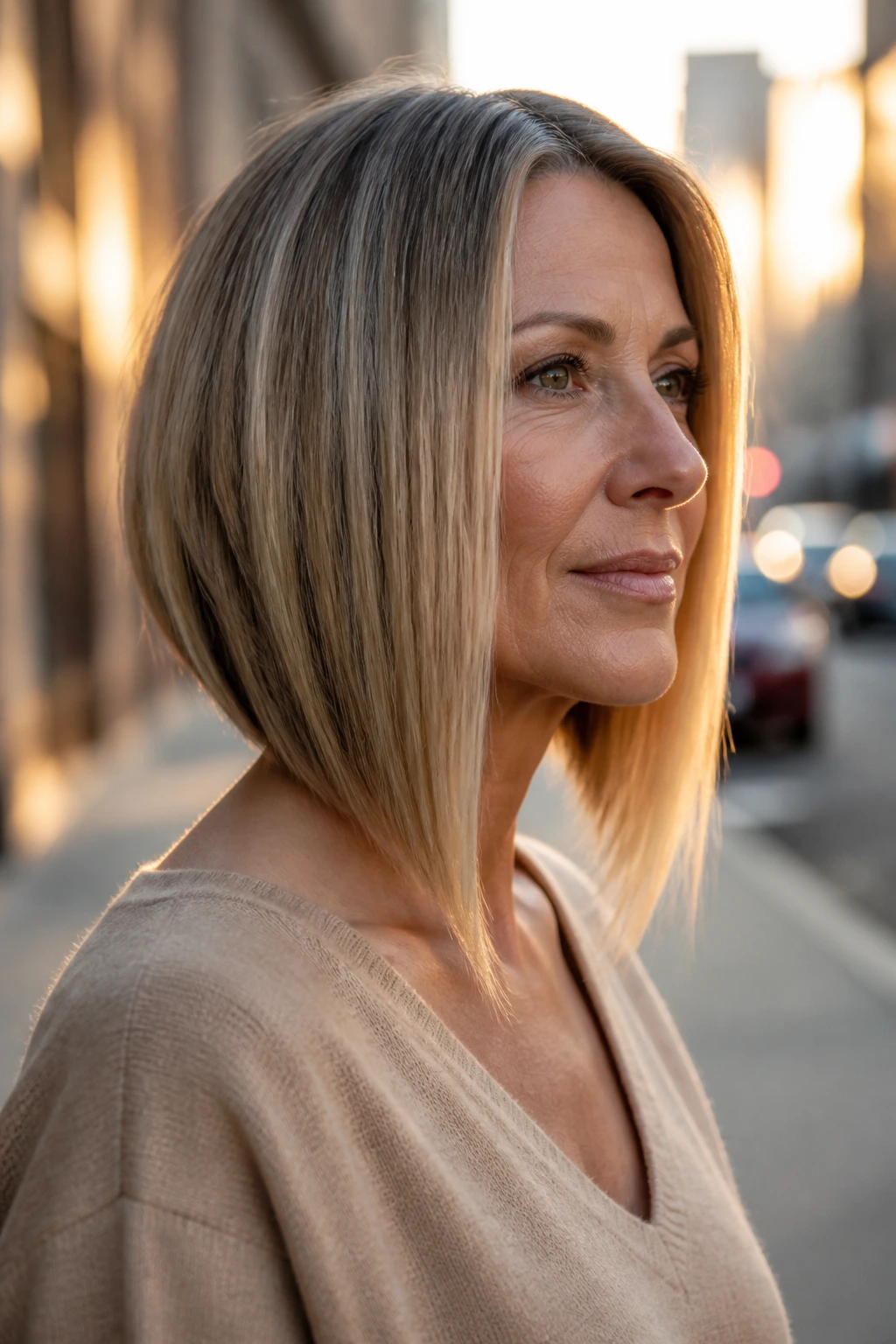
10. Angled Lob with a Long Face Frame
A long face frame is the whole story here. The haircut is slightly shorter in back and a touch longer in front, but the angle is subtle — enough to create direction, not enough to look severe. The longer front pieces help lengthen round faces and soften strong jawlines.
I like this on medium hair because it feels controlled. The layers guide the eye forward, then the front pieces swing back toward the collarbone. It’s clean. It’s not boring. That’s a useful combination.
Styling note: blow-dry the front away from the face first, then let the rest follow. If you start with the back, you often lose the angle.
11. Air-Dried Layered Cut for Natural Texture
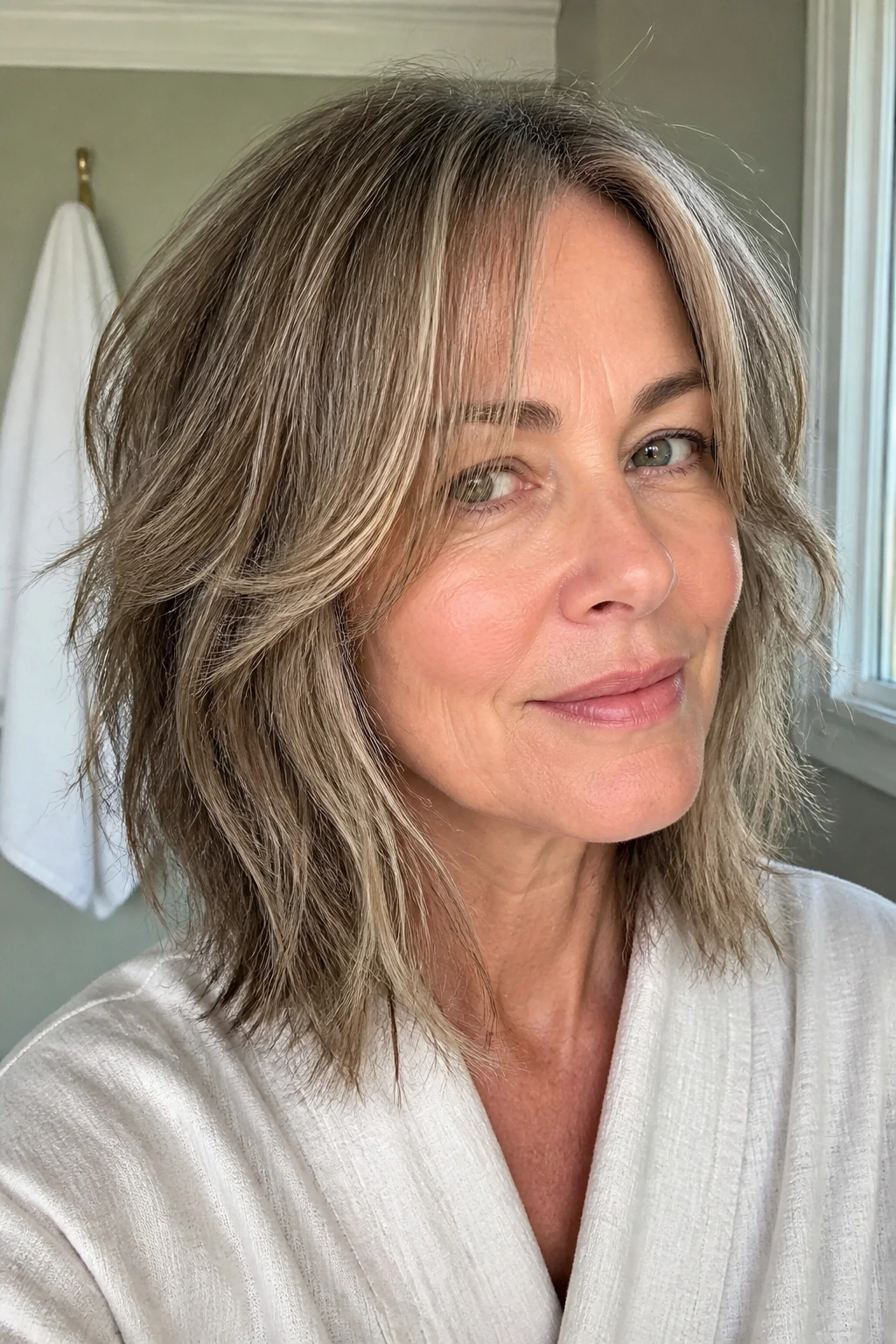
Some cuts are built for a brush. This one is built for a towel and a bit of patience. The layers are kept long enough to let natural texture show through, but the face-framing pieces still give the hair a shape when it dries on its own. That’s the point.
The danger with air-dried hair is the “everything lives where it wants” problem. Good layering solves that by giving the hair places to fold, separate, and settle. The cut should look intentional even when you do almost nothing to it. If it only works after 25 minutes of styling, it’s not a good fit.
Use a leave-in conditioner on damp hair, scrunch once, and walk away. Seriously.
12. Soft Wolf Cut with a Longer Perimeter
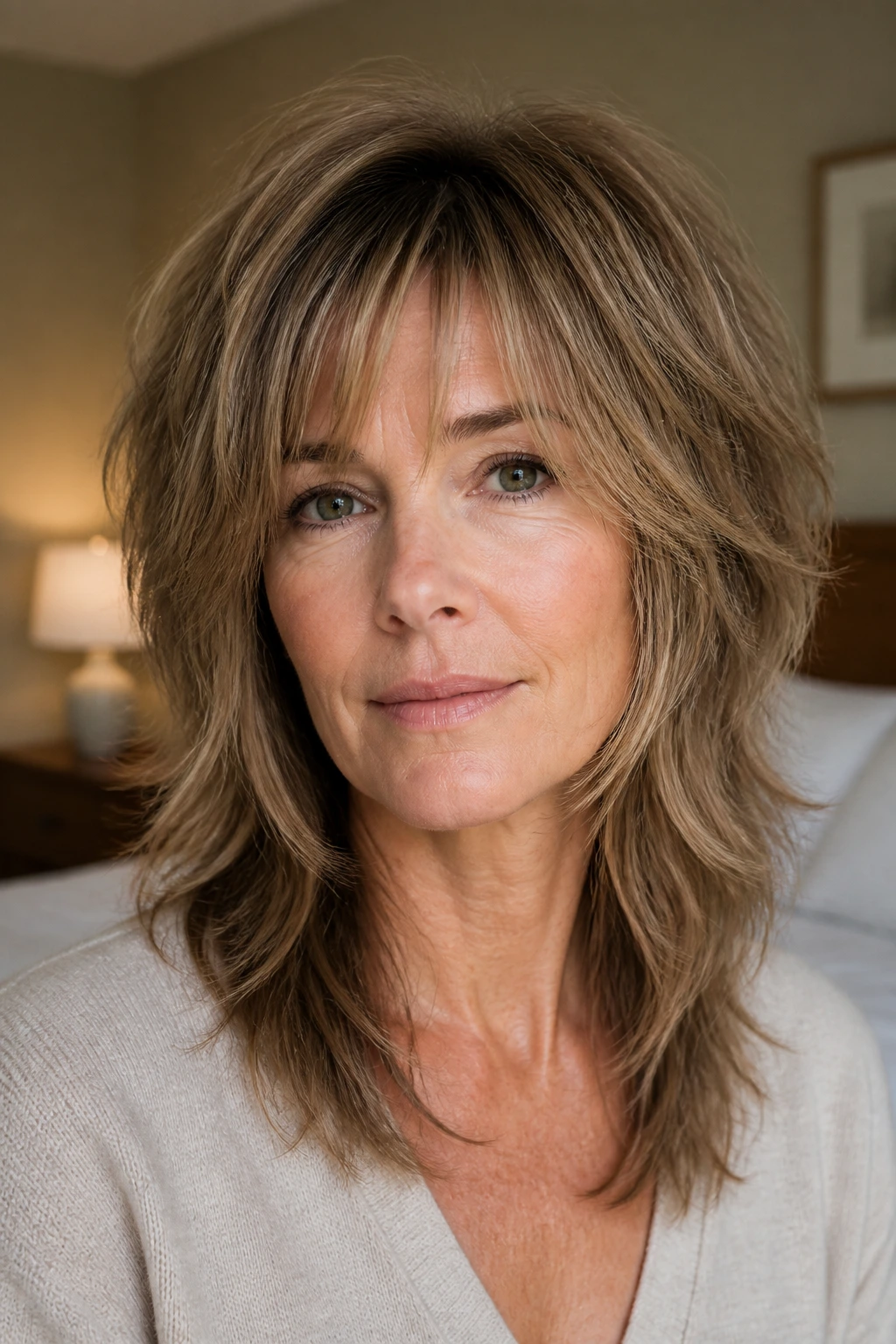
A wolf cut can go too far fast. The version I’d suggest here keeps the perimeter longer and the layers softer, so it reads as wearable rather than edgy for the sake of being edgy. Think movement, not mullet nostalgia.
The benefit is lift at the crown and looseness through the mids, especially if your hair has texture that seems to wake up the second moisture hits it. The longer perimeter keeps the cut grounded. Without that anchor, the whole shape can sprawl.
If you want some attitude but not a lot of maintenance, this is the one to watch. It looks best when the ends are a little piecey, not ironed flat.
13. Full-Volume Blowout Layers
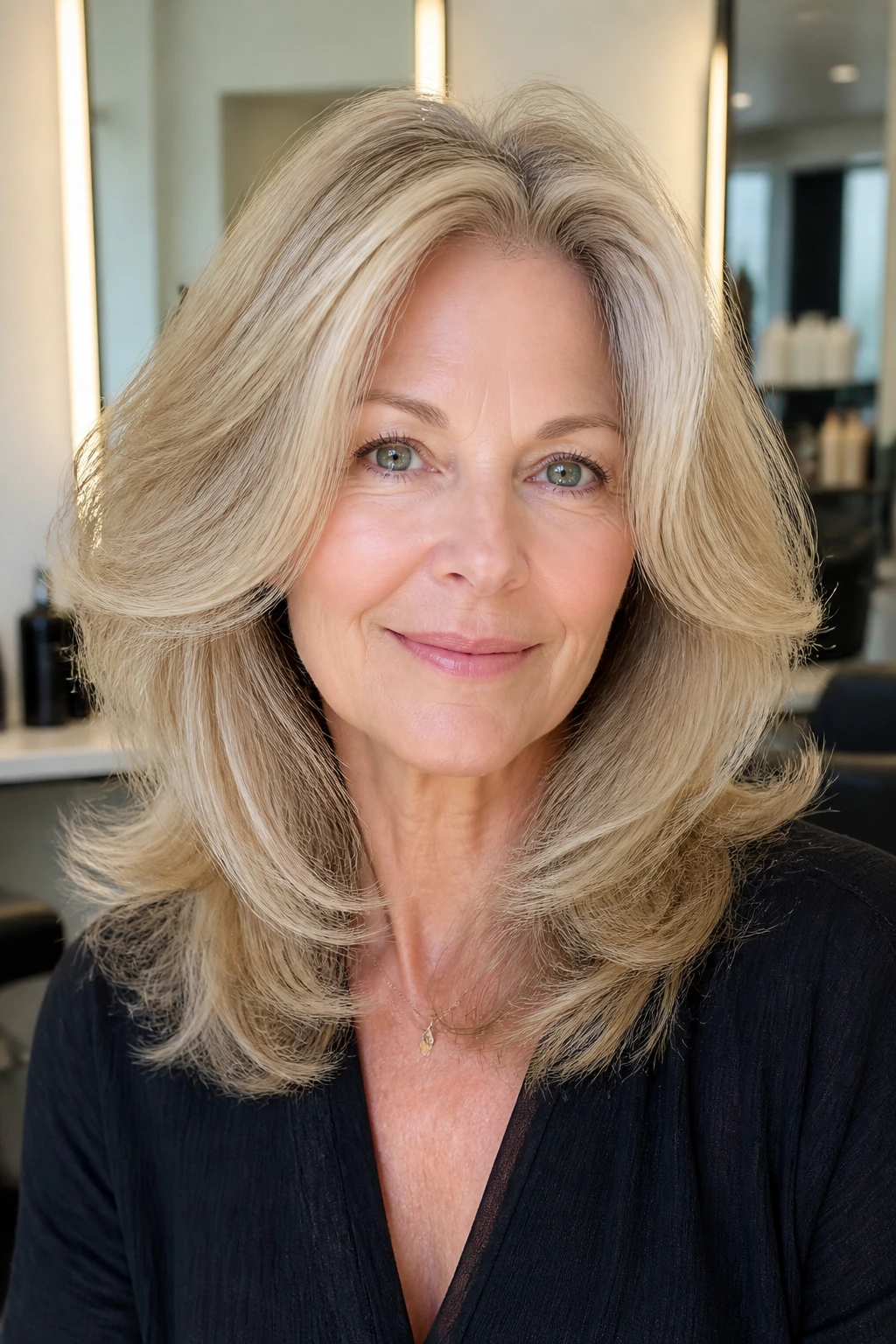
This is the glamorous one in the group. The layers are arranged to catch a round brush, which gives the hair that smooth, lifted bend from roots to ends. It’s not stiff old-school blowout hair. It’s softer, lighter, and more touchable.
The reason it flatters medium hair after 50 is that it gives fullness where hair often starts to flatten — at the crown and through the sides near the cheekbones. The front pieces are usually angled away from the face, which keeps the style from closing in around the jaw.
A volumizing mousse at the roots and a large round brush are enough. If you use a flat brush here, you’ll lose the whole point.
14. Chin-Opening Layers with a Deep Side Part
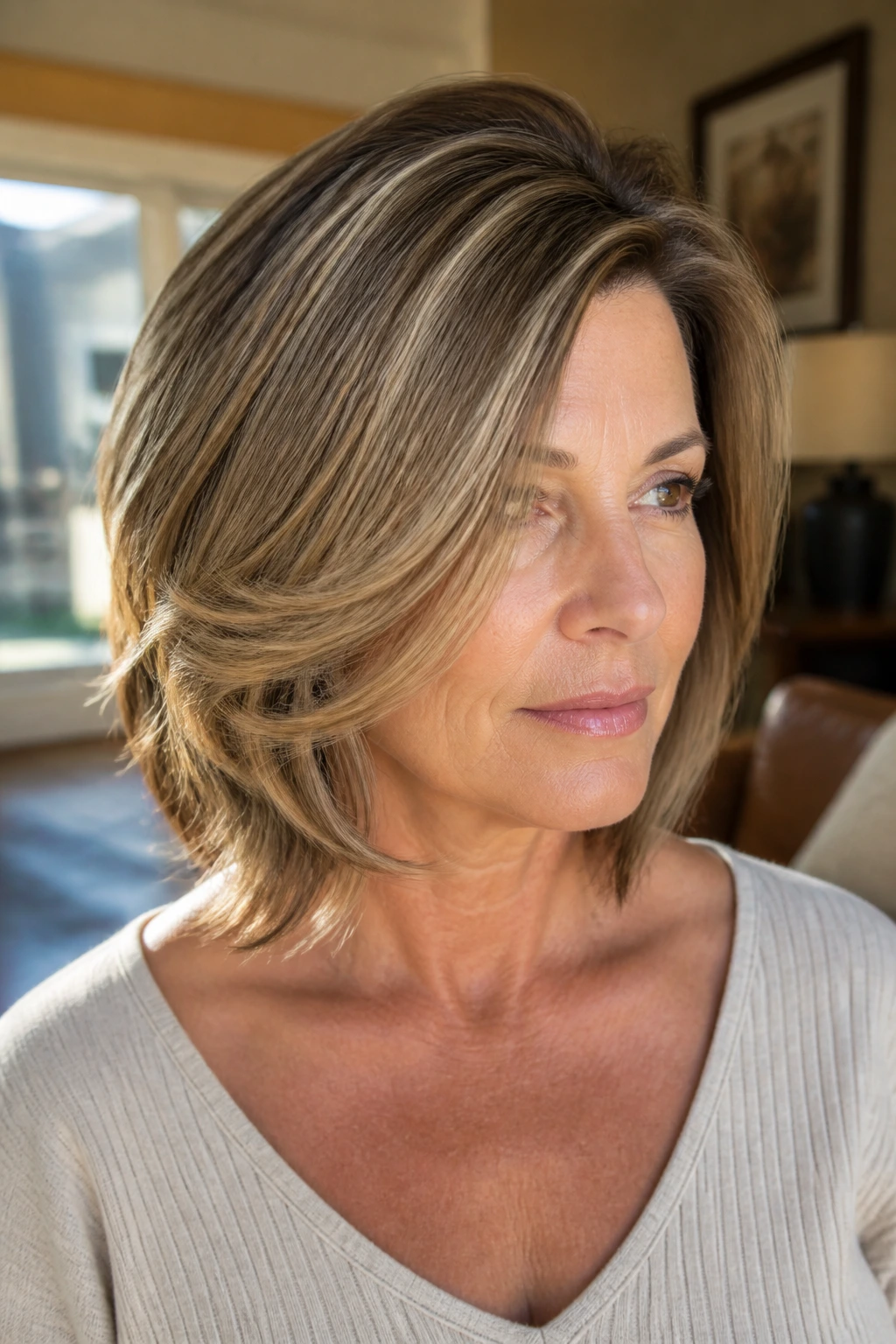
A deep side part can be a sneaky little trick. It creates lift at the roots and opens one side of the face, which makes the jawline and cheekbones look less boxed in. The chin-opening layers are cut to fall just below the jaw, then sweep away from it.
This cut is especially nice if your face feels a little wide at the cheek area or if your hair tends to lie flat against the sides of your head. The asymmetry does the work. You do not need a lot of product or dramatic length changes.
Use a root-lifting spray at the part line and direct the front away from the face with the dryer. That first five minutes changes everything.
15. Layered Curls with Halo Layers
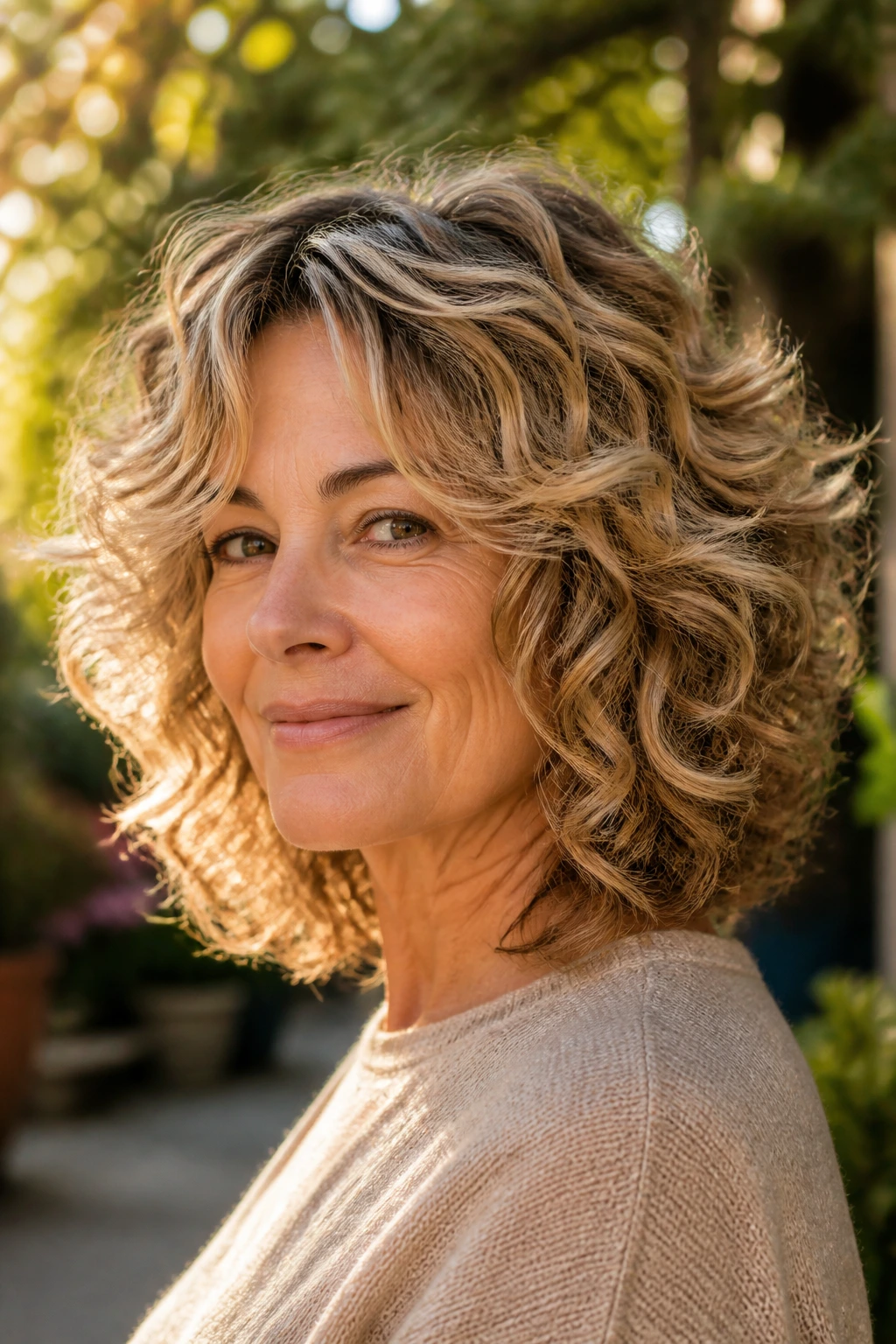
Curly hair needs space. Halo layers give it that space without turning the shape into a pyramid. The top layers sit higher and lighter, while the face-framing pieces curve around the cheeks and temples so the curls sit in a round, lifted shape instead of clumping at the bottom.
The key is respecting the curl pattern. Cutting curls dry or mostly dry helps the stylist see where each spring wants to fall. If the layers are cut wet and too short, you can lose control fast. And curly hair after 50 often has a mix of textures anyway.
Use a cream-gel combo, then leave the curls alone while they dry. Hands off. That part matters more than people think.
16. Wispy Fringe and Shoulder-Skimming Layers
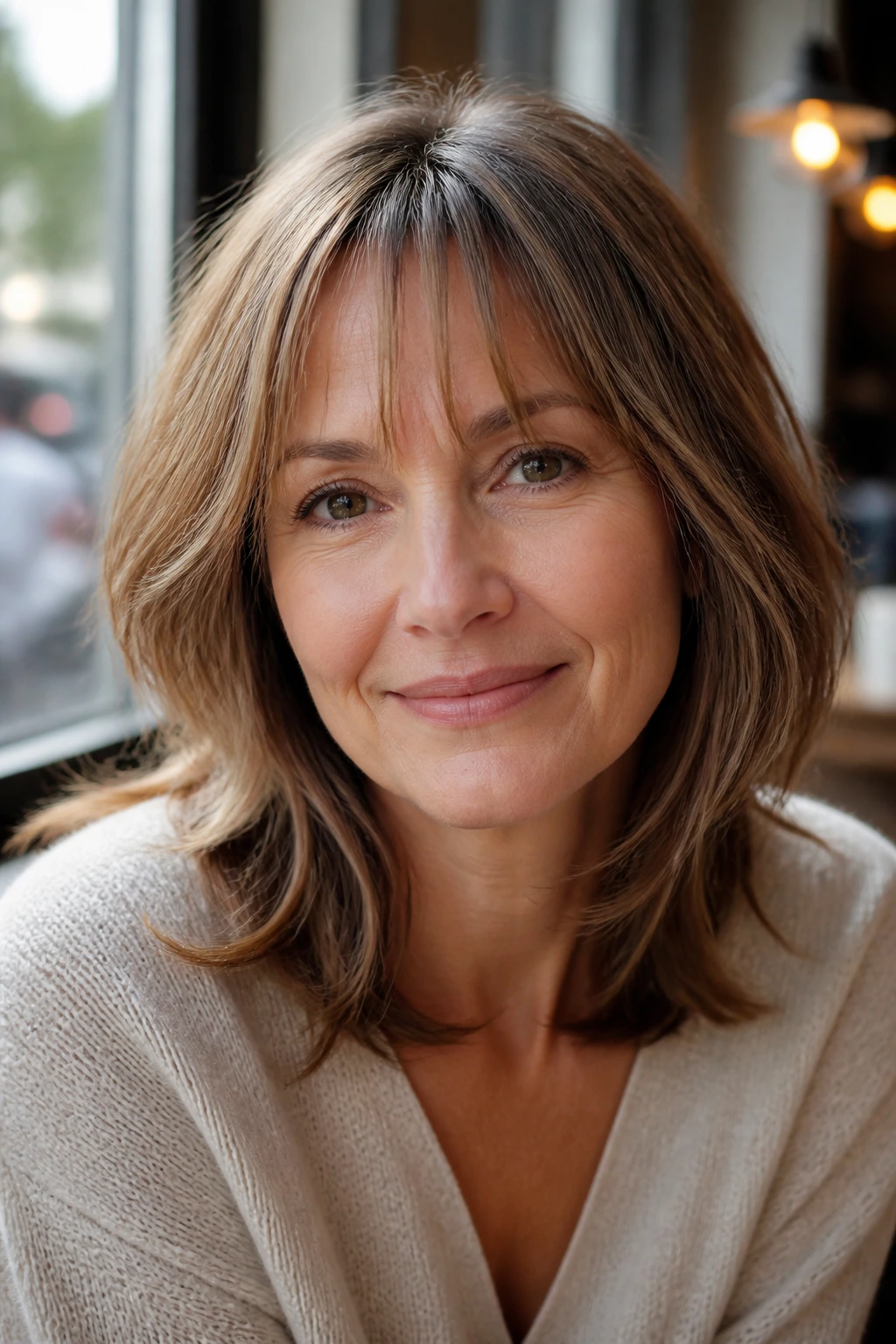
This is a nice middle ground if you want bangs but hate the feeling of a heavy fringe. The wispy fringe keeps the forehead soft, while the shoulder-skimming layers let the rest of the cut hang light and move with a little bend at the ends. It has a relaxed, almost breezy shape.
The best thing about this cut is how it behaves in real life. You can wear it straight, softly bent, or tucked back and it still makes sense. That flexibility comes from the shoulder-skimming length, which keeps the layers from looking overworked.
If your hairline has a cowlick, ask for the fringe to be cut with that in mind. Otherwise the bangs will spend half their life arguing with your forehead.
17. U-Shaped Layers with a Bright Face Frame
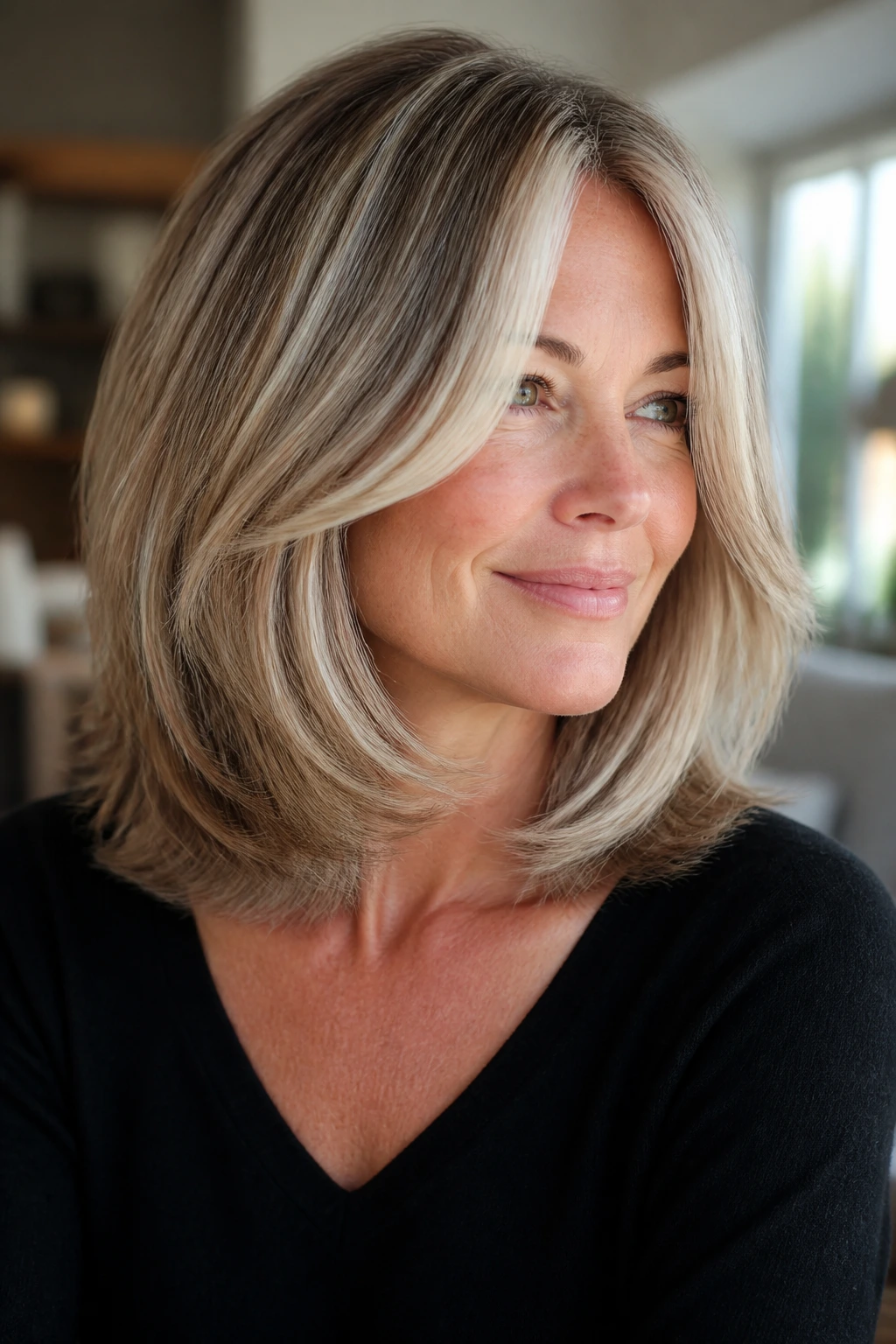
A U-shaped perimeter keeps length at the center back while the front curves upward toward the face. That shape lets the face-framing pieces do the visual work without stripping too much weight from the bottom. It’s a smart choice if you want softness but not a choppy finish.
The bright face frame — those lighter, front-facing pieces — makes the cut feel open. On medium hair, that can create a little lift around the eyes and cheeks, especially when the front is styled away from the face. I like this one when the goal is polish with movement.
It’s a quiet cut. Not plain. Quiet.
18. Feathered Layers for Fine Hair
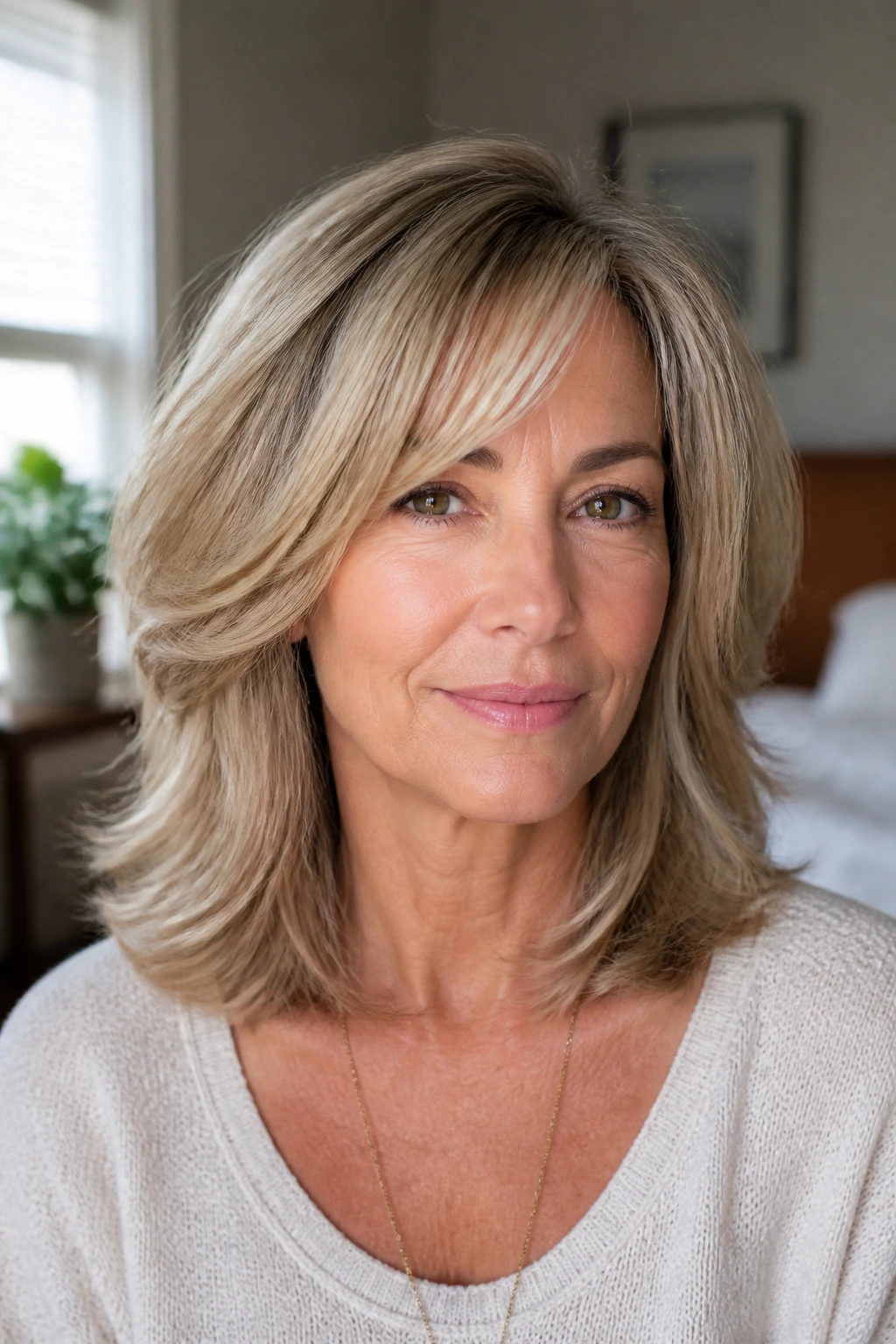
Fine hair needs layers, but not the kind that leave the ends see-through. Feathered layers are lighter and more controlled. They give motion through the mids while keeping enough density at the perimeter so the hair still looks full from the side.
The mistake most people make with fine hair is asking for too many short layers. That creates fluff at the top and stringy ends at the bottom. Feathering is better because it softens the shape without shredding it. Ask for layers that begin lower and blend smoothly into the face frame.
A little root spray at the crown and a quick blast with a round brush can make this cut look twice as full. That’s not magic. It’s placement.
19. Piecey Mid-Length Cut with Side-Swept Bangs
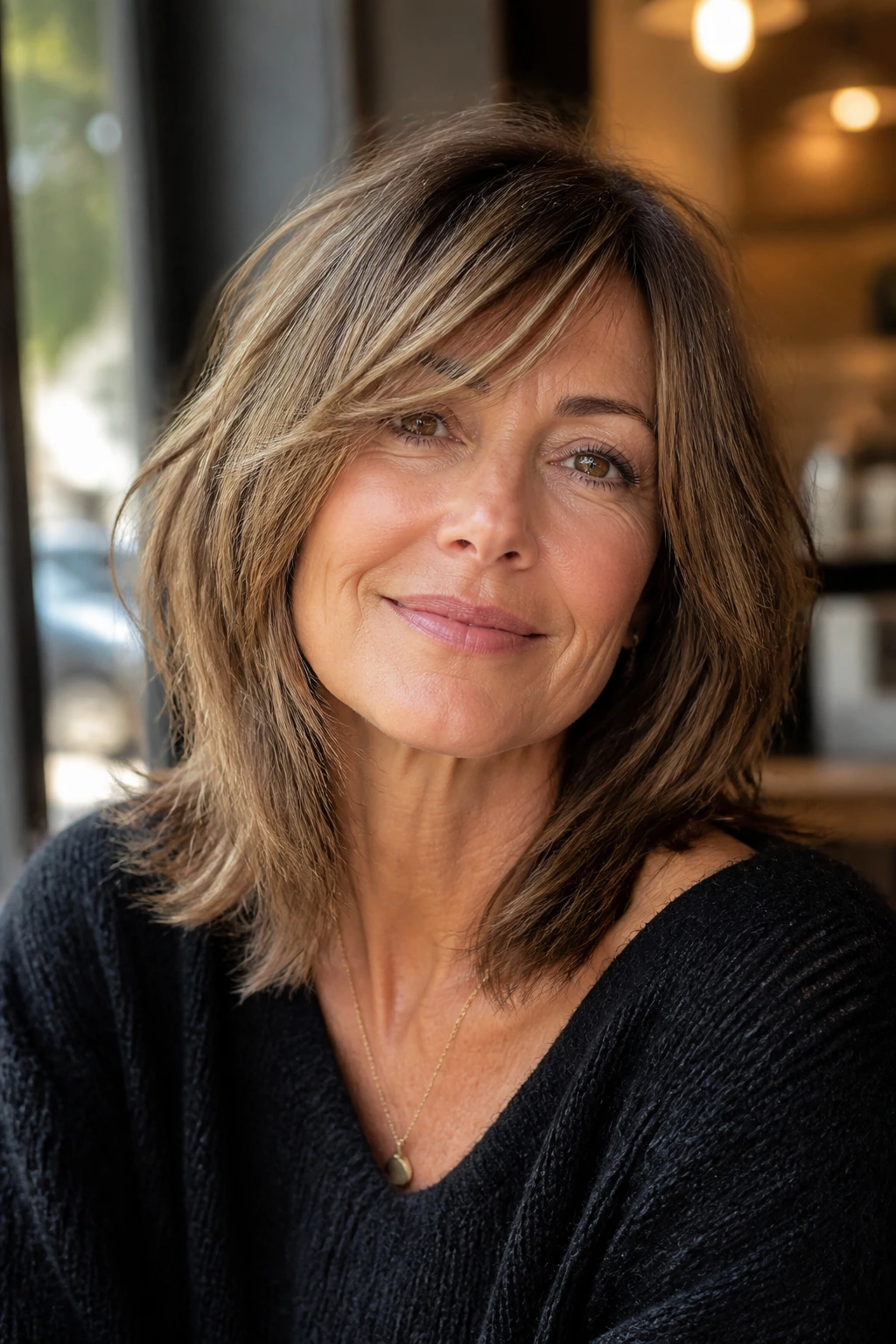
This one has a little movement in every direction. The side-swept bangs break up the forehead line, while the piecey layers keep the mids from looking solid. It’s a good choice if you want something less neat than a classic lob but not as shaggy as a full shag.
The cut also handles grow-out gracefully. The bangs can drift a bit longer and still look deliberate, which is helpful if you do not want to visit the salon every six weeks. Use a light texturizing spray only on the ends; putting it near the roots can make the whole thing feel dusty.
If your hair is straight, wrap a few front pieces around a curling iron for ten seconds. That small bend makes the layers wake up.
20. Sleek Layered Lob with Invisible Ends
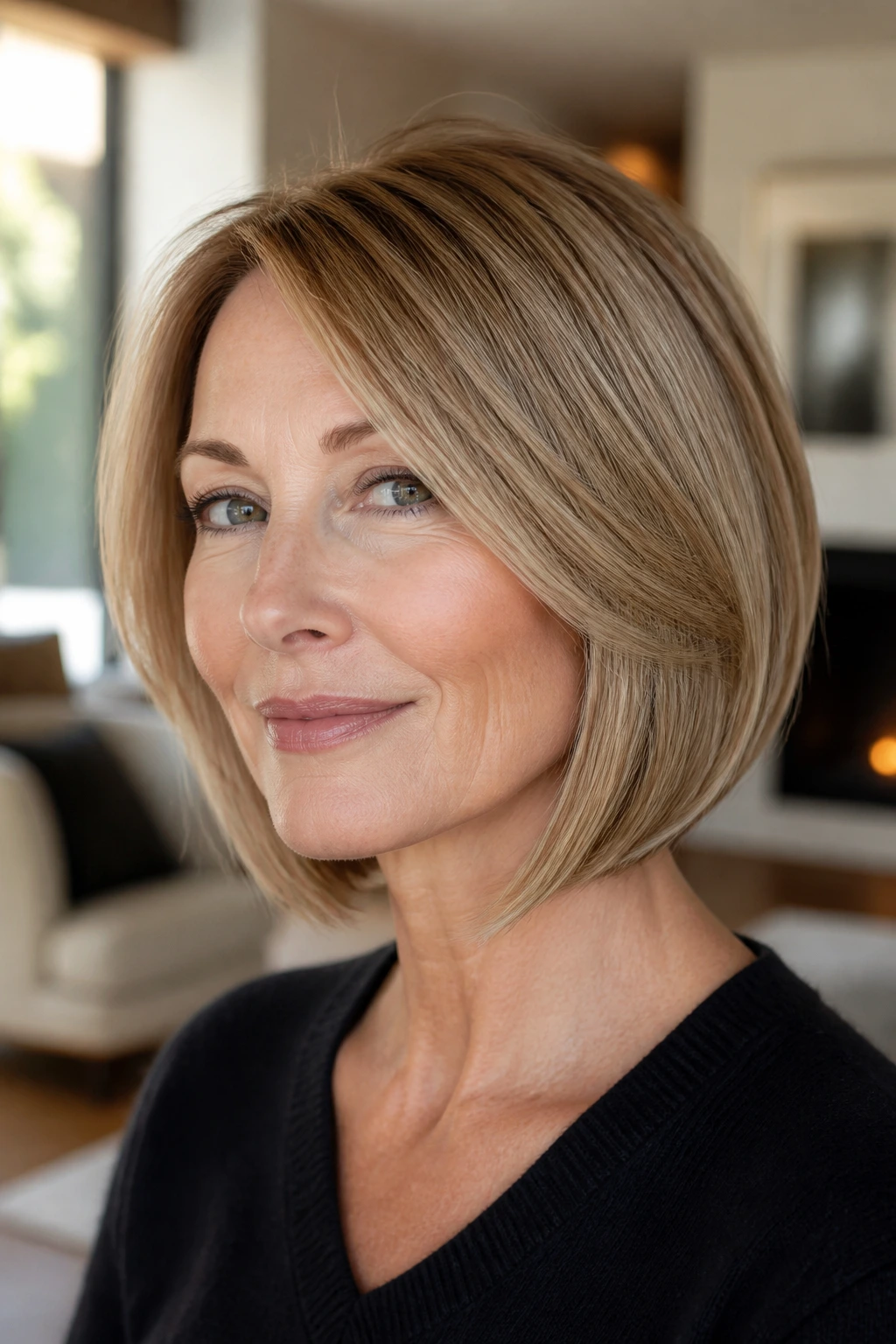
Not every layered cut needs to announce itself. A sleek layered lob keeps the surface smooth, with the movement hidden inside the shape instead of on top of it. That’s why it looks so clean. The ends sit neatly, but the cut still has swing.
This style is useful if you like a polished finish and you do not want pieces flying around your face all day. The layers are internal, so they remove weight without creating visible steps. That means the haircut stays elegant even when the weather is unfriendly.
A flat brush and a heat protectant are enough. If you want shine, finish with a tiny bit of serum on the last two inches only.
21. Tousled Midi with Scattered Layers

This cut looks best when it is not overdone. The layers are scattered through the mid-lengths to create a tousled shape that moves when you turn your head, which sounds small until you see how much life it gives the haircut. It has a casual, modern feel.
The trick is not to make every piece perfect. If every bend is too uniform, the style gets stiff. Let some strands fall forward, let others tuck behind the ear, and keep the ends a little imperfect. That little messiness is the point.
A salt spray or lightweight texture cream works here. Heavy cream kills the air in the style.
22. Glasses-Friendly Fringe Cut

Glasses change the whole game. A fringe that works without frames can suddenly crowd the eyes, skim the lenses, or sit at the exact wrong point on the brow line. This cut avoids that by keeping the fringe light, separated, and just long enough to sit above or around the frames.
The layers around the face should start low enough to avoid collision with the temples of the glasses. I’d ask for soft side pieces that open outward, not straight-forward bangs that create a shelf. That little distinction saves a lot of daily fuss.
If you wear readers, sunglasses, or full-time frames, bring them to the appointment. Yes, really.
23. Salt-and-Pepper Shag with Soft Edges

Salt-and-pepper hair has texture that deserves shape. A soft-edged shag gives it motion without hardening the ends or making the cut look too punky. The gray and dark strands separate naturally, which adds dimension all by itself.
What I like here is the lack of stiffness. The layers are there, but they don’t shout. They just keep the silhouette from sinking into a triangle or growing too heavy around the jaw. If you’ve been fighting blunt lines that make your hair look older than it is, this cut can feel like a reset.
A touch of mousse at the roots and a diffuser on low heat usually does it. You want bend and separation, not crunchy texture.
24. Rounded Mid-Length Cut with Crown Volume

This is the answer when the top goes flat and the sides go wide. The rounded shape gives the crown some lift while the ends stay soft and contained, so the whole haircut feels balanced from every angle. It’s an especially good choice for medium hair that has lost a little density.
The front layers should curve inward toward the cheekbones and then soften again at the shoulders. That double curve keeps the face open. It also keeps the cut from looking like a helmet, which is the main thing to avoid with rounded shapes.
A root-lifting spray and a round brush set at the crown are enough to keep this one moving.
25. Collarbone Cut with Face-Framing Ribbons
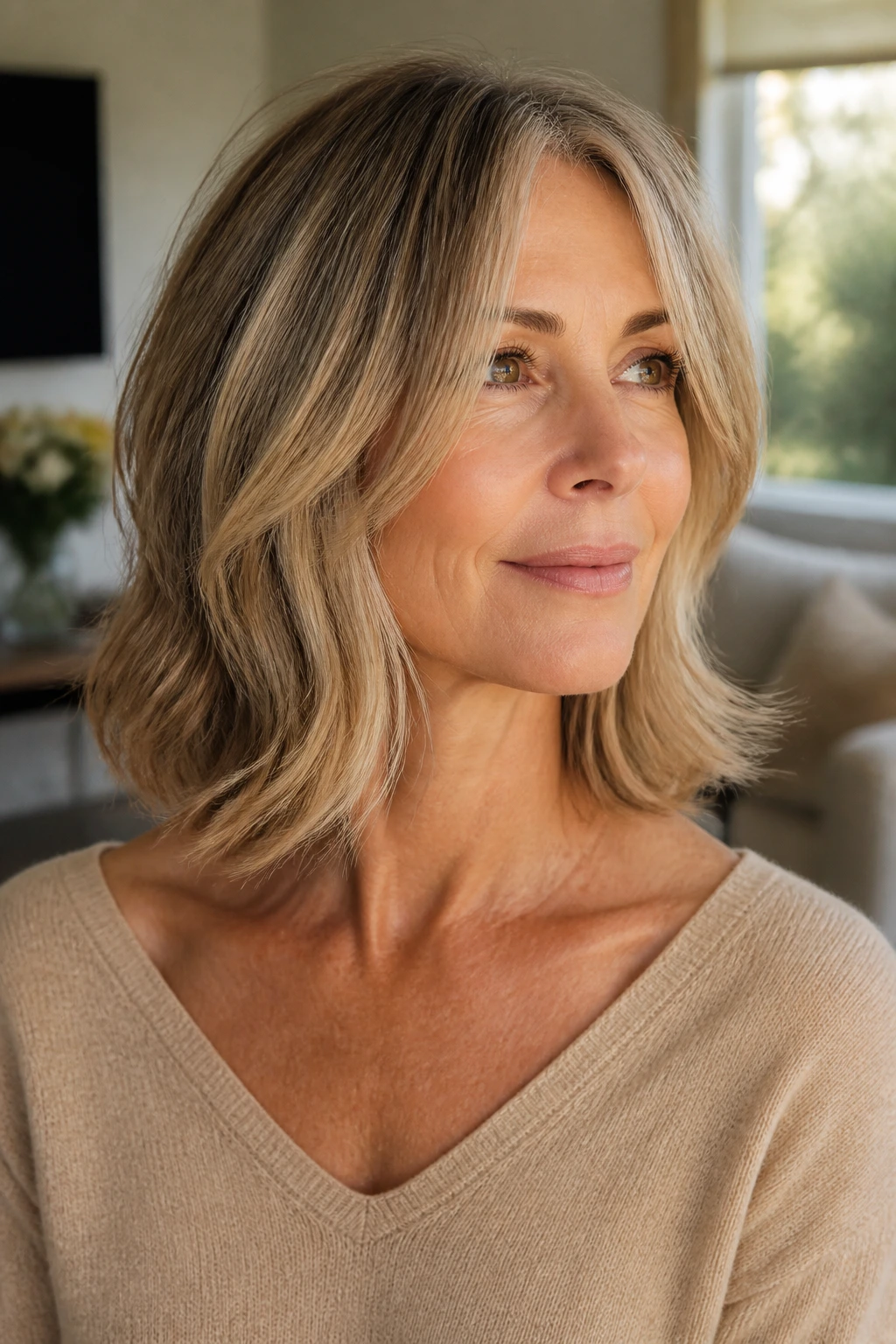
Think of this as a gentler cousin of a traditional layered lob. The base stays around the collarbone, but the front pieces are cut into long ribbons that skim the face in a soft, controlled way. It gives the haircut direction without chopping it up.
The ribbon-like front layers are especially nice if you want movement near the cheeks and neck but still like some weight through the back. That weight helps the cut hold its line when you air-dry it or pull it into a half-up style. There’s a reason this shape keeps showing up in good salons. It works.
If your hair has a slight wave, those face-framing ribbons will bend naturally with very little effort.
26. Mid-Length Curls with Layered Springs
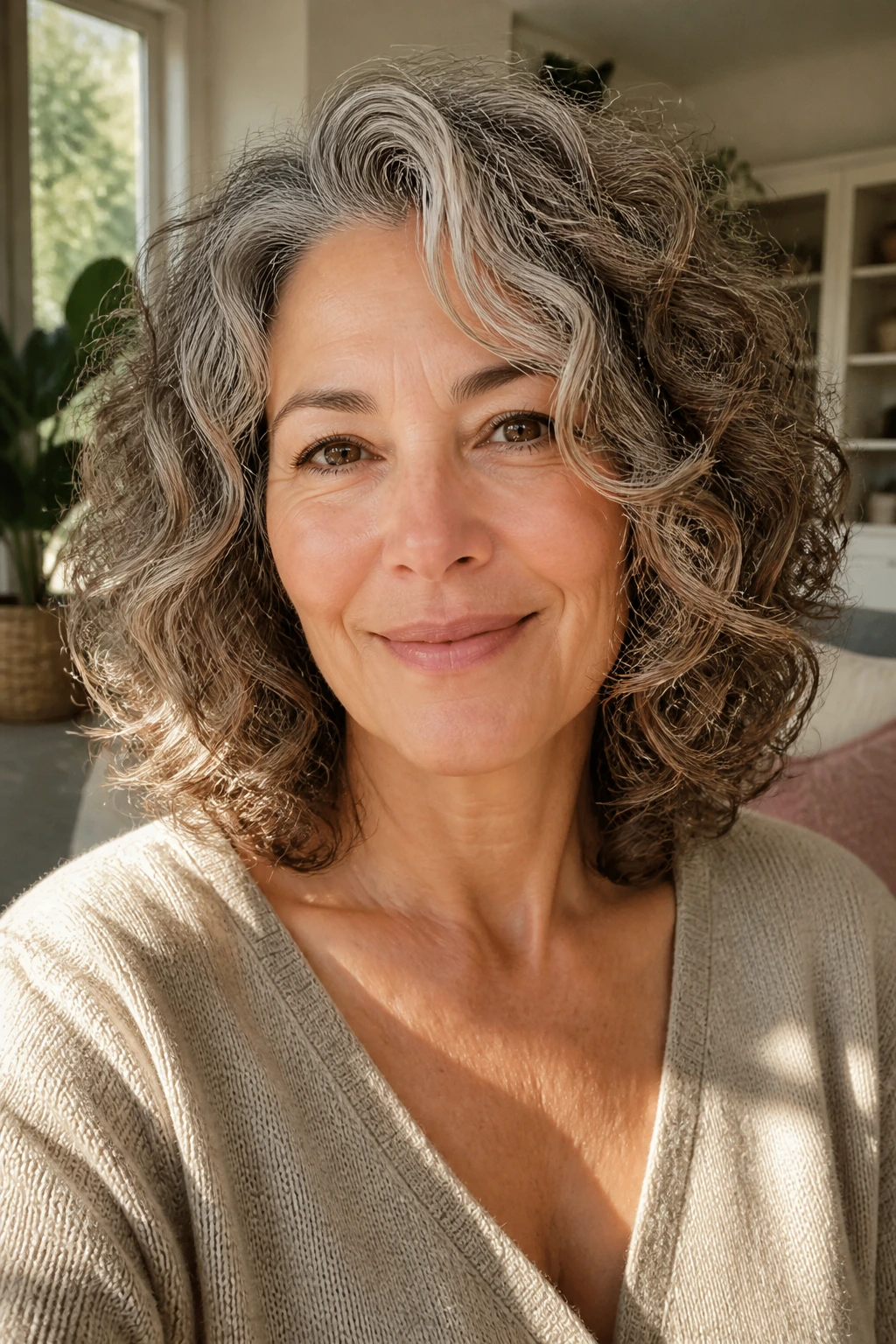
Curls need room to spring, and this cut gives them that room. The layers are placed to let each curl stack on the one beneath it without forming a heavy triangle at the bottom. That matters a lot when you want shoulder-length curls that still feel light.
The front pieces should open the face and then curl back in, not sit flat against the cheeks. A dry cut is often the smartest way to handle this shape, because curls shrink in different ways once they dry. If you cut them too bluntly while wet, you can lose the intended balance.
Use a curl cream with enough slip to reduce frizz, then scrunch and leave it alone. Touching curls too much is a fast route to fluff.
27. Low-Maintenance Layered Cut with Long Bangs
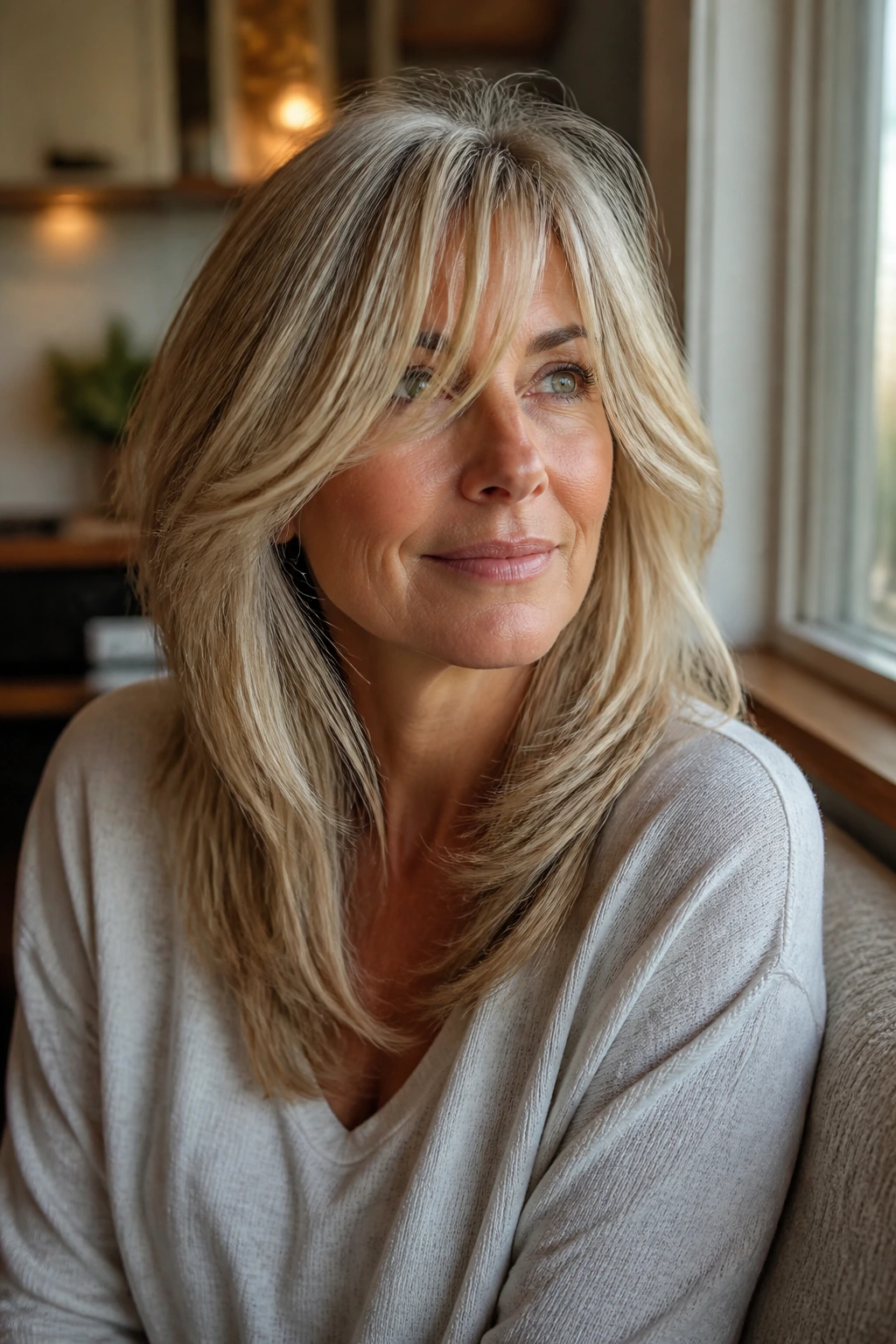
Some mornings, you want a haircut that forgives you. Long bangs do that. They can sit to the side, split in the middle, or be tucked behind an ear without looking like a mistake. Paired with medium layers, they give the hair movement and keep the face from feeling boxed in.
The long-bang approach is easier to grow out than short fringe, which makes it a useful choice if you are not looking for constant trims. The rest of the layers should stay soft and blended, with no hard jumps in length. That keeps the cut calm.
This is the haircut version of a good white shirt: simple, useful, and far less plain than it looks at first glance.
28. Blunt-Base Midi with Hidden Internal Layers
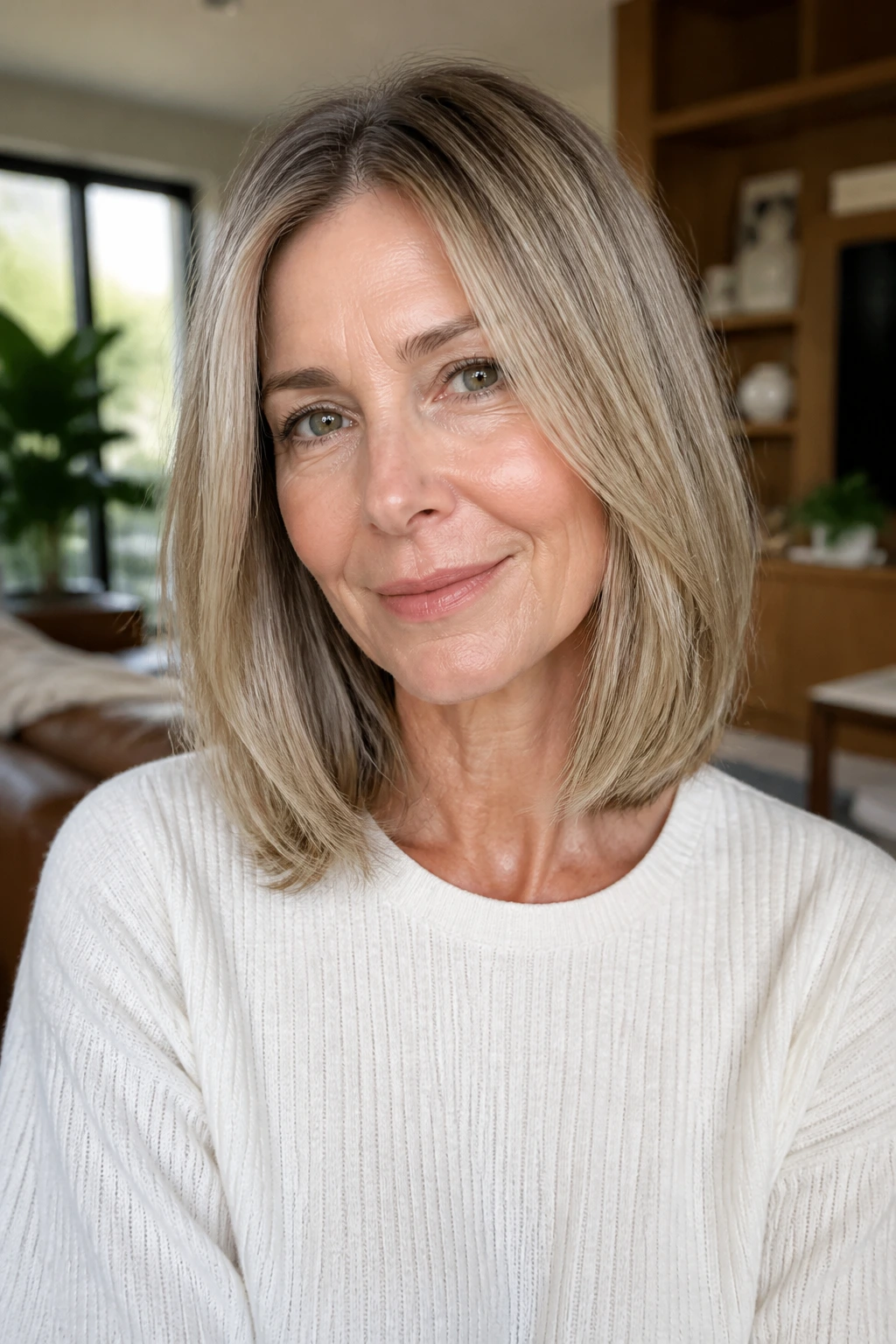
Here’s the contrarian pick. If you do not want visible choppiness, keep the base blunt and hide the layers inside. The shape stays full at the edge, which helps medium hair look dense, but the internal layering gives the movement and airiness you’d miss in a solid one-length cut.
This approach is especially useful for hair that’s fine on the ends but fuller at the top. The blunt line keeps the perimeter strong; the hidden layers stop the middle from looking bulky. It’s a smart compromise, not a boring one.
Ask for subtle face-framing pieces only if you want the front to move. Otherwise, let the silhouette do the work.
29. Soft Retro Flip with Medium Layers
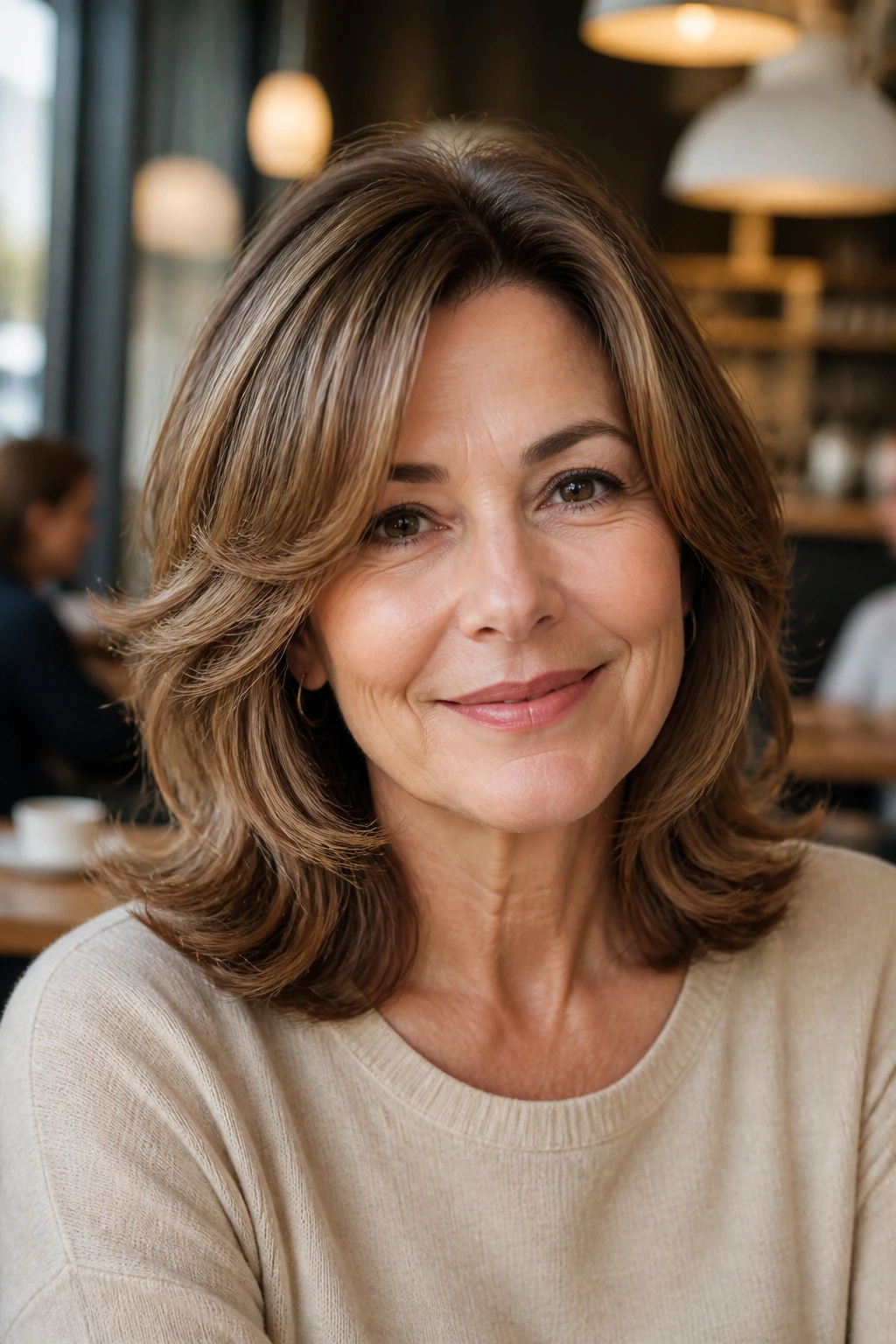
A little retro energy can be useful when it’s handled lightly. This cut brings back that soft flipped finish at the ends, but the layers keep it current and less rigid. The overall effect is polished, with a touch of bend that keeps the hair from hanging straight down.
The flip should be loose, not hard. If the ends curl too sharply, the haircut starts to look dated fast. Keep the brush movement gentle and the sectioning clean. That’s the difference between a nod to the past and a costume.
I like this on medium hair because it creates visible shape without needing a complicated styling routine. A medium round brush is enough.
30. Elegant Layered Shape with Movement at the Ends
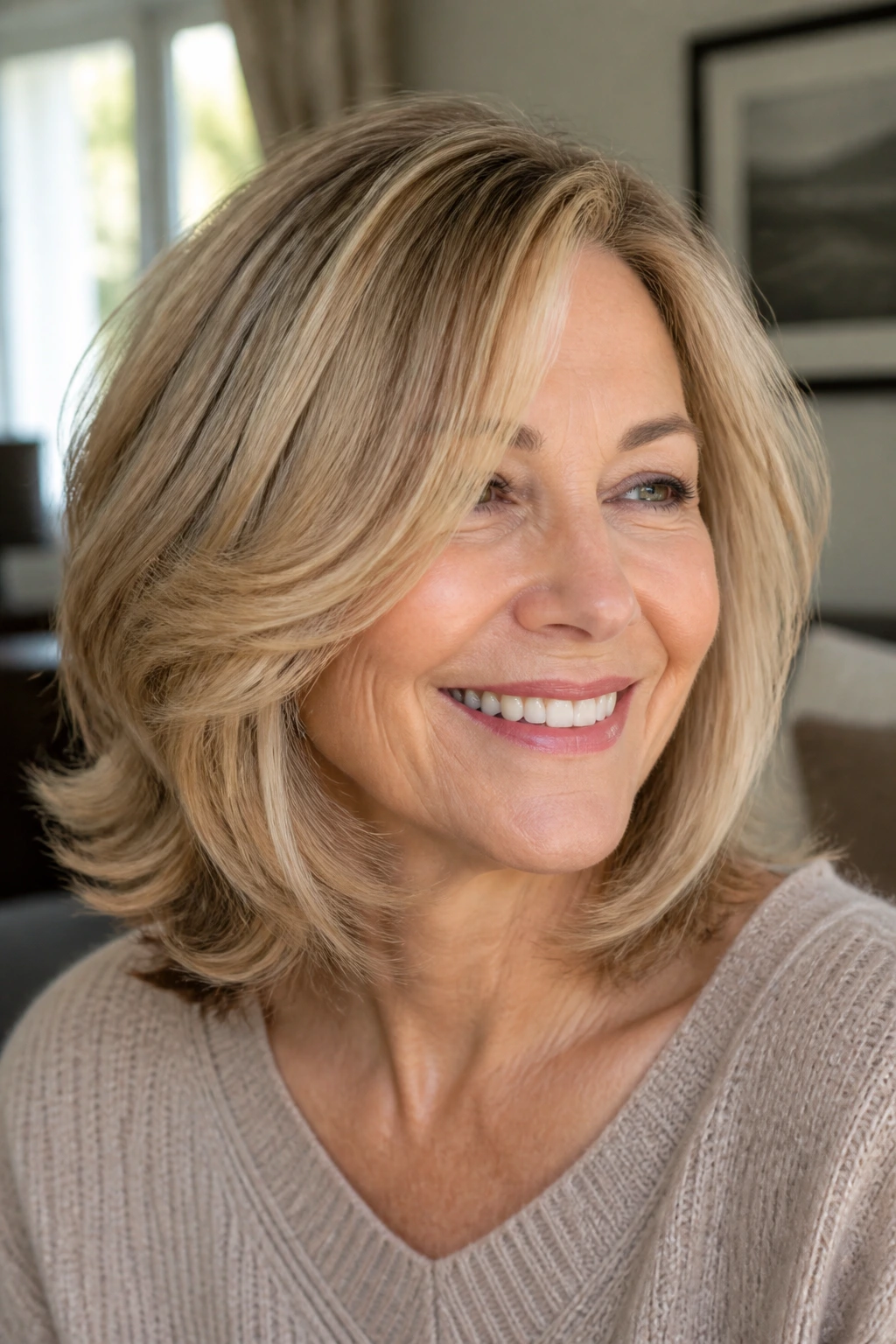
This is the closing note I’d save for someone who wants something graceful, not flashy. The layers are blended enough to keep the outline smooth, but the ends still move when you turn your head or tuck the hair behind one ear. It has polish. It also has air in it.
The best version lands somewhere between a classic blowout and a soft shoulder cut. The front pieces should skim the face in a way that feels deliberate but not severe, and the ends should bend just enough to avoid a flat, tired line. That tiny bit of movement is what keeps the style from feeling heavy.
If you want a haircut that can live in both casual and dressier settings, this is the one to study.
Why Medium Layers Keep Working So Well After 50
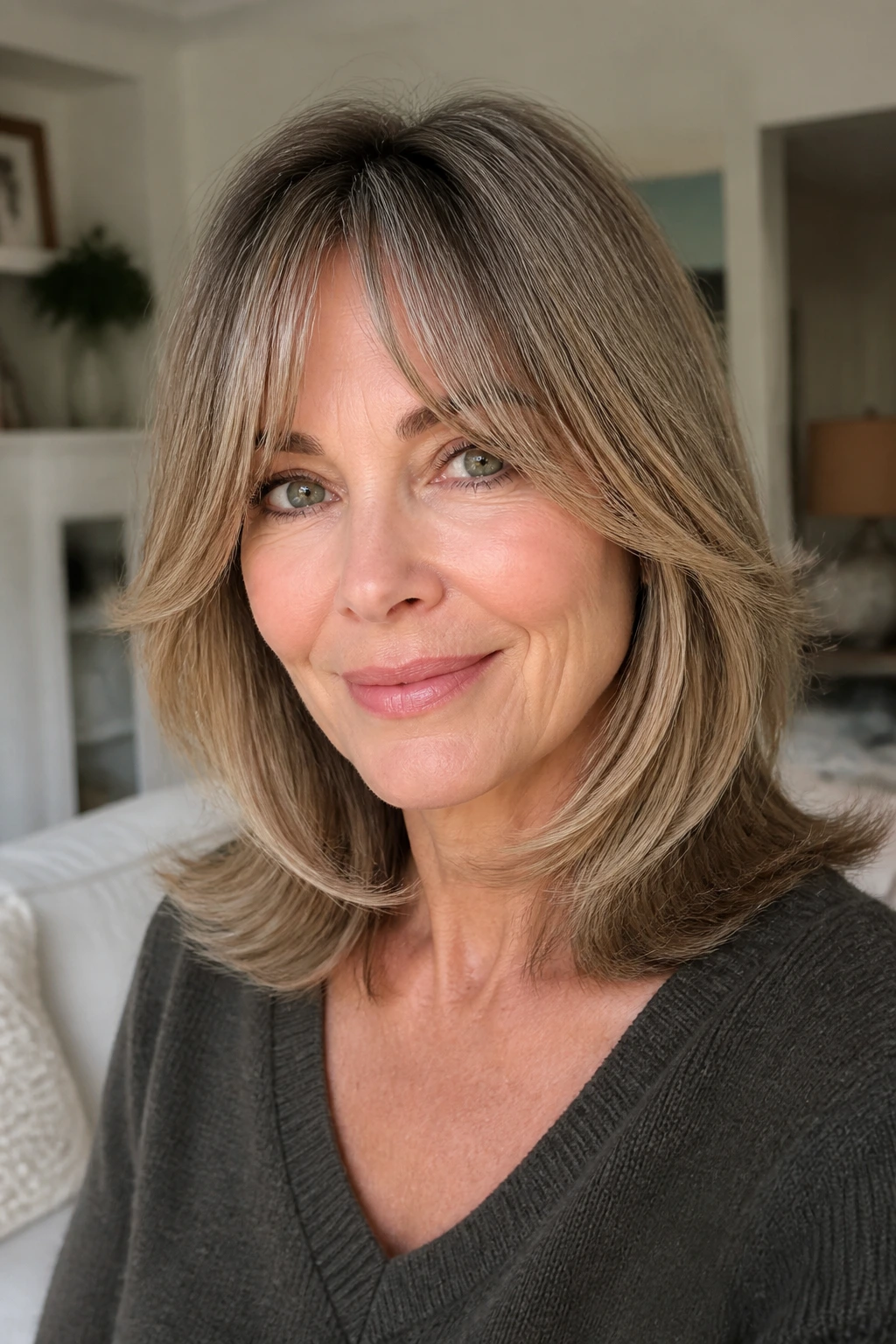
Hair changes shape over time. It often feels finer at the crown, drier at the ends, and less interested in holding a hard line around the face. Medium layers solve those problems by taking some weight out of the places that collapse and leaving density where the haircut needs body. That’s the real logic behind the look.
The sweet spot is usually around the collarbone to the shoulders. Go much shorter and you can lose the swing that makes layered hair interesting; go much longer and the weight starts to pull the front down. Medium length keeps the cut responsive. It still moves with a brush. It still tucks behind the ear. It still gives you room for a clip, which is never a bad thing.
Face-framing layers do a different job than the layers hidden in the back. They change where the eye lands. Instead of stopping at the ends, the eye follows the front pieces up toward the cheekbones and eyes, which creates more lift around the face. That’s why a good layered medium haircut can feel softer without looking too styled. The shape does the work.
And no, “more layers” is not always better. Too many short pieces can make fine hair look see-through and thick hair look puffy in all the wrong spots. The cut has to be placed, not just thinned.
What to Tell Your Stylist Before the First Snip
Bring photos, yes, but do not stop there. Photos show the mood. They do not show your hair density, your cowlicks, or the fact that your crown flattens every time humidity shows up. Tell the stylist where your hair lives in real life: flat at the top, wide at the sides, curly at the nape, whatever the case may be.
The most useful sentence in the chair is usually the plain one. Say where you want the shortest face-framing pieces to land — cheekbone, lip, chin, or collarbone — and say how much length you want to keep in back. That tells the stylist whether to build a soft frame or a stronger angle. If you wear glasses, say that too. The front pieces need to cooperate with the frames, not fight them.
Mention Your Styling Habit
If you air-dry most days, say so. A cut that depends on a polished blowout may look lovely for forty minutes and then collapse into a different haircut by noon. If you use heat tools only once a week, ask for layers that still make sense with natural texture.
Say How Much Maintenance You’ll Tolerate
Some layers grow out beautifully. Others need a trim more often to keep the front from dropping into your eyes. Be honest about whether you want a low-maintenance shape or a sharper one. That honesty saves regret.
Ask About the Weight Line
This part matters more than people think. A stylist can leave the perimeter stronger, carve weight out of the mids, or do both. The right choice depends on whether your hair is fine, thick, straight, or curly. The goal is not just movement. It’s movement in the right places.
Essential Tools for Styling Layered Medium Hair
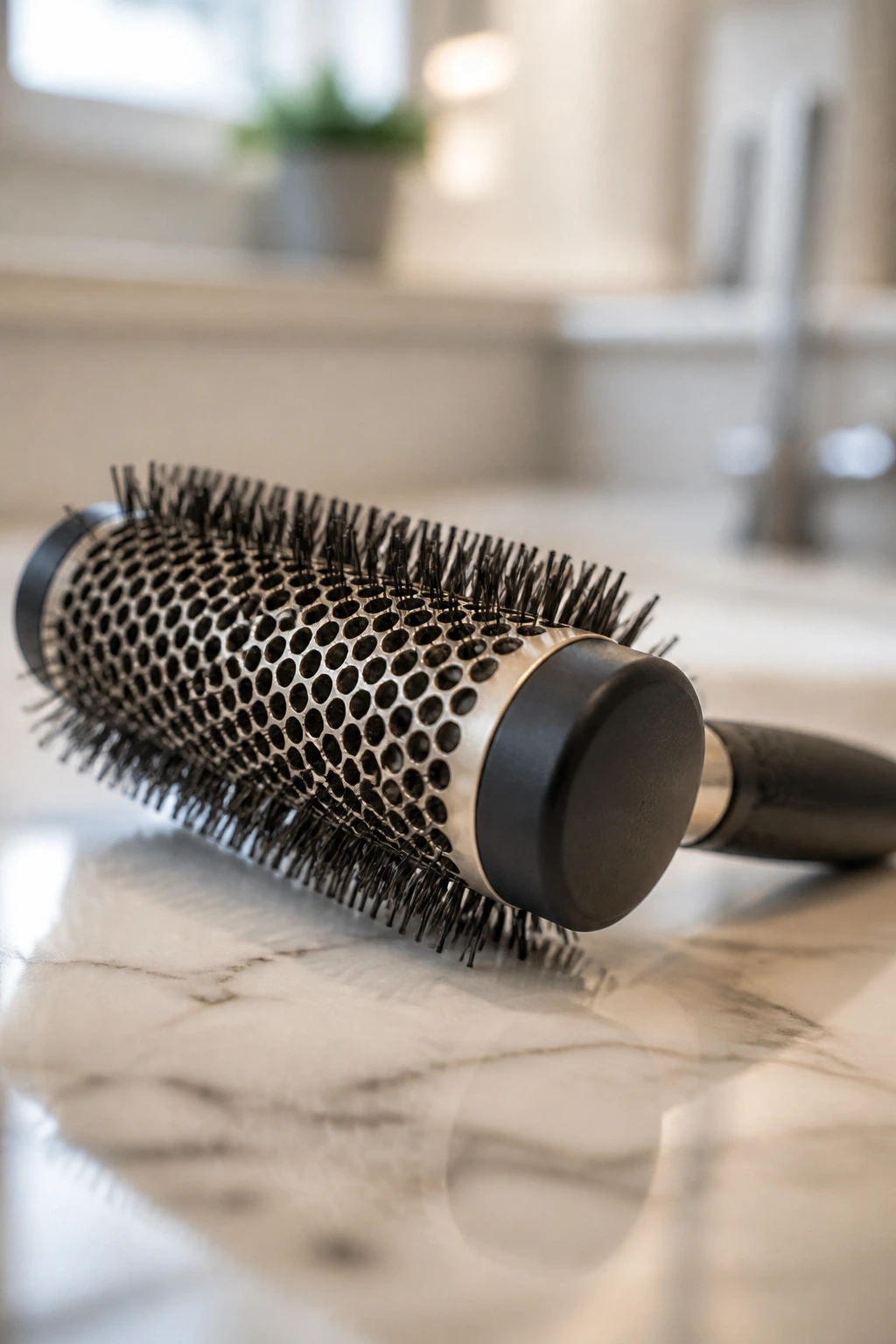
- A 1.5- to 2-inch round brush: Big enough to bend the ends without making them look over-curled.
- A dryer with a nozzle attachment: The nozzle directs airflow and helps the layers sit where you put them.
- Heat protectant spray: Use it before any blow-dry or iron work; it matters more on layered ends, which dry out fast.
- Lightweight volumizing mousse: Best for crown lift without stiffening the whole head.
- Texturizing spray: Good for piecey ends, shag shapes, and soft movement through the mids.
- A diffuser: Worth keeping if your hair is wavy or curly and you want the layers to hold their pattern.
- Sectioning clips: Small tool, big difference. Cleaner sectioning means cleaner layers.
- A smoothing serum or cream: Use the tiniest amount on the last few inches only, especially if the ends get fuzzy.
- A vent brush or paddle brush: Helpful for quick dry-downs on low-maintenance days.
- A tail comb: Useful for clean parts and for lifting the crown without mangling the shape.
How to Wear These Cuts So They Look Intentional
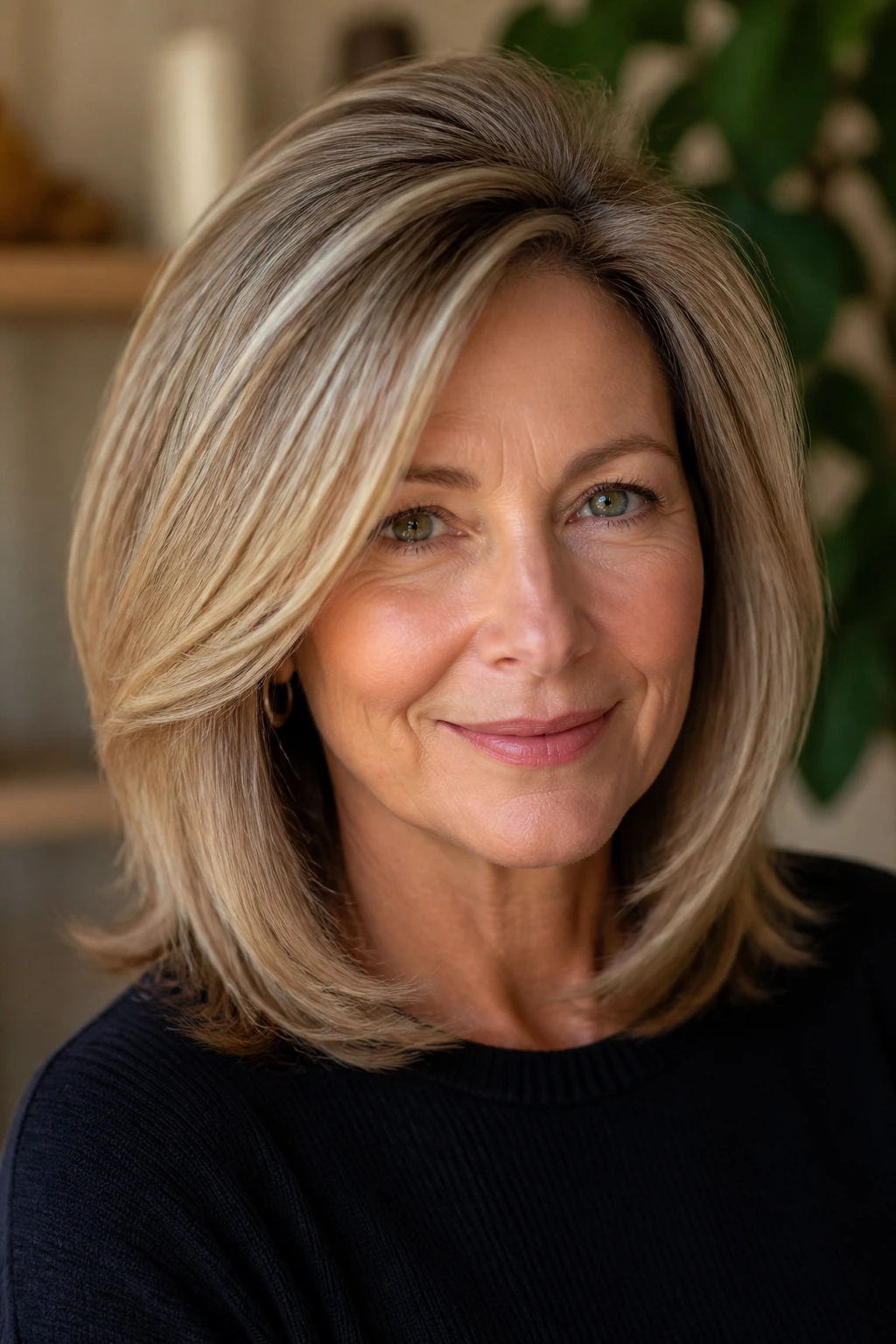
Shape: Keep the front pieces doing the visible work. If you’re wearing a layered lob or midi, bend the face-framing sections away from the face first, then let the rest follow. That gives the cut a cleaner line and keeps the volume from spreading too wide at the sides.
Accessories: Glasses, earrings, and clips all change the balance. If your cut has long front layers, tuck one side behind the ear and leave the other loose. It gives the shape a little asymmetry and stops the style from feeling too “set.”
Length: The ideal face-framing length depends on the job. Cheekbone pieces sharpen the eyes. Chin-length pieces soften a square jaw. Collarbone pieces keep the cut relaxed and easy to grow out. Pick the one that matches the thing you want to soften.
Finish: Use shine sparingly. A little serum or finishing cream on the mid-lengths and ends is enough. If the roots are glossy, the haircut can collapse visually, especially on fine hair.
Styling Boosters That Make the Cut Better

Volume Enhancement: Flip the hair away from its part while blow-drying the crown, then switch it back at the end. That one move gives the roots a lift that lasts longer than piling mousse everywhere.
Movement: Wrap only the front pieces around a round brush or curling iron for a few seconds. You do not need to curl the entire head. Just wake up the face frame and let the rest stay softer.
Customization: If you wear your hair up often, ask for longer side layers that still leave something to fall loose around the face. The haircut should work in a ponytail too. That’s the real test.
Make-It-Yours: Fine hair usually does better with fewer short layers and a stronger perimeter. Thick hair can take more internal layering and still look full. Curly hair needs the layers to follow the curl pattern, not fight it. Straight hair usually benefits from a bit more surface texture near the ends.
Garnish, so to speak: A clean side part, one tucked side, or a small barrette at the temple can make layered hair look finished without turning it stiff. Small details. Big payoff.
Common Mistakes That Flatten or Age the Shape

The first mistake is starting the layers too high. You can spot it when the crown looks fluffy but the ends look thin and the shape feels open in the wrong way. The fix is a longer layer pattern that keeps density at the perimeter and moves weight only where the hair needs it.
The second mistake is cutting the face frame too short. Short pieces that stop above the cheekbones can bounce awkwardly and make you feel as if you’re constantly pushing hair away from your eyes. Ask for a softer landing point instead — cheek, jaw, or collarbone, depending on the shape you want.
The third mistake is overloading fine hair with texture cream or heavy oils. The layers go limp, and the cut looks stringy by noon. Use lightweight products and keep them off the roots.
The fourth mistake is ignoring your natural part and cowlicks. A layered cut that fights the way your hair grows will require daily correction. That gets old fast. Work with the part line and the natural direction of the front pieces.
The fifth mistake is asking for the same cut photo without checking texture. A shag on thick hair and a shag on fine hair are not the same haircut, no matter what the screenshot says. The outline might match; the behavior will not.
Variations and Adaptations to Try
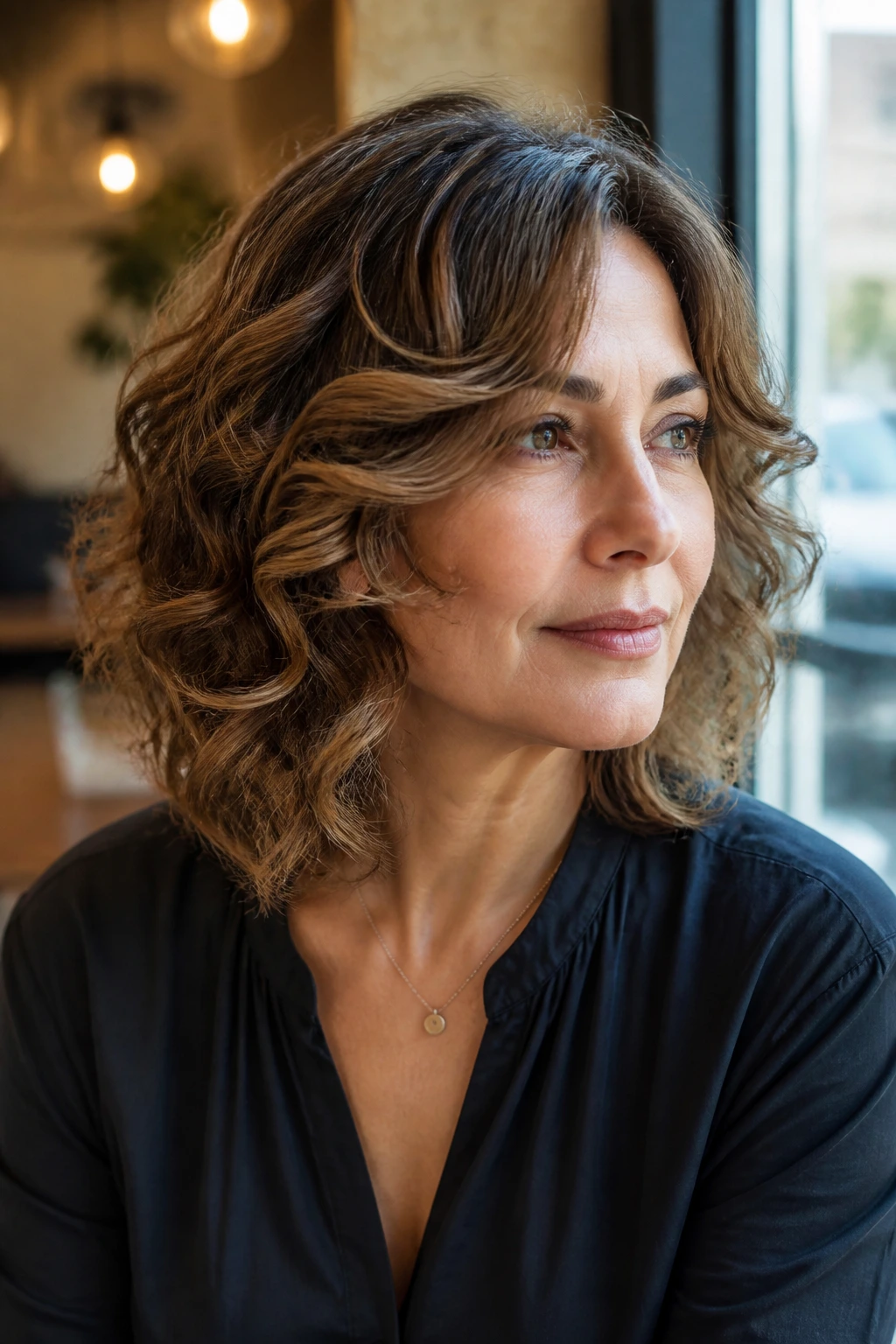
The Silver Glow Version: Keep the layers long and soft, then let silver or salt-and-pepper tones do the visual work. This version is especially nice when you want the haircut to frame the face but not shout from across the room.
The Glasses-First Version: Ask for front pieces that start lower and stay out of the temple area. It keeps the cut from tangling with frames and makes daily styling less annoying.
The Air-Dry Version: Reduce the number of short layers and keep the face frame blended. That gives waves and bends room to settle naturally without looking half-finished.
The Blowout Version: Add more lift at the crown and keep the ends softly rounded. This is the one if you like a polished shape and don’t mind a round brush.
The Curly Halo Version: Let the curls set the height, then keep the face frame long enough to curl back in. It gives shape without losing the spring.
The Low-Maintenance Version: Preserve a stronger perimeter and use only subtle internal layers. Good for busy weeks, long grow-out cycles, and anyone who wants movement without frequent salon visits.
Keeping Medium Layers Looking Fresh Between Cuts
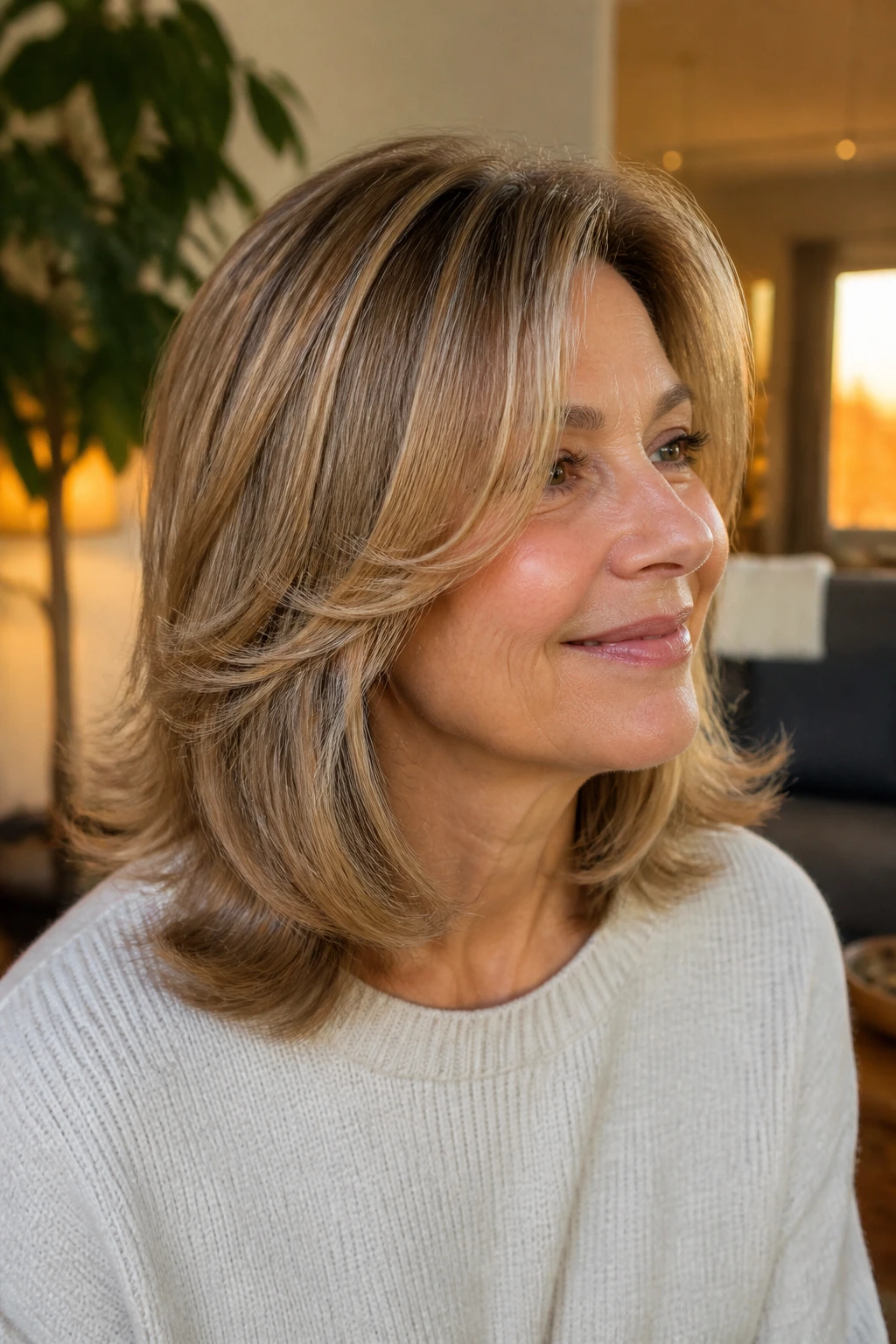
Most layered medium cuts hold their shape for about 8 to 12 weeks, depending on how fast your hair grows and how short the front pieces are. If the face frame is doing a lot of work — especially with bangs or shorter cheekbone layers — you may want a touch-up closer to the 8-week mark. If the layers are long and blended, you can usually stretch it a bit farther.
Use products with a light hand. That’s the thing people forget. Medium layers are shape-dependent, and too much cream, oil, or heavy mousse can sink the movement by day two. If your roots get oily fast, dry shampoo at the crown can buy you another day or two without making the ends feel dusty.
If your hair is silver or gray, a purple shampoo once every one to two weeks can keep yellow tones from muddying the shape. Do not overdo it or the hair can take on a flat, dull cast. For dyed hair, a color-safe shampoo and a good conditioner on the ends are enough most of the time.
At night, a loose clip or a soft braid can keep the front layers from kinking weirdly. A satin pillowcase helps too. Small habit. Big difference in the morning.
Questions People Ask Before They Book the Cut
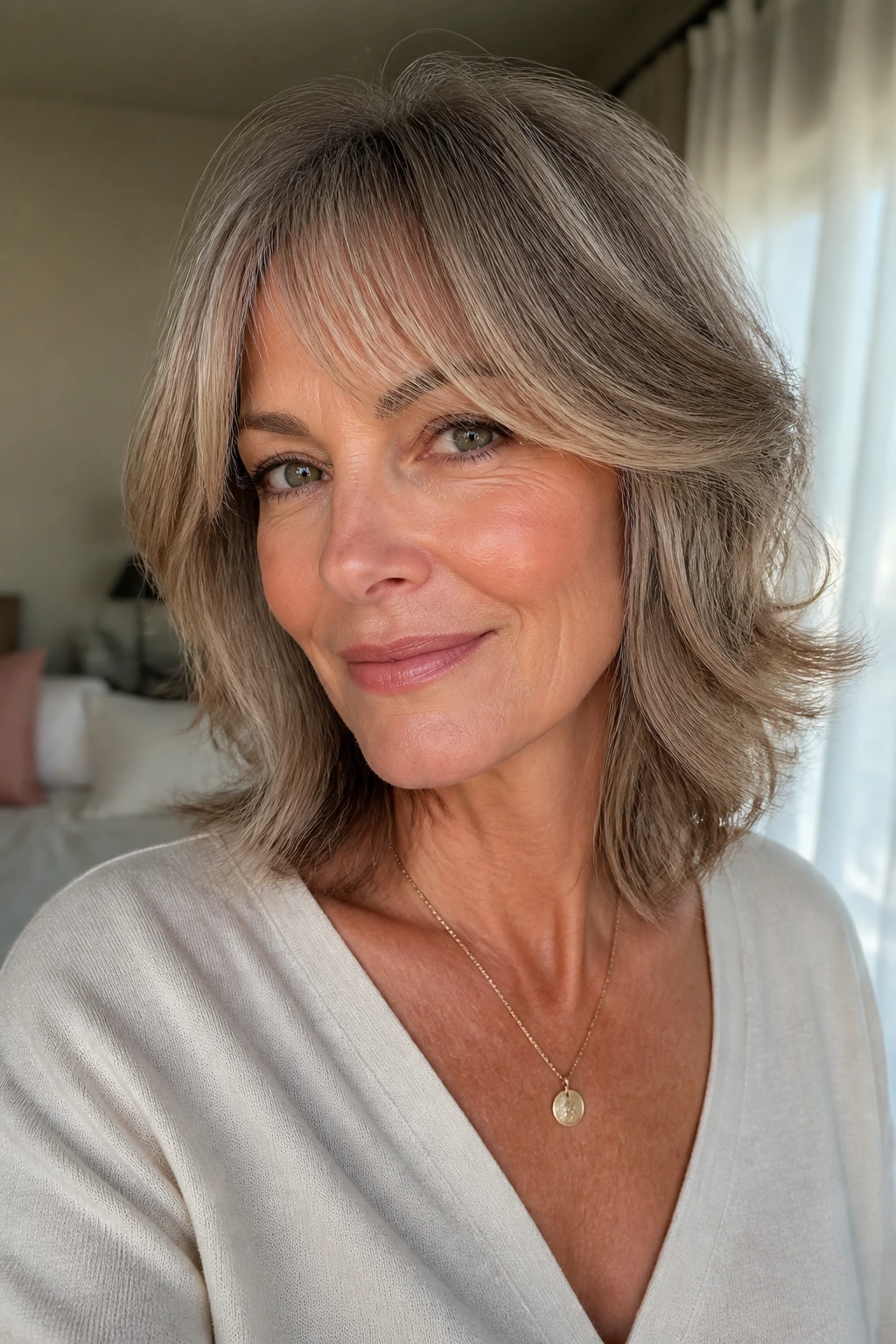
Will layered medium hair make fine hair look thinner?
Not if the layers are placed well. Too many short layers can thin out the ends, but longer internal layers and a stronger perimeter usually make fine hair look fuller, not less.
Are curtain bangs a bad idea if I wear glasses?
No, but they need to be cut with the frames in mind. The bangs should sit high enough or soft enough to avoid rubbing the lenses and crowding the brow line.
Should curly hair be cut dry?
Often, yes. Dry cutting lets the stylist see shrinkage and curl pattern, which helps avoid short surprises once the hair dries. It is not the only method, but it’s a smart one for layered curls.
How often should I trim a layered medium haircut?
Most people do well every 8 to 12 weeks. If the front is short or the cut has a lot of shape around the face, keep it closer to the shorter end of that range.
Can I still wear my hair in a ponytail with layers?
Absolutely. Just ask for longer face-framing pieces if you want loose tendrils around the face, and make sure the shortest layers won’t fall out in awkward little spikes.
What if my hair flips out in weird places?
That usually means the layer placement is working against your growth pattern. A stylist can adjust the angle, leave more length in the ends, or soften the internal layering so the hair settles better.
Do razors work on every hair type?
No. Razor cutting can be lovely on thicker hair or certain straight textures, but it can fray delicate ends if used carelessly. Ask for it only if your hair can handle that kind of soft removal.
Is a middle part required for these cuts?
Not at all. Side parts, off-center parts, and even no fixed part can work, as long as the face-framing pieces are cut to follow the direction you actually wear.
The Shape That Keeps Moving
The best layered medium haircut is the one that still looks alive when you stop fussing with it. Not overstyled. Not stiff. Just shaped in the right places so it moves when you do and softens the lines you don’t want to emphasize.
That’s why these cuts keep coming back in real salons. They do more than sit there looking neat. They open the face, hold some lift at the crown, and keep the ends from feeling heavy or old-fashioned. If you choose the right one for your texture and tell your stylist where you want the front pieces to land, the haircut does a lot of the work for you.
Take one or two of these ideas to your next appointment, point to the exact length you want at the cheek or collarbone, and ask for layers with movement rather than extra volume everywhere. That’s where the good hair days start.