



A short wavy bob on curly hair can shrink two inches before lunch.
That is not a flaw. That’s the haircut telling the truth about your texture. On curls, length is never a fixed thing; it’s a negotiation between water, gravity, humidity, and the shape of the cut. And when the cut is right, the result has that sharp-but-soft look that flat hair spends a fortune trying to fake.
That’s why 25 short wavy bobs for curly hair and oval faces deserves more than a gallery of pretty headshots. Oval faces can take a blunt edge, a side sweep, a fringe, or a rounded curve without the proportions going sideways. Curly hair, meanwhile, needs a cut that respects shrinkage, bulk, and the way each bend stacks on the next. Miss those details, and the bob turns boxy or puffs out at the sides. Hit them, and the whole thing looks intentional in that rare, effortless way that still took skill to get there.
The sweet spot is smaller than most people think. A bob that lands at chin level on wet hair might sit higher when dry; a “soft” layer placed in the wrong spot can swell into a triangle; a fringe that looks perfect in the chair can jump up half an inch after diffusing. These are the little realities that separate a decent bob from the kind you keep touching because it falls into place on its own.
Why These Short Wavy Bobs Work So Well on Curly Hair and Oval Faces
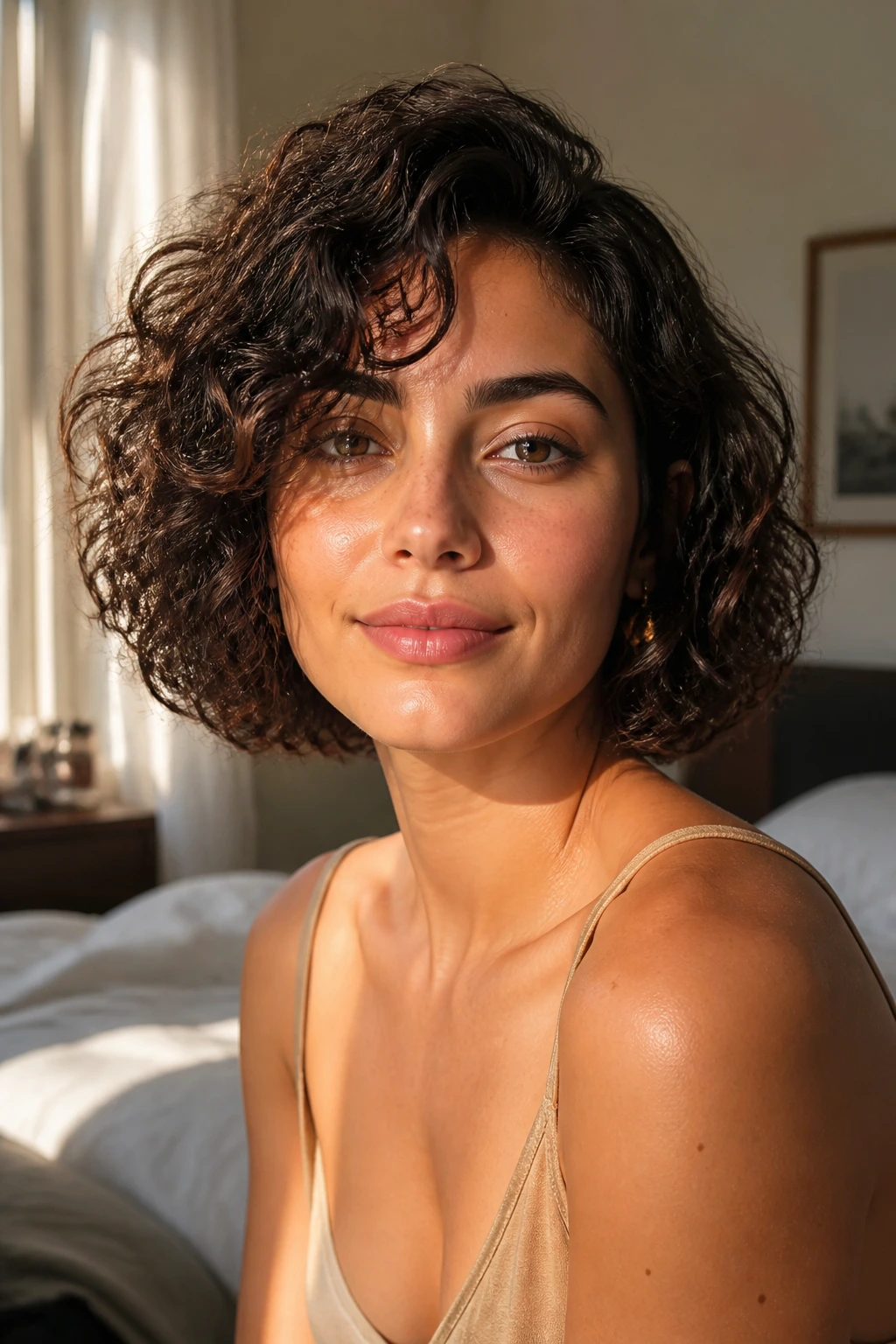
-
Oval faces can take shape without extra correction: You do not need to hide a forehead, widen a jaw, or stretch the face with clever tricks, which means the cut can be more playful and less forced.
-
Curly hair gets room to move instead of collapsing: A shorter length keeps curls from hanging in a long, heavy curtain that drags the wave pattern down and makes the ends look stringy.
-
The right bob uses shrinkage on purpose: When a stylist knows your curl pattern, the cut can land at jaw, chin, or cheekbone in a way that still looks balanced once it dries.
-
Volume can be placed where it flatters most: Crown lift, side-part lift, and soft face-framing pieces all change the mood without changing the whole haircut.
-
Maintenance stays honest: A bob grows out in a way you can actually see, which makes it easier to trim before the shape gets lazy and triangular.
How to Read the 25 Ideas Before You Book the Cut
Not every short bob is built the same. Some are designed to float around the jaw; others hug the nape and flare out at the sides. On curly hair, that difference matters more than the label on the salon mirror. A “bob” can mean a one-length shape, a stacked shape, a rounded shape, or something chopped and airy with barely any visible layering at all.
If your curls are loose and stretchy, you can usually wear a cleaner edge without the silhouette becoming too wide. Tighter waves or denser curls need more internal shaping, because the hair wants to build its own architecture whether you ask it to or not. That’s the part people miss. They think the cut is about length. It isn’t. It’s about where the mass lands when the curls wake up.
Oval faces have a little freedom here, which is one reason this collection works. You can go centered, side-swept, blunt, curved, or asymmetrical and still keep the face in balance. The real question is not “Can I wear this?” It’s “Where do I want the eye to go first — the cheekbones, the eyes, the jaw, or the lips?” That answer changes which bob belongs on your head.
1. Chin-Length Curly Bob with Side Part
A chin-length bob with a side part is the one I reach for when someone wants the cut to look tidy without feeling stiff. The side part throws a little lift into the crown, and that matters on curly hair because the top can flatten faster than the ends. On an oval face, the curve at the chin lands in a very friendly spot — it frames the jaw without boxing it in.
Why It Works
The side part breaks up the symmetry just enough to keep the shape from looking too neat. That small offset also helps the curls fall in a soft diagonal line, which is a nice trick if your face already has balanced proportions and you want a bit more attitude.
Ask for the perimeter to graze the chin when dry, not when wet. That distinction is everything.
- Best for: Loose curls and big waves that need a little direction.
- Shape note: Keep the front pieces a touch longer than the back so the bob doesn’t inflate into a bell.
- Styling note: Diffuse with your head tipped slightly to the side the part will live on.
Best move: Clip the part side at the roots while the hair is damp. It gives the bob a quiet lift that lasts past the first hour.
2. Rounded French Bob with a Soft Micro Fringe
This cut has a little theater in it, and I mean that as a compliment. The rounded French bob sits close to the head through the sides, then opens into a soft curve at the jaw. The micro fringe keeps the forehead visible, which works well on oval faces because it lets the whole face shape stay open and clean.
Why It Works
Curly hair makes a micro fringe tricky, so the fringe has to be intentionally soft, not chopped to a hard line. The best version is piecey and a little irregular, with enough length that it can curl into itself instead of standing up like a ruler.
If your curls are springy, leave the fringe longer than you think. You can always trim it later. You cannot put hair back.
A good French bob should feel like it was cut for movement, not for a ruler.
- Keep in mind: A dense curl pattern will shorten the fringe fast.
- Ask for: Slightly beveled ends around the face so the curve looks airy, not helmet-like.
- Skip this if: You hate touching up bangs every week.
3. Jaw-Skimming Tousled Bob with Invisible Layers
Why does this one work so well? Because it cheats in the nicest possible way. The outside line looks simple — a clean bob that hits around the jaw — but the weight is removed from the inside, so the hair can move without stacking into a triangle. That makes it a strong choice for thicker curls and oval faces that can carry a little width at the cheeks.
What Makes It Different
Invisible layers are not about making the haircut obviously shaggy. They’re about taking bulk out from underneath so the top layer can sit lightly. If you over-layer the outside, curly hair can frizz in the wrong places. Keep the shaping tucked in where the eye will not catch it immediately.
How to Wear It
Use a lightweight cream and a palmful of mousse, then diffuse until the roots are about 80 percent dry. Stop before the hair is bone-dry if you want the ends to keep a little softness.
- Best match: Medium-to-dense curl patterns.
- Good sign: The ends swing instead of puffing.
- Watch for: Too much thinning near the perimeter — that makes the outline fuzzy.
4. Asymmetrical Bob with a Deep Side Part
A deep side part changes the whole mood. One side falls closer to the cheekbone, the other side stretches past the jaw, and that uneven line gives curly hair somewhere interesting to land. On an oval face, it looks deliberate rather than corrective, which is half the reason it’s so useful.
The asymmetry also helps when one side of your curl pattern behaves better than the other. And yes, most curly heads have a side that plays favorites.
A small length difference is enough. You do not need a dramatic one-inch swing unless you want the cut to read bold from across the room.
- Use it when: You want height at the crown and a little sharpness near the cheek.
- Works best with: Waves that have enough body to hold a line after drying.
- Salon note: Ask for the shorter side to still clear the jaw, not the ear.
5. Curly Bob with Curtain Bangs
Curtain bangs on curly hair can be gorgeous when they are cut with restraint. The trick is to let them bend around the cheekbones instead of trying to behave like straight bangs. On an oval face, that opening in the middle adds shape without crowding the center of the face.
The longest point of the fringe should skim the outer brow or upper cheek when dry. Anything shorter than that can spring up and sit awkwardly high. That’s one of those details people forget until the first wash.
How to Style It
Part the bangs damp, twist each side loosely with your fingers, and let them dry away from the face. If you brush them flat, they can split in weird places later.
The whole cut works because the bangs and the bob speak the same language.
- Best for: People who want fringe without the commitment of a blunt bang.
- Styling cue: Keep the center soft and the corners longer.
- Bonus: It makes a grow-out phase much less annoying.
6. Stacked Bob with a Tapered Nape
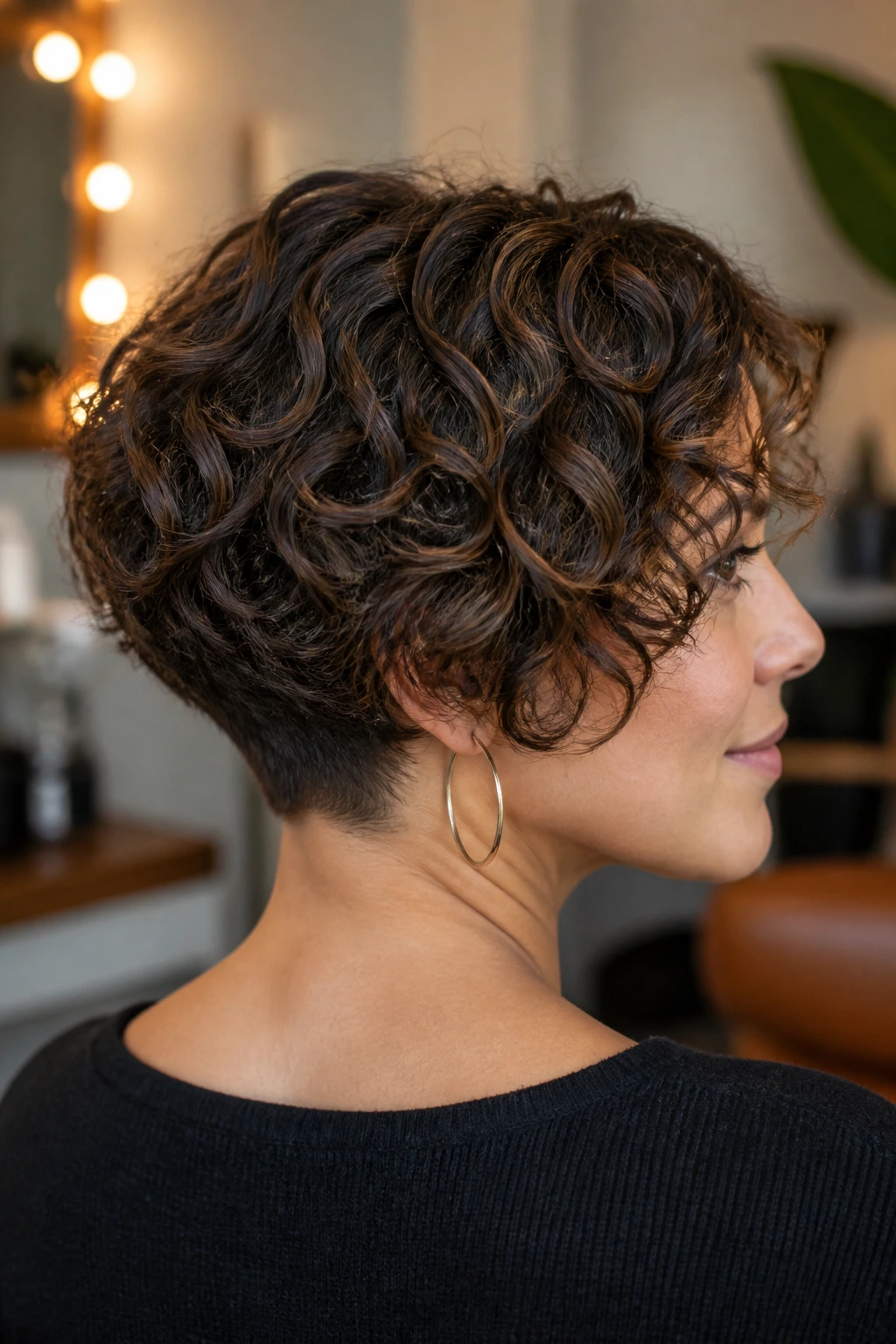
A stacked bob is for the person who wants the back to do some of the work. The shorter nape lifts the shape and lets the front curl forward, which gives curly hair a neat little dome instead of a flat shelf. On oval faces, the back volume can make the cheekbones look even more pronounced, which is a nice side effect.
The taper at the nape has to be clean. If it’s too abrupt, the haircut can look clipped and old-fashioned in a bad way. If it’s too soft, you lose the lift.
This style loves thicker curls because the stacking helps control bulk at the neckline.
- Good for: Dense hair that tends to mushroom at the bottom.
- Ask for: A gradual stack, not a dramatic wedge.
- Maintenance: Needs trims more often than a softer bob.
7. Blunt Bob with Soft Texture at the Ends
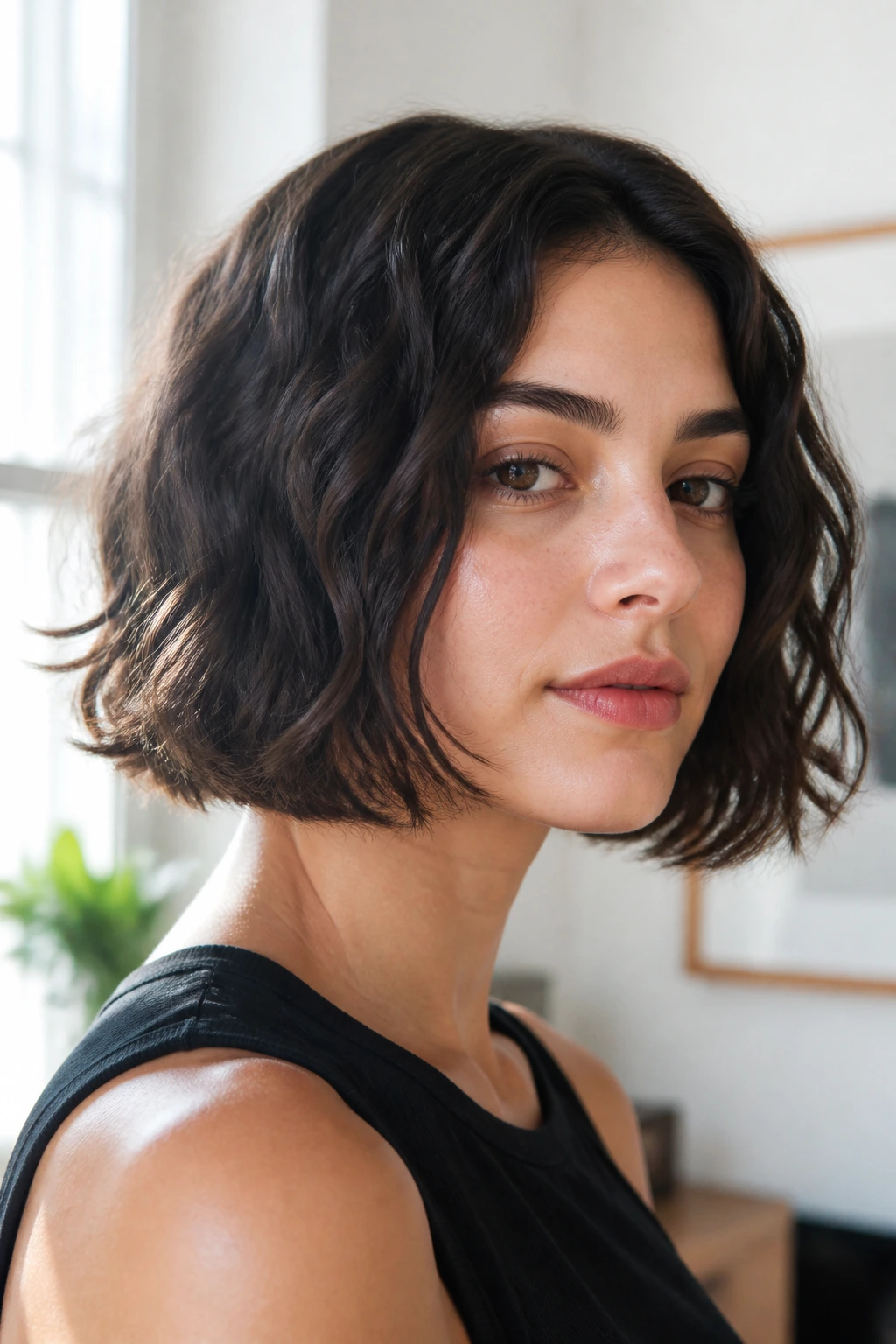
A blunt line on curly hair sounds strict, but it can look expensive in the best sense of the word. The shape rests on the strength of the outline, while the ends keep enough texture to move. That balance matters. If the edges are carved too hard, the curl pattern can look boxy. If they’re too broken up, the bob loses its clean edge.
What to Watch For
The stylist should leave the perimeter intact and soften only the last half-inch or so. A tiny bit of point-cutting goes a long way. More than that and you start losing the shape that makes a blunt bob satisfying.
Oval faces handle blunt bobs well because the even line does not fight the face’s natural balance. It just sits there and frames it.
If you love a crisp outline, this is the one to try.
- Best with: Wavy curls that clump neatly.
- Less ideal for: Hair that frizzes easily at the ends.
- Home styling: Use a diffuser with low airflow to protect the edge.
8. Collarbone Mini Lob with Loose Waves
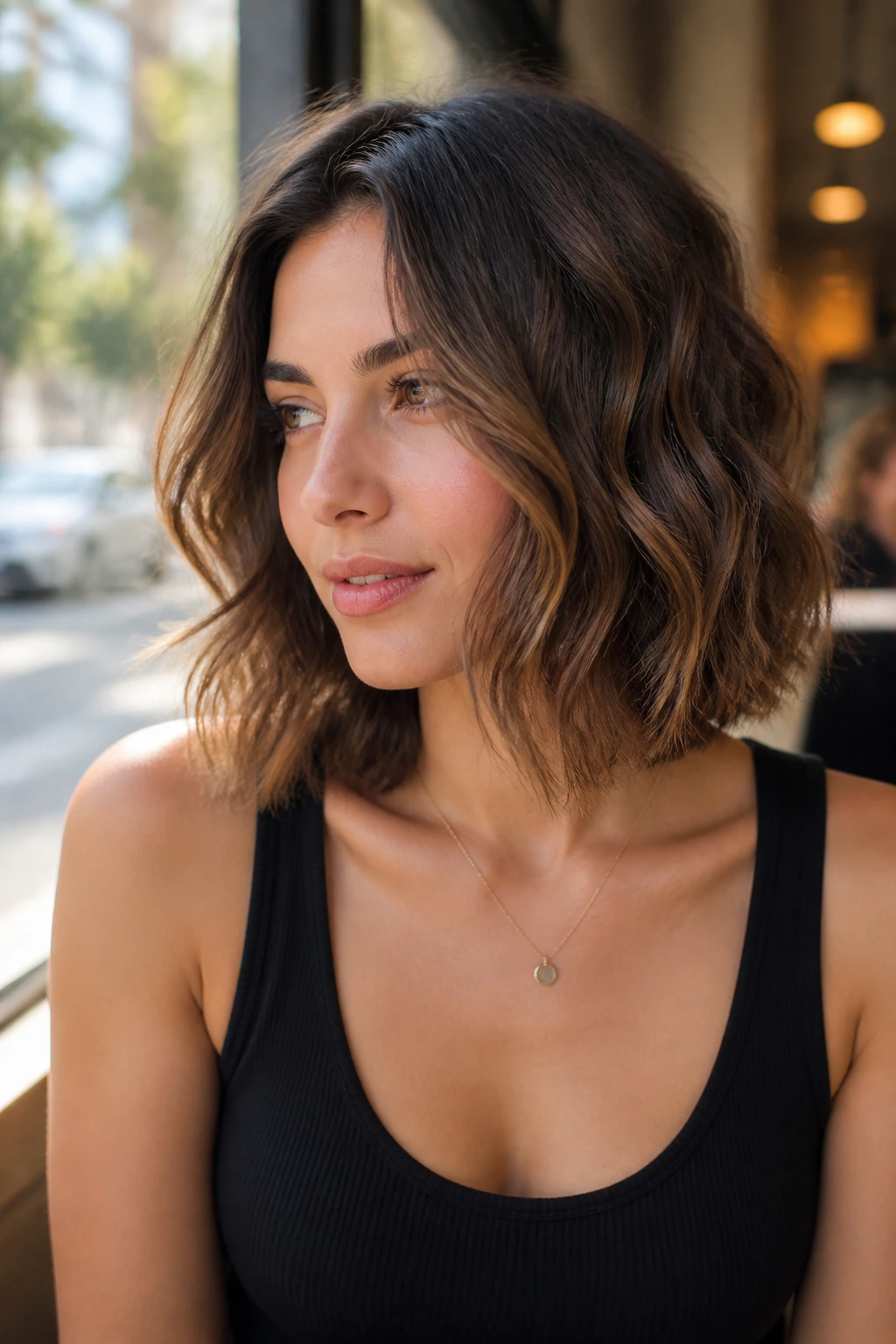
This is the longest cut in the list, but it still lives in short-bob territory because the layers and shape do the visual work. The collarbone length gives you a little breathing room if you’re nervous about going fully chin-length, and loose waves keep it from feeling heavy. On an oval face, the longer front pieces create a soft frame without pulling the eye downward too far.
A mini lob also lets you tuck hair behind the ear without the whole style collapsing. That sounds small. It is not. That tiny bit of flexibility changes how you live with the cut.
Why It Works
The extra length gives curls a place to settle, which is useful if your hair gets triangular when cut too short. It’s a good middle step for anyone who wants a bob shape without losing too much of their ponytail options.
- Best for: First-time bob wearers.
- Shape tip: Keep the front slightly longer than the back for swing.
- Styling note: A salt spray can help loosen waves that look too tidy.
9. Choppy Bob with Face-Framing Layers
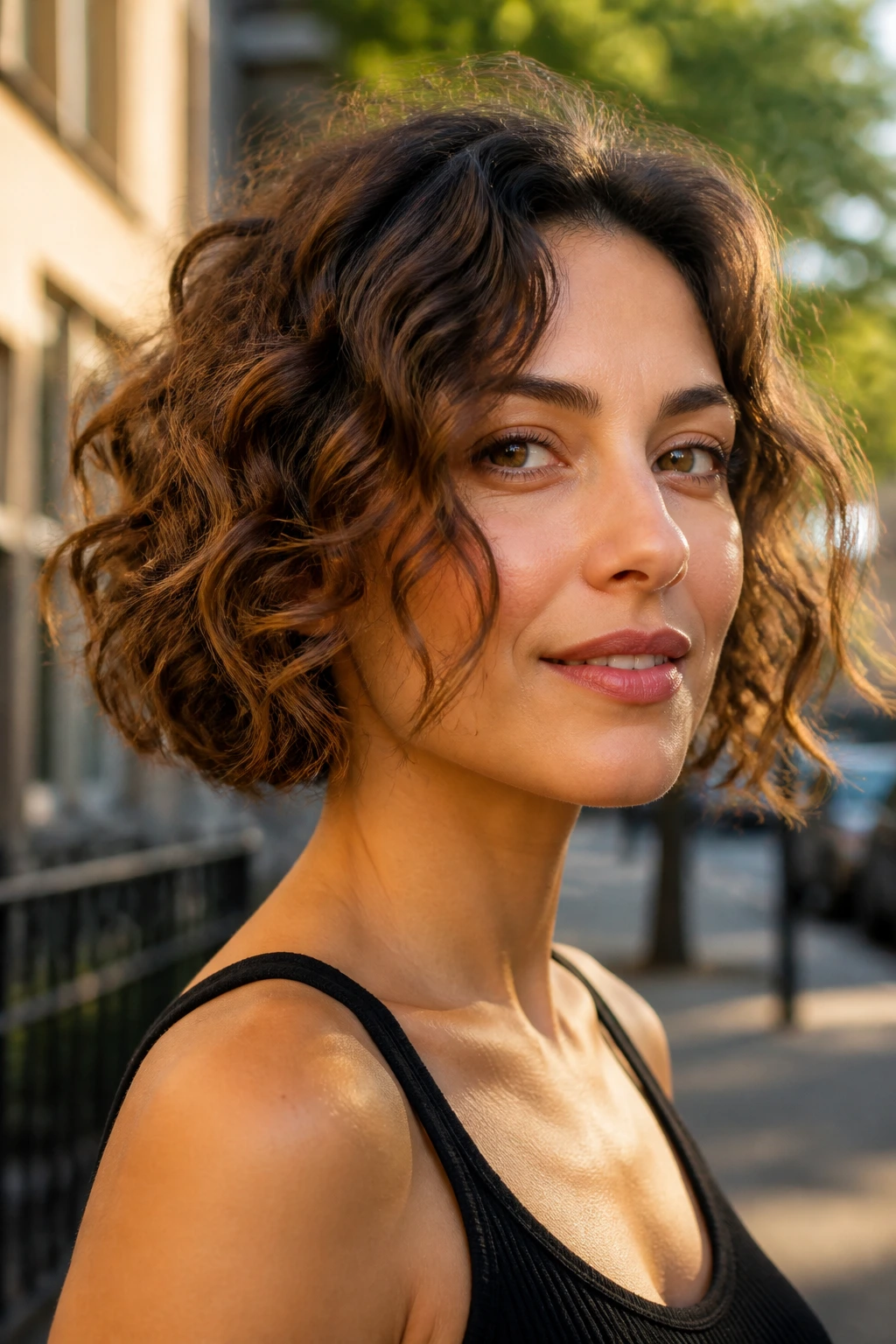
A choppy bob can look messy in the wrong hands and effortless in the right ones. The difference is where the layers sit. On curly hair, the best choppy bob keeps the frame around the face while removing weight from the interior. That way, the haircut gets movement without spreading out like a cloud.
The face-framing pieces should hit around the cheekbones or just below them. On oval faces, that’s a sweet spot because it draws attention upward without stealing length from the jawline.
How It Reads in Real Life
This is the bob that looks especially good when you’re mid-day and half your curl cream has faded. The broken-up outline hides a lot of that natural inconsistency.
- Best for: Medium-density curls that need some air.
- Ask for: Layers that start lower, not up at the temples.
- Avoid: Over-texturizing the crown. It can make the top frizzy fast.
10. Wet-Look Curly Bob
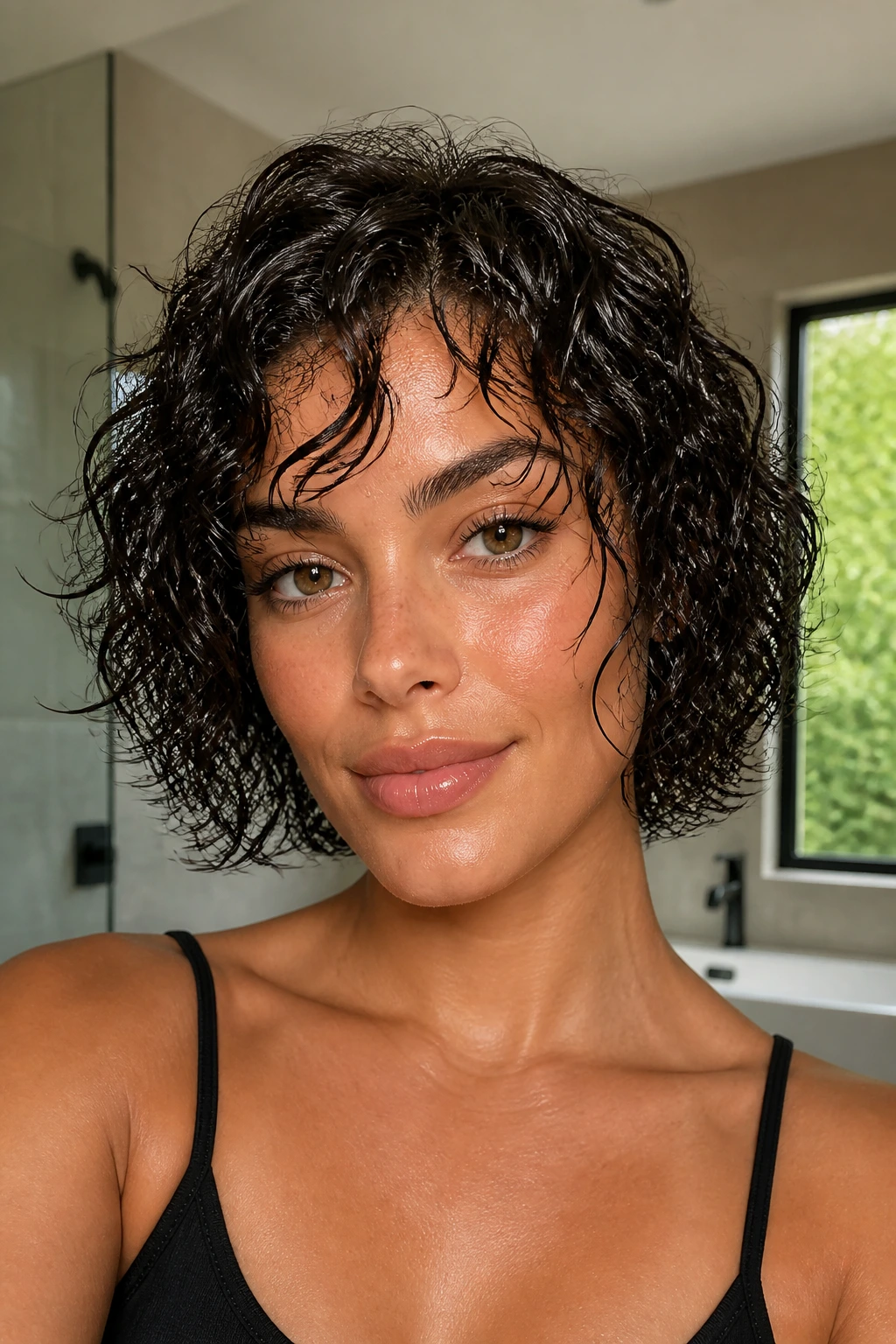
A wet-look curly bob is not for every day, but when it works, it has a slick, modern edge that makes a short bob feel sharper. The shine comes from gel or a gel-cream mix, and the curls stay defined instead of fluffy. That’s the point. You’re trading softness for precision.
Why It Works
Oval faces can take the sleekness because the face shape already carries balance. The shiny finish also lets the curl pattern itself become the feature, especially if you like the contrast between a neat perimeter and springy interior texture.
Use more hold at the roots and less on the ends. If the ends get overloaded, they can look stiff instead of glossy.
A wet-look bob should read as polished, not crunchy.
- Best for: Even curl patterns and confident side or center parts.
- Styling note: Scrunch in gel, then leave the hair alone until it sets.
- Watch for: Flaking from over-layering products.
11. Air-Dried Curly Bob with Long Layers
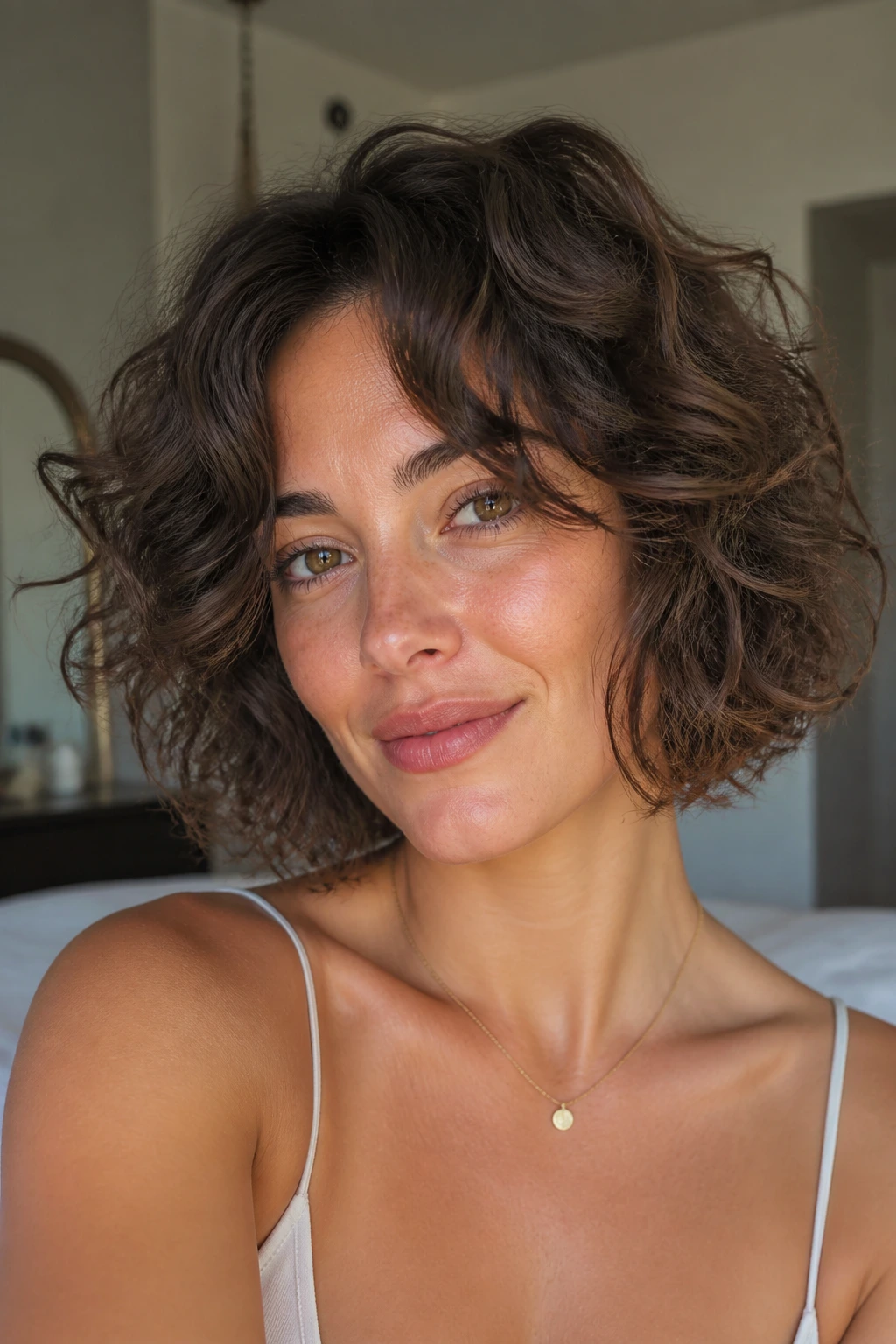
Air-drying is a mood, but long layers make it a smarter one. The layers help the curls dry with shape instead of stacking flat on top and exploding at the bottom. On oval faces, the result is easy and flattering because the volume sits where it should — around the cheeks and jaw, not stuck to the crown.
There’s a quiet honesty to this cut. It does not need much intervention. It just needs a good wash, a little scrunch, and the patience to let gravity do its part.
What Makes It Different
Long layers are the reason it keeps softness. Short layers can work, sure, but they bring more drama. Long layers are calmer. If you want a bob that looks lived in rather than styled to death, this is the one.
- Best for: People who prefer low-fuss styling.
- Product note: Pair with a lightweight curl cream and a small gel cast.
- Texture cue: The ends should curl, not fray.
12. Rounded Bob with a Curly Shag Fringe

This cut has personality. A rounded bob already creates a soft arc around the head, and the shaggy fringe turns the front into a moving target in the best way. On an oval face, the shape keeps the eyes and cheekbones in the frame without making the cut feel severe.
The fringe should not be too blunt. The point is to let it break into pieces so it blends with the rest of the curls. That little irregularity is what keeps the whole thing from looking too arranged.
What It Feels Like
The rounded shape makes thick curls feel controlled, while the fringe keeps the style from reading too polite. It’s the sort of bob that looks best when the wind has messed with it a little.
- Best with: Medium-to-tight wave patterns.
- Salon note: Ask for a curved outline with soft internal layering.
- Styling trick: Diffuse the fringe first so it doesn’t dry flatter than the rest.
13. Side-Swept Bang Bob

A side-swept bang can save a bob from feeling too square around the forehead. On curly hair, the bang should be cut longer than straight-hair versions because the bend shortens it fast. On an oval face, the sweep works almost like a little spotlight, drawing the eye diagonally across the features.
Why It Works
The side-swept line softens the front and gives the bob a bit of movement before the rest of the hair even starts moving. That matters if your curls sit tighter at the nape and looser in the front, which is more common than people admit.
Do not try to force the bang to sit flat. Let it bend. That’s the whole game.
- Best for: People who want some forehead coverage without a full fringe.
- Best styling move: Dry the bang side first with a small diffuser nozzle or fingers.
- Avoid: Cutting the bang too short while the hair is wet.
14. Sculpted Old-Hollywood Curly Bob
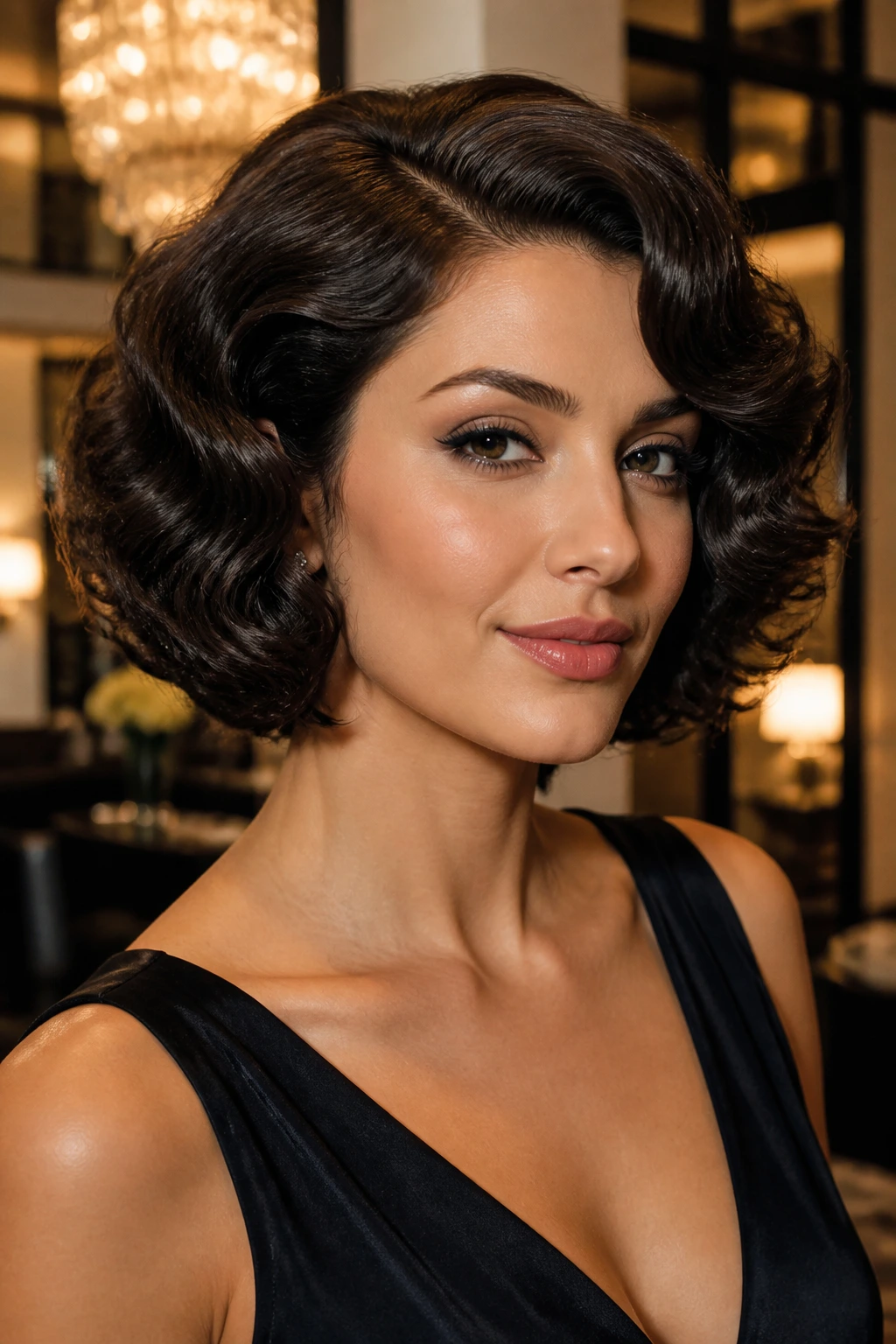
This is the fancy one. The sculpted bob uses defined waves, a neat side part, and a smooth, polished outline to give curly hair a more dressed-up finish. On oval faces, it can look almost architectural — controlled in front, soft at the ends, with just enough curve to keep it from feeling stiff.
The key is shaping the curls rather than flattening them. A side part, a round brush at the front pieces, and a little serum at the ends can turn a regular bob into something that looks planned for dinner, not errands.
I like this cut when someone wants elegance without length. It has posture.
- Best for: Wavy curls that can hold a defined set.
- Finish note: A pea-sized serum is enough; too much kills the movement.
- Styling cue: Tuck one side behind the ear and leave the other loose.
15. Fluffy Bob with Internal De-Bulking
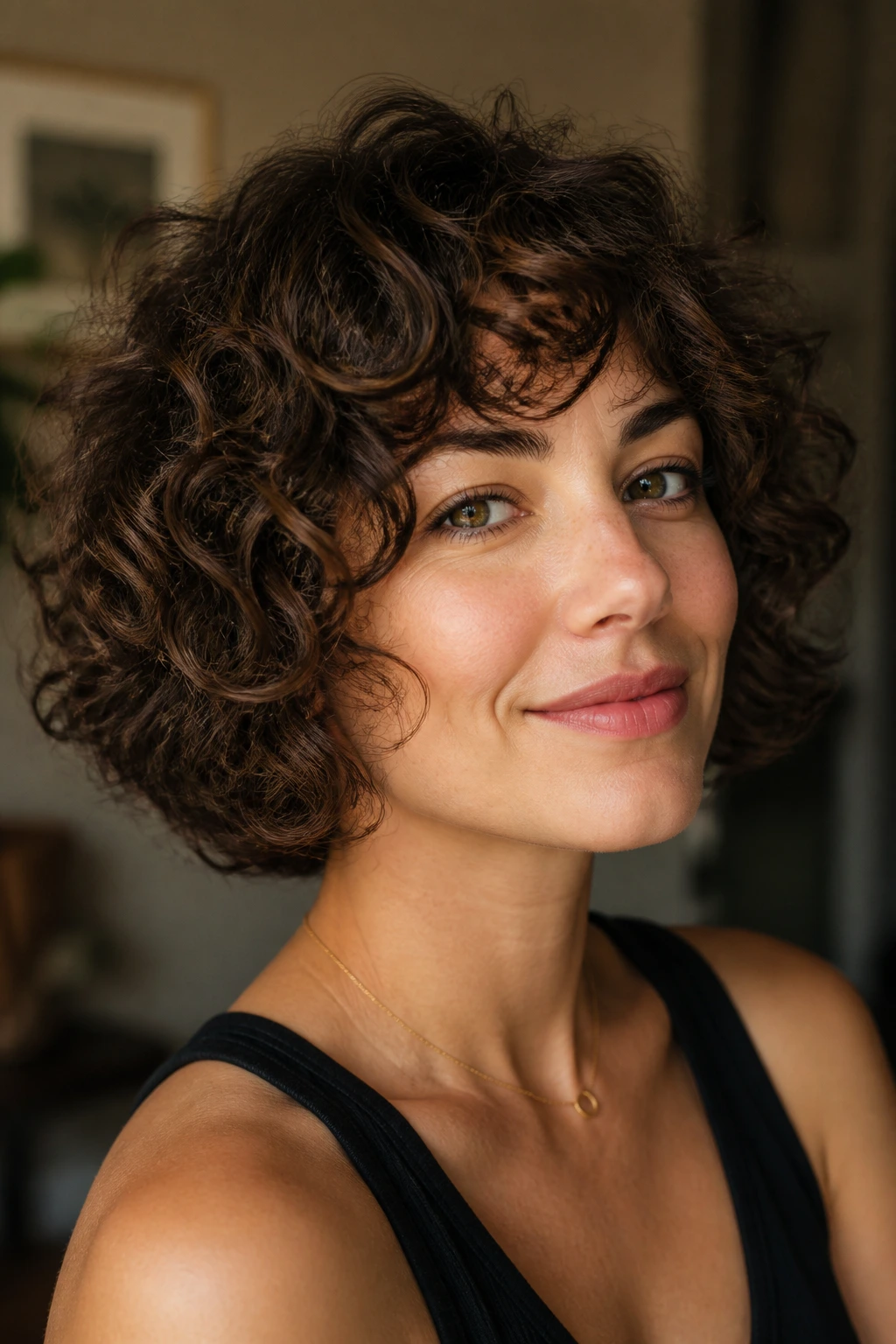
A fluffy bob sounds simple, but it needs judgment. Internal de-bulking removes the hidden weight so the bob doesn’t puff into a triangle at the sides. That’s especially useful for dense curls and oval faces, because the shape can stay wide without getting heavy.
The surface should still look full. You want softness, not holes. That means the thinning lives inside the haircut, where it lightens the mass but keeps the outer line intact.
How to Read It
If your curls expand on humid days, this is one of the better options. The cut gives the hair room without making the bottom edge look fuzzy.
- Works best with: Thick, springy curls.
- Tell your stylist: Thin the inside, not the perimeter.
- Result: The bob sits closer to the head and moves better.
16. Center-Part Curly Bob with Balanced Volume

A center part can be boring on the wrong haircut and gorgeous on the right one. Here, it splits the volume cleanly and lets the curls mirror each other on both sides. Oval faces are one of the few face shapes that can wear this without extra fuss, because the symmetry feels natural instead of severe.
This is the cut for someone who likes order. Not rigid order. Just enough structure that the curls seem to know where they belong.
The center part also highlights the middle of the face, which can make the eyes and lips feel more prominent.
- Best for: Even curl patterns and balanced density.
- Style tip: Use root clips while drying to stop the front from collapsing inward.
- Good sign: Both sides fall with the same bounce.
17. Undercut Bob for Dense Curls
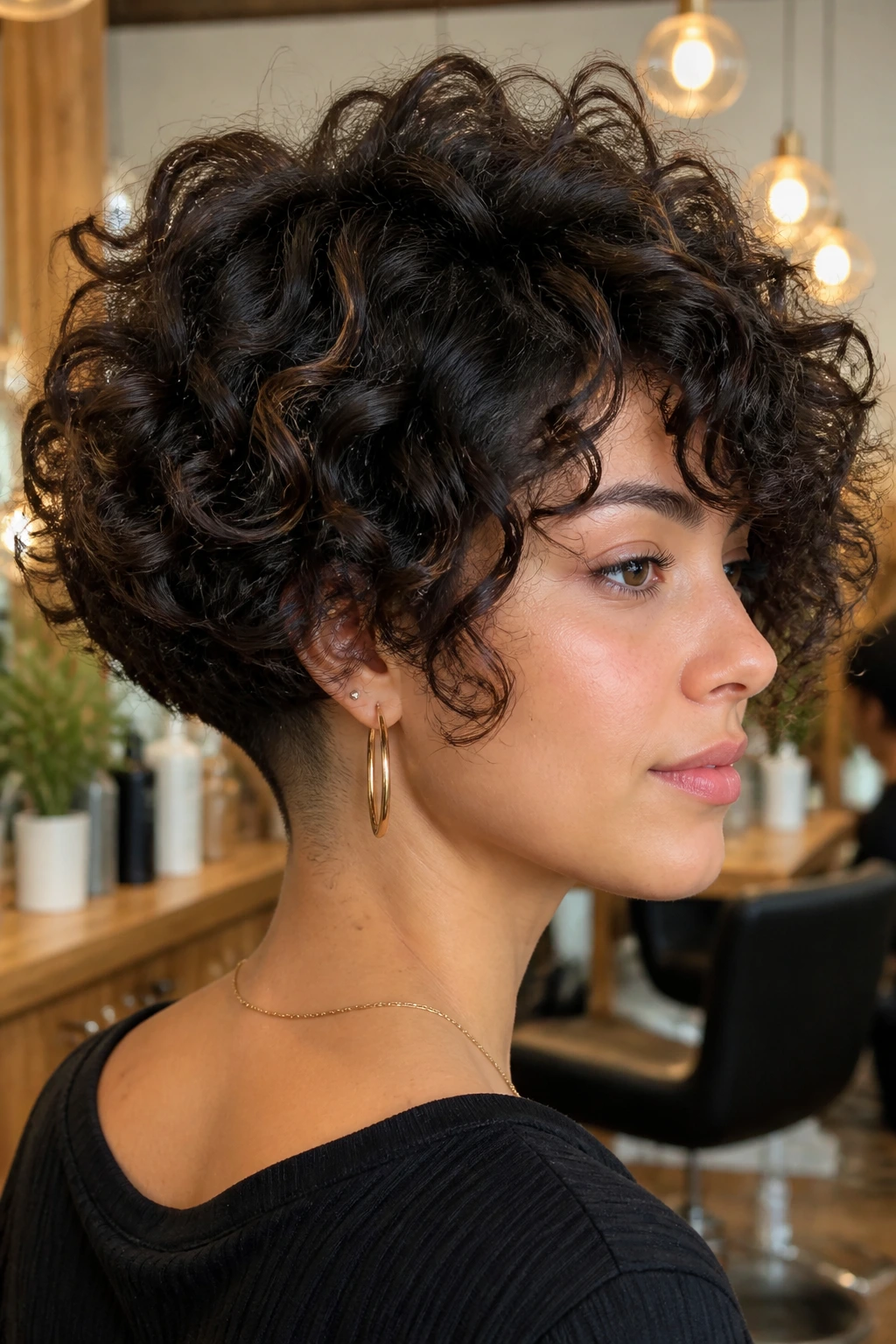
Dense curls sometimes need a secret. The undercut is that secret. By reducing bulk underneath, the bob can sit closer to the head and keep a shape that does not swell into a round helmet. On an oval face, the cleaner sides let the features stay visible instead of disappearing behind a wall of hair.
This is not a timid haircut. It’s for someone who wants short hair that behaves under its own weight.
What Makes It Different
The undercut stays hidden unless the hair is lifted or tucked. That means you get the benefit of less bulk without giving up the full look of a bob.
- Ask for: A subtle undercut at the nape or lower sides, not a dramatic shaved panel.
- Best for: Very thick curls that feel too wide at jaw length.
- Maintenance: The undercut will need neat-up trims if you want it to stay invisible.
18. Bob with Soft Razor Ends

Soft razor ends can be tricky, because too much razor work can make curly hair frizz at the tips. But when the hand is light, the result is airy and modern. The outline stays bob-like, yet the ends lose that blunt chunkiness that some curl types hate.
On oval faces, the softness keeps the cut from looking too hard around the jaw. The shape still has a line; it just breathes a little more.
This cut is especially nice if your hair has a mix of wave patterns and a few tighter curls. The softer ends keep the look from becoming uneven in a bad way.
- Best for: Medium textures that need movement.
- Styling note: Use a cream with slip so the ends do not catch and frizz.
- Watch for: Over-razoring. A little goes a long way.
19. Tucked-Behind-Ear Bob
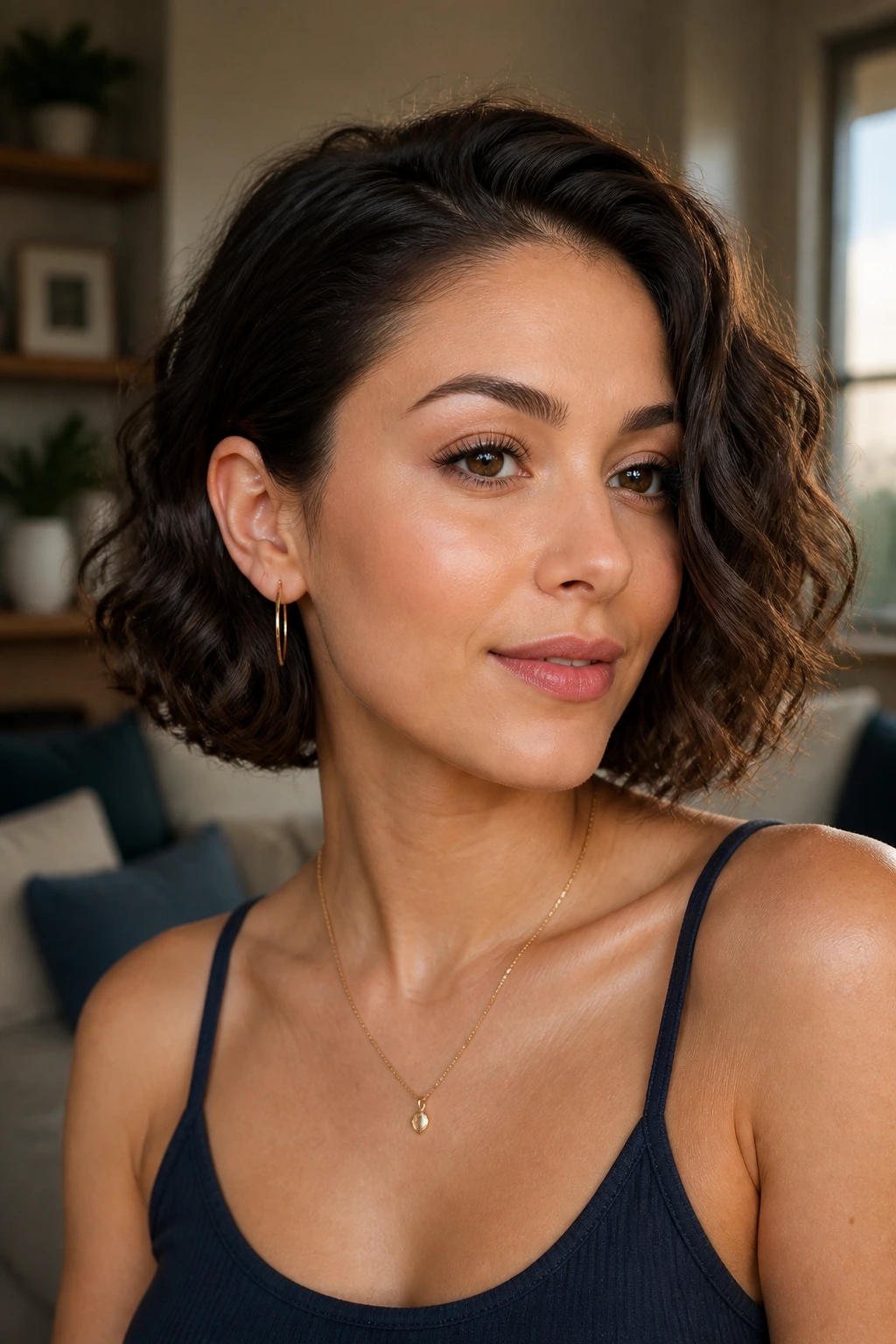
Sometimes the simplest shape is the most revealing. A tucked-behind-ear bob relies on a clean side or center part and enough length near the cheek to tuck one side without losing the outline. On oval faces, this exposes the bone structure in a very direct way. No tricks. No camouflage.
The bob should still have enough body to hold the tuck after a few hours. Otherwise it just looks like you shoved it there and forgot about it.
Why It Works
The tuck creates an asymmetry that opens the face, while the loose side keeps the curl pattern visible. That push-and-pull is the charm.
- Best for: People who wear glasses or jewelry and want the face clear.
- Good detail: Keep the tucked side a fraction longer so it doesn’t pop out.
- Styling move: Use a light styling balm at the ear to keep flyaways down.
20. Pin-Curl Set Bob
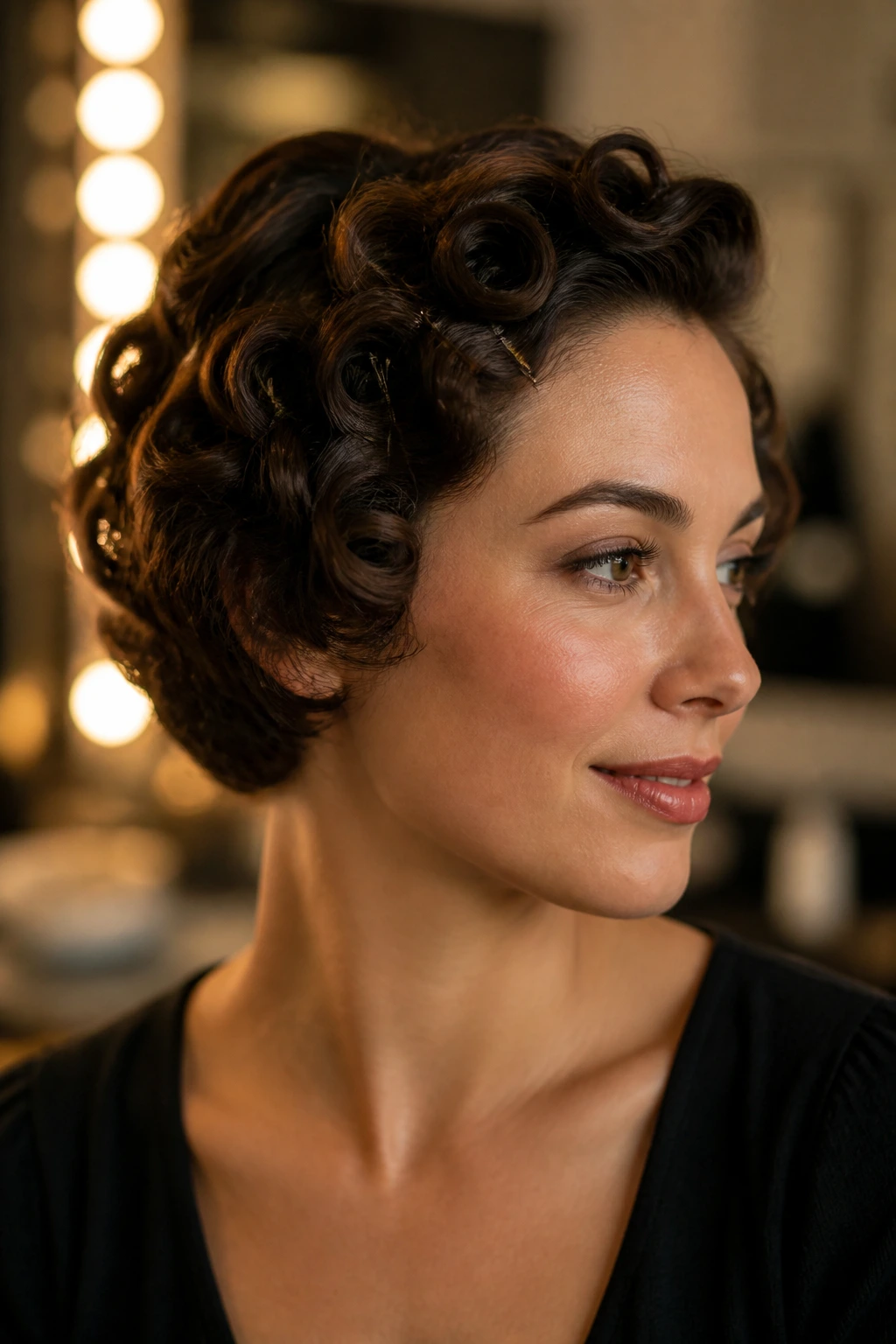
A pin-curl set bob gives curly hair a polished, old-school finish without needing a full blowout. The curls are encouraged into deliberate directions, which can make a short bob look denser and more controlled. On an oval face, that set can frame the features with a neat curve that feels dressy but not stiff.
This is the haircut version of putting on a good jacket. It changes the attitude instantly.
The best pin-curl set bobs are built from a slightly layered base, then shaped with clips while the hair cools. Heat without setting time won’t hold the line.
- Best for: Special occasions or any time you want extra definition.
- Style note: Let the curls cool fully before removing pins or clips.
- Finish: A small amount of shine cream on the ends keeps the set from looking dry.
21. Salt-Spray Beach Bob
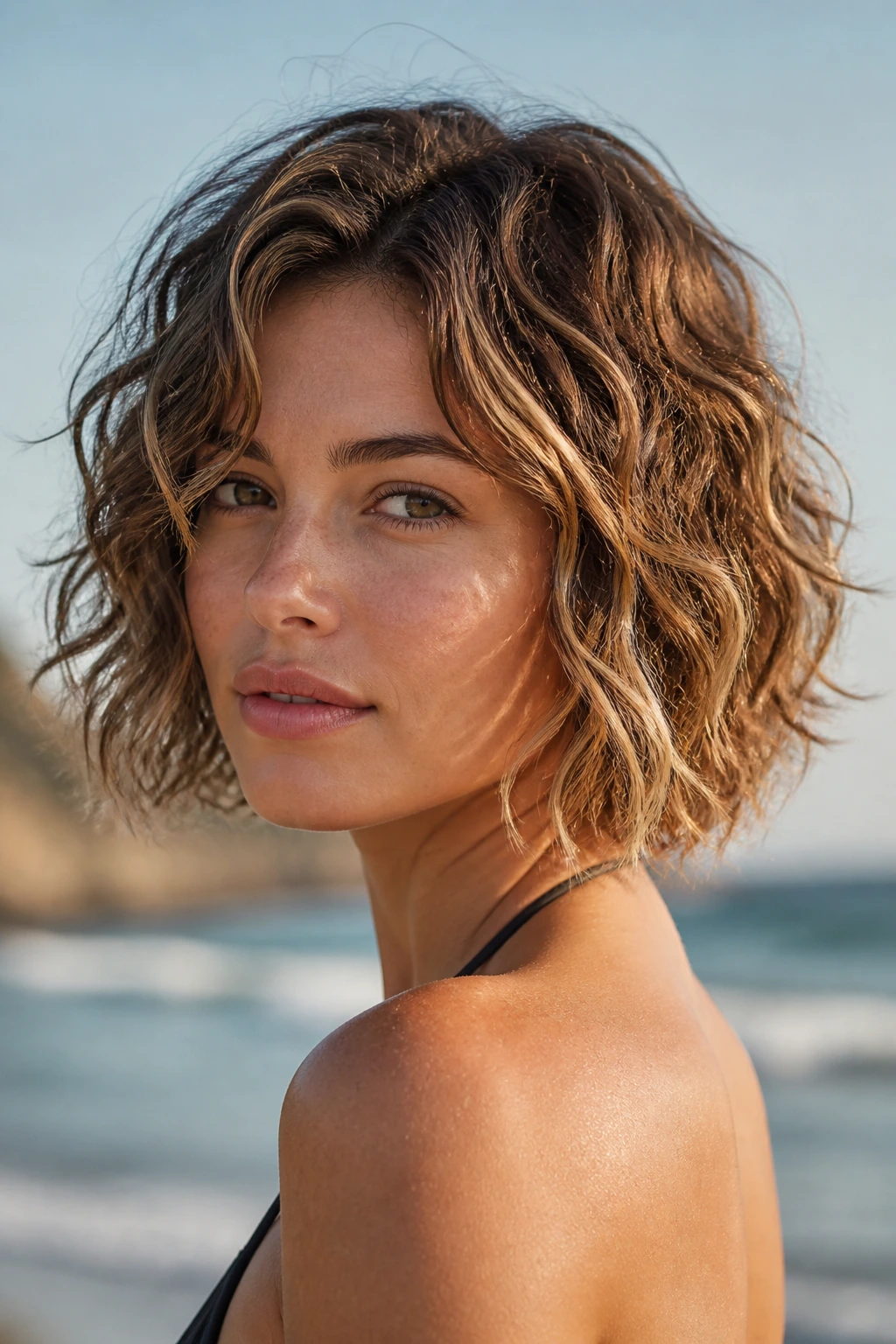
A beach bob on curly hair can go wrong fast if it’s too dry, but the right version has energy. Salt spray adds a little grit, which helps waves separate into pieces instead of merging into one wide mass. On oval faces, the looseness keeps the style casual while the bob shape keeps it from turning shaggy.
The texture should look wind-touched, not crusty. That distinction matters.
What to Watch For
Use salt spray on damp hair, then scrunch and diffuse lightly. If the hair already runs dry, too much salt will make the ends feel rough.
- Best with: Looser wave patterns.
- Not ideal for: Hair that’s already porous and frizz-prone.
- Good pair: A tiny bit of cream underneath the spray.
22. Curly Bob with Mini Flipped-Out Ends
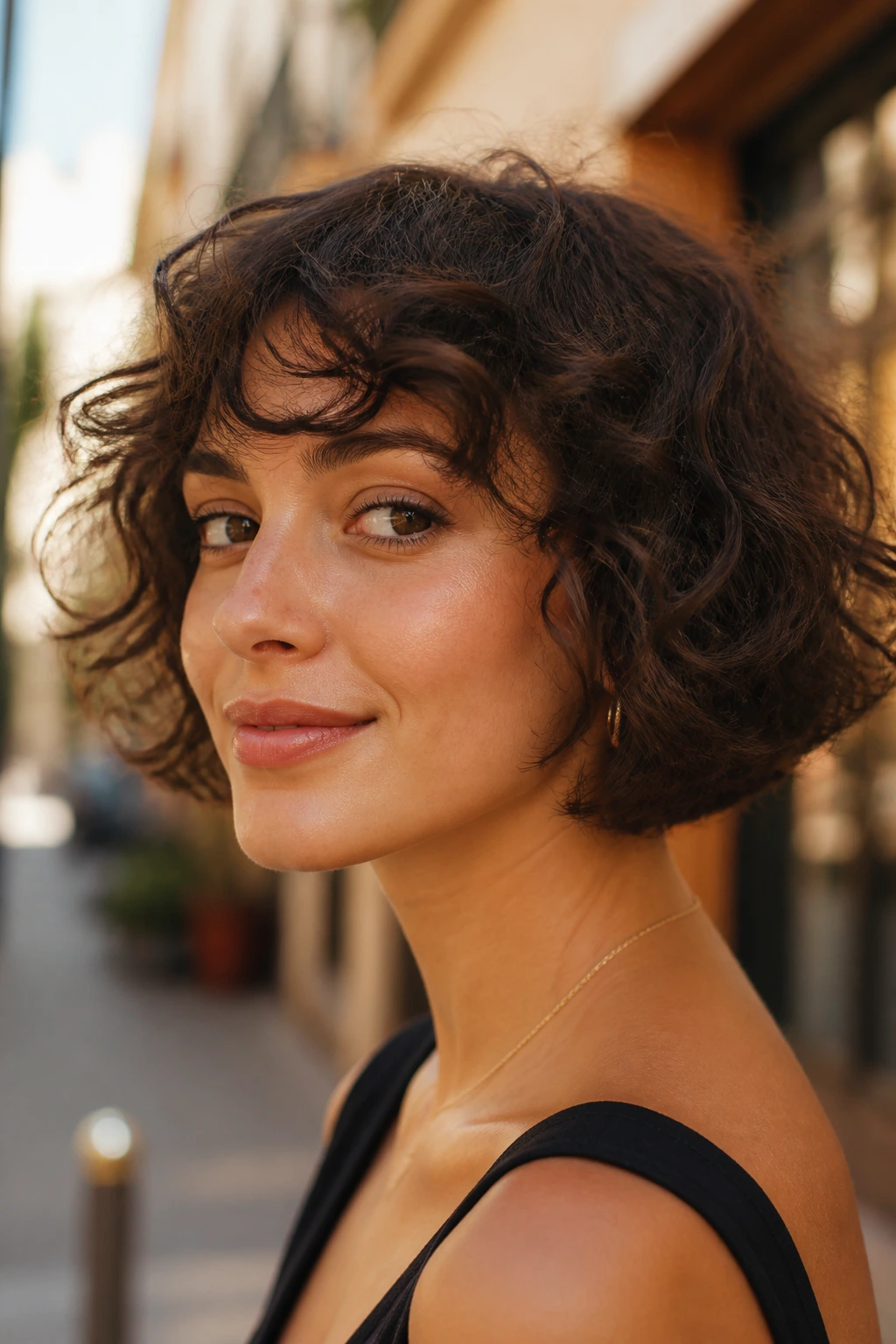
Here’s a cut with a little retro sass. The ends flick outward just enough to break the line, which gives the bob a playful shape without turning it into a full ’60s flip. Curly hair can do this naturally if the cut is shaped with enough movement at the perimeter.
Oval faces can wear the flipped-out ends because they add width near the jaw without crowding the forehead.
The trick is not to over-layer the bottom. You want a bob that turns out, not one that frays.
- Best for: Hair that already bends away from the neck.
- Style note: A round brush or diffuser tip can help encourage the flip.
- Watch for: Too much product at the ends; it weighs the flip down.
23. Retro Rounded Bob with Baby Layers
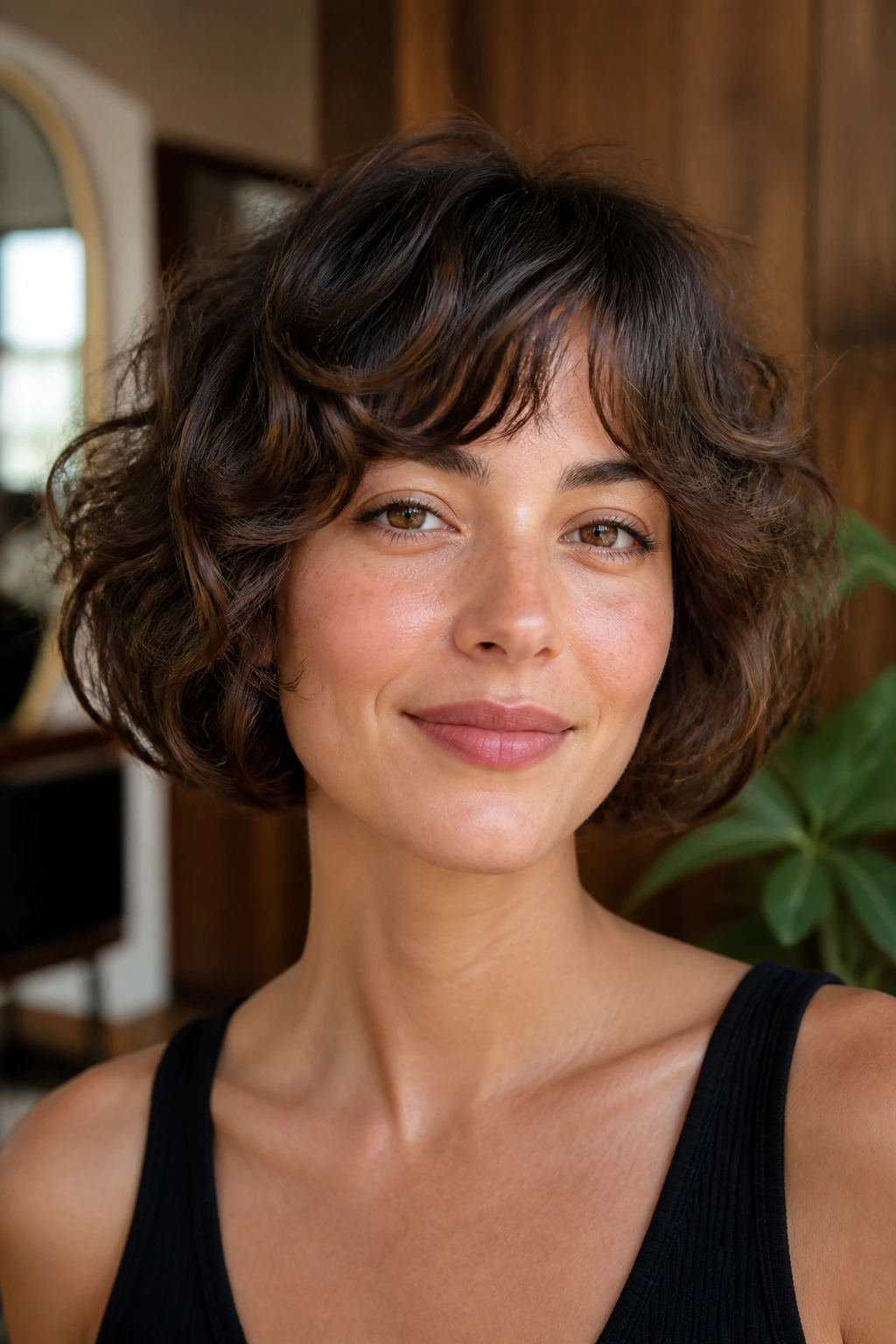
This one lives somewhere between a pageboy and a round bob, but with softer edges. The baby layers keep the top from sitting heavy while the outer shape hugs the face. On an oval face, the rounded silhouette is flattering because it echoes the face’s own balance without making it flat.
It’s a sweet shape. Not sugary. Just soft and deliberate.
The layers should be tiny, almost invisible, and placed where they can release a little lift around the crown and temples.
- Best for: Curls that need structure but not a lot of movement.
- Salon note: Ask for rounded shaping, not shaggy texture.
- Result: A polished bob that still has body.
24. Sculpted Airy Bob for Fine Curls
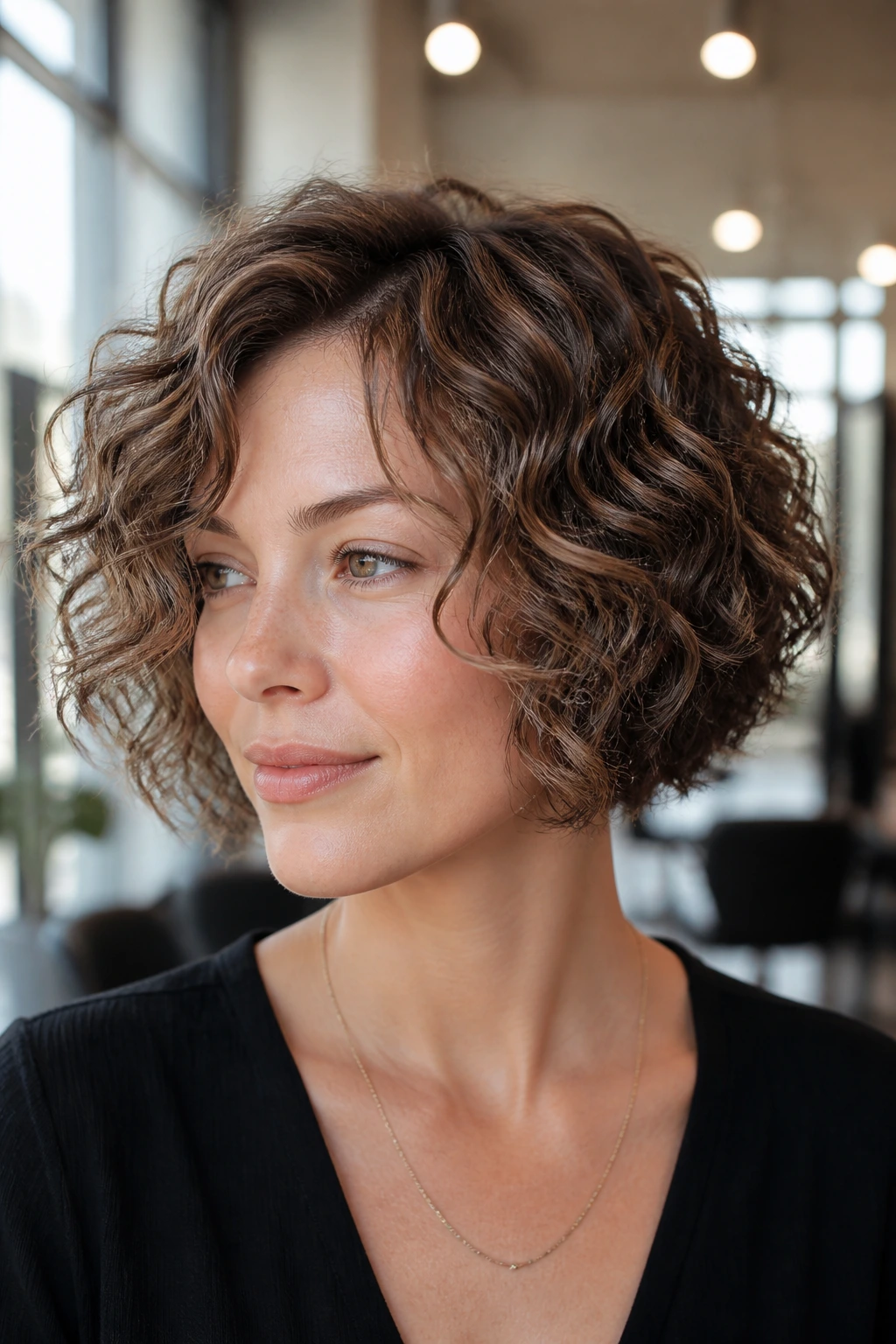
Fine curls often get drowned by heavy layers or chopped into shapes that look too thin by day two. This bob keeps the perimeter light and the interior clean, so the hair still looks full without getting weighed down. Oval faces can wear the airy shape well because the softness around the cheeks keeps the cut from looking sparse.
The important part is restraint. Fine hair does not need a lot of carving. It needs just enough lift to avoid collapsing.
How It Works
Blow-dry or diffuse at the roots, then let the ends keep some softness. If you push the curls into too much definition, you can lose the fullness that makes this cut work.
- Best for: Fine waves and loose curls.
- Product pick: Foam mousse or a light foam cream.
- Avoid: Heavy oils at the roots.
25. Glossy Oval-Frame Bob with Long Side Pieces
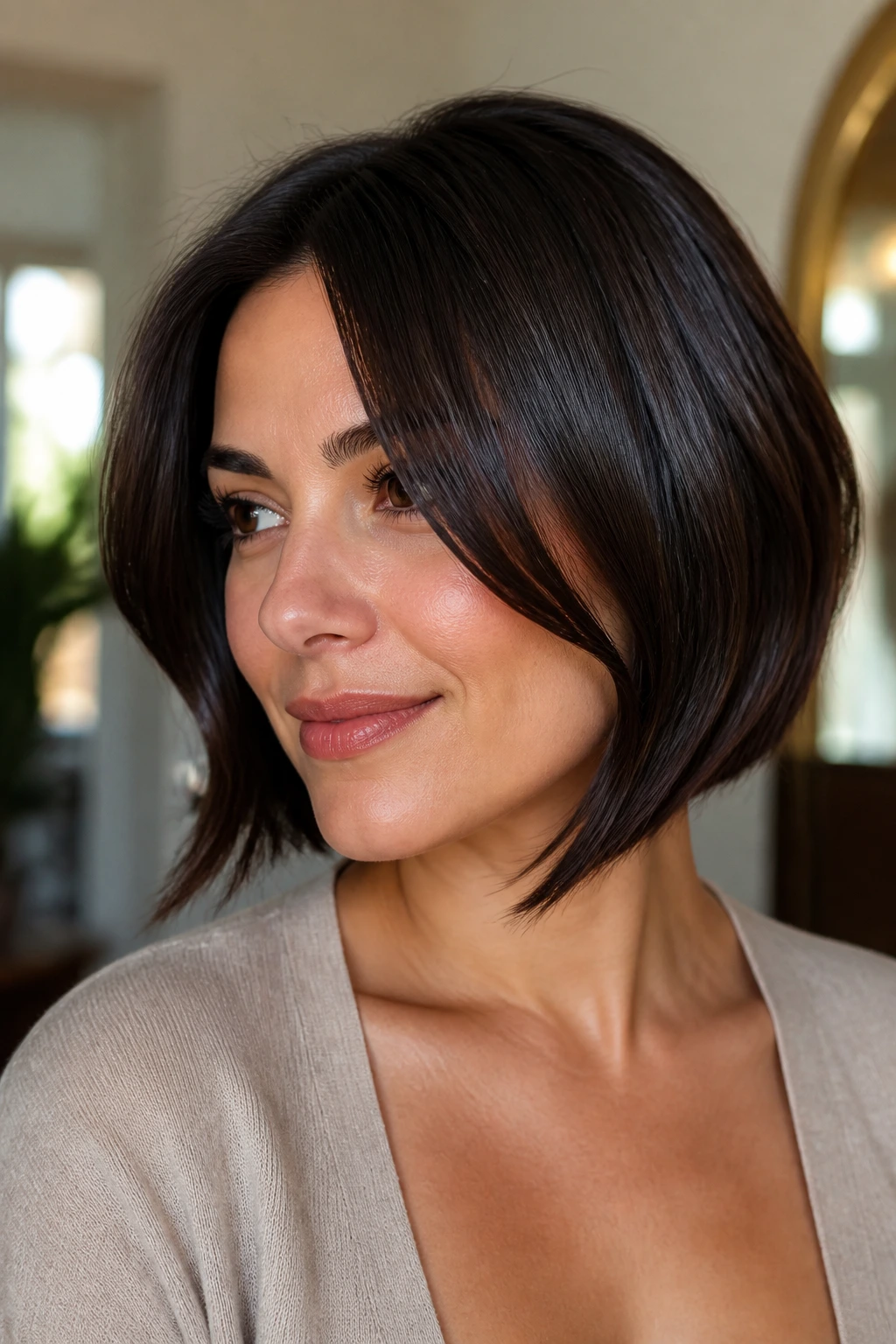
This is the one that probably gets saved to the camera roll first. The long side pieces skim the cheekbones and jaw, while the rest of the bob stays short and compact. The gloss helps, too. A clean shine makes the curve around the face look intentional rather than accidental.
On oval faces, the long side pieces are almost unfair — they settle into the natural balance of the face without needing much correction at all.
It’s a good final choice if you want the bob to feel elegant, not severe. The shape is simple. The effect is not.
- Best for: Medium-density curls and soft waves.
- Styling note: Finish with a drop or two of serum on the front pieces only.
- Best detail: Keep the longest pieces just below the cheekbone for the cleanest frame.
Why Short Bob Length Changes the Curl Game

A short bob changes the way curly hair behaves because it changes the weight. Long curls pull themselves down; short curls spring back up and build width instead. That is why the same curl pattern can look narrow at shoulder length and suddenly full-bodied at chin length. The cut is not fighting the curl. It is giving the curl a different job.
Shrinkage is the part people underestimate. A bob that looks careful in the salon chair can become bouncier, shorter, and more textured after it dries. That’s not bad news. It just means the haircut has to be planned around the dried shape, not the wet one. A stylist who cuts curls dry, or at least checks them dry before finalizing the line, will usually get closer to the real result than someone who treats curly hair like straight hair with a little attitude.
Oval faces make this easier, but they also make it more interesting. Because the proportions are already balanced, you can lean into sharper edges, shorter fringes, or bigger side pieces without trying to “fix” the face. The haircut can just be a haircut. That freedom is what makes this face shape such a good canvas for short wavy bobs.
Smart Salon Notes That Save You From Bob Regret
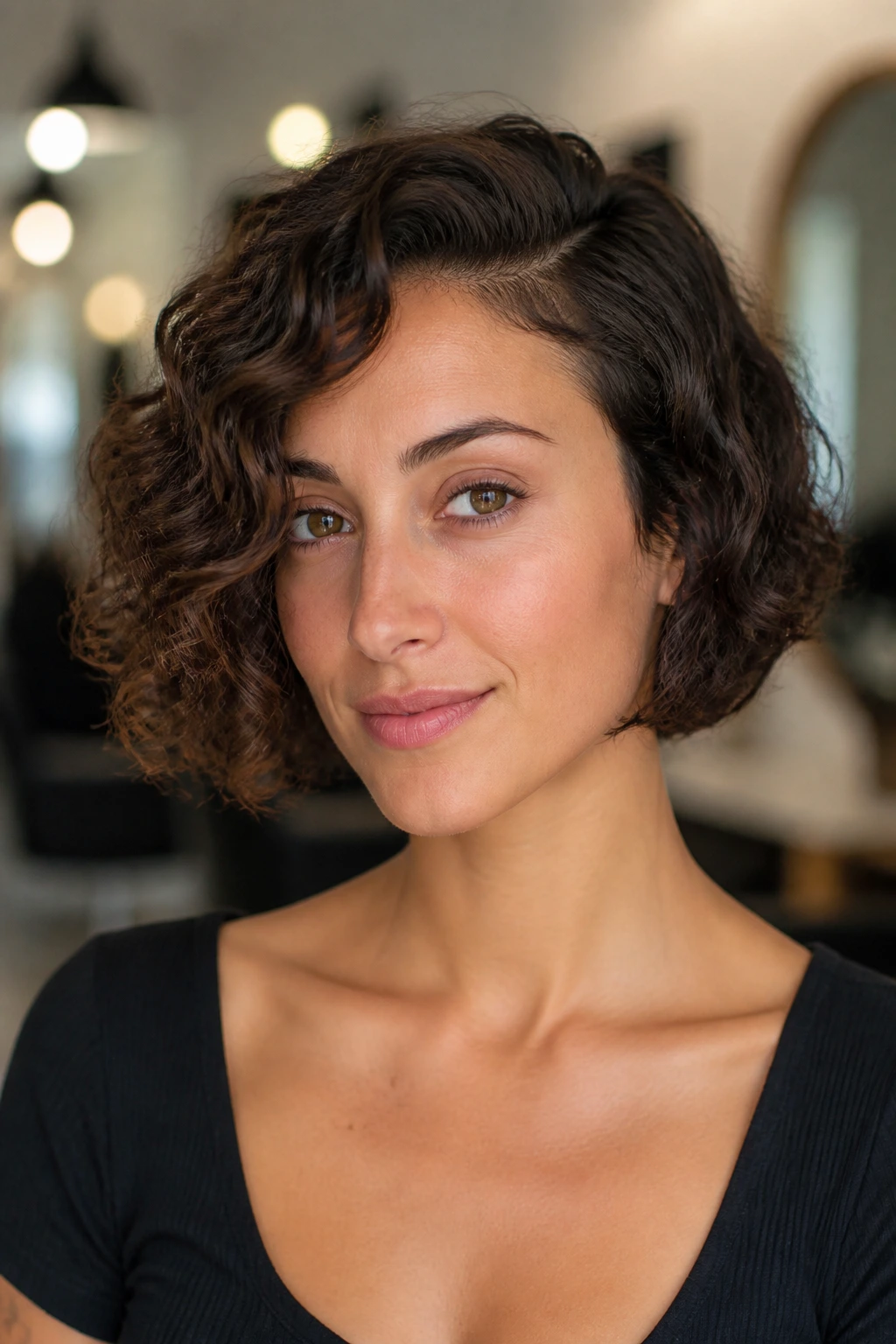
Dry-Cut Reality: Bring your hair in with the curl pattern you actually wear. If you usually diffuse, diffuse first. If you air-dry, let it dry that way. A bob should be shaped around the way your hair lives, not a fantasy version of it.
Shrinkage Check: Point to where you want the length to land when your hair is dry. “Chin” means different things on different curls, so be literal. I like to say, “I want the shortest pieces here when it’s dry,” and then tap the exact spot with my finger.
Fringe Caution: Bangs on curly hair need room. A fringe that looks perfect wet can climb higher than you planned, especially around the temples. If you want bangs, ask for them longer than the final target and trim in stages.
Density Control: If your hair is thick, ask where the weight will come out. Internal removal is fine. Chopping the perimeter to death is not. The outside line is what makes a bob look like a bob.
Tools That Keep the Shape Honest
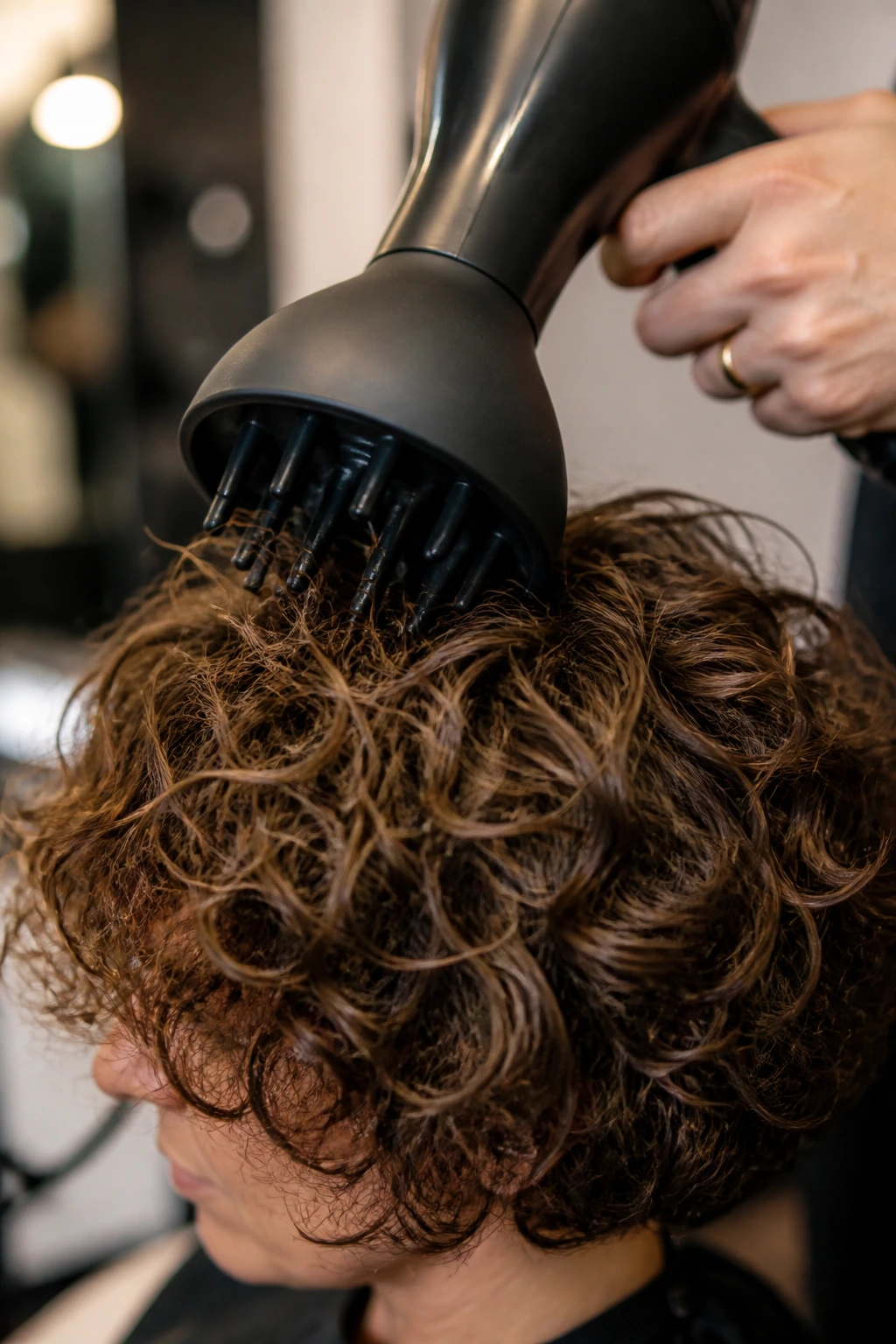
- Diffuser attachment: Helps curls dry with lift and less frizz, especially around the crown and fringe.
- Microfiber towel or cotton T-shirt: Cuts down on roughing up the curl pattern after washing.
- Wide-tooth comb: Good for distributing product without pulling apart clumps.
- Duckbill clips or root clips: Useful for building volume at the part and stopping flat spots.
- Curl cream: Gives the bob softness and slip so the ends don’t feel dry.
- Light mousse or foam: Adds hold at the roots without making the whole cut heavy.
- Gel or gel-cream: Best if you want a cleaner cast and more defined waves.
- Small serum: Handy for the front pieces and the ends, but use it sparingly.
- Stylist shears and texturizing shears: Not for home use, obviously, but worth asking about if your stylist tends to over-thin curly hair.
Keeping the Cut Fresh Between Washes
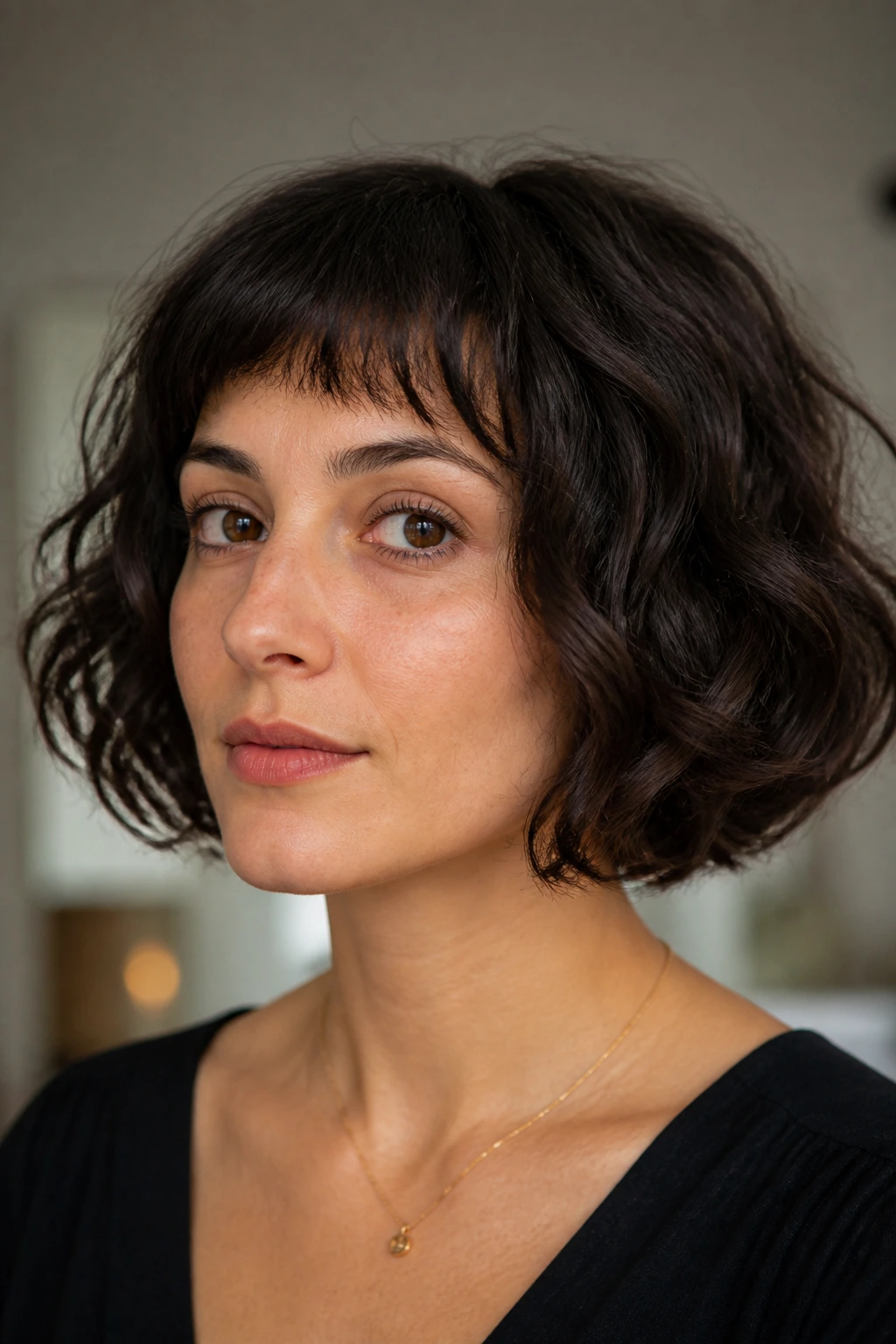
A good short bob can stretch farther between full wash days than people expect, but only if you refresh it with a light hand. The first rule is to avoid drenching the whole head again unless the shape has truly collapsed. Most of the time, a mist bottle and a little product at the front pieces are enough. Work with the parts that misbehave first — the crown, the fringe, and the side that flattens against your pillow.
On day two, scrunch a small amount of water into the mid-lengths, then add a pea-sized bit of curl cream or foam where the definition faded. If the roots need help, clip them for 10 to 15 minutes while the hair air-dries. That small pause can save the whole silhouette. Day three often needs less product and more patience. Sometimes all a bob needs is a little steam from the shower and a finger-shaped part reset.
Trims matter more than people want to admit. A sharp bob usually wants a cleanup every 6 to 8 weeks. Softer, more lived-in versions can stretch closer to 10 weeks, but once the ends start flipping in opposite directions or the line around the jaw stops reading as a bob, it is time. Curly hair grows out gracefully right up until it does not. Then it gets boxy fast.
Sleep also changes the whole game. A loose pineapple, satin bonnet, or satin pillowcase helps the curls keep their shape so you don’t spend the morning rebuilding everything from scratch. It is a boring habit. It works.
Common Mistakes That Make a Bob Puffy or Flat
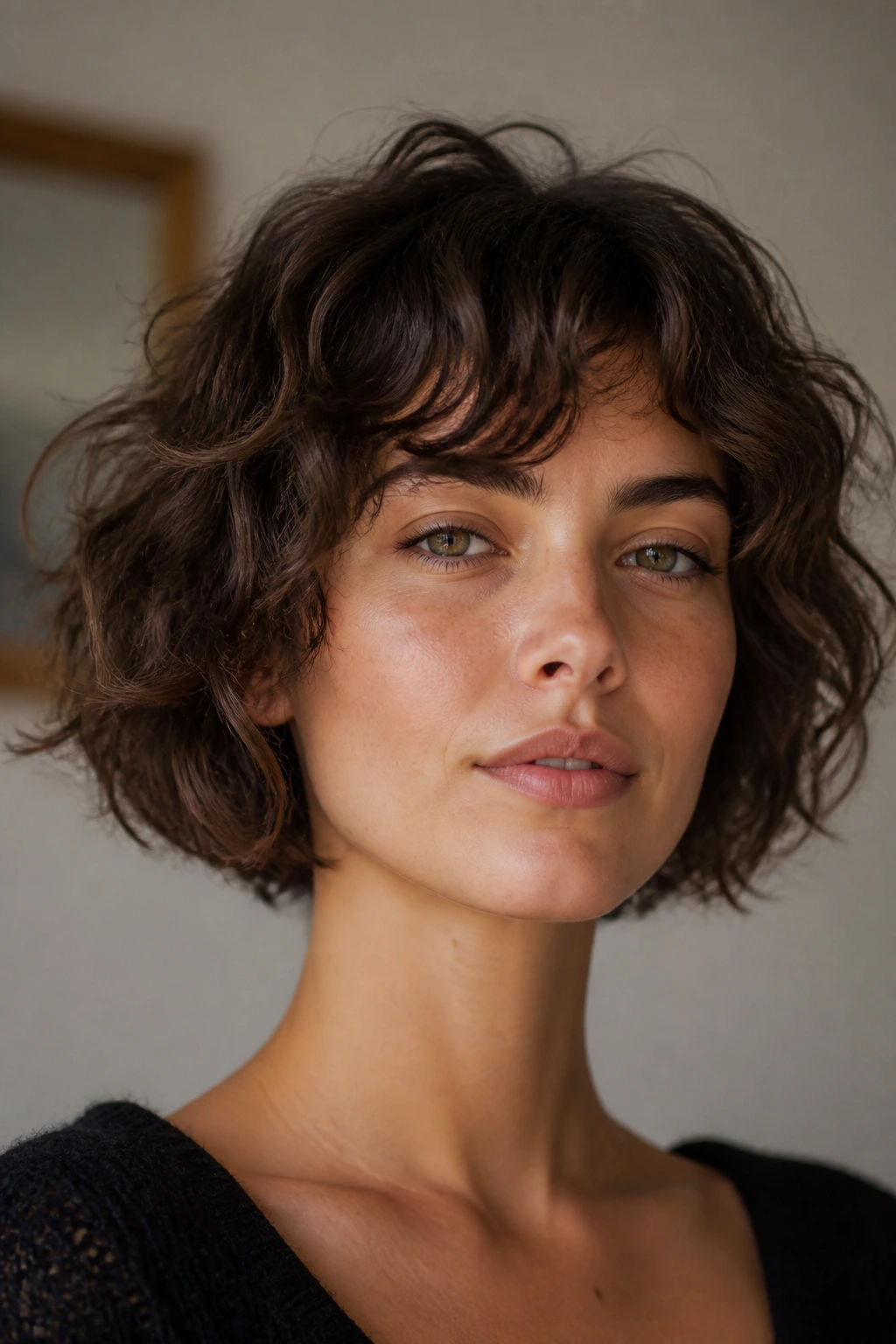
Cutting It Too Short When Wet: Curly hair lies. A lot. If the cut is judged only while wet, the final shape can rise an inch or two too high. The fix is to leave more length than feels safe and check the dry result before the final trim.
Thinning the Outside Edge Too Much: This is how you get a fuzzy outline and little wisps that never sit still. The perimeter is the bob’s frame. Keep it cleaner than the interior.
Putting Bangs Too High on the Forehead: Curly fringe needs breathing room. If it starts too short, it can spring into a shelf. Leave the first cut longer and refine later.
Ignoring the Drier Side of the Head: Most curly heads have one side that behaves differently. If the cut is even on paper but uneven in life, the bob will feel lopsided every morning. The fix is to shape to the stronger side carefully, then balance the weaker one instead of pretending they are identical.
Using Heavy Cream Everywhere: Too much product can collapse the crown and make the ends limp. Apply cream where the hair needs slip, then stop. A little hold at the root and a lighter touch on the ends usually works better than drowning the whole style.
Letting the Shape Grow Too Long: Bobs lose their purpose when the bottom starts hanging below the jaw and the top keeps puffing. That is the triangle zone, and it is a bad place. Trim before the line disappears.
Variations and Alternatives to Try
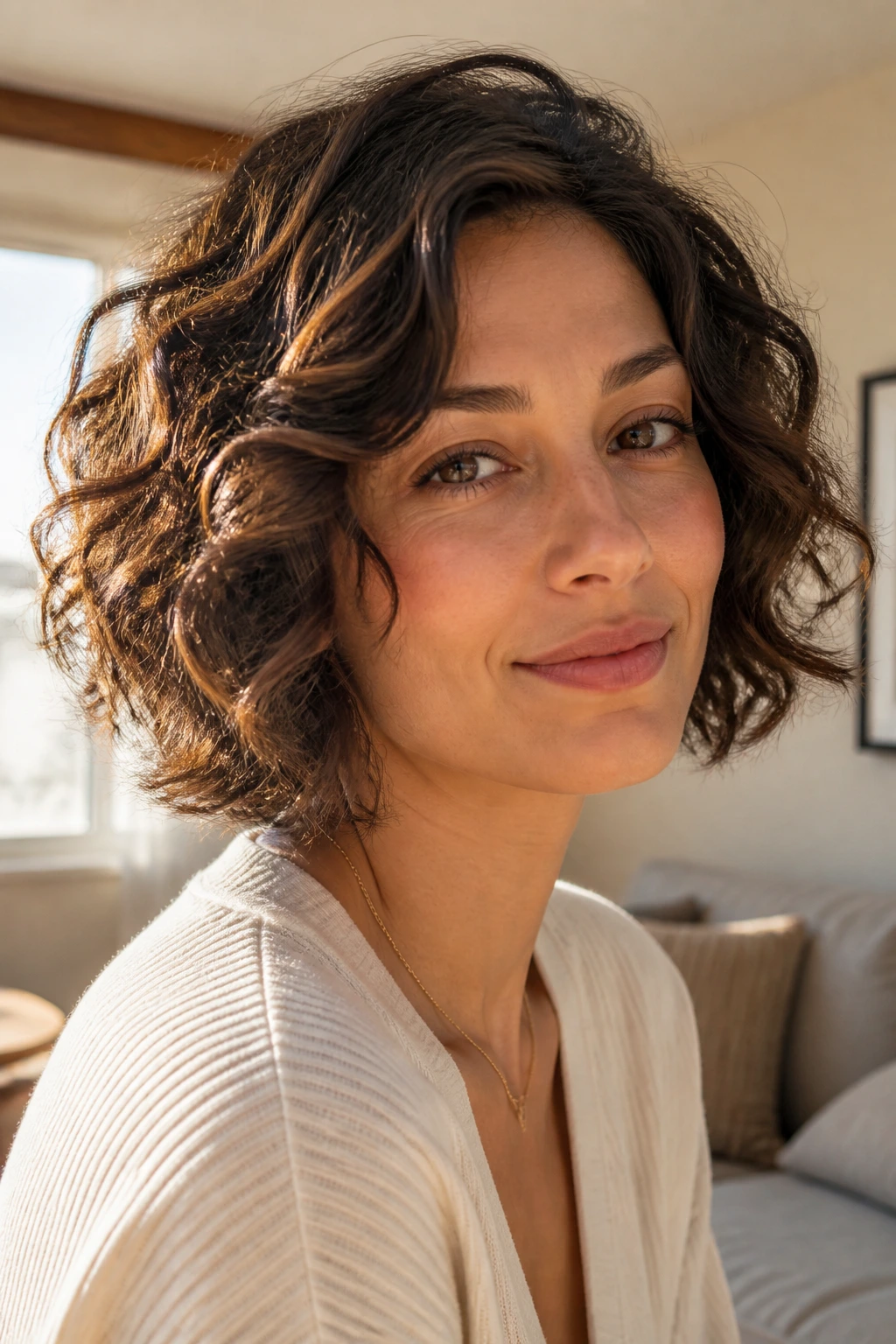
Air-Dried and Soft: This version keeps the curl pattern loose and lets the bob move with less definition. It suits fine-to-medium textures that look better with softness than with a hard cast, and it is easier to live with on humid days.
Diffused and Lifted: Use a diffuser, root clips, and a light mousse for a bob with more height at the crown. This is the better choice if your hair tends to sit close to the head or if you want the cheekbones to stand out more.
Sleek-Tucked Bob: Flat iron only the front pieces lightly, then tuck one side behind the ear. It gives the cut a sharper edge for dinners, work events, or any day you want the style to feel cleaner than usual.
Grown-Out Lob Transition: If you love the idea of a bob but are nervous about the length, let the front pieces fall closer to the collarbone and keep the back a little shorter. It buys you more versatility while still reading as a short, face-framing shape.
Rounded and Romantic: Keep the outline curved and the layers soft so the bob hugs the face. This suits dense curls that would otherwise flare out, and it looks especially good when the fringe or front pieces are allowed to bend naturally.
Frequently Asked Questions

Should curly hair be cut dry for a bob?
Dry cutting is usually the safer bet, or at least a hybrid approach where the stylist checks the shape dry before finishing. Curly hair can hide shrinkage while wet, and that is where bob cuts go wrong. A dry check makes the final line far more honest.
Can oval faces wear blunt bangs with a short wavy bob?
Yes, but curly bangs need more length and a softer edge than straight-hair bangs. On an oval face, a blunt fringe can look strong rather than heavy if it stops well above the brows and is shaped to bend, not stand up.
What length is most flattering for short wavy bobs on curly hair?
Chin to jaw length is the safest sweet spot for many curl patterns because it frames the face and keeps the shape light. If your hair shrinks a lot, ask for the cut to land a little lower when dry.
Will a bob make thick curly hair look wider?
It can, if the bulk is left at the sides. The fix is internal weight removal, a clean perimeter, and sometimes a slight stack or undercut at the nape. That keeps the width from spreading out where you do not want it.
What if one side of my curls always behaves differently?
That’s normal. A good stylist should cut to the stronger side first, then balance the weaker side so the finished shape still feels even. At home, set the weaker side with a little more product and a few root clips while it dries.
Can I still wear my curls straight sometimes with a bob?
You can, but the cut should be shaped with both states in mind if that matters to you. A bob with too much internal removal may look thin when straightened, while a blunt or softly layered outline usually survives both looks better.
How often should I trim a curly bob?
Most need a cleanup every 6 to 8 weeks to keep the line crisp. Softer, grown-out versions can stretch longer, but once the ends start flaring and the jawline frame disappears, the shape is gone.
What’s the easiest bob to style on busy mornings?
The chin-length side-part bob and the air-dried long-layer bob are usually the least fussy. Both can fall into place with minimal hand work, which is useful when you do not want to build a whole styling routine before coffee.
The Cut That Does the Talking
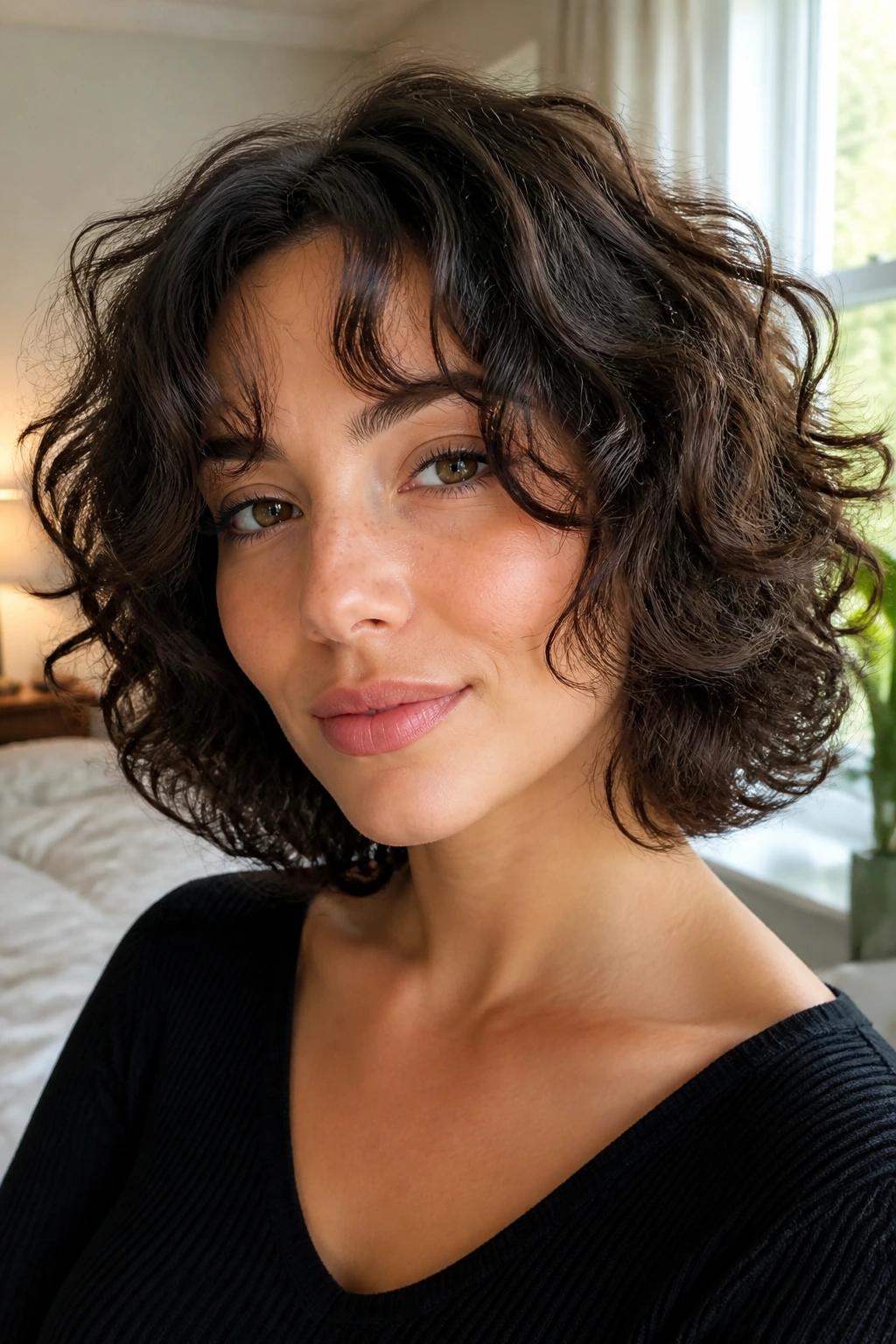
A good short wavy bob on curly hair does something rare: it makes texture look deliberate instead of unruly. That’s the real prize here, not the length alone. When the line lands right, the curls bounce around the face in a way that feels clean, lively, and a little bit sharp around the edges.
Oval faces make room for that kind of haircut. They do not demand rescue, so the bob can lean into shape, fringe, symmetry, or asymmetry without tipping out of balance. And curly hair, for all its moods, gives the cut its best quality — that soft movement that never looks perfectly rehearsed.
If you’re choosing between three options, pick the one that sounds almost too specific for your face and curl pattern. That is usually the one that will look the most like you once it dries.