



Thick hair has a way of turning a cute cut into a small architectural problem. Leave it too long and the weight drags everything flat; cut it too blunt in the wrong place and the whole shape can bloom outward by noon. A medium bob handles that better than most lengths because it lets you keep enough mass for polish while trimming away the heavy ends that make hair feel bulky and slow.
For older women, that middle ground matters even more. A bob that lands around the jaw, neck, or collarbone can open the face, sharpen the neckline, and make silver or salt-and-pepper strands look intentional instead of puffed out. The right version does not hide thick hair. It gives it a job.
What makes this haircut worth obsessing over is the range. A medium bob can be blunt and glossy, softly layered and airy, stacked and neat, angled and a little sharper, or grown-out and easy to live with. The shape changes the whole mood, and the difference between “heavy” and “expensive-looking” is often only a few inches and the way the layers are placed.
Why These Medium Bobs Earn Their Keep
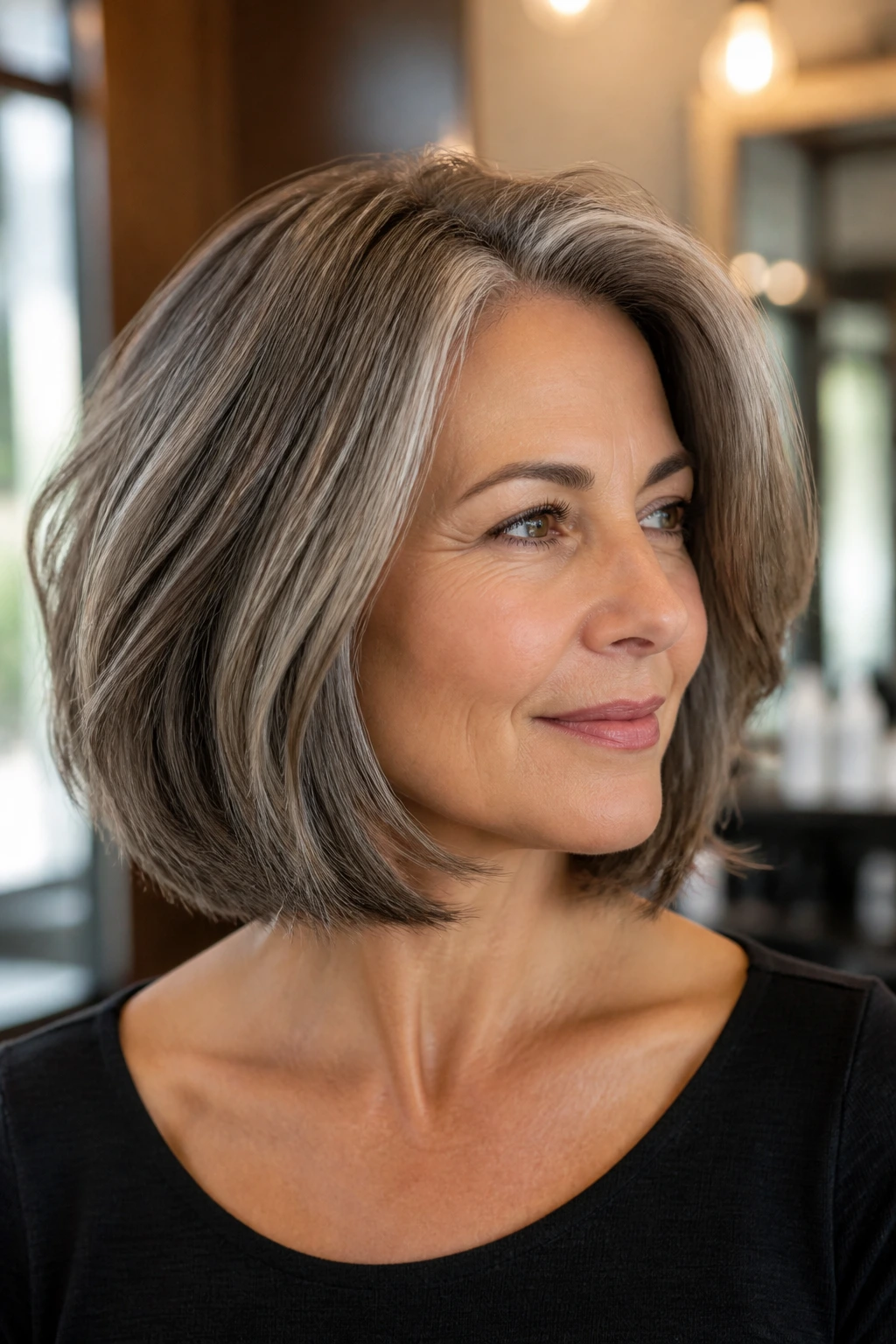
-
Weight Control: Thick hair needs a cut that removes bulk without stripping the shape bare, and medium bobs do that by keeping the perimeter clean while lightening the inside.
-
Face Framing: A bob that sits between the jaw and collarbone can soften a strong jawline, bring attention to the eyes, and keep hair from hanging like a curtain.
-
Silver-Friendly Shape: Clean lines and controlled movement show off gray, white, and silver strands because the light hits the surface instead of disappearing into a dense sheet of hair.
-
Lower Styling Drama: Medium bobs usually behave with a 10-minute blow-dry, a quick bend at the ends, or a rough air-dry if the cut was shaped well in the first place.
-
Lots of Room to Personalize: You can go blunt, stacked, angled, feathered, shags-lite, or softly layered without giving up the medium length that feels wearable.
-
Better Grow-Out: A well-cut bob grows more gracefully than a sharply cropped style, which matters if you do not want a trim to feel urgent every five weeks.
1. Blunt Collarbone Bob
A blunt collarbone bob is the haircut that makes thick hair look deliberate instead of heavy. The length skims the collarbone, so the ends have room to move, and the one-length edge gives the whole thing a crisp line that holds up even when the weather is not cooperating.
Why It Works
Thick hair loves a blunt perimeter when the weight is in the right place. The line keeps the cut from fuzzing out, and the collarbone landing spot stops it from flaring at the jaw, which is where a lot of thick hair starts acting like a triangle. If your hair has natural body, this is one of the easiest ways to make it look dressed up without layering the life out of it.
Ask For
- A one-length bob that lands at or just below the collarbone
- Light point-cutting only at the ends, not aggressive thinning
- A clean outline around the front so the line stays sharp
How to Style It
Blow-dry with a nozzle and a medium round brush, then turn the ends under just a touch. The trick is restraint. If you force a hard curl, the line loses that clean swing that makes the cut work.
2. Soft Layered Side-Part Bob
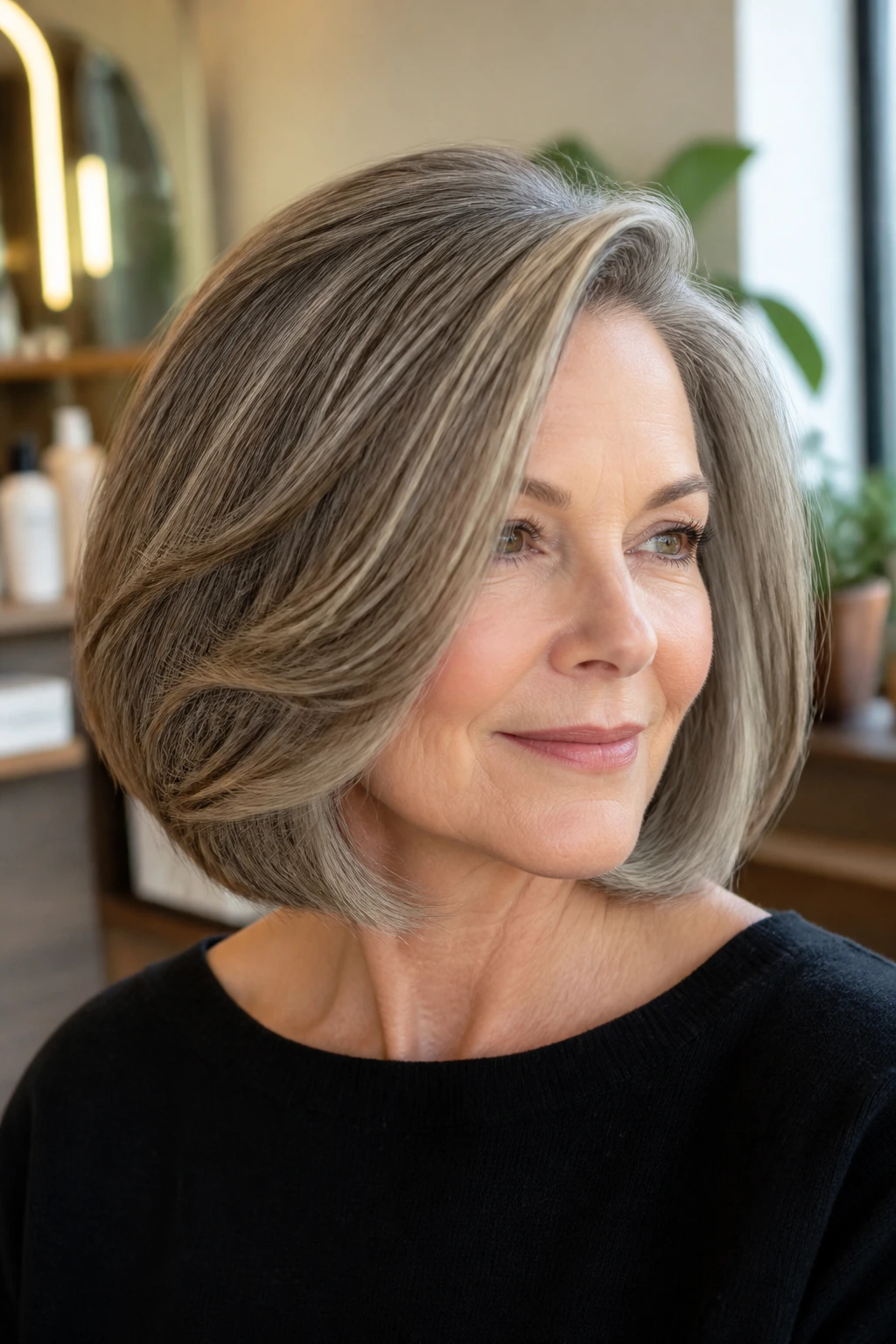
Do you want the cut to lift the face without looking chopped up? This is the one to point at. A side part gives thick hair a built-in bit of asymmetry, and the soft layers keep the sides from feeling like a solid wall.
The best version starts the layers below the chin, often closer to the upper neck. That keeps the shape full through the ends while taking enough weight out of the sides to stop the puff. If your hair is dense around the cheeks, this cut can feel like someone quietly stepped in and edited the bulk down by half.
Best For
- Faces that need a little lift at the temple
- Hair that grows flat at the crown but puffs at the sides
- Women who wear glasses and want the cut to move away from the frame
Styling Note
Part it about an inch off center and dry the roots in the opposite direction first. That tiny trick gives you lift without teasing or sticky sprays.
3. Stacked Nape Bob
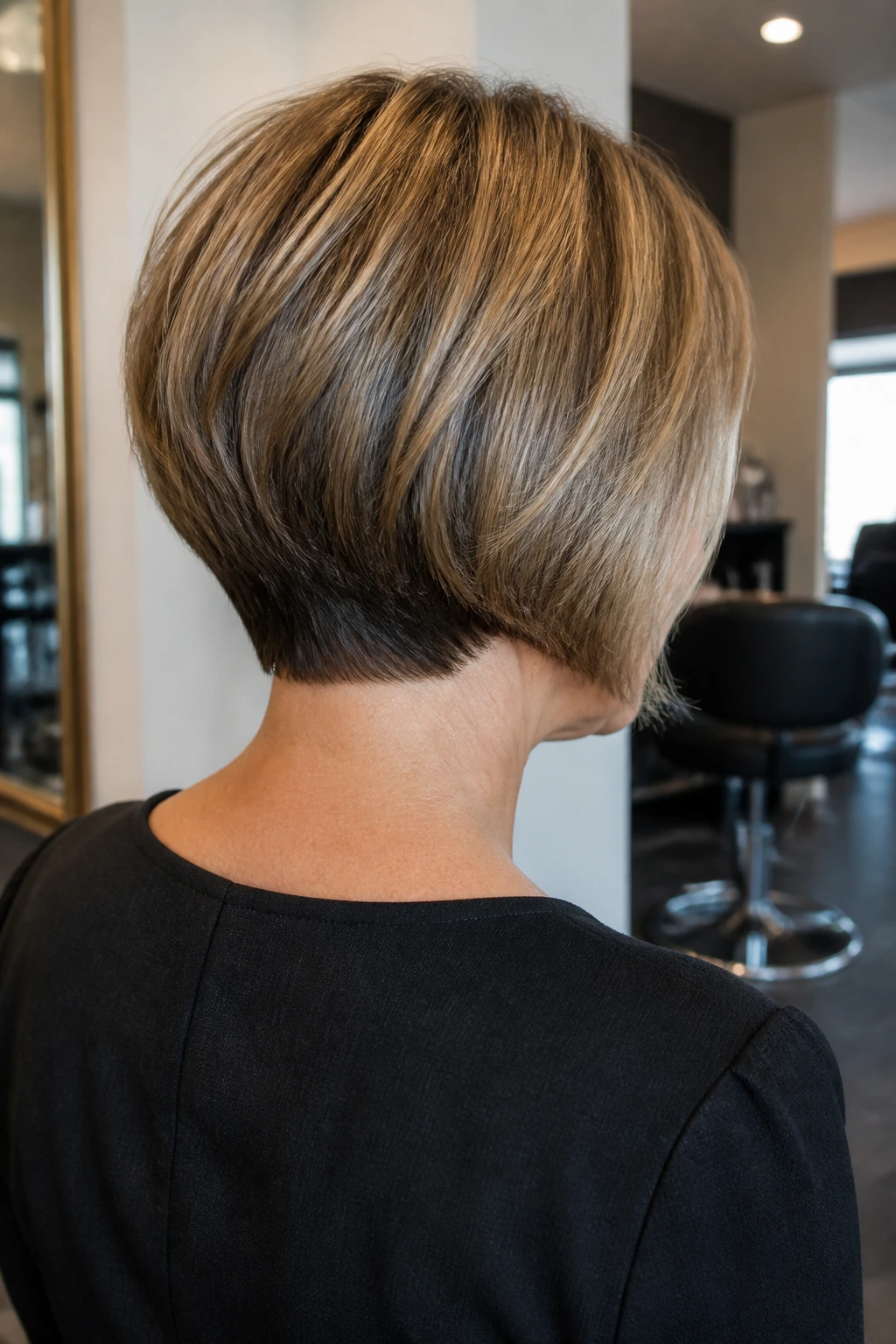
A stacked nape bob solves the problem of heavy hair collapsing at the back of the neck. The back is cut shorter and slightly rounded, so the shape rises at the crown and then falls into longer front sections that keep the bob from looking too severe.
This is a good cut when thick hair has so much density that it sits flat on the head or kicks out at the shoulders. The stack gives the haircut a little engine. Not a lot. Just enough. And if you like a neat neckline, this one does that job better than almost anything else on the list.
What to Ask For
- Shorter layers at the nape, usually 1 to 2 inches shorter than the top back
- A rounded graduation instead of a sharp wedge
- Enough length in the front to keep the style medium, not short
Skip a dramatic stack if you do not want a retro look. A soft one is modern; an overbuilt one starts looking like a different decade entirely.
4. Invisible-Layer Lob
Invisible layers are the quiet solution for thick hair that needs movement but does not want to look chopped to pieces. From the outside, the bob still reads as smooth and full. Underneath, the internal layers remove weight so the cut bends instead of ballooning.
This is the cut I reach for when someone wants length around the collarbone but hates the helmet effect that thick hair can get. It is also useful if you like to tuck hair behind one ear, because the shape still looks complete from the front. No dramatic steps. No choppy shelves. Just a better-behaved lob.
A good stylist will keep the perimeter strong and do most of the weight removal inside the shape. That matters. If the outside is hacked up too much, the hair starts fraying at the edges and the whole point is lost.
5. Feathered Bob with Sweeping Fringe
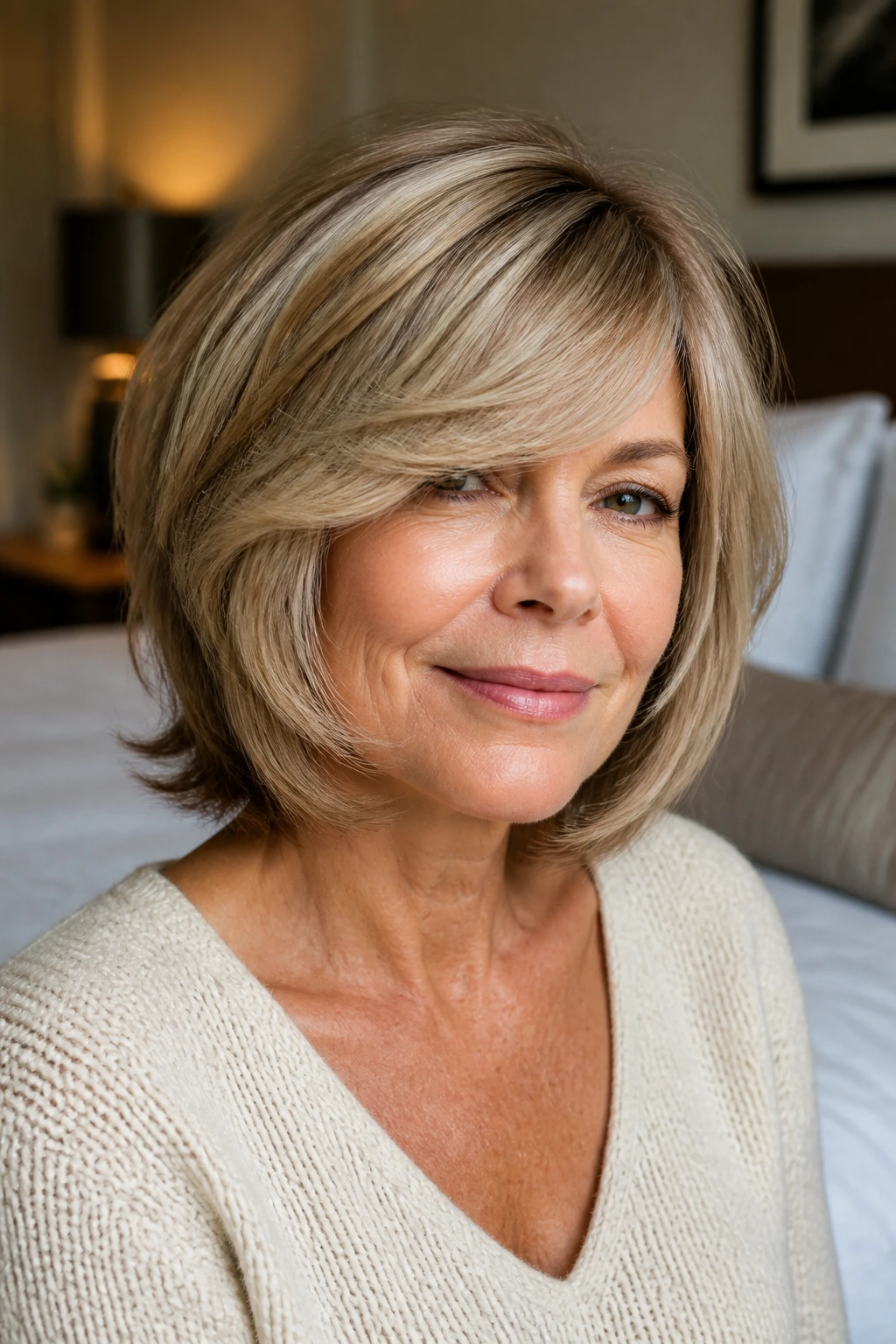
A feathered bob has a softer, older-school glamour to it, and I mean that in a good way. The ends are gently feathered so thick hair can move, while the fringe sweeps across the forehead instead of cutting it in a hard line.
It works especially well if your hair feels too blunt around the face. The feathering makes the bob less boxy, and the fringe breaks up a wide forehead or a strong hairline without needing full bangs. Keep the feathering soft, though. Too much slicing and the ends turn wispy in a way that fights thick hair instead of helping it.
Style It Like This
Dry the fringe first with a small round brush or a velcro roller. Then work the rest of the bob with a larger brush, letting the ends flip just a little. The hair should look brushed and airy, not shredded.
6. A-Line Bob
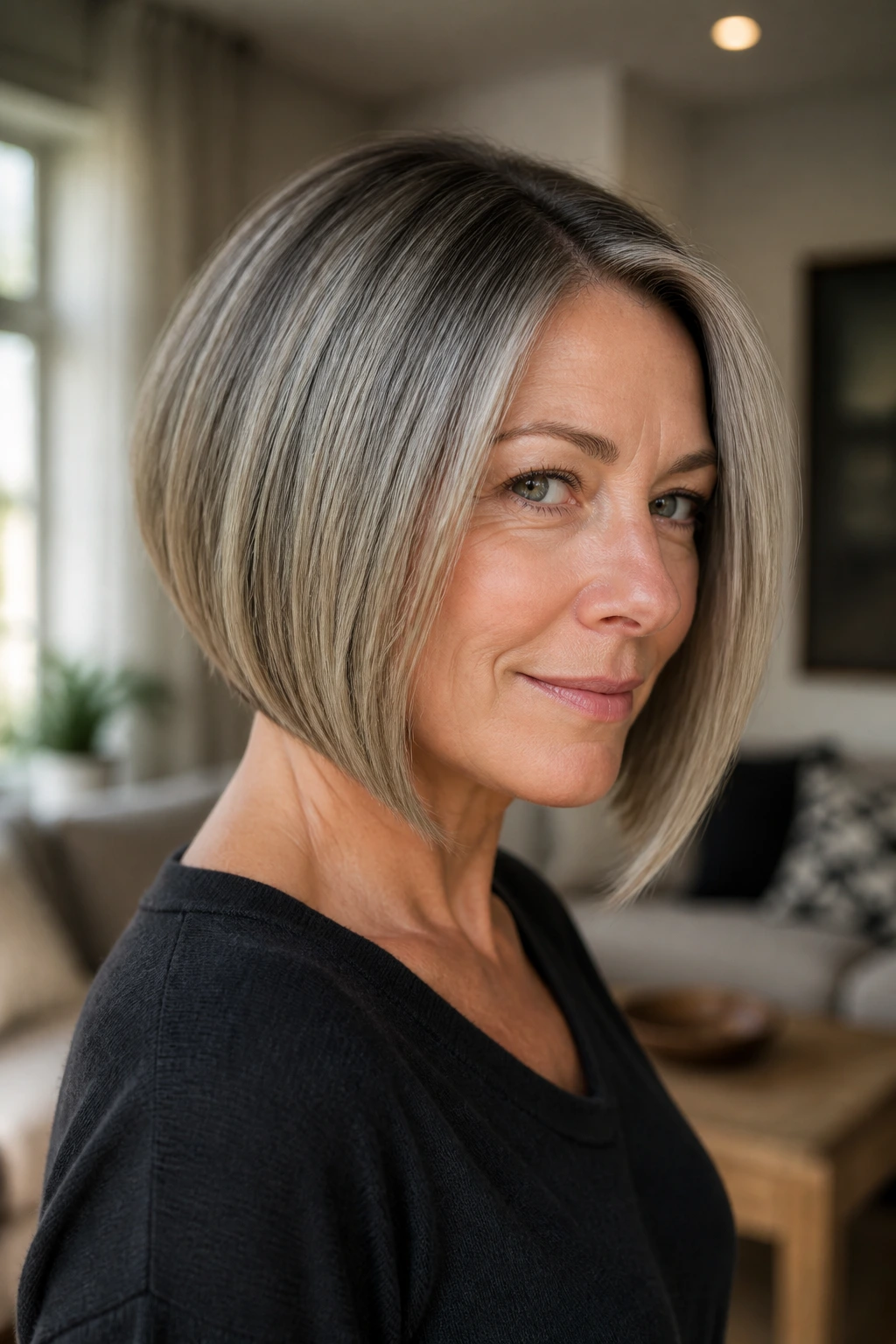
An A-line bob is shorter in back and longer in front, with the angle doing the heavy lifting. On thick hair, that shape is useful because it keeps the back from feeling packed and lets the front pieces frame the face without clinging to the cheeks.
This cut looks especially good when you want some sharpness without going full asymmetrical. The line is visible, which gives the bob definition, but it still feels wearable. If your hair has a lot of body near the neck, the angle prevents that “all-one-mass” problem that can make a bob look bulky from the side.
A subtle A-line usually works better than a dramatic one for older women with thick hair. The goal is shape, not theater.
7. Curved-Under Bob
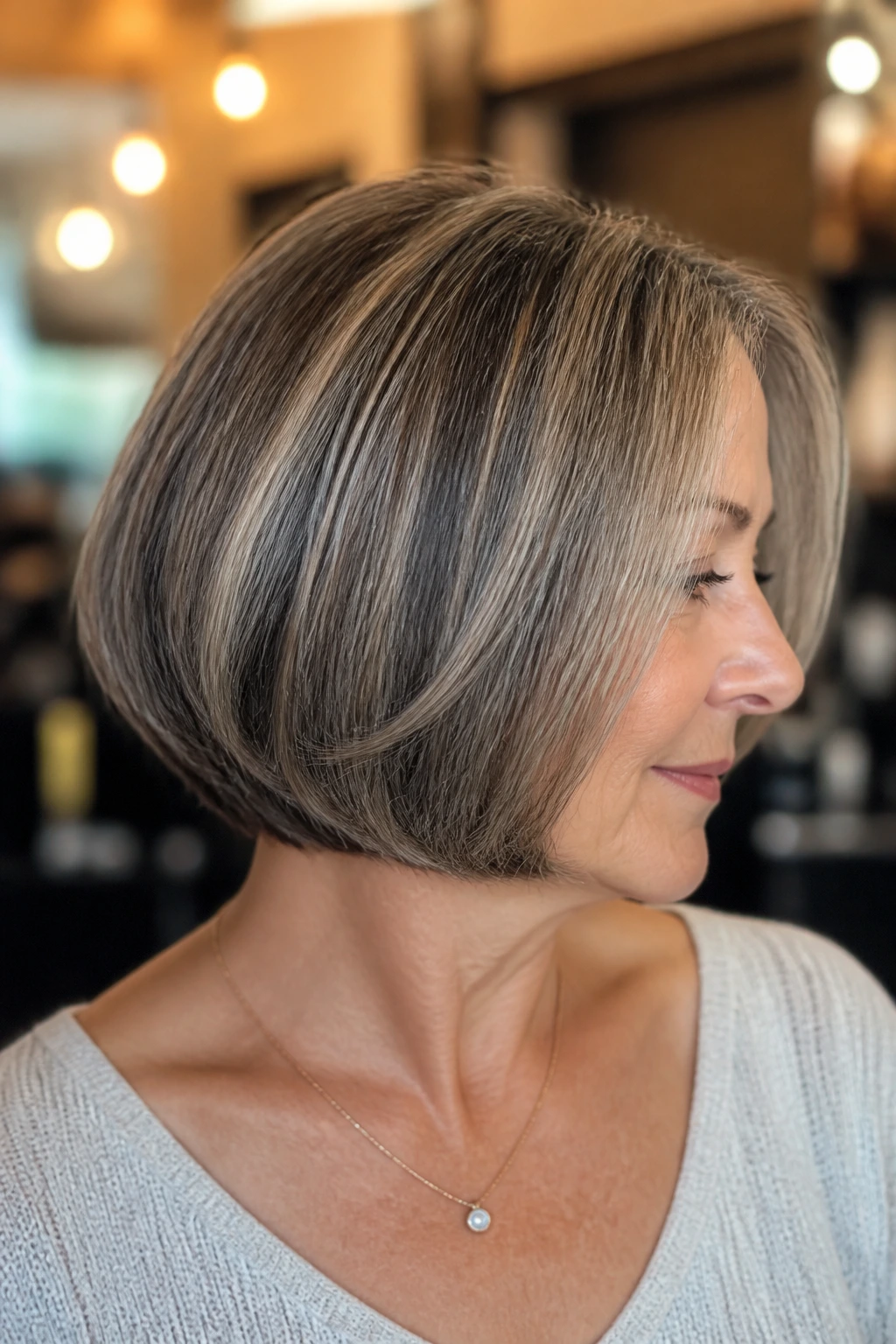
A curved-under bob is the polished cousin in this group. The perimeter bends inward just enough to hug the jaw and neck, which gives thick hair a neater finish and keeps the ends from looking wide.
This cut is a favorite when you want the hair to look tidy on purpose. It is not the loosest style on the list, and that is fine. Some days you want soft edges; some days you want a haircut that behaves like it has a schedule. A curved-under bob does especially well with a round brush and a medium heat setting, because the bend becomes part of the shape instead of an afterthought.
If your hair tends to kick out at the ends, ask for a gentle bevel at the perimeter. That tiny detail saves a lot of frustration.
8. Textured Piecey Bob
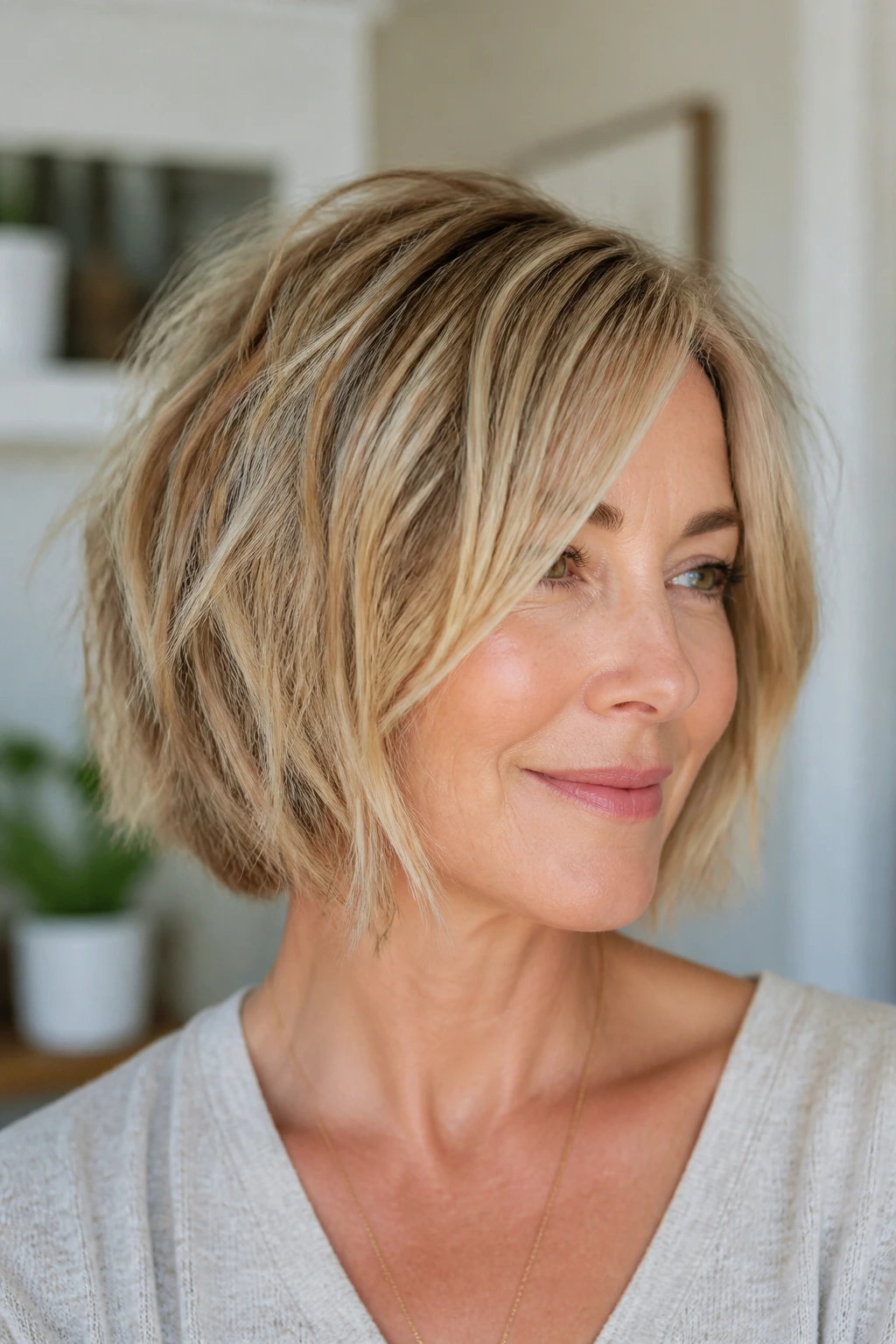
A textured piecey bob is for thick hair that likes to move and does not want to sit in one solid block. The texture breaks the surface into small sections, so the hair separates a little instead of forming a heavy sheet.
This one works best when the texture is controlled. You want piecey ends, not a frayed outline. The difference is everything. A good cut keeps the bottom line intact while adding movement through the middle and surface layers. On thick hair, that creates shape you can actually see when you turn your head.
A light styling cream and a touch of wax on the ends are enough. Too much product turns piecey into greasy fast.
9. Bob with Curtain Bangs
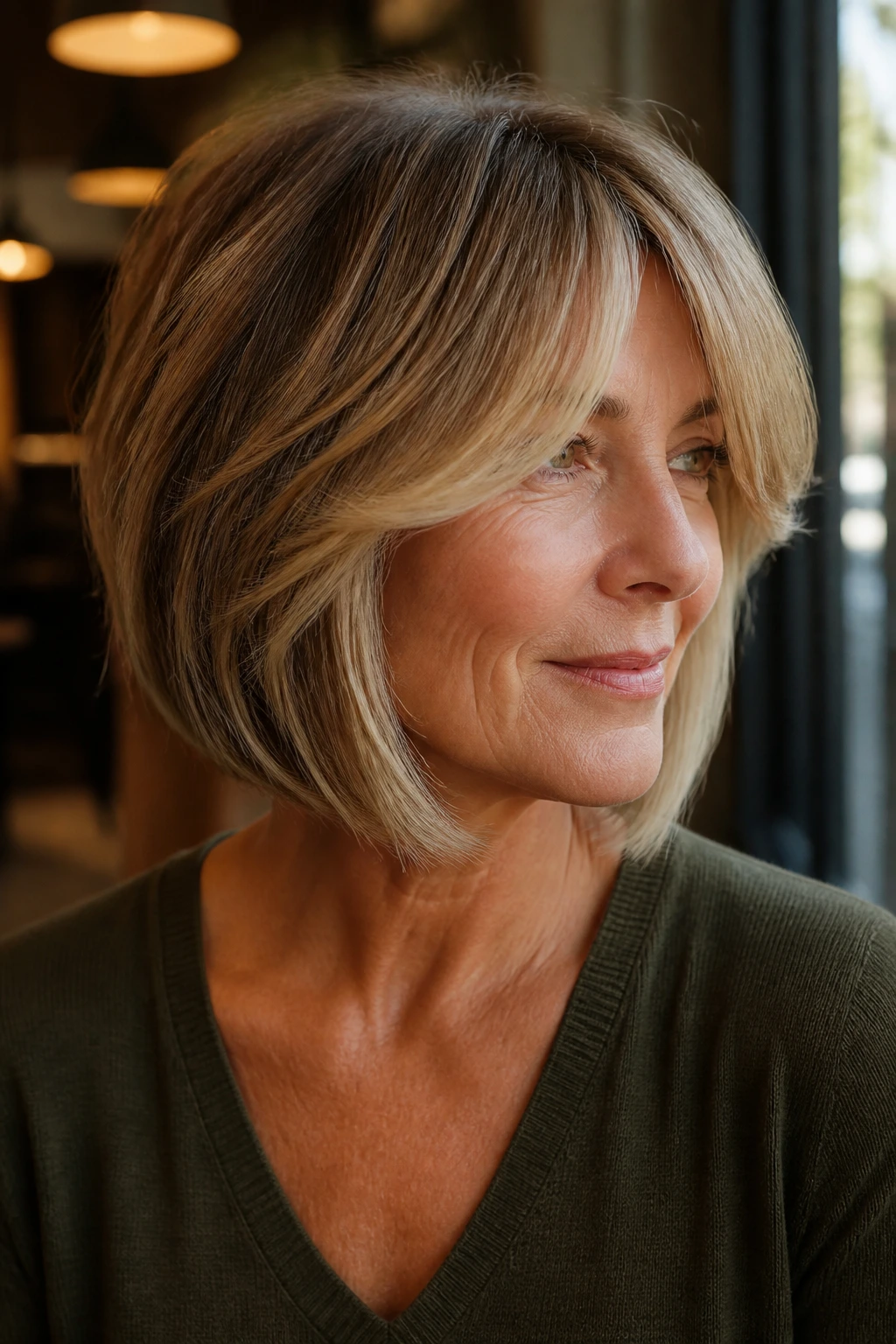
Curtain bangs can make a medium bob feel softer immediately. They part in the middle and sweep down toward the cheekbones, which is handy if you want a little face framing without committing to a straight fringe that needs constant trimming.
The best part for thick hair is that curtain bangs can be blended into the bob instead of sitting on top of it like a separate haircut. That keeps the front from looking bulky. Ask for the shortest point of the bang to land around the bridge of the nose or just below it, then let the side pieces taper longer into the bob.
If your forehead is on the wider side, this shape does a nice job of balancing it. If your hairline is strong, it softens that too. Quietly useful. No fuss.
10. Inverted Bob with Crown Lift
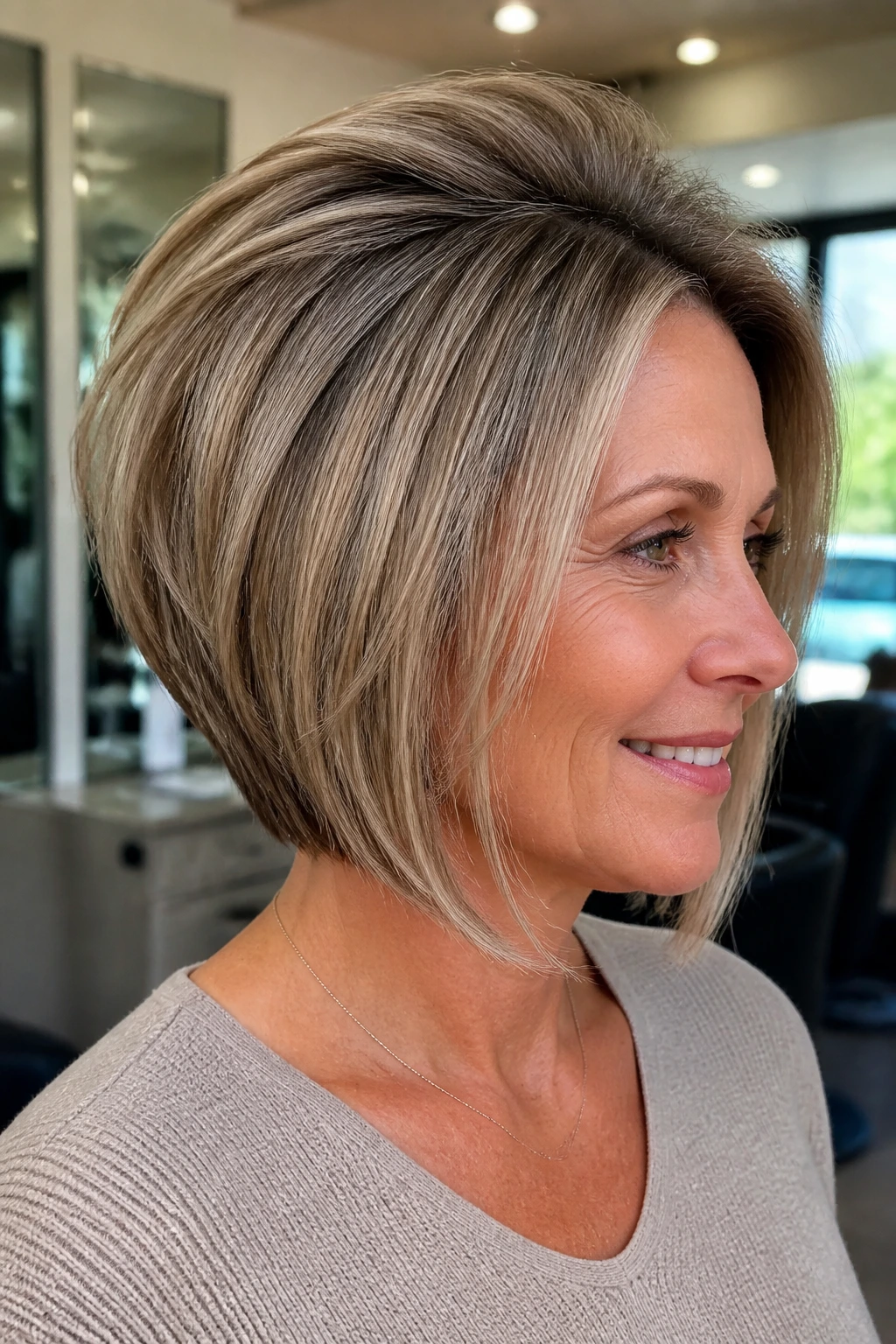
An inverted bob gives you lift where thick hair often goes flat: at the crown. The back is shorter and the length gradually increases toward the front, which creates a built-in rise without needing piles of round brushing.
This is the bob to choose if your hair feels heavy on top but still needs enough body to look full. The inversion helps the shape sit away from the neck, and the longer front pieces keep it from looking too sharp. Keep the graduation clean. If the back is stacked too high, the whole thing can tip into a dated shape.
A little root mousse at the crown goes a long way here. You do not need big spray hair. You need air between the scalp and the hair.
11. Wavy Internal-Layer Bob

If your thick hair has natural wave, this cut can be a relief. The internal layers let the wave spring up without making the outside of the bob look uneven or frizzy. That means you keep the fullness, but the shape becomes much easier to live with.
The important thing is where the layers go. If they sit on the outside, the bob can puff. If they stay inside the shape, the wave gets room to bend and the outline stays smooth. That is the sweet spot. A lot of people think they need to cut wave out of thick hair. Usually they just need to stop fighting it.
Scrunch in a lightweight mousse and let it dry with a diffuser, or air-dry it with clips at the roots. Either way, the cut should do most of the work.
12. Rounded Bob with Tucked Ends
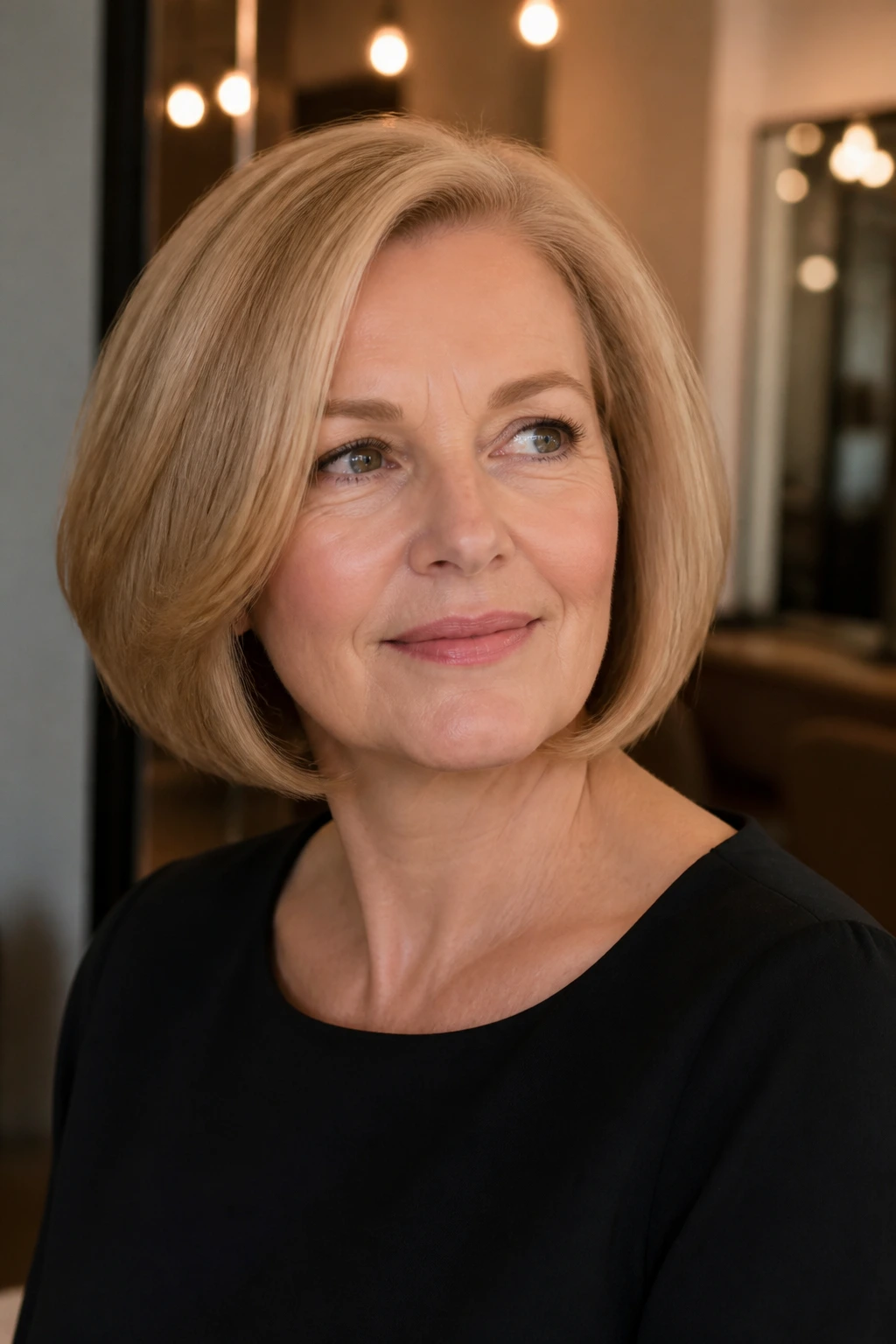
A rounded bob is the haircut equivalent of a well-made jacket. It has structure, but it is not stiff. The ends tuck under just enough to create a soft frame around the face, and thick hair gives the shape enough body to hold.
This works beautifully when you want a neat, controlled style that still feels feminine. It can be very flattering around the jaw because the curve softens anything sharp there. Ask for the outline to stay full, not thinned out too much. The rounded effect comes from shape, not from removing half the hair.
A round brush and a quick cool shot at the end will set it. If you skip the cool shot, the ends often lose the tuck by lunchtime.
13. Shaggy Medium Bob

A shaggy medium bob should look lived-in, not messy. That is the line I keep coming back to because thick hair can take shag layers too far if the stylist gets scissors-happy. The goal is movement through the crown and mid-lengths while keeping enough length at the bottom to still read as a bob.
This cut is a good match if your hair has personality and you do not want a neat, tucked shape. It can be flattering on older women who like a slightly tougher edge around the face. Just keep the layers disciplined. A shag with too many short pieces starts looking airy in the wrong way.
14. Sleek Glass Bob
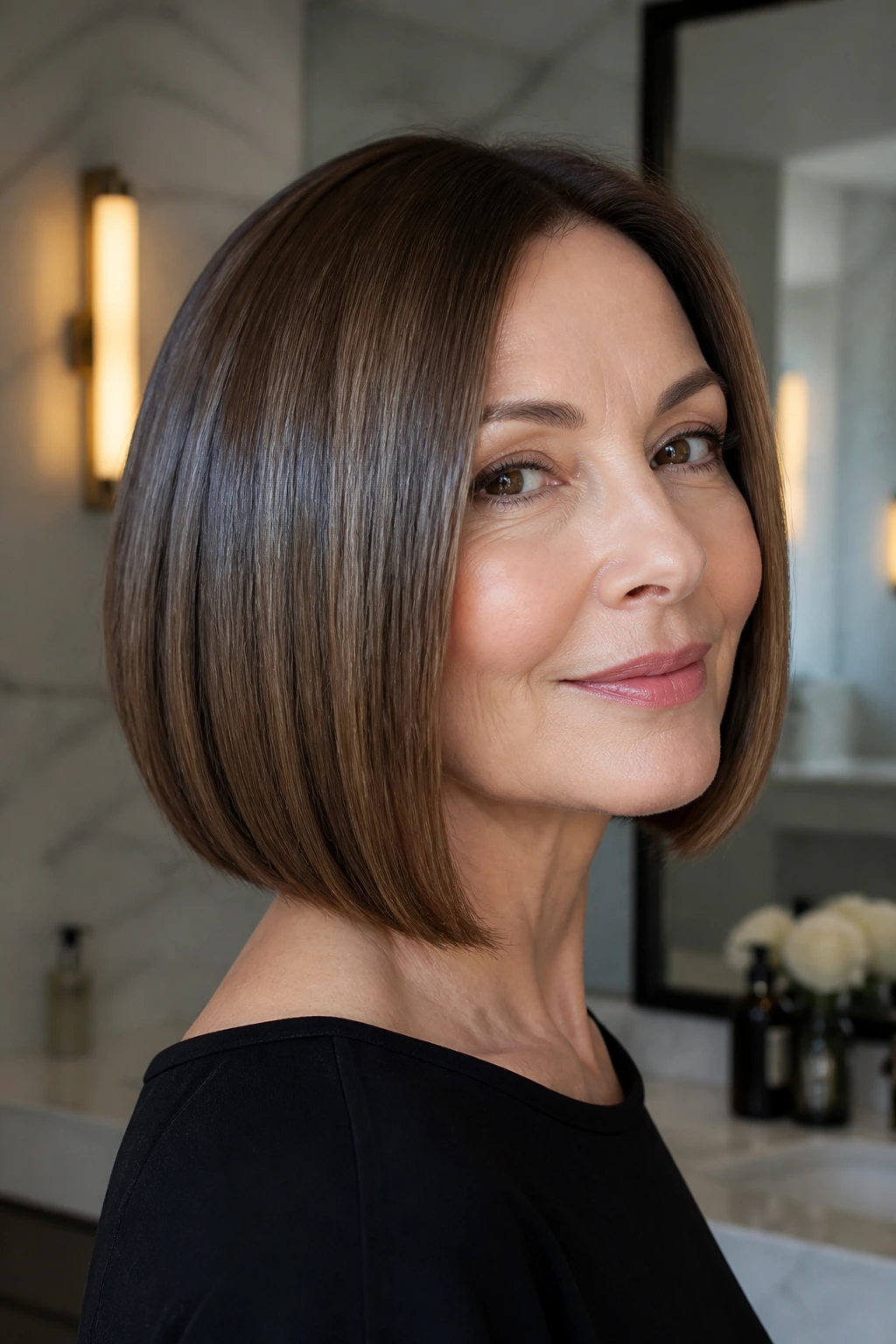
A sleek glass bob takes thick hair and turns it into a statement line. The shine matters as much as the shape here. When the hair is smoothed well, the density works in your favor because the cut looks dense, glossy, and expensive without being fussy.
This is the bob that rewards good prep. Heat protectant, a paddle brush, and one careful pass of the flat iron are usually enough if the hair is cut cleanly. The ends should be blunt or lightly beveled, not ragged, because any unevenness shows up immediately in a style this smooth.
It is a strong choice if your gray or silver hair reflects light nicely. The surface line catches the shine, and the bob stops looking like “lots of hair” and starts looking like a design decision.
15. Deep Side-Part Bob
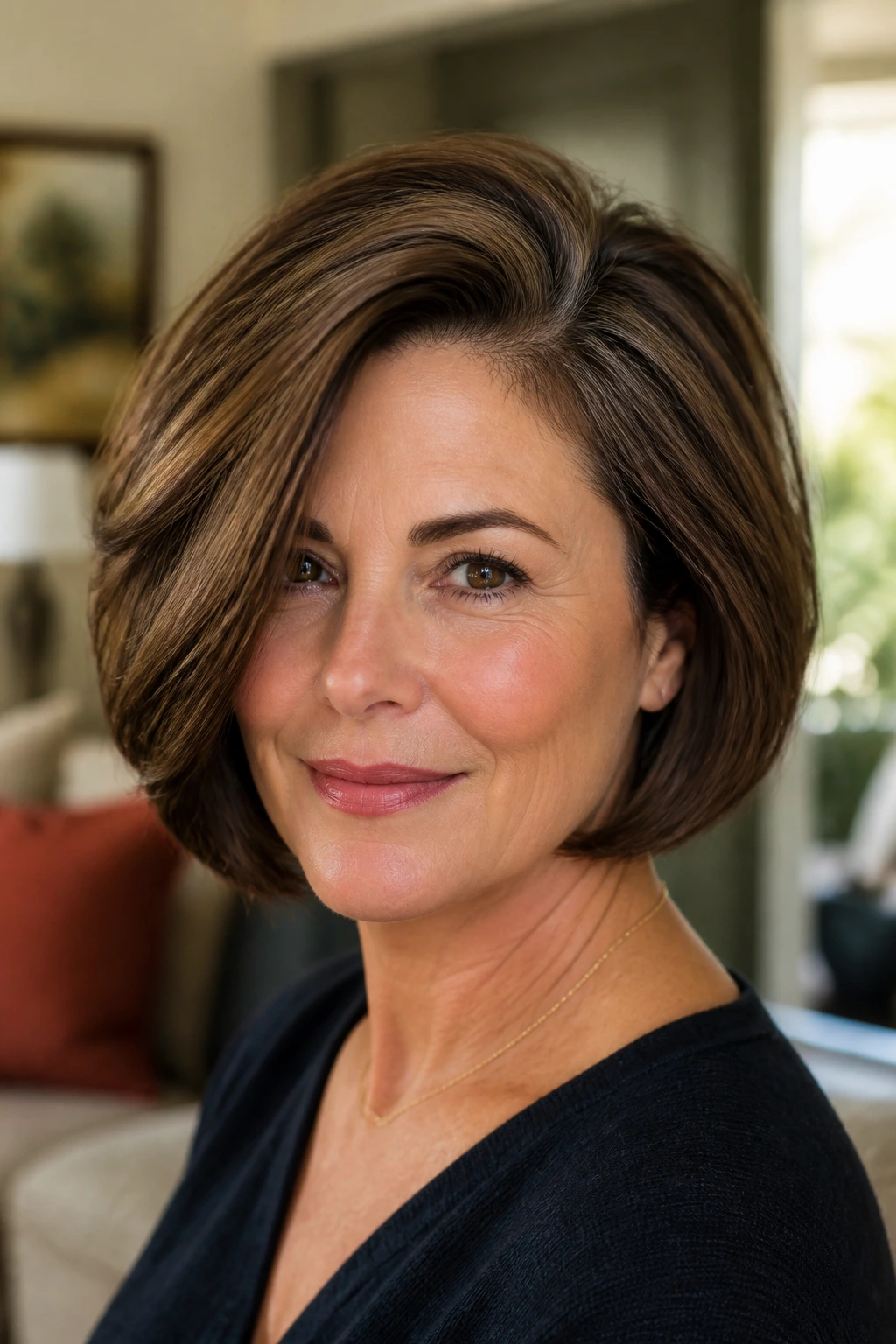
A deep side part can change a thick bob faster than almost any cutting technique. It adds lift at the root, creates asymmetry, and helps break up density around the face. If one side of your hair always behaves better than the other, this cut lets that asymmetry work for you.
The shape can be simple underneath. The drama comes from the part and the direction of the front pieces. That makes it useful if you want a change without losing inches. Older women often like this because it shifts focus upward toward the eyes and away from any heaviness at the jaw.
A light root spray at the heavier side gives the look a little extra hold. Not much. A few sprays, then hands off.
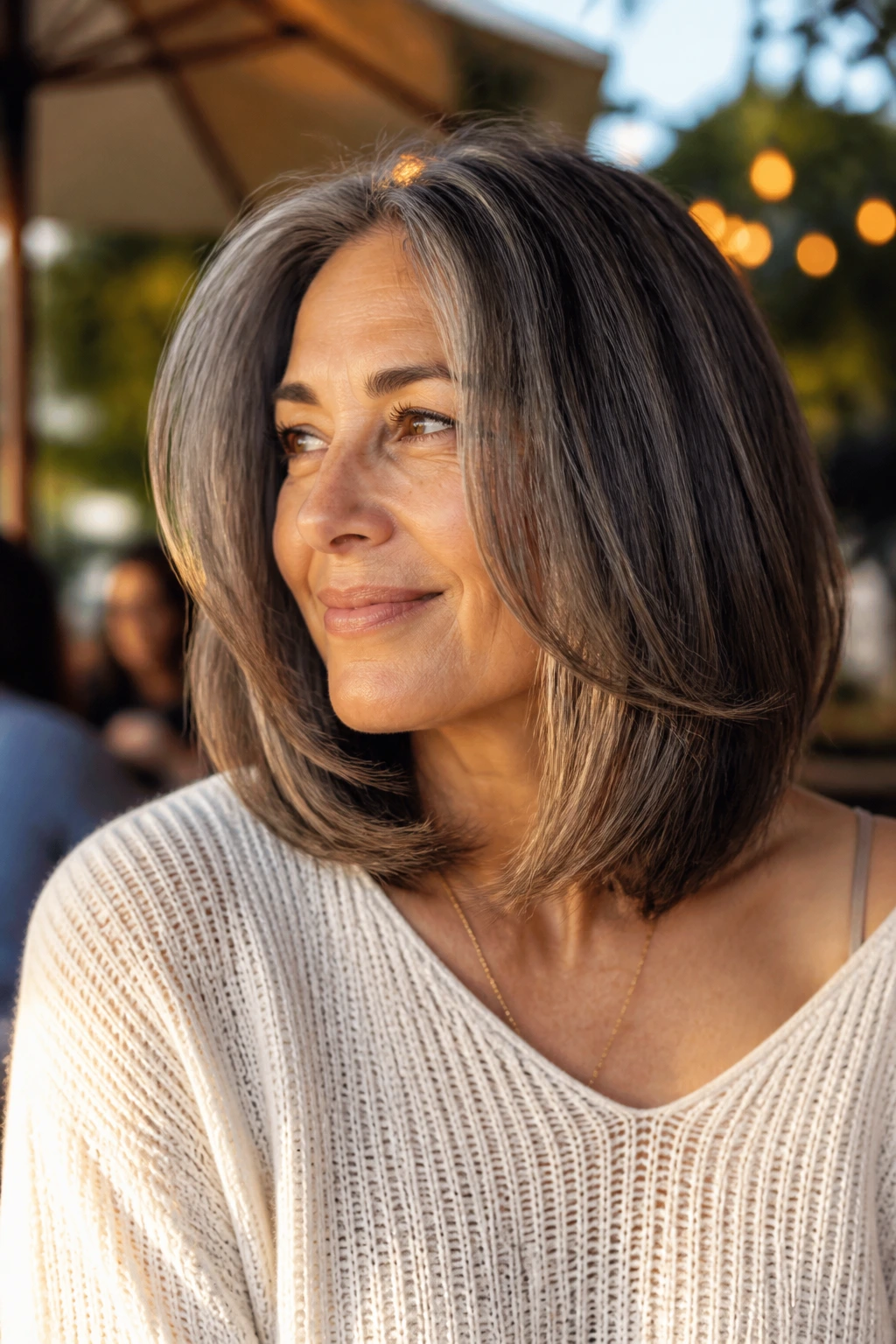
16. Collarbone Lob with Soft Bend
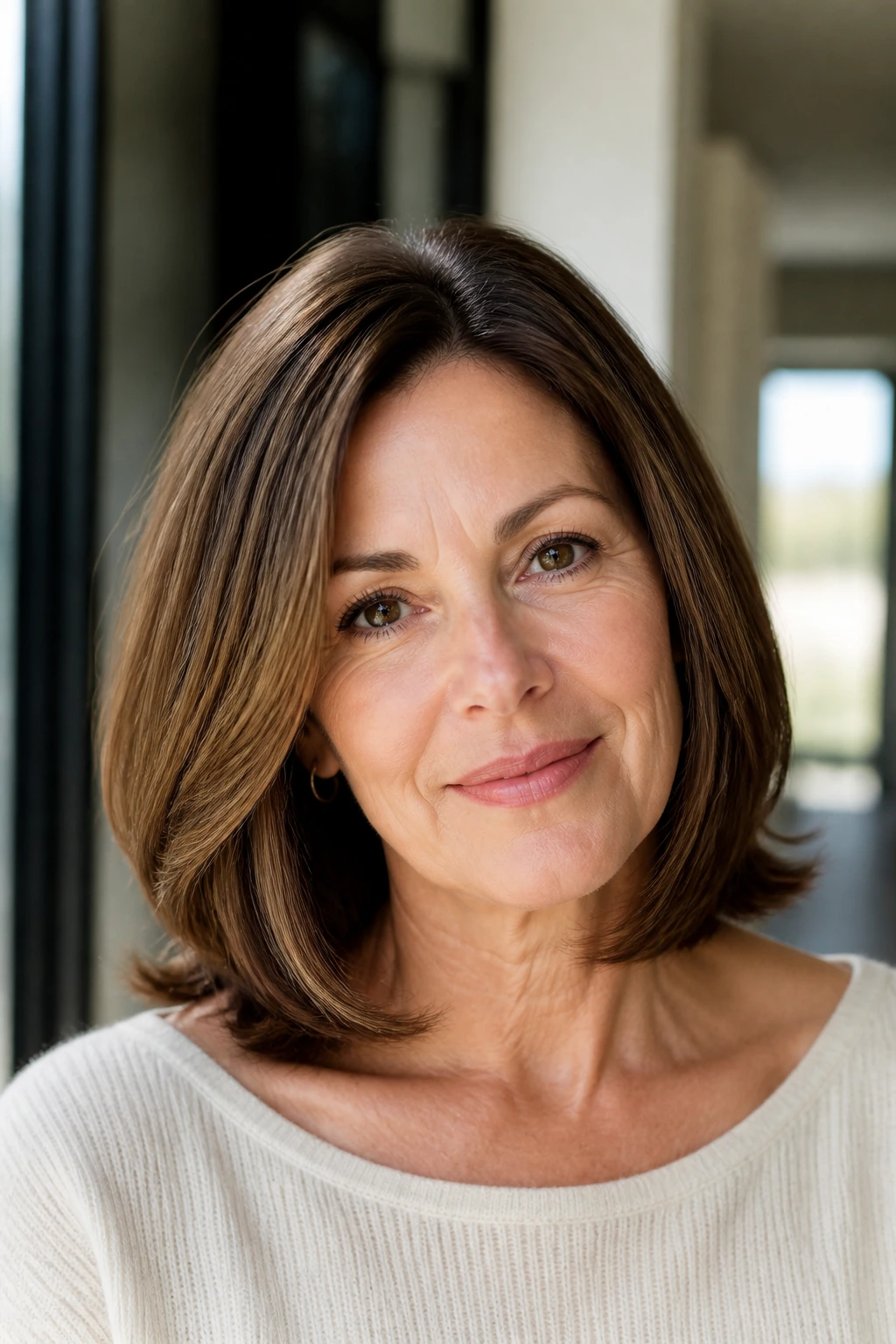
A collarbone lob with a soft bend is the easy one. It gives you enough length to tuck behind the ears or clip back, but it still clears the shoulders enough to avoid that thick-hair drag that happens when everything hangs too long.
The soft bend matters. Straight-down hair can make a lob feel stiff; a little movement at the ends keeps it from looking flat. Ask for layers that are long and nearly invisible, just enough to help the hair bend around the collarbone instead of sitting in a heavy sheet.
This is a smart choice if you do not want a trim every few weeks. It grows out nicely, and the shape stays readable even as it gets longer.
17. Bottleneck Bang Bob
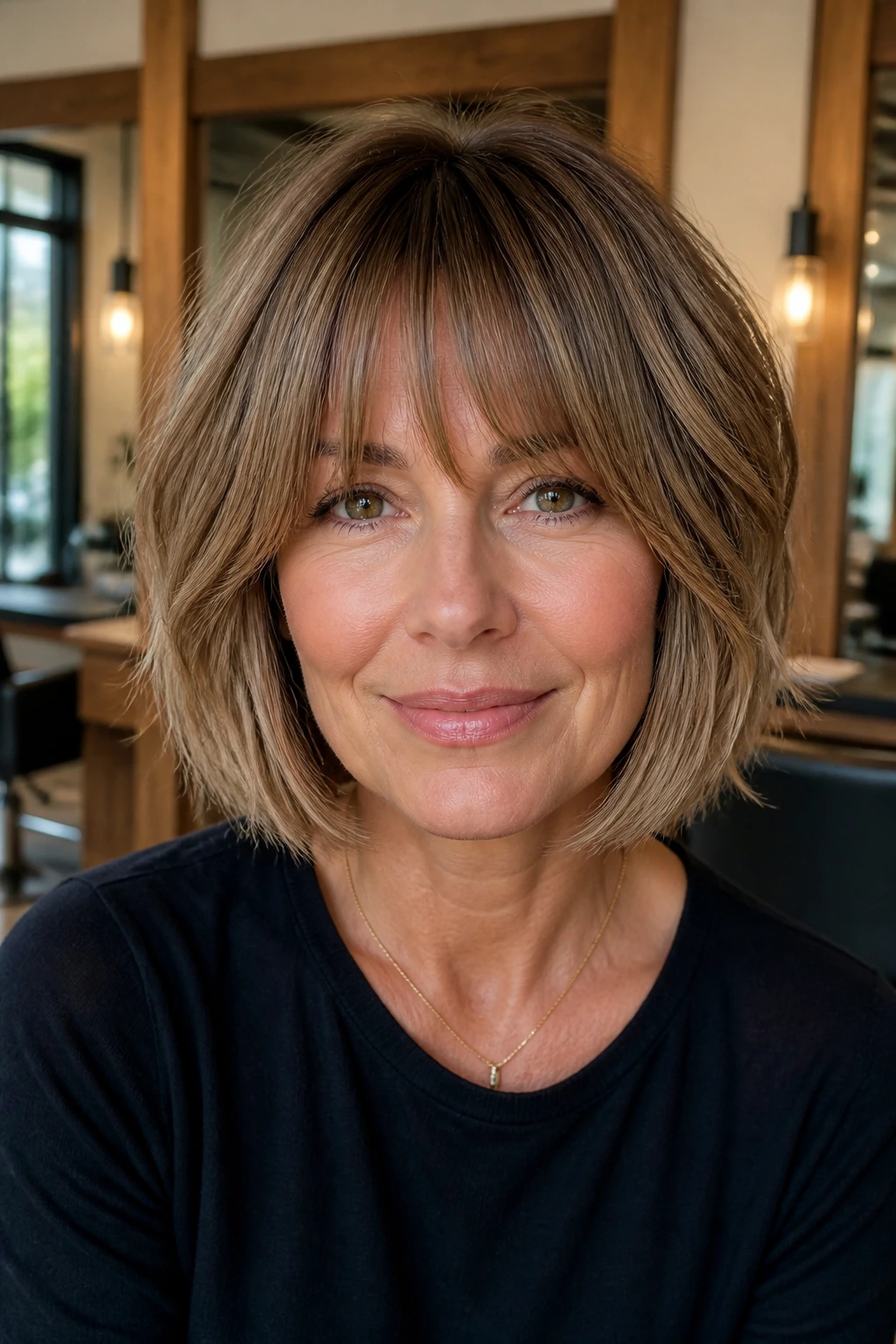
Bottleneck bangs are one of those details that quietly make thick hair look more expensive. They start narrower in the center and widen toward the temples, which means you get softness around the forehead without a blunt wall of fringe.
Paired with a medium bob, this shape can frame the eyes in a really nice way. The bangs should blend into the front pieces, not sit separately. That blending is what keeps thick hair from looking boxed in at the face. If your hairline is high or you want a little extra coverage without committing to heavy bangs, this is the one to try.
Dry the bangs side to side first so they do not split in the wrong place. That tiny detail saves a lot of frustration.
18. Razored Bob with Airy Ends
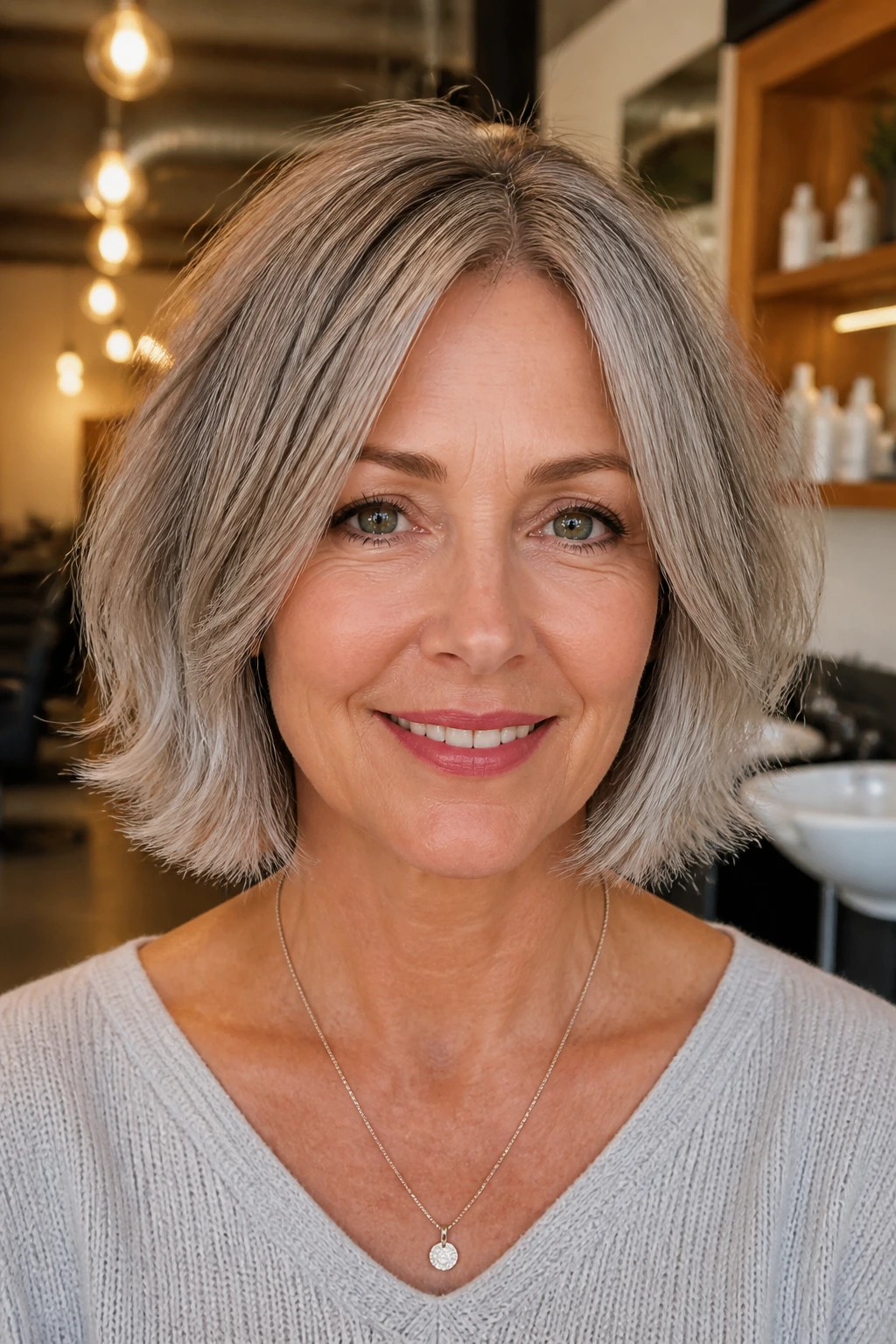
A razored bob can be wonderful on thick hair when the razor work is done with restraint. The ends feel lighter, the bob moves easier, and the shape loses some of that compact weight that thick hair loves to keep.
The warning is simple: too much razor work makes the ends fuzzy. So the cut needs a steady hand and a clear plan. Keep the perimeter strong, and use the razor to soften the inside and the last half-inch of the ends. That way the bob still has definition, just less bulk.
This is a good option if your hair tends to look heavy even after a fresh cut. It buys you motion without shaving off length.
19. Blowout Bob
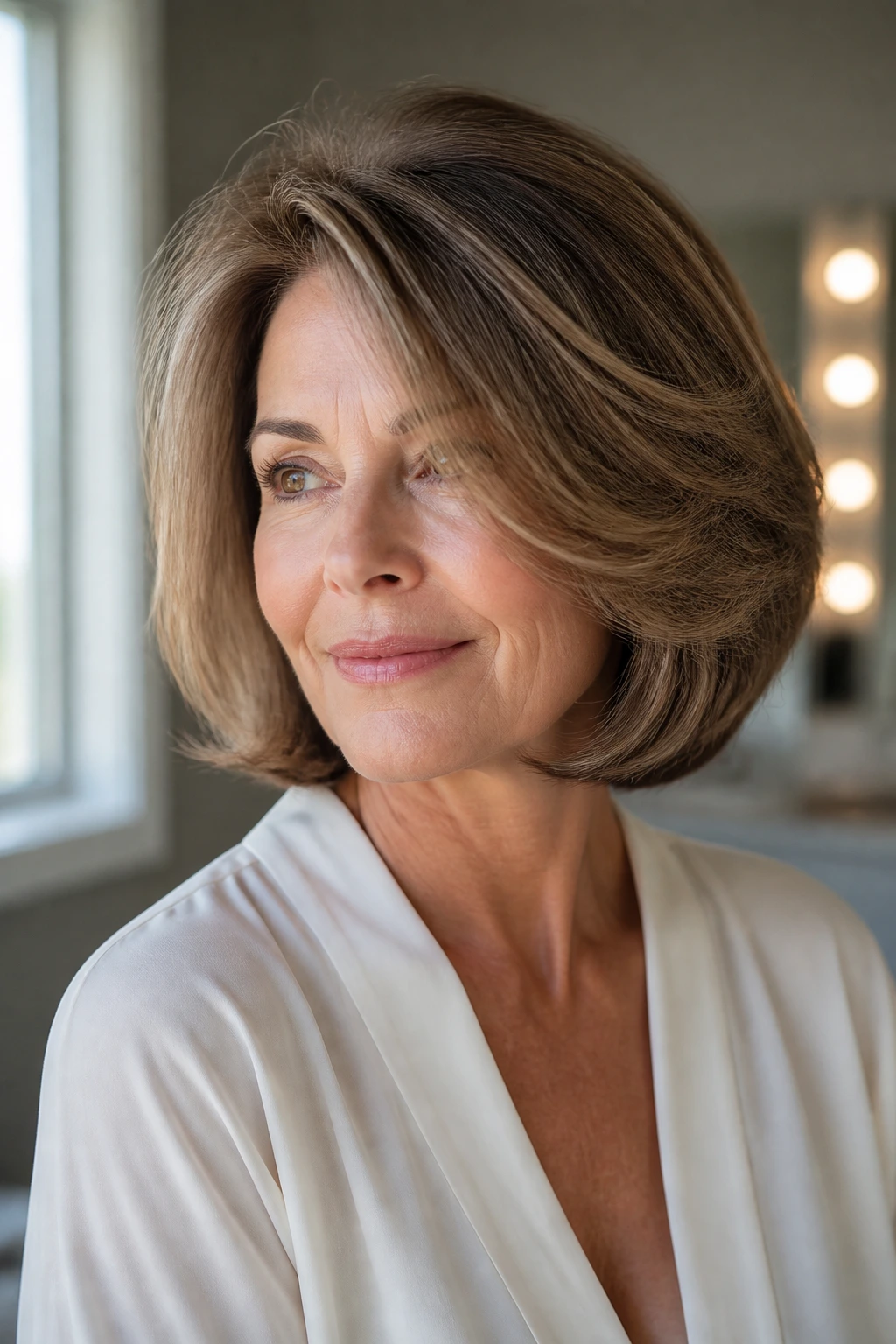
A blowout bob has one job: look like you gave the haircut a little attention, even if you did not spend much time on it. Thick hair helps here because it holds bend and body better than fine hair does.
The style usually works best with long layers or a rounded perimeter, both of which respond well to a round brush. The ends flip softly, the crown lifts a little, and the whole thing lands in that polished middle ground between formal and casual. If you like your hair to look finished, this is a dependable shape.
Velcro rollers at the crown can help if your roots fall flat. Five minutes while you do makeup is usually enough.
20. Slightly Angled Bob for Glasses
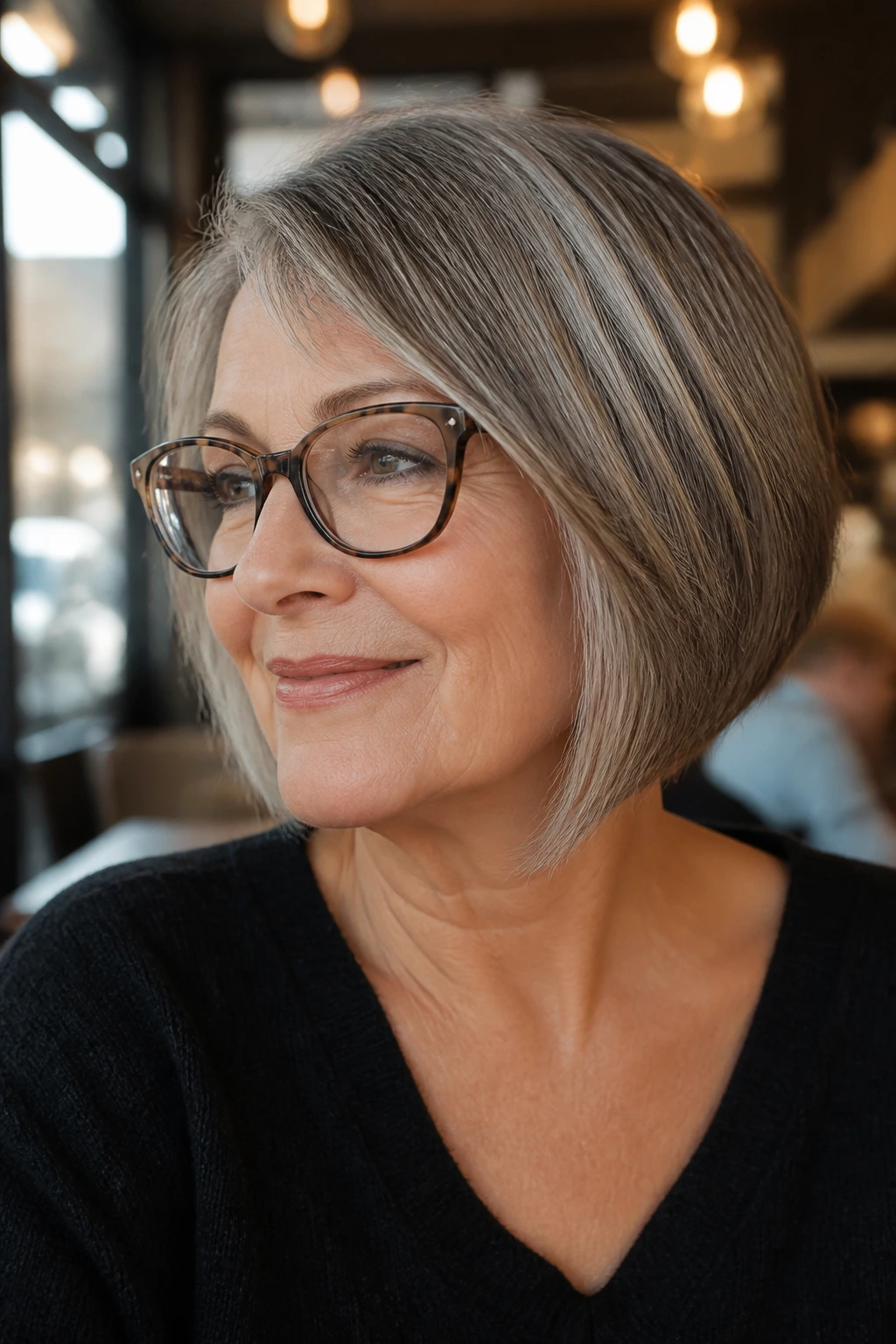
If you wear glasses, this bob saves you from the constant battle between hair and frames. The slight angle keeps the front pieces from sitting directly on the temples, and the shorter back keeps the overall shape tidy.
You do not need a dramatic angle. In fact, a mild one often works better. It gives room around the ears and cheekbones so the glasses do not get swallowed by hair. Thick hair can crowd the face fast; this shape keeps things cleaner.
Ask your stylist to check the line with your glasses on. Sounds fussy. It is not. It is the difference between a good cut and a cut you end up pinning back every morning.
21. Silver-Enhancing Bob

Gray and silver hair look best in a cut that understands light. A medium bob with a clean line and soft internal movement lets those colors show their dimension instead of burying them under too much texture.
This is not about making silver hair look younger. That is a boring goal. It is about making it look crisp, shiny, and deliberate. A blunt edge or a softly beveled perimeter gives the color a frame, while long layers inside the bob keep the thickness from turning puffy. If your hair has both silver and darker strands, the contrast can look especially rich in this shape.
A clear gloss or shine serum on the ends finishes it well. Tiny amount. Too much makes silver hair look dull instead of bright.
22. Low-Maintenance Mid-Bob with Hidden Debulking
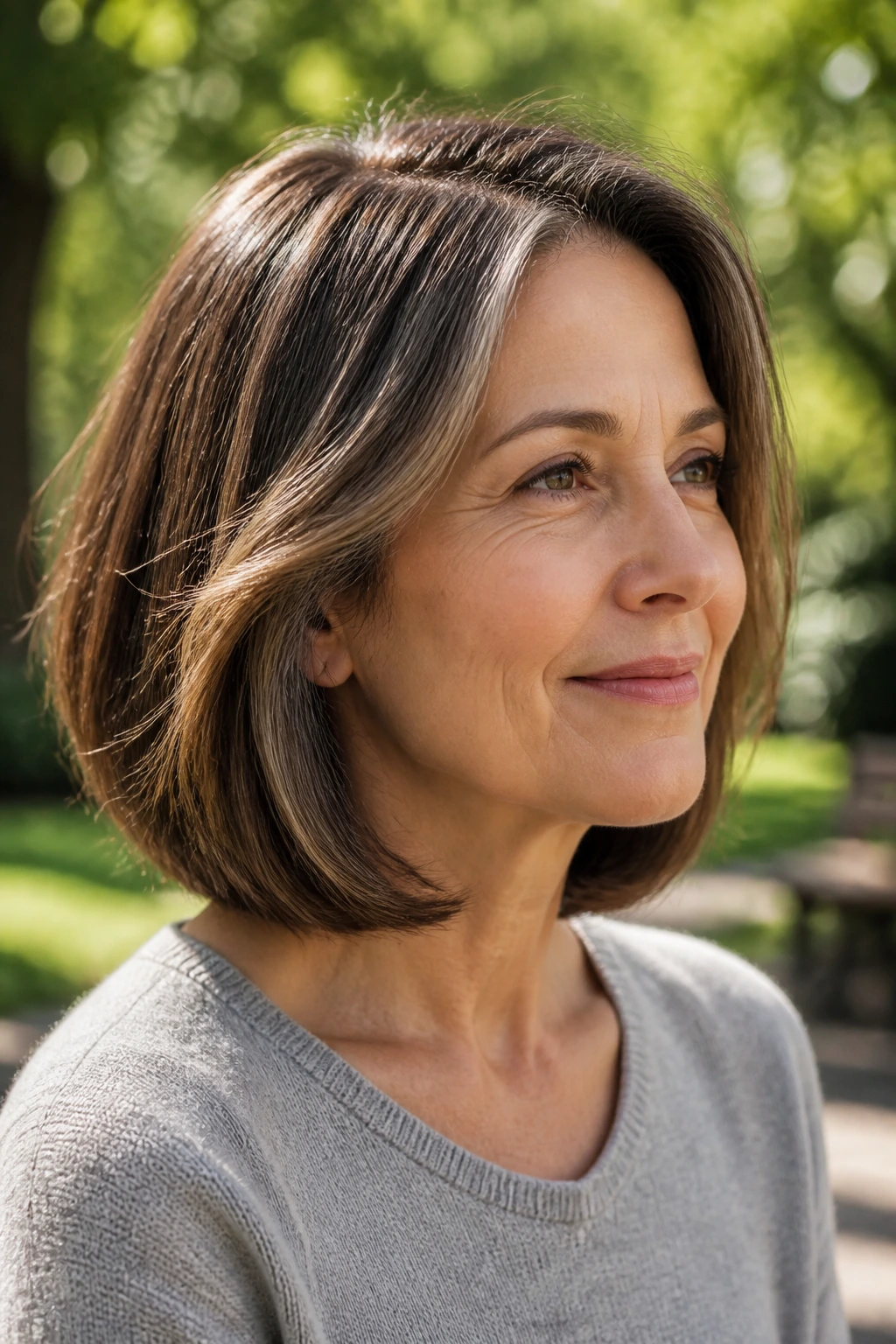
This is the workhorse cut. It looks simple from the outside, but the inside has been pared down so thick hair does not swell outward. The perimeter stays clean, and the hidden debulking makes it easier to wash, dry, and go.
The reason this one matters is growth. Not every bob needs to be touched up constantly. If you like a shape that keeps its manners for longer stretches, hidden internal layers help the cut survive a few extra weeks without turning into a block. You still need some shaping, of course. Thick hair is thick hair. But this version asks for less daily negotiation.
If your routine is short on time, this is one of the safest bets on the list.
23. Flip-Under Bob
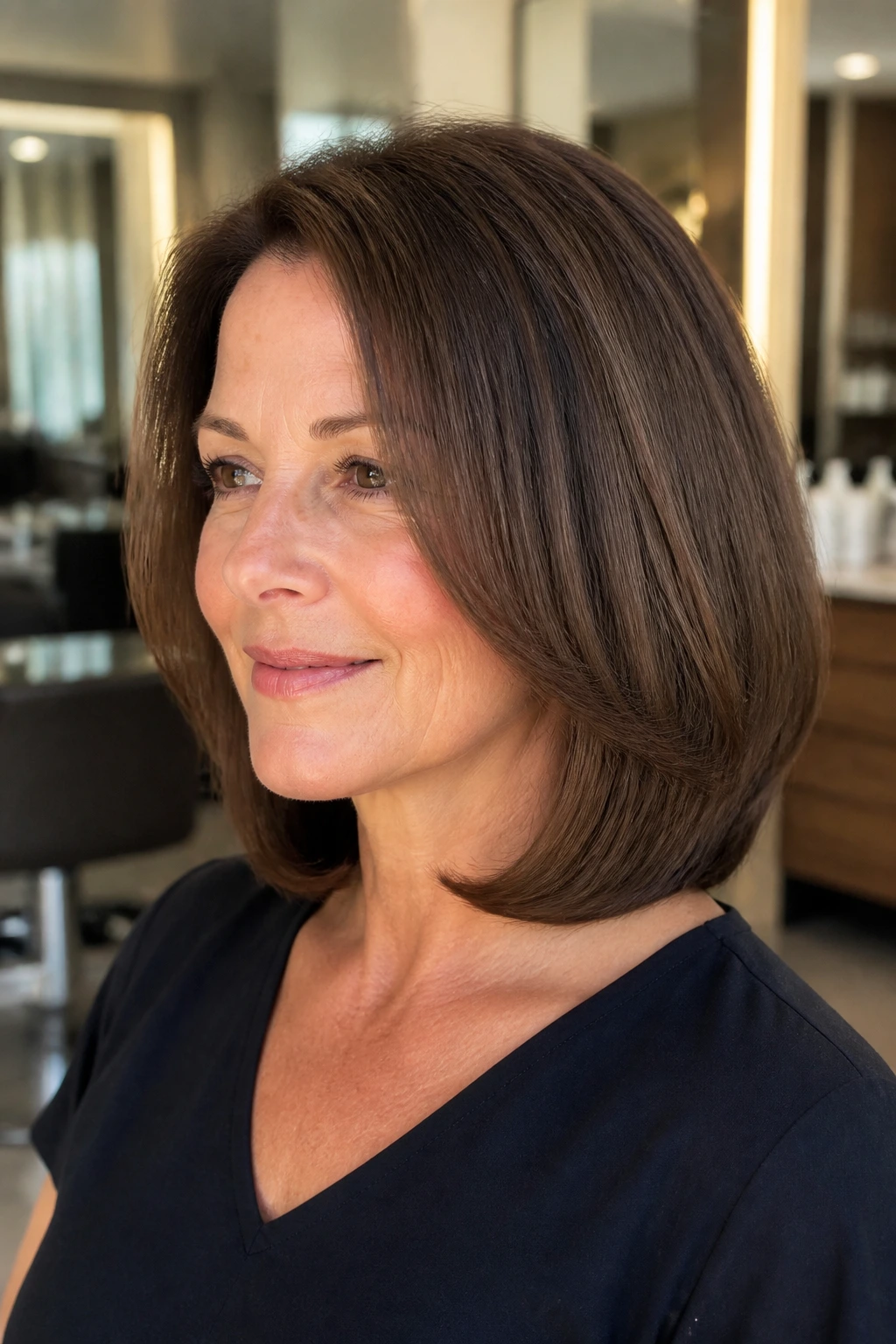
A flip-under bob gives thick hair a soft, tidy finish at the ends. The perimeter is cut and styled so the hair turns inward, which keeps it from flaring around the collarbones or sticking out near the shoulders.
This shape feels especially good on hair that likes to kick out on its own. The inward turn reins it in without making the style look stiff. Ask for a subtle bevel and avoid chopping the ends too bluntly if your hair naturally puffs. The turn should feel like a bend, not a roll.
A medium round brush or a large brush with a slight twist at the wrist is usually all it takes. Sometimes the simplest finish is the smartest one.
24. Soft Layered Bob with Side-Swept Fringe
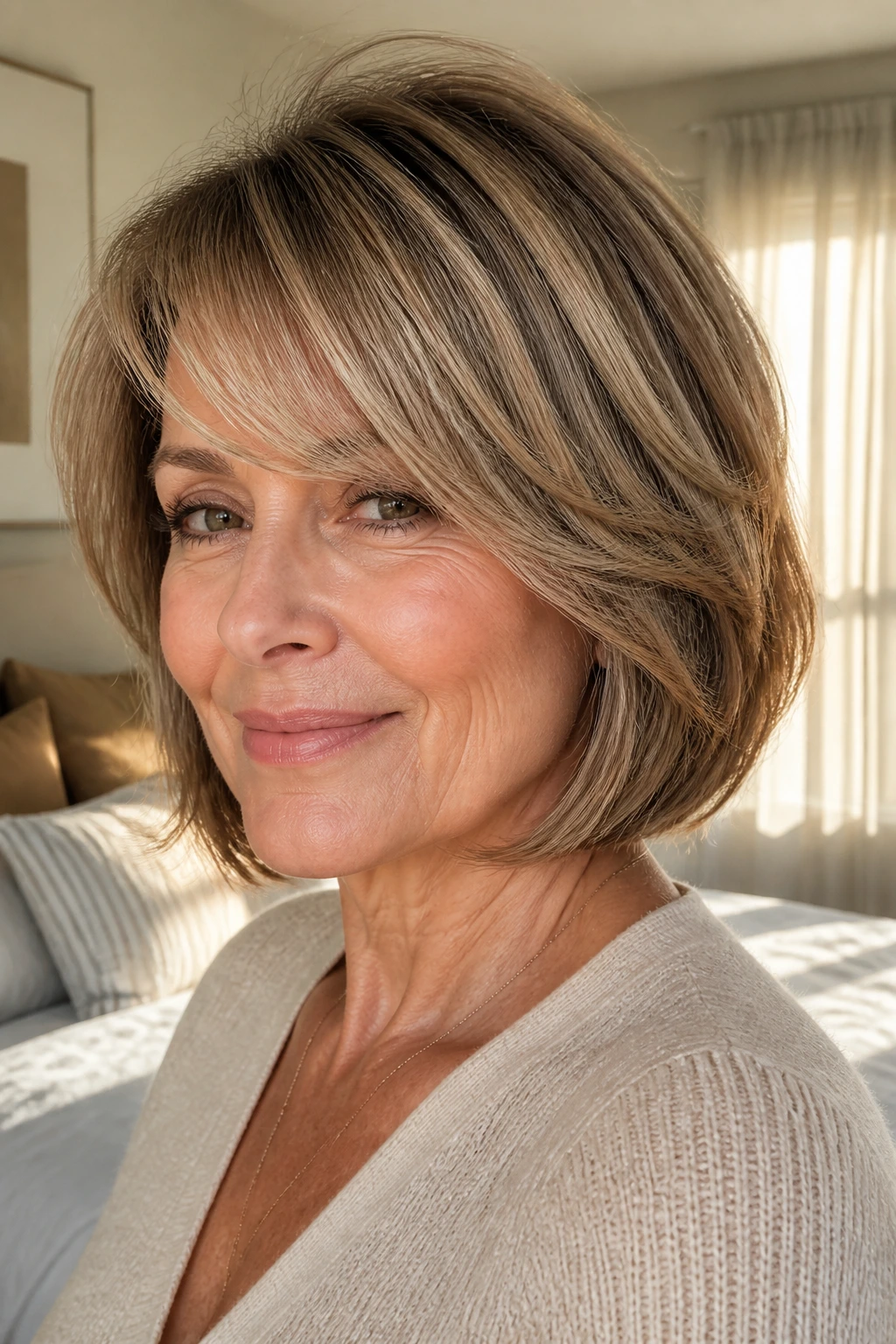
A soft layered bob with a side-swept fringe is one of those cuts that keeps earning its place because it flatters so many faces. The fringe moves diagonally across the forehead, while the layers take weight out of the sides and keep the thick hair from sitting like a block.
This version is especially good if you want a little softness near the eyes. It can blur the transition between bangs and bob in a way that feels calm, not busy. The layers should be long enough to move, short enough to matter. That balance is the whole cut.
If you like a haircut that looks finished even when you do not blow-dry it perfectly, this is a strong choice.
25. Asymmetrical Medium Bob
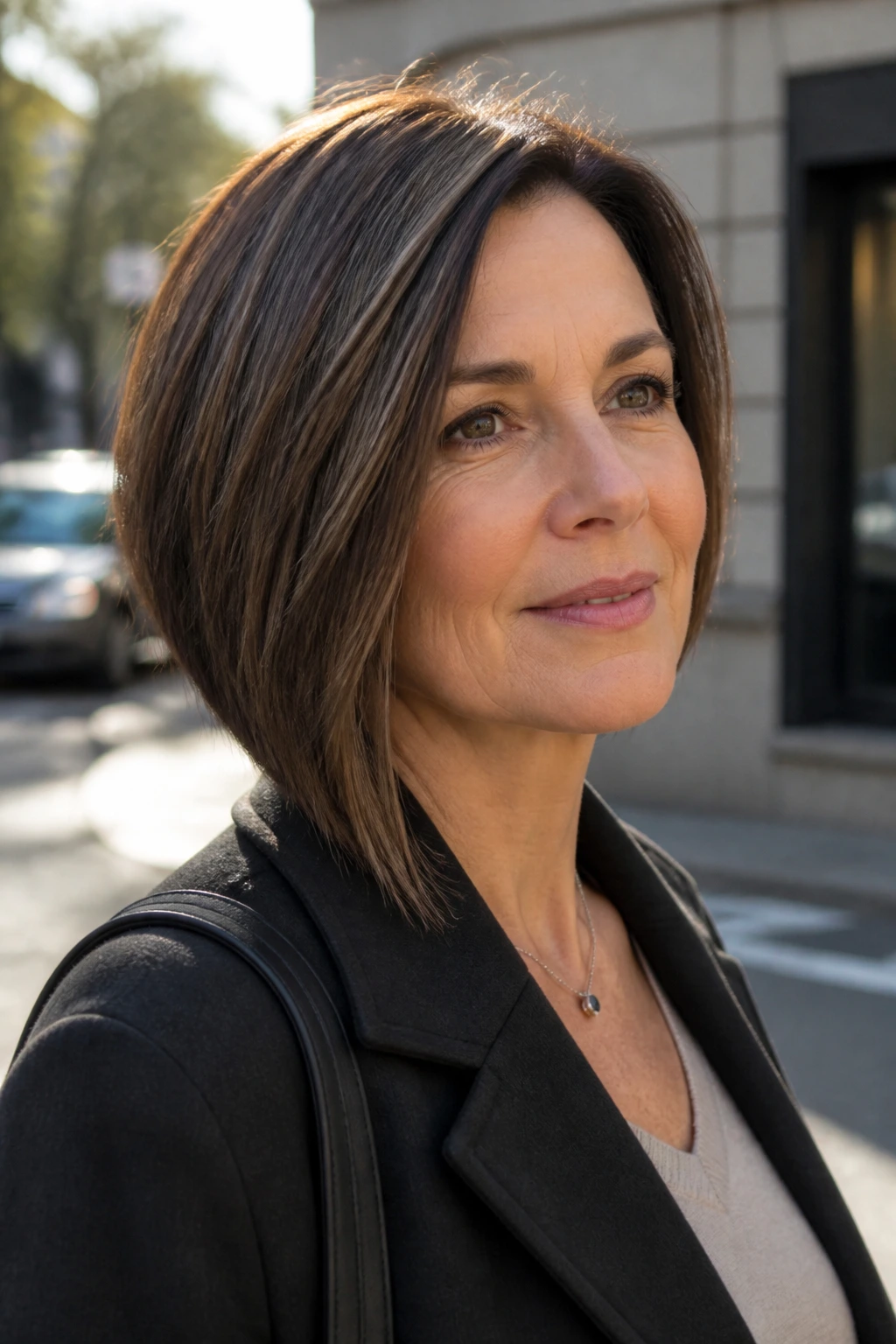
An asymmetrical medium bob gives you shape with a little attitude, but it does not have to be loud. One side sits a touch longer than the other, which pulls the eye diagonally and gives thick hair a more dynamic outline.
The secret is keeping the difference subtle. A half-inch to an inch is plenty for most faces. Go too extreme and the haircut starts competing with everything else. For older women who want something fresh without looking like they are trying too hard, that slight imbalance can feel just right.
It works well with straight styling, soft waves, or a tucked-behind-one-ear finish. The cut does the talking either way.
Why Medium Bobs Calm Thick Hair Without Flattening It
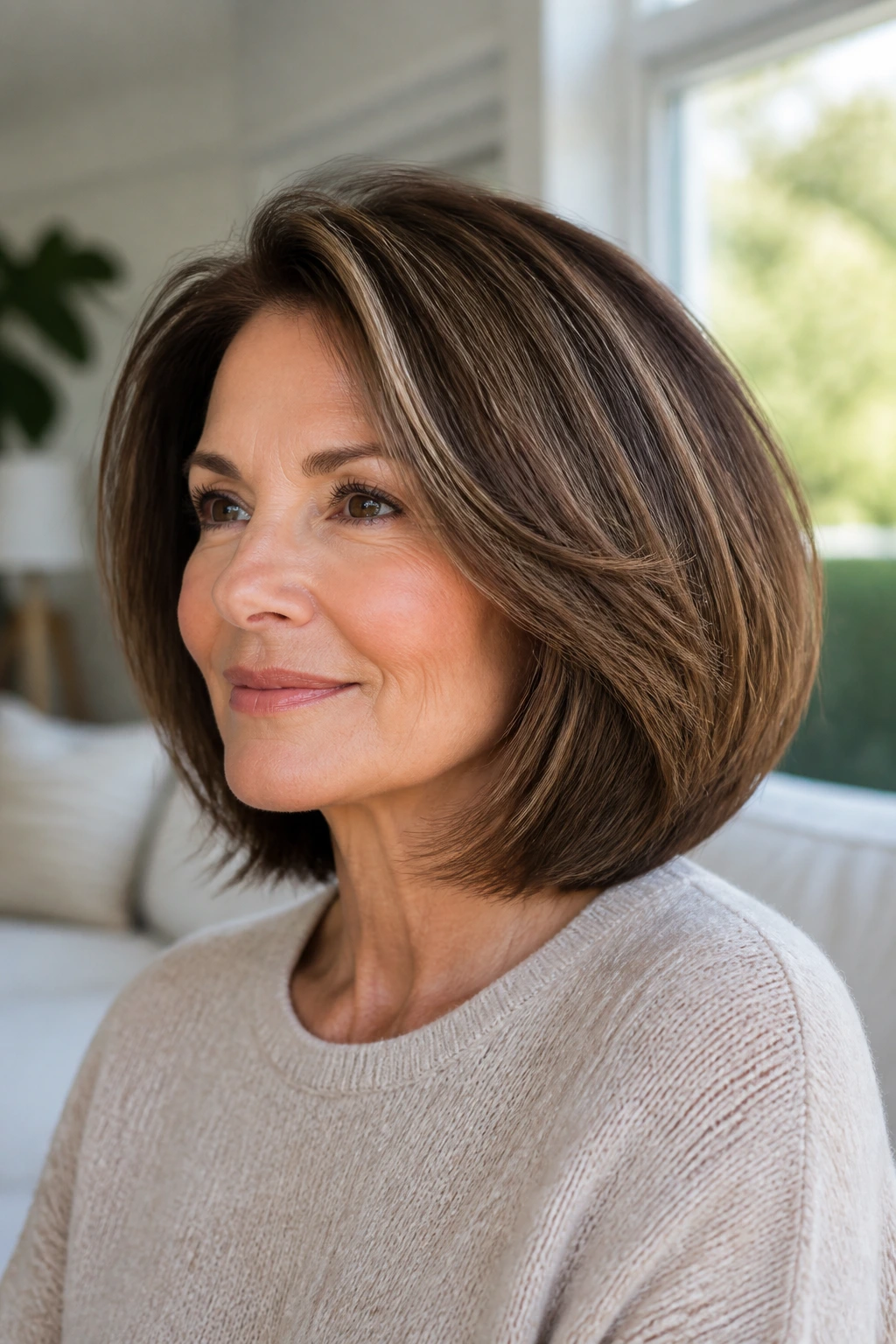
Thick hair does not need to be thinned to the bone. It needs a shape that understands where the bulk actually lives. A medium bob works because it gives the hair a perimeter to lean on while taking enough weight out of the inside to keep the outline from spreading outward like a bell.
The length matters almost as much as the cut. Land it too high and you lose the softness around the face. Let it go too long and the weight starts dragging the shape down. Jaw to collarbone is the useful zone for most thick-hair bobs, though the exact sweet spot depends on your neck, your cheekbones, and how much movement you want when you turn your head.
A lot of women assume thick hair needs more and more layers. Not always. Sometimes it needs fewer, better-placed layers and a perimeter that stays honest. That is the part stylists who know thick hair well tend to get right. They do not fight the density. They direct it.
What to Ask for at the Salon Before the First Snip
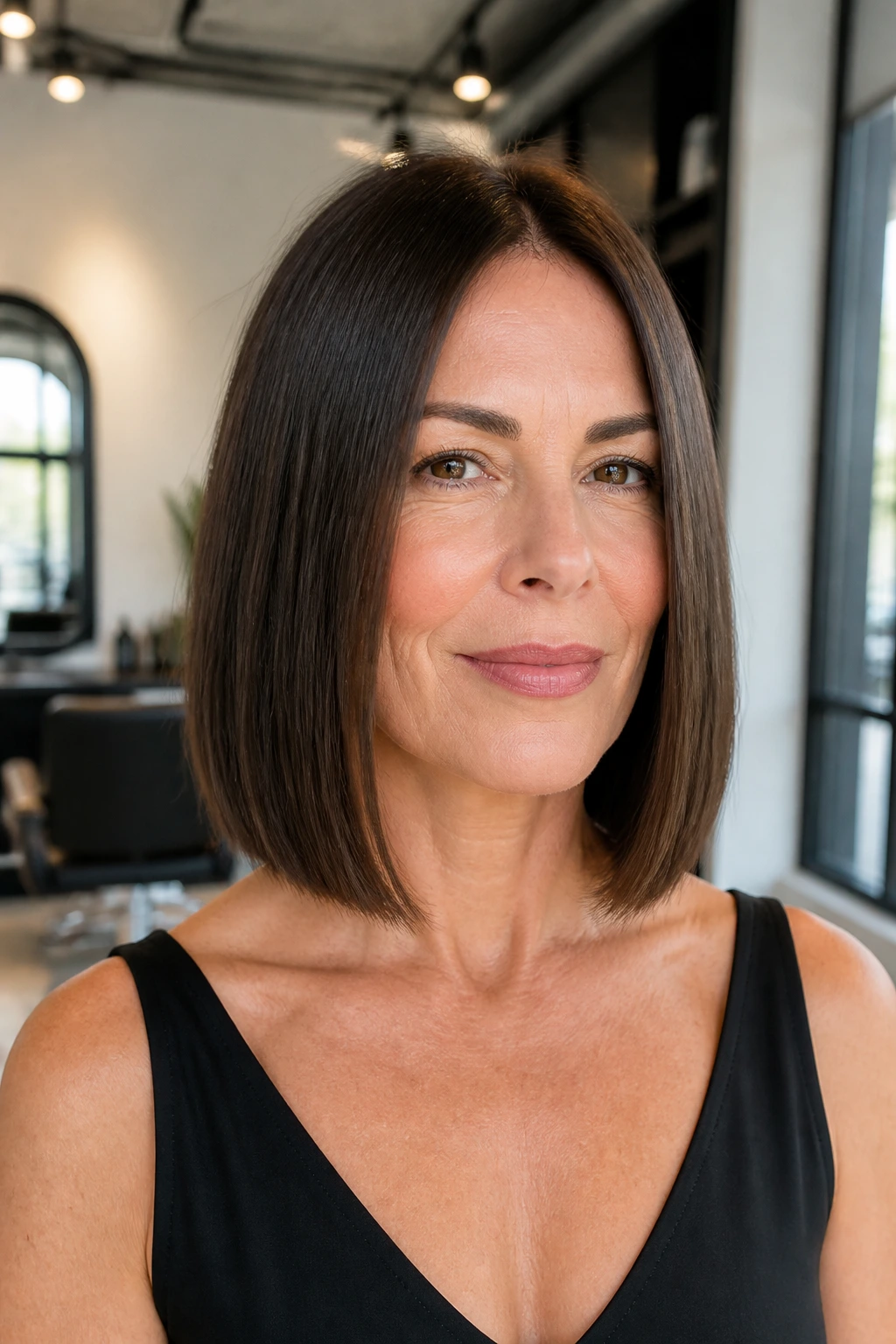
Bring photos, but bring the right ones. One front view is not enough. A side view matters because thick hair changes shape fast once it hits the shoulders or collarbone, and what looks soft from the front can turn boxy from the side. If you can, save one photo with the hair dry and one with it styled the way you actually wear it.
Say where you want the length to land in plain language: jaw, just below the jaw, collarbone, or top of the shoulder. Vague instructions like “medium” leave too much room for guesswork. If you want less bulk, ask for internal weight removal rather than heavy thinning at the ends. Thinning shears can be useful, but they can also leave thick hair frizzy if they are used like a shortcut.
A good phrase to use is: “Keep the perimeter strong and remove weight inside the shape.” That gives your stylist a clear target. If you want bangs, say whether you want them to blend into the sides or sit separately. And if your hair grows out fast around the neck, say that too. A bob can be a great haircut or a daily argument. The difference is often in the consultation.
The Tools That Make a Medium Bob Behave
-
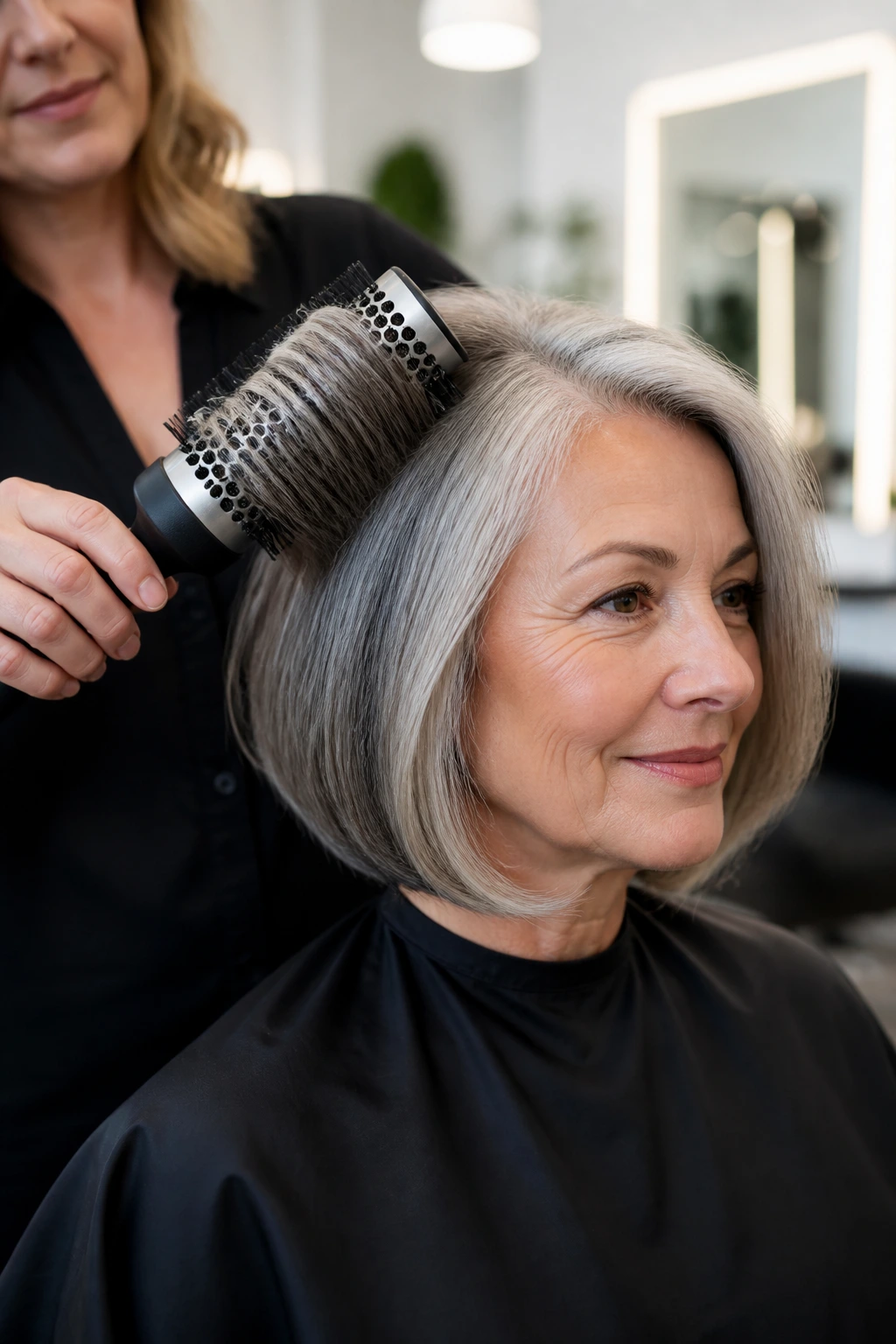
A blow-dryer with a nozzle attachment — The nozzle directs the air so thick hair dries smoother and the cuticle lies flatter.
-
A medium or large round brush — Use a larger brush for collarbone-length bobs and a smaller one if you want more bend near the ends.
-
A paddle brush — Good for a sleek blow-dry when you want the bob to sit straight and polished instead of curved.
-
A flat iron with adjustable heat — Thick hair often needs more heat than fine hair, but use the lowest setting that smooths in one pass.
-
A fine tail comb — Handy for clean parts and for sectioning the hair into manageable layers.
-
Clips or sectioning clamps — Thick hair dries better in sections; trying to rough-dry all of it at once wastes time.
-
Root-lift spray or mousse — Best at the crown and near the roots, where thick hair can go flat if you pile on cream.
-
Light smoothing cream or serum — A small amount on the mid-lengths and ends keeps the bob from puffing up.
-
Heat protectant — Necessary if you use a round brush, flat iron, or curling iron on a regular basis.
-
Silk or satin pillowcase — Not glamorous, just practical. It cuts down on friction and helps the bob hold its shape overnight.
How to Style These Cuts Smooth, Wavy, or Air-Dried
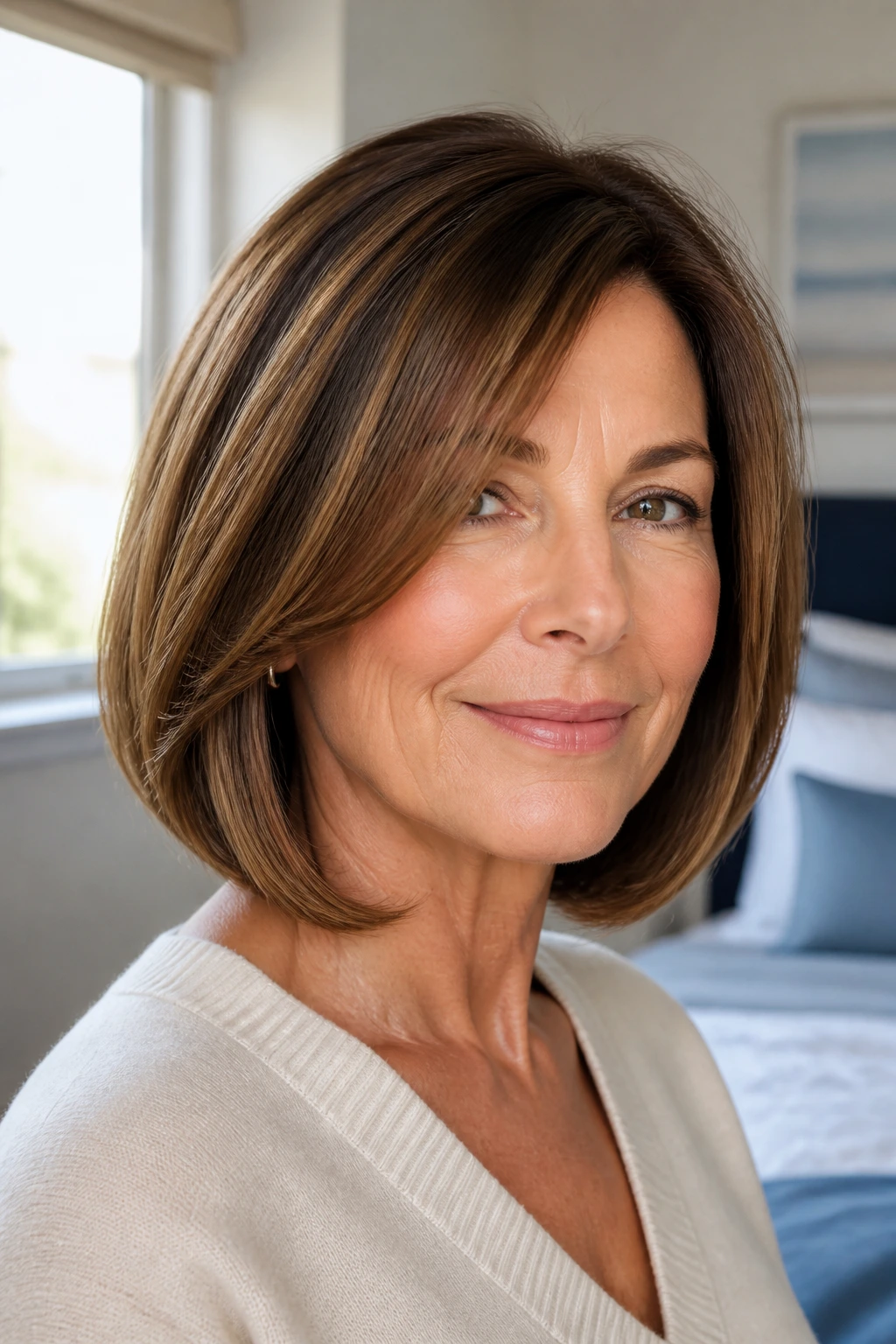
Smooth: Start with heat protectant and a small amount of root-lift spray at the crown. Blow-dry in sections with a nozzle, then finish each section with a round brush or paddle brush depending on how much bend you want at the ends.
Wavy: Work in a light mousse while the hair is damp, then twist or scrunch the mid-lengths with your fingers. A diffuser helps, but so does simply leaving a little dampness in the hair and touching it as little as possible. Thick hair often gets frizzy when overhandled.
Air-Dried: This only works if the cut has been shaped well. Use a light leave-in product, part the hair where it naturally wants to sit, and clip the roots for the first ten minutes so they do not dry flat against the scalp. That tiny lift makes a big difference.
Sleek Finish: Flat iron in one-inch sections, moving slowly but not pausing. If you need more shine, use one drop of serum on the palms and glaze the ends only. Roots do not need it.
Small Tweaks That Keep the Shape Sharp
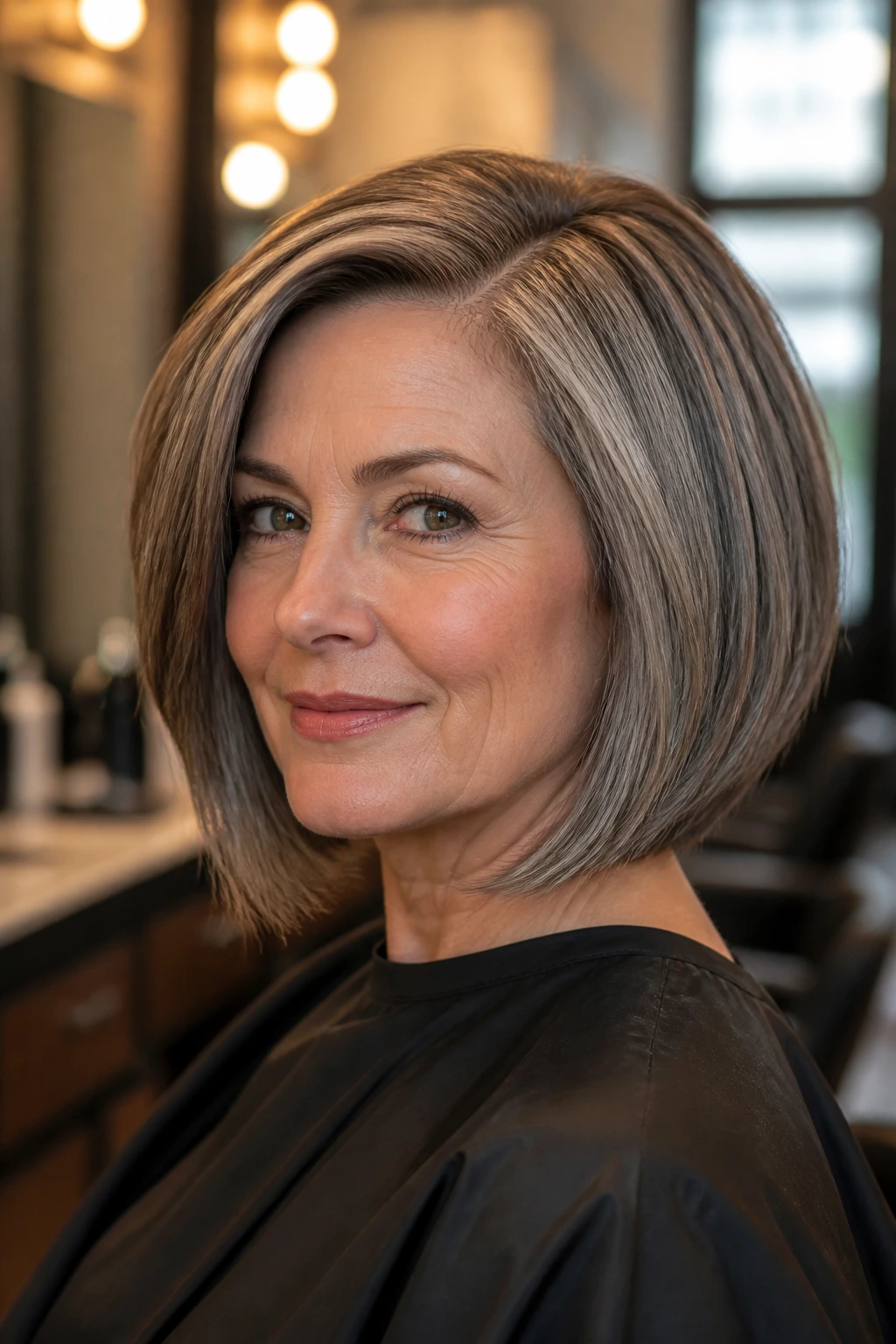
The best medium bobs do not rely on one trick. They rely on a few small ones, each doing a narrow job. A little root lift at the crown. A touch of bevel at the ends. A side part that is moved half an inch from where you normally wear it. Those details are not dramatic, but they stop thick hair from flattening out by lunch.
If you like your bob polished, ask your stylist to clean up the neckline every six to eight weeks. If you are wearing a longer lob with soft layers, eight to ten weeks usually works. Blunt shapes show regrowth faster; softer, layered shapes hide it longer. That is the trade.
A shine spray or gloss serum can also help silver and gray hair look cleaner, especially when the weather is dry and the ends start to feel rough. Use less than you think. Thick hair can swallow product, but it can also get greasy near the surface if you overdo it.
Common Mistakes That Turn a Bob into a Helmet
The first mistake is cutting too much weight from the ends. Thick hair can look airy at first, then frizzy and shapeless two weeks later. The fix is to remove bulk inside the cut, not shred the perimeter into nothing.
The second mistake is landing the length exactly where the hair is widest on your face or neck. If the bob hits the broadest point of the jaw or shoulder, it can make the whole shape look wider. Move it slightly above or below that point and the line usually improves fast.
The third mistake is using too much styling cream. Thick hair can handle richer products, but not in the roots and not in heavy handfuls. If the bob starts looking limp, stringy, or sticky by noon, the product is the problem, not the haircut.
The fourth mistake is over-layering. A little movement helps. Too many short layers in thick hair can create a fuzzy halo around the head, which is the exact opposite of what you want from a medium bob.
Variations and Adaptations to Try
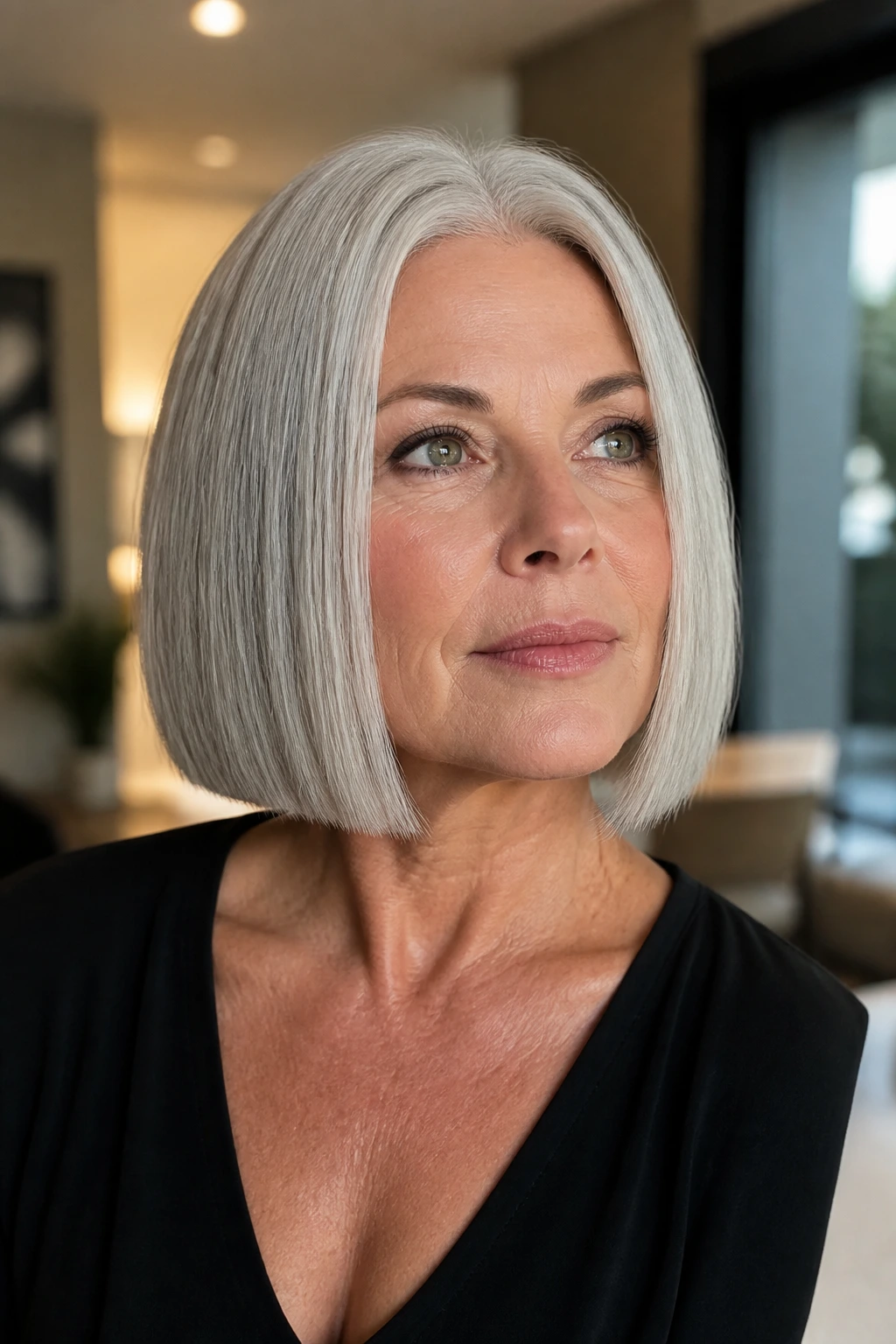
The Glassy Gray Bob: Keep the perimeter blunt, ask for a shine gloss, and style with a flat brush for a reflective, clean finish. This is especially good if your silver hair has a strong white streak or natural contrast.
The Soft Wave Bob: Let the cut stay medium and add long internal layers that support a loose wave pattern. It works well for women whose hair looks fuller when it bends instead of lying straight.
The Glasses-Friendly Bob: Ask for a gentle angle in front and a lighter area around the temples so the frames have breathing room. A bob that fights your glasses every morning is a bad deal.
The Low-Fuss Lob: Keep the length closer to the collarbone, use hidden debulking, and avoid bangs that need daily trimming. This version buys you a little more time between salon visits.
The Sharp-Line Bob: Go blunt, go clean, and keep the ends beveled just enough to prevent the silhouette from flaring. It suits thick hair that naturally holds a sleek look.
Keeping the Shape Between Appointments
Medium bobs are generous, but they are not self-cleaning. Thick hair grows out with personality, which means the shape can drift if you leave it too long. Blunt bobs usually need a tidy-up every six to eight weeks. Softer, longer bobs can stretch to eight or ten if the ends stay healthy.
At night, a silk pillowcase helps more than people think. So does clipping the bob loosely at the back of the head if you sleep on one side and flatten the other. In the morning, a quick mist of water at the front pieces and a little round-brush action at the roots often wakes the whole cut back up.
Dry shampoo belongs at the roots, not the mids and ends. That sounds obvious until you see how often it gets sprayed everywhere. Thick hair can handle a lot, but not a powdery cloud through the whole bob. Keep it focused where the scalp needs a reset.
Questions People Ask Before Committing to the Cut
Will a medium bob make thick hair look triangular?
Only if the cut is too blunt in the wrong spot or packed with bulk at the bottom. A good bob removes weight inside the shape and keeps the outline controlled, which is what stops the triangle effect.
Is a blunt bob or layered bob better for thick hair?
A blunt bob gives you a sharper line and more polish. A layered bob gives you movement and less bulk. If your hair is coarse and heavy, the answer often lives somewhere between the two: blunt outside, lighter inside.
Can I wear a medium bob if my hair is wavy or curly?
Yes, but the cut has to respect the pattern. Wavy and curly hair should usually be cut with the natural movement in mind, sometimes when it is dry, so the layers land where the hair actually lives.
How often should I trim it?
Most medium bobs need a clean-up every six to eight weeks to keep the line crisp. Longer lobs with softer layers can go a bit longer, especially if you are not chasing a razor-sharp shape.
What if I wear glasses every day?
Ask for a slight front angle or a soft side part so the hair doesn’t sit on your frames. A narrow, clean perimeter around the temples makes daily styling much easier.
Do bangs work with thick hair?
They do, but they need planning. Curtain bangs, bottleneck bangs, and side-swept fringe usually behave better than a blunt, heavy fringe unless you like spending time with a round brush every morning.
What if my hair flips out at the ends?
That usually means the perimeter is too blunt for your natural bend or the cut sits at a spot your hair resists. A soft bevel or a collarbone landing point can stop the flip without removing the whole bob identity.
Can I still pull it back?
A medium bob won’t go into a neat bun, but it can tuck behind the ears, clip half-up, or gather into a small low pony if the length is closer to the collarbone. That flexibility is one of the reasons the length works so well.
A Bob That Works With You
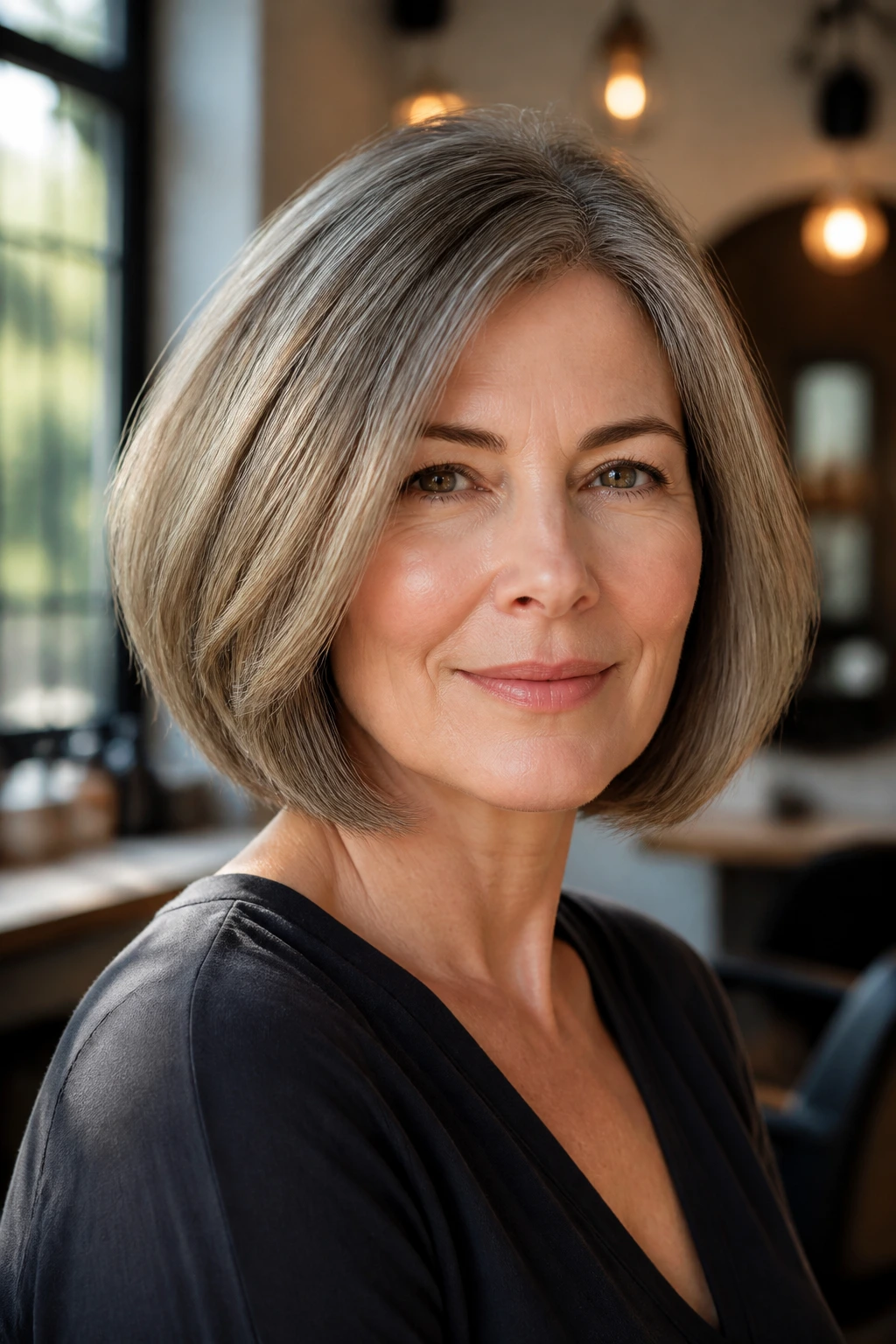
A medium bob on thick hair should feel like a relief, not a project. The cut is supposed to remove the battles you have been having with bulk, triangle shape, and flat roots, then give you something with enough structure to look finished after a short blow-dry.
The best version is the one that fits your face, your neck, your routine, and the amount of styling you are willing to do on a Tuesday morning. Keep the line clean, keep the weight in the right place, and the haircut will do more of the talking than the products ever will.