



Metallic grey and silver hair can look like frost on a clean window — sharp, luminous, and a little dangerous — or it can look flat, chalky, and oddly tired. On pale skin, the difference usually has less to do with the color itself and more to do with shape, depth, and where the light lands. The metallic grey silver hairstyles for pale skin that actually work keep a little shadow at the root, a clean line around the face, and enough shine to make the finish feel deliberate instead of accidental.
That’s the part people miss. They chase the iciest tone they can get their hands on, then wonder why their cheeks vanish and their jaw looks softer than it should. Pale skin already carries less contrast, so a one-note silver sheet can swallow facial features if the cut doesn’t give the color a frame. Add a root smudge, a beveled bob, a side part, or a bend at the ends, and the whole thing wakes up.
The best versions below all do the same basic job in different ways. Some are crisp and architectural. Some are cloudy and soft. A few lean steel-blue or graphite at the base so the face has something to sit against. Silver hair on fair skin works best when the haircut earns its keep.
Why These Metallic Grey Silver Looks Earn Their Keep
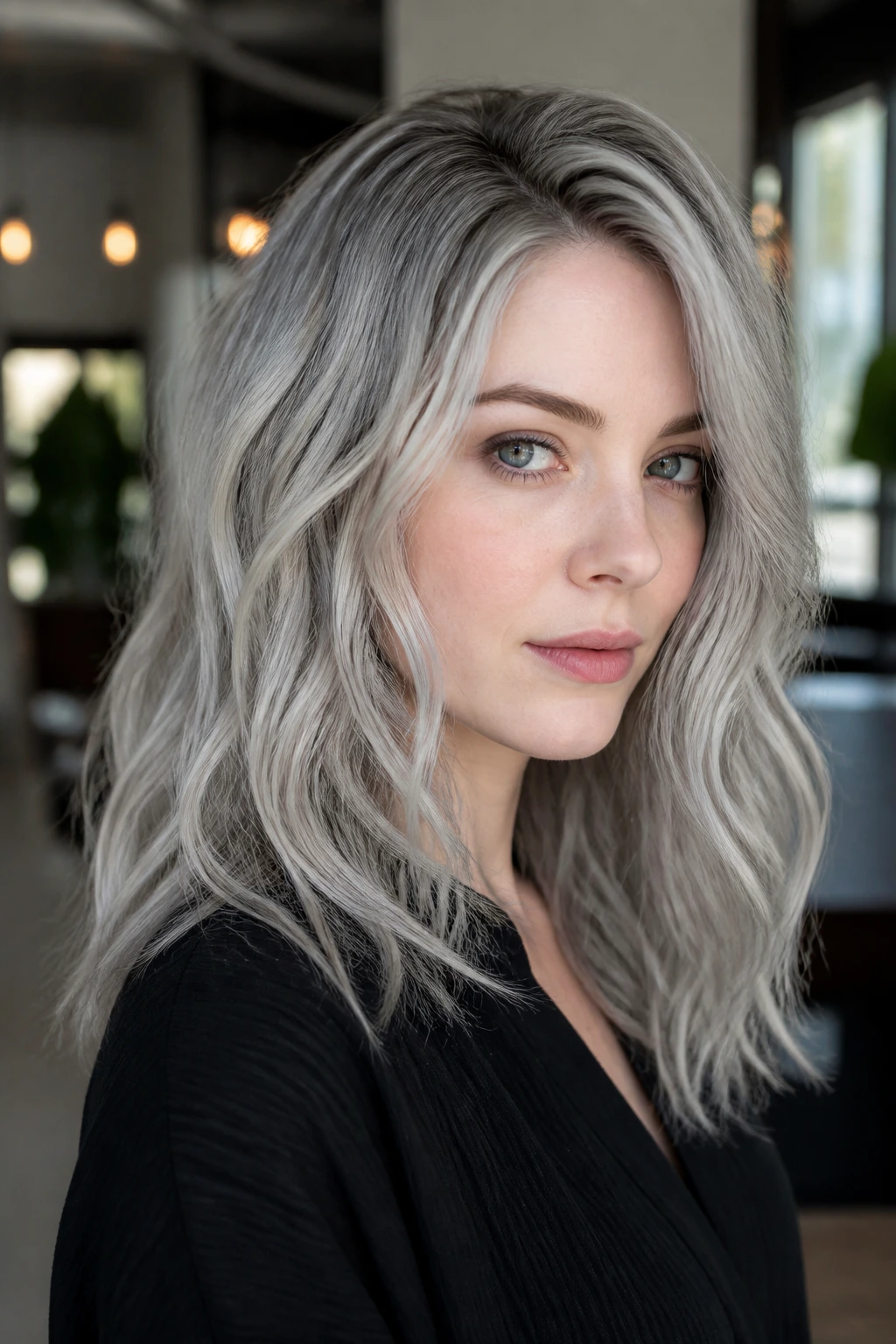
-
Root depth matters more than people think: A half-inch to one-inch shadow at the scalp keeps metallic grey from floating off pale skin like a sticker, and it buys you a little more time between salon visits.
-
Texture keeps silver from going flat: Waves, shags, curls, and choppy layers break up the sheen so the color reads as metallic, not dusty.
-
The face needs a frame: A fringe, a cheekbone-length bob, or a few silver pieces at the temple gives pale skin contrast without forcing you into heavy makeup.
-
Cool tones are easier to read: Pearl, steel, graphite, smoke, and icy silver tend to sit more naturally on fair complexions than beige-heavy gray, which can look muddy fast.
-
Maintenance is easier when the cut helps: A strong shape means you do not need to rely on perfect color placement every single day; a good bob or shag can make second-day hair look on purpose.
1. Icy Micro Bob with Root Shadow
The micro bob is the kind of haircut that refuses to whisper. It sits right at the jaw, which gives pale skin a frame immediately, and the soft root shadow keeps the silver from looking like a sheet of paper under harsh light. I like this one best when the ends are beveled inward just a touch — not curled, not stiff, just clean enough to catch the edge of the light.
Why it flatters fair skin
A one-inch root smudge in smoky beige or graphite gives the style a spine. That little bit of depth matters more than another round of brightening at the ends, especially if your skin is porcelain or pink-toned. The bob gives the face structure before the color even starts doing its job.
2. Silver Pixie with Wispy Fringe
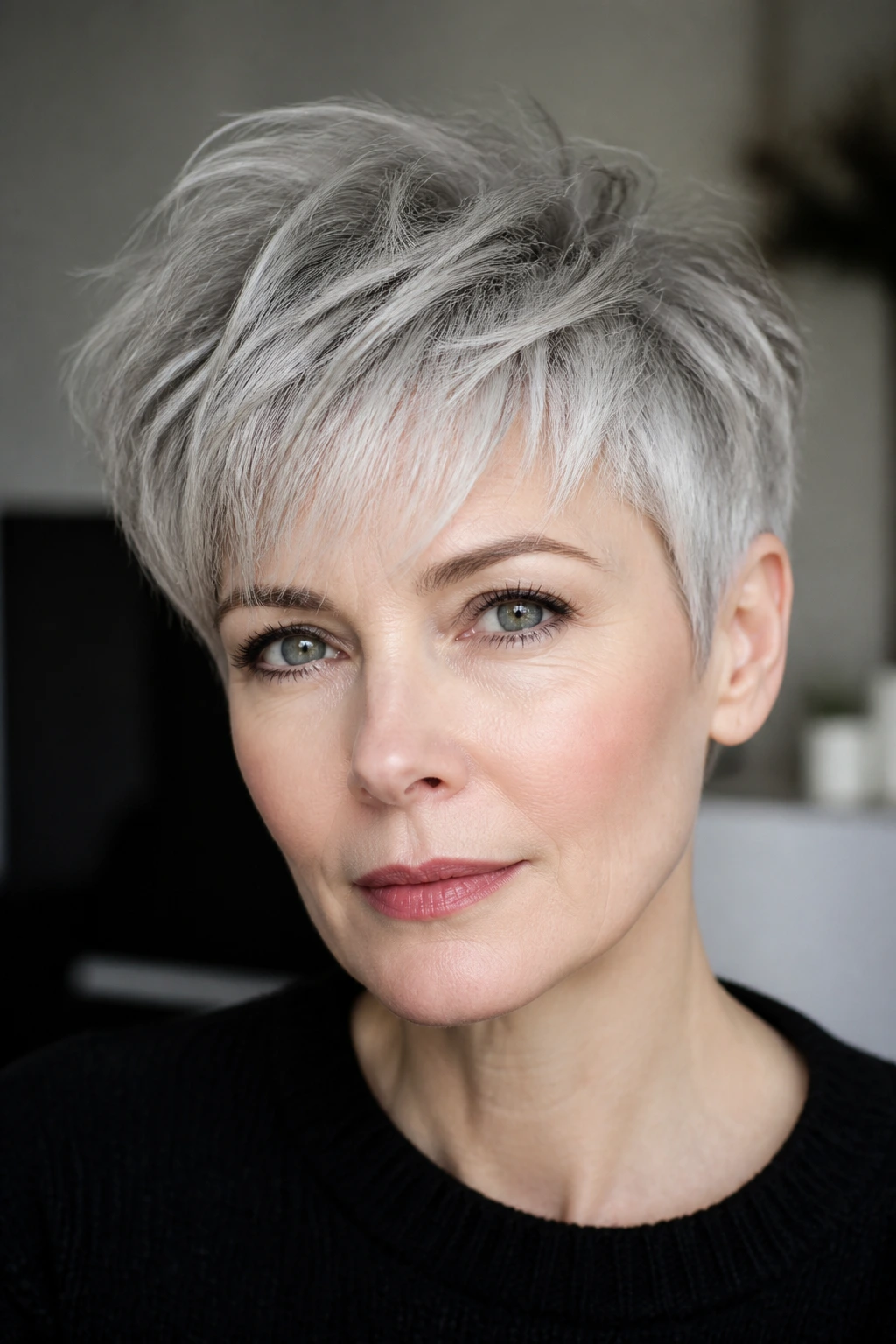
Can a pixie make silver hair feel softer on pale skin? Absolutely, if the fringe stays light and the crown keeps a little piece-y texture. The close crop stops the color from overwhelming the face, while the wispy front softens the eyes instead of boxing them in.
This cut works because it trades bulk for movement. A dab of matte paste at the tips is enough; if you use too much product, the silver turns heavy and loses that airy, frosted look. For very fair skin with pink undertones, I’d keep the fringe a shade softer than the rest of the crop so the face doesn’t look too stark.
3. Metallic Lob with Soft Broken Waves
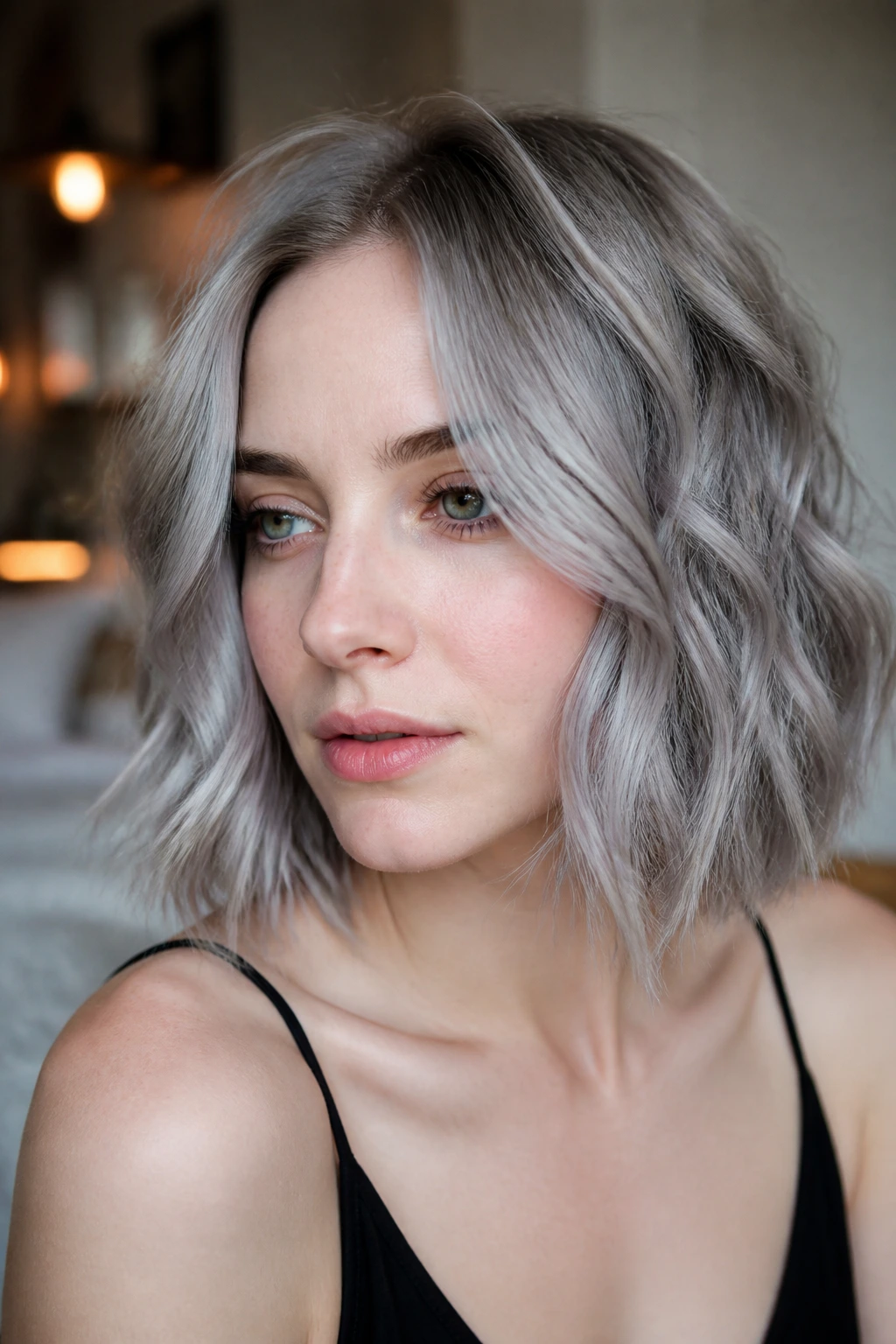
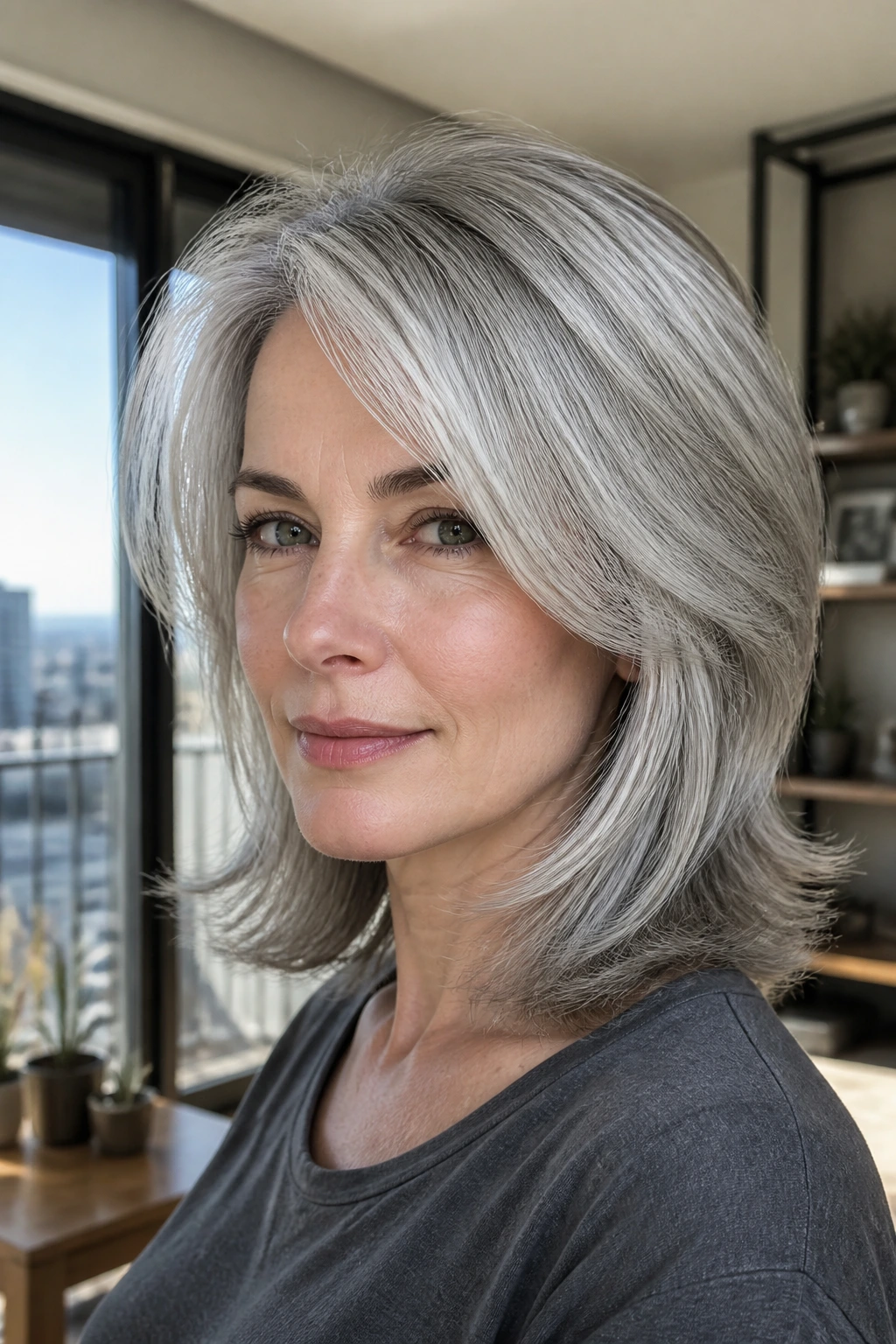
A collarbone lob is one of the easiest ways to wear silver without looking severe. The longer line gives pale skin some softness, and those broken waves stop the metal finish from turning into one flat reflective panel. Think brushed chrome, not mirror.
I like this cut for people who want movement without layers everywhere. A one-inch iron, bent in alternating directions, is enough to create that loose, expensive-looking ripple. If your skin is neutral, this is one of the easiest silver shapes to wear because it sits between cool and soft without picking a side too hard.
4. Long Silver Shag with Curtain Bangs
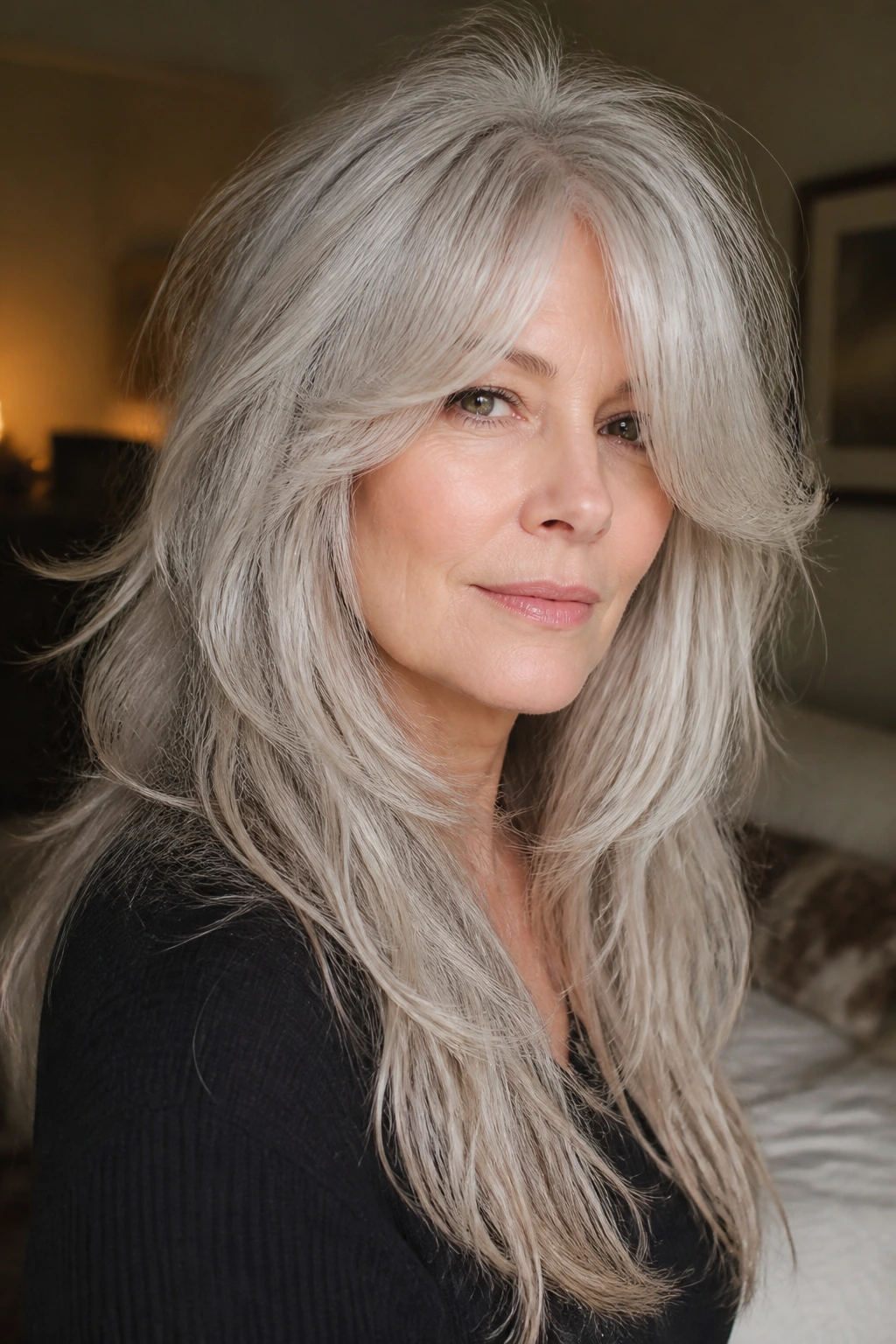
The shag is where metallic grey gets a little messy in the best possible way. Curtain bangs split the face in two soft arcs, and the layers take the weight out of long silver hair so it doesn’t hang like a curtain. On pale skin, that movement matters; it keeps the whole look from becoming pale on pale on pale.
The shape does the work
You want the layers to start high enough to lift the crown, but not so high that the ends feel thin. A dry texturizing spray at the roots and a quick bend through the mids are usually enough. This is one of those cuts that looks better after a day of living in it, which is a nice thing to say about anything that needs frequent toning.
5. Sleek Center-Parted Steel Bob
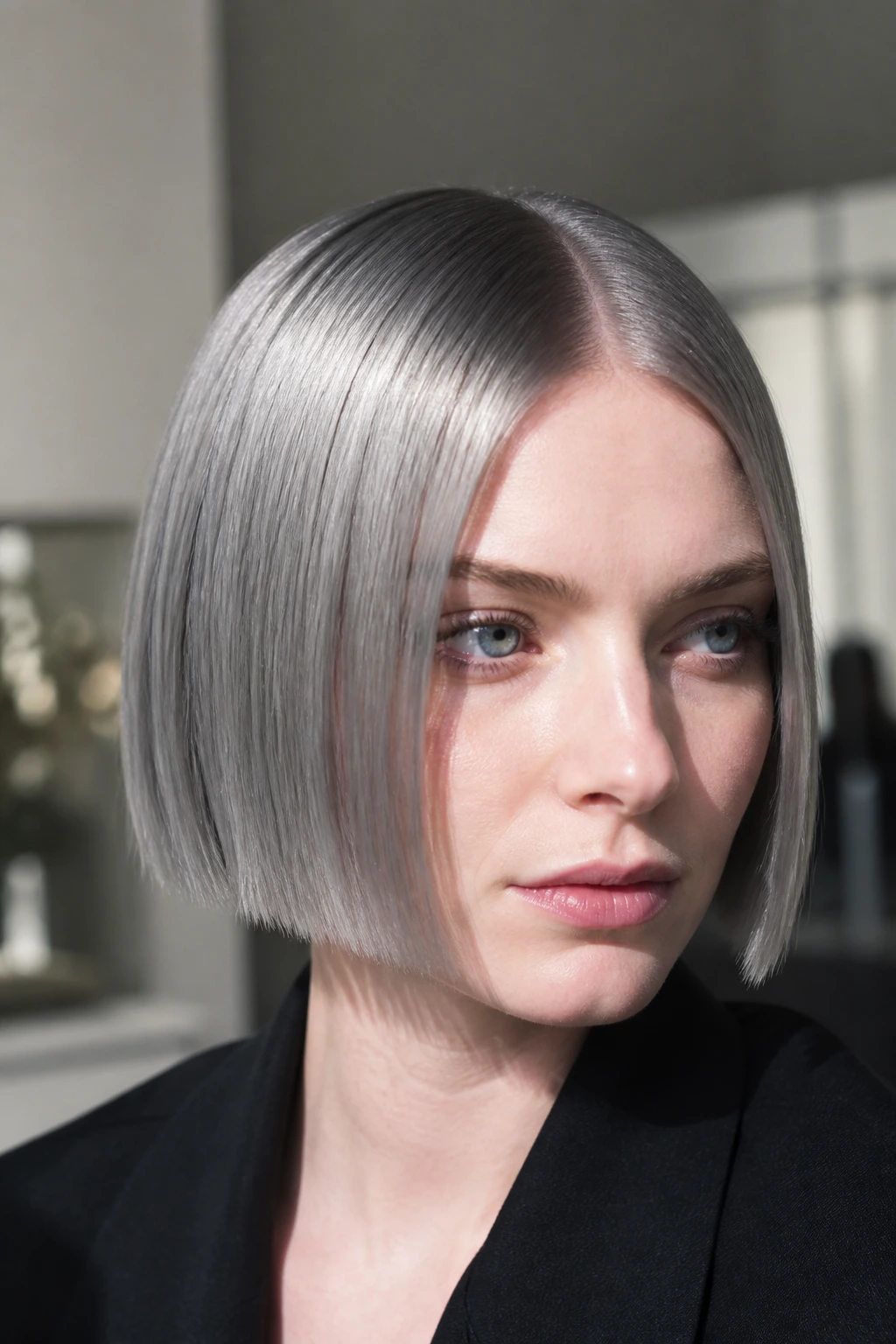
This is the sharp one. The center part, the smooth surface, and the slightly darker steel tone give pale skin a clean contrast that feels almost graphic. If you like your hair to look deliberate and a little stern, this one delivers.
The trick is finish. Use a heat protectant, dry the hair fully, then flat-iron in small sections so the line stays crisp from root to tip. A gloss or serum with a high-shine finish keeps the steel tone from looking dull; just don’t overload it, or the bob starts to look greasy instead of polished.
6. Pearl Silver Curtain Layers
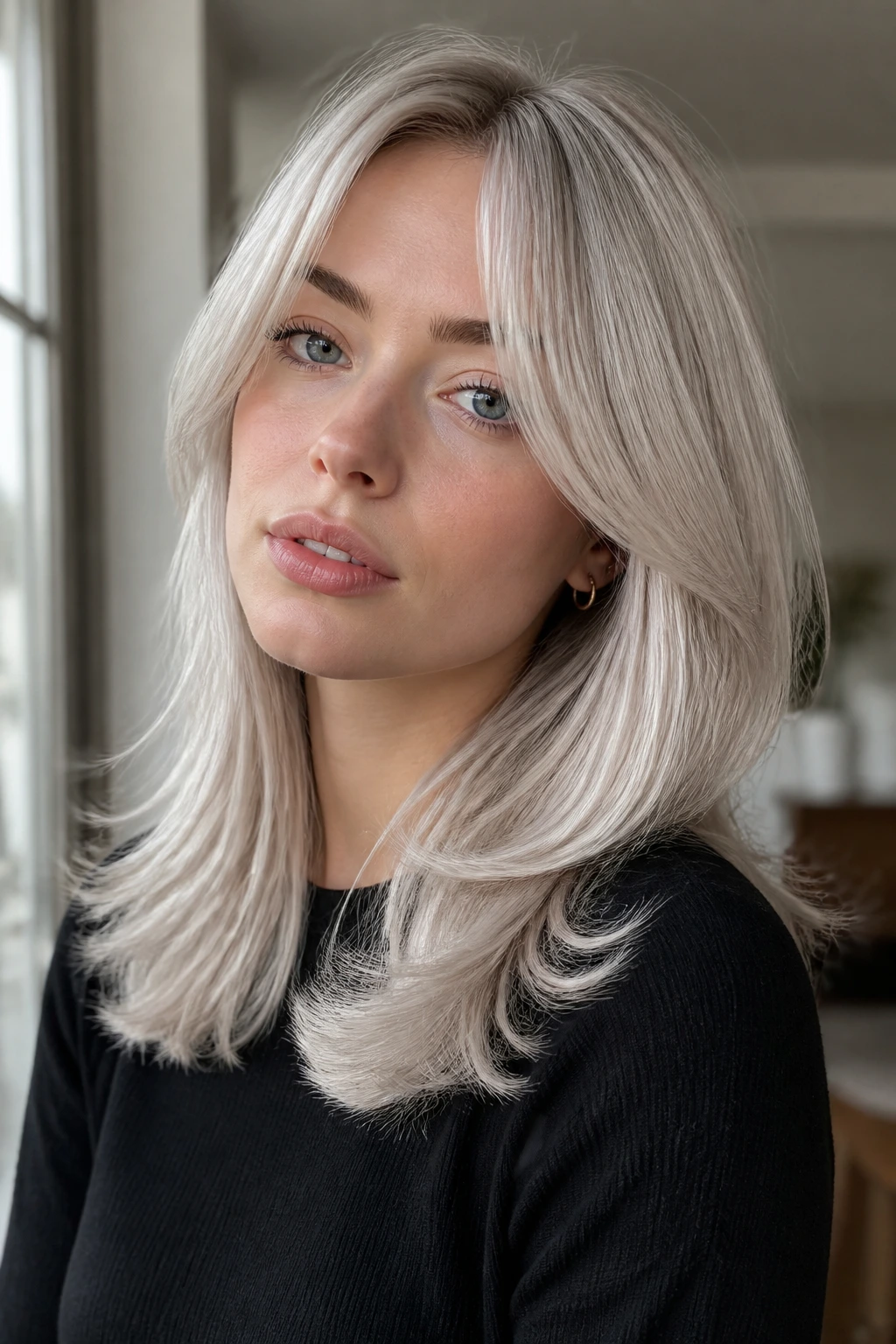
Pearl silver is the softer cousin in this whole family. It has that milky sheen that flatters pale skin, especially if your complexion leans neutral or slightly pink and you want something lighter than graphite. Curtain layers help by opening the face without hard edges.
This look works because pearl silver reflects light in a gentler way than blue-white silver. Blow it out with a round brush, then flip the ends away from the face so the layers fall in a soft drape. It’s one of the better choices if you want silver hair that feels airy instead of severe.
7. Smoky French Bob with Chin-Length Edge
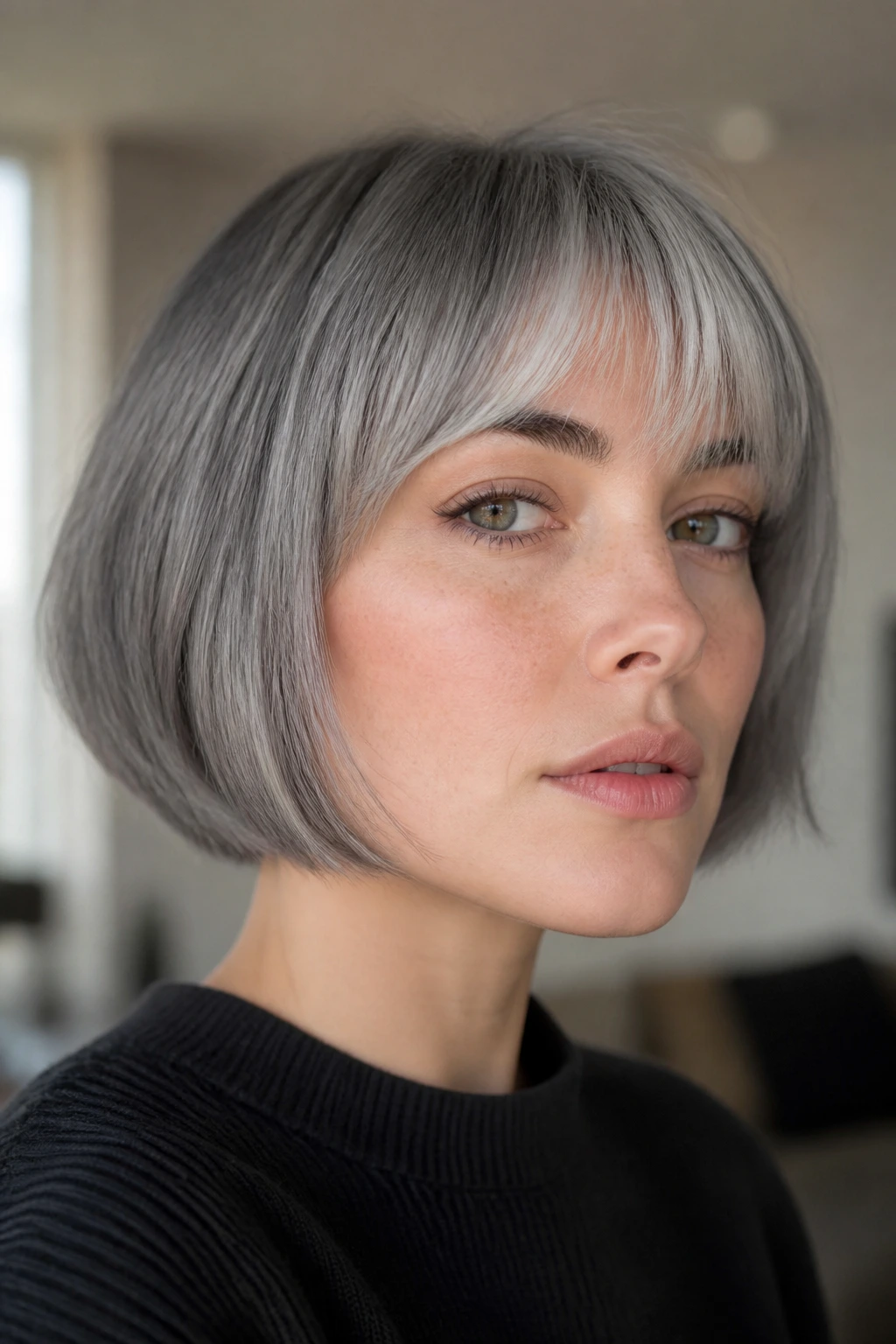
The French bob should have a little attitude, and silver gives it just enough edge. A chin-length cut with a faint inward curve feels neat without turning precious, while the smoky grey tone keeps the face from disappearing into the hair. It’s compact, which is the whole point.
For pale skin, this cut is especially good when the bangs are kept a touch lighter than the nape. That contrast creates a soft halo near the eyes and cheekbones. A quick finger-rake with styling cream is usually enough; this bob looks best when it isn’t over-styled to death.
8. Dimensional Grey Balayage Curls
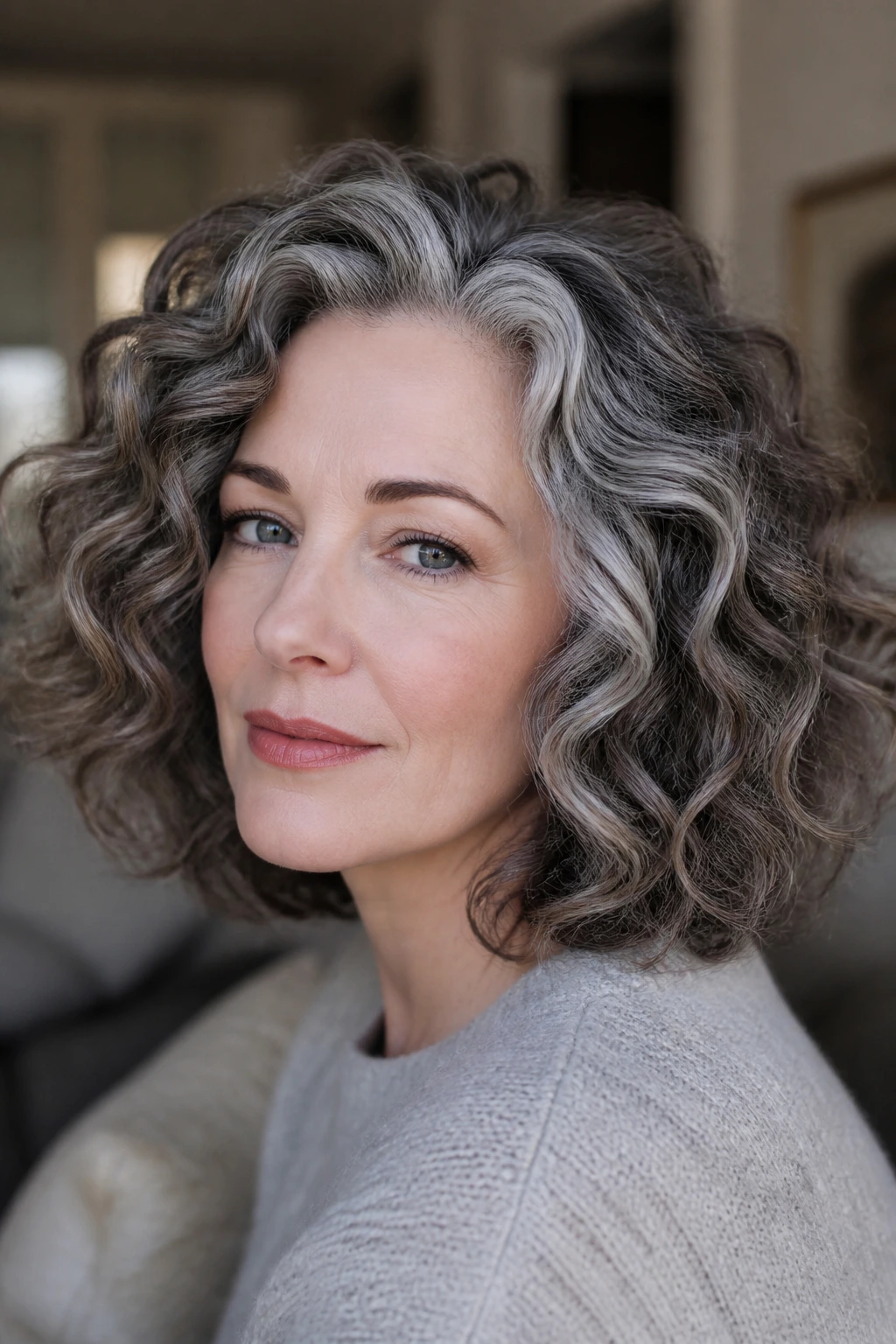
If you have curls, don’t flatten them just to wear silver. Grey balayage lets the darker base stay alive while the silver ribbons catch on the outer curve of the curl, which gives pale skin a lot more depth than an all-over frost. The result is softer and less brittle-looking.
The key is placement. Keep the lightest silver on the curls that sit around the temples, crown, and outer layers so the hair catches the light where the face needs it most. A curl cream with a light hold will help the shape stay defined without turning the finish crunchy.
9. Silver Wolf Cut with Choppy Ends
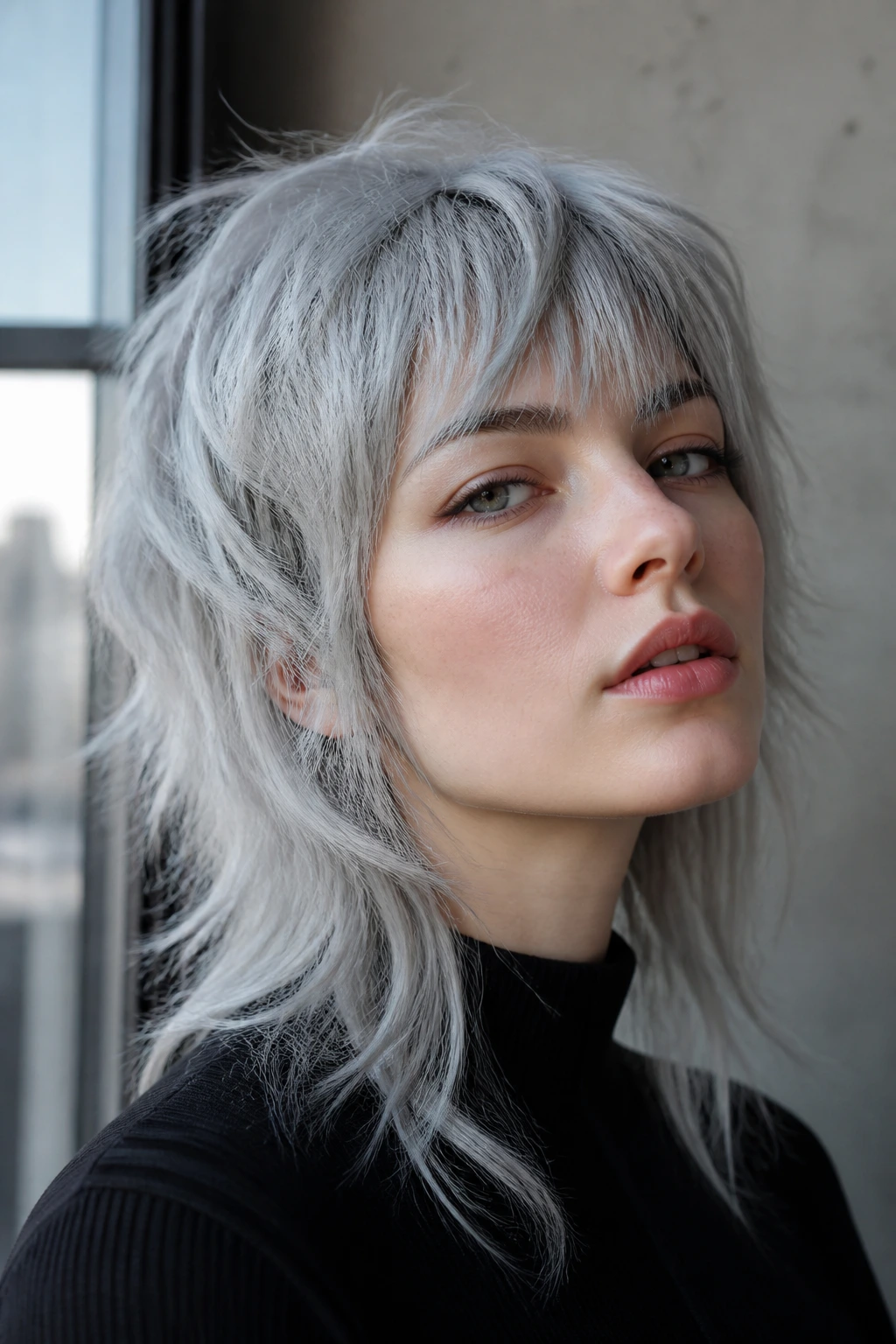
The wolf cut is a little unruly, and that’s what saves it. The shorter crown layers and ragged ends keep metallic grey from becoming too neat, which is useful on pale skin because too much precision can make the color feel severe. This style likes texture, not obedience.
Best for people who want edge without a full punk cut
A silver wolf cut needs movement at the crown and a bit of frizz control at the ends. Scrunch in mousse, diffuse lightly, and leave some of the mess alone. That slightly wild shape gives the grey a moonlit, lived-in quality that looks better than a perfect helmet of silver ever could.
10. Frosted Blunt Cut with Ear Tuck
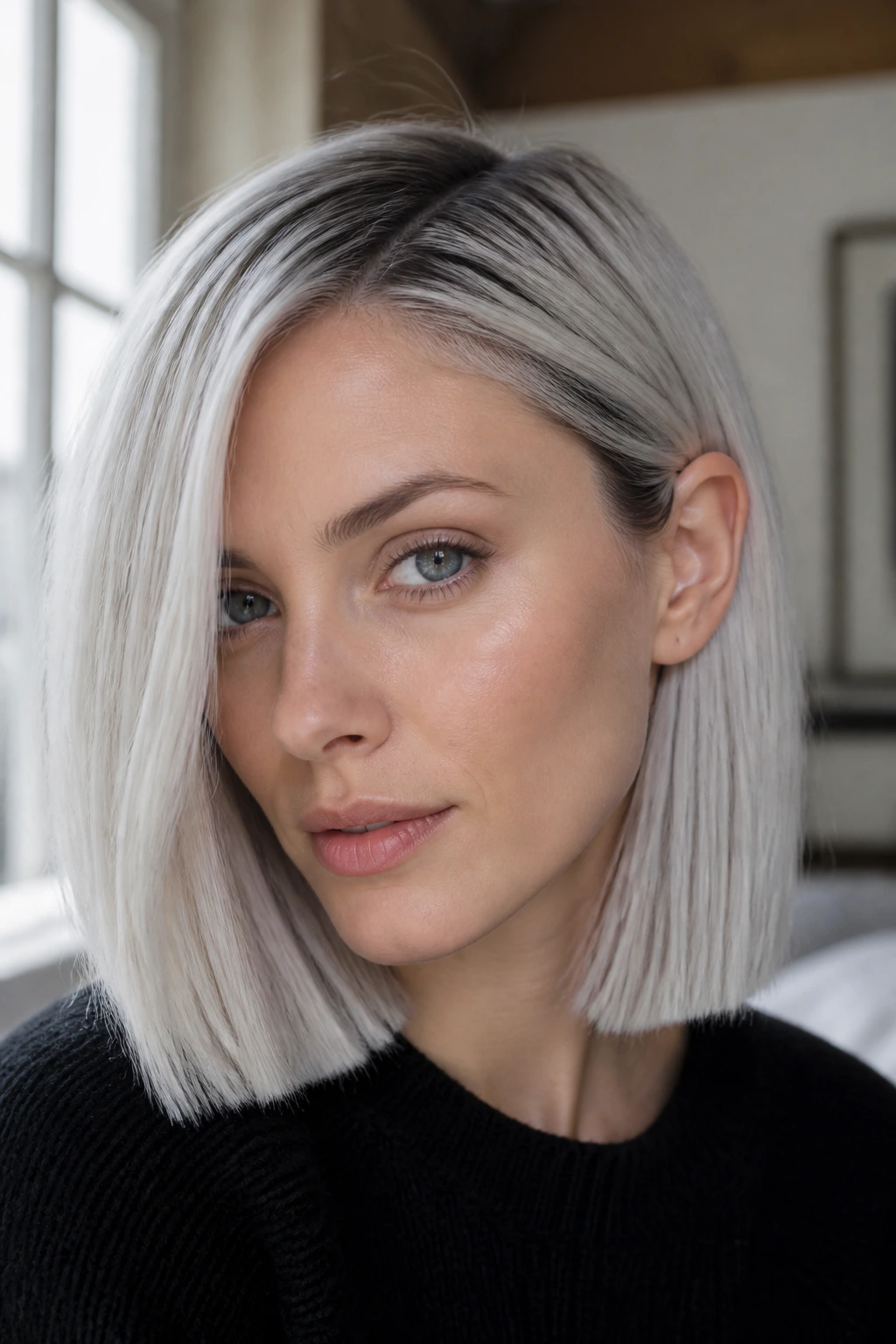
There’s something clean about a blunt cut that lands right at the shoulders or just above. On pale skin, the straight line gives the face a crisp outline, and an ear tuck on one side breaks up the symmetry so the silver doesn’t feel too severe. I especially like this with small hoop earrings or a single statement earring.
The frosted tone should be bright, but not white-white. If the color goes too pale, the cut can lose depth fast. A faint graphite root and a glassy blow-dry keep the whole thing from reading like a block of color.
11. Metallic Grey Ponytail with Face-Framing Pieces
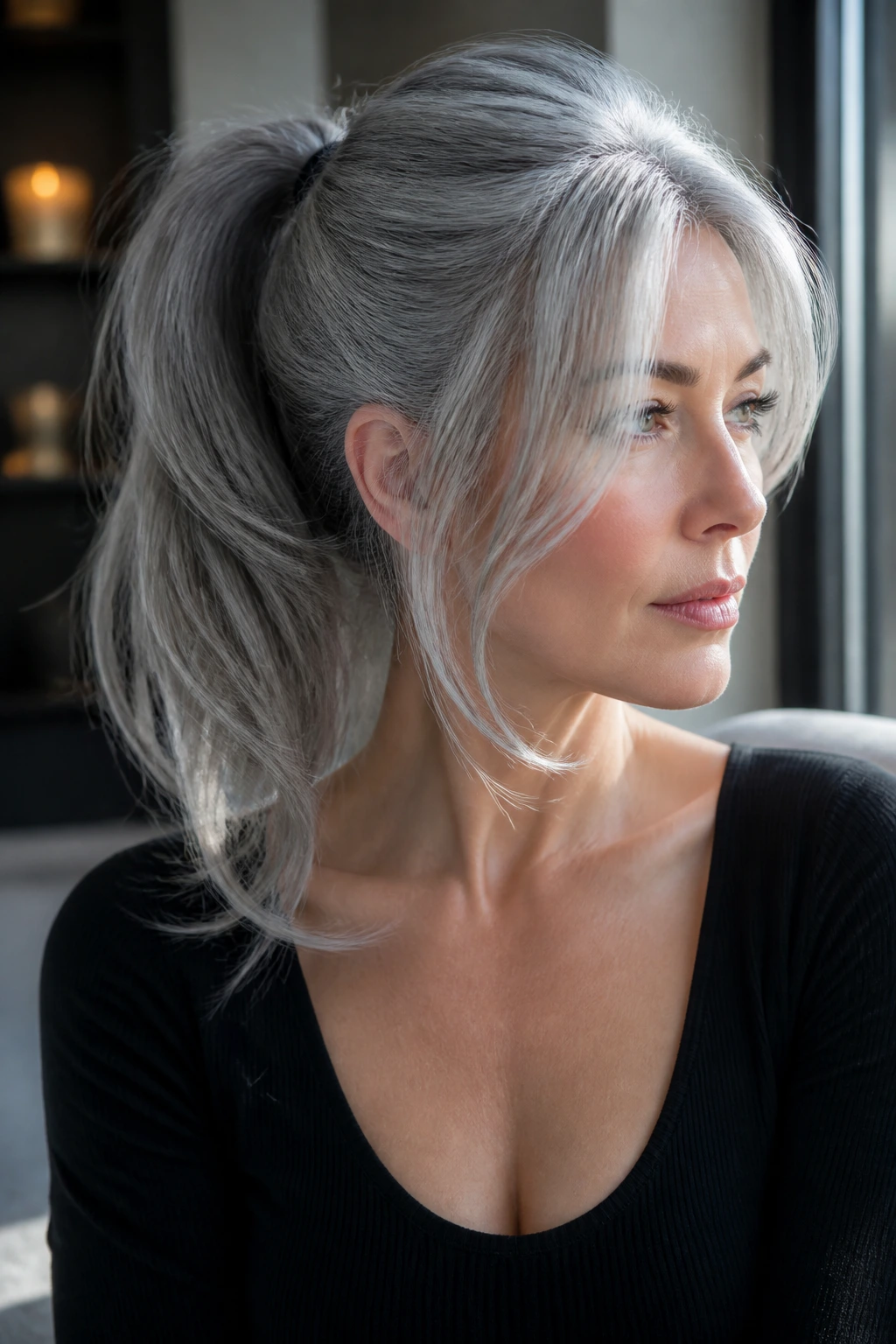
A ponytail might sound simple, but silver turns it into something sleek and deliberate. The face-framing pieces are the part that matters most here; they stop pale skin from looking pulled too bare and give the metallic tone a little softness around the cheeks. High, mid, or low — the placement changes the mood more than the color does.
This is a good choice when you want the shade to show without fighting the cut. Wrap a small section of hair around the elastic, keep the base smooth, then leave the front pieces slightly curved away from the face. The ponytail swing shows off the silver in motion, which is half the fun.
12. Side-Swept Silver Waves
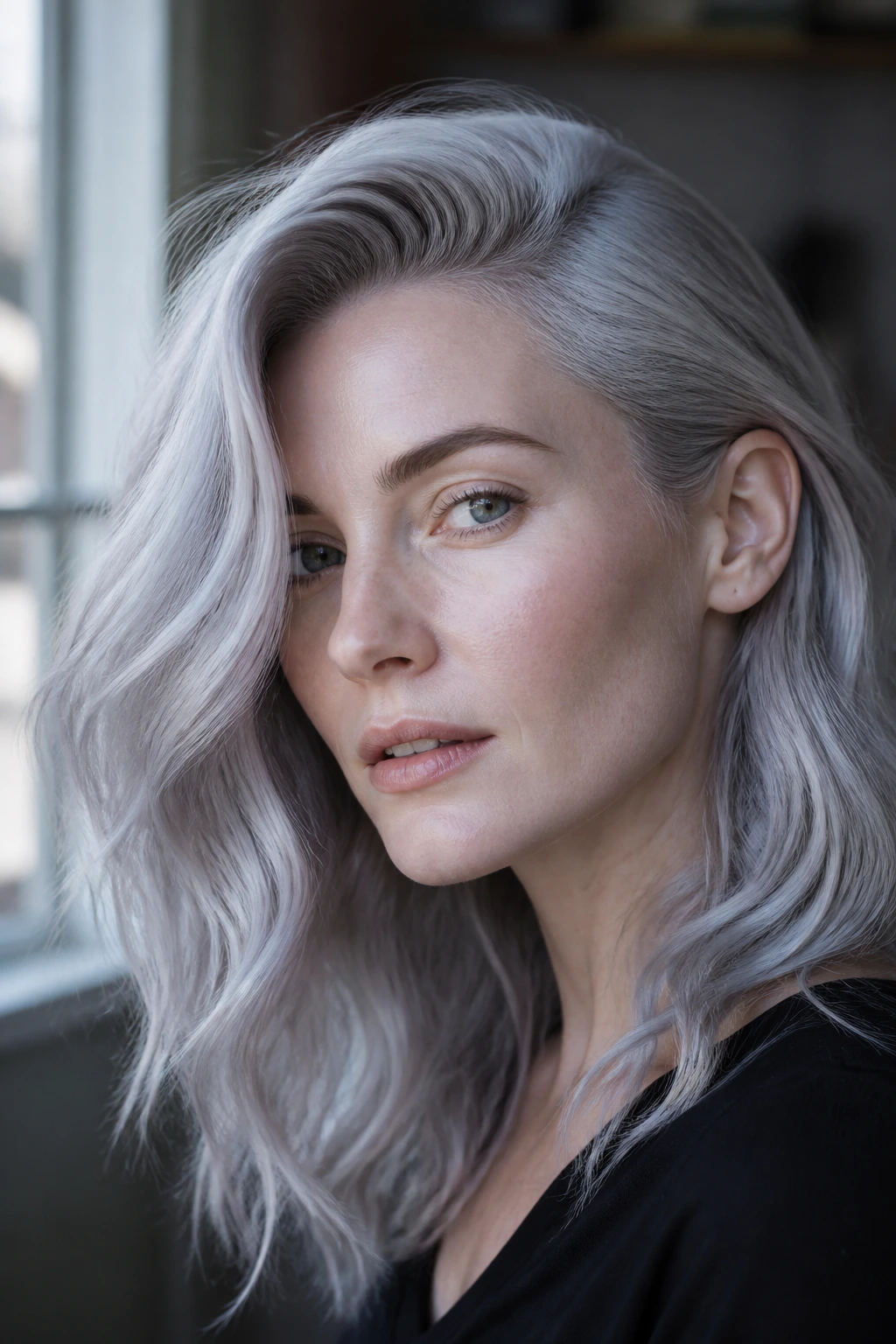
A deep side part can do a lot for fair skin. It shifts the weight of the style, creates a little shadow on one side of the face, and gives metallic grey a more dramatic line than the usual center part. The waves should stay loose enough to bend, not curl into uniform spirals.
This look works best when the silver is somewhere between icy and smoky. If it’s too flat, the side part can feel heavy; if it’s too bright, the waves can lose definition. A medium-hold spray and a wide-barrel iron usually do the trick.
13. Silver Crop with Choppy Texture
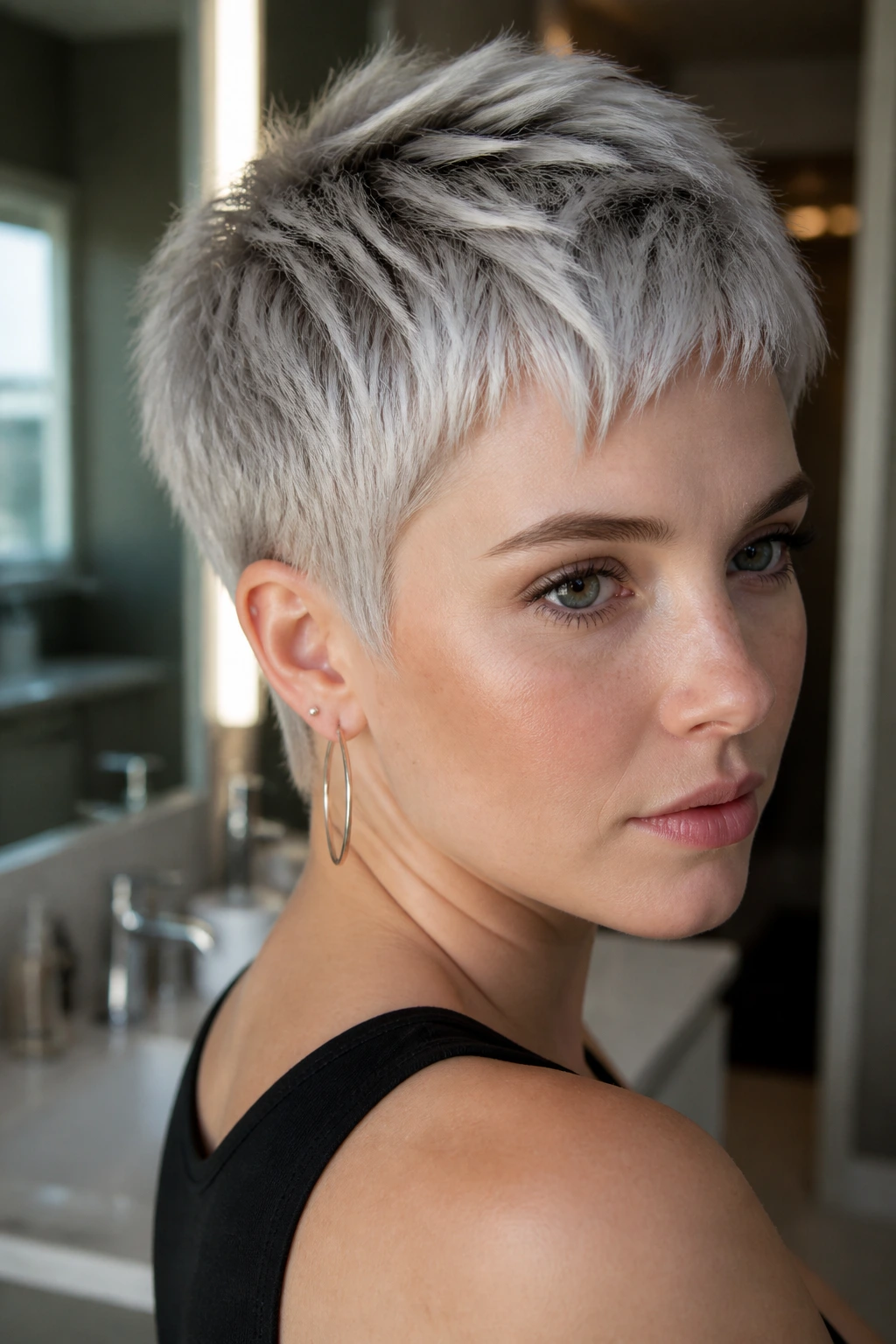
Short hair can wear silver better than people expect. A crop with choppy texture gives the color tiny edges to land on, which keeps pale skin from looking washed out. The surface should feel piece-y and a little rough around the crown, not smooth and shiny from end to end.
A matte paste is your friend here. Work a small amount through damp or dry hair, then pinch the ends so the silver breaks up in little shards of light. If you want the color to feel cooler, keep the sides tighter and let the top stay slightly longer.
14. Ash-Grey Money Piece Layers
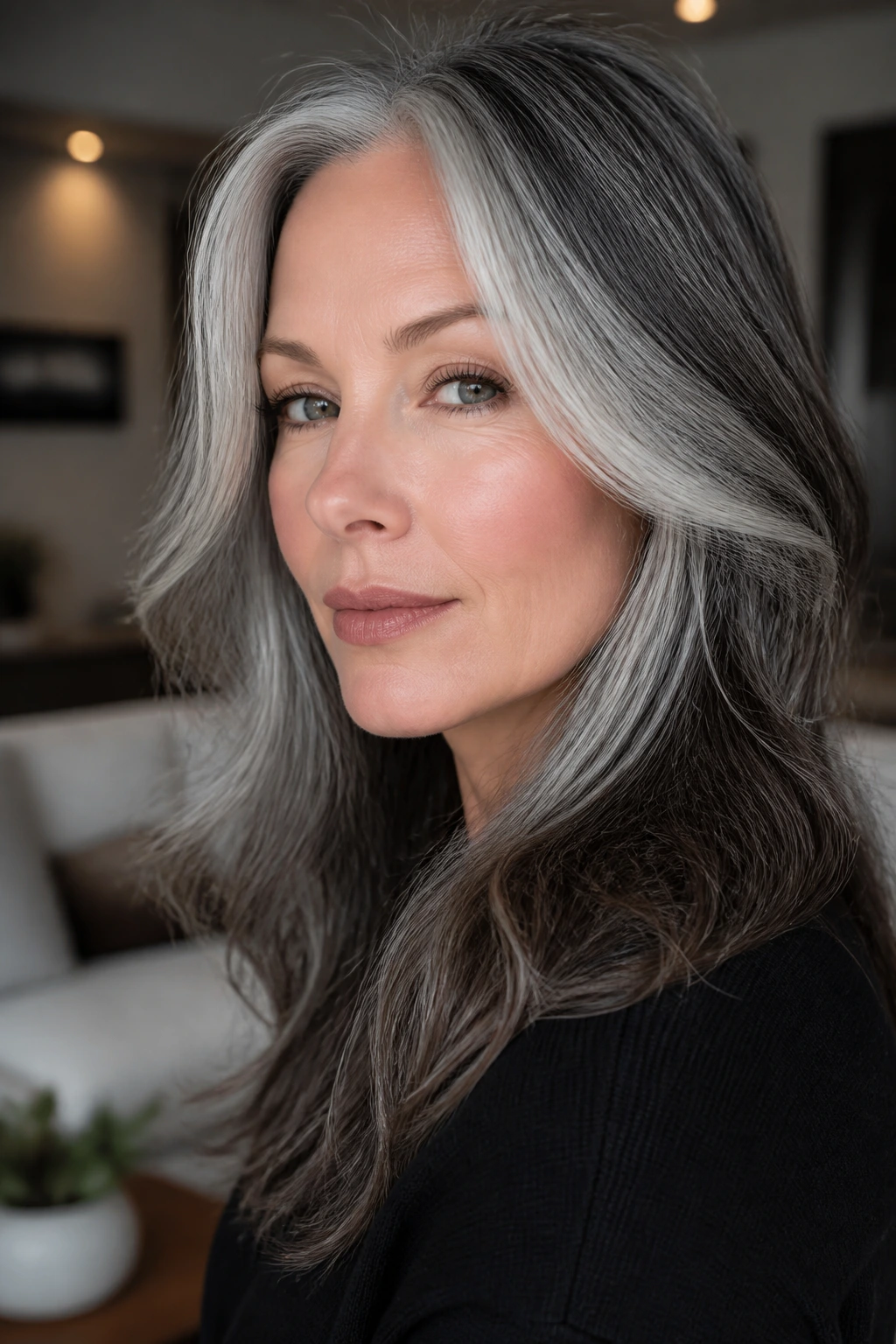
The money piece is the face-brightening trick that earns its keep on pale skin. Two lighter grey-silver panels near the front pull the eye up, while the rest of the layers stay a shade deeper so the whole head doesn’t flatten out. It’s a smart choice if you want brightness without going full ice.
Where the light should land
Keep the brightest pieces around the temples and cheekbones, not all the way through the back. That creates a soft frame without turning the style into a stripy mess. If your hair is medium to long, a few hidden lowlights underneath can make the silver front pieces look even cleaner.
15. Champagne Silver Blowout
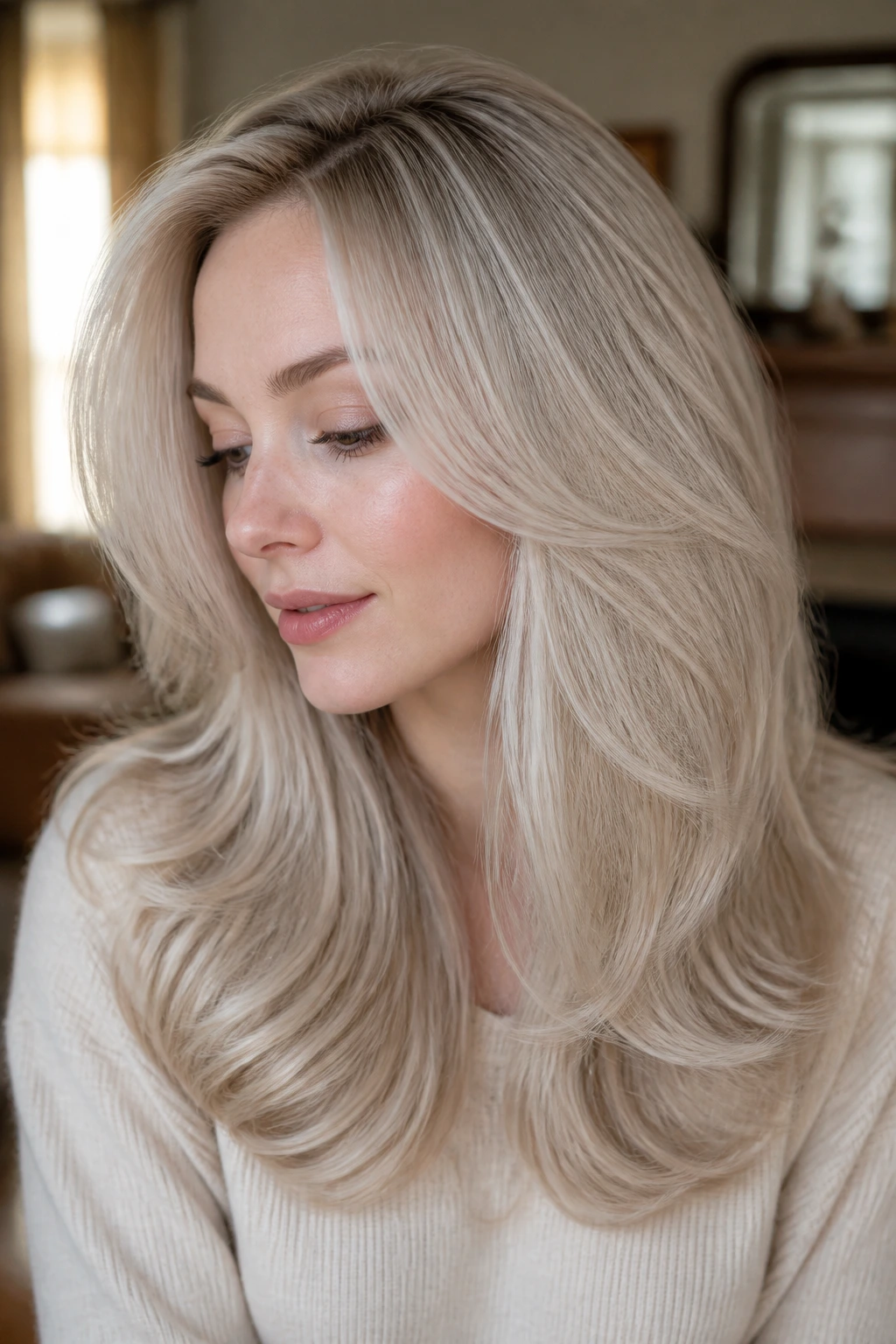
Champagne silver sits in that narrow lane between cool and soft. It has a faint warmth to it — not gold, not beige, just enough milkiness to keep pale skin from looking drained. A round-brush blowout gives the style body and that slightly lifted finish that makes silver hair feel expensive in person, not just in photos.
This is one of my favorites for pale skin with peach or neutral undertones. The volume matters almost as much as the color; if the roots are flat, the champagne tone can lose its glow. Keep the ends smooth and airy, then mist a light shine spray over the surface only.
16. Satin Steel Straight Long Hair
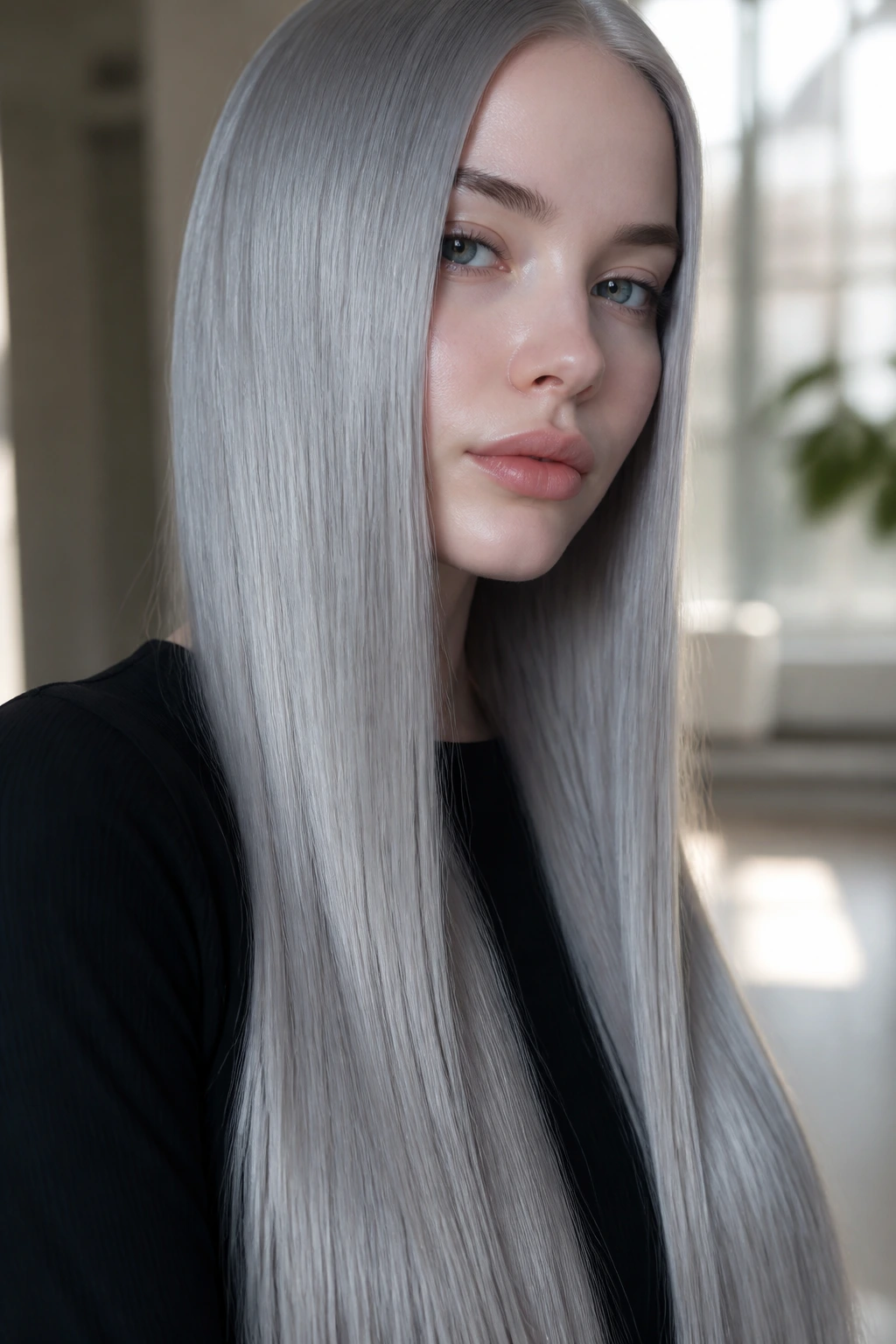
Long, straight steel-grey hair needs discipline. There’s nowhere for the eye to hide, which is exactly why the finish has to be clean from root to tip. On pale skin, that uninterrupted line can look stunning if the color has a soft metallic shimmer and the hair is healthy enough to reflect light.
The trick is not to chase mirror shine with too much oil. A heat protectant, a careful blow-dry, and a flat iron pass in small sections usually give enough polish. If your hair is fine, leave a little lift at the roots or the whole style can cling to the head and look thinner than it is.
17. Grey Ombré with Loose Ends
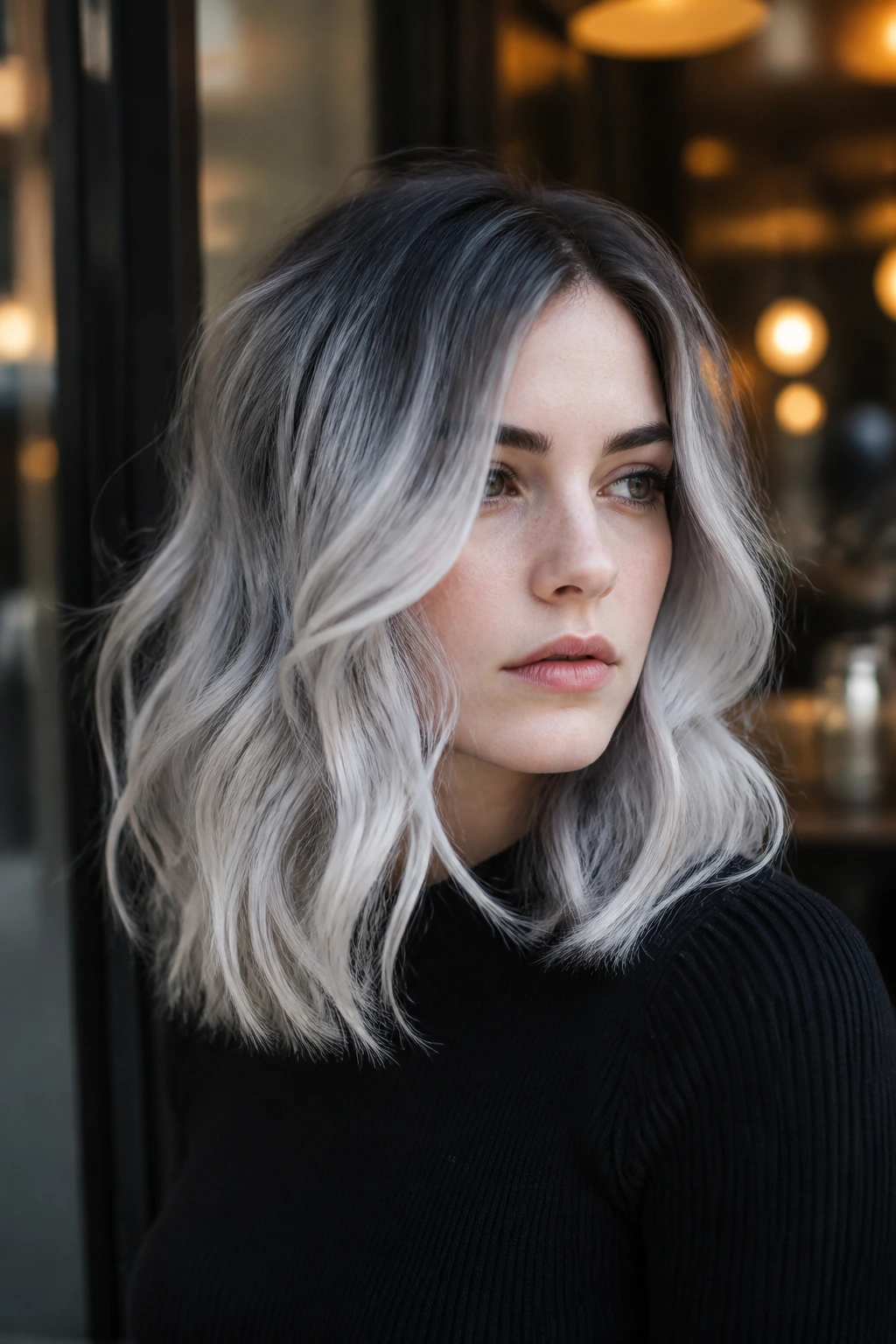
Grey ombré is the more forgiving silver look, and sometimes that’s the smartest choice. Darker roots melt into silver mids and lighter ends, which gives pale skin a natural shadow line and makes the grow-out far easier to live with. The loose ends keep the whole thing from feeling painted on.
This style works especially well if you want metallic grey without an all-over commitment. A mid-length cut with soft ends helps the ombré blend instead of stacking up in hard bands. And yes, it looks better with a bit of bend; dead-straight ombré can feel too obvious.
18. Textured Silver Mullet
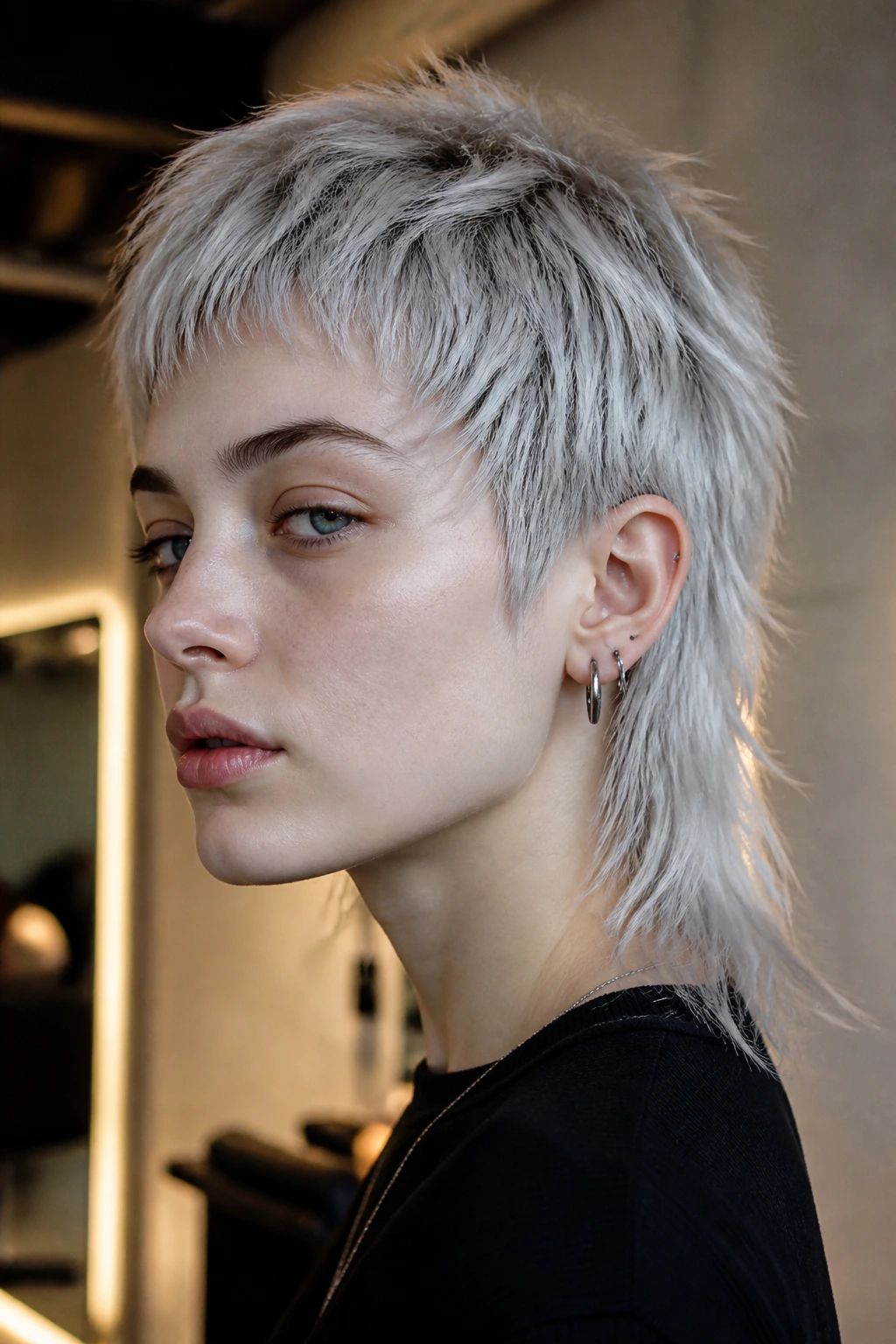
The modern mullet has no interest in being polite. Shorter layers around the crown and temples, a longer nape, and a little ragged texture give silver hair some attitude, which is useful on pale skin when you want the color to feel sharp instead of sweet. The shape does the heavy lifting here.
If your face tends toward soft features, this is one of the best ways to add edge without darkening the color. Work a bit of texture paste through the top, leave the ends piece-y, and don’t over-smooth the back. The contrast between structured crown and loose length keeps the metallic tone alive.
19. Metallic Silver Braided Crown
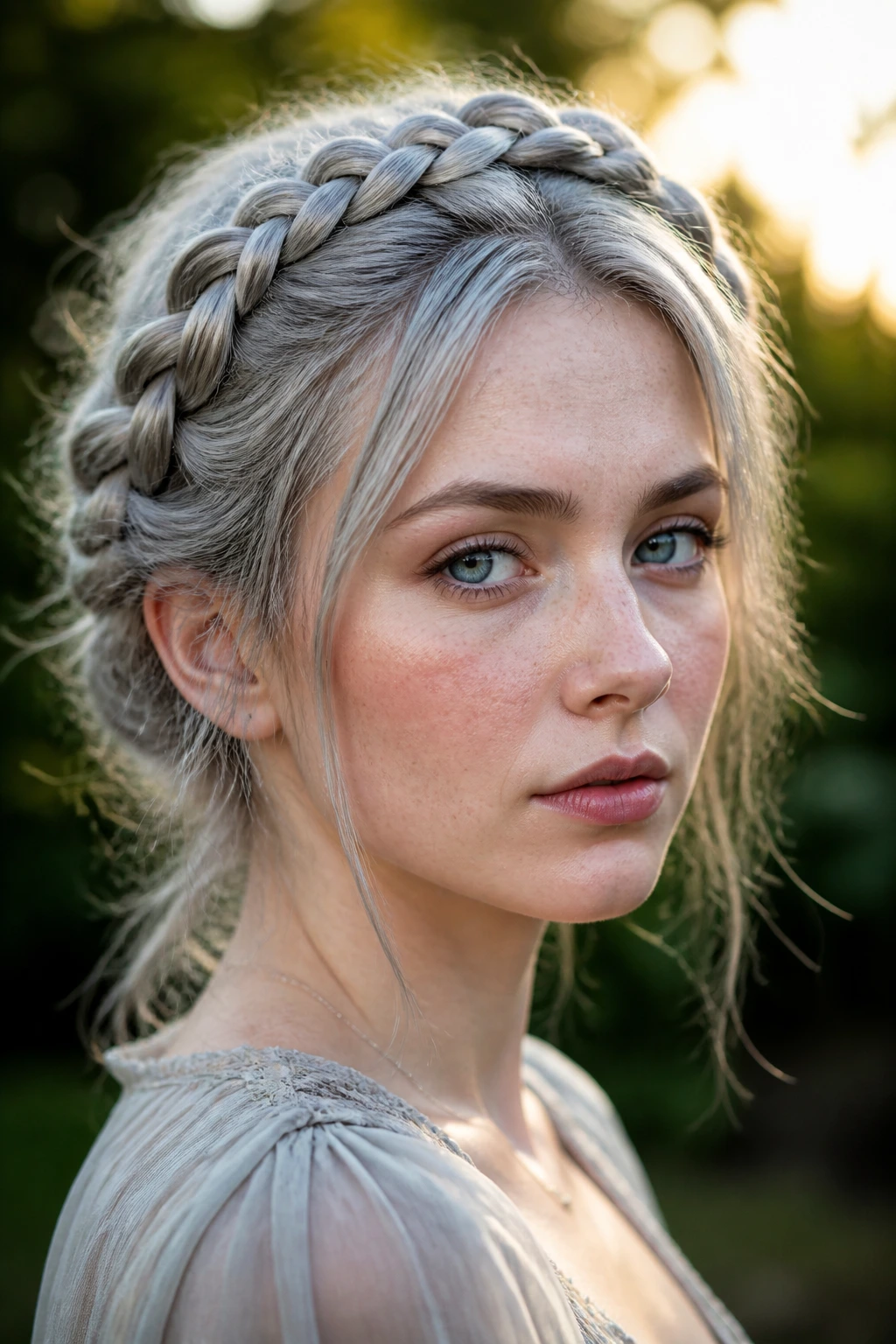
A braided crown can make silver hair feel almost ceremonial. The braid wraps the face in a visible line, which gives pale skin instant structure and keeps the metallic tone from floating around in loose sheets. It’s one of the few upstyles that feels equally at home at a wedding or with a plain black sweater.
The best version has a little slack in the braid, not a tight rope. Pull the links gently so the silver catches along the edges, then leave a few fine pieces around the temples. Those loose wisps stop the style from becoming too formal and give the face a softer frame.
20. Ice Grey Half-Up Knot
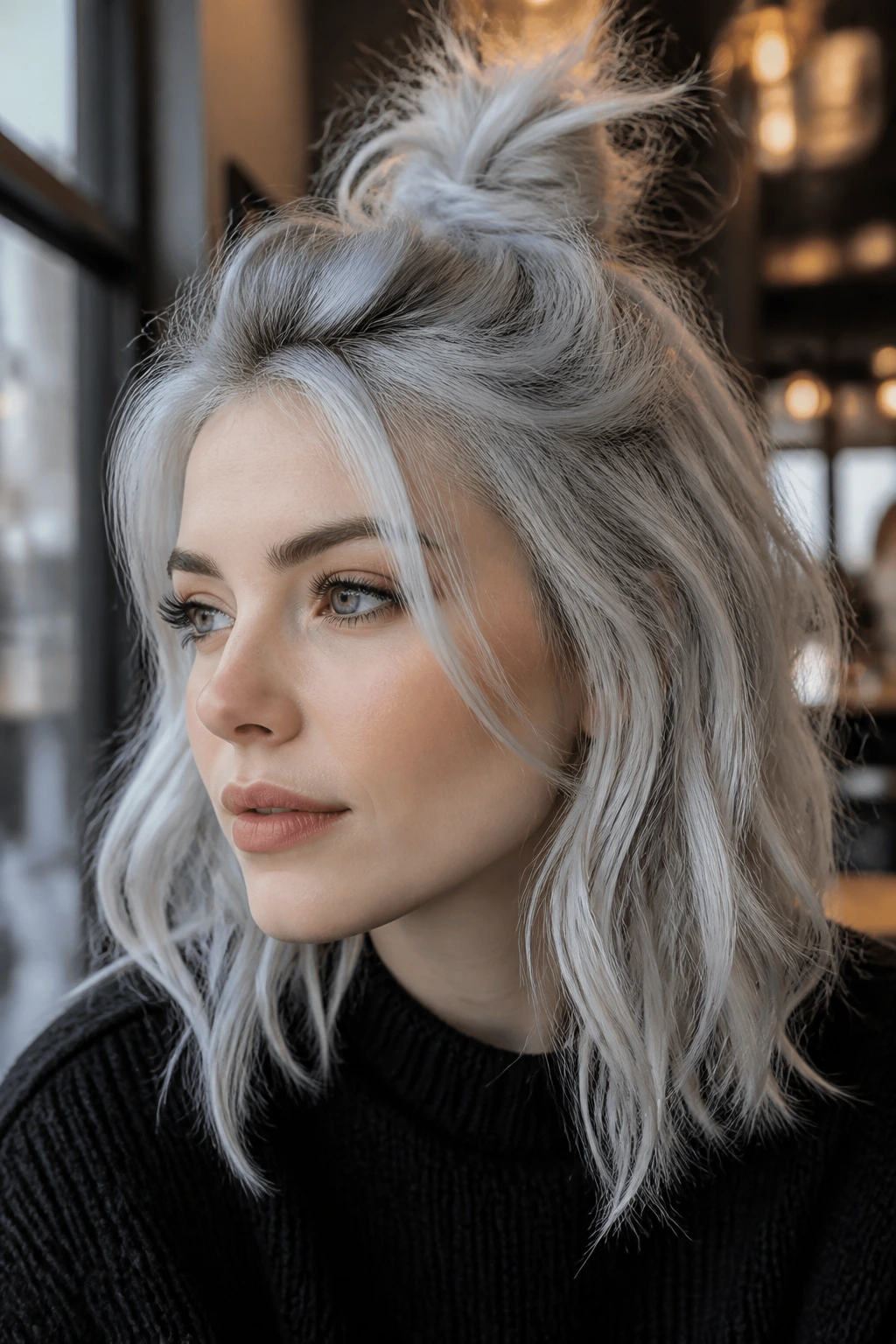
The half-up knot is a clever way to show off silver without hiding your face. The top section pulls the eye upward, while the loose lengths keep enough softness around the jaw and neck to work on pale skin. It’s casual, but it still has a point of view.
The shape that keeps it from looking cute in the wrong way
Keep the knot a little messy and leave the hair beneath it straight or lightly waved. If the top knot is too perfect, the style loses the metallic edge and starts feeling juvenile. A mist of texture spray near the crown helps the knot hold while still looking airy.
21. Silver Ringlet Bob
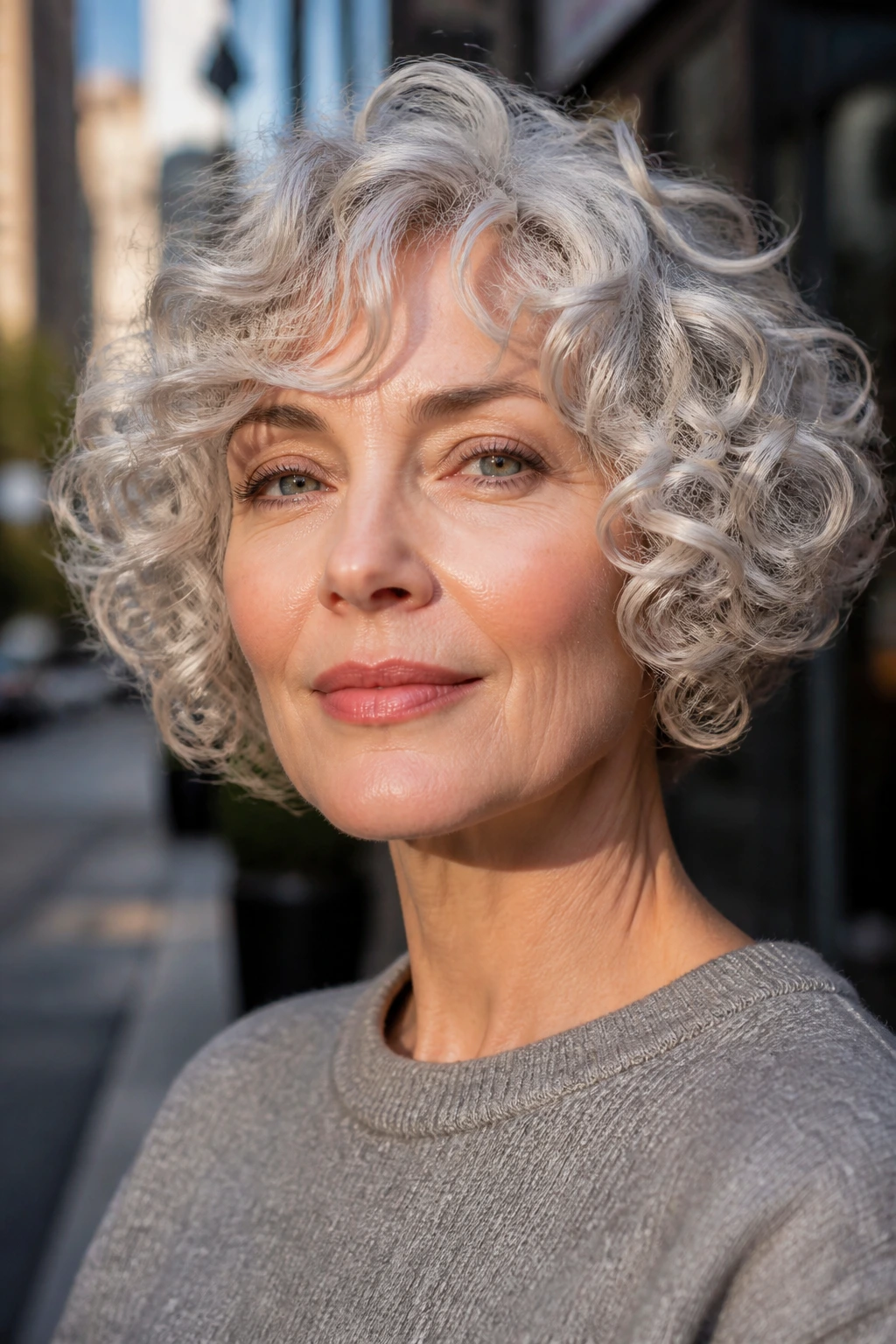
Defined ringlets change the whole mood of silver hair. Instead of one reflective surface, you get dozens of small curves that catch the light differently, which is excellent on pale skin because the texture creates the warmth the color doesn’t have on its own. A bob length keeps the shape rounded and controlled.
This cut wants moisture more than product. Use curl cream, not a heavy wax, and let the ringlets form their own pattern. A little shine serum on the surface is enough; too much and the curls separate in a way that makes the silver look wet instead of luminous.
22. Frosted Side Part with Volume
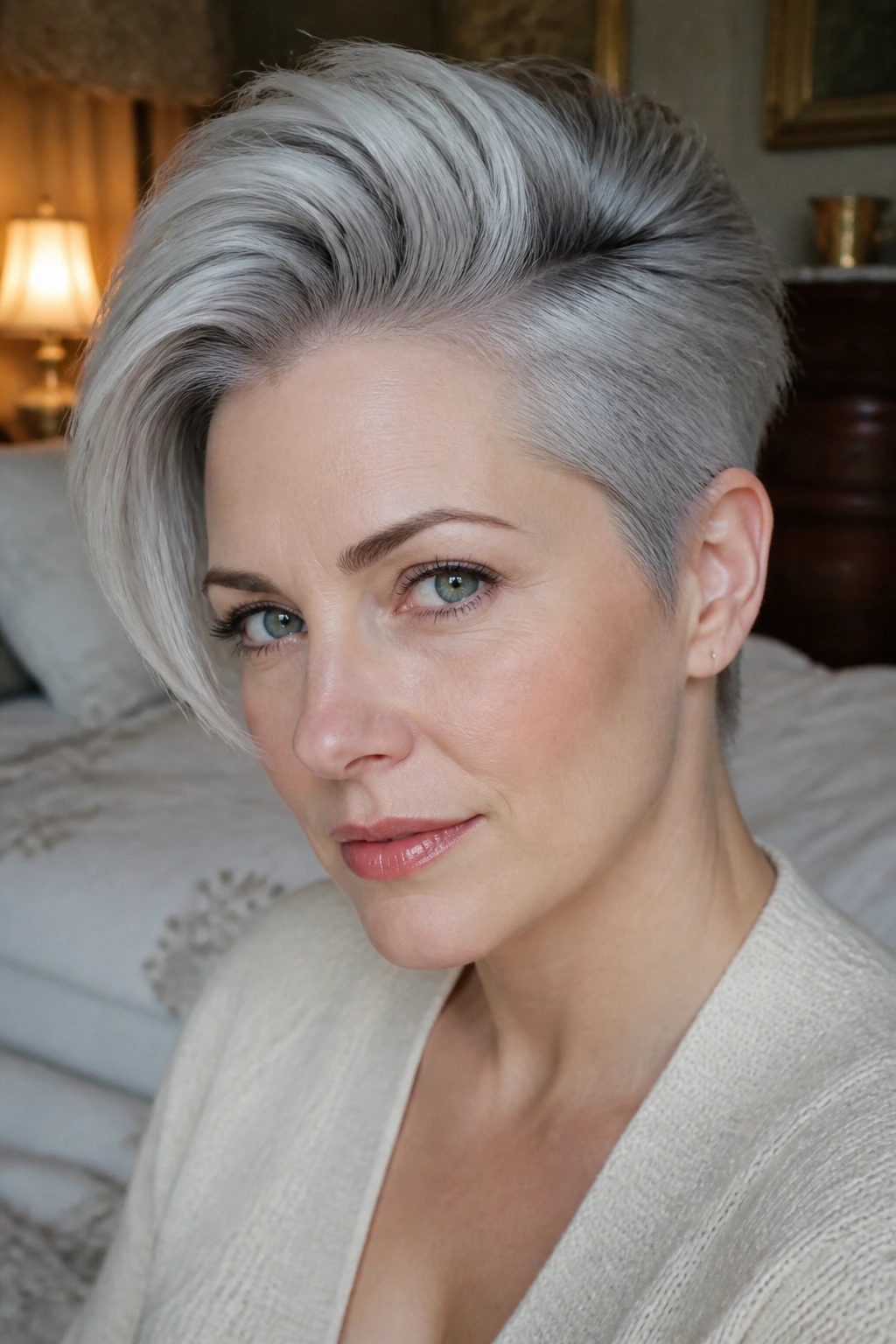
Volume at the root can rescue silver hair when the face needs a little lift. A deep side part and a soft backcombing at the crown create height, which gives pale skin more dimension and keeps the grey from sitting too close to the head. This is a good answer if your features feel flat under center-parted hair.
The frosted tone should stay cool and bright, but the roots should have enough shadow to anchor the style. A round brush, a root-lifting spray, and a medium hold lacquer are usually enough. If you want a little old-Hollywood drama, this is the one to reach for.
23. Graphite-to-Silver Melt
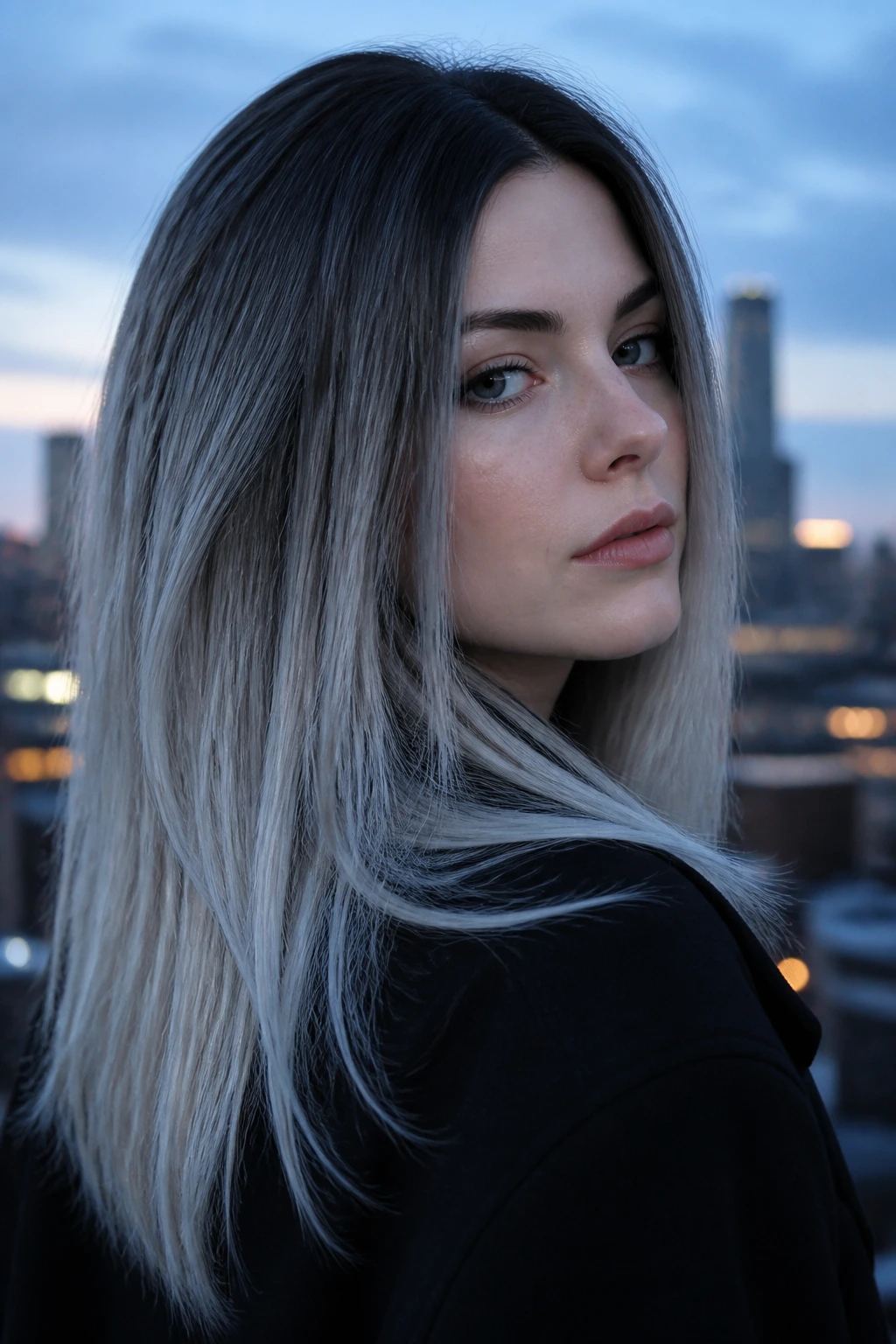
Graphite-to-silver is one of the richest ways to wear grey. The darker crown makes the silver ends glow, and that gradient gives pale skin a built-in frame without needing harsh contrast at the face. It’s sophisticated, but not fussy.
The melt looks best when the transition is slow enough to feel natural. Ask for the deepest tone near the scalp and the lightest silver at the ends, then keep the texture soft so the color shift stays visible. If you wear your hair straight, the gradient reads clean and sleek; if you wave it, the change looks even more dimensional.
24. Pearl Grey Twist-Out or Curly Style
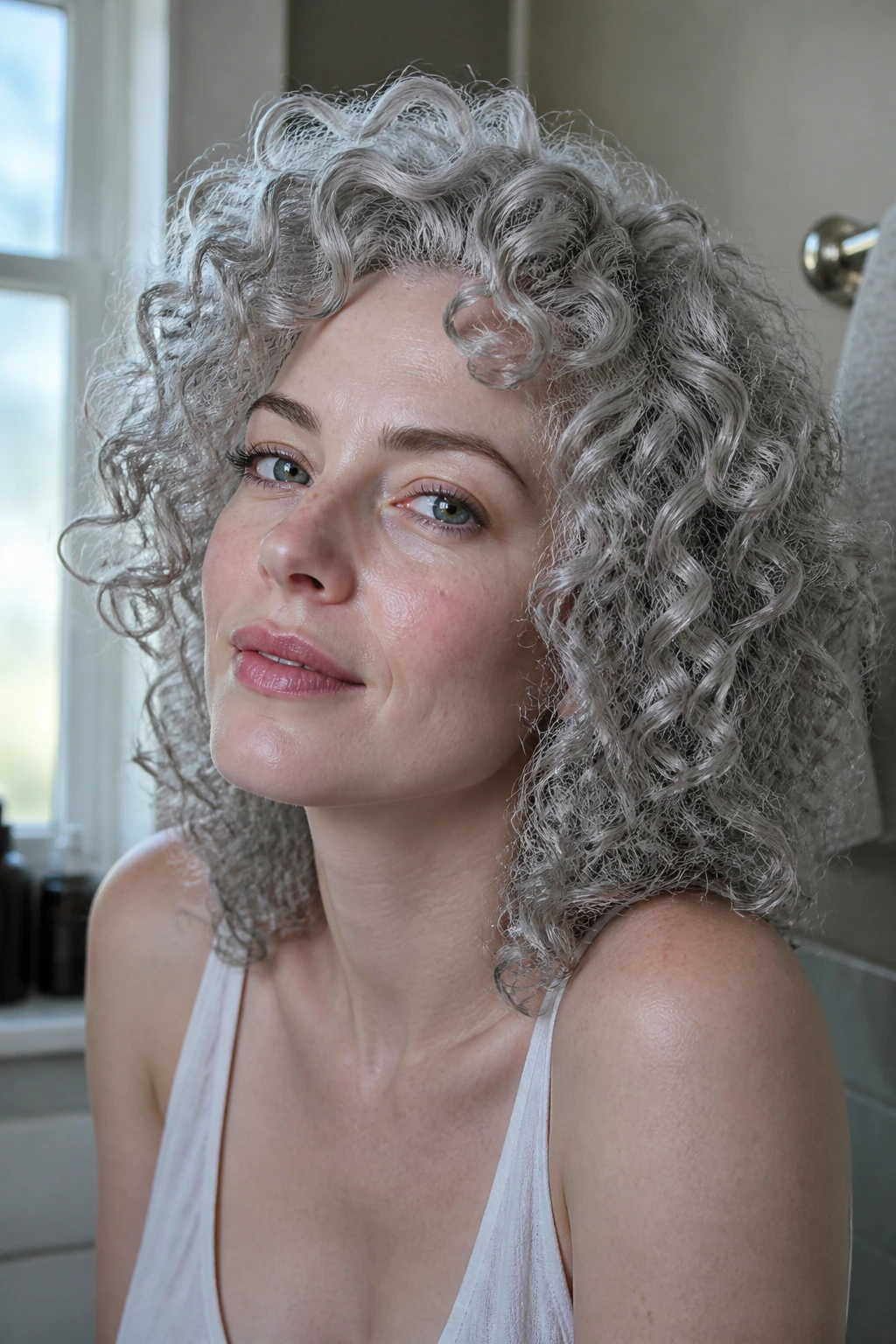
Twist-outs and curl sets in pearl grey have a softness that flat silver can’t touch. The texture builds volume, and the pearl tone keeps pale skin from looking too stark. It’s a good reminder that silver doesn’t need to be harsh to be interesting.
This style needs moisture in the routine and patience in the set. Use a leave-in that doesn’t leave a heavy film, twist while the hair is damp, and let the pattern set fully before separating. The result has a cloudy, moonlit finish that feels gentle without going bland.
25. Lunar Silver Updo with Soft Tendrils
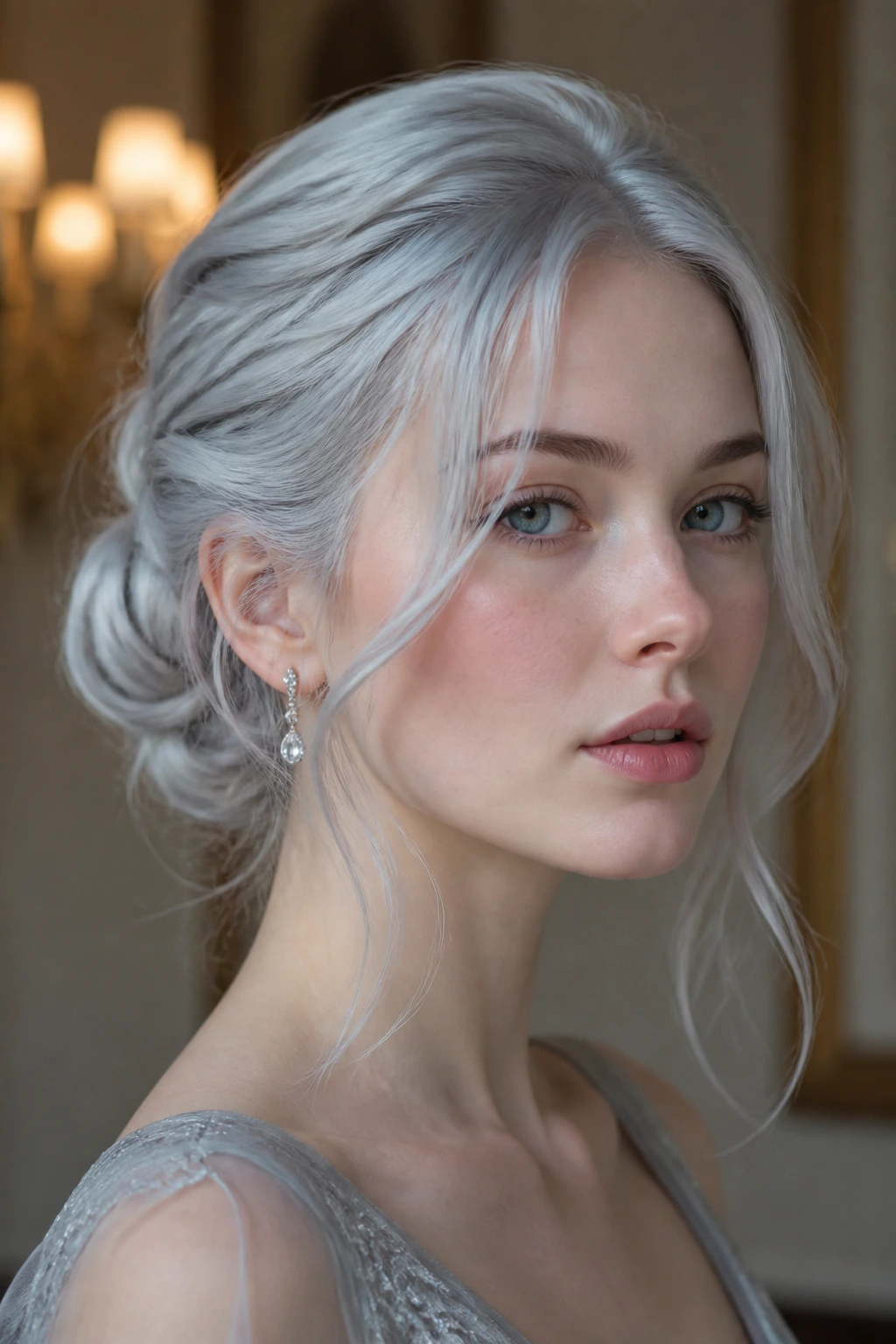
The final look is the one that proves silver can be delicate. A low bun, chignon, or tucked updo with a few soft tendrils around the face gives pale skin a polished frame while leaving enough wisps out front to keep the tone from feeling severe. It’s formal, but not stiff.
I like this best when the silver has a glossy, almost lunar sheen. A little smoothing cream through the top and a light mist of shine spray are enough to keep the updo clean. The tendrils should stay thin and curved — those tiny strands do more for the face than a dozen extra pins ever could.
Why Metallic Grey and Silver Work So Well on Pale Skin
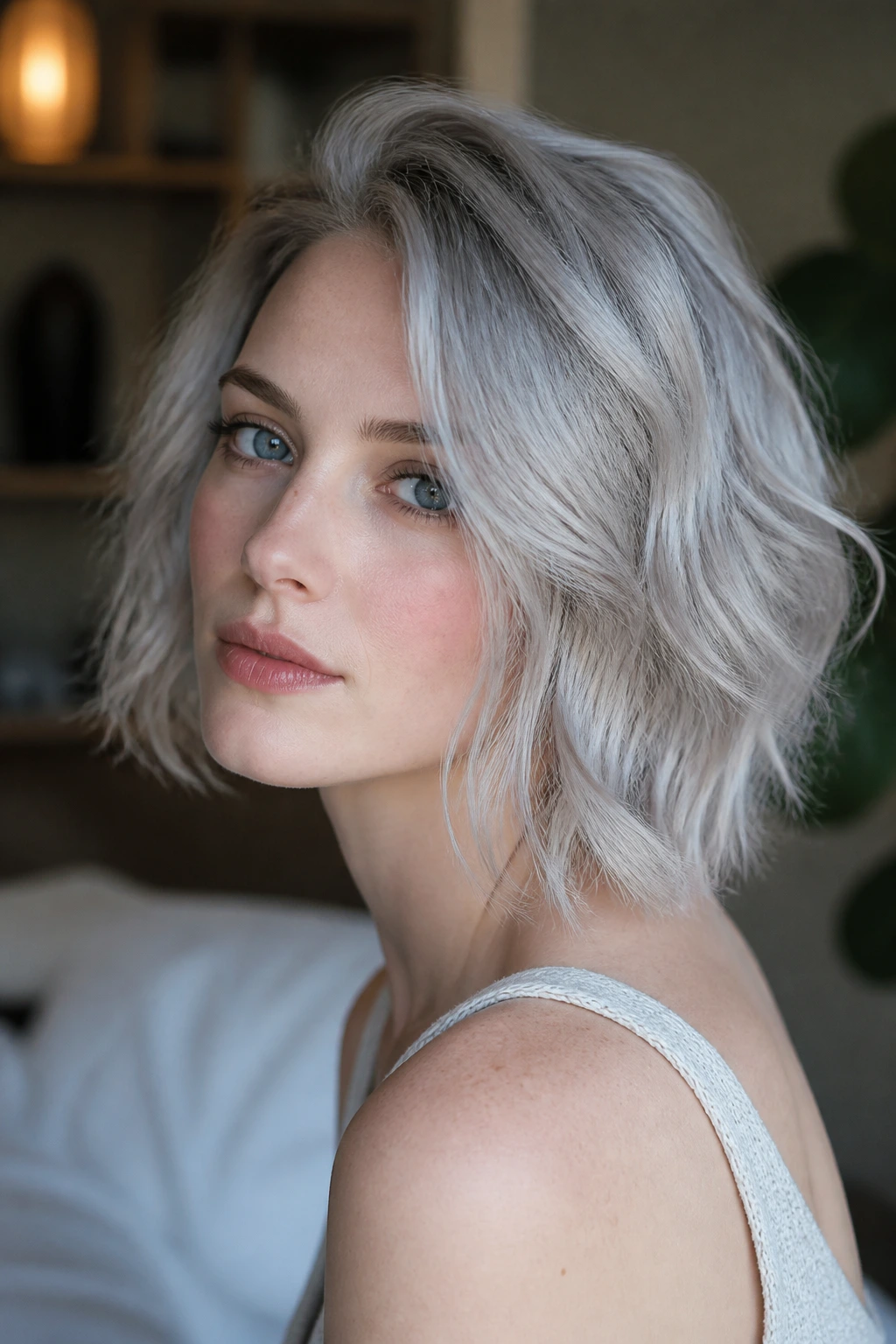
Pale skin already carries less visual weight, so silver hair doesn’t have to push hard to stand out. What it does need is contrast. A shadow root, a visible part line, or a strong cut edge gives the eye a place to land, and that stops the whole look from going pale in every direction at once.
The undertone matters too. If your skin leans pink, a pearl, smoke, or graphite silver tends to look kinder than blue-white ice, which can make redness show up more clearly. If your skin is neutral or cool, you can usually wear true steel, chrome, or frosty silver without much trouble. There’s no mystery there; the hair color is simply borrowing the undertone already sitting in your skin.
Metallic sheen changes the read again. Flat ash can look dusty in daylight, especially if the hair is porous or over-toned. A gloss, a rounded blowout, or even a soft bend in the lengths makes the surface move, and that movement keeps the color alive.
Brows and makeup also play a bigger role than people expect. Pale skin with silver hair often looks best when the brows are softly defined and the cheeks have a little rose or berry warmth. Not heavy makeup. Just enough contrast so the face doesn’t disappear into the cool tone.
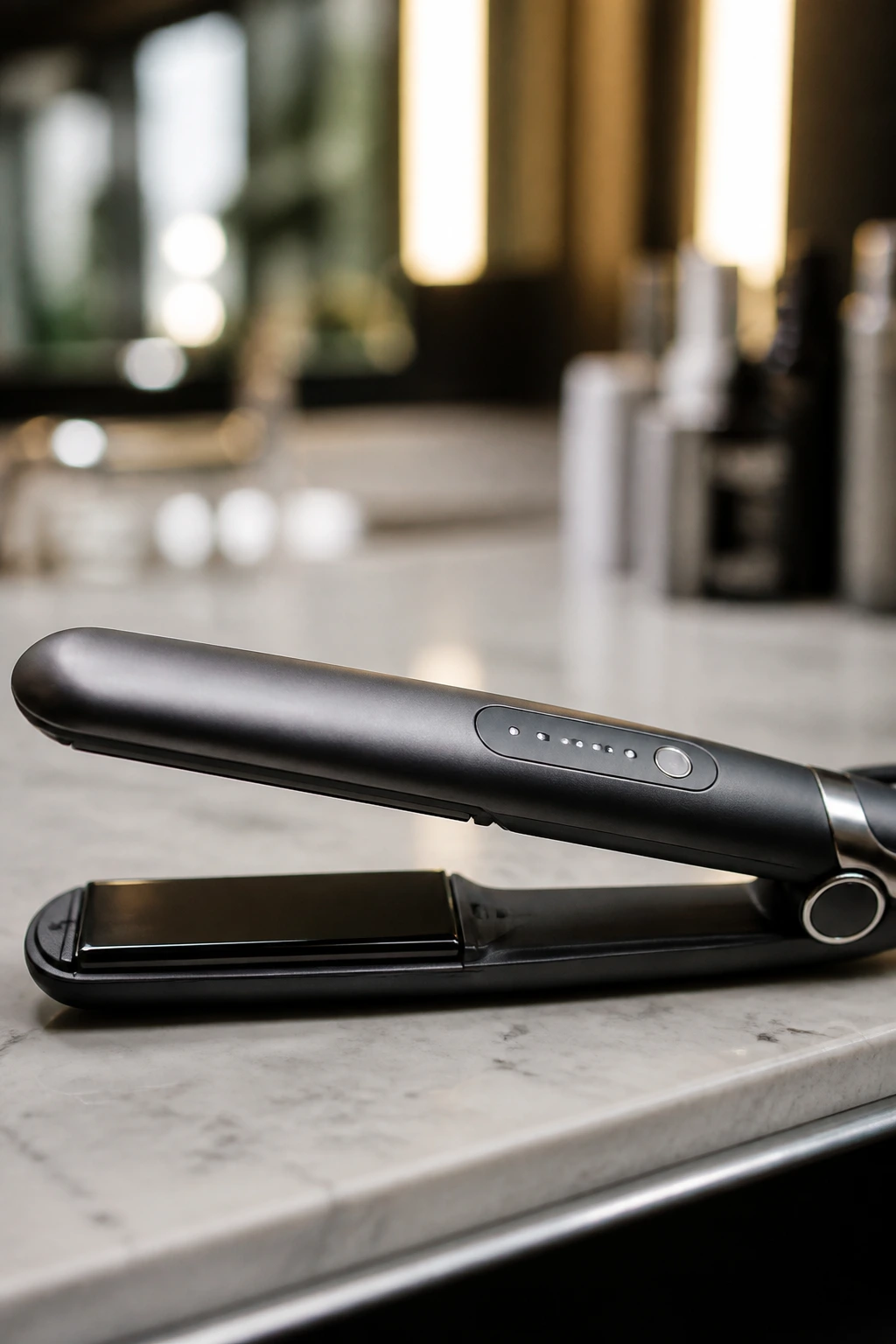
The Styling Tools That Keep Silver Hair Looking Crisp
-
Purple shampoo: Use it every second or third wash, not every wash, or the hair can turn dull and over-matte fast.
-
Color-safe sulfate-free shampoo: This keeps the silver from stripping out too quickly and is much kinder to lightened hair.
-
Demi-permanent gloss or toner: A clear or cool gloss every few weeks keeps the metallic finish from going flat between color appointments.
-
Heat protectant spray: Silver hair is often lightened hair, and lightened hair hates high heat more than it lets on.
-
1.25-inch round brush: Useful for lobs, curtain layers, blowouts, and anything that needs a bend instead of a curl.
-
Flat iron with temperature control: Keep the heat lower than you would on darker virgin hair; the finish should stay smooth, not singed.
-
Wide-tooth comb and sectioning clips: Silver shows damage quickly, so clean sectioning helps you avoid extra passes with hot tools.
-
Lightweight shine serum: Use it on mids and ends only. Too much near the scalp makes metallic hair look greasy instead of glossy.
-
Texturizing spray or matte paste: This is what saves pixies, crops, shags, and wolf cuts from looking too soft.
-
Microfiber towel: A small thing, but it cuts down on frizz and keeps fragile silver strands from roughing up after washing.
Choosing the Right Silver Shade for Your Undertone
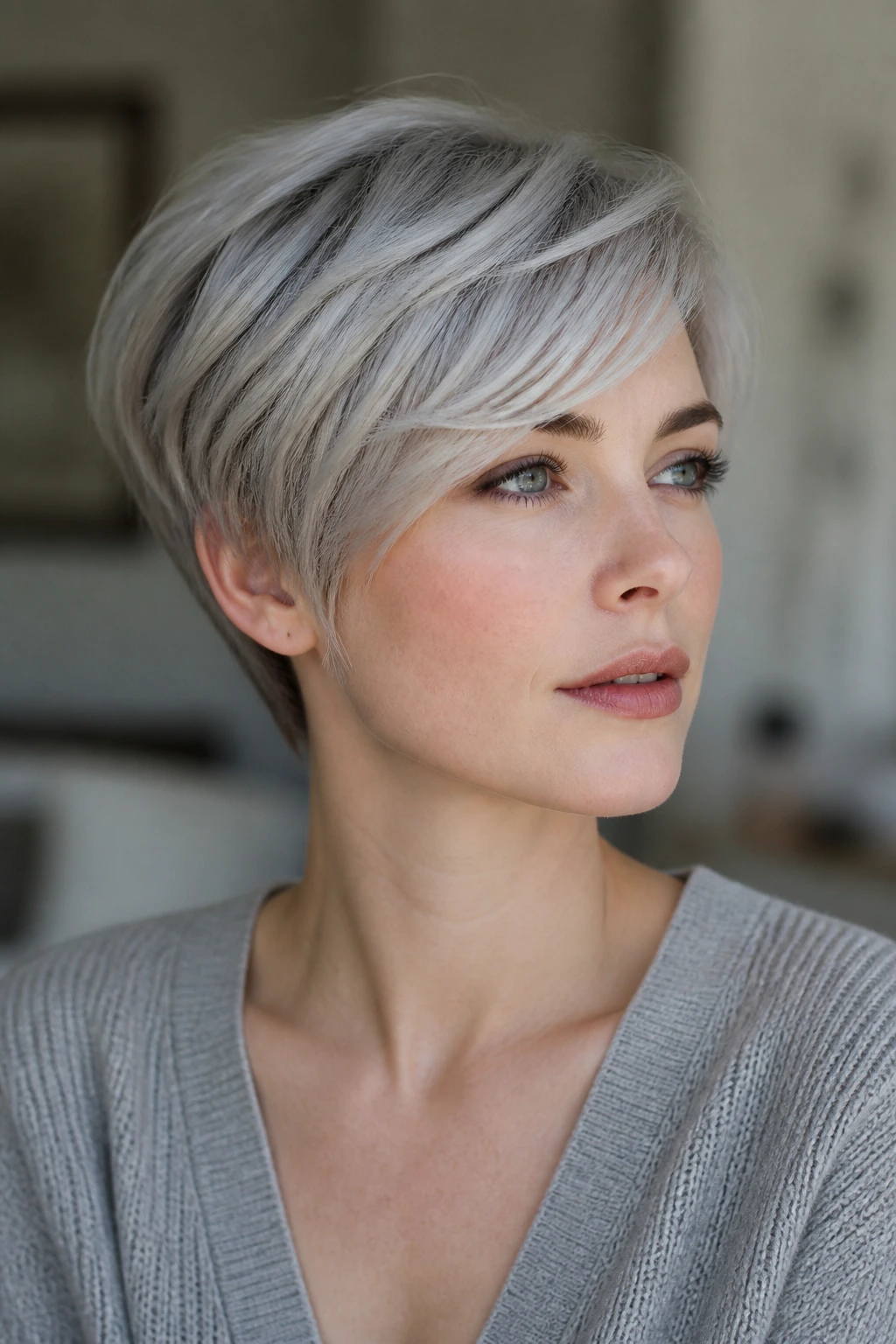
The fastest way to get silver wrong is to ignore the skin underneath it. Pale skin comes in a few different directions — pink, neutral, cool, sometimes a touch peach — and each one reacts a little differently to grey.
Pink or rosy undertones
Pearl silver, smoky grey, and graphite roots are the safest bets. They soften redness instead of sharpening it. I’d avoid the coldest blue-white silver if your cheeks flush easily, because the contrast can make the skin look more pink than you want.
Neutral undertones
This is the easiest lane. Steel, moonstone, silver ash, and soft chrome all work, especially when the haircut has a clear shape. You still want some root depth, though; even neutral skin looks better when the silver has a little spine.
Cool or blue undertones
Go icy if you want. Ice grey, chrome silver, and frosted pearl can look clean and dramatic on cool pale skin, especially with dark brows or a sharper cut. Even here, a flat all-over white-grey can look tired, so I still prefer some dimension at the root or along the underside.
If you’re coloring at the salon, ask about level 9 or 10 lift and a toner with violet-blue base notes. Hair that hasn’t been lifted enough will grab grey unevenly, and porous ends can turn muddy. A strand test saves grief. So does honesty about what the hair has already been through.
Brows, Blush, and Necklines That Keep the Look Awake
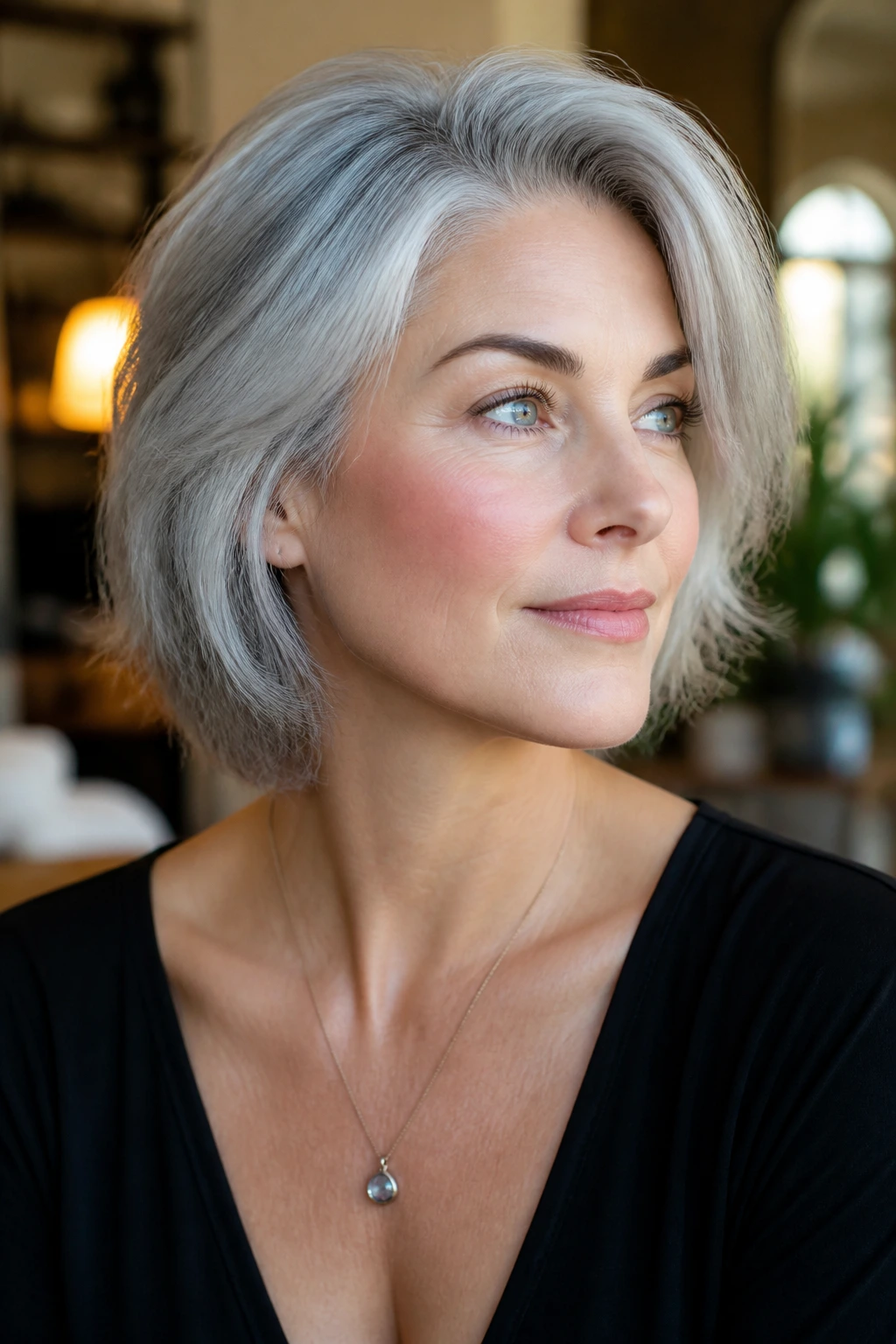
Silver hair on pale skin can be gorgeous, but the whole face needs a little support around it. Softly filled brows give the eyes a frame, and that matters more than heavy contour ever will. If the brow is too pale or too sparse, the silver can pull all the attention upward and leave the rest of the face oddly washed out.
Blush helps more than most people expect. A cool rose, soft berry, or muted mauve on the cheeks brings the skin back to life without fighting the hair color. Keep it on the upper cheek rather than dragging it too low; you want lift, not a sunburn effect.
Clothing does part of the job too. Charcoal, black, navy, dusty plum, and deep forest green all set off metallic grey without making the face look stark. A hard white top can work, but it’s a sharper look. If the hair is very icy, a slightly softer neckline color is often kinder.
Jewelry is worth thinking about, too. Silver hoops echo the hair and keep the look cohesive. Pearls soften it. Dark frames on glasses do the same thing a blunt bob does: they give the face a line.
Small Tweaks That Sharpen the Finish
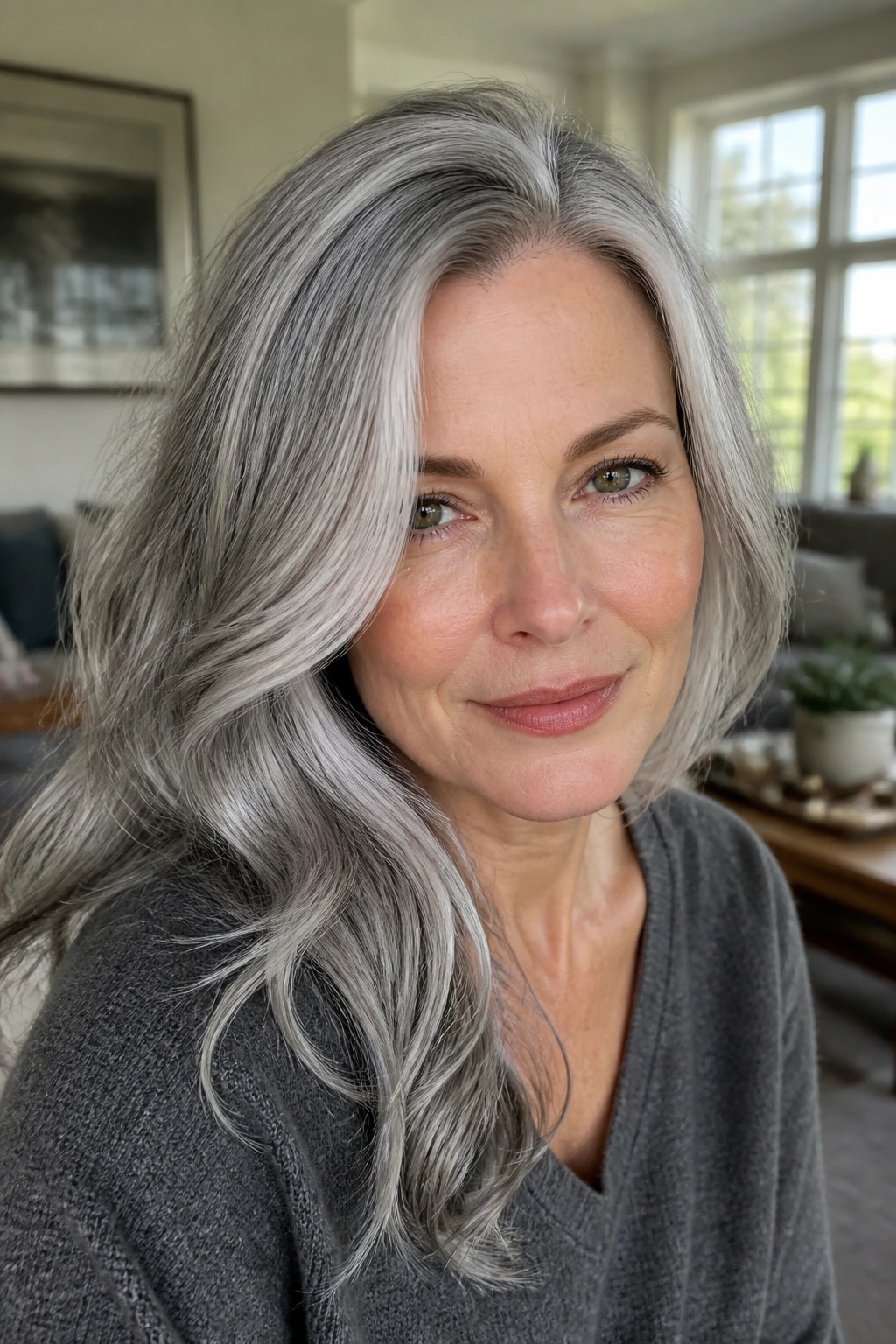
Root Shadow: Ask for a shadow root that stays within one or two shades of your natural base. It should look like depth, not a stripe, and it keeps silver hair from sitting too high on pale skin.
Light Placement: Put your brightest silver pieces where the face needs lift — temples, crown, cheekbone line, or the outer curve of curls. A full-head brightening job can look impressive on a rack and flat in real life.
Texture Control: One soft wave, one bend, or one broken curl usually beats a pile of uniform spirals. Silver reads best when the surface has variation.
Finish: Use a lightweight gloss spray or serum, then stop. If the hair feels coated, the metallic note disappears and the style starts to look heavy.
Parting: A center part sharpens some faces, but a slight off-center part can make pale skin look warmer and less severe. Small shift, big change.
Keeping Metallic Grey Fresh Between Salon Visits
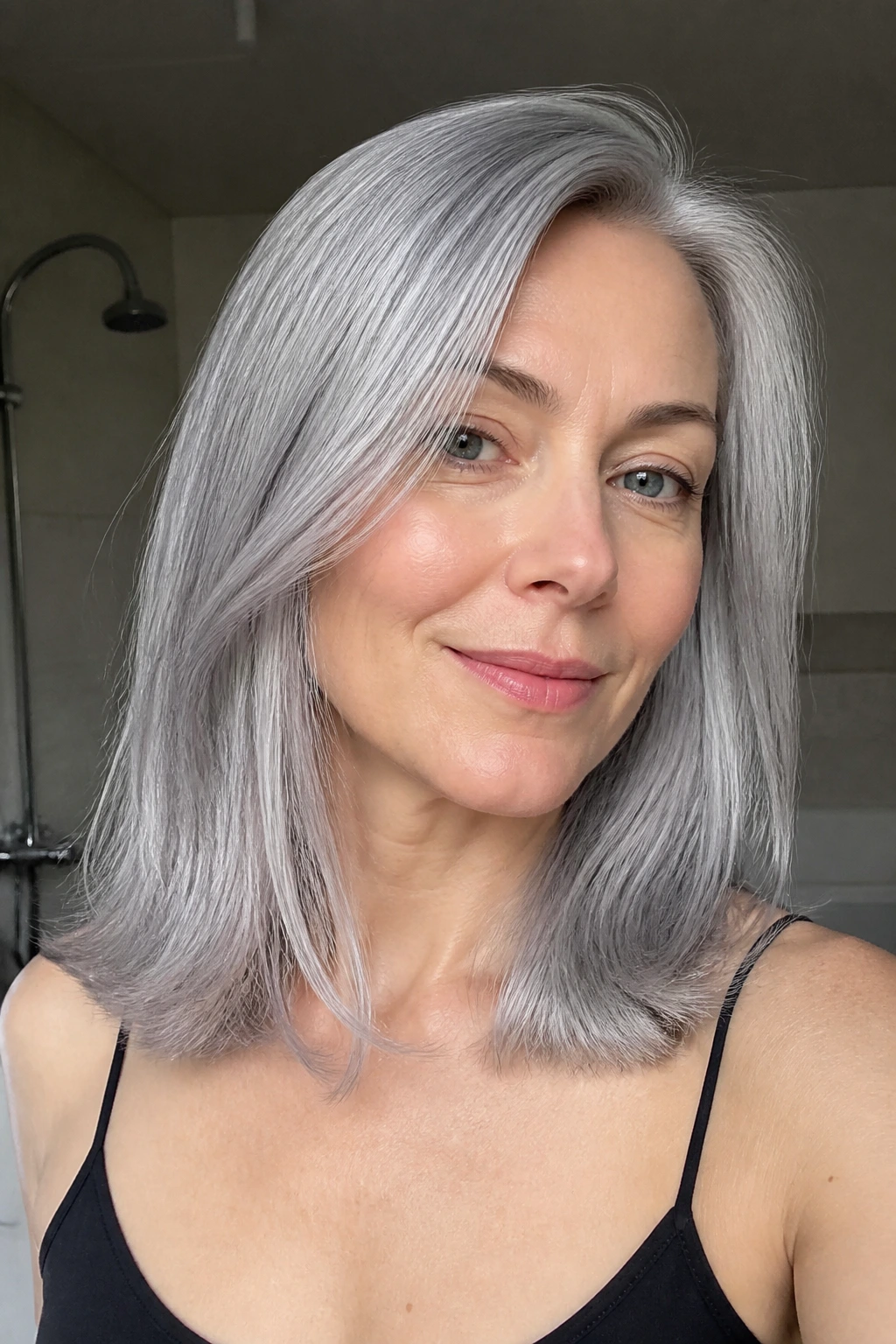
Silver hair usually behaves best when you stop treating it like ordinary hair. Wash it less often — two or three times a week is plenty for most people — and use cool or lukewarm water so the tone doesn’t fade as fast. Purple shampoo can help, but it is a tool, not a personality. Use it every second or third wash for a minute or two, then rinse well. Leave it on too long and the hair can go dull lavender, which is a look only some people want.
A hydrating mask once a week helps a lot, especially on lightened ends. Silver hair often runs porous, and porous hair drinks up pigment unevenly. If the color starts to look tired, a clear or cool gloss every four to six weeks usually brings back the shine without forcing a full recolor. Short bobs and pixies may need trims every four to six weeks to keep the shape sharp; longer layers can often go eight to ten weeks if the ends stay healthy.
Heat is where a lot of silver styles get wrecked. Keep hot tools lower than you would on darker hair, use protectant every time, and don’t keep re-ironing the same section over and over. One clean pass beats three annoyed ones. If you swim, wet the hair with fresh water first and add leave-in conditioner; chlorine can push silver toward green or dull beige fast.
Common Mistakes That Flatten Pale Skin
-
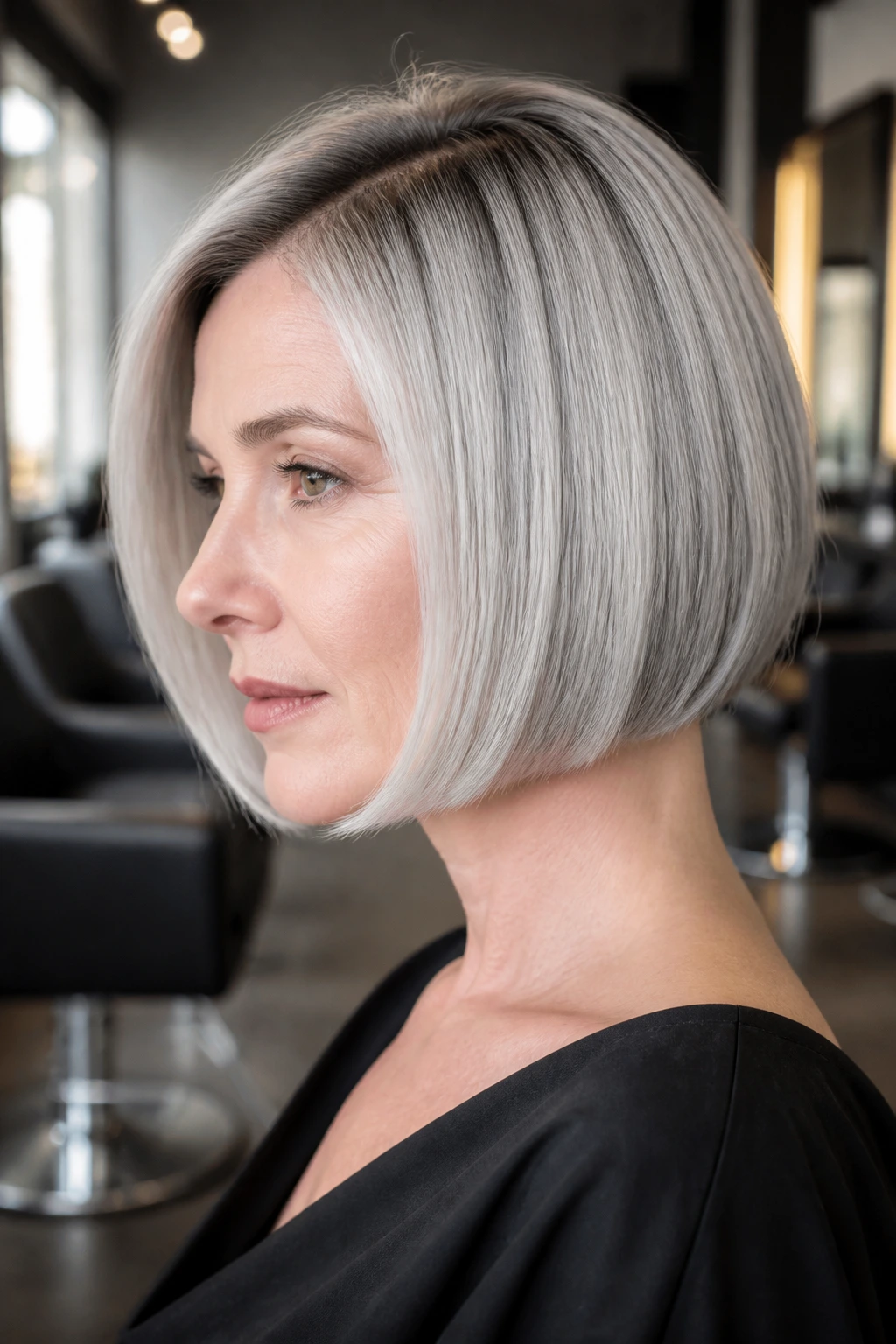
All-over flat silver: The symptom is easy to spot — the hair looks like one uniform block, and the face seems to vanish into it. The fix is a root shadow, some lowlight depth, or a cut with a clear line.
-
Too much purple shampoo: Hair starts looking dusty, slightly lavender, or dry on the surface. Use purple shampoo less often, and keep it on for a short window, not a long soak.
-
Ignoring undertone: Blue-white silver on very pink skin can make redness look louder. Pearl, smoke, and graphite are usually kinder choices.
-
No face framing: If every strand is pushed back or the cut is too blunt with no movement, the face can look bare and severe. Add fringe, pieces near the cheekbones, or a side part.
-
Overheated ends: Split, rough ends break the reflective surface and make metallic grey look dull. Keep the heat lower, trim more often, and use a bond-building mask if the hair has been lightened repeatedly.
-
Choosing shine over structure: A glossy finish is good. A shiny but shapeless haircut is not. The shape has to earn the silver.
Variations and Tone Tweaks to Try
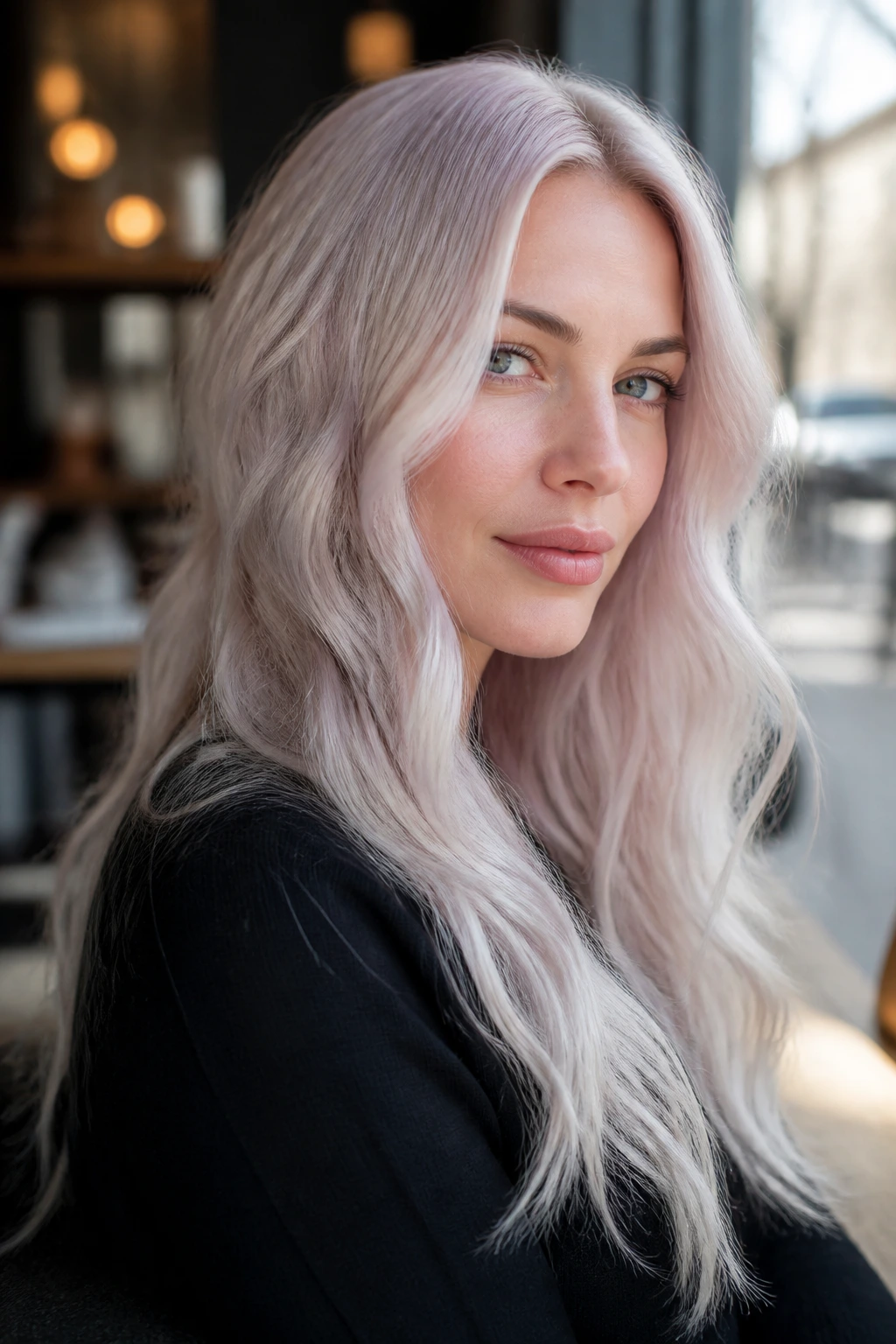
Pearl-Milk Silver: This version softens the grey with a milky, almost luminous finish. It’s a strong choice for pale skin that leans pink or rosy, because it takes the edge off the coldest tones.
Graphite Root Melt: Start deeper at the crown and fade into cleaner silver through the mids and ends. It gives you an easier grow-out and keeps the face from looking too washed out.
Blue-Steel Edge: This is the coolest, sharpest end of the palette, with a faint blue cast that looks striking on very cool undertones. Pair it with a blunt cut or a sharp bob so the color has a strong frame.
Rose-Silver Softness: A whisper of muted rose in the gloss can warm up pale skin without turning the hair beige. It’s subtle, and that’s the point; the silver still reads silver.
Moonlit Curly Halo: For curls and coils, keep the outer layer silver and the underlayers smoky or graphite. The contrast makes the texture pop and gives fair skin a gentler, more dimensional read.
Smoke-and-Chrome Pixie: Short hair can handle a little extra contrast at the sides and crown. The smoke depth keeps the crop from looking too pale, while the chrome tips still catch the light.
Frequently Asked Questions About Metallic Grey Silver Hairstyles for Pale Skin
Will silver hair wash out pale skin?
It can, if the color is flat and the haircut has no shape. The fix is usually some combination of root depth, a fringe, and a little makeup balance around the brows and cheeks.
What silver shade works best for pink undertones?
Pearl silver, smoky grey, and graphite blends usually behave better than icy blue-white. They soften redness instead of sharpening it.
Can curly hair wear metallic grey well?
Yes, and honestly, curl pattern gives silver hair some of its best dimension. The key is keeping the curls hydrated so the tone reads glossy instead of dry.
Do I need to bleach dark hair first to get this look?
If your natural hair is dark, yes, you’ll usually need to lift it first. Grey and silver show best on a pale base, and skipping that step often leads to muddy color rather than metallic shine.
How often should silver hair be toned?
Most people need a gloss or toner refresh every four to six weeks, though porous or very light hair may need it a little sooner. Purple shampoo helps between visits, but it does not replace toner.
What cut is easiest to maintain with silver color?
A blunt bob, lob, or pixie tends to be easier than a heavily layered cut because the shape stays clean longer. That said, long layered hair can work well too if the ends stay healthy.
What if the silver starts turning yellow?
Use a gentle clarifying wash once a month if product buildup is the issue, then follow with a purple shampoo or cool gloss. If the yellowing comes from heat damage, trim the weak ends — product won’t fully fix that.
Can I wear silver hair if my face is very fair and my brows are light too?
Yes, but you’ll probably want a little brow definition and some blush to keep the face from disappearing. The hair color is only half the equation.
The Cool-Light Finish
Silver hair on pale skin does not need to be harsh to work. In fact, the looks that last are usually the ones with a little depth, a little softness, and a haircut that knows where the face is. That’s what keeps the color from going flat, and it’s what keeps the whole style from looking like a costume.
Pick the shape first. Then decide whether you want pearl, steel, smoke, or ice. When those two choices line up, metallic grey stops being a risky idea and starts looking like the most natural thing in the room.