



A bad toffee shade can make medium skin look muddy in a heartbeat. The right one does the opposite: it brings out the honey in the cheeks, keeps olive undertones from going flat, and gives brown hair that expensive-looking, light-catching depth that never feels try-hard. That’s why toffee hair color ideas for medium skin tones keep showing up in salon chairs. They sit in that useful middle ground — richer than blonde, softer than espresso, and far more forgiving than icy ash.
What makes toffee such a useful family of shades is that it isn’t one color. It can lean beige, bronze, caramel, chestnut, maple, or honey, and each version plays a little differently against medium complexions. If your skin has golden undertones, the warm versions can make you look rested. If you lean olive, the slightly smoky versions stop your hair from tipping orange. If you’re neutral, you can move anywhere in the range without the color bossing your face around.
I like toffee best when it still looks like hair, not sugar syrup. A good toffee shade has depth at the root, movement through the mids, and a little shine at the ends — the kind that shows up when you turn your head near a window. The shades below move from soft and subtle to rich and dimensional, so you can pick the one that fits your base, your texture, and your patience for maintenance.
Why These Toffee Shades Work So Well on Medium Skin
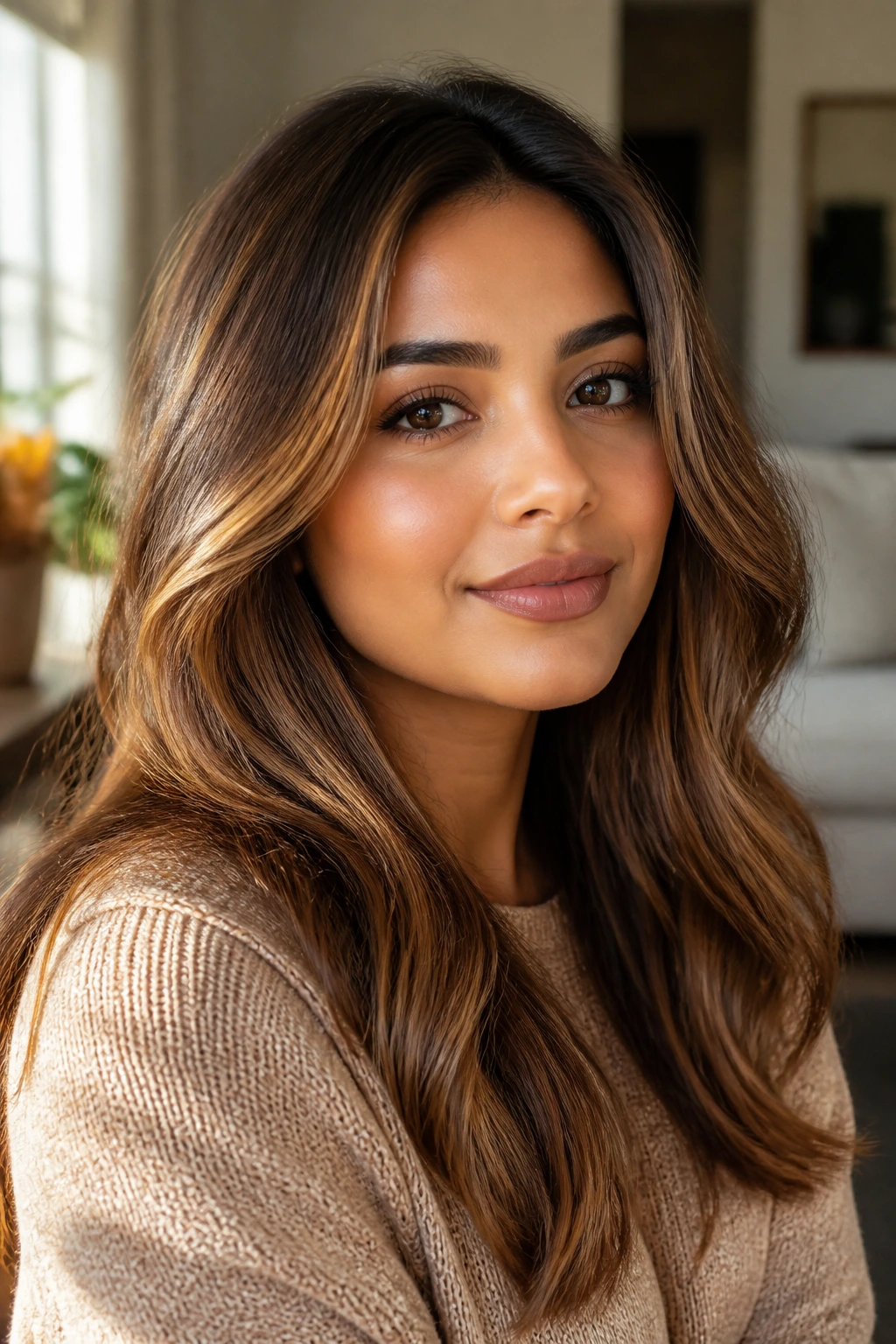
-
They bring warmth without turning orange: Medium skin usually needs brown tones with enough gold, beige, or bronze to keep the face from looking dull, and toffee does that better than flat ash brown.
-
They work on more than one undertone: Golden, olive, and neutral medium skin can all wear toffee, but the tone shift matters — a caramel-leaning version reads different from a smoky chestnut one.
-
They hide grow-out better than lighter blondes: A rooted toffee balayage or gloss lets the color soften as it grows, so you’re not staring at a hard line after four weeks.
-
They look good in ordinary light: Toffee isn’t one of those shades that only shows up in a salon mirror. It still has shape in office lighting, on cloudy days, and under indoor bulbs.
-
They flatter texture: Waves, curls, and shags make the ribbons of color move. Straight hair can wear it too, but texture gives toffee more to do.
-
They’re easier to customize than full blonde: You can keep your base dark and just warm up the mid-lengths, or go lighter around the face without bleaching the whole head.
How Toffee Reads on Golden, Olive, and Neutral Medium Skin
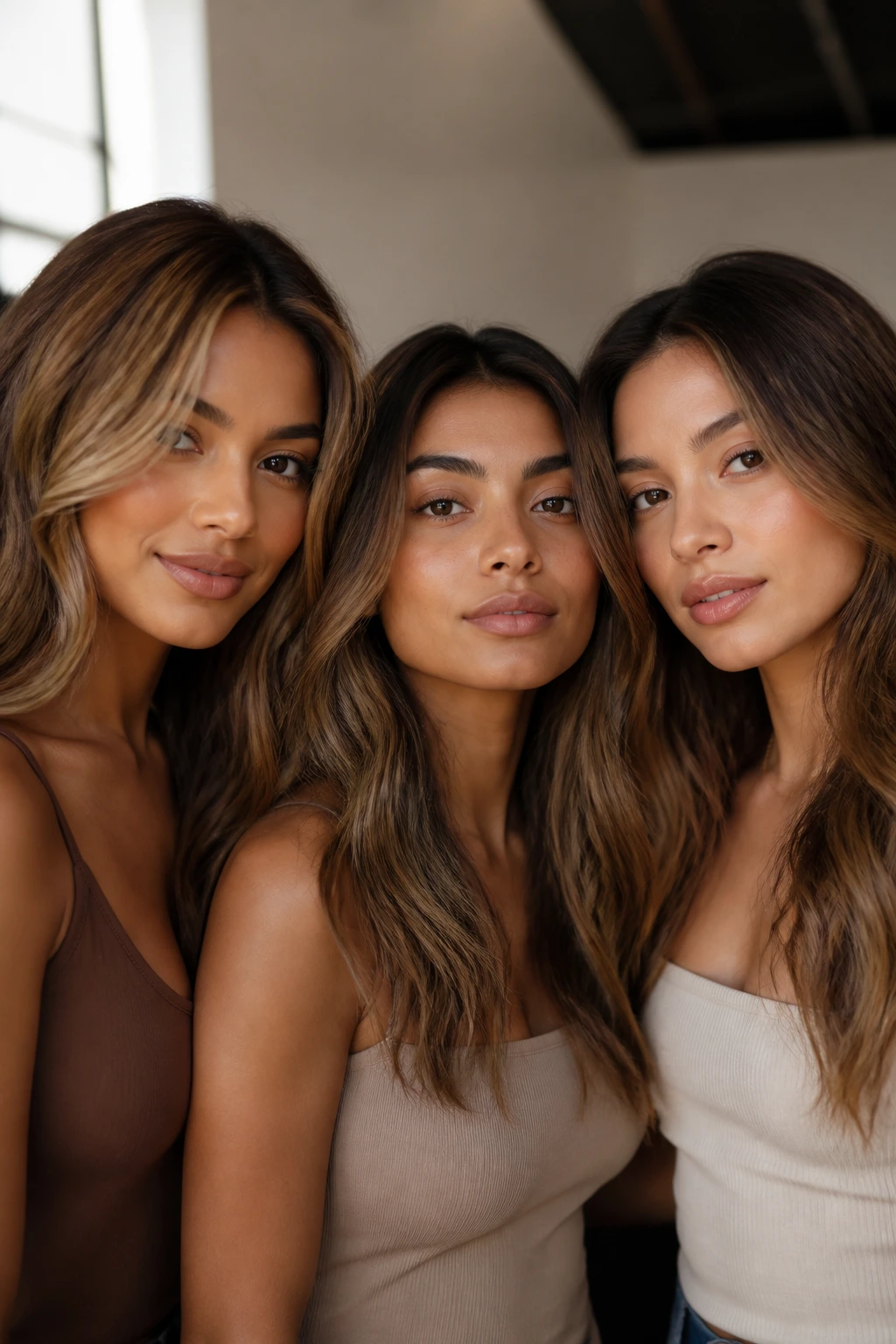
Toffee sounds simple until you put it next to real skin. Then the undertone starts talking back. A caramel ribbon that looks soft on one person can look a little brassy on another, and a smoky beige that feels chic on olive skin can look washed out on golden skin. The trick is not chasing one universal toffee. The trick is matching the mood of the brown.
Golden Medium Skin
Golden skin usually likes toffee with honey, amber, or caramel in it. Those shades echo the warmth already in the complexion, so the hair feels bright instead of competing with your face. I’d skip overly pale beige glosses here unless you want a softer, more muted look.
Olive Medium Skin
Olive skin often comes alive with smoky toffee, bronze, or chestnut-brown blends. Too much pure gold can sometimes read orange against olive undertones, especially in fluorescent light. A little mocha or mushroom in the root keeps the shade grounded.
Neutral Medium Skin
Neutral skin has the broadest range. Beige toffee, maple gloss, rose-toffee, and hazelnut all sit comfortably here. If you’re neutral and unsure, start with a gloss or face frame first — it’s easier to deepen later than to undo chunky, too-light ribbons.
1. Champagne Toffee Balayage
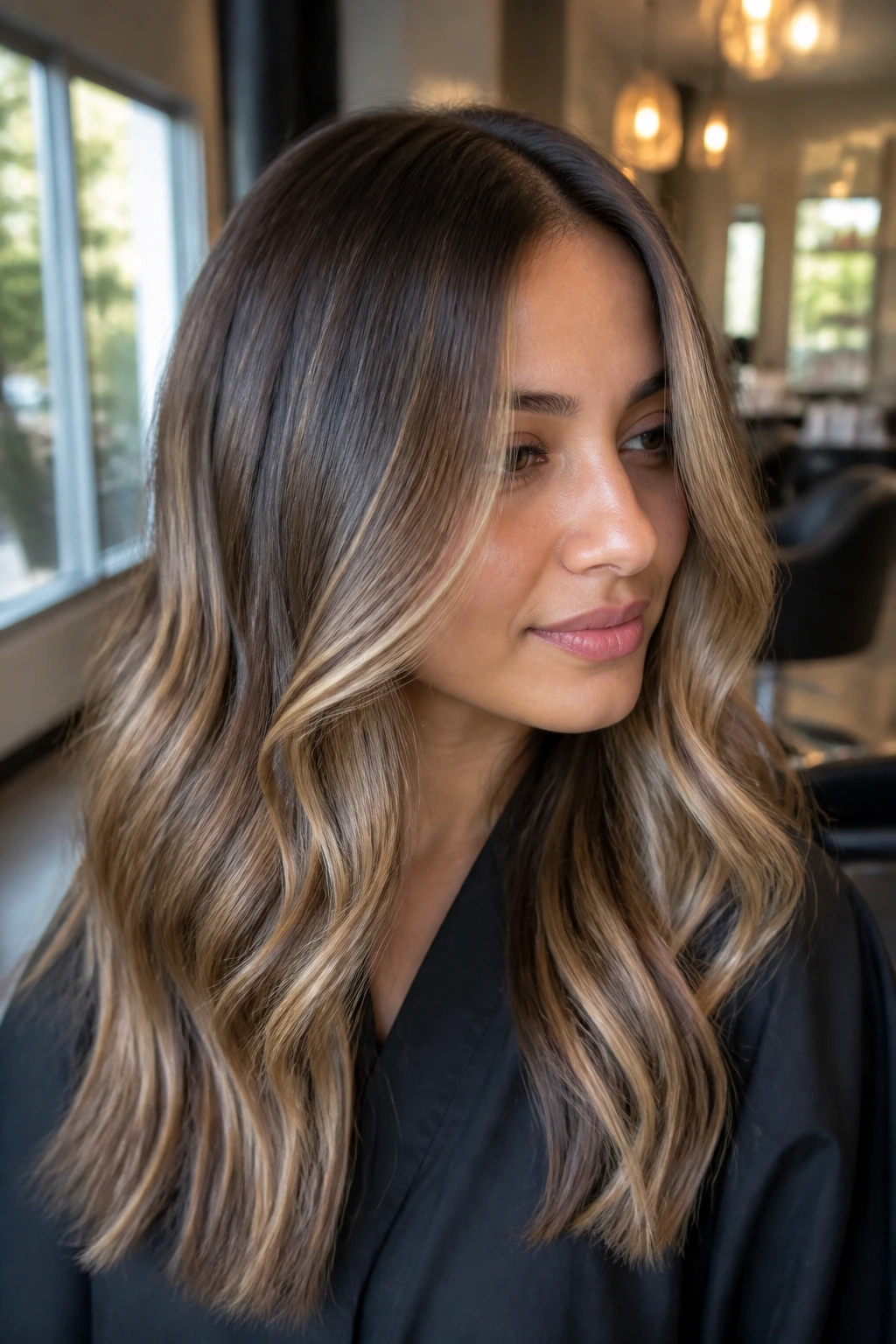
This is the shade I’d hand to someone who wants toffee to look soft, not loud. Champagne toffee balayage keeps a level 6 or 7 brunette base and threads in beige-gold ribbons that start a few inches below the root. On medium skin, that beige-gold mix reads clean and bright without tipping into brass.
Why It Works
The balayage placement matters as much as the tone. When the lighter pieces start lower on the head, the eye gets movement without a harsh line at the scalp. That means the color grows out in a softer way, which is handy if you hate constant salon visits. On medium complexions, champagne tones lift the face, especially around the temples and cheekbones.
Ask for freehand-painted ribbons and a gloss that stays beige, not yellow. If your base is naturally dark brown, the contrast will stay elegant. If your hair already has warmth, the colorist may need a small toner adjustment so the ribbons don’t skew orange in daylight.
2. Golden Hazelnut Money Piece
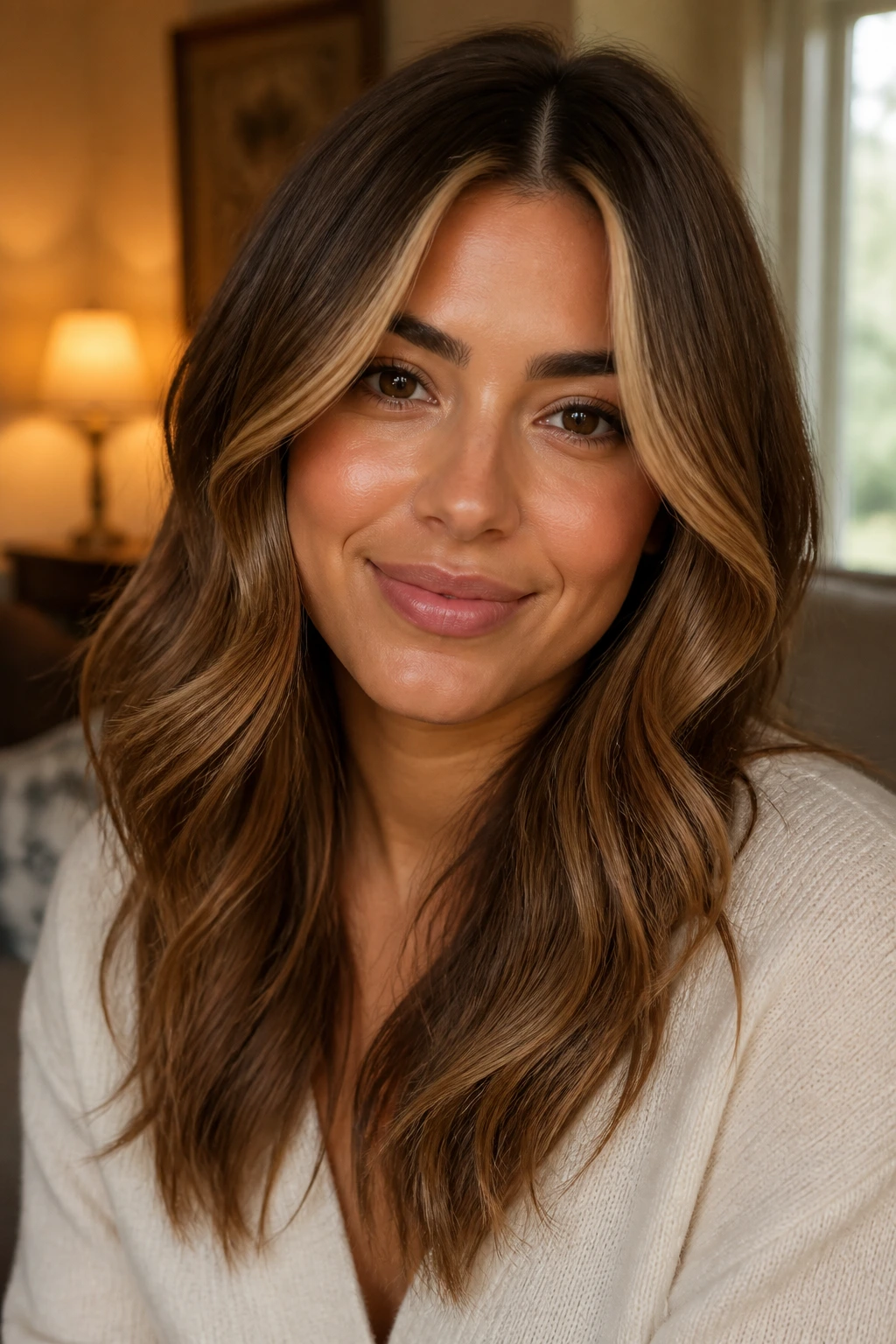
Why does this one work so well? Because the front pieces do the heavy lifting. Golden hazelnut money piece color keeps the rest of the hair richer and deeper, then drops a warm, face-framing highlight right where medium skin needs it most — around the eyes, cheeks, and jaw.
The color should sit a shade or two lighter than your base, not five levels lighter. That restraint is the whole point. Too much contrast and the money piece looks stripey; too little and it disappears under your bangs. The best version has a soft hazelnut root shadow with gold that shows when you tuck the hair behind your ears.
If you wear your hair in a center part, this shade makes a clean line through the front. If you wear a side part, it gives the illusion of depth without needing full-head lightening. I’d call it the practical flirt of the toffee family.
3. Chestnut Toffee Melt
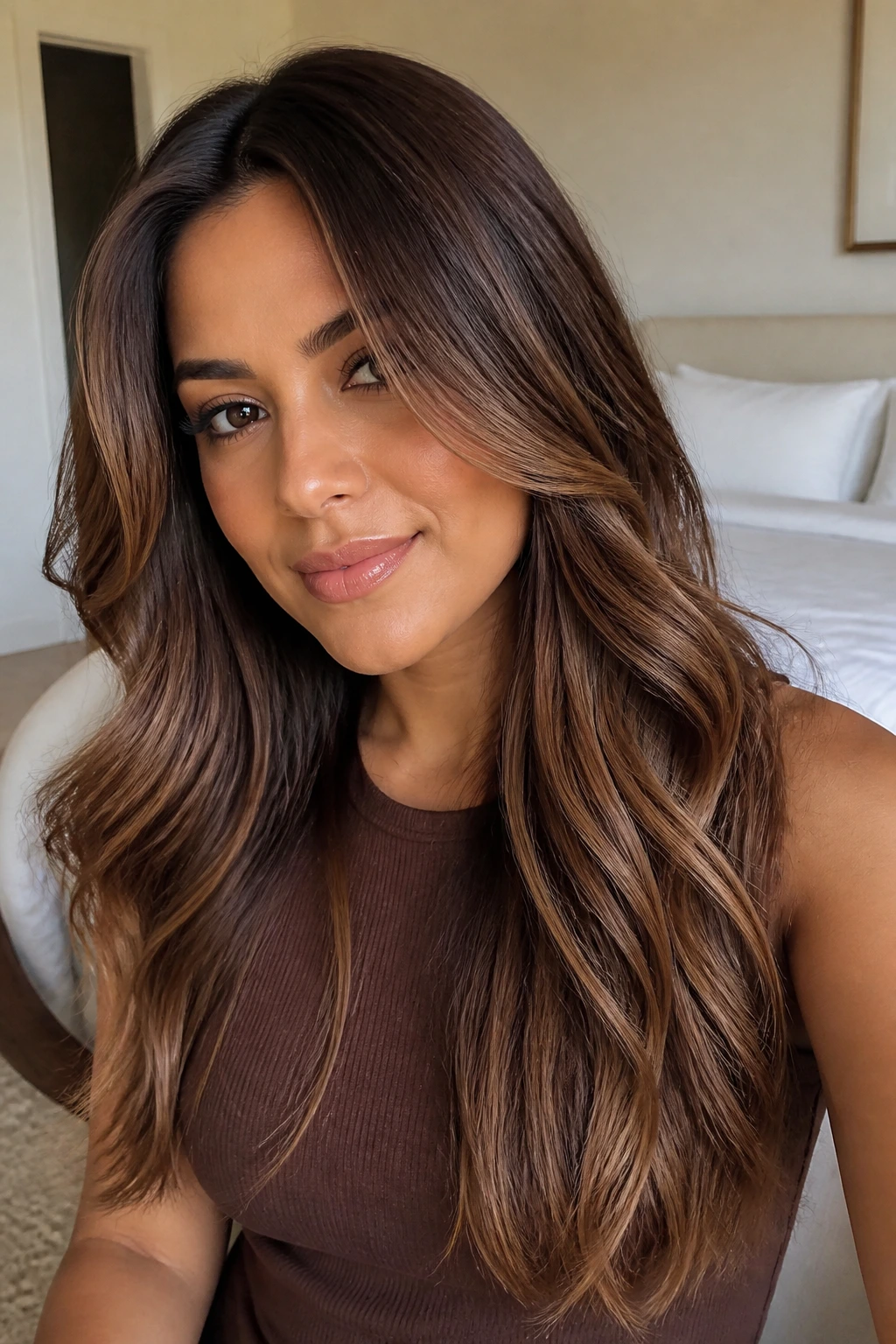
Chestnut toffee melt is what happens when brunette hair gets a slow, luxurious warm-up instead of a full color overhaul. The root stays chestnut, the mids move into milk-chocolate brown, and the ends soften into toffee. The result feels seamless, which medium skin usually loves because the color doesn’t sit on top of the complexion.
What Makes It Different
Unlike chunkier highlight work, a melt gives you one long gradient. That means the hair can be worn straight, wavy, or tucked into a low knot without exposing obvious color breaks. It also keeps the face from looking harsh. Medium skin with neutral or golden undertones tends to wear this especially well because the warmth builds gradually instead of landing all at once.
This is a smart choice if your hair is already brown and you want dimension more than drama. It’s also easier to maintain than a lifted blonde-leaning look. The grow-out stays quiet.
4. Bronze Ribbon Lob
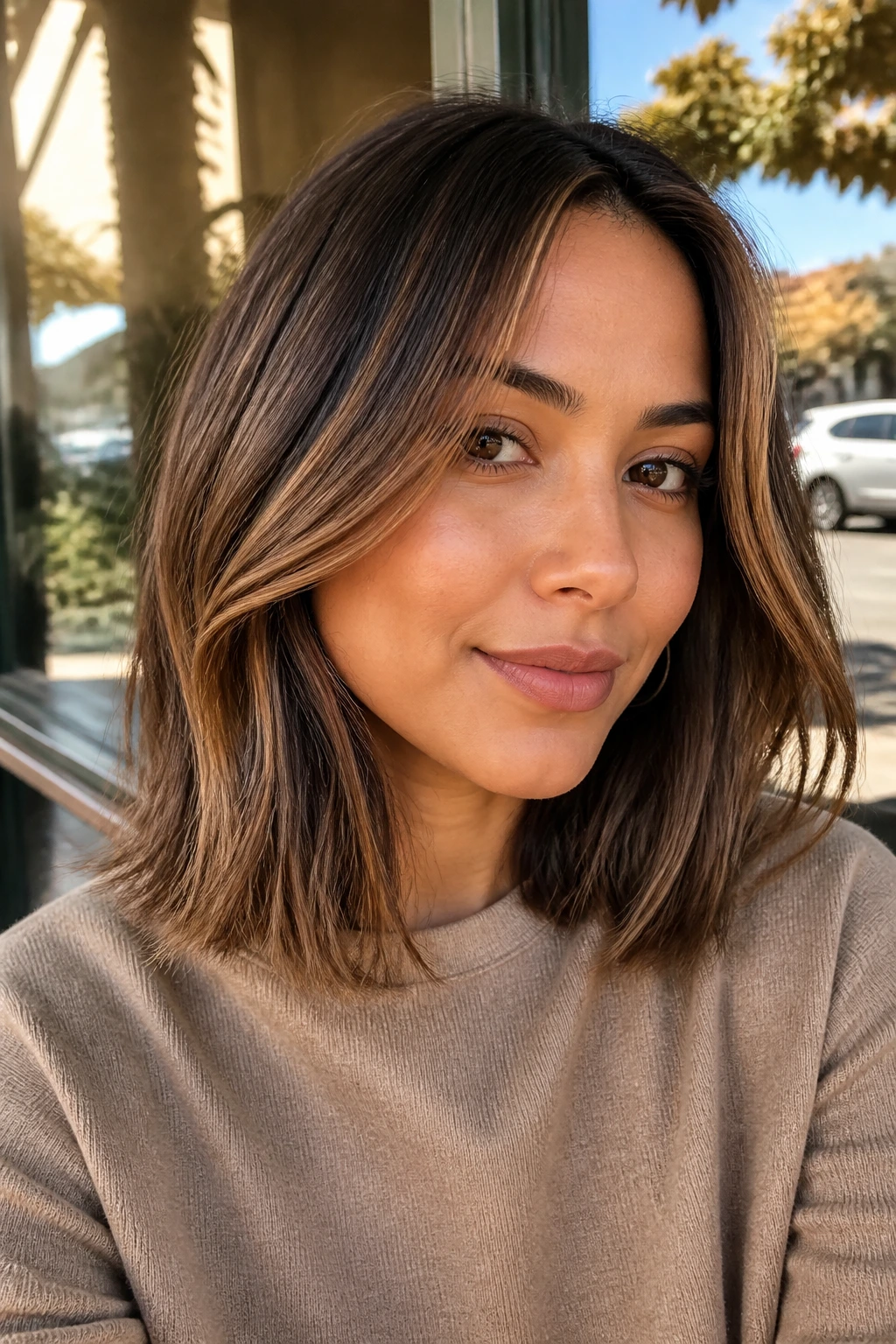
A lob with bronze ribbons has a very particular energy: polished, but not stiff. The bronze strands should move through a level 5 or 6 brown base in thin ribbons, not in thick streaks. On medium skin, bronze adds a sun-kissed edge that feels richer than plain caramel.
The cut matters here. Bronze ribbons look best when the lob has a little swing — collarbone length, blunt-ish ends, or soft layers that catch the light. If the cut is too heavy, the color can sink. If it’s too airy, the bronze can look scattered. I like it on straight hair as much as waves, because the shine reads in one clean plane.
This shade is especially good if you want your hair color to show in professional settings without yelling for attention. It’s warm. It’s tidy. It doesn’t overthink itself.
5. Cinnamon Toffee Curls
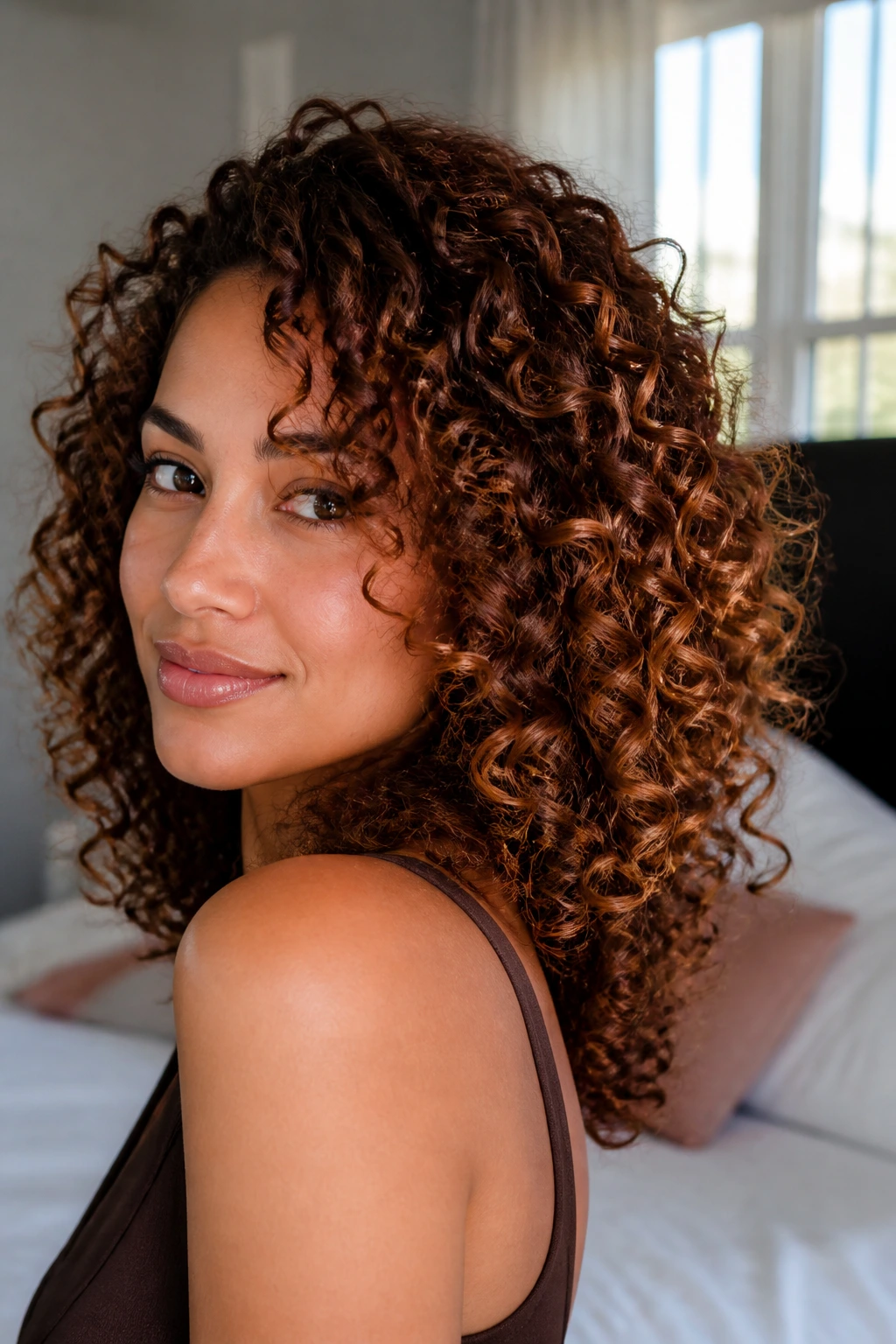
Cinnamon toffee on curls is one of those shades that looks like it was built for movement. The cinnamon tone adds a subtle red-brown warmth, and the toffee keeps it from going too spicy. On medium skin, that blend can brighten the face in a way plain brown rarely does.
Why It Flatters Texture
Curly hair needs dimension, or it can collapse into one dark block. Cinnamon toffee gives each bend a little light and shadow, especially if the colorist places it on the outer curl pattern and around the crown. The result is more visible curl definition, not just more color.
If your skin leans golden, this shade looks lively. If you’re olive, ask for the cinnamon to stay muted and brown-based so it doesn’t go red in the sun. I’d avoid very high contrast at the ends. Curls already do enough. The color should support them, not fight them.
6. Espresso-Root Toffee Ombré
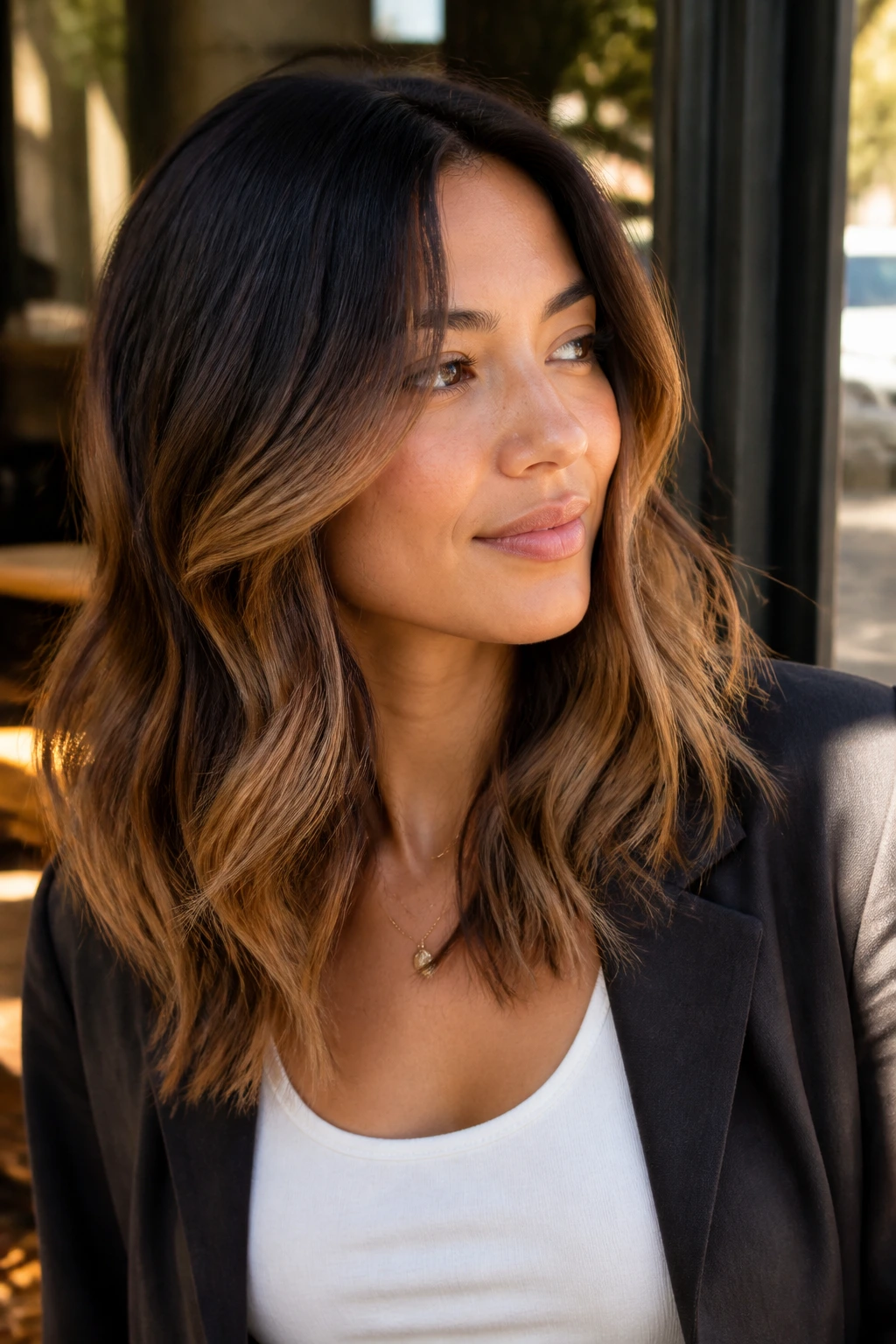
This is the low-drama option for people who want warmth but not constant upkeep. Espresso-root toffee ombré keeps the roots deep and nearly black-brown, then opens into warm toffee through the mids and ends. On medium skin, the darker root frames the face, while the lighter ends keep the length from looking heavy.
The ombré needs a clean blend. If the transition is too abrupt, it starts to look dated fast. A good version should feel like the hair naturally lightened in sunlight, not like two separate colors were glued together. That’s especially important on shoulder-length hair, where the blend is sitting right at eye level.
This is also a good bridge if you’re growing out old highlights. The root shadow hides the mess while the toffee keeps the color from feeling flat.
7. Butterscotch Face Frame
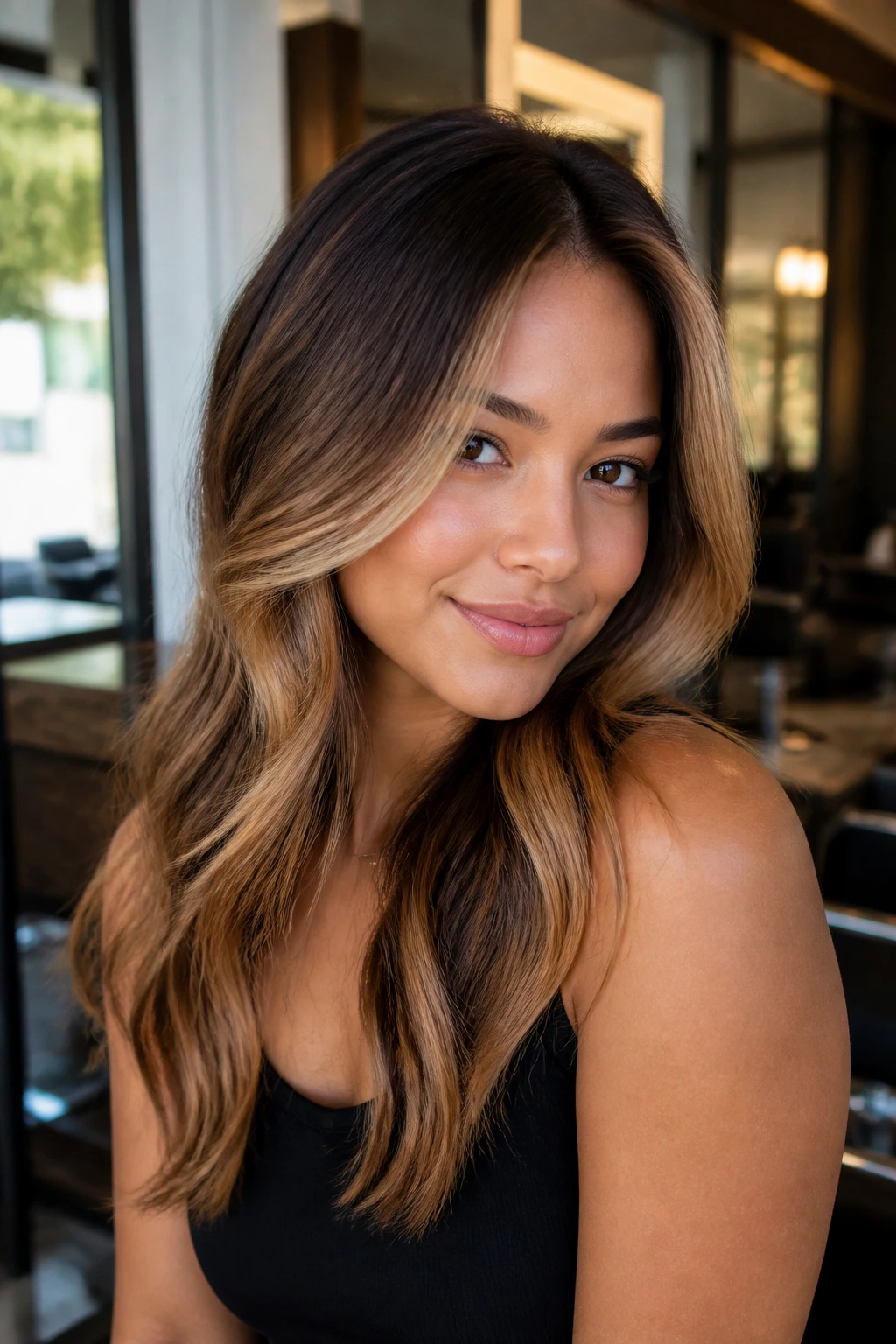
Butterscotch face framing is bright in the way a good cream blush is bright: it wakes things up without stealing the show. The face frame should be lighter and sweeter than the rest of the hair, with a buttery caramel tone that sits well against medium skin.
The magic is placement. Keep the brightest pieces from the cheekbone down to the chin, then soften them into the rest of the hair. If the highlights start too high at the scalp, they can look harsh. If they start too low, they won’t do their job near the face.
I like this with loose waves or a blowout because the front pieces bend around the face. On straight hair, it’s more graphic. Either way, it gives medium skin a softer edge, especially when the base is a medium brown or dark blonde-brown mix.
8. Maple Toffee Gloss
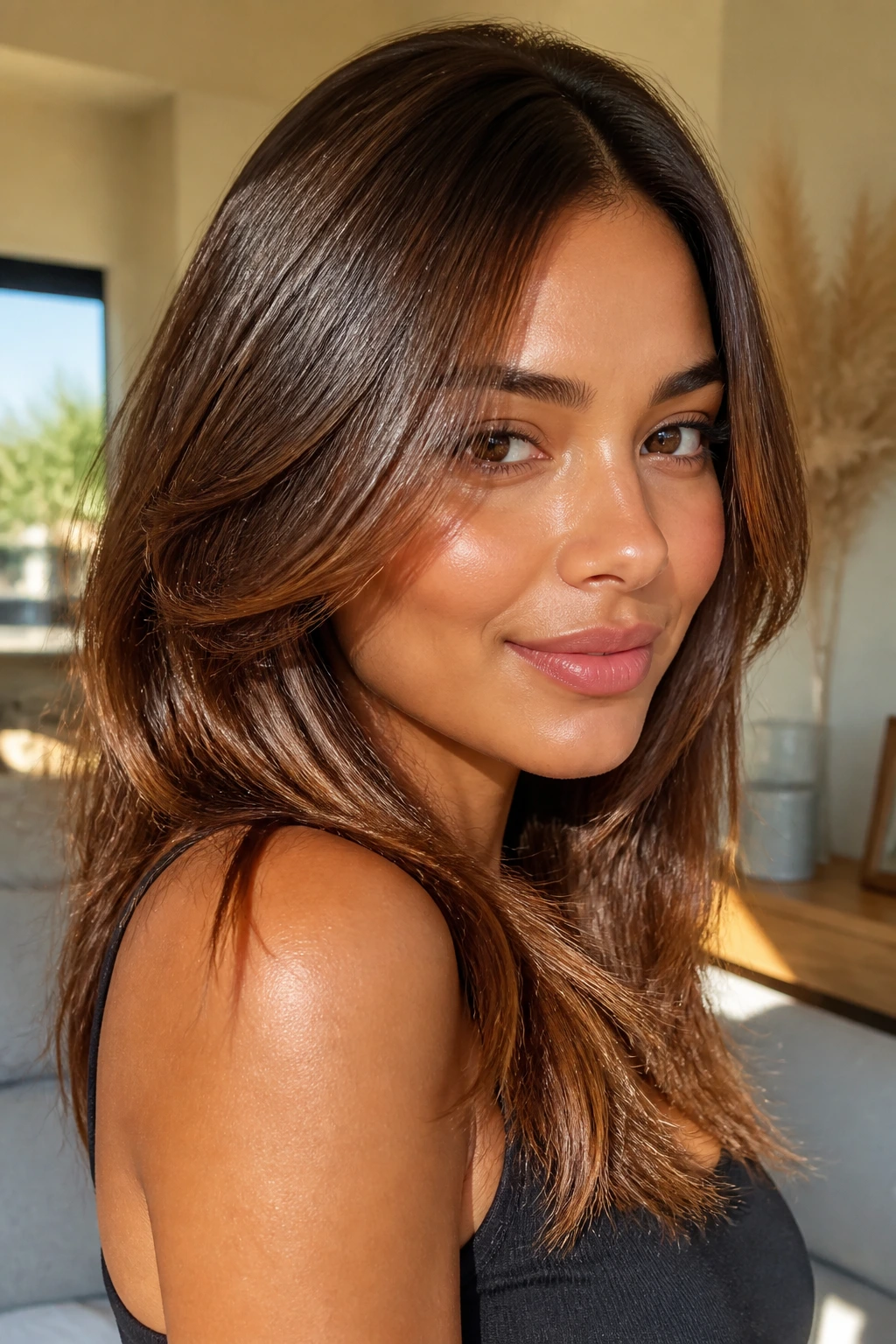
Maple toffee gloss is the one I’d recommend to anyone nervous about permanent color. It leans shiny, warm, and believable. Think of a rich brown with maple syrup depth and a toffee overlay that makes the whole head look smoother.
A gloss doesn’t have to be dramatic to matter. On medium skin, this kind of tone can make the complexion look more even because the hair reflects warm light near the face. The shine is a big part of the effect. Dull brown and glossy brown are not the same thing, and the second one does much more for medium complexions.
This is a strong choice if your hair already has some warmth or faded balayage. A gloss can pull everything back into the same family without a full appointment. It’s the shade version of pressing your shirt before dinner.
9. Rose-Toffee Brunette
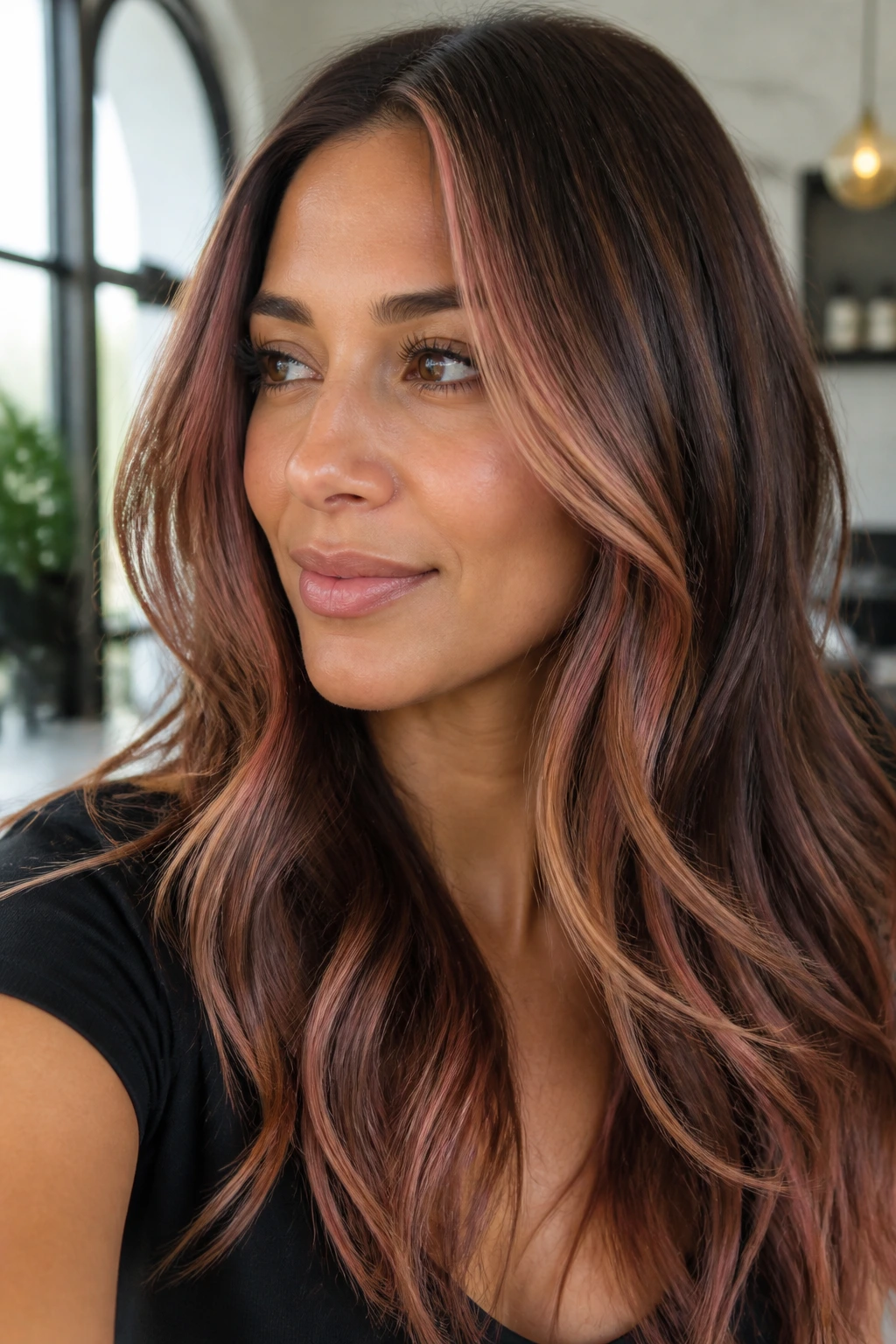
Rose-toffee brunette is a little softer and a little moodier than the usual caramel family. The rose note is muted — not pink, not copper, not berry — just a subtle warm blush that sits under the brown. On medium skin, that quiet warmth can make the hair look expensive in a way that’s hard to fake.
What to Ask For
Tell your colorist you want brunette depth with a soft rosy warmth, not a red result. That distinction matters. Too much copper and the shade changes personality fast. Too much ash and the rose disappears.
This works especially well if your skin is neutral or slightly warm and you tend to wear softer makeup colors. It can be gorgeous with hazel eyes. It’s also one of those shades that looks a little different every time you move, which is half the fun.
10. Caramel Ribbon Layers
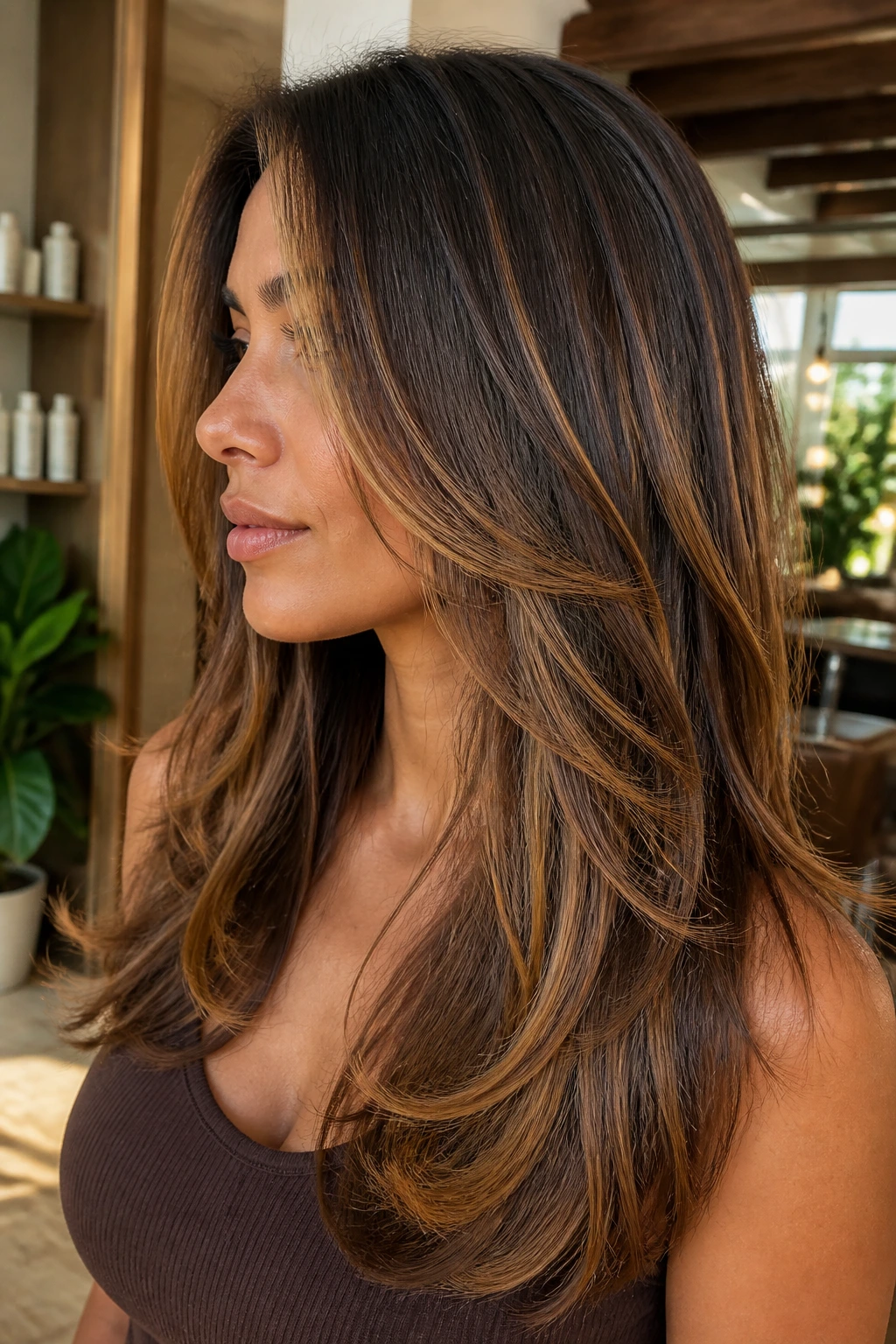
Caramel ribbon layers are a salon classic for a reason: they show the cut. Long layers or mid-length layers give the ribbons somewhere to travel, and the caramel tone keeps the whole head from looking heavy. On medium skin, this shade pulls warmth forward without flattening the face.
I prefer ribbons over blocks here. Fine ribbons move better, and they’re less likely to go streaky as they fade. The base can stay medium brown, and the caramel can sit through the mid-lengths and ends, especially around the outer layers where the sun would naturally hit.
If you love air-dried waves, this is a strong pick. The color catches on every bend. If you wear your hair pin-straight, the ribbons still work, but they read sleeker and less playful.
11. Smoky Toffee Balayage
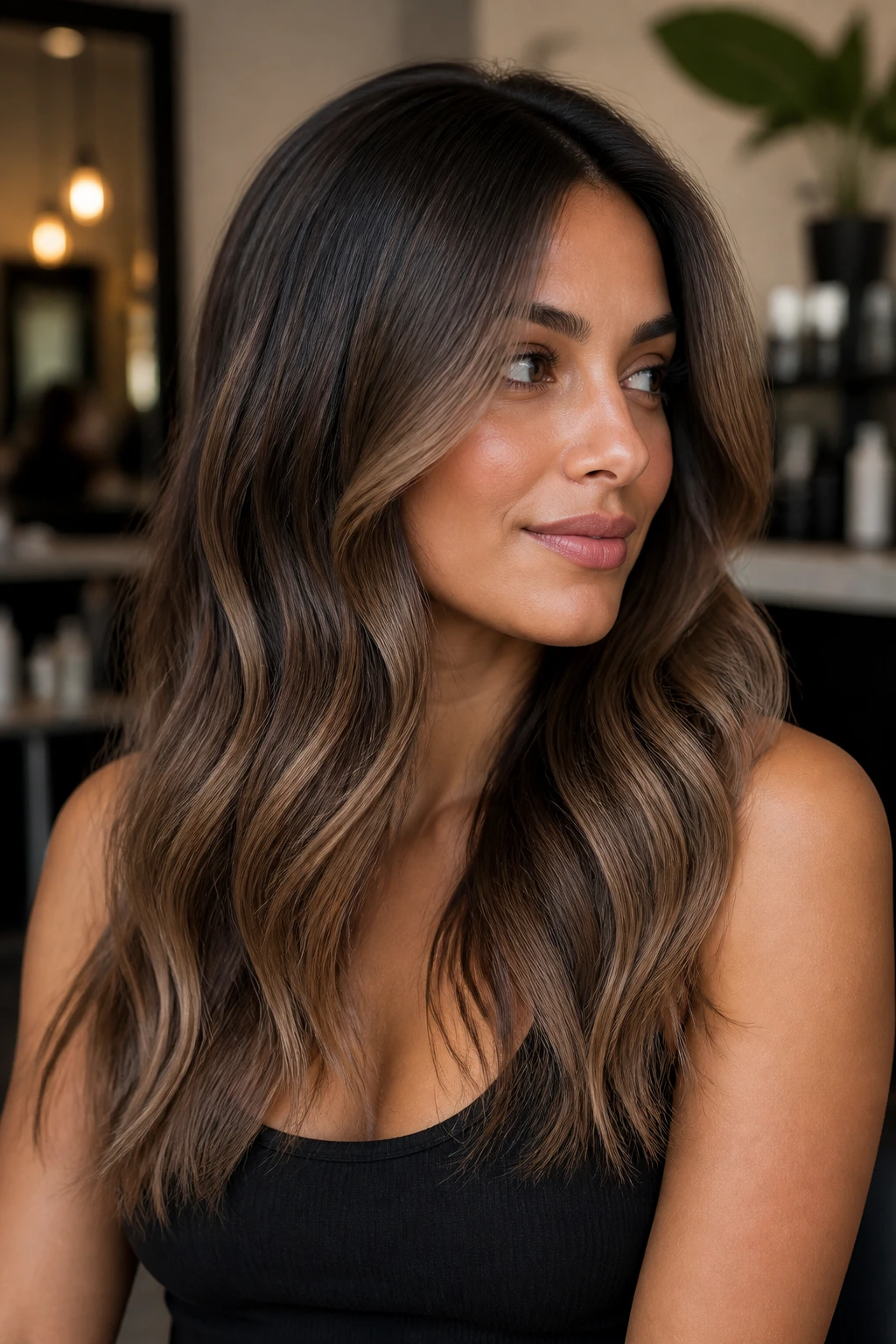
Smoky toffee is what you reach for when you like warmth but not sweetness. The brown stays deep, and the toffee leans muted — more bronze-mushroom than honey. On medium skin with olive undertones, this can be the sweet spot. It warms the face without making the hair look coppery.
The word smoky is doing real work here. You want a soft haze, not a dull gray cast. Ask for beige-brown ribbons with a neutral toner, then keep the gloss slightly cool so the result stays grounded. This is one of the few toffee ideas that can handle more ash, but only in moderation.
I’d pick this for someone who wears a lot of black, denim, or crisp neutrals. The hair has enough softness to keep those outfits from feeling severe.
12. Honeyed Toffee Bob
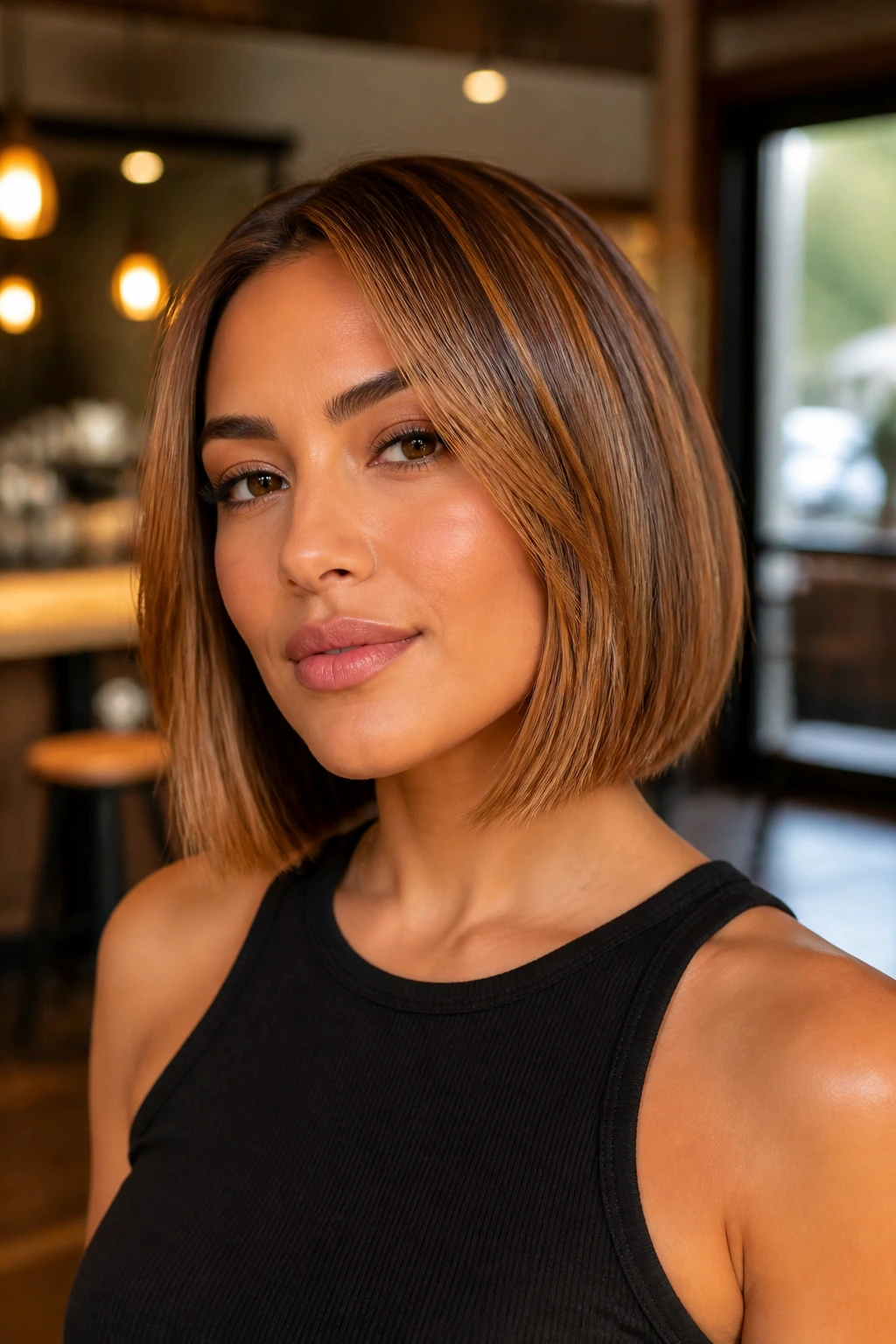
A bob can eat color if the tone is too flat. Honeyed toffee solves that by keeping the shade warm and polished, with just enough gold to show off the cut line. On medium skin, honeyed toffee gives the face a little more lift and keeps a blunt bob from feeling dense.
Why It Works on Shorter Hair
Short hair has less room for long gradients, so tone matters more. Honey toffee gives the illusion of depth even when the cut is clean and compact. That makes it a smart choice for people who want color without a lot of placement work.
This is also a good one if you style with a round brush or wear the bob tucked behind one ear. The color changes depending on how the ends flip. It feels neat, but not severe.
13. Copper-Kissed Toffee
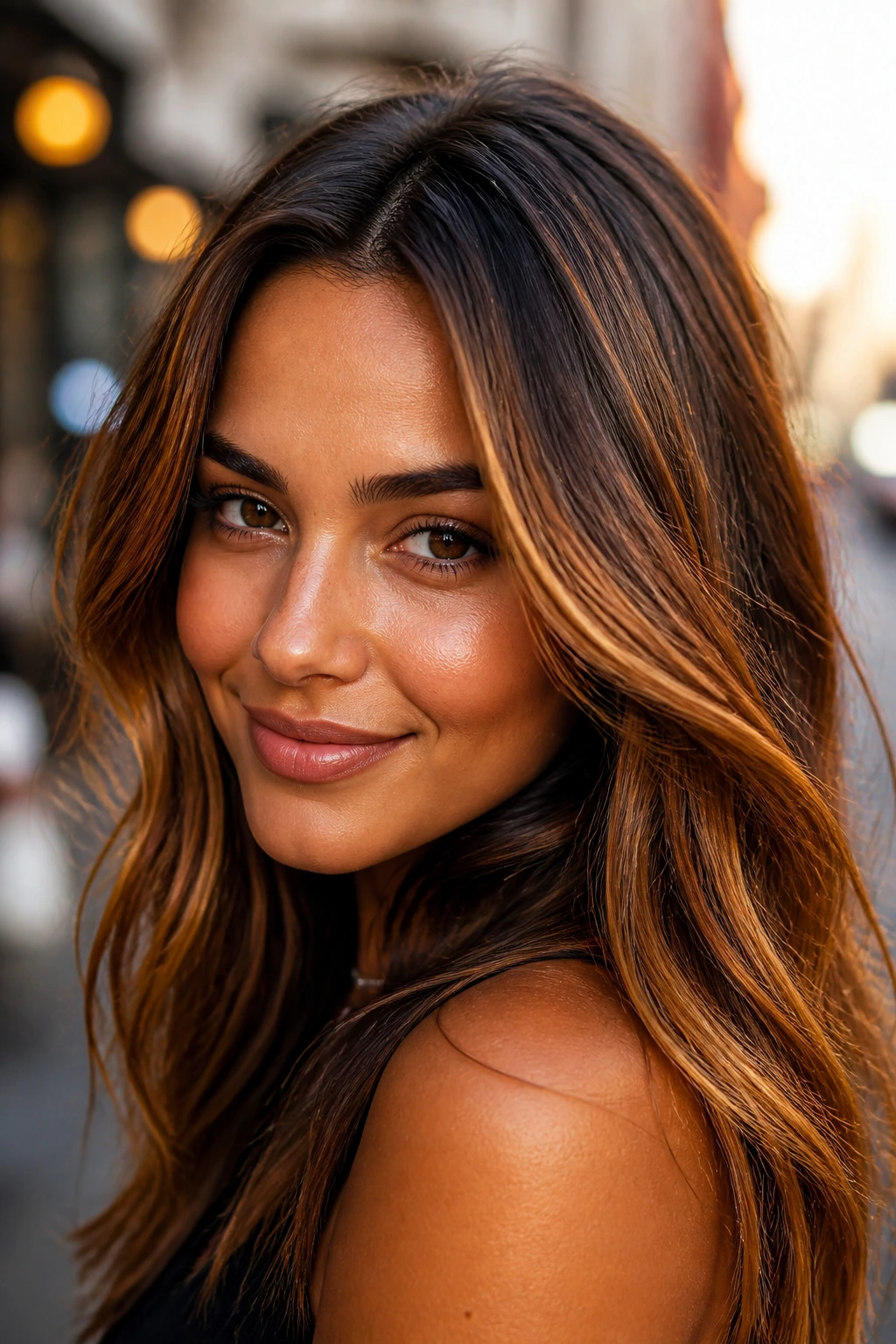
Copper-kissed toffee is for the person who wants warmth with a little attitude. The copper should show as a whisper, not a fire alarm. On medium skin, especially golden medium skin, this gives the complexion a lively flush that can be gorgeous near the eyes and cheeks.
What Makes It Different
Most toffee shades lean caramel or beige. This one leans warmer and more vivid. That can be a good thing if your skin handles red-gold tones well. It can also go wrong fast if the copper overtakes the brown, so the balance matters.
Ask for a brunette base with copper-gold glazing through the mids. Keep the finish glossy. Copper looks cheapest when it’s dry and matte. A good topcoat makes the whole thing behave.
14. Walnut Toffee Shag
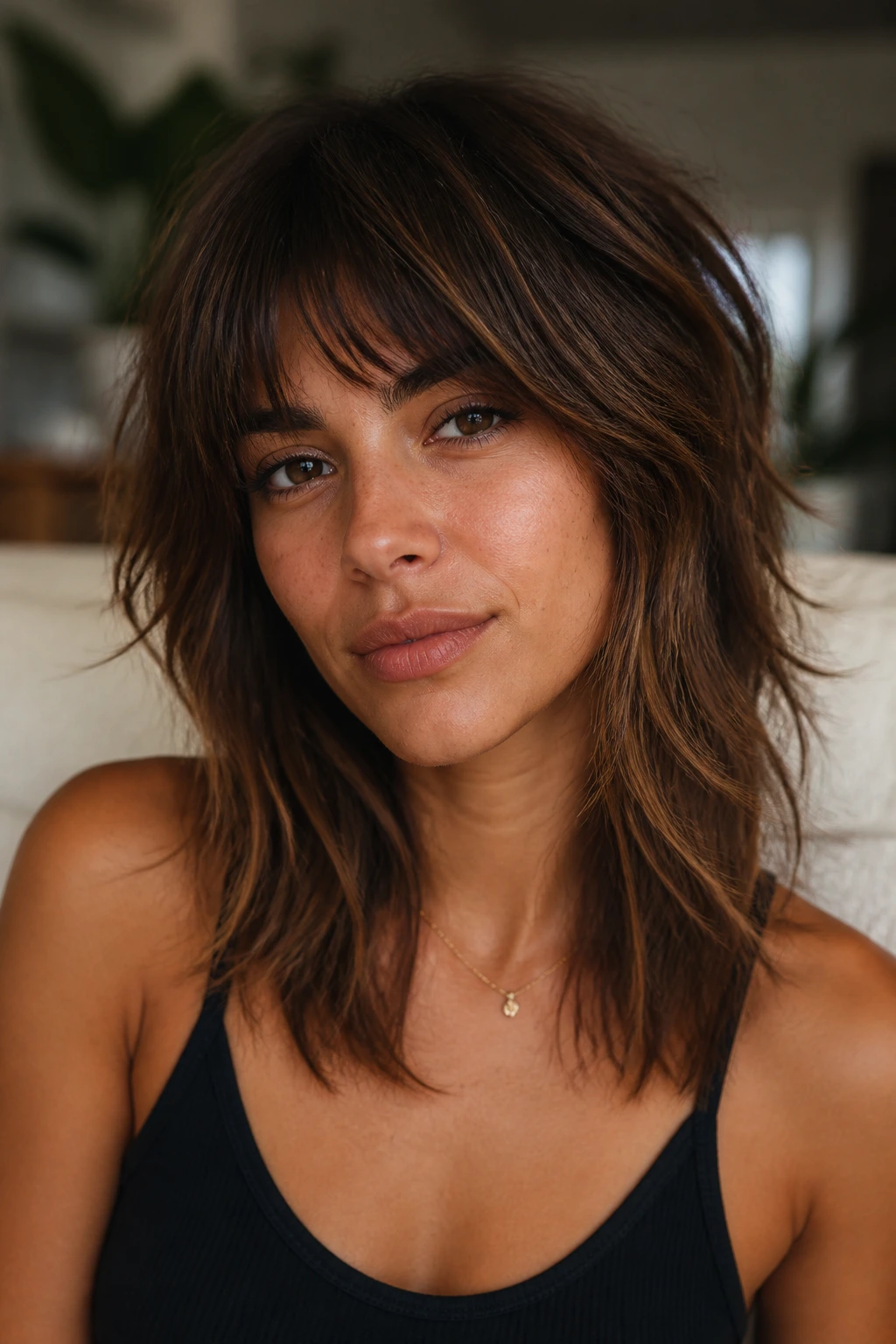
The shag is where toffee gets a little cool, a little lived-in, and much more interesting. Walnut toffee sits deeper than caramel and keeps the ends from looking too blonde. On medium skin, especially olive or neutral undertones, the shade gives shape without shouting.
I like this best when the layers are choppy and the fringe is soft. The color wants movement. Curtain bangs, broken-up ends, and airy texture all help. If the cut is too precise, the walnut tone can feel heavy. If the cut has some mess in it, the shade comes alive.
This is the one for people who want hair that looks good after a day in a clip, a hoodie, and a rough blow-dry. It doesn’t need perfect styling to make sense.
15. Latte Toffee Midlengths
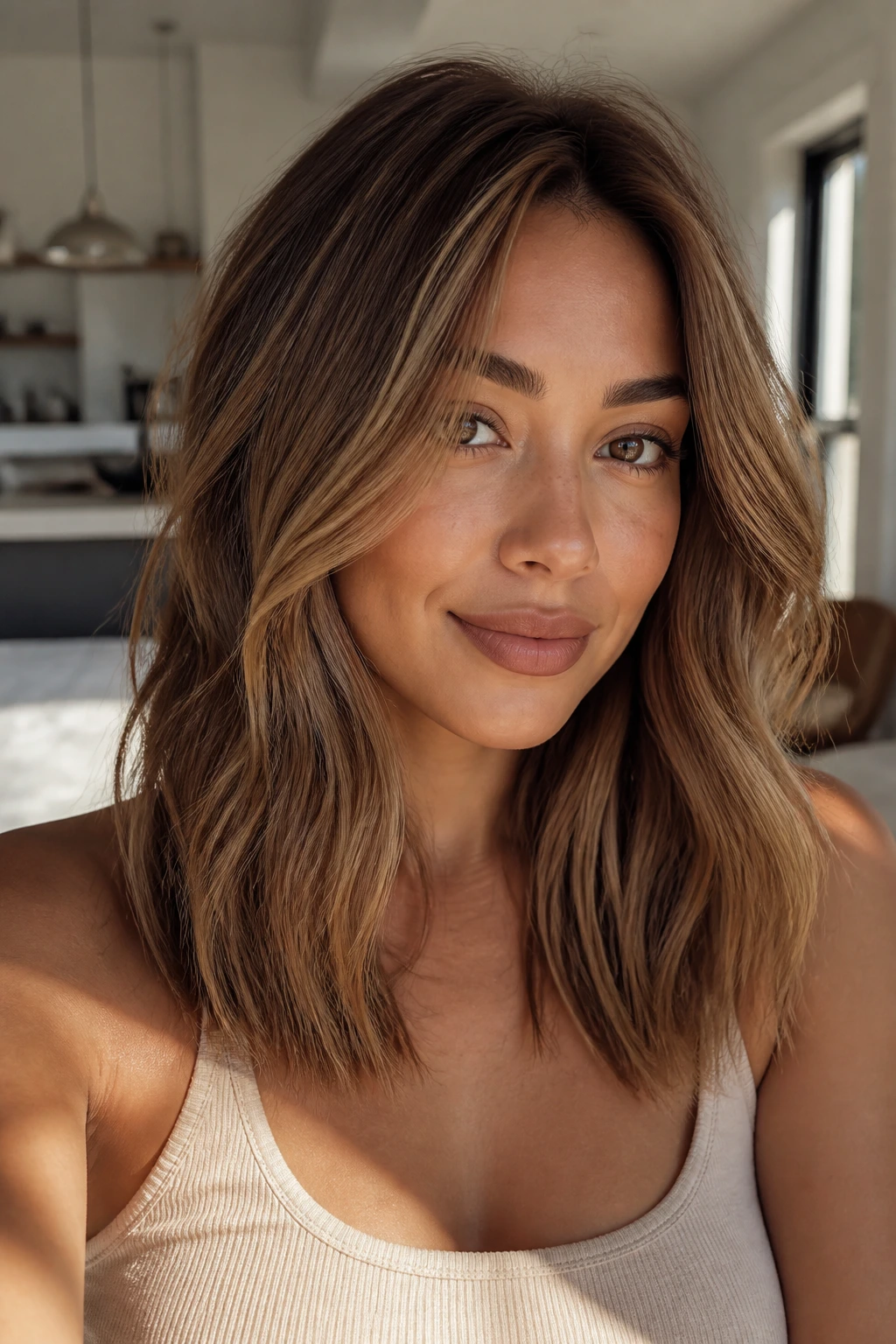
Latte toffee is softer than hazelnut and less golden than honey. It sits in that creamy brown zone that many medium skin tones can wear without looking overprocessed. On midlength hair, it feels calm. Not boring. Just calm.
The best latte tones have a little beige in the mix, which keeps the color from turning orange under warm indoor light. That matters more than people think. Some browns look gorgeous in the salon and oddly red in the kitchen. Latte toffee tends to stay steadier.
This shade is a good answer if you want a lighter look but don’t want to commit to full blonde behavior. It’s friendly to blowouts, sleek bobs, and soft waves. Easy on the eye. Easy to grow out.
16. Amber Toffee Waves
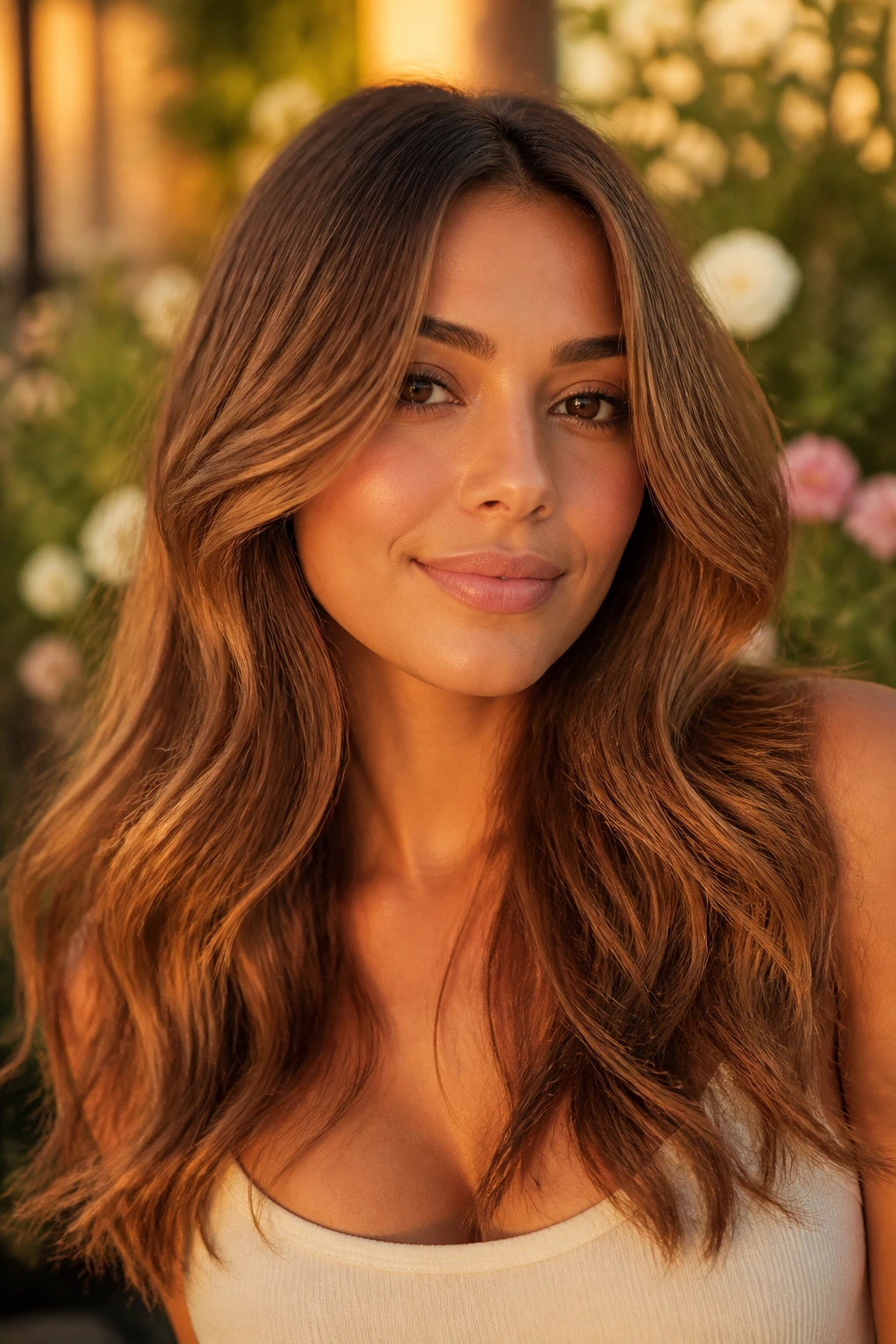
Amber toffee is warmer and a touch richer than standard caramel. It brings a glowing amber-brown cast to waves, which medium skin often wears beautifully because the warmth reflects up into the face. The shade should look like candlelight caught in brown hair.
This one shines most on layered waves. The curve of each bend lets the amber move, so the shade doesn’t stay locked in one place. If your hair is one-length and very straight, it can still work, but the color won’t have the same depth.
I’d choose amber toffee if you like warm lipstick shades, gold jewelry, or tan-brown sweaters. The whole look feels connected without being matchy-matchy.
17. Cocoa-Toffee Shadow Root
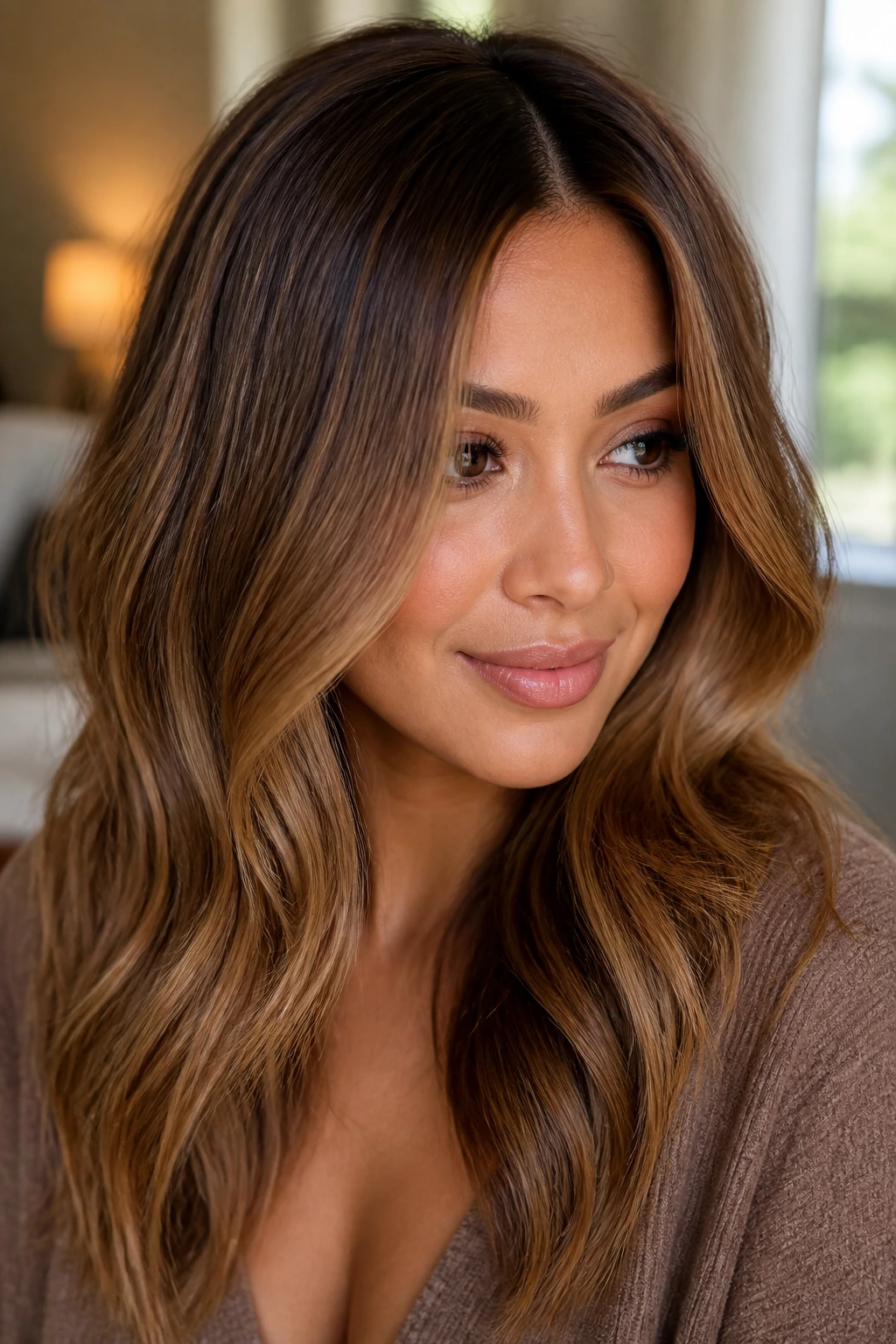
A shadow root is one of the cleanest ways to wear toffee if you want depth at the scalp and warmth through the rest of the hair. Cocoa-toffee keeps the root darker, then slides into a soft toffee finish. On medium skin, that darker top creates structure around the face.
The shadow root also makes the grow-out easier. That’s the honest benefit. A little darkness at the top buys you more time between appointments, and the toffee ends still read polished instead of faded. If you color your hair at home, this is one of the more forgiving looks to maintain.
I’d recommend it for people who wear their hair up often. A ponytail or claw clip shows the gradient nicely, which is more satisfying than it sounds.
18. Toasted Almond Highlights
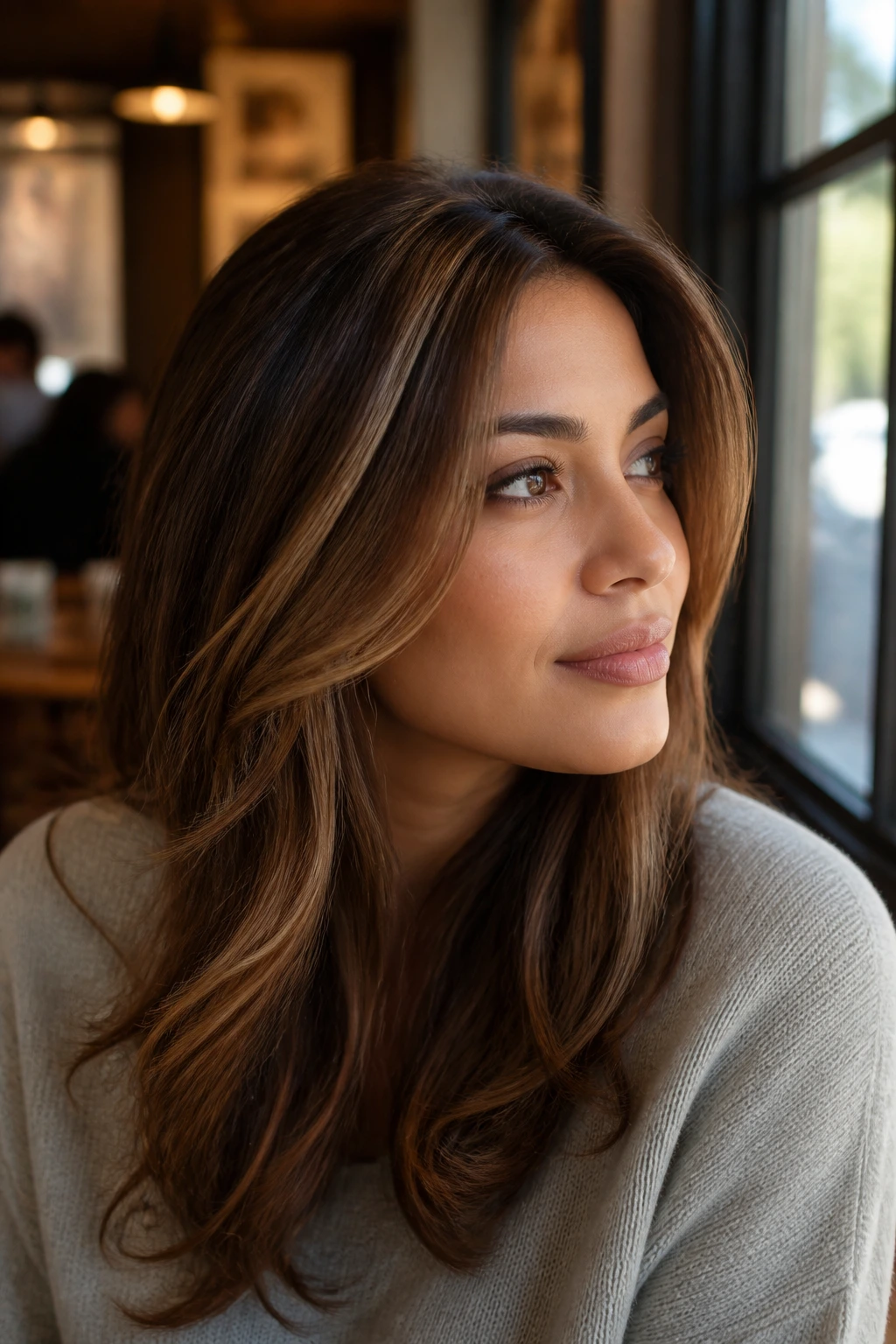
Toasted almond highlights are thinner and quieter than classic caramel ribbons. They’re meant to whisper, not wave. On medium skin, that subtle brightness can be enough to make the whole head look more awake, especially if your base is already close to brown.
This is the shade for someone who wants toffee but doesn’t want the obvious streaks that can come with chunky highlights. The almond tone should stay beige-gold, not yellow. Fine placement through the crown and around the temple area gives the hair motion without making the color look busy.
It’s also one of the easier options to live with. Less lift, less damage, less maintenance. Some people want drama. Some people want their hair to look expensive while they’re getting coffee. This is for the second group.
19. Mocha-Toffee Curtain Bangs
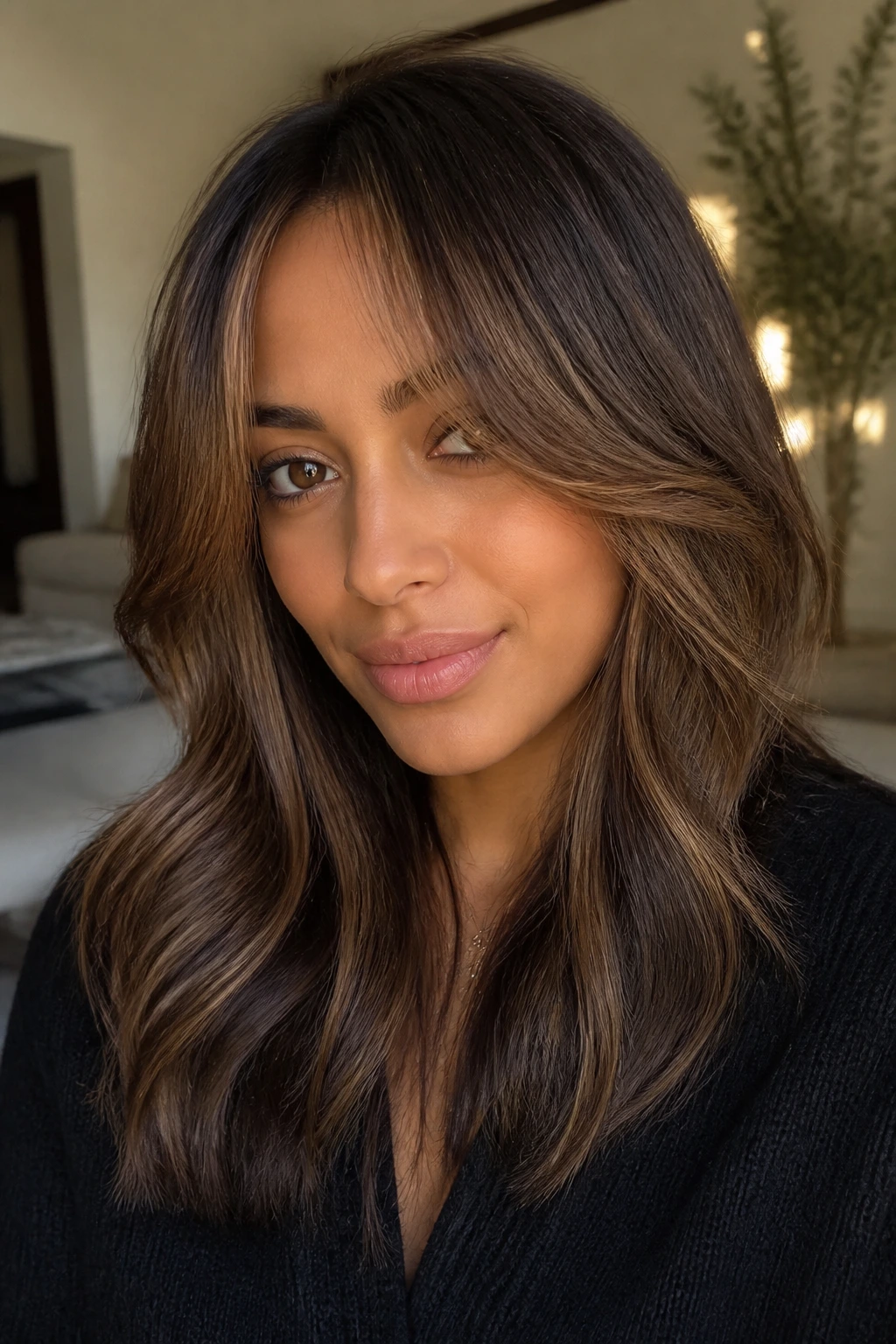
Curtain bangs can make a shade look more intentional, and mocha-toffee knows it. The mocha base keeps the fringe deep, while the toffee pieces around the front soften the face and keep medium skin from looking shadowed. It’s a good mix if you want movement without sacrificing depth.
Why the Bangs Matter
Curtain bangs sit right where the eye lands first. If they’re too dark, the face can look heavy. If they’re too light, the bangs start to look separate from the rest of the head. Mocha-toffee sits in the middle and lets the fringe blend.
This works best on hair that can bend a little — blowouts, soft waves, or a loose round-brush finish. The color follows the part and makes the bangs feel like part of the cut instead of an afterthought.
20. Sandstone Toffee Melt
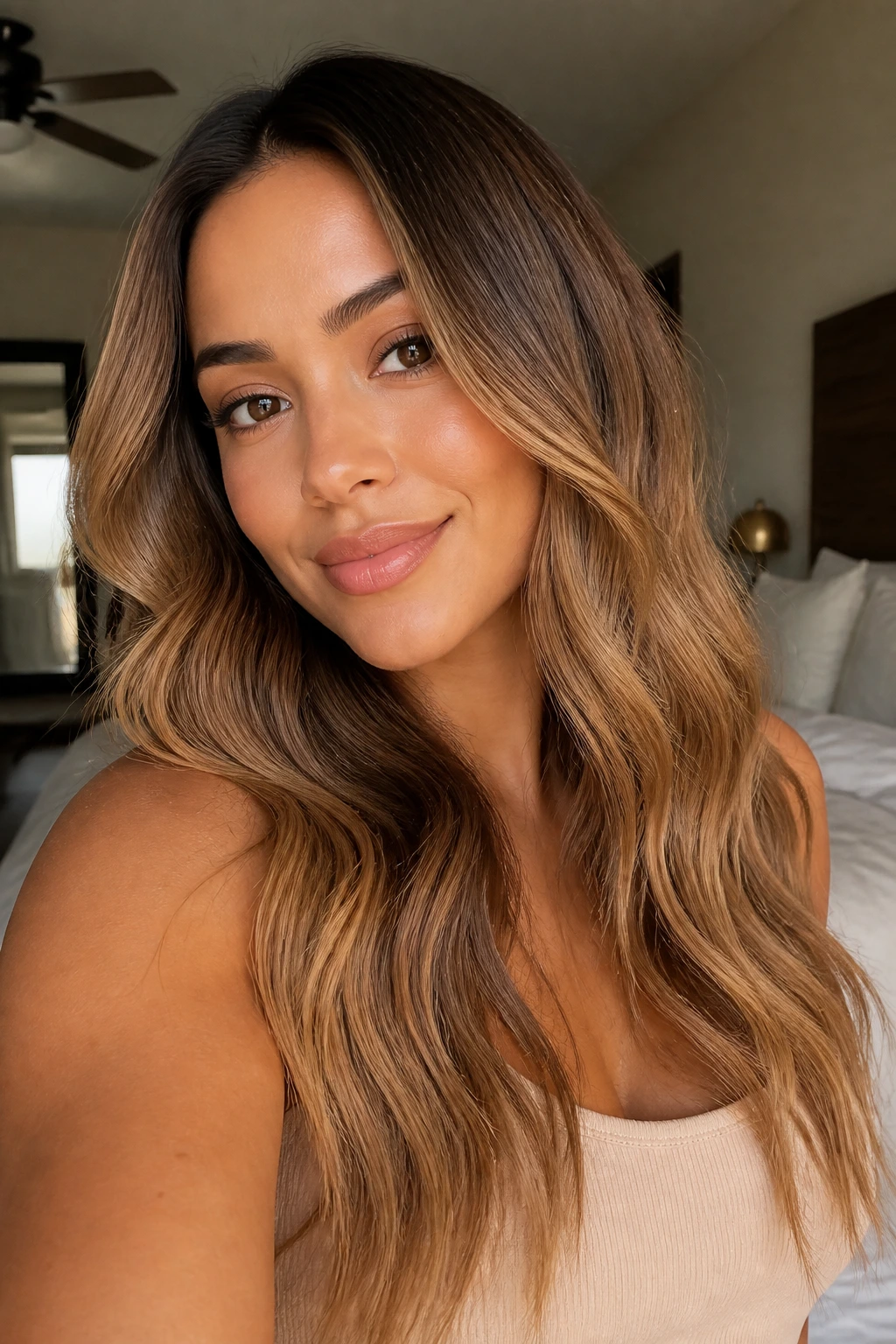
Sandstone toffee is one of the more muted, earthy shades in the family. It has beige-brown softness with a slightly mineral feel, almost like sun-warmed stone translated into hair. On medium skin, especially neutral or olive tones, it can look refined without feeling stiff.
The melt is the important part. You want the color to flow from darker root to lighter mids in a slow way, so the beige never looks flat. If you’re tempted to go too light, stop a half-step sooner. Sandstone works because it stays believable.
This shade also plays nicely with understated makeup. Soft brown liner, peach blush, brushed brows — it all lines up. If your personal style leans quiet rather than glossy, this might be your best match.
21. Deep Toffee Pixie
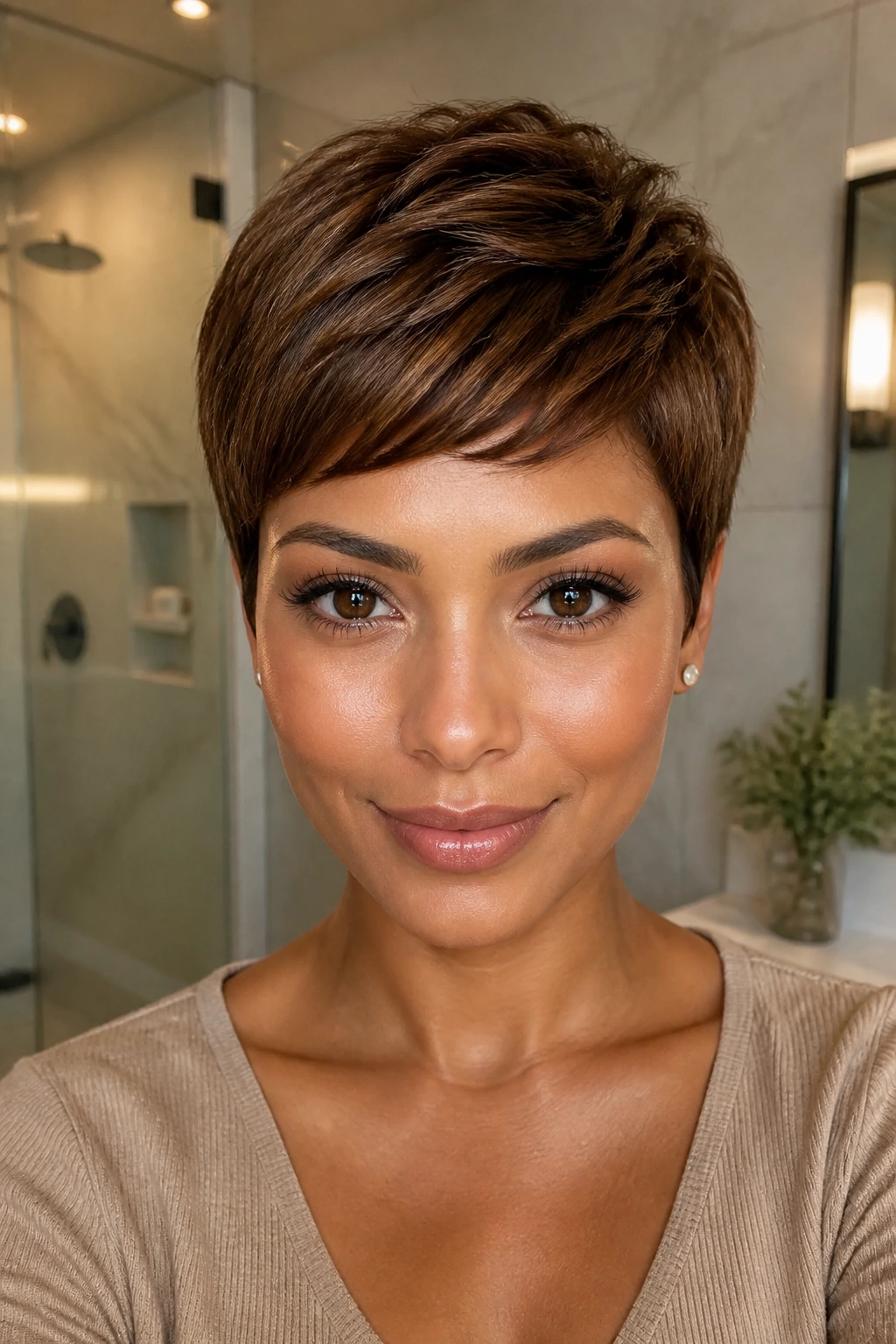
Short hair takes confidence, and deep toffee gives it structure. A pixie in this shade keeps the head from looking too stark, especially on medium skin. The brown is rich enough to support the cut, while the toffee warmth stops it from feeling harsh.
For pixies, gloss matters more than dramatic dimension. The shape does the visual work. A deep toffee glaze adds shine and a hint of warmth at the top and around the sides, which can make the cut look more expensive without obvious highlight lines.
This is a smart route if you want something low-maintenance in daily life but still polished. It dries fast. It grows in clean. And the color doesn’t have to fight the cut.
22. Saffron Toffee Curl Pattern
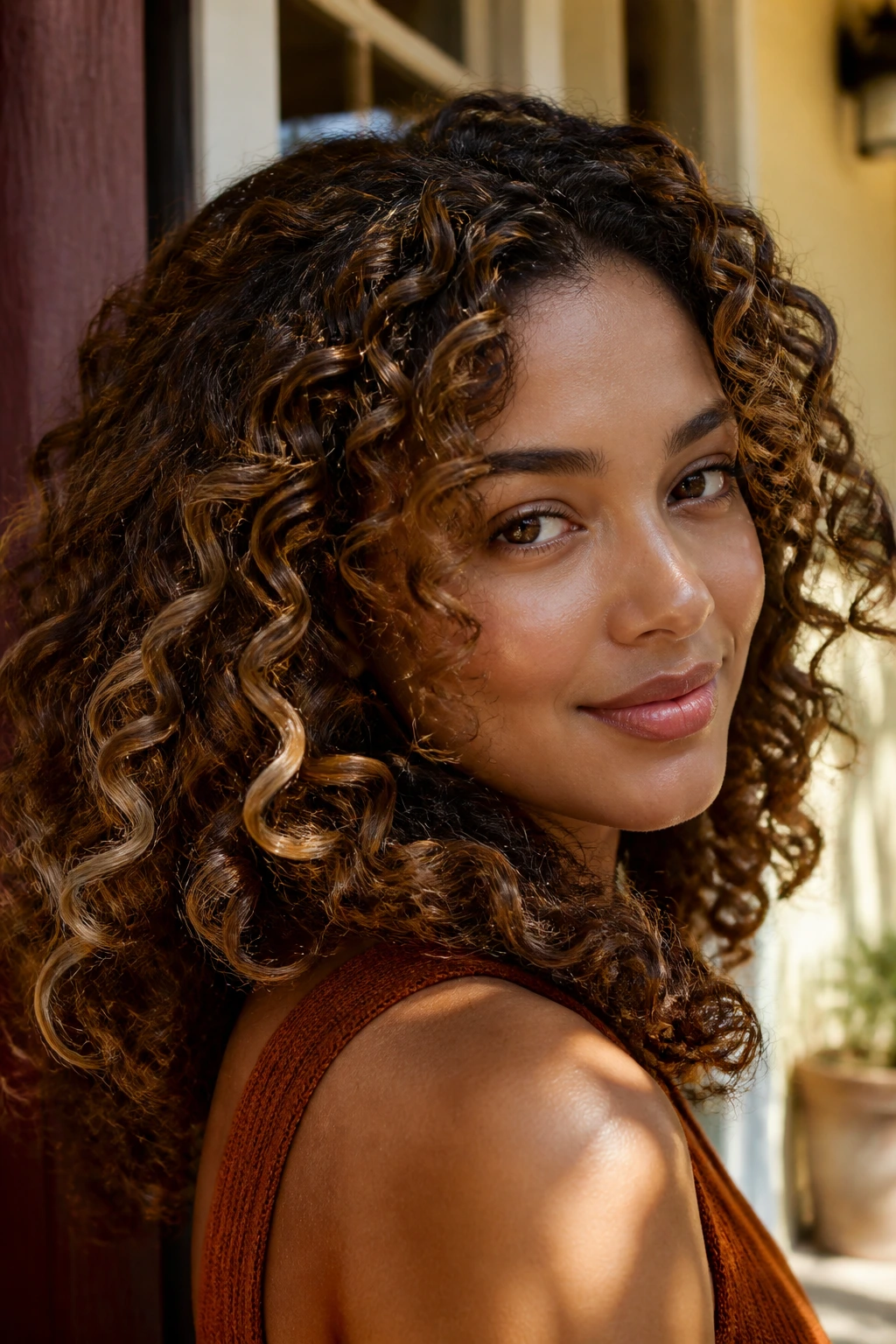
Saffron toffee is warmer and brighter than most of the shades here, but on curls it can be gorgeous. The saffron tone should sit as a golden-brown glow woven through the pattern, not as a solid yellow streak. Medium skin with golden undertones can wear this beautifully, especially if the hair has some depth left at the root.
How It Should Look
The curls should still read brown first, warm second. That’s the balance. Too much saffron and the shade can look flat in a hurry. The best version gives the curls definition and shine, especially when the hair is diffused or air-dried.
If your curl pattern is tight, keep the placement subtle and concentrated on the outer layer. That way the warm tone shows without disappearing inside the coil.
23. Hazelnut Toffee Lob
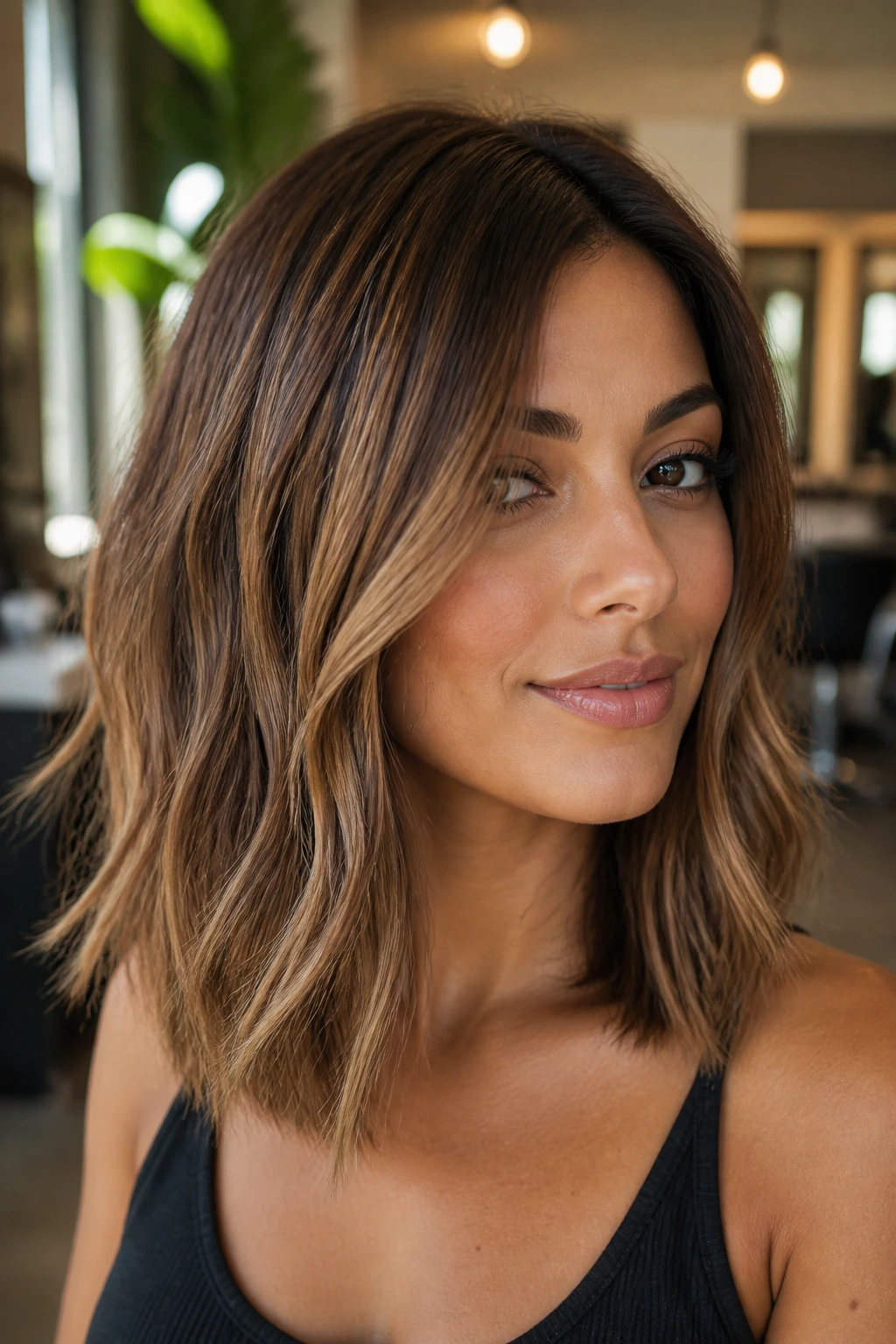
A hazelnut toffee lob is polished in the way a good leather bag is polished — practical, sturdy, and a little rich-looking. The hazelnut base stays grounded, while the toffee adds movement through the mids. On medium skin, this one works because it never gets too sugary.
The lob length helps the color show without the maintenance burden of long hair. A slight bend at the ends makes the shade look expensive. Straightened flat, it feels more tailored. Either way, the color stays believable.
This is the shade I’d choose if you want toffee but prefer a brown-first result. It doesn’t scream highlight appointment. It just looks well kept.
24. Creamed Coffee Toffee
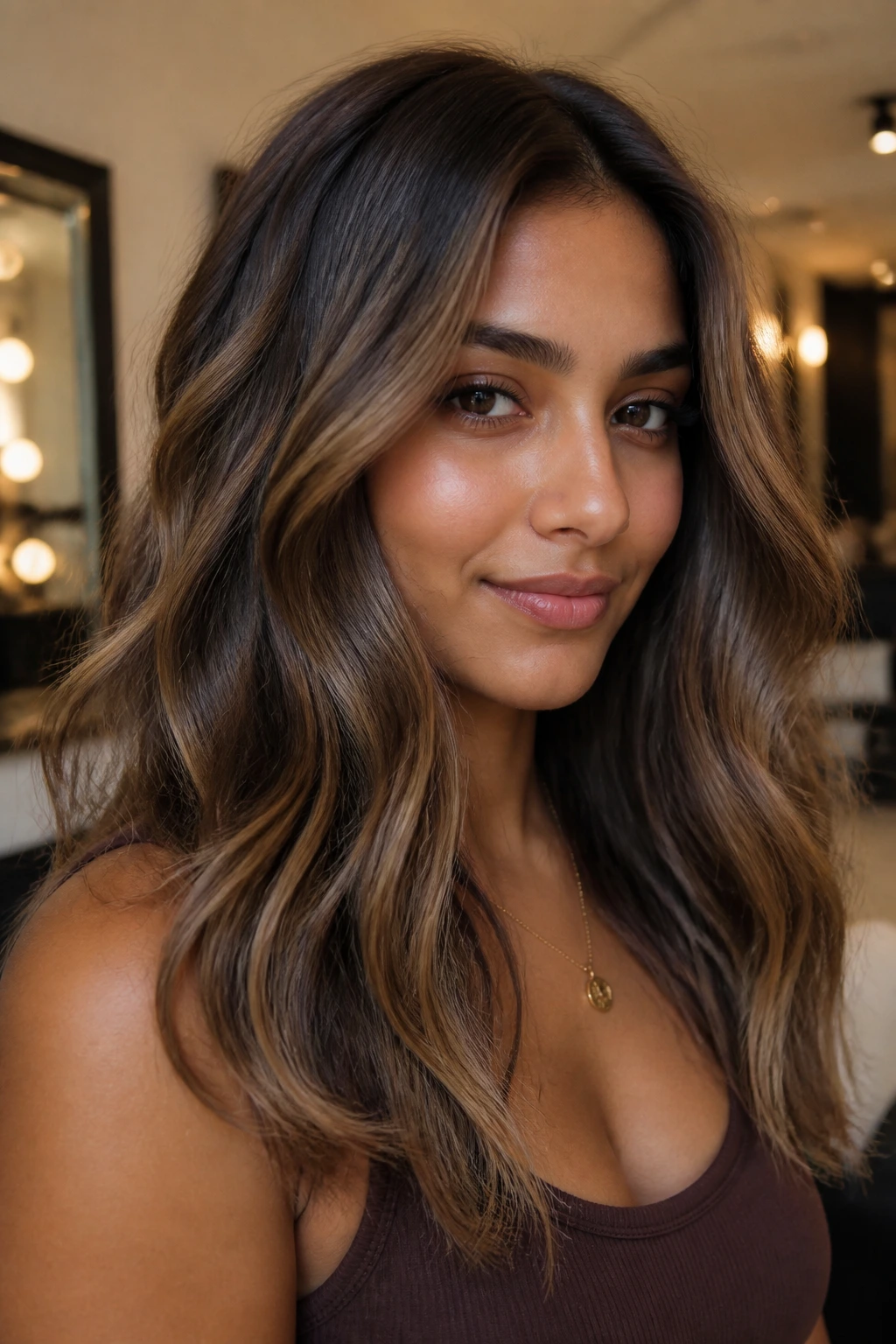
Creamed coffee toffee is softer and lighter than the hazelnut family. It has that café au lait feeling — brown at the base, creamier through the ribbons, and smooth overall. On medium skin, it can brighten the face fast, especially if your undertones are neutral.
I like this one for people who want the edge of lightness without crossing into blonde territory. The tone should stay creamy, not pale ash. If the gloss gets too cool, the shade loses its warmth. If it gets too golden, it can drift toward yellow. The middle is where it works.
This is an easy shade to style with loose waves or a soft blowout. The movement matters. Still hair makes creamed coffee look flat. Hair with a little bend makes it sing.
25. Sunlit Toffee Blowout
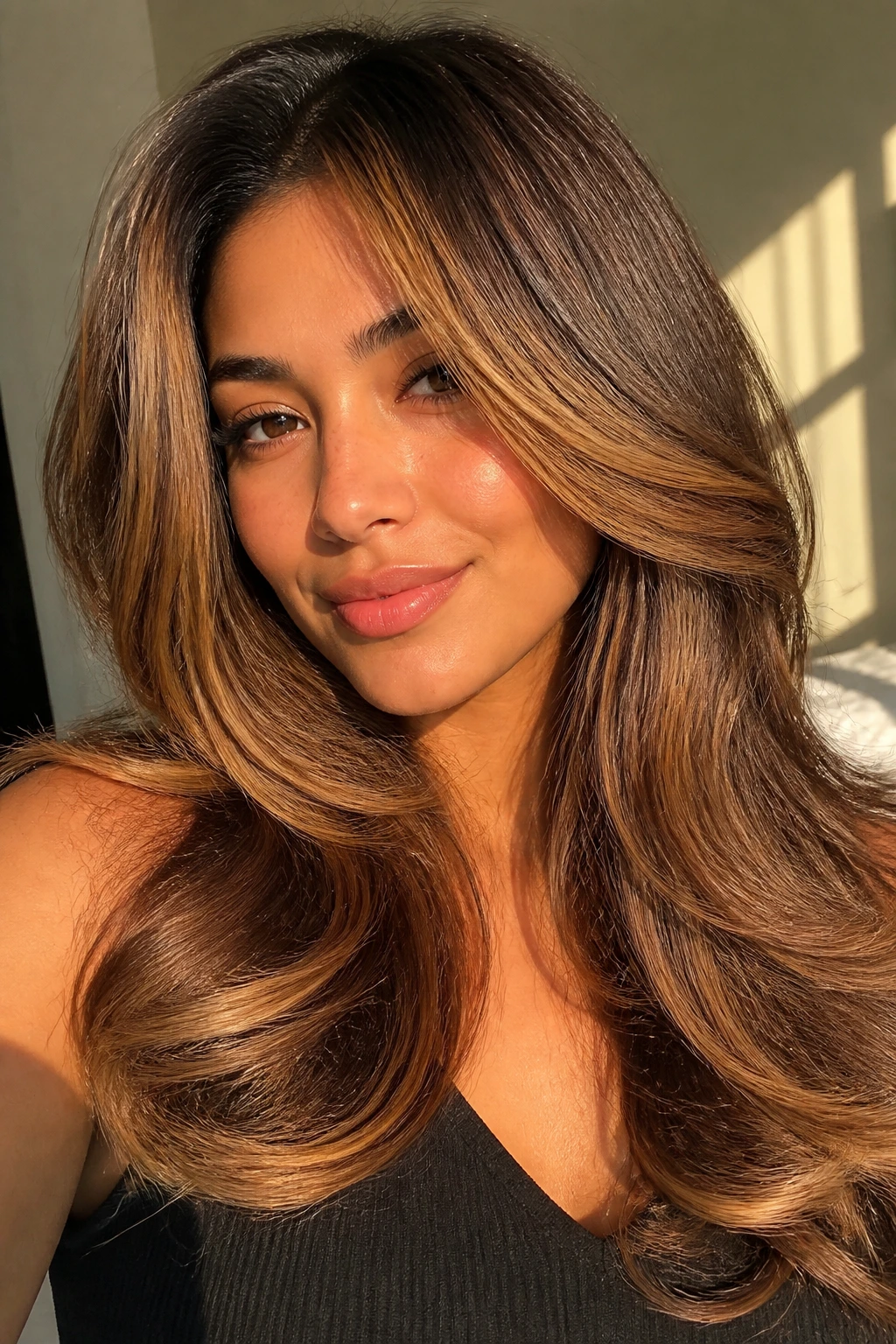
Sunlit toffee is the most camera-friendly of the bunch, but it’s not only for photos. The shade relies on a warm brunette base with brighter toffee pieces placed where a blowout would naturally push them outward — around the face, through the crown, and at the ends. On medium skin, that sunlit effect can make the whole face look more open.
The blowout styling is part of the look, not a bonus. Big brush curls or a round-brush finish show the contrast between root and ribbon. If you air-dry it flat, you lose some of the charm. This is one of those shades that rewards a little styling effort.
If you want toffee hair that feels warm, glossy, and a touch glam without going full blonde, this is the one I’d hand you first.
The Booking Notes That Save a Bad Color Day
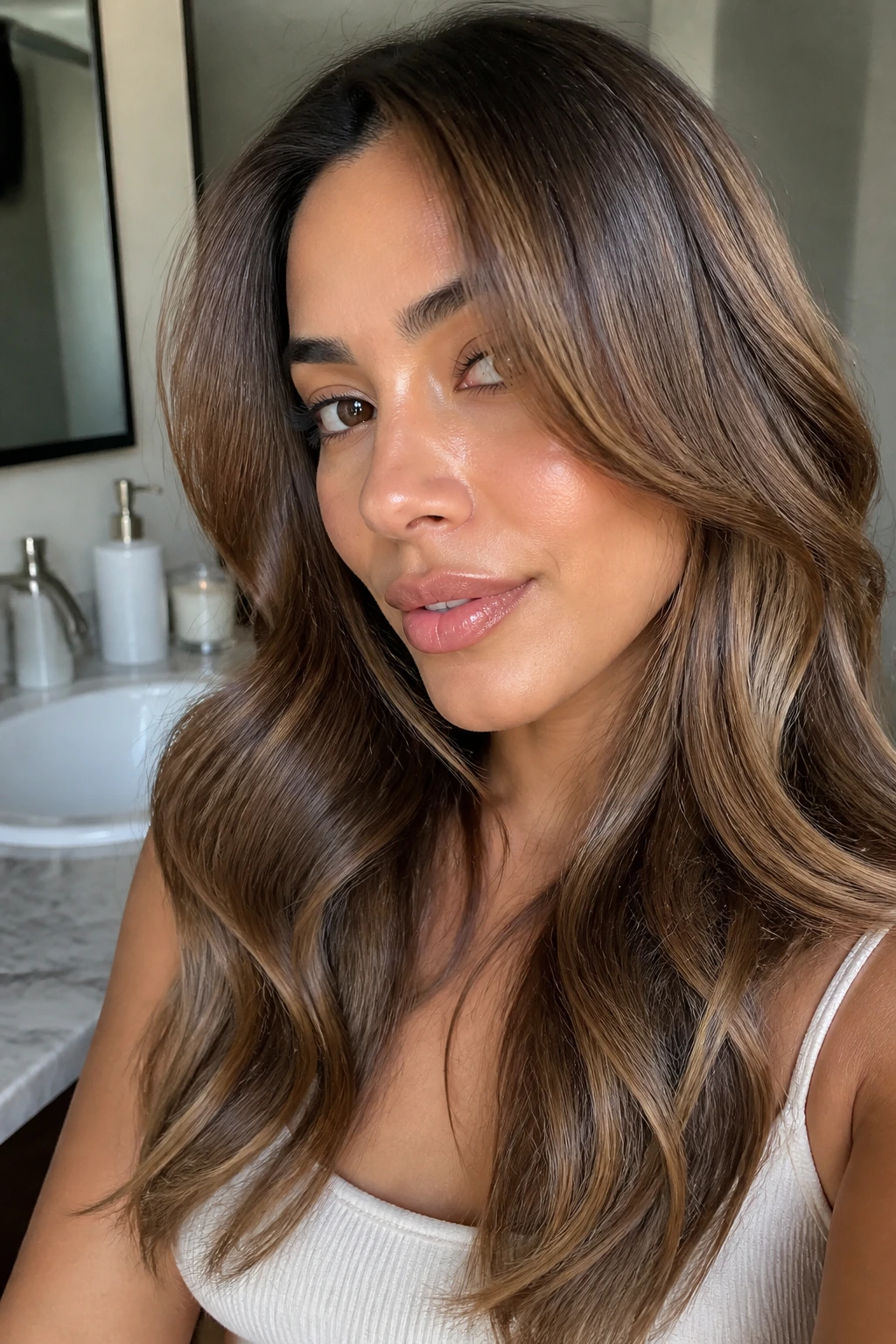
A good toffee color starts long before the dye bowl. Bring photos shot in daylight, not just salon lighting. That one detail saves arguments. A warm brown in a yellow bathroom mirror can look completely different in the real world, and colorists need to see the shade the way it lives on your face.
Bring three reference photos, not ten: One should show the depth you want, one should show the warmth level, and one should show the placement. That makes the consultation cleaner than saying “something caramel but not too caramel,” which is how people end up with mismatched goals.
Talk in levels, not only in adjectives: If your base is around level 4, 5, or 6, say so. That gives the colorist a starting point. It also keeps you from accidentally asking for a level-9 blonde ribbon when what you really wanted was a warm level-7 brunette.
Ask where the shine will live: Toffee looks best when the gloss sits on top of healthy-looking hair. If the ends are porous, they can soak up too much pigment and turn muddy. A trim first is sometimes smarter than a color appointment first. Boring, maybe. Necessary, yes.
Mistakes That Turn Toffee Muddy or Brassy
The first mistake is choosing a toffee that’s too light for your base. On medium skin, a shade that jumps four levels can look stripey fast, especially near the face. The fix is usually a softer lift and a rooted blend, not a brighter highlight.
Another common problem is going too ash. People hear “neutralize warmth” and overcorrect. The result is a brown that looks dusty instead of rich. If your skin has golden undertones, that can make the whole face look tired. A better move is to keep a little beige or gold in the gloss.
Overusing purple shampoo is another one. It can dull toffee in a hurry, especially on brunette hair that only needs brass control, not blonde correction. If your hair starts looking flat or grayish at the ends, stop using it for a week and switch to a color-safe moisturizing shampoo.
The last mistake is ignoring texture. The same toffee formula reads differently on straight, wavy, curly, and coily hair. If your hair is textured, you need placement that follows the pattern, not just swatches on a board.
Toffee Variations for Different Hair Textures and Budgets
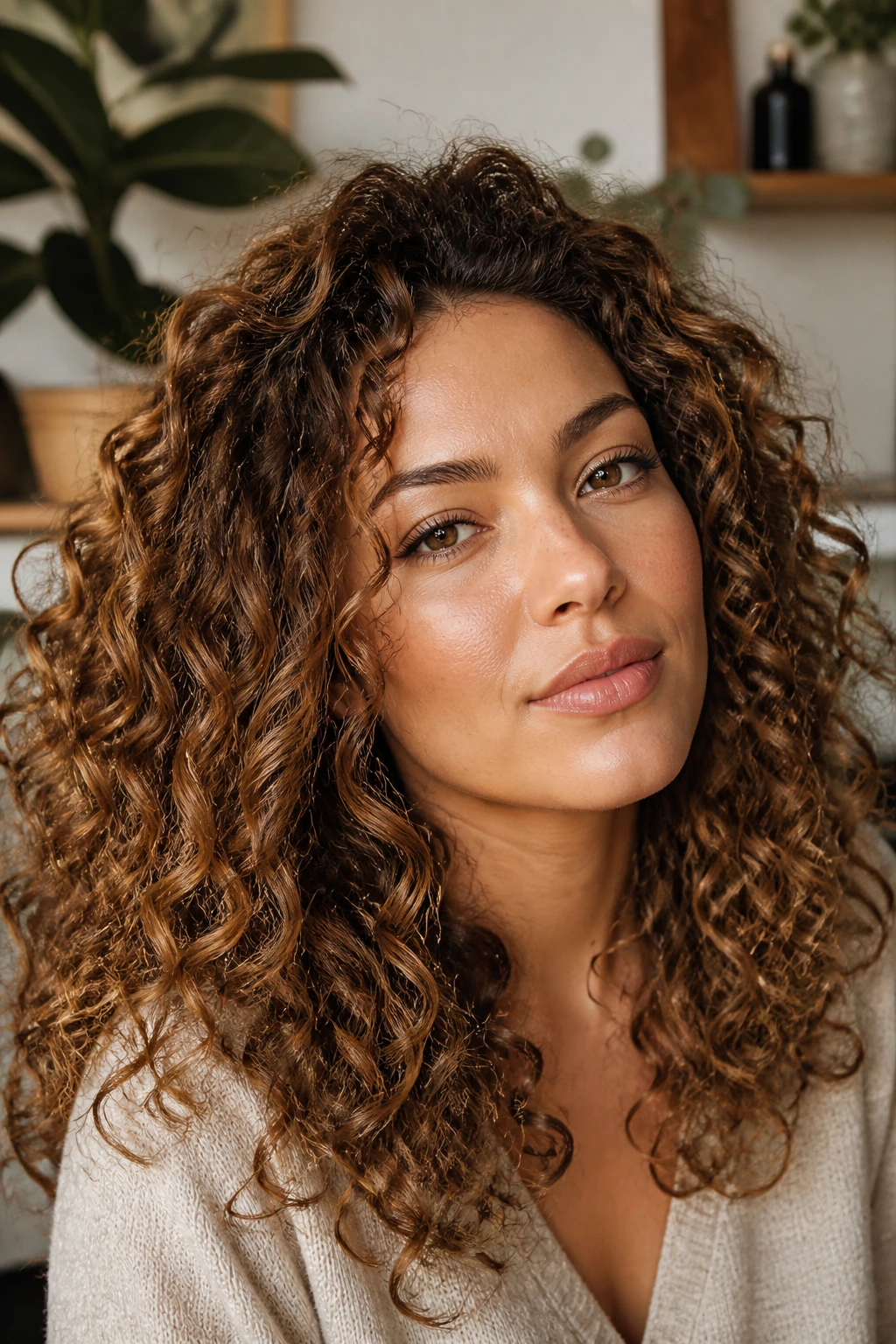
Soft Shadow-Root Toffee: If you want the color to last longer, keep the root a half-step deeper than the mids. It helps the grow-out stay tidy, and it works on every texture from straight bobs to long curls.
Gloss-Only Toffee: Already brown hair can get a serious upgrade from a warm demi-permanent gloss. No bleach, no ribbons, no drama. This is the smartest budget move if you want shine more than lightness.
Curl-Focused Toffee Ribbons: For coily or curly hair, place the lighter pieces where the pattern opens up — usually the outer surface and the crown. The result looks dimensional instead of patchy.
Copper-Warm Toffee: If your skin can handle red-gold tones, add a little copper to the caramel. It gives the shade energy, especially on layers and blowouts, but it should stay brown-based.
Muted Olive Toffee: Olive-leaning skin usually looks cleaner in smoky beige-brown than in full honey. Ask for a softer gloss and less yellow in the ends.
What to Bring to the Salon or Color Bowl
-
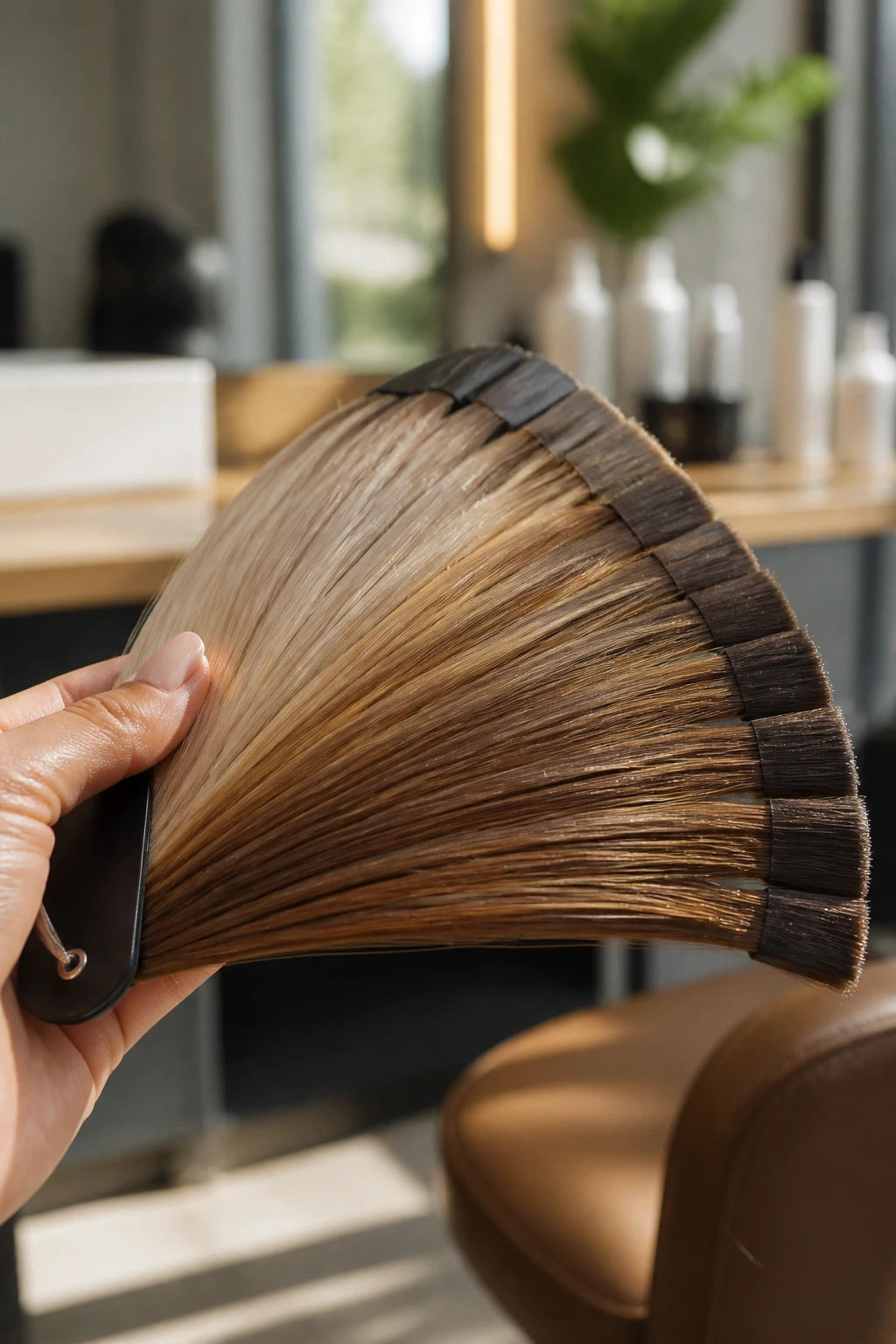
Three daylight photos of the shade you want — One should show the overall tone, one should show the face-framing pieces, and one should show the depth at the root.
-
A quick hair-history note — List box dye, bleach, henna, keratin, or henna-like glosses, because those change how toffee takes on the hair.
-
A parting photo — Center part, side part, curtain bangs, or no fringe changes where the light pieces should land.
-
Your usual styling tools — A colorist cares whether you air-dry, diffuse, or blow-dry because the shade has to look good in your real routine.
-
Color-safe shampoo and conditioner — Pick them up before the appointment if your hair is going lighter; the first wash matters more than people think.
-
A wide-tooth comb and clips — Handy for sectioning at home and for keeping tinted hair from tangling while it’s wet.
-
Heat protectant — If you style with a flat iron or curling wand, this is not optional. Warm tones fade faster when hair gets fried.
Keeping Toffee Shiny After the First Wash
Toffee looks best when it stays glossy, not when it fades into a dusty brown. Wash every two to three days if your scalp allows it, and use lukewarm water. Hot water opens the cuticle and lets warmth wash out faster. That’s especially noticeable on caramel and honey tones.
A sulfate-free shampoo helps, but the bigger difference is water quality and heat styling. If you have hard water, a chelating shampoo every two to four weeks clears mineral buildup that can make toffee look murky. For heat tools, keep them in the 300°F to 350°F range unless your hair is coarse and needs more. And even then, use heat protectant. Always.
If your toffee starts looking too warm, not too cool, do not reach for purple shampoo unless the brass is yellow. Blue shampoo is better for brunette hair that’s going orange. A salon gloss every four to six weeks brings the shine back. Root touch-ups or tonal refreshes usually land around six to ten weeks, depending on how much contrast you chose at the start.
Questions People Ask Before They Commit
Does toffee hair color work on olive skin?
Yes, but the best version usually leans smoky, bronze, or chestnut rather than bright gold. Olive skin can look washed out if the toffee gets too yellow, so a neutral gloss often does more good than extra lift.
Can I get toffee hair color without bleach?
If your hair is already light brown or dark blonde, a gloss or demi-permanent color may be enough. If your hair is very dark and you want lighter ribbons, some lift is usually needed. That part isn’t glamorous, but it’s real.
Is toffee high-maintenance?
It depends on how much contrast you choose. A gloss-only toffee or shadow-root balayage can be pretty low-maintenance, while face-framing highlights need more upkeep around the front hairline.
What if my toffee turns too brassy?
A blue-toning shampoo, a neutralizing gloss, or a salon toner can fix it. The key is not to pile on purple shampoo for weeks and hope for the best. That often leaves brunette hair dull and dry.
Which cut shows toffee best?
Layers, lobs, shags, and curls all show movement well. Straight one-length hair can wear toffee, but the color needs a cleaner placement so it doesn’t disappear into one dark sheet.
Will toffee make my skin look warmer?
Usually, yes — and that’s the point. On medium skin, warm brown tones can bring life to the face. If you’re worried about looking too red or orange, steer toward beige, smoky, or chestnut-leaning toffee.
How do I ask for this at the salon?
Bring photos, mention your base level, and say whether you want soft ribboning, a face frame, a gloss, or a full melt. “Toffee” is a useful word, but it’s still broad. Your stylist needs placement and depth, not just the flavor.
Can men wear toffee hair color too?
Absolutely. A soft toffee gloss, subtle balayage, or deeper warm brown works just as well on shorter cuts and textured crops. The placement just needs to match the haircut, not a beauty board.
Why Toffee Keeps Working
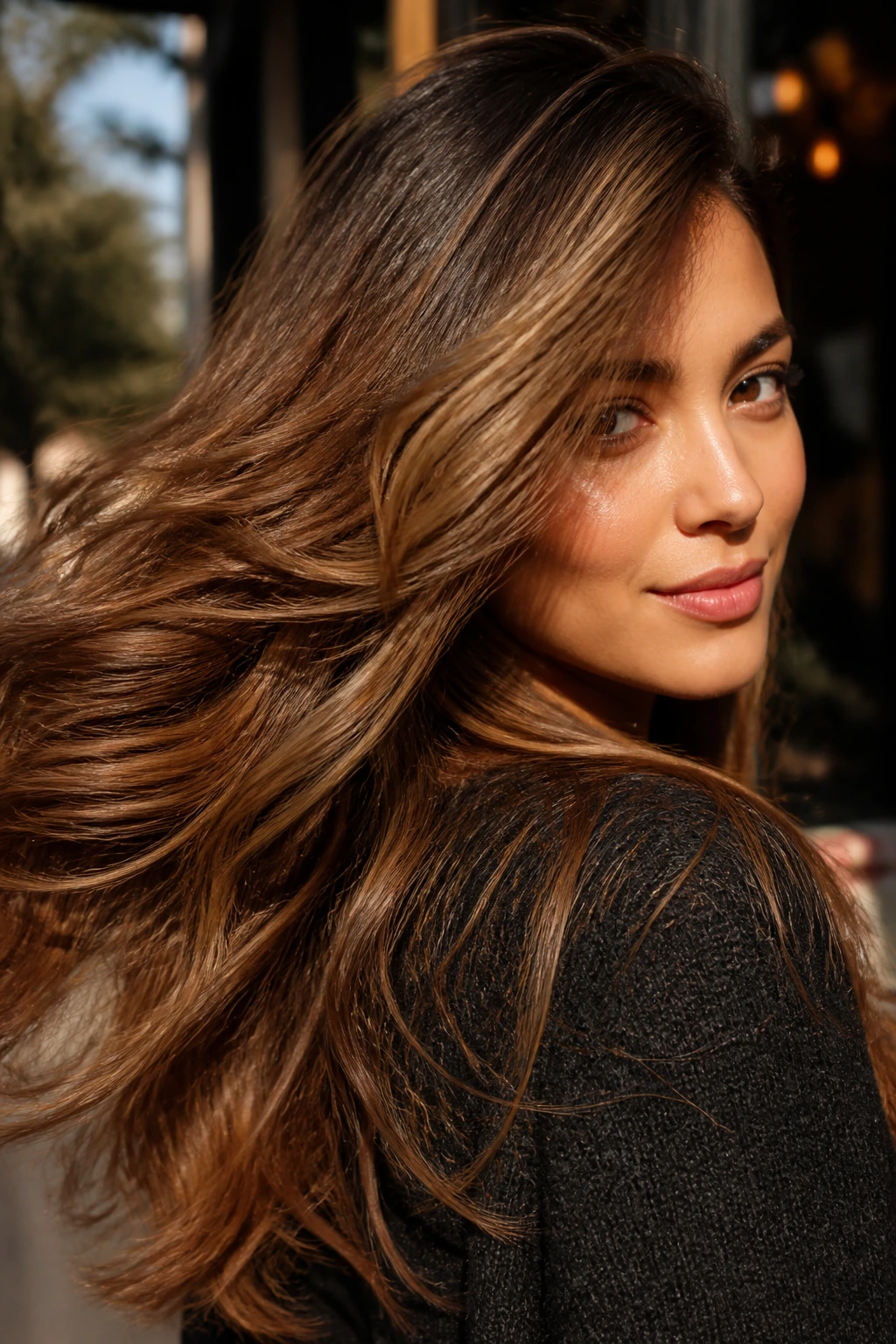
Toffee keeps showing up because it solves a real problem: medium skin often looks best in brown tones that have warmth, but not too much. Too ashy feels flat. Too blonde can feel loud. Toffee lands in the middle and still gives the hair movement, shine, and shape.
That middle ground is where the smartest color lives. Pick the version that fits your undertone, your cut, and how much upkeep you can live with, and the shade does the rest. Some people will want champagne ribbons. Others will want a smoky gloss or a deep shadow root. All of them can sit inside the same family and still look personal.
If you’re booking soon, start with the shade that feels closest to your own hair, then add warmth one step at a time. That’s usually where toffee looks richest — not forced, not flat, just warm enough to make medium skin look more alive.