



Long textured haircuts for medium skin tones work best when the shape does the flattering, not the color alone. That’s the part people miss. A cut with movement around the cheekbones, collarbone, or jaw can make medium skin look warmer, clearer, and more lifted in a way a flat, one-length curtain never quite manages.
Medium skin sits in a useful middle zone. It can take contrast without getting washed out, and it can handle softness without looking pale or muddy. But hair that hangs in one heavy sheet can flatten all of that out. The right long layers, feathering, bangs, or internal texture bring the face back into focus. They create a little shadow here, a little light there. That is what gives the skin room to read.
And texture matters more than people think. Wavy hair needs movement cut into it so it does not puff at the ends. Fine hair needs strategic layering so it does not collapse into a limp line. Thick hair needs weight removed in the right places or it starts wearing the haircut instead of the other way around. The styles below live in that sweet spot: long, wearable, and shaped with enough detail to make medium skin tones look intentional instead of random.
Why These Cuts Work So Well on Medium Skin Tones
-
They build contrast where the face needs it most: A layer that starts at the cheekbone or collarbone puts a clean frame around medium skin without turning harsh or busy.
-
They keep long hair from looking heavy: Texture breaks up the wall-of-hair effect, which matters when your complexion already has a natural warmth or olive depth that can disappear under a flat cut.
-
They play well with both warm and cool shades: Honey, copper, espresso, ash brown, and soft black all sit comfortably against medium skin when the haircut gives them shape.
-
They grow out with less drama: Long textured cuts usually soften as they grow, so the in-between stage looks lived-in instead of neglected.
-
They work with real-life styling habits: Air-dried waves, a quick blowout, a braid-out, or a polished brush finish can all live in the same haircut if the structure is smart.
-
They let you choose your own level of edge: You can go subtle with face-framing layers or push the shape into shag territory without losing the length you want to keep.
1. Feathered Layers That Flick Off the Shoulders
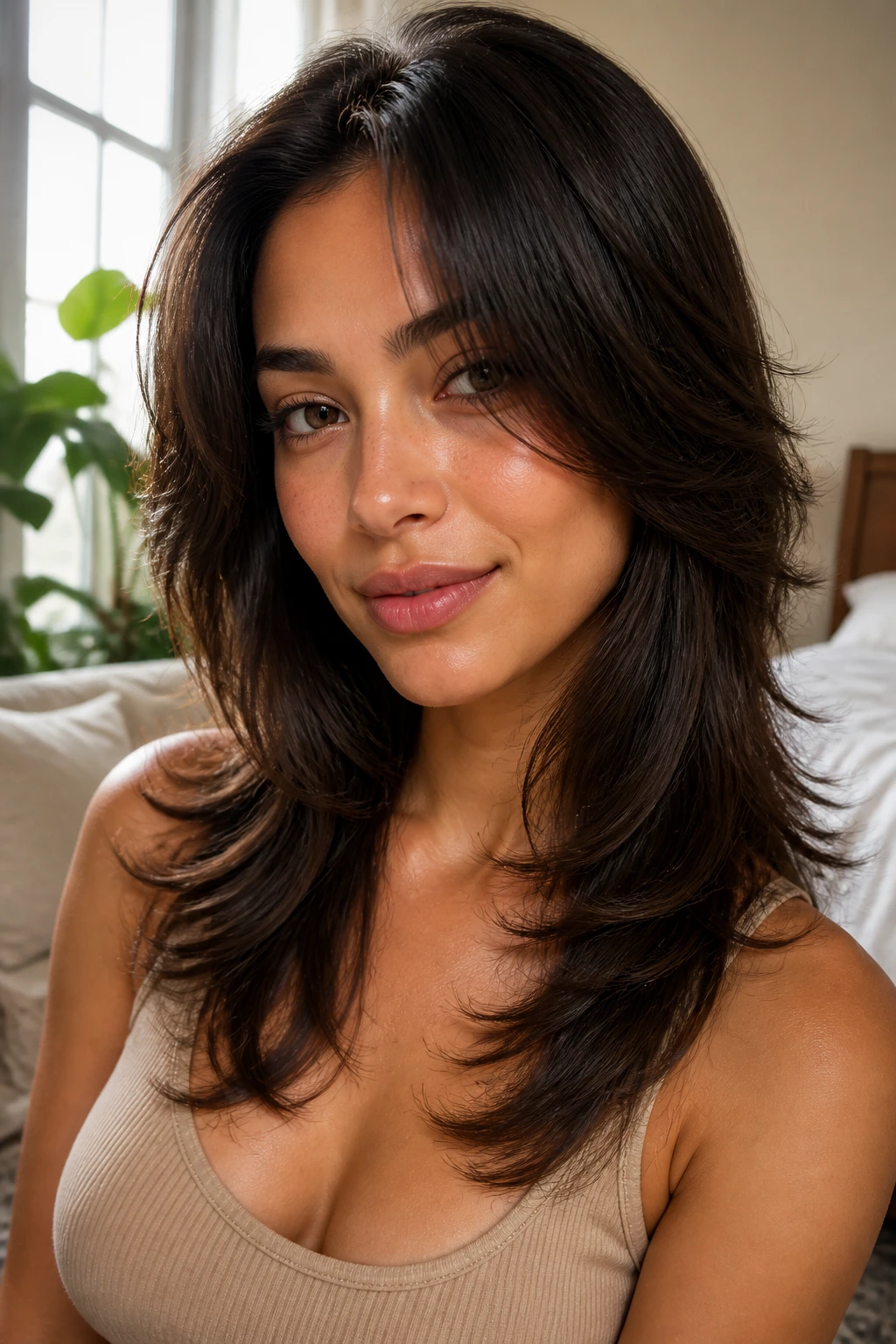
Feathered layers have a very specific feel. The ends move. They don’t just sit there. On long hair, that soft flip keeps the face from getting boxed in, which is especially useful on medium skin tones that need a little brightness around the cheek area. Ask for layers that begin below the chin if you want the shape to stay gentle rather than airy to the point of looking thin.
What Makes It Work
The beauty of feathering is that it doesn’t fight the length. It trims the bulk, not the identity of the haircut. That means the hair still falls long and swishy, but the perimeter has enough movement to catch light instead of hanging as one solid block.
This cut is a good match for medium skin with golden or neutral undertones. The soft, outward bend at the ends adds lift without sharp contrast, which keeps the whole look easy on the eye. Add caramel or toffee ribbons if you want the layers to show up even more.
2. Butterfly Cut With Lifted Top Layers
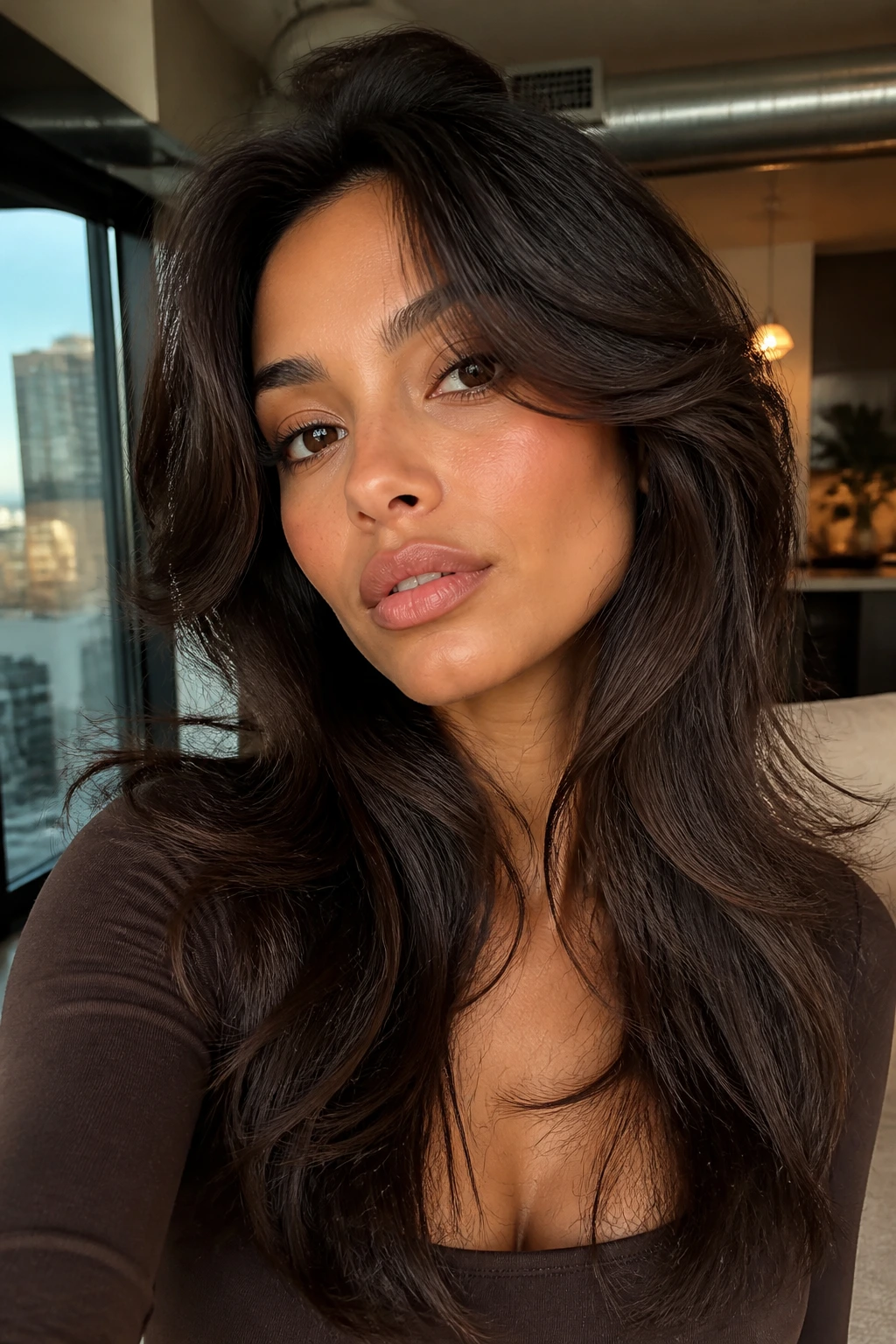
The butterfly cut is what happens when someone wants a dramatic shape but refuses to give up length. The top layers are shorter and bouncier, while the bottom stays long, so you get that split personality: volume near the face, sweep through the back. On medium skin tones, that lift near the cheekbones can make the whole face look more awake.
It’s a strong choice if your hair tends to fall flat at the crown. The shorter layers create movement right where the head starts to look heavy, which is usually around the temples and upper sides. The result is not “big hair” in a dated way. It’s controlled lift.
Best For
- Medium to thick hair that needs shape at the top
- Oval, heart, or long faces that can handle face-framing volume
- People who want a blowout-friendly cut that still air-dries with some shape
Keep the shortest layer around cheekbone level if you want the cut to be wearable without constant styling.
3. Curtain Bangs With Long Layers
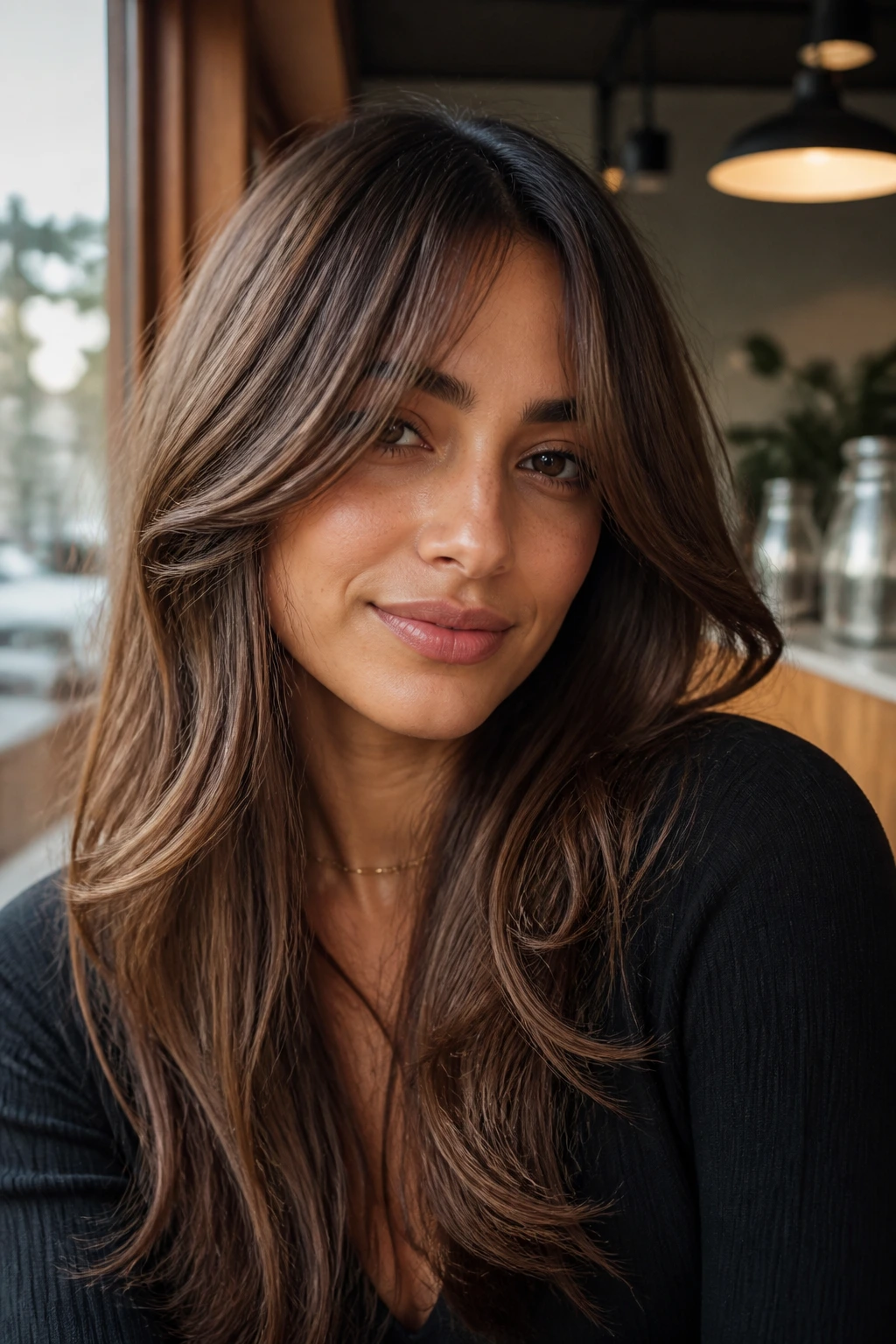
Curtain bangs are popular for a reason that has nothing to do with trendiness and everything to do with geometry. They split the face in the center and fall away at the sides, which draws attention to the eyes and softens the forehead without swallowing the face. On medium skin tones, that soft opening gives the complexion room to look warmer and more even.
The best version is not overly short. Let the shortest point sit around the brow or just below it, then open the bang toward the cheekbone. When the layers behind it are long and blended, the whole cut feels relaxed instead of theatrical.
If your hair is thick, ask for the bangs to be thinned lightly at the ends, not hacked into wisps. Thick fringe that’s over-thinned goes stringy in one wash. Nobody needs that headache.
4. U-Shape Layers That Keep the Ends Full
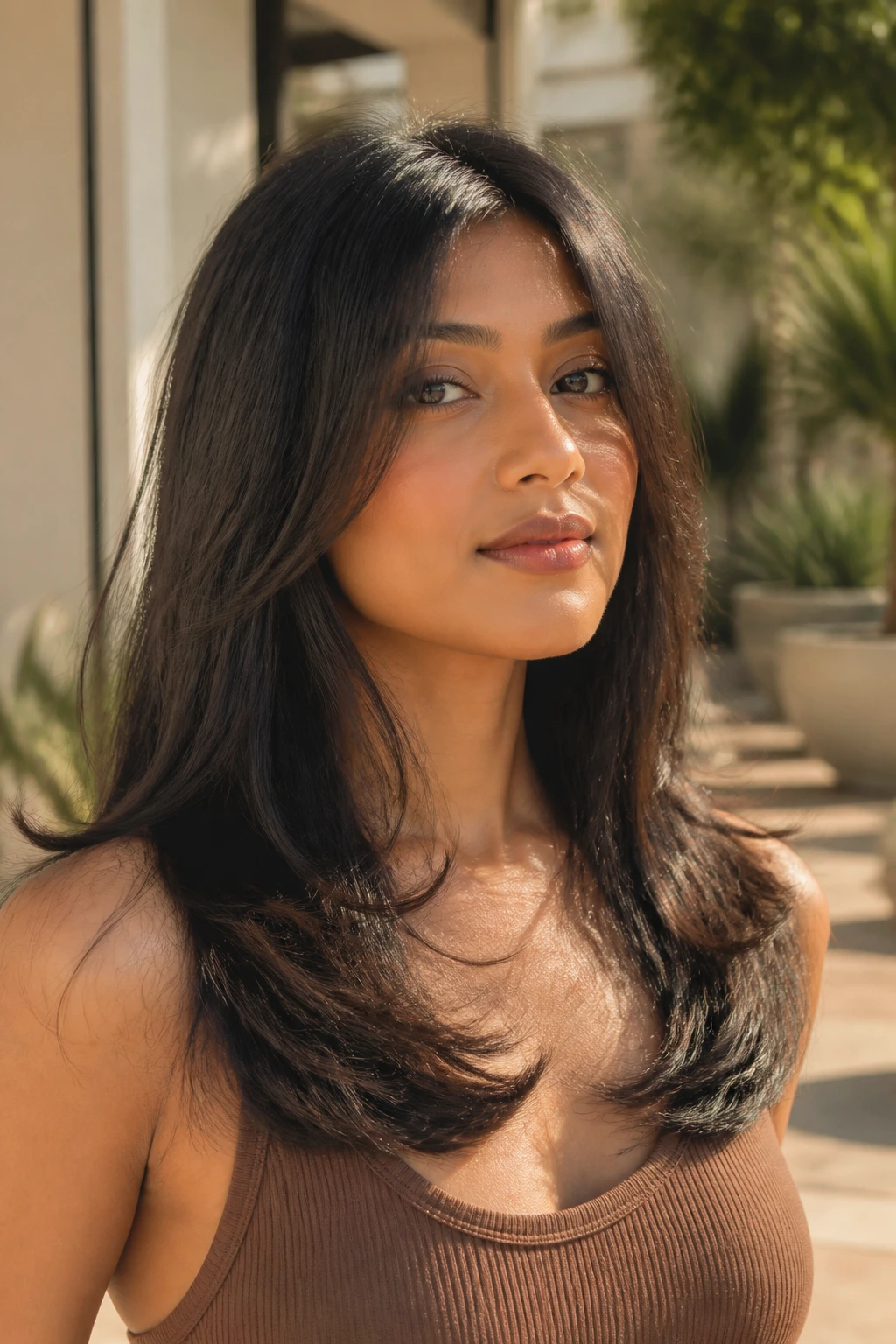
A U-shape cut keeps the longest part of the hair in a soft curve instead of a straight line. It sounds subtle, and it is, but subtle is not the same as boring. The curve gives long hair a fuller look at the back while letting the sides fall a little shorter, which is a flattering trick on medium skin tones that benefit from a soft frame around the jaw.
This shape is especially good if your hair is naturally straight or only mildly wavy. The rounded perimeter stops the ends from looking blunt and heavy, while the interior keeps enough length to move when you walk. It’s a calmer option than a shag, and that calm has its own appeal.
Ask for the curve to begin just below the shoulders if you want to keep the style elegant. Too high and it starts reading like a layered waterfall. Too low and you lose the whole point.
5. V-Cut Length That Narrows the Back
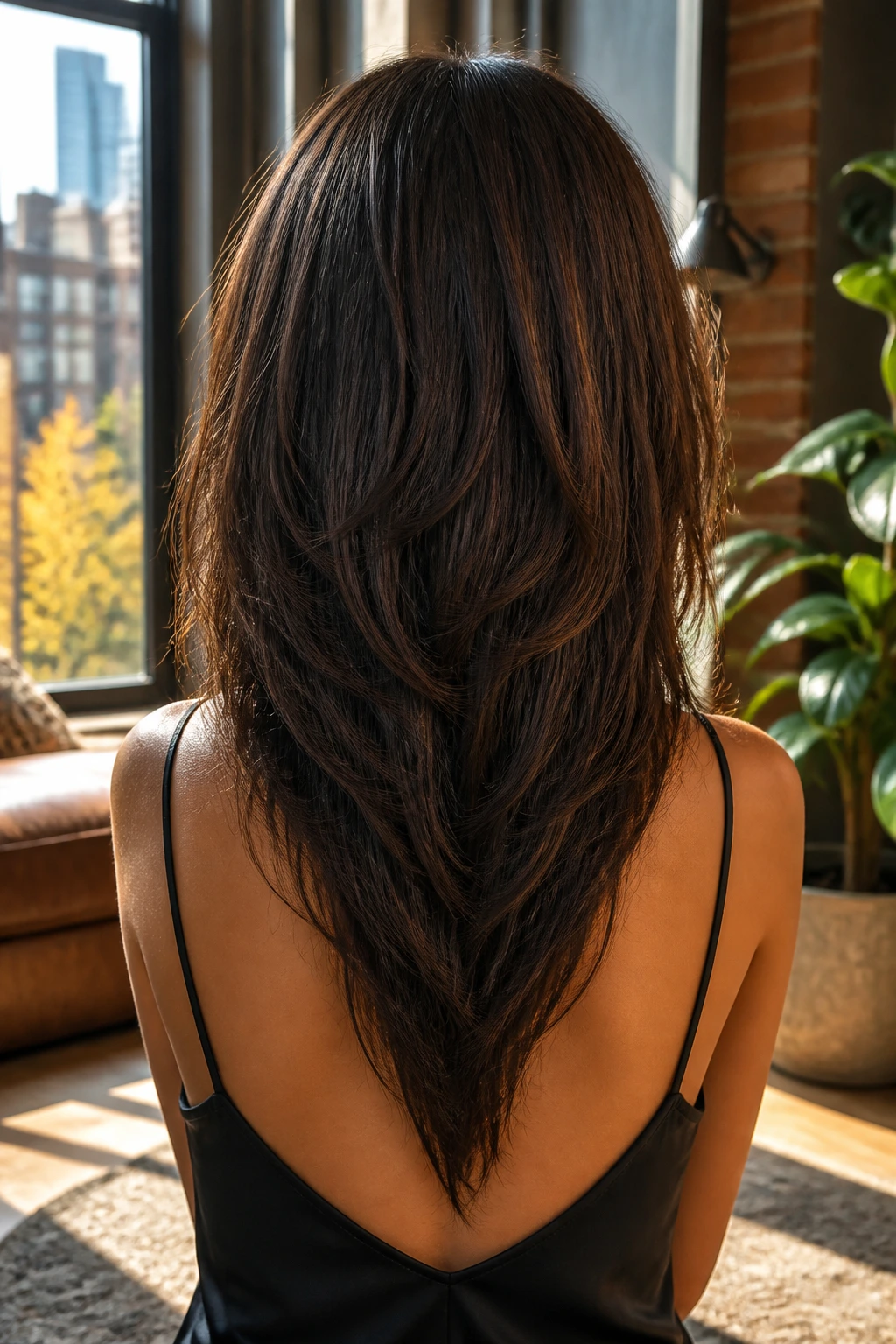
The V-cut is the sharper cousin of the U-shape. The back comes to a point, and the sides stay longer than the center, which creates a clean, tapered outline. On medium skin tones, that pointed silhouette adds just enough edge to keep long hair from looking too soft or too safe.
It works best when the layers are blended, not chopped. The point should look intentional, almost like the hair naturally narrows there. If the hair is thick, this shape can remove a lot of visual weight without making the ends look sparse. If the hair is fine, keep the point softer and less dramatic.
A Small Salon Note
Tell your stylist whether you usually wear your hair over the shoulders or behind them. The V-shape reads differently depending on the part and how the front pieces fall. That tiny detail changes the whole haircut.
6. Soft Long Shag With Airy Texture
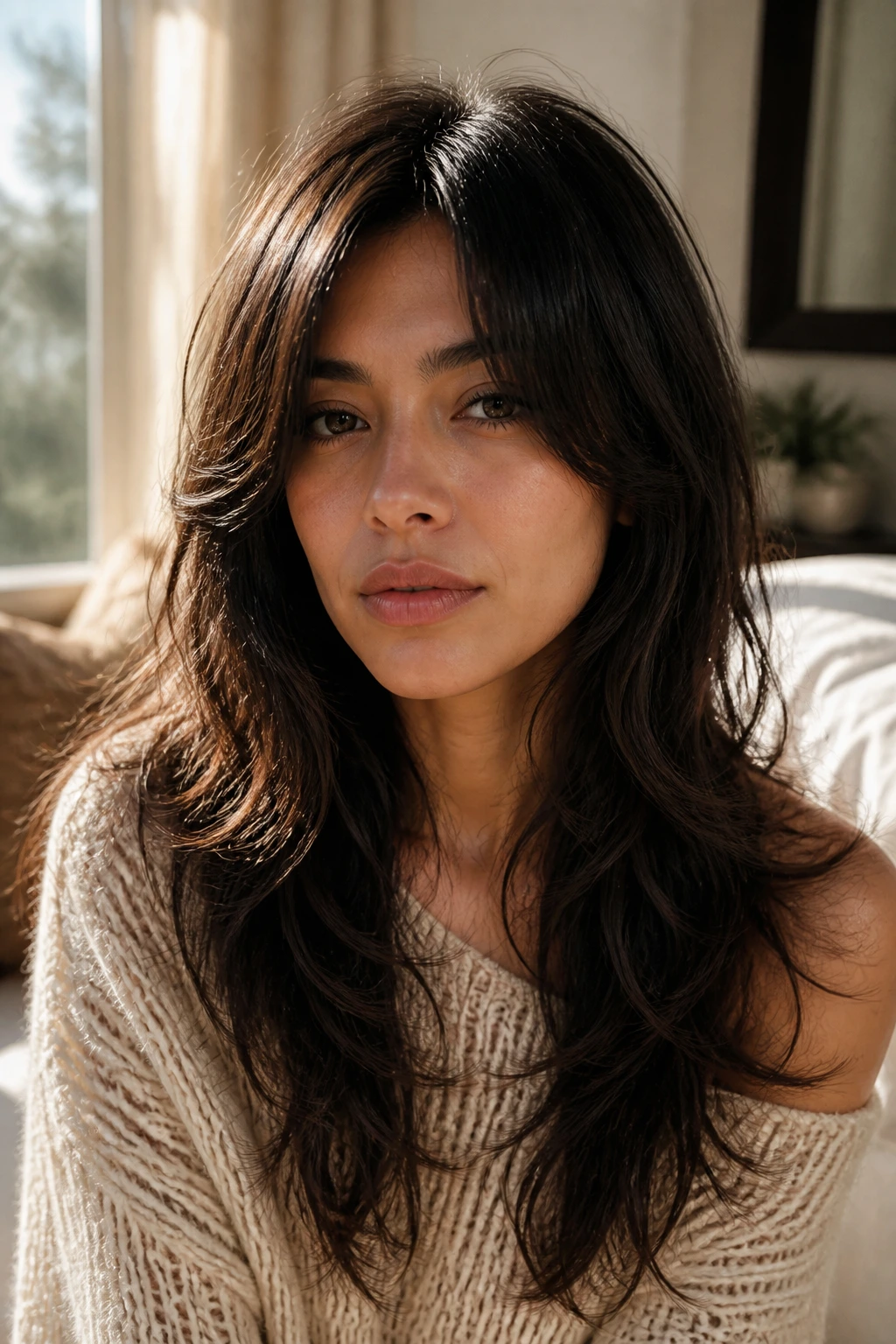
A long shag is not the same as a choppy mess. The good version has movement at the crown, layers through the mid-lengths, and a little piecey separation at the ends. It has personality. Medium skin tones can wear that texture well because the haircut creates enough contrast to make the face look sculpted without needing a hard line.
This is one of my favorite cuts for wavy hair that likes to swell up a little as it dries. The shag gives the wave somewhere to go. Without that architecture, the hair can balloon at the sides and drag the face down. With it, the shape feels loose in the best way.
If your hair is straight, the shag can still work, but it needs some bend—usually a quick blow-dry with a round brush or a few bends from a flat iron. Flat shag hair is just layered hair. That is not the same thing.
7. Wolf Cut for Long Hair
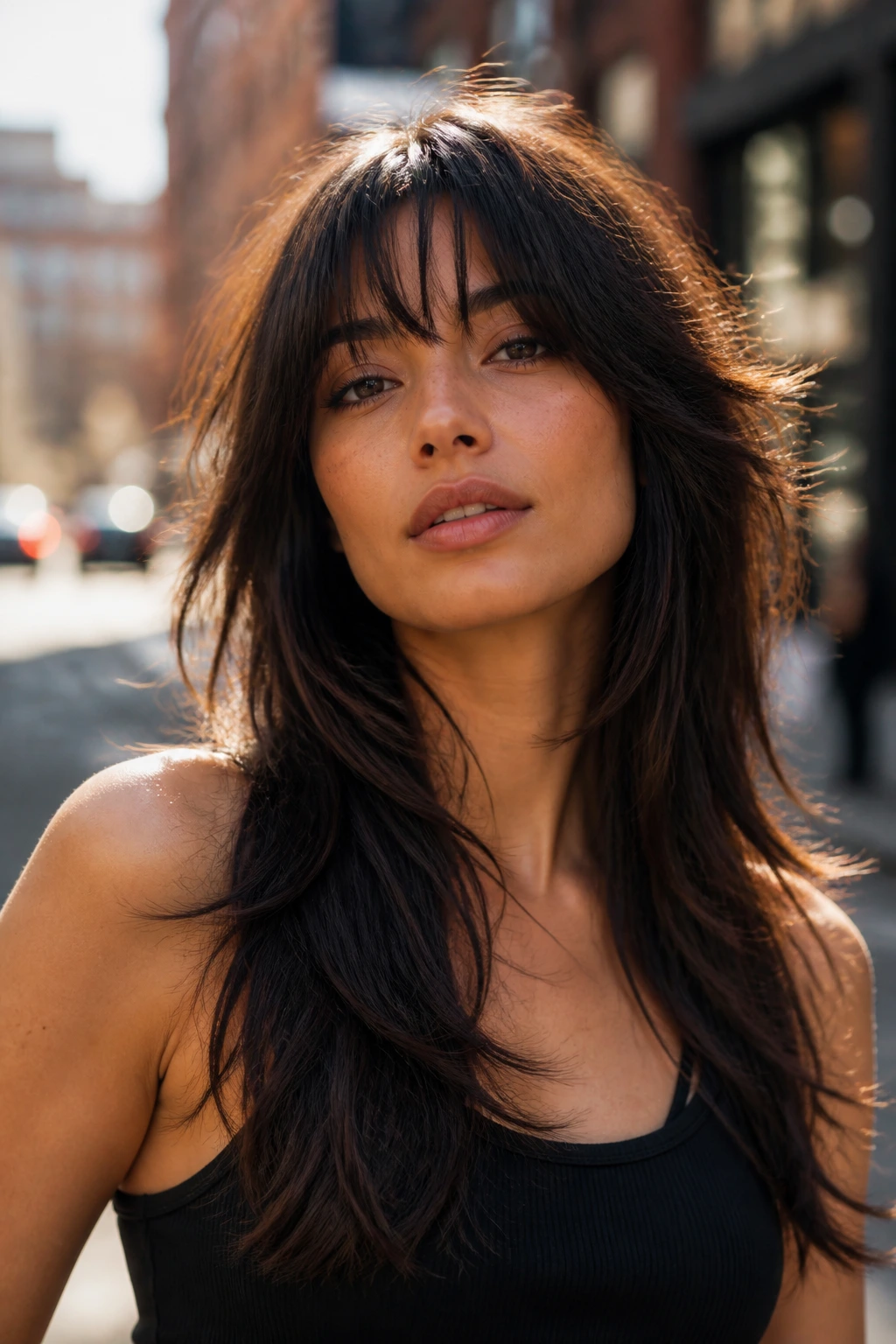
The long wolf cut keeps the rebellious energy of a shag and stretches it out so you don’t lose all your length. The crown stays a little fuller, the layers get more irregular, and the bottom can feel wispy in a way that looks deliberate instead of unfinished. On medium skin tones, the messier texture gives the face contrast and keeps the complexion from blending into a single soft mass of hair.
This cut has a strong personality, so it suits people who are happy to style with a bit of grit. You want piecey layers, not fluffy volume. Dry texture spray, a diffuser, or even a little mousse scrunched through damp hair usually does the job.
It’s also one of the easier cuts to pair with copper, auburn, or espresso shades, because the shape already has movement. The color just follows the cut instead of carrying it.
8. Long Face-Framing Layers
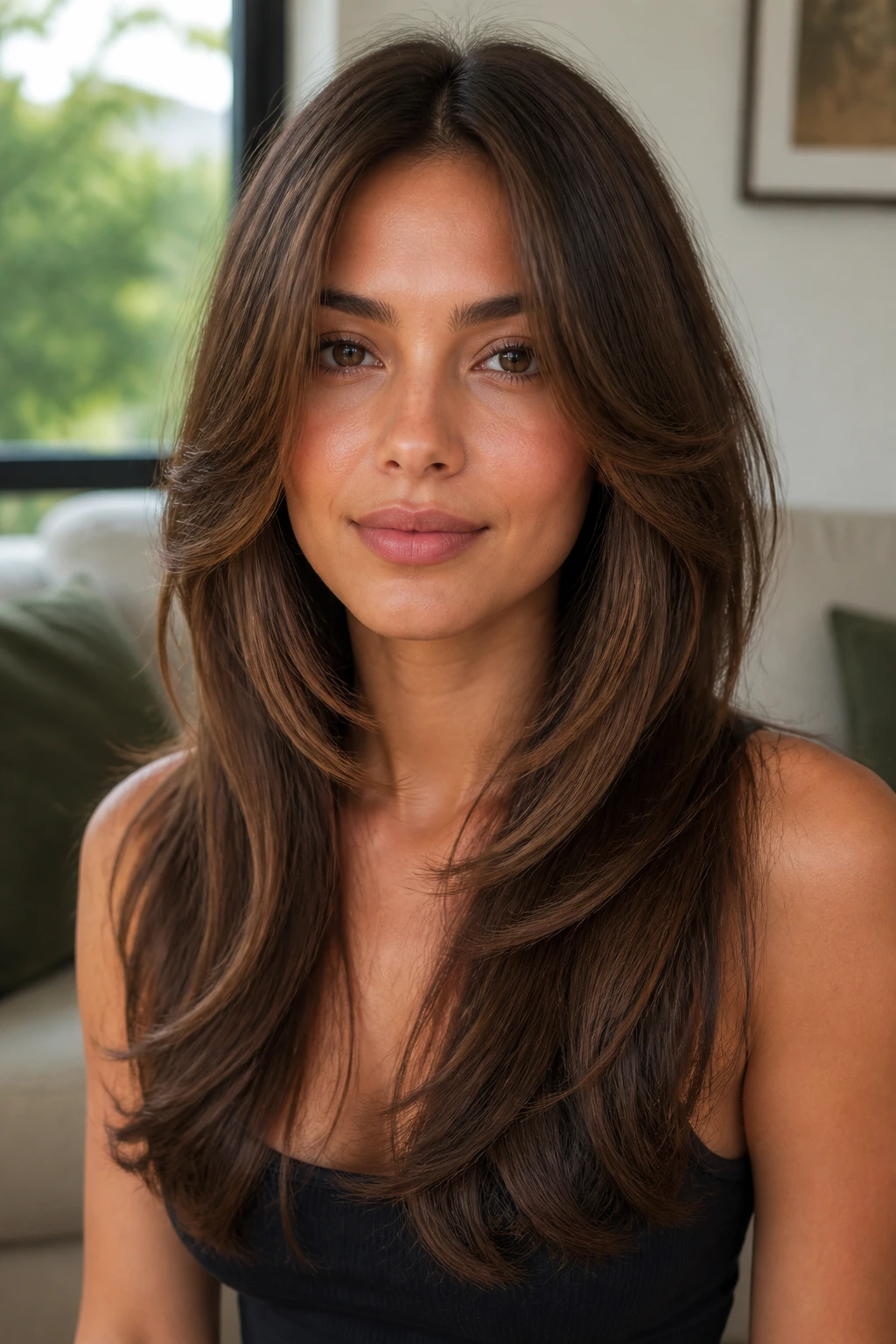
If you’re nervous about changing your hair, this is the safe bet that still looks thoughtful. Long face-framing layers keep most of the length intact while carving out movement around the face. That’s enough to make medium skin tones look sharper around the eyes and cheekbones without committing to a bigger chop.
The best version starts the shortest piece at the chin or a little below it. Shorter than that, and the cut can feel overdone on long hair. Longer than that, and you lose the framing effect. Simple. Fussy people like to make this more complicated than it is.
How to Wear It
Wear it straight for a clean line, or add loose bends just at the front pieces. That tiny bit of curve keeps the layers from sitting flat against the jaw, which is where a lot of cuts lose their shape.
9. Waterfall Layers That Cascade Down
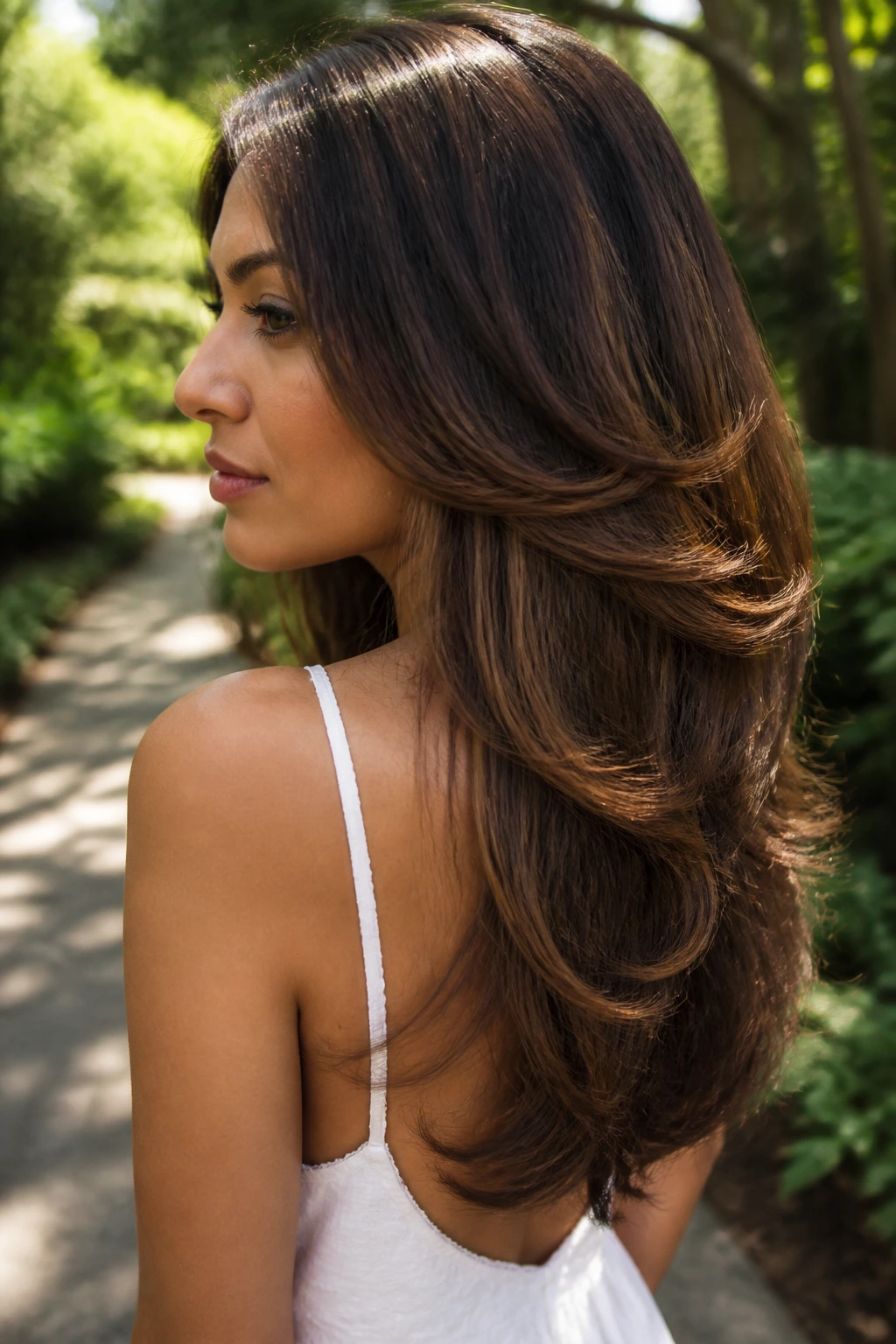
Waterfall layers are all about flow. The layers drop gradually, each one feeding into the next, so the hair looks like it’s sliding down the back in soft steps. On medium skin tones, that gentle cascade creates movement without the jagged edge that sometimes competes with a warmer complexion.
This cut is especially good on medium to thick hair. There’s enough density for the layers to show, and the movement helps avoid the heavy blanket effect. If you’ve ever had hair that looked gorgeous standing still and strangely dull in motion, this kind of cut fixes that.
I like this shape with soft highlights because the layers show the change in tone. But even without color work, the haircut has enough architecture to stand on its own.
10. Razor-Cut Ends for Soft Movement
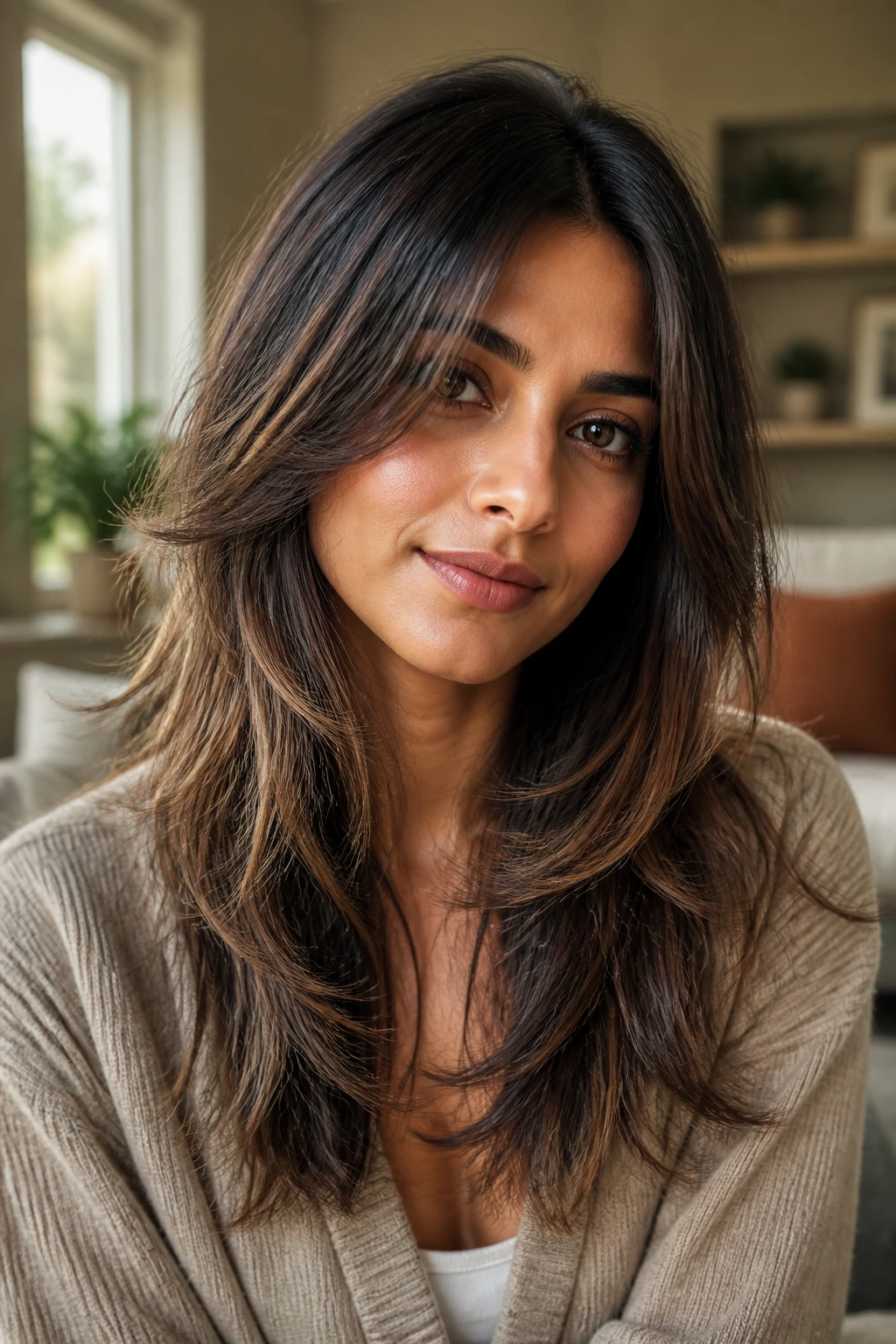
Razor cutting can be a mess in the wrong hands and a miracle in the right ones. The point is to remove weight by slicing through the ends, which leaves them lighter and more feathered. On medium skin tones, that softer finish keeps the hair from looking rigid against the face.
This works best on healthy hair that can handle a little texture. If the hair is already dry or prone to splitting, a razor can make the ends look frayed fast. Ask for a light hand, not a full aggressive slice. There’s a difference.
What to Watch For
- Fine hair: use sparingly, or the ends can go see-through.
- Thick hair: great for removing bulk without creating a bulky outline.
- Wavy hair: excellent if you want movement without a lot of visible layering.
11. Bottleneck Bangs With Long Textured Length
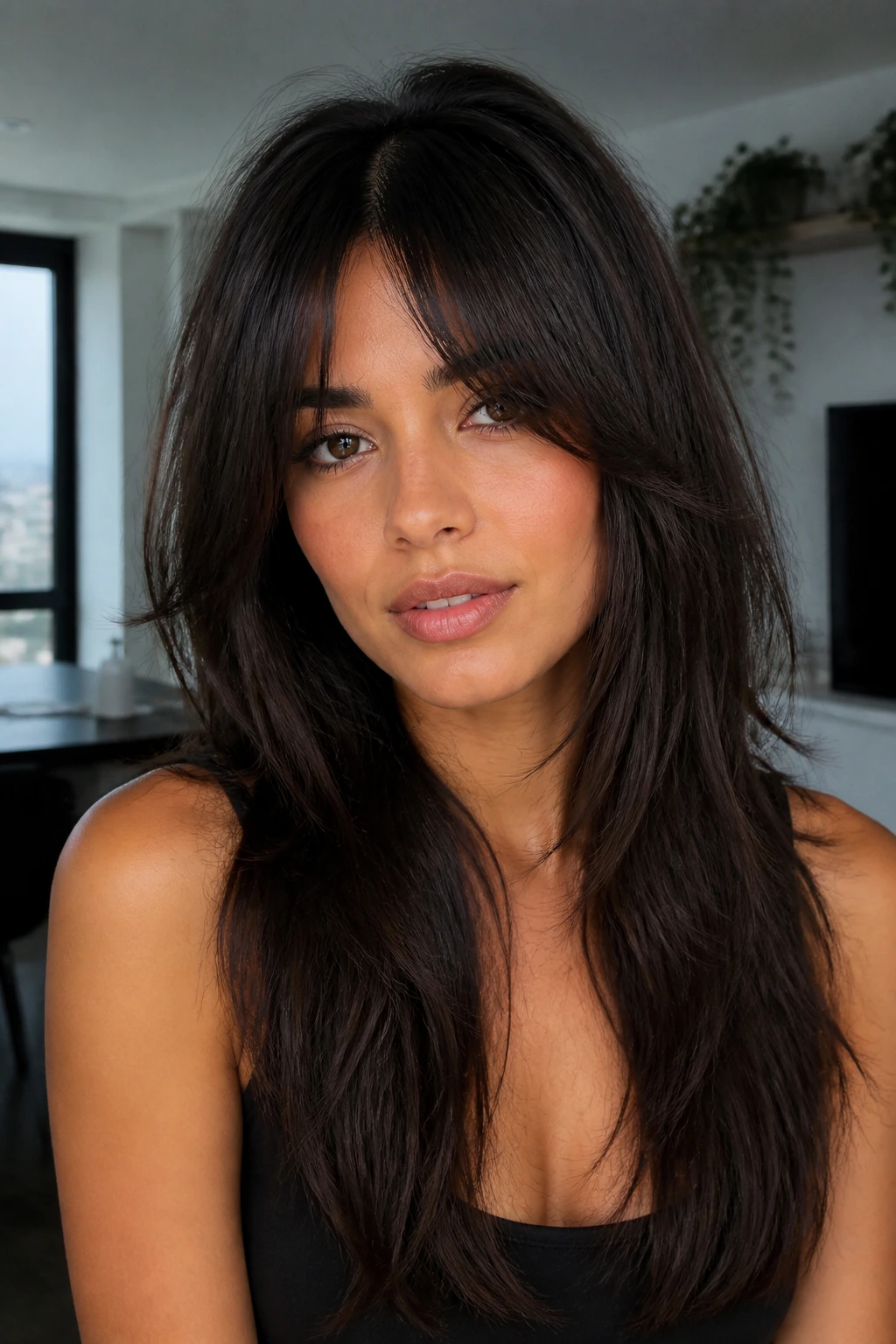
Bottleneck bangs start narrow near the center and open out near the temples, which gives the face a shape that feels tailored rather than blunt. They’re a clever fit for medium skin tones because the open sides soften the forehead while the center keeps enough structure to feel modern.
The haircut behind them should stay long and blended. If the layers are too short, the bangs start fighting the rest of the style. If the layers are long and loose, the whole thing feels polished without looking stiff.
This is a good cut if you wear a middle part but don’t want your hair to look like it was dragged into one. The fringe gives the part a reason to exist.
12. Modern Rachel Layers
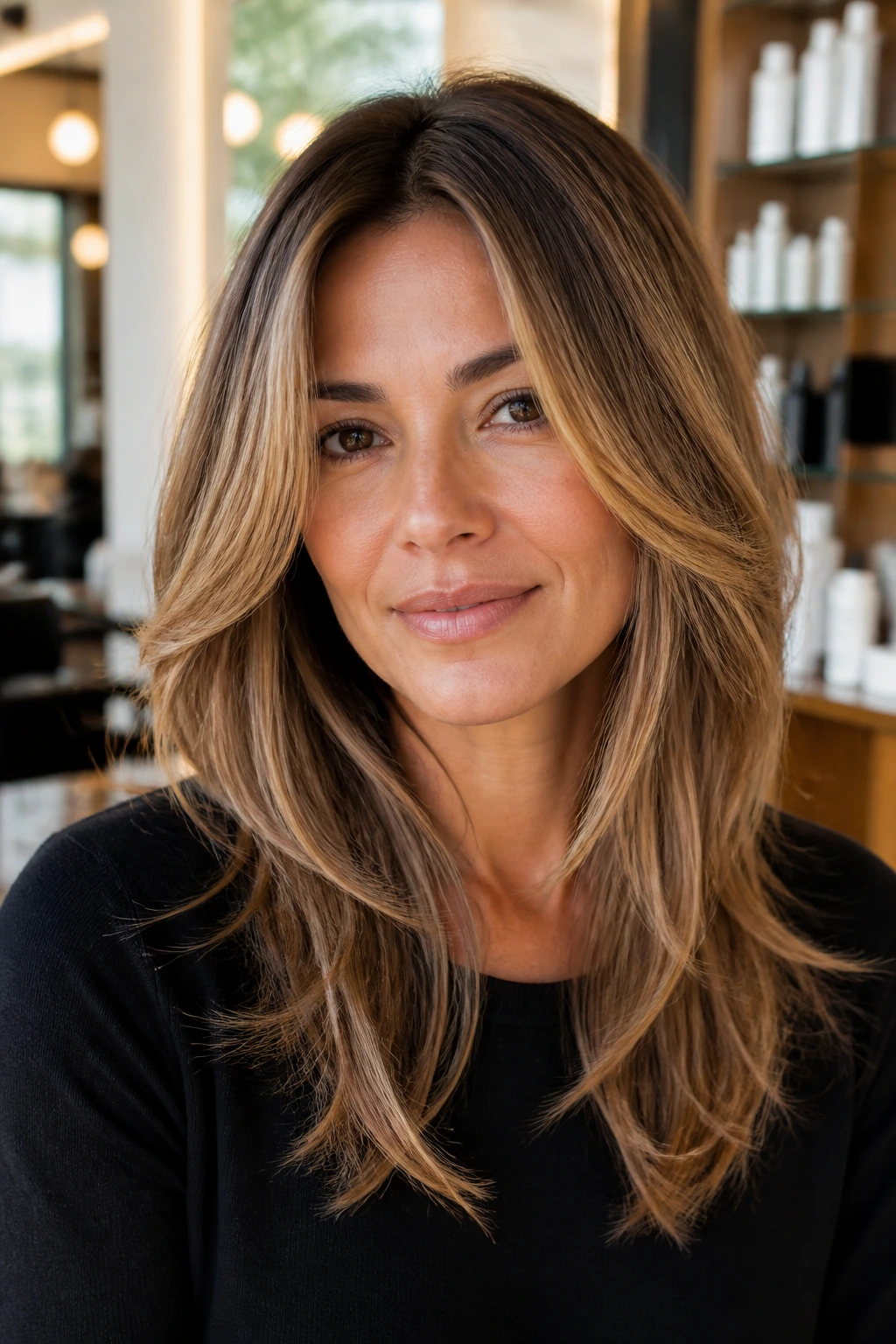
Yes, the Rachel cut still has life in it, provided it’s updated properly. The modern version keeps the bouncing face frame and the internal layers, but softens the ends and loses the crunchy 90s shell. On medium skin tones, that movement around the face brings definition without harshness.
This is one of the best cuts for medium-thick hair that likes a blowout. The layers respond to a round brush in a way that feels almost automatic. Hair that flips at the ends, bends at the mid-lengths, and lifts at the crown suddenly looks expensive without trying too hard. That’s the appeal.
A center part gives it a softer read. A side part gives it more attitude. Same cut. Different mood.
13. Long Curly Layers Shaped for Bounce
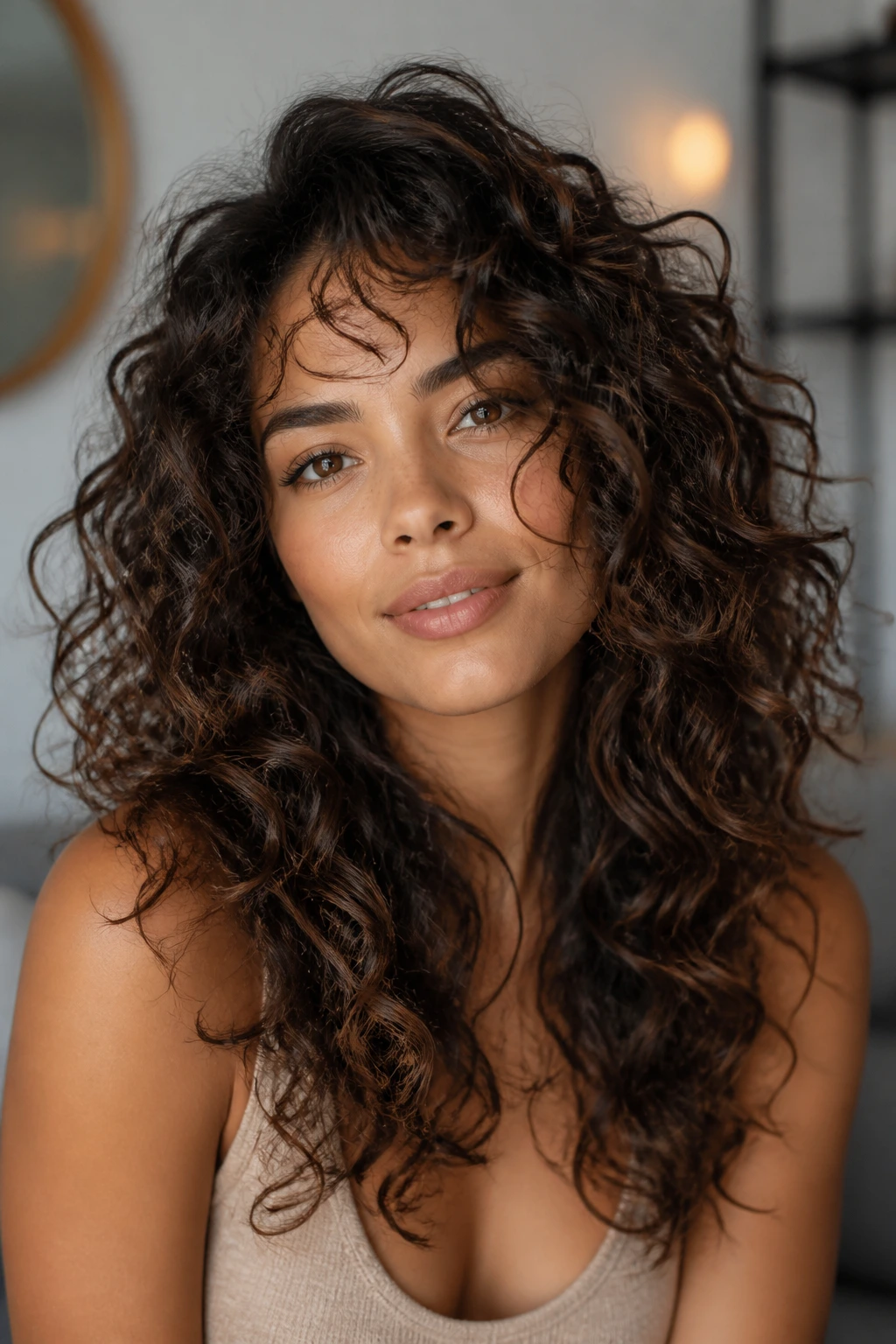
Curly hair needs a different logic. Long curly layers are there to prevent the bottom from becoming one heavy triangle and the top from going flat. For medium skin tones, that shape keeps the hair close to the face where it belongs, instead of letting it expand into a shape that competes with your features.
The trick is length retention. You don’t want every curl chopped at the same level. You want the layers to support the curl pattern so each ringlet has space to spring up. If your stylist cuts curls dry, pay attention to where each piece lands when it’s fully shaped. That tells you more than a wet cut ever will.
Use a diffuser if you want definition. Air-drying works too, but only if you leave the curls alone while they set.
14. Sliced Wavy Layers
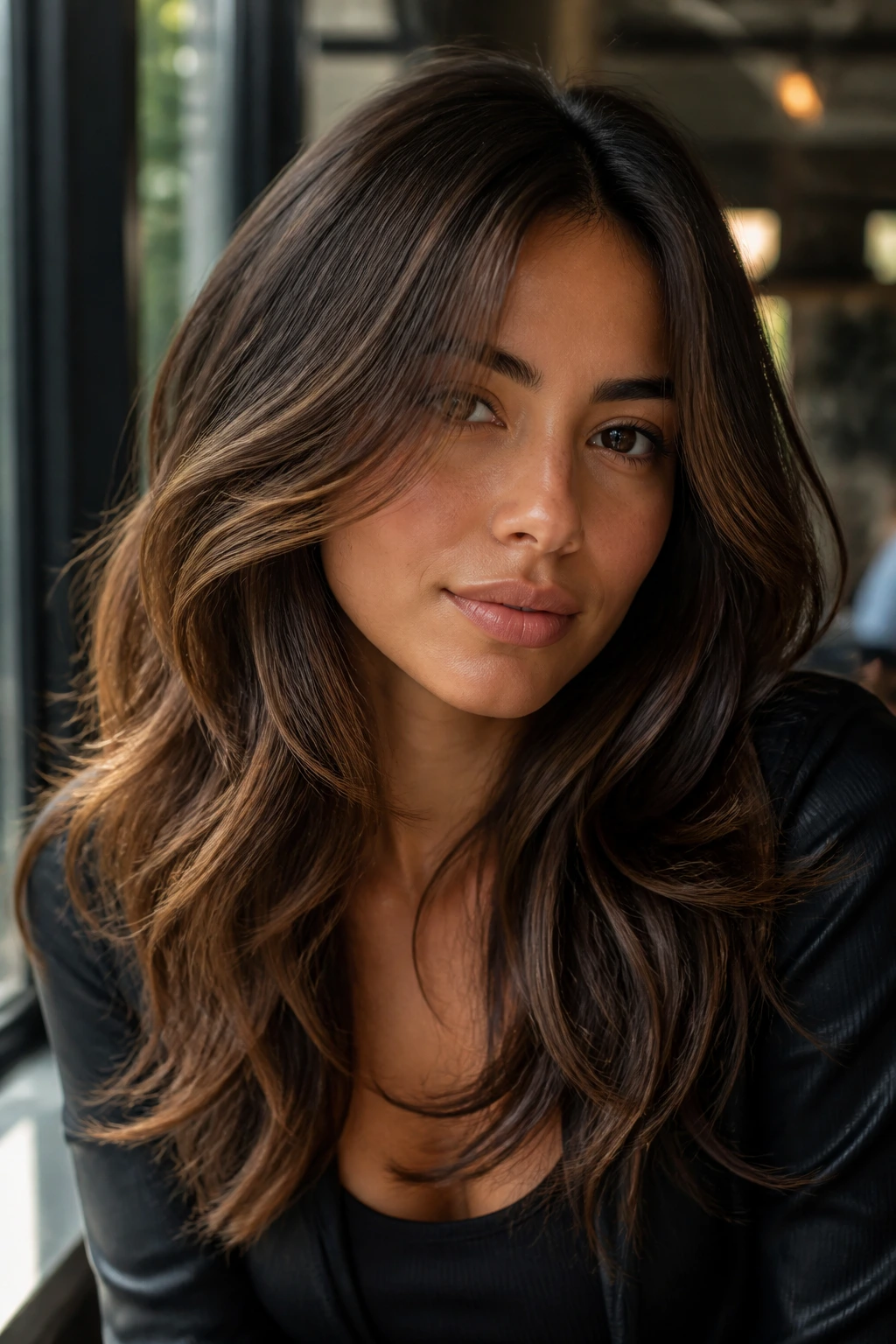
Sliced layers are lighter than blunt layers and less obvious than shag layers. They create movement by removing tiny bits of weight through the section instead of carving huge steps into the hair. On medium skin tones, that subtle movement keeps the look soft and unfussy.
This is a solid choice if you want texture but hate the choppy look that some layered cuts can give. It’s especially nice on fine-to-medium wavy hair because the shape stays long and elegant. The waves show up, but the haircut doesn’t shout about it.
A gloss in espresso, chestnut, or warm brown helps sliced layers read more clearly. The change in tone catches on the movement, and the haircut suddenly looks fuller than it is.
15. Invisible Layers for Fine or Smooth Hair
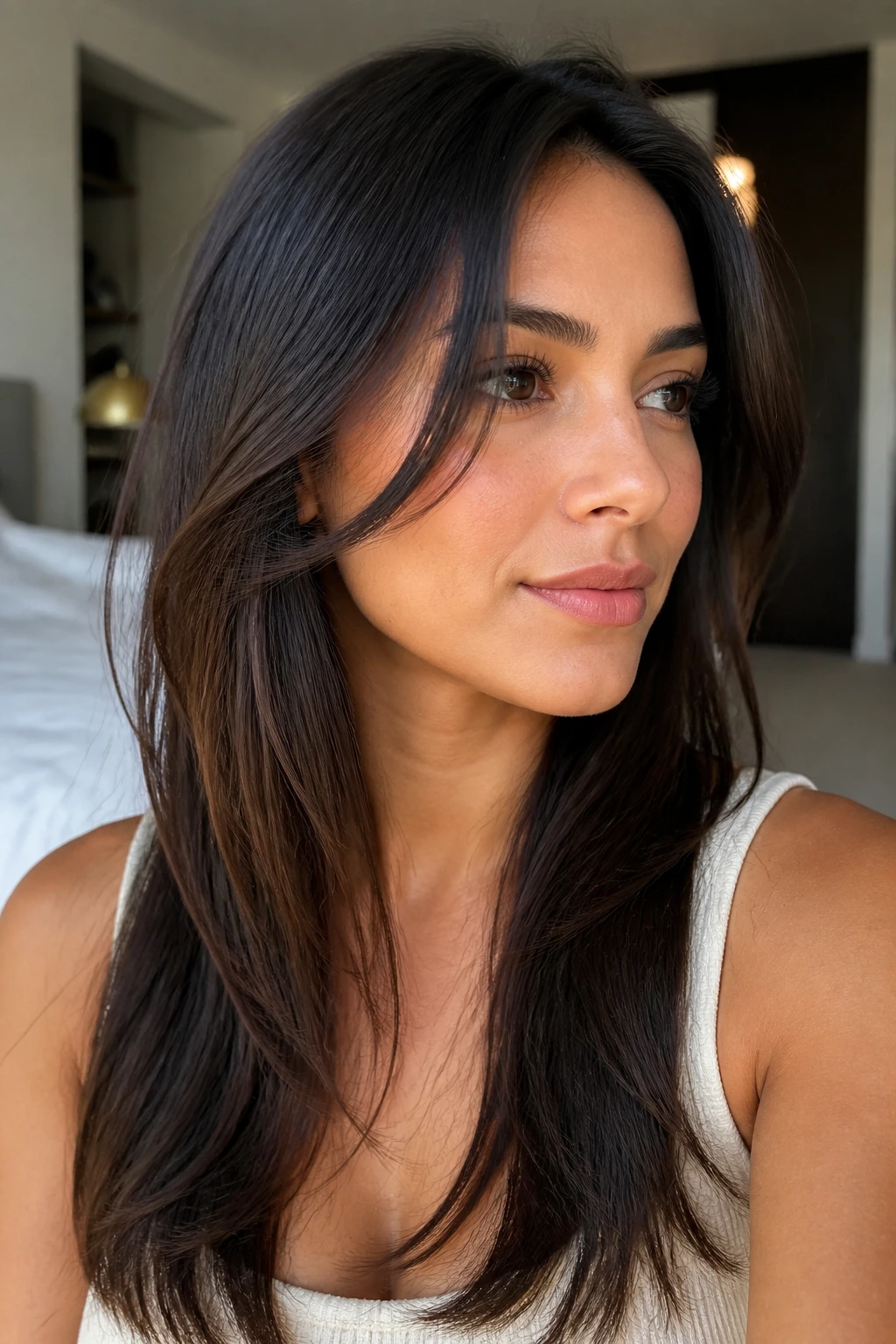
Invisible layers do their work inside the haircut, not on the outside edge. That means the perimeter still looks long and clean, but the hair has internal movement that stops it from falling like a sheet. On medium skin tones, this is useful if you want polish without a lot of obvious layering around the face.
This is one of the smartest choices for fine hair. Heavy visible layers can make the ends disappear, which is a bad bargain when you’re trying to keep length. Invisible layers give the crown and mid-lengths a little lift without turning the haircut into a staircase.
Why It’s Different
You can blow it smooth and still get movement. You can air-dry it and still get shape. That flexibility is the whole point. It’s not a dramatic haircut, but it’s one that tends to live well.
16. Disconnected Long Layers With Edge
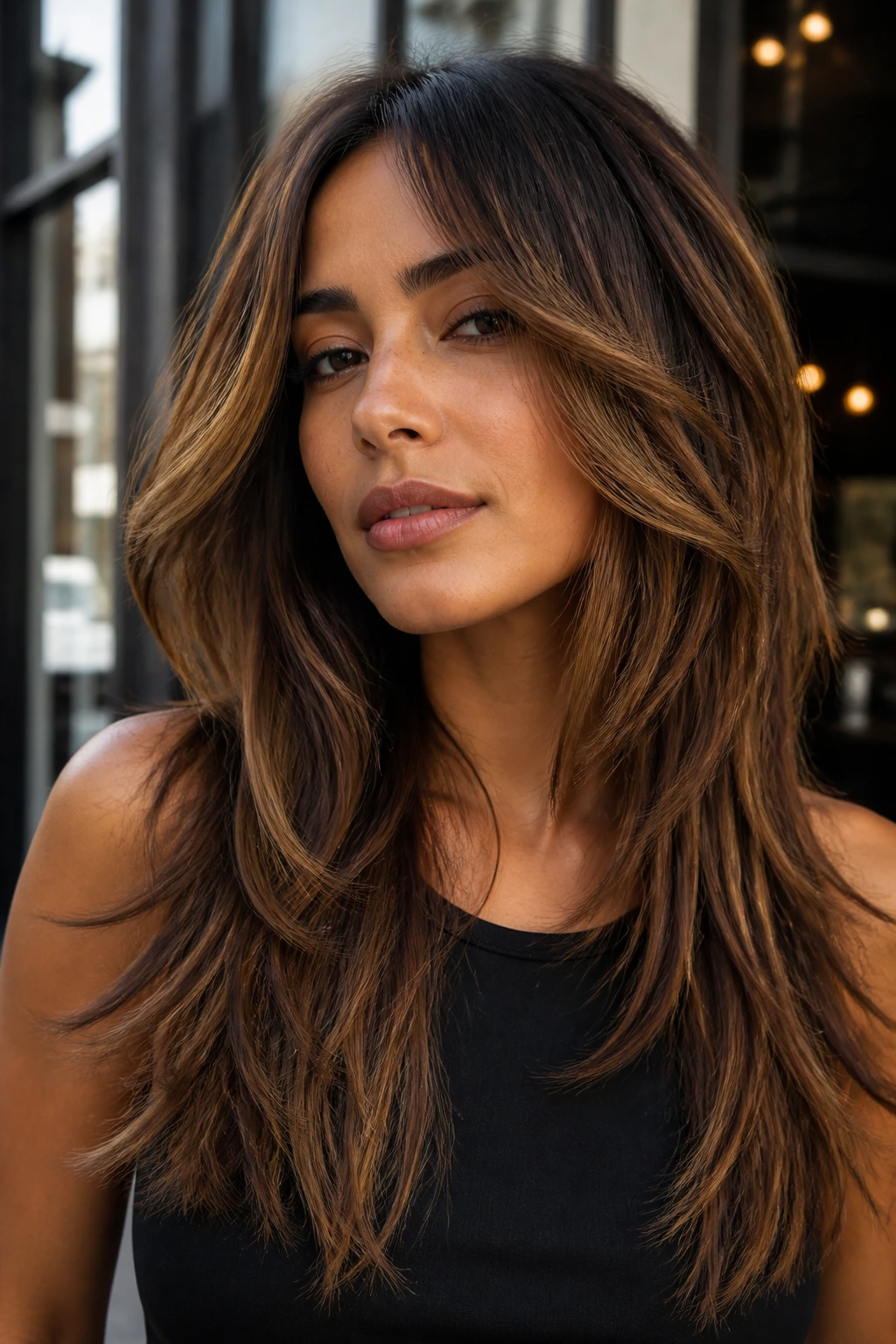
Disconnected layers are more obvious. The shape has purposefully separate sections rather than one continuous fade, which gives the haircut a sharper, fashion-forward feel. On medium skin tones, that stronger contrast can make the face look more defined, especially if the complexion leans olive or golden.
This isn’t the cut for someone who wants invisible softness. It’s for someone who likes the hair to have a little attitude. The mismatch between lengths creates movement that looks intentional, and the effect is strongest when the hair is worn with a clean middle or deep side part.
If you go this route, keep the styling neat. A little polish at the roots keeps the disconnection from reading as accidental.
17. C-Cut Layers Around the Cheek and Collarbone
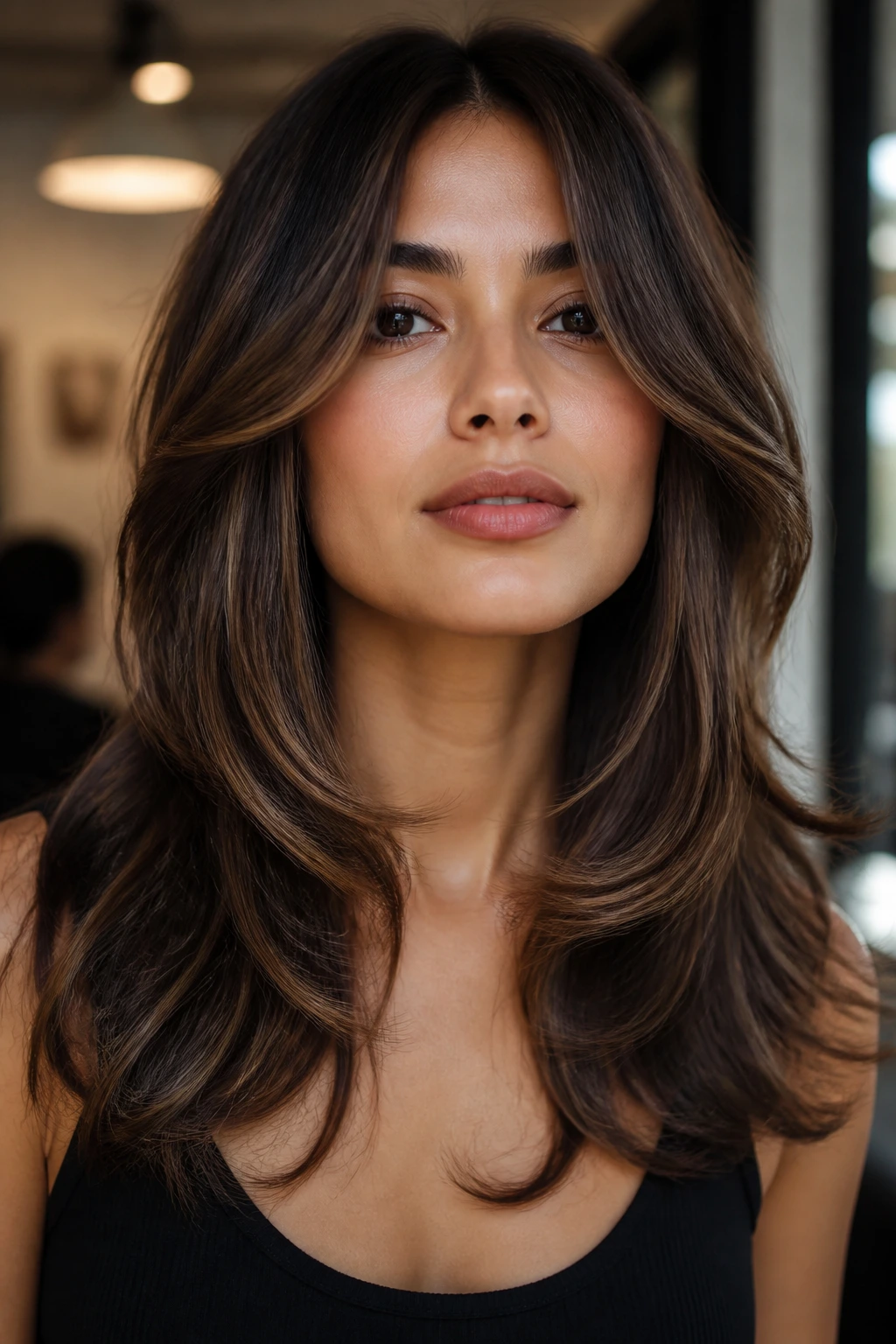
A C-cut curves inward around the front, usually somewhere between the cheek and collarbone, then eases back out toward the ends. It’s subtler than a full shag and softer than a V-cut. For medium skin tones, that curve creates a flattering pocket of shape around the face without making the hair feel too busy.
I like this one on oval and heart-shaped faces in particular. The curve tracks the natural line of the cheek, which can make the whole haircut look expensive in a low-key way. That word gets abused, but here it actually fits: the shape is doing real work.
A center part keeps it modern. A side part makes it feel softer and a little more romantic.
18. Deep Side-Part Layers for Asymmetry
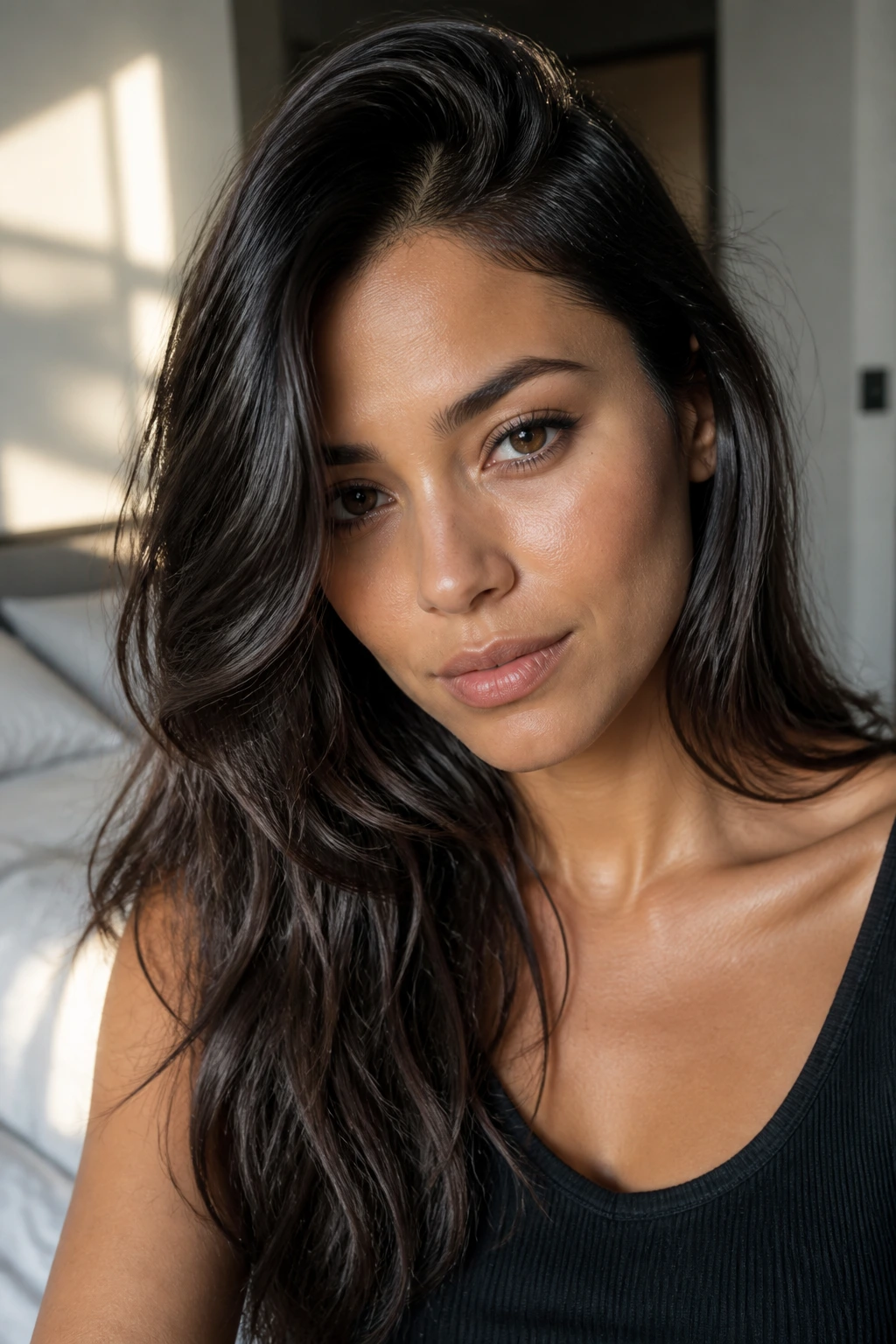
Sometimes the haircut doesn’t need to be radical. The part does the heavy lifting. A deep side part with long layers changes the whole face shape, creating asymmetry that can lengthen rounder features and make medium skin tones look more sculpted.
This works best when the front layer is long enough to sweep over the cheekbone rather than stick to the forehead. That soft curve across the face adds shadow in the right places. It also gives the roots more lift, which is useful if the hair tends to lie flat around the crown.
If you’ve been wearing the same center part for years, this is the easiest shift with the biggest visual payoff. No scissors drama required.
19. Choppy Ends With Kept Length
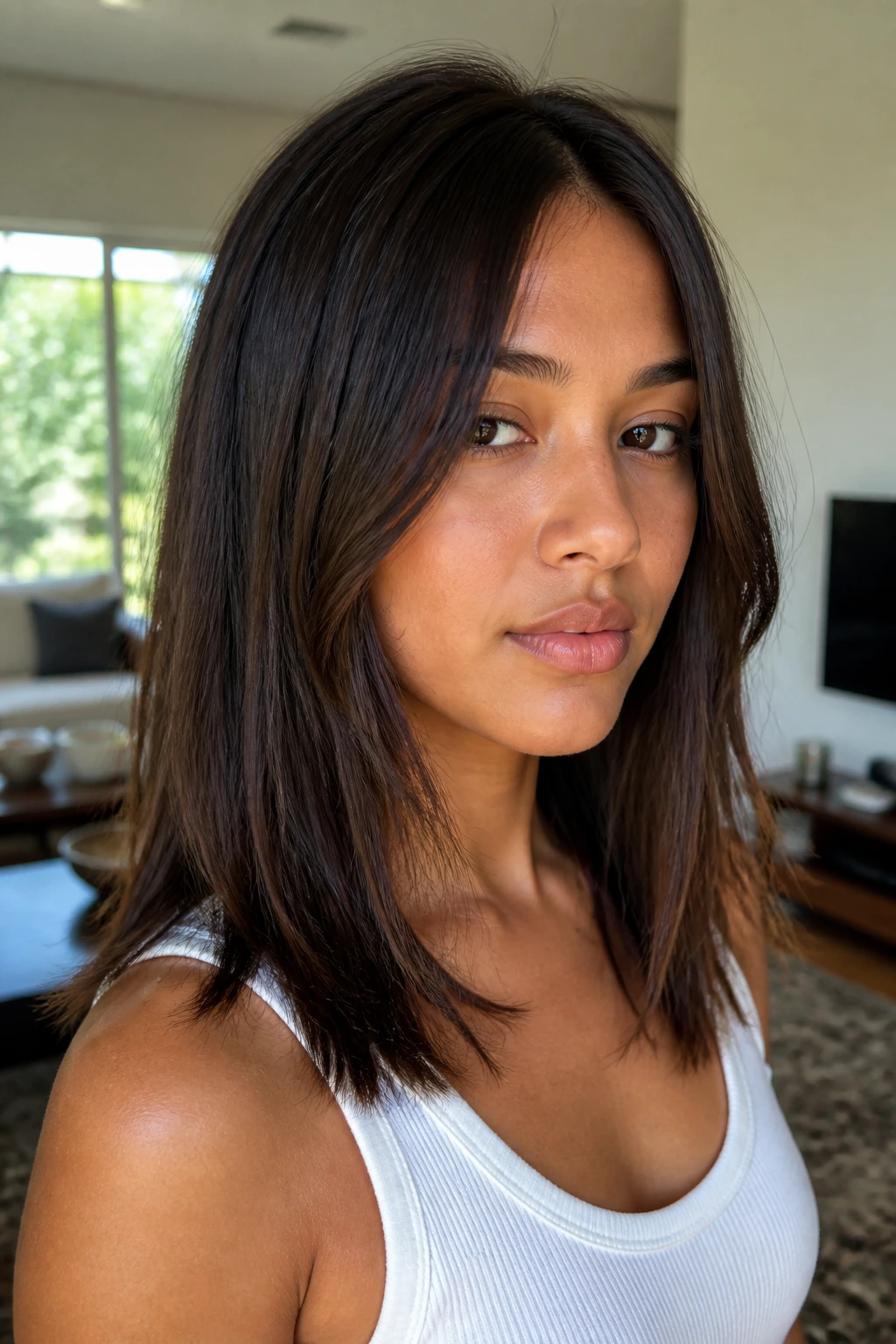
Choppy ends can be a headache if they’re too aggressive. Done right, though, they keep the bottom edge from feeling blunt while leaving all the length in place. On medium skin tones, that slightly roughened edge keeps the style from feeling too precious.
This cut is especially useful on thick straight hair or loose waves. The ends move a little when you walk, but the haircut still holds a long outline. That balance matters. Too much choppiness and the ends look thin. Too little and the hair drags down the face.
Ask for point-cutting rather than heavy thinning. Point-cutting softens the edge without stealing density.
20. Blunt Length With Internal Texture
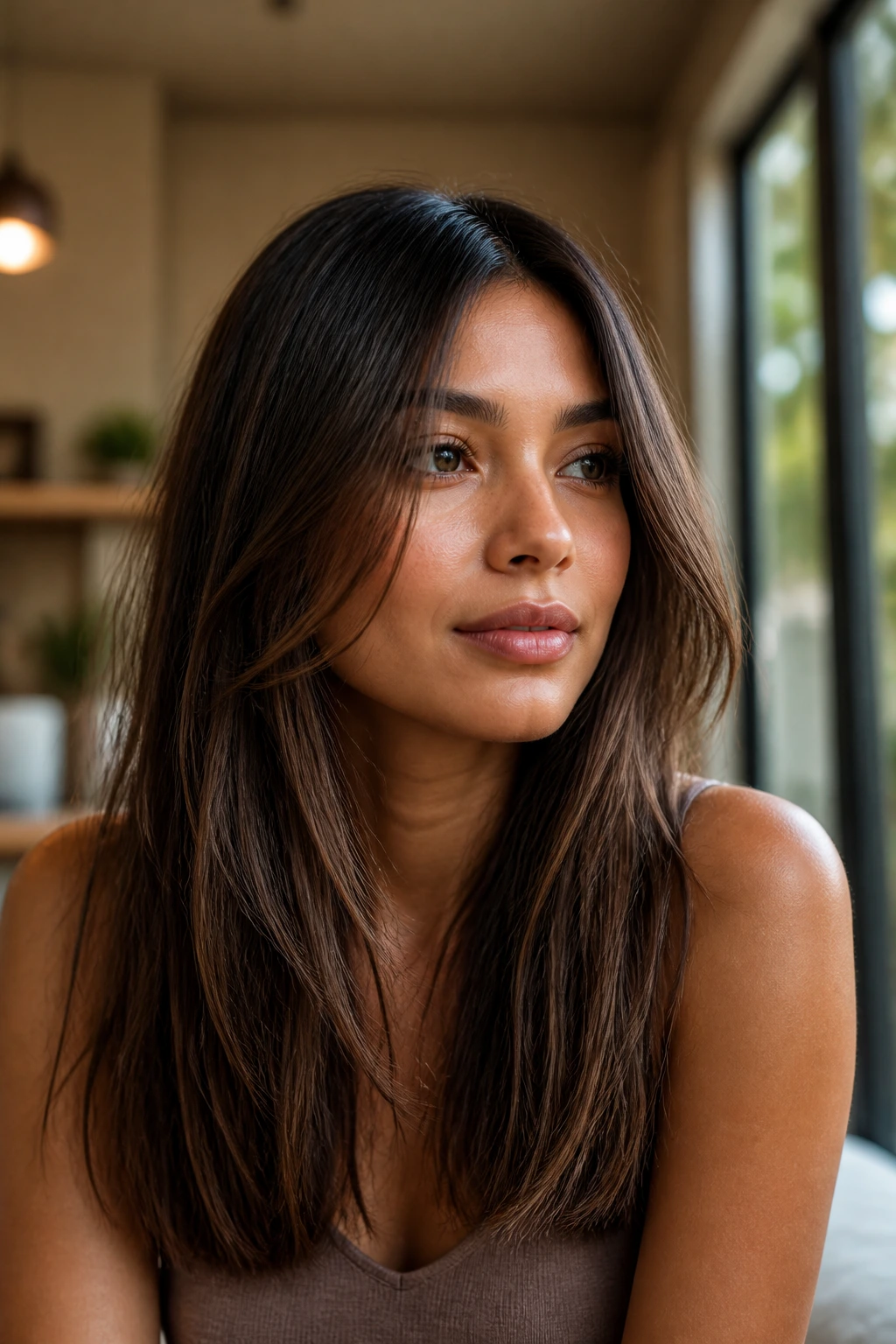
This is for people who love a clean line but hate limp ends. The outside perimeter stays blunt, which makes the hair look dense and healthy, while hidden texture inside the cut lets it move. On medium skin tones, that mix of polish and movement feels very balanced.
The blunt edge is the anchor here. It gives the haircut a clear finish, which keeps the face from getting overwhelmed by too many soft pieces. Internal texture keeps the length from feeling stiff. It’s a quiet cut, but not a boring one.
When to Choose It
If your hair is fine, this can be better than visible layering. If your hair is thick, it can keep the outline tidy. If you want long hair that still looks clean after day two, this shape earns its keep.
21. Supermodel Blowout Layers
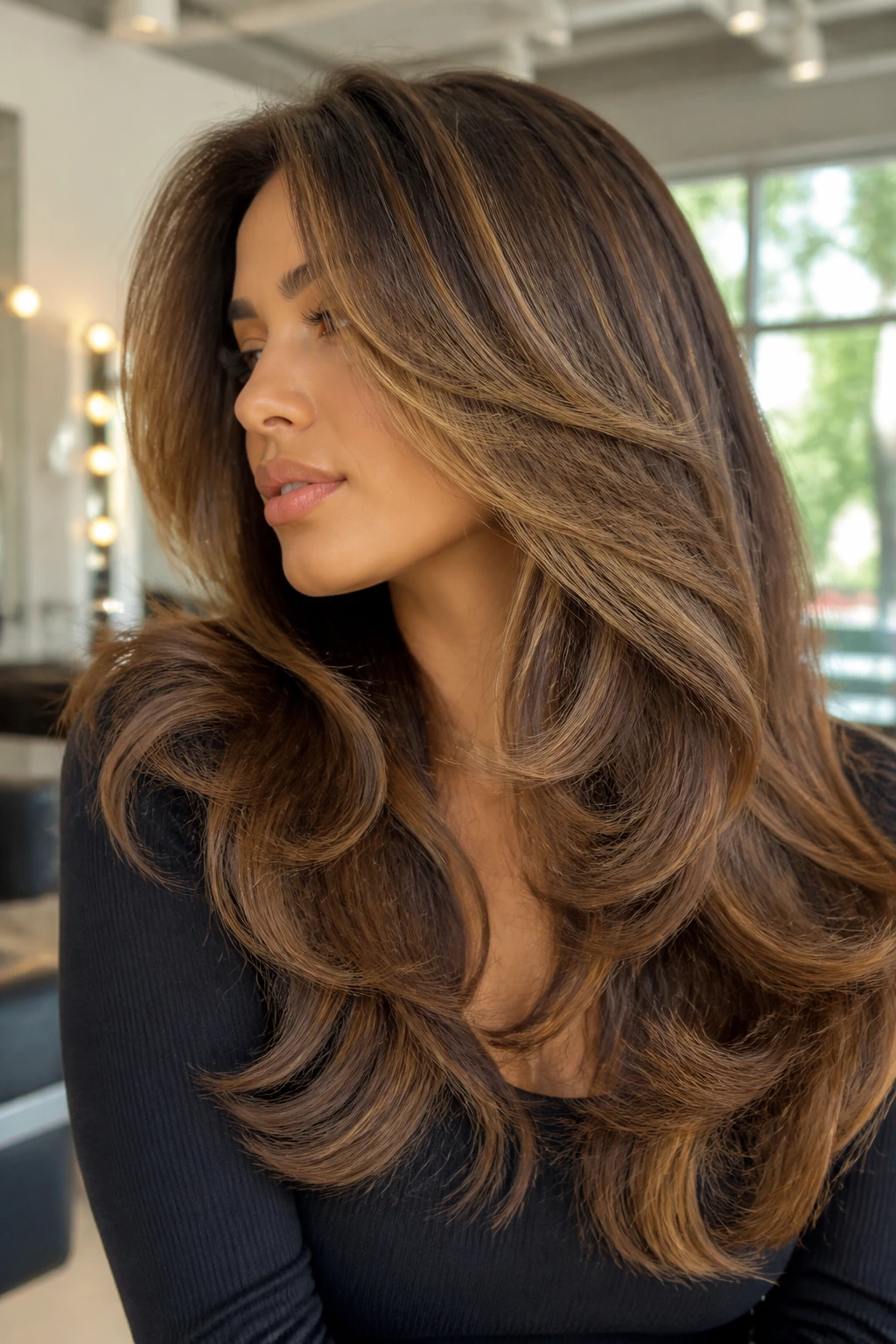
This cut is all about movement under a round brush. The layers are shaped to flip, swoop, and lift, so the hair looks like it was built for a salon blowout. On medium skin tones, that big soft motion can make the face look brighter without needing lots of face-framing tricks.
It suits medium to thick hair best because the layers need enough body to hold the bounce. The style isn’t subtle, and that’s fine. It’s meant to look full from root to end, with the kind of swing that catches attention when you turn your head.
If you wear this cut air-dried, it still works, but the personality changes. Less polished. More relaxed. Both versions have their place.
22. Mermaid Layers for Long, Loose Movement
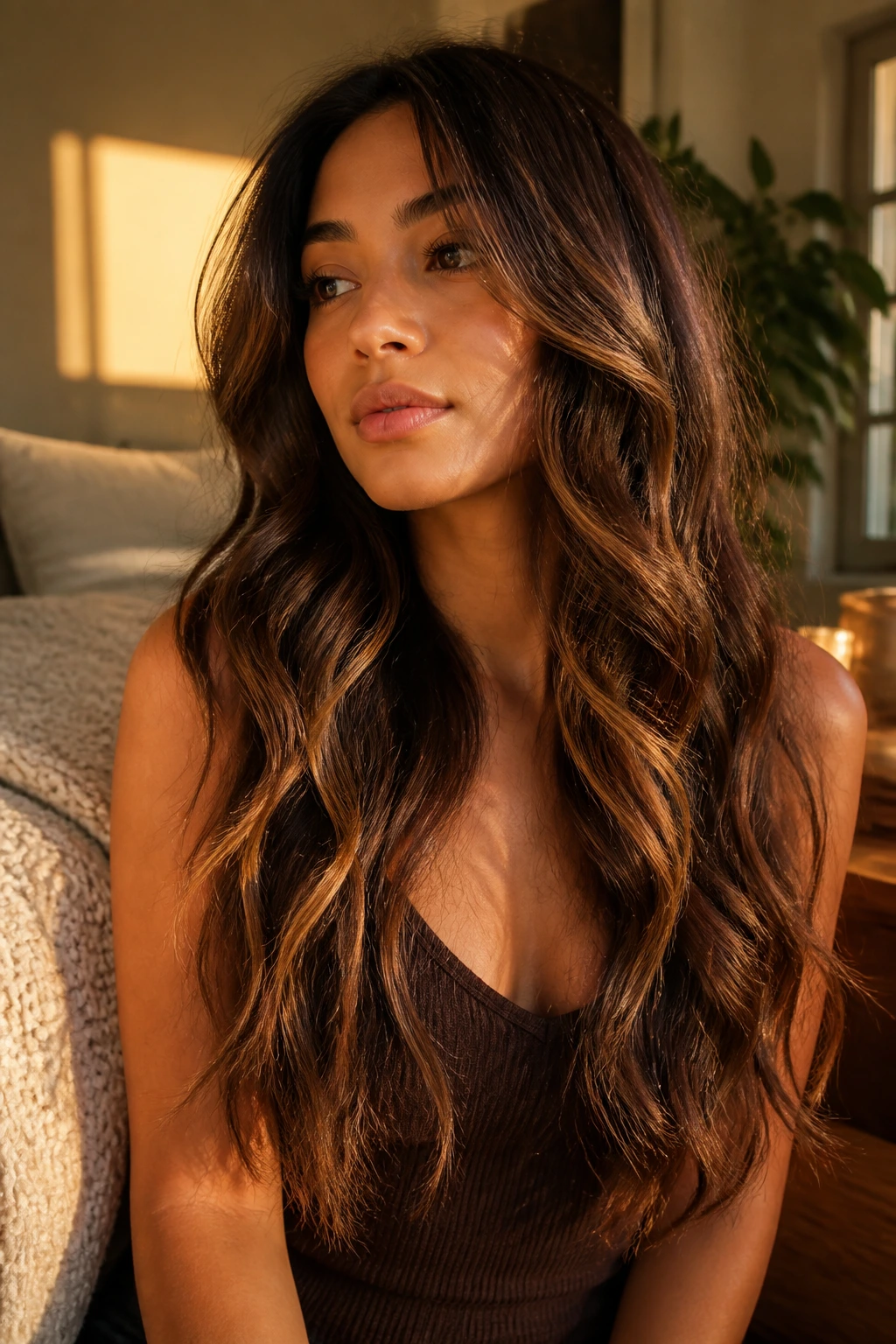
Mermaid layers are longer and softer than a shag, with the change in length spread out over a lot of hair. The effect is dreamy, but the real value is movement. On medium skin tones, that long, flowing texture keeps the face from sinking into a flat silhouette.
This is one of the better choices if you want to keep a lot of length and still see shape. The layers create a ripple effect rather than obvious steps. Think of it as movement that starts halfway down and finishes at the ends.
It’s especially good with warm brunette shades, copper, or sun-kissed ribbons, because the layers create space for the color to show. You’ll actually see the bends instead of a solid block.
23. Long Octopus Cut With a Soft Crown
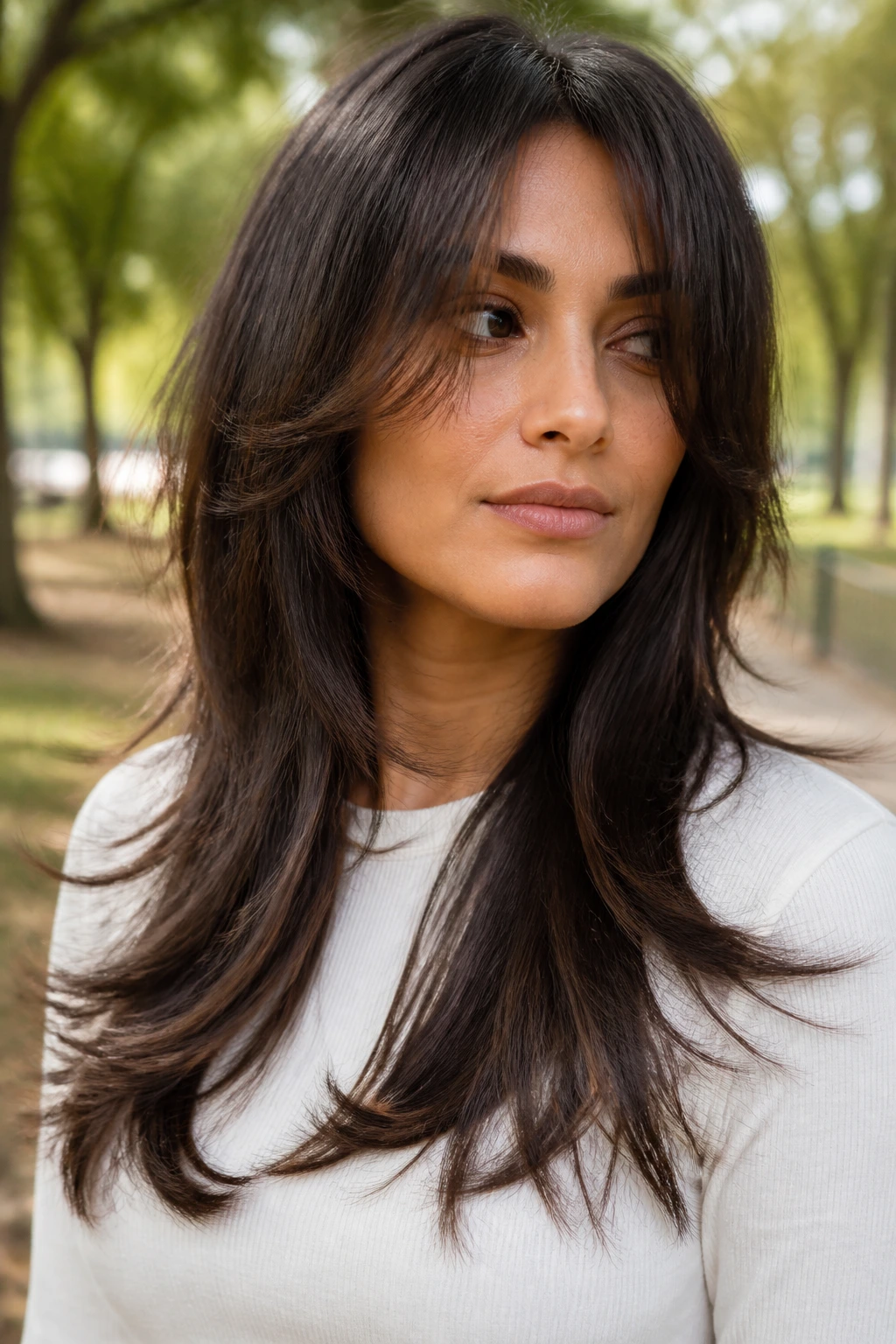
The long octopus cut borrows the lifted crown and dangling ends of the shorter version, then stretches everything out. The top has shape. The bottom stays long and wispy. For medium skin tones, that contrast can sharpen the face without making the haircut feel severe.
It’s a bold shape, but not an unwearable one. The key is keeping the crown airy and the ends separated enough to move. If the styling gets too polished, the cut loses its point. If it gets too messy, it turns into a shag that forgot its purpose.
Best For
- Wavy or curly hair that needs volume up top
- People who like a stronger silhouette
- Medium skin tones that can handle contrast near the face
24. Tapered Length With Rounded Ends
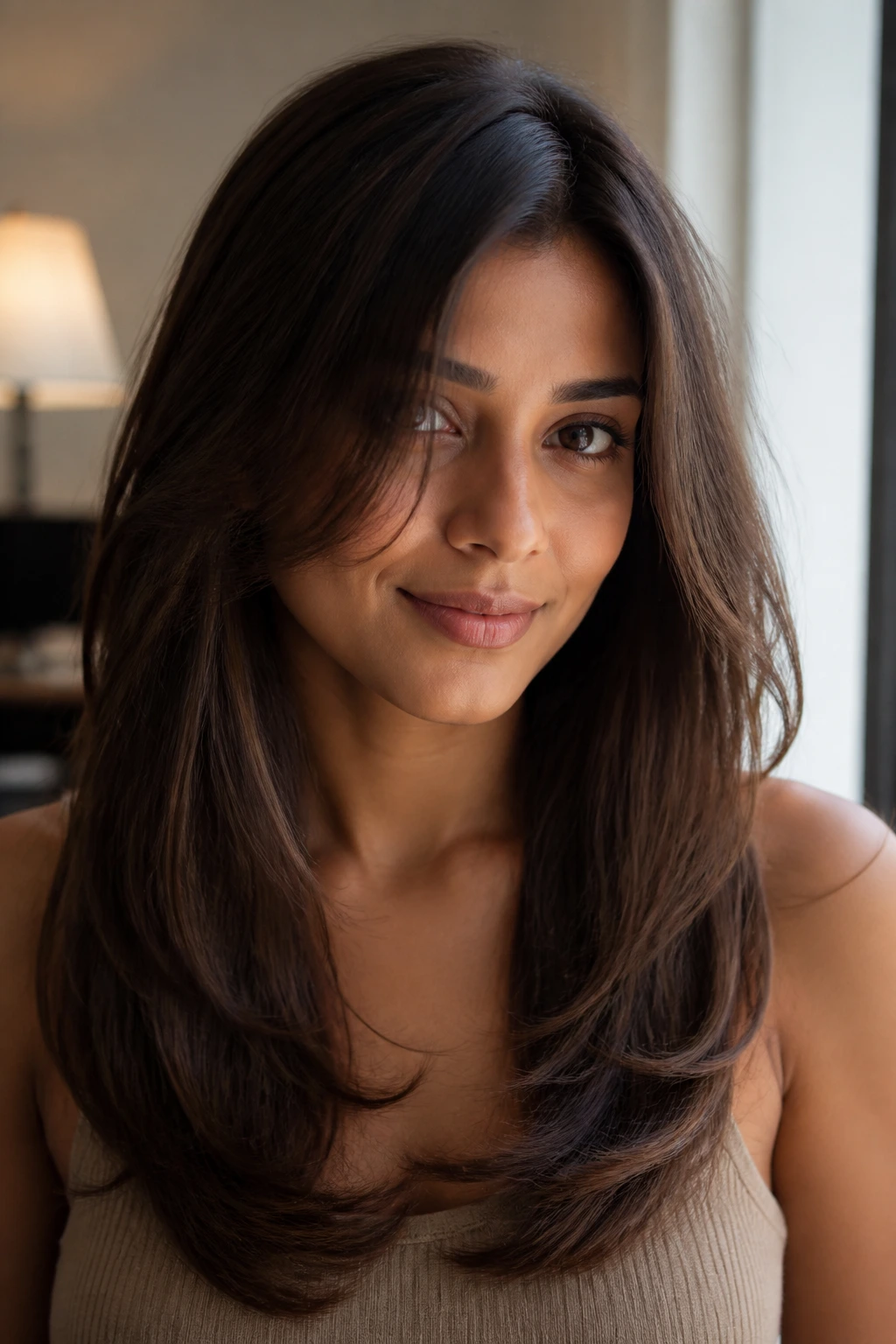
A tapered cut narrows gradually toward the bottom so the hair doesn’t hang with the same weight all the way down. The rounded ends soften the outline, which is especially flattering on medium skin tones because it keeps the overall look smooth and balanced.
This cut is subtle, and that subtlety is its strength. It works for people who don’t want layers flying everywhere but still want long hair with shape. The taper gives motion without obvious graduation.
It’s a smart option for work settings, formal settings, or anyone who wants long hair that can be tucked behind the shoulders and still look intentional. Not every cut needs to make a statement. Some just need to behave.
25. Side-Swept Fringe With Cascading Layers
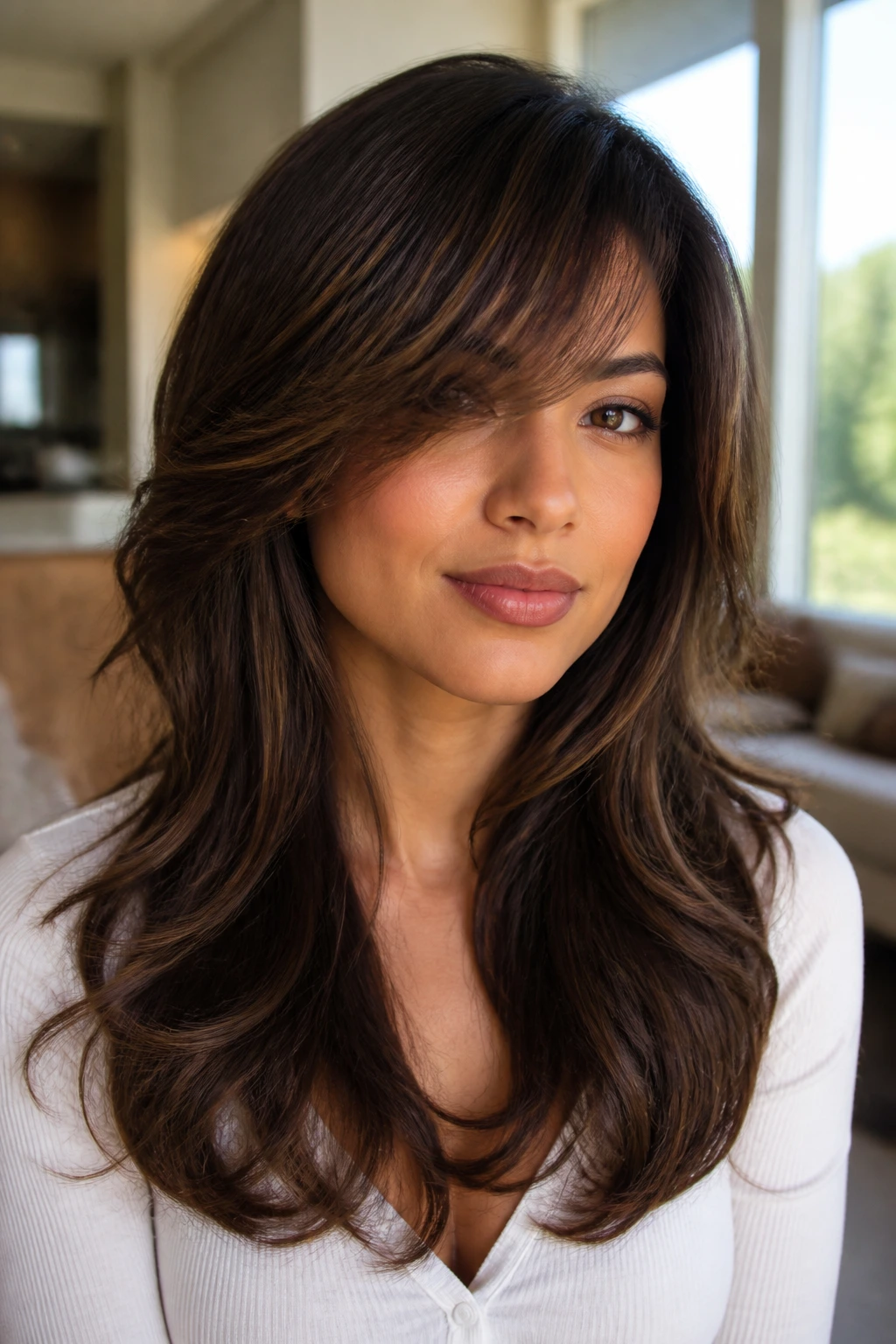
A side-swept fringe can change the mood of long hair faster than almost anything else. It adds a diagonal line across the face, which helps medium skin tones look a little more lifted and a little less symmetrical in the best way. The cascade behind it keeps the style soft so the fringe doesn’t feel like a separate object stuck onto the haircut.
This is a strong option if center parts don’t do much for you. The sweep gives the face a clear opening, and the layers behind it keep the length moving. It’s one of those cuts that looks especially good when the hair is tucked behind one ear and left loose on the other side.
If you want a version that grows out gracefully, keep the fringe long enough to blend into the front layers. That way the cut can shift with you instead of demanding a trim every two weeks.
Why Long Texture Changes the Whole Read on Medium Skin Tones
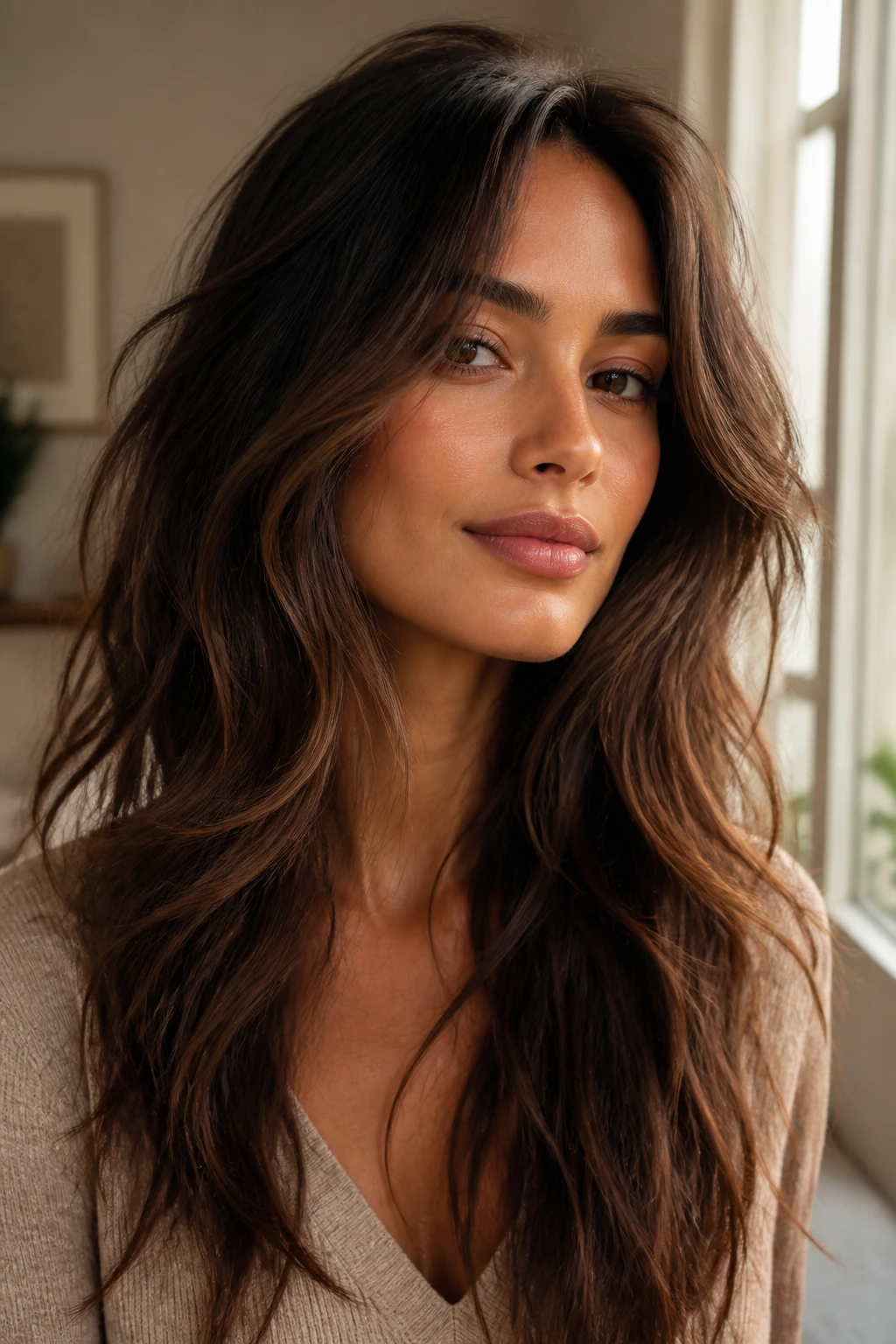
Medium skin tones sit in a broad middle range, which sounds obvious until you watch how quickly a haircut can change the way the face reads. One heavy curtain of hair can swallow the cheekbones. A good layer at the chin can pull them forward. A soft wave around the jaw can warm the complexion. A sharper line can make olive skin look more defined. The haircut is not just “style.” It is framing.
That is why long textured cuts work so well here. They create small changes in shadow and shape without forcing the face into one fixed look. If your skin has golden undertones, softer feathering and caramel-friendly movement can make the warmth feel rich instead of brassy. If your skin leans neutral or olive, sharper layers and cleaner internal texture keep the style from looking too syrupy or sweet.
There’s also a practical piece people skip over. Medium skin tones often look best when the hair has enough movement to avoid a flat, monochrome block. Texture gives the hair some lift away from the face, which lets the complexion show through. It sounds tiny. It isn’t.
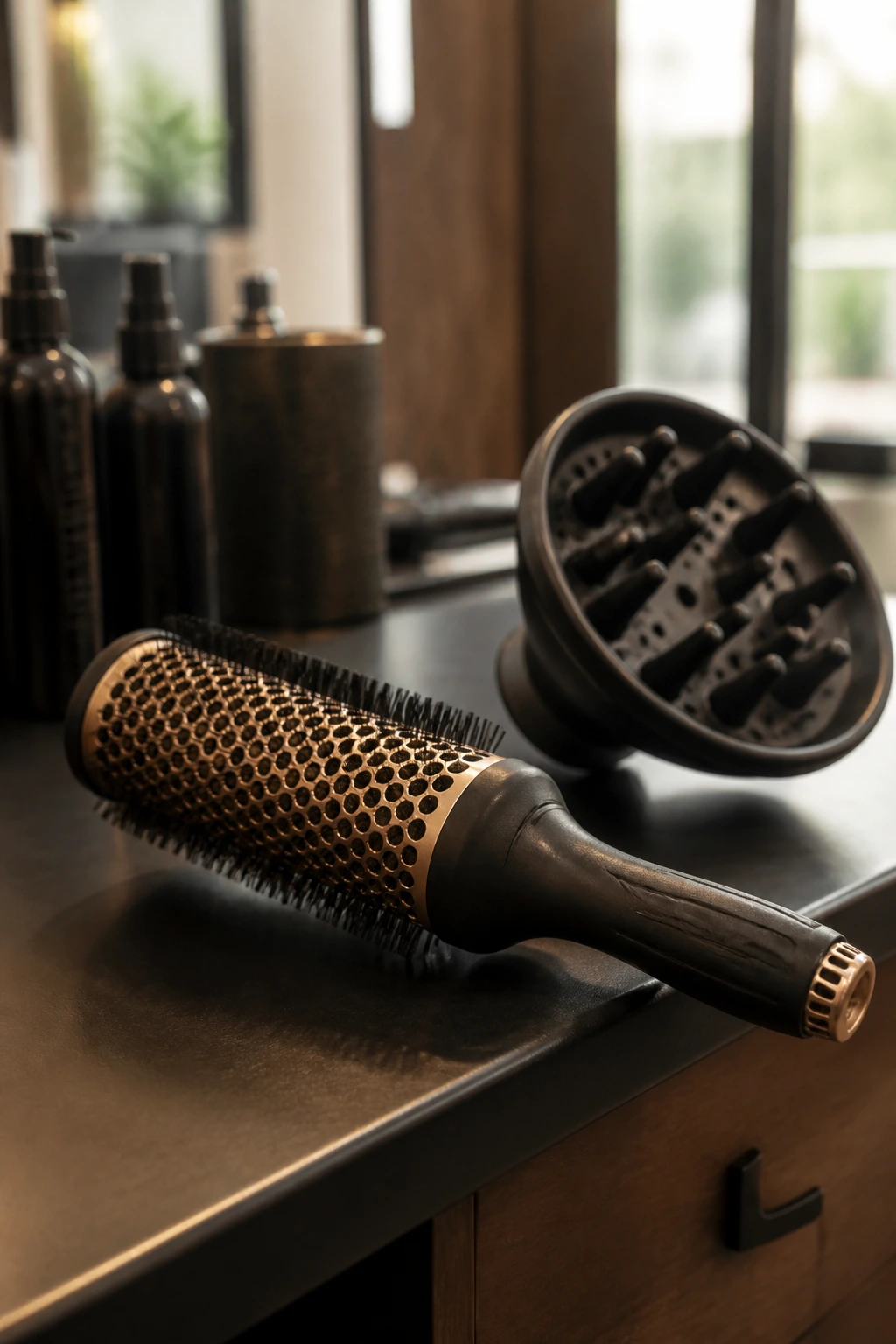
The Tools That Make These Cuts Behave
-
Round brush, 1.5 to 2 inches: Best for flipping feathered layers, curtain bangs, and blowout cuts without making the ends look stiff.
-
Diffuser attachment: The easiest way to keep waves and curls defined when you want movement without frizz.
-
Wide-tooth comb: Good for detangling long textured hair after conditioner or before styling without breaking up the pattern too much.
-
Sectioning clips: Necessary if you want to dry the crown, bangs, and face frame in the right direction instead of all at once.
-
Heat protectant spray: Use it before any blow-dryer, flat iron, or curling iron pass. Long hair gets tired at the mid-lengths first.
-
Texturizing spray or light dry wax: Helpful for shag cuts, wolf cuts, and sliced layers when you want pieces to separate a little.
-
Lightweight oil or smoothing cream: Best on razor-cut ends, blunt textured cuts, and dry-looking layers that need polish, not weight.
-
Silk pillowcase or bonnet: Keeps the shape from getting crushed overnight, especially if you have curtain bangs or a deep side part.
What to Tell Your Stylist Before They Pick Up the Shears
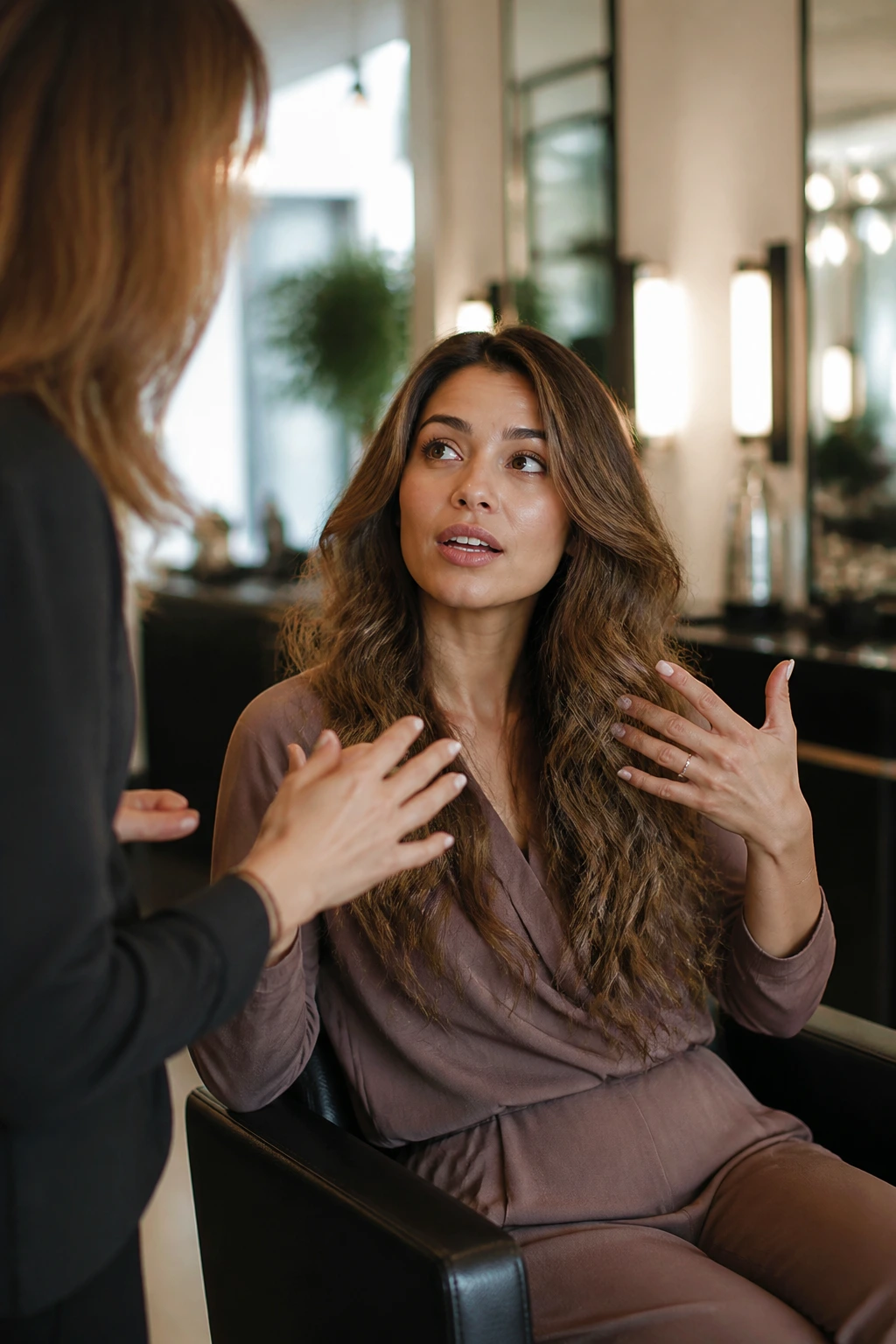
Bring more than one photo. One photo shows the shape you want. The second shows the version you do not want. That saves a lot of awkward interpretation, especially with layered cuts that can swing from soft to overdone very quickly.
Say where you want the shortest piece to land. Chin, cheekbone, collarbone, or below the shoulder — those are not small differences. If your hair shrinks when it dries, mention that before anyone starts cutting. If you usually air-dry, say that too. A shag cut done for a blowout and the same cut done for air-drying are not the same haircut.
A few useful phrases:
- “I want movement without losing the length past my shoulders.”
- “My hair gets wider as it dries.”
- “I wear a center part most days.”
- “I want the front to frame my face, not crowd it.”
That kind of language gets you farther than asking for something “soft” or “fresh.” Those words are lovely. They’re also vague.
How to Wear the Shape on Busy Mornings
Air-Dried Finish:
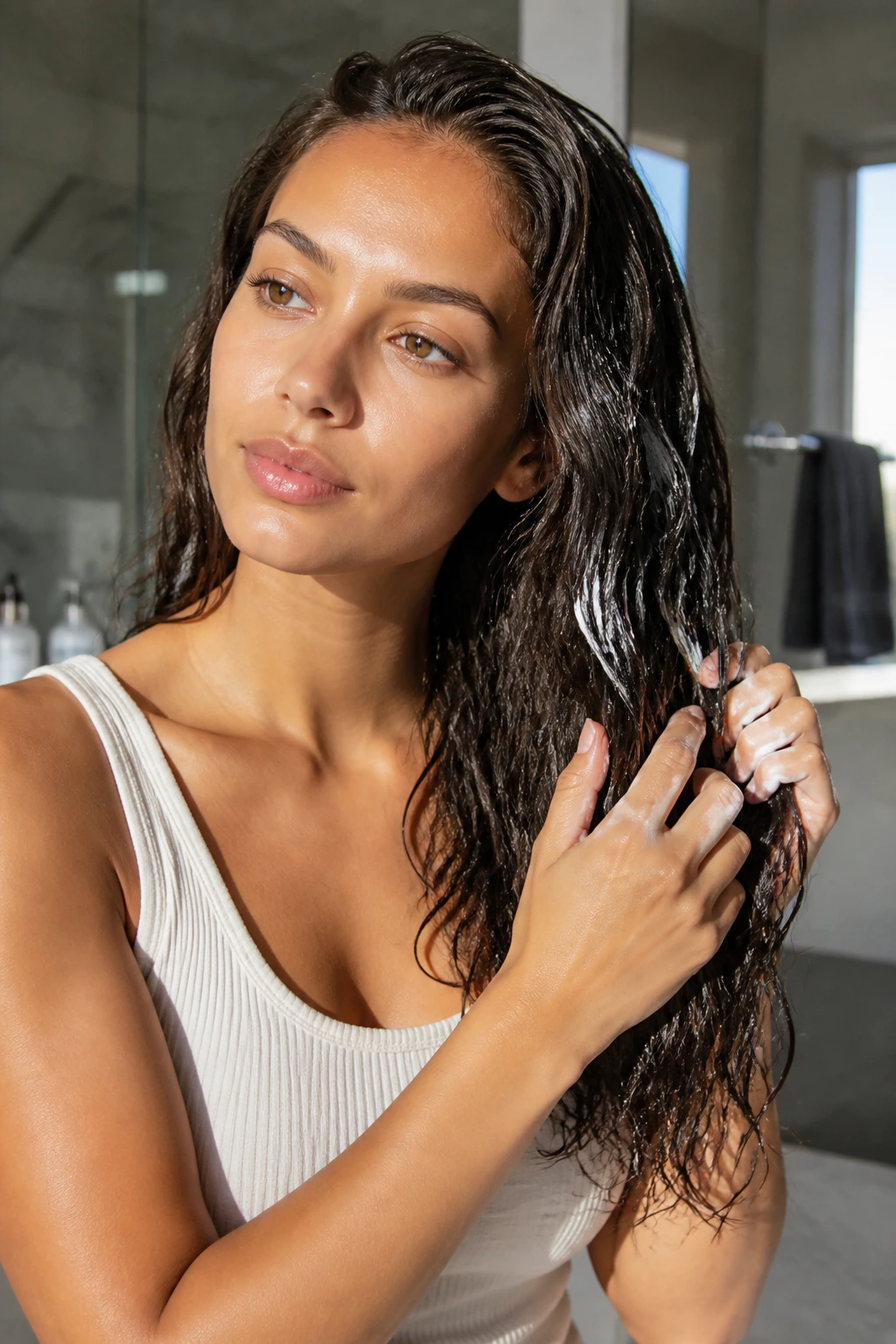
Work a pea-sized amount of curl cream or lightweight leave-in through damp mids and ends, then twist or scrunch the front pieces so they bend away from the face. Leave the roots alone unless they need a little volume from a diffuser. The goal is not perfect symmetry. The goal is a shape that falls on purpose.
Blowout Finish:
Dry the crown first, then use a round brush to turn the layers away from the face. Focus your energy on the front and top half of the hair; the bottom usually needs less correction than people think. A quick bend at the ends does more for the haircut than overworking every section.
Second-Day Hair:
Dry shampoo goes on the roots, not the ends. If the front has collapsed, mist it lightly with water and reset the layers with your fingers or a brush. A little heat on the face-framing pieces is usually enough to wake up the whole cut.
Pinned-Back Days:
Long textured cuts do not lose their shape just because you tuck them behind the ears or clip the front back. In fact, that movement around the face often looks better once it’s a little controlled. Don’t overthink it.
Additional Tips and Texture Boosters
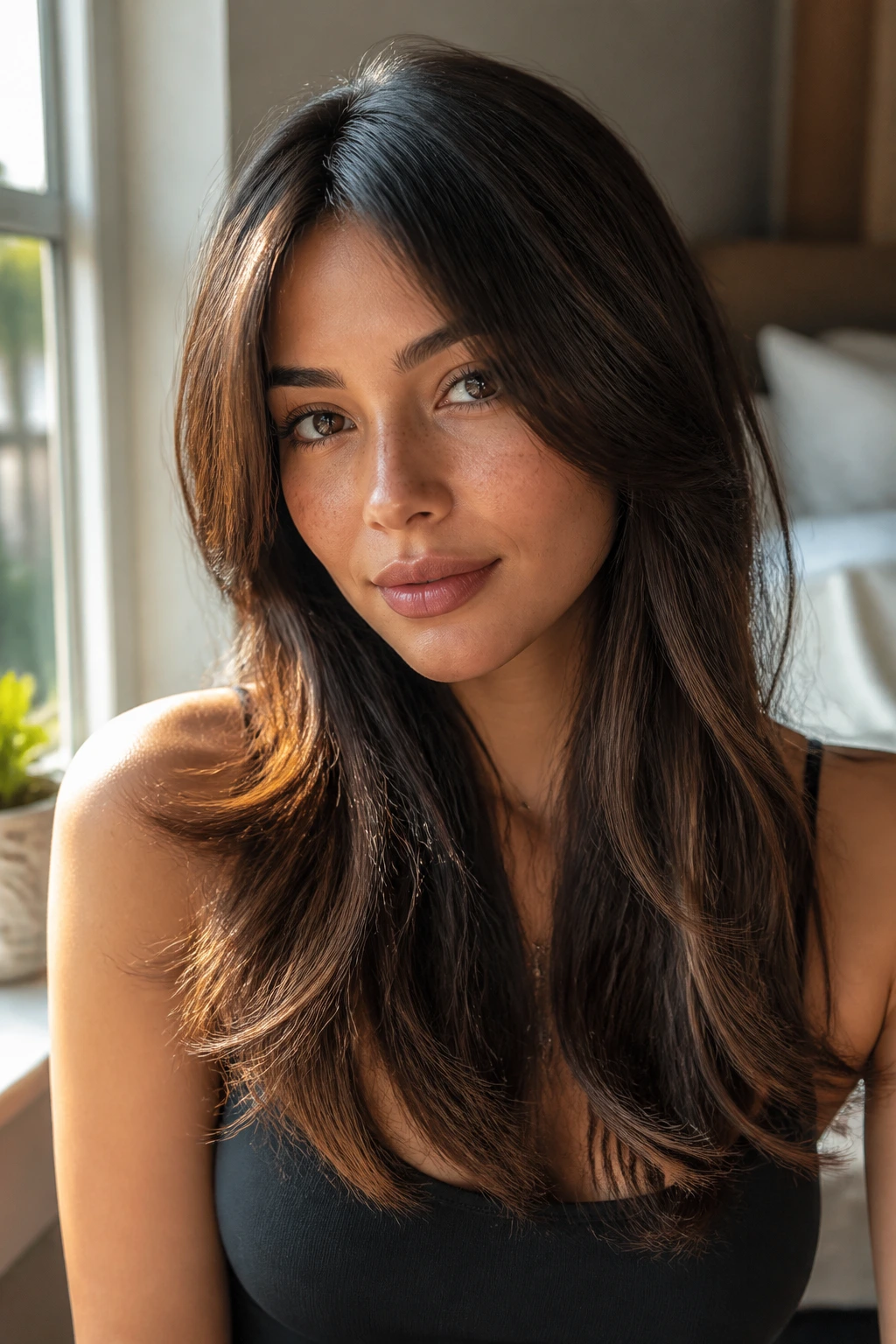
Flavor Enhancement: A clear gloss or demi-permanent glaze every 6 to 8 weeks keeps long ends from looking dusty, especially if you wear rich brunette, copper, or caramel tones. The haircut shows better when the light moves across it cleanly.
Customization: If you want less upkeep, keep the shortest face-framing layer below the chin. If you want more style drama, let that shortest point hit the cheekbone. That one adjustment changes how much work the cut does.
Serving Suggestions: Tuck one side behind the ear, leave the other loose, and let the front layers fall where they want. That asymmetry is often enough to make the whole cut look more finished than a perfectly centered style.
Make-It-Yours:
- For fine hair, choose invisible or blunt-textured layers.
- For thick hair, ask for weight removal inside the shape, not just at the bottom.
- For curly hair, cut with shrinkage in mind and keep the top a touch longer than you think you need.
- For straight hair, use curtain bangs, feathering, or a side part to keep the haircut from feeling too static.
Common Mistakes to Avoid
-
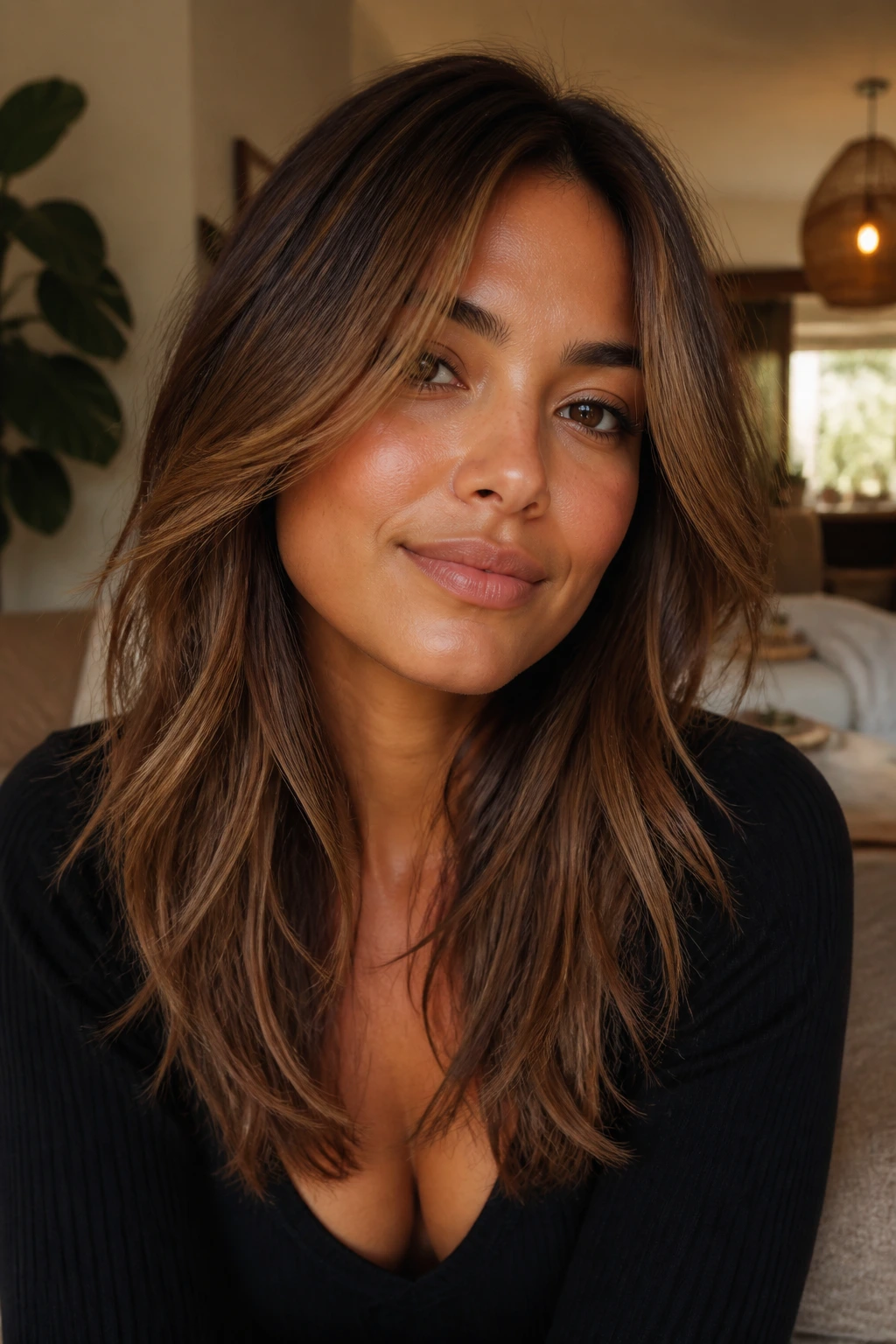
Starting the shortest layer too high: If the face frame begins near the temples on very long hair, the cut can turn fuzzy and lose its shape fast. Keep the shortest point at a place that still leaves room to fall.
-
Over-thinning fine hair: Fine hair doesn’t need a lot of aggressive texturizing. The symptom is see-through ends and a top that looks bigger than the bottom. The fix is a cleaner perimeter with lighter internal shaping.
-
Ignoring natural shrinkage: Curly and wavy hair often springs up more than expected. If you cut it too short wet, the front can jump above the cheekbone and stay there in a way that feels accidental.
-
Letting thick hair keep all its bulk at the sides: When the sides stay heavy, medium skin tones can look hidden behind the haircut. Ask for strategic weight removal so the shape opens around the face.
-
Styling only the front and leaving the rest flat: A pretty face frame with dead-flat mids looks unfinished. Wake up the crown and the outer layers too, even if it’s just a few bends.
Variations and Adaptations to Try
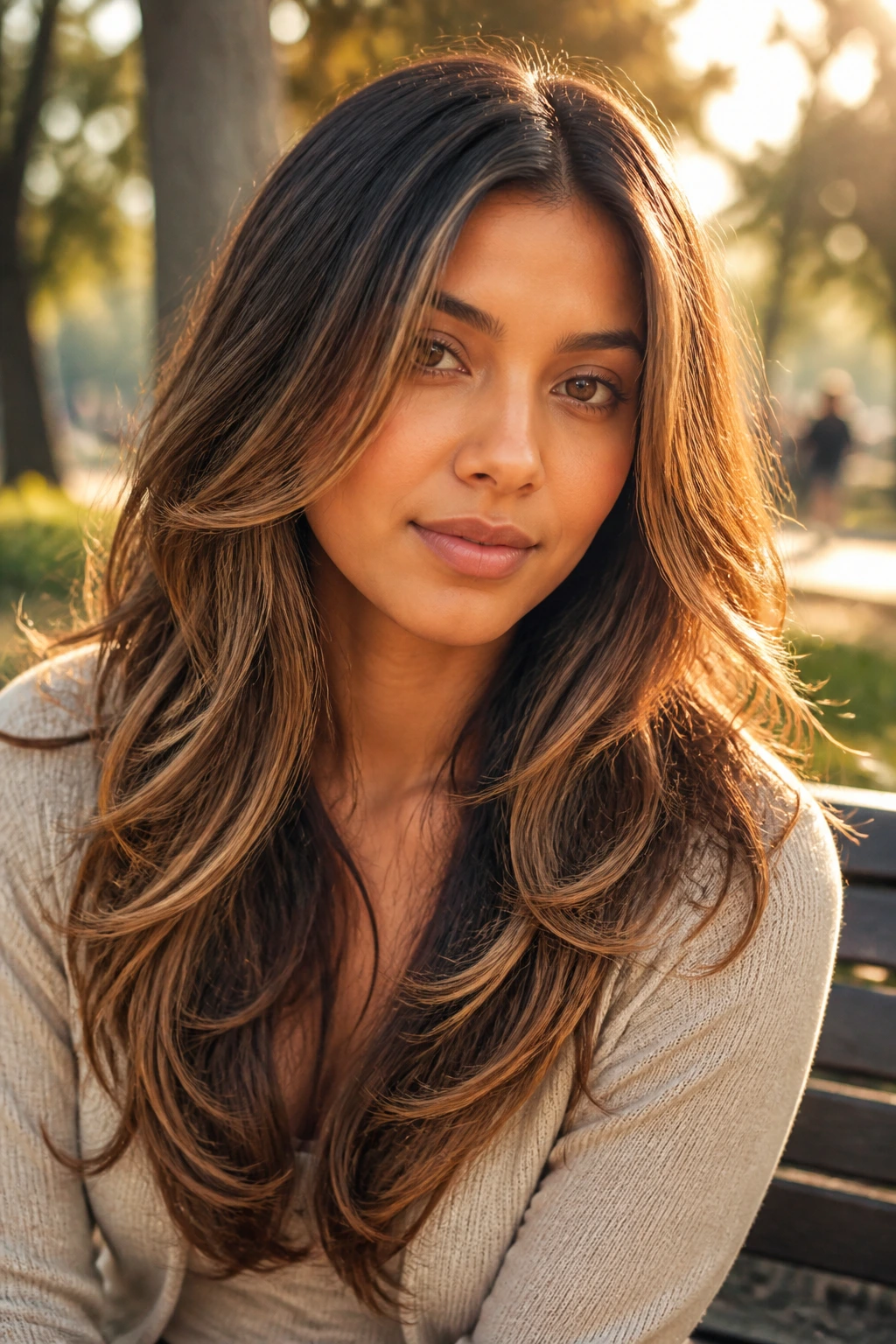
Warm Honey Version: Add caramel, honey, or soft copper ribbons to feathered, butterfly, or curtain-layer cuts. The warmth works especially well if your medium skin tone leans golden or olive, because the hair and complexion share the same glow range.
Cool Espresso Version: Keep the haircut clean and pair it with espresso, ash brown, or blue-black depth. The sharper shade makes sliced layers, blunt textured cuts, and C-cuts look crisper on neutral-to-cool medium skin.
Low-Maintenance Air-Dry Version: Choose invisible layers, long face-framing pieces, or a soft U-shape. These hold their outline even when you skip heat tools, which is useful if you want shape without a full styling session.
Curly-First Version: Keep the shortest layer longer than you would on straight hair, and let the stylist cut for curl pattern, not wet length alone. This keeps the shape from floating up too high once the curls dry.
Bold Texture Version: If you like more edge, move toward wolf cuts, long shags, or disconnected layers. The extra texture gives medium skin tones a strong frame and keeps long hair from feeling too polite.
Keeping the Shape Between Trims
Long textured haircuts do not need constant salon visits, but they do need a rhythm. Most layered cuts hold their shape for about 8 to 12 weeks before the front starts to drop and the ends lose definition. Bangs usually need a touch-up sooner, often every 4 to 6 weeks, because they hit the face where every small change shows.
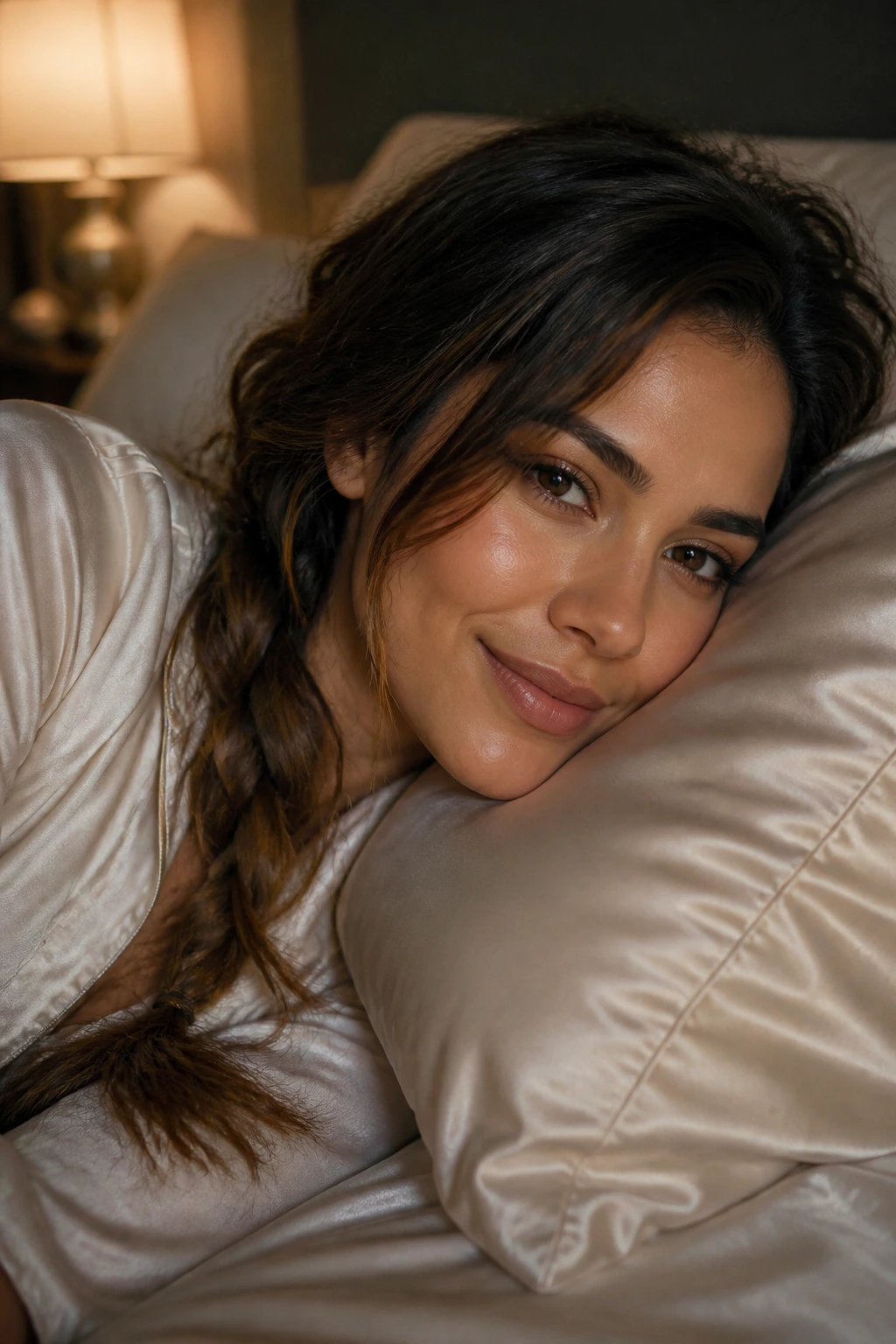
At home, protect the shape at night. A silk pillowcase helps, but a loose braid, a low ponytail with a soft scrunchie, or a bonnet can keep curtain bangs and face-framing layers from getting squashed. If your hair is curly, a pineapple or loose top clip helps preserve the pattern without flattening the crown.
Refreshers matter, too. A root-lifting spray on blowout cuts, a little water and leave-in on wavy cuts, and a tiny bit of oil on dry ends can buy you another few days before the haircut starts to feel tired. If you color your hair, a gloss every 6 to 8 weeks keeps the movement visible instead of dusty.
Questions People Ask Before Booking
Which long textured haircut flatters medium skin tones most?
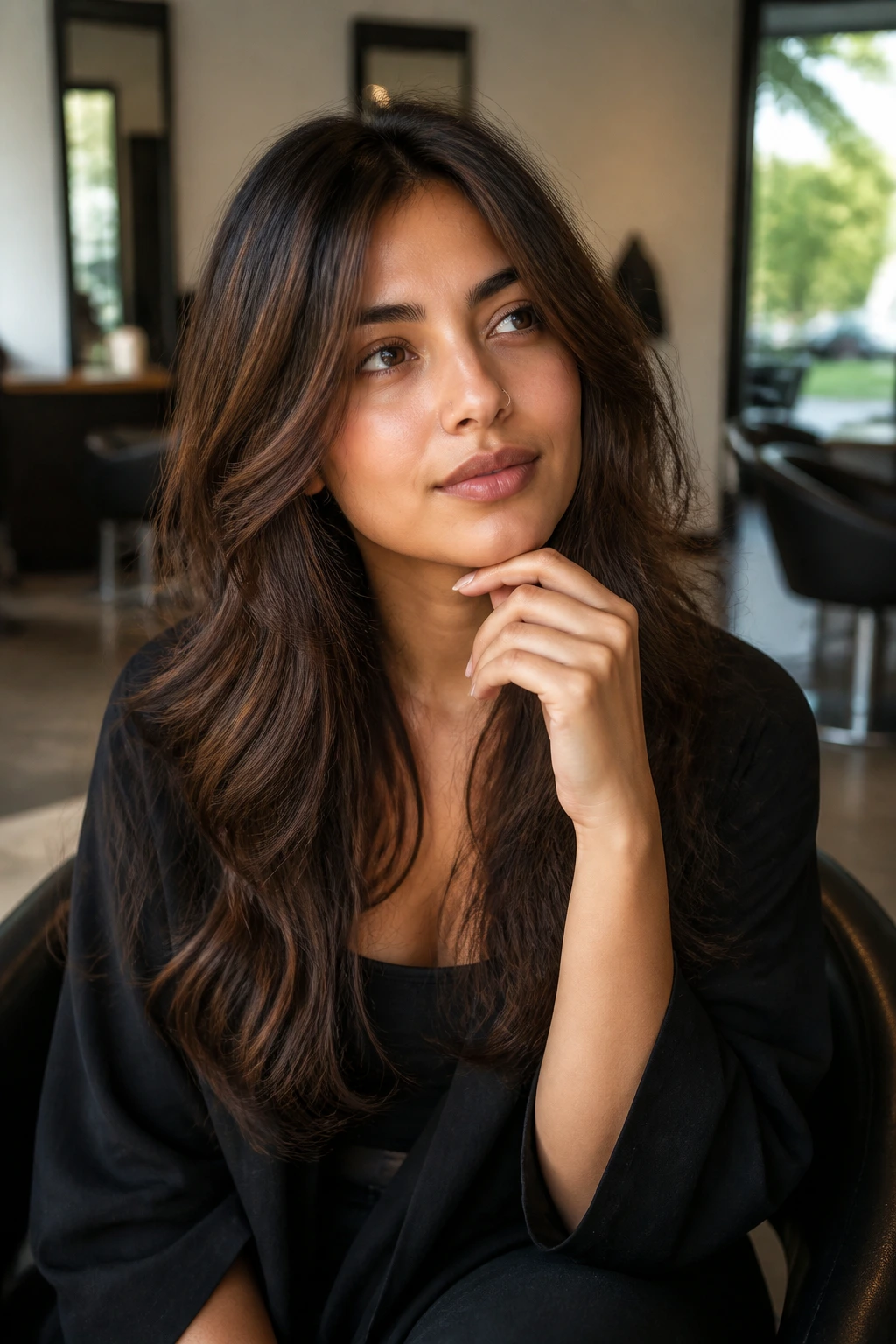
The honest answer is that the best one depends on your hair density and styling habit. If you want the safest broad hit, butterfly layers, curtain bangs, and soft face-framing layers tend to work on a lot of medium skin tones because they frame the face without overpowering it.
Do curtain bangs work on medium skin tones with round faces?
Yes, if the shortest point is kept soft and the side pieces open long enough to skim the cheekbones. A blunt, short fringe can make roundness feel stronger; a longer curtain shape usually lengthens the face instead.
Will layers make fine hair look thinner?
They can, if the layers are too short or too many. Fine hair usually does better with invisible layers, blunt texture, or just a small amount of face framing so the ends keep enough weight.
What if my hair is curly and shrinks a lot?
Tell the stylist your curl pattern and how much shrinkage you usually see. The haircut should be planned with the dried shape in mind, which often means keeping the front longer than you expect and not chasing symmetry when the hair is wet.
How often should I trim a long textured cut?
Every 8 to 12 weeks is a good range for most long styles. If you have bangs or a very visible face frame, you may want a cleanup sooner so the front pieces keep their shape.
Can I still wear these cuts in a ponytail?
Absolutely, but some shapes behave better than others. Long face-framing layers, U-shapes, and C-cuts usually tuck back well; heavy shag and wolf cuts can leave more loose pieces around the face, which is either charming or annoying depending on your mood.
Is a razor cut a bad idea if my hair is dry?
Not automatically, but it needs a careful hand. Dry or fragile hair can fray if the razor is used too aggressively, so a softer point-cut or scissor-based texture may be safer.
What’s the easiest cut to maintain if I don’t heat-style much?
Invisible layers, a soft U-shape, or long face-framing layers usually ask for the least fuss. They still have movement when air-dried, and they don’t collapse as obviously when you skip a blowout.
The Shapes That Earn Their Keep
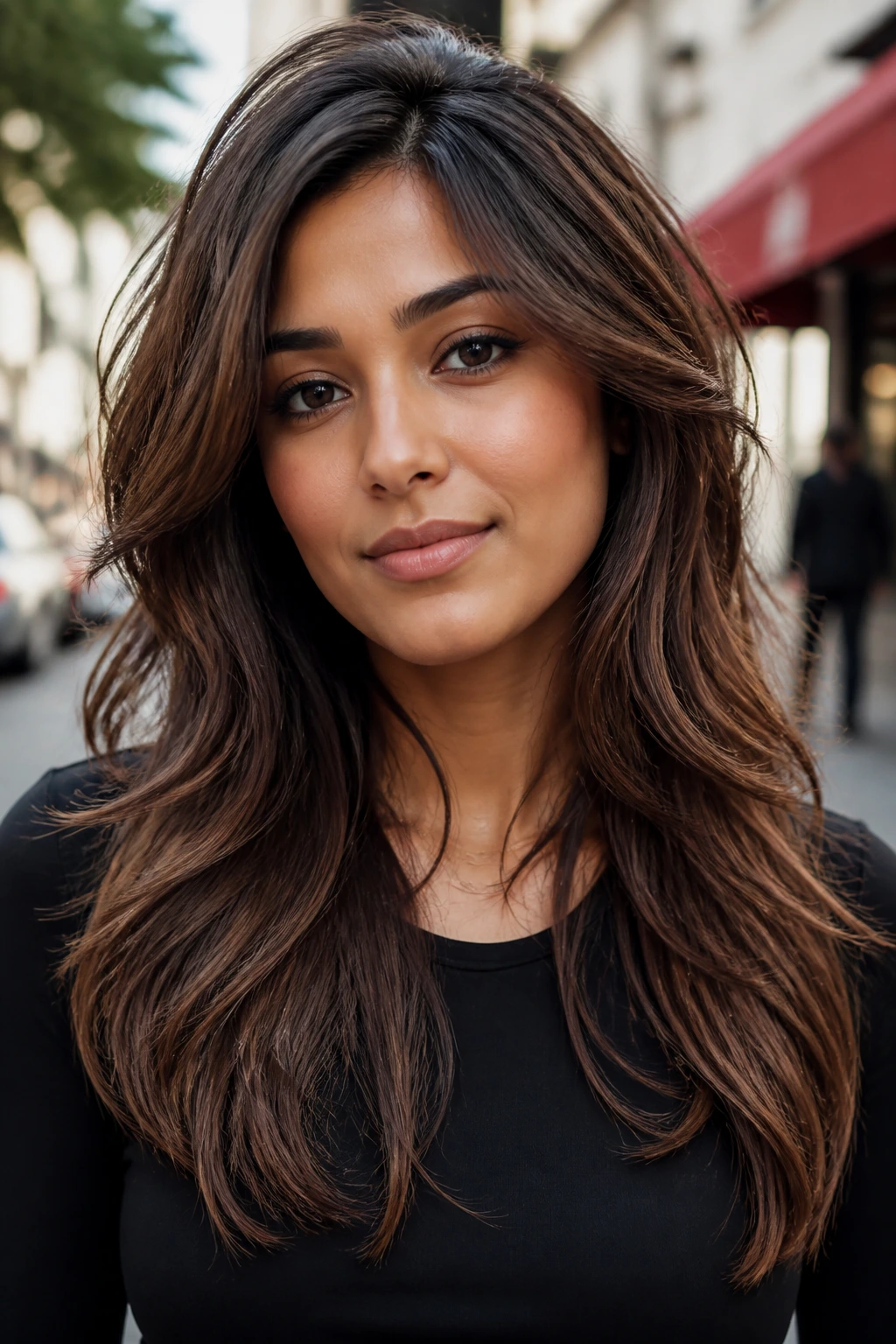
The best long textured haircut is not the one with the loudest shape. It’s the one that makes your medium skin tone look balanced the minute you walk past a mirror. Sometimes that means feathered ends that flick off the shoulders. Sometimes it means a butterfly cut with a little crown lift. Sometimes it means a blunt perimeter with hidden movement inside.
That’s the real lesson here: texture should support the face, not fight it. If the cut opens the cheekbones, softens the jaw, or gives the hair enough motion to stop reading as one heavy sheet, you’re in the right territory. Everything else is just style preference.
Bring one strong reference photo, speak plainly about your length limits, and choose the version that fits how you actually live. The haircut that behaves on day three is usually the one worth keeping.