



Tan skin does a lot of the work for you. It can make brunette hair look deeper, blonde pieces look cleaner, and warm highlights look like they belong there instead of sitting on top like an afterthought. The best summer brunettes blonde hairstyles for tan skin don’t chase icy brightness; they keep the base rich, then place lighter pieces where the sun would hit first — hairline, cheekbones, ends, and the top layer that moves when you turn your head.
That’s the part a lot of people miss. A blonde that looks lovely on pale skin can turn chalky or washed out on bronzed skin, while a warmer caramel, honey, beige, or champagne blonde can make the whole face look more awake with almost no extra makeup. The trick is less about going lighter and more about choosing the right lightness. Tan skin can carry contrast. It can also carry softness. The sweet spot is knowing which one you want.
And once you start looking at it that way, the choices open up fast. You’re not stuck with one flat “bronde” idea. You can go beachy, sharp, shaggy, glossy, curly, braided, short, long, or sleek — as long as the brunette base and blonde placement are doing the right job together.
Why This Collection Feels Different
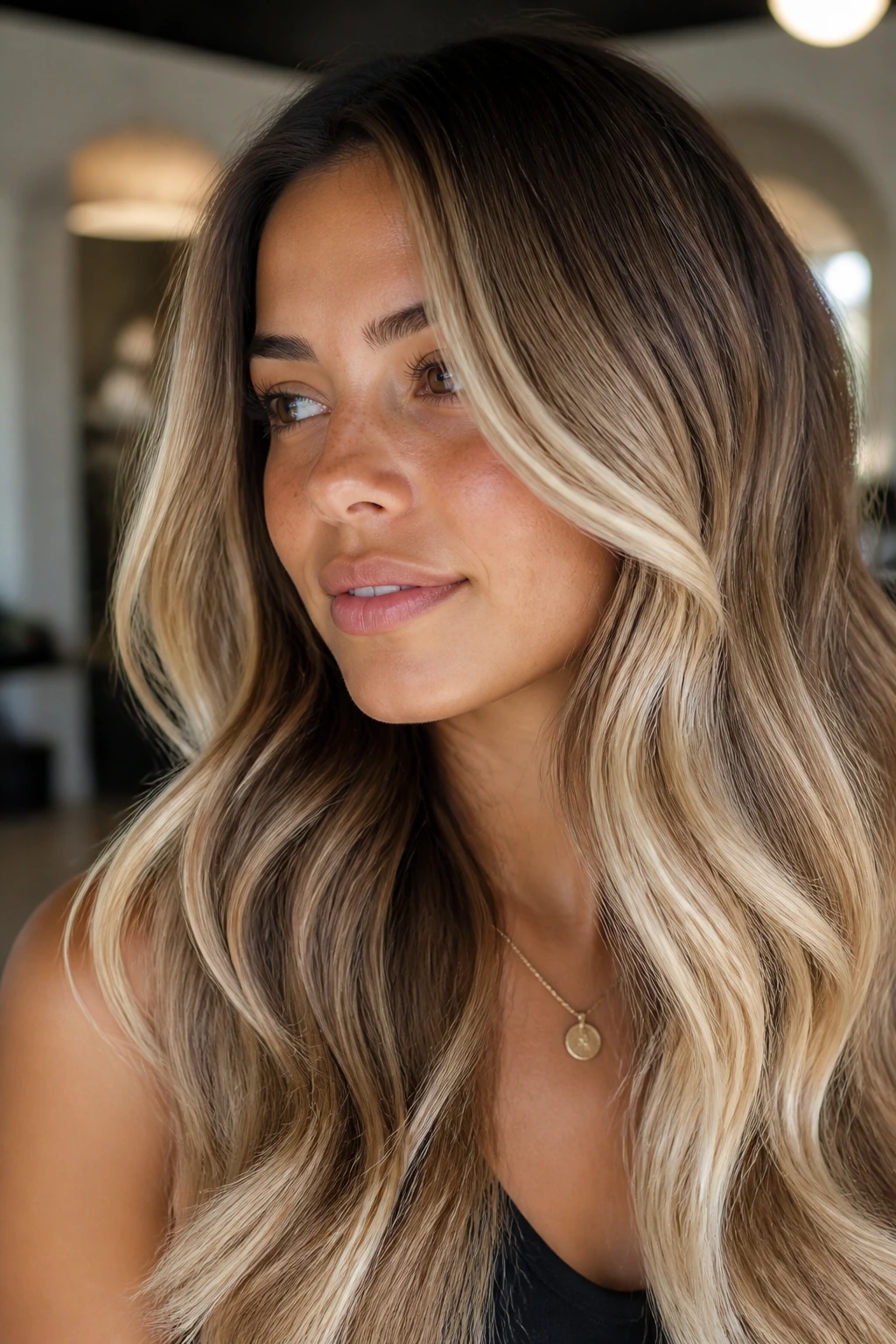
-
Shade range: It moves through honey, caramel, beige, champagne, mushroom, and pearl blonde so you can match warm, neutral, or olive tan skin without forcing one tone on everyone.
-
Cut range: You’ll see pixies, bobs, lobs, shags, ponytails, braids, and long waves, because color alone is not the whole story. Shape changes how the blonde reads.
-
Grow-out sanity: Several of these looks keep a rooted brunette base, which matters if you want color that softens as it grows instead of shouting at you two weeks later.
-
Texture-friendly ideas: Straight, wavy, curly, and coily hair all get a place here, with styling notes that help the highlights show instead of disappearing.
-
Salon language that helps: Each idea points to a real placement — money piece, balayage, ribbon highlight, frosted end, or gloss — so you can ask for something specific instead of waving at a photo and hoping.
1. Soft Bronde Beach Waves
Soft bronde beach waves are the safest place to start if you want dimension without drama. The color sits between brown and blonde in a way that feels relaxed, with a level 6 or 7 brunette base and honey-beige ribbons blended through the mids and ends.
On tan skin, that mix gives warmth without turning orange. It also keeps the hair from looking too dark in bright daylight. A 1¼-inch wand, a loose brush-through, and a touch of salt spray make the wave wide and soft instead of curled into neat little tubes.
Ask for pieces that begin a few inches below the root, not a full scalp-to-end blonde job. That soft gap at the root is what keeps the whole thing wearable.
2. Caramel Money-Piece Lob
Why does this one work so well? Because the cut does half the job before color even enters the picture. A lob that lands right at the collarbone keeps the neck clear and lets caramel money pieces sit right where tan skin gets the most glow: along the temples, cheekbones, and jawline.
The blonde is brighter only at the front, so the look stays low-maintenance. Ask for two face-framing pieces lifted just a level or two above the rest of the hair, with the mid-lengths kept in a darker caramel-brown zone.
This is the kind of style that looks polished with almost no effort. A center part makes it feel modern, while a slight off-center part softens the whole thing. Either way, the front brightness does the heavy lifting.
3. Honey Ribbon Curls
Honey ribbon curls are for anyone who likes a little movement in the color, not just the cut. The blonde is painted in thin, curved ribbons through curled hair so the light catches in narrow stripes instead of broad panels.
That matters on tan skin. Thin honey ribbons read warm and glossy, not stripy or artificial, and they blend into brunette lengths with almost no harsh edge. If the hair is thick, this pattern keeps the ends from looking like one heavy block of color.
Use a 1-inch iron, wrap sections away from the face, and let each curl cool before finger-separating. If you rush the cool-down, the ribbons blur together and the whole point gets lost.
4. Beige Balayage Butterfly Cut
The butterfly cut gives you those airy face layers in front and longer length through the back, which is handy if you want blonde to move around without sacrificing body. Beige balayage keeps the tone neutral, so the color doesn’t fight with tan skin that leans golden or olive.
This is a strong option when you want the front to feel light but the overall hair to stay grounded. Ask for softer brightness around the cheekbones and a few longer pieces under the crown so the layers flick up when you blow-dry.
A round brush and a little bend at the ends are enough. You do not need a full glam blowout every day; a loose lift at the roots and a tuck under the face layers is enough to make the cut read.
5. Rooted Champagne Blowout
A rooted champagne blowout is the dressier cousin in this group. The roots stay espresso or deep chestnut, then the mids melt into champagne and pale beige ends that shine without going full platinum.
On tan skin, champagne works because it has a soft yellow-gold edge rather than a stark white one. The color looks cleaner when the hair is blown smooth and volume is built at the crown with a round brush or large Velcro rollers.
This is one of the few looks here that really rewards a gloss. A clear or beige glaze keeps the champagne from drying out and makes the brunette root look richer by contrast. It’s a polished look, but not fussy.
6. Mushroom Bronde Shag
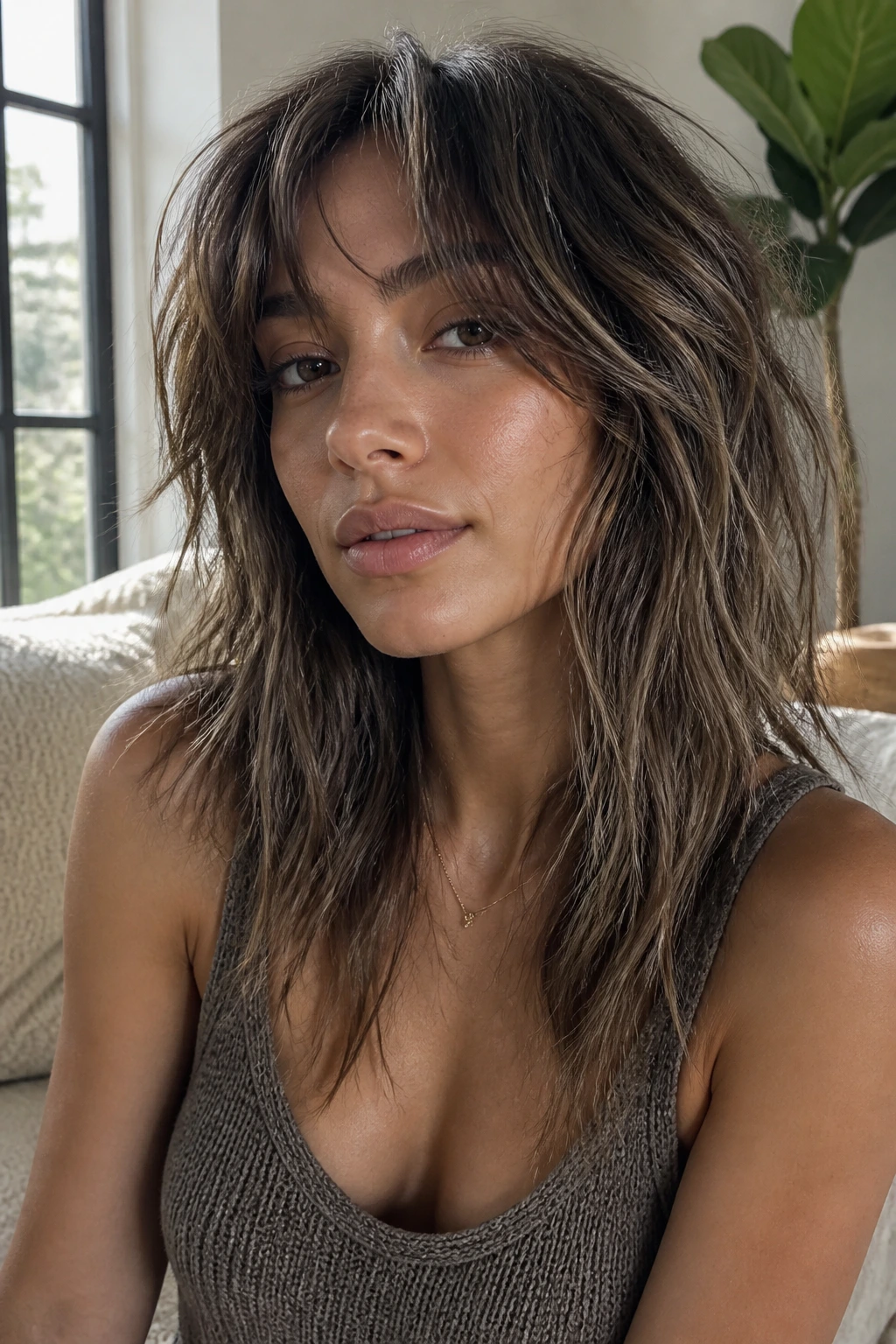
Mushroom bronde is the cool-toned answer for tan skin that leans olive or neutral. The brunette base has a muted brown-gray cast, and the blonde pieces stay soft and smoky rather than buttery.
That might sound restrained, but it’s one of the smartest color moves in the whole collection. Bright blonde can make olive tan skin look a little green or over-warmed; mushroom bronde does the opposite. It steadies the complexion and gives the shag cut a gritty, lived-in feel.
Let the fringe fall a little piecey. This style needs movement more than perfection. Air-drying with a curl cream or rough-drying with a diffuser keeps the texture from getting too neat, which would flatten the color.
7. Toffee Curtain Bangs and Layers
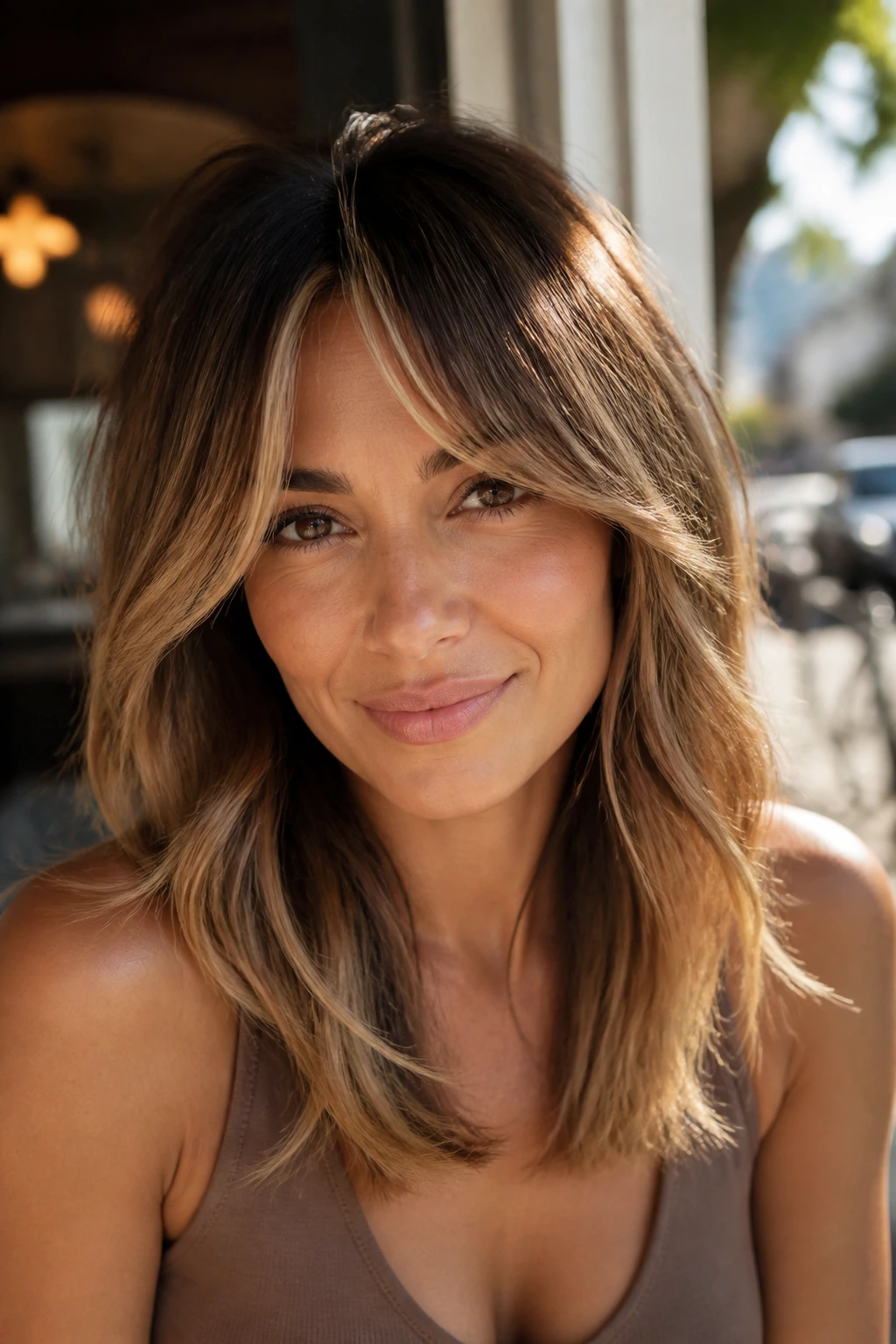
Toffee curtain bangs are the easiest way to put brightness where people actually see it first. The blonde sits around the face and through the first few layers, so tan skin gets an instant lift near the eyes and cheeks.
The nice part is that toffee is warm without being loud. It reads rich, not brassy. If your natural brown is around level 5 or 6, ask your colorist to keep the overall base intact and paint lighter toffee through the bang area and mid-length layers only.
These bangs work best when they hit somewhere around the cheekbone or just below. Too short and they can look blunt; too long and they lose the face-framing effect. A blow-dry brush and a little bend away from the face are enough.
8. Golden Half-Up Twist
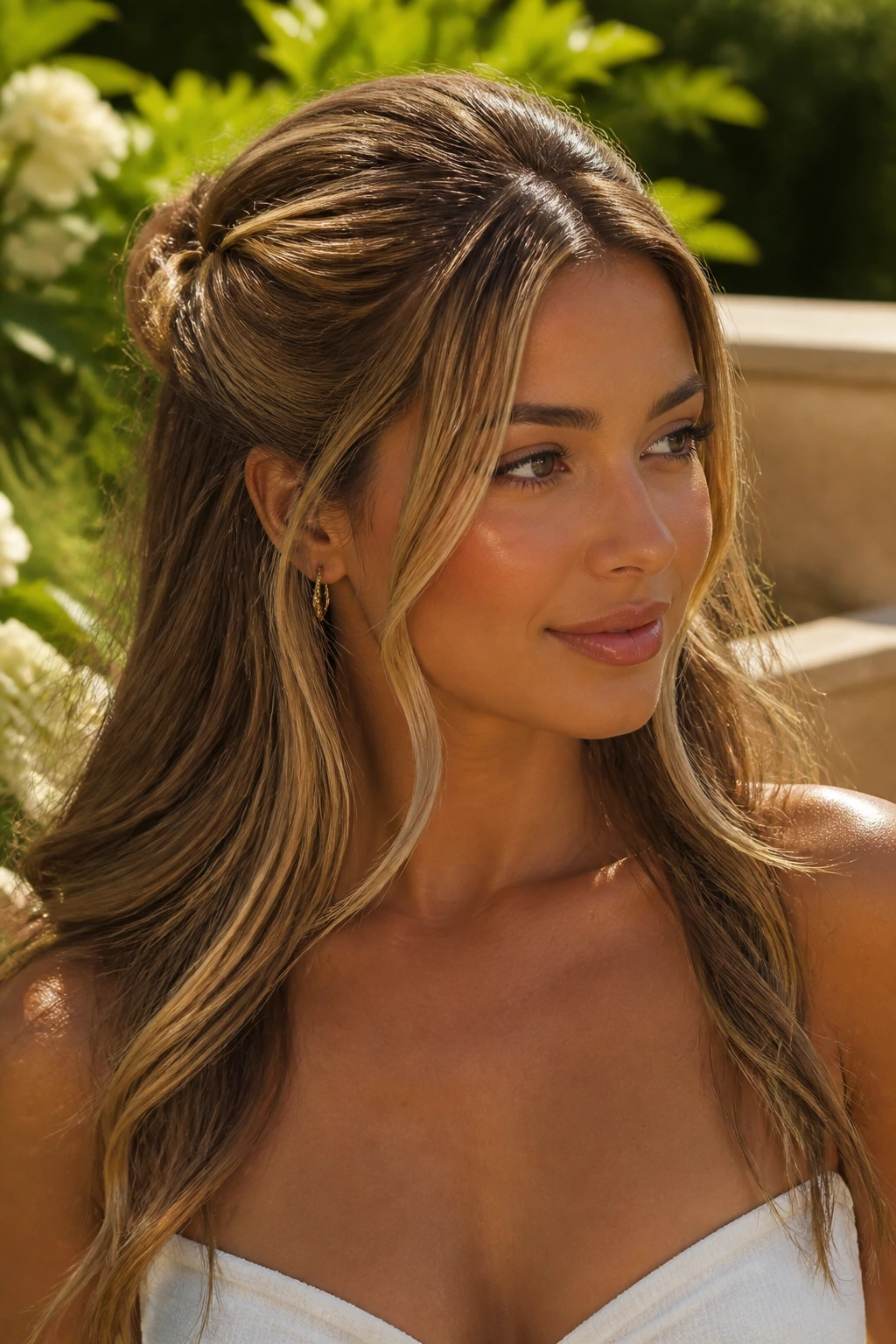
A half-up twist gives you the easiest kind of color reveal: the top section is pinned back, so the blonde underneath and around the crown shows in a clean arc. On tan skin, golden highlights look even better when the hair is lifted away from the face and the ends are left loose.
This is a good choice for long hair that needs some shape without losing softness. Ask for gold or light caramel ribbons concentrated through the outer layers, then twist back small sections from each temple and secure them low so the style doesn’t feel stiff.
Leave two thin pieces out at the front. Not too many. Just enough to soften the cheekbones and keep the whole thing from looking like a formal updo on a random Tuesday.
9. Espresso Bob with Frosted Ends
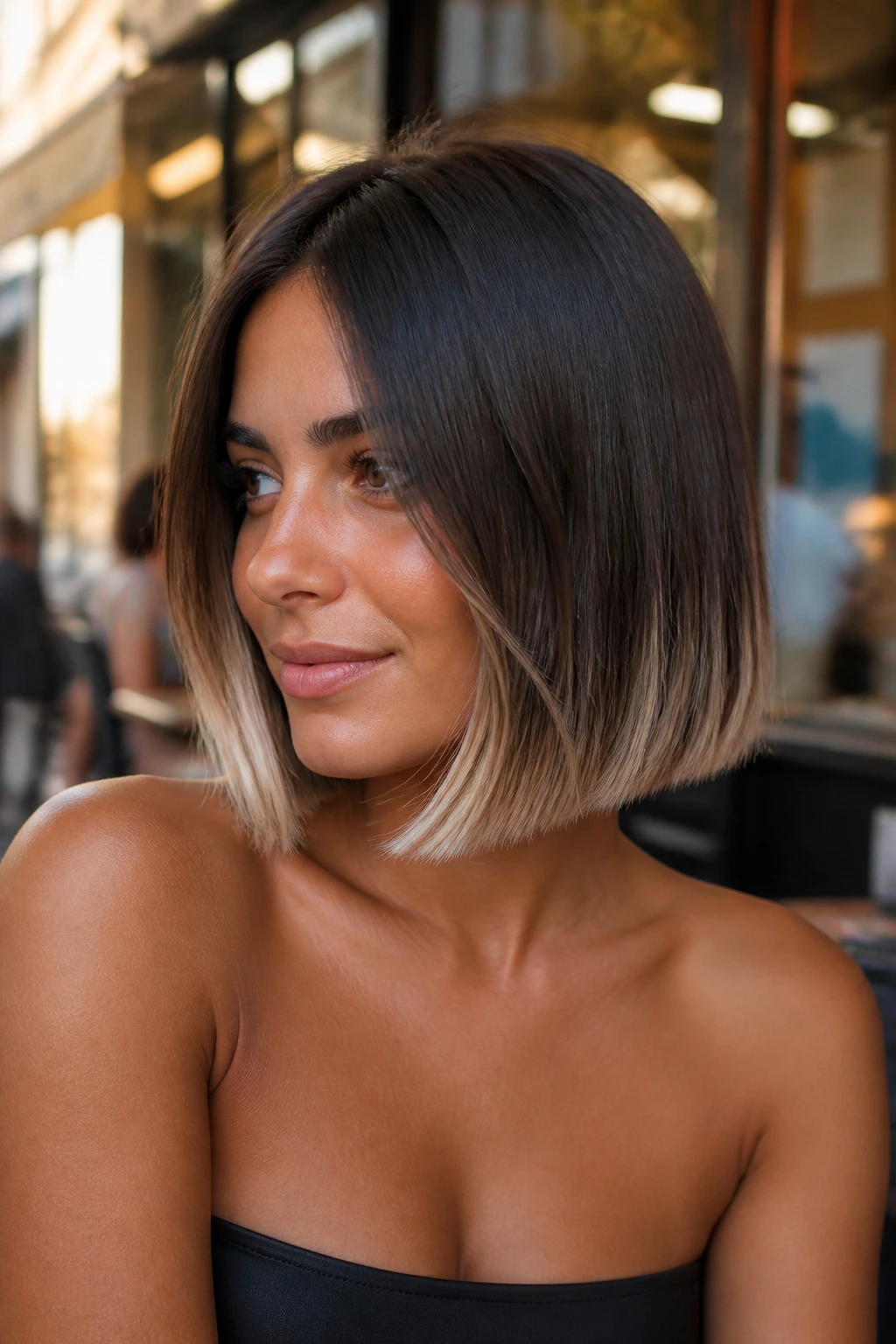
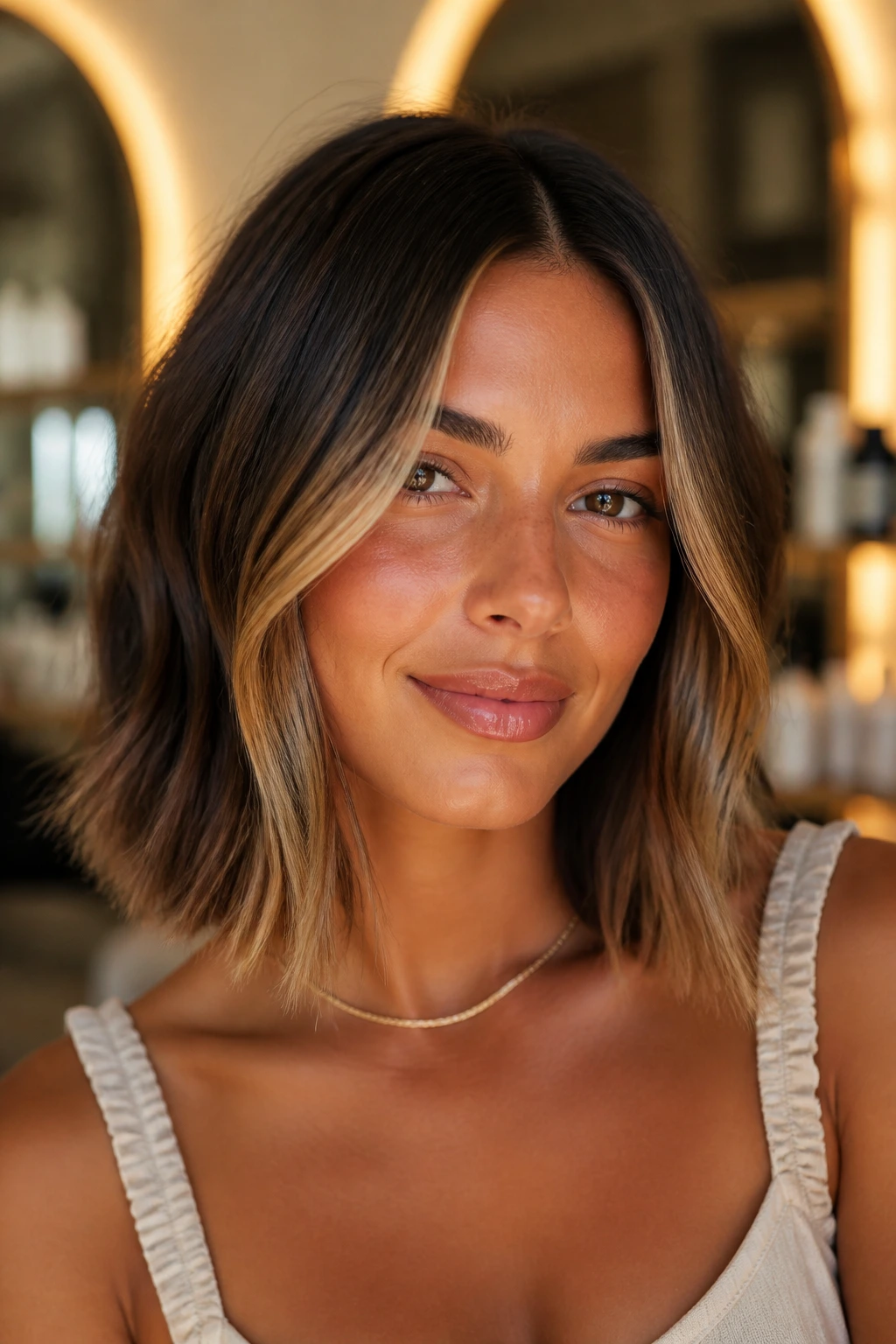
The espresso bob is for people who like contrast and don’t mind a little edge. The base stays deep and glossy, while the ends get a frosted beige-blonde finish that looks sharp against tan skin.
This works because the blonde is kept at the tips, where it reads as movement, not a block of bleach. If the ends are lifted only two or three levels lighter than the base, the result feels modern instead of overprocessed.
Flat iron the bob with a slight inward curve at the ends. That small bend keeps the frosted tips from looking ragged. I’d skip heavy oil here; a pea-sized amount of serum is enough, or the whole thing can go limp fast.
10. Sand Blonde Face-Framing Lob
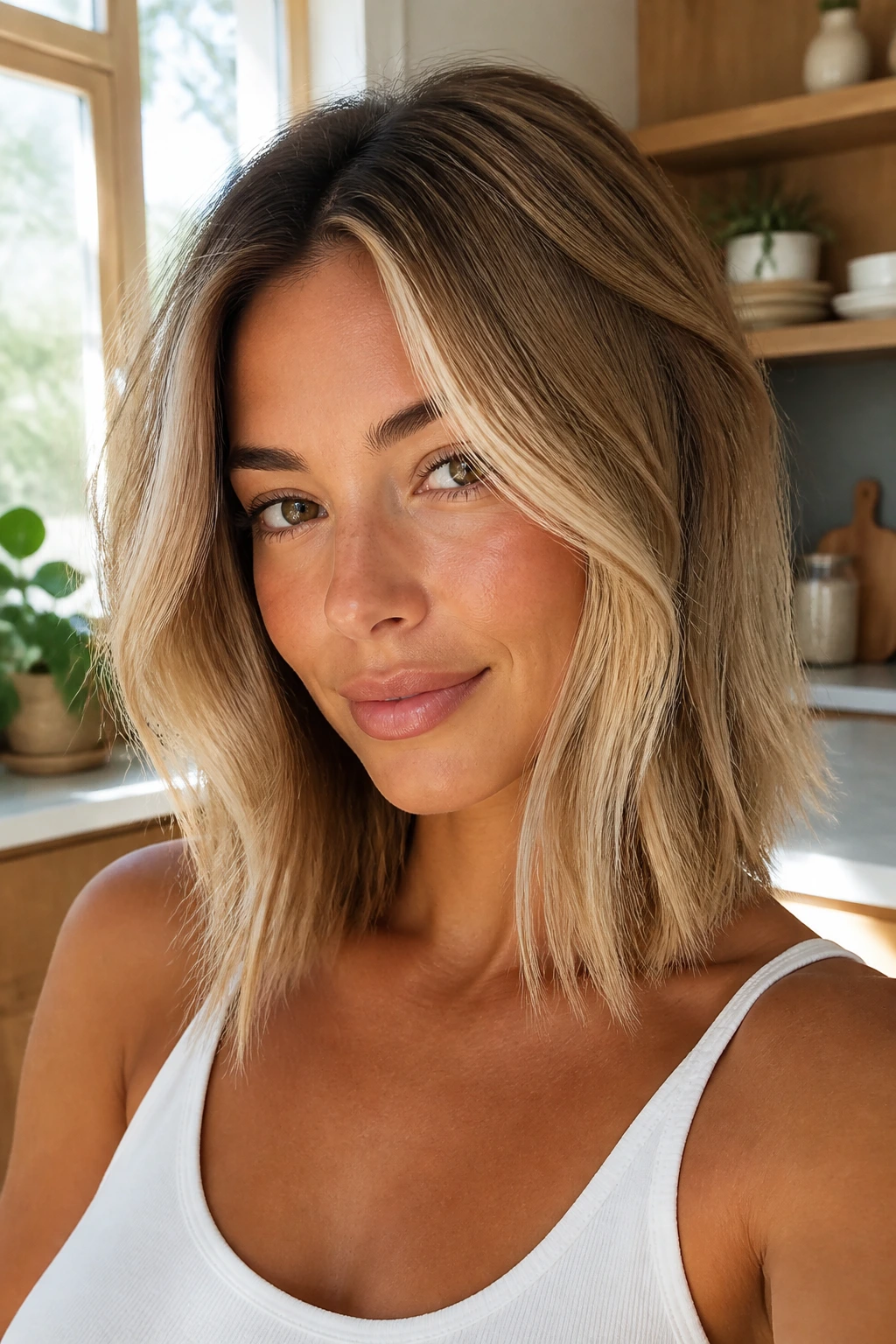
Sand blonde sits right in that sweet spot between beige and gold. It’s soft enough for tan skin, but it still gives the face some brightness, especially when the lighter pieces are kept around the front of a shoulder-grazing lob.
This style is useful if you want a blonde look that does not shout from across the room. Ask for a soft root melt and sandy blonde face frames that begin a little lower than the part line. That keeps the brightness where it matters without making the top look streaky.
A messy tuck behind one ear helps show the face-framing pieces. It’s a small move, but it changes how the cut reads. The color stops being “highlighted hair” and starts looking like intentional dimension.
11. Almond Balayage Straight Cut
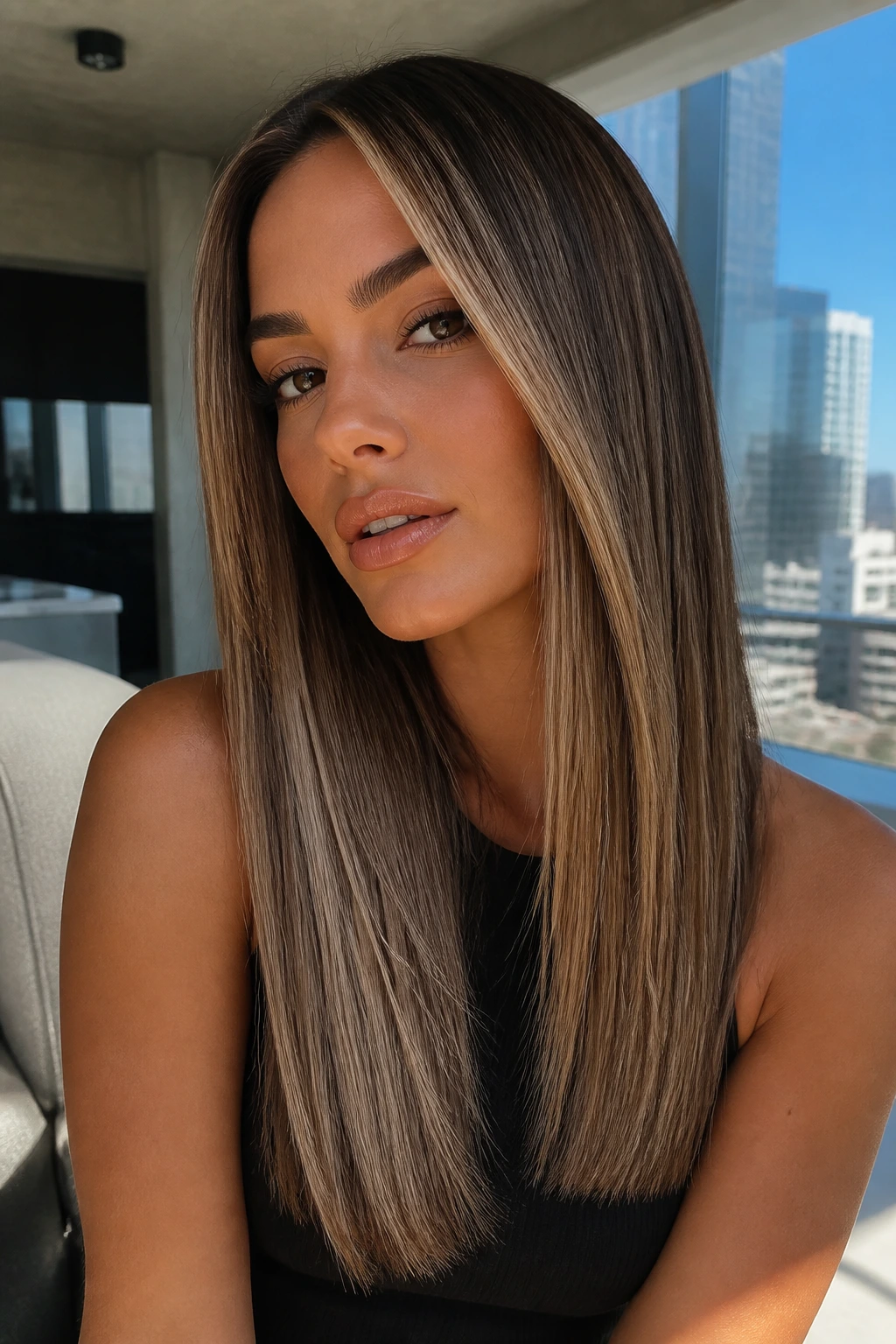
Straight hair can be brutal on color. There’s nowhere to hide, which means every line shows. That’s exactly why almond balayage works here — the blonde is painted in narrow vertical ribbons that move with the length rather than sitting as obvious stripes.
Almond tones are a quiet win on tan skin because they’re soft and warm without veering too yellow. A blunt or softly layered straight cut gives the color a clean surface, and a glassy blow-dry makes the brunette base look expensive rather than flat.
Use a heat protectant and a paddle brush if you’re chasing a smooth finish. If the ends are too blunt and too dry, the blonde can look thin. A tiny bevel at the ends keeps the whole shape alive.
12. Cinnamon Pixie with Blonde Fringe
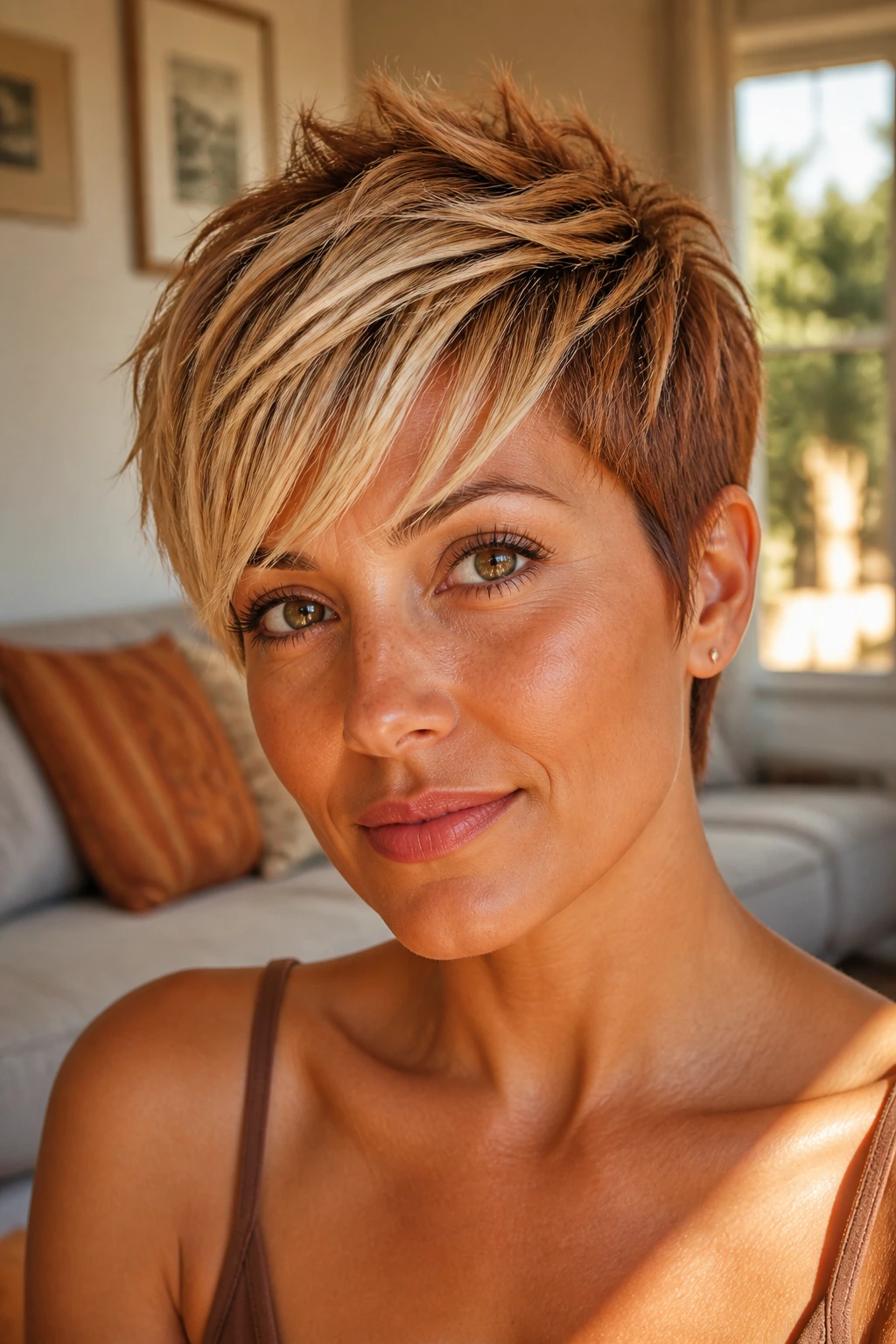
Short hair needs front-lighting more than length-lighting. A cinnamon pixie with a blonde fringe gives tan skin instant lift around the eyes, and the deeper cinnamon base keeps the cut from looking washed out.
This is one of the bolder entries, and I like it for that reason. It doesn’t pretend to be soft. The blonde fringe can be honey, beige, or a muted champagne, depending on how bright you want the contrast. Ask your stylist to keep the sides darker so the top stays the focus.
A little matte paste does the job here. Push the fringe forward or slightly to one side, and leave the crown piecey. If you smooth it too much, the color loses the sharp little flick that makes the cut interesting.
13. Maple Bronde High Ponytail
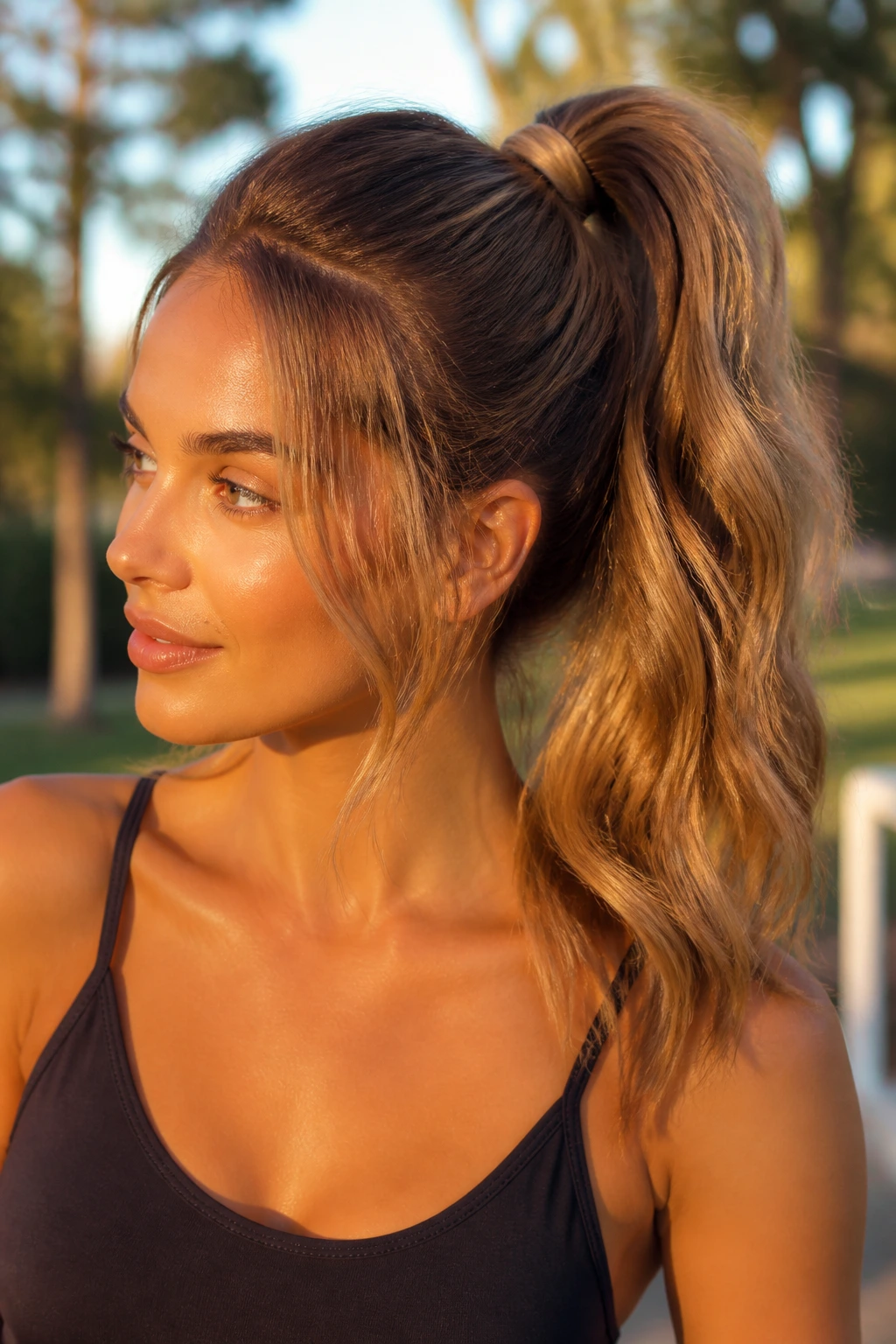
A high ponytail sounds simple until you put color into it. With maple bronde, the brunette base runs warm and deep while the lighter blonde pieces sit through the tail, so the style looks polished instead of basic.
Tan skin can carry this warm maple tone very easily, especially when the pony is wrapped with a small strand of hair at the base. That tiny detail hides the elastic and makes the style look intentional. A soft wave in the ponytail tail adds movement and shows off the lighter ends.
If your hair is fine, tease the crown lightly before gathering it. If it’s thick, keep the pony a little lower than usual so the weight doesn’t pull the front pieces flat. Either way, the face stays open and the color gets to do its job.
14. Buttery Hollywood Waves
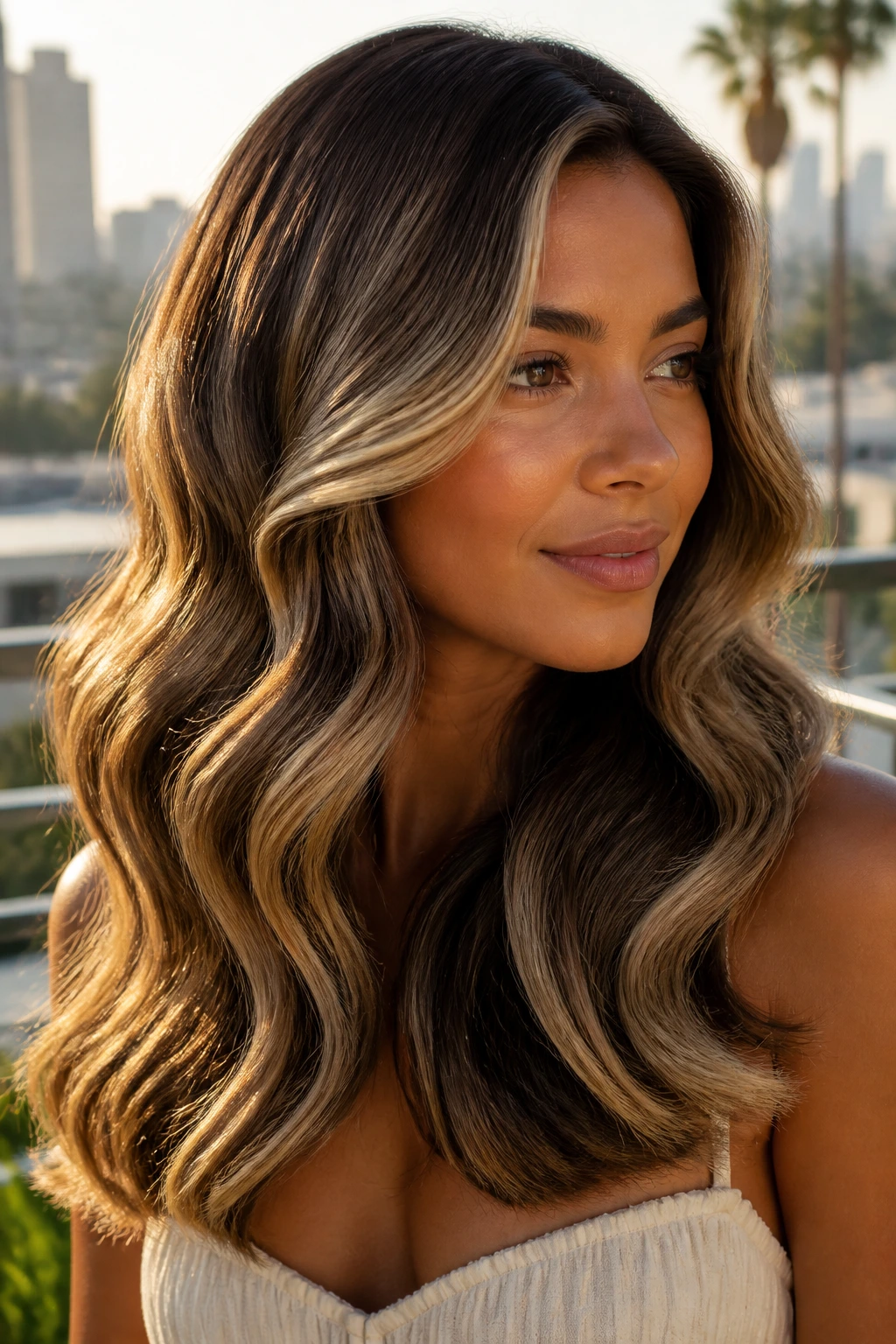
Buttery Hollywood waves are what I reach for when I want brunette hair to look expensive without looking stiff. The side part, the deep wave pattern, and the buttery blonde ribbons create a smooth, reflective surface that tan skin handles beautifully.
The key is placement. You want broad ribbons, not a confetti of highlights. Tan skin looks especially good when the lighter pieces are concentrated in the top layers and along the wave ridges, where the light catches each curve.
Set the hair in large curls, pin them while they cool, then brush them out into those sculpted bends. The result should feel glossy and deliberate. Gold earrings help, but the hair is doing most of the talking.
15. Cool Beige Wolf Cut
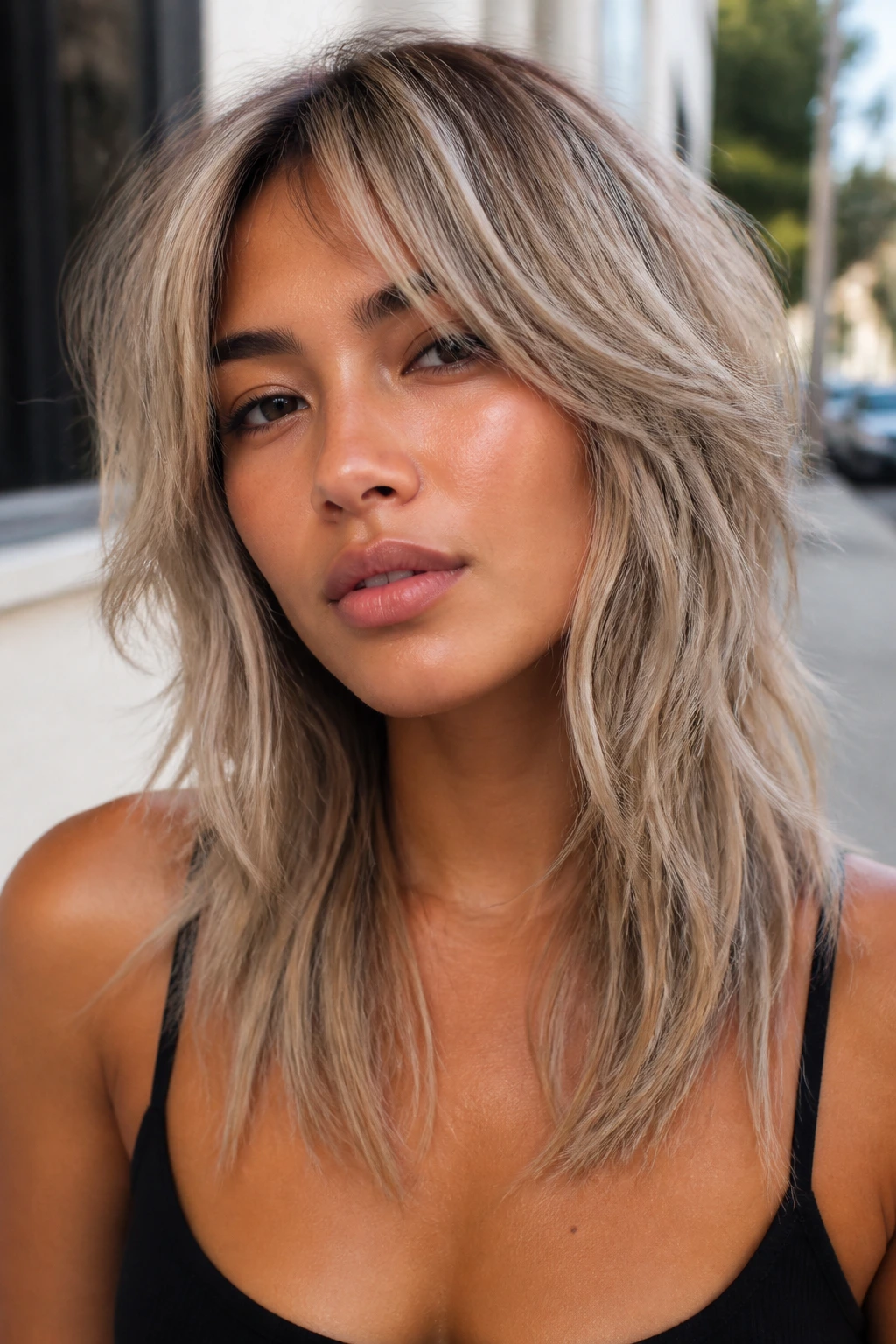
A wolf cut gets messy fast if the color is wrong. Cool beige blonde keeps the choppy layers from tipping into orange or yellow, and that makes the cut feel sharper against tan skin with neutral or olive undertones.
This look works best when the blonde is broken up through the top and around the face, not packed into the bottom half. The shaggy shape needs separation. A little dry texture spray gives the ends enough grit to show the layer pattern without turning them into a puffball.
If your hair is thick, this is one of the best cuts in the whole roundup. The layers remove weight, the beige tone keeps the blonde quiet, and the face-framing pieces stop the color from disappearing under all that movement.
16. Bronze Gloss Sleek Bun
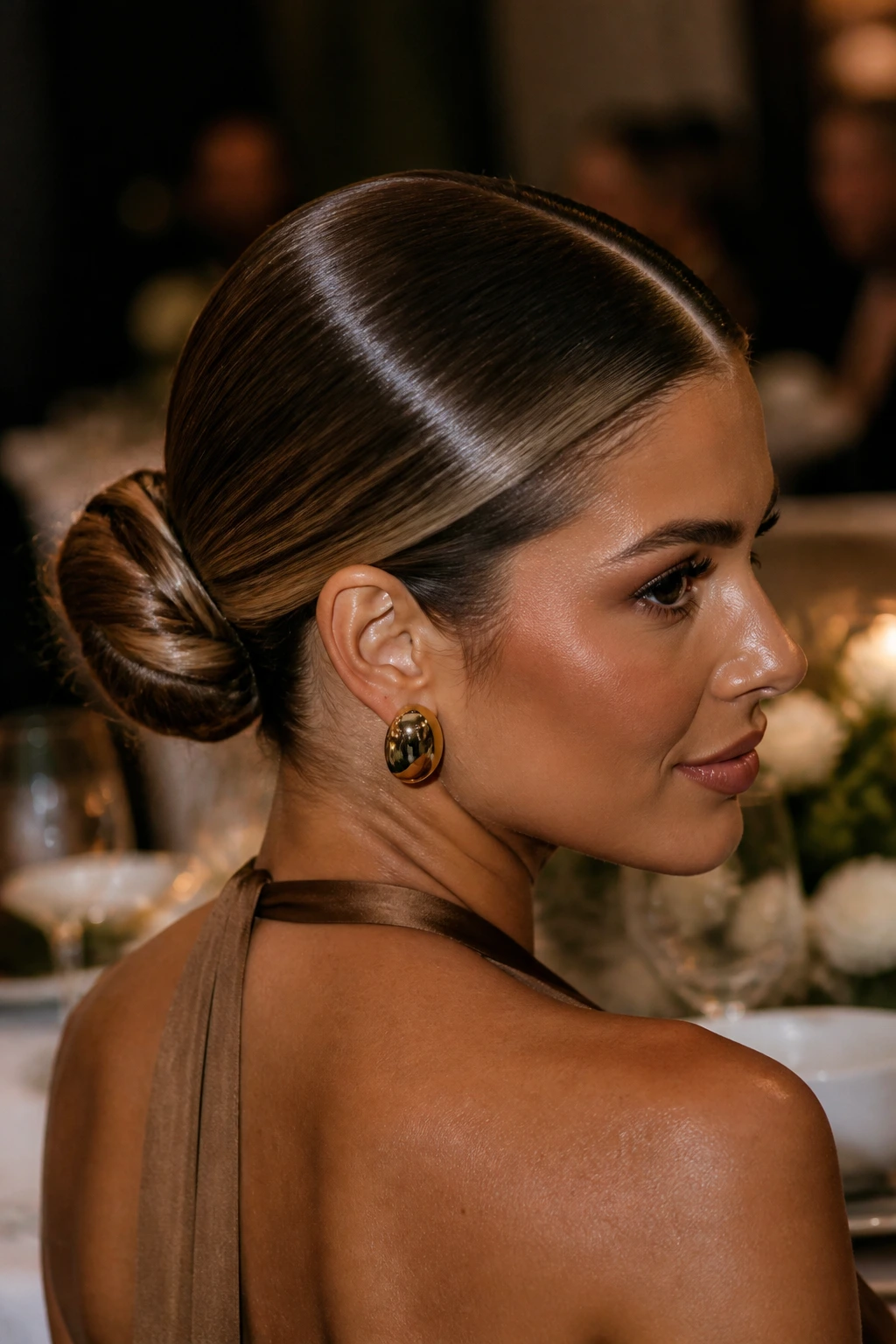
Not every blonde idea needs to scream. A bronze gloss sleek bun keeps the brunette base rich and the blonde touches subtle, which is useful if you want tan skin to look deeper rather than brighter.
This style is best when the lightest pieces are tucked near the nape, along the part, or at the surface of the bun where they can catch a flash of light. The bronze tone keeps the hair warm and reflective. It also pairs well with a clean center part and a low-shine gel finish.
I like this for dinners, weddings, and any day when you want your hair off your neck but still want dimension. A slick bun can look severe on some people. Bronze stops that. It softens the whole thing.
17. Chestnut-to-Vanilla Mermaid Layers
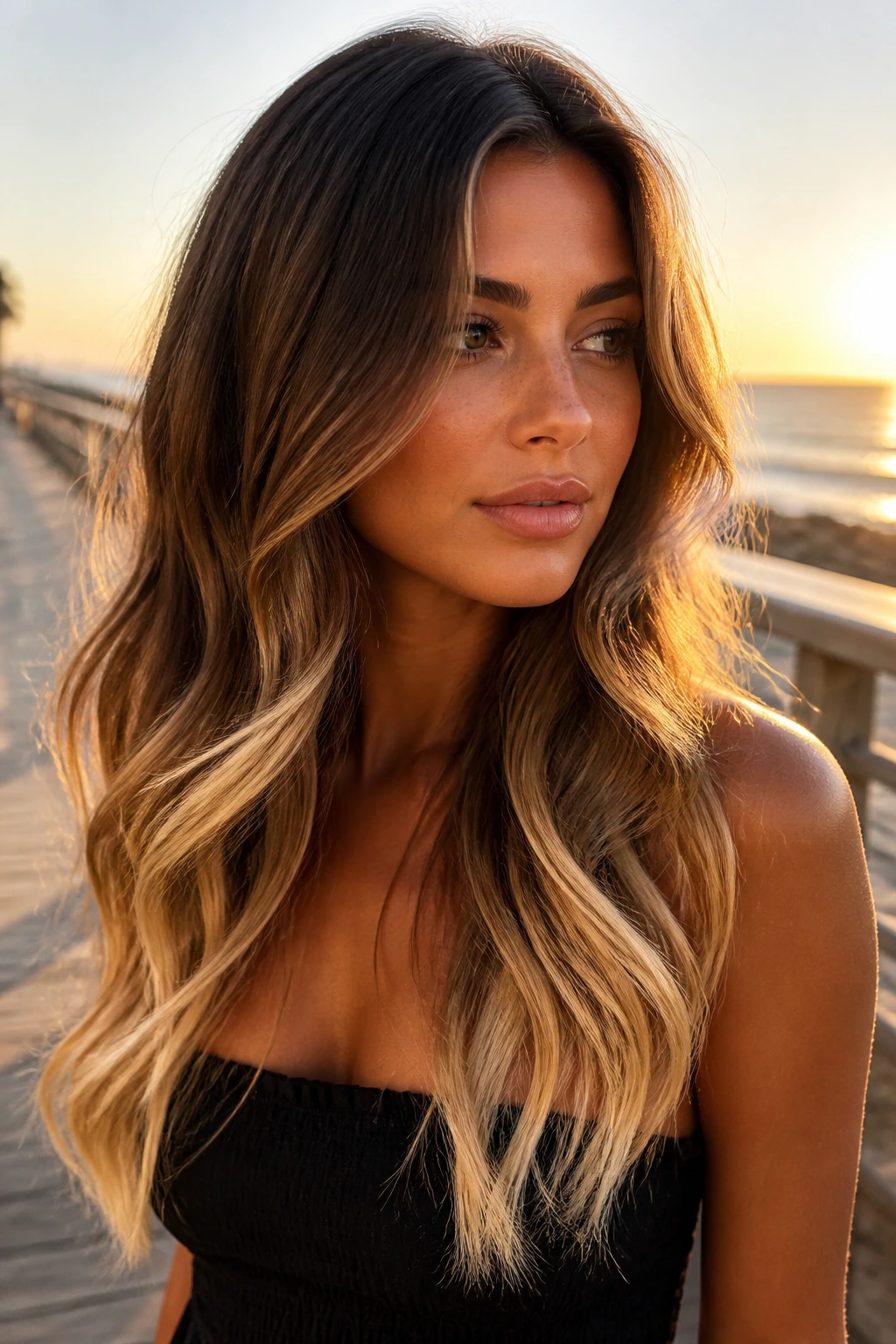
Long layered hair can handle a bigger color journey. Chestnut at the roots fading into vanilla-blonde ends gives a strong gradient that still feels believable because the middle stays in the brown family.
Tan skin wears this best when the vanilla is creamy, not icy. The fade should be gradual, with the brightest ends showing up after the mid-lengths have already shifted lighter. That keeps the look from feeling chopped up.
Big waves make this style sing. The layers should move like water, not sit in one heavy sheet. A drop of hair oil on the ends helps, but keep it light; over-oiling long blonde ends can make them clump and lose their shape.
18. Sunlit French Bob
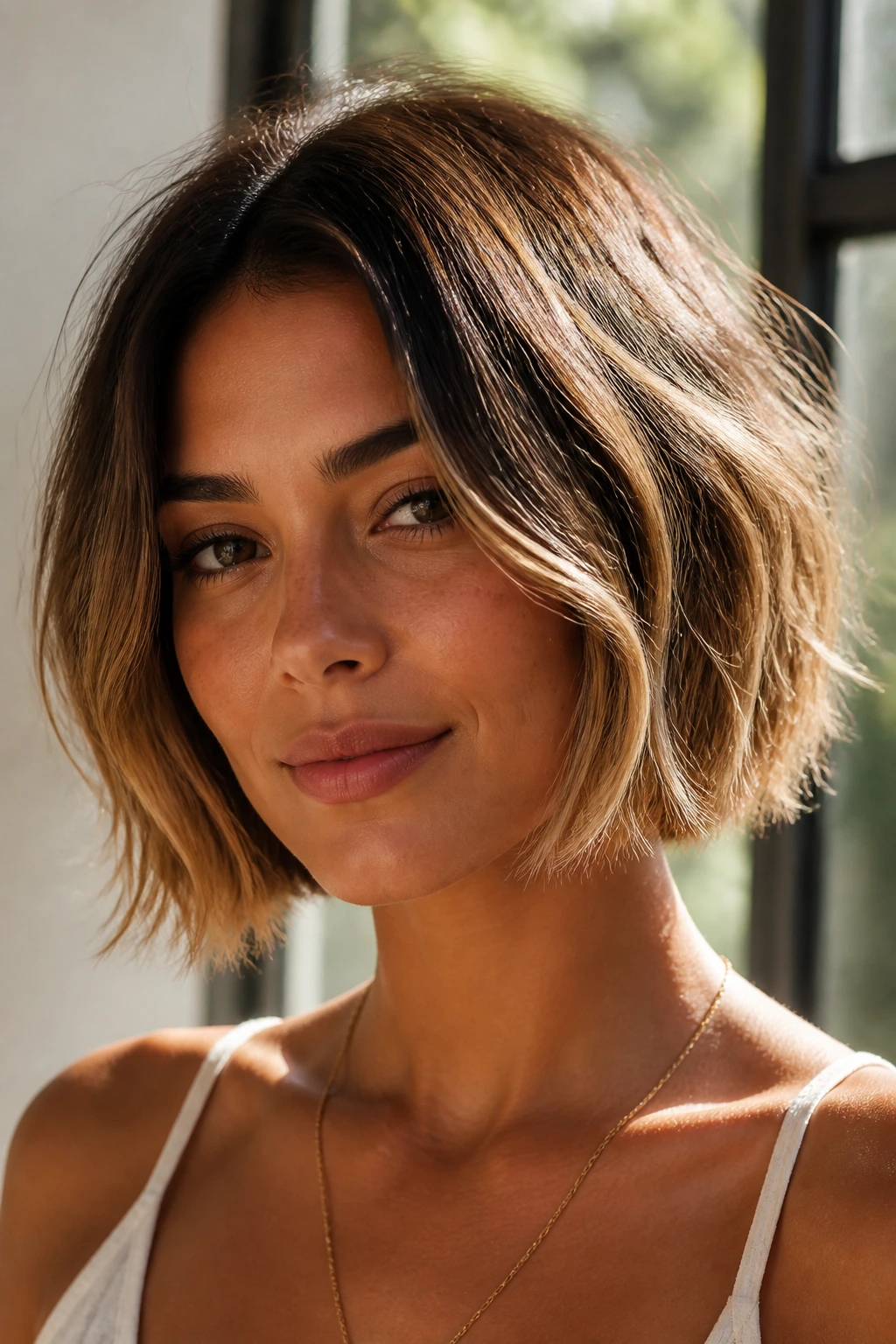
A French bob with a hint of blonde around the ends is a neat little trick for tan skin. The shorter length keeps the color close to the face, so even a small amount of lightness creates impact.
The style should feel airy, not helmet-like. Ask for a chin-length bob, soft texture through the ends, and a sunlit blonde that is just a bit lighter at the outer edges. That gives the cut a soft halo effect without turning it into a stripey experiment.
If your hair air-dries with a bit of bend, leave it alone. If not, use a small flat iron to curve the ends inward. The bob should look like it moved naturally, not like it was coaxed into place for ten minutes.
19. Honeyed Top Knot
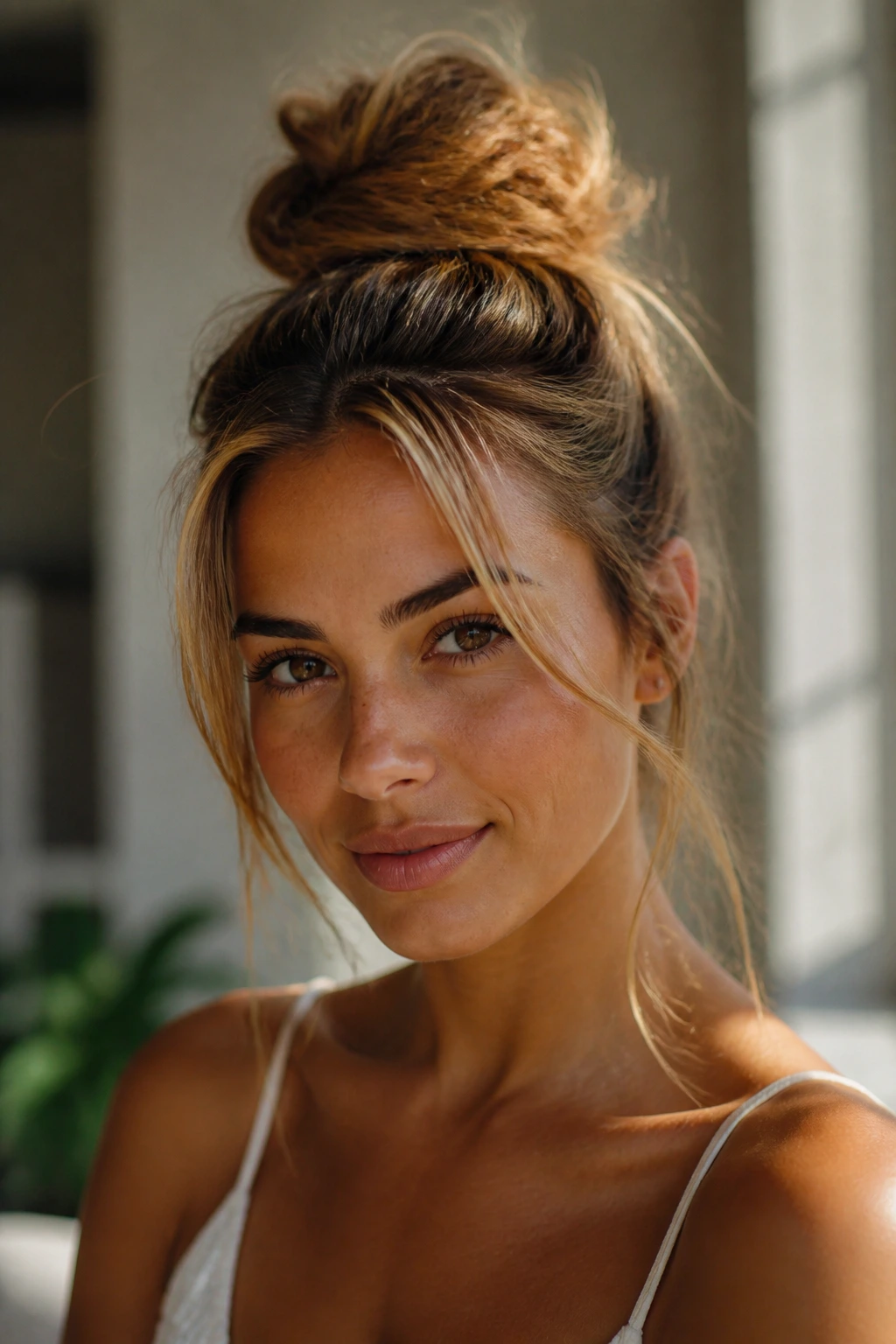
A top knot with honey face tendrils is my favorite lazy-day option in this group. The bun keeps the hair off the neck, and the loose honey pieces around the face make tan skin look warmer without requiring a full blowout.
Keep the crown slightly undone so the style doesn’t read too severe. A little root lift helps, but the point is softness. The blonde should show in the front pieces and the ends that peek from the knot, not in a loud, all-over way.
This style is very forgiving on second-day hair. A spritz of dry shampoo at the roots and a dab of serum on the tendrils is enough. The front pieces are what matter, so shape them with your fingers before you tie everything up.
20. Toasted Coconut Flip
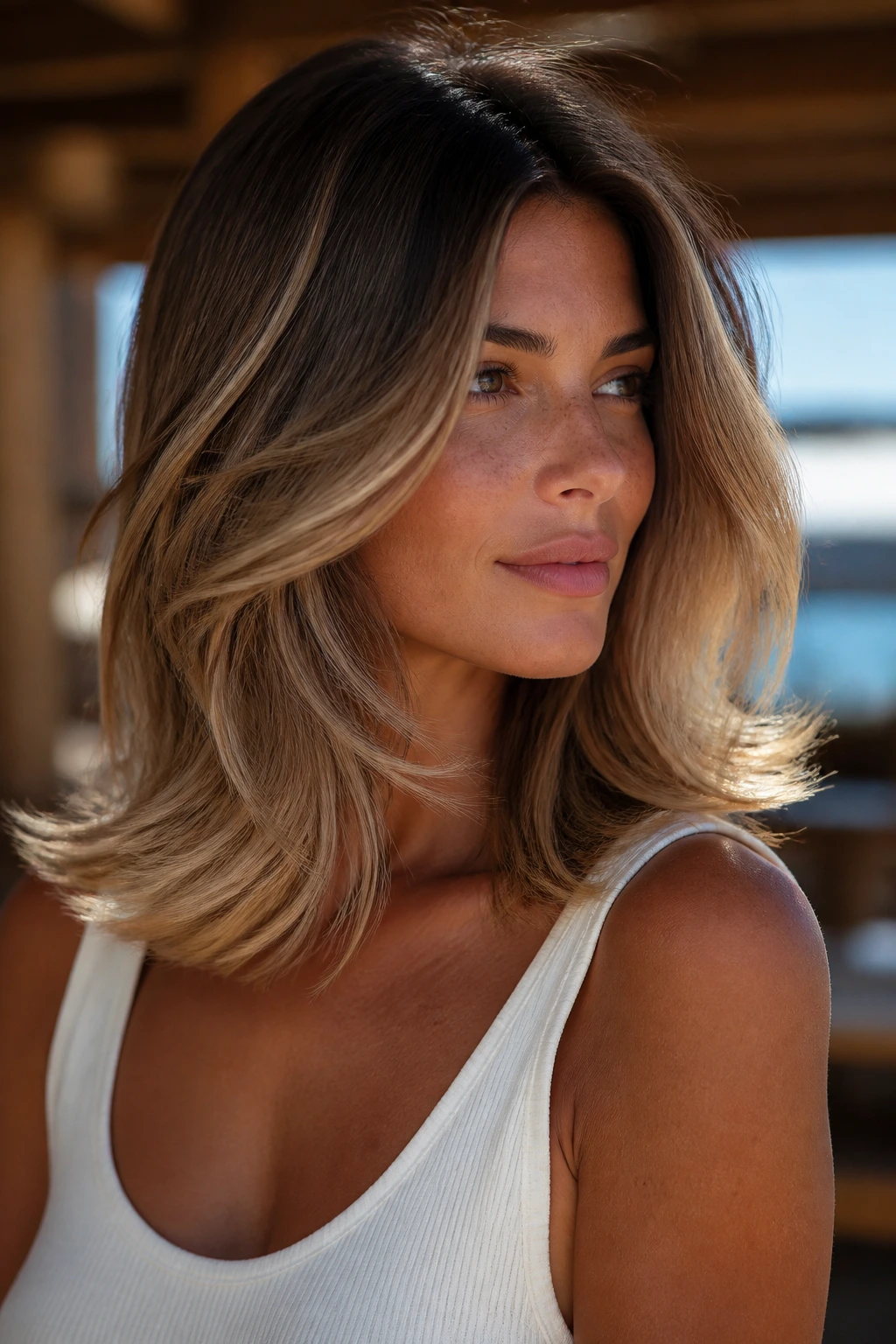
The toasted coconut flip is for anyone who likes a retro edge without going full costume. The mid-length layers flip out at the ends, and the color usually shifts from brunette roots to creamy, toasted blonde tips.
On tan skin, that mix works because the blonde is softened by the brown underneath. It has a cozy, sun-warmed look rather than an overblown bleached finish. Ask for ends that are light but not stark, and keep the layers feathered so the flip has room to move.
A blow-dry brush and a quick outward flick at the ends are enough. If you like a more polished finish, set the flip with a medium round brush and let the hair cool before touching it. That gives the style a little more shape and keeps the ends from falling flat.
21. Smoked Caramel Curtain Layers
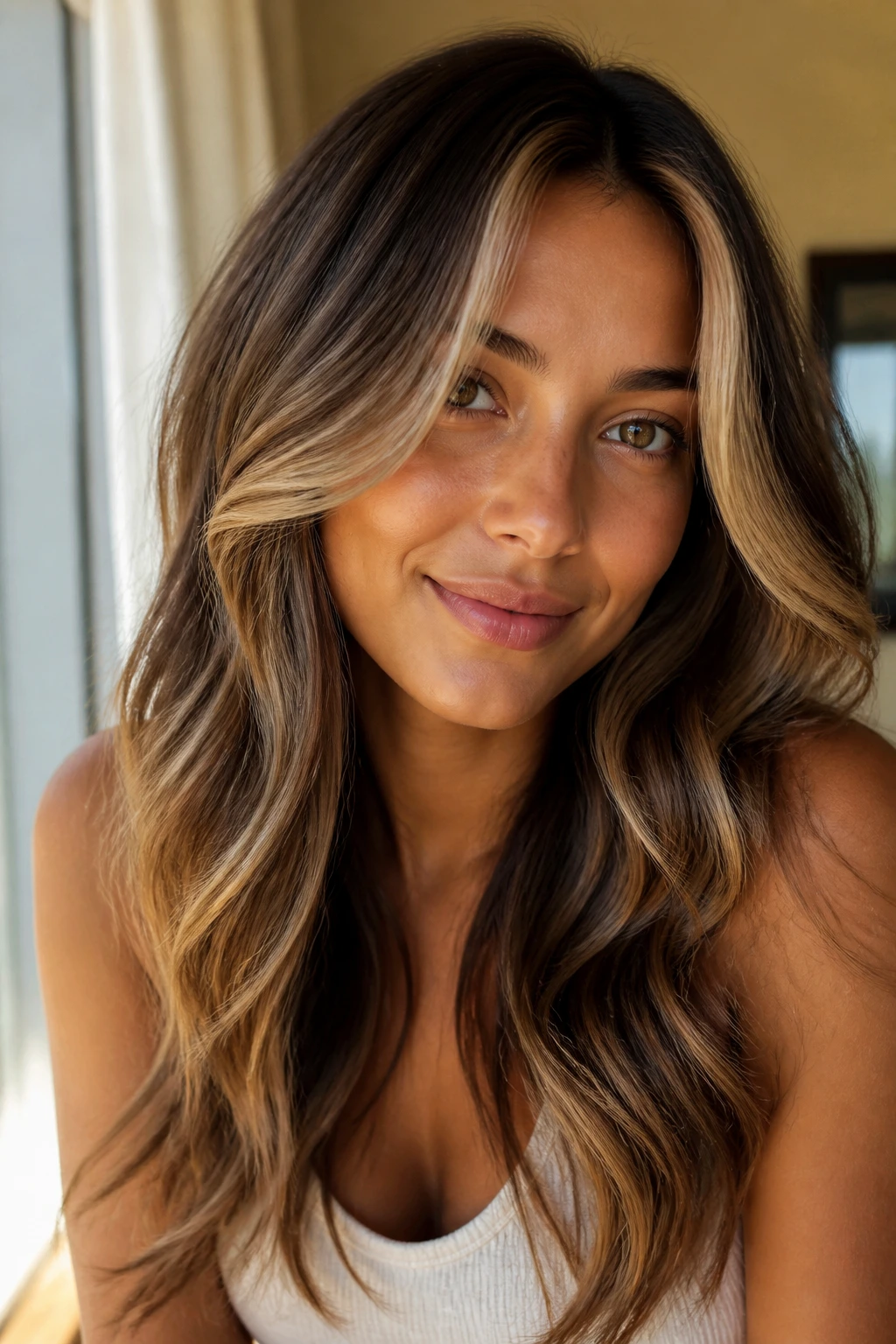
Smoked caramel curtain layers are one of the easiest ways to wear blonde without going bright. The caramel is muted, almost smoky, which makes tan skin look richer and the layers look thicker.
This style is especially good if your hair is naturally dark brown and you want dimension without a huge lift. The front pieces should be the brightest, while the rest of the layers stay in a deeper caramel-brown zone. That keeps the color from turning muddy.
You can wear it blown smooth or with a few bends through the ends. Either way, the curtain layers should open at the center and fall away from the face. That motion is what makes the color placement visible.
22. Golden Ribbon Braids
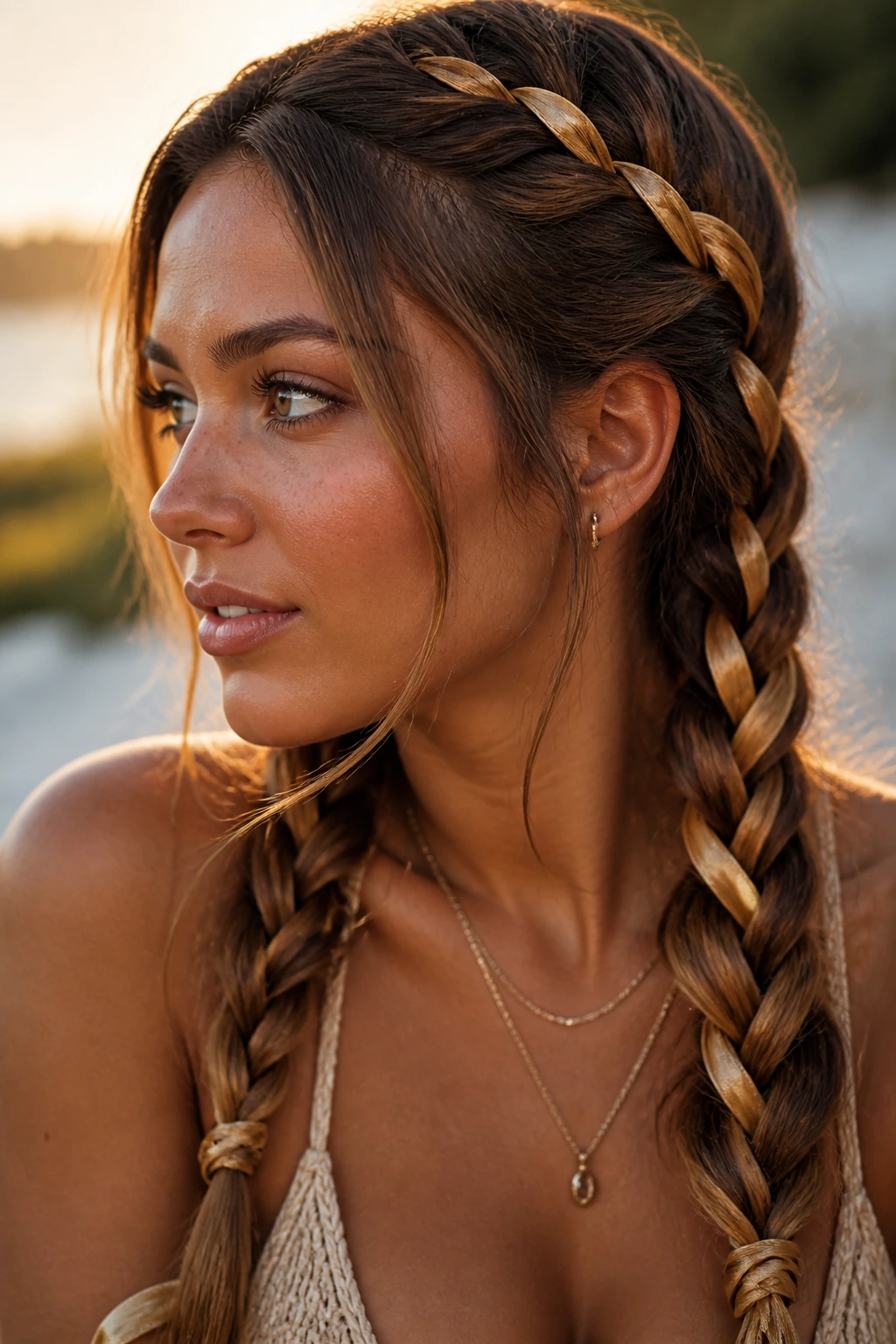
Braids are underrated for color. Every twist and overlap shows a different ribbon of shade, which is why golden ribbon braids can make brunette-blonde hair look more detailed than loose waves sometimes do.
This is a strong option if you want the blonde pieces to look woven into the hair rather than painted on top. On tan skin, the gold pieces feel warm and lively, especially when they sit against a medium brunette base. That contrast is strongest in loose braids where a few strands fall free.
Try a side braid, a pair of loose Dutch braids, or a single low braid with face-framing pieces pulled out. The looser the braid, the more each ribbon of color shows. Tight braids are neat; loose braids are where the dimension happens.
23. Warm Mocha with Pearl Blonde Ends
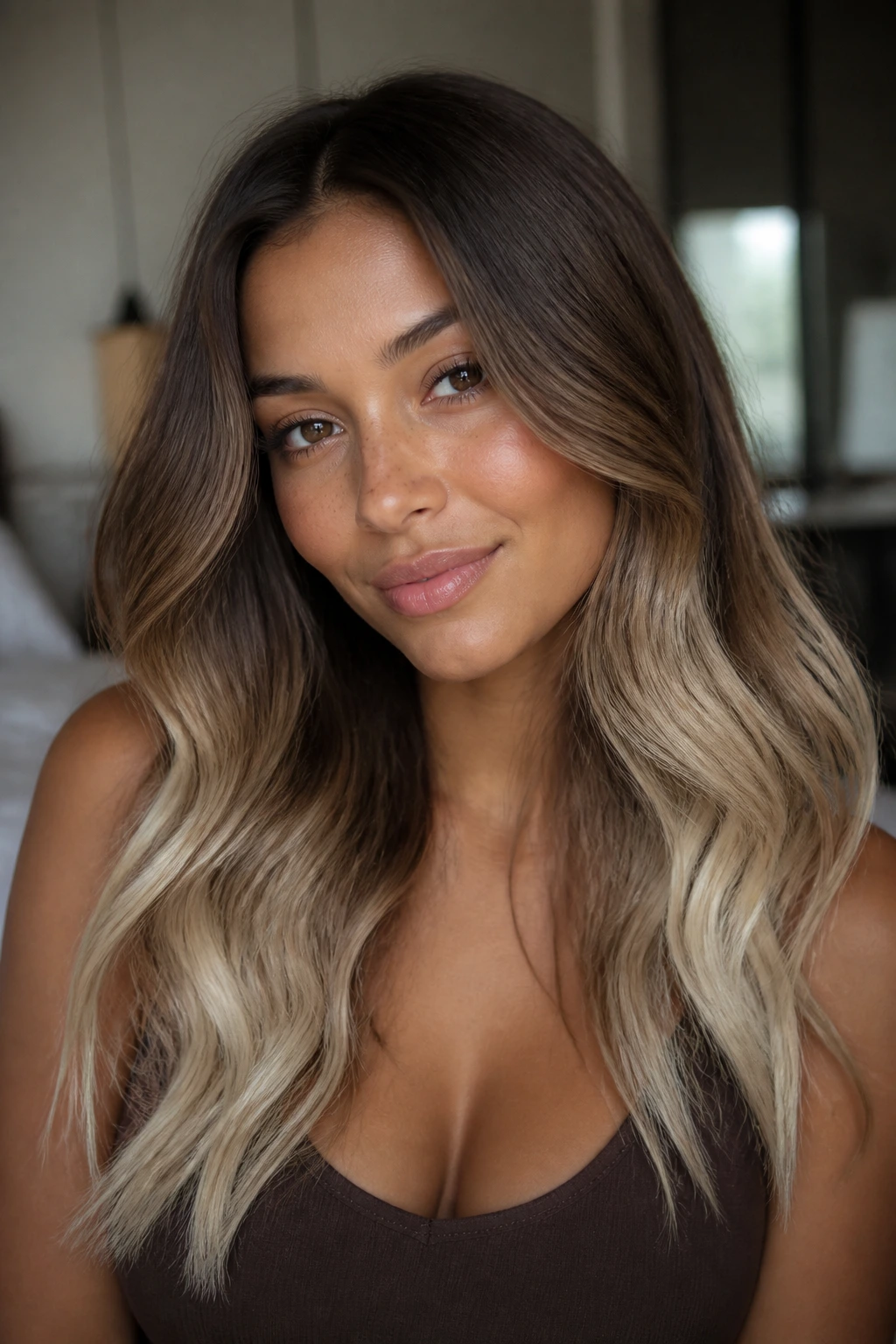
Warm mocha with pearl blonde ends sounds dramatic, and it is, but the warmth of the base keeps it grounded. The mocha root and mid-lengths hold the color together, while the pearl blonde ends add a cooler finish that can look striking on tan skin with neutral undertones.
The reason this works is contrast. The ends should be light, yes, but not chalky. A pearl tone has a soft sheen that sits between beige and pale blonde, which keeps the finish modern. If the ends get too white, the whole style starts fighting the skin instead of playing with it.
Loose waves help the gradient show. Straight hair makes the color boundary more visible, which can be good if you like graphic contrast, but waves soften the line and make the melt feel more natural.
24. Curly Shag with Butter Tips
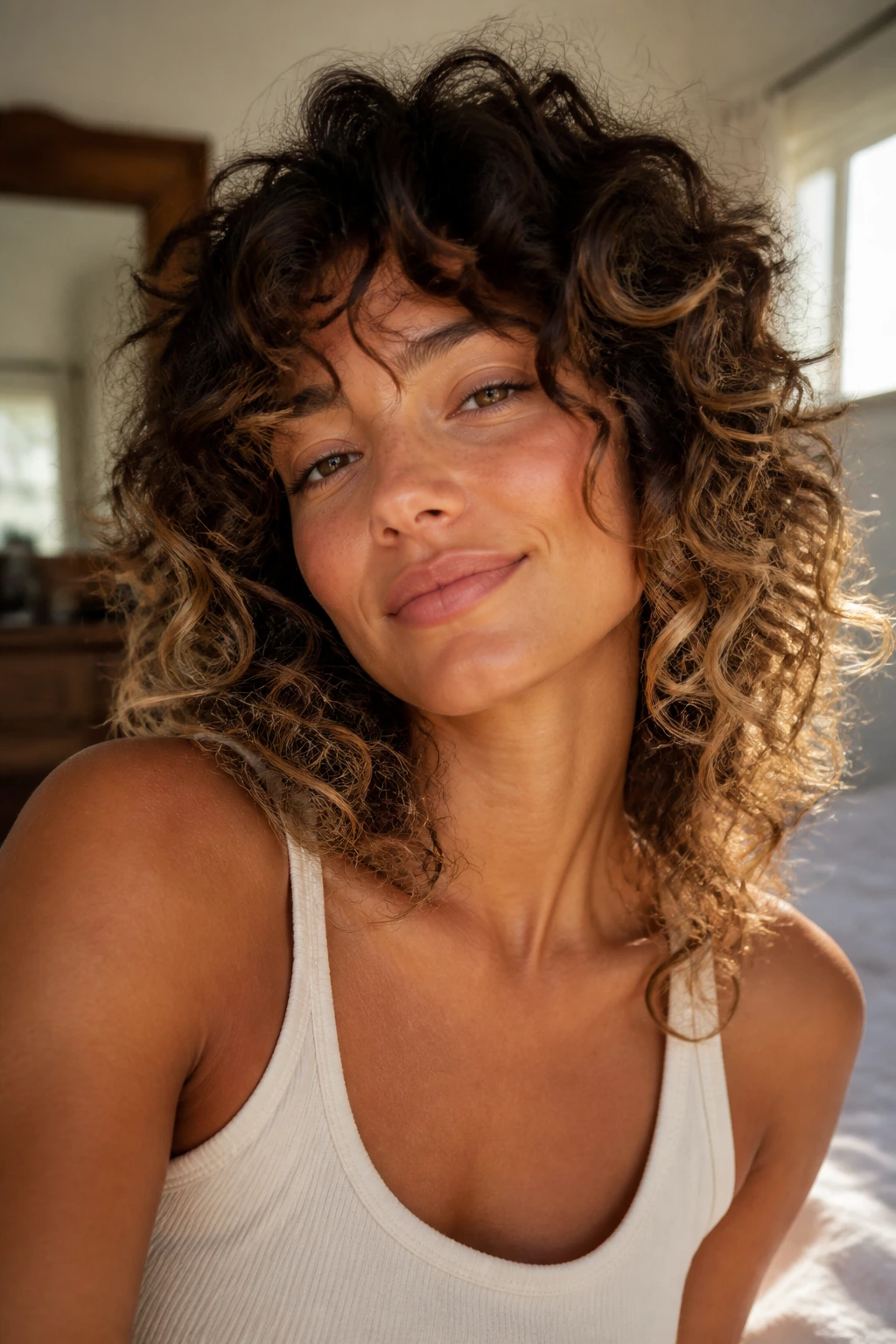
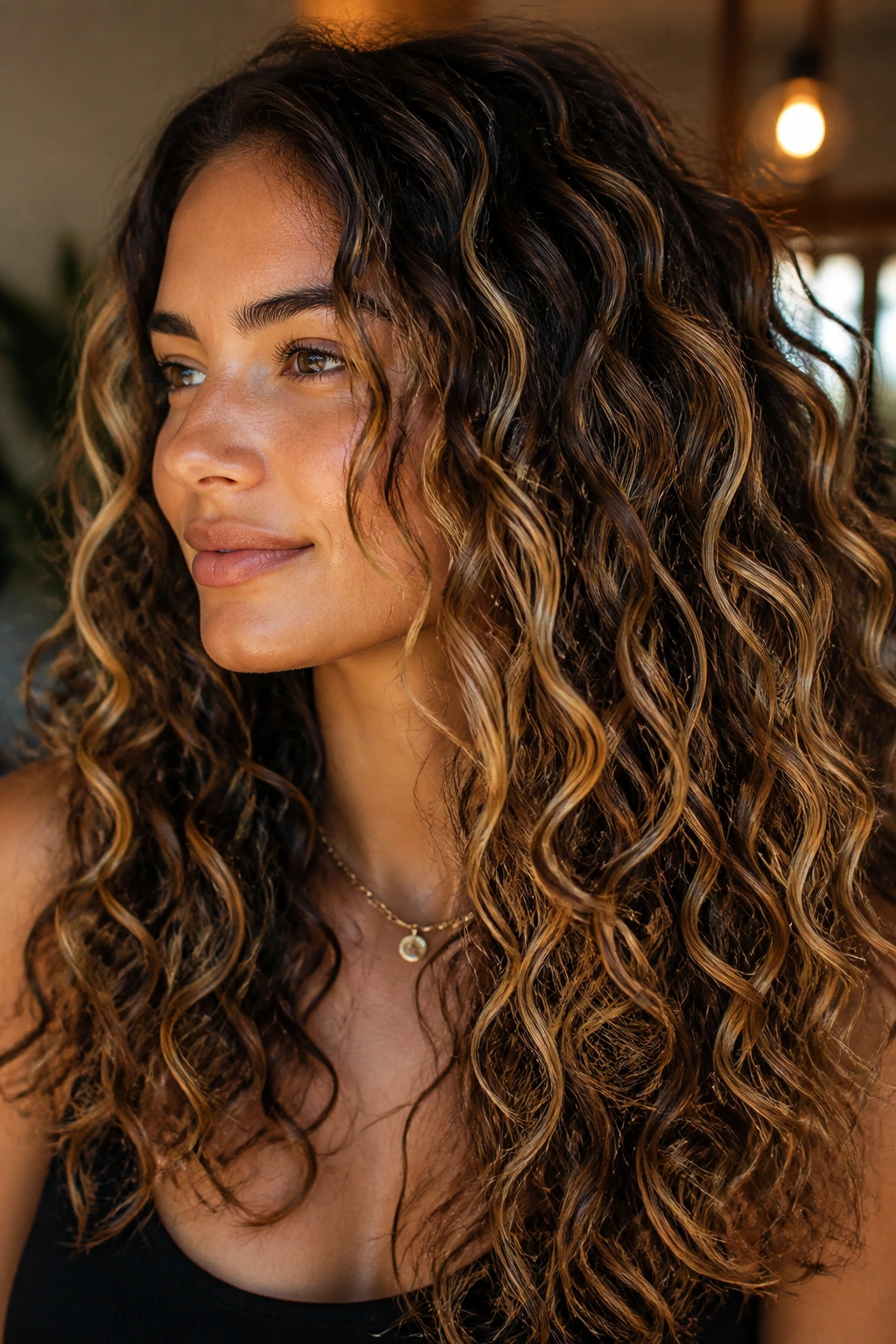
Curly hair loves this kind of treatment. A curly shag with butter tips gives tan skin a warm halo, because the blonde sits on the outer curve of the curls where light naturally lands.
The cut matters as much as the color. If the layers are too blunt, the curls pile up and hide the blonde. If they’re shaped properly, the tips separate and the lighter ends pop against the brunette base. Butter blonde is the right tone here — warm enough to glow, soft enough not to look harsh.
Diffuse until the curls are about 80 percent dry, then stop messing with them. That last bit of restraint keeps the shape intact. A leave-in cream and a little curl gel can hold the pattern without making the ends crunchy.
25. Bronze-to-Butter Balayage Cascade
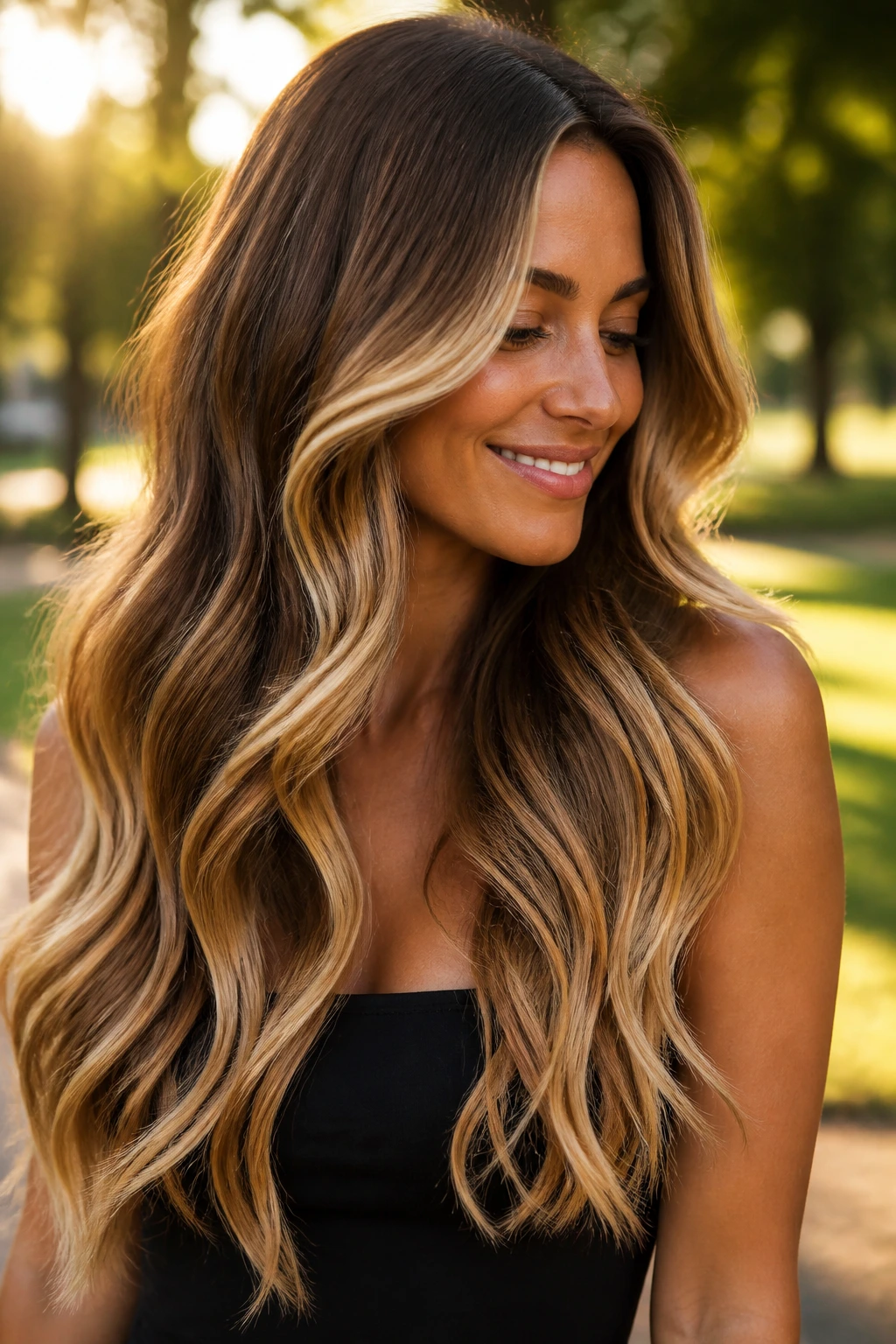
This is the big finish. Bronze-to-butter balayage cascade gives you a long, flowing color story: deeper bronze near the roots, softer blonde through the mids, and buttery ends that catch light in movement.
Tan skin can handle the richer contrast here because the bronze base keeps the hair from looking thin or washed out. The butter ends bring brightness, but they’re cushioned by the warmer tones above them. That makes the whole style feel lush rather than over-bleached.
Large waves are the right finish. You want the cascade to show in layers, almost like a soft waterfall of color. If you only straighten it, you lose some of the depth that makes the look worth wearing.
Why Bronde and Blonde Placement Flatters Tan Skin
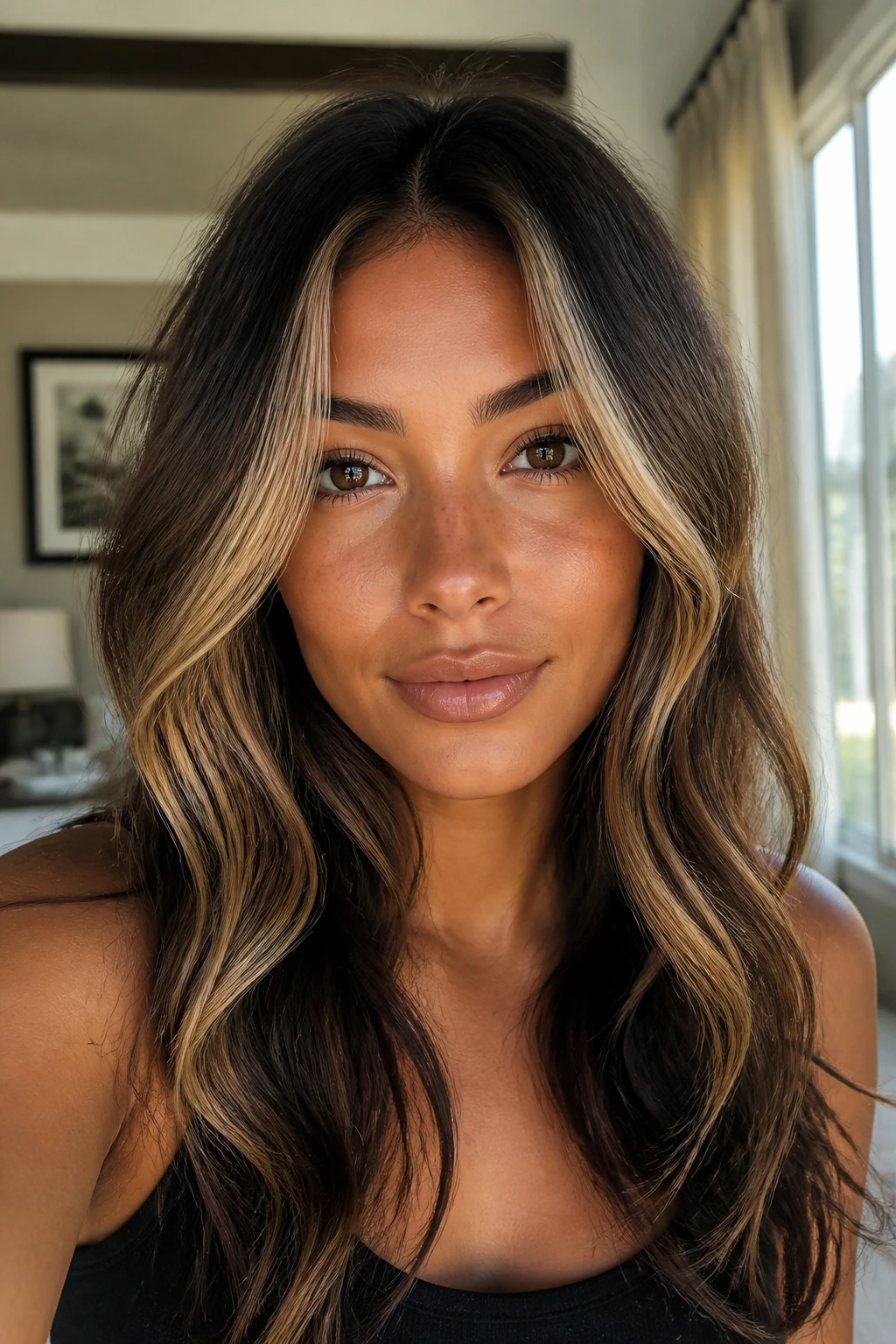
Tan skin and brunette-blonde color work best when the lightness is placed with intention. A full head of pale blonde can be too blunt, especially if the skin has golden or olive undertones. A brunette base with honey, caramel, beige, champagne, or mushroom accents gives the complexion somewhere to land.
The face-framing pieces matter most. They brighten the eyes, lift the cheekbones, and make tan skin look more even in daylight. A few lighter strands around the front often do more than a whole head of scattered foils.
Warm, Neutral, and Olive Undertones
Warm tan skin usually likes honey, caramel, toffee, and buttery blonde. Those tones echo what’s already in the skin, so the face looks sunlit instead of yellow.
Neutral tan skin can handle more range. Beige, sand, champagne, and light mocha all sit well there because they don’t pull too orange or too gray. Olive tan skin often looks best with mushroom bronde, cool beige, or smoky caramel, which keeps the complexion from looking overly warm.
Why Root Shadow Helps So Much
Root shadow is not lazy color. It is smart color. A slightly deeper root keeps the blonde from looking pasted on and gives the style that soft grow-out people always ask for after the fact.
It also stops the hair from looking flat in strong light. That dark-to-light shift gives dimension, and dimension is what makes brunette-blonde hair look expensive instead of bleach-heavy.
The Tools That Keep Dimension From Falling Flat
-
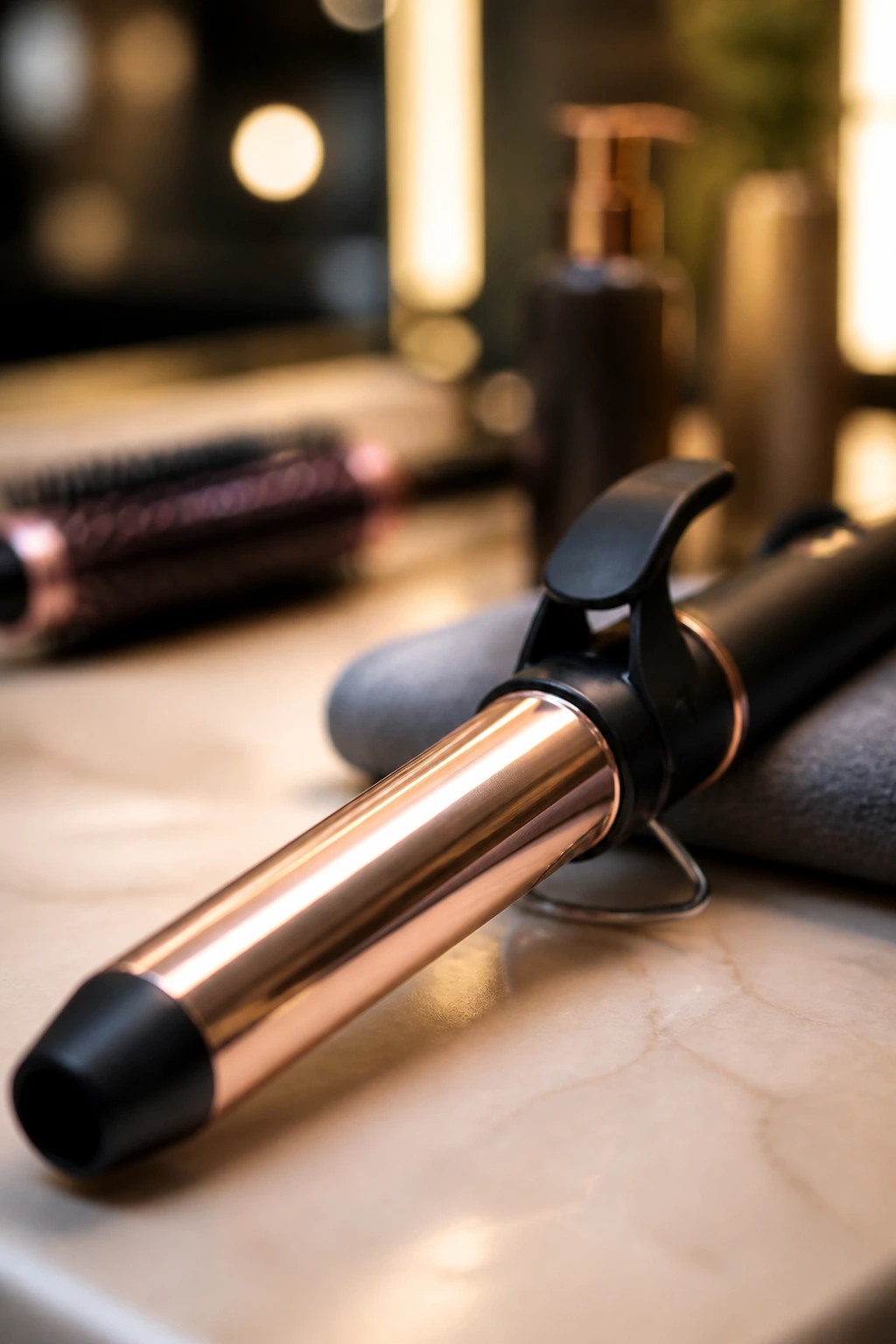
1¼-inch curling wand: The sweet spot for loose waves, beach bends, and ribbon curls without tight ringlets.
-
2-inch round brush: Best for blowouts, butterfly layers, and the big curve that makes blonde pieces show.
-
Heat protectant spray: Use it every time you heat style; lightened ends show damage fast.
-
Color-safe shampoo: A sulfate-free formula keeps the brunette base and blonde ribbons from fading too quickly.
-
Blue shampoo: Useful if caramel or honey starts turning orange; use it sparingly so the hair doesn’t go dull.
-
Purple shampoo: Better for beige, champagne, or pearl blonde pieces that start looking yellow.
-
Root-lifting mousse: Handy for lobs, blowouts, and any style where you want the blonde pieces to separate near the crown.
-
Wide-tooth comb: Less breakage, especially on highlighted curls and waves.
-
Tortoiseshell clips: Good for pinning back face-framing pieces without fighting the warm tones.
-
Shine serum or lightweight oil: A pea-sized amount is enough; too much will make blonde ends look stringy.
Choosing the Right Blonde Tone for Your Undertone
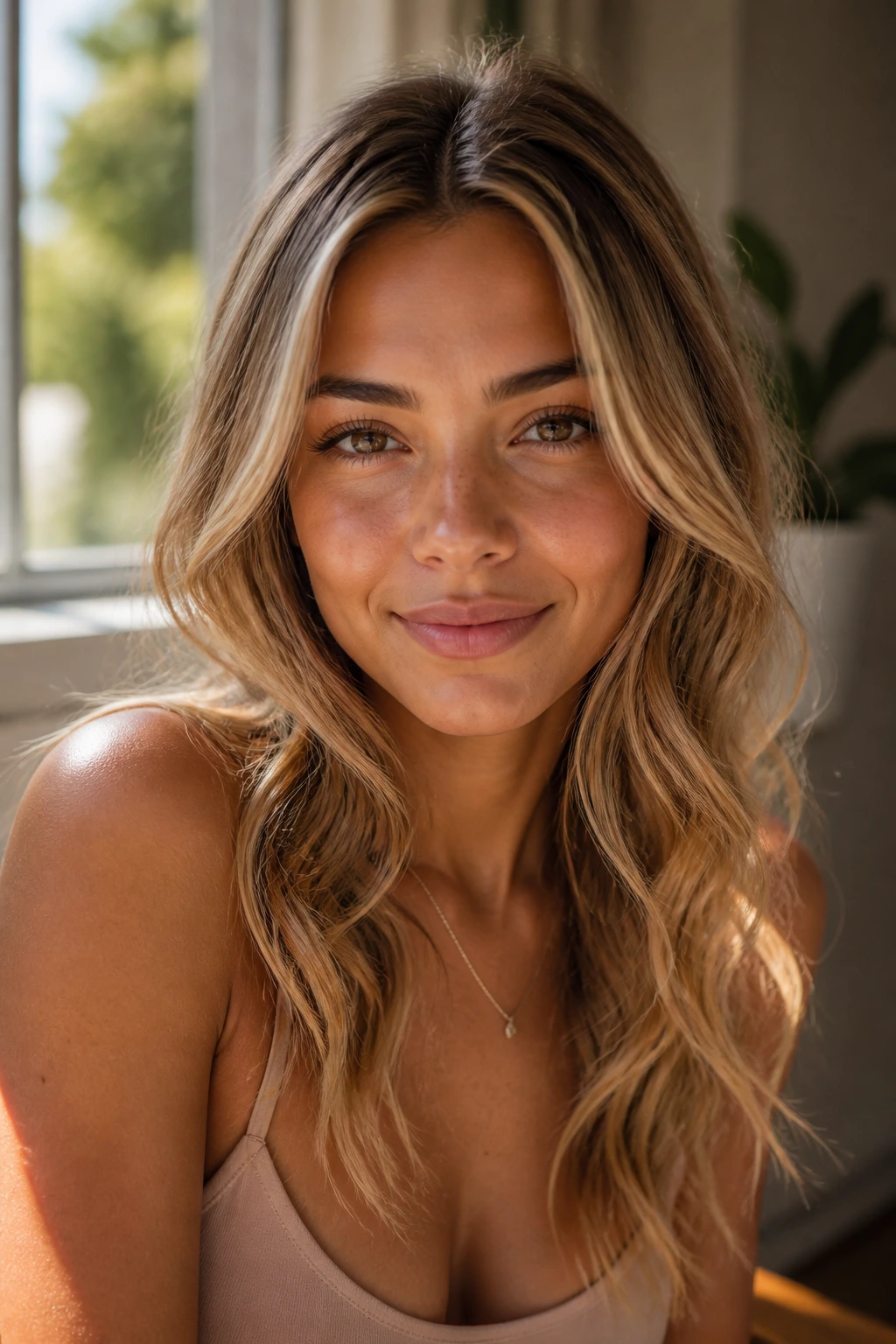
The easiest mistake is thinking all blonde is the same. It isn’t. Honey, beige, champagne, pearl, mushroom, and butter blonde all sit in different places, and tan skin reacts to them differently.
If your skin is warm and golden, lean into honey, caramel, toffee, and butter. If your skin is neutral, beige and champagne usually behave better because they don’t pull too yellow. If your skin leans olive, cooler mushroom-bronde and smoky beige often look cleaner than bright gold.
What to Tell Your Colorist
Say the tone you want, not just “blonde.” Tell them whether you want honey, beige, champagne, or a cooler mushroom finish. Then tell them where you want the brightness: around the face, through the top layer, or concentrated on the ends.
If your hair is already dark, ask for a brunette base with dimension first, then a lightening plan that can happen in stages if needed. That is safer than trying to jump from deep brown to pale blonde in one visit and hoping your hair survives the afternoon.
How to Wear These Looks With Makeup and Accessories
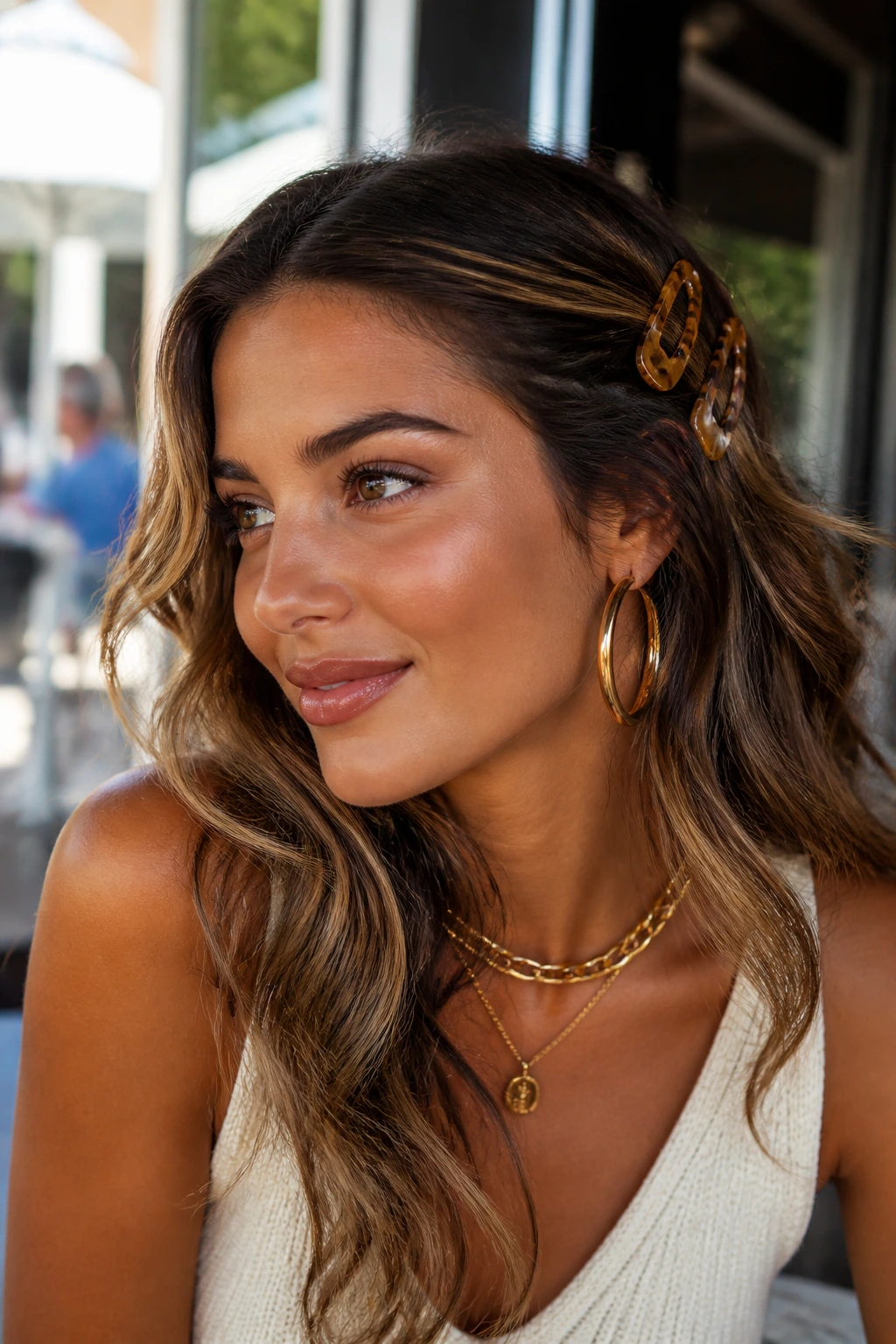
Styling: Soft waves, bends, and tucked layers show off dimension better than pin-straight hair in most of these looks. If the blonde is bold, keep the styling clean. If the blonde is subtle, add texture so the pieces don’t disappear.
Accessories: Gold hoops, tortoiseshell clips, cream headbands, and warm brown sunglasses tend to work better than harsh black accessories on tan skin with honey or caramel blonde. Cooler mushroom and beige shades can handle silver, but the warm metals still look easier and softer.
Makeup: A touch of bronzer, peach blush, and a warm nude lip keeps tan skin from looking flat next to brighter highlights. If the hair is more beige or pearl, a soft brown liner can keep the face from getting washed out.
Necklines: Open collars, scoop necks, and V-necks give face-framing pieces room to work. High necks can still look sharp, but they need a little more contrast in the hair or the whole effect gets buried.
Extra Shine and Texture Boosters
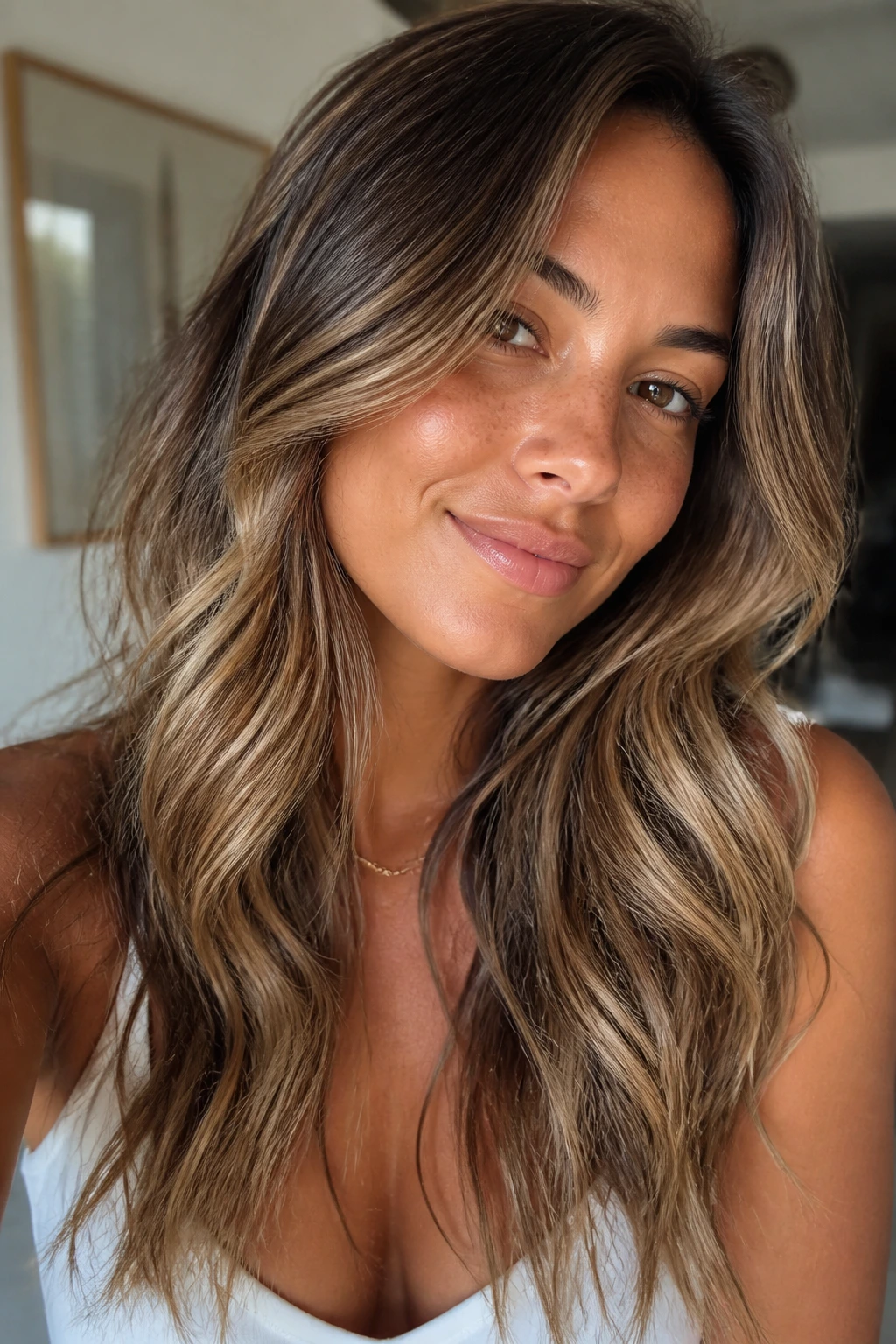
Gloss Boost: A clear, beige, or caramel gloss every 4 to 6 weeks keeps the blonde from looking dry and brings back the soft shine that makes brunette-blonde color look expensive.
Texture Boost: For waves and shags, use mousse at the roots and a small amount of sea salt spray through the mids. The point is separation, not stiffness. A little movement helps the blonde pieces catch light.
Color Saver: Keep heat tools around 300°F to 325°F on lightened hair unless your texture is very coarse. Higher heat on already-bleached ends is a fast way to get fried, see-through tips.
Make-It-Yours: Fine hair usually looks best with a lob, money pieces, or a soft blowout that adds lift. Thick hair can hold bigger balayage ribbons, layered shags, and more dramatic contrast. Curly hair should keep the highlight placement on curl clumps, not every strand.
Common Mistakes That Make Tan Skin Look Dull
-
Going too pale too fast: Tan skin can wear light blonde, but jumping straight to icy ends often makes the face look tired. Keep a deeper root and build brightness in stages.
-
Using one flat blonde tone: A single shade can look stripy or flat, especially on darker brown hair. Two or three related tones — honey, beige, and a touch of gold, for example — give the hair movement.
-
Ignoring toner schedules: Blonde that drifts yellow or orange starts to fight tan skin instead of flattering it. Gloss or toner every 4 to 6 weeks keeps the tone clean.
-
Skipping face-framing pieces: If all the brightness lives at the back, the face can disappear under the brunette base. A little front light goes a long way.
-
Heat styling without protection: Bleached ends show damage faster than virgin brown hair. Use heat protectant every time, and keep the iron moving so you do not scorch the lighter pieces.
-
Overloading with purple shampoo: Too much purple can make beige blonde look muddy and dull. Use it sparingly, and rinse as soon as the tone looks neutral.
Variations and Adaptations to Try
Low-Maintenance Bronde Melt: Keep the root shadow deeper and let the blonde stay soft through the mids and ends. This is the easiest option if you want grow-out to look intentional for weeks.
Cool Beige Switch-Up: Swap honey and caramel for beige, mushroom, and pearl tones. It’s the smarter move for olive tan skin or anyone who wants the color to feel less warm.
Bold Front-Light Pop: Brighten only the hairline and cheekbone area, then keep the rest of the hair brunette. The result is lighter around the face without the upkeep of a full blonde transformation.
Curly Pattern Placement: On curls and coils, place the blonde on the outside of the curl pattern and along the top layers. That keeps the dimension visible when the hair shrinks up.
Short-Hair Translation: A bob or pixie can borrow the same color logic as the longer styles here — deep root, lighter front, muted ends. The cut just does the talking faster.
Darker Brunette Upgrade: If your natural hair is very dark, start with caramel babylights and a gloss before pushing brighter. The staged approach protects the hair and gives tan skin a softer result.
Maintenance, Toner, and Touch-Up Timing
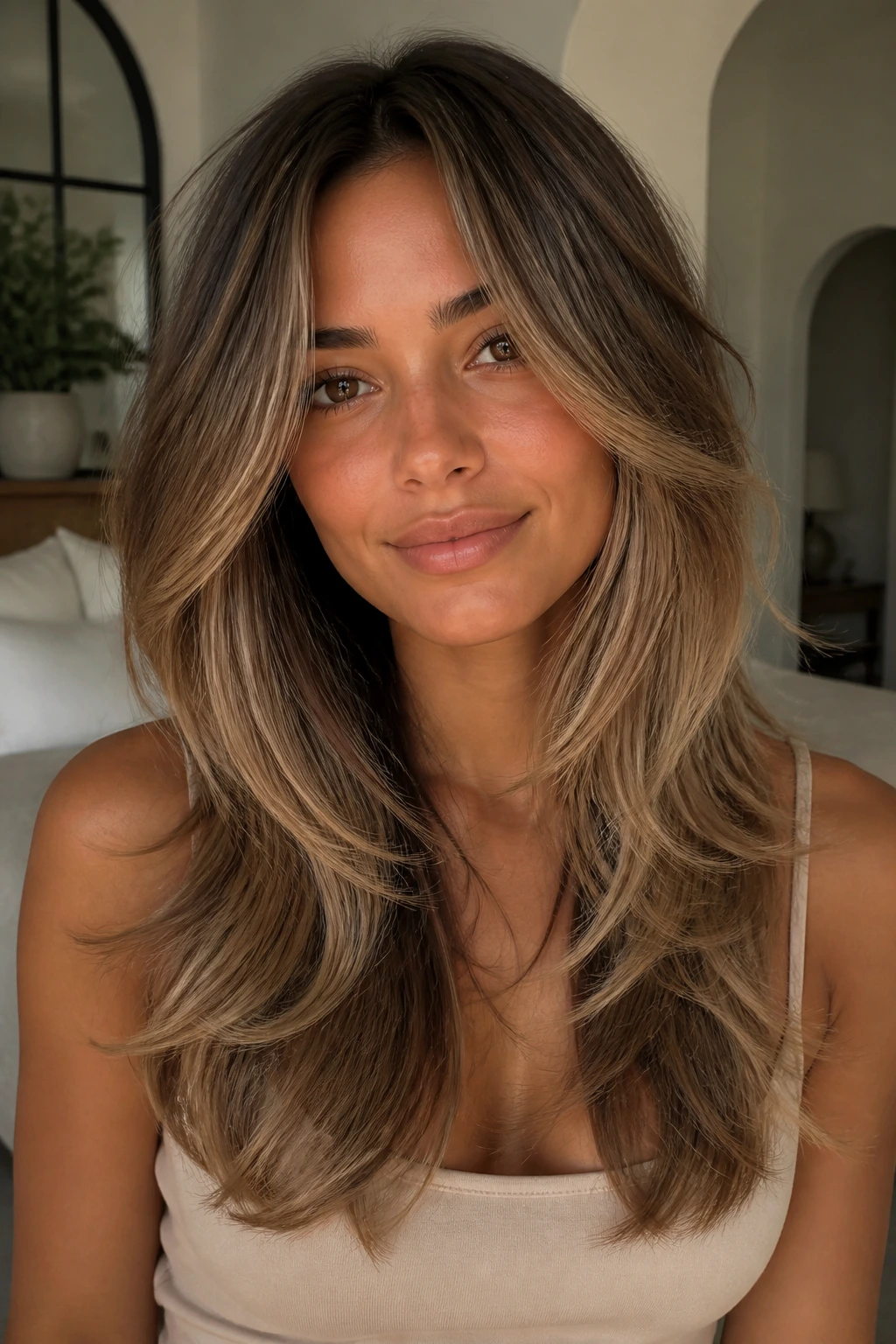
Brunette-blonde hair looks best when you keep the color on a rhythm. Root touch-ups can often wait 8 to 12 weeks if the style uses balayage or a soft root shadow. Strong money pieces or bright face frames may need attention a little sooner, around 6 to 8 weeks, because that front contrast grows out more visibly.
Glossing matters too. If your blonde leans beige, champagne, or pearl, a toner or clear gloss every 4 to 6 weeks keeps the tone from slipping yellow. Honey and caramel styles can often go a little longer, but they still need a refresh if the shine disappears.
Treat the hair like lightened hair, because it is. A weekly moisture mask for 10 to 15 minutes helps keep the ends from feeling rough. If the hair is fine, keep the mask off the roots; if it is thick or curly, work it through the mids and ends and use a wide-tooth comb to spread it evenly.
Heat and water also matter. Use a heat protectant every time. If you swim, wet the hair with clean water first and add leave-in before it hits chlorine or salt. That small step keeps blonde pieces from going straw-like.
Questions People Ask Before Booking the Appointment
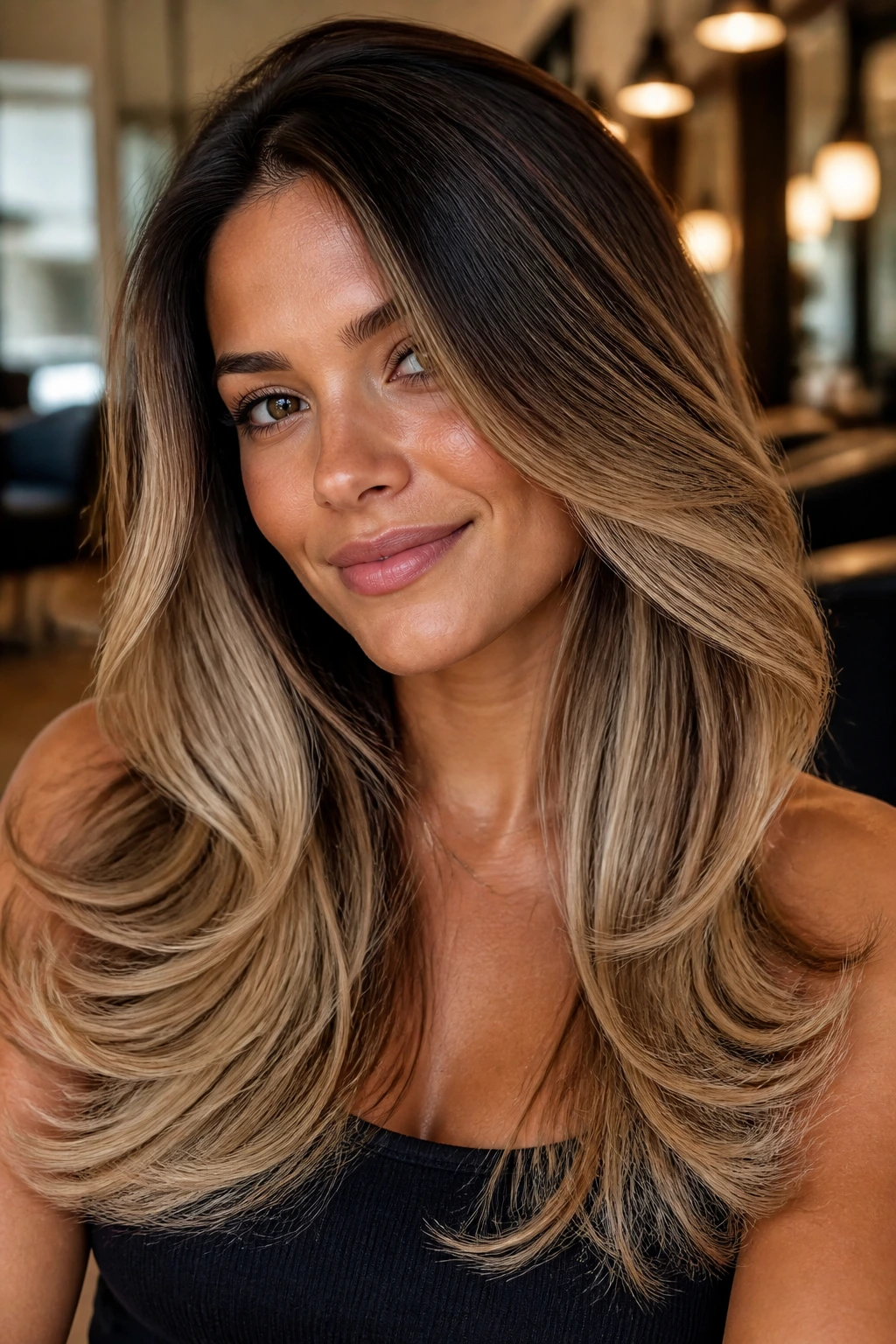
What blonde shade suits tan skin best?
Honey, caramel, beige, and champagne usually work first because they echo the warmth already in the skin. If your tan has olive undertones, mushroom or cool beige can look even cleaner.
Is bronde better than full blonde for tan skin?
Often, yes. Bronde keeps the brunette base in play, which gives the face more depth and makes the lighter pieces look intentional instead of flat.
Can cool blonde work on tan skin?
It can, but it usually works best when the cool tone is softened with beige or rooted into a deeper brunette base. A full icy blonde is harder to wear unless the makeup and wardrobe match it.
How often should I tone it?
Many blonde pieces need a gloss or toner every 4 to 6 weeks. Warm shades can stretch a bit longer, but once the blonde starts looking yellow or dull, it’s time.
What if my hair is naturally dark brown?
Start with dimension, not a giant jump to pale blonde. Caramel balayage, money pieces, or soft ribbon highlights are a safer first step and usually look better on tan skin anyway.
Will these styles work on curly hair?
Yes, but the placement has to follow the curl pattern. Highlights should sit where the curls separate and where the eye can actually see them, not buried deep inside the shape.
How do I keep blonde pieces from turning orange?
Use the right shampoo for the problem, not the loudest one on the shelf. Blue shampoo helps with orange brass, while purple helps with yellow brass. Overusing either can make the color look dull, so keep it restrained.
What should I say at the salon if I want something subtle?
Ask for brunette depth with soft brightness around the face and a shadowed root. That tells the stylist you want dimension, not a full bleach-out.
The Right Kind of Bright
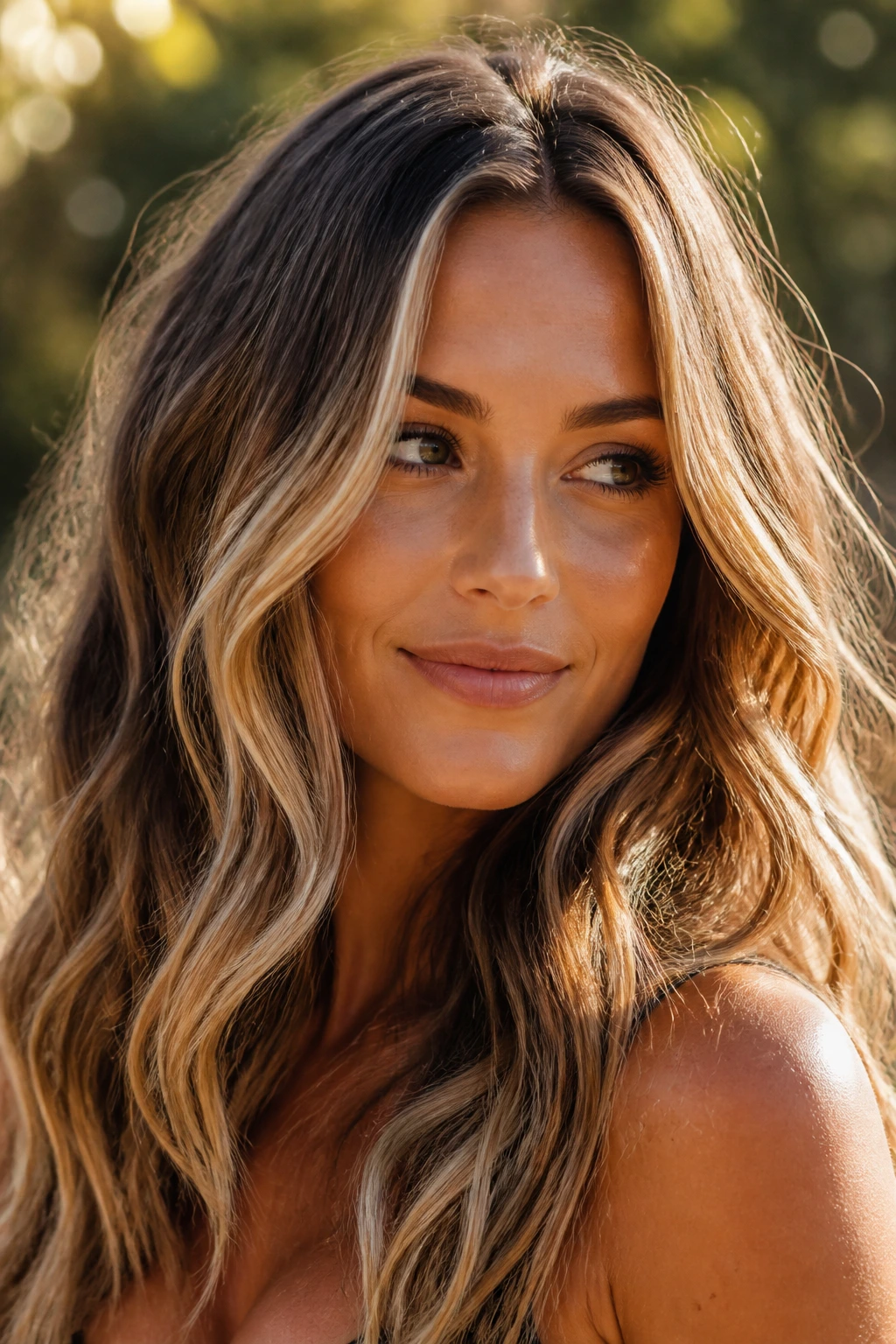
The best version of this whole idea is never the loudest one in the room. It’s the one that looks like the brunette base, the blonde placement, and your tan skin were all chosen to play the same song. That’s why bronde waves, money pieces, soft beige balayage, and warm honey ribbons keep showing up here. They have range.
If you want the safest move, start with one lighter frame around the face and let the rest of the color stay anchored. If you want more drama, go bigger with waves, contrast, or a brighter end melt. Either way, the goal is the same: hair that catches light in the right places and still looks like yours when the sun goes down.