



Olive skin and reddish blonde hair have a funny relationship. When the tone is right, the whole face wakes up: the skin looks clearer, the eyes look warmer, and even a plain white T-shirt starts to look intentional. Miss the tone by half a level, though, and that same color can go muddy, pumpkin-y, or oddly flat against the skin.
That’s why reddish blonde works so well when you treat it like a color family, not a single shade. Strawberry blonde, copper blonde, rose gold, apricot, cinnamon, peach, amber — each one behaves differently on olive undertones. Some bring out the gold in the complexion. Others soften the green cast that olive skin can have under fluorescent light, which is a small detail until you see it in photos and wonder why one shade looks rich while another looks bruised.
The sweet spot is usually warmth with structure. Not neon orange. Not ash blonde pretending to be red. The best versions have enough golden or beige depth to stop the color from shouting, and enough red reflection to make olive skin look clean and alive. Keep that in mind as you move through the ideas below, because the difference between “beautiful copper melt” and “why does this look a little off?” is often just undertone control.
Why These Reddish-Blonde Shades Work on Olive Skin
-
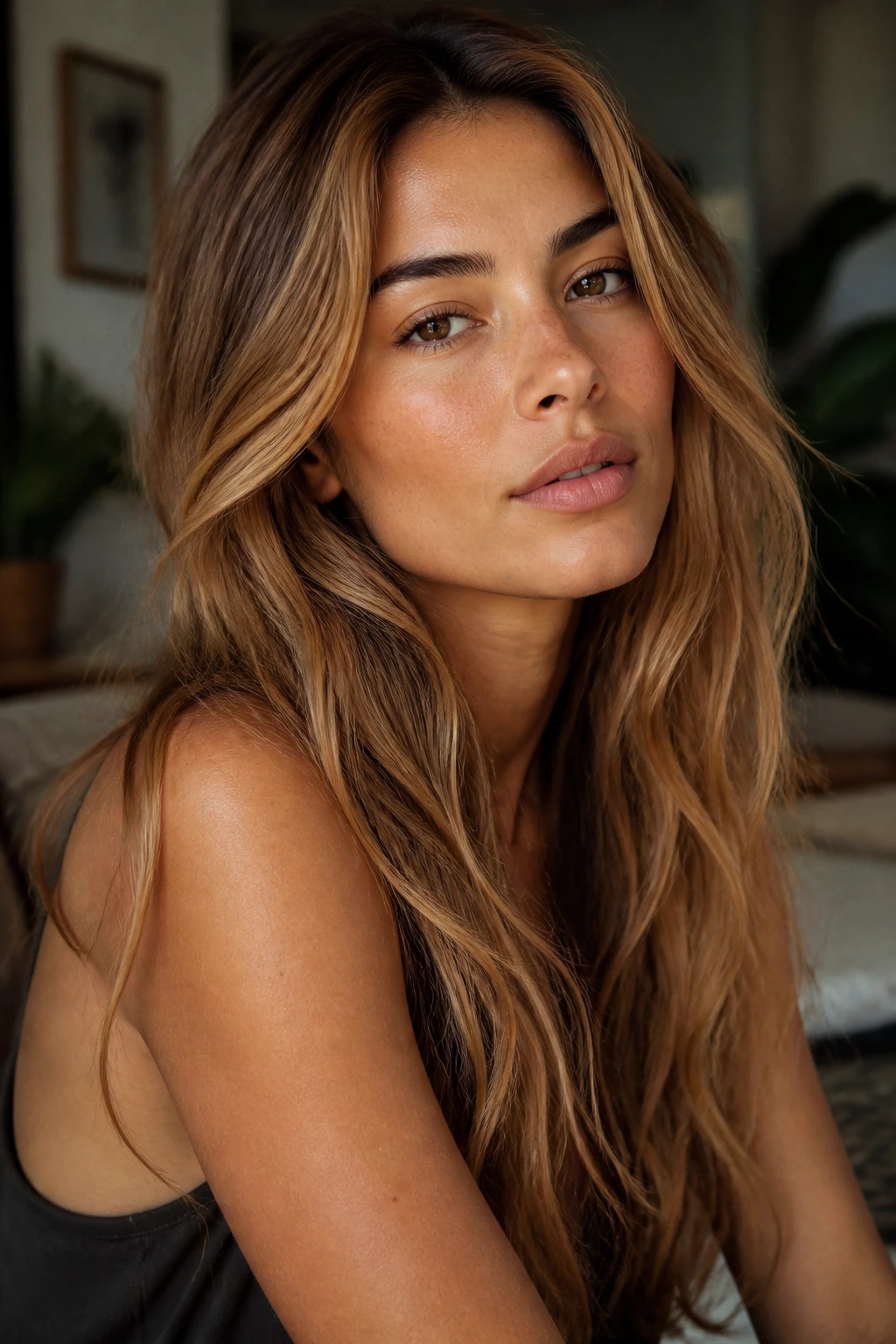
They fight dullness without turning harsh: Olive skin often has a soft green-gray or golden cast, and a reddish blonde with peach, copper, or strawberry reflect adds warmth where the face needs it most.
-
They give you range: You don’t have to go full copper to make an impact. A level 8 beige strawberry or a rose-gold gloss can read polished and soft, while deeper amber tones bring more drama.
-
They’re easier to live with than flat red: A little root shadow or balayage makes the grow-out look intentional, which matters when the shade is meant to move between golden and red.
-
They flatter both straight and textured hair: On waves and curls, copper ribbons catch the light in little flashes. On straight hair, the same tones look smoother and more expensive if the gloss is done right.
-
They play well with makeup: Bronze blush, terracotta lipstick, and warm brow gels suddenly make sense. Cool pinks can work too, but warm red-blonde usually gives you more room.
How Olive Skin Changes the Way Reddish Blonde Reads
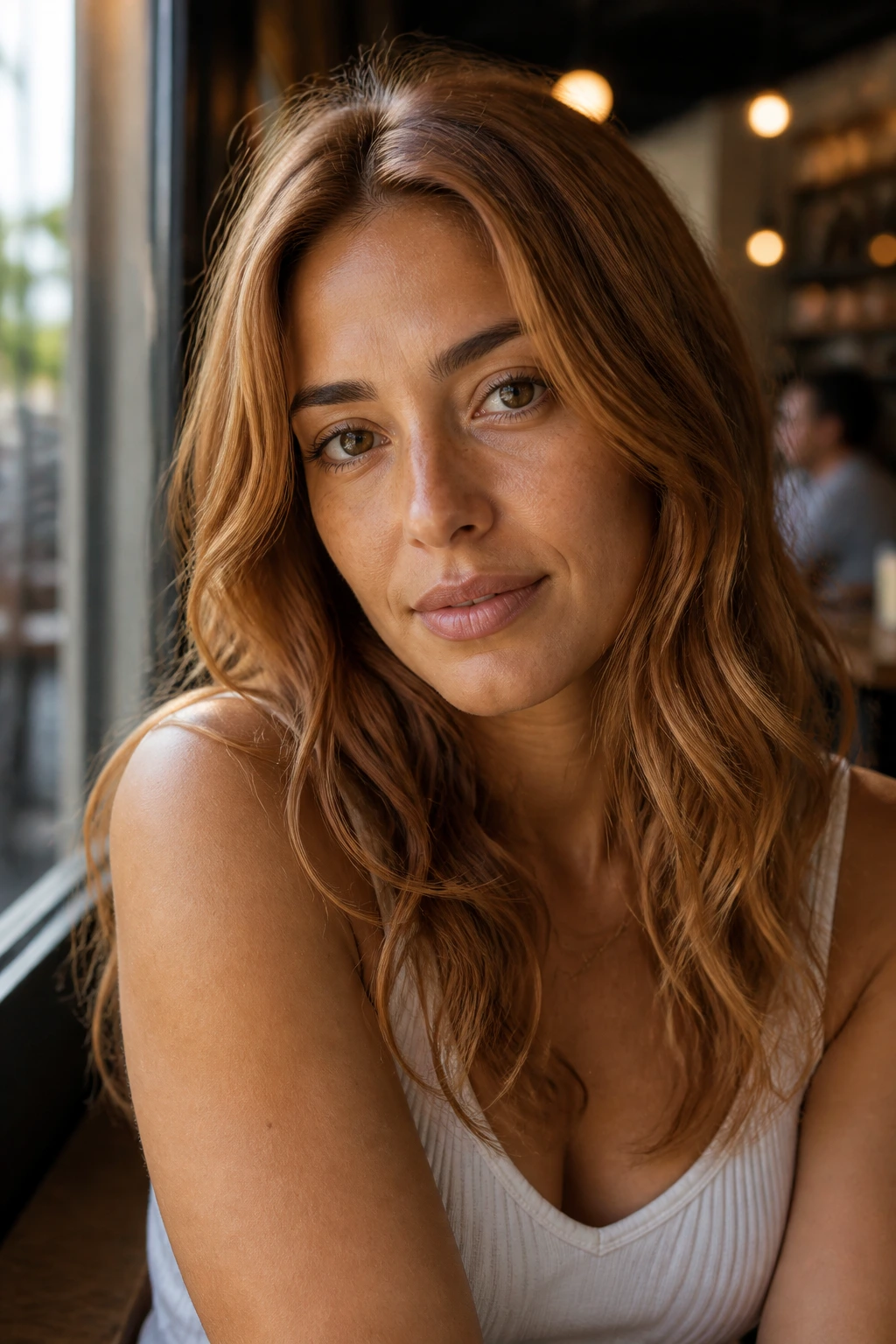
Olive skin isn’t one thing. That’s the first rule, and it saves people a lot of bad color decisions. Some olive complexions lean golden, some lean neutral, and some have that green-gray cast that only becomes obvious next to white paper or a bad foundation match. The same strawberry blonde that looks soft on one person can look loud on another, and a cinnamon gloss that feels rich in one mirror can go a little murky in another.
Warm, neutral, and cool-olive aren’t the same target
If your olive skin leans warm, copper, peach, and honey-strawberry shades usually sit on the face in a flattering way. If it leans neutral, rose gold, apricot beige, and champagne copper tend to be the safest sweet spot. Cooler olive skin can still wear reddish blonde, but the trick is keeping the warmth muted — think beige strawberry, dusty rose copper, or a gloss that barely tips into peach.
Why ash blonde often misses the mark
Ashy blondes can look sleek on paper. On olive skin, though, they sometimes pull the complexion toward gray. That isn’t always bad if you love a moody, editorial look, but it’s a risk when the goal is softness and glow. Reddish blonde avoids that dead zone because it gives the skin something warm to bounce against.
When a gloss is smarter than a full color
If you’re nervous, start with a gloss, demi-permanent glaze, or balayage. A clear copper or strawberry gloss over blonde hair can shift the tone just enough to wake up the face without locking you into a strong color story. That little bit of restraint is often what makes the result feel chic instead of costume-y.
1. Soft Strawberry Blonde Melt
Soft strawberry blonde has that slightly creamy look that makes olive skin seem brighter without shouting for attention. The color sits between pale copper and warm beige, so it doesn’t fight the natural undertone in the skin. Instead, it kind of folds into it — and that’s why it looks expensive when it’s done well.
Why it flatters olive skin
The best version usually lives around level 8 or 9 with a strawberry glaze, not a pure red dye job. On olive skin, that lighter base keeps the shade airy instead of heavy, while the red reflection adds life around the cheeks and forehead. If your skin leans neutral, this is one of the easiest ways to get warmth without crossing into orange.
Ask for a soft root shadow if your natural color is darker than the ends. That keeps the grow-out smooth and stops the blonde from looking stripey at the scalp. On wavy hair, the melt shows through every bend. On straight hair, it reads more polished and almost silken.
2. Copper Peach Balayage
Copper peach balayage has a sun-warmed, fruit-skin kind of color that works beautifully on medium olive skin. It’s brighter than strawberry blonde and softer than true copper, which gives you a shade that feels playful without tipping into full orange territory.
The balayage placement matters here. Keep the copper peach around the face, through the mid-lengths, and on the top layer where the light hits first. Leave the underside a little darker. That contrast makes the color look richer and stops the whole head from turning into one flat warm block.
This is a strong choice if you like a color that changes in different lighting. Indoors, it can look beige-peach. Outside, the copper starts to show. That shift is part of the charm. If your olive skin leans golden, this one is a near lock.
3. Rose Gold Bronze Blonde
Rose gold bronze blonde sits in that lovely middle ground where red meets beige and a touch of brown keeps everything grounded. It’s a smart choice for olive skin because the bronze depth stops the pink from going too sweet, while the gold keeps the face from looking washed out.
Best if you want softness, not spice
This is the shade for someone who wants a reddish blonde that doesn’t scream “red hair.” The bronze base gives it enough seriousness for a work setting, but the rose-gold reflect keeps it from feeling flat. It’s especially flattering on olive skin with hazel eyes, because the mix of pink, gold, and brown mirrors the color variation already in the face.
If you’re asking for this at a salon, bring a photo with daylight in it. Under yellow bulbs, rose gold bronze can look much pinker than it really is. A stylist who understands gloss layering can keep the pink in the reflect, not the whole identity of the color.
4. Apricot Beige Blonde
Apricot beige blonde is one of the quietest shades in the group, which is exactly why it works. The apricot gives the hair a lifted warmth, while the beige keeps it from becoming too fiery. On olive skin, that balance can look clean and soft, especially if your complexion already has some golden notes.
This shade is a good answer if you want reddish blonde but hate the idea of obvious copper. The color usually looks like a beige blonde with a whisper of peach at the ends and around the face. In photos, people may not name the shade right away. They’ll just notice that your skin looks smoother and your features look less tired.
It’s also one of the easier tones to maintain if you don’t want a lot of salon drama. A beige-apricot gloss every few weeks keeps the warmth from fading into plain yellow-blonde.
5. Cinnamon Honey Blonde
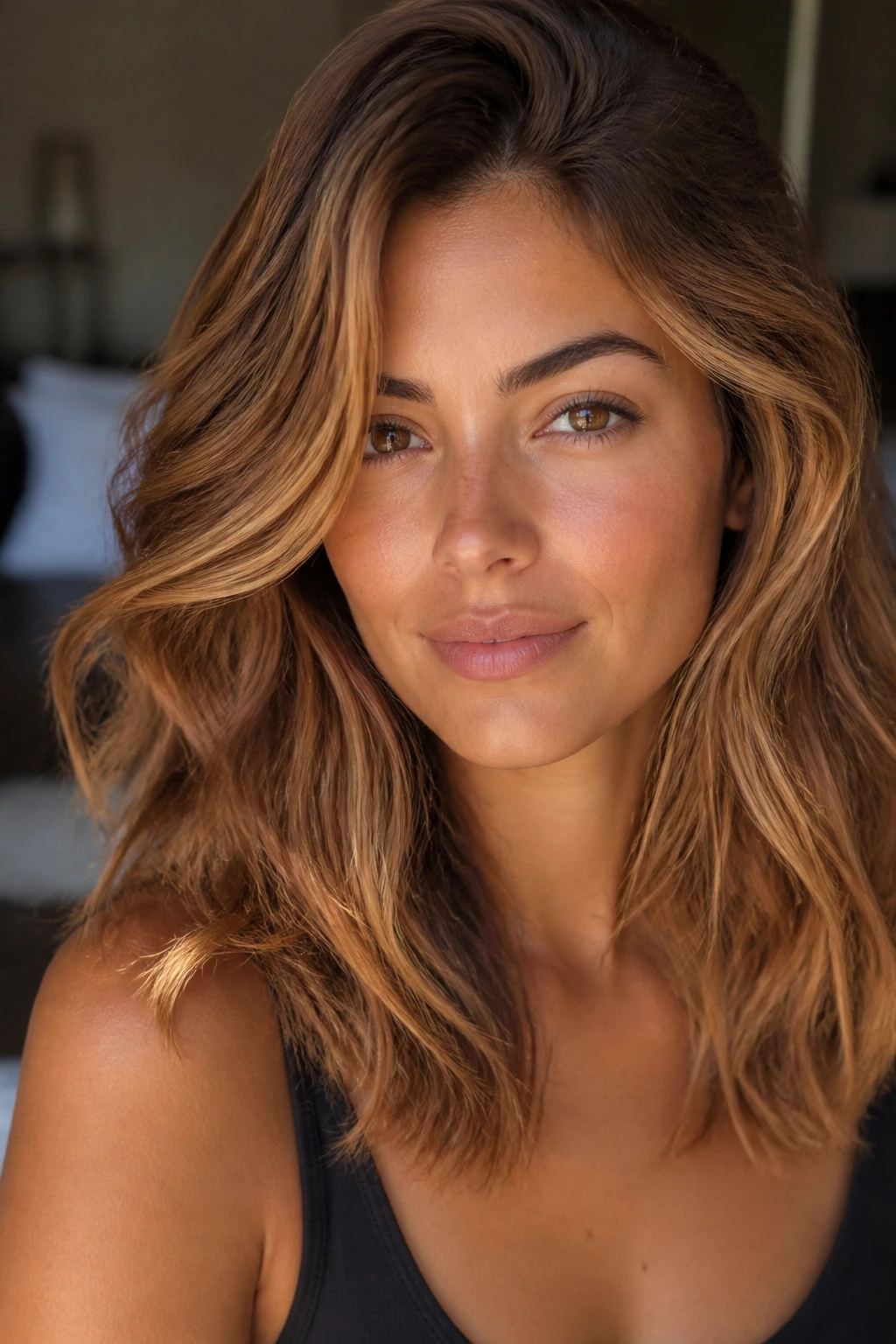
Cinnamon honey blonde brings more spice. It’s warmer, deeper, and a little more noticeable than strawberry or apricot, but it still reads blonde because the honey base keeps the overall effect light. On olive skin, that honey note is what prevents the cinnamon from looking brick-red.
This shade works especially well if your natural hair is a dark blonde or light brown. You get enough depth to make the color feel cozy, but not so much red that it starts wearing you instead of the other way around. If your eyes are green or hazel, the cinnamon reflection can make them look sharper. If your skin leans medium olive, this is one of the better ways to go richer without going full auburn.
A little wave helps here. Cinnamon honey blonde loves texture. On stick-straight hair, it can look softer and a bit more muted, which isn’t bad — just different.
6. Ginger Ribbon Highlights
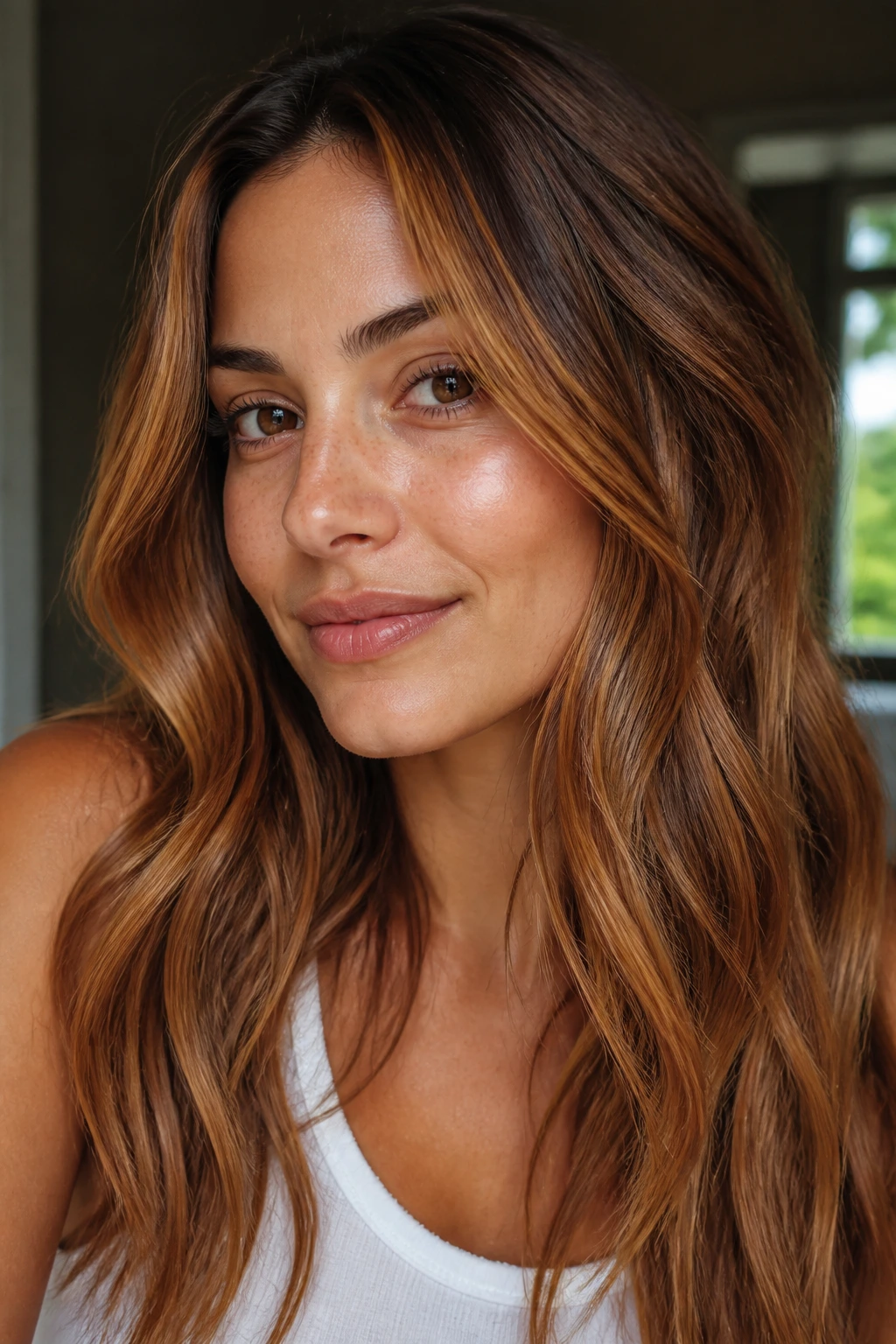
Why choose one solid tone when the ribbons can do the talking? Ginger ribbon highlights are thin, bright copper strands woven through a darker blonde or light brown base. On olive skin, they create movement without requiring an all-over warm color, which is useful if you like dimension and hate the grow-out line.
The trick is placement. Put the brightest ginger pieces around the face and part, then let them taper through the lengths. If every highlight is equally bright, the result can look striped. If they’re staggered, the color feels natural and expensive. This is especially good for people whose olive skin leans neutral, because the highlight pattern brings warmth without overwhelming the complexion.
It’s also a fine choice if you want to ease into the red-blonde family before committing to a full gloss or all-over dye.
7. Auburn Bronde Lows and Lights
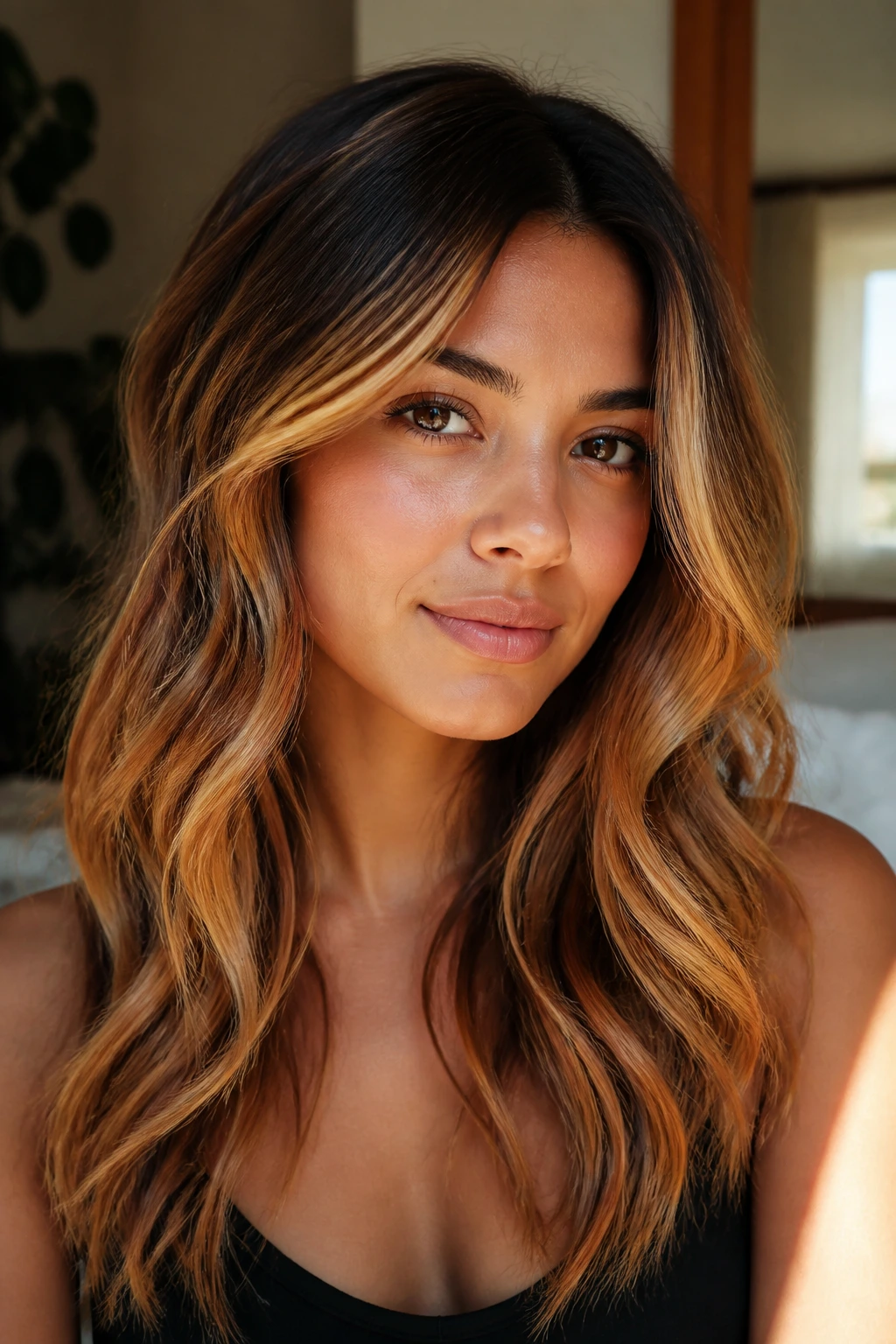
Auburn bronde is the shade for someone who wants depth first and blonde second. The base sits in brunette territory, but the lighter pieces carry a reddish-blonde warmth that keeps the whole look from going flat. On olive skin, that darker root gives the face structure, which matters if your complexion can swallow pale blonde.
The beauty of auburn bronde is that it doesn’t force every strand to be the same color. Instead, you get auburn lowlights, warm blonde lights, and a little copper shimmer around the front. That movement is what keeps the style alive. It’s also forgiving if your natural color is already medium brown, because the grow-out blends into the base instead of staring at you from the mirror.
If you’re a low-maintenance person who still wants warmth, this shade deserves a serious look.
8. Beige Strawberry Blonde
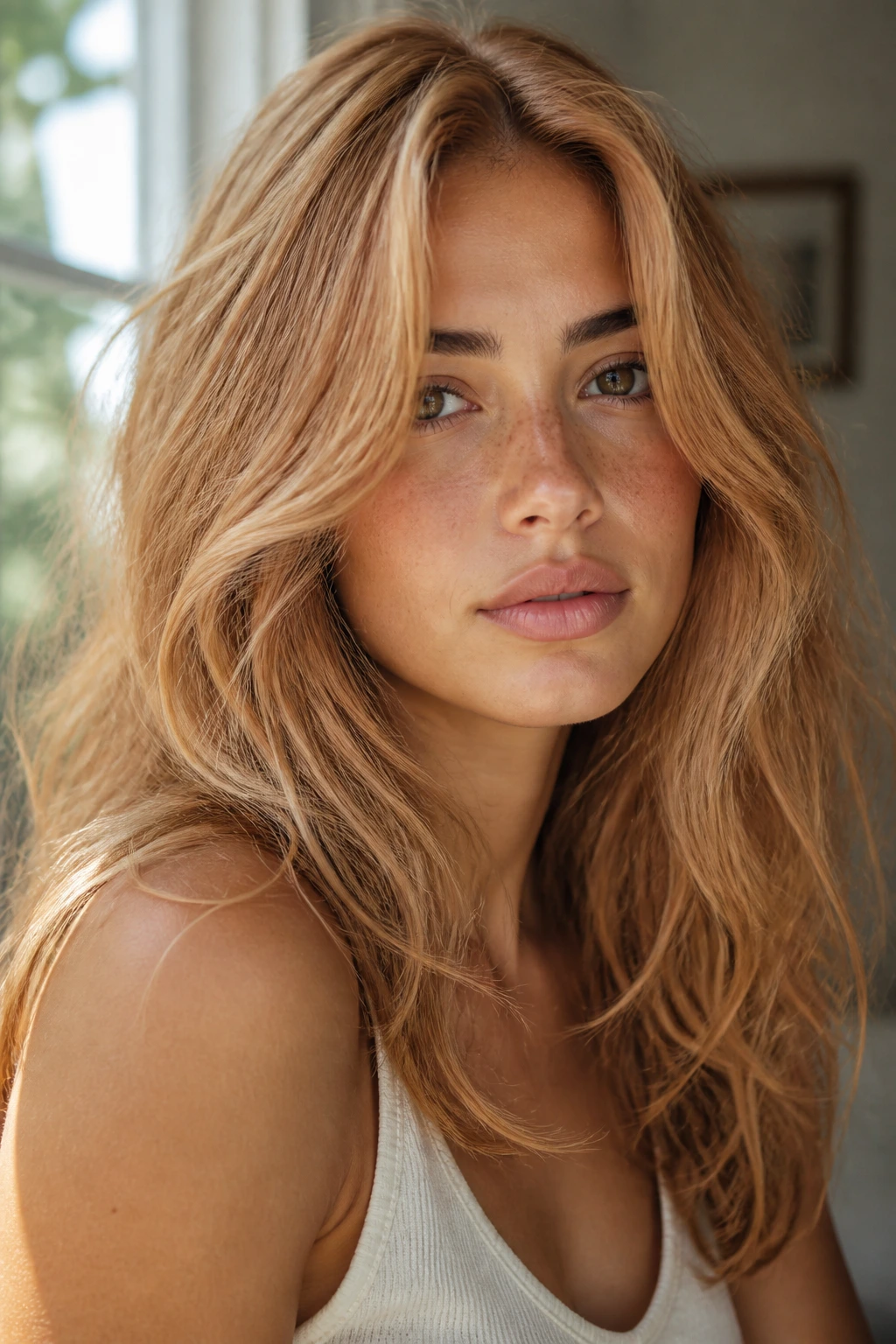
Beige strawberry blonde is the controlled version of strawberry. Less sweetness. Less pink. More softness. The beige stops the color from becoming too candy-like, and on olive skin that restraint often makes the face look cleaner.
The shade that whispers instead of shouts
This is one of those colors that looks different in every light, and that’s not a flaw. In daylight, the strawberry shows more clearly. Indoors, the beige takes over and keeps the hair from looking too rosy. If your olive skin leans cool-neutral, this flexibility is a gift. You get warmth without the kind of warmth that makes the skin look sallow.
It’s also a shade that works on finer hair because the lighter beige reflect makes the hair appear a bit fuller. Just keep the toner in check. Over-toning beige strawberry into ash territory is how a soft shade turns limp.
9. Peachy Champagne Blonde
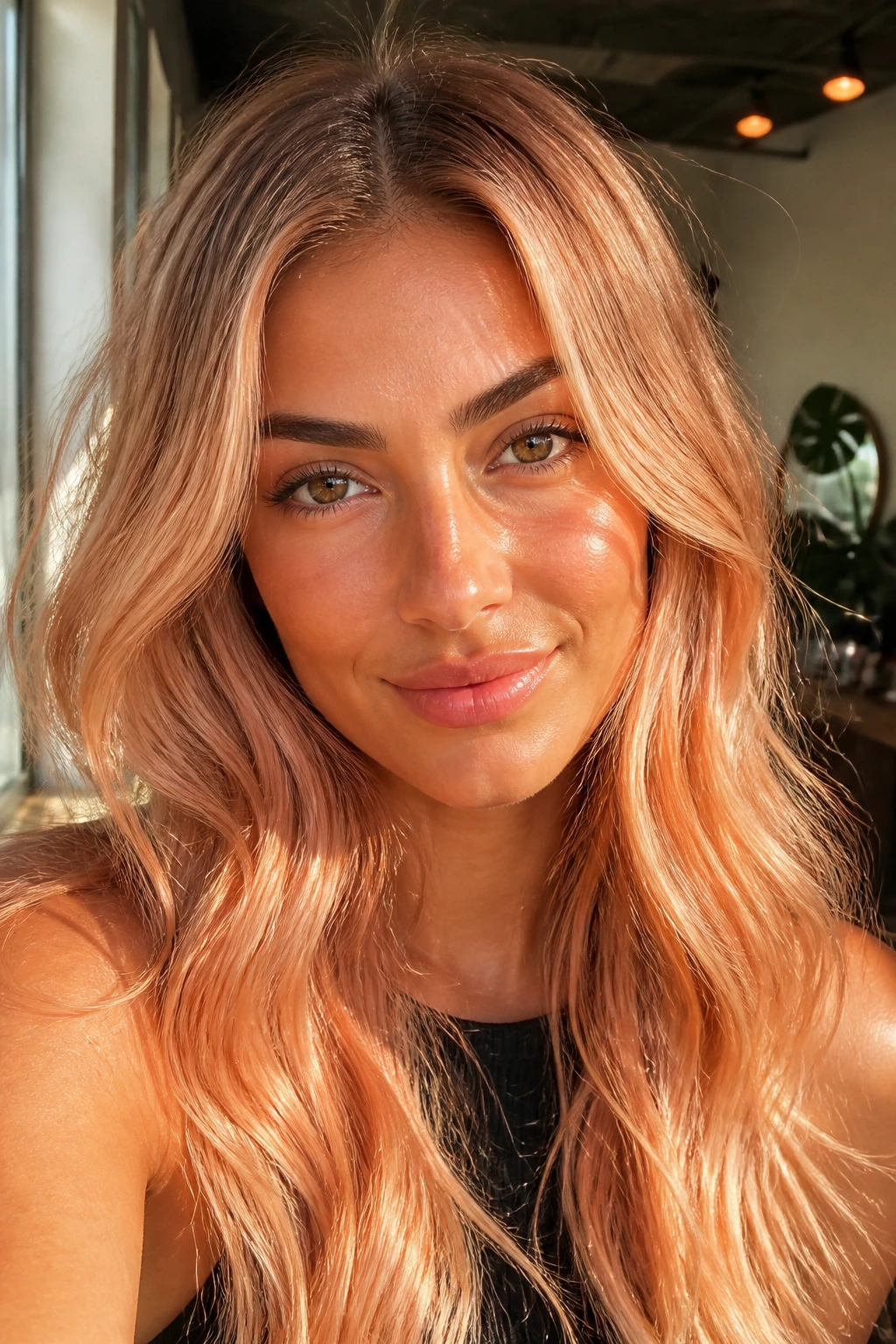
Peachy champagne blonde has a sparkly feel without becoming frosted. The champagne base keeps the hair bright, and the peach reflection gives it enough warmth to sit well against olive skin. If you’ve ever loved blonde but felt like the cold versions made your complexion look tired, this is a cleaner route.
The best thing about this color is how it catches light around the face. It’s one of the few reddish blondes that can read glamorous without needing a lot of depth. That makes it a good pick for shorter cuts, face-framing layers, or long hair with soft bends. Olive skin with golden undertones tends to glow under this shade. Neutral olive skin also tends to handle it well, especially if the peach stays light and airy.
Think of it as blonde first, warmth second, red last. That order matters.
10. Golden Copper Face-Framing
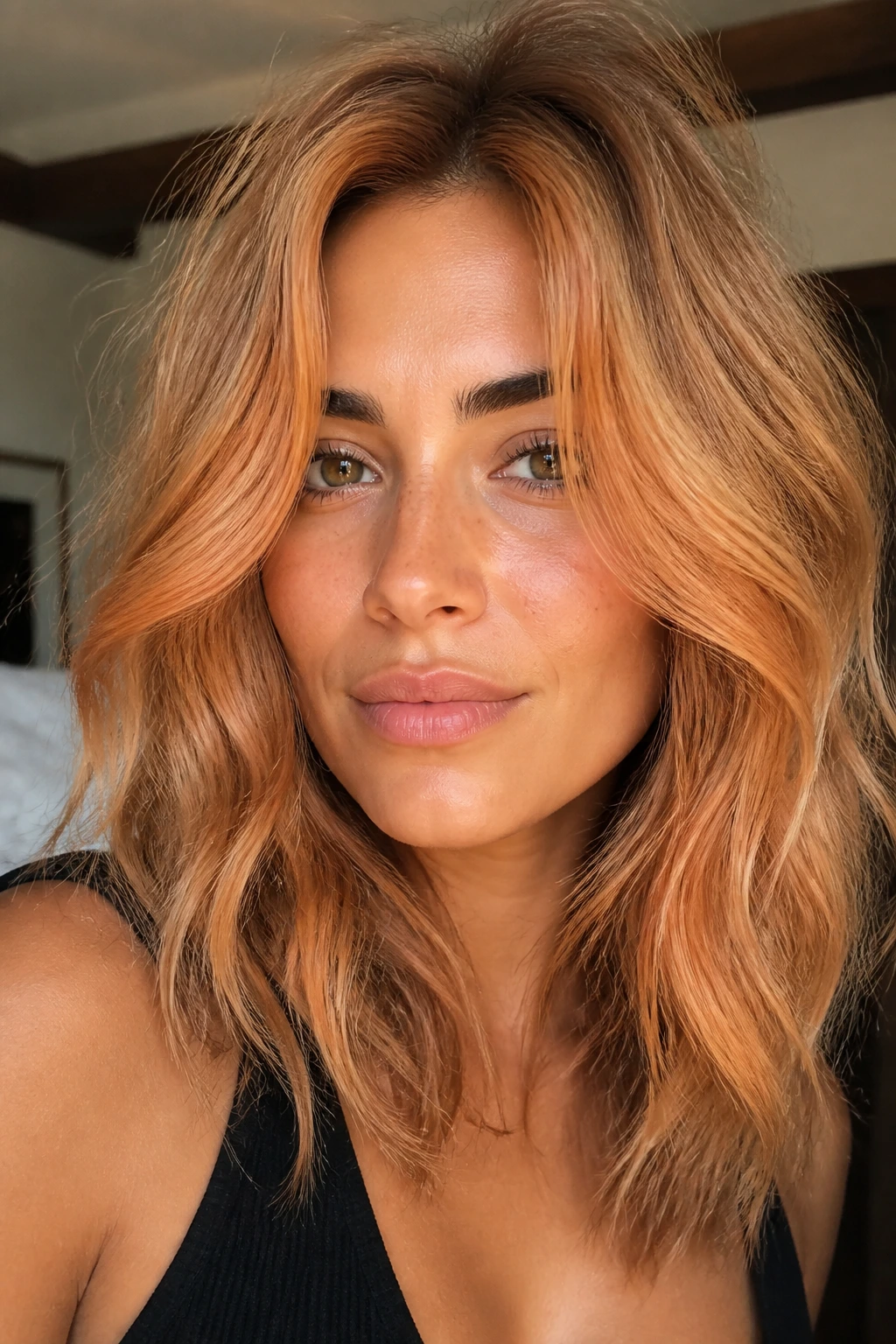
Some people need a full head of color. Others just need the right pieces in the right place. Golden copper face-framing does exactly that. The front sections around the cheekbones and jaw get a stronger copper-gold tone, while the rest of the hair stays softer and more blonde.
This is one of the most practical ideas for olive skin because it puts warmth where the face can use it and leaves the rest alone. That’s a big deal if you’re nervous about red taking over your whole look. The front panels act almost like makeup: they warm the complexion, brighten the eyes, and pull attention upward.
It’s also easy to grow out. The roots can stay closer to your natural color, which keeps appointments spaced out and gives the shade a lived-in look instead of a fresh-from-the-bowl look.
11. Rusted Strawberry Lob
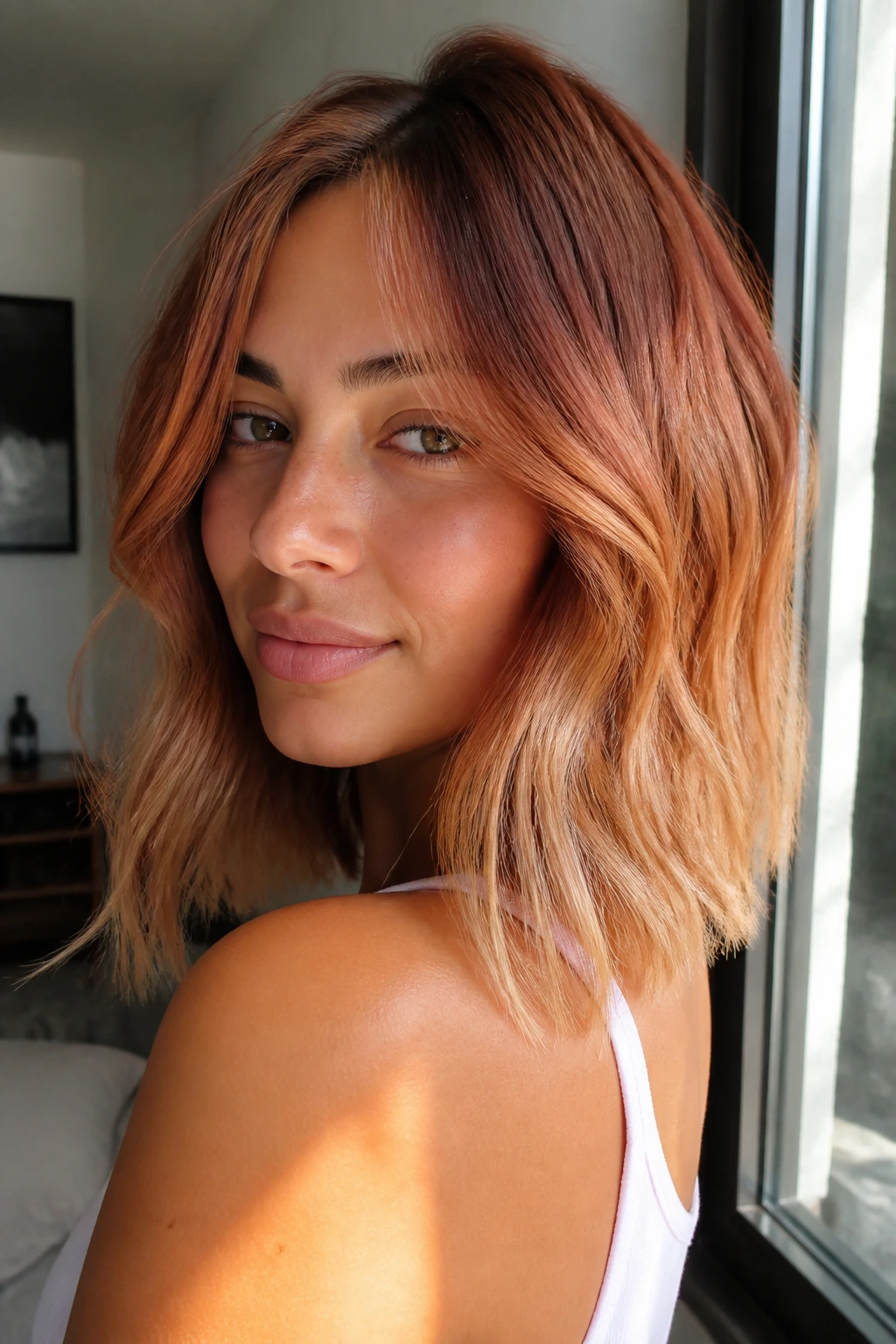
Rusted strawberry blonde has more depth than soft strawberry and a little more grit than copper peach. On a lob, that color feels modern and deliberate, especially when the ends are slightly piecey. Olive skin can handle the rust note surprisingly well, as long as the tone still has enough blonde in it to avoid going flat.
The shorter cut helps. A lob gives the color enough movement to show off the different tones in daylight. The roots can stay shadowed, the middle lengths carry the strawberry warmth, and the ends can fade just a touch lighter. That mix keeps the shade from looking one-note.
If your skin leans medium or deeper olive, this is a flattering way to wear reddish blonde without going soft and pastel.
12. Coral Copper Money Piece
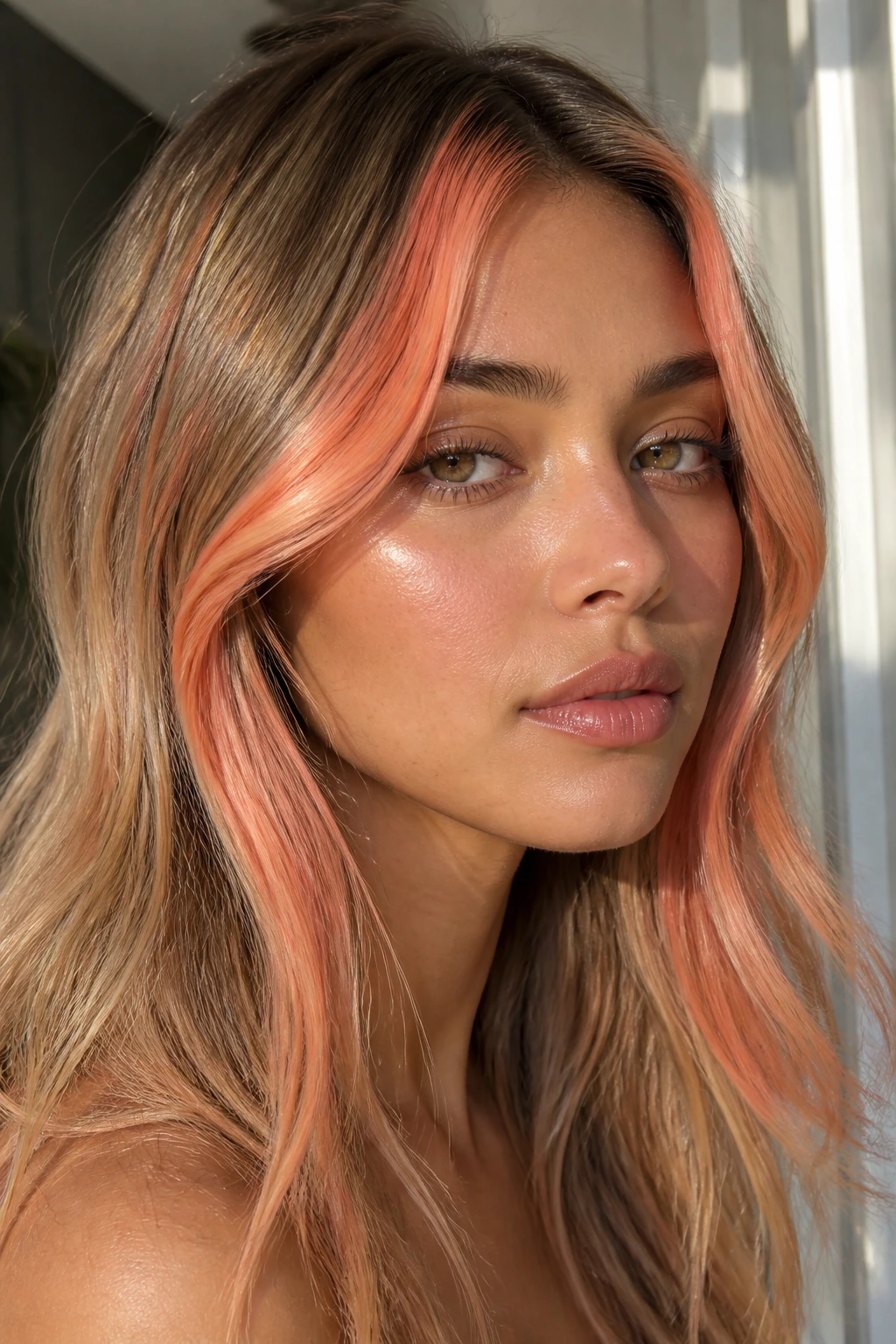
Coral copper is louder, and I like it for that reason. A money piece in this tone can change a whole haircut, especially if the rest of the hair stays beige blonde, light brown, or soft copper. On olive skin, the coral note adds a fresh brightness that can make the face look more awake than a standard blonde highlight ever could.
Where to place the pop
Keep the coral copper concentrated where the hair falls around the face — near the part, at the temples, and through the front layers. You want contrast, not chaos. If the color spreads too far back, it stops feeling like an accent and starts competing with the rest of the head. That’s where the whole thing can get too hot.
This shade works best if you like a little attitude in your color. It’s not shy. It looks especially good with a strong brow, a simple cut, and skin that has enough olive depth to hold the warmth.
13. Marmalade Blonde Gloss
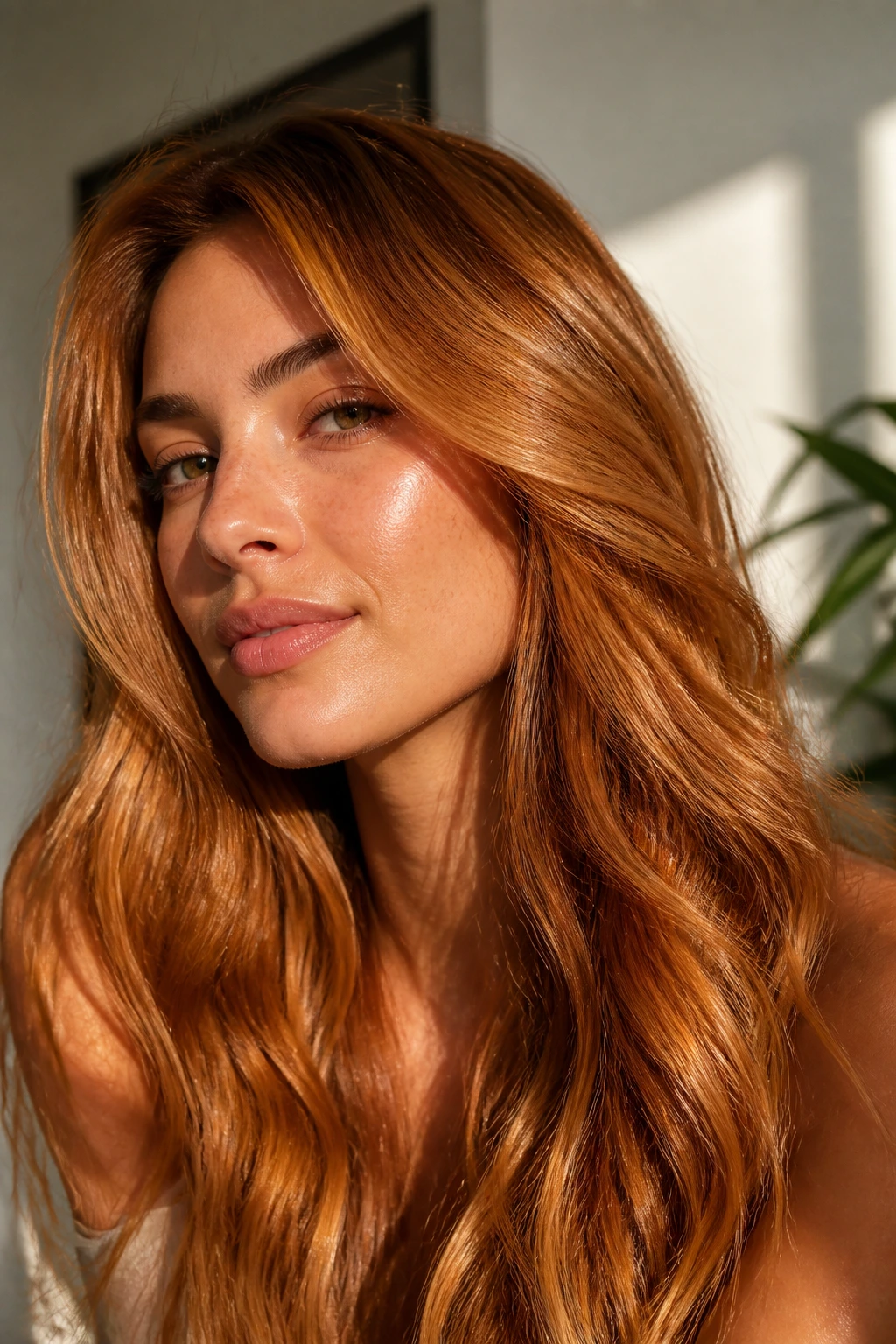
Marmalade blonde sounds almost too cheerful, but the color itself is rich and grown-up. It’s a golden-orange blonde with a soft jammy feel, and the gloss is what keeps it from turning brassy. On olive skin, that deep citrus warmth can look unexpectedly smooth.
This is one of the more useful ideas if you’re starting with a blonde base and want to shift into the red-blonde family without committing to a big permanent change. A gloss over blonde hair can give you that marmalade sheen in one appointment, then fade gently over time. That makes it ideal for anyone who likes changing shades often.
The shade tends to look best with loose waves, because the curve of the hair shows off the different tones instead of letting them blur together.
14. Caramel Copper Curl Lights
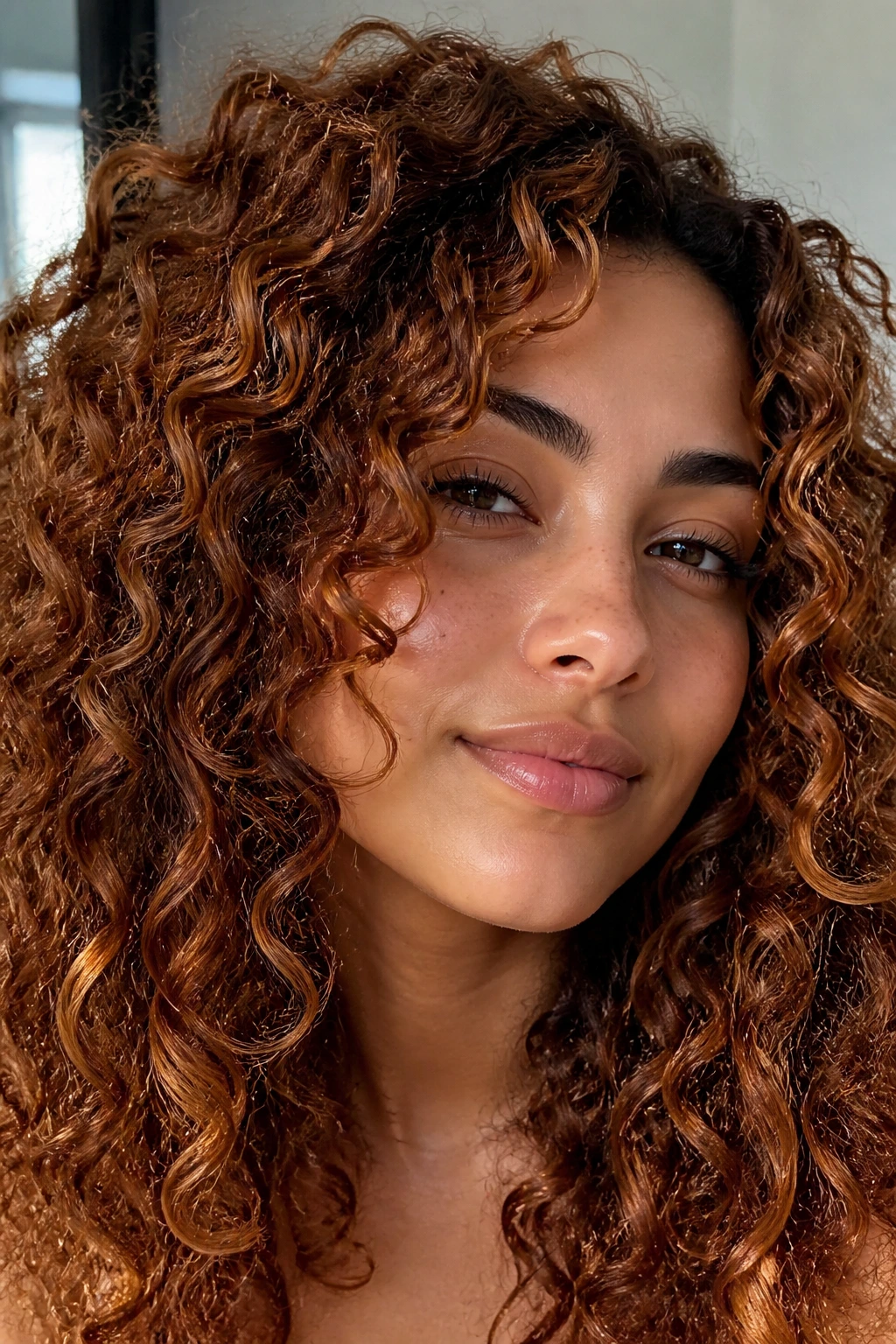
Curly hair and copper are old friends. Caramel copper curl lights thread the warmth through coils and waves so each bend catches a different tone. On olive skin, the caramel keeps the copper from looking too sharp, and the copper keeps the caramel from going beige and sleepy.
This idea is especially strong when the highlights are painted in a way that respects the curl pattern. The bright pieces should sit where the curls naturally spring forward. That way the color feels woven in, not pasted on. On tighter curls, the result can look like a soft glow from inside the hair.
If you’re worried about copper being too much, start with caramel copper instead of a full bright red-blonde. It gives you the warmth without the heat blast.
15. Blush Ginger Blonde
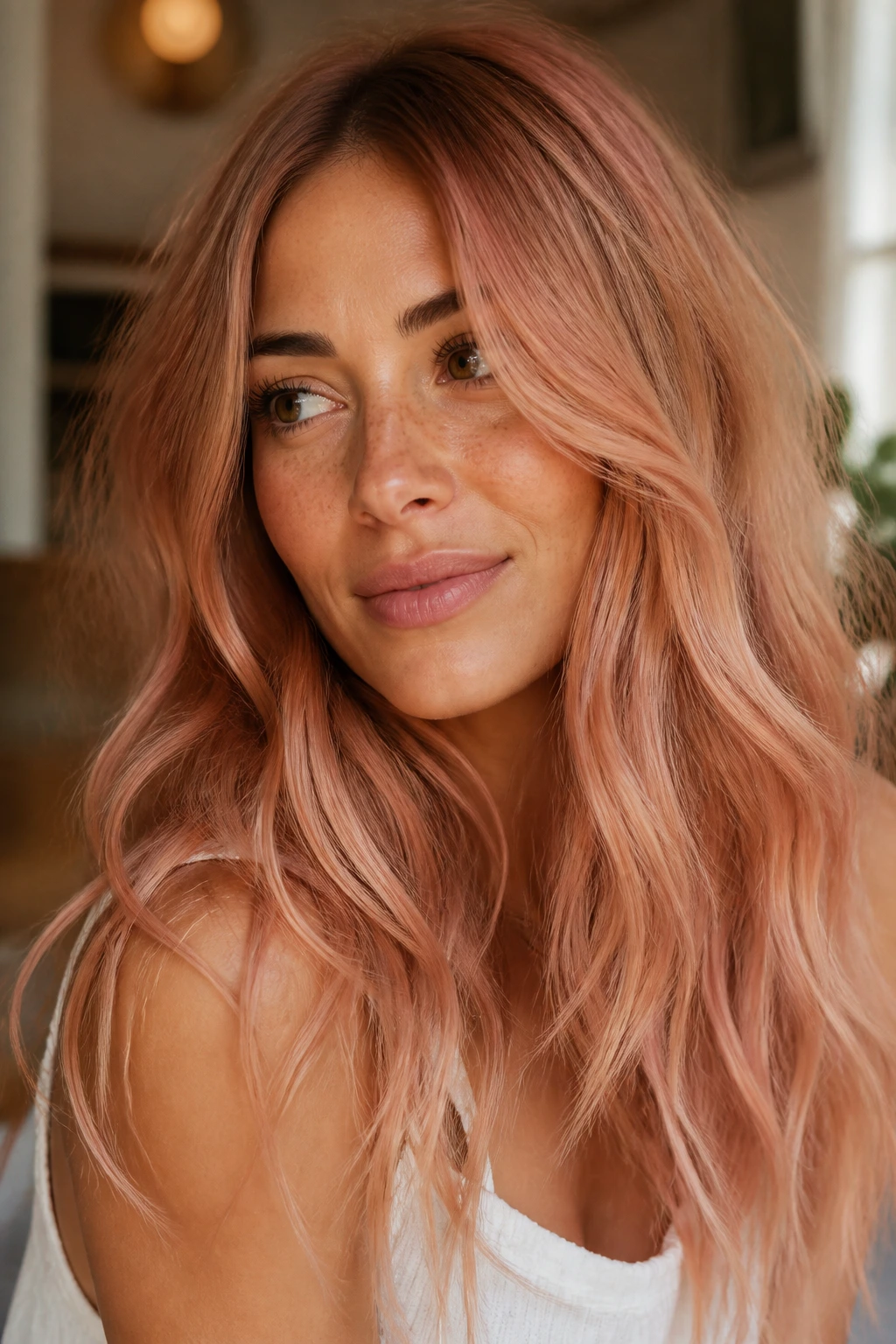
Blush ginger blonde has a pale rosy cast that sits somewhere between strawberry and ginger. It’s one of the prettiest options for lighter olive skin because it gives color to the face without making the hair look dark or heavy. The blush note softens the ginger, which matters if you want warmth with a little romantic edge.
This shade can be gorgeous on medium-length cuts with movement. It tends to lose some of its blush in harsh light, so if you love pink-toned warmth, ask your stylist to keep the gloss slightly stronger than you think you need. That way the fade still leaves you with a flattering strawberry base, not a pale beige shell.
It’s a good choice if you wear a lot of gold jewelry. The color and the metal tend to play nicely together.
16. Sunlit Copper Foilayage
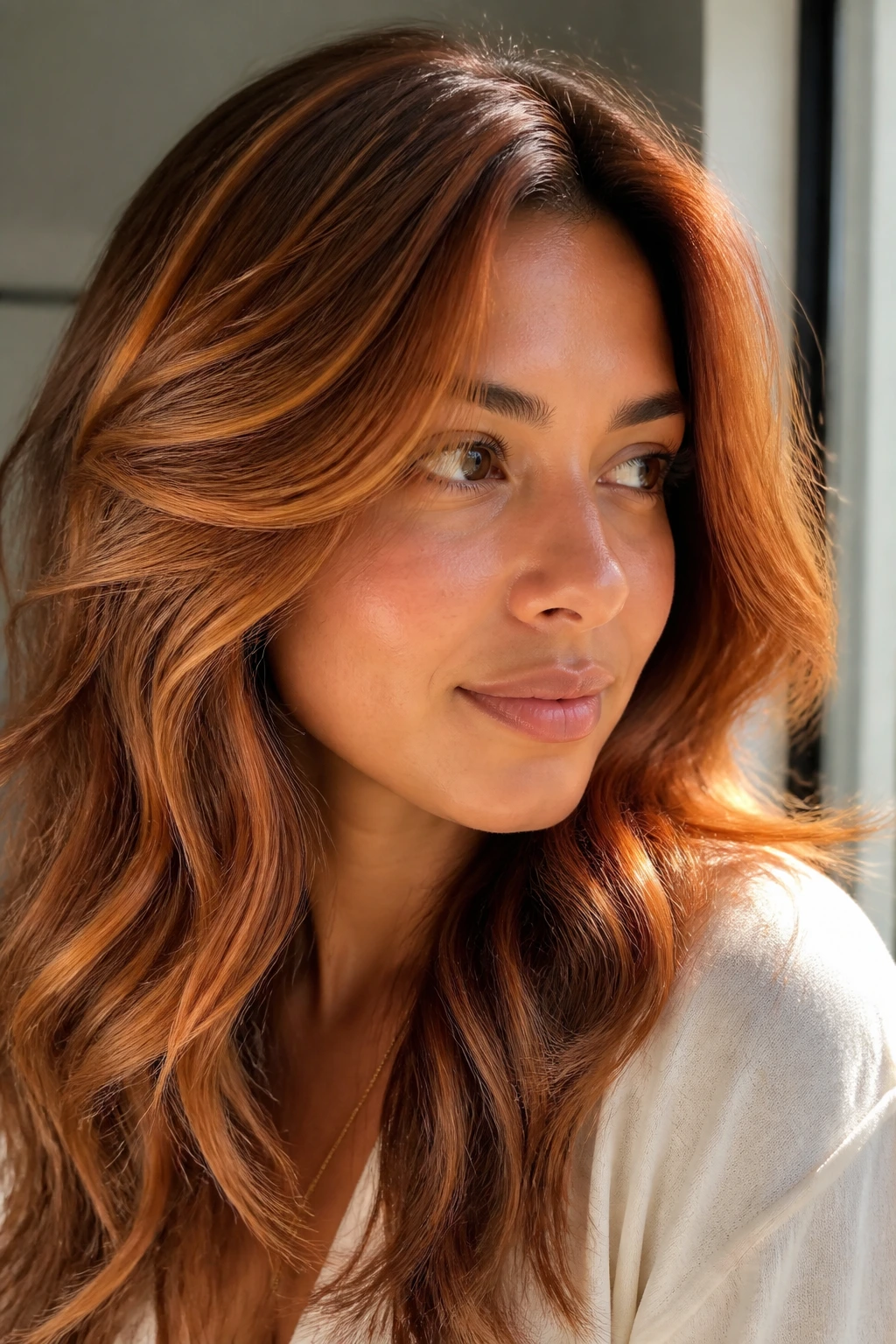
Foilayage gives you the brightness of foils with the softness of balayage, and that combo is useful when olive skin needs warmth but not a solid block of it. Sunlit copper foilayage places copper blonde pieces where the sun would naturally hit: crown, face frame, outer layers.
The result looks lighter and more expensive than a simple all-over copper gloss. That matters on olive skin because a few well-placed warm pieces often flatter more than an entire head of saturated color. The contrast also helps if your hair is medium brown or dark blonde underneath. You get dimension, not just redness.
This one is a salon favorite for good reason. It grows out in a believable way and still looks intentional after several washes.
17. Maple Strawberry Balayage
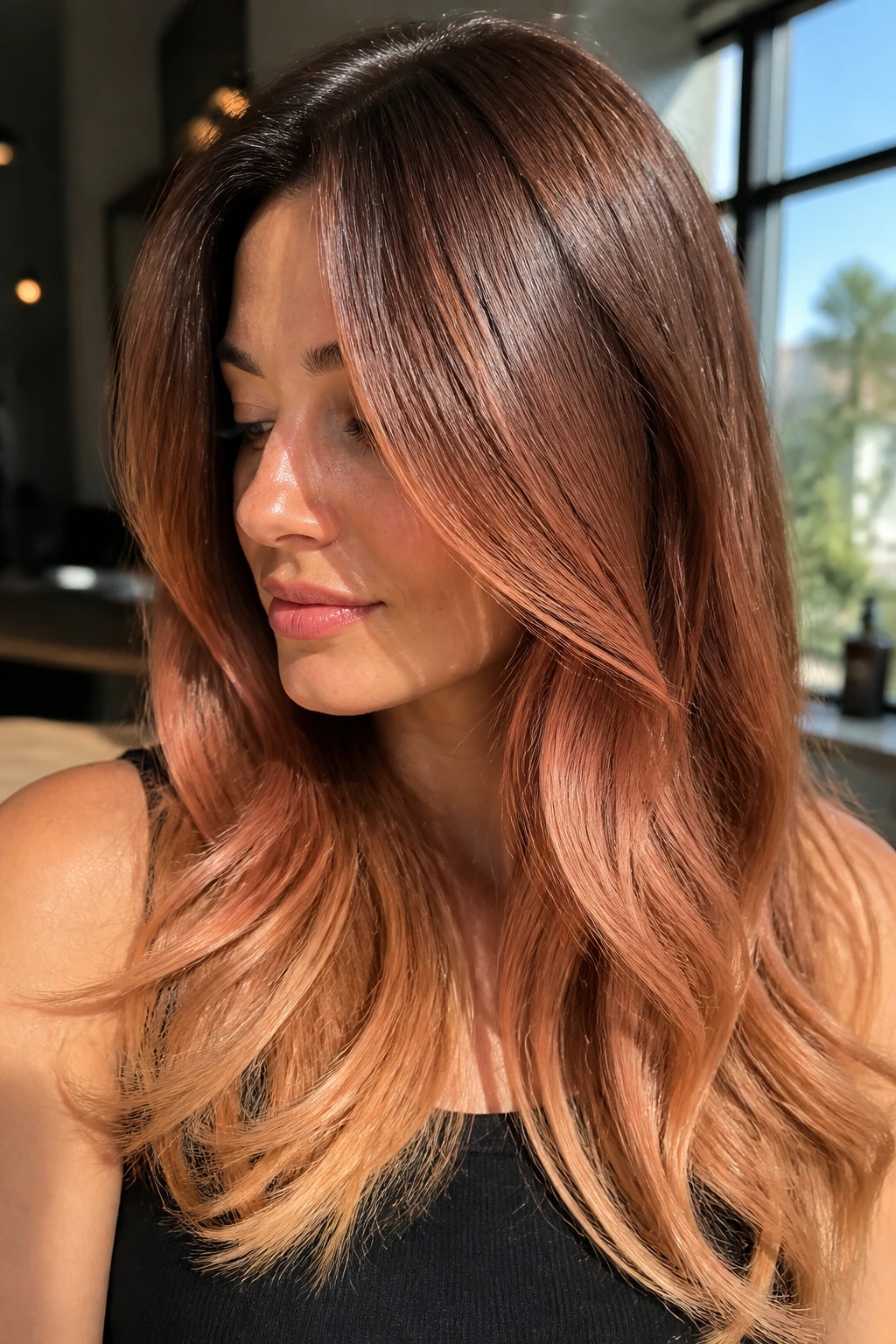
Maple strawberry balayage is warm in a way that feels almost edible — deep maple at the root, strawberry warmth through the lengths, and a little golden fade at the ends. Olive skin can wear this kind of layered warmth beautifully, especially when the base color isn’t too dark.
Why it feels richer than plain strawberry
The maple depth gives the color a brown-red anchor. Without it, strawberry can sometimes look too airy on deeper olive skin, especially if the hair is very fine. With it, the color gains a little weight and reads as luxurious instead of delicate.
This is a smart pick if you want something that looks lush in loose waves and low buns. It’s also one of the easier shades to stretch between appointments because the balayage keeps the grow-out soft. Ask for the lightest strawberry pieces around the face and a darker maple shadow through the interior so the blend doesn’t flatten out.
18. Amber Reddish Blonde Shag
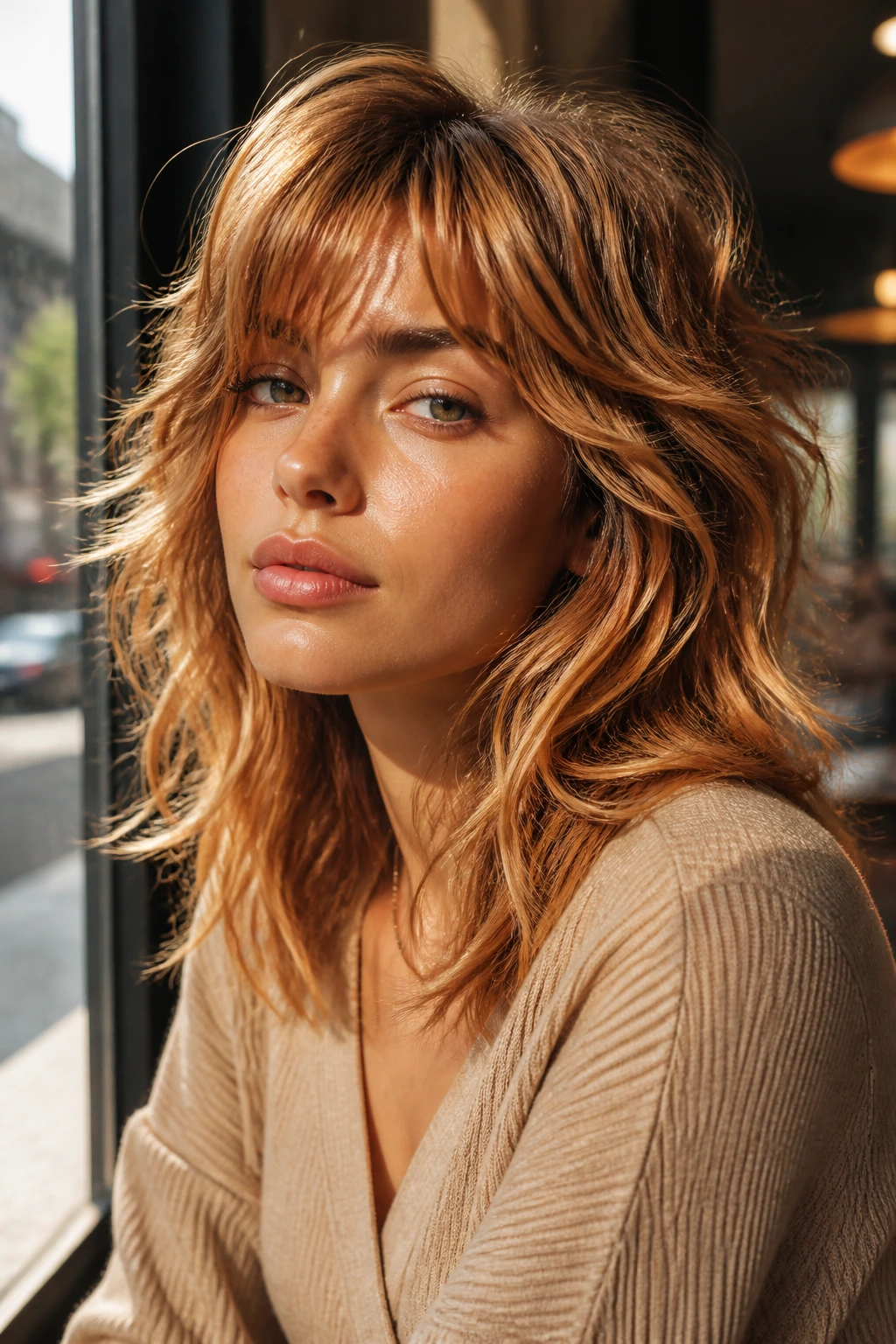
A shag cut changes the whole personality of the color. Amber reddish blonde on a shag looks lived-in, slightly wild, and more textured than polished. On olive skin, the amber depth works well because it gives the complexion something warm and grounded, not airy and washed out.
The layers matter here. The cut creates movement, and the color follows the movement. You’ll notice amber at the fringe, a brighter blonde-red flick at the ends, and deeper warmth underneath. That unevenness is the point. A shag doesn’t want a neat, single-note color. It wants something that shifts every time you move your head.
If your olive skin leans medium to deep, this can be one of the strongest options in the whole group.
19. Desert Rose Blonde
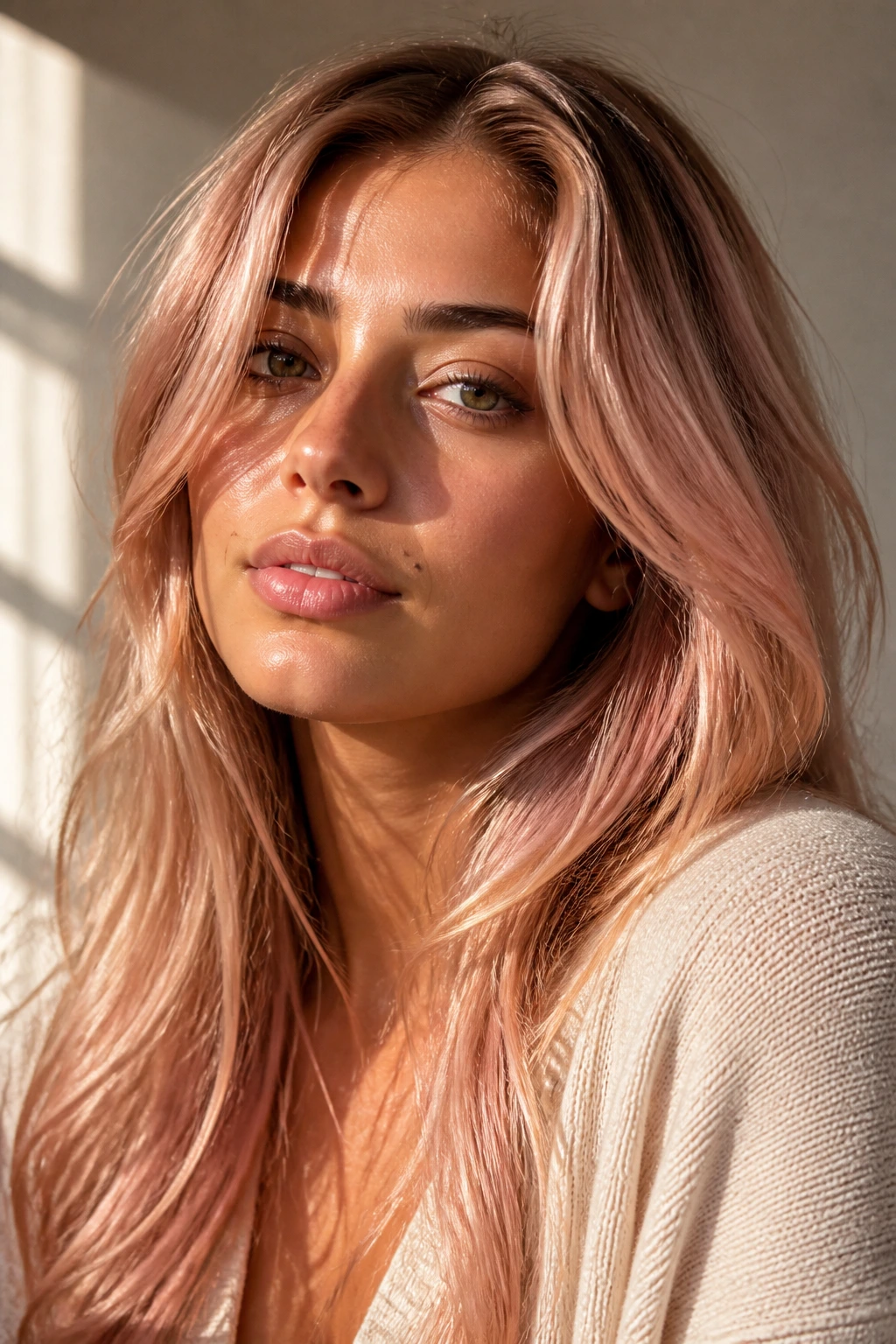
Desert rose blonde is dusty, soft, and a little sunbaked. It sits between rose gold and beige strawberry, with enough muted warmth to flatter olive skin without becoming obvious pink. If you like color that feels airy rather than saturated, this is one to keep in your pocket.
A shade like this usually looks best when the base is light blonde and the rose tone is applied as a transparent gloss. That keeps the ends from looking pastel-heavy. On olive skin, the dusty quality is the magic piece. Too much pink can make the face look flushed; too little, and you lose the rose entirely. Desert rose lives in that narrow, useful middle.
It’s also flattering with cream, taupe, and soft camel clothing, which is a nice bonus if your wardrobe leans warm and neutral.
20. Saffron Honey Copper
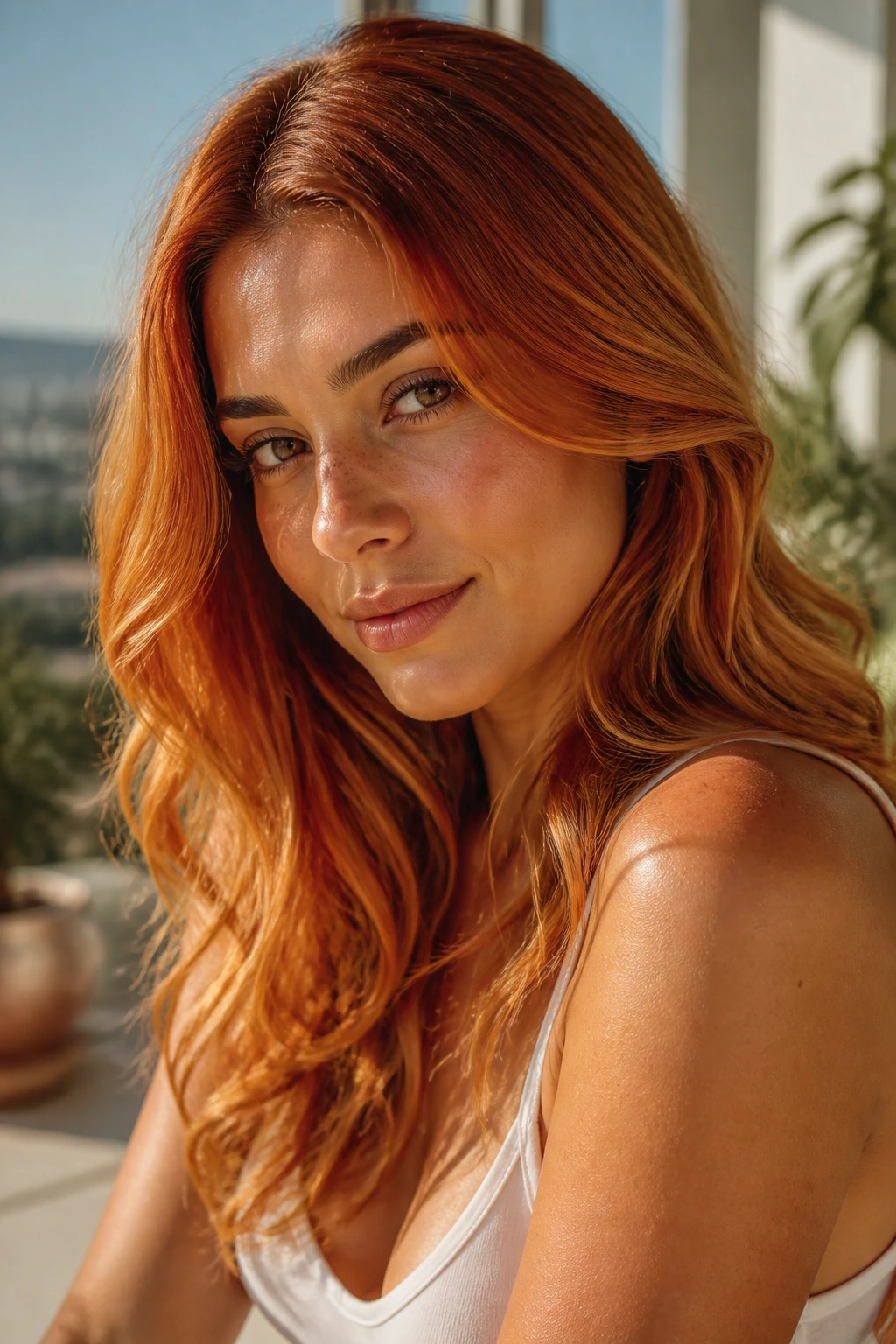
Saffron honey copper is bright but not brash. The saffron note pushes the color toward gold-orange, while honey keeps the finish glossy and soft. On olive skin, that combination can be gorgeous because it gives the face warmth without relying on a strong red base.
This shade is for someone who likes a bit of drama in daylight. It can glow under sunlight and look richer indoors, which gives it more range than a flat copper. If your olive skin is golden, this will probably feel natural. If your skin leans cool-olive, ask for more honey and less saffron so the warmth doesn’t run away with the whole look.
The shine matters here. A dry saffron copper looks harsh. A glossy one looks deliberate.
21. Toffee Apricot Ombré
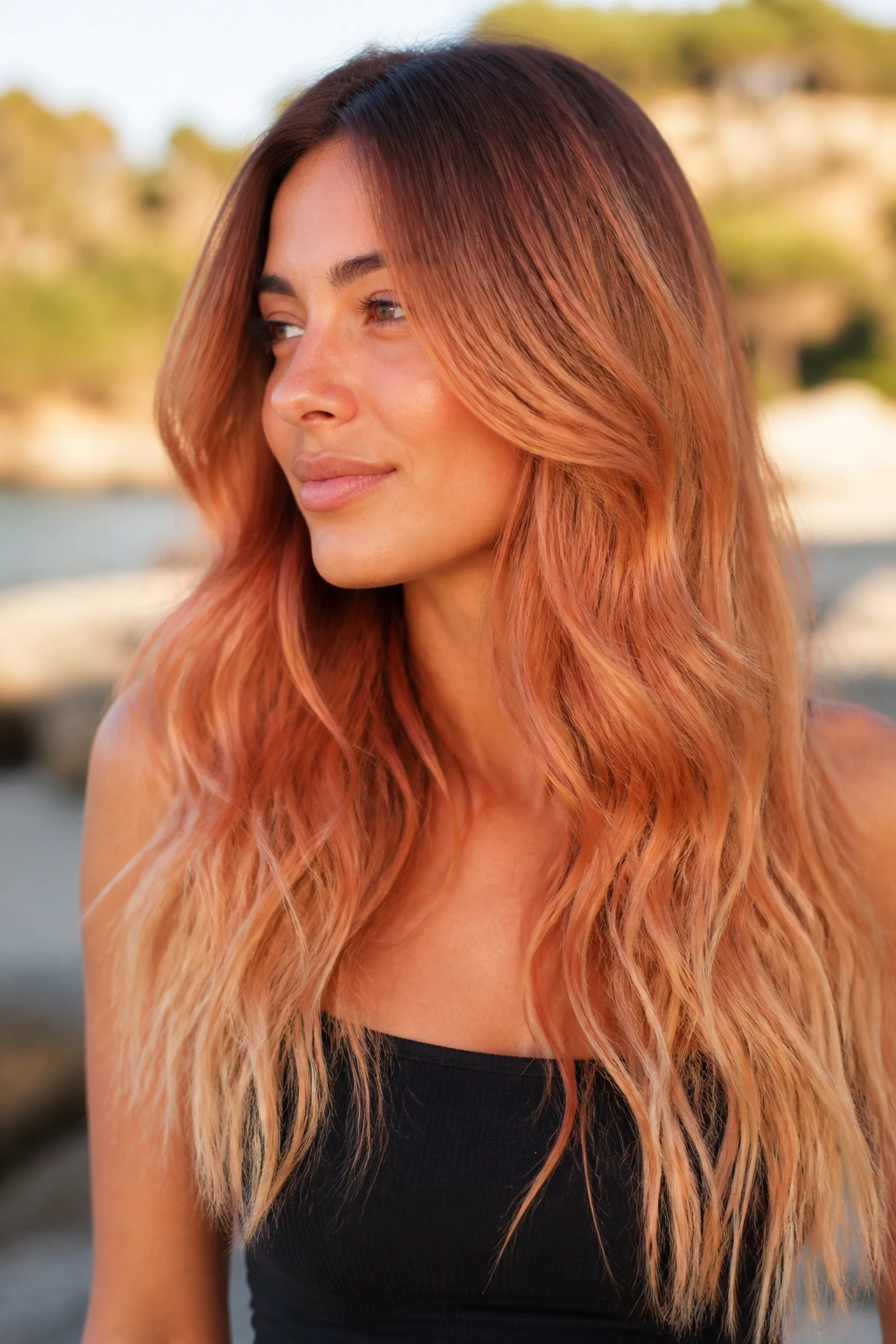
Toffee apricot ombré is a comfortable, wearable take on the whole reddish-blonde idea. Darker toffee at the roots, apricot warmth through the mid-lengths, and a lighter fade toward the ends. The contrast keeps olive skin from being overpowered, which is handy if you don’t want your hair to wear the outfit.
This works especially well on long hair. The gradient has room to breathe, and the apricot can appear as a soft wash rather than a solid color. If your natural base is medium brown, this is one of the easiest ways to enter the reddish-blonde family without bleaching everything to a pale blonde first.
It also grows out gracefully, which matters more than people admit. A beautiful color that turns ugly in six weeks isn’t a win.
22. Burnished Peach Blonde
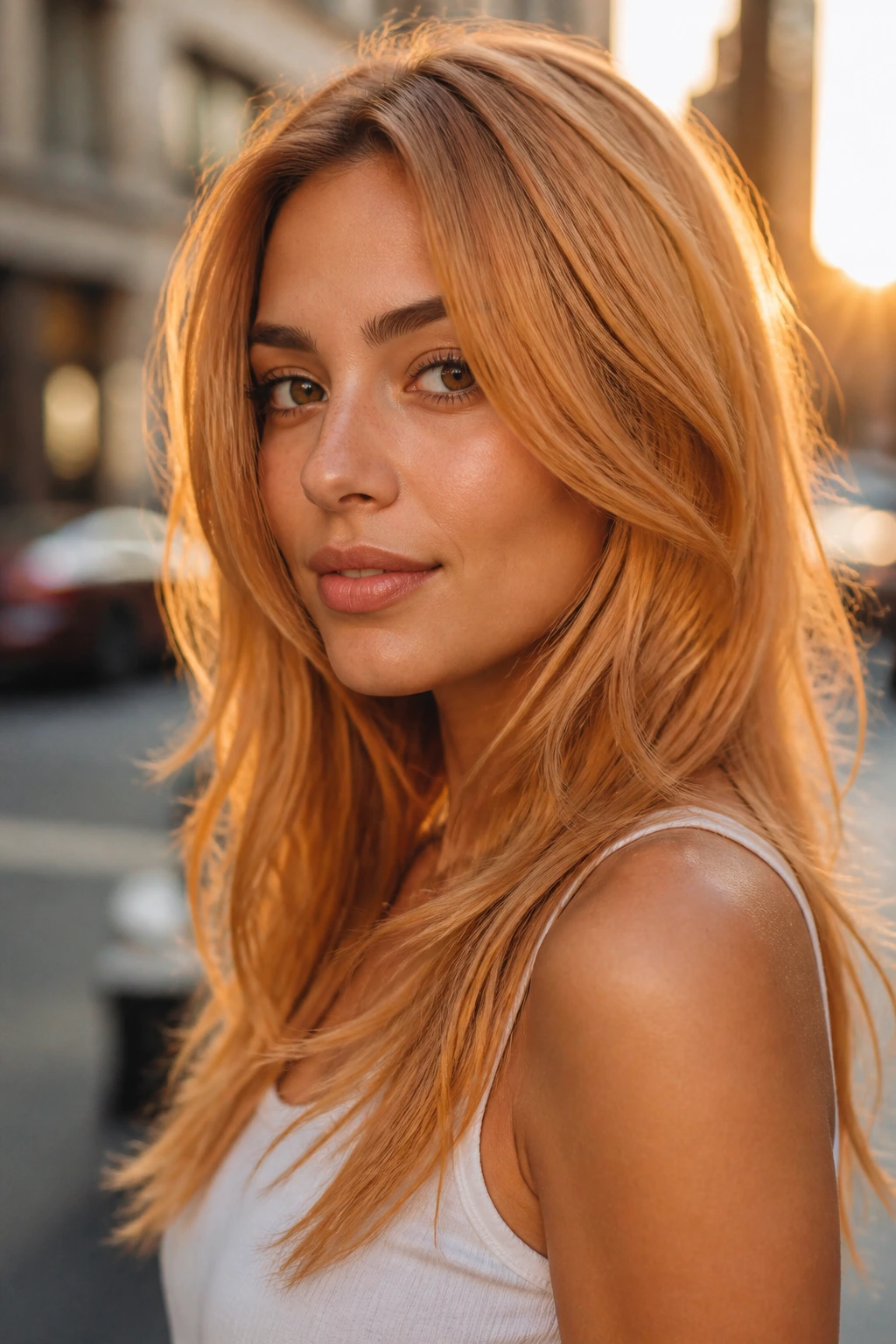
Burnished peach blonde is deeper and shinier than a standard peach blonde. The burnished finish gives it a polished edge, almost like warmed metal, and olive skin tends to like that kind of reflective depth. The face gets warmth, but the color still feels controlled.
The shade that sits between copper and gold
If copper sometimes feels too red on you, this shade is a good compromise. The peach keeps it soft, the burnished gold keeps it dimensional, and the blonde base prevents it from reading dark. It’s a smart pick for straight hair because the reflective finish shows right away, but it can also look gorgeous in curls where the peach pieces flash in and out.
This is the kind of color that benefits from a good blowout or a soft bend with a round brush. Flat ironing it bone straight can take some of the warmth out of the story.
23. Rose Copper Pixie
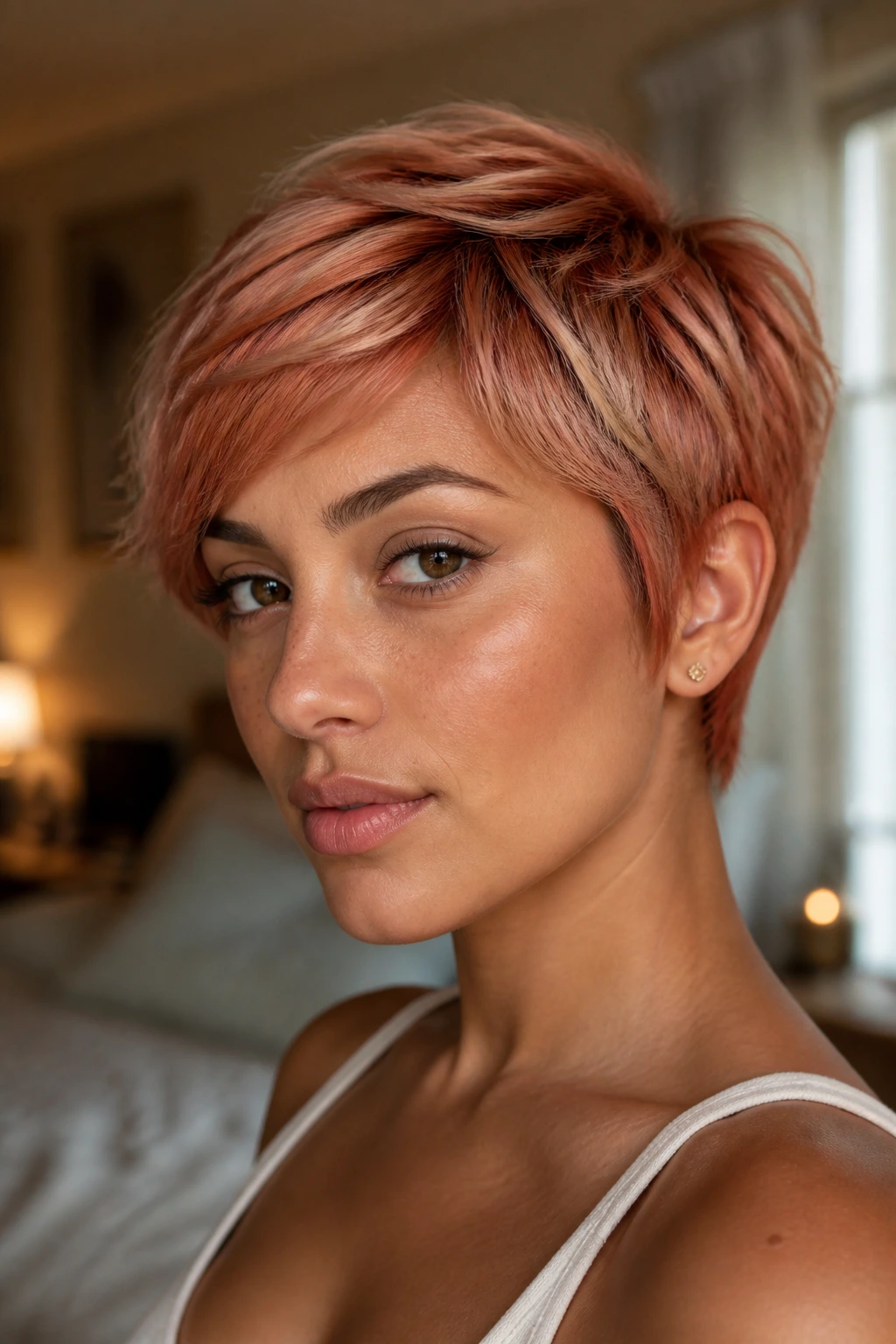
Short hair can carry more color than people expect. A rose copper pixie is compact, punchy, and perfect for olive skin that can handle a little brightness near the face. The rose tone softens the copper so the cut doesn’t feel too severe, while the shorter length keeps maintenance easier than it would be on long hair.
Because the surface area is smaller, every tone matters. Ask for a dimensional blend rather than a single flat dye. A little deeper copper at the roots, rose through the top, and soft blonde at the edges keeps the pixie from looking like one solid helmet of color. On olive skin, that mix can be electric in the best way.
It’s also a good option if you want your hair color to do some of the style work for you. A good pixie should look intentional even when you haven’t bothered with much styling.
24. Copper-Butter Blonde
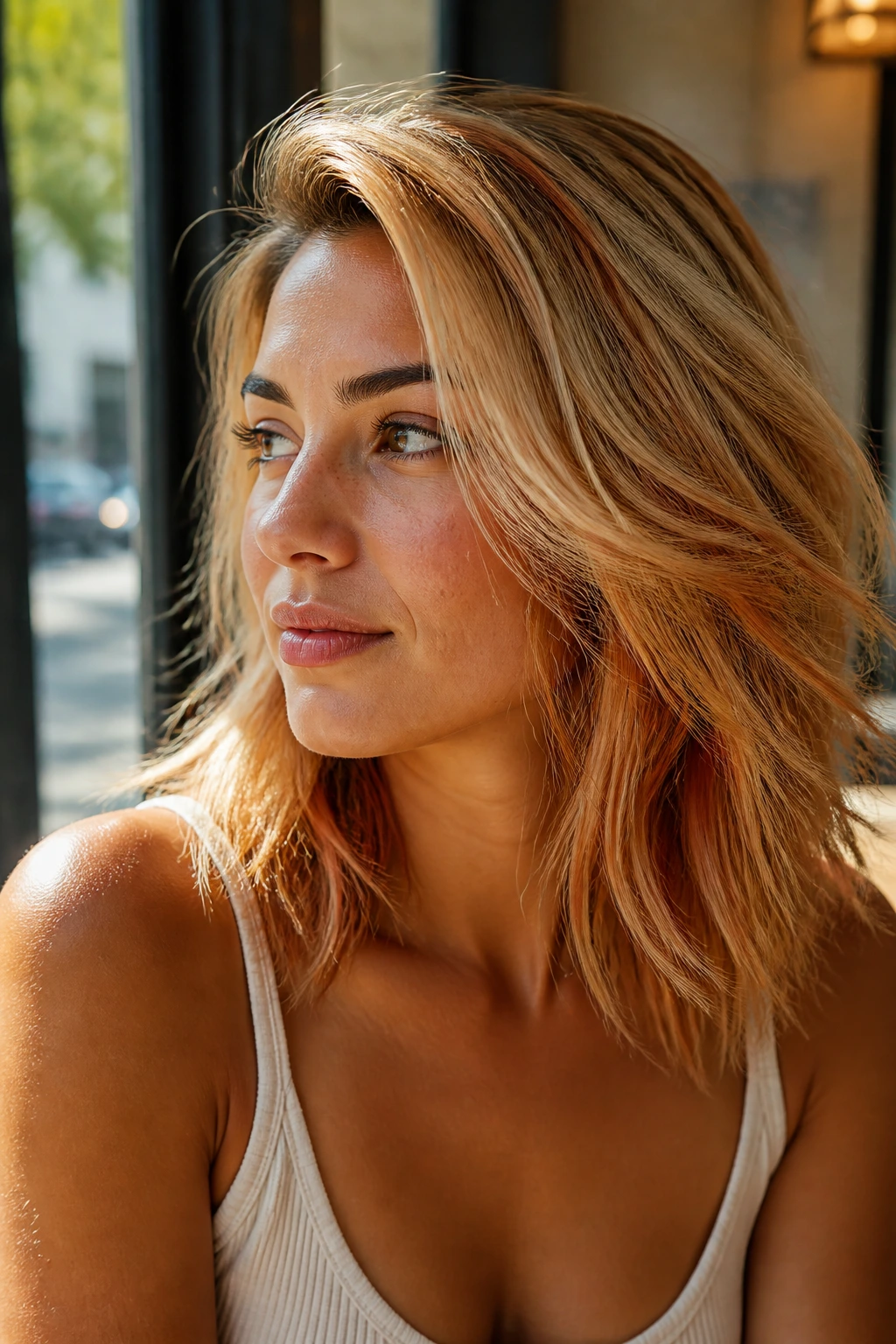
Copper-butter blonde sounds rich because it is rich. Butter gives the shade a creamy, plush feel, and copper keeps it from reading too pale or too yellow. On olive skin, that creaminess can be a gift. It softens the face instead of picking it apart.
This shade works well if you usually like golden blonde but want more depth and character. Think of it as the answer for people who say “I want warmth, but not red-red.” The copper sits underneath the butter blonde instead of sitting on top like paint. That subtle layering is what keeps it flattering.
It looks especially nice on medium-length cuts with a little body. If the hair is too flat, the buttery part can look one-note.
25. Autumn Ember Blonde
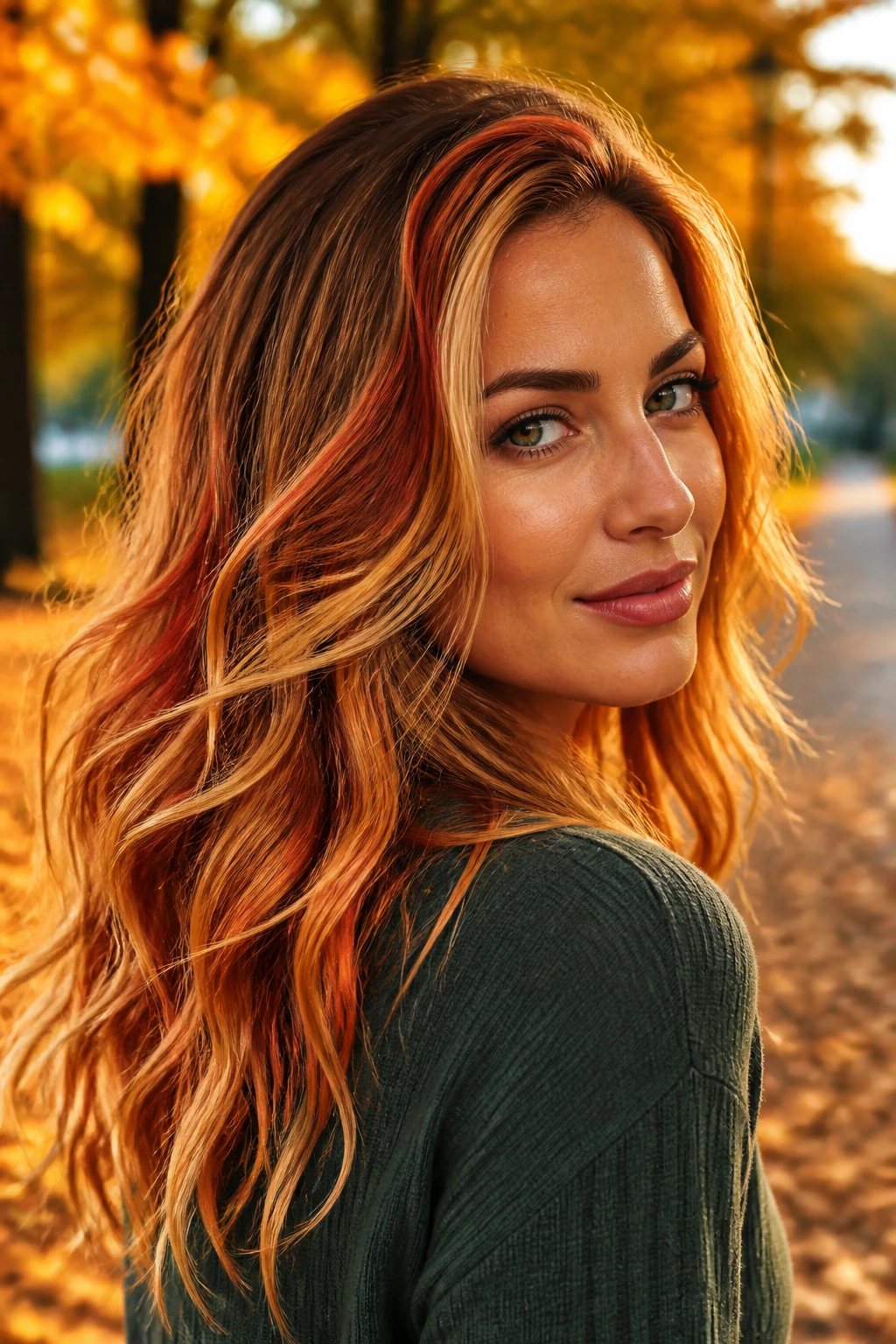
Autumn ember blonde is the boldest of the bunch, and it’s the one that makes the strongest statement on olive skin. The ember tone brings warmth, depth, and a flicker of red-orange fire, while the blonde pieces keep it from collapsing into auburn. It’s a shade with real personality.
If your olive skin leans golden or medium-deep, this can be stunning. The contrast makes features look sharper, especially with dark brows or green eyes. On lighter olive skin, ask for more blonde lift and a softer ember glaze so the color doesn’t sit too heavy around the face.
This is not the shade for someone who wants to disappear into the crowd. It’s for someone who likes a little edge and doesn’t mind a color that gets noticed.
How to Choose the Right Reddish Blonde for Your Olive Undertone
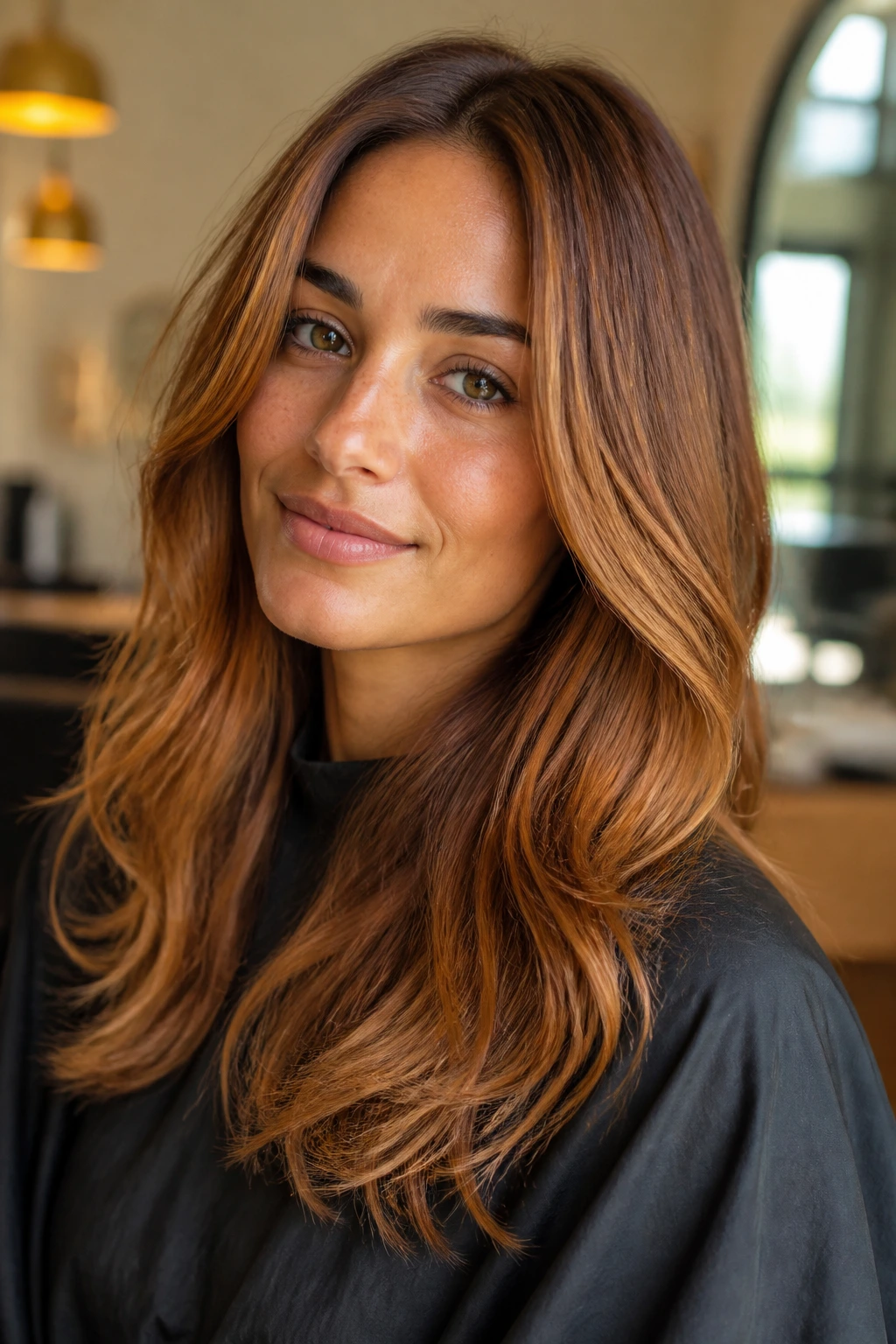
Start with depth, not just color family. That’s the mistake people make over and over. They fall in love with a photo of copper peach balayage, then try to force the same brightness onto dark hair or a deeper olive complexion and end up with a tone that feels louder than intended. A reddish blonde should sit with your skin, not compete with it.
Level matters more than the name on the mood board
If your natural hair is light blonde to dark blonde, you can usually wear level 8 and 9 strawberry, peach, and rose-gold shades without a fight. If your hair is medium brown, you’ll probably need pre-lightening or a more dimensional bronde version so the red-blonde has something to live on. Dark brunette or black hair is a different story entirely. Without lifting first, the warmth tends to read brown-red or orange rather than blonde.
Match the warmth to the skin, not the trend photo
Warm olive skin usually likes copper, honey, saffron, and apricot. Neutral olive skin can handle beige strawberry, rose gold, and desert rose. Cool-leaning olive skin often looks best with the warmth toned down a touch — more beige, less flame. If your face looks better in cream than stark white, you probably need a softer reddish blonde. If tan and gold jewelry light you up, you can lean richer.
Root depth changes the whole mood
A shadow root makes the color feel easier and more expensive. A bright root-to-end blonde can work, but on olive skin it can sometimes look too hard unless the gloss is very well balanced. Ask your colorist how much depth to leave at the base. A half-level darker root often does more for the face than an extra ounce of brightness ever will.
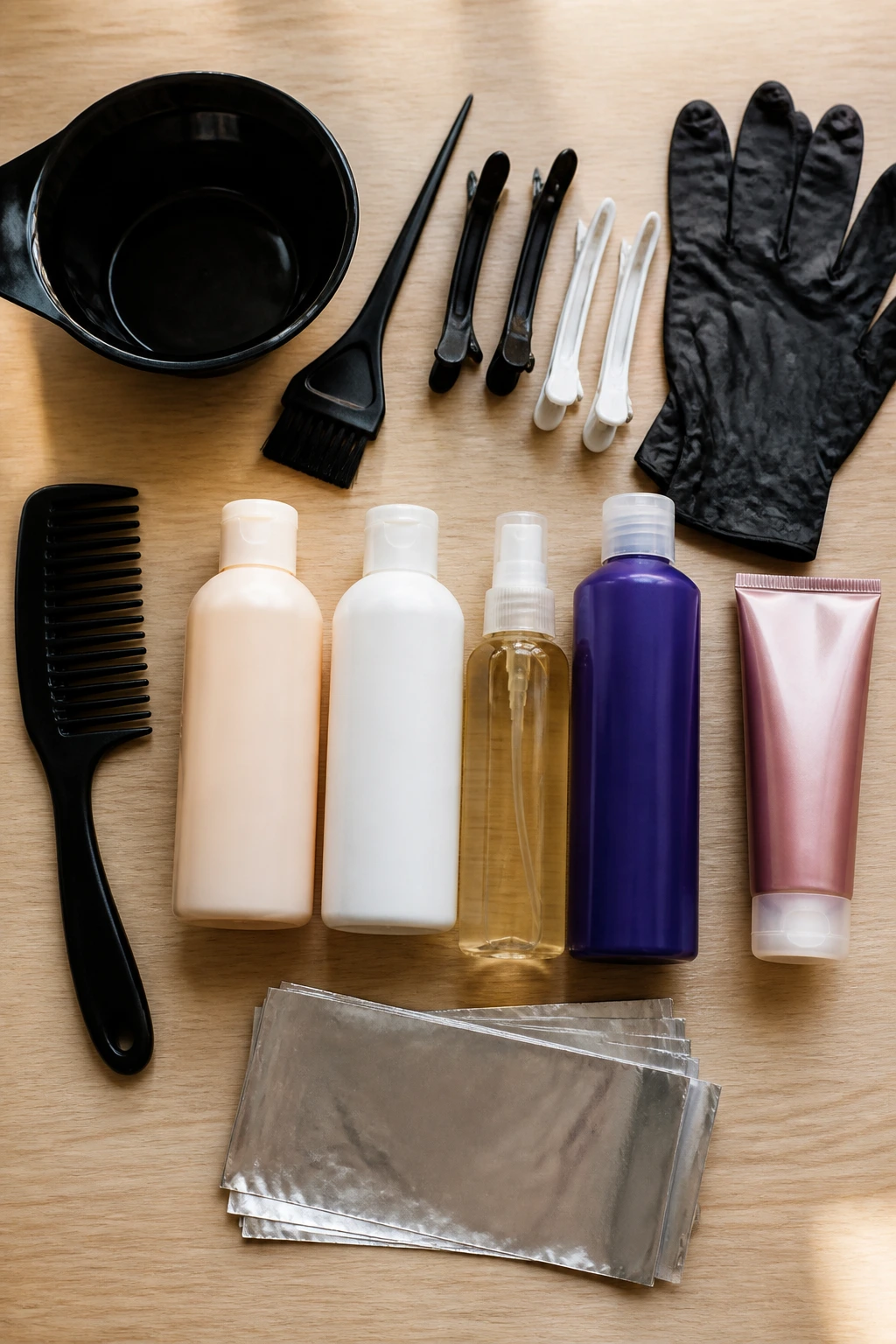
The Color Tools and Products Worth Having on Hand
-
Tint brush and color bowl: Useful for glosses, root smudges, and quick touch-up work. A cheap set is fine if the bristles are firm.
-
Sectioning clips: These keep balayage pieces and face-framing sections neat while you apply color or toner.
-
Gloves that actually fit: Loose gloves make the job sloppy. Thin nitrile gloves usually give the best control.
-
Color-safe shampoo and conditioner: Pick formulas labeled for dyed hair, and skip heavy clarifying shampoos unless you need to strip mineral buildup.
-
Heat protectant spray: Reddish blonde shades lose shine fast under hot tools. A light mist before blow-drying or curling helps.
-
Purple shampoo or blue shampoo: Use with caution. Too much can mute copper, strawberry, and peach tones into something dull and gray.
-
Color-depositing conditioner: Handy for refreshing warmth between salon visits, especially on softer strawberry or apricot shades.
-
Wide-tooth comb and detangling brush: These reduce breakage when hair is wet and slightly fragile from lightening.
-
Foils or balayage board: Only if you’re doing placement work at home or with a stylist who likes to section carefully.
-
Shower filter: Optional, but useful if your water runs hard or contains mineral buildup that turns blonde hair dull.
How to Keep Reddish Blonde from Turning Brassy
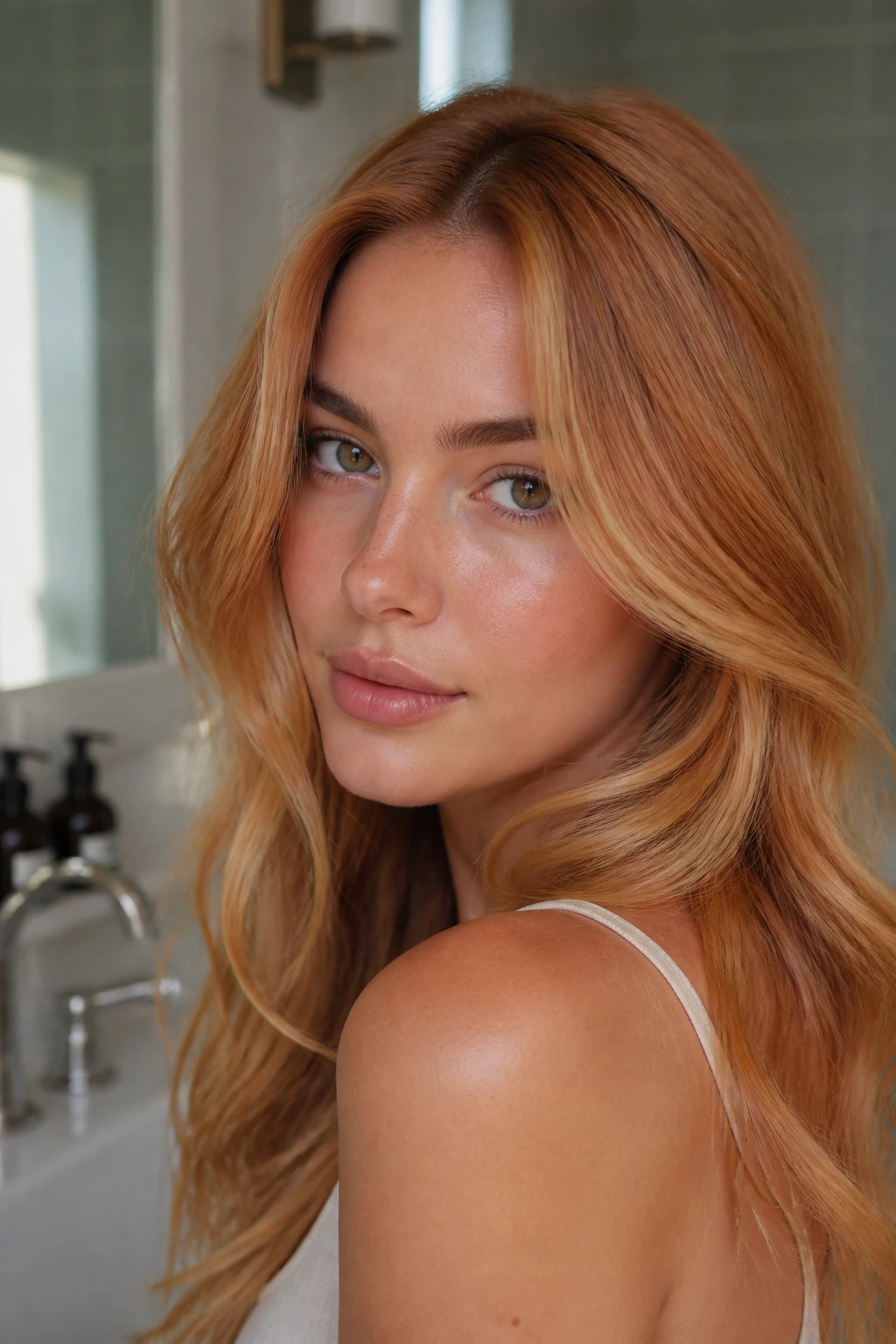
Reddish blonde fades in a more visible way than ash blonde, and that’s part of the tradeoff. Copper can drift too orange. Strawberry can wash out to gold. Peach can disappear into pale yellow. None of that means the color failed. It means you need a small maintenance rhythm, not a panic.
Wash less often if you can. Two or three shampoo days a week is easier on warm tones than daily washing, and lukewarm water does less damage than hot water. When you do shampoo, use a gentle color-safe formula and keep the cleansing focused on the scalp, not the lengths. The ends do not need a scrub.
A gloss every 4 to 8 weeks keeps the warmth alive. For very soft strawberry and peach tones, you may need it sooner. For deeper copper or amber shades, you can stretch it longer. If the color starts reading too yellow, a stylist can add a toned glaze. If it starts reading too flat, a little gold or copper refresh usually brings it back.
Heat is the other thief. Curling irons set too hot can fry the gloss off the outer layer of the hair faster than you’d expect. Keep styling tools in the moderate range and use a protectant every time. It’s boring advice. It also works.
Practical Tips for Making the Shade Look Expensive on Olive Skin
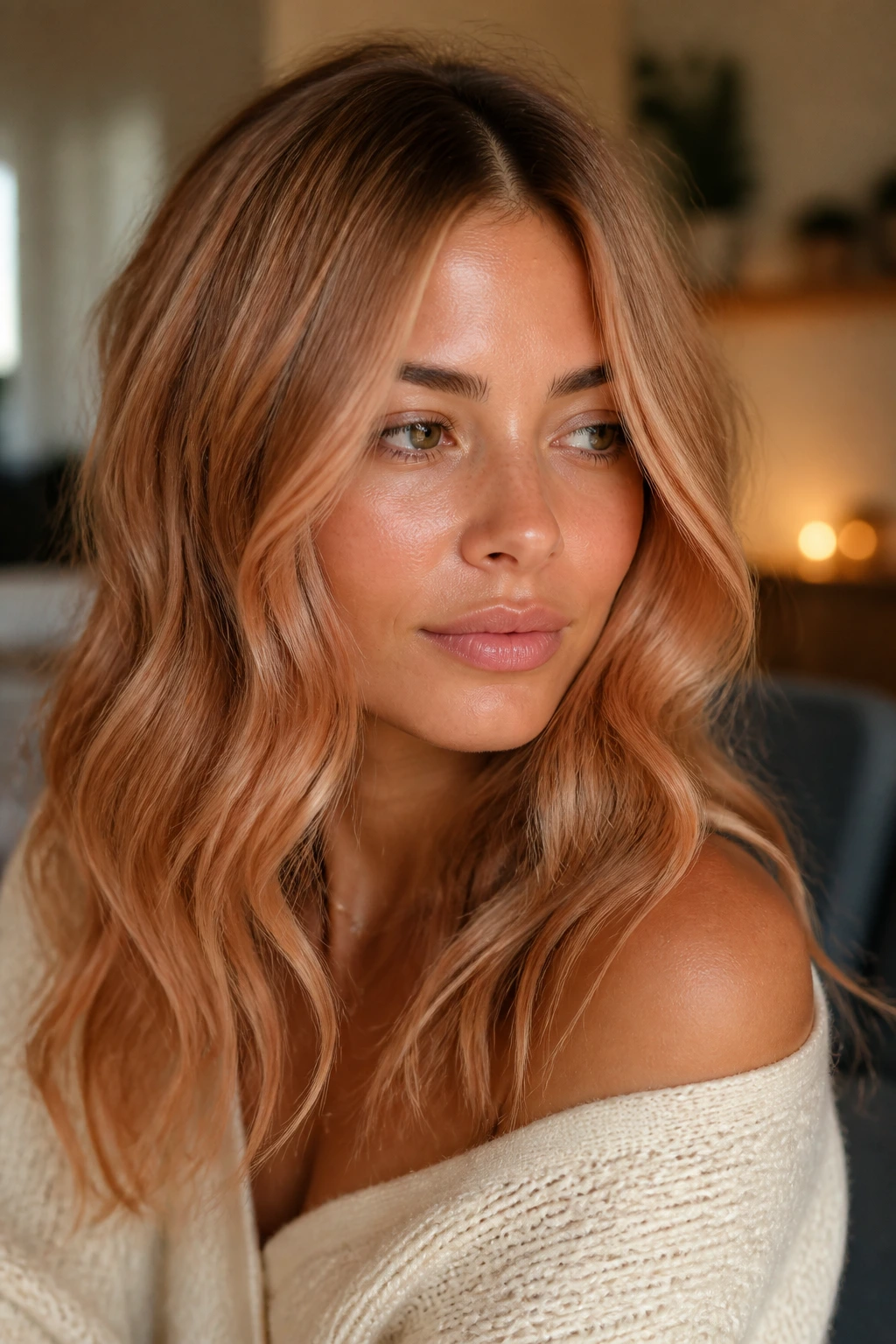
Flavor Enhancement: Ask for a clear gloss over the final color. Even a tiny amount of shine changes the way copper, peach, and strawberry reflect against olive skin, and the result usually looks more refined than a flat dye job.
Tone Control: If your skin leans green-olive, keep the red in the blonde with beige or gold around it. Pure pink-red can make the complexion look disconnected, while a touch of gold ties everything together.
Pro Move: Leave the root one-half to one level deeper than the mid-lengths. That little shadow makes the color feel custom, and it keeps the hair from looking like one continuous sheet of brightness.
Fast Fix: If the hair turns too orange after a few washes, use a salon toner or a sheer beige gloss, not a heavy purple shampoo. Purple can kill the warmth you actually wanted.
Makeup Match: Warm brows and a peach blush help the hair make sense on the face. You do not need to change your whole routine, but a terracotta lip or a soft bronze shadow can make the color feel like it belongs there.
Common Mistakes That Flatten Olive Skin
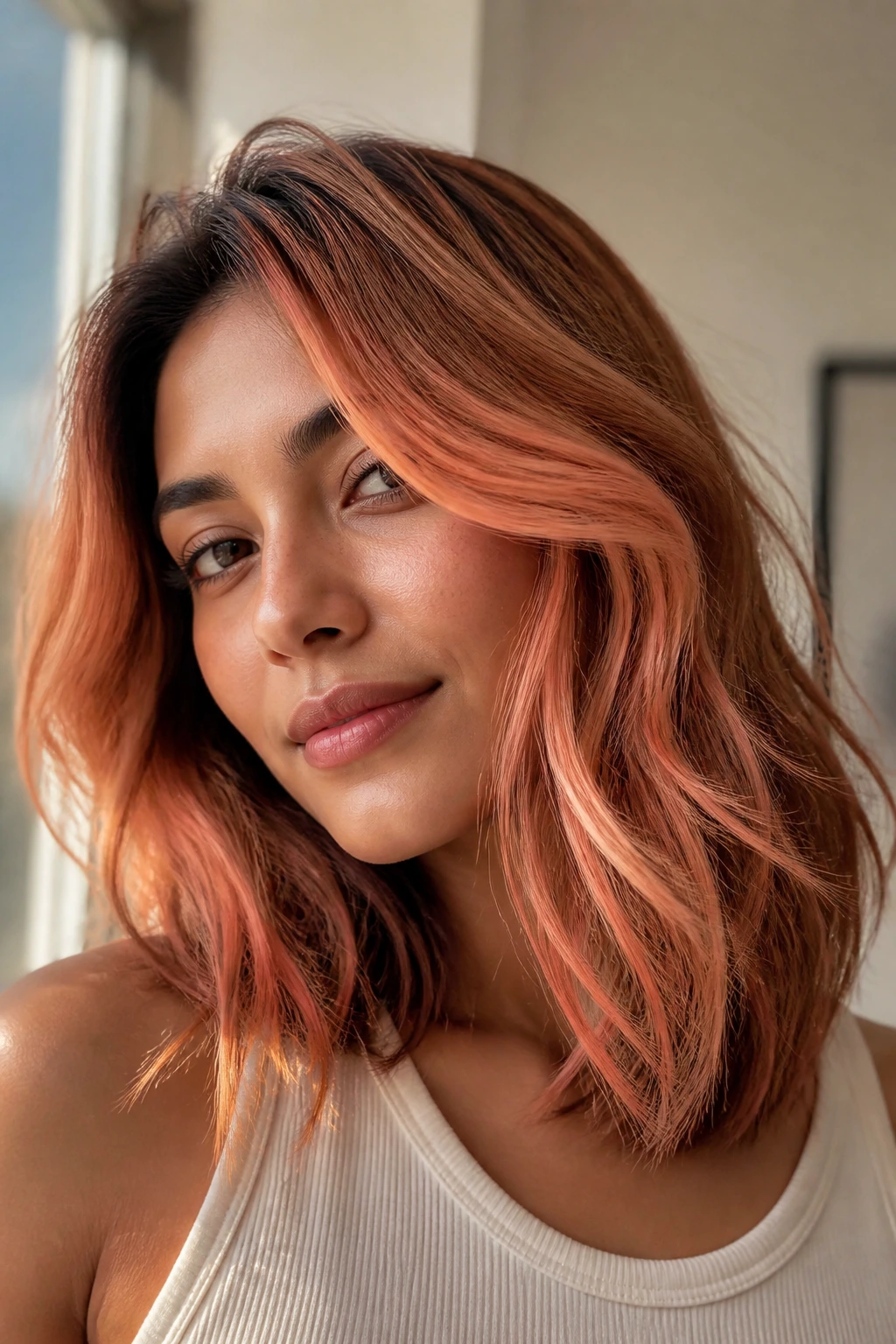
Choosing a shade that’s too ashy: The symptom is a complexion that looks gray, tired, or mildly sick under indoor light. The fix is simple: bring more gold, beige, peach, or copper into the formula.
Going too orange too fast: Bright orange-red can be fun on paper and rough in real life, especially on light olive skin. If the result looks loud instead of warm, ask for a softer gloss or a darker root to calm it down.
Lifting too far past the base: Platinum plus copper sounds dramatic, but on olive skin it can create a harsh contrast that makes the face look detached from the hair. Often, level 8 or 9 is enough. You don’t need to chase the lightest blonde in the chair.
Ignoring the cut: A flat one-length haircut can make warm color look heavy. Layers, a lob, a shag, or even a soft face frame help the tones move and keep the finish from feeling dense.
Using too much purple shampoo: This is the fastest way to turn strawberry or peach into a dull beige mess. Purple shampoo has a job. Copper and strawberry are not that job.
Variations and Alternatives to Try
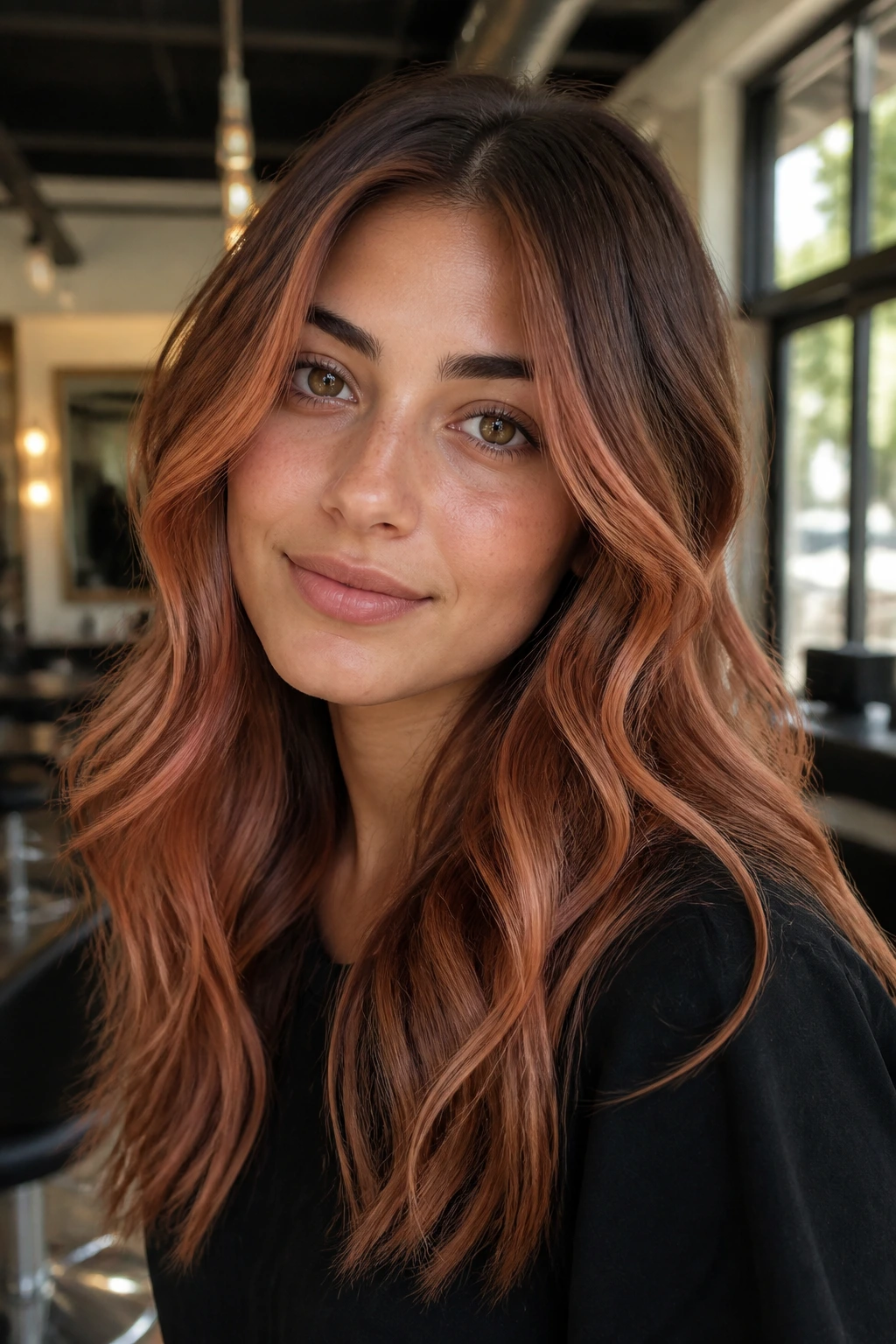
The Gloss-Only Glow: If you already have blonde hair, a copper or strawberry gloss adds warmth without changing the structure of the cut. This is the safest place to start.
The Balayage Blend: Paint copper, peach, or rose-gold pieces through the top layers and keep the lower sections darker. It’s low-maintenance and gives olive skin a soft frame.
The Money-Piece Accent: Keep most of the head beige blonde or bronde, then add a brighter reddish-blonde front section. It’s a strong move if you want brightness near the face and less upkeep everywhere else.
The Bronde Version: If your hair is naturally medium brown, don’t fight for full blonde. Let the shade live halfway between bronde and copper-blonde. That usually reads richer on olive skin anyway.
The Short-Cut Switch: Pixies, bobs, and lobs can take more saturated red-blonde tones because the color has less distance to travel. Short hair lets the shade do the heavy lifting.
The Soft-Rose Edit: If copper feels too hot, shift toward rose gold, desert rose, or blush ginger. You keep the warmth, but the finish stays softer against olive undertones.
Tools and Care Questions People Usually Forget to Ask
-
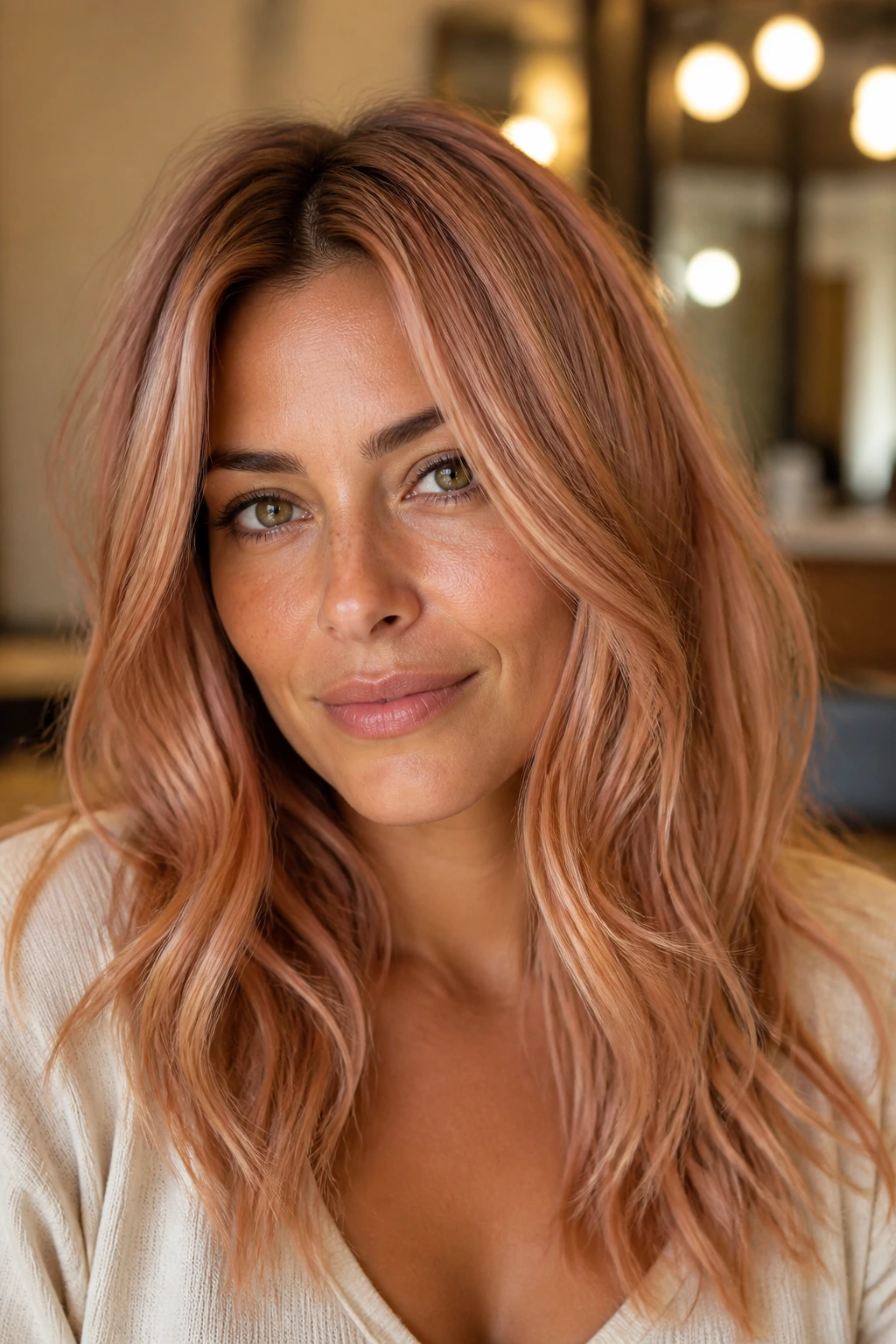
How often should you tone? Softer strawberry and peach shades may need refreshing every 4 to 6 weeks. Deeper copper or amber can hold longer if you don’t over-wash.
-
Can hard water mess this up? Yes. Mineral buildup makes warm blonde look dull and can tilt the color strangely. A shower filter or clarifying rinse once in a while helps.
-
Do you need a heat tool every day? No. Air-drying with a leave-in cream often shows the color better anyway, especially on balayage and foilayage.
-
Should brows match the hair exactly? No. Darker brows usually anchor olive skin nicely. You want harmony, not a copy-paste effect.
Frequently Asked Questions
Which reddish blonde shade is best for olive skin if I want the safest option?
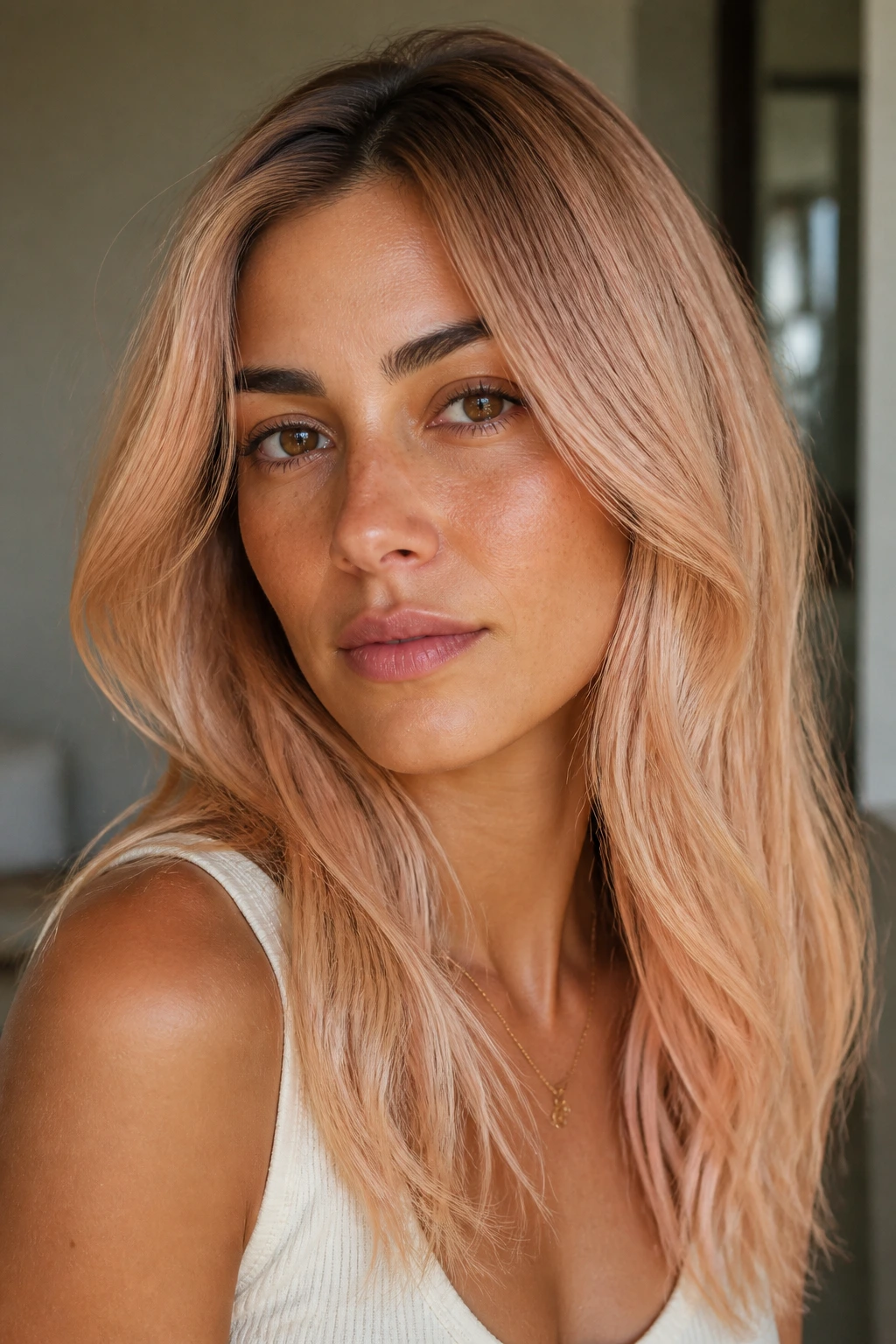
Soft strawberry blonde, beige strawberry blonde, and rose gold bronze blonde are the easiest starting points. They add warmth without pushing too far into orange, and they usually behave well on both warm and neutral olive undertones.
Will strawberry blonde make olive skin look washed out?
Not if the tone has enough warmth and depth. Very pale strawberry can sometimes disappear on deeper olive skin, so a beige or copper base usually works better. The shade needs a little body to hold up against the undertone.
Can dark brown hair go reddish blonde without looking brassy?
Yes, but it usually needs lightening first. If the lift stops too early, the result can skew orange instead of blonde-red. A good colorist will build in depth and gloss so the warmth looks intentional.
Is copper blonde too strong for light olive skin?
It can be, if the copper is vivid and the base is very pale. Light olive skin often does better with peach copper, apricot beige, or a softer glaze around the face instead of a full bright copper head.
How often will I need salon visits to keep the color fresh?
Gloss-heavy shades often need attention every 4 to 8 weeks. Balayage versions can stretch farther, especially if the root is shadowed. The lighter and softer the tone, the faster it tends to fade.
What if the color turns too orange?
Ask for a beige or neutral gloss rather than reaching for heavy blue or purple shampoo. Orange usually means the warmth got too loud, not that the whole idea failed.
Can I keep my natural dark brows with reddish blonde hair?
Yes, and in many cases that’s the better choice. Dark brows give olive skin structure and keep the look from becoming too airy. Just soften them a bit with a brow gel if they feel harsh next to the hair.
Is balayage better than all-over color for olive skin?
Balayage is often easier if you want dimension and softer grow-out. All-over color works when you want a bolder, more uniform shade. If you’re unsure, balayage is the less risky first move.
Will purple shampoo ruin my warm tones?
It can, if you use it too often. Purple shampoo is useful for yellow brass, but it can mute strawberry, peach, and copper tones fast. Use it sparingly and only when the blonde pieces start looking too gold.
Can I do this at home?
For a gloss or tone refresh, sometimes yes. For darker bases that need lifting, I’d be cautious. Red-blonde color shows every uneven patch, and home lightening on olive skin can go murky very fast.
The Shades That Keep Olive Skin Looking Awake
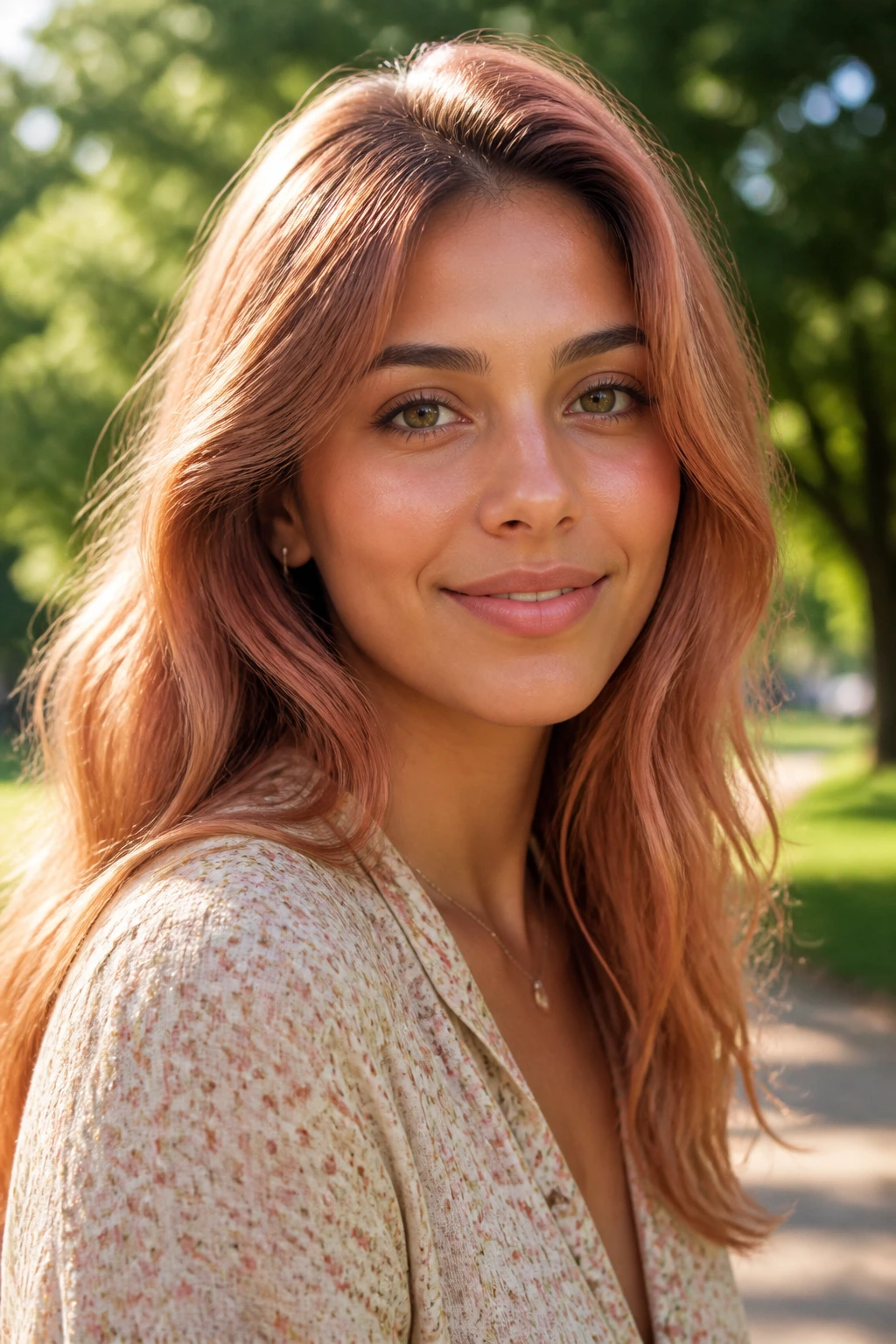
The best reddish blonde on olive skin is rarely the loudest one. It’s the one that makes the complexion look cleaner, the eyes look sharper, and the hair look like it belongs on the head instead of sitting on top of it like a wig you forgot to style. Soft strawberry, copper peach, apricot beige, rose gold bronze — these shades all do that job in slightly different ways.
If you like low drama, start with a gloss, a balayage, or a face-framing accent. If you want more edge, go deeper into amber, copper, or rust. Either way, the color should work with the green-gold cast in the skin, not against it. That’s the whole game, and once you see it in person, it’s hard to unsee.
The nicest part? Reddish blonde grows into its own personality as it fades. A good formula doesn’t just survive the wash cycle. It gets better with a little wear, a little texture, and a little time.