



Dark hair has a habit of holding light back. That’s exactly why a few blonde moments can change the whole shape of a cut — not in a loud, streaky way, but in the cleaner, shinier, more dimensional way that makes a blunt bob look sharper and long layers feel lighter. The phrase blonde hairstyles for dark hair covers a lot of ground, but the real trick is never “go lighter.” It’s where the light lands, how thick it is, and whether it works with the haircut instead of floating on top of it.
I’ve always liked dark bases with restraint. A few honey ribbons in the wrong place can look busy; a narrow champagne money piece at the cheekbone can make the face look brighter in a way that feels almost architectural. That’s the part people often miss. Blonde on dark hair isn’t only about contrast. It’s about movement, shadow, and the way a wave catches color at the bend instead of on every strand.
Some of the best looks below are barely visible when the hair is still. Others are bold enough to read from across the room. A few sit right in the middle, which is usually where the most wearable color lives — the blonde shows when the hair moves, then slips back into the brunette base when it settles. That tiny shift is the whole reason these styles stay interesting.
Why These Blonde Moments Work So Well on a Dark Base
- Placement beats quantity: A thin money piece around the face can do more than a full head of bright highlights because the eye goes straight to the front of the haircut.
- Tone changes the mood: Honey and caramel read warm and soft; beige, ash, and pearl look cooler and more deliberate against espresso or black hair.
- Grows out with less drama: Rooted balayage and hidden panels keep the base dark near the scalp, so the regrowth line doesn’t shout at you.
- Movement makes the color look richer: Waves, curls, braids, and flipped ends catch the blonde in different spots, which makes the same placement feel different from one day to the next.
- Fits more cuts than people expect: Lobs, shags, pixies, ponytails, and long layers all take blonde placement in a different way, so you can match the color to the haircut instead of forcing the haircut to match the color.
- Lets you choose your commitment: You can go for a whisper of brightness or a high-contrast stripe, and both can look intentional if the placement is tight.
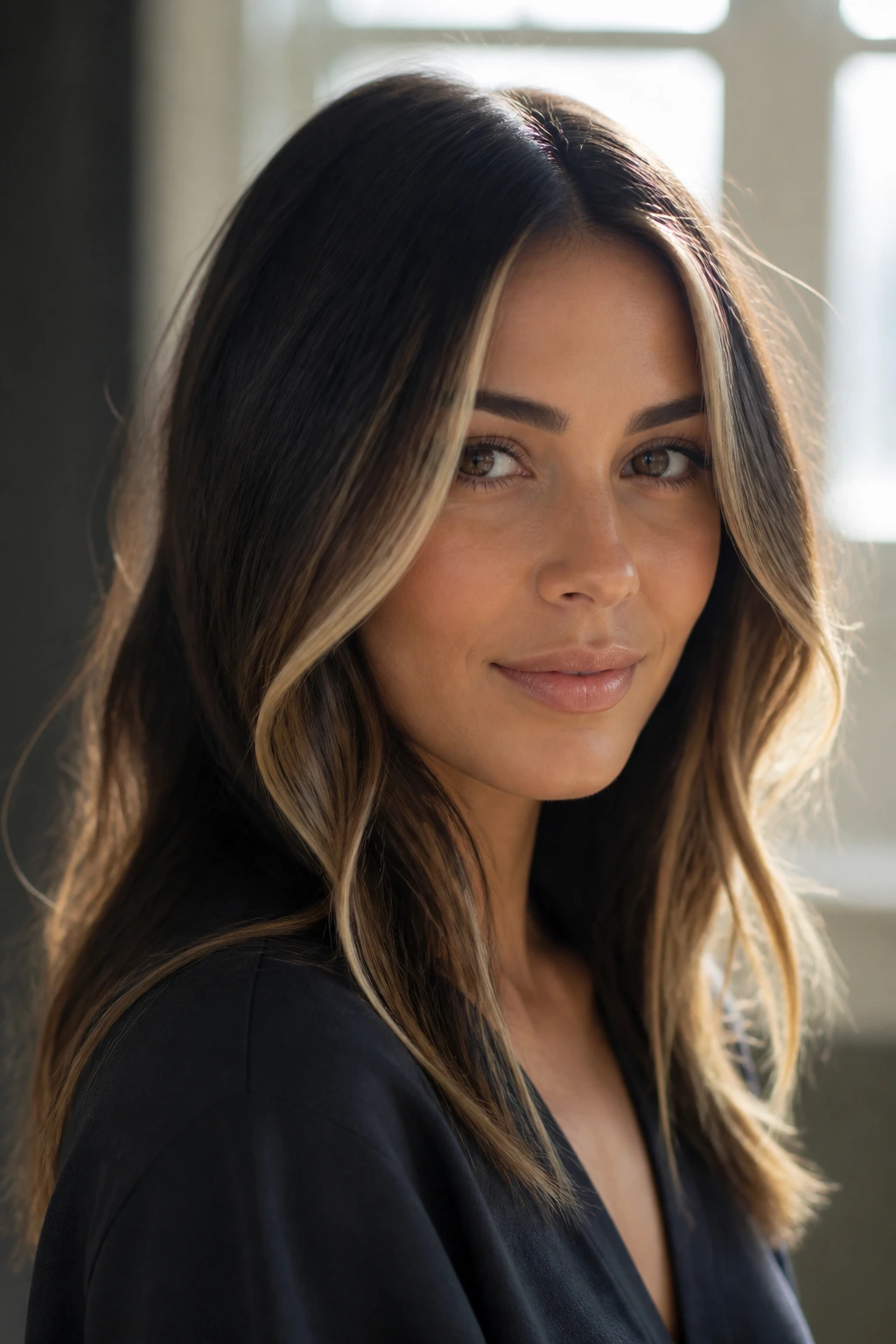
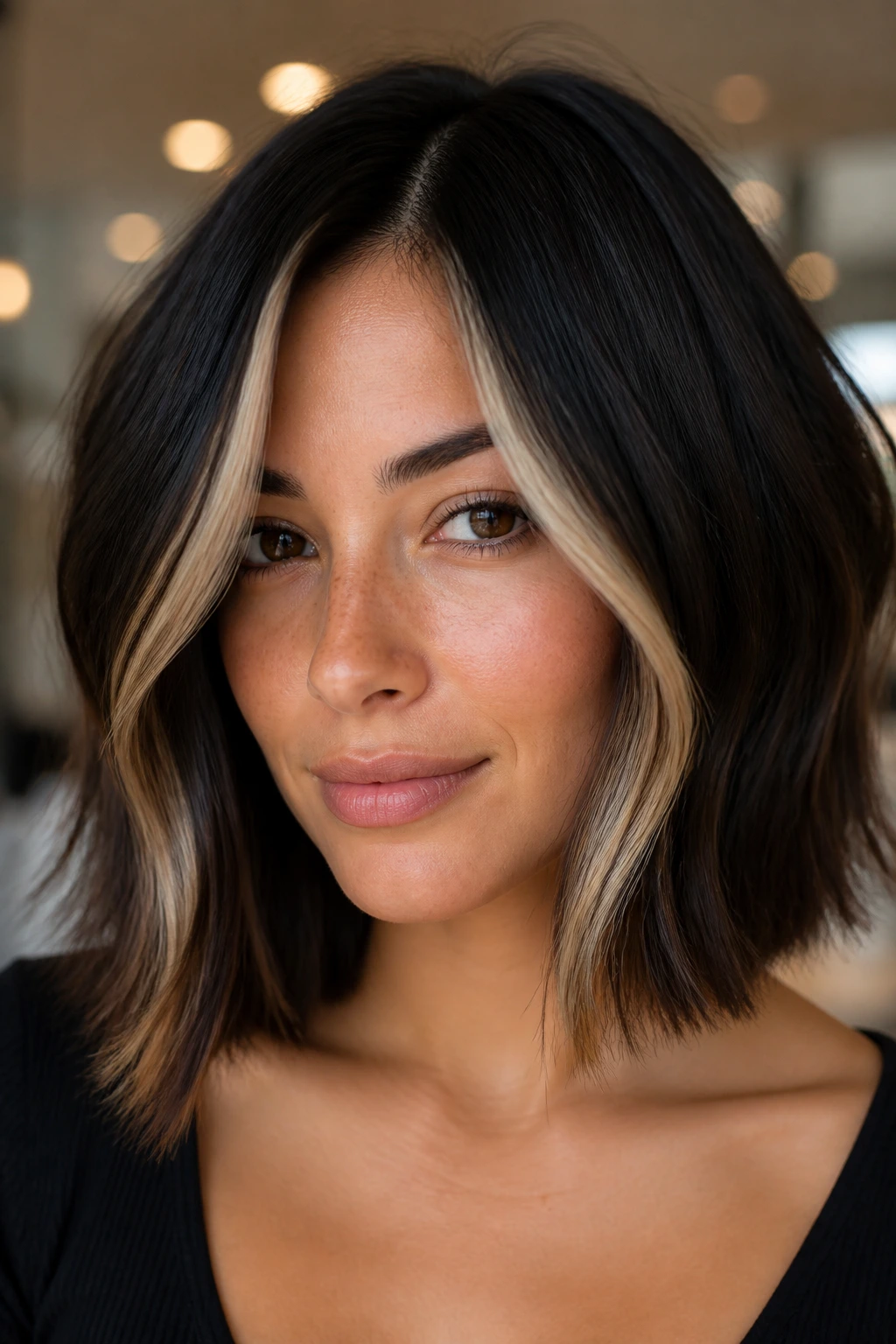
1. Espresso Lob with a Champagne Money Piece
A collarbone lob and a champagne money piece are a very good pair. The cut keeps the shape clean, and the blonde at the front breaks up all that depth without taking the whole head lighter. On dark brown hair, I like this look because it still feels rich from the back and side, then opens up when the hair swings forward.
Why It Works on Dark Hair
The lob gives the blonde somewhere to land. A blunt or slightly textured edge makes the bright front panels look crisp instead of random, and that matters more on dark hair than people think. If the light pieces are too wide, the contrast can look harsh; if they’re too narrow, they disappear. The sweet spot is usually one to two ribboned sections on each side, lifted to a pale gold or champagne tone.
Quick Details
- Best for: Straight, softly bent, or blown-out lobs
- Shade family: Champagne, beige blonde, pale gold
- Maintenance: Every 6 to 8 weeks for the front pieces, 10 to 12 for a glossed refresh
- Styling note: A round brush bend at the ends keeps the money piece from looking flat
A small tip: Keep the lightest part of the money piece near the cheekbone, not all the way at the root. That tiny shift makes the face look lifted without turning the front into a stripe.
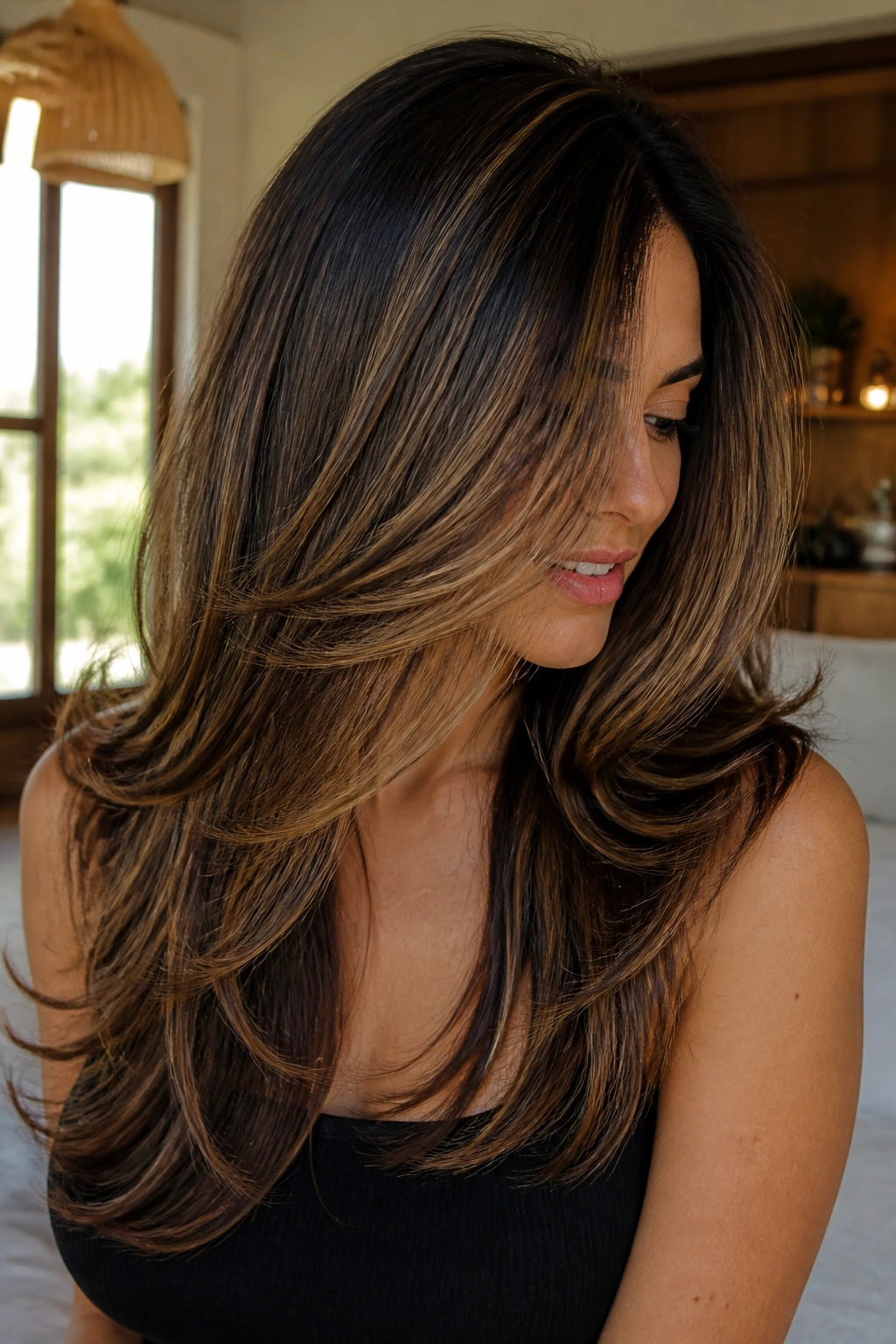
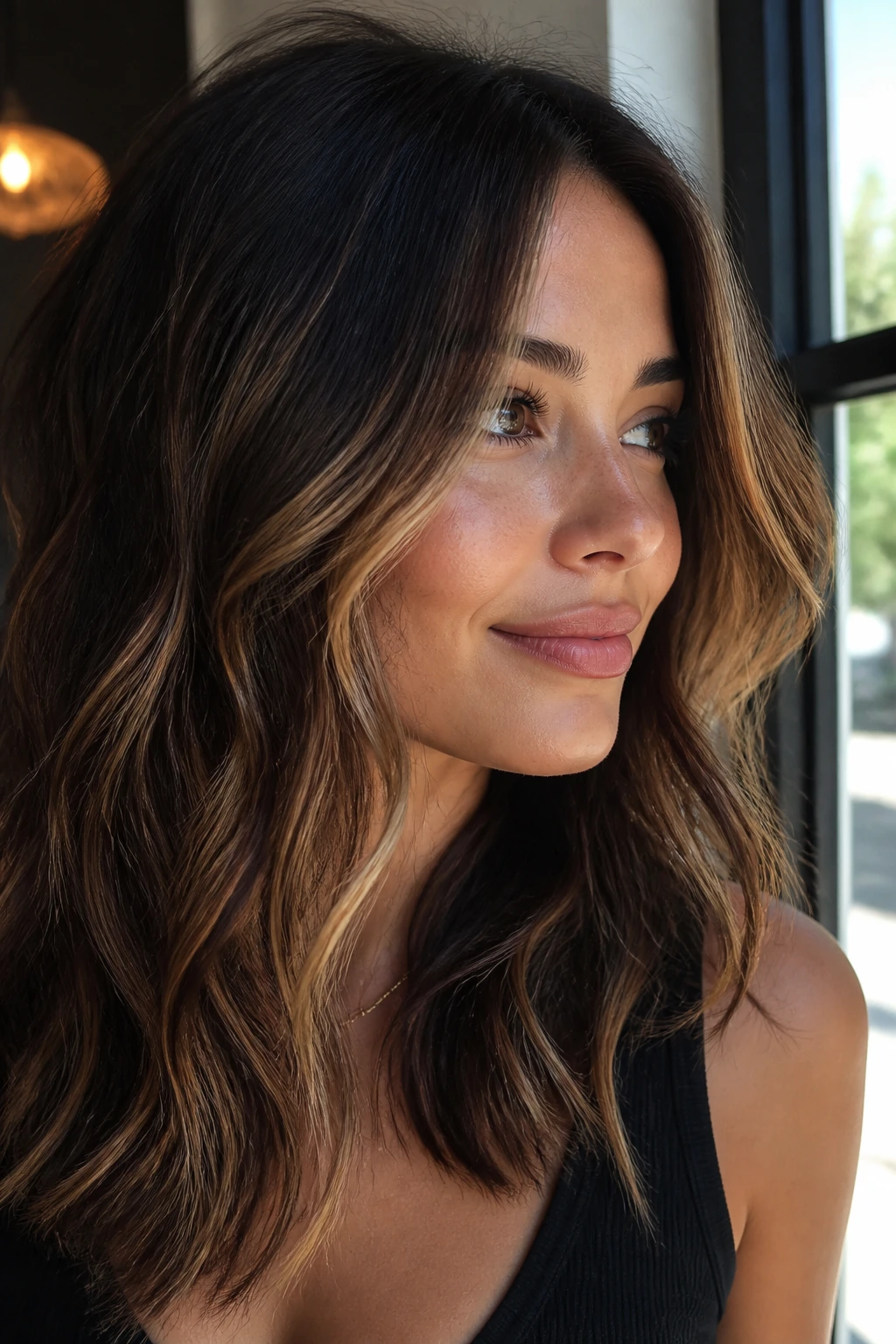
2. Long Layers with Honey Balayage Ribbons
This is the look I reach for when someone wants blonde on dark hair without giving up richness. Honey ribbons through long layers catch the light in a way that feels soft rather than striped, especially when the layers are curved with a brush or a large iron.
The nice thing about this style is that it works with the natural swing of long hair. When the top layer moves, the lighter pieces underneath flash through; when the hair is still, the brunette base keeps everything grounded. That balance saves the color from looking too flat or too busy.
For dark brunettes, I’d ask for the blonde to start lower, around the mid-lengths, and stay warmer at the ends. Honey is kinder than ash on a deep base. It also grows out better, which matters when the roots are dark enough to cast their own shadow.
If you wear long hair down most days, this is one of the easiest blonde hairstyles for dark hair to live with. It doesn’t need perfect waves. It just needs a bit of shape and a gloss every so often.
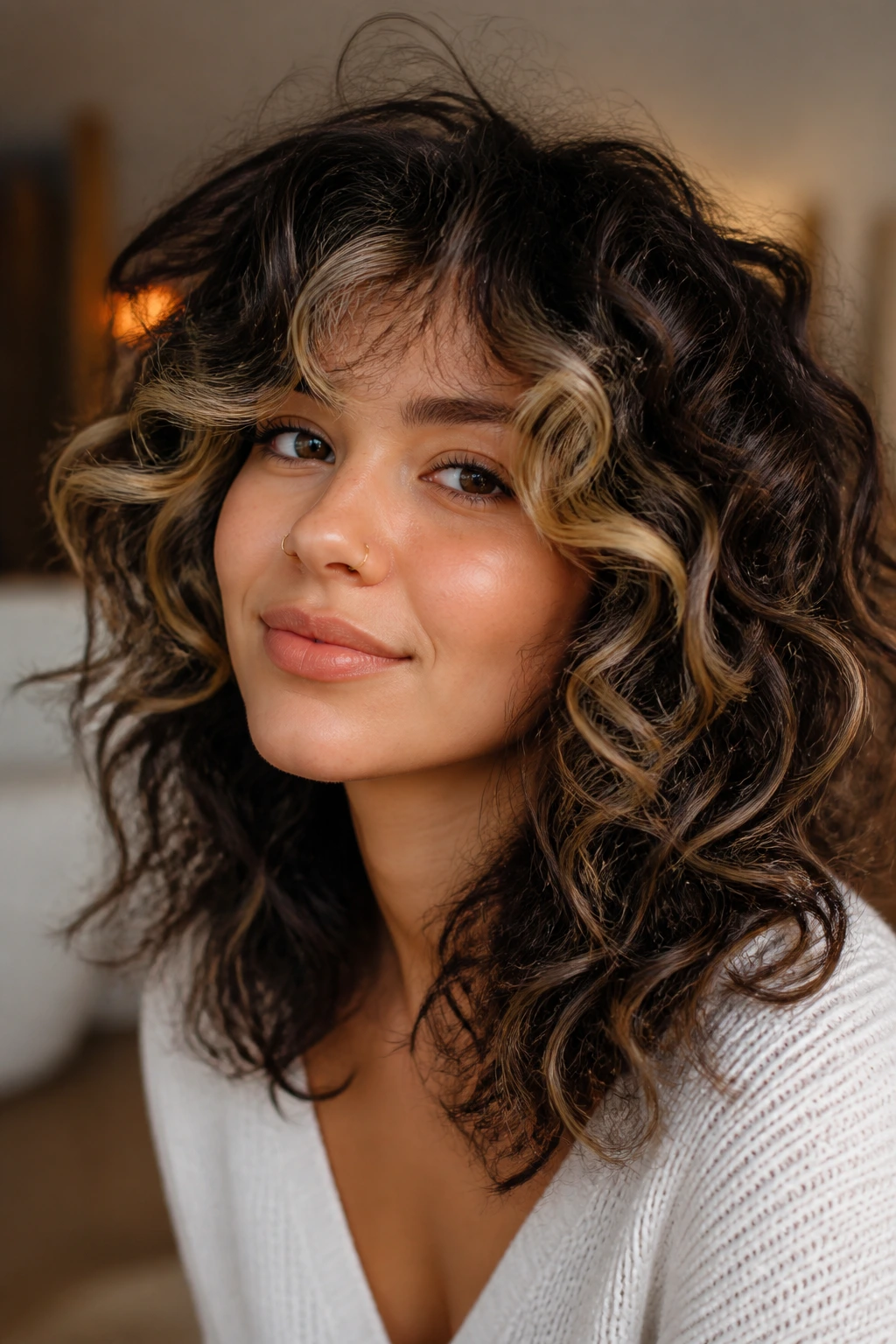
3. Soft Curly Shag with a Buttery Face Frame
Do curly girls get the best version of blonde on dark hair? Sometimes, yes. The curl pattern does half the work for you. A shag with a buttery face frame lets the blonde sit where the curl naturally springs forward, which means the color feels integrated instead of painted on.
How to Wear It
The face frame should start around the cheekbone or just below it, then feather into the crown layers. That keeps the front bright without breaking the curl pattern too much. A curl-by-curl placement is worth asking for here — not because it sounds fancy, but because chunky strips can fight the shape of a curl and make the front look blocky.
What to Watch For
- Keep the blonde a shade or two warmer than you think at first; curls tend to make cool tones look colder.
- Diffuse on low heat and low speed so the lighter pieces don’t puff out and separate.
- Use a cream styler, not a heavy butter, or the color will disappear into the texture.
I like this look because it has motion built in. The blonde is not sitting on top of the curl; it moves with it.
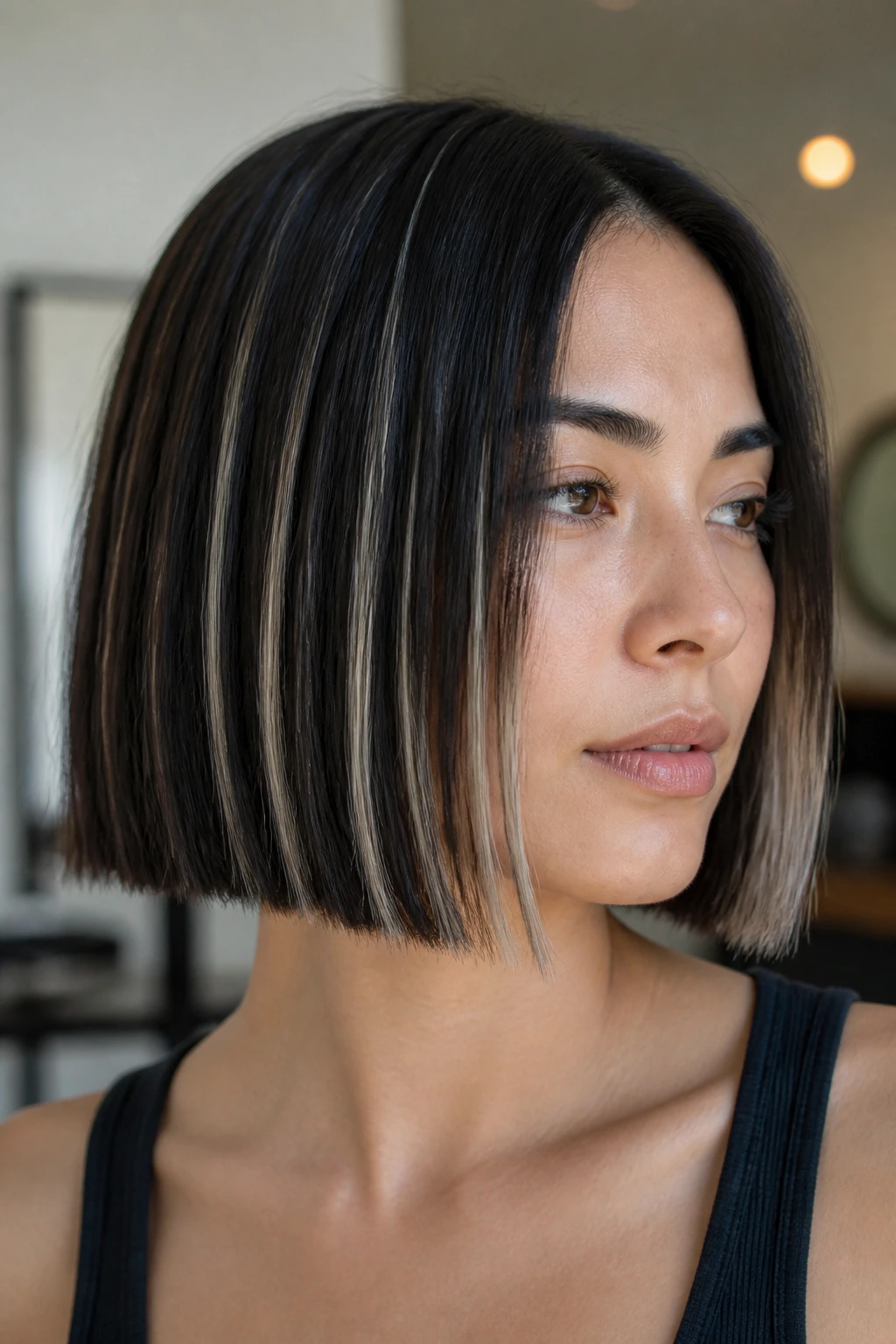
4. Blunt Bob with Thin Platinum Veils
A blunt bob can take platinum, but only if the highlights stay thin. Thick platinum strips on a dark base turn the cut into a helmet fast. Thin veils, tucked through the mid-lengths and peeking out at the sides, give you that sharp, editorial edge without wrecking the line of the bob.
The contrast here is the whole point. Dark hair plus platinum reads cleaner when the cut is blunt, because the straight edge gives the eye a place to stop. If the bob is chin-length or just below, the lighter pieces make the shape look more deliberate.
I prefer this version on hair that’s naturally straight or gets styled smooth most days. The smoothness shows the placement. A little shine spray on the ends helps the platinum read pale instead of dull.
This is one of those styles that looks simple until you notice the work in it. Then it looks smarter.
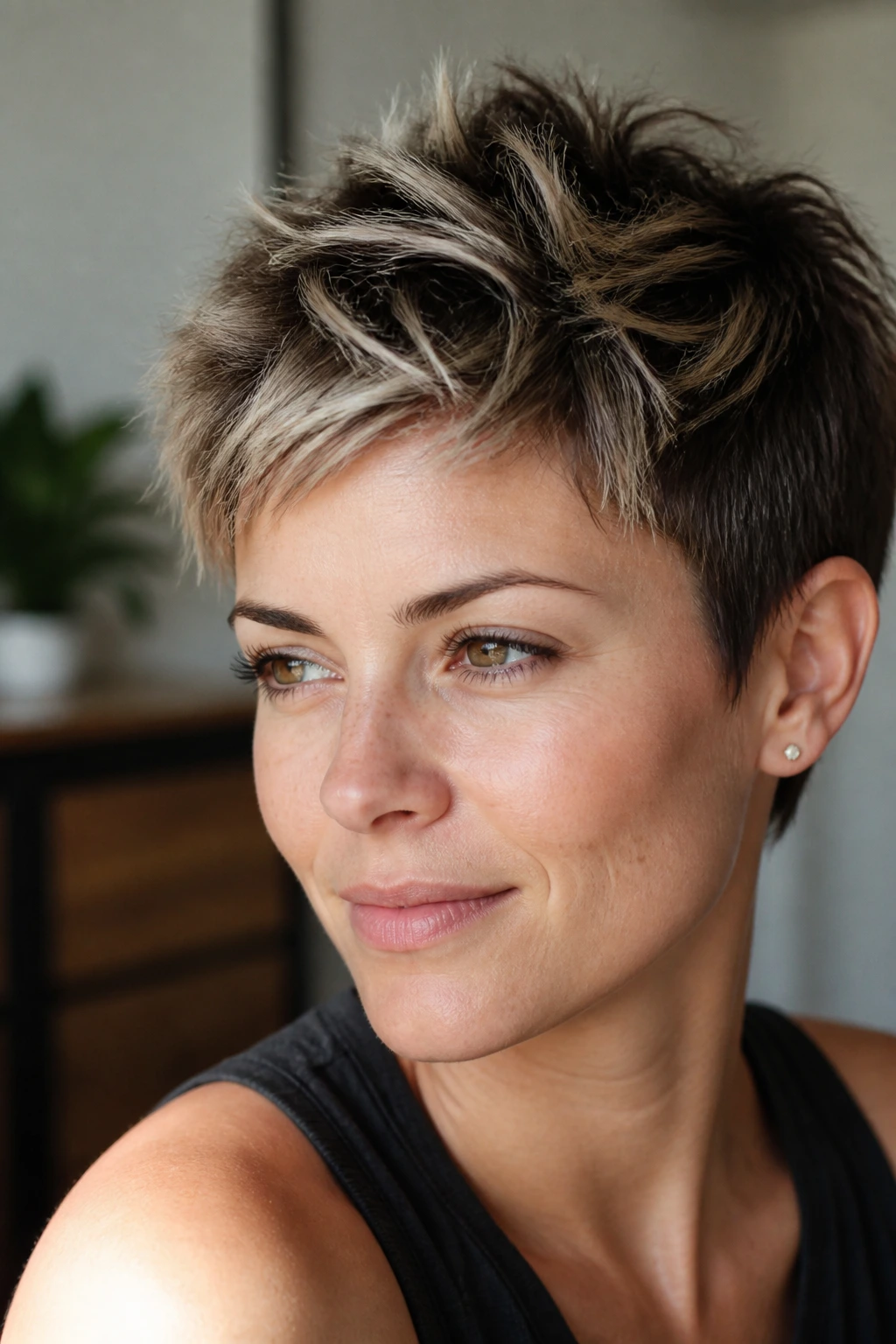
5. Textured Pixie with Frosted Crown Tips
A pixie with frosted crown tips is tiny in size and not tiny in attitude. The blonde sits mostly on the top layers and crown, where short hair gets the most movement. That keeps the dark sides neat and gives the cut a little lift from above.
The trick is not to bleach every strand evenly. On dark hair, a short cut can look muddy if the light pieces are too blended. A slightly frosted finish on the tips and a touch around the fringe create separation. The result is cleaner, especially if the pixie is textured and finger-styled instead of flat.
I’d recommend this for someone who likes a fast routine. Short hair shows regrowth quickly, but it also lets you play with tone without a big time commitment. A matte paste on the ends can keep the blonde pieces visible without making them spiky.
One sentence says it all: this cut lives on contrast.
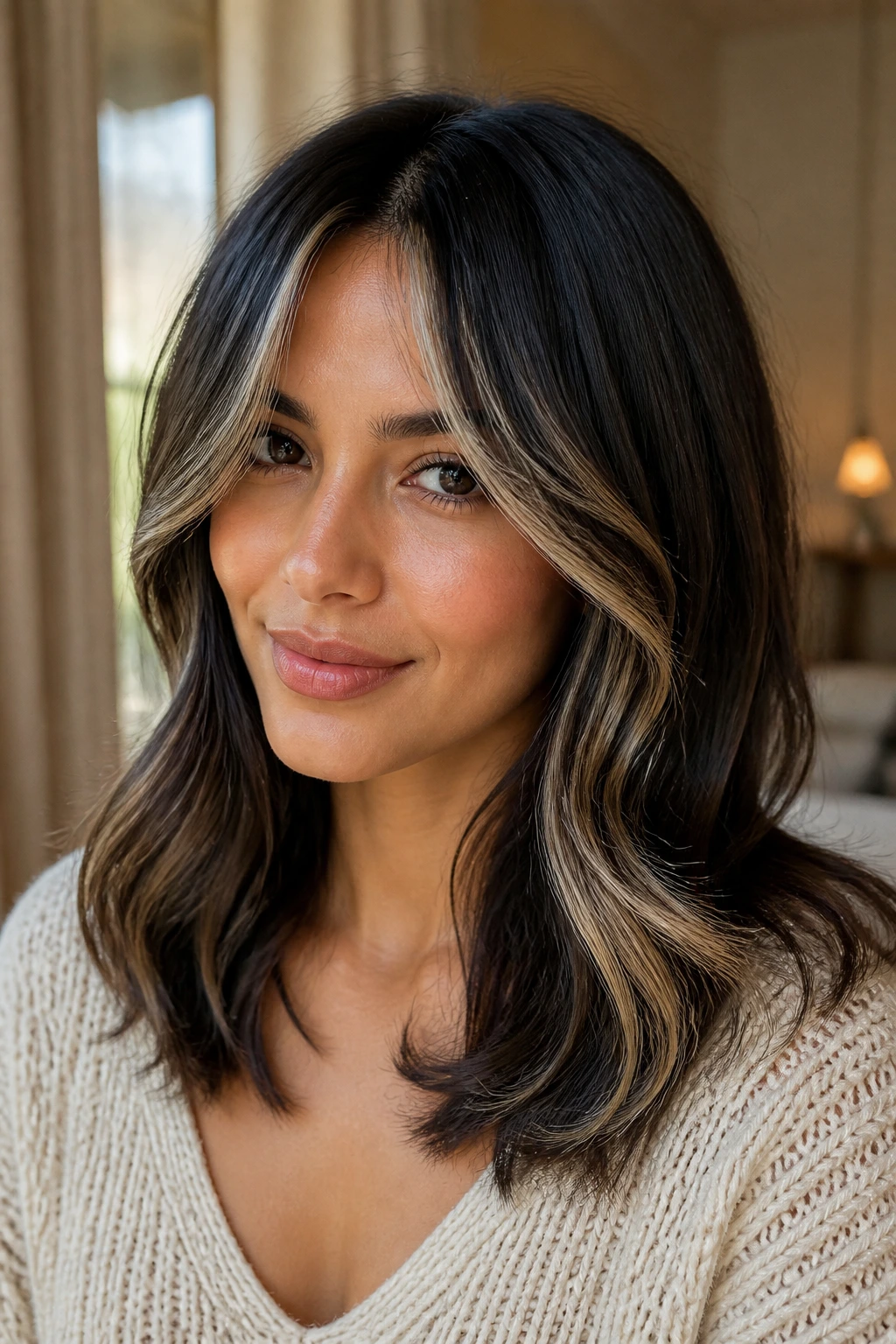
6. Curtain Bangs with Vanilla Ribbon Highlights
Why do curtain bangs and blonde ribbons work so well together? Because the bangs already pull the eye inward. Add a soft vanilla ribbon through the front pieces, and the whole face brightens without the rest of the hair needing to go much lighter.
The placement matters more than the shade here. I like the brightest section right where the bang opens away from the face, with a softer melt as it falls into the length. That keeps the front light but avoids the heavy strip effect that can happen on dark hair.
A middle part makes the curtain shape obvious, but a slightly off-center part can be prettier if the hair is very dense. Heat from a blow-dry brush helps the blonde pieces bend outward and stay visible.
This style is for people who want movement near the face, not all over the head. The blonde becomes a frame, not the whole picture.
7. Deep Side Part with Caramel Slices
A deep side part gives dark hair volume before any styling product even touches it. Add caramel slices on the heavier side, and the cut suddenly has more body than you’d expect from the same length. The contrast is softer than platinum, which is why it feels wearable even when the blonde is noticeable.
What Makes It Different
Unlike centered face-framing highlights, caramel slices on a side part use asymmetry on purpose. The brighter side carries the visual weight, while the darker side keeps the base grounded. That’s a useful trick if one side of your hair naturally falls flatter than the other.
Best Way to Style It
- Blow-dry the roots in the opposite direction first to build lift.
- Sweep the hair over the part and let the caramel land just above the cheekbone.
- Finish with a flexible spray so the pieces move instead of freezing in place.
If your dark hair tends to fall heavy, this style gives it a little drama without needing more layers.
8. High Ponytail with Hidden Blonde Panels
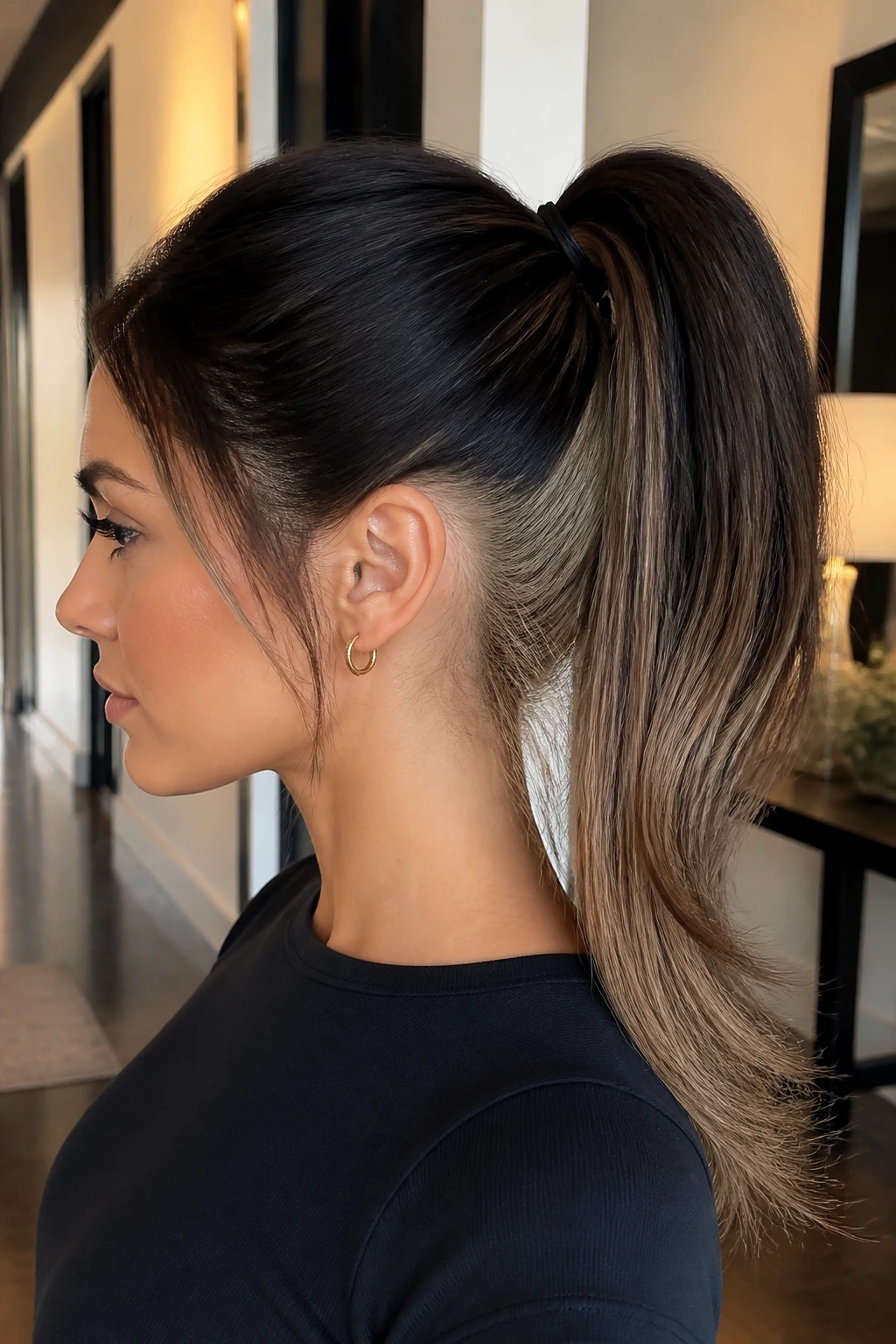
A high ponytail sounds basic until hidden blonde panels start moving underneath it. That’s the fun part. The top stays dark and sleek, while the lower layers reveal blonde when the pony swings. It feels polished from the front and a little unexpected from the back.
This is a strong option if you want a blonde effect without wearing the color loose every day. Panels placed under the crown and around the nape stay out of sight when the hair is down or smoothed back. Then the ponytail lifts them up and shows the contrast.
I like this for workouts, travel, and busy days when the hair has to do two jobs. It also works well if you’ve got dark roots growing in and don’t want a visible line across the whole head.
The only real catch? Tie the ponytail with a silk-friendly scrunchie or soft elastic. Strong tension can make the lighter pieces look bent in the wrong places.
9. Braided Half-Up with Dimensional Blonde Weave
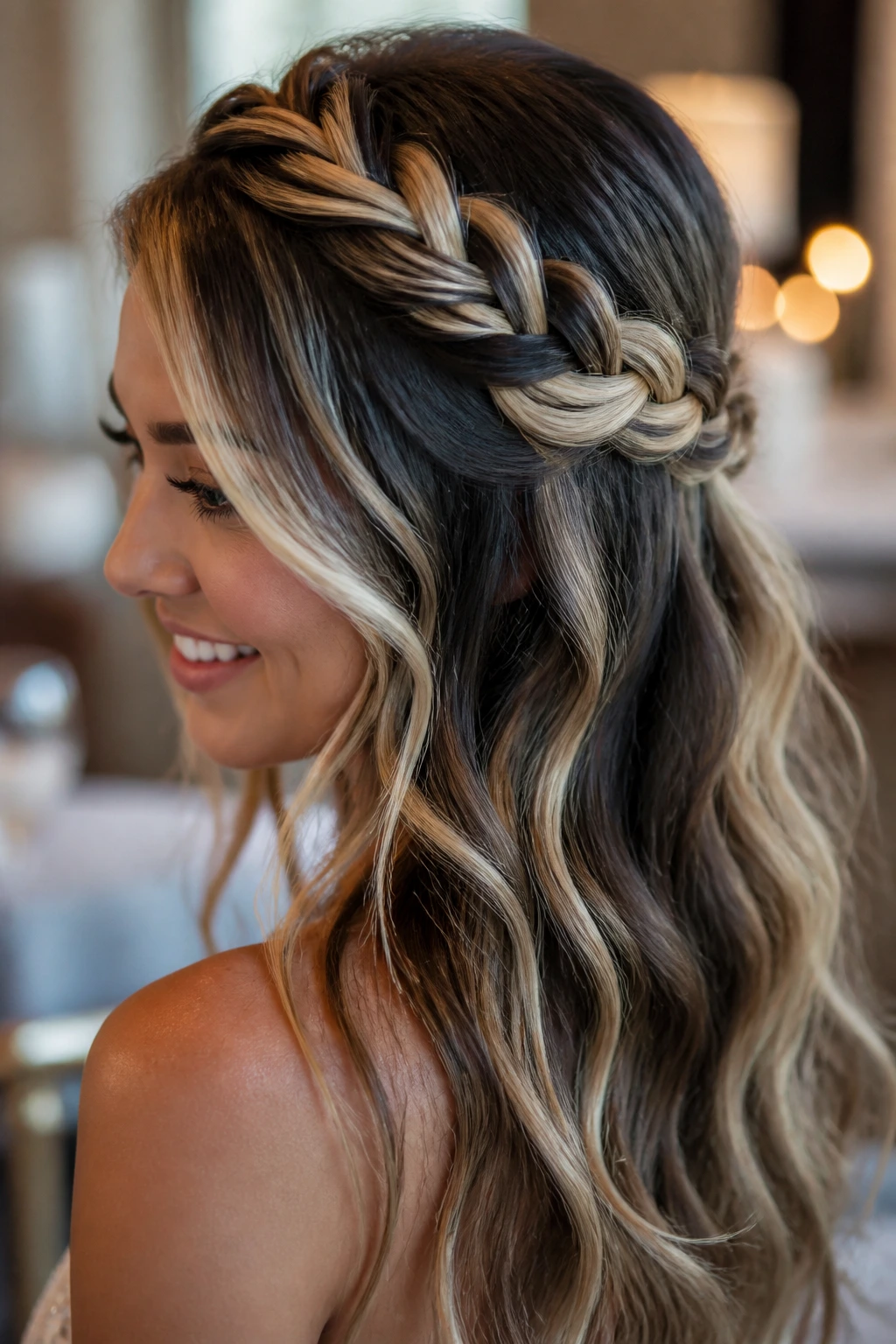
Braids and blonde highlights are one of those combinations that make each other look better. In a half-up style, the woven sections pull the lighter strands to the surface, which means the blonde reads more clearly than it does when the hair is loose.
The best version on dark hair uses mixed dimensions: a few finer highlights, a few broader ribbons, and a darker root left intact. That mix keeps the braid from looking flat. If every lighter piece is the same width, the braid can look like a stripe instead of a weave.
I’m fond of this for events because it gives you texture without needing a perfect blowout. A loose braid through the crown or sides shows the blonde in a very different way than straight hair does. Even a little looseness works in your favor.
For darker bases, this is where honey, wheat, and beige tones usually look best. They give the braid a lit-up look without clashing with the depth underneath.
10. Collarbone Lob with Ash-Beige Peekaboo Strips
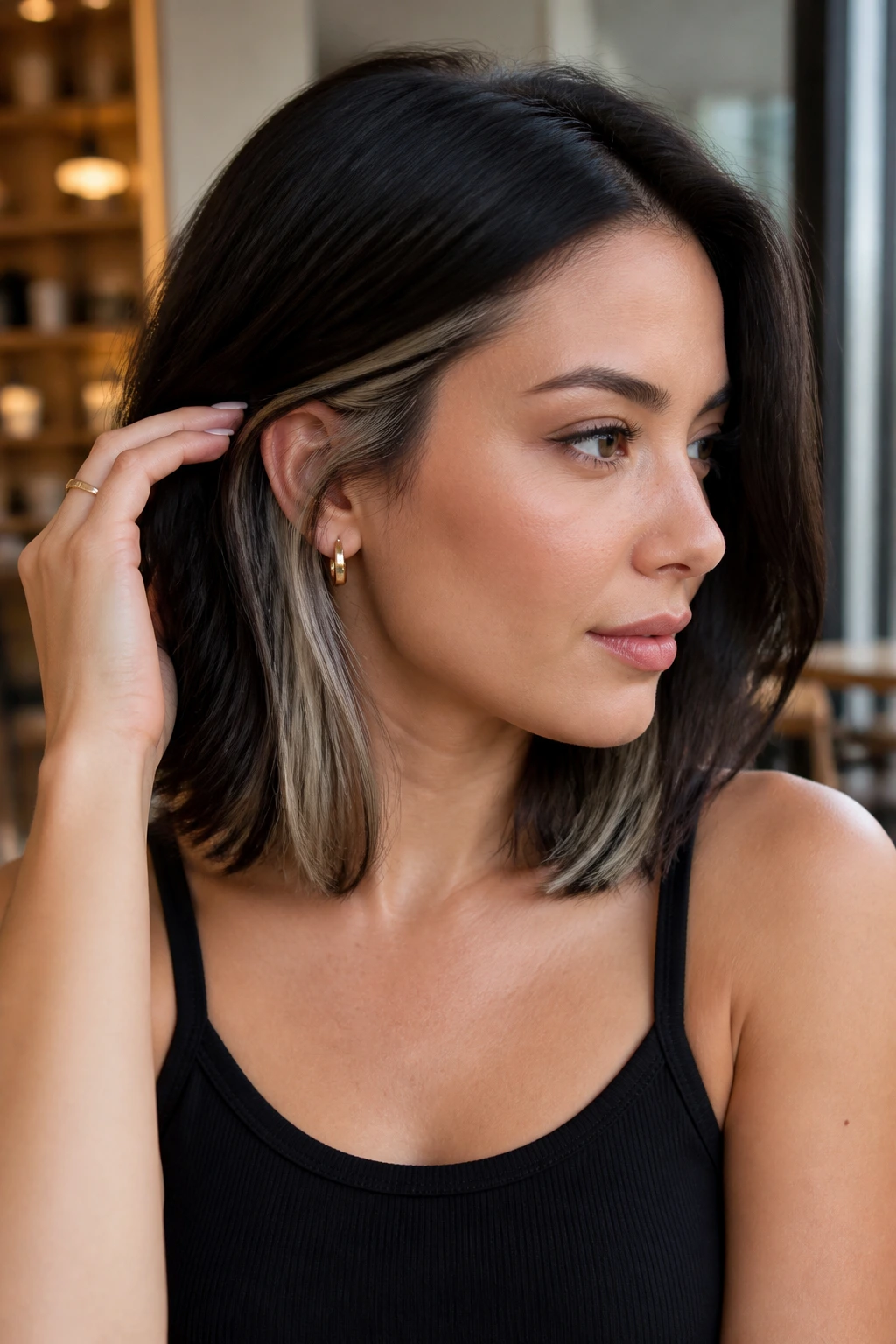
Peekaboo blonde strips are the quiet version of contrast, and that’s why they’re so useful. On a collarbone lob, the ash-beige pieces stay hidden under the top layer, then appear when you tuck the hair behind your ear or flip it outward. It feels subtle until it doesn’t.
The tone matters here more than the size. Ash-beige keeps the look cool and slightly smoky, which suits dark hair that already leans neutral or cool. If the base is warm, the blonde can get muddy, so a toner that keeps the beige clean is worth asking for.
This style is one of the least obvious ways to add lightness to dark hair. You can keep the top layer almost entirely brunette and still get a nice flash of blonde during movement. That’s a good trade if you want a workplace-friendly version of the trend.
A tucked-behind-ear moment is all it takes. Small, but effective.
11. Long V-Cut with Sunlit Ombré Ends
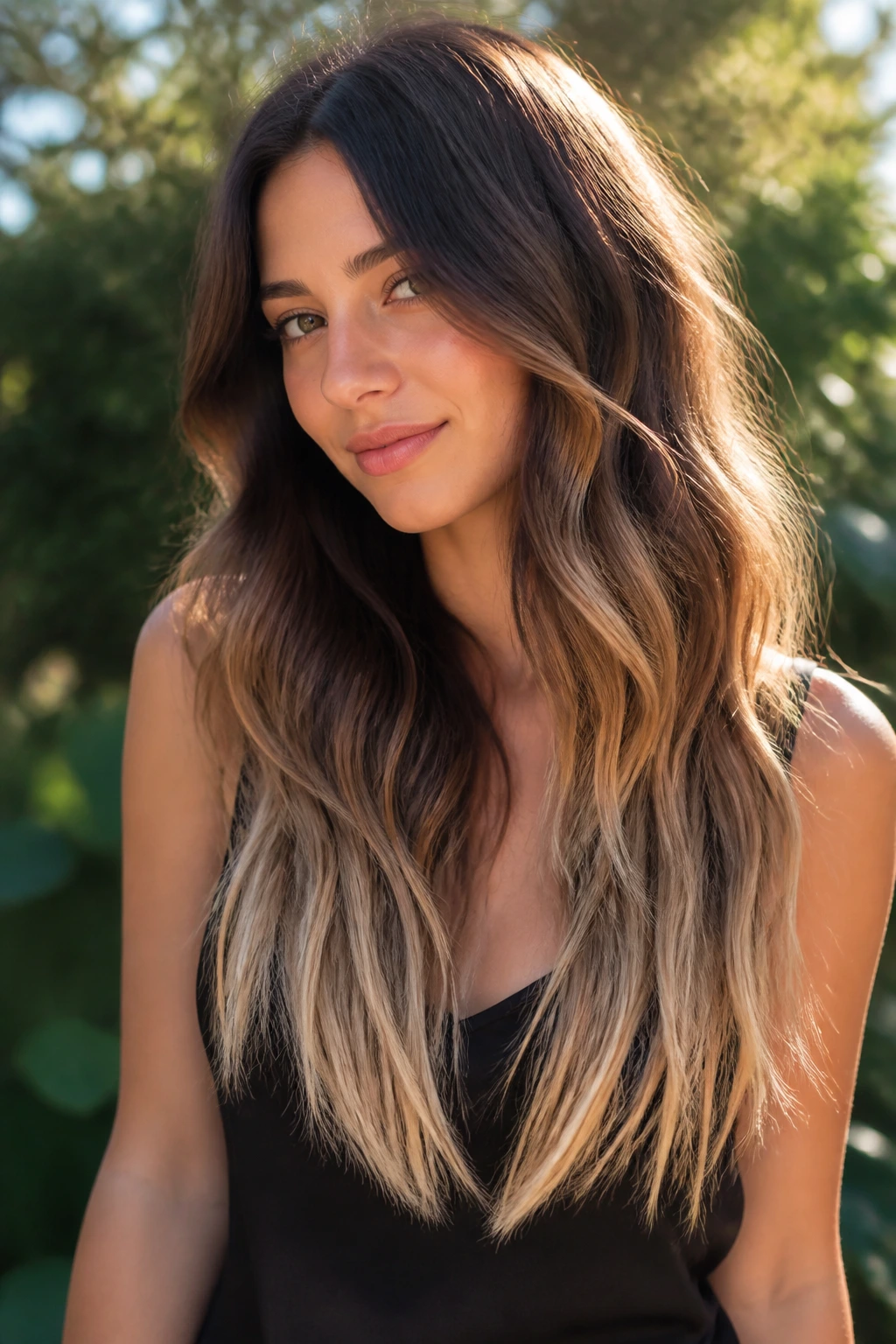
A long V-cut gives blonde somewhere to spread out. The shape narrows toward the ends, so a sunlit ombré can glide from deep brunette roots into lighter lengths without looking abrupt. On dark hair, that downward fade can feel almost effortless — though the color itself usually takes careful placement.
The key is keeping the transition soft. I like the lift to start below the chin or around the shoulders, depending on length, so the top stays rich. By the time you get to the last several inches, the blonde can be honey, wheat, or pale gold depending on how bold you want it.
This works especially well on hair that gets worn in waves. The V shape helps the ends flick and move, which makes the ombré show more than it would on a flat cut.
If you’ve ever wanted blonde but hated the idea of constant root touch-ups, this is one of the most forgiving ways to do it.
12. Wolf Cut with Rooted Wheat Panels
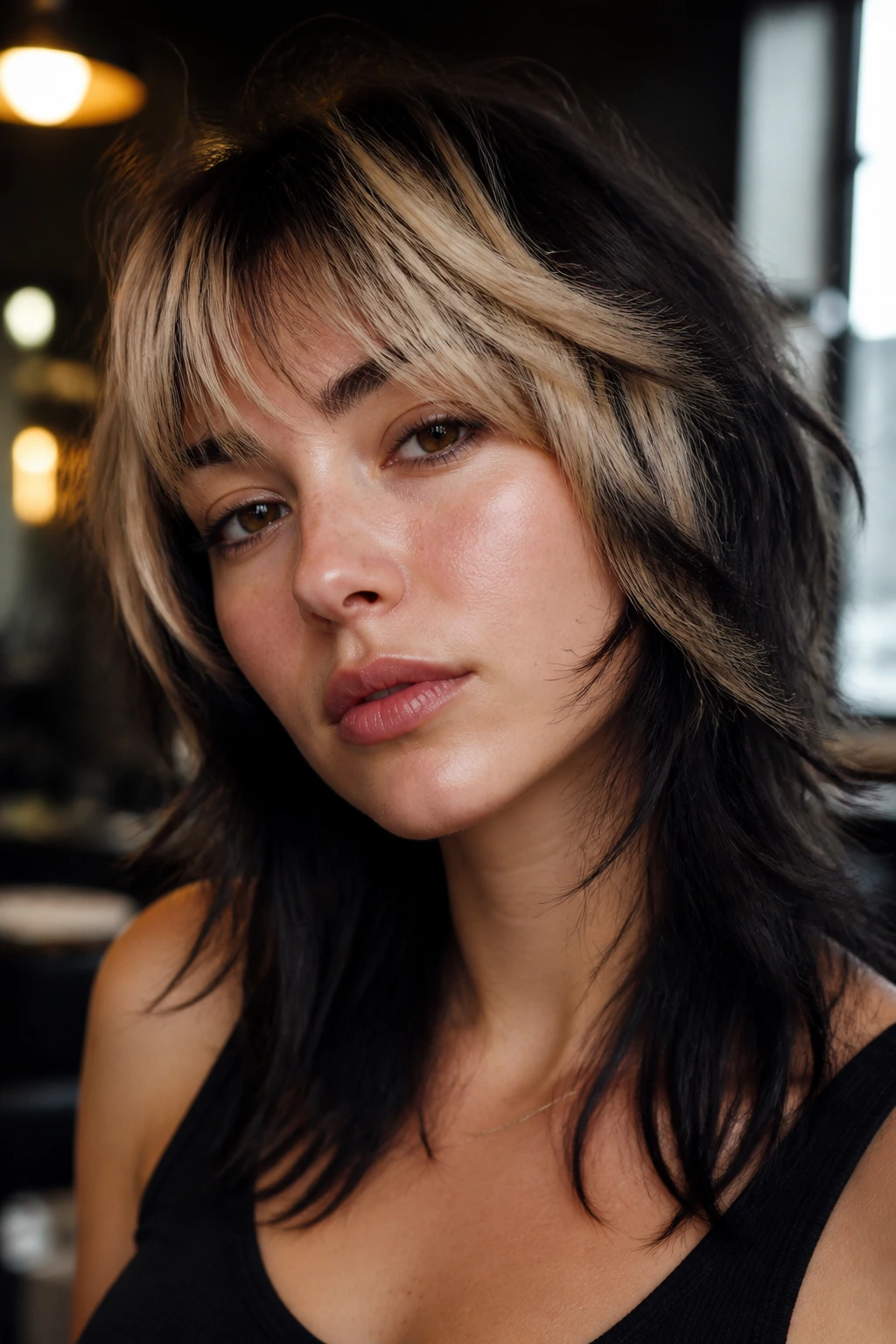
The wolf cut already brings attitude; the blonde just makes the texture easier to read. Rooted wheat panels on a dark base keep the top moody while the lighter pieces break up the layers underneath. The result is messy in a controlled way, which is exactly why the cut works.
Why It Feels Modern
Compared with a soft shag, the wolf cut has sharper changes in length. That gives the blonde a chance to show in little bursts instead of long ribbons. If you want the color to look lived-in rather than polished, this is a strong choice.
The Styling Sweet Spot
- Use a diffuser or rough-dry the hair first to keep the layers separated.
- Choose a root shadow that stays close to your base color.
- Put the wheat blonde on the top layers and the outer edges of the face frame.
This one likes texture. If you smooth it too much, the whole point gets lost.
13. Glass-Hair Straight Cut with Creamy Micro-Highlights
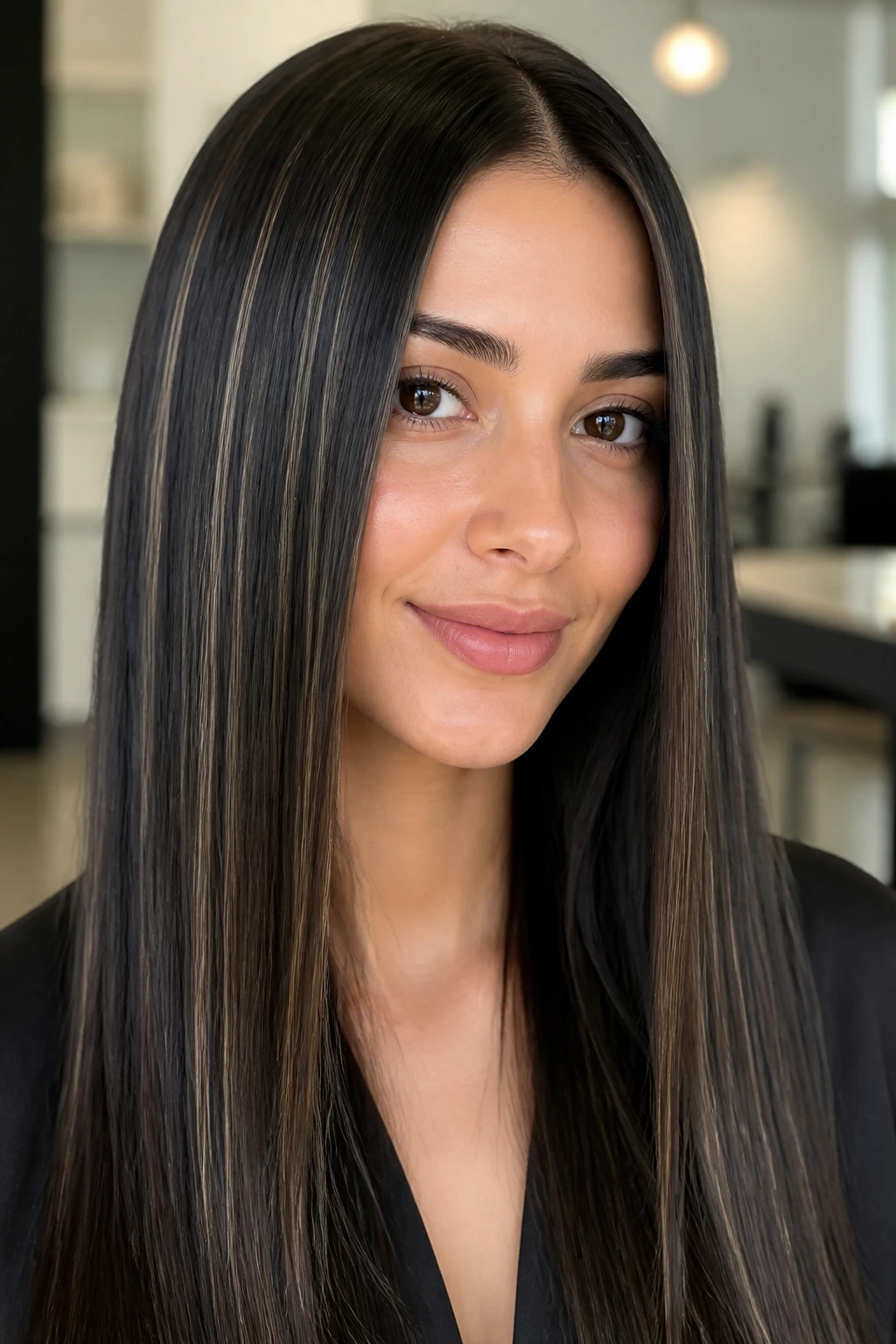
Straight, glossy hair and dark bases can look flat fast. Creamy micro-highlights fix that. They’re tiny, almost whisper-thin, and they work because the shine of the hair lets each little light strand catch without announcing itself.
The cut should stay clean — long and even, or maybe a soft U-shape — because the highlights depend on a smooth surface. When the hair is glassy, the creamy blonde veins glide across the length instead of breaking it apart. This is one of my favorite versions for people who like quiet color but don’t want the hair to disappear in shadow.
A middle part gives the micro-highlights a symmetrical look, while a side part makes one side flash more. Either way, you want the pieces to be fine enough that they almost read as sheen instead of stripes.
This style proves a useful point: blonde on dark hair does not have to be loud to be visible.
14. Natural Coils with Golden Halo Placement
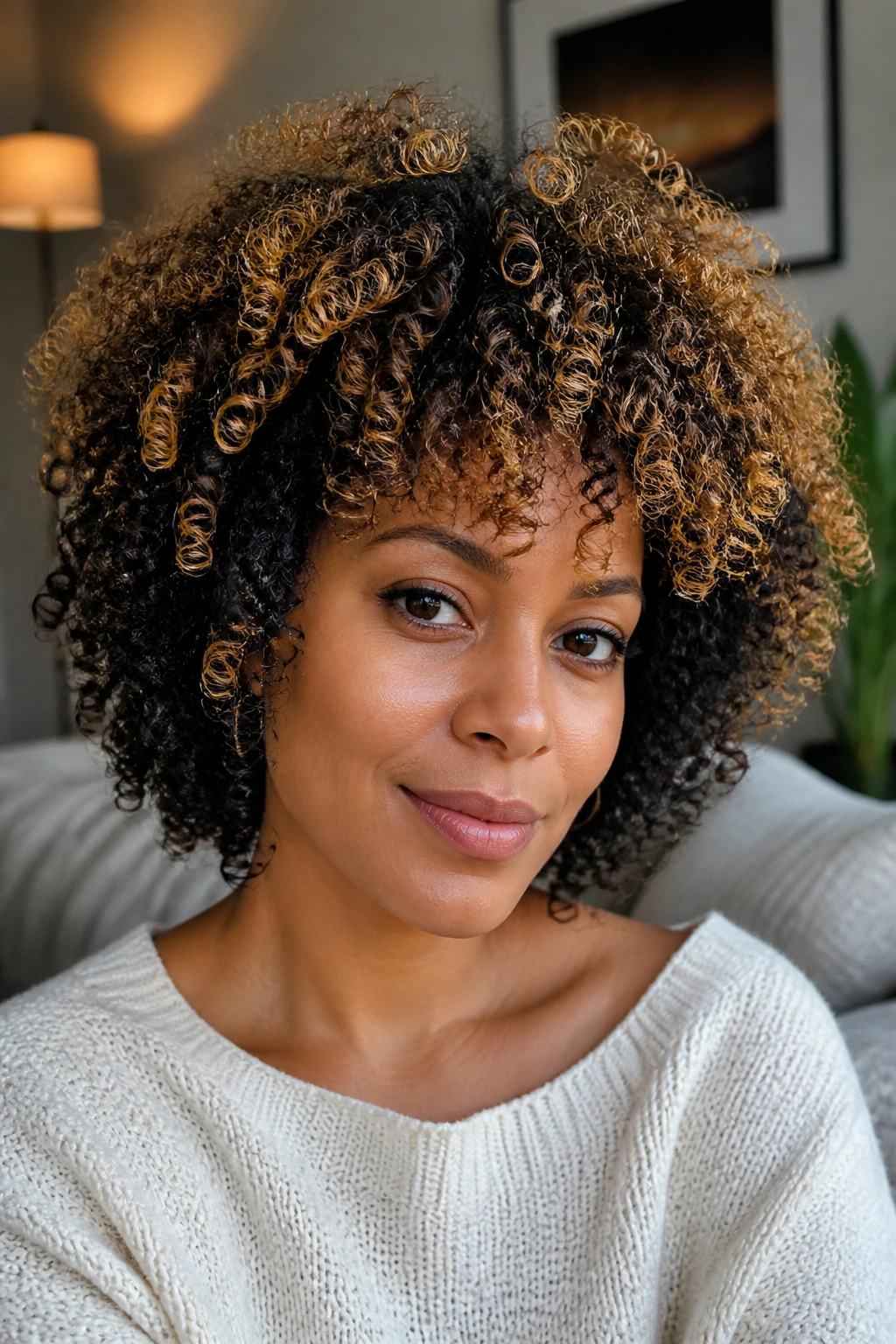
Natural coils hold light in a different way than straight hair, and a golden halo placement takes advantage of that. Instead of scattering blonde everywhere, the lighter pieces sit around the crown, outer curve, and front perimeter, where the coils naturally frame the face. The effect is soft but unmistakable.
What I like most here is how the color changes as the coils shrink and expand. When the hair is stretched or defined, the blonde shows in long ribbons. When the coils spring up, the color looks more like a halo around the head. That shift makes the style feel alive.
Warm gold is usually the safest choice on very dark coily hair. It tends to sit more naturally with the base and keeps the hair from looking chalky. If the blonde is placed with the curl pattern in mind, the whole head looks brighter without losing depth.
This is not a timid look. It just knows where to stand.
15. Low Bun with a Blonde Underlayer Reveal
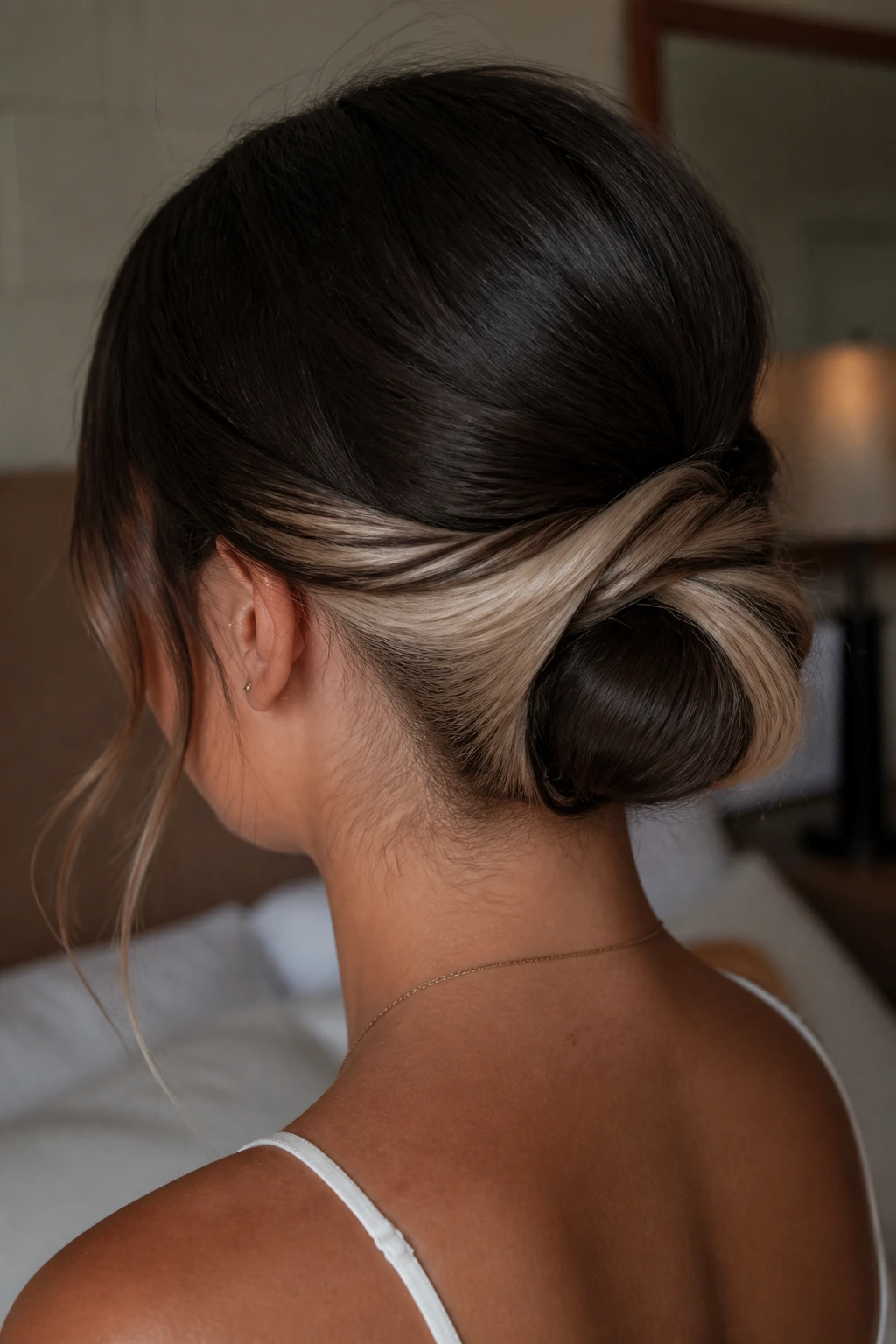
A low bun can be plain, or it can be a tiny surprise. When the lower layers are blonde and the top stays dark, the bun reveals the lighter pieces as it twists and folds. It’s a very good way to make updo hair look intentional instead of accidental.
The blonde shouldn’t sit too close to the surface on this one. If it does, the bun can look patchy. Keep the brighter pieces underneath and around the nape, then let the twist show them in thin flashes. On dark hair, that hidden contrast is what makes the style interesting.
This works well for formal events because the color moves only when the bun moves. From the front, it can read elegant and understated. From the side, there’s a little bit of payoff.
A shine serum on the surface and a flexible pinning technique keep the bun smooth while the blonde underneath does its job.
16. Face-Framing Layers with Butter Blonde Streaks
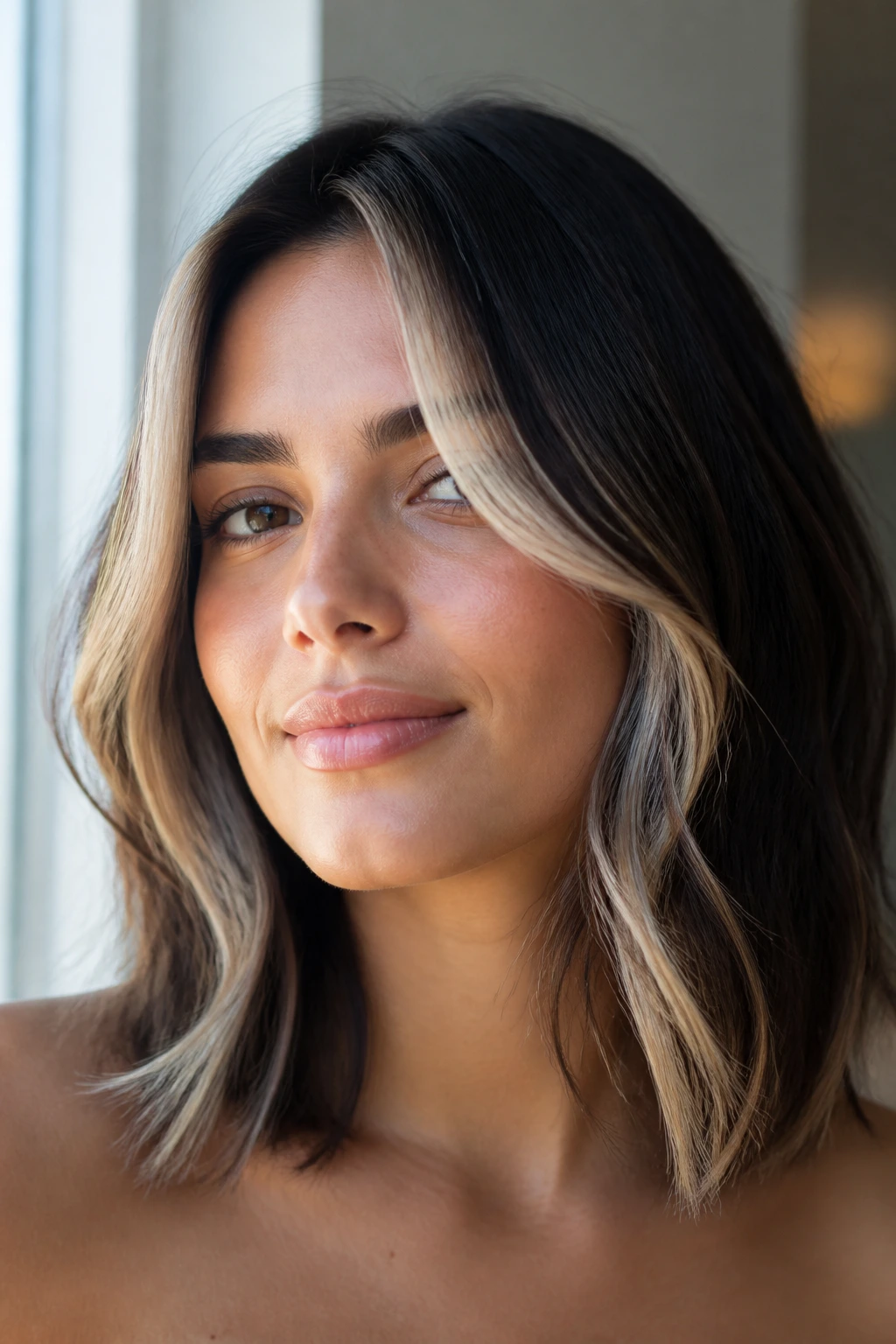
Some styles want the blonde to do the talking right away. Face-framing layers with butter blonde streaks are one of them. The lightness starts where the layers fall beside the cheeks, which means the color shows as soon as the hair moves forward.
The butter tone matters because it softens the contrast. On dark hair, a very icy front can feel disconnected unless the rest of the cut is sharp. Butter blonde keeps the front bright but creamy, so the layers still look wearable in daylight and under indoor light.
I like this with shoulder-length or longer layers, since the pieces have enough weight to move around the face. A slight bend at the ends helps them sit forward instead of flipping away. If you want more polish, tuck one side behind the ear and let the blonde sit on the visible side only.
This is the style for people who want the blonde to read fast. No squinting required.
17. Beachy Midlength with Rooted Sand Balayage
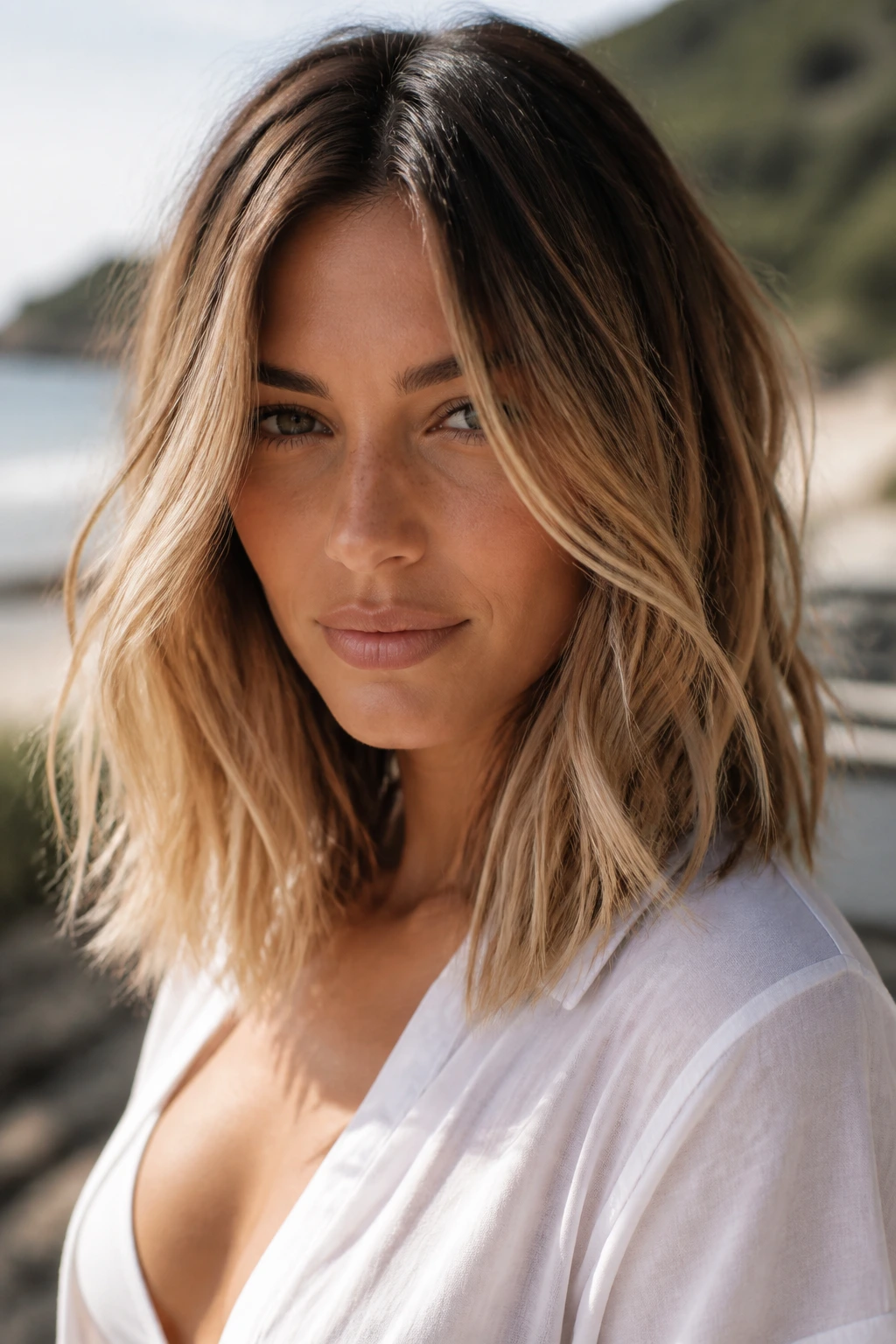
Beachy waves and rooted sand balayage make an easy pair. The color feels sun-dusted, but the dark root keeps the look from turning too light or too beach-vacation all over the head. That root shadow is doing a lot of work here.
On midlength hair, the balayage can start around the ear or jaw and melt into the ends. Sand tones sit somewhere between beige and warm blonde, which makes them a safer middle ground for dark hair than cooler, cleaner blondes. They catch on waves nicely and don’t need perfect styling to show up.
This is one of those looks that looks better after you’ve lived in it for a day. The waves loosen, the toner settles, and the lighter ends mix into the darker top layer in a way that feels less staged.
If your routine is casual, this is a smart place to land. It doesn’t need constant fixing.
18. Choppy Midi Shag with Chunky Beige Pieces
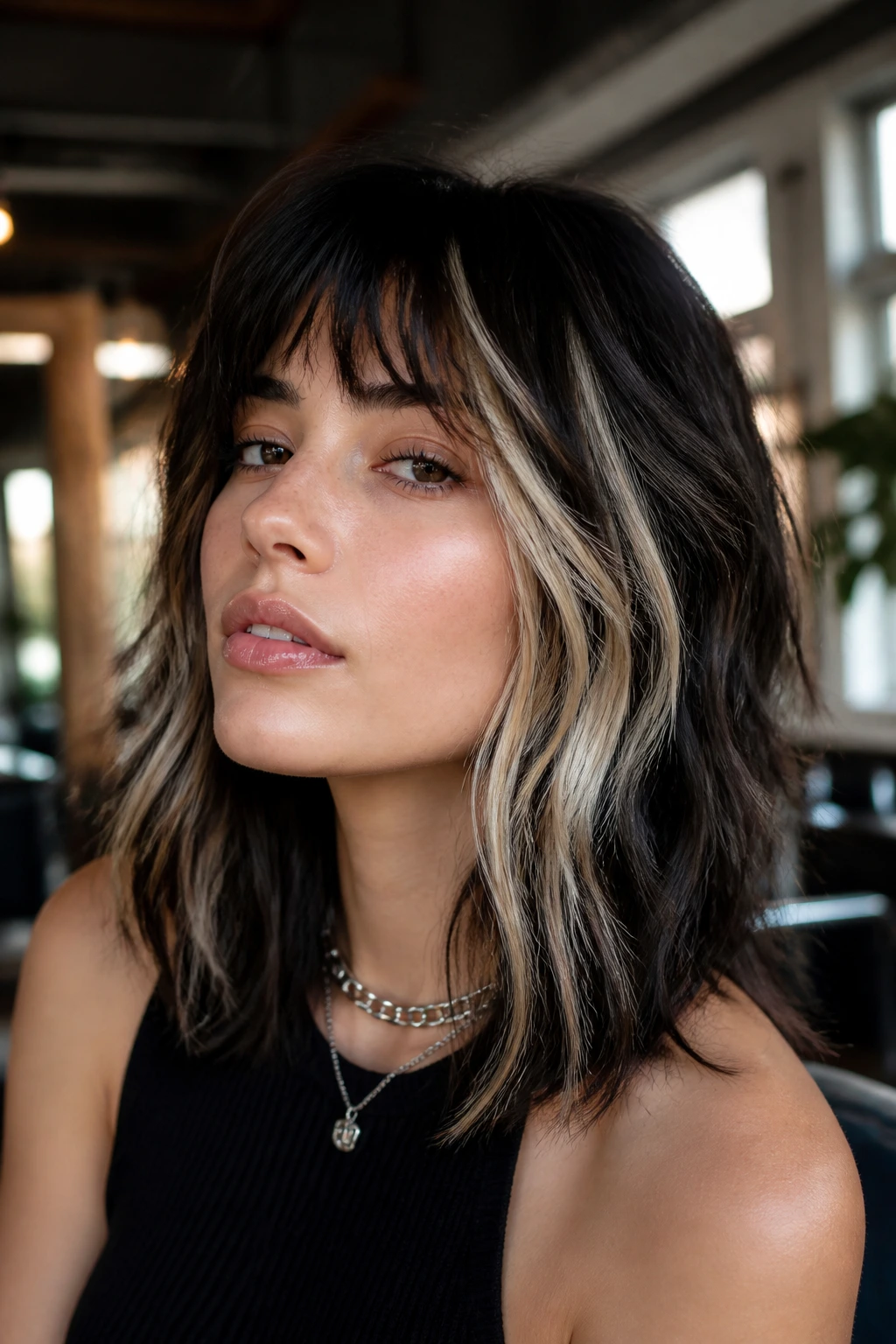
A choppy midi shag can handle bigger pieces of blonde than people expect. The uneven layers already make the haircut feel deliberate, so chunky beige panels look editorial instead of accidental. The important part is keeping the pieces in the right layers, not scattering them everywhere.
Why It’s a Different Kind of Blonde
Unlike fine babylights, chunky beige pieces read at once. They give the haircut shape, especially if the ends are feathered or piecey. On dark hair, that stronger placement can make the shag look more expensive because the contrast emphasizes the cut lines.
Who It Suits Best
- Anyone who likes a lived-in, slightly undone finish
- Hair that holds texture well
- Dark brunettes who want the blonde to be obvious without going platinum
I’d keep the tone neutral-beige rather than yellow. Beige gives the chunkier pieces a cleaner finish and keeps them from fighting the darker base.
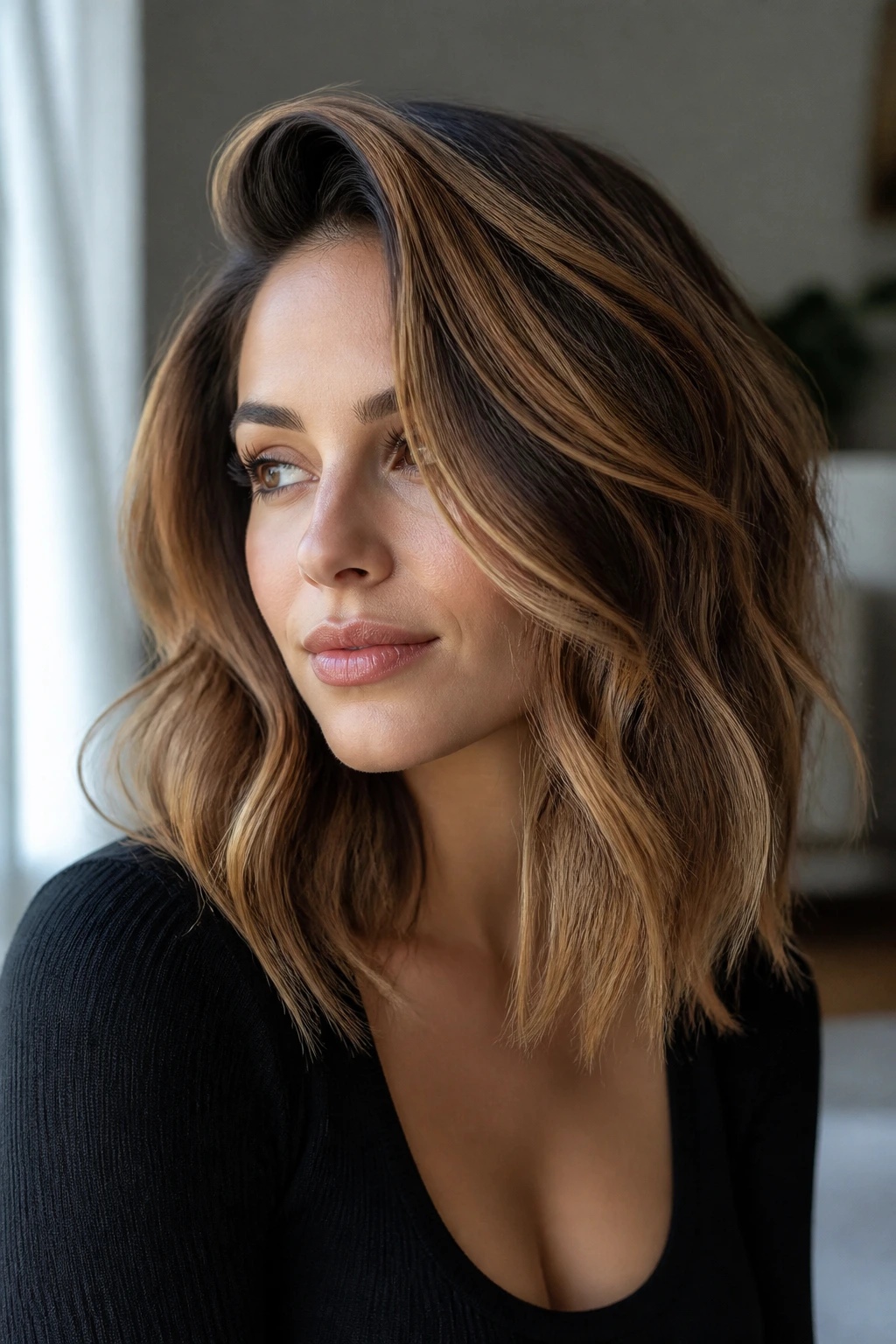
19. Side-Swept Lob with Soft Wheat Toning
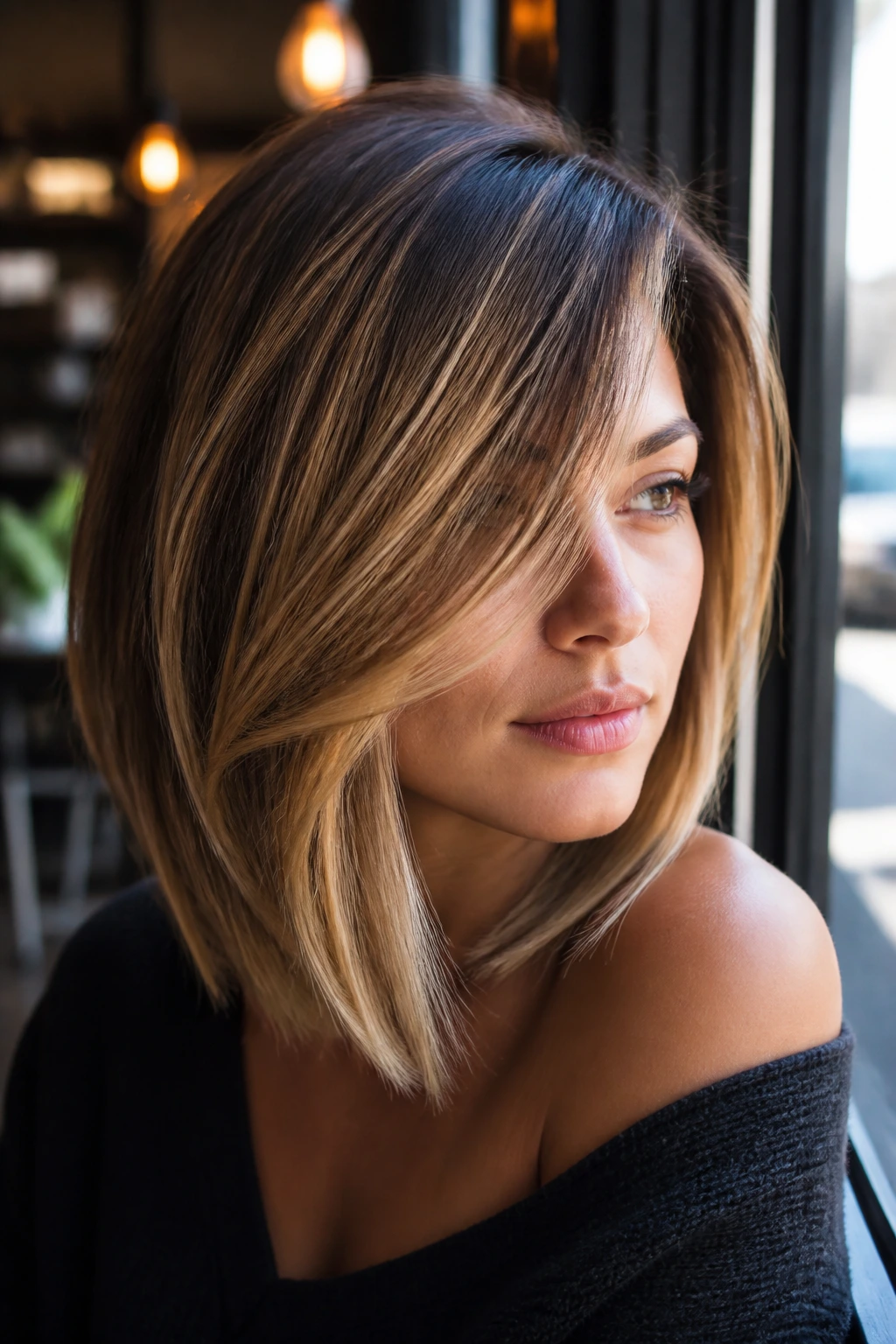
A side-swept lob has a built-in advantage: it creates a visual sweep, and the blonde can follow that line. Soft wheat toning makes the lighter pieces look gentle rather than pale, which is useful when the hair is dark enough to need a bridge between brown and blonde.
The sweep should fall over the brow and cheekbone, with the brighter pieces concentrated on the visible side. That asymmetry keeps the look from feeling too symmetrical or overly planned. If the lob is slightly layered, even better — the movement helps the wheat tone show through without taking over.
I like this for people who do not want their blonde to scream first thing in the morning. The style has a softer read until the hair moves. Then the light opens up.
It’s a good reminder that contrast does not have to be harsh to be noticed.
20. Layered U-Cut with Honey-Dipped Ends
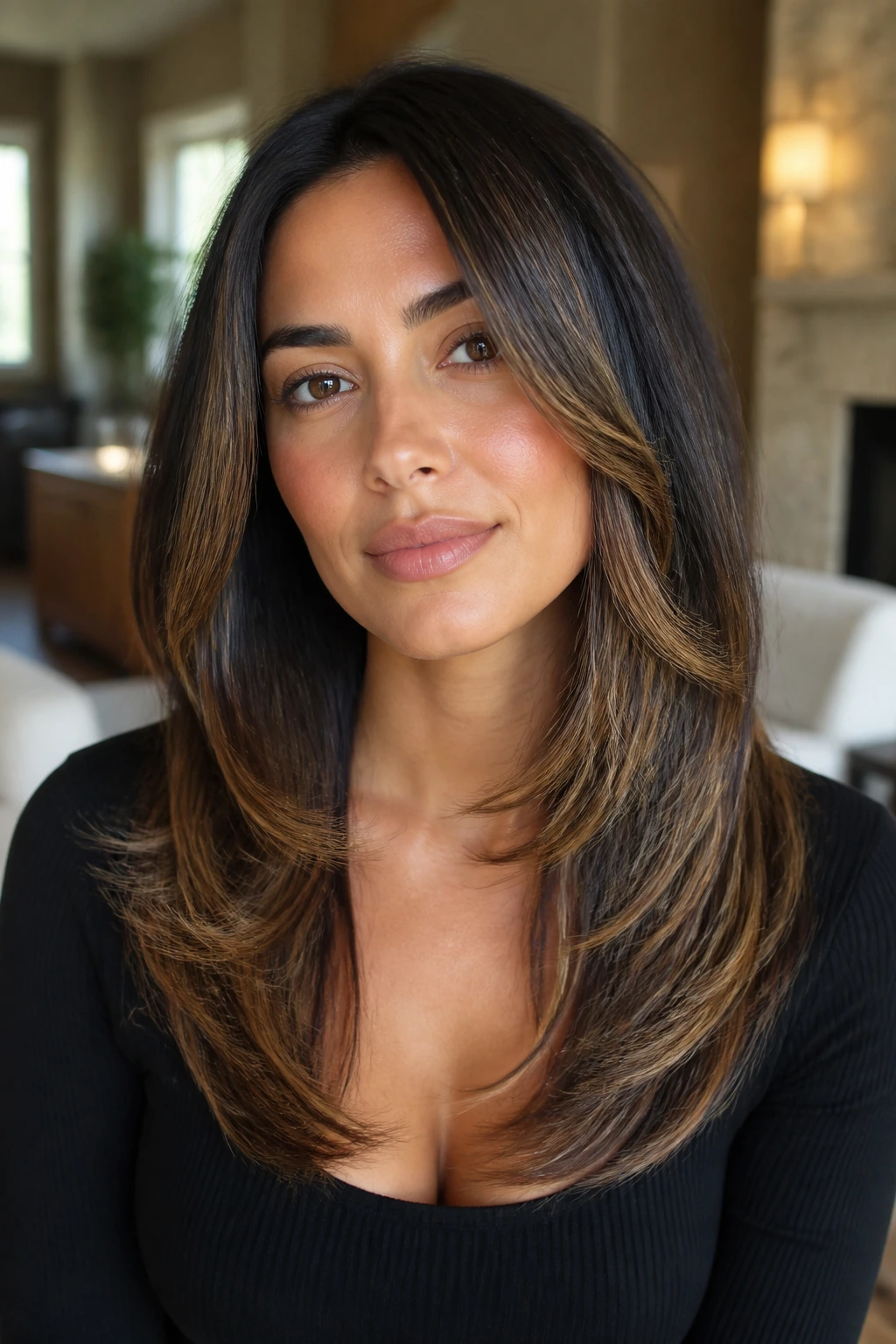
The U-cut is underrated on dark hair because it gives the blonde a curve to follow. Honey-dipped ends soften the outline and keep the bottom from looking heavy. When the lengths are layered, the honey at the ends becomes a finish, not a block.
The color works best when the root-to-mid section stays rich. That dark field makes the lighter ends feel intentional, almost like the sun got to the hair last. I prefer this when someone wants a wearable blonde that doesn’t rely on face framing or bold panels.
If you wear your hair down often, the U-cut keeps the eye moving. The ends fan out a little, and the honey catches on that curve. It’s simple, but not plain.
21. Twist-Out with Cinnamon-to-Buttery Dimension
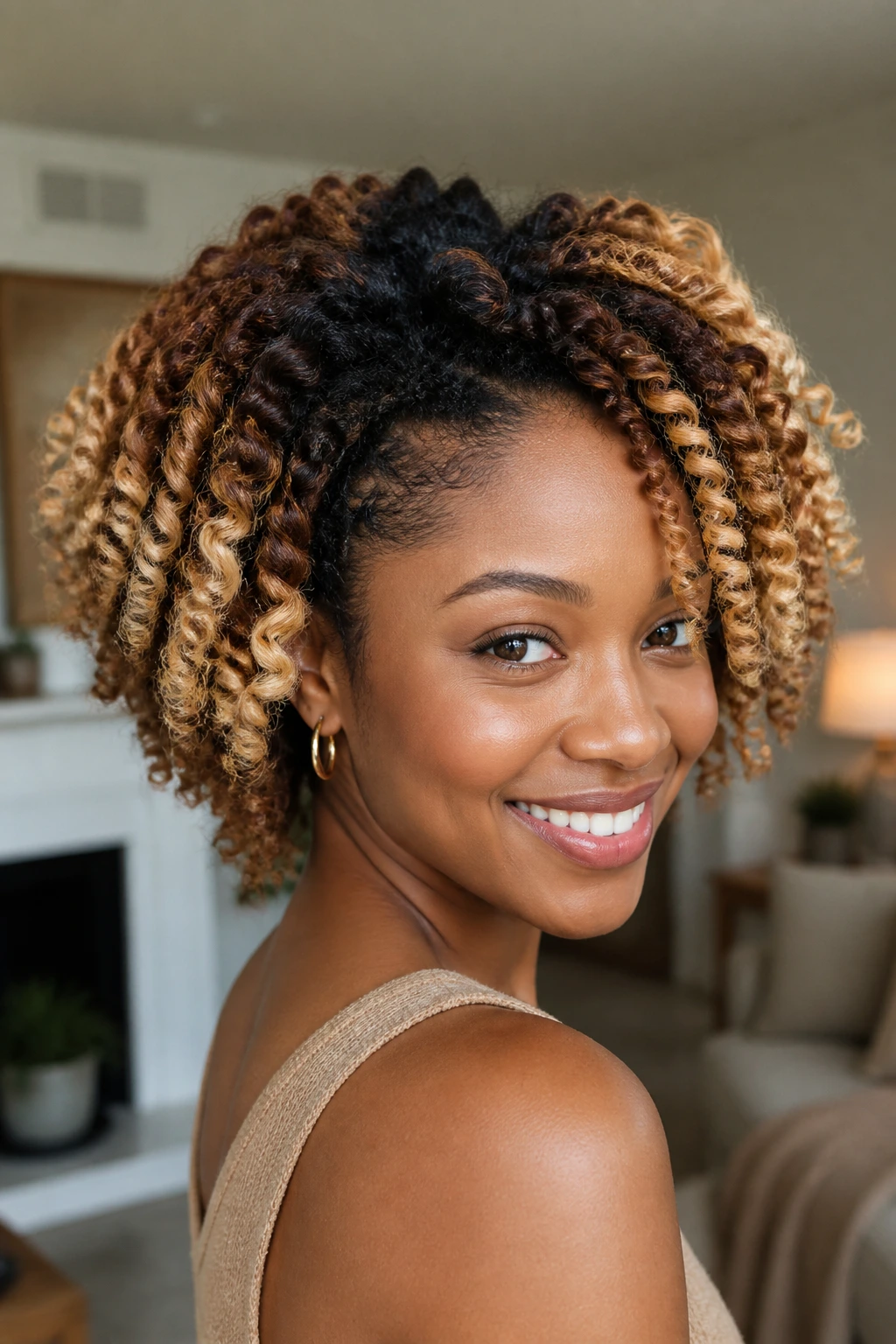
A twist-out can take dimension beautifully when the blonde tone shifts gradually. Cinnamon near the root or midsection, then buttery blonde toward the tips, gives the texture a warm-to-light movement that dark hair handles very well. It feels richer than a single-tone highlight job.
The shape of a twist-out naturally separates the strands, which means the color change becomes visible in layers. That’s useful on dark hair because the contrast doesn’t have to do all the work on its own. Texture carries some of the load.
How to Make It Land
Start with a gentle lightening plan for the ends only if you want less maintenance. If you want more contrast, keep the brighter buttery pieces near the outer curls and the front sections. Either way, use a cream styler that won’t dull the color.
This one is especially good if you like movement but don’t want straight styles all the time.
22. Slicked-Back Wet Look with a Bright Money Strip
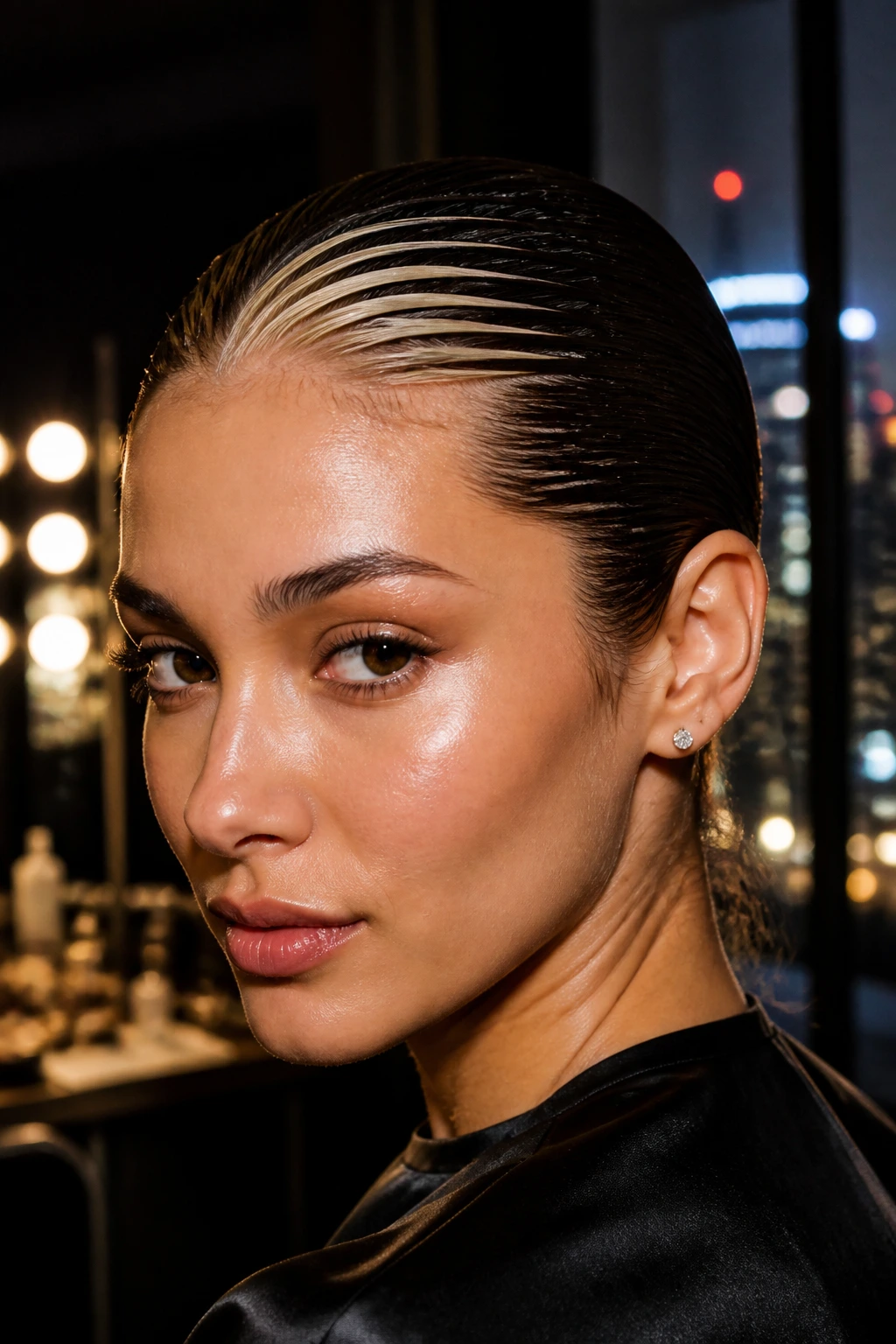
A slicked-back style can look severe in the wrong color. Add a bright money strip at the hairline, and it turns into something sharper. The blonde gives the wet look a point of focus, which keeps the style from becoming too flat or too dark.
The money strip should be narrow and precise. One clean piece on each side of the part, lifted enough to read bright but not so wide that it spills into the rest of the hair, usually does the trick. On dark hair, that precision matters because the contrast is already doing a lot.
This is a very good night-out style. It shows the face, keeps the ends controlled, and lets the blonde do a small but obvious job. Use a strong gel or cream on the base, then leave the highlighted pieces smooth rather than crunchy.
One bright strip is enough. More can spoil the line.
23. Soft Mullet with Smoky Blonde Panels
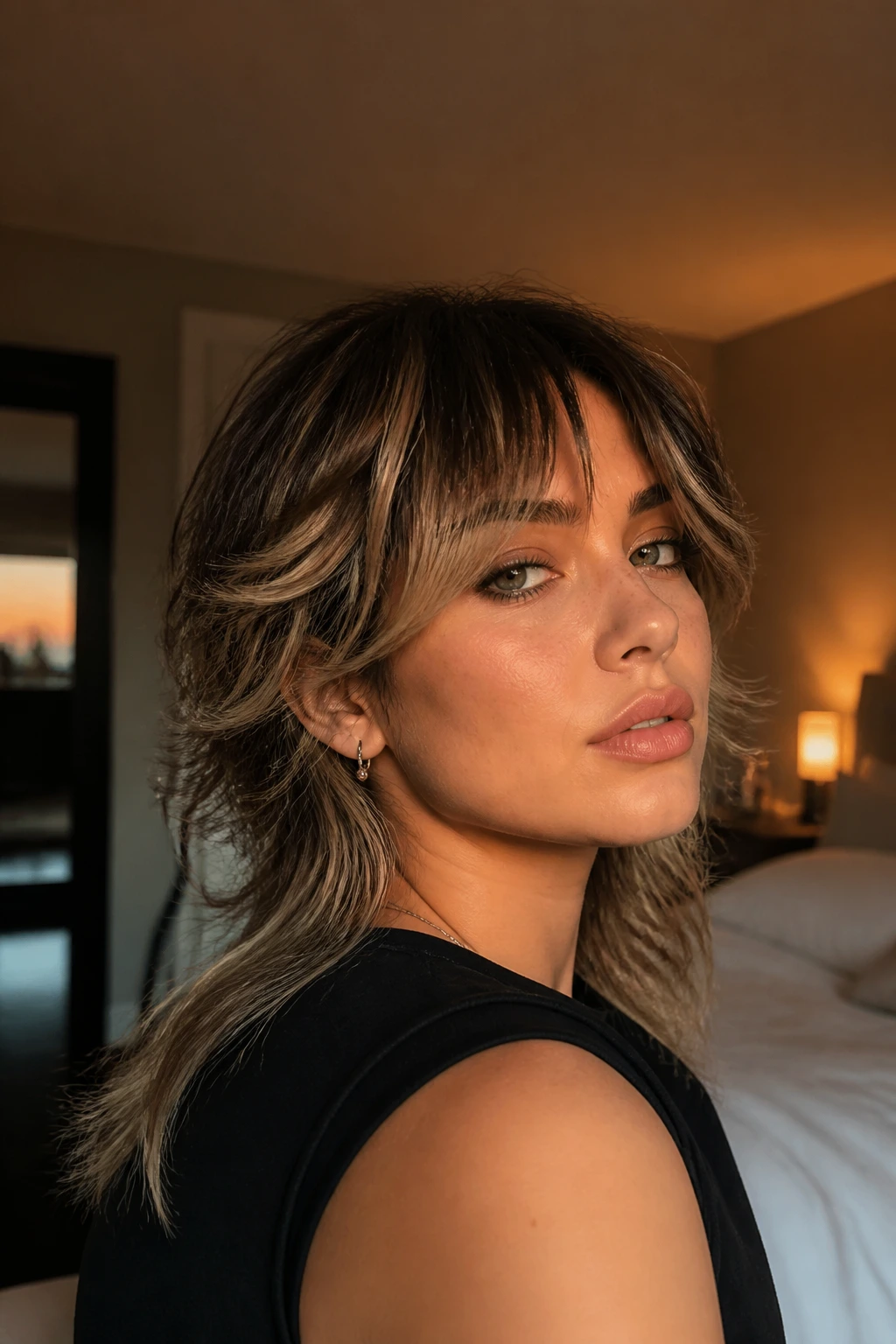
A soft mullet is already a little rebellious, so smoky blonde panels fit the mood. The lighter pieces sit in the top and side layers, then fade into the longer back length. On dark hair, that smoky tone keeps the cut from looking too disconnected.
I like this style because the blonde feels like part of the haircut rather than extra decoration. The shorter front layers pick up the light, and the longer back keeps the depth. That contrast gives the haircut shape from every angle.
If your hair has a natural wave, the smoky panels show up best when the ends are a little rough and piecey. A flat style can make the blonde look too hard. A looser finish gives it room to breathe.
This is not the neatest look in the room. That’s why it works.
24. Long Straight Hair with Ice Blonde Airy Veils
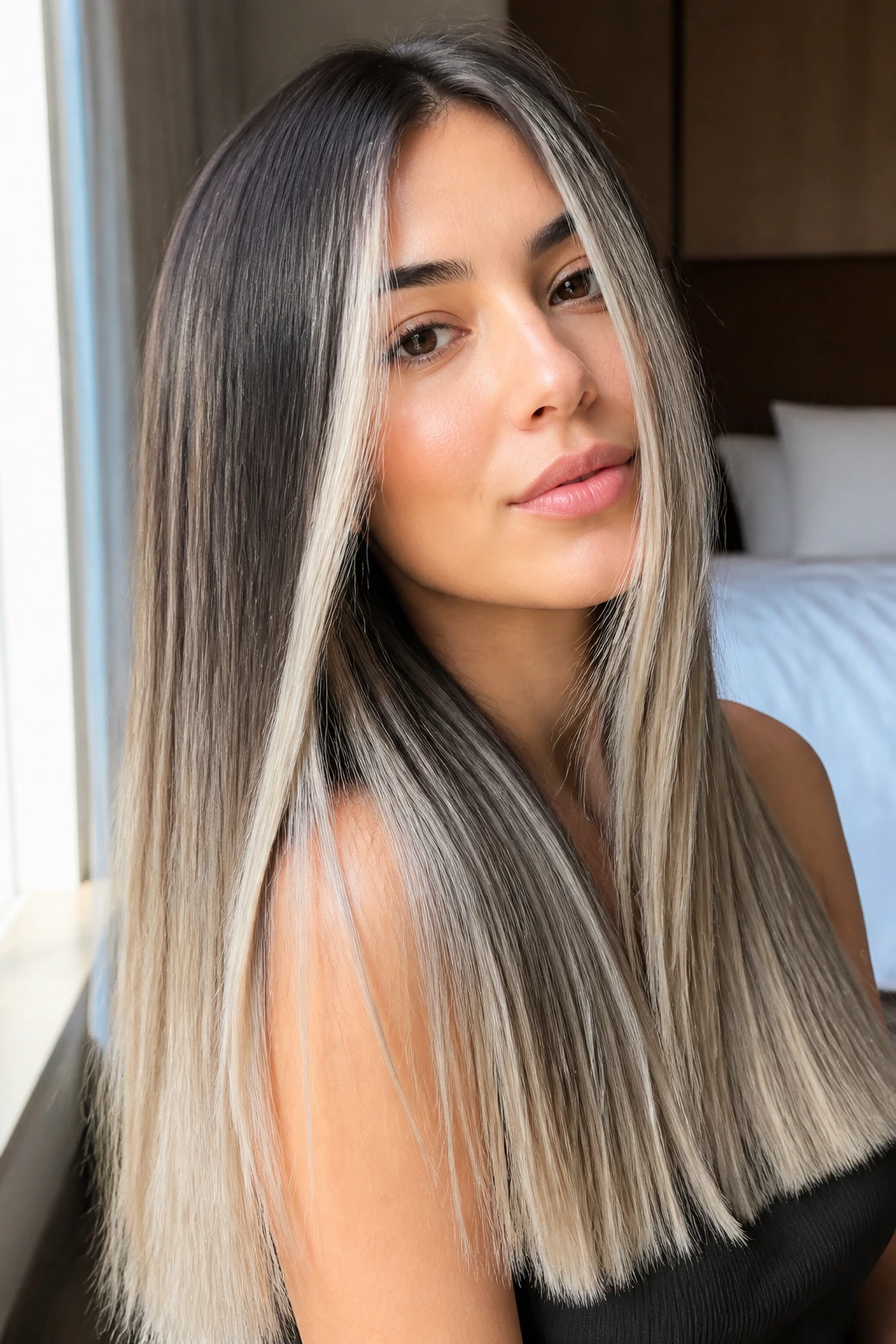
Long straight hair can carry ice blonde better when the pieces are airy and fine. Think veils, not blocks. On a dark base, those cooler strands give the length a slightly reflective quality, especially when the hair is ironed smooth and the ends are blunt or just dusted.
The best version keeps most of the hair dark, then places narrow cool pieces through the outer layers and around the front. Too much ice blonde on dark hair can go stripey fast. Thin placement keeps the color expensive-looking rather than harsh.
This style rewards shine. A lightweight serum on the mids and ends helps the blonde look pale instead of dry. And because the hair is straight, you can control exactly where the blonde shows.
If you want contrast that feels clean and modern, this is a strong route.
25. Shoulder-Length Curls with Maple and Pearl Ribbons
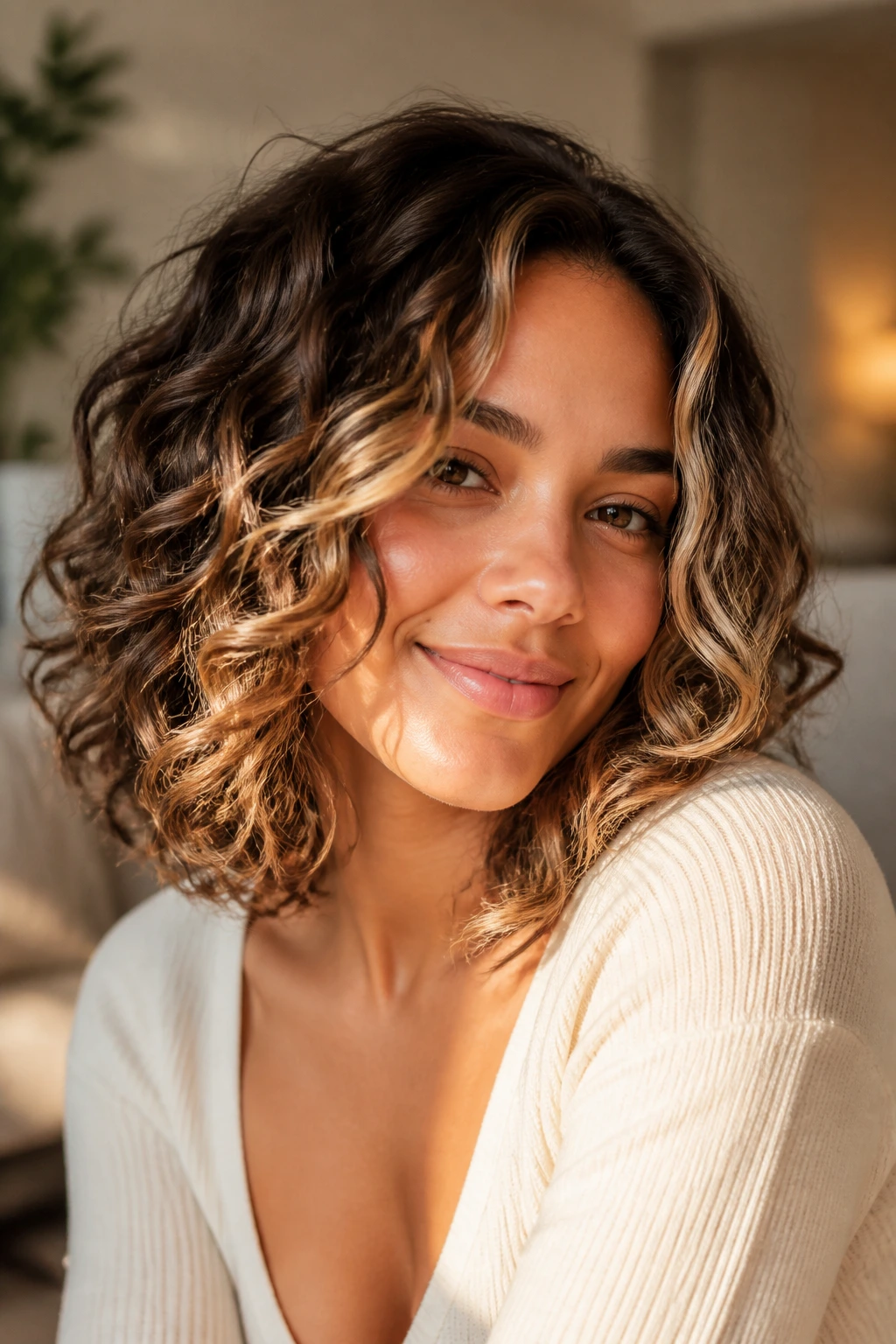
Maple and pearl in the same curly cut? Yes, if the placement stays thoughtful. The warmer maple pieces give depth, while the pearl ribbons add lift. On shoulder-length curls, that mix keeps dark hair from looking too heavy at the bottom.
The curls do the blending for you. When the hair springs up, the tones sit close together and feel dimensional. When the curls loosen, the pearl pieces flash a little more. That changing read is one of the nicest things about color on textured hair.
I like this style because it avoids the trap of choosing only warm or only cool blonde. Dark hair can handle both when they’re spaced with some care. A good colorist will keep the brightest pearl pieces near the front and the softer maple pieces through the body of the curls.
It’s a small color story, but a good one.
What Makes Blonde Placement Change the Whole Cut
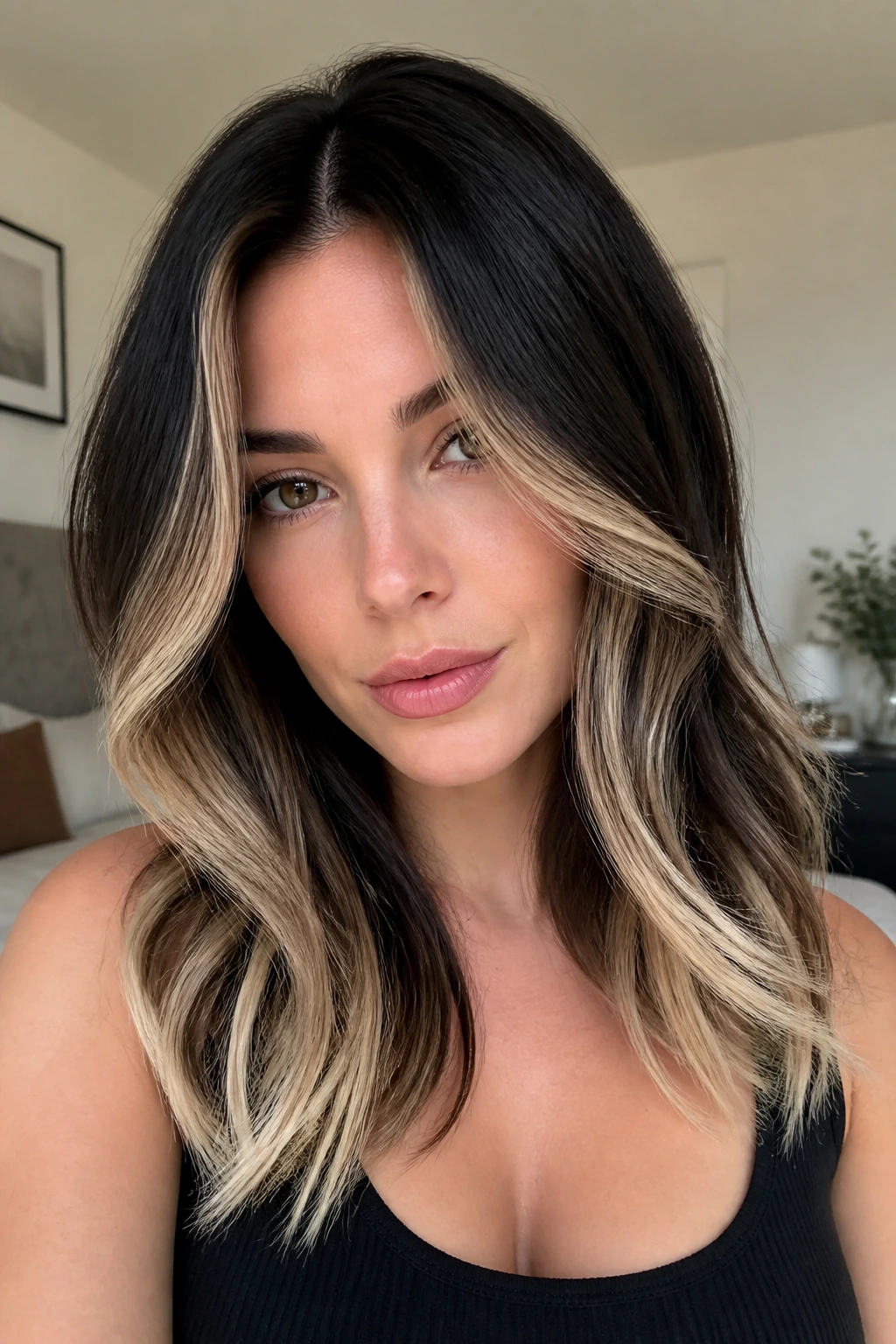
A lot of people think blonde is the point. It isn’t. Placement is the point. On dark hair, the same shade can look busy, sleek, expensive, or flat depending on whether it sits at the face frame, under the top layer, on the ends, or only in the braid line.
The haircut matters just as much. A blunt bob makes light pieces look graphic. A shag turns the same color into movement. Long layers spread the blonde out, while a pixie compresses it into a smaller, louder area. If you ignore the cut, the blonde usually looks pasted on. If you work with the cut, the color starts doing real visual work.
That’s why the most wearable blonde hairstyles for dark hair usually keep some darkness on purpose. The brunette base gives the blonde somewhere to belong. Without that shadow, the light pieces lose shape.
Essential Tools for Styling and Color Maintenance
- Tail comb: Clean parts and precise sectioning matter when the blonde is only in certain places.
- Color-safe shampoo: Keeps the blonde from fading too fast and stops the brunette base from looking rough.
- Purple or blue shampoo: Useful for cool blondes, but it should be used sparingly so the hair doesn’t go dull.
- Heat protectant spray: Non-negotiable before blow-drying, curling, or straightening the lightened pieces.
- 1-inch curling iron or wand: Good for shaping ribbons, money pieces, and layered cuts without making the blonde look stiff.
- Round brush: Helps face-framing highlights bend away from the face and catch light in motion.
- Sectioning clips: Make balayage touch-ups, blowouts, and braids easier to control.
- Diffuser: Useful for curly, wavy, and shaggy looks where the blonde needs texture to show.
- Lightweight serum or shine spray: Keeps the lightened strands from looking dry against the darker base.
- Bond-building mask: Helps hair that has been lifted stay smoother between salon visits.
Choosing the Right Blonde for Dark Hair
Dark bases ask for judgment. That’s the part nobody likes hearing, but it’s true. If your hair is a deep brown or near-black, lightening it all the way to a pale blonde can take several rounds and a lot of care. If you only want brightness around the face or through the ends, you can often get away with a gentler plan and keep the rest of the hair dark.
Tone choice changes the whole mood. Honey, caramel, and sand are friendlier to very dark hair because they sit in the warm zone that shows up cleanly after lift. Beige and ash work beautifully too, but they need careful toning or they can turn muddy. I usually tell people to think about the finish first: glossy and warm, or clean and cool. That decision makes the salon conversation much easier.
If you’re bringing inspiration photos, pick ones where the base level looks close to yours. A picture of pale blonde on medium brown hair is not a useful reference for black hair. Ask for a strand test if the color plan is dramatic. It saves both time and regret.
How to Wear These Looks in Real Life
Presentation: Keep the blonde where the haircut moves. That means the cheekbone on a money piece, the outer wave on balayage, the crown on a pixie, or the braid line on an updo. If the lighter pieces sit in dead areas, they look random.
Pairings: Small hoops, a clean neckline, and a side or center part can help the color read without competing with it. Big accessories can work too, but they should be chosen on purpose. A heavy collar and a loud face frame fight each other.
Contrast Level: If you want subtle, ask for a small amount of brightness — just enough to shift the cut. If you want obvious contrast, make the blonde larger in two or three places instead of scattering tiny bits everywhere. That gives the eye a path to follow.
Best Settings: These styles usually show best in daylight or under soft indoor light, but a good blowout or defined wave helps them hold shape in any room. Flat, dry hair tends to hide the work.
Extra Tips for Shine and Dimension
Tone First: If the blonde looks brassy, don’t reach for more bleach right away. A gloss or toner often fixes the problem better, especially when the light pieces are already lifted enough.
Texture Matters: Waves make ribbons easier to see. Straight styles make slices and veils easier to see. Curl patterns make halo placement and face-framing work hard. Style the hair to support the color, not the other way around.
Keep the Root Soft: A root shadow or melt makes blonde on dark hair look cleaner as it grows. Hard lines at the scalp are what make the style feel dated fastest.
Finish Lightly: Heavy oils can make the blonde look greasy and dull. Use just enough serum to calm the ends, then stop. The point is shine, not slip.
Make It Yours: Warm skin tones often look nice with honey, maple, and caramel. Cooler undertones can wear beige, pearl, and ash better. If that sounds too neat, ignore the rule and follow your eye — the better clue is which tones make the dark base look richer, not flatter.
Common Mistakes to Avoid with Blonde on Dark Hair
The first mistake is going too wide at the front. A huge face-framing block can look stripy, especially on very dark hair. Thin, controlled pieces usually age better and grow out cleaner.
The second is choosing the wrong tone for the base. Cool ash over a very warm brunette can go muddy. Warm gold over a blue-black base can look brassy if it isn’t toned well. The fix is simple: match the tone to the pigment in your starting color, not just to the inspiration photo.
Skipping maintenance is another one. Blonde pieces on dark hair can fade into orange or yellow faster than people expect, especially if heat styling is frequent. A gloss, a careful shampoo routine, and a heat protectant go a long way.
And please don’t flatten every style. Highlight placement is part of the haircut. If you blow everything straight down with no bend, the color loses its shape and the whole thing looks cheaper.
One more thing: purple shampoo is not a cure-all. Too much of it can leave light pieces dull or grayish. Use it like a tool, not a lifestyle.
Variations and Adaptations to Try
Honey Glow Route: Ask for warm honey and caramel ribbons focused from the cheekbone down. This keeps dark hair rich at the root and gives the ends a sunlit finish that grows out with less drama.
Barely-There Babylight Path: Choose ultra-fine highlights throughout the top layer only. The result is soft and expensive-looking, especially on straight or lightly waved hair, and it suits people who want a quieter change.
High-Contrast Money Piece: Go brighter at the front and keep the rest dark. This works when you want the blonde to show immediately but do not want full-head lightening.
Curly Halo Version: Place the lightest pieces around the perimeter and crown of curls or coils. The blonde shows when the hair expands and stays soft when the curl pattern tightens.
Peekaboo Panel Version: Hide the blonde under the top layers or through the nape. It’s a smart choice if you need the hair to read dark most of the time and bright only when it moves.
Cool Beige Refresh: If the hair tends to go orange, choose beige or pearl toner on the lightened sections. That keeps the contrast crisp and stops the blonde from drifting too yellow.
Keeping Blonde Pieces Bright Between Visits
For high-contrast money pieces or bright panels, a salon touch-up every 6 to 8 weeks is usually enough to keep the blonde crisp. Rooted balayage and softer ombré looks can stretch longer, often 10 to 12 weeks before they need a bigger refresh. A gloss in between can keep the tone clean without pushing the hair through more lightening.
Wash with color-safe shampoo two or three times a week if your hair tolerates it. If the blonde is cool-toned, use purple shampoo once every 1 to 2 weeks, not every wash. Overdoing it can make the light pieces look dusty and dry. On the other hand, if the blonde leans warm, a hydrating, sulfate-free shampoo is usually a better daily choice.
Heat protectant should go on every time you use hot tools. Every time. Keep the heat moderate, and if you notice the lighter pieces getting rough at the ends, cut back on straightening for a bit and lean on a gloss or mask instead. Blonde on dark hair looks best when the strand stays smooth enough to reflect light.
Sleeping on a satin pillowcase helps too. It cuts down on friction, which matters more than people think when the color lives in fine front pieces or delicate veils.
Questions People Ask Before Trying Blonde on Dark Hair
Can dark hair go blonde without bleaching everything?
Yes, and that’s often the smarter path. A money piece, balayage ribbons, peekaboo panels, or blonde ends can give you the contrast you want without lightening the whole head. The darker base stays intact, which helps the style grow out more cleanly.
What blonde shade looks best on very dark hair?
Honey, caramel, beige, and champagne usually sit well because they look intentional against deep brown or black hair. Ice blonde can work too, but it tends to need stronger lightening and more upkeep. If you want the safest first step, warm beige is usually the least fussy.
How do I keep blonde pieces from turning brassy?
Use color-safe shampoo, keep heat lower, and ask for toner or gloss appointments when the shade starts drifting yellow or orange. Purple shampoo can help, but it should not be the only fix. Brassy pieces usually need tone correction, not more washing.
Will these styles damage dark hair a lot?
Any lightening changes the hair structure, so yes, there is some stress involved. The amount depends on how much hair is lifted and how often it’s touched up. Smaller placements like money pieces or peekaboo strips usually cause less overall wear than full-head blonde.
Can curly or coily hair wear blonde moments well?
Absolutely. In fact, texture can make the color look richer because the curl pattern changes how the light lands. Halo placement, face-framing ribbons, and tip color all work well when they’re mapped to the curl shape.
How do I ask for this at the salon?
Bring clear photos and describe where you want the lightness, not only the shade. Say whether you want face-framing pieces, hidden panels, balayage ends, or an all-over dimensional look, then mention how much upkeep you’re willing to handle. That part matters more than most people think.
What if the blonde looks too strong after the appointment?
Give it a few days before panicking. Fresh toner, fresh blow-dry, and new-light-day brightness can make the color look louder than it will after one or two shampoos. If it still feels too sharp, ask for a softer gloss rather than reaching for box dye.
Can I keep my dark roots and still have blonde pieces?
Yes, and that’s one of the best ways to wear this look. A rooted base gives the color depth, makes grow-out easier, and stops the blonde from floating on top of the haircut. It’s especially useful if you don’t want constant touch-ups.
The Right Kind of Bright
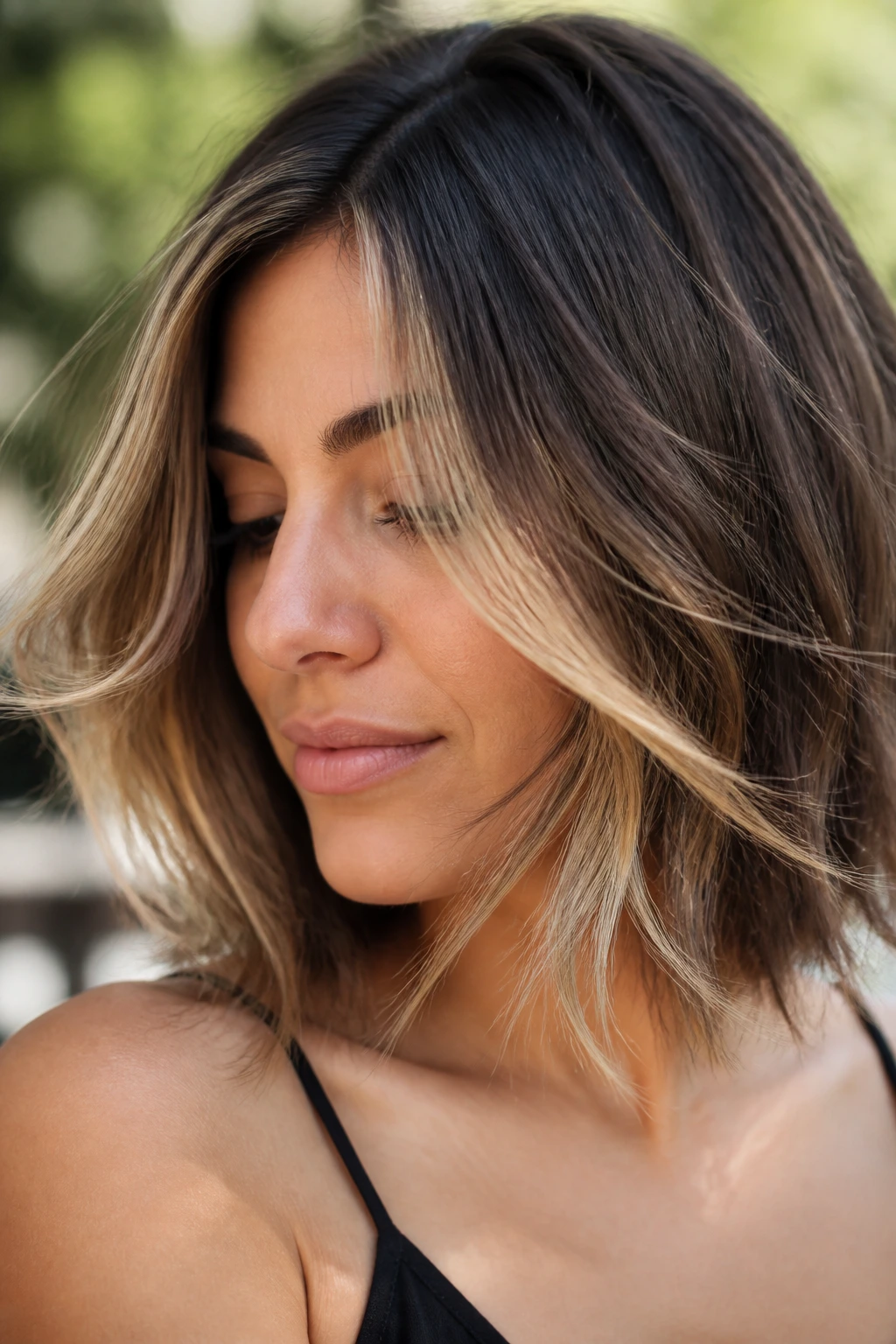
The strongest blonde moments on dark hair are never random. They’re placed where the haircut bends, where the face opens up, or where movement gives the light something to catch. That’s why a narrow money piece can look smarter than a whole head of bright foil, and why a rooted balayage often ages better than a perfect sheet of pale blonde.
What I like most about these styles is their range. You can go soft and whispery, or sharp and graphic, or somewhere in between where the blonde only shows when the hair moves. Dark hair doesn’t need to surrender its depth to make that happen. It just needs the right pieces in the right place.
Pick the version that matches your haircut, your upkeep, and your tolerance for contrast. The good ones tend to look better, not louder, every time you wear them.