



Loose curls can make long hair look expensive in the best way — or they can turn every layer into a puffy shelf. The sweet spot for medium layered haircuts for long hair with loose curls is narrower than most people think: enough shape to stop the ends from dragging, enough length to keep the silhouette full, and enough face-framing to make the whole cut feel deliberate instead of accidental.
That balance matters because loose curls behave differently from tight ringlets. A 1.25-inch wand, a large hot roller, or naturally soft bends will show every layer line, every blunt edge, every place where the cut was taken too high. Cut it well, and the hair sways. Cut it badly, and the front pieces vanish into the rest of it. Ugly little problem. Very common one.
My bias is plain: I like layers that move when you turn your head, not layers that look chopped just for the sake of it. The best versions here keep some weight at the perimeter, let the curls fall in ribbons, and give you shape even on day two when the curl has relaxed and the crown has gone a little softer. That’s the kind of cut people keep reaching for in selfies and in mirrors, which is usually a good sign.
Why These Cuts Earn Their Place
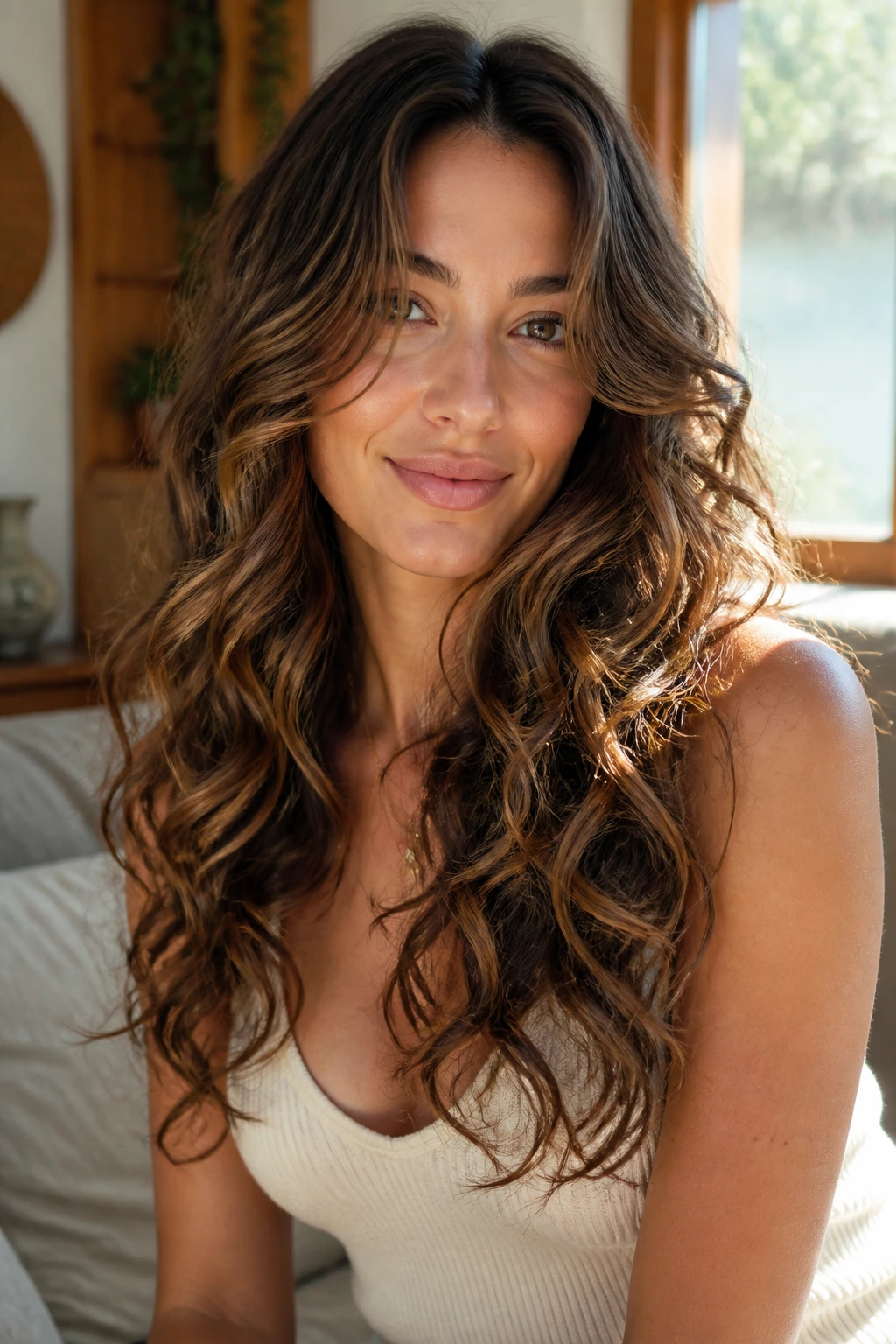
- They keep long hair from collapsing: Medium layers remove enough bulk to show curl pattern without stripping away the length that makes long hair feel lush.
- They make loose curls read clearly: A soft bend needs a little structure behind it, or the curl can look like a wave that forgot where it was going.
- They frame the face instead of hiding it: When the shortest pieces land around the cheekbone, jaw, or collarbone, the eyes and cheekbones get a cleaner outline.
- They grow out better than short choppy layers: The shape changes slowly, so you can stretch the time between trims without the haircut looking sloppy.
- They work with heat styling and natural texture: You can curl, air-dry, diffuse, or rough-dry and still keep the same basic outline.
- They make thick hair feel lighter without looking thinned out: The right layer placement takes out the drag, not the body.
1. Collarbone Cascade Layers
This is the cut I reach for when long hair feels like one heavy curtain. The shortest layers hover around the collarbone, then fall through the mid-lengths in a soft cascade, which keeps loose curls from stacking up into a triangle. The ends still hold enough weight to look full, and that matters more than most people think.
Why it behaves so well
- The layer break starts low enough that the curl pattern stays visible.
- The perimeter keeps a clean edge, so the style doesn’t look wispy.
- Loose curls fall in overlapping pieces instead of one dense block.
Pro tip: Ask for the front pieces to stay a little longer than the back if your hair blooms in humidity. That tiny adjustment keeps the shape neat without making the cut feel stiff.
2. Butterfly Layers with a Soft Face Frame
If loose curls are making the top half of your hair feel flat, the butterfly cut is the one that wakes it up fastest. The whole point is shorter face-framing layers that sit high enough to create lift, with the long length preserved underneath. On long hair, that gives you motion around the face without giving up the dramatic sweep in back.
It works especially well when the curls are loose and brushed out a little. Tight curls can hide the butterfly shape; a broad bend shows it off cleanly. I also like it on hair that falls flat at the crown, because those shorter upper pieces bounce before the ends even start moving.
Wear it with a middle part if you want that airy, split-open look. Wear it with a slight off-center part if you want the front to drape a little closer to the cheekbones.
3. Rounded U-Shape Layers
Why does a U-shape look so much softer than a hard V on loose curls? Because the perimeter follows the curve of the curl instead of fighting it. The bottom line is simple: the haircut feels fuller at the ends, while the layers keep the body from turning boxy.
How to use it
When the layers begin at the cheekbone or just below, the hair falls in a round frame instead of a pointed one. That makes it especially nice for people who like their curls big but not busy. If you air-dry, the shape reads even better because the hair settles into that rounded line on its own. If you heat-style, keep the ends slightly softer so the U doesn’t turn into a sharp point.
4. V-Cut Layers with Tapered Ends
I’ve seen this cut rescue long hair that looked heavy from the front and like a blanket from the back. The V shape gives the length a little drama, while tapered layers stop the back from looking like a single thick slab. Loose curls make the V feel more relaxed than severe, which is why it works better here than on pin-straight hair.
The key is restraint. A good V-cut on long curls should still feel movable, not razor sharp. If the point in back drops too low or the front layers start too high, the cut can tip into mullet territory fast. Nobody needs that surprise.
- Best on thick hair that hangs heavily.
- Good if you like length but want the outline to read from behind.
- Strong choice when you wear your hair half-up a lot.
The silhouette is clean. That’s the appeal.
5. Curtain Bang Layers
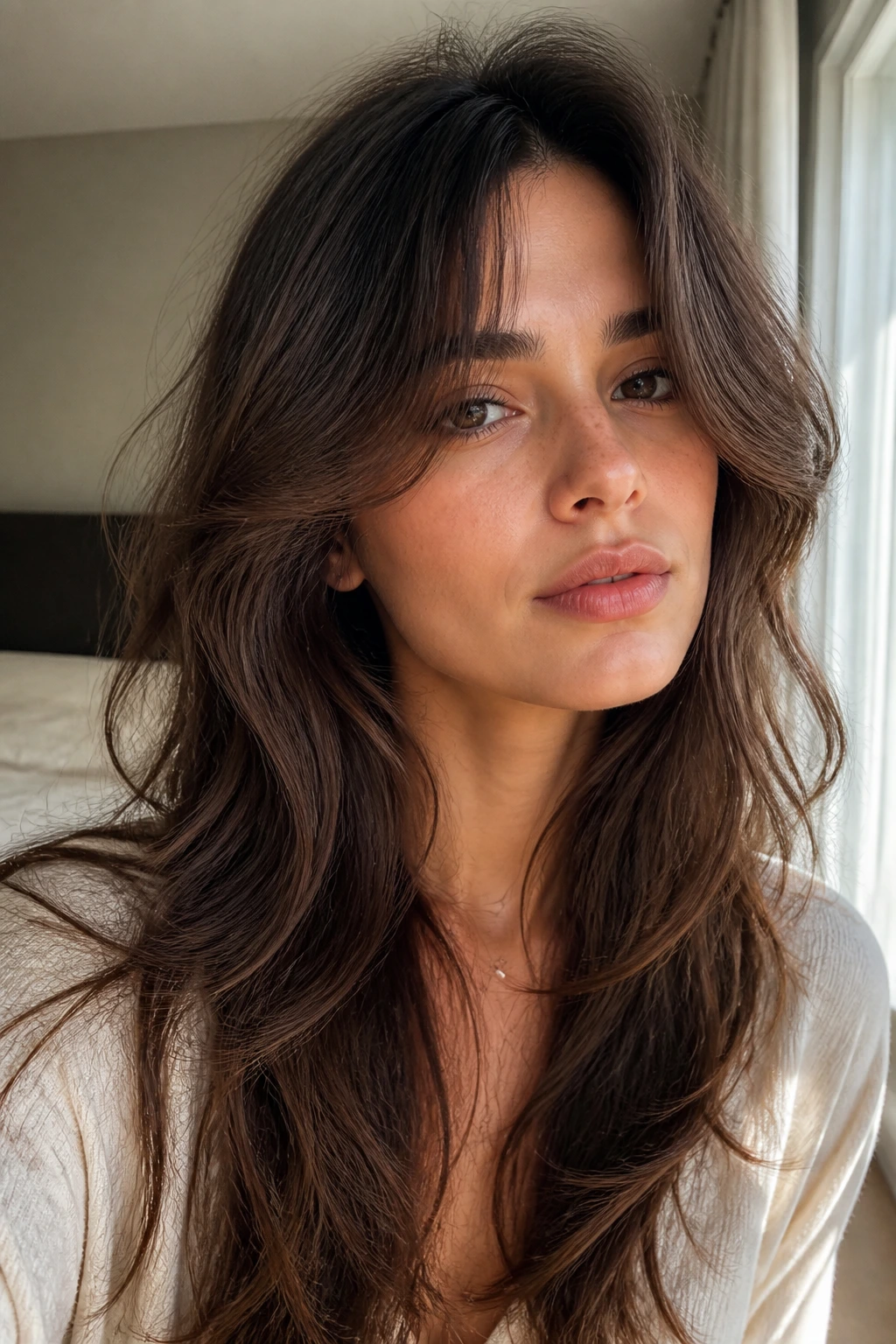
Curtain bangs are one of those cuts that sound delicate and end up doing a lot of work. On long hair with loose curls, they part at the center, skim the cheekbones, and melt into the first layer without making the front look chopped. The result is a frame that feels soft, not fussy.
I like curtain bang layers when the forehead needs breaking up a little or when the front of the hair disappears into the rest of the length. Loose curls help because the bend gives the bangs a small arc as they fall. That arc is the whole trick. It keeps the face from getting swallowed by one long sheet of hair.
They’re also forgiving. If you decide you miss the bangs, they usually grow into face-framing pieces without a weird stage in between.
6. Cheekbone-Start Face-Framing Layers
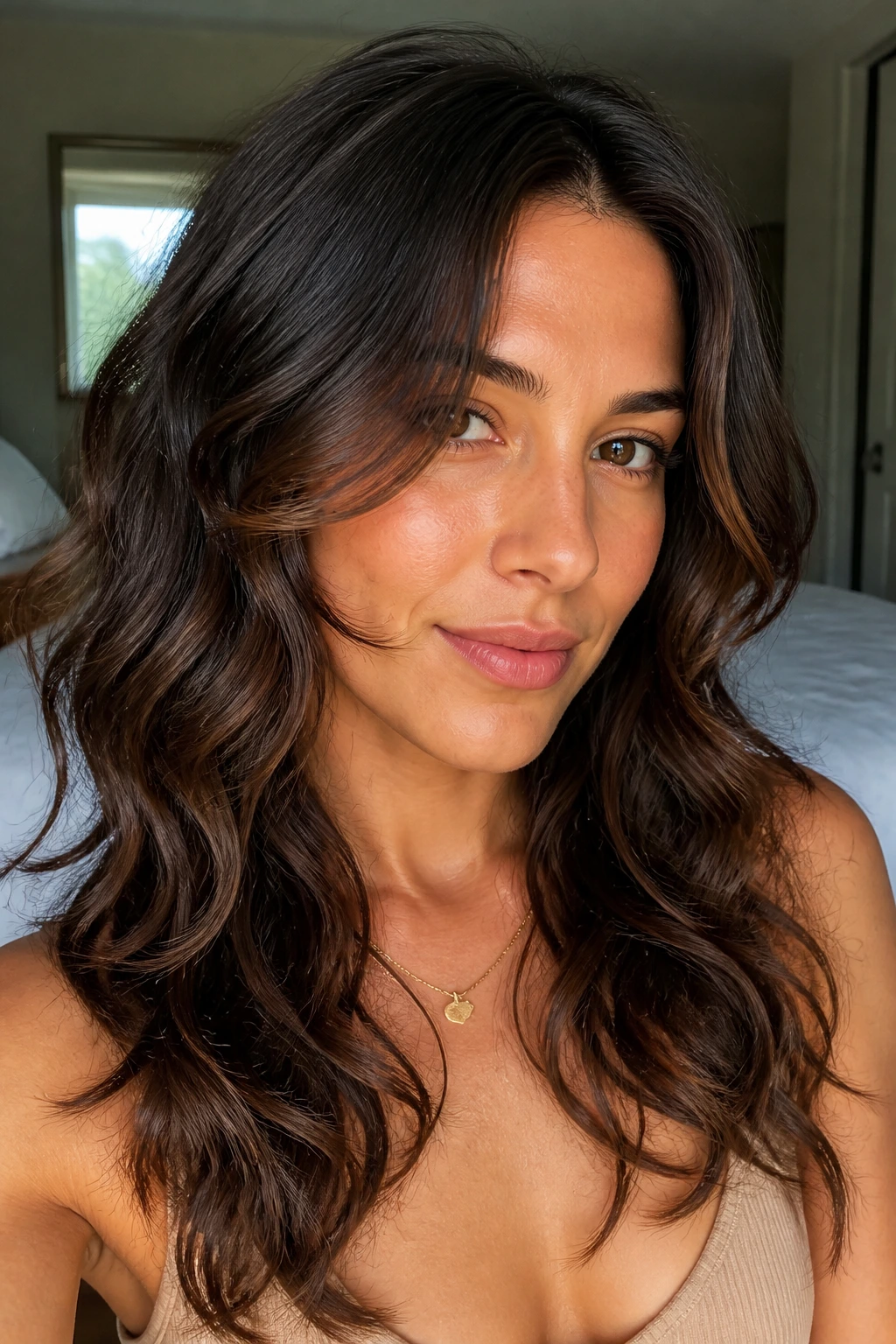
This is the cut that makes the eyes come first. The shortest face-framing pieces start around the cheekbone, then blend downward in a way that feels clean and intentional. On loose curls, that placement creates a soft outline right where the face needs it most.
It’s a smart choice if your jawline feels heavier than you want or if your long hair tends to sit flat beside the cheeks. The curl lifts the layer just enough to make the shape visible. Too high, and the cut looks choppy. Too low, and the frame disappears into the rest of the length.
Best if you want:
- A visible frame without curtain bangs.
- A cut that works with a middle part.
- Shape that still looks good when the hair is tied back.
The styling note is easy: keep the front pieces slightly looser than the rest. That soft drop around the cheekbone is what gives the cut its polish.
7. Invisible Internal Layers
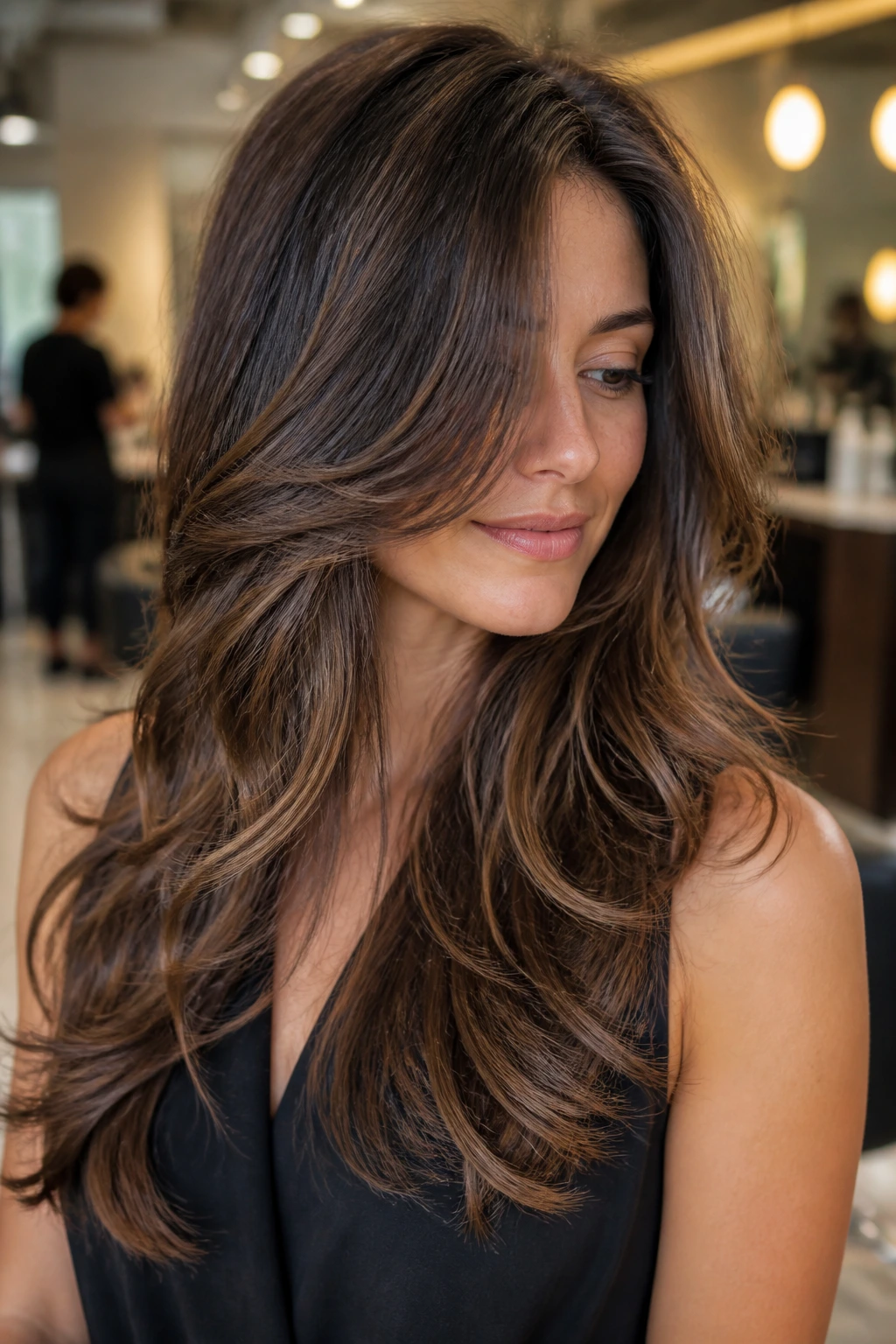
Hidden layers are the quiet ones. No obvious staircase. No choppy edge. Just weight removed from the inside so the outside still looks long and smooth. On loose curls, that matters because the bend already creates enough visual texture; you don’t need the haircut shouting over it.
This is the version I’d pick for someone who loves length but hates seeing separate steps in the mirror. The shape keeps the body, especially around the crown and mid-back sections, while the perimeter stays full. Fine hair can benefit from this too, as long as the stylist keeps the removal light.
If you want movement without a visible “layered haircut” look, this is the move. It’s subtle. That’s the point.
8. Feathered Mid-Length Layers
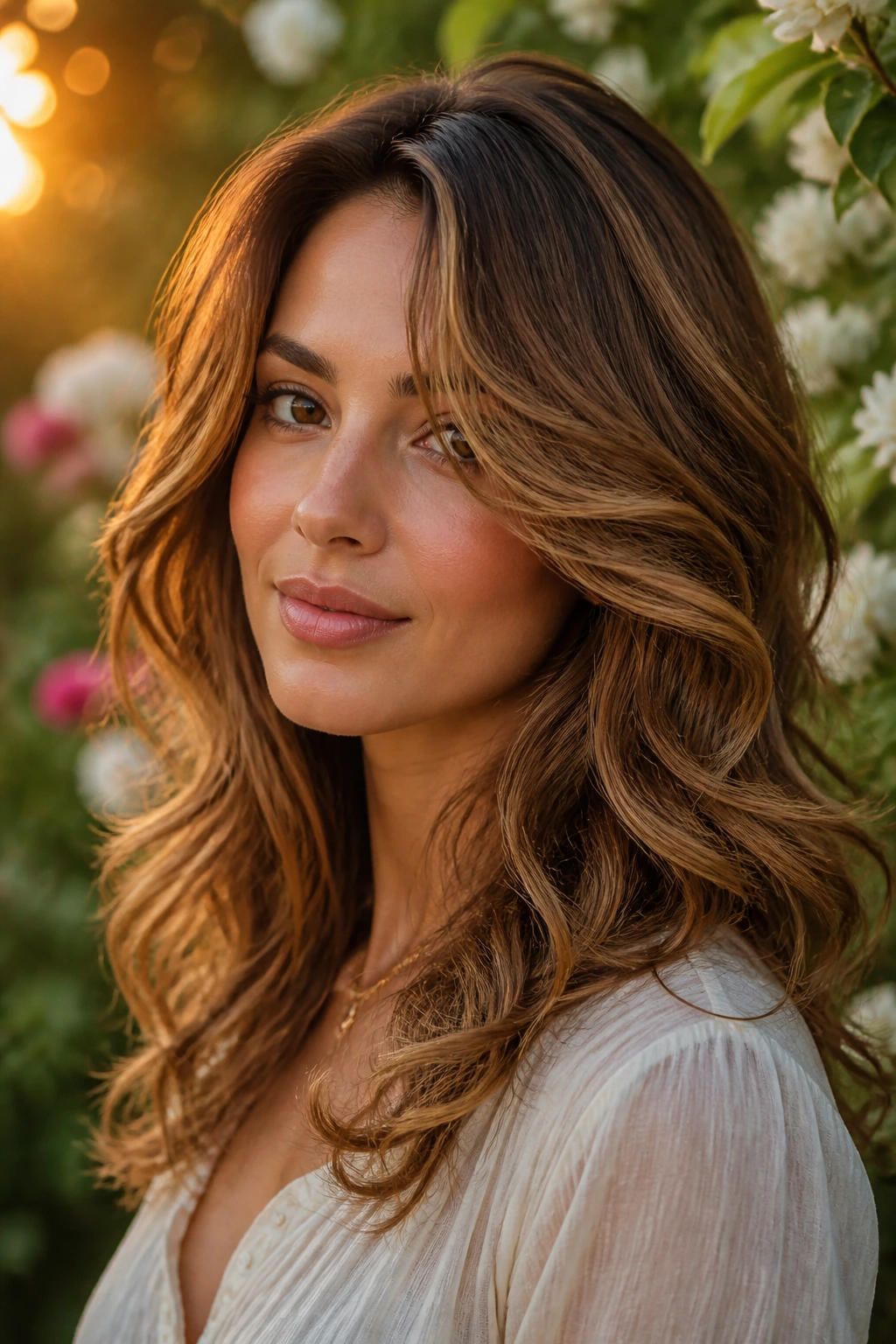
Feathering through the mid-lengths gives loose curls a softer, more brushed-out feel. The ends don’t pile up, and the layers don’t look carved. Instead, the hair moves like it was lightened from the inside out.
This cut makes me think of hair that has been styled with a big round brush and then lightly broken up with fingers. It’s not crunchy. It’s not piecey. It’s airy, and that’s a nice change when long hair starts to feel too solid.
Feathered layers work especially well if your curls tend to clump in a good way. They also pair nicely with a side part, because the feathering lets the front sections sweep without sticking out.
9. Soft Shag with a Grown-Out Fringe
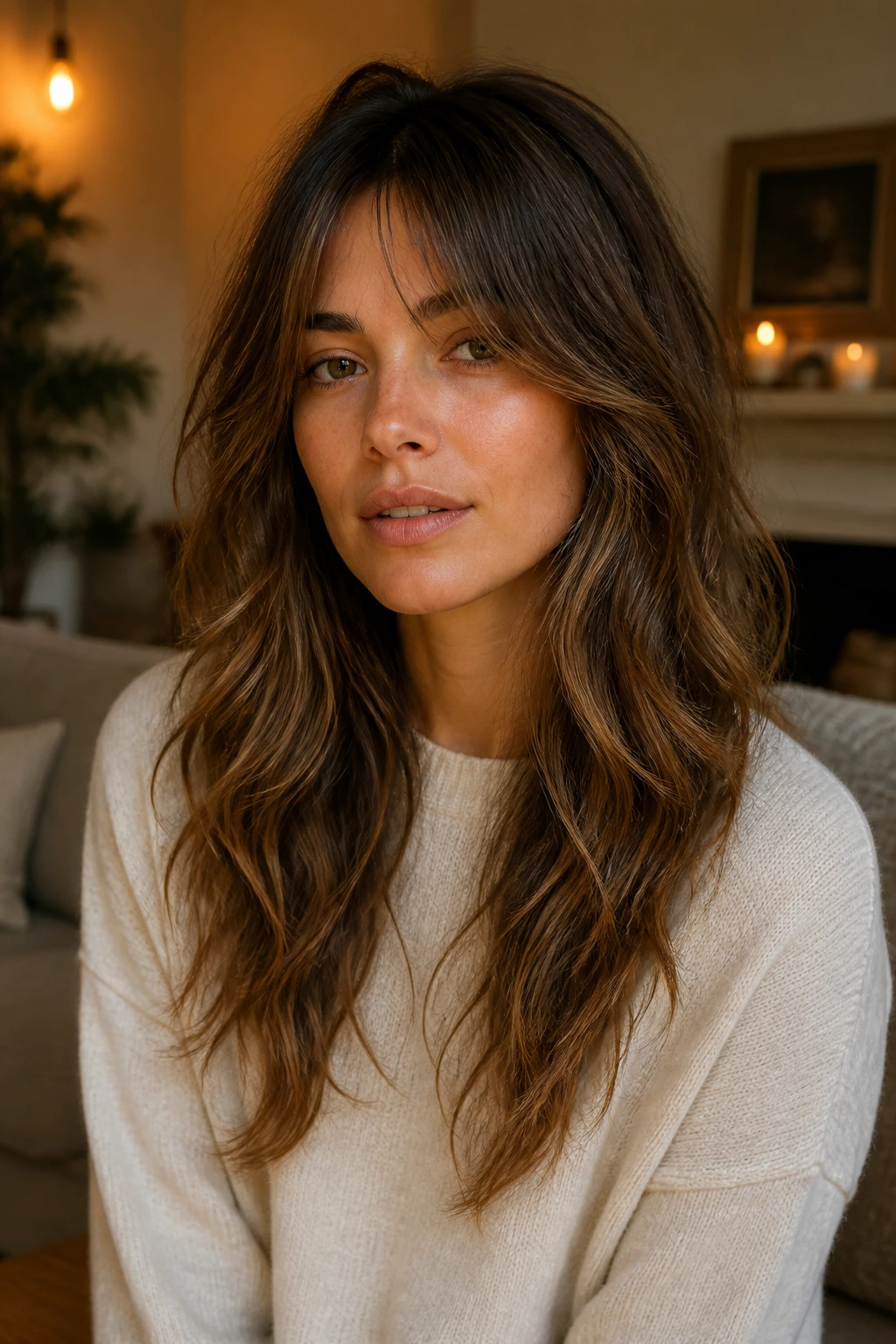
A soft shag on long hair is a little more casual, a little less polished, and a lot more forgiving when the curls are loose. The fringe hangs longer than a classic shag fringe, so it doesn’t scream retro unless you want it to. The mid-length layers break up the bulk, and the whole cut gets a lived-in shape fast.
That grown-out fringe is doing a lot of work here. It keeps the top from lying flat, but it doesn’t chop the face into pieces. On a loose curl pattern, it almost melts into the rest of the hair, which is exactly why I like it. The cut looks better when it’s slightly undone.
If your hair gets frizzy at the ends, keep the layering soft and avoid over-thinning. Shags can go from cool to fuzzy fast.
10. Bottleneck Bang Layers
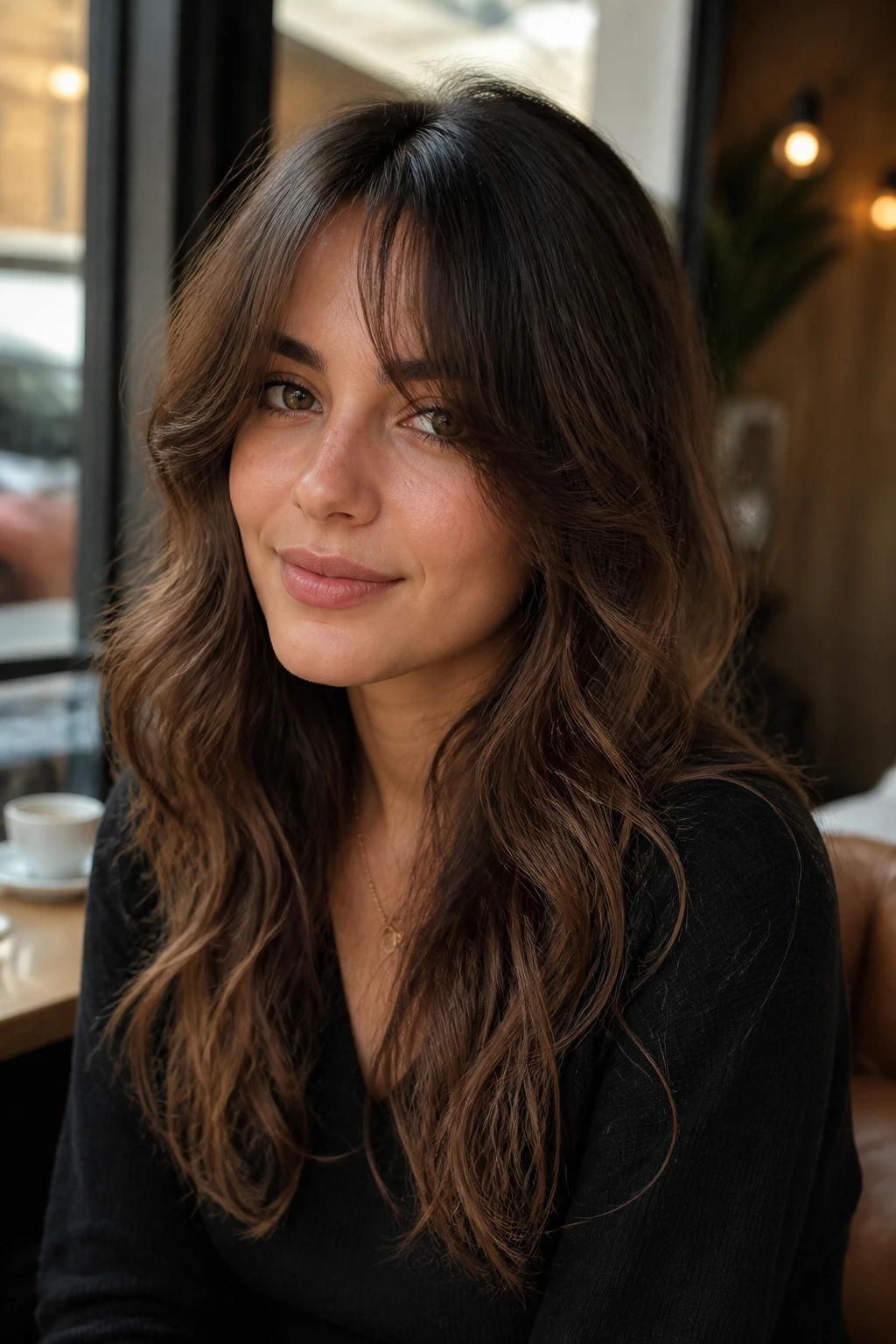
Bottleneck bangs are like curtain bangs’ sharper, more sculpted cousin. They start narrow at the center, open near the brows, then slide into the face-framing layers around the cheekbone. On long hair with loose curls, that shape gives the front of the haircut a little more architecture.
The reason it works is the balance. You get the openness of curtain bangs, but the curve is tighter and more defined. That matters if you want the eyes framed without losing too much forehead space. Loose curls soften the whole thing so it never feels severe.
This cut fits people who like a little edge but don’t want to live in a high-maintenance fringe. The grow-out is gentler than it looks.
11. Deep Side-Part Layers
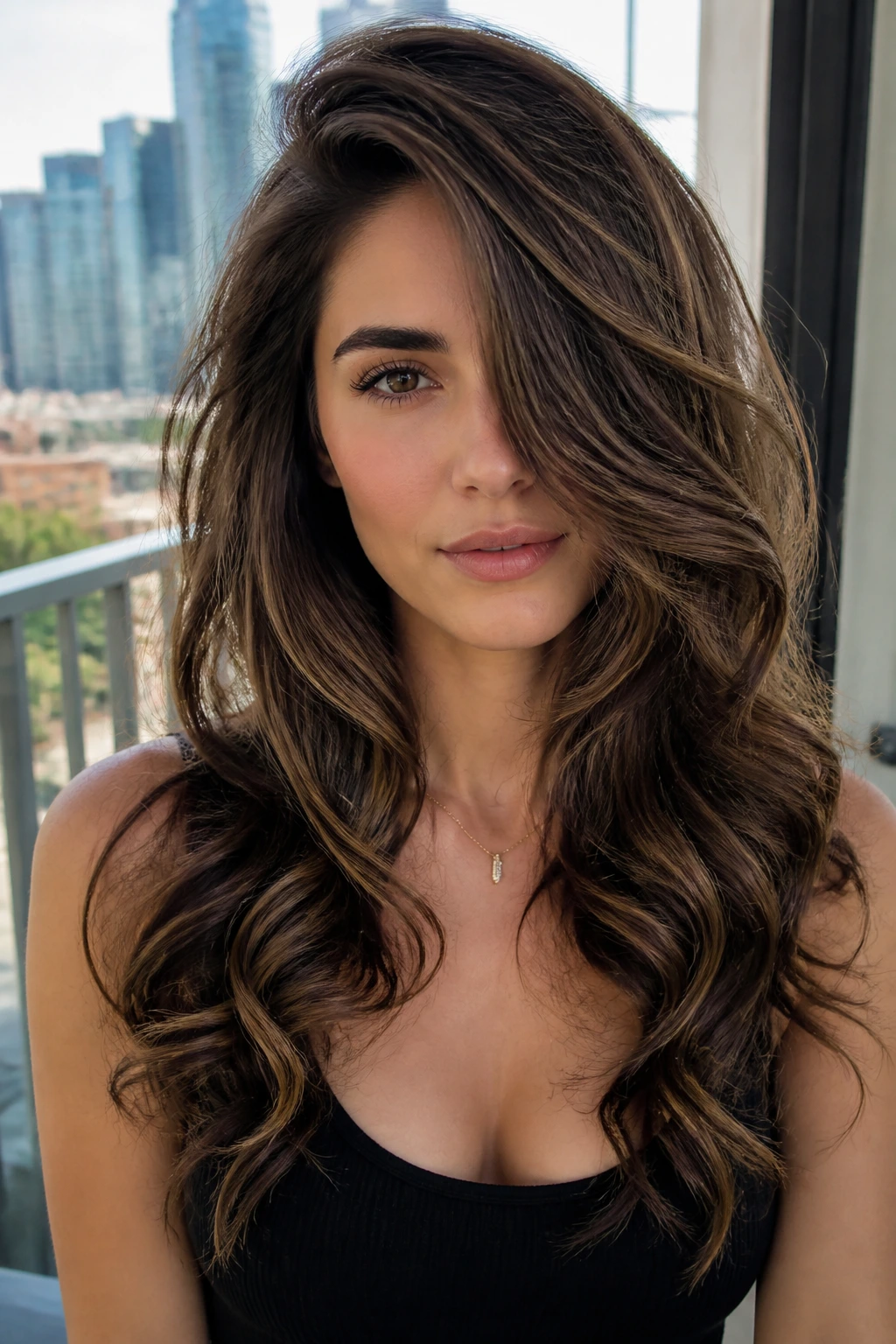
A deep side part can change a haircut more than another inch of length ever will. It shifts the volume, makes the crown look fuller, and lets the longest layers sweep across the face instead of hanging straight down. With loose curls, that side movement becomes part of the style.
This is one of my favorite fixes for hair that feels too symmetrical. A center part can make long curls look flat if the cut is too even. A deep side part breaks that up and gives the layers a diagonal line, which is usually more flattering than people expect.
The result is slightly glam, slightly casual, and very easy to wear on second-day hair. If the roots are a little flat, flip the part, mist the crown with water, and let it dry in place.
12. Airy Layers for Fine Hair
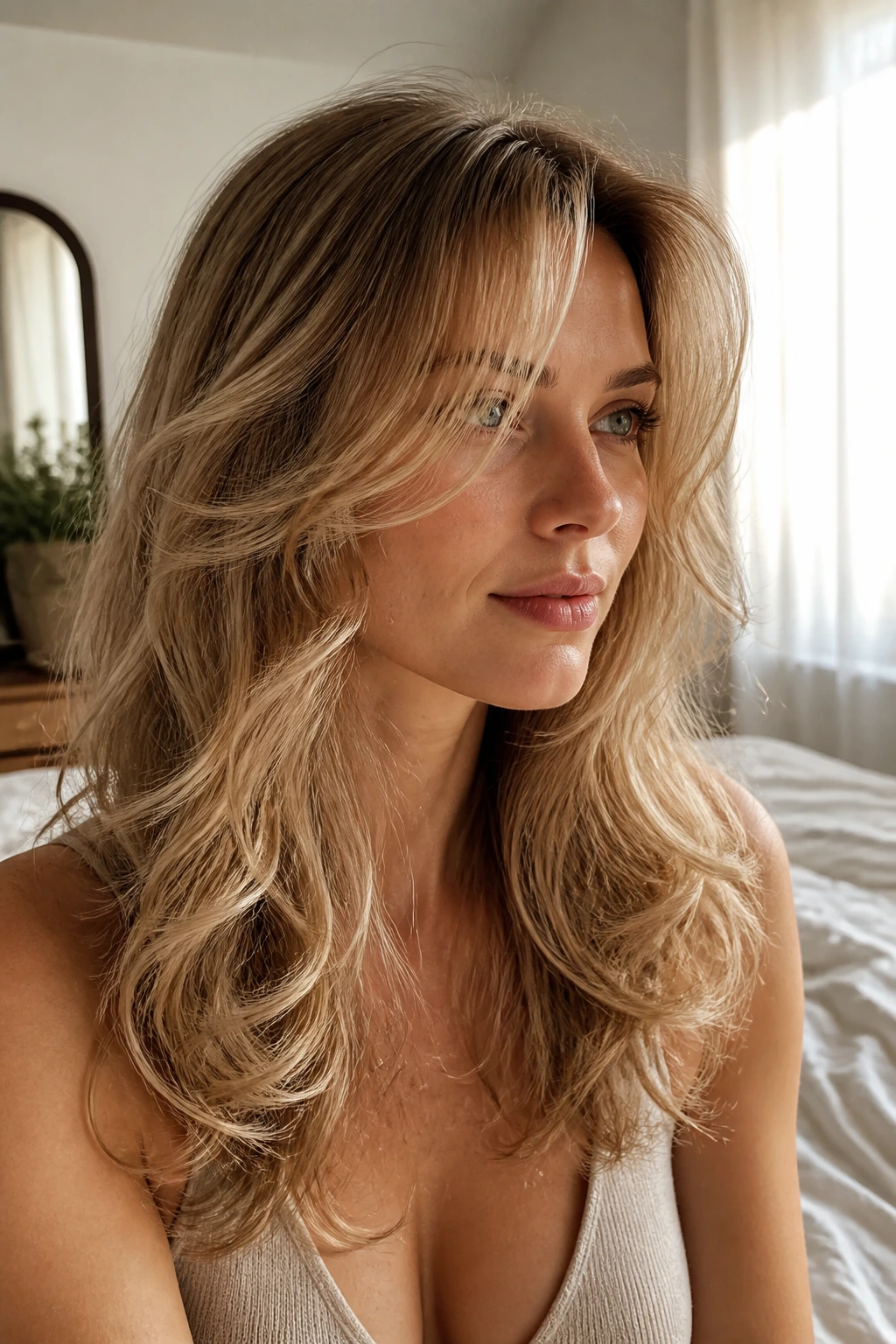
Fine hair needs restraint, not a hundred tiny layers. The best version of this cut keeps the length, removes only a little weight, and uses soft face framing to make the hair move without looking sparse. On loose curls, that means the hair gets shape while still keeping enough fullness through the ends.
This is where people get nervous, and fairly so. Too many layers on fine hair can make the ends look see-through. The safer move is to start the shortest pieces lower, keep the interior layering light, and rely on curl styling for the movement. A 1.25-inch wand or large foam rollers can do a lot of the visual work here.
If your hair is fine but dense at the crown, this cut can keep the top from collapsing without turning the bottom wispy.
13. Thick-Hair Taper Layers
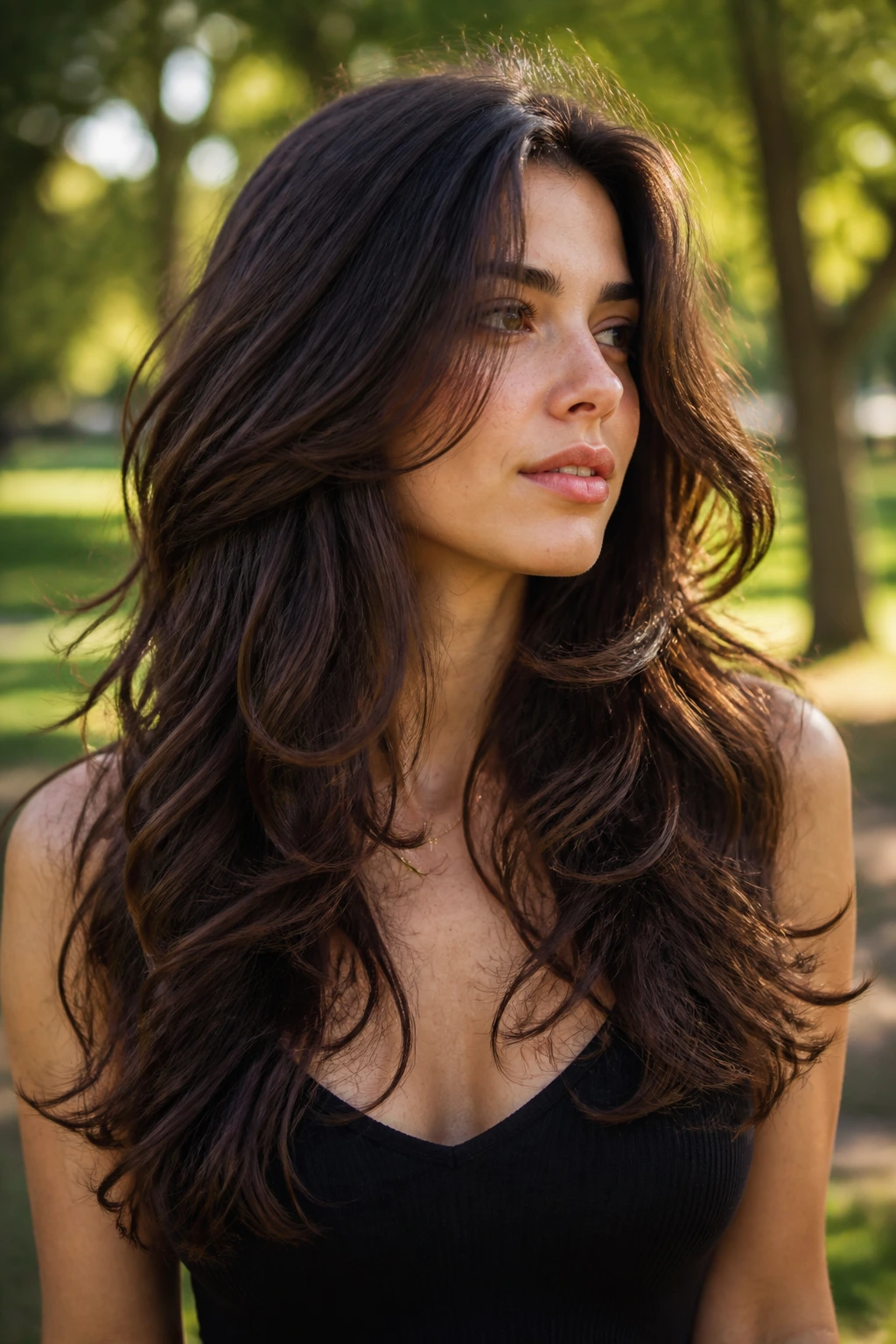
Thick hair wants to spread out. That’s the problem and the gift. Tapered layers help by taking weight out of the places that create bulk — mostly through the mid-lengths and under layers — while leaving the perimeter full enough to hold the curl shape.
The trick is not to overdo it with thinning. If a stylist goes wild with texture shears, thick hair can frizz and puff in the wrong places. A smarter taper keeps the haircut smooth on the outside and lighter in the middle. Loose curls show that difference immediately. You’ll feel it in how the hair hangs.
This cut suits long hair that gets triangular by noon. It also cuts drying time a bit, which is a nice bonus when there’s a lot of hair to manage.
14. Razored Soft-Edge Layers
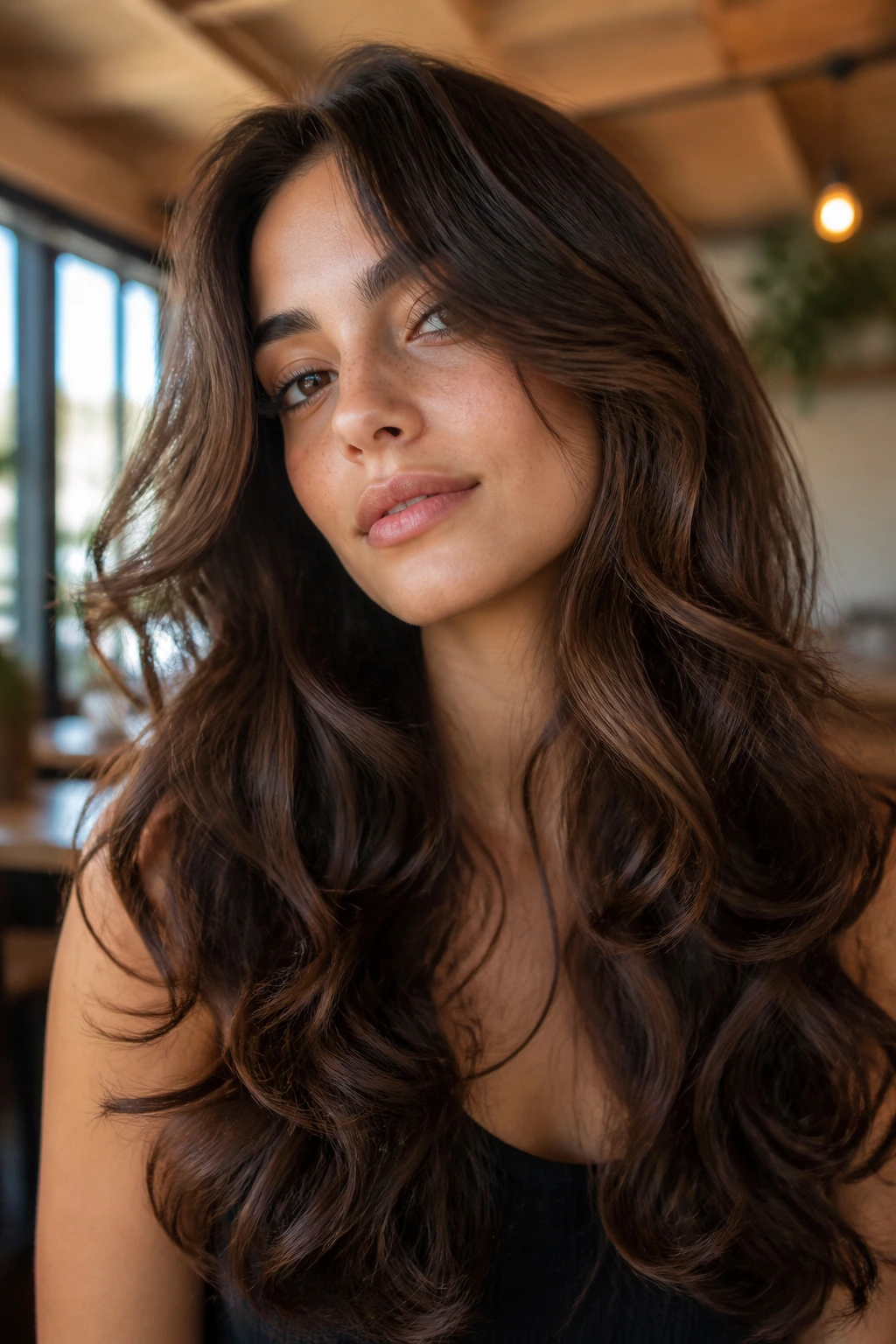
Can a razor cut work on loose curls? Yes — if it’s done gently and the hair can handle a little edge. Razored layers soften the ends, create a piecey finish, and keep the cut from feeling blocky. On long hair, that can be a lovely thing.
The danger is overdoing it. Heavy razor work on dry, frizzy hair can make the ends look tired fast. The good version keeps the slices subtle and the outline smooth. You want movement, not shredded strands. Loose curls help because they blur the cut edge a bit, which makes the finish look softer in motion than it does in a straight blow-dry.
This is a strong choice for hair that already has texture and doesn’t need much help moving.
15. Long Face-Framing Ribbon Layers
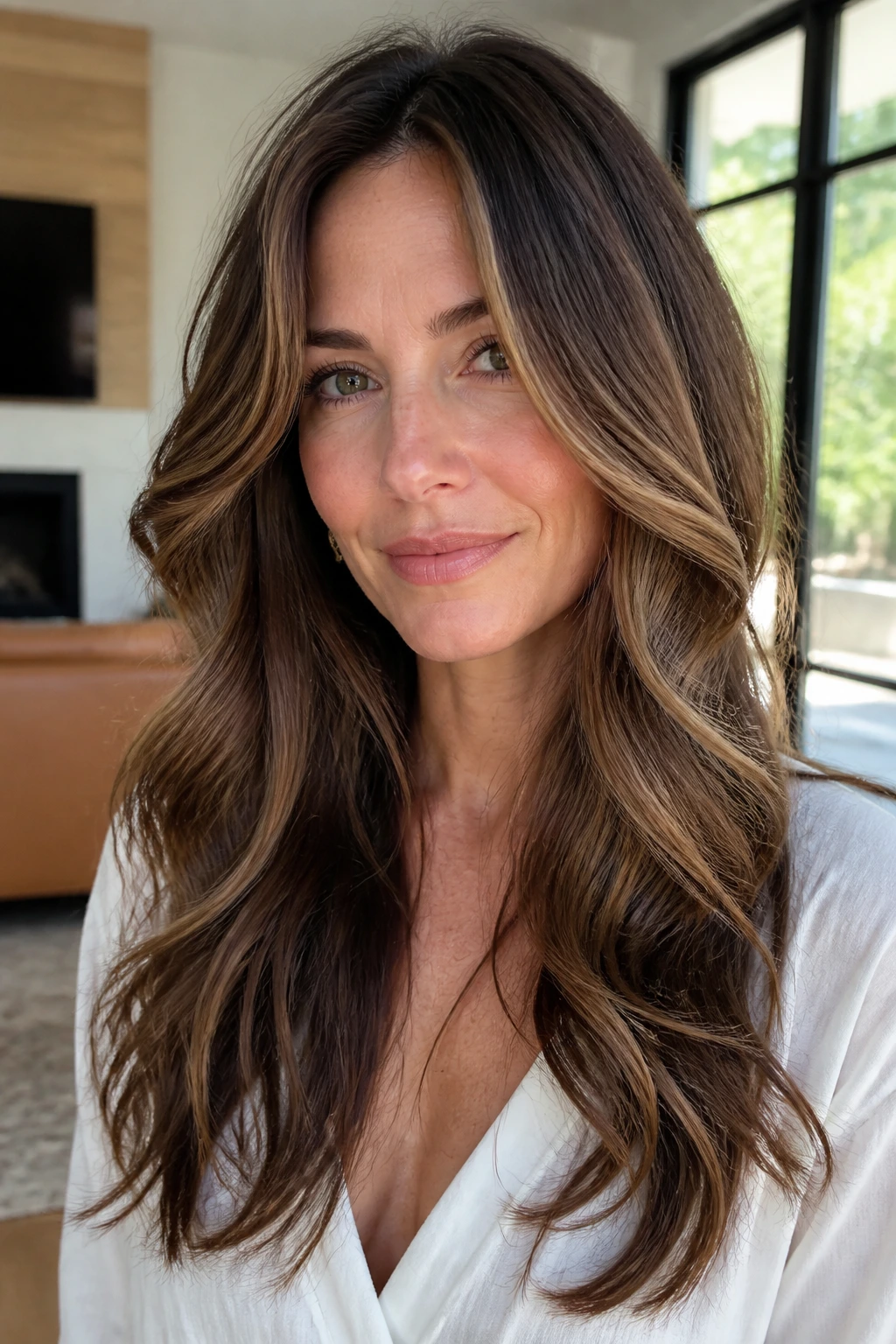
Some cuts are about perimeter. This one is about the front. Long ribbon layers start around the chin or mouth, then fall in wide, soft sections that curl into long loops around the face. They don’t chop the length; they create a frame that looks like it was meant to be there all along.
I like this on hair that’s already pretty, but too monotone. The ribbon layers pull the eye forward and give the face a little outline without shrinking the overall length. Loose curls make the ribbons read as soft bends instead of hard steps, which is exactly what keeps the cut elegant rather than busy.
If you want a haircut that still looks good pinned half-up, this one earns its keep.
16. Long Wolf-Cut Lite
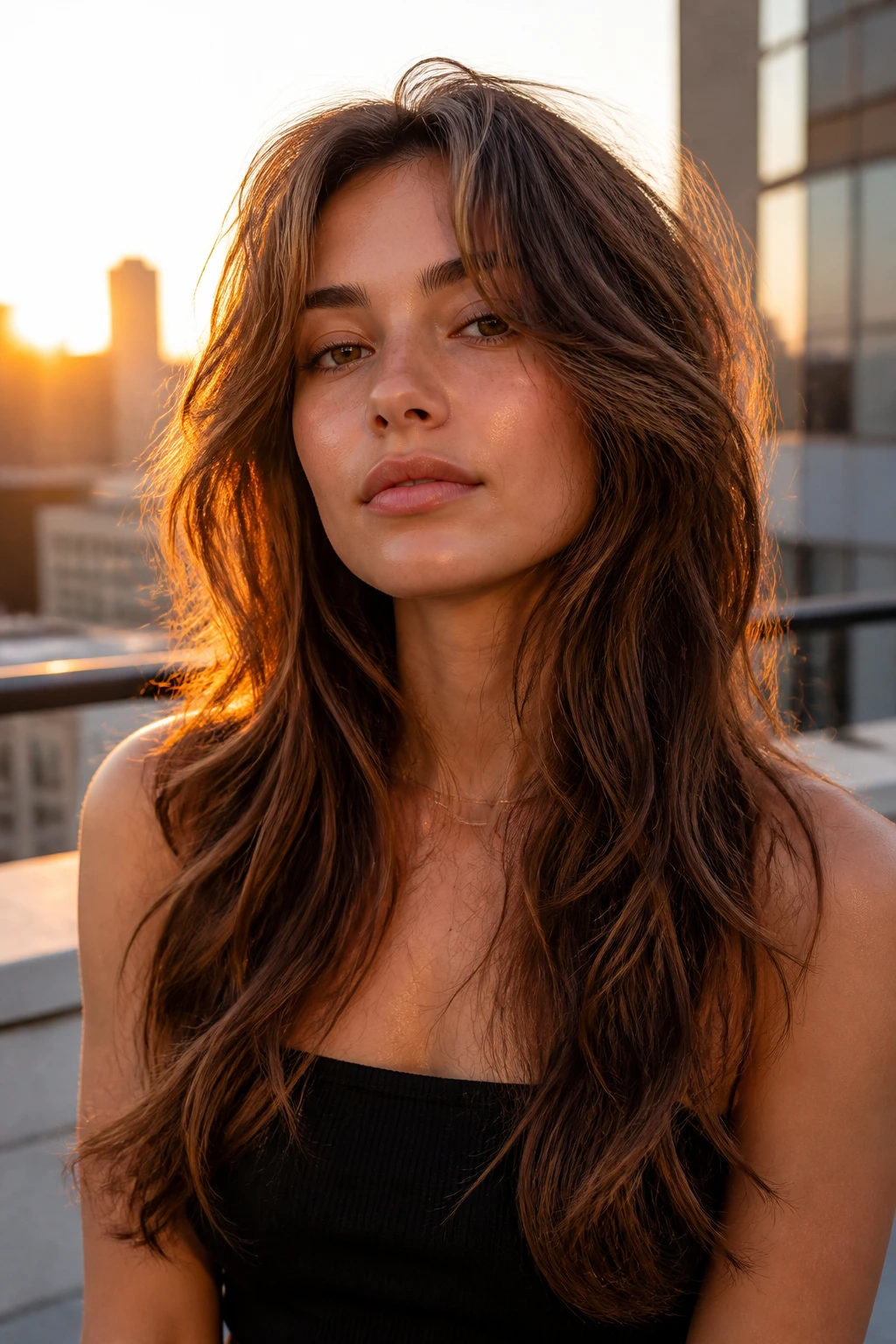
The full wolf cut can be a lot. This lighter version keeps the shaggy energy, trims back the extreme contrast, and leaves the long length in place. On loose curls, that means movement at the top without the whole cut turning into a mullet-shaped argument.
This is the style for someone who wants edge but still wants to recognize their own hair in the mirror. The crown gets some lift, the middle gets broken up, and the ends keep enough weight to stay pretty. That balance is the whole game. If the curl pattern is soft, the shape looks cool and approachable, not punk.
It’s also one of the better choices if you style your hair messy on purpose. It forgives a lot.
17. C-Curve Layers
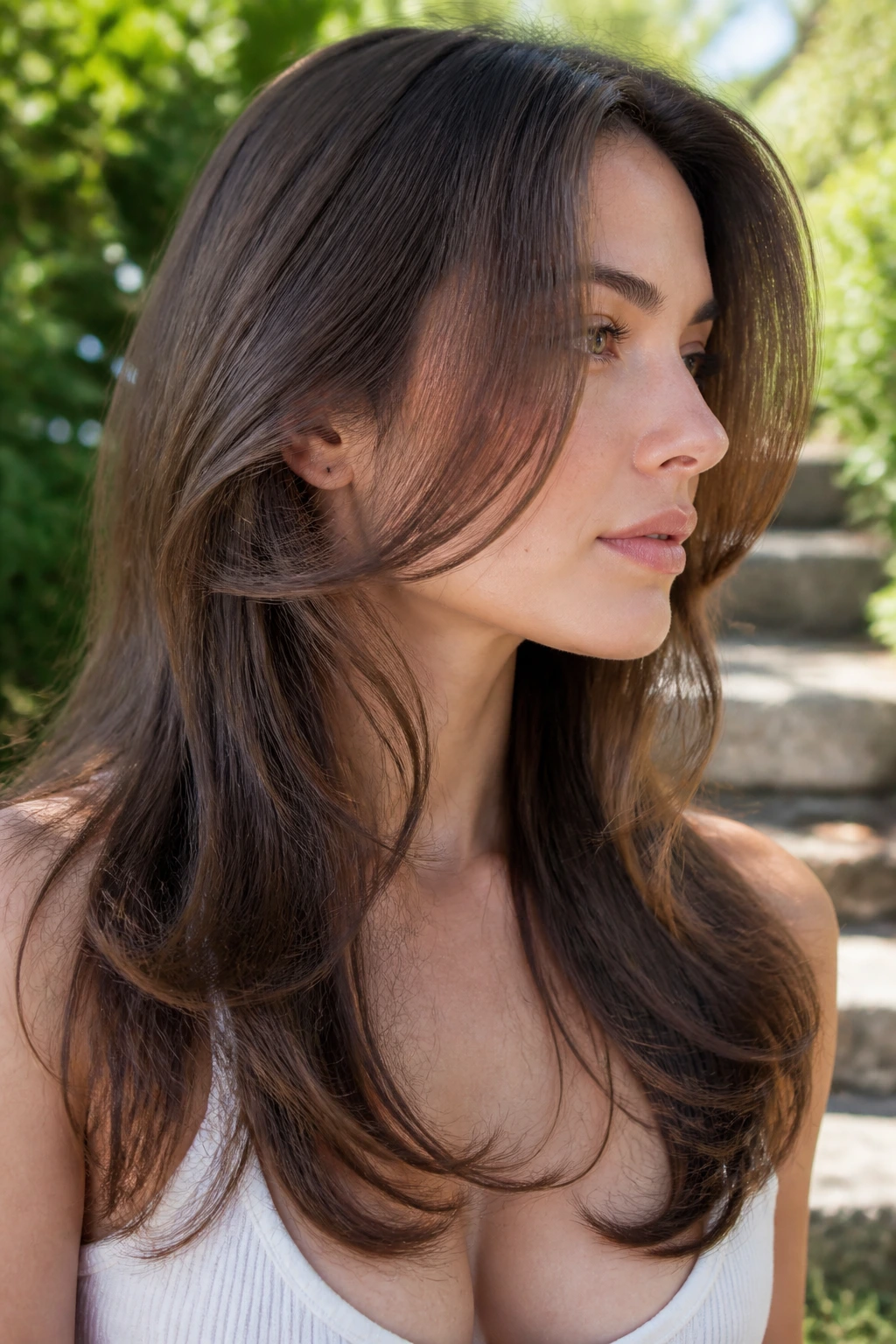
C-curve layers bend around the face in a soft arc, usually starting near the cheekbone and turning toward the jaw. On loose curls, that shape is especially pretty because the curl reinforces the curve instead of fighting it. You get softness at the front and flow through the length.
This cut feels cleaner than a shag and more sculpted than simple long layers. It’s a nice middle ground for people who want something visible but not dramatic. The curve also helps the face look a little more lifted, especially when the hair is tucked behind one ear.
When I see this cut done well, the front pieces look like they belong in the haircut rather than sitting on top of it.
18. Hollowed-Out Volume Layers
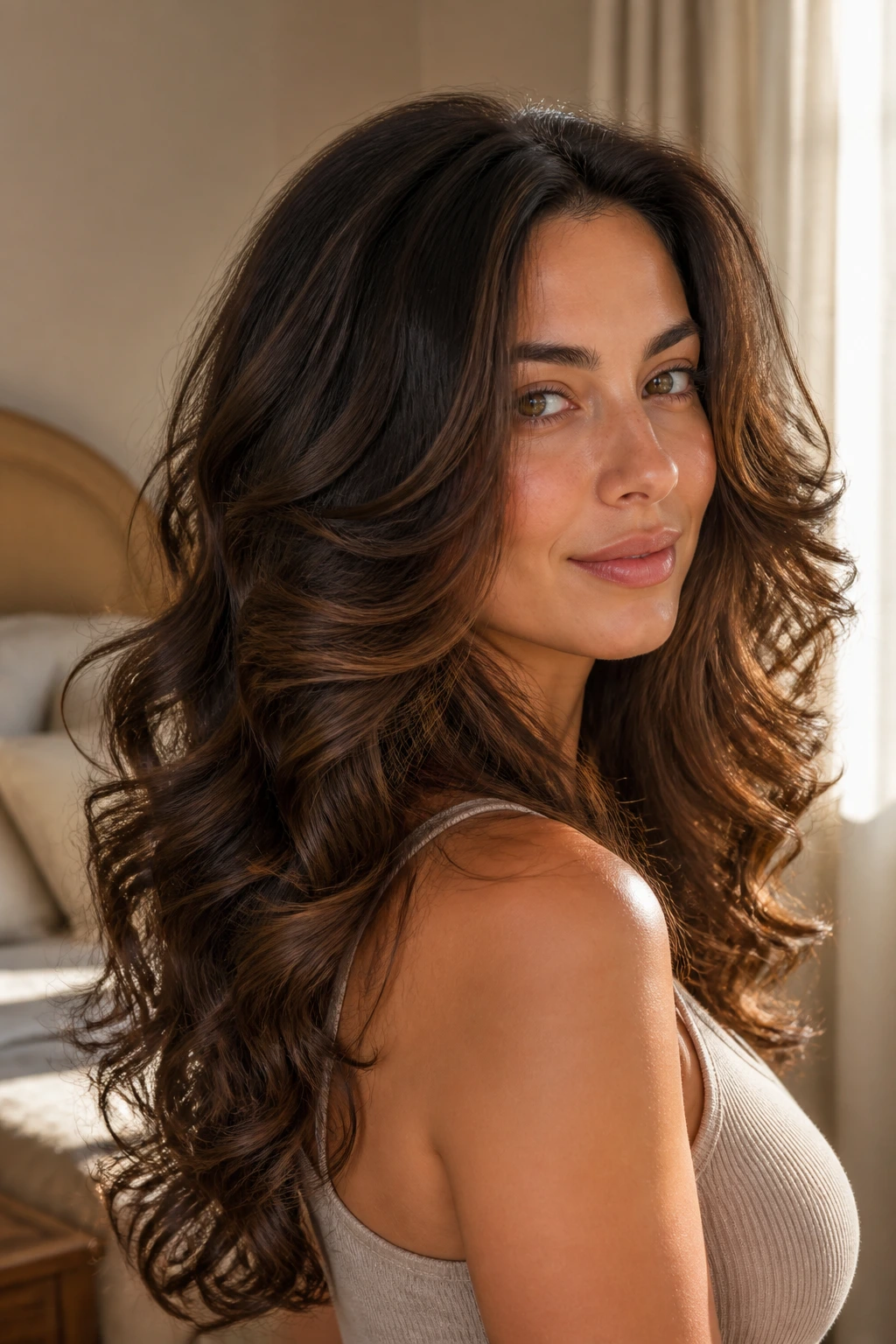
This cut takes the bulk out of the interior, not the outline. That’s the whole reason it works on thick, loose-curled hair that tends to balloon at the sides. The outside still looks full and healthy, but the inside has enough space to let the curls sit one over another instead of standing out like shelves.
It’s a smart move if your hair takes forever to dry. Less internal weight means the bends settle faster. It also keeps the ends from turning into one heavy line. People sometimes think they need shorter layers to solve the problem, but often they need better weight distribution instead.
The shape stays broad. It just breathes a little.
19. Chin-to-Collarbone Frame Layers
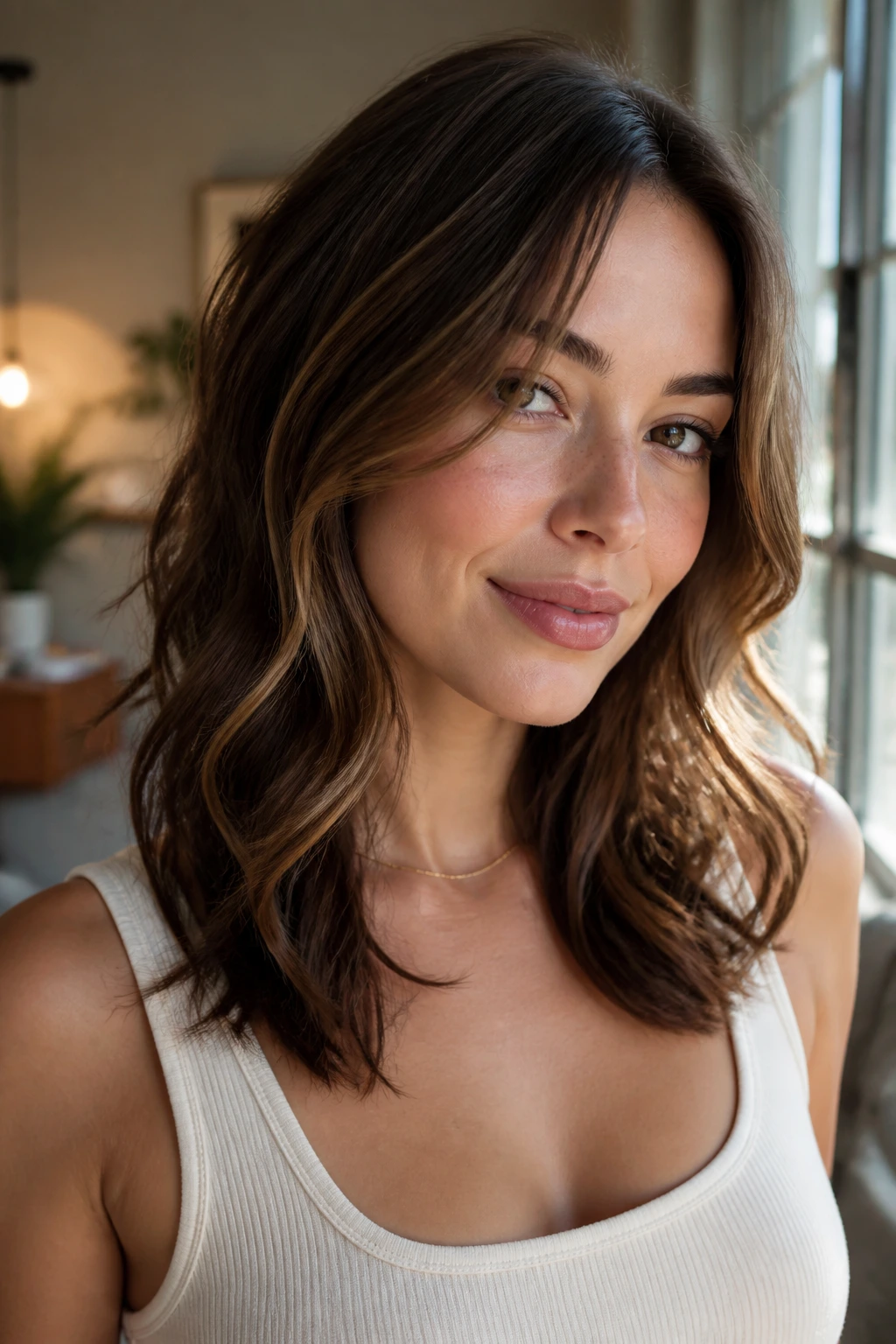
These layers start close to the chin, slide past the jaw, and land near the collarbone. That long diagonal frame is flattering because it draws the eye downward in a smooth line rather than cutting straight across the cheeks. With loose curls, the movement makes the whole thing feel expensive without trying too hard.
This is a good choice if your face is long or if you want the front to feel stronger than standard long layers. The shape adds interest around the face while keeping the rest of the cut calm. I like it with a center part, but it also handles a soft side part if you want a little asymmetry.
The result is not flashy. It is polished, and there’s a difference.
20. Overlapping Waterfall Layers
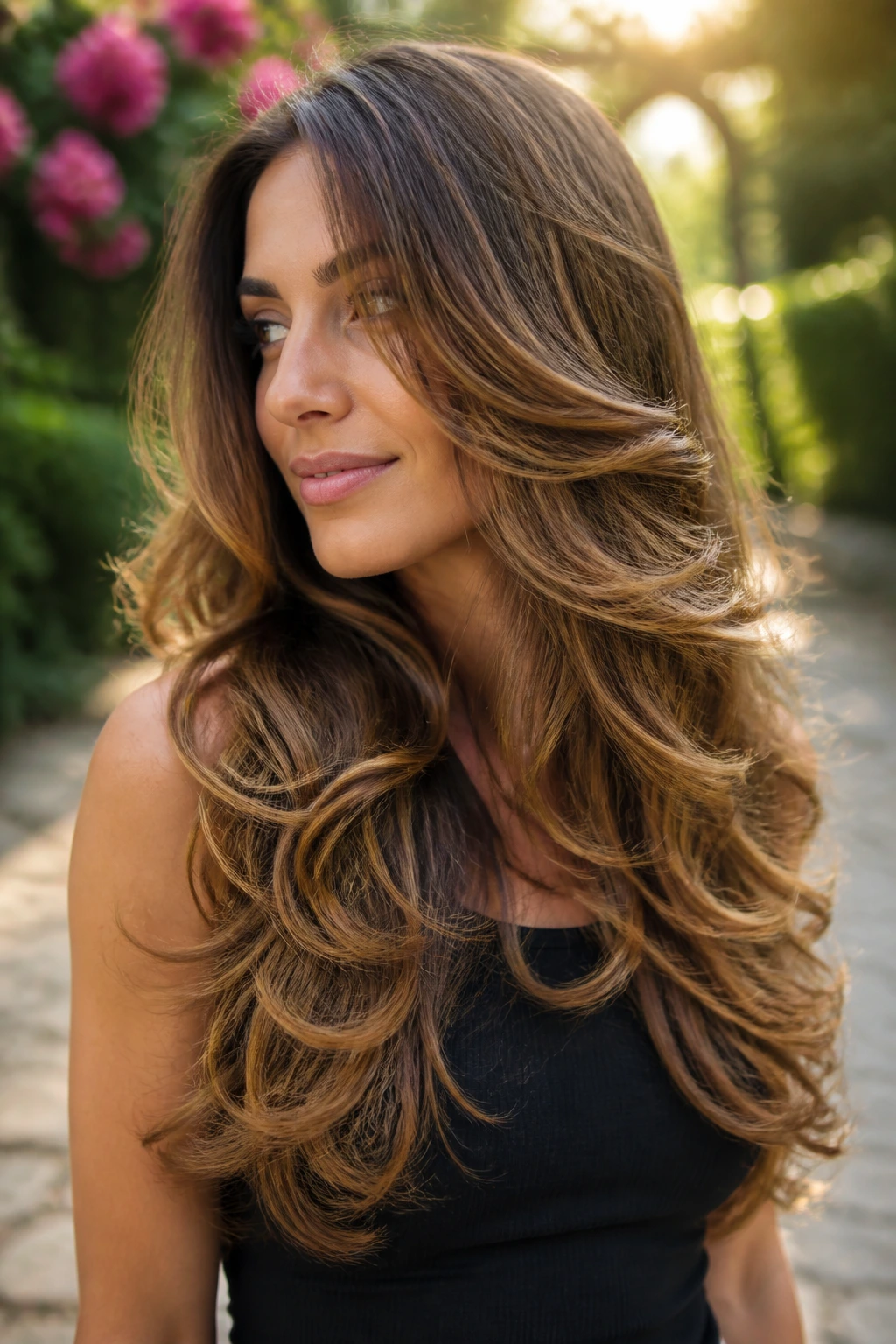
Why does this cut look so good when the hair moves? Because each section drops over the next one instead of sitting in separate blocks. The layers overlap like a waterfall, so loose curls bounce through the lengths instead of breaking into obvious steps.
Best way to wear it
This cut shines when the curls are set in alternating directions. That keeps the layers from bunching together into one big shape. If you curl everything the same way, the waterfall effect can disappear. A mixed curl pattern makes the movement visible from the front and the side, which is where this cut earns its keep.
21. Face-Framing Slices for Straight-Textured Hair
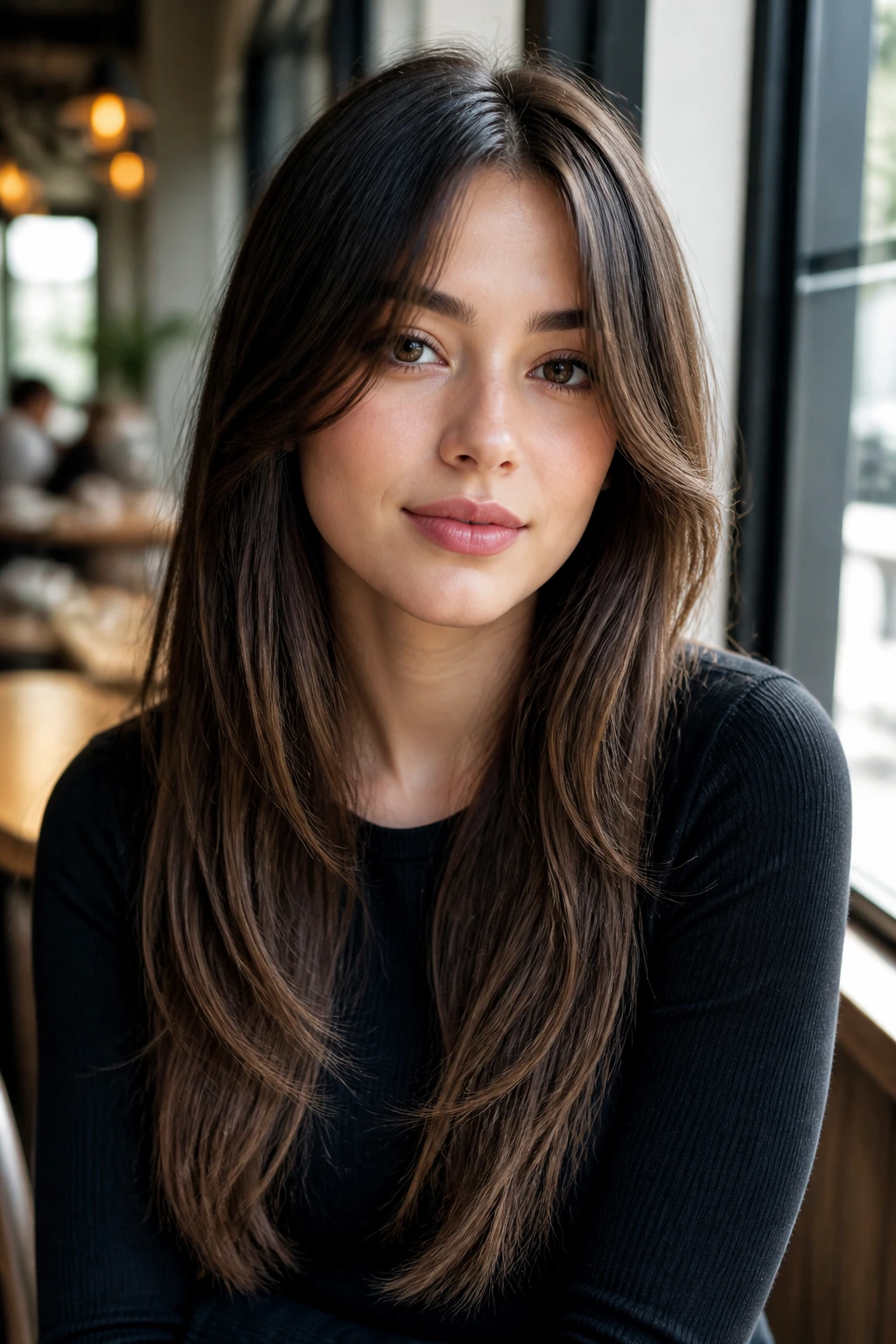
Not everyone starts with obvious waves or curls. Some hair only bends when it’s styled, and this is a good cut for that texture. The face-framing slices are long, subtle, and light enough to move when you curl them, but not so short that they collapse when you wear the hair straight.
This is the version for someone who styles with heat during the week and lets the hair fall straighter on quieter days. The layers stay useful either way. That’s rare, and worth paying attention to. Too many cuts only look finished under one styling method.
Keep the slices clean and avoid over-texturizing the front. The simpler the line, the better it works.
22. Mid-Crown Lift Layers
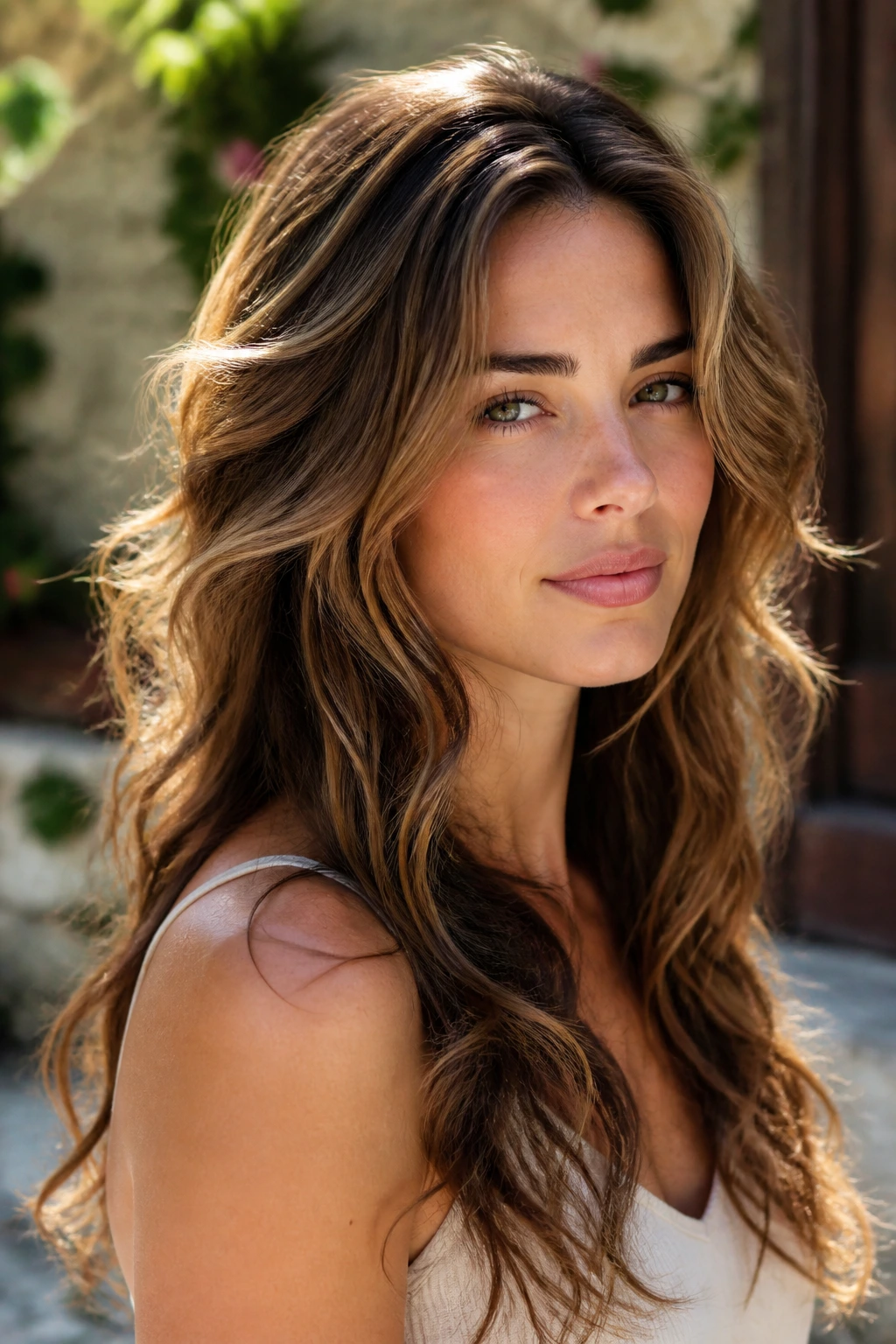
Flat crown? This one’s for you. Mid-crown lift layers create volume where the head actually needs it — not just around the face, where lots of cuts concentrate the shape. On long hair with loose curls, that little lift changes the whole profile.
I like this cut because it solves a specific annoyance. Hair can be long, thick, and still lie flat at the top. A well-placed layer around the crown gives the roots a place to rise without forcing the ends to puff out. It’s a small structural adjustment, but it reads as a bigger difference than you’d expect.
If you wear your hair down most of the time, this is one of the most practical choices on the list.
23. Romantic Ribbon Layers
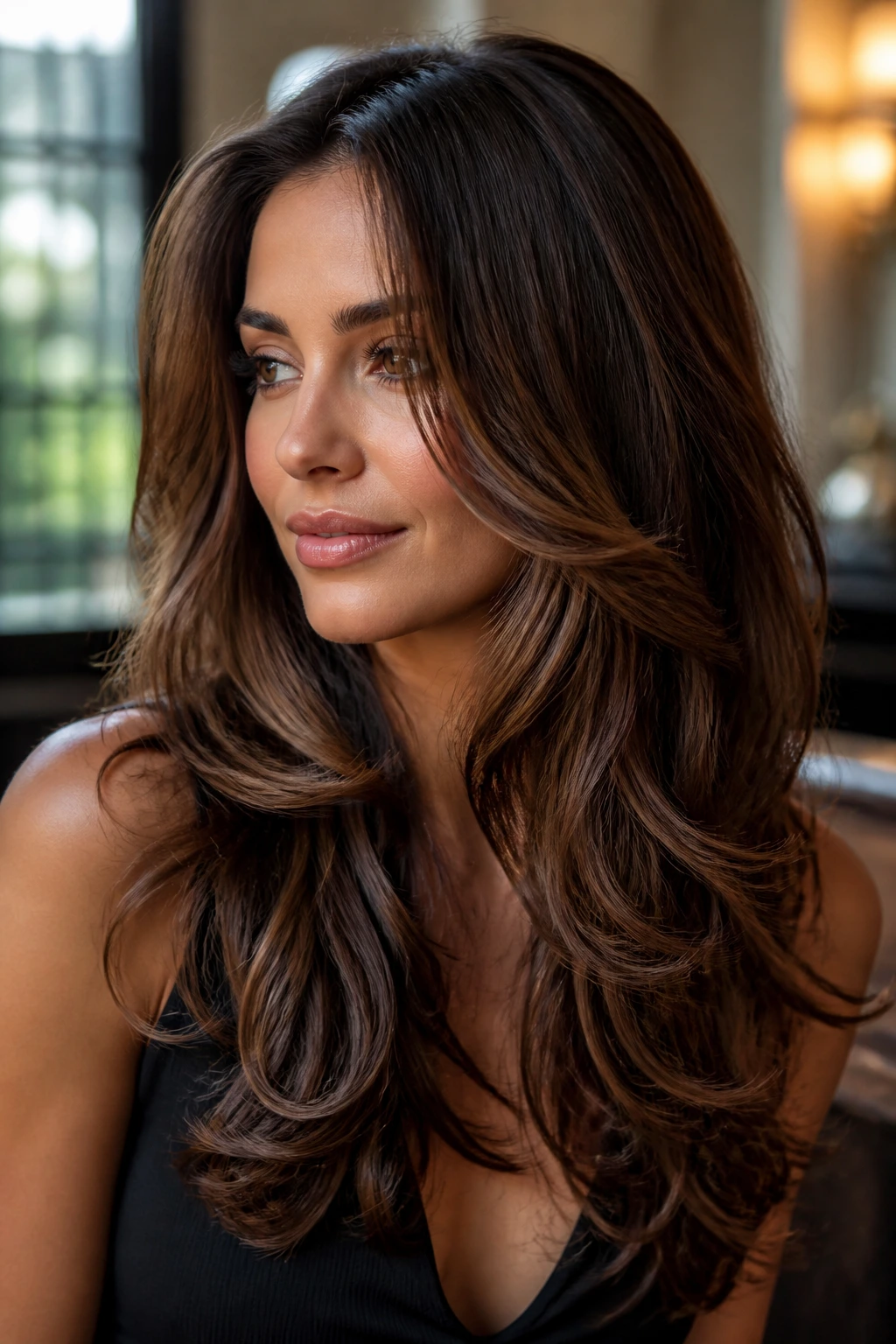
This is the softest-looking cut in the bunch, and I mean that in a good way. The layers are long, smooth, and shaped to fall into ribbon-like curls that drape around the shoulders. It’s especially pretty on medium-density hair that holds a loose bend without frizzing at the first sign of weather.
The whole point is softness without collapse. The layers are noticeable when the hair moves, but they don’t shout from across the room. That makes the cut easy to wear with dresses, blazers, or plain T-shirts — the hair does enough of the work on its own.
If you like the look of long hair that still has a face and a frame, this is a strong answer.
24. Softly Choppy Layers for Natural Waves
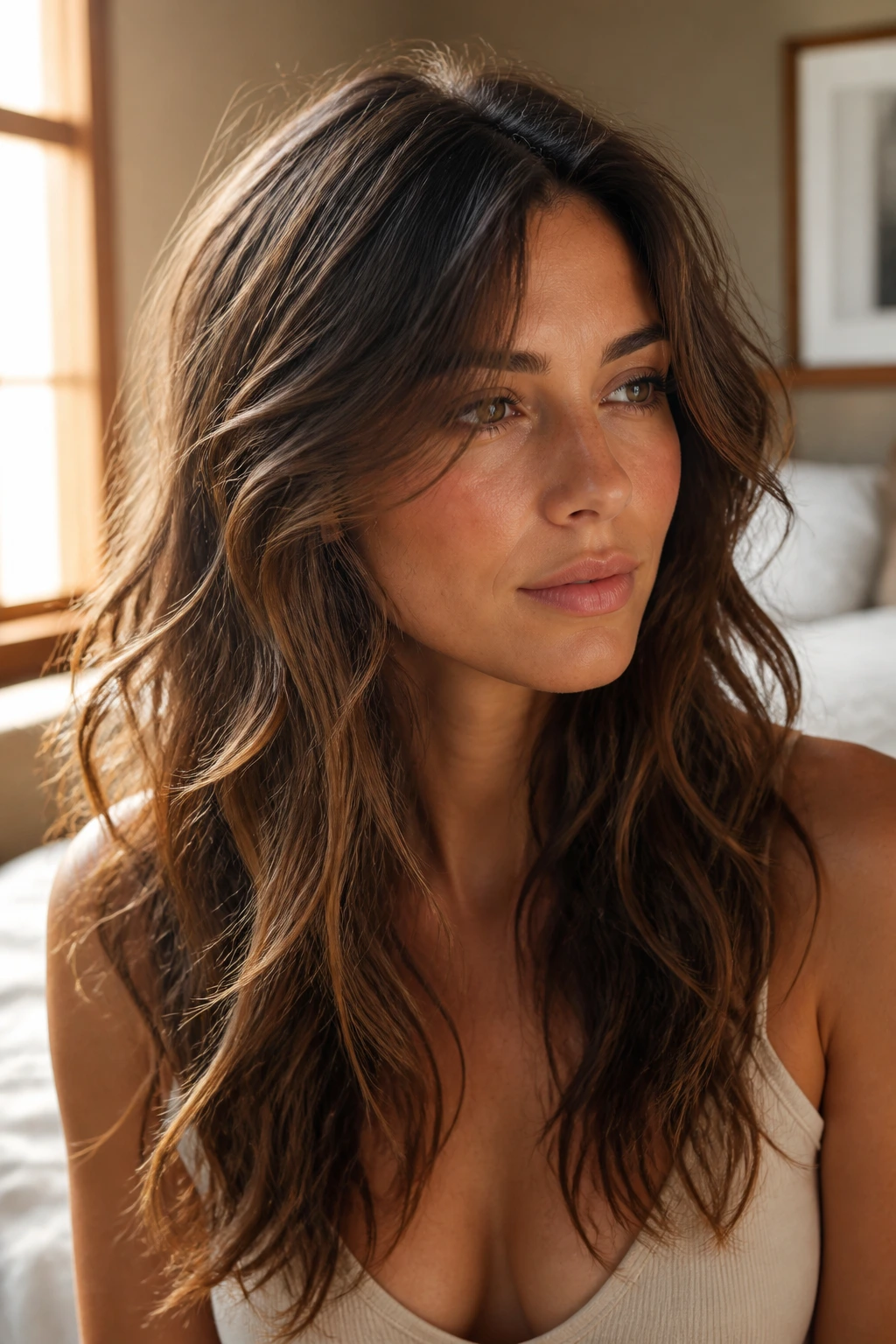
Not all loose curls are polished. Some lean wavy, some lean beachy, and some sit somewhere in the middle. Softly choppy layers work because they let that texture stay a little loose while still adding shape. The cut doesn’t ask the hair to behave like a salon blowout.
That’s why it’s one of my favorite low-pressure options. The hair can air-dry, diffuse, or be quickly curled, and the cut still looks like it has a reason to exist. The edges are piecey enough to keep the shape interesting, but not so broken up that the ends look thin.
If your natural texture leans toward a soft bend rather than a defined spiral, this is a friendly place to land.
25. Growth-Friendly Long Layers
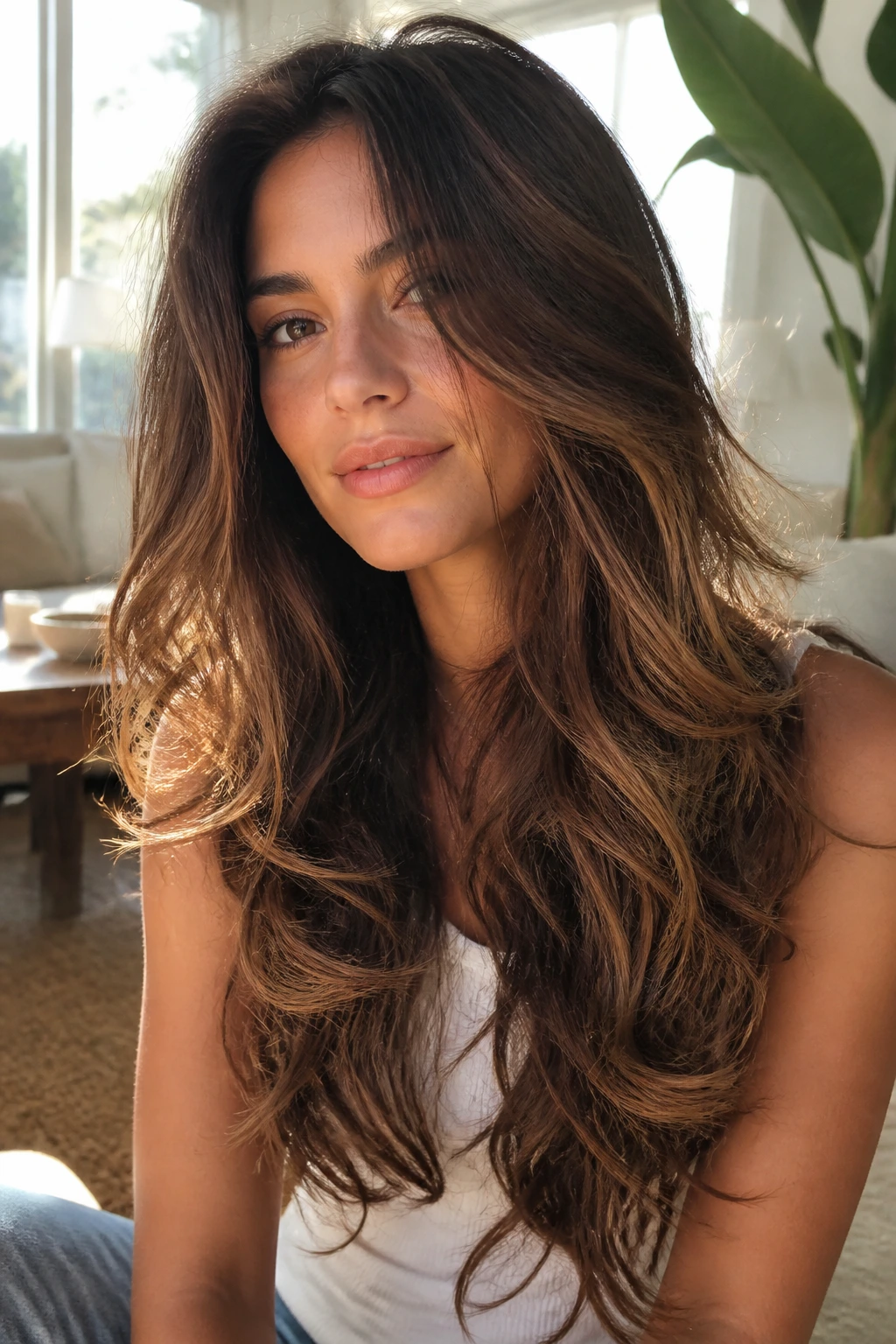
Some haircuts look good on day one and then get annoying. This is not one of them. Growth-friendly long layers keep the shortest pieces low enough that the cut still looks clean after a few months, which is useful if you hate frequent salon visits or if you’re trying to grow length without giving up shape.
The silhouette is gentle. The face frame stays soft. The back remains long and full. Loose curls help hide the in-between stage, which is why this style lasts so well. It’s the quiet practical choice on the list, and I mean that as praise.
If you want something that won’t fight you on busy weeks, this is the cut to bookmark.
Why Medium Layers and Loose Curls Work So Well Together
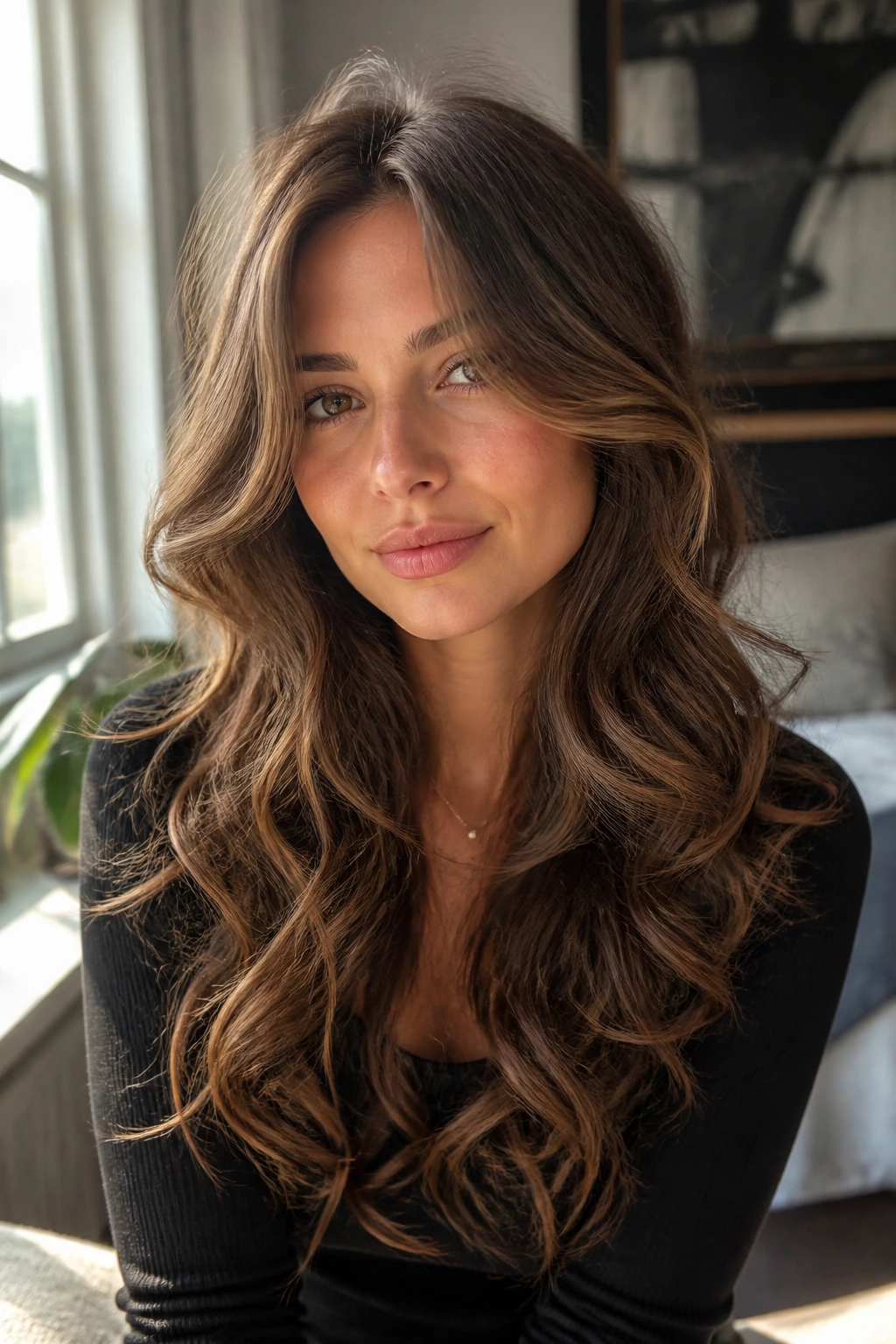
Loose curls show everything. That’s the blessing and the headache. A blunt one-length cut on long hair can look heavy fast, while too many short layers can make the whole thing bloom outward in a way that no amount of serum can fix. Medium layers sit in the middle, and that middle is where the shape lives.
The best versions take weight out where it builds up — usually around the mid-lengths and underlayers — while leaving enough perimeter to keep the silhouette smooth. That matters because loose curls don’t need a lot of help making movement. They need direction. A curl that falls in a soft bend around a collarbone layer looks intentional. A curl that lands on a badly placed short layer looks like a mistake, even when the cut was expensive.
Where the shape comes from
Most of the visual interest comes from three points: the front pieces, the crown, and the ends. If the front starts around the cheekbone or jaw, the face gets framed. If the crown has a little release, the top doesn’t go flat. If the ends still hold enough weight, the whole haircut feels grounded instead of frizzy.
Humidity changes the picture, too. Long loose curls can expand during the day, so cuts that keep some bluntness at the outline usually age better than cuts that are thinned out all the way through. I prefer a layer that grows a little softer over time. It’s easier to live with.
Essential Tools for Styling and Maintenance
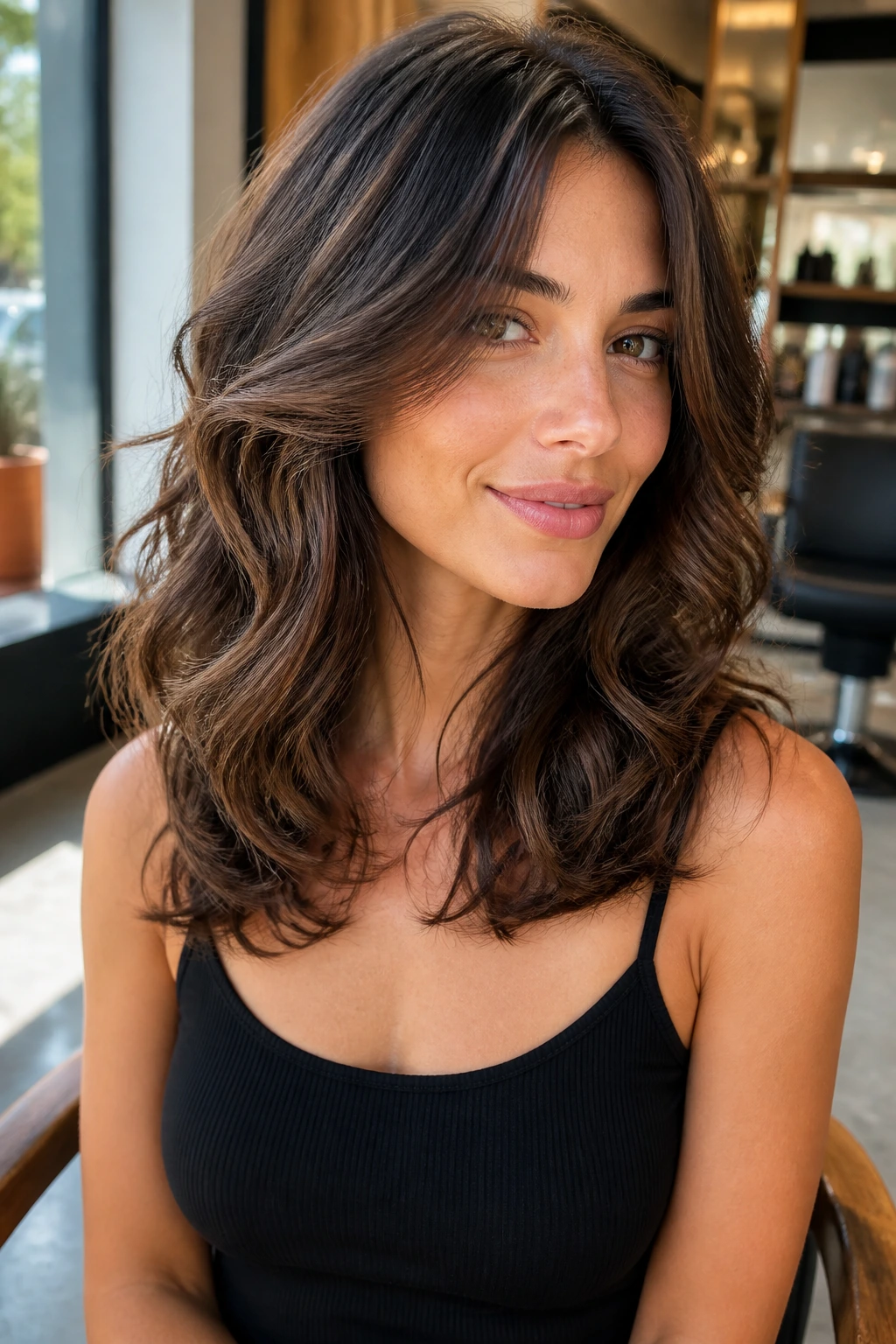
You do not need a suitcase full of gadgets, but a few things make these cuts behave better.
- 1.25-inch curling iron or wand: This barrel size makes loose curls that show off layers without turning the hair into tight corkscrews.
- Heat protectant spray: Use it every time you curl or blow-dry; long hair needs the extra shield because the ends are older and drier.
- Large section clips: They keep the top layers out of the way while you work through the bottom half, which matters more than people think.
- Wide-tooth comb: Good for separating curls gently without breaking up the pattern into frizz.
- Lightweight mousse or curl cream: Choose one, not ten. The goal is hold with movement, not helmet hair.
- Dry texture spray: Handy for day-two lift at the crown and for making the layers separate a little more cleanly.
- Silk or satin pillowcase: Helps the front pieces stay smoother overnight.
- Salon shears and texturizing tools: These matter at the cutting chair, especially if your hair is thick. The right tool in the wrong hands still makes a mess, so ask how the stylist plans to shape the layers before they start.
What to Ask Your Stylist at the Salon Chair
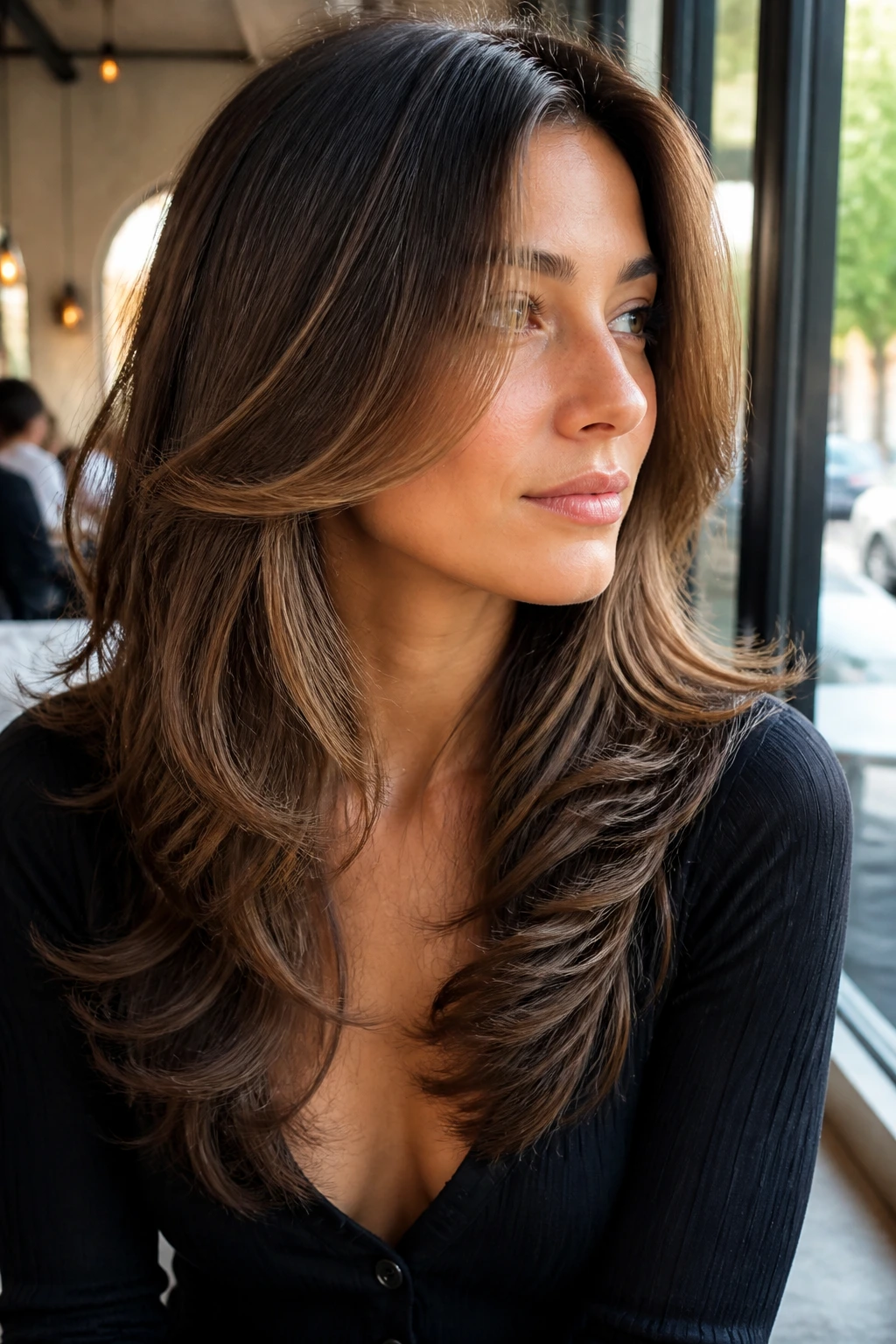
Bring pictures, yes, but bring a sentence too. Photos show vibe. Words tell the stylist what matters. Say things like “I want medium layers that still keep the ends full” or “I like face-framing pieces that start at the cheekbone, not above it.” That kind of direction is useful because it narrows down the layer height without making the stylist guess.
If your hair is naturally wavy or curly, ask whether the cut will be done dry, damp, or with your hair in its natural pattern. A dry cut can help some curl types because the stylist sees where the bend actually sits. Wet cutting can work too, but only if the person understands how much a curl springs up once it dries. If they don’t, the front can end up far shorter than intended.
Good questions to ask
- Where will the shortest layers land when the curls are dry?
- Will the front pieces be longer than the rest?
- How much weight are you removing from the interior?
- How will this grow out after 8 to 12 weeks?
That last question matters. A cute haircut that turns weird after six weeks is not a good haircut.
How to Style Loose Curls So the Layers Show
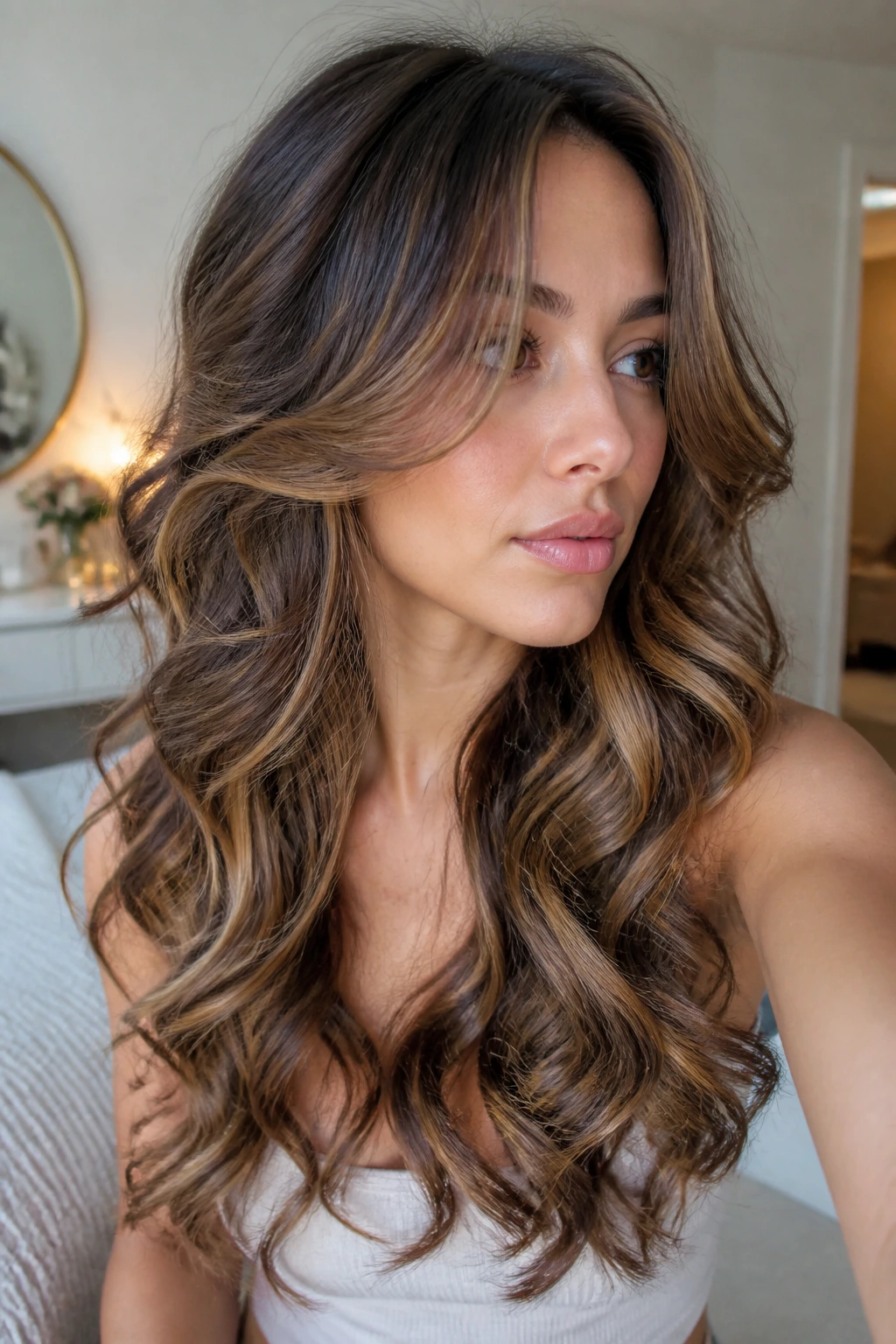
The haircut only looks as good as the bend you put into it. If you want the layers to read clearly, the curls need enough space to separate. That usually means larger sections, softer tension, and a little restraint at the ends. Wrap the hair around a 1.25-inch barrel, leave the last inch out for a more relaxed finish, and alternate curl directions so the layers don’t fuse into one big shape.
If you air-dry, scrunch lightly with a microfiber towel and keep your hands out of it until the hair is mostly dry. That helps the face-framing pieces settle without frizzing into a halo. A little mousse at the roots can keep the crown from flattening, especially on cuts with internal layers or butterfly shape.
Day-two helps
A mist of water, one pump of leave-in, and a quick twist around the front sections is often enough. You do not need to start over. In fact, starting over is usually the mistake.
Keeping the Shape Between Trims
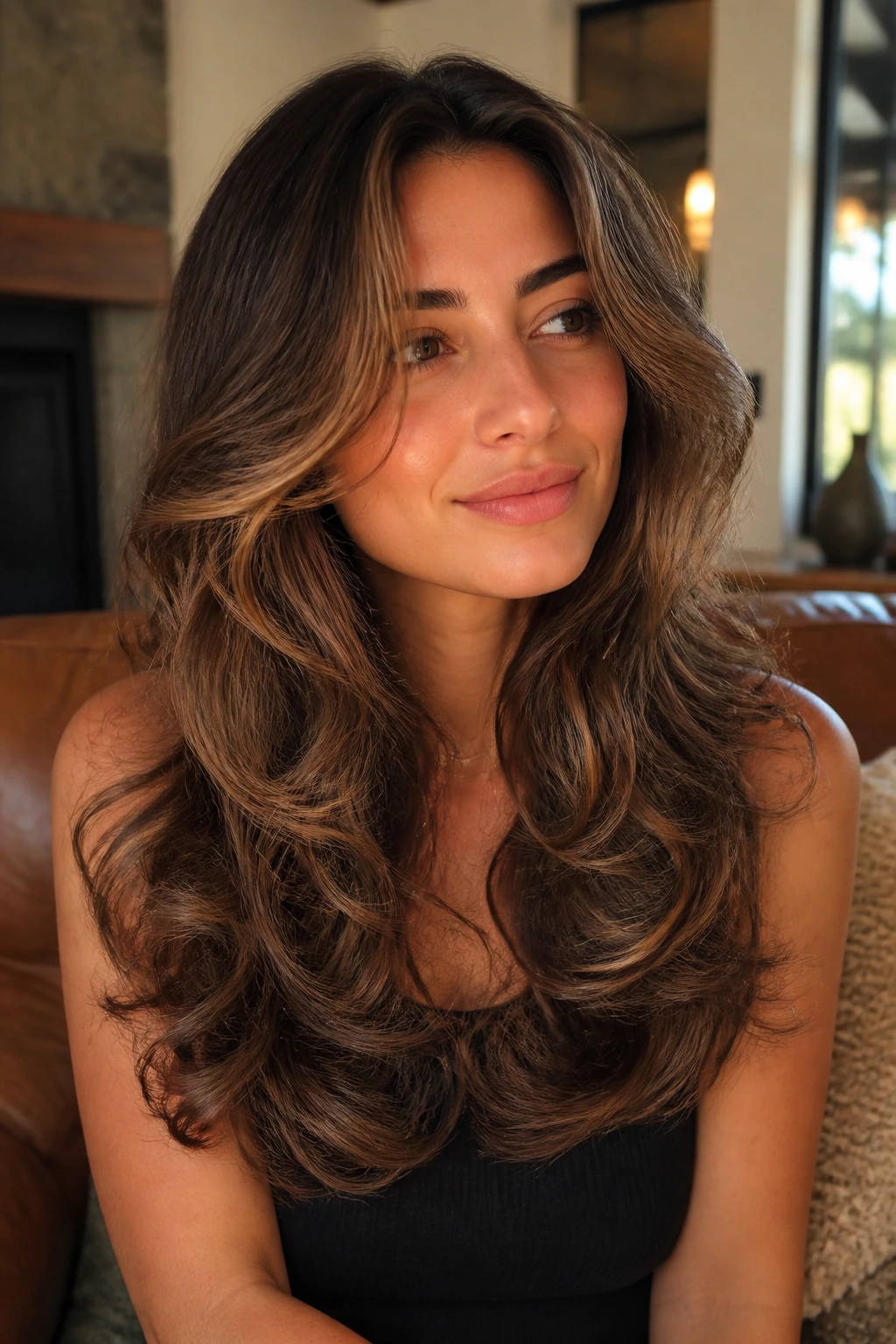
Loose curls are forgiving, but they are not immortal. The shortest layers around the face tend to lose their crispness first, especially if you tuck the hair behind your ears or sleep on one side. A trim every 8 to 12 weeks keeps the front from turning into random wisps. If you’re growing the haircut out on purpose, you can stretch that a bit longer, but the shape will soften.
At night, tie the hair loosely at the top of the head or use a silk bonnet if that’s your thing. The point is to stop the curls from grinding into the pillow and smashing the layers flat. If you wake up with bent pieces at the crown, mist them with water and let them dry in a loose clip for ten minutes. That usually resets the line.
One more thing. Don’t wait until the ends look fried to trim them. Long layered hair keeps its shape longer when the ends are dusted before they split up the shaft.
Common Mistakes That Flatten the Cut
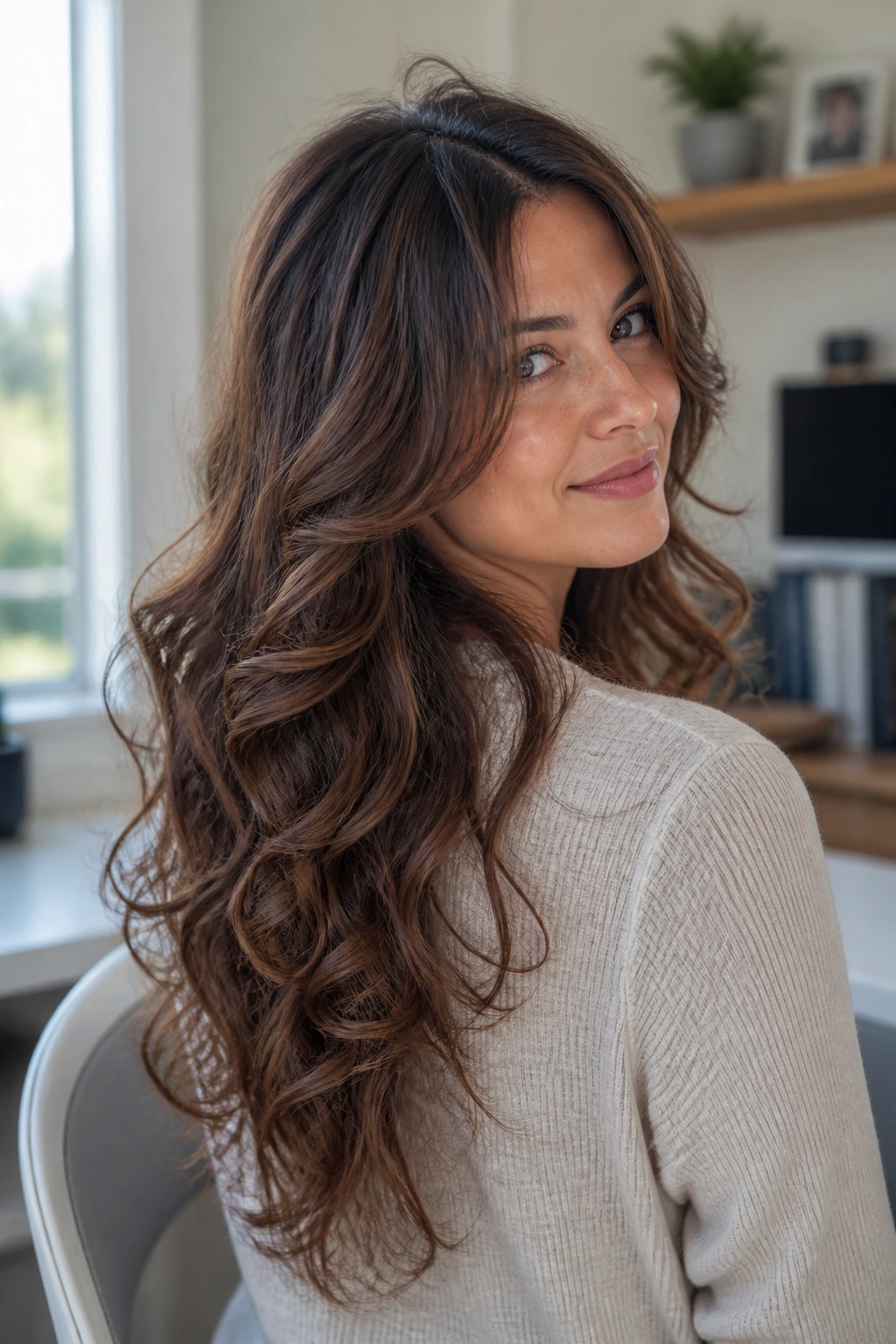
- Layers that start too high: The hair balloons outward and the front loses weight fast. Fix it by keeping the shortest pieces below the cheekbone unless your stylist has a very specific reason to go higher.
- Over-thinning thick hair: The cut can look airy in the chair and fuzzy a week later. Ask for shape removal in the right spots, not aggressive texturizing through the ends.
- Styling every curl the same direction: The hair clumps into one heavy mass and hides the layer pattern. Alternate directions so the cut moves instead of fusing.
- Skipping face-framing detail: Long hair without a front shape can look like one long sheet. Even a subtle cheekbone layer changes that.
- Using heavy cream on fine hair: It collapses the crown and makes the layers look sticky. Go lighter — mousse or a foam works better.
- Letting the fringe overgrow: Curtain bangs, bottleneck bangs, and front layers lose their shape quickly. Trim the front more often than the rest.
Variations and Face-Shape Tweaks
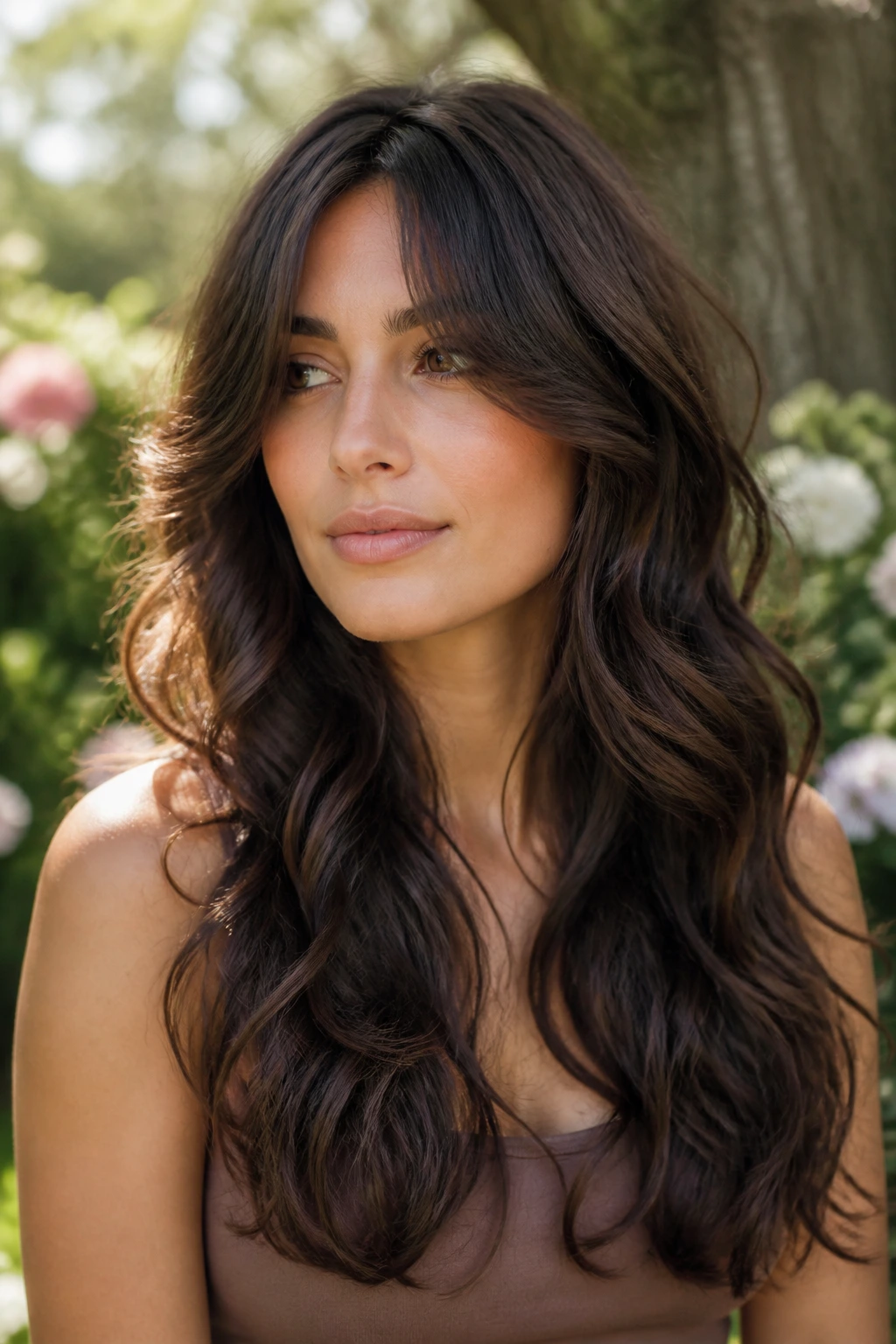
Round-Face Lift: Keep the shortest face-framing pieces closer to the cheekbone and build more length through the jaw. That creates a vertical line that helps the face feel longer without making the haircut severe.
Oval-Face Balance: Almost anything works here, which is both lucky and annoying. I’d keep the outline soft and let the layers start a little lower, so the long hair stays the focus instead of the front pieces stealing all the attention.
Heart-Face Softening: Bring more length around the chin and collarbone. That balances a wider forehead and keeps the bottom half of the cut from feeling too thin.
Thick-Hair Weight Control: Ask for internal removal and tapered ends, not lots of short exterior layers. The goal is to take the drag out of the mid-lengths while keeping the outline smooth.
Fine-Hair Soft Body: Use fewer layers, start them lower, and keep the front pieces long enough to tuck behind the ear. Too much layering on fine hair makes the ends look see-through fast.
Frequently Asked Questions
What’s the difference between medium layers and long layers on long hair?
Medium layers usually start higher — around the cheekbone, mouth, or collarbone — so they create more visible movement. Long layers stay closer to the ends and keep the haircut more subtle, which can be better if you want softness without a dramatic change.
Do loose curls work better with a U-shape or a V-shape?
A U-shape usually feels softer and fuller at the ends, while a V-shape creates more drama and a more obvious point in back. If your hair is thick, the V can help; if you want a smoother outline, the U is easier to wear.
Can fine hair pull off medium layered haircuts without looking thin?
Yes, if the layers are controlled. The trick is to avoid too many short pieces and keep the perimeter full enough that the ends don’t go sparse when the curl falls out.
How often should I trim this kind of cut?
Most loose-curl layered cuts look best with a trim every 8 to 12 weeks. Bangs and face-framing pieces may need a cleanup sooner, especially if they sit right on the cheekbone or brow.
Should my stylist cut my hair wet or dry?
That depends on the curl pattern and the stylist’s skill. Dry cutting helps some natural curls because it shows the true fall of the hair, while damp cutting can work well if the stylist knows how much your hair springs up once it dries.
Will curtain bangs be high maintenance?
Less than people fear. They do need a little daily attention — usually a round brush, a quick bend with a flat iron, or a roller while you do makeup — but they grow out in a forgiving way.
What if my hair gets frizzy when I add layers?
That usually means the layers were cut too aggressively or the ends were thinned too much. A better cut keeps the outline clean and uses weight removal inside the shape, not all over the surface.
Can I still wear my hair straight with these cuts?
Yes, and that’s one reason these styles are so useful. The best layered cuts keep enough structure that the hair looks intentional when straight, not just when curled.
The Shape That Keeps Moving
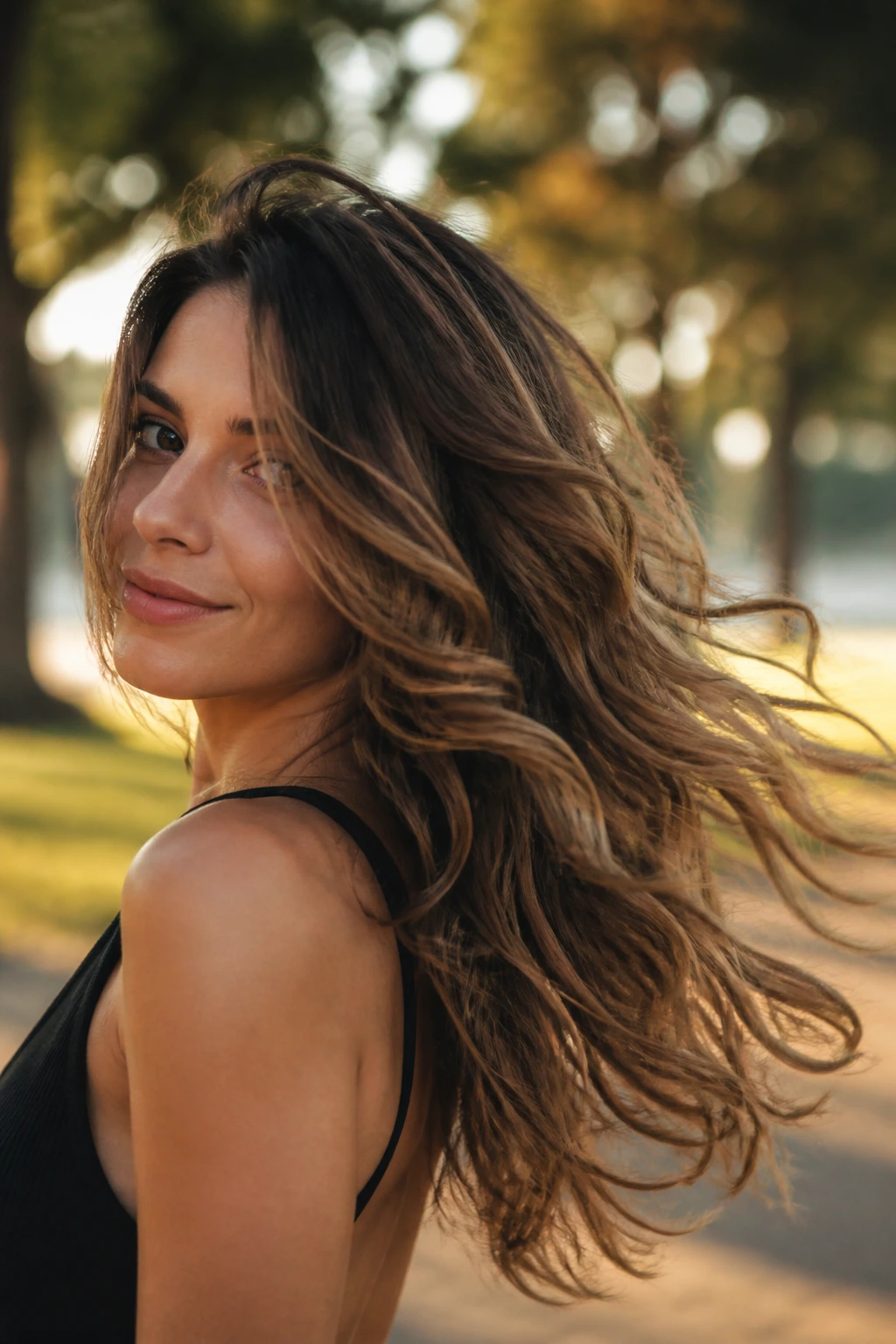
Long hair with loose curls lives or dies by the cut underneath it. Get the layers wrong, and the curl pattern has to do all the work. Get them right, and the hair does that lovely thing where it falls, swings, and settles in a way that looks almost casual — even though it absolutely isn’t.
That’s why I keep coming back to medium layers. They’re the middle ground that does not feel boring at all once the hair starts moving. The front gets a face, the crown gets a little lift, and the ends keep enough weight to hold the whole thing together.
If you’re choosing between several of these styles, start with the one that matches your hair density and the way you already wear it. The right layered cut should make the morning easier, not turn your bathroom into a styling lab.