



The best long textured layers with bangs for women over 50 do one thing plain, one-length hair rarely manages: they keep the length, but they stop it from hanging there like a sheet. A good cut should move when you turn your head. It should catch air at the ends, soften the front, and make the whole shape feel lighter without stripping away the hair you still want to wear long.
That matters more than people admit. Hair often changes after 50 — the crown can go flatter, the temples can look a little softer, and some strands get finer while others get coarser and more wiry in the same head of hair. Bangs and texture can help with all of that, but only if the cut is shaped with some intelligence. Heavy fringe on fine hair? Usually a mistake. Long, blended layers with a little bend through the front? Much better.
The 25 looks below cover the sweet spot between polished and lived-in. Some are soft and face-framing, some are piecey and modern, and a few lean a little bolder if you like a haircut with a bit of attitude. None of them depend on looking like you just walked out of a salon chair. That’s the point.
Why Long Textured Layers Keep Hair Moving Instead of Falling Flat
Movement is the whole trick: Long textured layers remove weight in the right places, so the ends don’t cling to the shoulders and the front doesn’t collapse into one heavy line.
Bangs change the focus: A fringe draws the eye upward and gives the haircut a front edge, which makes long hair feel intentional instead of just “left alone.”
Fine hair gets a lift without a lot of product: When the layers start around the chin or collarbone and the ends are lightly point-cut, the hair looks fuller at the sides without needing a ton of teasing.
Thick hair stops looking like a blanket: Internal texture and longer layers break up bulk, especially around the jaw and back of the head where dense hair can turn boxy fast.
Gray and silver strands catch the shape better: Coarser grays often hold a bend well, so a layered cut with bangs can show off shine and movement instead of sitting in a single blunt block.
1. Feathered Curtain Bangs That Skim the Cheekbones
Feathered curtain bangs are the easiest place to start if you want a fresh shape without committing to a heavy fringe. The center falls around the bridge of the nose or just below the brows, then opens out toward the cheekbones so the front pieces move instead of sitting stiffly across the forehead.
Why it works
The cut gives long hair a frame right where the face needs it most: around the eyes and cheekbones. I like it for medium-density hair because it keeps the front soft, and soft is usually what saves a longer style from looking dated.
Ask for layers that begin around the chin and continue softly through the ends. A 1.25-inch round brush and a quick bend away from the face are enough to make this shape behave.
- Keep the fringe long enough to tuck behind one ear on lazy days.
- Ask for point-cutting at the ends, not a blunt slice.
- Use a lightweight mousse at the roots if the crown goes flat.
2. Soft Shag Layers With Airy Fringe
A soft shag gives you energy near the crown and a little edge through the ends, but it doesn’t have to look wild. On women over 50, the nice version is cleaner and longer, with just enough fringe to keep the haircut from feeling heavy.
The fringe should stay airy, not dense. That matters. A heavy shag bang can land like a curtain; an airy one sits above the brow line and lets the forehead show through a bit, which keeps the cut lighter and easier to style.
This shape is especially useful if your hair has started to feel flatter at the top but still has decent density through the lengths. The layers create lift where you need it and leave the bottom long enough to pull back or tuck into a clip.
3. U-Shaped Length With Cheekbone Bangs
If you hate losing length, a U-shaped perimeter is a very smart compromise. The back hangs a little longer in the center, the sides angle forward, and the whole haircut feels rounded rather than flat across the bottom.
Cheekbone bangs make the front look deliberate. They should sweep just under the brow and then blend into the front layers, which keeps the face open and stops the cut from reading as “all one length with a fringe glued on.”
This is one of my favorite options for people who want long hair but don’t want the bottom to drag. The shape keeps its polish even when you air-dry it a bit rough. That matters on busy mornings.
4. Side-Swept Layers That Blend Into the Fringe
Side-swept bangs still earn their keep because they’re forgiving. If your part naturally lives off-center, forcing a middle part can make the front feel fussy. A long diagonal fringe respects the way your hair already wants to fall.
The best version doesn’t look like one long piece dropped over the forehead. It should melt into the front layers so the whole front section feels connected. That blending is what keeps the haircut soft around the eyes and jaw.
What to ask for
- A part that follows your natural growth pattern.
- Fringe that lands around the eyebrow to cheekbone zone.
- Long face-framing layers that can tuck behind one ear.
- Light texture at the ends so the sweep doesn’t look blunt.
5. Long Wolf Cut With Grown-Out Fringe
A long wolf cut is for someone who wants more grit in the shape. It borrows from the shag, but the layers are chunkier and the silhouette is a little more rebellious. Done well, it looks lived-in, not messy.
The grown-out fringe is the part that makes it wearable after 50. Keep it longer through the center and let it break softly around the brows. If it gets too short or too choppy, the whole cut can turn loud in a hurry.
This works best on medium to thick hair with some wave. On very fine hair, too many short layers can make the ends look stringy. So keep the texture, but don’t let the stylist shred it to bits.
6. Bottleneck Bangs With Cascading Lengths
Bottleneck bangs start narrower in the middle and widen toward the temples, which makes them one of the smartest fringe shapes for mature faces. They don’t box in the forehead, and they blend easily into long layers.
The cascading lengths around them matter. You want the front to fall in tiers: shorter at the center, longer near the cheekbones, and then softly into the rest of the hair. That creates a nice visual slide from bangs to body.
This cut is especially flattering if you wear glasses, because the center stays lighter and the sides can float around the frame instead of fighting it. It also grows out better than a blunt bang, which is a small mercy.
7. Rounded Blowout Layers With Arched Bangs
This is the salon blowout haircut. Not fussy. Just clean, rounded, and full of movement. The layers are cut to follow the curve of the head, so when you round-brush the hair, it swings under naturally instead of flipping out in odd places.
Arched bangs help the shape. They sit a little higher in the center and curve gently down at the temples, which keeps the front from feeling flat across the brow. On straight or slightly wavy hair, that arch can make a huge difference.
I like this shape when someone wants polish without stiffness. It looks good with a side part, a middle part, or a soft bend from a large round brush. It also behaves nicely when the weather gets damp and your hair tries to do its own thing.
8. Wavy Layers With a Split Fringe
Split fringe is a good friend of natural wave. Instead of fighting the bend in the hair, it lets the front part and fall around the face in two soft pieces, with the center opening just enough to avoid a helmet effect.
The layers should stay long enough to show off the wave pattern. If you cut them too short, the hair can poof up in all the wrong places. If you leave them too blunt, the wave just collapses into a heavy line. The sweet spot is soft, not shaggy.
This shape air-dries well with a curl cream or mousse scrunched through damp hair. And that’s the thing people like most about it: it doesn’t demand a perfect blowout to look finished.
9. Glasses-Friendly Face-Framing Layers
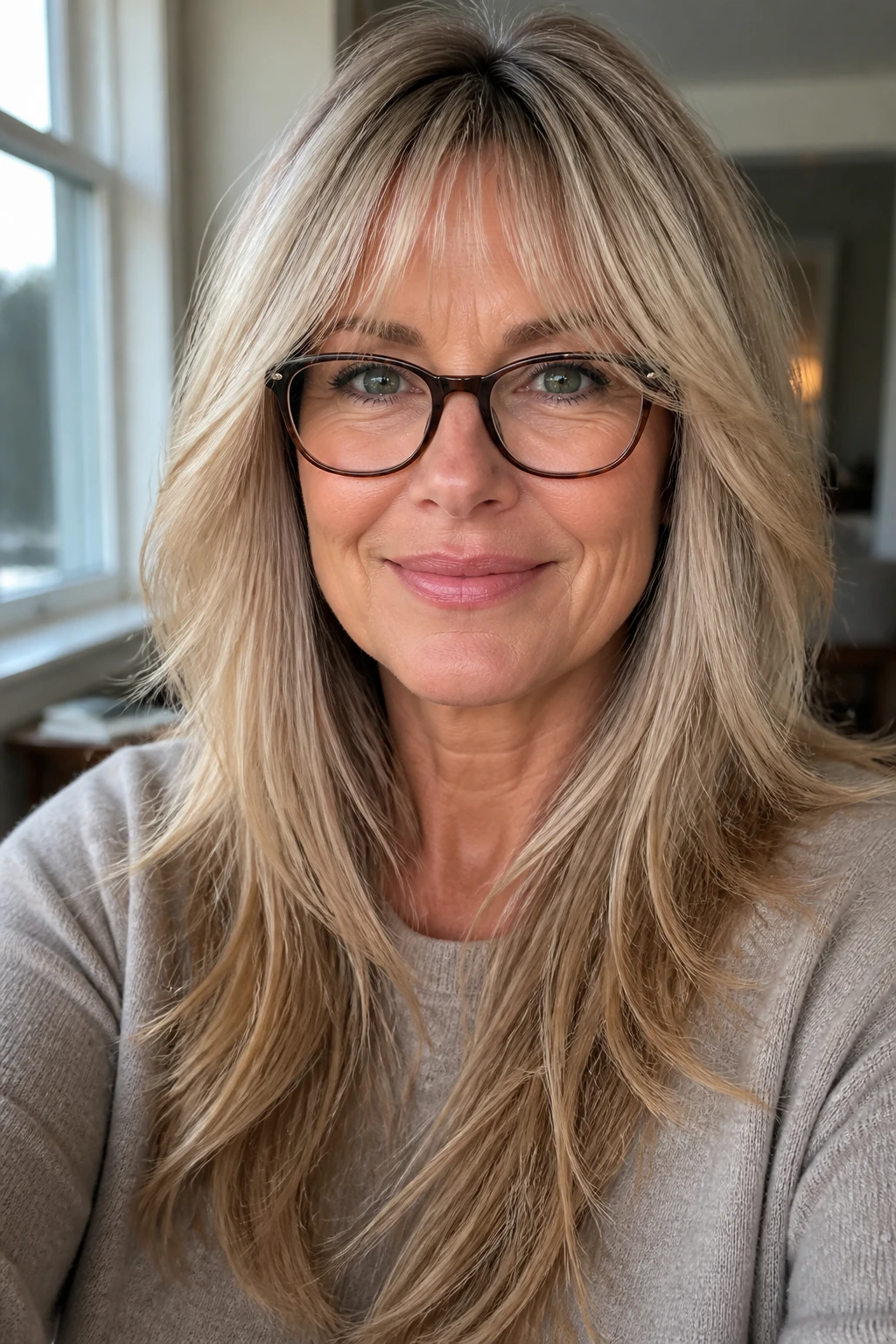
If you wear glasses every day, the front of the haircut has a job to do. It should sit around the frames, not keep poking into them. Long face-framing layers with a soft fringe solve that problem better than a dense bang ever will.
Ask for the shortest front pieces to fall just above or around the top of the frame, depending on how you wear your glasses. That little adjustment keeps the hair from bunching at the temples, which is where a lot of styles go wrong.
The rest of the cut can stay long and textured, but the front should be light. You want the eye to move from frame to fringe to cheekbone without stopping at a hard edge. Tiny detail. Big payoff.
10. Razor-Cut Lengths With Piecey Bangs
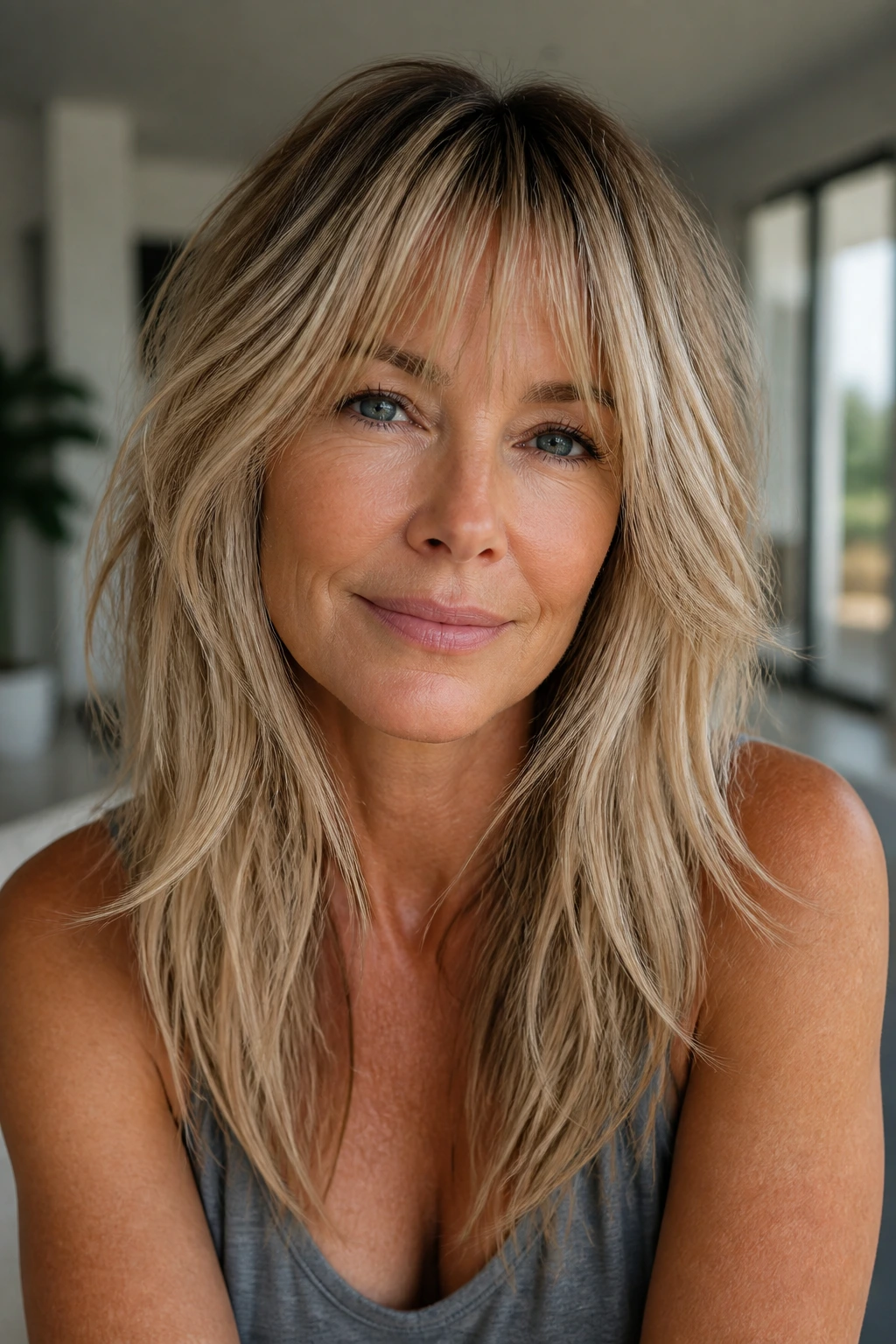
Razor cutting can be risky if it’s overdone, but on thick hair it does exactly what you want: it slices through bulk and leaves a softer edge. The result is a piecey, airy shape instead of a heavy wall.
Piecey bangs match that energy. They should fall in separated sections, not one solid strip, and they need enough length to move across the forehead without looking severe. That little separation is what keeps the cut from feeling too sharp.
This version is not for someone who wants a tidy little blow-dry and out the door. It looks best with a bend and a touch of texture spray. If your hair tends to puff out at the ends, though, this can be a very good fix.
11. Long V-Cut With Side-Swept Fringe
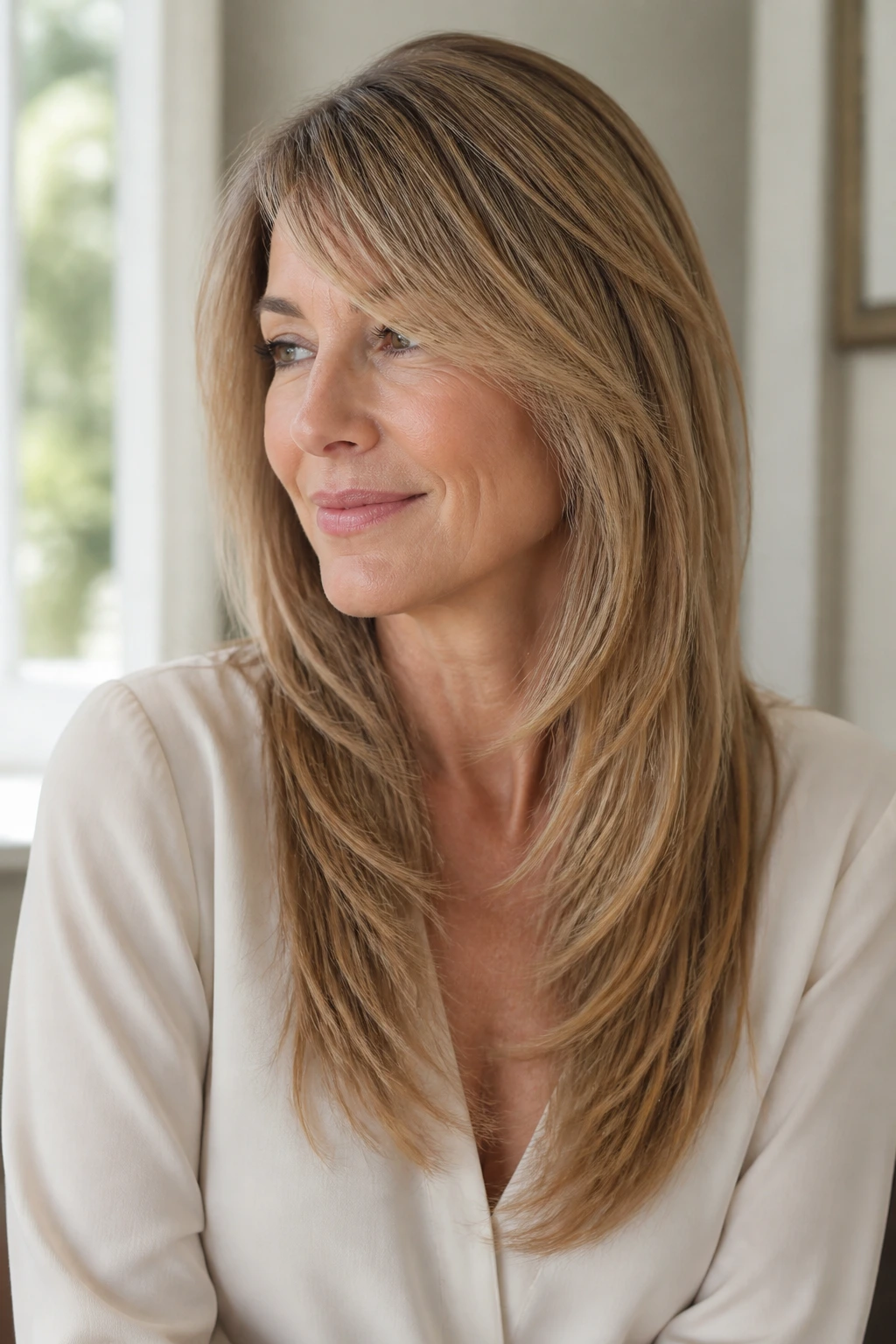
A V-cut gives the back of the hair a tapered point, which makes long hair feel lighter and longer at the same time. It’s a shape with a bit of drama, but not the theatrical kind — more like a clean line that pulls the eye downward.
Side-swept fringe balances that point. The bang should travel diagonally across the forehead and blend into the front layers, which softens the sharper V silhouette. If the fringe is too blunt here, the top and bottom start arguing with each other.
This cut is especially flattering on square or broader face shapes because the diagonal lines soften the edges. It also works if your hair is thick enough to hold the shape without collapsing by noon.
12. Wispy Fringe for Fine Hair
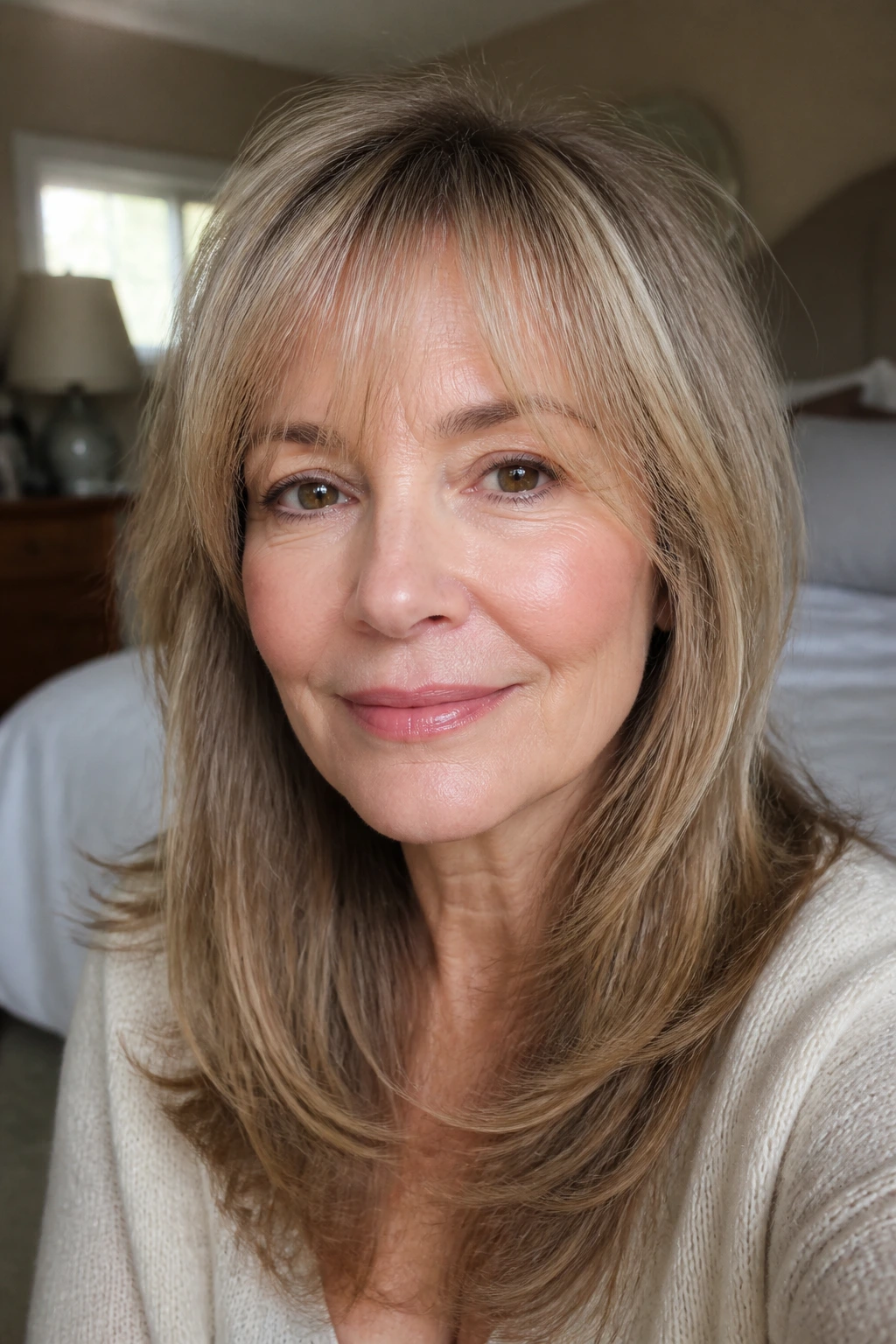
Fine hair needs a light hand. Heavy bangs can swallow the face, and too many short layers can leave the ends looking sparse. Wispy fringe solves that by creating softness without loading too much hair into the front.
The layers should begin lower — around the collarbone or just below — so the top section keeps enough density to support the style. That’s the piece people miss. A fine-haired head of hair often needs less cutting, not more.
Use a root-lifting spray and a small round brush if you blow-dry. And skip heavy oils near the fringe. They make the wispy pieces stick together, which kills the airy effect fast.
13. Curly Layers With a Curly Fringe
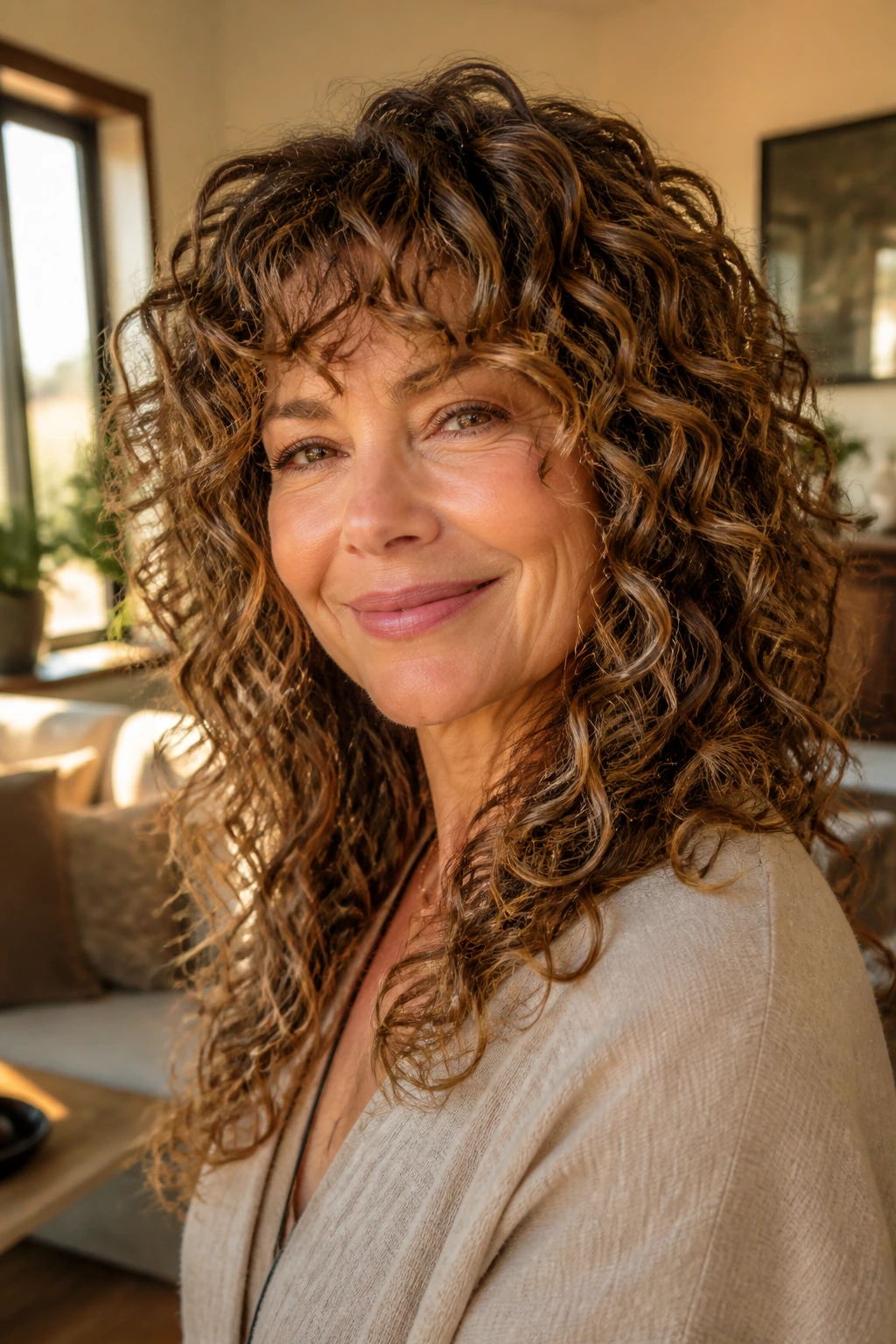
Curly hair needs its own cut. Straight-hair layering logic usually fails here because curls spring up, shrink, and stack on top of each other in ways that nobody planned for. A good curly cut lets the curl pattern lead.
The fringe should be cut dry, or at least with the curl pattern in mind, so it lands where it’s meant to land. Long enough to curl, short enough to stay out of the eyes. That’s the balancing act.
A layered curly cut keeps the shape from turning triangular. The front pieces frame the face, the mid-length layers keep the body rounded, and the ends stay light enough to bounce. If your curls are silver, even better — the texture shows beautifully in this shape.
14. Silver Layers With Airy Bangs
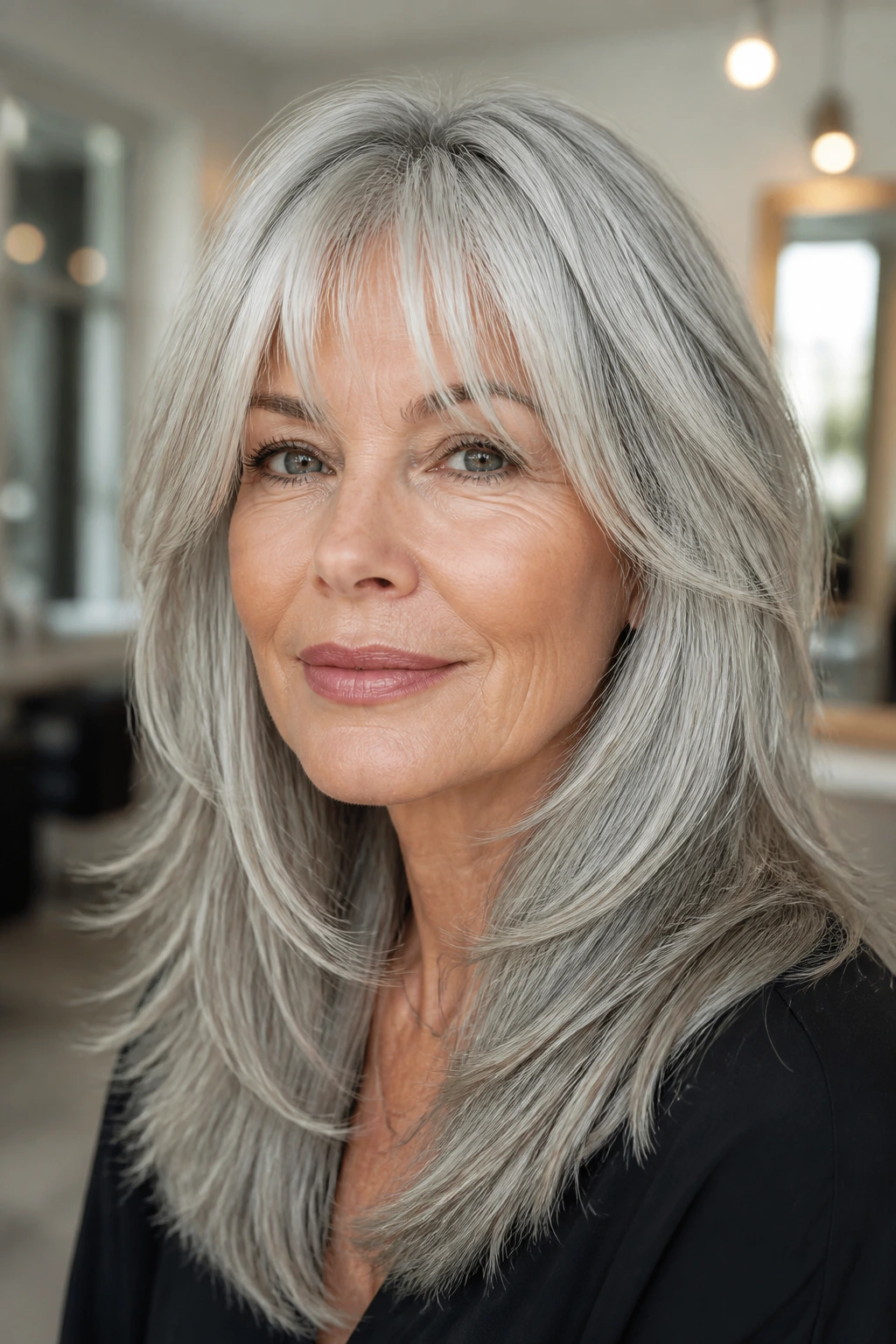
Gray hair can look harsh when it’s cut into a single blunt line. Airy bangs and soft layers let the silver move, which shows off the shine instead of flattening it.
I like this cut especially when the gray has different tones — white at the front, pewter in the back, maybe a little salt-and-pepper left at the sides. Textured layers let those tones read as dimension rather than patchiness. That’s a big difference.
Keep the bangs light around the brow and let the sides feather into the rest of the cut. A small amount of shine cream on the ends can make the color look even cleaner. Too much, and the fringe separates in a greasy way. Less is more here.
15. Deep Side-Part Layers With a Sweeping Bang
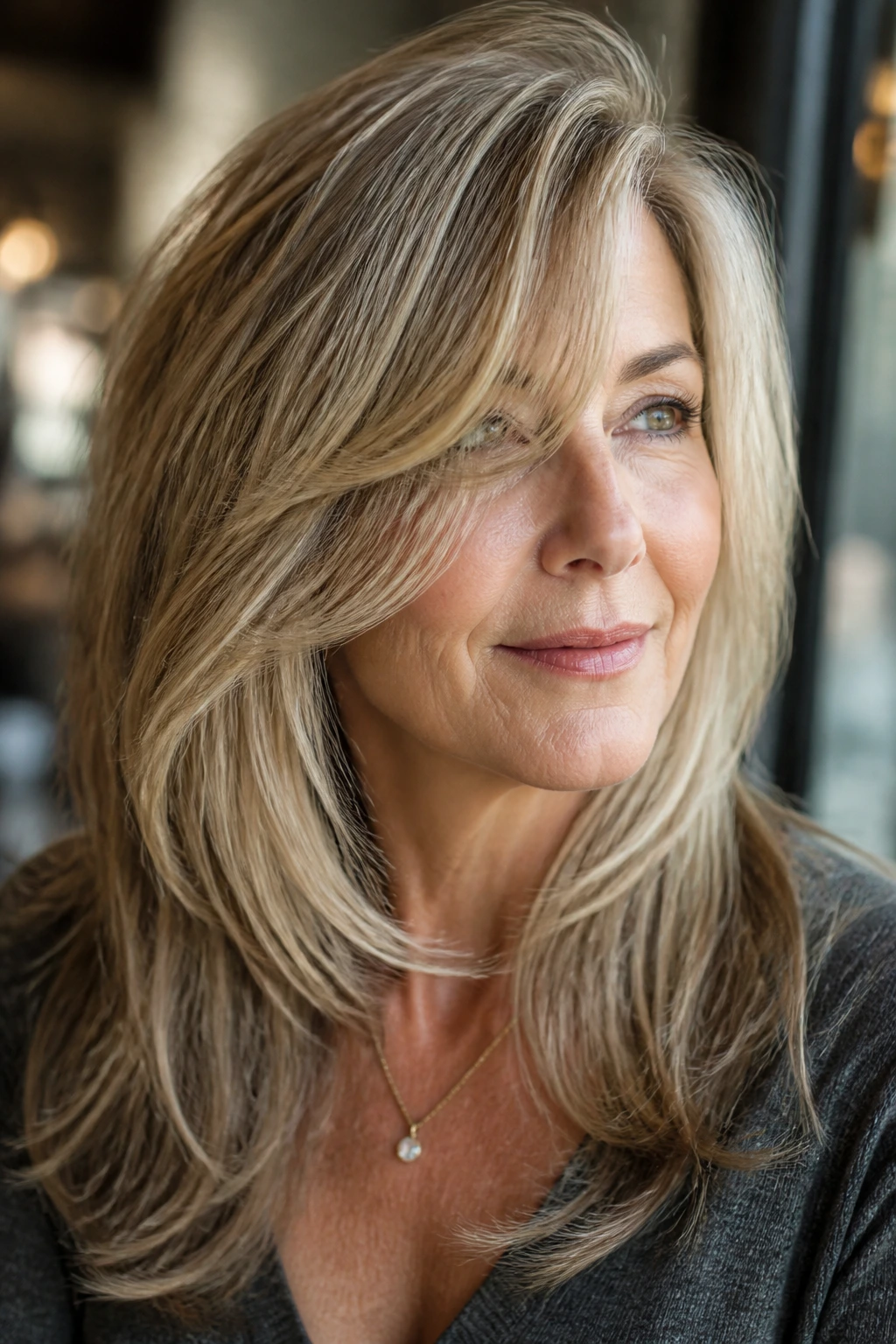
A deep side part changes the whole mood of long hair. It gives height at the crown, soft shadow near the temples, and a sweep across the forehead that feels elegant without being stiff.
The bang should be long enough to graze the brow and slide into the side layers. You don’t want a little chopped piece lying there. You want a sweep. That’s the difference between a haircut that looks styled and one that looks accidental.
This is a good choice if you like a little drama but don’t want something too trendy. It’s also a smart move for anyone with a cowlick in the front, because the part can be used to tame it instead of fighting it every morning.
16. Temple-Lift Layers With Bottleneck Fringe
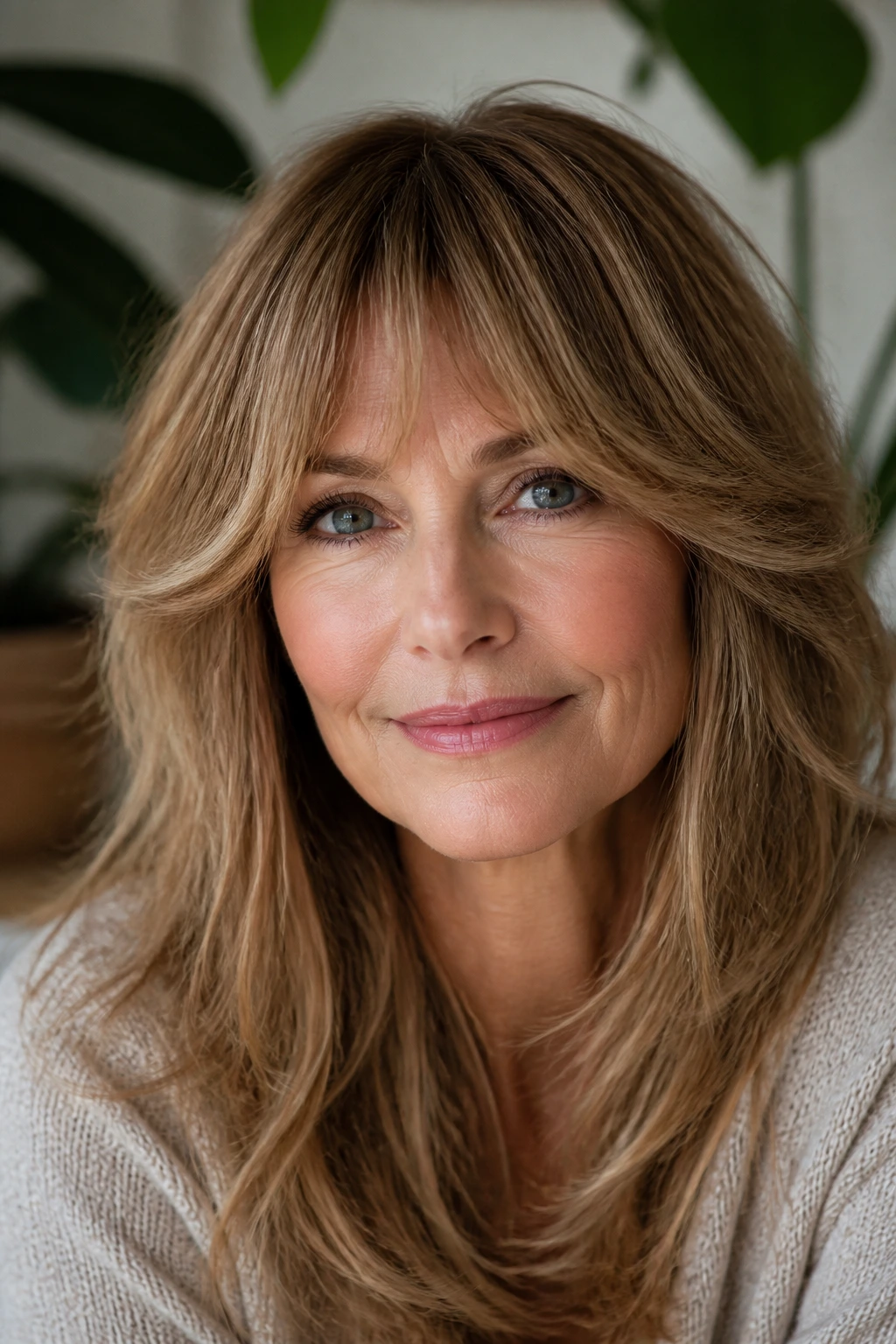
Temple lift sounds technical, but the idea is simple: keep the layers around the temples and cheekbones a touch shorter so the face looks lifted where it frames the eyes. That small adjustment can make long hair feel far more animated.
Bottleneck fringe is the natural partner. It starts narrow in the center, opens toward the sides, and creates a soft arch around the forehead. The shape is flattering without being heavy, and it doesn’t crowd the temples the way a blunt bang can.
This cut is one I like for people whose hair has gotten a little finer near the hairline. The temples don’t disappear, the fringe doesn’t swallow the face, and the long lengths still give you the option to pin or clip things back.
17. Sleek Straight Layers With a Full Fringe
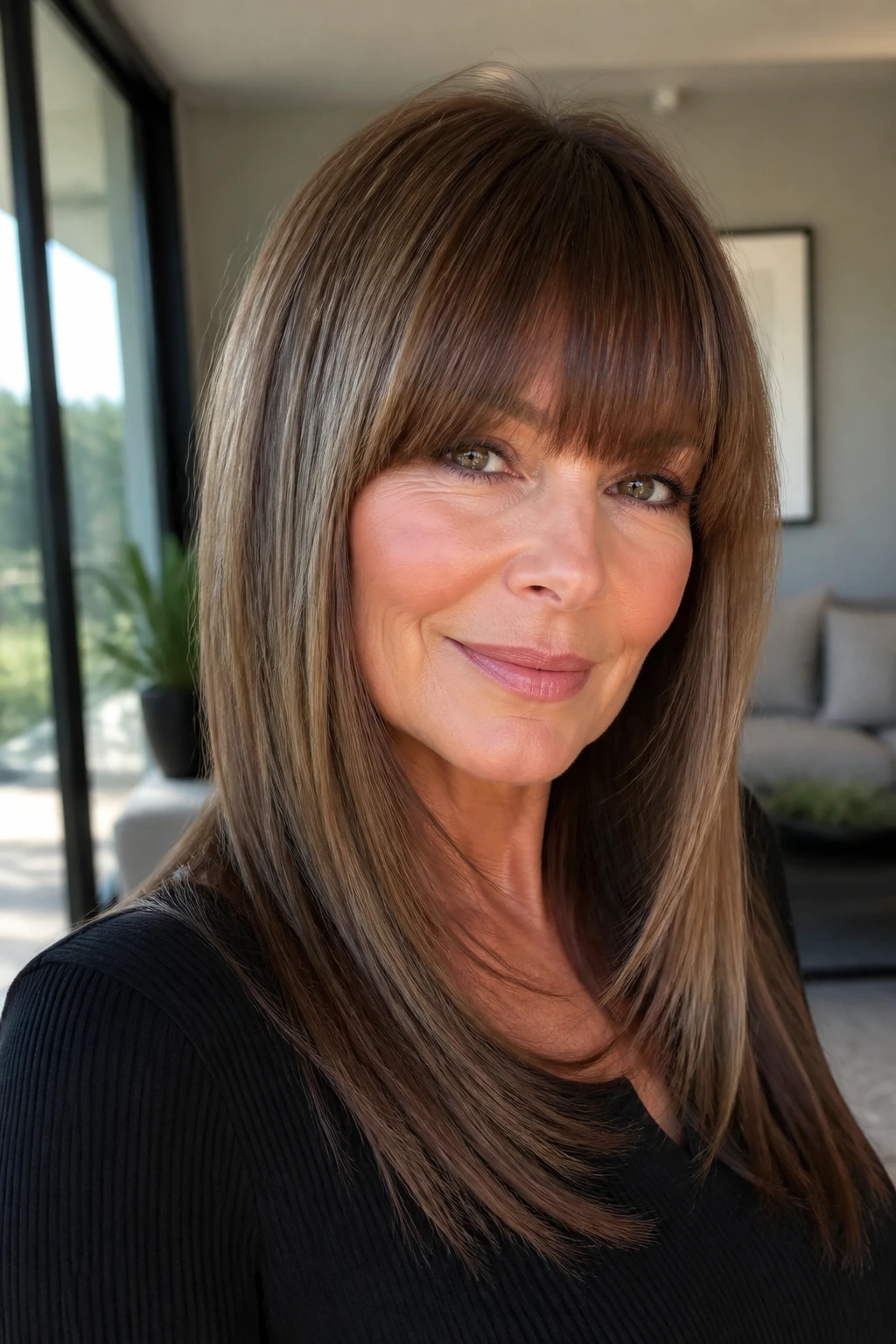
Straight hair doesn’t need to be feathered to death. Sometimes it looks best when the layers are precise and the bangs carry a little weight. A full fringe can be gorgeous on dense, straight hair if it’s cut with enough softness at the edges.
The trick is to keep the fringe long enough to sweep or split when you want it to. If it’s cut too short and too thick, the style can start feeling hard. A bit of point-cutting through the ends keeps it from looking helmet-like.
This is the cut for someone who likes a polished line and doesn’t mind using a flat iron or a blow dryer. It looks sharp with a simple center part, and it can read surprisingly soft if the ends are bevelled inward.
18. Long Shag With Sideburn Layers
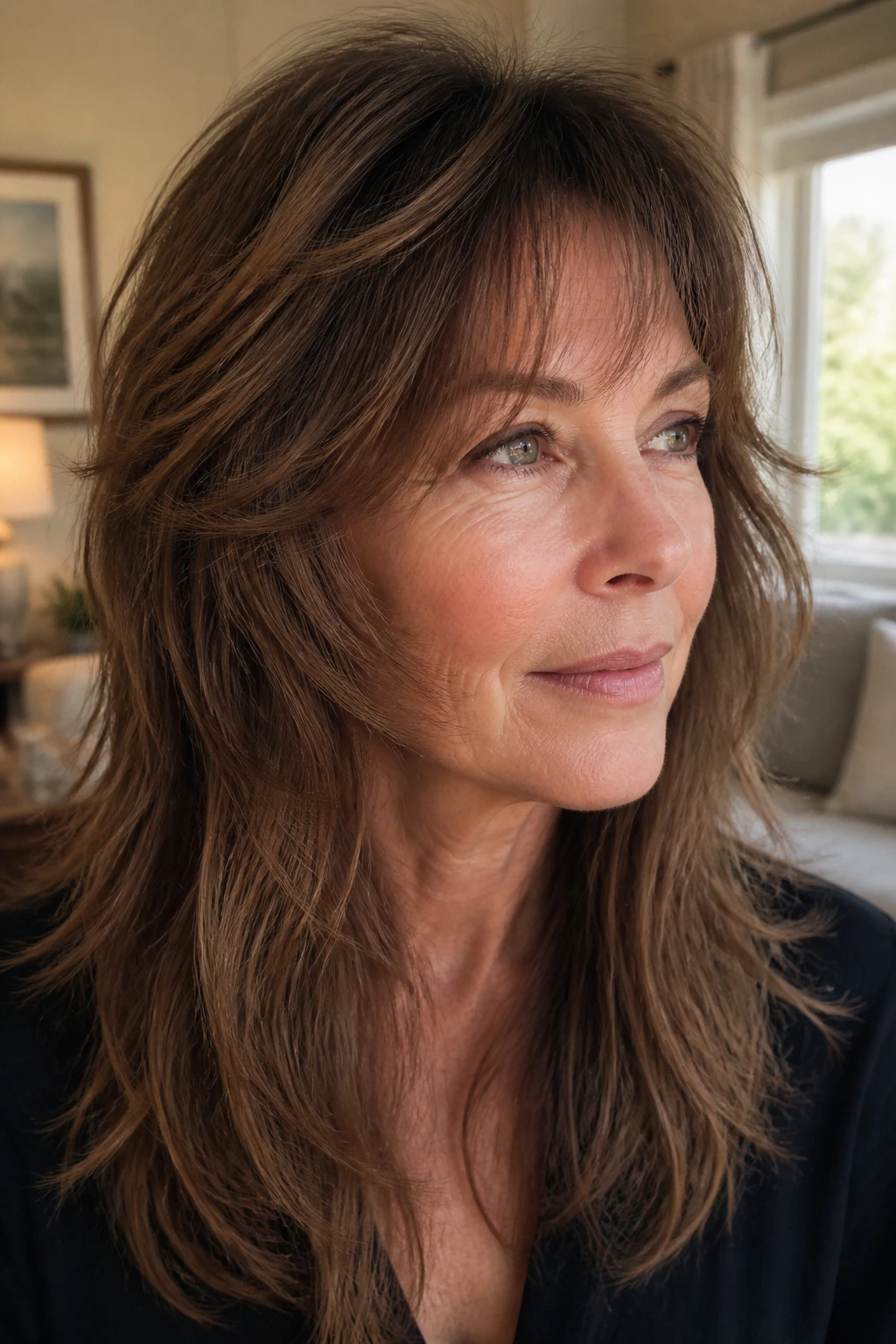
Sideburn layers are one of those little details that make a cut look expensive. They connect the bangs to the length and give the front a soft sweep right where the hair meets the jaw.
A long shag with sideburn layers has movement in front, movement at the crown, and a more relaxed shape through the bottom. It’s a little undone, but in a controlled way. The kind of controlled that still looks good if you’ve had to rush out the door.
This is a strong choice for wavy hair with a bit of natural texture. The layers can be air-dried with a light cream, then scrunched just enough to keep the ends from lying flat. It has that slightly effortless feel people keep trying to fake with too much styling product.
19. Face-Sculpting Angles From Jaw to Collarbone
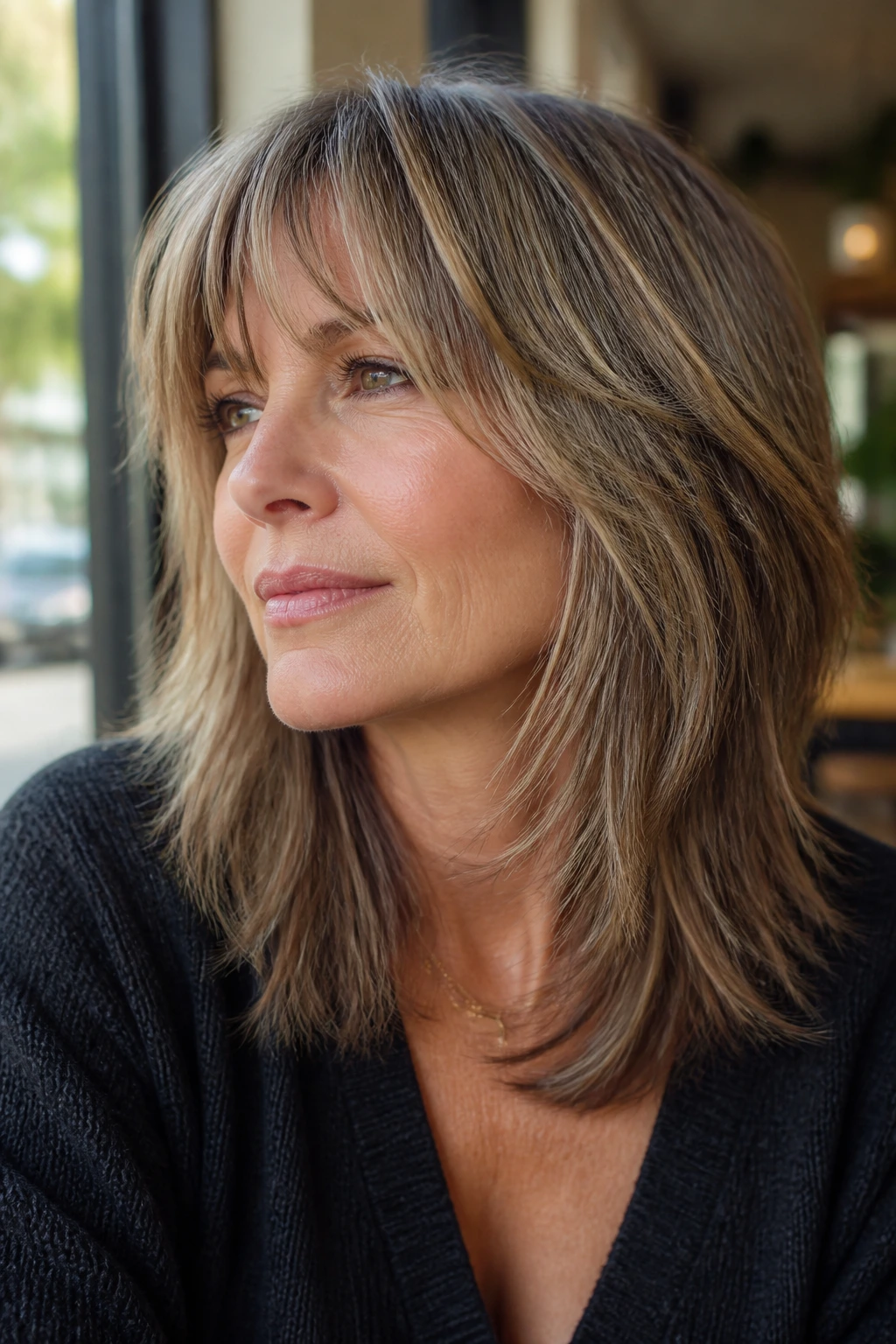
Here, the layers work like subtle contouring. The shortest front pieces skim the jaw, the next pieces fall around the cheekbones, and the longer lengths keep going down toward the collarbone. It creates a diagonal line that’s easy on the eyes.
The bangs should not be heavy. They need to blend into the angles so the haircut keeps moving. If the front gets too dense, you lose the sculpting effect and end up with a blocky top section.
This is a smart shape if your jawline is softer than it used to be, or if you just want more definition around the lower half of the face. The haircut does the framing for you. That’s the nice part.
20. Beveled Ends With Eyelash Bangs
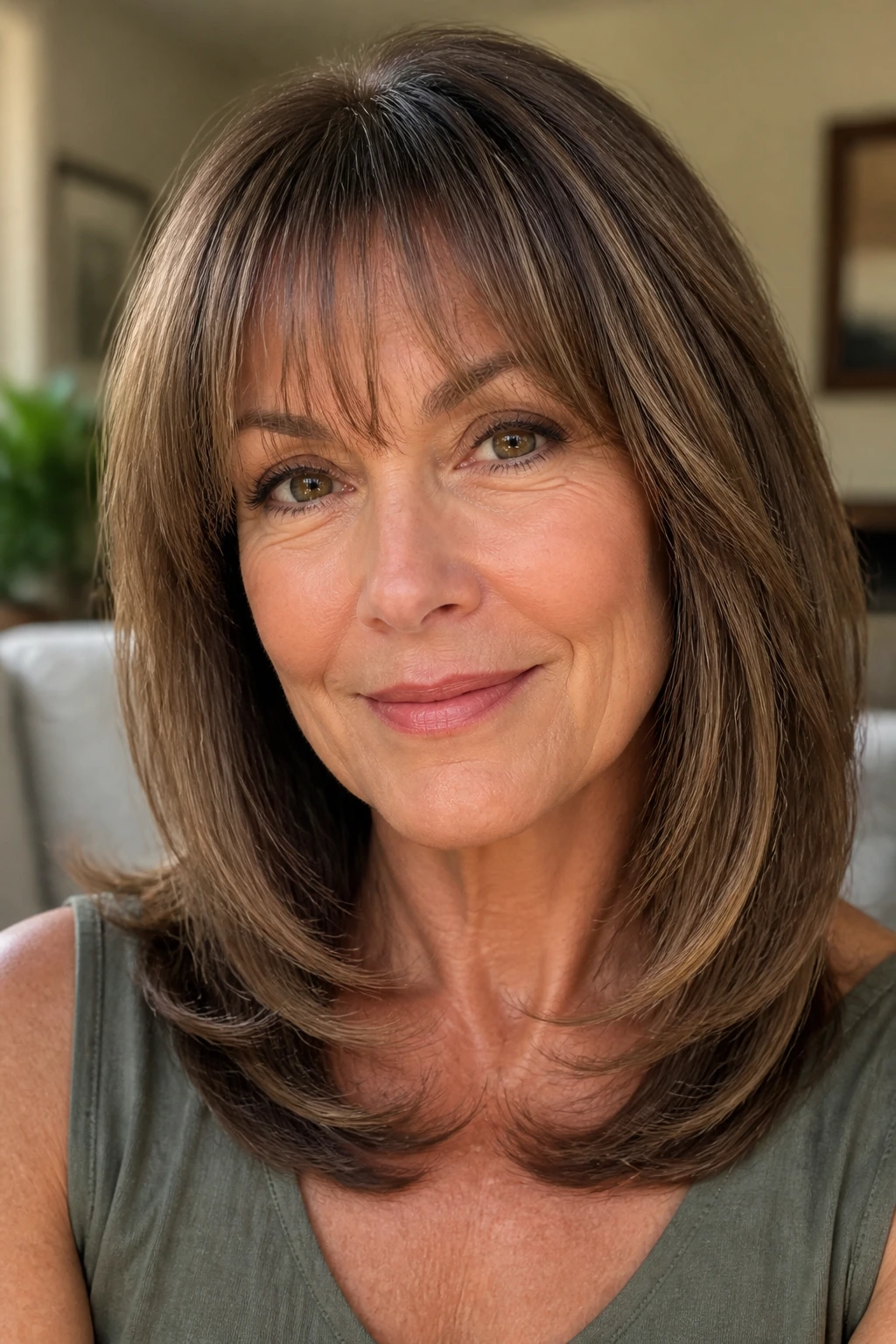
Beveled ends curl under or away from the face just slightly, which keeps the outline neat without looking stiff. On long textured layers, that tiny bend creates a finished edge that feels clean and polished.
Eyelash bangs bring the softness up front. They should graze the lashes or sit just above them, with enough texture that they can move aside when you need them to. Too blunt, and they go harsh fast.
This version works well for people who like a tidy finish but don’t want a blunt cut. It’s especially nice if your hair naturally falls straight, because the beveled edge gives the style some life without forcing a lot of curl into it.
21. Boho Layers With Brow-Grazing Fringe
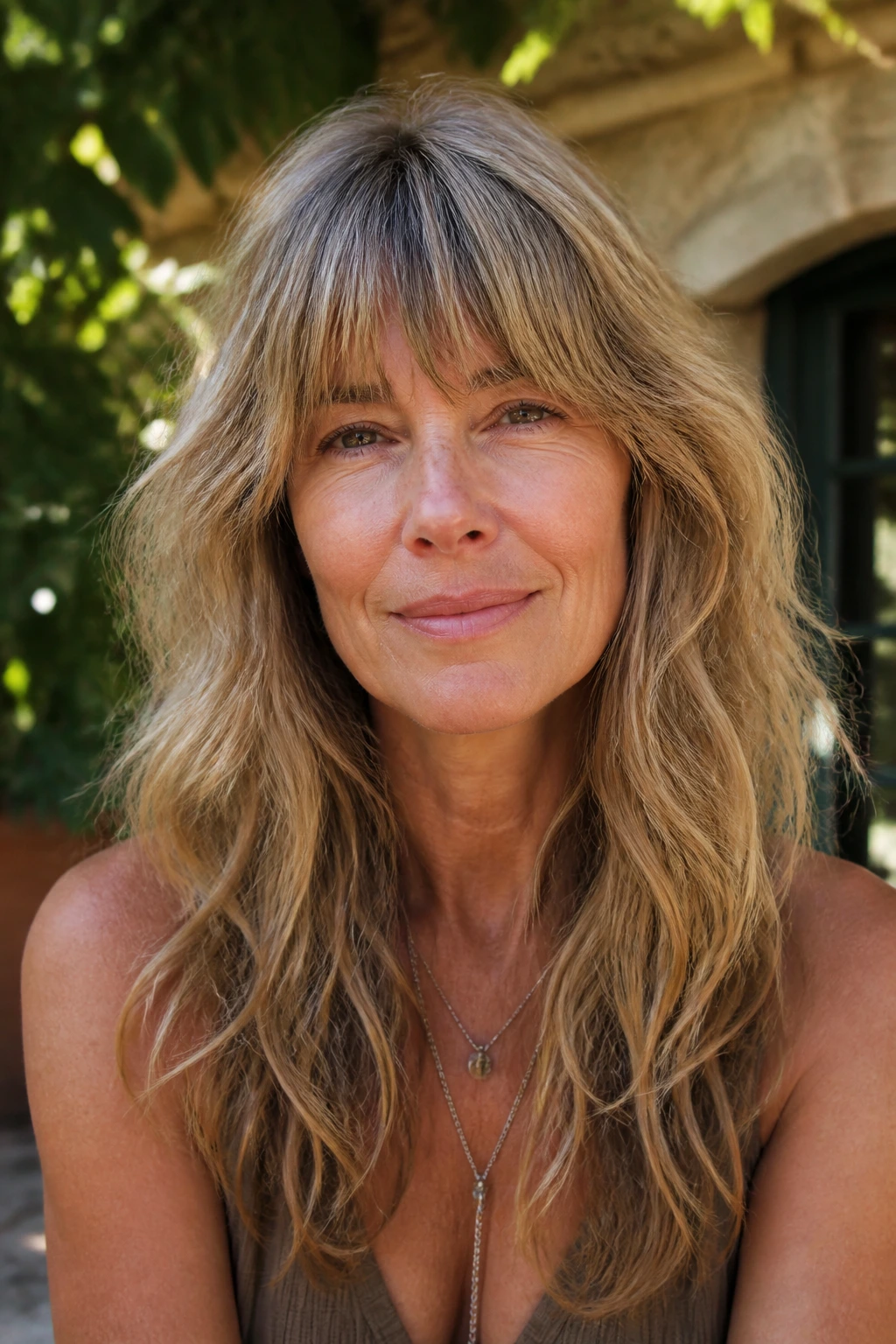
The boho version is less about structure and more about ease. The layers are long, soft, and a little irregular so the hair moves with a bend instead of sitting in a rigid shape.
Brow-grazing fringe keeps the look grounded. It’s short enough to matter, long enough to be forgiving. That’s what makes it wearable. You can part it, brush it forward, or push it aside, and none of those choices looks wrong.
I like this cut on hair that has a natural wave and a bit of softness in the density. It doesn’t need precision to look nice. It just needs a good haircut and a touch of texture cream.
22. Flipped-Out Ends With Curtain Bangs
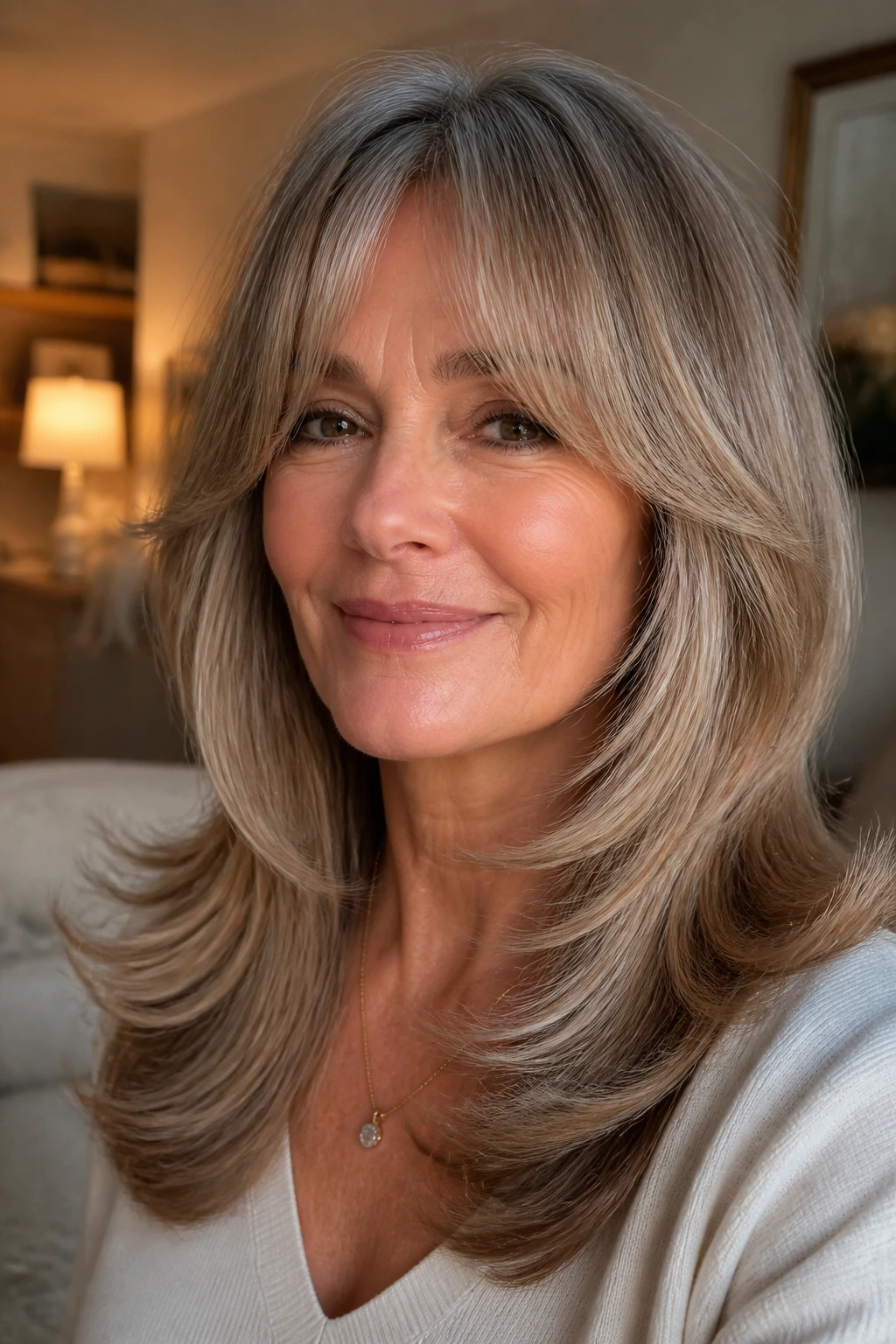
Flipped-out ends can look dated if they’re too set and too shiny, but a softer version has a lot of charm. The layers are cut so the ends flick away from the neck and shoulders instead of tucking in.
Curtain bangs balance that movement. They keep the front open, which stops the flipped shape from looking too broad or too retro. If the bangs are long enough to split naturally, the whole cut feels looser.
This one is particularly nice if you like a blow-dryer round brush finish but don’t want the hair to look overworked. The flip gives the style life. The curtain fringe keeps it from getting stuck in one decade.
23. Air-Dry Layers With Soft Split Bangs
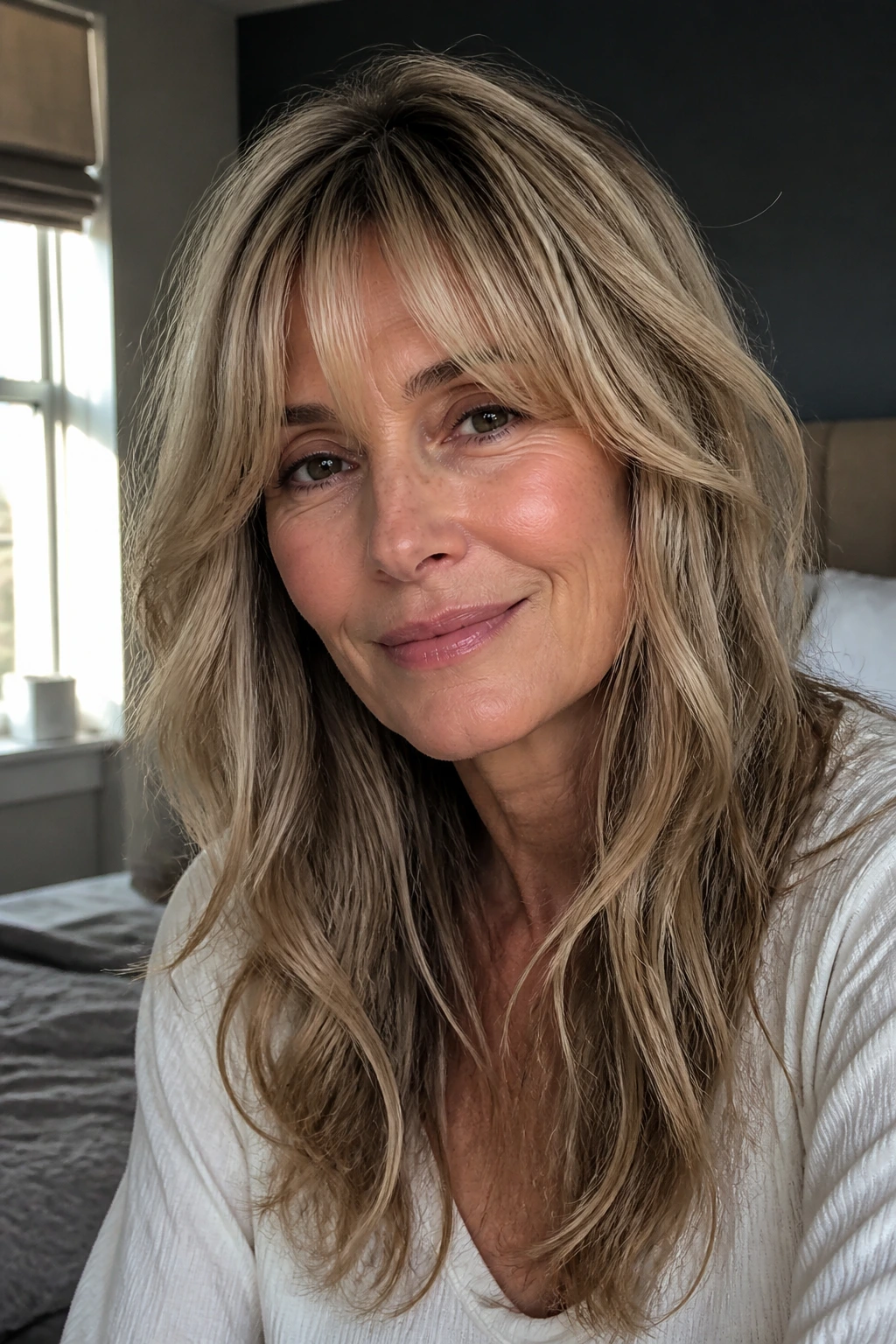
Some haircuts need a perfect blowout to behave. This is not one of them. Air-dry layers with split bangs are built for texture that already lives in the hair — wave, bend, a little curl at the ends.
The split fringe helps because it doesn’t insist on lying flat across the forehead. It opens in the middle and blends around the cheekbones, so even a quick dry still looks thought through. A little curl cream or leave-in milk is usually enough.
This is the cut I’d point to for someone who wants to spend less time with a round brush and more time actually leaving the house. It looks best with a soft bend, not stiffness, so don’t overdo the smoothing serum.
24. Invisible Layers With a Thin Fringe
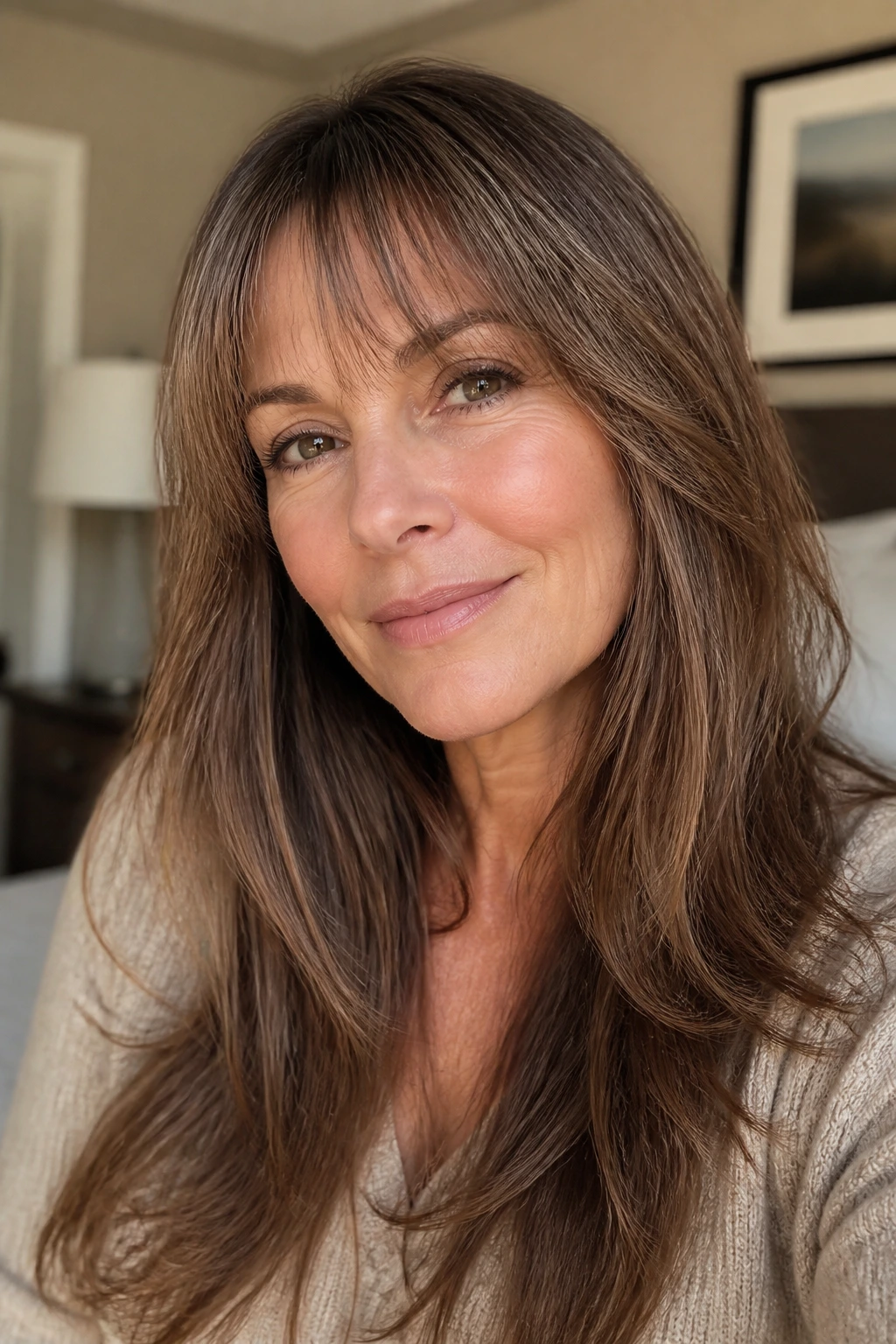
Invisible layers are subtle. They’re cut inside the shape so the outside line still looks long and sleek, but the hair has less bulk and more internal movement. It’s one of the best tricks for people who want polish without obvious choppiness.
A thin fringe keeps the front light. Not sparse — light. The difference matters. It should skim the forehead and sit like a veil, not a strip. That keeps the hair from looking crowded at the top.
This style is good if you like a smoother, glassier finish and don’t want pieces flying everywhere. It’s a refined option, and yes, it needs more accurate cutting than people think. Tiny errors show up faster here.
25. Volume-Rich Blowout Layers With Long Swooped Bangs
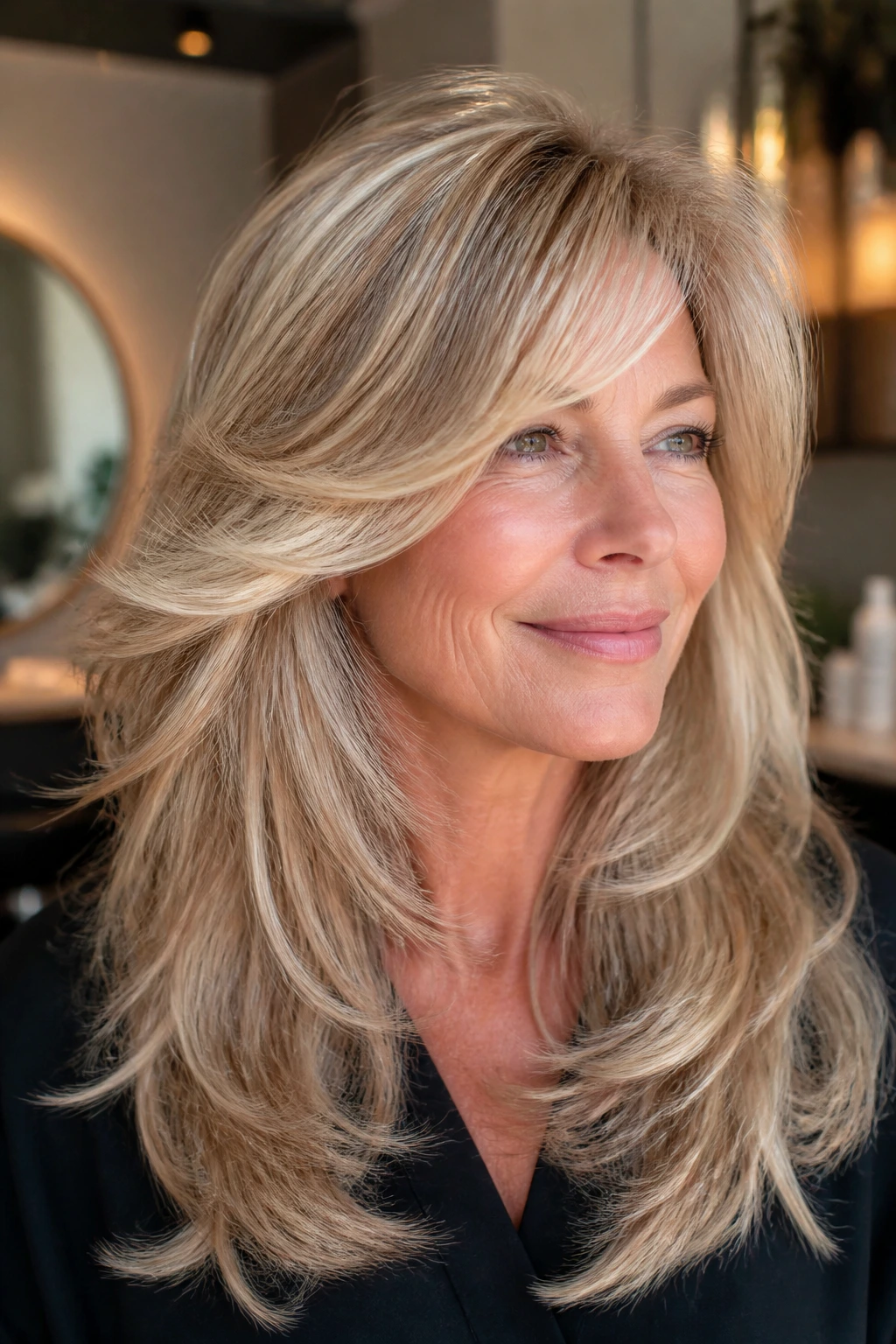
This is the big one. The layers are cut to support lift at the crown, fullness through the mid-lengths, and a longer bang that sweeps into the rest of the hair like it was meant to be there all along.
Long swooped bangs are flattering because they add height without swallowing the face. The sweep gives the front movement, and the long layers keep the body going down the sides so the shape doesn’t get round in the wrong places.
If you like a blowout that feels full but not stiff, this is the cut to save. It likes a medium round brush, a root-lifting spray, and a cool shot at the end to lock the bend in place. Simple tools. Good payoff.
Why the Right Layer Placement Matters More Than the Length
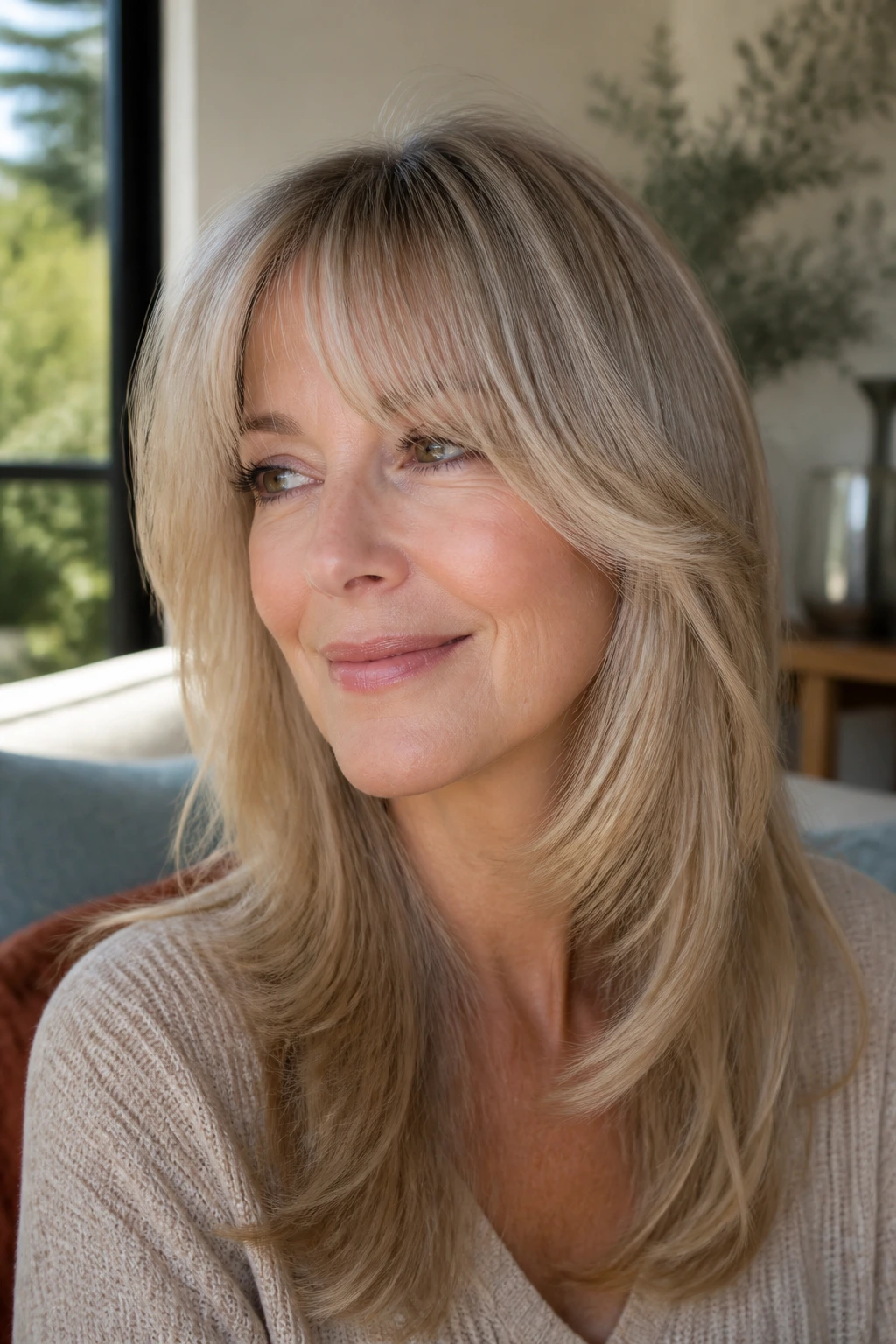
The real decision in long textured layers with bangs for women over 50 is not “long or short.” It’s where the layers start. Start them too high, and the hair can look overcut. Start them too low, and the whole shape hangs straight and heavy.
Chin, cheekbone, and collarbone are the three lengths I pay the most attention to. Chin-level layers open the face. Collarbone layers keep density at the bottom. Cheekbone pieces do the lifting right where mature faces usually benefit from a little softness, especially around glasses or a stronger jaw.
Fine, thick, straight, or wavy?
Fine hair usually needs longer layers and lighter bangs, because too much internal cutting can make the ends look see-through. Thick hair can take more texture, but even there, I prefer long layers over a lot of short choppy bits. Straight hair often needs beveled ends or a clear blow-dry shape. Wavy hair can tolerate more movement and still look intentional.
The haircut should match how you wear it on your busiest day, not your best one.
Essential Tools for Styling Long Layers With Bangs
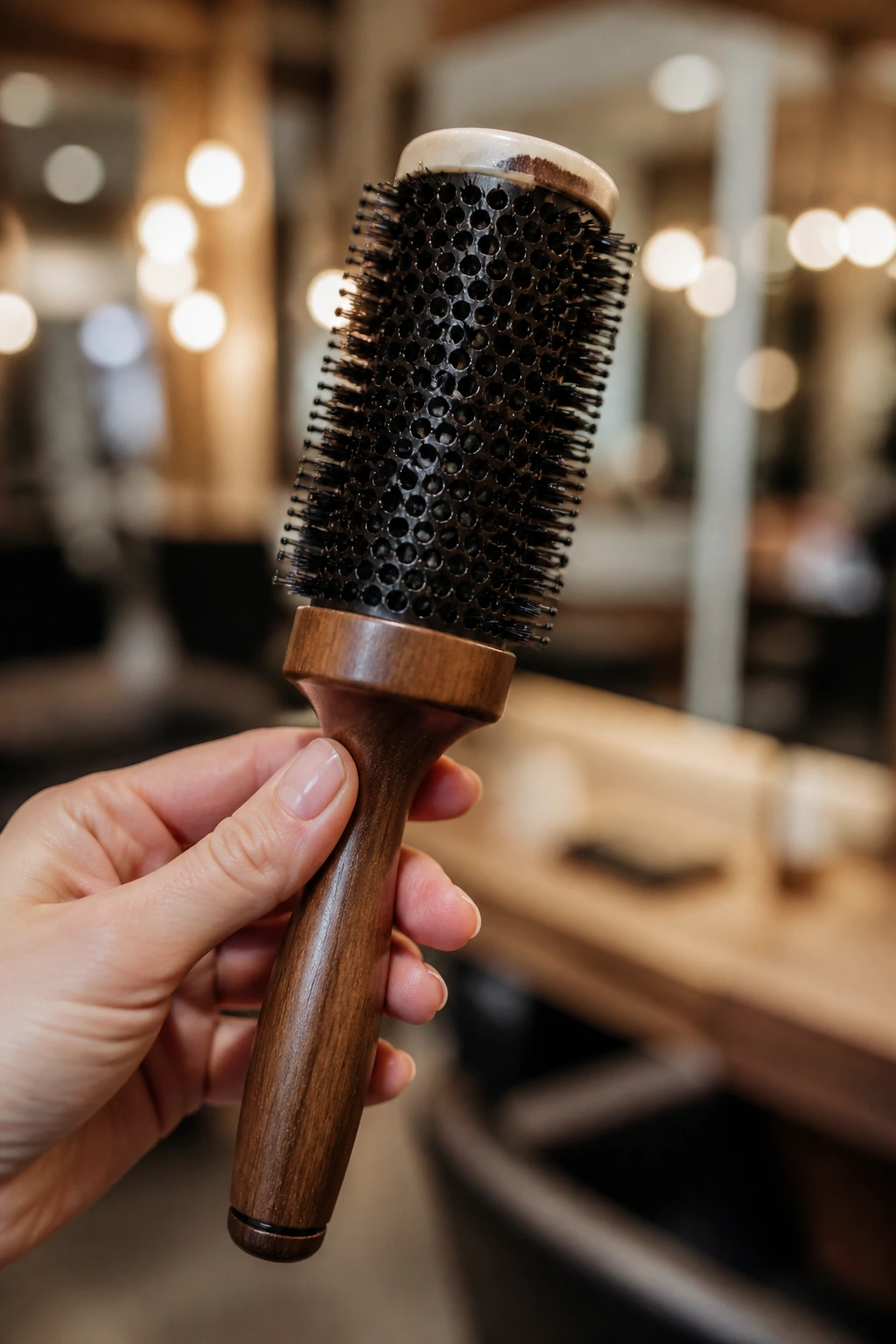
- A 1.25- to 1.5-inch round brush: This gives enough bend through the bangs and front layers without making the ends curl into little corkscrews.
- A blow dryer with a nozzle attachment: The nozzle focuses air so the fringe dries smooth instead of puffy.
- Lightweight root-lift mousse or spray: A small amount at the crown helps long layers keep shape for more than an hour.
- Heat protectant: Essential if you use a round brush, flat iron, or hot rollers. Fine hair in particular gets tired fast from repeated heat.
- Duckbill clips: Useful for setting the crown, pinning the fringe while it cools, or keeping front pieces in place while you dry the rest.
- Texture spray or dry shampoo: A little goes a long way on piecey layers or next-day bangs.
- A small flat iron: Handy for a bend in the bangs or smoothing a stubborn side piece, but not mandatory.
- A silk or satin pillowcase: Helps the fringe and face-framing pieces stay smoother overnight, especially if your hair frizzes at the temples.
What to Tell Your Stylist Before the First Snip
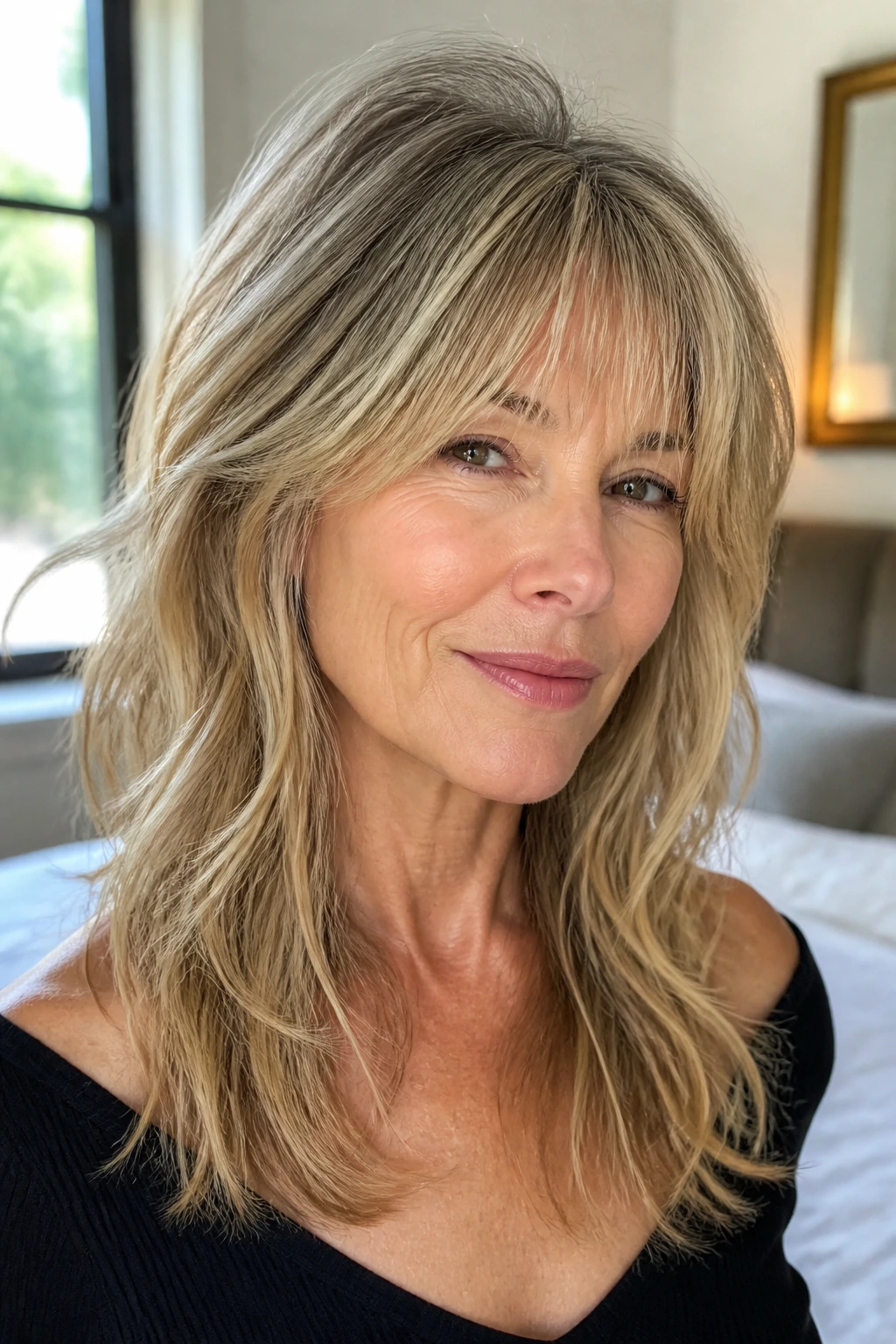
Bring photos, yes, but bring the right photos. Show one photo of the overall shape, one of the bangs, and one of a hairline or texture you like. A single picture rarely tells the whole story, and the parting, density, and face shape often matter more than the outfit in the photo.
Say how much time you actually want to spend styling. That one detail changes everything. If you want a five-minute blow-dry, your stylist should not build you a cut that only works with a curling brush, a clip set, and 20 minutes of effort. Be blunt about that. It saves everybody trouble.
Also say where your part lives, whether you wear glasses, and how your hair behaves around the hairline. Cowlicks at the front can push bangs apart; growth at the temples can make the front pieces kick out. A good stylist will cut around those realities instead of pretending they don’t exist.
How to Style Long Layers With Bangs at Home
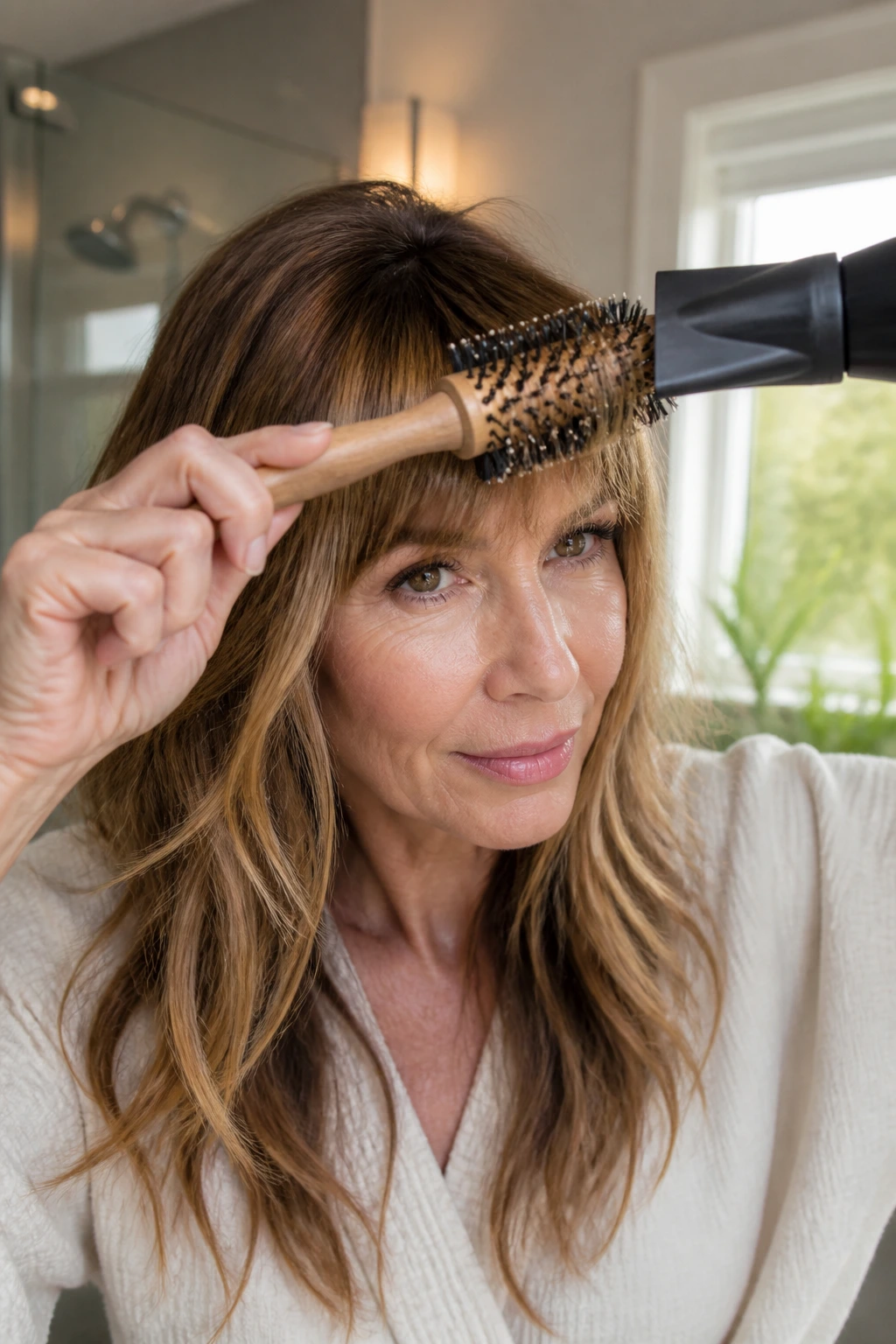
Start with the front. Always. Bangs and face-framing pieces set the tone for the whole haircut, and if they dry wrong, you spend the rest of the blow-dry trying to fix them. A quick rough dry to about 70 percent, then a round brush or a small flat brush through the fringe, usually works better than attacking the whole head at once.
Use a medium heat setting and a cool shot at the end. That cool hit matters more than people think. It helps the bang hold its bend instead of dropping flat the minute you walk outside. If the ends flip in odd directions, wrap them around the brush and let them cool before you pull them out.
For air-dry styles, scrunch a small amount of cream through damp hair, twist the front pieces away from the face, and leave the fringe split while it dries. Don’t keep touching it. The more you fuss with drying bangs, the faster they lose their shape.
Small Tweaks That Make the Cut Feel More Modern
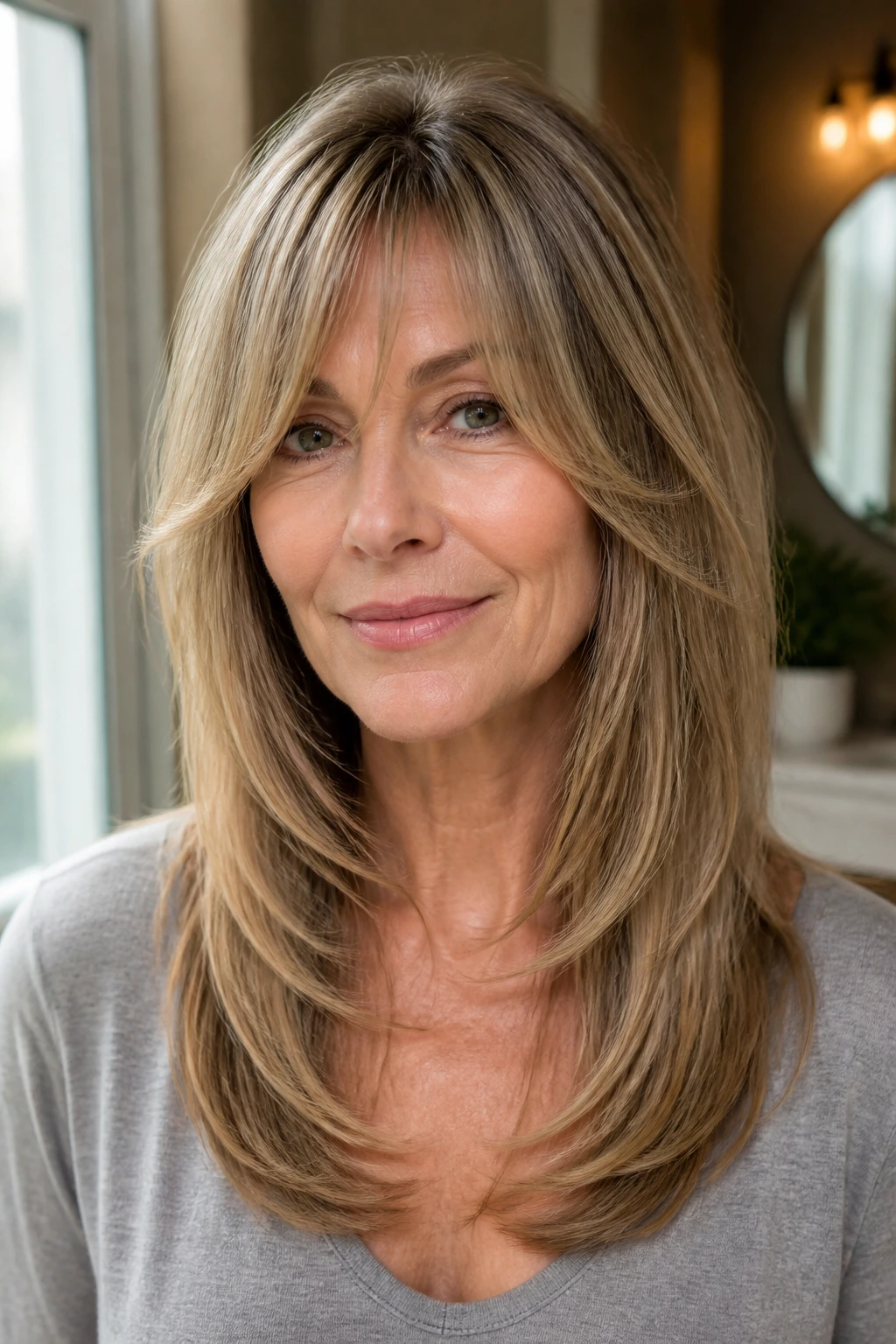
Lift at the crown: A bit of root spray at the top of the head makes long layers look fuller, especially if your hair has gone flatter over time. Spray at the roots, not the lengths.
Bend the front away from the face: A slight outward bend at the cheekbone keeps the front pieces from clinging to the jaw. It sounds tiny. It changes everything.
Keep the ends soft, not wispy to the point of nothing: The haircut should feel textured, not stripped. If the ends look see-through in daylight, the layering went too far.
Use one finish product, not three: A light serum, a dry texture spray, or a mousse can each do a job. All three together usually end in weighed-down bangs and greasy temple pieces.
Tuck one side back when you want instant lift: This works especially well with curtain bangs or side-swept fringe. A little asymmetry stops long hair from looking too arranged.
Common Mistakes That Make Long Layers Look Heavy or Fussy
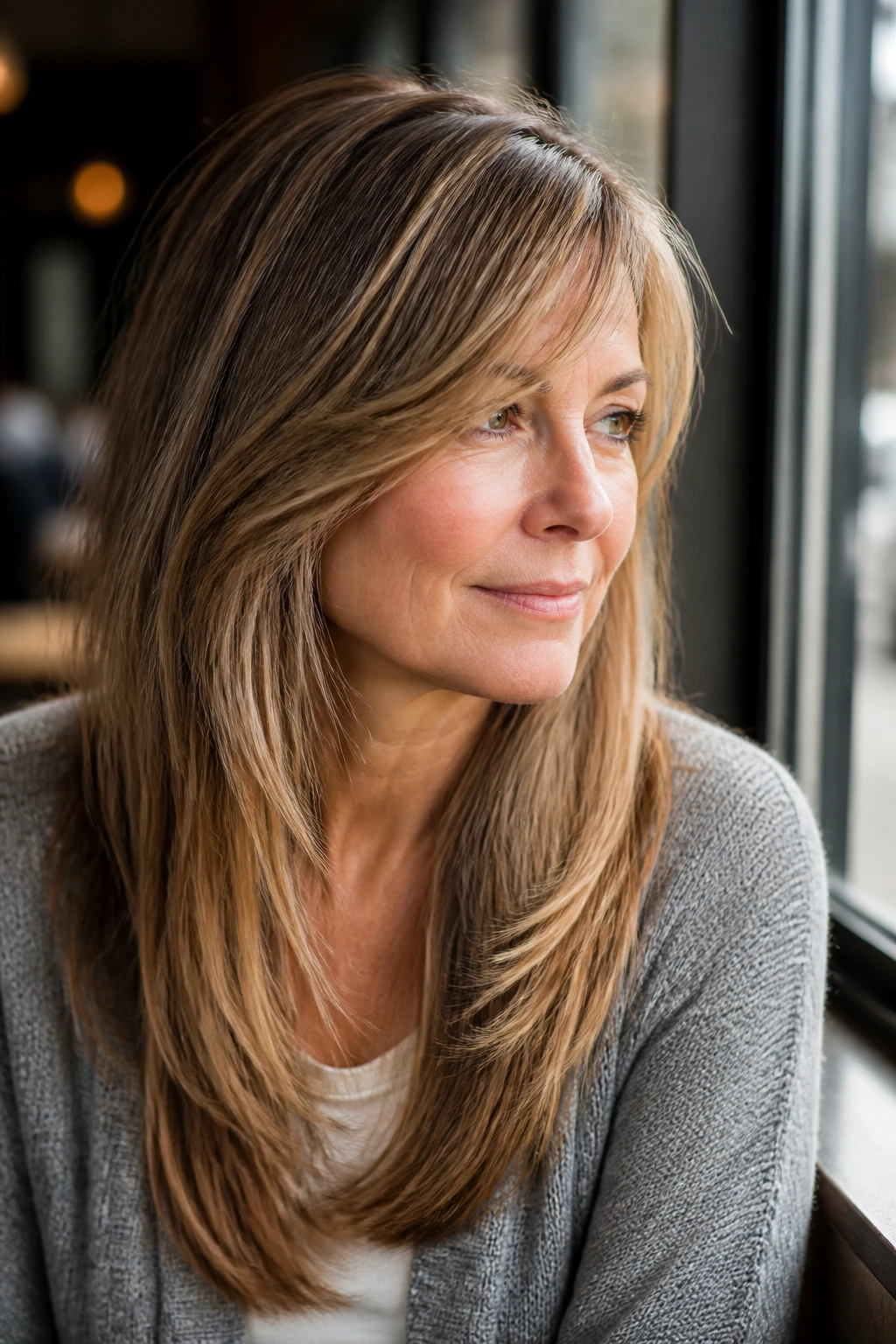
Bangs cut too short: Short fringe can look abrupt, especially on thicker brows or stronger features. The fix is simple: keep the bang long enough to sweep, split, or pin back.
Layers starting too high: When the shortest layers begin near the eyes or temples, the top half can get puffy and uneven. Ask for the shortest layers to begin around the chin or collarbone unless your hair is extremely dense.
Too much thinning on fine hair: Razor-thinning can make the ends look airy in the salon chair and sparse at home. If your hair is fine, ask for soft shaping instead of aggressive texturizing.
Ignoring the natural part: Forcing a middle part on hair that wants a side part often makes bangs split in awkward places. Work with the growth pattern first, then adjust.
Heavy creams on the fringe: Bangs are the first place product shows. If they clump together by noon, you used too much. Use the smallest possible amount.
Skipping trims for too long: Long layers grow out better than blunt cuts, but they still need a shape-up. Once the front pieces stop connecting, the style starts looking tired.
Variations and Adaptations for Different Hair Types and Lifestyles
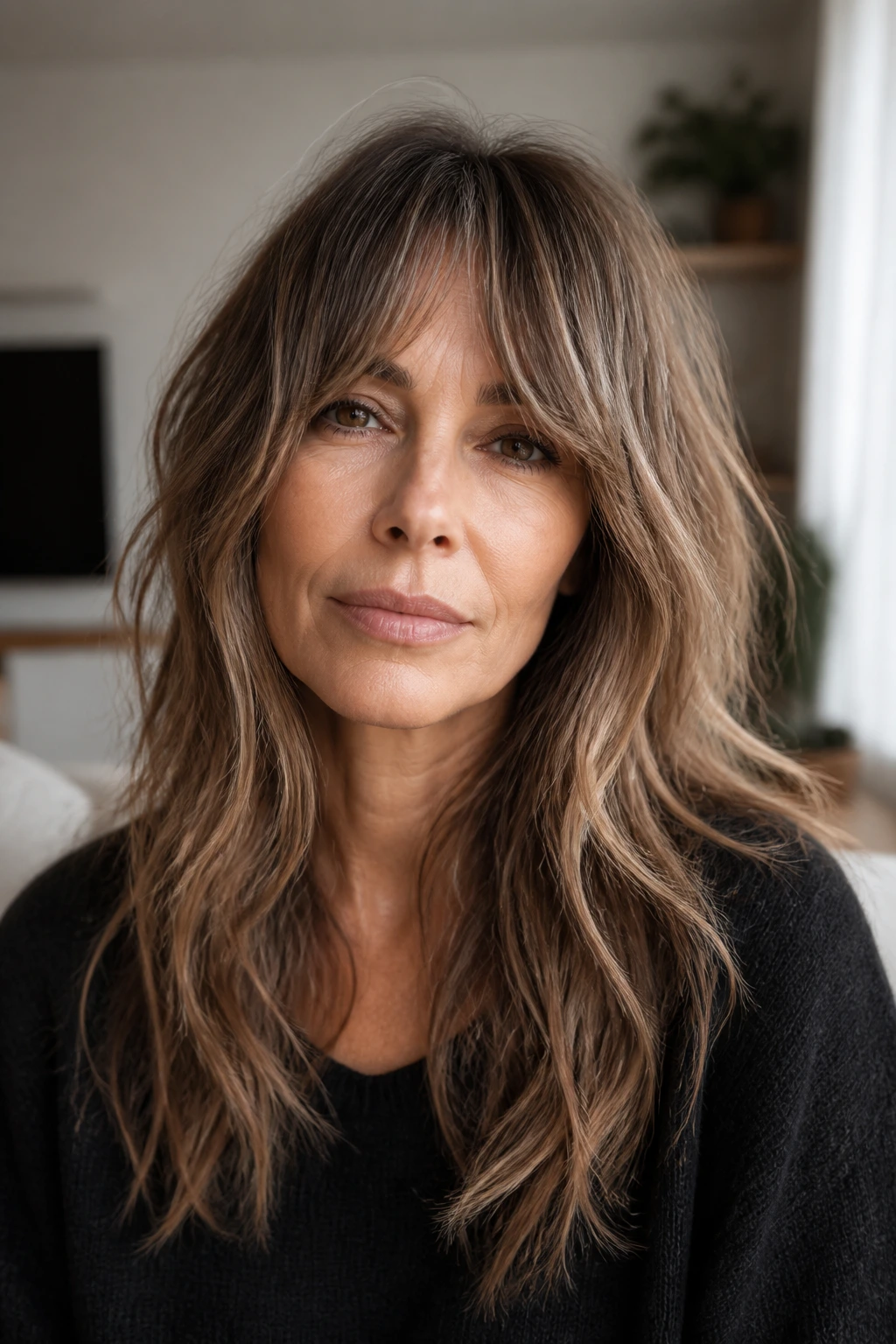
The Fine-Hair Airy Frame: Keep the layers long, the texture light, and the fringe wispy. This version is built to preserve density at the bottom while giving the front a little lift.
The Thick-Hair Shape Controller: Ask for long internal layers and soft point-cut ends. The point here is to remove bulk without turning the hair into strips.
The Curly Halo: Let the layers follow your curl pattern and keep the fringe curl-friendly. A curly fringe can look fantastic when it’s cut dry and shaped around the face.
The Glasses-First Cut: Choose curtain or bottleneck bangs that land above the top of the frame or sweep around it. The front should open, not crowd.
The Silver-Sheen Version: Long layers with airy bangs and a soft blow-dry show off gray and white strands without making the haircut look severe.
The Low-Effort Wearer’s Cut: Keep the bangs long, the layers blended, and the ends soft enough to air-dry. This one is for the person who wants a haircut that still looks decent when the morning goes sideways.
Maintenance, Trims, and Overnight Care
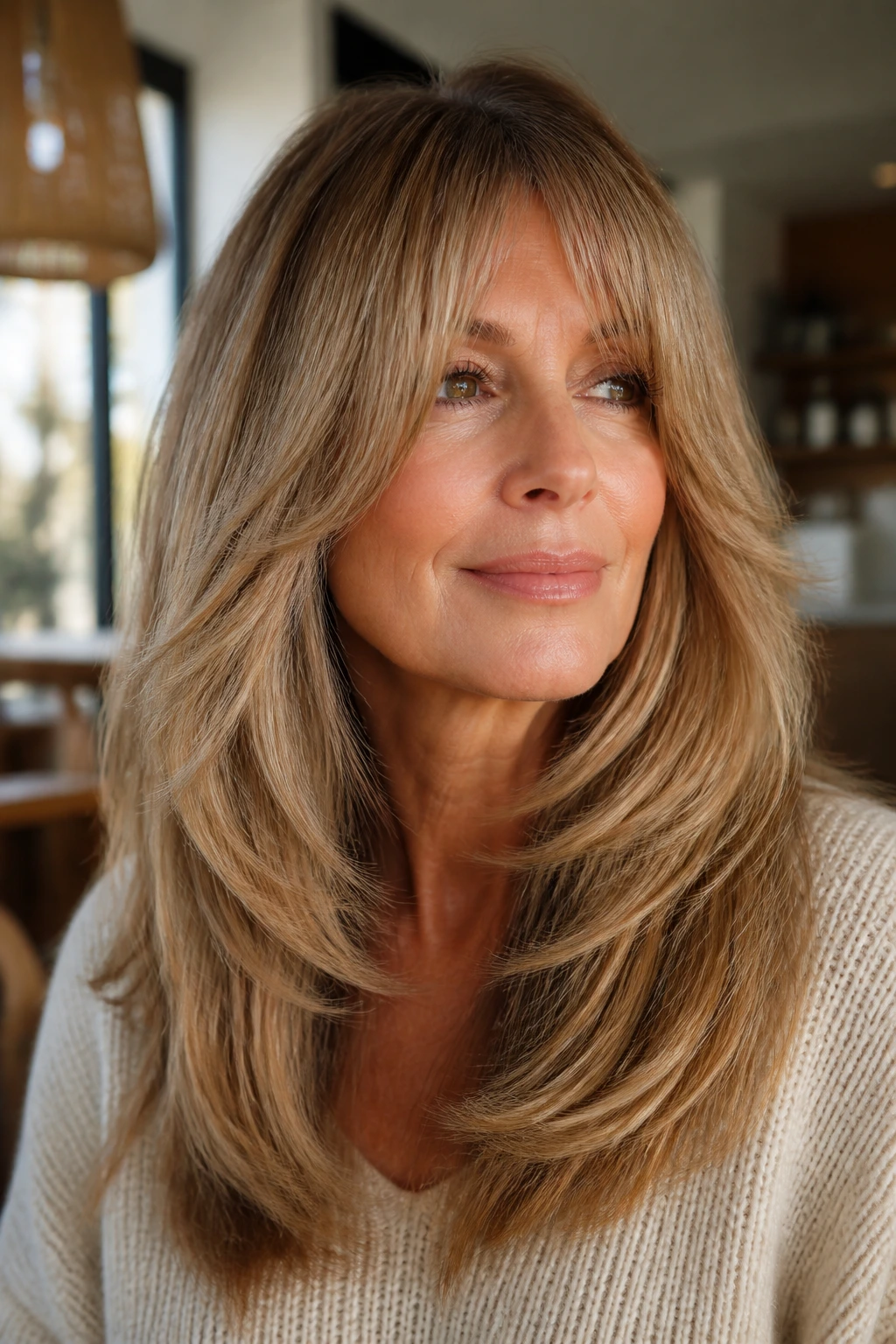
Long layers can stretch longer between cuts than shorter styles, but the bangs are the real maintenance item. Plan on a bang trim every 3 to 5 weeks if you want the fringe to keep its shape. The rest of the cut usually wants a clean-up every 8 to 12 weeks, depending on how fast your hair grows and how precise the front layers are.
At night, use a loose clip for the front pieces if your hair kinks easily, or switch to a silk pillowcase so the bangs don’t wake up bent in a weird direction. If the front gets flat overnight, mist it lightly with water in the morning, then re-dry just the fringe and the face-framing pieces with a round brush or small brush.
For next-day refreshes, dry shampoo at the roots and a tiny bit of texture spray through the mid-lengths is enough most of the time. Don’t soak the lengths again unless they actually need it. Over-wetting the front every day can make the bangs weak and the ends frizzy.
Frequently Asked Questions About Long Textured Layers With Bangs
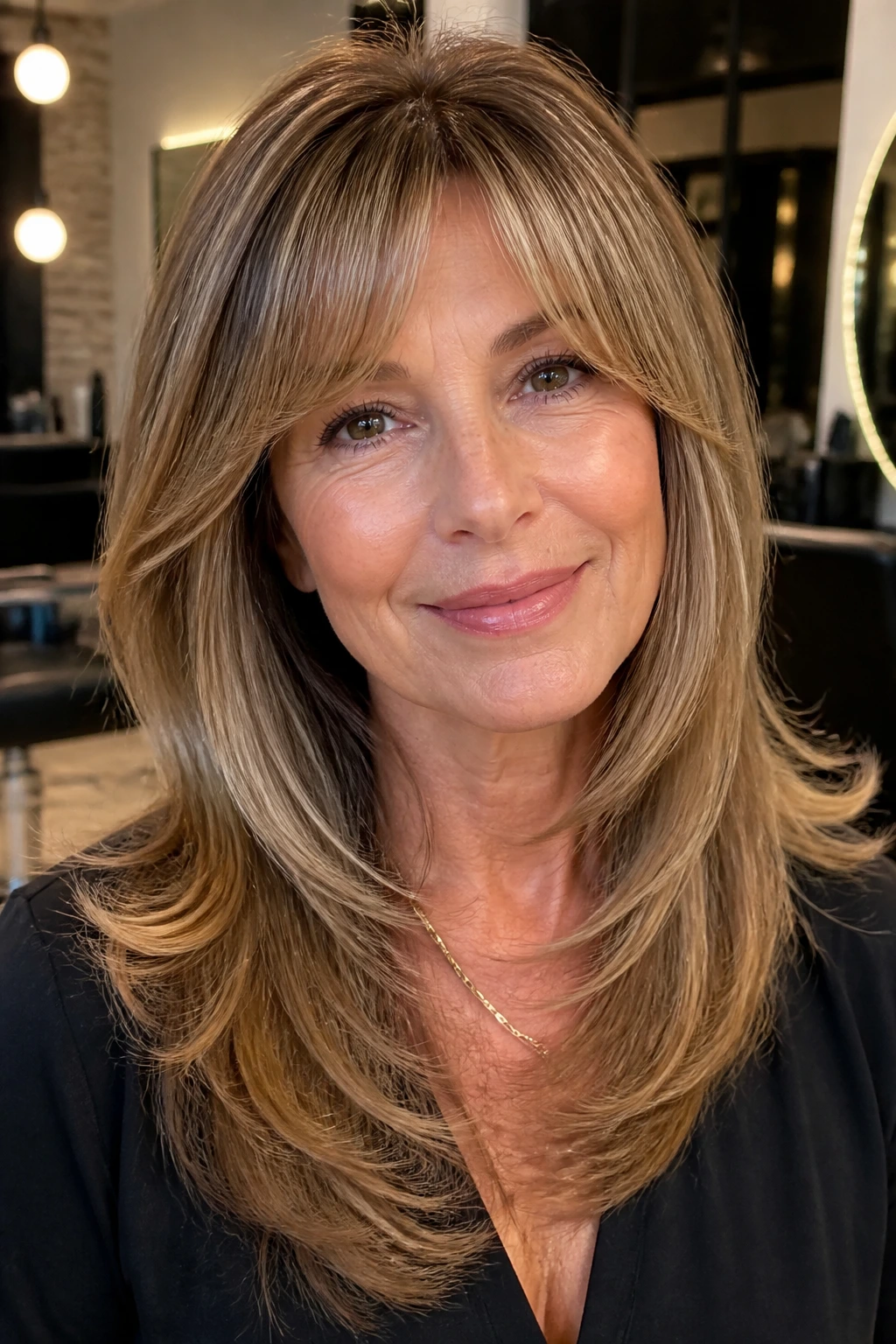
Will long textured layers make fine hair look thinner?
They can, if the cut is too aggressive. The safer move is to keep the layers long, start them lower, and leave enough weight at the bottom so the hair still looks full at the ends.
What bangs are easiest to live with if I wear glasses?
Curtain bangs and bottleneck bangs usually behave best because they can open around the frame instead of sitting hard on top of it. A long side-swept fringe is another good choice if your frames are thicker.
How often should I trim the bangs?
Every 3 to 5 weeks is a good range for most fringe shapes. If you let them go much longer, they start falling into your eyes and the whole front loses its shape.
Can curly hair wear long layers with bangs?
Yes, but the cut has to respect curl pattern and shrinkage. A dry curl cut or a stylist who knows how your curls spring up will make a huge difference.
What if my bangs split in the middle?
That usually means the cowlick or parting pattern is stronger than the fringe cut. Try drying the fringe in the direction you want it to sit, then let it cool in place with a clip or brush.
Do I need a blowout every time?
No. A lot of these cuts are designed to look good with a soft bend or an air-dried finish. The blowout just gives you a cleaner outline and a little more lift at the front.
Which is easier to grow out: curtain bangs or full bangs?
Curtain bangs are much easier. They blend into the layers as they grow, while a full blunt fringe needs more precise trimming to stay neat.
What if my hair flips out at the ends?
That usually means the layers or the drying direction are encouraging it. Use a round brush or a quick flat-iron bend to decide whether the ends should curl under or sit straighter, then keep the finish consistent.
The Shape That Still Feels Like You
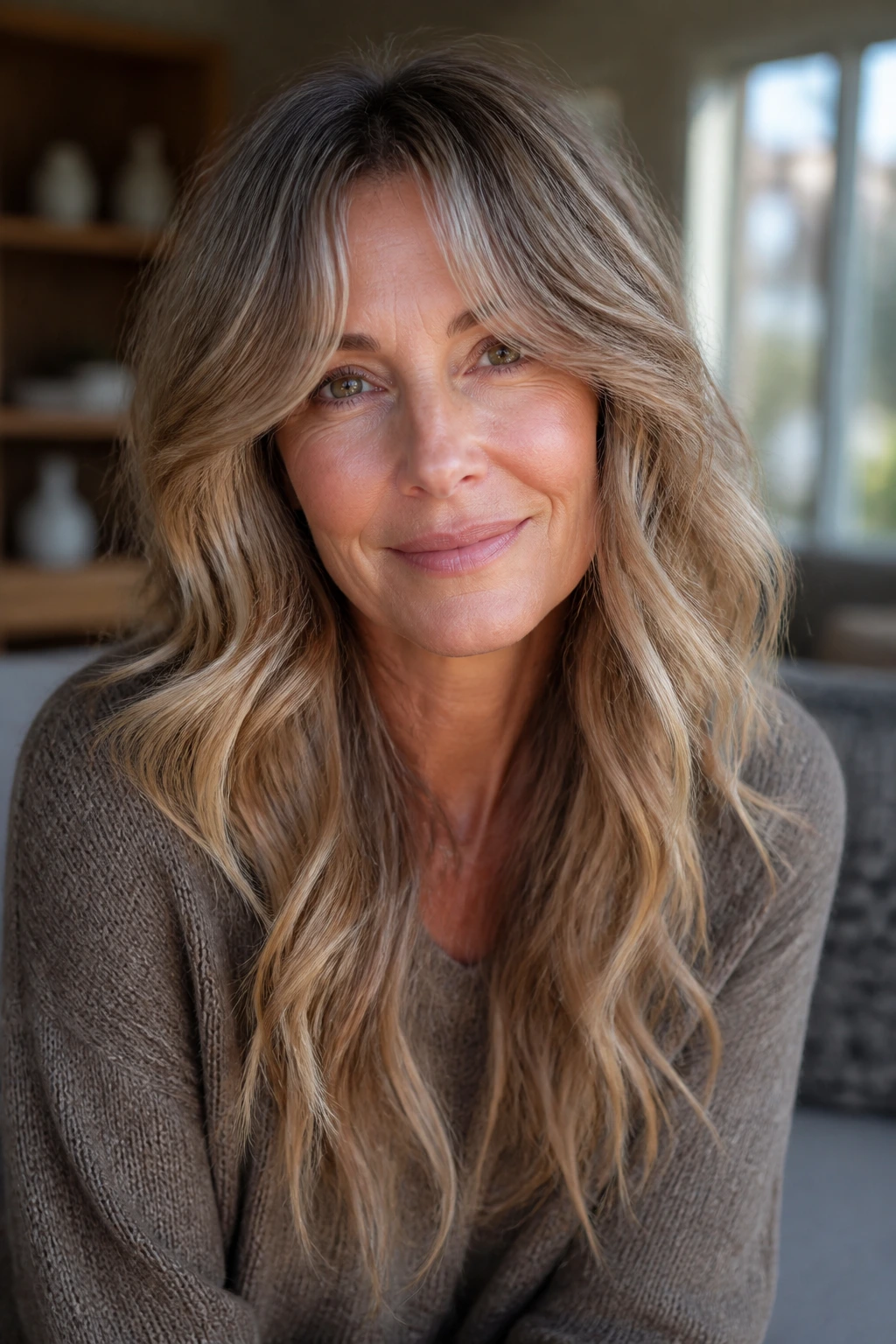
A good long layered cut with bangs doesn’t try to erase anything. It works with the hair you have, the texture you actually live with, and the way you move through your day. That’s why these styles hold up: they’re not built on fantasy hair. They’re built on shape, balance, and a little bit of common sense.
If you’re taking one idea from this, make it this one: the front matters. A few well-placed layers and the right fringe can change the whole haircut more than inches off the bottom ever will. Next time you sit in the chair, ask for softness around the face first, then let the rest of the length follow.