



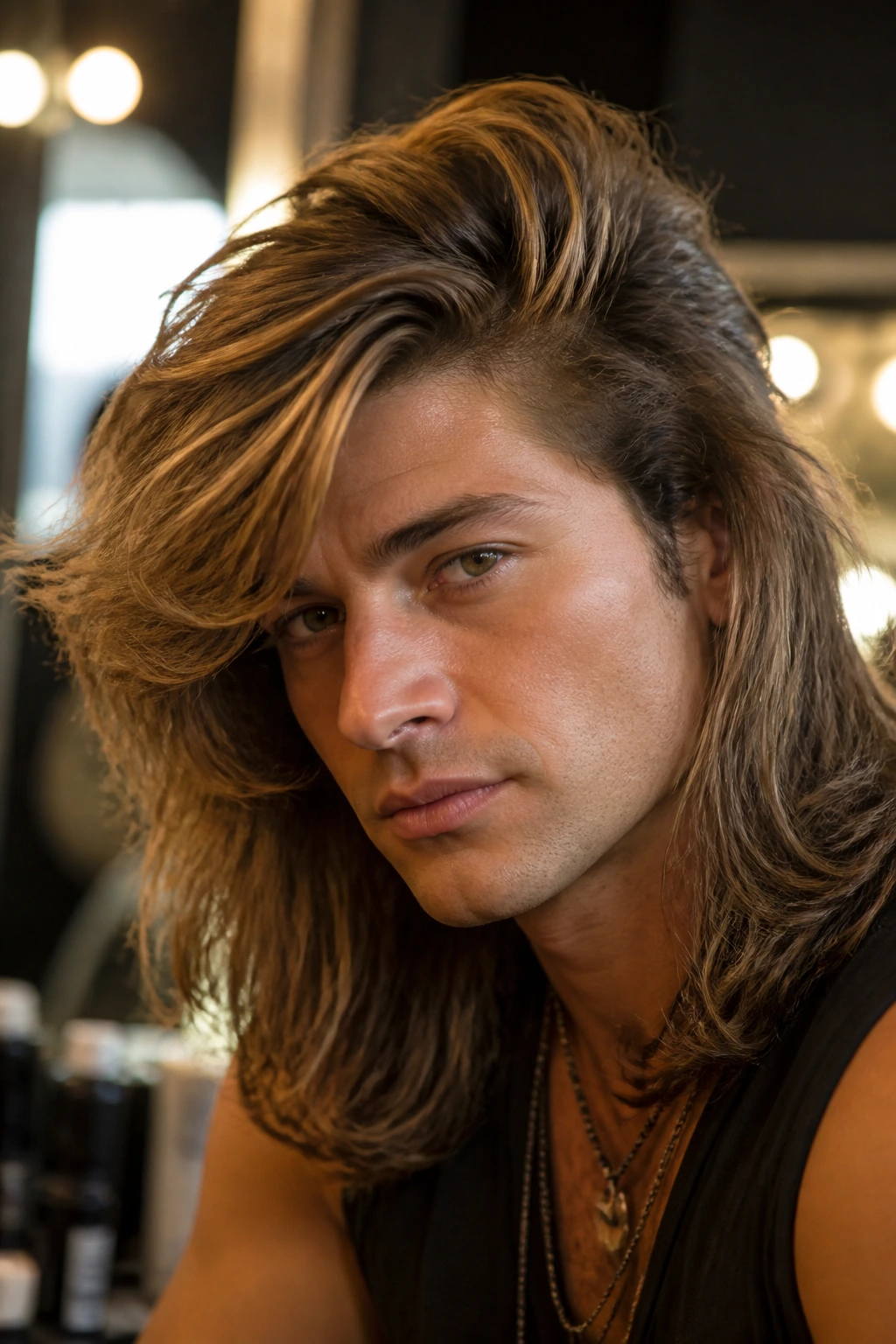
Thick hair and 80s rock styling are a natural match, but only when the layers are placed with some restraint. Too many people chase “big hair” and end up with a triangle, or they ask for so much thinning that the ends go wispy while the crown sits flat. The sweet spot is softer than the posters suggest: face-framing pieces that open around the cheekbones, long layers that take weight out of the sides, and a finish that still feels plush when you run your fingers through it.
That’s why 80s rockstar hairstyles for thick hair with soft layers keep coming back. They give dense hair somewhere to go. Instead of letting all that bulk sit as one heavy sheet, the shape moves—around the face, through the mid-lengths, and at the ends where a little bend or flip makes the whole look feel intentional instead of helmet-like.
The good versions of these cuts aren’t about making hair “smaller.” They’re about giving it shape. You want lift at the root, softness around the jaw, and enough length left in the layers that the style still looks rich when it settles. That balance is what makes the 80s energy feel wearable instead of costume-y.
Why This Collection Feels So Wearable on Thick Hair
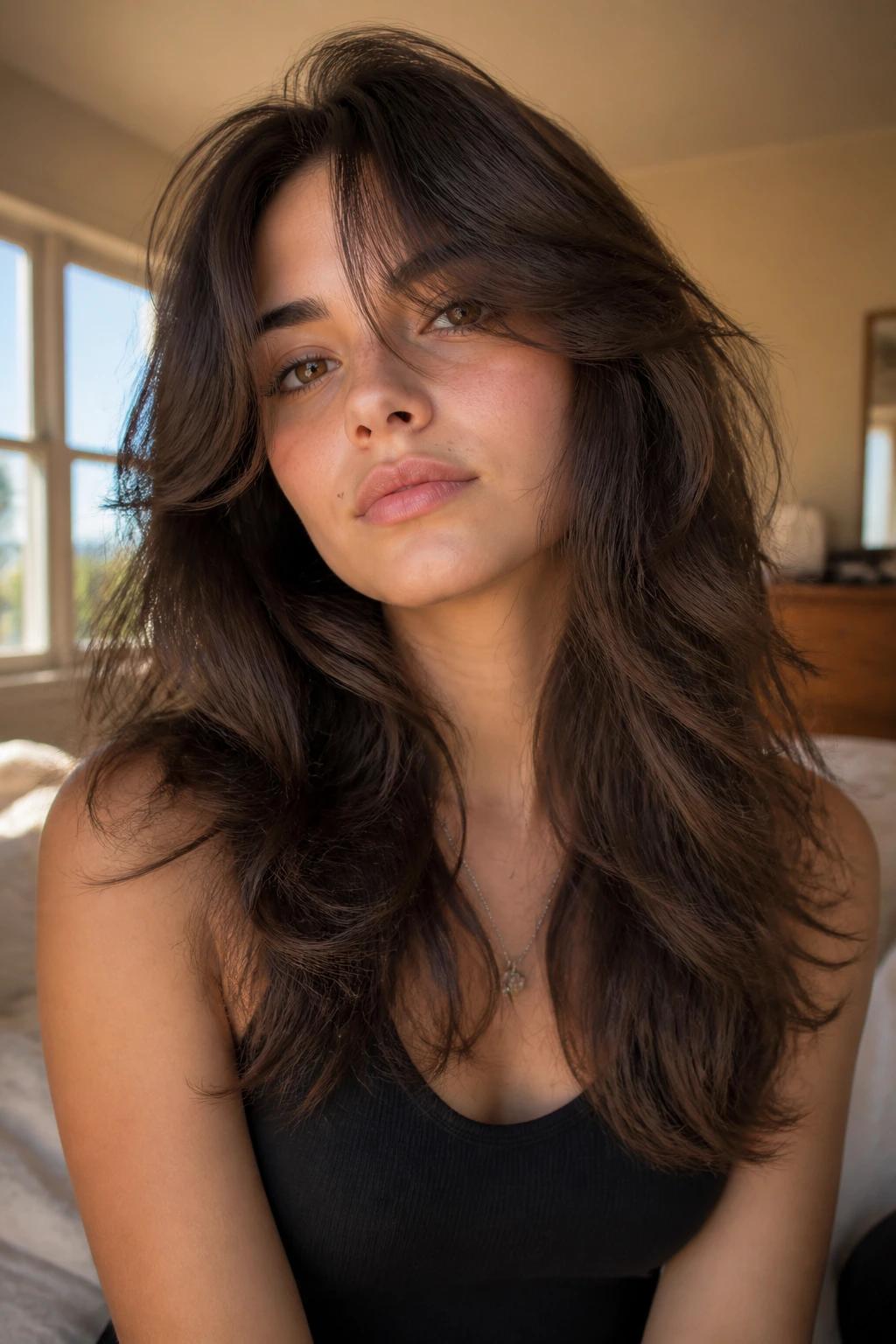
Built for density: These styles take advantage of thick hair’s natural body instead of fighting it, so the shape stays full without turning boxy.
Soft around the face: The best versions use curtain pieces, cheekbone layers, or a swept fringe to break up weight where thick hair usually looks hardest.
Volume with movement: You get the lift and attitude of 80s rock hair, but the layers are long enough to move when you walk, not just sit there.
Easier second-day hair: Thick hair usually keeps its structure for more than a few hours, which means these cuts can look better on day two with a quick brush-out and a little dry shampoo.
Room for different styling moods: Some of these looks want a round brush and a blow dryer; others lean into waves, curls, or a rougher air-dried finish.
Face-framing without the chop: The front pieces do a lot of the visual work, so you can keep length while still getting that lifted, rocker edge.
1. Feathered Shag with Curtain Bangs
The feathered shag is the first style I’d hand to anyone with thick hair who wants the 80s mood without the triangular poof. The layers are long enough to keep the shape plush, but the feathered front and curtain bangs soften the forehead and open the face in a way that feels flattering from almost every angle. When it’s cut well, the ends move like they’ve been brushed out after a night in front of a stage fan.
Why it works on thick hair
Ask for the shortest face-framing layer to land around the cheekbone, not the jawline, if your hair tends to puff outward. That one detail makes a huge difference. The back can stay longer and fuller, while the front gets the lift that gives the style its rock-star shape.
A round brush, a medium barrel brush, and a light mousse are usually enough. You don’t need crunchy volume. You need soft lift at the root and a little bend through the ends.
2. Big Blowout with Layers Starting at the Collarbone
This is the kind of blowout that makes thick hair look expensive without trying too hard. The first true layers begin lower, around the collarbone, so the top keeps its density and the ends fan out in a controlled way. That gives you the classic 80s blowout silhouette: airy at the crown, broad through the mid-lengths, and polished at the bottom.
Where to place the movement
If your hair is especially dense, this cut works best when the stylist avoids over-thinning the interior. Internal weight removal should be subtle. You want swing, not see-through ends.
It’s a strong choice for anyone who likes to wear hair loose most of the time. The shape does a lot of work on its own, which means a rough-dry and a quick round-brush pass around the face can be enough on busy mornings.
3. Side-Swept Power Part
A deep side part changes thick hair fast. It shifts volume to one side, adds a little drama at the crown, and gives the face a diagonal line that feels very 80s without needing a heavy cut. With soft layers underneath, this style has a glamorous, almost backstage feel—the kind that looks better the more the day goes on.
What makes it different
- The part should begin just above the arch of the eyebrow, not at the center of the scalp.
- Keep the front layers long enough to sweep across the cheekbone.
- Use a root-lifting spray at the side where you want the most height.
- Finish with a flexible hairspray, not a stiff shell.
This is especially good if your thick hair tends to fall flat at the roots. The side part gives the crown a little lift before you even pick up a brush.
4. Soft Mullet with Face-Framing Wings
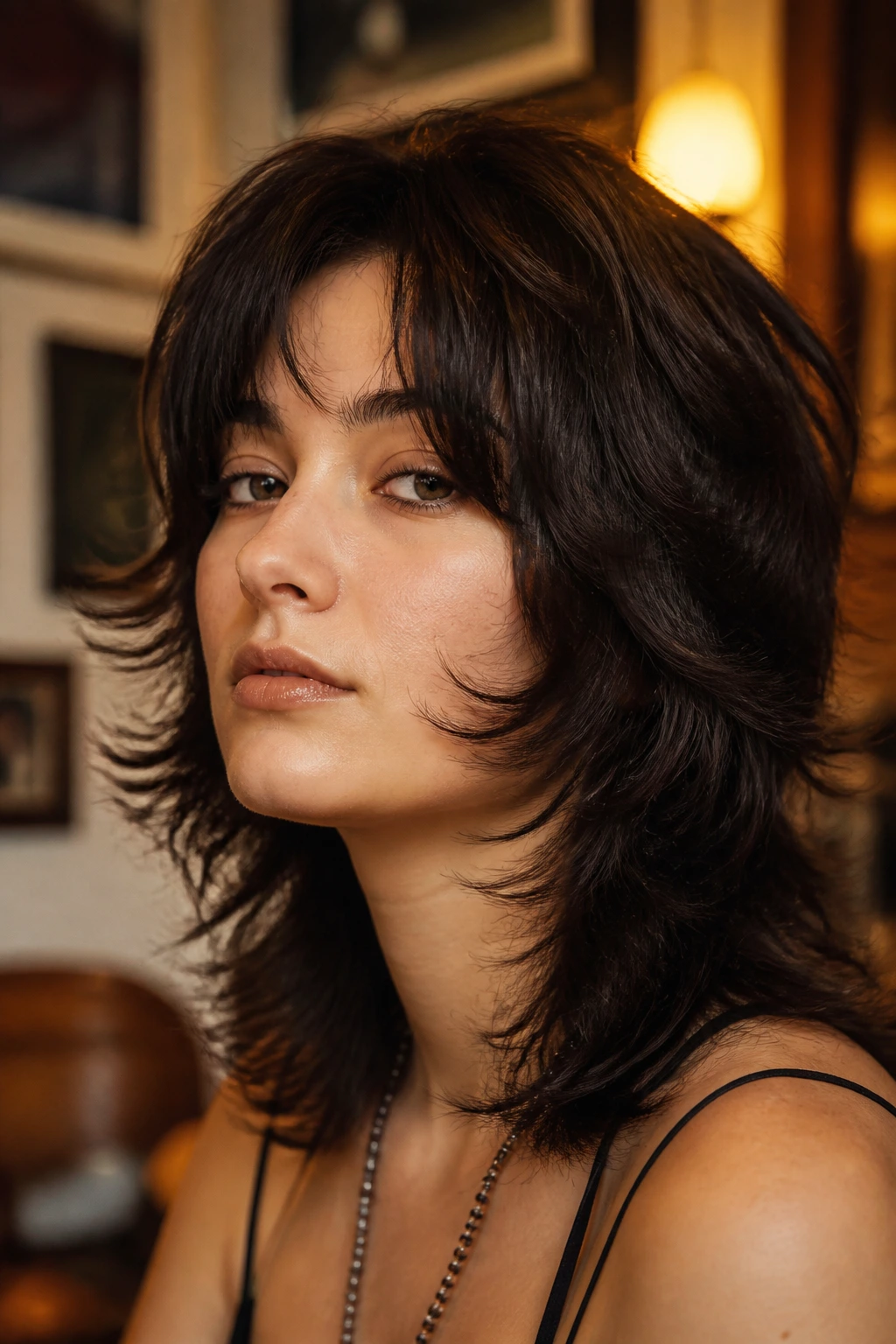
A soft mullet sounds braver than it actually is. Done right, it keeps the length in back while carving out airy, face-framing pieces that tuck around the jaw and cheekbones instead of sitting in one blunt curtain. For thick hair, that shape is gold. It removes bulk where the hair usually feels heavy and keeps enough weight in the back to avoid the “over-cut” look.
The key is softness. Not a choppy edge. You want the front to feather into the length so the whole style feels lived-in, not severed. It’s one of the best picks if you want a little grit in the silhouette without losing the romance of longer hair.
5. Rocker Lob with Flipped Ends

The lob gives you a cleaner outline, and the flipped ends give it the 80s personality. On thick hair, that combination works because the length is short enough to feel light, but not so short that it starts to billow out in random places. Soft layers keep the bob shape from turning into a block.
A flat iron or medium round brush is enough to turn the ends outward by half an inch or so. That little kick at the bottom matters. It keeps the hair from sitting too straight and makes the cut feel intentional, especially if you wear a dark color that shows shape clearly.
6. Long Layered Mane with Teased Crown
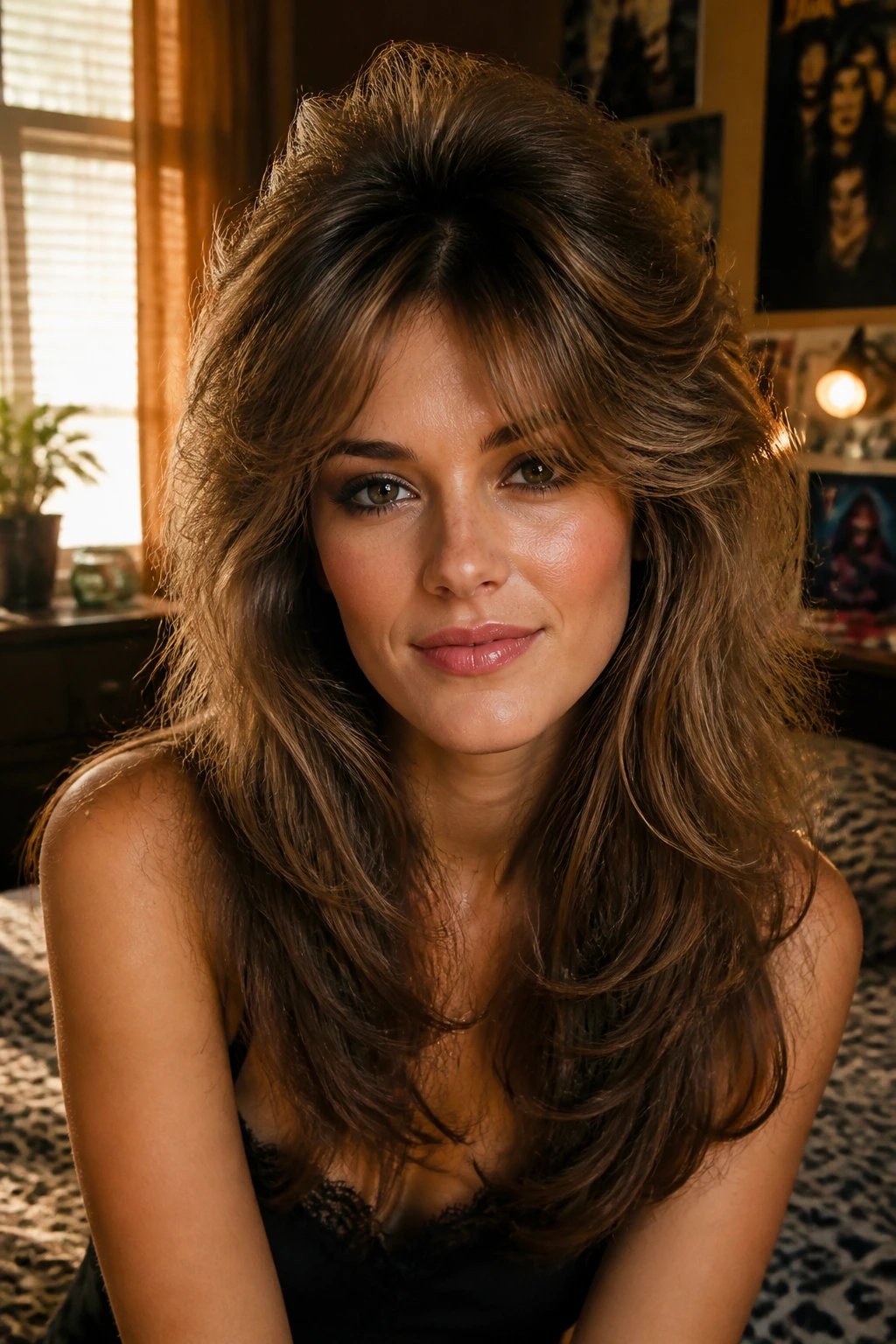
If you want the big 80s silhouette and you don’t want to give up length, this is the move. The crown gets a gentle tease or root lift, while the long layers keep the bulk from dragging the shape down. Thick hair carries this style better than fine hair ever could. It holds the body.
My favorite detail here is the front. Keep the face-framing layers soft and slightly shorter than the rest, just enough to slide away from the cheeks. That prevents the style from feeling like one long wall of hair and lets the volume live at the top where the rock energy belongs.
7. Razor-Light Shag with Airy Ends
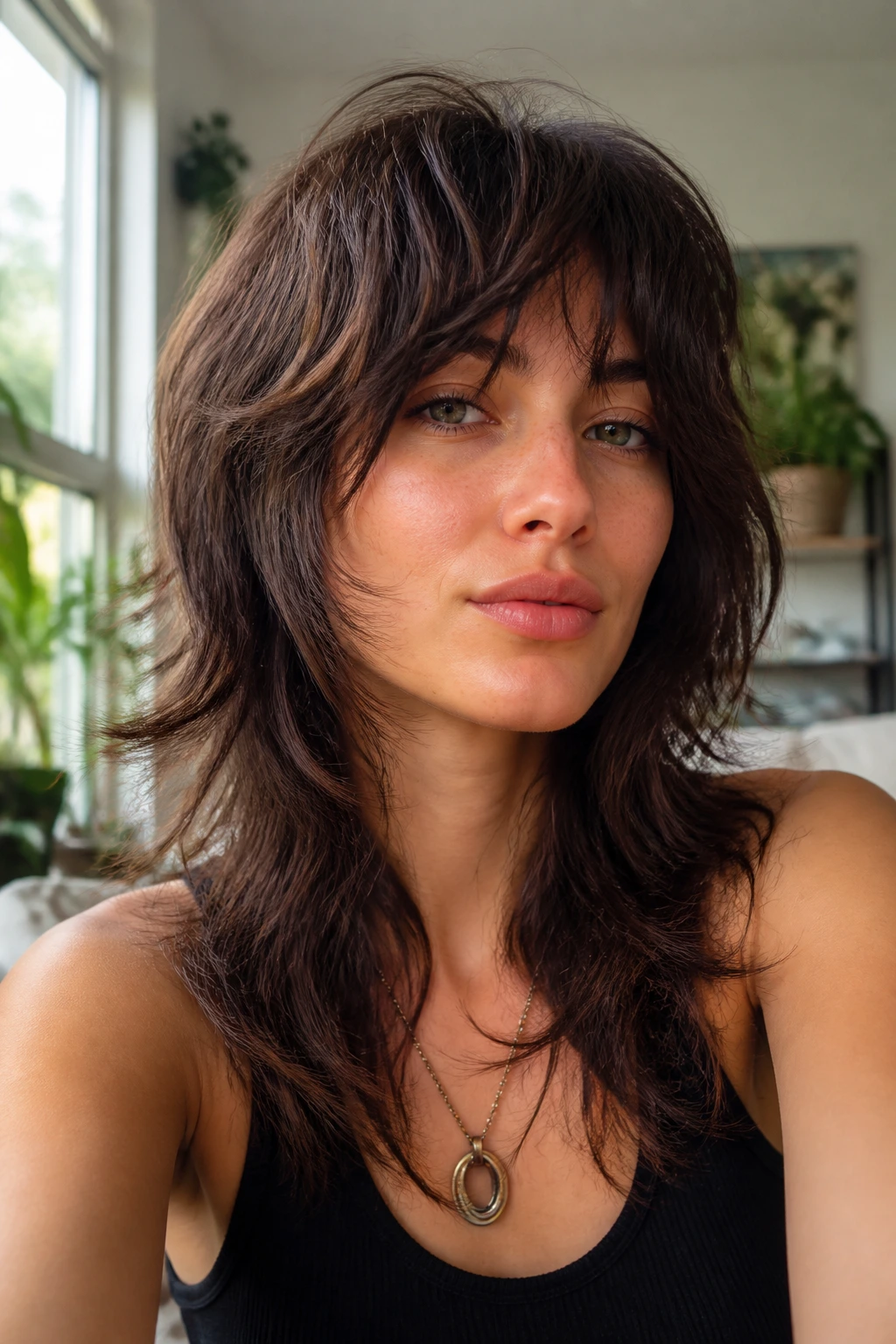
A razor-cut shag can be a blessing or a disaster on thick hair, depending on how heavy the texture is and how good the stylist is with the tool. The upside is obvious: the ends get airy, the shape moves, and the layers seem to float. The downside is equally obvious if the cut goes too far—frizz, fuzz, and pieces that stick out like they’re angry.
Use this version when…
- Your hair is dense but not overly coarse.
- You want a softer finish around the face.
- You’re willing to style with a cream or lightweight serum.
- You like a slightly messy, lived-in texture.
If your hair puffs in humidity, ask for subtle razor work rather than a full blade-through-the-length approach. There’s a big difference.
8. Center-Parted Curtain Sweep
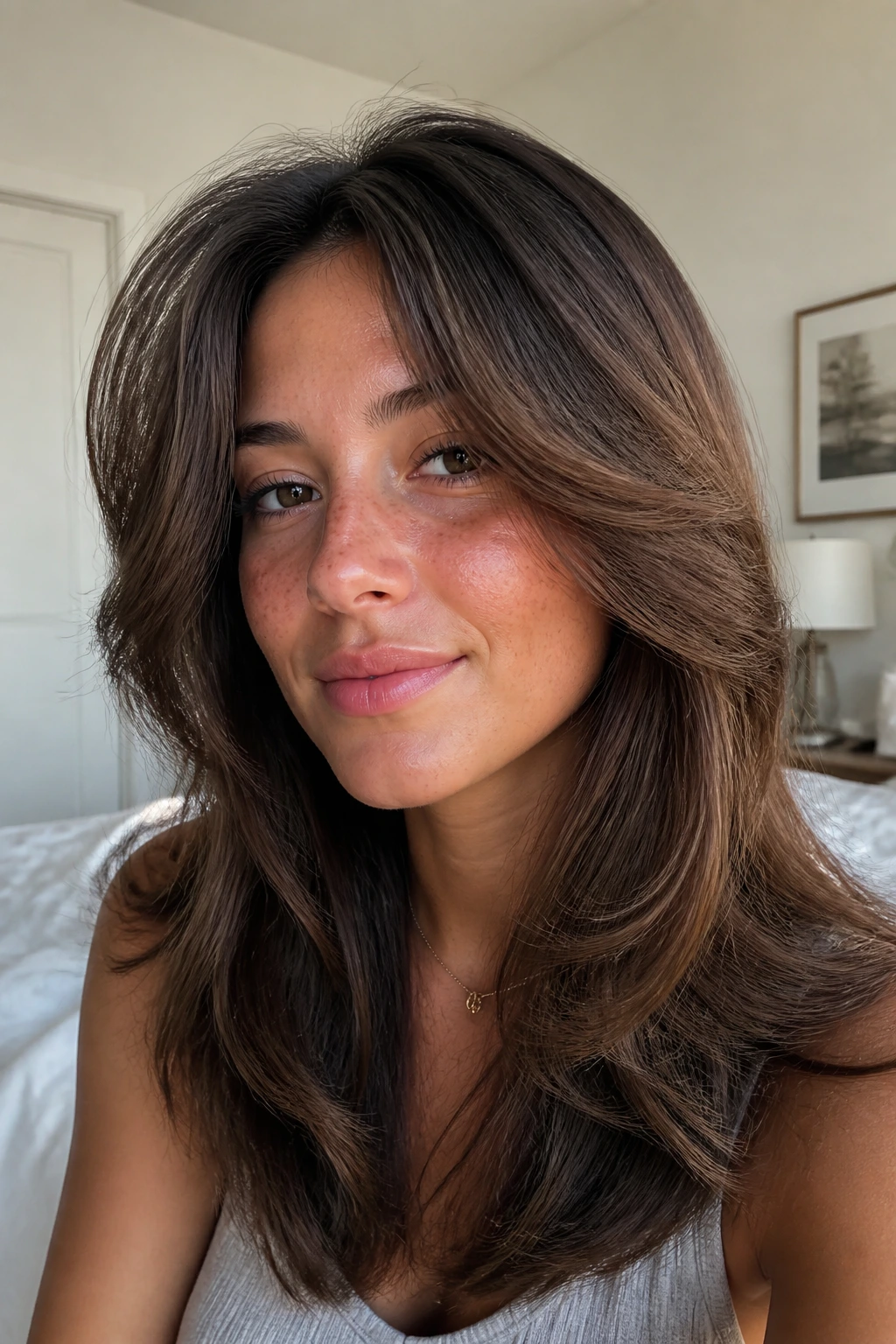
A center part on thick hair can look severe if the layers are blunt, but with soft face-framing pieces it turns elegant fast. The front falls in two clean arcs, opening the eyes and making the cheekbones look more defined. That straight-down middle part is a good counterweight to all the body thick hair naturally has.
This is one of those styles that benefits from careful blow-drying around the face. Round brush the front away from the cheeks, then let the rest fall more naturally. The result is polished at the front and fuller everywhere else, which is a smart trade on heavy hair.
9. Bombshell Curls with Long Internal Layers
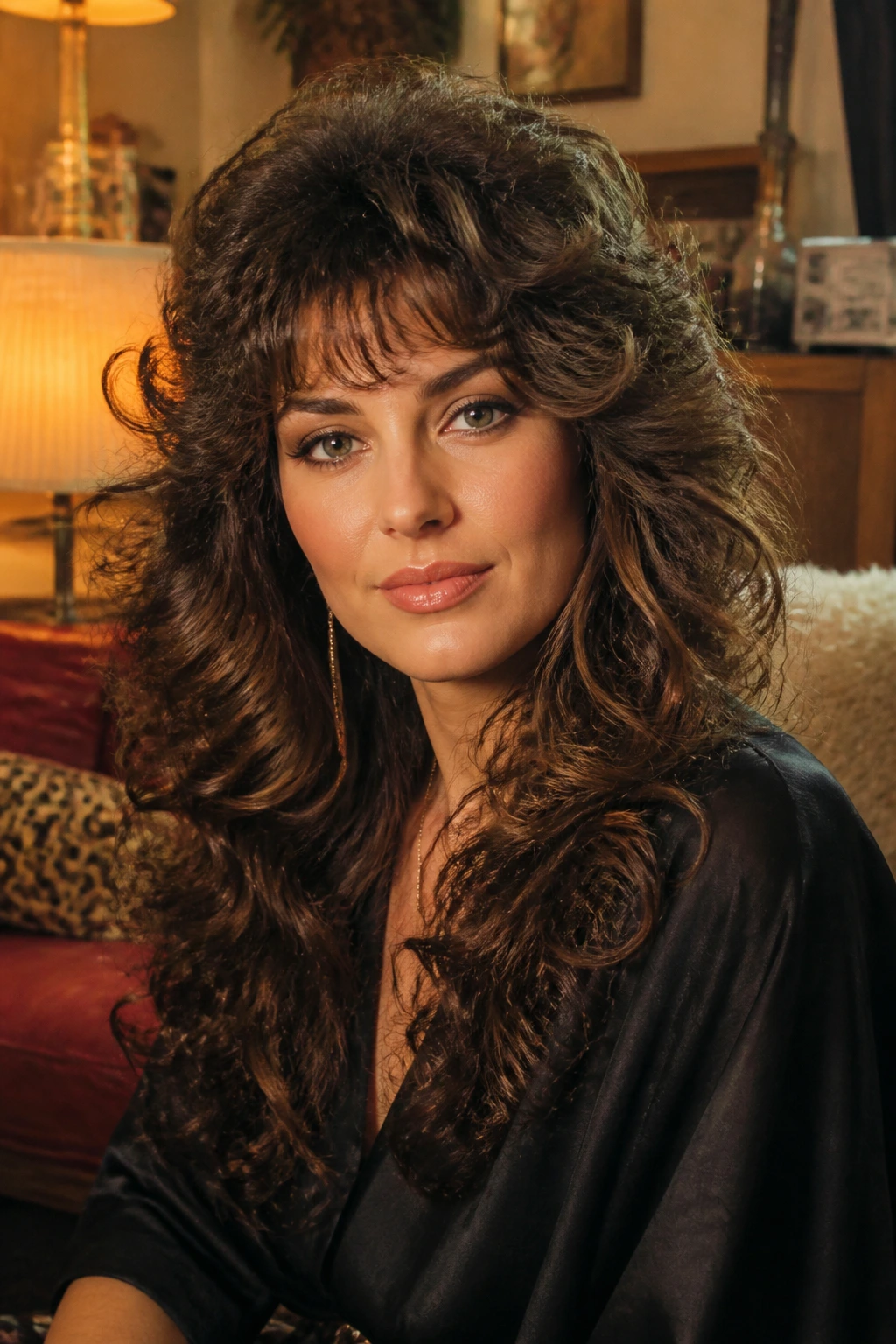
This version leans into curl and body instead of trying to smooth everything flat. Long internal layers remove enough weight so the curls spring up, but the outer length stays rich and full. The shape lands somewhere between glam-rock and classic salon blowout, which is exactly where thick hair likes to live.
Why it holds
Thick hair needs room for curl to form. If the cut is too blunt, the bottom gets dense and the top gets weighed down. Internal layers create space so the curls can stack without becoming a round puffball.
Use a curling iron in the 1¼- to 1½-inch range, then brush the curls out once they’ve cooled. That brush-out is where the shape becomes 80s instead of prom-night.
10. Shoulder-Length Kickout Layers
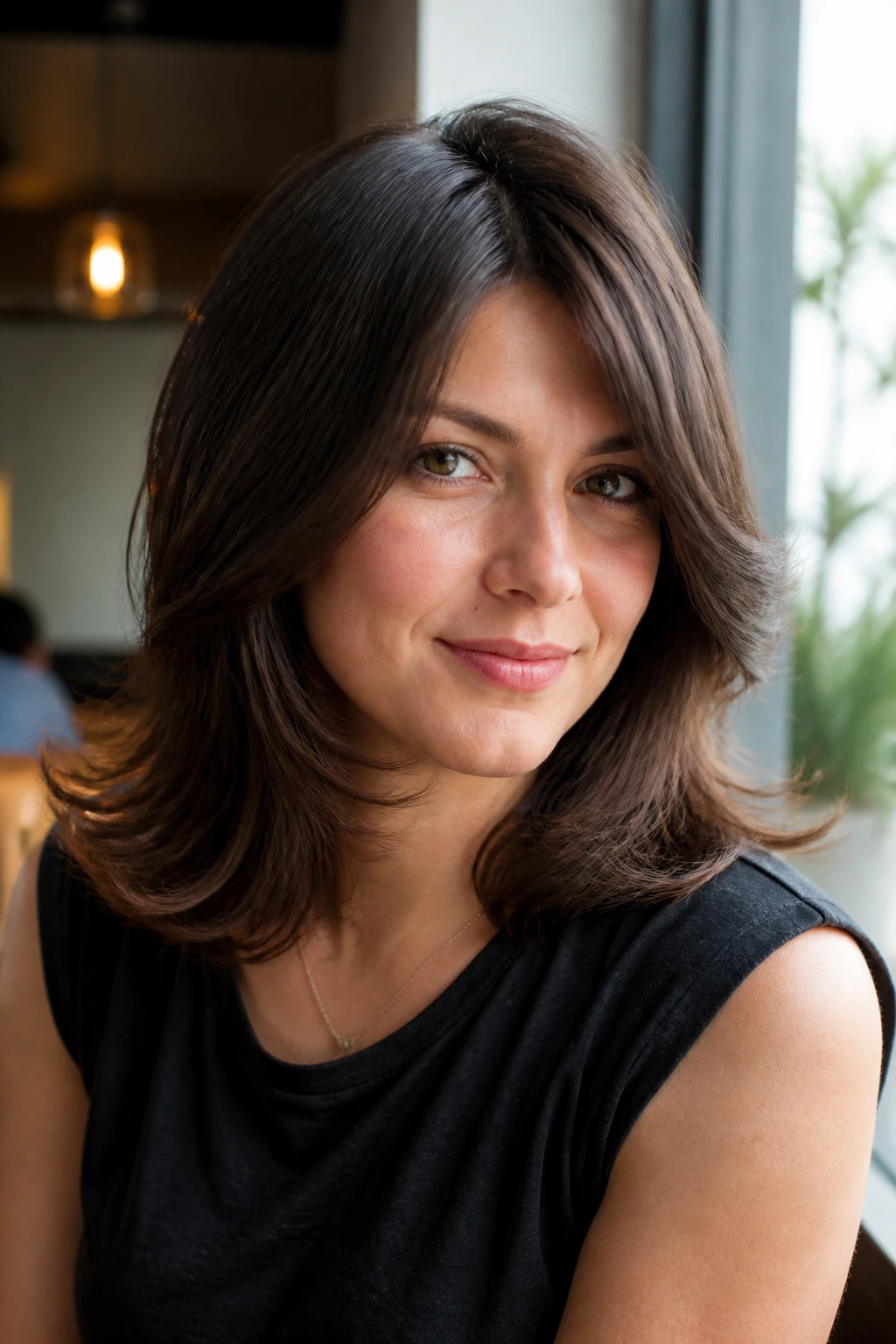
Shoulder length is sneaky on thick hair. It seems simple, then it turns out to be one of the easiest ways to get rock-star bounce without spending twenty minutes fighting the ends. Kickout layers—those soft, outward-moving pieces around the shoulders—keep the cut from sitting heavy.
This is the style for people who want the hair to do most of the work. It looks especially good with a slight side part and a round-brush flip at the ends. The hair touches the shoulders and then moves away from them, which gives the whole look a little swing.
11. Half-Up Stadium Volume
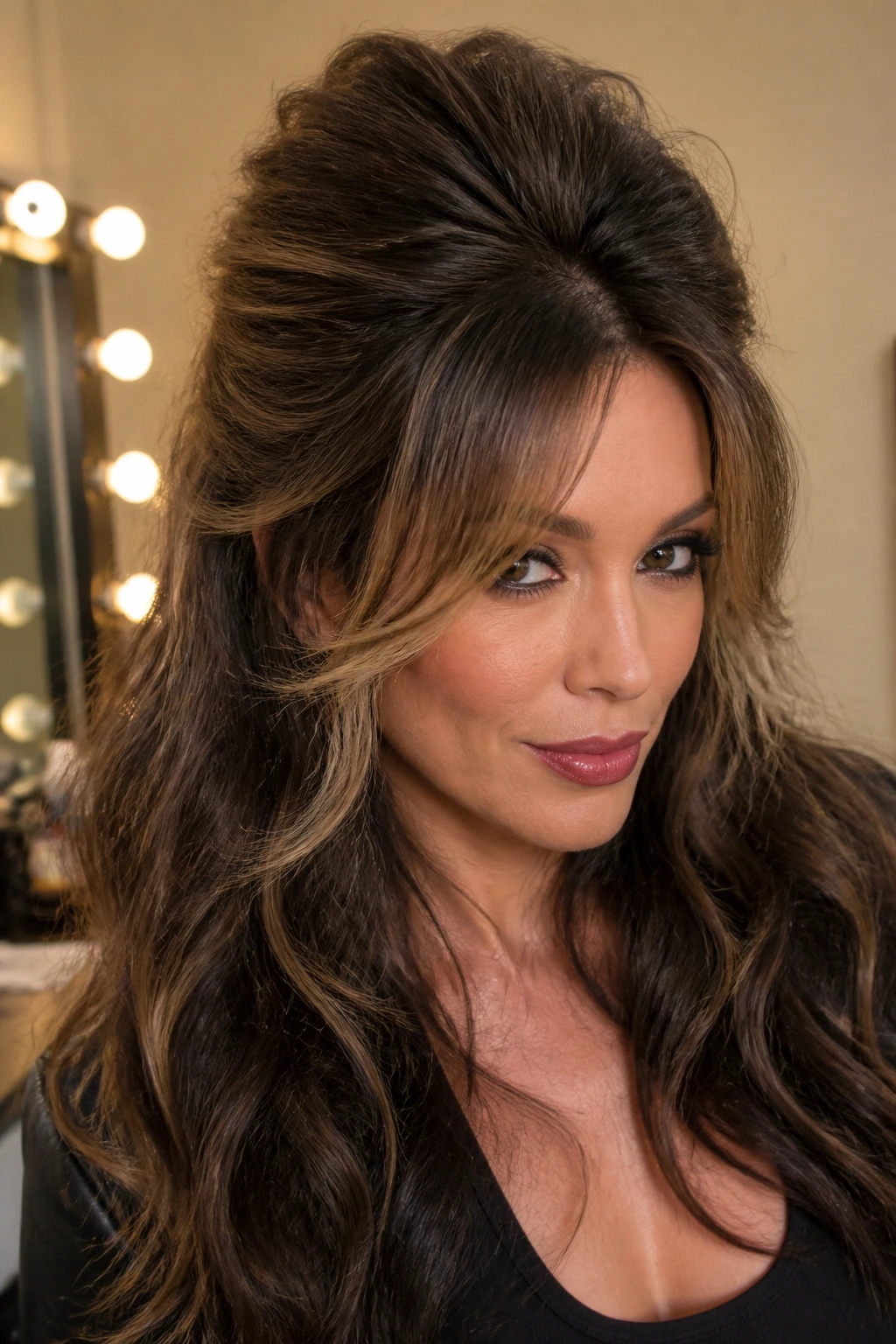
The half-up look is one of those 80s styles that makes thick hair feel almost unfair. You gather the top section, lift it high, and let the lower layers cascade underneath. Soft layers keep the half-up section from looking stiff, and the face-framing pieces around the front soften the whole crown.
If your hair is very dense, leave a little more width at the sides when you section the top. Too much pulling back can make the face look narrow and the crown look like a helmet. A soft tease at the roots and a wrapped elastic cover, if you want polish, are enough.
12. V-Cut Length with Feathered Fringe
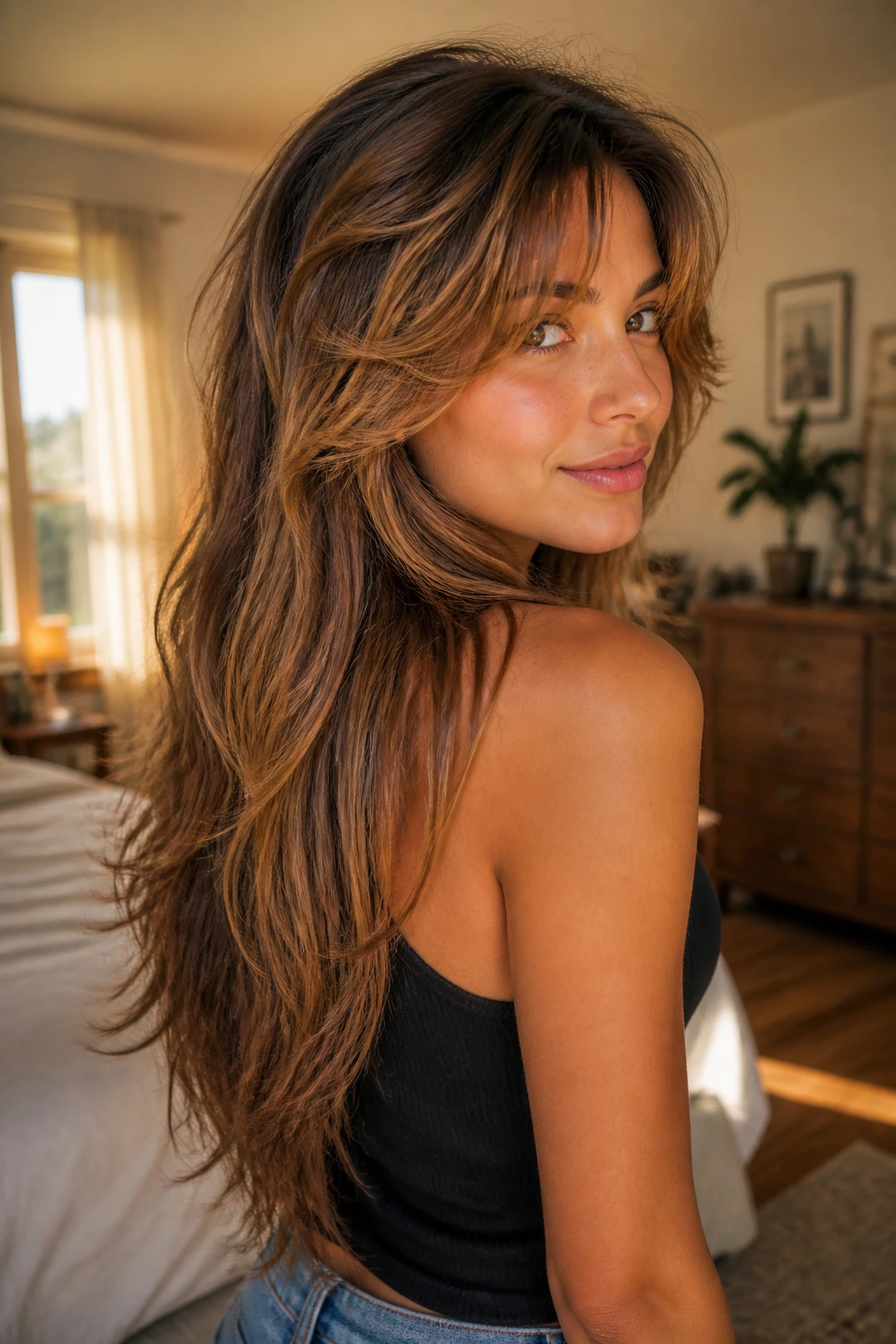
The V-cut shape keeps long thick hair from turning into a blunt curtain at the back. It narrows the silhouette just enough to let the ends taper, while the feathered fringe brings the 80s face-framing right up front. The result is dramatic, but not heavy.
Styling note
This one looks best when the front layers are angled gently away from the face. Don’t overcut the fringe into tiny pieces; you want the feathering to feel soft and wearable.
A big round brush and a little bend at the ends are enough to show off the cut. The V-shape does the visual lifting for you.
13. Loose Perm-Inspired Waves

You do not need a tight, poodle-style perm to get the vibe. On thick hair, soft perm-inspired waves can be created with a large curling iron or rollers, and the layers help the pattern break up instead of forming one dense mass. The trick is keeping the wave loose enough that it still looks brushed out.
This style is useful when the hair feels too straight at the ends and too heavy near the face. Waves make thick hair feel lighter because they interrupt the sheet-like surface. They also look especially good when the front pieces are curved away from the cheeks rather than falling straight down.
14. Sleek Root, Big End Shape
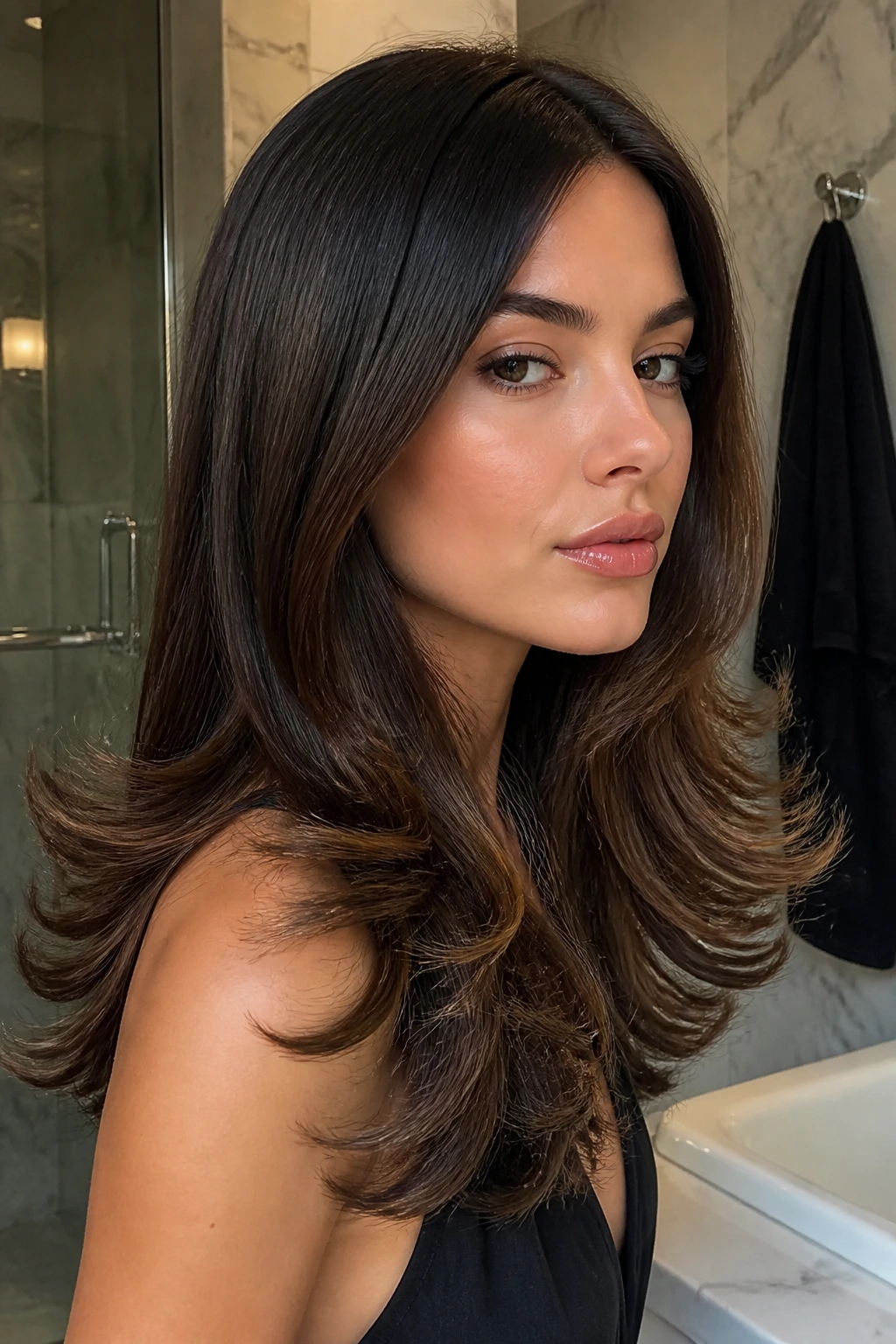
This is a good one for people who want the 80s attitude without volume everywhere. Keep the crown relatively smooth, then build the body from the mid-lengths down. The soft layers let the ends flip and fan while the top stays controlled, which is a cleaner look than full teasing.
It works because the contrast is the point. Thick hair can look gorgeous when only one part of the shape is big. If the root is smooth and the ends have movement, the style reads intentional, not overworked.
15. Side-Part Glam Layers
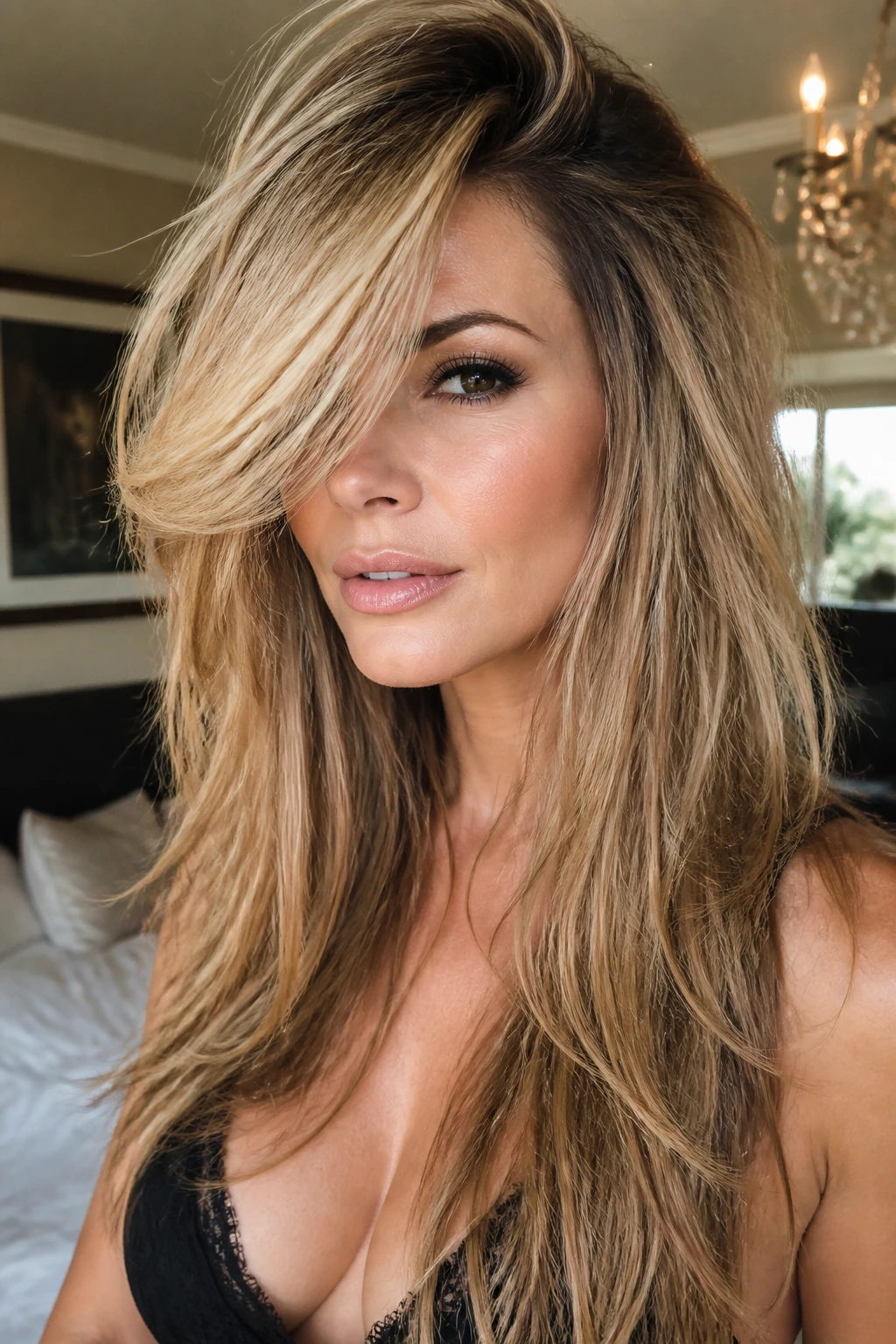
A side part and long layers can do more for thick hair than a complicated cut ever will. The hair falls across the face in a soft diagonal, the crown gets instant lift, and the length behind it stays luxurious. This is one of the easiest ways to get a glam-rock feel without losing softness.
The best part is how forgiving it is. If the blowout is imperfect, the style still works because the part and the layers create the shape. That’s useful on heavy hair, which can look better a little undone than over-styled.
16. Rockstar Ponytail with Face Frames
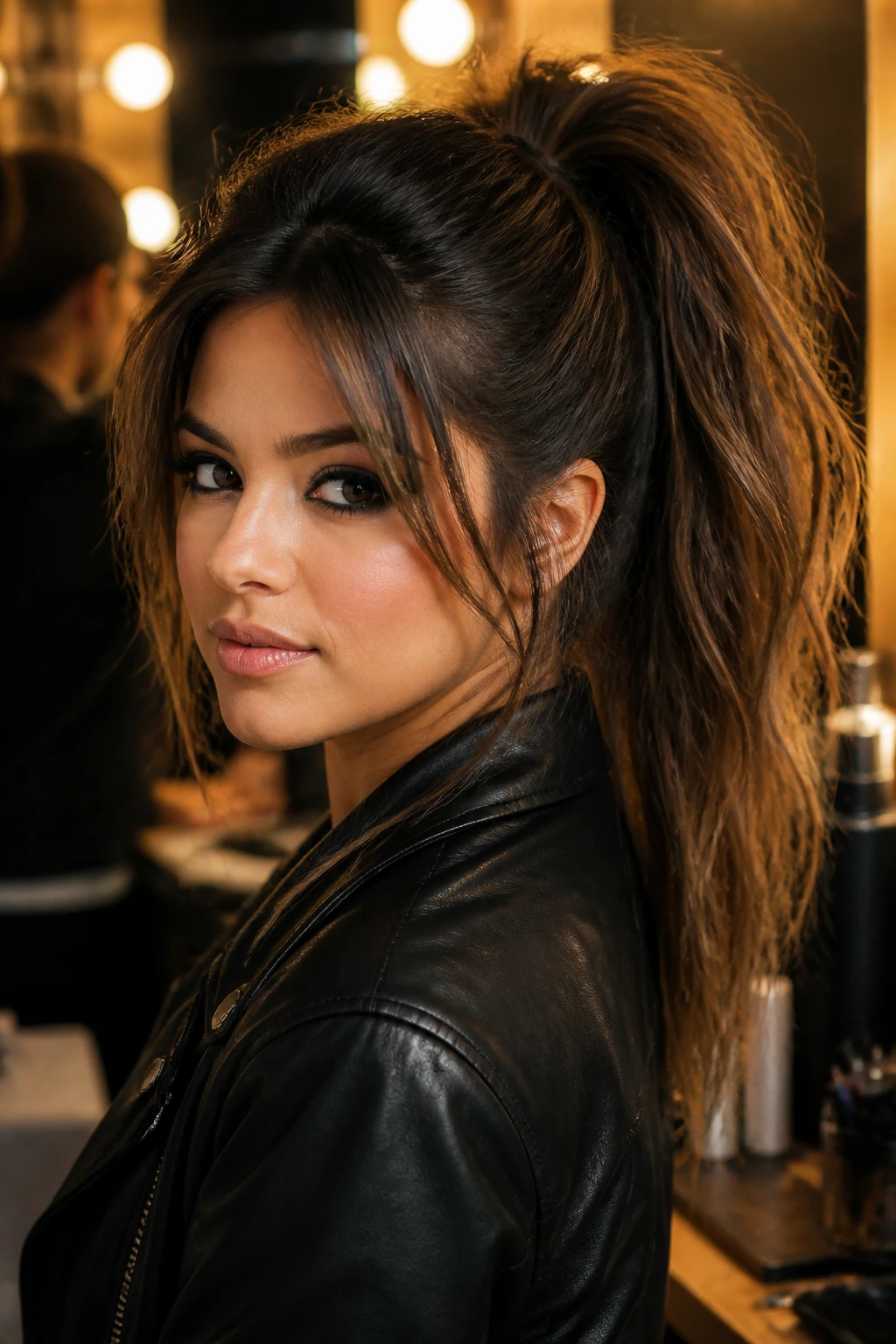
A ponytail can still be rockstar hair if you stop treating it like an afterthought. On thick hair, the weight gives the ponytail a proper fall, and the face-framing layers keep it from looking severe. The front should be loose enough to soften the cheeks, but not so loose that the style falls apart.
Wrap a small section of hair around the elastic if you want a cleaner finish. Then tug the crown very slightly for lift. That combination—lift at the top, loose pieces around the face, and a thick tail—is pure 80s arena energy.
17. Wispy Bangs and Cascading Layers
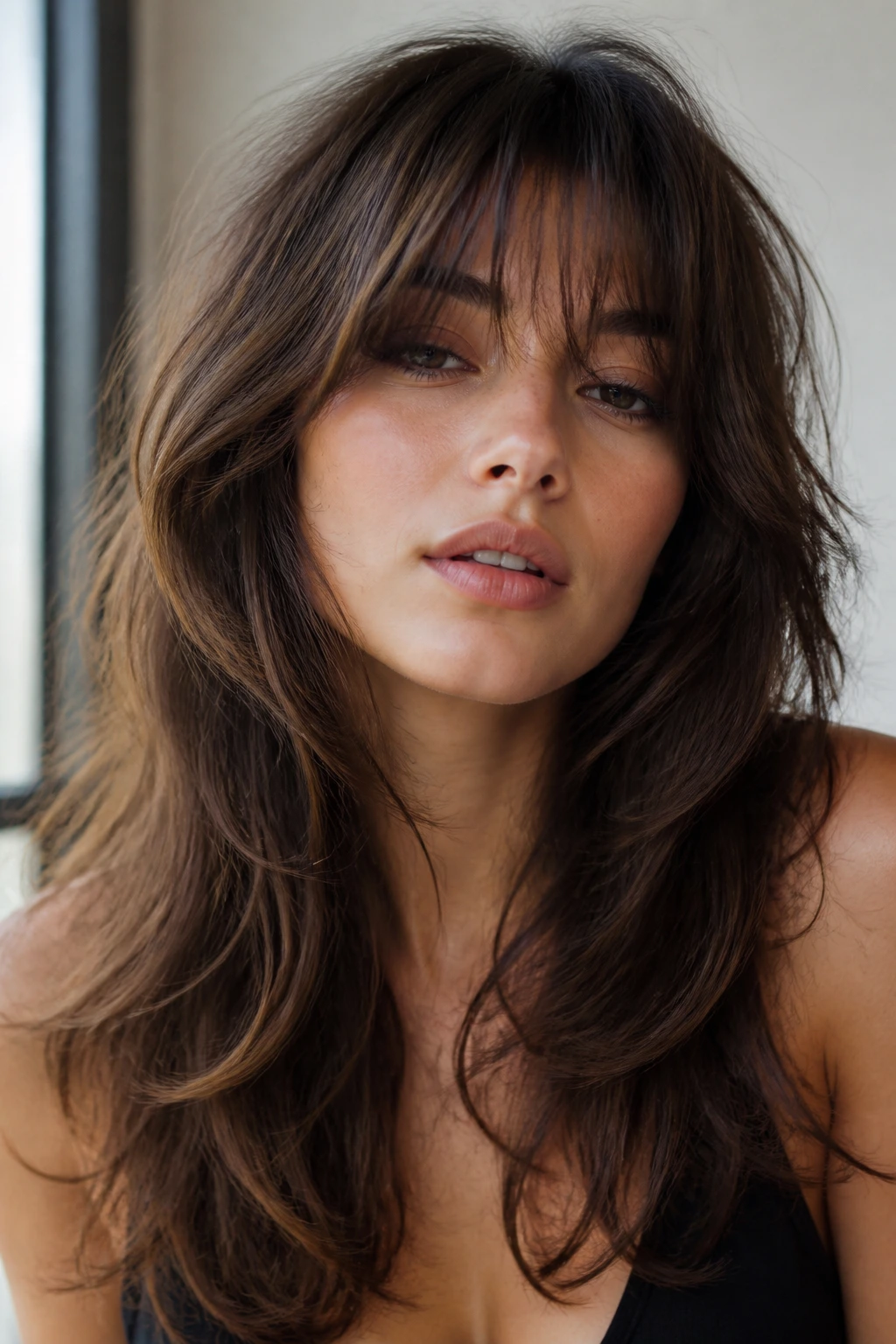
Wispy bangs are a smart way to bring softness to thick hair without cutting a heavy fringe. They let light through the front and keep the face from disappearing behind a wall of hair. Paired with long cascading layers, the look feels feminine, a little rebellious, and easy to wear.
Where it works best
- If your forehead feels too exposed with a center part.
- If your hairline is full and you want lighter framing.
- If you like the idea of bangs but hate having to style a blunt fringe every morning.
The bangs should be airy, not sparse. Ask for texture at the ends, not a severe chop. There’s a difference, and it matters.
18. Brushed-Out Curl Halo
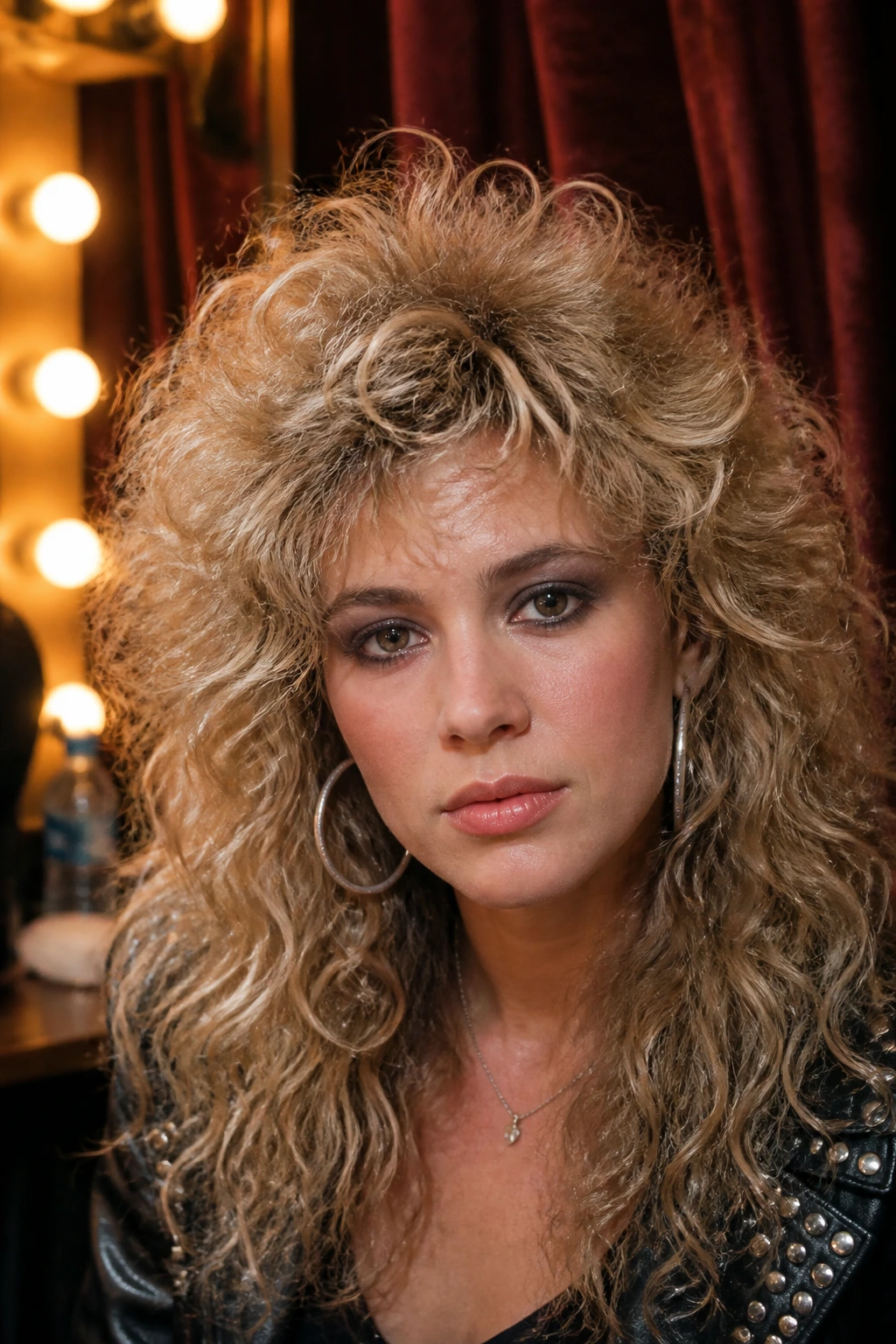
Thick hair loves a brushed-out curl halo because the curls have enough mass to stay round after brushing. The style starts with curls or hot rollers, then gets gently loosened into that soft, cloudlike shape that always looks a little bit glamorous. The layers keep the halo from turning into one giant lump.
A little shine spray at the end helps, but don’t drench it. You want the curls to separate, not clump. This is one of the more formal-looking options in the collection, though it still has that rock concert fullness when the light hits the volume at the crown.
19. Textured Stage Updo
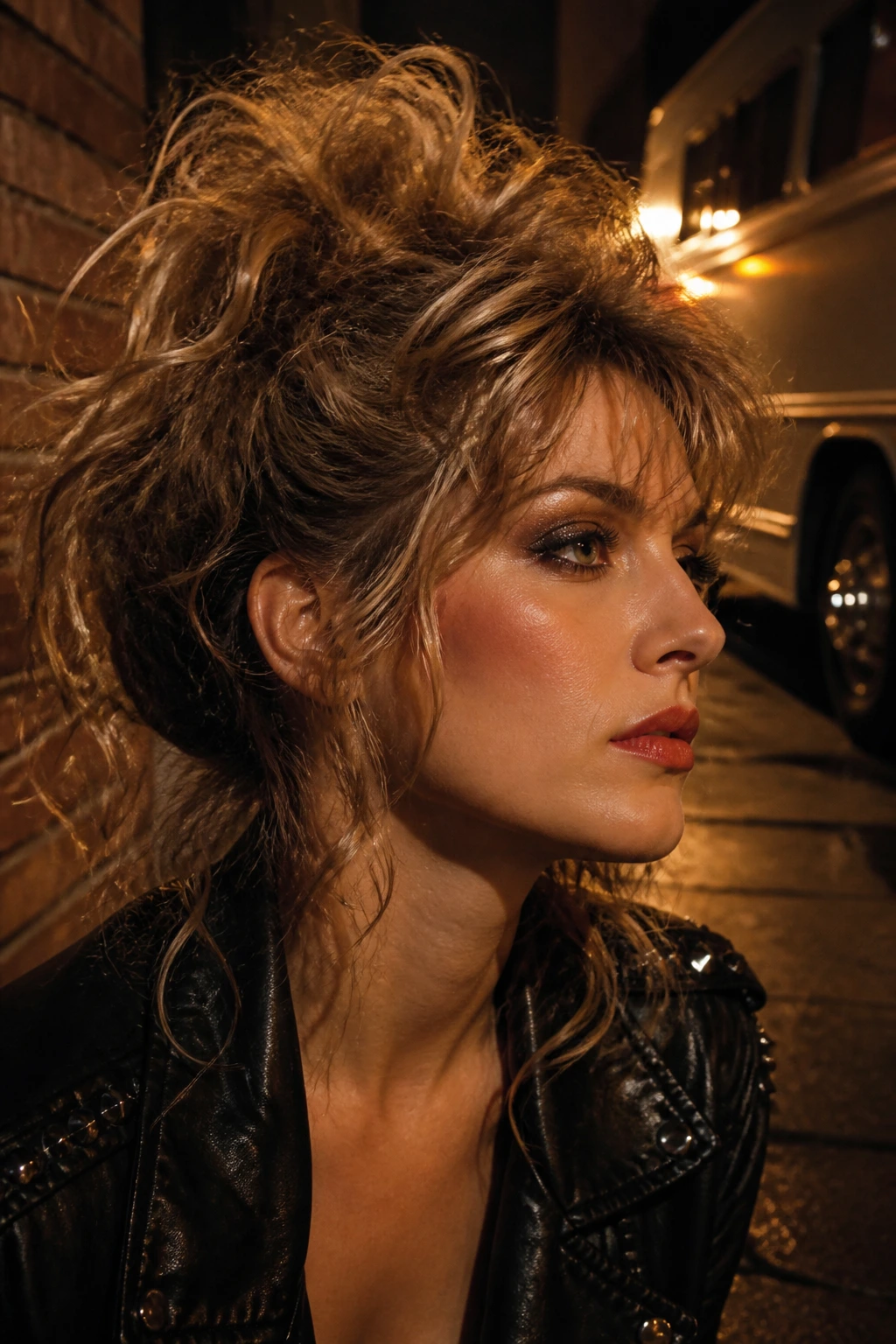
An updo can absolutely belong in an 80s rock lineup, especially if you leave some texture instead of pulling everything tight. Thick hair gives you enough material to create lift, twists, and a soft pile of volume at the back or crown. Face-framing layers keep the hairline from looking harsh.
The best versions are never too polished. A few loose pieces around the temples, a little teased crown, and a pin or two hidden underneath can turn a simple updo into something with stage presence. It’s not neat. That’s the point.
20. Modern Wolf Cut with Soft Edges
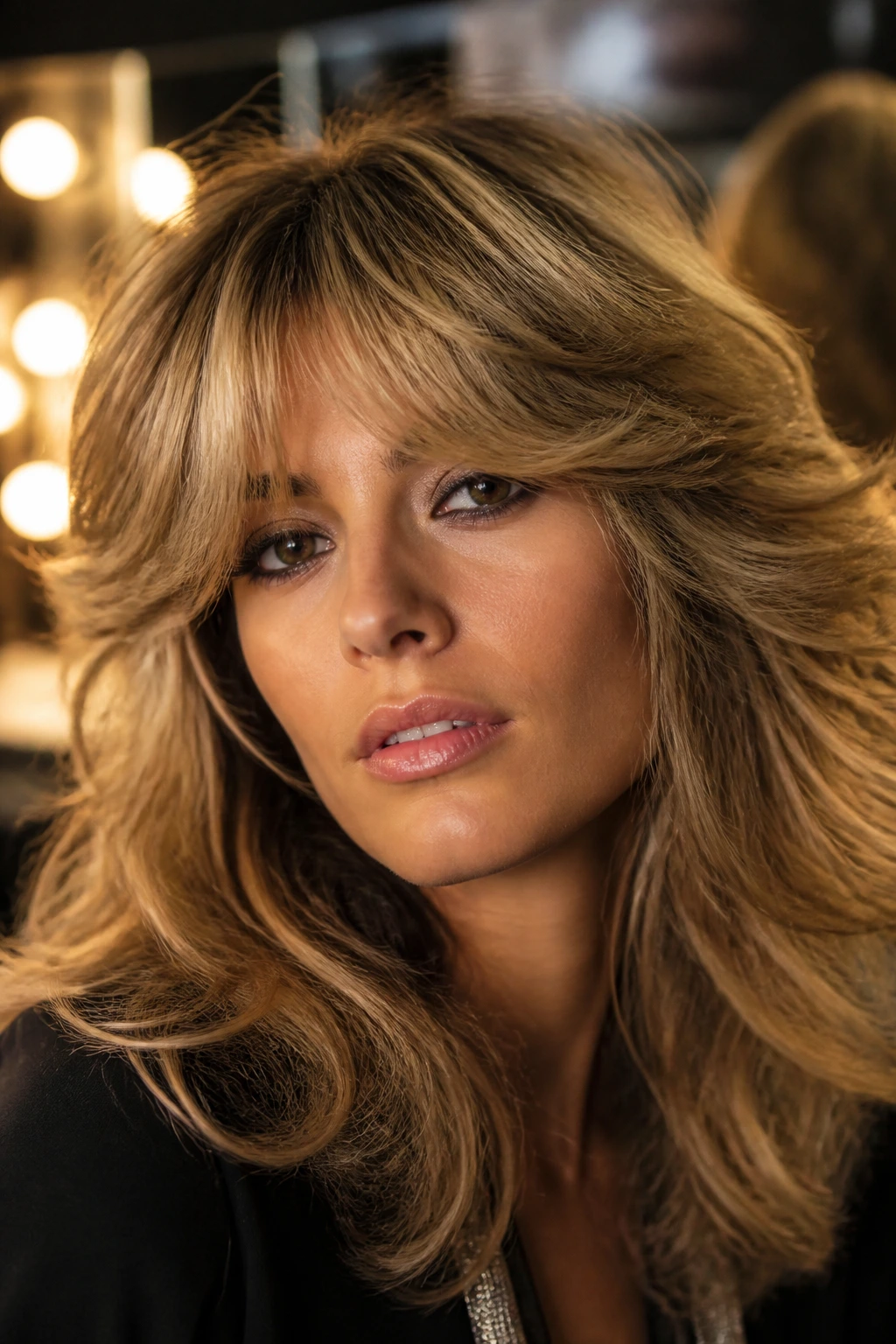
A softer wolf cut borrows the attitude of the original shape without going full punk. Thick hair benefits because the crown gets some removal, the mid-lengths get movement, and the edges stay long enough to feel soft around the face. If you want edge without looking like you’re trying too hard, this is a smart middle ground.
The cut should never feel shredded. Ask for blended layers and a controlled taper around the cheekbones. When the front pieces land well, the whole style reads contemporary while still nodding at the 80s rocker silhouette.
21. Loose Braids with Crown Volume
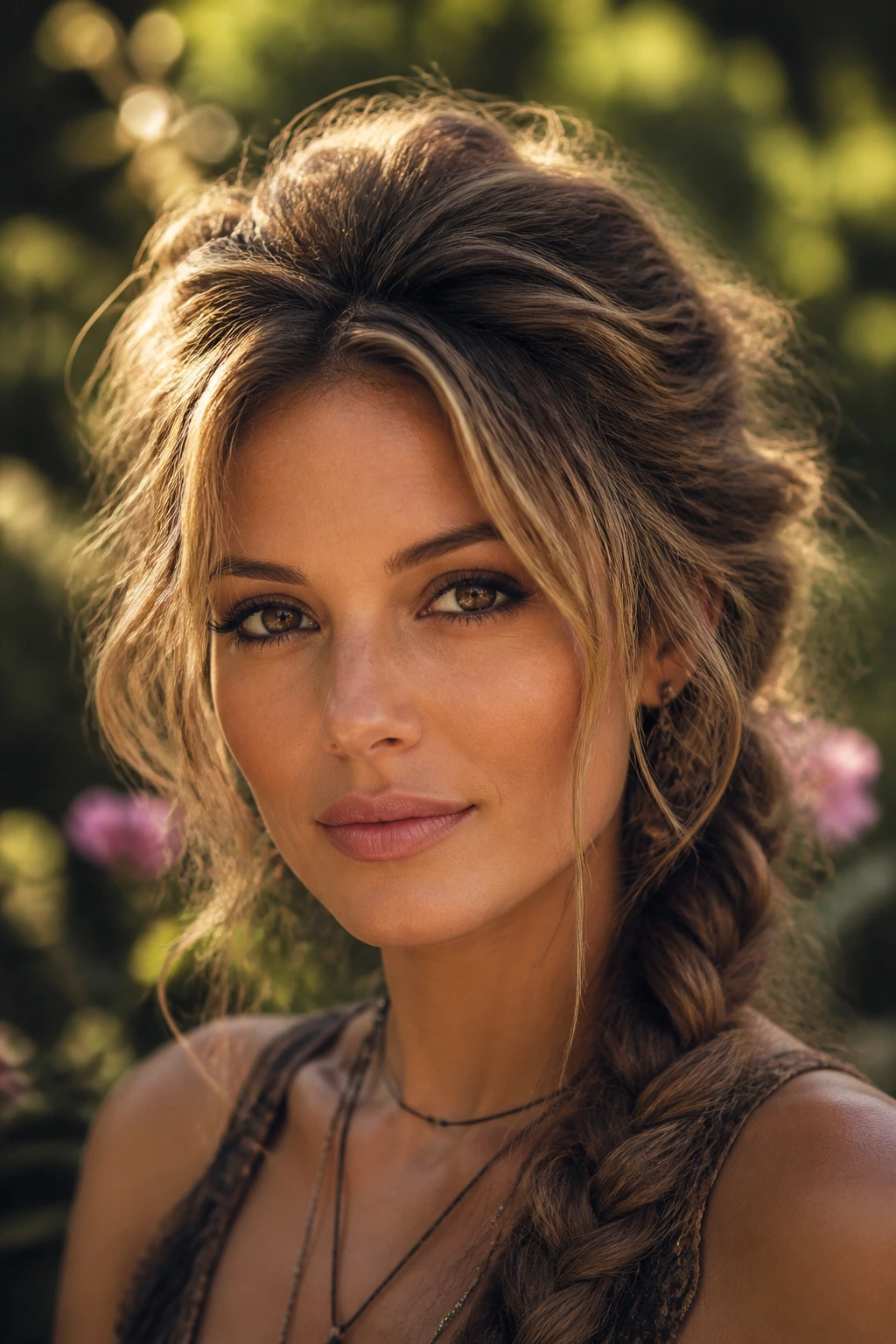
Braids can look too tidy on thick hair, which is why I like them with a little volume at the top and soft layers falling out near the front. A loose side braid or two small braids pulled into the lengths gives the style a backstage feel. It keeps the hair contained while still showing off the texture.
The crown lift matters here. Without it, the braid can drag the whole shape down. With it, the hairstyle feels playful and a little dramatic, especially if the face-framing layers are left free around the temples.
22. Deep Side Part and Soft Feathering
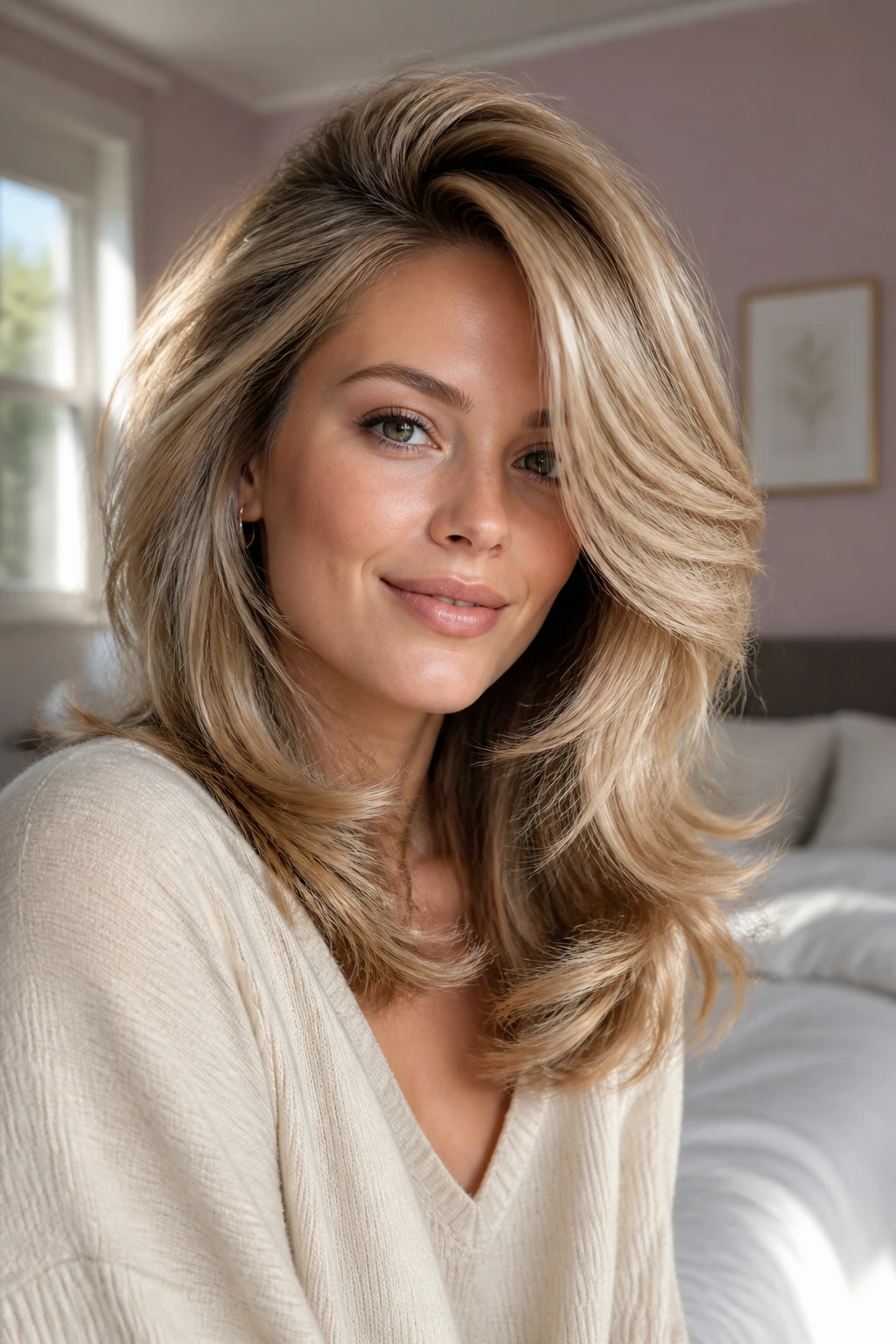
This version is a close cousin to the power part, but softer and more romantic. The part is deeper, the feathering is lighter, and the face-framing strands curve instead of falling straight. Thick hair handles this well because the density keeps the style from going flimsy.
The look in three moves
- Create a deep side part while the hair is still damp.
- Blow-dry the front away from the face with a round brush.
- Finish with a light mist of spray and finger-separate the ends.
That’s enough. More product usually makes the front pieces heavier than they need to be.
23. Blowout with Rounded Ends
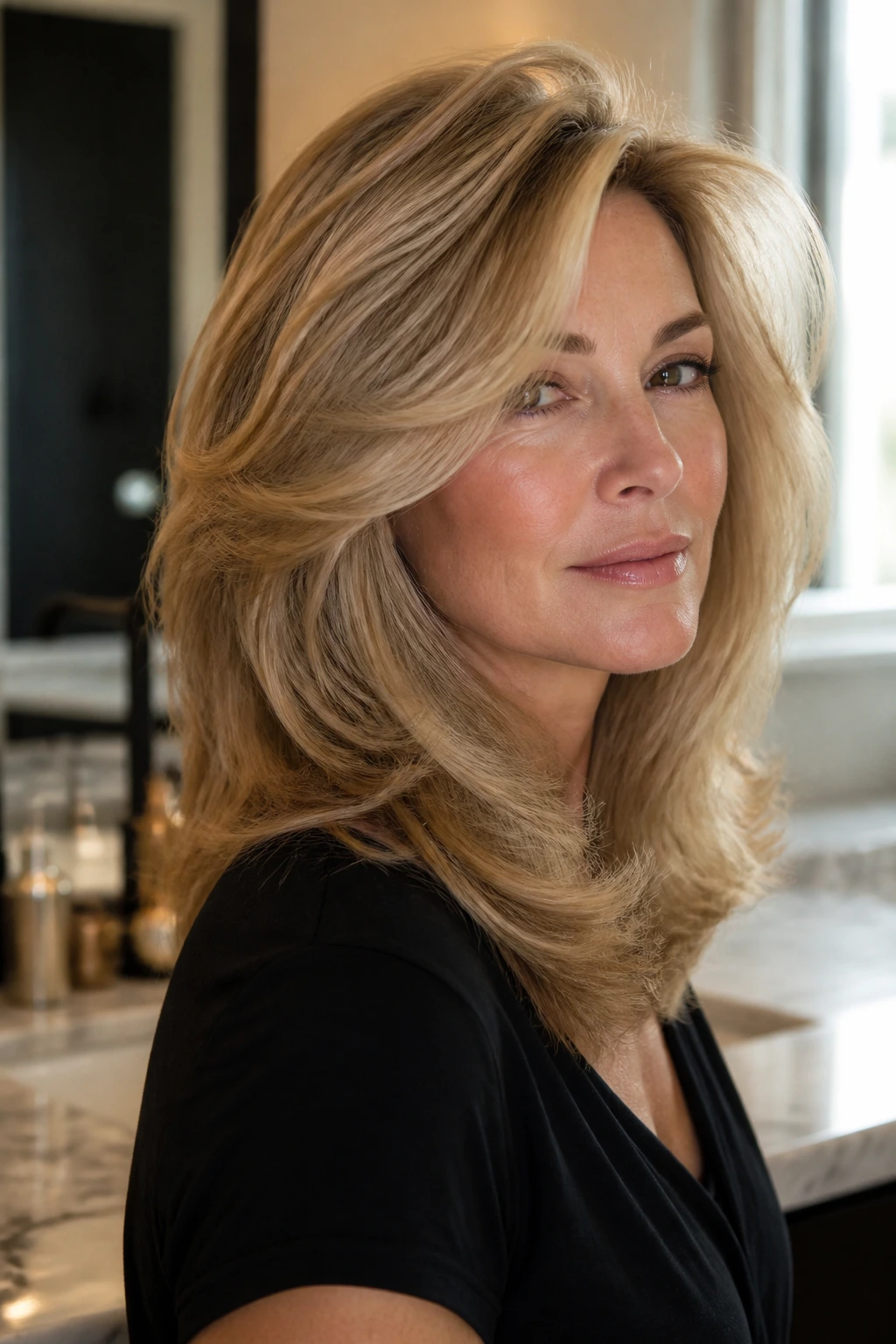
Rounded ends are one of the cleanest ways to make thick hair look full without looking stiff. The layers stay soft, the ends curl under just enough, and the overall shape feels like a classic salon blowout with an 80s backbone. It’s a polished choice that still has movement.
This is a good match for hair that frizzes easily at the tips. The roundness helps the ends look intentional even if the humidity is not cooperating. I’d call this the “clean rock” option: less mess, still plenty of body.
24. Asymmetrical Length with Curtain Pieces
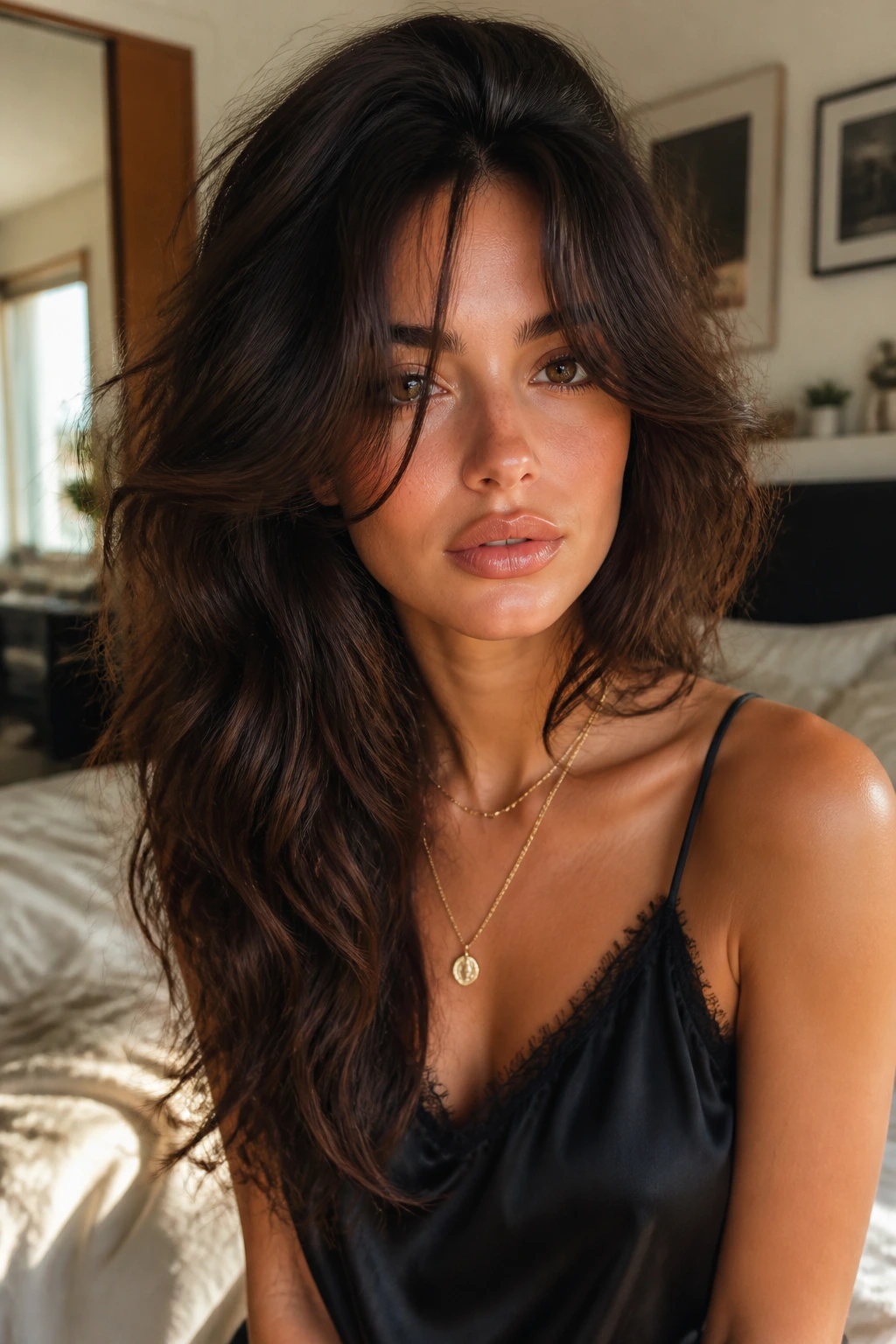
An asymmetrical cut can be very flattering on thick hair when the longer side is left heavy enough to move, not just hang. Curtain pieces at the front soften the asymmetry and keep the face from looking boxed in. It’s a smart way to get edge without losing the soft-layered feel.
The difference between chic and awkward is usually the front. If the face-framing layers are too short, the whole cut can look accidental. If they’re blended and slightly longer, the asymmetry looks deliberate and expensive without needing a perfect finish.
25. Backstage Glam Waves
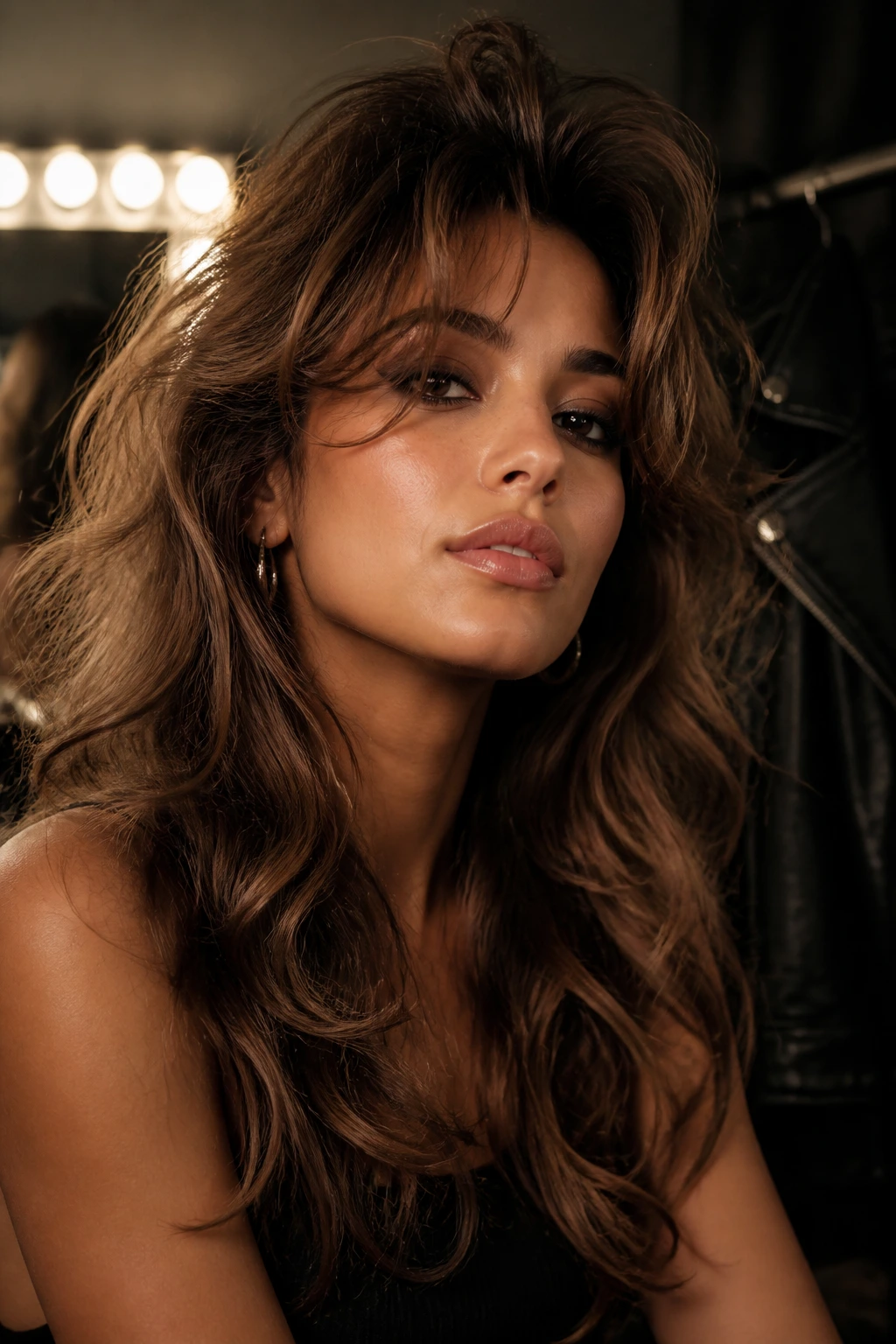
This is the style that looks like it was brushed out in the green room and worn out the door with a leather jacket. Thick hair gives the waves body, and soft layers stop the pattern from becoming too bulky through the sides. It’s loose, shiny, and just a little unruly.
The best part is how flexible it is. You can make it look more polished with larger, smoother waves or more rock-and-roll with a rougher brush-out and a bit more lift at the crown. Either way, the face-framing pieces should stay soft and open so the shape never swallows your features.
Why Soft Layers Keep Thick Hair Out of Triangle Territory
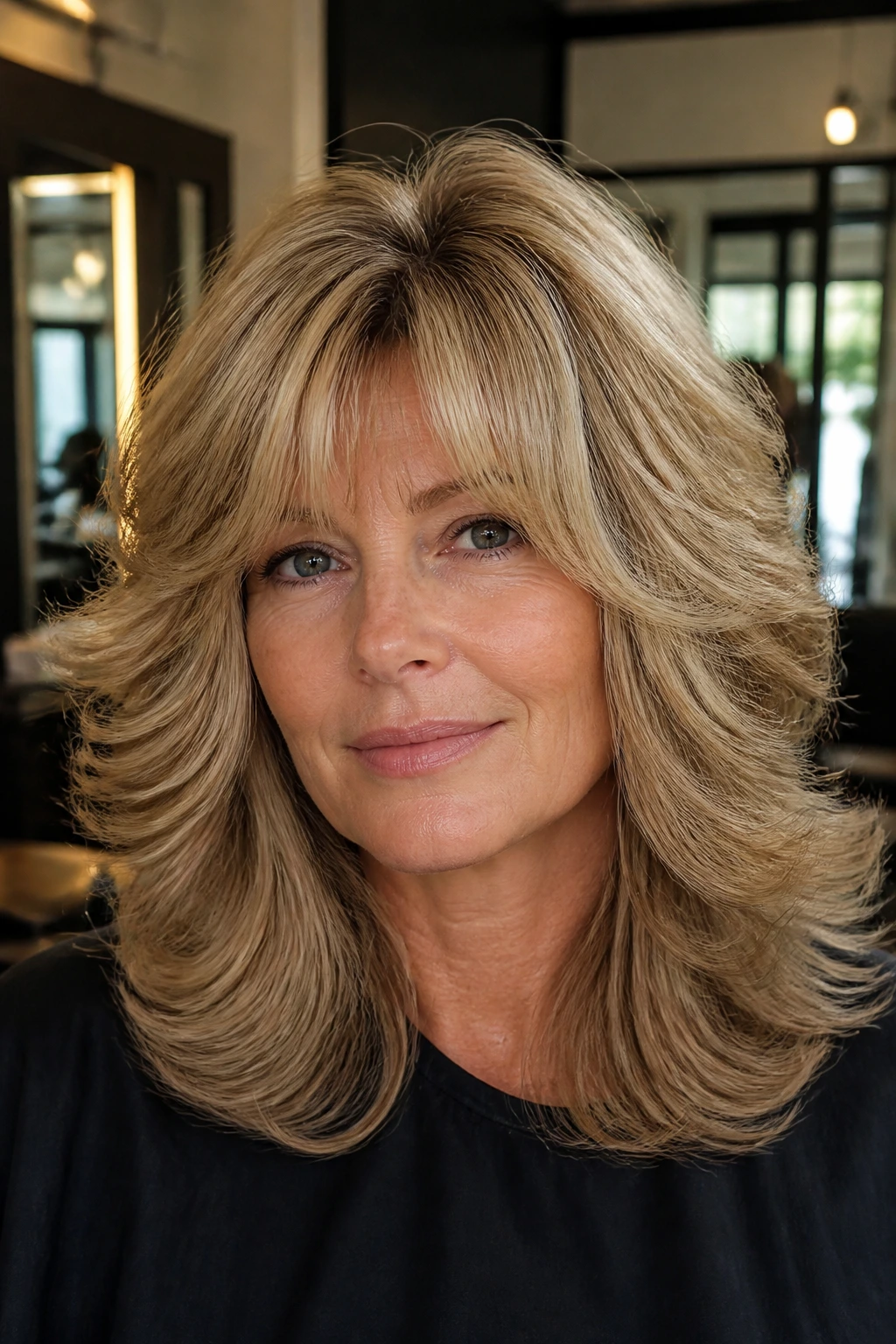
Dense hair has a funny habit of making the widest part of the cut sit exactly where you do not want it. Around the ears. At the jaw. Sometimes both. Soft layers fix that by moving weight lower and forward, where the eye reads shape instead of bulk.
The word “soft” matters more than most people think. It doesn’t mean boring. It means the layers blend into one another instead of stopping in hard steps, which is what lets thick hair stay full while still moving. That’s the difference between a flattering rock-inspired cut and a chopped-up mess.
The best 80s rock hair was never truly flat, and it was rarely blunt all the way through. It had lift, sweep, and a little controlled messiness. On thick hair, that’s not nostalgia. That’s engineering.
The Tools That Make These Styles Easier to Wear
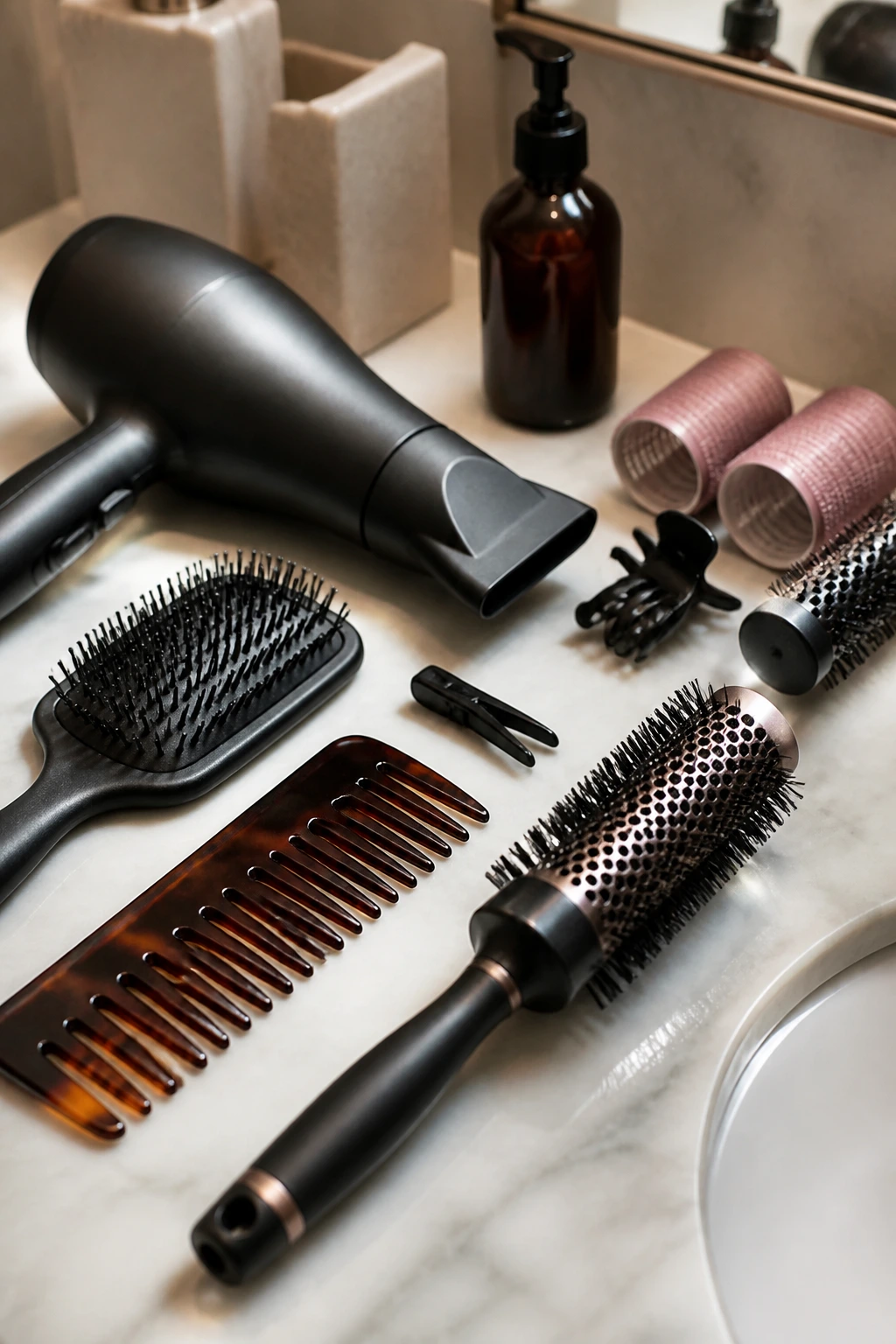
A good cut helps, but a few tools make thick hair cooperate much faster.
- 2-inch or 2.5-inch round brush: Big enough to shape long layers without over-curling the ends.
- Blow dryer with a nozzle: Directs airflow so the hair smooths instead of frizzing everywhere.
- Wide-tooth comb: Good for detangling without stretching the layers.
- Velcro rollers: Handy for root lift at the crown and face-framing bend.
- Teasing comb: Use it lightly at the crown; a little goes a long way.
- Sectioning clips: Thick hair needs clean sections or the blow-dry turns into a fight.
- Heat protectant spray: Non-negotiable if you’re using a round brush, iron, or rollers.
- Flexible-hold hairspray: Keeps the shape in place without turning the style stiff.
- Root-lift mousse or spray: Best for the crown and part line when the hair falls heavy.
If your hair is coarse, a smoothing cream before the blow-dry can help. If it’s dense but fine-textured, keep the product light and let the layers do the work.
What to Ask for at the Salon So the Layers Stay Soft
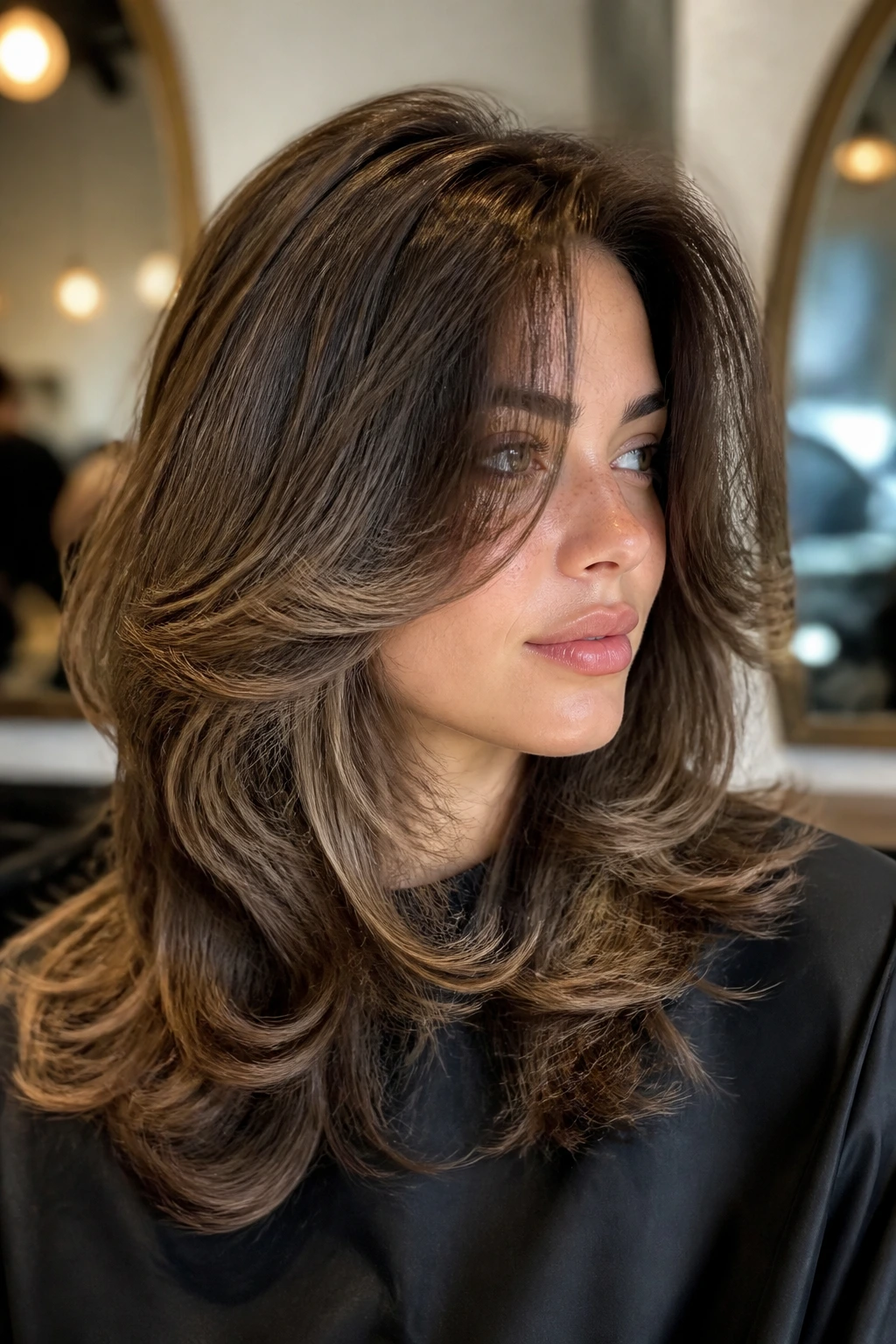
Bring photos, yes, but also bring a sentence. Say you want soft face-framing layers, not short choppy pieces, and mention where you want the shortest layer to land. Cheekbone and collarbone are usually safer than chin if your hair is thick and expands when dry.
Ask whether your stylist plans to remove weight internally or only on the surface. That detail matters more than people think. Internal weight removal can make thick hair move better without making the perimeter look broken, while too much surface texturizing can leave the ends fuzzy and hard to style.
I’d also ask how the cut will behave air-dried. A good rock-inspired shape should still have some life if you skip the blow dryer. If the answer sounds vague, press for specifics about the front pieces and the crown. That’s where the shape lives.
How to Wear These Styles With Different Face Shapes
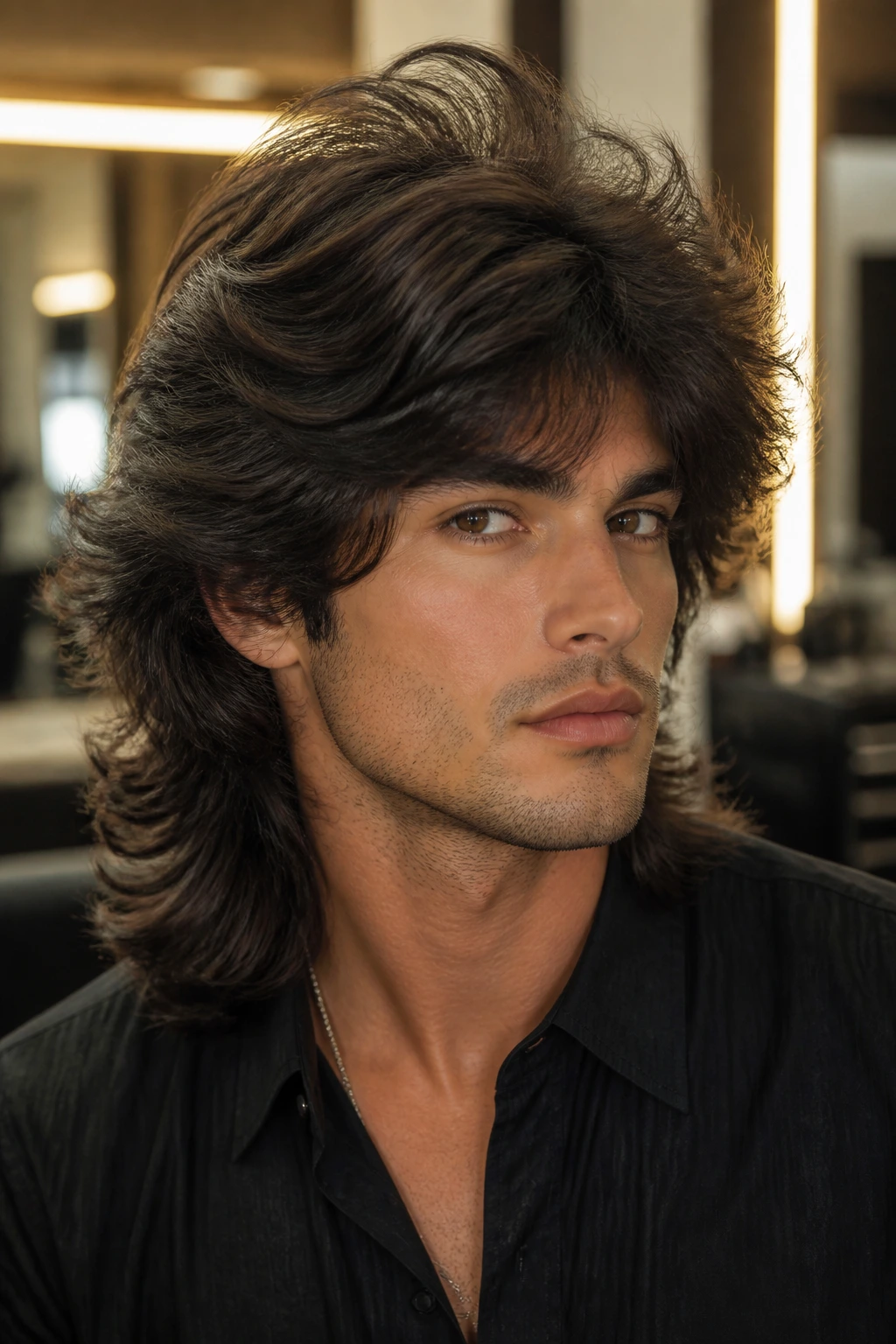
Round faces: Keep height at the crown and let the front layers fall below the cheekbone so the face gets a little vertical line.
Square faces: Soft curtain pieces and rounded ends ease up a stronger jawline. Sharp edge near the chin can feel too harsh here.
Heart-shaped faces: Wider movement around the jaw and soft fringe across the forehead balance a narrower lower face.
Long faces: Ask for fuller side volume and avoid piling all the lift on top; the shape should spread outward, not just upward.
Oval faces: You can wear almost any of these, which is annoying but useful. The main decision is mood—more height, more side sweep, or more length through the front.
If you wear glasses, keep the front layers a touch longer so they don’t compete with the frames.
Styling Moves That Give the Look Its Shape

Volume Placement: Put lift at the roots and through the crown, not only at the ends. Thick hair already has end weight; the crown is where you need help.
Front Bend: Curve the face-framing layers away from the face with a round brush or large iron. That soft outward bend is one of the fastest ways to make the style feel finished.
Texture Control: Use mousse at the roots and a drop of cream at the ends if your hair frizzes. Too much product at the front drags the whole shape down.
Finish: Brush out curls or waves once they cool. If you stop too early, the hair looks set. If you brush too aggressively, it goes flat. There’s a middle ground, and it’s worth finding.
A lot of people think 80s hair is all about teasing. It isn’t. The real trick is shaping the hair before it dries into its final position.
How to Keep Big Hair Fresh Between Washes
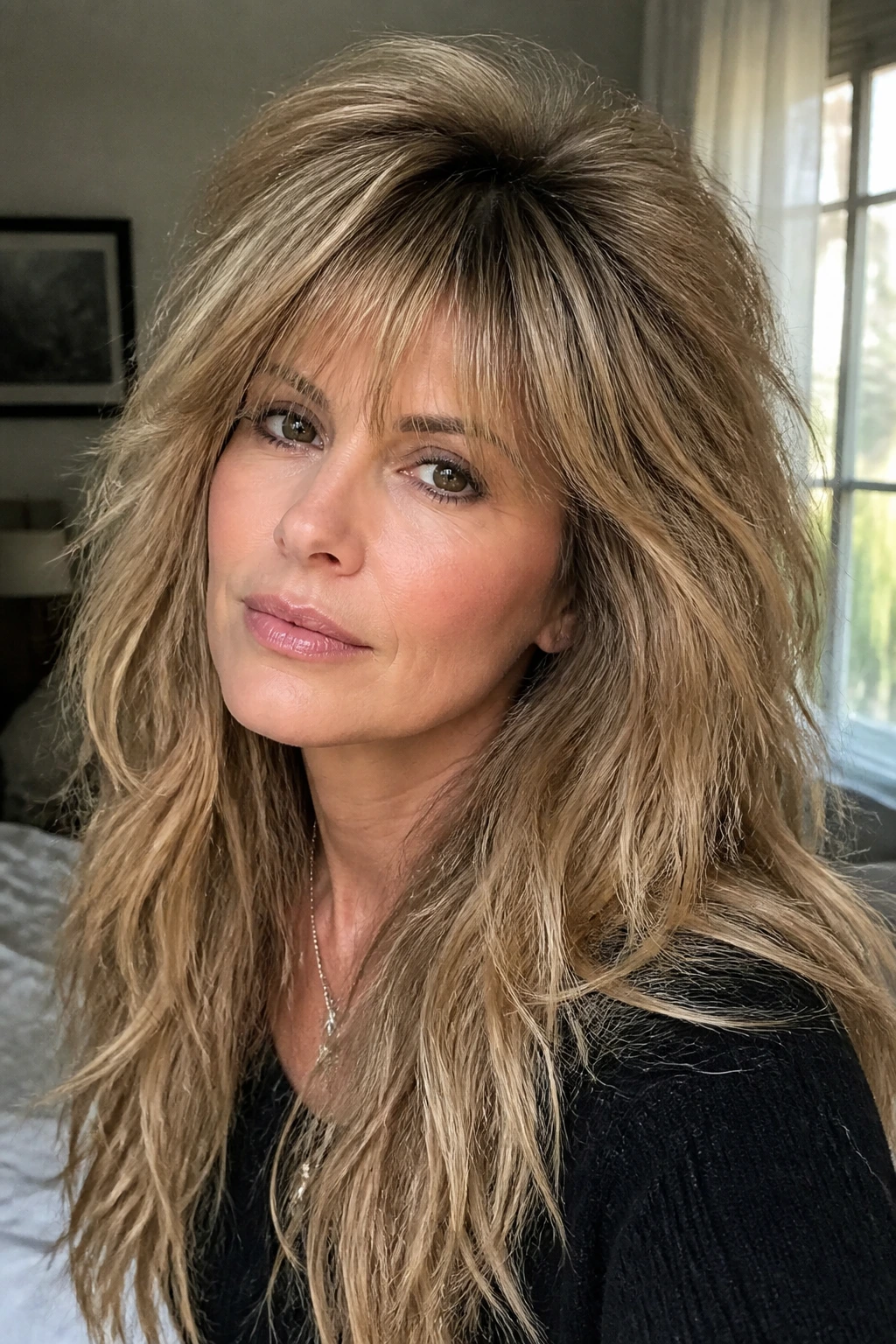
Thick hair usually survives a second or third day better than finer hair, which is one reason these styles are practical. A little dry shampoo at the roots can revive the crown, but don’t dump it all over the length or the softness disappears. Spray it at the part, wait a minute, then massage it in with your fingertips.
At night, a loose pineapple or a soft clip at the crown can keep the layers from mashing flat. A silk or satin pillowcase helps, too. Not because it sounds fancy. Because it cuts down on frizz and keeps the front pieces from snagging into odd bends.
If the ends start to flip in weird directions, a quick pass with a large brush and a tiny bit of water at the face frame usually resets the shape. You do not need a full wash every time the roots lose a little lift.
Variations and Adaptations to Try
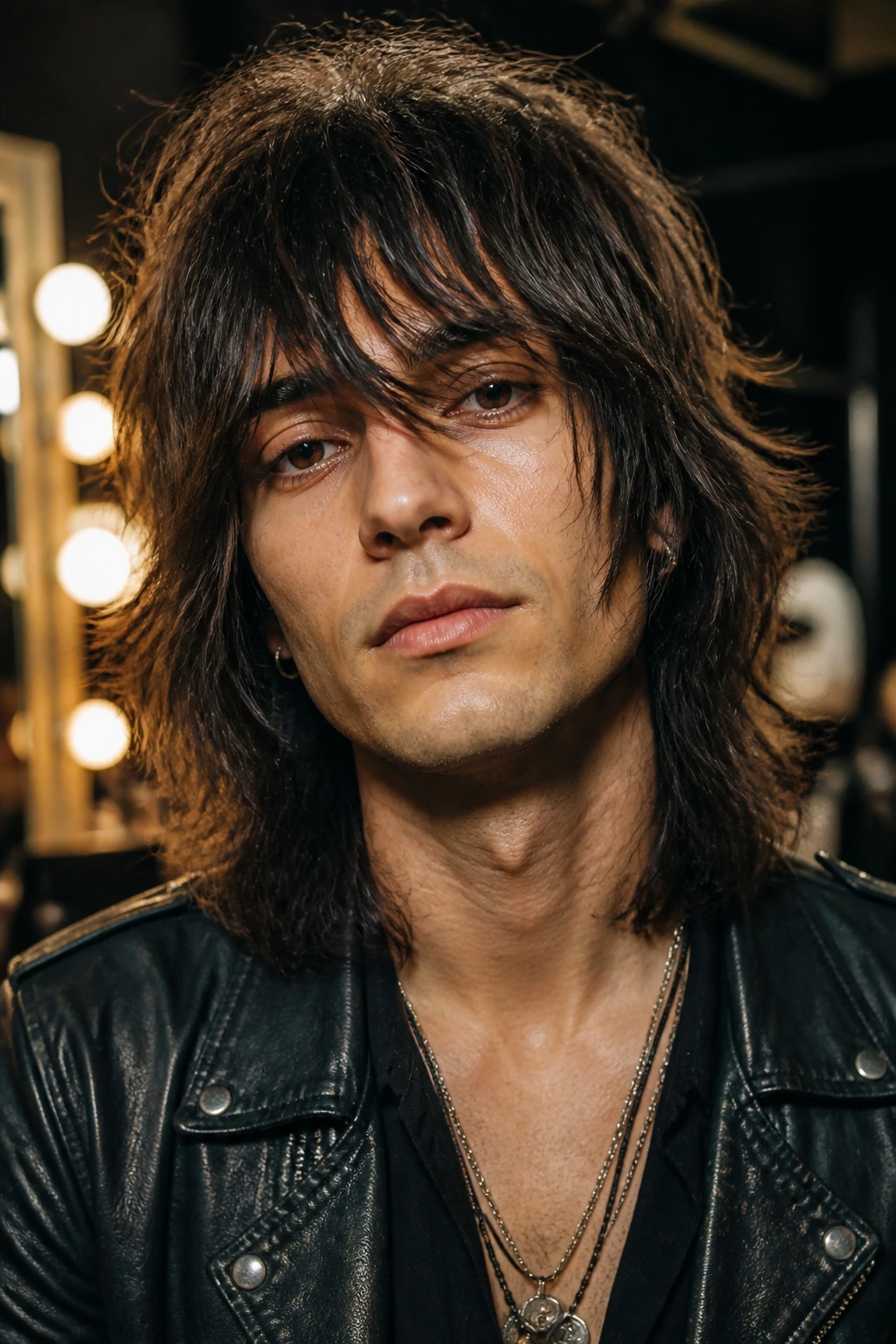
Extra-Gloss Blowout: Add a shine spray or lightweight serum to the ends after styling. This suits straight or slightly wavy thick hair that needs polish more than texture.
Edgier Stage Shag: Keep the same soft layer map, but ask for a little more separation around the fringe and cheekbones. It’s a better fit if you like a rougher, more concert-ready finish.
Low-Heat Air-Dry Version: Swap the round brush for mousse, a scrunch, and a few Velcro rollers at the crown. This works well when you want movement without daily heat.
Curly Rockstar Shape: If your thick hair already curls, keep the layers long and the front pieces soft so the curl pattern doesn’t break into frizz. Heavy texturizing usually makes curly thick hair harder to manage, not easier.
Office-Friendly Rock Hair: Keep the volume lower at the crown and go for smooth face-framing layers with rounded ends. Same bones, calmer finish.
Common Mistakes That Make Thick Hair Fight the Style
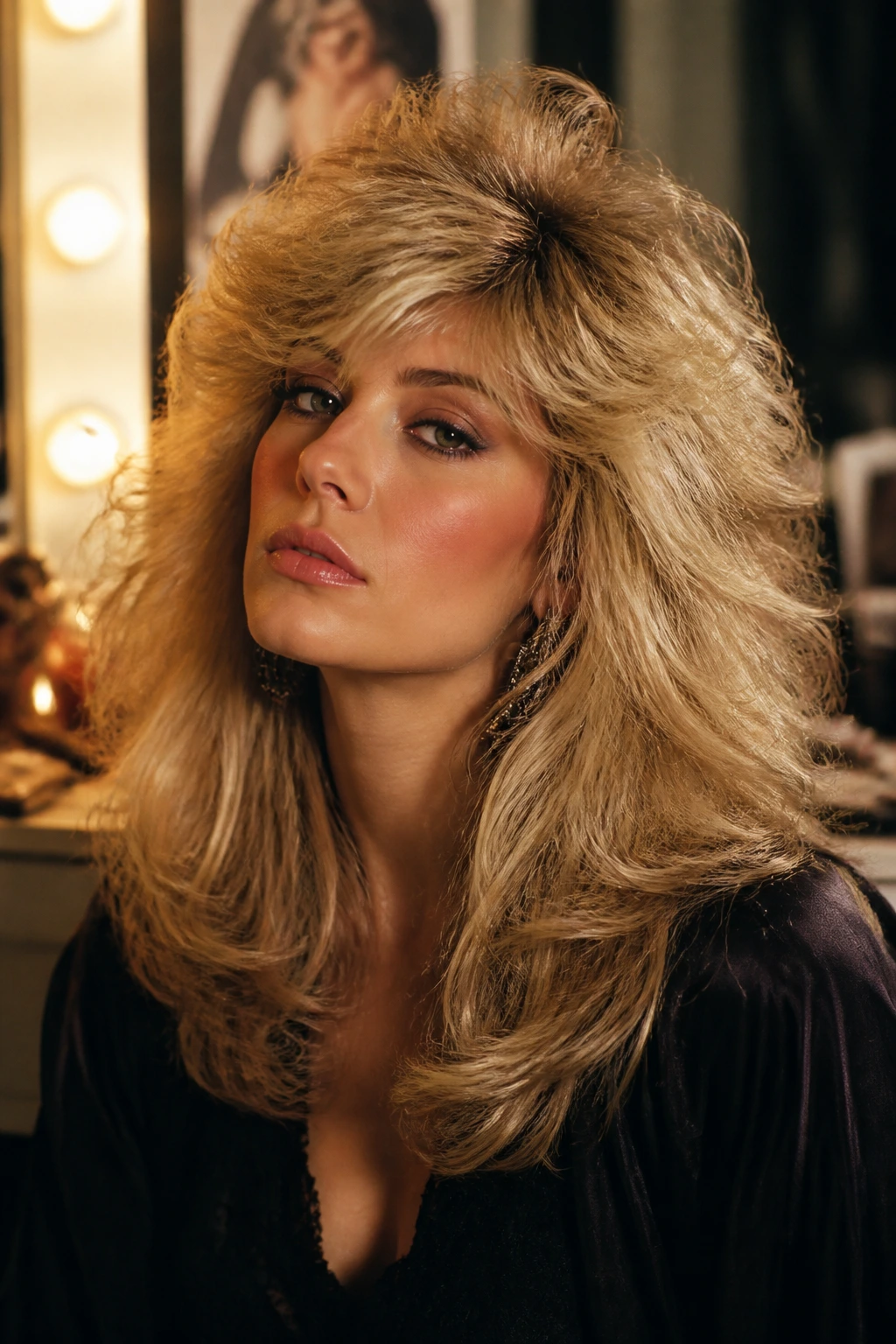
Cutting the layers too short: Short layers on dense hair can create a puffed halo that’s hard to tame. Keep the shortest pieces longer unless your hair is very fine-textured.
Thinning the wrong areas: If weight is removed too high on the sides, the shape goes frizzy near the top and heavy at the bottom. Better to remove weight gradually and leave the perimeter strong.
Skipping the front pieces: A great rock shape needs face-framing. Without it, thick hair often just falls forward in one heavy sheet.
Using the wrong brush size: A small brush puts tiny bends into thick hair and can make the style look overdone. Bigger brushes make the shape smoother and more believable.
Overloading product: Heavy creams, oils, and sprays can collapse the crown. Start with less than you think you need, especially near the roots.
Forgetting the cool-down: If you clip, curl, or roll the hair and then move it too soon, the shape slips. Let it cool in place. That pause matters.
Frequently Asked Questions
Can thick hair really pull off 80s rock volume without looking puffy?
Yes, if the layers are soft and placed with intention. The haircut should create movement at the crown and around the face while keeping enough weight in the length to hold the outline down.
Are curtain bangs a good choice for thick hair?
Usually, yes. They break up the front of the style and make the face look more open, but they need enough length to sweep rather than sit like a solid block.
What if my thick hair frizzes when I blow it out?
Use a nozzle on the dryer, a heat protectant, and a brush with enough tension to smooth the cuticle. A tiny bit of smoothing cream on the ends can help, but too much will flatten the lift.
Do these styles work on straight, wavy, and curly hair?
They do, but the styling changes. Straight hair usually needs more round-brush work, wavy hair needs shape control, and curly hair needs long layers that respect the curl pattern instead of chopping it apart.
How often should I trim a layered rock-style cut?
Every 8 to 12 weeks is a solid rhythm if you want the face-framing pieces to stay clean. If you let it grow too long, the layers blur and the shape starts feeling heavy again.
Can I wear these styles without heat tools?
Some of them, yes. The shag, the loose waves, and the softer wolf-cut versions can air-dry with mousse and a little scrunching, though the crown may need rollers or clips for extra lift.
Which style is easiest if I only want to style my hair in 10 minutes?
The side part, the shoulder-length kickout layers, and the rocker lob are usually the quickest. They look better with a little imperfection, which saves time.
What should I avoid if my thick hair is coarse?
Heavy razoring and aggressive thinning are risky. They can make coarse hair frizz faster and leave the ends uneven, so soft layering and controlled texture are usually safer.
Why These Shapes Still Work
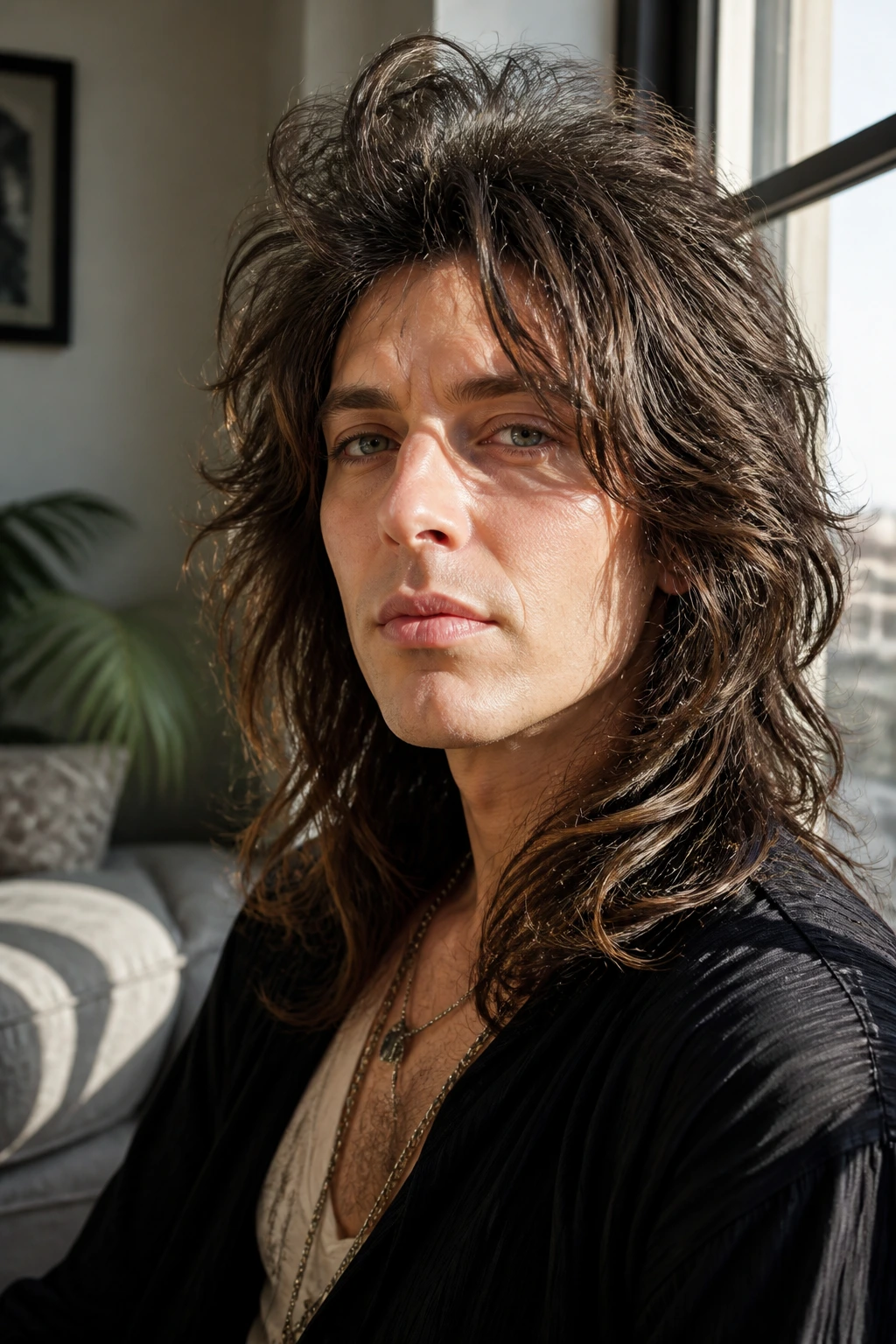
The best thing about these 80s-inspired cuts is that they are built around shape, not just nostalgia. Thick hair needs direction, and soft layers give it exactly that: lift where it matters, face-framing where it flatters, and enough length left in place to keep the style rich.
A good version of this look doesn’t fight your hair’s density. It uses it. And when the cut, the part, and the front pieces all line up, you get that big, confident silhouette without spending half your life trying to make it behave.