



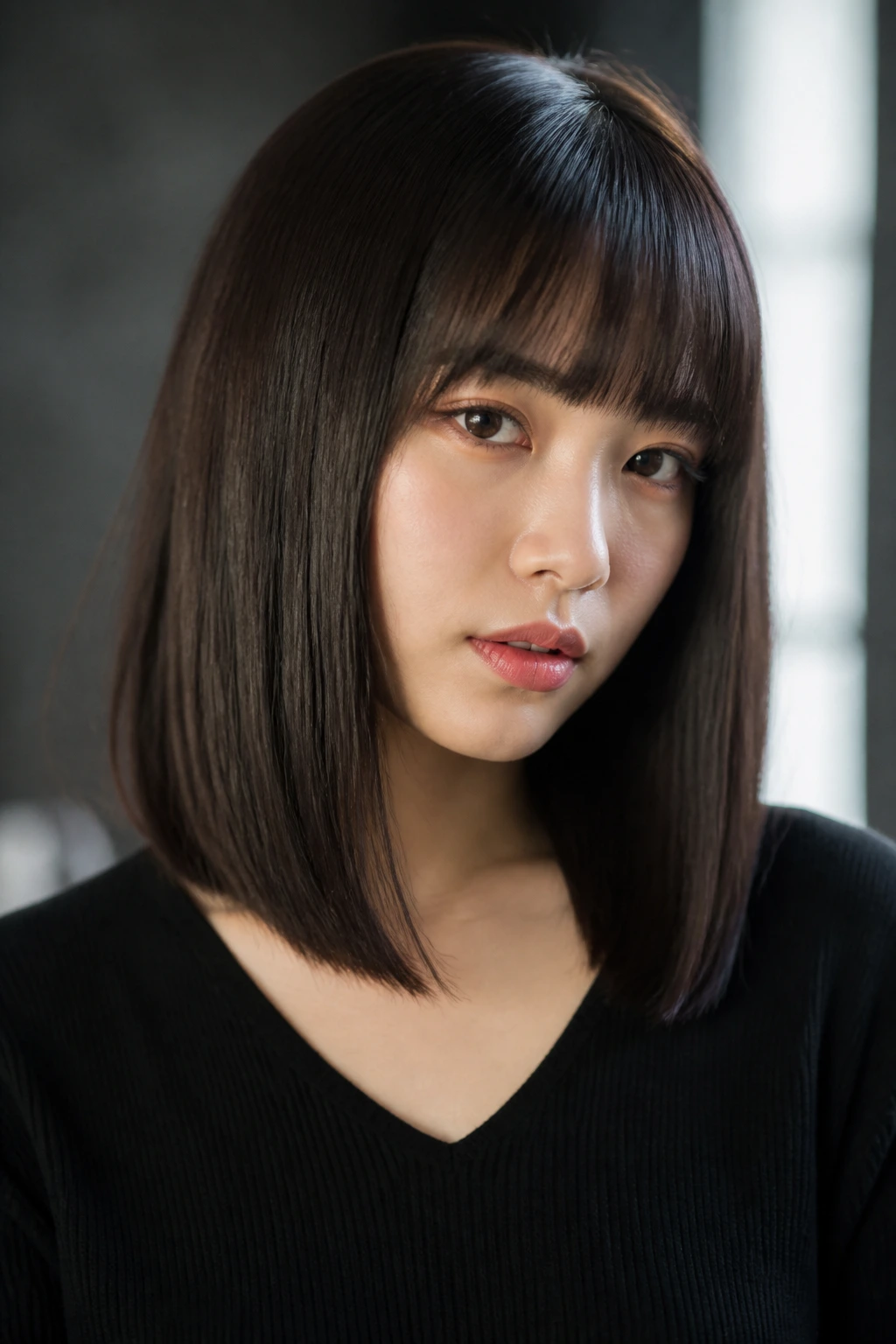
A round face can make haircut decisions feel louder than they ought to be. Chop too high, and the cheeks take over. Leave the shape too blunt, and the whole thing can read wider than you meant it to. A Korean long bob with bangs for round faces fixes that problem with a little finesse: the length drops below the jaw, the fringe breaks up the forehead, and the front pieces guide the eye downward instead of letting it hang out around the cheeks.
That’s the real reason this cut keeps showing up in salon chairs. It isn’t about hiding your face. It’s about giving it cleaner lines, a bit more lift, and a shape that feels soft without turning puffy. The Korean version of the lob tends to do this especially well because it likes movement, airy bangs, and ends that bend rather than sit there like a shelf.
And yes, bangs are absolutely part of the equation. The wrong ones can shorten the face in a hurry. The right ones do the opposite. They split up width, open the eyes, and make the whole cut feel intentional even when you’ve only spent five minutes on it.
Why These 25 Cuts Work on Round Faces
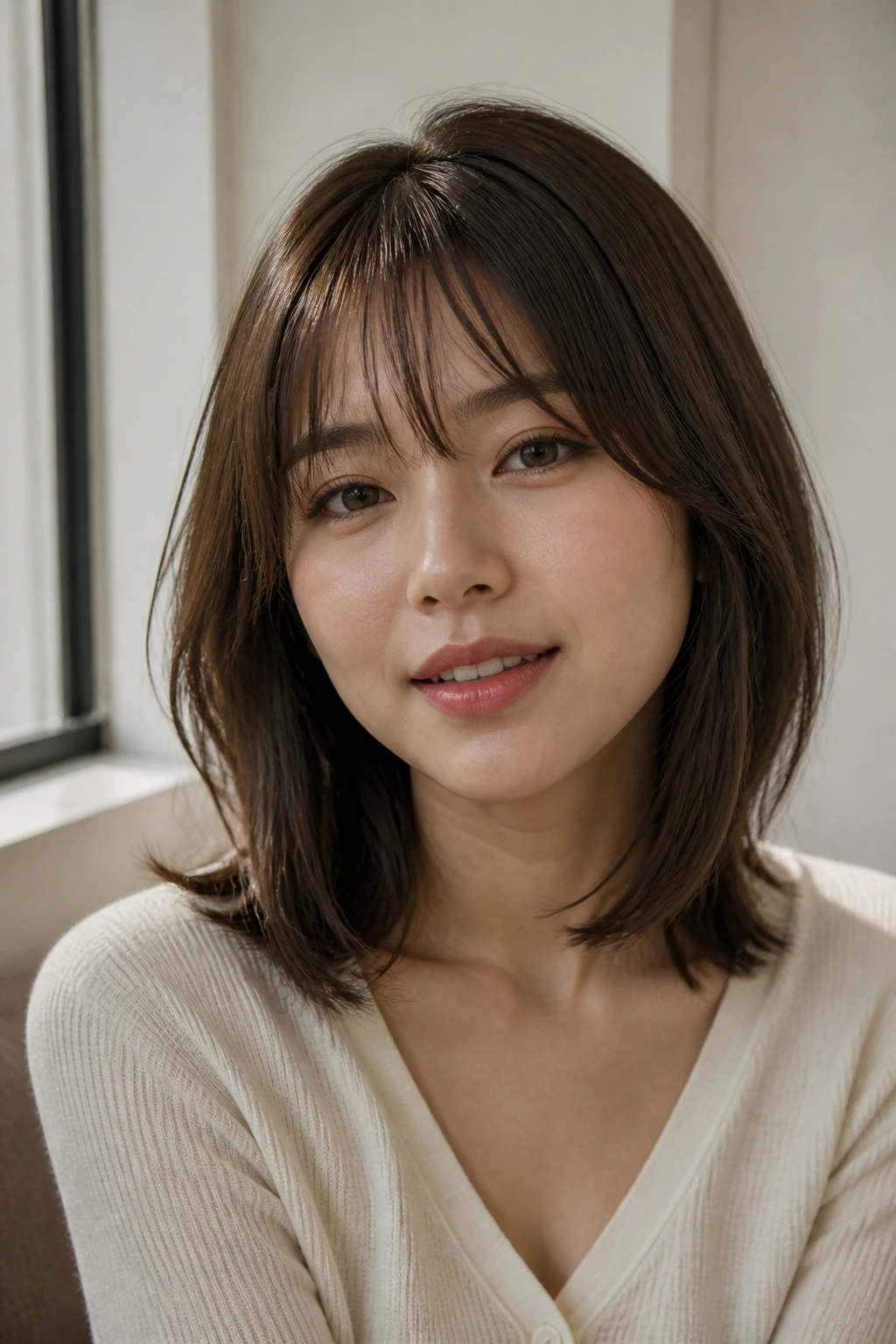
-
Length below the jawline changes everything: Once the hem falls at the collarbone or lower, the haircut stops boxing in the cheeks and starts drawing the eye down the neck.
-
Soft bangs break up width without adding bulk: A see-through fringe, bottleneck fringe, or side-swept bang gives the forehead a little air, which keeps the top half from feeling heavy.
-
Most of these shapes move the weight lower: Internal layers, C-curls, and soft bends keep volume away from the widest part of the face, which is where round faces usually need help.
-
The grow-out is kinder than a blunt crop: When the bang line grows past the brows and the front pieces get a little longer, the cut still looks on purpose instead of awkward.
-
They play nicely with different textures: Straight hair can wear the polished versions, wavy hair can lean into the tousled ones, and thicker hair can use internal layering to stay from ballooning out.
-
A Korean lob gives you options: You can wear it sleek for work, bend the ends under for dinner, or leave it with a little lived-in movement and it still reads as a real style, not an accident.
1. See-Through Bangs With Collarbone Ends
A see-through fringe is one of the easiest ways to make a round face look a little longer without getting dramatic about it. The bangs let forehead skin peek through, so the front of the haircut never becomes a solid wall. Pair that with ends that hit the collarbone, and the shape starts working vertically instead of spreading out at cheek level.
Tell the stylist you want the bang density kept light, not packed in. The front pieces should be a touch longer than the back, and the ends should bend under just enough to keep the outline soft. The whole point is air, not heaviness.
If your hair is fine, this version can look especially good because the see-through fringe doesn’t steal much volume from the rest of the cut. Blow-dry the bangs first, then use a round brush or a small flat brush to give the ends a gentle inward turn. Nothing fancy. Just enough movement to keep the shape from sitting flat.
2. Curtain Bangs With a Soft U-Shape
Curtain bangs feel almost made for a Korean long bob on a round face. The middle part opens the forehead, while the longer sides swing out toward the cheekbones and then fall away. A soft U-shaped hem keeps the front pieces longer than the back, which gives the face a little stretch instead of a hard horizontal line.
The nice part is that this cut doesn’t need to look severe to do its job. It can be fluffy, brushed out, and slightly loose around the face. In other words, it can look like hair, not architecture.
What to ask for
- Keep the bangs split enough to show a bit of forehead.
- Start the shortest pieces around the cheekbone, not the jaw.
- Let the front length graze the collarbone.
- Ask for the ends to bend under, not curl into a tight ring.
This one works especially well if you like hair that looks soft from every angle. It also grows out cleanly, which matters more than people admit.
3. Side-Swept Fringe and an A-Line Front
If you want the face to look a little narrower without giving up softness, side-swept bangs are one of the smartest moves on the list. They drag the eye diagonally across the forehead instead of letting it sit straight across the widest part of the face. Add an A-line front — shorter in back, longer in front — and the shape gets even leaner.
This is the lob for someone who likes one side to feel a little more interesting than the other. A deep or slightly off-center part gives the haircut movement right away, and the front pieces can land just below the chin at the shortest point before falling longer toward the collarbone.
It’s a good choice if your face tends to look very full when hair is tucked straight down. The diagonal line changes that fast. Keep the bend loose and low, though. If you flip the ends too much, the whole thing starts to widen again.
4. Glassy Straight Lob With Blunt Bangs
Blunt bangs on a round face are not a mistake. They only become a mistake when the rest of the cut is too short or too fluffy. Keep the lob long, keep the perimeter sleek, and the blunt fringe suddenly looks modern instead of boxy.
The trick is contrast. A strong bang line can work because the hem below it stays long and controlled. If the ends reach the upper chest and the surface is smooth, the face gets a clean frame rather than a squat one. That’s the difference.
Why the straight line doesn’t widen the face
A round face can carry a straight fringe if the rest of the haircut pulls downward. The eye needs a second line to follow, and the long perimeter gives it that. Think of the bang as a top note and the collarbone length as the bass line. Without the bass line, the cut can feel top-heavy.
Use a flat brush while blow-drying, then a paddle brush or a soft pass with a straightener to keep the length calm. A tiny bit of serum on the ends — not the roots — helps the shine stay neat.
5. Wispy Baby Bangs and Choppy Ends
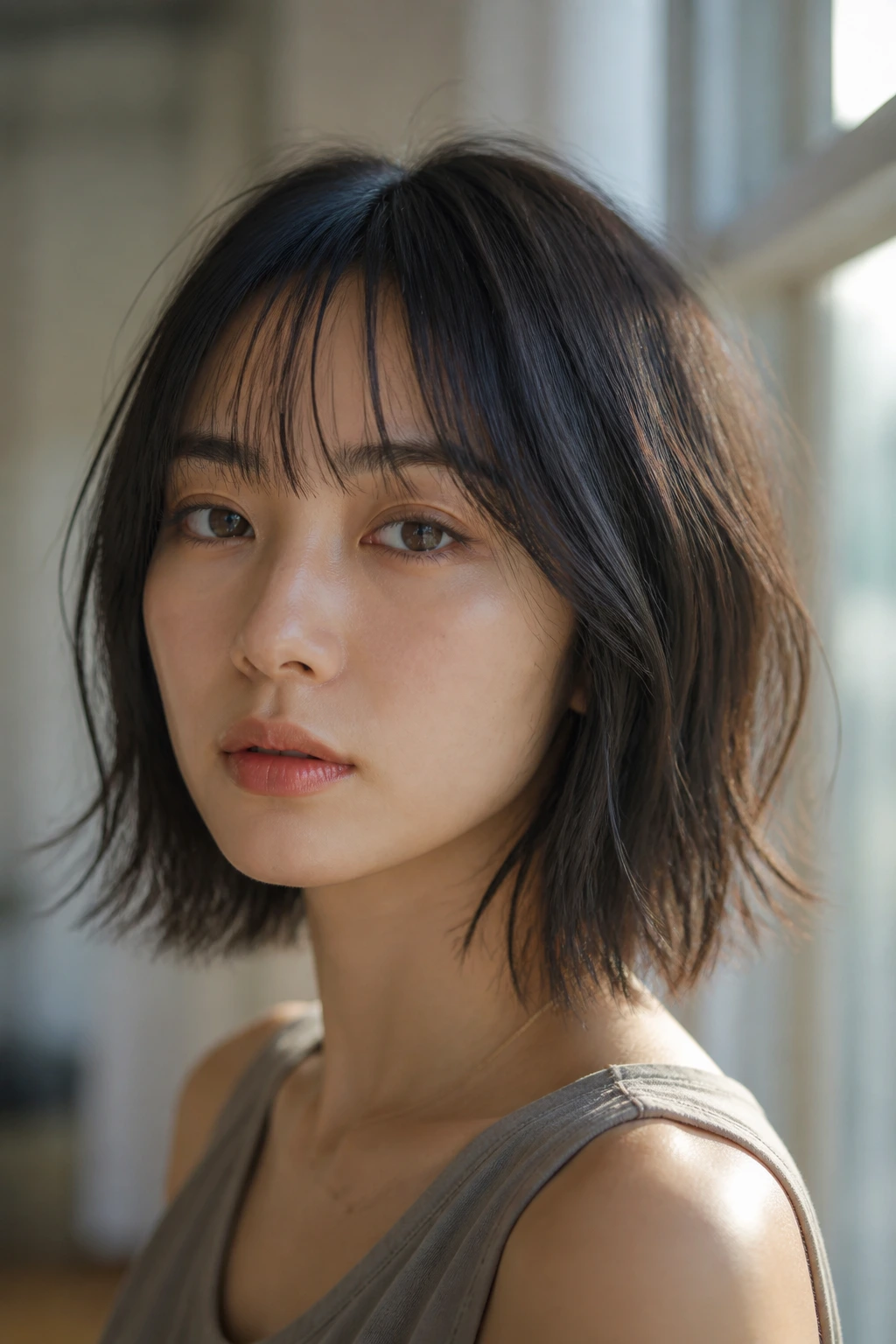
This one has more attitude than the others, and that’s the point. Wispy baby bangs can look very sharp on a round face when the lob itself stays long enough to balance them out. The short fringe exposes more forehead, which gives the face some vertical breathing room, while the choppy ends keep the bottom from turning into one smooth circle.
It’s a cut with personality. Not a safe one. But not every haircut needs to act shy.
The best version keeps the baby bangs feathery, not dense. If they’re cut too thick, they lose the lightness that makes the whole shape work. Ask for texture at the ends, too, because a blunt hem plus tiny bangs can start to feel oddly stiff. The choppier finish gives the style a little grit and helps it sit around the face instead of wrapping it.
6. Bottleneck Bangs and Cheekbone Layers
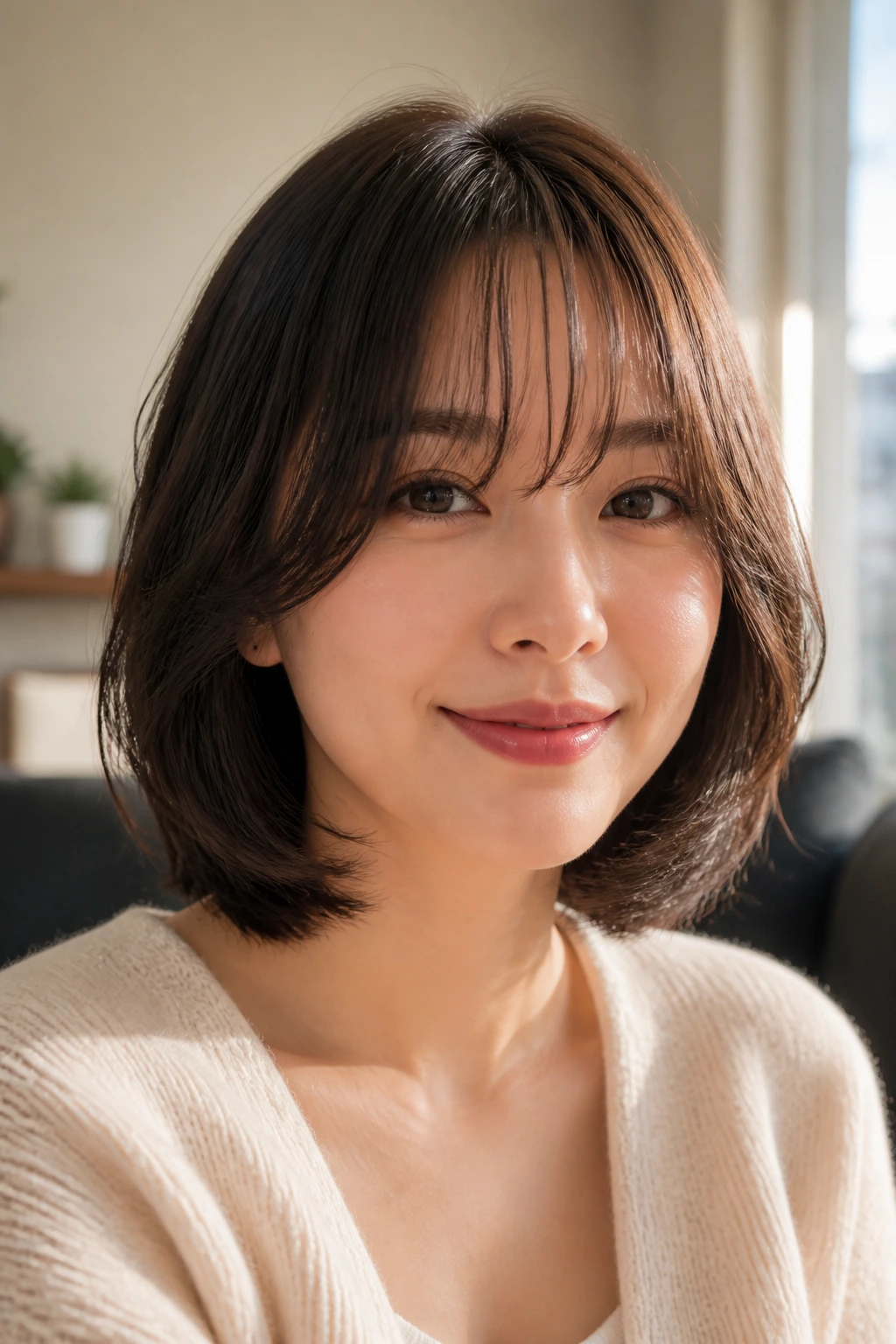
Bottleneck bangs are one of the easiest fringe shapes to love on a round face because they do something very useful: they start narrow in the center, then open out just enough to skim the cheekbones. That gives the face room up top while keeping the fringe soft around the sides.
The layers matter here. Ask for face-framing pieces that begin around the cheekbone and move down toward the lip or chin. If they start too high, the sides can puff out right where you don’t want them. If they start too low, the bang loses its shape and the cut looks plain.
This is a good middle-ground cut for someone who wants bangs but not a heavy bang. It has enough presence to feel styled, yet it still leaves a little skin visible. That small detail makes a bigger difference than most people expect.
7. Long Peekaboo Fringe With an Off-Center Part
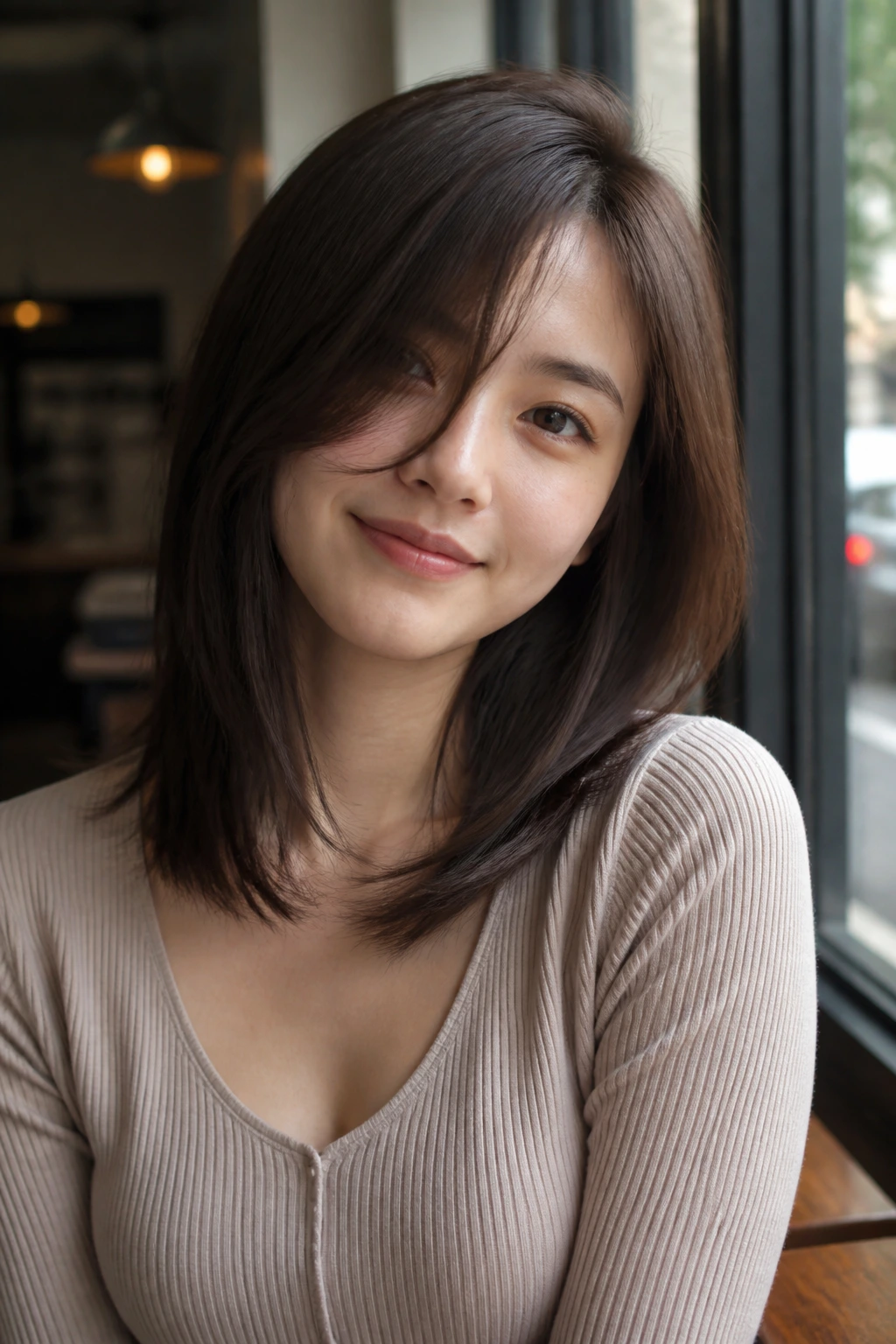
A peekaboo fringe does a sneaky bit of work on a round face. It covers part of the forehead without sealing it off, and the off-center part breaks the symmetry that can make round faces read wider. The result feels softer, almost like the haircut is moving as you turn your head.
This version works especially well if your hair naturally falls forward. Instead of fighting that tendency, the cut uses it. Keep the longest fringe pieces just past the brow, then let them angle toward the cheekbone. The rest of the lob should stay long enough to graze the collarbone, so the shape keeps pulling the eye down.
If you like to tuck one side behind the ear, this is a smart choice. The exposed ear line adds another vertical break, and that small thing can sharpen the whole look.
8. Brow-Skimming Bangs and Inward C-Curls
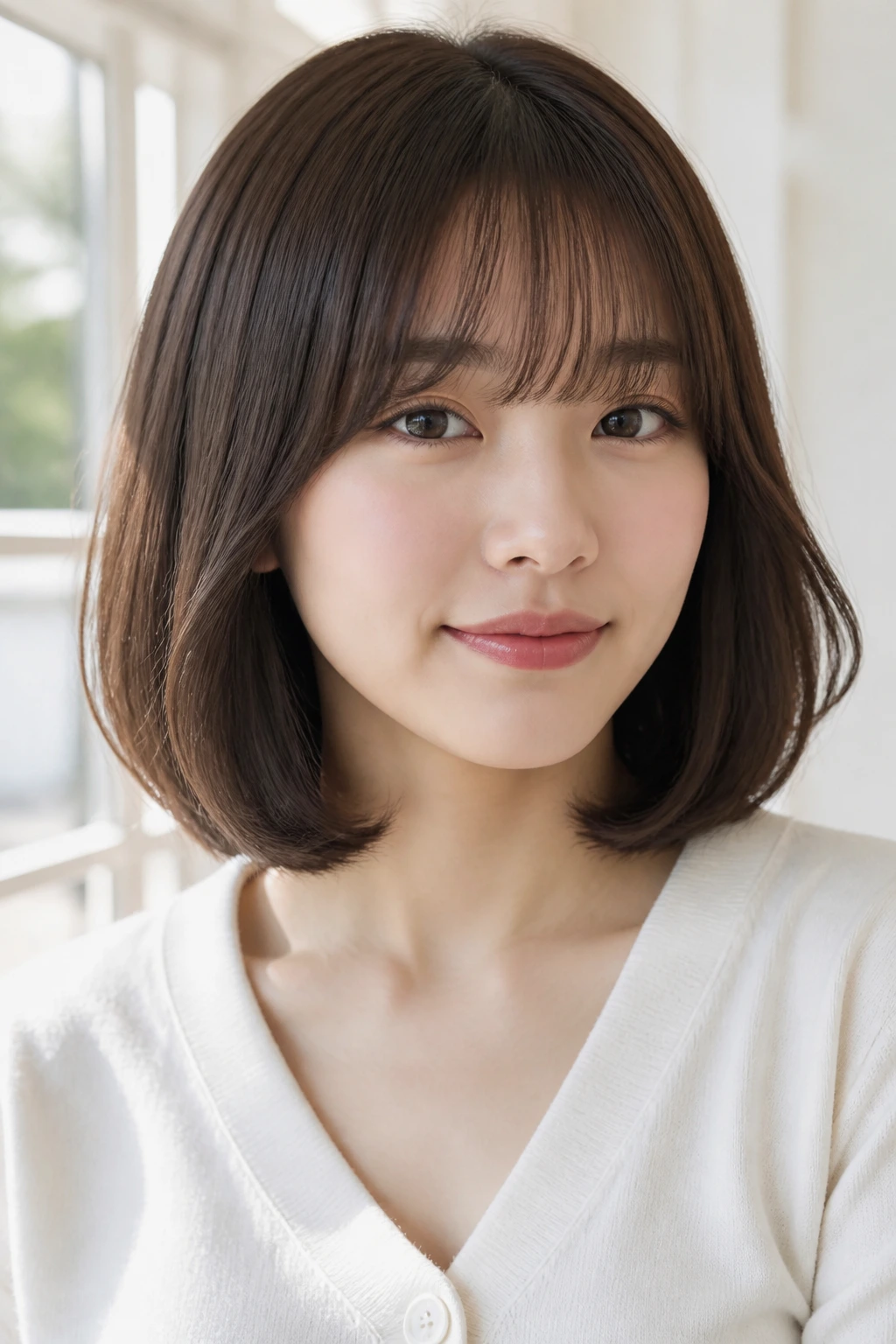
Brow-skimming bangs can be lovely on round faces when the length is right. The fringe touches or almost touches the brows, which keeps the forehead framed without making the top half of the face feel crowded. The ends of the lob curve inward in a clean C-shape, and that inward bend keeps the silhouette neat.
This is one of the more polished looks on the list. It suits straight or lightly textured hair especially well, because the lines stay readable. If the ends are too rounded, the cut can start to puff. If they’re too straight, it gets plain. The middle ground is what makes it work.
Use a blow dryer with a nozzle and a medium round brush. Set the bangs first, then turn the ends under for only a second or two. You want a soft hook, not a hard curl. That tiny difference is the whole haircut.
9. Feathered Fringe and Airy S-Waves
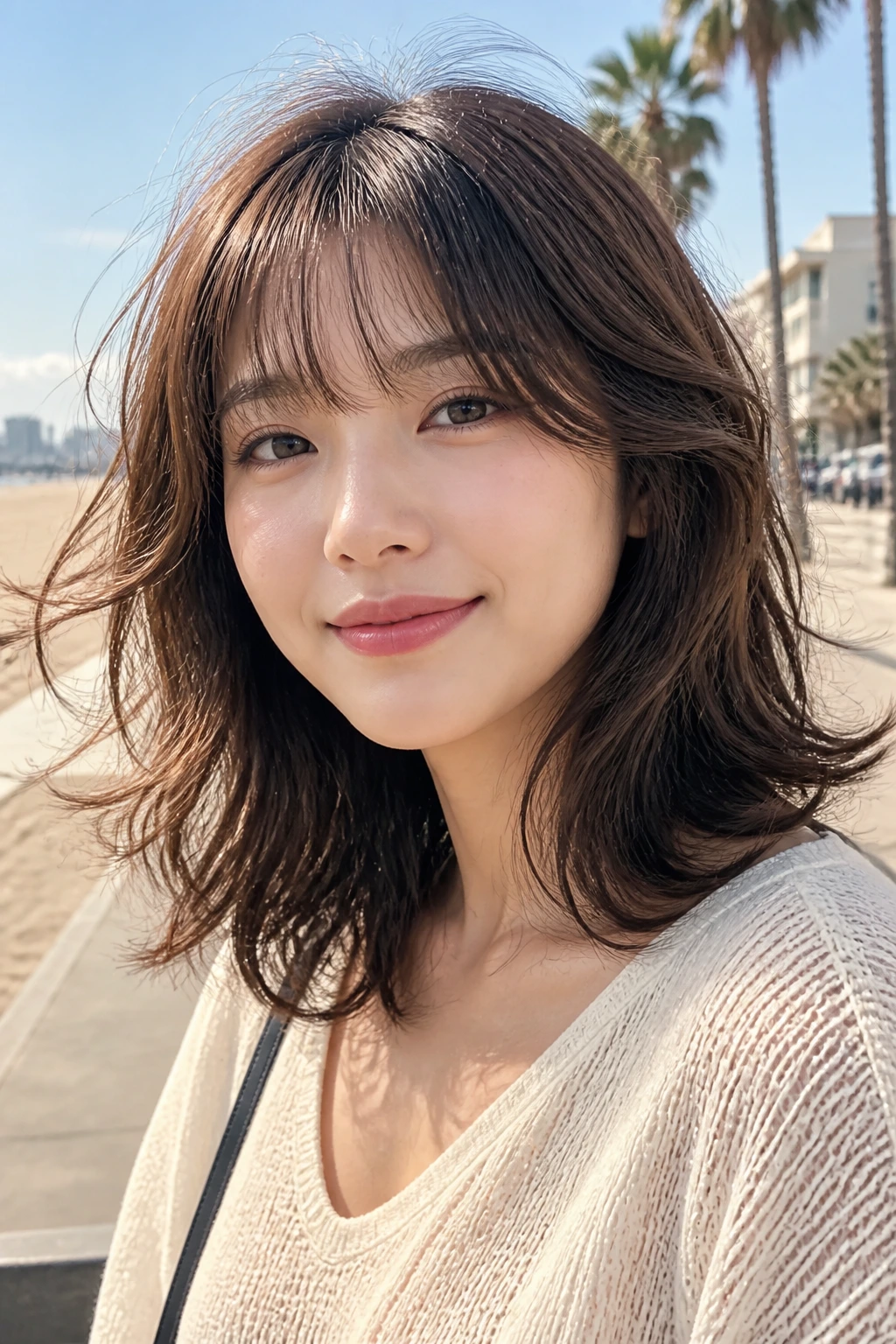
Feathered bangs are useful because they never feel like one heavy block across the forehead. They break into little pieces, which makes the face look more open. Pair them with S-waves through the lob and you get movement that travels up and down instead of outward.
That matters for round faces. Vertical movement flatters. Side-to-side bulk does not.
How to use it
- Wrap medium sections around a 1.25-inch iron, then brush them out once they cool.
- Leave the ends loose so the wave pattern stays broken, not ringleted.
- Keep the fringe light enough that you can still see forehead through it.
This is one of the more relaxed looks, and it’s kind to hair that refuses to stay perfectly smooth. The waves give the cut shape even when the day gets long and the blowout starts to soften.
10. Choppy Bangs and Tousled Layers
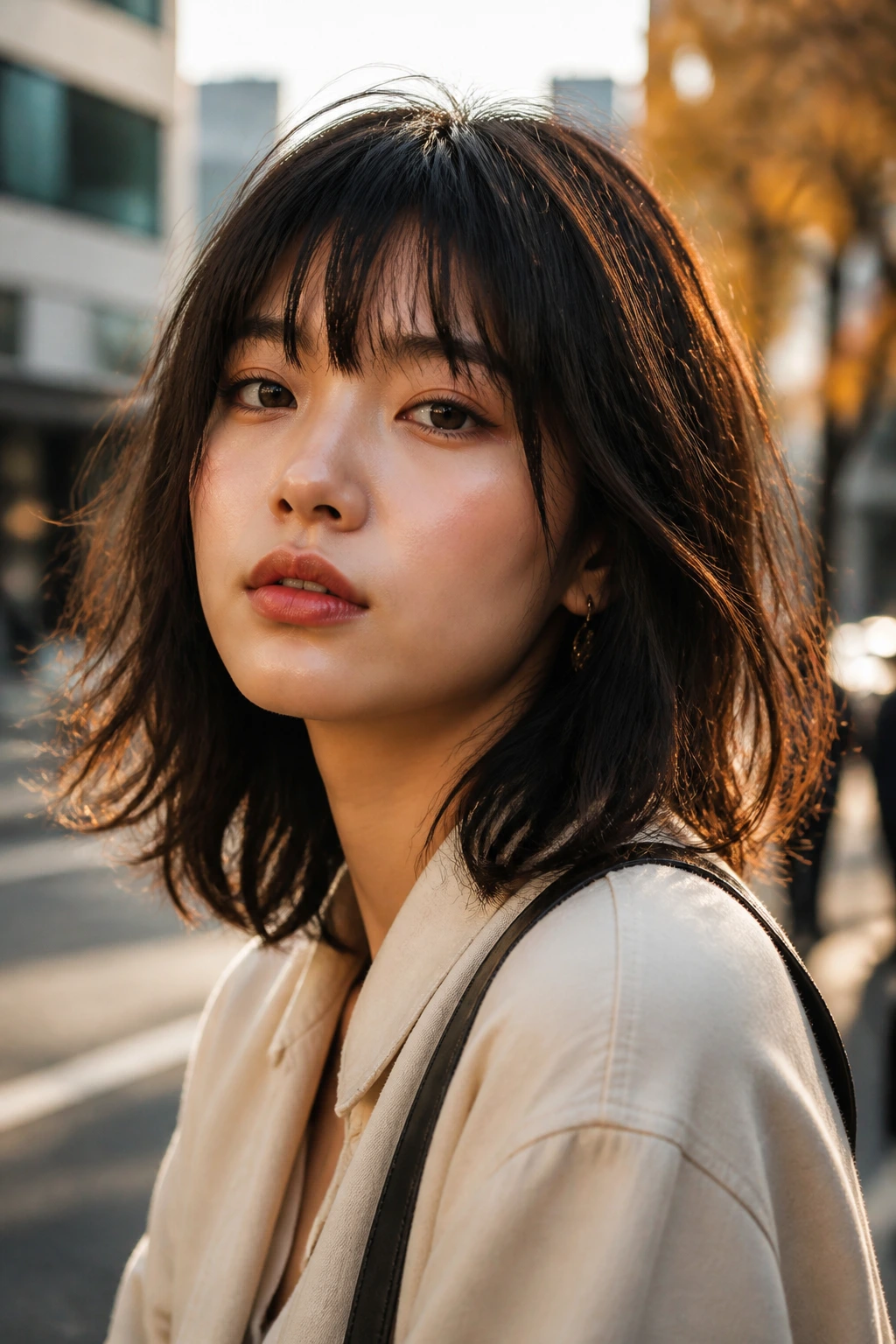
Choppy bangs do a different job than curtain bangs. They don’t try to open the face gently. They interrupt it. On a round face, that interruption can be useful because it stops the eye from landing on one smooth, circular outline.
The lob underneath should stay airy, with enough broken texture to avoid a dense shape around the cheeks. If the layers are too tidy, the haircut starts to feel sweet in a bad way. If they’re too shredded, it can look thin. The sweet spot is somewhere between.
This cut works especially well if your hair has a little natural movement or if you’re willing to rough-dry it with mousse. It’s one of those shapes that looks better when it isn’t polished to death. A little lived-in texture keeps it from looking like a helmet.
11. Soft Shag Lob With Split Bangs
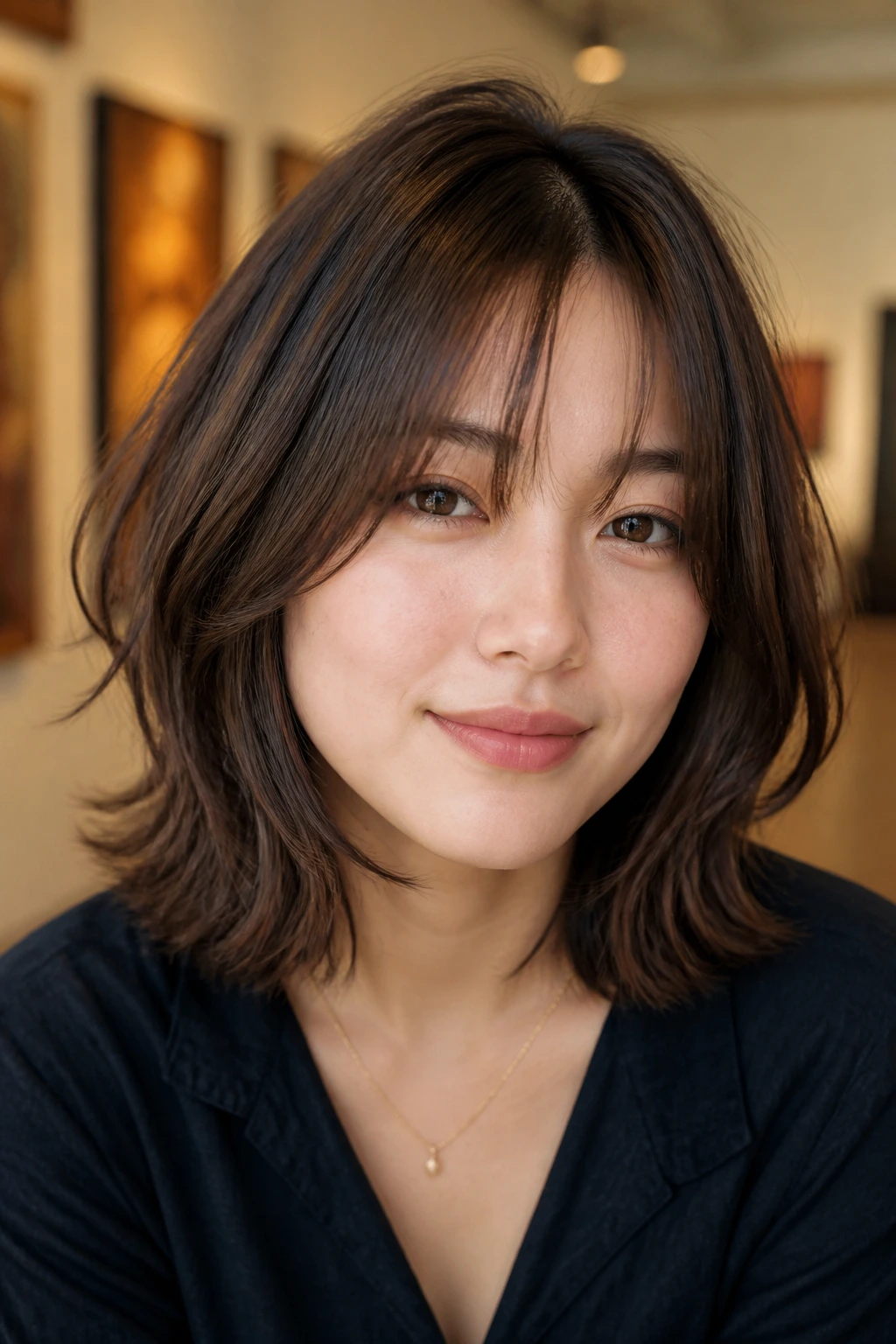
A soft shag lob gives a round face some needed edges without turning harsh. The split bangs create a small opening down the middle, and the layers push movement through the mid-lengths instead of letting all the volume sit on the sides. That alone can make the face read longer.
The word “soft” matters here. A hard shag with too many high layers can make the head look wide, especially if the hair is thick. A soft shag keeps the crown light and lets the bottom length do the balancing. The result feels cool without being loud.
If your hair tends to collapse at the roots, this is a strong option. The layers create lift, and the split fringe keeps the forehead from closing up. Just don’t let the shortest pieces climb too high on the cheek. That’s where the shape can go sideways fast.
12. Full Fringe With Long Face-Framing Pieces
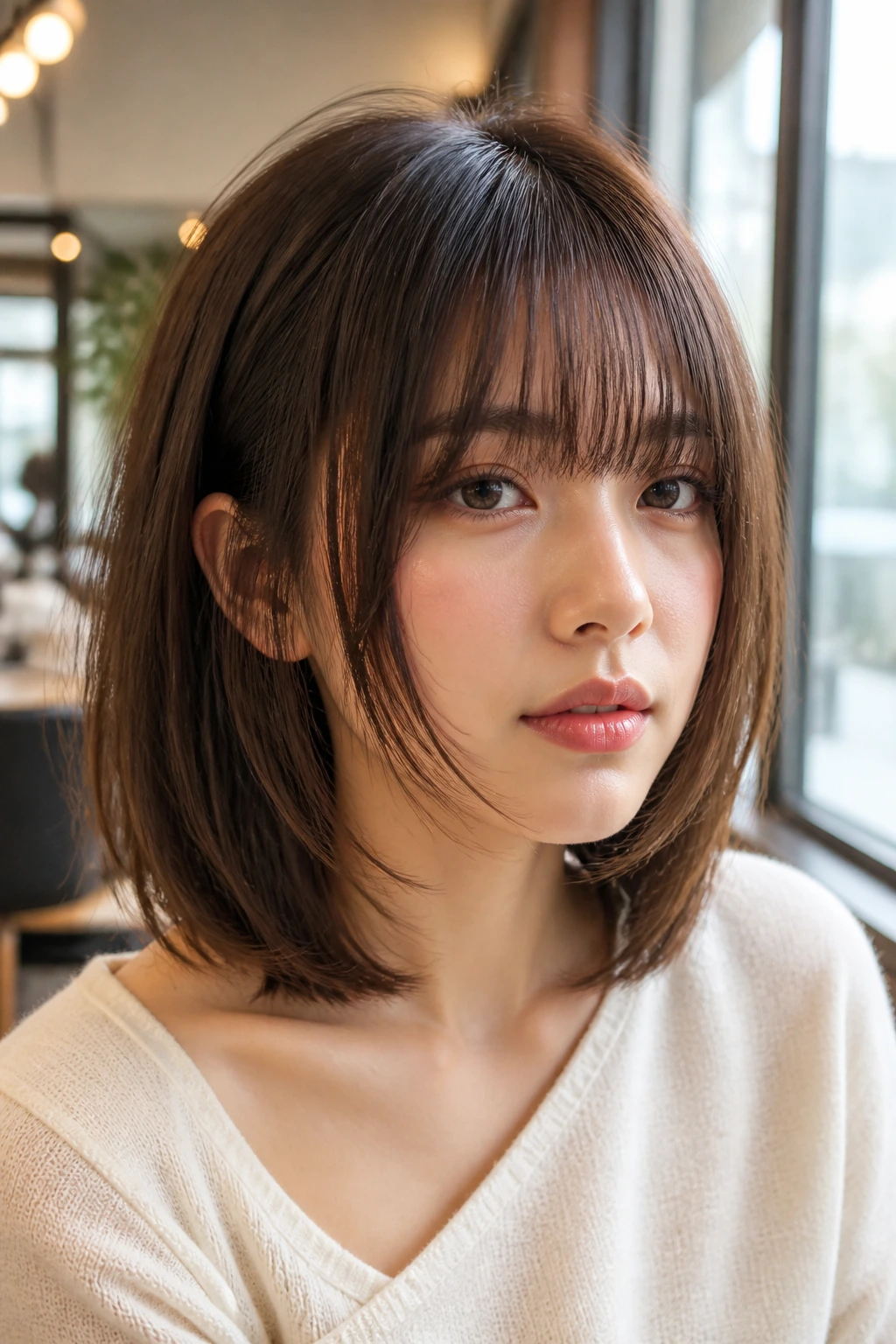
A heavier bang can still work on a round face if the rest of the cut knows how to behave. The full fringe should sit at or just below the brows, but the pieces at the sides need to stretch down. Long face-framing pieces are what keep the haircut from turning boxy.
This is a smart choice if your forehead is a little longer or if you like a more pronounced fringe. The key is balance. The bangs hold attention up top, but the long sides keep leading the eye down the face and toward the collarbone.
Salon note
Ask your stylist to keep the fringe dense enough to read as a full bang, but not so thick that it makes a hard line across the forehead. Then make sure the face-framing pieces are long enough to reach the cheek or upper lip. That contrast keeps the shape flattering instead of flat.
13. Deep Side Part and Swooping Bangs
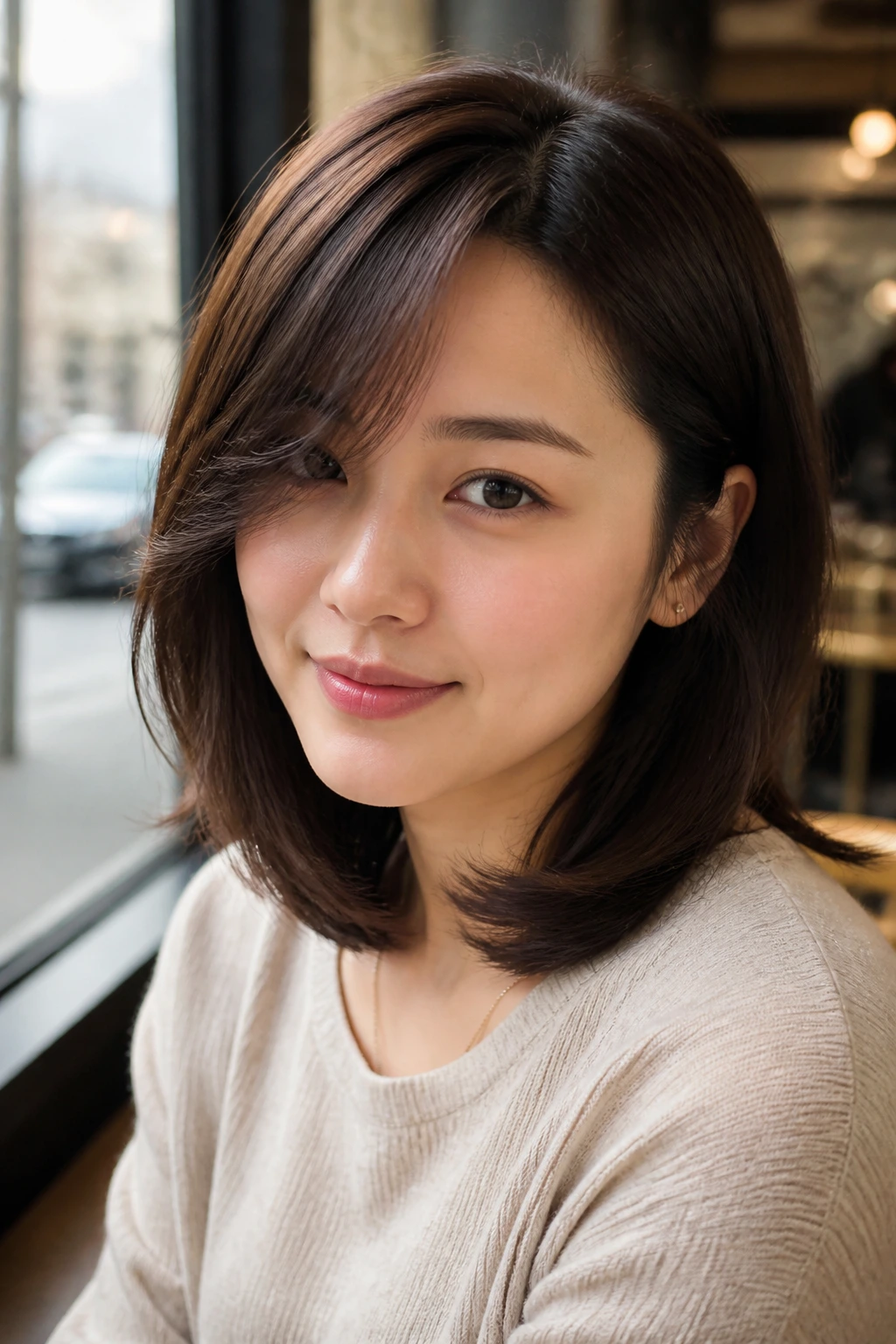
A deep side part changes the whole mood of a lob on a round face. It creates one strong diagonal line, which is exactly the kind of shape that counteracts facial width. The bangs then sweep across the forehead in one smooth arc and fall away from the fuller part of the cheeks.
This cut can look especially good when the hair is glossy and smooth. The diagonal front feels deliberate, almost tailored. It also gives you a bit of lift at the roots on the heavier side of the part, which helps the top of the head look taller.
If you want a haircut that can go from casual to sharp without a complete restyle, this is worth a serious look. It needs a quick brush and a little heat at the fringe, then it behaves.
14. Korean Perm Lob With Broken Ends
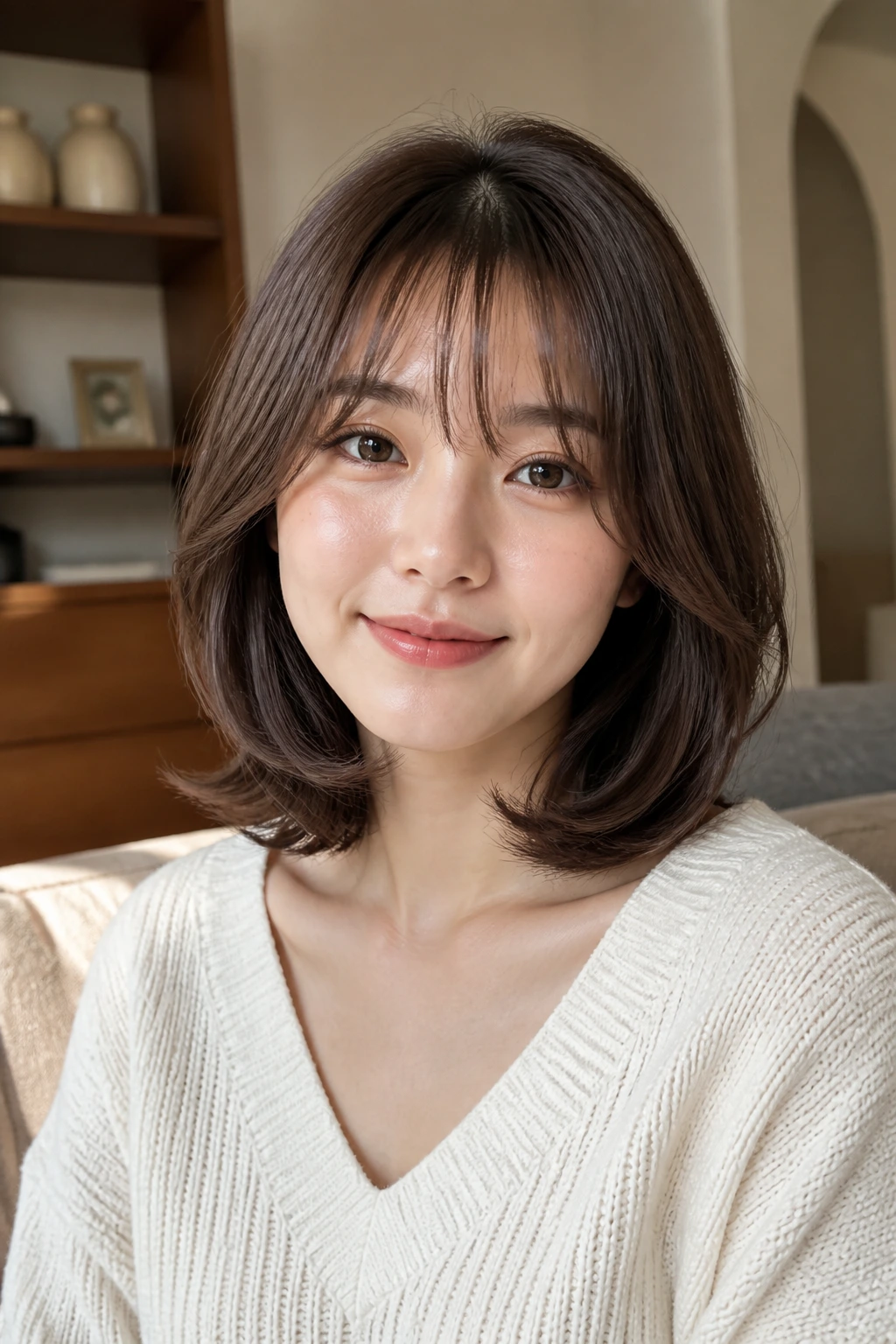
A Korean perm lob is often the answer for people who want shape without daily heat styling. The perm in this case should be soft — think C-curl or a light S-curl, not spiral ringlets. The ends bend inward or gently away from the face, and the fringe lands softly enough to keep the forehead open.
This is a practical cut if your hair goes flat by lunch or refuses to keep a bend. The perm gives the lob some memory. It also keeps the outline from sticking straight out at the sides, which can make a round face look broader.
What to ask for
Request a bend, not a curl. Say you want the ends to sit with a natural inward turn and the bangs to stay airy. If your stylist hears “perm” and reaches for something tight, stop them. Tight curls on a lob can shrink the shape and make the face look fuller, not slimmer.
15. Rounded Bangs and a Light U-Shape

Rounded bangs are a quieter choice, but quiet is not the same as boring. The fringe follows the curve of the brow line without becoming a hard straight bar, and the U-shaped hem below it keeps the center slightly longer. That length in the middle matters more than people think.
A round face usually benefits from shapes that don’t repeat its widest curve too closely. This cut avoids that trap by softening the top while keeping the lower half of the lob long and a little stretched. The front doesn’t shout. It just does the job.
It works particularly well if you want something romantic or polished rather than edgy. A light bend at the ends and a little lift at the crown is enough. Too much curl and it starts looking too sweet. Too little and the curve disappears.
16. Layered Lob With Curtain Bangs Starting at the Cheekbone
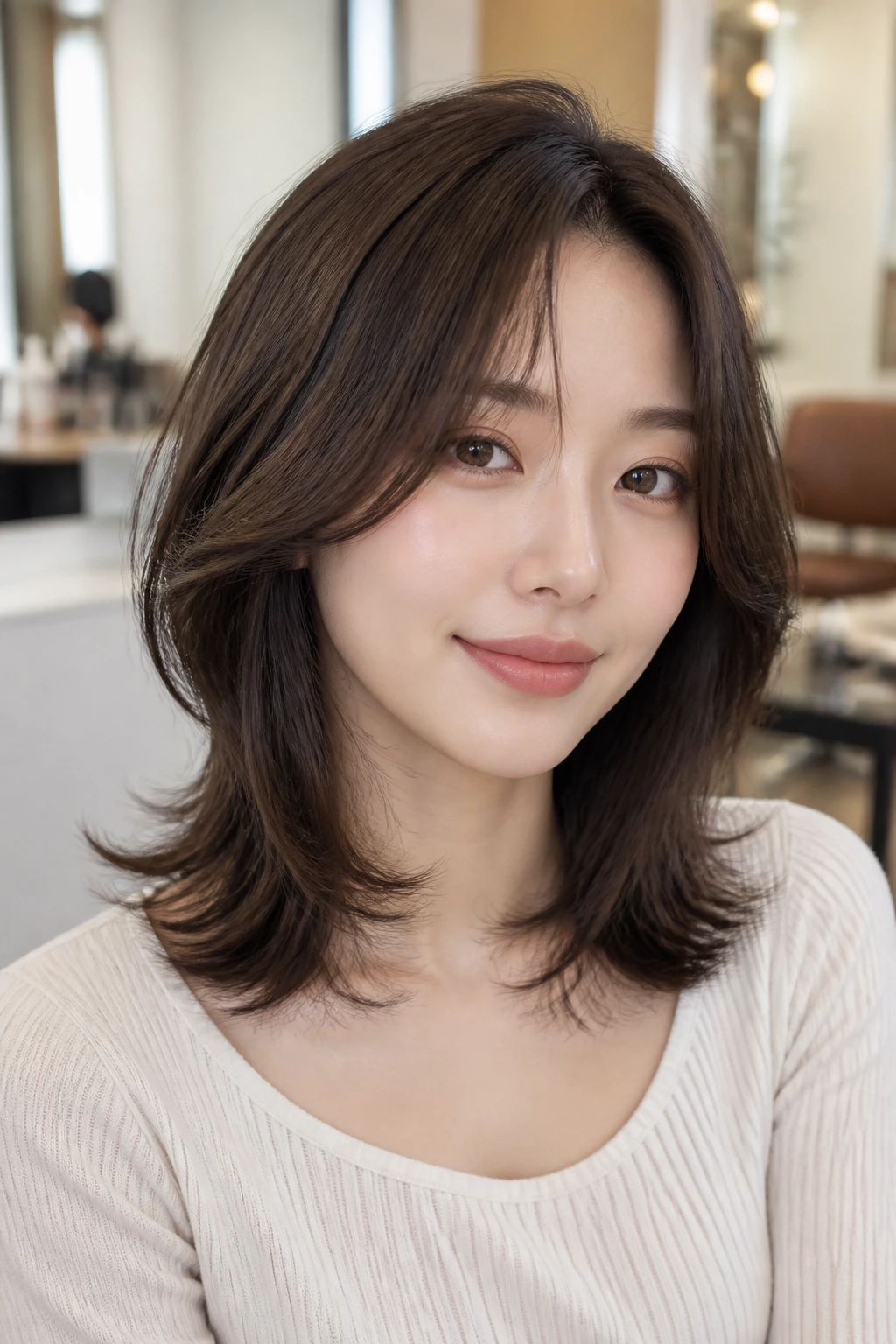
The placement here is the whole point. Curtain bangs that begin at the cheekbone instead of the temple give the face a narrower frame exactly where it needs one. The layers underneath can start just below the jaw, where they won’t inflate the width of the face.
This is one of the most practical shapes on the list because it’s easy to talk about at the salon. Cheekbone. Collarbone. Below the jaw. Those landmarks are hard to misread. They also make the cut easier to maintain because the shape grows out in a readable way.
- Keep the shortest bang pieces at the outer edge of the cheekbone.
- Let the inner part stay soft and open.
- Avoid high layers around the cheeks if your hair is thick.
That last line matters. Too much layering too high up can puff the sides and undo the slimming effect.
17. Tousled Lob With Eyebrow-Grazing Fringe
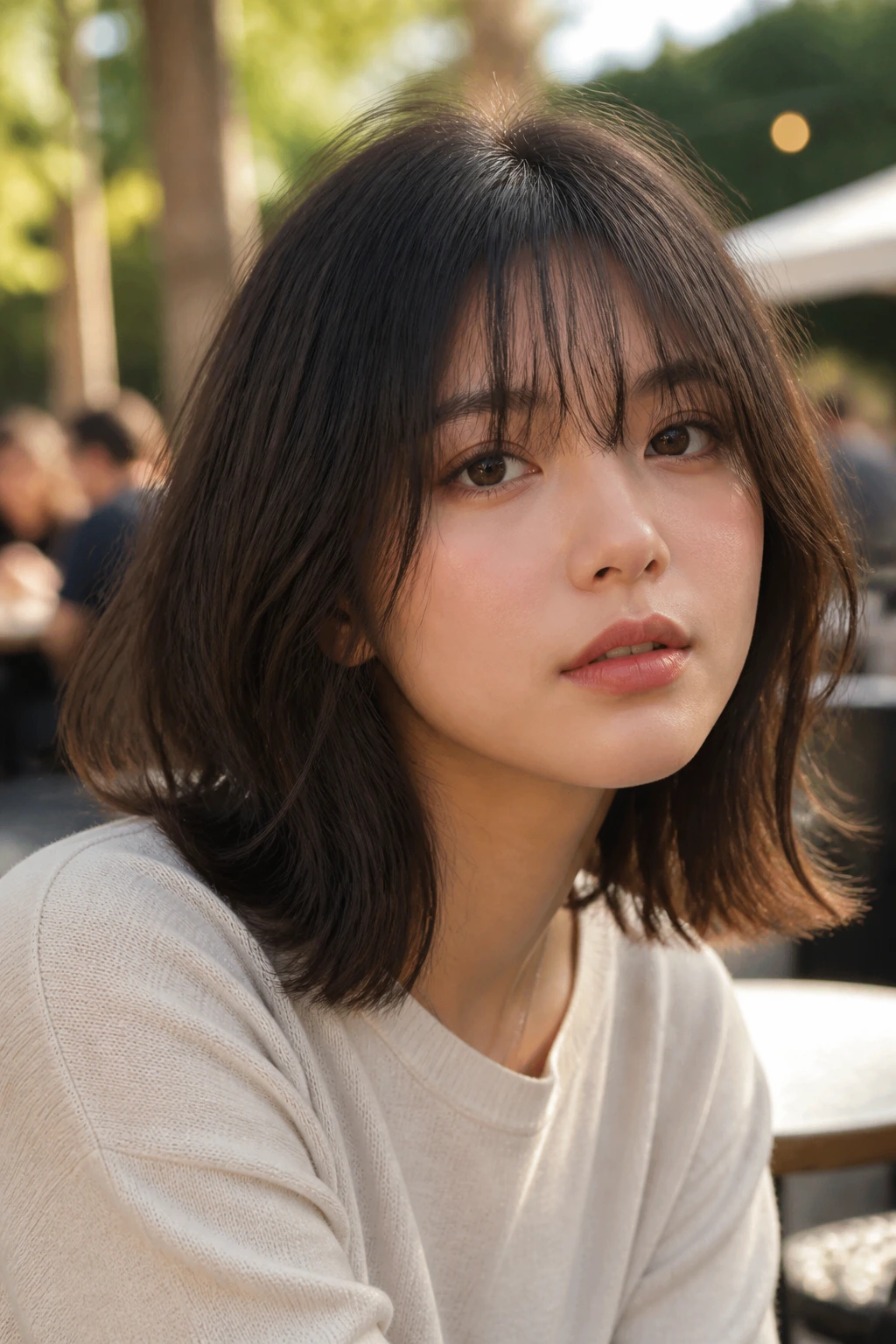
This is the cut for someone who wants to look a little undone without looking sloppy. The fringe grazes the brows, the lob bends in soft pieces, and the texture carries the shape instead of forcing every strand into place. Round faces tend to do well with this kind of broken line because it keeps the silhouette from turning too smooth.
The trick is restraint. Don’t over-straighten the bangs. Don’t curl the ends into neat sausages. A rough blow-dry, a bit of mousse, and a light shake with the fingers are enough.
It’s especially good on second-day hair, which is a small mercy. If your hair falls flat at the roots but puffs at the ends, this shape can feel surprisingly balanced once you learn how to scrunch it a bit and leave it alone.
18. Side-Tucked Lob With Long Draped Bangs
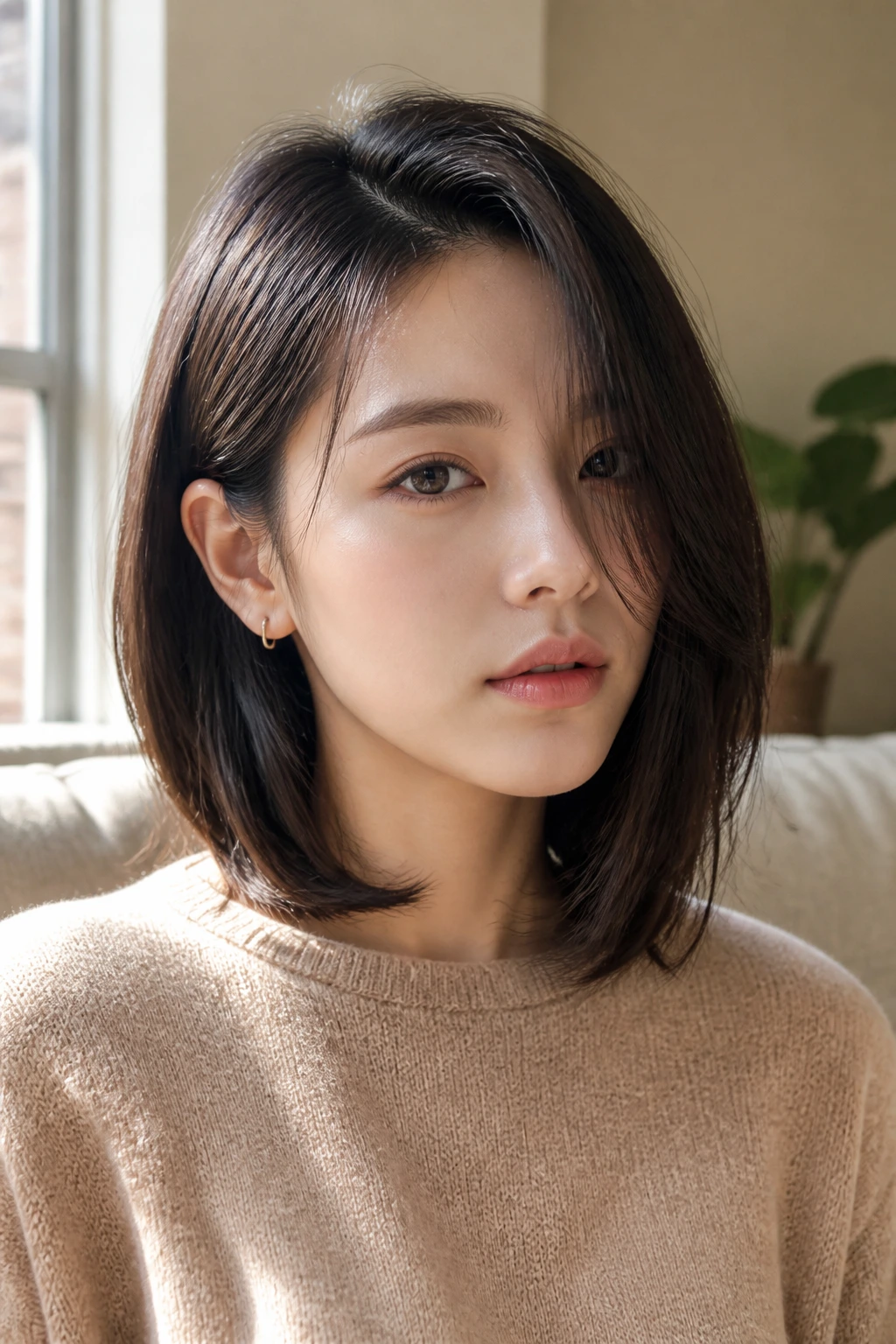
One tucked side can change the geometry of a round face in a hurry. The exposed ear and jaw line create a clean vertical break, while the opposite side keeps a long drape across the cheek. That contrast makes the haircut feel slimmer without looking engineered.
The bangs should stay long enough to swing across the forehead and then melt into the front layers. If they stop too high, the whole look feels choppy in the wrong way. If they’re too long, they lose the drape and become just another front piece.
This is a very wearable option if you like earrings, collars, or necklines that show off the lower half of the face. The tuck opens space around the jaw, and that space is doing real work.
19. Soft Wolf Lob With Soft Bangs
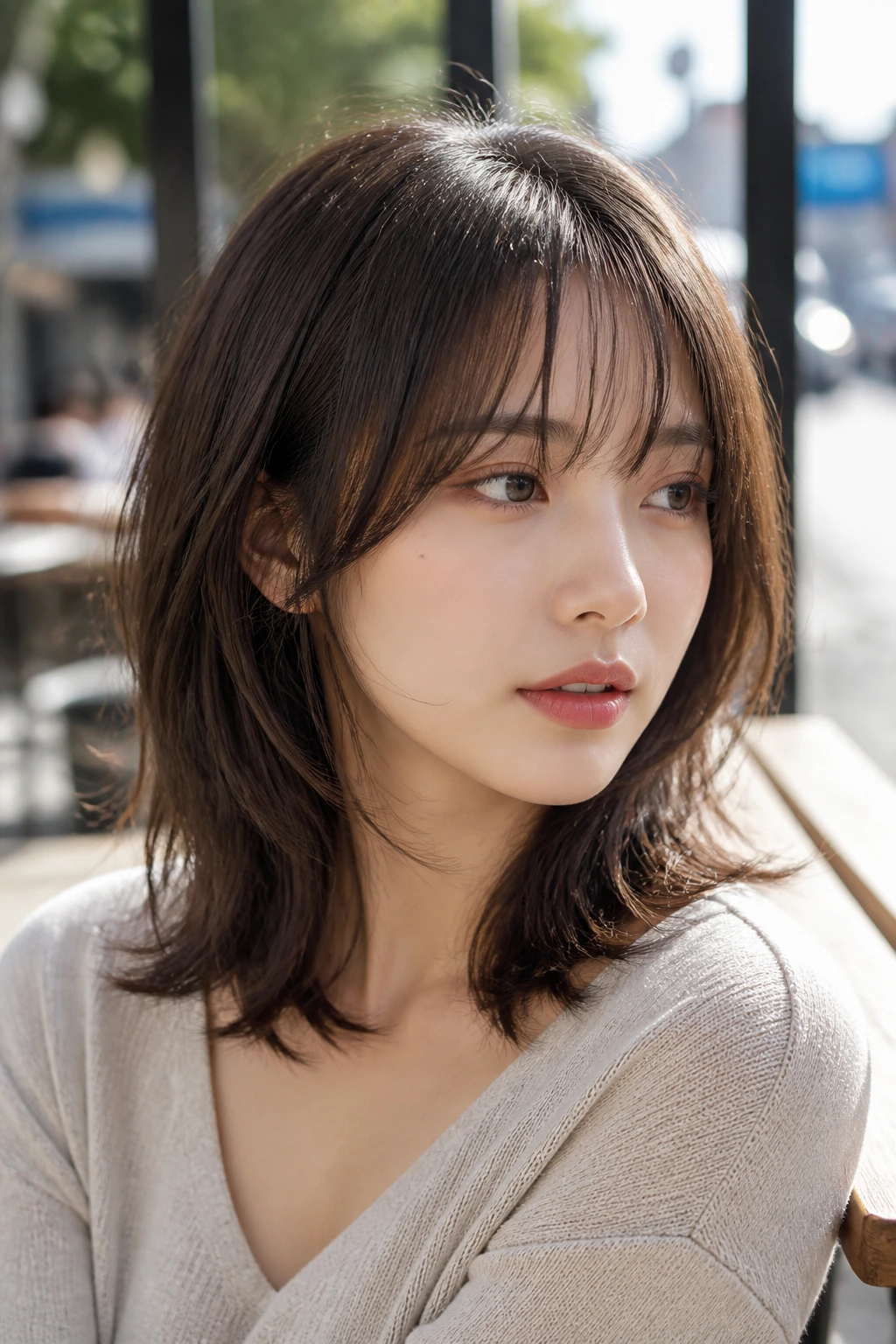
A soft wolf lob borrows the movement of a wolf cut without going full rock-show shag. The layers are stronger in the back, the front stays long, and the bangs are soft enough to keep the style from getting wild. For round faces, that slight edge can be useful because it adds angles where the face is naturally curved.
This version works well on thick hair, especially if it tends to sit heavy at the bottom. The internal movement keeps the length from feeling like one big block. At the same time, the fringe gives the forehead some definition.
If you’re worried about the wolf cut looking too dramatic, this is the calmer cousin. Ask your stylist to keep the transition smooth from crown to cheek. The haircut should move. It should not explode.
20. Collarbone Lob With Hidden Layers and Airy Fringe

Hidden layers are one of those things people forget to ask for, then regret not asking for later. They remove weight inside the haircut without making the outer edge too jagged. On a round face, that means the sides can stay slim while the length still looks full.
The airy fringe matters because it keeps the front from feeling heavy. You want enough softness to frame the eyes, but not so much bang that the forehead disappears. The collarbone length helps the whole shape feel longer and more elegant, which is really the goal here.
This is a good choice if your hair expands in humidity. The hidden layers keep the perimeter from ballooning outward. Not glamorous advice, maybe, but useful. Hair that behaves badly in damp air needs that kind of quiet control.
21. Soft Mullet-Inspired Curtain Lob
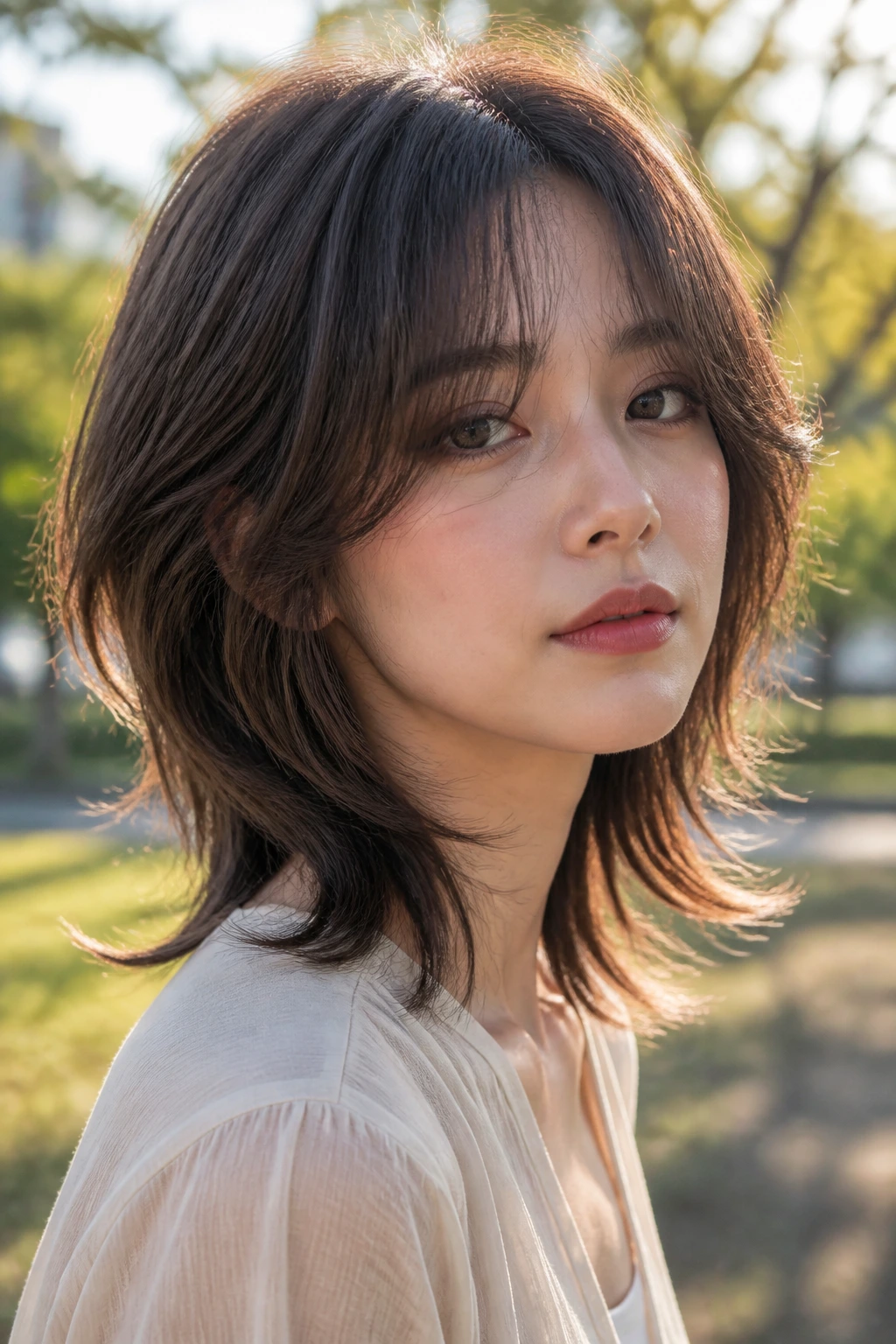
The phrase sounds bolder than the haircut usually looks. A soft mullet-inspired lob keeps the back a touch longer and lets the front feather around the face, but it avoids the sharp contrast that makes a true mullet feel spiky. On a round face, that longer back line can actually be useful because it makes the profile feel leaner.
The curtain bangs soften the whole thing so it doesn’t read too fierce. You get movement, a little edge, and enough length in front to keep the cheeks from taking over. It’s a stronger look than the classic Korean lob, but still wearable if the layers are blended well.
If you want a cut that looks better with a lived-in wave than with rigid straightening, this one belongs on your shortlist. It thrives when the finish is a little imperfect.
22. One-Length Lob With a Clean Center-Part Fringe
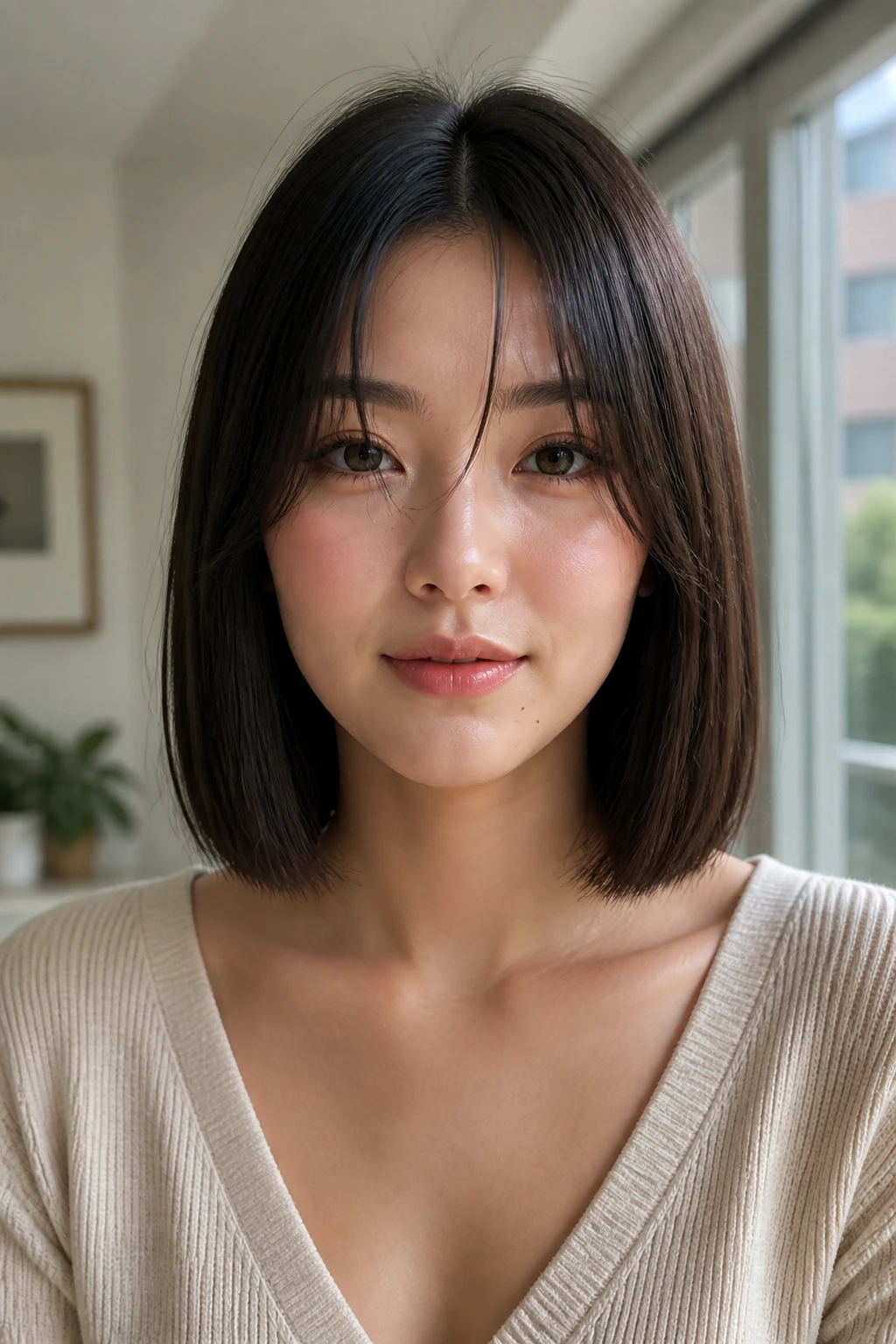
A one-length lob can be sneaky good on round faces. The blunt perimeter gives the hair density and weight, which matters if your strands are fine. Add a center-part fringe that opens the forehead, and the whole style becomes more vertical than you’d expect.
The reason it works is simple: the bang breaks the forehead, while the clean hem keeps the cut from turning too fluffy on the sides. If the length falls around the collarbone and the fringe stays soft at the center, the face gets framed rather than boxed in.
Good to know
This is a better choice for people who like low-maintenance structure. There are fewer layers to wrangle, and the shape survives air-drying better than most. It can be a little plain if you leave it untouched, though, so the fringe and the part need some attention.
23. C-Curl Lob With Brow-Skimming Bangs
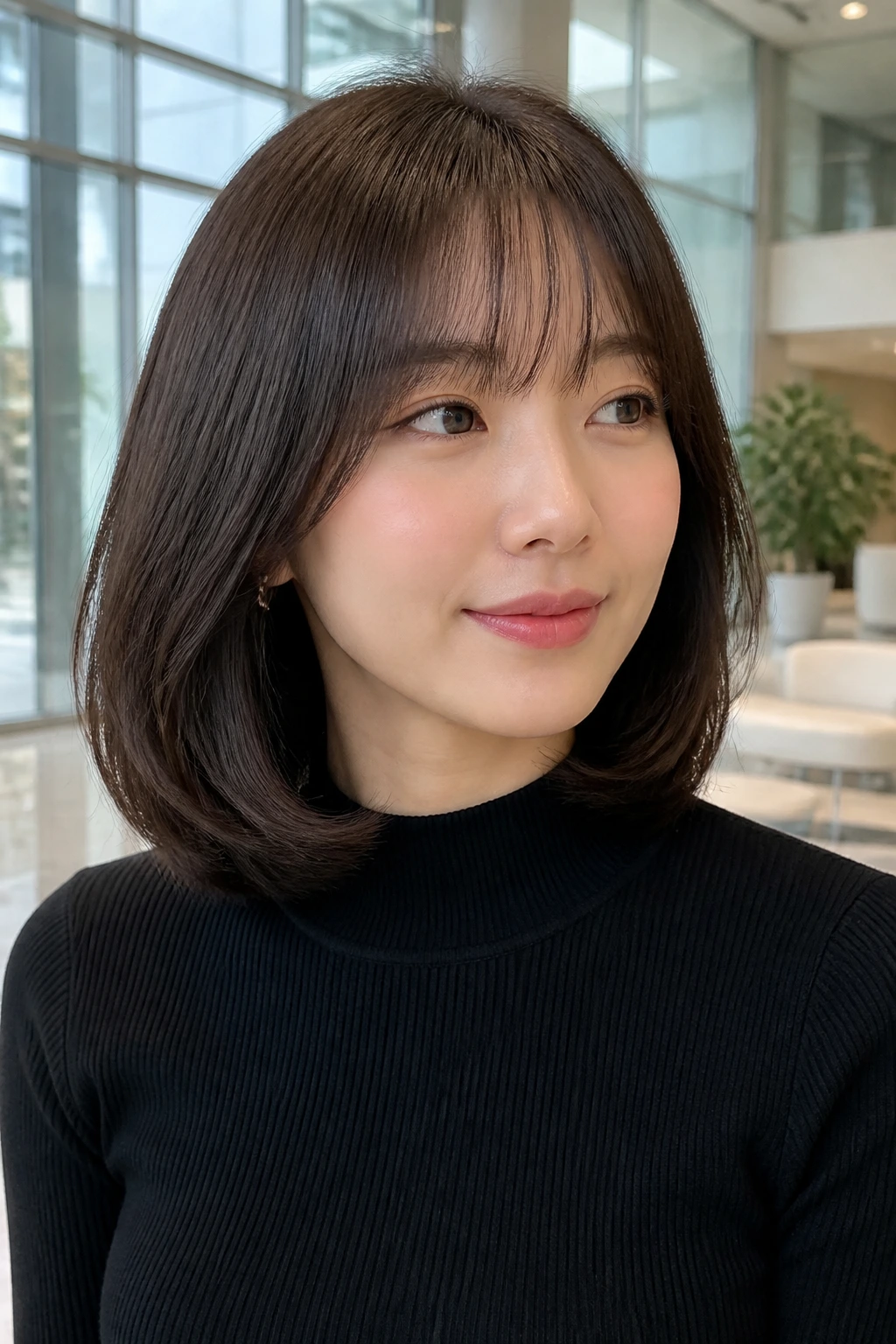
A C-curl lob is one of the simplest ways to get that polished Korean finish without much drama. The ends turn in just enough to create a smooth hem, and the brow-skimming bangs keep the top half of the face framed without hiding it. That combination can be very flattering on round faces because it keeps the whole look tidy and elongated.
The shine matters here. A C-curl style looks best when the surface is smooth and the bend is clean. If the hair gets fuzzy, the line loses its point. Use a lightweight serum on the lower half of the hair and keep the roots airy so the style doesn’t flatten at the top.
This is a good office haircut. It’s also a very decent dinner haircut, which is not the same thing. Clean lines have a way of looking more expensive than they are.
24. Split-Bang Polished Lob
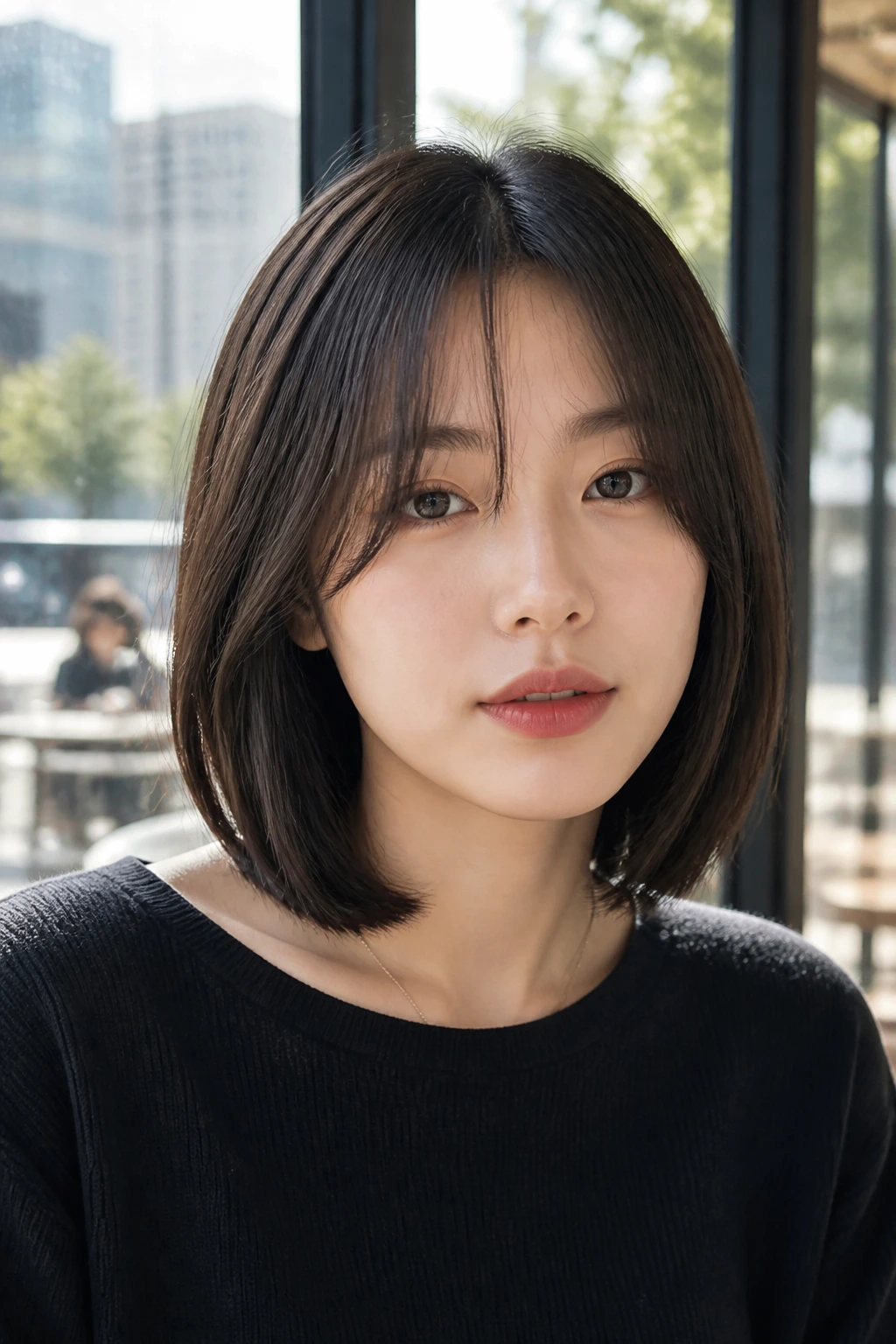
Split bangs are a strong choice when you want the forehead open but still want something happening at the front. The split creates a narrow gap that gives the face room, while the polished lob beneath it holds the shape together. On round faces, that open center can make the whole cut read taller.
The best version stays smooth from mid-length to ends, with just enough bend to keep the outline soft. If the fringe falls apart, the cut loses its clean shape. If it’s too stiff, it feels dated. A controlled bend and a tidy part line keep it fresh.
This is one of the easier styles to dress up. It looks good with earrings, structured collars, and hair that has a little shine to it. Small things. They matter.
25. Feathered Graduation See-Through Fringe Lob
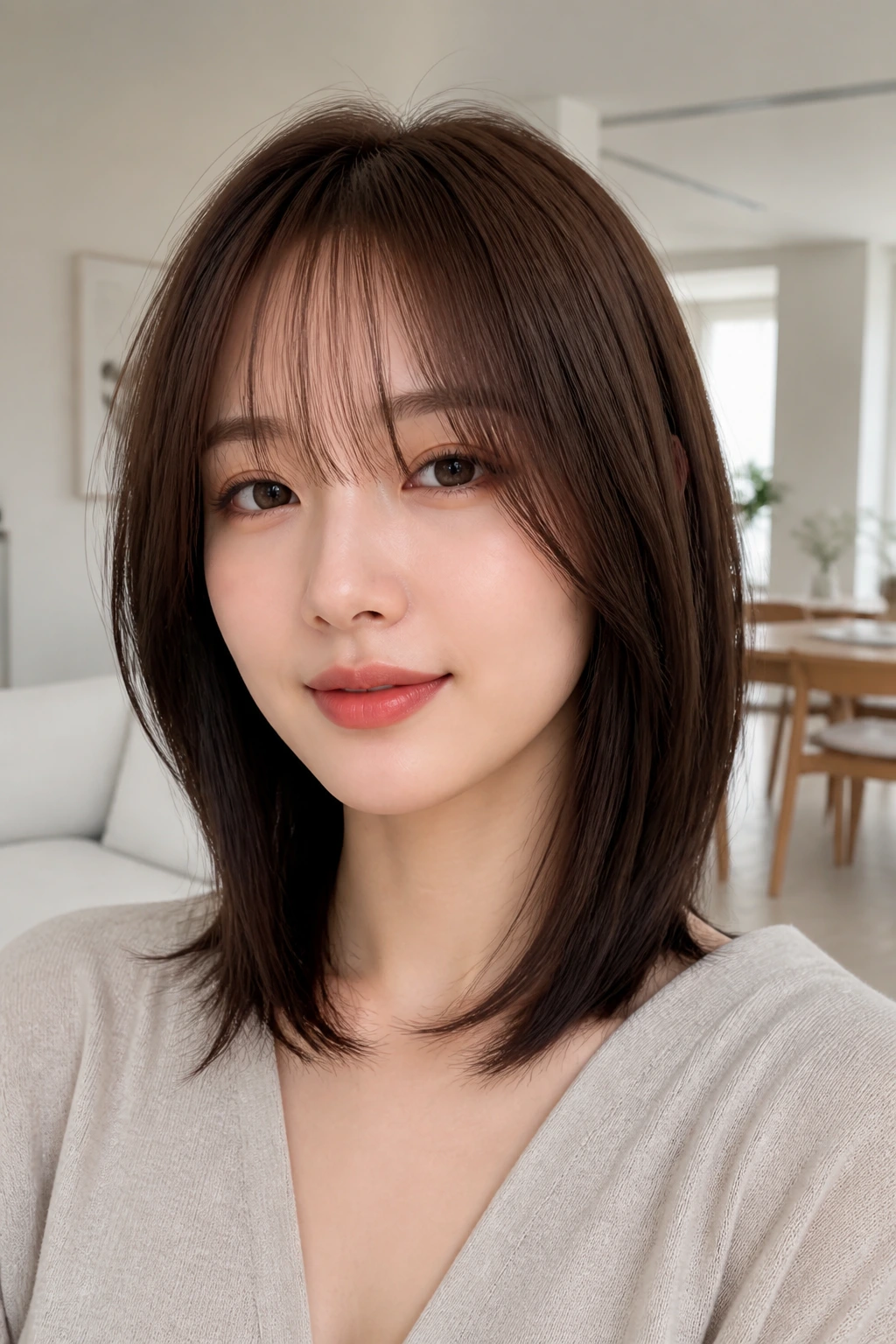
Feathered graduation is a mouthful, but the idea is simple. The back sits a little shorter and lighter, the front gets longer as it moves toward the collarbone, and the see-through fringe keeps the forehead from feeling covered. For round faces, that graduated line is useful because it gives the eye a clear path downward.
This is a smart final option because it works across hair types. Fine hair gets shape from the graduation. Thicker hair gets relief from the feathering. Straight hair keeps the outline clear. Wavy hair can use the fringe to stay soft without turning bulky.
If you want one cut that keeps some movement while still feeling neat, this is a strong place to land. It doesn’t beg for attention. It just keeps the face open.
Why Korean Long Bobs Work on Round Faces
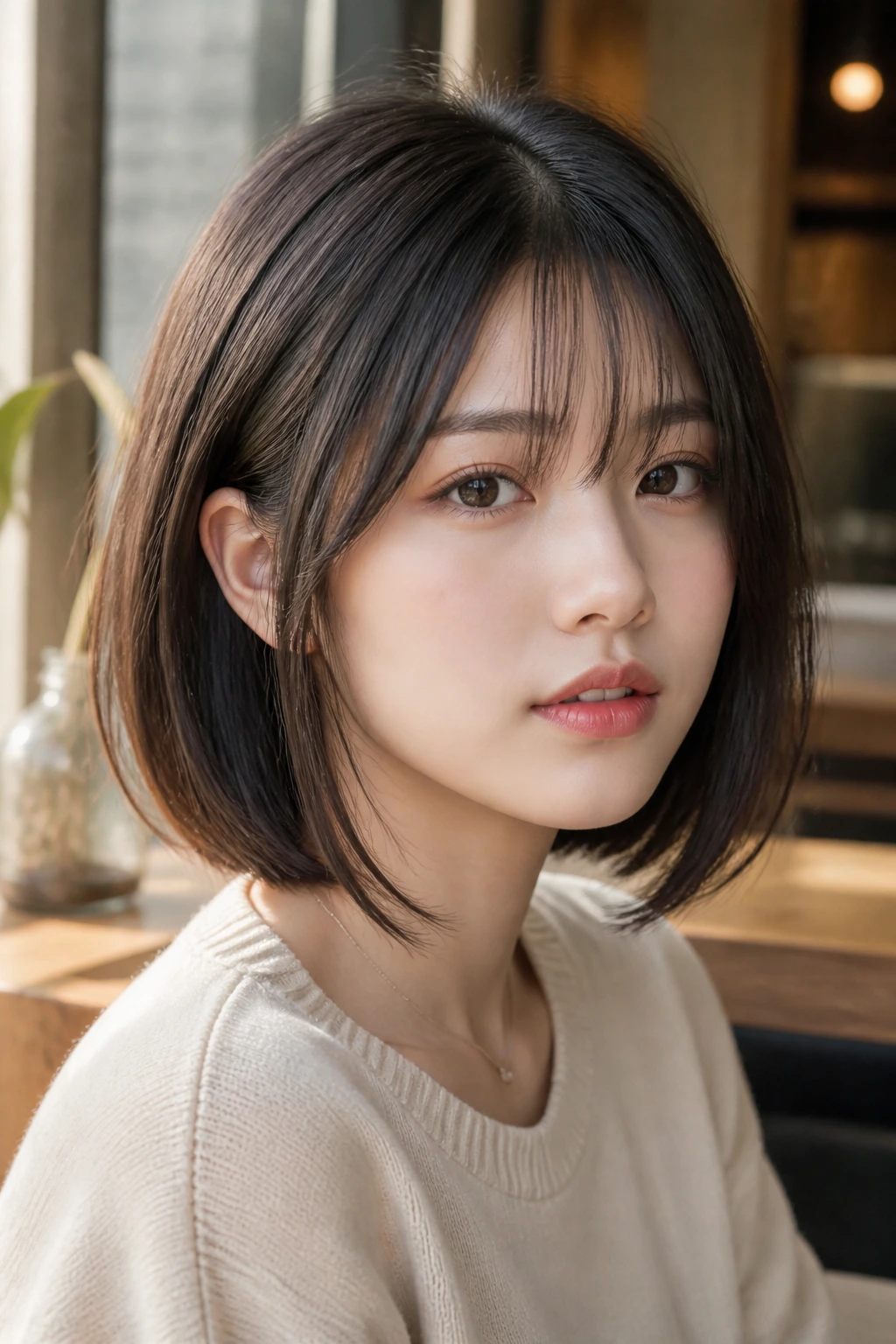
A round face usually has its widest point across the cheeks, and that means the haircut has to be careful about where it puts weight. A Korean long bob handles that well because the length falls below the jaw and the front pieces usually angle down instead of stopping right at the cheek. That small shift changes the whole read of the face.
The other advantage is the fringe. Bangs are not the enemy here. Heavy, blunt, all-the-way-across bangs can be awkward, yes. But softer shapes — see-through, curtain, bottleneck, side-swept — interrupt the forehead without making it look shorter than it is. The face gets framed, not chopped.
What I like about this family of cuts is that it understands restraint. The shape doesn’t need a pile of layers or a giant blowout. It needs a few smart decisions: keep the hem long enough, keep the sides from ballooning at the cheeks, and make the fringe do some of the visual work. That’s usually enough.
How to Ask for the Cut Without Getting a Boxy Lob
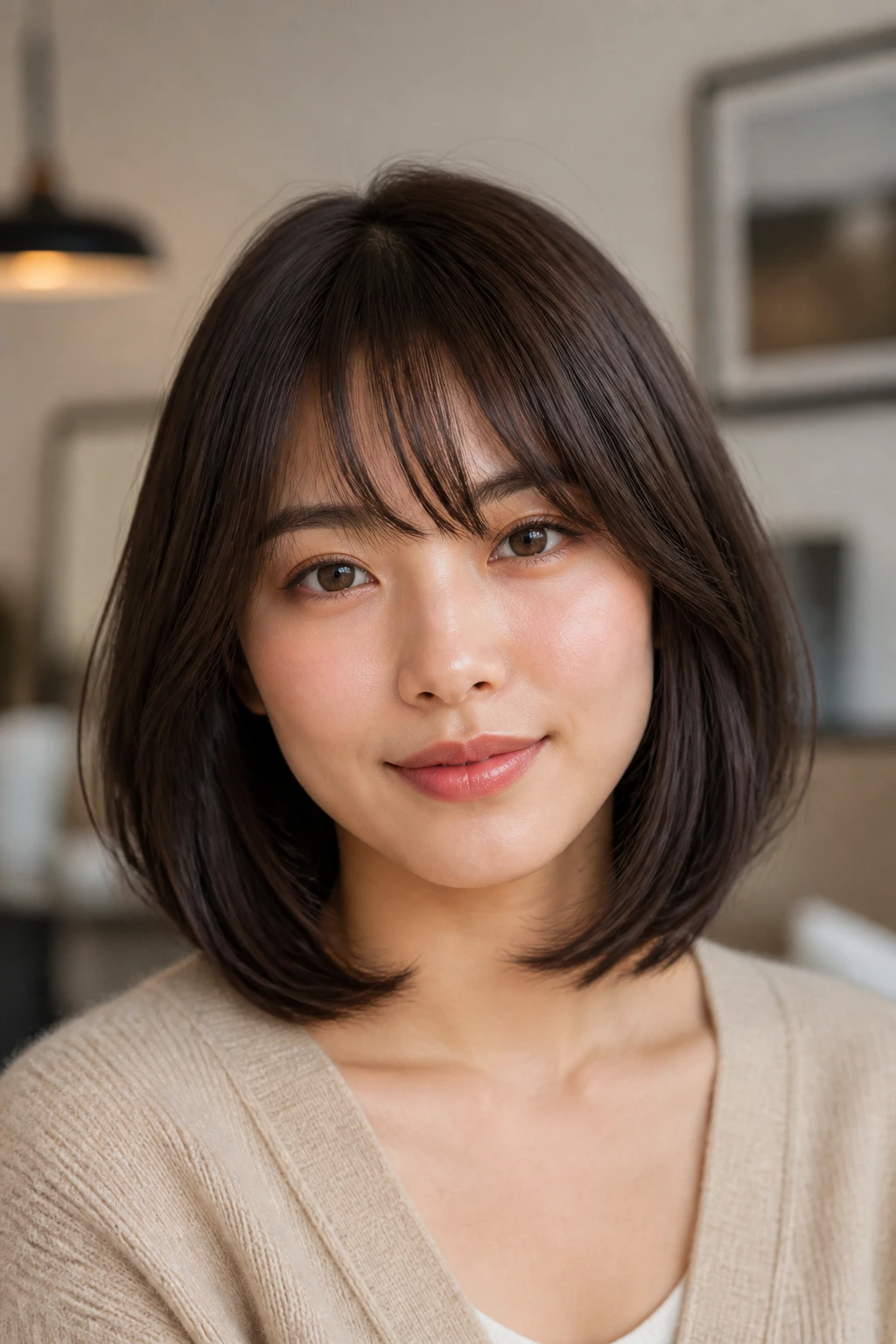
A good salon conversation changes everything. If you walk in and say you want “a lob with bangs,” you may get something vague. If you describe where the length should sit, where the fringe should start, and how much bulk you want removed, the result gets a lot more predictable.
Start with the length. For a round face, collarbone to upper chest is a very safe place to live. That gives the haircut enough length to stretch the face without getting so long that it stops looking like a lob. Then talk about the front pieces. Ask whether the shortest face-framing pieces should begin at the cheekbone, the lip, or just below the jaw, depending on the exact style you want.
A few things help:
- Bring photos that show the side profile, not just the front.
- Say whether your hair is straight, wavy, fine, thick, or puffy in humidity.
- Ask how the bangs will behave when dry, because wet bangs lie.
- If you want curtain or see-through bangs, ask for lighter density near the center.
- If your hair is thick, ask for internal weight removal, not extra layers around the cheeks.
That last one is the part people forget. Removing bulk in the wrong spot can make the face look wider instead of slimmer.
Small Styling Moves That Make the Shape Read Better
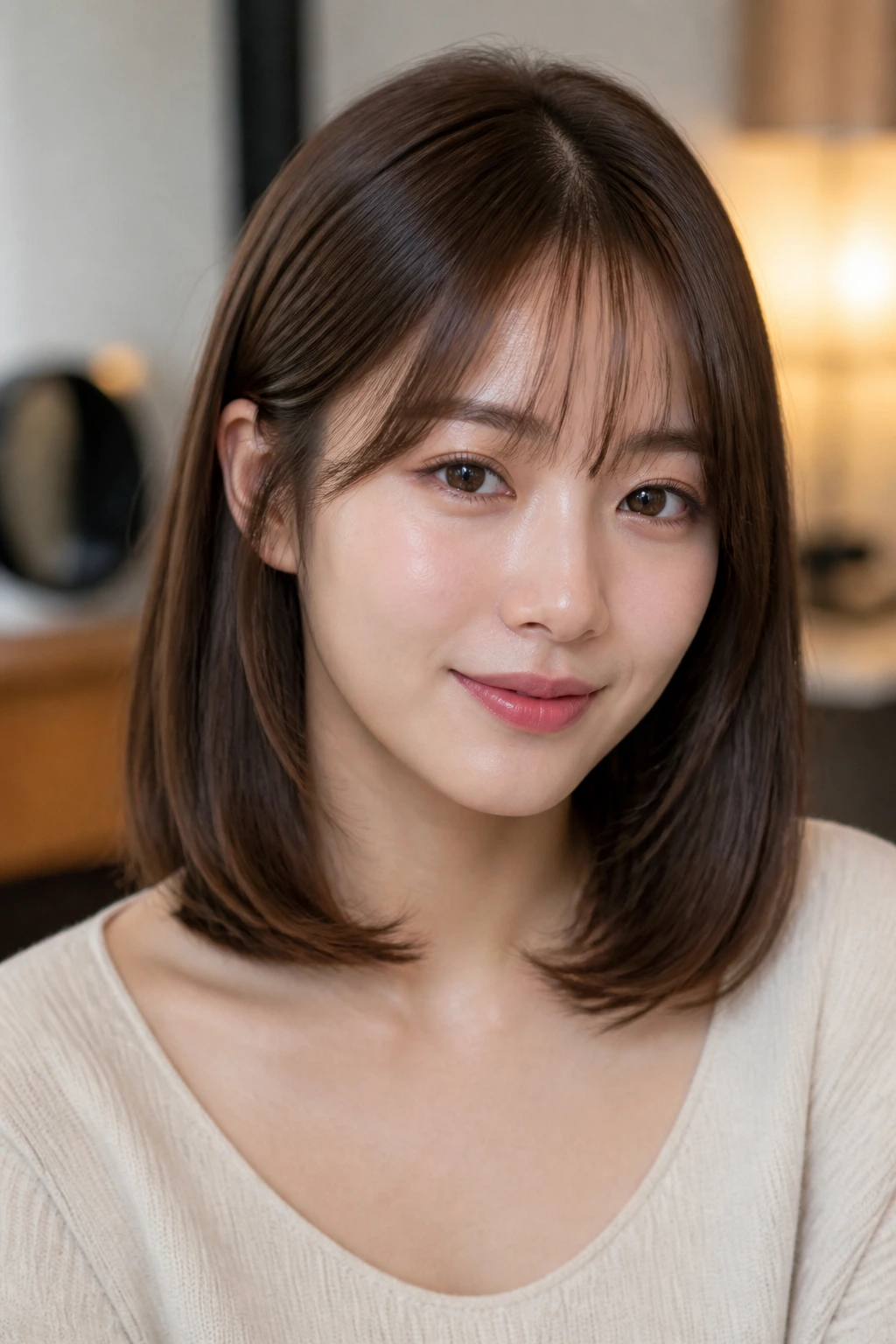
A good cut helps, but the finish decides whether the shape stays soft or turns boxy. Round faces usually look better when the crown gets a little lift and the sides stay controlled. That doesn’t mean a giant blowout. It means giving the top of the head some height and keeping the width from building right at the cheeks.
Lift at the crown: Use a root spray or a light mousse before blow-drying, then direct the hair up and back for a few seconds at the root. Even a tiny bit of lift changes the profile.
Set the bangs first: Fringe dries fast and misbehaves fast. Blow-dry it before the rest of the hair, using a brush or your fingers depending on the style. If you wait until the end, the bangs will already have picked a direction you may not want.
Curve the ends, don’t curl them into tubes: A 1-inch or 1.25-inch iron, or a round brush, is usually enough. You want a bend that turns the hem under or away from the face, not one that screams for attention.
Move the part by half an inch: That tiny shift can make a round face look less centered and less wide. Deep parts are dramatic; off-center parts are quieter but often just as useful.
Those moves are small. They work anyway.
Essential Tools and Products for These Styles
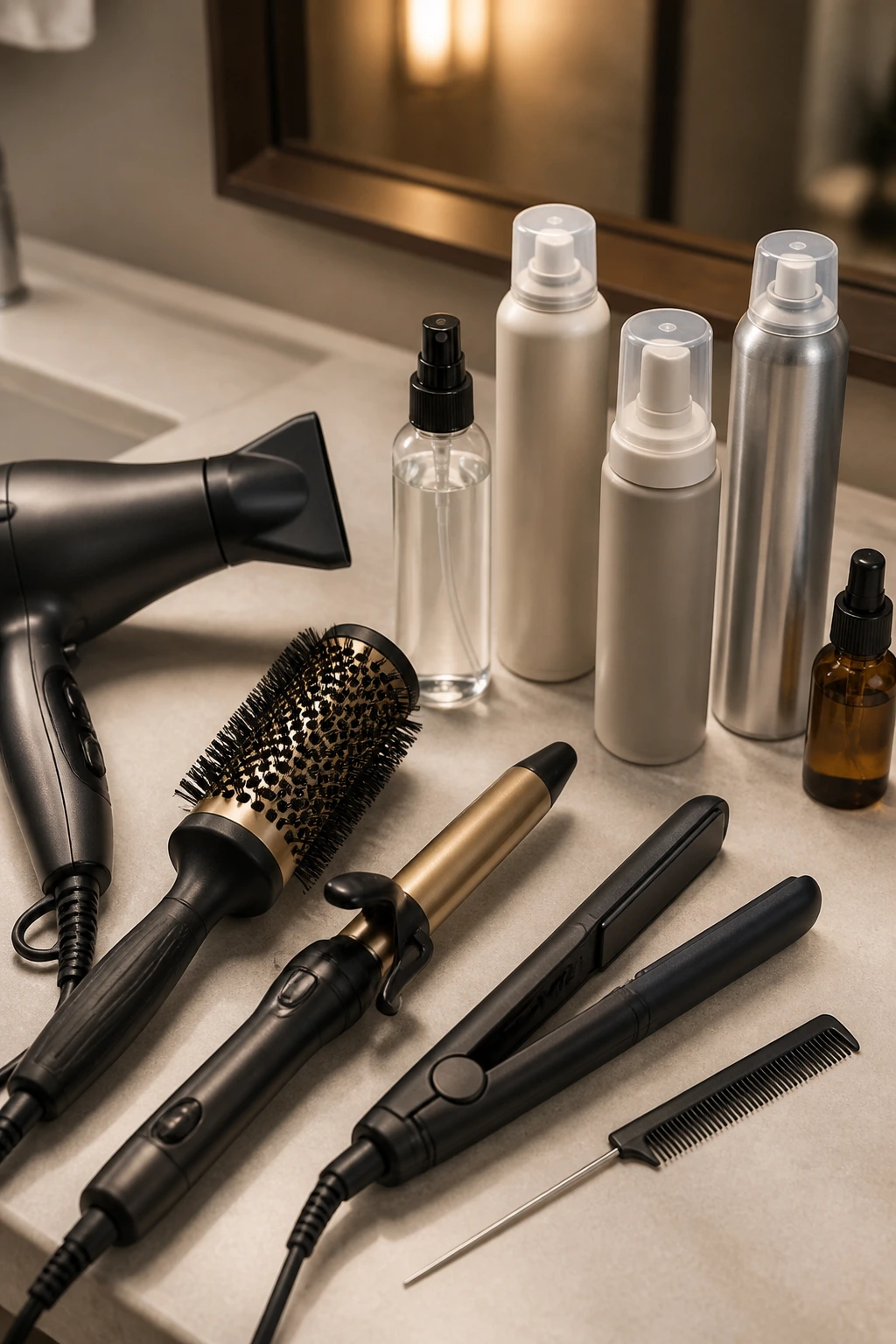
-
Blow dryer with a concentrator nozzle — It keeps the airflow pointed where you want it, which is what makes bangs and ends look controlled instead of fluffy.
-
Medium round brush — Good for shaping fringe, lifting roots, and turning the ends under with a soft bend.
-
1-inch or 1.25-inch curling iron — Useful for C-curls, S-waves, and a little movement through the front without tight ringlets.
-
Flat iron — Handy if you wear the glassier versions or need to calm the bang line on humid days.
-
Tail comb — Helps create clean parts and section off the fringe so the blow-dry doesn’t become a mess.
-
Heat protectant spray — Use it every time. A lob with bangs gets touched by heat more often than people realize.
-
Lightweight mousse or root-lift spray — Gives the crown some support without making the hair stiff.
-
Texturizing spray — Best for the more tousled looks; it breaks up the ends without making them crunchy.
-
Dry shampoo — Bangs love to separate and pick up oil first. Dry shampoo buys you another day.
-
Light serum or hair oil — Use a tiny amount on the ends only. Too much near the fringe will flatten the whole cut.
How to Wear a Korean Long Bob With Bangs Day to Day
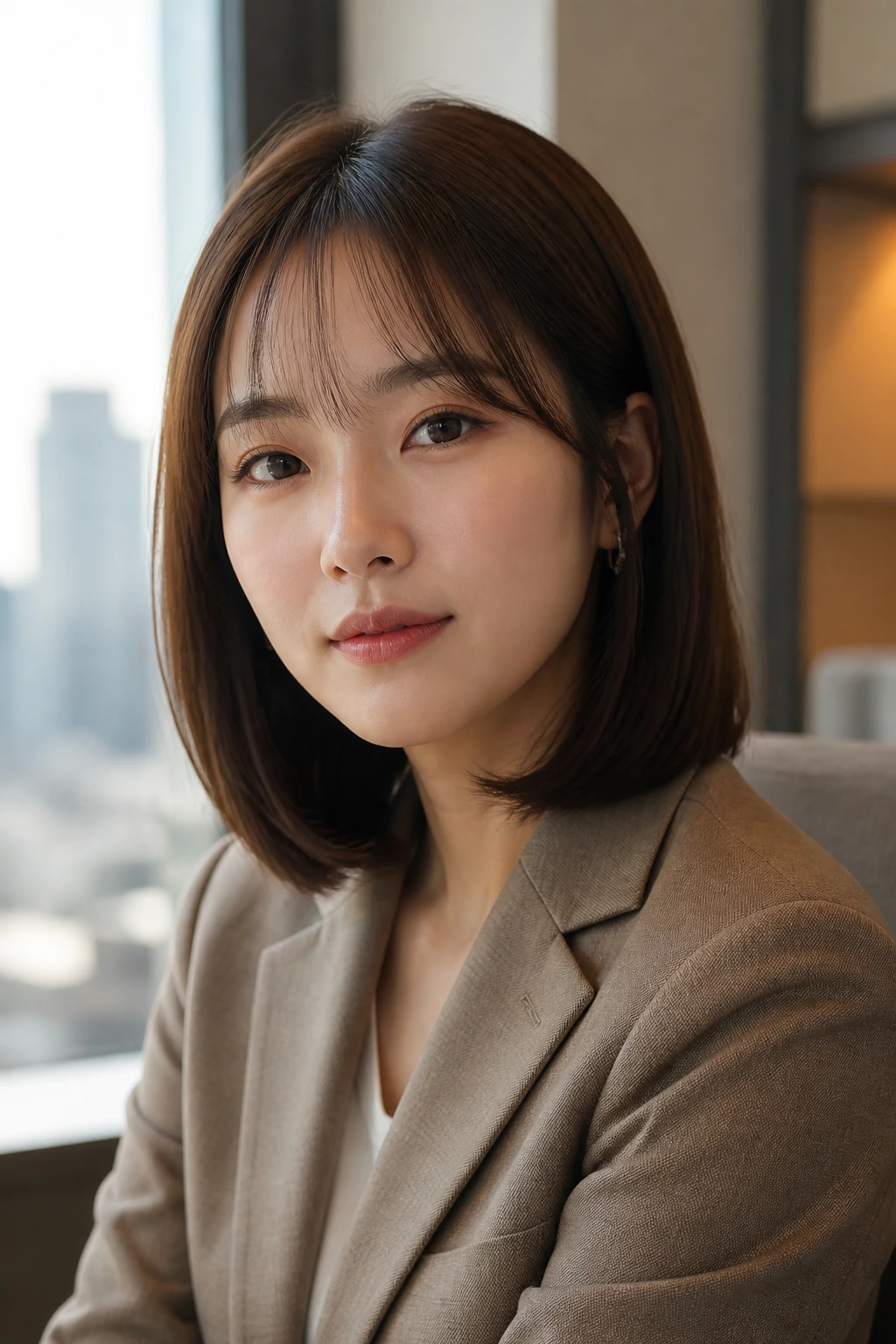
Polished: Brush the hair smooth, keep the bangs soft and controlled, and bend the ends in toward the collarbone. This version works well with a blazer, a sharp collar, or anything that benefits from a cleaner neckline.
Low-effort: Rough-dry the hair about 80 percent, mist the fringe with a little water or leave-in spray, and clip the bangs away while you do the rest of your routine. When you let them down, they settle more neatly than if you left them to dry wild.
Undone: Use a small amount of mousse or texturizing spray and scrunch the mid-lengths, then leave the bangs a little airy. This works best for the tousled, shaggy, and feathered versions. They look better when they’re not too polished.
Dressier: Add a deeper side part, smooth the surface with a flat iron, and tuck one side behind the ear to show the jawline. A pair of earrings or a clean neckline can make the haircut look even more deliberate.
A round face usually likes a little openness around the neck and collarbone. V-necks, open collars, and simple earrings help the haircut breathe. That sounds fussy. It isn’t. It’s just shape doing what shape does.
Common Mistakes That Make Round Faces Look Wider
-
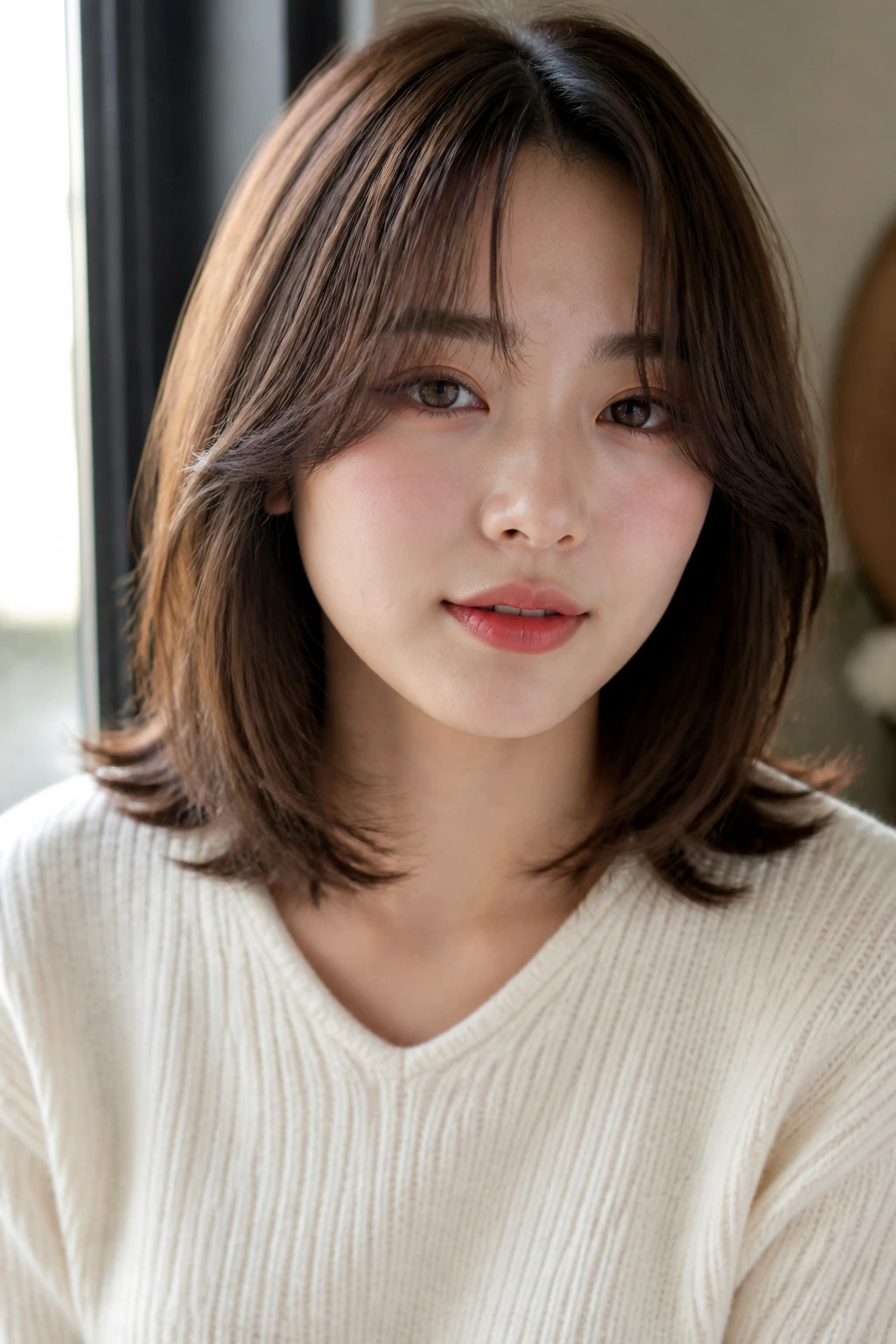
Cutting the lob too high: If the hem stops at the chin or barely below it, the haircut can widen the face instead of stretching it. Ask for collarbone length unless you have a very specific reason to go shorter.
-
Making the bangs too thick: A dense fringe can flatten the face vertically. If you want full bangs, keep the side pieces long enough to break up the width.
-
Adding volume at the cheeks: Big outward movement around the cheekbone is the fastest way to make a round face look fuller. Keep the lift at the crown or the ends, not the middle.
-
Curling the ends out like a triangle: Outward flips at the hem can widen the silhouette. Inward bends or broken waves are usually kinder.
-
Over-layering fine hair: Too many short layers can make the cut look thin and fuzzy, which is not the same thing as airy. Fine hair usually needs a cleaner perimeter.
-
Ignoring how the hair dries on its own: Some hair springs up, some collapses, some puffs. A cut that looks good only after a perfect salon blowout is a nuisance. Ask how the shape behaves on ordinary days.
Variations and Alternatives to Try
The Air-Dry Lob
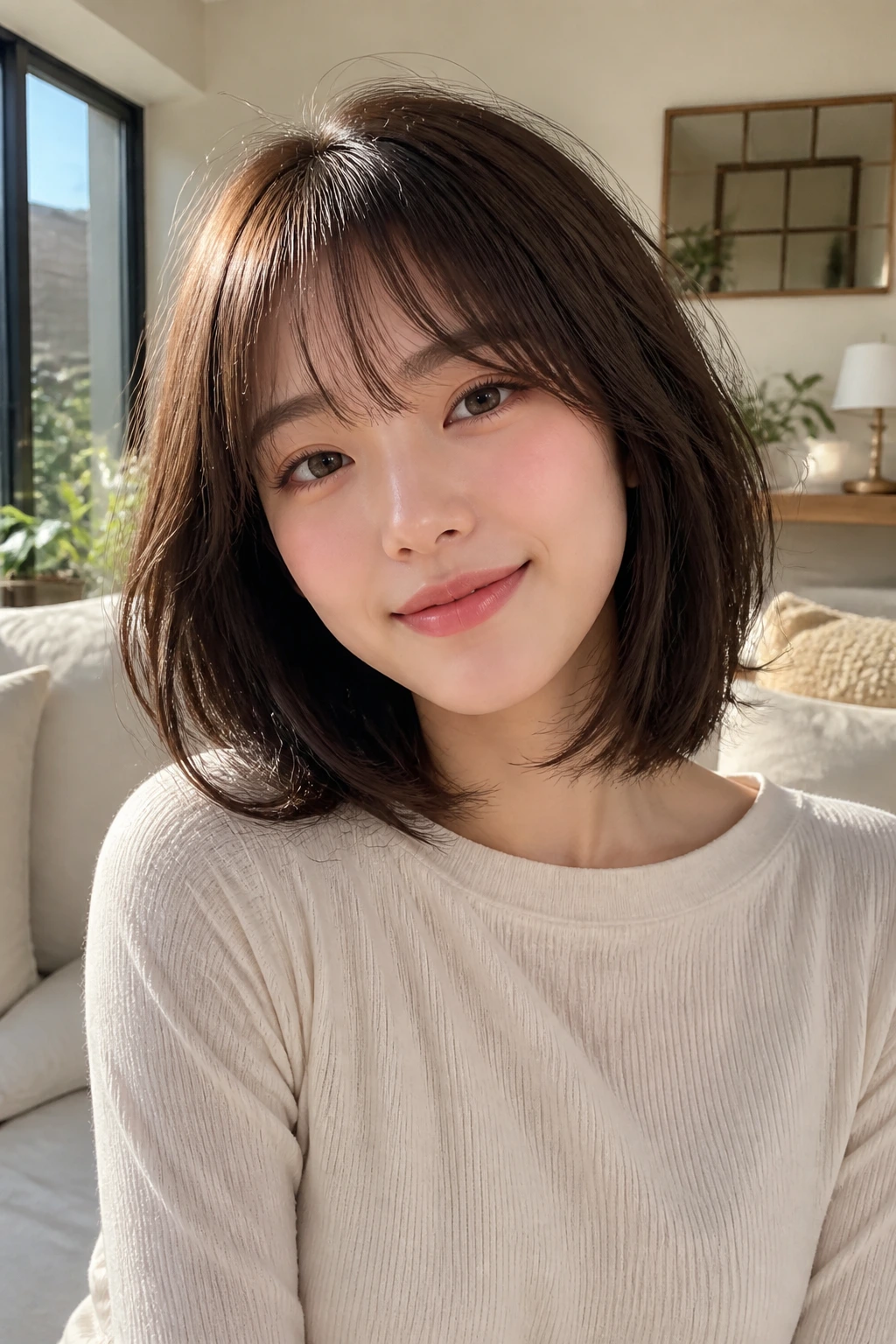
If heat styling is not happening most mornings, go with a softer fringe and a lob that already has built-in movement. Light layers and a little leave-in cream can keep the shape from drying into a helmet. It’s a useful choice for wavy hair that likes to do half the work on its own.
The Soft Perm Version
For straight hair that refuses to hold a bend, a C-curl or soft S-curl perm can save time. The ends stay turned under, the bangs keep some shape, and the cut looks styled even when you barely touched it. Just keep the curl pattern loose enough to stay gentle around the face.
The Sleek Office Version
If you want the haircut to read polished, go with a cleaner hem, a smooth finish, and either curtain bangs or a center-part fringe. This version looks especially good when the ends are glossy and the fringe opens the forehead a bit. It’s neat, not severe.
The Thick-Hair Version
Thicker hair usually needs hidden weight removal, not a lot of surface layers. Keep the perimeter controlled and let the fringe stay a touch longer so it doesn’t spring up too short. This version avoids that mushroom shape thick hair can get if it’s cut carelessly.
The Fine-Hair Version
Fine hair often looks better with a sharper outline and fewer layers through the ends. A see-through fringe or soft curtain bang can still work, but the key is keeping density where it matters so the haircut doesn’t go wispy too fast. Root lift does a lot here.
Keeping the Cut Fresh Between Salon Visits
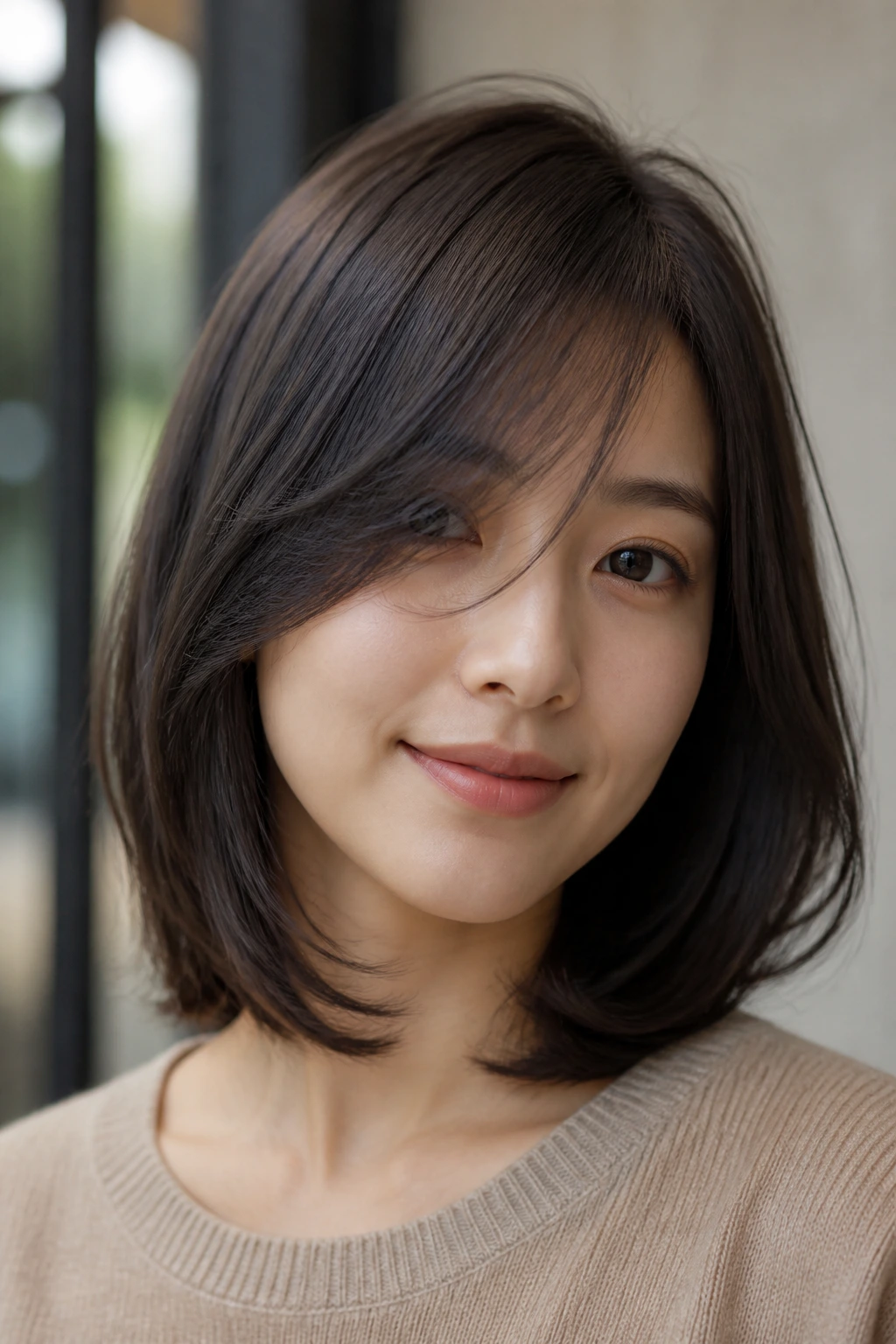
Bangs are the first thing to go soft, and sometimes they’re the first thing to get annoying. Most fringe shapes need a trim every 2 to 4 weeks if you want them crisp. Curtain bangs and longer split bangs can stretch a little farther, but even those usually need a tiny cleanup before they start brushing the eyelashes in a bad way.
The full lob shape can usually go 6 to 10 weeks between trims, depending on how exact you want the hem to stay. If you like a very clean line, stay closer to six or eight. If you enjoy a slightly softer grow-out, ten weeks is usually fine. The front pieces will often need a tiny shaping before the rest of the cut does.
Night care matters more than people think. If your bangs bend awkwardly, clip them away before bed or set them very lightly on a loose roller for a few minutes in the morning. A silk pillowcase helps keep the fringe from getting crushed. So does not going to sleep with damp bangs. That’s a small disaster waiting to happen.
Between washes, dry shampoo at the roots and a little water on the fringe can reset the style fast. If the ends start flipping out in a way you hate, one quick pass with a flat iron on low heat usually fixes it. No need to start from scratch.
Questions People Ask Before They Cut Their Bangs
Will a Korean long bob with bangs make a round face look wider?
It can, if the cut is too short or the bangs are too heavy. When the length falls below the jaw and the fringe stays light, the effect usually goes the other way: the face looks a little longer and more open.
Where should the lob hit on a round face?
Collarbone is the safest landing zone. If you want it a touch shorter, keep the front pieces longer so the overall line still points downward instead of stopping right at the cheeks.
Are curtain bangs better than blunt bangs for round faces?
Curtain bangs are usually easier because they open the forehead and break the face shape in the middle. Blunt bangs can work, but they need a long perimeter and a bit of softness at the edges so they don’t close the face off.
Can fine hair wear this haircut?
Absolutely. Fine hair often looks better with a clean one-length lob, see-through bangs, or a light curtain fringe. Too many layers can make it limp, so the cut should keep some density at the ends.
What if my hair is thick and puffy?
Ask for internal weight removal and keep the layers away from the cheeks. Thick hair can look great in a lob, but it needs control around the middle of the face or it’ll puff into width.
Do I need to heat-style it every day?
No. A soft perm version, a good blow-dry pattern, or the right air-dry product can cut down on that. The fringe may still need a quick reset, though. Bangs are needy in that way.
What if the bangs split open too much?
Use a tiny bit of dry shampoo at the roots, then blow-dry the fringe side to side for a few seconds. If they still separate, they may have been cut too sparse or too short for your texture.
Can curly hair wear a Korean long bob with bangs?
Yes, but it should be cut in a way that respects the curl pattern. Ask for the fringe and face-framing pieces to be longer than you think you need, because curls spring up after they dry and can shorten fast.
The Shape That Keeps Working
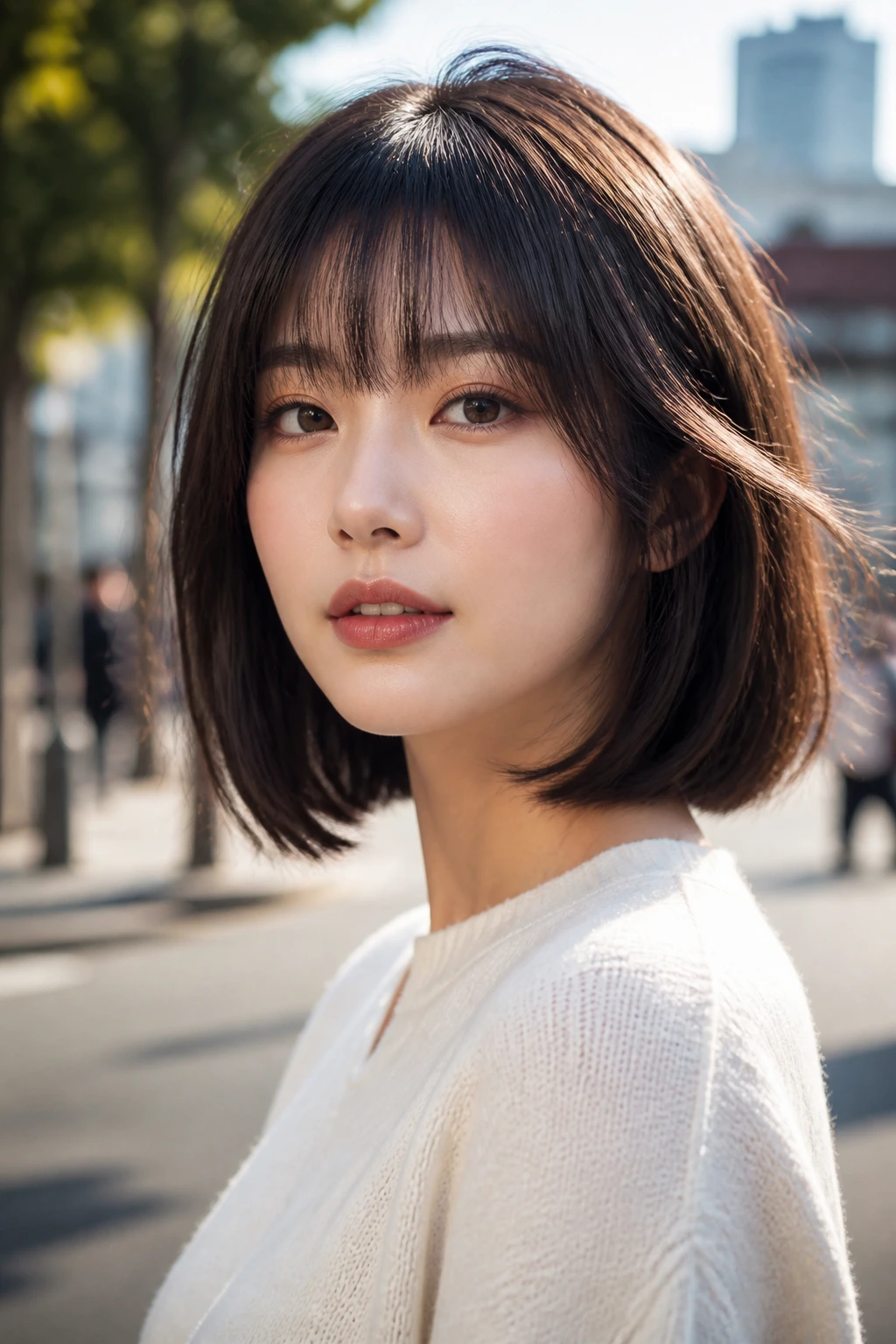
A good haircut doesn’t fight your face. It edits it a little. That’s why a Korean long bob with bangs works so well on round faces: it gives the cheeks room, opens the forehead, and keeps the eye moving instead of letting it stop at the widest point. The best versions are never stiff. They bend, skim, and shift.
What makes these 25 looks useful is not that they all look alike. It’s that they solve the same problem in different ways. Some do it with lighter bangs. Some do it with length. Some do it with asymmetry, and a few rely on polish so the shape stays clean. Pick the one that matches your hair texture and your patience level, then let the cut do the quiet work.
Bring one clear photo, one honest sentence about how much styling you’ll actually do, and one preference about the fringe. That’s enough to start.