



Short hair with wavy hair has a reputation problem. People call it “easy,” then spend half the morning flattening a crown that springs up on one side and collapses on the other. Or they load it with cream, which sounds sensible until the whole shape turns soft and heavy at the roots, with frizz living rent-free at the ends.
The better approach is shape. Give the wave a line to follow, and the hair behaves. Let a bob hit the jaw in the right place, let a pixie keep a little lift on top, let a fringe land softly instead of being cut into a hard shelf — suddenly the same bend pattern looks deliberate. That’s the part most styling advice skips. Wavy short hair is not “messy hair with attitude.” It’s a cut-and-finish problem, and when both parts are right, the result has a nice little snap to it.
What I like about textured hairstyles for short hair with wavy hair is that they don’t demand identical waves, mirror-symmetry, or perfect heat styling. Some of them look better after a rough air-dry. Some need one pass with a wand and a finger-twisted front piece. A few only work because they leave room for the wave to breathe instead of forcing it into a smooth, shiny helmet. That flexibility matters. It means you can choose a style that fits your density, your face shape, and your patience level on a Tuesday morning.
Why These Short Wavy Styles Earn Their Space
-
They work with the bend you already have: Short waves usually look best when the cut removes weight from the bottom third, because that’s where the triangle shape starts to creep in.
-
They keep the outline clean: A neat jawline, an ear tuck, or a side sweep gives the eye somewhere to land, which is half the battle with short textured hair.
-
They survive a real-life schedule: Several of these styles look better on day two, once the wave has settled and the product has lost that freshly-applied slipperiness.
-
They suit different densities: Fine waves need lift and separation, while thick waves need release and a little internal layering. Both are here.
-
They don’t all need hot tools: A few rely on mousse, clips, scarves, or pin curls, which is useful when you’d rather not stand in front of a mirror with a wand in your hand.
-
They move from casual to polished fast: Change the part, add a barrette, slick one side, or tuck behind an ear, and the mood shifts without a full redo.
1. Air-Dried French Bob with Loose Ends
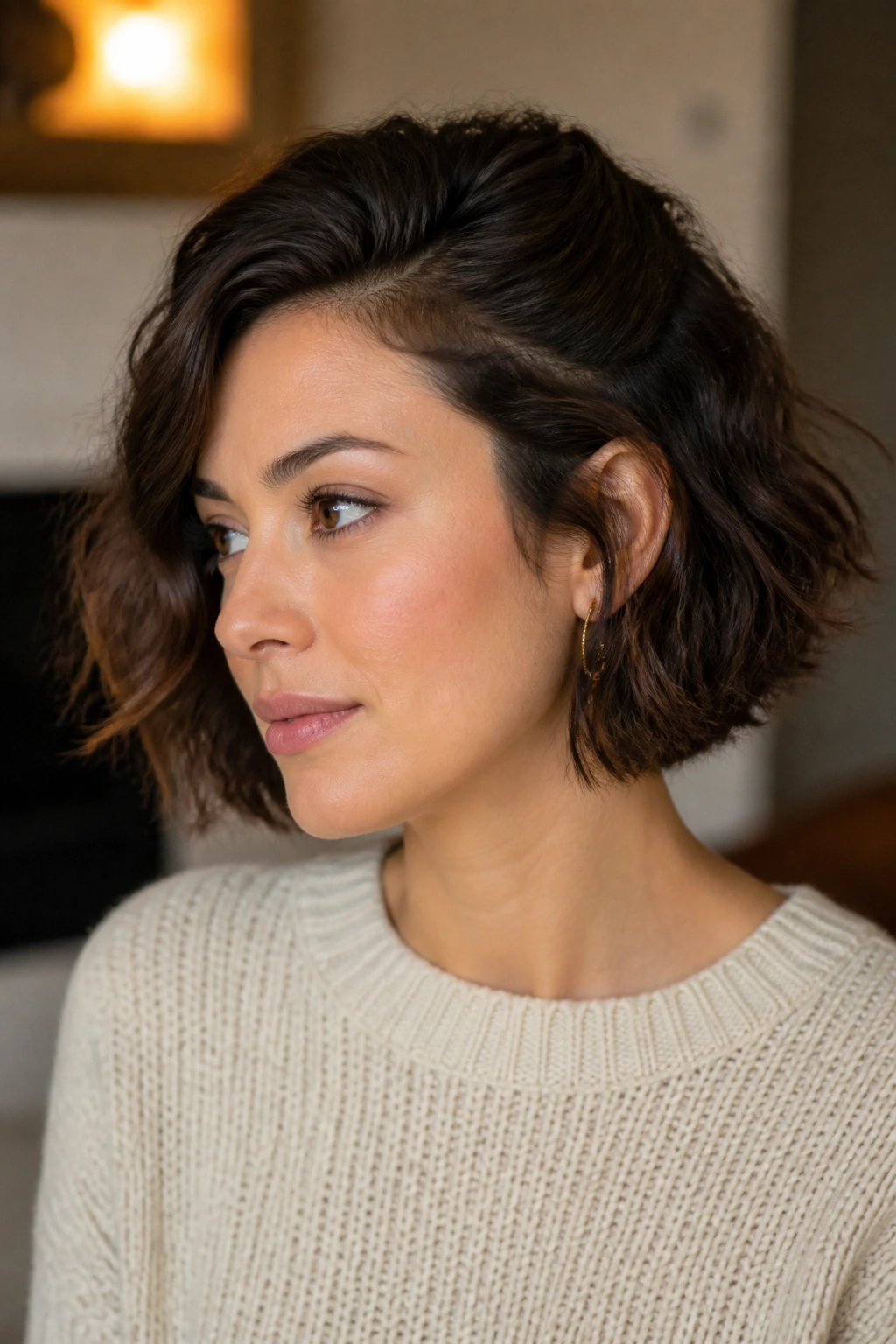
A French bob can look a little too tidy if the ends are cut blunt and then blasted dry. The version that works on wavy hair lets the bend stay visible, especially through the lower half, where the hair brushes the jaw and grazes the neck. It has that slightly undone, slightly expensive-looking shape that happens when the cut is short enough to have attitude but soft enough to move.
Why It Flatters Short Waves
The bob sits right in the zone where waves naturally want to curve. That means you’re not forcing a bend that isn’t there; you’re just encouraging it to show up.
A light mousse through damp hair does most of the heavy lifting. Scrunch the ends, part it while it’s wet, and leave the roots alone if they already have enough lift. If your hair dries in a puff, the cut probably needs more interior layering rather than more product.
- Best for: chin-length to jaw-length waves
- Best finish: matte, soft, and piecey
- Avoid: heavy creams at the crown; they turn the bob into a flat disk
Quick tip: twist the front two pieces away from your face once while they’re damp, then let them dry that way. It gives the bob a cleaner frame without making the whole style look styled.
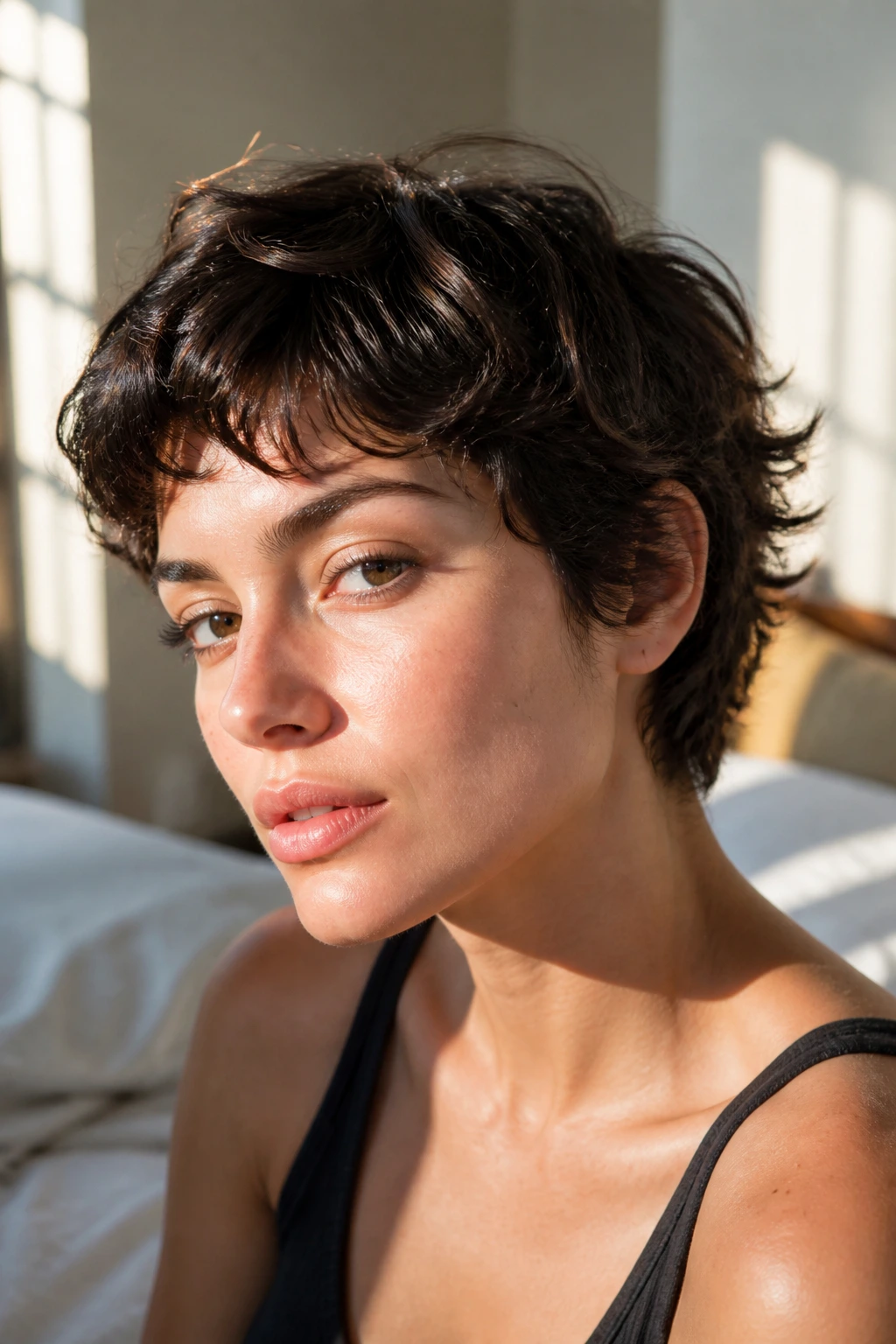
2. Deep Side-Part Pixie with Soft Lift
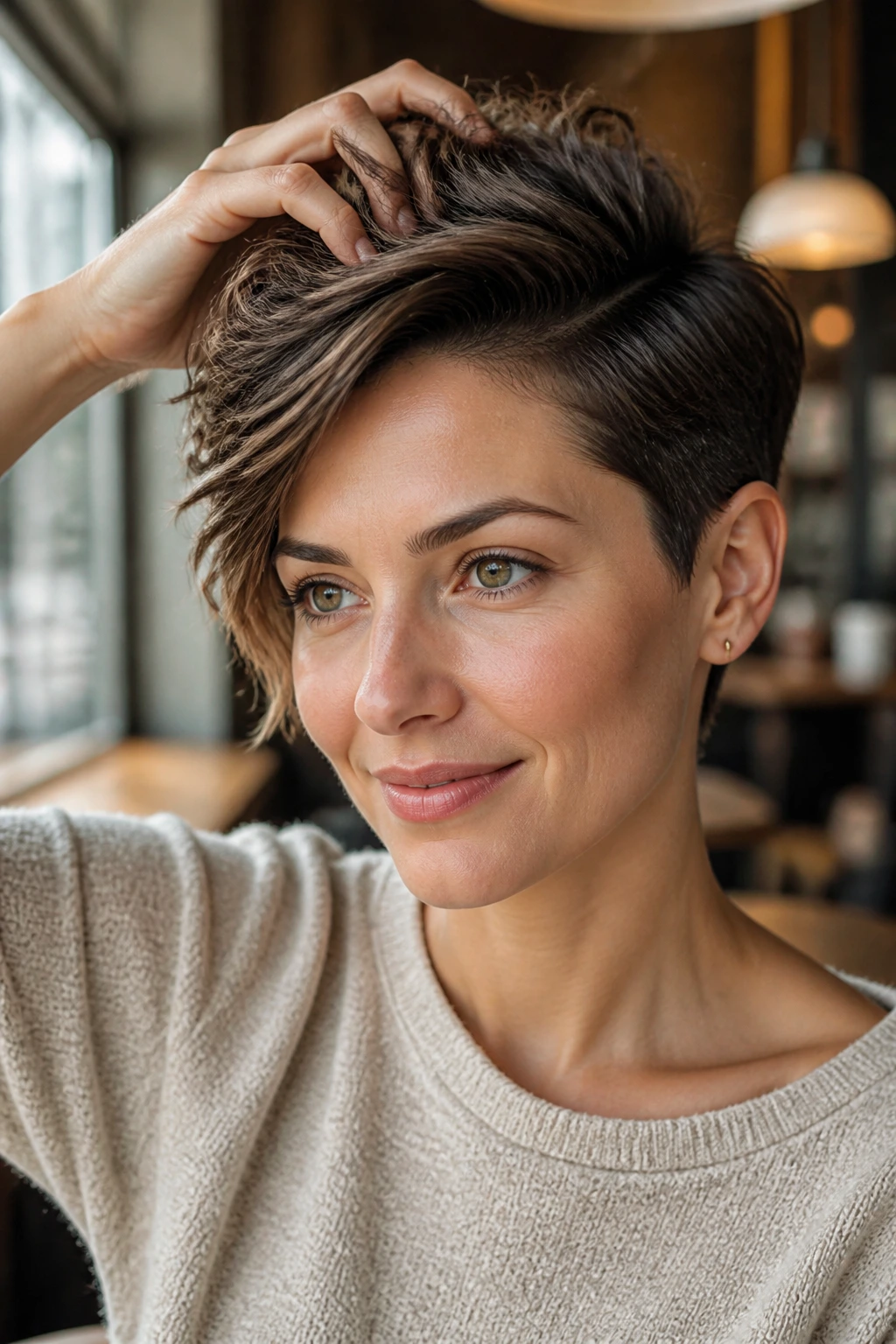
If your waves flatten at the top and puff at the sides, a deep side-part pixie is the fastest way to get the shape under control. The asymmetry breaks up the surface, and the extra length on top lets the wave do a little lifting instead of lying down like a tired ribbon.
Keep the sides close and the top long enough to pinch, push, and direct. That usually means around 2 to 3 inches on top, depending on how much bend your hair has. The part should live well off-center, not almost-center. That small shift changes the whole read of the cut.
Work a pea-size paste or matte cream through the top third only. Then use your fingers to push a few pieces forward and a few up. It should look like hair, not sculpture. When the piecey top is done right, the style has movement at the forehead and a clean edge around the ears.
This one is especially good if you wear glasses or have a strong brow line. The side part makes room for both. And if your hair grows fast, that’s fine — a soft pixie like this tends to look better with a little length anyway.
3. Shaggy Crop with Choppy Bangs
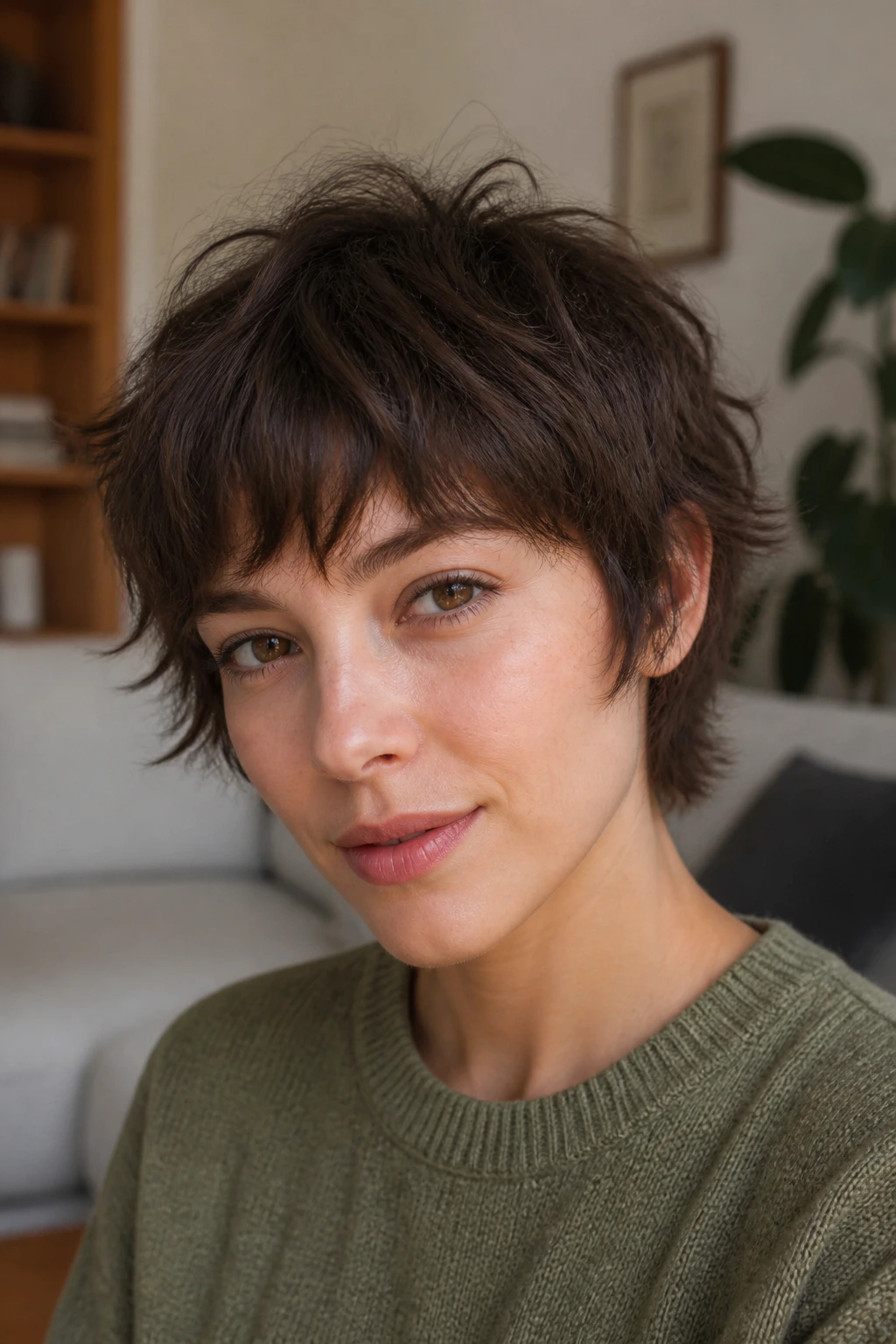
Why does this cut work so well when it looks slightly unruly? Because it’s designed to. The shaggy crop uses short, broken layers to keep the wave from bunching at the bottom, and the choppy bangs stop the front from feeling heavy or boxed in.
The trick is keeping the fringe light. Bangs on wavy short hair can go wrong fast if they’re cut too straight across and too full. You want a soft line that lands around the brow or just above it, with little pieces that separate as they dry. A small amount of mousse, then finger-drying or diffusing on low heat, keeps the bangs from clumping into one blunt sheet.
How to Style the Bangs
- Mist the fringe lightly with water, not a soak.
- Scrunch in a tiny bit of foam or mousse.
- Dry them first, while they’re still under control.
- Use your fingers, not a round brush, unless you want a smoother finish.
This style loves a bit of texture spray at the end. Don’t overdo it. One or two light sprays are enough to give the crop that broken-up finish that makes the layers look intentional instead of choppy for the wrong reason.
4. Ear-Tucked Bob with a Clean Side Sweep
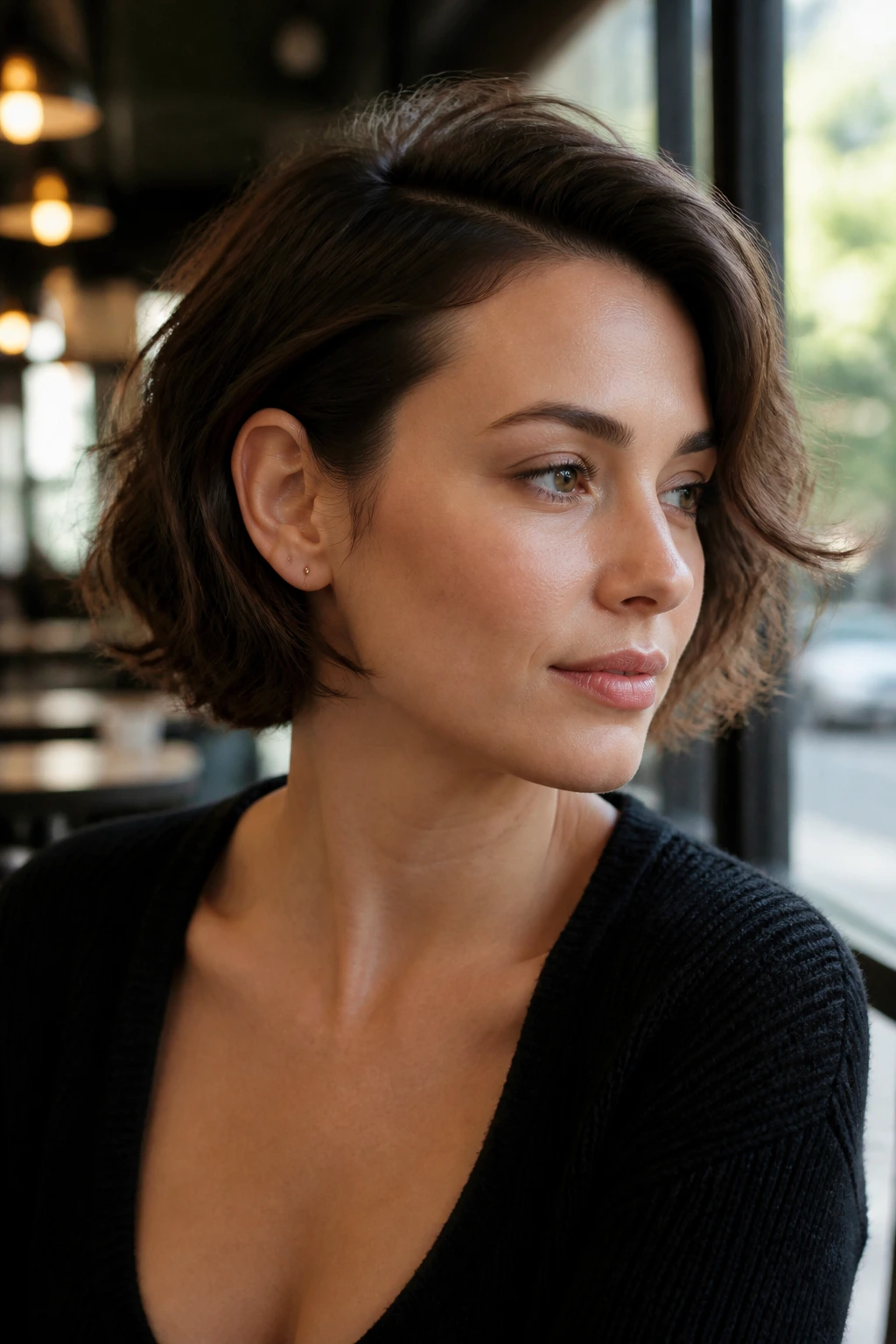
You know the look: one side tucked neatly behind the ear, the other side left to fall in one soft bend. It’s simple, but on short wavy hair it does something useful — it changes the silhouette without asking for a new cut or a complicated routine.
The clean side sweep pulls the eye diagonally across the face, which keeps a short bob from reading too boxy. If your waves flare out at the cheeks, this is a good way to calm them down. If you wear earrings, even better. The tucked side gives them room. If you wear glasses, the style plays nicely with the arm of the frame instead of tangling around it.
A light cream or lotion on the front sections helps the tucked side stay flat, but keep the rest of the hair loose. The contrast matters. Too much smoothing everywhere and the bob loses its texture. Too little and the tuck looks accidental.
- Best on: bob lengths that hit between ear and jaw
- Best for: fine to medium waves
- Best accessory: small hoops or a single statement earring
The detail most people miss is where the tuck happens. Tuck the hair just behind the high point of the ear, not low at the neck. That keeps the line clean and stops the whole style from slumping.
5. Curled-Under Rounded Bob
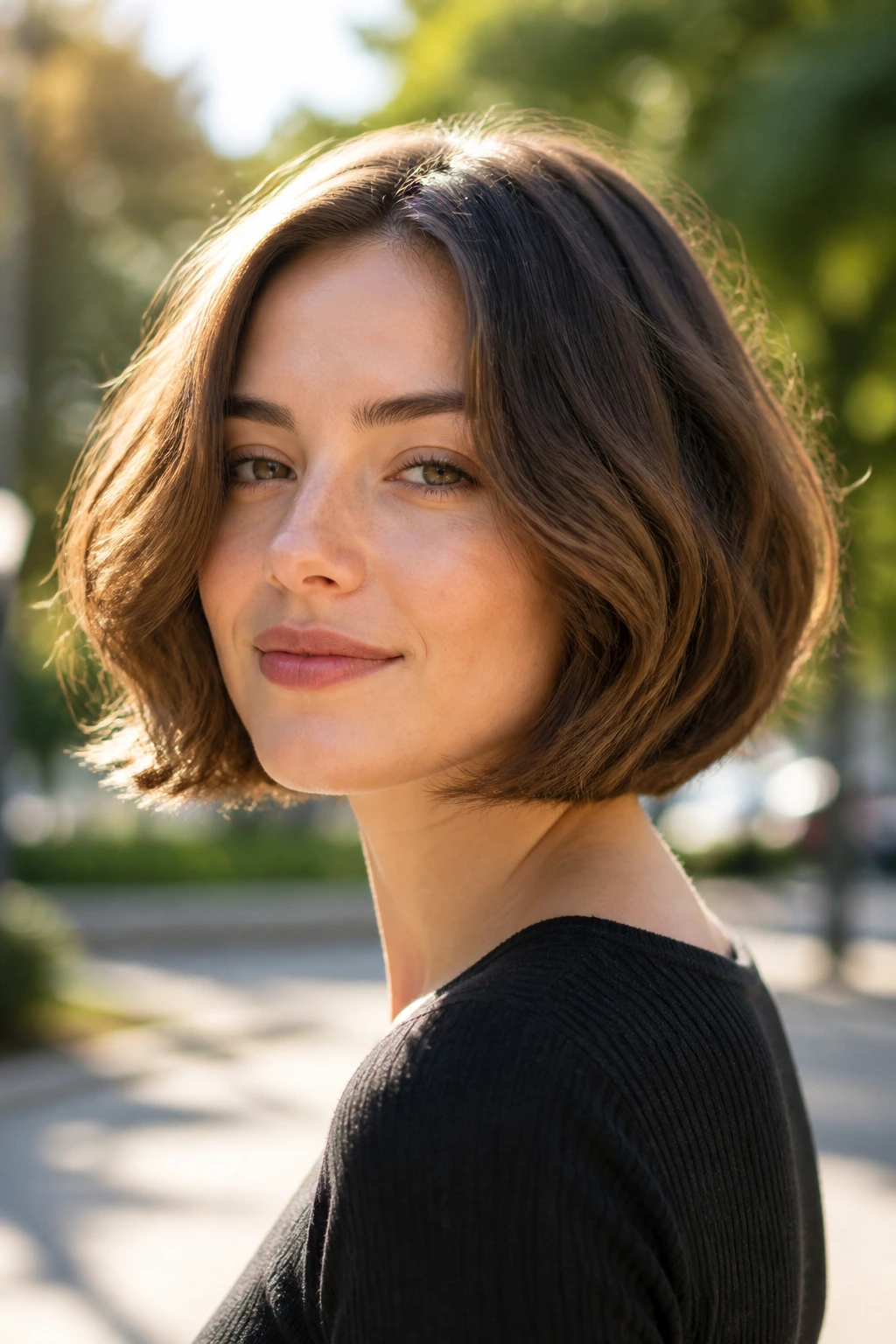
A rounded bob sounds conservative until you see it on wavy hair. Then it becomes one of the smartest shapes in the whole bunch. The ends curl inward just enough to create a smooth frame, while the wave in the middle still shows through. It’s a tidy shape, not a stiff one.
The trick is not to smooth out every bend. You want the perimeter to curve under, especially at the chin and just below it, but the top layers should still have some movement. A small round brush or a 1-inch curling wand can help guide the ends inward. If you use heat, keep the passes light. One clean bend is better than three overworked ones.
This style is a good answer for thicker waves that tend to spread out at the bottom. The rounded outline reins them in. It also works well if your hair has a little frizz at the ends, because the curl-under shape hides that rough edge better than a blunt line does.
I’d choose this when I want the hair to look polished without losing its texture. It reads neat from a distance, but up close it still has that soft, wavy finish that makes short hair feel alive rather than shellacked.
6. Asymmetrical Bob with One-Ear Tuck
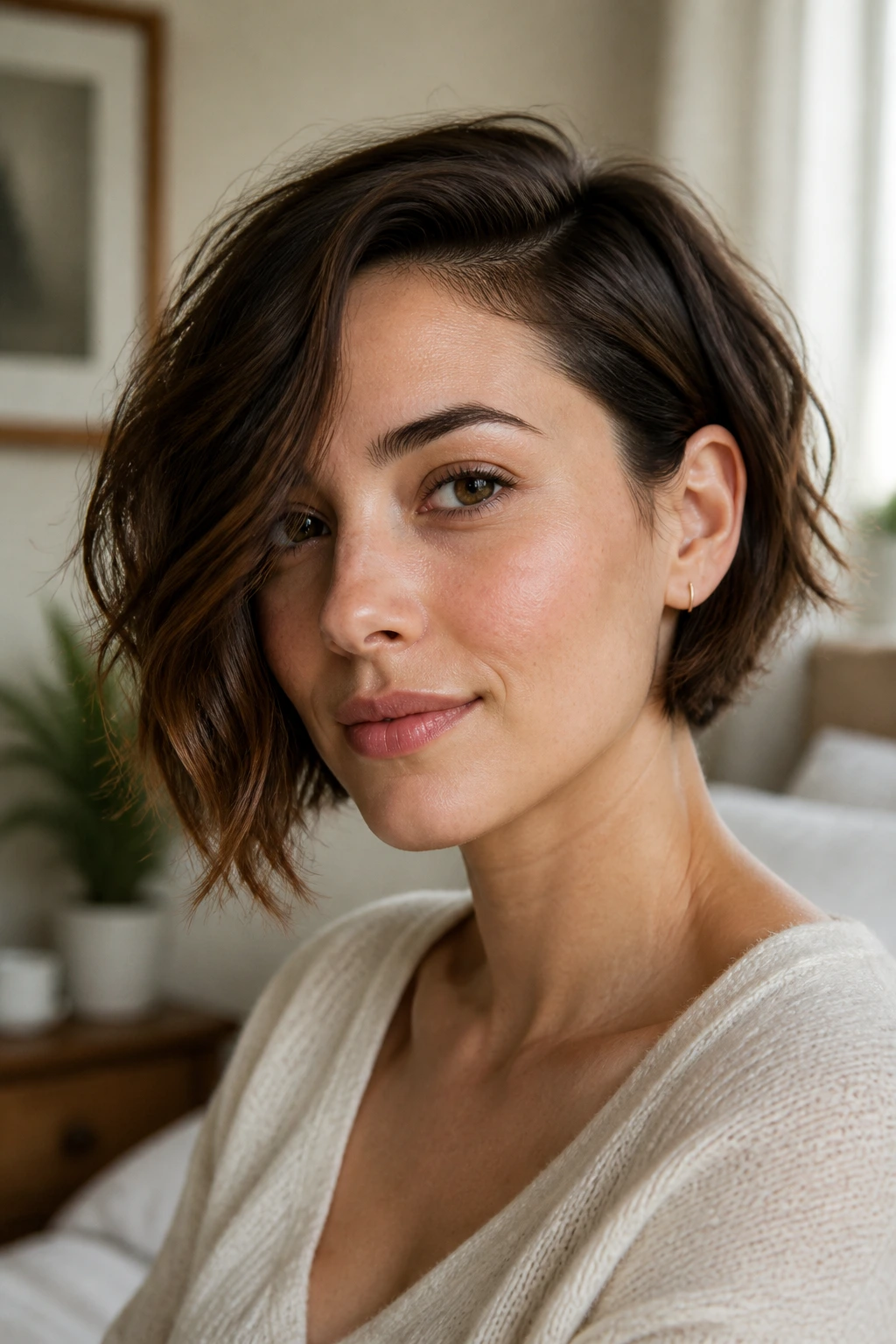
Unlike a straight-across bob, this one gives you a diagonal line that starts shorter on one side and lands a little lower on the other. That angle is doing real work. It makes short wavy hair look sharper, and it gives the wave somewhere to fall instead of forcing both sides into the same shape.
The longer side should usually hit around the jaw or just below it. The shorter side can graze the cheekbone. That difference does not need to be dramatic. One to two inches is enough to change the whole silhouette. If the contrast gets too extreme, the cut starts to look like a statement piece for its own sake, and that gets tiring fast.
The one-ear tuck is what seals the style. It keeps the shorter side neat and lets the longer side move. A tiny clip or barrette can help if the tuck slips, but many waves hold on their own once the hair cools in place.
This is a good pick for people who like a little edge without going full graphic. It feels current without being fussy, and it’s one of those cuts that looks better when the wave is imperfect. That little bit of slack makes it human.
7. Half-Up Mini Knot for Short Waves
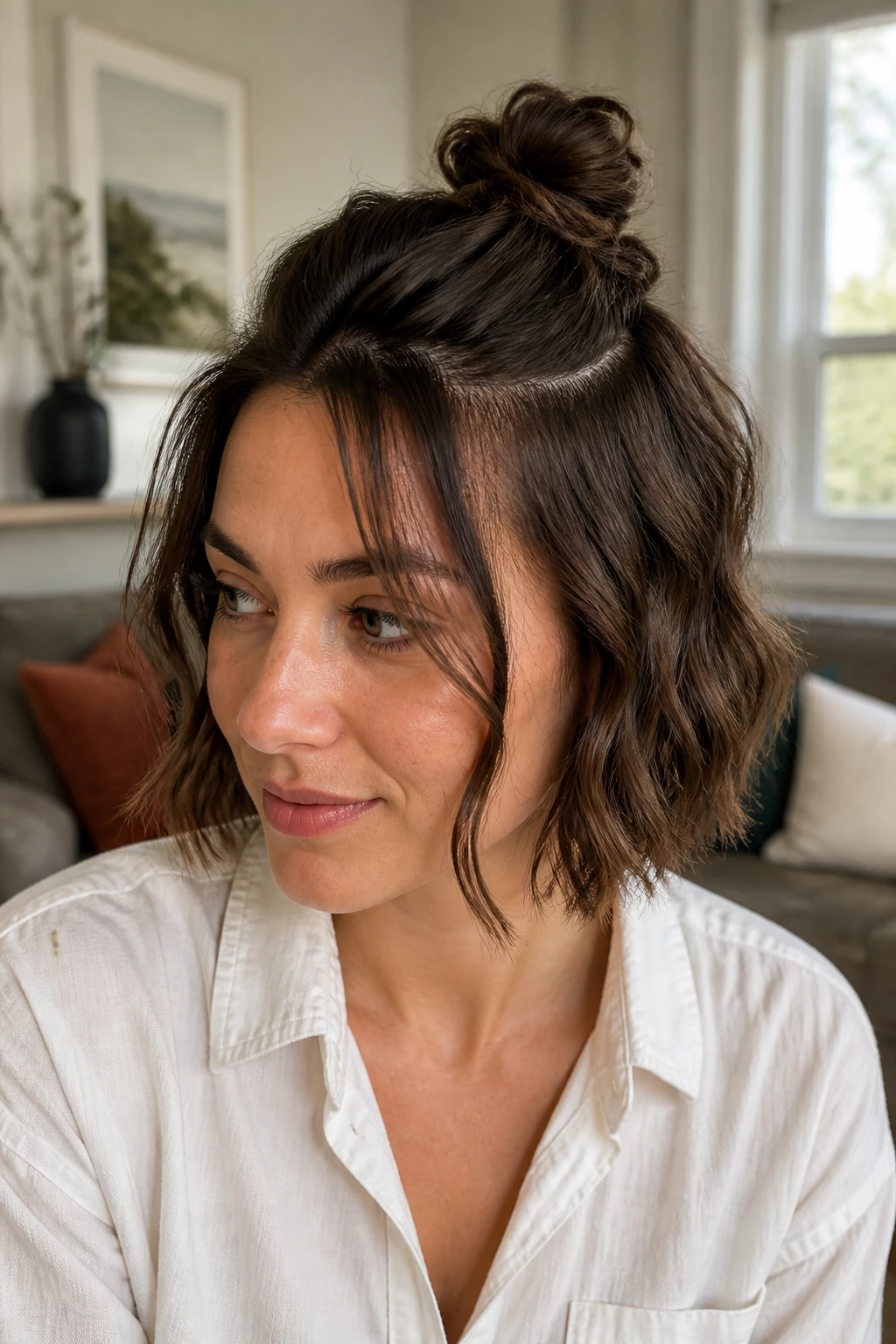
A half-up mini knot is what I reach for when the front of my hair is behaving and the back has decided to do its own thing. It’s quick, it uses the wave you already have, and it makes short hair look styled in about a minute.
The key is keeping the knot small. Pull back just the top section, usually from the temples up, and twist it once or twice before pinning or tying it. If you grab too much hair, the knot gets bulky and starts sliding around. If you grab too little, it disappears.
Where to Place the Knot
- High crown placement: adds lift and makes fine waves look fuller.
- Mid-crown placement: the safest choice for most bob lengths.
- Low crown placement: better when you want the front clean but the top relaxed.
Let a few front pieces fall free. That softens the whole look and keeps it from reading like a tiny topknot on borrowed time. A little dry shampoo at the roots can help the knot hold, especially on hair that’s very soft or freshly washed.
The best part is how well this works on second-day hair. A wave that has lost its pristine shape often looks better once it’s gathered into a half-up section. Slightly messy is the right texture here.
8. Soft Wolf Cut on a Short Base
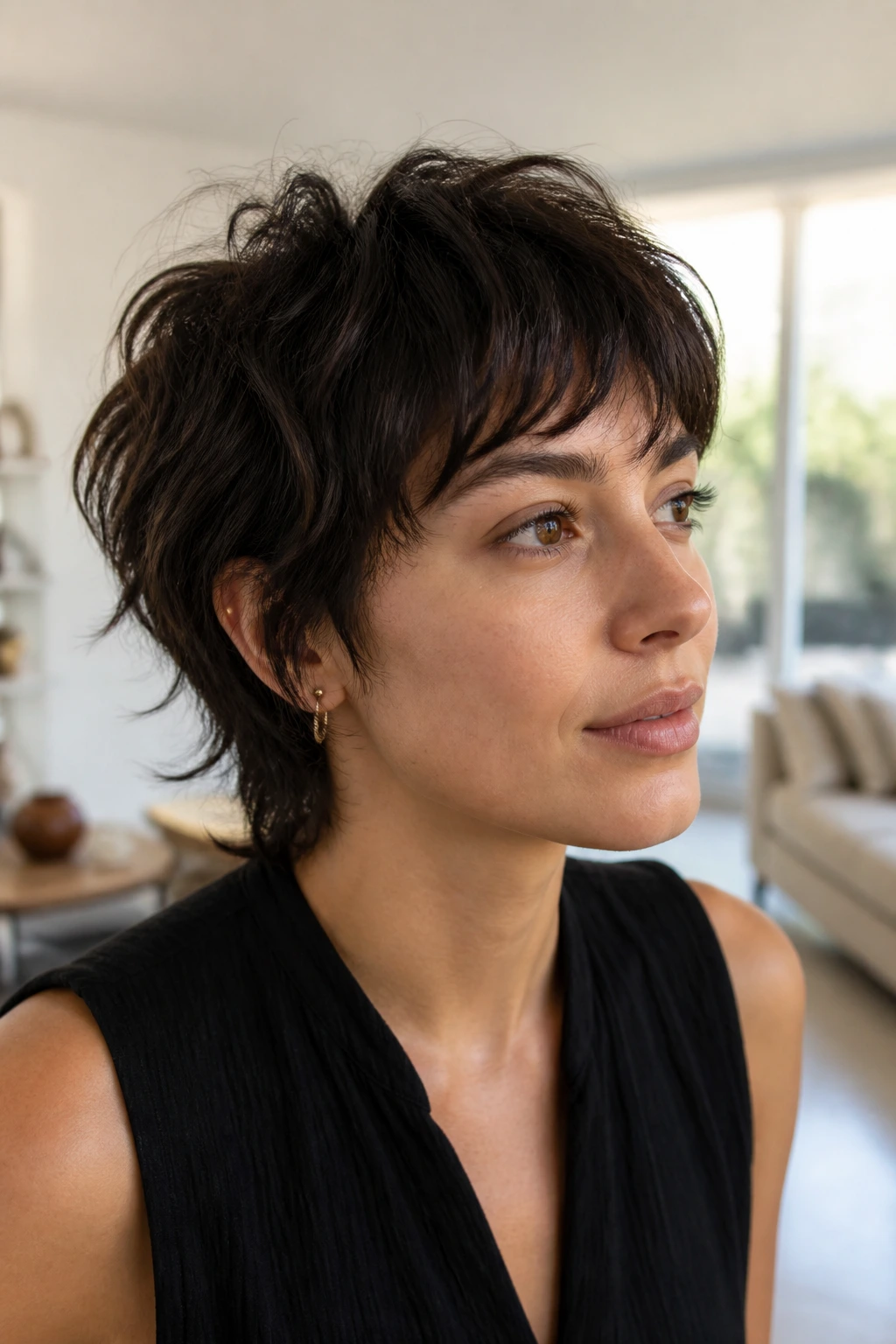
Can a wolf cut work on short hair? Absolutely, if the layers stay soft and the interior weight is managed instead of hacked out. On wavy hair, the short wolf cut gives you crown lift, broken ends, and a little movement around the face without making the whole thing look overstyled.
The shape is the point. Shorter layers at the crown keep the top from flattening, while longer pieces at the sides stop the cut from ballooning out. If the fringe is there, it should be light enough to separate. Heavy, square bangs can fight the rest of the cut and make the top feel too dense.
What Makes It Different
- The crown has more height than a standard bob.
- The ends are intentionally irregular.
- The fringe, if you wear one, should feel feathered rather than blunt.
A mousse-and-diffuser routine works well here. Scrunch the roots first, then the ends, and let the wave set before touching it. If you keep fussing with the layers while they’re drying, the cut loses its shape and starts looking busy.
This is a good cut for anyone who wants movement but doesn’t want their hair to sit flat against the head. It has some edge, but not in a hard, angular way. More like the hair knows where it wants to go and you’re just giving it a little nudge.
9. Slicked-Back Wet-Look Crop
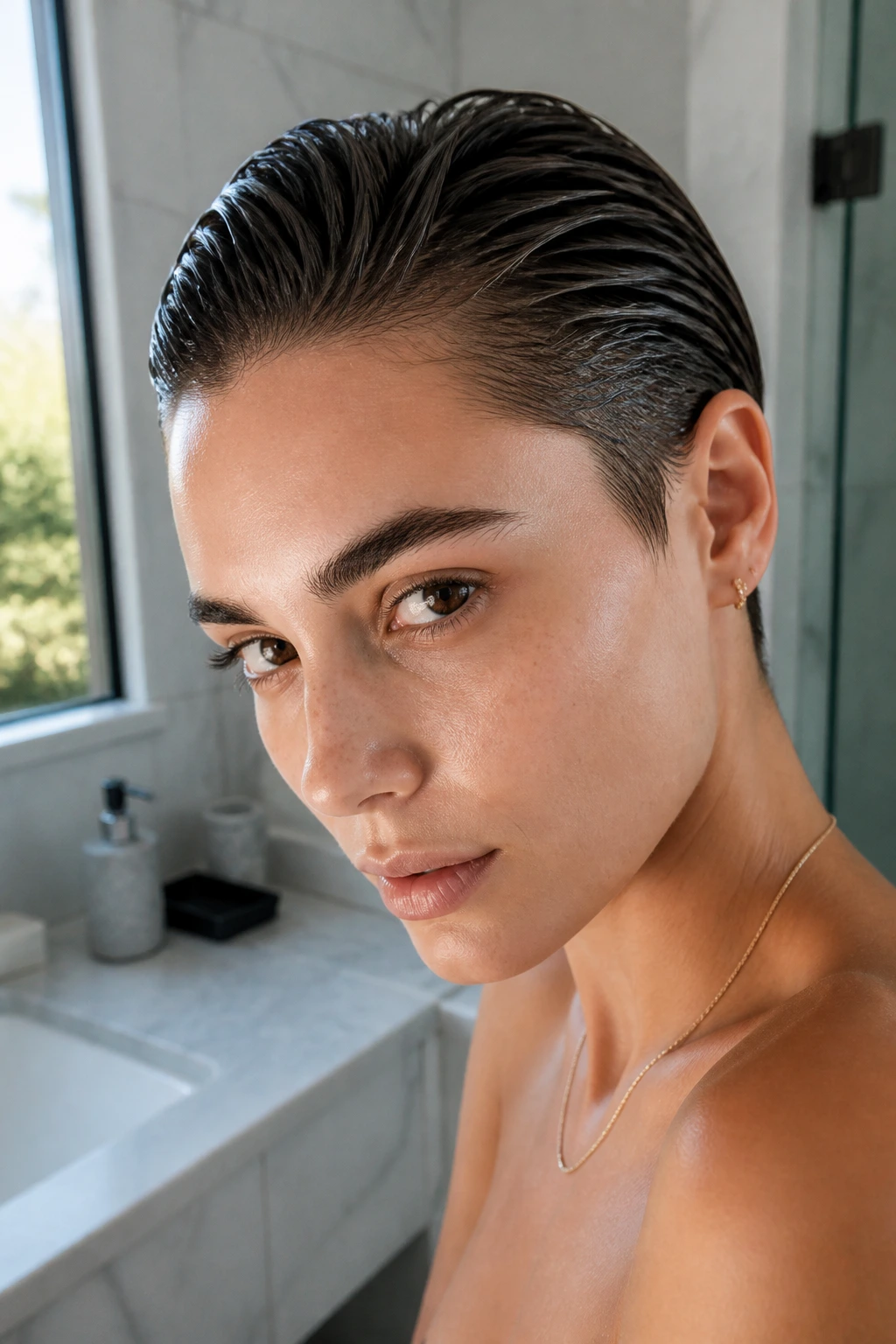
A slicked-back crop sounds severe until you see what it does to short waves. Instead of fighting the bend, it traps the shape under shine and turns the texture into a finish. That’s why this style works best when the hair is damp, not dry.
Use a strong-hold gel or gel cream on towel-blotted hair. Comb it back from the front, then smooth the sides with a fine-tooth comb or your hands. If your wave pattern is very strong, do not overload the roots with product or the style can separate in chunky strips. A little control goes a long way.
The front should lie flat, but not look lacquered to the point of stiffness. The best wet look has some movement in the length and a clean line at the hairline. Once it sets, leave it alone. Re-touching it after it starts to dry is how you get fuzz around the temples.
This is one of the few styles here that feels sharper than soft. It’s excellent for nights out, strong makeup, or any day when you want your hair to stop negotiating with you. And because it keeps the sides tight, it’s a solid option when humidity is making your usual texture behave badly.
10. Finger-Wave Side Sweep
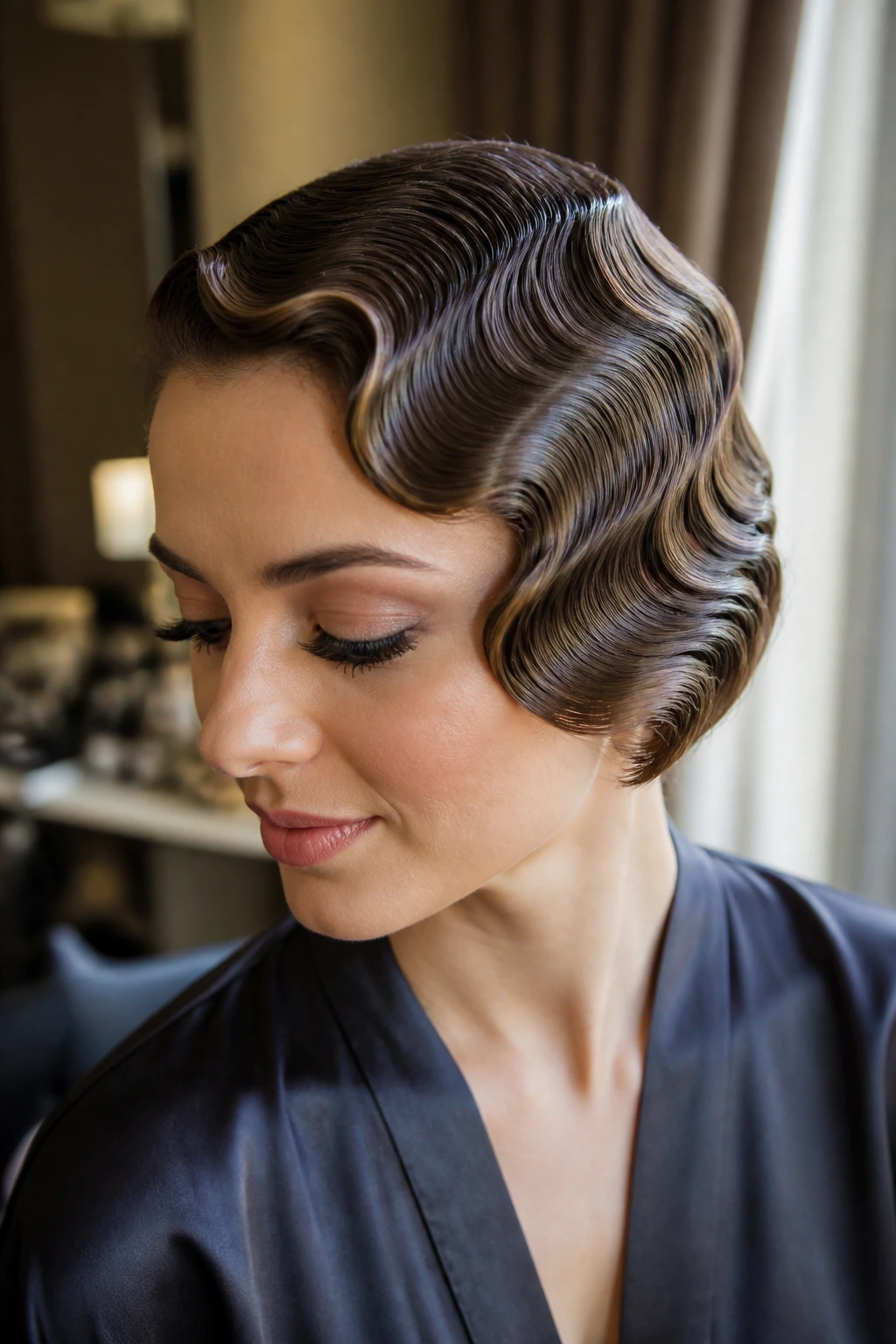
Finger waves on short hair have a very specific energy. They look controlled, but not stiff. They sit close to the head, but they still have that glossy ridge-and-valley pattern that makes waves feel dressed up instead of merely tamed.
This style takes patience more than skill. You work in sections with setting lotion or strong mousse, shaping the wave with a comb and your fingers, then pinning each curve until it cools and holds. On short wavy hair, that extra structure is a gift. It gives the texture a formal shape without forcing the whole cut into an updo.
- Best for: special events, photos, or short bobs that need a polished bend
- Tools: fine-tooth comb, duckbill clips, setting lotion or firm mousse
- Watch for: wet sections that are too thick; they won’t set cleanly
The side sweep keeps the look from becoming too symmetrical. One side gets the visual weight, the other side stays cleaner. That asymmetry makes the waves read as sculpted rather than retro costume. If you’re trying this at home, start with the front and top sections. They’re the ones people notice first, and they’re the hardest to fix later.
11. Headband Tuck with Soft Face Pieces
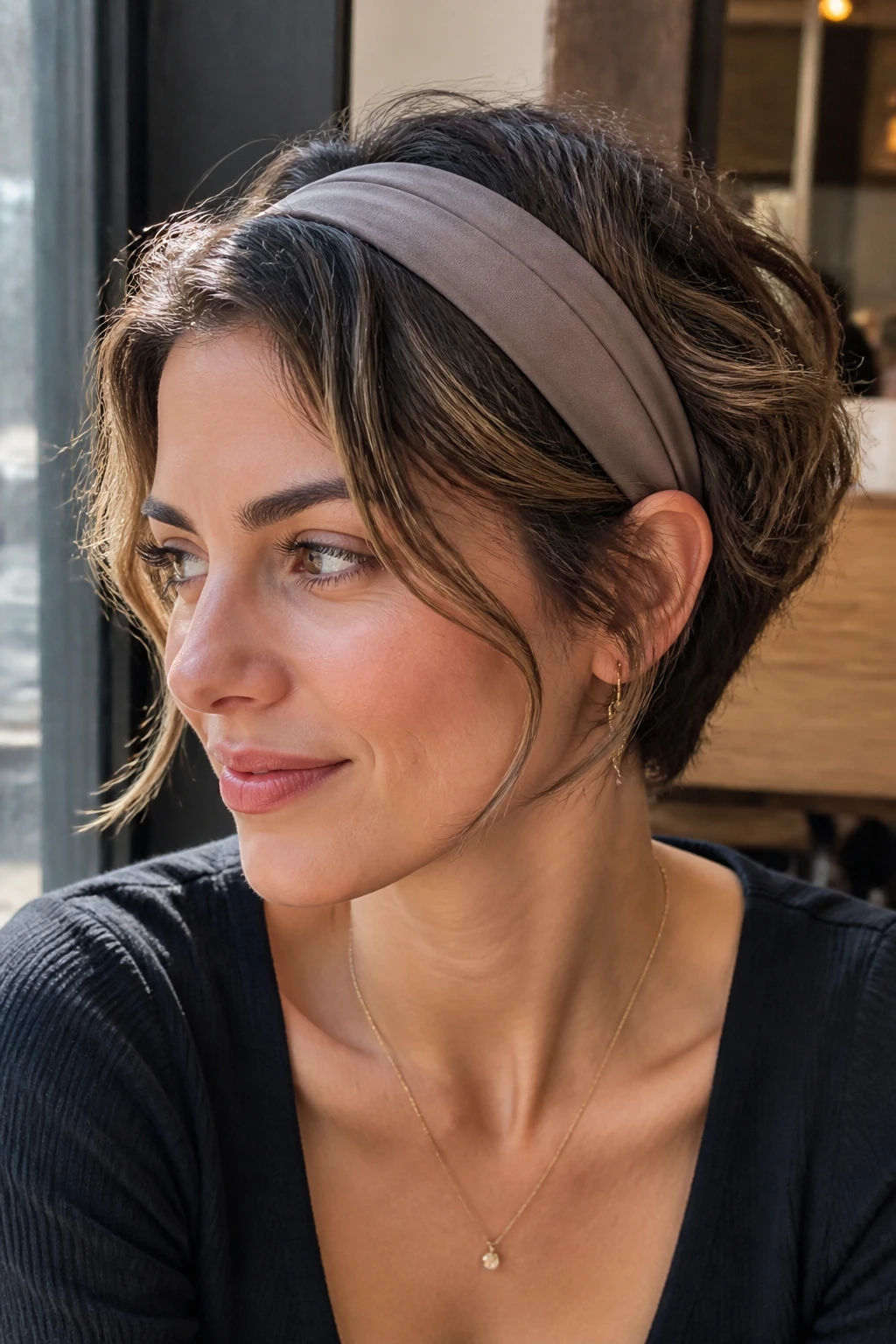
A headband tuck is one of those styles that looks low-effort if you know what you’re doing and awkward if you don’t. The difference is in what you leave out. Short wavy hair needs a couple of face-framing pieces to keep the band from swallowing the whole shape.
Use a stretchy headband that sits flat, not a stiff band that sticks up like a halo. Pull the hair back, then tuck the sides behind the band and let the ends puff a little above the neckline. Leave two slim pieces near the temples or cheekbones. Those pieces keep the style from looking too school-uniform neat.
This is a very good fix for growing-out bangs. It also works when the crown is flatter than you’d like, because the band gives you an excuse to lift the front without teasing it into a mess. If your hair is fine, a bit of dry shampoo or texture powder at the roots helps the band stay put.
The nice thing here is versatility. You can wear it with a plain tee, a coat, or something dressier, and it reads as intentional every time. The headband does the heavy lifting. Your job is mostly to keep the wave soft around the face.
12. Claw-Clip Twist at the Crown
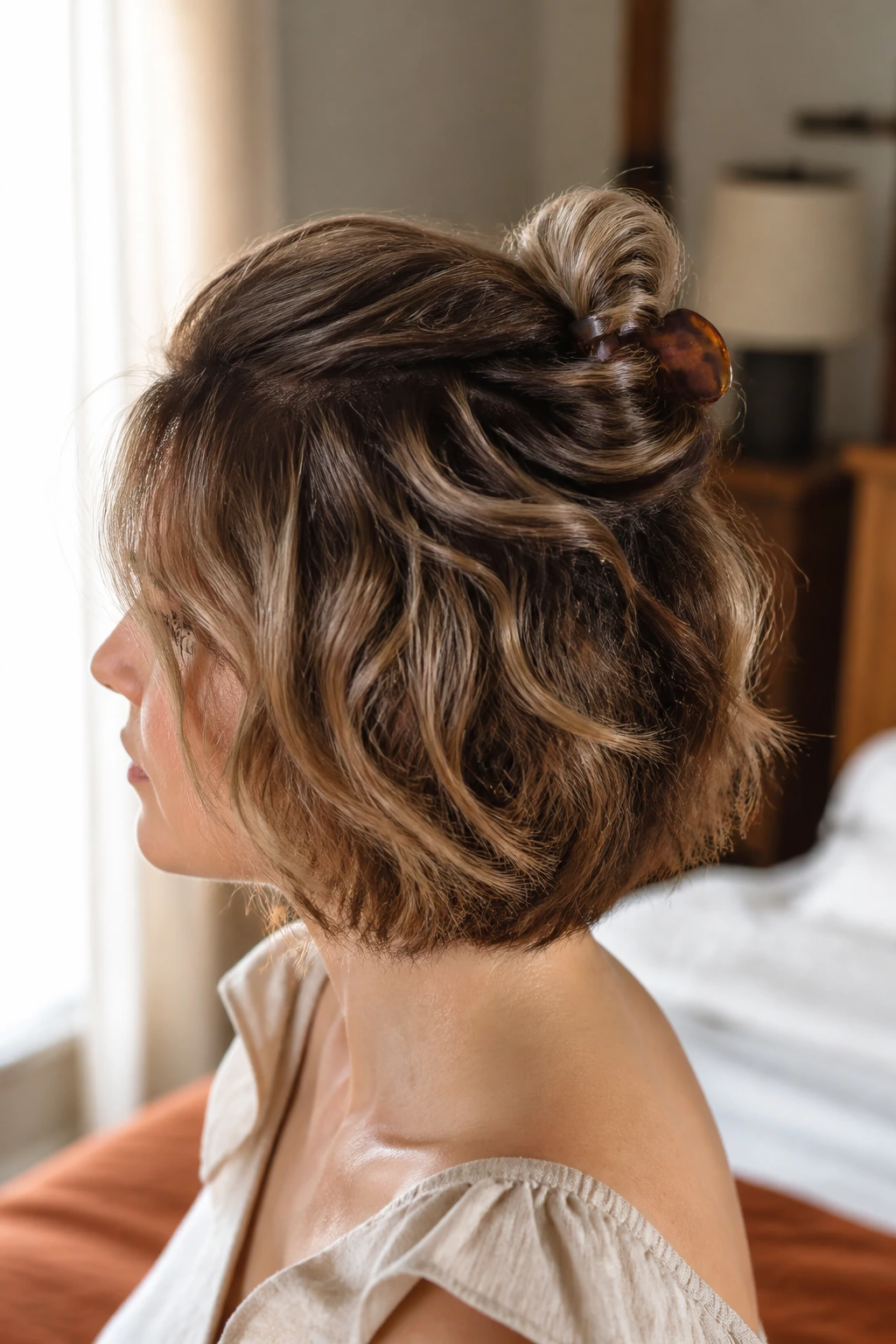
The claw-clip twist is the opposite of precious. It doesn’t ask your short waves to behave all the way up. It only gathers the middle section, lets the ends spill, and keeps enough softness around the hairline that the style never feels overdone.
The size of the clip matters. A medium clip usually works best for short to medium short hair; if your waves are very thick, go larger, but not so large that the teeth dig awkwardly into your scalp. Twist the gathered section once, maybe twice, then clip it so the ends fan out just a little. If you shove everything straight into the clip, the twist looks cramped.
This style is ideal on day-two hair, when the front pieces have lost their bounce and the crown needs a reset. A little spray of texturizer on the mid-lengths gives the clip something to hold. Too much and the hair starts slipping.
What I like most is the balance between control and looseness. The sides can stay soft, the back can keep moving, and the top gets lifted without requiring a full updo. It’s a small fix with a big payoff, which is usually the best kind.
13. Mini Faux Hawk with Piecey Crown Height
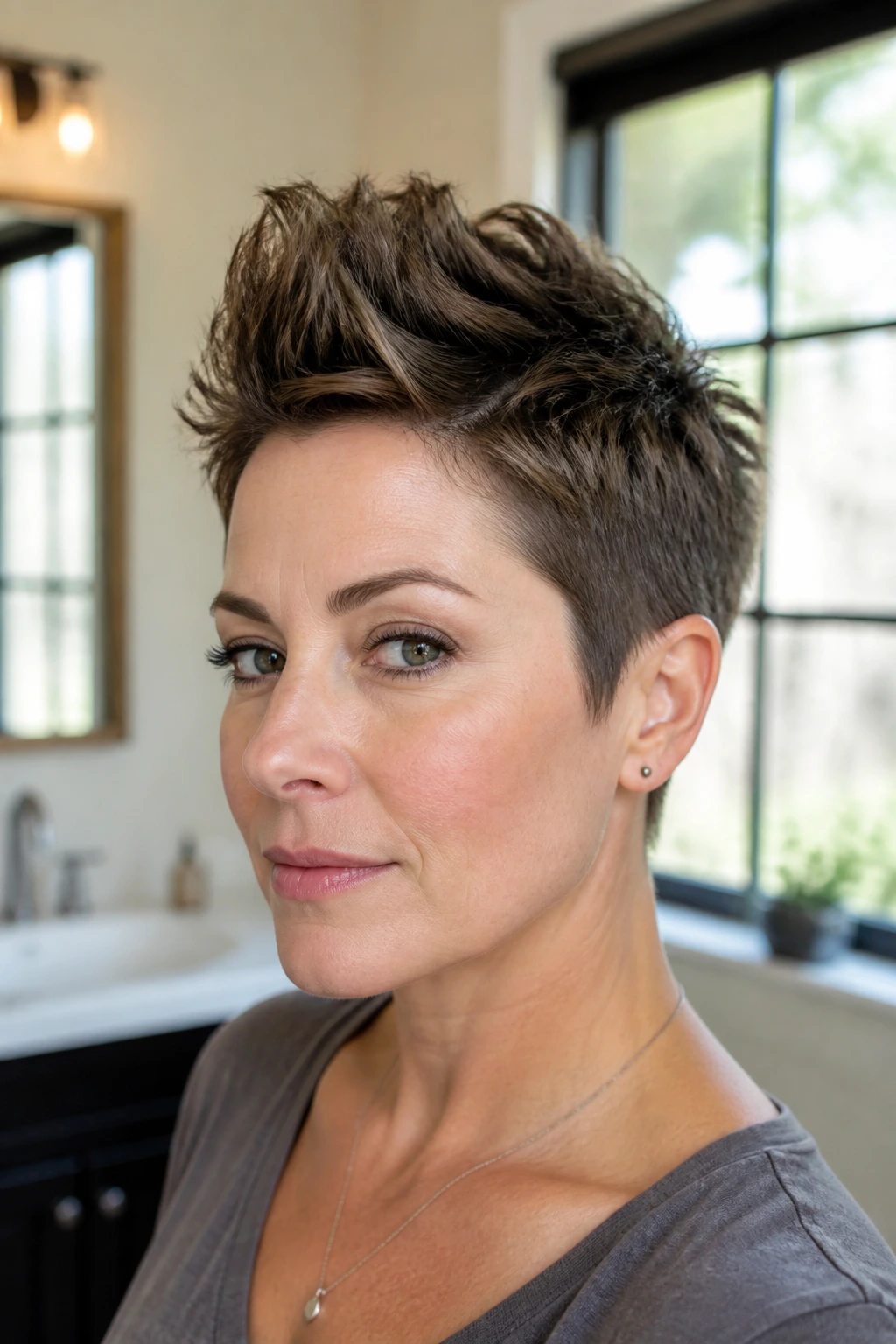
A mini faux hawk on short wavy hair is a good reminder that “polished” does not have to mean flat. The center section gets lifted, the sides are smoothed close to the head, and the wave in the middle becomes the feature instead of the thing you’re trying to hide.
Use mousse or a light styling foam at the roots, then blow-dry the crown upward with your fingers or a small brush. Once the center is dry, separate the top into a few piecey sections with a little matte paste. The goal is height, not spikes. If the pieces look too uniform, they start to feel costume-y.
This works especially well if your waves are denser on the top and lighter at the sides. The center ridge gives the hair an actual shape to stand on. If your face is narrow, it can add some width in a good way. If your face is broader, keep the sides a little softer and the height more subtle.
It’s a bold style, sure, but not an impossible one. Short wavy hair often has more lift than people give it credit for. This cut simply puts that lift where you can see it.
14. Braided Crown on Short Wavy Hair
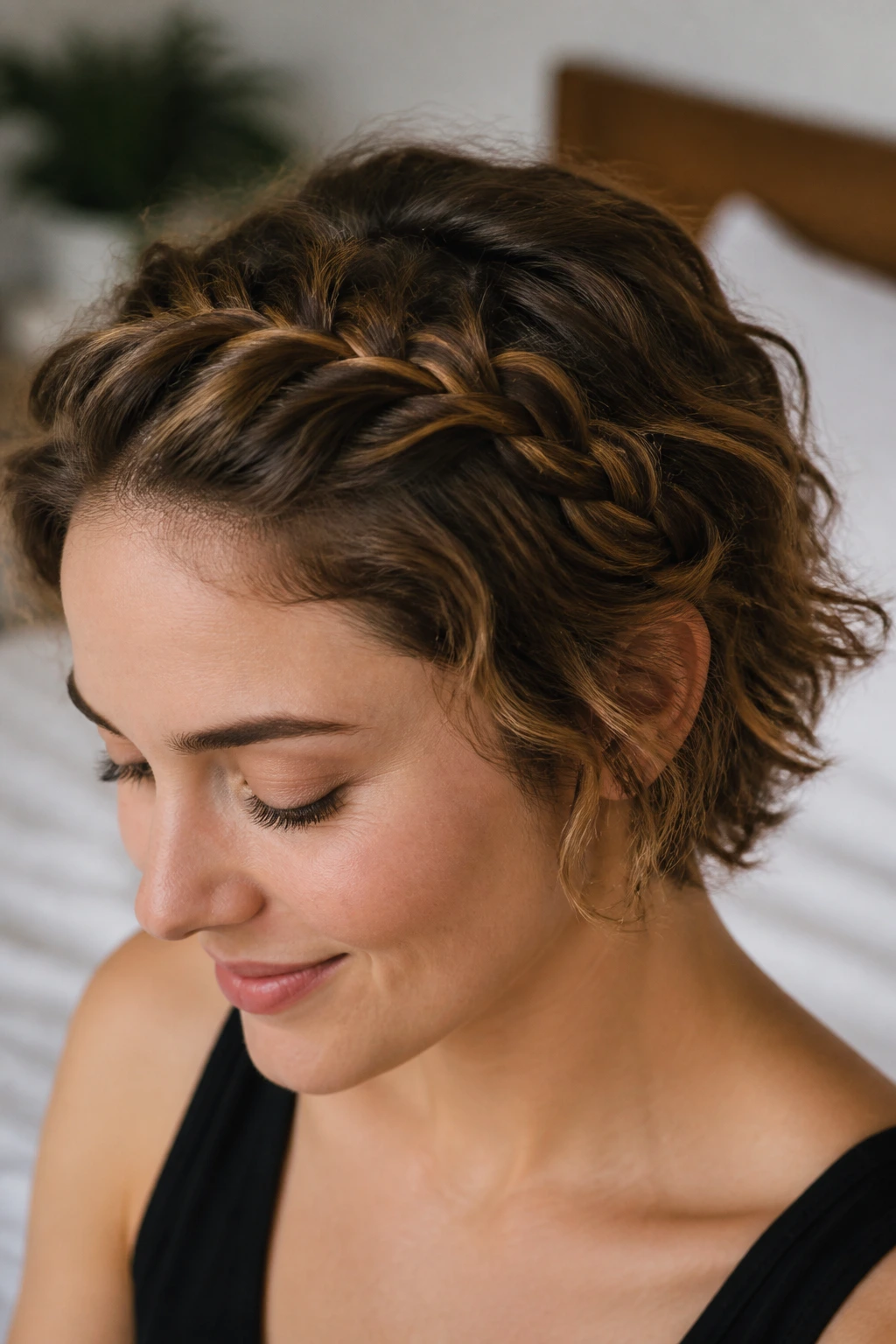
Can you braid short wavy hair into something that looks finished? Yes, if you work close to the hairline and keep the braid small. A braided crown on shorter lengths is less about thickness and more about control.
The braid usually starts at one temple and works across the front or around the crown in a narrow strip. Wavy hair helps here because it has enough grip to hold the braid without being slippery. That said, a tiny bit of texturizing spray at the roots makes the strands easier to manage. Too much product and the braid gets crusty.
How to Keep It from Slipping
- Braid on hair that is fully dry or almost fully dry.
- Pin the braid every few inches with small bobby pins.
- Tuck the tail under the back section instead of leaving it loose.
- Pull the braid very gently at the end to widen it a touch.
This style is a quiet winner for weddings, dinners, and any day when you want the hair out of your face without pinning it back in a boring way. It also hides uneven growth beautifully. If one side is shorter than the other, the braid smooths that out fast.
15. Textured Bixie with Feathery Ends
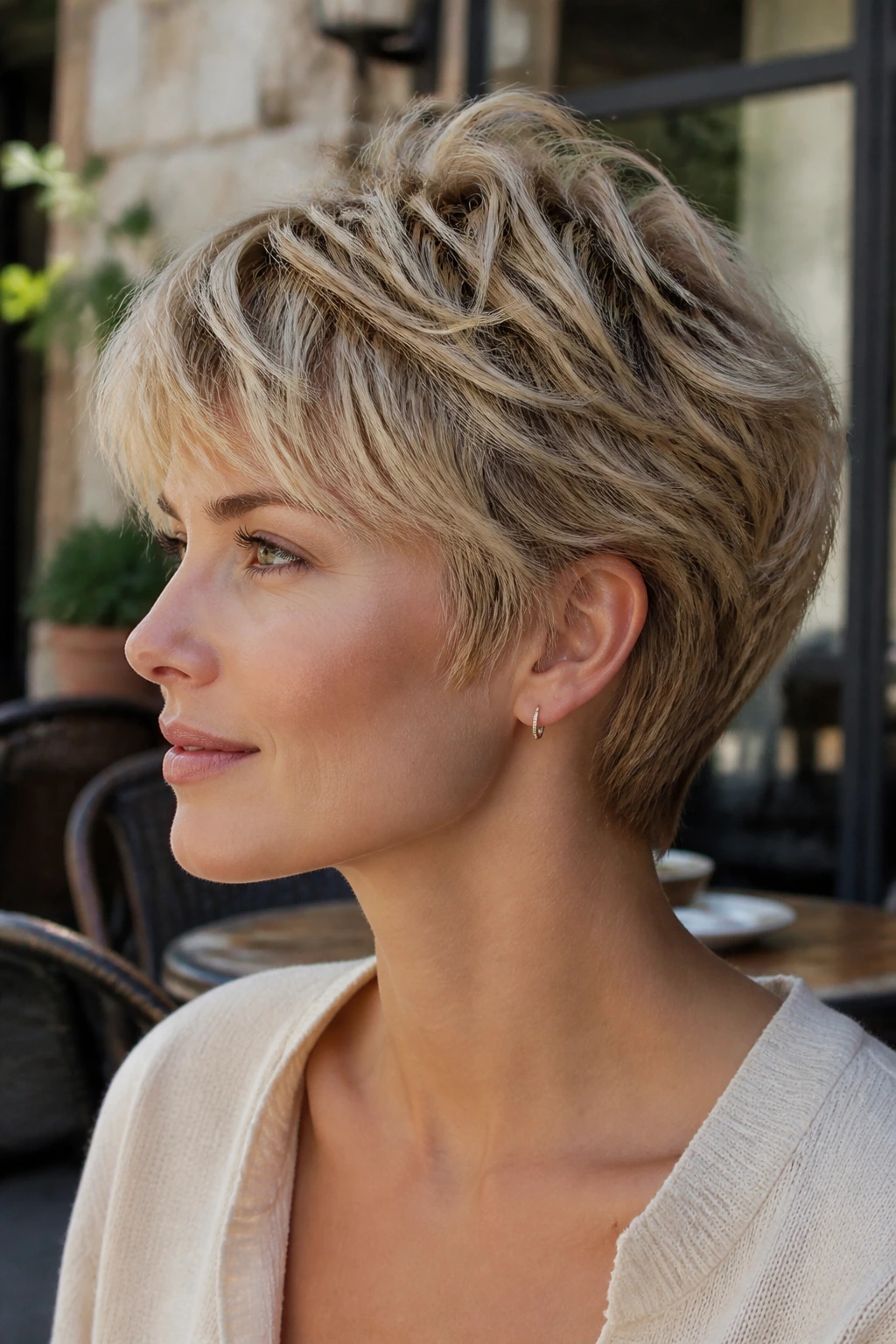
A bixie sits in that sweet spot between bob and pixie, and on wavy hair it can look especially good because the cut has enough length to show movement but not enough to go limp and heavy. The feathery ends keep it from turning into a block.
The main shape should have lift through the crown, soft edges at the temples, and a bit of length around the ears and nape. That gives the wave room to shift around without puffing into a triangle. If the layers are cut well, you can air-dry it and still get a visible shape. If they’re too blunt, the whole cut starts to sit on the head instead of moving with it.
This is one of the best options for someone who wants short hair but not a high-maintenance pixie. You get neck exposure, a bit of edge, and enough length to tuck or pinch into different shapes. A small amount of mousse at the roots and a tiny bit of paste on the ends usually does the job.
I like this style because it feels flexible. It can read sporty, soft, or sharp depending on how you finish it, which is more useful than having one look locked into place all the time.
16. Low Scarf Twist at the Nape
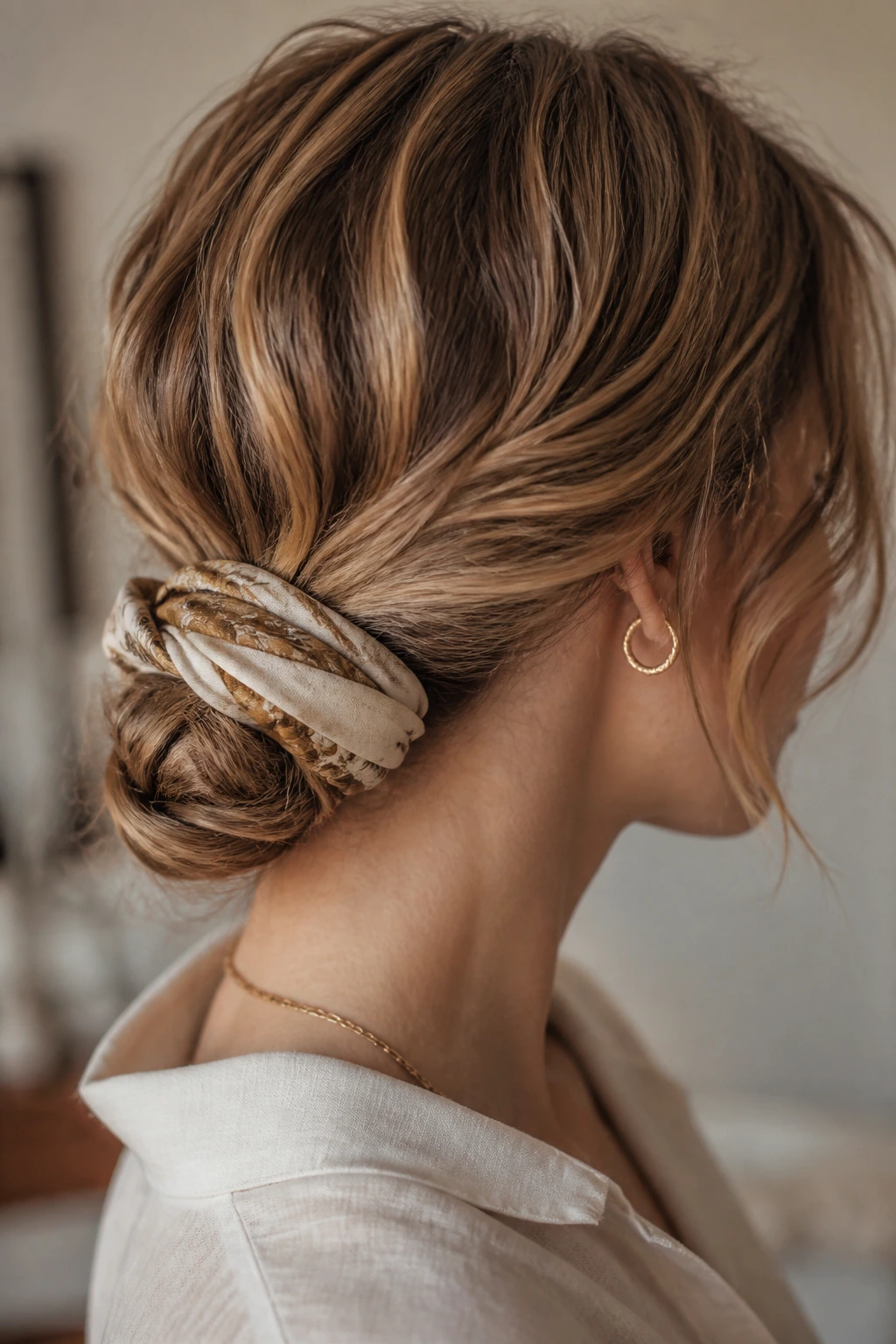
A low scarf twist is what I suggest when the waves are doing too much at the sides and not enough where it matters. Gather the hair low, twist it loosely at the nape, and wrap a scarf around the base so the fabric becomes part of the shape instead of an afterthought.
This works especially well with slightly messy or second-day hair. The scarf hides the parts that have gone fuzzy and gives the whole style a finish point. If your hair is too short for a full twist, you can still gather the back section and pin it under the scarf. The point is not a perfect updo. The point is a neat, soft nape with texture around the face.
- Best fabrics: silk, satin, or a smooth cotton scarf that doesn’t snag
- Best placement: low at the neck, not high on the crown
- Best when: the hairline is a little frizzy or the ends need hiding
Keep the face pieces loose. The contrast between the wrapped back and the soft front is what gives the style its charm. It’s practical, yes, but it also has that slightly styled-by-accident look that short waves wear well.
17. Curtain Waves Framing the Cheeks
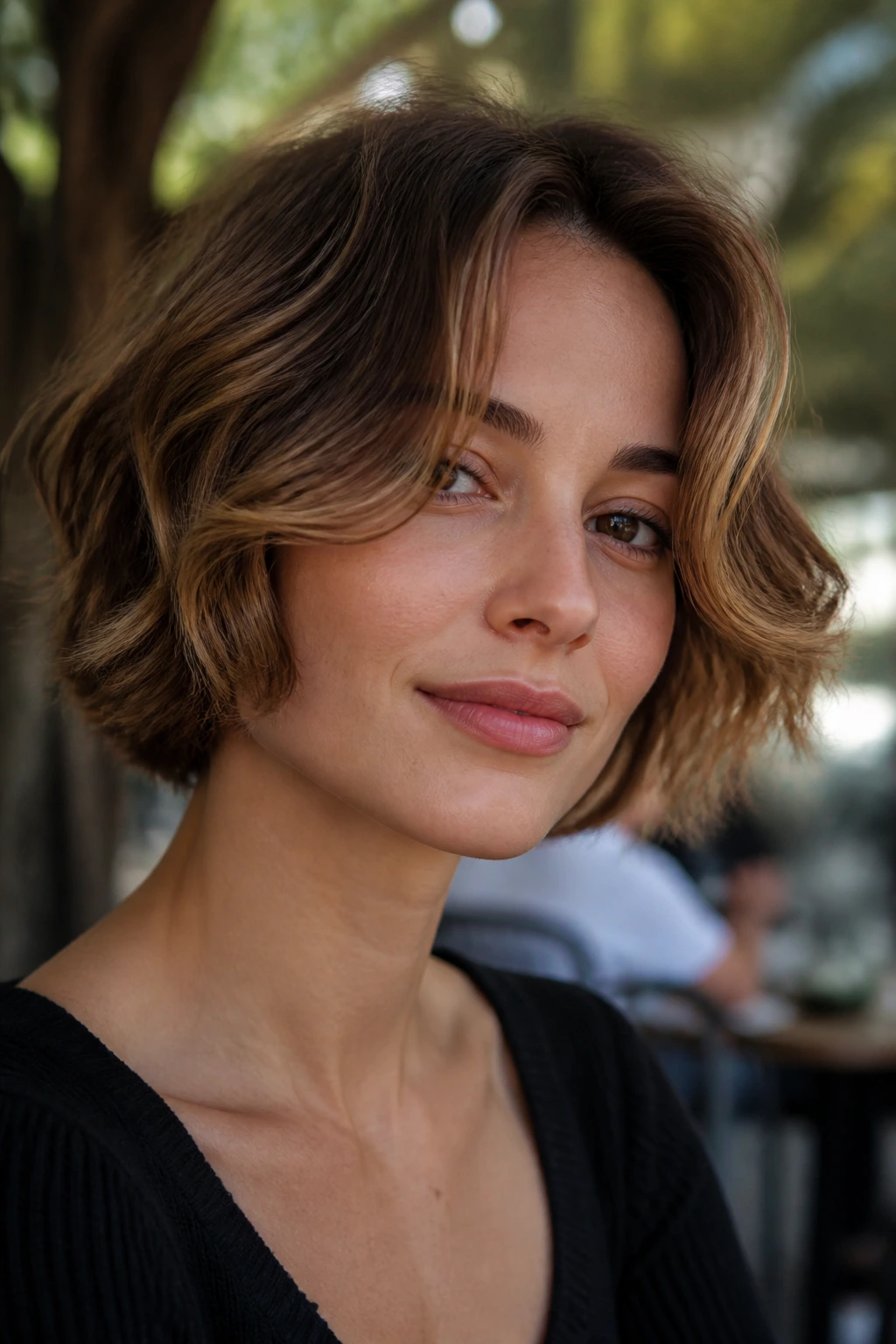
Curtain waves are one of the easiest ways to make short hair feel softer around the face. The part sits in the center or just off-center, and the front pieces bend outward from the cheekbones like they were made to live there. That shape matters more than any product bottle.
On short hair, the front sections should usually be a little longer than the rest if you want this style to sit properly. Use a wand or flat iron to bend those pieces away from the face, then let the rest of the hair stay looser and more natural. The idea is not a full set of matching waves. It’s a frame.
This is a very forgiving style for people whose waves are stronger in the back than the front. You only need to direct the pieces that matter most. If the rest of the hair goes a bit wild, the face frame still does its job.
It’s also one of the easiest ways to soften a square jaw or a longer face. The curve lands where the eye wants to rest. That’s why it feels polished even when the rest of the hair is barely trying.
18. Bubble Pony for Short Hair
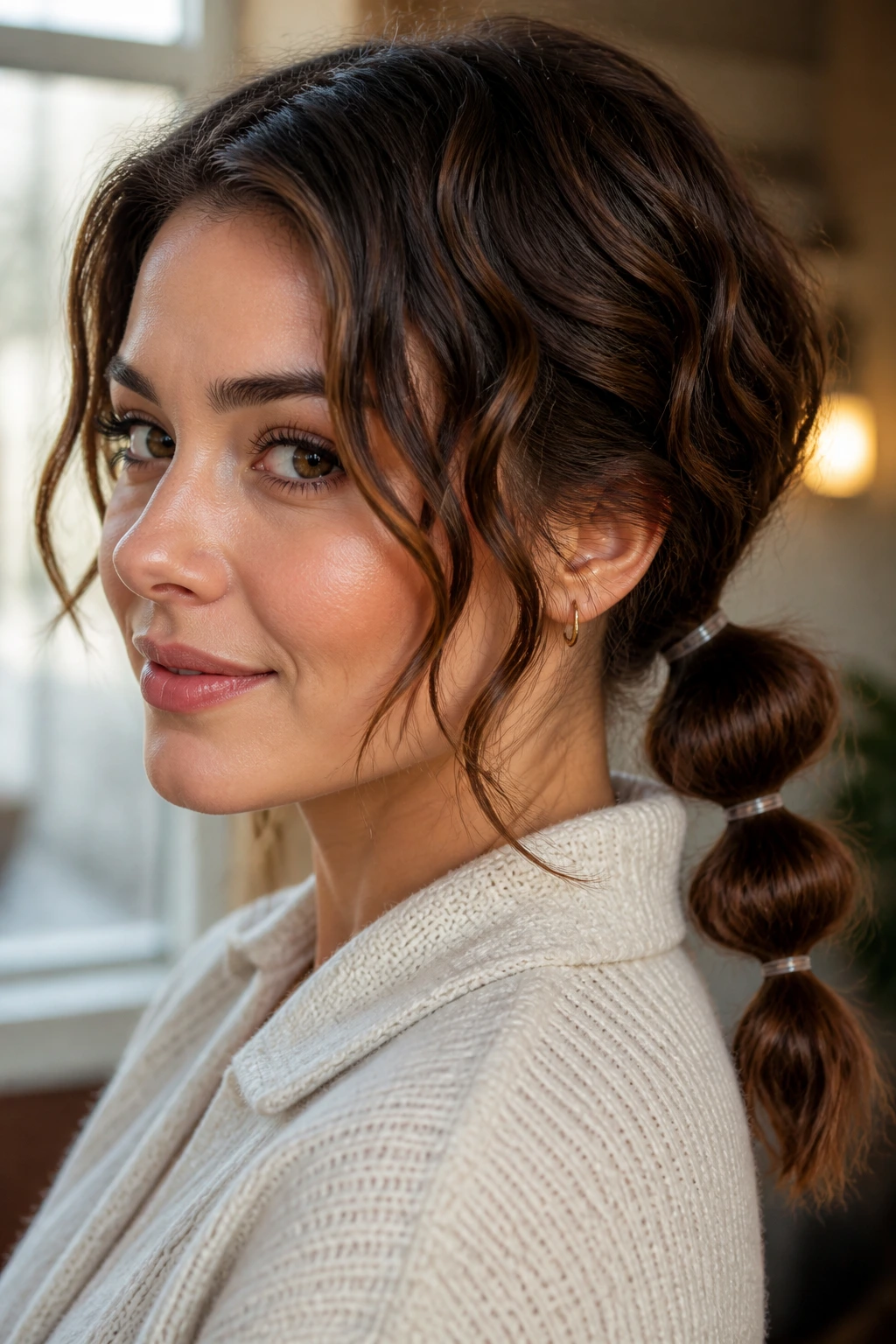
A bubble pony on short hair is not the same thing as the big glossy version you see on long lengths. Here, the effect comes from a short tail broken into small rounded sections with clear elastics, and the waves create the puff in between each tie.
Start with a low pony or a half-pony, depending on your length. Then add elastics every 1.5 to 2 inches down the tail and gently pull each section outward to form the bubble. If your hair is too short for a true tail, you can still create the idea by tying a small section and letting the rest stay loose. The shape is the part that matters.
Why It Works on Waves
- The texture gives the bubbles more grip.
- The elastics create shape without heat.
- The style hides uneven ends.
A little texturizing spray before you tie it helps the bubbles hold without slipping flat. This is a fun one for thick waves or pieces that usually refuse to sit still. It looks playful, but not childish, especially if you keep the ties clear and the bubbles slightly uneven. That tiny bit of irregularity helps.
19. Pin-Curl Set for Defined Waves
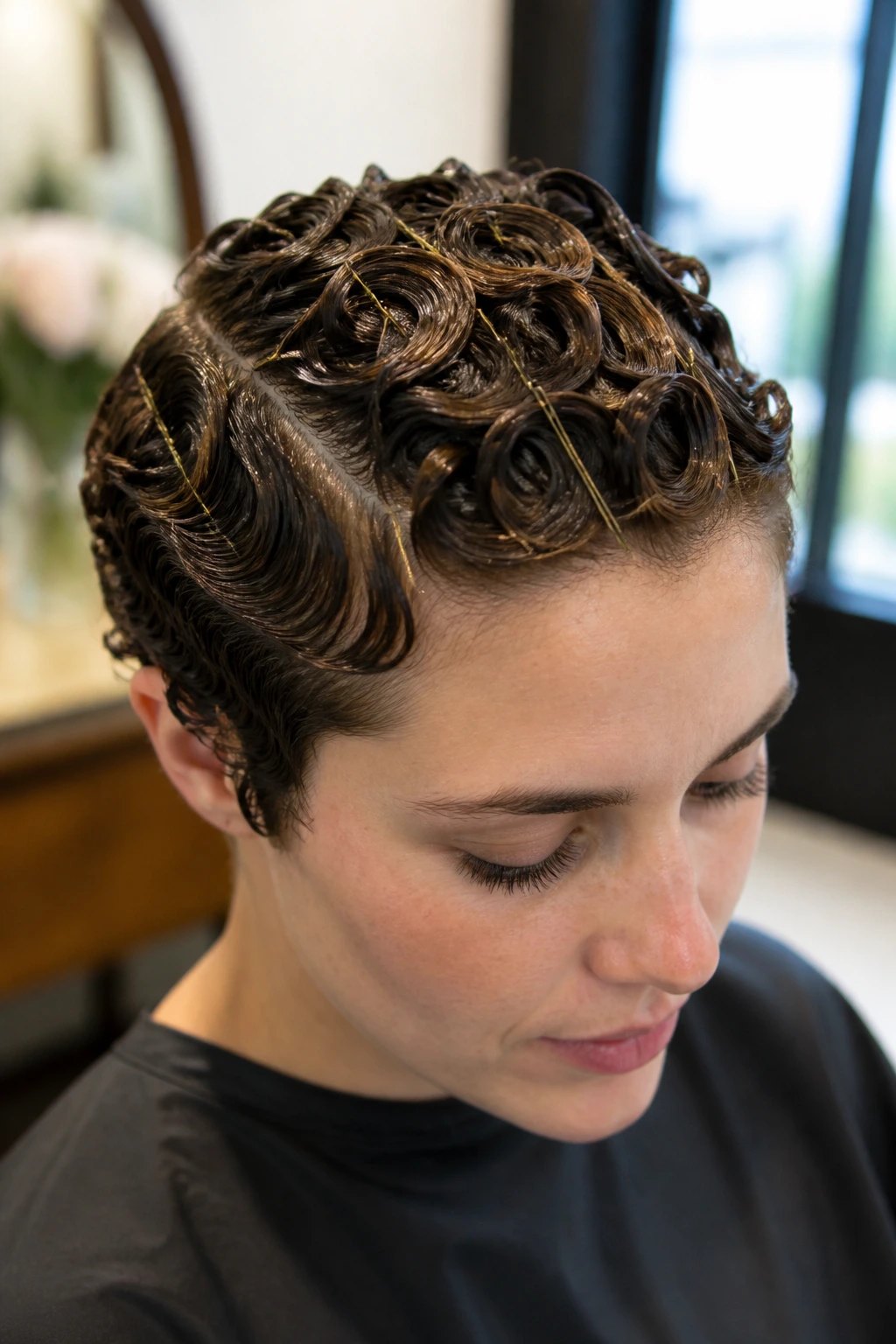
Pin curls are one of the oldest tricks in the book, which is exactly why they still work. On short wavy hair, they create definition without heat, and the curl pattern tends to look cleaner than what you get from a fast blast with a diffuser.
Take small sections of damp hair, wrap each one flat against the head, and pin it in place until it dries completely. The sections should be modest — about 1 inch wide if you want a tighter wave, a little wider if you want a softer bend. If the sections are too large, the pattern gets vague and loses that tidy ripple.
How the Set Works
- Damp hair holds the shape better than bone-dry hair.
- Smaller sections give more definition.
- Full drying is non-negotiable if you want the set to last.
A touch of mousse or setting lotion before you roll the curls gives them more staying power. Once the pins come out, separate the wave gently with your fingers. Not a brush. Never a brush. That’s how you turn the set into fluff.
This style is especially good when you want your short waves to look controlled for a day or two. It’s not fast, but it is dependable, and that counts for a lot.
20. Messy Top-Volume Pixie
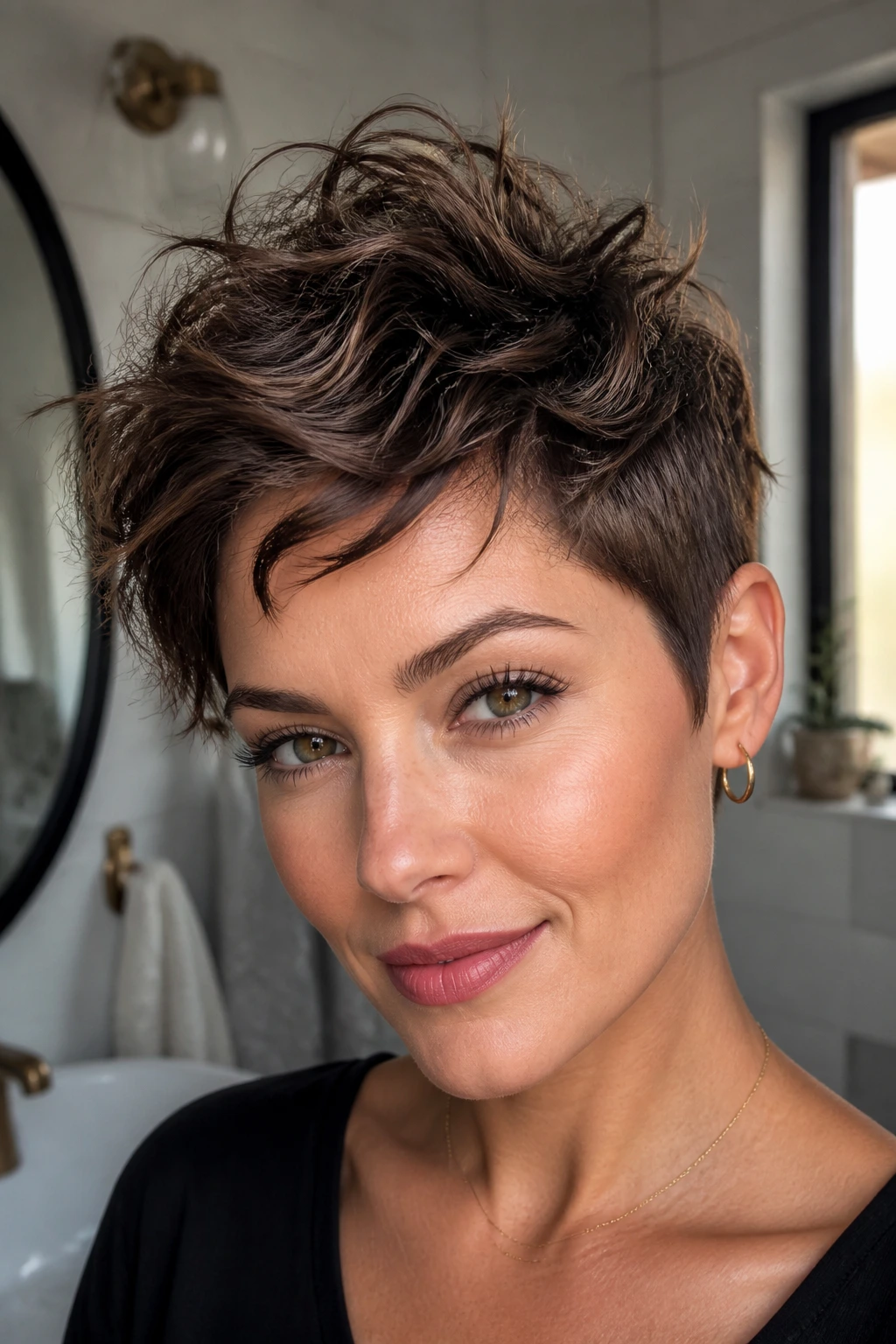
If your short wavy hair goes flat by noon, a messy top-volume pixie is the answer that doesn’t ask you to fight the problem all day. The sides stay neat, the top gets lift, and the waves have room to sit up instead of getting pressed down by their own length.
The trick is to build the volume at the crown, not everywhere. A little mousse at the roots, then a quick blow-dry with your fingers, usually does enough. Once it’s dry, break up the top with a touch of paste or dry texture spray. The style should look airy, not teased to death.
This works well for fine hair because it concentrates the visual fullness where people look first. It also works on thicker hair if the cut has enough internal layering to keep the top from becoming a helmet. If you have a very square face, leave a few softer pieces around the temples. That keeps the height from feeling too rigid.
The best part is how little precision it needs. A slight lift, a slightly uneven part, and a little bend at the front are enough. Short wavy hair often looks better when it’s not trying to behave.
21. Side-Part Lob with Broken-Up Ends
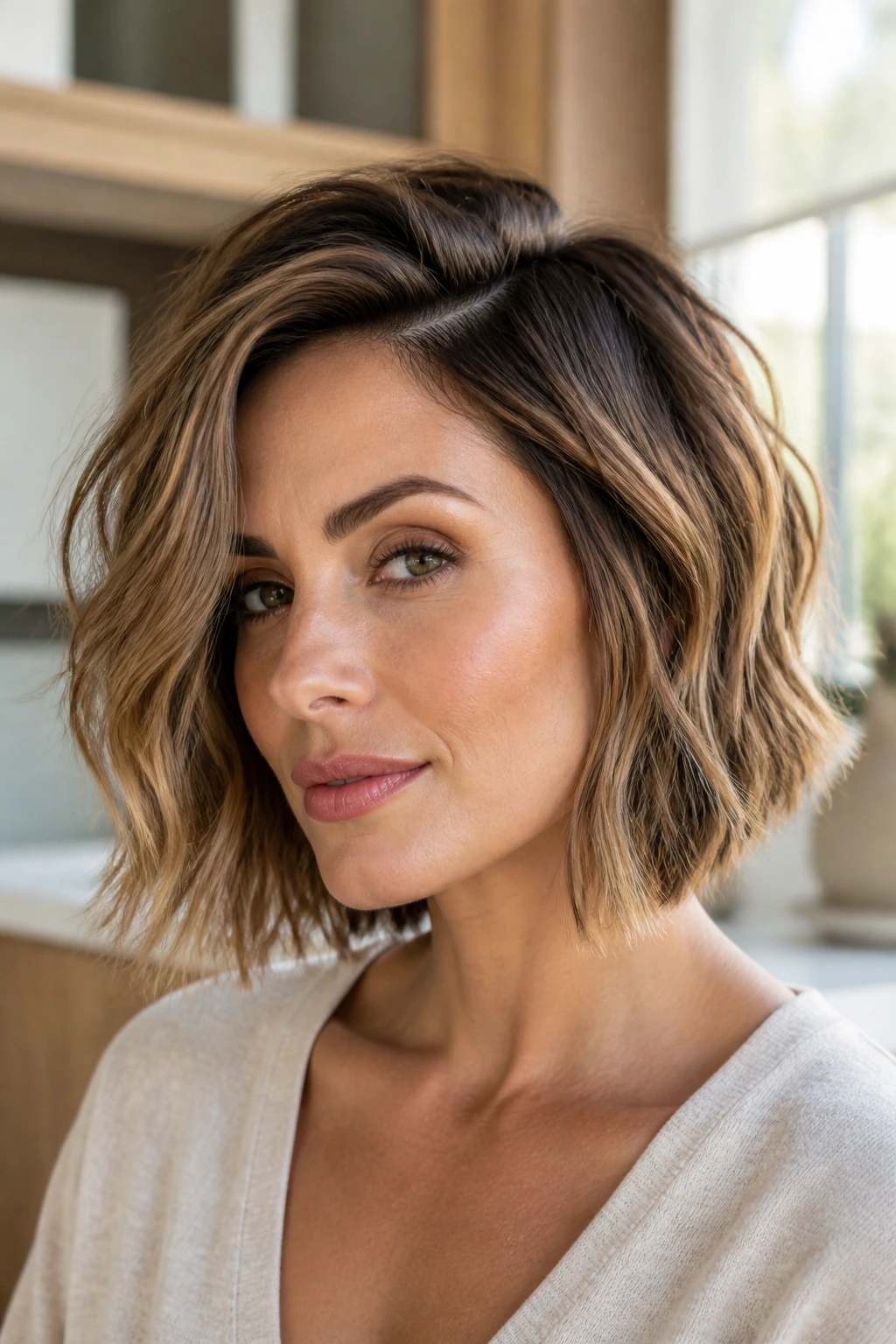
Is a lob still short hair? If it sits above the collarbone or right on it, I’d count it. Especially for wavy hair, the lob is the bridge between short and medium length, and a side part with broken-up ends keeps it from feeling heavy.
The side part changes the entire mood. It gives the front some lift, lets one side fall farther than the other, and keeps the bends from stacking into one giant wave. The broken-up ends matter too. If the perimeter is too solid, the lob can feel bulky at the shoulders. A little texture through the final inch or two keeps it moving.
This is a strong option if you’re growing out a bob or if you want something that can go from air-dried to styled with one wand pass. A few face-framing pieces bent away from the face make the shape look more deliberate. A little texture spray through the mid-lengths adds separation without making it crunchy.
It’s the most relaxed-looking style in this group, and sometimes that’s the point. Not every good short wave needs to look like it marched out of a salon chair.
22. Undone Side-Sweep Crop with Loose Fringe
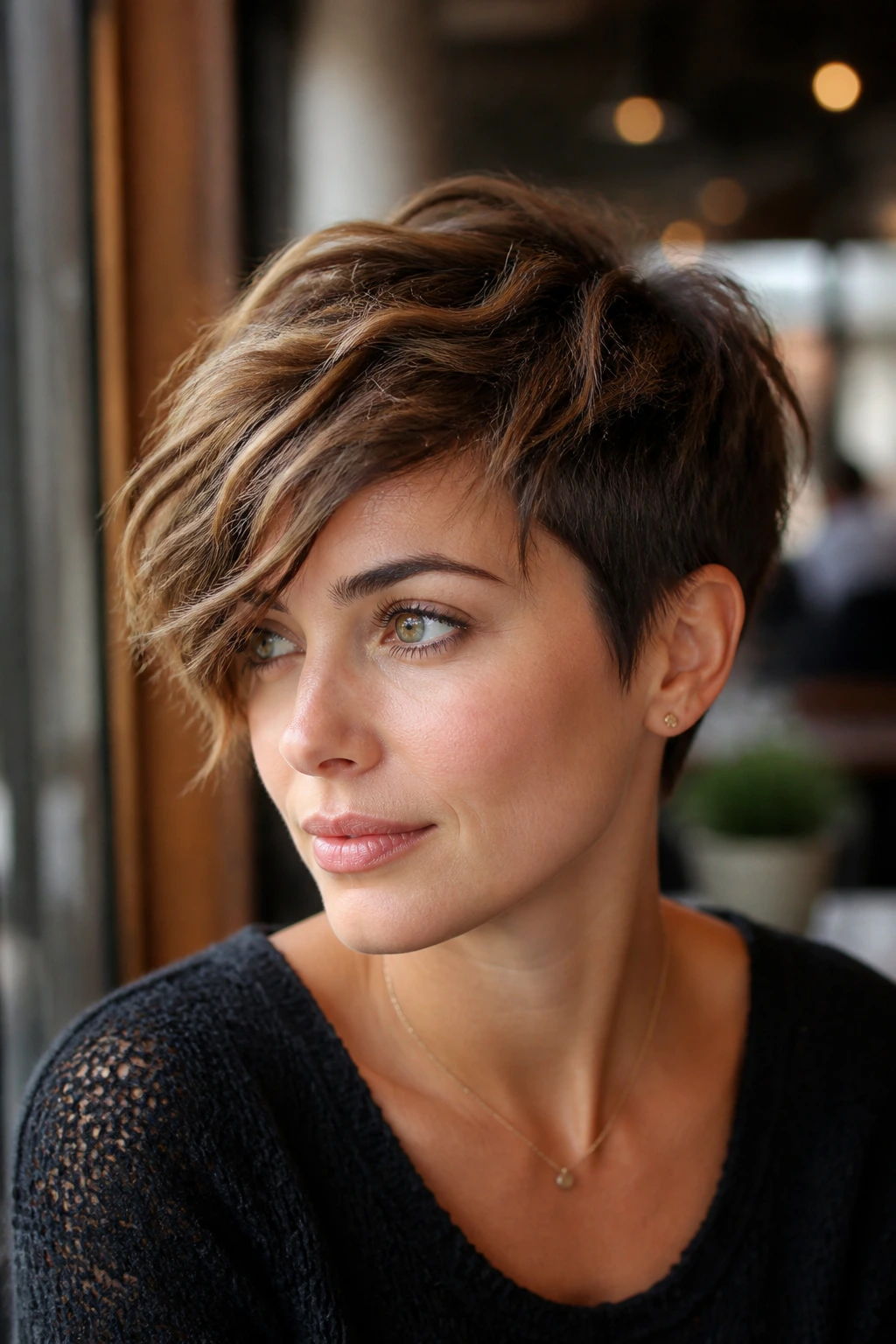
The undone side-sweep crop is what I’d call the closing argument for short wavy hair: a little asymmetry, a little fringe, and enough softness to keep the cut from looking engineered. It sits somewhere between pixie and bob, which is why it works for so many different wave patterns.
The side sweep keeps the front from becoming a hard line. The loose fringe gives the face some movement. And the cropped sides keep the whole thing crisp enough that the texture doesn’t sprawl. That balance is the whole game with short waves — enough structure to guide the hair, enough slack to let it be itself.
A pea-size amount of paste at the ends is usually enough. Push the fringe to one side, then pinch a few pieces forward so the style doesn’t feel too polished. If your hair likes to puff at the temples, smooth only that spot and leave the rest alone. Overworking the crown is how this kind of crop loses its charm.
It’s easy to wear, easy to refresh, and easy to live in. That makes it a strong final style for anyone who wants short hair that still feels soft around the edges.
Why Texture Wins on Short Hair with Wavy Hair
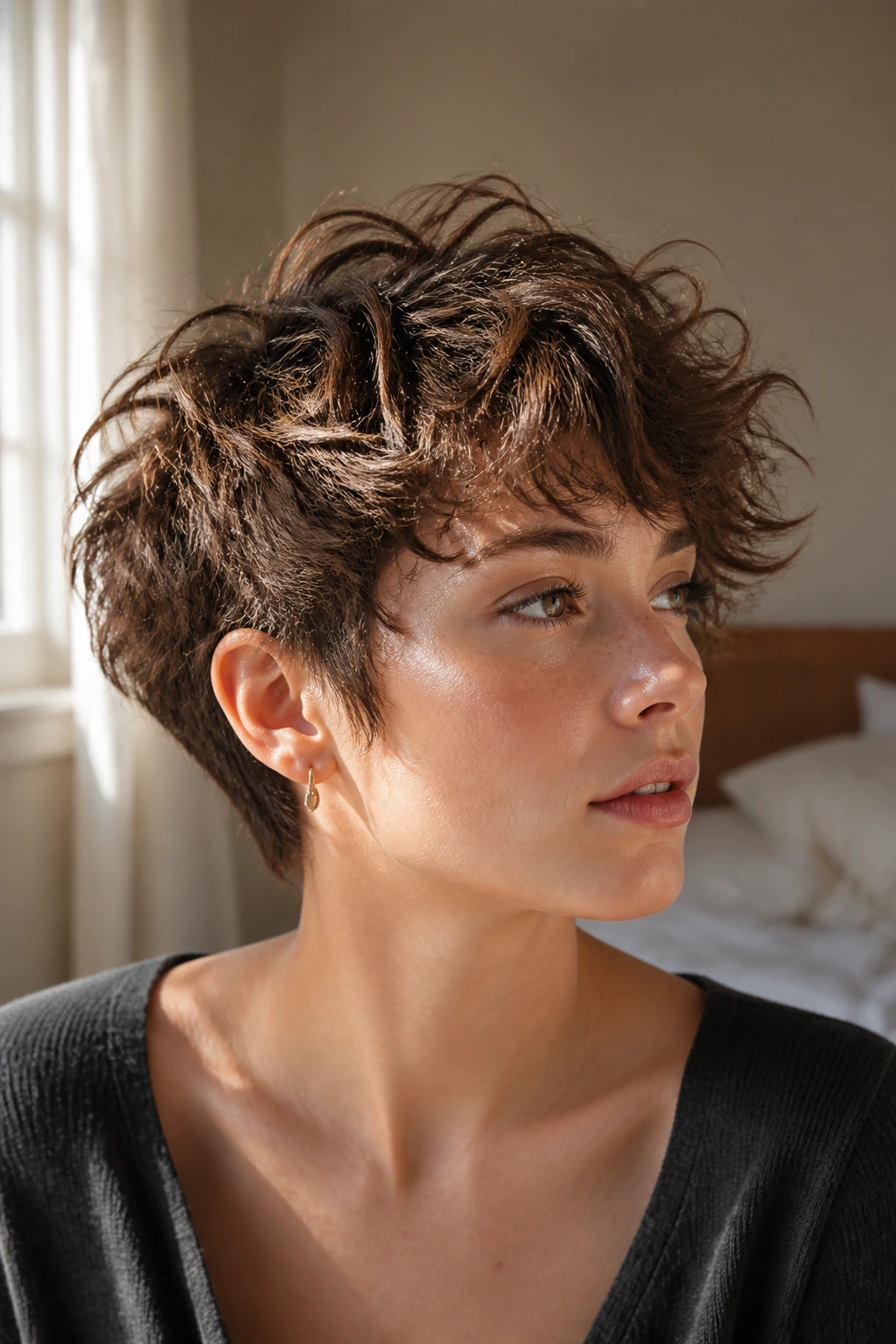
Short wavy hair behaves differently from long waves because there is less length to hide mistakes. A heavy bottom line, a blunt perimeter, or too much product near the roots shows up fast. That’s why texture matters so much here. The cut has to create movement where the hair wants to bend, and the styling has to keep that bend visible without weighing it down.
The best short textured styles usually do one of two things. They either break the outline with layers, tucks, and asymmetry, or they let the wave dry into a shape that already feels complete. Both approaches work. What does not work is pretending short waves should look like smooth straight hair with a tiny ripple at the ends. That usually ends in puffiness at the sides and a flat crown.
A clean interior shape helps too. The wave should be able to settle without stacking into a shelf. That’s why a good bob cut can feel softer than a sloppy one, even if both are the same length on paper. The difference is in how the weight is removed.
And yes, some days your waves will decide to go their own way. That’s normal. The styles above are built to survive that mood without looking unfinished.
Essential Tools for These Styles
- Lightweight mousse or foam: Best for root lift and soft hold on air-dried and diffused styles.
- Texturizing spray: Adds separation to bobs, pixies, and layered crops without making them greasy.
- Heat protectant spray: Use it before any wand, flat iron, or blow-dry pass.
- Blow dryer with diffuser: Helpful for keeping the wave pattern intact while drying the crown and ends.
- Fine-tooth comb: Necessary for slicked-back looks and finger waves.
- Wide-tooth comb: Good for detangling damp hair without pulling the wave apart.
- Duckbill clips: Useful for pinning finger waves, setting curls, or holding sections while they cool.
- Bobby pins and mini elastics: The backbone of tucks, braids, and half-up styles.
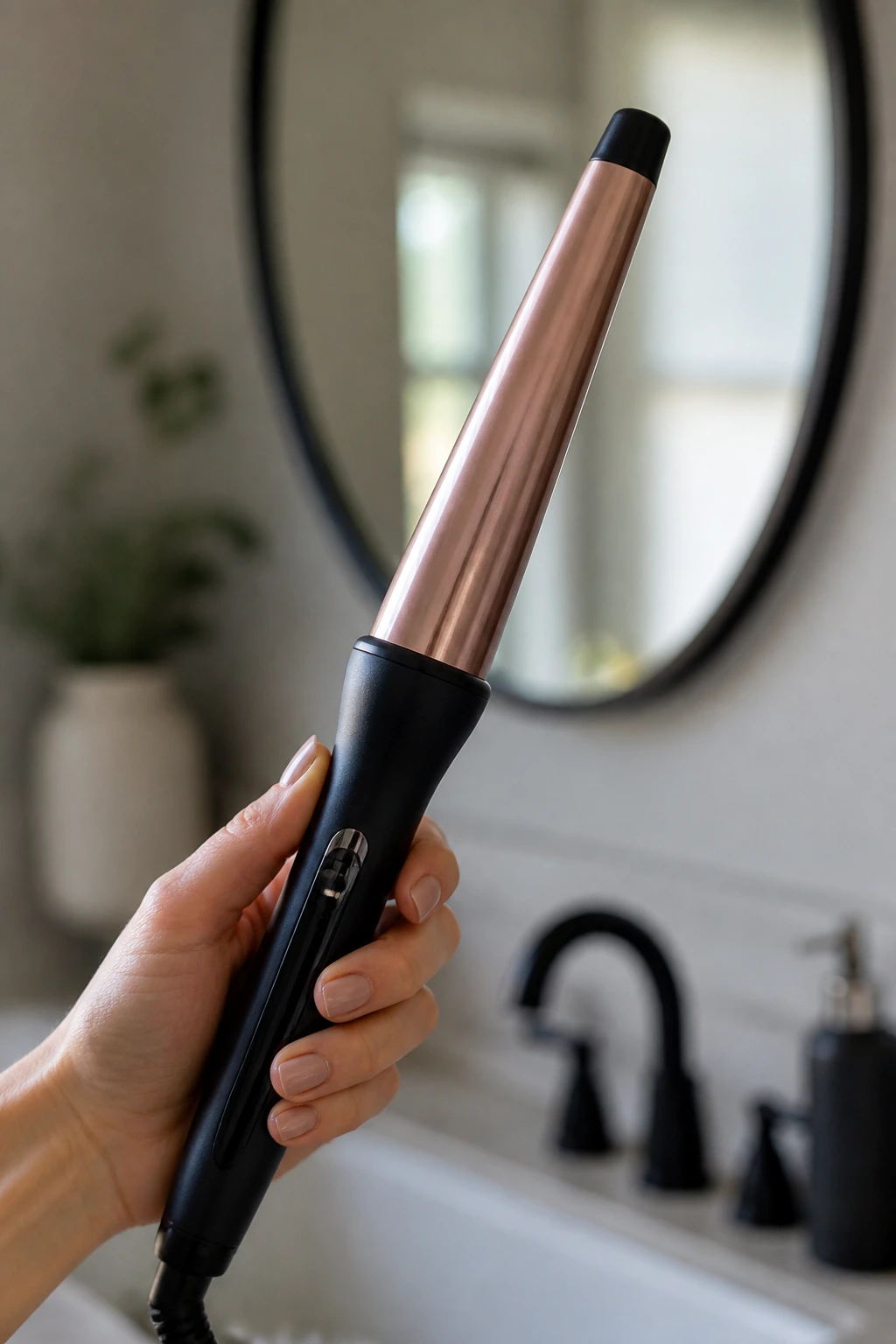
- 1-inch curling wand or iron: A good all-purpose size for short wavy hair; smaller barrels can get awkward, larger ones can look too loose.
- Round brush with flexible bristles: Helpful if you want a curled-under bob or a smoothed fringe.
- Satin scarf or pillowcase: Keeps day-two texture from getting smashed flat overnight.
- Matte paste or flexible-hold cream: Best for piecey ends, pixies, and faux hawks.
How to Pick the Right Products for Short Wavy Hair
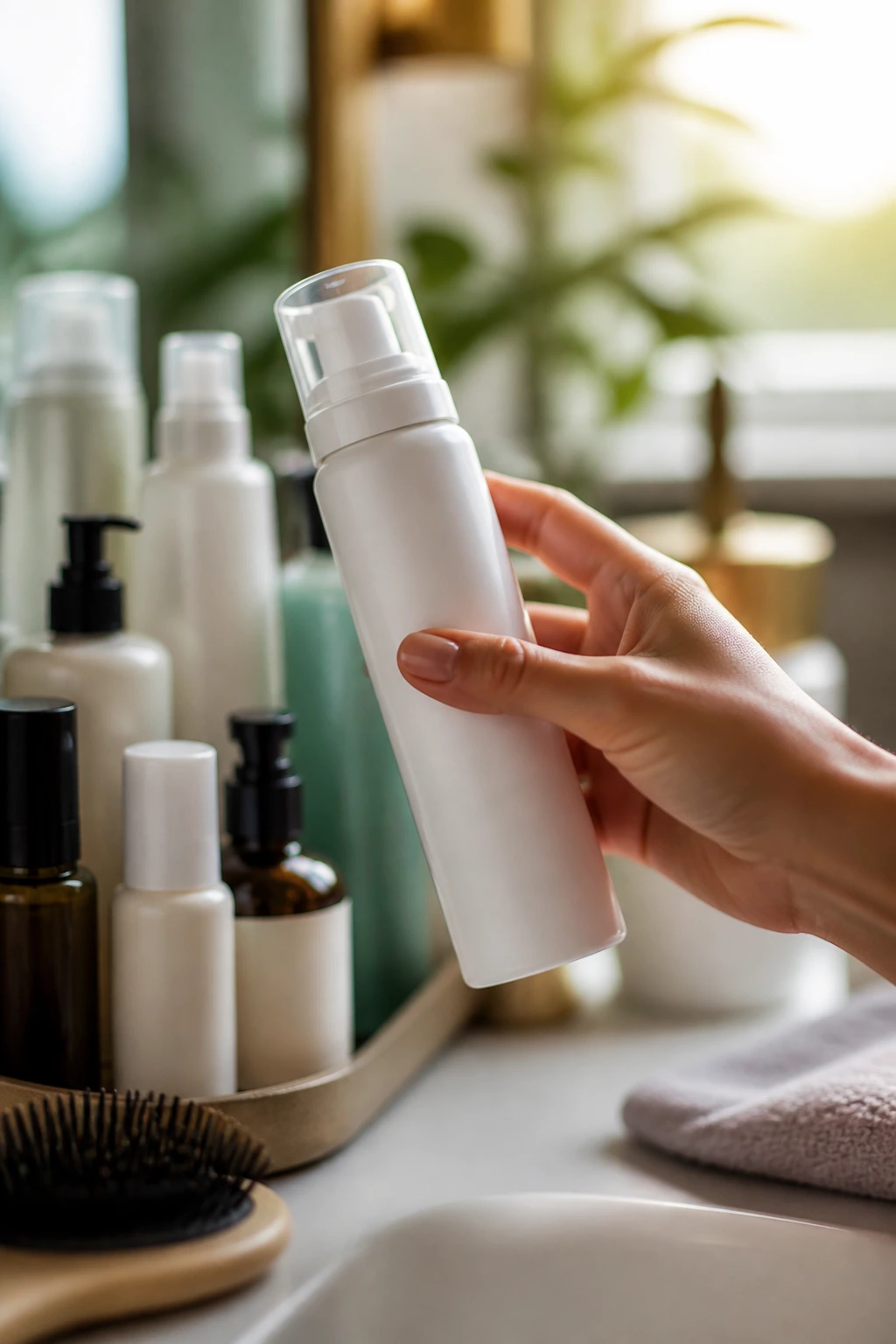
The biggest mistake people make is shopping by promise instead of by hold. A jar can say “curl defining” and still behave like a heavy cream that flattens fine waves. Read the texture first. For short hair with wavy hair, lightweight mousse and foam are usually the safest starting point because they add lift without coating the hair.
If your waves are fine or easily weighed down, look for products that say flexible or medium hold. Rich butters and thick creams can work, but only in small amounts and usually from ear level down. If your hair is coarse, porous, or frizz-prone, a cream-plus-gel combo often works better than cream alone, because the gel helps lock the shape before humidity gets to it.
Heat tools need a decent heat protectant, and not every spray is equal. Some dry down sticky, which can be useful for slicked styles but annoying on loose waves. If you use a wand often, choose one that doesn’t leave the hair tacky before you style. That tacky feeling can make short hair grab in the wrong places.
For dry shampoo and texture spray, go lighter than you think at first. Short hair gets overloaded fast. Two quick sprays, a shake with your fingers, and a minute to settle usually beats a full cloud that leaves white dust near the part.
How to Wear These Styles

Presentation: Keep one area clean and one area soft. A tucked side, a lifted crown, or a loose fringe gives short wavy hair shape the way a frame gives a photo shape.
Accompaniments: Small hoops, a barrette, a headband, a claw clip, or a scarf tie all work better than oversized accessories that fight the cut. Short hair likes details, not clutter.
Portions: For chin-length cuts, concentrate product from the ears down and keep the roots lighter. For pixies, move the product to the crown and fringe. For lobs, split the styling between top and mid-lengths so the wave does not collapse at one end.
Beverage Pairing: A black coffee, iced tea, or a very plain sparkling water fits the mood here — clean, unfussy, and not trying to outshine the hair.
Additional Tips and Flavor Boosters
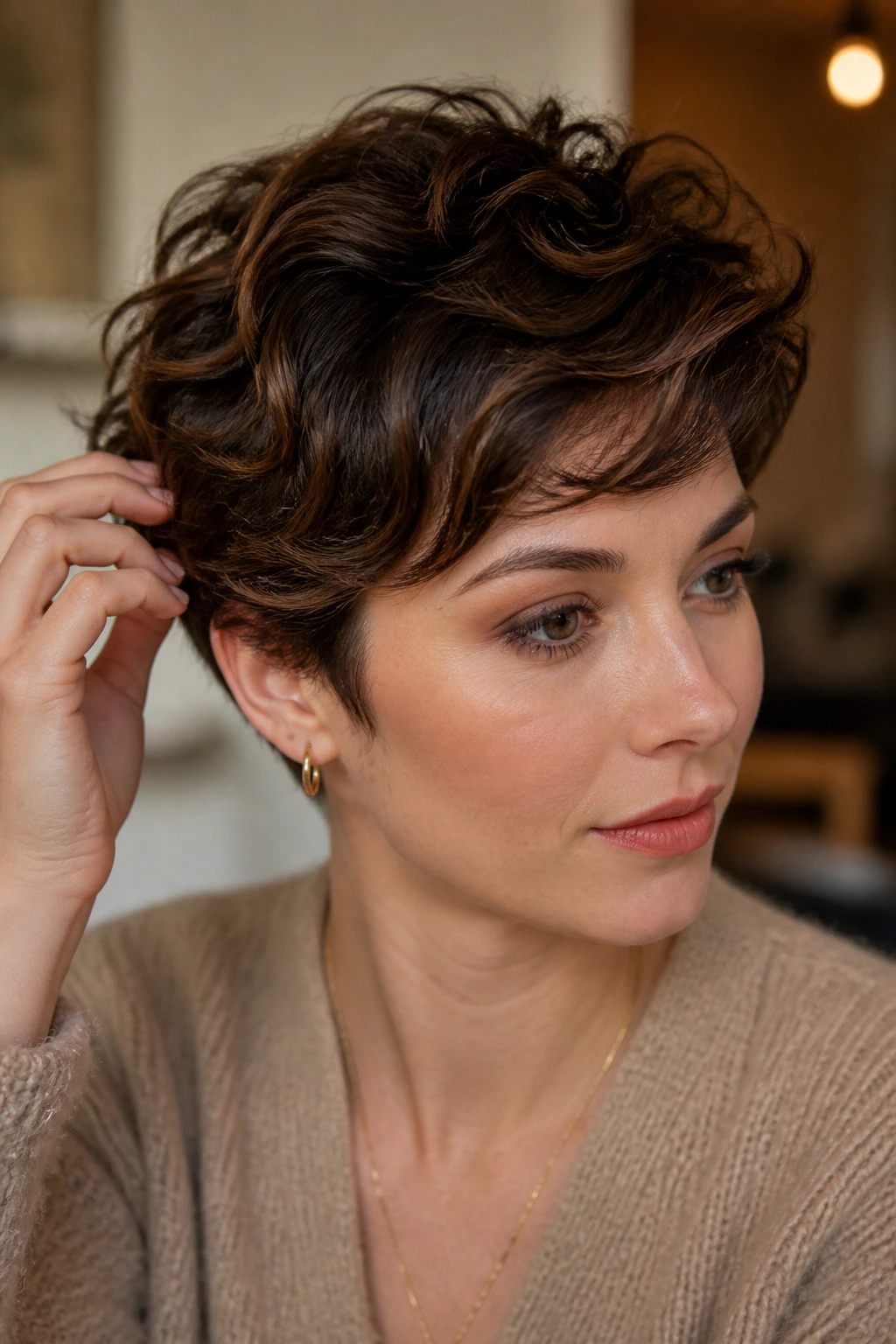
Texture Enhancement: Scrunch product into the outer two inches of the hair, then stop. If you keep rubbing, the wave separates into fuzz and the style loses its clean outline.
Customization: Move the part a half-inch deeper when one side is too flat, or tuck just the back of one side behind the ear when the jawline needs more space. Tiny shifts matter more than giant ones on short hair.
Serving Suggestions: Add a slim headband, a single barrette at the temple, or a scarf at the nape. Short cuts benefit from one deliberate accent instead of several competing ones.
Make-It-Yours: Fine hair usually wants foam, lift, and a little dry texture powder. Thick waves usually want a stronger paste at the ends and a cut with more interior release. If your hair is somewhere in between, start light and add more only where the shape needs it.
Make-Ahead, Storage, and Refreshing Tips

Short wavy hair is one of the few things that can improve overnight if you treat it right. A loose pin, a satin pillowcase, or a scarf can keep a style alive for 1 to 3 days, depending on how much hold you used and how much you moved around in your sleep. Slicked-back styles usually last the shortest. Pin curls, braids, and a half-up knot can survive the longest.
If you want to refresh the next morning, mist the hair lightly with water or a water-and-leave-in mix, then scrunch in a tiny bit of mousse or cream. Don’t soak the hair. Wetting short waves all the way through usually restarts the entire styling process, which defeats the point. A little moisture at the top and around the face is enough.
For heat-styled waves, use low heat on the pieces that went limp and leave the rest alone. A quick 30- to 60-second pass with a wand on just the front sections is often enough. If you’re re-diffusing, keep it brief — 2 to 4 minutes on low heat is usually plenty to wake up the shape.
Dry shampoo helps when the roots go flat, but use it sparingly. Two light bursts, wait 30 seconds, then massage. If you spray too much at once, you’ll get chalky buildup around the part and that dull, dusty look nobody wants.
Variations and Adaptations to Try
Fine-Hair Lift Edit: Swap heavy creams for mousse and keep the crown layers shorter. Fine waves need root support more than they need moisture, and too much product can drag the whole cut down by lunchtime.
Thick-Wave Tamer: Ask for softer internal layers and use a stronger paste only on the ends. Thick wave patterns usually need the bulk removed from inside the shape, not chopped off the outline.
Humidity-Ready Version: Pair a gel base with a light texture spray once the hair is dry. The gel holds the structure, and the spray keeps the finish from looking too hard. Touching it less helps too. That part is annoying, but true.
Office-Polished Version: Choose the ear tuck, curled-under bob, or side-sweep shapes and keep the fringe smooth. A small barrette or a neat side part can make short waves look intentional without making them stiff.
Weekend-Undone Version: Use salt spray, rough dry, and leave a few front pieces out on purpose. This is the setting where a shag, bixie, or mini knot looks best, because the mess reads as texture rather than neglect.
Grow-Out Friendly Version: Focus on cuts and styles that keep the sides neat while the top and front pieces grow. Bobs, lob hybrids, and scarf-tuck styles are especially forgiving when you’re between lengths.
Common Mistakes to Avoid

The first one is using too much cream or oil near the roots. Short hair does not have room for heavy product to disappear. The symptom is obvious: the top goes limp, the ends stay fuzzy, and the shape looks smaller than it really is. Keep richer products to the ends, or skip them entirely if your hair is fine.
Another common problem is brushing waves once they’re dry. That’s how you turn a neat bend into a halo of frizz. If you need to reshape something, use your fingers or a wide-tooth comb while the hair is still damp. After it dries, hands only.
Cut shape matters more than people want to admit. If the hair has no interior layering, the bottom can puff out and the whole head takes on a triangle shape. That’s not a product problem. That’s a cut problem, and the fix is asking for more release inside the shape.
Uniform styling can also backfire. If every front piece bends in the same direction and every side is slicked the same way, the style starts to look stiff. Short wavy hair usually looks better with one side cleaner, a few pieces left looser, or an off-center part that breaks the symmetry.
Finally, don’t sleep on overnight care. A satin pillowcase or scarf is not a luxury here. It’s the difference between waking up with usable texture and waking up with a crushed crown and a missing side. That’s a very small investment for a very real payoff.
Frequently Asked Questions
What length counts as short for these styles?
Usually anything from a pixie through a chin-length bob counts comfortably, and some collarbone-length lobs fit too if the shape is still compact. The real question is whether the wave can be directed without getting lost in too much length.
Is mousse better than cream for short wavy hair?
Most of the time, yes. Mousse gives lift and separation without making the roots heavy, which short hair usually needs more than moisture. Cream is still useful on dry ends or coarse waves, but a small amount goes a long way.
Can I wear bangs with wavy short hair?
Yes, but softer is safer. Keep them lighter, a little longer, and less blunt so they can bend with the wave instead of springing straight up or sitting in one stiff line.
How do I stop my short waves from puffing out on the sides?
Ask for more interior layering and keep heavy product away from the root area. Styling-wise, a side part, ear tuck, or curl-under finish helps draw the outline inward.
Do I need a diffuser for these styles?
Not for all of them, but it helps with air-dried bobs, pixies, shags, and anything that needs root lift without chaos. If you use it, keep the airflow low and stop before the hair is fully rough.
What if one side of my waves is smoother than the other?
That’s normal. Use the smoother side as the anchor and either finger-twist it, add a quick wand bend, or tuck it behind the ear so the difference feels intentional instead of uneven.
How often should I refresh short wavy hair?
Most styles need a light refresh every day or two, especially if you sleep on them. Use water sparingly, revive the root with a little dry shampoo, and only reheat the pieces that lost shape.
Can these styles work without heat?
Yes. Air-dried French bobs, pin curls, braids, headband tucks, and claw-clip twists all work well without a hot tool. The main thing is to let the hair set fully before you touch it too much.
The Shape Short Waves Want
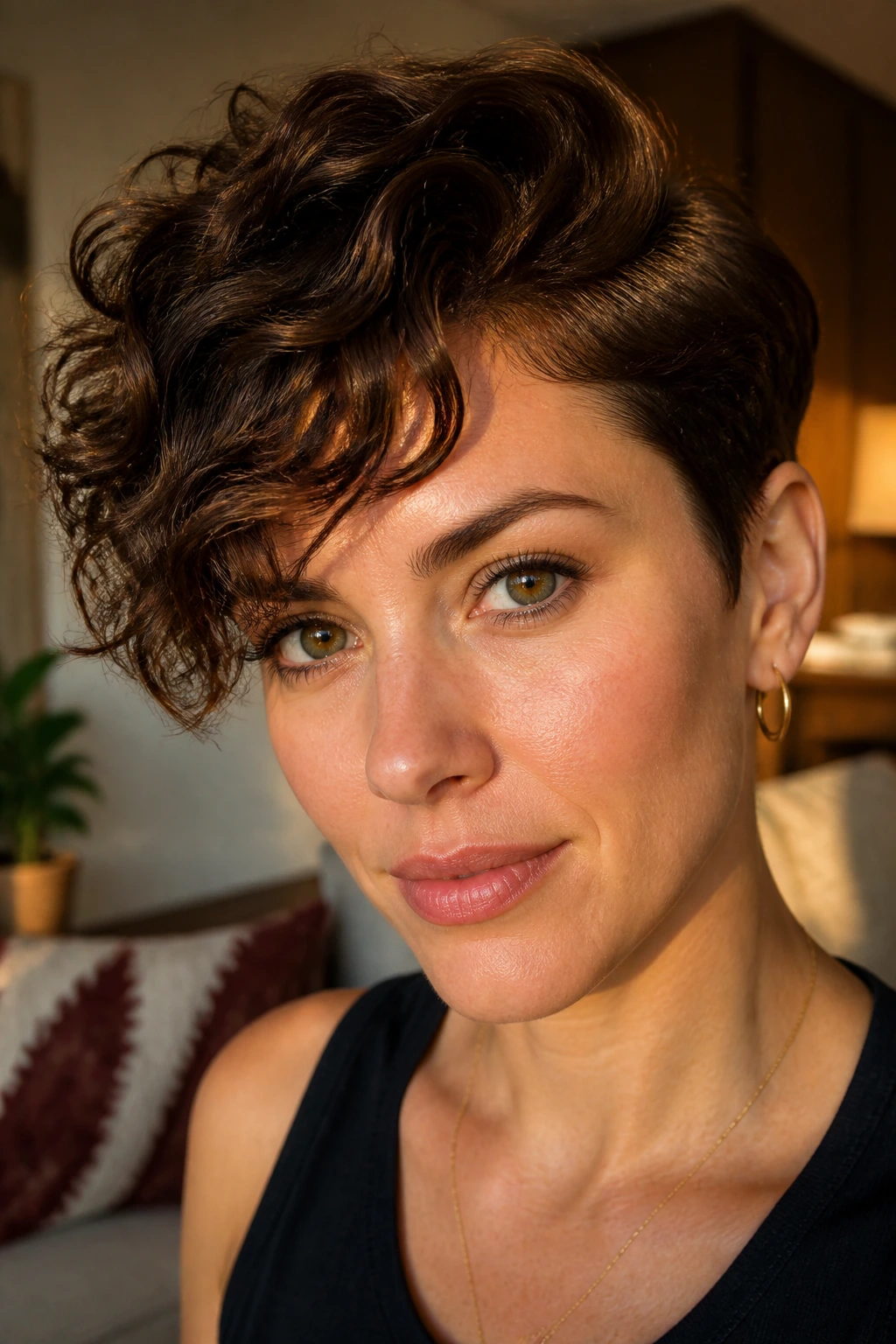
Short wavy hair looks its best when the cut does some of the talking. A clean bob edge, a lifted pixie, a side sweep, or a soft tuck can change the whole mood of the hair without asking it to become something else. That’s the real trick here. Not control. Direction.
The styles that last are the ones that respect the bend pattern instead of sanding it away. Some days that means a neat ear tuck and a little paste. Other days it means a half-up knot, a scarf at the nape, or a rough air-dry with a better part. Once you stop asking short waves to act like straight hair, they get much easier to live with.
Pick one shape, wear it for a few days, and notice where your hair naturally wants to fall. That’s the part worth keeping, and it’s usually where the next good haircut starts.