



A long inverted bob with layers for round faces works because it changes where the eye stops. The back sits shorter and lighter, the front drops past the cheeks, and the whole cut draws a diagonal line instead of a hard horizontal one. That’s the trick. Not magic. Geometry.
The cut only misbehaves when the layers are placed in the wrong spot. Too much volume at the cheekbone makes the face look wider. A blunt end that lands right at the jaw can do the same thing. So the best versions are a little picky: longer in front, controlled through the crown, and layered in a way that moves without puffing out.
That’s why this shape keeps getting recycled in salons. It can look sharp, soft, airy, polished, shaggy, or beachy, and the bones of the haircut still do the work. If you like a style that can be air-dried on a lazy morning or blown smooth for dinner, there’s a version here that will make sense.
Why These Long Inverted Bobs Work So Well on Round Faces
-
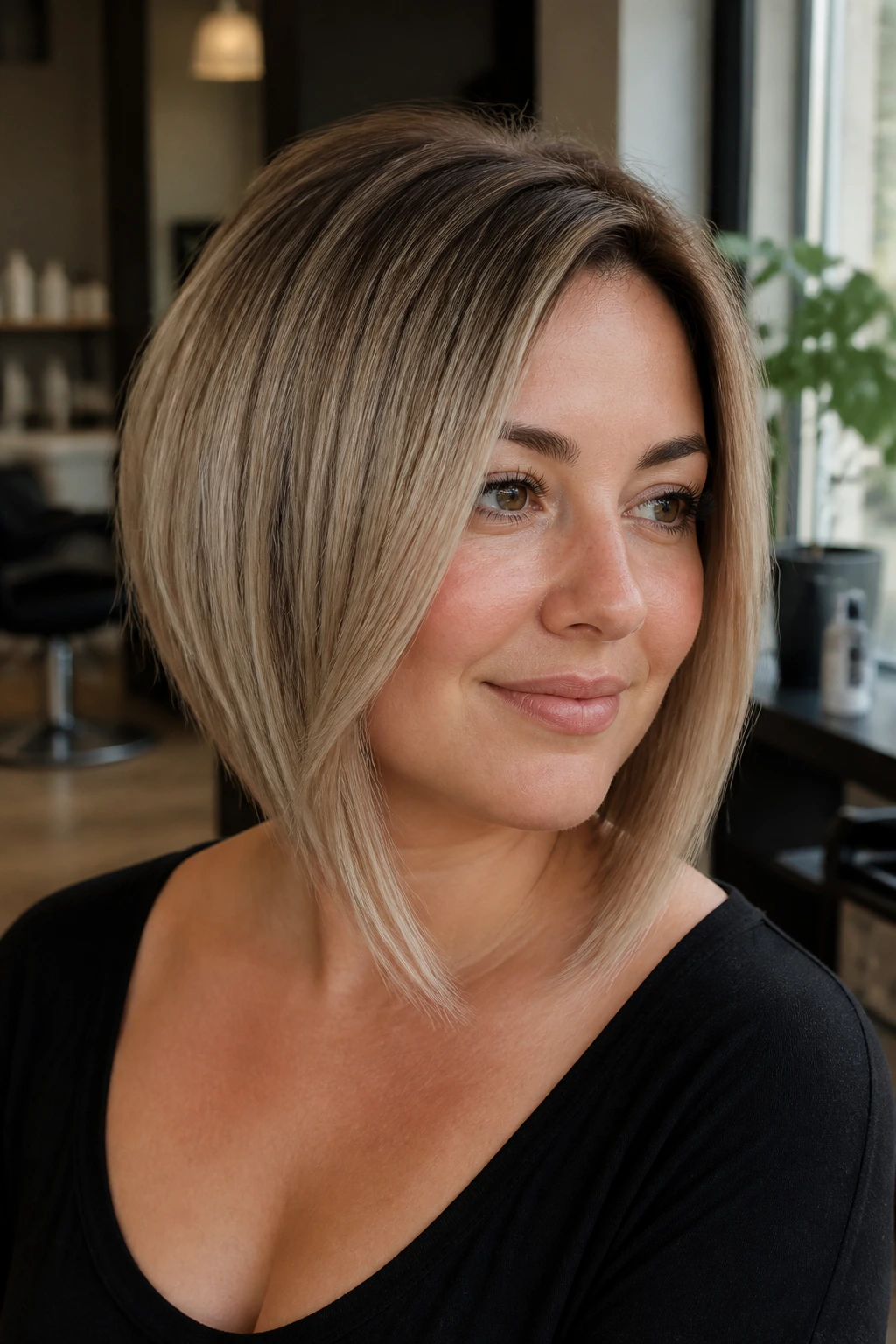
Diagonal Front Pieces: The longest pieces fall below the cheekline, which pulls attention downward and keeps the face from reading wider than it is.
-
Crown Lift Matters: A little height at the back and top stops the haircut from sitting flat, and flat hair is what makes round faces look boxier than they need to.
-
Layers Need to Be Placed Low: The best layers start below the cheekbone or get hidden inside the shape, so you get movement without a puffed-out halo.
-
The Length Buys You Options: A long inverted bob can hit the collarbone, upper chest, or just skim the shoulders, which makes it easier to shape around your features.
-
It Grows Out Better Than a Short Bob: When the front is already longer, the style keeps its angle for weeks instead of turning into a lump at the jaw by the next haircut.
1. Collarbone-Gliding Angled Lob
This is the version I’d hand to someone who wants the safest, cleanest long inverted bob for a round face. The front pieces land at the collarbone, the back stays tucked and neat at the nape, and the angle is visible even when the hair is only half-styled. It’s a strong shape without being sharp enough to feel severe.
The reason it works so well is simple: the collarbone is low enough to stretch the face visually, but not so long that the bob loses its identity. Ask for layers that begin below the cheekbone and blend into the front, not around the sides of the face. If the stylist keeps the weight line smooth, the haircut moves instead of flaring out.
A little bend at the ends helps. A 1.25-inch round brush or curling iron gives the front a soft curve that keeps the line elegant. Skip over-flipping the ends near the cheeks; that’s where the shape can start to feel puffy fast.
2. Soft Stack with Curtain Bangs
Want softness around the face without giving up structure? This is the one. Curtain bangs split at the center, skim the temples, and open the face while the stacked back keeps the cut from collapsing into a flat lob.
The key is restraint. Curtain bangs should be cheekbone-adjacent, not cheekbone-heavy. If they sit too low and too thick, they can cut the face in half and make the roundness louder. Done right, though, they create a tidy vertical frame that works beautifully with the longer front pieces.
I like this version on medium-density hair because the stack gives a little lift without turning the back into a wedge. Blow-dry the bangs away from the face with a small round brush, then finish the front with a slight inward curve. That tiny bend makes the whole haircut feel intentional.
3. Deep Side-Part Sleek Lob
A deep side part does more for a round face than people think. It breaks symmetry, lifts the crown on one side, and sends the front pieces diagonally across the face instead of straight down the cheeks. The result is cleaner, leaner, and a little more dramatic.
This version is best when the hair is smooth. Not pin-straight and lifeless—smooth with movement at the ends. Ask for long layers that preserve the angle from back to front, then style with a round brush or a flat iron bent just slightly under at the tips. If the ends kick out too much, the cut loses its line.
The side part also helps if your face is widest through the cheeks. It creates a visual break right where a center part can sometimes feel too honest. That’s not a flaw in the face. It’s just the difference between a haircut that sits there and one that does some work.
4. Razor-Textured Waves
Razor texture changes the ends in a way scissors can’t quite fake. The perimeter softens, the layers look airy, and loose waves pick up the movement without turning the cut into a cloud. On a round face, that lighter finish keeps the bob from feeling heavy at the sides.
This version needs a careful hand. Too much razor work on frizzy hair can make the ends go fuzzy, and then the roundness you were trying to avoid comes back through the sides. The sweet spot is texture at the bottom and internal movement through the mid-lengths, not shredded layers everywhere.
Use a wave iron or a 1-inch curling iron, but leave the last inch of each section straight. That little straight tail keeps the angle visible. If every bend starts at the root, the haircut can widen out. If the waves live lower, the face stays long and the shape stays readable.
5. Cheekbone-Opening Face Frame
This one is all about where the shortest pieces land. Not on the cheeks. Not at the jaw. Just below them, where the face starts to narrow. That slight drop makes the haircut open up the middle of the face instead of cutting across it.
Think of it as a long frame, not a wall of layers. The front pieces should start around the temple or just under it, then taper down past the jaw in a smooth line. When that line is too abrupt, the cut gets choppy fast. When it’s soft, it makes cheek fullness look balanced rather than emphasized.
A blowout sells this style better than a rough dry. Pull the front forward first, then angle the brush slightly inward near the collarbone. It creates a neat curve that looks polished without losing the length that a round face needs.
6. Side-Swept Fringe Lob
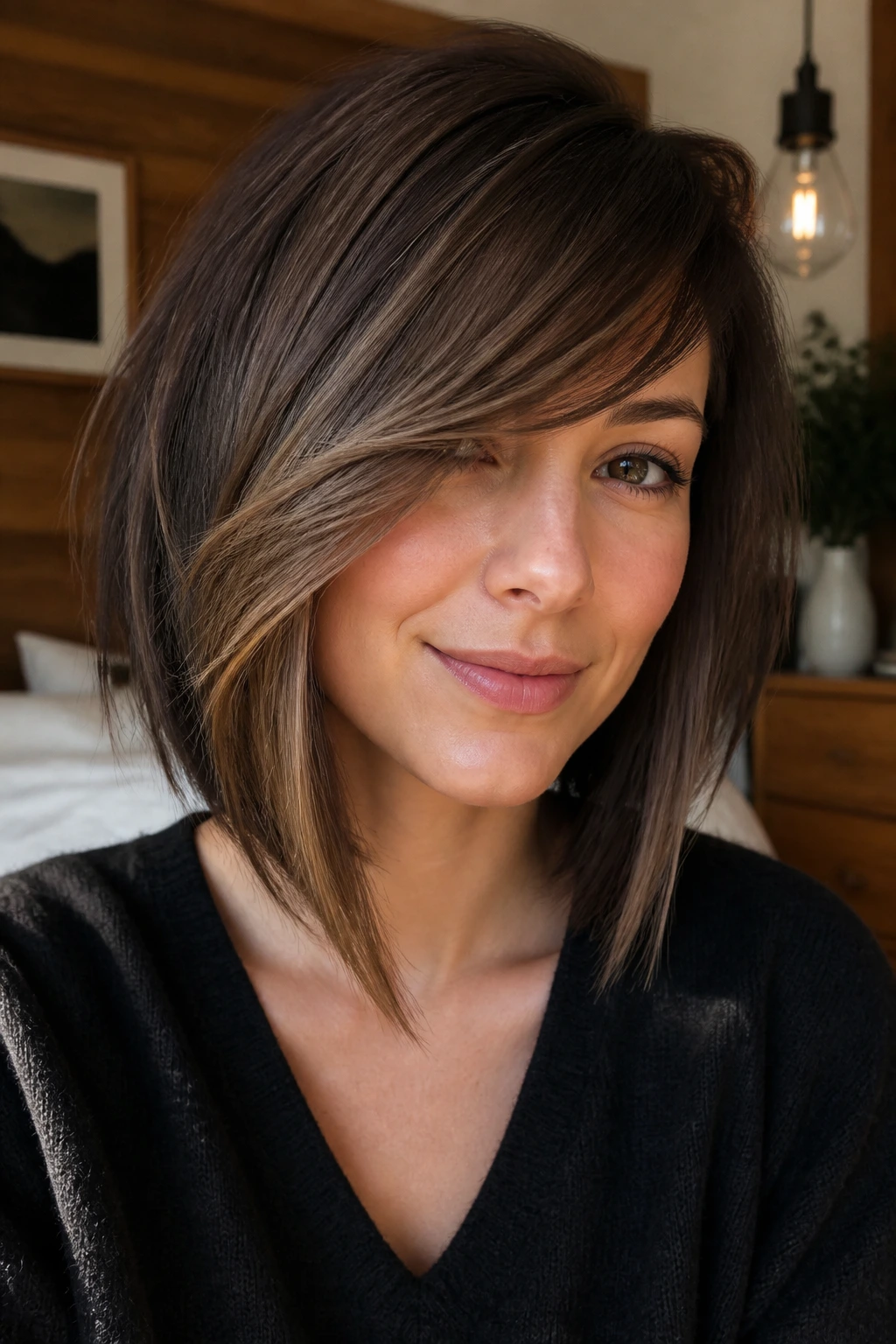
A side-swept fringe is a smart move when you want some forehead coverage without locking the face into a blunt line. The sweep adds a diagonal across the upper half of the face, which helps interrupt the circular shape of the cheeks below.
This cut works especially well if your hair naturally falls forward. The fringe can blend into the longer front pieces instead of sitting like a separate piece. That blend matters. You do not want a heavy, dense bang that chops the face in half and lands exactly at the widest point.
The styling trick is low heat and patience. Dry the fringe in the direction you want it to sit, then let it cool before touching it. If you keep fussing with it while it’s warm, the piece separates in the wrong way and you end up chasing it all day.
7. Thick-Hair Debulked Inverted Bob
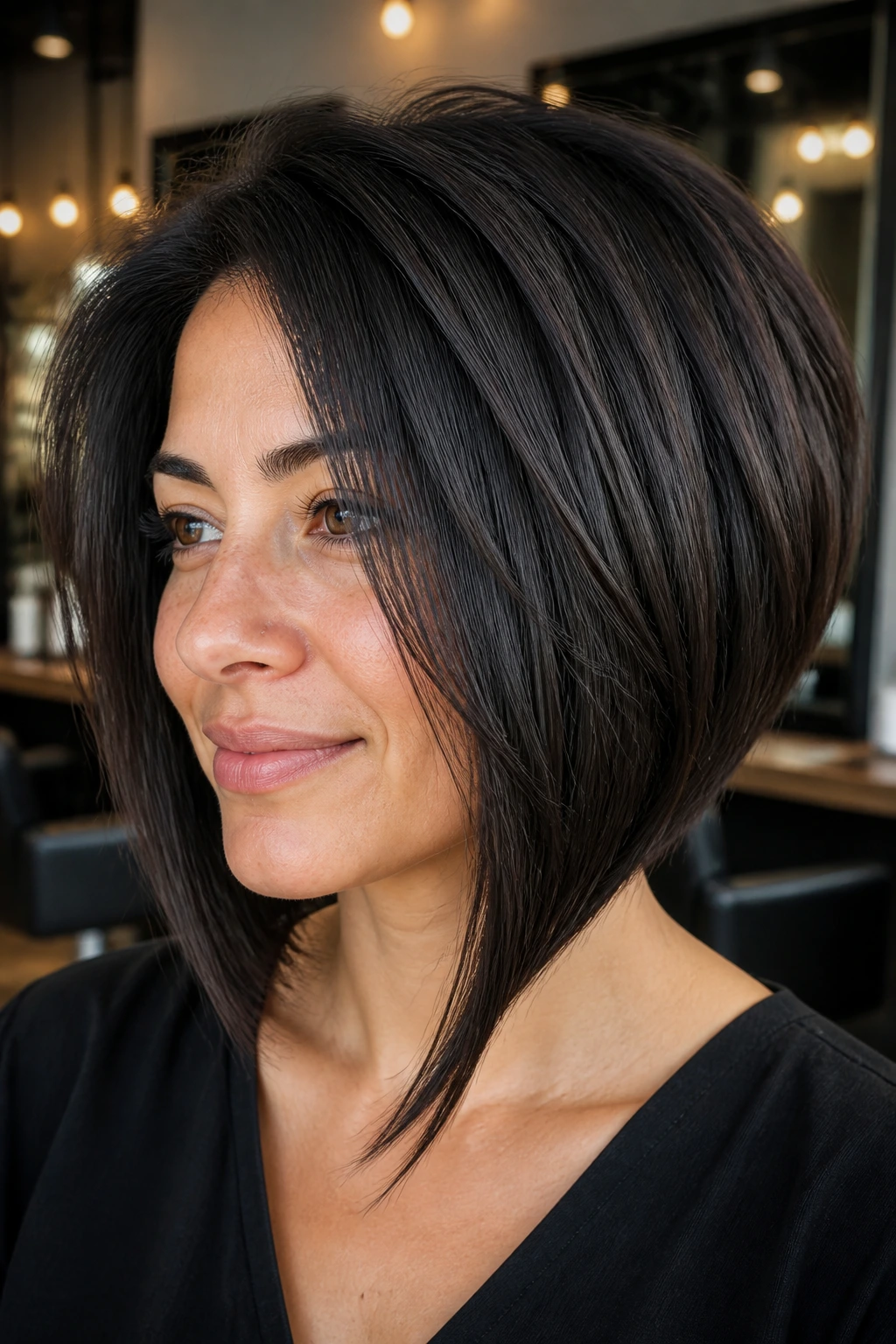
Thick hair needs a different kind of control. Too much layering can make it explode. Too little can make the back sit like a shelf. The best thick-hair inverted bob removes bulk from the inside, keeps the outer line smooth, and leaves enough weight in the front to hold the angle.
Here’s what I’d ask for:
- Internal debulking: weight removal hidden beneath the surface, not chopped into the outer edge.
- Long front pieces: enough length to sit below the jaw so the haircut doesn’t widen the face.
- A clean perimeter: the bottom line should stay strong so the shape doesn’t turn fuzzy.
This version usually needs a good blow-dry with a nozzle and a big round brush. If the hair dries on its own, the bulk can sit exactly where you don’t want it. A quick pass with a light smoothing cream at the mid-lengths helps the haircut stay sleek without feeling stiff.
8. Fine-Hair Crown-Lift Lob
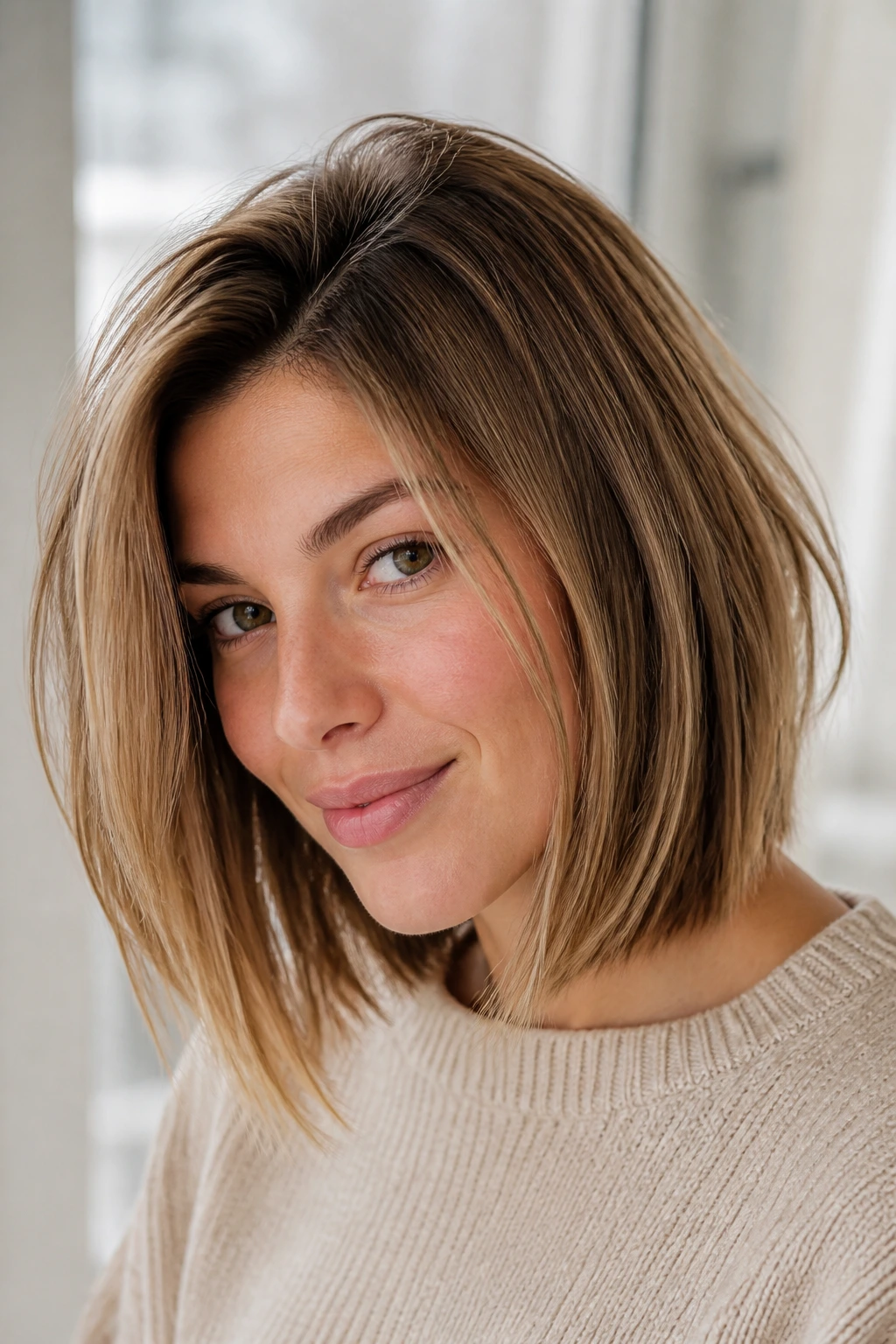
Fine hair loves a long inverted bob when the layers are subtle. Not invisible because you’re afraid of them—subtle because too many short layers will make the ends look thin and see-through. The better approach is a clean shape with just enough lift at the crown to keep the cut off the head.
A root-lifting mousse at the scalp and a light blow-dry at the crown can do more than a dozen choppy layers. That little bit of height gives the face a longer line. It also stops the haircut from clinging to the cheeks, which is where fine hair can make a round face look fuller.
I’d keep the ends blunt-ish on this one. A strong line at the bottom makes the hair look denser, and density is the whole game with fine strands. If you want movement, borrow it from styling, not from overcutting the perimeter.
9. Curly Inverted Bob with Long Front Pieces
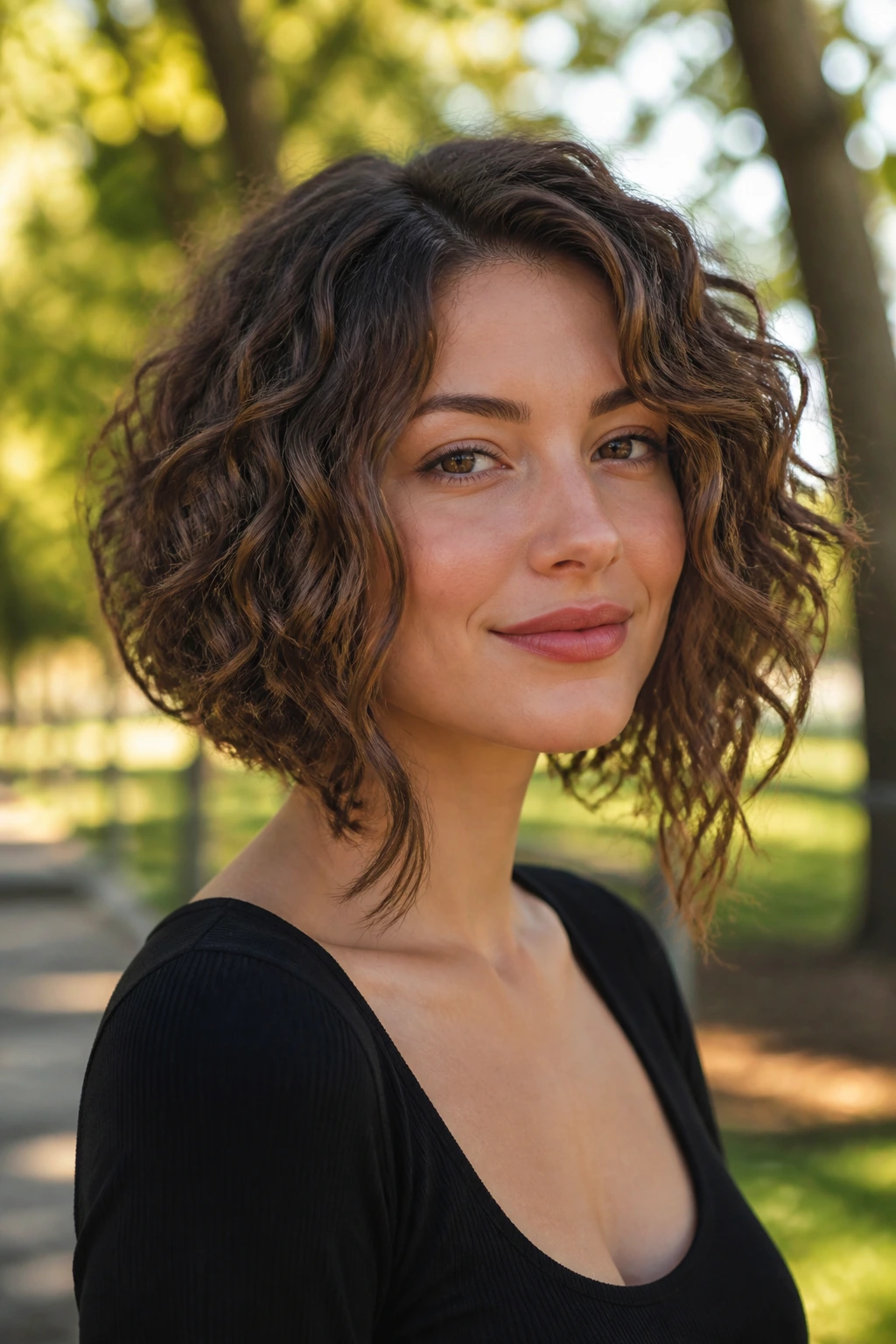
Curly hair changes the math. The front pieces spring up, the back shortens fast, and suddenly a cut that looked collarbone length in the chair is sitting at chin level after it dries. That’s why the long front has to be truly long—sometimes a touch longer than feels safe while wet.
The shape works when the curl pattern is respected. Ask for the haircut to be adjusted around the way your curls actually fall, not just how they look soaked. A round face needs the curl volume to sit above and below the cheeks, not all at cheek level. That means a soft stack, longer front, and enough internal layering to let the curls stack on themselves instead of fanning outward.
Diffusing helps. So does leaving some sections a little less perfect. When curls are forced into identical ringlets, the haircut can start looking rounder than it is. A bit of variation keeps the face framed, not boxed in.
10. Straight-Sleek A-Line Lob
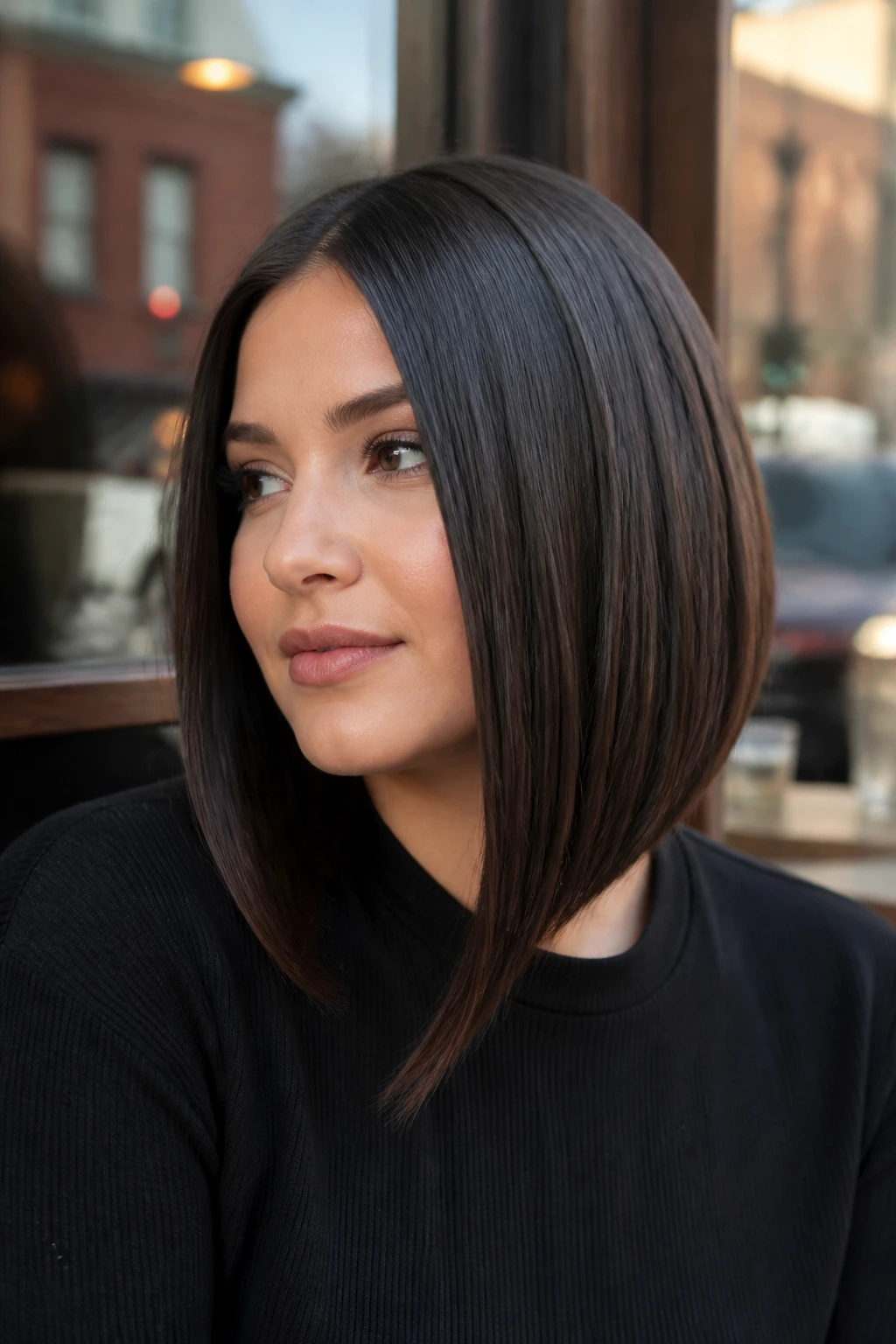
A sharp A-line can be a beautiful thing on a round face, as long as the front is long enough to earn the angle. The clean perimeter does the heavy lifting here. It draws one smooth line from nape to collarbone and leaves the face with a crisp edge to follow.
This is not the cut for someone who hates maintenance. Straight hair shows everything, which is both the charm and the problem. The ends need to be tidy, the part needs to be deliberate, and the front pieces should be polished enough to hold the diagonal. If the line gets muddy, the style loses its shape fast.
Use a flat iron only after the hair is fully dry. A tiny bend at the ends is enough. I’d avoid curling the front under too much, because that can curl the line back toward the cheeks. Keep it controlled. Clean. Slightly severe, even. That edge can be flattering in a way softer cuts never quite are.
11. Tousled Mid-Length Bob with Piecey Layers
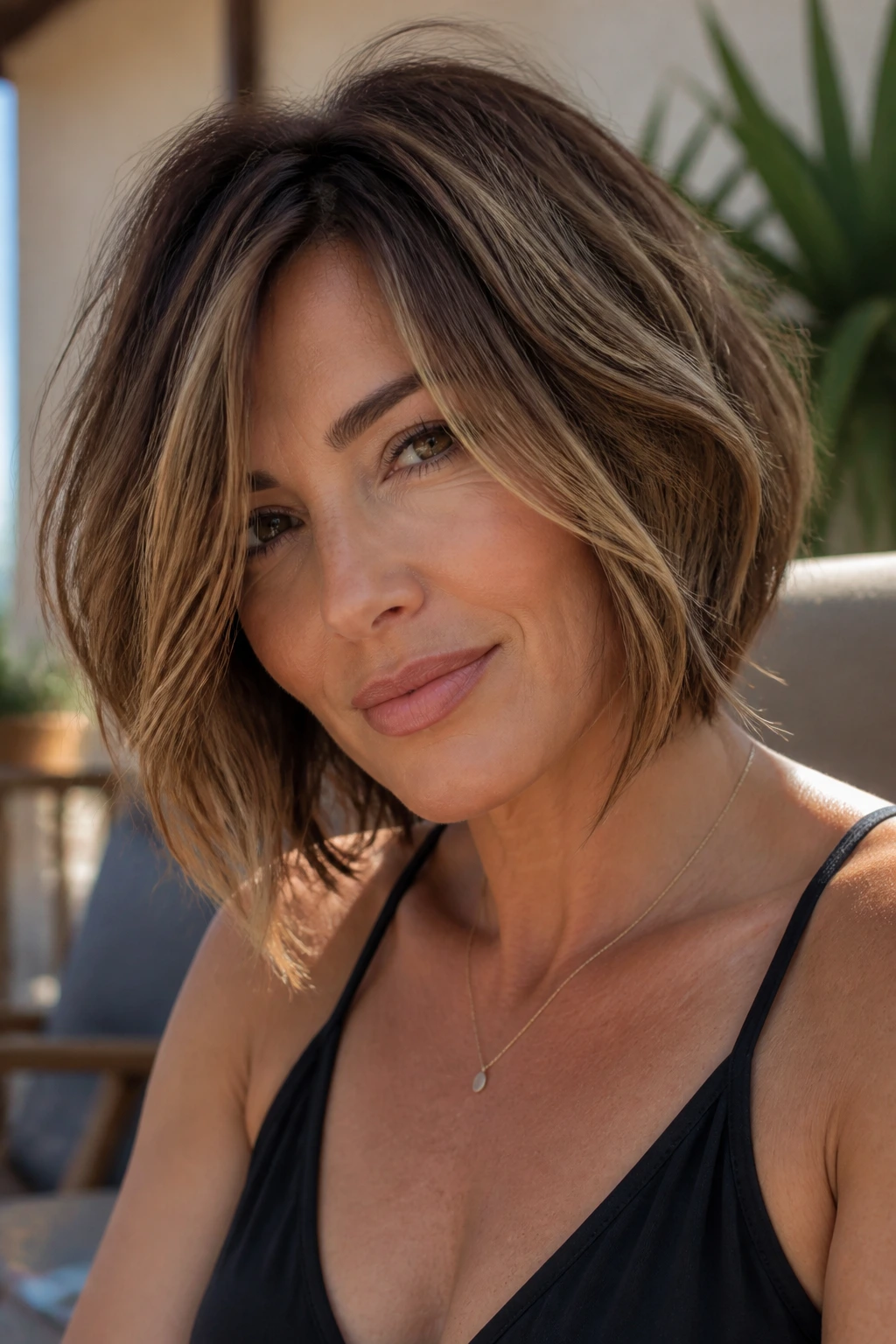
This version has a little more attitude. The ends are broken up just enough to look lived-in, the layers are piecey instead of fluffy, and the overall shape still points downward. It’s casual, not careless.
The face-slimming part comes from where the movement lives. If the texture stays low and the crown has a bit of lift, the eye moves in a vertical sweep. If the texture gets too wide at the sides, the roundness shows up fast. That’s the constant balancing act with tousled hair: keep the mess below the cheekbones, not around them.
A sea-salt spray can work, but I prefer a light mousse through damp hair followed by a quick scrunch and a few bends with a curling wand. The goal is irregular movement, not perfect waves. Perfect waves are too neat for this cut. They make it read as a shape, and shapes can be stubborn.
12. Bottleneck Bang Inverted Lob
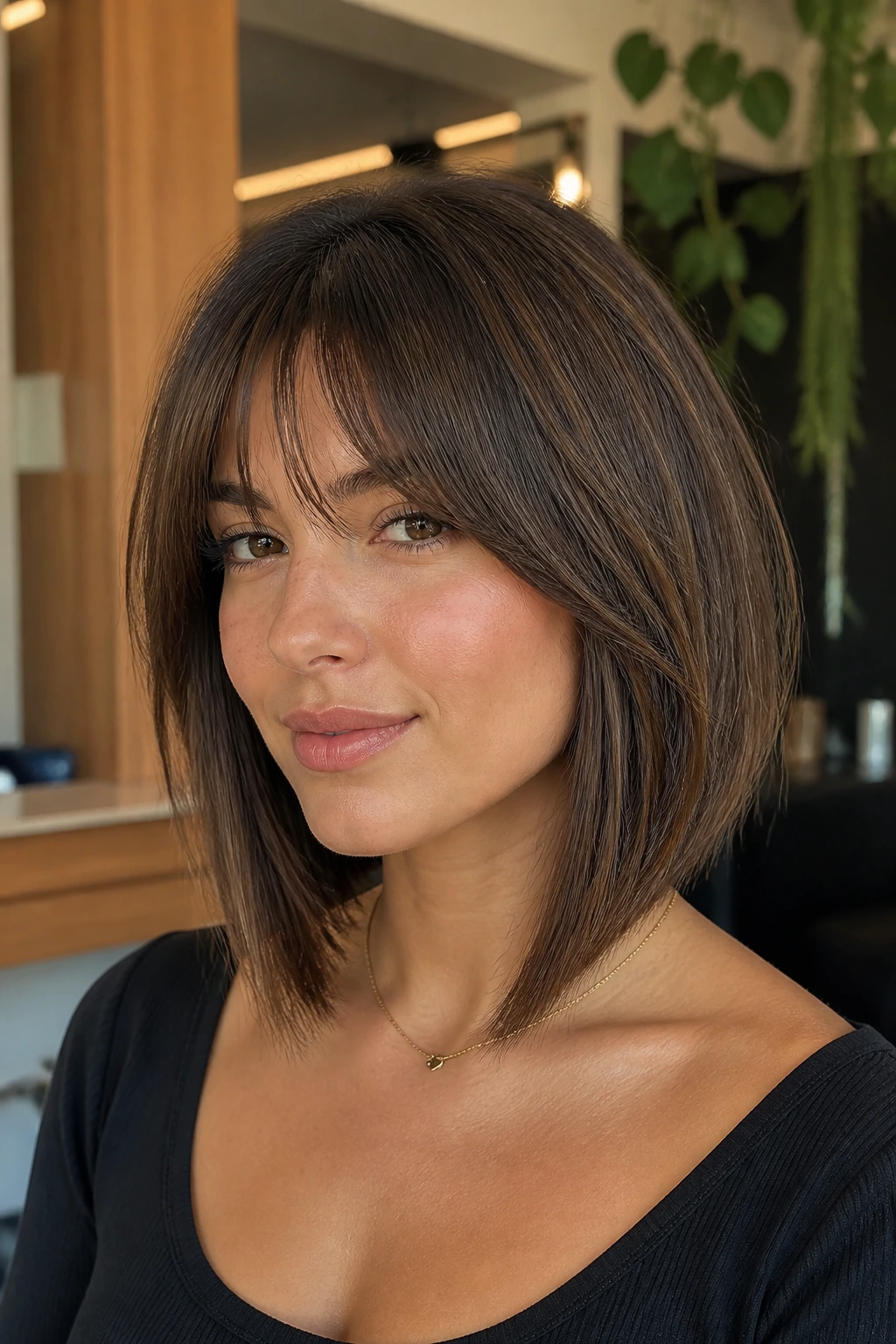
Bottleneck bangs are narrower in the center and wider at the sides, which makes them a smart match for a round face. They open the forehead without creating a straight line across the face, and they blend into the front layers in a softer way than a blunt bang ever will.
This version looks best when the bangs are cut to graze the brows in the middle and taper out toward the temples. The longer sides of the fringe should blend into the angled front, almost like the haircut is exhaling around the face. That transition matters more than the bang itself.
Styling is a little fussy at first. The center should sit with a gentle bend, not a kink. Use a small round brush or a flat brush, then let the fringe cool before you split it. Once it cools, it behaves. Rush it, and it sticks in the wrong place.
13. Invisible-Layer Lob with Blunt Ends
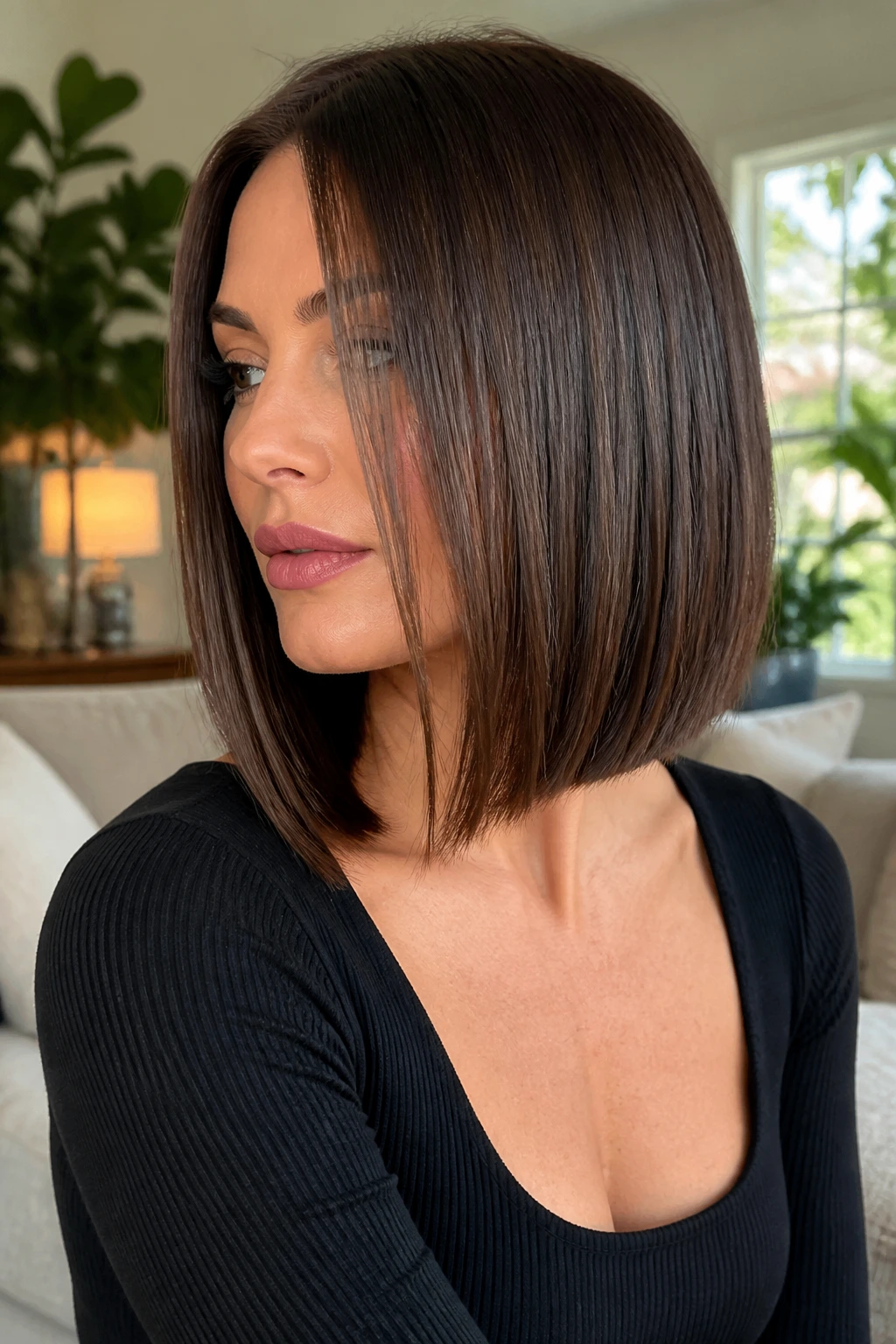
Not everyone wants the layers to announce themselves. Good. Invisible layers are one of the smartest choices for a round face because they add movement inside the haircut while keeping the outline strong and clean. The blunt ends keep the bottom edge heavy enough to look intentional.
This works best when the longest front pieces still fall past the jaw. That’s non-negotiable. The layers can be hidden, but the front length has to do the face-lengthening job. If the style stops too high, the invisibility of the layers won’t save it.
The nice part is how easy this cut is to wear on regular days. It can air-dry with a soft bend, or it can be blown smooth for a sharper look. No drama. No extra product parade. Just a solid shape that does not wander all over your face.
14. Balayage-Lit Inverted Bob
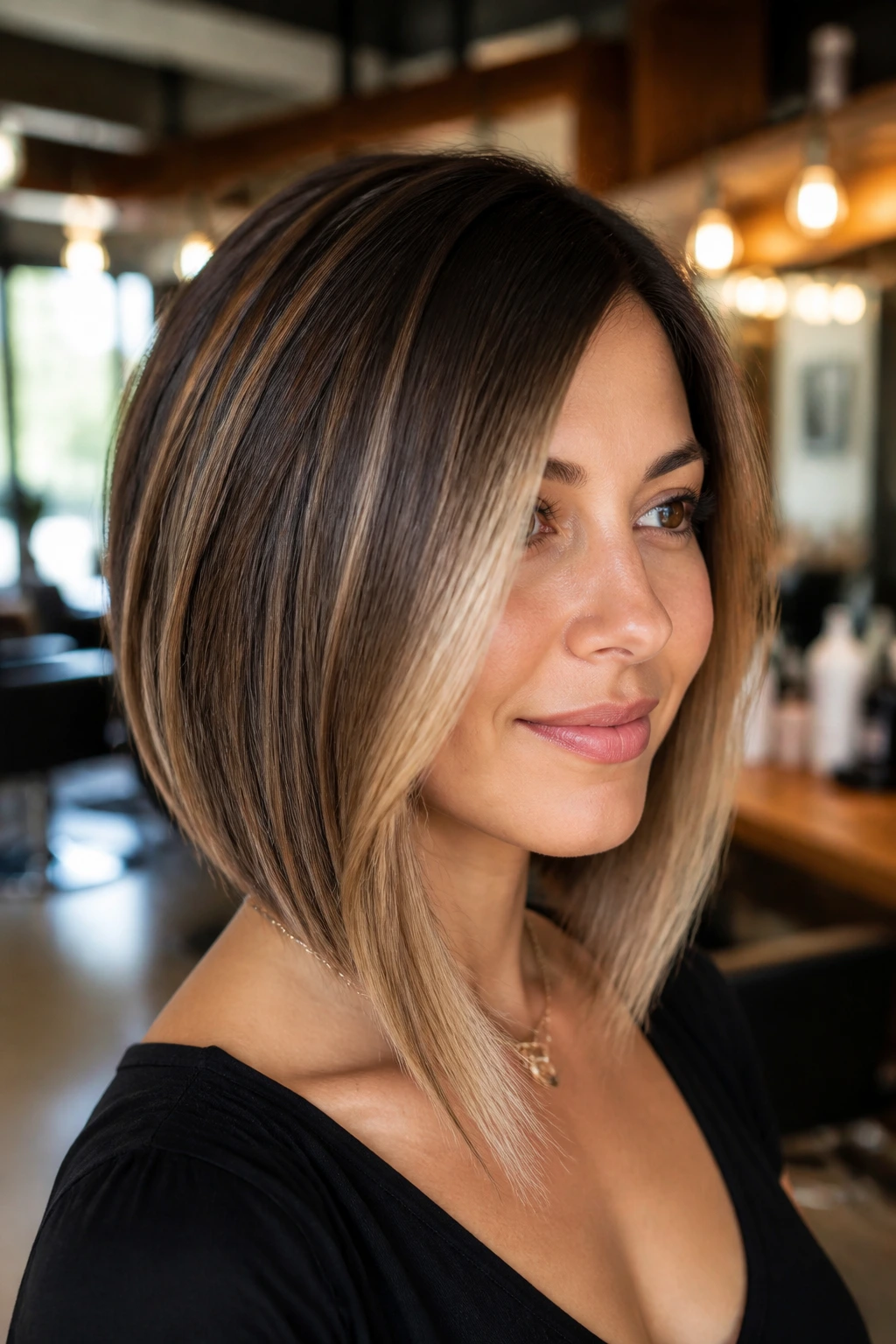
Color changes how layers read. A balayage on a long inverted bob throws light onto the front pieces and shadow into the nape, which makes the angle stand out without needing a lot of extra styling. On a round face, that contrast helps the haircut feel longer and leaner.
The placement is what matters. Lighter pieces should sit around the front and mid-lengths, not just scattered on the top layer. If the lightest pieces are only at the crown, the top can look wide. If the front is brighter, the eye follows the downward line where you want it.
A subtle root shadow helps too. It keeps the top from looking puffy and gives the haircut depth. Here’s the part people miss: the cut and the color should work together. When the highlights track the angle of the bob, the shape looks deliberate even on a messy morning.
15. Shoulder-Grazing Soft-Underlayer Lob

If you want the angle without giving up too much length, this is the gentlest version in the bunch. The hair skims the shoulders, the underlayers add movement, and the overall feel is softer than a shorter inverted bob. It’s the kind of cut that still looks good when you tuck one side behind your ear.
The underlayers are the quiet part of the haircut. They remove bulk and help the ends swing, but they do not chop the shape into fragments. That’s good news for round faces, because the line stays long while the interior gets lighter.
This is also the version I’d point people to when they’re nervous about a big cut. You get the face-framing effect without the sharpness of a short bob. It grows out well, curls easily, and doesn’t demand perfect styling every day. Sometimes that’s the point.
16. Wedge-Inspired Graduated Bob
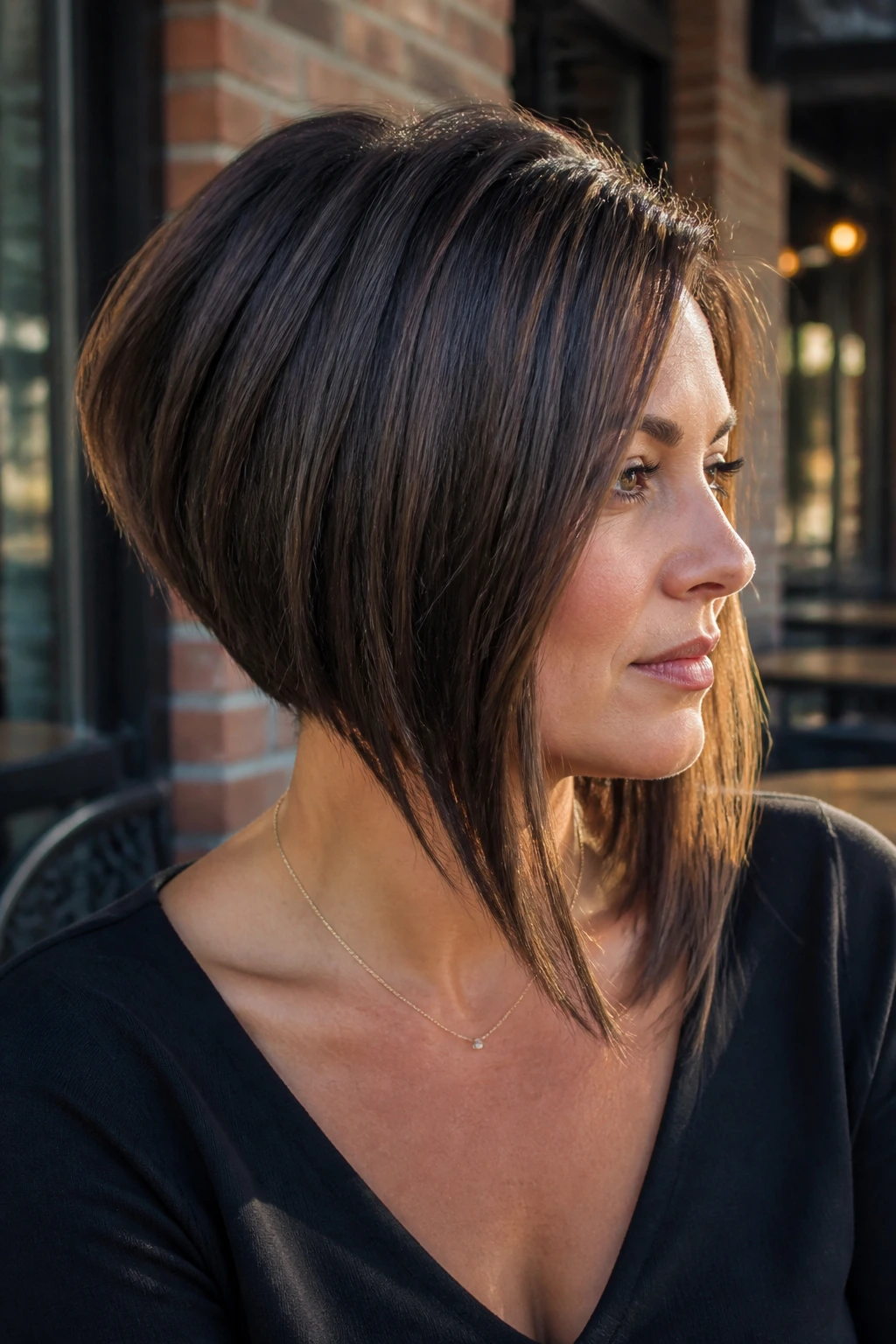
A wedge-inspired bob has a firmer stack at the back and a more obvious swing forward. It’s cleaner and a touch more assertive than the soft versions, which makes it a good match for dense hair or anyone who wants the haircut to have shape even when it’s just air-dried.
The catch is balance. Too much graduation at the back can make the head look rounder from the side, which is the opposite of what you want. Keep the top controlled and the front long. Let the angle travel forward instead of ballooning upward.
This cut can be sharp with a flat brush or slightly undone with a bend through the ends. I prefer it with a little shine spray at the finish. A dry, matte wedge can look harsh. A little light-reflecting finish makes the layers read as deliberate instead of stiff.
17. Tucked-Behind-Ear Polished Lob
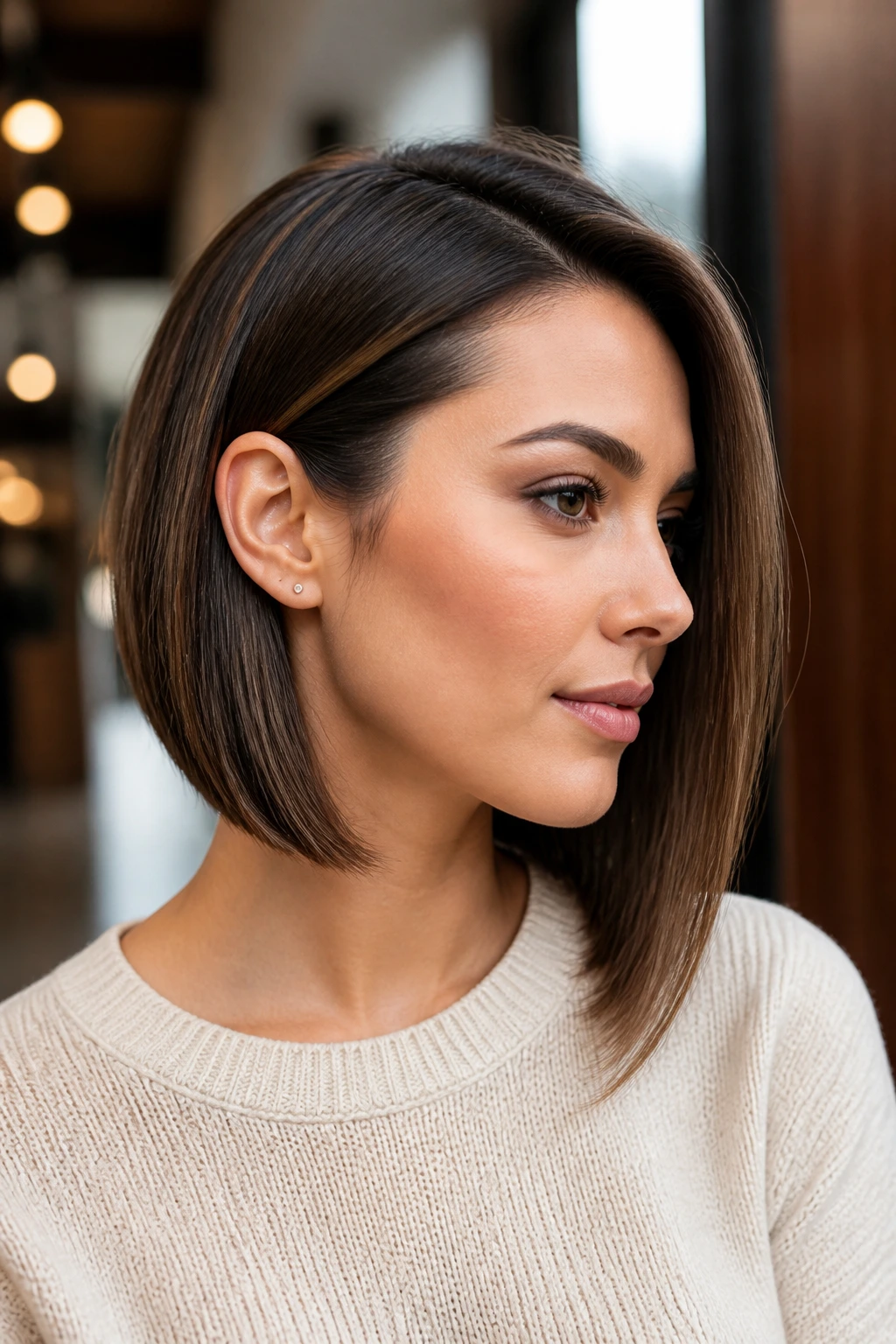
A tucked-behind-ear style is one of the easiest ways to show off the angle on a round face. One side gets opened up, the cheekbone shows, and the longer front piece can fall forward on the other side to keep the balance. It’s simple. Smart, too.
Because the hair tucks back, the cut has to be clean at the front. Frayed ends or too many short bits around the jaw can look messy once they’re tucked. So this one works best with a tidy perimeter and long layers that drape instead of spiking outward.
A little ear tuck also makes earrings look intentional, which I happen to love. Small detail, big payoff. If you want the haircut to feel polished without looking stiff, this is one of the easiest ways to get there.
18. Air-Dry Texture Bob
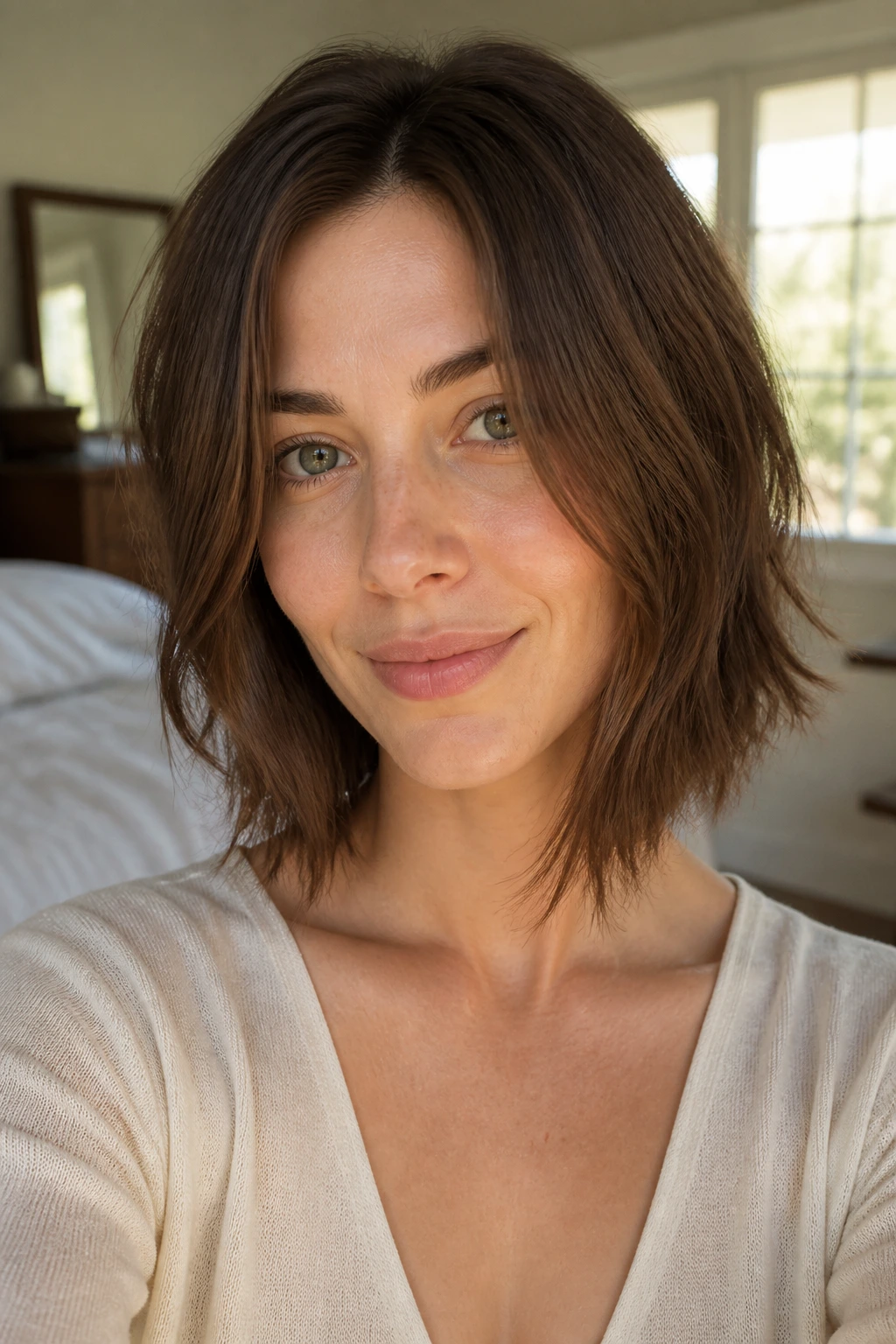
Hair that air-dries with a bit of bend is made for this cut. The longer front sections keep the face from opening up too wide, while the layers let the natural wave settle into the shape instead of puffing out at the cheeks. No blowout required.
The trick is product and restraint. Use a lightweight cream or mousse on damp hair, scrunch gently, then leave it alone while it dries. Touching it too much is what creates frizz and side volume. Side volume is the enemy here. You want movement down the line, not out to the sides.
A center or slightly off-center part usually works best if the front lengths are long enough. If your hair bends in strange ways, clip the crown at the root while it dries. That small lift can keep the shape from collapsing around the face.
19. Flipped-End Inverted Lob
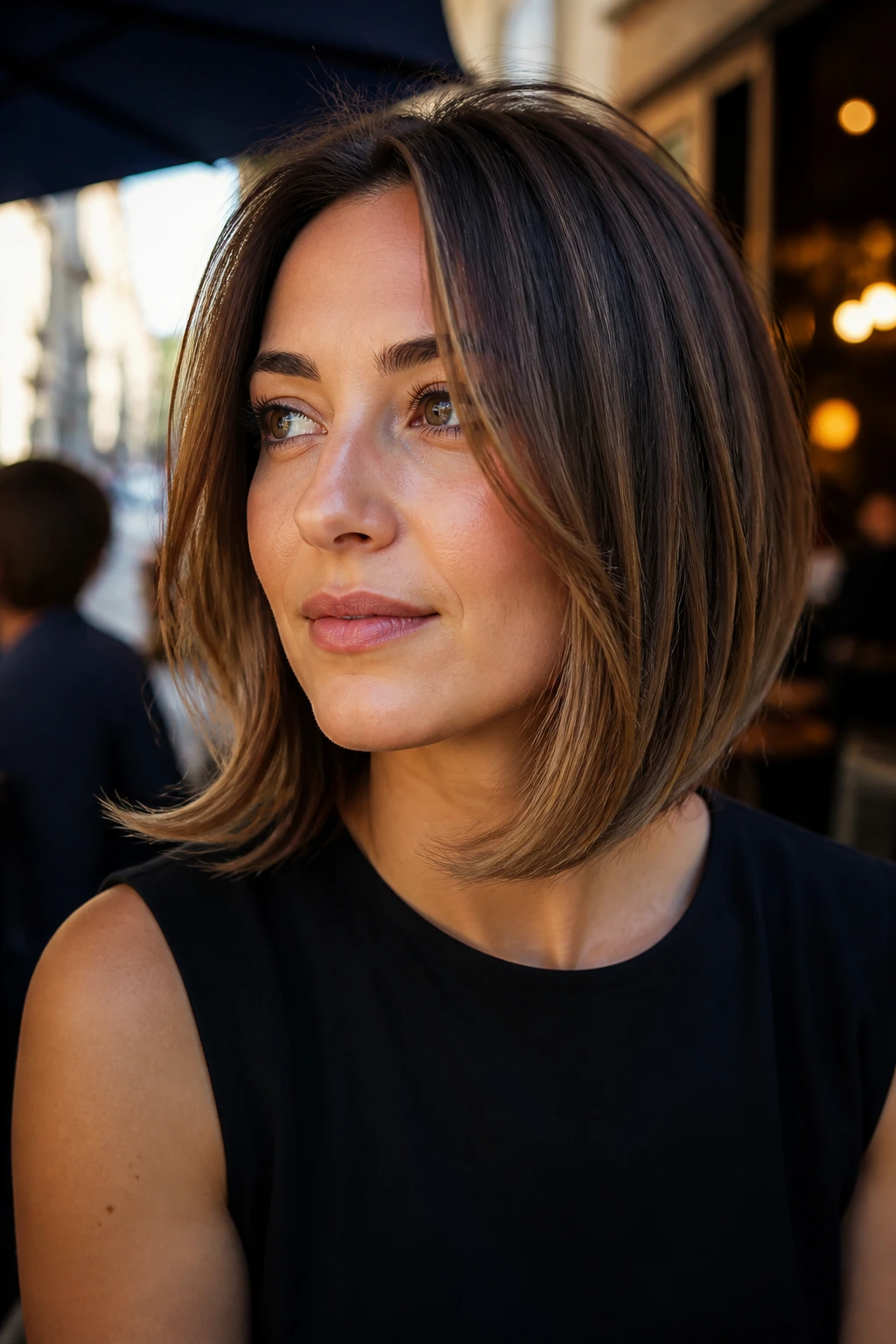
A little flip at the ends can make a round face look longer because it sends the eye outward and downward at the same time. Done lightly, it feels playful. Done too much, it starts to look retro in the wrong way. So the flip should be controlled, not cartoonish.
This version is fun on a shoulder-grazing length where the ends have room to move. A 1.25-inch iron or a round brush can create that soft outward kick. The important part is keeping the flip below the chin. If the flip starts at the cheek, it can make the face look wider.
It’s a good reminder that not every face-slimming haircut has to be severe. A little movement at the edge of the cut gives it personality. The shape still needs discipline, though. A loose finish and a clear line can live together nicely if the layers are placed with care.
20. Feathered Layer Bob
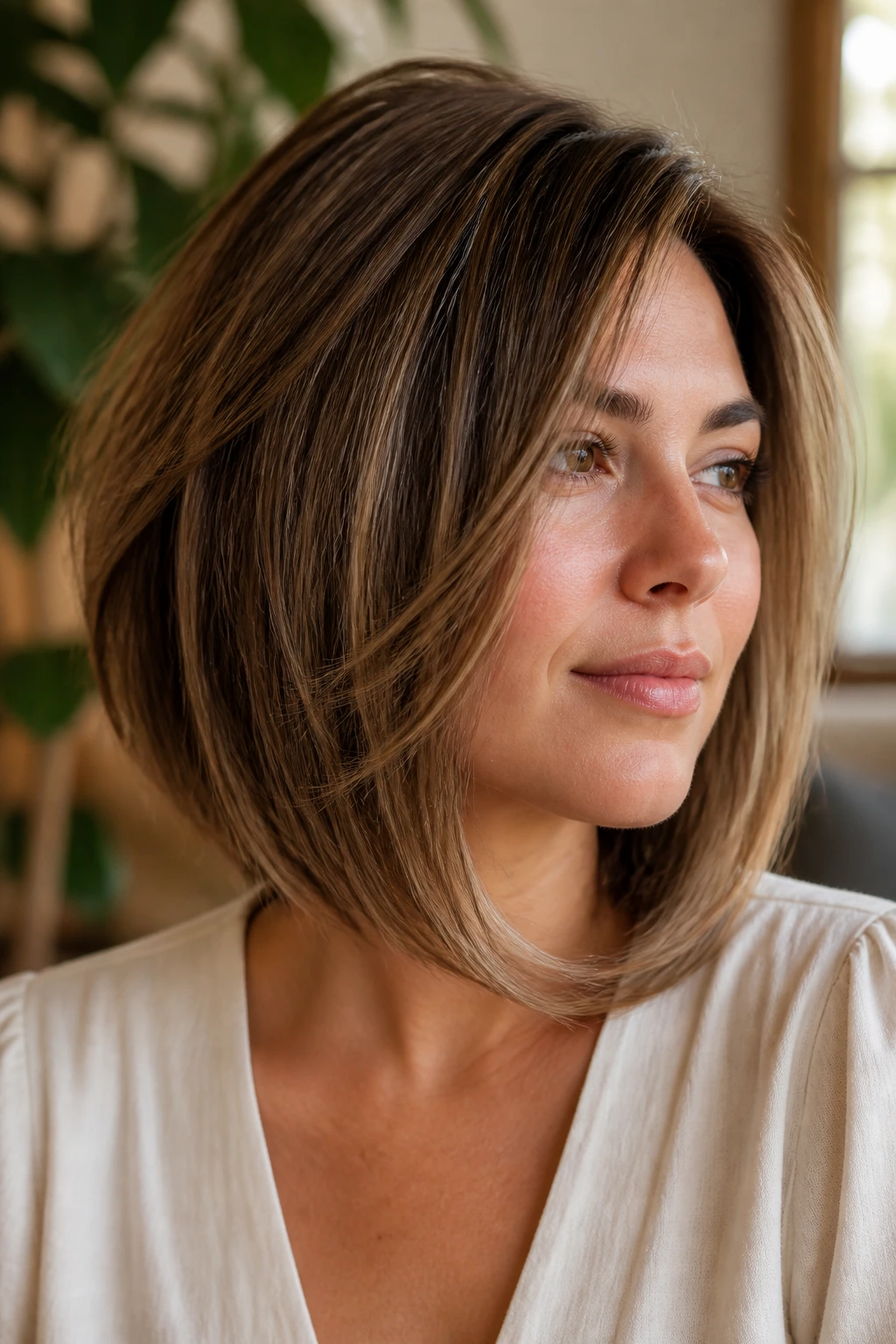
Feathering takes the bluntness out of the ends and gives the haircut that soft, swung feel that works especially well on round faces. The layers are lighter, the movement is gentler, and the whole bob can feel almost weightless without losing its shape.
This is a nice option if hard lines feel too formal for your taste. Feathered layers keep the haircut from sitting like a block at the sides. They also make it easier to style with a brush or a large-barrel iron because the ends don’t fight you as much.
The one thing to watch is over-feathering. If the ends get too wispy, the bob loses its edge and can start looking thin. You want air, not fray. The best feathered cuts still have enough line to anchor the face.
21. Dimensional Lob with Lowlights
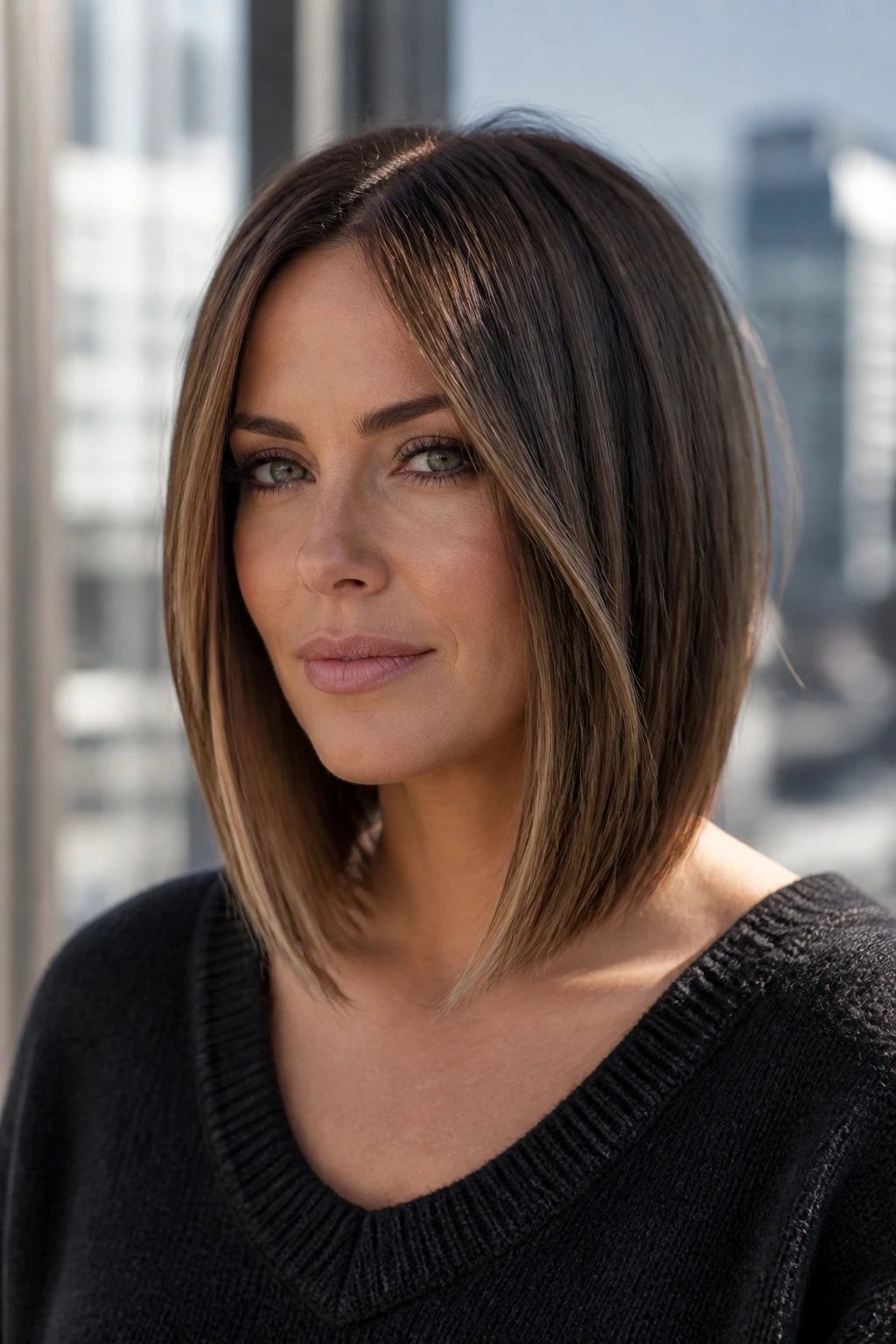
Color depth can be as useful as the haircut itself. Lowlights add shadow around the underside and through the interior, which makes the silhouette look narrower and more sculpted. On a round face, that shadow helps the outer line read more clearly.
This kind of dimension is especially useful if your hair is one flat color that reflects light evenly from root to tip. A solid block can make the bob feel wide. Lowlights break that up. They also show off the layers without needing every piece to be chopped aggressively.
I like this version because it ages well between appointments. As the color softens, the cut still holds its shape. That’s practical, not flashy. And practical haircuts tend to be the ones people keep coming back to.
22. Wavy Long Inverted Bob
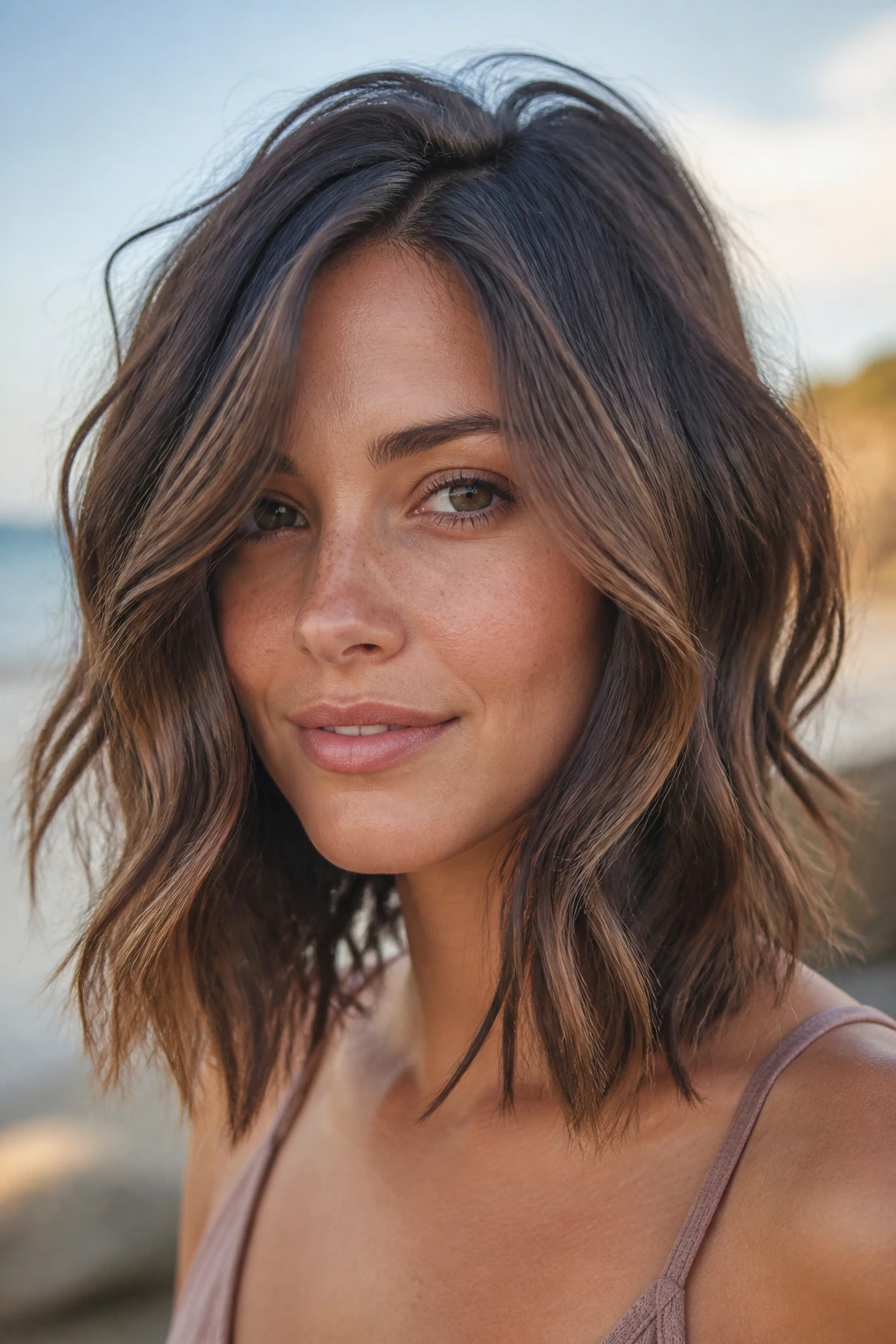
Waves can work on round faces as long as they start below the cheeks. If the bends begin too high, the width builds right where you don’t want it. When the wave sits lower through the front lengths, the cut stays long and soft at the same time.
The key is keeping the front pieces longer than the wave itself. That way the movement sits on top of the shape instead of replacing it. I’d use a curling wand in alternating directions, then break the waves up with fingers once they cool. A brush usually makes them too wide.
This style has a relaxed feel, but it still needs a clear angle underneath. Think of the wave as the outfit and the cut as the structure underneath. Without the structure, the style just looks fluffy. With it, the bob has that easy, undone polish people usually want but rarely explain well.
23. Coarse-Hair Long Inverted Bob
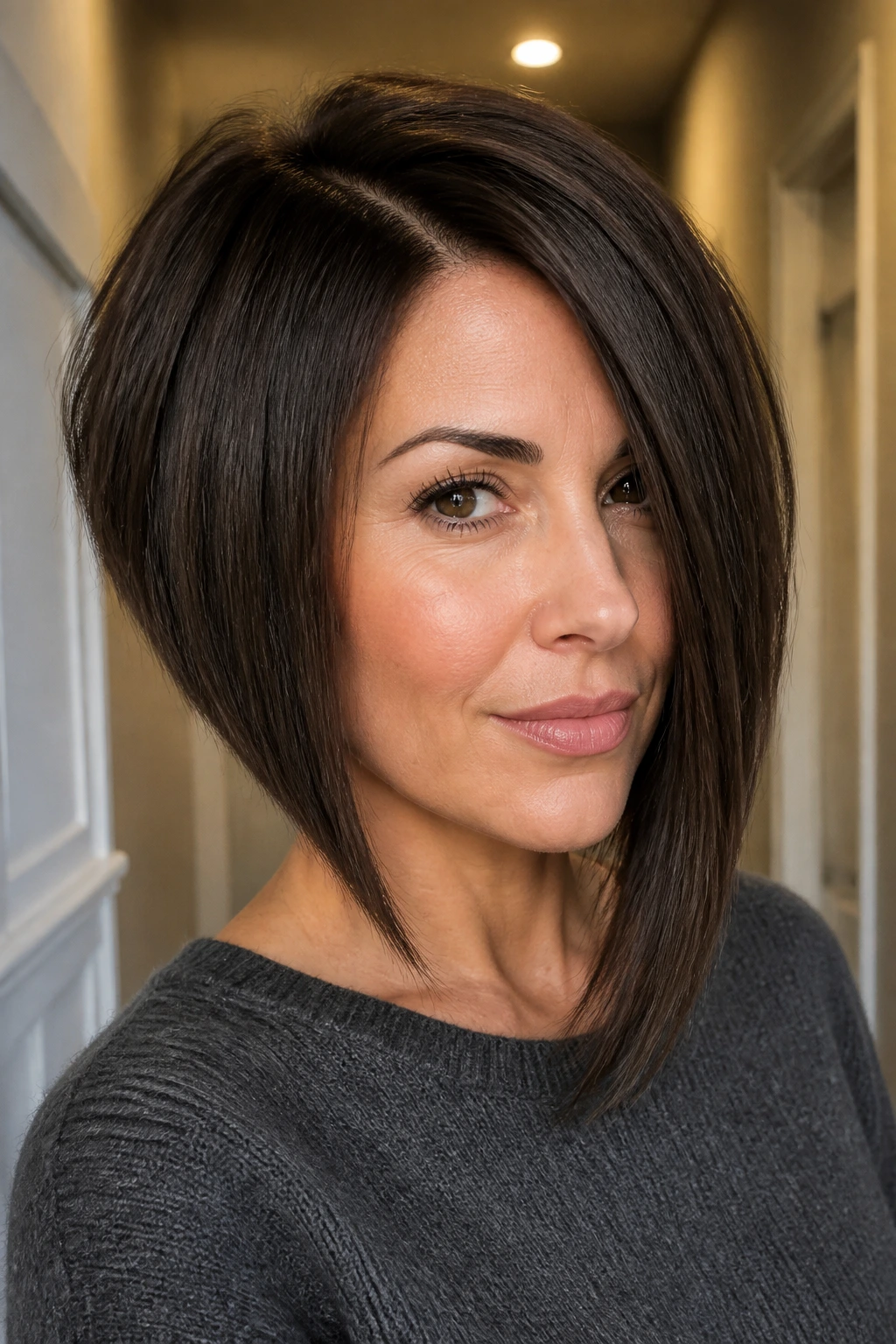
Coarse hair needs weight handled with care. Too much texturizing makes the ends spit and frizz. Too little leaves the hair bulky at the sides. The best version of this cut removes density from the inside, keeps the perimeter strong, and lets the front fall long enough to narrow the face.
This is where a blunt edge can actually help. A solid bottom line gives coarse hair something to hang on to, which keeps the shape from expanding outward. Then the layers underneath create movement without turning the haircut into a puffed cloud.
A smoothing cream or balm is useful here, especially if the hair has a rough cuticle or tends to swell in humidity. Work it through damp hair, then dry in sections. The result should feel controlled, not flat. That difference matters more than volume for volume’s sake.
24. Long Inverted Bob with Long Bangs
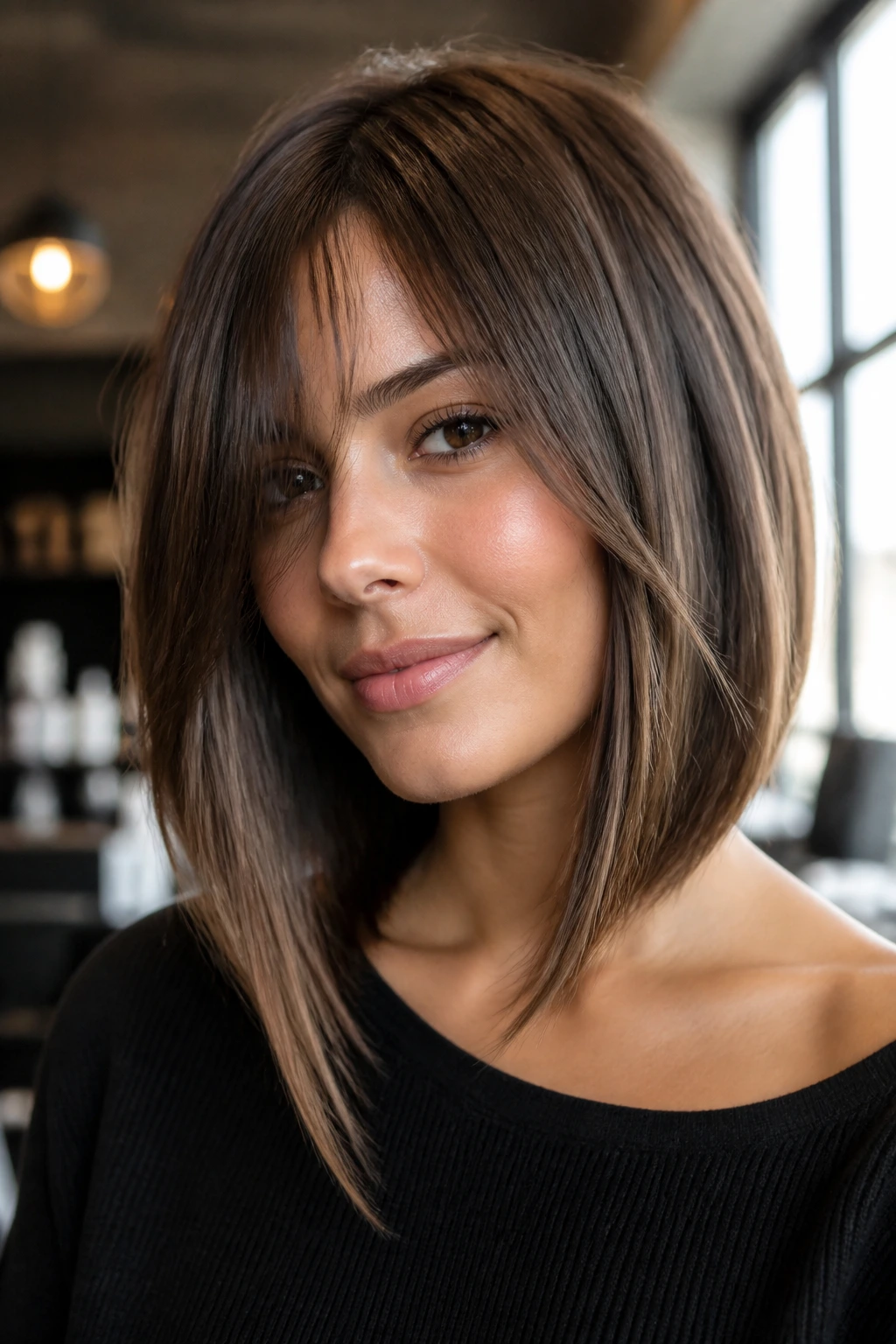
Long bangs give you a little forehead coverage without giving up the face-lengthening effect of the inverted shape. They sweep across the forehead, blur the widest points of the face, and blend into the front pieces so the haircut feels continuous rather than chopped up.
This version is especially good if you like a part that can move around. The bangs can be worn center-split, off-center, or pushed aside, which makes the style easier to live with than a hard fringe. The front lengths should still stay below the jaw so the whole haircut keeps its vertical pull.
Styling is easier than people expect. Blow the bangs down first, then bend them softly away from the face with the brush. The goal is movement, not helmet hair. If the fringe sits too stiff, the whole cut can feel younger in a way that isn’t flattering. Softness keeps it modern.
25. Minimalist Inverted Lob with Clean Perimeter
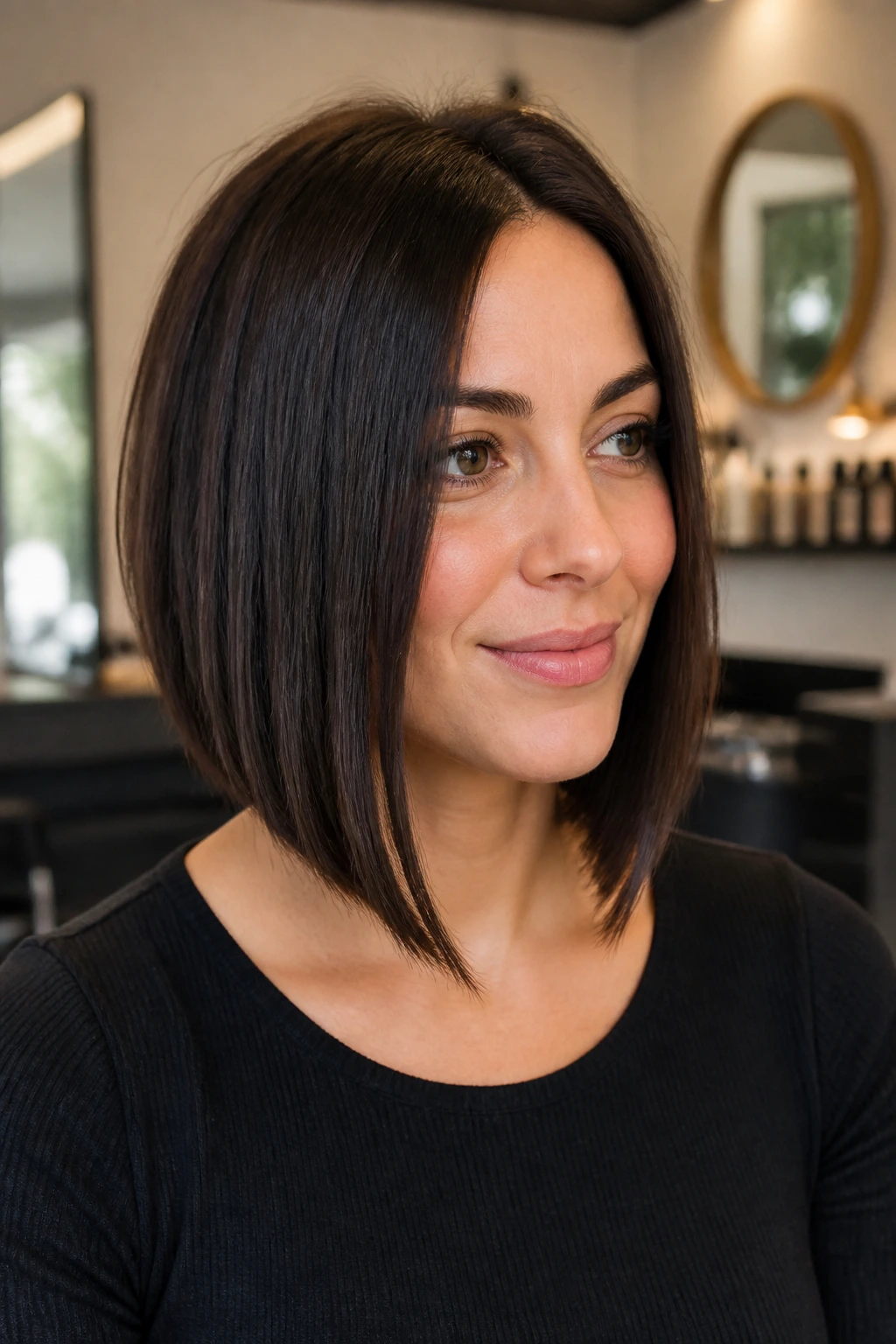
This is the quiet one. No heavy stacking. No obvious shredding. No dramatic fringe. Just a long inverted line, a clean edge, and a few well-placed layers that keep the shape moving. For a round face, that simplicity can be a relief.
The haircut works because it trusts the angle. The front is long enough to narrow the face, the back stays neat, and the perimeter does the visual heavy lifting. That means you spend less time rescuing the style with hot tools every morning. I like that. Haircuts should earn their keep.
A middle or off-center part both work here, depending on how your face sits. If you like low-maintenance hair, this version is probably the one that will make you happiest. It has enough structure to look deliberate, and enough restraint to grow out without drama.
Why the Inverted Shape Flatters a Round Face
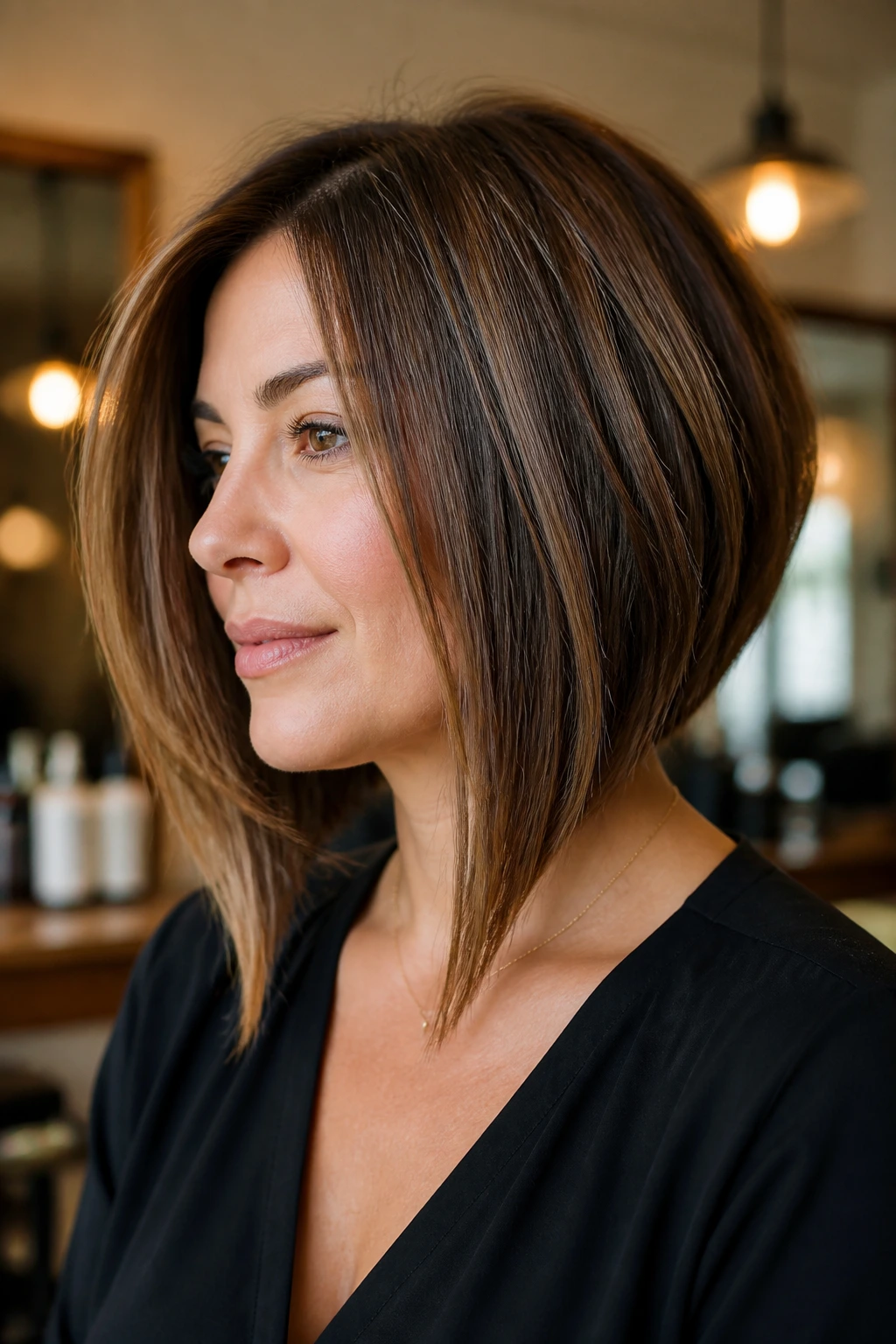
Round faces need a haircut that adds direction. That sounds almost too simple, but it’s the whole story. The face already has softness and width; the haircut should bring length, angles, and a little lift where the eye needs somewhere to go.
A long inverted bob does that by changing the silhouette. The back can stay snug at the nape, which keeps the style from spreading out, while the front pieces stretch toward the collarbone or shoulder. That line creates the illusion of length without making the haircut feel severe. The layers matter because they keep the shape from turning into a block. The wrong layers add puff; the right ones remove weight and let the hair swing.
The parting is a quiet player too. A side part or off-center part often helps because it breaks the circular symmetry of a round face. A center part can still work, but it needs long enough front pieces to keep the look from widening at the cheeks. Hair that sits flat at the crown is the thing to avoid. That’s where the cut starts to lose its angle, and once the angle is gone, the whole point of the inverted shape goes with it.
What to Tell Your Stylist Before the Scissors Start
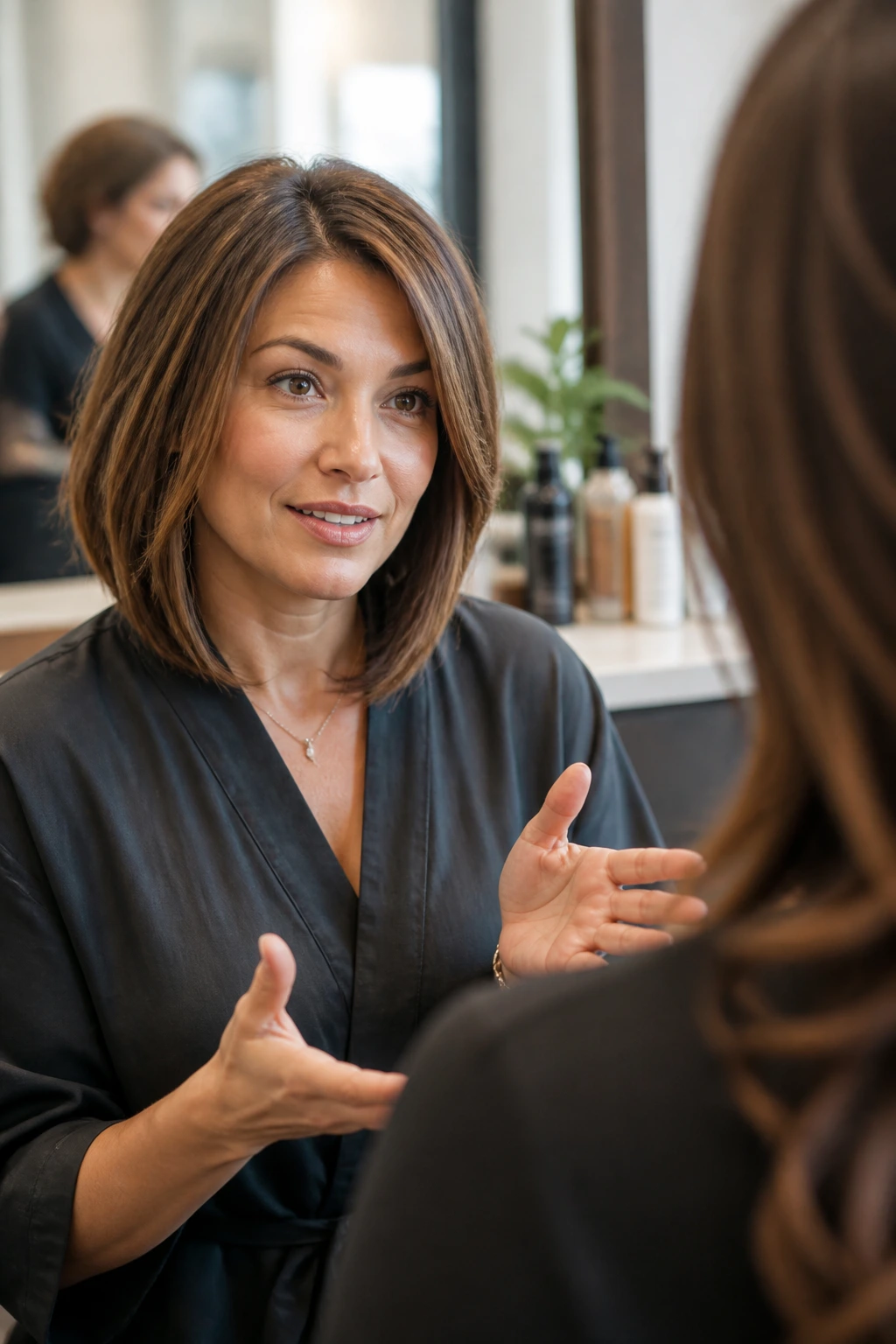
Bring photos, yes, but also bring directions. Photos show vibe. Words show measurement. The two together make it much easier to get a long inverted bob that actually suits your face.
Use numbers if you can. Say you want the front to hit the collarbone, upper chest, or just below the jaw—whichever version you’re after. Say the shortest point should stay at the nape, not jump up toward the occipital bone unless you want a stronger stack. That keeps the cut from turning into a compact wedge when you were hoping for something softer.
A few useful notes:
- Layer placement: ask for layers that begin below the cheekbone so the sides don’t puff out.
- Weight line: keep the perimeter clean if your hair is fine; remove bulk internally if it’s thick.
- Fringe choice: side-swept, curtain, or long bangs tend to play nicer with a round face than a dense blunt bang.
- Styling reality: tell the stylist how often you heat-style, air-dry, or wear your hair up, because the cut should match your routine, not the photo on the wall.
If your face is fuller through the cheeks, say that out loud. Good stylists work with that information, not around it.
Tools That Keep the Shape Sharp
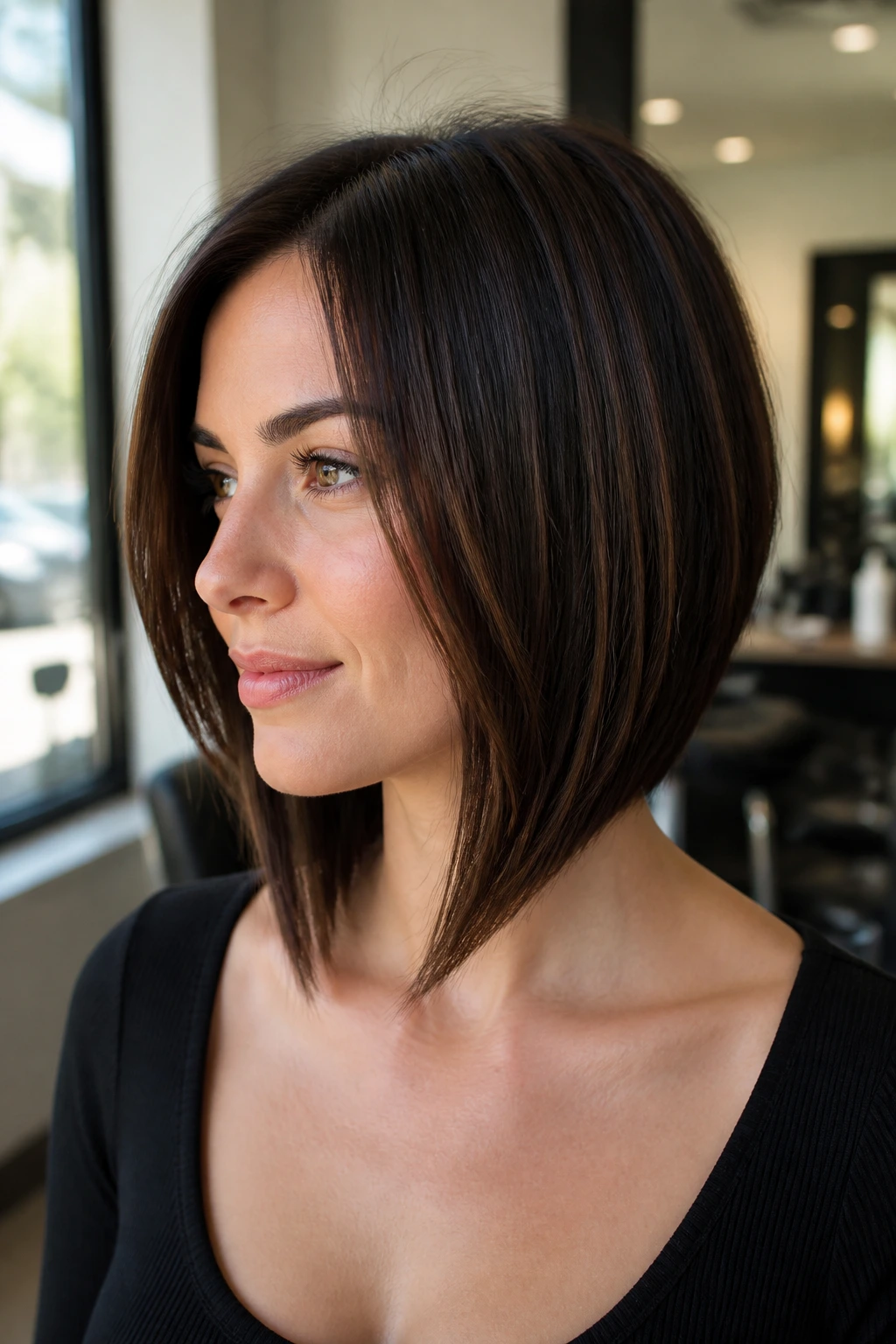
You do not need a suitcase full of gadgets. You do need the right ones.
-
Blow dryer with a concentrator nozzle: directs airflow so the crown lifts instead of puffing outward.
-
1.25-inch round brush: big enough to smooth the front pieces and bend the ends under without making the bob curl into itself.
-
Flat iron with adjustable heat: useful for a sleek A-line finish or a slight bend at the front.
-
1-inch curling wand or iron: gives loose texture and soft waves without turning the cut into ringlets.
-
Tail comb: helps make a clean part and section the hair properly.
-
Sectioning clips: especially useful if your hair is thick or you’re doing a blowout at home.
-
Heat protectant spray: non-negotiable if you use hot tools more than once a week.
-
Light mousse or root-lifting foam: useful for fine hair and any style that needs crown lift.
-
Texturizing spray: better than heavy wax for piecey layers on medium or short lengths.
-
Lightweight smoothing cream or serum: keeps coarse or frizz-prone hair from widening at the cheeks.
How to Style the Cut Three Different Ways
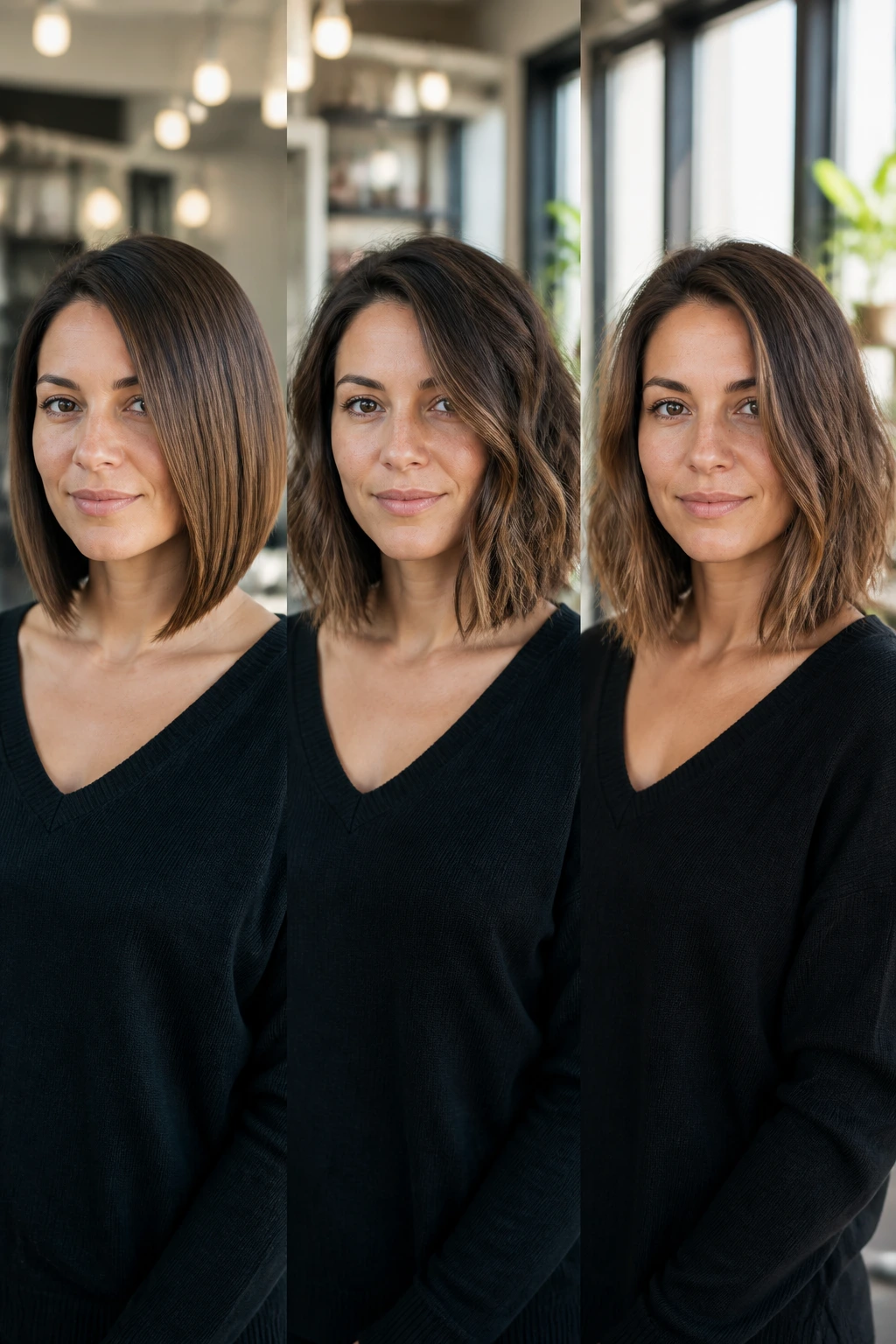
Smooth and polished: Start with heat protectant and a small amount of smoothing cream. Rough-dry the roots first, then finish with a round brush, pulling the front sections slightly forward and under. The bend should be soft, not curled tight. That keeps the diagonal line visible.
Loose and textured: Work mousse through damp hair, then dry about 80 percent of the way. Use a curling wand on alternating sections, leaving the last inch straight. Shake the waves out with your fingers and add a little texturizing spray through the ends only. Too much spray near the cheeks can widen the face.
Air-dried and soft: Put in a cream or curl lotion, scrunch gently, and clip the crown for lift while the hair dries. Don’t touch it once it starts to set. That’s the hard part. Touching creates frizz, and frizz is what turns a neat inverted bob into something triangular.
The hairstyle does not need to look identical every day. It just needs to keep the line.
Common Mistakes That Make the Haircut Look Wider
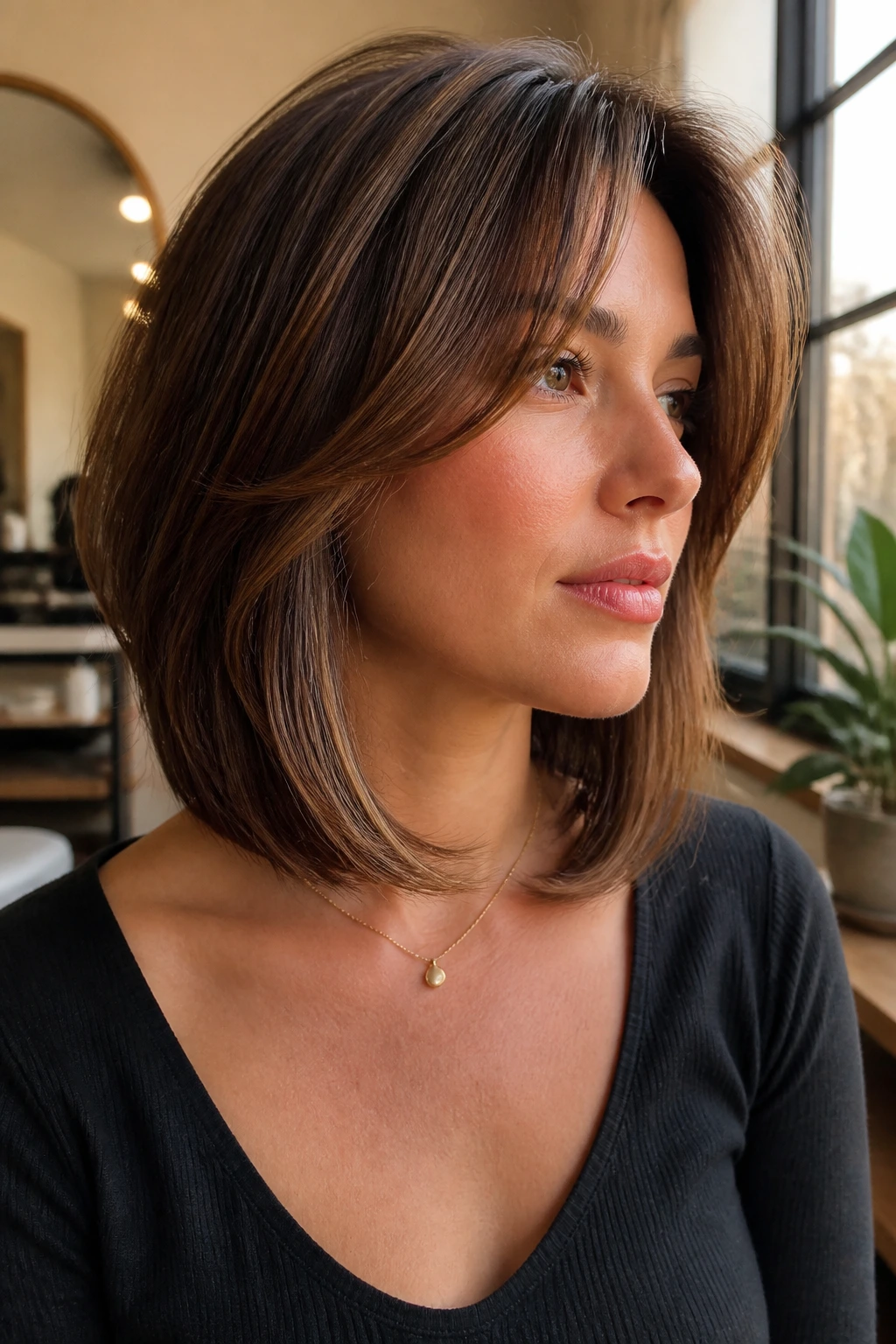
The most common mistake is stacking the volume right at the cheeks. It happens when the layers start too high or the ends flip outward at the widest part of the face. The fix is easy in theory and hard in habit: keep the shortest pieces away from the cheekbone.
Another problem is a blunt cut that ends right at the jaw. That line can stop the eye instead of guiding it. Ask for the front to land lower, or soften the edge with a slight bevel. It’s a small change, but it changes the whole read of the haircut.
People also over-texturize fine hair. The ends get wispy, the perimeter disappears, and the style starts looking lighter in the wrong places. If your hair is fine, keep the shape clean and get movement from styling. Thick hair goes the opposite way; if you don’t remove enough bulk inside the cut, the sides can balloon. Different hair, different problem.
The last trap is skipping crown lift. A flat top and wide sides are a bad pairing on round faces. Even a small lift at the roots changes the balance.
Variations and Adaptations to Try

The Glasses-Friendly Sweep: Keep the front pieces long enough to sit past the frames, then angle the fringe or face frame away from the temples. This keeps the glasses from competing with a blunt bang.
The Fine-Hair Lift Version: Use minimal layers, a strong perimeter, and a root-lifting mousse. This is the version that looks full without needing a lot of teasing or heat.
The Thick-Hair Debulked Shape: Ask for internal weight removal and a lower stack in back. It keeps dense hair from spreading sideways.
The Curly Soft-Frame Cut: Leave the front longer than you think, and let the curls shrink into shape after drying. That protects the face-lengthening effect.
The Grow-Out Lob: Let the front drift toward the shoulder and keep the back just a bit shorter. It still reads as inverted, but the grow-out is gentler and less fussy.
The Low-Heat Air-Dry Style: Favor longer layers, a soft face frame, and a light cream instead of heavy hot-tool styling. Good if you want movement without spending twenty minutes on a brush.
Keeping the Bob Looking Intentional Between Trims
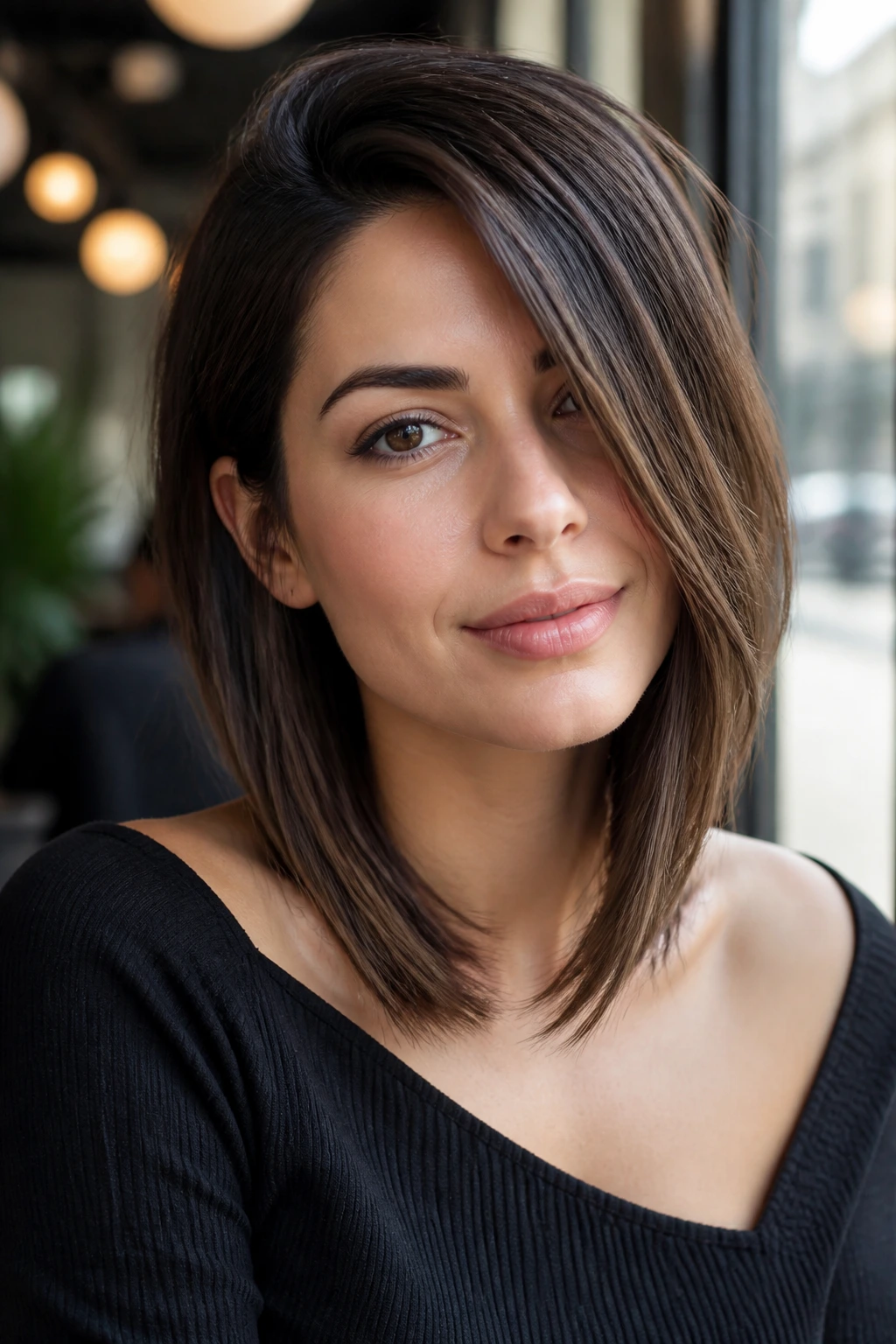
A long inverted bob can go from neat to mushy if you ignore it for too long. The angle is the first thing to blur, usually at the back and around the face, so trims matter. I’d aim for every 6 to 8 weeks if you want the shape to stay crisp. If you’re growing it out, 8 to 10 weeks can work, but the front may start to lose its edge.
At home, dry shampoo at the roots can help more than people admit. A clean crown keeps the haircut from collapsing on the face. Use it before the hair gets greasy, not after it already looks flat. That one habit buys you a day or two of shape.
Sleep matters too. If your hair kinks easily, a loose low clip or a silk pillowcase helps the front pieces stay smooth. And when you refresh the style, focus on the ends and crown, not the entire head. The haircut does not need a full redo every morning. It needs a quick reset where the shape lives.
Questions People Ask Before the Chop
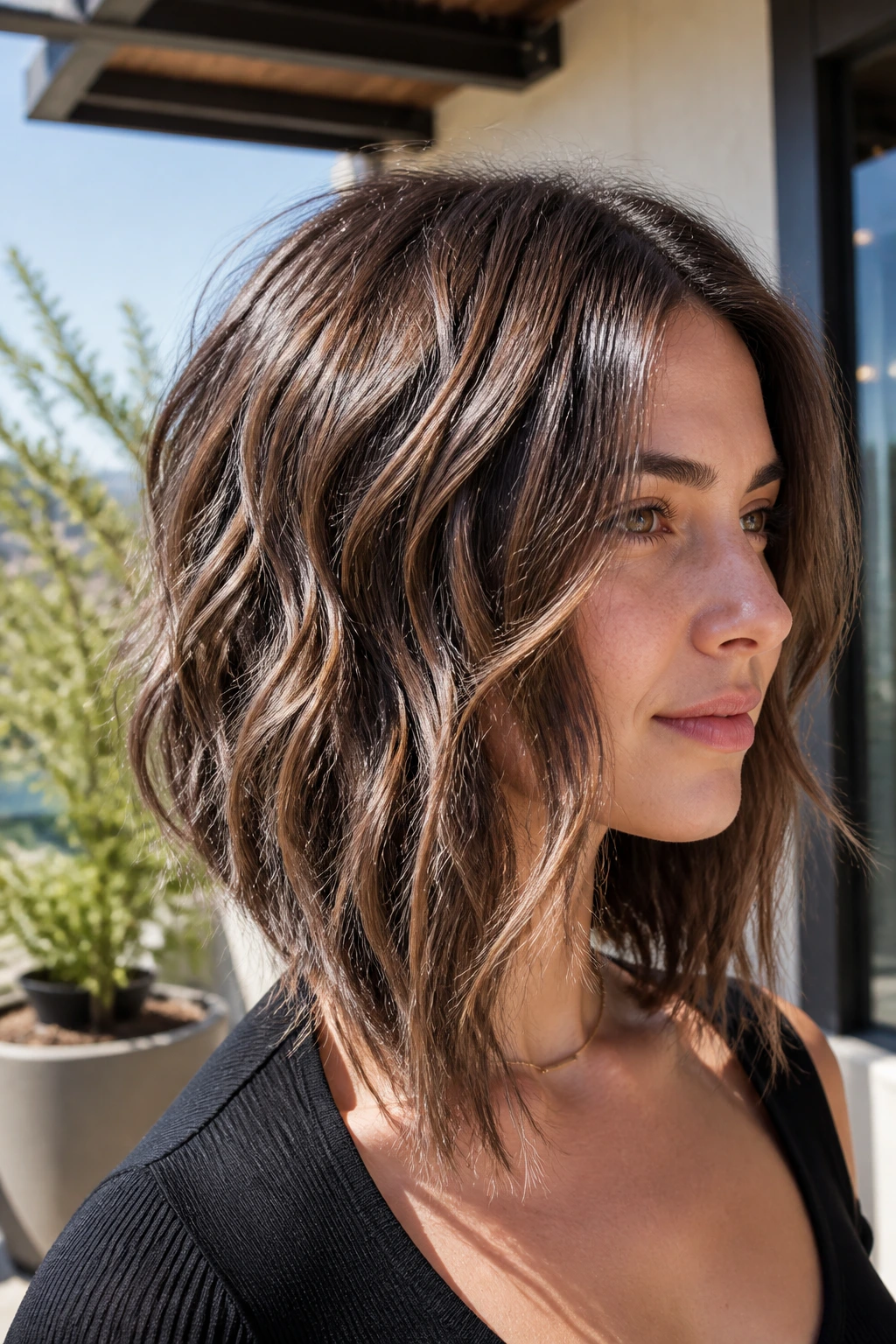
Will a long inverted bob make a round face look slimmer?
Usually, yes, if the front is long enough and the layers start low. The face doesn’t need hiding; it needs a line that moves downward instead of stopping at the cheeks.
Where should the front pieces hit?
For most round faces, the safest landing spot is below the jaw, often at the collarbone or upper chest. If the hair is curly or very wavy, allow for shrinkage and ask for a bit extra length.
Can I wear a center part with this cut?
You can, but it works best when the front pieces are long and the crown has some lift. If the face already feels wide through the cheeks, an off-center part often gives better balance.
Is this good for fine hair?
Yes, as long as the layers stay subtle and the perimeter stays strong. Too much texturizing will make fine hair look even thinner at the ends.
What if my hair is thick and heavy?
Ask for internal debulking and a controlled stack. Thick hair needs weight removed from inside the shape, not just chopped shorter at the bottom.
How does it grow out?
Better than a chin-length bob, honestly. The longer front gives you a softer transition, so the cut keeps some shape even as it gains length.
Can I still tuck it behind my ears?
Absolutely. In fact, a tucked side can help show cheekbones and make the angle look sharper. Just keep the front long enough that the tuck doesn’t erase the shape.
The Shape That Keeps Working
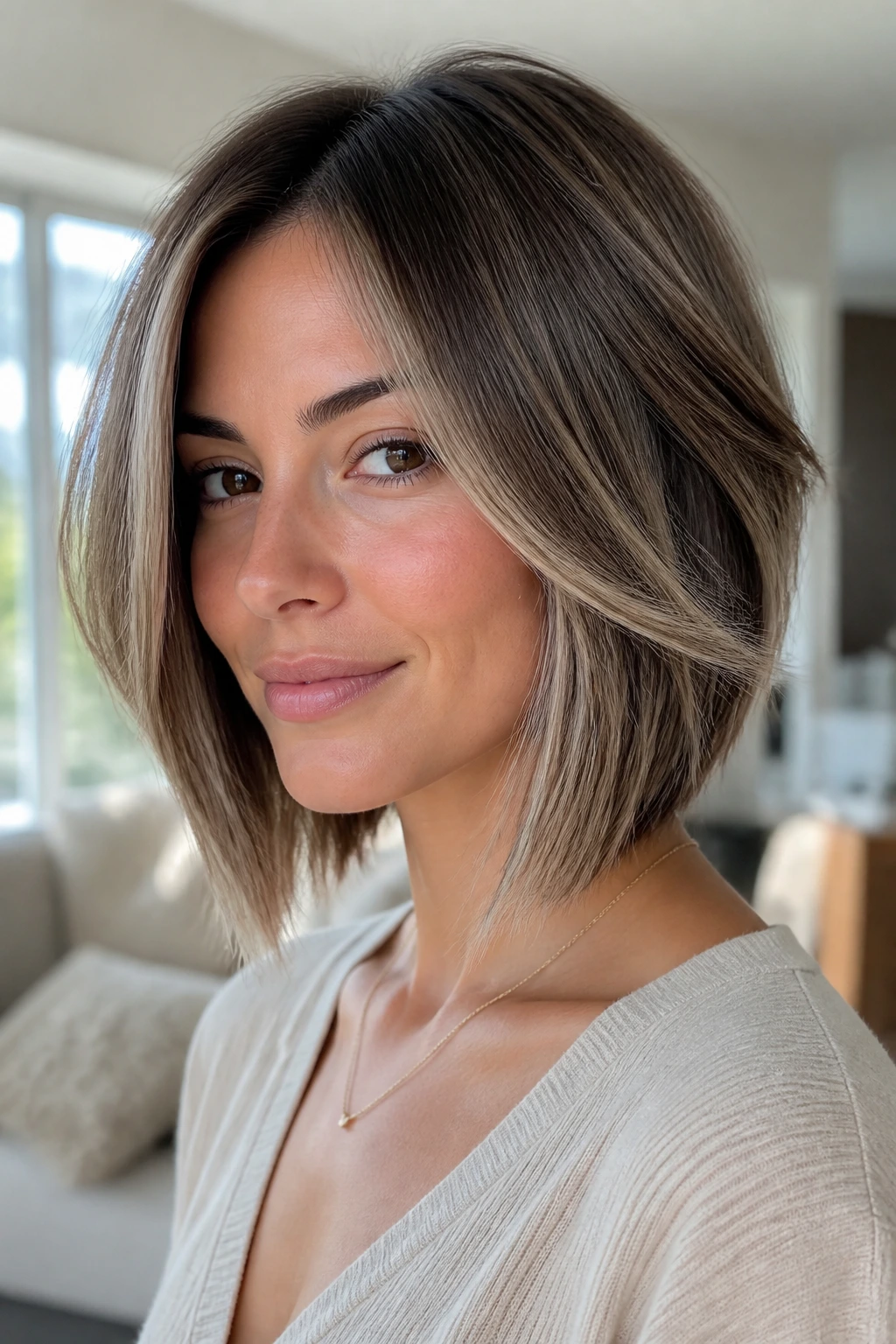
The nicest thing about a long inverted bob with layers for round faces is that it respects the face instead of fighting it. The right version doesn’t try to make your features disappear. It gives them a cleaner path to follow.
That’s why the cut has so many good versions. Sleek, shaggy, feathered, curled, air-dried, softly stacked, sharply angled—they all work when the front stays long and the layers stay in the right place. Get those two things right and the rest becomes styling, which is the easy part.
A good inverted bob should look better on day two than most cuts look on day one. That’s the kind of haircut worth keeping.