



Fine hair doesn’t need more length. It needs a shape that holds its nerve. A long bob that lands around the collarbone can make delicate strands look denser because the ends stay in one clean line instead of trailing off into see-through wisps, and blonde color helps by bouncing light across the surface instead of getting swallowed by it.
Oval faces are the easier part of the equation. They can wear center parts, side parts, curtain bangs, soft bends, and face-framing pieces without the whole look going sideways. The catch is that fine hair punishes sloppy layering. Too much thinning, too much bleach, too much feathering at the ends, and the cut loses its backbone fast.
That’s why the best blonde long bobs for fine hair and oval faces share the same quiet strengths: weight left at the hem, brightness placed where the eye should land, and just enough movement to keep the style from looking stiff. The 25 versions below lean into those strengths in different ways — blunt, beveled, rooted, waved, polished, airy, and a little bit lived-in when that’s the point.
Why These 25 Blonde Long Bobs Work So Well on Fine Hair and Oval Faces
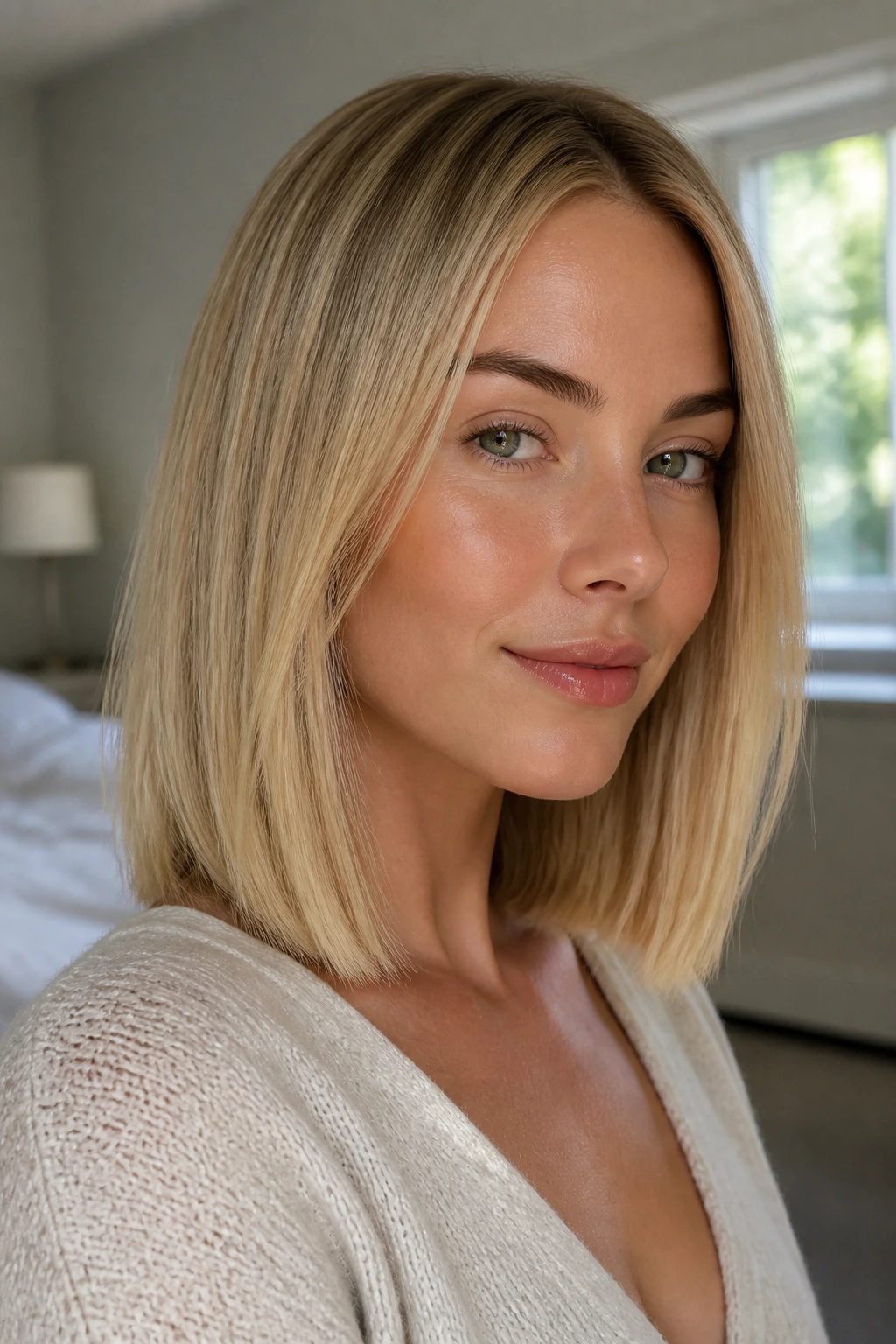
-
Weight Stays at the Ends: A long bob keeps enough length to make fine hair feel anchored, which is why it usually looks fuller than a heavily layered medium cut.
-
Blonde Reflects Light Better Than Dark Ends: Beige, champagne, honey, and creamy blondes make the perimeter read brighter and cleaner, so the eye sees shape first and thinness second.
-
Oval Faces Don’t Need Overcorrection: You can play with center parts, side parts, curtain bangs, and cheekbone framing without having to “fix” the face shape.
-
The Collarbone Is a Useful Landing Spot: Cutting near the collarbone keeps the hair from hanging limp against the chest, which is where a lot of long fine hair starts to look tired.
-
Soft Dimension Beats Flat Bleach: A root shadow, lowlight, or fine babylight placement gives the blonde something to do instead of turning the whole head into one pale sheet.
-
Styling Gets Easier, Not Harder: The best versions can be worn sleek, bent, air-dried, or tucked behind the ear without needing a full salon blowout every morning.
1. Champagne-Blonde Blunt Lob With a Center Part
This is the cleanest cut in the mix, and I mean that as a compliment. A blunt hem at collarbone length gives fine hair a thicker-looking line, and champagne blonde keeps the finish bright without washing the ends into nothing. On an oval face, the center part makes the whole look feel balanced and easy.
Why It Works
The blunt edge is doing the heavy lifting here. It gives the eye one solid line to follow, which makes the hair appear denser even when the actual strand count is modest. Champagne blonde — not icy, not yellow — keeps the surface reflective and soft.
If your hair collapses when it gets too many layers, this cut is the safe bet. Ask for a clean perimeter, minimal internal layering, and a slight bevel at the ends so the line doesn’t look harsh.
Quick Notes
- Ask for the length to hit right at or just below the collarbone.
- Keep the front only a touch longer than the back, if at all.
- Use a 1.5-inch round brush to tuck the ends under by half an inch.
- A lightweight shine spray on the mid-lengths keeps the blonde from looking dry.
Small tip: if your roots are flat, lift them with mousse before blow-drying. The cut already has structure; it just needs a little help at the crown.
2. Beige-Blonde Collarbone Lob With a Soft Bend
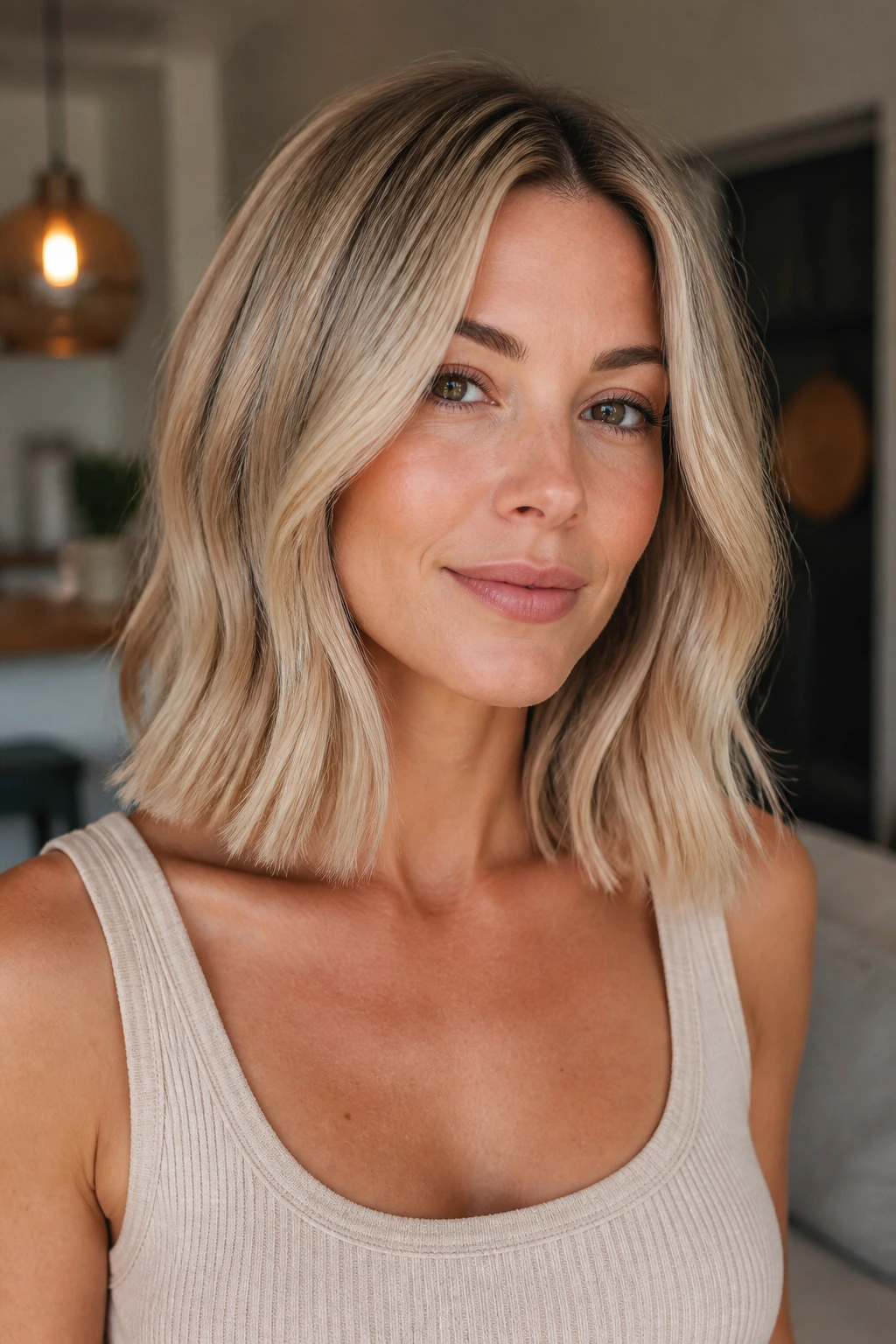
A soft bend can do more for fine hair than another layer ever will. This lob keeps the perimeter fairly full, then adds a loose bend through the middle lengths so the style moves without looking blown apart. Beige blonde gives it a calm, expensive sort of finish — soft, not chalky.
For oval faces, the bend stops the length from feeling too long and plain. You still get the open face shape, but the hair has enough curve to frame the cheekbones. It’s especially good if your strands are straight and stubborn.
What to ask for? A collarbone cut, subtle face-framing starting around the lips or chin, and a bend styled away from the face. Keep the curl pattern loose. Tight ringlets make fine hair look smaller, not bigger.
3. Buttery Lob With Curtain Bangs
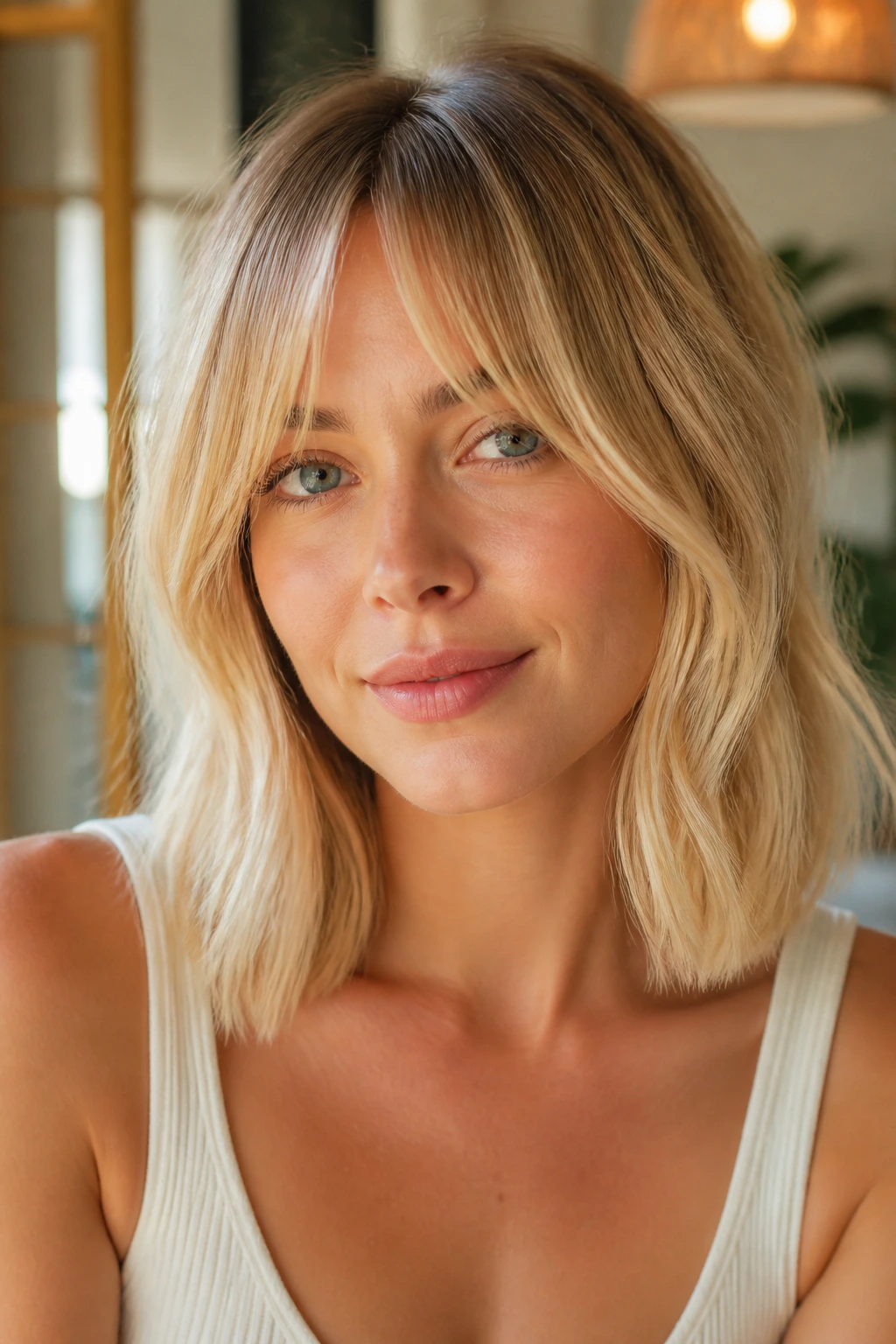
Can curtain bangs work on fine hair? Yes, if they’re handled with restraint. The trick is keeping them airy and separated, not heavy and thick, so they frame the forehead without swallowing the rest of the cut. Butter blonde gives the whole look a warm, sunlit edge.
Oval faces get away with curtain bangs more easily than most face shapes, and that’s the truth of it. The face already has balance, so the bangs just add a little motion around the eyes and cheekbones. Keep the shortest point at or slightly below the brows, then let the sides fall into the lob.
How to Style It
Dry the bangs first with a small round brush, then clip them to cool while you work on the rest of the hair. That small pause matters. If you skip it, the fringe tends to split and flop by lunchtime.
A light mousse at the roots and a pea-sized bit of cream through the ends is enough. More than that and the fringe starts to separate in sad little strands.
4. Root-Shadow Lob With Invisible Layers
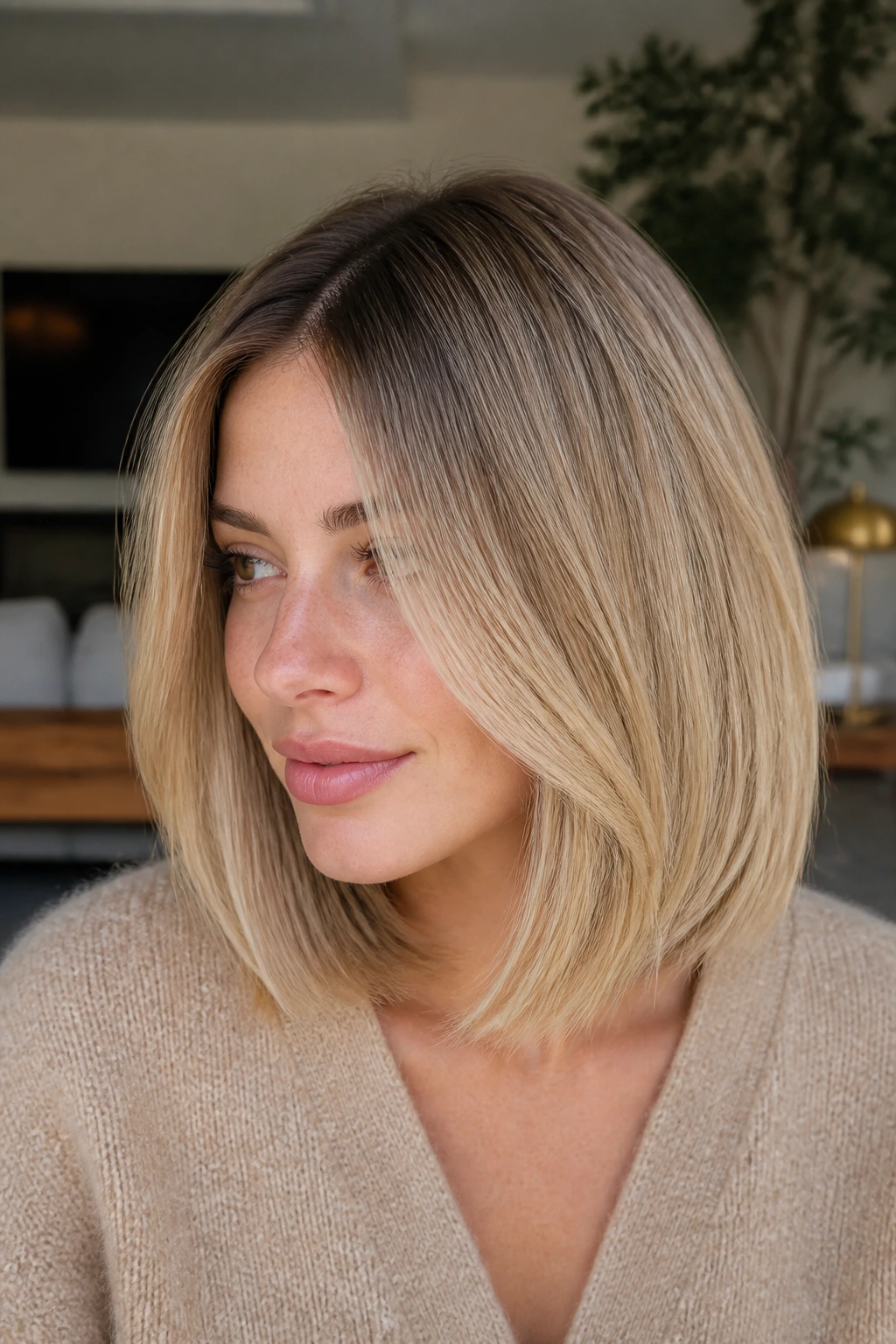
If your blonde goes flat by day two, this one earns its keep. A root shadow gives the color depth at the scalp, while invisible layers are tucked under the top sheet of hair so the cut keeps movement without sacrificing the blunt-looking edge. It sounds technical because it is. And it works.
The darker root makes the blonde look thicker right where the hair leaves the scalp. The hidden layers keep the interior from puffing out at the wrong points. Fine hair often needs that trick: volume underneath, polish on top.
Ask your colorist for a root shade one level deeper than your lengths, not a stark contrast. Then ask the stylist to avoid slicing the bottom edge too much. You want the illusion of density, not a choppy outline.
5. Side-Part Lob With a Money Piece
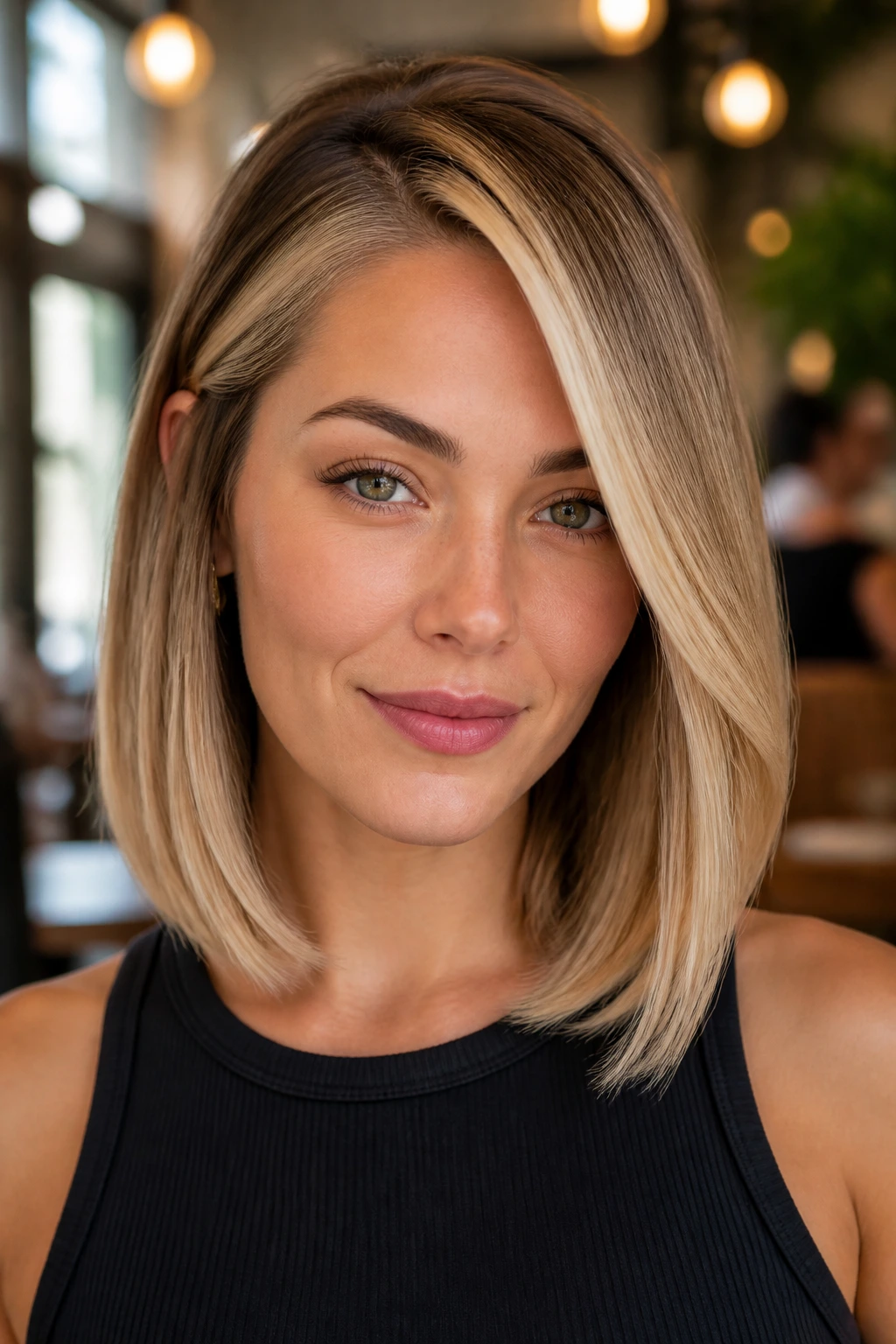
A side part gives fine hair an immediate lift at the crown, which is half the battle on its own. Add a soft money piece around the front, and the eye goes straight to the cheekbones instead of the flatness at the roots. On an oval face, that tiny shift in balance can be enough to make the whole cut feel more awake.
The money piece should be thin, though. Too chunky and the front starts looking striped, which is the last thing fine hair needs. Keep it one or two shades brighter than the rest of the blonde, not neon-bright.
This is one of my favorite options for people who wear their hair loose most of the time. The part does the face shaping. The front brightness does the rest.
6. Pearl-Blonde Lob With Piecey Ends
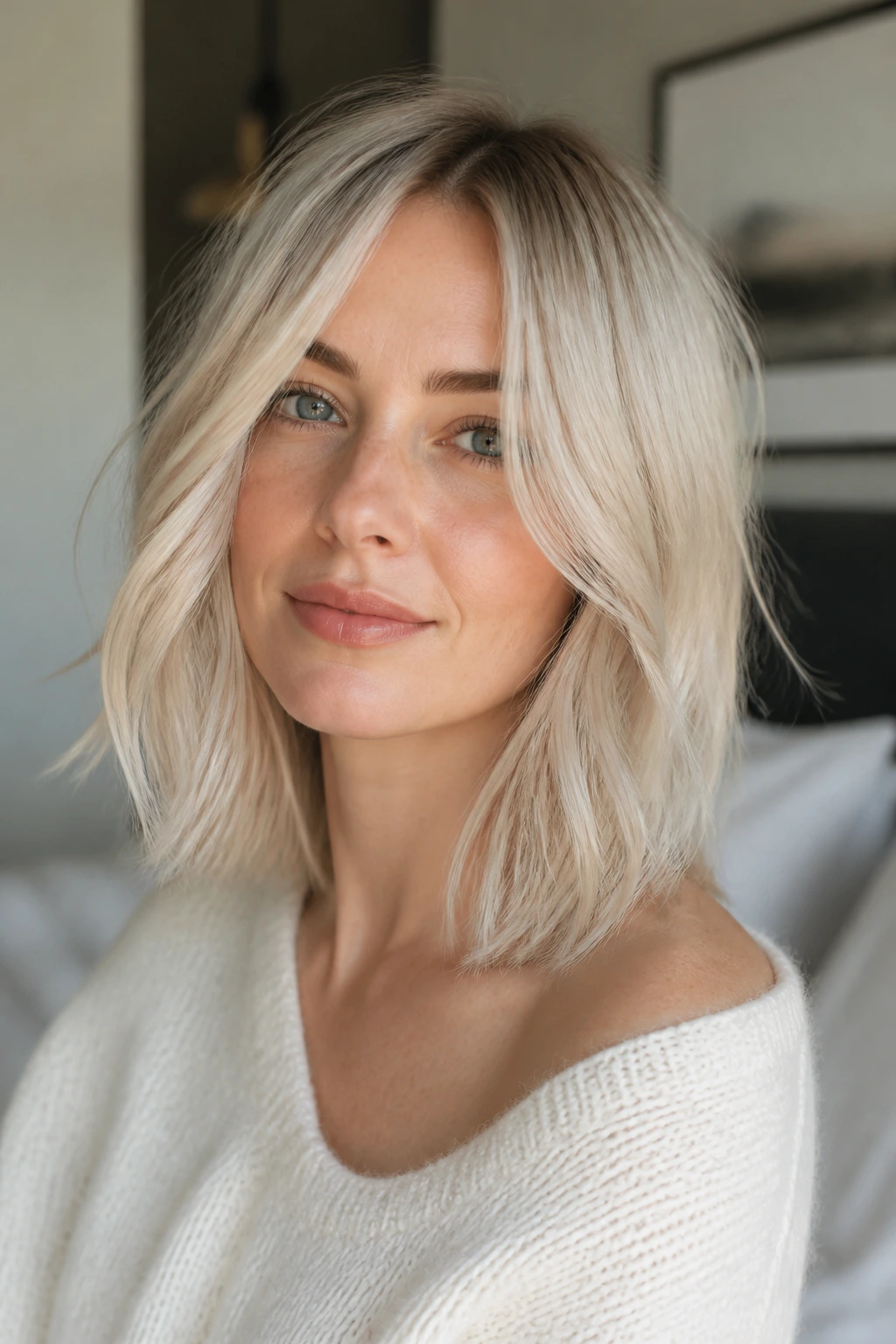
Unlike a blunt lob, this version trades crispness for movement. Pearl blonde gives the cut a cool, luminous feel, and the piecey ends keep the shape from getting too boxy. It’s a smart choice when your hair is fine but not painfully sparse — the kind that needs a little texture without being shredded.
Keep the texturizing low and controlled. If the stylist razors the last two inches too hard, the ends start looking translucent in daylight. I’d rather see soft separation than a frayed finish every time.
Wear this one with a loose wave or a brushed-out bend. The piecey ends catch the light, and the pearl tone keeps everything polished instead of beachy in the messy sense.
7. Air-Dried Lob With Baby Layers
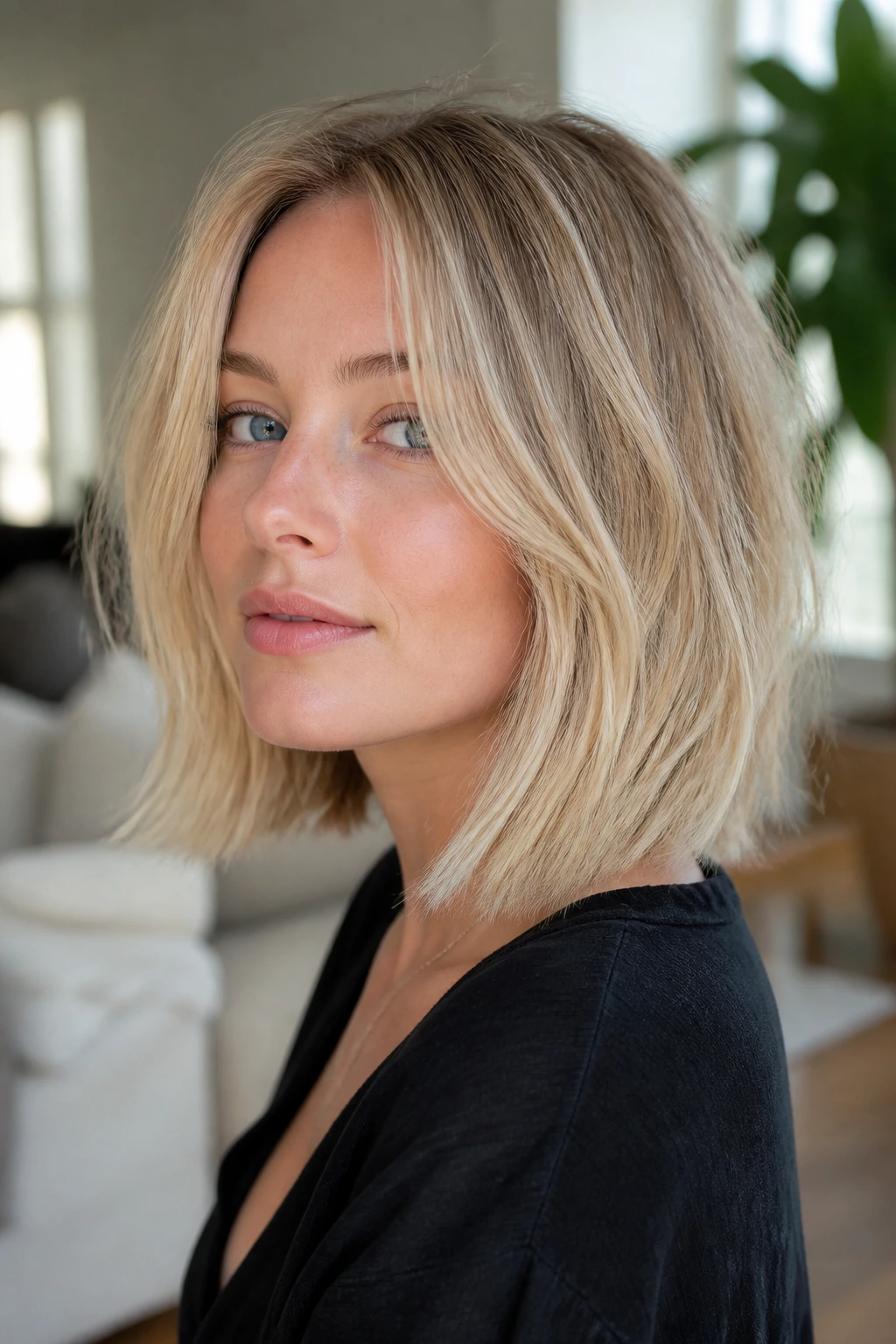
Some hair hates a full blowout. It puffs, bends in the wrong place, then sulks for the rest of the day. Baby layers solve that problem better than heavy shaping does because they give the hair just enough release to fall naturally when air-dried.
The best version starts with a blunt-ish base and only a few short internal layers near the cheeks and crown. Those little shifts keep the hair from hanging like a curtain. A pale blonde with a soft beige base helps the shape look light, not thin.
A dab of mousse through damp roots and a small wave-scrunch with your hands is usually enough. Don’t overtouch it. Fine hair shows every correction you make.
8. Honey-Blonde Lob With Longer Front Pieces
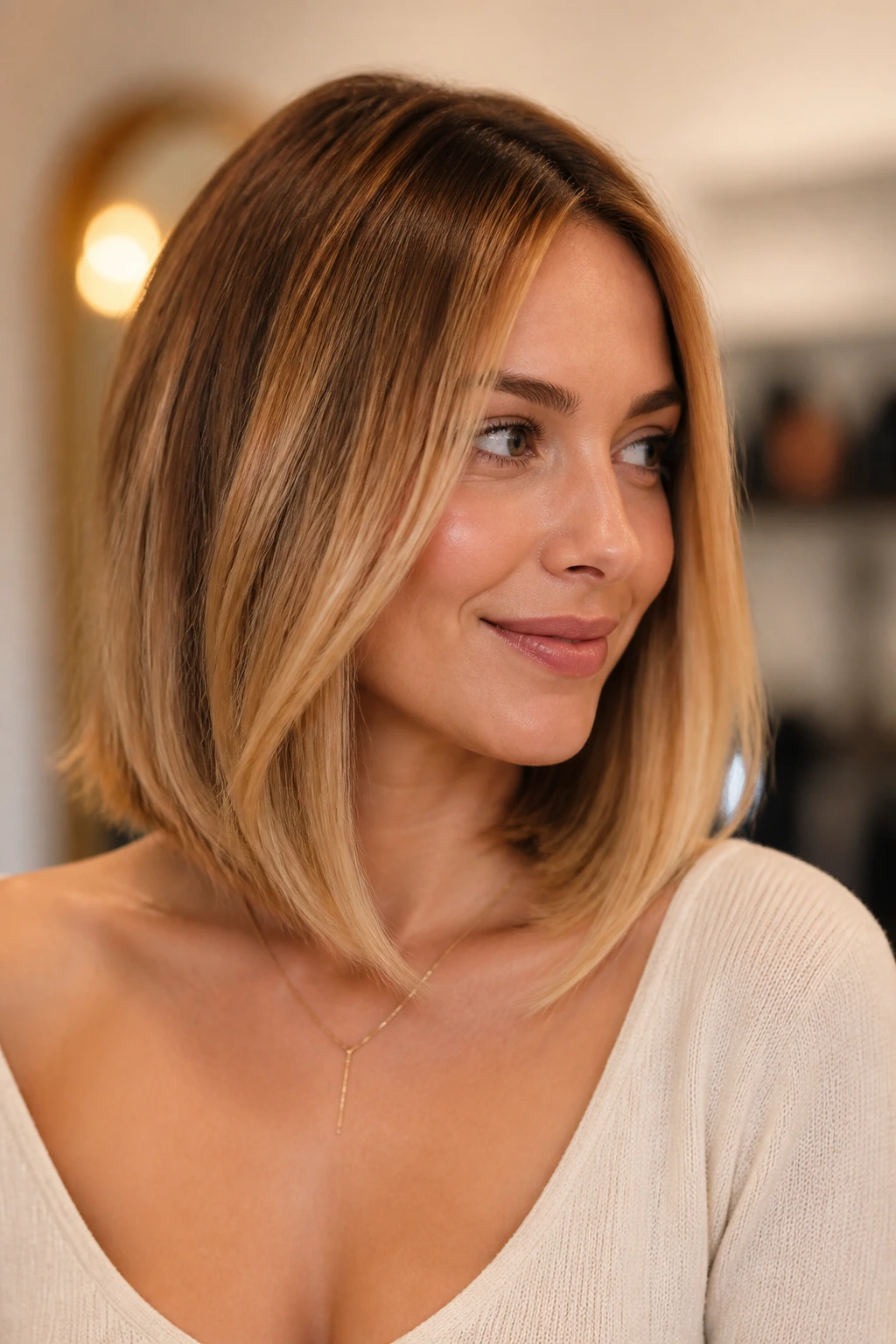
A warm honey blonde can make fine hair look richer than a very pale blonde, and that matters. The warmth adds visual depth, which keeps the cut from disappearing under bright daylight. Longer front pieces, usually landing between the chin and collarbone, help oval faces by guiding the eye down and in.
This cut works especially well when the back is left just a touch shorter. The slight angle creates motion, but not enough to lose fullness. It’s one of those shapes that looks simple and costs the stylist less emotional labor than a shaggy, overworked cut.
What to Ask For
- Collarbone length in the back.
- Front pieces about 1 to 2 inches longer.
- A honey or caramel-based blonde with soft lowlights.
- Minimal thinning at the ends.
If your hair is flat at the crown, a gentle side part pairs nicely with this one. The front pieces will do the framing, and the part will give the top a little lift.
9. Textured Lob With Sliced Ends
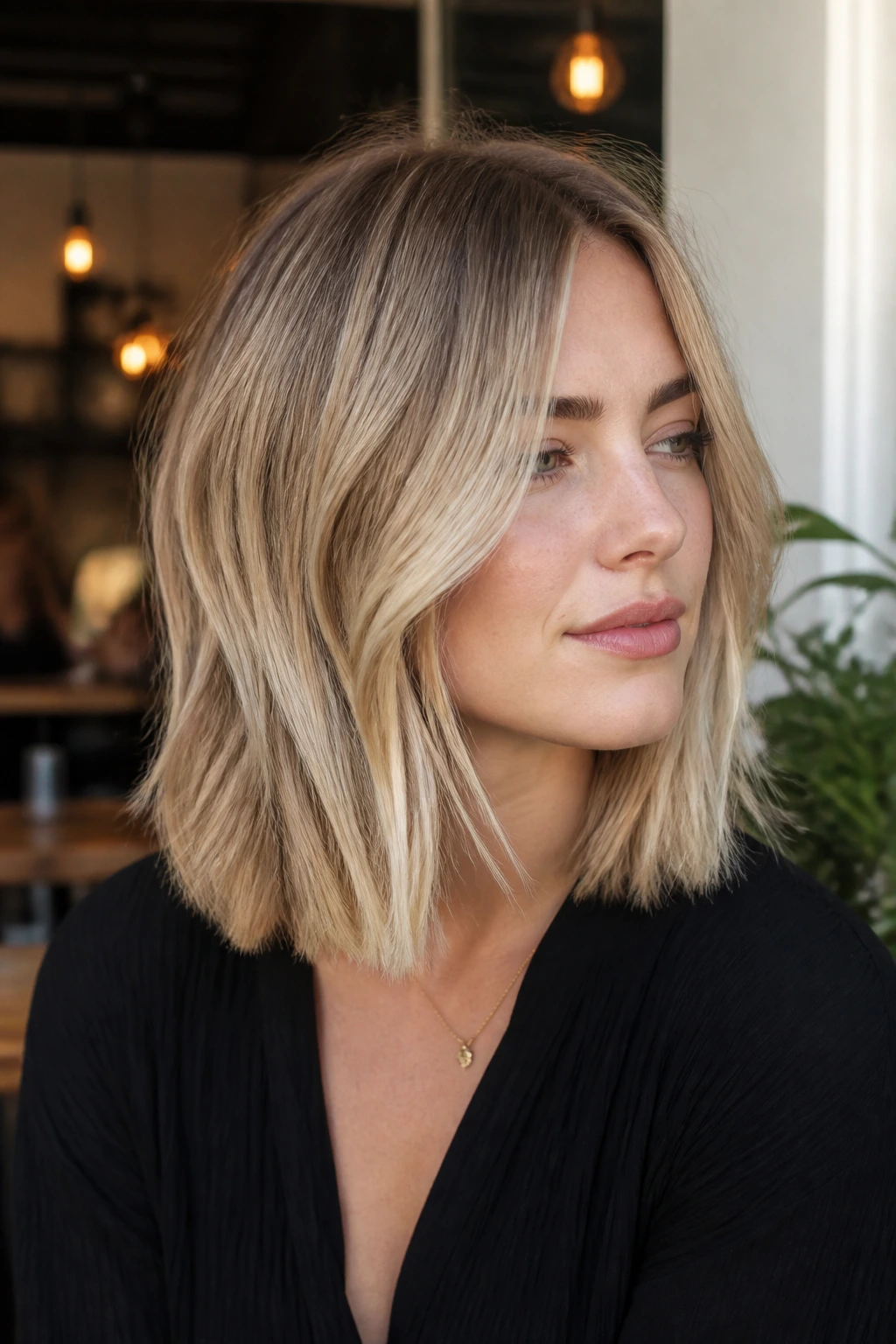
What if you want movement without losing density? This is the answer. A sliced end is not the same as a choppy razor cut; it’s a softer way to remove a bit of bulk while keeping the line alive. On fine hair, that distinction matters a lot.
The look works best with a neutral blonde that has a few lighter threads around the top layer. Those threads create the illusion of more strands, especially when the ends are styled with a slight bend. The shape feels airy, not messy.
What to Watch For
- Ask for soft slicing, not aggressive texturizing.
- Keep the perimeter visible from the front.
- Use a small amount of matte paste only on the very tips.
- Skip this version if your hair is already wispy at the ends.
A lot of stylists overdo texture on fine hair because they think it automatically creates body. It doesn’t. It creates movement when done lightly. There’s a difference.
10. Vanilla-Blonde Lob Styled Behind the Ear
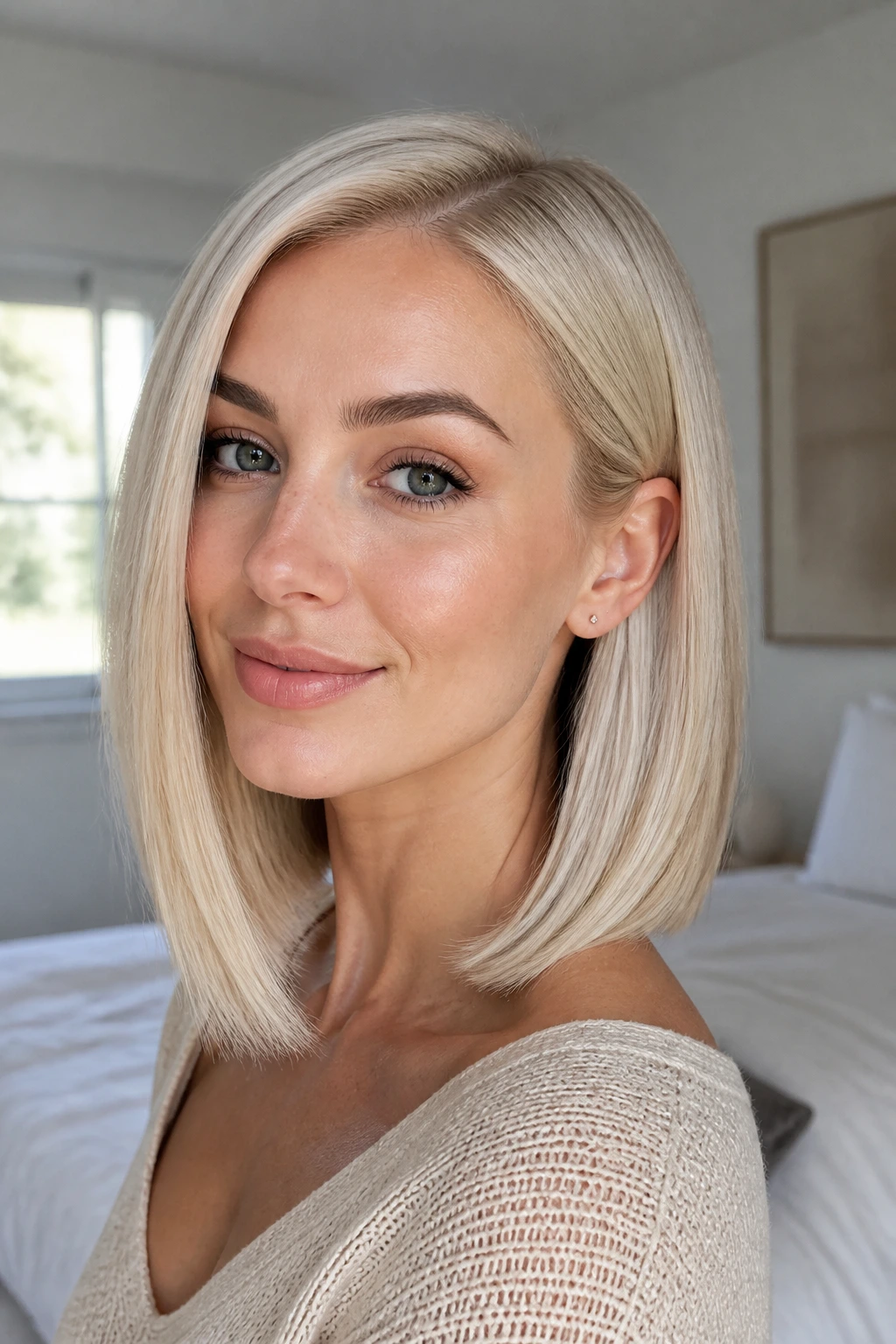
This one is built for the person who wants something neat but not severe. Vanilla blonde is soft and clean, and tucking one side behind the ear opens up an oval face without forcing the whole haircut to do extra work. It also exposes a little root lift on top, which helps fine hair look less flat.
The real charm is in the asymmetry. One side feels sleek, the other side keeps a little fullness around the jawline. That slight imbalance keeps the style from looking too polished or too rigid.
I like this cut when the hair has a natural bend and you don’t want to fight it. A quick flat-iron pass through the front pieces, then a tuck behind one ear, and the whole thing feels deliberate. Not fussy. Deliberate.
11. A-Line Lob With a Smooth Finish
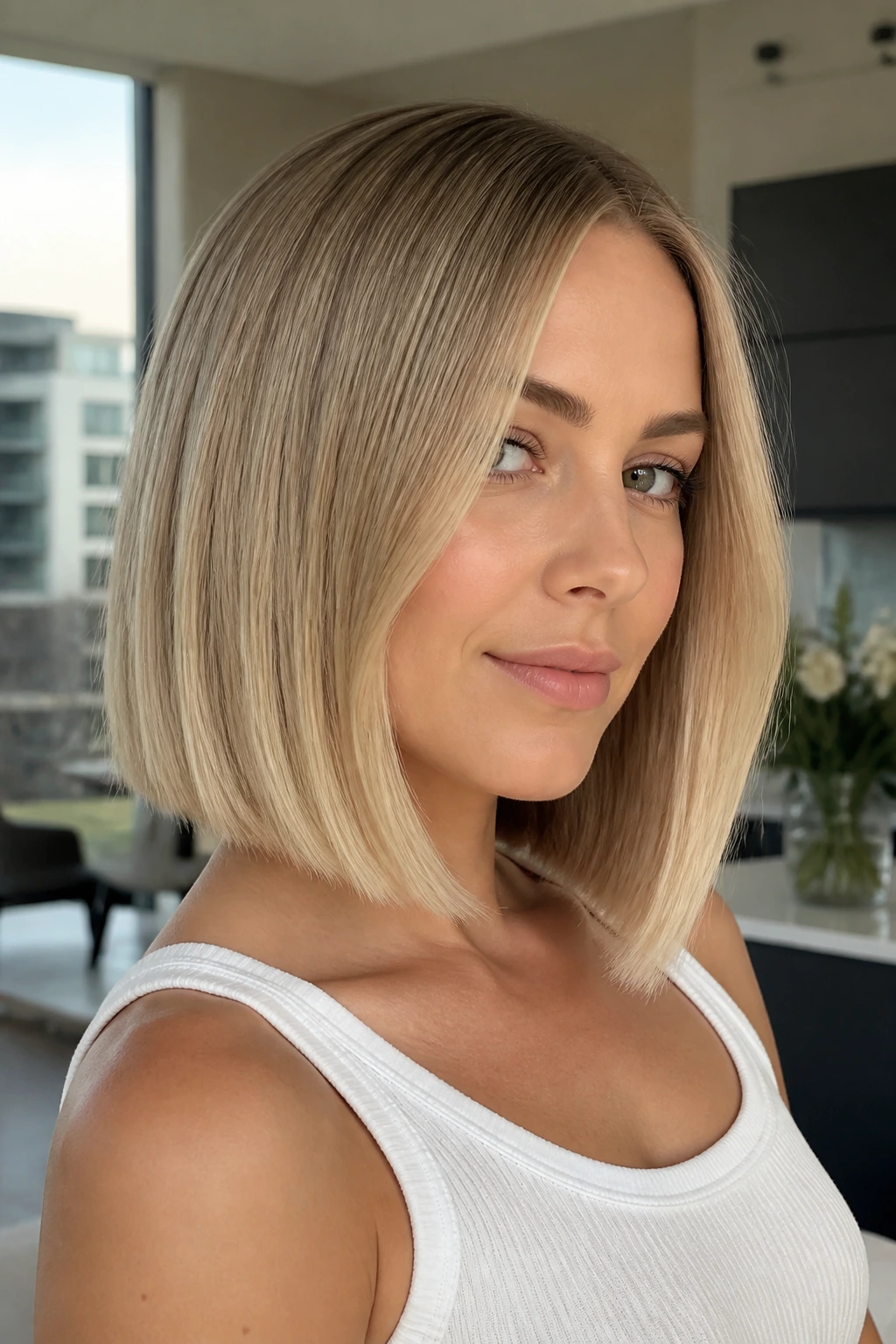
A subtle A-line shape does one thing very well: it gives fine hair a sense of direction. The back sits slightly shorter, the front drifts longer, and the eye reads movement even when the hair itself is very straight. On an oval face, that slope adds a bit of elegance without crowding the features.
Keep the angle mild. If the front pieces plunge too far past the collarbone, the cut starts to lose the fullness that makes a lob useful in the first place. You want a clean diagonal, not a dramatic wedge.
A smooth finish suits this shape best. Blow-dry with a nozzle, direct the ends under just a touch, and use a light glossing cream on the mid-lengths. The result is sleek without being stiff, which is exactly where this haircut lives.
12. Bronde Lob With Face-Contouring Balayage
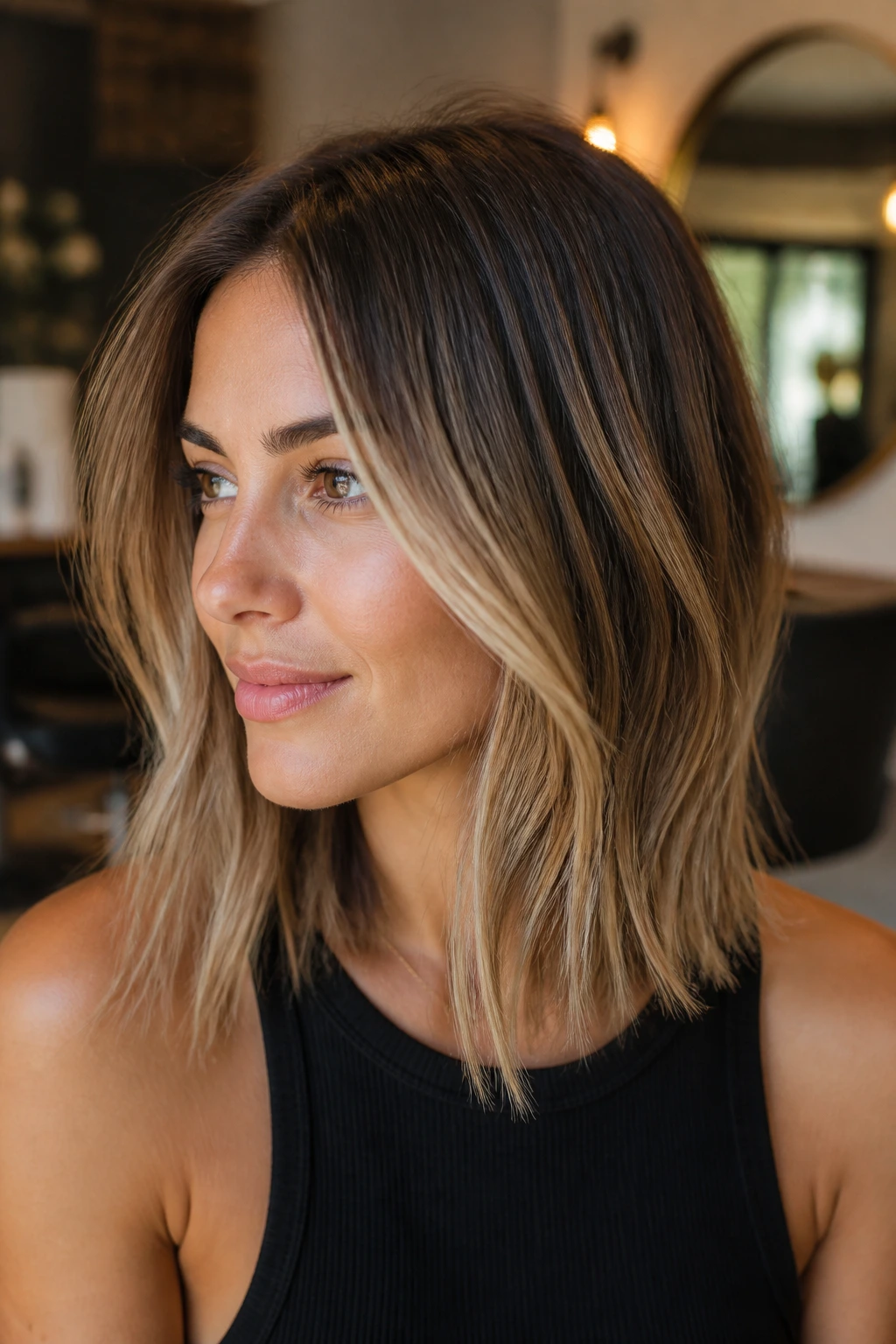
Bronde is the friendliest blonde family for fine hair. The darker pieces keep the hair from looking flat, and the lighter ribbons along the face add brightness without turning the whole head into a pale sheet. If you’re tired of chasing perfect toners, this is the calm, low-stress option.
Face-contouring balayage works well on oval faces because it can emphasize cheekbones or soften the jaw without dramatic striping. Ask for brightness around the cheek line and a little lift at the ends. The color should look hand-painted, not stacked in obvious chunks.
This is also one of the better choices if you don’t want to revisit the salon constantly. Bronde grows out with less drama, and fine hair usually looks better when the color stays a little deeper at the root anyway.
13. Feathered Lob With Bottleneck Bangs
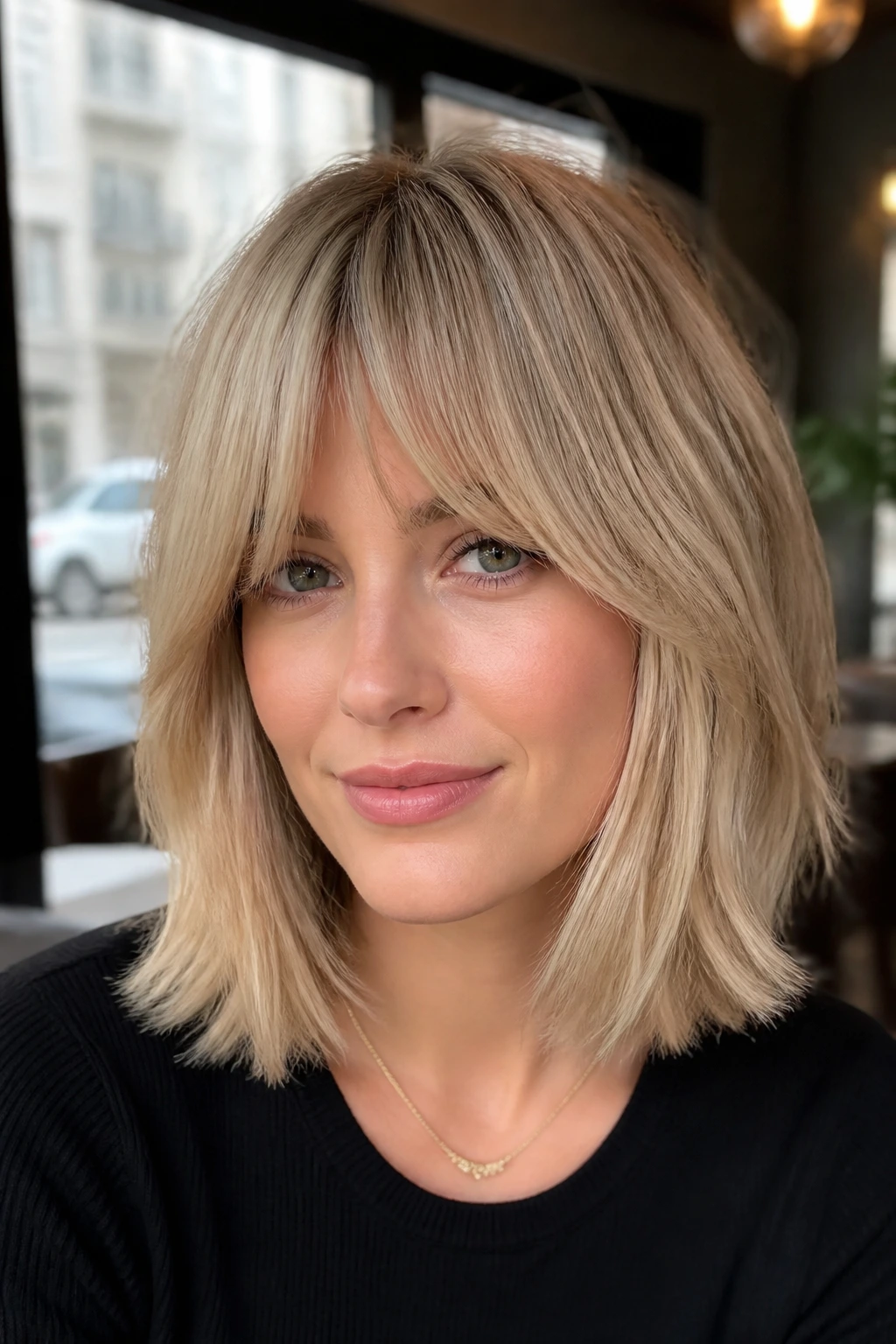
Feathering can go wrong fast on fine hair, so this version keeps it controlled. The layers are soft and barely there through the crown, while bottleneck bangs open out around the eyes and taper into the sides of the lob. That shape is flattering on oval faces because it adds movement without boxing the forehead in.
The key is softness at the transition points. If the bangs are cut too bluntly, they feel heavy. If the feathering is too aggressive, the ends thin out. There’s a narrow lane here, and that’s why this cut looks better in a salon with a steady hand.
The Shape to Ask For
- Curtain-adjacent bangs that narrow at the bridge of the nose.
- Light feathering around the temples.
- A blonde tone with soft beige or wheat pieces for depth.
- Ends left full, not wispy.
This is a good pick if you like your hair to feel styled even when it isn’t perfectly done.
14. Sleek Lob With High-Lift Babylights
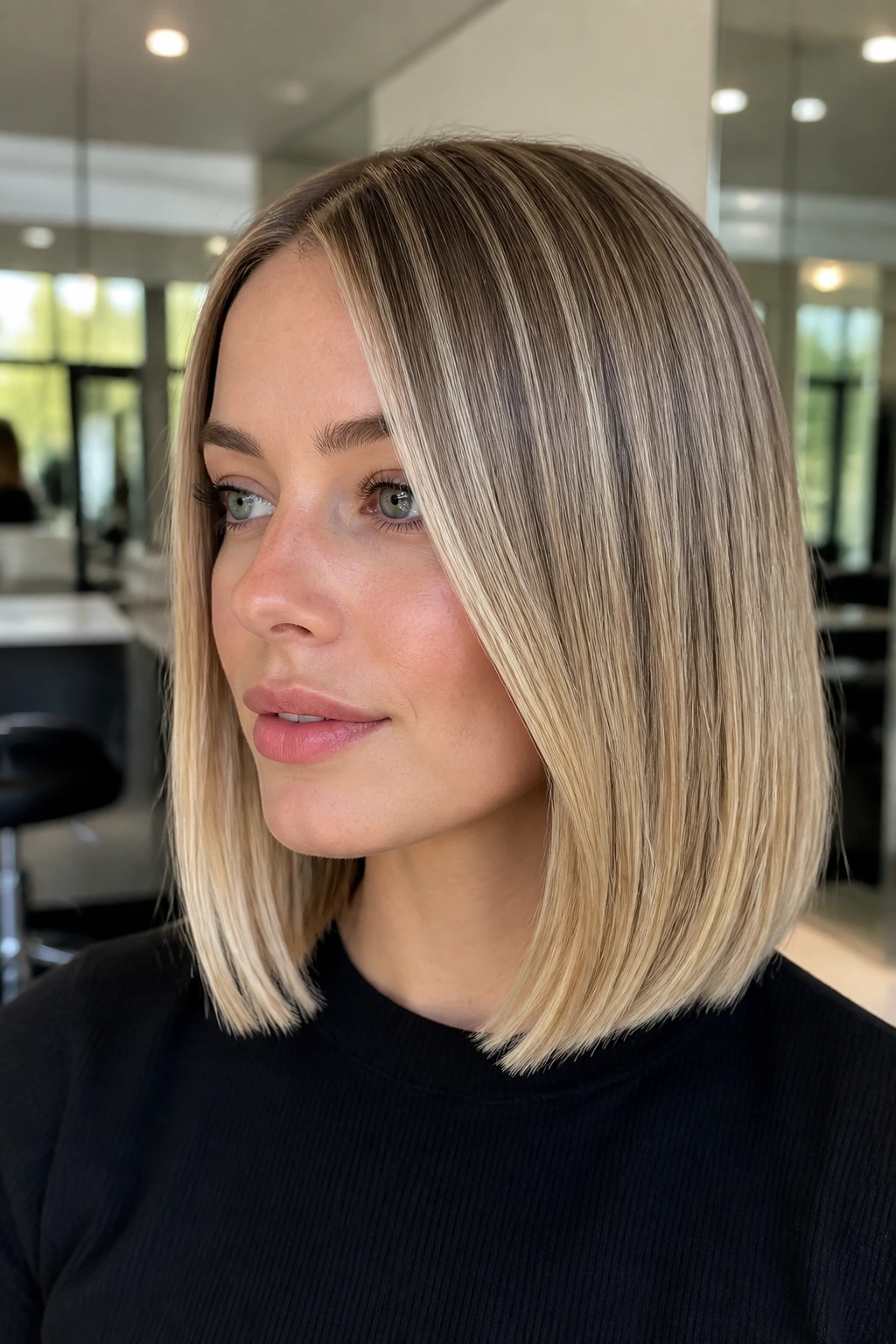
A sleek lob can look expensive on fine hair when the color work is done with restraint. High-lift babylights add shimmer through the top layer without opening up huge pale sections that show damage. That’s the trick. Tiny highlights, not big streaks.
Oval faces work well with this shape because the clean line keeps attention on the face itself. You can wear a middle part for symmetry or a soft side part for a bit of lift. Either way, the finish should stay glassy from roots to mid-lengths.
What I’d avoid is over-processing the ends just to get a brighter blonde. Fine hair gets fragile fast when the lightening is too aggressive. Better to keep the base a little deeper and the babylights fine enough that they read as sheen, not stripe.
15. Wavy Lob With Soft Shattered Ends
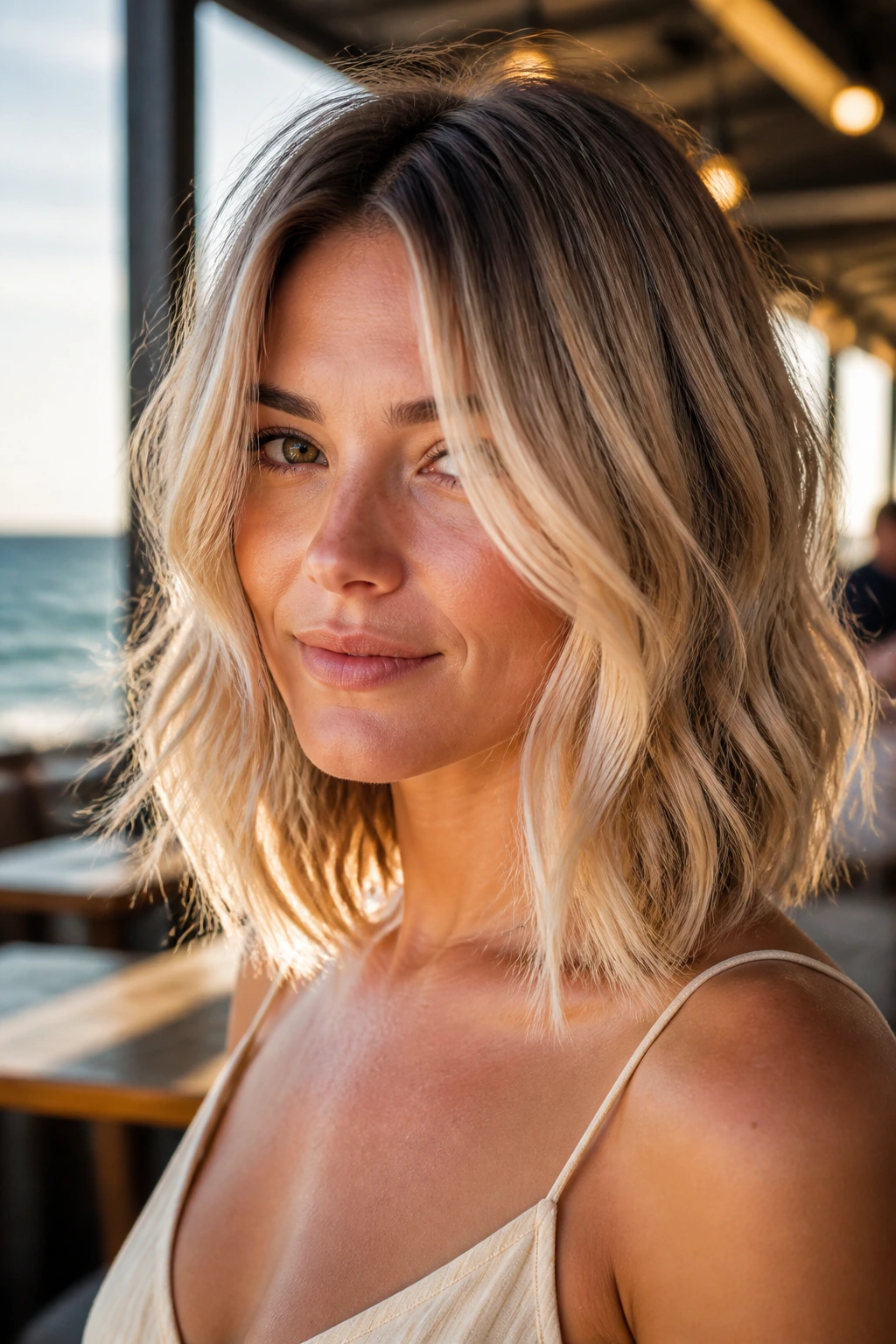
Do you want movement without your hair looking shredded? Then keep the “shatter” soft. This lob uses a small amount of texture at the bottom half-inch of the ends, just enough to break up a rigid line while still keeping the hem visually full. On fine hair, that balance matters.
The wave should be loose and brushed out, not crunchy. A 1-inch curling iron or flat iron bend works well, especially if you leave the last inch of the ends out. That little straight tail keeps the style from collapsing into a puff.
A creamy blonde with a few lighter ribbons around the face helps the waves show up more clearly. Light reflects off the bends, and the cut looks denser than it is. That’s the whole game here.
16. French-Girl Lob With a Side Fringe
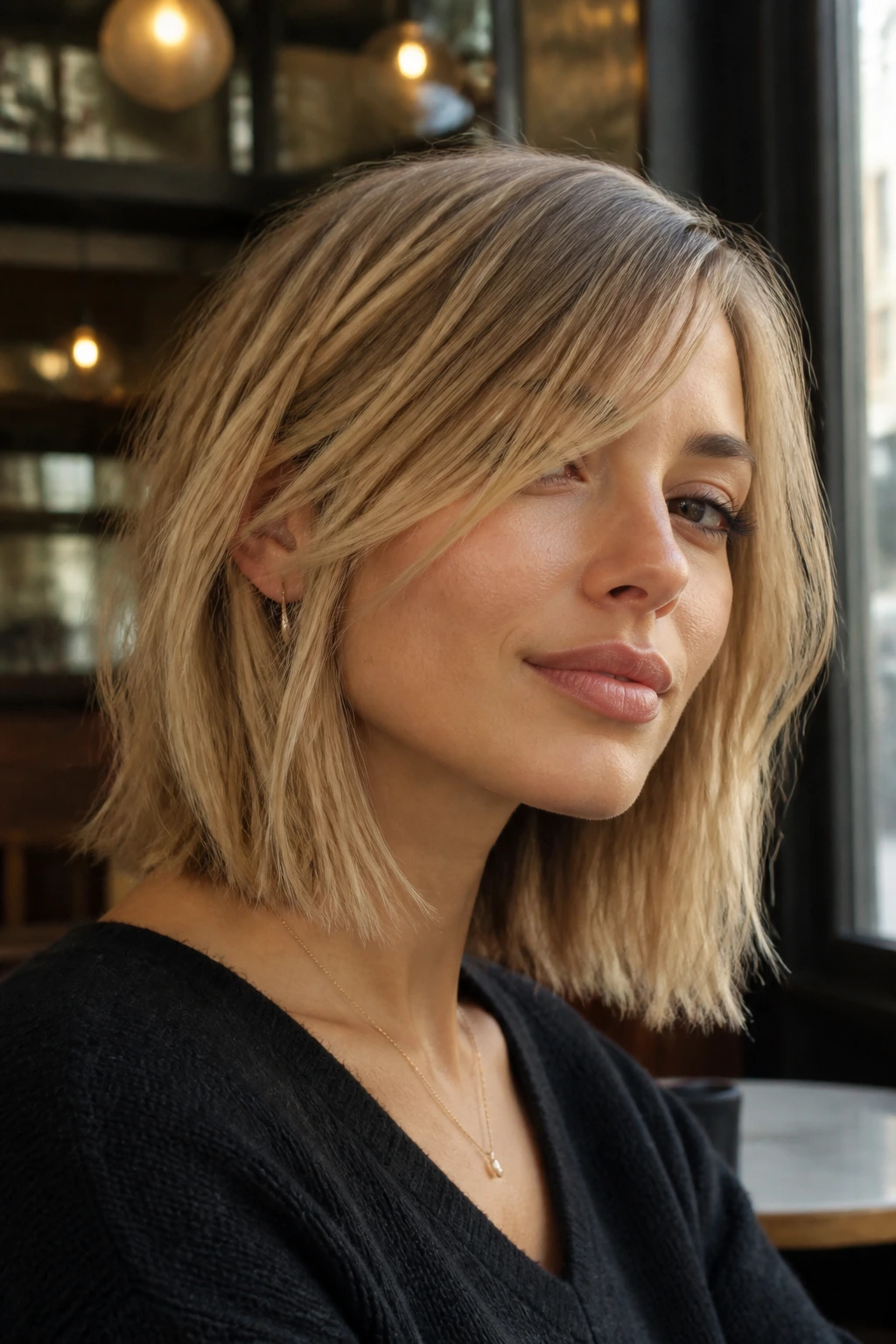
A side fringe is a nice escape hatch if curtain bangs feel too expected. It sweeps across the forehead, softens the oval shape just enough, and gives the haircut a little bit of attitude without turning it into a full fringe situation. Fine hair usually behaves better with this than with a thick bang.
The rest of the cut should stay light and blunt-ish at the bottom. Too many layers would fight the fringe and flatten the whole look. A soft beige blonde or sandy blonde tone keeps the style relaxed, which is exactly the point.
This is the kind of lob you can air-dry and still look like you made a decision. That matters. Not every haircut needs a 20-minute styling routine to feel finished.
17. Polished Blowout Lob With Collarbone Flicks
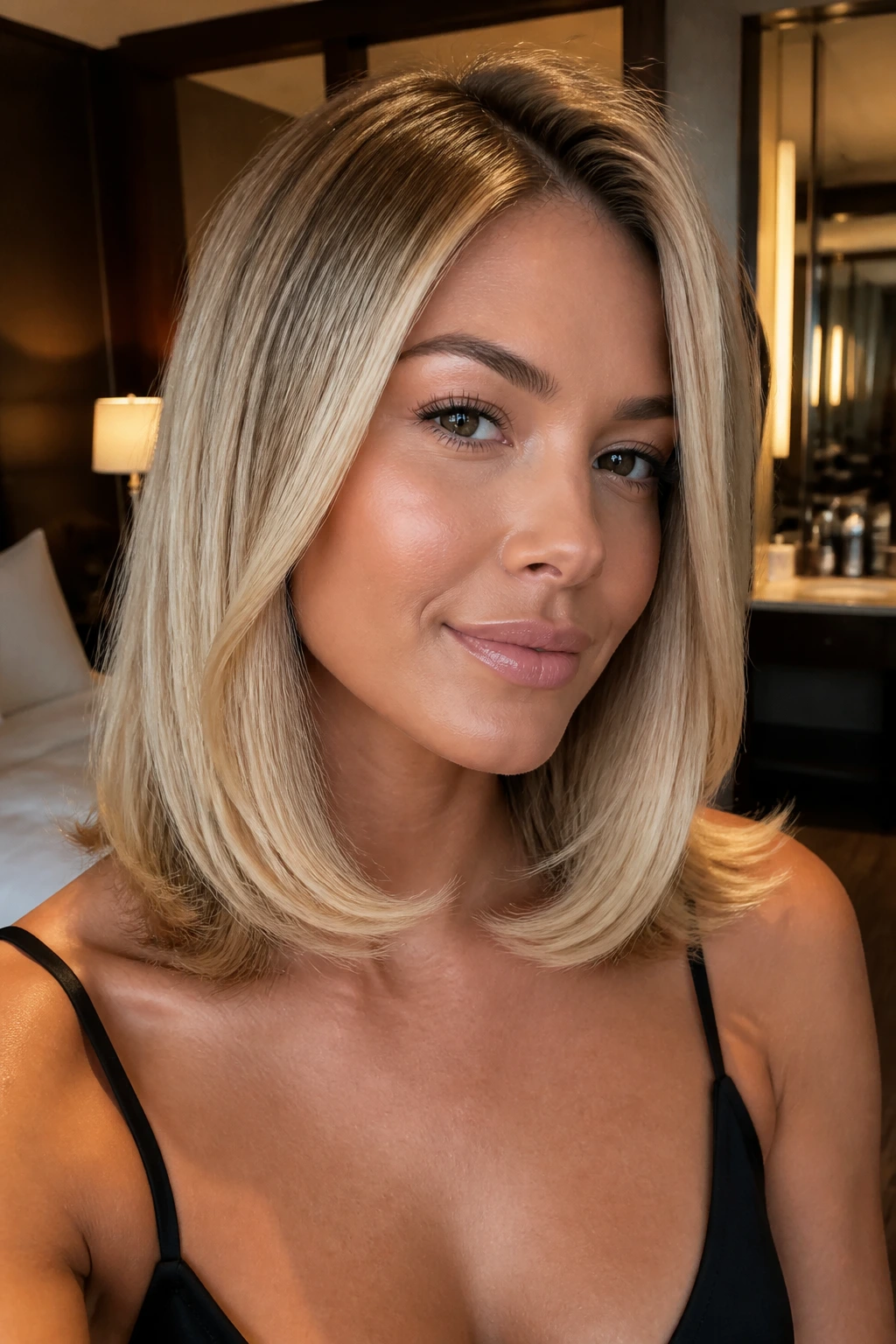
A good blowout does something peculiar on fine hair: it makes the ends look more substantial than they actually are. This lob leans into that. The hair lands at the collarbone, the roots get lifted with a round brush, and the ends flick just slightly away from the neck.
It’s a strong choice for oval faces because the polished shape lets the features stay open. Nothing hides the face; it just frames it with movement. Blonde tones with a creamy or vanilla base look especially clean here.
If your hair tends to fall flat after styling, set the crown with clips while it cools. That tiny step keeps the root lift from disappearing. Skip it, and you’ll be back to square one by lunch.
18. Razored Lob With Lived-In Blonde
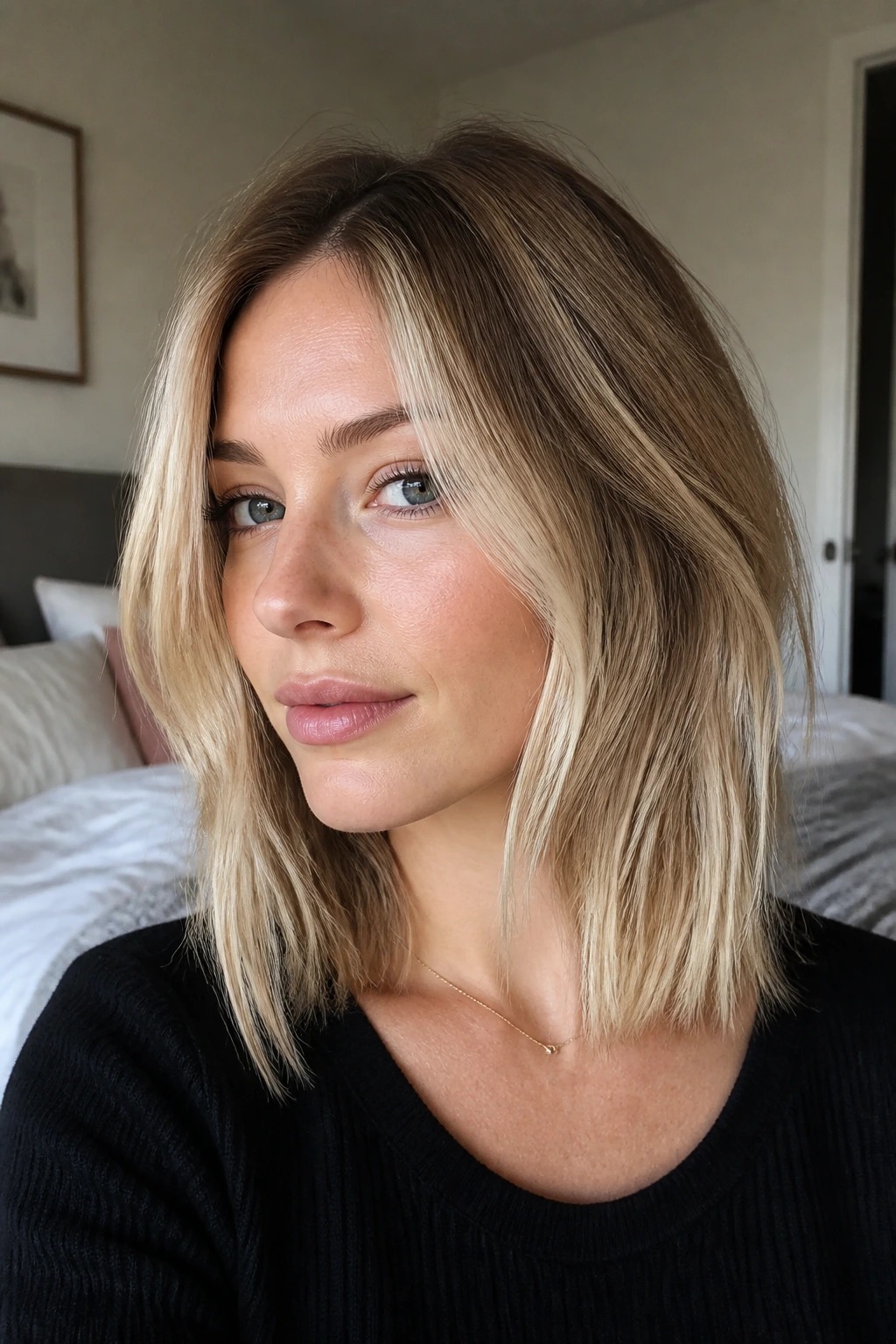
A razor cut can be a gift or a mess on fine hair. The difference is restraint. Used lightly on denser ends, it can soften a perimeter that feels too blunt. Used too hard, it turns the hair stringy and sad. There’s no reward for overdoing it.
Lived-in blonde suits this shape because the color has some depth near the root and lighter pieces through the ends. That gives the texture room to show without exposing every thin spot. The finish feels casual, which works well if you hate a pristine salon look.
I’d choose this version only if your hair has a bit of natural body or if it’s fine but plentiful. If the ends are already fragile, keep the blade away.
19. Minimal One-Length Lob With Creamy Blonde
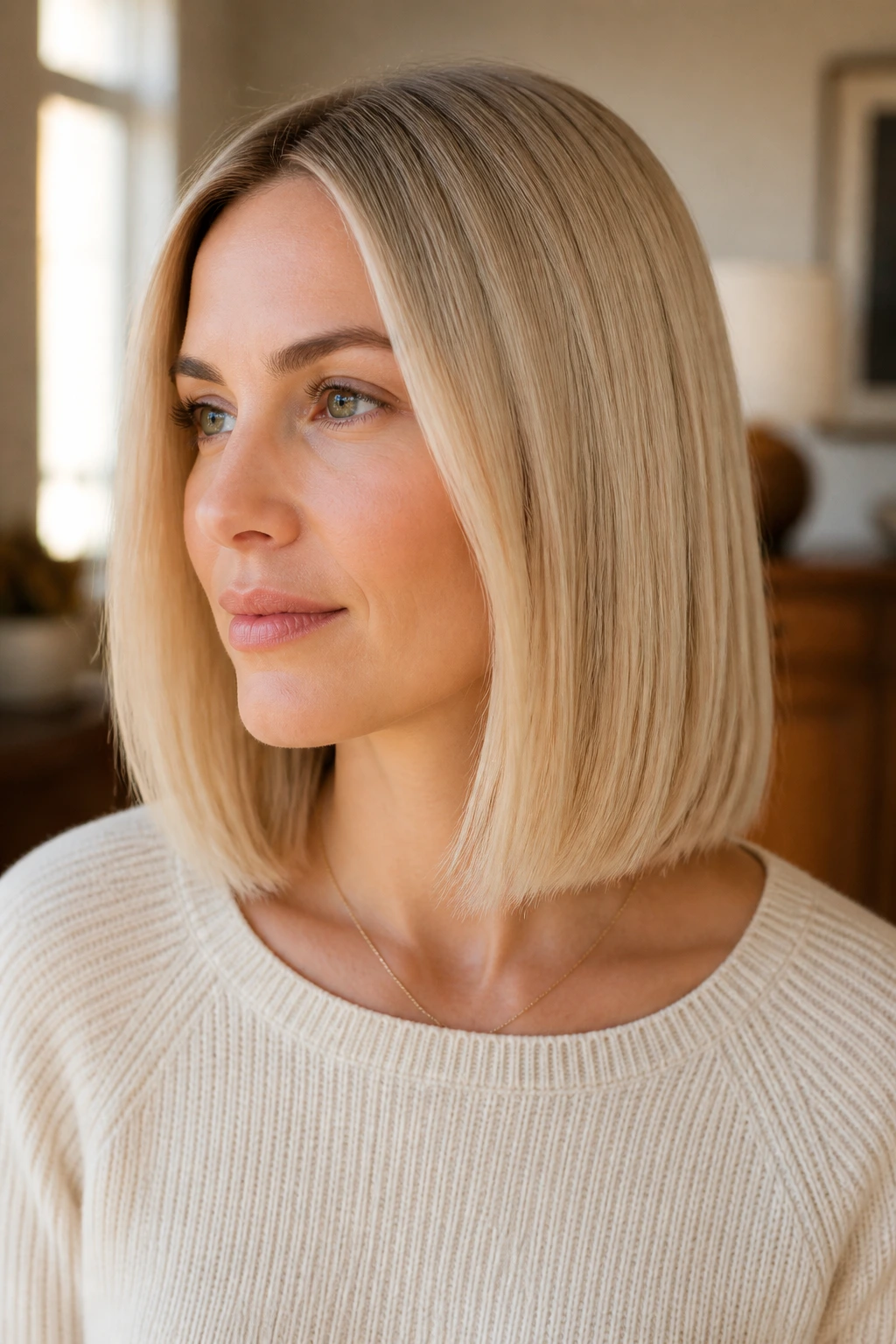
This is the one I’d hand to someone with very fine, straight hair who wants the safest bet. One length. Clean hem. Soft creamy blonde. No drama. No over-thinning. It looks simple because it is simple, and that simplicity is the point.
The cut should land around the collarbone or a touch above it. That’s the sweet spot where the hair still feels long but doesn’t drag itself flat against the chest. The blonde should be creamy enough to reflect light, but not so pale that every little break in the ends shows up.
Why It Wins
Fine hair often looks best when the shape is allowed to do the work. This cut gives you that. If you like a center part, it wears well. If you tuck it behind one ear, it still holds. If you add a bend, it doesn’t fight back.
20. Shag-Lite Lob With Light Crown Layers
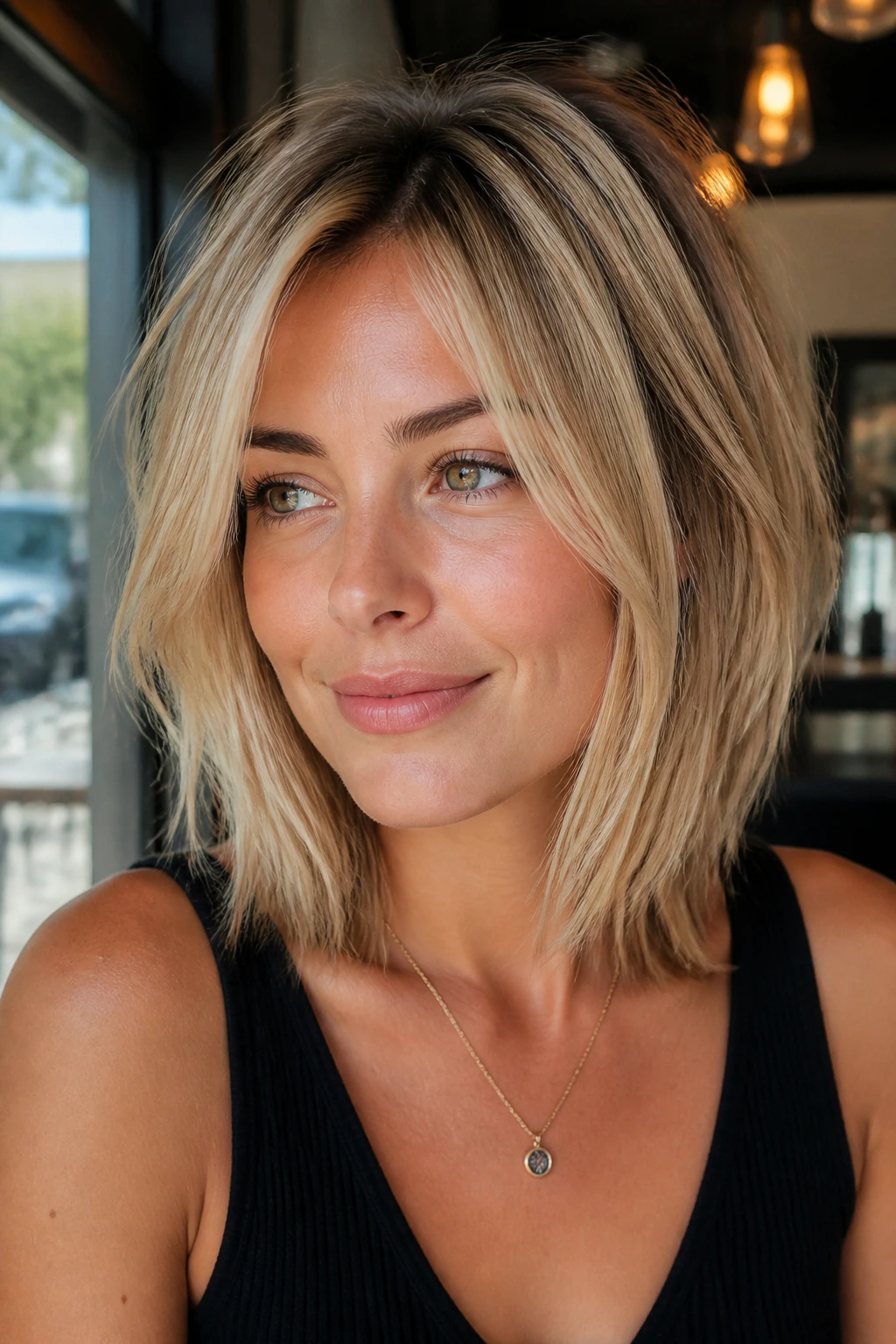
Do you want texture without committing to a full shag? Shag-lite is the answer. The crown gets a few short layers for lift, but the perimeter stays more grounded than a true shag, which keeps fine hair from losing its edges.
The blonde should stay a little darker underneath, with lighter pieces on the surface and around the face. That keeps the top looking fuller and the lower lengths from going see-through. It’s a balancing act, but a useful one.
This version works best on hair with at least a slight natural wave. If your hair is poker-straight, you’ll need a bend or a rough blow-dry to keep the layers from falling flat.
21. Deep Side-Part Lob With Smudged Roots
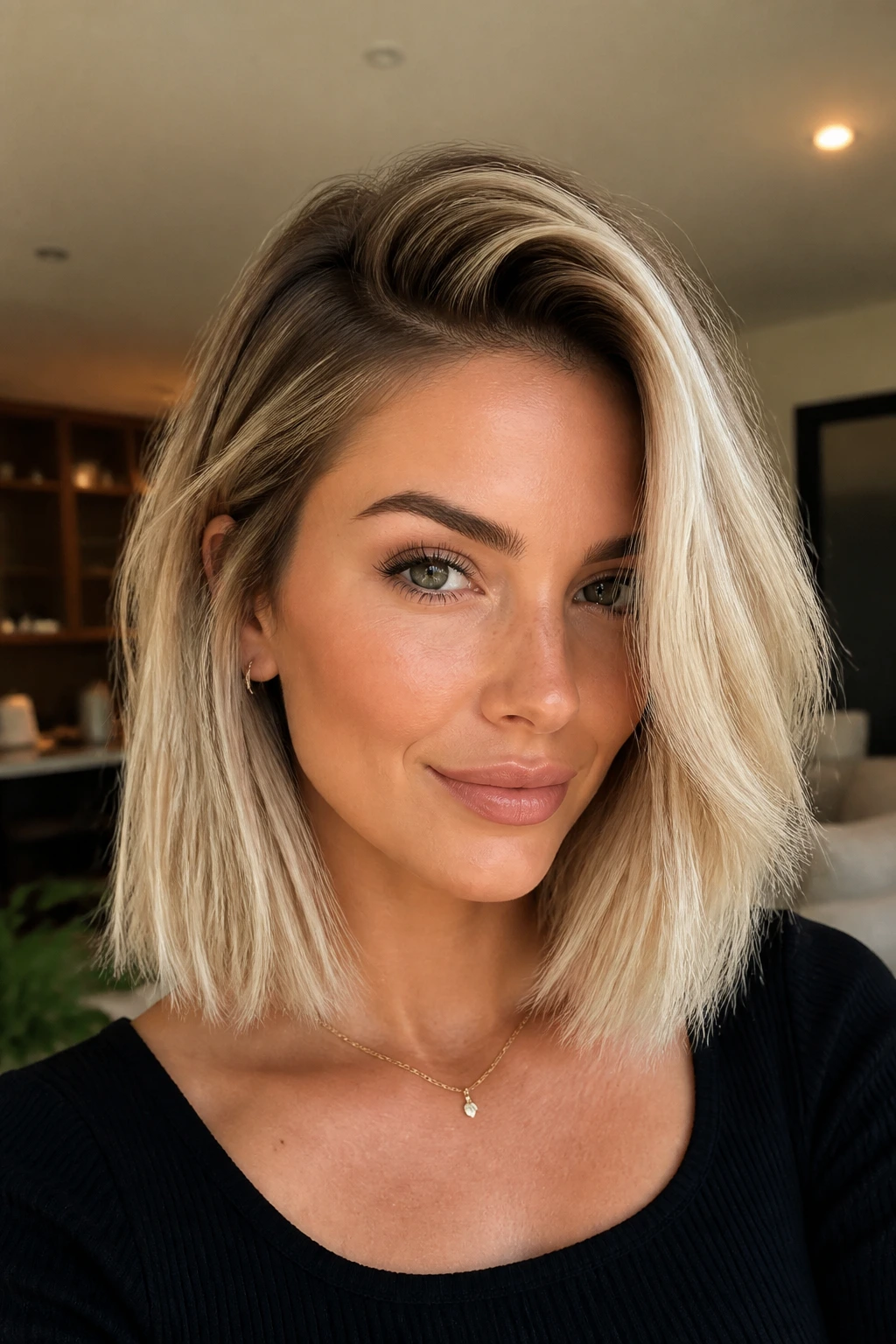
A deep side part can change the whole mood of a lob. It lifts one side at the root, drops the other side into a soft frame, and gives fine hair an easy dose of volume without extra product. On an oval face, the result feels a little more dramatic but not fussy.
The smudged root matters because it keeps the blonde from looking too “done.” A root that’s one shade deeper gives the hair a shadow line, and shadow lines make hair look denser. That’s the part most people miss.
If you only wear your hair one way, this cut can still work. But if you like changing sides, it looks even better because the root lift shifts with the part.
22. Glossy Lob With Long Curtain Fringe
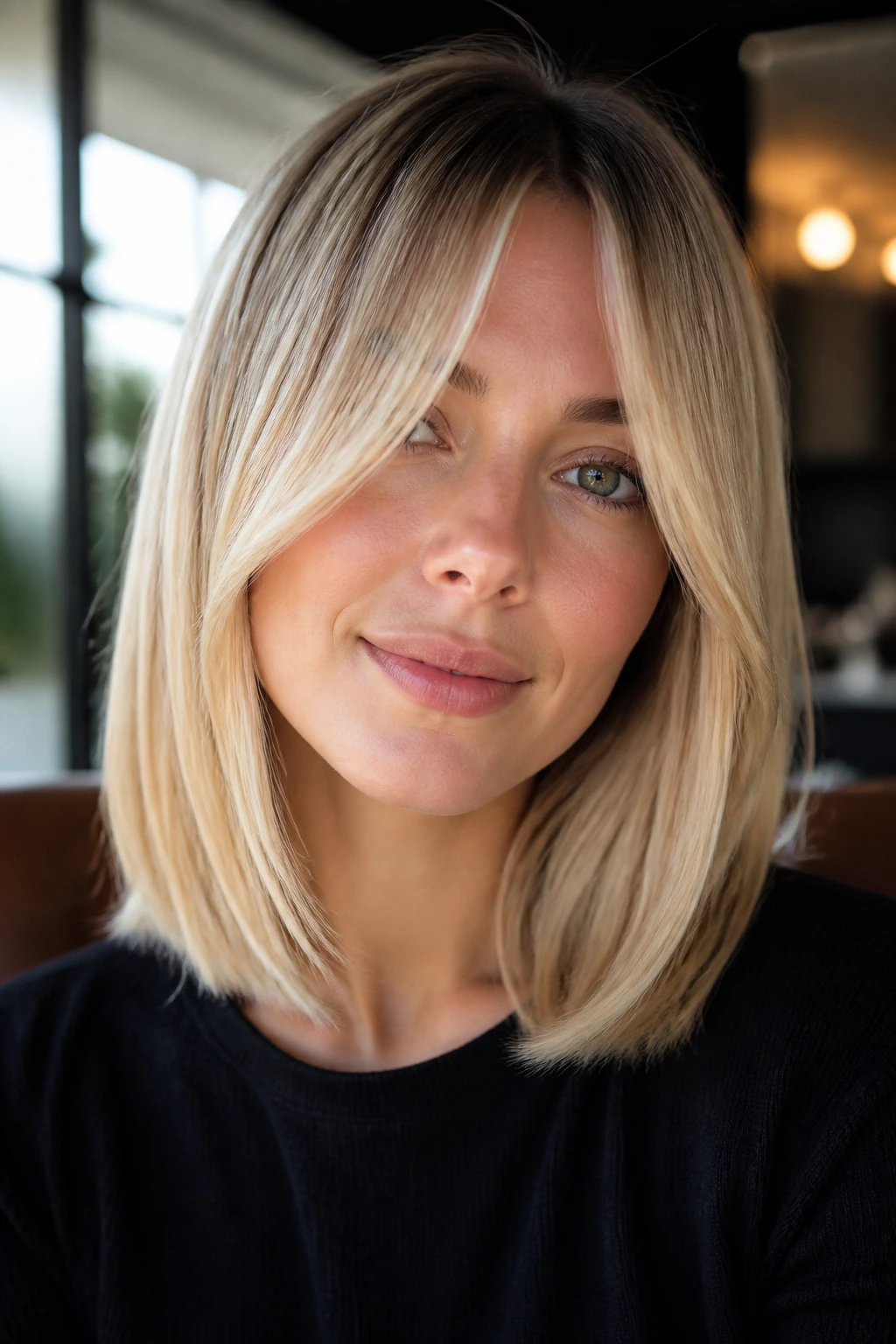
This is the polished cousin of the curtain-bang lob. The fringe starts a little lower and longer, which means it blends into the sides without stealing too much density from the front. That’s a smart move for fine hair.
The gloss is what makes it sing. A clear or slightly warm blonde glaze makes the surface look smooth and reflective, and the fringe frames an oval face without crowding the brows. It feels neat, but not stiff.
How to Wear It
Brush the fringe forward with a round brush, then sweep the outer pieces away from the face. That little contrast — center softness, side movement — is where the shape gets its energy.
If your hair is prone to cowlicks, this style is still possible. You just need to dry the fringe first and let it cool before you touch the rest.
23. Neck-Grazing Lob With Micro-Ribbons
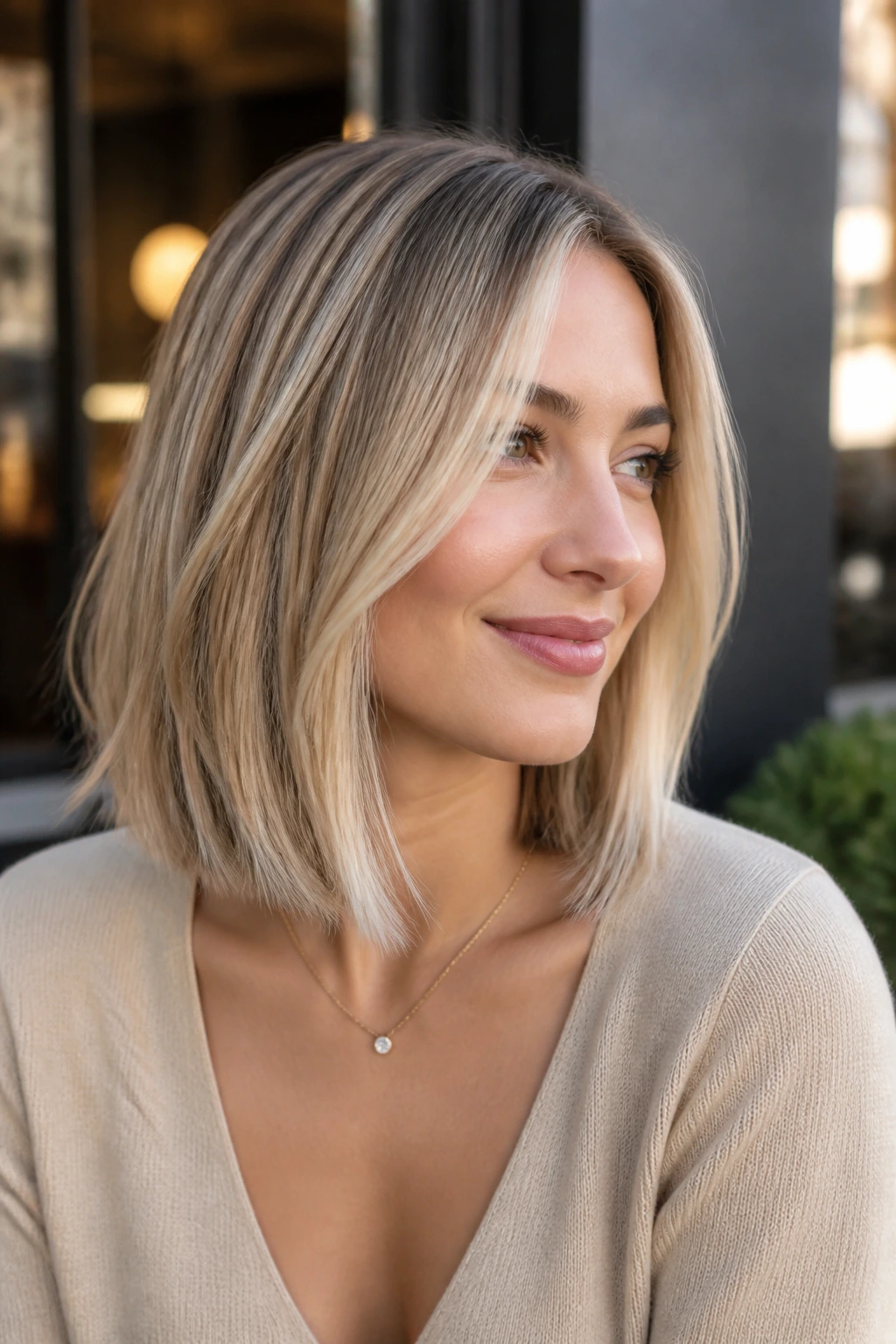
A neck-grazing length is underrated for fine hair. It keeps the cut short enough to bounce, but long enough to tuck behind the ears or wear straight without feeling severe. Add micro-ribbons of blonde — thin, tiny highlights instead of thick streaks — and the hair starts to look brighter in motion.
Oval faces don’t need a lot of structural correction here. The soft shape and close length already keep the features open. The ribbons are just there to catch the light when the hair moves.
I’d choose this cut if you want something that feels modern without screaming for attention. It’s quieter than a shag, easier than a razor cut, and often more flattering than a heavily layered lob.
24. Asymmetrical Lob With Subtle Contour Highlights
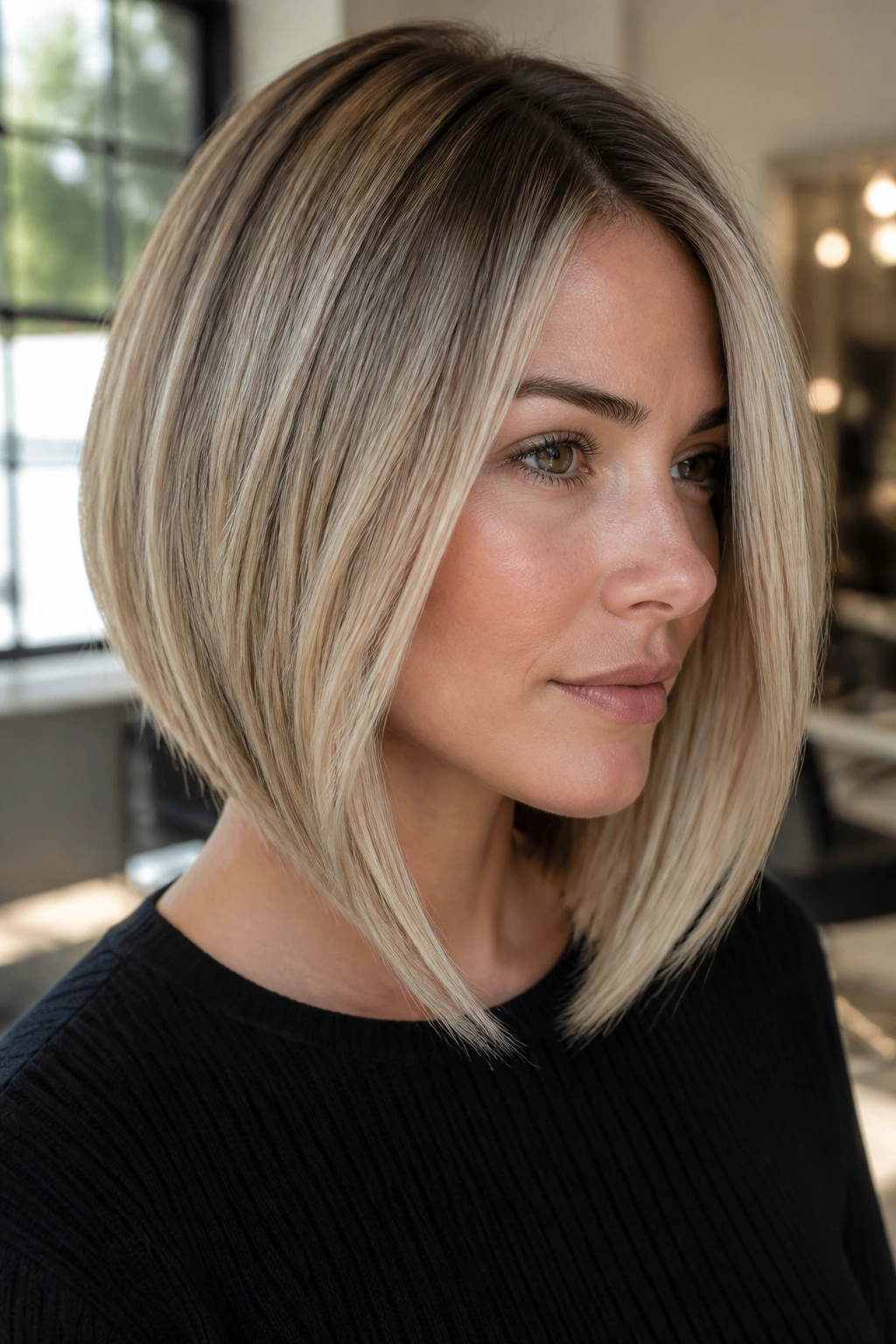
A tiny asymmetry can make a lob feel sharper, but don’t let it drift into costume territory. On fine hair, the difference between sides should stay modest — maybe half an inch to an inch at most. Enough to notice. Not enough to make the haircut look like it’s trying too hard.
Contour highlights can sit around the cheek and jaw to guide the eye. For an oval face, that means you can either sharpen the cheekbones or soften the lower face, depending on where the brightness lands. The cut does not need much else.
This works best when the overall finish is smooth. Too much wave and the asymmetry gets lost. Too much texturizing and the line stops reading as intentional.
25. Softly Beveled Lob With Dimensional Wheat Blonde
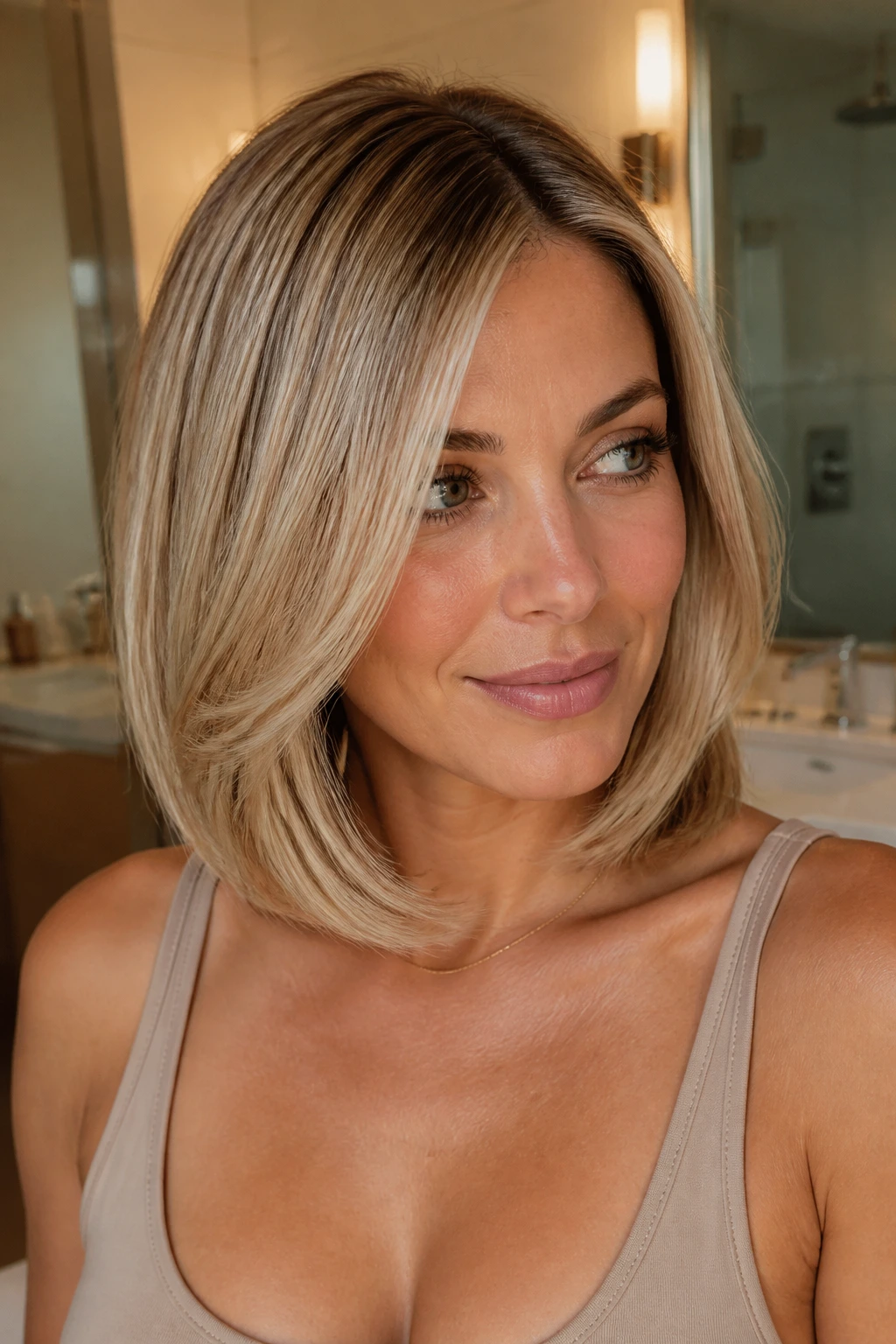
If you want one cut that keeps showing up for you, this is the one. The bevel at the ends gives the lob a gentle inward curve, which makes fine hair look a little fuller around the hem. Wheat blonde adds depth and warmth without tipping yellow or ash-gray.
Dimensional color is what saves this from looking flat. A base that’s slightly deeper than the lightest ribbons gives the hair a sense of body. On an oval face, the shape stays open and calm, which is probably why stylists keep coming back to it.
It’s the kind of lob that works in a hurry, with a brush, with a clip, or after a lazy wave. Clean, adaptable, and not needy. That’s a better compliment than “trendier,” any day.
Why the Lob Shape Matters More Than Extra Layering
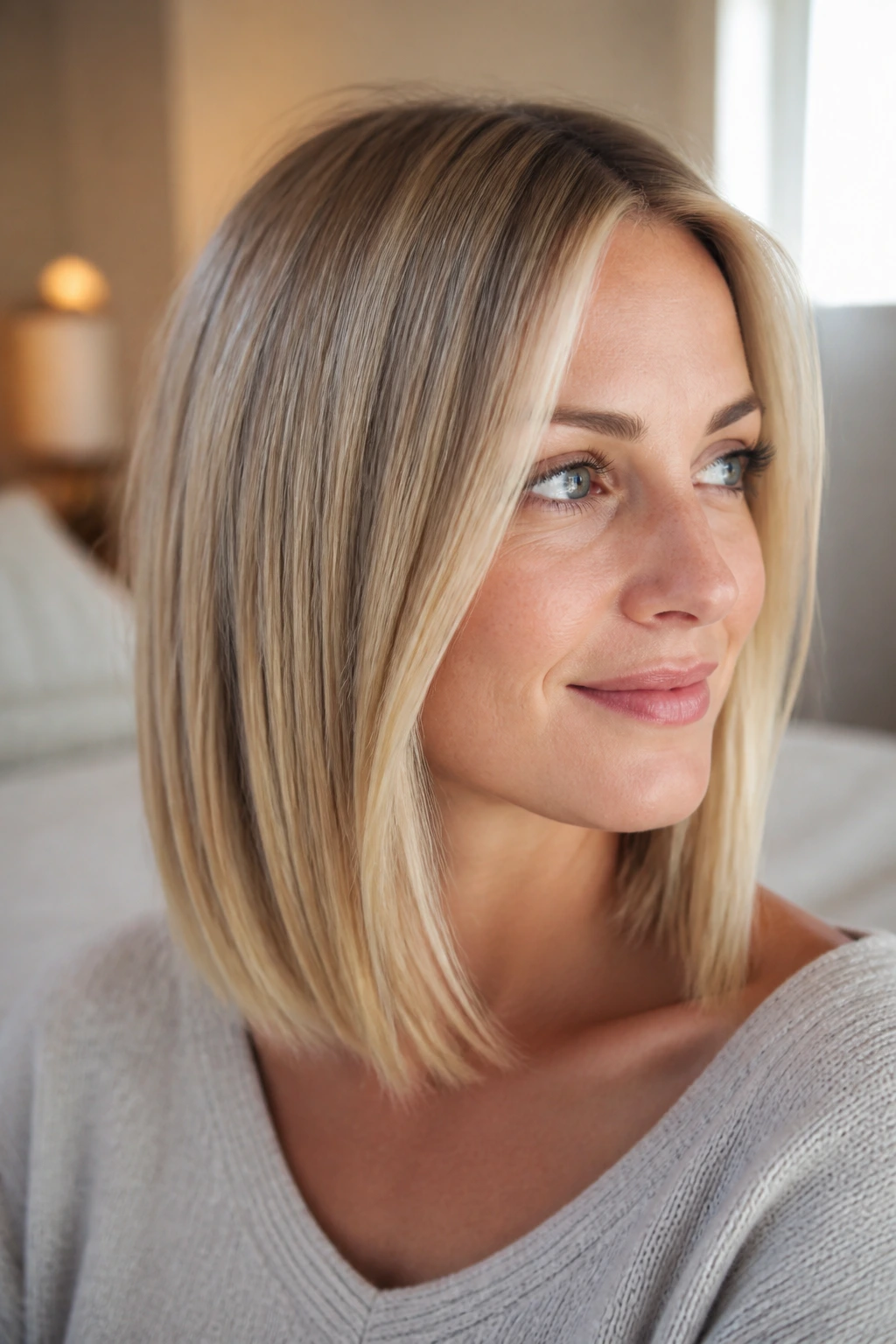
Fine hair gets treated like it needs help all the time, and half the time the help is the problem. Too many layers remove the weight that keeps the hair lying in a solid line, which is exactly why a long bob often looks fuller than a heavily textured medium cut. The shape carries the style before the styling products even show up.
Oval faces don’t need aggressive shaping either. That gives you room to choose a center part, a deep side part, a fringe, or a face frame based on your style rather than a correction formula. I like that freedom. It makes the haircut feel personal, not standardized.
The best blonde long bobs for fine hair and oval faces also have one color thing in common: they avoid a flat, single-note blonde whenever possible. A root shadow, a micro-babylight, or a soft lowlight creates depth where fine hair usually looks bare. Light at the front, depth at the root, fullness at the edge. That trio is doing the real work.
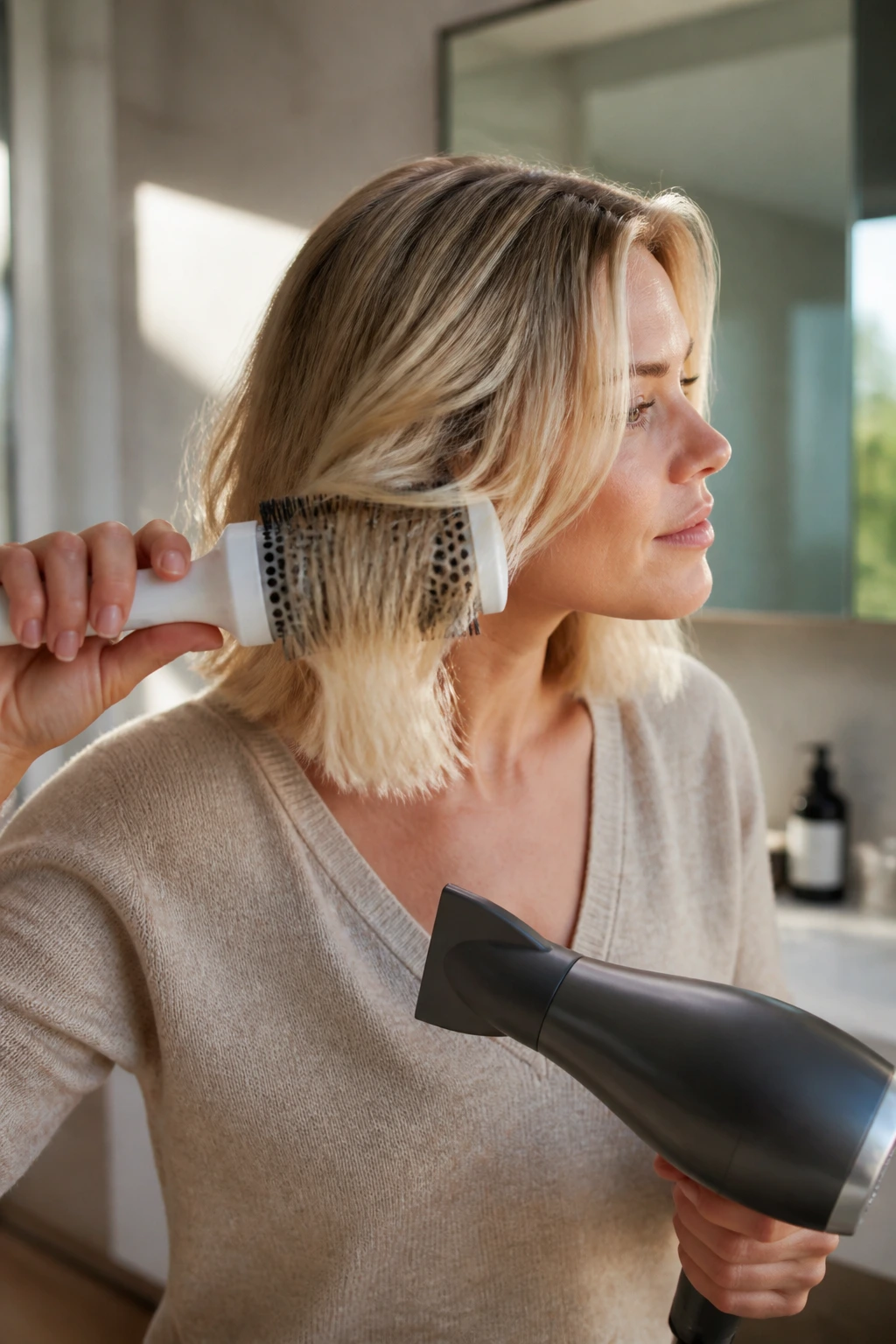
Essential Tools for Styling and Maintenance
-
1.5-inch round brush: Good for smoothing the ends under and adding a little bend without making the hair curl into itself.
-
Blow dryer with a narrow nozzle: Keeps the airflow controlled so fine strands don’t get blasted into frizz.
-
Heat protectant spray: A light mist protects fragile blonde lengths before any iron or blow-dryer work.
-
Volumizing mousse: Best at the roots on damp hair; it gives lift without the sticky crunch some sprays leave behind.
-
Root-lift spray: Handy if your crown falls flat by noon, especially on center-part styles.
-
1-inch curling iron or flat iron: Small enough to create soft bends, not tight curls that shrink the length.
-
Duckbill or sectioning clips: Useful for setting the crown while it cools, which helps the shape stay put.
-
Purple shampoo or toning gloss: Optional for cooler blondes; use lightly so the hair doesn’t look dull or muddy.
-
Tail comb: Helps make clean parts, especially when you want a deep side part or precise curtain-bang placement.
-
Dry shampoo: Not just for grease — it also gives roots grip on day two.
How to Ask for the Right Cut and Blonde Tone
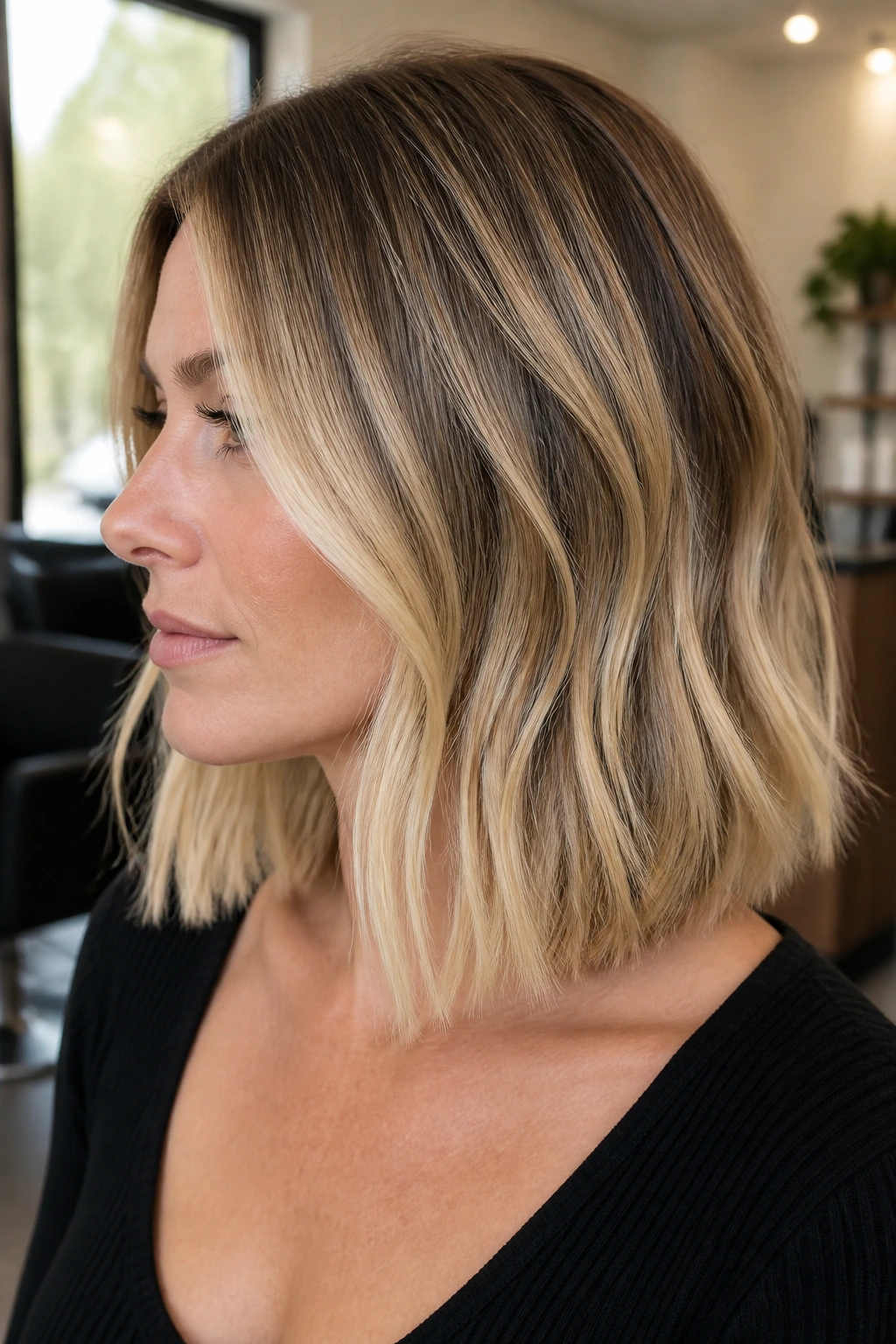
Bring photos, but say something useful too. “Collarbone-length blunt lob” tells the stylist where the hem should sit. “Keep the perimeter full” tells them not to shred the ends. “Minimal internal layers” keeps fine hair from losing its shape before you’ve even walked out of the salon.
If you want face-framing, be specific about where it should begin. Cheekbone starts usually work better than jawline starts on oval faces because they keep the face open while still adding movement. If you want bangs, curtain bangs or a long side fringe are usually safer than a heavy, straight-across fringe.
For blonde color, ask for dimension instead of just lightness. Beige, champagne, honey, creamy wheat, and pearl all work, but the best one depends on your skin tone and how much upkeep you want. A root shadow one shade deeper than the lengths helps fine hair look fuller and buys you a softer grow-out. If your hair is fragile, say that out loud. A good colorist will keep the lightening concentrated where it matters and leave the ends alone when they should.
Styling These Lobs on Real Mornings
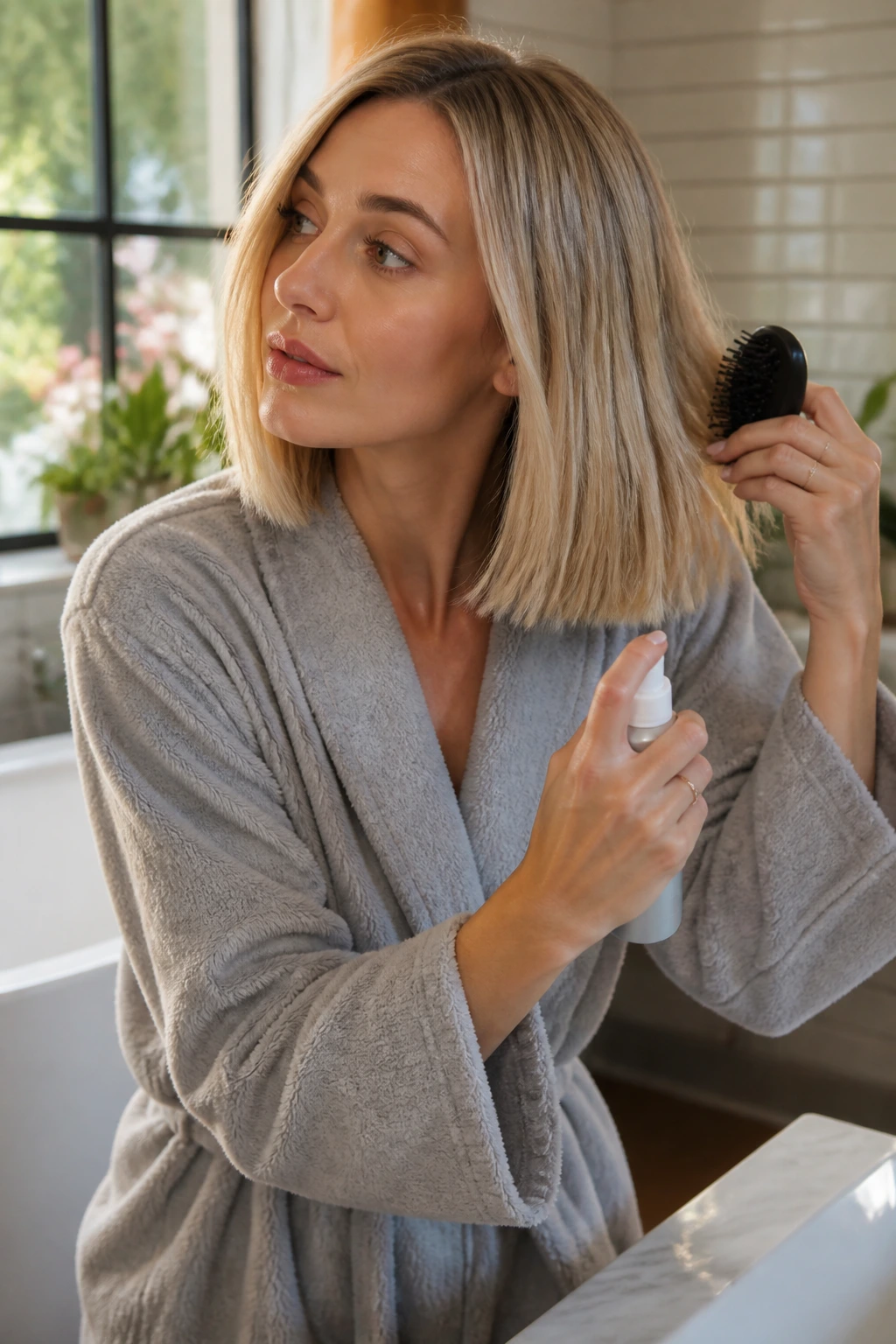
Quick Blowout: Rough-dry the roots about 70 percent of the way, then use a round brush only on the top half and the ends. Finish with a cool shot while the hair is wrapped around the brush. That cool-down matters more than people think.
Soft Wave: Wrap 1-inch sections around a curling iron, leaving the last inch out. Alternate directions so the wave doesn’t clump into one shape. When it cools, brush it out once with your fingers or a wide-tooth comb.
Air-Dry Finish: Work a light mousse through damp roots, scrunch the mid-lengths once, and leave it alone. Fine hair usually looks better when it’s not picked at every ten minutes. If you need more lift, clip the crown for 10 to 15 minutes while it dries.
Day-Two Reset: Mist the roots with water or a leave-in spray, blow-dry the top only, then hit the ends with a quick pass of a flat iron if needed. Dry shampoo at the crown, not the lengths, gives the cut a fresher lift without coating the blonde.
Additional Tips and Texture Boosters
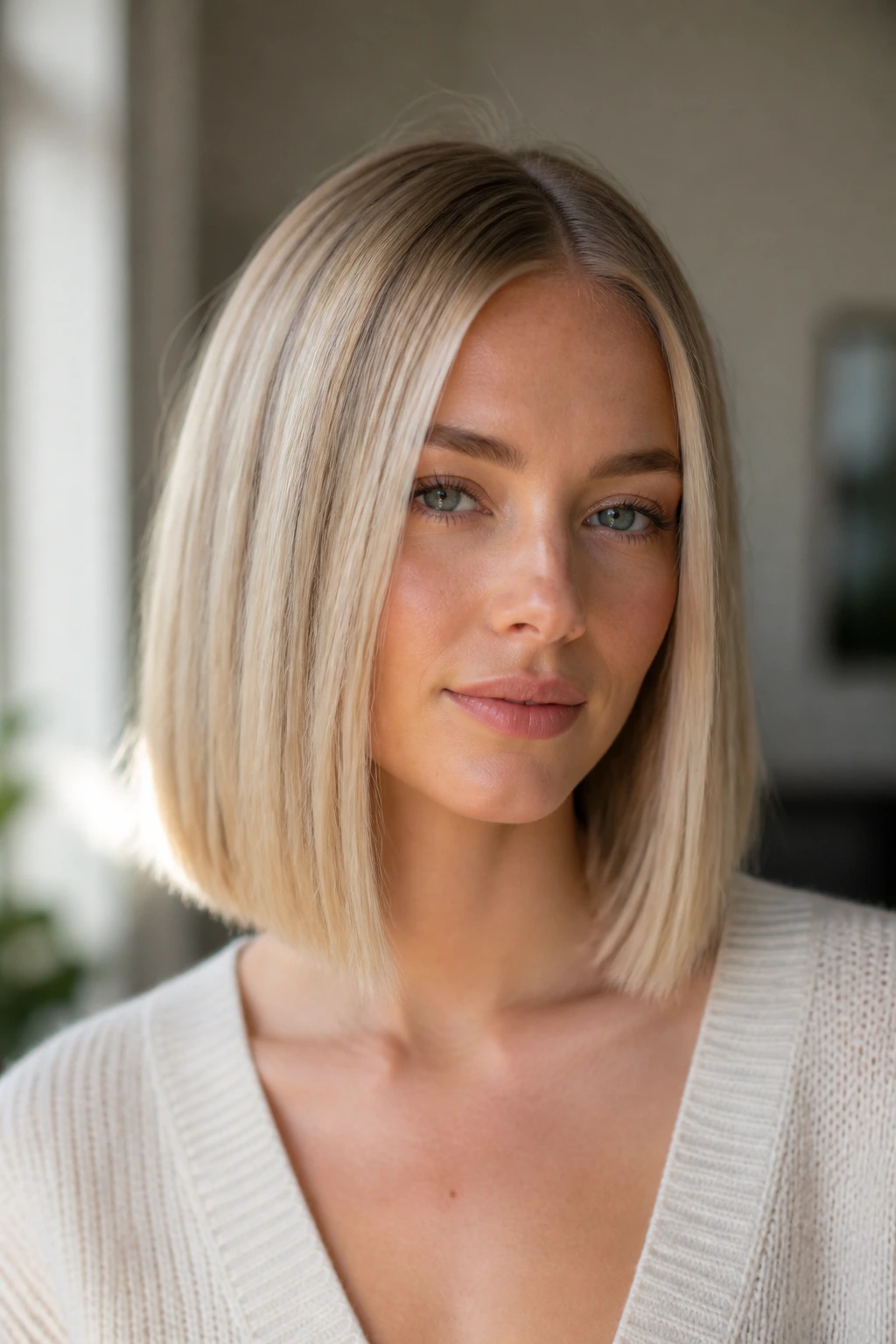
Flavor Enhancement: A tiny bit of glossing serum on the final inch of the hair can make blonde strands read smoother, but use less than you think you need. Fine hair turns oily fast at the ends.
Customization: If your hair is flat at the crown, ask for a subtle off-center part rather than a strict middle split. If you want a little edge, ask for front pieces that graze the cheek instead of the chin.
Serving Suggestions: Tuck one side behind the ear, clip a side piece back with a plain pin, or add a clean center part and a light bend through the lengths. Those tiny changes shift the whole mood of the cut.
Make-It-Yours: For cooler blondes, keep the toner soft and the shadow root slightly beige instead of gray. For warmer blondes, add honey or wheat tones and skip the ash-heavy formulas that can make fine hair look dry.
A small warning while we’re here: more product is not the answer. Fine hair likes clean hands and light formulas. Heavy creams, thick oils, and dense masks can sit on the surface and make the cut sag by noon.
Keeping the Shape Between Appointments
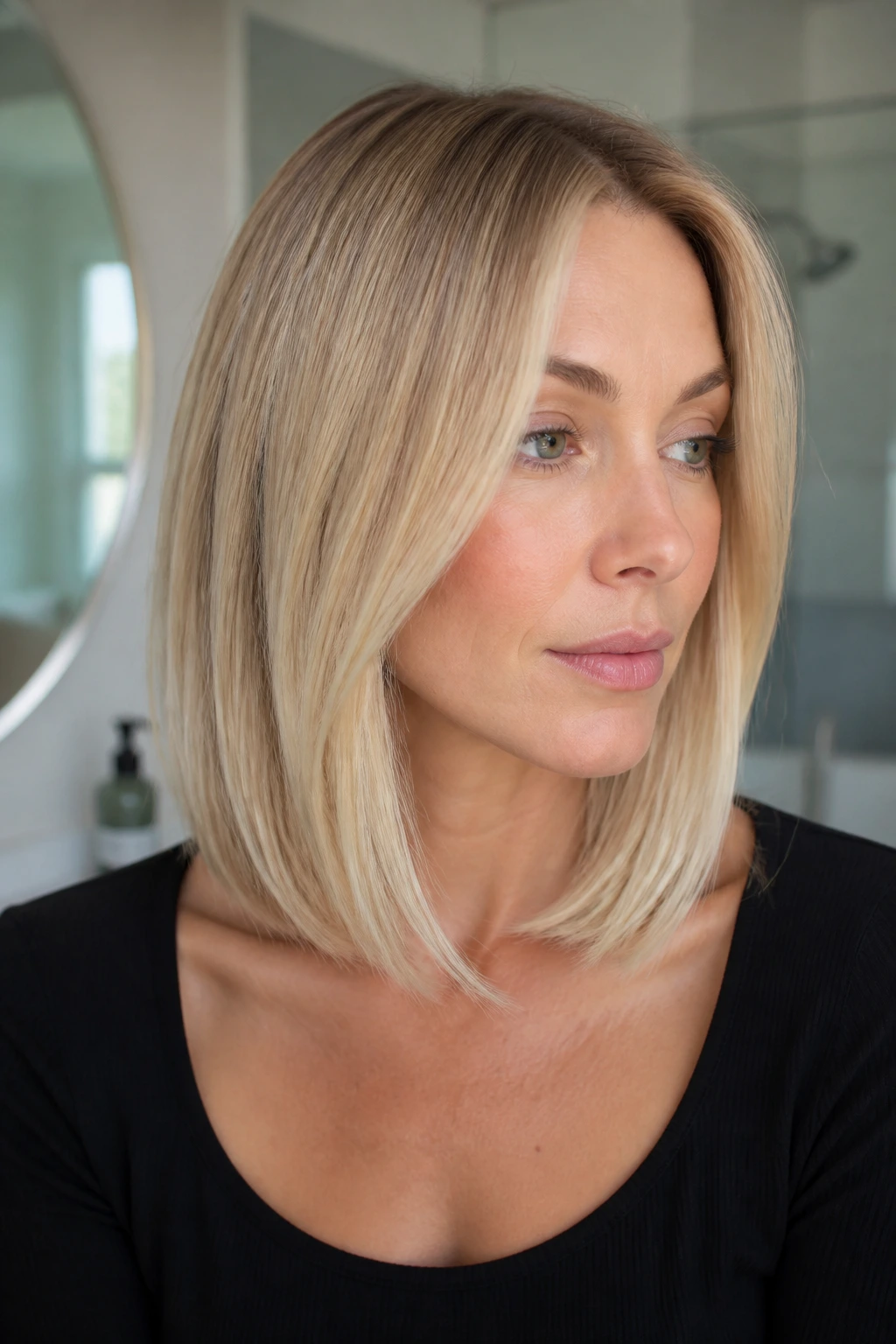
A good lob can survive a few weeks, but only if you respect the shape. Plan on a trim every 6 to 8 weeks if you want the perimeter to stay full. Wait much longer, and the ends start to fray just enough to make fine hair look tired. Blonde color usually wants toning or glossing every 4 to 6 weeks if you prefer a cleaner tone, though root shadows can stretch longer without looking rough.
Use purple shampoo sparingly on cooler blondes — once every 7 to 10 days is usually enough for most heads, and even that can be too much if your hair is porous. Overuse makes pale blonde look flat and chalky, which is a miserable trade on fine hair. If your shade is warm or beige, a color-safe moisturizing shampoo is often the better choice.
At home, keep the cut light. One weekly conditioner on the mid-lengths and ends is enough for many fine-haired people. If you pile on masks every wash, the hair gets slippery and loses whatever grip it had. Sleep on a silk or satin pillowcase if your ends tangle easily, and refresh the crown with dry shampoo or a tiny bit of root-lift spray on day two. That’s usually all it needs.
Common Mistakes That Make Fine Hair Look Thinner
-
Over-layering the ends: The hair starts looking see-through at the hem. Ask for internal shaping instead of heavy layers, and keep the perimeter visible.
-
Bleaching every strand to the same pale level: Flat platinum can expose thinness and damage. Leave some depth at the root or underneath so the blonde has contrast.
-
Using too much oil or cream: Fine hair goes limp fast when it’s coated. Keep conditioning products on the ends and use the lightest formulas you can find.
-
Choosing bangs that are too thick: Heavy fringe can swallow the face and make the rest of the hair feel smaller. Curtain bangs or a side fringe usually play better here.
-
Forgetting to move the part: If the part sits in the exact same place for months, the roots train themselves flat. Shift it a little or use a clip at the crown while drying.
-
Skipping regular trims: A little split end on fine hair shows more than people expect. Once the bottom starts fraying, the whole cut loses its clean line.
Variations and Adaptations to Try
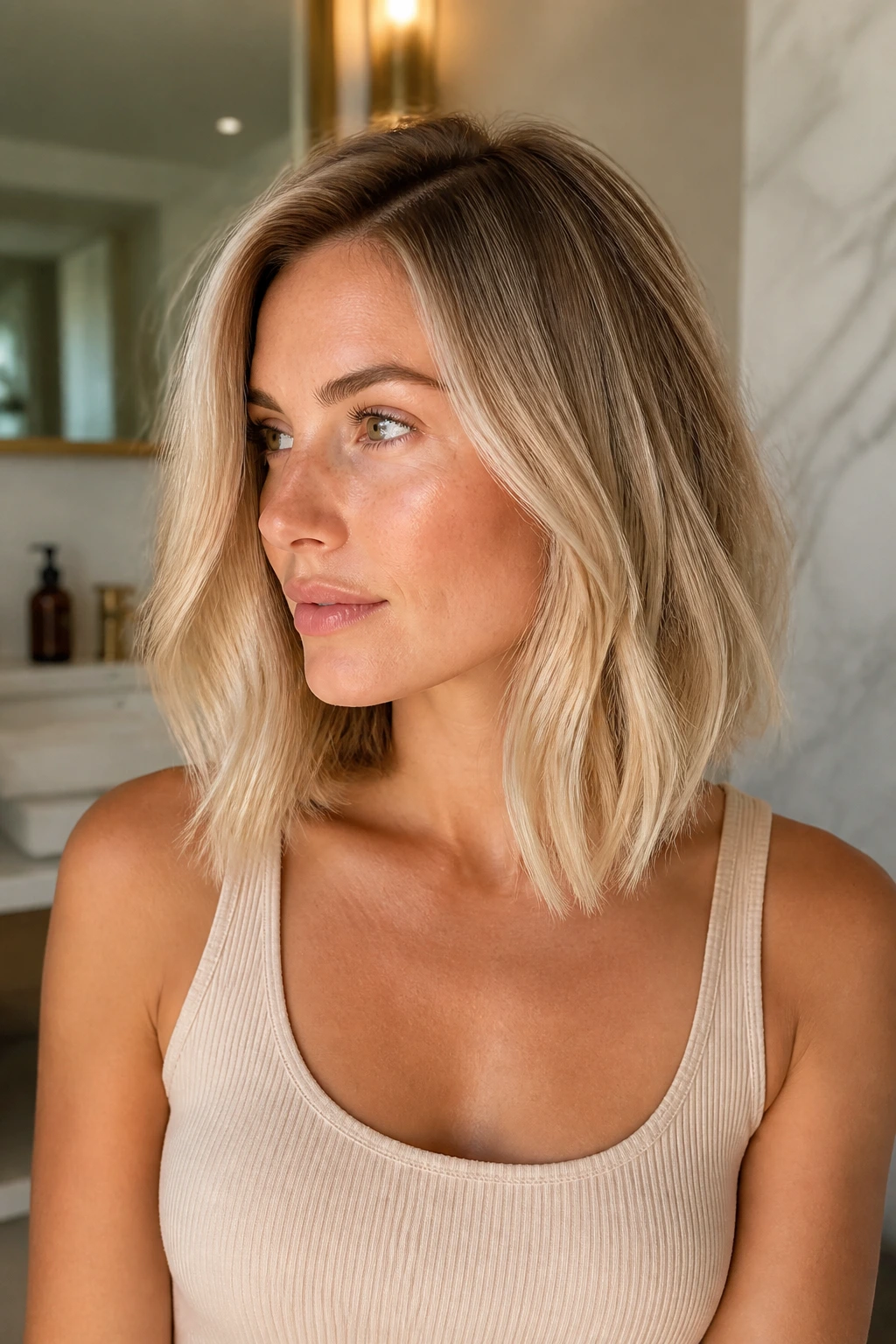
Cool Beige Edit: If warm blonde pulls too golden on you, ask for a cooler beige toner with soft ash ribbons around the face. It keeps the lob clean without going icy or dull.
Golden Soft-Focus: This version leans honey, wheat, and soft caramel. It’s a good match when you want the hair to look richer rather than brighter, especially if the strands are fine but plentiful.
Low-Maintenance Grow-Out: Keep the root shadow a touch deeper and the face-framing a little longer. This gives the cut a softer grow-out line and saves you from constant touch-ups.
Air-Dry Friendly Version: Ask for a blunt-ish base with a few hidden layers and skip anything too slicey at the ends. Pair it with a mousse and let the hair dry with minimal touching.
Office-Polished Version: A smoother bevel, a clean side part, and creamy blonde highlights keep the style tidy from morning to evening. It’s the one I’d pick for anyone who likes the hair to look finished even on a rushed day.
Textured Weekend Version: Add a loose bend, a bit more separation at the tips, and a brighter money piece. The shape still reads as a lob, but it feels looser and a little less formal.
Frequently Asked Questions About Blonde Long Bobs for Fine Hair and Oval Faces
Which is better for fine hair: a blunt lob or a layered lob?
A blunt lob usually wins if your hair is very fine, because the clean perimeter makes the ends look thicker. If your hair is fine but dense, a few invisible layers can add movement without hollowing out the shape.
What blonde shade makes fine hair look fuller?
Beige, champagne, honey, and creamy blonde all tend to look fuller than very pale, flat platinum because they keep some depth in the color. Root shadows and soft lowlights help too, since shadow makes the hair look denser at the scalp.
Do oval faces need bangs with a long bob?
No. Oval faces can wear a lob cleanly with no bangs at all, and that’s often the easiest option if you want the face to stay open. Curtain bangs, a side fringe, or bottleneck bangs are just extras, not requirements.
How short should the lob be if my hair is very fine?
Collarbone length is usually the sweet spot. Shorter can work, but once the hair gets too close to the jaw, some fine textures start to puff or lose their shape. Too long and the ends can look stringy.
Can I wear a lob if my fine hair is wavy?
Absolutely. Wavy fine hair often looks better in a lob than in longer lengths because the shape gives the wave some control. Ask for a perimeter that stays full and let the wave do the motion work.
How often should I trim and tone blonde fine hair?
Most people do well with trims every 6 to 8 weeks. Toner or gloss timing depends on the shade, but 4 to 6 weeks is common if you want the blonde to stay clean rather than brassy.
Will a center part flatten my hair?
It can if your crown is weak, but it doesn’t have to. A little root lift spray, a quick blow-dry at the roots, or even a slight off-center part can give the same clean look without the flatness.
What if the ends look thin after the haircut?
That usually means the perimeter was thinned too much or the length was left too long for your density. Ask for a slightly shorter hem, fewer layers, and a cleaner blunt finish at the next trim.
Can I grow a lob out without an awkward phase?
Yes, if the stylist keeps the front pieces and back balanced as it grows. Ask for shape-preserving trims rather than big changes, and keep the blonde dimension soft so the grow-out doesn’t look harsh.
The Lob That Keeps Its Shape
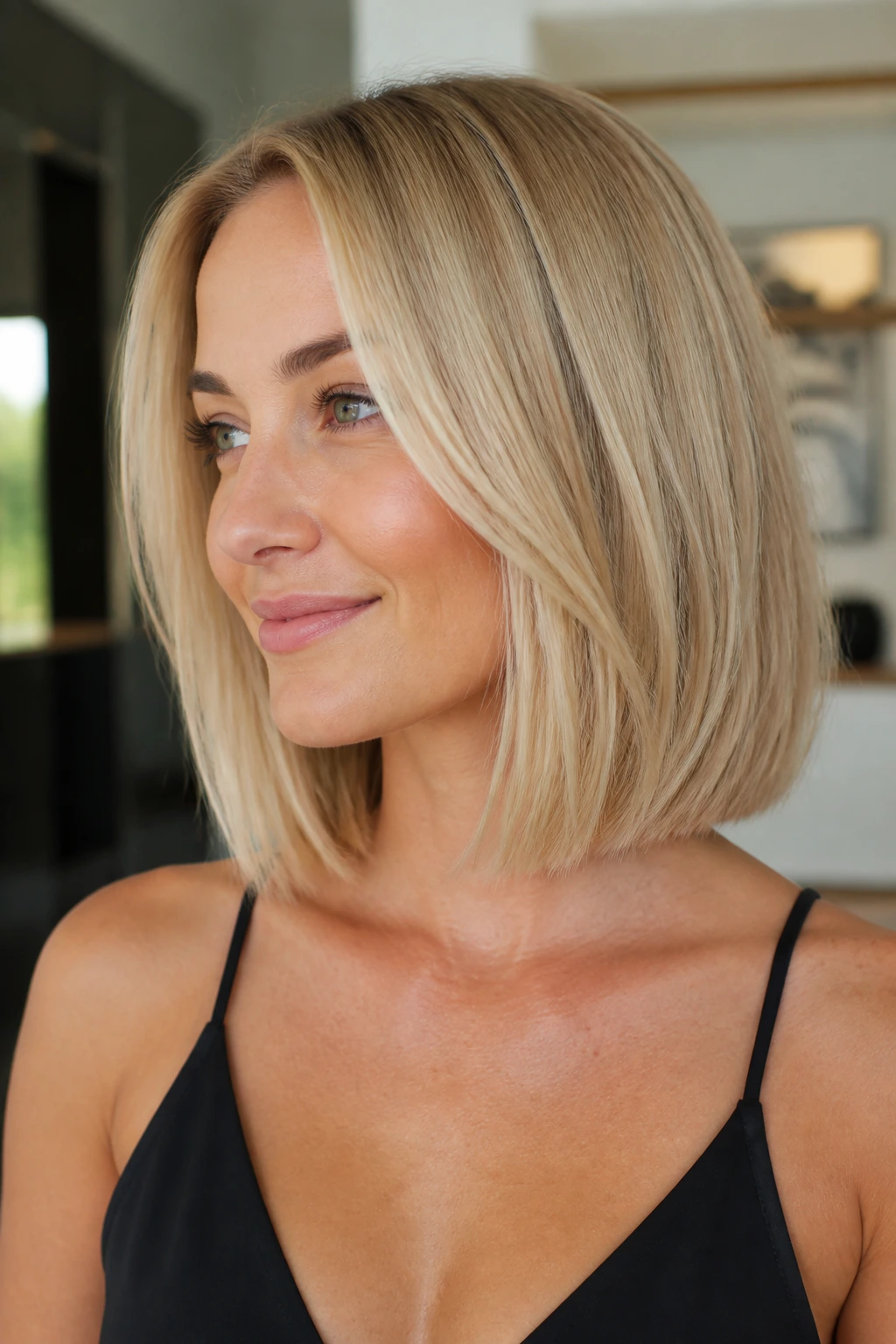
The nicest thing about this haircut family is that it doesn’t ask fine hair to become something it isn’t. It works with the strand diameter you’ve got, the face shape you already have, and the amount of styling you can realistically tolerate on a weekday morning. That’s the whole point. Good haircuts should make life easier, not louder.
If you want one blunt, polished version, there’s a place for that. If you want something with a bend, a fringe, a side part, or a little root shadow, there’s a place for that too. The best blonde long bob for fine hair and oval faces is the one that keeps a clean edge, a little light in the right spots, and enough movement to stay interesting after the second or third wash.
Bring a photo, bring a little honesty about how much you actually style your hair, and ask for shape before you ask for trend. That order matters more than people admit.