



Square faces can take a strong haircut. Thin hair can, too. The trick is not to fight either one. A longer front bob gives the jaw a little breathing room, then keeps enough line at the ends so the hair still looks like hair and not a mist of strands.
That’s the part people miss. A short bob that stops right at the jaw can make a square face look wider than it is. A heavily layered cut can make fine hair look like it lost a fight with the scissors. The longer front bob sits in the sweet spot between those two mistakes: the front pieces drop below the jaw, the back stays controlled, and the perimeter keeps enough weight to read as full.
I keep coming back to this shape because it does two jobs at once. It softens the face without hiding it, and it gives thin hair a clean edge that holds up better than a choppy, over-thinned cut. The differences are small on paper — an inch here, a side part there, a little bevel at the ends — but on a real head, those details change everything.
Why This Collection Feels Different
Face-balancing length: The front corners in these bobs fall below the jaw, which breaks up the straight sides that can make a square face look boxy.
Thin-hair friendly shape: Most of these cuts keep weight at the perimeter, so the ends look denser instead of wispy and split.
Low-drama grow-out: A longer front bob still looks intentional when it grows 2 to 3 inches, which matters if you do not want a trim every month.
Style range without chaos: Some versions are sleek, some are air-dried, and some lean wavy, but they all keep the same useful backbone.
Easy salon language: These cuts are easier to ask for than they look. Once you know the front length, back length, and parting, the rest gets simple.
Works with real life: Glasses, scarves, humidity, and a rushed morning all tend to be kinder to a lob than to a sharp, chin-length bob.
1. Soft A-Line Lob with a Longer Front Corner
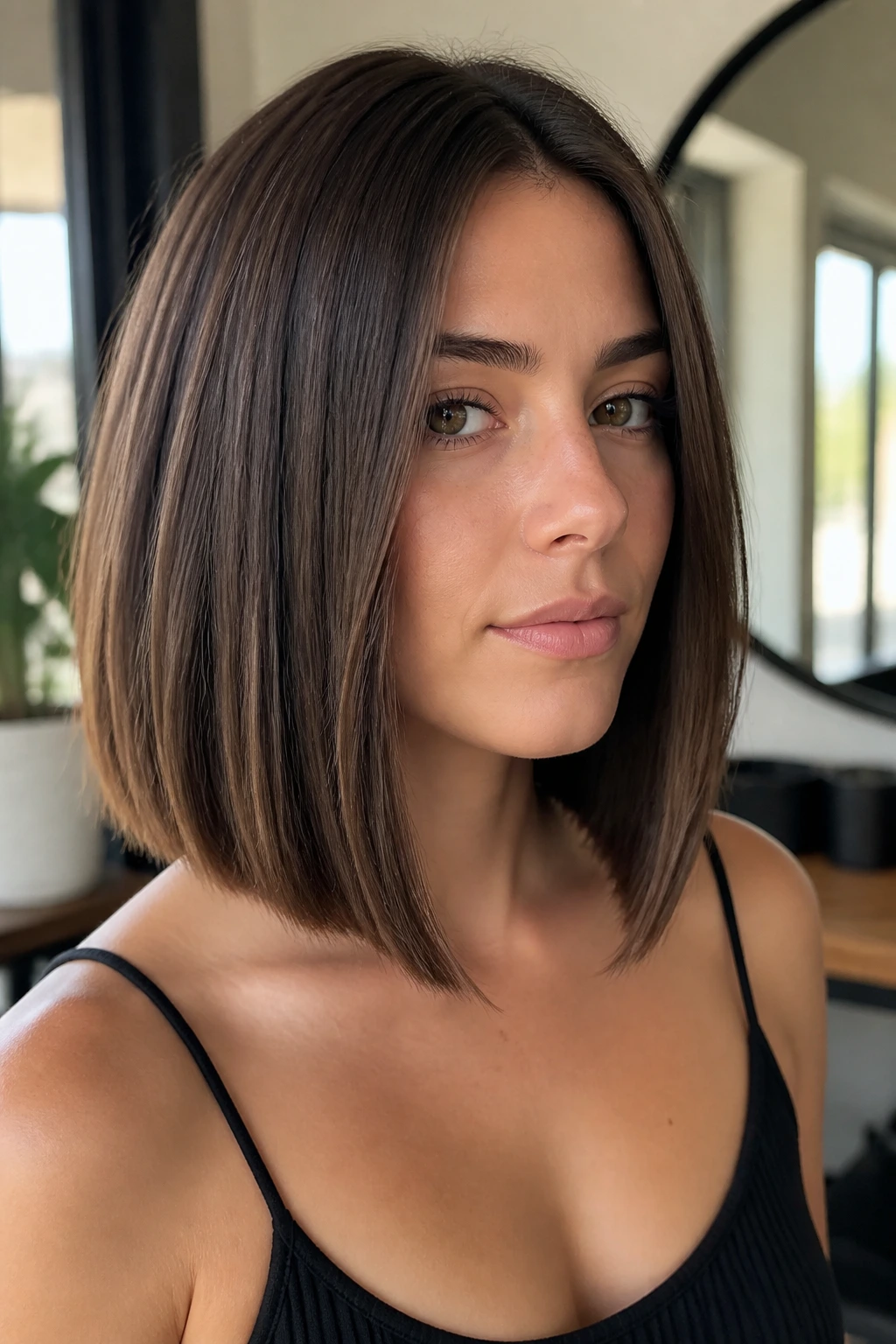
A soft A-line lob is the cleanest starting point if you want shape without a hard edge. The back sits a little shorter at the nape, then the front eases down toward the collarbone. That diagonal line is the whole point. It pulls the eye downward, which takes pressure off a square jaw, and it keeps thin hair from looking shredded by too many layers.
Why it works
The angle does most of the face-softening work, so you do not need a lot of extra styling. Keep the difference between back and front subtle — about 1 to 2 inches is usually enough. Any more and the cut starts shouting.
- Best on straight or slightly wavy hair
- Ask for a blunt perimeter with only light internal texture
- Style with a 1.5-inch round brush for a soft bend at the ends
Tiny tip: If your ends flip out, blow-dry the front sections under first, clip them to cool, and then brush them through once they have set.
2. Collarbone Blunt Bob That Keeps the Ends Full
This one is all about density. A blunt collarbone bob with a longer front reads fuller than a feathered cut because the ends sit in a clean line instead of breaking up into little see-through bits. Square faces benefit from the front length, while thin hair gets the visual weight it usually begs for.
I like this version when someone wants polish without fuss. The hair can be straight, tucked, or bent once with a flat iron, and it still looks deliberate. The blunt edge does the heavy lifting. The front pieces should hit just at or below the collarbone, not hover at the jaw like a helmet line.
3. Side-Part Swing Lob with Cheekbone Movement
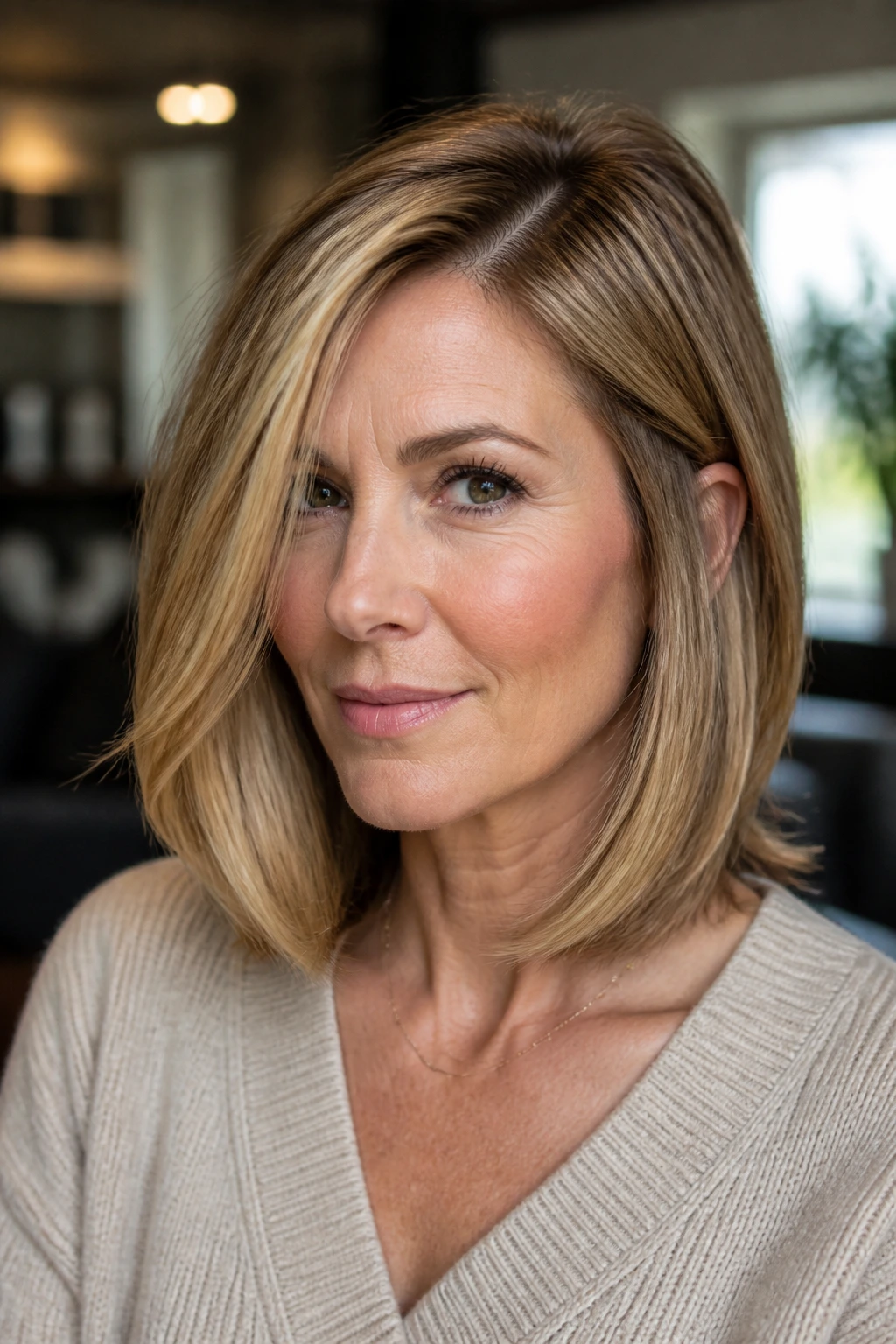
A deep side part changes the mood fast. Instead of splitting the face into two equal halves, it gives one side a little lift and lets the longer front pieces swing across the cheekbone. That movement matters on square faces because it interrupts the straight vertical lines that can make the jaw feel even sharper.
What to ask for
Ask for a long front bob that still keeps the perimeter full, then part it slightly off center at home or in the chair. If your hair is fine, keep the crown layers minimal. You want lift, not a patchy top.
The best version of this cut has a front edge that skims the cheekbone on one side and falls to the collarbone on the other. It looks especially good when the hair is blown smooth with a bend at the ends, not curled into rings. Ringlets add width. The swing does not.
4. Feathered Face-Framing Lob That Lightens the Jaw
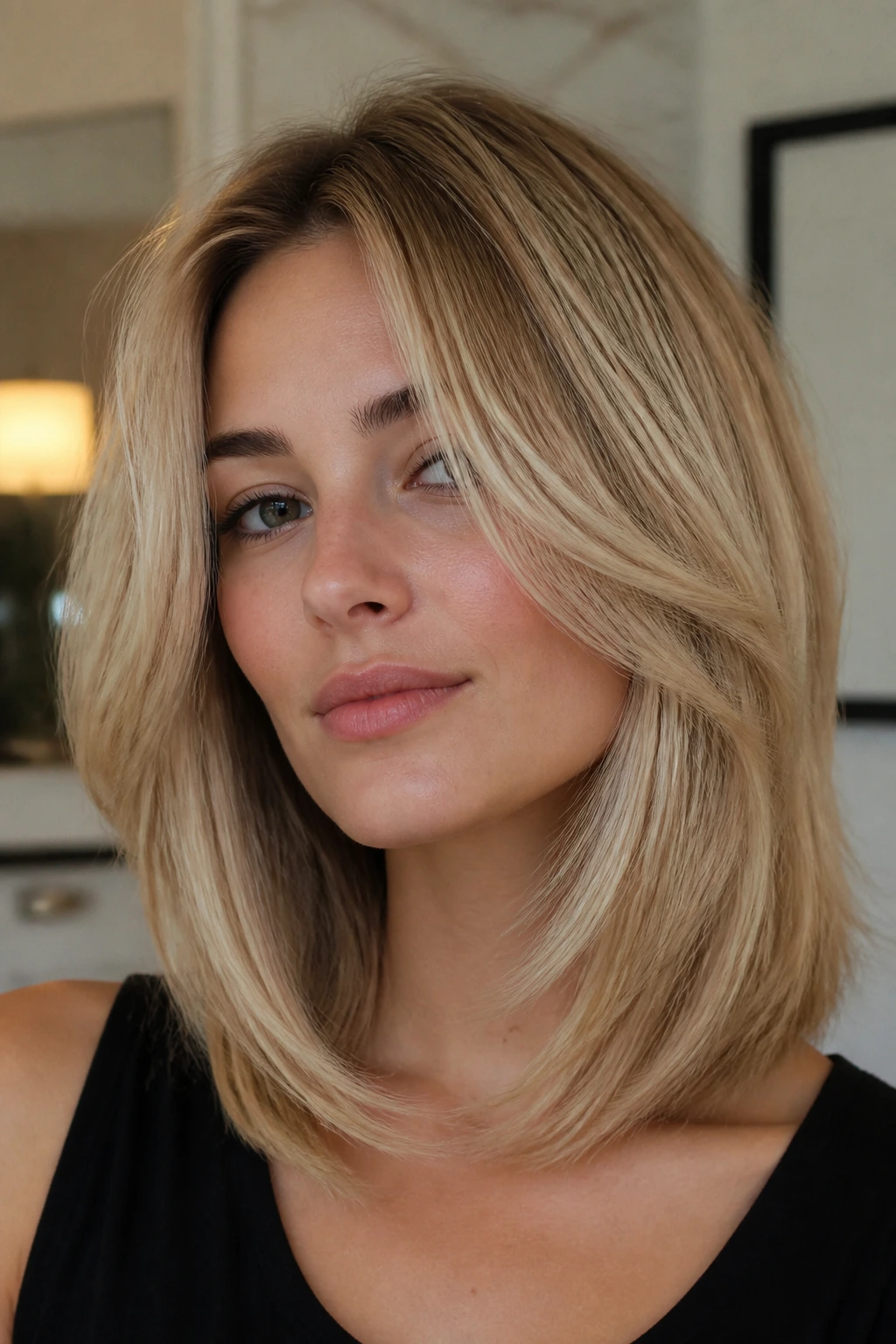
This is the cut for someone who wants softness around the face but still needs the back to hold together. A few feathered front pieces can break up a square jaw in a way that feels lighter than a blunt line, especially if the hair tends to sit flat against the cheeks.
The key is restraint. Too many feathered layers on thin hair and you end up with soft-looking ends that barely exist. Keep the face-framing pieces longer than the chin and let them taper gently into the rest of the lob. When they move, they should look like a curve, not a fringe.
5. Invisible-Layer Lob for Thin Hair That Still Wants Lift
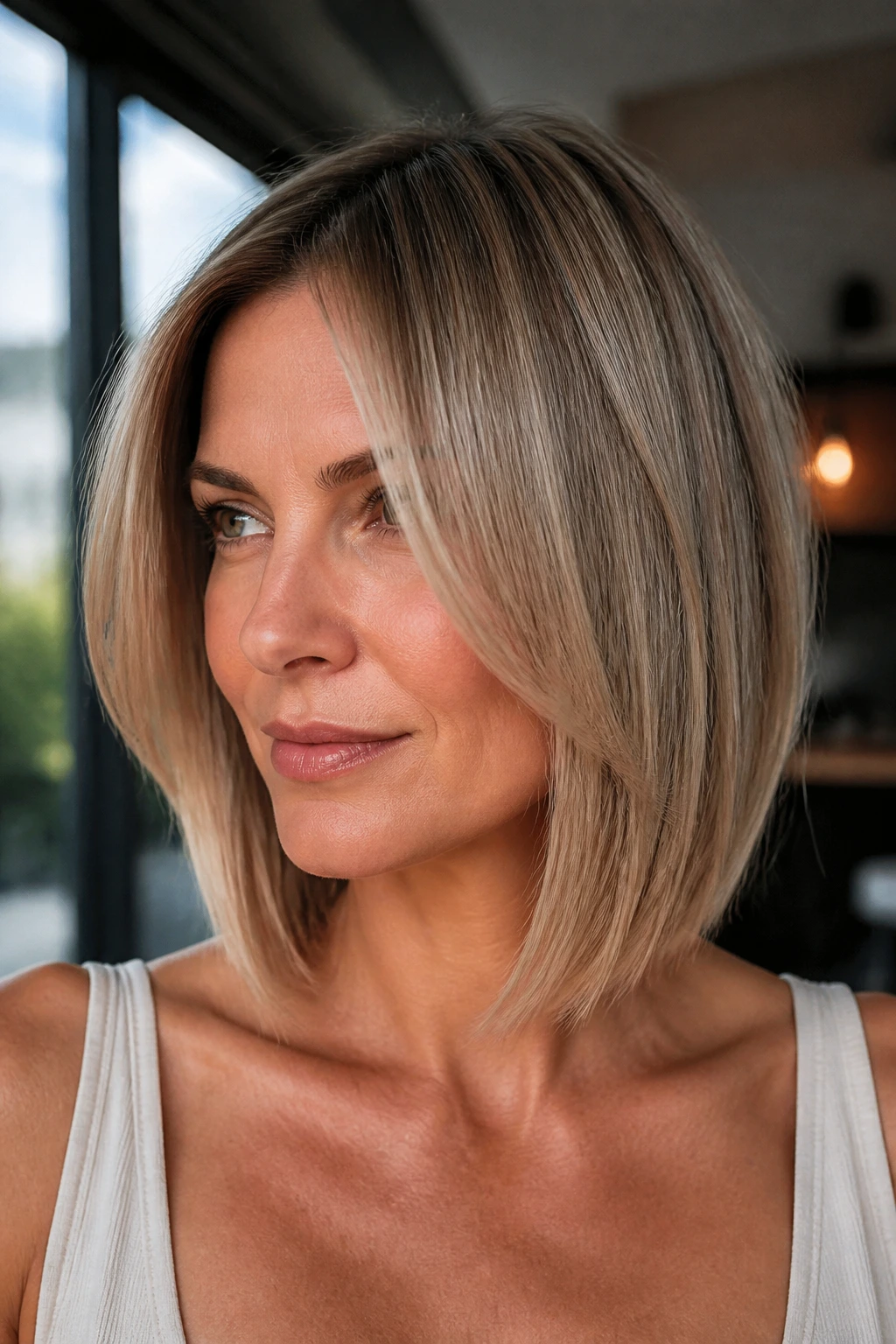
Unlike a shag or a heavily layered cut, an invisible-layer lob hides the texture inside the haircut instead of on the surface. That keeps the outside line full while giving the hair a little internal bend and lift. For thin hair, that’s a smart trade.
Ask your stylist to keep the perimeter blunt and place only a small amount of internal layering low in the shape. No chopped top layers. No razoring the ends into bits. The result should feel airy when you move it, but the ends should still look thick when the hair is still.
If your hair collapses at the crown, this is one of the better choices. It gives the illusion of motion without eating the density that makes a bob look like a bob.
6. Rounded Blowout Lob That Softens a Square Face
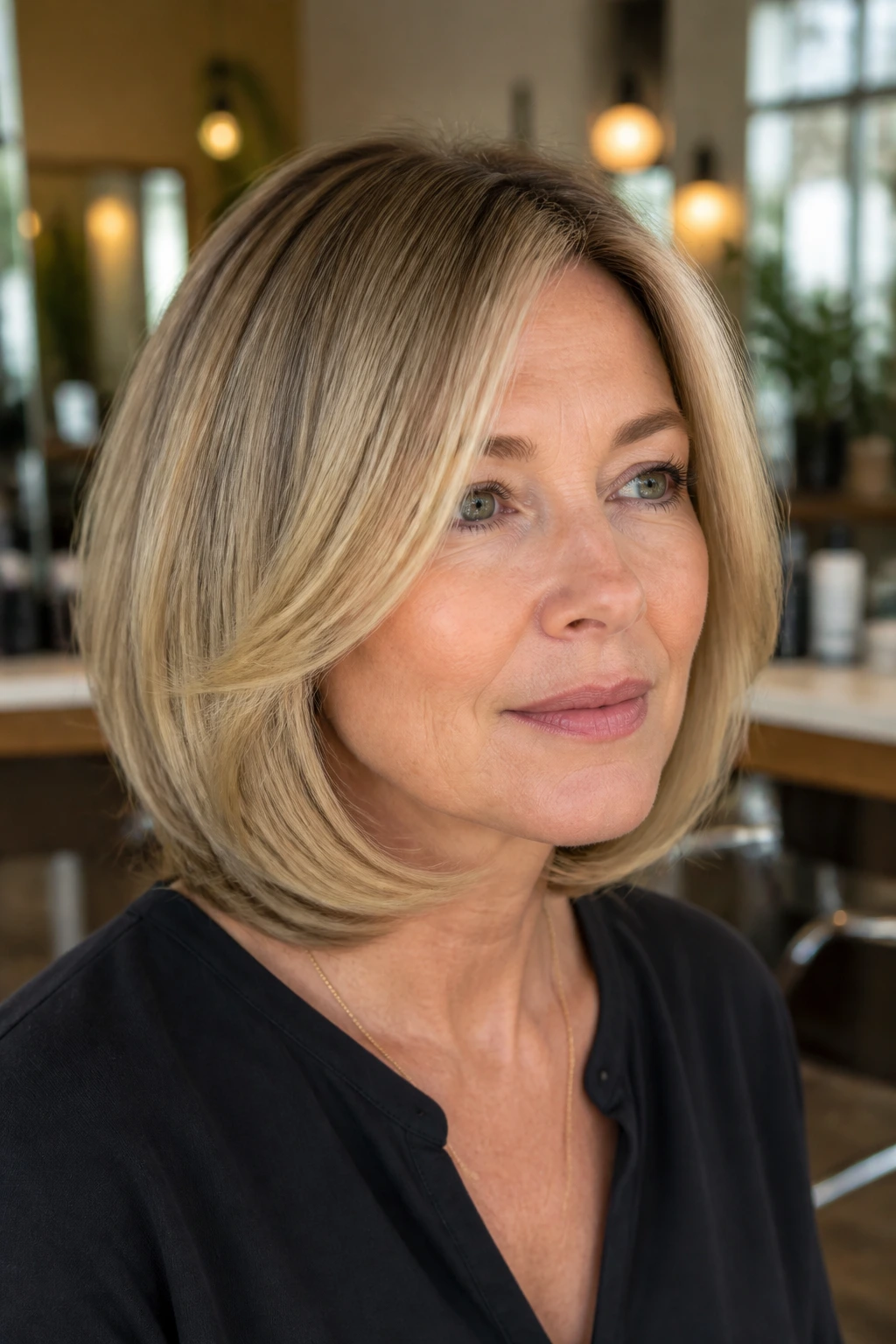
A rounded blowout lob has a very specific feel: the hair curves in just enough to hug the jaw, then flicks out gently below the collarbone. That roundness softens hard angles better than a stick-straight cut, and thin hair benefits because the brushwork creates a little body right where the perimeter needs it.
This is the cut I reach for when someone says they want to look polished without looking stiff. Use a medium round brush, keep the airflow pointed down the shaft, and finish with a cool shot so the bend holds. If the ends are too curled, the cut gets too wide. You want a soft C-shape, not a 1980s blowout.
7. Curtain Bang Lob That Splits the Forehead and Opens the Cheeks

Curtain bangs can work beautifully here, but only if they are kept light. A full, heavy fringe can shorten a square face in the wrong way. A softer split fringe that opens at the middle and flows into a longer front bob gives you the same frame without the blocky effect.
Best way to wear it
Keep the shortest point of the curtain bang around the brow or just below it, then let the longer side pieces blend into the lob. On thin hair, the bangs should be wispy enough to move; if they are too dense, they sit like a shelf.
This style is nicest when the rest of the cut stays simple. Let the fringe do the shaping. Let the bob stay clean.
8. Wavy Angled Lob with Gentle Bend at the Ends
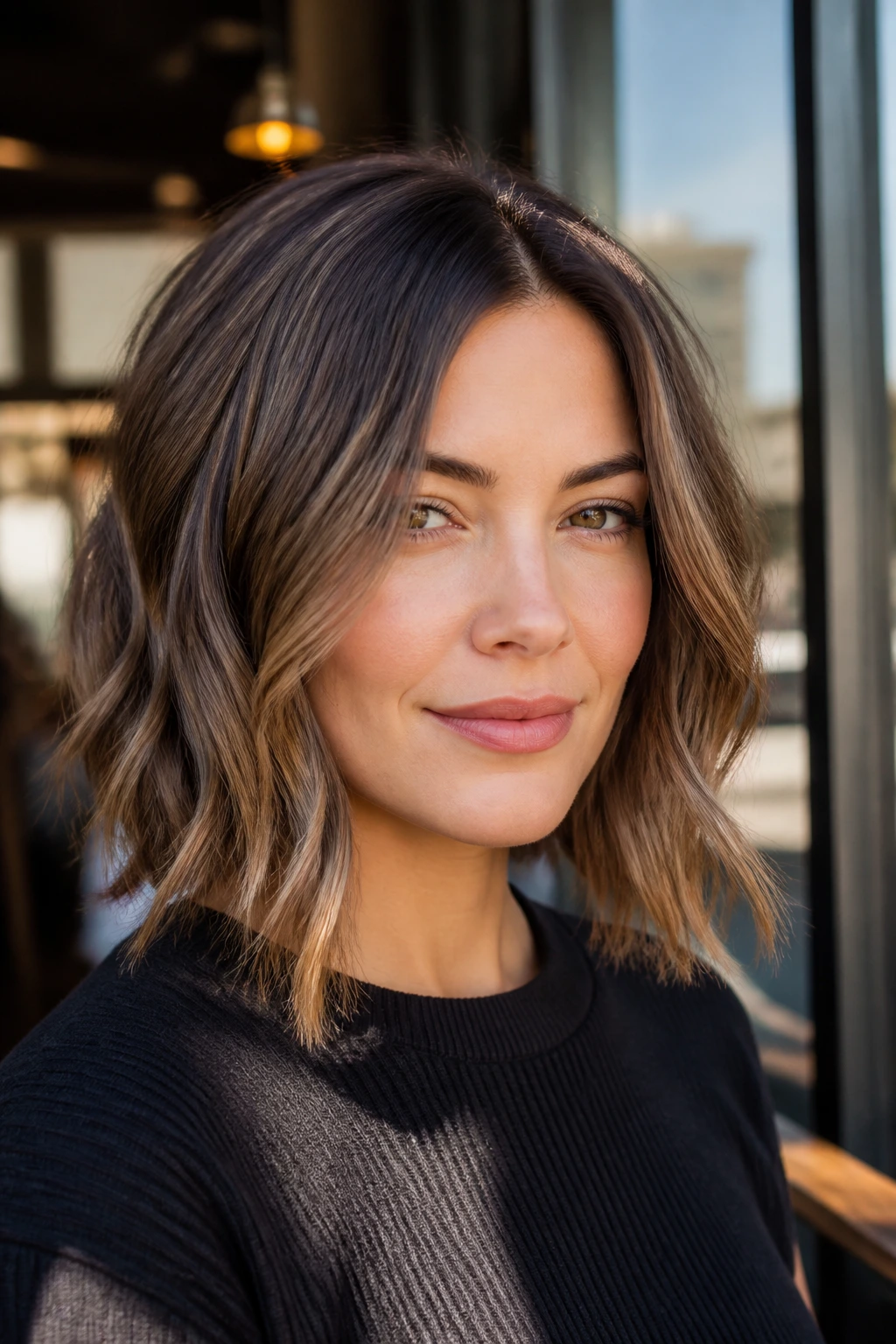
A little bend goes a long way. Soft waves break up the straight lines of a square face, and an angled front keeps the waves from puffing out at the cheeks. On thin hair, the trick is to create only a handful of bends — maybe 4 to 6 around the head — instead of curling every section into a uniform pattern.
I like this version with a center or slightly off-center part. The longer front pieces should fall just below the jaw, where they can taper into the wave instead of stopping at the widest part of the face. Use a 1-inch iron if your hair is stubborn, but do not chase perfect curls. The looseness is the point.
9. Tucked-Behind-the-Ear Lob with a Long Front Sweep
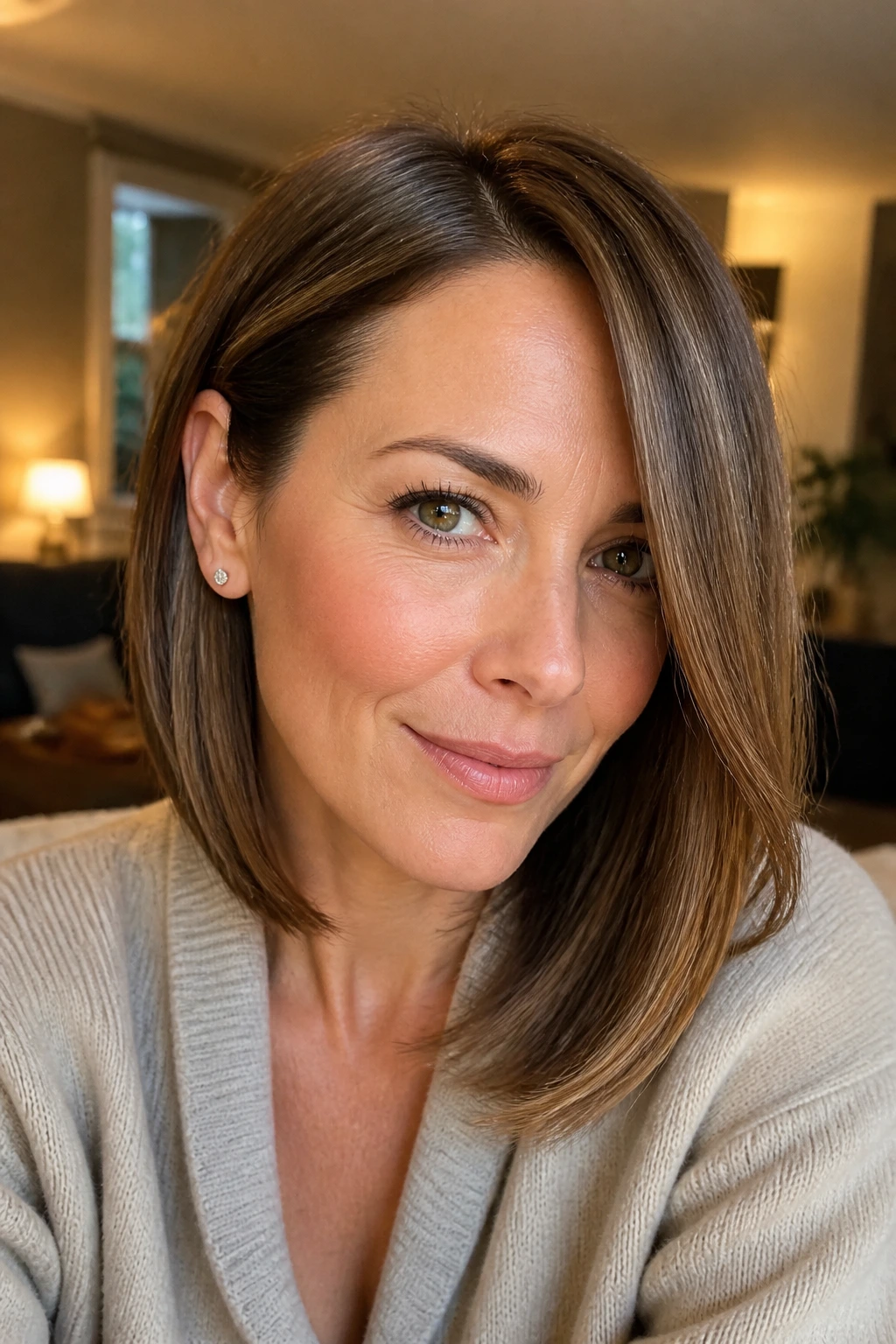
This style looks simple, but the asymmetry does real work. One side gets tucked behind the ear, which opens the face and shows off earrings or glasses, while the other side keeps a long front sweep that softens the jaw. The contrast makes a square face feel less rigid.
It also helps thin hair because the tucked side removes bulk from the cheeks without requiring a lot of styling. Keep the front sweep sleek and soft, not glued to the head. A little bend at the end keeps the line from looking severe.
This one is especially good if you hate hair falling into your face but still want the haircut to have movement.
10. U-Shaped Lob That Keeps Density in the Back
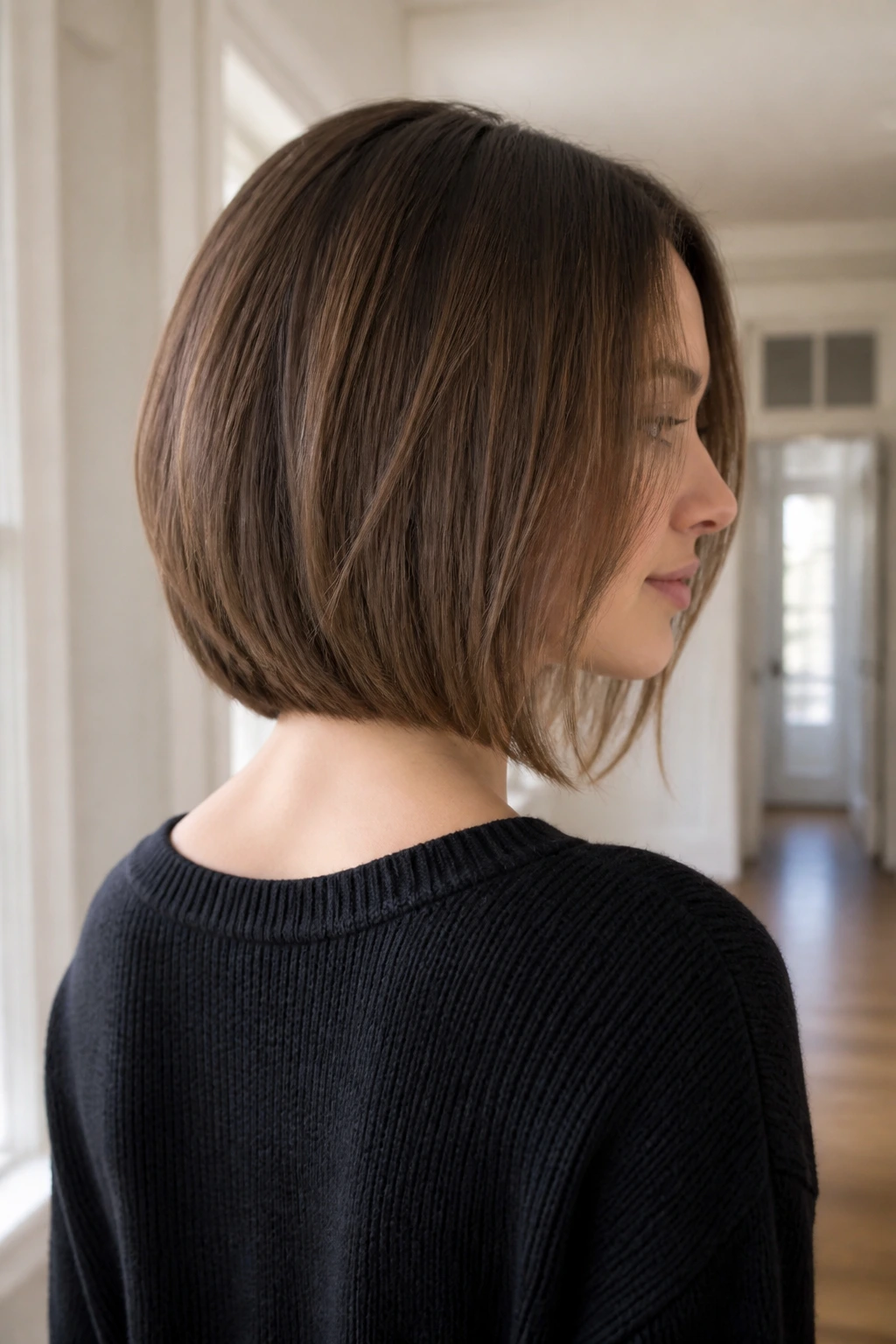
A U-shaped lob is sneaky. From the front, it looks like a clean long bob with longer pieces around the face. From the back, the center sits slightly longer, which lets the shape keep a fuller, rounder feel. Thin hair usually looks better with this kind of controlled curve than with a harsh straight edge.
What I like here is the balance. The front corners still soften the jaw, but the back does not collapse into a flat line across the neck. The U shape gives the haircut a little depth without asking for obvious layers.
If your hair tends to spread apart at the ends, this is a strong choice. Ask for the curve to stay subtle; a deep U can start looking dated fast.
11. Razor-Soft Lob with Wispy Ends and a Clean Line
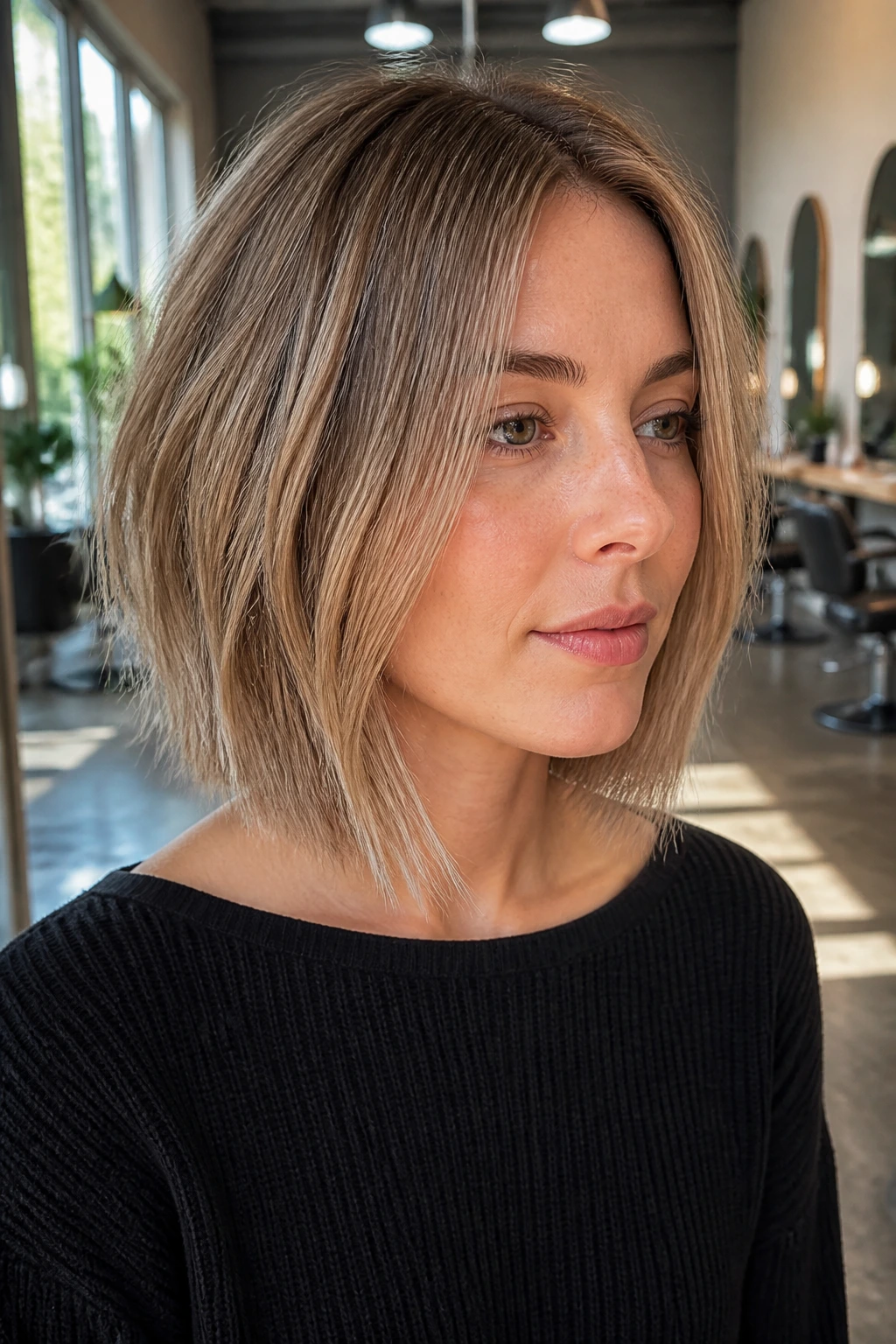
A razor-soft lob sounds edgy, but it only works on thin hair if the stylist uses the razor with restraint. The goal is softness at the edge, not shredded ends that disappear in the mirror. When done well, the cut moves easily and the front angle still frames a square face in a flattering way.
This is best for straight or very loose wave patterns. If your hair is already fragile or overly fine, too much razor work can make it look hollow. A tiny bit of softness around the face is enough. The perimeter should still feel solid when you hold it between your fingers.
12. Deep Side-Swept Fringe Lob for a Softer Profile
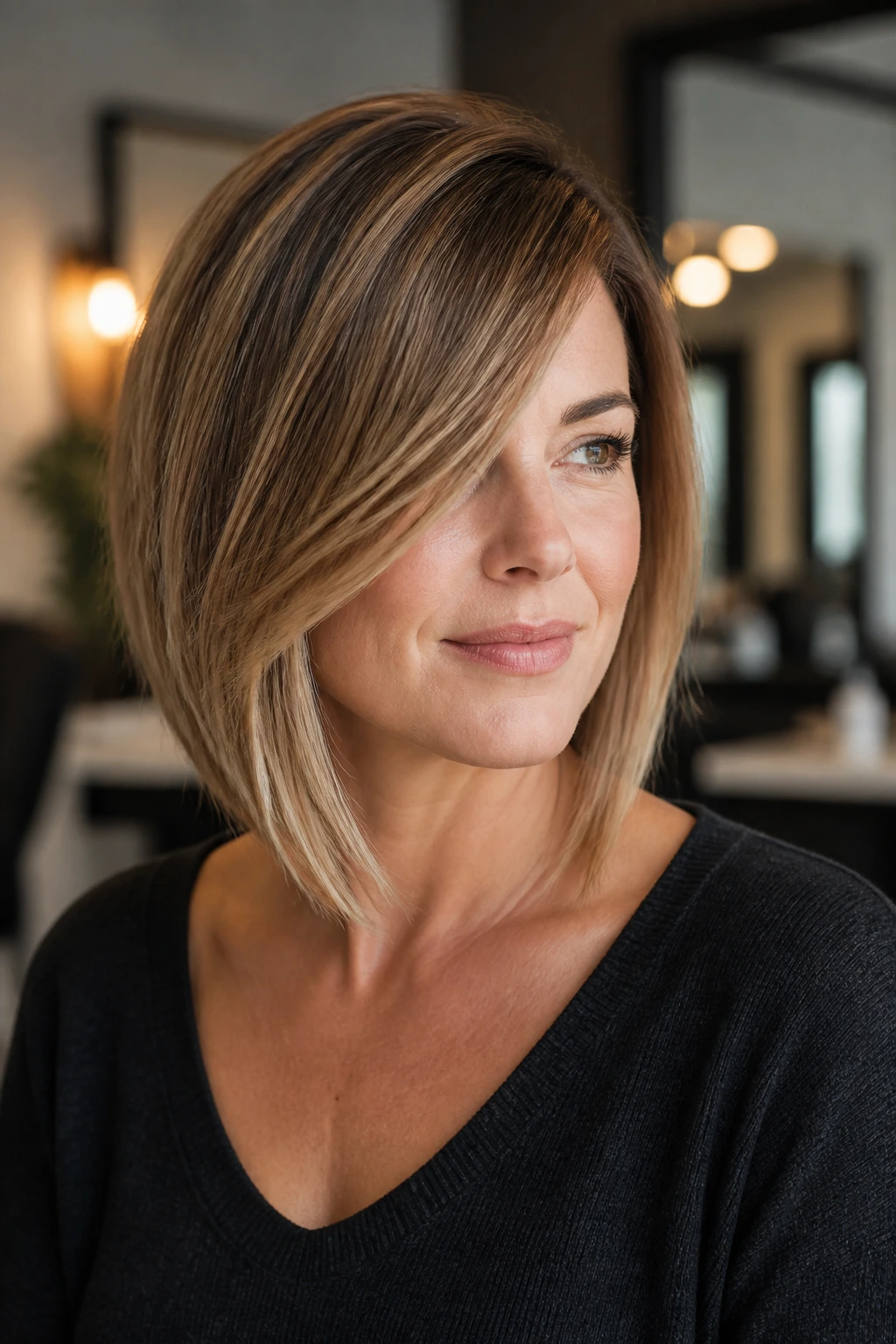
Can a fringe help a square face? Yes, if it sweeps, not if it sits flat and thick. A deep side-swept fringe draws the eye diagonally, which is exactly what a strong jawline needs. Pair it with a longer front bob and you get a soft, slanted line from forehead to collarbone.
The trick on thin hair is keeping the fringe long enough to blend. Short, broken-up bangs can expose too much scalp and make the hair look sparse. A side-swept piece that starts near the part and drops across the brow feels richer and easier to style.
This cut does especially well when the fringe is blown over with a round brush and allowed to cool in place. A quick blast of dry shampoo at the roots keeps it from separating.
13. Cheekbone-Grazing Lob with Narrow Front Pieces
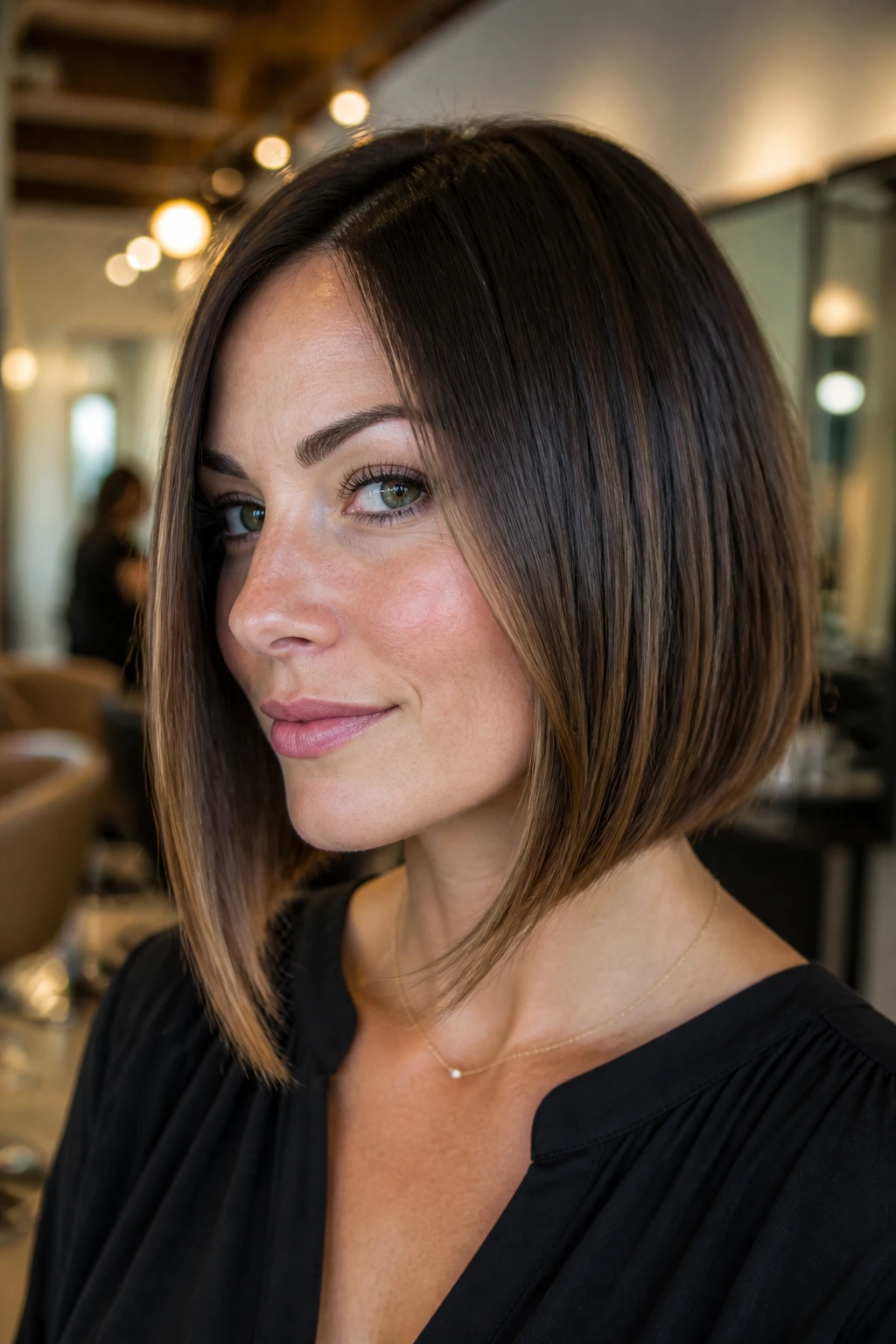
If you want to highlight your cheekbones and soften everything below them, this is the one. The front pieces start narrow near the face and skim the cheekbone before dropping toward the collarbone. That narrow framing visually trims the width of a square jaw, which is a nice trick when the lower half of the face feels strong.
I like this with a very mild bend at the ends and not much else. The cut itself should stay the star. On thin hair, over-styling can make it look wispy, so keep the shape clean and the finish a little smooth.
This style is subtle in the best way. It does not scream for attention, but it changes the face in a way you notice in photos and in the mirror.
14. Shag-Lite Lob That Adds Motion Without Eating Thickness

A shag-lite lob is the compromise for people who want movement but cannot afford to lose any more hair mass. You get a few soft layers around the face and maybe a little broken texture through the mids, but the ends stay mostly full. That keeps the haircut from going stringy.
The reason it works on square faces is the same reason a full shag can be risky: motion softens angles. The difference is scale. Keep the layers low and the front long. If the crown is cut too high, thin hair starts to look like it was thinned on purpose.
This is one of those cuts that looks best with a little mess in it. Finger-combed, lightly sprayed, and left alone.
15. Sleek Center-Part Lob with a Polished Finish
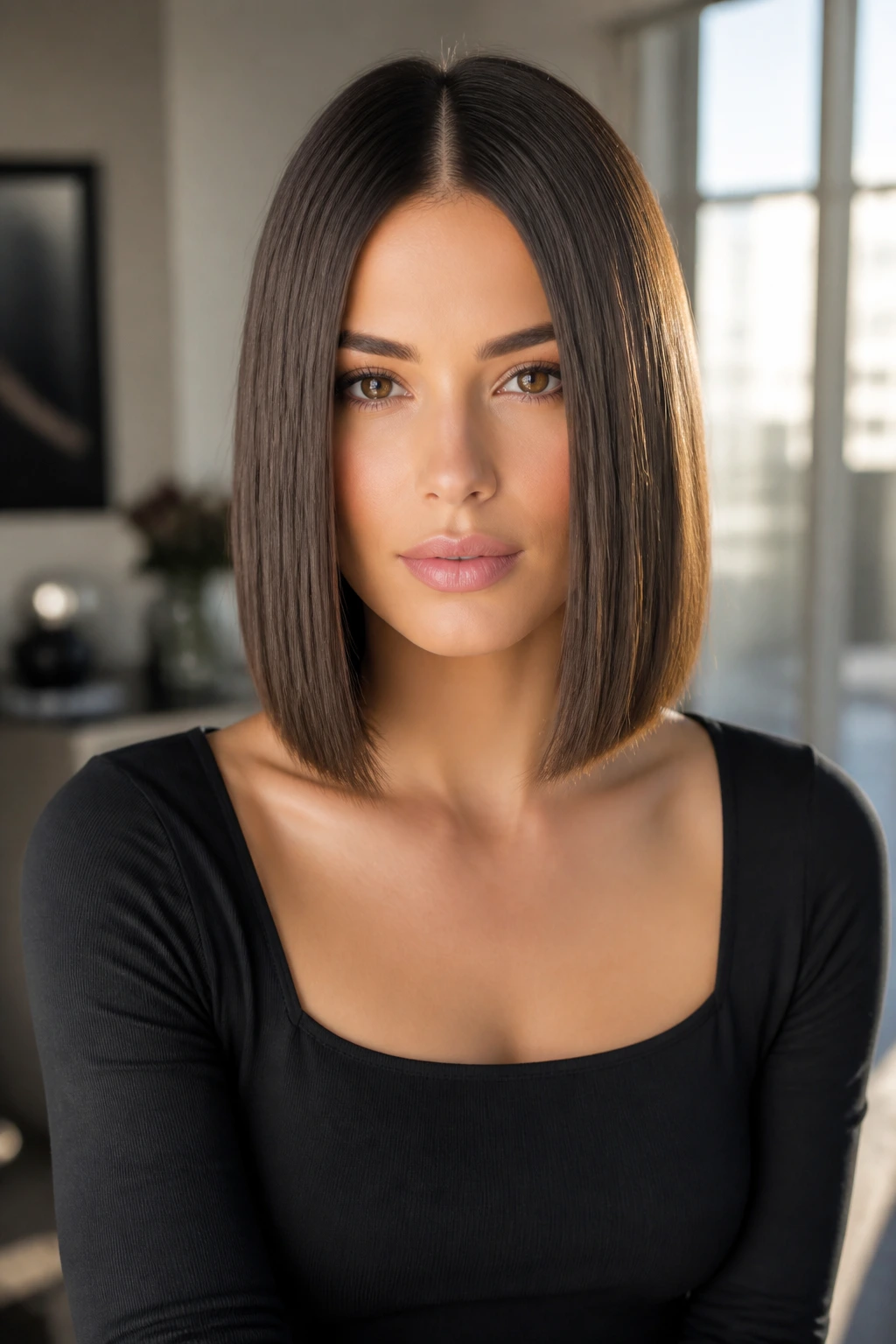
A center part can work on a square face when the front length is long enough to stretch the silhouette. The vertical line of the part adds length, and the longer front pieces keep the jaw from feeling too exposed. Thin hair often looks best in this shape when the line is neat and the ends are blunt.
The biggest mistake here is making the hair too flat at the roots. That can turn a sleek cut into a lifeless one. Use a root-lifting mousse before blow-drying, then finish with a touch of smoothing cream only on the ends.
If your hair is naturally straight, this is an easy one. If it bends or frizzes, keep the center part but soften the edges with a flat iron, not with more layers.
16. Air-Dried Texture Lob for Lazy, Undone Volume
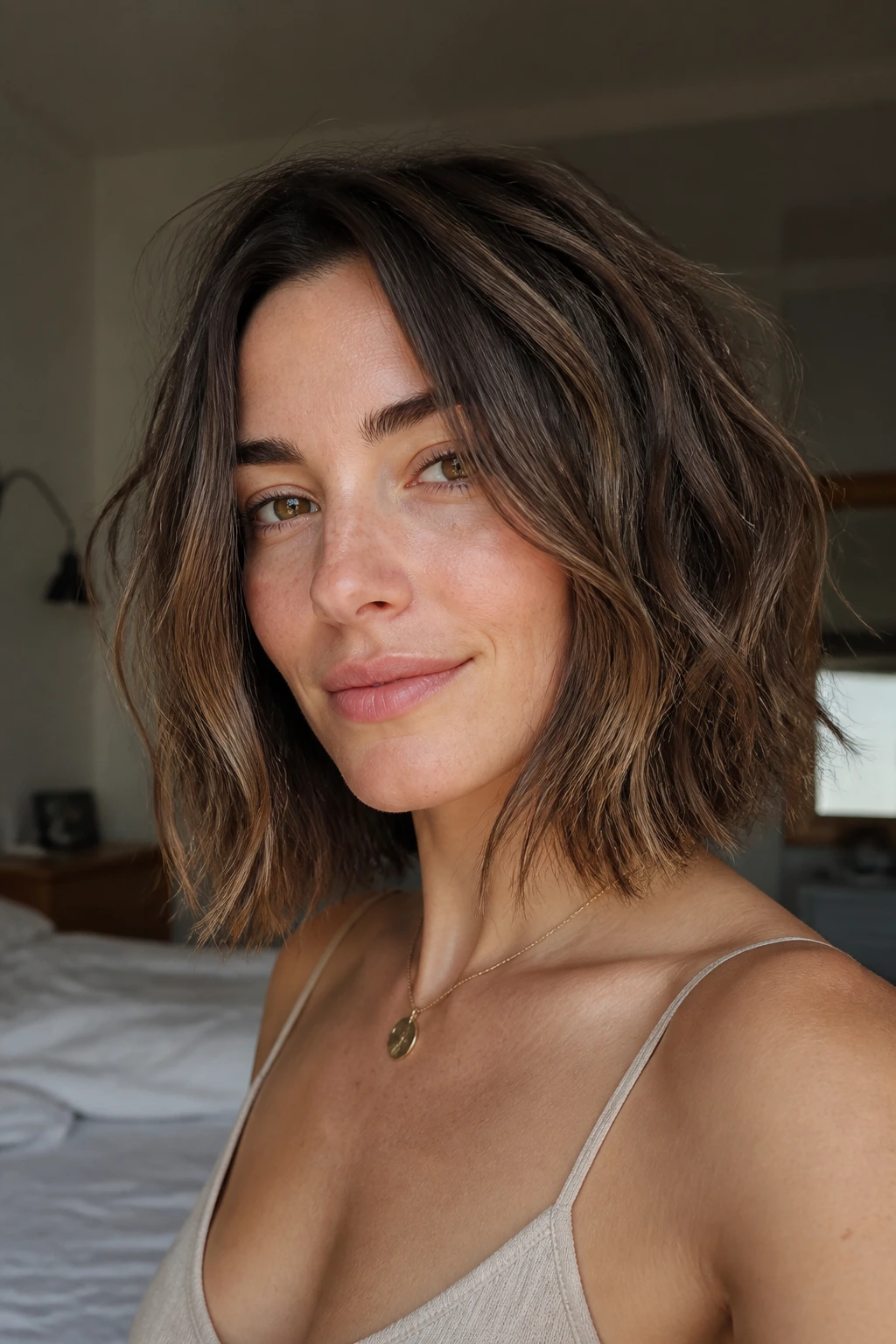
Some days you do not want a brush anywhere near your head. This cut accepts that. An air-dried texture lob uses your natural wave or bend to create movement, while the longer front pieces keep the whole thing from looking blunt and boxy. On thin hair, the main job is avoiding too much product.
How to make it work
Use a lightweight mousse or foam on damp hair, scrunch the mids and ends, and let the roots dry with a bit of lift. Do not pile on cream. That weighs fine strands down fast.
The front should still be long enough to graze the lower cheek or collarbone, even when it dries messy. If it sits at the jaw, the whole thing can look shapeless.
17. Graduated Volume Lob with Lift at the Crown
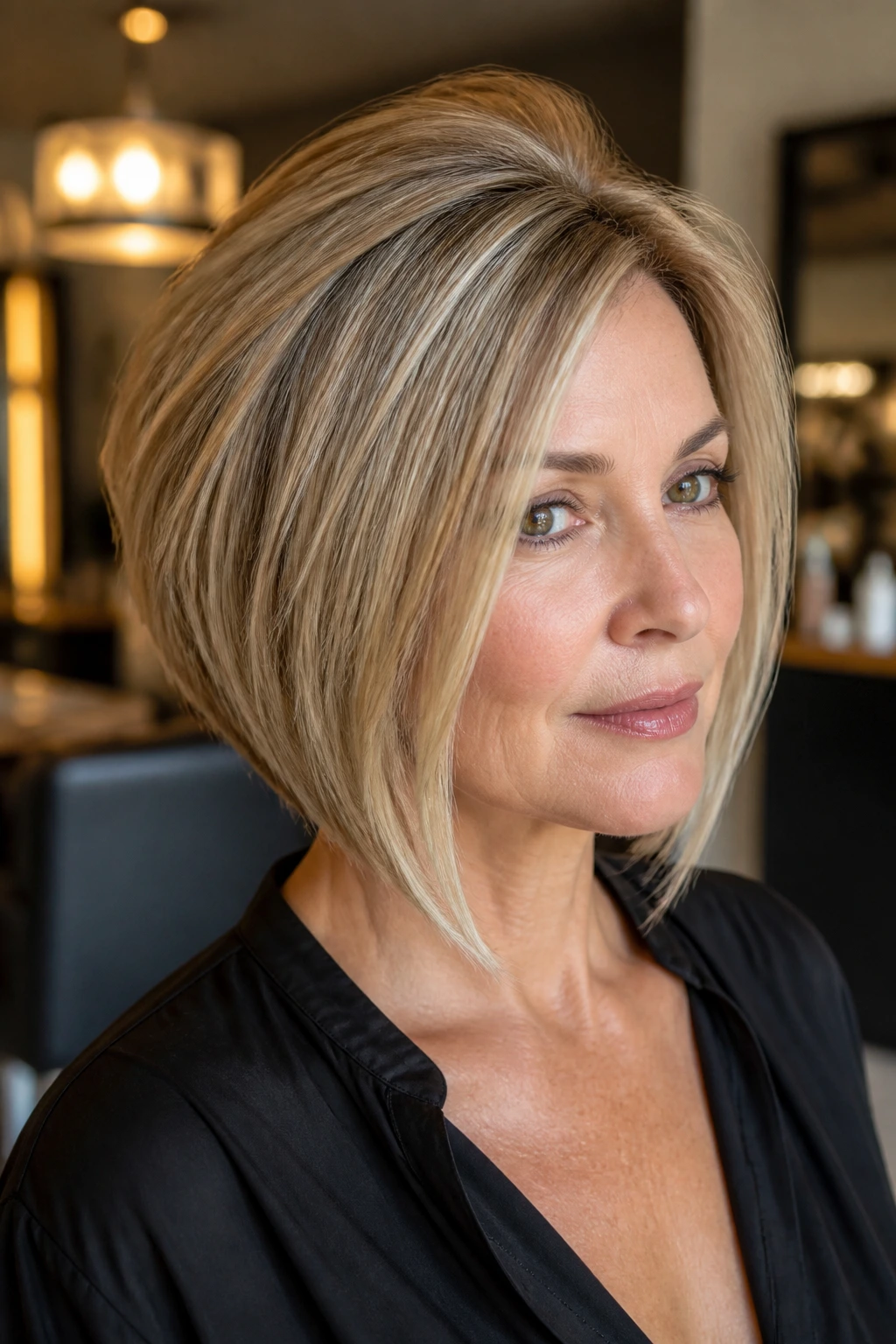
This is the lob for hair that lies flat at the top and refuses to stay up. A little graduation in the back gives the crown a lift, while the front remains longer and softer. The result is a shape that looks fuller from the side without turning the face into a triangle.
Be careful here. Graduation is not the same as stacking a bunch of short layers into the back. On thin hair, that gets hollow fast. You want controlled lift, not a mushroom. Ask for a gentle rise at the nape and a clean line through the front corners.
When styled with root clips or a round brush at the crown, this cut can hold shape better than most flat lobs.
18. Softly Tapered Nape Lob That Lets the Front Stay Full
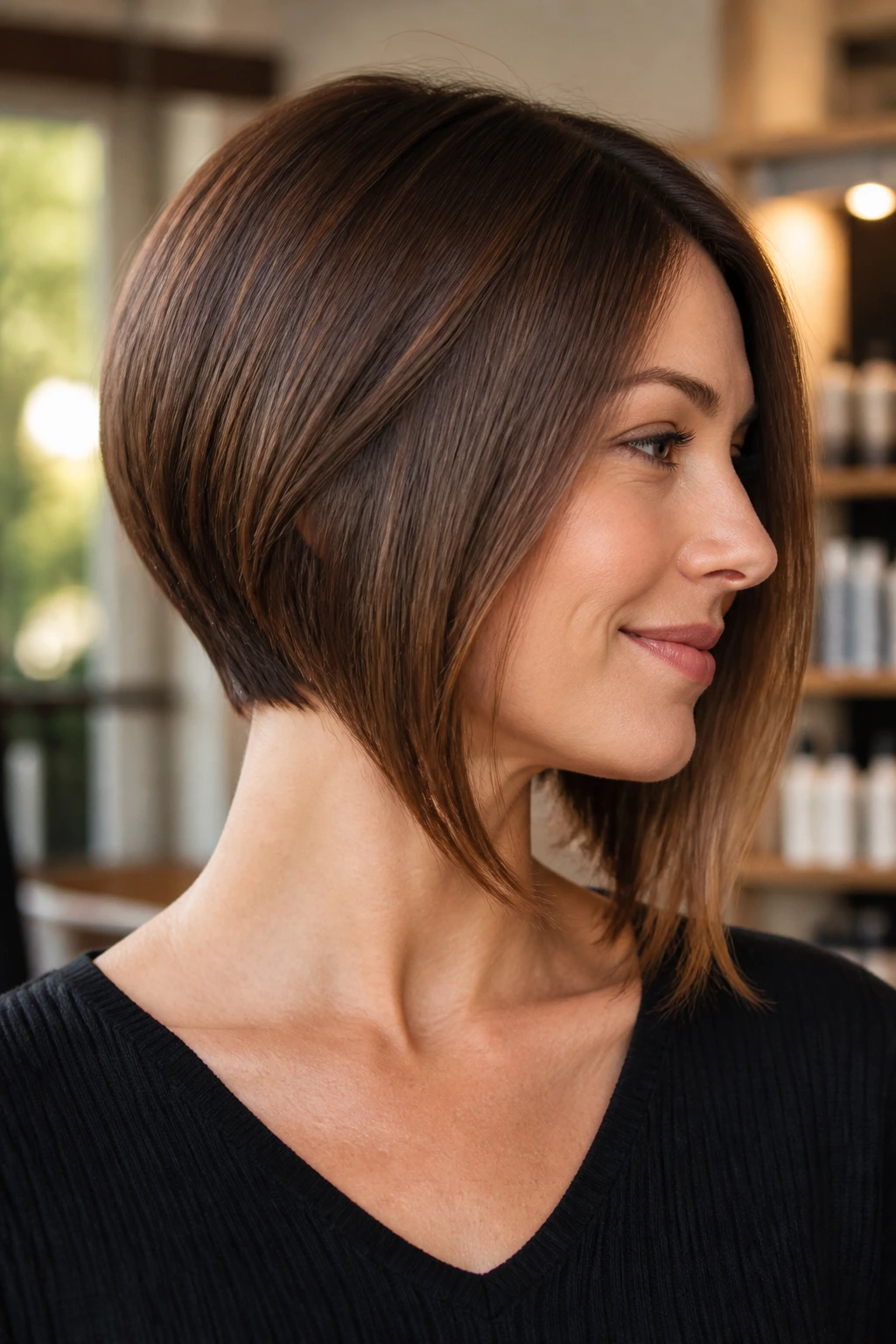
A softly tapered nape keeps the back from looking bulky while the front stays long and face-softening. This works well if your hair grows out awkwardly at the neckline or if you wear collars and scarves a lot. The taper should be subtle enough that the silhouette still reads full, especially on fine hair.
I would not go aggressive with this. Thin hair can get sparse if the underlayers are too short. What you want is a tidy back that disappears into the neckline, not a dramatic stacked shape. The front corners should still be the longest point so the cut keeps that square-face-friendly diagonal.
19. Glam Wave Lob for Dinner, Events, and Every Camera in the Room

Big waves sound like they would widen a square face, and if they start at the cheekbones, they can. Start lower. A glam wave lob keeps the bend from midlength down, so the top stays cleaner and the front angle still does its job. Thin hair usually looks denser here because the curve creates shadow and movement.
Pin the waves while they cool if you want them to last more than an hour. That matters. Loose curls on fine hair can fall out before you finish makeup. The shape should land around the collarbone and skim past the jaw with a soft S-curve.
This one feels dressier than the others, but it is still a bob at heart.
20. Minimalist One-Length Lob with a Front Angle
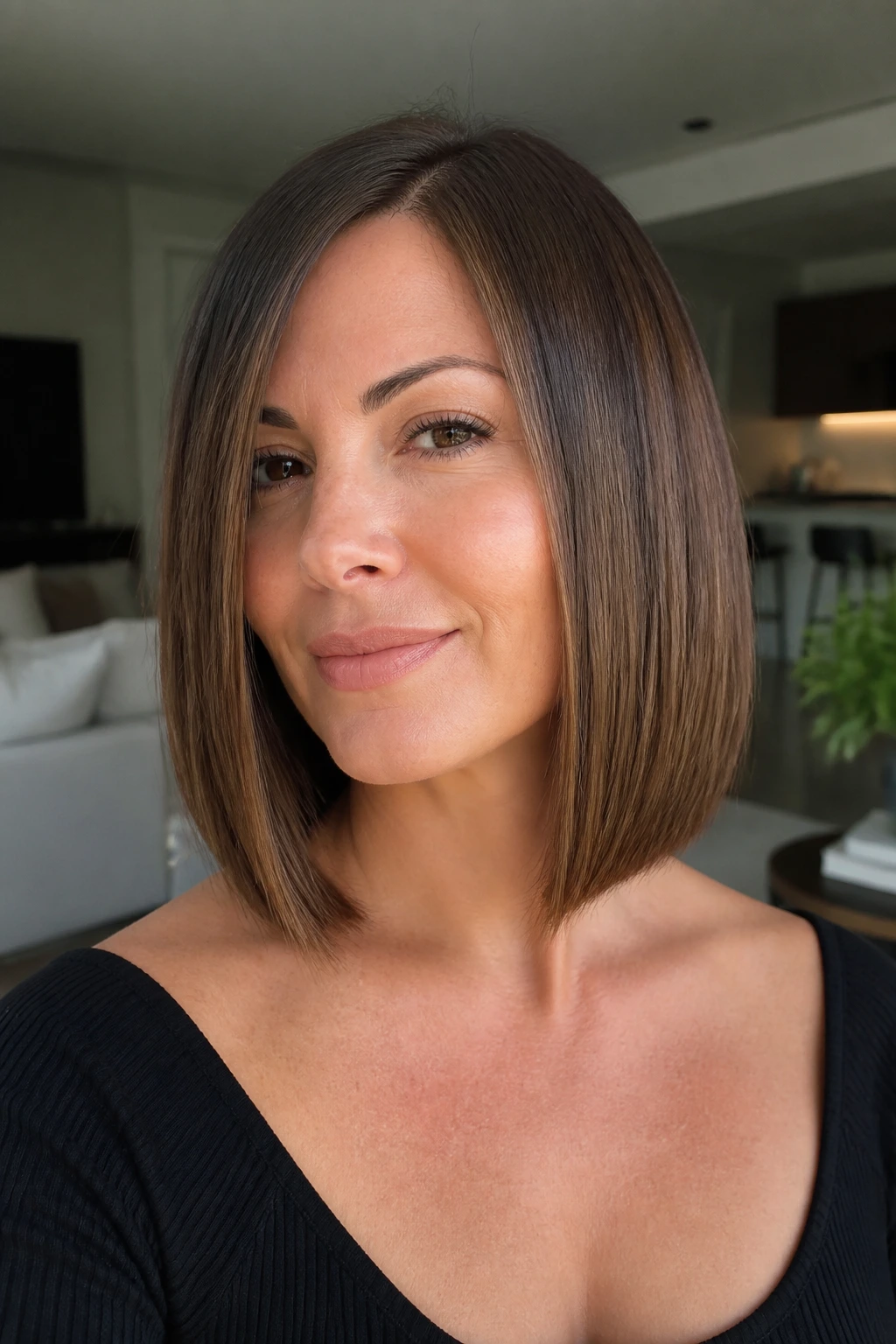
If you like clean lines and hate fuss, start here. A mostly one-length lob with a slight front angle gives thin hair a thick-looking edge while still softening a square face. The front corners are longer, but only enough to guide the eye downward. No busy layers. No shattered ends.
This cut works because it respects the hair’s natural lack of density. Thin hair often looks best when the perimeter is protected. The shape reads intentional even on a rough day, and it looks especially good when the ends are tucked under just a little.
It is not flashy. That is part of the appeal.
21. Tousled Bedhead Lob That Looks Better a Little Messy

A little mess is welcome here. A tousled lob can make thin hair feel fuller because the texture creates separation without exposing every strand. The longer front pieces stop the style from looking too short or too boyish on a square face.
The danger is overdoing it. Too much texture spray or too many waves, and the hair starts to look dry instead of airy. Keep the movement concentrated through the mids and ends, then leave the roots fairly clean. That contrast helps the cut keep its shape.
I like this one on weekends, travel days, and any morning that deserves mercy.
22. Brow-Skimming Fringe Lob for Strong Eyes and Soft Edges

A brow-skimming fringe can be lovely if it is kept light and narrow. It gives the upper face a soft frame, then the longer front bob handles the jaw. On a square face, that combination can look balanced and deliberate, especially if the fringe is piecey rather than heavy.
Thin hair needs the fringe to stay airy. A dense blunt fringe can collapse into a flat panel, which is not a flattering look on anyone. The better version is slightly see-through at the ends, with enough width to frame the eyes but not enough to crowd the forehead.
This style is strongest when the rest of the hair stays smooth and simple. Let one part of the haircut be the focus.
23. Slightly Stacked Lob That Builds Shape at the Back
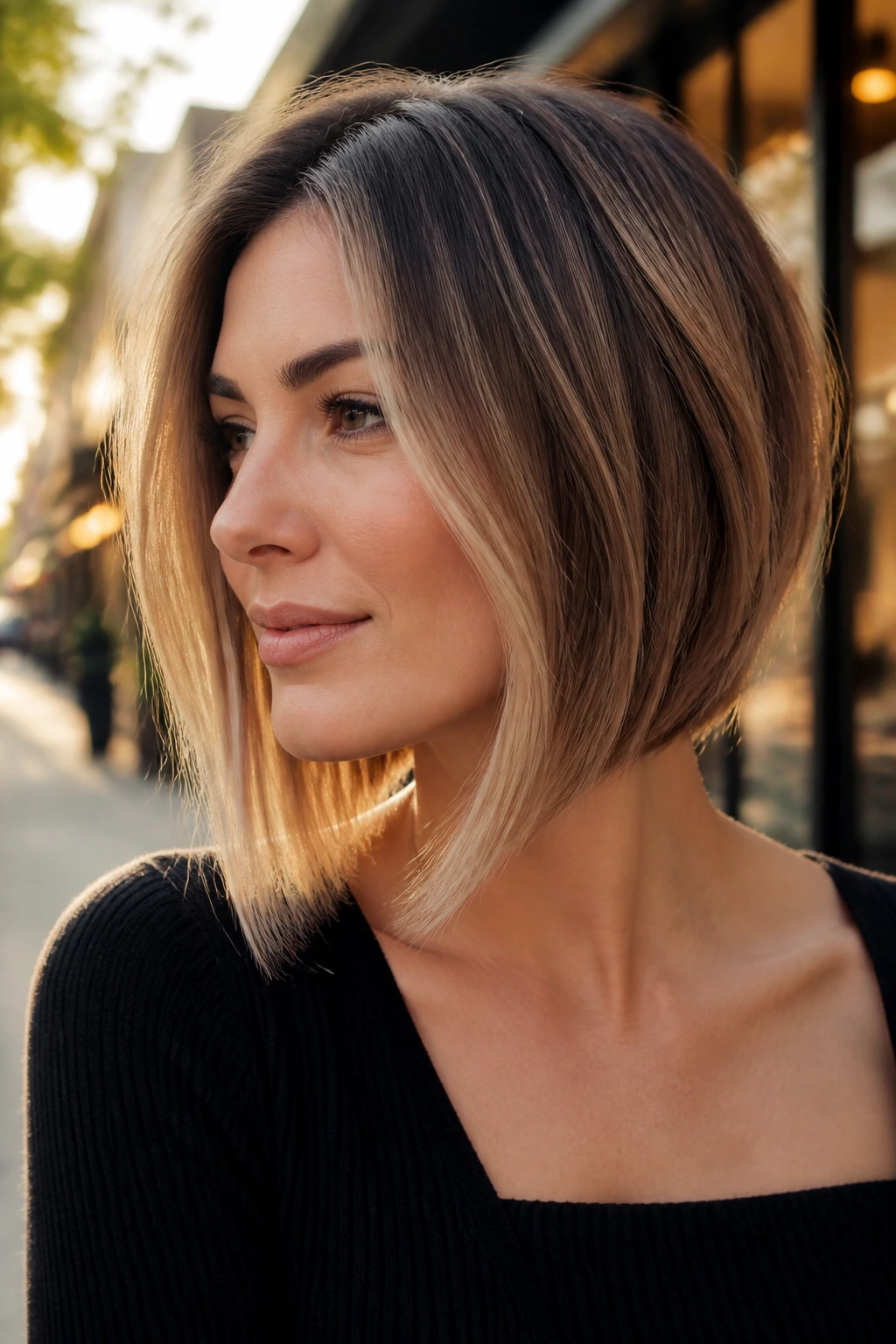
A tiny stack in the back can help if your hair collapses against the neck and makes the front look too flat by comparison. The longer front pieces still soften the jaw, but the back gets a little lift so the whole cut has a clearer silhouette. The stack should be subtle. If you can spot it from across the room, it is too much for thin hair.
This works best when the crown is blown up and then allowed to cool in place. It gives the head a little shape without turning the haircut into a wedge. That matters, because square faces usually look better with softness, not rigid geometry.
24. Balayage-Boosted Lob That Uses Color to Fake Density
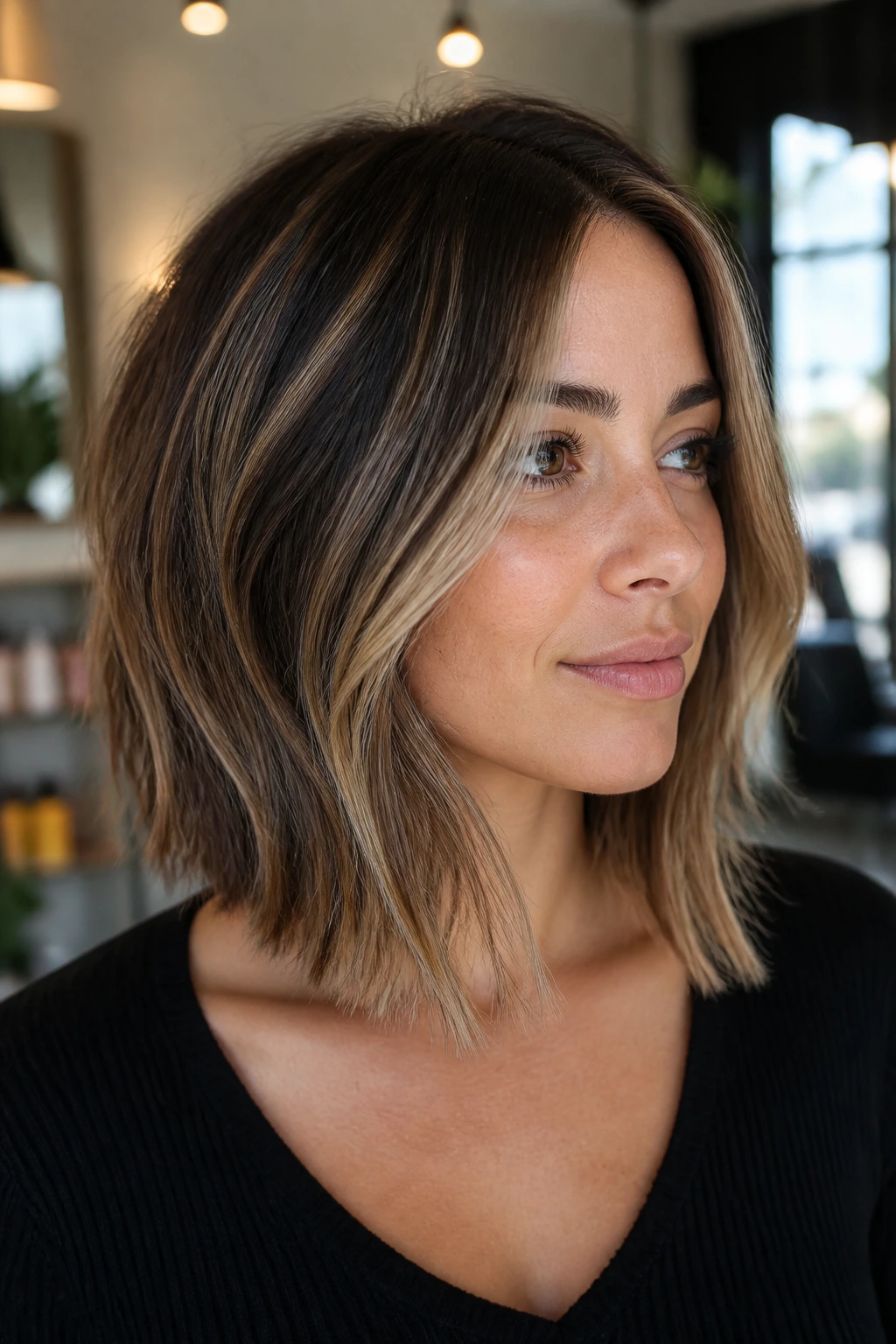
Cut and color talk to each other more than people admit. A long front bob with subtle balayage can make thin hair look fuller by creating depth at the front corners and around the ends. Keep the light pieces near the face and avoid blasting the scalp with highlights if the hair is sparse there.
The best version of this style uses a darker base underneath and a few lighter ribbons through the front. That contrast gives the eye more to read, which makes the cut feel thicker. On a square face, the brighter front pieces can also soften the jawline by pulling attention upward and outward.
This is one of my favorite tricks when the haircut itself is clean but the hair needs a little visual help.
25. Polished French Bob-Lob Hybrid That Sits Between Cool and Easy

This one sits right on the border between bob and lob, and that is why it works. The length hangs around the collarbone, the front drifts a little longer, and the finish stays neat rather than overdone. Square faces usually benefit from that calm front line, while thin hair gets enough weight to stay full.
Keep the ends blunt and the bend soft. A slight inward curve at the front corners is enough. If you add too much wave, the shape loses its clean edge and starts to feel busy.
It is the kind of cut that looks good with a white tee, a strong brow, and about fifteen seconds of attention. That is not a small compliment.
Why the Long Front Angle Softens a Square Face Without Flattening Thin Hair
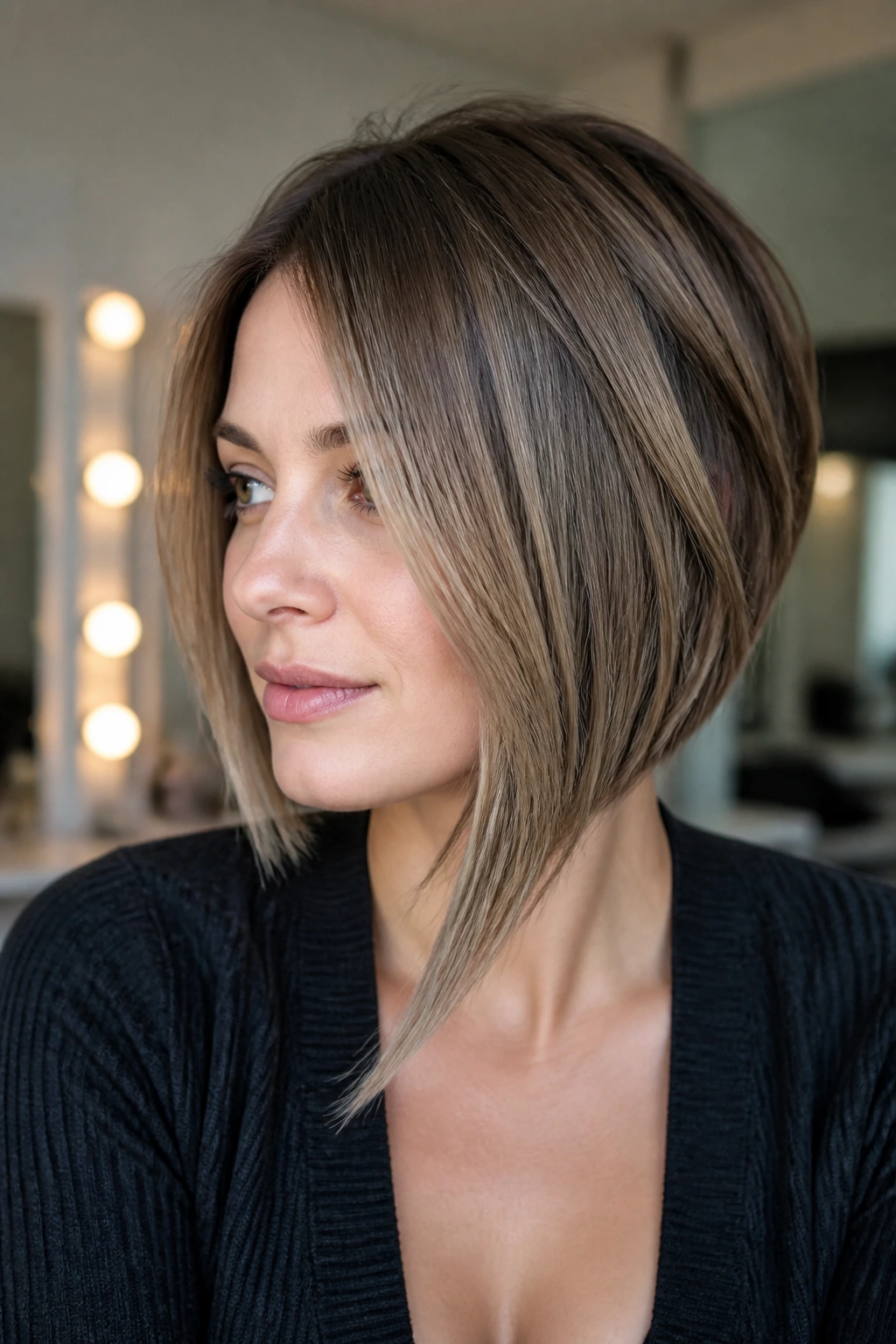
The diagonal line is doing the heavy lifting here. Square faces already have strong geometry — a defined jaw, a broad forehead, and sides that can read straight from cheek to chin. A longer front bob interrupts that shape by dropping the front pieces below the jaw, which adds a vertical cue the face can use.
Thin hair needs a different kind of help. It usually does not need more cutting; it needs smarter cutting. Too much layering can remove the very weight that makes a bob look full. The longer front angle keeps the perimeter intact while still changing the silhouette, which is why it works so often on fine strands.
The front corners matter more than the back
People fixate on the nape, but the front corners decide whether the cut feels sharp or soft. A front that lands at the chin can make a square face look wider. A front that falls to the collarbone or just below it gives the face room to breathe.
Thin hair needs a clean edge
A blunt or slightly beveled edge tends to look thicker than chopped layers because the eye sees one continuous line. That line acts like a frame. It is simple, but simple is not boring here. Simple is the reason the haircut holds up.
The sweet spot is usually collarbone length
That length gives you enough hair to tuck, wave, or blow smooth without losing density at the ends. Go much shorter, and the jaw can start to dominate. Go much longer, and the bob starts turning into a different haircut entirely.
Essential Tools for These Cuts
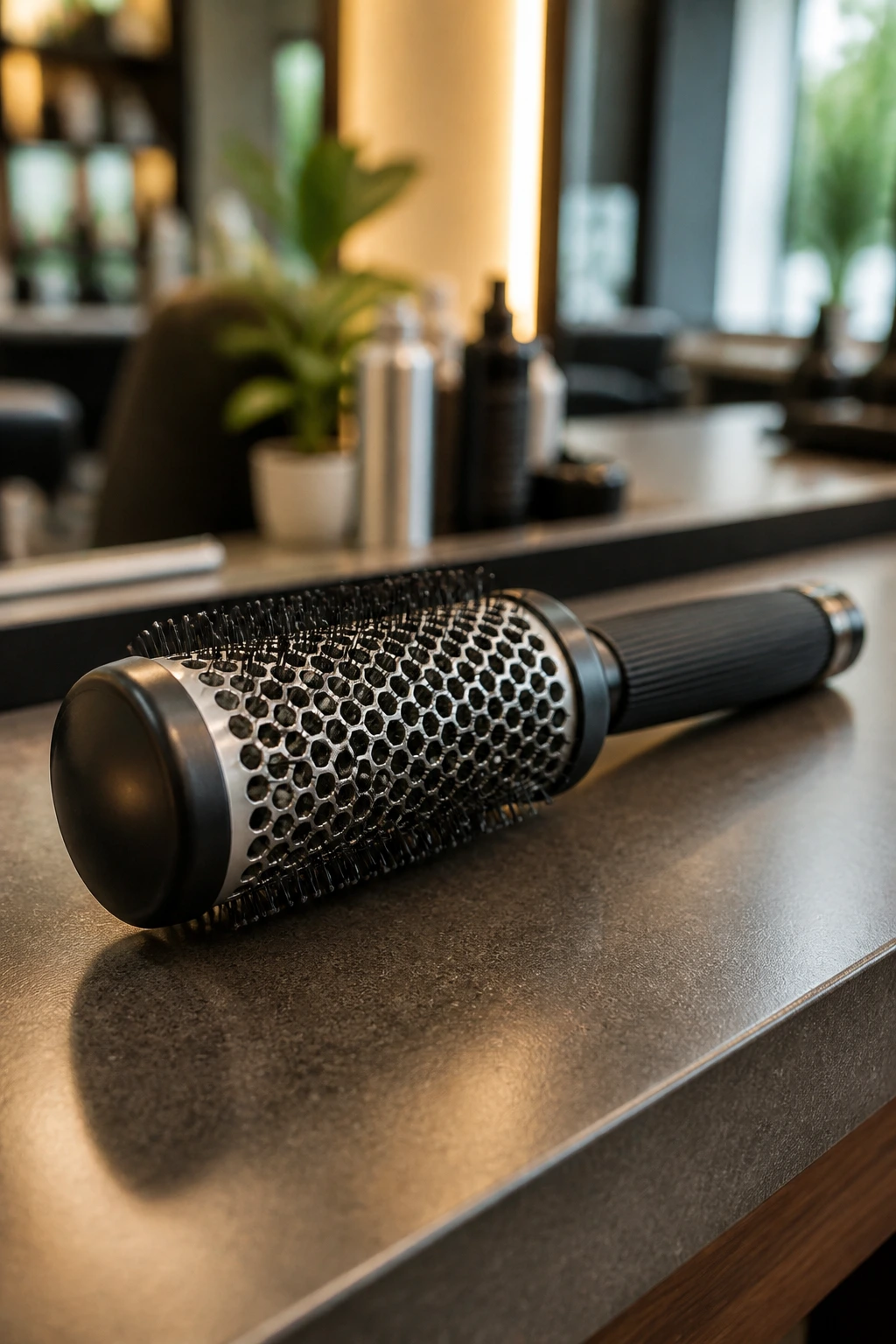
- 1.5-inch round brush: The best size for bending a lob under without creating a giant curl.
- Blow dryer with a nozzle attachment: The nozzle keeps airflow controlled, which matters when you want a smooth perimeter.
- Root-lift mousse or foam: Fine hair needs lift at the roots before anything touches the ends.
- Heat protectant spray: Non-negotiable if you use a dryer, flat iron, or curling iron.
- 1-inch curling iron or flat iron: Handy for creating 4 to 6 soft bends instead of full curls.
- Velcro rollers or duckbill clips: Useful for setting the crown while the hair cools.
- Lightweight texturizing spray: Gives a little grip without burying thin hair in product.
- Dry shampoo: Day-two life support for the roots and fringe.
- Wide-tooth comb and fine-tail comb: One for detangling, one for clean parting and sectioning.
How to Ask for the Cut and Choose the Right Products
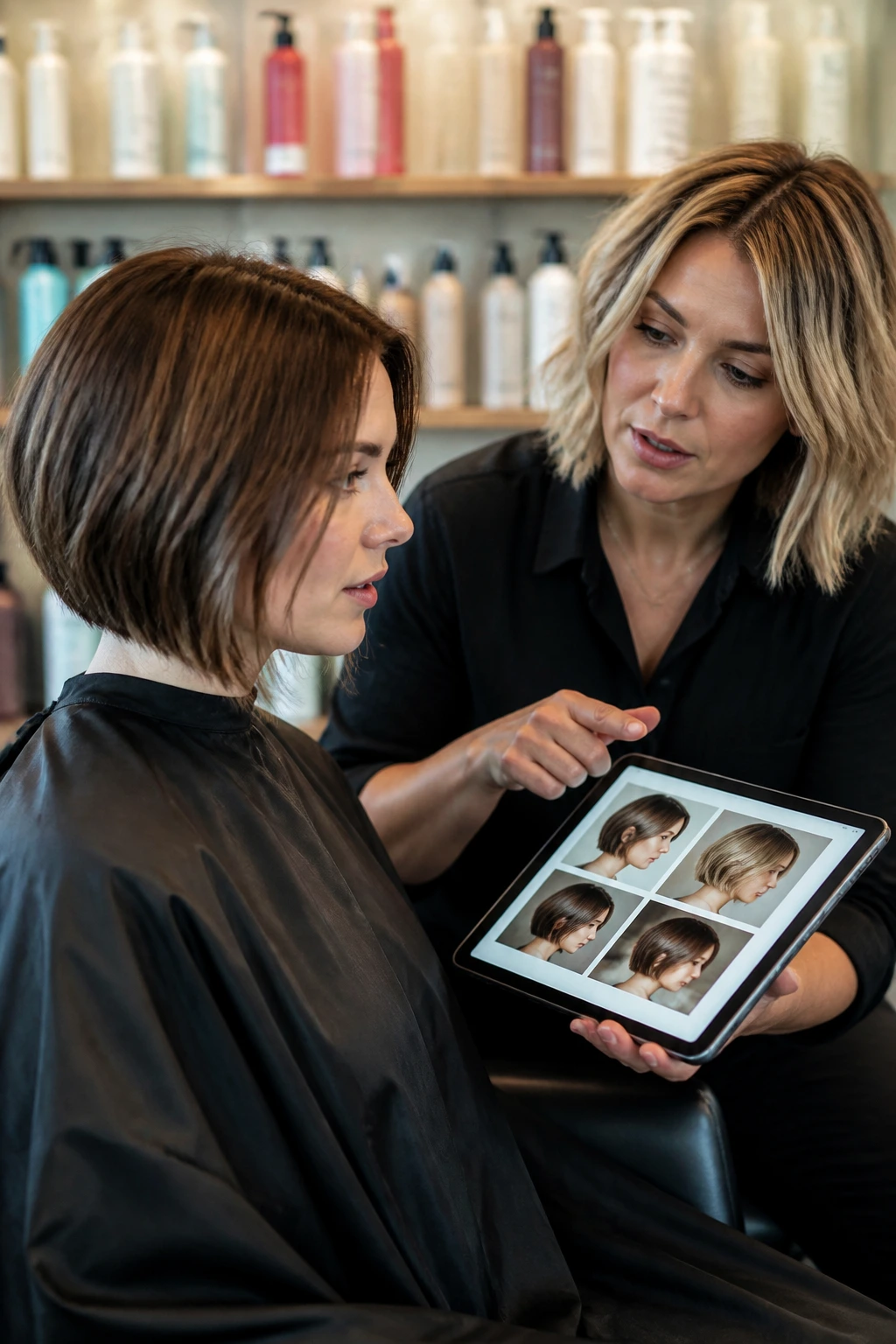
Bring photos, but bring the right photos. Show your stylist three things: the length you want in the front, the amount of angle you want in the back, and the finish you like on the surface. A picture of a bob with the wrong texture can confuse everything, so point out the parting and the front corners with your finger.
Use plain language in the chair. Say you want the front to hit the collarbone or just below the jaw, the back to stay slightly shorter, and the perimeter to keep weight. If your hair is thin, say that out loud. Ask to avoid too much razoring and too many short top layers. Those are the moves that make fine hair look see-through fast.
Products matter just as much. A lightweight mousse at the roots, heat protectant through the mids, and a texturizing spray only on the lower half of the hair usually does more than a heavy cream ever will. Heavy oils can be a disaster on fine hair. They flatten the lift before you finish your coffee.
How to Wear These Bobs in Real Life
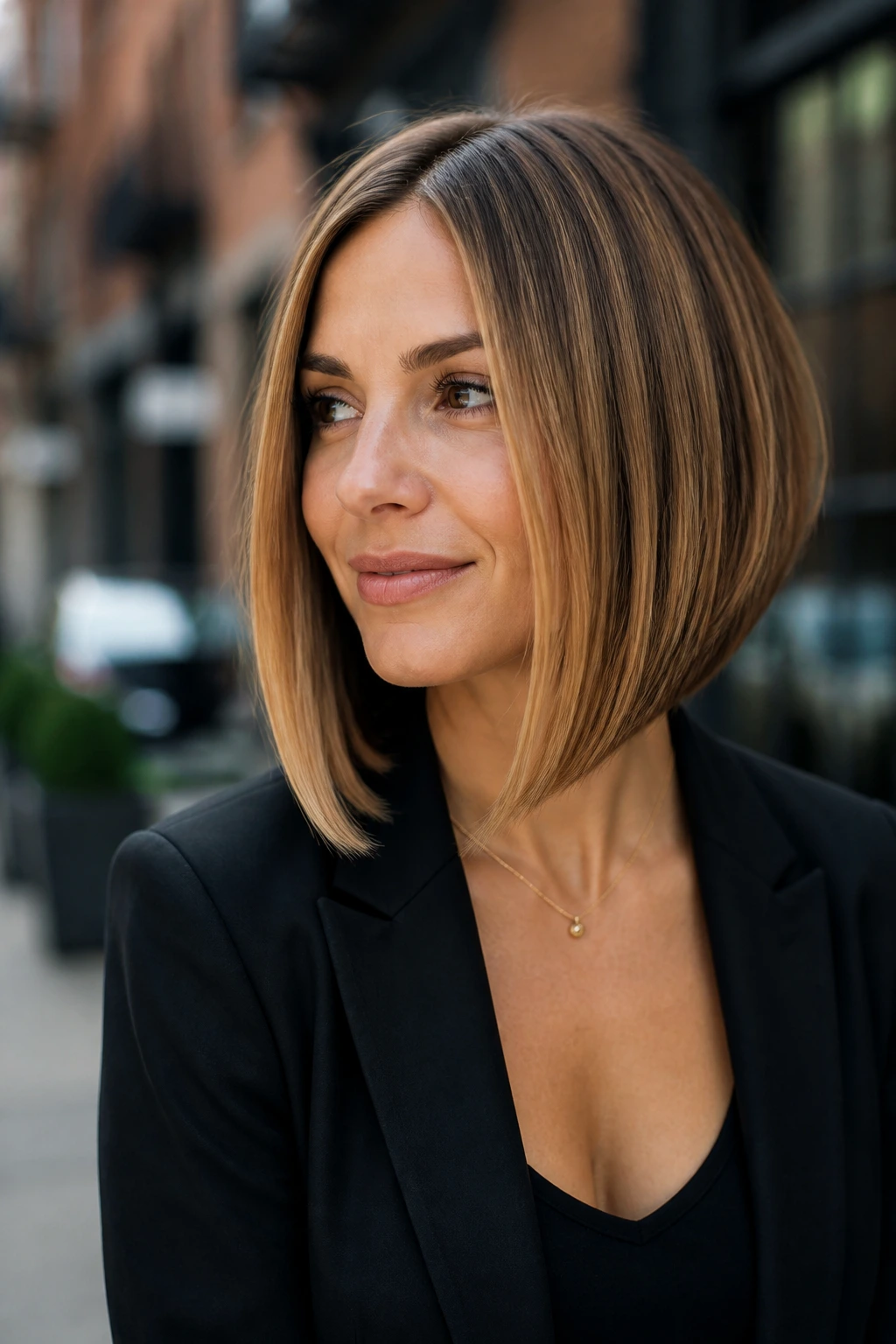
Presentation: Keep the front corners visible. If you tuck every side behind your ears or flatten the top with too much serum, the angle disappears and the haircut loses its shape. A slight bend at the ends or a clean smooth finish helps the line read properly.
Accompaniments: Earrings with a little movement, glasses with some lift at the outer corners, and necklines that open the chest — V-necks, scoops, square necks — tend to flatter this kind of cut. Heavy high collars can crowd the jaw and hide the front pieces that do the work.
Portions: For square faces with thin hair, the most reliable length is usually chin-to-collarbone with a back that sits a little higher. If the hair is very fine, stay closer to the collarbone so the ends keep their fullness. If density is better, you can cheat a touch shorter.
Beverage Pairing: No actual drink changes the haircut, but there is a mood here: quick coffee, quick styling, out the door. That is the point. A longer front bob should not require a full production to look decent.
Additional Styling Moves That Make the Cut Look Fuller
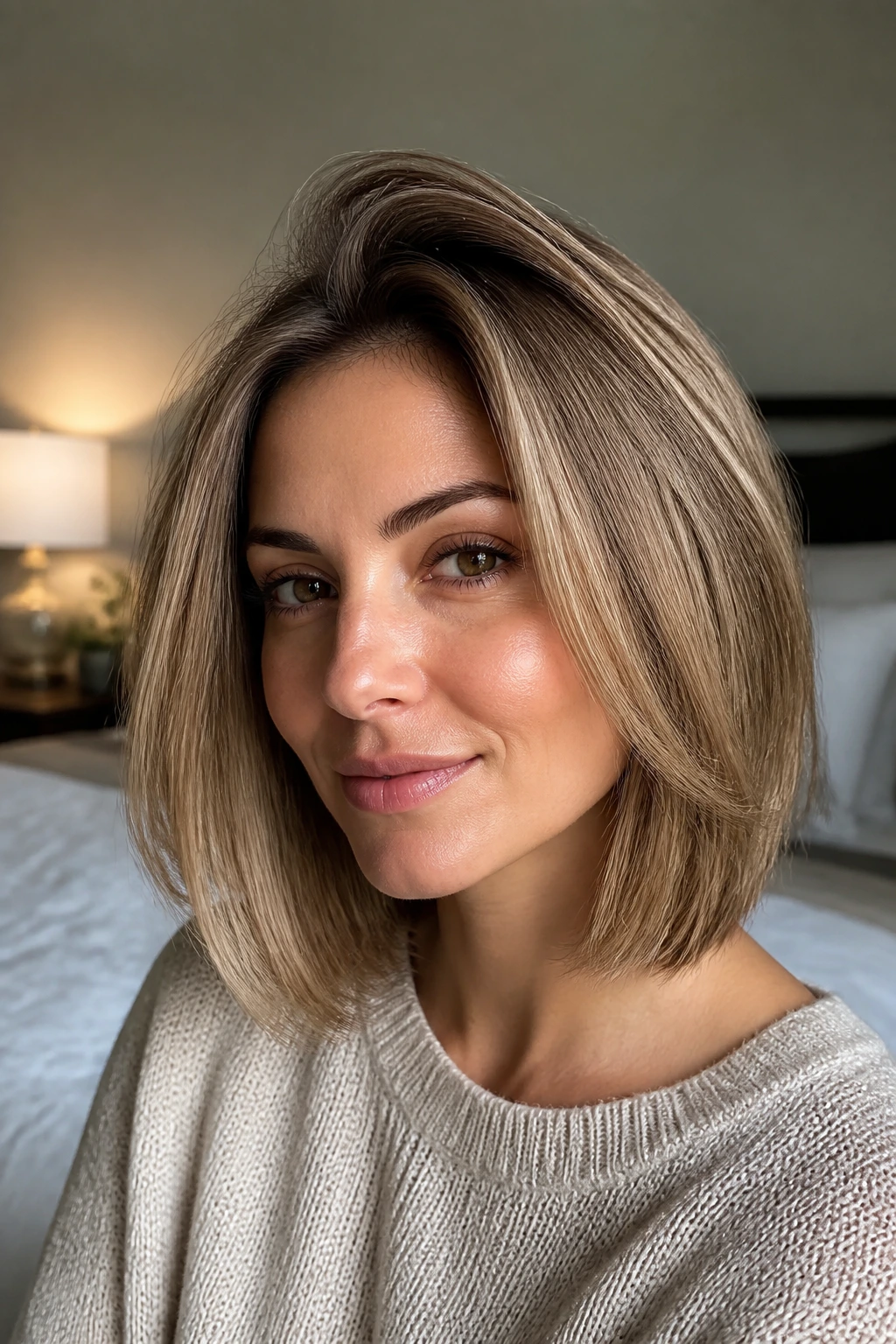
Volume Boost: Dry the roots in the opposite direction of your part first, then switch the hair back once it is about 80% dry. That one move gives thin hair a little lift without teasing.
Texture Boost: If you want movement, bend only a few pieces with a flat iron or curling iron. Four to six sections are usually enough. More than that and the style starts to spread out sideways, which is not kind to a square face.
Softening Move: Let the front pieces curve just below the jaw, not right at it. That tiny drop changes the whole read of the cut.
Make-It-Yours: If your hair is very fine, keep the layers low and the perimeter blunt. If your hair is denser than it looks, ask for invisible layering inside the shape so it does not balloon at the ends.
Daily Maintenance, Trim Timing, and Night Care

These cuts behave best with regular trims. A crisp angled lob usually needs a cleanup every 6 to 8 weeks if you want the front line to stay sharp. If you prefer a softer grow-out, you can stretch that to 8 to 10 weeks, but the shape will start to relax.
Wash frequency depends on the scalp, not the haircut, but thin hair often gets weighed down faster. Every 2 to 4 days is a common rhythm. If product builds up and the crown starts to sag, use a clarifying shampoo every 2 to 4 weeks, then follow with a light conditioner only from mids to ends.
At night, a silk or satin pillowcase helps keep the front pieces from kinking. If the style is blow-dried smooth, a loose clip at the ends can preserve the bend. On day two, revive the roots with a mist of water or a tiny bit of mousse, then blow-dry only the top and front pieces for 2 to 3 minutes. You do not need to redo the whole head.
Common Mistakes That Make the Shape Boxy or Flat
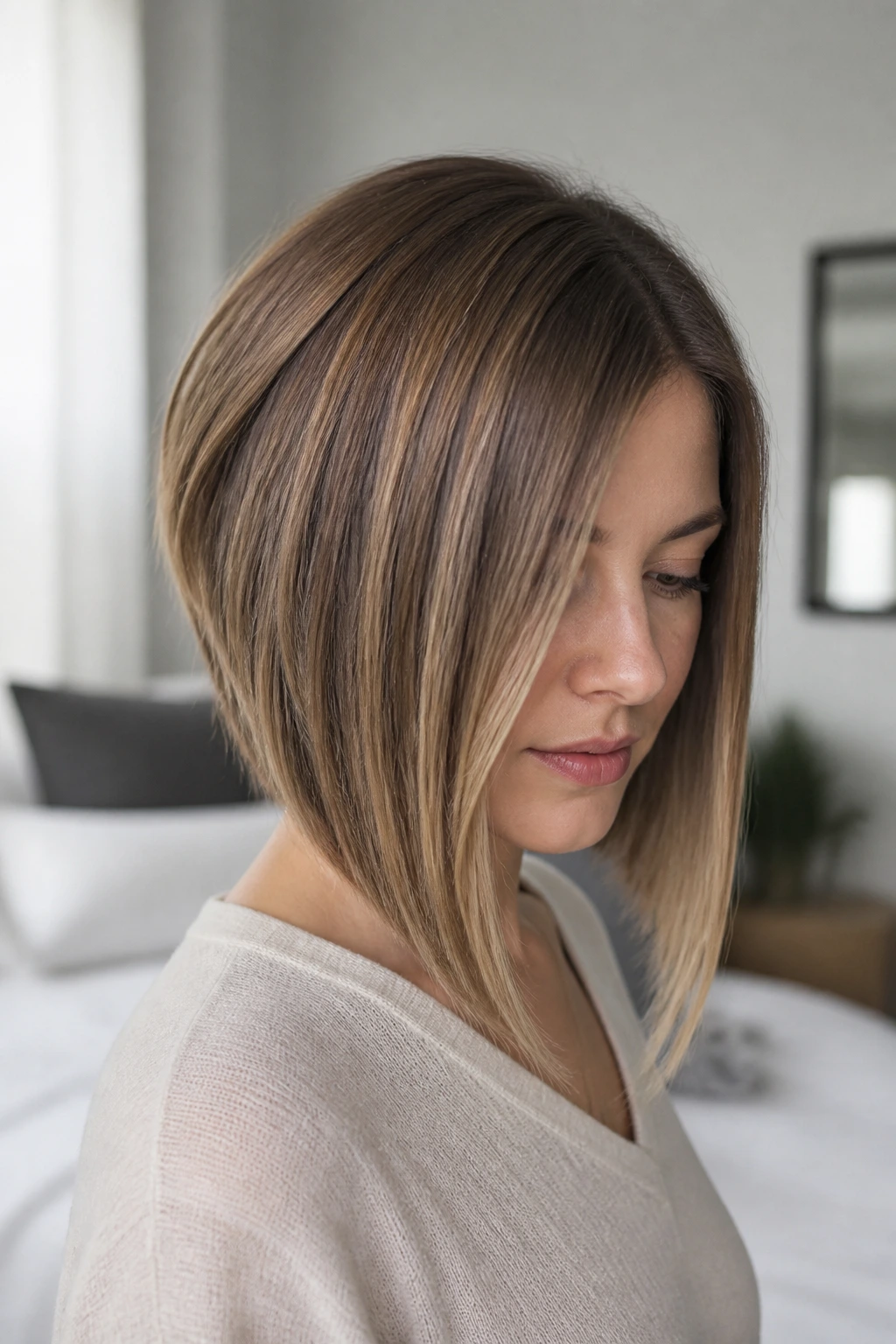
Cutting the front too short: If the front stops right at the jaw, it can make a square face look wider. The fix is simple: move the front length down to the collarbone or at least below the jaw.
Over-layering thin hair: Too many layers make the ends disappear. You see this fast in the mirror — the bob starts looking airy in a bad way. Keep the perimeter strong and the internal layering minimal.
Using heavy product at the roots: Creams and oils near the scalp collapse lift and make fine hair lie flat. Put richer products only on the ends, and keep the roots light.
Curling every piece the same direction: That can widen the sides of the face and make the haircut look dated. Bend a few pieces away from the face, leave others straight, and keep the movement loose.
Ignoring the part: A dead-center part can be lovely, but on some square faces it needs root lift to work. If the face feels too wide, slide the part a little off center and keep some height at the crown.
Named Variations and Easy Adaptations to Try
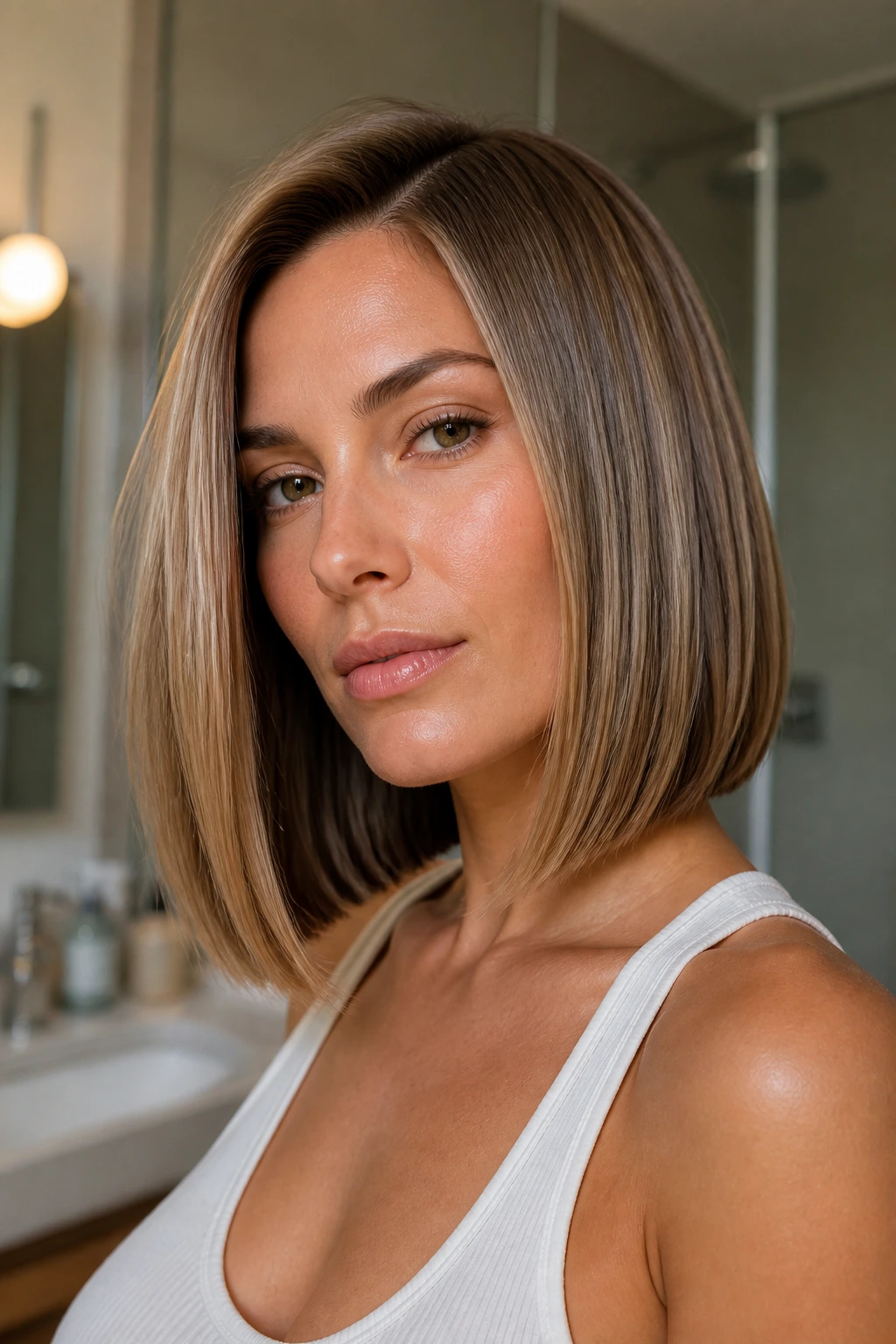
The No-Heat Lob: Air-dry with mousse, scrunch the mids, and leave the front pieces long and smooth. This suits hair that already bends a little on its own.
The Glassy Lob: Blow-dry smooth with a round brush, then finish with a tiny amount of serum on the ends only. It works when you want a neat line and no texture.
The Weekend Texture Lob: Add 4 to 6 bends with a flat iron and mist a light texturizing spray through the lower half. Good when the hair needs body without stiff curls.
The Fringe Swap: Keep the same long front bob, but add curtain bangs or a soft side-swept fringe. This is the easiest way to change the mood without changing the whole cut.
The Color-Boosted Lob: Ask for subtle balayage or a slightly deeper root with lighter face-framing pieces. The contrast gives thin hair depth and makes the front corners stand out.
Frequently Asked Questions
What length is most flattering for a square face with thin hair?
Usually the collarbone is the safest landing spot. It keeps the front pieces long enough to soften the jaw while giving thin hair enough length to keep some density at the ends.
Should thin hair get layers in a longer front bob?
Yes, but only small ones. Heavy layers can make the perimeter look sparse, so ask for invisible or internal layering rather than obvious choppy sections.
Does a center part work on a square face?
It can, especially if the front pieces are long and the roots have some lift. If the face starts looking too boxy, shift the part slightly off center and keep the crown from going flat.
Will bangs make my face look wider?
Heavy blunt bangs can. Soft curtain bangs or a side-swept fringe usually work better because they break up the width without cutting the face in half.
How often should I trim an angled bob?
About every 6 to 8 weeks if you want the front angle to stay crisp. If you like a softer grow-out, you can wait a bit longer, but the shape will relax.
What if my hair flips outward at the ends?
Blow-dry the ends under first, let them cool, and then brush lightly through them. A small round brush or a quick pass with a flat iron usually fixes the flare.
Can this cut work if my hair is very straight and flat?
Yes, and that is often where it shines. A blunt or softly angled perimeter gives straight hair a clearer line, and a little root lift keeps it from lying dead flat.
The Cuts Worth Booking

The nice thing about a longer front bob is that it does not ask you to choose between shape and softness. On square faces, that matters. On thin hair, it matters even more. A good cut keeps the front pieces doing the face-framing work while the perimeter stays full enough to look intentional when you skip a blowout.
If you want the easiest place to start, pick the soft A-line lob or the collarbone blunt bob. If you want a little more movement, go for the side-part swing lob or the curtain-bang version. And if your hair is fine but stubbornly straight, the cleaner, simpler cuts usually win. They look better on day one and better again on day three, which is the real test.
Save the photo that matches your texture, not just your face shape. That one detail saves a lot of awkward salon conversations.